


Abstract
The aim of this paper is to analyze the potential of circular economy in the context of increasing the supply of raw materials for modern economy with particular focus on the role of science and business. The article presents an approach consistent with the concept of sustainable development and fitting in with the implementation of four Sustainable Development Goals: Industry, Innovation, and Infrastructure (SDG 9), Responsible Consumption and Production (SDG 2), Climate Action (SDG 13), and Life on Land (SDG 15). An innovative approach to raw material supply sources is also presented. In addition, the potential of urban mining e-waste in meeting the demand for critical metals is emphasized. The paper presents barriers and challenges for using the potential of raw materials deposited in spoil heaps and landfills or in tailings ponds, with emphasis on the role of modern technologies in increasing the competitiveness of Polish industry. The necessity of a systemic approach to the topic of the circular economy was also emphasized, particularly regarding secondary raw materials as essential for securing critical resources.
1. Introduction
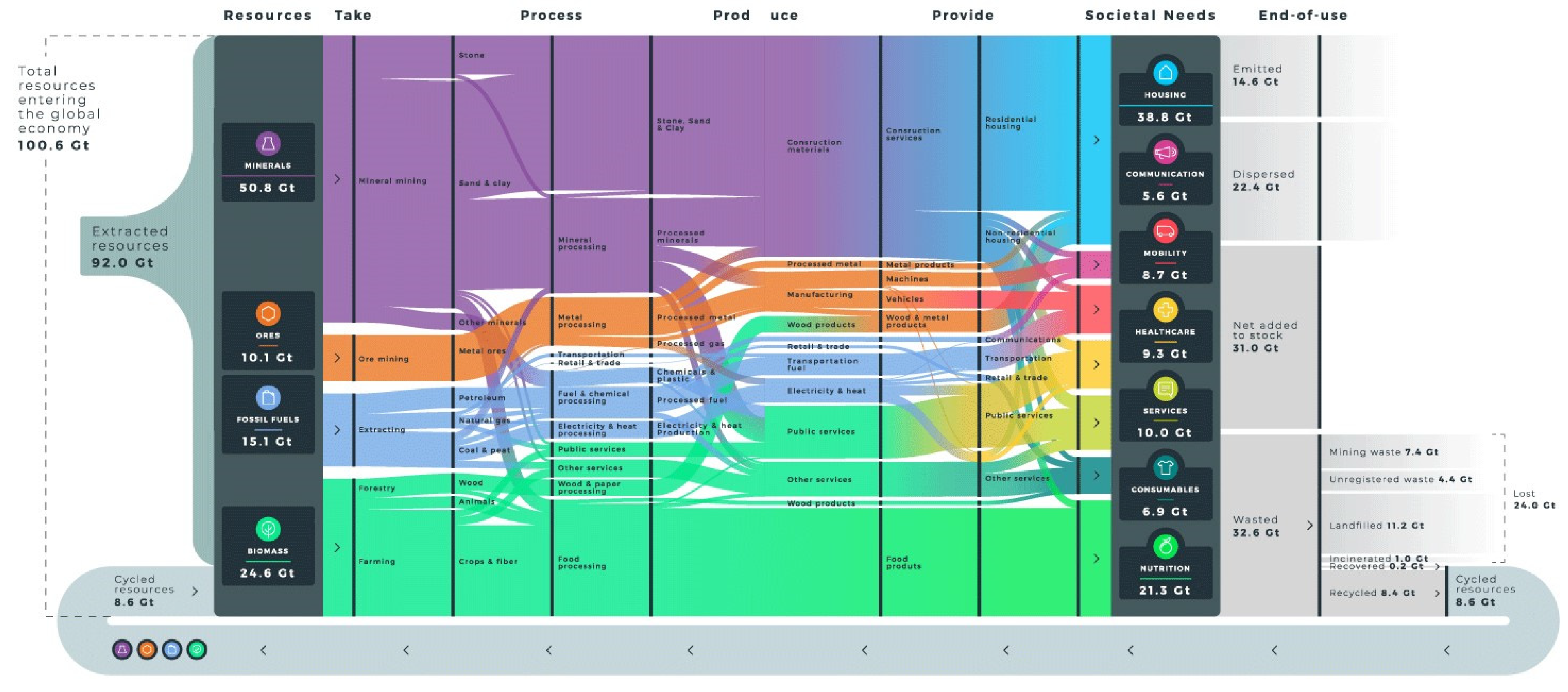
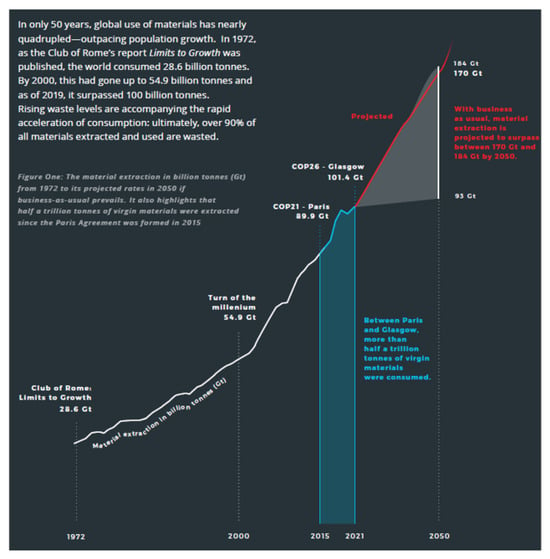
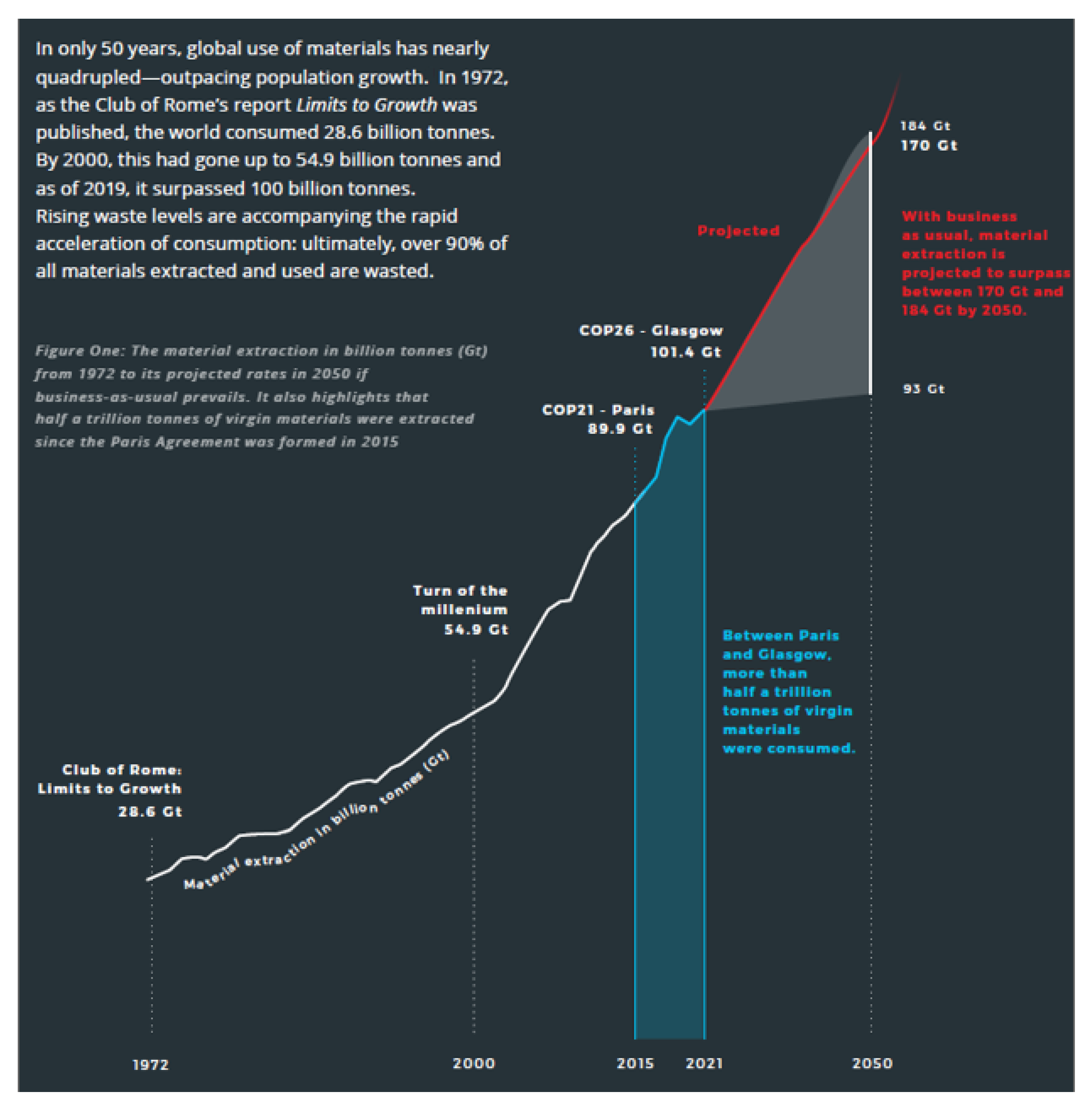
Global Resources Outlook 2024 [1] indicates that since 1970 global consumption of the Earth’s natural resources has increased from 30 to 106 billion metric tons (30 × 109 to 106 × 109 Mg), which is 23–39 kg/person/day. Moreover, by 2060 the quantity of globally extracted raw materials is expected to grow by 60%. The extraction and consumption of natural resources accounts for 55% of climate change and for 90% of terrestrial biodiversity loss. The data indicate an urgent need for sustainable resource management (Figure 1).
Figure 1.
Global raw material consumption [2].
The answer to the above problems seems to lie in circular economy (CE). It is one of the most important challenges and development directions for both societies and businesses. It is also becoming a necessity in light of the limited environmental resources and growing environmental changes. CE assumes minimal use of natural raw materials, a prolonged product life cycle, and increased use of anthropogenic raw materials. The latter may be successfully treated as mineral anthropogenic resources. This approach is consistent with the concept of sustainable development, which ensures the use of natural resources intended to integrate the social and economic aspects in order to meet the present and future needs of society and the environment. Implementation of this concept is to take place through the realization of 17 global Sustainable Development Goals, as defined in the Agenda 2030 document. These goals are aimed at stopping negative phenomena related to economic development [3]. Sustainable management of environmental resources, waste reduction, and the use of anthropogenic raw materials are aspects that fit in with the implementation of Sustainable Development Goals such as Industry, Innovation, and Infrastructure (SDG 9), Responsible Consumption and Production (SDG 2), Climate Action (SDG 13), and Life on Land (SDG 15).
In Poland, especially in Lower Silesia, there is a need for reengineering in the exploitation, processing, and utilization of the extensive rock resource base (220 documented deposit construction and road stones alone) [4]. The use of this base should take into account (as part of the life cycle approach) the needs related to the launch, exploitation, and liquidation of this resource group.
With the view to the above aspects, this paper presents an analysis of the potential of circular economy in the context of increasing the supply of raw materials for modern economies, with particular focus on the role of science and business. The paper also focuses on barriers and challenges for using the potential of raw materials deposited in spoil heaps and landfills or in tailings ponds, with emphasis on the role of modern technologies in increasing the competitiveness of the industry.
2. Increased Demand for Mineral Raw Materials and Their Supply Sources
Mineral resources are the foundation of every economy. They are crucial for heavy industry, energy, construction, and modern technologies. Global production growth and the development of new technologies make raw minerals indispensable and increase demand for them. Over the past several years, the dynamic growth of technology has been observed to be accompanied by a significant increase in the demand for raw mineral materials. They have a key role in heavy industry, energy generation, and construction industry. They also prove vital in various innovative solutions applied in a wide range of industry sectors. Importantly, access to raw mineral materials depends on political issues, which in fact have consequences, particularly in the case of resources concentrated in countries having considerable impact on global economics. Global demand for mineral raw materials is driven by complex phenomena shaped by a number of factors. Some of the key factors are
- -
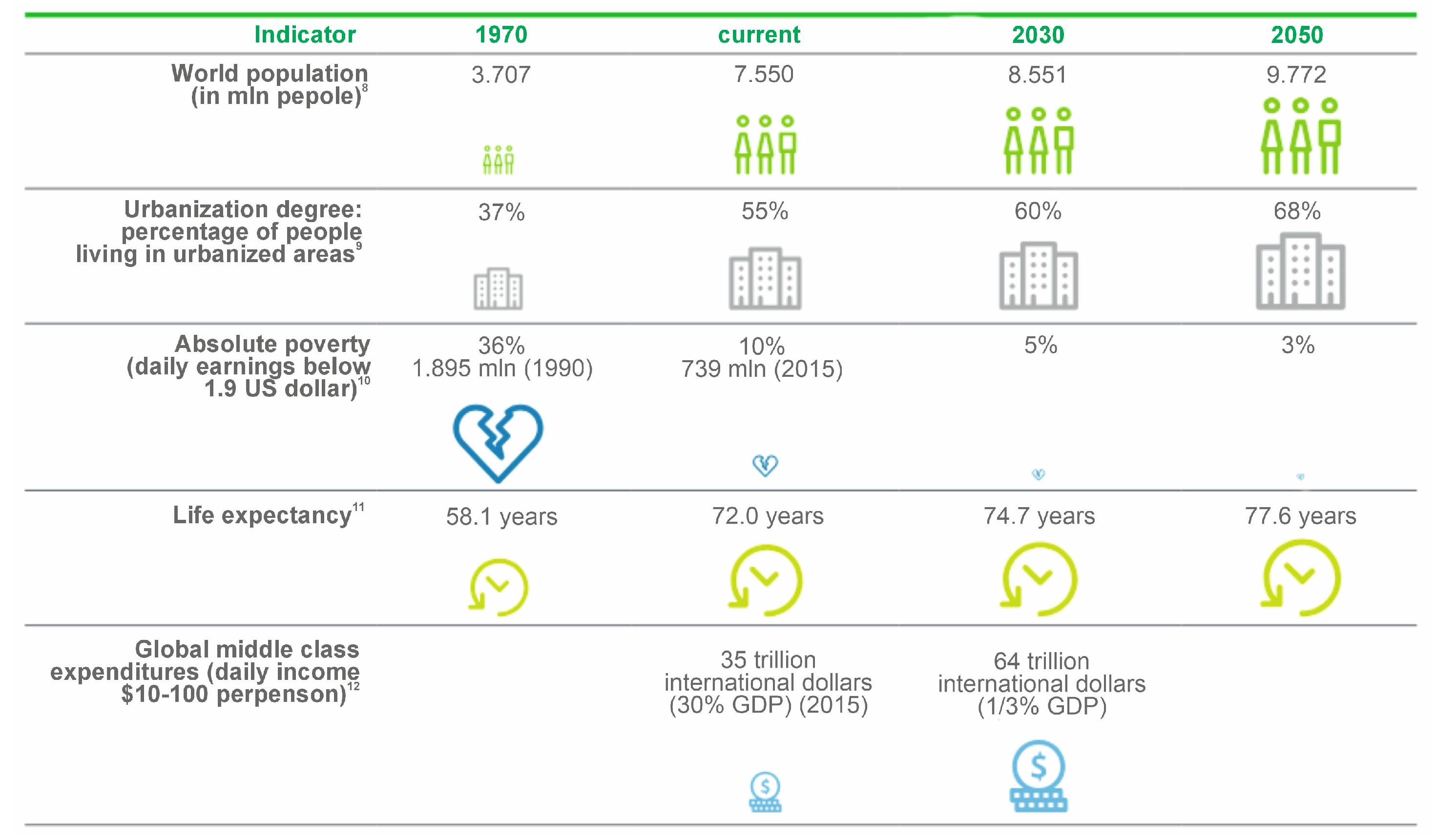
- Population growth—in the currently dominant linear economy—is expected to further increase the demand for such materials, from the current 39 kg/person/day (2020) (see Figure 2). If the trends are not altered, the consumption of mineral raw materials is expected to exceed 190 × 109 metric tons by the year 2060. In Poland, this consumption is at 702 × 106 Mg per year, i.e., 19 Mg per capita [5].
Figure 2.
Global trends [6].
- -
- Urbanization related to residential and commercial construction, which generates increased demand for bulk raw materials (aggregate, cement, steel, molybdenum, aluminum) and for metals used in the construction and installation processes (copper, aluminum). Demand for raw materials is also generated by intelligent cities and 5G infrastructure [7,8].
- -
- Growth of transport infrastructure (high-speed trains, highways), as well as electricity transmission and public utility lines [9,10].
- -
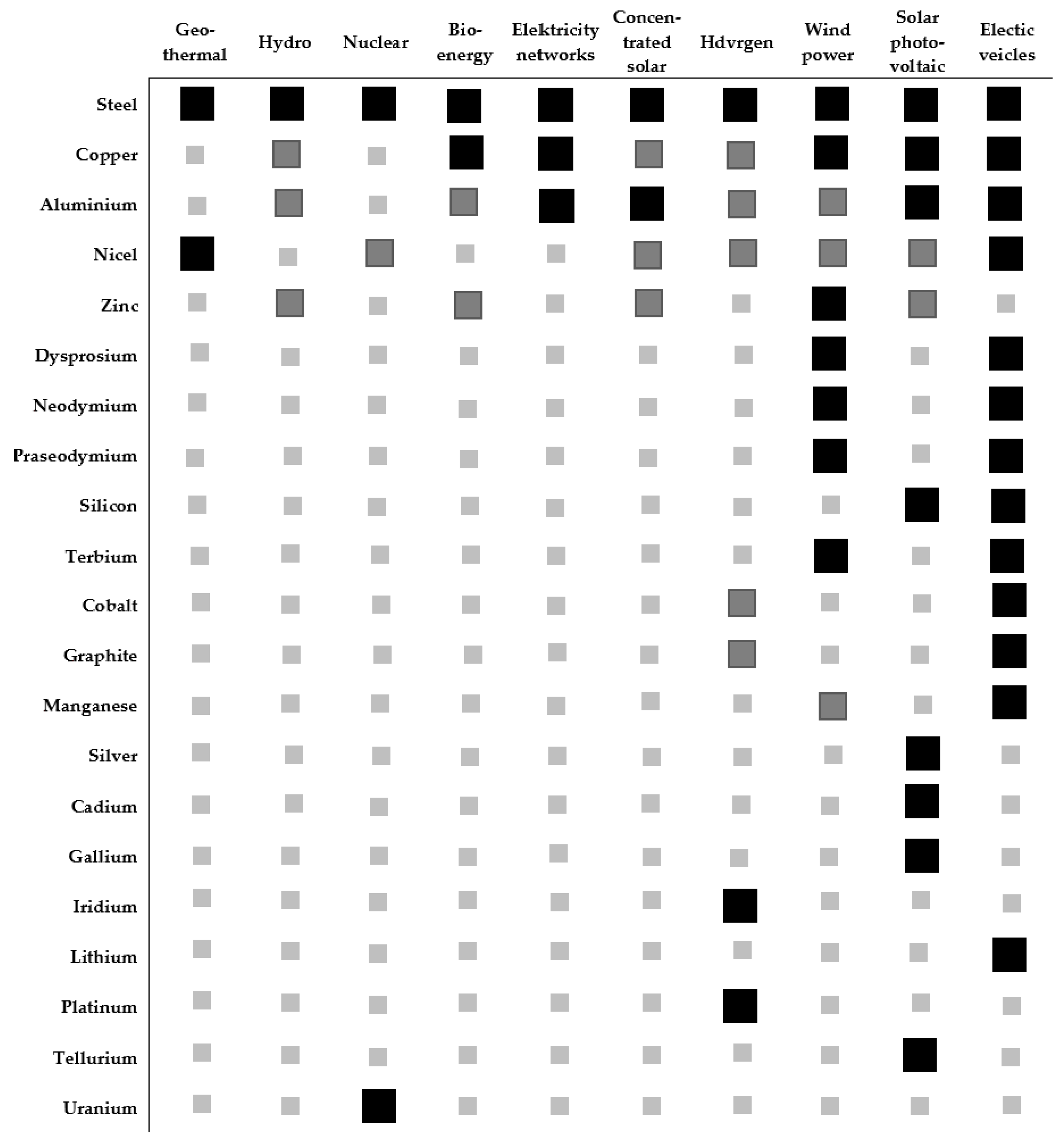
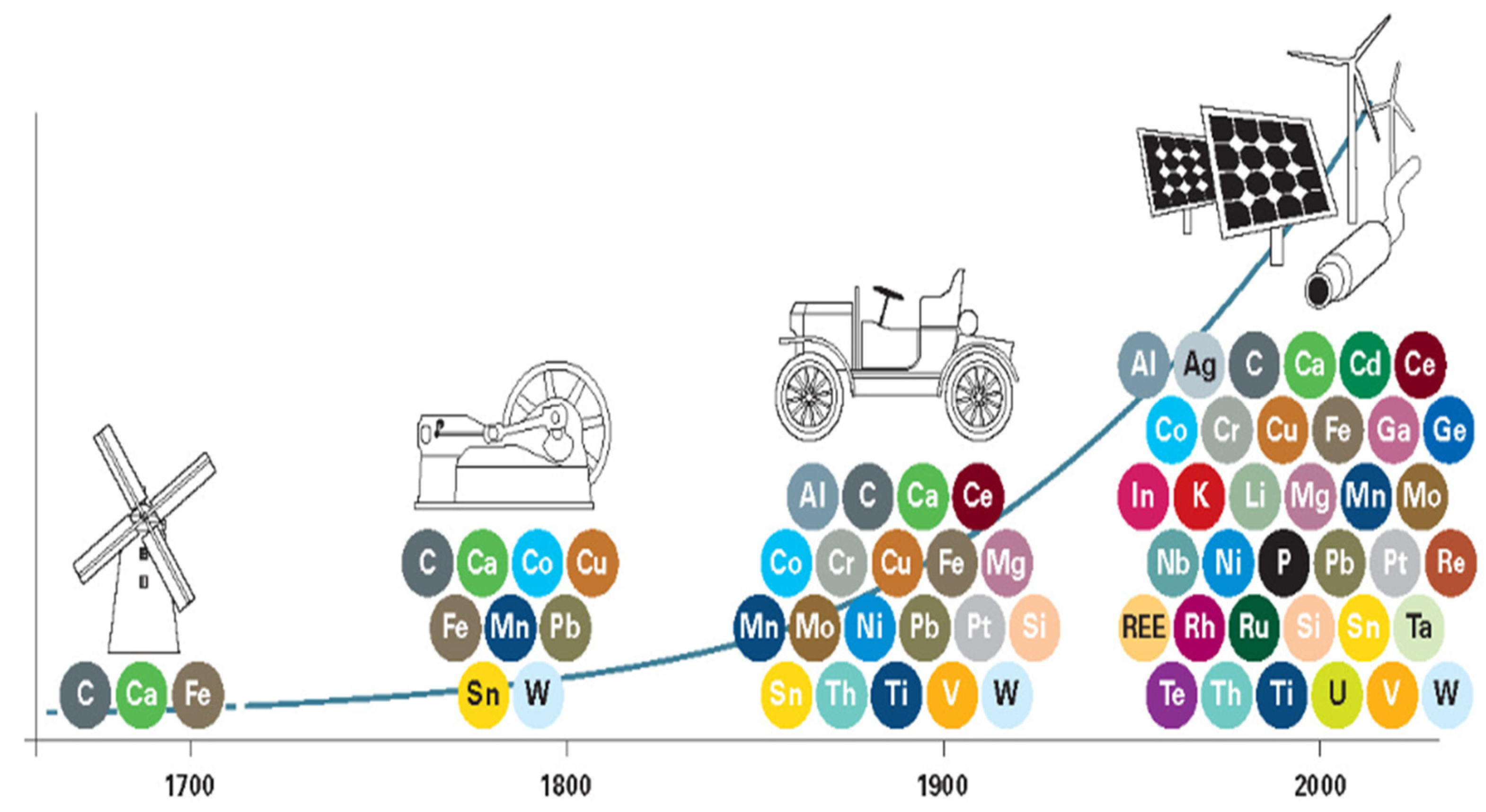
- Renewable energy/geoenergy. Energy transition towards low-emission sources (deep geothermal energy, photovoltaics, wind energy, geoenergy, electromobility, batteries) entails a significant increase in the demand for such metals as copper, cobalt, nickel, aluminum, lithium, rare earth elements (REEs), as well as silicon and graphite [11,12] (Figure 3).
Figure 3.
Materials used in the energy industry [12,13].
- -
- Modern industry, including military sector, drives the development of advanced technologies in aviation, space, and electronic industries, as well as the development and modernization of the defense potential. This industry sector generates the demand for composite materials, specialist metal alloys, titanium, tungsten, beryllium, tantalum, rhenium [14,15].
- -
- Digital transformation of the economy and society (Internet of Things, big data, artificial intelligence, quantum computing) entails the growing production of electronic devices, servers, sensors, etc., resulting in an increased demand for such precious metals as gold, platinum group metals (PGMs), and silver, and for special metals (gallium, indium, germanium) [16].
3. Supply Sources of Raw Materials
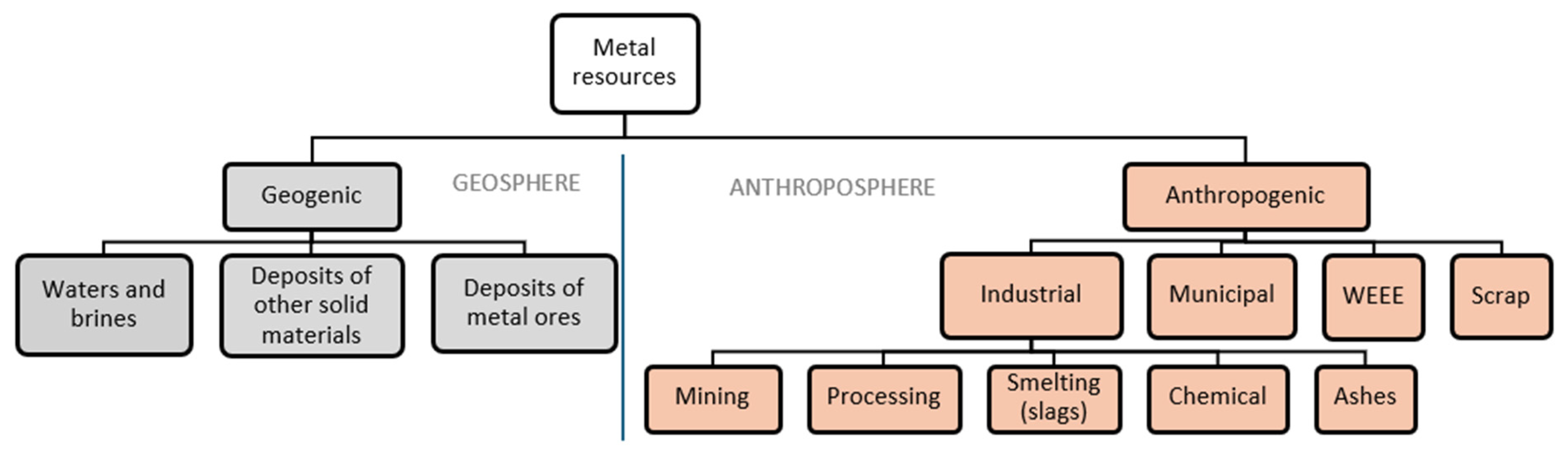
Today’s economies need raw materials, which is why a stable supply is essential. All modern technologies require raw materials, including critical ones. As a result, demand for raw materials is growing rapidly and supply is becoming increasingly complicated. The response to this growing demand requires a diversified and innovative approach to supply sources of raw materials (Figure 4). Therefore, the types of these sources should be first identified. The list should start with primary sources extracted from the rock mass with the use of modern mining techniques and technologies adapted to the specific character of primary deposits documented in the Earth’s crust. The region of Lower Silesia is abundant in polymetallic Cu-Ag deposits, whose balance resources as of the end of the year 2024 are estimated by the Polish Geological Institute at 3547.57 × 106 Mg. Unfortunately, not all of the interesting elements (No, Co) are recovered in ore processing and smelting. A significant part of these materials is found in post-floatation and post-smelting waste. The growing demand for critical metals increases the importance of both their primary and secondary resources. These resources can also be considered to be accompanying strategic sources of rare earth metals (Figure 5, Figure 6 and Figure 7) [16].
Figure 4.
Projected raw material production [2].
Figure 5.
Rare earth elements and accompanying metals in ores [17].
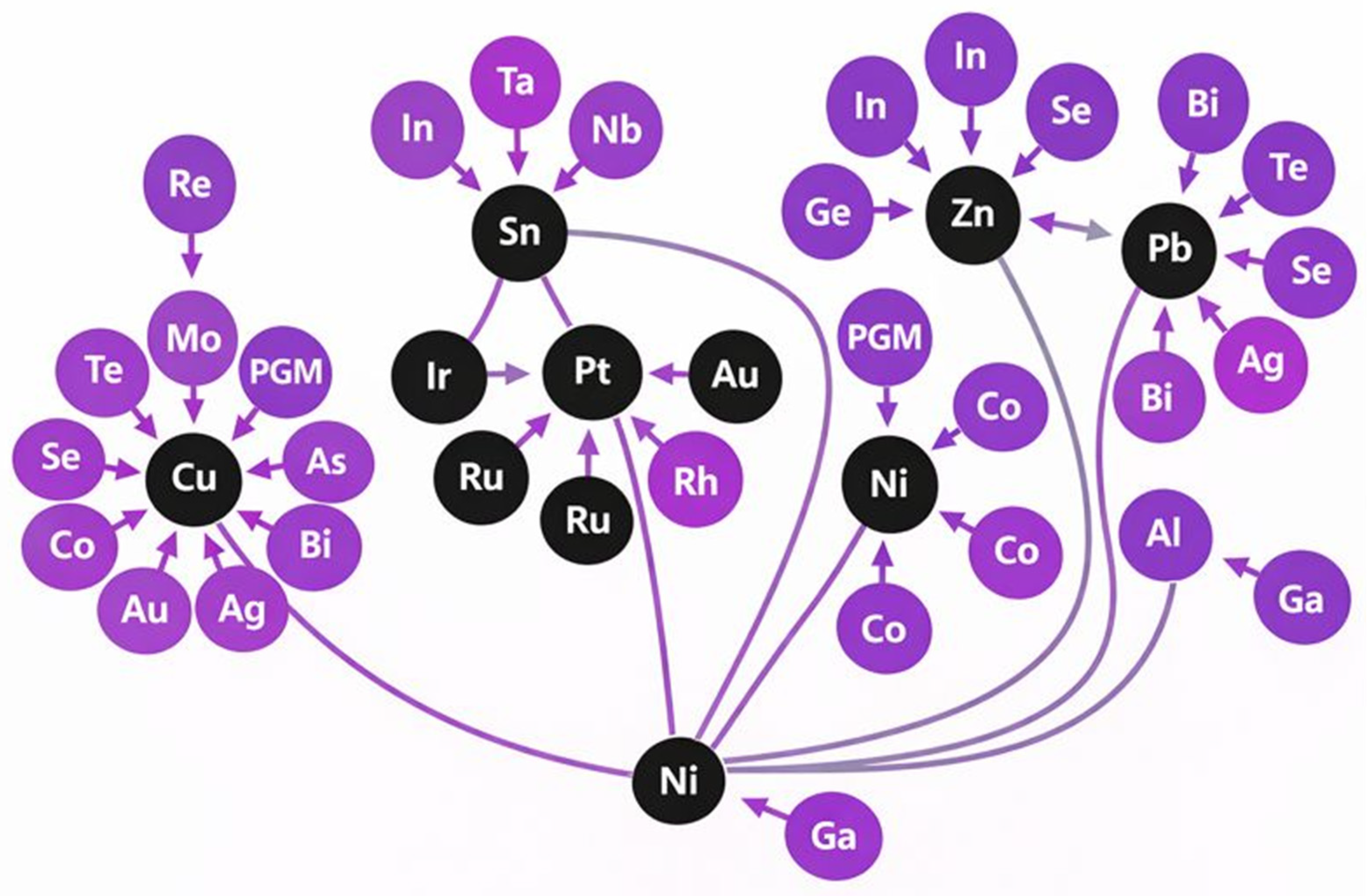
Figure 6.
Categories of interest [18].
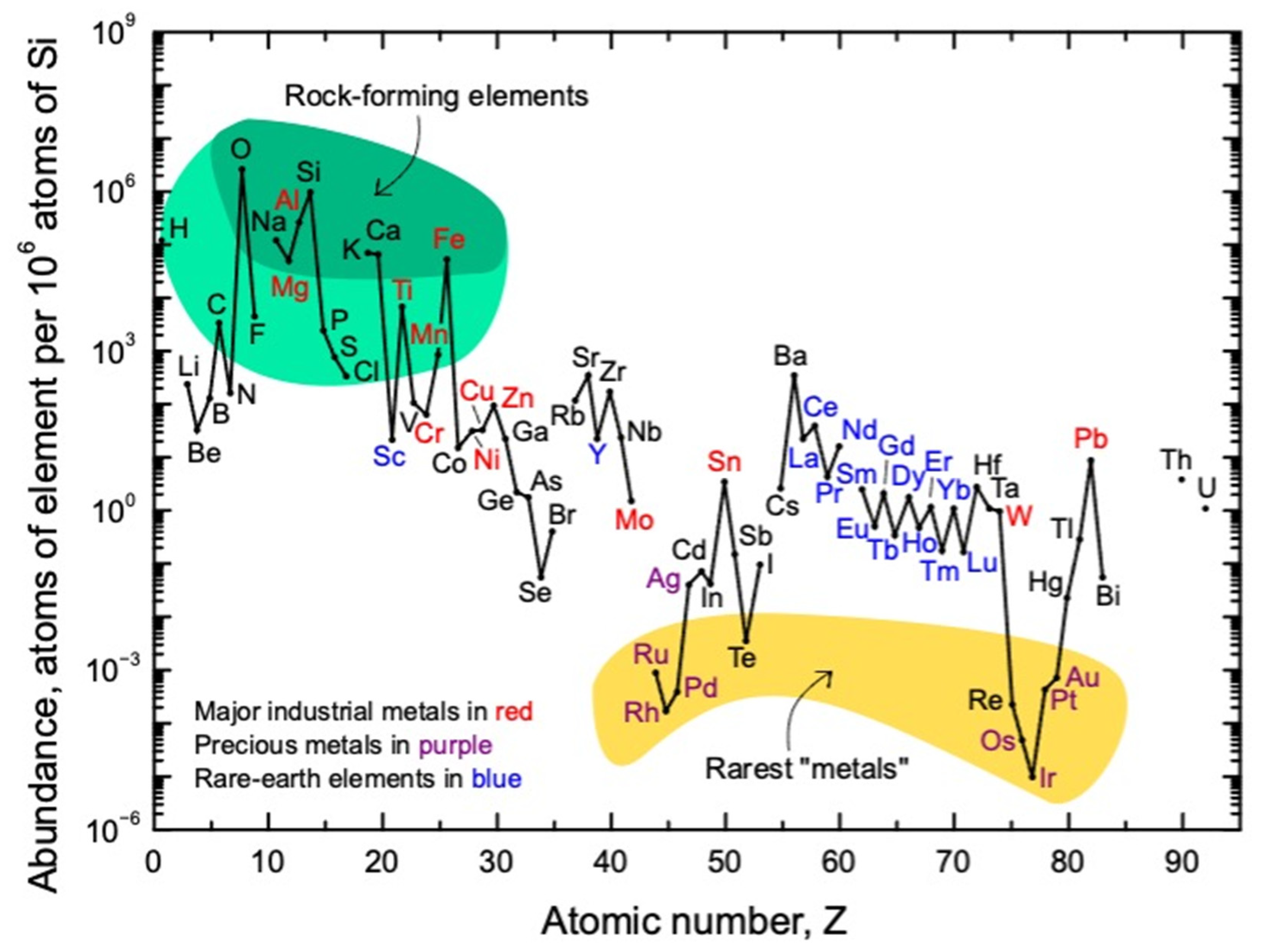
Figure 7.
Available metal sources.
Unfortunately, these raw materials are now increasingly extracted from deposits located at great depths and in sensitive locations. Additional challenges include the decreasing content of useful minerals in the deposit (the so-called geological inflation), as well as social (lack of social acceptance, nationalization of raw material sources) and environmental conditions, which prevent deposit extraction. The environmental impact of mining activities causes social conflicts. In such situations, it is difficult to find a compromise. Mining is in a specific situation because it is determined by geological structure. Society is generally strongly opposed to any mining activities in the immediate area. It sees this as a threat to its own safety, health, and quality of life. It is worth adding here that the environmental impact is temporary. As a result, if the reclamation is properly designed and implemented, such post-mining areas can bring new natural values that are often more valuable than before exploitation. Taking these issues into account, the mining industry employs modern technologies, such as precise mining, automation, robotization, IoT, or AI. The emphasis should be placed on developing new technologies for the extraction of metals from the stream of run-of-mine material or waste. These elements improve the profitability of the industry with respect to other branches of the economy, which is, in fact, of great importance at a time of intense competition for financial capital. Moreover, it should be noted that high-resolution geophysics and advanced ore-processing methods are necessary to increase the effectiveness of mining processes and to simultaneously mitigate their environmental impact.
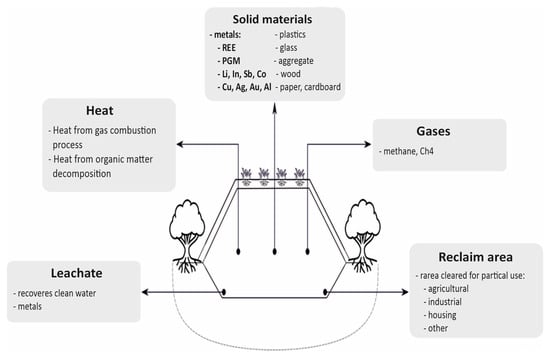
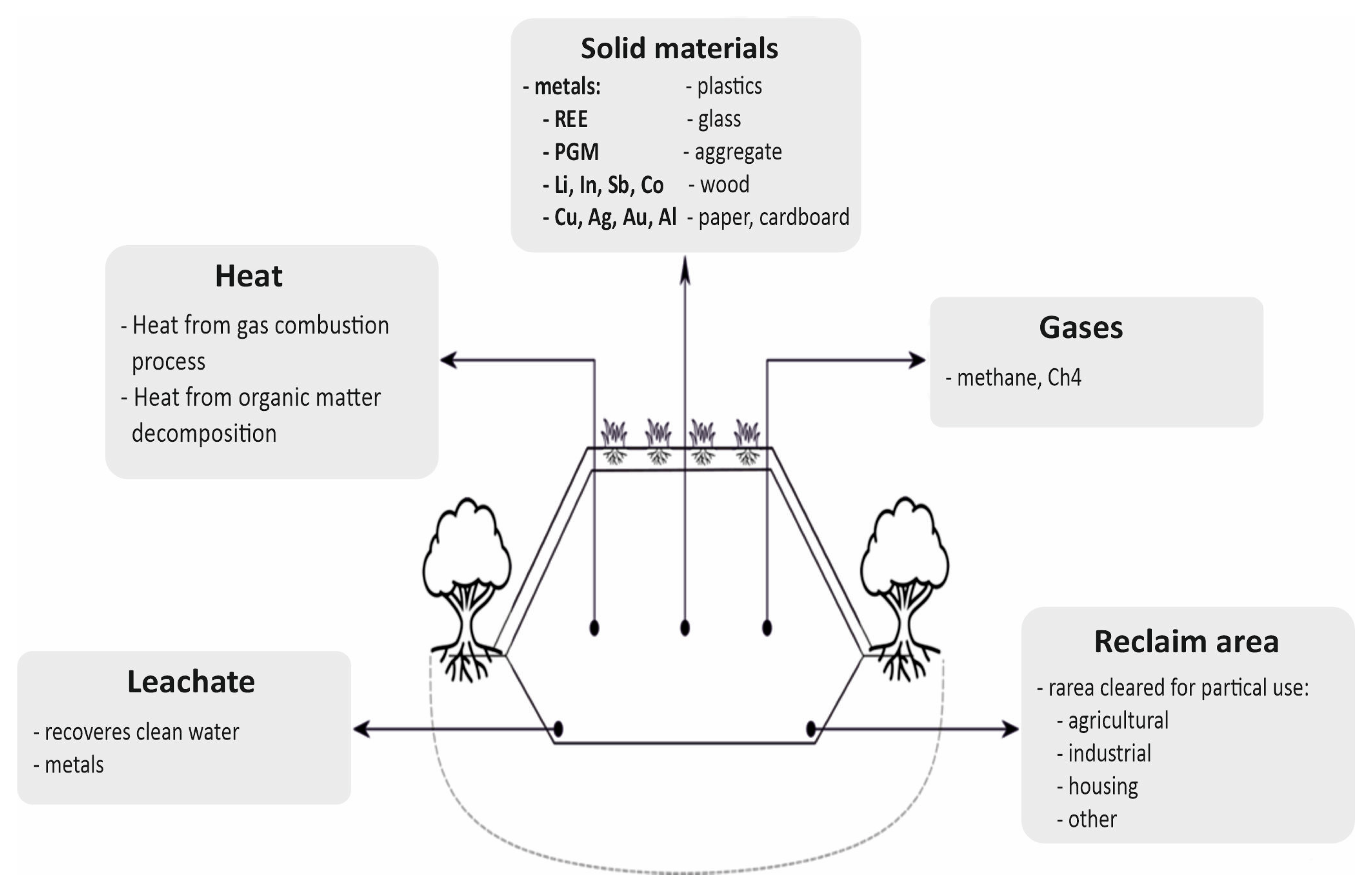
The list continues with secondary sources (waste mining/urban mining). This area is fundamental to CE and includes the recovery of raw materials from products whose life cycle has finished, as well as from industrial and municipal waste. According to the Global E-Waste Monitor report 2024 [19], in 2022 Europe generated 62 × 106 Mg of e-waste, of which only 22.3% was collected and recycled. It is a small number, if considered that, e.g., 1 Mg of cell phones may provide 130 kg of copper, 3.5 kg of silver, 340 kg of gold, and 140 kg of palladium [20,21,22]. On the other hand, an average end-of-life vehicle (ELV) contains 700–1000 kg of steel, 100–200 kg of aluminum, 20–50 kg of plastic materials, and smaller amounts of copper and precious metals—approx. 25–75 kg. The annual production of construction and demolition waste (CDW) is also estimated at 800–900 × 106 Mg, with their 70% recycling coefficient. In Europe, the production of aluminum from secondary sources saves 85% energy in the case of copper recycling and 59% in the case of steel recycling. Mining waste (deposited in waste heaps and tailings ponds) has equally high potential for use, with its extent in Europe estimated at above 20 × 109 Mg and annual production at approximately 700 × 106 Mg [5] (Figure 8). Key technologies used in the recovery of elements deposited in mining and processing waste rely on modern AI-based waste classification techniques, optical sensors, robotics for disassembly, or specialist metallurgical processes (pyro- and hydrometallurgy) [22,23,24,25,26,27,28]. It should be noted, however, that the recovery of raw materials deposited in mining processing waste heaps requires modern and effective technologies, which allow for environmental aspects. The quantity deposited in Lower Silesia is significant. For example, only one pond in Wartowice (an old basin) contains more than 20 × 106 Mg of tailings, with concentrations of 0.3% Cu, 14 ppm of Ag, and more than 12 ppb of Au, Pt, or Pd. The total quantity of tailings deposited in several ponds, including the largest one in Żelazny Most, is estimated at above one billion metric tons [29].
Figure 8.
Categories of raw materials potentially recoverable from municipal waste deposits.
Sources of raw materials further include hybrid sources/materials engineering, which lead to new possibilities regarding the diversity of metals in modern technologies. (Figure 9).
Figure 9.
Metals used in electricity-producing devices [30].
The resource potential of such elements as REE, PGM, helium, hydrogen, or water may also be increased with resources obtained from extraterrestrial objects (originating from asteroids), the so-called space resources [31,32].
Importantly, raw materials are also obtained by developing new composite materials, biomaterials, or nanomaterials with unique properties that can reduce the material intensity of manufacturing processes while maintaining or improving the functionality of the final product. Such applications may involve beryllium, copper, graphene with copper, etc. [33,34]. Another important aspect is also circular design (eco-design). An appropriate approach may result in more durable products, which can be more easily repaired, disassembled, and recycled.
4. Decoupling Paradigms
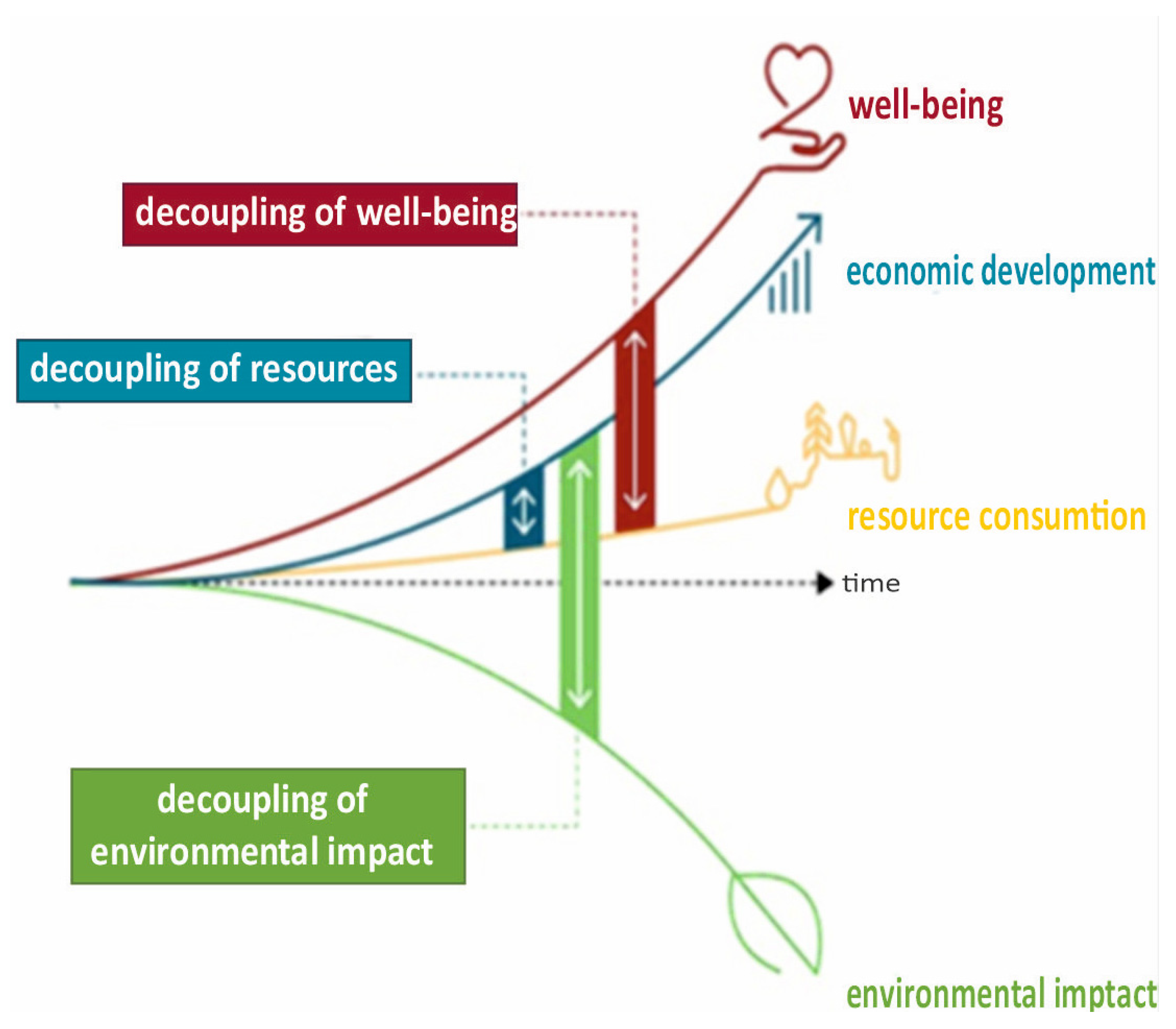
The concept of decoupling, i.e., the separation of economic growth from the consumption of natural raw materials and negative environmental impacts, is foundational to the principles of sustainable development and the circular economy (Figure 10). This concept is also the main goal of half of the national programs implemented by European Union member states in order to prevent the generation of waste [35].
Figure 10.
The concept of decoupling [36].
Decoupling may take different forms; therefore, the concept is applied to two main areas:
- -
- Resource decoupling, which consists of reducing the consumption of natural resources (water, terrain, energy, and abiotic resources) per unit of the final product or gross domestic product (GDP) [37];
- -
- Impact decoupling, which is related to reducing the negative impact of human economic activity on the environment, e.g., greenhouse gas emissions, water contamination, and loss of biodiversity per GDP unit, regardless of the quantity of the consumed resources [37,38].
Both of the above decoupling types may be relative, defining the resource consumption rate or the negative impact to economic growth rate. The concept also involves absolute decoupling, where case resource consumption and environmental impact decrease independently from economic growth.
- Another important idea linked to decoupling is resource-efficiency, defined by six rules:
- -
- CE—reducing the use of raw materials and waste generation;
- -
- Cascading use of raw materials generating the greatest added value—effective use of raw materials through the use of production residues (waste and by-products) [39];
- -
- Prioritization of waste processing—effective waste management based on a five-level model: waste prevention (1), reuse (2), recycling (3), energy recovery (4), and disposal/landfilling (5) [40];
- -
- Extended producer responsibility—responsibility for the entire product life cycle, including end-of-life waste management [41];
- -
- Industrial symbiosis—cooperation between two or more industrial plants, where the waste or by-products of one plant are used as raw materials by the others [42];
- -
- New business models—an innovative approach to business that define new standards [43].
5. Limits to the Growth of the Mining Industry
Despite its great potential, the growth of traditional industry, and attempts at introducing circular economy, the mining industry still encounters numerous barriers and challenges to its growth. The first barrier is the accessibility of strategic and critical raw materials, terrain, and water. This problem results from the fact that many critical raw materials are concentrated in a limited number of countries, which are frequently geopolitically unstable, leading to the risk of supply chain disruption and geopolitical dependencies. An example is Lower Silesia, where over 1000 anthropogenic objects containing useful raw materials have been identified. The lack of appropriate, dedicated technology means that this very large raw material stream is not utilized, even though, for example, copper industry waste contains a number of elements with high content, e.g., Cu over 1% and Zn over 4%. The need to develop effective technology would allow the existing anthropogenic raw material base to be used to meet social needs as part of the zero-waste concept.
The second problem results from competing land-use demands, as valuable deposits are increasingly often located in environmentally sensitive or urbanized areas. Access to such areas is denied to companies involved in mining activities, mineral processing, or mining waste disposal. Another barrier to the development of mining and waste processing based on hydrometallurgical and floatation technologies, particularly in areas suffering from significant water deficits, results from access to water and sustainable use of mining waters.
Further challenges include the single largest order (SLO). This is a concept used to indicate the level of public acceptance for mining projects. Unfortunately, new mining projects and waste disposal face lack of acceptance [44,45,46]. The mining industry notices its influence on the environmental and social resources, and the concept of corporate social responsibility (CSR) has therefore been introduced [47,48]. It plays an important role in communication between the mining industry and society. However, society is still not fully aware of the effects of mining and mineral resources on its quality of life, which contributes to negative perception and resistance to the industry. Therefore, a compromise is needed, as the goals of the mining industry and the economy should complement each other rather than exclude each other. It is necessary to demonstrate that the impact on natural environment at the stage of mineral extraction is a temporary inconvenience that disappears once the deposit has been mined. In subsequent stages, the post-mining area can offer new natural, economic, recreational, or landscape values [49,50,51,52,53,54,55]. Building the trust of local communities is often a formidable barrier even if the investment process is fully transparent.
Another barrier, encompassing both technological and social challenges, is the productivity of the industry, including the mining sector. For example, in ore mining, a long-term decline in ore grades affects the costs and productivity of mining operations. This phenomenon is also related to the availability of financial capital, as other sectors showing greater productivity compete with the mining industry for sustainable financing. Low productivity of the mining industry also translates into limited competitiveness of mined products.
Challenges to the mining industry also include environmental protection, life cycle assessment (LCA), carbon footprint (CFP), water footprint (WFP), environmental footprint (EFP), and land-use intensity (LUI). These challenges result from the requirement to meet environmental standards (as per ISO 14001 or EMAS) regarding both primary and secondary mining operations, which follow the goals of sustainable development. The environmental evaluation of mining processes is typically performed following the LCA standard, which is helpful in identifying the CFP, WFP, EFP, and LUI of a mining project and requires a new approach to the employed technologies and investments.
The two last barriers are competitiveness and adjusting competencies/education to the needs of the mining industry. In the case of the latter barrier, the challenge consists of teaching engineering skills in areas related to geological and mining technologies, digital (AI) technologies, process management, as well as environmental and social studies and circular economy. Market demand in the area of waste management, including circular economy, translates into a demand from companies for skills in broadly defined mining engineering, land reclamation, and circular economy. On the other hand, competitiveness is related to modern products and the costs of energy. Reindustrialization based on modern technologies developed in Poland may provide additional security in the current geopolitical situation, as a strong industry is vital for national security.
6. Challenges to Business Are Challenges for Polish Science
Circular economy is a method for meeting public and social demand, and the related challenges are problems faced by science. In addition, attention should be given at all times to the implementation of global Sustainable Development Goals related to the implementation and enforcement of the principles of circular economy. The mining and recycling industry is energy-intensive; therefore, access to low-cost and reliable sources of energy is a key challenge to increasing its economic competitiveness. The integration of renewable energy sources with production processes, particularly the use of mining infrastructure for energy production, is both a technological and an organizational challenge. The use of mining infrastructure for energy storage, cool thermal energy storage, or electricity production is a potential method for providing heat and electricity to local communities. This is in compliance with Goals 13 and 15 of the Sustainable Development Goals (Climate Action and Life on Land). One of the important challenges related to the use of heat from hydrothermal or petrothermal geofluid is the application of down-the-hole heat exchangers, which limit the hazards and costs of treating mineralized waters/brines while offering a possibility to recover useful minerals.
These aspects, in turn, indicate the implementation of Sustainable Development Goals 9, 12, 13, and 15 (Industry, Innovation, and Infrastructure, Responsible Consumption and Production, Climate Action, and Life on Land).
The resource-efficiency principle requires not only modern technologies which minimize water and energy consumption but also designs of highly durable products, which can be repaired and, most importantly, recycled. The scientific challenge in this case is to develop such products that would require a minimum consumption of primary raw materials, as well as to offer technologies for recovering raw materials from waste with low concentrations of metals and methods for designing circular products by employing, e.g., IoT or digital twins.
The competitiveness of Polish companies is pursued by investing in innovations, automatization, process digitalization, development of stable supply chains based on secondary raw materials, and by expanding into new markets. In this area, science is expected to provide novel technologies for extractive metallurgy, which would allow zero-waste management of gangue, e.g., phosphogypsum comprising appreciable quantities of REEs and binding materials, as well as materials stored in post-smelting waste heaps of nickel, copper, zinc, and lead ores or in coal ash disposal sites. In the exploration strategy, it is better to explore the deposits in terms of accompanying minerals, as well as to search for elements with similar properties that could potentially replace rare elements, e.g., Li vs. Na in batteries.
The production of materials and dual-use components strategically important in civil and military sectors requires reliability, high quality, and secure supply chains. Here, the task for science is to perform research on new materials having unique and defined properties, e.g., durability or resistance to high temperatures (for use inter alia in deep geothermal projects) and corrosion.
The challenge of providing novel technologies for extractive metallurgy and recycling industry that would allow zero-waste management of gangue, e.g., phosphogypsum comprising appreciable quantities of REEs and binding materials, as well as the production of dual-use materials and components, is also a measure that fits into the implementation of the Sustainable Development Strategy through Goal 12, Responsible Consumption and Production.
7. Conclusions
As far as securing the supply of raw materials is concerned, CE is not just an idea, but a necessity. Although to date it has not yet demonstrated spectacular effects, the strategy can be very important in the long term. In light of the growing economic nationalism and isolationism accompanied by an increase in the demand for strategic and critical raw materials, it offers a chance to meet the goals defined for secondary raw materials in the Critical Raw Materials Act. A significant potential for satisfying the demand for critical metals is observed in urban mining of e-waste, whose annual production in Europe is at 62 × 106 Mg.
Modern technologies (AI, robotics, new separation and processing methods, materials engineering, digital platforms) are necessary at raw materials value chain.
Cooperation between science and business is foundational to the modern Industry 4.0 employing primary and secondary raw materials, which are decisive for the security and productivity of this industry. Modern industry is a competitive industry.
Although all of the above-discussed issues are important, there is a need for a systemic approach, which would involve legal and economic instruments to allow an effective implementation of such strategic goals in Polish industry.
The implementation of the concept of sustainable development in the context of increasing the supply of raw materials for a modern economy is a key element related to social and environmental policy. All the issues discussed in the publication fit into the subject concept through the implementation of the four Sustainable Development Goals, such as Industry, Innovation, and Infrastructure (Goal 9), Responsible Consumption and Production (Goal 12), Climate Action (Goal 13), and Life on Land (Goal 15).
Author Contributions
Conceptualization, H.W.; methodology, H.W. and U.K.; software, U.K.; validation, U.K.; formal analysis, U.K.; investigation, H.W. and U.K.; resources, H.W.; data curation, H.W.; writing—original draft preparation, H.W. and U.K.; writing—review and editing, U.K.; visualization, H.W. and U.K.; supervision, U.K.; project administration, U.K. All authors have read and agreed to the published version of the manuscript.
Funding
This research received no external funding.
Institutional Review Board Statement
Not applicable.
Informed Consent Statement
Not applicable.
Data Availability Statement
The data presented in this study are available on request from the corresponding author.
Conflicts of Interest
The authors declare no conflicts of interest.
References
- Global Resources Outlook 2024, Bend the Trend, UNEP, International Resource Panel. Available online: https://www.resourcepanel.org (accessed on 22 June 2025).
- De Wit, M.; Haigh, L. The CIRCULARITY GAP Report, 5th ed; Circle Economy: Amsterdam, The Netherlands, 2022; 26p. [Google Scholar]
- Kaźmierczak, U.; Wirth, H.; Duchnowska, M. Role of Geoenergy in Meeting Sustainable Development Goals. Energies 2025, 18, 5747. [Google Scholar] [CrossRef] [Scilit]
- Państwowa Służba Geologiczna. Bilans Zasobów Złóż Kopalin w Polsce wg stan una 31 XII 2024 r; Państwowy Instytug Geologiczny: Warsaw, Poland, 2025; p. 518. Available online: https://www.pgi.gov.pl/images/surowce/2024/bilans_2024.pdf (accessed on 23 May 2025).
- Eurostat. 2020. Available online: https://ec.europa.eu/eurostat (accessed on 22 July 2025).
- Ciszewska, M.; Paca, D.; Patorska JPichola, I. Circular Economy—Open Possibilities. In Proceedings of the EEC Green conference, Katowice, Poland, 2–5 December 2018; Available online: https://gabrielalenartowicz.pl/wp-content/uploads/2019/05/RAPORT-obieg-zamkniety-odpady-1.pdf (accessed on 5 October 2025). (In Polish)
- Schiller, G.; Roscher, J. Impact of urbanization on construction material consumption: A global analysis. J. Ind. Ecol. 2023, 27, 1021–1036. [Google Scholar] [CrossRef] [Scilit]
- Yeh, C.T.; Huang, S.L. Global Urbanization and Demand for Natural Resources. In Carbon Sequestration in Urban Ecosystems; Lal, R., Augustin, B., Eds.; Springer: Dordrecht, The Netherlands, 2012. [Google Scholar] [CrossRef] [Scilit]
- Varghese, A.M.; Pradhan, A.P. Transportation infrastructure and economic growth: Does there exist causality and spillover? A Systematic Review and Research Agenda. Transp. Res. Procedia 2025, 82, 2618–2632. [Google Scholar] [CrossRef] [Scilit]
- Brych, M.; Mania, M.; Patla, S.; Rogosz, S. Mineral Resources and Extraction for Aggregate Production in Świętokrzystki Region in the Light of Road Infrastructure Development; Prace Naukowe Instytutu Górnictwa Politechniki Wrosławskiej: Wrocław, Poland, 2013; Volume 136, Available online: http://www.miningscience.pwr.edu.pl/pdf-59794-3199?filename=Mineral%20resources%20and.pd (accessed on 10 November 2025). (In Polish)
- Pommeret, A.; Ricci, F.; Schubert, K. Critical raw materials for the energy transition. Eur. Econ. Rev. 2022, 141, 103991. [Google Scholar] [CrossRef] [Scilit]
- Lundaev, V.; Solomon, A.A.; Le, T.; Lohrmann, A.; Breyer, C. Review of critical materials for the energy transition, an analysis of global resources and production databases and the state of material circularity. Miner. Eng. 2023, 203, 108282. [Google Scholar] [CrossRef] [Scilit]
- McKinsey & Company. Materials Critical for Transition to a Low Carbon Economy by Technology Type. 2022. Available online: https://www.mckinsey.com/industries/metals-and-mining/our-insights/the-raw-materials-challenge-how-the-metals-and-mining-sector-will-be-at-the-core-of-enabling-the-energy-transition (accessed on 4 January 2025).
- McKinsey & Company. Global Material Perspective. 2024. Available online: https://www.mckinsey.com/industries/energy-and-materials/our-insights/global-materials-perspective (accessed on 4 January 2025).
- Pavel, C.C.; Tzhimas, E. Raw Materials in the European Defence Industry. JRC Science for Policy Report. 2016. Available online: https://setis.ec.europa.eu/system/files/2021-02/raw_materials_in_the_european_defence_industry.pdf (accessed on 5 January 2026).
- Nwaila, G.T.; Frimmel, H.E.; Zhang, S.E.; Bourdeau, J.E.; Tolmay, L.C.K.; Durrheim, R.J.; Ghorbani, Y. The minerals industry in the era of digital transition: An energy-efficient and environmentally conscious approach. Resour. Policy 2022, 78, 102851. [Google Scholar] [CrossRef] [Scilit]
- Mikulski, Z.; Oszczepalski, S.; Sadłowska, K.; Gmielweski, R.; Malek, R. Występowanie pierwiastków towarzyszących i krytycznych w wybranych udokumentowanych złożach rud Zn-Pb, Cu-Ag, Fe-Ti-V, Mo-Cu-W, Sn, Au-As w Polsce. Biul. Państw. Inst. Geol. 2018, 472, 21–52. [Google Scholar] [CrossRef] [Scilit]
- Kozłowski, S. The origin of meteorite constituents. Acta Soc. Metheoriticae Pol. 2023, 14, 100–113. Available online: https://www.ptmet.org.pl/wydawnictwa/acta-societatis-metheoriticae-polonorum/ (accessed on 5 January 2026).
- Baldé, C.P.; Kuehr, R.; Yamamoto, T.; McDonald, R.; D’Angelo, E.; Althaf s Bel, G.; Deubzer, O.; Fernandez-Cubillo, E.; Forti, V.; Gray, V.; et al. The Global E-Waste Monitor 2024; International Telecommunication Union and United Nations Institute for Training and Research: Geneva, Switzerland, 2024. [Google Scholar]
- UNEP International Resource Panel. Assessing the Environmental Impacts of Consumption and Production: Priority Products and Materials—Summary; UNEP: Nairobi, Kenya, 2010. [Google Scholar]
- UNEP International Resourse Panel. Recycling Rates of Metals. A Status Report; UNEP: Nairobi, Kenya, 2011. [Google Scholar]
- UNEP International Resource Panel. Decouping 2. Technologies, Opportunities and Policy Options; UNEP: Nairobi, Kenya, 2014. [Google Scholar]
- Whitworth, A.J.; Vaughan, J.; Southam, G.; Van der Ent, A.; Nkrumah, P.; Ma, X.; Parbhakar-Fox, A. Review on metal extraction technologies suitable for critical metal recovery from mining and processing wastes. Miner. Eng. 2022, 18, 107537. [Google Scholar] [CrossRef] [Scilit]
- Abbadi, A.; Mucsi, G. A review on complex utilization of mine tailings: Recovery of rare earth elements and residue valorization. J. Environ. Chem. Eng. 2024, 12, 113118. [Google Scholar] [CrossRef] [Scilit]
- Matebese, F.; Mosai, A.K.; Tutu, H.; Tshentu, Z.R. Mining wastewater treatment technologies and resource recovery techniques: A review. Heliyon 2024, 10, e24730. [Google Scholar] [CrossRef] [Scilit]
- Chowdhury, M.O.S.; Talan, D. From waste to wealth: A circular econom approach to the sustainable Recovery of rare earth elements and battery metals from mine tallings. Separations 2025, 12, 52. [Google Scholar] [CrossRef] [Scilit]
- Sarker, S.K.; Haque, N.; Bhuiyan, M.; Bruckard, W.; Pramanik, B.K. Recovery of strategically important critical minerals from mine tailings. J. Environ. Chem. Eng. 2022, 10, 107622. [Google Scholar] [CrossRef] [Scilit]
- Yıldız, T.D. Opportunities for the Recovery of Rare Earth Elements from Mining Tailings and Urban Mining. In Trash or Treasure; Singh, P., Borthakur, A., Eds.; Springer: Cham, Switzerland, 2024. [Google Scholar] [CrossRef] [Scilit]
- Wirth, H. Wybrane Zasoby Surowców Dolnego Śląska i Perspektywy ich Zagospodarowania. KGHM Cuprum. 2006. Available online: https://journals.indexcopernicus.com/search/journal/issue?issueId=all&journalId=24518 (accessed on 5 January 2026).
- Wirth, H. The Development of Mining in Poland. The Attractiveness of Mining Projects in Poland and Their Impact on Regional Development; Interreg Sachsen-Polen: Wroclaw, Poland, 2017. Available online: https://www.wug.gov.pl/download/8_prof.-H.-Wirth-Rozwoj-gornictwa-w-Polsce-Atrakcyjnosc-inwestycji-gorniczych-w-Polsce-i-ich-wplyw-na-rozwoj-regionow,6597.pdf/view (accessed on 23 March 2025). (In Polish)
- Przylibski, T.A.; Szczęśniewicz, M.; Blutstein, K. Are there nautral analogues of Moon rocks in Lower Silesia? Pol. Geol. Rev. 2024, 72, 26–45. (In Polish) [Google Scholar] [CrossRef] [Scilit]
- Martínez-Jiménez, M.; Moyano-Cambero, C.E.; Trigo-Rodríguez, J.M.; Alonso-Azcárate, J.; Llorca, J. Asteroid mining: Mineral resources in undifferentiated bodies from the chemical composition of carbonaceous chondrites. In Assessment and Mitigation of Asteroid Impact Hazards; Trigo-Rodríguez, J., Gritsevich, M., Palme, H., Eds.; Springer: Cham, Switzerland, 2017; Volume 46. [Google Scholar]
- Favi, C.; Marconi, M. Poduct Eco-Design in the Era of the Circular Economy. Sustainabillity 2025, 17, 213. [Google Scholar] [CrossRef] [Scilit]
- Doorsselaer, K.V. Chapter 12—The role of ecodesign in the circular economy. In Circular Economy and Sustainability; Stefanakis, A., Nikolaou, I., Eds.; Elsevier: Amsterdam, The Netherlands, 2022. [Google Scholar] [CrossRef] [Scilit]
- EEA Report. Waste Prevention in Europe—The Status in 2013, 2014; European Environment Agency No 9/2014; EEA: Copenhagen, Denmark, 2014. [Google Scholar]
- Fischer-Kowalski, M.; Swilling, M.; von Weizsäcker, E.U.; Ren, Y.; Moriguchi, Y.; Crane, W.; Krausmann, F.; Eisenmenger, N.; Giljum, S.; Hennicke, P.; et al. UNEP IRP 2011. Decoupling Natural Resources Use and Environmental Impact from Economic Growth. Report of the Working Group on Decoupling to the International Resource Panel. Available online: https://www.unep.org/resources/report/decoupling-natural-resource-use-and-environmental-impacts-economic-growth (accessed on 23 March 2025).
- Kopeć, E.; Kulczycka, J. Modelling and Visualization Tools for Resource Decoupling at Meso- and Micro-Levels: Case Study in Poland. Resources 2025, 14, 66. [Google Scholar] [CrossRef] [Scilit]
- Nyangchak, N. Emerging green industry toward net-zero economy: A systematic review. J. Clean. Prod. 2022, 378, 134622. [Google Scholar] [CrossRef] [Scilit]
- Campbell-Johnston, K.; Vermeulen, W.J.V.; Reike, D.; Brullot, S. The Circular Economy and Cascading: Towards a Framework. Resour. Conserv. Recycl. 2020, 7, 100038. [Google Scholar] [CrossRef] [Scilit]
- Zalewska, J. Waste menagement system in Poland—Current state and directions of improvement. Econ. Organ. Logist. 2019, 4, 103–113. (In Polish) [Google Scholar] [CrossRef] [Scilit]
- Cai, Y.J.; Choi, I.M. Extended producer responsibility: A systematic review and innovative proposals for improving sustainability. IEEE Trans. Eng. Manag. 2019, 68, 272–288. [Google Scholar] [CrossRef] [Scilit]
- Neves, A.; Godina, R.; Azevedo, S.G.; Matias, J.C.O. A comprehensive review of industrial symbiosis. J. Clean. Prod. 2020, 247, 119113. [Google Scholar] [CrossRef] [Scilit]
- Broekhuizen, T.L.J.; Bakker, T.; Postma, T.J.B.M. Implementing new business models: What challenges lie ahead? Bus. Horiz. 2018, 61, 555–566. [Google Scholar] [CrossRef] [Scilit]
- Woźniak, J.; Jurczyk, W. SLO in CSR perspective—A comparative case study from Poland (2018–2020). Resour. Policy 2022, 77, 102654. [Google Scholar] [CrossRef] [Scilit]
- Komnitsas, K. Special license to operate in mining: Present views and future trends. Resources 2020, 9, 79. [Google Scholar] [CrossRef] [Scilit]
- Lesser, P.; Gugerel, K.; Poelzer, G.; Hitch, M.; Tost, M. European mining and the social license to operate. Extr. Ind. Soc. 2021, 8, 100787. [Google Scholar] [CrossRef] [Scilit]
- Yousefian, M.; Bascompta, M.; Sanmiquel, L.; Vintró, C. Corporate social responsibility and economic growth in the mining industry. Extr. Ind. Soc. 2023, 13, 101226. [Google Scholar] [CrossRef] [Scilit]
- Garcia-Ortega, B.; Catalá-Pérez, D.; de-Miguel-Molina, B.; de-Miguel-Molina, M. Corporate Social Responsibility Challenges in the Mining Industry and ISO 26000. In The Strategic Paradigm of CSR and Sustainability. Palgrave Studies in Governance, Leadership and Responsibility; Poveda-Pareja, E., Marco-Lajara, B., Úbeda-García, M., Manresa-Marhuenda, E., Eds.; Palgrave Macmillan: Cham, Switzerland, 2024. [Google Scholar] [CrossRef] [Scilit]
- Kaźmierczak, U.; Lorenc, M.W.; Marek, P.; Rajczakowska, D. Examples of good practices in the reclamation on use of abandoned quarries. Geoheritage 2024, 16, 1–16. [Google Scholar] [CrossRef] [Scilit]
- Lim, B.; Alorro, R.D. Technospheric Mining of Mine Wastes: A Review of applications and Challenges. Sustain. Chem. 2021, 2, 686–706. [Google Scholar] [CrossRef] [Scilit]
- Baczyńska, E.; Lorenc, M.W.; Kaźmierczak, U. Research on the landscape attractiveness of the selected abandoned quarries. Int. J. Min. Reclam. Environ. 2017, 32, 401–419. [Google Scholar] [CrossRef] [Scilit]
- Moshammer, B.; Uhlir, C.; Rohatsch, A.; Unterwurzacher, M. Adnet ‘Marble’, Untersberg ‘Marble’ and Leitha Limestone—Best examples expressing Austria’s. physical cultural heritage. In Engineering Geology for Society and Territory; Lollino, G., Manconi, A., Guzzetti, F., Culshaw, M., Bobrowsky, P., Luino, F., Eds.; Springer: Cham, Switzerland, 2015; Volume 5. [Google Scholar] [CrossRef] [Scilit]
- Skoczylas, J. Adaptation of the old limestone quarry in Malta for tourism. Geoturystyka 2008, 1, 41–48. (In Polish) [Google Scholar]
- Pijet-Migon, E.; Migon, P. New Geo-and Mining Heritage-Based Tourist Destinations in the Sudetes (SW Poland)-Towards More Effective Resilience of Local Communities. Sustainability 2024, 16, 5626. [Google Scholar] [CrossRef] [Scilit]
- Szepesi, J.; Esik, Z.; Novak, T.J.; Jozsef, I.; Suto, L.; Harangi, S.; Lukacs, R. Volcanic tuff as a World Heritage Georesource, a Case Study of Tokaj Wine Region UNESCO Cultural Landscape. Geohertiage 2024, 16, 126. [Google Scholar] [CrossRef] [Scilit]
Disclaimer/Publisher’s Note: The statements, opinions and data contained in all publications are solely those of the individual author(s) and contributor(s) and not of MDPI and/or the editor(s). MDPI and/or the editor(s) disclaim responsibility for any injury to people or property resulting from any ideas, methods, instructions or products referred to in the content. |
© 2026 by the authors. Licensee MDPI, Basel, Switzerland. This article is an open access article distributed under the terms and conditions of the Creative Commons Attribution (CC BY) license.