


Abstract
Digital technologies have become increasingly crucial during and, after the COVID-19 pandemic, have sparked significant scientific interest around their impact on sustainable well-being. Despite extensive research, conclusive evidence on whether digital technologies enhance or undermine sustainable well-being remains elusive. Saudi Arabia has made significant progress in its technological infrastructure, but comprehending the implications of this progress still poses a challenge. Drawing on the prior literature and grounded in the theoretical perspective of the Capability Approach, this study proposes five dimensions of digital inclusion (accessibility, usability, digital skills, affordability, and connectivity) and examines their collective influence on students’ sustainable well-being, specifically happiness and life satisfaction. This study employs a cross-sectional design, with data collected from 238 university students in Saudi Arabia using convenience sampling. Ten hypotheses were tested using partial least squares structural equation modeling in SmartPLS-4. This study supports the conceptualization of digital inclusion as a multidimensional construct comprising five key dimensions. The results indicate that affordability, usability, connectivity, and digital skills have a substantial impact on happiness, whereas accessibility, usability, connectivity, and digital skills have a considerable effect on life satisfaction. Nonetheless, the correlations between accessibility and happiness, as well as between affordability and life satisfaction, were not found to be supported. This implies that these dimensions might have different effects on the affective and cognitive aspects of sustainable well-being. These results suggest that digital inclusion may play a role in shaping individuals’ interactions with technology and their perceived sustainable well-being. This study proposes and evaluates a strategic framework that may guide efforts to promote digital inclusion and support sustainable well-being among university students. It provides valuable insights for policymakers, educational institutions, and industry stakeholders seeking to enhance digital access and capabilities. The findings highlight the potential value of developing strategies that address students’ digital needs as part of a holistic approach to sustainable well-being. The findings also highlight the importance of viewing digital inclusion as an interconnected framework, rather than as a set of discrete, unrelated factors. By demonstrating how digital inclusion promotes sustainable well-being, this study contributes to the broader sustainability agenda by highlighting digital equity as an essential component of socially sustainable development in the Saudi context.
1. Introduction
Computers, smartphones, Wi-Fi, and other digital technologies have become essential to daily life [1]. Due to the significant need for information in contemporary society, technology plays a vital role in shaping the future [2]. It is used across many sectors and is integrated into our everyday routines [3]. Education is a sector that has been revolutionized by technological advancements [4,5]. Digital technologies in education, a subject that is sometimes overlooked in the teaching profession, are gaining increasing popularity globally. The rapid implementation and progression of the internet and digital technologies have transformed how individuals read, write, communicate, and assimilate knowledge [6]. Their adoption by society has altered our interactions with ourselves, one another, and our surroundings, including our connections with others, the organization of information flow, and the sharing of viewpoints [7].
The internet has had a profound impact on individuals and major economies. As of 2024, the global number of internet users exceeds 5.44 billion, representing 67.1 percent of the world’s population—indicating that approximately two-thirds of the global population is now connected to the internet. Of this number, 5.17 billion internet users (63.7 percent of the world population) were social media users [8]. At the beginning of 2024, the Kingdom of Saudi Arabia (KSA) had 36.84 million internet users, with internet penetration reaching 99.0 percent. In January 2024, the number of social media users in Saudi Arabia had reached 35.10 million, representing 94.3 percent of the entire population [9]. Notably, the proportion of the population with an internet connection has consistently increased in recent years. It is projected to grow from 2024 to 2029 [10]. In early 2024, KSA had 49.89 million active cellular mobile connections, representing 134.1 percent of the total population [9].
Despite the rising worldwide internet penetration rate, the “digital divide” persists and continues to generate disparities in individuals’ access to and effective use of technology [11,12]. The World Benchmarking Alliance [1] asserts that universal access to digital technology is essential. Otherwise, current imbalances will intensify as the divide between the hyper-digitalized and under-connected widens. The World Economic Forum [13] further substantiates the fact that most of the global population resides in regions served by broadband networks. However, 2.6 billion individuals, or 33% of the world’s population, continue to live disconnected and marginalized. This is largely due to ongoing obstacles to connectivity, including the high cost of data and devices, inadequate access to digital infrastructure, and a lack of digital skills and expertise.
Digital inclusion, which envisions “a world where everyone has equitable opportunities to participate using digital technologies” [14], has become critical for improving individuals’ life outcomes. It refers to efforts aimed at closing the digital divide by ensuring that all people, regardless of socioeconomic status, location, age, or ability, have access to affordable digital devices, reliable internet, and the digital skills needed to use them proficiently. Hence, the literature suggests that five elements are essential for every digital inclusion effort: accessibility, usability, connectivity, affordability, and digital skills—henceforth referred to as AUCADS.
Accessibility refers to the extent to which individuals can physically reach and use digital technologies [15,16], including devices (computers, smartphones, and tablets) and internet services, regardless of their physical ability, geographic location, or socioeconomic status [17,18]. Affordability refers to the cost of accessing and using digital technologies and services in relation to a person’s income or financial capacity [15,16,19]. Usability refers to the degree to which digital technologies are simple to use, intuitive, and user-friendly, enabling users to efficiently and effectively achieve their goals. Connectivity refers to the quality, consistency, and speed of internet access available to users [20], which enables them to engage in digital activities without interruption. Digital skills refer to the abilities necessary to effectively and safely utilize digital technologies, encompassing basic operational skills, information literacy, communication, and problem-solving in digital environments [20,21,22]. However, while the literature has discussed elements of digital inclusion, it has done so in a fragmented manner. No study has yet brought together all five elements of digital inclusion and linked them to sustainable well-being outcomes.
KSA has been making progress in digital access over the last few years, driven by the Vision 2030 Agenda and the National Transformation Plan 2020. These plans focus on digitalization, human capital development, social sustainability, networking, digital literacy, and the adoption of information and communication technology in government and public service delivery as core strategic pillars [23,24]. Significant investments have been made in digital infrastructure, e-government, and educational technologies, resulting in high levels of connectivity and access to technology. However, despite these advancements, several challenges remain unresolved. disparities persist in digital skills, affordability, effective use, and equitable access across different student groups. For instance. women and other disadvantaged groups are worse off in terms of connectivity and device penetration, particularly in rural areas. Therefore, steps must be taken to improve the quality and credibility of such content. Digital inclusion could also be a way for KSA to significantly enhance its positive impact on various population groups within the nation, thereby improving the general welfare of the people of KSA. Therefore, the presence of a highly developed digital infrastructure and current disparities in inclusion make Saudi Arabia a suitable location to explore how various aspects of digital inclusion together determine levels of happiness and life satisfaction among students. Moreover, focusing on Saudi university students also provides empirical data from an underrepresented Global South setting, adding to the predominantly West-centric literature on digital inclusion and well-being. By extension, it is precisely this context that is of particular interest and theoretically significant in the studies of the relationship between digital inclusion and the sustainable well-being of the students.
The conditions of our information atmosphere and the digital technologies that shape our connections increasingly intertwine with social and individual sustainable well-being [7]. Therefore, digital inclusion extends beyond accessibility. It focuses on how individuals use technology to enhance their overall sustainable well-being (promote mental and physical health) and foster positive social connections. However, while digital inclusion is crucial for fostering inclusive digital transformations, the current literature on digital inclusion and sustainable well-being faces significant criticism, primarily due to a lack of causal evidence [25], and research on the relationship between digital inclusion and sustainable well-being is at an impasse. Existing conceptual frameworks fail to capture the complexity of relationships between people and digital media. Furthermore, empirical studies on this complex relationship face criticism because of a lack of methodological rigor [19]. The results of empirical studies also yield inconsistencies [25,26]. For instance, Rutkowski and Saunders [27,28] and Shalaby [27,28] argued that persistent engagement with digital tools without proper boundaries can lead to cognitive overload and digital fatigue. Stonebanks and Shariff [29,30], and Spears [29,30] stressed that digital inclusion, without protective digital citizenship education, may increase youth vulnerability to cyberbullying. Similarly, Büchi et al. [31] posited that merely providing access without skills leads to a second-level digital divide, which can further isolate disadvantaged individuals. Quach et al. [32] argued that digital platforms often collect personal data without informed consent, raising concerns about surveillance and digital autonomy. Additionally, Pellegrino [33] cautioned that digital environments may intensify social comparison and pressure, particularly among adolescents.
Despite ongoing research, new issues and challenges related to digital inclusion persist for both academia and policymakers, rendering it a complex and continually evolving societal concern. Rapid ICT development, along with the advent of new digital media, applications, and skills, has added to this complexity. Technologies such as artificial intelligence, the Internet of Things, and autonomous cars exemplify the automation and digitalization of tasks across various sectors. Consequently, further research is essential to develop our knowledge of digital inclusion, its enablers, and its intended and unintended consequences [34].
In an effort to fill this gap, the present research employs the Capability Approach to assess the combined influence of the quintuple dimensions of digital inclusion (AUCADS) on subjective sustainable well-being, specifically happiness and life satisfaction. Hence, this study aims to answer the following question: Does digital inclusion have a significant association with the sustainable well-being of students in the KSA?
Digital inclusion is increasingly recognized as a foundational pillar of sustainable development, as equitable access to digital resources enables individuals to participate fully in education, the economy, and society. As outlined in the United Nations’ Sustainable Development Goals (SDGs), particularly SDG 4 (Quality Education), SDG 9 (Industry, Innovation, and Infrastructure), and SDG 10 (Reduced Inequalities), universal and meaningful digital connectivity is essential for creating resilient and inclusive societies. In the context of Saudi Arabia, digital inclusion is directly aligned with the sustainability-oriented agenda of Vision 2030, which emphasizes human capability development, digital transformation, and long-term social prosperity.
By examining how the five dimensions of digital inclusion (AUCADS) influence happiness and life satisfaction, this study contributes to the sustainability literature by demonstrating how digital equity can promote sustainable well-being, a critical component of social sustainability. Understanding this connection provides policymakers with actionable insights for creating sustainable digital ecosystems that support not only education but also long-term societal welfare.
The remainder of the paper is organized as follows: The next section discusses the theory used in this study, followed by a literature review and the development of hypotheses. The study then discusses the creation of instruments and data collection processes. The findings and implications of this study are subsequently discussed. Finally, this paper outlines the conclusions, limitations, and directions for future research.
2. Theory, the Literature, and Hypothesis Development
There are several theories, models, and frameworks that explain sustainable well-being, such as Homeostatic Theory [35], Multiple Discrepancies Theory [33], Affective Cognitive Theory [36], Self-Determination Theory [37], and the PERMA model—which encompasses Positive Emotion, Engagement, Relationships, Meaning, and Accomplishment [38]—among others. Furthermore, to investigate digital inclusion, several theories have been posited and developed over the years, such as the Technology Acceptance Model, Van Dijk’s Model of Digital Technology Access, Digital Divide Theory, Spatially Aware Technology Utilization Model, Adoption-Diffusion Theory, Unified Theory of Acceptance and Use of Technology, and so on. However, while these frameworks and theories can help us understand the implications of digital technologies, they often overlook their impact on sustainable well-being [39]. Hence, the capability approach [40,41] is most suitable for the current study, as it explains sustainable well-being in the digital environment [42].
2.1. Capability Approach
The capability approach [40] evaluates sustainable well-being in terms of people’s quality of life, relying on three key concepts: functionings, capability, and conversion factors [41,43]. Functionings: These are the actual “beings and doings” that a person achieves, such as being healthy, being educated, and participating in social life, among others. Capabilities are the set of valuable functionings that a person has effective access to. It represents the real opportunities or freedoms available to an individual to achieve sustainable well-being. Conversion influences a person’s ability to convert resources (such as digital access) into actual functioning (e.g., emotional sustainable well-being) [44,45]. The theory focuses on individuals’ opportunities to achieve sustainable well-being through access to resources and their ability to convert these resources into valued outcomes [46,47].
Digital inclusion, which provides access to technology and internet connectivity, can be considered a resource that expands an individual’s capabilities. It has the potential to support various functionings relevant to emotional sustainable well-being [45]. Therefore, it is considered a resource. Emotional sustainable well-being, which encompasses happiness, life satisfaction, and mental health, is a key functioning that individuals strive to achieve. It is considered an outcome of enhanced capabilities. Hence, it is a functioning. Therefore, the Capability Approach offers a valuable lens for understanding the relationship between digital inclusion and emotional sustainable well-being [42,48,49].
The Capability Approach provides a strong theoretical bridge between digital inclusion and sustainability. By emphasizing individuals’ freedoms and opportunities to achieve valued outcomes, the framework aligns closely with sustainability principles that prioritize human empowerment, equity, and long-term well-being. Digital inclusion, in this context, enhances individuals’ digital capabilities that support continuous learning, social participation, and resilience key elements of sustainable societies.
2.2. Sustainable Well-Being in the Digital Era
Digital technologies enable individuals to remain “constantly online and perpetually connected” [50]. Smartphones are tapped, clicked, and swiped more than 2600 times each day [51]. A typical user engages with gadgets for 145 min, while more intensive users allocate 225 min daily to their small smartphone screen [52] a statistic that may exceed five hours for heavy users [52,53]. Consequently, individuals encounter a new obstacle, raising the issue of how to achieve a healthy equilibrium between connectedness and disconnection. In other words, how do they achieve wellness in the digital age? [26]. Consequently, new findings have led academics to examine the impact of psychological sustainable well-being on contemporary individuals [26]. In its most comprehensive definition, sustainable well-being refers to the state we achieve when we lead lives beneficial to us [54].
Researchers have proposed two primary methodologies for assessing sustainable well-being: subjective and objective [55]. Subjective sustainable well-being refers to “an individual’s assessment or proclamation of the quality of their life” [56,57]. It describes happiness in terms of enjoyment and contentment. It may include aspects such as maintaining wholesome relationships, having a purpose, and engaging with others in social groupings. According to psychosocial research, situational perception has a greater influence on people than objective reality [58]. Thus, this study focused on the subjective sustainable well-being of individuals, which relates to how people perceive and evaluate their lives, as well as specific spheres and activities within them. It is a statement or self-evaluation that individuals make about the caliber of their lives [57,59,60].
The concept of subjective sustainable well-being has captivated intellectuals for centuries; however, it has only recently been systematically evaluated and examined [61,62,63,64]. Since the 1980s, research on sustainable well-being has intensified significantly, with a consensus among positive psychology and social science scholars that sustainable well-being encompasses a cognitive-evaluative component (life satisfaction) and an affective component (happiness) [64,65,66,67,68]. Satisfaction is primarily a cognitive assessment influenced by social comparisons with significant reference groups and individual wishes, expectations, and aspirations. Happiness is defined as an emotional state resulting from both joyful and unpleasant events and experiences in an individual’s life [69,70,71]. Despite a certain empirical association—to varying extents—between happiness and life satisfaction, they remain separate entities [72,73,74].
Life satisfaction is an assessment of total living circumstances derived from a comparison between one’s ambitions and actual achievements [47,68]. Life satisfaction may be assessed holistically or within particular domains, such as job, home, health, or relationships, as it is a complex construct that reflects fulfillment across different areas [61]. The extent to which happiness in certain life domains affects total life satisfaction fluctuates over the lifetime and in reaction to major life events [62]. Some scholars assert that pleasure in life is a synthesis of contentment across various dimensions [64,65,66,67,68], whereas others argue that overall life satisfaction fosters increased satisfaction in specific areas of life [63].
The emotions that individuals experience contribute to their subjective sustainable well-being [58,75]. Unlike life assessments conducted over a longer duration, these feelings vary over the short term [67]. Emotions are typically categorized as either positive or negative, and there are several viewpoints regarding the relationship between happiness and emotional sustainable well-being. Initially, some studies defined happiness as one of the several favorable sensations that humans encounter, including pleasure, euphoria, or high spirits [76,77,78]. Later, other studies used a comprehensive definition of happiness that includes all good feelings [74,79,80].
Happiness, characterized as “the preponderance of positive over negative affect” [56,59], functions as the emotional measure of wellness. Happiness is the extent to which a person positively evaluates the overall quality of their existence and is often seen as a key objective in life; almost everyone aspires to attain happiness [56,81]. Happiness is contingent upon several factors, including money, employment position, work attributes, health, leisure, familial connections, social interactions, security, freedom, moral ideals, and numerous other factors [61,82,83].
Many governments worldwide now use sustainable well-being as a key measure of development, partly because empirical studies have shown a link between it and several favorable consequences. However, the state of sustainable well-being in KSA is declining, particularly in the aftermath of the COVID-19 pandemic. Several researchers in Saudi Arabia have identified the detrimental psychological effects of this trend in samples drawn from the KSA population. It is commonly established that most communities have severely compromised psychological sustainable well-being and mental health perspectives [84,85].
2.3. Digital Inclusion and Sustainable Well-Being
Digital technologies have existed for many years, and we have relied on them for a much longer time to maintain our sustainable well-being [86]. According to Allen and Gluckman [87] p. 10, “To understand wellbeing in the 21st century requires an understanding of transformative digital technologies as drivers of change, not just in human material circumstances, but also in human values and organizational systems that support wellbeing.” Digital inclusion denotes fair access to and use of ICT, including the internet and digital gadgets, for all members of society [88]. Growing evidence suggests that digital inclusion has a positive impact on sustainable well-being in several ways, including improved access to information, resources, social connections, economic opportunities, and a higher quality of life. Facilitating universal access to the digital realm fosters a more inclusive and equal society. One of the main priorities of the KSA government is promoting digital inclusion, which is included in the goals of Saudi Vision 2030. The third pillar, “An ambitious nation,” speaks directly to the advantages and requirements of the digital revolution, as well as the need for all Saudi citizens and residents to be included in the digital sphere, particularly the most vulnerable populations. The National Transformation Program, a Vision Realization Program under Vision 2030, outlines certain goals specifically related to the digital inclusion of all residents [89].
Research on digital inclusion aims to investigate disparities in access to and use of digital connections and technologies that impact people’s and communities’ capacity to engage in social, economic, and cultural activities. Digital inclusion has traditionally been linked to varying degrees of access to internet infrastructure and services, with its roots in the concept of the “digital divide.” [90]. Other digital inclusion elements have surfaced more recently as access difficulties are being addressed. These include connectivity, usability, the cost of connections and devices, and digital skills for participation in contemporary life. There has been a claim made that people who live in areas with low digital inclusion levels are often less happy and face additional social and economic disadvantages [91].
Digital inclusion plays a crucial role in shaping the experiences of university students. In the context of KSA, where digital transformation is rapidly advancing, digital technologies such as high-speed internet, laptops, and smartphones have become essential for students’ academic and social lives [92,93]. With the growing emphasis on online education, university students with access to high-quality internet, computers, and smartphones are more likely to benefit from online learning platforms, educational resources, and social networks. These tools can enhance their academic performance, provide opportunities for social connections, and offer access to entertainment, which, in turn, contributes to overall happiness and life satisfaction [2,5]. Ease of access to these digital resources may help students manage academic pressure, reduce stress, stay connected with peers and family, and gain exposure to global perspectives, all of which can positively influence their happiness and life satisfaction [94]. Moreover, digital skills, or the ability to navigate and utilize digital tools efficiently, may play a key role in how digital inclusion affects life satisfaction. Students who are more proficient in using digital platforms for learning, communication, and entertainment are likely to experience greater benefits from their online activities [20]. They are more likely to take full advantage of the opportunities provided by technology, such as using apps that help them manage their time, access mental health resources, or engage in leisure activities like streaming or gaming. This enhances their ability to balance academic and personal lives, leading to greater contentment [95]. Conversely, students facing digital inequalities—such as poor internet quality or limited access to digital devices—may feel excluded from these opportunities, leading to frustration and lower satisfaction with their academic and social lives [96]. Thus, the relationship between digital inclusion and sustainable wellbeing is multifaceted, encompassing access to digital resources and the ability to utilize them effectively.
Although the concept of digital inclusion has garnered more attention from academics and policymakers worldwide [97], there are still few empirical studies examining its impact on the sustainable well-being of Saudi Arabian students [98]. Little is known about the direct relationship between digital inclusion and the psychological, social, and academic sustainable well-being of university students. Prior research has mostly focused on digital access, literacy, and use of technology in the general population [99]. This disparity is particularly noticeable in Saudi Arabia, where Vision 2030’s rapid digital transformation highlights the importance of both human capability development and equitable access to technology.
However, there is currently insufficient evidence in the larger literature to determine whether digital technologies improve or degrade sustainable well-being [98]. Although Saudi Arabia has made significant strides in developing its technological infrastructure, little is known about how these developments may impact student outcomes. Moreover, current research often takes a fragmented approach, examining discrete aspects of digital inclusion-such as affordability or digital skills-instead of analyzing how its fundamental elements interact to influence sustainable well-being metrics, including happiness and life satisfaction. A thorough grasp of digital inclusion as a multifaceted concept is constrained by such an approach [26,100]. To fill this gap, as shown in Figure 1, the current study adopts a comprehensive approach by conducting empirical testing on the combined impacts of AUCADS on students’ life satisfaction and happiness. Hence, this study hypothesized the following:
Figure 1.
Conceptual framework.
H1–H5.
Digital inclusion (accessibility, affordability, usability, connectivity, and digital skills) has a positive influence on the life satisfaction of university students.
H6–H10.
Digital inclusion (accessibility, affordability, usability, connectivity, and digital skills) has a positive influence on the happiness of university students.
From a sustainability perspective, sustainable well-being is increasingly viewed as a central component of social sustainability, reflecting individuals’ capacity to live fulfilling, connected, and meaningful lives. Digital inclusion through access, skills, usability, affordability, and connectivity enables individuals to participate in sustainable economic, educational, and social systems. However, limited empirical work has examined how these dimensions collectively support sustainable well-being in digitally advancing societies. By integrating digital inclusion with the Capability Approach, this study positions digital equity not only as a technological imperative but also as a pathway for enhancing long-term sustainability.
3. Materials and Methods
The survey adopted a quantitative, cross-sectional design, and participants were university students in KSA. The participants were recruited from all universities in KSA. The institutions were selected based on their geographic distribution and willingness to participate in the study. To mitigate frequent method bias, the first page of the questionnaire included a cover letter that assured participants their participation was voluntary and anonymous, and that no personal identifiers were collected. All data were kept confidential and used solely for academic purposes [101]. This study used a nonprobability sampling method (convenience sampling) owing to the lack of a sampling frame. This study employed nonprobability sampling, supported by the assertion of Rowley [102] that “most social science research predominantly relies on nonprobability samples,” and if researchers lack a good understanding of the population and have challenges in compiling a comprehensive sampling frame, they should choose a nonprobability sampling strategy [102]. G*power was used to ascertain the minimum sample size required to achieve 80% power [97,103].
Although it was mentioned earlier that recent statistics indicate that at the beginning of 2024, the KSA had 36.84 million internet users, with internet penetration reaching 99.0 percent [9], these figures are provided solely for context framing; the actual data collection for this study was conducted between August and December 2024. The survey was administered online using a secure platform (Google Forms) to facilitate accessibility for university students across various regions of Saudi Arabia. The created link was distributed to many students to achieve the target number of respondents. To ensure the quality of the responses, mandatory response fields were enabled to reduce missing data, and duplicate responses were prevented by restricting submissions to one per email address. Consequently, 238 participants completed the questionnaire. These numbers were sufficient to perform the analysis and achieve 80% power. The sample consisted of 178 male and 60 female participants. The majority of participants (187) were under 20 years old, while 51 were over 20 years old. Furthermore, 210 respondents were undergraduates, and 28 were postgraduate students.
Measurement Development
This study assessed the factors under examination using pre-existing and validated questions from previous research. The original survey was conducted in English. A back-translation method was used to translate the survey into Arabic. The original English questionnaire was translated into Arabic by a bilingual expert and independently back-translated into English by another expert. Discrepancies were reviewed and resolved collaboratively to ensure semantic and cultural equivalence. Following this, a pilot survey was conducted with 30 respondents to assess the validity of the translated questionnaire before data collection.
The measurement instruments used in this study provided a comprehensive framework for evaluating the multidimensional concept of digital inclusion and its relationship with student sustainable well-being in a rigorous and evidence-based manner. To comprehensively measure digital inclusion, this study employed well-established and validated measurement instruments from previous scholarly works (see Appendix A).
Accessibility was assessed using four items adapted from Miranda et al. [104], which focused on students’ perceptions of their ability to access digital tools and services necessary for academic engagement. These items evaluated the availability and ease of accessing devices, such as computers, internet services, and educational platforms, within the academic context. Affordability was examined using seven items derived from Adam et al. [105]. These items were specifically designed to capture individuals’ perceptions of the cost-effectiveness and financial burden of acquiring and maintaining digital technologies, including internet subscriptions, data packages, and digital devices. To assess usability, the widely recognized System Usability Scale (SUS) developed by [106] was used. This 10-item instrument is a robust and reliable tool that measures users’ subjective evaluations of the ease of use, complexity, and efficiency of digital systems or services. The SUS is particularly suitable for assessing students’ interactions with online learning platforms, software applications, and digital tools in higher education environments.
Connectivity was measured using seven items adopted from [107], which focused on the quality and reliability of internet access. These items assess how consistently and effectively students connect to the internet, the speed of their connections, and the extent to which connectivity supports their academic and social digital activities. Stable connectivity is a foundational requirement for equitable participation in digitally mediated learning. Digital skills were measured using twelve items adapted from a recent scale developed by [108]. This instrument was originally designed to evaluate digital application skills among nursing professionals but was adapted to fit the academic context. It assesses users’ ability to navigate digital platforms, use software applications, manage digital information, and troubleshoot common technological issues.
In addition to measuring digital inclusion, this study assessed two core dimensions of student sustainable well-being: happiness and life satisfaction. To measure happiness, the Subjective Happiness Scale developed by Lyubomirsky and Lepper [76] was employed. This 4-item scale assesses individuals’ global subjective evaluation of happiness by asking them to rate their perceived happiness relative to others and across various life circumstances. Life satisfaction was measured using the 5-item Students’ Life Satisfaction Scale developed by Huebner [109]. This scale captures students’ overall cognitive judgments about their quality of life, independent of specific emotional experiences. It is particularly appropriate for educational research because it reflects the general sustainable well-being of students in academic settings.
The selection of items for each construct was guided by both theoretical relevance and empirical support from previous studies. They were drawn from well-established scales, selected based on their alignment with the operational definition of the constructs in our conceptual framework, as well as their proven reliability and validity in previous research. Except for happiness, which was measured using 1 (not a very happy person) to 7 (a very happy person); and 1 (not at all) to 7 (a great deal), the study used a 7-point Likert scale ranging from 1 (strongly disagree) to 7 (strongly agree) to measure the variables under consideration (see Appendix A).
4. Analysis and Results
4.1. Preliminary Analysis
Before model evaluation, preliminary analyses were conducted to determine the data quality. Hence, initial data checks were performed to confirm that the data did not violate the assumptions of multivariate data analysis. First, the outlier was examined using Mahalanobis Distance (D2). The results showed that the data had no outliers. Second, the data for the study were obtained from a single source, which may have led to common method variance (CMV) potentially amplifying the correlations among the variables [110]. Therefore, three statistical approaches were used to assess its effect. Harman’s test [101] showed that the primary component represented only 25.34% of the overall variance, which was less than 50%. Using the marker variable, [111], three unrelated items from Barger’s [112] Social Desirability Scale were used as predictors of the endogenous variables. A tenuous association was observed between the marker and the endogenous variables in the model. Full collinearity was assessed using a conservative methodology for the CMV assessment [113]. The highest variance-inflated factor (VIF) for all constructs was 2.23, which is below the benchmark value of 3.3 [113]. Therefore, CMV is unlikely to provide substantial information in this study.
Third, the study assessed the conditions for multivariate normality before analyzing the model’s appropriateness. Mardia’s coefficient method [114] revealed a skewness coefficient of 15.25959 and a kurtosis coefficient of 100.28965, beyond the crucial thresholds of 2 and 20, respectively, confirming the non-normal distribution of the data [115,116,117]. Consequently, partial least squares structural equation modeling (PLS-SEM) with a bootstrapping procedure was used in this study.
4.2. Statistical Techniques
This study employed the PLS-SEM technique (SmartPLS-4, v.4.1.1.2) to analyze the data [118]. Due to its ability to reduce Type II errors and accommodate various model dimensions, PLS-SEM has gained significant recognition as an advanced analytical technique for model evaluation. PLS-SEM is a non-parametric inferential technique capable of handling non-normal data [119] and many studies [119,120,121,122] have underscored its non-parametric characteristics as a notable advantage. This suggests that there is no requirement for the data to follow a normal distribution. It is also suitable for analyzing data from exploratory research and small-scale studies. As stated by Sarstedt [122], Variance-Based Structural Equation Modeling (VB-SEM) is also favored over Covariance-Based Structural Equation Modeling (CB-SEM) because of its measurement philosophy and analytical objective, which is to develop a theory rather than verify it. Moreover, SmartPLS-4 offers additional features for measuring reliability, validity, multicollinearity, and testing hypotheses, enabling rigorous testing of both the measurement model and the structural model. Thus, it was selected to obtain a correct estimation of the connections between digital inclusion and student sustainable well-being.
4.3. Measurement Model Assessment
Cronbach’s alpha (CA), rho-A, and composite reliability (CR) were used to evaluate construct reliability. CA and CR values above 0.70 were explained as indicating strong internal consistency, meaning that the items within each construct reliably measure the same underlying concept. Table 1 shows that these key criteria are significantly higher than the conventional benchmark of 0.70 [123,124], confirming the trustworthiness of the measures.
Table 1.
Convergent validity.
CR, Average Variance Extracted (AVE), and item loadings were used to ascertain convergent validity. AVE values above 0.50 were interpreted as demonstrating that each construct explains a sufficient proportion of the variance in its indicators, supporting convergent validity. Validity was achieved, as the item loadings exceeded 0.50, the CR values were greater than 0.70, and the AVE values were above 0.50 [124,125], as indicated in Table 1.
The “Fornell and Larcker criterion” and “heterotrait-monotrait ratio” were assessed for discriminant validity [126,127,128]. Figure 2 presents the measurement model. Table 2 indicates that oblique values exceeded non-oblique values, and the correlations among all components were below 0.90. Consequently, both criteria were met, confirming that each construct was distinct from the others, meaning they measured unique aspects of digital inclusion and sustainable well-being, indicating outstanding discriminant validity.
Figure 2.
Measurement model.
Table 2.
Discriminant validity.
4.4. Structural Model Assessment and Hypothesis Testing
The structural model was estimated in five stages: (1) multicollinearity, (2) path coefficients, (3) in-sample predictive power (R2), (4) effect size (f2), and (5) in-out of sample predictive power (PLSpredict). First, VIF was examined to check for multicollinearity. all VIF values were below the threshold of 5 [124,127,129,130], demonstrating that multicollinearity had no significant influence.
Second, the structural model’s assumptions were examined by a bootstrapping resample method with 10,000 sub-sample iterations [131]. To assess the significance level of path coefficients, the p-values were set at p < 0.01 and p < 0.05 (one-tailed).
Figure 3 presents the results of the hypothesized relationships. Accordingly, the first group of hypotheses pertained to digital inclusion and happiness. The results indicated that affordability, usability, connectivity, and digital skills were significantly related to happiness (H2: β = 0.174, p = 0.027; H3: β = 0.215, p = 0.010; H4: β = 0.163, p = 0.016; H5: β = 0.251, p = 0.002, respectively); therefore, H2–H5 were well supported. Among these, digital skills demonstrate the strongest impact, suggesting that proficiency in technology use is associated with individuals’ positive emotional sustainable well-being. But accessibility was not significantly related to happiness (H1: β = 0.059, p = 0.224). Therefore, the results did not support H1. This means that simply having access to digital devices or internet services is not sufficient to make people feel happier; rather, it is how effectively they use these resources and derive value from them that matters.
Figure 3.
Structural model.
The second group of hypotheses pertained to the relationship between digital inclusion and life satisfaction. The results showed that accessibility, usability, connectivity, and digital skills were significantly related to life satisfaction (H6: β = 0.142, p = 0.041; H8: β = 0.200, p = 0.030; H9: β = 0.187, p = 0.029; and H10: β = 0.160, p = 0.029, respectively); therefore, H6 and H8–H10 were well supported. These findings indicate that students who can effectively use digital technologies, remain well-connected, and possess strong digital skills tend to experience higher satisfaction with their lives. However, affordability was not significantly related to life satisfaction (H7: β = −0.049, p = 0.342). Therefore, the results did not support H7. This suggests that even when digital tools are affordable, this factor alone does not guarantee an increase in life satisfaction.
4.5. Model Quality Checks
To ensure the reliability of the model and its results, it is essential to thoroughly evaluate its quality. Consequently, this research assesses the models’ quality through their in-sample (R2) and out-of-sample (PLS-predict) prediction capabilities [132,133], as well as the cross-validated predictive ability test (CV-PAT) [134,135] and f2. In-sample predictive power was assessed using R2 coefficients for happiness and life satisfaction, which were 0.566 (57%) and 0.308 (31%), respectively. Based on the accepted PLS-SEM standards, R2 values less than 0.25, 0.50, and 0.75 represent weak, moderate, and strong explanatory power, respectively. According to Ozili, [136], an R2 of 0.10 to 0.50 is acceptable in social science research only when some or most of the explanatory variables are statistically significant. Further, Hair et al., [137] (p. 11) posited “acceptable R2 values are based on the context and in some disciplines an R2 value as low as 0.10 is considered satisfactory”. Hence, the R2 value of 0.308 exceeds the acceptable level of explanatory power in exploratory and predictive behavioral research. Such moderate R2 values are conceptually consistent with the complexity and multidimensionality of psychological well-being outcomes, which depend on a considerable number of contextual and individual variables beyond digital inclusion. In addition, the model shows statistically significant path coefficients, significant effect sizes, and acceptable out-of-sample predictive power (PLSpredict, CVPAT, and Q2), which supports the soundness of the inferences made in the current research [138]. Concerning the out-of-sample indicators, the study executed the PLSpredict process using ten folds and ten repetitions [131,134]. The PLS-SEM Q2predict is a predictive relevance metric used to assess the out-of-sample predictive power of the model. It evaluates how well the model can predict data points that are not used in model estimation. A Q2 value greater than zero indicates that the model has predictive relevance for a given endogenous construct. Consequently, this study first verified that all PLS-SEM Q2predict values for the indices of happiness and life satisfaction were positive and greater than zero. Furthermore, given that the prediction errors exhibited a symmetrical distribution, this study examined the indicator calculation of PLS-SEM_RMSE < LM_RMSE (refer to Table 3). The PLS-SEM model outperformed the linear model benchmark in terms of RMSE and MAE for most indicators, demonstrating medium to high predictive power based on Shmueli et al.’s [134] criteria.
Table 3.
PLSpredict.
Indeed, recent advances in the predictive capabilities of PLS-SEM—specifically, CVPAT [132,133]—now make it possible to test the predictive validity of the models. Sharma et al. [132] expanded the application of CVPAT from simultaneous model comparison to include target construct comparison and naïve benchmarking. Therefore, the study examines the results of the CVPAT of the target construct (happiness and life satisfaction) [132,133]. Since all PLS-SEM predictions are significantly better than the naïve indicator average (IA) prediction benchmark (CVPAT_IA), we conclude that the model has predictive validity.
Finally, the study used Cohen’s ƒ2 to determine the construct’s impact magnitude [135]. Values of 0.02 or greater indicate a minor influence, 0.15 a medium effect, and 0.35 a strong effect. Table 4 shows that all the supported hypotheses have ƒ2 values greater than 0.02. This indicates that these variables accurately predict the criterion variable. Table 5 present the results of the hypothesized relationships.
Table 4.
CVPAT—comparing hypothesized models with benchmark models.
Table 5.
Results of hypothesis testing.
4.6. Importance-Performance Matrix Analysis
This study’s findings were expanded using a “post-hoc importance-performance matrix analysis (IPMA),” which used continual usage as the criterion variable. IPMA seeks to find antecedents with comparatively high importance for the criterion variable but relatively low performance. The components that underlie these constructs offer possible directions for development that may receive much attention; that is, priority setting is allowed while using IPMA because it helps identify the most crucial aspects of specific constructs related to a phenomenon [123,139].
Based on Figure 4, it can be observed that all predictor variables have high performance and importance. Accessibility has low importance but high performance in terms of happiness. However, for life satisfaction, affordability has low importance, but high performance. Specifically, in the context of happiness, all predictor variables, except accessibility, demonstrate high importance and high performance. While accessibility shows high performance, it is characterized by low importance in this model. This means that, although digital tools and platforms are functioning effectively, they do not significantly contribute to students’ happiness. Therefore, while maintaining accessibility is beneficial, allocating additional resources toward it may not yield substantial improvements in happiness.
Figure 4.
Importance-performance matrix analysis.
In contrast, for life satisfaction, affordability is perceived as having low importance but high performance. This suggests that the cost or economic accessibility of digital tools and services is not a major determinant of students’ perceived life satisfaction, although current efforts to ensure affordability appear to be effective. Similarly to accessibility in the happiness model, affordability in this context may not require priority attention if resources are constrained, as improving it further is unlikely to have a significant impact on students’ life satisfaction.
Therefore, these findings suggest that, while most digital inclusion dimensions are both critical and well-performing, not all high-performing factors are equally important in determining sustainable well-being outcomes. Practitioners and policymakers should focus more on factors that are both important and underperforming, as these offer the most incredible opportunity to enhance students’ happiness and life satisfaction. Meanwhile, resources allocated to high-performing but low-importance factors may be reassessed or redirected for more strategic impact.
5. Discussion
Bridging the digital divide and achieving equality in digital technological access are essential in this advanced technological era [140]. Digital inclusion, which refers to people’s access to technology for information and resources, plays an indispensable role in enhancing various aspects of individuals’ sustainable well-being [141]. In KSA, although targeted efforts are required to close inclusion gaps among vulnerable populations, significant strides have been made in digital transformation at the macro level. Therefore, it is expected that it will bring about individual and societal sustainable well-being [93].
The findings of this study reinforce the idea that digital inclusion is not merely a technological issue but a sustainability issue. When students have the skills, connectivity, and usable digital tools necessary to participate in academic and social life, they experience higher levels of sustainable well-being. This aligns with global sustainability frameworks that emphasize reducing inequalities and promoting resilient human development. By demonstrating that digital inclusion enhances both affective (happiness) and cognitive (life satisfaction) well-being, the results suggest that investments in digital equity can produce long-term social benefits that support sustainable educational and societal systems.
The critical role of digital inclusion in individual sustainable well-being has become a prominent topic in the literature, as people rely heavily on digital technologies in various spheres of life, including education, healthcare, and personal development [141]. This study examined the elements of digital inclusion identified in the literature (AUCADS) and how they collectively influence different aspects of individual sustainable well-being (happiness and life satisfaction). The robust framework presented here was validated using data from university students in KSA. The results indicated that all hypothesized relationships were positive and significant, except for the relationships between accessibility and happiness and between affordability and life satisfaction. These significant results are in line with the literature that digital inclusion is vital for an individual’s sustainable well-being [14,141,142,143] and the capability approach in which digital inclusion elements can be interpreted as critical capabilities that empower individuals to make valuable life choices, such as engaging in education, maintaining social connections, or accessing services, ultimately contributing to their subjective sustainable well-being (happiness and life satisfaction).
Specifically, accessibility, which is regarded as the availability of digital technologies and devices, as well as access to the internet, was found to be a significant factor in influencing life satisfaction, but had no relationship with happiness. For students’ life satisfaction, access to digital devices and the internet is essential, as it enables them to be well-informed, complete academic activities promptly, and maintain social ties [144]. The easier it is for individuals to access the internet and digital devices, the more likely they are to experience reduced stress and an increased sense of fulfilment and accomplishment, which consequently improves their overall life satisfaction [141]. While the study found that accessibility increases life satisfaction through support for academic and social functions, it does not necessarily enhance emotional sustainable well-being, such as happiness. Happiness is a function of how technology is used, rather than merely having access [144]. This is also in line with the capability approach, which states that mere access to resources does not always translate into improved sustainable well-being [43]. Having a resource is insufficient; people must also have the ability and freedom to convert it into something meaningful.
For instance, studies have found that digital overexposure, poor and inappropriate use of digital devices, have negative consequences, such as digital fatigue, social isolation, depression, anxiety, and stress [145]. This means that while students can have access to all digital devices, it is insufficient for their emotional sustainable well-being. This may be the result of other factors influencing emotional sustainable well-being, such as technology usage or overuse [146].
Additionally, accessibility is realized in the Capability Approach as a resource rather than a functioning. Without the presence of the necessary factors for conversion, including digital literacy, self-regulation, and cognitive abilities, simple access will not be transformed into sustainable well-being; instead, it can lead to adverse outcomes, such as digital exhaustion or stress. This explains the fact that straightforward access was not sufficient to be happy, which is supported by many empirical studies [147,148,149,150,151,152,153]. In fact, many studies have found that the use of technology that lacks appropriate capability might hurt mental health [154,155,156].
Affordability refers to the expense associated with obtaining digital gadgets and internet access. Affordability is crucial for financially challenged university students. It is a vital component of digital inclusion, especially in economically disadvantaged areas. The affordability of internet services in relation to income is a crucial determinant of an individual’s ability to access the internet. The analysis results show that affordability is significantly related to happiness, but it does not influence life satisfaction. The results indicate that students’ perception of the affordability of technologies brings happiness, as their financial stress is alleviated and access to leisure and social activities is improved [157]. On the contrary, affordability does not significantly affect students’ satisfaction with life. These results indicate that although the possibility of affording digital technologies can positively improve emotional sustainability and well-being by creating immediate positive emotions, it does not always correlate with higher levels of life satisfaction [158]. It is possible that the reason is that life satisfaction is a more stable, cognitive assessment of life situation, which is determined by broader structural aspects like academic success, future career, financial security, and social relations- aspects which do not solely depend on the affordability of digital technologies. Also, where access to digital devices and internet services is relatively low, affordability can serve as a hygiene factor rather than a differentiating resource; i.e., its presence may prevent dissatisfaction with life, but will not actively promote life satisfaction [159,160,161]. The other reason is connected to rising expectations: as students can afford digital technologies, their expectations of educational quality, digital services, and institutional support might also rise, thereby neutralizing any possible improvement in life satisfaction. Together, these results indicate that affordability has a momentary emotional impact, though not sufficient, on sustainable well-being (happiness) and is not enough to influence students’ overall life satisfaction, which relies on the synergistic interplay among economic, educational, and psychosocial aspects.
The varying importance of affordability in relation to both happiness and life satisfaction can be more clearly understood in the dual model of sustainable well-being, which separates the affective and cognitive aspects. Being an affective element, happiness is caused by temporary emotional conditions that vary depending on the immediate experience, such as financial exhaustion resulting from the inability to afford digital equipment or internet services [162]. When the cost of digital tools and services is affordable, students can feel comfortable, empowered, or connected, which leads to their improved emotional state in the moment [163]. Conversely, life satisfaction encompasses a more stable and intellectual evaluation of the overall quality of life, influenced by broader and more enduring aspects, such as academic success, personal development, and perceived technical knowledge [164]. Affordability, therefore, may not be a significant factor in these long-term judgments [164], especially in the Saudi context, where a substantial number of students benefit from government subsidies, university-provided digital tools, and relatively low technology costs. The financial cost of digital engagement in these settings is comparatively low; hence, the salience of affordability as a factor in determining life satisfaction is minimized [165]. Instead, the influence of variables such as digital skills and usability, which generate a greater sense of capability, autonomy, and control, is more pronounced in students’ cognitive assessment of sustainable well-being.
Usability refers to the ease and intuitiveness of using digital devices. The findings suggest that it plays a crucial role in both happiness and life satisfaction. Easy-to-navigate tools are more likely to empower students in conducting their learning activities. This will undoubtedly make them feel satisfied with their lives [166]. Furthermore, as students put little effort and time into grappling with technological tools, it promotes an overall positive digital experience, and their frustration is reduced, leading to greater happiness. Thus, usability is a significant determinant of student happiness [166]. The findings emphasize the importance of user-friendly tools, as studies have shown that user-friendly systems reduce frustration and enhance productivity. Therefore, the findings show that when technologies are easy to use, students experience a seamless digital learning environment, as they find it easier to engage with their learning activities. All of which contribute significantly to their emotional state and satisfaction.
Connectivity refers to the quality of internet access. It demonstrates how easily and efficiently devices can be connected with accuracy [167,168]. The result shows that connectivity is significantly related to both facets of sustainable well-being. The findings suggest that students will be well-informed, fully engage with their academic activities, and connect with their social networks when they have a constant and consistent internet connection. This will improve life satisfaction [169]. Social media interactions, content streaming, and other leisure activities are sources of happiness. Hence, with stable internet connections, students will be happier. These findings align with Ordaya-Gonzales et al.’s [170] argument that unstable and erratic internet connections are a source of frustration among students, leading to academic disruption and negatively affecting their life satisfaction and happiness.
Digital skills are technical competencies that enable individuals to use digital devices and platforms effectively [20] and are significantly related to both life satisfaction and happiness. Students with strong digital skills are better equipped to navigate online environments [169,170], complete academic tasks efficiently, and access digital resources [171,172], leading to greater life satisfaction. Moreover, students who are confident in their ability to use digital technologies have higher levels of happiness because they have a low level of frustration and a high level of enjoyment in working with technology [173]. This finding highlights the crucial role of digital literacy in nurturing better technological activities that enhance academic success and emotional sustainable well-being [94].
6. Implications
6.1. Theoretical Implications
The research contributes to the theoretical understanding of digital inclusion by empirically analyzing five dimensions of digital inclusion identified in the literature: accessibility, affordability, usability, connectivity, and digital skills, as well as their overall impact on the sustainable well-being of individuals, specifically happiness and life satisfaction. By confirming this comprehensive framework in the context of Saudi university students, where digital transformation in education is rapidly evolving, the research provides an evidence-based understanding of how the concept of digital inclusion can translate into outcomes related to subjective sustainable well-being. However, the relationships observed between accessibility and happiness, and affordability and life satisfaction were non-significant, indicating the multifaceted and context-dependent characteristics of the specified relationships.
Furthermore, the research paper fills a significant gap in the literature by incorporating all the main elements of digital inclusion into a single, empirically tested model. These factors have been studied separately by previous studies; therefore, this comprehensive framework presents a conceptualization of digital inclusion as a multidimensional phenomenon that is more holistic. In addition, the study applies the capability approach as the theoretical lens, which allows expanding its implementation to the digital inclusion-sustainable well-being nexus. It shows that access to and effective use of digital resources are enabling capabilities, increasing the opportunities for people to attain desirable outcomes, such as happiness and life satisfaction. The integration enriches the theoretical discussion of the functional benefits of technological access and competence along with social equity and general human flourishing.
6.2. Practical Implications
The findings offer valuable insights for educators, technology providers, and policymakers by identifying the elements of digital inclusion that most directly affect students’ sustainable well-being. Educational institutions must prioritize not only providing access to digital tools (e.g., devices, Wi-Fi, etc.) but also fostering digital skills and ensuring usability [94]. Institutions should invest in training programs that enhance digital literacy, ensuring that students can fully utilize the available tools for academic and personal development. Digital literacy programs should be integrated into the curriculum to help students maximize their use of digital tools for educational and personal growth [173]. While affordability was not a significant predictor of life satisfaction, it did impact happiness; hence, institutions should also invest in reliable internet infrastructure and offer affordable technology solutions to reduce financial stress on students. Furthermore, the study recommends implementing targeted digital literacy programs that go beyond basic computer use, focusing on critical digital competencies such as evaluating online information, protecting personal data, and using digital tools for academic and professional purposes. These programs can be integrated into the curriculum or offered as extracurricular workshops, particularly for first-year students or those from underserved backgrounds.
To promote digital inclusion among students in Saudi Arabia, several targeted interventions can be implemented. For instance, collaboration with major telecommunication companies, such as STC, Mobily, and Zain, may be proposed to provide subsidized or zero-rated packages of educational information, especially among university students in underprivileged areas or rural communities. National-level efforts may include programs such as the Saudi Digital Academy and the Tatweer program of the Ministry of Education, enabling nationals to acquire the necessary cybersecurity, online collaboration, and digital communication skills in their curricula [174]. Additionally, subsidies for mobile technology may be offered to students living in rural communities through government or corporate social responsibility initiatives to deliver tablets, laptops, or mobile internet devices. Further developing current programs (e.g., Inara digital solutions and services of STC, and educational technology grants of the Takaful Charitable Foundation) would also help foster equal access to digital resources that align with Saudi Arabia’s Vision 2030 objectives of enhancing human capabilities and inclusive education.
Policymakers should recognize that digital inclusion extends beyond access to technology and encompasses affordability, usability, and digital literacy skills. The results underscore the need for comprehensive digital inclusion policies that address affordability issues [175] without overlooking other critical factors, such as connectivity, usability, and digital skills. Efforts should be made to subsidize the cost of technology and internet services for students, while also ensuring the availability of training programs to enhance digital literacy. Simply providing access to technology is not sufficient to improve sustainable well-being, and policies should ensure that technology is affordable, easy to use, and reliable. Policies should also focus on improving connectivity infrastructure to ensure consistent access to high-quality internet services [175,176]. Furthermore, programs should aim to close the digital gap and enhance the welfare of KSA’s population. These initiatives support the objectives of Vision 2030, which include advancing gender equality, promoting economic development, fostering social progress, and creating a more inclusive digital future for KSA. Furthermore, investing in community-based digital infrastructure, such as providing free or subsidized internet access in rural and low-income areas, as well as supporting the distribution of affordable digital devices through public–private partnerships, is highly recommended. Additionally, policies should incentivize the development of local Arabic content and platforms to enhance usability and inclusivity.
For vendors and other technology providers, a recent study revealed that the majority of technology companies still fail to take responsibility for ensuring that people can use technology in ways that benefit them [1]. Hence, the results emphasize the need for more user-friendly digital tools that cater to the needs of students with varying levels of digital proficiency [177]. Companies should invest in creating intuitive platforms and devices that enhance productivity and reduce frustration. Additionally, vendors are encouraged to engage in inclusive design practices by ensuring their platforms are accessible to users with varying levels of digital skills. Providing affordable technological solutions for students will also contribute to their overall sustainable well-being [94].
Importantly, the study highlights that improving digital inclusion among students contributes directly to the social dimension of sustainability. Ensuring equitable access to digital resources, improving usability, and investing in digital skills development not only supports academic performance but also enhances sustainable well-being, social participation, and long-term human capability development. As Saudi Arabia advances its Vision 2030 objectives, prioritizing digital inclusion becomes a sustainable strategy for building resilient communities, reducing digital inequalities, and supporting the long-term prosperity of future generations.
6.3. Managerial Implications
The research results have significant managerial implications for leaders of educational facilities, technology companies, and organizations seeking to enhance the level of digital inclusion and student sustainable well-being. The program managers and university administrators ought to be strategic and data-driven in digital transformation to align institutional policies with the digital needs of students [178,179,180]. Digital inclusion is not only a technical issue, but it is a component of student engagement, satisfaction, and overall sustainable well-being that managers should consider. In order to do this, universities can form special digital inclusion committees/task forces to evaluate the issues of accessibility, affordability, and usability, and make sure that digital services are not only fair but also efficient [181,182].
The investment decisions must not only be focused on infrastructure, but also on capacity-building projects that can improve the digital competencies of the students [183]. Academic managers are advised to incorporate digital literacy skills into their teaching and learning strategies, enabling staff to develop courses that not only achieve academic and psychosocial success but also promote psychological health. Moreover, the liaison with the ICT managers and vendors must aim at the creation of inclusive platforms and tools that are easy to use, cheap, and available to various socio-economic groups [183,184].
The findings suggest a shift in the objectives of technology from solely profit-making to socially responsible innovation. Product managers should entrench inclusivity and usability testing at design and development to make sure the technologies accommodate various levels of proficiency of the users [185,186]. Forming customer partnerships with educational institutions to provide discounted or bundled services to students can contribute to customer loyalty, as well as contribute to more far-reaching societal goals [185].
On a policy and governance front, top managers in ministries and higher education commissions can use such findings to develop frameworks that oversee and review digital inclusion programs. Managerial supervision must obtain the investment in a technology outcome-focused manner (making the students happier and more content in their lives, as opposed to increasing access) [179]. Incorporating digital inclusion indicators into the performance assessment and institutional scorecards, the managers can develop accountability systems that can facilitate ongoing enhancement and adherence to the human capability development objectives of Vision 2030 [187].
7. Limitations and Recommendations for Future Studies
The paper makes a valuable contribution to understanding the connection between digital inclusion and the sustainable well-being of university students in Saudi Arabia; however, several limitations should be noted. To begin with, self-selection bias may have been introduced by using an online survey and voluntary participation, potentially excluding students with weaker internet access or digital literacy. The study sample was drawn from various universities across Saudi Arabia; however, the recruitment strategy may result in an unequal distribution of participants among universities, which restricts generalizability. Mixed recruitment techniques that incorporate both offline methods and stratified sampling within institutions should be employed in future studies to achieve more representative coverage.
Second, the sample was rather homogenous, i.e., the students of the universities in the Kingdom of Saudi Arabia, with a significant gender bias toward men. These issues can limit the extent to which results can be generalized to other groups of people or cultures. Further studies that extend to all kinds of populations by age, socioeconomic status, geographic location, and gender would increase external validity and allow subgroup analysis [188].
Third, there is the limitation of a cross-sectional design that does not enable one to determine a causal relationship or measure long-term outcomes of digital inclusion on sustainable well-being [189]. Further, the cross-sectional research design does not allow for causal inference; therefore, the observed relationships should be interpreted as associative rather than causal. Temporal changes across time, as well as causality, need longitudinal or experimental designs. Hence, longitudinal or experimental designs are recommended in future research to establish causal pathways between digital inclusion and student well-being. Additionally, the use of self-reported measures carries the risk of social desirability bias and flawed self-evaluation. The addition of objective measurement, including digital usage logs, and the qualitative approaches may increase the accuracy of measurement.
Fourth, purposive sampling was used to select the sample, which, although suitable for exploratory studies and model testing with PLS-SEM, has limited the representativeness and generalizability of the findings to the population under study. Further research is recommended to use probability-based sampling strategies in larger samples of institutions to achieve greater external validity. In addition, the sample lacks demographic balance, with women and those younger than 20 years making up about 25 percent and 70 percent of the respondents, respectively. Though this matches the representation of the surveyed student sample, it might introduce bias in the results and limit the generalizability of its findings to other population groups. Further studies should aim for more demographically balanced samples and investigate potential gender- and age-based discrepancies using multi-group analysis.
Fourth, the research focused on life satisfaction and happiness as primary indicators of sustainable well-being, excluding other components such as mental health, stress, anxiety, depression, social connectedness, and emotional resilience. Future studies should expand the indicators of sustainable well-being to encompass a broader perspective on the results concerning digital inclusion. Additionally, although measures were adapted from previous studies, the lack of standardized, context-specific measures of digital inclusion proposed in this study may reduce the precision of measurement. It is therefore recommended that dedicated measurement instruments be developed and validated for digital inclusion, based on the components proposed in this study. Such context-specific tools would enhance reliability and comparability across settings.
Fifth, although this study examined how students’ sustainable well-being was affected by digital inclusion, the applicability of the findings is limited because sustainable well-being was the only outcome considered. Beyond psychological and subjective sustainable well-being, digital inclusion is a multidimensional construct that has a significant association with other outcome variables, such as social participation, employability, academic achievement. This work could be expanded in future studies by including more outcome variables to gain a more comprehensive understanding of the effects of digital inclusion.
Sixth, the relatively high level of Internet and smartphone use penetration in Saudi Arabia suggests that affordability is no longer a significant constraint for most students, which mitigates its impact on life satisfaction. However, this conclusion should be subject to additional examination. Hence, empirical studies are needed to help understand how institutional or governmental support moderates the impact of affordability factors on digital inclusion and whether similar trends exist within different regions or among student groups with less support.
Seventh, the Capability Approach provides a powerful prism for understanding digital inclusion; however, it may be ineffective in analyzing cultural or contextual peculiarities in the perception of life satisfaction or happiness among students in Saudi Arabia. This framework may be utilized in future research, supplemented with socio-cultural or psychological theories (e.g., Self-Determination Theory, Uses and Gratifications Theory), to more accurately represent motivational and contextual factors.
Eighth, the model primarily focused on the immediate impact of the five dimensions of digital inclusion on sustainable well-being, without considering possible mediating or moderating variables (e.g., social connectedness, online social support, quality of online engagement, or digital resilience). This oversimplification can overlook key mediating factors through which digital inclusion affects sustainable well-being. These mediators or moderators should be tested in comprehensive models in the future to have a better understanding of the causal action.
Lastly, this research did not investigate the cultural attitude towards the technology, possible mechanisms between digital inclusion and sustainable well-being, or the effectiveness of the specific interventions. Comparative cross-cultural research may help to understand how culture influences these relationships [190], whereas intervention-based research will help evaluate the effectiveness of such programs as digital literacy programs or affordability plans [191,192]. The study of other variables (including the quality of digital content, online social interactions, and personality traits) would also help to better understand the underlying mechanisms through which digital inclusion affects sustainable well-being [12].
8. Conclusions
This research contributes to the current body of knowledge regarding digital inclusion, proving that its impact on the sustainable well-being of students in the Saudi Arabian higher education setting is multi-dimensional and uneven. It provides important insights into the role of digital inclusion in shaping the sustainable well-being of university students in KSA. The findings suggest that most dimensions of digital inclusion are significantly related to life satisfaction and happiness. However, accessibility and affordability were not significantly related to happiness and life satisfaction, respectively. The lack of significant correlation among these variables reiterates that the concept of digital inclusion cannot be reduced to access or cost issues; rather, the quality, purpose, and results of digital activity are essential factors in achieving sustainable well-being.
The research adds to the literature on digital inclusion and sustainability by empirically distinguishing the affective and cognitive elements of well-being and demonstrating that various facets of digital inclusion exert distinct influences on these outcomes. This subtle view builds on previous studies that tended to view digital inclusion as a one-dimensional concept and gives arguments that the positive impact of digital inclusion on well-being is determined by the experience and use of digital resources.
Further, the results indicate that interventions aimed at improving the sustainable well-being of students in more digitized academic settings should no longer prioritize increasing access to technology. The challenge of making digital platforms easier to use, enhancing students’ digital competencies, and providing reliable connections should be the focus of higher education institutions and policymakers, while also addressing potential threats posed by digital fatigue and uneven returns on technology use. Implementation of digital well-being programs within student support services can help ensure the optimal benefits of digital inclusion and mitigate unintentional harm.
Lastly, the research creates opportunities for future research to adopt longitudinal and mixed-method approaches to better describe the dynamic, possibly causal interactions between digital inclusion and well-being. More interdisciplinary studies are also required to investigate the interactions among patterns of online engagement, the quality of the online experience, and contextual factors to affect students’ mental health and sustainable well-being, especially in post-pandemic higher education systems.
Author Contributions
Conceptualization: I.S., Y.H.A.-M., A.A.A. (Adel Abdulmohsen Alfalah), A.A.A. (Aliyu Alhaji Abubakar), N.M.A.-S., M.M.G., H.A. and A.F.A.; methodology: A.A.A. (Adel Abdulmohsen Alfalah), I.S., Y.H.A.-M., A.A.A. (Adel Abdulmohsen Alfalah), N.M.A.-S., M.M.G., H.A. and A.F.A.; data curation: A.A.A. (Adel Abdulmohsen Alfalah), I.S., Y.H.A.-M., A.A.A. (Aliyu Alhaji Abubakar), N.M.A.-S., M.M.G., H.A. and A.F.A.; data collection and data analysis: A.A.A. (Adel Abdulmohsen Alfalah), I.S., Y.H.A.-M., A.A.A. (Aliyu Alhaji Abubakar), N.M.A.-S., M.M.G., H.A. and A.F.A.; writing—original draft preparation: A.A.A. (Adel Abdulmohsen Alfalah), I.S., Y.H.A.-M., A.A.A. (Aliyu Alhaji Abubakar), N.M.A.-S., M.M.G., H.A. and A.F.A.; writing—review and editing: A.A.A. (Adel Abdulmohsen Alfalah), I.S., Y.H.A.-M., A.A.A. (Aliyu Alhaji Abubakar), N.M.A.-S., M.M.G., H.A. and A.F.A.; supervision: Y.H.A.-M.; project administration: A.A.A. (Adel Abdulmohsen Alfalah); funding acquisition: A.A.A. (Adel Abdulmohsen Alfalah), I.S., Y.H.A.-M., A.A.A. (Aliyu Alhaji Abubakar), N.M.A.-S. and M.M.G. All authors have read and agreed to the published version of the manuscript.
Funding
This research has been funded by Scientific Research Deanship at University of Ha’il-Saudi Arabia through project number <<RG-24 005>>.
Institutional Review Board Statement
The study was conducted in accordance with the Declaration of Helsinki and was approved by the Research Ethics Committee (REC) at the University of Hail, dated 7 October 2024, No. H-2024-456.
Informed Consent Statement
Informed consent was obtained from all participants before the data were collected. We informed each participant of their rights, the purpose of the study and to safeguard their personal information.
Data Availability Statement
The data presented in this study are available on request from the corresponding author due to privacy restrictions.
Conflicts of Interest
The authors declare no conflicts of interest.
Appendix A
Table A1.
Measurement Items & Scales.
Appendix B
Table A2.
Conceptualization of digital inclusion dimensions and their relevance to well-being and sustainability.
References
- World Benchmarking Alliance. Digital Inclusion Benchmark 2023 Insights Report. Amsterdam, The Netherlands. 2023. Available online: https://www.worldbenchmarkingalliance.org/publication/digital-inclusion/ (accessed on 13 November 2024).
- Li, Y.; Kim, M.; Palkar, J. Using emerging technologies to promote creativity in education: A systematic review. Int. J. Educ. Res. Open 2022, 3, 100177. [Google Scholar] [CrossRef] [Scilit]
- Adam, I.O.; Alhassan, M.D. Bridging the global digital divide through digital inclusion: The role of ICT access and ICT use. Transform. Gov. People Process Policy 2020, 15, 580–596. [Google Scholar] [CrossRef] [Scilit]
- Wang, C.; Chen, X.; Yu, T.; Liu, Y.; Jing, Y. Education reform and change driven by digital technology: A bibliometric study from a global perspective. Humanit. Soc. Sci. Commun. 2024, 11, 256. [Google Scholar] [CrossRef] [Scilit]
- Shadiev, R.; Reynolds, B.; Li, R. The use of digital technology for sustainable teaching and learning. Sustainability 2024, 16, 5353. [Google Scholar] [CrossRef] [Scilit]
- Paschal, M.J.; Owino, B.A.; Tungu, J.B.; Oyore, M.A. Techno-Pedagogy: The Need for 21st Century Education. In Fostering Pedagogical Innovation Through Effective Instructional Design; IGI Global: New York, NY, USA, 2024; pp. 170–191. [Google Scholar] [CrossRef] [Scilit]
- Burr, C.; Taddeo, M.; Floridi, L. The Ethics of Digital Well-Being: A Thematic Review. Sci. Eng. Ethics 2020, 26, 2313–2343. [Google Scholar] [CrossRef] [Scilit] [PubMed]
- Petrosyan, A. Internet usage worldwide—Statistics & Facts. Statista. Available online: https://www.statista.com/topics/1145/internet-usage-worldwide/#editorsPicks (accessed on 23 September 2024).
- Kemp, S. Digital 2024: Saudi Arabia. Available online: https://datareportal.com/reports/digital-2024-saudi-arabia (accessed on 23 September 2024).
- Statista Research Department. Saudi Arabia: Internet Penetration Rate 2019–2029. Statista. Available online: https://www.statista.com/statistics/484930/internet-user-reach-saudi-arabia/ (accessed on 23 September 2024).
- Hoyos Muñoz, J.A.; Cardona Valencia, D. Trends and challenges of digital divide and digital inclusion: A bibliometric analysis. J. Inf. Sci. 2025, 51, 813–830. [Google Scholar] [CrossRef] [Scilit]
- Sieck, C.J.; Sheon, A.; Ancker, J.S.; Castek, J.; Callahan, B.; Siefer, A. Digital inclusion as a social determinant of health. NPJ Digit. Med. 2021, 4, 5–7. [Google Scholar] [CrossRef] [Scilit]
- World Economic Forum. Fourth Industrial Revolution: Accelerating Digital Inclusion for 1 Billion People by 2025. Available online: https://www.weforum.org/impact/digital-inclusion/?gad_source=1&gclid=CjwKCAjw68K4BhAuEiwAylp3kkS6Fr0SSGASTDpFj5g1nU-XMpnqwSwNLKLlTmPaHaS50ZtVwF0qvxoCLHIQAvD_BwE (accessed on 17 October 2024).
- Wrapson, W.; Gasteiger, C. Promoting digital inclusion for enhanced resident wellbeing: An examination of aged residential care facility websites. N. Z. Med. J. 2024, 137, 28–35. [Google Scholar] [CrossRef] [Scilit]
- Botelho, F.H.F. Accessibility to digital technology: Virtual barriers, real opportunities. Assist. Technol. 2021, 33, 27–34. [Google Scholar] [CrossRef] [Scilit] [PubMed]
- Johansson, S.; Gulliksen, J.; Gustavsson, C. Disability digital divide: The use of the internet, smartphones, computers and tablets among people with disabilities in Sweden. Univers. Access Inf. Soc. 2021, 20, 105–120. [Google Scholar] [CrossRef] [Scilit]
- Mwansa, G.; Ngandu, M.R.; Mkwambi, Z. Bridging the digital divide: Exploring the challenges and solutions for digital exclusion in rural South Africa. Discov. Glob. Soc. 2025, 3, 54. [Google Scholar] [CrossRef] [Scilit]
- Li, F.; Chandio, A.A.; Zang, D.; Liu, H. Financial Inclusion, Digital Technology and Farmers’ Well-Being Nexus: Evidence From Rural of Xizang, China. Rev. Dev. Econ. 2025, 29, 1907–1920. [Google Scholar] [CrossRef] [Scilit]
- Park, J. Improving accessibility of IT devices for individuals with disabilities by examining their characteristics and voice of customers. Int. J. Web Grid Serv. 2025, 21, 144969. [Google Scholar] [CrossRef] [Scilit]
- Carabregu-Vokshi, M.; Ogruk-Maz, G.; Yildirim, S.; Dedaj, B.; Zeqiri, A. 21st century digital skills of higher education students during COVID-19—Is it possible to enhance digital skills of higher education students through E-Learning? Educ. Inf. Technol. 2024, 29, 103–137. [Google Scholar] [CrossRef] [Scilit]
- Li, X.; Hu, R. Developing and validating the digital skills scale for school children (DSS-SC). Inf. Commun. Soc. 2022, 25, 1365–1382. [Google Scholar] [CrossRef] [Scilit]
- Nikou, S.; De Reuver, M.; Mahboob Kanafi, M. Workplace literacy skills—How information and digital literacy affect adoption of digital technology. J. Doc. 2022, 78, 371–391. [Google Scholar] [CrossRef] [Scilit]
- Alemahu, A. Saudi Arabia’s Vision 2030 and Its Regional Implication. Int. J. Public Adm. 2023, 9, 79–85. [Google Scholar]
- Moshashai, D.; Leber, A.M.; Savage, J.D. Saudi Arabia plans for its economic future: Vision 2030, the National Transformation Plan and Saudi fiscal reform. Br. J. Middle East. Stud. 2020, 47, 381–401. [Google Scholar] [CrossRef] [Scilit]
- Dienlin, T.; Johannes, N. The impact of digital technology use on adolescent well-being. Dialogues Clin. Neurosci. 2020, 22, 135–142. [Google Scholar] [CrossRef] [Scilit]
- Vanden Abeele, M.M.P. Digital Wellbeing as a Dynamic Construct. Commun. Theory 2021, 31, 932–955. [Google Scholar] [CrossRef] [Scilit]
- Rutkowski, A.F.; Saunders, C.S. Emotional and Cognitive Overload: The Dark Side of Information Technology; Routledge: London, UK, 2018; pp. 1–170. [Google Scholar] [CrossRef] [Scilit]
- Shalaby, A. Classification for the digital and cognitive AI hazards: Urgent call to establish automated safe standard for protecting young human minds. Digit. Econ. Sustain. Dev. 2024, 2, 17. [Google Scholar] [CrossRef] [Scilit]
- Stonebanks, F.R.; Shariff, S. Cyberbullying, education, and digital citizenship in youth. In Cyberbullying and Values Education: Implications for Family and School Education; Routledge: London, UK, 2023; pp. 125–141. [Google Scholar] [CrossRef] [Scilit]
- Spears, B.A. A review of initiatives using technology to promote cyber-safety and d. In The Impact of Technology on Relationships in Educational Settings, 1st ed.; Costabile, A., Spears, B.A., Eds.; Routledge: London, UK, 2012; Available online: https://www.taylorfrancis.com/chapters/edit/10.4324/9780203133330-21/review-initiatives-using-technology-promote-cyber-safety-digital-citizenship-barbara-spears (accessed on 16 June 2025).
- Büchi, M.; Just, N.; Latzer, M. Modeling the second-level digital divide: A five-country study of social differences in Internet use. N. Media Soc. 2016, 18, 2703–2722. [Google Scholar] [CrossRef] [Scilit]
- Quach, S.; Thaichon, P.; Martin, K.D.; Weaven, S.; Palmatier, R.W. Digital technologies: Tensions in privacy and data. J. Acad. Mark. Sci. 2022, 50, 1299–1323. [Google Scholar] [CrossRef] [Scilit]
- Michalos, A. Multiple discrepancies theory (MDT). In Encyclopedia of Quality of Life and Well-Being Research; Springer International Publishing: Cham, Switzerland, 2024; pp. 4530–4533. [Google Scholar] [CrossRef] [Scilit]
- Kumar, R.; Subramaniam, C.; Zhao, K. Special issue on digital inclusion. Inf. Syst. E-Bus. Manag. 2022, 20, 631–634. [Google Scholar] [CrossRef] [Scilit]
- Marks, D. Homeostasis theory of well-being. J. Health Psychol. 2024, 29, 721–733. [Google Scholar] [CrossRef] [Scilit]
- Davern, M.T.; Cummins, R.A.; Stokes, M.A. Subjective wellbeing as an affective-cognitive construct. J. Happiness Stud. 2007, 8, 429–449. [Google Scholar] [CrossRef] [Scilit]
- Ryan, R.M.; Deci, E.L. Self-Determination Theory. In Encyclopedia of Quality of Life and Well-Being Research; Maggino, F., Ed.; Springer: Cham, Switzerland, 2023; pp. 6229–6235. [Google Scholar] [CrossRef] [Scilit]
- Seligman, M. PERMA and the building blocks of well-being. J. Posit. Psychol. 2018, 13, 333–335. [Google Scholar] [CrossRef] [Scilit]
- Dasuki, S.I.; Zamani, E.D. Assessing mobile phone use by pregnant women in Nigeria: A capability perspective. Electron. J. Inf. Syst. Dev. Ctries. 2019, 85, e12092. [Google Scholar] [CrossRef] [Scilit]
- Sen, A. Commodities and Capabilities; Oxford University Press: Oxford UK, 1999; Available online: https://ideas.repec.org/b/oxp/obooks/9780195650389.html (accessed on 25 January 2025).
- Bartolomei, L.; Blundo-Canto, G.; De Muro, P. How is the Capability Approach Applied to Assess Well-being Impacts? A Systematic Review. J. Hum. Dev. Capab. 2024, 25, 367–399. [Google Scholar] [CrossRef] [Scilit]
- Haenssgen, M.J.; Ariana, P. The place of technology in the Capability Approach. Oxf. Dev. Stud. 2018, 46, 98–112. [Google Scholar] [CrossRef] [Scilit]
- Alkire, S. Why the Capability Approach? J. Hum. Dev. 2005, 6, 115–135. [Google Scholar] [CrossRef] [Scilit]
- van Burgsteden, M.; Grigolon, A.; Geurs, K. Improving Community Wellbeing through transport policy: A literature review and theoretical framework, based on the Capability Approach. Transp. Rev. 2024, 44, 1161–1186. [Google Scholar] [CrossRef] [Scilit]
- Ramachandran, M.T.; Sgarro, V. The capability approach and a critique of the design of digital spaces. Sci. Public Policy 2025, 52, 557–564. [Google Scholar] [CrossRef] [Scilit]
- Nassar, A. Central Capabilities to Well-Being in the Context of Forced Migration: A Scoping Review of Capability Approach-Based Literature. J. Int. Migr. Integr. 2024, 26, 771–790. [Google Scholar] [CrossRef] [Scilit]
- Savira, M.; Fahmi, F.Z.; Aritenang, A.F. Innovation and Well-Being in Indigenous Entrepreneurship in Indonesia: A Capability Approach. J. Hum. Dev. Capab. 2025, 26, 177–198. [Google Scholar] [CrossRef] [Scilit]
- Zamani, E. Social inclusion and ICTs: A literature review through the lens of the capability approach. In Social Inclusion and Usability of ICT-Enabled Services, 1st ed.; Choudrie, J., Tsatsou, P., Kurnia, S., Eds.; Routledge: London, UK, 2017; pp. 11–30. [Google Scholar] [CrossRef] [Scilit]
- Fisk, R.P.; Gallan, A.S.; Joubert, A.M.; Beekhuyzen, J.; Cheung, L.; Russell-Bennett, R. Healing the Digital Divide with Digital Inclusion: Enabling Human Capabilities. J. Serv. Res. 2023, 26, 542–559. [Google Scholar] [CrossRef] [Scilit]
- Vorderer, P.; Krömer, N.; Behavior, F.S. Permanently online–Permanently connected: Explorations into university students’ use of social media and mobile smart devices. Comput. Hum. Behav. 2016, 63, 694–703. [Google Scholar] [CrossRef] [Scilit]
- Nelson, P. We Touch Our Phones 2617 Times a Day, Says Study. Network World. No. 353. 2016. Available online: http://kundaliniandcelltowers.com/we-touch-our-phones-2617-times-a-day-says-study-Network-World.pdf (accessed on 21 October 2024).
- Deng, T.; Kanthawala, S.; Meng, J.; Peng, W.; Kononova, A.; Hao, Q.; Zhang, Q.; David, P. Measuring smartphone usage and task switching with log tracking and self-reports. Mob. Media Commun. 2018, 7, 3–23. [Google Scholar] [CrossRef] [Scilit]
- Sewall, C.J.R.; Bear, T.M.; Merranko, J.; Rosen, D. How psychosocial well-being and usage amount predict inaccuracies in retrospective estimates of digital technology use. Mob. Media Commun. 2020, 8, 379–399. [Google Scholar] [CrossRef] [Scilit]
- Klenk, M. Digital Well-Being and Manipulation Online. Philos. Stud. Ser. 2020, 140, 81–100. [Google Scholar] [CrossRef] [Scilit]
- Voukelatou, V.; Gabrielli, L.; Miliou, I.; Cresci, S.; Sharma, R.; Tesconi, M.; Pappalardo, L. Measuring objective and subjective well-being: Dimensions and data sources. Int. J. Data Sci. Anal. 2021, 11, 279–309. [Google Scholar] [CrossRef] [Scilit]
- Diener, E.; Diener, C.; Choi, H.; Oishi, S. Revisiting “Most People Are Happy”—And Discovering When They Are Not. Perspect. Psychol. Sci. 2018, 13, 166–170. [Google Scholar] [CrossRef] [Scilit] [PubMed]
- Helliwell, J.; Aknin, L. Expanding the social science of happiness. Nat. Hum. Behav. 2018, 2, 248–252. [Google Scholar] [CrossRef] [Scilit]
- Vezzoli, M.; Valtorta, R.R.; Mari, S.; Durante, F.; Volpato, C. Effects of objective and subjective indicators of economic inequality on subjective well-being: Underlying mechanisms. J. Appl. Soc. Psychol. 2023, 53, 85–100. [Google Scholar] [CrossRef] [Scilit]
- Diener, E.; Seligman, M.E.P.; Choi, H.; Oishi, S. Happiest People Revisited. Perspect. Psychol. Sci. 2018, 13, 176–184. [Google Scholar] [CrossRef] [Scilit]
- Jebb, A.T.; Morrison, M.; Tay, L.; Diener, E. Subjective Well-Being Around the World: Trends and Predictors Across the Life Span. Psychol. Sci. 2020, 31, 293–305. [Google Scholar] [CrossRef] [Scilit] [PubMed]
- Pollenne, D. Understandings of Happiness and Life Satisfaction Among Refugees in the UK. J. Refug. Stud. 2024, 37, 51–71. [Google Scholar] [CrossRef] [Scilit]
- Kim, J.; Park, C.; Fish, M.; Kim, Y.J.; Kim, B. Are certain types of leisure activities associated with happiness and life satisfaction among college students? World Leis. J. 2024, 66, 12–25. [Google Scholar] [CrossRef] [Scilit]
- Sharma, S. Role of Social Capital in Determining Happiness and Life Satisfaction: Mediation of Self-reported Health Using Path Analysis. Fudan J. Humanit. Soc. Sci. 2024, 17, 211–242. [Google Scholar] [CrossRef] [Scilit]
- Büyükçolpan, H.; Ozdemir, N.K. The influences on happiness and life satisfaction of young people during COVID-19 pandemic: Evidence for positive youth development. Curr. Psychol. 2023, 42, 24003–24012. [Google Scholar] [CrossRef] [Scilit]
- Elkis-Abuhoff, D.L.; Gaydos, M.; Poland, E.; Sena, S. Exploring the effects of nature-based art therapy on happiness and life satisfaction. Arts Psychother. 2022, 81, 101966. [Google Scholar] [CrossRef] [Scilit]
- Kim, H.; Kim, J.; Lee, J.; Kim, J. Leisure Types, Coping, Happiness, and Life Satisfaction among Veterans. Am. J. Health Behav. 2022, 46, 218–230. [Google Scholar] [CrossRef] [Scilit]
- Somoğlu, M.B.; Yazıcı, Ö.F.; Paktaş, Y.; İşBilir, E. Life Satisfaction and Subjective Well-Being on the Road to Happiness: An Application of Structural Equation Modeling. Res. Sport Educ. Sci. 2025, 27, 12–23. [Google Scholar] [CrossRef] [Scilit]
- Brailovskaia, J.; Lin, M.; Scholten, S.; Zhu, M.; Fu, Y.; Shao, M.; Hu, S.; Li, X.; Guo, W.; Cai, D.; et al. A Qualitative Cross-Cultural Comparison of Well-Being Constructs: The Meaning of Happiness, Life Satisfaction, and Social Support for German and Chinese Students. J. Happiness Stud. 2022, 23, 1379–1402. [Google Scholar] [CrossRef] [Scilit]
- Ramia, I.; Voicu, M. Life Satisfaction and Happiness Among Older Europeans: The Role of Active Ageing. Soc. Indic. Res. 2022, 160, 667–687. [Google Scholar] [CrossRef] [Scilit]
- Milovanska-Farrington, S.; Farrington, S. Happiness, domains of life satisfaction, perceptions, and valuation differences across genders. Acta Psychol. 2022, 230, 103720. [Google Scholar] [CrossRef] [Scilit]
- Prati, G. Correlates of quality of life, happiness and life satisfaction among European adults older than 50 years: A machine-learning approach. Arch. Gerontol. Geriatr. 2022, 103, 104791. [Google Scholar] [CrossRef] [Scilit] [PubMed]
- Abay, F.; Buyuk, S.K.; Turken, R. Factors of life satisfaction and happiness among dentists: A cross sectional study. J. Taibah Univ. Med. Sci. 2022, 17, 921–927. [Google Scholar] [CrossRef] [Scilit] [PubMed]
- Çiftci, N.; Yıldız, M. The Relationship Between Social Media Addiction, Happiness, and Life Satisfaction in Adults: Analysis with Machine Learning Approach. Int. J. Ment. Health Addict. 2023, 21, 3500–3516. [Google Scholar] [CrossRef] [Scilit]
- Handa, S.; Pereira, A.; Holmqvist, G. The Rapid Decline of Happiness: Exploring Life Satisfaction among Young People across the World. Appl. Res. Qual. Life 2023, 18, 1549–1579. [Google Scholar] [CrossRef] [Scilit]
- Jin, B.; Kim, J. Grit, basic needs satisfaction, and subjective well-being. J. Individ. Differ. 2017, 38, 29–35. [Google Scholar] [CrossRef] [Scilit]
- Lyubomirsky, S.; Lepper, H.S. A measure of subjective happiness: Preliminary reliability and construct validation. Soc. Indic. Res. 1999, 46, 137–155. [Google Scholar] [CrossRef] [Scilit]
- Patino, J.E.; Martinez, L.; Valencia, I.; Duque, J.C. Happiness, life satisfaction, and the greenness of urban surroundings. Landsc. Urban Plan. 2023, 237, 104811. [Google Scholar] [CrossRef] [Scilit]
- Ryan, R.M.; Huta, V.; Deci, E.L. The Exploration of Happiness; Springer Nature: Durham, NC, USA, 2013; pp. 117–139. [Google Scholar] [CrossRef] [Scilit]
- Kocjan, G.Z.; Jose, P.E.; Sočan, G.; Avsec, A. Measurement Invariance of the Subjective Happiness Scale Across Countries, Gender, Age, and Time. Assessment 2022, 29, 826–841. [Google Scholar] [CrossRef] [Scilit]
- Ruggeri, K.; Garcia-Garzon, E.; Maguire, Á.; Matz, S.; Huppert, F.A. Well-being is more than happiness and life satisfaction: A multidimensional analysis of 21 countries. Health Qual. Life Outcomes 2020, 18, 192. [Google Scholar] [CrossRef] [Scilit]
- Geerling, D.M.; Diener, E. Effect Size Strengths in Subjective Well-Being Research. Appl. Res. Qual. Life 2020, 15, 167–185. [Google Scholar] [CrossRef] [Scilit]
- Singh, S.; Kshtriya, S.; Valk, R. Health, Hope, and Harmony: A Systematic Review of the Determinants of Happiness across Cultures and Countries. Int. J. Environ. Res. Public Health 2023, 20, 3306. [Google Scholar] [CrossRef] [Scilit] [PubMed]
- Lomas, T.; VanderWeele, T.J. The complex creation of happiness: Multidimensional conditionality in the drivers of happy people and societies. J. Posit. Psychol. 2023, 18, 15–33. [Google Scholar] [CrossRef] [Scilit]
- Hamad, E.O. Psychological well-being among Saudi adults during the context of COVID-19 lockdown: A psychometric analysis of the 12-item General Health Questionnaire. BMC Psychol. 2022, 10, 319. [Google Scholar] [CrossRef] [Scilit]
- Busili, A.; Makrami, A.; Keni, A.; Khardily, A.; Alzahrani, D.; Busaily, I.; Busayli, F. COVID-19 exposure and depression-anxiety levels among Saudi adults in the Jazan region: A study with a predominantly female and undergraduate sample. Front. Psychiatry 2023, 14, 1200052. [Google Scholar] [CrossRef] [Scilit]
- Burr, C.; Floridi, L. The Ethics of Digital Well-Being: A Multidisciplinary Perspective. In Ethics of Digital Well-Being; Philosophical Studies Series; Springer: Berlin/Heidelberg, Germany, 2020; Volume 140, pp. 1–29. [Google Scholar] [CrossRef] [Scilit]
- Allen, K.; Gluckman, P. Understanding wellbeing in the context of rapid digital and associated transformations. Implic. Res. Policy Meas. 2018. [Google Scholar]
- Islam, A.Y.M.A.; Rafi, M.; Ahmad, K. Analyzing the impact of technology incentives on community digital inclusion using structural equation modeling. Libr. Hi Tech 2022, 42, 826–848. [Google Scholar] [CrossRef] [Scilit]
- GOV.SA. Digital Inclusion and Empowerment in the Kingdom of Saudi Arabia. Digital Government Authority. Available online: https://www.my.gov.sa/wps/portal/snp/careaboutyou/digitalinclusion/?lang=en (accessed on 27 September 2024).
- van Deursen, A.J.; van Dijk, J.A.G.M. The first-level digital divide shifts from inequalities in physical access to inequalities in material access. New Media Soc. 2019, 21, 354–375. [Google Scholar] [CrossRef] [Scilit]
- Marshall, A.; Osman, K.; Rogers, J.; Pham, T.; Babacan, H. Connecting in the Gulf: Exploring digital inclusion for Indigenous families on Mornington Island. Inf. Commun. Soc. 2023, 26, 2376–2397. [Google Scholar] [CrossRef] [Scilit]
- Alghamdi, A. Digital Transformation within Saudi education system: 2020 and beyond. Educ. Rev. 2022, 6, 419–425. [Google Scholar] [CrossRef]
- Mohieldin, M.; Ramadan, R. Could Digital Inclusion Close the Gender Economic Gap in the MENA Region? 2024. Available online: http://www.worldbank.org/prwp (accessed on 1 January 2024).
- Pizzul, D.; Sala, E.; Caliandro, A.; Zaccaria, D.; Carlo, S. Evaluating the impact of a peer-education digital literacy course on older adults’ digital skills and wellbeing: A mixed-methods study protocol. Front. Sociol. 2024, 9, 1432607. [Google Scholar] [CrossRef] [Scilit]
- Suárez, A.S.; Colmenero, M.R. The challenge of incorporating digital skills in the classroom: Perceptions and attitudes of Spanish Salesian teachers. Int. Stud. Cathol. Educ. 2024, 16, 41–56. [Google Scholar] [CrossRef] [Scilit]
- Castelli, F.R.; Sarvary, M.A. Why students do not turn on their video cameras during online classes and an equitable and inclusive plan to encourage them to do so. Ecol. Evol. 2021, 11, 3565–3576. [Google Scholar] [CrossRef] [Scilit]
- Krieger, E.A.; Drachev, S.N.; Mitkin, N.A.; Postoev, V.A.; Grjibovski, A.M. Sample size calculation using G*Power software. Mar. Med. 2023, 9, 111–125. [Google Scholar] [CrossRef] [Scilit]
- Alomairah, S.A.; Carras, M.C.; Aljuboori, D.; Saquib, J.; Saquib, N.; Date, M.; Kim, K.; Aldayel, F.; Kaufman, M.R.; Clary, L.K.; et al. Stakeholder perspectives on digital wellbeing in Saudi Arabia: A cross-sectional survey. BMC Public Health 2025, 25, 2451. [Google Scholar] [CrossRef] [Scilit]
- Morte-Nadal, T.; Esteban-Navarro, M.Á. Recommendations for digital inclusion in the use of European digital public services. Humanit. Soc. Sci. Commun. 2025, 12, 273. [Google Scholar] [CrossRef] [Scilit]
- Filep, S.; Kondja, A.; Wong, C.C.K.; Weber, K.; Moyle, B.D.; Skavronskaya, L. The role of technology in users’ wellbeing: Conceptualizing digital wellbeing in hospitality and future research directions. J. Hosp. Mark. Manag. 2024, 33, 583–601. [Google Scholar] [CrossRef] [Scilit]
- Podsakoff, P.M.; MacKenzie, S.B.; Podsakoff, N.P. Sources of Method Bias in Social Science Research and Recommendations on How to Control It. Annu. Rev. Psychol. 2012, 63, 539–569. [Google Scholar] [CrossRef] [Scilit]
- Rowley, J. Designing and using research questionnaires. Manag. Res. Rev. 2014, 37, 308–330. [Google Scholar] [CrossRef] [Scilit]
- Mitra, A.K. Sample Size Estimation. In Statistical Approaches for Epidemiology: From Concept to Application; Springer: Berlin/Heidelberg, Germany, 2024; pp. 275–292. [Google Scholar] [CrossRef] [Scilit]
- Miranda, P.; Isaias, P.; Pifano, S. Digital Literacy in Higher Education: A Survey on Students’ Self-assessment. In Learning and Collaboration Technologies. Learning and Teaching; Lecture Notes in Computer Science (Including Subseries Lecture Notes in Artificial Intelligence and Lecture Notes in Bioinformatics); Springer: Berlin/Heidelberg, Germany, 2018; Volume 10925 LNCS, pp. 71–87. [Google Scholar] [CrossRef] [Scilit]
- Adams, P.; Farrell, M.; Dalgarno, B.; Oczkowski, E. Household Adoption of Technology: The Case of High-Speed Broadband Adoption in Australia. Technol. Soc. 2017, 49, 37–47. [Google Scholar] [CrossRef] [Scilit]
- Brooke, J. SUS: A ‘Quick and Dirty’ Usability Scale. Usability Eval. Ind. 1996, 189, 4–7. [Google Scholar] [CrossRef] [Scilit]
- Ahmad, S. Political behavior in virtual environment: Role of social media intensity, internet connectivity, and political affiliation in online political persuasion among university students. J. Hum. Behav. Soc. Environ. 2020, 30, 457–473. [Google Scholar] [CrossRef] [Scilit]
- Qin, S.; Zhang, J.; Sun, X.; Meng, G.; Zhuang, X.; Jia, Y.; Shi, W.-X.; Zhang, Y.-P. A scale for measuring nursing digital application skills: A development and psychometric testing study. BMC Nurs. 2024, 23, 366. [Google Scholar] [CrossRef] [Scilit]
- Huebner, E.S. Initial Development of the Student’s Life Satisfaction Scale. Sch. Psychol. Int. 1991, 12, 231–240. [Google Scholar] [CrossRef] [Scilit]
- Bozionelos, N.; Simmering, M.J. Methodological threat or myth? Evaluating the current state of evidence on common method variance in human resource management research. Human Resour. Manag. J. 2022, 32, 194–215. [Google Scholar] [CrossRef] [Scilit]
- Lindell, M.; Whitney, D. Accounting for common method variance in cross-sectional research designs. J. Appl. Psycology 2001, 86, 114–121. [Google Scholar] [CrossRef] [Scilit] [PubMed]
- Barger, S.D. The Marlowe-Crowne affair: Short forms, psychometric structure, and social desirability. J. Pers. Assess. 2002, 79, 286–305. [Google Scholar] [CrossRef] [Scilit]
- Kock, N.; Lynn, G. Lateral collinearity and misleading results in variance-based SEM: An illustration and recommendations. J. Assoc. Inf. Syst. 2012, 13, 546–580. [Google Scholar] [CrossRef] [Scilit]
- Cain, M.K.; Zhang, Z.; Yuan, K.H. Univariate and multivariate skewness and kurtosis for measuring nonnormality: Prevalence, influence and estimation. Behav. Res. Methods 2017, 49, 1716–1735. [Google Scholar] [CrossRef] [Scilit]
- Byrne, B.M. Structural Equation Modeling with Mplus: Basic Concepts, Applications, and Programming; Routledge: New York, NY, USA, 2013. [Google Scholar]
- Kline, R.B. Principles and Practice of Structural Equation Modeling, 3rd ed.; Guilford Press: New York, NY, USA, 2011. [Google Scholar]
- El Bouch, S.; Michel, O.; Comon, P. A normality test for multivariate dependent samples. Signal Process. 2022, 201, 108705. [Google Scholar] [CrossRef] [Scilit]
- Ringle, C.M.; Wende, S.; Becker, J.-M. SmartPLS 4; SmartPLS GmbH: Oststeinbek, Germany, 2024; Available online: http://www.smartpls.com (accessed on 6 September 2024).
- Sarstedt, M.; Ringle, C.M.; Hair, J.F. Partial least squares structural equation modeling. In Handbook of Market Research; Springer International Publishing: Cham, Switzerland, 2021; pp. 587–632. [Google Scholar]
- Hair, J.F.; Hult, G.T.M.; Ringle, C.M.; Sarstedt, M.; Danks, N.P.; Ray, S. An Introduction to Structural Equation Modeling. In Partial Least Squares Structural Equation Modeling (PLS-SEM) Using R; Classroom Companion: Business; Springer: Cham, Switzerland, 2021. [Google Scholar] [CrossRef] [Scilit]
- Hair, J.F.; Hult, G.T.M.; Ringle, C.M.; Sarstedt, M.; Danks, N.P.; Ray, S. Partial Least Squares Structural Equation Modeling (PLS-SEM) Using R. A Workbook; Springer: Cham, Switzerland, 2021. [Google Scholar]
- Sarstedt, M.; Hair, J.F.; Pick, M.; Liengaard, B.D.; Radomir, L.; Ringle, C.M. Progress in partial least squares structural equation modeling use in marketing research in the last decade. Psychol. Mark. 2022, 39, 1035–1064. [Google Scholar] [CrossRef] [Scilit]
- Hair, J.F., Jr.; Sarstedt, M. Factors versus composites: Guidelines for choosing the right structural equation modeling method. Proj. Manag. J. 2019, 50, 619–624. [Google Scholar] [CrossRef] [Scilit]
- Hair, J.F.; Hult, G.T.M.; Ringle, C.M.; Sarstedt, M. A Primer on Partial Least Squares Structural Equation Modeling (PLS-SEM); Sage Publications: Thousand Oaks, CA, USA, 2017. [Google Scholar]
- Vishnoi, S.K.; Mathur, S.; Bagga, T.; Singhal, A.; Rawal, P.; Sharma, S.; Yadav, R. Construct modelling, statistical analysis and empirical validation using PLS-SEM: A step-by-step guide of the analysis procedure. Int. J. Data Anal. Tech. Strateg. 2024, 16, 162–180. [Google Scholar] [CrossRef] [Scilit]
- Franke, G.; Sarstedt, M. Heuristics versus statistics in discriminant validity testing: A comparison of four procedures. Internet Res. 2019, 29, 430–447. [Google Scholar] [CrossRef] [Scilit]
- Rasoolimanesh, S.M. Discriminant validity assessment in PLS-SEM: A comprehensive composite-based approach. Data Anal. Perspect. J. 2022, 3, 1–8. [Google Scholar]
- Cheung, G.W.; Cooper-Thomas, H.D.; Lau, R.S.; Wang, L.C. Reporting reliability, convergent and discriminant validity with structural equation modeling: A review and best-practice recommendations. Asia Pac. J. Manag. 2024, 41, 745–783. [Google Scholar] [CrossRef] [Scilit]
- Kalnins, A.; Kendall, P.H. Additional caution regarding rules of thumb for variance inflation factors: Extending O’Brien to the context of specification error. Qual. Quant. 2024, 59, 291–314. [Google Scholar] [CrossRef] [Scilit]
- Becker, J.M.; Cheah, J.H.; Gholamzade, R.; Ringle, C.M.; Sarstedt, M. PLS-SEM’s most wanted guidance. Int. J. Contemp. Hosp. Manag. 2023, 35, 321–346. [Google Scholar] [CrossRef] [Scilit]
- Shmueli, G.; Ray, S.; Estrada, J.M.V.; Chatla, S.B. The elephant in the room. Predictive performance of PLS models. J. Bus. Res. 2016, 69, 4552–4564. [Google Scholar] [CrossRef] [Scilit]
- Sharma, P.N.; Liengaard, B.D.; Hair, J.F.; Sarstedt, M.; Ringle, C.M. Predictive model assessment and selection in composite-based modeling using PLS-SEM: Extensions and guidelines for using CVPAT. Eur. J. Mark. 2023, 57, 1662–1677. [Google Scholar] [CrossRef] [Scilit]
- Liengaard, B.D.; Sharma, P.N.; Hult, G.T.M.; Jensen, M.B.; Sarstedt, M.; Hair, J.F.; Ringle, C.M. Prediction: Coveted, Yet Forsaken? Introducing a Cross-Validated Predictive Ability Test in Partial Least Squares Path Modeling. Decis. Sci. 2021, 52, 362–392. [Google Scholar] [CrossRef] [Scilit]
- Shmueli, G.; Sarstedt, M.; Hair, J.F.; Cheah, J.-H.; Ting, H.; Vaithilingam, S.; Ringle, C.M. Predictive model assessment in PLS-SEM: Guidelines for using PLSpredict. Eur. J. Mark. 2019, 53, 2322–2347. [Google Scholar] [CrossRef] [Scilit]
- Cohen, J. Statistical Power Analysis for the Behavioral Sciences, 2nd ed.; Lawrence Erlbaum Associates: Hillsdale, NJ, USA, 1998. [Google Scholar]
- Ozili, P.K. The acceptable R-square in empirical modelling for social science research. In Social Research Methodology and Publishing Results: A Guide to Non-Native English Speakers; Saliya, C.A., Ed.; IGI Global: New York, NY, USA, 2023; pp. 134–143. Available online: https://www.igi-global.com/chapter/the-acceptable-r-square-in-empirical-modelling-for-social-science-research/320215 (accessed on 9 January 2026).
- Hair, J.F.; Risher, J.J.; Sarstedt, M.; Ringle, C.M. When to use and how to report the results of PLS-SEM. Eur. Bus. Rev. 2019, 31, 2–24. [Google Scholar] [CrossRef] [Scilit]
- Legate, A.E.; Hair, J.F.; Chretien, J.L.; Risher, J.J. PLS-SEM: Prediction-oriented solutions for HRD researchers. Hum. Resour. Dev. Q. 2023, 34, 91–109. [Google Scholar] [CrossRef] [Scilit]
- Ringle, C.M.; Sarstedt, M. Gain more insight from your PLS-SEM results: The importance-performance map analysis. Ind. Manag. Data Syst. 2016, 116, 1865–1886. [Google Scholar] [CrossRef] [Scilit]
- Vassilakopoulou, P.; Hustad, E. Bridging Digital Divides: A Literature Review and Research Agenda for Information Systems Research. Inf. Syst. Front. 2023, 25, 955–969. [Google Scholar] [CrossRef] [Scilit]
- Alhassan, M.; Adam, I. The effects of digital inclusion and ICT access on the quality of life: A global perspective. Technol. Soc. 2021, 64, 101511. [Google Scholar] [CrossRef] [Scilit]
- Büchi, M. Digital well-being theory and research. N. Media Soc. 2024, 26, 172–189. [Google Scholar] [CrossRef] [Scilit]
- Gann, B. Digital Inclusion and Health in Wales. J. Consum. Health Internet 2019, 23, 146–160. [Google Scholar] [CrossRef] [Scilit]
- Lu, Z.; Li, P.; Li, Q.; Zhang, H. To be, or not to be, happy? That’s the question: A study on three levels of the digital divide and individual happiness in China. Inf. Technol. People 2024, 37, 1802–1836. [Google Scholar] [CrossRef] [Scilit]
- Fekih-Romdhane, F.; Jahrami, H.; Away, R.; Trabelsi, K.; Pandi-Perumal, S.R.; Seeman, M.V.; Hallit, S.; Cheour, M. The relationship between technology addictions and schizotypal traits: Mediating roles of depression, anxiety, and stress. BMC Psychiatry 2023, 23, 67. [Google Scholar] [CrossRef] [Scilit]
- Yao, S.; Lu, J.; Wang, H.; Montgomery, J.J.W.; Gorny, T.; Ogbonnaya, C. Excessive technology use in the post-pandemic context: How work connectivity behavior increases procrastination at work. Inf. Technol. People 2024, 37, 583–604. [Google Scholar] [CrossRef] [Scilit]
- Steinert, S.; Dennis, M.J. Emotions and Digital Well-Being: On Social Media’s Emotional Affordances. Philos. Technol. 2022, 35, 36. [Google Scholar] [CrossRef] [Scilit] [PubMed]
- Schettino, G.; Marino, L.; Capone, V. Technology-Enhanced Learning and Well-being: A Contribution to the Validation of a Measure to Assess University Students’ Technostress in the Italian Context. Int. J. Ment. Health Addict. 2024, 22, 1515–1529. [Google Scholar] [CrossRef] [Scilit]
- Vanden Abeele, M.M.P.; Halfmann, A.; Lee, E.W.J. Drug, demon, or donut? Theorizing the relationship between social media use, digital well-being and digital disconnection. Curr. Opin. Psychol. 2022, 45, 101295. [Google Scholar] [CrossRef] [Scilit]
- Asad, M.M.; Erum, D.; Churi, P.; Moreno Guerrero, A.J. Effect of technostress on Psychological well-being of post-graduate students: A perspective and correlational study of Higher Education Management. Int. J. Inf. Manag. Data Insights 2023, 3, 100149. [Google Scholar] [CrossRef] [Scilit]
- Lippke, S.; Dahmen, A.; Gao, L.; Guza, E.; Nigg, C.R. To what extent is internet activity predictive of psychological well-being? Psychol. Res. Behav. Manag. 2021, 14, 207–219. [Google Scholar] [CrossRef] [Scilit]
- Li, X.; Seah, R.Y.T.; Yuen, K.F. Mental wellbeing in digital workplaces: The role of digital resources, technostress, and burnout. Technol. Soc. 2025, 81, 102844. [Google Scholar] [CrossRef] [Scilit]
- Groenestein, E.; Willemsen, L.; van Koningsbruggen, G.M.; Ket, H.; Kerkhof, P. The relationship between fear of missing out, digital technology use, and psychological well-being: A scoping review of conceptual and empirical issues. PLoS ONE 2024, 19, e0308643. [Google Scholar] [CrossRef] [Scilit]
- Erhel, S.; Drouard, J.; Jacob, F.; Lumeau, M.; Suire, R.; Gonthier, C. Predictors of problematic internet use in the everyday internet activities of a French representative sample: The importance of psychological traits. Comput. Hum. Behav. 2024, 153, 108099. [Google Scholar] [CrossRef] [Scilit]
- Firth, J.; Torous, J.; López-Gil, J.F.; Linardon, J.; Milton, A.; Lambert, J.; Smith, L.; Jarić, I.; Fabian, H.; Vancampfort, D.; et al. From “online brains” to “online lives”: Understanding the individualized impacts of Internet use across psychological, cognitive and social dimensions. World Psychiatry 2024, 23, 176–190. [Google Scholar] [CrossRef] [Scilit] [PubMed]
- Shahzad, M.F.; Xu, S.; Liu, H.; Zahid, H. Generative Artificial Intelligence (ChatGPT-4) and Social Media Impact on Academic Performance and Psychological Well-Being in China’s Higher Education. Eur. J. Educ. 2025, 60, e12835. [Google Scholar] [CrossRef] [Scilit]
- Shi, Y.; Koval, P.; Kostakos, V.; Goncalves, J.; Wadley, G. “Instant Happiness”: Smartphones as tools for everyday emotion regulation. Int. J. Hum. Comput. Stud. 2023, 170, 102958. [Google Scholar] [CrossRef] [Scilit]
- Tai, L.; Xiaopeng, F.; Ting, G.; Xinpeng, X.; Sindakis, S.; Showkat, G. Assessing the Relationship Between Digital Inclusive Finance and the Well-Being of Elderly Individuals: A Study of Life Satisfaction. J. Knowl. Econ. 2024, 15, 9597–9628. [Google Scholar] [CrossRef] [Scilit]
- Mussa, I.M.; Boniface, R.M. Motivation or hygiene factors? Teachers’ beliefs on salary as a motivator in Tanzania’s secondary schools. Cogent Educ. 2025, 12, 2561422. [Google Scholar] [CrossRef] [Scilit]
- Reed, P.; Watmough, S. Hygiene factors: Using VLE minimum standards to avoid student dissatisfaction. E-Learn. Digit. Media 2015, 12, 68–89. [Google Scholar] [CrossRef] [Scilit]
- Pedraza, L.; Chen, R. Examining Motivator Factors of STEM Undergraduate Persistence through Two-Factor Theory. J. High. Educ. 2022, 93, 532–558. [Google Scholar] [CrossRef] [Scilit]
- Nguyen, M.H.; Hargittai, E. Digital disconnection, digital inequality, and subjective well-being: A mobile experience sampling study. J. Comput.-Mediat. Commun. 2023, 29, zmad044. [Google Scholar] [CrossRef]
- Goulding, A.; Campbell-Meier, J.; Sylvester, A.; Solhjoo, N. “It’s Enriched My Life.” Agency in the Digital World: Stories of Empowerment and Well-Being. Proc. Assoc. Inf. Sci. Technol. 2024, 61, 127–137. [Google Scholar] [CrossRef] [Scilit]
- Wiese, C.W.; Dormann, C.; Vaziri, H.; Tay, L.; Wille, B.; Chen, J.; Moran, L.H.; Li, Y. Happy Work, Happy Life? A Replication and Comparison of the Longitudinal Effects Between Job and Life Satisfaction Using Continuous Time Meta-Analysis. J. Organ. Behav. 2025, 46, 487–511. [Google Scholar] [CrossRef] [Scilit]
- Ikeda, Y.; Ueda, T. Cost-effective digital campus with tablet PC, educational cloud service and open e-learning contents. In Proceedings of the IEEE Region 10 Annual International Conference, Penang, Malaysia, 5–8 November 2017; pp. 2521–2525. [Google Scholar] [CrossRef] [Scilit]
- Pandita, A.; Kiran, R. The technology interface and student engagement are significant stimuli in sustainable student satisfaction. Sustainability 2023, 15, 7923. [Google Scholar] [CrossRef] [Scilit]
- Arya, A.; Jha, S. An Analytical Review on Data Privacy and Anonymity in “Internet of Things (IoT) Enabled Services”. In Proceedings of the 2021 3rd International Conference on Advances in Computing, Communication Control and Networking, (ICAC3N), Greater Noida, India, 17–18 December 2021; pp. 1432–1438. [Google Scholar] [CrossRef] [Scilit]
- Prajveen, V.D.; Debaroti, D.; Sanghasri, M. Impact of limited internet connectivity on online learning outcome of students. In Proceedings of the 2024 5th International Conference on Innovative Trends in Information Technology (ICITIIT), Kottayam, India, 15–16 March 2024. [Google Scholar] [CrossRef] [Scilit]
- Omeh, C.B.; Olelewe, C.J.; Nwangwu, E.C. Fostering computer programming and digital skills development: An experimental approach. Comput. Appl. Eng. Educ. 2024, 32, 22711. [Google Scholar] [CrossRef] [Scilit]
- Machackova, H.; Bedrosova, M.J.; Muzik, M.; Zlamal, R.; Fikrlova, J.; Literova, A.; Dufkova, E.; Smahel, D.; Boomgaarden, H.; Song, H.; et al. Digital skills among youth: A dataset from a three-wave longitudinal survey in six European countries. Data Brief 2024, 54, 110396. [Google Scholar] [CrossRef] [Scilit]
- Livingstone, S.; Mascheroni, G.; Stoilova, M. The outcomes of gaining digital skills for young people’s lives and wellbeing: A systematic evidence review. N. Media Soc. 2023, 25, 1176–1202. [Google Scholar] [CrossRef] [Scilit]
- Fung, K.K.; Hung, S.S.L.; Lai, D.W.L.; Shum, M.H.Y.; Fung, H.W.; He, L. Access to Information and Communication Technology, Digital Skills, and Perceived Well-Being among Older Adults in Hong Kong. Int. J. Environ. Res. Public Health 2023, 20, 6208. [Google Scholar] [CrossRef] [Scilit]
- Pan, T.H.; Aung, M.N.; Nam, E.W.; Koyanagi, Y.; Lee, H.; Li, L.; Kyaw, M.Y.; Mulati, N.; Moolphate, S.; Ka, C.M.H.; et al. Digital Inclusion among Community Older Adults in the Republic of Korea: Measuring Digital Skills and Health Consequences. Eur. J. Investig. Health Psychol. Educ. 2024, 14, 2314–2336. [Google Scholar] [CrossRef] [Scilit]
- Alsaywid, B.S.; AlZahrani, A.; Khafagi, D.; Lytras, M.D. Embracing the shift: The innovation journey in Saudi Arabia’s educational landscape. In Transformative Leadership and Sustainable Innovation in Education: Interdisciplinary Perspectives; Emerald Publishing: Leeds, UK, 2024; pp. 267–276. [Google Scholar] [CrossRef] [Scilit]
- Zaballos, A.; Jorge, S.; Dalio, M.; Makwakwa, O.; Basto, N. Digital Inclusion Strategies: A Primer for Latin American Policymakers; Inter-American Development Bank: Washington, DC, USA, 2024; Available online: https://publications.iadb.org/en/digital-inclusion-strategies-primer-latin-american-policymakers (accessed on 22 October 2024).
- Sathyanath, G. Exploring Views on Digital Inclusion Policies and Impacts on Barriers to Healthcare Access: A Perspective Article. igi-global.com. pp. 269–293, 2024. Available online: https://www.igi-global.com/chapter/exploring-views-on-digital-inclusion-policies-and-impacts-on-barriers-to-healthcare-access/349507 (accessed on 22 October 2024).
- Osorio, C.; Fuster, N.; Chen, W.; Men, Y.; Juan, A.A. Enhancing Accessibility to Analytics Courses in Higher Education through AI, Simulation, and e-Collaborative Tools. Information 2024, 15, 430. [Google Scholar] [CrossRef] [Scilit]
- Komljenovic, J.; Sellar, S.; Birch, K. Turning universities into data-driven organisations: Seven dimensions of change. High. Educ. 2025, 89, 1369–1386. [Google Scholar] [CrossRef] [Scilit]
- Fernández, A.; Gómez, B.; Binjaku, K.; Meçe, E.K. Digital transformation initiatives in higher education institutions: A multivocal literature review. Educ. Inf. Technol. 2023, 28, 12351–12382. [Google Scholar] [CrossRef] [Scilit] [PubMed]
- Branch, J.W.; Burgos, D.; Serna, M.D.A.; Ortega, G.P. Digital Transformation in Higher Education Institutions: Between Myth and Reality. In Radical Solutions and eLearning; Lecture Notes in Educational Technology; Springer: Berlin/Heidelberg, Germany, 2020; pp. 41–50. [Google Scholar] [CrossRef] [Scilit]
- Badran, A.; Baydoun, E.; Hillman, S.; Mesmar, J. Higher Education in the Arab World: Digital Transformation; Springer: Berlin/Heidelberg, Germany, 2024; pp. 1–344. [Google Scholar] [CrossRef] [Scilit]
- Zabalawi, I.; Kordahji, H.; Aftimos, S. Digital Transformation in Universities: Strategic Framework, Implementation Tools, and Leadership. In Higher Education in the Arab World: Digital Transformation; Springer: Berlin/Heidelberg, Germany, 2024; pp. 145–210. [Google Scholar] [CrossRef] [Scilit]
- Whitelock, D.; Goshtasbpour, F.; Pitt, B.; Ferguson, R.; Cross, S. Capacity building for digital education. Open Learn. J. Open Distance E-Learn. 2024, 39, 105–111. [Google Scholar] [CrossRef] [Scilit]
- Bohlinger, S.; Hummel, S. Digital Capacity Building in Teacher Education: An Environmental Case Study from Cambodia. In Empowering Education in Cambodia and Sri Lanka: Quality Improvement in Teaching and Learning in the 21st Century; Springer: Berlin/Heidelberg, Germany, 2024; pp. 31–50. [Google Scholar] [CrossRef] [Scilit]
- Wijeratne, A.; Ogilvie, A. We Don’t Work That Way: Aligning the Ways of Working Between a Higher Education Institution and an OPM Provider. In Partnering with Online Program Managers for Distance Education: Approaches to Policy, Quality, and Leadership; Routledge: New York, NY, USA, 2024; pp. 71–92. [Google Scholar] [CrossRef] [Scilit]
- Nguyen, C.; Gilmore, D.M. An Introduction to Online Program Management (OPM): Evolving Approaches by OPM Providers and Higher Education Institutions to Drive Success, Innovation, and Remain Relevant. In Partnering with Online Program Managers for Distance Education: Approaches to Policy, Quality, and Leadership; Routledge: New York, NY, USA, 2024; pp. 1–28. [Google Scholar] [CrossRef] [Scilit]
- Abubakar, A.A.; Al-Mamary, Y.H.; Preet Singh, H.; Singh, A.; Alam, F.; Agrawal, V. Exploring factors influencing sustainable human capital development: Insights from Saudi Arabia. Heliyon 2024, 10, e35676. [Google Scholar] [CrossRef] [Scilit]
- Raihan, M.M.H.; Subroto, S.; Chowdhury, N.; Koch, K.; Ruttan, E.; Turin, T.C. Dimensions and barriers for digital (in)equity and digital divide: A systematic integrative review. Digit. Transform. Soc. 2024, 4, 111–127. [Google Scholar] [CrossRef] [Scilit]
- Elabd, O.M.; Oakley, P.A.; Elabd, A.M.; Kovacs, F.M.; Seco-Calvo, J. Limitations of a Cross-Sectional Correlation Study. Comment on “Elabd et al. Prediction of Back Disability Using Clinical, Functional, and Biomechanical Variables in Adults with Chronic Nonspecific Low Back Pain. J. Clin. Med. 2024, 13, 3980”. J. Clin. Med. 2024, 13, 5774. [Google Scholar] [CrossRef] [Scilit] [PubMed]
- Fanea-Ivanovici, M.; Pană, M. From Culture to Smart Culture. How digital transformations enhance citizens’ well-being through better cultural accessibility and inclusion. IEEE Access 2020, 8, 37988–38000. [Google Scholar] [CrossRef] [Scilit]
- Xie, B.; Charness, N.; Fingerman, K.; Kaye, J.; Kim, M.T.; Khurshid, A. When going digital becomes a necessity: Ensuring older adults’ needs for information, services, and social inclusion during COVID-19. J. Aging Soc. Policy 2020, 32, 460–470. [Google Scholar] [CrossRef] [Scilit]
- Moshe, I.; Terhorst, Y.; Philippi, P.; Domhardt, M. Digital interventions for the treatment of depression: A meta-analytic review. Psychol. Bull. 2021, 147, 749–786. [Google Scholar] [CrossRef] [Scilit]
- Helsper, E.J. The Digital Disconnect: The Causes and Consequences of Digital Inequalities; Sage Publications: London, UK, 2021. [Google Scholar]
- Peláez, A.; Suh, S.; Zelenev, S. Digital Transformation and Social Well-Being: Promoting an Inclusive Society; Taylor & Francis: London, UK, 2022; Available online: https://books.google.com/books?hl=en&lr=&id=XeR8EAAAQBAJ&oi=fnd&pg=PT9&dq=Digital+Transformation+and+Social+Well-Being:+Promoting+an+Inclusive+Society&ots=nRYmQMLbC_&sig=2GB8sdDgKthf3OkNXdKm62TQmeo (accessed on 6 January 2026).
- Mohideen, R. Technology for social well-being: Strengthening urban resilience in developing countries integrating infrastructure, energy, health and social inclusion. In Proceedings of the 2021 IEEE Conference on Norbert Wiener in the 21st Century: Being Human in a Global Village (21CW), Chennai, India, 22–25 July 2021; Institute of Electrical and Electronics Engineers Inc.: New York, NY, USA, 2021; pp. 1–9. [Google Scholar] [CrossRef] [Scilit]
- Alhassan, M.D.; Adam, I.O. Digital inclusion and sustainable development goals. J. Sci. Technol. Policy Manag. 2024. ahead-of-print. [Google Scholar] [CrossRef] [Scilit]
- Van Dijk, J. The Digital Divide; John Wiley & Sons: Hoboken, NJ, USA, 2020. [Google Scholar]
- Djatmiko, G.H.; Sinaga, O.; Pawirosumarto, S.; Djatmiko, G.H.; Sinaga, O.; Pawirosumarto, S. Digital Transformation and Social Inclusion in Public Services: A Qualitative Analysis of E-Government Adoption for Marginalized Communities in Sustainable Governance. Sustainability 2025, 17, 2908. [Google Scholar] [CrossRef] [Scilit]
- Almulhim, A.I.; Yigitcanlar, T.; Almulhim, A.I.; Yigitcanlar, T. Understanding Smart Governance of Sustainable Cities: A Review and Multidimensional Framework. Smart Cities 2025, 8, 113. [Google Scholar] [CrossRef] [Scilit]
- Saini, N.; Kharb, R. Empowering sustainable development through digital transformation: Insights from digital India. J. Asia Bus. Stud. 2025, 19, 606–634. [Google Scholar] [CrossRef] [Scilit]
- Xu, Y.; Faraz, A.Z.; Sarfraz, M.; Arshad, S.; Sun, J.; Ahmad, A. Strategic Capabilities for Sustainability: An Integrated Model of Digital Inclusion and Sustainable Performance. Sustain. Dev. 2025, 1–17. [Google Scholar] [CrossRef] [Scilit]
- Mohan, R.; Saleem, F.; Voderhobli, K.; Sheikh-Akbari, A. Ensuring Sustainable Digital Inclusion among the Elderly: A Comprehensive Analysis. Sustainability 2024, 16, 7485. [Google Scholar] [CrossRef] [Scilit]
- Andrade, A.; Doolin, B. Information and communication technology and the social inclusion of refugees. Mis Q. 2016, 40, 405–416. [Google Scholar] [CrossRef] [Scilit]
- Ragnedda, M.; Ruiu, M.L.; Addeo, F. Measuring Digital Capital: An empirical investigation. N. Media Soc. 2020, 22, 793–816. [Google Scholar] [CrossRef] [Scilit]
- Becha, H.; Kalai, M.; Houidi, S.; Helali, K. Digital financial inclusion, environmental sustainability and regional economic growth in China: Insights from a panel threshold model. J. Econ. Struct. 2025, 14, 4. [Google Scholar] [CrossRef] [Scilit]
- Dinh, L.Q. The optimal inflation threshold in digital financial inclusion: A key to sustainable development. SN Bus. Econ. 2025, 5, 40. [Google Scholar] [CrossRef] [Scilit]
- Feng, Y.; Yan, T.; Hu, S.; Zhang, Z. The impact of digital inclusive finance on household carbon emissions: Empirical evidence from China. Int. Rev. Financ. Anal. 2025, 102, 104088. [Google Scholar] [CrossRef] [Scilit]
- Gao, Z.; Zhu, Y.; Wei, Y.; Hao, Y. The green circuit: Tracing digital inclusive finance’s role in sustainable urban development. Res. Int. Bus. Financ. 2025, 76, 102809. [Google Scholar] [CrossRef] [Scilit]
- Sun, H.; Li, W.; Guo, X.; Wu, Z.; Mao, Z.; Feng, J. How Does Digital Inclusive Finance Affect Agricultural Green Development? Evidence from Thirty Provinces in China. Sustainability 2025, 17, 1449. [Google Scholar] [CrossRef] [Scilit]
- Rayun, S.M.N.; Salam, M.A.; Islam, W.; Leong, V.S. Green FinTech Innovations: Empowering Inclusive Development and Advancing Towards the Sustainable Economy. In Promoting Inclusivity and Accessibility With FinTech; Masri, M.H., Sait, M.A., Anshari, M., Eds.; IGI Global Scientific Publishing: New York, NY, USA, 2025; pp. 245–278. [Google Scholar] [CrossRef] [Scilit]
- Tariq, M.U. Bridging the Digital and Human Divide: Fostering Inclusion and Well-Being in Tech-Driven Workplaces. In Leading Inclusive Workplaces Through Digital Transformation and Organizational Change; IGI Global Scientific Publishing: New York, NY, USA, 2026; pp. 139–168. [Google Scholar] [CrossRef] [Scilit]
- Carnerud, D.; Mårtensson, A.; Ahlin, K.; Slumpi, T.P. On the inclusion of sustainability and digitalisation in quality management–an overview from past to present. Total Qual. Manag. Bus. Excell. 2025, 36, 199–221. [Google Scholar] [CrossRef] [Scilit]
- Cascavilla, A.; D’Adamo, I.; Grosso, C.; Trusiani, C. Bridging digital tools and human skills: A sustainable competence framework for implementing digital product passports in the cosmetics industry. J. Environ. Manag. 2026, 397, 128281. [Google Scholar] [CrossRef] [Scilit] [PubMed]
- Duffy, V.G. Improving Sustainability through Usability. In Design, User Experience, and Usability. User Experience Design for Everyday Life Applications and Services; Lecture Notes in Computer Science (including subseries Lecture Notes in Artificial Intelligence and Lecture Notes in Bioinformatics); Springer: Berlin/Heidelberg, Germany, 2014; Volume 8519 LNCS, pp. 507–519. [Google Scholar] [CrossRef] [Scilit]
- Bhérer-Breton, P.; Woodhouse, A.; Åby, B.A.; Bos-Brouwers, H.; Kok, M.; Olsen, H.F. Implementing sustainability frameworks at a product-level—Exploring the usability. Environ. Sustain. Indic. 2025, 25, 100593. [Google Scholar] [CrossRef] [Scilit]
- Brewer, M.B.; Davis, A.; Morby, M. At the Intersection of Usability and Urban Sustainability: A Literature Review. In Usability for the World: Building Better Cities and Communities; Springer: Berlin/Heidelberg, Germany, 2025; pp. 11–67. [Google Scholar] [CrossRef] [Scilit]
- Bahaw, P.; Forgenie, D.; Sadiq, G.; Sookhai, S. Generative AI for business sustainability: Examining usability, usefulness, and triple bottom line impacts in small and medium enterprises. Sustain. Futures 2025, 10, 100815. [Google Scholar] [CrossRef] [Scilit]
- International Telecommunication Union (ITU). Measuring Digital Development: Facts and Figures 2023; International Telecommunication Union: Geneva, Switzerland, 2023. [Google Scholar]
- Wang, S.; Yang, Y.; Yin, H.; Zhao, J.; Wang, T.; Yang, X.; Ren, J.; Yin, C. Towards Digital Transformation of Agriculture for Sustainable Development in China: Experience and Lessons Learned. Sustainability 2025, 17, 3756. [Google Scholar] [CrossRef] [Scilit]
- Schoormann, T.; Möller, F.; Hoppe, C.; vom Brocke, J. Digital Sustainability. Bus. Inf. Syst. Eng. 2025, 67, 429–438. [Google Scholar] [CrossRef] [Scilit]
- Aarthi, S.; Ravikumar, R.N.; Sobirova, K.; Mamadiyarov, Z. Empowering a Sustainable Future Through Digital Learning and the SDGs. In Harnessing E-Learning to Create a Sustainable Future; Hans, E., Hans, A., Eds.; IGI Global Scientific Publishing: New York, NY, USA, 2026; pp. 145–172. [Google Scholar] [CrossRef] [Scilit]
- Emon, M.M.H.; Most, S.A. Chowdhury. Fostering Sustainable Education Through AI and Social Media Integration: A New Frontier for Educational Leadership. In International Dimensions of Educational Leadership and Management for Economic Growth; Tshabangu, I., Ed.; IGI Global Scientific Publishing: New York, NY, USA, 2026; pp. 331–374. [Google Scholar] [CrossRef] [Scilit]
- Saha, A.; Raut, R.; Kumar, M.; Ghoshal, S. To Explore the Relationship Between Sustainability, Digital Technology, and Sustainable Development Goals. Bus. Strategy Dev. 2025, 8, e70076. [Google Scholar] [CrossRef] [Scilit]
- Oke, A.E.; Aliu, J.; Jamir Singh, P.S.; Onajite, S.A.; Shaharudin Samsurijan, M.; Azura Ramli, R. Appraisal of awareness and usage of digital technologies for sustainable wellbeing among construction workers in a developing economy. Int. J. Constr. Manag. 2024, 24, 521–529. [Google Scholar] [CrossRef] [Scilit]
- Maliphol, S.; Walter, S. A Systematic Review of Digital Skills and Sustainable Development. In Proceedings of the PICMET 2023—Portland International Conference on Management of Engineering and Technology: Managing Technology, Engineering and Manufacturing for a Sustainable World, Monterrey, Mexico, 23–27 July 2023. [Google Scholar] [CrossRef] [Scilit]
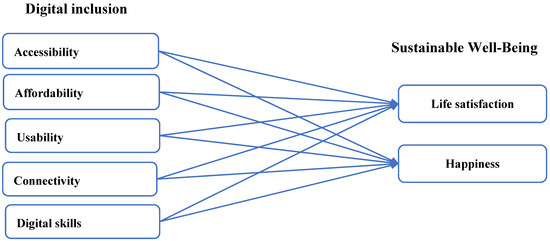
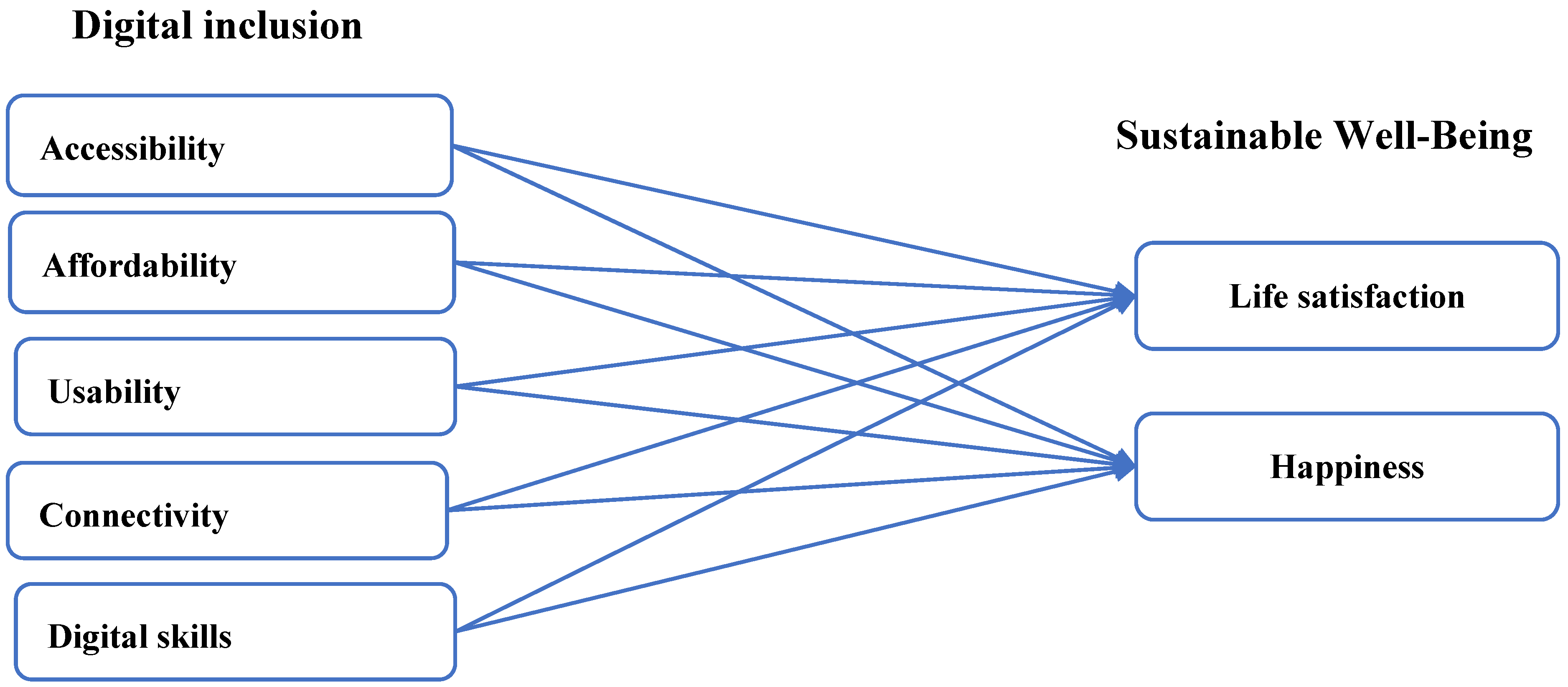
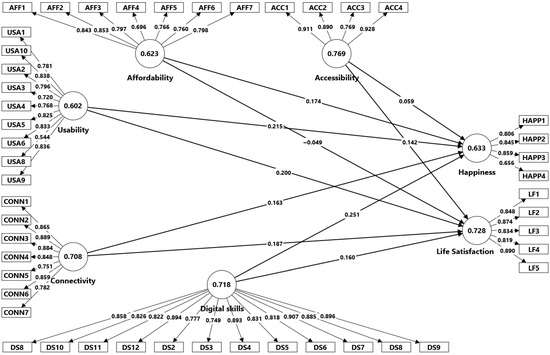
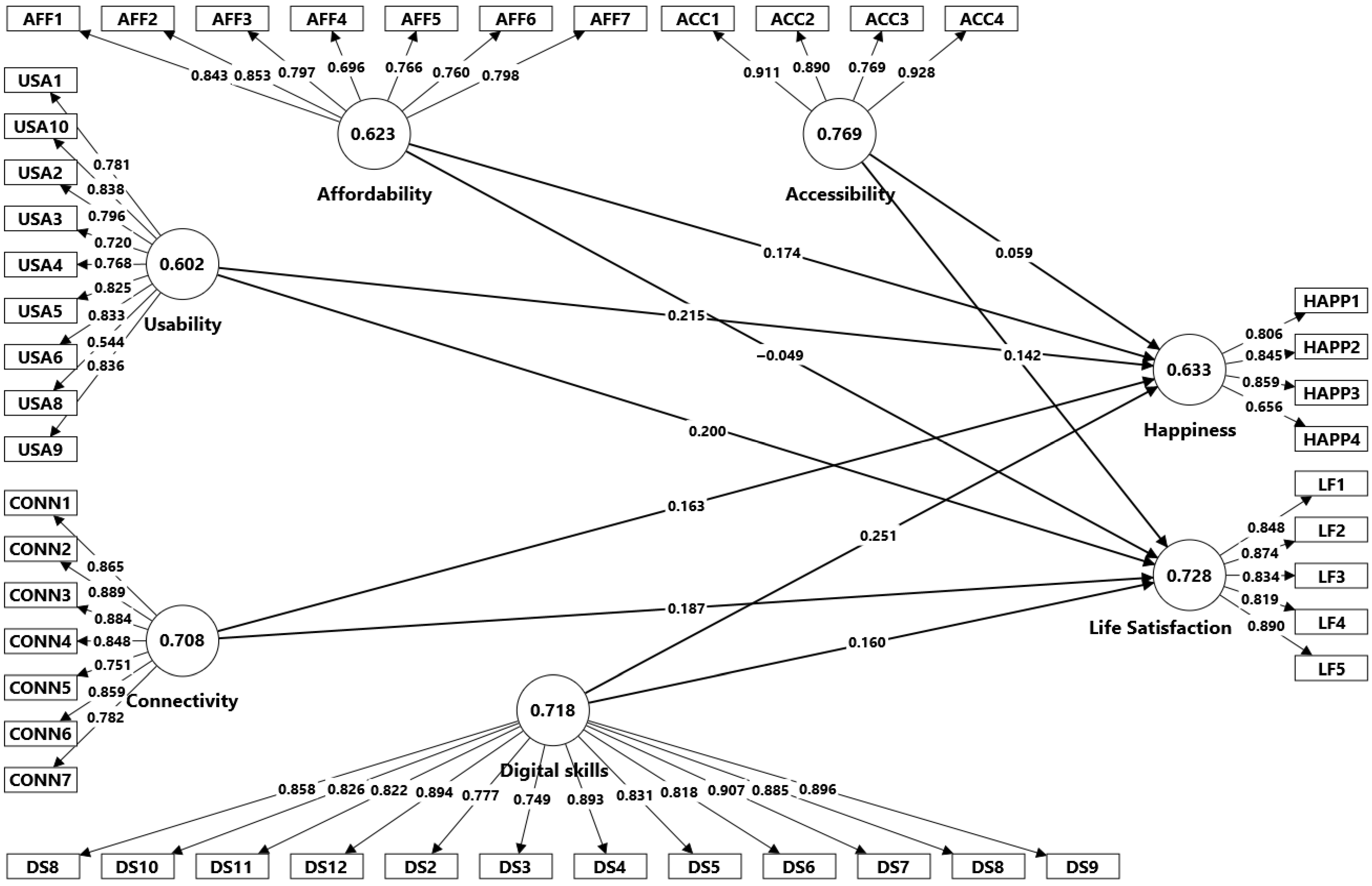
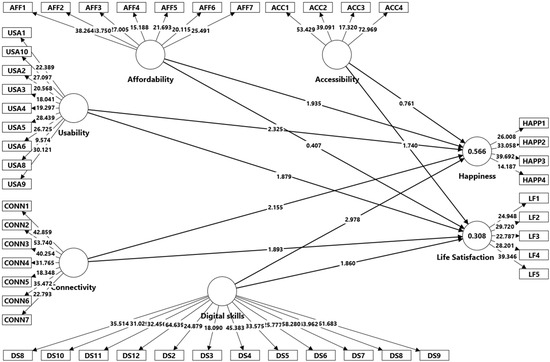
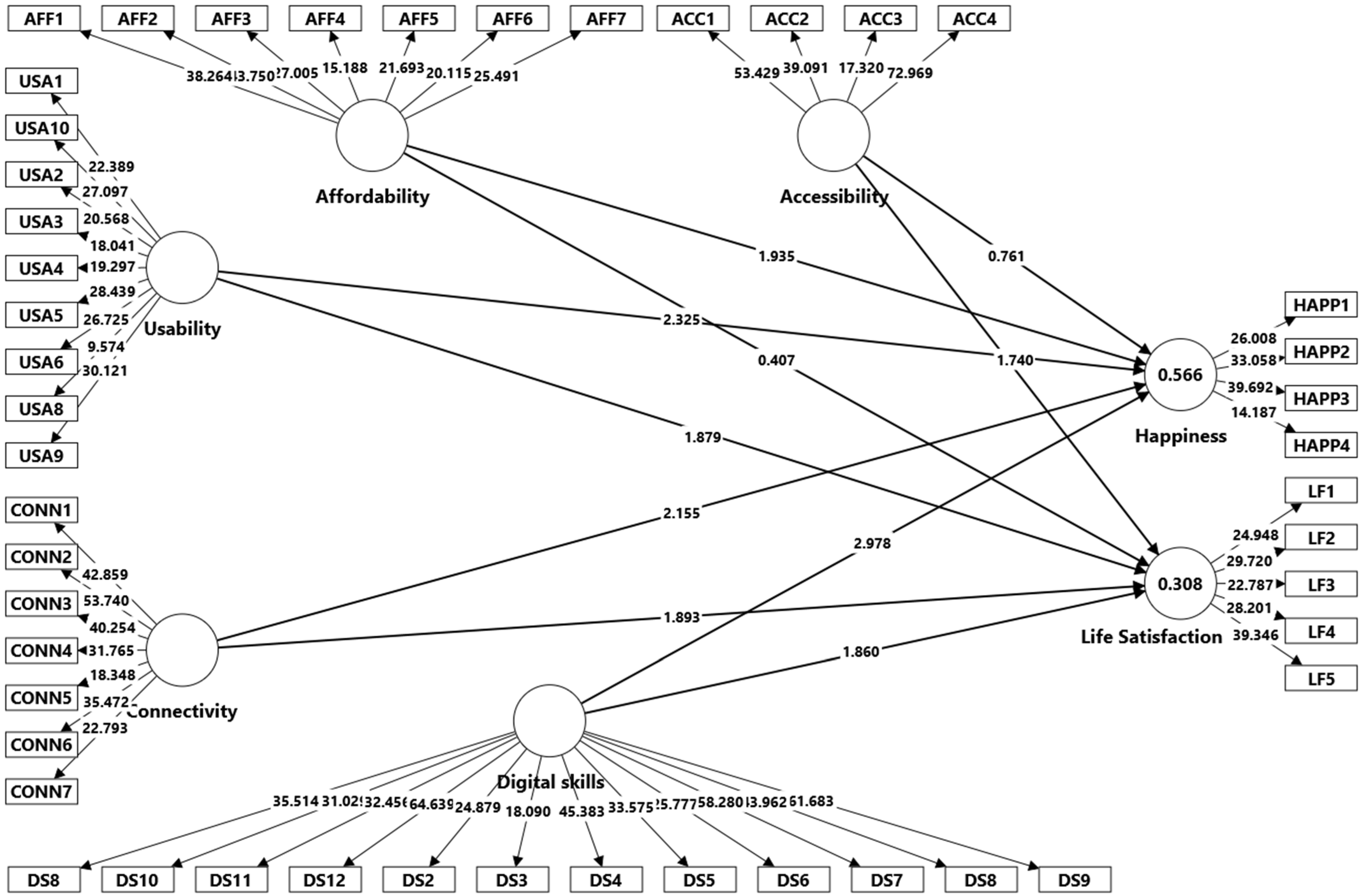
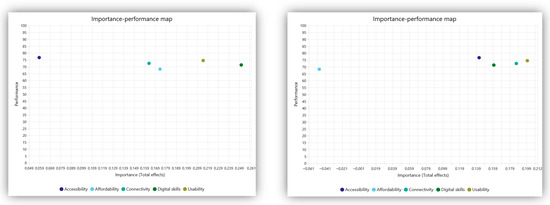
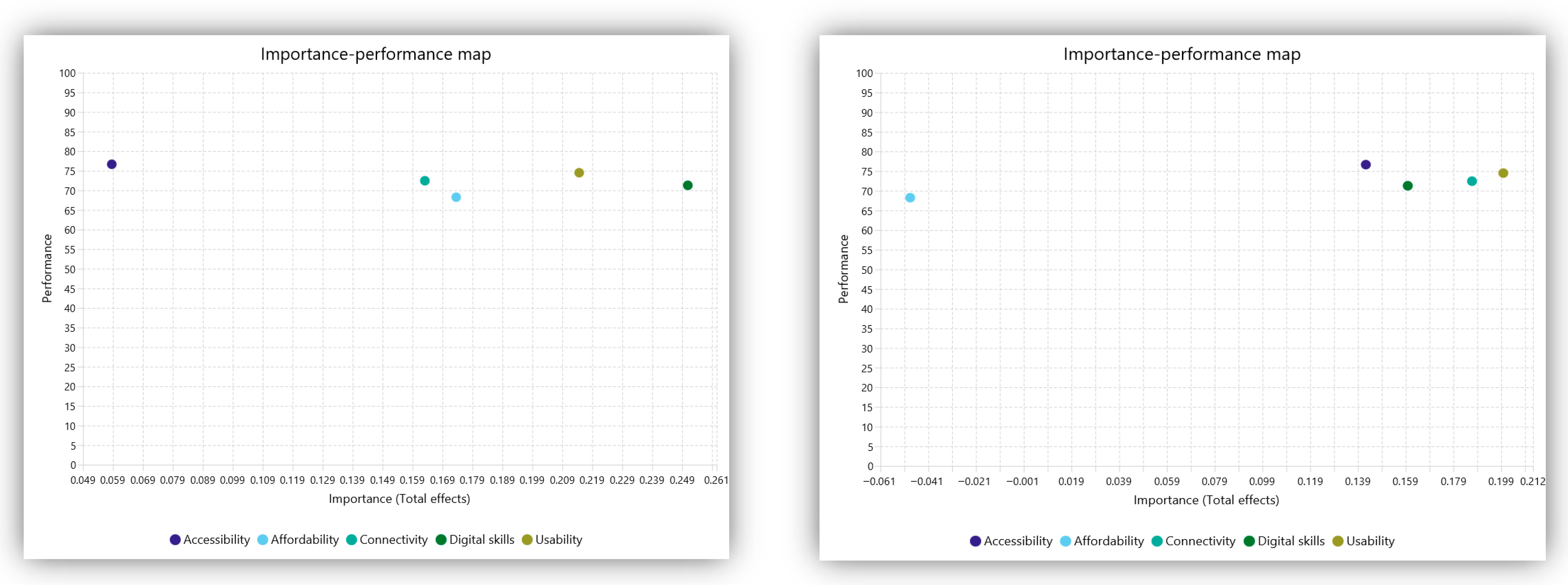

Disclaimer/Publisher’s Note: The statements, opinions and data contained in all publications are solely those of the individual author(s) and contributor(s) and not of MDPI and/or the editor(s). MDPI and/or the editor(s) disclaim responsibility for any injury to people or property resulting from any ideas, methods, instructions or products referred to in the content. |
© 2026 by the authors. Licensee MDPI, Basel, Switzerland. This article is an open access article distributed under the terms and conditions of the Creative Commons Attribution (CC BY) license.