


Abstract
Reducing CO2 emissions from global shipping remains a critical challenge in the pursuit of sustainable international trade. Though the technical and operational (T/O) measures and alternative fuel (AF) solutions have shown promise, the global maritime sector continues to face strategic and structural hurdles. This thematic narrative review revisits the fundamentals and explores the roles of T/O measures and Alternative fuel options in reducing CO2 emissions in international shipping, with a focus on the maritime energy transition. The study reveals that maximizing the benefits of T/O measures, alongside establishing a balanced energy transition matrix encompassing clean energy sources, can foster an environment conducive to future sustainability performance and substantial CO2 emission reductions. More specifically, combining operational efficiency improvements with scalable, future-focused, infrastructure-ready alternative fuels can yield significant emission reductions. The paper also introduces a conceptual model to guide the maritime energy transition, outlining a phased pathway that leverages innovation, policy, and system-level design. These insights contribute to shaping a resilient roadmap for decarbonizing international shipping by enhancing the sector’s sustainability performance.
1. Introduction
A careful maritime energy transition is crucial, as international shipping provides essential services to global trade, and it needs to maintain the ability to accommodate growth. The maritime energy transition refers to a low-carbon, reliable, affordable, and easily accessible energy supply for shipping, achieved by providing innovative and adoptable technologies to existing and future fleets for more effective harnessing of renewable energy sources [1,2]. In general, any energy transition requires several decades, continuous development of technological knowledge, alignment of policies, and a balance between innovation portfolios and policy implementation. Table 1 illustrates the dynamics of the global energy transition to date [3,4,5,6,7]. However, the energy transition in international shipping is even slower and more complex because ships have longer lifetimes, the bunkering fuel supply chains worldwide are deeply entrenched, and heavy-duty shipping infrastructure is globally used, which requires addressing compatibility issues.
Table 1.
Global energy transition dynamics in brief (Data sources [3,4,5,6,7]).
Access to clean energy sources and innovative, adoptable retrofitting technologies should prompt the shipping industry to expedite the harnessing of renewables and alternative fuel options, ultimately reducing CO2 emissions in the long term. Clean energy flow is a concept that aims to provide accessible, affordable, and reliable clean energy without further straining commercial interests or exacerbating climate change [2]. Approximately 35% of the global fleet accounts for 80% of shipping’s total fuel consumption [3]. The ship’s activity-based AIS (Automatic Identification System) data analysis reveals that international shipping consumed 233 million tonnes of fuel in 2016, with 84% of the bunkers’ fuel mix consisting of heavy fuel oil [3,4]. The IMO’s Fuel Oil Consumption Database reveals that 28,620 ships consumed 211 million tonnes of fuel in 2023, of which 93.5% is traditional fuel oils, indicating a persistently high share of conventional bunker fuels that underscores the slow pace of decarbonization in maritime shipping [6]. In this context, clean energy flow and energy efficiency technologies for shipping may constitute the critical mass for sustainability performance in reducing CO2 emissions from the sector in the long term.
International shipping is responsible for approximately 2.2–3.0% of the global total greenhouse gas (GHG) emissions [5,6]. Trade-driven international shipping utilizes heavy, dirty fuels to transport approximately 90% of global trade by volume. With the continued growth of world trade, CO2 emissions from international shipping are expected to increase significantly [6]. The challenge is to reduce CO2 emissions from international shipping to ensure the industry’s sustainability. As shipping is an integral part of global supply chains, any delay in adopting an effective strategy for reducing CO2 emissions from international shipping is bound to have impacts on other sectors [7].
An effective CO2 emissions reduction strategy for international shipping hinges on robust analyses of shipping emission inventories and future shipping tasks. The accumulation of CO2 emissions data is a prerequisite for strategy development and decision-making on assumptions related to the primary drivers of emissions. Sustainability performance for climate change mitigation is complex for shipping because it currently relies on dense fossil fuels, which cause significant CO2 emissions. As shipping’s CO2 emissions reduction is very complex, dynamic, and uncertain [6,8]. The dimensions of sustainability may include not only social, economic, and environmental, but also technical aspects [9], which includes the emerging feature of maritime energy transition that promotes clean energy flow [1]. Any strategy for emissions reduction needs to be well-informed through an investigation of existing and prospective measures, as well as alternative fuel options.
Uncertainty exists regarding the efficacy of available measures for reducing CO2 emissions from international shipping [8,10]. With the advent of new technologies, the requirement for revision and rigorous implementation of the Energy Efficiency Design Index (EEDI) is paramount [11]. The EEDI mandates a potential energy efficiency improvement of only 1% between 2015 and 2025 [4]. The recent mandatory implementation of EEXI (the Energy Efficiency Existing Ship Index) on 1 January 2023, for all existing vessels with a gross tonnage (GT) of 400 GT or above enhances and complements the design efficiency standards of the EEDI for the global fleet. The EEXI demonstrated effective impact through the adoption of Engine Power Limitation (EPL) and other measures, such as retrofitting energy-saving devices or operational adjustments. In this context, the 3rd phase of EEDI implementation targets a 30% reduction in CO2 emissions per capacity-mile for most ships by 2025 [12]. However, low freight rates, price fluctuations of fuels, and overcapacity in the industry have hit the bottom line of shipowners, which may make shipowners reluctant to adopt measures, even with fewer retrofitting requirements. Furthermore, the compliance costs of other regulations may also hinder the adoption of energy efficiency measures. Focusing on the above-mentioned issues and challenges, a theme-based narrative literature review has been conducted to gain a deeper understanding of the concern. A schematic model has been presented to strategize the CO2 emission reduction efforts of the international shipping industry.
2. Methods
The study employs a theme-based narrative review, which provides an opportunity to categorize, critically evaluate, and integrate findings to address one or more research issues across a range of materials [13,14,15]. The theme-based narrative review identifies articles, studies, and information in such a way that it adopts the outlook of a judge and jury during the search process, i.e., to gather the fairest evidence in each theme or issue, rather than a lawyer who looks for evidence to support one side of an argument [13,16]. The themes of this study were identified during the literature search and sorting process and later refined through a detailed literature review, which highlighted the breadth and depth of issues covered in CO2 emissions reduction from international shipping. Any theme-based narrative review reduces bias and provides an opportunity to craft a comprehensive study [17,18,19]. Table 2 shows the literature search boundaries of this review.
Table 2.
The literature search contour.
Following the above search contour, articles have been identified using several complementary search methods, including bibliographic and research databases, specific journals, online websites, shipping news, and email requests to researchers. A good number of studies related to GHG emissions from shipping and climate change including scientific and regulation associated documents of the International Maritime Organization (IMO), United Nations Conference on Trade and Development (UNCTAD), World Bank, International Chamber of Shipping (ICS), International Council on Clean Transportation (ICCT), International Energy Agency (IEA) and International Air Transport Association (IATA) have also been reviewed.
Filtering rules include scanning of the literature by reading the abstract and conclusion, checking headings/subheadings, and skimming the text. Inclusion and exclusion criteria have been followed to assess the quality of the documents for review [19]. The main inclusion criteria encompass identifying frequently referred documents in shipping, relevance to reducing GHG emissions (particularly CO2 emissions) from international shipping, innovativeness of the methodology, and the spread of issues or themes related to CO2 emissions reduction. The exclusion criteria include long-past time dimensions, frequently used methodologies, publications by the same author(s) with slight variation, and non-research articles with no practical application.
Most previous literature review papers in this research domain have focused on academic studies, emphasizing the abatement potential and cost-effectiveness, with fewer studies on the political aspect. The overall big picture or linkages between different issues and themes were seldom addressed. This review encompasses academic studies, industry research, and the perspectives of shipping stakeholders, including policy papers and news articles, to provide a broader understanding of the gaps, linkages, uncertainties, and maturity levels of measures for reducing CO2 emissions from international shipping. Figure 1 presents a schematic illustration of the theme-based narrative review process employed in this study.
Figure 1.
Theme-based narrative review process of the study.
About 119 main articles have been reviewed. Ninety-four (94) of these articles provide adequate length and breadth (themes) on CO2 emissions reduction from international shipping, of which 24 cover the overall big picture and linkages between the themes or issues. The remaining articles focus on one theme, or a part thereof, or on general subjects such as economics, research methodology, and the industry’s sustainability performance. In addition, the IMO studies and submissions to IMO were also reviewed to understand the gaps between the shipping industry and shipping policy-making bodies.
3. Theme-Based Literature Review Findings
3.1. CO2 Emissions from International Shipping
International shipping is a diverse industry. Fixing strategies for reducing CO2 emissions from international shipping have various aspects that include determining targets and levels of ambition for lowering CO2 emissions [5,6,20,21,22], examining drivers and factors that relate to CO2 emissions from international shipping [23,24,25,26,27], ensuring the sustainability performance of the shipping industry in reducing CO2 emissions [28,29,30], and the rationalizing capabilities of measures and options for estimation [8,10,31,32]. Table 3 presents a summary of the literature review on these themes. The necessity for regulation appears to be a critical instrument that can strike the right balance in this diverse matrix and pave a sustainable way forward to reducing CO2 emissions [33].
Table 3.
Main findings from the theme-based literature review.
Shipping is the backbone of globalization and a major facilitator of global trade. As oceans cover two-thirds of our globe, climate change and the control of CO2 emissions are not only land-based issues; instead, shipping bears a shared responsibility for these concerns. International shipping transports approximately 90% of global trade by volume [6] and accounts for between 2.2% and 3% of total worldwide CO2 emissions [5,6,22]. In the recent past, the CO2 emission reduction scenario for international shipping has remained within this range. The revised IMO GHG Strategy (2023) [34] provides optimistic targets of reaching net-zero GHG emissions by 2050, with interim progress of 20–30% reduction by 2030 and 70–80% by 2040, it is feasible if supported by a combination of alternative fuel matrix consist of green ammonia, electro-methanol, and hydrogen, along with the carbon pricing and deployment of effective technical and operational measures.
By volume, international shipping is responsible for about 1000 Mt of CO2 emissions per year and is a growing source of emissions. However, there is a COVID influenced slowdown in GHG emissions (see Table 4). In a BAU (Business-as-usual) case, the CO2 emissions from international shipping may increase to 1619 Mt in 2030 [6]. The 4th IMO GHG study indicates a continued increase in GHG emissions of 9.3% between 2012 and 2018, forecasting that emissions in 2050 could range from a decrease of 6% to a rise of 90% relative to 2008 levels, subject to the stringency of global decarbonization measures [35].
Table 4.
GHG emissions from international/global shipping (2018–2024) [6,33,34,35,36].
The CE Delft indicates that CO2 emissions from international shipping may increase by 20–120% between 2012 and 2050 [34]. In these projection scenarios, the determination of levels of ambition and targets for reducing CO2 emissions needs to be based on authentic data and analysis [6]. That may strike the right balance between industry reality and policy expectation. In finding that balance, setting a realistic target and levels of ambition for CO2 emissions reduction involves narrowing the gaps between the top-down and bottom-up approaches of investigation, where the drivers and linkages play a crucial role.
3.2. Drivers and Factors of Shipping Emissions
Fossil fuel consumption by shipping is responsible for a large part of the shipping industry’s CO2 emissions. Finding the drivers of shipping’s CO2 emissions requires both top-down and bottom-up approaches to the investigation. The top-down approach involves investigating issues from a higher organizational environment, examining the broad factors and visions; the bottom-up approach examines problems in the lower organizational environment, focusing on specific factors at the field level [60]. A top-down approach is appropriate where a breakthrough or changes in the game are required. Remaining vigilant for continuous improvements within the game requires a bottom-up approach. For CO2 emissions from international shipping, a top-down approach can focus on economic interlinkages and provide a simple extrapolation of the issue, while a bottom-up approach will maintain the reality on the ground and offer the opportunity to focus on a more detailed extraction of specific technologies [49]. The international shipping’s emissions inventory and ships’ fuel consumption data may help identify drivers to provide an effective strategy for reducing CO2 emissions from the industry.
The 3rd and 4th IMO GHG studies categorize drivers of CO2 emissions into top-down and bottom-up groups [6,35]. The top-down drivers include population growth, trade, GDP, and energy consumption by shipping, as measured by bunker sales [6]. Figure 2A,B illustrate the trends in CO2 emissions from international shipping and the growth of some of the top-down drivers, while Figure 3 presents the trends in marine bunker oil consumption in global shipping. Among these top-down drivers, the trend in marine bunker consumption closely resembles the trend in CO2 emissions.
Figure 2.
(A) Trends of CO2 emissions from shipping (2007–2015) [6]. (B) Trends of CO2 emissions from shipping (2019–2022) [35].
Figure 3.
Marine bunker consumption trends (Adapted from [4]).
The drivers in the top-down approach are interrelated and individually responsible for CO2 emissions from international shipping; however, this approach may also oversimplify, as many macroeconomic scenarios are involved. For example, population growth creates demand for products that can be met either locally or through international trade. Trade growth is closely tied to exports and imports. It is further linked to GDP growth, ultimately driving shipping demand, as a significant portion of global trade is conducted through international shipping.
The bottom-up drivers include the total number of vessels and their average annual fuel consumption [6]. However, the total number of vessels may not represent the actual activity of vessels that are directly responsible for CO2 emissions. The annual fuel consumption may also depend on the number of days at sea, the vessel’s speed, the installed power, and uncertain weather conditions. Sufficient data is not available on the drivers related to the bottom-up approach.
Nunes et al. [23] review methodologies for assessing ship emissions from a bottom-up perspective and reveal drivers such as engine power demands and the ratio between ship speed and resistance required to achieve a specific speed. This ratio can be an important driver from an emission quantification perspective. Blasco et al. [26] suggest that maintenance and upkeep of the ship’s engine may explain differences in emissions from ships. Though the ratio of Nunes et al. [23] may provide a more accurate emissions picture by capturing a ship’s present condition, but it would be difficult to obtain the data. In a European context, fuel type, fuel oil composition, and fuel combustion in the main engines remain the primary drivers in the bottom-up approach for overall emissions from ships [25,26].
The fuel type has been indirectly considered by the IMO in its top-down approach, recognizing bunker sales as a key driver of the issue. The marine bunker sale has characteristics that can credibly link top-down and bottom-up approaches. However, a hybrid approach would narrow the gaps between expectation and reality, creating an environment for sustainable performance in strategizing CO2 emissions reduction in the shipping industry, where marine bunker sales can be pivotal.
3.3. Sustainability Performance in Reducing CO2 Emissions
Sustainability performance is a key concern for industries to act responsibly regarding environmental protection and climate change mitigation. It relates to performance in all dimensions, including technological aspects and drivers connected to the triple bottom line of an industry, which is essential for achieving its strategic vision. The development of a strategy for sustainability performance and the measurement of that performance are two areas where the shipping industry needs to concentrate. Long-term planning, stakeholder participation from both public and private sectors, and technology are critical conduits for achieving sustainability performance in reducing CO2 emissions in international shipping [28,29,30].
The technological aspect of sustainability performance creates linkages between the socio-political, cultural, and commercial spheres of shipping, including activities such as optimizing the utilization of existing technical and operational measures, promoting sustainable clean energy flow, and leading to a balanced maritime energy transition. They also rely on ship owners’ willingness to adopt appropriate technology and operators’ expertise in harnessing the benefits of technology. Sustainability performance in reducing CO2 emissions from international shipping can be referred to as economically cost-effective activities [29], environmentally resilient, socially widely acceptable within the shipping community [55] and technologically feasible [9] to ensure easy access to clean energy for the maritime energy transition [2].
Achieving and ensuring sustainable performance in reducing CO2 emissions from international shipping is a long-sought-after goal. Initiatives of the IMO and other shipping stakeholders emphasize the importance of sustainability performance in emission reduction efforts within the shipping industry [6,59,61]. The IMO promotes a balanced approach to developing regulatory instruments for the shipping industry that does not penalize global trade and growth [55]. Helfre and Boot [41] recognize that stringent regulation is an important instrument that can trigger innovative technology solutions to improve sustainability performance and reduce CO2 emissions. Bows-Larkin [62] illustrates the necessity for the adoption of sustainable alternative fuels and compatible technology, while Miola et al. [59] emphasize the requirement for consistency in methodologies, including measures, alternative fuels, and policy frameworks for sustainability performance.
3.4. Measures and Alternative Fuel Options
Understanding the capabilities of measures has immense importance in reducing CO2 emissions from international shipping. The existing literature discusses a good number of measures to optimize the energy efficiency of ships, aggregates measures in several broad areas [38], illustrates some existing measures in detail [67], and emphasizes operational and technical (T/O) measures [8] with less focus on the strategic implementation perspective of the measures. For the sake of length, clarity, comprehension, and convenience of further discussion, five baskets of measures are identified from the literature and presented in Table 5 [91,92,93,94,95,96,97,98,99,100,101,102,103,104,105,106,107,108,109,110,111,112,113]. The variations in energy efficiency capabilities, or in other words, GHG emissions reduction capabilities (mainly CO2 emissions reduction), arise due to the diverse applicability contexts, various ship types and segments, and uncertain technology performance [91,92,93,94,95,96,97,98,99,100,101,102,103,104,105,106,107,108,109,110,111,112,113].
Table 5.
The CO2 emissions reduction measures for international shipping [91,92,93,94,95,96,97,98,99,100,101,102,103,104,105,106,107,108,109,110,111,112,113].
The common concern about MBMs is that they do not provide a feasible solution for shipping, as they are mostly out-of-sector, temporal solutions [91]; however, they may indirectly bring environmental benefits through emissions offsetting. Among several types of MBMs, the ‘bunker levy’ and ‘emissions trading scheme’ (ETS) have been investigated most extensively in the literature [91]. The bunker levy is easy to implement; however, there are ambiguities regarding how to effectively utilize the funds to develop a sustainable method of reducing CO2 emissions. Areas where the collected revenue can be used include easing the implementation of existing measures, capacity building in developing countries, and supporting R&D [11,94]. It is essential to ensure that the levy can directly help internalize CO2 emissions reduction in shipping and remain within the sector. The ETS requires time to establish, is complex to implement, and requires further data collection and analysis.
3.4.1. Operational Measures
Measures related to maintenance and operational practices on board ships that can help reduce CO2 emissions without requiring physical changes to vessels are referred to as ‘operational measures’. Among operational measures, ‘slow steaming’ is widely discussed; it has sufficient emissions reduction capability in the short term, may absorb the oversupply of shipping industry capacity, and can increase employment for deep-draft vessels. Coupled with technical measures such as ‘main engine tuning/derating’ and ‘waste heat recovery’, slow steaming can be productive [6]. However, studies recommend caution in adopting slow steaming as a regulatory instrument, as it can be unreliable, as it is a dynamic process, dependent on market trends [77]; more devoted to operational costs reduction, with CO2 emissions reduction coming as a peripheral benefit; largely dependent on high charter rates and fuel prices to harness benefits [77,78] and it can be counterproductive with other operational measures, such as trim/draft optimization [38]. Different vessel types may have other impacts from slow steaming. For example, container ships already practicing slow steaming to reduce operational costs in a bearish market would find the practice commercially less productive in a bullish market. Slow steaming may not be suitable for bulk carriers as these vessels are built with engine powers that maximize cargo transportation at a non-flexible speed. If slow steaming is adopted as a mandatory operational measure, the shipping industry may need to cope with a new normal. For instance, more alliance formation may be on the horizon [77], as shipping services are expected to decline, and less CO2 emissions reduction would be achieved, as the industry is already implementing these measures [78,79].
Backups of technologies are also required to adopt operational measures. For example, the implementation of ‘weather routing’ and ‘autopilot upgrade/adjustment’ involves the installation of appropriate systems on board ships, along with software updates and crew training. Relatively new ships are assumed to be fitted with weather routing, autopilot adjustment, and performance monitoring systems; consequently, they have fewer additional capabilities to enhance energy efficiency.
The IMO also provides operational measure-related guidance known as the Ship Energy Efficiency Management Plan (SEEMP) to promote best practice for fuel-efficient ship operation and the Energy Efficiency Operational Indicator (EEOI) to monitor the energy efficiency performance of ships [6]. Although the use of these measures is voluntary in nature, they have made shipping companies more aware of improving their ships’ operations, for example, by enhancing voyage planning, regularly polishing or cleaning the propeller, or introducing technical measures [6,70]. Ambiguities also exist for operational measures, as the effective implementation of these measures requires crew training and adjustments to work routines on board vessels [38].
3.4.2. Technical Measures
Measures that involve physical changes to the vessel to reduce CO2 emissions are known as technical measures. A wide range of technical measures exists for shipping’s CO2 emissions reduction (see Table 5). Criteria such as homogeneity, installation area on board vessels, and extent of retrofitting requirement can be applied to understand the characteristics of these technical measures. For example, the implementation of technical measures such as hull coating, high-efficiency lighting, mewis duct, and propeller boss cap fins requires fewer retrofitting tasks [81]. The technical measures, such as control pitch propeller, main engine tuning/derating, and waste heat recovery, require massive retrofitting [71]. The availability of docking schedules can be an issue for the industry to implement technical measures. Technical measures with less demanding retrofitting tasks typically have a lower range of energy efficiency capabilities compared to measures with extensive retrofitting requirements [38,45]. Massive retrofitting tasks come at a high cost and a longer payback period, which impacts the adoption rate of a technical measure [38]. The adoption of a technical measure also depends on the measure’s life cycle, maintenance requirements, the vessel’s remaining lifetime, the integrative nature of the measure in bringing peripheral benefits for complying with other regulations, and the prospect of emerging new technology. Retrofitting for adopting measures can also be a one-time or, at most, a two-time opportunity for the existing vessel within its remaining productive life. It is also true that a ship as a system cannot accommodate several individual measures in the same area.
New ships entering the market by 2030 will need to be 50–60% more fuel-efficient. The EEDI (Energy Efficiency Design Index), an IMO-introduced, non-prescriptive, performance-based index that expresses CO2 emissions from a particular ship design in ‘grams/tonne nautical mile’. The required EEDI of a ship type is a function of the ship size, indicating the minimum energy efficiency level for a new ship of a given size and type. The lower the Attained EEDI of a ship compared to the Required EEDI level, the better [38]. The EEDI alone cannot ensure sufficient reduction in CO2 emissions from the shipping industry [82]. Further improvement of the EEDI is needed to accommodate new technological developments, cover a wider range of vessels, and enhance the environmental effectiveness level of new ships. A validated, integrated, and mandatory measure of Energy Efficiency Existing Ship Index (EEXI), along with an improved EEDI for new ships, is poised to enhance the environmental effectiveness of shipping.
3.4.3. Alternative Fuel Options
International shipping is closely tied to the global energy system, and any decarbonization efforts in the global energy sector will have a significant impact on shipping [72]. As such, international shipping is beginning to tap into alternative fuel options to reduce CO2 emissions. Production, distribution, and utilization of fuel are three key aspects of the sustainability discourse for any fuel supply chain. The alternative fuel options for shipping will need to be evaluated from both a supply chain perspective and in relation to maritime energy transition requirements, ensuring sustainable performance. Several alternative fuel options, such as liquefied natural gas (LNG), methanol, bioenergy, electricity, hydrogen, renewable energy, and nuclear power [9,36,48,52,84,87].
- LNG
LNG is increasingly appearing as an alternative fuel due to its various emission reduction capabilities and availability. The price of LNG is also significantly lower than that of distillate fuels. Although the progress of LNG as an alternative fuel remains uneven across regions and port types, many major hubs and large ports now support LNG bunkering and related infrastructure. However, many small regional ports lack the necessary infrastructure. The use of LNG on board vessels reduces Sulfur oxide (SOx), Nitrogen oxide (NOx), particulate matter, and CO2 emissions, making it better aligned with current regulations. Nevertheless, realizing these emission benefits depends not only on vessel-level adoption but also on robust interoperability between fuel, ship, and infrastructure [106]. Globally, substantial progress has been made and continues to be made in infrastructure development, including LNG bunkering facilities, storage, and vessel design, which support safety regulations for LNG-fueled ships and the bunkering process. The challenges of establishing a small-scale LNG facility in regional small ports include safety concerns, high initial investment costs, limited demand, and logistical constraints in the areas of transportation, storage, and regasification [107]. However, promoting LNG use still requires coordinated investment in bunkering facilities, safe storage and handling systems at ports, proper crew training, and regulatory compliance across the LNG supply chain. The absence of a liability regime in the event of an accident involving an LNG-fueled ship remains critical [88]. Controversy exists regarding the use of ‘fracking’ technology during the extraction process and methane slip during combustion [89]. Due to its abundance, LNG is rapidly becoming a bridging alternative fuel for shipping, transitioning from a regional to a global level. Studies forecast that LNG may occupy a maximum of 11% of the future maritime energy matrix by 2030 [90]. Although the use of LNG on board ships can significantly reduce NOx, SOx, and CO2 emissions, it is not entirely clean; the extraction process pollutes both air and water, and the risk of methane slip during on-board use still exists.
- Bioenergy and Green Ammonia
Bioenergy is a renewable energy source that utilizes various types of biomass as feedstock to produce biofuels and biogas. Bioenergy emerges as an alternative fuel option for shipping in certain regions due to its availability and compatibility with existing technology, as well as its potential to be blended with conventional fuel [90]. Research indicates that the share of biofuel use in international shipping will be low [36], and it may face competition from other sectors, such as aviation. The use of biofuels in international shipping is strategically vital for reducing CO2 emissions; however, the practical deployment of biofuels may lead to resource conflicts over land, water, and biodiversity conservation.
Availability, standards, and price would be the main determinants for biofuels to be an alternative fuel for international shipping. Issues such as long-term storage stability, corrosion, fuel quality, acidity, and high production cost would limit marine fuel market penetration for biofuels [59,91]. The short hauling distance and economies of scale would reduce the high production cost of biofuels [59]. In addition, application of advanced biofuel technologies, high fossil fuel prices, and rigorous climate change mitigation policies for shipping would also create a ground for biofuels as an alternative fuel option in the ‘biomass concentrated region’ and for short-sea shipping.
In the backdrop of these challenges for Bioenergy, green ammonia appears as a more scalable and widely adoptable alternative for decarbonizing high-sea maritime transport [108]. This is due to the fact that green ammonia does not compete for agricultural land or freshwater; rather, it can bring benefits from existing global ammonia production and transport infrastructure, making bunkering, storage, and distribution more practicable [109].
- Methanol
Methanol produced from natural gas emits more CO2 than traditional fuel [36]. However, it can also be in the form of biofuel (bio-methanol), which has limited energy efficiency and low CO2 emissions when produced from biomass, provided that clean electricity is used in the process [6,59]. In other words, methanol represents a significant decarbonization potential if produced through renewable pathways, such as green methanol produced from biomass gasification or electro-methanol synthesized from captured CO2 and renewable hydrogen [110]. As existing infrastructure can be modified easily for methanol use, the retrofitting cost for vessels is low [6]. Methanol would be suitable for smaller vessels engaged in regional short-sea shipping [92]; however, frequent bunkering is required to avoid large storage onboard ships [96]. In the regional context, smaller ports can easily accommodate methanol fuel logistics compared to cryogenic hydrogen and ammonia, when coupled with local renewable power and electrolysis-based methanol production facilities [111].
- Hydrogen
Hydrogen offers a long-term potential for decarbonizing the global energy system and the shipping industry. International shipping is closely tied to the global energy system, and any decarbonization effort in the global energy system will have a similar impact on shipping. Turning the potential of hydrogen as an alternative fuel requires a compatible and integrated supply chain that encompasses production and storage, distribution, bunkering, and vessel compatibility. Several hydrogen fuel production pathways have emerged [97,98]. Among these, two promising pathways for hydrogen fuel production are electrolysis of water and reforming of natural gas [59]. The production of green hydrogen through electrolysis using renewable energy, combined with offshore or barge-based hydrogen infrastructure, presents a decentralized, modular bunkering solution that requires fewer new onshore port facilities [112], making it feasible for short-sea, coastal, or inter-island services. Transporting hydrogen through liquid organic hydrogen carriers (LOHC) holds great potential; one such pioneering example is the hydrogen produced in Brunei, which was shipped to Japan [113].
Floating Storage Units (FSUs) near ports are also emerging as a critical component in establishing scalable and flexible hydrogen supply chains. However, port readiness for hydrogen bunkering remains very limited globally. During the natural gas reforming process, hydrogen can be produced from methane (natural gas) and steam, with CO2 captured as a by-product. Convenient technologies for carbon capture and storage (CCS) on board ships have yet to be developed. However, solvent-based CCS techniques for the shipping industry are being discussed [93].
Hydrogen fuel-cell technology can be effective on-board ships. A fuel cell is convenient to use because it produces DC electricity that is consistent with the electrical transmission system on-board ships, is lightweight, relatively quiet, and has the potential to emit less or no CO2, depending on the hydrogen production process [74]. Hydrogen retains its sustainable promise when combined with electricity from renewable sources, high-capacity batteries, and carbon capture and storage (CCS) technologies, which can complement each other and have enormous potential in the long term to reduce CO2 emissions from international shipping.
- Renewable energy and other sources
Technologies are not commercially available to provide the large amount of energy required for ship propulsion from renewable sources [73]. Renewable sources, such as wind power, solar power, biofuels, and wave power, can be integrated into the auxiliary power system of ships or used as a ‘drop-in’ fuel for shipping [9,74]. Studies suggest that nuclear energy could be a viable alternative fuel option for shipping [9], provided the enormous risks and barriers associated with it can be effectively eliminated. The immediate dangers and barriers include the safety and security of nuclear fuel rods on board ships, the difficulty and restricted access to ports and canals for nuclear-powered vessels, upfront costs, refueling, and uncertain demolition costs. Hybrid propulsion systems for shipping, one of which utilizes electricity, are already in use in niche markets of shipping and cannot be regarded as a separate alternative fuel option [59]. However, a complete shore-based electric propulsion system for shipping is limited by the space required for fuel storage (batteries) on board, the lack of high-capacity batteries, and the CO2 emissions associated with electricity production if the source is not renewable.
Shifting to sustainable alternative fuel like hydrogen is time-consuming for shipping. In the meantime, shipping requires bridging energy sources where LNG, methanol, and biofuels can play a critical role.
4. Analysis and Discussion
4.1. Emission Reduction Targets and Ambitions
The Paris Agreement provides targets to limit the global temperature rise to 1.5–2 °C above the pre-industrial level. A rigorous target, such as 1.5 °C, is necessary for international shipping, as low-lying coastal countries and the Small Island Developing States (SIDS) are particularly vulnerable to the impacts of global climate change. The 3rd IMO GHG study suggests a 20% reduction by 2020 and a 40% reduction by 2050 [6]. In recent years, the 2023 IMO GHG Strategy has outlined policy milestones, including a 40% sector-wide reduction in carbon intensity by 2030, an energy source target of 5–10% zero or near-zero carbon fuels by 2030, and a net-zero emissions ambition by around 2050 [34].
However, rapidly changing global climate conditions demand rigorous ambitions. The emissions reduction targets and levels of ambition for shipping require dynamic policy support, not only through scientific analysis and research, but also through discussions between policymakers and industry stakeholders [22,23]. Periodic and regular revisions in determining targets and ambitions are important to ensure the consistency and efficacy of a strategy. However, from a carbon budget perspective, international shipping may soon exhaust its share of the 1.5 °C-aligned global carbon allowance, unless additional rigorous measures are deployed by the industry, which may include transitioning to full shipping propulsion fuels, effective carbon pricing, operational measures, and systemic shifts [6].
4.2. Findings on Potential Measures and Alternative Fuel Options
The likelihood of adopting multiple measures for energy efficiency on existing vessels requires continuous investigation to understand the dynamic advancement of technologies and the widely varied CO2 emissions reduction capabilities of the various measures. Some measures require further technological development, while others are still in the conceptual stage of development. A qualitative investigation is conducted in this study, further consolidating the list of technical and operational (T/O) measures. The criteria for consolidation and rationalization of measures are better represented as a hub measure, enhancing the generalizability of the measures, particularly when they have very low energy efficiency capabilities, uncertainty in implementation, and lack innovative technology, as well as the point that it is not a global issue. Table 6 presents the summary of the qualitative study on the potential of T/O measures. The study, among other aspects, examines the impacts, maturity level, cost-effectiveness, ease of implementation, and implications for further development of the measures. Most of the potential T/O measures are either semi-mature or mature.
Table 6.
Summary of the qualitative study on the potential of T/O measures [√ marks the current level of the criteria *].
Some of the measures require extensive retrofitting and space on board vessels; therefore, cost remains a crucial criterion for shipowners. The shipowners are also reluctant to adopt some less costly measures due to their low energy efficiency, inconsistency with the rest of the vessel’s productive life, and the complexity of implementation related to retrofitting and docking requirements. The requirement of ‘third-party capital’ or financial support can help shipowners adopt such measures if the vessels have sufficient productive life to pay back the investment [76]. Effective regulations can ease the financial burden by attracting a third-party investor, providing support for many new and unproven technologies, as well as for measures requiring extensive retrofitting. The core intention is to commercialize research-based and sustainable technologies, including alternative fuel options and related ship propulsion technologies, to achieve ambitious reductions in CO2 emissions from international shipping in the long term.
The search for alternative fuel options towards achieving clean energy flow is connected to trade-offs among the three energy goals of affordability, safety, and sustainability [59]. Among these energy goals, affordability is important from both implementation and payback perspectives. Safety considerations include the reliability and protection of the alternative fuel system, as well as mitigating the risk of accidents during the early phase of introducing a new fuel. Sustainability remains central, encompassing all three of its dimensions. Figure 4 presents the requirements for maritime energy transition to improve the sustainability performance of international shipping in reducing CO2 emissions.
Figure 4.
Sustainable maritime energy transition performance through innovation-led clean energy security.
In the sphere of sustainability, maritime energy transition can serve as a vehicle to establish a clean energy flow for shipping, which may have three components to satisfy: availability (in environmental terms), acceptability (in social terms), and affordability (in economic terms). Solving this energy matrix would ensure energy security, economic competitiveness, and environmental conservation.
From the end-users’ standpoint, acceptability is a critical driver for the energy transition, which demands sufficient time, typically several decades, depending on the innovation and scale-up of technologies. The alternative fuel options undergo several stages of demand- and supply-driven development during the energy transition. Table 7 provides a summary of the major alternative fuel options for shipping from the perspective of maritime energy transition.
Table 7.
A summary of major alternative fuel options for maritime energy transition.
A set of reliable and supportive regulations and policies is a prerequisite to creating momentum for sustainable alternative fuels for shipping. The interconnected set of rules and policies addressing various environmental concerns would create the synergy necessary for a zero-emission vessel with alternative fuel options that must be available and competitive in the core shipping business, such as container and bulk shipping. The niche sectors of shipping, such as ferry, tug, and short-sea shipping, are often breeding grounds for demonstrating this type of synergy.
4.3. A Hybrid Approach to Maritime Energy Transition for Reducing CO2 Emissions
A hybrid approach is required to inform the strategy development for reducing CO2 emissions from international shipping. A top-down approach may lead to oversimplification, while a bottom-up approach lacks sufficient data availability. Strategizing the reduction in CO2 emissions from international shipping requires a consensus between industry and policymakers, which necessitates the adoption of a blend of both top-down and bottom-up approaches. A hybrid strategy would bridge the gaps between the two approaches [53] by compensating for each other’s weaknesses. Moreover, a hybrid approach would ensure the sustainability of shipping’s CO2 emissions reduction by strengthening the shipping community’s support through consensus to harness market forces.
The level of decarbonization in international shipping is influenced by interrelated factors, including vessel capacity by segment, operational intensity, the types of alternative fuels consumed, and technological advancements. Central to this concept is the annual bunker sales, which serve as a proxy for fuel consumption and a crucial indicator of international shipping’s energy demand, the main vehicles of maritime energy transition.
The ‘bunker sale’ appears as a hybrid driver, possessing both top-down and bottom-up characteristics, thereby helping to narrow the gap between industry reality and policy expectations for strategizing CO2 emissions reduction from international shipping. Figure 5 presents a schematic model of a hybrid approach for reducing CO2 emissions through maritime energy transition, with a focus on bunker sales and the shipping energy supply sector. The model not only links bunker sales to the energy demands of engines, CO2 emissions, and clean energy flow through interconnected feedback loops, but also captures key interactions among the influence of fuel pricing and technological advancement on investment in the clean energy supply sector, the role of market-based-measures in making alternative fuels attractive, and feedback between regulatory, economic, and environmental dynamics.
Figure 5.
A schematic model for CO2 emission reduction from shipping by driving maritime energy transition.
As international shipping is a crucial component of global trade and economy, interrelating shipping energy systems and the economy through bunker sales is the focus of this hybrid approach. This hybrid approach for shipping’s CO2 emissions reduction strategy resembles energy-economy-environment (3E) modeling.
The performance of ships’ engines, both auxiliary and main, determines the energy consumption of ships. Different types of engines consume different fuels, depending on the engine’s specifications and the facility’s requirements. Driven by innovations in ship design and energy efficiency, investments in the shipping energy sector may increase, creating further demand for clean fuels and potentially leading to a reduction in their prices.
The bunker levy as a market-based measure can be utilized to make the alternative fuel options attractive for shipping in the short-to-medium term due to several factors, including: its internalization capability of CO2 emissions within the sector; enabling an environment for innovative propulsion technologies; creating demand for alternative fuels; and creating pressure on traditional fuels to have low carbon content. As a byproduct of this process, some existing measures will become cost-effective due to higher traditional bunker fuel prices.
The supportive role of innovative and affordable technology is a prerequisite for the maritime energy transition that leads to clean energy flow. The maritime energy transition is promoted through demonstrative activities, including the development of infrastructure and the provision of retrofitting technologies for existing fleets to establish clean energy, particularly renewable sources and natural gas options, as a global shipping energy source [1,61].
This hybrid maritime energy transition model (Figure 5) can be further validated through scenario modeling tools recently applied in maritime transition research [125]. A scenario tool in the Swedish maritime context encompasses individual ship operation patterns, fuel cost structures, and regulatory instruments (e.g., the EU ETS, FuelEU Maritime) to estimate the lowest-cost pathways for adopting alternative or clean fuels under varied scenarios to 2045 [125]. This tool stimulates fuel choices, fleet operational behavior, and emissions outcomes under alternative policy and economic conditions, and illustrates how policy stringency and economic drivers shape investment decisions and emissions trajectories. This type of emerging scenario modeling provides a quantitative backbone that links alternative and clean fuel demands, technology uptake, and GHG emissions reduction outcomes to real fleet dynamics.
In another instance, the global scenario frameworks, grounded in shared socioeconomic pathways (SSPs), illustrate how divergent energy demands and trade growth patterns could lead to different decarbonization challenges [34,35,126]. These SSP scenarios have the capability to project international shipping’s energy demand to 20,250 and depict a range of outcomes from business-as-usual to modest growth to significant increases based on varied socio-economic trends and mitigation ambition, resulting in differential energy needs as well as emissions inventories under alternative fuel mixes [126]. Overall, these quantitative scenarios would enable international shipping stakeholders to perform sensitivity testing of the hybrid model’s proposed variables, such as investment flows and clean energy price signals, against uncertainties in trade, technology deployment, and regulation, thereby offering data-driven and transparent policy design and strategic planning in maritime decarbonization.
4.4. Policy Implications, Limitations, and Future Research
The strength of this hybrid model lies in its holistic scope that integrates technical innovation (for example, affordable retrofitting and propulsion systems), economic levers (such as investor support and cost effectiveness), environmental performance (for instance, usage of clean fuel for emissions reduction), and social acceptance (which includes energy equity and policy balance). This model would be supportive for policymakers and maritime stakeholders to stimulate probable transition scenarios under varying regulatory and technological assumptions.
However, the model simplifies real-world heterogeneity among ship types, regional fuel structures, and emission accounting. Externalities, such as geopolitical disruptions in fuel supply chains, regulatory fragmentation across ports, the availability of transparent data, and financing barriers for developing countries, could further enrich the model, enabling more precise planning in future research. A port is a crucial enabler for regional development and the expansion of international shipping [127]. Involving port activities and jurisdiction in the shipping decarbonization scenario could improve the future research agenda.
5. Conclusions
This study highlights the strategic intent of reducing CO2 emissions from international shipping through a holistic approach. The drivers of CO2 emissions and the impact of technical and operational measures, as well as alternative fuel options for international shipping, have been reviewed. By recognizing ‘bunker sales’ as a hybrid driver that reflects fleet activity, fuel mix, economic demand, and regulatory influence, a maritime energy transition model for reducing CO2 emissions from international shipping has been sketched. The model provides a lens through which emissions can be reduced, incorporating the viable alternative fuel advancement under different policy and market conditions. This integrative perspective bridges the traditional divide between top-down trade and demand dynamics and bottom-up vessel- and fuel-level advancement.
Rationalizing variations in energy efficiency capabilities of measures, utilizing a bunker levy to make alternative fuel options more attractive, and minimizing uncertainties through the provision of integrated regulations will form the basis for ensuring sustainable performance in reducing CO2 emissions from international shipping. Based on review findings and recent real-world shifts, a hybrid approach can be pursued for guiding maritime energy transition: (1) widespread deployment of cost-effective retrofitting technologies and clean-energy-ready new builds; (2) robust expansion of low-carbon fuel supply chains and port/bunkering infrastructure; and (3) strong policy signals at global and regional levels such as a bunker levy, stricter carbon-intensity regulations, and fuel-economy standards that internalize environmental costs and encourage fuel switching. The transition fuels, such as LNG or biofuels, may play a bridging role, but only a long-term commitment to zero- or low-carbon fuels (for instance, hydrogen and green ammonia to some extent) and a clean energy supply can secure meaningful reductions in emissions.
The adoption of a combination of technical measures that require less retrofitting, along with the frequent practice of effective operational measures in the short term, would be a worthy start for the industry. Cost-effective technologies, supported by financial incentives for expensive retrofitting and bridging energy options such as LNG, biofuels, and renewables in the medium term, would provide the necessary momentum. The long-term implication of switching to hydrogen is that it would ensure significant CO2 emissions reduction from shipping, well beyond the incremental efficiency gains.
The maritime energy transition should be driven by a balanced and realistic mix of technology, infrastructure, regulation, and economics. A timely coordinated action across all these dimensions is critical. By combining the strengths of the hybrid model with informed policy and industry commitment, the international shipping industry can navigate a reasonable route for decarbonization and align with global climate goals.
Author Contributions
Conceptualization, J.S.L.L. and Q.S.; methodology, Q.S.; software, Q.S. and M.S.A.T.; validation, J.S.L.L., W.H.H.S. and S.I.; formal analysis, Q.S. and S.I.; investigation, Q.S. and J.S.L.L.; resources, J.S.L.L., S.I. and W.H.H.S.; data curation, Q.S. and S.I.; writing—original draft preparation, Q.S.; writing—review and editing, Q.S.; visualization, S.I. and M.S.A.T.; supervision, J.S.L.L.; project administration, Q.S.; funding acquisition, J.S.L.L.,Q.S. and S.I. All authors have read and agreed to the published version of the manuscript.
Funding
This research is funded by the Universiti Brunei Darussalam FIC Research Grant project number UBD/RSCH/1.8/FICBF(b)/2021/016.
Institutional Review Board Statement
Not applicable.
Informed Consent Statement
Not applicable.
Data Availability Statement
The data presented in this study are available in numerous publicly accessible repositories at the time of research (mostly websites of various shipping, seaport, and energy-related organizations.
Acknowledgments
During the preparation of this manuscript/study, the authors used Grammarly (subscribed to by the university) and ChatGPT 5.2 for the purposes of grammar, structure, spelling, synonym, and punctuation. The authors have reviewed and edited the output and take full responsibility for the content of this publication.
Conflicts of Interest
The authors declare that they have no conflicts of interest.
References
- IRENA. A Pathway to Decarbonise the Shipping Sector by 2050. Available online: https://share.google/CxaefXbtTl0bdj03q (accessed on 3 December 2025).
- Kyte, R. Sustainable Energy for All Forum. Available online: https://share.google/LzhEwWJPIivVNAImN (accessed on 3 November 2025).
- DNV GL. Low Carbon Shipping Towards 2050. Available online: https://share.google/xuY0quJQqfuCP5A7W (accessed on 26 September 2025).
- IEA. Tracking Clean Energy Progress 2017; International Energy Agency: Paris, France, 2017; Available online: https://www.iea.org/reports/tracking-clean-energy-progress-2017 (accessed on 19 November 2025).
- Bouman, E.A.; Lindstad, E.; Rialland, A.I.; Strømman, A.H. State-of-the-Art Technologies, Measures, and Potential for Reducing GHG Emissions from Shipping—A Review. Transp. Res. Part D Transp. Environ. 2017, 52, 408–421. [Google Scholar] [CrossRef] [Scilit]
- International Maritime Organization (IMO). IMO Data Collection System—Improving the Energy Efficiency of Ships. 2023. Available online: https://www.imo.org/en/ourwork/environment/pages/data-collection-system.aspx (accessed on 29 November 2025).
- Clarke, D.; Chan, P.; Dequeljoe, M.; Kim, Y.; Barahona, S.; Organisation for Economic Co-operation and Development (OECD). CO2 Emissions from Global Shipping: A New Experimental Database; SDD Working Paper No. 118; OECD Publishing: Paris, France, 2023. [Google Scholar] [CrossRef] [Scilit]
- Yuan, J.; Ng, S.H. Emission Reduction Measures Ranking under Uncertainty. Appl. Energy 2017, 188, 270–279. [Google Scholar] [CrossRef] [Scilit]
- Ren, J.; Lutzen, M. Selection of Sustainable Alternative Energy Source for Shipping: Multicriteria Decision Making under Incomplete Information. Renew. Sustain. Energy Rev. 2017, 74, 1003–1019. [Google Scholar] [CrossRef] [Scilit]
- Yuan, J.; Ng, S.H.; Sou, W.S. Uncertainty Quantification of CO2 Emission Reduction for Maritime Shipping. Energy Policy 2016, 88, 113–130. [Google Scholar] [CrossRef] [Scilit]
- Maddox Consulting. Analysis of Market Barriers to Cost Effective GHG Emission Reductions in the Maritime Transport Sector; European Commission: Brussels, Belgium, 2012. [Google Scholar]
- Moliner, R.; Lázaro, M.J.; Suelves, I. Analysis of the Strategies for Bridging the Gap towards the Hydrogen Economy. Int. J. Hydrogen Energy 2016, 41, 19500–19508. [Google Scholar] [CrossRef] [Scilit]
- Siddaway, A. What Is a Systematic Literature Review and How Do I Do One. Psychologist 2014, 27, 624–627. [Google Scholar]
- Baumeister, R.F.; Leary, M.R. Writing Narrative Literature Reviews. Rev. Gen. Psychol. 1997, 1, 311–320. [Google Scholar] [CrossRef]
- Wee, B.V.; Banister, D. How to Write a Literature Review Paper? Transp. Rev. 2016, 36, 278–288. [Google Scholar] [CrossRef] [Scilit]
- Saunders, M.N.K.; Rojon, C. On the Attributes of a Critical Literature Review. Coach. Int. J. Theory Res. Pract. 2011, 4, 156–162. [Google Scholar] [CrossRef] [Scilit]
- Denney, A.S.; Tewksbury, R. How to Write a Literature Review. J. Crim. Justice Educ. 2013, 24, 218–234. [Google Scholar] [CrossRef] [Scilit]
- Smith, K.J.K.; Ferris, S.P. Using Restaurant Reviews to Teach How to Write Literature Reviews. Commun. Teach. 2017, 31, 167–171. [Google Scholar] [CrossRef] [Scilit]
- Murphy, C.M. Writing an Effective Review Article. J. Med. Toxicol. 2012, 8, 89–90. [Google Scholar] [CrossRef] [Scilit]
- European Parliament. Emission Reduction Targets for International Aviation and Shipping; Cames, M., Graichen, J., Siemons, A., Cook, V., Eds.; Policy Department, Europa: Brussels, Belgium, 2015. [Google Scholar]
- Cames, M.; Graichen, V.; Faber, J.; Nelissen, D. Greenhouse Gas Emission Reduction Targets for International Shipping; Federal Environment Agency: Dessau-Roßlau, Germany, 2015. [Google Scholar]
- Smith, T.; Rehmatulla, N. CO2 Emission Targets for Shipping; UCL Energy Institute: London, UK, 2015. [Google Scholar]
- Nunes, R.A.O.; Alvim-Ferraz, M.C.M.; Martins, F.G.; Sousa, S.I.V. The Activity-Based Methodology to Assess Ship Emissions—A Review. Environ. Pollut. 2017, 231, 87–103. [Google Scholar] [CrossRef] [Scilit]
- Eyring, V.; Isaksen, I.S.A.; Berntsen, T.; Collins, W.J.; Corbett, J.J.; Endresen, O.; Grainger, R.G.; Moldanova, J.; Schlager, H.; Stevenson, D.S. Transport Impacts on Atmosphere and Climate: Shipping. Atmos. Environ. 2010, 44, 4735–4771. [Google Scholar] [CrossRef] [Scilit]
- Schrooten, L.; De Vlieger, I.; Panis, L.I.; Chiffi, C.; Pastori, E. Emissions of Maritime Transport: A European Reference System. Sci. Total Environ. 2009, 408, 318–323. [Google Scholar] [CrossRef] [Scilit]
- Blasco, J.; Durán-Grados, V.; Hampel, M.; Moreno-Gutiérrez, J. Towards an Integrated Environmental Risk Assessment of Emissions from Ships’ Propulsion Systems. Environ. Int. 2014, 66, 44–47. [Google Scholar] [CrossRef] [Scilit]
- Miola, A.; Ciuffo, B. Estimating Air Emissions from Ships: Meta-Analysis of Modelling Approaches and Available Data Sources. Atmos. Environ. 2011, 45, 2242–2251. [Google Scholar] [CrossRef] [Scilit]
- Ling-Chin, J.; Roskilly, A.P. Investigating a Conventional and Retrofit Power Plant On-Board a Roll-on/Roll-off Cargo Ship from a Sustainability Perspective—A Life Cycle Assessment Case Study. Energy Convers. Manag. 2016, 117, 305–318. [Google Scholar] [CrossRef] [Scilit]
- Narula, K. Emerging Trends in the Shipping Industry—Transitioning Towards Sustainability. Marit. Aff. J. Natl. Marit. Found. India 2014, 10, 113–138. [Google Scholar] [CrossRef] [Scilit]
- Rivas Hermann, R.; Smink, C.K.; Kerndrup, S. Partnerships for Environmental Technology Development in the Shipping Industry: Two Danish Case Studies. Int. J. Innov. Sustain. Dev. 2016, 10, 260–280. [Google Scholar] [CrossRef] [Scilit]
- Gilbert, P.; Bows-Larkin, A.; Mander, S.; Walsh, C. Technologies for the High Seas: Meeting the Climate Challenge. Carbon Manag. 2014, 5, 447–461. [Google Scholar] [CrossRef] [Scilit]
- Cullinane, K.; Cullinane, S. Atmospheric Emissions from Shipping: The Need for Regulation and Approaches to Compliance. Transp. Rev. 2013, 33, 377–401. [Google Scholar] [CrossRef] [Scilit]
- CE Delft; International Maritime Organization. Assessment of Fuel Oil Availability; IMO: London, UK, 2016. [Google Scholar]
- International Maritime Organization (IMO). 2023 IMO Strategy on Reduction of GHG Emissions from Ships. 2023. Available online: https://www.imo.org/en/ourwork/environment/pages/2023-imo-strategy-on-reduction-of-ghg-emissions-from-ships.aspx (accessed on 29 November 2025).
- International Maritime Organization (IMO). Fourth IMO GHG Study 2020. Available online: https://www.imo.org/en/ourwork/environment/pages/fourth-imo-greenhouse-gas-study-2020.aspx (accessed on 28 November 2025).
- World Economic Forum (WEF). Net-Zero Industry Tracker: Shipping Sector Pathways. 2024. Available online: https://reports.weforum.org/docs/WEF_Net_Zero_Industry_Tracker_2024_Shipping.pdf (accessed on 3 December 2025).
- Dessens, O.; Anger, A.; Barker, T.; Pyle, J. Effects of Decarbonising International Shipping and Aviation on Climate Mitigation and Air Pollution. Environ. Sci. Policy 2014, 44, 1–10. [Google Scholar] [CrossRef] [Scilit]
- DNV GL. Project Report—EE Appraisal Tool for IMO; International Maritime Organization: London, UK, 2016. [Google Scholar]
- Eide, M.S.; Endresen, Ø.; Skjong, R.; Longva, T.; Alvik, S. Cost-Effectiveness Assessment of CO2 Reducing Measures in Shipping. Marit. Policy Manag. 2009, 36, 367–384. [Google Scholar] [CrossRef] [Scilit]
- Hackmann, B. Analysis of the Governance Architecture to Regulate GHG Emissions from International Shipping. Int. Environ. Agreem. Polit. Law Econ. 2012, 12, 85–103. [Google Scholar] [CrossRef] [Scilit]
- Helfre, J.F.; Boot, P.A.C. Emission Reduction in the Shipping Industry: Regulations, Exposure and Solutions; CE Delft: Delft, The Netherlands, 2013. [Google Scholar]
- Kontovas, C.A.; Psaraftis, H.N. An Online Ship Emissions Calculator as a Decision-Making Aid and Policy Evaluation Tool. In Proceedings of the 13th Congress of International Maritime Association of Mediterranean IMAM, Istanbul, Turkey, 12–15 October 2009; pp. 12–15. [Google Scholar]
- Lyridis, D.V.; Kontovas, C.A. Shipping Carbonomics. Carbon Manag. 2014, 4, 9–11. [Google Scholar] [CrossRef] [Scilit]
- Olmer, N.; Comer, B.; Roy, B.; Mao, X.; Rutherford, D. Greenhouse Gas Emissions from Global Shipping, 2013–2015; The International Council on Clean Transportation: Washington, DC, USA, 2017. [Google Scholar]
- Wang, H.; Lutsey, N. Long Term Potential for Increased Shipping Efficiency Through the Adoption of Industry Leading Practices; White Paper, July 2015; The International Council on Clean Transportation: Washington, DC, USA, 2013. [Google Scholar]
- Smith, T.; Raucci, C.; Hosseinloo, S.H.; Rojon, I.; Calleya, J.; De La Fuente, S.; Wu, P.; Palmer, K. Possible Reduction Targets and Their Associated Pathways; UMAS: London, UK, 2016. [Google Scholar]
- ICCT. Reducing Greenhouse Gas Emissions from Ships; The International Council on Clean Transportation: Washington, DC, USA, 2011. [Google Scholar]
- Rahman, A.; Karim, M.M. Overview of Alternative Fuels and Their Drivers to Reduce Emissions in the Shipping Industry. In Proceedings of the International Conference on Mechanical and Industrial Engineering (ICMAIE’2015), Kaula Lumpur, Malaysia, 8–9 February 2015. [Google Scholar]
- Timilsina, G.R.; Shrestha, A. Transport Sector CO2 Emissions Growth in Asia: Underlying Factors and Policy Options. Energy Policy 2009, 37, 4523–4539. [Google Scholar] [CrossRef] [Scilit]
- Søbygaard, J.K.; Larsen, P.; Holm, S.R.; Bendtsen, U.B.; Prag, A.; Puig, D. National Greenhouse Gas Emissions Baseline Scenarions; The Danish Energy Institute: Copenhagen, Denmark, 2013. [Google Scholar]
- Buhaug, Ø.; Corbett, J.J.; Endresen, Ø.; Eyring, V.; Faber, J.; Hanayama, S.; Lee, D.S.; Lee, D.; Lindstad, H.; Markowska, A.Z. Second IMO GHG Study 2009; International Maritime Organization: London, UK, 2009. [Google Scholar]
- Raucci, C.; Smith, T.; Rehmatulla, N.; Palmer, K. Zero-Emission Vessels 2030: How Do We Get There? Lloyd’s Register and UMAS: London, UK, 2017. [Google Scholar]
- Luo, M. Emission Reduction in International Shipping—The Hidden Side Effects. Marit. Policy Manag. 2013, 40, 694–708. [Google Scholar] [CrossRef] [Scilit]
- Singer, A.M.; Branham, M.; Hutchins, M.G.; Welker, J.; Woodard, D.L.; Badurek, C.A.; Ruseva, T.; Marland, E.; Marland, G. The Role of CO2 Emissions from Large Point Sources in Emissions Totals, Responsibility, and Policy. Environ. Sci. Policy 2014, 44, 190–200. [Google Scholar] [CrossRef] [Scilit]
- Maragkogianni, A.; Papaefthimiou, S.; Zopounidis, C. Mitigation of Air Emissions: Existing Policy Actions and Legislation. In Mitigating Shipping Emissions in European Ports; Springer: Cham, Switzerland, 2016; pp. 11–24. [Google Scholar] [CrossRef] [Scilit]
- Nilsson, F.R.; Sternberg, H.; Klaas-Wissing, T. Who Controls Transport Emissions and Who Cares? Investigating the Monitoring of Environmental Sustainability from a Logistics Service Provider’s Perspective. Int. J. Logist. Manag. 2017, 28, 798–820. [Google Scholar] [CrossRef] [Scilit]
- Kimmins, S.; Fausset, R.; Draper, S. Sustainable Shipping Initiative; Forum for the Future: London, UK, 2011. [Google Scholar]
- O & G Links. MAN Hails the Beginning of the “Maritime Energy Transition”. O & G Links News, 20 September 2017.
- Chryssakis, C.; Brinks, H.; King, T. The Fuel Trilemma—Next Generation of Marine Fuels; DNV GL Strategic Research & Innovation, Position Paper 2015, 3; DNV GL Strategic Research & Innovation: Høvik, Norway, 2015. [Google Scholar]
- Miola, A.; Ciuffo, B.; Giovine, E.; Marra, M. Regulating Air Emissions from Ships: The State of the Art on Methodologies, Technologies and Policy Options ; JRC Reference Reports; Publications Office of the European Union: Luxembourg City, Luxembourg, 2010. [Google Scholar]
- Brandt, D. Teenage Dream Sets Sail. Ind. Eng. IE 2016, 48, 26–27. [Google Scholar]
- Bows-Larkin, A. All Adrift: Aviation, Shipping, and Climate Change Policy. Clim. Policy 2015, 15, 681–702. [Google Scholar] [CrossRef] [Scilit]
- Anderson, K.; Bows, A. Executing a Scharnow Turn: Reconciling Shipping Emissions with International Commitments on Climate Change. Carbon Manag. 2012, 3, 615–628. [Google Scholar] [CrossRef] [Scilit]
- Newell, A.; Nuttall, P.; Holland, E. Sustainable Sea Transport for the Pacific Islands: The Obvious Way Forward; United Nations: New York, NY, USA, 2015. [Google Scholar]
- Osorio-Tejada, J.L.; Llera-Sastresa, E.; Scarpellini, S. A Multi-Criteria Sustainability Assessment for Biodiesel and Liquefied Natural Gas as Alternative Fuels in Transport Systems. J. Nat. Gas Sci. Eng. 2017, 42, 169–186. [Google Scholar] [CrossRef] [Scilit]
- Schönsteiner, K.; Massier, T.; Hamacher, T. Sustainable Transport by Use of Alternative Marine and Aviation Fuels—A Well-to-Tank Analysis to Assess Interactions with Singapore’s Energy System. Renew. Sustain. Energy Rev. 2016, 65, 853–871. [Google Scholar] [CrossRef] [Scilit]
- Links, P. Sustainable Energy Balance Needed to Meet Rising Global Demand, Say Experts. The Financial Express, 25 December 2017.
- Wuisan, L.; van Leeuwen, J.; van Koppen, C.S.A. Greening International Shipping through Private Governance: A Case Study of the Clean Shipping Project. Mar. Policy 2012, 36, 165–173. [Google Scholar] [CrossRef] [Scilit]
- Xie, G.; Yue, W.; Wang, S. Energy Efficiency Decision and Selection of Main Engines in a Sustainable Shipbuilding Supply Chain. Transp. Res. Part D Transp. Environ. 2017, 53, 290–305. [Google Scholar] [CrossRef] [Scilit]
- Bännstrand, M.; Jönsson, A.; Johnson, H.; Karlsson, R. Study on the Optimization of Energy Consumption as Part of Implementation of a Ship Energy Efficiency Management Plan (SEEMP); International Maritime Organization: Gotegorg, Sweden; London, UK, 2016. [Google Scholar]
- GloMEEP. Machinery Technologies. Available online: http://glomeep.imo.org/technology-groups/#TechnicalSolutions (accessed on 29 March 2019).
- Raucci, C. The Potential of Hydrogen to Fuel International Shipping; University College London: London, UK, 2017. [Google Scholar]
- Mofor, L.; Nuttall, P.; Newell, A. Renewable Energy Options for Shipping: Technology Brief; IRENA: Bonn, Germany, 2015. [Google Scholar]
- RAEng. Sustainability of Liquid Biofuel; Royal Academy of Engineering: London, UK, 2017. [Google Scholar]
- Cosofret, D.; Bunea, M.; Nicolae, F.; Ristea, M. Technical and Operational Management Solutions to Reducing the Maritime Transport Associated Emissions. Sci. Bull. Mircea Cel Batran Nav. Acad. 2015, 18, 91. [Google Scholar]
- Rehmatulla, N.; Calleya, J.; Smith, T. The Implementation of Technical Energy Efficiency and CO2 Emission Reduction Measures in Shipping. Ocean. Eng. 2017, 139, 184–197. [Google Scholar] [CrossRef] [Scilit]
- Chang, C.C.; Wang, C.-M. Evaluating the Effects of Speed Reduce for Shipping Costs and CO2 Emission. Transp. Res. Part D Transp. Environ. 2014, 31, 110–115. [Google Scholar] [CrossRef] [Scilit]
- Cariou, P. Is Slow Steaming a Sustainable Means of Reducing CO2 Emissions from Container Shipping? Transp. Res. Part D Transp. Environ. 2011, 16, 260–264. [Google Scholar] [CrossRef] [Scilit]
- Ferrari, C.; Parola, F.; Tei, A. Determinants of Slow Steaming and Implications on Service Patterns. Marit. Policy Manag. 2015, 42, 636–652. [Google Scholar] [CrossRef] [Scilit]
- IMarEST. Reduction of GHG Emissions from Ships: Marginal Abatement Costs and Cost Effectiveness of Energy-Efficiency Measures; Submission to IMO at MEPC 62; International Maritime Organization (IMO): London, UK, 2011. [Google Scholar]
- Bazari, Z.; Longva, T. Assessment of IMO Mandated Energy Efficiency Measures for International Shipping; Submission to MEPC 63; IMO: London, UK, 2011. [Google Scholar]
- Ančić, I.; Šestan, A. Influence of the Required EEDI Reduction Factor on the CO2 Emission from Bulk Carriers. Energy Policy 2015, 84, 107–116. [Google Scholar] [CrossRef] [Scilit]
- Tzannatos, E.; Stournaras, L. EEDI Analysis of Ro-Pax and Passenger Ships in Greece. Marit. Policy Manag. 2015, 42, 305–316. [Google Scholar] [CrossRef] [Scilit]
- Chryssakis, C.; Balland, O.; Tvete, H.A.; Brandsæter, A. Alternative Fuels for Shipping; Position Paper 2014, 1; DNV GL Strategic Research & Innovation: London, UK, 2014; Volume 1. [Google Scholar]
- Ren, J.; Lützen, M. Fuzzy Multi-Criteria Decision-Making Method for Technology Selection for Emissions Reduction from Shipping under Uncertainties. Transp. Res. Part D Transp. Environ. 2015, 40, 43–60. [Google Scholar] [CrossRef] [Scilit]
- CE Delft. Update of Maritime Greenhouse Gas Emission Projections. Available online: https://cedelft.eu/wp-content/uploads/sites/2/2021/03/CE_Delft_7S18_New_Update_of_maritime_greenhouse_gas_emission_projections-_DEF.pdf (accessed on 19 April 2019).
- McGill, R.; Remley, W.B.; Winther, K. Alternative Fuels for Marine Applications; A Report from the IEA Advanced Motor Fuels Implementing Agreement 2013; IEA-AMF Organization: Paris, France, 2013. [Google Scholar]
- Xu, J.; Testa, D.; Mukherjee, P.K. The Use of LNG as a Marine Fuel: Civil Liability Considerations from an International Perspective. J. Environ. Law 2017, 29, 129–153. [Google Scholar] [CrossRef] [Scilit]
- DNV GL. In Focus—LNG as Ship Fuel; Wuersig, G.-M., Chiotopoulos, A., Adams, S., Eds.; DNV GL: Oslo, Norway, 2015. [Google Scholar]
- Smith, T.W.P.; Raucci, C.; Sabio, N.; Argyros, D. Global Marine Fuel Trends 2030; Lloyd’s Register Marine/UCL Energy Institute: London, UK, 2014. [Google Scholar]
- Florentinus, A.; Hamelinck, C.; van den Bos, A.; Winkel, R.; Cuijpers, M. Potential of Biofuels for Shipping; ECOFYS, Netherlands BV: Utrecht, The Netherlands, 2012. [Google Scholar]
- Abrahamsson, S. Methanol as an Alternative Fuel for Smaller Vessels. In SSPA Highlights; SSPA Sweden AB: Gothenburg, Sweden, 2016. [Google Scholar]
- Krüger, T. Conflicts over Carbon Capture and Storage in International Climate Governance. Energy Policy 2017, 100, 58–67. [Google Scholar] [CrossRef] [Scilit]
- Psaraftis, H.N. Market-Based Measures for Greenhouse Gas Emissions from Ships: A Review. WMU J. Marit. Aff. 2012, 11, 211–232. [Google Scholar] [CrossRef] [Scilit]
- Psaraftis, H.N. Decarbonization of Maritime Transport: To Be or Not to Be? Marit. Econ. Logist. 2018, 21, 353–371. [Google Scholar] [CrossRef] [Scilit]
- Ellis, J. Methanol—An Alternative Fuel for Shipping? SSPA Sweden AB: Elsfleth, Germany, 2015. [Google Scholar]
- DOE. The Hydrogen Analysis (H2A) Project. Available online: https://www.hydrogen.energy.gov/h2a_analysis.html (accessed on 26 September 2019).
- Aasadnia, M.; Mehrpooya, M. Large-Scale Liquid Hydrogen Production Methods and Approaches: A Review. Appl. Energy 2018, 212, 57–83. [Google Scholar] [CrossRef] [Scilit]
- IMO. Reduction of GHG Emissions from Ships: Elements for Inclusion in the IMO Strategy, Submitted by ICS, BIMCO, INTERTANKO and INTERCARGO; Maritime Environment Protection Committee (MEPC): London, UK, 2017. [Google Scholar]
- EC. Science for Environment Policy; European Commission: Brussels, Belgium, 2016. [Google Scholar]
- Nikhalat-jahromi, H.; Angeloudis, P.; Bell, M.G.H.; Cochrane, R.A. Global LNG Trade: A Comprehensive up to Date Analysis. Marit. Econ. Logist. 2017, 19, 160–181. [Google Scholar] [CrossRef] [Scilit]
- Schinas, O.; Butler, M. Feasibility and Commercial Considerations of LNG-Fueled Ships. Ocean Eng. 2016, 122, 84–96. [Google Scholar] [CrossRef] [Scilit]
- Acciaro, M. Real Option Analysis for Environmental Compliance: LNG and Emission Control Areas. Transp. Res. Part D Transp. Environ. 2014, 28, 41–50. [Google Scholar] [CrossRef] [Scilit]
- EU. Analysis of the LNG Market Development in the EU. Available online: https://transport.ec.europa.eu/system/files/2017-11/2015-12-lng-lot3.pdf (accessed on 21 January 2019).
- Oeliger, D.; Rieger, D.; Diesener, S. Sufficient Solution to Reduce Air Pollutant and Green-House Gas Emissions in the Shipping Sector? NABU: Copenhagen, Denmark, 2014. [Google Scholar]
- Bittante, A.; Pettersson, F.; Saxen, H. Optimization of a small-scale LNG supply chain. Energy 2018, 148, 79–89. [Google Scholar] [CrossRef] [Scilit]
- Machfudiyanto, R.A.; Humang, W.P.; Wahjuningsih, N.; Kamil, I.; Putra, Y.Y.A. Probability of Risk Factors Affecting Small-Scale LNG Supply Chain Activities in the Indonesian Archipelago. Infrastructures 2023, 8, 74. [Google Scholar] [CrossRef] [Scilit]
- Machaj, K.; Kupecki, J.; Malecha, Z.; Morawski, A.; Skrzypkiewicz, M.; Stanclik, M.; Chorowski, M. Ammonia as a potential marine fuel: A review. Energy Strategy Rev. 2022, 44, 100926. [Google Scholar] [CrossRef] [Scilit]
- Bureau Veritas Marine & Offshore. Ammonia as Fuel for Ships—Overview of Benefits and Challenges. 2023. Available online: https://marine-offshore.bureauveritas.com/shipping-decarbonization/future-fuels/ammonia (accessed on 3 December 2025).
- Klopott, M.; Popek, M.; Urbanyi-Popiołek, I. Seaports’ Role in Ensuring the Availability of Alternative Marine Fuels—A Multi-Faceted Analysis. Energies 2023, 16, 3055. [Google Scholar] [CrossRef] [Scilit]
- Zhang, W.; Wang, J.; Qin, G.; Kuntal, S.; Gong, F.; Yan, R. Review of the state-of-the-art of alternative marine fuels: A viable approach to zero-carbon shipping. Clean. Logist. Supply Chain 2025, 16, 100232. [Google Scholar] [CrossRef] [Scilit]
- Chen, P.S.L.; Fan, H.; Enshaei, H.; Zhang, W.; Shi, W.; Abdussamie, N.; Miwa, T.; Qu, Z.; Yang, Z. A review on ports’ readiness to facilitate international hydrogen trade. Int. J. Hydrogen Energy 2023, 48, 17351–17369. [Google Scholar] [CrossRef] [Scilit]
- Chen, P.S.-L.; Fan, H.; Enshaei, H.; Zhang, W.; Shi, W.; Abdussamie, N.; Miwa, T.; Qu, Z.; Yang, Z. Opportunities and Challenges of Hydrogen Ports: An Empirical Study in Australia and Japan. Hydrogen 2024, 5, 436–458. [Google Scholar] [CrossRef] [Scilit]
- The International Council on Clean Transportation (ICCT) & Collaborators. Vision 2050: Fuel Standards to Align International Shipping with the Paris Agreement. 2025. Available online: https://theicct.org/publication/vision-2050-fuel-standards-to-align-international-shipping-with-the-paris-agreement-mar25/ (accessed on 3 December 2025).
- ETIP Bioenergy. Marine Fuels. Available online: https://new.etipbioenergy.eu/wp-content/uploads/2024/07/ETIP_SRIA_2023.pdf#page=23&zoom=100,0,0 (accessed on 26 September 2024).
- Dolan, G.; Andersson, K.; Salazar, C.M. Methanol as a Marine Fuel; FCBI Energy & Methanol Institute: Alexandria, VA, USA, 2015. [Google Scholar]
- Methanex Corporation. Methanol as a Marine Fuel. Available online: https://www.methanex.com/about-methanol/methanol-marine-fuel (accessed on 26 September 2024).
- Mrzljak, V.; Mrakovčić, T. Comparison of COGES and Diesel-Electric Ship Propulsion Systems. J. Marit. Transp. Sci. 2016, 131–148. [Google Scholar] [CrossRef] [Scilit]
- Yiğit, K.; Kökkülünk, G.; Parlak, A.; Karakaş, A. Energy Cost Assessment of Shoreside Power Supply Considering the Smart Grid Concept: A Case Study for a Bulk Carrier Ship. Marit. Policy Manag. 2016, 43, 469–482. [Google Scholar] [CrossRef] [Scilit]
- Ehret, O.; Bonhoff, K. Hydrogen as a Fuel and Energy Storage: Success Factors for the German Energiewende. Int. J. Hydrogen Energy 2015, 40, 5526–5533. [Google Scholar] [CrossRef] [Scilit]
- Marchenko, O.V.; Solomin, S.V. The Future Energy: Hydrogen versus Electricity. Int. J. Hydrogen Energy 2015, 40, 3801–3805. [Google Scholar] [CrossRef] [Scilit]
- DNV. EEXI and CII Requirements Taking Effect from 1 January 2023. 2023. Available online: https://www.dnv.com/news/2023/eexi-and-cii-requirements-taking-effect-from-1-january-2023-237817/ (accessed on 3 December 2025).
- World Economic Forum. Energy Transition—The 200-Year History of Mankind’s Energy Transitions, 13 April 2022. Available online: https://www.weforum.org/stories/2022/04/visualizing-the-history-of-energy-transitions/?utm_source=chatgpt.com (accessed on 3 December 2025).
- IEA. Global Energy Review 2025. Available online: https://www.iea.org/reports/global-energy-review-2025 (accessed on 30 November 2025).
- Trosvik, L.; Brynolf, S. Decarbonising Swedish maritime transport: Scenario analyses of climate policy instruments. Transp. Res. Part D Transp. Environ. 2024, 136, 104457. [Google Scholar] [CrossRef] [Scilit]
- Kramel, D.; Franz, S.M.; Klenner, J.; Muri, H.; Münster, M.; Strømman, A.H. Advancing SSP-aligned scenarios of shipping toward 2050. Sci. Rep. 2024, 14, 8965. [Google Scholar] [CrossRef] [Scilit] [PubMed]
- Sakalayen, Q.; Chen, P.S.L.; Cahoon, S. A place-based approach for ports’ involvement in regional development: A mixed-method research outcome. Transp. Policy 2022, 119, 16–31. [Google Scholar] [CrossRef] [Scilit]
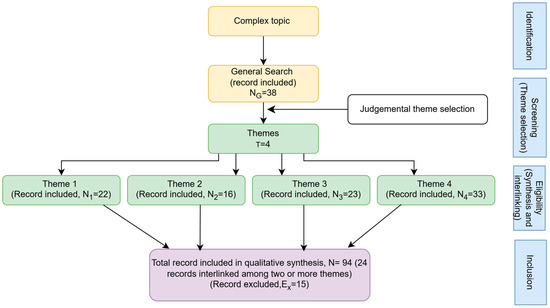
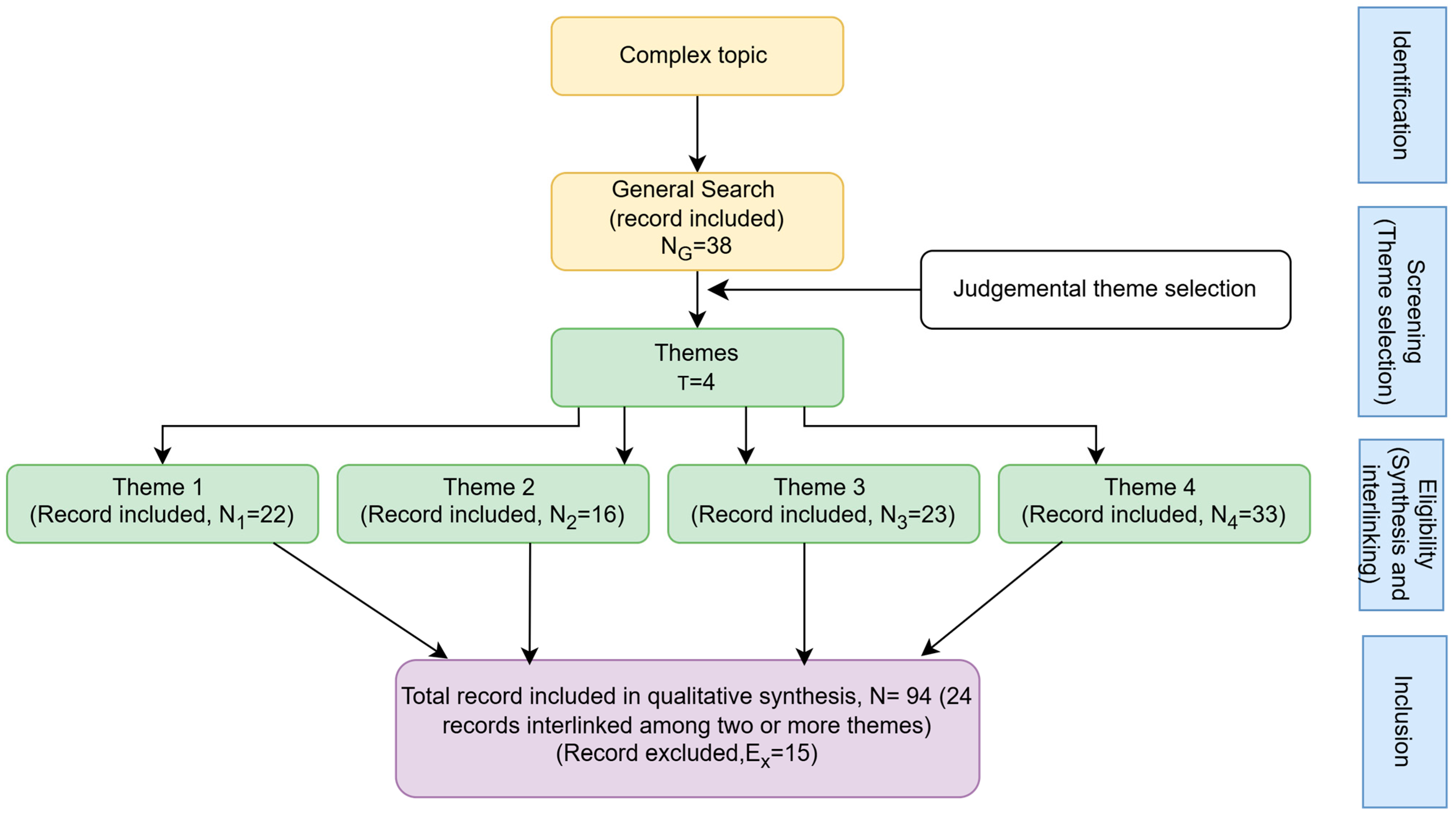
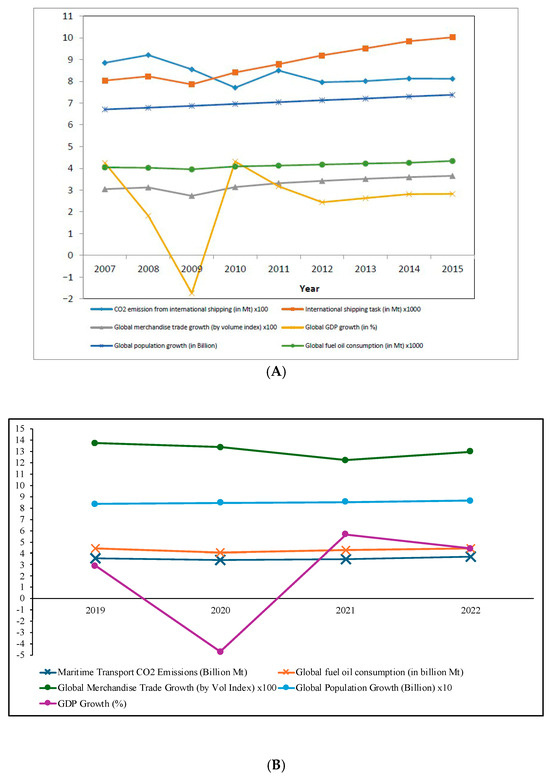
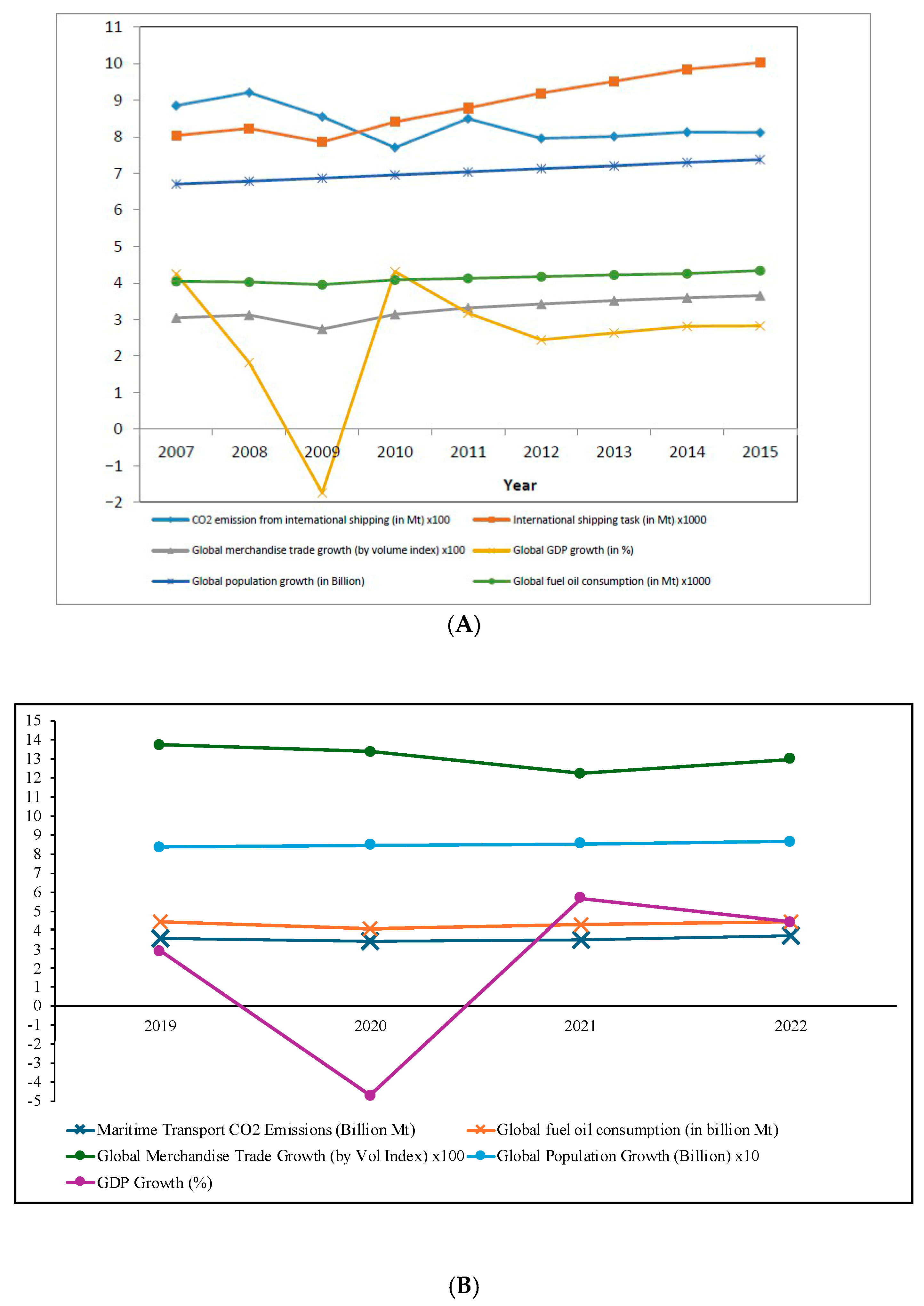
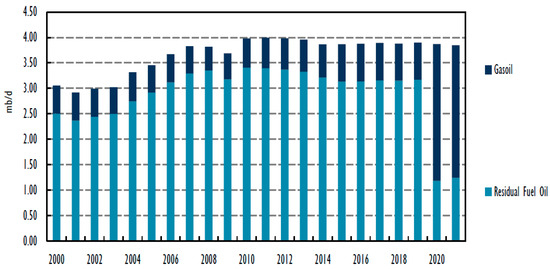
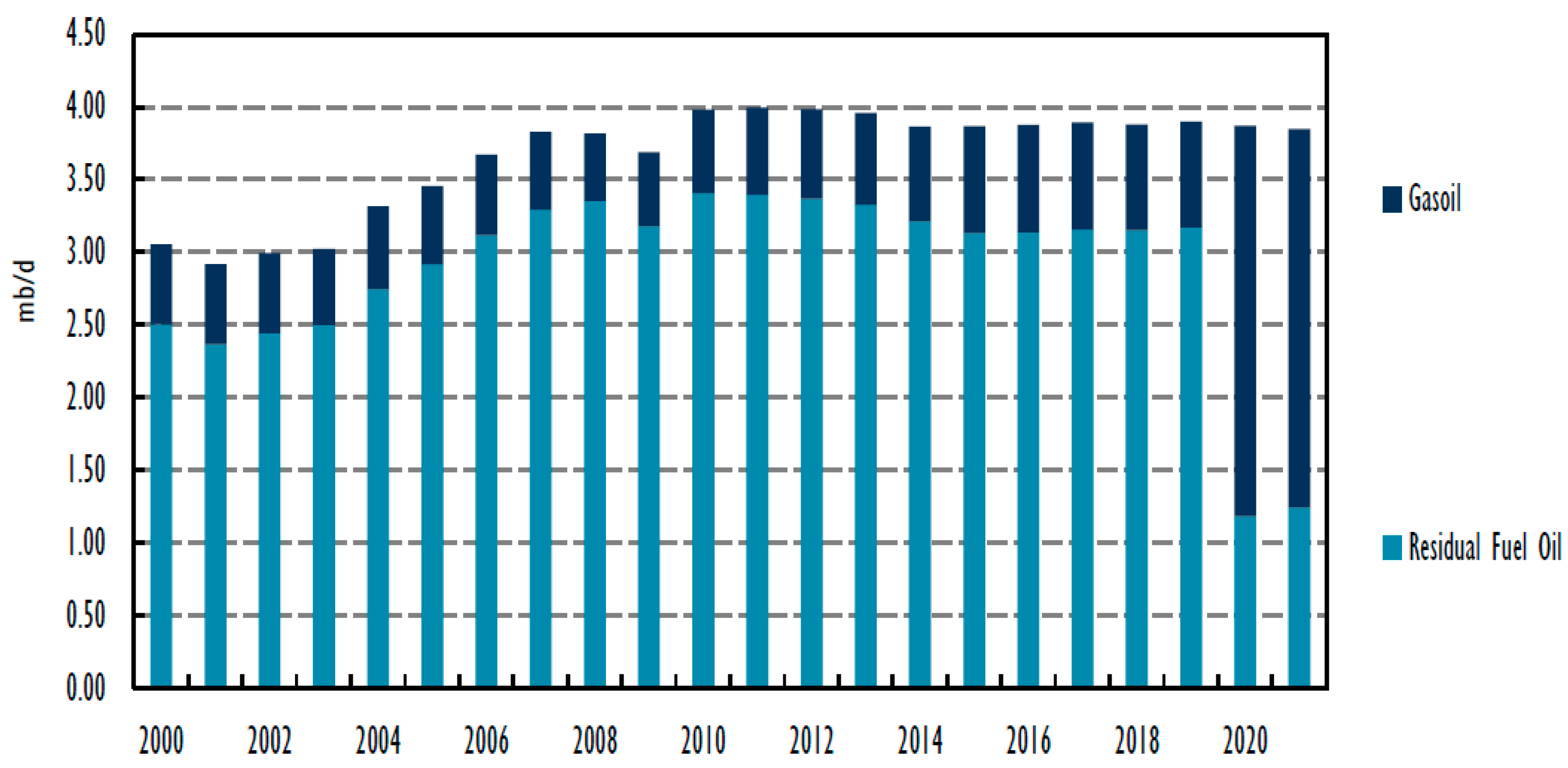
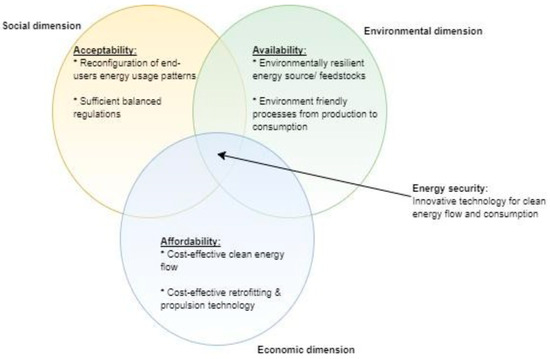
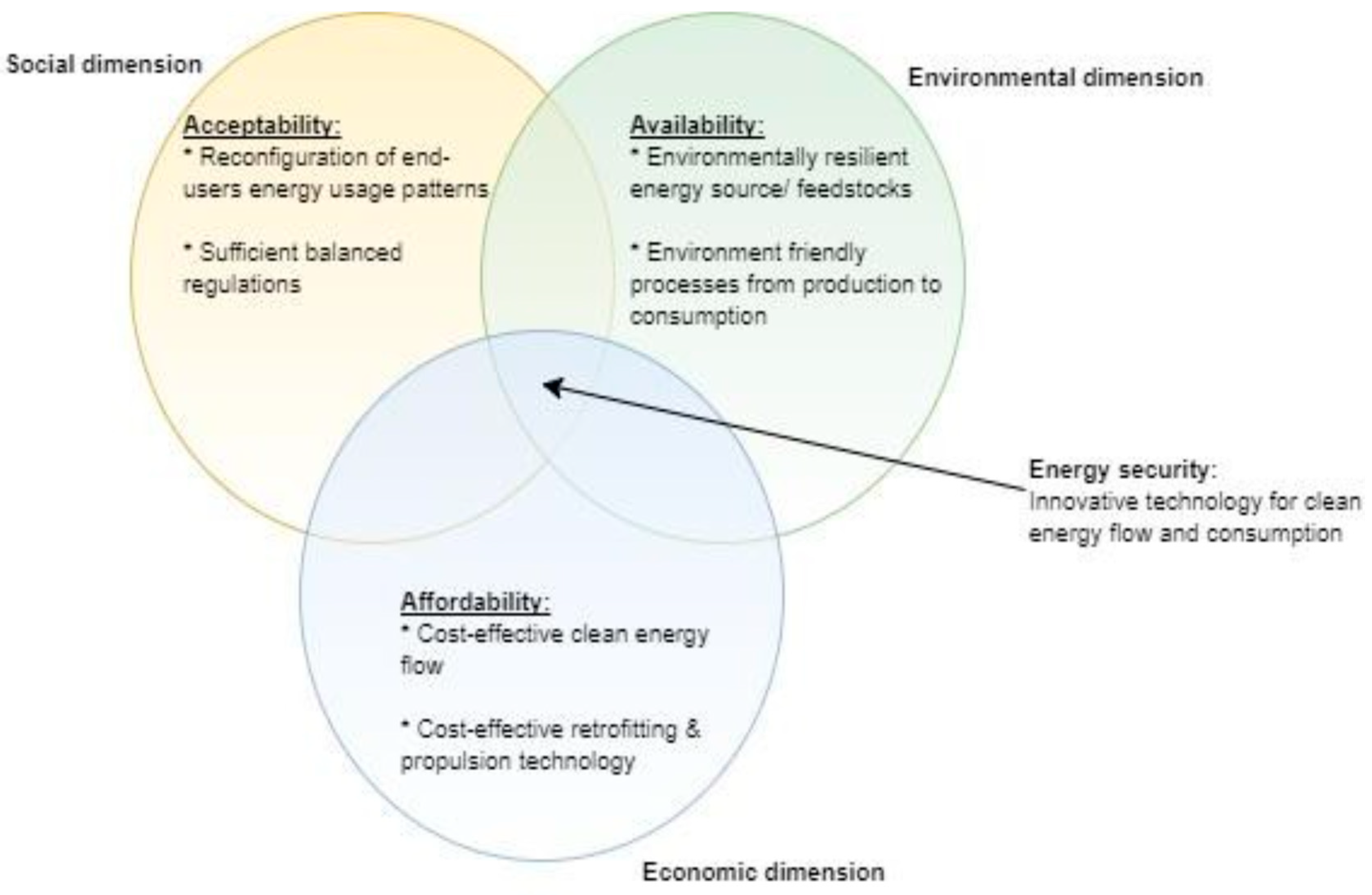
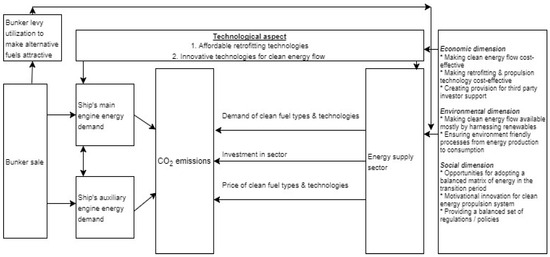
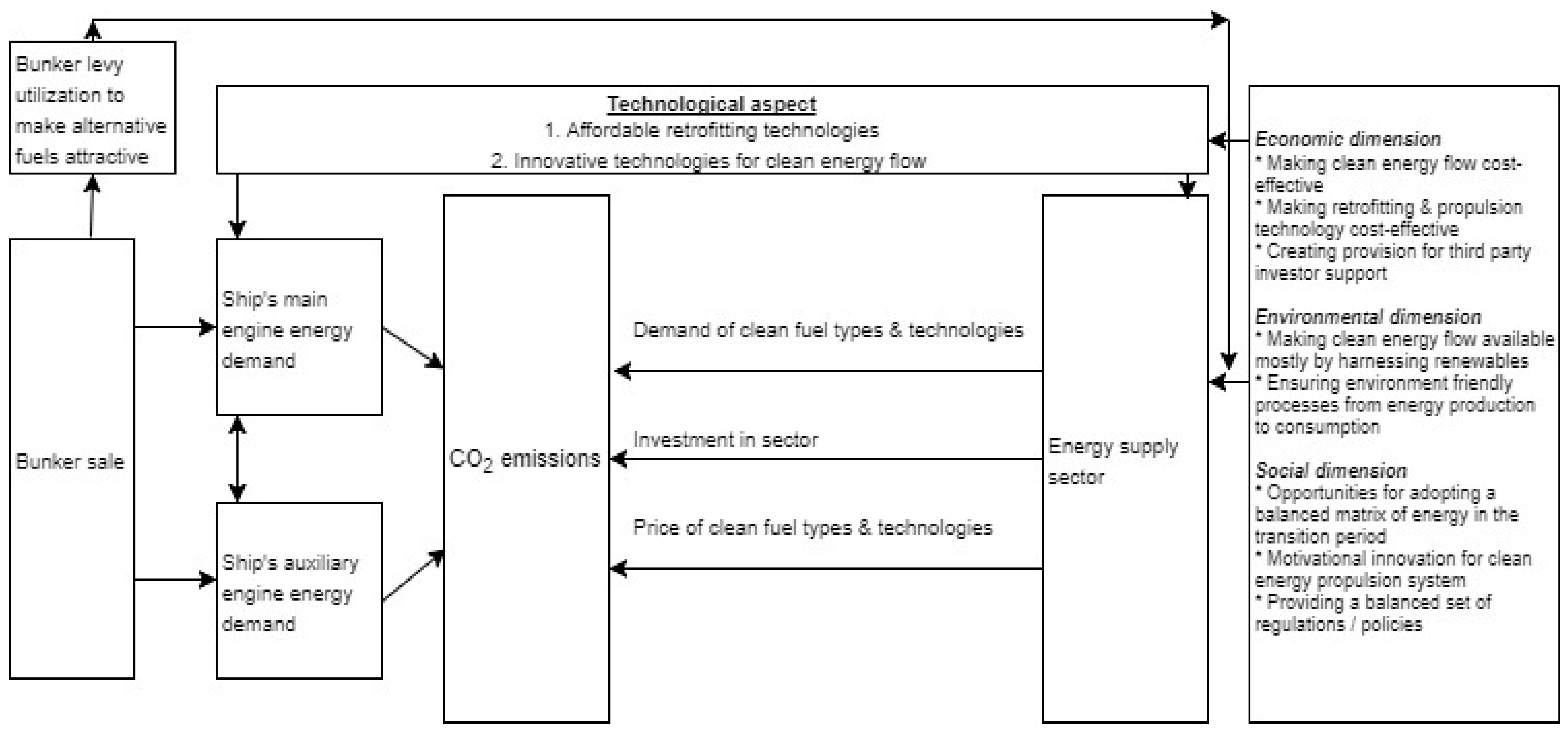

Disclaimer/Publisher’s Note: The statements, opinions and data contained in all publications are solely those of the individual author(s) and contributor(s) and not of MDPI and/or the editor(s). MDPI and/or the editor(s) disclaim responsibility for any injury to people or property resulting from any ideas, methods, instructions or products referred to in the content. |
© 2026 by the authors. Licensee MDPI, Basel, Switzerland. This article is an open access article distributed under the terms and conditions of the Creative Commons Attribution (CC BY) license.