


Abstract
Mangrove ecosystems underpin coastal livelihoods and biodiversity in Mozambique, yet gendered patterns of resource use and their implications for management remain underexplored. This study explores how artisanal fishing and shellfish collection differ between men and women on Inhaca Island (Maputo Bay), focusing on how these gender-specific practices shape livelihood outcomes, spatial use of mangroves, and perceptions of ecological change. To address this question, we combined structured interviews (n = 35; 51.4% men, 48.6% women) and camera-trap monitoring in two mangrove areas during September 2024 to document fishing practices, catch characteristics, spatial patterns, and ecological perceptions. We found pronounced gendered divisions of labor and space use: men, using boats and nets, harvested a median of 15 kg of fish per day for commercial sale, generating cash income, whereas women collected a median of 3 kg of shellfish by hand, primarily for household consumption. Camera traps confirmed pronounced spatial segregation in mangrove use: women foraged in targeted areas, and men traversed broader zones, both synchronizing their activities with tidal and daylight cycles. By integrating social and ecological data, the study revealed nuanced gender roles and resource pressures, with 82.9% of participants reporting declines in fish and shellfish stocks, emphasizing mangroves’ critical role in livelihoods, biodiversity, and climate resilience. Our findings highlight the value of mixed-method approaches for understanding socio-ecological dynamics and advocate for gender-sensitive conservation policies, strengthened Community Fisheries Councils, and infrastructure investments to regulate resource use, enhance mangrove management, and promote equitable livelihoods in Mozambique’s coastal communities.
1. Introduction
Mangrove ecosystems are pivotal to the ecological integrity and socio-economic viability of coastal regions, particularly in the Global South. These salt-tolerant forests occupy the intertidal zones and provide a range of critical ecosystem services. They buffer coastlines against storm surges and erosion, sequester carbon, regulate water quality, support biodiversity, including nursery habitats for commercially and nutritionally important fish and invertebrates [1]. In Mozambique, mangroves cover approximately 300,000 hectares, making them the second-largest mangrove system in Africa [2]. Their ecological functions are closely interlaced with local livelihoods, particularly those of artisanal fishers who depend on these habitats for subsistence and income [3,4,5]: by serving as productive habitat for fish, crustaceans, and other commercially important species, mangroves directly generate fishery resources that underpin subsistence and income for artisanal fishers.
The artisanal fisheries sector in Mozambique employs an estimated 375,000 individuals and produces 76% of the country’s marine capture fishery yield [6]. This sector is predominantly small-scale, operating under low levels of technological and capital investment, yet it is of immense economic and nutritional significance. In fact, according to a recent study by the Malabo Montpellier Panel, fish production is basically destined for self-consumption or sale in local markets, which explains why 50% of animal protein intake comes from fish, crustaceans, and other marine resources [7]. Artisanal fishing in Mozambique is legally defined as commercial fishing conducted for profit and is subdivided into two main categories: local and coastal. According to the Marine Fishing Regulations [8], this activity involves the use of small vessels with specific engine powers, typically operating close to shore.
Mozambique’s most productive marine fishing areas are the Sofala Bank and Maputo Bay [9]. Inhaca Island, situated in Maputo Bay, represents a critical node within this coastal socio-ecological system. Fishing is the primary source of income for approximately 20% of the island’s population [10,11,12,13], closely linked to local mangroves [14,15]. However, unsustainable resource use is placing increasing pressure on both the fishery sector and the mangrove ecosystems that underpin it [16,17]. The governance of these resources is officially delegated to co-management institutions, namely the Community Fisheries Councils (Conselhos Comunitários de Pesca, CCPs). However, their effectiveness is hindered by resource constraints, inconsistent enforcement, and social exclusion, particularly of women [18].
Despite the importance of Maputo Bay as a fishing ground and the fact that Inhaca Island hosts the country’s premier marine research station and has been the subject of extensive ecological studies [19], investigations into the socio-economic and gendered dimensions of resource use remain sparse. There is an urgent need to integrate gender-sensitive and community-informed approaches into the assessment of artisanal fisheries, particularly in regions where data are limited and governance structures remain fragile.
By examining gendered patterns in livelihoods and resource use, our research identifies how different groups interact with and depend on mangrove and coastal ecosystems. Understanding these dynamics is essential for designing inclusive, contextually appropriate coastal management strategies that account for the needs, roles, and contributions of both women and men. In this way, the study also contributes to broader conversations about gender equity, participatory governance, and the sustainable management of coastal social-ecological systems.
To address these objectives, the present study combines structured interviews with local fishers and shellfish collectors and camera-trap monitoring in selected mangrove areas of Inhaca Island. The paper is organised as follows: Section 2 describes the study area and methods for data collection and analysis; Section 3 presents the results from interviews (demographic, socioeconomic, and perceptual aspects) and camera trapping (spatial and temporal patterns); Section 4 discusses the implications for gender roles, mangrove conservation, and methodological considerations; and Section 5 offers conclusions and recommendations for gender-sensitive policies and sustainable resource management.
2. Materials and Methods
2.1. Study Area
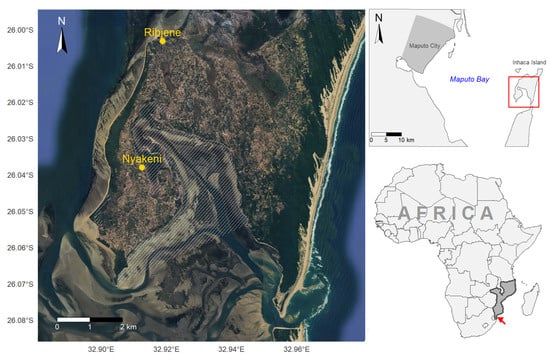
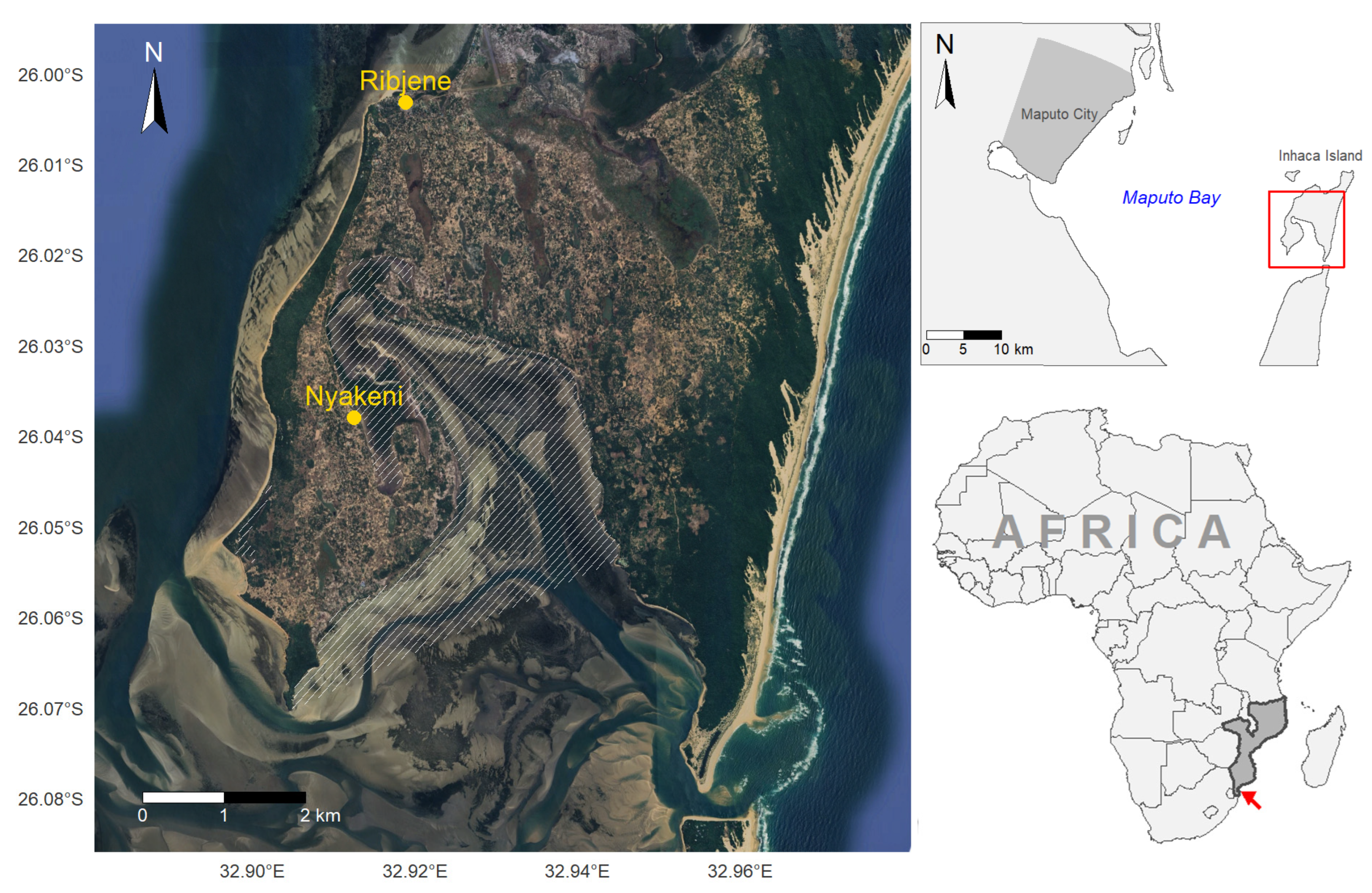
Inhaca Island, located about 32 km east of Maputo City (Figure 1), is the largest island of the homonymous archipelago, with an area of about 40 km2 [20]. It is characterized by a humid tropical climate with mean annual temperatures of 22–23 °C, annual rainfall of about 600 mm, and a relative humidity of 76% [21]. The island is located in the Maputaland Endemism Center, a biodiversity hotspot in southern Africa. It harbors a diversity of ecosystems, including mangrove forests, seagrass meadows, coral reefs, dune forests, coastal scrub, and marsh vegetation, making it a critical site for ecological research and conservation [20,21,22].
Figure 1.
Study area maps. Main plot: Satellite image from Google Earth Pro showing Inhaca Island, Maputo Province, Mozambique, with the crustacean sampling areas at Ponta Raza and Saco (dashed lines) and evaluated communities (yellow). Inset maps display Inhaca’s location within Maputo Bay (top right) and Africa (bottom right).
The eastern coast of the island is dominated by high-energy shorelines with dunes and pioneer vegetation, along with protected dune and scrub forests in areas such as the Inguane and Inhaquene Forest Reserves [22]. The western and northern coasts, protected from intense wave action, host extensive mangrove forests, among the southernmost in the world. These forests are strongly dominated by Avicennia marina (~69%), followed by Rhizophora mucronata (~20%), Ceriops tagal (~8%), and Bruguiera gymnorhiza (~4%) [23]. These mangrove communities play a crucial role in coastal protection, carbon sequestration, and as breeding grounds for marine life [24]. Despite the services they provide, Inhaca’s natural ecosystems are increasingly threatened by deforestation, unregulated tourism, and coastal erosion, aggravated by the effects of climate change, such as sea-level rise [25].
Its population of approximately 6000 residents, slightly predominated by women (52%), who rely on subsistence-based livelihoods, including artisanal fishing, small-scale agriculture, livestock rearing, and limited tourism activities [26], shapes Inhaca’s socio-economic context. Key crops cultivated include maize, cassava, sweet potatoes, peanuts, beans, watermelon, pumpkin, and sugarcane, alongside fruit trees such as mango, papaya, coconut, citrus, and cashew, which serve both as dietary staples and sources of income [26,27]. However, the island’s agricultural potential is constrained by infertile soils, characterized by irregular topography and sandy composition, which hinder water retention and limit agricultural productivity [28].
This situation highlights the importance of natural resources, particularly mangroves, which are integral to the local economy by providing timber for construction, fuelwood, and habitat for fish and crabs, harvested for local consumption and trade with mainland markets, particularly in Maputo [29]. In Mozambique, the conservation and management of mangroves are regulated under general terrestrial forest legislation, notably the Forests and Land Legislation Act of 1998, which affords mangroves partial legal protection. Despite this status, only a limited number of marine protected areas, including the Inhaca and Portuguese Island reserves currently encompass mangrove forests. Although commercial exploitation is subject to authorization or licensing, widespread unregulated harvesting for firewood, charcoal, and construction poles continues to pose a major threat. Mangrove deforestation is estimated at approximately 1821 ha yr−1, with the highest losses recorded in the Maputo and Beira regions [30]. Therefore, given the island’s high population density, widespread poverty, and the inherent challenges of its land for agricultural production, coupled with the increasing vulnerability to environmental degradation, it is anticipated that worsening ecological damage may exacerbate these socio-economic challenges [27].
Conservation policy on Inhaca Island is guided by its partial designation as a protected area, including the Inhaca Marine Reserve, established to safeguard mangrove and coral ecosystems [31]. Despite these efforts, enforcement remains limited due to inadequate infrastructure and resources. In this context, integrating traditional ecological knowledge with modern management practices emerges as a complementary approach that could enhance mangrove conservation while also supporting local livelihoods [32], aligning with global frameworks such as the Ramsar Convention on Wetlands [33].
2.2. Structured Interviews
2.2.1. Data Collection
During the first week of September 2024, we conducted structured interviews with shellfish collectors and artisanal fishers on Inhaca Island, Mozambique, to explore their socio-economic reliance on mangrove ecosystems and fishing practices. We chose structured interviews to ensure consistency across participants and to facilitate the quantitative analysis of socio-economic and ecological variables. The interview protocol included both closed-ended and semi-closed questions that addressed four main areas: (i) basic socio-demographic characteristics of households, (ii) fishing and shellfish collection techniques, daily catch volumes, market prices, income derived from these and other activities, and frequency of engagement, and (iii) participants’ perceptions of the ecological and cultural importance of mangrove ecosystems. We also included an open-ended question to gather information about the needs and challenges faced by fishers and collectors (Supplementary Material File S1). To ensure clarity and cultural relevance, we pre-tested the questions with a small pilot sample. Each interview lasted approximately 30 to 45 min.
We interviewed women shellfish collectors at mangrove sites in the Nyakeni community while they were collecting. This location was suggested by staff at the Marine Biological Station of Inhaca, who identified it as one of the most suitable and accessible sites for women to undertake this activity. We spoke with artisanal fishermen at the Conselho Comunitário de Pesca (CCP) in Ribjene during a training course organized by the MangAction Project, which is funded by the Italian Agency for Development Cooperation (AICS) and implemented by the Istituto Cooperazione Economica Internazionale (ICEI). We chose Ribjene to take advantage of the opportunity to have the island’s fishers gathered in a single location. Participants aged 18 years and older who were actively engaged in shellfish collection or participating in the training course were recruited using a purposive, convenience-based approach, with random selection applied among those who expressed willingness to join upon arrival at the selected sites.
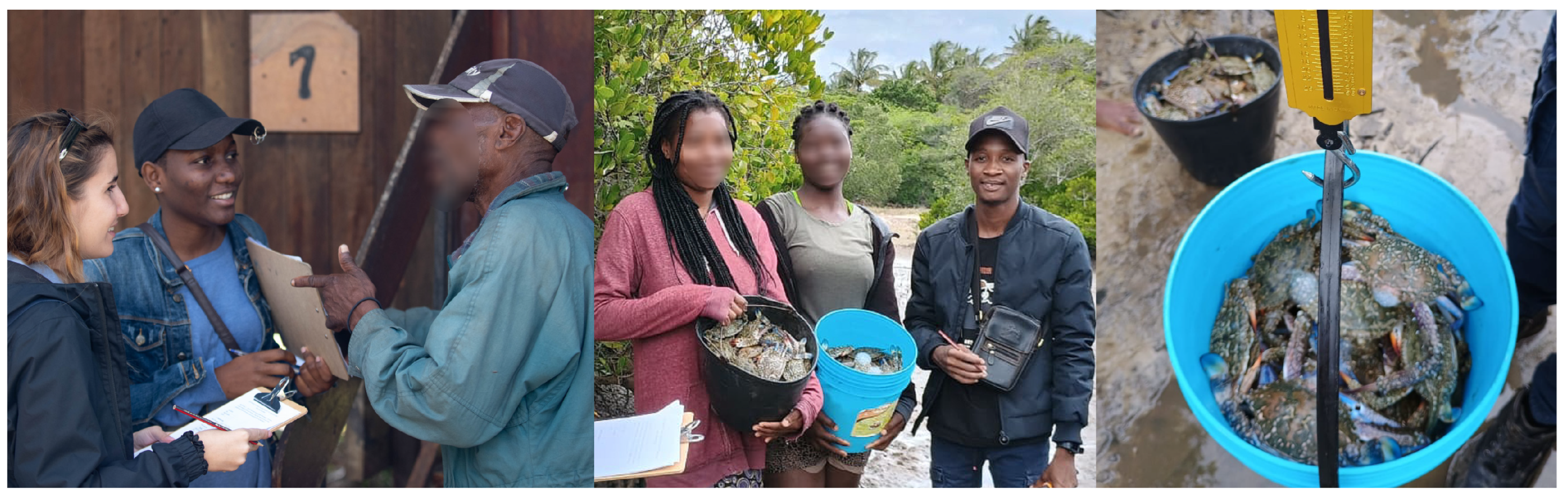
We interviewed 35 participants (17 women and 18 men). Trained researchers transcribed responses in real time using paper and pencil (Figure 2). We conducted interviews in participants’ preferred languages (Portuguese or Shangana) to ensure comprehension and cultural sensitivity. We did not establish an a priori sample size because probabilistic sampling was not feasible in the study context. Instead, we determined the final sample size based on participant availability and willingness to participate at the selected sites during fieldwork. Consequently, our findings are not generalizable but provide valuable insights into local gendered livelihood patterns and resource use.
Figure 2.
The field research on Inhaca Island: (left) interviewing an artisanal fisherman and (center) a shellfish collector about resource use and mangrove conservation; (right) weighing a bucket of crabs to assess harvest sustainability and economic outcomes.
We obtained written approval for the study from Inhaca Island’s local authorities (Supplementary Material File S1), and a representative of the authority accompanied us throughout the interview process. Due to the high prevalence of illiteracy among participants, we were unable to obtain written informed consent. Instead, we provided a clear explanation of the study’s objectives, procedures, and participants’ rights to withdraw at any time without consequences. We obtained verbal consent in accordance with the ethical principles of the Declaration of Helsinki [34]. We did not collect any personal identifiers, in line with ethical research standards for vulnerable populations [35], to protect participants’ privacy.
For this study, we defined daily catch volume as the total weight (kg) of fish or shellfish collected per day. We defined income derived from fishing as the total monetary value obtained from selling catches per week, based on self-reported local prices. We defined activity frequency as the number of days per week that participants engaged in fishing or shellfish collection. We measured gross daily revenue as the market value of the catch. We measured socio-demographic variables via direct self-report and assessed ecological perceptions using a 5-point Likert scale.
2.2.2. Data Analysis
We analyzed the quantitative data using Stata MP Version 17 [36], applying a gender-based approach to identify socially assigned roles and economic dynamics in fishing and shellfish collection. We determined fishing and collection frequency as the number of active days per week, based on participants’ self-reported data. We estimated daily fish catch quantities from fishers’ statements, while we measured shellfish quantities, primarily crabs, by weighing collection buckets during fieldwork.
To estimate gross weekly and monthly incomes, we combined participants’ reported weekly working hours and days with average market prices. We calculated daily revenue and then extrapolated weekly and monthly figures by multiplying daily revenue by the number of working days and weekly revenue by four, respectively. Due to uncertainties surrounding operational costs such as fuel and equipment maintenance, we could not conduct a reliable net income analysis; therefore, we report only gross income estimates. We acknowledge potential biases stemming from self-reported data, especially regarding time, quantities, and distances. To improve accuracy, we used reference examples to help participants estimate values when direct measurement was not feasible.
For the descriptive statistical analysis, we used medians and deviations from the median to account for high data dispersion caused by extreme values and the non-normal distribution of several quantitative variables. These patterns reflect the challenges participants faced in accurately quantifying their activities. We assessed trends in fishing and shellfish collection using participants’ perceptions of changes over the past five years, providing insights into the sustainability of mangrove-dependent livelihoods.
2.3. Camera Trapping
2.3.1. Data Collection
To independently assess human activity patterns in mangrove ecosystems and adjacent forested areas on Inhaca Island, Mozambique, we conducted three camera-trapping campaigns as a complement to an ongoing wildlife study (data to be published elsewhere). We carried out the campaigns at Ponta Raza (pre-campaign: 2 June–14 October 2024; primary campaign: 21 November 2024–24 January 2025) and at Saco (25 January–29 March 2025), following approval from local authorities. We deployed Browning Strike Force HD Pro X (20MP) infrared cameras (Prometheus Group, LLC., Birmingham, AL, USA), using standardized settings to ensure consistent data collection. During the pre-campaign, we set the cameras to capture images at 5–10 s intervals; in subsequent campaigns, we configured them to capture three consecutive shots at normal sensor sensitivity. All cameras operated continuously, 24 h a day.
In mangrove areas, we mounted the cameras approximately 1.5 m above the ground to account for tidal flooding. In other forested areas, we positioned them 30–40 cm above ground. For the primary campaigns, we randomly selected sites by generating points within manually delineated polygons for Saco and Ponta Raza using the sf package in R [37,38], ensuring that each point was separated by at least 200 m. However, our placement was sometimes constrained by factors such as site accessibility, permanent water channels, availability of suitable trees to minimize theft risk, and other logistical challenges. We recorded the camera locations using a Garmin GPSMAP 65 (Garmin Asia Corporation, New Taipei City, Taiwan). Excluding the pre-campaign, we checked the cameras approximately every 30 days to replace memory cards and batteries.
2.3.2. Data Analysis
We manually reviewed all images to ensure accurate classification, deliberately avoiding automated software to minimize errors. We defined independent human events as those separated by at least 30 min for the same individual. This interval was used as this threshold is widely adopted in camera-trap studies [39] and is consistent with our field observations, indicating that individuals rarely remain in or return to the same location within this time frame. We excluded images that showed (1) interactions with the camera (e.g., sabotage or theft attempts), (2) tourist activity, or (3) individuals too distant to reliably determine sex. We analyzed the resulting data in R version 4.4.3 [40] to assess mangrove use intensity, spatial sex segregation, and temporal activity patterns, aiming to understand gender-based dynamics in resource use that are critical for effective coastal management.
To quantify mangrove-use intensity, we standardized human observation records by camera effort to calculate the number of events per hour. We classified sites based on whether they recorded human activity, defining intensive use as instances in which more than 50% of sites had activity rates exceeding 0.01 events per hour.
We assessed spatial sex segregation by categorizing each site with human records as having only men, only women, or both, based on event counts. To determine whether the proportion of sites with exclusive sex presence significantly exceeded 50%, we applied a binomial test (p < 0.05). This analysis helped reveal spatial patterns of gendered resource use, such as women collecting shellfish in mangrove areas and men fishing in adjacent waters.
To analyze temporal patterns, we extracted hourly event frequencies from timestamped data and aggregated them by sex. We calculated summary statistics, including mean events per hour and peak activity times. We also created a bar chart to visualize temporal differences in activity patterns between men and women. A chi-square test was applied to hourly event counts to test for significant differences in temporal distribution between sexes (p < 0.05), reflecting gendered divisions of labor in mangrove resource use.
3. Results
3.1. Structured Interviews
3.1.1. Demographic Aspects
The sample includes individuals 18 and older; men represent 51.42% of the sample. Ages range from 18 to 76 for men and from 18 to 72 for women, with median ages of 52 and 25, respectively (standard errors of the median: 5.67 and 5.51). The family size ranges from two to 10 members, with a median of five (Table 1). The observed gender differences in age can be attributed to the fact that the sample mostly includes younger women who are usually in charge of collecting shellfish along the island’s mangrove ecosystem, while older women take care of domestic chores. Younger children attend school while the older tend to work in activities like those of their parents.
Table 1.
Demographic structure of the sample in structured interviews on Inhaca Island, Mozambique, highlighting gender distribution, median age, and family size.
3.1.2. Economic Activity
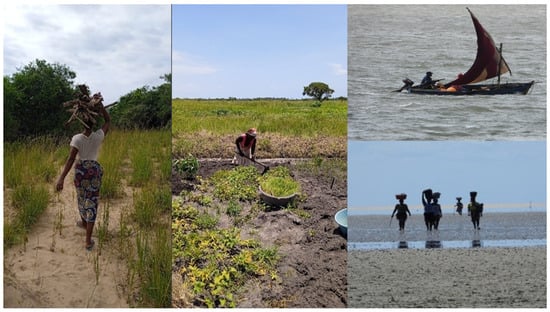
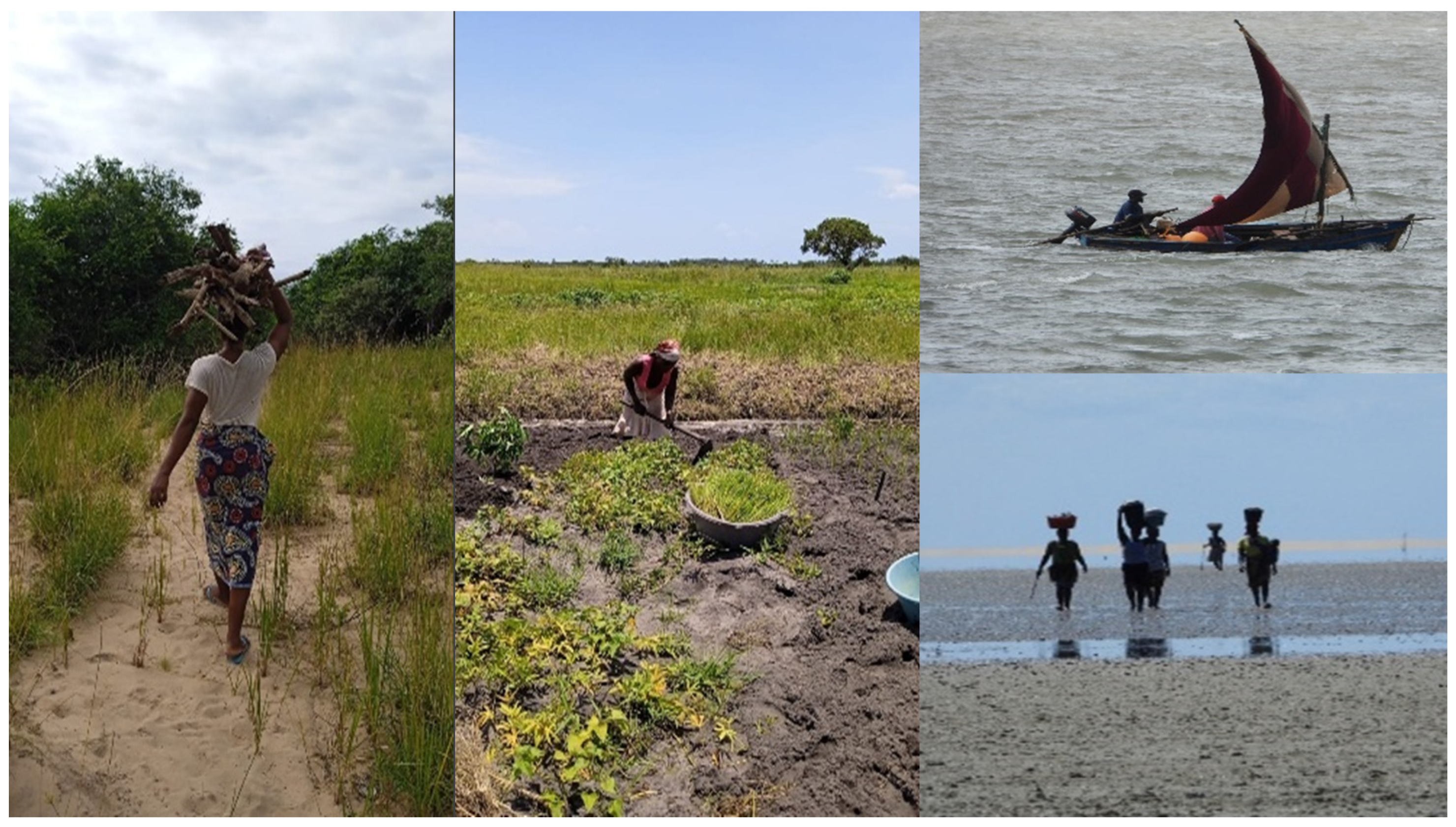
Gender roles are distinctly defined on the island (Figure 3). Shellfish gathering is, primarily, a young woman’s activity, while artisanal fishing, especially if it involves the use of boats and nets, is the responsibility of men. This assignment of roles has important implications, as it determines the access to tools that may improve worker productivity and, even more, to money.
Figure 3.
Gendered livelihoods on Inhaca Island. Women and men engaged in daily subsistence and resource-based activities: (left) woman transporting firewood, (center) tending a home garden (machamba), (top-right) fishermen harvesting from boats, and (bottom-right) women carrying baskets, likely filled with shellfish. These scenes illustrate the gender-specific roles and contributions to household sustenance and coastal economies.
Women collect between one and four kilos of shellfish (3 kg in median) per day, weather permitting, although on average they work two or three days a week. To carry out this activity, they walk around 1.7 km and work for one to three hours, using their hands and a bucket as their only work tools, although in rare situations they may use fishing lines to catch some fish. The product of this activity is almost exclusively for household consumption; only in exceptional cases, when requested by third parties, is sold. The heterogeneity of the species women collect makes it difficult to quantify the value of their production since the same bucket can contain different types of crustaceans and mollusks, as well as one or another fish. However, if it were to be sold, we estimate a value of between 29 MTZ and 117 MTZ (US$0.46 and 1.85 dollars, respectively) per kilo at most (Table 2). These prices refer specifically to crabs, which may lead to an overestimation of overall catch value because crabs are not always the dominant component in the bucket; depending on seasonality, mollusks with little or no market value can constitute the majority of the catch. For contextual reference, minimum wages in Mozambique vary by economic sector: in 2024, the minimum monthly wage for the Kapenta fishing sector was set at 4941.68 meticais (≈US$78.13, assuming an exchange rate of 63.25 MTZ per US dollar as of September 2024), whereas the minimum monthly wage in the industrial fishing sector was 6531.79 MTZ.
Table 2.
Comparative analysis of production characteristics for women’s shellfish collection and men’s artisanal fishing on Inhaca Island, highlighting gender-specific patterns in workload, harvest, and economic outcomes. Note: median standard error (s.e). Information about prices was provided by the fishermen themselves.
Another subsistence activity performed by women is the production of a variety of crops, as described before, working either alone on individual parcels or in groups that share the produce of collective parcels. Collecting wood for cooking is also the responsibility of women; when possible, the bundle of wood is sold for 100.00 MT.
Men, on the other hand, work between three and seven days a week for about five hours a day in mangroves, the bay, or the open sea at an average distance of five kilometers and produce between seven and 30 kilos of fish (15 kg in median) per day per worker, working either alone or with up to 12 coworkers, usually combining different gears. To this purpose, 94.74% of them use motor or sailboats, as well as nets (84.21%), trammels (26.32%), and/or fishing lines (15.79%), along with traps and harpoons, depending on the area and season: nets during the rainy season and fishing lines with several hooks during the summer. In the common practice of artisanal fishing communities on the island, canoes are usually individually or family-owned, made from mangrove wood. At the same time, larger vessels may have shared ownership schemes, often within the extended family.
As in the case of shellfish gathering, the frequency of fishing days depends on various factors, including the intensity of the tide and the direction of the wind. Low tide favors shellfish gathering, while high tide and north–south winds favor fishing on the high seas. Thus, according to the interviewees, whenever the conditions are favorable, they go to the open seas or the beach every day. Even though some men also raise goats, this is a secondary, not widely spread activity.
The product of this artisanal fishing activity is mainly sold. We lack information about the composition of the catch, but it is sold in the market at an estimated median price of 185 MTZ/kg. Fishers reported this price, which we independently corroborated at the local market. According to Muchanga et al. [41], the most abundant species reported by fishers are Artherinamourus lacunosus (Caluane), Caranx sp. (Xareu), Crenidens crenidens (Taca-taca), Ephinephelus chabaudi (Garoupa), Gerres longirostris (Lhenguisso), Lutjanus fulviflama (Ntronssi), Mugilidae (Tainha), Platycephalus bassensis (Sapateiro), Pomadasys spp. (Pedra), Sillago sihama (Pescadinha), Terapon jarbua (Zebra), and Trachurus spp. (Carapau). This means that the fishermen’s daily revenue ranges between 1190.00 MTZ and 8400.00 MTZ (US$18.81 and US$132.80), with a median of 2687.50 MTZ (US$42.49) per worker. This amount represents the individual share of the gross catch, before operational costs are deducted. As for the costs, the information is poor and incomplete but can give us a general idea. Boats cost around 250,000 MTZ (about US$4000) and require maintenance whose cost, as well as the depreciation cost, is unknown. Each boat consumes between 15 and 70 L of gasoline per working day, depending on the distance, at the price of 93 MT/lt (1395–6510 MTZ or 22–103 US$). Oil needs to be replaced twice a year at an unknown cost. Nets and trammels cost between 2100 MTZ and 3500 MTZ (about US$90 on average) and need to be replaced every year. Fishing lines, one per fisher, also need to be replaced every year and cost 400 MTZ + 40 MTZ per each of the three hooks, at a total cost of 520 MTZ (about US$8.22), plus other daily costs for an estimated amount of 200 MT. Crew size during fishing trips varies widely and depends on the planning of each expedition, as well as on factors such as fishing location and weather conditions. As a result, the study cannot determine a reliable average crew size. However, in approximately half of the observed cases, crews consisted of three or four fishers. For all fishing activities, crew members share the costs of inputs, maintenance, and capital investment. For example, the cost of gasoline alone, shared among all crew members, accounts for between 15% and 30% of daily revenue. This cost-sharing arrangement limits the precise estimation of individual operational expenses, as these costs remain largely undocumented.
The figures presented here aim to describe the general situation rather than to provide precise estimates of individual revenues or operational costs. Moreover, because the study relied on a small sample of individuals who volunteered upon arrival at the selected sites, the findings cannot be generalized to the broader population.
3.1.3. Environmental Awareness
In the perception of most of the interviewees (82.86%), the current quantity of fish and shellfish obtained daily has declined or at most remained the same (8.57%), compared to five or more years ago. They attribute the observed reduction to the community’s daily collection of shellfish without any controls, and to fishermen using fine-mesh nets (1.0 to 1.5 cm) that capture fish below the legally established minimum size. According to the Mozambican Marine Fisheries Regulation, the minimum mesh sizes are 1.9 cm for purse seine fishing, 6.5 cm for gillnet fishing, and 8.0 cm for bottom trawling. This situation compromises both the sustainability of fishing activities and the reproductive capacity of the exploited species.
Besides the lack of fish and shellfish, another challenge faced by both fishermen and shellfish collectors is the lack of adequate equipment due to its unfordable costs, as well as the lack of adequate infrastructure (pier or port and a market to sell the fish). Finally, bad and unstable weather conditions are factors to be blamed for the reduced number of working days and hours.
The reduction in the availability of fish, crustaceans, and mollusks implies longer working days, and therefore higher costs, or fewer products for the same time, and therefore lower revenues. To try to alleviate this situation, closed areas have been established on the island for fishing and collecting shellfish, as well as orientation programs for fishermen about the importance of using nets adjusted to the standard.
The interviewees are aware of the importance of protecting and restoring the mangroves on Inhaca Island and the environmental services they provide (Table 3). According to them, mangroves are important (85.71%) as a provision of food and wood, and less important (74.29%) for recreational purposes; they play an important (85.71%) role as natural barriers against storms, hurricanes, and coastal erosion as well as carbon storage, helping to mitigate climate change and improving the water quality by filtering sediments and pollutants; are important (85.71%) at acting as a refuge and nursery for numerous species of fish, crustaceans, mollusks, and birds, not only for current but also for future generations (85.43%).
Table 3.
Importance of protecting and restoring the mangroves on Inhaca Island and the environmental services they provide (%).
3.2. Camera Trapping
3.2.1. Spatial Aspects
We deployed camera traps at 24 localities, resulting in a total effort of 28,825.8 h. The distances between cameras varied across campaigns: In the pre-campaign at Ponta Raza (four cameras), the distances ranged from 52.9 m to 373.3 m (median: 320.6 m). In the main Ponta Raza campaign (ten cameras), the distances ranged from 33.2 m to 1083.6 m (median: 217.5 m), and in the Saco campaign (nine cameras), from 261.0 m to 1811.6 m (median: 392.9 m). Despite some shorter distances, differences in ecological conditions and the presence of barriers, such as channels, influenced the placement of the cameras.
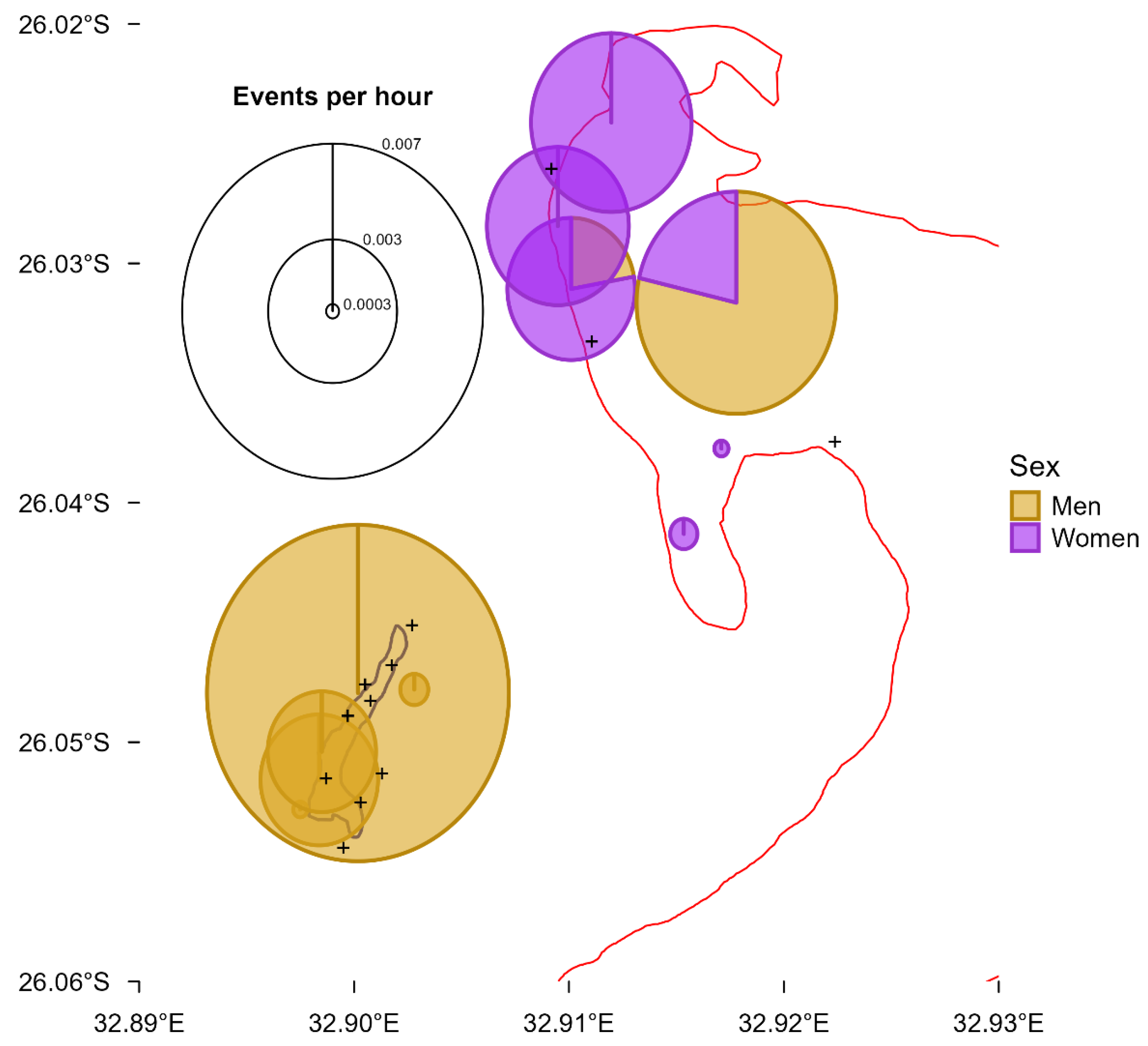
We recorded human presence at 11 of the surveyed points, with a total of 57 unique events (Figure 4). Analysis of usage intensity showed that only a small proportion of points with records exceeded 0.01 events per hour, with a mean intensity of 0.005 events/h (SD = 0.004). Specifically, less than 50% of these points surpassed the intensity threshold of 0.01 events/h, indicating that the mangroves are not extensively used overall. This aligns with our field observations, where evidence of crab-hunting activity appeared to be clustered in certain locations rather than widespread.
Figure 4.
Spatial representation of camera trapping effort. Pie charts are centered at each camera trap location, with diameters proportional to the number of pictures per hour. Each pie chart shows the proportion of detections by sex (women and men). The boundaries of the Saco (partially shown on the right) and Ponta Raza (left) mangroves are delineated (red line). Camera trap locations with no human detections are marked with a ‘+’ symbol.
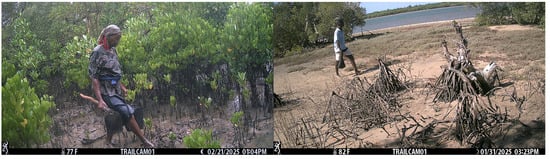
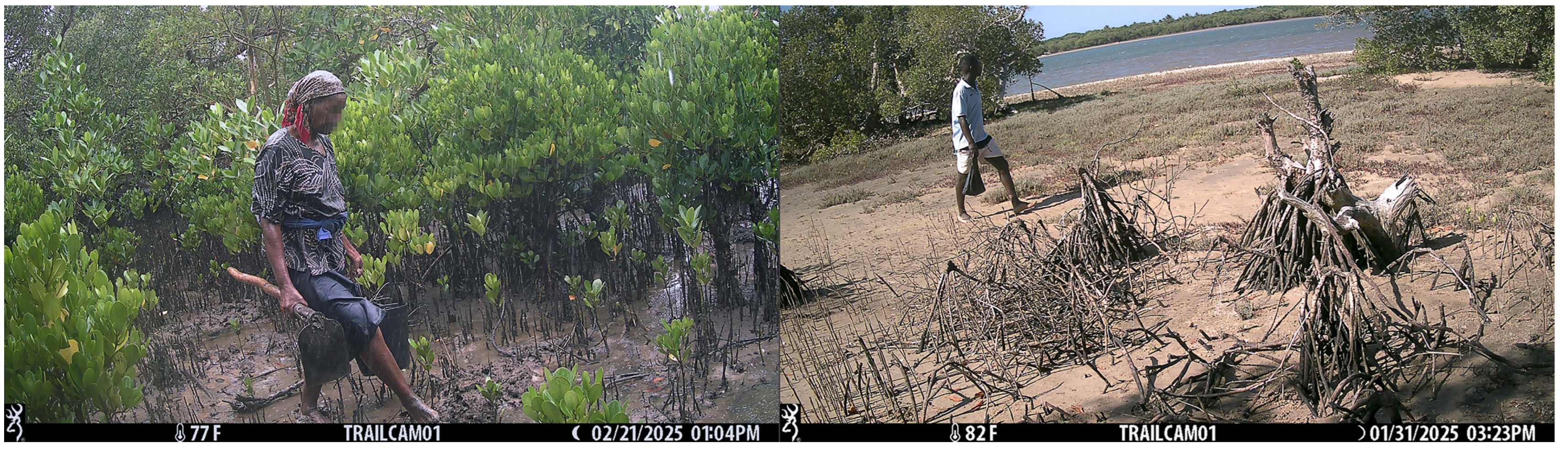
Our previous field experience suggests that women make limited use of the Ponta Raza mangroves, consistent with our spatial analysis of sex distribution, which reveals pronounced segregation. Of the 11 points with human records, five (45.5%) recorded only men, four (36.4%) recorded only women, and two (18.2%) recorded both sexes. A binomial test confirmed significant spatial segregation, with nine of 11 points (81.8%) showing the exclusive presence of one sex (p = 0.03, one-tailed, 95% CI: 0.53–1.00). This supports the conclusion that where men were detected, women were rarely present, and vice versa. Photographic analysis further highlighted distinct behavioral patterns: most images of women depicted them actively using tools to search for or capture animals in the mangroves, whereas most images of men showed adolescents or young adults without tools, seemingly passing through the area (Figure 5).
Figure 5.
Contrasting human activity at Saco mangroves. (left) A woman engaged in targeted resource extraction using tools in the Ponta Raza mangroves. (right) A young man traversing the mangrove without tools, suggesting incidental presence. These images illustrate sex-specific behavioral differences in spatial use.
3.2.2. Temporal Aspects
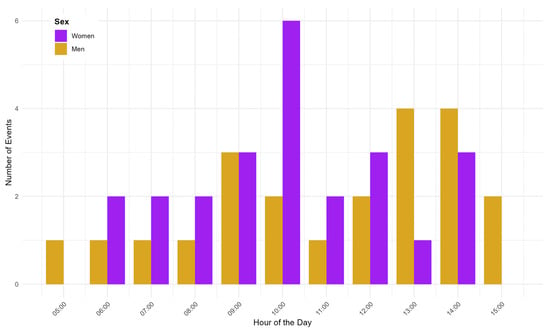
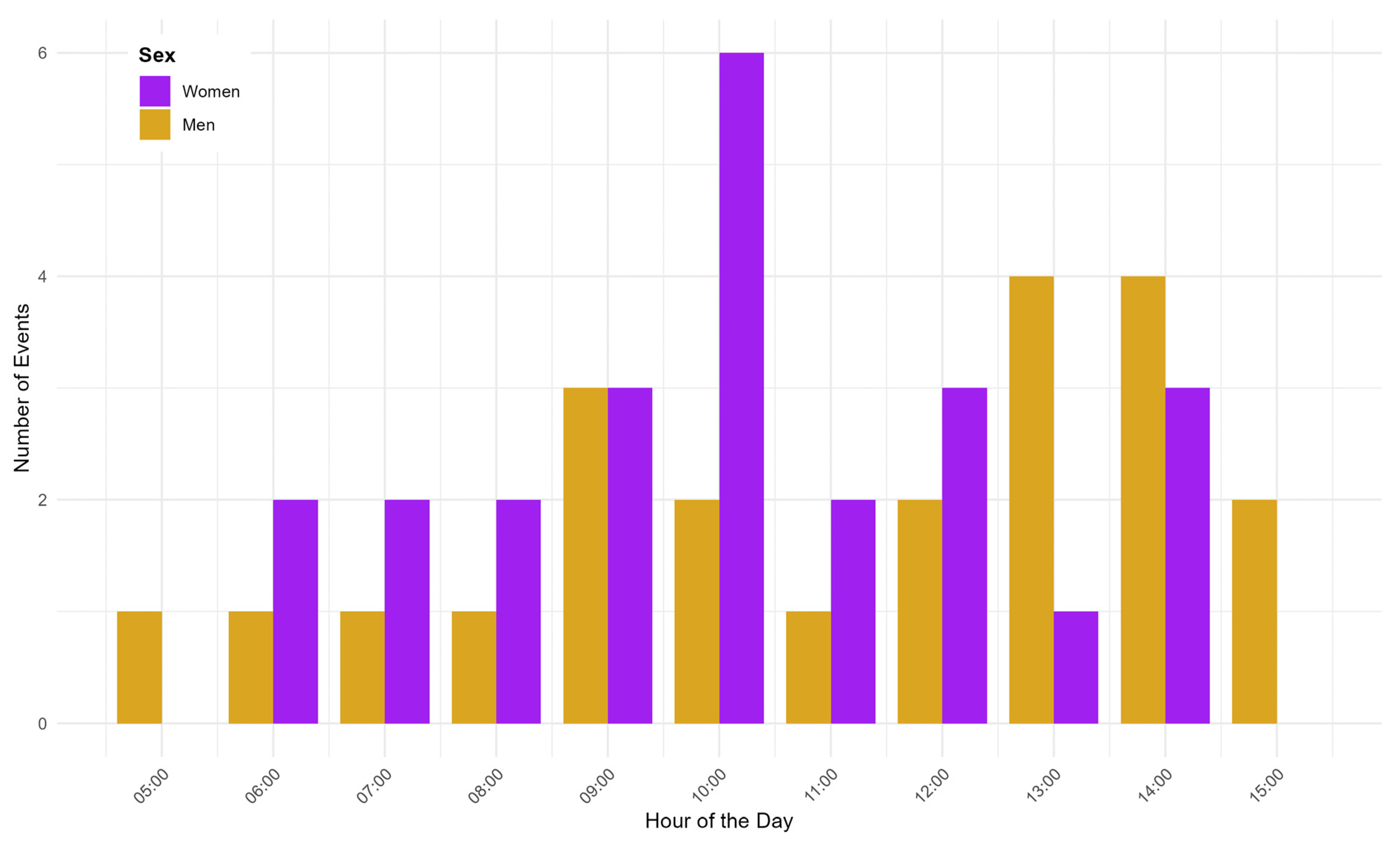
Our analysis of camera-trap data revealed subtle differences in activity patterns between men and women during the 05:00–15:00 timeframe, though these were not statistically significant. Men averaged two events per hour, with a peak of four events at 13:00, while women averaged 2.67 events per hour, with a peak of six events at 10:00. Hourly event frequencies indicated overlapping activity across most hours in this period (Figure 6). A chi-square test applied to the hourly event distributions showed no significant difference between sexes (χ2 = 8.405, df = 10, p = 0.589), suggesting that temporal patterns of mangrove use are broadly similar for men and women.
Figure 6.
Hourly distribution of camera trap events for women and men at Saco and Ponta Raza mangroves in the Inhaca Island. Bars represent the number of unique events per hour.
4. Discussion
Our study underscores the critical role of gender in shaping patterns of resource use and ecological pressure within mangrove ecosystems. These dynamics have direct implications for coastal management across Eastern Africa and comparable regions. The findings advocate for gender-sensitive policies that explicitly recognize and integrate women’s contributions into marine resource governance, thereby enhancing both sustainability and equity in mangrove-dependent communities worldwide.
4.1. Demographic, Gender, and Socio-Economic Patterns
Our findings reveal a demographic profile of fishers and shellfish collectors on Inhaca Island that aligns with broader trends in Mozambique’s coastal communities, where the economically active age range (15–65 years) dominates resource-based livelihoods [11]. We observed age- and gender- related division of labor: younger women focus on collecting shellfish, typically spending fewer hours (median 2 h/day), and days per week (median 2 days), working closer to shore (median 2 km), and attaining lower daily catches (median 3 kg) and no revenues, while older women work on the machamba and collect firewood. Men, on the other hand, engage in artisanal fishing, working longer hours (median 5 h/day), and more days per week (median 6 days), traveling greater distances (median 5 km), and achieving higher daily catches (median 15 kg) and gross revenues (median 2687.50 MTZ), as summarized in Table 2. These differences illustrate how age- and gender-specific roles shape both labor effort and economic outcomes, aligning with regional patterns already documented in East Africa, where physically demanding offshore activities are typically undertaken by older men and shore-based tasks by younger women [42,43,44].
High unemployment rates and limited economic opportunities in Mozambique [45], drive youth, particularly young women in Inhaca, into subsistence activities like shellfish collection [46], underscoring the island’s reliance on mangrove-based livelihoods.
Through interviews and camera-trapping efforts, we documented pronounced gender-based segregation in resource use at Inhaca. We found that environmental factors, notably tidal cycles and weather, significantly shape gendered livelihoods. Low tides facilitate women’s shellfish collection, while high tides support men’s fishing activities, consistent with ecological patterns described by [24]. Men’s longer working hours and higher weekly engagement reflect the commercial orientation of fishing, contrasting with the subsistence focus of women’s shellfish collection. Our observations indicate that local knowledge of tidal and faunal behavior optimizes these activities. However, we noted that declining resource availability, as reported by Mehdi et al. (2024), increases effort and costs, particularly for men reliant on fuel-intensive boats [47]. Although specific cost data are not available, fishermen report that such a shift imposes economic pressures on them, as they are increasingly forced to engage in offshore fishing, which is more costly in terms of fuel, equipment, and labor.
We identified that men in Inhaca predominantly act as primary income earners, securing greater control over household resources. At the same time, women’s reliance on labor-intensive, low-technology activities constrains their financial autonomy, aligning with previous studies [48,49,50]. These patterns mirror global trends in fisheries, where women’s contributions remain undervalued and underrepresented in governance structures, hindering equitable resource management [51,52]. Thus, our findings underscore the critical role of women’s subsistence activities in ensuring food security on Inhaca Island, despite their limited financial returns, and necessitate sustainable management strategies that balance ecological constraints with economic needs. According to the World Food Program [53], an estimated 2.7 million people in Mozambique face severe food insecurity (IPC Phase 3 or higher). This situation is compounded by the country’s low level of human development, as Mozambique ranks 182nd out of 193 countries on the Human Development Index, and by widespread poverty, with 82 percent of the population living on less than US$3 per day. These structural vulnerabilities are reflected in persistently high levels of malnutrition, with chronic undernutrition affecting 37 percent of children under five. Within this context, fisheries and aquaculture play a critical role in sustaining livelihoods and nutrition, contributing nearly 50 percent of daily protein intake nationwide and positioning fish as a cornerstone of household food security. Concomitantly, at the local level, women’s near-shore shellfish collection, although generating limited monetary income, provides an essential source of dietary supplementation. This activity complements artisanal fishing and helps buffer household food availability, particularly during periods when offshore fishing yields decline.
We emphasize that these socio-demographic dynamics highlight the need for gender-sensitive policies that recognize women’s subsistence roles and integrate them into fisheries governance to advance Sustainable Development Goals 5 (Gender Equality) and 14 (Life Below Water) [54]. Furthermore, our analysis reveals the urgency of targeted interventions to address youth unemployment and gender-specific economic vulnerabilities, which are essential for enhancing resilience in coastal communities. In this regard, promoting access to technology for women and vocational opportunities for youth, we propose that such interventions can foster equitable resource management and strengthen community adaptive capacity against socio-economic and environmental challenges. Appropriate interventions include low-cost harvesting and safety tools, post-harvest processing technologies such as solar drying, improved smoking kilns, and small-scale cold storage, as well as value-addition and packaging systems that enhance food safety and shelf life. These technologies create vocational opportunities in food processing, quality control, sustainable shellfish aquaculture, environmental monitoring, and cooperative-based entrepreneurship. By strengthening post-harvest efficiency, reducing physical labor, and supporting women-led value chains, such interventions simultaneously enhance food security, youth employment, and the sustainability of coastal social–ecological systems.
4.2. Implications for Mangrove Conservation
Despite interviewees’ recognition of the multifaceted socioecological value of mangroves, including their role in providing food supply, storm protection and supporting biodiversity, which more than 60% of respondents rated as important or extremely important, our findings show that unsustainable practices persist. About 83% of participants reported a perceived decline in fish and shellfish availability over the last five years. Yet, men continue to use fine-mesh nets (1 to 1.5 cm in diameter), and women engage in unregulated daily shellfish harvesting. This contrast between high levels of environmental awareness and continued resource-intensive practices highlights the structural and livelihood constraints shaping local resource use, as documented in other Mozambican coastal communities [5,23]. It reflects the need to prioritize immediate livelihood requirements over conservation intentions under the prevailing socio-economic conditions. This can contribute significantly to biodiversity loss and threaten long-term sustainability [55,56], as confirmed by our results, which report interviewees’ perceptions of declines in fish and shellfish populations, consistent with research attributing this trend to overexploitation in accessible areas [57,58]. We assert that sustainable management of Mozambique’s mangrove resources can be achieved by enforcing local customary rules and establishing strong institutional frameworks to regulate exploitation and promote regeneration, as reported elsewhere [32]. However, challenges such as unaffordable equipment, inadequate infrastructure (e.g., lack of docks), and climate change, which intensify resource depletion by increasing operational costs and limiting market access, hinder this sustainable management. While protected areas and net-size education programs on Inhaca Island promote sustainability, their effectiveness is limited by weak law enforcement and resource constraints in the CCPs [18]. In Mozambique, CCPs act as local stewards against overfishing and environmental degradation. Although the law mandates CCPs to assist in conflict resolution and to report ecological or resource-use changes to authorities, their capacity to enforce regulations remains weak due to limited financial, technical, and human resources, which constrain effective surveillance along Mozambique’s extensive coastline. Moreover, licensing and technical enforcement authority largely rests with central government institutions rather than CCPs, creating an enforcement gap when state presence is limited. Given that fisheries provide nearly 50% of national protein intake, immediate subsistence needs may outweigh compliance incentives, particularly in contexts of high vulnerability, where community members are reluctant to impose sanctions on neighbors who depend on fishing for survival. We propose that strengthening these councils and investing in infrastructure, such as docks and local markets, could alleviate pressure on mangrove ecosystems by improving post-harvest handling, market access, and increasing the value of existing catches, while facilitating access to alternative livelihood opportunities that do not rely on direct mangrove exploitation, thereby reducing the need to increase harvesting effort or exploit mangrove resources for fuelwood and construction materials. These investments strengthen economic resilience, consistent with integrated coastal zone management principles [3]. On the other hand, these findings raise critical concerns about mangrove conservation in less-studied regions of Mozambique, highlighting the urgent need for improved monitoring and adaptive management strategies.
4.3. Methodological Insights
Our integration of structured interviews and camera traps provides a robust framework for understanding human-mangrove interactions, which aligns with previous studies that integrate monitoring technologies with interviews [59]. While camera traps provide objective spatial and temporal data on resource use [60], interviews reveal socioeconomic and perceptual nuances, with spatial segregation by gender fully corroborated across methods.
The discrepancy between the low human activity intensity recorded by camera traps and the widespread daily mangrove use reported by interviewees likely stems from spatial biases in trap placement [61,62], which may have overlooked certain high-traffic areas, such as primary boat landing sites or intensive shellfish collection zones. Consequently, camera traps provide a conservative estimate of overall activity levels and may underestimate total ecological pressure on the mangroves (e.g., cumulative impacts from harvesting and transit on ecosystem health and biodiversity). Anyhow, our field observations on crab foraging effort and concentrations seem to reinforce the latter.
Given the limited extent of Inhaca Island’s mangroves within its ~40 km2 area and the close proximity of users (women typically walking ≤1.7 km to collection sites, as reported in interviews), the sampled sites likely capture a substantial portion of typical resource-use zones. Similar opportunistic deployments in other coastal protected areas have documented main human activities despite non-random placement [63].
By contrast, gender-based spatial segregation patterns remain reliable, as they depend on relative detection proportions within sampled sites and are corroborated by interview data on distinct roles (women in shellfish collection, men in fishing/transit). These patterns robustly indicate gendered differences in resource access and use, supporting recommendations for gender-inclusive conservation and management strategies.
4.4. Theoretical Contributions
The integration of camera trapping with structured interviews provides a novel methodological contribution, bridging ecological monitoring with social science to yield a comprehensive understanding of human-environment interactions in Inhaca Island’s mangrove ecosystems as an example. Our study advances socio-ecological resilience and gender-related political ecology frameworks by demonstrating how gender shapes resource use and vulnerability in coastal systems. By documenting intra-community differences in economic roles, we challenge homogeneous portrayals of artisanal fishers, and show how cultural norms assign men to commercial fishing and women to subsistence tasks, perpetuating economic dependence [64,65]. This aligns with resilience theory, which emphasizes adaptive capacity in socio-ecological systems [66], as gender-specific practices influence resource sustainability and community well-being. By linking gender, livelihoods, and mangrove conservation on Inhaca Island as an example, we advocate for gender-sensitive management strategies that contribute to equitable and sustainable coastal governance in the Global South.
5. Conclusions
Our findings highlight the critical role of mangroves in supporting Inhaca Island’s livelihoods, with distinct gender-based patterns in artisanal fishing and shellfish collection shaping economic and ecological outcomes. Men’s commercial fishing generates significant income but relies on unsustainable practices, while women’s subsistence shellfish collection ensures food security yet limits financial autonomy. Declining resources and inadequate infrastructure underscore the urgency of sustainable management. We recommend: (1) gender-sensitive conservation programs to regulate fishing and shellfish collection; (2) empowering Community Fisheries Councils to enforce sustainable practices, such as standardized net sizes; and (3) investing in piers and markets to enhance economic resilience. By integrating interviews and camera trapping, our study reveals nuanced socio-ecological dynamics and advocates for inclusive policies to safeguard Inhaca’s mangroves and promote equitable well-being.
Supplementary Materials
The following supporting information can be downloaded at: https://www.mdpi.com/article/10.3390/su18020578/s1, File S1. Questionnaire administered during the interviews and the written authorizations for the study from the local authorities.
Author Contributions
Conceptualization, methodology, supervision, validation and software, J.R.-P., G.O.-M., A.S.-W. and P.R.-P.; data curation and investigation, D.C., D.M., G.G., G.M., M.A., N.B., N.C., S.N. and S.F.M.; funding acquisition, F.A.; project administration, F.A., P.R.-P. and E.N.; visualization, J.R.-P., G.O.-M., A.S.-W., P.R.-P., S.F.M. and E.N.; writing—original draft, all the co-authors contributed in some extent. All authors have read and agreed to the published version of the manuscript.
Funding
This research was funded by Agenzia Italiana per la Cooperazione allo Sviluppo, within the framework of the ManGrowth Project (Preservation of Ecosystems for Sustainable Development—AID 012432/01/2). The study was additionally supported by Project No. 4611 of the Universidad Industrial de Santander, and by the Secretaría de Ciencias, Humanidades, Tecnología e Innovación (SECIHTI), Mexico.
Institutional Review Board Statement
Ethical review and approval were waived for this study due to the absence of a legal requirement for non-biomedical, minimal-risk socio-economic and environmental research in Mozambique. The study involved only low-risk semi-structured interviews and non-invasive camera-trap surveys in natural areas.
Informed Consent Statement
Informed consent was obtained from all subjects involved in the study.
Data Availability Statement
The quantitative datasets (aggregated interview responses and camera-trap event metadata) supporting the results reported in this study cannot be made publicly available because they contain potentially identifiable contextual information about a small island community and because the original verbal informed consent process did not include permission for open data sharing. Raw data (individual interview transcripts or original camera-trap images containing human subjects) cannot be made publicly available because of privacy and ethical restrictions. However, anonymized and aggregated datasets used for the analyses and figures presented in the article will be made available by the corresponding author upon reasonable request and subject to approval by the local community authorities (Secretarias de Bairro of Inhaca Island).
Acknowledgments
We thank Lídia Rosa Manjate and Líria Zandamela for their logistical support. We acknowledge the contributions of Lavinia Scepi, Clotilde Nhancale, the staff of the Istituto Cooperazione Economica Internazionale (ICEI), especially Sara Sangareau, the staff of Inhaca’s Marine Biology Station, especially Chico Filipe, the staff of the Secretarias dos Bairros Nyakeni and Ribjene, and the people of Inhaca who participated in this study. We thank three anonymous reviewers for their constructive comments, which helped improve the quality of this manuscript. The authors have reviewed and edited the output and take full responsibility for the content of this publication.
Conflicts of Interest
The authors declare no conflicts of interest.
References
- Bimrah, K.; Dasgupta, R.; Hashimoto, S.; Saizen, I.; Dhyani, S. Ecosystem Services of Mangroves: A Systematic Review and Synthesis of Contemporary Scientific Literature. Sustainability 2022, 14, 12051. [Google Scholar] [CrossRef] [Scilit]
- Fatoyinbo, T.E.; Simard, M. Height and Biomass of Mangroves in Africa from ICESat/GLAS and SRTM. Int. J. Remote Sens. 2013, 34, 668–681. [Google Scholar] [CrossRef] [Scilit]
- Food and Agriculture Organization of the United Nations (FAO). The World’s Mangroves, 2000–2020; Food & Agriculture Organization of the United Nations: Rome, Italy, 2023; ISBN 978-92-5-138004-8. [Google Scholar]
- Macamo, C.; Mahanzule, R.; Bandeira, S.; Balidy, H.; Machava, V. Mangrove Socioeconomic Evaluation and Conservation Framework in Mozambique; IUCN: Maputo, Mozambique, 2021; ISBN 3-946211-52-6. [Google Scholar]
- Macamo, C.; Sitoe, A. Governação e Gestão de Mangais Em Moçambique; Centro Terra Viva, Maputo: Maputo, Mozambique, 2017. [Google Scholar]
- Ministério do Mar, Águas Interiores e Pescas; Instituto Nacional de Estatística. Relatório Final do Censo da Pesca Artesanal e Aquacultura, 2022; Ministério do Mar, Águas Interiores e Pescas (MIMAIP) and Instituto Nacional de Estatística (INE): Maputo, Moçambique, 2024. [Google Scholar]
- Malabo Montpellier Panel. Fish-Friendly: Policy Innovations for Sustainable Fisheries and Aquaculture in Africa; Malabo Montpellier Panel, AKADEMIYA2063: Montpellier, France; Addis Ababa, Ethiopia, 2025. [Google Scholar]
- Conselho de Ministros. Regulamento Da Pesca Marítima (REPMAR). Decreto n.o 89/2020 2020. Available online: https://www.proazul.gov.mz/wp-content/uploads/2020/10/REPMAR-Decreto-89_2020-de-08-de-Outubro-de-2020-que-Aprova-o-Regulamento-da-Pesca-Mari%CC%81tima-REPMAR-e-revoga-o-Decreto-n.-o-432003-de-10-de-Dezembro.pdf (accessed on 25 October 2024).
- Food and Agriculture Organization of the United Nations (FAO). FAO Fishery and Aquaculture Country Profiles: Mozambique, 2023; Food and Agriculture Organization of the United Nations: Rome, Italy, 2025. [Google Scholar]
- Costa, E.F.S.; Mocuba, J.; Oliveira, D.; Teodósio, M.A.; Leitão, F. Biological Aspects of Fish Species from Subsistence Fisheries in “Bons Sinais” Estuary, Mozambique. Reg. Stud. Mar. Sci. 2020, 39, 101438. [Google Scholar] [CrossRef] [Scilit]
- Hoguane, A.M. Perfil Diagnóstico Da Zona Costeira de Moçambique. Rev. Gest. Costeira Integrada 2007, 7, 69–82. [Google Scholar] [CrossRef] [Scilit]
- Manuessa, B.C.; Cuinhane, C.J.O.; Borges, T.C.; Teodósio, M.A.; Leitão, F. Socioeconomic Importance of the Small-Scale Mud Crab Fishing (Scylla Serrata, Forskall 1775) in the Bons Sinais Estuary—Mozambique. Sustainability 2024, 16, 1874. [Google Scholar] [CrossRef] [Scilit]
- Mugabe, E.D.; Madeira, A.N.; Mabota, H.S.; Nataniel, A.N.; Santos, J.; Groeneveld, J.C. Small-Scale Fisheries of the Bons Sinais Estuary in Mozambique with Emphasis on Utilization of Unselective Gear. WIO J. Mar. Sci. 2021, 2021, 59–74. [Google Scholar] [CrossRef] [Scilit]
- Guerreiro, J.; Freitas, S.; Pereira, P.; Paula, J.; Macia, A., Jr. Sediment Macrobenthos of Mangrove Flats at Inhaca Island, Mozambique. Cah. Biol. Mar. 1996, 37, 309–327. [Google Scholar]
- Rönnbäck, P.; Macia, A.; Almqvist, G.; Schultz, L.; Troell, M. Do Penaeid Shrimps Have a Preference for Mangrove Habitats? Distribution Pattern Analysis on Inhaca Island, Mozambique. Estuar. Coast. Shelf Sci. 2002, 55, 427–436. [Google Scholar] [CrossRef] [Scilit]
- Carrasquilla-Henao, M.; Juanes, F. Mangroves Enhance Local Fisheries Catches: A Global Meta-Analysis. Fish Fish. 2017, 18, 79–93. [Google Scholar] [CrossRef] [Scilit]
- zu Ermgassen, P.S.E.; Mukherjee, N.; Worthington, T.A.; Acosta, A.; da Rocha Araujo, A.R.; Beitl, C.M.; Castellanos-Galindo, G.A.; Cunha-Lignon, M.; Dahdouh-Guebas, F.; Diele, K.; et al. Fishers Who Rely on Mangroves: Modelling and Mapping the Global Intensity of Mangrove-Associated Fisheries. Estuar. Coast. Shelf Sci. 2021, 248, 107159. [Google Scholar] [CrossRef] [Scilit]
- Rosendo, S.; Brown, K.; Joubert, A.; Jiddawi, N.; Mechisso, M. A Clash of Values and Approaches: A Case Study of Marine Protected Area Planning in Mozambique. Ocean Coast. Manag. 2011, 54, 55–65. [Google Scholar] [CrossRef] [Scilit]
- Frosi, L.; Arcioni, M.; Macamo, C.; Attorre, F.; Nicosia, E.; Américo, M.; Lucas Timba, I.; Ramoni-Perazzi, P. Temporal Trends, Geographic Scope, and Research Gaps in Mozambican Mangrove Studies. Reg. Stud. Mar. Sci. 2025, 90, 104422. [Google Scholar] [CrossRef] [Scilit]
- A Natural History of Inhaca Island, Mozambique, 3rd ed.; Kalk, M., Ed.; Witwatersrand University Press: Johannesburg, South Africa, 1995; ISBN 978-1-86814-208-8. [Google Scholar]
- Muacanhia, T. Environmental Changes on Inhaca Island, Mozambique: Development versus Degradation? In The Impact of Sea-level Change, Past, Present, Future; Momade, F., Achimo, M., Haldorsen, S., Eds.; Boletim Geológica; National Directorate of Geology, Ministry of Mineral Resources and Energy, Republic of Mozambique: Maputo, Mozambique, 2004; Volume 43, pp. 28–33. [Google Scholar]
- Senkoro, A.; Barbosa, F.; Bandeira, S. Case Study 12.1. Inhaca Island within Maputaland Centre of Endemism. In The Maputo Bay Ecosystem; Bandeira, S., Paula, J., Eds.; Western Indian Ocean Marine Science Association (WIOMSA): Zanzibar Town, 2014; pp. 255–258. ISBN 978-9987-9559-3-0. [Google Scholar]
- Bandeira, S.O.; Macamo, C.C.F.; Kairo, J.G.; Amade, F.; Jiddawi, N.; Paula, J. Evaluation of Mangrove Structure and Condition in Two Trans-Boundary Areas in the Western Indian Ocean. Aquat. Conserv. Mar. Freshw. Ecosyst. 2009, 19, S46–S55. [Google Scholar] [CrossRef] [Scilit]
- Macnae, W.; Kalk, M. The Fauna and Flora of Sand Flats at Inhaca Island, Mozambique. J. Anim. Ecol. 1962, 31, 93–128. [Google Scholar] [CrossRef] [Scilit]
- Bacar, F.F. Forest Habitat Loss Diminishes the Landscape Connectivity in a Biodiversity Hotspot. Biodivers. Conserv. 2025, 34, 1403–1430. [Google Scholar] [CrossRef] [Scilit]
- Pereira, I.J.J.F.; Rodrigues do Nascimento, F. Avaliação Dos Recursos Naturais Na Ilha Da Inhaca (Oceano Índico, Moçambique): Primeira Aproximação. Bol. Goiano Geogr. 2016, 36, 325–339. [Google Scholar] [CrossRef] [Scilit]
- Gove, D.Z. Integrated Administration of the Coastal Zone of the Island of Inhaca. In Proceedings of the National Workshop on Integrated Coastal Zone Management in Mozambique; Lundin, C.G., Lindén, O., Eds.; World Bank: Stockholm, Sweden, 1997; pp. 90–98. [Google Scholar]
- Campbell, B.M.; Attwell, C.A.M.; Hatton, J.C.; de Jager, P.; Gambiza, J.; Lynam, T.; Mizutani, F.; Wynter, P. Secondary Dune Succession on Inhaca Island, Mozambique. Vegetatio 1988, 78, 3–11. [Google Scholar] [CrossRef] [Scilit]
- Zorini, L.O.; Contini, C.; Jiddawi, N.; Ochiewo, J.; Shunula, J.; Cannicci, S. Participatory Appraisal for Potential Community-Based Mangrove Management in East Africa. Wetl. Ecol. Manag. 2004, 12, 87–102. [Google Scholar] [CrossRef] [Scilit]
- Barbosa, F.M.A.; Cuambe, C.C.; Bandeira, S.O. Status and Distribution of Mangroves in Mozambique. South Afr. J. Bot. 2001, 67, 393–398. [Google Scholar] [CrossRef] [Scilit]
- Assembleia da República, República de Moçambique. Plano Especial de Ordenamento do Território da Ilha de KaNyaka e Parte do Distrito de Matutuíne (2021–2046); Assembleia da República, República de Moçambique: Maputo, Moçambique, 2021. [Google Scholar]
- Aheto, D.W.; Kankam, S.; Okyere, I.; Mensah, E.; Osman, A.; Jonah, F.E.; Mensah, J.C. Community-Based Mangrove Forest Management: Implications for Local Livelihoods and Coastal Resource Conservation along the Volta Estuary Catchment Area of Ghana. Ocean Coast. Manag. 2016, 127, 43–54. [Google Scholar] [CrossRef] [Scilit]
- Ramsar Convention Secretariat The Ramsar Convention Manual: A Guide to the Convention on Wetlands (Ramsar, Iran, 1971), 6th ed.; Ramsar Convention Secretariat: Gland, Switzerland, 2013.
- World Medical Association Declaration of Helsinki: Ethical Principles for Medical Research Involving Human Subjects. J. Am. Med. Assoc. 2013, 310, 2191–2194. [CrossRef] [Scilit]
- Council for International Organizations of Medical Sciences (Ed.) International Ethical Guidelines for Health-Related Research Involving Humans, 4th ed.; Council for International Organizations of Medical Sciences (CIOMS) in collaboration with World Health Organization: Geneva, Switzerland, 2016; ISBN 978-92-9036-088-9. [Google Scholar]
- StataCorp. Stata Statistical Software, Release 17 MP; StataCorp LLC.: College Station, TX, USA, 2021. [Google Scholar]
- Pebesma, E. Simple Features for R: Standardized Support for Spatial Vector Data. R J. 2018, 10, 439–446. [Google Scholar] [CrossRef] [Scilit]
- Pebesma, E.; Bivand, R. Spatial Data Science: With Applications in R; Chapman and Hall/CRC: Boca Raton, FL, USA, 2023. [Google Scholar]
- Sollmann, R. A Gentle Introduction to Camera-Trap Data Analysis. Afr. J. Ecol. 2018, 56, 740–749. [Google Scholar] [CrossRef] [Scilit]
- R Core Team. R: A Language and Environment for Statistical Computing; R Foundation for Statistical Computing: Vienna, Austria, 2025. [Google Scholar]
- Muchanga, N.; Mugabe, A.; Arcioni, M.; Franco, A.D. Assessing the Role of Mangroves for Fish Species and Fisheries in Inhaca, Mozambique. In Proceedings of the Summer School ManGrowth 2023: Ecology and Conservation of Mangroves; Ramoni-Perazzi, P., Attorre, F., Eds.; Imprensa Universitária–UEM: Maputo, Mozambique, 2024; pp. 27–32. [Google Scholar]
- Dahdouh-Guebas, F.; Mathenge, C.; Kairo, J.G.; Koedam, N. Utilization of Mangrove Wood Products around Mida Creek (Kenya) amongst Subsistence and Commercial Users. Econ. Bot. 2000, 54, 513–527. [Google Scholar] [CrossRef] [Scilit]
- Karama, K.S.; Okemwa, G.M.; Kimani, E.N.; Aura, C.M.; Mwakiti, S.M.; Odongo, D.; Ochiewo, J.; Munyi, F.; Waiyaki, E.; Owiti, H.; et al. Rapid Assessment of the Lamu Beach Seine Fishery; Kenya Marine and Fisheries Research Institute: Mombasa, Kenya, 2016. [Google Scholar]
- Katikiro, R.E. Reef Fisheries and Livelihoods in Coastal Villages of Southern Tanzania: Lessons for Adaptation to Environmental Change? PhD Thesis, Universität Bremen, Faculty of Social Sciences, Bremen, Germany, 2014. [Google Scholar]
- Instituto Nacional de Estatística-Moçambique. A Situação Socioeconômica Da Juventude Em Moçambique; Instituto Nacional de Estatística: Maputo, Mozambique, 2023. [Google Scholar]
- Instituto Nacional de Estatística-Moçambique. IV Recenseamento Geral Da População e Habitação: Indicadores Sócio-Demográficos Moçambique; Instituto Nacional de Estatística: Maputo, Moçambique, 2022. [Google Scholar]
- Mehdi, H.; Lau, S.C.; Synyshyn, C.; Salena, M.G.; Morphet, M.E.; Hamilton, J.; Muzzatti, M.N.; McCallum, E.S.; Midwood, J.D.; Balshine, S. A Comparison of Passive and Active Gear in Fish Community Assessments in Summer versus Winter. Fish. Res. 2021, 242, 106016. [Google Scholar] [CrossRef] [Scilit]
- Arnfred, S. Notas Sobre Gênero e Modernização Em Moçambique. Cad. Pagu 2015, 45, 181–224. [Google Scholar] [CrossRef] [Scilit]
- Eshun, I.; Golo, H.K.; Dankwa, S. Livelihood Strategies and Outcomes of Fisher Folks in Selected Rural Coastal Communities of Ghana. J. Cult. Soc. Dev. 2019, 48, 35–46. [Google Scholar] [CrossRef] [Scilit]
- Tvedten, I. Género e pobreza em Moçambique; Chr. Michelsen Institute: Bergen, Norway, 2010; Volume 6. [Google Scholar]
- Harper, S.; Zeller, D.; Hauzer, M.; Pauly, D.; Sumaila, U.R. Women and Fisheries: Contribution to Food Security and Local Economies. Mar. Policy 2013, 39, 56–63. [Google Scholar] [CrossRef] [Scilit]
- Kleiber, D.; Harris, L.M.; Vincent, A.C.J. Gender and Small-Scale Fisheries: A Case for Counting Women and Beyond. Fish Fish. 2015, 16, 547–562. [Google Scholar] [CrossRef] [Scilit]
- World Food Programme Mozambique Country Profile 2025. Available online: https://www.wfp.org/countries/mozambique (accessed on 15 May 2025).
- United Nations Environment Programme. Measuring Progress: Environment and the Sustainable Development Goals; United Nations Environment Programme: Nairobi, Kenya, 2019. [Google Scholar]
- Alongi, D.M. Present State and Future of the World’s Mangrove Forests. Environ. Conserv. 2002, 29, 331–349. [Google Scholar] [CrossRef] [Scilit]
- Kathiresan, K.; Bingham, B.L. Biology of Mangroves and Mangrove Ecosystems. In Advances in Marine Biology; Academic Press: New York, NY, USA, 2001; Volume 40, pp. 81–251. ISBN 0065-2881. [Google Scholar]
- Mafambissa, M.; Lindegarth, M.; Macia, A. Spatial and Temporal Variability of Fouling Communities on Oyster Spat Collectors at Inhaca Island Southern Mozambique: Exploring the Influence on Recruitment of the Oysters Pinctada Capensis and Saccostrea Cucullata. Heliyon 2024, 10, e35420. [Google Scholar] [CrossRef] [Scilit]
- Mafambissa, M.J.; Gimo, C.A.; Andrade, C.P.; Macia, A.A. Catch per Unit Effort, Density and Size Distribution of the Oysters Pinctada Capensis and Saccostrea Cucullata (Class Bivalvea) on Inhaca Island, Southern Mozambique. Life 2023, 13, 83. [Google Scholar] [CrossRef] [Scilit]
- Brown, M.E.; Grace, K.; Shively, G.; Johnson, K.B.; Carroll, M. Using Satellite Remote Sensing and Household Survey Data to Assess Human Health and Nutrition Response to Environmental Change. Popul. Environ. 2014, 36, 48–72. [Google Scholar] [CrossRef] [Scilit]
- Sandbrook, C.; Luque-Lora, R.; Adams, W.M. Human Bycatch, Conservation Surveillance and the Social Implications of Camera Traps. Conserv. Soc. 2018, 16, 493–504. [Google Scholar] [CrossRef] [Scilit]
- Drury, R.; Homewood, K.; Randall, S. Less Is More: The Potential of Qualitative Approaches in Conservation Research. Anim. Conserv. 2011, 14, 18–24. [Google Scholar] [CrossRef] [Scilit]
- Rovero, F.; Zimmermann, F.; Berzi, D.; Meek, P. Which Camera Trap Type and How Many Do I Need? A Review of Camera Features and Study Designs for a Range of Wildlife Research Applications. Hystrix Ital. J. Mammal. 2013, 24, 148–156. [Google Scholar] [CrossRef] [Scilit]
- Bisi, F.; Gagliardi, A.; Cremonesi, G.; Colombo, R.; Mazzamuto, M.V.; Wauters, L.A.; Preatoni, D.G.; Martinoli, A. Distribution of Wildlife and Illegal Human Activities in the Lampi Marine National Park (Myanmar). Environ. Conserv. 2019, 46, 163–170. [Google Scholar] [CrossRef] [Scilit]
- Bennett, E. Gender, Fisheries and Development. Mar. Policy 2005, 29, 451–459. [Google Scholar] [CrossRef] [Scilit]
- Torell, E.; Castro, J.; Lazarte, A.; Bilecki, D. Analysis of Gender Roles in Philippine Fishing Communities. J. Int. Dev. 2021, 33, 233–255. [Google Scholar] [CrossRef] [Scilit]
- Folke, C.; Carpenter, S.R.; Walker, B.; Scheffer, M.; Chapin, T.; Rockström, J. Resilience Thinking: Integrating Resilience, Adaptability and Transformability. Ecol. Soc. 2010, 15, 20. [Google Scholar] [CrossRef] [Scilit]

Disclaimer/Publisher’s Note: The statements, opinions and data contained in all publications are solely those of the individual author(s) and contributor(s) and not of MDPI and/or the editor(s). MDPI and/or the editor(s) disclaim responsibility for any injury to people or property resulting from any ideas, methods, instructions or products referred to in the content. |
© 2026 by the authors. Licensee MDPI, Basel, Switzerland. This article is an open access article distributed under the terms and conditions of the Creative Commons Attribution (CC BY) license.