


Abstract
In semi-arid areas like Southeastern Anatolia, where agricultural productivity and water supply are extremely climate-sensitive, drought is a significant environmental and socioeconomic problem. Comprehensive assessment of drought and soil moisture dynamics is fundamental to sustainable agriculture and water security in semi-arid regions. This study analyzes drought patterns across seven provinces in the Southeastern Anatolia (GAP) region of Türkiye (Adıyaman, Diyarbakır, Gaziantep, Kilis, Mardin, Siirt, and Şanlıurfa) from 1963 to 2022, employing four drought indices (SPI, SPEI, CZI, and RDI) at multiple timescales (1-, 3-, and 12-month) to support evidence-based strategies for sustainable water and agricultural resource management. A more thorough evaluation is made possible by this multi-index and multi-scale method, which is rarely used concurrently at the provincial level. Additionally, the drought characterization was validated and enhanced through the analysis of ERA5-Land soil moisture data (1950–2022). According to the findings, the provinces with the lowest median index values and the highest frequency of extreme drought episodes are Diyarbakır and Şanlıurfa. The SPEI-12 (THW) median values showed a neutral long-term drought–wetness balance with seasonal changes, ranging from −0.0714 (Adıyaman) to 0.188 (Şanlıurfa). Particularly after 2009, soil moisture levels decreased to as low as 2–3 mm during the summer, indicating heightened evapotranspiration stress. RDI-12’s reliability in long-term drought evaluation was confirmed by its strongest correlation with other indices (r = 0.87–0.97). According to spatial research, the frequency of moderate droughts in the southwest was as high as 39%, whilst the eastern provinces experienced severe and intense droughts as high as 8%. However, with frequency above 53%, wet occurrences were more common in the east, particularly in Siirt. By clarifying long-term drought and soil moisture patterns, this study provides essential insights for sustainable irrigation planning and agricultural water allocation in the GAP region.
1. Introduction
Water is a fundamental natural resource essential for human survival, ecosystem health, and economic development. Water scarcity poses major environmental challenges globally, particularly limiting agricultural development in arid regions like the GAP. Climate variability, drought occurrence, and soil moisture dynamics represent fundamental ecological factors that influence ecosystem functioning, agricultural productivity, and water security. Consequently, systematic monitoring and analysis of these parameters provide critical insights for sustainable water resource management, climate-resilient agriculture, and long-term socio-economic stability in the region [1]. Drought, a slow-onset disaster affecting ecosystems and agriculture, is difficult to detect accurately due to natural variability and limited data. Drought is classified into meteorological (extended low rainfall), agricultural (reduced soil moisture), hydrological (declining water resources), and socio-economic types, with meteorological drought typically triggering the other types. As water resources decline, hydrological drought leads to agricultural drought and eventually socio-economic impacts [2]. Timely meteorological drought detection is essential for mitigating cascading effects. Drought indexes serve as key monitoring tools, with commonly used indexes including the Standardized Precipitation Index (SPI), SPEI (Standardized Precipitation Evapotranspiration Index), China Z Index (CZI), Reconnaissance Drought Index (RDI). While the SPI is widely accepted for its simplicity, it lacks temperature sensitivity. The SPEI addresses this limitation by incorporating evapotranspiration, providing better climate change assessments [3]. For hydrological drought, the SRI reflects water availability through streamflow data [4]. The Reconnaissance Drought Index (RDI) is effective for regional drought assessment, with studies showing consistent performance using the SPI across diverse climates [5]. Using multiple drought indices together provides a more comprehensive and reliable understanding of drought, especially in regions with complex hydroclimatic conditions like Southeastern Anatolia [6,7]. SPI and CZI, which rely solely on precipitation, are effective for detecting meteorological drought, while SPEI and RDI also incorporate temperature or potential evapotranspiration, capturing droughts driven by increased atmospheric demand [3,8]. This combination ensures complementarity—SPI and CZI reflect precipitation deficits, whereas SPEI and RDI highlight temperature-related stress—offering a fuller picture of drought dynamics. Studies have shown that using multiple indices improves spatial and temporal sensitivity and reduces the uncertainty of relying on a single metric [3,9]. Thus, the joint use of these four indices strengthens drought assessment and supports more informed agricultural and water management strategies.
Khorrami and Gündüz (2022) demonstrated the effectiveness of combining remote sensing with modeled drought indices across Türkiye, showing strong spatio-temporal agreement with SPI and SPEI [10]. Bulut et al. (2019) evaluated multiple satellite- and model-based soil moisture products in Türkiye, reporting correlations of 0.57–0.87 with in situ measurements and RMSE values as low as 0.028–0.043 m3/m3, which supports our reliance on ERA5-Land for soil moisture analysis [11]. A comprehensive review by Pekpostalci et al. (2023) further highlights the increasing use of multi-index and machine-learning approaches for operational drought monitoring in Türkiye, underscoring the value of integrating soil moisture into early warning frameworks [12]. At the regional scale, state-of-the-climate data from the Turkish State Meteorological Service (MGM, 2022) confirm that 2021 was among the warmest years on record, with a 1–1.4 °C temperature anomaly and a 15–20% precipitation deficit, exacerbating drought conditions [13]. Finally, Ersoy Tonyaloğlu and Kesgin Atak (2024) used Land Surface Temperature (LST) and the Normalized Difference Vegetation Index (NDVI) to identify increasing agricultural drought in Aydın Province, illustrating how remote sensing supports regional soil moisture and crop stress assessments [14].
Recent studies emphasize the necessity of using multiple drought indices to capture the multi-dimensional nature of drought events across various climatic and temporal contexts. Pekpostalci et al. (2023) carried out a detailed comprehensive review of drought monitoring and forecasting across Türkiye, highlighting the strengths and limitations of different indices, and recommending multi-index approaches for improved accuracy and regional adaptability [12]. Additionally, Başakın et al. (2024) developed a Combined Drought Index using hydroclimatic inputs and explainable artificial intelligence, emphasizing the benefits of integrating multiple indicators in semi-arid regions [7]. These findings support the rationale for using SPI, SPEI, CZI, and RDI together in this study to enable more robust and complementary drought assessment tailored to the climatic variability of Southeastern Anatolia. The Southeastern Anatolia Project (GAP) region faces increasing threats from rising temperatures and aridity, making accurate drought analysis essential for sustaining development goals [15]. Multiple indexes like the SPI, SPEI, and RDI have proven useful in assessing drought severity in the GAP and similar regions, with studies confirming their reliability across different climatic conditions [16]. The GAP region, comprising Adiyaman, Diyarbakir, Gaziantep, Kilis, Mardin, Sanliurfa, and Siirt, is vital for Türkiye’s agriculture and economy. This study analyzes long-term meteorological data (1963–2022) from these provinces using four drought indexes, the SPI, SPEI, CZI, and RDI, across multiple time scales. The comparative evaluation of these indexes aims to determine the most effective tools for monitoring drought risk and guiding sustainable resource management in this climate-sensitive region. The GAP region, with its semi-arid climate and socio-economic significance, holds strategic importance for sustainable agriculture and integrated water resource management in Türkiye. Therefore, the comprehensive drought and soil moisture analyses conducted in this study provide essential insights for long-term sustainability planning and climate-resilient development in the region. This study aims to assess drought and soil moisture dynamics to support the environmental, agricultural, and water resource sustainability of the Southeastern Anatolia Region, thereby contributing to evidence-based policy-making and adaptive management strategies.
2. Data and Methodology
2.1. Study Area and Data
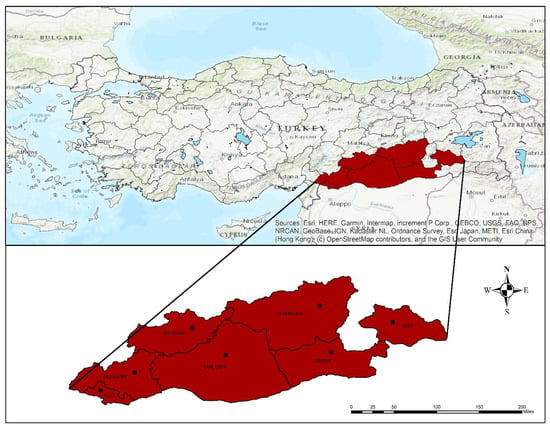
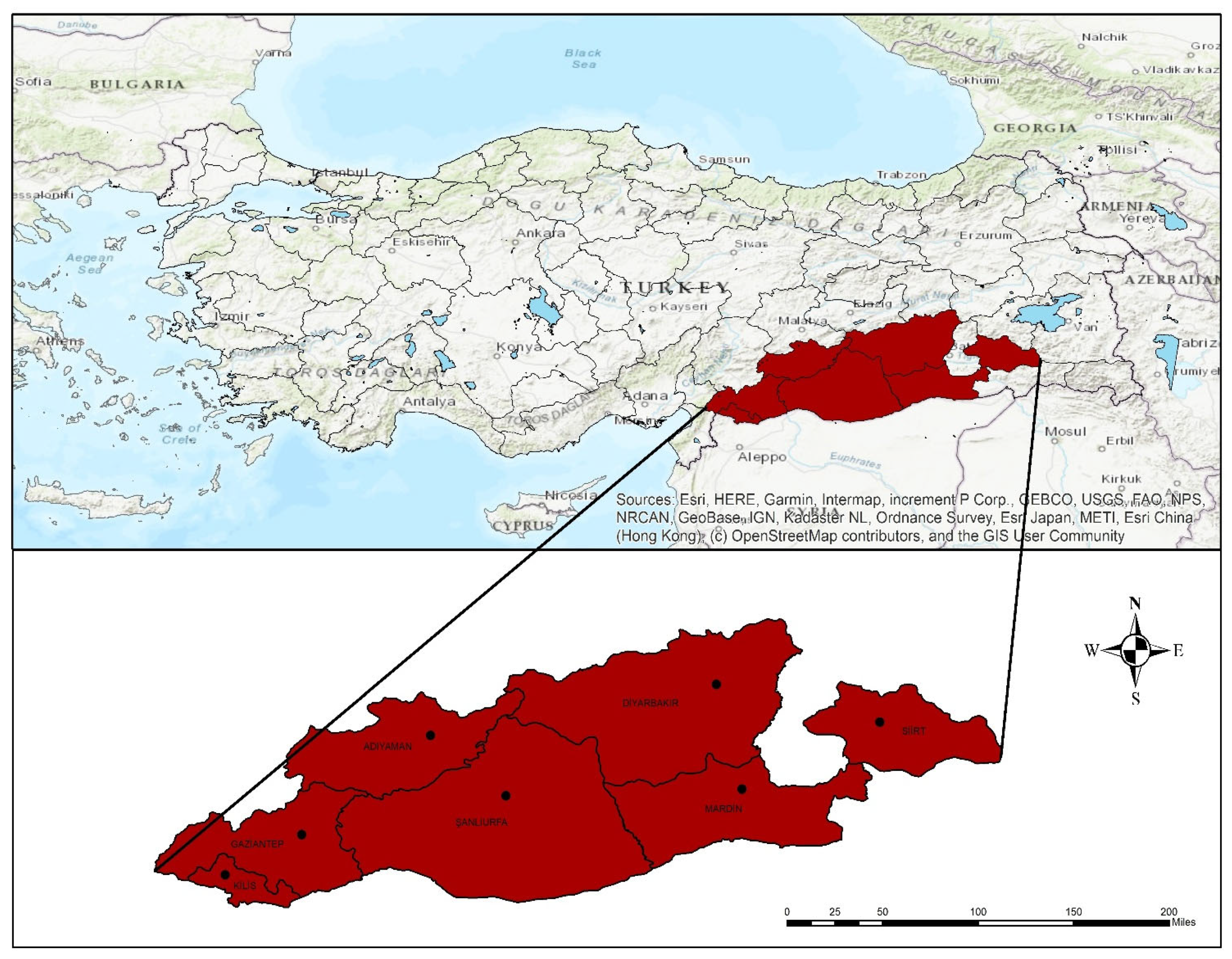
Covering approximately 75.103 km2 (9.6% of Türkiye’s total area), the GAP region experiences hot, dry summers and mild, rainy winters, with average annual temperatures around 18 °C. The GAP, comprising 22 dams, 19 hydroelectric plants, and major irrigation infrastructure, aims to irrigate 1.8 million hectares and support socio-economic development with a USD 32 billion investment. Bordering Syria and Iraq, the region includes major plains along the Lower Euphrates and Tigris basins and accounts for 20% of Türkiye’s irrigable land. Monthly precipitation and temperature data for the period 1963–2022 were obtained from the Turkish State Meteorological Service (MGM). The dataset comprises records from seven meteorological stations located in the provinces of Adıyaman, Diyarbakır, Gaziantep, Kilis, Mardin, Şanlıurfa, and Siirt in southeastern Türkiye (Figure 1 and Table 1). A control of missing data was performed for all meteorological stations used in the analysis. For precipitation data, the proportion of missing values was 1% in Adıyaman, 1.5% in Mardin, and 1% in Siirt, while for temperature data the missing ratio was 0.5% in Adıyaman and 1% in Siirt. Since the missing data rates remained considerably low, only linear interpolation was adopted to estimate missing monthly values. No station was excluded from the analysis, as none exceeded a missing-data threshold of 5%, which is frequently accepted in similar climatological studies [8]. Soil moisture data were derived from the ERA5-Land reanalysis dataset developed by the ECMWF [17]. The ERA5-Land product provides monthly volumetric soil moisture at a spatial resolution of 0.1° × 0.1° (approximately 9 km) for the same period (1963–2022). It includes four soil layers (0–7, 7–28, 28–100, 100–289 cm); in this detailed research, the topsoil layer (0–7 cm) was selected to represent near-surface soil moisture conditions. To maintain spatial compatibility with other datasets, the ERA5-Land data were resampled using bilinear interpolation. Previous studies have demonstrated that ERA5-Land soil moisture estimates show high consistency with in situ observations and comply with international best practices for soil moisture validation [18], confirming their suitability for regional hydrometeorological analyses.
Figure 1.
GAP region and location of selected station.
Table 1.
Station characteristics and climatological normals of the study area.
Seven stations run by the Turkish State Meteorological Service (MGM) throughout the GAP region provided meteorological data for the study (Table 1). The stations were chosen on the basis of their spatial distribution, data accessibility, and capacity to capture the climatic variability of the area. The research area’s varied topography is reflected in the station elevations, which range from 550 m (Şanlıurfa) to 1040 m (Mardin). Mean annual precipitation (MAP), maximum monthly precipitation (P_max), mean annual temperature (MAT), and reference evapotranspiration (ET0) were among the climatological normals computed for each station during the 1963–2022 timeframe. The FAO-56 Penman-Monteith method was used to calculate the ET0 values [19]. MAP to ET0 was used to calculate the Aridity Index (AI), which was then categorized using the UNESCO aridity classification system [20]. MAP values in the research area range from 37.7 mm in Şanlıurfa to 59.3 mm at Adıyaman, and MAT values range from 15.4 °C (Gaziantep) to 18.6 °C (Siirt). High evaporative demand, characteristic of semi-arid to dry sub-humid climates, is shown by ET0 exceeding yearly precipitation at all sites (101.3–146.1 mm). Seven stations are categorized as semi-arid and Siirt as dry sub-humid based on AI values (0.30–0.52) (Table 1).
The concept of sustainability takes into account social, economic, and ecological values. The term “sustainability” is used not only for agriculture and water, but also for other sectors directly or indirectly linked to natural resources. Due to dry regional conditions, traditional dry farming is widely practiced in the GAP region, while irrigated agriculture is limited to crops like corn, tobacco, and cotton. Dryland agriculture cultivation extends over vast regions with crops like barley, wheat, chickpeas, lentils, etc. The region contributes about 10% of Türkiye’s wheat and 11% of its barley production. However, climate change poses risks to crop yields, highlighting the need to monitor soil moisture trends and develop new agricultural drought strategies. A major shortcoming of the GAP is the lack of climate change considerations in its plans, particularly in evaluating future drought risks. In the region dams and irrigation canals are not sufficient alone; water needs must also be supported by precipitation and groundwater. Yet, the project has placed limited emphasis on groundwater storage. Monitoring regional precipitation is crucial for guiding agricultural practices, forecasting droughts or floods, and ensuring proactive adaptation. Climate change is one of the greatest challenges of our time, and its negative effects are reducing the development capacity of countries. The sustainable use of natural resources and the conduct of all human activities, especially those related to agriculture and water, with a sustainability mindset are essential.
2.2. Drought Indexes
2.2.1. Standardized Precipitation Index (SPI)
The SPI, improved by McKee et al. (1993), is a dimensionless index that measures precipitation anomalies over various time scales [16]. It helps assess the impact of precipitation changes on groundwater, soil moisture, and streamflow. The SPI is calculated using long-term monthly precipitation data fitted to a gamma distribution. SPI values are calculated using the following equation:
where xᵢⱼ is the total precipitation for the selected time scale i in year j, is the long-term mean precipitation for time scale i, and σᵢ is the standard deviation of precipitation for time scale i [16].
The primary benefit of the SPI is its ability to assess drought severity over various time scales (1 to 48 months). Its reliability and predictive power across different climates have made it widely used worldwide [21,22]. McKee et al. (1993) state that SPI values are used to divide the basin into wetness and dryness groups. Conditions with an index value of 0 or greater are classified as “Wet.” When the index value is between −1.0 and 0, it is considered “Mild drought,” and between −1.5 and −1.0 is classified as “Moderate drought.” If the index value falls between −2.0 and −1.5, it is defined as “Severe drought,” and values less than −2.0 are categorized as “Extreme drought.”
2.2.2. Standardized Precipitation-Evapotranspiration Index (SPEI)
The SPEI, proposed by Vicente-Serrano et al. (2009), integrates the sensitivity of the PDSI to changes in atmospheric evaporative demand with the multi-scalar and computational simplicity features of the SPI [3]. The SPEI incorporates both precipitation (P) and PET, making it more comprehensive in reflecting regional water balance dynamics [19]. The SPEI is grounded in the principle of climatic water balance and is computed as the difference between precipitation and PET for a given time step [23].
where Di represents the water surplus or deficit (mm) for month i; Pi is the precipitation (mm); and PETi is the potential evapotranspiration (mm) for the same period.
The SPEI is also calculated for multiple time scales, with negative values indicating a dry period [24]. The Thornthwaite (1948) method (SPEI-THW) includes data with monthly average temperature values and the latitude information of the selected station [25]. With this method, monthly PET values can be calculated according to the following equations:
where PET(T) is the potential evapotranspiration (mm) obtained by the Thornthwaite method, i is the monthly temperature index, T is the monthly mean temperature (°C), I is the annual temperature index, A is a parameter, and G is the latitude correction coefficient.
2.2.3. Reconnaissance Drought Index (RDI)
The RDI, developed by Tsakiris and Vangelis (2005), monitors agricultural and meteorological droughts using limited data [8]. It uses monthly average, minimum, and maximum temperatures along with precipitation [16]. To build the cumulative distribution function, long-term precipitation data are sorted from highest to lowest and divided into 10 deciles. The first decile includes the lowest 10% of precipitation values, the second decile the lowest 20%, and so on [8]. The αk values for estimating the RDI in each reference period are determined using a specific formula.
where and represent the total rainfall and reference evapotranspiration in month j of year i, respectively. The RDI is calculated by dividing the variation between the average amount of the calculated values and the calculated values for a selected time period (k-reference period) by the standard deviation of the calculated values.
and are the mean and standard deviation of αk, respectively.
2.2.4. China Z Index (CZI)
The CZI, developed by China’s National Climate Center in 1995, is a drought monitoring index that serves as an alternative to the SPI. The CZI is based on the Wilson–Hilferty cube root transformation, and it is specifically tailored for precipitation datasets that typically follow the Pearson Type III distribution [26]. This transformation enables the normalization of skewed precipitation data, facilitating the calculation of standardized drought severity. The CZI is computed using the following equations:
In these equations, i is a time scale and can be equal to 1, 2, 3, …, 72 months, and j is the current month. Csi is the coefficient of skewness, n is the total number of months in the record, φij is the standardized variate (Z-Score), and xij is the precipitation of j month for period i.
2.3. IDW Spatial Interpolation Methodology
Spatial interpolation of the drought indices (SPI, SPEI, CZI, and RDI) for 12-month timescales was performed using the Inverse Distance Weighting (IDW) method in ArcGIS 10.x Spatial Analyst extension. IDW is a deterministic interpolation technique widely used for generating continuous surfaces from point-based meteorological data, particularly for drought index mapping [27,28,29].
IDW determines cell values using a linearly weighted combination of sample points, where the weight is inversely proportional to distance. The method assumes that the variable being mapped decreases in influence with distance from its sampled location [30]. The predicted value at an unsampled location is calculated as
The weight is defined as
where Z(x0) is the predicted value at location x0, Z(xi) is the measured value at sample point i, wi is the weight assigned to point i, n is the number of sample points used in the interpolation, di is the Euclidean distance between the prediction location and sample point i, and p is the power parameter.
3. Results and Discussion
Drought indices were calculated using standardized procedures to ensure methodological transparency and replicability. The Standardized Precipitation Index (SPI) and China Z Index (CZI) were computed based on monthly precipitation data, while the Standardized Precipitation Evapotranspiration Index (SPEI) and Reconnaissance Drought Index (RDI) incorporated both precipitation and potential evapotranspiration (PET). PET values were estimated using the FAO Penman-Monteith method, which is widely recommended for semi-arid climates. All indices were calculated at 1-, 3-, and 12-month accumulation periods to capture short- and long-term drought dynamics. For each index, the gamma distribution (SPI, SPEI, CZI) or log-normal distribution (RDI) was fitted to the data, and standardized values were derived accordingly.
Spearman rank correlation analysis was employed to assess the interrelationships among different drought indices (SPI, SPEI, CZI, and RDI) across multiple timescales. This comparative approach validates the consistency of drought signal detection across methodologically distinct indices and reveals the degree to which temperature-sensitive indices (SPEI, RDI) diverge from precipitation-only indices (SPI, CZI), particularly under warming conditions where evapotranspiration plays an increasingly significant role [3,31]. Understanding inter-index relationships informs the selection of appropriate indices for operational drought monitoring and early warning systems in the GAP region [32].
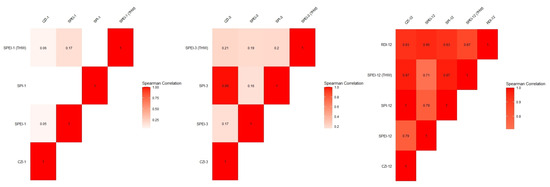
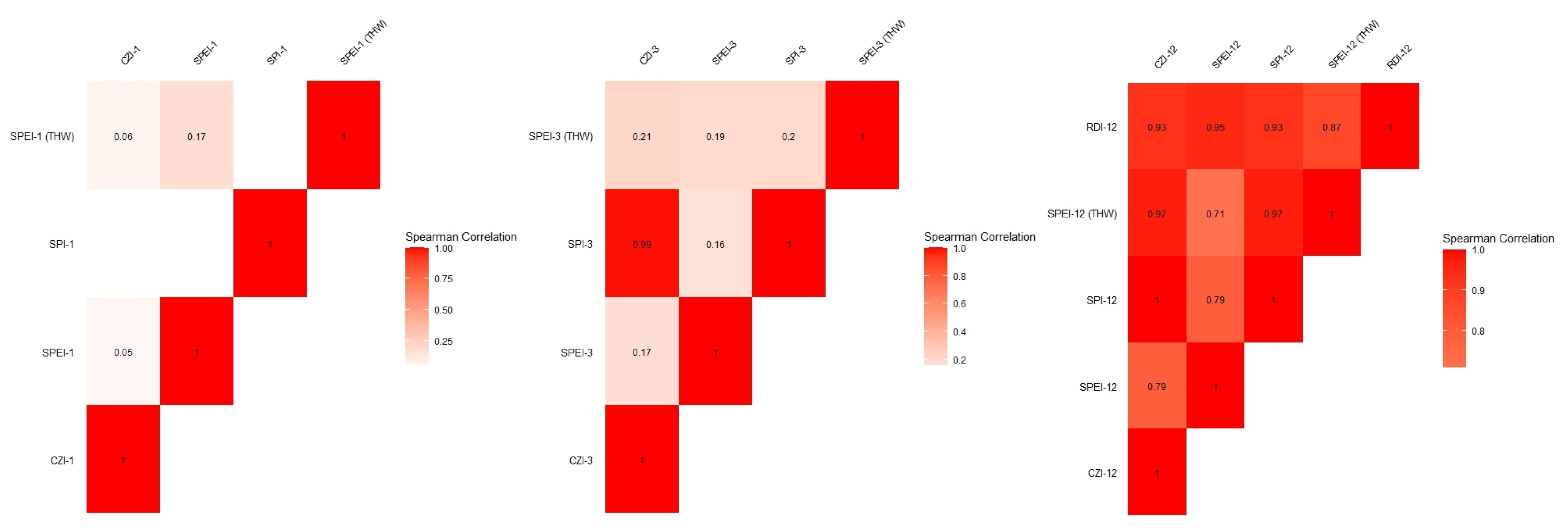
In the 12-month scale, strong and significant correlations (rs = 0.71–0.97) were found among all indices, indicating reliable and consistent results in long-term drought monitoring. For the 12-month period that demonstrated the strongest relationships, the RDI-12 calculation was incorporated. RDI-12 showed the highest overall correlation (rs = 0.80–0.97), confirming its effectiveness as a comprehensive indicator that incorporates multiple climate variables (Figure 2). The correlation between SPEI-12 (THW) and both SPI-12 and CZI-12 is very high (rs = 0.97), demonstrating that temperature inclusion does not disrupt general drought trends. However, its lower correlation with SPEI-12 (rs = 0.71) highlights the sensitivity of the Thornthwaite version to temperature variability, underscoring the added value of evapotranspiration-based approaches in warming climates [33].
Figure 2.
Spearman rank correlation coefficients.
In the 3-month scale, correlations are generally lower, reflecting higher variability in short-term drought behavior. Nevertheless, SPI-3 and CZI-3 exhibit an extremely high correlation (rs = 0.99), confirming their near-identical performance due to both indices relying solely on precipitation data. Strong correlations at short timescales suggest robust drought identification for agricultural applications, while divergences between precipitation-only and temperature-sensitive indices emphasize the importance of multi-index approaches for comprehensive drought characterization [34,35]. The correlation of the indices in the 1-month period is considerably lower (rs = 0.00–0.12), reflecting the highly dynamic nature of monthly scale climate variability.
The RDI-12 showed the strongest association with other long-term drought indices among the indices that were employed. This is because RDI is able to capture the climatic water balance more thoroughly over longer time periods by taking into account both precipitation and potential evapotranspiration. In contrast to temperature-sensitive indices like SPEI or precipitation-only indices like SPI, RDI’s dual sensitivity improves its alignment with a variety of climatic variables, especially in semi-arid regions like Southeastern Anatolia. Hovewer, owing to strong short-term variability in weather and the varying sensitivity of each index to abrupt changes, correlations were significantly lower at the 1-month scale. These findings imply that indices that incorporate both temperature and precipitation components are more effective at capturing long-term drought patterns.
3.1. Drought Indices
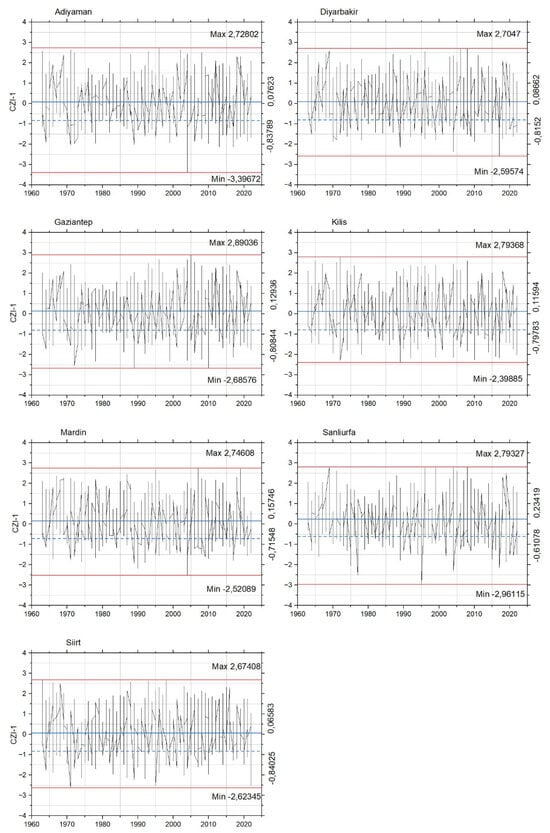
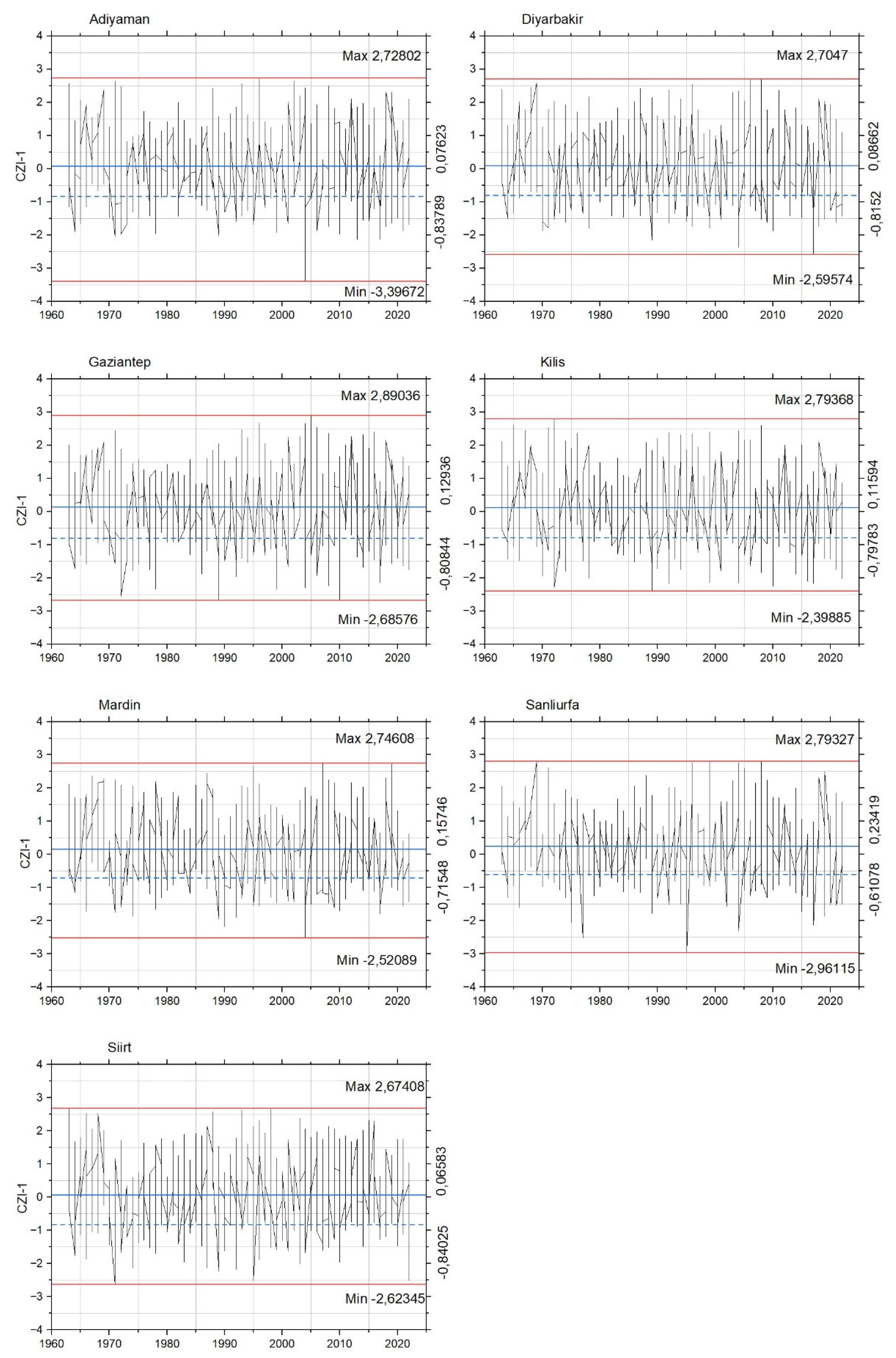
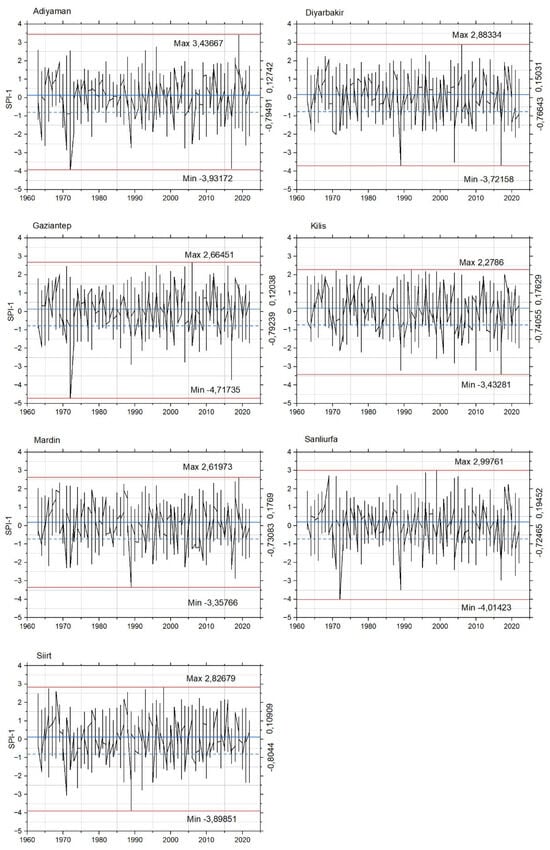
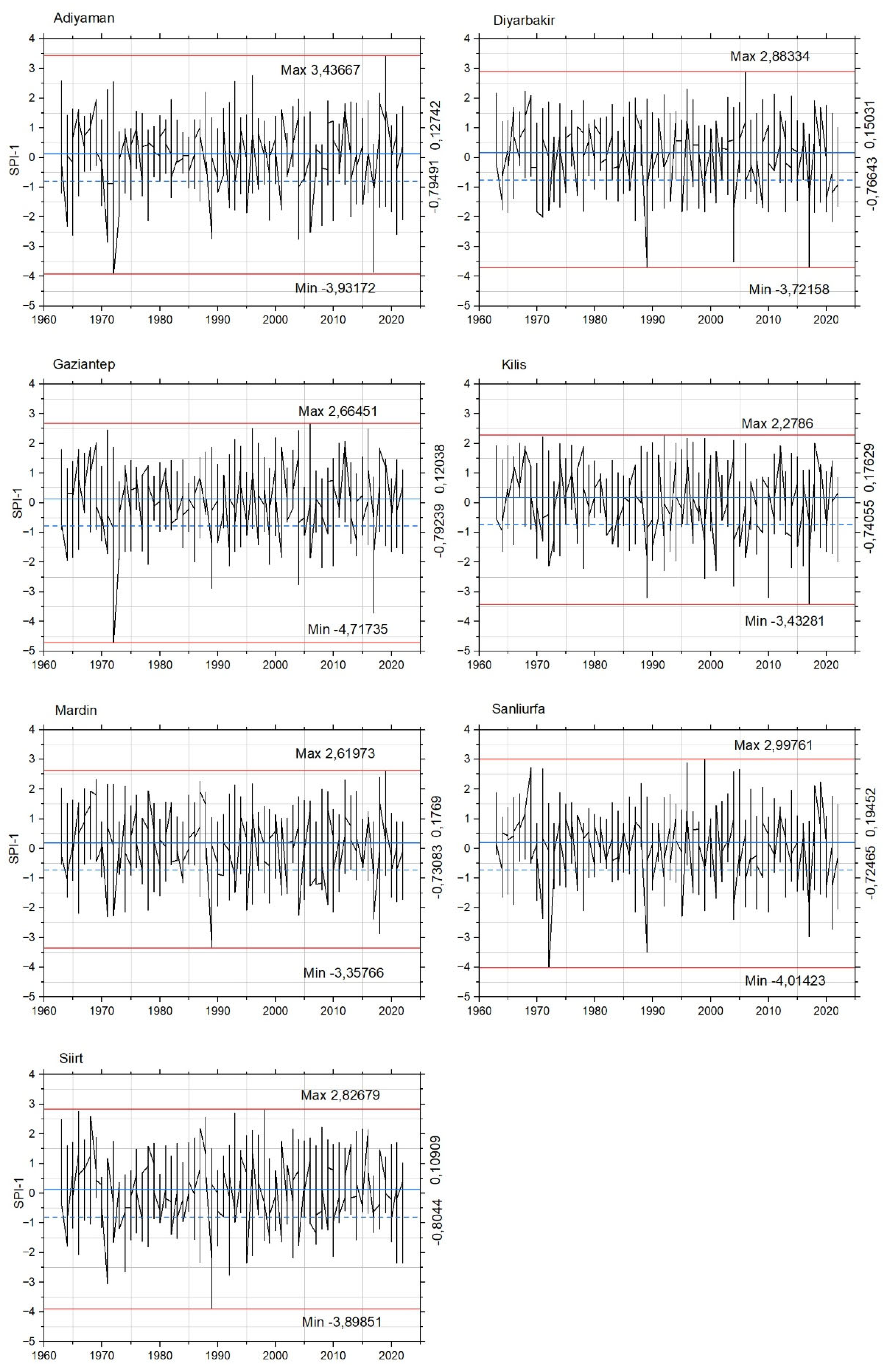
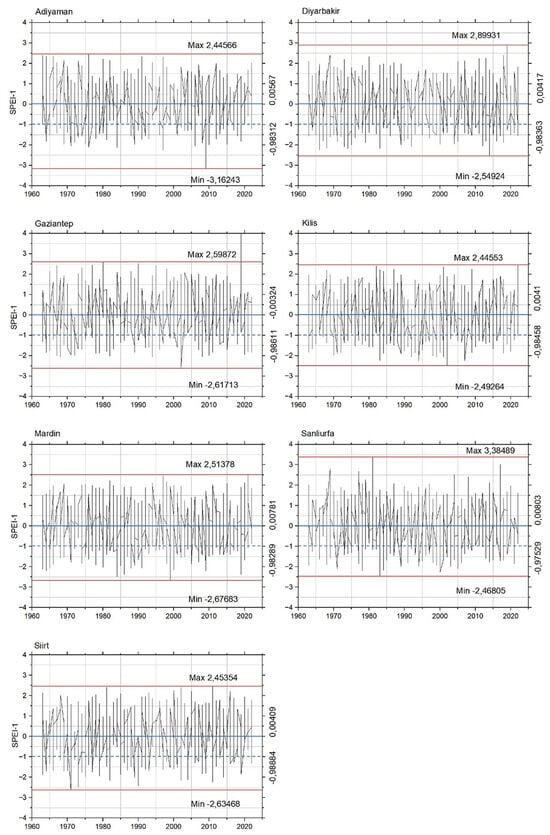
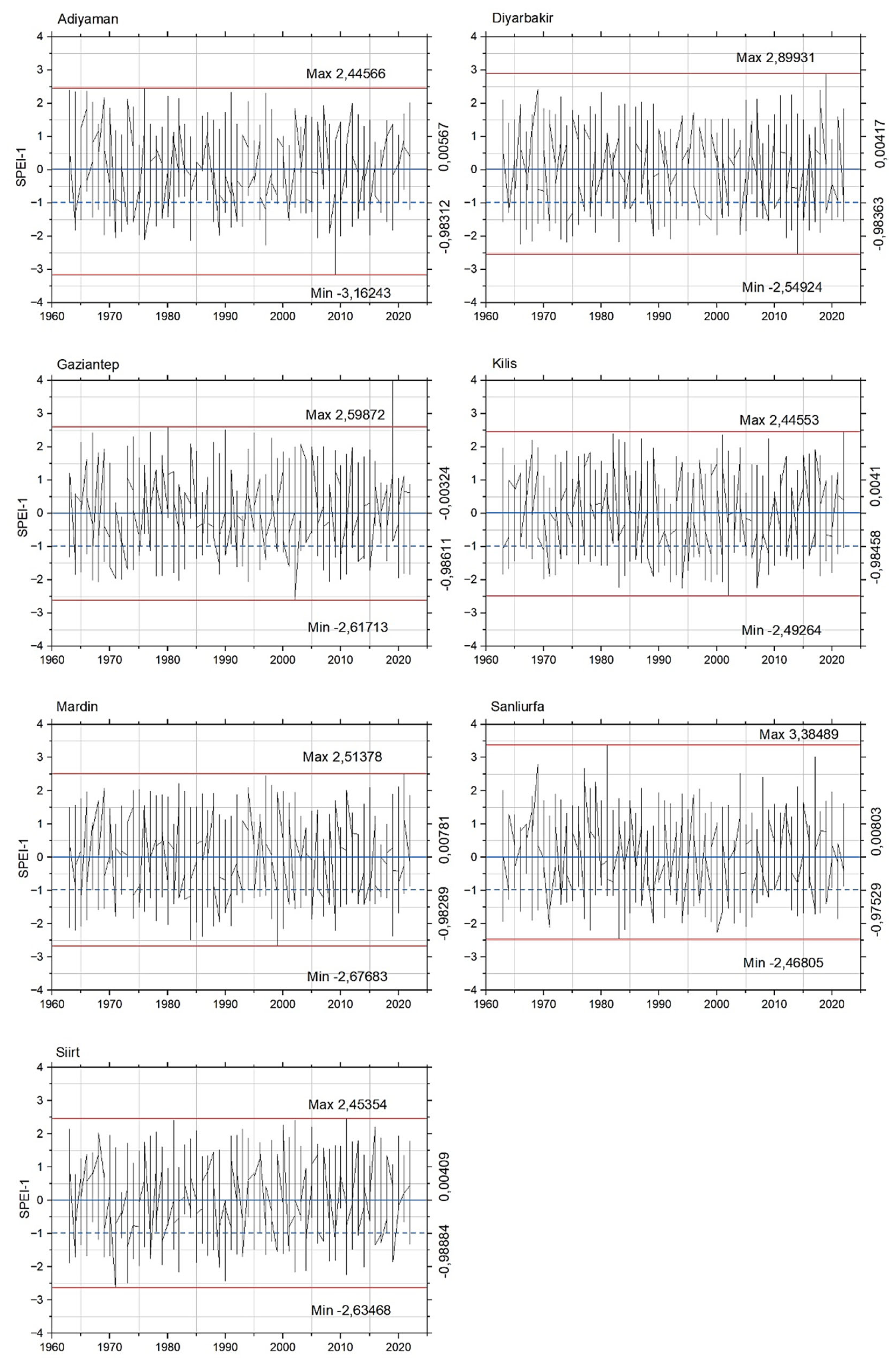
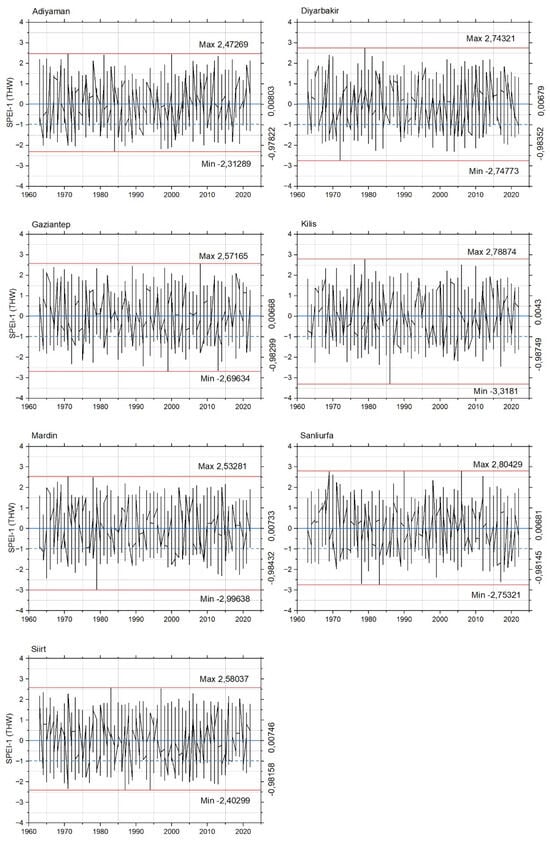
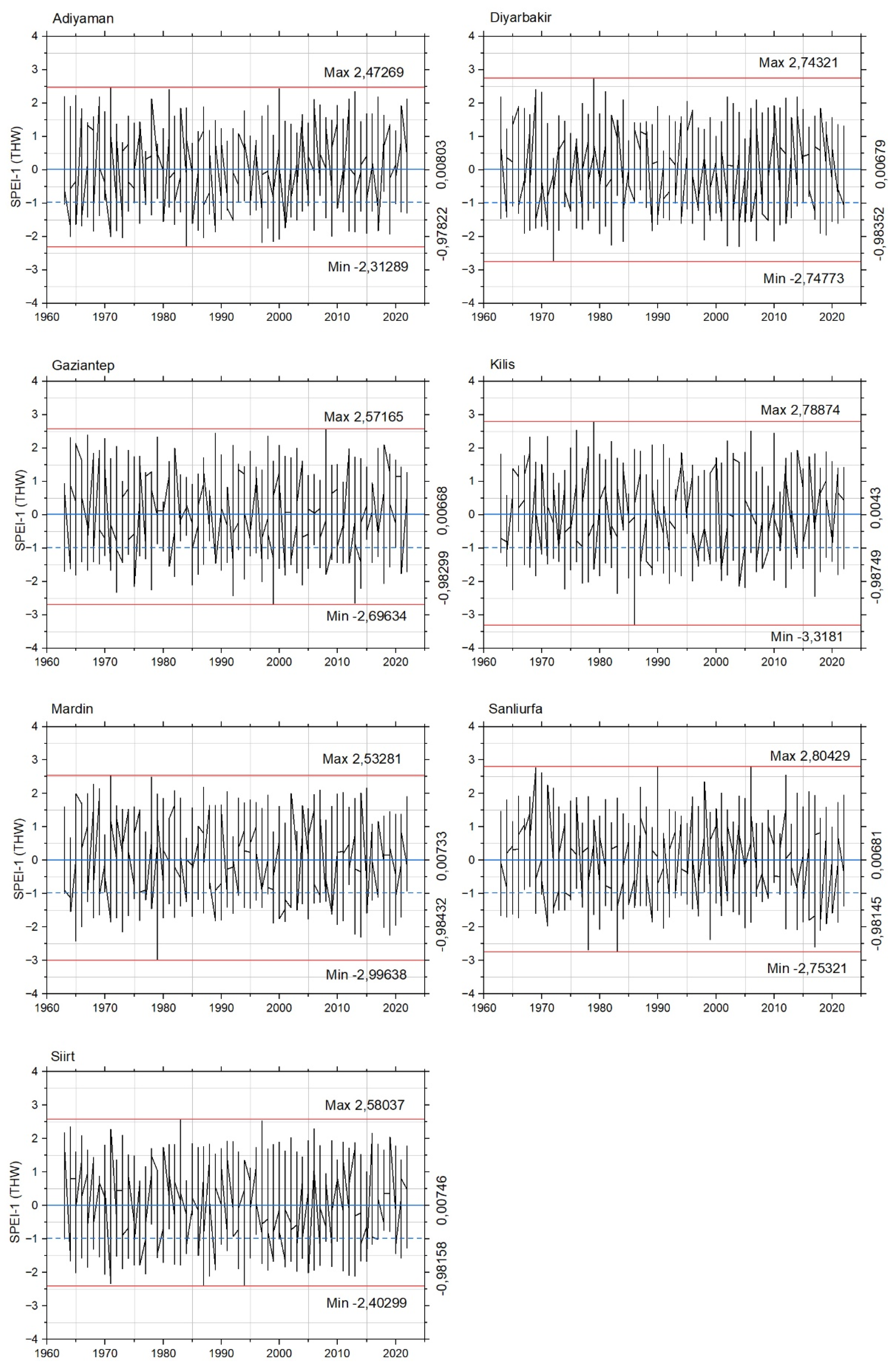
The temporal dynamics of four drought indices (CZI-1, SPI-1, SPEI-1, and SPEI-1-THW) over the seven GAP provinces from 1963 to 2022 are shown in Figure 3, Figure 4, Figure 5 and Figure 6. The long-term mean (μ), which serves as a reference baseline for drought evaluation, is represented by the solid blue horizontal line in each panel. The mean ± one standard deviation (μ ± σ) borders are indicated by the dashed blue lines. Based on normality distribution assumption, these boundaries statistically cover roughly 68% of the monthly observations. Anomaly wet periods are represented by values above the upper dashed line (μ + σ), whereas months with statistically significant drought conditions beyond normal variability are indicated by values below the lower dashed line (μ − σ). In accordance with the classification system frequently employed in standardized drought indices, the red horizontal lines indicate extreme drought/wet thresholds (±3 standard deviations from zero). Slope coefficients are indicated on the right-hand y-axis, and black trend lines show the temporal evolution of drought conditions. Each provincial panel includes annotations for the maximum and minimum index values observed throughout the study period, offering a numerical representation of the range of drought severity encountered.
Figure 3.
Temporal variation in monthly CZI-1 values across GAP provinces (1963–2022).
Figure 4.
Temporal variation in monthly SPI-1 values across GAP provinces (1963–2022).
Figure 5.
Temporal variation in monthly SPEI-1 values across GAP provinces (1963–2022).
Figure 6.
Temporal variation in monthly SPEI-1 (THW) values across GAP provinces (1963–2022).
The CZI-1 analysis (Figure 3) reveals substantial spatial variability in short-term drought patterns across the GAP region. Kilis exhibited the highest frequency of extreme drought events (n = 11), while Adıyaman recorded the most severe drought intensity (CZI-1 = −3.397 in 2004), indicating pronounced vulnerability to meteorological drought. Long-term average CZI-1 values (1963–2022) suggest predominantly normal to slightly humid conditions, consistent with the semi-arid climatic characteristics of southeastern Anatolia [36].
The SPI-1 analysis (Figure 5) identified extreme drought events across multiple provinces, with the most severe conditions recorded in Gaziantep (SPI-1 = −4.717 in 1972), Şanlıurfa (SPI-1 = −4.01, 16 occurrences), and Adıyaman (SPI-1 = −3.93, 17 occurrences). Despite near-normal long-term means, frequent deviations exceeding ±2 standard deviations indicate recurring extreme events, consistent with the high precipitation variability characteristic of semi-arid Mediterranean climates [36]. The pronounced variability observed in Siirt and Adıyaman confirms SPI’s effectiveness for short-term meteorological drought monitoring, as noted by Katipoğlu et al. (2020) in their comparative analysis of drought indices in the Euphrates basin [6].
The SPEI-1 results (Figure 4) demonstrate the efficacy of incorporating evapotranspiration effects in drought characterization, as recommended by Tsakiris and Vangelis (2005) and Vicente-Serrano et al. (2012) [8,37]. Severe drought conditions were particularly evident in Adıyaman (SPEI-1 = −3.16) and Gaziantep (SPEI-1 = −2.61), with additional impacts observed in Mardin, Siirt, Kilis, and Diyarbakır. Notably, Şanlıurfa displayed erratic precipitation patterns with pronounced positive anomalies (SPEI-1 = +3.38), reflecting high interannual variability. Declining SPEI-1 trends in Diyarbakır, Mardin, and Siirt suggest increasing future drought risk, corroborating the findings of Gumus et al. (2021) who identified similar negative trends in the GAP region [38].
The SPEI-1 (THW) analysis (Figure 6) identifies Kilis (SPEI-1 = −3.320), Mardin (SPEI-1 = −2.996), Şanlıurfa (SPEI-1 = −2.753), and Gaziantep (SPEI-1 = −2.700) as the most drought-affected provinces, with Kilis and Gaziantep demonstrating the highest recurrence rates. Kilis also exhibited the highest positive anomaly (SPEI-1 = +2.79), reflecting substantial precipitation variability and potential alternating drought-pluvial cycles. These findings align with Vicente-Serrano et al.’s (2012) assertion that SPEI provides enhanced drought detection capabilities in regions where temperature-induced evapotranspiration stress compounds precipitation deficits [37].
Overall, the convergence of multiple indices reveals persistent short-term drought vulnerability across the GAP region, particularly in Gaziantep, Kilis, and Mardin provinces. The frequent occurrence of extreme events and high temporal variability underscore the necessity for enhanced drought monitoring systems and adaptive sustainable water resource management strategies in this agriculturally critical region [38]. Given the extensive irrigation-dependent agricultural activities across GAP provinces, integrated and sustainable water management strategies are essential to optimize water use efficiency, ensure food security, and support the socio-economic resilience of rural communities. This comprehensive drought analysis provides a science-based foundation for developing climate-adaptive policies, implementing early warning systems, and designing targeted interventions that safeguard the environmental and economic sustainability of the region’s agricultural and water resources.
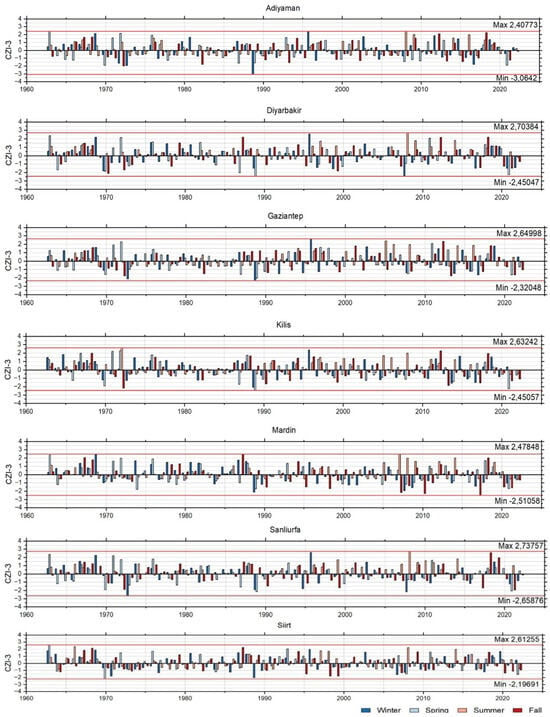
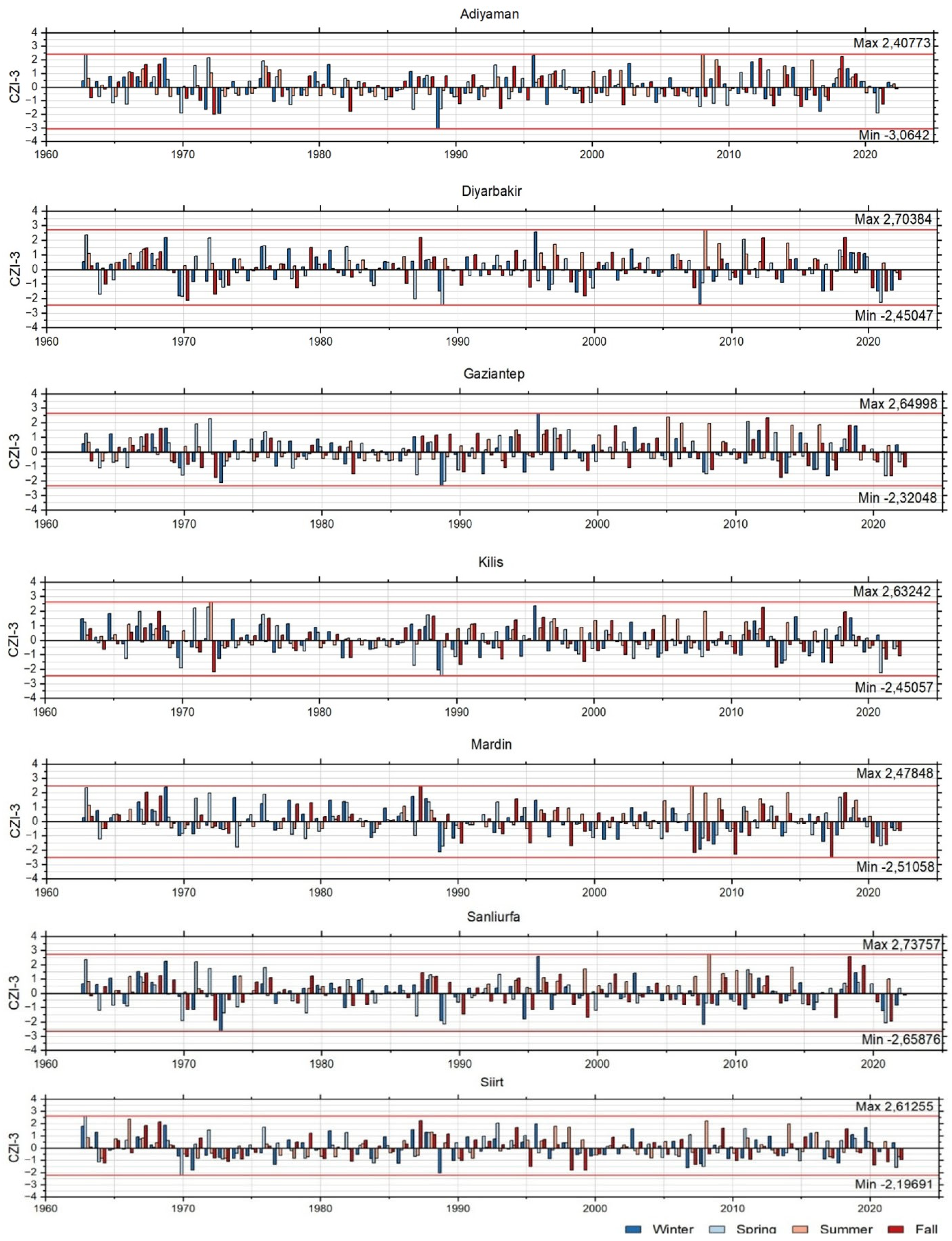
The CZI-3 analysis (Figure 7) reveals that Adiyaman experienced a notably high CZI value of 3.06 prior to 1990 during the winter season. The most severe drought event in Şanlıurfa occurred between 1970 and 1975, characterized by a CZI-3 value of −2.66. Gaziantep (−2.32), Diyarbakır (−2.45), and Kilis (−2.45) experienced extreme drought conditions in 1989. While Siirt demonstrated relatively greater stability, it nevertheless encountered a significant drought event in the early 1990s. These results are coherent with the observations of Serkendiz et al. (2024), who documented an increasing frequency of drought events during the 1990s [31].
Figure 7.
Temporal variation in seasonal CZI-3 values across GAP provinces (1963–2022).
SPEI-3 analysis confirms the predominance of spring–summer drought events throughout the period 1960–2022, with Şanlıurfa (−3.29) and Siirt (−2.97) exhibiting the highest drought vulnerability. Şanlıurfa experienced recurrent summer droughts during the 1970s–1980s, while Mardin and Diyarbakır were significantly affected between 1973 and 1984, with subsequent drought events observed in 2008. Adıyaman (−2.70), Gaziantep, and Kilis similarly displayed an increasing trend in drought occurrence from the 1970s onward. The SPEI-3 index demonstrates strong concordance with seasonal soil moisture dynamics, particularly during summer months, thereby underscoring the critical influence of evapotranspiration and climate variability on regional drought conditions [33]. SPEI-3 effectively characterizes short- to mid-term drought dynamics across the study region. Siirt recorded its most severe drought event in 2021 (SPEI-3 = −2.97), while values below −2.4 occurred frequently in Adıyaman, Diyarbakır, and Şanlıurfa. Among all provinces, Şanlıurfa exhibited the most negative SPEI-3 value (minimum: −3.29), indicative of an exceptionally severe summer drought event. Diyarbakır and Mardin also demonstrated substantial drought signals, with minimum values of approximately −2.49 and −2.42, respectively. These findings substantiate the conclusion that short-term drought dynamics exhibit strong seasonal dependence, with summer months presenting the highest drought risk, particularly in Şanlıurfa, Diyarbakır, and Mardin.
SPI-3 analysis similarly confirms the occurrence of major drought events during the 1970s–1980s, most notably in Adıyaman (SPI-3 = −3.18) and Siirt (SPI-3 = −3.15). Post-2000 drought events, while shorter in duration, demonstrate increased variability and are primarily driven by abrupt precipitation deficits, a pattern consistent with national-scale drought trend assessments [33,35].
According to the CZI-12 analysis, the most severe long-term droughts occurred in Şanlıurfa (−2.51, 2021) and Diyarbakır (−2.45, 1970). Although median values were generally near zero, Diyarbakır’s lowest median (−0.03) indicates a strong drought tendency. CZI-12’s effectiveness in annual drought assessment highlights the need for targeted measures in vulnerable areas. The pronounced drought events identified in Şanlıurfa and Diyarbakır during 2021 and 1970, respectively, are consistent with broader regional patterns documented across Southeastern Anatolia, where significant decreasing trends in precipitation have been detected at various temporal scales [38].
SPEI-12 analysis identified intensified droughts in 1973 and 2021, with the most extreme drought in Gaziantep (−2.56, 1973). Values below −2 also appeared in Kilis, Diyarbakır, Mardin, and Şanlıurfa. Incorporating evapotranspiration, the SPEI proves powerful for long-term drought evaluation, especially in summer. This temperature sensitivity is particularly critical for the GAP region, where rising temperatures and increased evapotranspiration have been documented as major contributors to drought intensification [39]. The extreme drought events identified in 1973 and 2021 align with nationwide drought patterns, as studies examining climate change trends in Southeastern Anatolia revealed a marked increase in drought severity during recent decades [40]. Comparative analyses in the Marmara region demonstrated that SPEI droughts occur with longer duration and increased magnitude compared to SPI-based assessments, which can be attributed to rising potential evapotranspiration rates with increasing temperature [41].
SPEI-12 (THW) further indicated long-term droughts in Şanlıurfa (−2.46, 2021), Diyarbakır (−2.26, 1970), and Siirt (−2.22), with the evapotranspiration-based method capturing post-2000 drought intensification. Median values ranged from 0.19 (Şanlıurfa) to −0.07 (Adıyaman), indicating a mostly neutral balance. The post-2000 drought intensification observed in this study is consistent with broader climate change impacts documented across Turkey. A recent comprehensive study of the Southeastern Anatolia region confirmed clear evidence of a general trend towards drier and warmer conditions, with increasing severity and frequency of drought events over the last four decades [31].
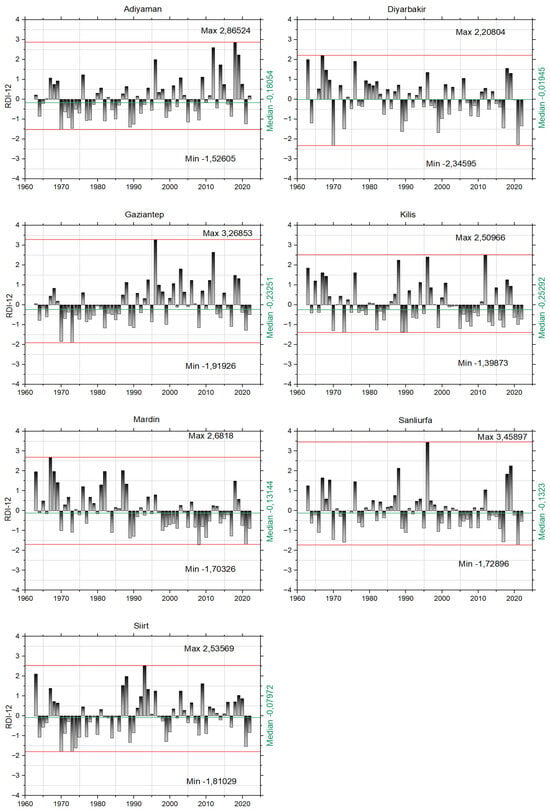
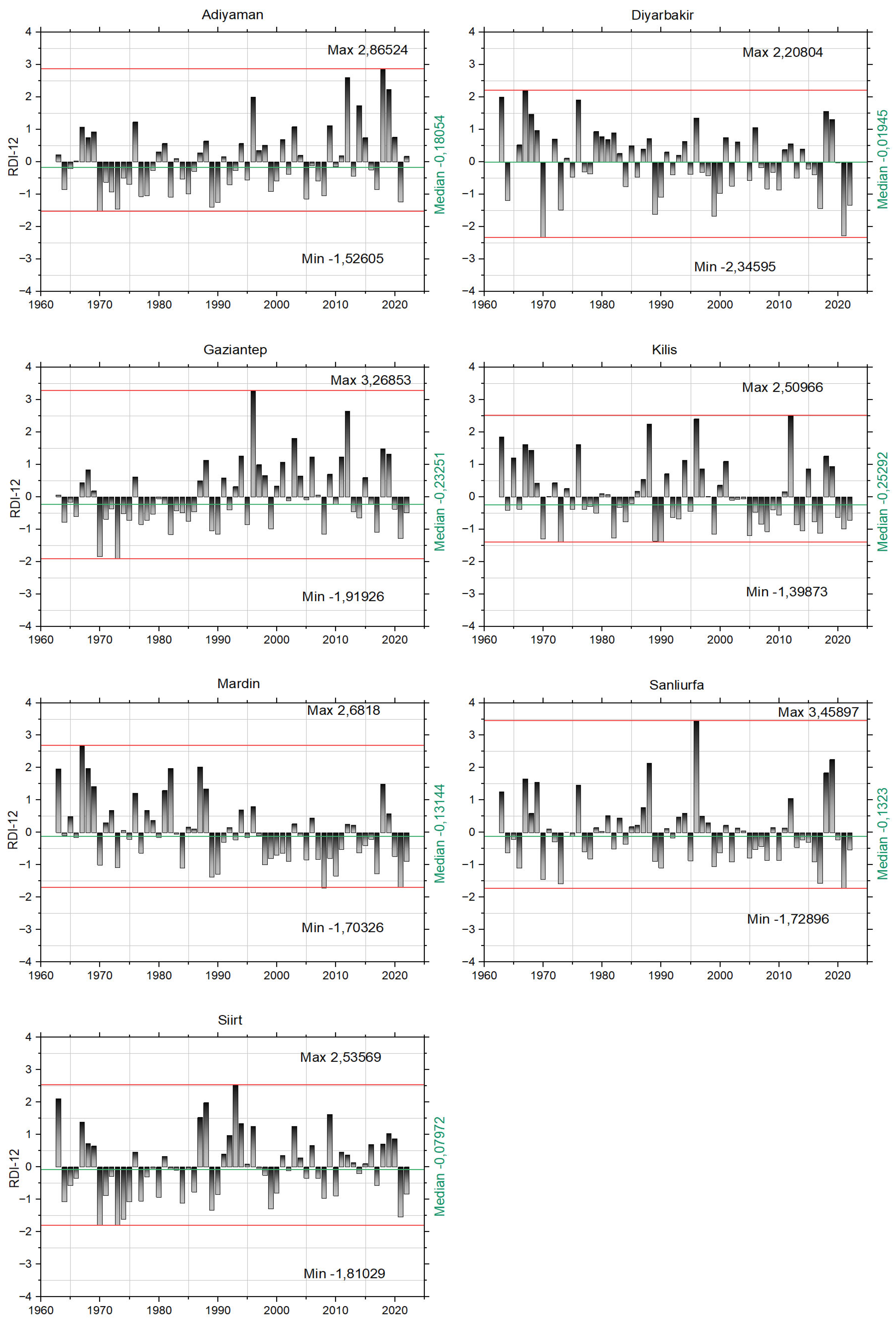
According to RDI-12 (Figure 8), Diyarbakır showed the lowest value (−2.35, 1970) and median (0.02), pointing to persistent drought. Şanlıurfa (+3.46, 1996) and Gaziantep (+3.27) showed the highest extremes. The RDI’s role in long-term monitoring emphasizes its relevance for water and agriculture planning. The extreme wet conditions identified in Şanlıurfa (1996) and Gaziantep reflect the high climate variability characteristic of the GAP region, where fluctuations between drought and wet periods have been documented as increasingly pronounced under changing climate conditions [38]. Spatial analysis of precipitation patterns in the Euphrates basin has revealed significant variability across the region, which contributes to the heterogeneous distribution of drought severity [42]. SPI-12 analysis showed Diyarbakır with the lowest value (−3.23, 1970) and two extreme droughts. Mardin (−2.34, 2008) and Şanlıurfa (−2.45, 2021) also faced two extreme drought events. Negative medians in Adıyaman, Gaziantep, Kilis, and Diyarbakır reflect a long-term drought tendency. SPI-12 remains an effective tool for sustainable water management. The severe drought event identified in Diyarbakır in 1970 has been recorded as one of the most extreme drought periods in the Southeastern Anatolia region’s recent history, with comparable intensity recorded across multiple studies examining long-term drought patterns in the GAP region [31,38]. The 2008 drought in Mardin and 2021 drought in Şanlıurfa align with broader patterns of increasing drought frequency documented across Southeastern Anatolia, where trend analyses have revealed significant decreasing trends in precipitation at various temporal scales [40]. However, while SPI remains valuable for precipitation-based drought monitoring, it may underestimate drought severity in warming climates [39]. The persistent negative medians observed in multiple provinces underscore the long-term drying tendency in the GAP region, consistent with recent studies documenting that Turkey, particularly Southeastern Anatolia, has been trending towards drier conditions over the past 20 ears, with rising temperatures reinforcing this trend [31,36].
Figure 8.
Temporal variation in annual RDI-12 values across GAP provinces (1963–2022).
3.2. Spatial Analysis
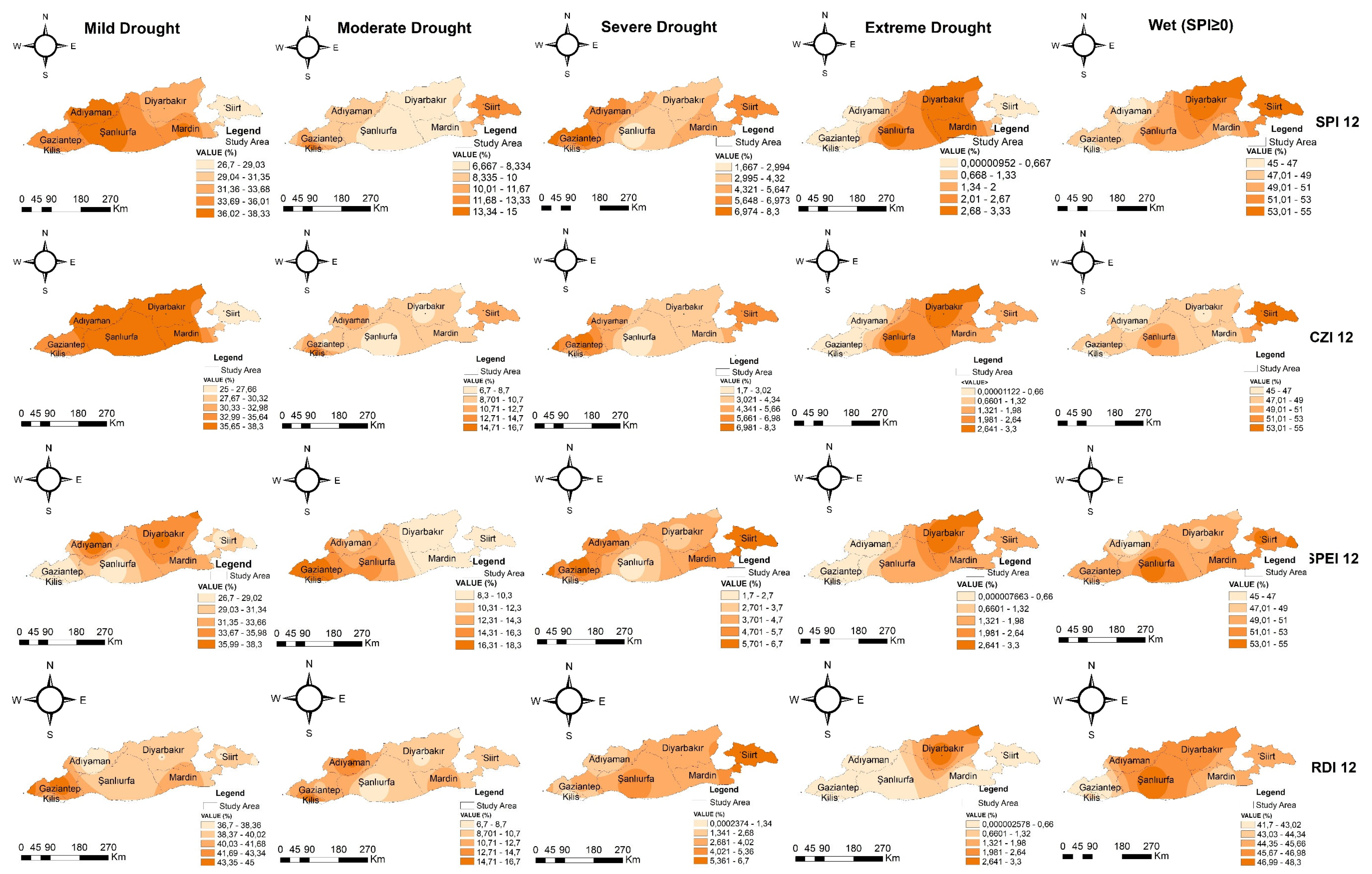
Inverse Distance Weighting (IDW) interpolation in ArcGIS was employed to generate continuous drought index surfaces across the GAP region. IDW, a deterministic method that assigns greater weight to nearby stations, was selected due to its suitability for meteorological datasets with sparse station distribution [3]. In this study, the power parameter was set to p = 2, as commonly recommended for drought mapping, and a variable search radius was applied to ensure adequate station inclusion despite irregular spacing. Interpolation used a minimum of three and a maximum of five neighboring stations per cell, and raster outputs were generated at 1 km × 1 km resolution. Drought frequency maps for 12-month periods were classified using the Natural Breaks (Jenks) method.
Climatic Gradient and Spatial Patterns:
The GAP region exhibits a pronounced east–west climatic gradient driven by topography and continentality. Western and southwestern provinces (Gaziantep, Kilis, Şanlıurfa) experience a Mediterranean-influenced semi-arid climate with relatively higher winter precipitation and milder temperatures, while eastern provinces (Diyarbakır, Siirt) are more continental, characterized by hotter summers (>30 °C) and greater evapotranspiration demand [31,43]. This gradient explains the spatial transition observed in drought and wet event frequencies.
Diagnostic Interpretation of Spatial Variability:
Mild droughts dominate the southwestern belt, with SPI-12 and SPEI-12 frequencies reaching 36–39%, supported by declining precipitation trends at Kilis and Şanlıurfa stations [38]. Moving eastward, moderate drought frequency increases (SPI-12: 13–15%; RDI-12: up to 17%), reflecting the combined influence of reduced rainfall and elevated evapotranspiration. Severe droughts (SPI-12 ≈ 8.3%) and extreme events, though rare (2.4–3.3%), cluster in Diyarbakır and Siirt, where continental positioning and distance from moisture sources amplify drought intensity [28,32]. Conversely, wet events predominate in Siirt and adjacent high-elevation areas, where SPI-12 and CZI-12 exceed 53%, likely due to orographic precipitation and localized moisture retention [43].
Topographical and Rainfall Influence:
The spatial heterogeneity of drought severity aligns with elevation gradients and precipitation distribution. Western lowlands, closer to Mediterranean moisture sources, exhibit frequent mild droughts, while eastern highlands, despite occasional wet anomalies, face severe summer droughts due to high evaporative demand. These findings underscore the need for region-specific drought management strategies that account for both climatic and physiographic controls.
Visual Representation:
Figure 9 illustrates these spatial transitions, highlighting the west–east gradient in drought frequency and the contrasting dominance of wet events in eastern provinces. This diagnostic perspective transforms the interpretation from descriptive mapping to an explanatory framework linking climate, topography, and drought dynamics.
Figure 9.
Spatial analysis of drought/wet event recurrence percentages.
3.3. Soil Moisture Trends and Regional Context
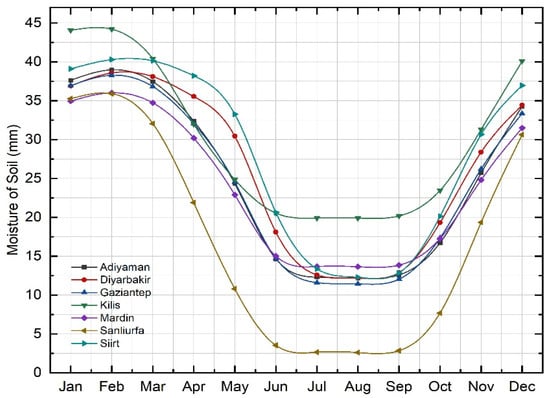
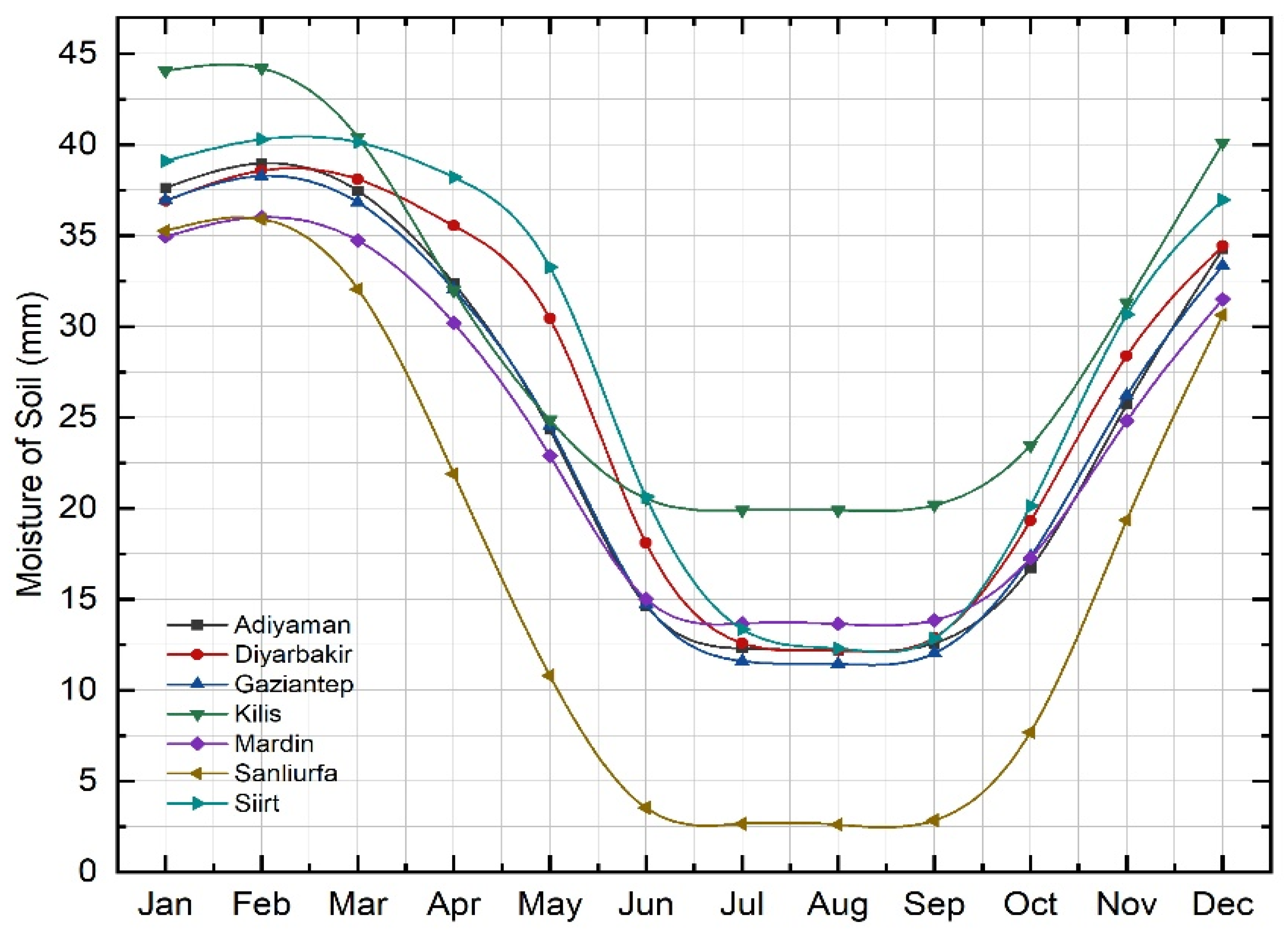
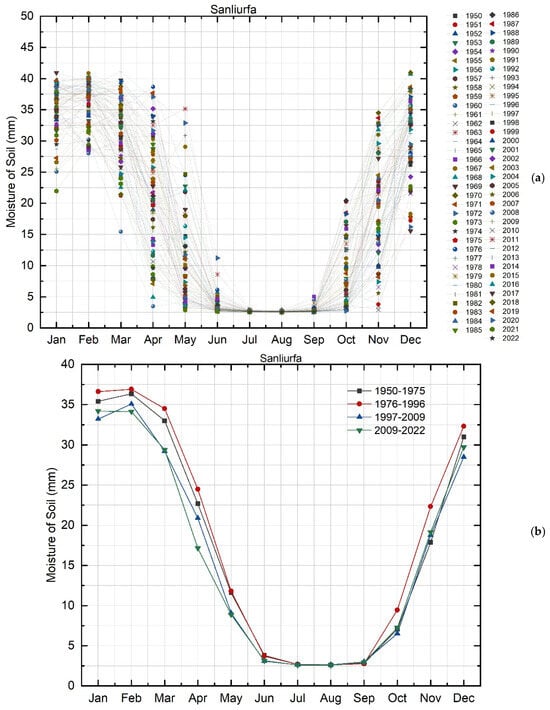
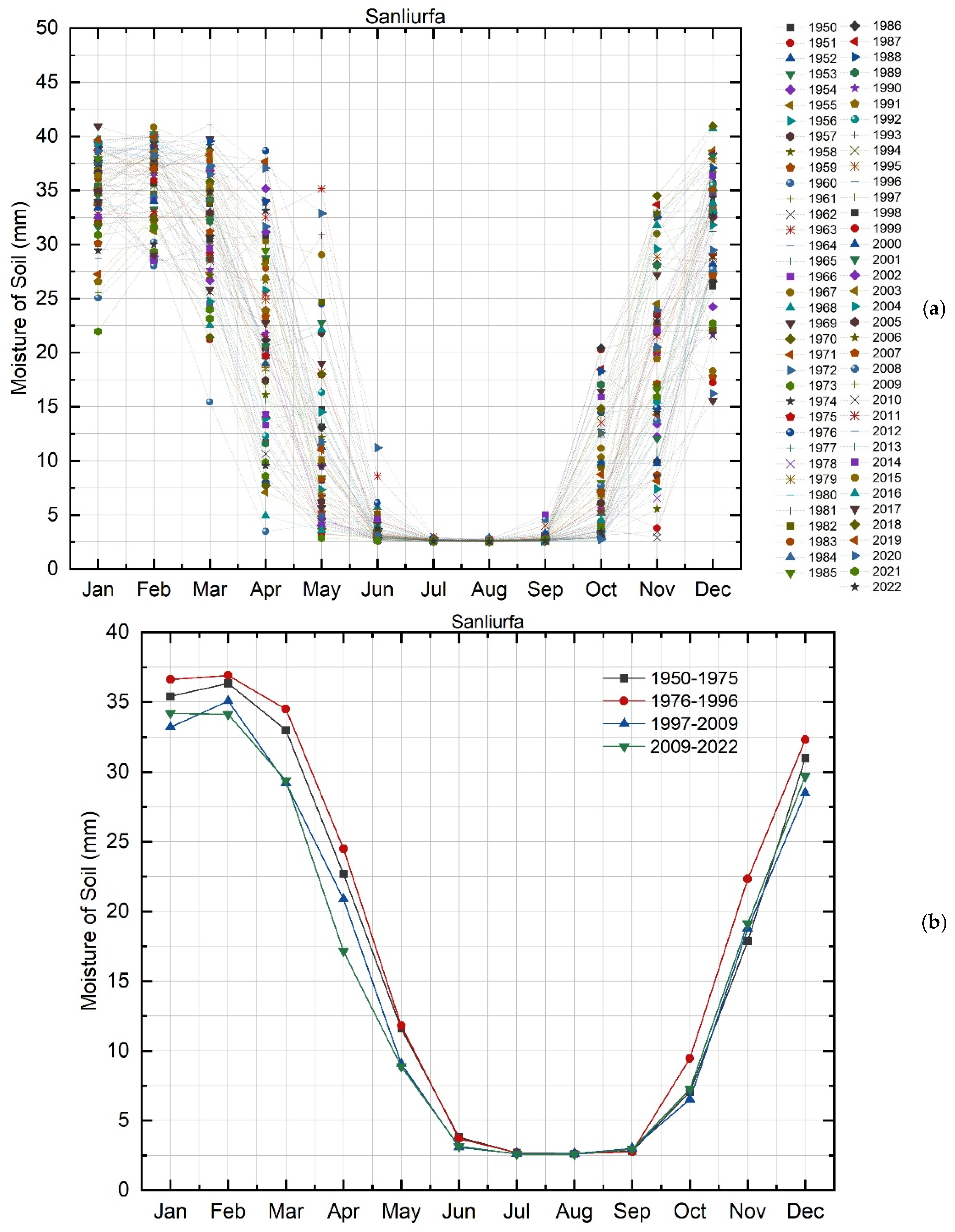
Figure 10 illustrates the monthly average soil moisture levels for the seven provinces in the GAP region. ERA5-Land reanalysis data, validated against in situ measurements with an unbiased RMSE of approximately 0.05 m3/m3, offers high spatial resolution (~9 km), making it suitable for regional hydrological assessments [19,44]. ERA5-Land monthly soil moisture data (0–7 cm layer) for 1950–2022 were analyzed using the Copernicus Climate Data Store to assess long-term trends. Seasonal patterns reveal high moisture levels during winter (January–March) and sharp declines in summer (June–August), consistent with rising temperatures and increased evapotranspiration. After 2009, summer soil moisture frequently dropped to critical levels (3–5 mm), indicating intensified water stress. This trend coincides with documented temperature increases and elevated atmospheric evaporative demand [24,38].
Figure 10.
Long-term (1950–2022) average monthly moisture of soil.
Winter months exhibit the highest soil moisture across all provinces, with Siirt and Kilis reaching approximately 45 mm. In contrast, summer months show severe depletion, particularly in Şanlıurfa, where moisture levels fall to 3–5 mm, highlighting its vulnerability to agricultural drought. Such critically low values pose significant risks for rainfed agriculture [32]. Siirt consistently maintains higher moisture levels, likely due to its elevation and geographic characteristics. Spatial variability in precipitation further influences soil moisture distribution [42].
Long-term drought indices (SPEI-12, SPI-12, CZI-12, RDI-12) identify 1970 and 2021 as major drought years. The 1970 drought aligns with regional precipitation decline trends [36], while the 2021 event reflects the ongoing increase in drought frequency and severity [31,38]. In both years, summer soil moisture fell below critical thresholds, matching negative index values and demonstrating the compound nature of drought, where precipitation deficits are amplified by evapotranspiration. Short-term indices (e.g., SPEI-3 and CZI-3) also captured severe spring and summer droughts, such as in 1989, when SPEI-3 dropped to −2.49 and CZI-3 to −2.45, underscoring their effectiveness in identifying growing-season moisture deficits [34,40].
Regional Context and Management Implications:
Expansion of irrigation infrastructure and intensified agriculture under the GAP project have exacerbated natural drought trends. Irrigation withdrawals and land-use changes accelerate soil moisture depletion during summer, emphasizing the need to consider anthropogenic factors alongside meteorological drivers in drought management. Despite measures introduced under Turkey’s National Drought Management Strategy (2017–2023)-including early warning systems, irrigation modernization, and water efficiency programs-findings indicate that summer soil moisture continues to fall below critical thresholds. Therefore, climate-resilient strategies such as drought-tolerant cropping patterns, pressurized irrigation systems, optimized irrigation scheduling, and integrated land-use planning must be prioritized to mitigate future drought risks.
Temperature-sensitive indicators like SPEI and RDI effectively capture the trend of decreased precipitation and increased evapotranspiration from May to August. Studies show that SPEI identifies more moderate and severe drought events than SPI in warming climates, particularly during summer when evapotranspiration rates are highest [8]. Rising temperatures and increased evapotranspiration have been documented as major contributors to drought intensification in the region [31,39]. In 2021, Diyarbakır’s summertime soil moisture dropped below 15 mm, aligning with SPEI-12 and RDI-12 readings indicating severe drought. This correspondence validates the effectiveness of multi-scalar indices in capturing cumulative water balance deficits that propagate from meteorological to agricultural drought. Şanlıurfa exhibited exceptionally low summer soil moisture, particularly after 2000, with SPEI-3 values as low as −3.29, indicating protracted drought stress (Figure 11a,b). The post-2000 intensification has been attributed to reduced precipitation, elevated temperatures, and altered precipitation patterns [31,40]. SPEI-3 values below −3.0 indicate exceptionally severe moisture deficits that can lead to catastrophic crop failures, with significant yield reductions commonly observed when values fall below −1.5 during the growing season [34]. The synchronous occurrence of low soil moisture and negative SPEI-3 values during summer creates compounding agricultural water stress conditions that threaten food security in the region [32,38].
Figure 11.
(a,b): Moisture of soil for Sanliurfa per year (a), partial average (b).
3.4. Policy and Management Implications
The findings of this study have direct relevance for water and agricultural management in the GAP region. The observed east–west drought gradient and post-2009 soil moisture decline underscore the need for adaptive irrigation scheduling that accounts for seasonal evapotranspiration peaks, particularly during summer months. Reservoir operations should integrate drought index thresholds to optimize water allocation during critical growing periods. Additionally, crop water requirement planning must prioritize drought-tolerant species and adjust planting calendars to mitigate yield losses under increasing climatic stress. These insights can strengthen Türkiye’s drought early warning systems by incorporating multi-index monitoring and soil moisture thresholds into operational triggers. Finally, aligning these measures with Türkiye’s climate adaptation framework will support long-term resilience, ensuring that GAP’s strategic role in national food and water security is maintained under changing climate conditions.
4. Practical Water Management and Drought Risk Management in the GAP Region: Case Studies
4.1. The 2007–2008 Drought in the GAP Region
The 2007–2008 agricultural year was marked by significant meteorological drought across Turkey, including the GAP region, as confirmed by national-scale SPI/Percent of Normal Index (PNI) indices and remote sensing indicators that classified this period as a severe drought year (General Directorate of Meteorology, 2008) [45]. Our multi-index analysis (SPI, SPEI, CZI, RDI) revealed consistent drought signals across both long-term (12-month) and short-term (1–3 month) timescales, with Diyarbakır and Şanlıurfa provinces exhibiting the lowest median values and highest frequencies of extreme drought conditions. The summer months (June–August) showed soil moisture levels frequently dropping to 2–3 mm after 2009, indicating intensified evapotranspiration pressure and the compounding effects of agricultural and meteorological drought.
The 12-month frequency maps from our study revealed mild drought frequencies of 36–39% in the western-southwestern belt (Gaziantep–Kilis–Adıyaman), while severe/extreme drought frequencies reached approximately 8% along the eastern axis (Diyarbakır–Siirt). In contrast, wet conditions dominated in Siirt and eastern areas with frequencies exceeding 53%. This eastward intensification pattern, combined with summer soil moisture declining below critical thresholds, represents the regional vulnerabilities that made the 2007–2008 event particularly impactful.
Management Actions Taken and Required: The 2007–2008 drought and subsequent events triggered the development of Turkey’s National Drought Management Strategy and Action Plan (2017–2023), which established early warning systems, a GIS-based Drought Database, provincial water management committees, and institutional responsibility sharing among the General Directorate of Meteorology (meteorological monitoring), State Hydraulic Works (hydrological monitoring), and Ministry of Agriculture and Forestry (agricultural monitoring) (World Meteorological Organization, 2021) [46]. Infrastructure investments in the GAP region focused on irrigation modernization and water use efficiency improvements, including closed conveyance systems, pressurized irrigation, and leakage reduction measures to enhance operational flexibility during water scarcity periods (Republic of Turkey Ministry of Development, 2014) [47]. Following Integrated Drought Management Programme (IDMP) and World Meteorological Organization (WMO) guidelines, a trigger-based graduated action approach was implemented, linking SPI-3, SPI-6, and SPI-12 thresholds to management responses, with critical summer thresholds (e.g., SPEI-3 ≤ −1.5) activating irrigation restrictions, cropping pattern optimization, and demand management measures (Integrated Drought Management Programme, 2017) [48].
Lessons from Our Findings: The 2007–2008 drought in the GAP region significantly affected agricultural production along the Diyarbakır–Şanlıurfa–Mardin axis, as evidenced by negative anomalies in both short- and long-term indices and summer soil moisture collapses. The high correlation (rs = 0.71–0.97) among multiple indices (SPI, SPEI, CZI, RDI) at the 12-month scale provides strong justification for an integrated threshold system in operational monitoring. The decline of soil moisture to 2–3 mm levels during summers (increasingly frequent after 2009) is consistent with evapotranspiration pressure captured by SPEI/RDI, demonstrating the necessity of implementing trigger-based mechanisms for pressurized irrigation, irrigation scheduling optimization, cropping pattern adjustments, and demand management decisions.
4.2. The 2013–2014 and 2021–2022 Drought Pressures in the GAP Region
The year 2014 was reported as the driest year nationally since 1961, with precipitation significantly below long-term averages (Turkish State Meteorological Service, 2015) [49]. Widespread drought recurred during 2021–2022. Our analyses confirm decreasing precipitation trends and increasing drought frequency over the 1981–2022 period, with concurrent extreme drought signals in SPEI-12/SPI-12 and soil moisture indicators for Şanlıurfa and Diyarbakır provinces in 2021 [50]. Summer soil moisture in Şanlıurfa dropping to the 3–5 mm range, coinciding with SPEI-3 ≤ −3.0 thresholds, indicated very high yield loss risk during the growing season.
Years such as 1970, 1973, 2008, and 2021 emerged as extreme/severe drought periods according to SPEI-12/THW and RDI-12 indices. The 1973 Gaziantep event (SPEI-12 ≈ −2.56) and the 2021 Şanlıurfa event (CZI-12 ≈ −2.51; SPI-12 ≤ −2.0) exemplify regional vulnerability. The pattern of eastward intensification (Diyarbakır–Siirt) and frequent but mild drought in the west (Gaziantep–Kilis–Adıyaman) explains the 2013–2014 and 2021–2022 periods, consistent with warming summers and increasing potential evapotranspiration conditions across the GAP region.
4.3. Policy and Management Integration
Turkey’s National Drought Management Strategy (2017–2023) established the institutional framework for risk-based management following pressure periods like 2014 and 2021–2022, incorporating early warning systems, basin-scale planning, drought databases, and provincial committees (World Meteorological Organization, 2021). State Hydraulic Works irrigation efficiency and modernization projects in the GAP region, including closed systems and pressurized irrigation, enabled revision of operational scenarios and allocation priorities during scarcity conditions (Republic of Turkey Ministry of Development, 2014) [47]. Best practice guidelines and conceptual frameworks from the Integrated Drought Management Programme (IDMP) and the World Meteorological Organization (WMO) on the three-pillar approach to drought management—namely monitoring and early warning systems, vulnerability and impact assessment, and mitigation and response measures—were integrated into the management framework. In addition, the OECD principles on water governance and stakeholder engagement, which emphasize multi-level participation and coordination in water resource management, informed the development of inclusive and participatory management strategies (Integrated Drought Management Programme, 2017; Organisation for Economic Co-operation and Development, 2015) [48,51].
Lessons from Our Findings: The 2013–2014 and 2021–2022 drought pressures revealed that SPEI-3 and soil moisture indicators simultaneously reached critical thresholds during summer months in the GAP region. The negative SPEI-12/SPI-12 values observed in Şanlıurfa and Diyarbakır in 2021, combined with summer soil moisture declining to the 3–5 mm band, indicate high yield loss risk for rainfed agriculture. These findings necessitate SPI/SPEI-triggered irrigation restrictions, pressurized irrigation incentives, cropping pattern optimization (e.g., reducing summer stress-sensitive crops and increasing water-balance-efficient species), and early activation of graduated support packages (irrigation electricity subsidies, feed support, etc.).
Operationalizing Findings for Water Management: To operationalize our findings in the GAP context, we link multi-index signals (SPI/SPEI/CZI/RDI) and ERA5-Land soil moisture to trigger-based actions. During summers, when SPEI-3 ≤ −1.5 and topsoil moisture drops below approximately 5 mm, we propose pressurized irrigation incentives, irrigation scheduling adjustments, and cropping pattern shifts; when SPI-12 ≤ −1.5, we recommend basin-scale allocation revisions and drought contingency funding. This design aligns with Turkey’s National Drought Management Strategy (2017–2023) and IDMP guidance on phased mitigation, preparedness, and response (World Meteorological Organization, 2021; Integrated Drought Management Programme, 2017). Our case studies (2007–2008 and 2013–2014/2021–2022) demonstrate that integrated monitoring combined with trigger thresholds reduces agricultural impacts, particularly in Şanlıurfa–Diyarbakır–Mardin where compound summer drought risk is highest (Republic of Turkey Ministry of Development, 2014).
5. Conclusions
Frequent droughts and soil degradation in semi-arid regions pose significant threats to sustainable agricultural development and water security. This challenge necessitates integrated and sustainable water resource management strategies that balance environmental protection, agricultural productivity, and socio-economic resilience. As a holistic approach to conserving water resources and protecting water quality for future generations, sustainable water management requires evidence-based strategies including long-term climate parameter analysis and agricultural measures to conserve soil moisture. In this context, the comprehensive drought analysis presented in this study provides critical insights for sustainable water governance, enabling stakeholders to develop adaptive strategies for climate change mitigation and sustainable land management.
Drought dynamics in the Southeastern Anatolia Project (GAP) region reveals critical patterns of water scarcity and climatic variability across multiple temporal scales. The integration of multiple drought indices (SPI, SPEI, RDI) with soil moisture data provides a robust framework for understanding the region’s vulnerability to drought events.
Diyarbakir and Sanliurfa emerge as the most drought-prone provinces across all evaluated indices and time periods. These provinces exhibited the lowest index values and the highest recurrence of extreme drought events in both short-term (SPI-1 and SPEI-1) and long-term (SPI-12, SPEI-12, and RDI-12) assessments, with consistently negative median values. Sanliurfa, in particular, experienced frequent extreme drought events across both SPEI and SPI indices, with 2021 identified as a record-dry year. Prolonged periods of low soil moisture further confirm the region’s vulnerability in terms of both drought frequency and intensity. While mild drought conditions are more frequently observed around Gaziantep, Kilis, and Adiyaman, severe and extreme drought events predominantly occur along the Diyarbakir–Sanliurfa–Mardin axis. SPEI-12 (THW) median values range from −0.18802 (Sanliurfa) to −0.0714 (Adiyaman), indicating persistent moisture deficits. The occurrence of high positive extremes in Gaziantep and Sanliurfa suggests occasional excessively wet periods, reflecting the region’s pronounced climatic variability rather than a unidirectional drying trend.
Soil moisture analysis revealed sharp declines to as low as 2–3 mm during summer months, particularly after 2009, highlighting increased evapotranspiration pressure likely associated with rising temperatures. Strong Spearman correlation coefficients (rs = 0.71–0.97) among the 12-month indices demonstrate robust mutual consistency in long-term drought assessment, validating the multi-index approach. ArcGIS-based spatial frequency analysis indicates that while mild drought occurs with frequencies up to 39% in southwestern areas, severe and extreme droughts recur with frequencies up to 8% in eastern provinces. Conversely, wet events dominate in eastern areas, particularly around Siirt, exceeding 53% frequency, which may be attributed to higher elevations and orographic precipitation patterns.
The quantitative findings of this study provide a critical foundation for developing practical agricultural and water resource management strategies in the Southeastern Anatolia Region. For instance, summer soil moisture in Sanliurfa regularly falls below 5 mm, and SPEI-3 values as low as −3.29 indicate an urgent need for drought-resilient crop planning and optimized irrigation scheduling during late spring and summer months. Similarly, the recurrent long-term drought events in Diyarbakır (e.g., SPI-12 < −2.0 in 1970 and 2021) underscore the critical importance of investing in reservoir management and water storage infrastructure to mitigate recurring water shortages. The high spatial frequency of mild-to-severe droughts—reaching up to 39% in southwestern provinces and 8% in eastern areas—supports the implementation of early warning systems based on combined drought indices and soil moisture thresholds. These quantitative insights can guide long-term infrastructure investments, optimize irrigation schedules, and inform region-specific drought contingency plans to enhance resilience against climate variability.
The findings underscore the importance of employing temperature-sensitive indices such as SPEI and RDI for effective drought monitoring and agricultural planning in the GAP region under changing climate conditions. These indices better capture the combined effects of precipitation deficits and evapotranspiration demands, providing more comprehensive drought assessment than precipitation-only indices. However, as this research is based on historical observational data and limited to specific analytical approaches, future studies should integrate climate model projections and downscaled scenarios to strengthen adaptive sustainable water management strategies. Incorporating hydrological modeling, groundwater assessments, and socioeconomic vulnerability analyses would provide a more holistic understanding of drought impacts and support the development of comprehensive drought risk management frameworks for the region. Through comprehensive analysis of long-term drought and soil moisture dynamics in Türkiye’s GAP region, this study advances sustainable water governance and climate adaptation strategies essential for the region’s agricultural sustainability. The research directly supports evidence-based policy-making for integrated water–food–ecosystem management, contributing to the environmental, socio-economic, and ecological sustainability of this critical agricultural region.
Funding
This research received no external funding.
Data Availability Statement
Data will be made available on request.
Conflicts of Interest
The author declares no conflicts of interest.
References
- Kılıç, Z. The importance of water and conscious use of water. Int. J. Hydrol. 2020, 4, 239–241. [Google Scholar] [CrossRef] [Scilit]
- Esit, M.; Kumar, S.; Pandey, A.; Lawrence, D.M.; Rangwala, I.; Yeager, S. Seasonal to multi-year soil moisture drought forecasting. NPJ Clim. Atmos. Sci. 2021, 4, 16. [Google Scholar] [CrossRef] [Scilit]
- Vicente-Serrano, S.M.; Beguería, S.; López-Moreno, J.I. A multiscalar drought index sensitive to global warming: The standardized precipitation evapotranspiration index. J. Clim. 2010, 23, 1696–1718. [Google Scholar] [CrossRef] [Scilit]
- Shukla, S.; Wood, A.W. Use of a standardized runoff index for characterizing hydrologic drought. Geophys. Res. Lett. 2008, 35, 279–286. [Google Scholar] [CrossRef] [Scilit]
- Morid, S.; Smakhtin, V.; Moghaddasi, M. Comparison of seven meteorological indices for drought monitoring in Iran. Int. J. Climatol. 2006, 26, 971–985. [Google Scholar] [CrossRef] [Scilit]
- Katipoğlu, O.M.; Acar, R.; Şengül, S. Comparison of meteorological indexes for drought monitoring and evaluating: A case study from Euphrates basin, Turkey. J. Water Clim. Change 2020, 11, 29–43. [Google Scholar] [CrossRef] [Scilit]
- Başakın, E.E.; Stoy, P.C.; Demirel, M.C.; Ozdogan, M.; Otkin, J.A. Combined drought index using high-resolution hydrological models and explainable artificial intelligence techniques in Türkiye. Remote Sens. 2024, 16, 3799. [Google Scholar] [CrossRef] [Scilit]
- Tsakiris, G.; Vangelis, H. Establishing a drought index incorporating evapotranpiration. Eur. Water 2005, 9, 3–11. [Google Scholar]
- Yuce, M.; Esit, M. Drought monitoring in Ceyhan Basin, Turkey. J. Appl. Water Eng. Res. 2021, 9, 293–314. [Google Scholar] [CrossRef] [Scilit]
- Khorrami, M.; Gündüz, O. Integrated drought monitoring using GRACE and remote sensing indices in Turkey. Remote Sens. 2022, 14, 512. [Google Scholar]
- Bulut, B.; Şorman, A.Ü.; Şensoy, S. Evaluation of satellite and model-based soil moisture products over Turkey. J. Hydrol. 2019, 573, 603–616. [Google Scholar]
- Pekpostalci, S.D.; Tur, R.; Danandeh Mehr, A.; Vazifekhah Ghaffari, M.A.; Dąbrowska, D.; Nourani, V. Drought monitoring and forecasting across Turkey: A contemporary review. Sustainability 2023, 15, 6080. [Google Scholar] [CrossRef] [Scilit]
- Turkish State Meteorological Service (MGM). State of the Climate in Turkey 2021. General Directorate of Meteorology. 2022. Available online: https://www.mgm.gov.tr/FILES/iklim/yillikiklim/2021-iklim-raporu.pdf (accessed on 21 November 2025).
- Tonyaloğlu, E.; Kesgin Atak, B. Assessment of agricultural drought using Landsat-based LST and NDVI in Aydın Province, Turkey. Envrion. Monit. Assess. 2024, 196, 1–15. [Google Scholar]
- Gumus, V.; Avsaroglu, Y.; Simsek, O.; Dinsever, L.D. Evaluation of meteorological time series trends in Southeastern Anatolia, Turkey. Geofizika 2023, 40, 51–73. [Google Scholar] [CrossRef] [Scilit]
- McKee, T.B.; Doesken, N.J.; Kleist, J. The relationship of drought frequency and duration to time scales. In Proceedings of the 8th Conference on Applied Climatology, Anaheim, CA, USA, 17–22 January 1993; Volume 22, pp. 179–183. [Google Scholar]
- Muñoz-Sabater, J.; Dutra, E.; Agustí-Panareda, A.; Albergel, C.; Arduini, G.; Balsamo, G.; Hersbach, H. ERA5-Land: A state-of-the-art global reanalysis dataset for land applications. Earth. Syst. Sci. Data 2021, 13, 4349–4383. [Google Scholar] [CrossRef] [Scilit]
- Gruber, A.; Scanlon, T.; Van der Schalie, R.; Wagner, W.; Dorigo, W. Validation practices for satellite soil moisture retrievals: What are (the) errors? Remote Sens. Environ. 2020, 244, 111806. [Google Scholar]
- Allen, R.G.; Pereira, L.S.; Raes, D.; Smith, M. Crop evapotranspiration-Guidelines for computing crop water requirements-FAO Irrigation and drainage paper 56. Fao Rome 1998, 300, D05109. [Google Scholar]
- UNESCO. Map of the World Distribution of Arid Regions; MAB Technical Notes 7; UNESCO: Paris, France, 1979. [Google Scholar]
- Simsek, O.; Bazrafshan, O.; Azhdari, Z. A 3-D copula for risk analysis of meteorological drought in the Black Sea Region. Theor. Appl. Clim. 2023, 155, 1185–1200. [Google Scholar] [CrossRef] [Scilit]
- Bakanoğulları, F. SPEI ve SPI İndisleri Kullanılarak İstanbul-Damlıca Deresi Havzasında Kuraklık Şiddetlerinin Analizi. Toprak Su Derg. 2020, 9, 1–10. [Google Scholar] [CrossRef] [Scilit]
- Zhai, J.; Su, B.; Krysanova, V.; Vetter, T.; Gao, C.; Jiang, T. Spatial variation and trends in PDSI and SPI indices and their relation to streamflow in 10 large regions of China. J. Clim. 2010, 23, 649–663. [Google Scholar] [CrossRef] [Scilit]
- Aktürk, G.; Zeybekoğlu, U.; Yıldız, O. Drought Investigation Using SPI and SPEI Methods: A Case Study in Kırıkkale. Int. J. Eng. Res. Develop. 2022, 14, 762–776. [Google Scholar]
- Thornthwaite, C.W. An approach toward a rational classification of climate. Geograp. Rev. 1948, 38, 55–65. [Google Scholar] [CrossRef] [Scilit]
- Kendall, M.G.; Stuart, A. The Advanced Theory of Statistics; Charles Griffin & Company: London, UK, 1963. [Google Scholar]
- Manikandan, N.; Das, D.K.; Mukherjee, J.; Sehgal, V.K.; Krishnan, P. Extreme temperature and rainfall events in National Capital Region of India (New Delhi) in the recent decades and its possible impacts. Theor. App. Clim. 2015, 123, 799–808. [Google Scholar] [CrossRef] [Scilit]
- Rahman, M.R.; Lateh, H. Meteorological drought in Bangladesh: Assessing, analysing and hazard mapping using SPI, GIS and monthly rainfall data. Envrion. Earth Sci. 2016, 75, 1026. [Google Scholar] [CrossRef] [Scilit]
- Subedi, R.; Ye, A.; Zhang, J. Spatial and temporal analysis of drought in Nepal using Standardized Precipitation Index and its relationship with climate indices. J. Hydrol. Meteorol. 2020, 7, 68–84. [Google Scholar]
- Watson, D.F.; Philip, G.M. A refinement of inverse distance weighted interpolation. Geoprocessing 1985, 2, 315–327. [Google Scholar]
- Serkendiz, H.; Tatli, H.; Kılıç, A.; Çetin, M.; Sungur, A. Analysis of drought intensity, frequency and trends using the spei in Turkey. Theor. Appl. Clim. 2024, 155, 4. [Google Scholar] [CrossRef] [Scilit]
- Bachmair, S.; Tanguy, M.; Hannaford, J.; Stahl, K. How well do meteorological indicators represent agricultural and forest drought across Europe? Environ. Res. Lett. 2018, 13, 034042. [Google Scholar] [CrossRef] [Scilit]
- Öz, F.Y.; Özelkan, E.; Tatlı, H. Comparative analysis of SPI, SPEI, and RDI indexes for assessing spatiotemporal variation of drought in Türkiye. Earth Sci. Inform. 2024, 17, 4473–4505. [Google Scholar] [CrossRef] [Scilit]
- Labudová, L.; Labuda, M.; Takáč, J. Comparison of SPI and SPEI applicability for drought impact assessment on crop production in the Danubian Lowland and the East Slovakian Lowland. Theor. Appl. Clim. 2017, 128, 491–506. [Google Scholar] [CrossRef] [Scilit]
- Kartal, V.; Yavuz, V.S.; Ariman, S.; Kaya, K.; Alkanjo, S.; Simsek, O. Climate change trends in the Southeastern Anatolia region of Türkiye: Precipitation and drought. J. Water Clim. Change 2024, 15, 5893–5919. [Google Scholar] [CrossRef] [Scilit]
- Turkes, M. Climate and drought in Turkey. In Water Resources of Turkey; Springer International Publishing: Cham, Switzerland, 2019; pp. 85–125. [Google Scholar]
- Vicente-Serrano, S.M.; Beguería, S.; Lorenzo-Lacruz, J.; Camarero, J.J.; López-Moreno, J.I.; Azorin-Molina, C.; Sanchez-Lorenzo, A. Performance of drought indexes for ecological, agricultural, and hydrological applications. Earth Interact. 2012, 16, 1–27. [Google Scholar] [CrossRef] [Scilit]
- Gumus, V.; Simsek, O.; Avsaroglu, Y.; Agun, B. Spatio-temporal trend analysis of drought in the GAP Region, Turkey. Nat. Hazards 2021, 109, 1759–1776. [Google Scholar] [CrossRef] [Scilit]
- Cavus, Y.; Aksoy, H. Spatial drought characterization for Seyhan River basin in the Mediterranean region of Turkey. Water 2019, 11, 1331. [Google Scholar] [CrossRef] [Scilit]
- Onuşluel Gül, G.; Gül, A.; Najar, M. Historical evidence of climate change impact on drought outlook in river basins: Analysis of annual maximum drought severities through daily SPI definitions. Nat. Hazards 2022, 110, 1389–1404. [Google Scholar] [CrossRef] [Scilit]
- Yeşilköy, S.; Şaylan, L. Spatial and temporal drought projections of northwestern Turkey. Theor. Appl. Clim. 2022, 149, 1–14. [Google Scholar] [CrossRef] [Scilit]
- Katipoğlu, O.M. Spatial analysis of seasonal precipitation using various interpolation methods in the Euphrates basin, Turkey. Acta Geophysica 2022, 70, 859–878. [Google Scholar] [CrossRef] [Scilit]
- Türkes, M. Türkiye’de gözlenen ve öngörülen iklim değişikliği, kuraklık ve çölleşme. Ank. Üniversitesi Çevrebilimleri Derg. 2012, 4, 1–32. [Google Scholar]
- Palazzolo, N.; Peres, D.J.; Creaco, E.; Cancelliere, A. Using principal component analysis to incorporate multi-layer soil moisture information in hydrometeorological thresholds for landslide prediction: An investigation based on ERA5-Land reanalysis data. Nat. Hazards Earth Syst. Sci. 2023, 23, 279–291. [Google Scholar] [CrossRef] [Scilit]
- General Directorate of Meteorology (MGM). Turkey Drought Assessment Report (Türkiye Kuraklık Değerlendirme Raporu); Ministry of Forestry and Water Affairs, Meteorological Service, Climate Change Expert Committee: Ankara, Türkiye, 2014. [Google Scholar]
- Meteorological Organization. 2021 State of Climate Services: Water (WMO-No. 1278); Meteorological Organization: Geneva, Switzerland, 2021. [Google Scholar]
- Republic of Turkey Ministry of Development. Tenth Development Plan (2014–2018): Sustainable Agricultural Structure and Water Resources Management; Republic of Turkey Ministry of Development: Ankara, Türkiye, 2014. [Google Scholar]
- Integrated Drought Management Programme. Integrated Drought Management Programme: A Handbook for Practitioners; World Meteorological Organization and Global Water Partnership: Geneva, Switzerland, 2017. [Google Scholar]
- Turkish State Meteorological Service. 2014 Climate Evaluation Report; General Directorate of Meteorology: Singapore, 2015. [Google Scholar]
- Yılmaz, M.; Yılmaz, E. Spatiotemporal analysis of drought patterns in southeastern Turkey. Clim. Res. 2023, 89, 145–162. [Google Scholar]
- Republic of Turkey Ministry of Development. Southeastern Anatolia Project (GAP) Action Plan 2014–2018; Republic of Turkey Ministry of Development: Ankara, Türkiye, 2014.

Disclaimer/Publisher’s Note: The statements, opinions and data contained in all publications are solely those of the individual author(s) and contributor(s) and not of MDPI and/or the editor(s). MDPI and/or the editor(s) disclaim responsibility for any injury to people or property resulting from any ideas, methods, instructions or products referred to in the content. |
© 2026 by the author. Licensee MDPI, Basel, Switzerland. This article is an open access article distributed under the terms and conditions of the Creative Commons Attribution (CC BY) license.