


Abstract
Destructive earthquakes are natural hazards highlighting the importance of introducing disaster preparedness from early childhood. Preschool children require developmentally appropriate educational approaches that connect scientific understanding with experiential, play-based, and participatory learning. This study presents the design and implementation of the “Earthy and Quaky” (EQ) earthquake education program, developed for children aged 3–6 years and implemented in two preschool educational settings in Zografou City (Attica, Greece). The program was structured as an interdisciplinary and progressive learning pathway comprising eight thematic units integrating natural and social sciences, language, mathematics, music and movement, visual arts, puppet theater, simulation, and earthquake drills. Follow-up activities and family involvement extended learning beyond the classroom. The implementation involved 28 children, whose participation, verbal responses, interactions, behavioral responses, and drawings were qualitatively observed. The observations indicated active engagement with concepts, including the Earth’s structure, earthquake occurrence and impact, and self-protection practices. Within the context of this small-scale implementation, the observations indicate that an interdisciplinary, experiential, and activity-based framework can provide a supportive learning context for earthquake preparedness during preschool years. The adaptable structure, low-cost materials, repeated reinforcement, and school–family connection may offer potential for adaptation to other preschool contexts after studying applicability and effectiveness with larger and more diverse samples.
1. Introduction
Earthquakes constitute a significant threat to human life and well-being worldwide. Due to their unpredictable and destructive nature, education on earthquakes has become an essential component of disaster risk reduction (DRR) strategies [1,2,3,4], particularly for vulnerable populations, including children at all levels of education, from preschool to high school [5], as disasters affect millions of them every year and can compromise or disrupt their future development [6,7]. Children can actively play an important role in communicating risks, taking actions, and participating in decision-making processes to prevent disasters for their families and communities [8,9].
Children aged between 3 and 6 years are not passive recipients of information but rather active agents striving to interpret the phenomena of their environment. To this end, they employ simple, spontaneous, and intuitive patterns of thought, which are defined as alternative conceptions or naive theories [10]. However, they constitute the natural and necessary starting point for learning, functioning as precursor models [11], essential for the child to construct more complex, abstract, and scientifically compatible concepts in the future through processes of cognitive conflict and gradual conceptual change [12,13,14].
Young children’s limited cognitive maturity and restricted ability to comprehend complex risk concepts necessitate a carefully designed educational approach, which must take into account the unique developmental, cognitive, and emotional characteristics of preschoolers by adopting age-appropriate pedagogical methods [15,16,17,18]; cultivate foundational scientific observation skills; encourage experiential inquiry; and foster the child’s natural curiosity about the surrounding world [19].
Interdisciplinary instruction constitutes a fundamental strategy for approaching natural sciences in early childhood education, as it aligns with the holistic nature of children’s thinking [20]. Through this approach, science-based activities are organically linked to other domains of knowledge and to children’s everyday experiences, thereby promoting their creative and active participation with hands-on materials and, where appropriate, science, technology, engineering, and mathematics (STEM)-oriented activities [21,22]. These methods allow children to experiment with physical materials and construct scientific meanings in an authentic, experiential manner [19,21]. Consequently, observation and exploration are not perceived as isolated school exercises but rather as natural extensions of the child’s innate curiosity during their interaction with the environment.
When applied to earthquake education, activity-based programs can help preschool children understand what earthquakes are, recognize potential hazards, and practice simple safety measures in an engaging and developmentally appropriate manner. However, there is no single unified approach [23,24,25], ranging from fragmented and isolated initiatives to strategically designed and systematically implemented frameworks and primarily emphasizing evacuation drills and self-protective actions [23,24,25]. Examples from several countries (e.g., Japan and New Zealand) [26,27,28,29] highlight the need for developmentally appropriate and activity-based earthquake education programs capable of simultaneously fostering knowledge, preparedness, emotional resilience, self-protection skills, and social competencies among preschool children.
Furthermore, reviews of the literature on earthquake education [25,30] revealed a limited number of relevant studies and highlighted the scarcity of earthquake education research worldwide. This fact does not necessarily indicate the absence and insufficiency of earthquake education but may reflect the limited priority given to earthquake education in national educational policies and practices.
Taking into account the diversity and limited availability of preschool earthquake education approaches identified above, as well as the need for developmentally appropriate earthquake education in preschool settings, the present article introduces the “Earthy and Quaky” (EQ) education program for earthquakes, which was implemented in preschool settings in Zografou City (Region of Attica, Central Greece) (Figure 1).
Figure 1.
Location map of Zografou City in the central part of Greece, where the EQ program was implemented, along with the seismogenic sources of Greece compiled by Styron and Pagani [31]; the spatial distribution of Mw ≥ 6.0 earthquakes derived from Makropoulos et al. [32], Stucchi et al. [33], and Rovida et al. [34]; and the seismic hazard zones compiled by the Earthquake Planning and Protection Organization (EPPO) of Greece [35]. The Zografou area is located within the green zone (0.16 g) and was slightly affected by the 1981, 1999, and 2019 Athens earthquakes.
The aim of the present study is to initially present the design and implementation of the EQ program as an interdisciplinary and progressive learning pathway that introduces preschool children to the structure of the Earth, the nature of earthquakes, and earthquake self-protection practices. It gradually connects scientific understanding with experiential exploration, protective behaviors, repeated practice, and age-appropriate preparedness. An additional rationale for presenting the EQ program is to contribute to the growing body of literature on earthquake education initiatives for preschool children and to provide an example of an interdisciplinary, experiential approach that may inform the development and implementation of age-appropriate earthquake education. While projects have been implemented [36,37], and guides, educational materials, and activities for seismic risk management in schools and preschool centers [38,39,40,41] are available for Greece, there is comparatively limited documentation of structured, interdisciplinary, and systematically implemented earthquake education programs for preschool children.
This EQ program was designed using an approach integrating activities across various learning domains, such as natural and social sciences, mathematics, visual arts, music and movement education, and puppet theater as a form of dramatic expression and the core pedagogical tool. It is tailored to the seismotectonic characteristics of Greece, one of the most seismically active countries worldwide, with intense seismicity documented since antiquity [32,42,43,44,45,46]. It features numerous active seismogenic structures [31] and a history of strong, destructive earthquakes that have caused extensive environmental effects [47,48,49,50], heavily impacting the built environment and the population [42,43,44,45,46]. Furthermore, the program is fully aligned with the principles of the Cross-Thematic Unified Curriculum Framework for Kindergarten in Greece [51].
The novelty of the presented EQ program does not lie primarily in the used resources and materials. It lies in two interconnected aspects. Initially, puppet theater constitutes a central pedagogical tool of the presented EQ program, never presented in this way before in the existing literature. It provides the overarching narrative and experiential framework through which different educational tools, concepts, and activities are introduced, connected, and reinforced. The novelty of the presented EQ program also lies in the integration of different learning domains within a specifically designed sequence of eight interconnected thematic units. The sequence moves from familiarization with the Earth and understanding the earthquake phenomenon, through experiential exploration and risk awareness, toward self-protection, behavioral rehearsal, consolidation, and practical application. This specific sequence was not identified in the preschool earthquake education initiatives reviewed in the frame of the present study.
2. Methodology of the EQ Program
The methodology involves an interdisciplinary educational program designed to educate preschool children about earthquakes and earthquake self-protection practices. The specific objectives of the EQ program are categorized into three dimensions, consistently aligned with contemporary early childhood learning classifications: cognitive, emotional, and social goals [52]. Cognitive goals focus on enabling children to identify what an earthquake is, understand why earthquakes occur, comprehend their impact on humans and the environment, and recognize the importance of preparedness and safety. Emotional goals focus on addressing and mitigating earthquake-related anxiety and fear, fostering children’s self-confidence, and supporting their sense of security through age-appropriate knowledge and experience. Social goals focus on developing cooperation and communication skills through collaborative group activities and encouraging prosocial behaviors, such as supporting peers during emergency situations.
The EQ program is implemented through eight interconnected thematic units, which are deliberately organized as a progressive and sustainability-oriented learning pathway. The sequence moves from scientific awareness and understanding of the Earth and earthquakes toward risk awareness, preparedness, practical self-protection skills, and responsible behavior during preschool years. The learning pathway is further extended beyond the classroom through follow-up activities and family involvement, supporting the reinforcement and transfer of preparedness-related knowledge and skills into everyday settings. The EQ program was designed in accordance with the developmental characteristics of preschool-aged children and draws on principles of experiential, play-based, and holistic learning. In this respect, the EQ program incorporates elements consistent with Education for Sustainable Development (ESD), particularly through the development of knowledge, practical skills, social cooperation, emotional awareness, and responsible decision-making. The emphasis on these elements supports the continuity of learning beyond the educational setting and facilitates the transfer of preparedness-related knowledge and skills into children’s everyday environments.
2.1. The Structure and Introductory Phase of the EQ Program
The EQ program comprises the following eight interconnected thematic units with the puppet theater as the central pedagogical element (Figure 2):
Figure 2.
Progressive learning and sustainability pathway of the “Earthy and Quaky” program.
- “The Classroom Fairy and Her Friend Earthy, the Geologist” (puppet theater): Introduction to the topic and familiarization with the Earth and natural phenomena.
- “The Earth and Its Layers” (natural sciences): Understanding the structure of the Earth and developing an awareness of cause-and-effect relationships.
- “The Earthquake as a Phenomenon” (language and natural sciences): Understanding the phenomenon of earthquakes, enriching vocabulary, and developing children’s oral language and descriptive skills.
- “Earthquake Simulation” (natural sciences): Provision of experiential learning opportunity through a safe simulation of seismic activity.
- “Safety Rules and Appropriate Behavior During an Earthquake” (social sciences): Learning basic self-protection practices and developing social skills through puppet theater and role-play activities.
- “Grouping and Sequencing Actions” (mathematics): Classifying, sequencing, and grouping actions before, during, and after an earthquake while developing logical thinking skills.
- “The Earthquake Turtle Song" (music and movement education): Consolidating safety behaviors and protective actions through song and movement while developing coordination and rhythm.
- “Construction of “The Earthquake Turtle” and Earthquake Drill” (visual arts): Symbolic representation of acquired knowledge, fostering creativity and developing fine motor skills.
Several resources and materials identified in the literature [15,16,26,27,28,53,54,55,56] are integrated in the aforementioned thematic units. However, this sequence is not a synthesis of existing approaches for a specific local implementation. Its distinctive contribution lies in the use of puppet theater as a central pedagogical framework and in the systematic integration and sequencing of different educational domains and established resources within the aforementioned interconnected thematic units, forming a coherent, interdisciplinary, and progressive earthquake preparedness pathway specifically designed for preschool children.
The initial phase of the EQ program was designed to establish an appropriate learning environment and stimulate children’s interest and engagement. This is achieved through the following activities:
- The appearance of the puppet named the Classroom Fairy, who brings a surprise box containing various items and introduces a new puppet friend, Earthy, the Geologist.
- The presentation of the surprise box, which contains a globe, puppets, books, models, puzzles, educational visual materials, and musical resources. These materials are gradually revealed and incorporated into each activity.
- The creation of motivation and curiosity through the mystery surrounding the surprise box and the interactive involvement of the puppets.
These thematic units emphasize repetition, embodied learning, creative expression, and practical application, thereby facilitating the consolidation and reinforcement of the knowledge and skills acquired. This progression reflects the broader principles of the DRR and ESD [16,57], in which learning is understood not only as the acquisition of knowledge but also as the development of skills, attitudes, values, and capacities that enable individuals to respond responsibly to present and future challenges. Within the context of DRR, this approach contributes to the gradual development of preparedness and resilience from early childhood.
Table 1 provides a concise overview of the cognitive, emotional, and social objectives of all thematic units, and Table 2 presents the specific objectives associated with certain units.
Table 1.
Cognitive, affective, and social objectives of the eight thematic units implemented during the EQ program in the participating educational settings.
Table 2.
Specific objectives of the sixth, seventh, and eighth thematic units implemented during the EQ program in the participating educational settings.
2.2. Implementation Framework—Implementation Setting, Duration, and Target Age Group
The EQ program is intended to be implemented with children aged 3–6 years. Its expected duration is approximately one month, with two activities conducted per week. The program can take place in a kindergarten or preschool classroom, as well as in the outdoor school environment, within a framework that promotes collaboration, teamwork, and active participation among children.
In the Greek case, the EQ program was implemented at the 1st Preschool Center of the National and Kapodistrian University of Athens (NKUA) and the 19th Public Kindergarten of Zografou City (Region of Attica, Greece), which are co-located in a specially designed and fully equipped facility at the Zografou City Campus of the NKUA. The 1st Preschool Center has been operating since 2000 under the supervision of the Company for the Utilization and Management of the Property of the NKUA, which is responsible for its operation and financial management. The center provides preschool education and care for children from 2.5 years of age until entry into compulsory education and is open to children of NKUA staff, as well as to children of NKUA students and other eligible cases when places are available. It operates in a specially designed and fully equipped facility and is staffed by two kindergarten teachers, two early childhood educators, and a physical education teacher, supported by additional personnel responsible for catering, cleaning, and security. These organizational and educational characteristics of both participating centers reflect a structured preschool setting within the Greek context, rather than an exceptional or non-representative educational environment. A total of 28 children participated in the implementation of the EQ program: 20 children aged 4–6 years from the kindergarten and 8 children aged 3.5–4 years from the preschool center. This age range corresponds to the program’s broader target population, which is children aged 3–6 years. The implementation took place within a familiar and safe educational environment, both inside the classroom and in the outdoor school area, respecting the children’s individual learning pace, interests, and developmental characteristics.
The EQ program is recommended to be delivered over a period of a month (3 to 4 weeks), with two educational sessions per week, each lasting approximately one hour. The duration of the proposed educational program is relatively short compared with that of some already implemented preschool earthquake educational interventions in Greece [58,59,60,61,62]. This may constitute a practical advantage, as the program can be incorporated into the regular educational schedule of the preschool setting without placing excessive demands on the existing curriculum. At the same time, its relatively short duration allows sufficient flexibility for follow-up and reinforcement activities and for the involvement of families beyond the initial implementation period. The program can also be repeated at different points during the school year, providing children with opportunities to revisit familiar concepts and protective actions through repeated practice. Such repetition may support the consolidation and deeper understanding of concepts and behaviors that have been previously introduced and practiced.
This temporal and pedagogical structure allows for the gradual introduction and reinforcement of key concepts and skills without placing excessive demands on the regular educational routine while also providing sufficient time for the experiential exploration and consolidation of the individual thematic units.
The authors (S.M., a geologist, and T.T., a kindergarten teacher) were responsible for the design and development of the EQ program, combining geological expertise with preschool education expertise. The development and implementation of the EQ program formed part of the second author’s postgraduate thesis, which was scientifically guided and supervised by the first author. The second author (T.T.) also participated directly in the implementation of the EQ program in the participating preschool settings, in collaboration with their staff in several thematic units.
This dual role as participant–observer is acknowledged as a potential source of observer bias. To limit the potential influence of this role on the interpretation of the findings, the observations were used qualitatively and descriptively rather than to produce quantitative measures of program effectiveness. They focused on the children’s engagement, verbal responses, questions, interactions, participation in activities, observed behaviors, application of the concepts, and ability to recall and apply the earthquake self-protection practices addressed during the program.
The qualitative observations were conducted by the second author (T.T.). The observations were recorded in writing immediately after the completion of the activities and were subsequently considered in relation to the children’s drawings, constructions, role-playing, and performance during the earthquake drill.
The children’s drawings and other activity products were treated as complementary qualitative evidence rather than as quantitative evaluation outcomes. They were examined descriptively to identify recurring visual representations and indications that the children had recalled or represented concepts addressed during the respective thematic units. The observations, verbal responses, participation, and children’s products were considered together in order to identify recurring patterns of engagement, conceptual understanding, and application of safety-related knowledge.
It is important to note that written informed consent was obtained from the parents of all participating children prior to their participation in the EQ program. The consent form provided detailed information regarding the purpose and duration of the program, its implementation procedures, data privacy and confidentiality measures, and the voluntary nature of participation. It also informed parents of their right to withdraw their child from the program at any time, without any consequences, if considered necessary. Accordingly, in the photographs included in this article, the children’s faces were covered with a symbol (a flower) where necessary, and photographs were also selected and/or taken from angles that do not allow the facial features or identity of the children to be recognized. These measures were applied to ensure that no identifiable information about the participating children is disclosed through the published images. Similarly, the children’s names on their drawings were covered to ensure that their identities cannot be recognized or inferred from the published material. Furthermore, no video or audio recordings were taken during the implementation or used during the qualitative evaluation of the EQ program.
Regarding previous experience in implementing awareness-raising and education activities for young children, the teaching staff of the 1st Preschool Center, which also includes the second author (Τ.Τ.), conducted an earthquake drill in June 2025 [63], as well as a firefighting and rescue drill in April 2025 [64]. The 2025 earthquake drill consisted of two components: the first one focused on appropriate protective behavior during an earthquake, while the second addressed the safe evacuation of the preschool center following the earthquake. The fire safety drill, in turn, included guidance and practical advice on how to respond to a potential fire within the facilities and how to safely evacuate the building. Participating firefighters also introduced the children to the firefighting profession; showed them the related equipment, including the fire fighting vehicle, protective clothing, and fire hose; and activated the vehicle’s emergency siren. The children responded positively and with enthusiasm to this engaging experience, which provided them with an opportunity to become familiar with emergency responders and basic fire safety procedures in an age-appropriate and experiential manner.
2.3. Resources and Materials
Based on several sources proposing resources and materials for earthquake education in preschool centers [15,16,17,26,54,55,56,58,60,65], several elements were adopted and used in the implementation framework of the EQ program:
- Puppet theater figures.
- Books related to the structure of the Earth and earthquakes.
- Educational visual aids, including maps, a globe, and a cross-sectional three-dimensional model of the Earth, allowing children to observe its internal structure. Additional materials include paper-made representations of the planets and the Sun, as well as images and posters illustrating earthquake safety and protection behaviors and practices.
- Rock samples from the Earth’s crust.
- Puzzles depicting the internal structure of the Earth.
- A model city with buildings for simulating earthquake shaking and exploring its effects on the built environment.
- Worksheets.
- Craft materials (cardboard, glue, tempera paints, brushes, etc.).
- Audiovisual materials, including educational videos.
2.4. Role of the Teacher
The role of teachers is redefined within the framework of the present EQ program. Rather than acting as experts whose primary role is to present and transmit knowledge to children, teachers function as a facilitator and guide throughout the learning process while supporting their active engagement in learning. Furthermore, they support children in organizing their investigations, accessing appropriate sources of information, responding effectively to challenges, consolidating the knowledge that they acquire, and evaluating both the processes through which they investigate and the outcomes of their work [58].
At a practical level, teachers also support children throughout the learning process by helping them identify and clarify the key concepts of the Earth and earthquakes [58]. They also guide children in selecting, evaluating, and processing relevant information so that they can develop clear, complete, and age-appropriate answers to their questions arising during the implementation of the earthquake education program. Furthermore, they encourage children to develop effective ways of representing knowledge and presenting the outcomes of their work, moving beyond traditional paper-and-pencil activities toward forms of expression that may combine language, images, movement, sound, three-dimensional constructions, and different forms of art. Throughout the process, teachers encourage children to transfer and apply the knowledge and skills that they have acquired to situations and experiences in their everyday lives and in different environments, including their homes and families.
Across the Greek preschool earthquake education initiatives identified in the literature [58,59,60,61], a broadly consistent conception of the teacher’s role can be observed. This consistency suggests a common pedagogical orientation and indicates that these programs adopt child-centered and experiential approaches to learning, in which the teacher functions primarily as a facilitator, mediator, and guide. Learning is organized around children’s active participation, inquiry, exploration, and collaboration, in accordance with broader principles of contemporary early childhood education and constructivist learning.
2.5. Pedagogical Philosophy of the Program
The program is based on three main principles:
- Interdisciplinary approach: The program integrates different subject areas, such as language, mathematics, natural and social sciences, music, and visual arts, around a common theme: the Earth and the phenomenon of earthquakes [51]. The interdisciplinary approach enables the integration of diverse fields of knowledge, including the study of natural phenomena, social and emotional development, language, and artistic expression. Through the interconnection of different domains, children develop a holistic understanding of the topic and actively engage in the learning process [51].
- Experiential learning: Children acquire knowledge through experience, play, and active engagement, following the principles of experiential learning and constructivist approaches to education [66].
- Puppet theater as a learning tool: Puppet theater functions as a motivating and symbolic educational medium that facilitates communication and supports the understanding of complex concepts in an accessible and enjoyable way [67].
The three pedagogical principles are implemented through a progressive learning pathway, in which children are gradually guided from the acquisition of basic scientific knowledge to awareness, understanding, practical application, and reinforcement of earthquake-related preparedness skills. The sequence of the eight thematic units progresses as follows: children first become familiar with the Earth and its natural characteristics; then explore its internal structure and the earthquake phenomenon; subsequently examine the effects of earthquakes through simulation; and finally learn, classify, practice, and apply appropriate self-protection behaviors. The repeated use of experiential, creative, and participatory activities further reinforces the transition from knowledge to action. In this way, the program is structured not as a series of independent learning activities but as a continuous learning pathway through which scientific understanding is progressively transformed into practical preparedness and responsible behavior.
3. Thematic Units, Follow-Up, and Reinforcement Activities
The following subsections present the structure and implementation of the eight thematic units that constitute the educational framework of the EQ program. They intended to document the interdisciplinary design and pedagogical sequence of the program and to illustrate how the proposed learning pathway was implemented in the participating preschool settings. The descriptive qualitative observations and quantitative data from its implementation are presented separately in the corresponding section of the observations and findings.
3.1. Puppet Theater Thematic Unit: “The Classroom Fairy and Her Friend, Earthy, the Geologist”
The first thematic unit constitutes the introduction to the EQ program and is implemented through puppet theater. The activity begins with the appearance of the Classroom Fairy, who introduces her friend, Earthy, a geologist, to the children (Figure 3a,b). Earthy appears holding a large box filled with surprises, which he opens together with the children, fostering their active participation and curiosity (Figure 3c,d).
Figure 3.
(a,b) The Classroom Fairy and her friend, Earthy, the Geologist, within the framework of the first thematic unit. (c) The surprise box introduced to the children at the beginning of the first thematic unit contains a globe, puppets, books, models, puzzles, and visual and musical materials, which are gradually revealed during each activity of the EQ program. (d) Earthy discusses about the Earth and the planets with the children during the first thematic unit.
Various visual materials are gradually presented from the surprise box, including a globe, rock samples, and representations of the planets of the Solar System (Figure 3c,d). Through dialogue with the children, Earthy describes the profession of a geologist and explains, in a simple and comprehensible manner, basic concepts related to the Earth and natural phenomena, with particular emphasis placed on earthquakes (Figure 3d). The children are encouraged to observe the globe and describe its external properties, such as its shape and colors, while expressing their thoughts and questions. Subsequently, the activity is enriched through the dramatization of a song about the Sun, the Earth, and the Moon, during which the children participate through movement and expressive activities.
The first thematic unit concludes with a visual arts activity, during which the children are provided with paper and markers and are invited to draw the Earth, incorporating the knowledge that they acquired and the observations that they made throughout the activity.
The use of a dedicated box containing the core materials and resources required for implementing a preschool educational program represents an approach that has been repeatedly adopted in related educational interventions. A characteristic example is the “Museum Suitcase” developed within the Raising Earthquake Awareness and Coping with Children’s Emotions (RACCE) project by staff of the Natural History Museum and the University of Crete (southern Greece), in collaboration with kindergarten teachers on the island of Crete [58]. The Museum Suitcase contained a range of educational materials and resources, including the program implementation guidelines; an informational leaflet on earthquakes and their psychological effects on children and ways of addressing them; an educational book on earthquakes; a floor game focusing on the structure of the Earth; a card game featuring essential emergency items; models of the Earth, a volcano, and a shake table; and a CD containing visual material explaining what earthquakes are and how to respond to them, compiled by the EPPO [54]. The “Museum Suitcase” was subsequently used by numerous kindergartens in the implementation of related preschool earthquake educational programs [61,62].
3.2. Natural Sciences Thematic Unit: “The Earth and Its Layers”
The second thematic unit focuses on introducing the children to the internal structure of the Earth and its basic composition through the use of puppet theater and educational materials. The activity begins with the appearance of the Classroom Fairy and Earthy, who take from the surprise box a mole puppet and a three-dimensional model of the Earth made of polystyrene and cut in half, illustrating its internal structure (Figure 4a,b).
Figure 4.
(a,b) The three-dimensional Earth model made of polystyrene, illustrating the internal layers of the Earth (crust, mantle, and core). This educational material was presented to the children during the second thematic unit of the EQ program. (c) Educational video focusing on the internal structure of the Earth, used as a complementary element to the experiential presentation within the second thematic unit of the EQ program. (d) Puzzle consisting of nine large pieces depicting the internal structure of the Earth, accompanied by cards labeled “crust”, “mantle”, and “core”.
A wide range of physical and analogical models of the Earth has been used in preschool earthquake education activities in Greece and internationally to help young children visualize and understand its internal structure and could be used as alternatives in this thematic unit. Characteristic examples include (i) an orange, in which the peel represents the crust, the edible fruit represents the mantle, and the central part represents the core [58]; (ii) a hard-boiled egg, in which the shell corresponds to the crust, the egg white to the mantle, and the yolk to the core [58,59]; and models constructed using differently colored pieces of modeling clay, with each color representing one of the Earth’s internal layers [58,59].
Furthermore, the activity continues with the presentation and reading of the book Planet Earth for Curious Kids by Claybourne [68]. It was used as an educational guide that explores the wonders of planet Earth through beautiful illustrations and fascinating facts. The book covers topics such as geography and Earth science, including rocks and minerals, earthquakes and volcanoes, wildlife and ecosystems, climate, and nature conservation.
Through dialogue between the puppets during the second thematic unit about the Earth and its layers, the concept of the Earth’s interior is introduced to the children.
The mole puppet explains that it lives and digs within the Earth’s crust while emphasizing that the Earth consists of additional, deeper layers. Earthy presents the model of the Earth and introduces the children to its three main layers: the crust, the mantle, and the core. The children observe the model and, with the support of the puppets and the corresponding illustrations from the book, discuss the main characteristics of each layer.
Subsequently, the children watch an educational video (Figure 4c) focusing on the internal structure of the Earth, which functions as a complementary resource to the experiential presentation. This is followed by a collaborative learning activity, during which Earthy takes from the surprise box a puzzle consisting of nine large pieces depicting the internal structure of the Earth, as well as cards labeled with the terms “crust”, “mantle”, and “core” (Figure 4d). Working in small groups, the children collaborate to assemble the puzzle and match the cards with the names of the Earth’s internal layers.
The second thematic unit concludes with a visual arts activity, during which the children are provided with paper and markers and are invited to draw the internal structure of the Earth, incorporating the knowledge and visual representations that they acquired throughout the thematic unit.
3.3. Language and Natural Sciences Thematic Unit: “The Earthquake as a Phenomenon”
The third thematic unit focuses on the children’s understanding of earthquakes as a natural phenomenon and is implemented through puppet theater, storytelling, and the use of visual materials. The activity begins with Earthy, who takes a new puppet from the surprise box: his friend, Quaky, the seismologist (Figure 5a). Quaky introduces himself to the children and talks about his profession. In a simple and comprehensible manner, he describes earthquakes as a geological phenomenon and explains why they occur.
Figure 5.
(a) Earthy, the Geologist, introduces Quaky, the Seismologist, to the children. (b) On the worksheet, children were asked to draw the lithospheric plates on a world map. (c) Children observe the lithospheric plates on the maps. (d) Children attempt to draw the Earth’s lithospheric plates on the worksheet.
Subsequently, Quaky reads to the children the chapter from the Planet Earth for Curious Kids book [68] that explains how earthquakes occur. The narration is accompanied by observation of the book’s illustrations and a brief discussion, enabling the children to develop an understanding of basic concepts in an age-appropriate manner.
Following this, Quaky explains that earthquakes are mainly caused by the movement of lithospheric plates (Figure 5b). To facilitate the children’s understanding, he presents two maps: a large world map and an atlas illustrating the Earth’s lithospheric plates (Figure 5c). He describes what happens when these plates move, collide, or move away from one another. The children are then invited to identify and match the lithospheric plates on a large world map.
To further consolidate their learning, the children are provided with worksheets depicting a world map and are asked to draw the boundaries of or color the lithospheric plates (Figure 5d), applying the knowledge that they acquired through observation and discussion. During the activity, Quaky also talks with the children about earthquakes, explains the phenomenon using simple language, and responds to their questions. The activity concludes with a brief discussion, during which the children express their ideas and thoughts regarding earthquakes.
3.4. Natural Sciences Thematic Unit: “Earthquake Simulation”
The fourth thematic unit focuses on the experiential exploration of earthquake impact through simulation, using educational visual and pedagogical materials. The activity begins with Earthy, who takes from the surprise box a paper model of a city featuring paper constructions and elements of the built environment including houses, apartment buildings, a school, a hospital, roads, cars, trees, and human figures (Figure 6a). The children observe the paper city model and, through guided discussion, are encouraged to describe it by identifying and discussing its individual elements.
Figure 6.
(a) The city model including elements of the built environment before the earthquake. (b) Earthquake simulation using the city model. (c) Children are given the opportunity to experiment with the model by shaking the table with different levels of intensity. (d) Children draw the aspect of the earthquake simulation and impact that impressed them the most.
Subsequently, Quaky appears and places the model city on a table (Figure 6a), which he begins to shake gently at first and then with increasing intensity. The children carefully observe the changes occurring in the city (Figure 6b) and describe what happens to the buildings, roads, and people.
Quaky explains to the children that a similar process occurs in the real world during an earthquake. Using simple and age-appropriate language, he introduces the concepts of earthquake magnitude and intensity, as well as their potential effects, adapting the scientific information to the children’s developmental level.
The children are then divided into small groups and are given the opportunity to experiment with the model by shaking the table at different levels of intensity (Figure 6c), always under the teacher’s guidance. Through this hands-on investigation, the children actively engage with the learning process while strengthening their understanding through experiential learning.
The activity concludes with a visual arts activity, during which the children are invited to draw the aspect of the earthquake simulation that impressed them the most (Figure 6d).
In similar activities involving the observation and exploration of the effects of earthquakes on elements of the built environment, a variety of models and simulation materials have been used, depending on the teachers’ experience, creativity, and the resources available in the educational setting. An alternative model could involve simple structures made of toothpicks and modeling clay, placed on a gelatin base and subjected to different levels of vibration, thereby allowing children to observe and compare the effects of varying levels of ground motion [69].
The availability of alternative materials and resources for many of the components included in the surprise box highlights the flexibility and adaptability of the proposed educational framework. The pedagogical function of a given resource does not depend on the use of a single specific material but can often be achieved through alternative, readily available, and low-cost resources. This feature may enhance the transferability and accessibility of the program across different preschool settings while also allowing teachers to adapt individual activities to available resources, the local context, and the developmental characteristics of the children. Thus, the program is not materially prescriptive but functionally structured: its core pedagogical objectives and learning processes remain stable, whereas the specific materials used to achieve them can be adapted or substituted.
3.5. Social Sciences Thematic Unit: “Earthquake Safety Rules”
The fifth thematic unit focuses on teaching appropriate behavioral responses in the event of an earthquake and is implemented through puppet theater and dramatic play.
The activity begins with Earthy and the Classroom Fairy (Figure 7a), who take two puppets from the surprise box: the Hare and the Tortoise, well-known characters from Aesop’s well-known fable (Figure 7b) [70]. The characters initially interact with the children and invite them to watch a puppet theater performance in which the fable is presented in an alternate version, adapted to earthquakes. In this retelling, an earthquake occurs in the forest, and the Hare reacts with panic, running around uncontrollably. After the earthquake has ended, Earthy and the Tortoise appear and explain to the Hare that such behavior does not provide protection during an earthquake and may, in fact, increase the risk of injury. Through the dialogue between the characters, the basic earthquake safety rules, as well as the actions to be taken immediately after the earthquake, are presented to the children in a simple, comprehensible, and age-appropriate manner.
Figure 7.
(a) Earthy and the Classroom Fairy take two puppets, the Hare and the Tortoise, out of the surprise box, and the children watch an alternative puppet theater performance entitled “The Hare and the Tortoise during an Earthquake”. (b) Earthy, together with the Hare and the Tortoise, teach the children a song about the protective actions “Drop, Cover, and Hold On” (c), which serves as a playful means of reinforcing earthquake safety behaviors. (d) Children draw what they liked or found most impressive in the puppet theater performance.
Subsequently, the Tortoise teaches both the Hare and the children a song based on the earthquake safety message “Drop, Cover, and Hold On” (Figure 7c), which serves as a playful means of reinforcing appropriate protective behaviors during an earthquake.
Following the puppet performance, a discussion is held with the Hare and the Tortoise, during which the children recall, repeat, and discuss the earthquake safety rules. The children are then divided into small groups and dramatize the story themselves, assuming different roles and applying the knowledge and skills that they have acquired. The activity concludes with visual arts, during which the children are invited to draw the aspect of the puppet theater performance that they enjoyed most or found particularly memorable (Figure 7d).
3.6. Mathematics Thematic Unit: “Grouping and Sequencing Actions”
The sixth thematic unit focuses on the classification of actions related to earthquakes, integrating fundamental mathematical concepts through experiential and play-based learning.
The activity begins with Earthy, who takes from the surprise box a set of cards depicting appropriate and inappropriate behaviors before, during, and after an earthquake (Figure 8a–c). At the same time, he presents an educational poster developed by the EPPO [40], which uses comic-style illustrations featuring Enceladus, a Titan of Greek mythology associated with earthquakes, and schoolchildren to demonstrate the actions that children should take before, during, and after an earthquake (Figure 8d–f).
Figure 8.
(a–c) Cards used within the framework of the sixth thematic unit, depicting correct and incorrect behaviors before, during, and after an earthquake. This activity focuses on grouping and sequencing of actions. (d–f) Earthy presents the children with a poster from the EPPO [40], illustrating through comics featuring Enceladus and school students the appropriate actions that children should take before (d), during (e), and after an earthquake (f). The messages in Greek language in the second row are as follows: (d) “Create an earthquake emergency plan with your parents”, (e) “Stay where you are and remain calm”, (f) “Evacuate the building carefully. Do not run or push”. (g) Children classify and group correct and incorrect behaviors during an earthquake (cards in the green and red hoops, respectively). (h) Children are provided with a worksheet depicting appropriate and inappropriate behaviors during an earthquake and are asked to color only the correct behaviors.
This is followed by a discussion of each illustration with the children. They observe, describe, ask questions, and exchange ideas while expressing their views regarding the behaviors depicted. Subsequently, Earthy invites Quaky to join the activity. Quaky brings two hoops, one green and one red, and invites the children to participate in a mathematical classification game. The children are asked to sort the picture cards into two groups: the green hoop is used for cards illustrating appropriate earthquake safety behaviors, whereas the red hoop is used for cards depicting inappropriate behaviors (Figure 8g). Each classification is accompanied by a justification, thereby promoting oral language development and logical reasoning.
The activity concludes with an individual worksheet distributed by Earthy and Quaky. The children are asked to color only the appropriate behaviors during an earthquake, thereby consolidating the knowledge acquired through creative expression (Figure 8h).
3.7. Music and Movement Education Thematic Unit: “The Earthquake Turtle Song"
The seventh thematic unit uses music as a way of reinforcing earthquake self-protection practices through singing and movement. The activity begins with Earthy and Quaky, who remind the children that they should not panic in case of an earthquake, but instead remain calm and follow the recommended earthquake safety rules. Then, they introduce the Greek song “The Earthquake Turtle” [71], which the children listen to together.
The use of songs addressing earthquakes and earthquake safety has also been incorporated into a range of disaster and earthquake education initiatives for preschool children worldwide [72,73,74,75,76,77]. Songs can provide an engaging medium for repeating key safety messages and associating them with rhythm, movement, and memorable verbal patterns. Earthquake-related songs and audiovisual resources are also available through educational and civil protection websites and online platforms, illustrating the broader use of music as a medium for communicating age-appropriate preparedness and self-protection messages.
Given the flexibility and adaptability of the proposed EQ program, songs related to earthquakes and protective behaviors can be adapted or replaced with age-appropriate songs in different languages, depending on the linguistic and cultural context of the preschool setting.
The introduction of the song is followed by a discussion of its content, with emphasis placed on key messages: (i) “Do not panic during an earthquake”; (ii) “Drop, Cover, and Hold On” during the earthquake shaking; and (iii) “Move to the schoolyard after the earthquake by following the teacher’s instructions”. Then, the children sing the song repeatedly while accompanying the lyrics with corresponding body movements, imitating the posture of a turtle. In this way, the earthquake self-protection practices are presented through verbal, musical, and embodied forms of learning, providing repeated opportunities for the children to recall and practice the corresponding behaviors.
The activity concludes with a music and movement game, during which the children move around the classroom following the rhythm of the song while performing the corresponding protective movements (Figure 9). At the end of the activity, they calmly proceed to the schoolyard, demonstrating the appropriate behavior after an earthquake.
Figure 9.
Children dramatize the song of “The Earthquake Turtle” during the seventh thematic unit.
3.8. Visual Arts Thematic Unit: Construction of the “Earthquake Turtle” and Earthquake Drill
The eighth thematic unit serves as a synthesis and consolidation activity, enabling the children to integrate and reinforce the knowledge acquired throughout the EQ program. The activity begins with Earthy, who takes the “Earthquake Turtle” from the surprise box. This is followed by a discussion with the children, during which the fundamental earthquake self-protection rules are reviewed, including remaining calm, adopting the “Drop, Cover, and Hold On” position during an earthquake, and calmly evacuating to the schoolyard after the earthquake shaking has ceased.
Subsequently, the turtle invites each child to construct their own “Earthquake Turtle”, which serves as a symbolic reminder of the appropriate protective actions to be taken during an earthquake. The children are provided with paper plates, which they paint to create the turtle’s body. Then, they attach eyes, a mouth, and legs and decorate the shell using pieces of colored cardboard and other craft materials (Figure 10).
Figure 10.
Children paint paper plates to construct the “Earthquake Turtle”.
Upon completing their constructions, the children use their “Earthquake Turtles” to participate in an earthquake drill. Together with their turtles, they practice the earthquake self-protection practices by following the teacher’s instructions, thereby strengthening their confidence and preparedness. Finally, the children use their turtles to dramatize the song introduced in the previous thematic unit, further reinforcing the knowledge and protective behaviors acquired throughout the EQ program.
In the present EQ program, the turtle was used as an educational character across three thematic units. This established symbolic approach was incorporated into the fifth thematic unit, “Earthquake Safety Rules”; the seventh thematic unit, “The Earthquake Turtle Song"; and the eighth thematic unit, “Construction of the Earthquake Turtle and the Earthquake Drill”. In this way, the same character was encountered across different learning modalities, including puppet theater, music, movement, visual arts, and experiential practice. The “Earthquake Turtle” therefore functioned not only as a narrative character, but also as a recurring symbolic mnemonic device linking the earthquake safety message with embodied learning and behavioral rehearsal. This repeated association provided the children with a simple and familiar symbolic representation through which they could revisit and practice age-appropriate earthquake self-protection behaviors and practices.
The use of the turtle as a symbolic educational character has also been documented in several earthquake education initiatives worldwide [27,58,62,78,79], where turtle-based representations have been employed as an age-appropriate and familiar way of introducing young children to earthquake self-protection practices.
3.9. EQ Program Follow-Up and Reinforcement Activities
Following the completion of the interdisciplinary EQ program, follow-up and reinforcement activities were planned with the aim of maintaining and consolidating the knowledge and skills acquired by the children regarding earthquakes and self-protection practices.
Specifically, at regular intervals (once a month), the educational characters of the program, Earthy, Quaky, and the Earthquake Turtle, visited the children in the school environment. Through brief interventions, discussions, and play-based activities, key concepts related to the earthquake phenomenon were revisited, along with safety practices to be followed before, during, and after an earthquake.
Particular emphasis was placed on the experiential reinforcement of self-protection practices through earthquake drills adapted to the developmental characteristics of the children. These activities contributed to strengthening the children’s preparedness, reducing anxiety, and promoting calm and appropriate responses in case of an earthquake.
The follow-up component constitutes an important element of the sustainability of the educational intervention. Rather than treating earthquake education as a one-time learning experience, the periodic revisiting of key concepts and self-protection practices establishes a continuous learning and preparedness process. The repeated interaction with the educational characters, combined with age-appropriate discussions and earthquake drills, provides opportunities for repeated reinforcement and may support long-term retention of knowledge and skills and appropriate behavioral responses. In this respect, the follow-up activities extend the progressive learning pathway beyond the initial implementation period and contribute to the gradual development of a sustained culture of prevention, preparedness, and resilience.
3.10. Connecting the Program with the Family
Within the framework of the presented earthquake education program, parental involvement was considered particularly important, as the topic is directly related to issues of safety in children’s everyday lives and contributes to the development of positive attitudes and behaviors [80].
During the implementation of the EQ program, parents were informed about its objectives, content, and the activities that were implemented or were planned to be implemented in the classroom. In parallel, they were provided with guidance and suggestions for simple activities that they could carry out at home with their children, thereby reinforcing experiential learning. Specifically, they were encouraged to review basic self-protection practices, such as “Drop, Cover, and Hold On” during earthquake shaking and “Stay calm and move to a safe location” after the earthquake. Furthermore, they were encouraged to discuss the earthquake phenomenon with their children, allowing them to express questions, emotions such as fear or insecurity, and personal experiences. This connection contributes to the gradual reduction of negative emotions and the development of a positive attitude toward earthquakes.
Particular emphasis was also placed on preventive actions that can be implemented at home before an earthquake. Parents were encouraged to adopt basic safety measures, such as securing furniture (e.g., bookshelves and cabinets) to walls, avoiding placing heavy objects on high shelves or other elevated surfaces, and appropriately organizing the home environment in order to reduce the risk of earthquake-induced injury. Furthermore, families were encouraged to identify safe sites in the house (such as underneath sturdy tables) and familiarize children with these sites. The establishment of a safe family meeting point after an earthquake was also recommended. These practices are consistent with the prevention and protection guidelines proposed by the EPPO [38,39,40].
Active parental participation contributes not only to familiarizing families with the educational process but also to ensuring continuity of learning within the home environment, as children have the opportunity to revisit and apply what they learn in different contexts. At the same time, the shared engagement of children and parents with the topic of earthquakes enhances children’s sense of safety and security.
The involvement of the family extends the learning pathway beyond the educational setting and creates a link between individual preparedness and household-level resilience. By encouraging parents and children to revisit safety practices, identify safe locations, implement preventive measures, and establish emergency arrangements, the EQ program promotes the transfer of knowledge and skills into everyday life. This transition from classroom learning to family-level application is particularly important for the development of a sustained culture of prevention and preparedness. In this sense, the EQ program follows a broader sustainability pathway, in which knowledge acquired by individual children is reinforced through repeated practice, shared with family members, and potentially incorporated into everyday household preparedness practices.
4. Observations and Findings
This section presents the observations and findings arising from the implementation of the eight thematic units of the EQ program. The observations focused on children’s participation, responses, verbal expressions, interactions, and representations produced during the activities, with particular attention to their engagement with earthquake-related concepts and self-protection practices. The findings are presented separately for each thematic unit, reflecting the progressive and interdisciplinary structure of the program.
For the purposes of exploring the extent to which the children had understood and processed the information about earthquakes presented during the different thematic units, as well as how they were able to draw upon the knowledge that they acquired throughout the implementation of the EQ program, they were asked to represent, through drawing, topics and concepts related to the content of each thematic unit. For the analysis of the children’s drawings, descriptive content coding was applied based on predefined target elements derived from the learning objectives and content of each thematic unit. For each drawing, the presence or absence of the specified target elements was recorded, and the corresponding frequencies (n) and percentages (%) were calculated. Depending on the thematic unit, the target elements included representations of the Earth and its characteristics, its internal layers, the effects of earthquakes, and elements of the puppet theater activity and its characters. Where more than one target element could be present in the same drawing, the corresponding categories were not considered mutually exclusive. The analysis was descriptive in nature and was used as a complementary component alongside the observations and other data collected in the study, rather than as an independent or definitive measure of the children’s conceptual understanding. More specifically, following completion of the first thematic unit, which served as an introduction to the concept of the Earth and the Solar System, the children depicted the external characteristics of the Earth and the planets of the Solar System. Following the second thematic unit, which focused on the internal structure of the Earth, the children represented the three main internal layers of the Earth, namely, the crust, mantle, and core. Following the third thematic unit, which addressed earthquakes as a natural phenomenon, the children depicted the lithospheric plates. Similarly, following completion of the fourth thematic unit, which focused on earthquake simulation and its effects on the built environment, the children drew the impact of seismic shaking on elements of the built environment, such as buildings, as well as on people. Finally, after the fifth thematic unit, which addressed appropriate behavior and self-protection during and after an earthquake, the children drew primarily appropriate responses and protective actions.
The use of children’s drawings as an exploratory tool enabled qualitative and quantitative observations of how the children recalled, processed, and drew upon aspects of the knowledge that they had acquired, transforming them into personal visual representations. At the same time, the drawings provided an additional means of expression and communication, which is particularly important in early childhood, when children’s ability to verbally articulate complex concepts is still developing.
A similar approach has been adopted in previous studies investigating preschool children’s perceptions of earthquakes through drawing and visual representations [81]. Findings from these studies suggest that, even at an early age, complex cognitive processes are engaged as children draw upon their existing knowledge within the context of their personal artistic expression and communicate this knowledge to others through their drawings [81].
4.1. Observations and Findings of the Puppet Theater Thematic Unit: “The Classroom Fairy and Her Friend, Earthy, the Geologist”
The introduction of the surprise box, together with the use of puppet theater and the fictional characters of the Classroom Fairy and Earthy, created a safe and play-based learning environment that encouraged the participation of all children. Throughout the activity, the children demonstrated high levels of interest and enthusiasm, actively engaging in dialogue with the puppets. The presentation of Earthy as a geologist provided the children with their first introduction to this profession and to the role of science in the study of the Earth. The children asked questions such as “What is the Earth?”, “What is it made of?”, and “Where is the Earth?” while also sharing personal experiences related to natural phenomena.
The use of the globe enabled the children to initially observe the external characteristics of planet Earth. Through discussion, they began to perceive the Earth as a living planet that belongs to a specific solar system and on which various natural phenomena occur. This perception forms the foundation for the subsequent thematic units of the EQ program.
The children also responded very positively to the song about the Sun, the Earth, and the Moon, as the integration of music and movement enhanced their emotional engagement and retention of the information presented. The children participated enthusiastically, coordinating speech and movement, which contributed to the creation of a positive learning atmosphere.
Through the following drawing activity, 28 drawings were descriptively analyzed based on predefined content categories related to the key elements of the learning activity. Specifically, 20 of the 28 drawings (71.43%) included a representation of the Earth and its external features (Figure 11), while 11 drawings (39.29%) depicted, in addition to the Earth, Earthy, the Geologist, and the Classroom Fairy (Figure 11 and Table 3). Furthermore, 14 drawings (50%) additionally depicted the Sun and other planets (Figure 11 and Table 3), indicating that the children referred to elements of the Solar System that had been discussed during the activity. These findings provide descriptive evidence that the children incorporated several of the concepts and elements addressed during the learning activity into their visual representations while also highlighting the variability in the content expressed across the drawings.
Figure 11.
Children’s drawings after the completion of the first thematic unit illustrating simple external characteristics of the Earth; other planets of the Solar System; Earthy, the Geologist; and the Classroom Fairy.
Table 3.
Frequency and percentage distribution of the content depicted in the children’s drawings after the completion of the first thematic unit. The categories are not mutually exclusive, as a single drawing could include more than one of the recorded target elements. Therefore, the reported percentages represent the proportion of the 28 drawings containing each element and do not sum to 100%.
The observations from the first thematic unit suggest that puppet theater was a useful pedagogical tool for engaging the children, supporting oral interaction, and creating a positive and emotionally supportive learning environment.
4.2. Observations and Findings of the Natural Sciences Thematic Unit: “The Earth and Its Layers”
The children were introduced to fundamental concepts related to the internal structure of the Earth, which are generally considered abstract and complex for preschool-aged children. However, the use of puppet theater, the three-dimensional Earth model, and visual teaching materials provided the children with concrete and visual representations through which these concepts could be explored.
The children showed considerable interest while observing the model of the Earth cut in half and were able to recognize and name the Earth’s three main layers (the crust, the mantle, and the core). The inclusion of the mole puppet as a character living in the Earth’s crust helped the children connect the newly acquired knowledge with a familiar and meaningful experience. During discussions with the puppets, particularly the mole, and while observing the illustrations in the Planet Earth for Curious Kids book [64], it was evident that several children were able to describe the characteristics of each layer using simple terms such as “outside,” “inside,” “very deep,” and “hot.” The educational video further enhanced the children’s understanding by providing a dynamic visual representation of the Earth’s internal structure.
The puzzle activity was also evaluated very positively, as the children worked collaboratively in small groups to assemble an image of the Earth’s interior. Through cooperation and hands-on exploration, they developed observation, collaboration, and spatial reasoning skills. The children’s ability to correctly assemble the puzzle pieces suggested an emerging understanding of the spatial relationships among the Earth’s internal layers.
Τhe children’s drawings served as a valuable source of feedback on the learning process. Τhe depiction of the four internal layers of the Earth (the crust, mantle, outer core, and inner core) using the corresponding colors employed during the activity was considered as a recording criterion. Of the 28 drawings, 24 (85.71%) represented the Earth with clearly distinguishable internal layers, using different colors and symbolic representations (Figure 12 and Figure 13), indicating the development of fundamental conceptual understandings of the Earth’s internal structure. Only four drawings (14.29%) did not fully depict all four layers and their corresponding colors. Notably, even the youngest children attending the preschool center represented the Earth’s layers using different colors, suggesting that the activity supported the children’s engagement with the concept of the Earth’s internal structure, including among the youngest participants, who were aged three (Figure 12). This findings provide a quantitative indication of the children’s ability to represent the basic features of the Earth’s internal structure following exposure to multiple visual and experiential learning experiences.
Figure 12.
Preschool children’s drawings depicting the layers of the Earth (crust, mantle, outer core, and inner core).
Figure 13.
Kindergarten children’s drawings depicting the layers of the Earth (crust, mantle, outer core, and inner core).
The observations from this thematic unit suggest that the multisensory and experiential approach supported the children’s engagement with scientific concepts.
4.3. Observations and Findings of the Language and Natural Sciences Thematic Unit: “The Earthquake as a Phenomenon”
During the third thematic unit, the children were introduced to Quaky, and they learned about the profession of a seismologist through a playful dialogue with the puppet and became familiar with fundamental scientific concepts related to the causes of earthquakes, particularly the movement of lithospheric plates. The use of maps and visual materials and the reading of an excerpt from the Planet Earth for Curious Kids book [68] provided multiple representations through which the children could explore the earthquake phenomenon that most of them had not previously experienced and which often evokes fear and uncertainty.
During the presentation of the world map illustrating the Earth’s lithospheric plates, it was observed that the children were able to recognize the Earth as a planet composed of large “pieces”, similar to a jigsaw puzzle, that move. During the dialogue with Quaky, several children expressed an emerging understanding of the relationship between plate movement and earthquakes, using simple expressions such as “the Earth is shaking” and “the pieces of the Earth push against each other”.
The use of the book as a narrative teaching tool appeared to further enhance the children’s understanding of abstract concepts by combining scientific information with illustrations and simple, age-appropriate explanations. At the same time, the children were observed showing high levels of concentration and interest, actively participating in the discussion, and asking questions about earthquakes and the profession of the seismologist.
The worksheets that followed provided additional support by enabling the children to represent their newly acquired knowledge symbolically through drawing the Earth’s lithospheric plates on a world map. Through this activity, the children further exhibited observation skills, spatial orientation, and basic causal reasoning.
The observations from this thematic unit indicated that the combined use of storytelling, visual teaching materials, and active participation provided a supportive instructional approach for introducing complex natural phenomena to preschool children and promoting children’s knowledge construction.
4.4. Observations and Findings of the Natural Sciences Thematic Unit: “Earthquake Simulation”
The earthquake simulation activity and the experimentation with the city model constituted one of the most experiential and meaningful units of the EQ program, as they enabled the children to approach the earthquake in a direct, comprehensible, and safe manner. The presence of Earthy and Quaky provided a playful narrative context for the activity and supported the children’s understanding of the introduced concepts. Earthy and Quaky helped the children focus on the main elements of the city, such as the buildings, roads, vehicles, and people, connecting the model with the real world. The collaborative presence of the two characters contributed to maintaining the children’s interest and fostering a sense of safety.
During the earthquake simulation, it was observed that the children appeared to be able to identify differences between lower and higher levels of ground motion, describing phenomena such as “displaced” or “falling objects”. Through their dialogue with Quaky, the children appeared to initially understand the concepts of earthquake intensity and magnitude, using simple vocabulary.
The free exploration phase, during which the children worked in small groups and had the opportunity to manipulate the model, enhanced collaboration, exchange of ideas, and active learning.
The drawing activity after the completion of the earthquake simulation thematic unit was conducted only in the kindergarten, with 20 children participating. The presence of at least one recognizable earthquake effect on the environment and elements of the urban setting in the drawing was considered a predefined criterion. The indicative effects included buildings shifting or collapsing, falling trees, vehicles deviating from their course, and people falling. Different categories of effects could coexist within the same drawing. Of the 20 drawings, 16 (80%) included at least one recognizable earthquake effect, such as buildings shifting or collapsing, falling trees, vehicles deviating from their course, or people falling (Figure 14). The remaining four drawings (20%) did not clearly depict any of the predefined earthquake effects. This finding provides a quantitative representation of the extent to which earthquake effects were depicted in the children’s visual representations following the experiential simulation activity, complementing the observations and other data collected in the study.
Figure 14.
Children’s drawings illustrating a city during an earthquake and the related impact on elements of the built environment and people after the completion of the earthquake simulation thematic unit. The illustrated elements mainly included buildings shifting or collapsing, falling trees, vehicles deviating from their course, or people falling.
The observations during this thematic unit indicate that experiential experimentation, combined with the symbolic presence of the puppet characters and creative expression through drawing, appeared to support the children’s understanding of the earthquake phenomenon and the development of observation, collaboration, and expressive skills.
4.5. Observations and Findings of the Social Sciences Thematic Unit: “Earthquake Safety Rules”
The puppet theater activity was accompanied by active participation and verbal recall of several earthquake self-protection practices. Through the dramatization of Aesop’s well-known fable in a modified version, the children had the opportunity to observe and compare different responses to the earthquake phenomenon, providing opportunities for the children to compare appropriate and inappropriate responses and to discuss the potential consequences of different behaviors.
The children’s identification with the puppet theater characters was particularly strong, especially with the turtle, which was observed to function as a role model for calm and safe behavior. In contrast, the Hare’s anxious reaction provided an opportunity for discussion regarding panic and the risks associated with such responses during an earthquake. Through the subsequent dialogue, the children were able to explain why certain behaviors may be dangerous and which actions contribute to personal safety and protection.
A particularly important outcome of this activity was that the children were able to verbally recall the fundamental earthquake self-protection practices, such as “Do not panic”, “Drop, Cover, and Hold On” during earthquake shaking, and “Stay calm and move to a safe area” after the earthquake has ended. Furthermore, the children were able to apply these practices during the earthquake drills, suggesting that they were able to translate the knowledge introduced during the activity into observable protective actions.
The integration of the song “The Earthquake Turtle” further supported the learning process, as music and movement appeared to facilitate memory retention and enhance the children’s emotional engagement. It was observed that the children could easily recall the safety practices through the song’s lyrics and accompanying movements, an element of particular importance in early childhood education.
In addition, the dramatization performed by the children themselves, working in small groups, appeared to contribute to active learning, the development of social skills, and the enhancement of their self-confidence. Through role-play, the children had the opportunity to experience earthquake safety behaviors within a safe environment, reducing fear and strengthening their sense of control when confronted with the earthquake phenomenon. These observations suggest that puppet theater and dramatization can provide useful pedagogical contexts for introducing and rehearsing disaster preparedness behaviors in early childhood.
Following the completion of the puppet theater performance, the children were asked to draw whatever had impressed them most from the puppet theater activity. A total of 21 children participated in the activity, and the 21 drawings were descriptively analyzed based on predefined content categories concerning the depiction of the puppet theater performance and the characters involved. Of the 21 drawings, 16 (76.19%) depicted elements of the puppet theater performance (Figure 15), while 8 drawings (38.10%) additionally depicted the characters involved in the activity, such as the Hare, the Tortoise, and Earthy, the Geologist (Figure 15 and Table 4). This coding provides a quantitative representation of the content that the children chose to depict following the puppet theater and dramatized activity, complementing the observations of their participation and responses.
Figure 15.
Children’s drawings depicting the puppet theater performance and its main characters applying earthquake self-protection practices.
Table 4.
Frequency and percentage distribution of the content depicted in the children’s drawings after the completion of the thematic unit of earthquake safety rules. The content categories were not mutually exclusive, as the same drawing could include both elements of the puppet theater performance and the characters involved in the activity. Elements of the puppet theater performance referred to depictions that represented the puppet theater setting or actions, whereas characters referred to recognizable representations of the Hare, the Tortoise, and Earthy, the Geologist.
4.6. Observations and Findings of the Mathematics Thematic Unit: “Grouping and Sequencing Actions”
In the mathematics thematic unit, the children were asked to classify appropriate and inappropriate behaviors before, during, and after an earthquake, and they were observed to engage in classification, sequencing, justification, and comparison of earthquake-related behaviors.
The children described what they had observed, formulated questions, and justified their choices, using words and expressions related to safety, risk, and prevention. Their ability to simply explain why a behavior was considered appropriate or inappropriate was particularly significant, indicating conceptual understanding rather than mere memorization of safety rules.
Regarding the use of the two hoops (green for appropriate and red for inappropriate post-earthquake actions), the children were observed to participate enthusiastically in the classification game, place the images into the corresponding groups, and explain their choices. The use of EPPO posters [40,82,83] reinforced the reliability of the information presented. Analysis of the worksheets and drawings revealed that most children were able to consolidate the fundamental self-protection practices to a satisfactory degree, recognizing safe actions during each phase of an earthquake.
4.7. Observations and Findings of the Music and Movement Education Thematic Unit: “The Earthquake Turtle Song"
The children participated actively, with enthusiasm, in the music and movement education activity based on the song “The Earthquake Turtle”. During the implementation of the activity, it was observed that the children were able to easily and repeatedly recall and repeat key safety messages, such as avoiding panic, adopting the “Drop, Cover and Hold On” protective position during an earthquake, and moving calmly to a safe area after the end of the seismic shaking. The repeated use of the song contributed to the memorization and retention of information, particularly among the younger children (3 years old), who face greater difficulties in verbally expressing abstract concepts.
At the same time, accompanying the song with simple body movements enhanced the children’s motor coordination, rhythmic awareness, and physical expression. The children were able to synchronize their movements with the lyrics, representing the appropriate protective actions through their bodies. This observation supports the value of experiential and holistic learning approaches in early childhood education.
The activity was also associated with a reduction in the fear and anxiety often related to discussions about earthquakes. The joyful and playful approach appeared to help the children associate knowledge acquisition with positive emotions and a sense of safety.
The observations suggest that music and movement education constitutes a useful tool for disaster prevention education in early childhood settings, as it facilitates the understanding, repetition, and practical application of critical self-protection behaviors and practices.
4.8. Observations and Findings of the Visual Arts Thematic Unit: Construction of the “Earthquake Turtle” and Earthquake Drill
The construction of “The Earthquake Turtle” constituted a multidimensional activity that provided opportunities for the children to express creativity while revisiting and practicing basic earthquake self-protection practices. Through the artistic process, the children had the opportunity to combine knowledge acquisition with action, imagination, and emotional engagement, which are particularly important in early childhood education.
The presentation of “The Earthquake Turtle” by Earthy functioned as a starting point for the revision and reinforcement of earthquake safety rules. Through the dialogue with the children, key concepts such as safety, calmness, and the appropriate body position during an earthquake were revisited. The construction of “The Earthquake Turtle” appeared to enhance fine motor skills, hand–eye coordination, and autonomy while simultaneously providing opportunities for personal expression and initiative. Each Earthquake Turtle represented a unique creation, through which the children appeared to develop an emotional connection with their work.
The final earthquake drill, in which the children participated together with the turtles that they had created, represented the culminating stage of the activity. During the drill, the children were observed to participate with reduced anxiety and increased concentration compared with their earlier responses during the earthquake-related activities.
This activity highlights the importance of experiential and symbolic learning during early childhood, as, through art and play, children are provided with opportunities not only to learn safety rules but also to rehearse them and translate them into observable actions and behavioral responses.
5. Discussion
5.1. Important Features and Components of the Program and Educational and Methodological Implications
Rather than presenting earthquake-related knowledge as a single, isolated learning activity, the present EQ program is structured as a sequence of interconnected thematic units, through which children are progressively introduced to scientific concepts, practical skills, and appropriate protective behaviors. This structure constitutes a progressive learning pathway, in which each thematic unit builds upon knowledge and experiences introduced during the preceding activities. The initial familiarization with the Earth and earthquakes provides the conceptual basis for subsequent exploration of the internal structure of the Earth and the processes responsible for earthquake occurrence. Scientific understanding is then connected with experiential earthquake simulation and the related impacts on the built environment, followed by the introduction and practice of appropriate protective behaviors. These behaviors are subsequently reinforced through classification activities, music and movement, visual arts, and earthquake drills.
Such sequencing is particularly relevant in early childhood education, where learning is supported by repetition, concrete experiences, multisensory engagement, play, and the gradual construction of meaning. The integration of different thematic units and learning modalities also provides opportunities for children with different interests and developmental characteristics to engage with the same concept through alternative forms of expression and participation.
The interdisciplinary structure comprising different thematic units is therefore not a combination of different school subjects, as the units serve complementary functions within a common educational pathway: scientific knowledge initially provides understanding of the phenomenon, experiential activities then provide opportunities for exploration, while social and role-playing activities translate knowledge into behavior, and artistic and musical activities finally support consolidation and recall.
An important characteristic of the presented EQ program is the deliberate transition from understanding earthquakes to knowing how to respond to them. The fourth and fifth thematic units represent a critical transition within the progressive learning pathway. Following the introduction of the earthquake phenomenon, children are exposed to a controlled simulation of seismic shaking and subsequently engage with appropriate and inappropriate behavioral responses. The use of a model city allows abstract concepts concerning earthquake impact to become observable and tangible, while puppet theater and dramatization provide a context in which protective behaviors can be rehearsed in an age-appropriate manner.
The subsequent classification, music and movement, and visual arts activities further reinforce this transition from knowledge to action. In particular, the repeated association of “the Earthquake Turtle” with the protective posture of “Drop, Cover, and Hold On” provides a simple symbolic representation that can help children recall the corresponding behavior. The repetition of the same safety message through different modalities is consistent with the experiential and play-based philosophy of the program and may support the consolidation of preparedness-related knowledge.
This progression reflects a gradual learning pathway in which children move from acquiring basic knowledge and developing an understanding of the phenomenon, to experiencing and practicing appropriate responses, and ultimately to recalling and applying the knowledge and protective behaviors acquired.
One of the most important features of the presented EQ program is that earthquake education does not end with the completion of the aforementioned eight thematic units. The planned monthly follow-up activities and earthquake drills introduce an element of continuity and reinforcement, which is particularly important when the objective is the development and maintenance of preparedness-related knowledge and behaviors.
In this respect, the EQ program can be viewed not as a short-term educational intervention, but as a framework that has the potential to support the continuity of disaster preparedness education in early childhood. This distinction is important when considering the concept of sustainability. In the context of the present EQ program, the sustainability concept concerns the continuity, reinforcement, transfer, and potential long-term maintenance of preparedness-related learning and practices. The combination of repeated school-based activities, earthquake drills, and recurring educational characters has the potential to provide a pathway through which earthquake education can become integrated into the everyday educational environment. Accordingly, the proposed framework may be conceptualized as a potential sustainable learning pathway, in which initial awareness could be reinforced and potentially contribute to the development of a broader culture of prevention and safety.
Another important component of the EQ program that may contribute to the sustainability-oriented pathway is the school–family connection. Identifying safe places, securing furniture, avoiding hazardous arrangements, establishing a family meeting point, and discussing appropriate behavior after an earthquake are practices that cannot be addressed exclusively within the school. At the same time, discussions between children and parents may provide opportunities for children to express questions or concerns about earthquakes and to develop a clearer and less threatening understanding of the phenomenon. Further longitudinal investigation would be needed to examine the extent to which such learning and practices are retained and translated into sustained preparedness behaviors over time.
The EQ program can also be situated within the broader framework of DRR. Although designed for preschool children, its objectives extend beyond the acquisition of scientific knowledge. The program introduces children to the concept of risk, differentiates between protective and hazardous behaviors, develops decision-making and cooperation skills, and provides opportunities for practicing appropriate actions. This is important because disaster preparedness is not solely a technical or institutional responsibility. The development of a culture of prevention and safety begins at the individual and community levels and can be supported from early childhood through age-appropriate education.
Regarding the educational and methodological implications, the presented EQ program demonstrates the potential value of low-cost and readily available educational materials. Globes, books, maps, puzzles, paper and craft materials, puppets, model buildings, worksheets, and basic audiovisual resources can be combined to create a multidimensional learning environment without requiring sophisticated technological infrastructure.
Regarding the analysis of the children’s drawings, it was descriptive in nature and aimed to systematically and transparently document the content of the visual representations produced by the children during selected learning activities. The use of predefined target elements and content categories enabled the presence or absence of specific elements in each drawing to be recorded and their occurrence to be quantified using frequencies and percentages. The results revealed relatively high percentages for the depiction of the Earth’s external features (71.43%), the Earth’s internal layers (85.71%), at least one recognizable earthquake effect (80%), and elements of the puppet theater performance (76.19%).
This quantitative representation was not used as an independent indicator of learning achievement or as a measure of the effectiveness of the program. It functioned as a complementary source of evidence alongside qualitative observations, verbal responses, participation, role-playing, constructions, and the application of earthquake self-protection practices. This approach enhances the systematic and transparent presentation of the findings while maintaining the exploratory and qualitative character of the overall evaluation of the program.
The EQ program also demonstrates considerable potential for transferability to other preschool educational settings. Its thematic units can be adapted to the local seismicity and the historical and recent large earthquakes of the EQ program implementation area, as well as the characteristics of the educational setting, cultural context, available resources, and children’s developmental needs. The core structure and the progressive introduction of knowledge, the experiential exploration, the behavioral training, the consolidation, the repetition, and the family involvement can remain consistent, while individual activities and educational resources can be adapted to local characteristics.
5.2. Limitations and Suggestions for Future Applications
Regarding the sample and implementation context, the EQ program was implemented with a relatively small sample of 28 children in two educational settings located within the same university campus in Zografou, Athens. The participating settings comprised the 1st Preschool Center, which operates under the supervision of the NKUA, and the 19th Public Kindergarten of Zografou. Although the 1st Preschool Center has specific organizational characteristics associated with its operation within the university environment, these characteristics do not imply that the setting is exceptional or non-representative of preschool educational environments. Both settings provide structured early childhood education and care within the educational context while differing in their institutional supervision.
The inclusion of both settings is therefore relevant to the potential transferability of the EQ program, as the intervention was implemented across two educational contexts with different organizational characteristics rather than being restricted to a single institutional setting. Nevertheless, the relatively small sample size and the geographical co-location of the two settings within the same university campus limit the extent to which the findings can be generalized to the broader preschool population. Future studies involving larger and more diverse samples, including preschools and kindergartens in different geographic areas and organizational contexts, are needed to further examine the applicability and transferability of the EQ framework. In particular, future research should investigate whether the program can be implemented effectively under varying conditions, including different class sizes, staffing arrangements, available educational resources, and local school contexts. Such studies would help determine which components of the EQ program can be retained as core elements and which may require contextual adaptation while preserving its interdisciplinary, experiential, creative, and age-appropriate character.
The qualitative observational approach used to explore children’s responses to the EQ program, together with the descriptive analysis of their drawings, should be complemented in future studies by quantitative evaluation using pre- and post-intervention measures and follow-up assessments [84,85,86,87,88] conducted several weeks or months after the intervention. Such approaches would provide a more comprehensive assessment of both the educational and behavioral outcomes of interdisciplinary earthquake education in early childhood.
In addition, further research is recommended to examine the long-term impact of such interventions, with particular emphasis on the retention of children’s knowledge and skills over time. Longitudinal evaluation would be particularly important for examining whether repeated reinforcement supports the long-term maintenance of preparedness-related behaviors. Within this framework, the systematic repetition of the EQ program, for example, on a monthly basis, could provide a feasible approach for reinforcing and consolidating learning outcomes.
Regarding practical applications, the integration of similar interdisciplinary programs into the kindergarten curriculum is recommended, aiming to foster knowledge and skills related to the effective response to natural hazards. Particular emphasis could be placed on the use of creative pedagogical tools, such as puppet theater, which appear to enhance children’s participation, conceptual understanding, and emotional engagement.
At the same time, the development of original educational materials, such as those designed within the framework of the present EQ program, is recommended in order to support teachers’ work and promote experiential learning. The creation of educational guides or structured teaching packages could facilitate the implementation of similar interventions on a broader scale and support the transferability of the proposed educational framework to different preschool settings.
Moreover, strengthening collaboration between schools and families is of particular importance. Future studies could more systematically investigate the role of parents in consolidating children’s knowledge and fostering self-protection practices and appropriate behaviors, as well as the ways through which this collaboration can be enhanced through organized activities and awareness-raising interventions.
Similar interdisciplinary programs could also be designed for other natural hazards, providing children with opportunities to understand, experience, and prepare for different environmental conditions in a safe and creative manner. Future research could therefore examine whether the progressive learning and reinforcement framework of the EQ program can be transferred to other hazard contexts while being appropriately adapted to their specific characteristics and preparedness requirements.
6. Conclusions
This article presents the implementation of an interdisciplinary earthquake education program for preschool children aged 3–6 years. The EQ program combined experiential, play-based, interdisciplinary, and creative pedagogical approaches to introduce children to basic concepts related to the Earth and earthquakes while addressing age-appropriate knowledge and skills concerning earthquake preparedness and self-protection. A central feature of the EQ program was the integration of different thematic units, in which natural sciences, language, mathematics, social sciences, music and movement education, and visual arts were interconnected around a common topic.
The observations from the present implementation indicate that the interdisciplinary structure of the EQ program provided opportunities for children’s active participation, conceptual understanding, emotional engagement, and development of appropriate protective behaviors, while the implementation also demonstrated the practical feasibility of combining different pedagogical approaches and low-cost and readily available educational materials. These observations provide preliminary evidence of children’s engagement with the earthquake-related concepts and preparedness practices addressed by the program, within the specific implementation context. While the findings are encouraging, their interpretation should take into account the small sample size and the context-specific nature of the implementation, and further research is needed to examine the effectiveness and applicability of the program across broader and more diverse populations.
The EQ program further illustrates a progressive learning pathway, through which children move from acquiring scientific knowledge and developing conceptual understanding to experiential exploration, behavioral practice, and the consolidation and recall of knowledge and protective behaviors. Puppet theater, role-playing, simulation, music, movement, and creative activities functioned as complementary components of this process, transforming abstract concepts and earthquake safety rules into experiences that were accessible to preschool children. The incorporation of repetition, follow-up activities, earthquake drills, and family involvement was intended to promote continuity and reinforcement of learning beyond the initial implementation period. This structure provides a basis for considering how preparedness-related learning may be reinforced over time, although the extent to which such reinforcement leads to sustained knowledge or behavioral change was not assessed in the present study. The adaptable structure of the EQ program also may provide potential for future adaptation to and evaluation in other preschool educational settings and, with appropriate contextual modification, in other natural hazard contexts.
The EQ program should be interpreted in light of its limitations, particularly the relatively small number of participating children, the implementation in educational settings within the same geographic area, and the need for quantitative evaluation. More specifically, the study involved 28 children in two co-located educational settings within the same geographic area, and the evaluation was based primarily on qualitative observations and children’s representations, without quantitative pre- and post-intervention measures, control or comparison groups, or longitudinal assessment. Further applications involving larger and more diverse samples, longitudinal assessment, and comparisons between different pedagogical approaches, together with systematic quantitative and qualitative evaluations, are therefore required to determine whether the observed learning and engagement can be reproduced across different contexts and whether they translate into sustained preparedness-related knowledge and behaviors.
Overall, the EQ program suggests that activity-supported, interdisciplinary, and experiential disaster education can be feasibly incorporated into preschool earthquake education and can create opportunities for children to engage with basic preparedness and self-protection concepts. Furthermore, the present paper contributes not only to the acquisition of age-appropriate knowledge and self-protection skills but also to forming a basis for further investigation of interdisciplinary disaster education in early childhood and to laying the foundations for the gradual development of a culture of preparedness and prevention from an early age.
Author Contributions
Conceptualization, S.M. and T.T.; methodology, S.M. and T.T.; software, T.T.; validation, S.M. and T.T.; formal analysis, S.M. and T.T.; investigation, T.T.; resources, S.M. and T.T.; data curation, T.T.; writing—original draft preparation, S.M. and T.T.; writing—review and editing, S.M. and T.T.; visualization, T.T.; supervision, S.M.; project administration, T.T.; funding acquisition, S.M. All authors have read and agreed to the published version of the manuscript.
Funding
This research received no external funding.
Institutional Review Board Statement
The educational activities implemented within the framework of the presented earthquake education program were reviewed and approved by the General Assembly of the Faculty of Geology and Geoenvironment at the National and Kapodistrian University of Athens on Wednesday, 10 December 2025, pursuant to Invitation No. 153770/08-12-2025 issued by the Chair of the Department, following a proposal by the Coordinating Committee of the Postgraduate Studies Program “Environmental, Disasters and Crises Management Strategies” (Protocol No.: 154181/09-12-2025; Approval Date: 10 December 2025). The activities were deemed fully compliant with the ethical principles and guidelines governing educational research involving children.
Informed Consent Statement
Written informed consent was obtained from the parents of all participating children prior to their participation in the EQ program. The consent form provided detailed information regarding the purpose and duration of the program, its implementation procedures, data privacy and confidentiality measures, and the voluntary nature of participation. It also informed parents of their right to withdraw their child from the program at any time, without any consequences, if considered necessary. Accordingly, the children’s faces in the article were covered with a symbol (a flower), while photographs were selected and/or taken from angles that do not allow the facial features or identity of the children to be recognized. These measures were used to ensure that no identifiable information about the participating children is disclosed through the published figures. Similarly, the children’s names on drawings were covered to ensure that their identities cannot be recognized or inferred from the published material.
Data Availability Statement
The original contributions presented in this study are included in the article. Further inquiries can be directed to the corresponding author.
Acknowledgments
The authors would like to thank the staff of the 1st Preschool Center of the National and Kapodistrian University of Athens and the 19th Kindergarten of Zografou area (Region of Attica, Greece) for supporting the activities included in the eight thematic units of the presented earthquake education program.
Conflicts of Interest
The authors declare no conflicts of interest.
Abbreviations
The following abbreviations are used in this manuscript:
| EQ | Earthy and Quaky |
| DRR | Disaster Risk Reduction |
| STEM | Science, Technology, Engineering, and Mathematics |
| EPPO | Earthquake Planning and Protection Organization |
| ESD | Education for Sustainable Development |
| NKUA | National and Kapodistrian University of Athens |
| RACCE | Raising Earthquake Awareness and Coping with Children’s Emotions |
References
- Tekeli-Yeşil, S.; Dedeoğlu, N.; Braun-Fahrlaender, C.; Tanner, M. Earthquake Awareness and Perception of Risk among the Residents of Istanbul. Nat. Hazards 2011, 59, 427–446. [Google Scholar] [CrossRef] [Scilit]
- Ao, Y.; Zhang, H.; Yang, L.; Wang, Y.; Martek, I.; Wang, G. Impacts of Earthquake Knowledge and Risk Perception on Earthquake Preparedness of Rural Residents. Nat. Hazards 2021, 107, 1287–1310. [Google Scholar] [CrossRef] [Scilit]
- Turan Bayraktar, D.; Kefeli Çol, B.; Gümüşler Başaran, A.; Genç Köse, B. Earthquake Knowledge Level and Sustainable Earthquake Awareness of University Students. Nat. Hazards 2024, 120, 10001–10011. [Google Scholar] [CrossRef] [Scilit]
- Böse, M.; Valenzuela, N.; Hetényi, G.; Roduit, R.; Dallo, I.; Bircher, K.; Clinton, J.; Fässler, U.; Haslinger, F.; Jaeger, T.; et al. Increasing Earthquake Awareness: Seismo-at-School Switzerland. Geosci. Commun. 2026, 9, 223–237. [Google Scholar] [CrossRef] [Scilit]
- Yasuda, M.; Muramoto, T.; Nouchi, R. Assessment of Educational Methods for Improving Children’s Awareness of Tsunamis and Other Natural Disasters: Focusing on Changes in Awareness and Regional Characteristics in Japan. Geosciences 2018, 8, 47. [Google Scholar] [CrossRef] [Scilit]
- Masten, A.S.; Osofsky, J.D. Disasters and Their Impact on Child Development: Introduction to the Special Section. Child Dev. 2010, 81, 1029–1039. [Google Scholar] [CrossRef] [Scilit]
- Mooney, M.; Tarrant, R.; Paton, D.; Johal, S.; Johnston, D. Getting Through: Children’s Effective Coping and Adaptation in the Context of the Canterbury, New Zealand, Earthquakes of 2010–2012. Australas. J. Disaster Trauma Stud. 2017, 21, 19–30. [Google Scholar]
- Anderson, W.A. Bringing the Children into Focus on the Social Science Disaster Research Agenda. Int. J. Mass Emerg. Disasters 2005, 23, 159–175. [Google Scholar] [CrossRef] [Scilit]
- Tanner, T. Shifting the Narrative: Child-Led Responses to Climate Change and Disasters in El Salvador and the Philippines. Child. Soc. 2010, 24, 339–351. [Google Scholar] [CrossRef] [Scilit]
- Vosniadou, S. (Ed.) International Handbook of Research on Conceptual Change; Routledge: New York, NY, USA, 2009. [Google Scholar]
- Ravanis, K. Precursor Models of the Physical Sciences in Early Childhood Education Students’ Thinking. Sci. Educ. Res. Pract. 2020, 76, 24–31. [Google Scholar]
- Driver, R.; Guesne, E.; Tiberghien, A. (Eds.) Children’s Ideas in Science; Open University Press: Buckingham, UK, 1994. [Google Scholar]
- Vosniadou, S. Mental Models in Conceptual Development. In Model-Based Reasoning: Science, Technology, Values; Magnani, L., Nersessian, N.J., Eds.; Springer: New York, NY, USA, 2002; pp. 353–368. [Google Scholar] [CrossRef] [Scilit]
- Vosniadou, S. Examining Cognitive Development from a Conceptual Change Point of View. Hum. Dev. 2014, 57, 5–27. [Google Scholar]
- Izadkhah, Y.O.; Heshmati, V. Applicable Methods in Teaching Earthquakes to Preschool Children. In Proceedings of the Fifth International Conference on Seismology and Earthquake Engineering; International Institute of Earthquake Engineering and Seismology (IIEES): Tehran, Iran, 2007. [Google Scholar]
- Izadkhah, Y.O.; Hosseini, M. Earthquake Disaster Education for Sustainable Development. In Proceedings of the 9th U.S. National and 10th Canadian Conference on Earthquake Engineering, Toronto, ON, Canada, 25–29 July 2010. Paper No 387. [Google Scholar]
- Dewi, D.J.K.D. Storytelling to Develop Resilience in Early Childhood in Facing Earthquake Disasters. In Proceedings of the 6th International Conference on Current Issues in Education (ICCIE 2023); Kuswandi, P.C., Apino, E., Ramadhan, S., Susetyaningsih, R., Widiastuti, S., Eds.; Atlantis Press: Paris, France, 2024; pp. 410–420. [Google Scholar] [CrossRef] [Scilit]
- Kurt, A.; Doruk, E.; Atsever, S.; Ateş, Ş. Effectiveness of Activity Supported Earthquake Awareness Education Program in Primary School Children: “I Know What I Need to Do, I’m Not Falling Even If We Shake” Project. Public Health Nurs. 2025, 42, 374–382. [Google Scholar] [CrossRef] [Scilit]
- Koutsouvanou, E. Programs of Preschool Education and the Interdisciplinary Teaching Approach; Papazisis: Athens, Greece, 2017. (In Greek) [Google Scholar]
- Siraj-Blatchford, I.; Muttock, S.; Sylva, K.; Gilden, R.; Bell, D. Researching Effective Pedagogy in the Early Years; Research Report RR356; Department for Education and Skills: London, UK, 2002; Available online: https://dera.ioe.ac.uk/id/eprint/4650/ (accessed on 26 July 2026).
- Fleer, M. Engineering PlayWorld—A Model of Practice to Support Children to Collectively Design, Imagine and Think Using Engineering Concepts. Res. Sci. Educ. 2022, 52, 583–598. [Google Scholar] [CrossRef] [Scilit]
- Fragkiadaki, G.; Fleer, M.; Stavropoulou, E. Models of STEM Teaching: How Early Childhood Teachers Resource Their Conceptual Knowledge in Play-Based Settings in Greece and Australia. Res. Sci. Educ. 2026. [Google Scholar] [CrossRef] [Scilit]
- United Nations Children’s Fund (UNICEF); United Nations International Strategy for Disaster Reduction (UNISDR). Children and Disasters: Building Resilience through Education; UNICEF: Geneva, Switzerland; UNISDR: Geneva, Switzerland, 2011; Available online: https://www.unisdr.org/files/24583_childrenanddisastersbuildingresilie.pdf (accessed on 18 August 2026).
- Seddighi, H.; Yousefzadeh, S.; López López, M.; Sajjadi, H. Preparing Children for Climate-Related Disasters. BMJ Paediatr. Open 2020, 4, e000833. [Google Scholar] [CrossRef] [Scilit]
- Korkmaz, B.C. The Position and Importance of Earthquake Education in the World. Educatione 2023, 2, 246–261. [Google Scholar] [CrossRef] [Scilit]
- Pamaong, M.T.P.; Shaw, R. Innovation in Disaster Education for Kindergarten: The Bousai Terakoya Experience. Sustainability 2025, 17, 9527. [Google Scholar] [CrossRef] [Scilit]
- National Emergency Management Agency. Resources for Early Childhood Centres. Available online: https://getready.govt.nz/prepared/school/teach/early-childhood-centres (accessed on 27 July 2026).
- MyECE. Earthquake Drills and Teaching the “Turtle Drop”. Available online: https://www.myece.org.nz/turtle-drop-earthquake-safety/ (accessed on 27 July 2026).
- National Emergency Management Agency. New Zealand ShakeOut. Available online: https://getready.govt.nz/involved/shakeout (accessed on 27 July 2026).
- Boon, H.J.; Pagliano, P.J. Disaster Education in Australian Schools. Aust. J. Environ. Educ. 2014, 30, 187–197. [Google Scholar] [CrossRef] [Scilit]
- Styron, R.; Pagani, M. The GEM Global Active Faults Database. Earthq. Spectra 2020, 36, 160–180. [Google Scholar] [CrossRef] [Scilit]
- Makropoulos, K.; Kaviris, G.; Kouskouna, V. An Updated and Extended Earthquake Catalogue for Greece and Adjacent Areas since 1900. Nat. Hazards Earth Syst. Sci. 2012, 12, 1425–1430. [Google Scholar] [CrossRef] [Scilit]
- Stucchi, M.; Rovida, A.; Gomez Capera, A.A.; Alexandre, P.; Camelbeeck, T.; Demircioglu, M.B.; Gasperini, P.; Kouskouna, V.; Musson, R.M.W.; Radulian, M.; et al. The SHARE European Earthquake Catalogue (SHEEC) 1000–1899. J. Seismol. 2013, 17, 523–544. [Google Scholar] [CrossRef] [Scilit]
- Rovida, A.; Antonucci, A.; Locati, M. The European Preinstrumental Earthquake Catalogue EPICA, the 1000–1899 Catalogue for the European Seismic Hazard Model 2020. Earth Syst. Sci. Data 2022, 14, 5213–5231. [Google Scholar] [CrossRef] [Scilit]
- Earthquake Planning and Protection Organization (EPPO). Modification of the Provisions of the Greek Seismic Code EAK 2000; Earthquake Planning and Protection Organization: Neo Psychiko, Greece, 2003. (In Greek) [Google Scholar]
- E-PreS Project. Monitoring and Evaluation of Natural Hazard Preparedness at School Environment (E-PreS). Available online: https://e-pres.di.uoa.gr/ (accessed on 22 August 2026).
- RACCE Project. Raising Earthquake Awareness and Coping Children’s Emotions. Available online: https://civil-protection-humanitarian-aid.ec.europa.eu/funding-evaluations/financing-civil-protection/prevention-and-preparedness-projects-civil-protection/overview-past-track-i-and-track-ii-projects/raising-earthquake-awareness-and-coping-childrens-emotions-racce_en (accessed on 22 August 2026).
- Earthquake Planning and Protection Organization (EPPO). Manual of Activities for Seismic Risk Management in School Units; Ministry of Climate Crisis and Civil Protection, EPPO: Athens, Greece, 2025; Available online: https://oasp.gr/sites/default/files/library/2025-09/EPPO_Manual_of_Activities_for_Seismic_Risk_Management_in_Schools%20eng%202026.pdf (accessed on 22 August 2026).
- Earthquake Planning and Protection Organization (EPPO). Manual of Activities for the Management of Seismic Risk in Preschool Centers; Ministry of Infrastructure and Transport, EPPO: Athens, Greece, 2021; Available online: https://oasp.gr/sites/default/files/library/2021-02/Paidikoi%20Stathmoi%2032selido%20Low.pdf (accessed on 22 August 2026).
- Earthquake Planning and Protection Organization (EPPO). Learn about Earthquakes and Protect Yourself; EPPO: Athens, Greece, 2014; Available online: https://oasp.gr/sites/default/files/library/2021-02/Afisa_OASP_FINAL.PDF (accessed on 24 August 2026).
- Kourou, A.; Panoutsopoulou, M.; Pavlou, A. The Earth Dances: Myths and Truths from Around the World about Earthquakes; Patakis: Athens, Greece, 2006. (In Greek) [Google Scholar]
- Papazachos, B.; Papazachou, K. The Earthquakes of Greece; Ziti Publications: Thessaloniki, Greece, 1989. [Google Scholar]
- Papazachos, B.; Papazachou, K. The Earthquakes of Greece; Ziti Publications: Thessaloniki, Greece, 1997. [Google Scholar]
- Papazachos, B.; Papazachou, K. The Earthquakes of Greece; Ziti Publications: Thessaloniki, Greece, 2003. [Google Scholar]
- Spyropoulos, P. Chronicle of the Earthquakes of Greece, from Antiquity to Present; Dodoni Publications: Athens, Greece, 1997. [Google Scholar]
- Ambraseys, N. Earthquakes in the Mediterranean and Middle East: A Multidisciplinary Study of Seismicity up to 1900; Cambridge University Press: Cambridge, UK, 2009. [Google Scholar]
- Gogou, M.; Mavroulis, S.; Evelpidou, N.; Lekkas, E. Earthquakes and Tsunamis: Natural Hazards over the Aegean Archipelago. In The Handbook of Environmental Chemistry; Springer: Berlin/Heidelberg, Germany, 2023; pp. 1–38. [Google Scholar]
- Mavroulis, S.; Gogou, M.; Lekkas, E. Earthquake-Induced Tsunamis in Western Greece (Ionian Sea and Western and Southern Peloponnese): Use of Tsunami Quantities, Impact and ITIS-2012 Intensities for Highlighting Susceptible Areas. Geosciences 2023, 13, 28. [Google Scholar] [CrossRef] [Scilit]
- Mavroulis, S.; Sarantopoulou, A.; Lekkas, E. Earthquake-Triggered Landslides in Greece from Antiquity to the Present: Temporal, Spatial and Statistical GIS-Based Analysis. Land 2025, 14, 307. [Google Scholar] [CrossRef] [Scilit]
- Mavroulis, S.; Sarantopoulou, A.; Lekkas, E. Co- and Post-Seismic Hydrogeological Anomalies in Greece from Ancient Times to the Present: Spatiotemporal and Statistical Analysis Revealing Categories, Patterns, and Insights. Geosciences 2025, 15, 367. [Google Scholar] [CrossRef] [Scilit]
- Ministry of Education and Religious Affairs. Cross-Thematic Curriculum Framework for Kindergarten; Pedagogical Institute: Athens, Greece, 2003. [Google Scholar]
- Katz, L.G.; Chard, S.D. The Project Approach; ERIC Document Reproduction Service No. ED340518; University of Illinois: Urbana-Champaign, IL, USA; University of Alberta: Edmonton, AB, Canada, 1992; Available online: https://files.eric.ed.gov/fulltext/ED340518.pdf (accessed on 26 July 2026).
- Kaul, V. Earthquake Education in Preschool Level, 3rd ed.; Mofidi, F., Translator; Samt Publication: Tehran, Iran, 1998. [Google Scholar]
- Çoban, M.; Göktaş, Y. Which Training Method Is More Effective in Earthquake Training: Digital Game, Drill, or Traditional Training? Smart Learn. Environ. 2022, 9, 23. [Google Scholar] [CrossRef] [Scilit]
- Karisa, P.; Mirwanti, R.; Nibras, F.; Ayu, S.; Yovita, A.; Al Fajar, M.G. Strategies to Increase Knowledge of Disaster Preparedness among Children: A Literature Review. Jendela Nurs. J. 2023, 7, 75–82. [Google Scholar] [CrossRef] [Scilit]
- Marahatta, D.; Ghimire, J.; Poplin, A. Designing and Evaluating Games for Landslides, Earthquakes, and Fires: Lesson Learned from Schools in Nepal. Sustainability 2024, 16, 10296. [Google Scholar] [CrossRef] [Scilit]
- UNESCO. Report on the Implementation of Education for Sustainable Development (ESD) for 2030 and the Berlin Declaration, 42 C/19; UNESCO General Conference, 42nd Session: Paris, France, 2023. [Google Scholar]
- Ambartzaki, M.; Kassotaki-Psaroudaki, P.; Goniotaki, A.; Skordyli, M.; Fasoulas, C. Earthquakes and Volcanoes for Early School Age: An Educational Program for Preschool and Early Primary School Children; Natural History Museum of Crete, University of Crete: Heraklion, Greece, 2010. (In Greek) [Google Scholar]
- Pappa, G. Project Work by the Kindergarten Pupils of Class N.1: “A Famous Underground One, the Terrible Enceladus!”; Arsakeio Kindergarten of Psychiko, Educational Society: Athens, Greece, 2013–2014; Available online: https://oasp.gr/sites/default/files/2022-01/Sxedio%20ergasias%20Seismos_gia%20OASP.pdf (accessed on 23 August 2026).
- Perdikari, M.; Farsari, C.; Markantonaki, A.; Stoubidi, A. “Earthquake, Earthquake, Don’t Panic; I Know What I Will Do Even If I’m Small”: The Natural Phenomenon of Earthquakes in Early Childhood Education and Ways and Means of Addressing It. In Conference Proceedings: Student Creativity Celebration 2014–2015: Conference for the Presentation and Promotion of Innovative School Activity Programs in Primary Education in Heraklion for the School Year 2014–2015; Markatatos, G.P., Ed.; Directorate of Primary Education of Heraklion: Heraklion, Greece, 2015; pp. 330–335. Available online: https://www.openbook.gr/giorti-mathitikis-dimiourgias-2015/ (accessed on 18 September 2026).
- Damianaki, E.; Androulaki, G.; Papamathaiou, K. “I Am a Little Child, I Am Not Afraid of Earthquakes”: Earthquakes as a Natural Phenomenon and Their Management. In Conference Proceedings: Student Creativity Celebration 2014–2015: Conference for the Presentation and Promotion of Innovative School Activity Programs in Primary Education in Heraklion for the School Year 2014–2015; Markatatos, G.P., Ed.; Directorate of Primary Education of Heraklion: Heraklion, Greece, 2015; pp. 420–426. Available online: https://www.openbook.gr/giorti-mathitikis-dimiourgias-2015/ (accessed on 18 September 2026).
- Koniou, A.; Papadimitriou, P.; Koutsothanasi, M.P. “Earthquake, Earthquake, Keep Calm, No Panic”: The Natural Phenomenon of Earthquakes and Learning Effective Protection Measures. In Conference Proceedings: Student Creativity Celebration 2014–2015: Conference for the Presentation and Promotion of Innovative School Activity Programs in Primary Education in Heraklion for the School Year 2014–2015; Markatatos, G.P., Ed.; Directorate of Primary Education of Heraklion: Heraklion, Greece, 2015; pp. 621–629. Available online: https://www.openbook.gr/giorti-mathitikis-dimiourgias-2015/ (accessed on 18 September 2026).
- First Preschool Center of the National and Kapodistrian University of Athens. Earthquake Drill, 25 June 2025. Available online: https://paidikoi.uoa.gr/άσκηση-σεισμού/ (accessed on 22 August 2026).
- First Preschool Center of the National and Kapodistrian University of Athens. Firefighting and Rescue Drill at Our School, 15 April 2025. Available online: https://paidikoi.uoa.gr/άσκηση-πυρόσβεσης-και-διάσωσης-στο-σχ/ (accessed on 22 August 2026).
- Sharpe, J.; Izadkhah, Y.O. Use of Comic Strips in Teaching Earthquakes to Kindergarten Children. Disaster Prev. Manag. 2014, 23, 138–156. [Google Scholar] [CrossRef] [Scilit]
- Chrysafidis, K. Experiential–Communicative Teaching: The Introduction of the “Project” Method in School; Gutenberg: Athens, Greece, 2006. (In Greek) [Google Scholar]
- Parousi, A. Puppet Theatre in Education: Education in Puppet Theatre; Koulentianou, M., Rinopoulos, L., Eds.; Plethron: Athens, Greece, 2012. (In Greek) [Google Scholar]
- Claybourne, A. Planet Earth for Curious Kids: An Illustrated Introduction to the Wonders of Our World, Its Weather, and Its Wildest Places! Ellinika Grammata: Athens, Greece, 2025; 128p. [Google Scholar]
- Antonakopoulou, S.; Pagomenou, M.; Xylouri, E.; Fanourgiaki, A. I Am Ready: I Am Not Afraid of Earthquakes; Educational Project of the 13th Kindergarten of Rethymno, School Year 2013–2014; Earthquake Planning and Protection Organization (EPPO): Athens, Greece, 2014; Available online: https://oasp.gr/schoolwork/eimai-etoimos-ego-de-fobamai-seismo (accessed on 24 August 2026).
- Aesop. The Hare and the Tortoise [Aesop’s Fables—The Hare and the Tortoise]; Filipina, M., Ed.; Katsarou, V., Translator; Dioptra: Athens, Greece, 2019. (In Greek) [Google Scholar]
- Zacharia, M. The Earthquake Turtle [Video]. YouTube. 2023. Available online: https://www.youtube.com/watch?v=uLQZsF0d-Lk (accessed on 24 August 2026).
- Caribbean Disaster Emergency Management Agency (CDEMA). We Ready! Earthquake Jingle [Video]. Government of Jamaica, Office of Disaster Preparedness and Emergency Management TV, YouTube. 2010. Available online: https://www.youtube.com/watch?v=ydgy9afrErk (accessed on 27 August 2026).
- New Zealand Government; National Emergency Management Agency; NZGetReady. Turtle Safe (English Full Version) [Video]. YouTube. 2011. Available online: https://www.youtube.com/watch?v=eML26rG3Ois (accessed on 27 August 2026).
- Imiz Biz Entertainment. Imiskoumbria—Seismos, Filarrako Mi Se Pianeis Panikos [Imiskoumbria—Earthquake, Don’t Panic, My Friend] [Video]. YouTube. 2013. Available online: https://www.youtube.com/watch?v=zIS0GItfJS4 (accessed on 27 August 2026).
- Baby Shark Official. What to Do When an Earthquake Happens?|Safety Songs for Kids|Baby Shark Official [Video]. YouTube. 2023. Available online: https://www.youtube.com/watch?v=fKJI3bvEvM4 (accessed on 27 August 2026).
- COPE—Disaster Champions. Earthquake Jingle—Drop, Cover & Hold! [Video]. YouTube. 2025. Available online: https://www.youtube.com/watch?v=58u-2wp9QKg (accessed on 27 August 2026).
- Rocket Rules SAFETY Program. #SHAKEmob Earthquake Safety Dance [Video]. YouTube. 2018. Available online: https://www.youtube.com/watch?v=xFVmFNQ2ves (accessed on 27 August 2026).
- Johnston, D.; Tarrant, R.; Tipler, K.; Coomer, M.; Pedersen, S.; Garside, R. Preparing Schools for Future Earthquakes in New Zealand: Lessons from an Evaluation of a Wellington School Exercise. Aust. J. Emerg. Manag. 2011, 26, 43–49. [Google Scholar]
- Institute for Childhood Preparedness; Autism Little Learners. Tommy the Turtle Earthquake Drill Story. Available online: https://www.childhoodpreparedness.org/printables (accessed on 26 August 2026).
- Ministry of Education and Religious Affairs; Institute of Educational Policy. Teacher’s Guide for the Kindergarten Curriculum; Ministry of Education and Religious Affairs: Athens, Greece, 2014. (In Greek) [Google Scholar]
- Izadkhah, Y.O.; Gibbs, L. A Study of Preschoolers’ Perceptions of Earthquakes through Drawing. Int. J. Disaster Risk Reduct. 2015, 14, 132–139. [Google Scholar] [CrossRef] [Scilit]
- Earthquake Planning and Protection Organization (EPPO). Prepare Yourself for an Earthquake Now; EPPO: Athens, Greece; Available online: https://oasp.gr/sites/default/files/library/2021-02/afisa.pdf (accessed on 24 August 2026).
- Earthquake Planning and Protection Organization (EPPO). Preventive Measures for Earthquake Safety at Home. Available online: https://oasp.gr/sites/default/files/library/2021-02/metra_antiseismikhs.pdf (accessed on 24 August 2026).
- Gülay, H. An Earthquake Education Program with Parent Participation for Preschool Children. Educ. Res. Rev. 2010, 5, 624–630. [Google Scholar]
- Johnson, V.A.; Ronan, K.R.; Johnston, D.M.; Peace, R. Evaluations of Disaster Education Programs for Children: A Methodological Review. Int. J. Disaster Risk Reduct. 2014, 9, 107–123. [Google Scholar] [CrossRef] [Scilit]
- Wang, L.; Gao, L.; Chen, Y.; Li, R.; He, H.; Feng, X. Earthquake Disaster Preparedness Training Programme for Hearing-Impaired Children: A Randomized Quasi-Experimental Trial. Int. J. Disaster Risk Reduct. 2023, 92, 103716. [Google Scholar] [CrossRef] [Scilit]
- Raccanello, D.; Vicentini, G.; Rocca, E.; Hall, R.; Burro, R. Preparing Children to Cope with Earthquakes: Building Emotional Competence. Br. J. Psychol. 2023, 114, 871–907. [Google Scholar] [CrossRef] [Scilit]
- Huang, W.H.; Chen, H.L.; Liu, C.H. An Intervention Study of Adopting a Health Action Model to Improve the Effectiveness of Disaster Prevention Learning of Preschool Senior Class Students. Int. J. Disaster Risk Reduct. 2024, 113, 104872. [Google Scholar] [CrossRef] [Scilit]
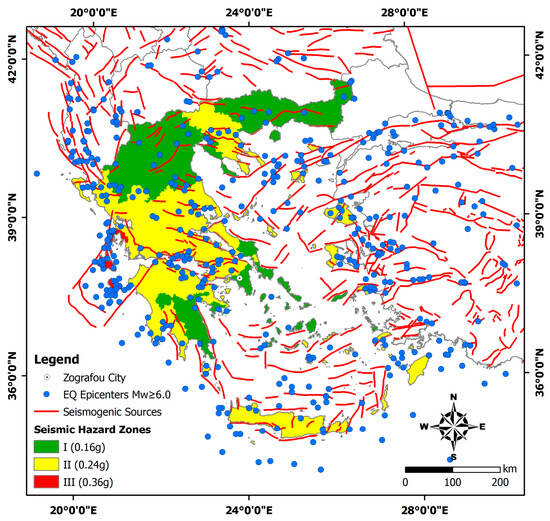
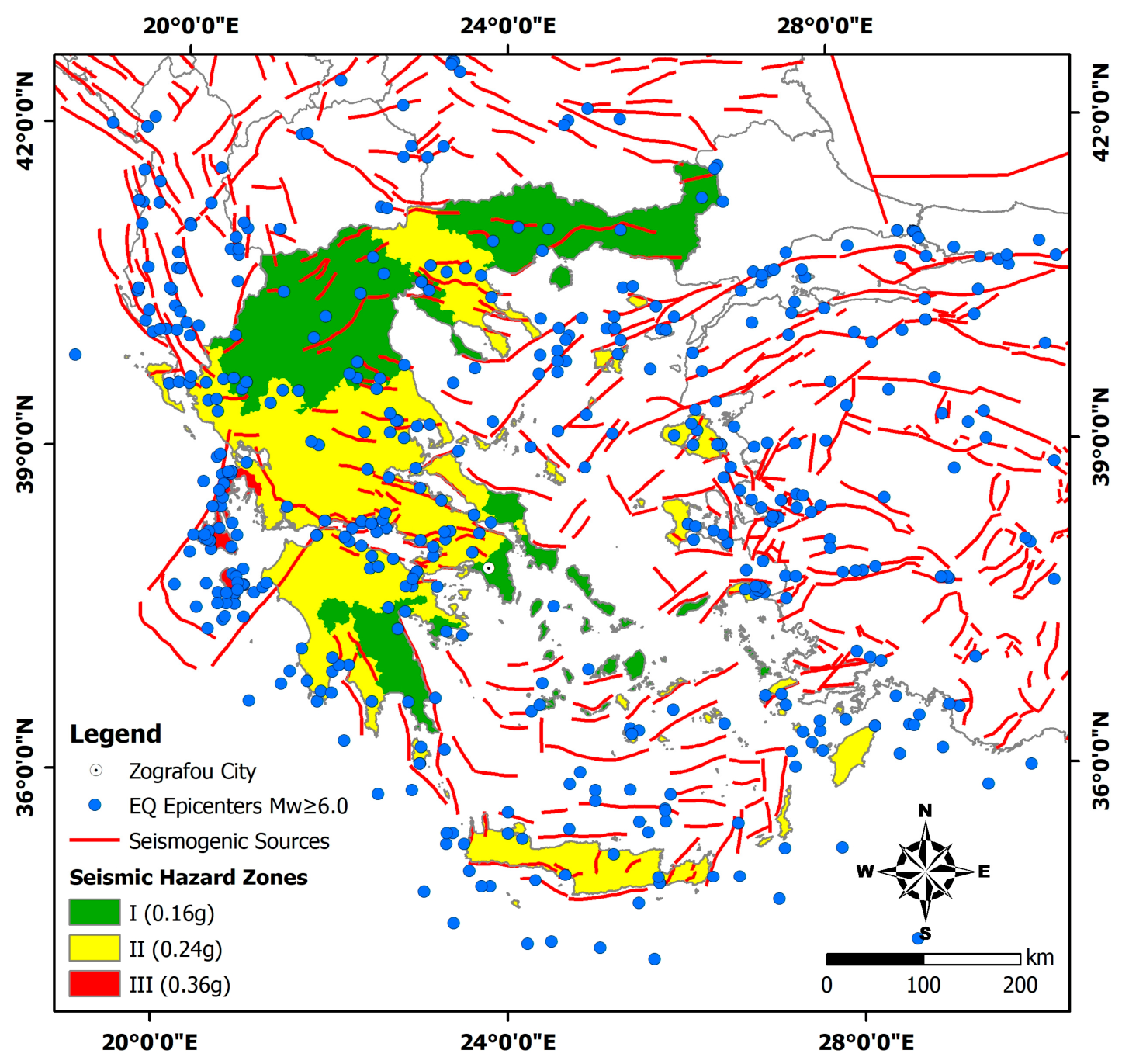
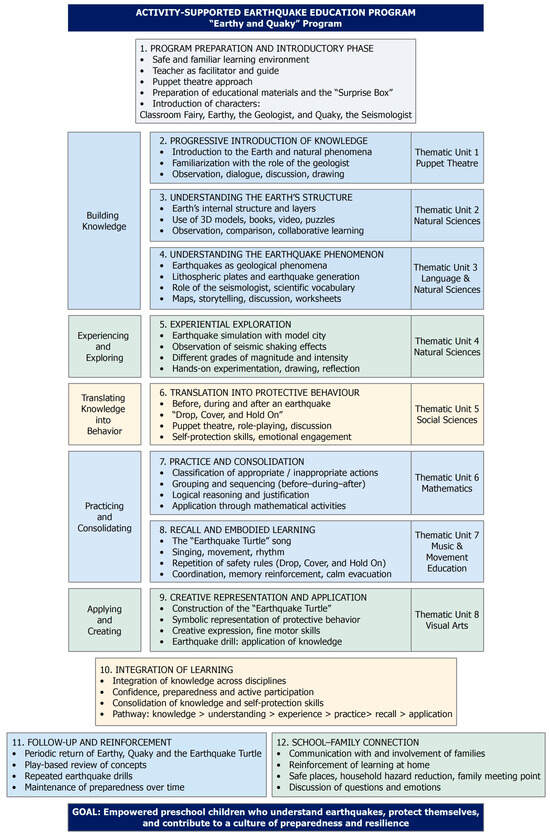
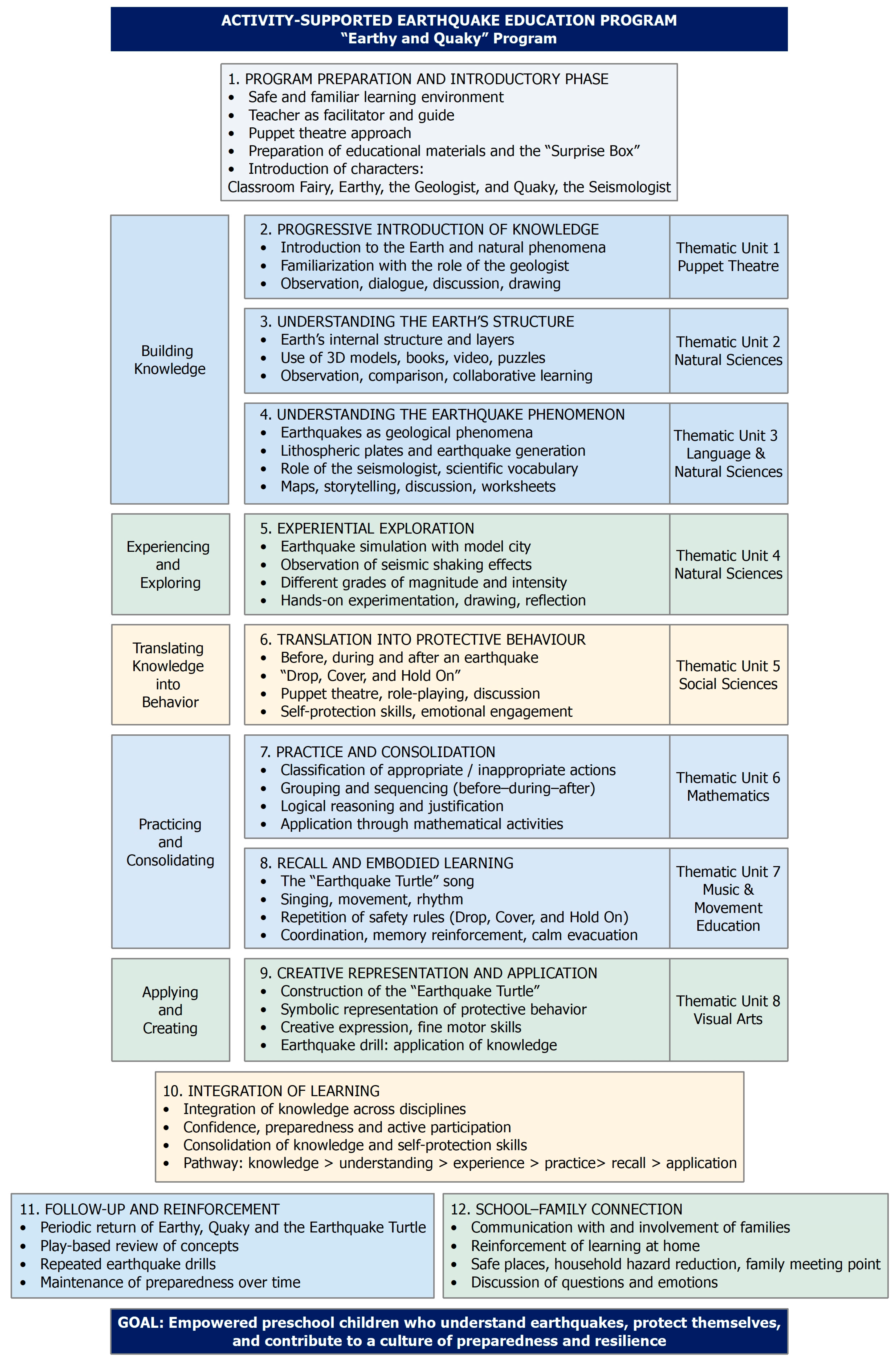
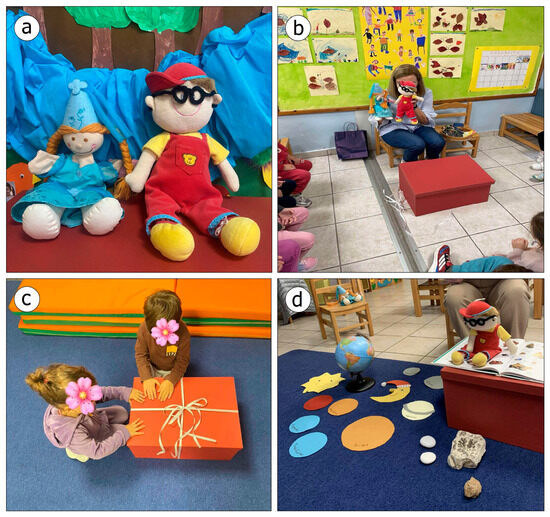
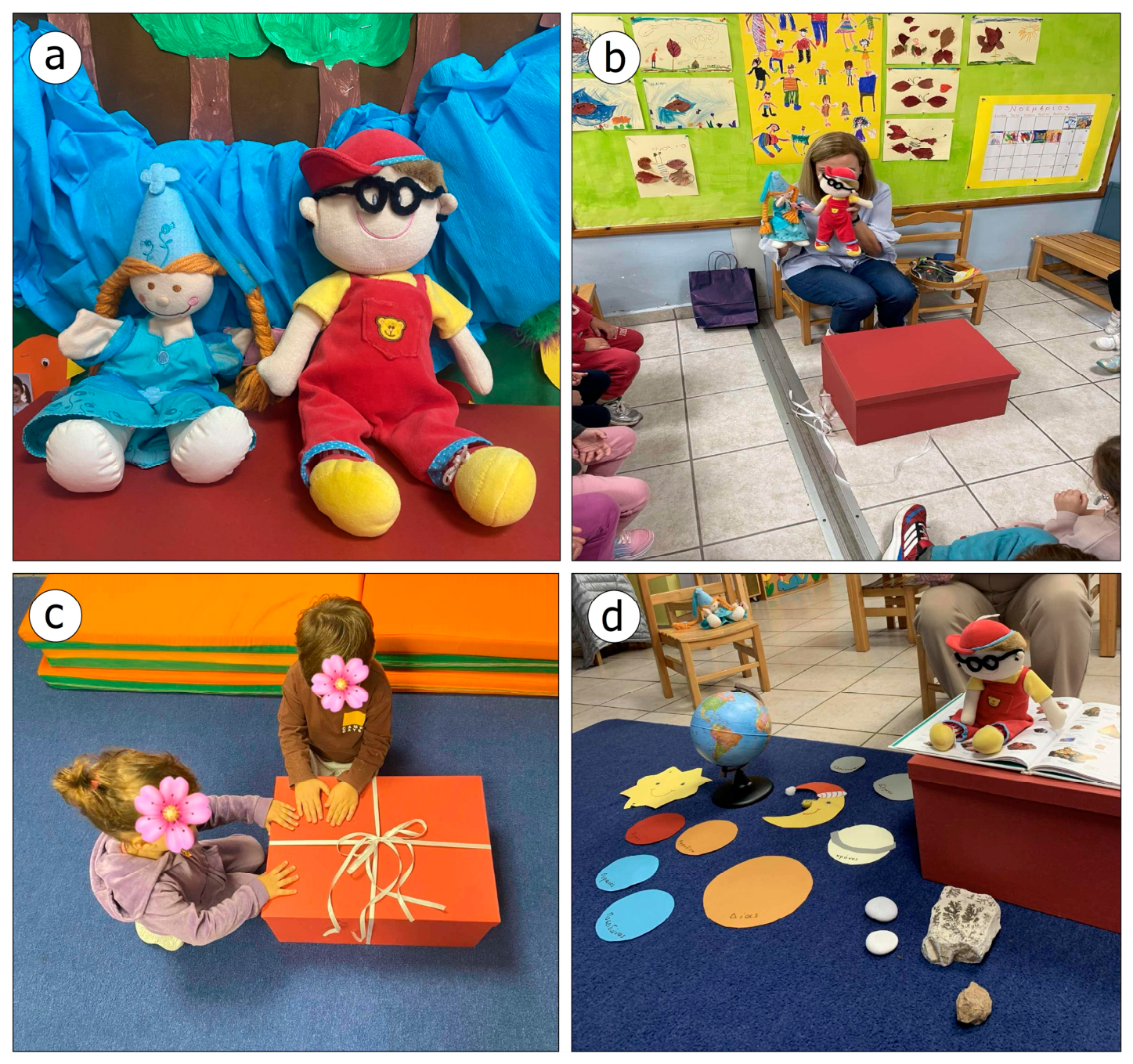
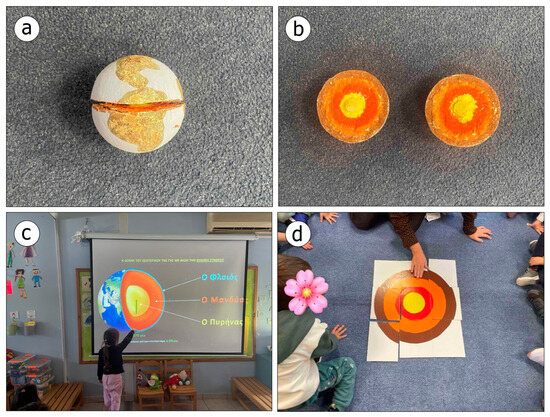
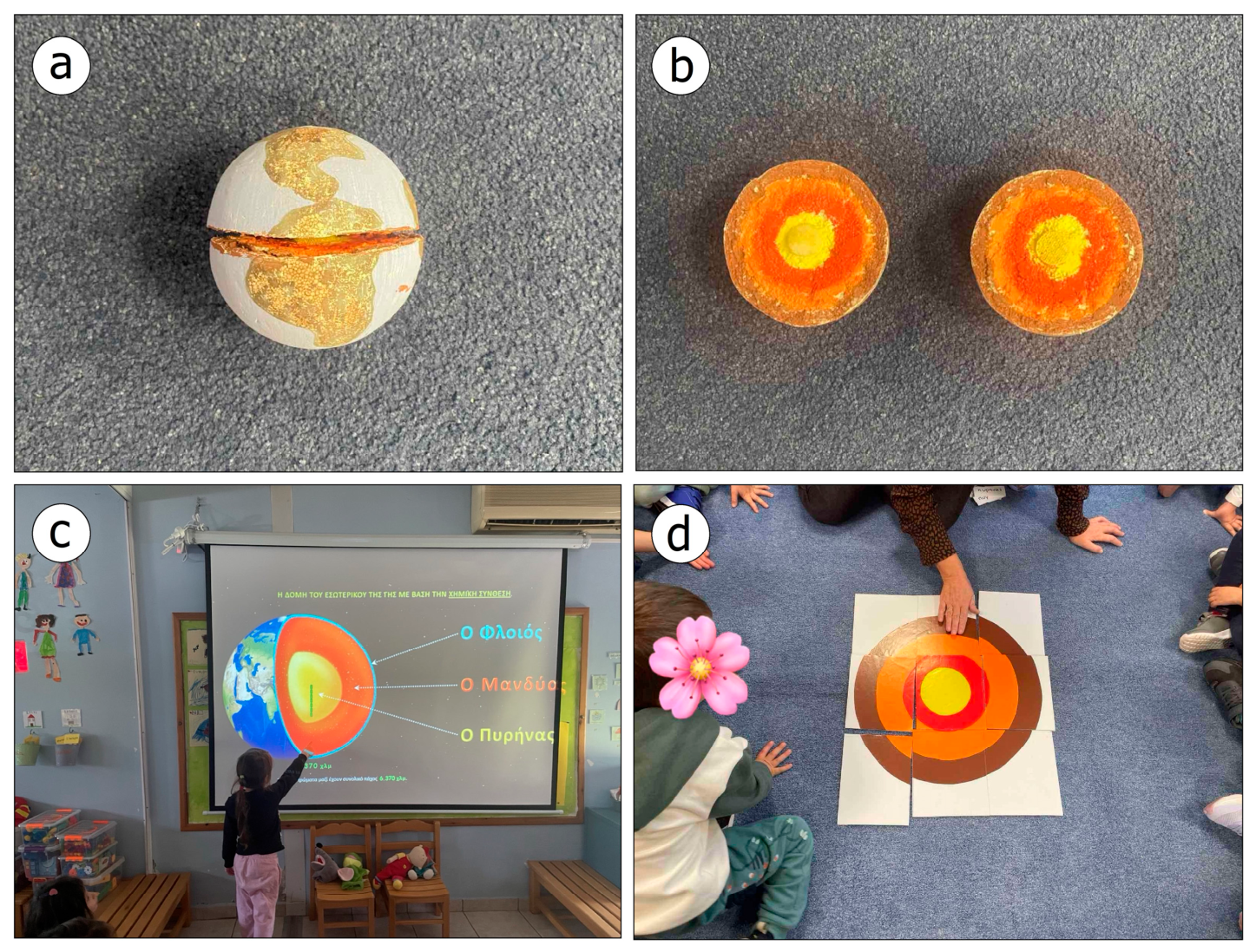
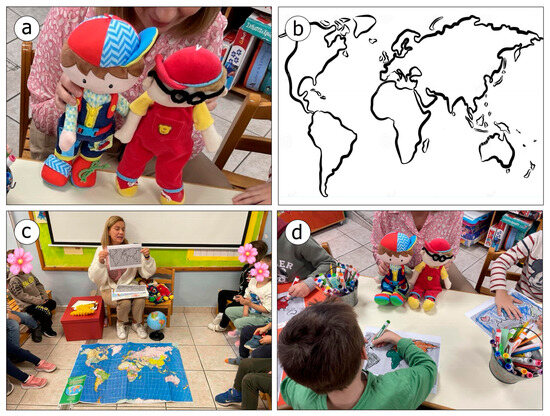
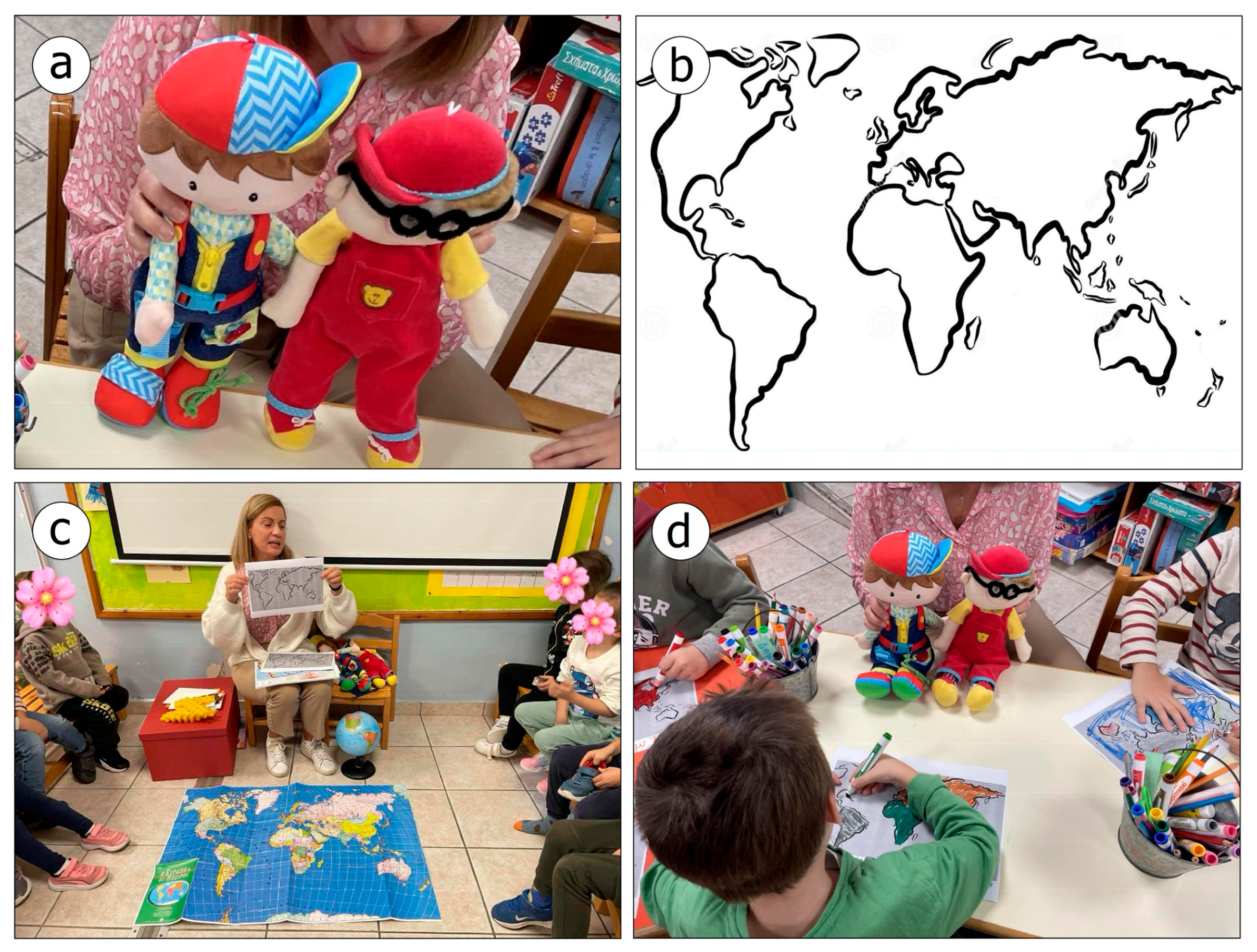
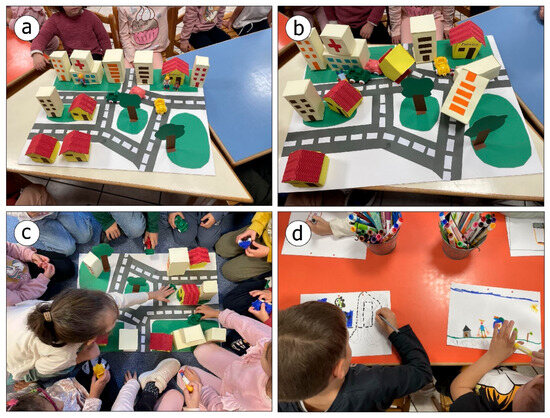
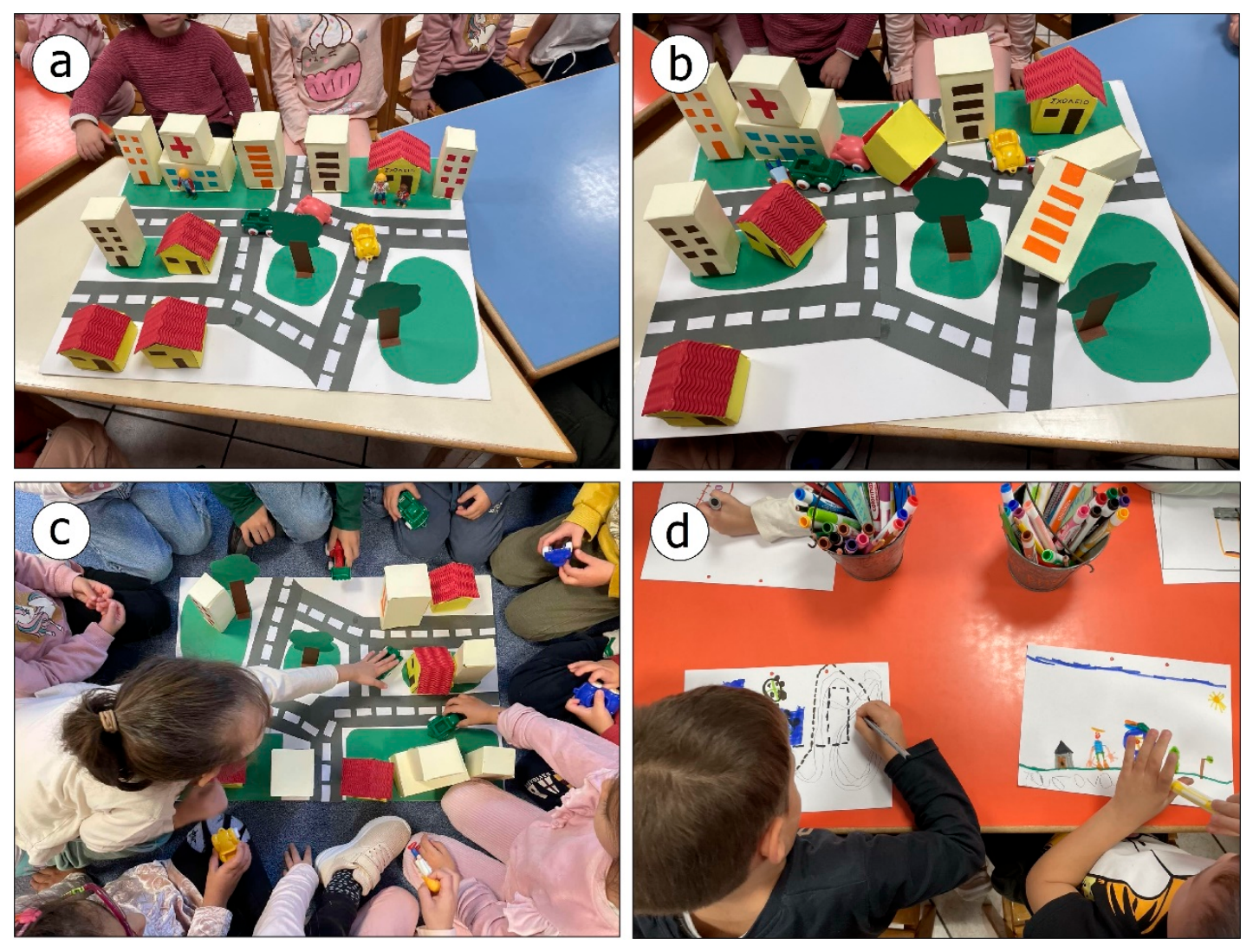
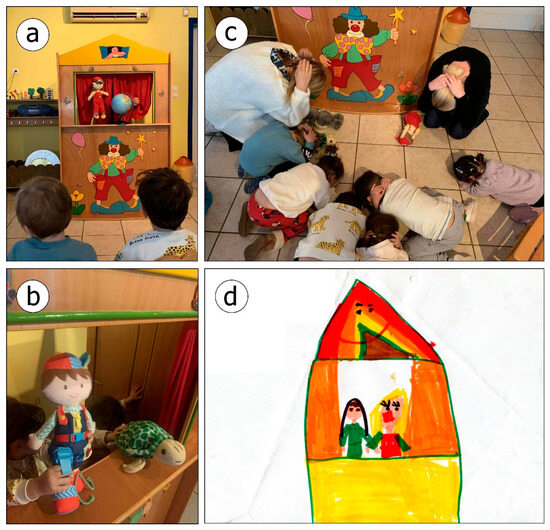
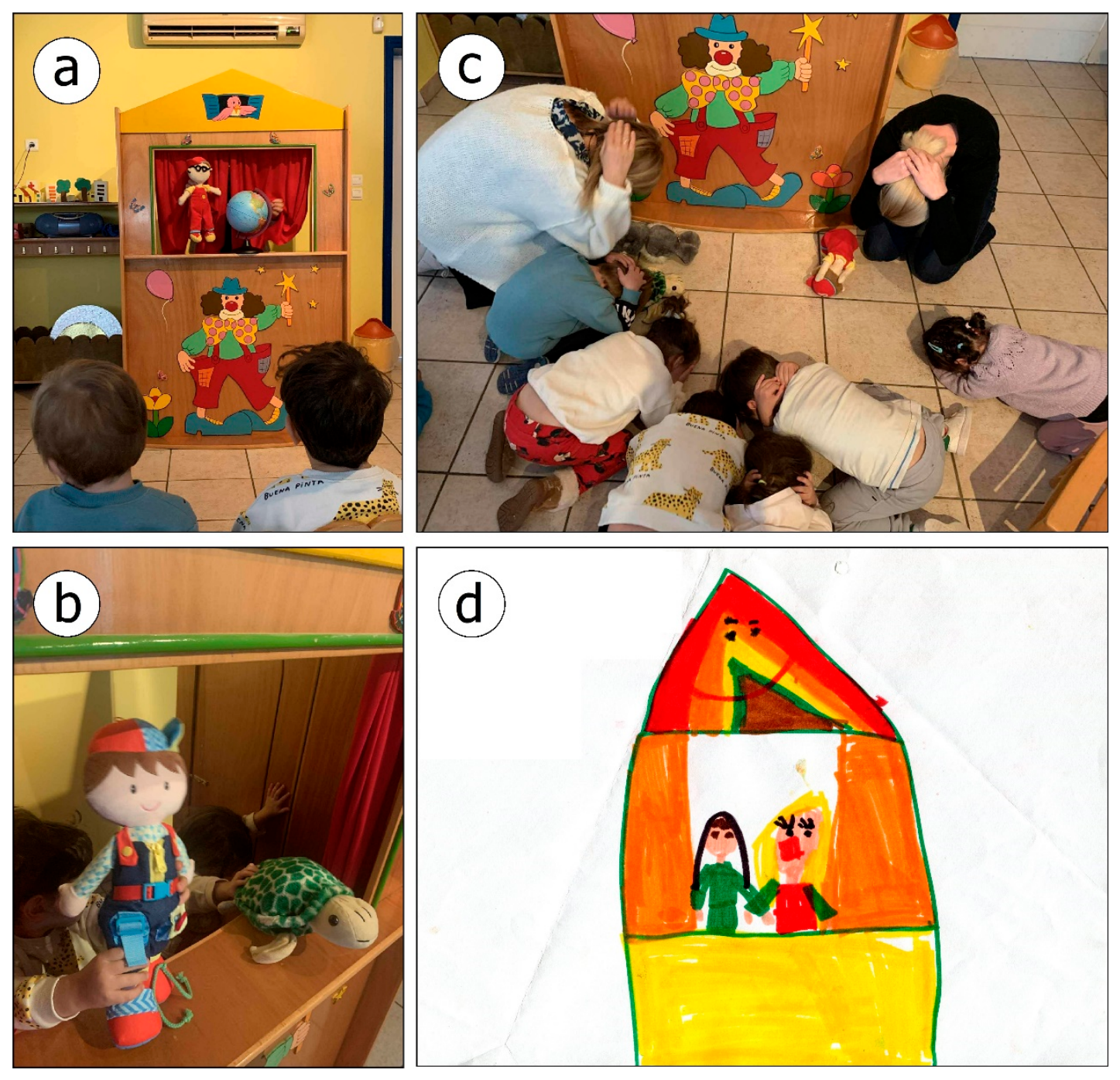
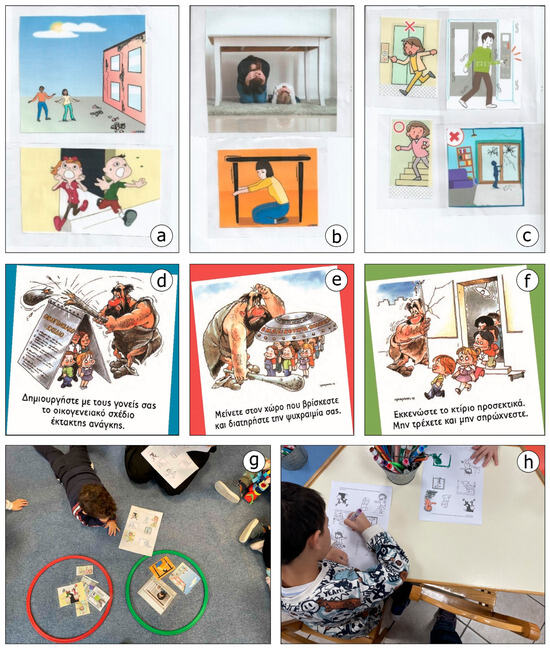
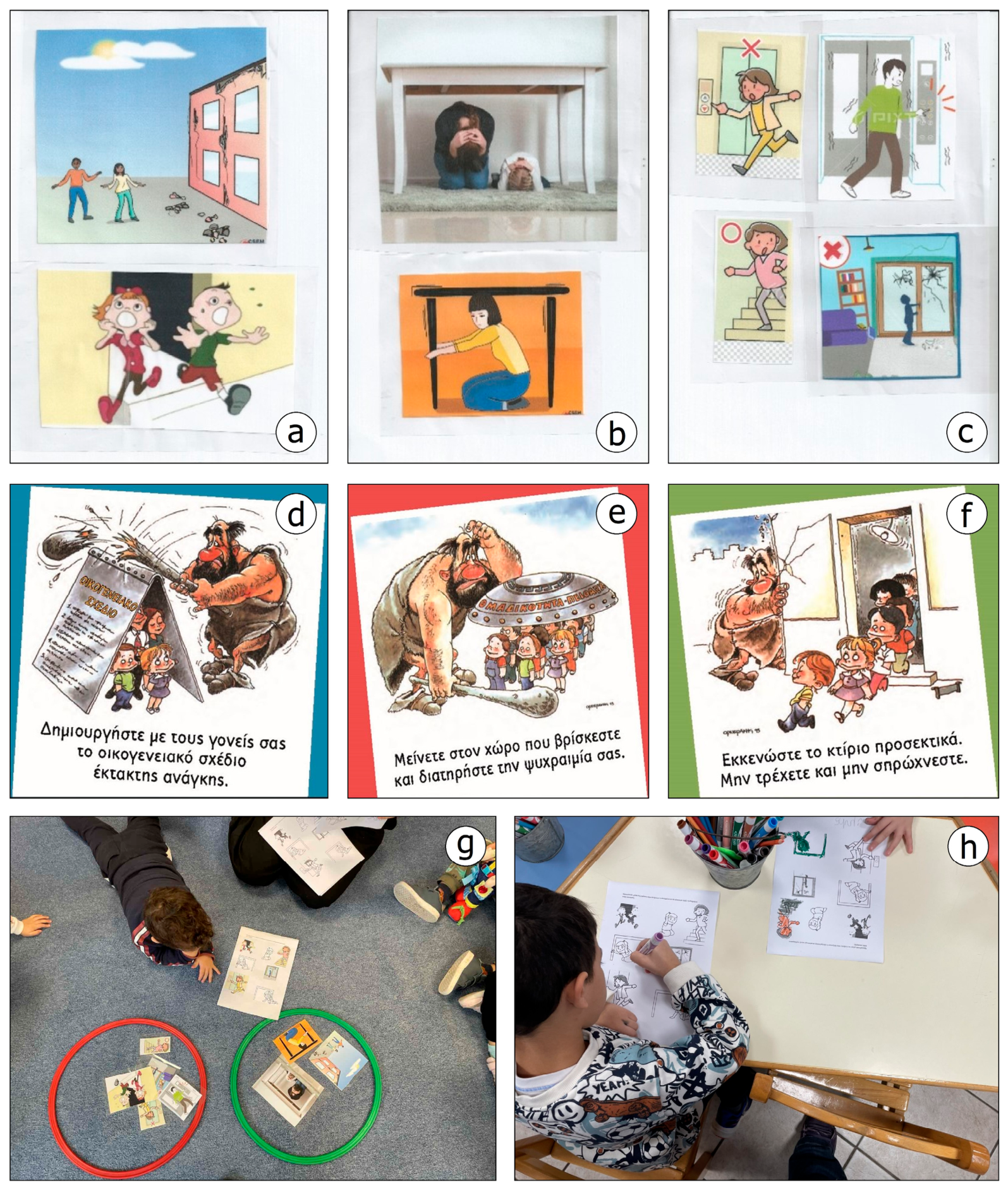
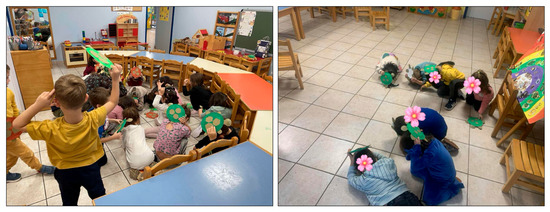
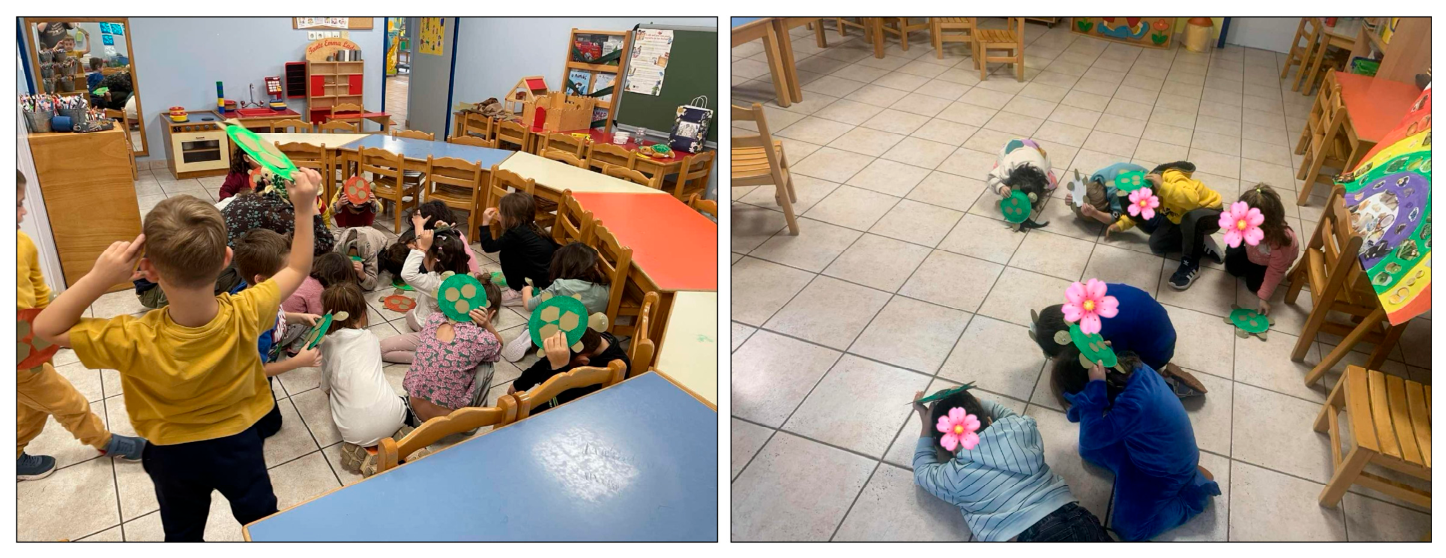
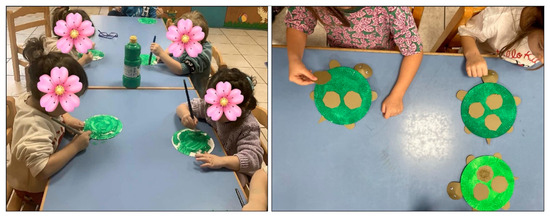
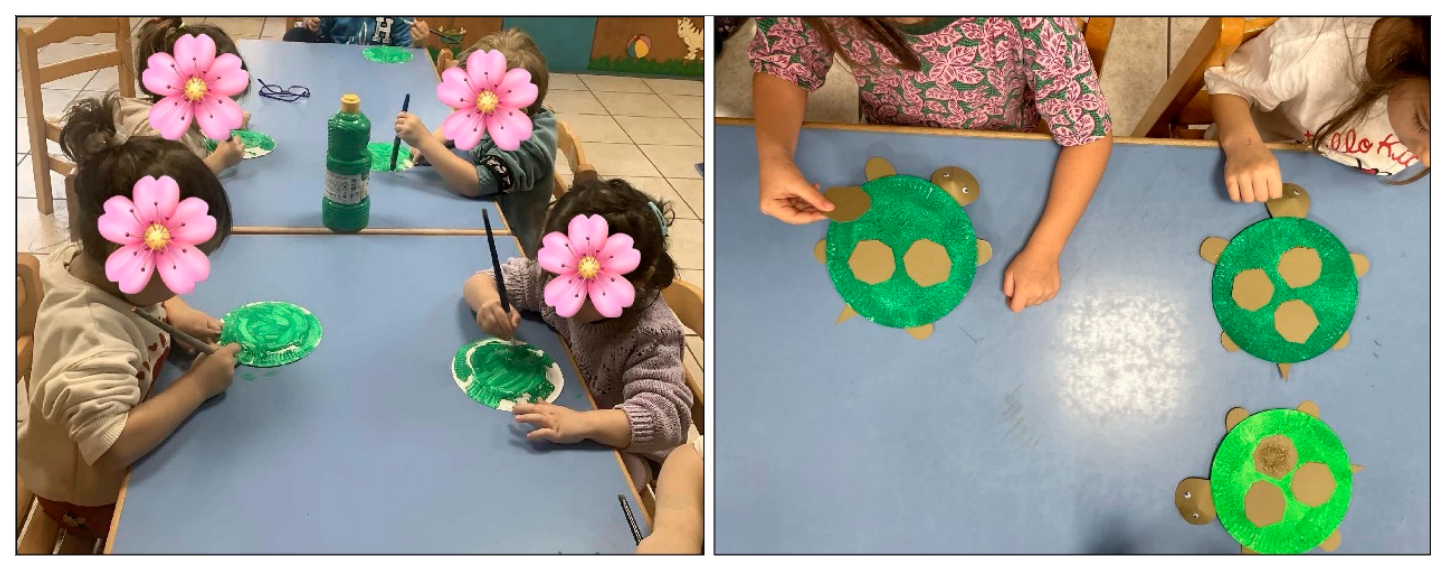
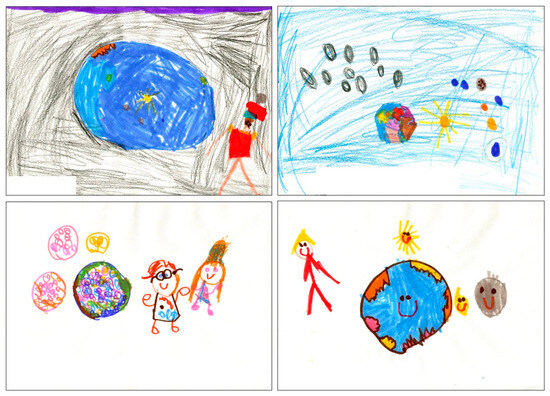
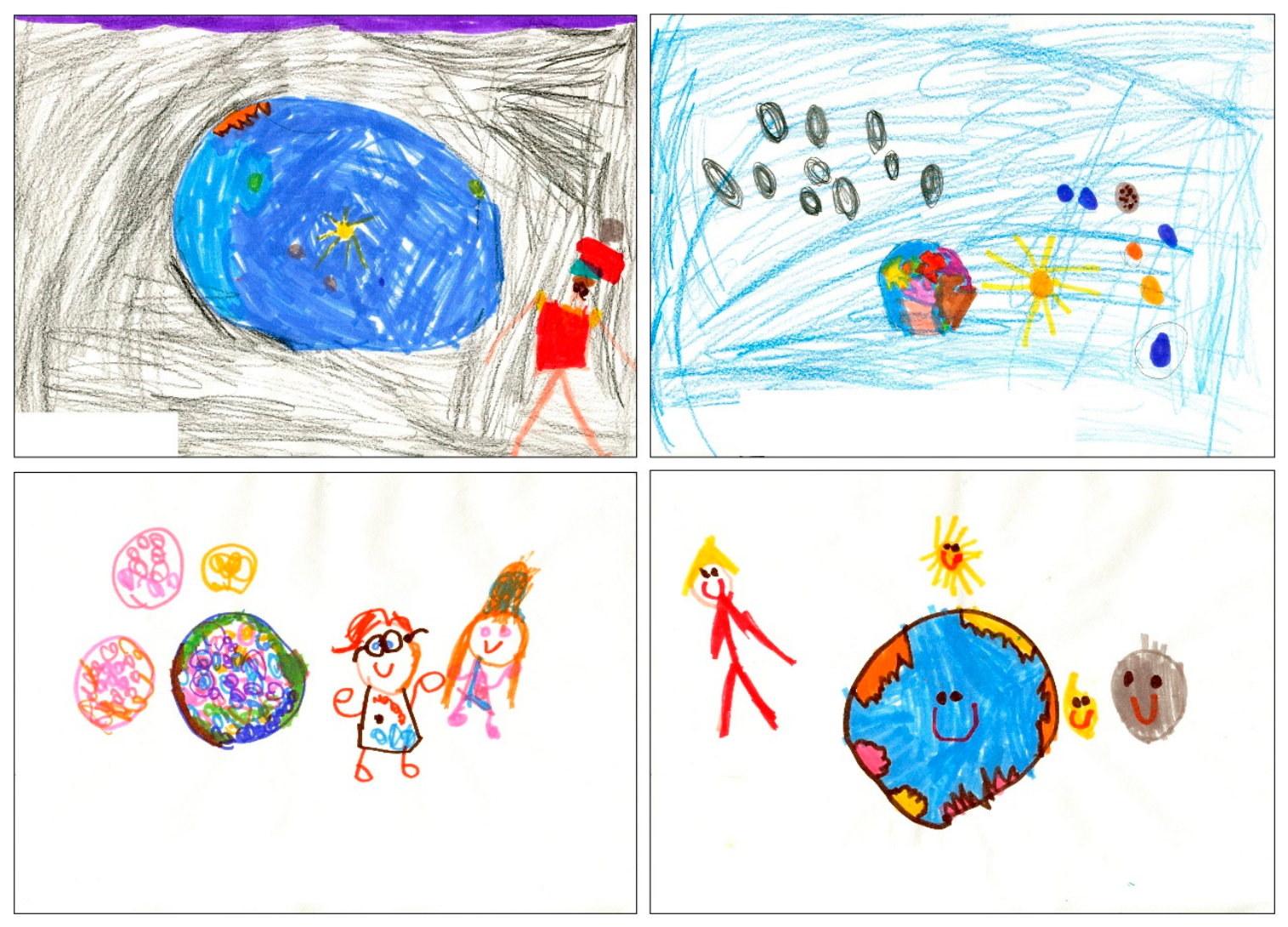
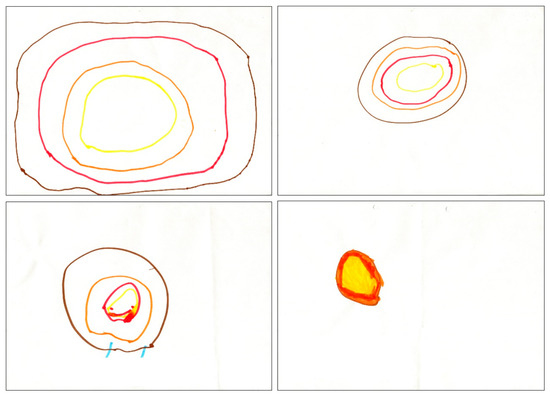
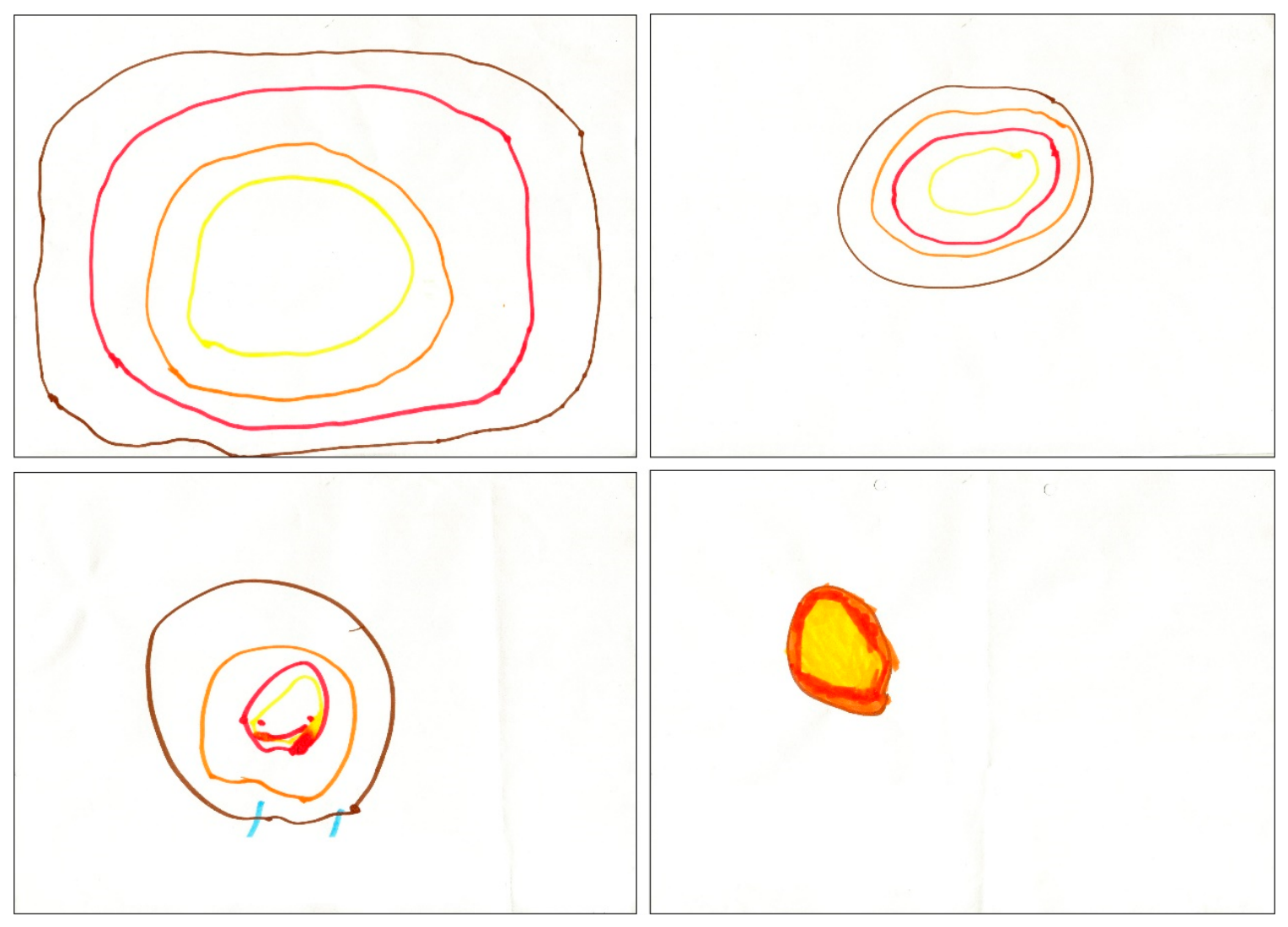
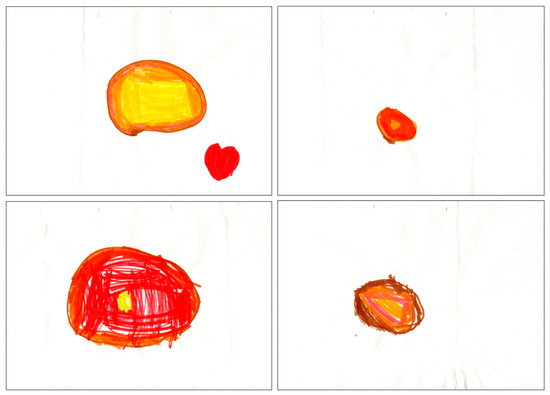
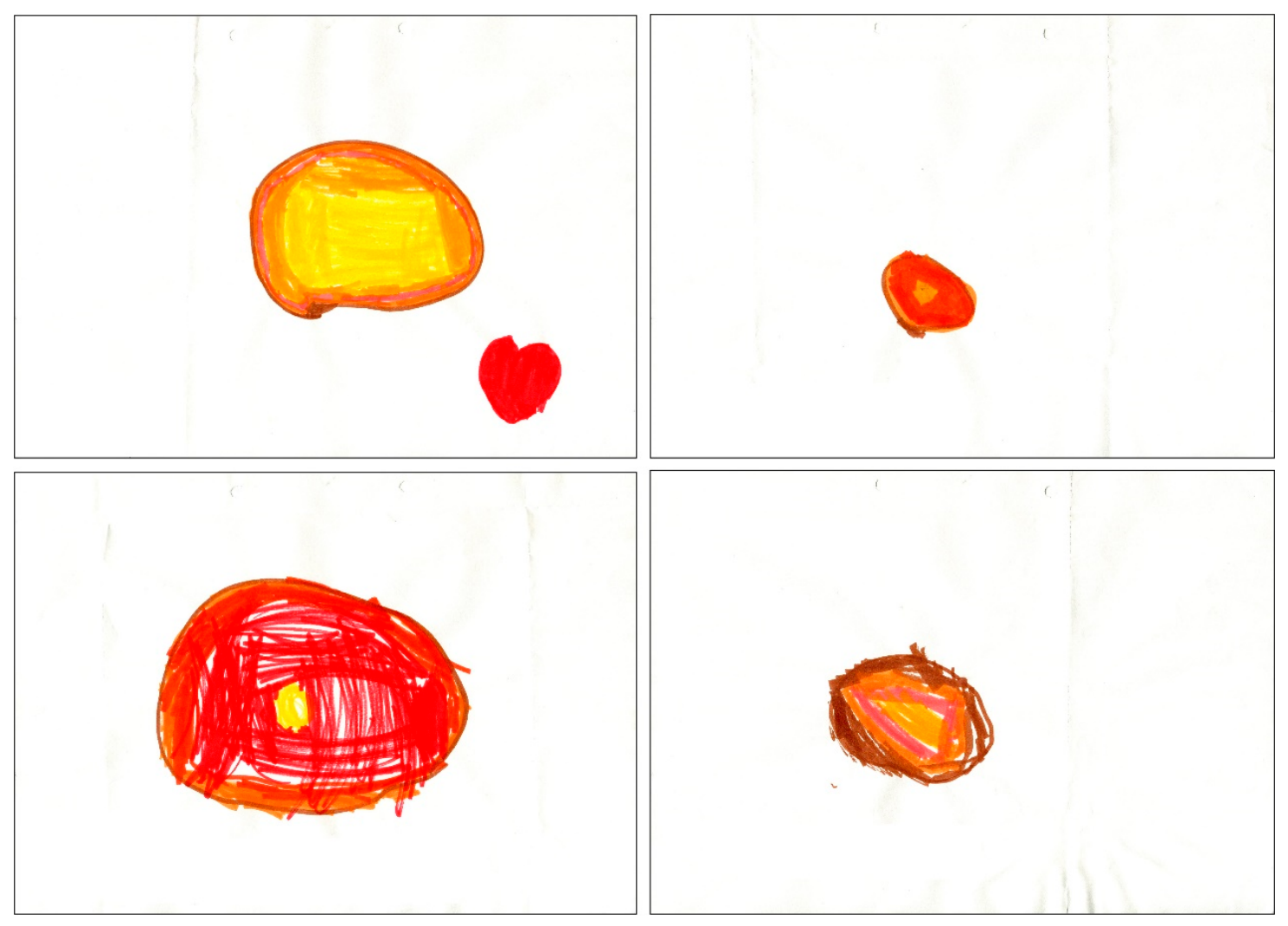
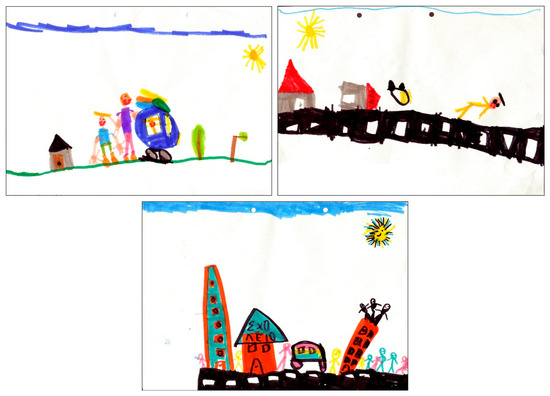
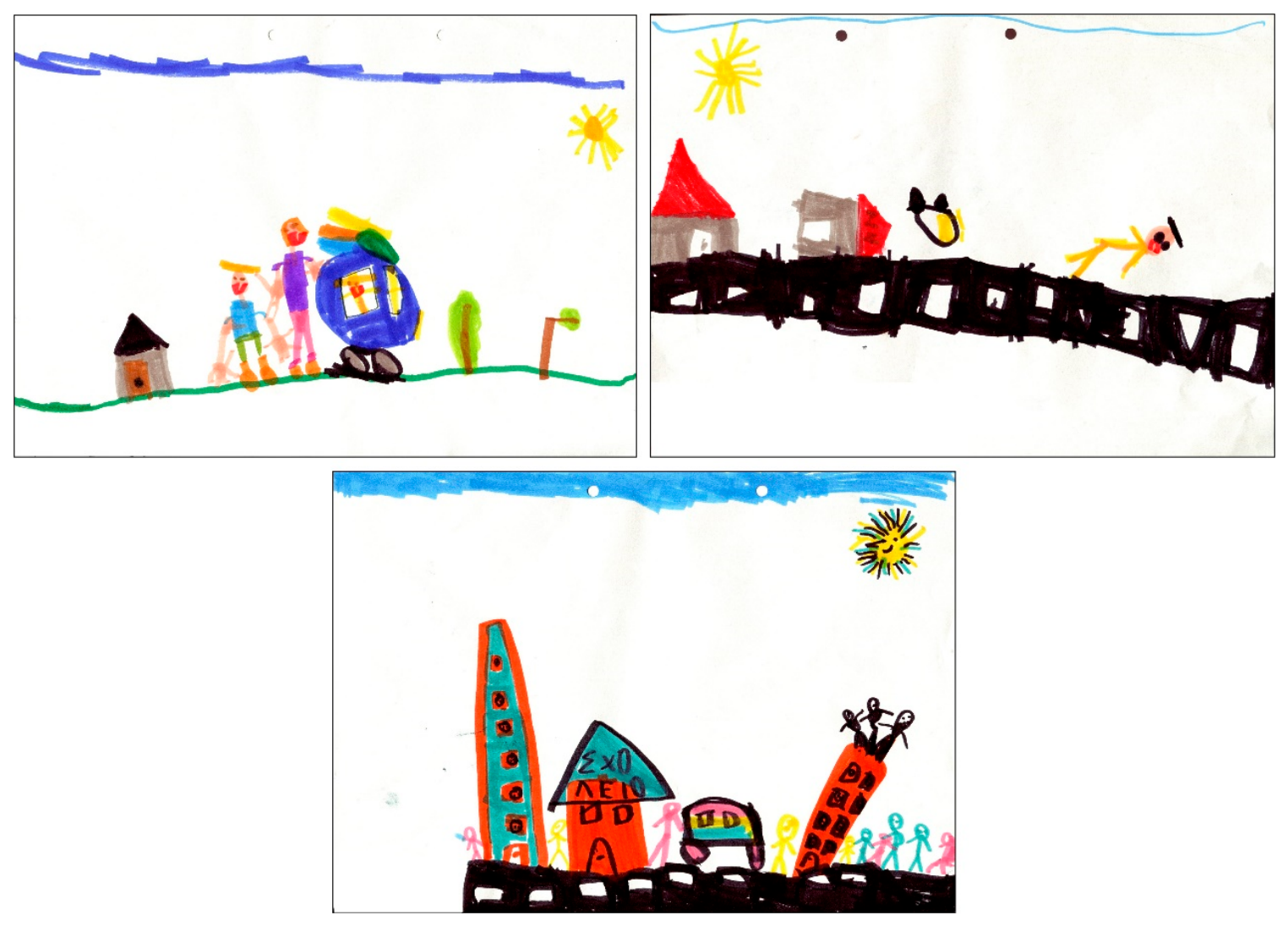
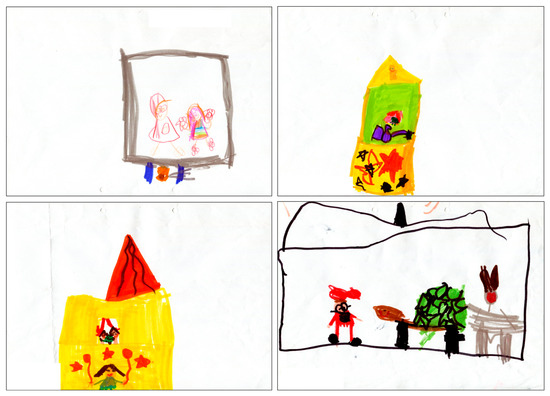
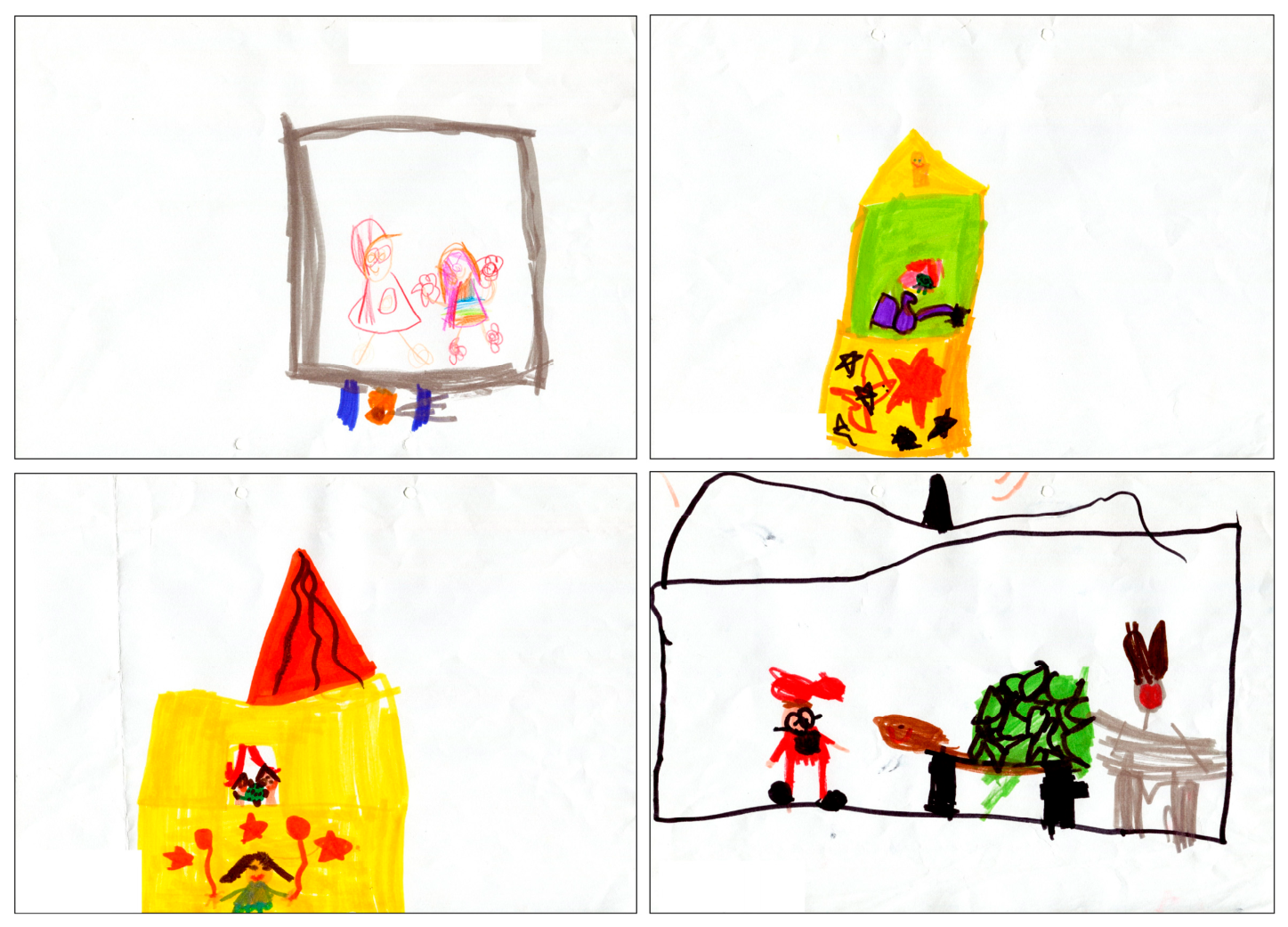

Disclaimer/Publisher’s Note: The statements, opinions and data contained in all publications are solely those of the individual author(s) and contributor(s) and not of MDPI and/or the editor(s). MDPI and/or the editor(s) disclaim responsibility for any injury to people or property resulting from any ideas, methods, instructions or products referred to in the content. |
© 2026 by the authors. Licensee MDPI, Basel, Switzerland. This article is an open access article distributed under the terms and conditions of the Creative Commons Attribution (CC BY) license.