


Abstract
Community Land Trusts (CLTs) separate land ownership from homeownership to reduce housing costs and preserve affordability over time. This paper examines the Giulio34 CLT in Turin (Italy) as a sustainability-oriented housing innovation, through an exploratory case study structured around three dimensions: access value, retention value and social value. The analysis combines local housing data, project documents, interviews and market-price estimates. Findings show that the exclusion of land value from the transaction produces proposed access prices approximately 25% below comparable full-ownership values. Resale restrictions, surface rights and purchase options are designed to preserve this advantage across future transfers, while collective financing and neighbourhood-oriented spaces extend benefits beyond individual households. By linking land-value retention, adaptive reuse and community-oriented governance, the case frames housing affordability as a component of urban social sustainability rather than as a narrow price-reduction issue. However, retention and social value remain only partly observable because the project is still in its initial implementation phase. The case suggests that CLTs can create credible institutional conditions for long-term affordability, although their effectiveness depends on governance, stewardship and the practical operation of resale mechanisms.
1. Introduction
In European and other high-income urban contexts, the contemporary difficulty of accessing secure, adequate and affordable housing through ordinary market mechanisms cannot be read only as a problem of insufficient housing supply or declining purchasing power. It also concerns the increasing mismatch between housing prices, household incomes, tenure security and the capacity of public policies to ensure durable access to housing and is a problem of how land value is produced, incorporated into housing prices, privately captured, and redistributed through urban development [1]. Accordingly, affordability, as the capacity of households to access and maintain adequate housing without compromising other essential needs, and with sufficient stability over time, is not only a dwelling-value problem, but also, and often fundamentally, a land-value problem. In particular, affordability can refer to both the initial cost of access to homeownership and the long-term preservation of below-market access conditions across future transfers. In this sense, sustainable housing affordability depends on the capacity to govern land value as a long-term collective resource, rather than allowing socially produced urban value to be absorbed entirely into private capital gains. In many urban contexts, a growing share of the final price of housing reflects the capitalisation of land scarcity, locational advantage, public investment, and speculative expectations [2]. In this perspective, the affordability crisis is linked to the increasing monetisation of collectively produced urban value [3], especially where publicly created value is captured by private developers rather than retained for lower-income residents or community benefit.
Housing is here understood not only as a physical dwelling or market commodity but also as a socio-spatial infrastructure that enables everyday life, social reproduction, access to urban opportunities, and long-term wellbeing, as the social dimensions of sustainability. Indeed, durable affordability, secure tenure and access to urban opportunities are preconditions for inclusive and resilient urban development. Reading housing as infrastructure strengthens the argument that the governance of access cannot be left entirely to speculative market dynamics, especially when land appreciation reflects public decisions, neighbourhood change, and territorial externalities rather than the effort of individual owners [4]. Public intervention in housing policy has traditionally relied on a wide range of instruments, among which social housing plays a fundamental role. In European contexts, social housing represents a key mechanism for addressing housing needs that cannot be met through the ordinary market, particularly for low-income or vulnerable households. Other public measures, such as grants, tax incentives, subsidised loans, rent regulation, temporary price controls or public–private partnerships may complement this provision. These instruments differ in the way they address affordability: some expand the supply of housing, others reduce entry costs, while others regulate prices or support demand. Accordingly, these tools may improve initial affordability, but they do not necessarily preserve that affordability when the dwelling is resold [3]. The relevant evaluative question is not only whether a policy lowers the entry threshold but also whether it retains public and social value beyond the first transaction.
It is precisely in this context that the Community Land Trust (CLT) becomes relevant, as a community-based and non-profit tenure model that may complement social housing policies by producing permanently or long-term affordable housing through collective land ownership, resale restrictions and stewardship. Indeed, CLT separates the ownership of land from the ownership or use of the buildings upon it, retaining land in trust and removing it from speculative circulation [5]. Through long-term ground leases, resale restrictions, and community-oriented governance, the CLT does not simply lower the initial cost of access to housing but seeks to preserve affordability beyond the first transaction. Its sustainability contribution therefore lies in combining social affordability, long-term land stewardship and community governance within a single tenure arrangement. In this sense, it reorders the relationship between land, price, ownership, and benefit over time, retaining publicly supported and socially produced value within a permanently affordable housing system.
This paper narrows the analytical focus from housing costs in general to the specific role of land value in shaping homeownership prices. Rather than simply reducing the cost of housing, the CLT model redefines what is transferred to the buyer by separating the collective ownership of land from the individual ownership of the dwelling. Households therefore purchase only the building and other improvements, while the underlying land remains under the social or community control of the CLT [4]. The central claim of this research is that the most innovative dimension of the CLT is not only organisational or participatory, but distributive and value-based [5]: by separating land value from the transfer of the dwelling, the model changes the price structure of access, preserves affordability across time, and redirects a portion of urban value away from speculative extraction and toward durable social use [2].
Accordingly, the paper is positioned at the intersection of urban political economy and housing policy evaluation, but its core analytical focus is narrower: the dissociation of land value from homeownership as a mechanism for producing and potentially retaining affordability. Rather than providing a comprehensive theory of CLTs as commons, the study examines how a specific tenure arrangement modifies the circulation of land value, the structure of access prices and the institutional conditions for long-term affordability. Within this framework, the research question is: How does the separation of land ownership from homeownership in Community Land Trusts create the institutional conditions for long-term housing affordability?
Although CLTs are a tested tenure model in several international contexts, their application in Italy remains recent and institutionally underdeveloped. The paper therefore does not ask whether the CLT is a universally effective housing-policy tool, but how this model is adapted in a context where social housing provision, third-sector initiatives and urban-regeneration policies already shape the governance of housing affordability. Accordingly, it investigates how the CLT model may retain affordability over time by embedding it within the tenure structure, rather than relying solely on subsidy-based approaches whose benefits may later return to market circulation and be privately captured. It examines how the separation of land from homeownership affects transfer prices, constrains the private appropriation of land-value gains, and may preserve part of this value as a long-term social asset. The Italian context, and particularly the Turin case, is used as an exploratory setting in which to examine the operation, potential and limitations of this mechanism.
2. Community Land Trust as a Land-Value Retention Device
This section is built on a Scopus search conducted in the first two weeks of April 2026 using the keywords “community land trust” AND “affordable” OR “affordability” AND “land value”. The search was aimed at identifying the main scholarly contributions on Community Land Trusts, with particular attention to their relationship with affordable housing, affordability preservation and land-value retention. Accordingly, it does not review the full theoretical debate on CLTs, commons or collaborative housing. Instead, it selectively reconstructs those elements of the CLT literature that are relevant to understanding the model as a land-value retention device: collective land ownership, the separation between land and buildings, resale restrictions and governance arrangements capable of preserving affordability over time.
The CLT model has a long history rooted in debates on land rent, collective ownership and social justice [3,5]. Its intellectual origins are usually traced back to critiques of speculative land ownership and to early experiments in community-based land stewardship. In its modern form, the model emerged in the United States during the civil rights period. New Communities Inc., founded in Georgia in 1969 is generally recognised as the first CLT and was conceived as a tool for economic emancipation, tenure security and collective control over land. The model later expanded from rural contexts to urban affordable-housing initiatives and has since been adapted in several international settings, including European experiences where CLTs are used to connect affordability, social inclusion and community-based land stewardship [6,7].
The CLT is generally described as a mechanism for the creation and preservation of affordable housing, but its theoretical significance lies primarily in the particular ownership structure it introduces [6]. The defining feature of the model is the legal separation between ownership of the land and ownership of the structures built upon it [7]. This separation represents the institutional core of the CLT and constitutes the mechanism through which the land is removed from the ordinary dynamics of the property market. In conventional ownership regimes, land and buildings are generally transferred as a single asset unit, allowing increases in land value to be incorporated into the property price and appropriated by the owner through sale. Yet, such land-value growth is not simply the product of individual ownership, and often depends on collective processes such as public investment, infrastructure improvements, urban growth and regional economic dynamics [8]. Despite this, the benefits deriving from such processes are generally captured privately through the property market, and the commodification of land as property further underpins this dynamic. The treatment of land as a tradable and appreciating asset is therefore central to the formation and distribution of ground rent [1,9]. Institutions that restrict its circulation and resale directly intervene in this mechanism [7].
When land is held in collective ownership and removed from speculative trading (Figure 1), the growth in its value can no longer be fully converted into private profit through resale. In this sense, instruments such as CLTs can be interpreted as forms of land de-commodification, as they reduce the role of land as an asset intended for the generation of rent and instead reinforce its social function as a resource for ensuring stable and long-term access to housing [5].
Figure 1.
Diagram showing the division of ownership between households and CLTs. Source: personal graphic design based on drawings courtesy of Follow The Architect Studio.
By separating housing from the land upon which it sits, the CLT reorganizes property rights: land remains with a collective entity, generally a non-profit organisation or one with a social mission, while ownership or use rights over the dwelling are transferred to residents [7]. This arrangement supports housing stability and the long-term retention of socially generated value [3].
CLTs can therefore be understood as a particular form of housing commons [2], aimed at transforming how property value is produced, distributed and governed. Rather than eliminating private ownership or market exchange, CLTs place them within collective constraints that limit speculative value capture. They may therefore be understood as a form of incremental decommodification: a partial transformation of property relations through which part of land appreciation is retained for future affordability and community benefit [3,5].
Following the distinction proposed by [10] between affirmative and transformative interventions, some scholars argue that CLTs operate predominantly in an affirmative dimension: they correct the most problematic effects of the property market, ensuring access to housing and limiting speculation, without, however, radically challenging existing economic and property institutions. At the same time, CLTs can generate transformative interventions, especially when they foster new forms of democratic participation, strengthen collective control over the territory and experiment with alternative models of property governance. In this sense, their political potential lies not only in maintaining affordability, but also in the ability to redefine who makes decisions [11] on land use and for whose benefit such decisions are taken [3].
The CLT can thus be understood as a hybrid institution situated between reform and transformation [2]: it operates within existing economic structures and often in collaboration with public bodies and non-profit organisations yet introduces practices that challenge the conception of land and housing as mere commodities [5] and opens up spaces for more democratic and collective forms of urban resource management.
Constitutive Dimensions of Community Land Trust
The CLT model is structured around three interrelated elements that together contribute to preserving housing affordability over time (Figure 2).
Figure 2.
The key components of CLT.
The first is collective property of the land, which removes it from the speculative property market by separating land ownership from homeownership through long-term ground leases. Under this structure, the CLT retains ownership of the land, while households acquire only the dwelling. This institutional separation effectively “decommodifies” [2] the land and reduces acquisition costs by removing the land value from the transaction price, thereby lowering the cost of entry into homeownership and insulating housing from land-driven price inflation. This dual ownership structure is the institutional innovation that defines CLTs, enabling housing to remain permanently affordable by stabilising land value outside the market circulation [12].
The second dimension is a governance of community participation, through which institutional management ensures that the asset remains aligned with its social mission over time. CLTs typically operate through a tripartite governance structure [3], comprising residents, community members and representatives from the public or non-profit sector, designed to balance local participation with long-term fiduciary responsibility [13]. This governance arrangement institutionalises what can be described as place stewardship, in which decision-making authority is distributed to prevent both market capture by external actors and the internal privatisation of collective assets. According to the Lincoln Institute of Land Policy, this governance model is fundamental to supporting the CLT’s mission, as it places housing within a broader institutional framework of community control and accountability, rather than treating it as a purely private asset [14]. From the perspective of urban commons, this structure makes collective ownership operational not only as a legal form but also as an ongoing process of institutionalised participation and management, requiring continuous organisational and political practice.
The third dimension concerns the Trust, a legal entity and a quasi-public body, to which the land is permanently transferred from the speculative market and chartered to hold it in stewardship [15]. This mechanism is directly linked to the regulation of resale, which includes contractual mechanisms such as resale formulas, pre-emption rights and shared equity clauses, designed to preserve affordability through subsequent transfers. These mechanisms limit speculative capital gains while allowing for limited wealth accumulation by owners, thereby balancing the creation of individual wealth with the collective goals of affordability [3]. Resale formulas, in particular, limit the property’s appreciation at the time of resale by linking price increases to predefined indices or equity ratios, ensuring that a portion of the subsidy remains embedded in the unit rather than being entirely capitalised by the individual seller [16]. As shown in practice-oriented evaluations of shared-equity housing models, these mechanisms are highly effective in maintaining affordability across successive resales, even in contexts of rising market prices [17]. This institutional framework should therefore not be understood simply as a contractual constraint, but as a core mechanism for preserving affordability embedded within the CLT model.
These three elements are not mobilised as independent theoretical strands, but as components of a single evaluative problem: whether and how the CLT tenure structure can prevent land-value gains from being fully capitalised into private resale prices. Collective land ownership defines what is removed from the market; resale restrictions define how value is controlled over time; governance defines who is entitled to manage and redistribute the retained value. The three dimensions therefore operate as an integrated and interdependent system and should not be analytically separated when the aim is to assess the CLT’s capacity to maintain housing affordability in the long term [3]. The transformative value of the model therefore cannot be assumed from its normative appeal alone, but it depends on the extent to which CLTS can alter the mechanisms of individual housing value appropriation, reshape property relations, and redirect benefits toward the wider community [5]. The theoretical contribution of this research therefore lies in translating this broad debate into a more specific evaluative investigation of how the separation of land from housing can be assessed in different terms.
3. An Evaluative Perspective on the Effects of Land–Ownership Separation
Assessing the effects of the decoupling of land ownership from property ownership requires attention not only to housing prices, but also to the institutional arrangements through which affordability is produced, preserved and collectively governed. For this reason, the proposed evaluative perspective treats sustainability primarily as the long-term capacity of a housing model to maintain access, retain value and distribute benefits across households and generations. The analysis therefore adopts an evaluative perspective organized around three interconnected dimensions: (i) access value; (ii) retention value; (iii) social value. These dimensions are not intended as standardized performance indicators, but as interpretative categories through which the effects and limitations of the CLT model can be examined. For the purpose of the empirical analysis, however, each dimension is operationalised through observable case-specific indicators. These indicators do not measure the full long-term performance of the CLT, which would require longitudinal data, but they make explicit how the three dimensions are examined in the Giulio34 case.
Access value, the first dimension, measures the immediate effect of separating land from the transfer price of the dwelling, that is, the extent to which the exclusion of land value from the sales process reduces the entry cost compared to market conditions. More specifically, access value refers to the measurable reduction in the initial cost of accessing homeownership generated by the exclusion of land value from the transaction. It is operationalised by comparing: (i) the proposed CLT access prices; (ii) estimated market values of comparable full-ownership dwellings; and (iii) the percentage difference between the two. In the Giulio34 case, the main measurable indicator is the price differential between the CLT surface-right price and comparable market prices, expressed both in €/m2 and as a percentage reduction. In the case study, this dimension is reconstructed by comparing the market values of equivalent properties, the access prices envisaged within the CLT model, and the legal and economic structure that determines this discrepancy. In particular, the analysis highlights how the price reduction does not depend on a public subsidy, but on the ownership separation between land and building and the consequent redefinition of the very object of the property transaction. In this sense, affordability is produced institutionally, through a different structure of property rights rather than through financial compensation mechanisms.
The second dimension is represented by the retention value, which measures the housing model’s capacity to preserve, over time, access conditions below market levels through successive transfers. Since Giulio34 has not yet generated resale data, this dimension is not measured as an observed outcome. It is instead operationalised through the presence, design and expected enforceability of institutional mechanisms intended to regulate future transfers: resale formula, exclusion of land appreciation from the resale price, purchase option in favour of the Foundation, restrictions on eligible buyers, prohibition or limitation of renting, and duration/renewal conditions of the surface right. The measurable evidence is therefore not an observed resale price, but the existence and content of these contractual and legal devices. Instruments such as resale formulas, anti-speculation clauses and collective purchase options effectively transform an initial benefit into a structural and lasting advantage [3]. Unlike front-end subsidies, which affect only the initial access phase, shared-equity models such as CLTs introduce institutional mechanisms (ground leases, deed restrictions, and stewardship) aimed at stabilising affordability in the long term. The effectiveness of such instruments depends, however, not only on legal frameworks and adequate financial resources for management and maintenance over time, but also on the governance structure and the degree of community control actually exercised. The ability of CLTs to preserve accessibility and counter speculative value capture is closely linked to the presence of participatory governance models, particularly tripartite structures in which residents, public actors and local stakeholders share decision-making power. Conversely, configurations in which institutional or private actors prevail tend to reduce the intensity of community participation, weakening the transformative dimension of the model. Overall, retention value cannot be attributed solely to contractual or financial instruments, but must be interpreted as a complex institutional outcome, dependent on the interaction between legal mechanisms, organisational capacities and effective forms of community participation and representation.
The third dimension, defined as social value, measures the share of collective benefit generated by the dissociation of land value from its private appropriation, that is, the portion of urban rent produced by public investment and territorial transformations that is retained within collective circuits rather than being capitalised as individual capital gains [2]. In the Giulio34 case, this dimension is operationalised through observable proxies: the amount of community and philanthropic finance converted into a collectively held asset; the reuse of an underused and deteriorated building; the provision of ground-floor spaces open to the neighbourhood; the involvement of local third-sector organisations; and the planned tripartite governance structure. These indicators capture the extent to which the project produces benefits beyond the individual household, although their long-term effects remain only partly observable at this stage. Whilst access value measures the initial reduction in entry costs and retention value ensures its persistence through anti-speculative and controlled resale mechanisms, social value assesses the system’s capacity to retain and redistribute collectively generated urban rent. In this sense, CLTs emerge as mechanisms for the progressive de-commodification of land, in which accessibility is not only produced and maintained, but also institutionally governed through a balance among the state, the market and the community. This balance is, however, inherently fraught with tension: public support is often decisive for establishing CLTs, but it also introduces forms of institutional dependence that can steer the model towards a logic of quantitative housing supply, at the expense of community control. Indeed, different governance configurations influence the degree of effective communalisation of value: when resident participation is strong, and the tripartite structure is effective, the CLT’s capacity to extract value from financialization and direct it towards collective ends is greater; conversely, structures dominated by public or private actors tend to reduce this transformative dimension, while maintaining accessibility objectives. From this perspective, social value becomes an indicator of the degree of institutionalisation of commoning within the relations between the state, the market and the community [2].
Overall, access value concerns the extent to which the exclusion of land value from the housing transaction reduces the initial cost of homeownership. Retention value concerns the mechanisms through which this affordability advantage may be preserved across successive transfers. Social value concerns the extent to which land-value appreciation and other collectively generated benefits are retained within collective or community-oriented arrangements rather than being fully appropriated as private gains. Taken together, the three dimensions distinguish between the production of affordability at the point of access, its preservation over time, and the broader distribution and governance of the value generated by the model. They guide the exploratory analysis of the Turin case presented in the following section.
This research employs an exploratory evaluative case study approach [18] to analyse the experience of the Giulio 34 Community Land Trust in Turin, Italy. The Giulio34 case was selected as an exploratory and revelatory case of CLTs in Italy, since the model is still at an early stage of development in the national context. Its relevance lies in the fact that it represents one of the first structured attempts to translate the CLT model into the Italian legal, financial and urban context. For this reason, it is particularly useful for examining how the separation between land ownership and homeownership is operationalised.
The analysis is organized into three phases:
- (i)
- Reconstruction of the local housing context, the needs addressed by the initiative, and the configuration of public, private and community actors involved in its development;
- (ii)
- Analysis of the CLT’s legal, ownership and economic arrangements, with particular attention to the separation of land from the dwelling, the composition of acquisition costs, financing mechanisms and access conditions;
- (iii)
- Examination of the mechanisms intended to preserve affordability and collectively retain value over time, including resale conditions, anti-speculative restrictions, stewardship arrangements and governance structures.
The empirical material was collected through a qualitative case-study strategy combining two semi-structured interviews with members of the project team and one with a member of the Porta Palazzo Community Foundation; informal and direct exchanges and project-document analysis with other members of the design and Foundation teams; participation in public meetings and seminars organized by the Foundation; and direct observation through fieldwork during project-related workshops (Table 1).
Table 1.
Data sources for the analysis.
Data collection was carried out between April 2024 and January 2026. It included participation in public meetings held in April, June and July 2024, and project-related exchanges and public events in September and November 2025, and a local market-value estimate conducted in January 2026.
The interview guide and informal exchanges focused on the origin and evolution of the Giulio34 project; the reasons for adopting the CLT model; the adaptation of the CLT to the Italian legal context; the ownership and surface-right structure; financing mechanisms; criteria for household access; resale restrictions; governance arrangements; design choices; and the perceived risks and replicability of the model.
Documentary sources included official CLT project presentations, internal materials made available by the Foundation and the design team, public communication materials, and municipal or statistical documents on the Aurora district.
Market-value estimates were developed through a comparative single-parameter estimation approach. First, the values used by the Foundation to define CLT access prices were reconstructed from project documents and interviews. Second, a local verification was conducted for the Aurora neighbourhood in January 2026 using direct real estate market sources, mainly Immobiliare.it. Comparable dwellings were selected by typology, commercial surface, state of renovation, presence of balconies, construction period and floor. Average values were then calculated separately for two-room, three-room and four-room flats and used as neighbourhood-level benchmarks against which the proposed CLT access prices were compared.
Fieldwork included direct observation, participation in public meetings and informative seminars, and active involvement in workshops dedicated to the recovery and reactivation of the internal spaces of the building. These sources were used to reconstruct the legal, financial, spatial and governance arrangements of the Giulio34 project. Since the project is still under implementation, some data, particularly those concerning final contractual arrangements, resale rules and household selection procedures, derive from preliminary project documents and ongoing exchanges with the promoters. They should therefore be interpreted as evidence of the designed institutional mechanism rather than as ex-post evaluation data.
The three phases jointly operationalize the evaluative perspective outlined above. The analysis of the local context and of the actors involved provides the basis for examining social value, particularly the distribution and governance of collectively generated benefits. The reconstruction of the CLT’s legal, ownership and economic arrangements primarily informs the assessment of access value, by examining how the separation of land from the dwelling affects the initial acquisition price. Finally, the analysis of resale conditions, anti-speculative restrictions and long-term stewardship addresses retention value by considering how affordability may be preserved across successive transfers. Because governance arrangements influence both the preservation and the collective allocation of value, social value is examined across all three phases rather than treated as a separate final outcome. Through this evaluative perspective, the case of the CLT in Turin is interpreted as a laboratory for institutional innovation, exploring the potential and limitations of alternative models of property management and housing affordability, as well as their possible replicability in other urban contexts.
4. The Giulio34 Community Land Trust in Turin
4.1. Analysis of Local Social and Housing Conditions
The Italian housing context is characterised by a strong symbolic and material investment in homeownership [19], accompanied by rising financial burdens and structurally weak mechanisms for ensuring accessibility [20,21]. Despite the introduction of special programmes such as the National Recovery and Resilience Plan (PNRR is the Italian acronym) [22] and the National Innovative Programme for the Quality of Living (PINQuA is the Italian acronym) [23], which have mobilised significant resources for urban regeneration and the refurbishment of public housing, the overall effectiveness of these policies remains limited, partly due to multi-level governance structures that complicate their implementation. Alongside public intervention, the use of public–private partnerships has increased to expand the housing supply, within a system characterised by a high proportion of homeownership (over 70%), often inherited, an ageing housing stock and a relatively weak rental market [20]. This situation contributes to low residential mobility and a limited supply of social rental housing. Within this national context, the case of Turin represents an emblematic example. Turin is a post-industrial metropolitan city marked by a strong homeownership culture, an ageing housing stock, a relatively weak rental market and increasing housing pressures affecting both low-income households and the so-called grey zone. Following periods of growth linked to post-war internal migration and subsequent international inflows, the city is now characterised by a progressively ageing population and a stable presence of foreign residents [24]. Alongside the population living in poverty, who access public housing schemes, the so-called ‘grey zone’ is expanding, comprising individuals who do not meet the criteria for social housing but cannot afford market prices [25].
Within this urban context, the Aurora district, where the case study is located, represents a particularly relevant study area because it is a semi-central district located between the historic centre and former industrial expansion areas, shaped by major infrastructures, deindustrialisation processes, underused spaces and ongoing regeneration dynamics. The Giulio34 case was selected because it is one of the first concrete adaptations of the CLT model in Italy and because it is located in a neighbourhood where relatively low property values coexist with severe barriers to effective housing access. Also, it constitutes a particularly relevant context for observing the limits of conventional housing access mechanisms (Figure 3). Located in the northern part of Turin, in a semi-central position between the historic city and former industrial expansion areas, Aurora has developed as a hinge territory shaped by major infrastructures, productive landscapes and subsequent processes of deindustrialization. Its urban form is marked by the legacy of industrial decline, vacant and underused spaces, ageing public housing, courtyard houses and infrastructural barriers such as Corso Giulio Cesare, the former railway system and the Dora Riparia river. In particular, Aurora is an area marked by structural tensions in urban living [26]: rising housing costs, the exclusion of the most vulnerable groups, the spread of informal housing arrangements, and growing pressure from property development processes; yet, at the same time, it is undergoing urban regeneration initiatives and public and private projects that are redefining its social and spatial structures [27].
Figure 3.
Study area: location of Aurora within Turin and of Giulio34 within the Aurora district. Source: authors’ elaboration based on Geoportale di Torino and project materials.
The fragility of the neighbourhood is not only social but also physical and morphological. According to AuroraLab [26,27], around 21% of Aurora’s building stock was in a condition of severe degradation, compared with a Turin average of around 11%. The neighbourhood also shows a very high residential density, equal to 18,580 inhabitants/km2, almost three times the city average of 6710 inhabitants/km2 [28]. Also, the presence of foreign citizens reaches one of the highest incidences in the entire Turin area [24].
Taken together, these data depict a neighbourhood marked by strong contradictions: rich in social relations, cultural resources and urban vitality, yet at the same time affected by structural fragilities and persistent inequalities.
Within this complex context, the housing emergency plays a particularly significant role, representing one of the most serious critical issues. Property prices are among the lowest in the city according to the OMI values of the Italian Revenue Agency in the second semester of 2025: for economic-type dwellings, values range between €1.300 and €1.900 per square metre. Yet housing hardship remains widespread: 29.5% of residents live in rented accommodation, and Aurora has one of the highest eviction rates in Turin. In 2024, evictions ordered by the court due to lease expiry or arrears amounted to 1.354, just under four per day [29]. Also, demand for public housing is increasing, but many of the available dwellings are obsolete or unsuitable [26,27]. This condition is analytically important for the access value dimension. Aurora is not simply a high-cost neighbourhood in absolute terms; rather, it is a context in which apparently moderate market values coexist with strong barriers to effective housing access. The problem is therefore not only the price level of housing, but the mismatch between available stock, household vulnerability, landlord selection practices, rental constraints and the limited capacity of conventional housing policies to reach the so-called ‘grey zone’.
Faced with such a limited and often inadequate public housing supply, in recent years Aurora has become one of Turin’s main laboratories for social housing. These interventions, emerging from the interaction between public bodies, third-sector organisations and banking foundations, seek to provide alternative housing solutions for vulnerable groups. Accordingly, the neighbourhood is characterised by a complex network of civic and philanthropic actors who develop intervention practices aimed at social cohesion and the management of the commons, and it is within this context that the Porta Palazzo Community Foundation was established in 2020 [30], not as an isolated initiative but as the outcome of a grassroots mobilisation process that began with specific urban conflicts and has progressively expanded to a more structural understanding of the neighbourhood’s transformations.
Within this context, Aurora has become one of the main Turin laboratories for social and housing innovation [31]. Recent interventions have emerged through the interaction between public bodies, third-sector organizations and banking foundations, seeking to provide alternative housing solutions for vulnerable groups. Following a series of meetings, discussions with local stakeholders and shared analysis of the transformations taking place in the neighbourhood [32], the third sector association identified the CLT model as a potential structural solution to the problem of housing affordability, becoming an institutional laboratory in which to observe the practical conditions under which the first Italian CLT operates. The context is relevant because the CLT is not introduced into an institutional vacuum, but into a local ecosystem already marked by civic mobilization, philanthropic action and experimentation with community-based welfare and urban regeneration.
In this sense, the access value generated by the CLT must be read against a neighbourhood condition in which affordability is not only a matter of reducing prices, but of converting existing, underused and socially strategic buildings into real access opportunities for households that remain excluded from ordinary market channels. This territorial reading links the case to sustainability by showing that durable affordability depends on the adaptive reuse of existing assets, the reduction in exclusionary housing barriers and the creation of locally embedded social infrastructure.
4.2. Analysis of the CLT’s Institutional, Legal and Economic Model
The empirical reconstruction of the Giulio34 case is based on fieldwork and documentary materials collected through direct interaction with the Porta Palazzo Community Foundation and the related design team. The Giulio34 project should be understood as the outcome of a longer local process rather than as a stand-alone real estate operation. From 2021 onwards, the Porta Palazzo Community Foundation and local civic actors promoted a collective reflection on housing, which brought together Turin-based, national and international experiences of alternative housing, including cooperative models, hybrid forms of social housing, collective ownership and participatory governance. This process gradually shifted the focus from temporary responses to housing hardship towards the need for structural tools capable of ensuring accessibility, stability and housing quality without triggering displacement. The CLT model was therefore identified as a long-term strategy for intervening on land rent and for removing housing from speculative dynamics, starting with the Giulio34 pilot project.
As mentioned, the following analysis was developed through official CLT project documents, direct exchange with architects from the “Follow The Architect” design team [33] and the examination of project materials; informal exchanges with other actors, such as the vice-director of the Foundation, involved in the process; and participation in project meetings. Also, public meetings, seminars and the conference held at the 19th International Architecture Exhibition of the Venice Biennale [34] further contributed to clarifying the project’s evolution and its urban and social context.
The actor network involved in the project is articulated on different levels. At the core is the housing group of the Porta Palazzo Community Foundation, composed of neighbourhood residents and activists already engaged in housing issues. Around this first group is a second circle of local alliances, including cooperatives, individual supporters, professionals and actors with legal, economic and social expertise, some of whom contributed to the acquisition of the building through solidarity loans or later assumed advisory and governance roles. A third level consists of national and international networks, including CLT Brussels and Italian organisations working on commons, social housing and community-based urban practices. This layered configuration is relevant because the CLT does not rely only on a formal legal device, but on a social and institutional infrastructure capable of mobilising knowledge, legitimacy, finance and long-term stewardship.
The project translates the CLT principle into the Italian legal context through a mechanism based on the separation between the ownership of the land and the long-term use/transfer rights over the building [35]. This distinction is crucial because it modifies the object of the transaction: households do not purchase the full land-plus-building property package, but access the housing units through surface rights, while the land remains held by the CLT foundation. The economic and affordability effect is consequently produced by the legal and institutional architecture of the model, rather than by a simple price reduction applied from outside.
Given that, Giulio34 represents one of the first attempts to adapt the international CLT model to the Italian legal system, a significant part of the process has concerned the identification of suitable institutional instruments. This led, in spring 2024, to the establishment of a dedicated body: the Community Land Trust—Terreno Comune ETS Foundation, which acts as trustee and fiduciary manager of the land, and now represents the legal subject responsible for the project. Among the different possible legal forms, including associations and cooperatives, the foundation was considered the most appropriate because it could guarantee both the fiduciary holding of land and the possibility of structuring a participatory governance system, two essential requirements of the CLT model. It also allows the asset to be bound to a specific social purpose, namely housing affordability, while limiting the alienability of the land except under strict conditions.
The Foundation’s acquisition of the entire property at 34 Corso Giulio Cesare (Figure 4) effectively enables the permanent separation of land ownership from housing ownership, introducing a distinction between the land and building components, which forms the operational core of the model. In this way, the land value is removed from the property transaction and managed as a collective asset.
Figure 4.
Internal view of the courtyard of the Giulio34 project building. Source: photograph taken during the carpentry workshop by Carlos Lapo Procel.
The start-up phase combined institutional formalisation with public discussion on the model’s aims and functioning. In 2024, the Foundation organised a cycle of public meetings, conceived as a space for dialogue and co-production of knowledge. In the same year, the acquisition of the building at 34 Corso Giulio Cesare marked a decisive step: it was the first property in Italy purchased through a CLT, made possible by the collective contribution of more than 80 individuals through direct solidarity loans. This transformed the initial liquidity raised within the local network into real estate assets held by the Foundation. The following phases concern the financial and operational consolidation of the project, and focus, first of all, on donations, grants and project-based funding, together with the sale of some units to partner organisations to generate new liquidity for the Foundation. These resources supported the renovation of the building, financed through a mix of grants, bank loans and social loans. The final and ongoing phase consists of the sale of the housing units to the beneficiary households, expected to take place relatively quickly. Housing units will be allocated through an open public call, accompanied by selection criteria aimed at constructing a ranking of eligible beneficiaries. The target group is defined as households in vulnerable conditions who are excluded both from the private market and from public housing provision. The project seeks to calibrate housing costs on the actual economic capacity of beneficiaries, with the aim that the overall monthly cost of housing (including the mortgage payment, surface-right fee, condominium costs and utilities) remains around one third of available monthly income. Preferential value may be given to applicants already living in the neighbourhood or to those with established relationships of trust with local associations and territorial actors. At the same time, beneficiaries are expected to show a minimum degree of commitment to the project, understood as a willingness to participate in the governance of the CLT and to recognise its collective dimension.
A crucial aspect of this process concerns governance. The current statute of the Foundation has a transitional character: the full configuration of the CLT and the activation of its tripartite governance structure will only be possible after the sale and allocation of the dwellings. In the interim, a provisional steering board has been created, alongside an open consultative body intended to involve the local community. Then, while the process of forming the resident group will occur, the ordinary steering board will be elected through the creation of an assembly. This board will follow the classic tripartite CLT structure: one third of members will represent residents living on CLT land, one third will represent members who share the values and aims of the project, and one third will represent the general interest, including public bodies, universities or local and national housing networks. This governance structure is designed to balance the different interests involved and to ensure that land remains a common good. It also means that decisions concerning resale formulas, selection procedures and the future direction of the trust will not be treated as merely technical matters, but as issues to be discussed within a collective institutional framework. In this sense, the Giulio34 project does not simply introduce a new tenure arrangement; it constructs a gradual process through which access to housing, land stewardship and collective decision-making are institutionally connected.
As partially mentioned, the project’s financial architecture combines resources from different sources. The purchase of the property was funded through solidarity loans raised within the local network, whilst the development phase involves the integration of philanthropic contributions, funding from foundations and third-sector organisations, bank debt instruments for renovation, and revenue from the future sale of the housing units under surface rights. The involvement of social and institutional partners allows the financial risk of the operation to be shared and a funding model to be built that is aligned with the project’s social mission. The result is a hybrid structure in which community capital, philanthropic support and traditional financial instruments are combined to support a long-term housing infrastructure. This financial structure is consistent with the hybrid nature of the project: the CLT does not operate as a purely market-based real estate development, nor as a conventional public housing intervention. Rather, it combines community-based capital, philanthropic resources, third-sector involvement and bank financing in order to make the acquisition and regeneration of the property possible while keeping the social mission of the project at the center. This hybrid arrangement is relevant for the access value dimension because it contributes to creating the initial conditions under which the land can be removed from the ordinary transaction and the dwellings can be offered at below-market access prices. The primary consequence of the separation between land and building concerns the cost of accessing the home. Under the CLT model, the purchaser does not acquire the entire property, but only the right to use the building. The exclusion of the land component from the transaction results in a structural reduction in the sale price, as the value of the land continues to be held collectively by the foundation. In sustainability terms, this hybrid financial architecture is relevant because it converts short-term community and philanthropic resources into a durable asset whose affordability and social use are intended to be preserved over time.
The Giulio34 project also makes this mechanism spatially visible through its functional and distributive organisation (Figure 5). The building is not conceived only as a set of private dwellings, but as a mixed structure in which private housing units coexist with spaces for collective use and neighbourhood-oriented functions. This is important for the interpretation of access value: access is not limited to the acquisition of an individual unit at a reduced price but also includes entry into a housing infrastructure that incorporates collective spaces, shared resources and forms of proximity welfare.
Figure 5.
Isometric section. Source: our adaptation of the drawing, courtesy of Studio Follow The Architect, from the CLT project for Giulio 34, Turin.
The access value data from the Giulio34 project illustrate this mechanism with particular clarity. Indeed, starting from the CLT sale prices reported during the interviews, we compare different estimates of market value using direct sources such as Immobiliare.it, Idealista and Casa.it. To set its prices, the CLT applies a surface rights value coefficient of 75%, which precisely reflects the subtraction of the land component from the property’s total value. Consequently, sale prices are approximately 25% lower than the estimated market values for comparable units in the local market of the whole city of Turin (Figure 6), as estimated by the Foundation. To check the affordability of these prices in a smaller market, a further market analysis was conducted, referring to January 2026 and selecting comparable dwellings by typology, commercial surface, state of renovation, balconies, construction period and floor. The analysis identifies average market values in Aurora of around 1.680 €/m2 for two-room flats, 1.830 €/m2 for three-room flats and 1.940 €/m2 for four-room flats (Figure 6). These values provide the local benchmark against which the CLT access prices are compared, showing that the reduction generated by the surface-rights mechanism remains significant even when tested against neighbourhood-level market data.
Figure 6.
Summary table of the values obtained through the various analyses carried out for the CLT in Turin.
The affordability generated by the model cannot therefore be interpreted as a mere concession or a temporary discount. Instead, the price reduction is built into the very structure of property rights and stems directly from the permanent exclusion of the land value from the sale.
However, the observed difference between CLT access prices and comparable market values should not be attributed mechanically to the legal separation of land and buildings alone. First, the project was made possible by a substantial initial mobilisation of community and philanthropic finance, in the acquisition phase and the initial investment. These resources did not operate as a direct price subsidy to individual buyers, but they were crucial in enabling the Foundation to acquire the property and remove the land from ordinary market circulation. Second, the low acquisition price is also linked to the condition and transformation potential of the building since a huge amount of the project costs (around 74%) is allocated to renovation works. The access value should therefore be interpreted as the outcome of an institutional mechanism enabled by favourable acquisition conditions, collective finance and substantial redevelopment costs, rather than as the isolated effect of land–building separation.
Nevertheless, the lower cost of access represents a combined effect of such favourable conditions and of the institutional ownership structure adopted by the CLT rather than the result of an external redistributive policy or an occasional subsidy. Accordingly, the access value of Giulio34 can be understood as the measurable outcome of three interrelated elements: first, the legal separation between land and building; second, the financial and institutional architecture that enables the CLT to retain the land outside the individual transaction; and third, the local housing conditions of Aurora, where moderate nominal values coexist with strong barriers to effective access. The access value is therefore not only a price differential but also the result of a territorialised institutional mechanism that converts collective land retention into an actual opportunity of access for households otherwise positioned at the margins of the market.
4.3. Exploratory Assessment of the Model’s Transformative Potential
The ability to reduce the access value at the initial sale is only a part of the Giulio34 CLT’s objective. The model’s effectiveness depends above all on the ability to maintain this affordability in subsequent transfers of the properties, as a retention value. It should be specified that, at the current stage, this retention value cannot yet be empirically verified through observed resale cycles, since the project is still in the phase of defining and selling the first housing units. Its assessment must therefore remain exploratory and prospective, based on the institutional and legal mechanisms that the project is putting in place to govern future transfers. It is therefore evaluated here as a designed institutional capacity, reconstructed through the legal architecture of the surface right, the resale formula, the purchase option and the restrictions on future transfers.
Many structural choices are going to be finalised during the sale phase of the dwellings, although the current hypothesis is that buyers will acquire only the housing unit through a surface right, while the land and common spaces will remain under the control of the Foundation. Under Italian civil law, the surface right [36] allows the owner of the land to constitute in favour of another person the right to build and maintain a construction above the land, with that person acquiring ownership of the construction; it also allows the owner to transfer the ownership of an already existing building separately from the ownership of the land. In the Giulio34 case, this legal device is used to translate the Anglo-Saxon ground lease model into the Italian legal context. The separation between land and building is therefore not only an abstract principle of the CLT but is operationalised through the surface right mechanism: in this case, the Foundation retains the land, while households acquire a surface right over the dwellings. This makes it possible to separate the use and transfer of the housing unit from the private appropriation of the land value.
To this end, the project introduces specific mechanisms to control property turnover by combining regulated resale formulas with purchase options exercisable by the CLT. These instruments limit the possibility that value increases generated over time are entirely appropriated by the individual owner, disrupting the typical dynamics of the property market in which ground rent is progressively capitalised into sale prices. According to the interviews and the collected documentation on Giulio34, after the purchase deed and the possible mortgage agreement, a specific deed establishing the surface right will be created for each buyer. This deed will formalise the relationship between the individual surface properties and the parts owned by the Foundation, as well as the related constraints. In particular, the dwellings will not be transferable on the open market, and their resale price will be regulated by a resale formula consistent with the principles of the CLT. In this sense, the CLT not only reduces the initial access price but also embeds future transfer conditions into the property structure itself. The surface right becomes the legal device through which the Foundation can maintain the separation between land and housing over time, while the resale formula governs the economic value that may be realised by the outgoing holder of the surface right. In the Giulio34 CLT, only a predefined share of the appreciation may be retained by the holder of the surface rights, while the residual value is reintegrated into the system through controlled resale mechanisms.
More specifically, the Giulio34 project is oriented towards an appraisal-based resale formula, and more precisely towards the “improvements-only” subtype, following the indications of the Community Land Trust Technical Manual [37]. According to this mechanism, the resale price is determined from the original purchase price, increased by a limited share, up to a maximum of 25% of the increase in value, in recognition of maintenance works and as compensation for inflation. The recognised increase concerns only the value attributable to the building and to the improvements made, while the value of the land, which remains under the collective ownership of the Foundation, is excluded from the calculation. This allows a significant portion of the benefit originally generated by the land’s separation to be transferred to subsequent generations of buyers. The key measure of the model’s effectiveness is therefore not only the initial reduction in price but also its ability to sustain affordable housing conditions over time for a wide range of future households.
The resale mechanism is therefore not simply a limitation on the owner’s profit, but a device for distinguishing different components of value. The outgoing household may receive a limited economic return linked to the dwelling and to recognised improvements, but cannot capitalise the increase in land value, since the land remains outside the individual transaction. In this sense, the residual value is not “lost”: it remains embedded in the CLT system and supports the future affordability of the dwellings. Two further constraints are relevant for retention value in the Turin case. First, resale will be possible only in favour of the CLT Foundation or of individuals and households included in the CLT waiting list. Second, direct use of the dwelling by the surface-right holder is required, with a prohibition on renting it out, except in specific cases authorised by the Foundation or for dwellings acquired by third-sector organisations and rented to their beneficiaries. The duration of the surface right is also still under evaluation. The Foundation is considering a duration of 30 years or more, consistent with the long-term objectives of the CLT. In this sense, the CLT model aims to renew the right over time, provided that the agreed constraints are respected. This is crucial for the interpretation of retention value, because the preservation of affordability depends not only on the initial legal separation between land and dwelling, but on the capacity to reproduce that separation across time and across successive transfers.
Finally, as mentioned, public, philanthropic and community funds used for the acquisition and regeneration of the property remain embedded in the asset and continue to produce effects even after the initial allocation of housing. In this way, the benefit generated by the initial investment is not exhausted by the first transfer but is maintained and redistributed over time through access for new families on economically sustainable terms. This process begins with the acquisition and reuse of an existing building in a condition of degradation [38]. The reuse of an underused and transformable property becomes a way to increase the supply of affordable housing while generating social value in a marginal urban context [39,40]. This connects the retention of value to the sustainability of urban regeneration: the intervention reuses an existing building and seeks to prevent the value generated by its transformation from being immediately reabsorbed into speculative circulation.
The acquisition was supported by a collective social loan campaign involving 82 individuals and five local organizations active in housing, mutualism and the solidarity economy, which raised approximately €500,000. The total initial investment amounted to €516,450, including €445,000 for the property purchase and €71,450 in ancillary, technical and legal costs. Following the deed signed on 1 July 2024, these dispersed financial resources were converted into a durable real estate asset held by the Foundation and governed for long-term community benefit.
The project also produces social value through the inclusion of spaces open to the neighbourhood (Figure 4). Two of the three ground-floor premises facing the main street, originally conceived as commercial units, are therefore reconverted into spaces open to the neighbourhood, conceived as proximity facilities and shared reference points not exclusively for CLT residents but for the wider local community. These spaces are intended to function as nodes in a wider territorial network, capable of connecting the housing dimension, public space and community. This is reinforced by the participation of the Foundation in the municipal “ImpatTO” call [41], together with a network of ten third-sector organisations active in Aurora. The proposal was selected in March 2025 and received a contribution of 28,000 euros for the activation of community spaces. In this sense, the Turin case not only retains value within the housing units but also converts part of the project into local social infrastructure.
5. Discussion and Conclusions
This study examined to what extent the separation of land ownership from homeownership can preserve housing affordability over time, framing this question as a contribution to sustainable housing and urban regeneration. The Giulio34 case indicates that the main contribution of the CLT model lies not in offering a temporary discount, but in reorganizing the property relationship through which housing value is formed and transferred. By retaining the land within the Foundation and transferring only rights over the dwellings, the project excludes the land component from the individual transaction. At the point of first access, this produces an observable price reduction: the proposed sale prices are approximately 25% below the estimated value of comparable full-ownership properties. The case therefore provides initial evidence for the access-value dimension, showing how affordability can be produced through the legal and institutional structure of tenure rather than exclusively through a subsidy applied to a market price.
The findings also support the literature that interprets CLTs as mechanisms for retaining, rather than merely distributing, housing benefits [3,42]. In Giulio34, the prospective resale formula, the exclusion of land appreciation from the resale calculation, the Foundation’s purchase option and the restrictions on future buyers are intended to prevent the initial affordability advantage from being fully appropriated by the first household. In this respect, the dissociation of land and dwelling redistributes the bundle of property rights without eliminating individual ownership or exchange, consistent with interpretations of CLTs as forms of selective or incremental decommodification [5,7]. The model does not remove housing entirely from the market; rather, it limits which components of value may circulate and be privately captured, while retaining part of the collectively produced value within the housing system.
At the same time, the case requires a cautious assessment. Access value can already be estimated from the project’s legal structure and proposed prices, whereas retention value has not yet been demonstrated through observed resale cycles. It remains a designed institutional capacity whose effectiveness will depend on the final contractual arrangements, the duration and renewal of surface rights, the practical application of the resale formula and the Foundation’s capacity to exercise long-term stewardship. Social value is likewise only partly observable at this stage. The collective mobilization of local finance, the conversion of those resources into an asset held by the Foundation and the provision of neighbourhood-oriented spaces already extend the project’s benefits beyond individual purchasers. However, the extent to which these benefits will be democratically governed depends on the completion of the tripartite structure, effective resident participation and the preservation of the Foundation’s social mission after allocation and occupation.
Also, a balanced assessment of the Giulio34 case study requires acknowledging potential financial, legal and governance risks. First, the financial sustainability of the project is not yet fully secured. The economic model remains under definition, and current estimates should be understood as preliminary projections. On the revenue side, the model relies on a combination of surface-right fees and sales, grants, donations, project-based funding and additional expected resources. This creates a risk of exposure to funding delays, cost overruns and insufficient grant mobilisation. Moreover, long-term sustainability requires a double equilibrium: the Foundation must be able to repay, if not solidarity loans, at least bank debt, while households must be able to afford the combined cost of mortgage payments, fees, condominium charges and heating without exceeding the affordability threshold of approximately one third of monthly income.
Second, the legal architecture of the model remains partly untested in the Italian context. Although the surface right is a recognised legal instrument, its use as a CLT-equivalent ground lease requires a careful contractual design. In Giulio34, the deeds establishing the surface rights, the resale restrictions, the purchase option, the duration and renewal conditions of the right, and the legal nature of the recurring fee still represent decisive implementation issues. The effectiveness of the model will therefore depend on whether these instruments can be formalised in a legally robust way, bankable for households and enforceable across future transfers.
Third, the governance model is still in transition. The full tripartite structure will only become operational after the sale and allocation of the dwellings, when the resident group is formed and the ordinary steering board is elected. Until then, the project relies mainly on the Foundation and on provisional participatory arrangements. This creates a risk that community control, one of the defining features of the CLT model, remains weaker than expected or becomes dependent on the organisational capacity of a limited number of promoters. The long-term social value of the project will therefore depend not only on the legal separation of land and housing, but also on the ability to stabilise resident participation, stewardship practices and transparent decision-making over time.
These risks qualify the interpretation of the Giulio34 case not as an already consolidated model, but as an experimental institutional arrangement whose sustainability depends on the interaction between legal enforceability, financial resilience, resident affordability and long-term governance capacity.
These limitations are not external to the findings but clarify how the Giulio34 experience should be positioned within the wider CLT literature. Rather than representing a fully consolidated housing commons or proof of an accomplished decommodification process, it is a situated institutional experiment that is still translating the CLT principles into the Italian legal, financial and cultural context. This confirms the hybrid character identified in previous research: CLTs generally emerge through negotiated combinations of community initiative, philanthropic resources, professional expertise and public support, rather than through an autonomous community structure or a single policy instrument [2,13]. Their transformative potential consequently depends not only on separating land from housing but also on the institutional capacity to hold together access to land, patient finance, resale regulation, stewardship and meaningful community control over time.
For housing-policy evaluation, the case suggests that affordability should not be assessed solely through the initial difference between market and access prices. A sustainability-oriented assessment must also consider whether affordability can be maintained after the first transfer and whether the value generated by public, philanthropic and community investment remains available for future residents and neighbourhood benefit. The three dimensions used in this study distinguish between the production of affordability at the first transfer, its institutional retention across subsequent transfers and the collective governance of the value preserved by the model. This perspective is particularly relevant to subsidy-based policies whose benefits may be absorbed into later market appreciation. The CLT does not make public or philanthropic support unnecessary: the Giulio34 project itself relies on a hybrid financial architecture and on enabling institutional conditions. Its distinctive contribution is instead to provide a structure through which these resources may remain embedded in the asset and continue to support future residents, rather than being exhausted in the first allocation.
Overall, the Turin case suggests that separating land ownership from homeownership can create credible conditions for long-term affordability, but it cannot yet establish the effectiveness of the mechanism in definitive terms. Giulio34 demonstrates the legal and financial feasibility of lowering entry costs through collective land retention and sets out instruments designed to preserve this advantage and redirect part of urban value towards community benefit. Whether this potential becomes a durable outcome will require longitudinal observation of allocation, governance, management and resale practices. The CLT should therefore be understood not as an automatically replicable solution, but as a context-dependent institutional device through which land can be progressively shifted from speculative circulation towards long-term affordability and social stewardship. In this perspective, the sustainability of the CLT model is not limited to the environmental reuse of an existing building but concerns the long-term institutional capacity to keep housing accessible, prevent speculative value extraction and govern land as a shared urban resource.
Author Contributions
Conceptualization, A.P., E.T. and I.M.L.; methodology, A.P., E.T. and I.M.L.; validation, E.T. and I.M.L.; formal analysis, A.P.; data curation, A.P.; writing—original draft preparation, A.P.; writing—review and editing, E.T. and I.M.L.; visualization, A.P.; supervision, E.T. and I.M.L. All authors have read and agreed to the published version of the manuscript.
Funding
This research received no external funding.
Institutional Review Board Statement
This study is waived for ethical review as the research activity was conducted following the principles of informed and voluntaryparticipation, confidentiality, proportionality, data minimisation, and responsible use of the information collected. Therefore, in accordance with current legislation and the applicable regulations of the Politecnico diTorino and given the nature and scope of the activity described above, it is considered that the research meets the conditions for exemption from formal ethical review by Institution Committee.
Informed Consent Statement
Informed consent for participation was obtained from all subjects involved in the study.
Data Availability Statement
The raw data supporting the conclusions of this article will be made available by the authors on request.
Acknowledgments
The authors would like to thank Karl Kraehmer and Andrea Couvert (Fondazione Community Land Trust ETS), Santiago Gomes (Fondazione Community Land Trust ETS and Department of Architecture and Design, Politecnico di Torino), and Sandra Giannini and Paolo Maccario (Follow The Architect) for their valuable support to the research and for their willingness to share data, information, and insights into the ongoing process and project during the interviews and meetings. During the preparation of this manuscript, the authors used DeepL Translate (web-based version, https://www.deepl.com/zh, accessed on 6 May 2026) to check the translation of the manuscript and ChatGPT 5.0 in order to improve grammar, spelling and readability. After using these services, the authors have reviewed and edited the output and take full responsibility for the content of this publication.
Conflicts of Interest
The authors declare no conflicts of interest.
References
- Aalbers, M.A.; Christophers, B. Centring Housing in Political Economy. Hous. Theory Soc. 2014, 31, 373–394. [Google Scholar] [CrossRef] [Scilit]
- Katsigianni, X.; Oubaidah, R.; Van den Broeck, P.; Paidakaki, A.; Faka, A. State-led commons? Rethinking housing affordability through community land trusts. Land 2025, 14, 1739. [Google Scholar] [CrossRef] [Scilit]
- Lowe, J.S.; Prochaska, N.; Keating, W.D. Bringing permanent affordable housing and community control to scale: The potential of community land trust and land bank collaboration. Cities 2022, 126, 103718. [Google Scholar] [CrossRef] [Scilit]
- O’Sullivan, K.C.; Olin, C.V.; Pierse, N.; Howden-Chapman, P. Housing: The key infrastructure to achieving health and wellbeing in urban environments. Oxf. Open Infrastruct. Health 2023, 1, ouad001. [Google Scholar] [CrossRef] [Scilit]
- DeFilippis, J.; Williams, O.R.; Pierce, J.; Kruger, R.; Martin, D.G.; Esfahani, A.H. On the transformative potential of community land trusts in the United States. Antipode 2019, 51, 795–817. [Google Scholar] [CrossRef] [Scilit]
- Patel, S.B. Community Land Reserves. Econ. Political Wkly. 2015, 50, 21–23. Available online: http://www.jstor.org/stable/44002856 (accessed on 25 May 2026).
- Pierce, J.; DeFilippis, J.; Williams, O.R.; Martin, D.G.; Kruger, R.; Esfahani, A.H. Ownership is a habit of mind: How community land trusts expose key consensual fictions of urban property. Urban Geogr. 2022, 43, 1199–1216. [Google Scholar] [CrossRef] [Scilit]
- Turnbull, S. Democratizing the wealth of cities: Self-financing urban development. Environ. Urban. 2017, 29, 237–250. [Google Scholar] [CrossRef] [Scilit]
- Crabtree, L. Community land trusts: Embrace the relationality of property. In The Handbook of Diverse Economies; Gibson-Graham, J.K., Dombroski, K., Eds.; Edward Elgar Publishing: Cheltenham, UK, 2020; pp. 292–299. [Google Scholar]
- Fraser, N. From redistribution to recognition? Dilemmas of justice in a “post-socialist” age. New Left Rev. 1995, 212, 68–93. [Google Scholar] [CrossRef] [Scilit]
- Durose, C.; Richardson, L.; Rozenburg, M.; Ryan, M.; Escobar, O. Community Control in the Housing Commons: A Conceptual Typology. Int. J. Commons 2021, 15, 291–304. [Google Scholar] [CrossRef] [Scilit]
- Davis, J.E. The Community Land Trust Reader; Lincoln Institute of Land Policy: Cambridge MA, USA, 2010; Available online: https://www.lincolninst.edu/app/uploads/legacy-files/pubfiles/the-community-land-trust-reader-chp.pdf (accessed on 28 July 2026).
- Thompson, M. From co-ops to community land trusts: Tracing the historical evolution and policy mobilities of collaborative housing movements. Hous. Theory Soc. 2020, 37, 82–100. [Google Scholar] [CrossRef] [Scilit]
- Wang, R.V.; Wandio, C.; Bennett, A.; Spicer, J.; Corugedo, S.; Thaden, E. The 2022 Census of Community Land Trusts and Shared Equity Entities in the United States: Prevalence, Practice and Impact; Working Paper WP23RW1; Lincoln Institute of Land Policy: Cambridge, MA, USA, 2022; Available online: https://go.lincolninst.edu/Wang_WP23RW1.pdf (accessed on 1 September 2026).
- DeFilippis, J.; Stromberg, B.; Williams, O.R. W(h)ither the community in community land trusts? J. Urban Aff. 2018, 40, 755–769. [Google Scholar] [CrossRef] [Scilit]
- Martin, D.G.; Esfahani, A.H.; Williams, O.R.; Kruger, R.; Pierce, J.; DeFilippis, J. Meanings of limited equity homeownership in community land trusts. Hous. Stud. 2020, 35, 395–414. [Google Scholar] [CrossRef] [Scilit]
- Platts-Mills, E. A Guide for Developing Community Land Trust Affordable Homeownership Programs in Texas; University of Texas School of Law: Austin, TX, USA, 2018; Available online: https://law.utexas.edu/wp-content/uploads/sites/11/2018/07/2018-07-ECDC-CLT-Toolkit.pdf (accessed on 1 September 2026).
- Yin, R.K. Case Study Research: Design and Methods; Sage, Publications Inc.: Thousand Oaks, CA, USA, 2009. [Google Scholar]
- Censis. Agenda 2024–2030. La Transizione Abitativa: La Casa Possibile; 3° Rapporto Federproprietà-Censis; Censis: Rome, Italy, 2024. [Google Scholar]
- OECD. L’Edilizia Abitativa in Italia Attraverso il Telescopio e il Microfono: Prospettive ed Esperienze Internazionali Degli Attori del Progetto Abitativo; OECD Publishing: Paris, France, 2023. [Google Scholar] [CrossRef] [Scilit]
- Mesini, D.; Boni, A. Il Diritto All’Abitare, Fattore Chiave di Inclusione Sociale; Osservatorio Nazionale sulle Politiche Sociali: Milan, Italy, 2025; Available online: https://www.welforum.it/il-diritto-allabitare-fattore-chiave-di-inclusione-sociale/ (accessed on 28 July 2026).
- Presidenza del Consiglio dei Ministri. Piano Nazionale di Ripresa e Resilienza; Presidenza del Consiglio dei Ministri: Rome, Italy, 2021. Available online: https://www.governo.it/sites/governo.it/files/PNRR_3.pdf (accessed on 28 July 2026).
- Ministero delle Infrastrutture e dei Trasporti. Programma Innovativo Nazionale per la Qualità dell’Abitare; Ministero delle Infrastrutture e dei Trasporti: Rome, Italy, 2021. Available online: https://trasparenza.mit.gov.it/index.php?id_oggetto=53&id_doc=295 (accessed on 1 September 2026).
- ISTAT. Condizioni di Vita e Reddito Delle Famiglie—Anno 2023; Istituto Nazionale di Statistica: Roma, Italy, 2024; Available online: https://www.istat.it/comunicato-stampa/condizioni-di-vita-e-reddito-delle-famiglie-anni-2023-e-2024/ (accessed on 28 July 2026).
- Corbo, C. Dovis (Caritas): «A Torino Cresce Quella “Fascia Grigia” di Bisognosi Composta da Insospettabili»; Corriere della Sera: Milan, Italy, 2023; Available online: https://torino.corriere.it/notizie/cronaca/23_agosto_25/dovis-caritas-a-torino-cresce-quella-fascia-grigia-di-bisognosi-composta-da-insospettabili-44f5f622-9d9c-4eeb-acaa-77d5bd4d7xlk.shtml (accessed on 28 July 2026).
- AuroraLAB. Sguardi su Aurora: Tra Centro e Periferia. 2020. Available online: https://auroralab.polito.it/sites/default/files/doc/p/files/AuroraLab_digitale.pdf (accessed on 28 July 2026).
- AuroraLAB. Aurora: A Sud di Torino Nord. 2020. Available online: https://auroralab.polito.it/sites/default/files/doc/p/files/Aurora-a-sud-di-Torino-nord.pdf (accessed on 28 July 2026).
- ISTAT. 15° Censimento Della Popolazione e Delle Abitazioni. 2011. Available online: https://www.istat.it/statistiche-per-temi/censimenti/censimenti-storici/popolazione-e-abitazioni/popolazione-2011/ (accessed on 28 July 2026).
- OCA. Osservatorio Condizione Abitativa XXI Rapporto. 2025. Available online: https://www.comune.torino.it/media/3696 (accessed on 1 September 2026).
- Fondazione Comunità Porta Palazzo. Available online: https://www.fondazioneportapalazzo.org (accessed on 1 July 2026).
- AuroraLAB. Available online: https://auroralab.polito.it (accessed on 16 July 2026).
- Fondazione Comunità Porta Palazzo. Per un Community Land Trust a Torino. 2024. Available online: https://www.fondazioneportapalazzo.org/per-un-community-land-trust-a-torino/ (accessed on 28 July 2026).
- Follow The Architect. Available online: https://followthearchitect.com (accessed on 1 September 2026).
- 19th International Architecture Exhibition of the Venice Biennale. Available online: https://www.labiennale.org/en/architecture/2025 (accessed on 1 September 2026).
- Ubanit. Community Land Trust in Italia. 2025. Available online: https://www.urbanit.it/wp-content/uploads/2025/02/presentazione-CLT-corso-giulio-34_febbraio-2025.pdf (accessed on 1 September 2026).
- Codice Civile, art. 952. Costituzione del Diritto di Superficie. Available online: https://www.gazzettaufficiale.it/atto/serie_generale/ (accessed on 4 June 2026).
- White, K. The CLT Technical Manual; National Community Land Trust Network: London, UK, 2011; Available online: https://groundedsolutions.org/wp-content/uploads/2018-10/Community%20Land%20Trust%20Technical%20Manual_0.pdf (accessed on 1 September 2026).
- Lami, I.M. Shapes, Rules and Value. In Abandoned Buildings in Contemporary Cities: Smart Conditions for Actions; Lami, I., Ed.; Smart Innovation, Systems and Technologies; Springer: Cham, Switzerland, 2020; Volume 168. [Google Scholar] [CrossRef] [Scilit]
- Todella, E.; Quaglio, C.; Lami, I.M. Projecting the Underused. Increasing the Transformation Value of Residential Spaces Through Their Adaptive Reuse. In New Metropolitan Perspectives; Calabrò, F., Della Spina, L., Piñeira Mantiñán, M.J., Eds.; NMP 2022. Lecture Notes in Networks and Systems; Springer: Cham, Switzerland, 2022; Volume 482. [Google Scholar] [CrossRef] [Scilit]
- Lami, I.M.; Todella, E.; Prataviera, E. A Replicable Valorisation Model for the Adaptive Reuse of Rationalist Architecture. Land 2023, 12, 836. [Google Scholar] [CrossRef] [Scilit]
- Innovazione Sociale. Bando ImpatTo: 2,4 Milioni di Euro per Attivare ‘Spazi di Comunità’ Nella Città di Torino. 2024. Available online: https://innovazionesociale.org/index.php/2056-bando-impatto-2-4-milioni-di-euro-per-attivare-spazi-di-comunita-nella-citta-di-torino (accessed on 28 July 2026).
- Paterson, E.; Dunn, M. Perspectives on utilising community land trusts as a vehicle for affordable housing provision. Local Environ. 2009, 14, 749–764. [Google Scholar] [CrossRef] [Scilit]
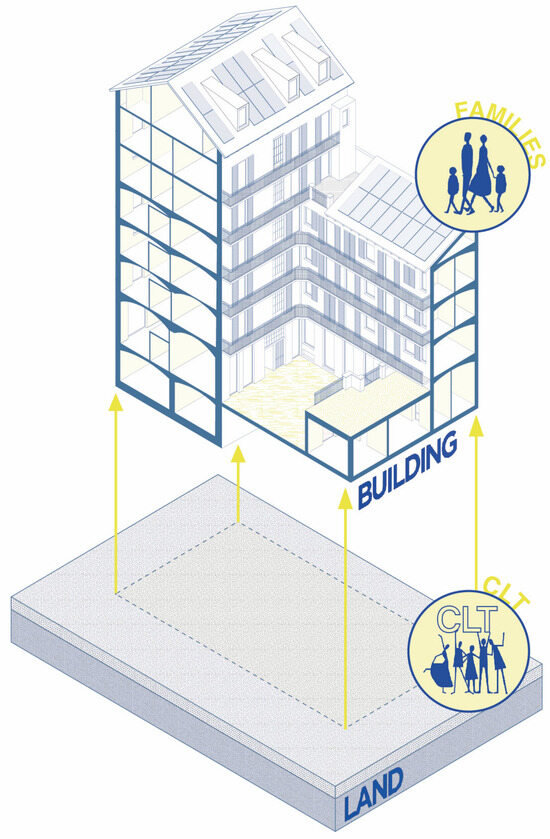
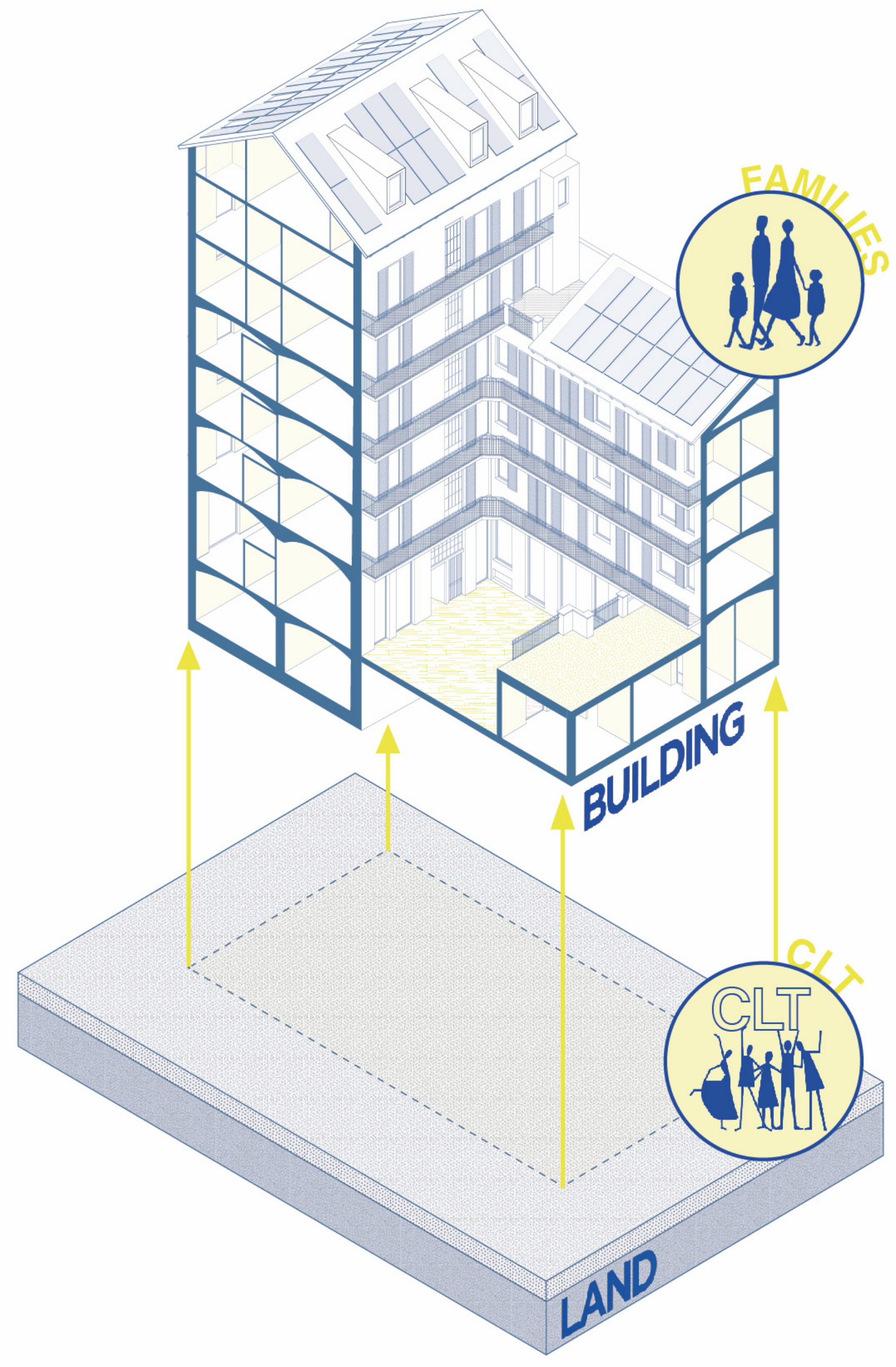
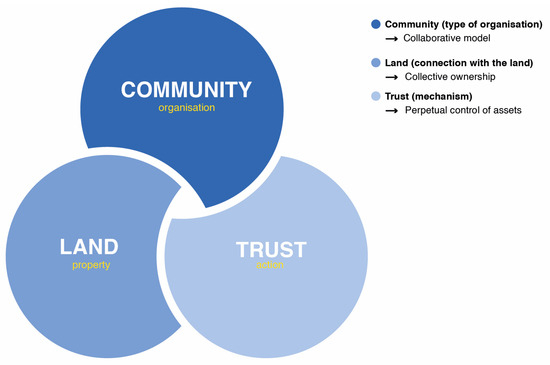
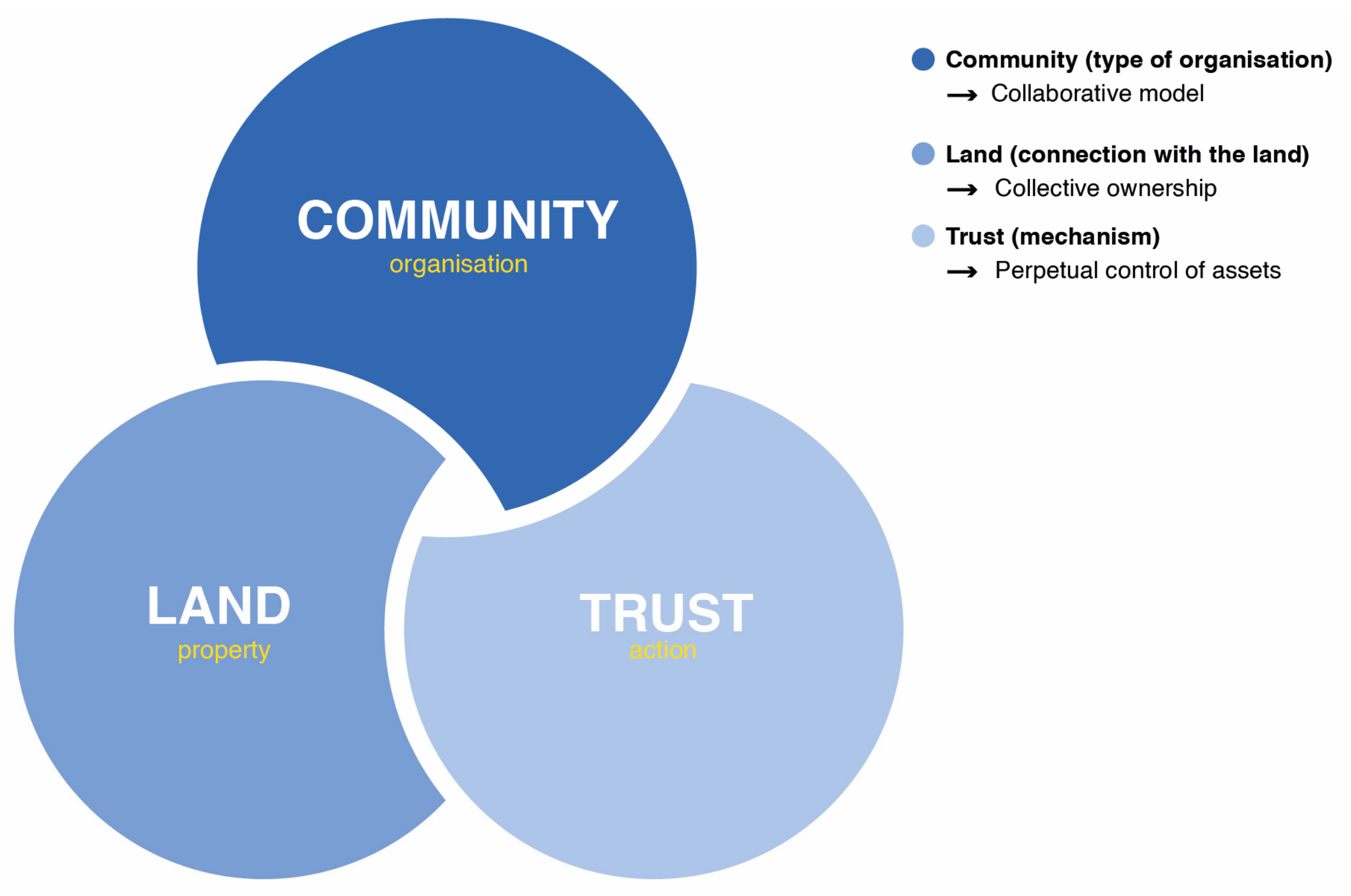
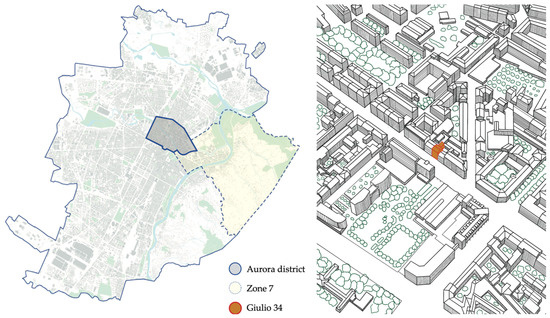
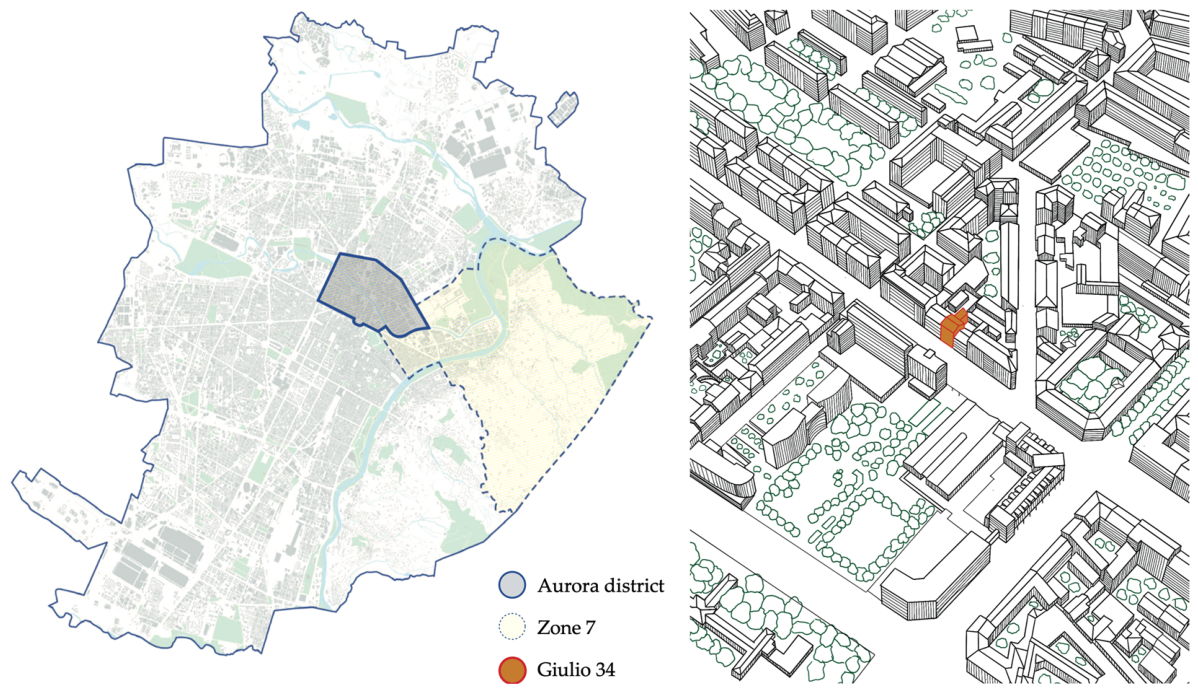
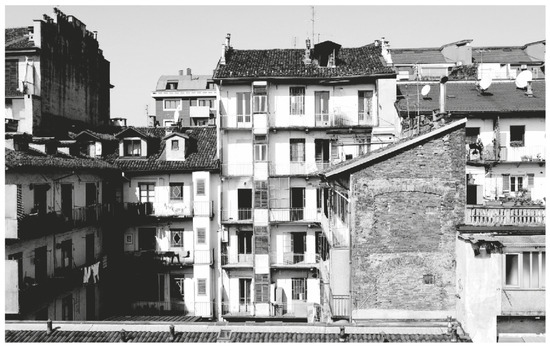
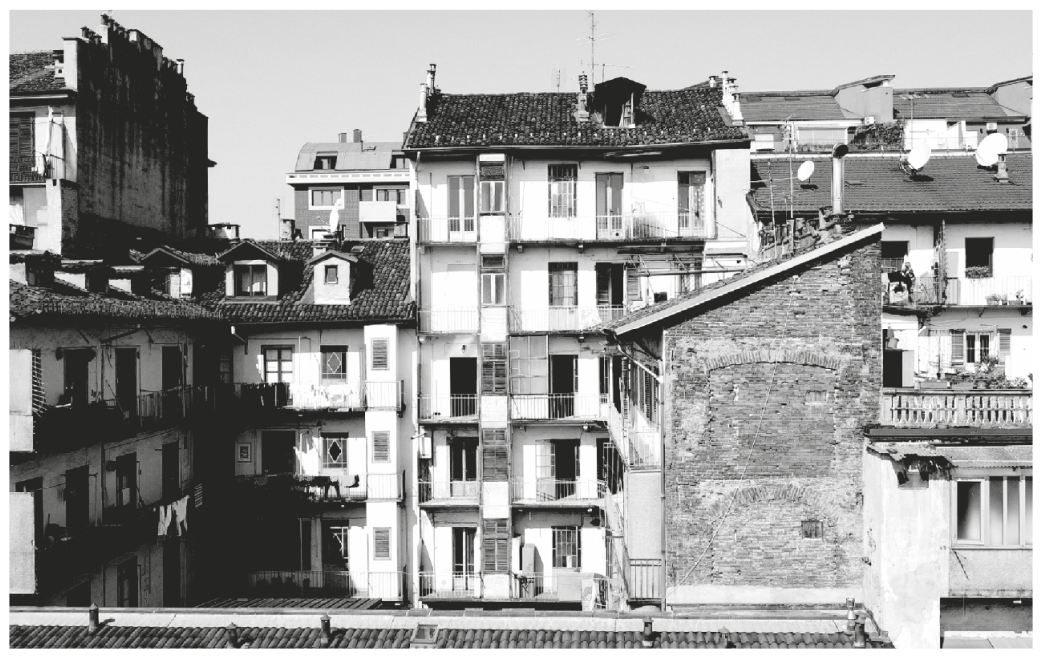
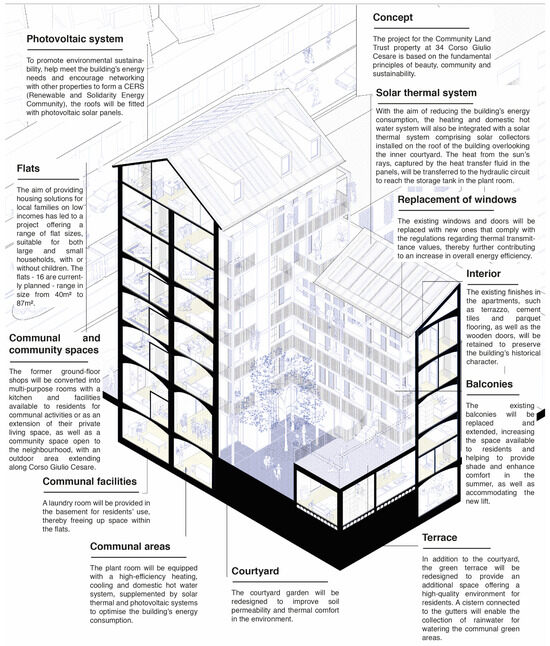
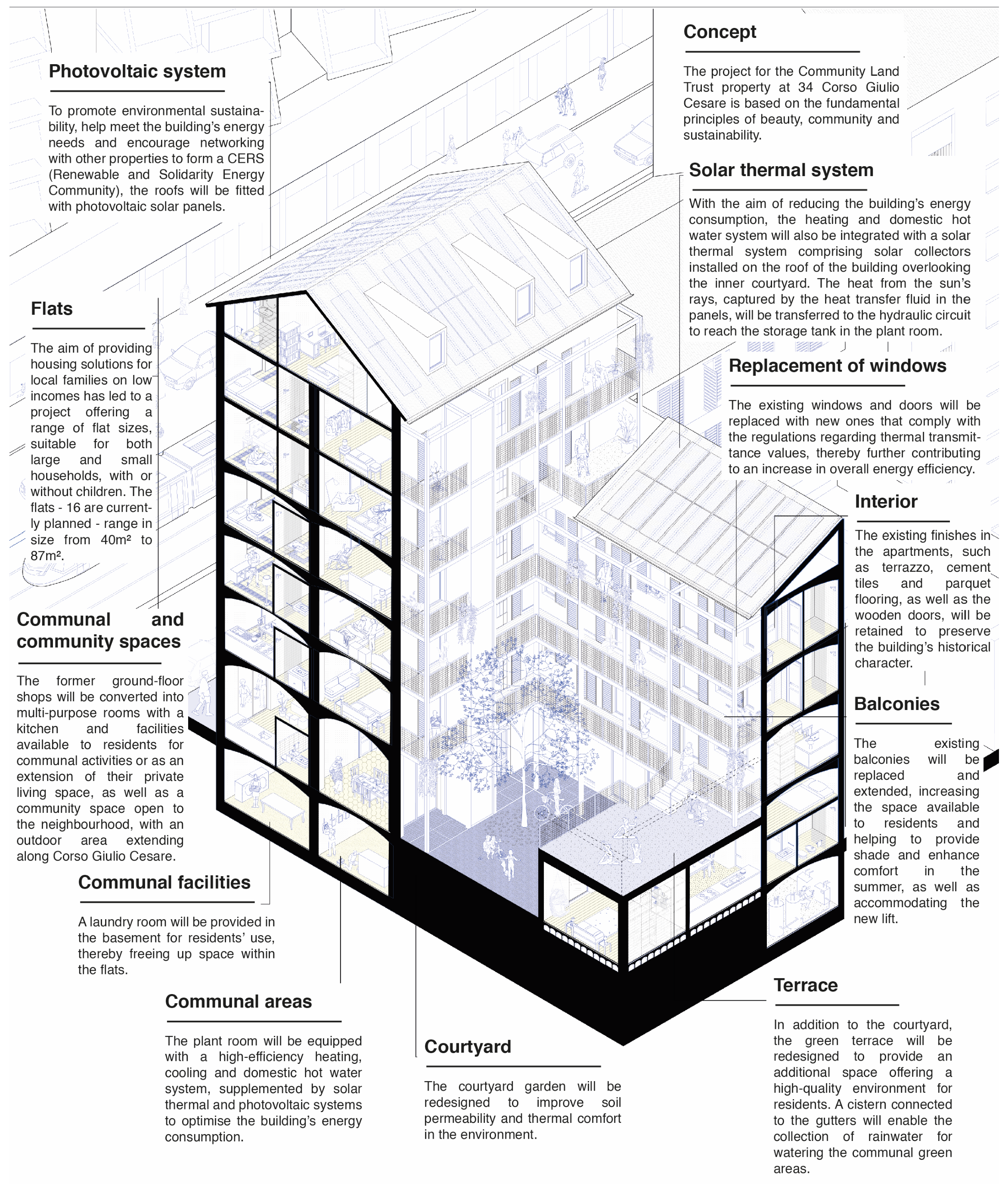
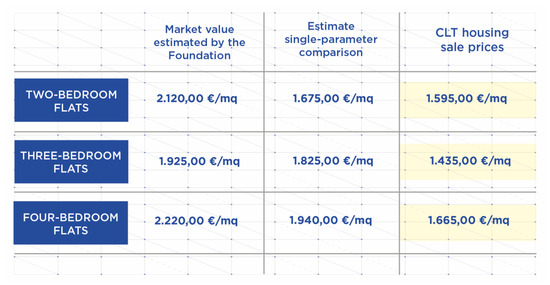
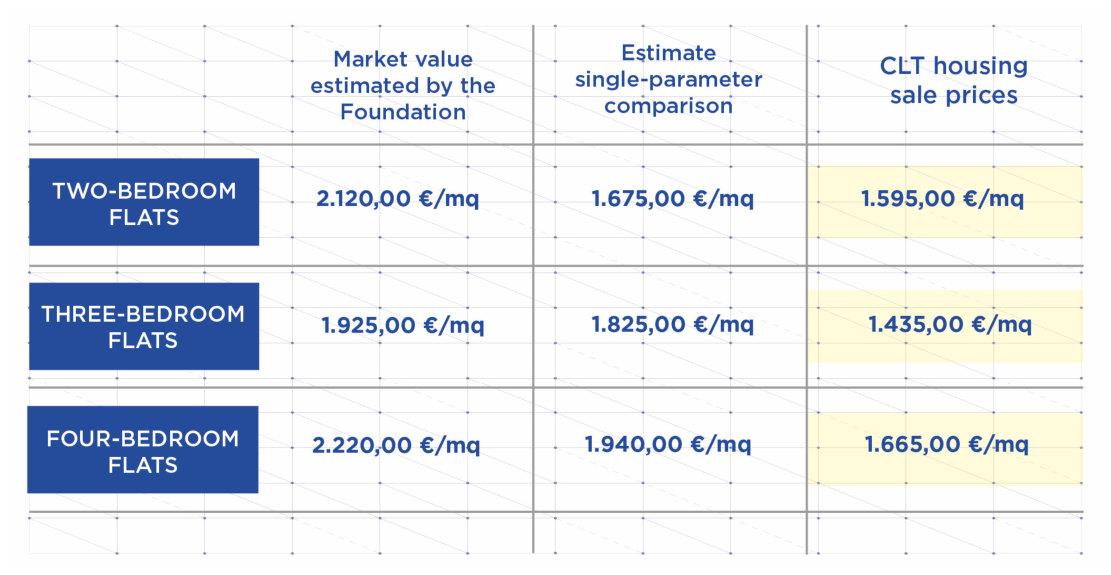

Disclaimer/Publisher’s Note: The statements, opinions and data contained in all publications are solely those of the individual author(s) and contributor(s) and not of MDPI and/or the editor(s). MDPI and/or the editor(s) disclaim responsibility for any injury to people or property resulting from any ideas, methods, instructions or products referred to in the content. |
© 2026 by the authors. Licensee MDPI, Basel, Switzerland. This article is an open access article distributed under the terms and conditions of the Creative Commons Attribution (CC BY) license.