


Abstract
Globally, Indigenous conceptualizations of wellbeing have been described as collectivist, multidimensional, and holistic, with Indigenous homelands being of paramount importance, weaving everything together. Although Canada and Australia were both colonies of the British, their colonial histories with respect to Indigenous peoples and their homelands were markedly different. In Canada, Indigenous land rights were recognized, and treaties were signed; while in Australia, the land was considered terra nullius; thus, there were no treaties. Herein, we explored whether differing treaty contexts have impacted connection to the land, wellbeing, and the sustainability of Indigenous cultures—using semi-directed interviews (including yarning circles) with Cree Elders from Canada, and Widjabul (and Jirrbal) Elders and leaders from Australia. There was near unanimity in responses for the Cree, Widjabul, and Jirrbal that being on the land was important for cultural wellbeing, even though they live in diverse biophysical and socio-political environments—perhaps due to similar worldviews. Furthermore, being on the land was described as important to the Cree, Widjabul, and Jirrbal for sustenance, connection and spirituality, self-discovery and identity, and the transmission of Indigenous knowledge. By contrast, the responses to whether cultural wellbeing currently exists were varied. Specifically, all the Cree Elders answered ‘yes’—while some of the Widjabul and Jirrbal responded ‘yes,’ and others ‘no,’ and several of the Jirrbal ‘did not know.’ Notably, almost all Widjabul and Jirrbal believe that being on the land contributes to cultural wellbeing. However, it appears that the absence of treaties has impacted the situation in Australia whereby there were numerous barriers to being on the land even with Native title, such as, physical barriers (i.e., fences and/or private property), and government policies (i.e., government parks). Lastly, it appears that differing treaty contexts in Canada and Australia have influenced connection to the land and the sustainability of cultural wellbeing, but not the belief that being on the land contributes to cultural wellbeing.
1. Introduction
1.1. Wellbeing
Around the world, wellbeing indices have been used by governments and organizations to assess a country’s development and progress [1], even though wellbeing as a concept is very difficult to define and assess [2]. This difficulty partly arises due to the fact that understandings and assessments of wellbeing are culturally bound based on different worldviews [3,4]. Additionally, wellbeing is not a singular concept; wellbeing has been reported to exist in two dimensions, the objective and the subjective [5]. Singular measures (e.g., Gross Domestic Product) were first employed in an attempt to quantify objective wellbeing [6,7], but due to the limitations of singular measures, composite measures (e.g., United Nations Human Development Index [8]; United Nations Sustainable Development Goals [9]; the Organization for Economic Cooperation and Development Better Life Initiative [10]) were developed that included additional parameters (e.g., social, environmental, and health). These composite wellbeing indices commodify the environment—that is, the environment is viewed as something to be possessed and developed [11,12,13]. These non-Indigenous worldviews are in stark contrast to Indigenous worldviews where land, water, and sky—including the animate and inanimate—are considered alive, and to be respected in harmonious, reciprocal relationships [14,15,16]. Unsurprisingly, in Canada, the use of composite wellbeing indices for Indigenous peoples has been criticized due to the lack of cultural measures [17]. Likewise, in Australia, composite wellbeing indices have been described as unreliable (or inappropriate) for the assessment of Indigenous wellbeing, because they do not contain Indigenous cultural variables [18]. Historically, Indigenous cultures were seen as a problem, an impediment to Indigenous peoples’ wellbeing, but recently Indigenous cultures have been seen as part of the solution to improve Indigenous wellbeing [19]. It has been suggested that Indigenous cultures can act as anchors for individuals and communities [20], being of utmost importance for Indigenous wellbeing [21,22,23]. However, the concept of culture is not easily defined [24,25], due to the fact that cultures change over time and parts of culture are intangible [15,26]. Nonetheless, one often-used definition of culture describes it “as the set of distinctive spiritual, material, intellectual and emotional features of a society or social group…in addition to art and literature, lifestyles, ways of living together, value systems, traditions and beliefs” [27] (p. 18).
Similar to objective wellbeing, subjective wellbeing has been difficult to assess because it is multifactorial, and includes life experiences, measures of happiness, and measures of eudaimonia—that is, the purposiveness of life [28] or the fulfillment of a person’s potential [29]. Thus, to properly discuss Indigenous views of wellbeing, extensive consultation is required with Indigenous peoples, and their communities and organizations [30], as non-Indigenous frameworks of wellbeing [31,32] do not account for Indigenous worldviews, creating tension [33]. Pointedly, the United Nations Permanent Forum on Indigenous Issues [30] (p. 10) asserts that: “Indigenous peoples will define their own understandings and visions of well-being from which indicators will be identified, and include the full participation of Indigenous peoples in the development of these indicators”. Thus, Indigenous peoples want to develop their own perspectives of what wellbeing means to them [17,33], and what they value, so that Indigenous communities and organizations can set their own wellbeing agendas [34,35] following a strengths-based approach [15,16,34,36]. In this way, Indigenous understandings of wellbeing that are collectivist and holistic are given priority [37], rather than individual-level perspectives that are pervasive in non-Indigenous wellbeing indicators [15,16,38].
Across Canada, Indigenous leadership including the Cree have described wellbeing in different ways and at different levels: the individual level (i.e., physical wellbeing or individual health); family and community levels (i.e., social wellbeing and economic wellbeing); community and Indigenous nation levels (i.e., political wellbeing); and the level of Indigenous traditional homelands (i.e., cultural wellbeing) [15]. It should be noted that even though wellbeing was said to exist at different levels, wellbeing was most often discussed at the cultural level by Indigenous leaders [15]. The concept of wellbeing from Canadian Indigenous perspectives can be considered collectivist, multidimensional, and holistic; and importantly, the land weaved all types of wellbeing together [15]. In Canada, ‘land’ or ‘bush’ refers to Indigenous homelands including water and air, as well as the animate and inanimate. Similarly, in Australia the Widjabul and Jirrbal peoples described wellbeing at different scales beginning at the individual (i.e., physical wellbeing or health), then family, next the community, and lastly, culture and ‘Country’ [16]. The concept of wellbeing from these Australian perspectives was collectivist, multidimensional, and holistic; everything was viewed as being interconnected with Country, binding all types of wellbeing together [16]. In Australia, ‘Country’ refers to a specific Indigenous homeland and includes land, water, and sky under the nations’ stewardship [16], as well as the animate and inanimate, including multi-dimensional relationships [39]; while ‘country’ or ‘countries’ are more generic terms referring to Indigenous lands, water, and sky but not necessarily one’s specific homeland. The foundational importance of Country and culture with respect to Indigenous peoples in Australia has been widely reported [32,38,40,41].
Interestingly, cultural wellbeing as related to Indigenous people is sometimes referred to but not defined [42,43,44,45]. Recently, Lines et al. [46] conceptualized cultural wellbeing for Dene youth of the Northwest Territories, Canada, as reciprocal relationships with the land. For Cree Elders of subarctic Ontario (ON), Canada, cultural wellbeing was defined in terms of land and water, traditional foods and activities (e.g., hunting, fishing), the sustaining of the Cree language, spirituality, connectedness, harmonious relationships, and the honoring of inherent obligations [15]. Furthermore, what was valued by Indigenous leadership Canada-wide—and identified as important for cultural wellbeing—included consequential involvement in decision-making, free, prior, and informed consent, and sustainable development [15]. In Australia, for Widjabul Elders and leaders of the subtropics of New South Wales (NSW), and Jirrbal Elders and leaders of tropical north Queensland (QLD), cultural wellbeing was framed by four broad themes: Country; Indigenous identity and respect; on-Country activities; and Indigenous languages and Indigenous knowledge transmission [16]. Widjabul and Jirrbal Elders and leaders also identified decisive leadership, as well as meaningful participation in the decision-making process with respect to Indigenous affairs, as being foundational for cultural wellbeing [16]. Noteworthy, land was a recurring theme brought up by Indigenous leadership in Canada and Australia with respect to cultural wellbeing [15,16].
1.2. Indigenous Homelands and the Treaty Context
In Canada, First Nations were allies of the British Crown and fought in many battles with the British, including the War of 1812 against the Americans—First Nations peoples of Canada were never conquered [47]. Furthermore, Indigenous rights to land were recognized in the Royal Proclamation, 1763 [48]; thus, treaties needed to be signed between the British Crown and First Nations people of Canada [49,50]. Reserve lands, now known as First Nations, were established through treaties for the sole use of the ‘Indians’; First Nations people were historically and erroneously referred to as ‘Indians’ [51]. Chiefs and Councils were also treaty constructs—these Band Councils were locally elected First Nations governments that interacted with the various levels of government in Canada [49,50]—with annual-base funding (e.g., for education, health, infrastructure, operating and maintenance) and other funding (e.g., through Contribution Agreements) being administered by Chiefs & Councils and/or their designated organizations (e.g., Education Authorities). In 1982, the British North American Act, 1867 [52] was repatriated—and in the repatriated constitution, Aboriginal rights (largely undefined) and treaty rights (defined) were entrenched—that is, Aboriginal (defined as First Nations, Inuit, and Metis) and treaty rights were now constitutionally protected.
In Australia, the concept of terra nullius [53]—that is, “land belonging to no one” [54]―was erroneously applied to the continent of Australia and became the official reason why no treaties were signed between the British Crown and Australia’s First Peoples. However, in 1992, the High Court of Australia recognized the land rights of the Meriam people of the Torres Strait Islands [55], dispelling the concept of terra nullius [53]. Subsequent to what has become known as the Mabo No. 2 decision [56], the Native Title Act, 1993 [57], was passed. This piece of legislation created an Australian government process whereby Native title could be sought by Indigenous nations across Australia [55]. It should also be noted that as there were no treaties with Indigenous peoples in Australia (i.e., Aboriginal and Torres Strait Islanders Peoples) due to terra nullius, there were no government-recognized Indigenous organizations for the Commonwealth Government of Australia to engage with until the Aboriginal Councils and Associations Act 1976 [58] was passed. This law was replaced by the Corporations (Aboriginal and Torres Strait Islander) Act 2006 [59,60] that allowed for the incorporation of Indigenous organizations, so that a variety of services (e.g., health) could be delivered and economic development supported [16,61]. Additionally, Indigenous organizations could become “a registered native title body corporate” [59] (1–25 (d)). In some sense, Aboriginal Corporations in Australia function in a similar manner to Band Councils in Canada—that is, engaging with colonial governments on Indigenous matters—representing Indigenous interests.
Although both Canada and Australia were colonies within the British Empire, their colonial histories with respect to Indigenous land rights and treaties were markedly different. In the present paper, we will explore whether differing treaty contexts in Canada and Australia have impacted connection to the land, wellbeing, and the sustainability of Indigenous cultures. To achieve this, two specific questions were asked: Does being on the land/water (that is, in the bush/Country) contribute to cultural wellbeing?; and Does cultural wellbeing currently exist for your culture?
2. Methods
The present project was initiated in partnership with Fort Albany First Nation of subarctic ON, Canada [15], the Widjabul Nation of subtropical NSW, Australia, and the Jirrbal Nation of tropical north QLD, Australia [16].
2.1. The Study Areas
2.1.1. Fort Albany First Nation, ON, Canada
Canada has a land area of ~9,984,670 km2 [62], and consists of a federation of ten provinces and three territories, with an Indigenous population estimated at 1,673,785 (i.e., ~4.6% of the total Canadian population) [63,64]. In Canada, there are 977,230 First Nations peoples, 587,545 Métis, and 65,025 Inuit [63]. There is no pan-Indigenous culture, as Indigenous peoples have diverse place-based cultures and relationships with their traditional homelands [15,63].
Fort Albany First Nation is a Cree community located in the western James Bay region of subarctic ON, Canada, one of the largest wetland regions in the world, and a resource-rich area [65,66,67]. Ontario is the second largest province in Canada [68], being the most populous province with respect to Indigenous peoples [69].
2.1.2. Widjabul Nation, NSW, and Jirrbal Nation, QLD, Australia
Australia has a land mass of 7,688,287 km2 [70], and consists of a commonwealth of six states and two territories [71], with an estimated Indigenous population of 983,700 (i.e., ~3.8% of the total Australian population) [72]. In Australia, there are 983,700 Indigenous people, with 91.7% being Aboriginal, 4.0% Torres Strait Islanders, and 4.3% of mixed Indigenous heritage [72]. Most Indigenous peoples (74.5%) live in NSW, QLD, and Western Australia [72]. There is no pan-Indigenous culture in Australia; cultures are ‘Country’-specific, that is, place-based [16]. New South Wales is the most populous state, with ~8 million residents [73], and 278,043 (i.e., 3.4% of the total NSW population) identified as Indigenous [73]. The ‘Country’ of the Widjabul people is situated in the Northern Rivers region of NSW around the areas of Lismore, Dunoon, and Nimbin [74]. The Widjabul homeland was once the largest subtropical rainforest in Australia, until logging reduced the ‘big scrub’ dramatically [75]. Nonetheless, the cultural importance of the area remains (e.g., the sacred Nimbin rocks) for the Widjabul culture and the larger Bundjalung Nation, a federation of clans [76].
Queensland has a land area of 1,727,000 km2, being the second largest state in Australia with ~4 million people [77], and ~237,000 people being Indigenous (i.e., 4.6% of the QLD population) [78], The ‘Country’ of the Jirrbal people includes coastal areas near Tully, QLD, and extends inland to the Tablelands (i.e., the Tully Gorge and land around Ravenshoe) [79,80]. These socio-cultural areas (e.g., Innot Hot Springs) have great spiritual significance for the Jirrbal [79,80].
2.2. Ethics
2.2.1. Partnership Framework
In brief, this project was conceptualized in partnership with Fort Albany First Nation [15], the Widjabul Wai-Bul Elders and Leaders Inc., and the Jirrbal Aboriginal Corporation [16], incorporating a community-based participatory approach [81]. It was first conceived by Chief Andrew Solomon of Fort Albany First Nation, who wanted to build upon the previous work of our research group with respect to resource development, impact benefit agreements, treaties, and other environment-and-health issues. Chief Solomon wanted to create a forum where Cree Elders could express and preserve their perspectives on wellbeing, the environment, and the sustaining of Cree culture in counterpoint to views of resource developers, who threaten the Cree traditional homeland. The Widjabul Wai-Bul Elders and Leaders Inc. and the Jirrbal Aboriginal Corporation became involved in the present project when their representatives contacted the senior author of the present paper after hearing about his work in Canada.
Since no formal ethics protocol existed for any of the three communities in the present study, an Indigenous partnership framework developed with and previously used by Fort Albany First Nation [82] guided the present study. This partnership framework included three essential elements of respect (e.g., Indigenous knowledge systems were considered equal to non-Indigenous knowledge systems; Indigenous leadership consent prior to individual consent), equity (e.g., sharing of resources), and empowerment (e.g., the sharing of power through joint governance of the project) [15,16,82]. All project activities were conducted according to the ethical standards of the University of Toronto’s Research Ethics Board, Toronto, ON, Canada (Protocol Reference #33374), being project-specific.
2.2.2. Research Team
In our partnership framework, leadership was shared with members of the research team being Indigenoous: Professor Adrian Miller, Jirrbal Nation, Board Chair of the Jirrbal Corporation, and Vice-President Indigenous Engagement, Central Queensland University; Andrew Solomon, Omushkego Cree, Treaty Research Senior Advisor for Nishnawbe Aski Nation, and former five-time Chief of Fort Albany First Nation; Leonee Nowta, Widjabul Nation, a respected Widjabul Elder and former Chair Ngulingah Land Council; and Ruby Edwards-Wheesk, Omushkego Cree, former Fort Albany First Nation Band Councillor in charge of the health portfolio, and former Community Health Representative. Non-Indigenous members included Stephen Tsuji, with ~15 years of experience working with Indigenous groups and expertise in environmental impact assessment, treaties, environmental thought, and environmental justice issues; while Dr. Leonard Tsuji is a Professor of Environment & Health who has worked for almost 40 years with Indigenous groups as a health clinician, educator, and researcher. Indigenous Advisory Boards, one for each community, were involved during the formative processes of the project and throughout the whole project. For example, they helped in the development of the semi-directed research questions and the pre-testing of the questions for cultural appropriateness; they were the gatekeepers of the community-specific data collected, and members of the Indigenous Advisory Boards contributed to the present write-up of project results.
2.3. Data
Briefly, for Fort Albany First Nation, all 24 Elders on the community Elders list were approached to participate, with nine participating (8 males and one female) [15]. Semi-directed interviews were conducted either individually or as a couple, in Cree and/or English, using the conversational approach [83]. The interview questions were asked from 2017 to 2019 [15] and included: “Does being on the land/water (that is, in the bush/Country) contribute to cultural wellbeing?” and “Does cultural wellbeing currently exist for your culture?” Oral responses in English were digitally recorded and transcribed verbatim; meanwhile, Cree oral or written responses were translated to English. It should be mentioned that some Cree words and/or concepts may not be directly translatable to English—and this is a limitation of the present work. This is especially true for Cree Elders who speak “high” Cree rather than conversational Cree. Thus, members of the research team included Cree translators with lived experiences utilizing “high” Cree.
The Widjabul Wai-Bul Elders and Leaders Inc. identified the potential participants based on their cultural knowledge and/or leadership qualities. Semi-directed interviews in English were conducted with Widjabul participants individually, as a couple, or as a group, using the conversational method [83], including yarning circles [84]. Interviews were conducted with 19 Widjabul (47% males) from 2017 to 2018 [16], and Widjabul participants were asked the exact same questions as the Cree Elders. Likewise, the Jirrbal Corporation’s leadership selected participants based on cultural knowledge. Semi-directed interviews in English, including yarns or yarning circles, were conducted from 2020 to 2022, with 23 Jirrbal (37% males) [16] who were asked the same questions as the Cree Elders.
2.4. Data Analyses
Qualitative data from the semi-directed interviews, yarns, and yarning circles were analyzed utilizing deductive and inductive thematic coding [81,85]. A template-organizing approach placed answers to the questions “Does being on the land/water (that is, in the bush/Country) contribute to cultural wellbeing?” and “Does cultural wellbeing currently exist for your culture?” into thematic frameworks where the data were first deductively placed into the Indigenous nation from which the data originated [86]. Themes for the questions asked emerged from the data itself through inductive and iterative thematic coding [81,87]. Specifically, verbatim transcripts were read multiple times, reflected upon, until preliminary themes emerged. Although the lead author was primarily responsible for analyses, there were formative discussions with the other co-authors and the Indigenous Advisory Boards about the themes that emerged. These preliminary results were validated with participating Cree Elders in Fort Albany First Nation, and through community meetings with the Widjabul participants in Lismore, NSW, and Jirrbal participants in Ravenshoe, QLD. Lastly, we incorporated lengthy quotes in our analyses to more fully represent the yarn (or conversation) as a whole, and to retain the integrity of what the Elders and leaders were trying to convey—as the words of Elders can have different meanings depending on the person, the stage of life course, and after reflective thought. Including their words at length allows the opportunity for learning by community members, academics, resource developers, government personnel, and the general public.
3. Results
3.1. Does Being on Land/Water (That Is, in the Bush/Country) Contribute to Cultural Wellbeing?
3.1.1. Viewpoints of Cree Elders from Fort Albany Nation, Subarctic ON, Canada
YES, being on the land (and water) contributes to Cree cultural wellbeing.
All Elders responded in the affirmative that being on the land (and water) contributes to cultural wellbeing, such as: “Of course. Yes. Everything is there to help and improve wellbeing…it is peaceful out on the land”. (C1); “Living in the wilderness truly is beneficial with clean water and land…one becomes healthy when living in the wilderness”. (C4); “Yes, it will be very beneficial and healthy living in the wilderness with good water and land”. (C5); “Yes. Everything that you see in the wilderness, those are the tools, resources. You do not lack anything. You can use any of these resources; however, you have to make them yourself, such as, a canoe, sled and other different tools”. (C6) Even when one Elder was not physically able to go out on the land, he answered:
“Yeah. I like to go out on the land…before I [was injured]…I used to go out in the spring. I will do it again though, as soon as they fix this. I will go back there, fishing; do the things I did [before]. It is not going to stop me. It feels good [when I am out in the bush]”.(C2)
The importance of the land to their cultural wellbeing was described in the context of harmonizing with the environment:
“Yeah it [being on the land] does [contribute to cultural wellbeing], because everything is connected. Everything is like really based on our cycle of life, the way we live. Our cultural activities are based on the seasons. We have six seasons. We start with winter…spring…[river ice] break-up when everything starts to regenerate…then there is summer, and fall. Then…[river] freeze-up. Then we start all over again. So, we have six cycles. So, everything is based on land, and water… fur-bearing animals…migratory birds…fish…trying to introduce that into the curriculum in our school. We are trying to teach the cycle of life. The only problem with that is the government. They do not understand it, [they say] just repetition, same thing, but not the same thing. Each cycle is different. It is hard, that is one of the barriers to wellbeing is trying to promote our culture…but there is so much we can learn from our cultural cycle…[On-the-land] programs…continue it, our teachings… to teach the young people”.(C8)
Land-based programs (e.g., camps) were seen as vehicles to get people on the land where participants could accrue cultural wellbeing benefits, for instance:
“Land based programs are needed…children can participate in hunting activities…harvesting of a variety of berries, drinking water, travel the river wherever, camping in the wilderness”.(C3)
“For sure [being on the land contributes to cultural wellbeing]. It is a big thing right now and what we are trying to do. My daughter has a camp up the river. Take kids, youth mostly, but like to get more parents involved because we are not there yet. Because of the things that happened before, residential school. We never had the experience staying at home with our parents really, since 5 to 6 years old. Because we were taken to residential school, we really did not have a chance, really bond with our parents. So that is something we, people are starting to be aware of and how we are working on it slowly. And maybe open discussion of childrearing and how to properly care for our children, grandchildren”.(C7)
In addition, being on the land makes Cree “culture stronger, because years before people took it upon themselves [when on the land] to care for each other…it was well practiced [but]…then alcohol became available, and…bring it by plane, crazy, crazy things happened”. (C7)
3.1.2. Viewpoints of Widjabul Elders and Leaders from the Subtropics of NSW, Australia
YES, being on Country contributes to Widjabul cultural wellbeing
Overall, all Widjabul Elders and leaders except one answered in the affirmative that being on Country contributed to cultural wellbeing. Cultural wellbeing was described at the personal level,
“Yes, being on the land, yeah. I like going in the outback, I like going in the bush. I love it because it keeps me grounded. Well, when I come back, I feel so much better in myself, my body, my mind after being on the land, being in the bush”.(1, W 2)
“I feel good, I feel happy. I…walk around there and I don’t leave there till about 9 or 10:00 at night”.(2, W11E–W12E)
As well as at the tribal level,
“Yes….Our land has wellbeing…all the tribes…and their lands they need, for their culture, to live with those lands the way they use to”.(W8E)
The benefits of being on Country with respect to cultural wellbeing were described in terms of sustenance (see also Table 1), particularly “food” (1, W 3)—and the procurement of food, “that was our way of life…it was a healthy lifestyle just being on the land and having that opportunity to hunt and fish”. (1, W13–14) Elaborating,
Table 1.
Widjabul peoples’ viewpoints on: Does being on Country contribute to cultural wellbeing?
“Yes. Land is very important to us. It’s where we live off our land, we cultivate it, we go back to that place, if it’s the bush, we go back to our old ways of life. Sometimes…twice a year we like to go back to our land and just reminisce and just think about our days we were trying to teach our children this is the way we were…go back to the same awareness about that, how to contribute that cultural awareness or wellbeing…and I feel others talking about getting into and involved in their young…we must get back to that…we survived off the land…on our terms without white men. We lived off fish and our animals, our fruits…So, our creator provided Mother Earth to feed us”.(1, W16)
Being on Country leads to cultural connection and spiritual benefits:
“It does. 100%…It’s in our genes to go into the bush and smell it. Once you smell it, your senses becomes—your hearing becomes high pitched—you can hear anything, you can smell anything in the woods…but the thing I truly believe in is I know that connection is there. I can feel it as soon as I get into the bush. I can feel on my skin…I know someone’s watching me…and they tend to sort of follow you. They tend to lead you through the bush…Not to destroy or damage it or anything like that, it’s just to be part of it…unless you’re being part of it, you won’t understand…there’s mosquitos and insects and snakes…If you know how to avoid those things…that’s the part of all that cultural stuff, putting up with all the dangers…it makes a man or becoming a man…transition from manhood to Elder status and then beyond. Manhood, Elders and then spiritual thing when you go”.(1, W 7)
“Yes…as soon as we’re given the opportunity to go back it changes us…we get refreshed… the smell from being in those places because it’s familiar. I can’t talk for people under 30 because if they were born in this town, then they stay there, that’s all they know, but getting out, getting back out, it’ll bring back memories, it’s more healthy to get out and walk around and remember things…a lot of us are overweight because we are not doing that anymore, we drive, we use public transport”.(1, W9L)
While on Country there is an opportunity for self-discovery:
“A bit of self-discovery…I had to let go. I had to figure myself for all the bad things I’ve done, let go of the bad memories and create new ones…So, I had to go out to the Country. I had to reconnect with my family, immediate family…my mob”.(1, W1)
[Land] “that’s the most important thing. I thought I knew everything about my culture, my people and who I was and the way I fitted into that. Then I realized I knew nothing until I connected with my land and my rivers, and everything that was within it like our plants, our animals, and our relationship with each other and our spiritual connection…I grew up always knowing I was black, I was Aboriginal, and I was always proud of that no matter where I went. I had the wrong idea of what that was. I thought being black was living a certain lifestyle, behaving in a certain way, drinking, carrying on…disrespecting each other, talking down to each other, not respecting our women. I did that for a long time until I knew that wasn’t the way. I started changing my ways and even at that point, I still didn’t know, I thought I knew. I wanted to know but I didn’t know until I was actually on Country”.(W1)
Additionally, on Country there is “more freedom…healthier for them [youth]…it’d be good to get them [youth] back in the bush”. (2, W6)
Sociocultural benefits of being on Country were identified, such as, the intergenerational transmission of Widjabul knowledge:
“It’s bringing you back to the old people, the way they lived…it’s just being close to each other. Them [the different generations] embracing each other and sharing and respecting each other…our community out there…and your nose, because you smell everything and you see and hear, and you’re speaking it and this is where all of our young people need to start learning on—and this is where they need to start getting off their bottoms and start moving around”.(1, W11E–W12E)
“Sense of belonging”.(3, W11E–W12E)
“Yes!”.(1, W11E–W12E)
Being out on Country allows the youth to “look, learn and listen” (4, W11E–W12E), that is, cultural learning through experiences. For instance,
“Cultural hunting”.(1, W11E–W12E)
[Kangaroos] “porcupines and all that”.(2, W11E–W12E)
“They’ve lost that [cultural wellbeing]. The younger generations don’t have that. They need to be taught [out on Country]”.(4, W11E–W12E)
It should be emphasized that even when participants answered yes, being on Country contributes to Widjabul cultural wellbeing, there were concerns mentioned related to environmental pollution and land access. For example,
“Pesticide and just a lot of land development. Cotton farms”.(1, W13–14)
“Contaminating the waterways…the bush tucker [that is, traditional foods]. A little bit concerned, yeah…It’s poison…there are 21 different pesticides in the cotton sprays”.(3, W13–14)
“There’s a lot of chemical stuff”.(2, W13–14)
“We can’t eat our kangaroos anymore. You get poisoned… some of them [Widjabul people] got no choice to live on the white man, western food”.(1, W13–14)
“But that’s the food that’s killing the Indigenous [peoples]”.(2, W13–14)
Land access was another concern mentioned by Widjabul participants:
“That’s the main thing, like water and the land itself means a lot but now you can’t go on any land but it’s still there…they [“landowners”] want to shoot you …We got chased a few times off land…through going out hunting like getting turtles, eels…some of the swamp areas was on people’s properties…We use to just go out and get the turtles and eels and just bring them home. Then…they were chasing us out…with their jeeps and they’re firing up in the air and we were already scared…as they scared us off…They turned around and went back. So, we realized we can’t go back…We just use to go out…Everything was right”.(1, W 5)
Even the Australian Native Title process by which Indigenous peoples can regain ‘possession’ of their traditional lands through a common law mechanism has become more difficult:
“The [Australian] government is now making…impossible for those tribes to push any title claims through because of all the questions they are asking on different applications…we got our three months for this, send it back to them…reword it…then they said come back to… National Native Title Land Cooperation in Sydney…every time a counsel legal question comes up”.(W8E)
Noteworthy, once Native Title was granted by the Australian Government, ‘funding’ was lacking to properly utilize the Native Title land (1, W11E–W12E).
Greater involvement of Aboriginal people in government was a proposed way forward:
“There has to be a day when Aboriginal people have an input into the legislation and write on their behalf…what we need is more Aboriginal, more of our people in politics…what we got there is just too little [Indigenous representation in parliament]…get more people in there and they will speak on the behalf of those black tribes. Not only one tribe but all the tribes…I ran in a party a few years back, Indigenous People party…We need to talk for us, only us, speak for us”.(W8E)
Another option was proposed, “I think first off, we need to get a treaty. That’s the first thing we need for our mob”. (1, W13–14)
NO, being on Country does not contribute to Widjabul cultural wellbeing
Only one person answered in the negative and gave this reasoning:
“No, it doesn’t, because there’s very little input by Aboriginal people into the lands…The wider communities [western society] are doing their own things, so the knowledge from Aboriginal people’s not being used…But eventually, Aboriginal people that has that responsibility…There’s a lot to be done in that area. Especially where Aboriginal people have got the right knowledge for the land, how to protect the land, how to look after the land, how to care for the land, how to make the land more of a safer place to live”.(1, W18–19)
3.1.3. Viewpoints of Jirrbal Elders and Leaders from the Tropics of QLD, Australia
YES, being on Country contributes to Jirrbal cultural wellbeing
All Elders and leaders responded that being on Country contributes to Jirrbal cultural wellbeing, for instance, “It has to”. (5, 6, J5), “It has to yeah”. (3, J5), “Love it”. (7, J5), and “That’s an emphatic yes”. (4, J5) Some related Jirrbal cultural wellbeing to sustenance on Country: “Eating bush tucker off the land and only taking what you need. Teaching the younger boys how to hunt”. (J14); and when on Country “you’ve got your life set before you, you can get up, you can go fishing, anything you want to do. It’s all there…I used to teach my kids when they started learning to swim…I’d take them up the river and I’d go down along…the banks, and I’d look and see a fish there…teach them, they love it”. (1, J3)
For many, being on Country imbued a feeling of connection and belonging, for example, “Yes, being on Country keeps the cultural connection strong. It helps make everyone happy, feel good within themselves and brings back a sense of family”. (J13) Other longer responses included:
“It does and when I go bush, even if I just go for walkabout, I feel comfortable, I feel at home, and I feel that I am in a peaceful place. Where those connections…the cultural way…being in granddad Country now, I feel settled, I don’t feel nervous, upset, or feel tight about being there. I just love being there. and shutting all other electronics out of your head… And being in the bush, it’s the Aboriginal part of me that feels so relaxed, and so happy to be there…It affects my mind to the point where, it’s just feels like home, it feels like settled to me, and in my heart it is happy. I feel like this is my home. I belong to this Country. The Country don’t belong to me, I belong to the Country”.(1, J1)
“And just listen to nature, because those birds talk. The water talks to you. and sometimes when you read the signs, in the bush they can give you a positive track to follow…I love the bush. I like taking notice… of all the nature things…seasonal flowers…when you got the wattle [Acacia spp.] you know the rains are coming, and the leaves start dropping you know…the cold is coming…you study the animals as well. Like the [kanga]roos…and that is how I feel refreshed, happy, and don’t want to leave”.(1, J1)
It was also emphasized that being on your own Country, in this case, Jirrbal Country, feels different:
“I just love breathing in the air, it smells better, everything looks better, everything feels better. Love it, the water is better, the water feels better, it’s everything”.(4, J5)
“Ah yeah, the way you feel, everything. You know when you’re on Country…As soon as I get overwhelmed living there [the town], it’s always good getting home”.(1, J12)
However, being on your own Country comes with inherent responsibilities:
“Ah yeah, once you go back on Country…know your own Country…go back to that honouring, respecting them old people…you can live on the Country alright, but you don’t honour and respect old people, then your living in a void. But if you live there with them old people and you listen to them old people, then your life should be fulfilled…they are there to guide you”.(1, J10)
Being on Country also contributed to Jirrbal cultural wellbeing through social connections: “I love the beach, the sea, cause that’s where we grew up…all of my immediate family…we’d all go to Harvey’s creek and feel like were being cleansed…when we all get together”. (1, J4) Meanwhile, being on Country also contributed to Jirrbal identity:
“Yeah. That I grew up in the Country…Didn’t move to a city to work or whatever. always in the Country”.(1, J11)
“And do you think being in the bush all the time has made you who you are today?”.(2, J11)
“Yeah”.(1, J11)
Country was described as being imperative to the transmission of Indigenous knowledge, as Country was the place for “teaching the younger boys how to hunt” (J14), and specifically “if you’re on Country…the people you’d taken there, you can actually physically show them…how to get a turtle, show them how to get an eel…how to get taro, and show them how to cook it and stuff like that”. (3, J5) In addition, “you can see it [cultural wellbeing] through your land and animals around you. And I listen…you learn more”. (1, J9) On Country you experience the “Aboriginal way…We’ve been here for thousands of years…As long as I can keep doing this…continue it [cultural wellbeing] on to the generations”. (1, J7) Also of importance were the knowledge keepers and loss thereof:
“That we lost our, our Elders [recently] you know, the oldies, like mum and them…they should have been sort of done”.(1, J7)
“Recording…photos… a big story around it”.(3, J7)
“Way back when we were little, but nobody thought about it”.(1, J7)
3.2. Does Cultural Wellbeing Currently Exist in Your Culture?
3.2.1. Viewpoints of Cree Elders from Fort Albany First Nation, Subarctic ON, Canada
YES, Cree cultural wellbeing currently exists.
All Elders answered in the affirmative that cultural wellbeing currently exists for the Cree. For example: “Yes…to hold on to what our ancestors had long ago”. (C1); “Yes. The culture of Cree person is still alive”. (C5); and “Yes. My upbringing was very good, although it was hard, but life is not easy”. (C6). Elaborating,
“Right now, yeah, it [cultural wellbeing] exists. Like there are different programs happening in our community, always focusing on the family, wellbeing. Trying to revitalize different cultural activities. Those are things that are focused on wellbeing of the community. It is a start. So, there are people that come forward out there and share their knowledge with other community members. Sometimes they go to school and take students on the land and show them some basic cultural activities. From there, you are building a foundation for growth”.(C8)
To maintain cultural wellbeing, it was stated that:
“We have to be aware, like awareness is the key too. Just to do what needs to be done. Like work at the community [level]…The understanding of the culture that we have, the ceremonies. Language is important too, that we practice our own culture. That is very important…things are happening now…the activities that going on at the health centre, at the school”.(C7)
Engagement of the youth was seen as imperative for the maintenance of cultural wellbeing:
“I think it can be maintained by continuing what we are doing today. Trying to do the little things first. Trying to get the younger generation more involved. Once they grow older, they have more [knowledge]. You want to train the younger people; those are the people that will carry on what we are doing today. If we teach people today, one day I will not be here, but I have to teach someone to able to continue it. It’s like language; if we lose our language, we do not speak it anymore if we do not teach it to anybody. So, if we focus on the little people and successfully revitalize it for them, then they will be able to bring, revitalize it [language] as they get older. They will multiply”.(C8)
3.2.2. Viewpoints of Widjabul Elders and Leaders from the Subtropics of NSW, Australia
YES, Widjabul cultural wellbeing currently exists.
Many participants responded in the positive that Widjabul cultural wellbeing exists. For instance, “yes” (1, W 4) (1, W18–19) (1, W16), “yep, it always has” (1, W1), “it exists” (1, W3), and “it does” (W8E). However, some gave qualified answers:
“Yes, some of it does, not a lot, I can’t say a lot”.(W2)
“Yes, I feel it does…because no matter where I go there’s always cultural awareness…have a bit of respect for each other’s cultures…Respect is the main word in our culture…[but] it’s dying away”.(1, W11E–W12E)
“It’s there as connected to the community…But other than that, we’re drifting away because the other side haven’t accepted that cultural core beliefs that we have”.(1, W 7)
The Australian government was seen as an impediment to cultural wellbeing:
“It [cultural wellbeing] does [exist] but…We can’t practice it because of the conditions of the land and the way soil is today”.(1, W13–14)
“The kids know they got the backup of the government…give the parents the rights to chastise our kids…got to put it all back because ever since the laws came behind them, they just exploded everything”.(2, W6)
This has led to:
“A lot of young people…missing the cultural side of their belonging…they’re…[doing things] not culturally appropriate [e.g., crime]. If we were still in one community, we would not have that…our people, they’re not allowed to chastise their children and that’s a big cultural Elder wellbeing concern…Families are not allowed to be families anymore. They’re not allowed to be parents anymore because that’s a government department now…A lot of kids…been removed today…with the drugs and alcohol going on… the law just broke up our families…the government…system has now destroyed tribes everywhere across Australia”.(1, W6)
It was emphasized that cultural wellbeing has to be maintained (W8E), and “it’s something you do every second of the day, every choice you make, every decision you make…it starts in here and in your mind, in your being, in your spiritual being”. (1, W1) In addition, social connectiveness was identified as being important: “people get together and talk” (1, W4), “through knockouts [sporting event]…I think that’s the only time we can all get together…we got the Aboriginal days where…we can still get together…so those are only the times we can get together with other families…every year”. (W5)
Education was seen as key to sustaining cultural wellbeing. For instance, “its [cultural wellbeing] survival is education and teaching. It’s learning”. (1, W18–19) Further,
“By writing it down and keeping it…in our language in one of the schools where we just openly discuss cultural wellbeing…the Indigenous young…could grow into that…We need to regenerate it again, we need to get them up and running again, you know…be aware of what’s important to our wellbeing and our tribal ways of living”.(1, W16)
However, there was a caveat that:
“It should only be maintained by the people with the knowledge to maintain it and teach it. And then once we teach it, we’re maintaining it…should be bringing it back to our own children…It’s like a flower it’s like a bud, there is no water so it can’t bloom, so it’s got to make the bloom and it can be done with money from the governments”.(W8E)
More government funding was seen as being crucial “to help everything to be maintained properly for the Aboriginal people”. (1, W2) An example of what can be achieved with government funding was described by the Senior Widjabul Elder as such:
“I use to work for them…I use to go all over the place…and would take all the kids from all the north coast here down to Ballina Park. It was a motivation camp, so different Aboriginal people from different fields; they got to speak with them. But at the same time, you know I got to speak to a lot of boys down there because of what I was doing…Rather than them being in institutions, I put them in community service and they work within their communities, and when they work in their communities they get to talk to their uncles and their aunts, and all that. Which help them a lot. And all those boys that I took, only one went back to court, so it can be prevented but the money needs to be put there, after I did that then they took the money away from the Aboriginal field officers and gave it back to the Department of Community Services…then it was put under juvenile justice so they can have it all in one big basket. For Aboriginal children…they need to be spread out and speak with their Elders, and their women or their tribe to deal with it. But without funding it’ll never happen. Just makes it so difficult to look at children and know we can do more but we don’t because of funding…Aboriginal language class for adults…kids need it more than they do”.(W8E)
Similar sentiments on cultural education were also expressed by others:
“It’s maintained through the heart of the people…and its maintained through stories, teachers and music and song and also it’s really education…through dance, through songs, stories, through paintings…if you get a handful of stones and you throw it on the water…you get ripples and those ripples that are usually round circles are meeting places…Through stories…pictures…They tell a story”.(1, W18–19)
“If you see a footprint like that, that’s a kangaroo…Just its thumb sticking out and its index finger sticking out. I’ve got bird tracks and things like that. If you see a line like that it’s a snake. If you see a line with two dots that’s a lizard. So that’s more or less a picture of animals crossing the Country and things…it also teaches hunting skills and things like that, what to look for, tracking what to look for, how to read the land”.(1, W18–19)
Cultural wellbeing was described as “hard to maintain…like a teeter-totter…it’s hard to balance, to maintain it, and to achieve it. It’s achievable…it takes a lot of hard work”. (1, W3) Interestingly, the maintenance of cultural wellbeing was envisioned not only at the Aboriginal nation scale but also across Australia, as illustrated in the following:
“Start fighting for us, for our mob, as a race in Australia. We can have a say if we get a treaty with what we want. All the mob can get together and work it out”.(1, W13–14)
This is a laudable objective but there are significant issues:
“It’s difficult to work together…there’s so many cultural groups here in Australia. I guess with so many tribal groups, maybe there wasn’t much unity…But nowadays, there’s more…cultural acceptance to different tribal groups…It’s a source of positive because it shows that we are aware of the differences between different tribes, different languages. Our culture speaks on a common ground. I guess the traditions are not all too different where the common ground could be reached. Probably at the core of it that’s how we can come together, work together”.(W3)
NO, Widjabul cultural wellbeing does not currently exist.
Some participants answered “no” (1, W9L) that Widjabul cultural wellbeing exists. Other responses included: “No I don’t think so”. (2, W6); “No, well it’s still with us. It’ll always be with us”. (1, W5); “I wouldn’t say it’s there for the community”. (1, W10); and one person just sighed (1, W17).
To build up cultural wellbeing, the Widjabul Nation needs “more gatherings among our people and the foods we use to eat, we don’t have that anymore”. (2, W10) It was also suggested that:
“The leaders that we have in higher places [need] to force it…What culture means to them. If I say, ‘You can’t go there, that’s a cultural significant site’ and they [non-Indigenous] go…people need to be educated…So the people in higher powers needs to instill that in government legislation, local legislation to give us a voice. A voice. If we haven’t got a voice up there, then we’re just going to be where we are at the moment. They can change the Land Rights Act to suit them and it’s going to happen. Unless we get a full foothold in the government…Good intentions but just falls short of it—but we need them to stand up”.(1, W7)
To the point, “we need more people…to recognize the need and to put it into action”. (1, W9L); and “It’s bad now trying to get the men to stand up and take their role. It’s slowly happening…We need to come together”. (2, W9L) Women are now taking non-traditional male roles: “I’m taking a man’s role”. (2, W9L); and “Women are leaders and they do have to step up sometimes to take that role. [Name]’s granddaughters asked me…sit around and talk and teach us old things…because their grandmother wasn’t doing it. I think this is a sticky…I don’t want to be in this place but the only way I can do it is to talk to [Name]”. (1, W9L)
Education was seen as the laying of the foundation for building up cultural wellbeing not only in youth—
“More learning, more…Elders teaching in the community to keep it going because we’re like we’re a dying race, our culture. We sort of lost our language…I know a few words of what my mother taught me but that’s it…It’s just that we weren’t taught from a young age…We were ashamed about our parents talking to us when we go to town or something”.(1, W15)
“When I worked at the school [in Lismore, NSW], we had the Bundjalong language. We brought the kids in through an afternoon class…we taught a little bit. It was only about half an hour each session”.(1, W 2)
—but also in adults,
“I am involved in an organization now, that goes into the schools and talk to our kids, offer them a weekend of camping to get them back to Country to be able to instill something into their lives, that’s important to us, to try to save those kids. Like I said the next generation can’t teach their kids, because…they’ve lost it. So, we have to bypass them and teach the kids, then come back and teach the parents. It shouldn’t be that way. So, we are trying to save their kids before they lose all hope. because the kids can turn around and save their parents”.(1, W17)
Several issues were pointed out that impacted the building up of Widjabul cultural wellbeing, such as: “Years ago you could run and be free and be safe. Knowing you’re safe because someone is watching you, someone knows where you are…Now it’s different”. (1, W9L); “Alcohol and drugs”. (1, W17); “These black fellows out here are cutting each other’s throat…we need some of the people to change their ways”. (1, W10); “We have feuds from days, ages ago…They won’t be involved because it’s that person…division is amongst us, is causing that lack of cooperation. So…I thought…like according to your age and gender, we could have camps, we could have retreats”. (1, W9L); and “In dispute all the time…especially our women; they’re very angry…have to go to each of them separately instead of meeting them together with the other women”. (2, W9L) Adding further, “all of the people who say their leaders out here…I know they’re not from here” (2, W10), and “the black fellows come here and claim this land [Widjabul Country], claim what’s here, claims everything and thinks he can do everything”. (1, W10) Specifically,
“The ones coming in from the outside, the different tribes, that’s the main issue now”.(3, W9L)
“In how many ways can we fix that problem? We can focus on our lore [Widjabul cultural protocol, such as, consulting Elders and helping each other] and get us built up into a place where we feel safe with each other and we want to be together and have a yarn, but we’re caught up in different lifestyles which is why we’re not getting together. With the non-locals, we got to welcome them to our Country, we got an open door for them”.(1, W9L)
3.2.3. Viewpoints of Jirrbal Elders and Leaders from the Tropics of Queensland, Australia
YES, Jirrbal cultural wellbeing currently exists.
In answering “Yes” (J4) that cultural wellbeing exists, some related cultural wellbeing with on-the-land activities. Examples include:
“Yep, it does with us. We still like doing the camping, the sitting around the fire, yarning about old times… eating, we did that cook up for our children…that’s a thing that keeps your family together… keeping your family together and safe…This is all a part of our culture. We do it all the time without realizing… Because we were brought up with culture, and practice it”.(2, J7)
“Yes…Every Sunday she still cooks. It keeps the family together. And it was always sit around the fire. We go hunt first…[culture is a way of life…it’s your every day] That’s a good way to put it, proper way yes”.(1, J7)
Sometimes the situation was not straight forward:
“In my case yes… being mixed race ethnically…So, to find out your Aboriginal side—you got family right there to help you. To understand where you belong is up to you as an individual to challenge yourself ‘Where should I be?’ And which way do you lean closer to the cultural side of the Aboriginal people or [other]”.(J1)
I DON’T KNOW, whether Jirrbal cultural wellbeing currently exists.
One person replied, “I don’t know…it’s not like the old ways…I can sit here and watch somebody do something, or a child do something that’s not what we learned to do, we had to be very careful about the things we did around us, so it’s very different.” (1, J3) Another gave similar sentiments:
“We had the routine and habit…it was a mix of cultural and modern day living…if you did the wrong thing…there was a consequence…There were very strict rules, so we are talking about toiletries, so the buckets, you had to go down the creek and you got water out of a certain area and you weren’t allowed to swim or contaminate that water, and that was drinking water or cooking purpose.…Kids don’t do that…respect… It does exist in small families…but the whole tribe there, it doesn’t exist”.(2, J3)
Nevertheless, people described how they “Continue trying to hold onto it [cultural wellbeing]…to keep it moving and be there with the other generations” (1, J3), even though youth “don’t listen” (2, J12) and “you can’t tell them anything really. They’ll object to what you’re trying to tell them”. (1, J3)
It was noted that “every year, a lot of the culture is dying out” (1, J11), and it was time to recognize that “Jirribal is not just the name. There’s a big meaning behind being Jirribal man and it’s not just the name, it’s the people, it’s the tribe, it’s the Country. It’s all of them things”. (2, J12) Strong leadership on the cultural side was recognized as being needed, “but you don’t seem to see the men wanting to stand up and get the group together and have a talk”. (1, J3) Jirrbal people need to “learn their language” (1, J11), and “get our people back together again. get our young people together…and start building our cultural sort of thing up again. Which means sitting down and talking to kids, telling them the old stories, stuff like that, and start building that cultural thing”. (1, J10) This approach is particularly relevant, taking into account:
“Culture is not as strong as it used to be, old people were strict on us. We had to learn culture and lore. Young people need to respect their elders, so they listen and learn from their Elders. Learn about culture and law, and not think they know everything”.(J13)
This is why the “oldest mob…regularly teach these younger fellows” (3, J12), or as one person put it, “Sharing what I know with my nephew and nieces, if they are willing to learn”. (J14). This explains why the Jirrbal are “trying to fight for the land now”. (1, J11)
NO, Jirrbal cultural wellbeing does not currently exist.
Several participants answered “No” to the question whether cultural wellbeing currently exists (5, J5), with reasons including that the Jirrbal people are not fulfilling cultural obligations:
“We have lore in places where we are not allowed to go there now you know. and that’s the sad part about it”.(3, J5)
“We don’t have any medicine men… there are pockets of it…Jirrbal families practice health and wellbeing at home. They use their own remedies…If someone’s sick…they’ll reach out to the particular person…certain Jirrbal people that might have some knowledge of how something might help them. So, that kind of exists and it only happens regularly within a close-knit circle of families because the trust factor…is a real issue”.[Participants agreeing in background]. (4, J5)
Elders and associated programs were seen as essential for the cultural wellbeing revival:
“We having programs and getting the old people and taking all the little people out and getting stories from them old people, you know, learn from them…Because, their our leaders, their our Elders, without them we would know nothing. They paved the way”.(1, J9)
Importantly, there was a feeling of urgency in the quest to build up cultural wellbeing: “Well, we better hurry up because we need the old people to tell us”. (7, J5) Additionally, a problem exists in that:
“You can’t really do it now…The kids all have telephones…not interested in anything the old people have to tell them, so, it’s just a dying thing… look even my own grandchildren…They ask me if they’re black. I said, ‘Yea you’re black, I’m black’…It doesn’t get taught anymore in the home”.(7, J5)
Furthermore, there is a perception problem external to (and sometimes within some) Aboriginal nations concerning certain cultural practices. For example,
“Doing a traditional cultural toothache healing thing, to the average person out there, it’s witchcraft…we maintain our practices, a lot of it are lost, but we also have to be very cautious about how rest of the world perceives it…we do some cruel things to each other…but it’s all part of the tribe and the punishment and everything like that…so I use it as alternative medicine with…my kids and some of my family, but you’ve got to be extremely cautious as to how the rest of the world sees it”.(1, J5)
Meanwhile, some cultural beliefs were considered superstitions, but as one Elder asserted “it’s not superstition”. (3, J5) Likewise, another person stated:
“All the superstitions that we had… But it wasn’t superstition…like if an owl came into your house in the middle of the night…you go ‘oh somebody died’…And sure enough, old grandma died that night …You couldn’t tell the kids that, these days, they’d laugh at ya”.(7, J5)
Noteworthy,
“In the cultural lore, and stuff like that, for you have to maintain it, or keep it up there. When we grew up there was only two laws/lores…white man law/lore and black fellow [Aboriginal] law/lore…It’s up to the individual family to maintain that lore if you want to pass it on down to your kids, then it’s up to the individual family”.(5, J5)
her, the practicality of lore was given in an example,
“Walking through the jungle…this is like walking down the main street here…you come to this big tree, and they have a name for that big tree, and that name’s there all the time…When you get out at night and you can’t even see the stars, there’s all the trees there. and those Aboriginals know exactly where they are because of that and it’s Lore”.(3, J5)
4. Discussion
4.1. Does Being on the Land/Water (That Is, in the Bush/Country) Contribute to Cultural Wellbeing?
4.1.1. YES, Being on the Land (And Water) Contributes to Cree Cultural Wellbeing
In brief, all Cree Elders answered yes. Their responses fell into four broad themes that were not mutually exclusive: sustenance; connection and spirituality; self-discovery and identity; and the transmission of Cree knowledge and land-based initiatives (Figure 1). The different ways that being on the land contributes to Cree cultural wellbeing are in alignment with the way the Fort Albany First Nation Elders defined cultural wellbeing [15]. For these James Bay Cree, cultural wellbeing was conceptualized in the context of the land itself, and being on the land involved in cultural activities (e.g., procurement of food, the use of the Cree language, reconnecting with the land and ancestors, exercising their inherent obligations including harmonious relationships with the environment) [15]. It should be emphasized that the land the Fort Albany First Nation Cree were referring to was not only their reserve land (also known as a First Nation), but the whole traditional homeland of the western James Bay Cree nation, the Mushkegowuk Territory [15]. First Nations peoples of Canada view land and culture this way because treaties were signed nation-to-nation between First Nations’ leadership and the British Crown [49,50,88]. The Mushkegowuk Territory was identified as a gift from the Creator by Fort Albany First Nations Elders, and this land was of primary importance to Cree cultural wellbeing for various reasons (Figure 1). Cree land was not just space—the Mushkegowuk Territory was best thought of as a place—a place imbued with spirit and culture where cultural obligations were met [89]. In other parts of Canada, similar Indigenous cultural connections to places have been noted with respect to resource development—in sharp contrast to non-Indigenous concepts of space [15]. Developers and colonial governments do not understand that Indigenous societies and cultures are related to places; there are no ‘alternative areas’—where inherent Indigenous and Treaty rights could be transferred—because Indigenous cultures are place-based, not space-based [15]. This type of cultural landscape has been described as “the ‘combined works of nature and of man’. [and] often reflect specific techniques of sustainable land-use, considering the characteristics and limits of the natural environment they are established in, and a specific spiritual relation to nature”. [27] (pp. 15–22). Adding further, Frank Beardy, Special Envoy for Nishnawbe Aski Nation, northern ON [90] (p. 953) describes sustainable land use from a First Nations’ perspective: “The legacy of our care is that our use has been next to invisible. To you, the lands look untouched. They aren’t. They’ve just been touched by the Anishnawbe in accordance with Anishnawbe laws and customs…We will continue to protect and govern the lands for future generations”.
Figure 1.
Does being on the land and water contribute to Cree cultural wellbeing? Cree views from subarctic Ontario, Canada, and associated themes.
Across Canada, the wellbeing of Indigenous peoples has been intimately linked to the land, with the land being the source of their wellbeing across generations [91]. For example, Whapmagoostui Cree people of Quebec have described wellbeing as ‘living well’ off the land, procuring and consuming wild game and fish [92], while the Opaskwayak Cree people of Manitoba speak of the ‘good life’ partaking in land-based cultural activities, as do the Dene, Dakota [93], and Anishinaabe [94]. Furthermore, the wellbeing of Quebec Cree has been said by their Elders to be intimately linked to the state of the land [95]: “How, can we ‘be alive well’ if the land is not?” [92] (p. 13); and “What is done to our land is done to our people”. (Nishiiyuu Council of Elders [96] (p. 1) The Okanagan Nation Alliance of British Columbia has expressed similar sentiments in their Suxwxtm “taking care of the land” planning [97] (p. 11); while northern ON leadership has asserted “We are one with the land” (Sam McKay, Councilor for Kitchenuhmaykoosib Inninuwug) [98] (p. 912). This type of connectiveness with the land has been reported for the Blackfoot of Alberta [99], Mikmaq of Nova Scotia [100], and the Inuit of Nunatsiavut, Labrador [101]. Others like the Anishinaabe Elders state that “the land is everything” [102] (p. 30), and the Innu of Labrador believe the land is foundational to their wellbeing [103]. The land offers opportunities for Indigenous peoples to partake in cultural activities [104], such as subsistence activities (e.g., hunting, fishing, berry gathering) [105,106,107,108], social events (e.g., ceremonies, food sharing) [105,109,110,111], while honoring their inherent obligations (e.g., reciprocal relationships, sustainable use of the land) [103,112]. Perhaps this is why Indigenous researchers in Canada believe that it is their responsibility “to keep the land alive” [113] (p. 101).
In fact, the valued components of cultural wellbeing from Indigenous viewpoints from across Canada could all be grouped under one umbrella theme, that of land [15]. Likewise, in a Canadian study of Indigenous Community Health Representatives nationwide, it was found that the land continues to be central to Indigenous cultures and their societies [114]. Also, Dene First Nation youth of the Northwest Territories report that a connection to the land was an important determinant of Indigenous wellbeing [46]; while Indigenous cultures and lands have been suggested as an overarching determinant of wellbeing [115]. Thus, conflicts over Indigenous lands in Canada are not surprising, due to differing worldviews with respect to Indigenous lands—with the colonial perspective viewing Indigenous homelands as uninhabited hinterlands, a commodity to be exploited rather than cultural places to be respected and safeguarded for future generations [116,117]. If colonial laws and policymakers continue to see Indigenous homelands as nothing more than physical space, unsustainable development and tensions between the colonizers and Indigenous peoples of Canada will continue [88,103]. Lastly, the First Nations legal scholar Borrows [118] (p. 3) makes the point that there is a: “lack of recognition and affirmation of Aboriginal rights and perspectives [by colonial institutions]. Aboriginal peoples regard their traditional lands as sacred; it is integral to their culture and identity. [and their homelands are needed to] preserve their ancient relationships”.
4.1.2. YES, Being on Country Contributes to Cultural (Widjabul or Jirrbal) Wellbeing
Summarily, all Widjabul Elders and leaders—except one—responded in the affirmative that being on Country contributes to Widjabul cultural wellbeing. The use of the term Country by the Widjabul refers to their traditional lands where there is Widjabul cultural connection [16]. Indigenous languages and knowledge systems originate from specific countries; thus, languages and knowledge systems differ between Indigenous groups [119] because they are place-based [120]. Comparable responses to the Cree Elders were expressed by the Widjabul participants that fit into the four general categories: sustenance; connection and spirituality; self-discovery, identity, independence, and freedom; and transmission of knowledge and land-based initiatives (Figure 2). The different ways that being on Widjabul Country contributes to cultural wellbeing (Figure 2) are in alignment with the way Widjabul Elders and leaders defined cultural wellbeing [16]. The Widjabul people conceptualized cultural wellbeing in several ways that could be categorized in four non-mutually exclusive themes—land (or Country), on-Country activities, identity and respect, and knowledge and knowledge transmission—with everything centered on the land [16]. For the Jirrbal Elders and Leaders, in short, they all answered yes, being on their Country contributes to Jirrbal cultural wellbeing. Jirrbal responses like those for the Cree and Widjabul fell into four general themes: sustenance; connection and spirituality; self-discovery, identity, and freedom; and transmission of knowledge and land-based initiatives (Figure 3). The identified ways that being on Jirrbal Country contributes to cultural wellbeing (Figure 3) corresponded with the way Jirrbal Elders and leaders defined cultural wellbeing [16]. The Jirrbal people framed cultural wellbeing in different ways that could be placed in four non-mutually exclusive categories—land (or Country), on-Country activities, identity and respect, and knowledge and knowledge transmission—with all relating to being on land [16]. What is important for cultural wellbeing, that is, what are the valued components of cultural wellbeing from Widjabul and Jirrbal perspectives can be categorized as—land, identity and respect, on-Country activities, language and transmission of knowledge, and leadership and decision making—and all are linked either directly and/or indirectly to Country [16]. Analogous results for Fort Albany First Nations Elders have been reported [15].
Figure 2.
Does being on Country contribute to Widjabul cultural wellbeing? Widjabul Elders and leaders’ perspectives from the subtropics of New South Wales, Australia, with associated themes.
Figure 3.
Does being on Country contribute to Jirrbal cultural wellbeing? Jirrbal Elders and leaders’ viewpoints from the tropics of north Queensland, Australia, and associated themes.
Nationwide in Australia, land has been identified as of central importance to Indigenous cultures and wellbeing, being described as a place to connect with everything (e.g., animate and inanimate) and reaffirm Indigenous languages [43,121,122,123]. Indigenous languages are a form of communication but also hold historical and cultural knowledge, as well as worldviews [124]. Indigenous languages are foundational for cultures, being a key component of identity, sovereignty, and wellbeing [125]—and Indigenous languages flow through the land in the form of words and songs [126]. The importance of Indigenous languages are reflected in the number of Indigenous language camps that have been initiated across Australia, such as: for the Arrernte women of Central Australia who record sacred songs to preserve and control who hears them [127]; the Wirlomin Noongar who initiated their Language and Stories Project that reconnects language, stories, and songs to Country utilizing on-Country visits [128]; and the Arabana on-Country language camps where participants visit cultural sites on Country to learn place names, stories, and songs, while also participating in other cultural activities (e.g., preparing bush tucker) [126].
Culture and partaking in cultural activities have been described as core to the wellbeing of the Indigenous peoples of Australia [43], with the vigor of culture being a determinant of wellbeing [129]. For example, in northern QLD, it was reported that the Nywaigi people believed that reconnecting with Country and culture would be of primary importance in improving their wellbeing [130]. Country and culture are “inextricably woven…Culture is the land…our cultural beliefs or reason for existence is the land”. (Dodson in Grieves [131] p. 41) Loss of connection to cultural life (e.g., land) can lead to a loss of clarity with respect to Indigenous identity [132]. Additionally, being on Country comes with inherent obligations for Indigenous peoples related to their Country [39,122,133]. The cultural obligations can take many forms (e.g., the transmission of stories, songs, and dance) [134], and may include planned burns (i.e., healing fire) as seen in the state of Victoria [135]—“if you look after the Country, the Country will look after you” [133] (p. 1) or the converse, “if we fail to Care for Country, it cannot care for us” [136] (p. 63). Indigenous peoples caring for their Country can be informal [137], but since the 1990s, several formal arrangements with the Australian Government have been initiated [133]. For instance, the Ewamian people are participating in the Indigenous land and sea management program, whereby workers have legal access to Country, so that “Country is being looked after the right way” [138] (p. 94). Further, in a study with Indigenous people in Arnhem Land, Northern Territory, it was reported that caring for Country was significantly associated with better physical health [139]. Moreover, the benefits of caring for Country go beyond better physical health, with participants communicating that they felt good meeting their cultural obligations [140]—and participants avoided unhealthy behaviors (e.g., alcohol, drugs) [140,141]. Thus, Indigenous rangers caring for Country provides benefits not only to countries, but to themselves [142].
In South America, wellbeing has been described by Indigenous peoples in the context of a good life in Ecuador [143] or happiness in Peru [144], with harmonious relationships with the environment being a central feature [144,145]. For the Maori of New Zealand, wellbeing is multi-dimensional with land-based culture weaving everything together [146]. From Maori perspectives, their culture-and-environment interactions are foundational for individual and cultural identity, all in relation to tribal lands [147]. In northern Russia, wellbeing for Indigenous peoples was intimately related to their traditional homelands and culture [30]. In the United States of America (USA), Alaska Natives describe wellbeing in the context of being on the land and practicing cultural obligations (e.g., respecting Elders and nature) [148]; while for Native Hawaiians, the land (aina) wove everything together, being seen as an indicator of multi-dimensional wellbeing [149]. Findings from previous studies with the Cree [15], Widjabul, and Jirrbal [16] characterized wellbeing as multi-dimensional, collectivist, and based on the centrality of land. The collectivist nature of wellbeing from Indigenous viewpoints has been noted in other studies in Australia [41], as well as in studies in New Zealand and the USA [37]. The results of the present study accentuate the importance of being on the land for cultural wellbeing in the Cree, Widfjabul, and Jirrbal peoples, even taking into account that these Indigenous peoples live on different continents, live in different natural and physical environments, and under different forms of governance (e.g., nation-to-nation treaty versus no nation-to-nation treaty). Although there is no pan-Indigenous culture [15,16], the importance of being on the land to Indigenous cultural wellbeing is hard to dispute.
4.1.3. NO, Being on Country Does Not Contribute to Widjabul Cultural Wellbeing
The one Widjabul person who responded no—being on Country does not contribute to Widjabul cultural wellbeing—specified that the reason was “there’s very little input by Aboriginal people into the lands…the knowledge from Aboriginal people’s not being used”. In actuality, this answer could be considered a yes with a caveat, but the way that we coded this did not allow us this latitude. In fact, others also felt this way but still answered in the affirmative, and proposed ways forward that included: Indigenous people having real input into legislation; Indigenous peoples “in politics”; and “first off, we need to get a treaty”.
4.1.4. Concerns
When answering the query whether being on the land contributes to cultural wellbeing, some participant responses were not directly related to the question asked —but were more a commentary on being on the land and wellbeing. For example, the Cree and Widjabul were concerned with unhealthy behaviors when not out on the land (e.g., substance abuse). Additionally, Widjabul Elders and leaders were concerned with “land development”, environmental contamination (e.g., “we can’t eat fish, we can’t …go hunting”), and access to Country (e.g., “chased a few times off the land”). Land-related issues also included the Widjabul homeland being “cut up” into distant parts, making social and cultural gatherings difficult to arrange—due to distance and cost. Furthermore, the Australian Native Title process was said to be difficult, and even if Native Title were granted, there were “funding” issues, whereby the Widjabul lands could not be properly cared for and utilized for cultural purposes. As found with the Cree and Widjabul, the Jirrbal also had concerns—who would be teaching the next generation (e.g., “we lost our, our Elders” recently). Unfortunately, the lack of funding to assist Elders-and-youth initiatives and on Country programming—and the passing of Elders—is not unique to the Widjabul and Jirrabl peoples but widespread in Australia [134].
Although sustainable development was not mentioned explicitly by Widjabul and Jirrbal peoples, sustainable development from an Indigenous perspective would be required to protect their respective countries from environmental degradation associated with unsustainable development. Without their Country, there would not be a Widjabul or Jirbal culture, because everything flows from Country and back to Country, including Indigenous inherent rights. Therefore, it is not surprising that at the National Constitutional Convention in 2017, Indigenous peoples of Australia highlighted that they were the first sovereign nations of Australia—and that Indigenous homelands and their inherent rights were never surrendered or extinguished—thus, these inherent Indigenous rights still exist under the common law of the British Crown [150]. What has become known as caring for Country is part of these inherent Indigenous rights and obligations [120]—“If you don’t look after Country, Country won’t look after you”. (April Bright quoted in [134] (p. 22)) However, there exists an imbalance of power and control over Indigenous homelands where the Government of Australia holds all the power and control; and this is the gap that must be improved upon to improve the wellbeing of Indigenous peoples of Australia [16,151].
4.2. Does Cultural Wellbeing Currently Exist for Your Culture?
4.2.1. YES, Cultural Wellbeing Currently Exists
Briefly, all Cree Elders reported that cultural wellbeing currently exists. The various land-based programs in the community [152,153,154] were seen as “building a foundation for growth”. The maintenance of cultural wellbeing was described in terms of cultural activities (e.g., ceremonies and the use of the Cree language), and the engagement of the youth. Overall, there is a positivity in their responses for growing and maintaining cultural wellbeing in the community.
In summary, many Widjabul Elders and leaders reported that cultural wellbeing currently exists, but there were several caveats: “yes, some of it does, not a lot”; “it’s [respect] dying away”; “we’re drifting away”; “it does…[but] We can’t practice it because of the conditions of the land”; and government interference negatively impacts cultural wellbeing (e.g., family services “broke up our families”, and fragmentation of the tribal nation). It was highlighted that cultural wellbeing has to be maintained through social gatherings, and knowledge sharing—“by the people with the knowledge to maintain it and teach it”—except government funding is scarce. Culture was seen as being maintained “through dance, through songs, stories, through paintings”. Cultural wellbeing was said to be “hard…to achieve” and maintain. In addition, cultural wellbeing was envisioned not only at the Widjabul nation level, but also at the Indigenous nation scale across Australia: “Start fighting for us, for our mob, as a race in Australia…get a treaty”. Even though many of the Widjabul answered “yes” that cultural wellbeing exists, it was acknowledged that the cultural wellbeing glass was only partially filled. The land being contaminated and physically fragmented were issues impacting cultural wellbeing—one suggested way forward was the treaty process. Noteworthy, cultural wellbeing activities that could be done off-Country (e.g., social gatherings, knowledge sharing, songs, stories, painting, and dance) were mentioned. For the Jirrbal, some Elders and leaders reported that Jirrbal cultural wellbeing currently exists, and gave examples highlighting on-the-land activities, such as “camping…sitting around the fire, yarning…cook up for our children” and hunting.
4.2.2. NO, Cultural Wellbeing Does Not Currently Exist
In overview, some Widjabul Elders and leaders felt that cultural wellbeing does not currently exist, with some qualifications being mentioned (e.g., “it’s still with us”). Part of the problem was reported to be the monetization of Widjabul land for minerals and lumber, as well as water, natural gas, and oil [16]. Nonetheless, opportunities to build up cultural wellbeing were mentioned (e.g., “more gatherings among our people and the foods we used to eat”, “age and gender…camps and retreats”). Of significance, Widjabul leadership, especially men, were called upon to educate non-Indigenous people about Widjabul culture and the importance of land. Specifically, the importance of place-based connections—“You can’t go there, that’s a cultural significant site”—in order to instill that awareness “in government legislation, local legislation to give us a voice,” and “put it into action”. In the same vein, a need to educate Widjabul youth (e.g., “More learning, more…Elders teaching in the community”), as well as Widjabul adults (e.g., “teach the kids, then come back and teach the parents…we are trying to save their kids before they lose all hope. because the kids can turn around and save their parents”) was voiced. In this way, Widjabul cultural wellbeing can be built up and sustained. However, Widjabul land where you can “run and be free and be safe” does not truly exist—as the different levels of Australian government ultimately control all Widjabul land, even Native Title land. There is a need to settle old grievances (e.g., “our women; they’re very angry”) so that “cooperation” can be nurtured to allow true Widjabul Elders and leaders— “people who say they’re leaders out here…I know they’re not from here”—to move forward with a united culture-and-Country agenda.
Concisely, several Jirrbal Elders and leaders believed that cultural wellbeing does not currently exist because cultural obligations are not being fulfilled. The reasons ranged from being denied access to land to fulfill cultural obligations (e.g., “we have lore in places where we are not allowed to go there now”) to there being a limited number of holders of cultural knowledge (e.g., “We don’t have any medicine men”). In order to build up and sustain cultural wellbeing, Elders and associated on-the-land programs were seen as essential (e.g., “taking all the little people out and getting stories from them old people”). There was also a sense of urgency (e.g., “Well, we better hurry up”) and barriers to cultural wellbeing initiatives (e.g., “The kids all have telephones”; some cultural healing traditions being perceived as “witchcraft”, some cultural beliefs being equated with “superstitions”; the difficulty in passing down Aboriginal lore which is place-based when access to Jirrbal land is limited).
Notably, no Cree Elders answered in the negative. This is perhaps due to the fact that through Treaty No. 9 [155], the Fort Albany First Nation Cree have direct control over their First Nation land to the exclusion of everyone else [47]—and the right to pass laws on the First Nation—enforceable by their police force. Furthermore, the Cree have Aboriginal and treaty rights that are entrenched in the Canadian Constitution, 1982 [52], and carry out their traditional pursuits external to their First Nation land (e.g., throughout the Muskegowuk Territory). Also, Fort Albany First Nation Chief & Council receive annual base funding (e.g., education and health monies) to run their community, can enter Contribution Agreements with the Government of Canada for a specified project, and there are other opportunities for funding. Finally, in Canada, Indigenous peoples are not part of the general public, which has negative political and legislative ramifications [51]; however, First Nations people have been described as holding ‘citizen plus’ status [156,157,158], because Canada is founded on Indigenous homelands, so First Nations peoples have access to things non-Indigenous Canadians cannot access (e.g., Non-Insured Health Benefits) [159,160]. Although there are many issues related to the Government of Canada honoring treaties and other land-related issues concerning development on Indigenous homelands in Canada, having no treaties like in Australia exacerbates the issues, especially relating to being on Country, caring for Country, and growing and sustaining Widjabul and Jirrbal cultural wellbeing. A last point, Indigenous peoples of Australia are also not recognized as part of the general public [161], so laws passed within the ‘public interest’ stipulation are generally not in the best interests of Indigenous peoples and their homelands—while Indigenous peoples of Australia do not hold ‘citizen plus’ status.
4.2.3. I DON’T KNOW, Whether Cultural Wellbeing Currently Exists
Only the Jirrbal Elders and leaders group responded with “I don’t know” (or something like “Culture is not as strong as it used to be”). Their responses were based on several observations, such as: I “watch somebody do something…that’s not what we learned to do”; there is a need for Jirrbal people to “learn their language” and “get our people back together again”; “We had to learn culture and lore”; “respect… It does exist in small families…but the whole tribe there, it doesn’t exist”; youth “don’t listen”; and “every year, a lot of the culture is dying out”. Precisely, “Jirribal is not just the name…it’s the people, it’s the tribe, it’s the Country. It’s all of them things”. This is why it was emphasized that Jirrbal men need to “stand up and get the group together and have a talk”—“get our young people together…and start building our cultural sort of thing up again”—and “fight for the [Jirrbal] land now”. It appears that there were concerns over the quality and quantity of existing Jirrbal culture. Ultimately, the loss of Jirrbal land, including sacred sites, due to development projects, such as windmills, has impacted Jirrbal cultural wellbeing [16].
5. Conclusions
The near-unanimous finding that being on the land was important to cultural wellbeing for the Cree, Widjabul, and Jirrbal Elders and leaders is intriguing. Notable, on the one hand, for the robustness of the results, especially taking into consideration the diversity in environments (e.g., biophysical and socio-political) in which these Indigenous peoples live, and, on the other hand, not surprising since their perspectives are embedded in similar worldviews that have not been extinguished by assimilative efforts of their respective colonial governments [15,16]. Pertinently, the Cree live in the subarctic of Canada and have Aboriginal and treaty rights that are constitutionally protected, while, in Australia, the Widjabul inhabit the subtropics, and the Jirrbal the tropics without any treaties; thus, the consistency of the results clearly illustrates the singular importance of land and being on the land for the cultural wellbeing of the Indigenous groups participating in the present study irrespective of treaty status. These results are in keeping with the United Nations Permanent Forum on Indigenous Issues [162] (p. 2) assertion that “Land is the foundation of the lives and cultures of Indigenous peoples all over the world”.
By contrast, the responses to whether cultural wellbeing currently exists for the Cree, Widjabul, and Jirrbal were varied. All the Cree Elders answered in the affirmative, while some of the Widjabul and Jirrbal responded in the affirmative, and others in the negative, with several of the Jirrbal indicating that they did not know. So even though almost all Widjabul and Jirrbal believe that land and being on the land contributes to cultural wellbeing, it appears that the absence of treaties has impacted the situation in Australia, whereby there were numerous barriers to being on the land and/or stressors, which detrimentally impacted their cultural wellbeing. Perhaps this is why treaties were suggested as one way forward for Indigenous peoples in Australia, because in Canada nation-to-nation treaties demarcate Indigenous lands, establish governance structures, provide recurring funding for signatories, and lay out other treaty rights [15], including fiduciary responsibilities [163]. Further, Canadian case law has clarified the process whereby Indigenous peoples need to be consulted and accommodated—that is, the duty to consult—on issues dealing with their homelands and, in particular, any infringement on treaty rights [164,165]. Although in theory, Native title rights for Indigenous peoples in Australia should improve access to Indigenous lands and a concomitant increase in wellbeing through increased cultural activities [41]—in practice, this was not the case in the present study, as both Widjabul and Jirrbal have Native Title to parts of their Country [166,167,168], but many still reported that cultural wellbeing does not exist, highlighting funding and land partitioning issues. In general, it has been reported that funding for operation and management of Native Title land is not readily available [133].
To conclude, it appears that differing treaty contexts in Canada and Australia have influenced connection to the land and the sustainability of cultural wellbeing. Treaty No. 9 [155], signed in 1905 by the Cree, has allowed for the Mushkegowuk Territory to remain relatively intact, and concomitantly Cree cultural wellbeing has been maintained. Nonetheless, the state of their homeland may change in the near future as the region undergoes intense resource development pressures, and portions of their homeland may be carved out for development projects. In Australia, there were no treaties to safeguard Widjabul Country and Jirrbal Country; hence, their lands were developed, and their countries partitioned. Native Title in the cases of the Widjabul and Jirrbal has allowed some circumscribed portions of their respective Country to be ‘returned’; nevertheless, there are logistical as well as funding issues impacting going out on Country; this is not even taking into account the state of the land returned. Thus, in Australia, the Widjabul and Jirrbal are trying to make their Countries as whole as they can be, to allow for on-Country activities, to build up their cultural wellbeing. Lastly, treaties like Victoria’s Statewide Treaty Act, 2025 [169] may offer a way forward with respect to Indigenous and non-Indigenous relationships in Australia. However, optimism must be tempered because this treaty is only at the state level, and not a nation-to-nation treaty, as in Canada, even though the British Crown is head of state for both countries.
Author Contributions
Conceptualization, S.R.J.T., A.M., A.S., L.N. and L.J.S.T.; methodology, S.R.J.T., A.M., A.S., L.N., R.E.-W. and L.J.S.T.; writing—original draft preparation, S.R.J.T. and L.J.S.T.; writing—review and editing, S.R.J.T., A.M., A.S., L.N., R.E.-W. and L.J.S.T.; supervision, L.J.S.T.; project administration, A.M., A.S., L.N. and L.J.S.T.; funding acquisition, L.J.S.T. All authors have read and agreed to the published version of the manuscript.
Funding
This research was supported by the Social Sciences and Humanities Research Council of Canada (FRN 435160135) and the Canadian Institutes of Health Research (FRN 169169).
Institutional Review Board Statement
The Office of Research Ethics, University of Toronto, Toronto, Ontario, Canada, approved the study-specific protocol (Protocol Reference #33374, 12 September 2016).
Informed Consent Statement
Informed consent was given by all participants in the study.
Data Availability Statement
Data are not available due to privacy restrictions.
Acknowledgments
We thank all the Elders and leaders who helped guide this project, especially those who are no longer with us—Narelle Irene Miller, Greg King and Murray John (JR) Roberts—and special thanks to Georgina Carney and Ruth Miller for their efforts throughout. Finally, we thank Fort Albany First Nation, the Widjabul Wai-Bul Elders and Leaders Inc. (and Widjabul Elders Corporation), the Jirrbal Aboriginal Corporation, all the Cree, Widjabul and Jirrbal peoples who were part of the study, and other research team members for their time and effort.
Conflicts of Interest
The authors declare no conflicts of interest.
Abbreviations
The following abbreviations are used in this manuscript:
| ON | Ontario |
| NSW | New South Wales |
| QLD | Queensland |
References
- Sanmartin, C.; Schellenberg, G.; Kaddatz, J.; Mader, J.; Gellatly, G.; Clarke, S.; Leung, D.; Van Rompaey, C.; Olson, E.; Heisz, A. Moving Forward on Well-Being (Quality of Life) Measures in Canada; Statistics Canada: Ottawa, ON, Canada, 2021.
- Davy, C.; Kite, E.; Sivak, L.; Brown, A.; Ahmat, T.; Brahim, G.; Dowling, A.; Jacobson, S.; Kelly, T.; Kemp, K.; et al. Towards the development of a wellbeing model for Aboriginal and Torres Strait Islander peoples living with chronic disease. BMC Health Serv. Res. 2017, 17, 659. [Google Scholar] [CrossRef] [Scilit]
- Howard, K.; Anderson, K.; Cunningham, J.; Cass, A.; Ratcliffe, J.; Whop, L.J.; Dickson, M.; Viney, R.; Mulhern, B.; Tong, A.; et al. What Matters 2 Adults: A Study Protocol to Develop a New Preference Wellbeing Measure with Aboriginal and Torres Strait Islander adults (WM2Adults). BMC Public Health 2020, 20, 1739. [Google Scholar] [CrossRef] [Scilit]
- Howard, K.; Garvey, G.; Anderson, K.; Dickson, M.; Viney, R.; Ratcliffe, J.; Howell, M.; Gall, A.; Cunningham, J.; Whop, L.J.; et al. Development of the What Matters 2 Adults (WM2A) wellbeing measure for Aboriginal and Torres Strait Islander adults. Soc. Sci. Med. 2024, 347, 116694. [Google Scholar] [CrossRef] [Scilit]
- WHO. Health 2020: A European Policy Framework and Strategy for the 21st Century; World Health Organization Regional Office for Europe: Copenhagen, Denmark, 2013; Available online: https://web.archive.org/web/20260811214157/https://iris.who.int/server/api/core/bitstreams/2731a5d0-ec46-48ca-b828-973bb9b50919/content (accessed on 28 July 2026).
- Kickbusch, I.; Gleicher, D. Governance for Health in the 21st Century; World Health Organization Regional Office for Europe: Copenhagen, Denmark, 2012; Available online: https://web.archive.org/web/20260617060608/https://iris.who.int/items/4040d940-3058-4674-99f3-e534cf9ad810 (accessed on 28 July 2026).
- Malik, K. Sustaining Human Progress: Reducing Vulnerabilities and Building Resilience; United Nations Development Programme: New York, NY, USA, 2014; Available online: https://files.acquia.undp.org/public/migration/ug/HDR-2014-English.pdf (accessed on 28 July 2026).
- Klugman, J.; Rodríguez, F.; Choi, H. The HDI 2010: New Controversies, Old Critiques. J. Econ. Inequal. 2011, 9, 249–288. [Google Scholar] [CrossRef] [Scilit]
- United Nations. Sustainable Development Goals. 2023. Available online: https://www.un.org/sustainabledevelopment/ (accessed on 28 July 2026).
- Van Zanden, J.L.; Rijpma, A.; Malinowski, M.; d’Ercole, M. How’s Life? 2020, Measuring Well-Being; OECD Publishing: Paris, France, 2020; Available online: https://www.oecd.org/en/publications/how-s-life/volume-/issue-_9870c393-en.html (accessed on 28 July 2026).
- Tsuji, S.R.J. Indigenous Environmental Justice and Sustainability: What Is Environmental Assimilation? Sustainability 2021, 13, 8382. [Google Scholar] [CrossRef] [Scilit]
- Tsuji, S. Economic Recovery in Response to Worldwide Crises: Fiduciary Responsibility and the Legislative Consultative Process with Respect to Bill 150 (Green Energy and Green Economy Act, 2009) and Bill 197 (COVID-19 Economic Recovery Act, 2020) in Ontario, Canada. Int. Indig. Policy J. 2022, 13, 1–40. [Google Scholar] [CrossRef] [Scilit]
- Tsuji, S.R.J. Canada’s Impact Assessment Act, 2019: Indigenous Peoples, Cultural Sustainability, and Environmental Justice. Sustainability 2022, 14, 3501. [Google Scholar] [CrossRef] [Scilit]
- McGregor, D.; Whitaker, S.; Sritharan, M. Indigenous environmental justice and sustainability. Curr. Opin. Environ. Sustain. 2020, 43, 35–40. [Google Scholar] [CrossRef] [Scilit]
- Tsuji, S.R.J.; Zuk, A.M.; Solomon, A.; Edwards-Wheesk, R.; Ahmed, F.; Tsuji, L.J.S. What Is Wellbeing, and What Is Important for Wellbeing? Indigenous Voices from across Canada. Int. J. Environ. Res. Public Health 2023, 20, 6656. [Google Scholar] [CrossRef] [Scilit]
- Tsuji, S.R.J.; Miller, A.; Nowta, L.; Tsuji, L.J.S. What is Wellbeing, and What is Important for Wellbeing? Indigenous Perspectives from the Subtropics of New South Wales, and the Tropics of Far North Queensland, Australia. Int. Indig. Policy J. 2026; submitted.
- Ten Fingers, K.; Oglala Lakota, N. Rejecting, Revitalizing, and Reclaiming: First Nations Work to Set the Direction of Research and Policy Development. Can. J. Public Health 2005, 96, S60–S63. [Google Scholar] [CrossRef] [Scilit]
- Lovett, R. Aboriginal and Torres Strait Islander Community Wellbeing: Identified Needs for Statistical Capacity; Australian National University Press: Canberra, Australia, 2016; pp. 213–232. [Google Scholar]
- Dockery, A. Traditional Culture and the Well-Being of Indigenous Australians: An Analysis of the 2008 NATSISS; Centre for Labour Market Research, Curtin University: Perth, Australia, 2011. [Google Scholar]
- Steering Committee for the Review of Government Service Provision (SCRGSP). Overcoming Indigenous Disadvantage: Key Indicators 2009; Productivity Commission, Government of Australia: Melbourne, VIC, Australia, 2009. Available online: https://assets.pc.gov.au/ongoing/overcoming-indigenous-disadvantage/2009/key-indicators-2009.pdf (accessed on 28 July 2026).
- Cairney, S.; Abbott, T.; Quinn, S.; Yamaguchi, J.; Wilson, B.; Wakerman, J. Interplay wellbeing framework: A collaborative methodology ‘bringing together stories and numbers’ to quantify Aboriginal cultural values in remote Australia. Int. J. Equity Health 2017, 16, 68. [Google Scholar] [CrossRef] [Scilit]
- Jordan, K.; Bulloch, H.; Buchanan, G. Statistical equality and cultural difference in Indigenous wellbeing frameworks: A new expression of an enduring debate. Aust. J. Soc. Issues 2010, 45, 333–362. [Google Scholar] [CrossRef] [Scilit]
- Manning, M.; Ambrey, C.L.; Fleming, C.M. A Longitudinal Study of Indigenous Wellbeing in Australia. J. Happiness Stud. 2016, 17, 2503–2525. [Google Scholar] [CrossRef] [Scilit]
- MacLean, S.; Ritte, R.; Thorpe, A.; Ewen, S.; Arabena, K. Health and wellbeing outcomes of programs for Indigenous Australians that include strategies to enable the expression of cultural identities: A systematic review. Aust. J. Prim. Health 2017, 23, 309–318. [Google Scholar] [CrossRef] [Scilit]
- Taylor, J. Indigenous Peoples and Indicators of Well-Being: An Australian Perpsective on UNPFII Global Frameworks; The Centre for Aboriginal Economic Policy Research, The Australian National University: Canberra, Australia, 2006. [Google Scholar]
- Verbunt, E.; Luke, J.; Paradies, Y.; Bamblett, M.; Salamone, C.; Jones, A.; Kelaher, M. Cultural determinants of health for Aboriginal and Torres Strait Islander people—A narrative overview of reviews. Int. J. Equity Health 2021, 20, 181. [Google Scholar] [CrossRef] [Scilit]
- UNESCO. Universal Declaration on Cultural Diversity: A Vision, a Conceptual Platform, a Pool of Ideas for Implementation; World Summit on Sustainable Development: Johannesburg, South Africa, 2002; Available online: https://unesdoc.unesco.org/ark:/48223/pf0000127162 (accessed on 28 July 2026).
- OECD. OECD Guidelines on Measuring Subjective Well-Being; OECD Publishing: Paris, France, 2013. [Google Scholar] [CrossRef] [Scilit]
- Wiseman, J.; Brasher, K. Community Wellbeing in an Unwell World: Trends, Challenges, and Possibilities. J. Public Health Pol. 2008, 29, 353–366. [Google Scholar] [CrossRef] [Scilit]
- United Nations Permanent Forum on Indigenous Issues. Report of the Meeting on Indigenous Peoples and Indicators of Well-Being; United Nations: Ottawa, ON, Canada, 2006. [Google Scholar]
- Angell, B.; Muhunthan, J.; Eades, A.M.; Cunningham, J.; Garvey, G.; Cass, A.; Howard, K.; Ratcliffe, J.; Eades, S.; Jan, S. The health-related quality of life of Indigenous populations: A global systematic review. Qual. Life Res. 2016, 25, 2161–2178. [Google Scholar] [CrossRef] [Scilit]
- Taylor, J. Indigenous Peoples and Indicators of Well-being: Australian Perspectives on United Nations Global Frameworks. Soc. Indic. Res. 2008, 87, 111–126. [Google Scholar] [CrossRef] [Scilit]
- Yap, M.; Yu, E. Data sovereignty for the Yawuru in Western Australia. In Indigenous Data Sovereignty: Toward an Agenda; ANU Press: Canberra, Australia, 2016; pp. 233–252. [Google Scholar]
- Yap, M.; Yu, E. Operationalising the capability approach: Developing culturally relevant indicators of indigenous wellbeing—An Australian example. Oxf. Dev. Stud. 2016, 44, 315–331. [Google Scholar] [CrossRef] [Scilit]
- Kukutai, T.; Taylor, J. Data sovereignty for indigenous peoples: Current practice and future needs. In Indigenous Data Sovereignty: Toward an Agenda; ANU Press: Canberra, Australia, 2016; pp. 1–22. [Google Scholar]
- Thiessen, K.; Haworth-Brockman, M.; Stout, R.; Moffitt, P.; Gelowitz, J.; Schneider, J.; Demczuk, L. Indigenous perspectives on wellness and health in Canada: Study protocol for a scoping review. Syst. Rev. 2020, 9, 177. [Google Scholar] [CrossRef] [Scilit]
- Gall, A.; Anderson, K.; Howard, K.; Diaz, A.; King, A.; Willing, E.; Connolly, M.; Lindsay, D.; Garvey, G. Wellbeing of Indigenous Peoples in Canada, Aotearoa (New Zealand) and the United States: A Systematic Review. Int. J. Environ. Res. Public Health 2021, 18, 5832. [Google Scholar] [CrossRef] [Scilit]
- Kennedy, M.; Chandrashekeran, S. Measuring What Matters Consultation Submission of Tati Tati Kaijein Traditional Owner Organisation; Tati Tati Kaijein Traditional Owner Organisation: Robinvale, VIC, Australia, 2023; p. 5. [Google Scholar]
- Butler, T.L.; Anderson, K.; Garvey, G.; Cunningham, J.; Ratcliffe, J.; Tong, A.; Whop, L.J.; Cass, A.; Dickson, M.; Howard, K. Aboriginal and Torres Strait Islander people’s domains of wellbeing: A comprehensive literature review. Soc. Sci. Med. 2019, 233, 138–157. [Google Scholar] [CrossRef] [Scilit]
- Commonwealth of Australia. Measuring What Matters. Australia’s First Wellbeing Framework; Commonwealth of Australia: Canberra, Australia, 2023. Available online: https://treasury.gov.au/sites/default/files/2023-07/measuring-what-matters-statement020230721_0.pdf (accessed on 28 July 2026).
- Garvey, G.; Anderson, K.; Gall, A.; Butler, T.L.; Cunningham, J.; Whop, L.J.; Dickson, M.; Ratcliffe, J.; Cass, A.; Tong, A.; et al. What Matters 2 Adults (WM2Adults): Understanding the Foundations of Aboriginal and Torres Strait Islander Wellbeing. Int. J. Environ. Res. Public Health 2021, 18, 6193. [Google Scholar] [CrossRef] [Scilit]
- Dirks, L.G. Indigenous Cultural Wellbeing Measures Literature Review; Southcentral Foundation: Anchorage, AK, USA, 2016; Available online: https://arisepartnership.org/wp-content/uploads/2017/02/CITC_Cultural_Wellbeing_Measures_Review__Table_20160930_FINAL.pdf (accessed on 28 July 2026).
- Australian Government. National Strategic Framework for Aboriginal and Torres Strait Islander Peoples’ Mental Health and Social and Emotional Wellbeing; Australian Government: Canberra, Australia, 2017. Available online: https://www.niaa.gov.au/sites/default/files/documents/publications/mhsewb-framework_0.pdf (accessed on 28 July 2026).
- NACCHO. National Aboriginal Community Controlled Health Organisation Constitution; National Aboriginal Community Controlled Health Organisation: Canberra, ACT, Australia, 2011; Available online: https://www.naccho.org.au/app/uploads/2023/09/10.-NACCHO-CONSTITUTION-Ratified-Ver-151111-for-ASIC.pdf (accessed on 28 July 2026).
- NACCHO. National Aboriginal Community Controlled Health Organisation. Measuring What Matters Submission to Department of Treasury; National Aboriginal Community Controlled Health Organisation: Canberra, ACT, Australia, 2022; p. 18. Available online: https://treasury.gov.au/sites/default/files/2023-03/c2023-379612-national_aboriginal_community_controlled_health_organisation.pdf (accessed on 28 July 2026).
- Lines, L.-A.; Yellowknives Dene First Nation Wellness Division; Jardine, C.G. Connection to the land as a youth-identified social determinant of Indigenous Peoples’ health. BMC Public Health 2019, 19, 176. [Google Scholar]
- Tsuji, S.R.J.; Solomon, A.; Tsuji, L.J.S. Flooding, Climate Change, and Indigenous Environmental Justice Issues in Subarctic Ontario, Canada: Treaty No. 9, the Establishment of “Reserves,” and Cultural Sustainability. Sustainability 2026, 18, 2840. [Google Scholar] [CrossRef] [Scilit]
- Royal Proclamation of 1763; CIRNAC: Ottawa, ON, Canada, 1763. Available online: https://www.rcaanc-cirnac.gc.ca/eng/1370355181092/1607905122267 (accessed on 28 July 2026).
- Tsuji, L.J.S.; Tsuji, S.R.J. Development on Indigenous Homelands and the need to get back to basics with scoping: Is there still “unceded” land in Northern Ontario, Canada, with respect to Treaty No. 9 and its Adhesions? Int. Indig. Policy J. 2021, 12, 1–49. [Google Scholar] [CrossRef] [Scilit]
- Tsuji, S.R.J.; Tsuji, L.J.S. Treaty No. 9 and the Question of “Unceded” Land South of the Albany River in Subarctic Ontario, Canada. Arctic 2021, 74, 372–395. [Google Scholar] [CrossRef] [Scilit]
- Tsuji, S. Indigenous Homelands and Environmental Assimilation: Canada’s Impact Assessment Act (2019), and the Public Interest Determination. Int. Indig. Policy J. 2026, 16, 1–44. [Google Scholar] [CrossRef] [Scilit]
- Department of Justice Canada. British North American Act, 1867 (or Constitution Act, 1867). A Consolidation of the Constitution Acts 1867 to 1982; Consolidated as of 1 January 2013; Public Works and Government Services Canada: Ottawa, ON, Canada, 2012. Available online: https://laws-lois.justice.gc.ca/pdf/const_e.pdf (accessed on 28 July 2026).
- AIATSIS. Overturning the Doctrine of Terra Nullius: The Mabo Case; Australian Institute of Aboriginal and Torres Strait Islander Studies: Acton, ACT, Australia, 2008. Available online: https://aiatsis.gov.au/sites/default/files/research_pub/overturning-the-doctrine-of-terra-nullius_0_3.pdf (accessed on 28 July 2026).
- Bottomley, S.; Bronitt, S. First Nations Peoples, Law and Injustice Law in Context, 5th ed.; Federation Press: Alexandria, NSW, Australia, 2023; pp. 84–148. [Google Scholar]
- Attorney-General’s Department. Native Title and Land Rights. 2020. Available online: https://www.ag.gov.au/legal-system/native-title (accessed on 28 July 2026).
- Mabo v Queensland, 1992. (No 2) [1992] HCA 23; (1992) 175 CLR 1. Available online: https://www6.austlii.edu.au/cgi-bin/viewdoc/au/cases/cth/HCA/1992/23.html?stem=0&synonyms=0&query=title(mabo%20%20near%20%20queensland) (accessed on 28 July 2026).
- Native Title Act, 1993. An Act About Native Title in Relation to Land or Waters, and for Related Purposes. No. 110. Available online: https://www.legislation.gov.au/C2004A04665/asmade/text (accessed on 28 July 2026).
- Aboriginal Councils and Associations Act 1976. Available online: https://20.austlii.edu.au/cgi-bin/viewdb/au/legis/cth/num_act/acaaa1976335/ (accessed on 28 July 2026).
- Corporations (Aboriginal and Torres Strait Islander) Act 2006. Available online: https://www.legislation.gov.au/C2006A00124/2021-12-08/text (accessed on 28 July 2026).
- Office of the Registrar of Indigenous Corporations. History of the CATSI Act. 2024. Available online: https://www.oric.gov.au/about-us/about-catsi-act/history-catsi-act (accessed on 28 July 2026).
- NIAA. Review of the CATSI Act. National Indigenous Australians Agency, Australian Government. 2025. Available online: https://www.niaa.gov.au/our-work/employment-and-economic-development/review-catsi-act (accessed on 28 July 2026).
- Statistics Canada. Highlights of Canada’s Geography. Available online: https://www150.statcan.gc.ca/n1/pub/11-402-x/2011000/chap/geo/geo-eng.htm (accessed on 28 July 2026).
- Statistics Canada. Focus on Geography Series, 2016 Census. Available online: https://web.archive.org/web/20260211042913/https://www12.statcan.gc.ca/census-recensement/2016/as-sa/fogs-spg/Facts-PR-Eng.cfm?TOPIC=9&LANG=Eng&GK=PR&GC=35 (accessed on 28 July 2026).
- O’Donnell, V.; LaPointe, R. Response Mobility and the Growth of the Aboriginal Identity Population, 2006–2011 and 2011–2016; Statistics Canada: Ottawa, ON, Canada, 2019.
- Tsuji, L.J.S.; Gomez, N.; Mitrovica, J.X.; Kendall, R. Post-Glacial Isostatic Adjustment and Global Warming in Sub-Arctic Canada: Implications for Islands of the James Bay Region. Arctic 2009, 62, 458–467. [Google Scholar] [CrossRef] [Scilit][Green Version]
- Tsuji, L.J.S.; Daradich, A.; Gomez, N.; Hay, C.; Mitrovica, J.X. Sea-Level Change in the Western James Bay Region of Sub-Arctic Ontario: Emergent Land and Implications for Treaty No. 9. Arctic 2016, 69, 99–107. [Google Scholar] [CrossRef] [Scilit]
- Tsuji, L.J.S.; General, Z.; Tsuji, S.R.J.; Powell, E.; Latychev, K.; Clark, J.; Mitrovica, J.X. Akimiski Island, Nunavut, Canada: The Use of Cree Oral History and Sea-Level Retrodiction to Resolve Aboriginal Title. Arctic 2020, 73, 421–432. [Google Scholar] [CrossRef] [Scilit]
- Government of Ontario. About Ontario. Available online: http://www.ontario.ca/page/about-ontario (accessed on 28 July 2026).
- Spotton, N. A Profile of Aboriginal Peoples in Ontario; Ipperwash Inquiry: Toronto, ON, Canada, 2006; Available online: https://www.ontario.ca/page/ipperwash-inquiry-report (accessed on 28 July 2026).
- GeoScience Australia. Australia’s Size Compared. 2025. Available online: https://www.ga.gov.au/scientific-topics/national-location-information/dimensions/australias-size-compared (accessed on 28 July 2026).
- Department of Foreign Affairs and Trade. Australia in Brief. 2021. Available online: https://www.dfat.gov.au/sites/default/files/australia-in-brief-2021.pdf (accessed on 28 July 2026).
- Australian Bureau of Statistics. Estimates of Aboriginal and Torres Strait Islander Australians. 2023. Available online: https://www.abs.gov.au/statistics/people/aboriginal-and-torres-strait-islander-peoples/estimates-aboriginal-and-torres-strait-islander-australians/latest-release#data-downloads (accessed on 28 July 2026).
- NSW Government. Key Facts About NSW. New South Wales Government. 2025. Available online: https://www.nsw.gov.au/about-nsw/key-facts-about-nsw (accessed on 28 July 2026).
- Ainsworth Heritage. Proposed Dunoon Dam. Preliminary Cultural Heritage Impact Assessment For Rous Water; Ainsworth Heritage: Billinudgel, NSW, Australia, 2013. [Google Scholar]
- Revive the Northern Rivers. Stories of revival: The Big Scrub Rainforest. 2025. Available online: https://www.revivethenorthernrivers.com/stories/stories-of-revival-the-big-scrub (accessed on 28 July 2026).
- Ballina Historical Society. Bundjalung Nation. 2024. Available online: https://www.ballinahistoricalsociety.org.au/bundjalung-nation (accessed on 28 July 2026).
- Queensland Government. Interesting Facts About Queensland. 2017. Available online: https://www.qld.gov.au/about/about-queensland/statistics-facts/facts (accessed on 28 July 2026).
- Australian Bureau of Statistics. Queensland: Aboriginal and Torres Strait Islander Population Summary. 2022. Available online: https://www.abs.gov.au/articles/queensland-aboriginal-and-torres-strait-islander-population-summary (accessed on 28 July 2026).
- Ferrier, A. Journeys into the Rainforest: Archaeology of Culture Change and Continuity on the Evelyn Tableland, North Queensland; ANU Press: Canberra, ACT, Australia, 2015; Available online: https://www.jstor.org/content/oa_book_monograph/j.ctt19w71qx (accessed on 28 July 2026).
- Queensland Government. Rainforest People Country Culture. 2025. Available online: https://apps.des.qld.gov.au/country-culture-map/location/jirrbal/ (accessed on 28 July 2026).
- Charania, N.A.; Tsuji, L.J. Recommended mitigation measures for an influenza pandemic in remote and isolated First Nations communities of Ontario, Canada: A community-based participatory research approach. Int. Indig. Policy J. 2014, 5, 1–22. [Google Scholar] [CrossRef] [Scilit]
- Sistili, B.; Metatawabin, M.; Iannucci, G.; Tsuji, L.J.S. An aboriginal perspective on the remediation of mid-Canada radar line sites in the subarctic; a partnership evaluation. Arctic 2006, 59, 142–154. [Google Scholar]
- Kovach, M. Conversation Method in Indigenous Research. First Peoples Child Fam. Rev. 2010, 5, 40–48. [Google Scholar]
- Busija, L.; Cinelli, R.; Toombs, M.R.; Easton, C.; Hampton, R.; Holdsworth, K.; Macleod, A.; Nicholson, G.C.; Nasir, B.F.; Sanders, K.M.; et al. The Role of Elders in the Wellbeing of a Contemporary Australian Indigenous Community. Gerontologist 2020, 60, 513–524. [Google Scholar] [CrossRef] [Scilit]
- Charania, N.A.; Tsuji, L.J. A community-based participatory approach and engagement process creates culturally appropriate and community informed pandemic plans after the 2009 H1N1 influenza pandemic: Remote and isolated First Nations communities of sub-arctic Ontario, Canada. BMC Public Health 2012, 12, 268. [Google Scholar] [CrossRef] [Scilit]
- Bryman, A.; Teevan, J.; Bell, E. Social Research Methods. In Social Research Methods, 2nd ed.; Oxford University Press: Toronto, ON, Canada, 2005; pp. 251–276. [Google Scholar]
- Hsieh, H.F.; Shannon, S.E. Three approaches to qualitative content analysis. Qual. Health Res. 2005, 15, 1277–1288. [Google Scholar] [CrossRef] [Scilit]
- Linden, S.B. Ipperwash Inquiry; Government of Ontario: Toronto, ON, Canada, 2007.
- Long, J.S. Treaty No. 9. Making the Agreement to Share the Land in Far Northern Ontario in 1905; McGill-Queen’s University Press: Montreal, QC, Canada, 2010. [Google Scholar]
- Beardy, F. Standing Committee on the General Government, Hearings, Bill 173 (Mining Amendment Act, 2009). Legislative Assembly of Ontario. Official Report of Debates Hansard, G-35. 37th Parliament, 1st Session. 12 August 2009. Available online: https://www.ola.org/sites/default/files/node-files/hansard/document/pdf/2009/2009-08/committee-transcript-1-EN-12-AUG-2009_G035.pdf (accessed on 28 July 2026).
- Berger, T. Northern Frontier Northern Homeland. Report Mackenzie Valley Pipeline Inquiry: Volume 1; Minister of Supply and Services Canada: Ottawa, ON, Canada, 1977.
- Adelson, N. Health Beliefs and the Politics of Cree Well-Being. Health 1998, 2, 5–22. [Google Scholar] [CrossRef] [Scilit]
- Centre for Aboriginal and Rural Education Studies. Seeking Mino-Pimatisiwin (The Good Life): A Photovoice Research Project; Faculty of Education, Brandon University: Brandon, MB, Canada, 2018. [Google Scholar]
- McGregor, D. Mino-Mnaamodzawin: Achieving Indigenous Environmental Justice in Canada. Environ. Soc. 2018, 9, 7–24. [Google Scholar]
- Settee, P. Pimatisiwin: Indigenous Knowledge Systems, Our Time Has Come; University of Saskatchewan: Saskatoon, SK, Canada, 2007. [Google Scholar]
- Nishiiyuu Council of Elders. What You Do to Eeyou Istchee (Our Land), You Do to Eeyouch (Our People); Undated. Available online: https://archives.bape.gouv.qc.ca/sections/mandats/uranium-enjeux/documents/MEM26.pdf (accessed on 11 March 2023).
- Okanagan Nation Alliance. Submissions to the House of Commons Standing Committee on Environment and Sustainable Development (the Committee) on: “Bill C-69, an Act to Enact the Impact Assessment Act and the Canadian Energy Regulator Act, to Amend the Navigation Protection Act and to Make Consequential Amendments to Other Acts” (Bill C-69); Okanagan Nation Alliance: Westbank, BC, Canada, 2018. [Google Scholar]
- McKay, S. Standing Committee on the General Government, Hearings, Bill 173 (Mining Amendment Act, 2009). Legislative Assembly of Ontario. Official Report of Debates Hansard, G-34. 39th Parliament, 1st Session. 11 August 2009. Available online: https://www.ola.org/sites/default/files/node-files/hansard/document/pdf/2009/2009-08/committee-transcript-1-EN-11-AUG-2009_G034.pdf (accessed on 28 July 2026).
- Crow Shoe, A. Success Stories in Indigenous Health Promotion “Piikanissini.”; Piikani Nation: Brocket, AB, Canada, 2010. [Google Scholar]
- Lewis, D.; Castleden, H.; Apostle, R.; Francis, S.; Francis-Strickland, K. Linking land displacement and environmental dispossession to Mi’kmaw health and well-being: Culturally relevant place-based interpretive frameworks matter. Can. Geogr./Le Géographe Can. 2020, 65, 66–81. [Google Scholar] [CrossRef] [Scilit]
- Willox, A.C.; Harper, S.L.; Edge, V.L.; Landman, K.; Houle, K.; Ford, J.D.; the Rigolet Inuit Community Government. The land enriches the soul: On climatic and environmental change, affect, and emotional health and well-being in Rigolet, Nunatsiavut, Canada. Emot. Space Soc. 2013, 6, 14–24. [Google Scholar] [CrossRef] [Scilit]
- Tobias, J.K.; Richmond, C.A. “That land means everything to us as Anishinaabe….”: Environmental dispossession and resilience on the North Shore of Lake Superior. Health Place 2014, 29, 26–33. [Google Scholar] [CrossRef] [Scilit]
- Ward, L.M.; Hill, M.J.; Antane, N.; Chreim, S.; Olsen Harper, A.; Wells, S. “The Land Nurtures Our Spirit”: Understanding the Role of the Land in Labrador Innu Wellbeing. Int. J. Environ. Res. Public Health 2021, 18, 5102. [Google Scholar] [CrossRef] [Scilit]
- MacDonald, J.P.; Willox, A.C.; Ford, J.D.; Shiwak, I.; Wood, M.; IMHACC Team; Rigolet Inuit Community Government. Protective factors for mental health and well-being in a changing climate: Perspectives from Inuit youth in Nunatsiavut, Labrador. Soc. Sci. Med. 2015, 141, 133–141. [Google Scholar]
- Tsuji, L.J.S.; Nieboer, E. A question of sustainability in Cree harvesting practices: The seasons, technological and cultural changes in the western James Bay region of northern Ontario, Canada. Can. J. Nativ. Stud. 1999, 19, 169–192. [Google Scholar]
- Ahmed, F.; Liberda, E.N.; Solomon, A.; Davey, R.; Sutherland, B.; Tsuji, L.J.S. Indigenous Land-Based Approaches to Well-Being: The Niska (Goose) Harvesting Program in Subarctic Ontario, Canada. Int. J. Environ. Res. Public Health 2023, 20, 3686. [Google Scholar] [CrossRef] [Scilit]
- Gates, A.; Hanning, R.M.; Gates, M.; Tsuji, L.J.S. The Food and Nutrient Intakes of First Nations Youth Living in Northern Ontario, Canada: Evaluation of a Harvest Sharing Program. J. Hunger Environ. Nutr. 2016, 11, 491–508. [Google Scholar] [CrossRef] [Scilit]
- Belinsky, D.L.; Kuhnlein, H.V. Macronutrient, Mineral, and Fatty Acid Composition of Canada Goose (Branta canadensis): An Important Traditional Food Resource of the Eastern James Bay Cree of Quebec. J. Food Compos. Anal. 2000, 13, 101–115. [Google Scholar] [CrossRef] [Scilit]
- Council of Canadian Academics. Aboriginal Food Security in Northern Canada: An Assessment of the State of Knowledge; Council of Canadian Academics: Ottawa, ON, Canada, 2014. [Google Scholar]
- Natcher, D.; Ingram, S.; Brunet, N.D.; Bogdan, A.-M. Accounting for intracultural variability in first nation environmental knowledge: A requisite for environmental monitoring and impact assessments. Environ. Impact Assess. Rev. 2020, 85, 106465. [Google Scholar] [CrossRef] [Scilit]
- Tsuji, L.J.S.; Tsuji, S.R.J.; Zuk, A.M.; Davey, R.; Liberda, E.N. Harvest Programs in First Nations of Subarctic Canada: The Benefits Go Beyond Addressing Food Security and Environmental Sustainability Issues. Int. J. Environ. Res. Public Health 2020, 17, 8113. [Google Scholar] [CrossRef] [Scilit]
- OPG (Ontario Power Generation); Moose Cree First Nation. Comprehensive Study Report: Lower Mattagami River Hydroelectric Complex Project; Government of Canada: Ottawa, ON, Canada, 2009.
- McGregor, D.; Bayha, W.; Simmons, D. “Our responsibility to keep the land alive”: Voices of northern Indigenous researchers. Pimatisiwin J. Aborig. Indig. Community Health 2010, 8, 101–123. [Google Scholar]
- Richmond, C.A.M.; Ross, N.A. The determinants of First Nation and Inuit health: A critical population health approach. Health Place 2009, 15, 403–411. [Google Scholar] [CrossRef] [Scilit]
- Richmond, C.A.M.; Big-Canoe, K. The Geographies of Indigenous Health. In Routledge Handbook of Health Geography, 1st ed.; Crooks, V.A., Andrews, G.J., Pearce, J., Eds.; Routledge: Abingdon, UK, 2018; pp. 179–188. [Google Scholar]
- Chiblow, S.; Meighan, P.J. Language is land, land is language: The importance of Indigenous languages. Hum. Geogr. 2021, 15, 206–210. [Google Scholar] [CrossRef] [Scilit]
- Windsor, J.E.; McVey, J.A. Annihilation of Both Place and Sense of Place: The Experience of the Cheslatta T’En Canadian First Nation within the Context of Large-Scale Environmental Projects. Geogr. J. 2005, 171, 146–165. [Google Scholar] [CrossRef] [Scilit]
- Borrows, J. Crown and Aboriginal Occupations of Land: A History & Comparison; Ipperwash Inquiry: Toronto, ON, Canada, 2005. [Google Scholar]
- Woodward, E.; Hill, R.; Harkness, P.; Archer, R. (Eds.) Executive Summary. In Our Knowledge Our Way in Caring for Country: Indigenous-Led Approaches to Strengthening and Sharing Our Knowledge for Land and Sea Management. Best Practice Guidelines from Australian Experiences; The North Australian Indigenous Land and Sea Management Alliance: Brinkin, NT, Australia; The Commonwealth Scientific and Industrial Research Organisation: Canberra, ACT, Australia, 2020; pp. xx–xxiii. [Google Scholar]
- Poelina, A.; Webb, T.; Dhimurru Aboriginal Corporation; Smith, S.; Smith, N.; Wright, S.; Hodge, P.; Daley, L.; Kimberley Land Council and Bardi Jawi Niimidiman Aboriginal Corporation; Woodward, E.; et al. Foundations of Our Knowledge Our Way. In Our Knowledge Our Way in Caring for Country: Indigenous-Led Approaches to Strengthening and Sharing Our Knowledge for Land and Sea Management. Best Practice Guidelines from Australian Experiences; Woodward, E., Hill, R., Harkness, P., Archer, R., Eds.; The North Australian Indigenous Land and Sea Management Alliance: Brinkin, NT, Australia; The Commonwealth Scientific and Industrial Research Organisation: Canberra, ACT, Australia, 2020; pp. 2–20. [Google Scholar]
- Ganesharajah, C. Indigenous Health and Wellbeing: The Importance of Country; Australian Institute of Aboriginal and Torres Strait Islander Studies: Canberra, ACT, Australia, 2009. Available online: https://aiatsis.gov.au/sites/default/files/research_pub/ganesharajah-2009-indigenous-health-wellbeing-importance-country_3.pdf (accessed on 28 July 2026).
- Kingsley, J.; Townsend, M.; Phillips, R.; Aldous, D. “If the land is healthy it makes the people healthy”: The relationship between caring for Country and health for the Yorta Yorta Nation, Boonwurrungand Bangerang Tribes. Health Place 2009, 15, 291–299. [Google Scholar] [CrossRef] [Scilit]
- National Health Strategy Working Party. A National Aboriginal Health Strategy; March 1996 Reprint; National Health Strategy Working Party: Canberra, ACT, Australia, 1989. Available online: https://webarchive.nla.gov.au/awa/20090918180530/http://www.health.gov.au/internet/main/publishing.nsf/Content/health-oatsih-pubs-NAHS1998 (accessed on 28 July 2026).
- Biddle, N.; Swee, H. The Relationship between Wellbeing and Indigenous Land, Language and Culture in Australia. Aust. Geogr. 2012, 43, 215–232. [Google Scholar] [CrossRef] [Scilit]
- Sivak, L.; Westhead, S.; Richards, E.; Atkinson, S.; Richards, J.; Dare, H.; Zuckermann, G.; Gee, G.; Wright, M.; Rosen, A.; et al. “Language Breathes Life”—Barngarla Community Perspectives on the Wellbeing Impacts of Reclaiming a Dormant Australian Aboriginal Language. Int. J. Environ. Res. Public Health 2019, 16, 3918. [Google Scholar] [CrossRef] [Scilit]
- Arbon, V.; McCall, E. Language and land: Arabana on-Country language camps. In Our Knowledge Our Way in Caring for Country: Indigenous-Led Approaches to Strengthening and Sharing Our Knowledge for Land and Sea Management. Best Practice Guidelines from Australian Experiences; Woodward, E., Hill, R., Harkness, P., Eds.; The North Australian Indigenous Land and Sea Management Alliance: Brinkin, NT, Australia; The Commonwealth Scientific and Industrial Research Organisation: Canberra, ACT, Australia, 2020; Case Study 2-3. [Google Scholar]
- Yates, P.; Turner, A.; Mulladad, M.; Perkins, R.; Turpin, M. Arrernte Women’s Project. In Our Knowledge Our Way in Caring for Country: Indigenous-Led Approaches to Strengthening and Sharing Our Knowledge for Land and Sea Management. Best Practice Guidelines from Australian Experiences; Woodward, E., Hill, R., Harkness, P., Eds.; The North Australian Indigenous Land and Sea Management Alliance: Brinkin, NT, Australia; The Commonwealth Scientific and Industrial Research Organisation: Canberra, ACT, Australia, 2020; Case Study 2-2. [Google Scholar]
- Bracknell, C. Wirlomin Noongar Language and Stories. In Our Knowledge Our Way in Caring for Country: Indigenous-Led Approaches to Strengthening and Sharing Our Knowledge for Land and Sea Management. Best Practice Guidelines from Australian Experiences; Woodward, E., Hill, R., Harkness, P., Eds.; The North Australian Indigenous Land and Sea Management Alliance: Brinkin, NT, Australia; The Commonwealth Scientific and Industrial Research Organisation: Canberra, ACT, Australia, 2020; Case Study 2-4. [Google Scholar]
- Australian Government. Closing the Gap Report 2020; Australian Government: Canberra, ACT, Australia, 2020. Available online: https://www.niaa.gov.au/sites/default/files/reports/closing-the-gap-2020/sites/default/files/pdf/closing-the-gap-report-2020.pdf (accessed on 28 July 2026).
- Greiner, R.; Larson, S.; Herr, A.; Bligh, V. Wellbeing of Nywaigi Traditional Owners The Contribution of Country to Wellbeing and the Role of Natural Resource Management Report for the Burdekin Dry Tropics Board July 2005; CSIRO Sustainable Ecosystems: Canberra, ACT, Australia, 2025. [Google Scholar]
- Grieves, V. Aboriginal Spirituality: Aboriginal Philosophy, The Basis of Aboriginal Social and Emotional Wellbeing; Discussion Paper No. 9; Cooperative Research Centre for Aboriginal Health: Darwin, NT, Australia, 2009. [Google Scholar]
- Brown, A.; Scales, U.; Beever, W.; Rickards, B.; Rowley, K.; O’Dea, K. Exploring the expression of depression and distress in aboriginal men in central Australia: A qualitative study. BMC Psychiatry 2012, 12, 97. Available online: https://web.archive.org/web/20221207091749/https://bmcpsychiatry.biomedcentral.com/articles/10.1186/1471-244X-12-97 (accessed on 28 July 2026). [CrossRef] [Scilit]
- Weir, J.K.; Stacey, C.; Youngetob, K. The Benefits of Caring for Country; Australian Institute of Aboriginal and Torres Strait Islander Studies (AIATSIS): Canberra, ACT, Australia, 2011. Available online: https://aiatsis.gov.au/sites/default/files/research_pub/benefits-cfc_0_3.pdf (accessed on 28 July 2026).
- Hunter, B.; Smith, S.; Smith, N.; Wright, S.; Hodge, P.; Daley, L.; Yates, P.; Turner, A.; Mulladad, M.; Perkins, R.; et al. Strengthening Our Knowledge for Country. In Our Knowledge Our Way in Caring for Country: Indigenous-Led Approaches to Strengthening and Sharing Our Knowledge for Land and Sea Management. Best Practice Guidelines from Australian Experiences; Woodward, E., Hill, R., Harkness, P., Eds.; The North Australian Indigenous Land and Sea Management Alliance: Brinkin, NT, Australia; The Commonwealth Scientific and Industrial Research Organisation: Canberra, ACT, Australia, 2020; pp. 22–60. [Google Scholar]
- Bourke, M.; Wong, N. Dhelkunya Wi (healing fire): Healing massacre sites, Djaara (people) and Djandak (Country). In Our Knowledge Our Way in Caring for Country: Indigenous-Led Approaches to Strengthening and Sharing Our Knowledge for Land and Sea Management. Best Practice Guidelines from Australian Experiences; Woodward, E., Hill, R., Harkness, P., Eds.; The North Australian Indigenous Land and Sea Management Alliance: Brinkin, NT, Australia; The Commonwealth Scientific and Industrial Research Organisation: Canberra, ACT, Australia, 2020; Case Study 2-7. [Google Scholar]
- Wiseman, J. Hope and Courage in the Climate Crisis Wisdom and Action in the Long Emergency; Springer Nature: Cham, Switzerland, 2021. [Google Scholar]
- Hunt, J. ‘Caring for country’: A review of Aboriginal engagement in environmental management in New South Wales. Australas. J. Environ. Manag. 2012, 19, 213–226. Available online: https://ir.lib.uwo.ca/aprci/214 (accessed on 28 July 2026). [CrossRef] [Scilit]
- Larson, S.; Stoeckl, N.; Jarvis, D.; Addison, J.; Prior, S.; Esparon, M. Using measures of wellbeing for impact evaluation: Proof of concept developed with an Indigenous community undertaking land management programs in northern Australia. Ambio 2019, 48, 89–98. [Google Scholar] [CrossRef] [Scilit]
- Burgess, C.P.; Johnston, F.H.; Berry, H.L.; McDonnell, J.; Yibarbuk, D.; Gunabarra, C.; Mileran, A.; Bailie, R.S. Healthy country, healthy people: The relationship between Indigenous health status and “caring for country”. Med. J. Aust. 2009, 190, 567–572. [Google Scholar] [CrossRef] [Scilit]
- Garnett, S.; Sithole, B. Sustainable Northern Landscapes and the Nexus with Indigenous Health: Healthy Country, Healthy People; Australian Government, Land and Water Australia: Canberra, ACT, Australia, 2007. Available online: https://library.dbca.wa.gov.au/FullTextFiles/069385.pdf (accessed on 28 July 2026).
- Schultz, R.; Abbott, T.; Yamaguchi, J.; Cairney, S. Indigenous land management as primary health care: Qualitative analysis from the Interplay research project in remote Australia. BMC Health Serv. Res. 2018, 18, 960. [Google Scholar] [CrossRef] [Scilit]
- Wright, A.; Yap, M.; Jones, R.; Richardson, A.; Davis, V.; Lovett, R. Examining the associations between Indigenous Rangers, Culture and Wellbeing in Australia, 2018–2020. Int. J. Environ. Res. Public Health 2021, 18, 3053. [Google Scholar] [CrossRef] [Scilit]
- Altmann, P. Good Life as a Social Movement Proposal for Natural Resource Use: The Indigenous Movement in Ecuador. Cons. J. Sustain. Dev. 2014, 12, 82–94. [Google Scholar]
- Caria, S.; Dominguez, R. Ecuador’s “Buen vivir”: A New Ideology for Development. Lat. Am. Perspect. 2016, 43, 18–33. [Google Scholar]
- Izquierdo, C. When “health” is not enough: Societal, individual and biomedical assessments of well-being among the Matsigenka of the Peruvian Amazon. Soc. Sci. Med. 2005, 61, 767–783. [Google Scholar] [CrossRef] [Scilit]
- University of Waikato. Hauora Māori. 2022. Available online: https://www.waikato.ac.nz/library/portals/community-health/hauora-maori (accessed on 13 March 2023).
- Panelli, R.; Tipa, G. Placing well-being: A Maori case study of cultural and environmental specificity. EcoHealth 2007, 4, 445–460. [Google Scholar] [CrossRef] [Scilit]
- Hopkins, S.E.; Kwachka, P.; Lardon, C.; Mohatt, G.V. Keeping busy: A Yup’ik/Cup’ik perspective on health and aging. Int. J. Circumpolar Health 2007, 66, 42–50. [Google Scholar] [CrossRef] [Scilit]
- Keli’iholokai, L.; Keaulana, S.; Antonio, M.C.K.; Rogerson, I.; Deitschman, K.; Kamai, J.A.; Albinio, L.; Wilson, K.; Kepa, D.; Makua, K.L.; et al. Reclaiming ‘Ā ina Health in Waimānalo. Int. J. Environ. Res. Public Health 2020, 17, 5066. [Google Scholar]
- Ulhuru Statement from the Heart. 2017. Available online: https://ulurustatement.org/the-statement/view-the-statement/ (accessed on 28 July 2026).
- Pholi, K.; Black, D.; Richards, C. Is ‘Close the Gap’ a useful approach to improving the health and wellbeing of Indigenous Australians? Aust. Rev. Public Aff. 2009, 9, 1–13. [Google Scholar]
- Ahmed, F.; Zuk, A.M.; Sutherland, C.; Davey, R.; Solomon, A.; Liberda, E.; Tsuji, L.J.S. Promoting women’s wellbeing through the Niska (Goose) Harvesting Program in subarctic Ontario, Canada. Rural Remote Health 2024, 24, 9055. [Google Scholar] [CrossRef] [Scilit]
- Ahmed, F.; Liberda, E.N.; Solomon, A.; Davey, R.; Sutherland, B.; Tsuji, L.J.S. Indigenous land-based approaches to well-being: The Sibi (River) program in subarctic Ontario, Canada. Int. J. Circumpolar Health 2023, 82, 2252595. [Google Scholar] [CrossRef] [Scilit]
- Ahmed, F.; Liberda, E.N.; Solomon, A.; Davey, R.; Sutherland, B.; Tsuji, L.J.S. Indigenous Land-Based Approaches to Well-Being: The Amisk (Beaver) Harvesting Program in Subarctic Ontario, Canada. Int. J. Environ. Res. Public Health 2022, 19, 7335. [Google Scholar] [CrossRef] [Scilit]
- The James Bay Treaty: Treaty No. 9; Made in 1905 and 1906, and Adhesions Made in 1929 and 1930. 1929. Cat. No. Ci 72-0964. QS-0577-OOO-EE-A-1. Reprinted from the Edition of 1931 by Roger Duhamel; Queen’s Printer and Controller of Stationary: Ottawa, ON, Canada, 1964. Available online: https://www.rcaanc-cirnac.gc.ca/eng/1100100028863/1581293189896 (accessed on 28 July 2026).
- Hawthorn, H.B. A Survey of the Contemporary Indians of Canada. Part 1; Indian Affairs Branch: Ottawa, ON, Canada, 1966.
- Hawthorn, H.B. A Survey of the Contemporary Indians of Canada. Part 2; Indian Affairs Branch: Ottawa, ON, Canada, 1967.
- Indian Chiefs of Alberta. Citizen Plus [the “Red Paper”], 1970. Aborig. Policy Stud. 2011, 1, 188–211. [Google Scholar]
- Tsuji, L.J.S. A decade of change in the Mushkegowuk Territory (1987–1997): Moving towards a self-governing health-care system. Can. J. Nat. Stud. 1998, 18, 233–254. [Google Scholar]
- Tsuji, L.J.S.; Katapatuk, B. Improving community health through continuity of treatment: A case study of dental services in the Mushkegowuk Territory and the natural progression towards community-based dental therapy. Can. J. Nat. Stud. 2007, 27, 19–34. [Google Scholar]
- Australian Constitution Alteration (Aboriginals). 1967. Available online: https://www.naa.gov.au/students-and-teachers/learning-resources/learning-resource-themes/first-australians/rights-and-freedoms/referendum-constitution-alteration-aboriginals-1967-writ (accessed on 28 July 2026).
- United Nations Permanent Forum on Indigenous Issues. Report on the Sixth Session (14–25 May 2007); UN Economic and Social Council Official Records: New York, NY, USA, 2007. [Google Scholar]
- Tsuji, S.R.J. Fiduciary Responsibility and the Green Energy Act, 2009 (Ontario, Canada). Environ. Just. 2021, 14, 76–85. [Google Scholar] [CrossRef] [Scilit]
- Bankes, N. The Duty to Consult in Canada Post-Haida Nation. Arct. Rev. Law Pol. 2020, 11, 256–279. [Google Scholar] [CrossRef] [Scilit]
- Tsuji, S.R.J.; McCarthy, D.D.P.; Quilley, S. Green Energy—Green for Whom? A Case Study of the Kabinakagami River Waterpower Project in Northern Canada. Sustainability 2021, 13, 9445. [Google Scholar] [CrossRef] [Scilit]
- Roberts on behalf of the Widjabul Wia-Bal v Attorney-General of New South Wales [2019] FCA 1158. Federal Court of Australia. File numbers: NSD 1174 of 2013 and NSD 1213 of 2018. Judges: RANGIAH J. Date of judgment: 30 July 2019. Available online: https://aiatsis.gov.au/ntpd-resource/2035 (accessed on 28 July 2026).
- Speakman, M.; Franklin, B. Historic Native Title Agreement for Northern Rivers; New South Wales Government: Sydney, NSW, Australia, 2022. Available online: https://dcj.nsw.gov.au/news-and-media/media-releases-archive/2023/historic-native-title-agreement-for-the-northern-rivers.html (accessed on 28 July 2026).
- QLD—Native title determination summary—Jirrbal People #3. Tribunal file no.: QC04/4. Federal Court no.: QUD42/2004. Date of determination: 08/10/2010. Available online: https://www.nntt.gov.au/publications_all/information-publications/determination-brochures/Determination-brochure-Jirrbal-People-Oct-10.pdf (accessed on 28 July 2026).
- Statewide Treaty Act, 2025; Parliament of Victoria: Melbourne, VIC, Australia, 2026. Available online: https://content.legislation.vic.gov.au/sites/default/files/2026-05/25-45aa002-authorised.pdf (accessed on 28 July 2026).
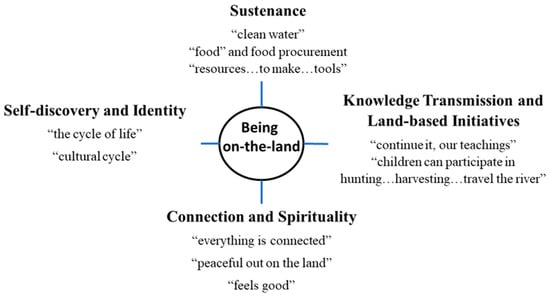
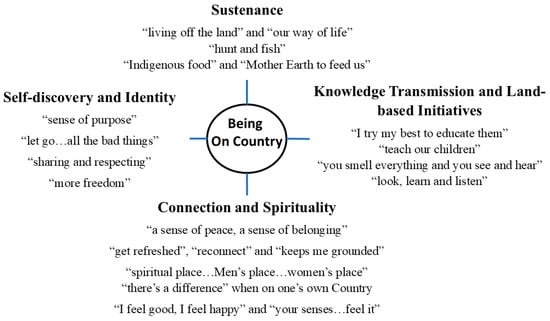
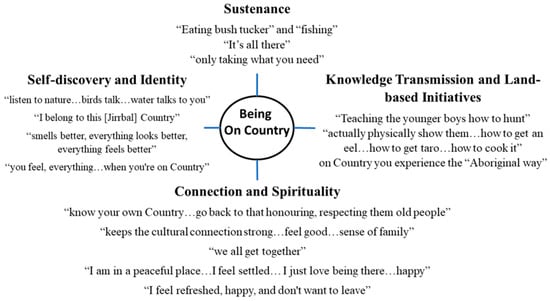
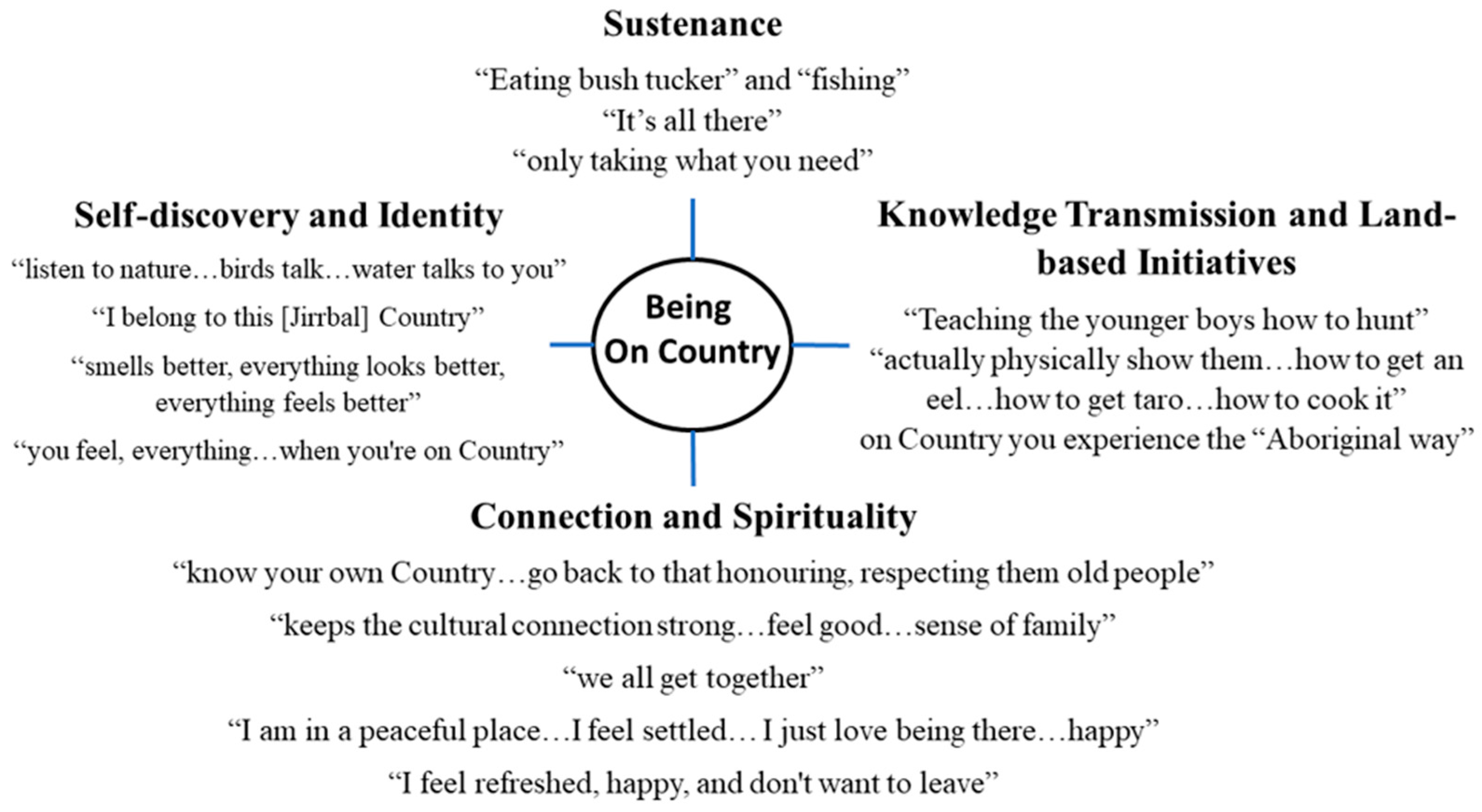

Disclaimer/Publisher’s Note: The statements, opinions and data contained in all publications are solely those of the individual author(s) and contributor(s) and not of MDPI and/or the editor(s). MDPI and/or the editor(s) disclaim responsibility for any injury to people or property resulting from any ideas, methods, instructions or products referred to in the content. |
© 2026 by the authors. Licensee MDPI, Basel, Switzerland. This article is an open access article distributed under the terms and conditions of the Creative Commons Attribution (CC BY) license.