


Abstract
In this study, an efficient and eco-friendly chitosan/Fe3O4/bentonite (Ch-Fe3O4-Bent) ternary hybrid adsorbent scaffold is developed for the efficient removal and recovery of Th(IV) from contaminated water, facilitating sustainable environmental remediation. The developed scaffold promotes circular economy principles through the recovery of valuable actinide resources while reducing secondary waste generation and mitigating the environmental impacts associated with radioactive wastewater. The crucial radioactive thorium has drawn a lot of attention, and many substances used in numerous industrial operations are thorium isotopes. This paper describes the synthesis of a chitosan hybrid scaffold for thorium adsorption purposes. Many characterization methods were performed on the fabricated scaffold. Removal of thorium (IV) from aqueous media using a Ch-Fe3O4-Bent ternary scaffold was comprehensively investigated through batch experiments under different operational parameters. Thorium adsorption was evaluated as a function of contact time, solution pH, initial thorium concentration, and temperature. The adsorption data were fitted to nonlinear Langmuir and Freundlich isotherm models to evaluate the material’s thorium removal capacity. Among the isotherm models tested, the Langmuir model provided the best fit for thorium adsorption (R2 = 0.88039), while the kinetic data followed the pseudo-second-order model (R2 = 0.99322, qe = 199.61407 mg/g). Based on the nonlinear Langmuir isotherm, the chitosan scaffold composite exhibited a maximum removal capacity (qmax) of 204.80984 mg/g. The thermodynamic feasibility of the adsorption process was evaluated, and the results confirm that the chitosan scaffold serves as a highly effective sorbent for the recovery and adsorption of Th(IV) ions from aquatic environments. Furthermore, this chitosan scaffold can be used to remove radioactive Th(IV) from surface water, seawater, and wastewater generated by nuclear fuel production technologies, mining operations, and laboratories handling radioactive materials. Temperature-dependent studies showed that Th(IV) adsorption occurs spontaneously at room temperature and becomes more favorable at elevated temperatures, indicating an endothermic process. Additionally, the fast adsorption kinetics of Th(IV) onto the chitosan scaffold render it highly attractive for the scale-up of thorium extraction. Overall, the findings highlight the potential of the developed chitosan scaffold as an environmentally sustainable and cost-efficient adsorbent for radioactive wastewater treatment, contributing to cleaner production, efficient resource utilization, environmental conservation, and the advancement of sustainable nuclear technologies.
1. Introduction
Rapid industrial growth and growing energy demands have drawn a lot of attention to nuclear energy as a steady, low-carbon, and sustainable energy source [1,2]. Some of the most crucial radioactive substances, used in numerous industrial operations, are thorium isotopes [1]. The primary raw ingredient for fourth-generation liquid fluorine thorium reactors is thorium. Compared to uranium fuel, it offers benefits including substantial reserves, a high energy density, and inherent safety [3]. The ability of thorium (IV) to efficiently diminish highly radioactive secondary actinide fission products renders it an appropriate substitute for nuclear fuel. As the most widespread radioactive element among the 5f-elements, thorium also serves as a characteristic member of the actinide series. In rocks and soil, thorite and lanthanides frequently coexist with other transition metals [4].
Th is mostly found in the +4-oxidation state in aqueous solutions, and it readily migrates into the surrounding environment. In addition to being a crucial element commercially, Th(IV) has the potential to seriously harm the ecosystem and all living things on earth [5]. Therefore, removing Th(IV) from environmental systems and nuclear waste is essential for ecological safety and sustainable energy [1]. Industrial applications of this element include nuclear reactor fuels, nuclear medicine, commercial lantern mantles, electronic and jet engine alloys, refractory materials, arc welding electrodes, and chemical catalysts [6]. The sources of its contamination are nuclear power facilities, mining, and water mills [7].
Chitosan (Ch), poly-β-(1,4)-2-amino-2-deoxy-glucopyranose, is a linear cationic polysaccharide derived from chitin, a highly abundant natural biopolymer, via deacetylation (removal of acetate groups), producing a copolymer with reactive -NH2 groups [8,9]. Its non-toxicity, eco-friendly degradability, biocompatibility, and affordability make it a popular eco-friendly biosorbent for removing various wastewater contaminants, including fluorides, dyes, heavy metal ions, and organic compounds [10,11,12]; additionally, it exhibits antibacterial [13], antifungal [14], and antitumor activity [9,15]. Owing to these versatile properties, it has found extensive use across the biomedical, biotechnological, agricultural, food, and cosmetic industries [16,17]. Depending on the intended function and application of the carrier [15], Ch can be adopted in multiple physical forms, such as nano- or microparticles [18,19], gels [20], wires and meshes [21], scaffolds [22], and films [23]. The chelation efficiency for heavy metals is directly influenced by the degree of deacetylation, the distribution of amino groups, and the polymer’s physical form [24,25,26]. In the context of environmental remediation, chitosan-based adsorbents notably enhance the sustainability of radioactive wastewater treatment. By reducing reliance on synthetic materials and minimizing secondary environmental impacts, they facilitate resource-efficient remediation strategies that align directly with the principles of the circular economy and sustainable development [27,28,29,30,31,32,33].
Bentonite, owing to its electrostatic attraction for chitosan, is expected to disperse easily in the chitosan matrix, improving the compressive strength of the system, which is critical for scaffold formation [34,35].
By virtue of their superparamagnetic nature, substantial surface area, facile synthesis, non-toxic nature, and favorable biocompatibility, nanomagnetic oxides (e.g., Fe3O4) have found widespread application as agents for water purification, and exhibit significant promise in multiple fields, including biology, chemistry, medicine, separation technology, and environmental science [36]. Furthermore, their stability, ease of modification, and functional versatility have made them important materials in biomedical applications and the remediation of environmental matrices.
Numerous techniques have been utilized to remove thorium and other hazardous heavy metal ions from industrial effluents, including membrane filtration, flocculation, chemical precipitation, ion exchange, chemical oxidation, solvent extraction, and electrodialysis [37,38,39,40,41,42]. Nevertheless, the utility of these separation techniques is compromised by several shortcomings, namely the requirement for expensive reagents, elevated operational costs, prolonged treatment times, generation of large waste-sludge volumes, and suboptimal removal efficiency, particularly when applied to industrial effluents that contain only trace quantities of metal ions at extremely low concentrations [42,43,44]. Adsorption represents a compelling alternative to conventional removal methods, functioning as a simple, affordable, and adaptable water purification technique. Its advantages include its high removal efficiency, facile adsorbent reusability, wide range of available adsorbents, low operating costs, and minimal disposable sludge [45,46,47,48,49,50,51].
Despite the demonstrated potential of chitosan-based composites for actinide adsorption, several critical knowledge gaps remain. The uptake and elimination of Th(IV) from aqueous media are challenging due to its high charge density, pronounced hydration shell, and competition with coexisting metal ions [52]. Hritcu et al. reported magnetic chitosan composite particles for thorium removal, achieving an outstanding capacity of 312.50 mg/g within a spontaneous and endothermic process. The PMAA-g-CT/sHNT composite, comprising poly(methacrylic acid)-grafted chitosan embedded in silanated halloysite nanotubes, likewise delivered a maximum capacity of 320.99 mg/g for Th(IV) adsorption [53]. Nevertheless, the application of magnetic Fe3O4 nanoparticles within a bentonite-reinforced chitosan matrix for Th(IV) adsorption has not yet been systematically explored, representing the research gap addressed in the present study [54].
A freeze-dried chitosan/Fe3O4/bentonite scaffold is preferred over beads or powders for thorium(IV) removal because its unique three-dimensional (3D) macroporous architecture, equipped with highly accessible active sites, fundamentally resolves the critical bottlenecks of traditional adsorbents, such as low efficiency, poor durability, and handling difficulties [55,56].
Bentonite was selected as the clay component specifically because of its high cation exchange capacity, layered structure with interlayer spaces that facilitate Th(IV) diffusion, and abundant silanol (Si–OH) and aluminol (Al–OH) surface sites that complement the amine and hydroxyl groups of chitosan [57]. Other clays such as kaolinite have lower cation exchange capacities and fewer accessible active sites, making bentonite the superior choice for actinide adsorption [58]. Accordingly, the central hypothesis of this work is that a freeze-dried ternary scaffold (Ch-Fe3O4-Bent) will exhibit synergistic adsorption performance for Th(IV), combining the high affinity of chitosan’s functional groups, the enhanced surface area and active sites of bentonite, and the magnetic recoverability imparted by Fe3O4 [59]. Meanwhile, the freeze-dried scaffold morphology provides superior structural integrity and handling characteristics compared to conventional bead or powder forms [60].
In this study, efforts were directed toward three main objectives: (i) the synthesis of a sustainable ternary hybrid (Ch-Fe3O4-Bent) scaffold derived from a renewable and biodegradable biopolymer; (ii) the evaluation of its adsorption capacity, isotherm behavior, and kinetic performance for Th(IV) removal from aqueous solutions, with emphasis on its potential as an environmentally friendly wastewater treatment approach; and (iii) the application of the developed adsorbent to real radioactive waste samples to assess its practical applicability for sustainable remediation and resource recovery.
2. Materials and Methods
2.1. Reagents
An Egyptian company supplied the commercial bentonite (Bent) used in this study. All other chemicals, including anhydrous ferric chloride, ferrous sulfate heptahydrate, high-molecular-weight chitosan, glutaraldehyde, sodium hydroxide, and thorium salt, were of an analytically pure grade and purchased from Sigma-Aldrich (St. Louis, MO, USA). Double-distilled water was used to prepare all solutions, and every measurement was performed in triplicate, with the results expressed as average values.
2.2. Synthesis of Magnetic Bentonite and Chitosan Nanohybrid Scaffold (Ch-Fe3O4-Bent)
To prepare magnetic bentonite, purified bentonite (1% w/v) was first dispersed in water and exfoliated by ultrasonication for 30 min. Subsequently, the exfoliated bentonite was dispersed into a solution containing ferrous and ferric ions at concentrations of 0.01 and 0.02 mol/L, respectively, using a co-precipitation method. The resulting suspension was maintained at 80 °C with vigorous stirring for 60 min. Following this, the pH was raised to 11.0 by the addition of a 25% (w/v) sodium hydroxide solution. This led to the precipitation of black magnetite particles onto the bentonite surface. The final product was washed until the pH reached neutrality (≈7), followed by drying in an oven at 50 °C for a period of 1440 min. Chitosan powder was solubilized in a 1% (v/v) acetic acid aqueous solution at 45 °C with continuous stirring for 120 min, yielding a 2% (w/v) chitosan solution. Separately, a definite quantity of the Fe3O4-bentonite magnetic nanohybrid was added to 50 mL of distilled water and dispersed by means of a magnetic stirrer operating at 600 rpm and 60 °C for 120 min. The two mixtures were then combined, and a small volume of glutaraldehyde solution (cross-linking agent) was added dropwise at 60 °C under mechanical stirring until gelation was observed. Subsequently, the resulting gel was subjected to freeze-drying using a Martin Christ lyophilizer for 48 h at 219 K under a reduced pressure of 44 µbar. All synthesized scaffolds and nanoparticles were subjected to comprehensive characterization.
2.3. Characterization of Magnetic Bentonite and Chitosan Nanohybrid Scaffold (Ch-Fe3O4-Bent)
Bentonite (Bent), magnetic bentonite (Fe3O4-Bent), and the nanohybrid scaffolds were analyzed by X-ray diffraction (XRD) using a Rigaku Smart Lab SE diffractometer (Rigaku, Tokyo, Japan), and by ATR-FTIR measurements with a Shimazu IR Prestige-21 (Shimadzu Europa GmbH, Düsseldorf, Germany). Average particle size and ζ-potential for Bent and Fe3O4-Bent were ascertained by utilizing Particle Sizing Systems (DLS analysis), Inc. Santa Barbara, CA, USA. A Quanta Chrome Touch Win particle sizing system was used to determine the average surface area via the Brunauer–Emmett–Teller (BET) method. A high-resolution JEOL JEM-2100 transmission electron microscope (TEM) (JEOL, Peabody, MA, USA) and an environmental Quanta FEG-250 scanning electron microscope (SEM) (FEI, Hillsboro, OR, USA) with EDX and mapping capabilities were employed to examine the scaffolds’ structure and surface morphology. Evaluation of magnetic behavior was performed via a Lake Shore Model 7410 vibrating sample magnetometer (VSM, Lake Shore Cryotronics, Inc., Westerville, OH, USA), which features a 10-inch electromagnet capable of producing fields of up to 3.1 T (±1% accuracy), a maximum sample size of 1 inch, and variable temperature control (CCR) from ~20 K to 450 K.
2.4. Adsorption Procedure
2.4.1. Equilibrium Batch Adsorption Study
The adsorption of thorium ions (Th) onto the scaffolds was evaluated under different conditions, including solution pH (adjusted from 1.0 to 4.0 using 0.1 M solutions of NaOH and HCl), sorbent dosage, and initial Th concentration. The selected pH range avoids two undesirable effects: below pH 5.0, the acidic conditions degrade the Ch-Fe3O4-Bent nanohybrid scaffold, and above pH 4.0, Th(IV) ions begin to precipitate. Adsorption isotherm studies were performed with initial Th(IV) concentrations (C0) between 25 and 400 mg/L, maintaining a contact time of 120 min. The selected Th(IV) concentration range was maintained within the linear absorbance limits of the spectrophotometric method to guarantee reliable and accurate measurements. Preliminary studies showed that thorium adsorption equilibrium was achieved within 5–240 min; therefore, a contact time of 120 min was selected. All pre-optimization experiments were carried out using a fixed adsorbent dosage of 0.005 g (5 mg/12.5 mL, equivalent to 0.4 g/L) and a fixed initial thorium concentration of 100 mg/L. These values of dosage and concentration were chosen because they are consistent with standard experimental protocols and produce reproducible results. The solid phase was separated from the solution by filtration after adsorption, and the residual thorium concentration was measured via UV–Vis spectrophotometry using Thoron I at 540 nm [61]. Removal efficiency (%R) and adsorption capacity (qe, mg/g) were then obtained from Equations (1) and (2), respectively [62,63,64,65,66,67].
In these equations, C0 and Ce are the initial and equilibrium thorium concentrations (mg/L), respectively; qe is the scaffold’s adsorption capacity (mg/g); V is the solution volume (L); and Wt is the adsorbent mass (g).
2.4.2. Desorption of Thorium
Desorption from the loaded solid adsorbent was performed with various concentrations of H2SO4, HNO3, HCl, NaCl, NaOH, and NaHCO3 as eluents. In each desorption experiment, a specific volume of the eluent was mixed with 0.005 g of Th(IV)-loaded scaffold, and the mixture was shaken for 60 min [68]. The desorption capacity was subsequently calculated.
2.4.3. Nonlinear Isotherm Study
The nonlinear forms of Freundlich and Langmuir isotherms [62,63,64,65,69,70] were applied to fit the experimental equilibrium data. Their respective equations are presented as follows:
Here, qe (mg/g) is the thorium uptake per scaffold mass, Ce represents the equilibrium thorium concentration in mg/L, qmax is the maximum adsorption capacity in mg/g, and Kl is the Langmuir constant (L/mg), which is based on free energy. The Freundlich constants are (L/g) and (adsorption intensity). Origin Pro 9.0 (Origin Lab, MD, USA) was employed to perform nonlinear fitting of the isotherm equations.
2.4.4. Nonlinear Kinetic Study
Investigation of adsorption kinetics for Th(IV) ions was conducted following protocols analogous to the equilibrium adsorption study. Experiments were conducted with contact times spanning 0 to 240 min, while other parameters were held constant: adsorbent dosage (5 mg/12.5 mL), initial Th concentration (100 mg/L), temperature (25 °C), and agitation speed (200 rpm). Fitting of the experimental adsorption data was carried out by applying three nonlinear kinetic models: pseudo-first order, pseudo-second order, and intraparticle diffusion [62,63,64,65,71]. Their equations are given as follows:
Here, qt is the adsorption capacity (mg/g) at time t (min), qe is the adsorption capacity (mg/g) at equilibrium; k1 is the pseudo first order rate constant (1/min), k2 is the pseudo second order rate constant (1/min); kip is the measure of diffusion coefficient (mg/g·min1/2); cip is the interparticle diffusion constant (mg/g).
2.4.5. Thermodynamic Study
The thermodynamic parameters ∆S°, ∆G°, and ∆H° were determined using the Van’t Hoff formula, as presented in the following equations [72,73]:
The thermodynamic values considered are ∆G°, ∆S°, and ∆H° (Gibbs free energy, entropy, and enthalpy changes, respectively). The variables are designated as follows: R = gas constant (8.314 J·mol−1·K−1), T = absolute temperature (K), and kd = equilibrium constant.
3. Results and Discussion
3.1. Properties and Characterization of the Adsorbent
3.1.1. BET Surface Area, Porosity, ζ-Potential, Granulometric Sizes, and Structural Morphological Properties of Bent and Synthesized Fe3O4-Bent Nanohybrids
The BET isotherms (N2 adsorption–desorption) of Bent and Fe3O4-Bent nanoparticles are displayed in Figure 1a,b. Both materials corresponded to type IV isotherms exhibiting H3-type hysteresis, a typical feature of mesoporous materials. Slit-shaped pores, which are typical of layered structures, are indicated by the hysteresis loops occurring in the relative pressure (P/P0) range of 0.1–0.9. Significant differences in surface area, pore size distribution, and porosity between the Bent and Fe3O4-Bent samples were further revealed by BET analysis. The specific surface area of natural bentonite (47.08 m2/g) was found to increase to 156.72 m2/g for the Fe3O4-bentonite nanocomposite, as revealed by BET surface analysis. This enhancement can be explained by the increased surface roughness resulting from nanoparticle deposition, which creates additional mesopores. Consequently, the synergistic effects of bentonite’s structure, its surface chemistry, and magnetic iron oxide promote adsorption processes. Indeed, the incorporation of nanoparticles enhances both the porosity and surface area of the Fe3O4-modified bentonite, thereby providing a greater number of accessible active sites for adsorbate binding [74]. Table 1 shows that magnetic nanobentonite has a higher total pore volume (3.232 cc/g) than nanobentonite (1.287 cc/g), reflecting its greater porosity for thorium physisorption. Both materials are mesoporous (pore sizes 2–50 nm), a feature that provides a large surface area and facilitates the diffusion and binding of target molecules. These mesopores enable rapid intraparticle diffusion by offering unobstructed pathways for adsorbate molecules to reach internal binding sites. The combination of a mesoporous structure, high surface area, larger pore volume, and magnetic properties renders Fe3O4-bentonite substantially more effective for adsorption than unmodified bentonite [75]. Bentonite typically consists of micron to sub-micron particles with a highly negative zeta potential (e.g., around −40 mV at neutral pH), indicating a negative surface charge in most aqueous environments. The zeta potential of magnetic bentonite often is less negative (−19 mV) due to the influence of the magnetic nanoparticles (like Fe3O4), potentially shifting its point of zero charge compared to pristine bentonite [76], Figure 1c,d. Raw bentonite has a particle size distribution between 100 and 1000 nm with a mean diameter MD = 345 nm. Bentonite itself consists of layered silicate structures that can be on the nanoscale, contributing to the overall particle size of the magnetic composite. The size of the iron oxide nanoparticles (like magnetite) embedded within the bentonite matrix also dictates the final particle size. When a magnetic component is added to bentonite, the resulting composite’s mean particle diameter can be much higher [77], often in the nanometer range (100–2000 nm, with MD = 715 nm), Figure 1e,f and Table 1. The method used to create the magnetic bentonite, such as co-precipitation, can influence the average size and distribution of the particles, yielding larger sized aggregate particles, as shown in a TEM study [78]. TEM images reveal the layered structure of bentonite particles (Figure 1g,h), which exhibit interlayer pores of 0.03–0.2 µm. The same figure also shows magnetic nanobentonite, displaying two nanoparticle populations: large (≈200 nm), polygonal particles attributed to nanobentonite, and small, spherical Fe3O4 nanoparticles. Aggregation of the Fe3O4 nanoparticles occurs due to their magnetic nature.
Figure 1.
Nitrogen physisorption isotherm (a,b), ζ-potential (c,d), particle size (e,f) and TEM micrographs (g,h) for bentonite (Bent) and magnetic bentonite nanoparticles (Fe3O4-Bent).
Table 1.
BET surface areas, porosity and pore size distribution of Bent and Fe3O4-Bent *.
3.1.2. Comparative Analysis of Bentonite, Magnetic Bentonite, and Chitosan Nanohybrid Scaffolds
XRD
The crystalline structures of natural bentonite and Fe3O4-bentonite nanocomposite powders were examined using X-ray diffraction (XRD) over a 2θ range of 5–90°. Analysis of the raw bentonite sample (Figure 2a) revealed peaks characteristic of several natural phases, including montmorillonite (the main constituent of natural bentonite), along with quartz, calcite, and feldspar [79]. The XRD peaks of bentonite are mainly associated with silica (SiO2) and alumina (Al2O3). The diffractogram of bentonite exhibits a strong reflection at 2θ = 7.09°, assigned to the (001) plane of montmorillonite, in good agreement with reference values. After impregnation, the magnetic bentonite (same figure) shows only a slight shift in this (001) peak to 7.33° 2θ, indicating that the crystal shape and morphology of bentonite remain largely unchanged. Thus, the montmorillonite lattice structure is not degraded by the coprecipitation process of iron oxides. Furthermore, compared to natural bentonite, magnetic bentonite displays additional diffraction peaks at 30.44°, 35.66°, 43.13°, 53.34°, 57.20°, and 62.86°, corresponding to the (220), (311), (400), (422), (511), and (440) crystal faces, respectively. The observed peaks are consistent with the reference pattern for crystalline magnetite (Fe3O4 spinel phase; JCPDS card No. 3 863) [80]. The observed decrease in peak intensity further suggests diminished crystallinity of the montmorillonite layers, possibly associated with the intercalation of Fe3O4 [81]. This finding confirms the successful intercalation of iron oxide into the bentonite layered structure. Beyond structural confirmation, we explain that these crystalline phases impart magnetic responsiveness, which directly influences the operational adsorption performance by enabling rapid solid–liquid separation and enhancing the practical reusability of the material.
Figure 2.
(a,b) XRD patterns and FTIR spectra of bentonite (Bent), Fe3O4-Bent, chitosan (Ch), and Ch-Fe3O4-Bent scaffolds; (c) FTIR spectra of Ch-Fe3O4-Bent before and after Th(IV) adsorption.
The XRD pattern of the chitosan scaffold (Figure 2a) confirms its semi-crystalline nature through broad diffraction peaks at approximately 2θ (8.5° and 21.18°), which result from an extensive hydrogen bonding network. However, manufacturing processes like freeze-drying and cross-linking can disrupt this organization, potentially increasing the amorphous character of the final scaffold. The presence of a specific crystal structure peak, 2θ = 35.58°, confirms that Fe3O4-Bent nanoparticles were successfully incorporated into the chitosan matrix, while a broad amorphous peak around 2θ = 21.5°suggests they intercalated and distributed evenly, modifying the final structure [75,82].
FTIR
FTIR spectroscopy verified the grafting of iron oxide onto bentonite. Figure 2b shows the FTIR spectral analysis of neat bentonite and Fe3O4-bentonite (4000–400 cm−1). The two spectra exhibited very similar peak shapes, indicating that the bentonite structure remained intact after impregnation. In the natural bentonite spectrum, the sharp absorption peak at 3633 cm−1 is attributed to the asymmetric stretching of Al-OH-Al in montmorillonite. The broad peak at 3424 cm−1 corresponds to the –OH stretching of hydroxyl groups and water, suggesting possible hydroxyl linkage between octahedral and tetrahedral layers. An intense H-O-H bending band appears at 1635 cm−1. The peaks observed at 1394, 1107, and 991 cm−1 correspond to Si–O–Si stretching within the tetrahedral sheet. The band at 910 cm−1 arises from –OH deformation, specifically Al–OH–Al or Al–Al–OH bending. Absorption bands at 858, 835, 795, and 726 cm−1 are characteristic of Si-O stretching in silica and quartz. The band at 695 cm−1 originates from Al-O and Si-O out-of-plane vibrations; the bands at 509 and 457 cm−1 reflect Al–O–Si and Si–O–Si bending vibrations. A new peak appearing at ~530 cm−1 in the Fe3O4-bentonite spectrum (Figure 2b) is assigned to Fe-O stretching of Fe3O4, confirming the existence of magnetite. Nearly all bentonite-related peaks are retained in the nanocomposite, demonstrating effective fabrication of Fe3O4 particles in the bentonite lattice [83,84].
The FTIR spectrum of the modified scaffold hydrogel (Figure 2b) shows characteristic bands confirming Fe3O4-bentonite incorporation and cross-linking between Fe3O4-bentonite nanoparticles, glutaraldehyde, and chitosan biopolymer. The Schiff base formed from the chitosan–glutaraldehyde reaction arises from the amine groups of chitosan reacting with aldehyde groups, giving rise to imine (C=N) bands [85]. The following FTIR bands were observed. First, characteristic polymer bands appeared near 3730 and 3347 cm−1, assigned to O–H and N–H stretching vibrations. The absorption band at 1544 cm−1 is attributed to C–N stretching and N–H bending in amide II bonds. Further bands observed at approximately 1024 cm−1 and 1641 cm−1 correspond to the C–O stretching and C=O stretching of chitosan, respectively. The peak at 1394 cm−1 is due to C–H bending, whereas the angular deformation of H–N–H is observed at 682 cm−1. Furthermore, the Si–OH stretching vibration of bentonite (normally at 1030–1040 cm−1) exhibits broadening and slight deviations, representing disruption of the silicate framework upon incorporating of Fe3O4 nanoparticles and chitosan. Together, these spectral changes verify the successful integration of Fe3O4 and chitosan onto bentonite, yielding a robust nanocomposite [86,87]. In the chitosan FTIR spectrum, the bands at approximately 1152 cm−1 and 1056 cm−1 are characteristic of its polysaccharide structure: the former is attributed to C-O and C-OH stretching vibrations in glycosidic bonds, and the latter is assigned to C-O-C glycosidic bond stretching, with possible contributions from hydroxyl group vibrations [88]. In brief, the FT-IR spectrum confirmed that the typical -NH2, -OH, and Fe3O4-Bent groups of modified chitosan are present in its mesoporous scaffold. These groups are potential sites for thorium adsorption.
Figure 2c shows the FTIR spectra of the chitosan scaffold before and after thorium adsorption, revealing notable changes. In the 3400–3200 cm−1 region, the broad O–H and N–H stretching bands of chitosan and bentonite are accompanied by an intense band near 3400 cm−1. The shift in this band upon thorium adsorption suggests the direct involvement of the corresponding functional group in the binding mechanism. The bands around 1024 cm−1 and 1641 cm−1 can be recognized as the spectral bands related to C-O elongation and the chitosan C=O, respectively. These groups typically show broadness, and their interaction with thorium is often studied in biosorption processes. A decrease in intensity is also observed for the chitosan C–H bending band near 1396 cm−1. This is consistent with hydrogen bonding involving the amino and hydroxyl groups of chitosan with the silanol (Si–OH) groups of bentonite and the surface –OH groups of Fe3O4 nanoparticles, suggesting thorium coordination. The amide I and II bands of chitosan (1650–1550 cm−1) likewise weaken, suggesting electrostatic or coordination bonding among chitosan’s amine groups, Fe3O4-bentonite, and thorium. In the Ch-Fe3O4-Bent-Th spectrum, the Fe–O peak of magnetite at 530 cm−1 is reduced, and a new band at 671 cm−1 (Th–OH interaction) appears, confirming thorium adsorption [89,90]. The changes in peak assignments for the functional groups involved (e.g., –OH, –NH2, Fe–O, Si–O–Al) are related to interactions with Th(IV) species, a point that will be elaborated upon in the subsequent sections.
3.1.3. Chitosan Nanohybrid Scaffold Morphology
Scanning electron micrographs coupled with EDX mapping, Figure 3a–f, illustrate the chitosan scaffold composite before and after thorium adsorption. SEM analysis confirms the successful fabrication of the material through the well-dispersed nanoparticles in the chitosan matrix, Figure 3c. The surface of the Ch-Fe3O4-Bent composite material is generally heterogeneous, with the embedded magnetic bentonite nanoparticles visible within the smoother chitosan base. The scaffold’s interconnected, porous structure is crucial for thorium adsorption due to its high surface area. A considerable change in the surface texture of the sorbent material was observed after sorption. As illustrated in Figure 3e, the scaffold surface was coated with metal ions and exhibited the formation of diverse aggregates.
Figure 3.
(a–f): SEM morphology and elemental analysis/mapping of (a,b) chitosan (Ch); (c,d) Ch-Fe3O4-Bent; and (e,f) Ch-Fe3O4-Bent after Th(IV) adsorption. Scale bar = 20 μm.
EDX and Mapp analysis was used to verify the elemental distribution within the scaffold and to investigate potential interactions between Th ions and the chitosan hybrid, key information for understanding the material’s composition. Figure 3b,d,f shows the EDX patterns of the proposed sorbent prior to and following thorium adsorption. EDX and mapping of the unmodified chitosan sample revealed the presence of C (38.76%), N (10.05%), and O (51.20%). For the modified sorbent, the spectra indicated Fe, Si, Al, Na, K, Ca, O, C, and N, confirming the successful formation of magnetic bentonite nanoparticles on the chitosan surface. After using the Ch-Fe3O4-Bent composite as an adsorbent for thorium ions, significant surface changes were observed, and Th was detected within the adsorbent structure. This confirms the material’s capability for thorium uptake. While the EDX spectra for pure chitosan (Ch) and the unloaded composite (Ch-Fe3O4-Bent) (Figure 3b,d) showed no distinct Th signals, the spectrum of the thorium-loaded sorbent (Ch-Fe3O4-Bent-Th) (Figure 3f) displayed clear and characteristic Th peaks [91,92].
3.1.4. Magnetic and Wettability Properties (WCA)
In Figure 4a, the conventional magnetic bentonite nanoparticles (Fe3O4-Bent) show a higher saturation magnetization value (e.g., 12.54 emu/g). This magnetism comes from the Fe3O4 content, which is a ferrimagnetic material. When a non-magnetic polymer (like chitosan) is incorporated into the structure to form a scaffold (Ch-Fe3O4-Bent), it acts as a matrix that increases the non-magnetic component of the overall composite material. The intrinsic lack of magnetic behavior in chitosan leads to a dilution effect, thus reducing the total measured magnetization of the final composite (e.g., to 0.54 emu/g). This decrease from the original Fe3O4-Bent value is an expected outcome [93,94]. The substantial reduction in saturation magnetization can be attributed to a combination of dilution, surface quenching, and structural confinement effects. Specifically, the incorporation of non-magnetic chitosan and bentonite components lowers the overall Fe3O4 mass fraction, thereby reducing the Ms value on a per-gram basis. Concurrently, the chitosan matrix encapsulates the Fe3O4-Bent nanoparticles, creating a magnetic “dead layer” at the interface that partially quenches the surface spin moments. Finally, the aggregation and structural confinement of Fe3O4-Bent nanoparticles within the cross-linked chitosan network during composite formation further diminish the overall magnetic moment [95,96].
Figure 4.
(a,b) Magnetic properties: hysteresis loops of Fe3O4-Bent and Ch-Fe3O4-Bent scaffold; (c) water contact angle (WCA) measurements for chitosan and Ch-Fe3O4-Bent scaffold.
A qualitative analysis of the hydrophilic/hydrophobic nature of the chitosan (Ch) and modified chitosan (Ch- Fe3O4-Bent) scaffolds was performed by evaluating the water contact angle (WCA) using deionized water droplets. As a hydrophilic clay, bentonite enhances the water absorption capacity and surface hydrophilicity of the composite; however, the addition of magnetic particles can influence surface properties, potentially affecting the wetting behavior. As depicted in Figure 4b, contact angles of 50.9–53.13° and 59.38–59.41°were observed for the pristine and modified chitosan scaffolds, respectively [97].
3.2. A Study on the Adsorption and Removal of Thorium Ions
The adsorption of thorium (IV) ions (qe) onto the different prepared scaffolds was studied and evaluated. The capacity of the Ch-Fe3O4-Bent scaffolds (172.28 mg/g) is higher than that of the chitosan scaffolds (129.93 mg/g), which illustrates how the Ch-Fe3O4-Bent scaffolds outperform the plain Ch scaffolds [98,99,100]. Consequently, the Ch-Fe3O4-Bent scaffold was determined to be the optimum adsorbent. For the remainder of this paper, only adsorption studies using the Ch-Fe3O4-Bent scaffolds are described. In addition to its excellent adsorption performance, the developed chitosan scaffold offers significant sustainability benefits. As a biodegradable and environmentally friendly material, it provides an effective approach for radioactive wastewater treatment while facilitating thorium recovery and promoting the sustainable and circular management of valuable actinide resources.
3.2.1. Optimization of Adsorption Process Studies
In the initial evaluation of the synthesized scaffold adsorbent for thorium adsorption, the impacts of pH and adsorption kinetics were examined. Adsorption isotherms were derived at multiple temperatures for the purpose of evaluating thermodynamic characteristics. Finally, the desorption and recycling of metals, along with thorium adsorption on the scaffold, were studied in batch experiments.
Factors Affecting Adsorption of Thorium: Solution pH, Scaffold Adsorbent Weight
Because it influences the thorium adsorbate’s surface characteristics and degree of ionization, pH has a significant impact on a material’s adsorption capability. The effect of solution pH on Th(IV) adsorption onto the Ch-Fe3O4-Bent nanohybrid was investigated over the pH range of 1–4 at room temperature. This range was selected to evaluate the adsorption behavior under strongly acidic conditions while minimizing extensive hydrolysis and possible precipitation of Th(IV) at higher pH values. As shown in Figure 5a, the adsorption capacity increased from approximately 130 mg/g at pH 1 to 152.9 mg/g at pH 2, reaching a maximum of 172.28 mg/g at pH 3. A slight decrease to approximately 168.5 mg/g was observed at pH 4. The observed pH dependence can be attributed to changes in both the protonation state of the functional groups on the Ch-Fe3O4-Bent nanohybrid and the aqueous speciation of Th(IV). At low pH, the high concentration of H+ promotes protonation of the available adsorption sites and increases competition between H+ and Th(IV) for these sites, thereby limiting Th(IV) uptake. As the pH increases, progressive deprotonation of the surface functional groups enhances the availability of active binding sites and favors Th(IV) adsorption.
Figure 5.
Thorium removal capacity at different factors: (a) Effect of pH on adsorption of thorium ions onto Ch-Fe3O4-Bent scaffold. (b) Effect of adsorbent dose on thorium ion removal by Ch-Fe3O4-Bent scaffold (experimental conditions: solution volume, V = 12.5 mL, initial concentration, Co = 100 mg/L, temperature = 25 °C).
The slight decrease in adsorption capacity at pH 4 may be associated with increased hydrolysis and changes in the aqueous speciation of Th(IV), which can alter its interaction with the functional groups of the nanohybrid. Despite this slight decrease, the adsorption capacity remained high at pH 4. Based on the maximum adsorption capacity obtained at pH 3, this value was selected as the optimum pH for all subsequent adsorption experiments.
To evaluate the influence of adsorbent dose, different doses of Ch-Fe3O4-Bent nanohybrid were used, ranging from 3 to 60 mg. The influence of adsorbent dose on the uptake of thorium ions by the Ch-Fe3O4-Bent scaffold was studied (Figure 5b). The thorium ion adsorption capacity on the Ch-Fe3O4-Bent scaffold was observed to increase from 148.30625 mg/g to 172.28125 mg/g after increasing the dose from 3 to 5 mg/g; however, increasing the dose above 5 mg can cause a decrease in the capacity of thorium. It was found that the percentage of thorium has the opposite effect compared to capacity uptake on the Ch-Fe3O4-Bent scaffold. Figure 5 illustrates the reason for Th(IV) elimination % as a variation in thorium ion adsorption capacity with scaffold dose. It is evident that the existence of additional active binding sites causes the adsorption of Th(IV) to rise as the quantity of adsorbent increases. Even at greater dosages, there is no discernible variation in the elimination of Th(IV) since the concentration remains stable.
3.2.2. Adsorption Kinetics
To identify the best sorption in the shortest amount of time, the scaffold’s equilibration contact period for Th(IV) ion adsorption was calculated (Figure 6a,b). The findings revealed a gradual enhancement in thorium adsorption as the contact time was extended, and the adsorption process reached its equilibrium phase after 120 min. This may be because the concentration was high at the beginning of the adsorption procedure and there was an empty binding site for thorium ion molecules on the scaffold’s surface. Nevertheless, the quantity of unoccupied sites on the scaffold surface decreased once all of the empty sites were occupied by thorium ion molecules. Consequently, when the adsorption contacting time increased, the removal rate of thorium ions likewise somewhat decreased and stayed constant [101].
Figure 6.
(a) Effect of contact time on adsorption of thorium ions by Ch-Fe3O4-Bent scaffold. (b) Fitting results for adsorption kinetics for thorium ions onto Ch-Fe3O4-Bent scaffold (PFO kinetics model, PSO kinetics model, and IPD kinetics model). (Experimental conditions: solution volume, V = 12.5 mL, adsorbent dose, M = 0.005 g, for thorium ions, 100 mg/L, temperature = 25 °C, pH = 3 ± 0.5 for thorium ions.)
Further tests on thorium adsorption were conducted at the obtained equilibrium contact time, and the resulting data served to examine the metal adsorption kinetics using three nonlinear models: pseudo-first order (PFO), pseudo-second order (PSO), and intraparticle diffusion (IPD). Table 2 summarizes the results for the kinetic parameter values, which are presented in Figure 6a,b. From the plot of qt against t (Figure 6a,b), the values of the rate constant k1 and the equilibrium capacity qe for the PFO kinetic model were obtained. However, the coefficient of determination for thorium ions (R2 = 0.97902) was not sufficient. This finding implies that the PFO kinetics model is unable to describe the sorption of thorium ions onto the Ch-Fe3O4-Bent scaffold. In contrast, the R2 value for thorium ions in the PSO model was 0.99322 (Figure 6a,b). Furthermore, the qe (cal.) value for the Ch-Fe3O4-Bent scaffold (199.61407 mg/g), obtained from the plot of t/qt against t, was extremely comparable to the qe (exp.) value. According to the PSO model, the adsorption rate is dependent on the scaffold’s adsorption capacity rather than the thorium ion concentration. Additionally, the IPD model was used to examine diffusion processes and the likely rate-limiting stage of the adsorption process. The IPD model’s plot demonstrated multi-linearity for thorium ions (Figure 6b). The multi-linear figure suggests that the adsorption process may occur in several stages. The adsorption of thorium ions onto the Ch-Fe3O4-Bent scaffold was dependent on chemicals interactions and also influenced by diffusion since the IPD graph did not pass through the origin or intercept (=27.23303).
Table 2.
Kinetics and isotherm adsorption constants for Th (IV) adsorption onto Ch-Fe3O4-Bent scaffold.
3.2.3. Adsorption Isotherms
As shown in Figure 7a,b, the adsorption performance of thorium (IV) ions onto the Ch-Fe3O4-Bent scaffold was analyzed at various initial concentrations under ideal circumstances (pH, dosage, and time). The findings indicate that when thorium ion levels increased, the adsorption of thorium ions on the Ch-Fe3O4-Bent scaffold gradually increased. The adsorption isotherms were examined to establish the correlation between the concentration of thorium species remaining in the aqueous phase and the quantity of thorium bound to the adsorbent under equilibrium conditions [102]. Various nonlinear sorption isotherm models, including the Freundlich and Langmuir isotherms, were applied to fit the equilibrium data of the thorium ions. Table 2 summarizes the adsorption isotherm parameters, which are displayed in Figure 7b. For thorium ions, the Langmuir model’s R2 value was 0.96882 (Figure 7b). This isotherm model gives a maximum thorium adsorption capacity (qmax) of 204.80984 mg/g, nearly identical to the experimental qe(exp) value.
Figure 7.
(a) Effect of thorium ion concentration, (b) Sorption equilibrium study (Langmuir isotherm model and Freundlich isotherm model) [Ch-Fe3O4-Bent scaffold (pH 3.0, T = 25 °C, shaking time 120 min, amount of scaffold adsorbent 0.005 g)].
Additionally, the separation factor, the RL value, was in the range of 0 to 1 (0 < RL < 1), showing that the Langmuir model can readily interpret thorium adsorption on the Ch-Fe3O4-Bent scaffold (RL value for thorium ions = 0.0736). However, multilayer adsorption on heterogeneous sites is described by the Freundlich equilibrium model, Figure 7b, which also implies that the surface sites of the scaffold are uneven and that the strong binding sites are occupied first [103,104]. The Freundlich isotherm model for thorium ions had an R2 value of 0.83917. A value of 1/n within the range of 0 to 1 (0 < 1/n < 1) indicates favorable adsorption, where 1/n itself represents either the adsorption intensity or the degree of surface heterogeneity of the adsorbent. The 1/n value for thorium ions was 0.1899, supporting the heterogeneity of Ch-Fe3O4-Bent scaffold sites during adsorption.
3.2.4. Thermodynamic Analysis of Adsorption
The goal of exploring adsorption thermodynamics was to learn more about how spontaneous the adsorption process is and to understand the fundamental energy changes taking place. The adsorption of thorium ions onto the Ch-Fe3O4-Bent scaffold as a function of temperature is also shown in Figure 8a, which demonstrates that raising the temperature improves the removal ability for thorium ions. The significant thermodynamic parameters were evaluated, as shown in Figure 8b, and are tabulated in Table 2, including enthalpy (ΔH°: kJ/mol), entropy (ΔS°: J/mol.K), and Gibbs free energy (ΔG°: kJ/mol). The enthalpy changes ΔH° and entropy change ΔS° were calculated from the ln(qe/ce) versus reciprocal temperature (1/T) plot, as presented in Figure 8b. At all measured temperatures (298 K; 313 K; 323 K; 333 K; and 343 K), the Gibbs free energy ΔG° for thorium ions was negative, confirming that the adsorption of thorium ions onto the scaffold is spontaneous and feasible [105,106]. The greater magnitude of ΔG° observed at higher temperatures implies that the adsorption process of thorium becomes increasingly spontaneous as temperature increases. The Ch-Fe3O4-Bent scaffold exhibits endothermic adsorption of thorium ions, as demonstrated by the positive ΔH° values. A strong adsorbate–adsorbent interaction between thorium ions and the Ch-Fe3O4-Bent scaffold is evidenced by the elevated ΔH° value. It is widely recognized that adsorption may proceed via either chemical or physical mechanisms. The enthalpy changes ΔH° lies between 4 and 40 kJ/mol in the case of physical adsorption, and between 40 and 800 kJ/mol for chemical adsorption [107]. Table 3’s enthalpy (ΔH◦) values indicate that energy (15.29 kJ/mol) is needed for thorium ion adsorption onto the Ch-Fe3O4-Bent scaffold. A positive ∆So value results from the disruption of the hydration shell surrounding Th(IV) ions as adsorption takes place, which increases unpredictability at the interface.
Figure 8.
(a) Plot of temperature’s effect on the adsorption of thorium by Ch-Fe3O4-Bent scaffold, (b) plot of lnKd versus 1/T for adsorption of Th (IV) onto Ch-Fe3O4-Bent scaffold adsorbent at different temperatures.
Table 3.
Thermodynamic investigation for Th (IV) adsorption onto Ch-Fe3O4-Bent scaffold at different temperatures.
3.2.5. Adsorption Capacity of Thorium Ions in the Presence of Competing Ions
The presence of competing ions in solution can significantly affect the adsorption performance of an adsorbent by competing with the thorium target ions for the available active binding sites. To evaluate the selectivity of the Ch-Fe3O4-Bent scaffold toward Th(IV) ions, adsorption experiments were conducted using mixed solutions containing thorium and various coexisting metal ions (V, Sn, Co, Ni, Cu, and Ti). The obtained results are presented in Figure 9, showing that the adsorption capacity and removal efficiency of Th(IV) in the absence of interfering ions reached 172.28 mg/g and 68.91%, respectively.
Figure 9.
(a) Effect of co-existing ions on adsorption uptake of thorium ions onto Ch-Fe3O4-Bent scaffold, (b) desorption capacity for thorium ions from the Ch-Fe3O4-Bent scaffold using different eluting agents.
The presence of Sn and Ti ions had only a minor effect on thorium adsorption, maintaining relatively high adsorption capacities of 165.87 and 162.82 mg/g, corresponding to removal efficiencies of 66.35% and 65.13%, respectively. This behavior indicates a weak competition between these ions and Th(IV) for the active sites of adsorption. In contrast, the coexistence of Co(II), Ni(II) and Cu(II) ions resulted in a noticeable decrease in thorium uptake. The adsorption capacities decreased to 116.28, 64.71, and 58.36 mg/g, with corresponding removal efficiencies of 46.51%, 25.88%, and 23.35%, respectively. The reduction in adsorption performance can be attributed to competitive adsorption and partial occupation of the active sites by these metal ions. Among all investigated ions, vanadium exhibited the strongest interference effect. In the presence of V ions, the adsorption capacity of Th(IV) dramatically decreased to 35.60 mg/g, corresponding to a removal efficiency of only 14.24%. This substantial reduction suggests a strong affinity of vanadium species toward the functional groups available on the Ch-Fe3O4-Bent surface, leading to severe competition with thorium ions. Overall, the interference effect on thorium adsorption followed the order: Sn ≈ Ti < Co < Ni < Cu << V, indicating that Sn and Ti exerted a negligible influence, whereas vanadium strongly hindered the adsorption of Th(IV). These findings demonstrate the relatively high selectivity of the Ch-Fe3O4-Bent scaffold toward thorium in the presence of most competing ions, except for vanadium, which significantly reduced its adsorption efficiency.
3.2.6. Desorption, Regeneration, and Reusability of the Scaffold
The desorption efficiency for thorium metal ions was evaluated, and Figure 9b presents the efficiencies of elution of the various chemical eluents tested. NaHCO3 and HNO3 exhibited superior desorption performance relative to the remaining eluents. The desorption capacity of Th(IV) strongly depended on the eluent, following the order HNO3 > HCl > H2SO4 > NaCl > NaOH > NaHCO3, with capacities of 35.0, 32.2, 27.3, 24.3, 20.8, and 13.3 mg/g, respectively, confirming the superior effectiveness of acidic media for disrupting Th(IV)–surface interactions through protonation of the active binding sites. Remarkably, the HNO3/HCl mixed eluent achieved a substantially higher desorption capacity of 52.3 mg/g after 60 min using 30 mL of eluent, exceeding the performance of either acid alone and demonstrating a strong synergistic effect that promotes proton-assisted dissociation of Th(IV) from the adsorbent. The poor performance of alkaline eluents can be attributed to persistent surface–Th(IV) interactions and the possible hydrolysis and precipitation of Th(IV) species, whereas the relatively lower efficiency of H2SO4 may be associated with sulfate–Th(IV) interactions. Efficient reuse of the adsorbent material through successive adsorption/desorption cycles offers a means to greatly decrease metal recovery costs [108]. The regeneration and reusability performance of the adsorbent was subsequently evaluated over five consecutive adsorption–desorption cycles. Importantly, the adsorbent retained a capacity of 144 mg/g after five adsorption–desorption cycles compared with 172 mg/g initially, corresponding to 83.7% capacity retention, which demonstrates excellent regeneration stability and confirms that the material preserves a substantial fraction of its active adsorption sites during repeated operation. The combination of high desorption capacity, enhanced desorption using the HNO3/HCl system, and strong cycling stability highlights the considerable potential of the developed adsorbent for sustainable and repeated Th(IV) removal and recovery.
3.2.7. Comparative Adsorption Performance with Reported Adsorbents and the Corresponding Mechanistic Pathways
Table 4 summarizes the results of a comparison between the performance of the Ch-Fe3O4-Bent scaffold adsorbent and other adsorbents employed for thorium removal reported in earlier research. The outcome shows that the Ch-Fe3O4-Bent scaffold has a greater adsorptive capacity than widely used adsorbents used to remove thorium ions. The potential of our scaffold as an adsorbent for Th(IV) can only be validated by evaluating its adsorption capacity in comparison with other adsorbents. Table 4 shows the adsorption capacities of inorganic materials and composites for the extraction of thorium from waste solutions under several test conditions. As clearly shown in the table, the Ch-Fe3O4-Bent scaffold exhibits superior sorption capability compared to other published adsorbents, making it a promising candidate for the adsorption and removal of Th(IV) ions from aqueous solutions.
Table 4.
Comparison of maximum adsorption (qmax) of some adsorbents towards thorium.
The adsorption of Th(IV) onto the Ch–Fe3O4–Bent composite is proposed to proceed through a synergistic combination of surface complexation, electrostatic attraction, and ion-exchange interactions, enabled by the complementary chemical functionalities of chitosan, Fe3O4, and bentonite. The composite architecture provides multiple types of accessible binding sites, allowing Th(IV) species to interact simultaneously with amino-, hydroxyl-, Fe–OH-, and oxygen-containing aluminosilicate groups. Chitosan plays a central role by providing abundant amino (–NH2) and hydroxyl (–OH) groups capable of interacting with Th(IV) through donor–acceptor coordination. The electron-donating character of these functional groups facilitates the formation of surface-associated Th(IV) complexes. A representative surface reaction can be expressed as:
where S–OH represents an accessible hydroxyl-containing surface site. Similar coordination may occur through amino groups and other oxygen-containing functionalities. Such interactions can promote strong retention of Th(IV) at the adsorbent surface and constitute an important contribution to the overall adsorption process.
Fe3O4 introduces additional reactive Fe–OH groups that can participate in surface coordination with Th(IV) species. These hydroxylated iron-oxide sites provide additional anchoring points and increase the diversity of available surface functionalities. The incorporation of Fe3O4 also provides magnetic functionality to the composite, facilitating its separation from the treated aqueous phase after adsorption. Bentonite contributes a negatively charged layered aluminosilicate framework containing surface oxygen sites and exchangeable interlayer cations. These negatively charged sites can promote the electrostatic attraction of positively charged Th(IV) species toward the composite surface, increasing their local concentration near active binding sites. Once concentrated at the interface, Th(IV) can undergo stronger specific interactions with the oxygen- and nitrogen-containing functional groups provided by chitosan and Fe3O4. Ion exchange may provide an additional pathway for Th(IV) retention within the bentonite structure. Th(IV) species may interact with negatively charged aluminosilicate sites and partially replace naturally occurring exchangeable interlayer cations. This process can contribute to the overall uptake by providing additional retention sites within the layered structure. However, ion exchange is considered a complementary mechanism rather than the sole pathway of adsorption.
The highly hydrated nature of Th(IV) species may also permit secondary interactions with oxygen-containing groups through hydrogen bonding and hydration-mediated interactions. These interactions can contribute to the stabilization of surface-associated Th(IV), although they are expected to play a supporting role compared with direct surface coordination and electrostatic interactions. Accordingly, the overall adsorption process can be envisioned as a sequence in which Th(IV) species approach the composite surface, become attracted to negatively charged sites, and subsequently interact with accessible amino, hydroxyl, Fe–OH, and aluminosilicate oxygen sites through specific surface interactions. The simultaneous contribution of chitosan, Fe3O4, and bentonite therefore generates a multifunctional adsorption interface in which different retention pathways operate cooperatively. This synergistic architecture enhances the density and diversity of effective binding sites and provides a plausible molecular basis for the efficient retention of Th(IV) by the Ch–Fe3O4–Bent composite. The proposed mechanism is represented in Figure 10.
Figure 10.
Schematic presentation of adsorption of thorium ions onto chitosan/Fe3O4/bentonite scaffold.
3.2.8. Adsorption Applications
Thorium was adsorbed and removed from actual radioactive wastewater in order to further evaluate the scaffold’s applicability. Table 5 lists the simulated radioactive wastewater’s composition both before and after the adsorption procedure. The thorium content in the aqueous solution dropped from 100 to 48.81 mg/L after vigorously combining 0.01 g of scaffold adsorbent with 25 mL of the simulated radioactive effluent for a period of 120 min. Other metal cations and interfering ions were poorly adsorbed, with a clearance capability of 127.975 mg/g. Among the investigated metal ions, Pb showed a noticeable decrease in concentration (49.19 to 11.52 mg/L), whereas V, Mn, Ni, Cu, and Co experienced comparatively minor reductions. These results demonstrate the potential of the Ch-Fe3O4-Bent scaffold as an effective adsorbent for the selective removal of thorium from radioactive wastewater.
Table 5.
Concentrations of the real feeds before and after adsorption using Th (IV) adsorption onto Ch-Fe3O4-Bent scaffold.
4. Conclusions
Because thorium is abundant in the Earth’s crust, it is seen as a viable resource for nuclear power production, with the potential for sustainable energy generation to meet future energy demands. Thorium is a fertile substance that can be transformed into fissile uranium-233, which is necessary to maintain nuclear chain reactions. For thorium to be used as fuel in nuclear reactors, it must be extracted from the Earth’s crust. In conclusion, several scaffolds with superior mechanical and chemical strength and physical stability were effectively created. The adsorption capacity of the scaffold in a single thorium solution (pH 3.0) was 172.3 mg/g at 298 K and 206.8 mg/g at 343K, respectively. These results demonstrate that the scaffold exhibits high adsorption performance even at room temperature, while the enhanced adsorption capacity at elevated temperatures indicates its potential for application under thermally assisted conditions. Therefore, the operating temperature can be selected according to the specific application requirements and the availability of heating resources, without compromising the material’s adsorption efficiency. Both the nonlinear Langmuir isotherm and the nonlinear pseudo-second-order model confirm that thorium adsorption proceeds via an adsorption pathway. While interfering cations including V, Sn, Co, Ni, Cu, and Ti were barely adsorbed in acidic solutions, thorium could be effectively absorbed by a scaffold manufactured by a chemisorption method.
The combination of high desorption capacity, enhanced desorption using the HNO3/HCl system. Thorium’s adsorption mechanism can involve either a neutral complexation mechanism alone or in conjunction with a cation-exchange process. Using the constructed scaffold as the adsorbent may effectively reduce the thorium level in simulated radioactive wastewater. These findings suggest that the Ch-Fe3O4-Bent scaffold is a suitable candidate for adsorbing trace thorium ions from wastewater and other thorium-polluted solutions. The developed chitosan scaffold not only exhibits remarkable adsorption performance but also provides a sustainable solution for radioactive wastewater remediation. Its renewable, biodegradable, and environmentally benign characteristics, together with its ability to recover valuable thorium resources, contribute to greener treatment strategies by reducing secondary waste generation and lowering the environmental footprint of remediation processes. Thus, the proposed material supports sustainable resource management and circular economy principles by integrating efficient contaminant removal with the recovery and reuse of valuable actinide resources.
Author Contributions
Writing—review and editing, Writing—original draft, Visualization, Validation, Supervision, Software, Resources, Methodology, Investigation, Formal analysis, Data curation, Conceptualization: A.R.S.; and A.M.A., Visualization, Validation, Software, Methodology, Formal analysis, Data curation: W.A.K. and Z.A. All authors have read and agreed to the published version of the manuscript.
Funding
This research received no external funding.
Institutional Review Board Statement
Not applicable.
Informed Consent Statement
Not applicable.
Data Availability Statement
All data generated or analyzed during this study are included in this published article.
Acknowledgments
All authors would like to thank the National Research Center (NRC) and the Nuclear Materials Authority (NMA), Egypt, for their support.
Conflicts of Interest
The authors declare no conflicts of interest.
Correction Statement
This article has been republished with a minor correction to resolve spelling and grammatical errors. This change does not affect the scientific content of the article.
References
- Priya, S.; Priyadarshini, N.; Suresh, G.; Mohanty, B.; Prasath, M. Adsorption of thorium (IV) from aqueous solutions using mesoporous TiO2: Kinetics, isotherm and thermodynamics. Chem. Phys. Impact 2024, 8, 100638. [Google Scholar] [CrossRef] [Scilit]
- Ahmad, M.; Ganie, A.U.H.; Yousif, G.M. Does nuclear energy promote sustainable economic growth in the low-carbon transition? Evidence from a non-linear and asymmetric analysis. Energy Sustain. Dev. 2026, 93, 102052. [Google Scholar] [CrossRef] [Scilit]
- Hu, Y.; Hu, Y.; Peng, Q.; Jin, T.; Ren, G.; Liu, Z.; Qian, Y. Effective adsorption of thorium ion by novel self-crosslinking polyamide acid-grafted magnetic nanocomposites. Colloids Surf. A Physicochem. Eng. Asp. 2023, 676, 132279. [Google Scholar] [CrossRef] [Scilit]
- Huang, Y.; Zheng, H.; Li, H.; Zhang, Z.; Zhao, C.; Gou, Q.; Liu, Y. Highly effective and selective adsorption of thorium (IV) from aqueous solution using mesoporous graphite carbon nitride prepared by sol–gel template method. Chem. Eng. J. 2021, 410, 128321. [Google Scholar] [CrossRef] [Scilit]
- Chen, T.; Zhang, N.; Xu, Z.; Hu, X.; Ding, Z. Integrated comparisons of thorium(IV) adsorption onto alkali-treated duckweed biomass and duckweed-derived hydrothermal and pyrolytic biochar. Environ. Sci. Pollut. Res. 2019, 26, 2523–2530. [Google Scholar] [CrossRef] [Scilit]
- Al-Hazmi, G.H.; Albedair, L.A.; Alatawi, R.A.; Alsuhaibani, A.M.; Bukhari, A.A.H.; El-Bindary, A.A. Effective synthesis and characterization of citric acid cross-linking of modified ferrous metal-organic framework and chitosan nanocomposite sponge for Th(IV) elimination: Adsorption isotherms, kinetic analysis, and optimization by Box-Behnken design. Int. J. Biol. Macromol. 2024, 281, 136194. [Google Scholar] [CrossRef] [Scilit]
- Sarı, A.; Saleh, T.A.; Tuzen, M. Development and characterization of polymer-modified vermiculite composite as novel highly-efficient adsorbent for water treatment. Surf. Interfaces 2021, 27, 101504. [Google Scholar] [CrossRef] [Scilit]
- Nair, V.; Panigrahy, A.; Vinu, R. Development of novel chitosan–lignin composites for adsorption of dyes and metal ions from wastewater. Chem. Eng. J. 2014, 254, 491–502. [Google Scholar] [CrossRef] [Scilit]
- Dash, M.; Chiellini, F.; Ottenbrite, R.M.; Chiellini, E. Chitosan—A versatile semi-synthetic polymer in biomedical applications. Prog. Polym. Sci. 2011, 36, 981–1014. [Google Scholar] [CrossRef] [Scilit]
- Eninanç, O.; Baybaş, D.; Ulusoy, U. Ternary composite of polyacrylamide-chitosan-montmorillonite: Characterization and adsorptive features for thorium and BSA. J. Mol. Struct. 2025, 1321, 140065. [Google Scholar] [CrossRef] [Scilit]
- Wanderley, D.M.S.; Melo, D.F.; Silva, L.M.; Souza, J.W.; Pina, H.V.; Lima, D.B.; Amoah, S.K.; Borges, S.M.; Fook, M.V.; Moura, R.O.; et al. Biocompatibility and mechanical properties evaluation of chitosan films containing an N-acylhydrazonic derivative. Eur. J. Pharm. Sci. 2020, 155, 105547. [Google Scholar] [CrossRef] [Scilit]
- Choi, C.; Nam, J.-P.; Nah, J.-W. Application of chitosan and chitosan derivatives as biomaterials. J. Ind. Eng. Chem. 2016, 33, 1–10. [Google Scholar] [CrossRef] [Scilit]
- Ravi Kumar, M.N.V. A review of chitin and chitosan applications. React. Funct. Polym. 2000, 46, 1–27. [Google Scholar] [CrossRef] [Scilit]
- Dragostin, O.M.; Samal, S.K.; Dash, M.; Lupascu, F.; Pânzariu, A.; Tuchilus, C.; Ghetu, N.; Danciu, M.; Dubruel, P.; Pieptu, D.; et al. New antimicrobial chitosan derivatives for wound dressing applications. Carbohydr. Polym. 2016, 141, 28–40. [Google Scholar] [CrossRef] [Scilit]
- Cardoso, H.P.; Rodrigues, J.F.B.; da Silva, H.N.; Galdino, T.P.; Luna, C.B.B.; Fook, M.V.L.; Montazerian, M.; Baino, F.; Silva, S.M.d.L. Chitosan/montmorillonite nanocomposite film as anticancer drug carrier: A promising biomaterial to treat skin cancers. Ceram. Int. 2024, 50, 18528–18539. [Google Scholar] [CrossRef] [Scilit]
- Alemu, D.; Getachew, E.; Mondal, A.K. Study on the Physicochemical Properties of Chitosan and their Applications in the Biomedical Sector. Int. J. Polym. Sci. 2023, 2023, 5025341. [Google Scholar] [CrossRef] [Scilit]
- Huq, T.; Khan, A.; Brown, D.; Dhayagude, N.; He, Z.; Ni, Y. Sources, production and commercial applications of fungal chitosan: A review. J. Bioresour. Bioprod. 2022, 7, 85–98. [Google Scholar] [CrossRef] [Scilit]
- Barbosa, H.D.C.; dos Santos, B.F.F.; Tavares, A.A.; Barbosa, R.C.; Fook, M.V.L.; Canedo, E.L.; Silva, S.M.d.L. Inexpensive Apparatus for Fabricating Microspheres for 5-Fluorouracil Controlled Release Systems. Int. J. Chem. Eng. 2018, 2018, 2340249. [Google Scholar] [CrossRef] [Scilit]
- Rahbar, M.; Morsali, A.; Bozorgmehr, M.R.; Beyramabadi, S.A. Quantum chemical studies of chitosan nanoparticles as effective drug delivery systems for 5-fluorouracil anticancer drug. J. Mol. Liq. 2020, 302, 112495. [Google Scholar] [CrossRef] [Scilit]
- Campani, V.; Pagnozzi, E.; Mataro, I.; Mayol, L.; Perna, A.; D’urso, F.; Carillo, A.; Cammarota, M.; Maiuri, M.C.; De Rosa, G. Chitosan gel to treat pressure ulcers: A clinical pilot study. Pharmaceutics 2018, 10, 15. [Google Scholar] [CrossRef] [Scilit]
- da Silva, H.N.; da Silva, M.C.; Dos Santos, F.S.F.; da Silva Júnior, J.A.C.; Barbosa, R.C.; Fook, M.V.L. Chitosan woven meshes: Influence of threads configuration on mechanical, morphological, and physiological properties. Polymers 2020, 13, 47. [Google Scholar] [CrossRef] [Scilit]
- Mahanta, A.K.; Patel, D.K.; Maiti, P. Nanohybrid scaffold of chitosan and functionalized graphene oxide for controlled drug delivery and bone regeneration. ACS Biomater. Sci. Eng. 2019, 5, 5139–5149. [Google Scholar] [CrossRef] [Scilit]
- Eulálio, H.Y.C.; Vieira, M.; Fideles, T.B.; Tomás, H.; Silva, S.M.L.; Peniche, C.A.; Fook, M.V.L. Physicochemical properties and cell viability of shrimp chitosan films as affected by film casting solvents. I-potential use as wound dressing. Materials 2020, 13, 5005. [Google Scholar] [CrossRef] [Scilit]
- Rhazi, M.; Desbrières, J.; Tolaimate, A.; Rinaudo, M.; Vottero, P.; Alagui, A.; El Meray, M. Influence of the nature of the metal ions on the complexation with chitosan: Application to the treatment of liquid waste. Eur. Polym. J. 2002, 38, 1523–1530. [Google Scholar]
- Gado, M.A.; Atia, B.M.; Cheira, M.F.; Abdou, A.A. Thorium ions adsorption from aqueous solution by amino naphthol sulphonate coupled chitosan. Int. J. Environ. Anal. Chem. 2021, 101, 1419–1436. [Google Scholar]
- Kyzas, G.Z.; Bikiaris, D.N. Recent Modifications of Chitosan for Adsorption Applications: A Critical and Systematic Review. Mar. Drugs 2015, 13, 312–337. [Google Scholar] [CrossRef] [Scilit]
- Zhang, J.; Xia, W.; Liu, P.; Cheng, Q.; Tahi, T.; Gu, W.; Li, B. Chitosan modification and pharmaceutical/biomedical applications. Mar. Drugs 2010, 8, 1962–1987. [Google Scholar] [CrossRef] [Scilit]
- Wen, Z.-S.; Liu, L.-J.; Qu, Y.-L.; OuYang, X.-K.; Yang, L.-Y.; Xu, Z.-R. Chitosan nanoparticles attenuate hydrogen peroxide-induced stress injury in mouse macrophage RAW264. 7 cells. Mar. Drugs 2013, 11, 3582–3600. [Google Scholar] [CrossRef] [Scilit]
- Venkatesan, J.; Bhatnagar, I.; Kim, S.-K. Chitosan-alginate biocomposite containing fucoidan for bone tissue engineering. Mar. Drugs 2014, 12, 300–316. [Google Scholar] [CrossRef] [Scilit]
- Tsai, Z.-T.; Tsai, F.-Y.; Yang, W.-C.; Wang, J.-F.; Liu, C.-L.; Shen, C.-R.; Yen, T.-C. Preparation and characterization of ferrofluid stabilized with biocompatible chitosan and dextran sulfate hybrid biopolymer as a potential magnetic resonance imaging (MRI) T2 contrast agent. Mar. Drugs 2012, 10, 2403–2414. [Google Scholar] [CrossRef] [Scilit]
- Li, B.; Shan, C.-L.; Zhou, Q.; Fang, Y.; Wang, Y.-L.; Xu, F.; Han, L.-R.; Ibrahim, M.; Guo, L.-B.; Xie, G.-L.; et al. Synthesis, characterization, and antibacterial activity of cross-linked chitosan-glutaraldehyde. Mar. Drugs 2013, 11, 1534–1552. [Google Scholar] [CrossRef] [Scilit]
- Munagapati, V.S.; Wen, H.-Y.; Gutha, Y.; Wen, J.-C.; Venkateswarlu, S.; Yarramuthi, V.; Gollakota, A.R.; Shu, C.-M.; Lohith, E.; Jyothi, N. Advances in biocompatible chitosan composites for chromium, arsenic, and radionuclide remediation: Experimental and computational insights. Coord. Chem. Rev. 2026, 547, 217116. [Google Scholar] [CrossRef] [Scilit]
- Rebello, S.; Sali, S.; Jisha, M.; Reshmy, R.; Pugazhendhi, A.; Madhavan, A.; Binod, P.; Awasthi, M.K.; Pandey, A.; Sindhu, R. Chitosan a versatile adsorbent in environmental remediation in the era of circular economy—A mini review. Sustain. Chem. Pharm. 2023, 32, 101004. [Google Scholar] [CrossRef] [Scilit]
- Devi, N.; Dutta, J. Preparation and characterization of chitosan-bentonite nanocomposite films for wound healing application. Int. J. Biol. Macromol. 2017, 104, 1897–1904. [Google Scholar] [CrossRef] [Scilit]
- Saad, I.; Fathy, W.A.; Amin, R.M.; El-Dek, S. Physico-mechanical reinforcement and antimicrobial efficiency of green-synthesized Ca/bentonite/chitosan nanocomposites. Beni-Suef Univ. J. Basic Appl. Sci. 2026, 15, 8. [Google Scholar] [CrossRef] [Scilit]
- Sanattalab, E.; Ayni, E.; Kaya, K.; Yildirim-Tirgil, N. Applications of Magnetic Nanocomposites and Their Role in Advancing Lateral Flow Assays. ChemistrySelect 2025, 10, e202405827. [Google Scholar] [CrossRef] [Scilit]
- Burakov, A.E.; Galunin, E.V.; Burakova, I.V.; Kucherova, A.E.; Agarwal, S.; Tkachev, A.G.; Gupta, V.K. Adsorption of heavy metals on conventional and nanostructured materials for wastewater treatment purposes: A review. Ecotoxicol. Environ. Saf. 2018, 148, 702–712. [Google Scholar] [CrossRef] [Scilit]
- Mahdavi, S.; Jalali, M.; Afkhami, A. Heavy metals removal from aqueous solutions using TiO2, MgO, and Al2O3 nanoparticles. Chem. Eng. Commun. 2013, 200, 448–470. [Google Scholar] [CrossRef] [Scilit]
- Xie, F.; Zhang, T.A.; Dreisinger, D.; Doyle, F. A critical review on solvent extraction of rare earths from aqueous solutions. Miner. Eng. 2014, 56, 10–28. [Google Scholar] [CrossRef] [Scilit]
- Ince, M.; Ince, O.K. An overview of adsorption technique for heavy metal removal from water/wastewater: A critical review. Int. J. Pure Appl. Sci. 2017, 3, 10–19. [Google Scholar] [CrossRef] [Scilit]
- Zeng, G.; He, Y.; Zhan, Y.; Zhang, L.; Pan, Y.; Zhang, C.; Yu, Z. Novel polyvinylidene fluoride nanofiltration membrane blended with functionalized halloysite nanotubes for dye and heavy metal ions removal. J. Hazard. Mater. 2016, 317, 60–72. [Google Scholar] [CrossRef] [Scilit]
- Bisht, R.; Agarwal, M.; Singh, K. Methodologies for removal of heavy metal ions from wastewater: An overview. Interdiscip. Environ. Rev. 2017, 18, 124–142. [Google Scholar] [CrossRef] [Scilit]
- Varala, S.; Kumari, A.; Dharanija, B.; Bhargava, S.K.; Parthasarathy, R.; Satyavathi, B. Removal of thorium (IV) from aqueous solutions by deoiled karanja seed cake: Optimization using Taguchi method, equilibrium, kinetic and thermodynamic studies. J. Environ. Chem. Eng. 2016, 4, 405–417. [Google Scholar] [CrossRef] [Scilit]
- Módenes, A.N.; Espinoza-Quiñones, F.R.; Trigueros, D.E.; Lavarda, F.L.; Colombo, A.; Mora, N.D. Kinetic and equilibrium adsorption of Cu (II) and Cd (II) ions on Eichhornia crassipes in single and binary systems. Chem. Eng. J. 2011, 168, 44–51. [Google Scholar] [CrossRef] [Scilit]
- Al-Massaedh, A.A.; Khalili, F.I. Removal of thorium (IV) ions from aqueous solution by polyacrylamide-based monoliths: Equilibrium, kinetic and thermodynamic studies. J. Radioanal. Nucl. Chem. 2021, 327, 1201–1217. [Google Scholar] [CrossRef] [Scilit]
- Huang, Y.; Hu, Y.; Chen, L.; Yang, T.; Huang, H.; Shi, R.; Lu, P.; Zhong, C. Selective biosorption of thorium (IV) from aqueous solutions by ginkgo leaf. PLoS ONE 2018, 13, e0193659. [Google Scholar] [CrossRef] [Scilit]
- Anirudhan, T.S.; Rejeena, S.R. Thorium (IV) removal and recovery from aqueous solutions using tannin-modified poly (glycidylmethacrylate)-grafted zirconium oxide densified cellulose. Ind. Eng. Chem. Res. 2011, 50, 13288–13298. [Google Scholar] [CrossRef] [Scilit]
- Liu, H.; Deng, S.; Lei, L.; Feng, Z.; Qi, C.; Long, W. Removal of trace thorium (IV) from aqueous solutions using a pseudo-polyrotaxane. Radiochim. Acta 2018, 106, 373–381. [Google Scholar] [CrossRef] [Scilit]
- Kaynar, Ü.H.; Ayvacıklı, M.; Hiçsönmez, Ü.; Kaynar, S.Ç. Removal of thorium (IV) ions from aqueous solution by a novel nanoporous ZnO: Isotherms, kinetic and thermodynamic studies. J. Environ. Radioact. 2015, 150, 145–151. [Google Scholar] [CrossRef] [Scilit]
- Xiu, T.; Liu, Z.; Yang, L.; Wang, Y. Removal of thorium and uranium from aqueous solution by adsorption on hydrated manganese dioxide. J. Radioanal. Nucl. Chem. 2019, 321, 671–681. [Google Scholar] [CrossRef] [Scilit]
- Khalili, F.I.; Khalifa, A.; Al-Banna, G. Removal of uranium (VI) and thorium (IV) by insolubilized humic acid originated from Azraq soil in Jordan. J. Radioanal. Nucl. Chem. 2017, 311, 1375–1392. [Google Scholar] [CrossRef] [Scilit]
- Ijaz, I.; Bukhari, A.; Nazir, A.; Khan, M.; Gilani, E.; Zain, H.; Shaheen, A.; Hatshan, M.R.; Adil, S.F. Functionalization of MXene using iota-carrageenan, maleic anhydride, and N,N′-methylene bis-acrylamide for high-performance removal of thorium (IV), uranium (IV), sulfamethoxazole, and levofloxacin. Int. J. Biol. Macromol. 2024, 279, 134913. [Google Scholar] [CrossRef] [Scilit]
- Wanyonyi, A.; Barasa, G.O.; Agumba, J.O.; Okoth, S.O.; Atego, E. Novel Synthesis and Characterization of Cellulose Nanocrystals Composites Fabricated from Rice Husks. Adv. Chem. Eng. 2025, 15, 1–16. [Google Scholar]
- Ghobashy, M.M.; Sharef, H.Y.; Baata, M.; Almoiqli, M.S.; Siddiq, A.; Haque, M.A.; Algethami, F.K.; Attia, M.S. Functional polysaccharide-based biosorbents as efficient green alternatives for radionuclide removal from radioactive waste: A review. RSC Adv. 2026, 16, 41294–41344. [Google Scholar] [CrossRef] [Scilit]
- Amir Hossein, B.; Rana, R.; Vahid, V.; Pascale, C.; Tizazu, H.M.; Ehssan, K. Engineered chitosan for water purification: Mechanistic insights and material innovations for contaminant removal. Carbohydr. Polym. 2026, 375, 124757. [Google Scholar] [CrossRef] [Scilit]
- Ji, H.; Chen, X.; Dai, Y.; Wang, B.; Zhao, R. Highly efficient capture of thorium ions from aqueous solution through a microfibrillar network aerogel with anchored molecular tentacles. Sep. Purif. Technol. 2026, 394, 137581. [Google Scholar] [CrossRef] [Scilit]
- Fan, Q.; Wu, W.S.; Song, X.P.; Xu, J.Z.; Hu, J.; Niu, Z.W. Effect of humic acid, fulvic acid, pH and temperature on the sorption-desorption of Th(IV) on attapulgite. Radiochim. Acta 2008, 96, 159–165. [Google Scholar] [CrossRef] [Scilit]
- Bhattacharyya, K.G.; Gupta, S.S. Adsorption of a few heavy metals on natural and modified kaolinite and montmorillonite: A review. Adv. Colloid Interface Sci. 2008, 140, 114–131. [Google Scholar] [CrossRef] [Scilit]
- Nguyen, T.H.A.; Tran, T.D.M.; Ky Vo, T.; Nguyen, Q.T.; Nguyen, V.C. Facile synthesis of low-cost chitosan/Fe3O4@C composite for highly efficient adsorption of levofloxacin antibiotic. Chem. Eng. Commun. 2022, 210, 1073–1085. [Google Scholar] [CrossRef] [Scilit]
- Chen, B.; Ding, L.; Wang, Y.; Zhang, Y. High efficient adsorption for thorium in aqueous solution using a novel tentacle-type chitosan-based aerogel: Adsorption behavior and mechanism. Int. J. Biol. Macromol. 2022, 222, 1747–1757. [Google Scholar] [CrossRef] [Scilit]
- Marczenko, Z.; Balcerzak, M. Separation, Preconcentration and Spectrophotometry in Inorganic Analysis; Elsevier: Amsterdam, The Netherlands, 2000; Volume 10. [Google Scholar]
- Salem, A.R.; Haggag, E.-S.A.; Mohamed, M.M.; Mahmoud, G.A. Efficient adsorption of lanthanum (III) and yttrium (III) ions using polyvinyl alcohol/polyvinylpyrrolidone/polyacrylamide terpolymer hydrogel. Surf. Interfaces 2025, 59, 105801. [Google Scholar] [CrossRef] [Scilit]
- Alluhaybi, A.A.; Alharbi, A.; Hameed, A.M.; Gouda, A.A.; Hassen, F.S.; El-Gendy, H.S.; Atia, B.M.; Salem, A.R.; Gado, M.A.; Ene, A.; et al. A Novel Triazole Schiff Base Derivatives for Remediation of Chromium Contamination from Tannery Waste Water. Molecules 2022, 27, 5087. [Google Scholar] [CrossRef] [Scilit]
- Hegazy, I.; El-Sheikh, R.; Gouda, A.A.; Ali, H.H.; Salem, A.R. Enhanced Removal of Nickel and Ferrous Ions Using a Modified, Eco-Friendly Adsorbent: A Kinetics, Isotherms, and Thermodynamics Study. ChemistrySelect 2025, 10, e02187. [Google Scholar] [CrossRef] [Scilit]
- Salem, A.R.; El-Maghrabi, H.H. Preparation and characterization of modified anion exchange resin for uranium adsorption: Estimation of nonlinear optimum isotherm, kinetic model parameters, error function analysis and thermodynamic studies. J. Dispers. Sci. Technol. 2023, 44, 551–565. [Google Scholar] [CrossRef] [Scilit]
- Haggag, E.A.; Tohamy, H.S.; Mahmoud, E.I.D.; El-Sakhawy, M.; Salem, A.R. Acrylamide/ethyl cellulose schiff base hydrogel for uranium capture from aqueous solutions using re-sponse surface methodology. Int. J. Biol. Macromol. 2026, 321, 145666. [Google Scholar] [CrossRef] [Scilit]
- Ene, A.; Zakaly, H.M.H.; Salem, A.R.; Gouda, A.A.; Althumayri, K.; Alshammari, K.F.; Awad, H.A.; Issa, S.A.M.; Alluhaybi, A.A.; Zaki, S.A.; et al. A New Partially Phosphorylated Polyvinyl Phosphate-PPVP Composite: Synthesis and Its Potentiality for Zr (IV) Extraction from an Acidic Medium. Separations 2022, 9, 382. [Google Scholar] [CrossRef] [Scilit]
- Sayed, A.; Mahmoud, G.A.; Haggag, E.-S.A.; Salem, A.R. A novel xerogel based on modified cellulose acetate propionate for the selective removal of uranium(VI) ions. Surf. Interfaces 2026, 94, 109386. [Google Scholar] [CrossRef] [Scilit]
- Salem, A.R.; Kassab, W.A.; Adel, A.M.; El-Sakhawy, M.; Al-Shemy, M.T. Insight into the efficient removal of Cu (II) from aqueous solutions on a biochar-alginate composite. Process Saf. Environ. Prot. 2025, 197, 106985. [Google Scholar] [CrossRef] [Scilit]
- Orabi, A.H.; Rabia, K.A.; Elshereafy, E.E.; Salem, A. Application of Commercial Adsorbent for Rare Earth Elements—Uranium Mutual Separation and Purification. Mediterr. J. Chem. 2018, 6, 238–254. [Google Scholar] [CrossRef] [Scilit]
- Wang, J.; Zhou, D.; Wang, G.; Wang, M.; Wang, F.; Han, Y.; Chen, X.; Hu, Y.; Zhou, F.; Shi, Z.; et al. Enhanced bone regeneration with bioprinted GelMA/Bentonite scaffolds inspired by bone matrix. Virtual Phys. Prototyp. 2024, 19, e2345765. [Google Scholar] [CrossRef] [Scilit]
- El-Maghrabi, H.H.; Younes, A.A.; Salem, A.R.; Rabie, K.; El-Shereafy, E.-S. Magnetically modified hydroxyapatite nanoparticles for the removal of uranium (VI): Preparation, characterization and adsorption optimization. J. Hazard. Mater. 2019, 378, 120703. [Google Scholar] [CrossRef] [Scilit]
- Adel, A.M.; El-Shall, F.N.; Salem, A.R.; Diab, M.A.; Toro, R.G.; Laureti, S.; Mezzi, A.; Caschera, D. Synergistic effect in 3D chitosan scaffold reinforced with nanocellulose and magnetic bentonite for the adsorption of Reactive Red 31 (RR31) dye pollutant. Int. J. Biol. Macromol. 2026, 350, 150998. [Google Scholar] [CrossRef] [Scilit]
- Oukebdane, K.; Necer, I.L.; Didi, M.A. Binary comparative study adsorption of anionic and cationic Azo-dyes on Fe3O4-Bentonite magnetic nanocomposite: Kinetics, Equilibrium, Mechanism and Thermodynamic study. Silicon 2022, 14, 9555–9568. [Google Scholar] [CrossRef] [Scilit]
- Muhammad, H.; Tuzen, M.; Siddiqui, A.; Umar, A.R. Effective adsorption of Congo red azo dye from different water and wastewater by using porous Fe3O4-bentonite@chitosan nanocomposite: A multivariate optimization. Int. J. Biol. Macromol. 2025, 310, 143439. [Google Scholar] [CrossRef] [Scilit]
- El-Maghrabi, H.H.; Ali, H.R.; Zahran, F.; Betiha, M. Functionalized magnetic bentonite-iron oxide nanocomposite and its application to decrease scale formation in tubing of oil/gas production. Appl. Surf. Sci. Adv. 2021, 4, 100058. [Google Scholar] [CrossRef] [Scilit]
- Kulkarni, V.; Tamvada, S.; Lolla, Y.V.; Anand, S. Modulating outcomes of oil drops bursting at a water-air interface. Appl. Phys. Lett. 2024, 125, 141601. [Google Scholar] [CrossRef] [Scilit]
- Kurmangazhi, G.; Tazhibayeva, S.M.; Musabekov, K.B.; Levin, I.S.; Kuzin, M.S.; Ermakova, L.E.; Yu, V.K. Preparation of Dispersed Magnetite–Bentonite Composites and Kazcaine Adsorption on Them. Colloid J. 2021, 83, 343–351. [Google Scholar] [CrossRef] [Scilit]
- Seidi, A.; Benhamou, M.; Khalil, D.; Aalaoul, M.; Bennani, M.N. Elaboration and characterization of a natural bentonite-poly(ethylene glycol) composite: Development of an exact theoretical study in function of the polymer-density. Chem. Phys. Impact 2024, 9, 100673. [Google Scholar] [CrossRef] [Scilit]
- Zou, C.; Zhou, Y.; Wu, Q.; Nie, F.; Xiang, S. Synthesis of magnetic bentonite-based nanocellulose composites for the removal of La(III) ions in aqueous solutions. J. Solid State Chem. 2025, 346, 125260. [Google Scholar] [CrossRef] [Scilit]
- Zou, C.; Liao, Z.; Wu, Q.; Wu, Z.; Gong, H.; Xiang, S.; Song, M.; Deng, Z. Effective Gd(III) adsorption and mechanistic investigation using nanocellulose intercalated magnetic bentonite. Int. J. Biol. Macromol. 2025, 320, 145974. [Google Scholar] [CrossRef] [Scilit]
- Keleş Güner, E. Structural, Optical, Magnetic and Photocatalytic Properties of Zn Doped CoFe2O4 Decorated Bentonite Nanocomposites. ChemistrySelect 2023, 8, e202204568. [Google Scholar] [CrossRef] [Scilit]
- Shahinfar, M.; Moghaddas, N.H.; Lashkaripour, G.R.; Fotovat, A. Simultaneous removal of four aflatoxins using magnetic nanobentonite as a green and fast sorbent: Kinetic, thermodynamic, and isotherm investigation. Environ. Sci. Pollut. Res. 2023, 30, 110515–110527. [Google Scholar] [CrossRef] [Scilit]
- Jha, A.K.; Sharma, U.; Samanta, S.K. Kinetic and Thermodynamic Studies of Heavy Metal Remediation by Modified Bentonite. Water Air Soil Pollut. 2024, 235, 476. [Google Scholar] [CrossRef] [Scilit]
- Gonçalves, J.O.; da Silva, K.A.; Rios, E.C.; Crispim, M.M.; Dotto, G.L.; Pinto, L.A.d.A. Chitosan hydrogel scaffold modified with carbon nanotubes and its application for food dyes removal in single and binary aqueous systems. Int. J. Biol. Macromol. 2020, 142, 85–93. [Google Scholar] [CrossRef] [Scilit]
- Bourghani, S.; Janitabardarzi, S.; Abdolmohammadi, S.; Mirjafari, Z. Cross-linked chitosan anchoring on magnetic nanosorbent for efficient eliminating of uranium (VI): Equilibrium, kinetic, and thermodynamic studies. J. Radioanal. Nucl. Chem. 2025, 334, 775–793. [Google Scholar] [CrossRef] [Scilit]
- Majiya, H.; Clegg, F.; Sammon, C. Bentonite-Chitosan composites or beads for lead (Pb) adsorption: Design, preparation, and characterisation. Appl. Clay Sci. 2023, 246, 107180. [Google Scholar] [CrossRef] [Scilit]
- Khoshbin, E.; Karkehabadi, H.; Alikhani, M.Y.; Rajabnia, A. Improvement of the Antimicrobial and Antibiofilm Activity of AH Plus Sealer with Chitosan Nanoparticles and Arginine against Enterococcus faecalis and Candida albicans. Int. J. Mol. Cell. Med. 2025, 14, 483–495. [Google Scholar] [CrossRef] [Scilit]
- Broujeni, B.R.; Nilchi, A.; Hassani, A.H.; Saberi, R. Preparation and characterization of chitosan/Fe2O3 nano composite for the adsorption of thorium (IV) ion from aqueous solution. Water Sci. Technol. 2018, 78, 708–720. [Google Scholar] [CrossRef] [Scilit]
- Hadjittofi, L.; Pashalidis, I. Thorium removal from acidic aqueous solutions by activated biochar derived from cactus fibers. Desalin. Water Treat. 2016, 57, 27864–27868. [Google Scholar] [CrossRef] [Scilit]
- Vedula, S.; Yadav, G. Treatment of wastewater containing alizarin red dye: Development and application of magnetic chitosan as a natural eco-friendly material. Clean Technol. Environ. Policy 2022, 25, 865–878. [Google Scholar] [CrossRef] [Scilit]
- Tunali Akar, S.; Tunc, D.; Sayin, F.; Akar, T. Chitosan Functionalized Alunite as a Green Composite for Sorption and Preconcentration of Copper: From Parametric Optimization to Application. J. Polym. Environ. 2022, 31, 1359–1372. [Google Scholar] [CrossRef] [Scilit]
- Wang, K.; Zhang, F.; Xu, K.; Che, Y.; Qi, M.; Song, C. Modified magnetic chitosan materials for heavy metal adsorption: A review. RSC Adv. 2023, 13, 6713–6736. [Google Scholar] [CrossRef] [Scilit]
- Mateus, A.; Torres, J.; Marimon-Bolivar, W.; Pulgarín, L. Implementation of magnetic bentonite in food industry wastewater treatment for reuse in agricultural irrigation. Water Resour. Ind. 2021, 26, 100154. [Google Scholar] [CrossRef] [Scilit]
- Song, D.; Liu, Q.; Yan, Z.; Wang, Q.; Su, M.; Zhang, H.; Shi, L.; Fan, Y.; Zhang, Q.; Yang, H.; et al. Inhibition of gastric adenocarcinoma proliferation by WSGC@ MS: Role of KEAP1/NRF2 signaling pathway and autophagy regulation. Mater. Today Bio 2025, 33, 101995. [Google Scholar] [CrossRef] [Scilit]
- Nazri, N.A.A.; Azis, R.S.; Ismail, I.; Man, H.C.; Kasmuri, N.; Nakajima, H.; Chanlek, N.; Hanafiah, M.A.K.M. Colloidal stability and cadmium removal efficiency of chitosan-modified magnetite nanoparticles from mill scale waste. Int. J. Biol. Macromol. 2025, 339, 149736. [Google Scholar] [CrossRef] [Scilit]
- Carpintero, M.; Marcet, I.; Cortizo, C.; Guerrero, P.; de la Caba, K.; Rendueles, M.; Díaz, M. Chitosan modification with octenyl succinic anhydride (OSA): Effect of the degree of substitution on the structural, mechanical and barrier properties in the synthetized bioplastics. Food Hydrocoll. 2026, 171, 111838. [Google Scholar] [CrossRef] [Scilit]
- Dotto, G.L.; Rodrigues, F.; Tanabe, E.; Fröhlich, R.; Bertuol, D.; Martins, T.; Foletto, E. Development of chitosan/bentonite hybrid composite to remove hazardous anionic and cationic dyes from colored effluents. J. Environ. Chem. Eng. 2016, 4, 3230–3239. [Google Scholar] [CrossRef] [Scilit]
- Chowdhury, M.F.; Kim, C.-M.; Jang, A. High-efficient and rapid removal of anionic and cationic dyes using a facile synthesized sole adsorbent NiAlFe-layered triple hydroxide (LTH). Chemosphere 2023, 332, 138878. [Google Scholar] [CrossRef] [Scilit]
- Benhouria, A.; Zaghouane-Boudiaf, H.; Bourzami, R.; Djerboua, F.; Hameed, B.; Boutahala, M. Cross-linked chitosan-epichlorohydrin/bentonite composite for reactive orange 16 dye removal: Experimental study and molecular dynamic simulation. Int. J. Biol. Macromol. 2023, 242, 124786. [Google Scholar] [CrossRef] [Scilit]
- Show, S.; Chowdhury, S.; Maji, M.; Sarkar, P.; Ghosh, M.; Sillanpää, M.; Halder, G. Sorptive elimination of ibuprofen using activated biochar: Modelling, non-linear isotherm and kinetic, cost assessment and toxicity analysis. Biomass Convers. Biorefin. 2024, 14, 11579–11600. [Google Scholar] [CrossRef] [Scilit]
- Liu, H.; Qi, C.; Feng, Z.; Lei, L.; Deng, S. Adsorption of trace thorium(IV) from aqueous solution by mono-modified β-cyclodextrin polyrotaxane using response surface methodology (RSM). J. Radioanal. Nucl. Chem. 2017, 314, 1607–1618. [Google Scholar] [CrossRef] [Scilit]
- Kumar, N.; Anoop, A.; Daksh, S.; Gahlot, B.; Goswami, P.; Singh, J.D.; Datta, A. Uranium Sequestration with Bisphosphonate-Grafted Mesoporous Silica: Sorption Behavior, Mechanistic Insights, and In Vitro Evaluation. Ind. Eng. Chem. Res. 2025, 64, 10022–10037. [Google Scholar] [CrossRef] [Scilit]
- Omer, S.K.; Fakhre, N.A. Effective Removal of Aqueous Lead (II) Ions Using Partially Esterified Lignin as a New Adsorbent. Iran. J. Sci. 2023, 47, 1497–1516. [Google Scholar] [CrossRef] [Scilit]
- Zhou, J.; Zhang, X.; Deng, B.; Huang, Y.; Kuang, W.; Liu, X.; Kuang, S.; Hao, Z.; Liao, W. Enhancing the deep removal of trace thorium from rare earths using polycinamic acid resin. Sep. Purif. Technol. 2025, 363, 132129. [Google Scholar] [CrossRef] [Scilit]
- Chen, Y.; Tang, J.; Wang, S.; Zhang, L.; Sun, W. Bimetallic coordination polymer for highly selective removal of Pb(II): Activation energy, isosteric heat of adsorption and adsorption mechanism. Chem. Eng. J. 2021, 425, 131474. [Google Scholar] [CrossRef] [Scilit]
- Deng, S.; Ren, B.; Hou, B.; Deng, X.; Deng, R.; Zhu, G.; Cheng, S. Adsorption of Sb(III) and Pb(II) in wastewater by magnetic γ-Fe2O3-loaded sludge biochar: Performance and mechanisms. Chemosphere 2024, 349, 140914. [Google Scholar] [CrossRef] [Scilit]
- Salem, A.R.; Hegazy, I.; Kassab, W.A.; Ibrahim, H.A.M. Synthesis of ecologically effective adsorbent from theba pisana snails for enhanced adsorption of Pb and Fe. Sci. Rep. 2025, 15, 39416. [Google Scholar] [CrossRef] [Scilit]
- Philippou, K.; Konstantinou, A.; Pashalidis, I. Thorium adsorption by oxidized biochar pine needles—The effect of particle size. Desalin. Water Treat. 2020, 194, 411–416. [Google Scholar] [CrossRef] [Scilit]
- Nazal, M.K.; Al-Bayyari, M.; Khalili, F.I. Salvadora persica branches biomass adsorbent for removal of uranium(VI) and thorium(IV) from aqueous solution: Kinetics and thermodynamics study. J. Radioanal. Nucl. Chem. 2019, 321, 985–996. [Google Scholar] [CrossRef] [Scilit]
- Alnasra, O.; Alkhabbas, M.; Khalili, F.; Jabbar, D.A. Unlocking the potential of avocado seed activated carbon: Rapid and efficient adsorption of Th(IV) ions for sustainable nuclear waste management. J. Environ. Sci. Health A 2025, 60, 224–236. [Google Scholar] [CrossRef] [Scilit]
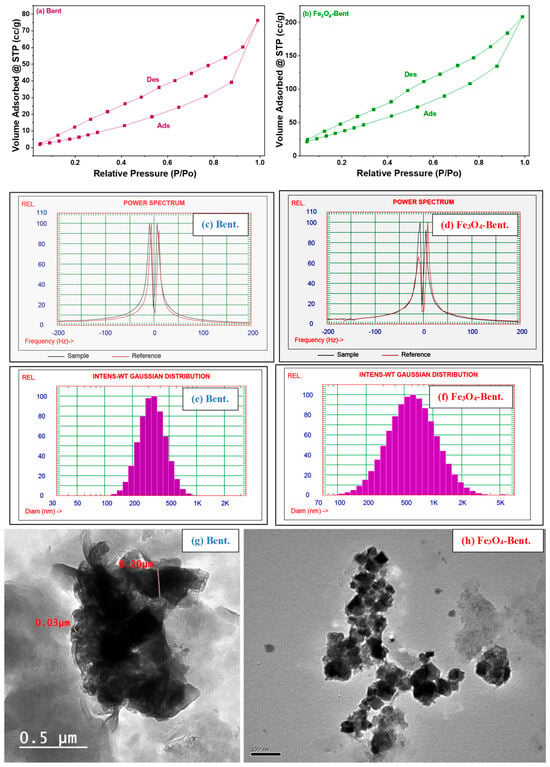
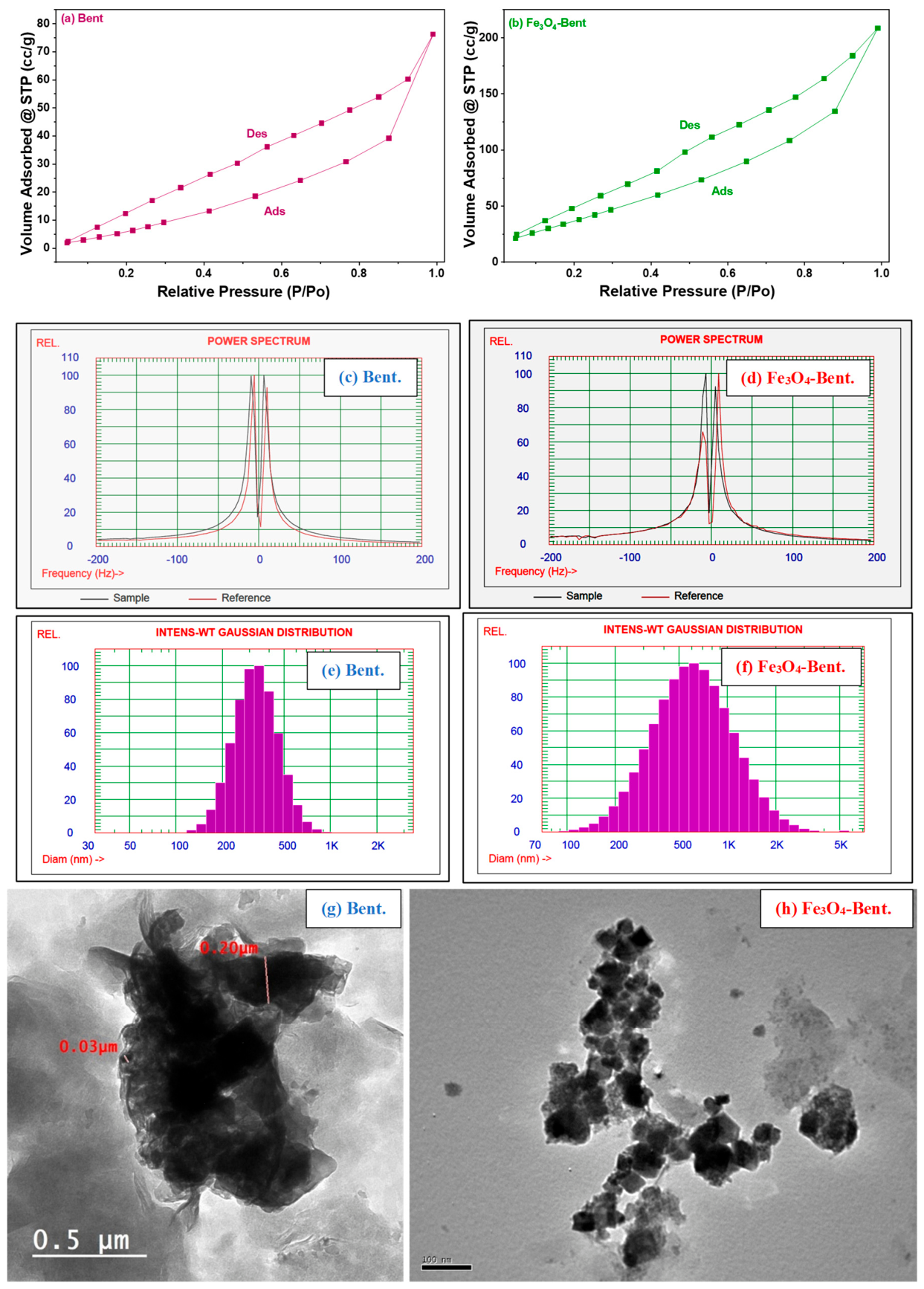
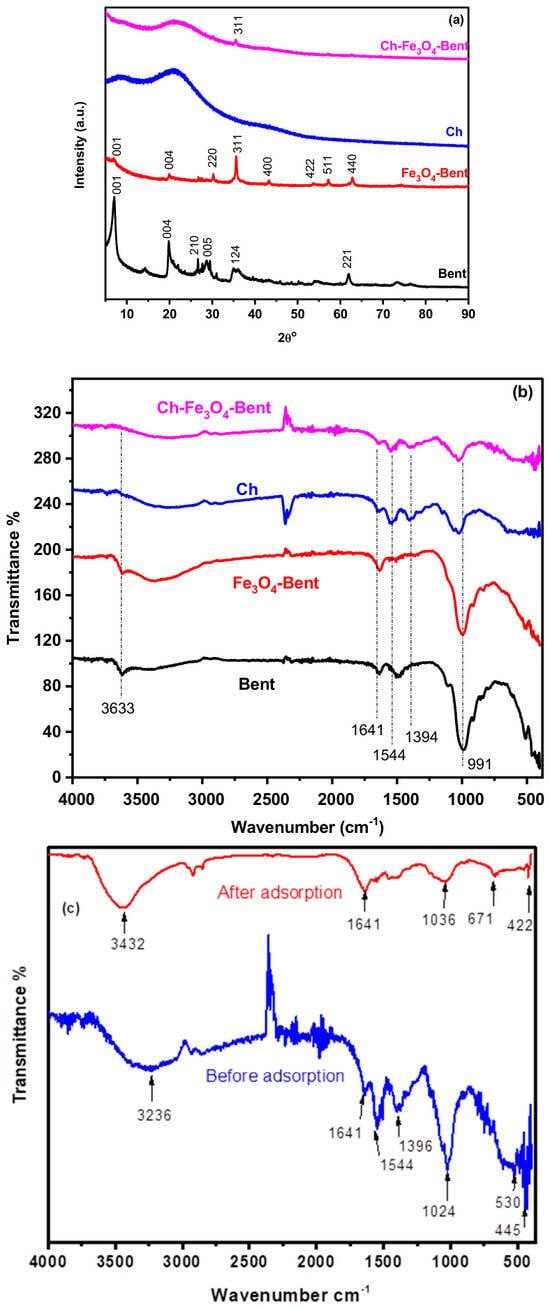
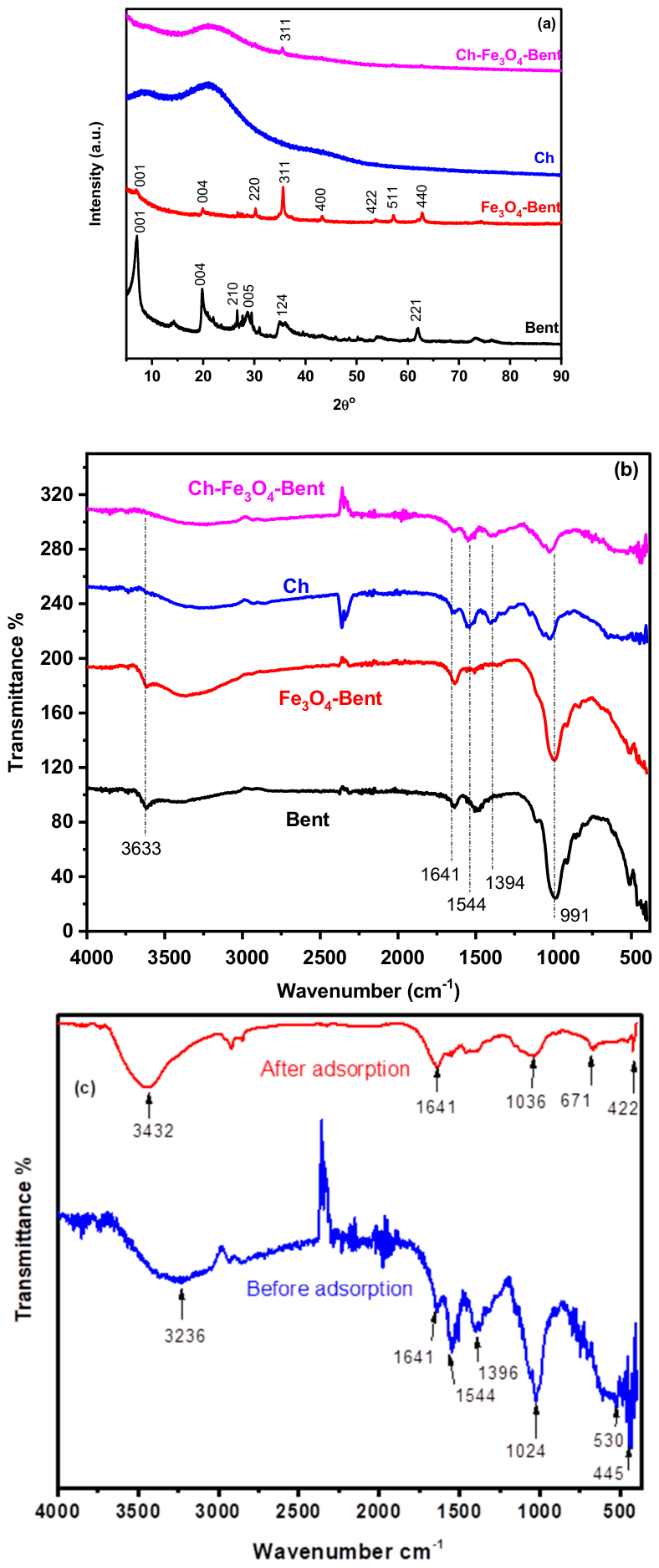
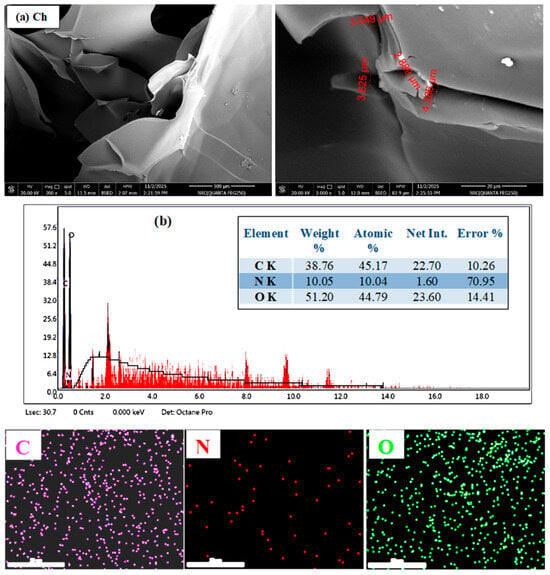
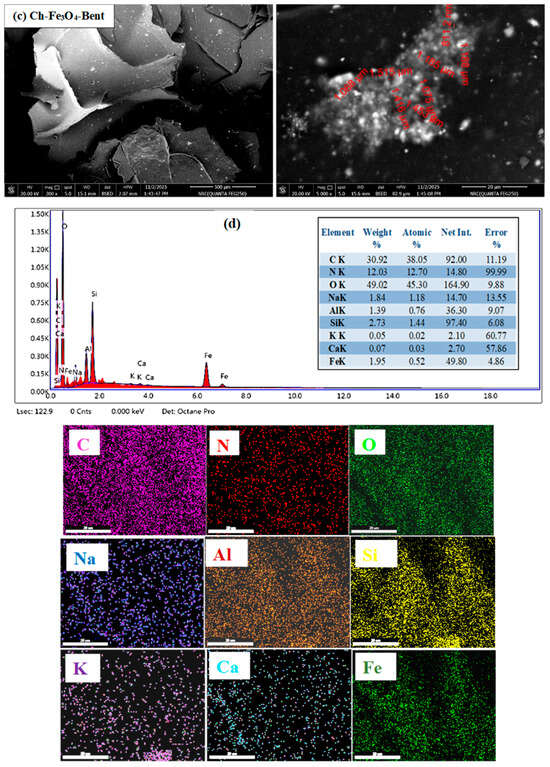
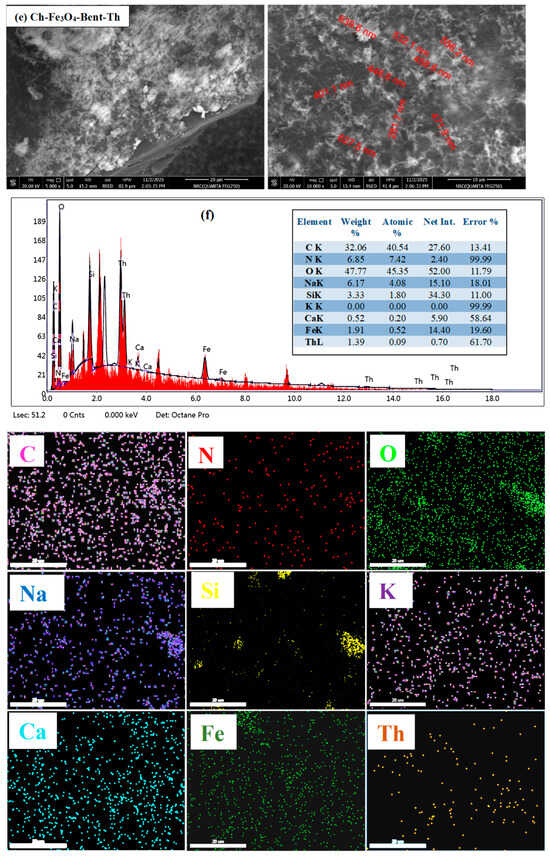
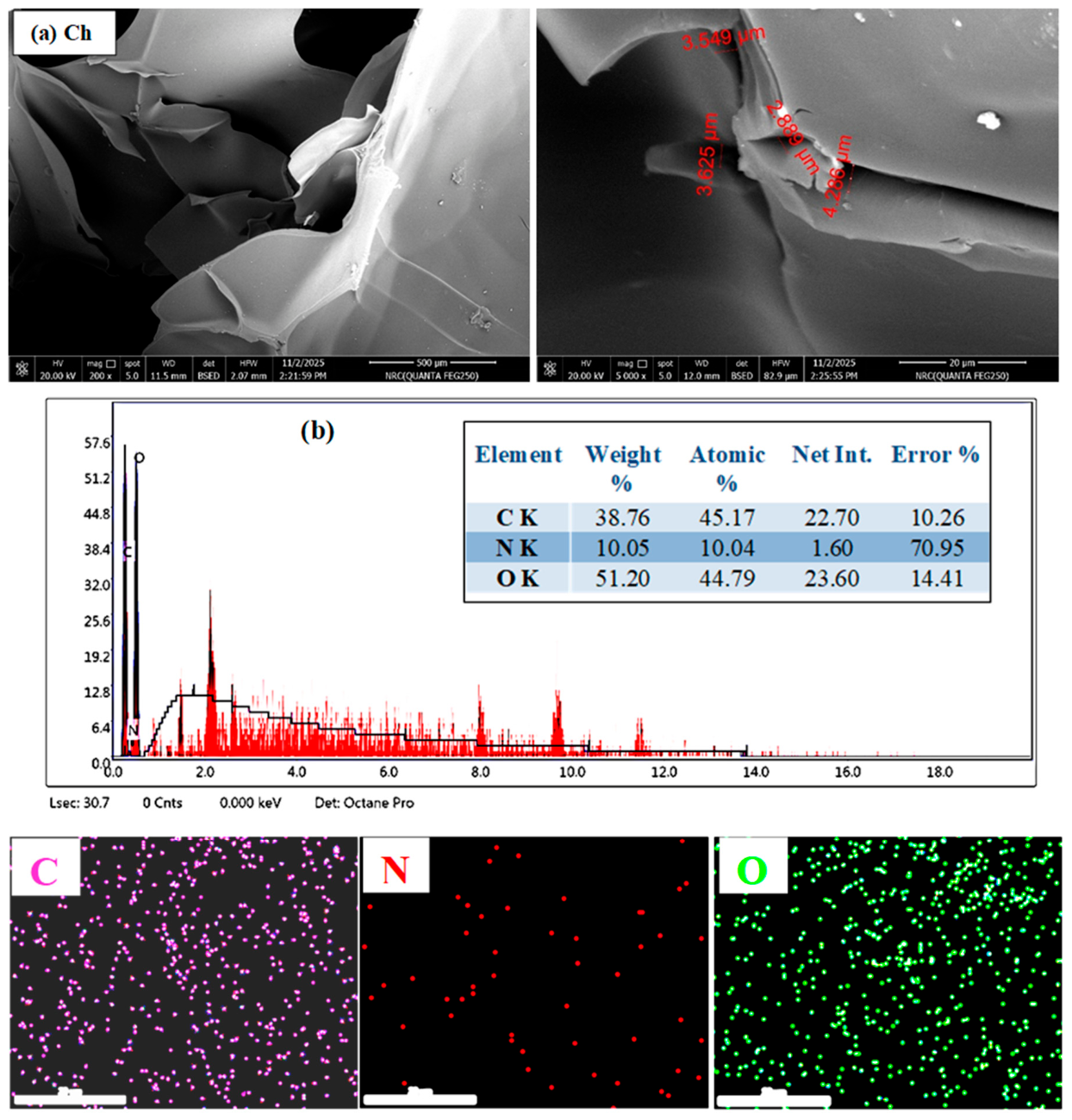
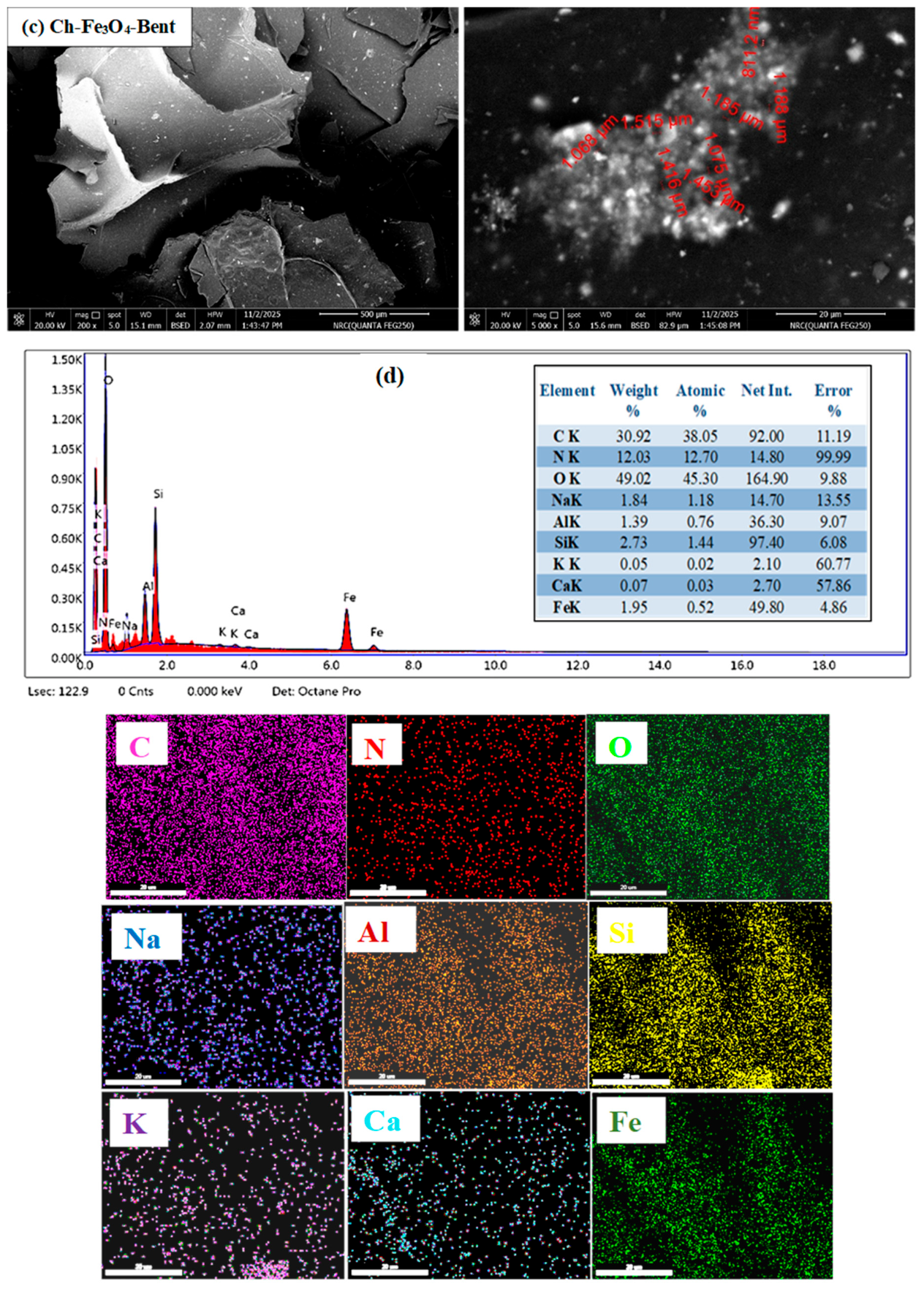
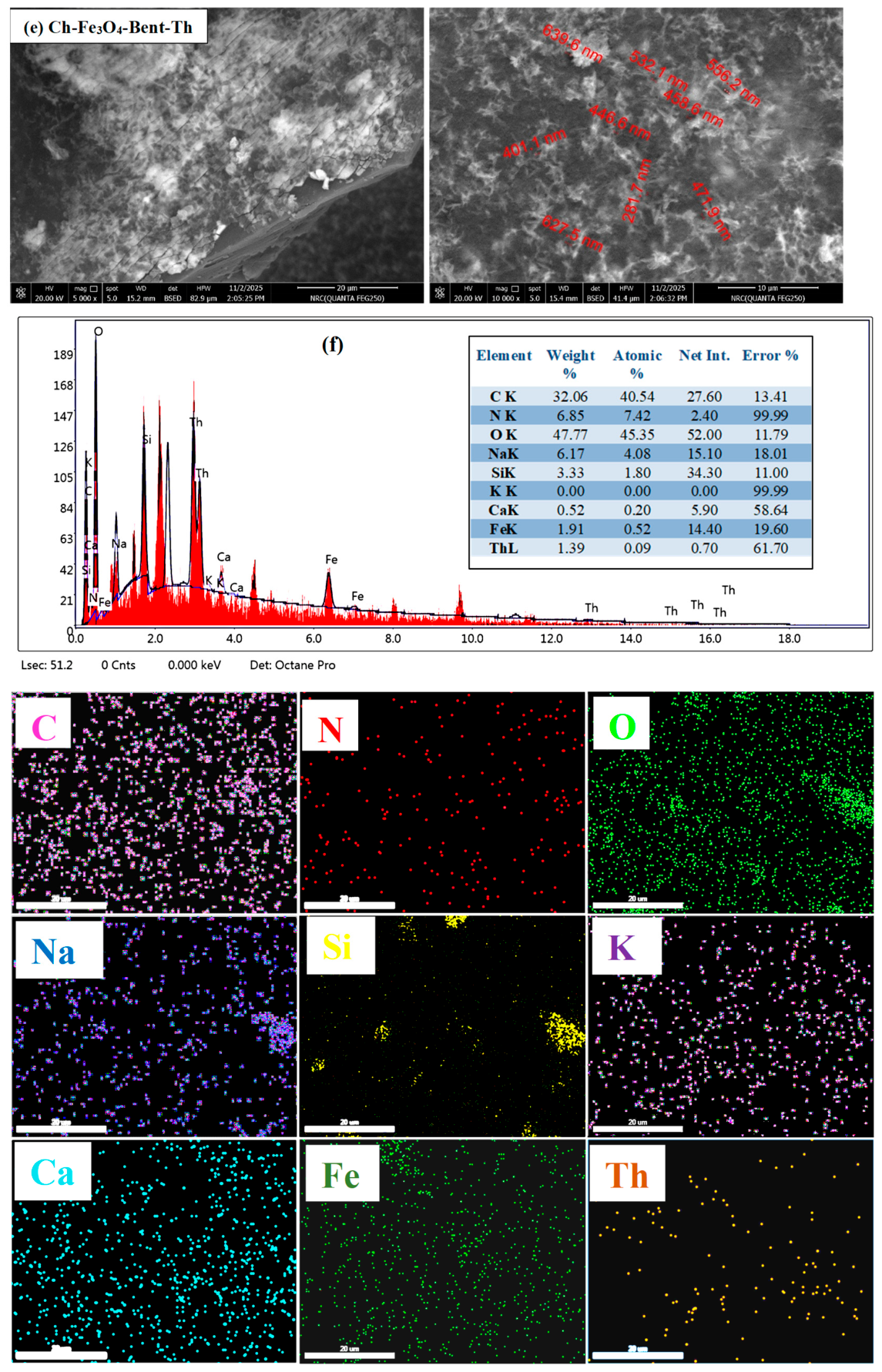
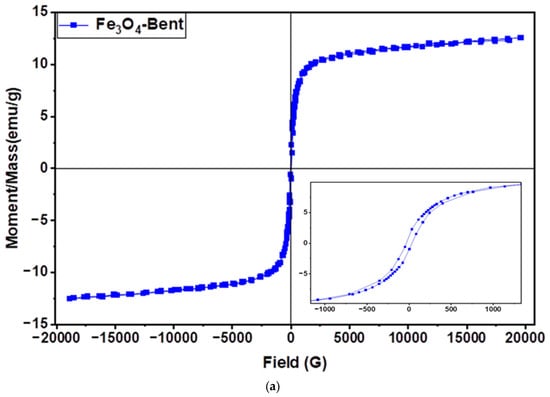
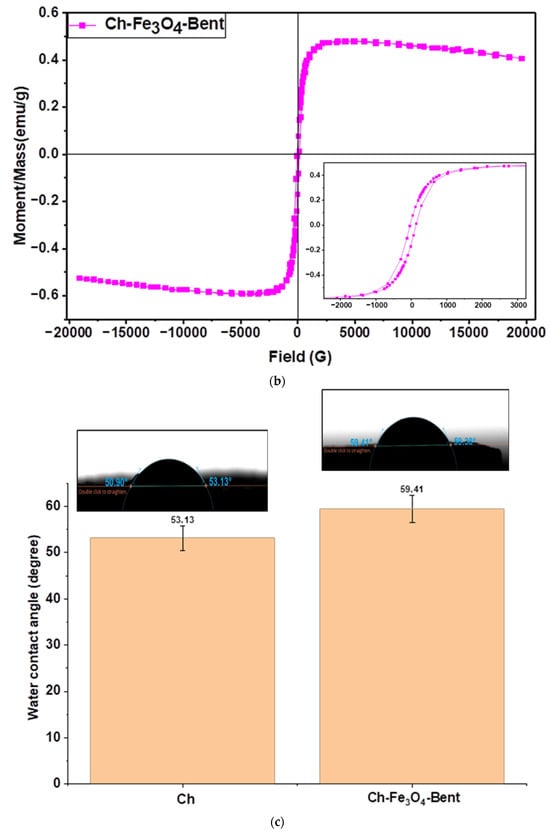
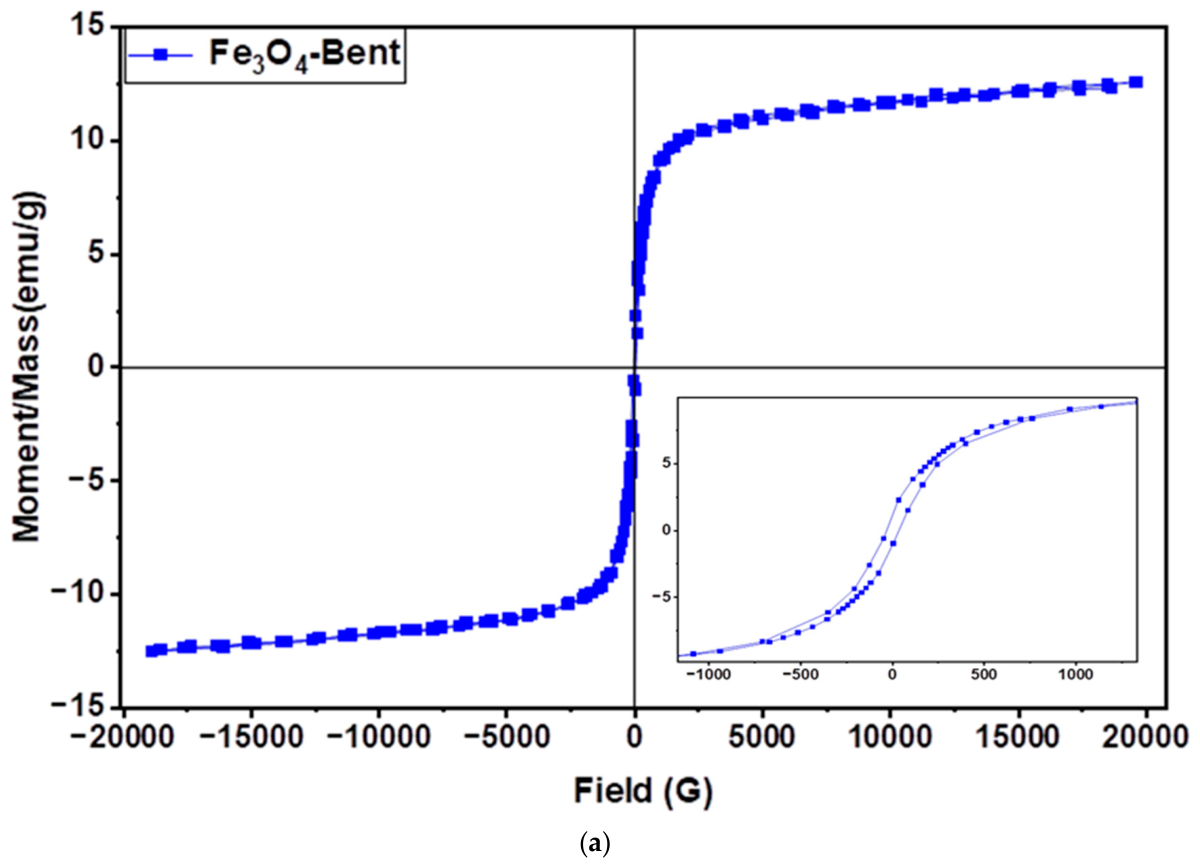
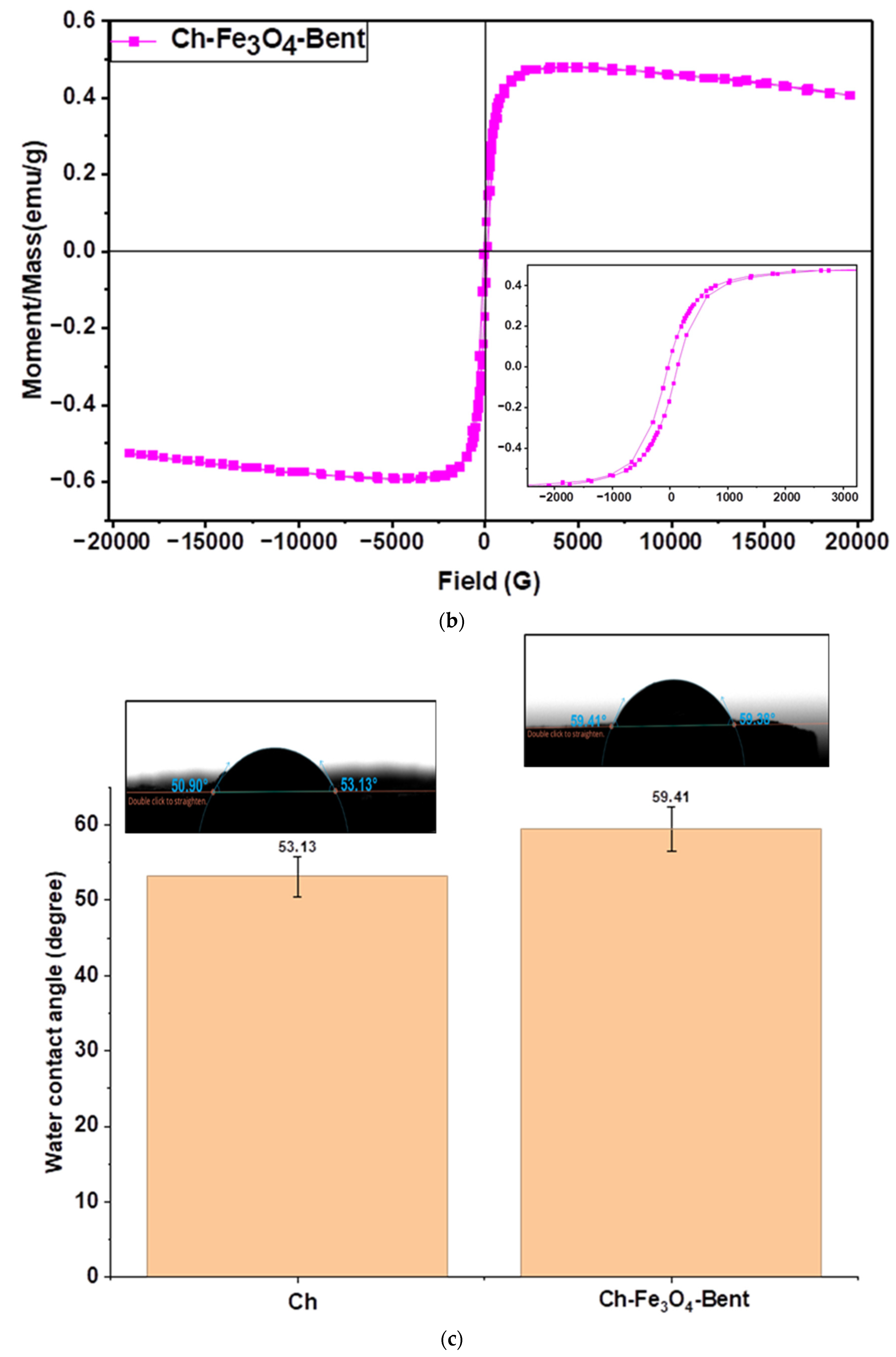
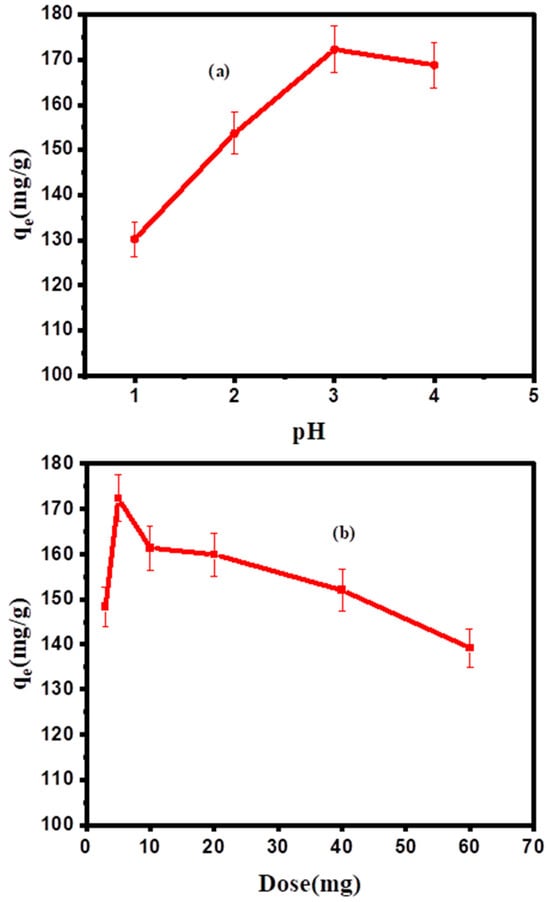
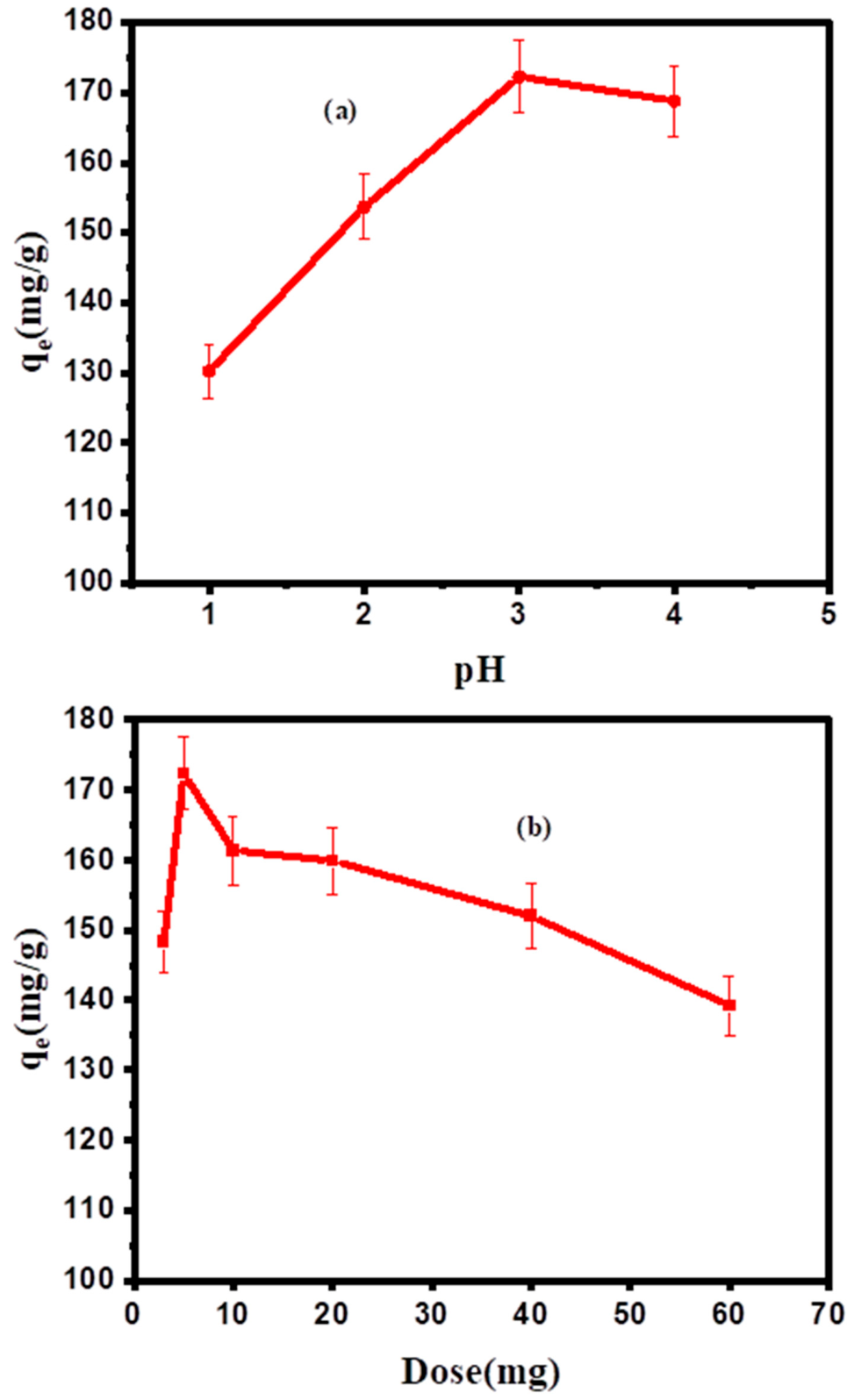
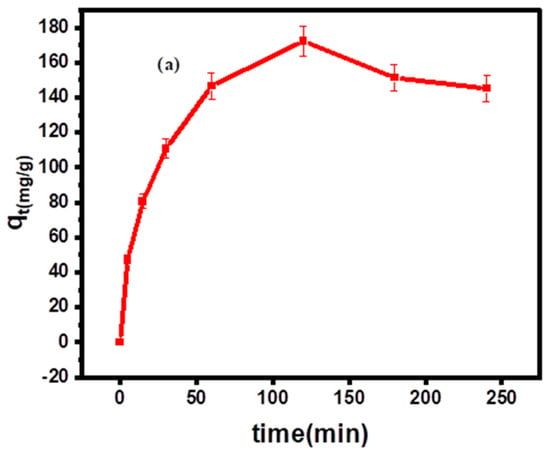
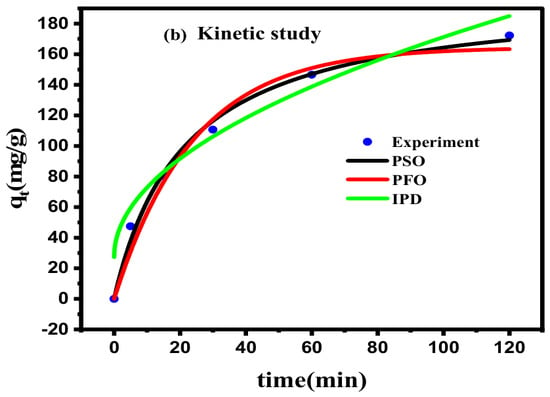
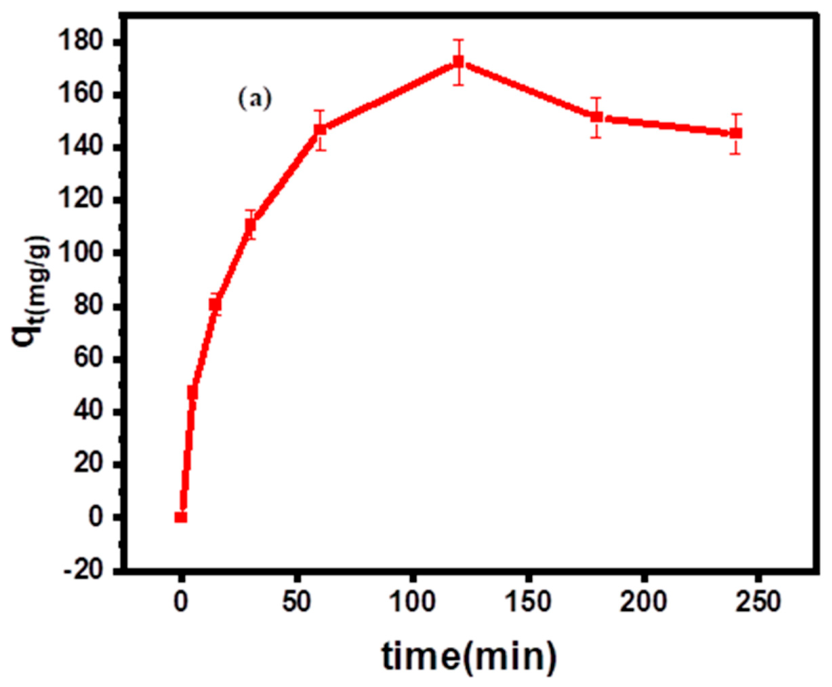
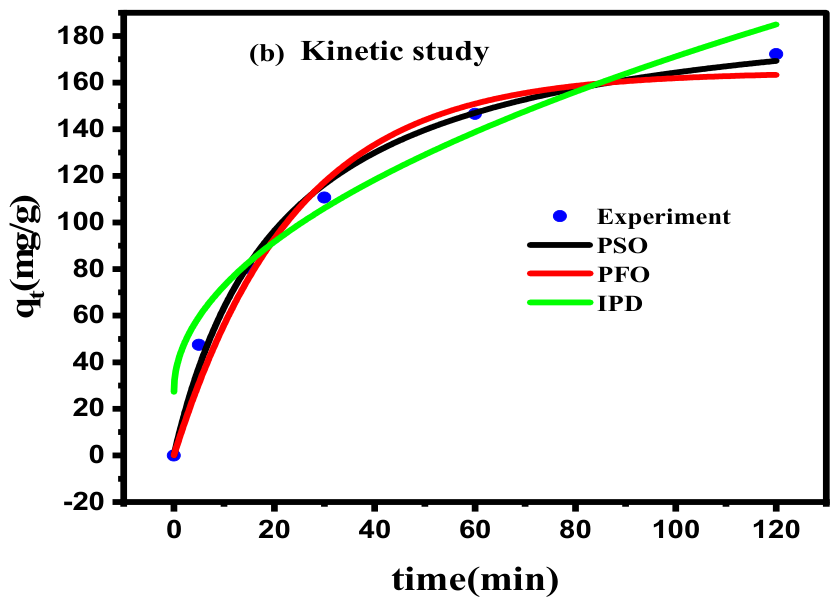
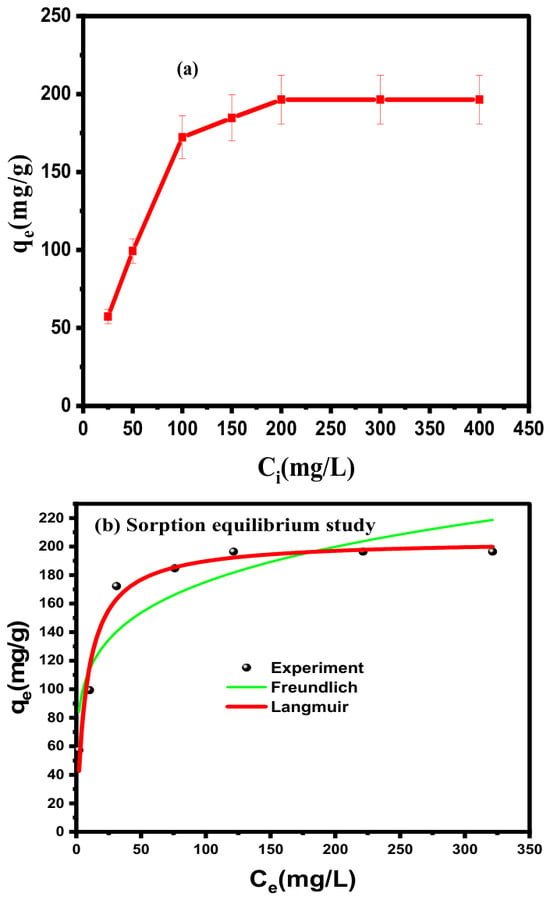
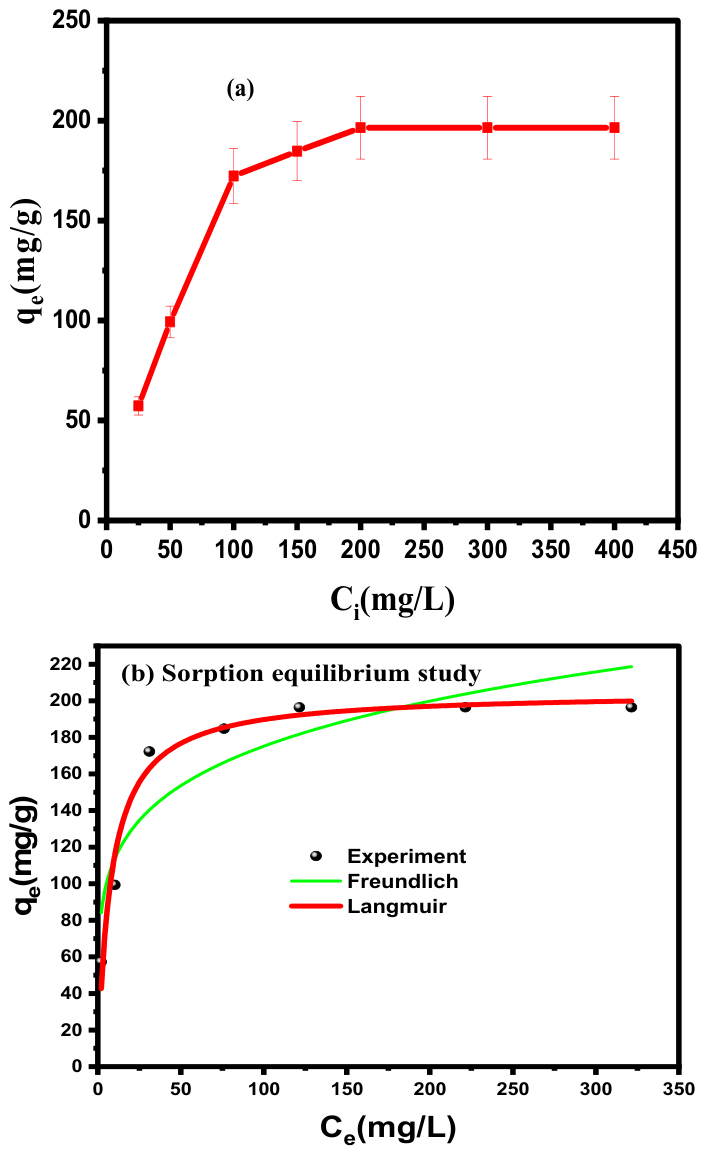
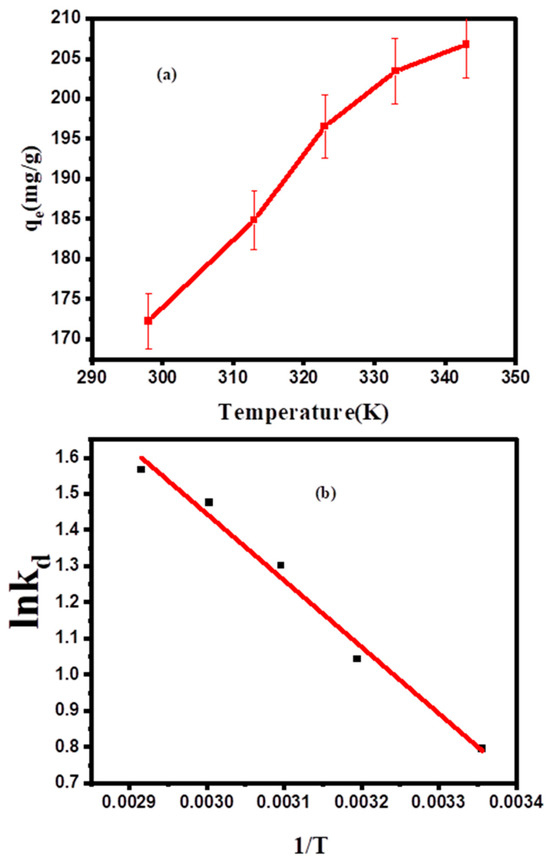
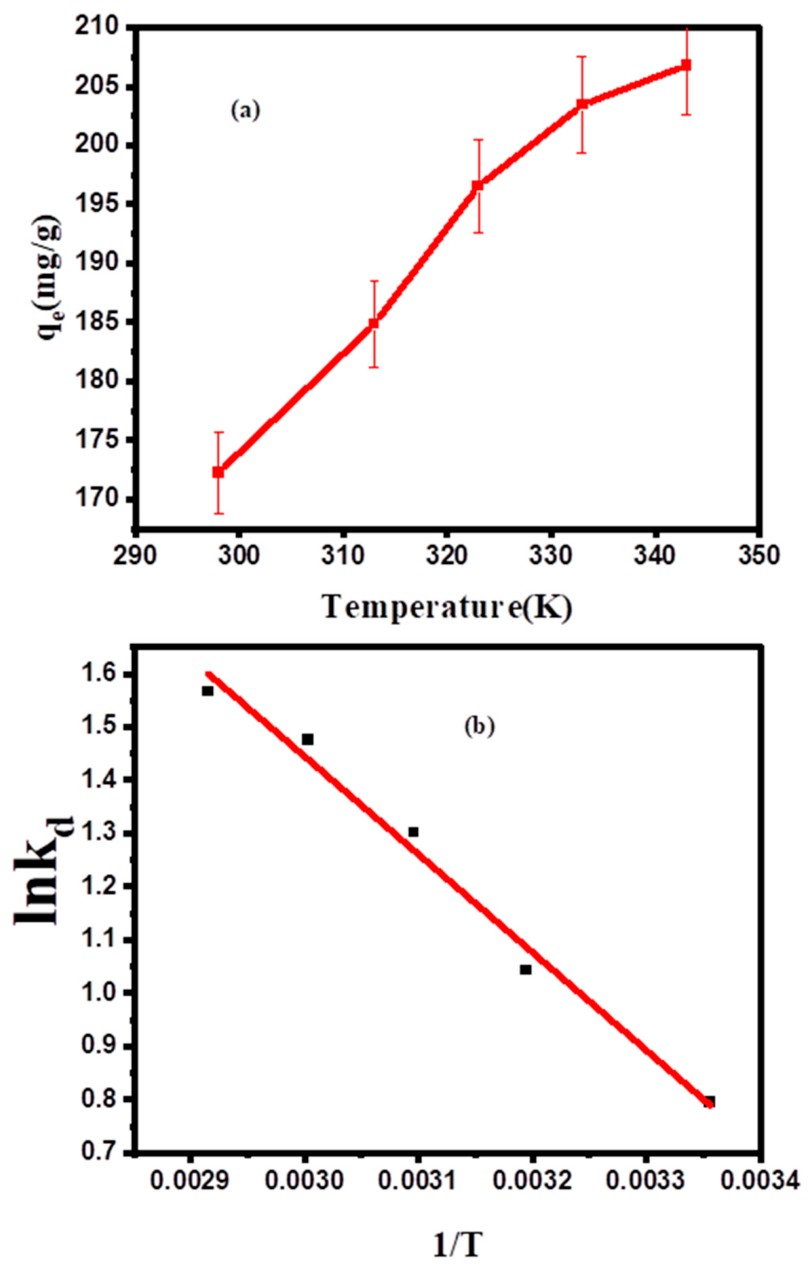
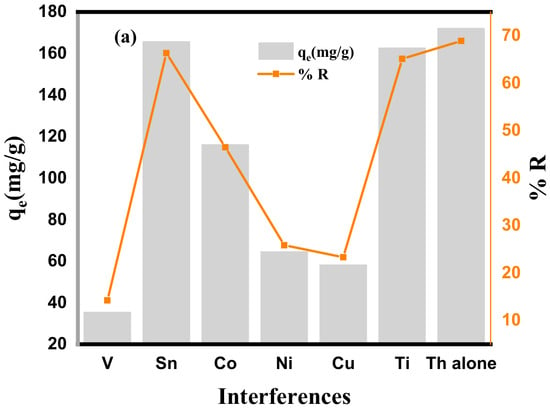
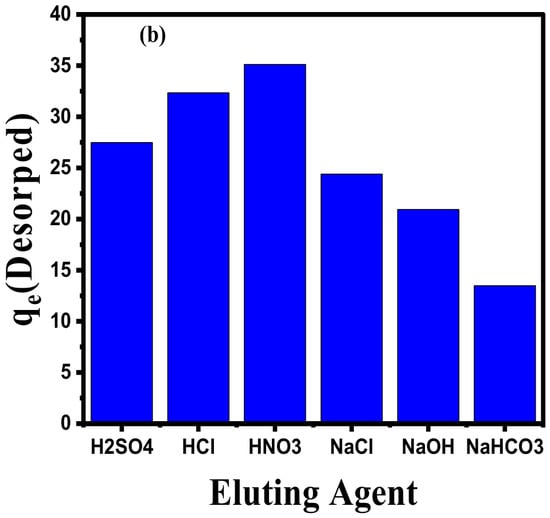
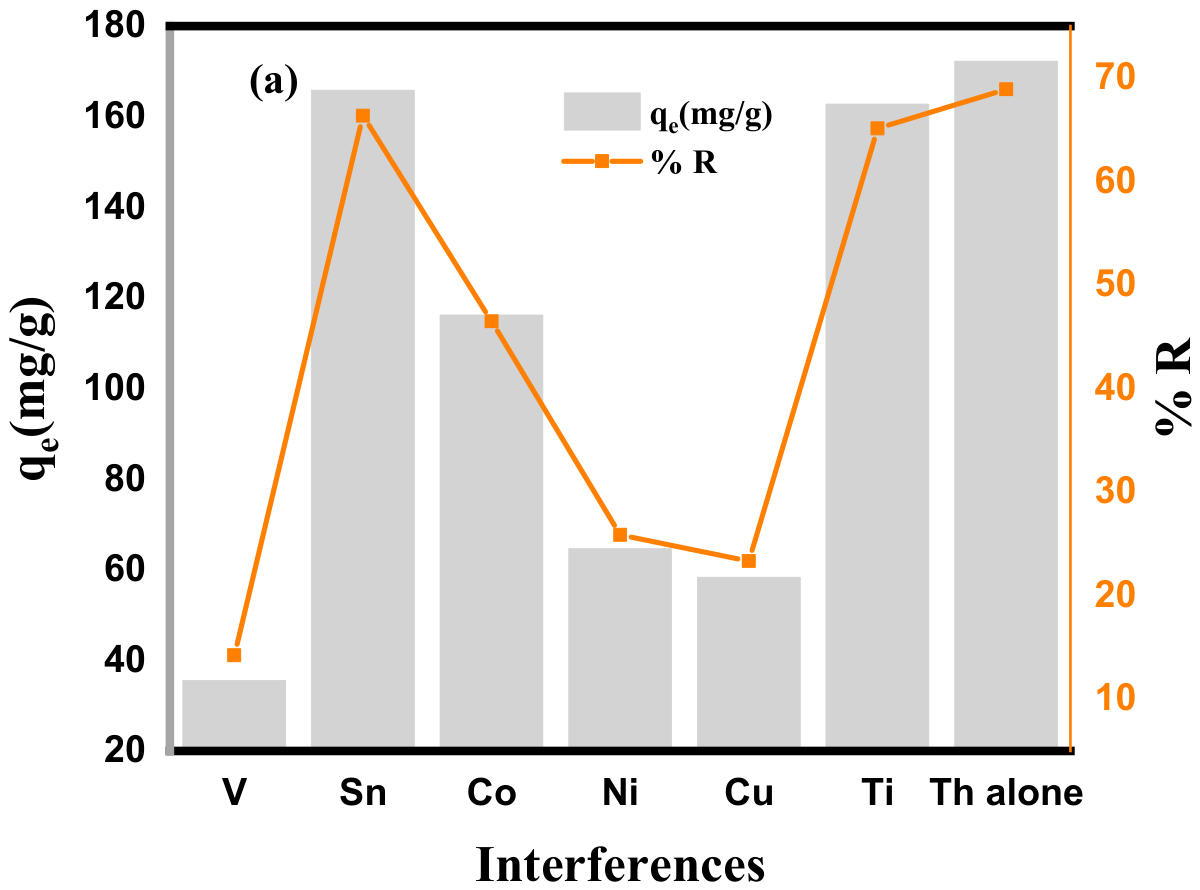
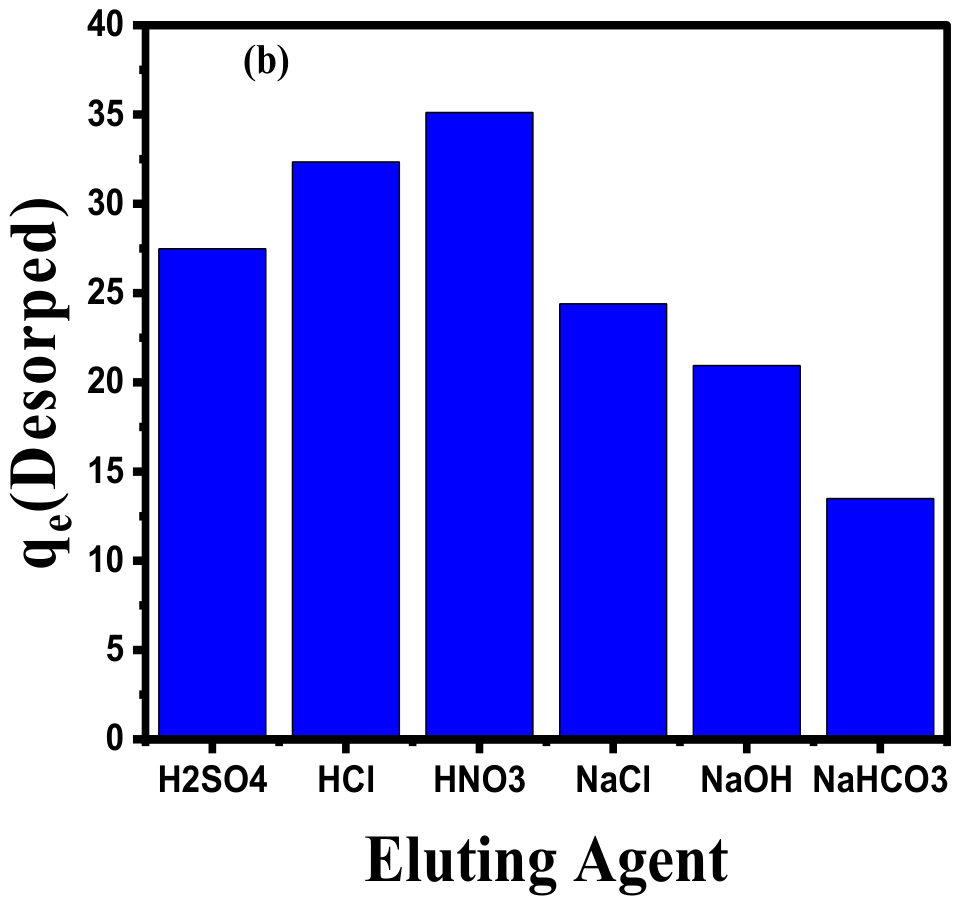
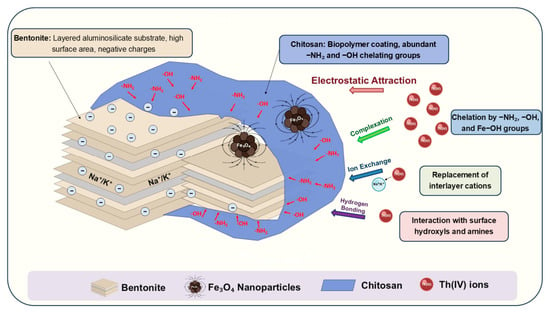
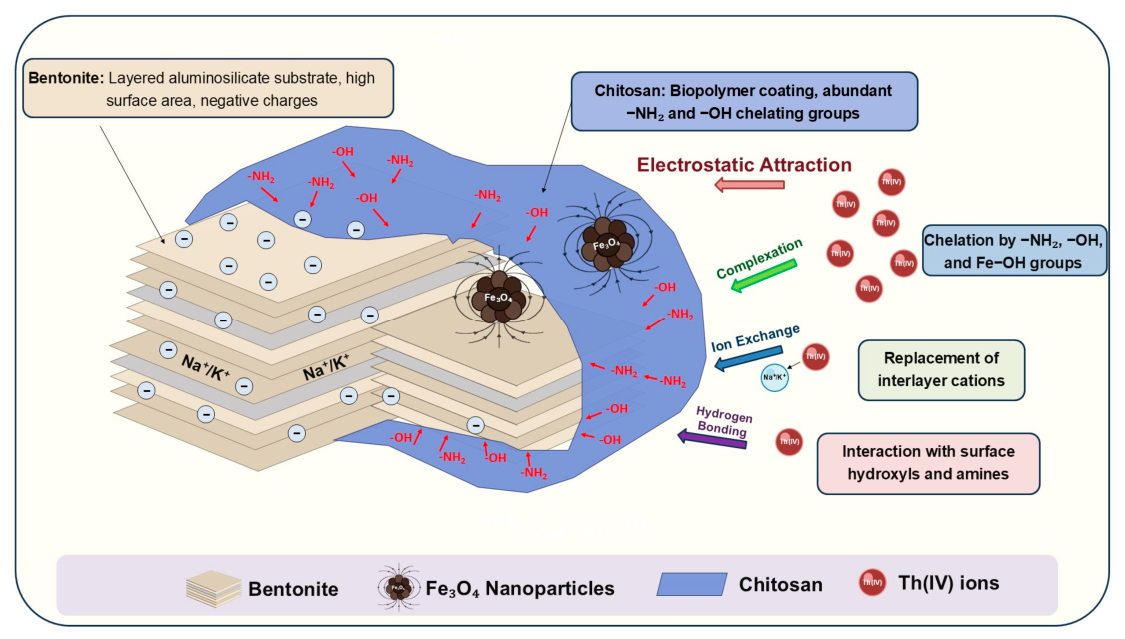

Disclaimer/Publisher’s Note: The statements, opinions and data contained in all publications are solely those of the individual author(s) and contributor(s) and not of MDPI and/or the editor(s). MDPI and/or the editor(s) disclaim responsibility for any injury to people or property resulting from any ideas, methods, instructions or products referred to in the content. |
© 2026 by the authors. Licensee MDPI, Basel, Switzerland. This article is an open access article distributed under the terms and conditions of the Creative Commons Attribution (CC BY) license.