


Abstract
This paper aimed to measure the perceived contribution of general education curricula to the Sustainable Development Goals at the University of Ha’il, Saudi Arabia, across four content-based domains: educational, social, environmental, and economic. Although higher education is increasingly recognized as a key setting for advancing Education for Sustainable Development, limited empirical evidence has examined how general education curricula contribute to sustainability across multiple content-based domains while simultaneously considering faculty and student perspectives. A cross-sectional, descriptive-analytical design was applied through a 40-item instrument, validated by an expert panel and administered to a stratified sample of 900 respondents (470 students and 430 faculty members) across eight colleges; overall reliability was high (Cronbach’s α = 0.968). Analyses comprised descriptive statistics, one-sample tests against the high-contribution benchmark, 95% confidence intervals, and a two-way analysis of variance with η2 effect sizes. Perceived contribution was high overall (M = 4.07), highest in the educational domain (M = 4.28, 95% CI [4.24, 4.32]) and lowest in the economic domain, the only domain within the moderate band (M = 3.49, 95% CI [3.45, 3.53]; t = −10.44, p < 0.001). Neither respondent type (η2 = 0.0002) nor college affiliation (η2 = 0.0046) produced significant differences. The findings support the value of a multi-domain and dual-stakeholder approach to evaluating sustainability contributions within general education curricula and identify the applied economic domain as a priority for curricular reinforcement in alignment with Saudi Vision 2030. The four domains represent a content-based classification of the sustainability areas examined and are not empirically confirmed as independent latent factors; confirmatory validation on an independent sample is the recommended next step.
1. Introduction
Ecological balance and the role of human development in shaping society have been significant since antiquity; however, the need for people to balance development with ecological balance has grown as a result of global problems, more limited resources, and rapid technological changes. The combination of economic development, ecological protection, social justice, and education in the field of sustainable development is based on the principle that the requirements of today’s generations should not hamper future generations’ ability to meet their needs. Within this broader transformation, higher education institutions have increasingly been recognized not merely as recipients of sustainability policies but as active institutional actors capable of translating sustainability principles into knowledge, skills, values, and practices. The university is therefore prominently represented as a strategic force for change in this framework because universities possess a distinctive capacity to connect research, education, and societal transformation and, therefore, to contribute directly to national and international sustainability agendas [1].
The 2030 Agenda, which was adopted by the United Nations and its seventeen Sustainable Development Goals (SDGs), constitutes a global program for achieving reconciliation as it addresses issues such as poverty reduction, quality education, decent jobs, climate action, and institutional gender parity. Within this agenda, education has a dual function: SDG 4 identifies quality education as a goal in its own right, while education also serves as an enabling mechanism through which knowledge, values, competencies, and behaviors relevant to other SDGs can be developed (https://globalgoals.org/goals/4-quality-education/ (accessed on 20 August 2026)). Learning plays a dual role in the context of the SD framework: education as an objective and tending towards other objectives, as implicitly contained in the concept of education for sustainable development that aims at equipping learners with the required knowledge, values, and skills for sustainability. Accordingly, Education for Sustainable Development (ESD) extends beyond the transmission of information to include the development of competencies that enable learners to understand complex sustainability challenges, evaluate alternative solutions, and participate in transformative action [2]. In this case, it means that the institution’s responsibility for sustainability is clear and unambiguous: sustainability needs to be embedded across the student experience, including formal curricula, teaching and learning practices, and extracurricular activities, rather than being confined to isolated courses or initiatives.
The curriculum is the main instrument for implementing and communicating sustainability within the organization. It is through curriculum design and delivery that institutional sustainability commitments can be translated into students’ learning experiences and, ultimately, into sustainability-related knowledge, values, and competencies. The role of the general education curriculum is strategically unique in this regard: its courses are required of all undergraduates, regardless of major, and therefore have the potential to reach the entire college student body; they can also be used to disseminate sustainability skills more widely among college majors, beyond disciplinary specialization. This cross-disciplinary reach makes general education particularly relevant to SDG integration because it provides a common curricular space through which sustainability can be introduced to students irrespective of their field of specialization. The methods used to incorporate sustainability content into students’ general education are crucial for shaping their civic learning practices and enhancing their critical problem-solving skills; therefore, general education serves as a key, though often under-acknowledged, approach to addressing the SDGs [3].
Inherently, these factors have been significantly present in Saudi Arabia, as Vision 2030 places central importance on human capital development and a shift towards a knowledge-based, diversified economy as one of the main pillars of national policy, thus placing a specific responsibility on institutions to prepare young people for a sustainable future. This policy orientation makes the integration of sustainability within higher education particularly relevant in the Saudi context, where universities are expected to contribute to human-capital development, employability, innovation, entrepreneurship, social responsibility, and environmental awareness. However, evidence from Saudi universities suggests that the integration of the SDGs into academic programmes and institutional practices remains uneven rather than systematically embedded across curricula. Academic programmes in Saudi Arabia are still not fully aligned with the Sustainable Development Goals (SDGs) and lack institutional self-assessment processes to ensure that these institutions promote and prioritize the integration of the SDGs. From Saudi universities, the results showed a poor understanding of the SDGs, a lack of a clear focus on the SDGs across the curriculum, and insufficient institutional support; particularly, sustainability education was often delivered in isolated courses rather than throughout the curriculum. It is therefore crucial to ask whether general education curricula meet the requirement for integrating sustainability education when evidence-based reform is considered [4].
Although there are existing conceptual and policy frameworks to guide implementation, there is significant variation across curricular practice. Some faculty are willing to make the leap into the classroom, others are not, there are some systematic evaluation processes and others do not exist, and it is more prevalent in some disciplines than others. The possibility of a divergence between the institutional intention, the curricular provision and the actual curricular experience of students indicates that integration of sustainability cannot be measured in isolation from statements in policy documents and institutional commitments. This inconsistency between policy and practice makes the perceived contribution of general education curricula an important and empirical question for curriculum policy and one that can be answered by the two stakeholders who are most directly involved in the curriculum: faculty members and students. The present study addresses that question with an instrument developed and validated for the purpose.
1.1. Research Problem and Questions
While university curricula have been described as ideas and conceptualities, and the importance of using them as a tool to implement the Sustainable Development Goals (SDGs) has been noted in the literature, it did not fully address the perceived contribution of general education curricula in a particular national context. Existing studies have tended to focus on sustainability integration at the institutional level, as well as in individual courses or programs, or from the perspective of a single stakeholder group, with less evidence of how a common general education curriculum is perceived by stakeholders and across multiple aspects of sustainability. It also does not often highlight the views of teachers and students in the same multi-domain tool. This gap is especially notable in Saudi Arabia, where education is now a priority and there is yet a need for institutional-level curriculum sustainability appraisals in the light of Vision 2030. This sets up the following questions in Section 1.4.
1.2. Originality and Contribution
This research makes three contributions. The first is conceptual: it treats the contribution of general education curricula to the SDGs as one measurable construct expressed across four content-based domains, so that curricular integration is assessed as a property of provision rather than accepted as a declared commitment. Importantly, the four content-based domains are not treated as four interchangeable pillars. The environmental, social, and economic content-based domains represent substantive areas of sustainability, whereas the educational domain captures the curricular and pedagogical capacity through which sustainability-related learning can be developed and supported. This distinction provides the conceptual rationale for examining the four content-based domains within a single evaluative framework.
The second contribution is methodological: the paper presents a 40-item questionnaire for assessing perceived contribution from the dual-stakeholder perspective across four content-based areas, and the psychometric validation of which could be done on an independent sample by confirmatory factor analysis. The dual-stakeholder design is an unusual one in literature that typically treats a single stakeholder group. The dual-stakeholder design is not just meant to get more people to respond; it is also meant to enable comparisons between the views of the people who create learning and those who consume it as students. In this context, convergence between the two groups could reflect a perceived congruence between what is intended and what is experienced in the curriculum, while divergence could point to areas for further curricular review. The third is analytical and practical. Reporting confidence intervals, interpretive thresholds, and effect sizes (in addition to significance) and reading the data at the item level turns the well-known but imprecise statement that the economic domain is underrepresented into a specific agenda for reform. That agenda identifies the components of the curricula that need to be bolstered and provides evidence to support curricular assessment in the context of Vision 2030 for Saudi universities. The study therefore interprets perceived contribution as evidence about curricular provision and stakeholder experience, rather than as direct evidence of causal effects on SDG outcomes or demonstrated student competence. The remainder of the paper presents the conceptual framework, the literature review, the methodology, the results, the discussion, and the conclusions with their theoretical implications, applied recommendations, and limitations.
1.3. Conceptual Framework
1.3.1. Conceptual Foundations
Sustainable development, according to the World Commission on Environment and Development [5], involves development that meets the needs of the present without putting at risk the ability of the future to meet their own needs. There are multiple facets of sustainable development, including: preserving resources; achieving social justice and equity; ensuring good economic results; providing transformative education. Education is assumed to be the core element, as it empowers people with the information and attitudes to meet these sustainability challenges and facilitates other aspects. Although environmental, social, and economic facets are widely recognized as substantive areas of sustainable development, education is increasingly conceptualized as an enabling mechanism through which individuals acquire the knowledge, values, and competencies required to address sustainability challenges across these domains. The four-domain framework adopted in this study therefore combines three substantive sustainability domains—environmental, social, and economic—with education as the enabling curricular domain through which sustainability can be communicated, taught, and experienced.
The four content-based domains are therefore not four “equal” things with the same logical significance. The environmental, social, and economic aspects represent the goals of sustainable development; the educational aspect represents the enabling capacity, which enables the realization of the goals, in the context of university, that is, the path of teaching and assessment of these goals. This conceptual separation is relevant because it is possible for students to include references to an environmental, social, and/or economic concern in a curriculum, but not be offered the pedagogical conditions to engage in critical thinking about the issue(s). In practice, it is important to differentiate between what is found in the curriculum (content, environmental, social, or economic) and what is required pedagogically (inclusive practice, critical analysis, and the integration of technology in learning). If the educational aspect is perceived not as a container but as an integral part, that failure will become visible and not be obscured within the other three containers.
1.3.2. Relation of the Framework to the Expected Results
In this research, the efficacy of general education curricula in achieving SDGs is described as the evaluation of the curricula’s ability to produce sustainability-related skills in four domains. However, because the present study does not directly measure students’ acquired competencies or SDG outcomes, “contribution” is used in a more limited sense to refer to stakeholders’ perceptions of the extent to which sustainability is represented and supported within the curriculum. In this study, the SDGs perceived contribution of the general education curricula is used as the outcome construct. It is implemented as the perception of faculty members and students on the curricula’s extent of sustainability content within the four declared domains: educational, social, environmental, and economic. Thus, the construct represents perceived curricular provision and exposure rather than demonstrated competence, institutional effectiveness, or a causal effect on SDG achievement. The framework is an appraisal of stakeholder (participant) views on curricular provision and is not a measure of competency achievement, curricular excellence, or institutional effectiveness, aspects not actually present in this instance.
The educational domain is captured in learning designs that embrace an inclusive approach and the use of technology, and through the deliberate teaching of environmental content and life skills. The social domain is represented in terms of equity, community participation, and citizenship values. The environmental aspect is represented in environmental awareness and environmentally sound practice. The economic domain is reflected in employability and entrepreneurship, financial skills, and poverty and dignity at work in curriculum development. Together, these content-based domains provide a structured basis for examining whether sustainability is perceived as embedded across the general education curriculum rather than concentrated in isolated sustainability-related courses. The construct is operationally conveyed through the score obtained from the 40-item tool, and it is defined within the framework illustrated in Figure 1.
Figure 1.
The four-domain conceptual scheme. The figure is conceptual rather than empirical. The four content-based domains are presented with equal weighting and presentation and as a part of the perceived contribution to the SDGs via curriculum.
1.4. Research Questions and Expectations
The study is evaluative and descriptive and thus has stated research questions, rather than directional hypotheses. Accordingly, the expectations presented below are interpreted as literature-informed analytical expectations rather than formal hypotheses requiring causal or directional testing. The literature often refers to the “deficient” representation of the economic aspect in mainstream curricula. The education and social components, which are more easily achievable, were expected to be seen as being better represented, whereas the political and economic were more difficult to achieve. These expectations provide a rationale for examining the relative standing of the four content-based domains without presupposing that one stakeholder group or college will necessarily report higher perceptions than another. Attitudes were expected to be consistent across the sectors of respondents and subject areas in institutional settings where institutional governance and quality assurance are regularly operational.
Expliciting the four content-based domains of competences clarifies why the general education curriculum functions as an institutional process rather than as one specialized course among others. The four domains of sustainability competence put forth by the European sustainability competence framework are related and embrace the four themes of sustainability education that are at the nexus of education, society, environment, and sustainability, namely, sustainability values, accepting complexity, imagining sustainable futures, and taking action for sustainability. Kioupi and Voulvoulis [6] suggest viewing sustainability-oriented education as a dynamic systemic process that connects the SDGs to formal learning outcomes by aligning institutional agendas with those outcomes. Together, these perspectives support the use of a multi-domain curriculum lens, while the present study deliberately uses these competence frameworks as conceptual guidance rather than as direct measures of competence attainment. These frameworks taken together identify a general education goal, the integration of sustainability competencies across all disciplines and students, as an area of the curriculum on which this research is targeted.
In addition, this curriculum-based proficiency reading promotes the dual-stakeholder approach. The comprehensive institutional approach recognizes that declared sustainability commitments have meaning only if they become a part of the everyday experiences of educators and students. Teachers and learners therefore view the same provision from different positions: the teacher sees the design and delivery of learning, and the learner sees what is actually learned. Examining these perspectives together therefore provides an opportunity to assess the perceived alignment between curricular delivery and curricular experience. The fact that the two are aligned reinforces the feeling that there is a commitment in place, and the separation underscores the difference between purpose and execution. This distinction is particularly relevant to sustainability, where formal curricular commitments may not necessarily translate into comparable experiences across stakeholder groups. The four-domain framework used here makes the comparison easier by disassociating the fuzzy object into a set of precisely defined, separately assessable portions that can be evaluated on a uniform basis by both stakeholder parties.
The concept of GreenComp [7], as well as the competence-outcome concept put forward by Kioupi and Voulvoulis [6], was designed to define and assess sustainability competences, and applying it often requires supporting learners’ demonstrations of their competences [8]. The current research does not assess competencies or make any assertions about them. Instead, these frameworks are used heuristically to inform the thematic structure of the instrument and to ensure that the four content-based domains reflect established sustainability-learning domains [9]. The frameworks are used in a more limited, clearly heuristic way to shape the thematic content of the four identified content-based domains and the wording of the questions to stakeholders, so that they do not simply gather a random assortment of questions but direct them towards those sustainability areas that are already known. Perceived contribution is therefore considered a stakeholder-based measure that may suggest curricular priorities and processes for curriculum development but not competence acquisition or curricular effectiveness [10].
The concept explored here is that sustaining what is designed and supported by evidence relates it to measurable sustainability outcomes. In this view, curriculum design can be seen as a key institutional process that can make sustainability commitments visible in students’ learning process. Research in cross-national studies has correlated clear sustainability efforts with increases in institutional effectiveness in relation to the goals [11], and research on intervention relates to sustainability education; sustainability awareness can be increased in students beyond mere recognition when well-designed sustainability education takes place [12]. The extent of influence, as the general education curriculum acts as a catalyst, is linked to the fact that its requirements are relevant for several programs, thereby spreading the impact beyond the programs where sustainability issues would otherwise be expected to call the most attention. The present study therefore focuses on the perceived curricular pathway rather than claiming that the curriculum itself redistributes or produces SDG outcomes. Parameters analyzed in this study are thus the perceptions of the two stakeholder groups about how much they contribute and do not reflect the actual redistribution [13].
1.5. Literature Review
Three themes emerge in the investigations of higher education and sustainable development goals, but there is an apparent difference in how these themes are viewed as stemming from them. The first theme is related to the revision of curricular materials. Pedagogical retraining has been cited as a continuous constraint by Husic [14] and Darwish and Khattaybah [15] and disparities in the reporting of integration between the Global North and South have been reported by Ankareddy et al. [16]. The second is institutional capacity and institutional change, with Maatallah et al. [17] and Trevisan et al. [18] associating limited participation with limited institutional feedback on learning and limited evaluation systems. The third theme concerns disciplinary and demographic diversity, as Royet [19] points out. That study suggests that the themes of SDGs must be more closely linked to science colleges and that there is a gender gap in the focus on social and environmental issues. While there are significant demographic and disciplinary differences that are often claimed, they have not been substantiated for general education. In the present study, therefore, they are not considered as confirmed facts, but as unresolved questions. All these strands put together highlight the significance of curriculum reform, institutional capacity, and the characteristics of the stakeholders. They offer little evidence about the perceived sustainability contribution of a common general education curriculum in multiple content-based domains and among various stakeholder groups [6].
Most of the work in the field is self-report questionnaires and descriptive and analytical frameworks. Few uses validated multi-domain instruments or observe the teacher and student working side-by-side [16]. Although the content analysis reveals SDG coverage that perception-based instruments, which do not typically report effects, may not capture, the lack of effect size reporting and longitudinal analysis prevents robust causal analysis. This methodological pattern creates an important distinction for the present study: content-based assessments can establish what curricula contain, whereas stakeholder-based assessments can provide evidence about how that provision is perceived by those who deliver and experience it. Neither approach alone fully captures the other [20].
While the literature has discussed problems of SDG integration well, it has yet to look at the extent to which curricula are seen to make a contribution in multiple content-based domains when both stakeholder groups are questioned in one national context. That is addressed by the present study. The question that has not been answered is not, “Is sustainability integrated into university curricula?”, but rather, “Is its perceived curricular contribution evenly spread across different sustainability domains and across the two groups of stakeholders most directly tied to curricular delivery and curricular experience?
Research and discussions around integrating SDGs into curricula have progressed from advocacy to a structured discussion. Twenty years worth of evidence has been examined, and Hassan and Ahmad [21] identified several concrete institutional practices that were common: the enhancement of the curriculum; ecological measures; community measures; social accountability; governance and strategic planning. Standardized measures of reporting are still inconsistent, and deeper institution-wide approaches are still uncommon. If we just consider the fourth goal, García-Martín and Pérez Fernández [22] identify two approaches in education adopted during the period 2020–2024. They also define a series of recurrent actions by which institutions implement the framework of education for sustainable development. While these syntheses confirm the earlier findings [23], a persistent discrepancy remains: integration is frequently cited in mission statements and at course level, but not as a defining feature of the general education core. This distinction is important for the present study because the general education curriculum represents a common curricular platform that can potentially extend sustainability learning beyond programs in which sustainability is already an explicit disciplinary concern.
A second theme explores the views of the people most deeply involved in the curriculum about such initiatives. Studies conducted with pre-service teachers reveal that their knowledge and attitudes about the objectives have an impact on their readiness to teach sustainability [7]. Studies on the subject of stakeholders suggest that sustainability concepts embed in schools, not just formally introduced, but rather through actual practice. Sustainability disclosure research reveals that there is a relationship between commitment and action and the trust and legitimacy of stakeholders is earned when the two are aligned [6]. There are very few studies, however, that compare faculty and student ratings on the same curricular object, so as to identify that alignment. In the higher education curricula, this principle implies that teachers and learners are not synonymous of voice. The faculty “interprets” and “implements” the curriculum, while the students receive and participate in the curriculum organization. Comparing their perceptions can therefore provide an additional indication of whether curricular intentions are experienced consistently across the educational process.
A third theme situates these questions in the Gulf and wider Arab context and highlights how sustainability initiatives in the region are tied to national development agendas. Al-Abri and others [24] demonstrate that sustainability actions are used as a “strategic tool” in universities—they can be connected to the national development agenda and can help position an institution internationally. The same study mentions that there is a lack of localization of practice and limited data transparency. Abdalla and colleagues [25] surveyed faculty members from thirty public Arab institutions and found that the focus was on quality education and decent work, with institutional governance stimulating participation and research output constraining it. In the Saudi context, there are direct links between curricular sustainability and Vision 2030 [13], and policy and provision analysis shows that equity issues play a significant role in keeping the integration inclusive [21]. These studies help to make this policy context relevant, but do not answer the more specific question of what is perceived as sustainable in the framework of the overall education program. This regional evidence takes the University of Ha’il as a relevant case but does not address the dual-stakeholder, four-domain design examined here.
Evaluation of curricular impact on sustainability has become the focus. Systems to connect goals to learning outcomes are available, focused on competencies and not simply course numbers [22], and new analyses focus on the need for tools capturing actual learning and not planned offerings [26]. Many evaluations continue to rely on institutional self-reports and summative ranking systems, which perpetuate the practice of selective disclosure [24]. A perception-oriented instrument of this type solves these problems as it combines the judgments of teachers and students on the declared content-based areas and thus presents the experienced curriculum. However, because perception-based evaluation does not directly establish learning outcomes or causal effects, its principal value lies in identifying areas of curricular visibility, consistency, and perceived priority that can inform subsequent curriculum review.
There is generally a consistent gap within these threads. There are many different stakeholder accounts, institutional disclosures, and ratings-based evaluations offered in the field. Very little of it leaves the curricular object in the middle and compares the experience of faculty with that of students within measurable content areas. The literature therefore leaves three related questions insufficiently addressed: (1) how the contribution of a common general education curriculum is distributed across distinct sustainability domains; (2) whether faculty and students perceive that contribution similarly; and (3) whether such perceptions vary across colleges within the same institutional setting. The present study aims to fill this gap by examining the general education curricula from an institutional perspective across four content-based domains and analyzing the differing perceptions of teachers and students within the same institutional context.
The existing literature helps explain the frequent stagnation in integration efforts. The research on implementation focuses on structural obstacles that prevent sustainability from being integrated in formal programs, such as weak coordination across governance institutions, weak focus on sustainability in curricula, lack of teacher training and development, and weak incentives [25]. Faculty members are always referred to as the intermediaries in linking the curriculum and the student learning process, while each faculty member is always linked to the issue of sustainability due to the content of a course [27]. Others argue that progress requires sustainability to become a core principle of institutional being, an institutional core so deeply rooted that it is expressed in general education courses. These findings reinforce the importance of examining not only whether sustainability is formally incorporated, but also how its curricular presence is perceived by those responsible for teaching and those who experience the curriculum. These narratives clarify why the distance between stated commitment and actual provision matters, and why both have to be examined together.
Taken together, the theoretical and the empirical strands define the position of the present study precisely. Competence literature sets the ground rules for what sustainability learning should yield and the institutional-integration literature sets the ground rules that embedding is not even. Neither strand offers insight into how a single curricular vehicle is understood by the audiences that deliver it, or by the audiences who are served by it, as it does in the contexts of sustainability. Both strands do not provide clarity on how the audience that delivers a curricular vehicle understands it, and how the audience that experiences it understands it, in the context of sustainability. The four content-based domains analyzed here and the stakeholder dualism necessary to consider them are sufficiently justified by previous evidence, but not enough to forecast their position, which is the specific empirical space this study occupies [28].
2. Methodology
2.1. Design
The study used a cross-sectional, descriptive-analytical survey design, which suits the description of a phenomenon and examining it from a descriptive perspective among different groups of people in one particular period of time. A cross-sectional design was appropriate because the study sought to capture stakeholders’ perceptions at a defined point in time and to compare those perceptions across respondent type and college affiliation, rather than to estimate change over time or establish causal effects [29].
2.2. Population, Sampling, and Respondents
The target group was all teachers and learners at the University of Ha’il for the academic year 2024–2025.
The tool was employed in general education classes related to the content area of the study such as humanities and education, and other subjects that were related to the overall content of the study such as the psychology, sociology, English language, and curriculum and instruction. These areas were added since they reflect the general education component studied here and the curricular areas where it is taught and lived.
Based on respondent type and college, 900 respondents were selected, comprising 470 students (52.2%) and 430 faculty members (47.8%) from eight colleges (Table 1). The allocation was designed to provide sufficient representation of both stakeholder groups and the participating colleges for the planned comparative analyses. The institution is consistently regarded as an institution of association rather than an institution of discipline, that is, the eight colleges are not eight fields of studies, some of which cover two or more. International comparisons should therefore be read with that difference in mind. The near-balance between students and faculty was intentional and should not be interpreted as reflecting their actual proportions in the university population. The available source data did not retain a complete sampling frame or sufficient documentation to reconstruct the number of eligible individuals, invitations, or responses within each stratum. An approximate response rate of 80–90% is therefore the only response-rate information that can be reported. The allocation should accordingly be understood as stratified by respondent type and college for analytical purposes rather than as a probability sample designed to establish population-level representativeness. This nearly equal distribution reflects a conscious stratification of the students and faculty for the purpose of ensuring adequate statistical power for intergroup comparisons, not the general ratio of students to faculty in the institution.
Table 1.
Sample distribution by respondent type and college affiliation.
2.3. Measures and Item Retention
The instrument assessed the perceived contribution of the curriculum to the SDGs as appraised by the two stakeholder groups. Importantly, the instrument did not measure the actual achievement of SDGs, student competence, and causal educational effects, but instead measured the perceived contribution to the curriculum. This instrument assessed the perceived effects of curricula on SDGs by 40 items of four cluster and themed areas of education (13 items), social (10 items), environmental (9 items), and economic (8 items). The content-based domains of the four content areas were determined a priori based on the conceptual framework outlined in Section 1.3 and the items were mapped to these predetermined content areas. The items were rated on a 5-point Likert scale (1 = strongly disagree to 5 = strongly agree). The development was based on the existing educational material and literature which have been validated in the past [30,31]. Themes and constructs found in the literature were used to develop the item pool that was tailored to the general education context of the University of Ha’il. It differs from the previous instruments, however, in the sense that the words of the environmental/ecological themes were adapted from the themes explored in the previous survey study [27,28] and no previous scale was used in full or partly. Therefore, the instrument presented here should not be considered a translation or a direct copy of an existing instrument but rather a newly developed instrument based on the previous literature. Content validity was assessed by a panel of ten experts in education, educational administration, and sustainability, drawn mainly from the humanities and education fields within which the study is situated, and items were retained at an 80% agreement threshold. An expert in psychometrics or scale development was not on the panel, and therefore, content validity was judged after checking for the relevance of the content domain rather than after checking for its structural properties, which weakened the results of the construct-validity evaluation presented below. Construct validity was checked using an exploratory sample of 60 participants (30 professors and 30 students) who were not included in the main sample, through item-total correlation analysis; the coefficient for all items was positive and satisfactory, and no items were removed (Table 2).
Table 2.
Item-domain and item-total correlation coefficients.
Cronbach’s alpha was used, resulting in excellent reliability for each domain and overall (Table 3); the exceptionally high overall reliability of α = 0.968 is discussed in the Section 6, particularly regarding its implications for redundant test items and dimensionality.
Table 3.
Internal-consistency reliability (Cronbach’s alpha).
2.4. Common-Method and Social-Desirability Remedies
Procedural and social-desirability bias were minimized by taking several measures. Respondent anonymity was obtained; item difficulty was kept within limits and overall level of items was kept neutral; instrument was sent out through the university and not through any particular course; domain scales were ordered so that no pattern is evident. These procedural measures were intended to reduce evaluation apprehension, perceived pressure to provide socially desirable responses, and response-pattern effects. The process is consistent with well-established survey-research procedures, and no statistical analysis was performed to support the analysis of common methods variants, such as a marker-variable or single-factor analysis; this is recognized as a limitation.
Because the study relies on self-reported perceptions collected through a single instrument, common-method and social-desirability bias cannot be ruled out completely. The procedural remedies were therefore treated as risk-reduction measures rather than as evidence that such bias was absent.
2.5. Analytical Strategy
Data analyses were conducted with the SPSS software program (SPSS Version 29.0). The matrix of all items by respondents was recovered and re-analyzed for the purposes of the revision, and led to the estimation of the mean inter-item correlation, the estimation of the inter-domain correlation matrix with confidence intervals, a Harman single factor test, an interaction term, and the two one-sided tests procedure. The following analyses were performed as revisions to enhance internal consistency, potential common-method bias, intercorrelations among the declared content-based domains, equivalence among stakeholder groups, and subgroup interaction. These additional analyses were conducted during revision to strengthen the assessment of internal consistency, potential common-method bias, relationships among the declared content-based domains, subgroup interaction, and equivalence between stakeholder groups. To investigate Research Question 1, means, standard deviations, ranks, 95% confidence intervals, and coefficients of variation were calculated for each domain and compared with the high-contribution benchmark (3.68), which was calculated with the intervals presented in Table 4 (low = 1.00 to 2.33; moderate = 2.34 to 3.67; high = 3.68 to 5.00). The 3.68 benchmark represents the lower boundary of the predefined high-contribution category on the five-point response scale and was used as a reference value for the one-sample tests. The categorical labels themselves are treated as descriptive conventions rather than psychometric thresholds.
Table 4.
Interpretation intervals for mean scores.
A two-way analysis of variance on the composite score, with respondent type and college affiliation as between-subjects factors and with η2 effect sizes, was used to answer the second research question. The analysis therefore examined the main effects of respondent type and college affiliation as well as their interaction, with effect sizes reported to distinguish substantive differences from statistical significance.
The item-by-respondent matrix was not available when the analyses were first conducted; it was recovered during revision and re-examined to obtain the mean inter-item correlation, the inter-domain correlation matrix, a Harman single-factor test, the interaction term between respondent type and college, and the equivalence test reported below. Confirmatory factor analysis and average variance extracted were not run because the study was not designed as a validation of a scale and did not have an independent calibration sample; this is explicitly stated and discussed in the Section 6. Accordingly, the study does not make claims of confirmatory factorial validity or discriminant validity. All the conclusions are understood in an associative way, following the cross-sectional framework.
A property of the design has to be clearly specified prior to any result being read. The four content-based domains are an a priori content classification of the item pool, based on the sustainability domains and item by item mapped in Appendix B, and are not a latent variable model, nor is there a claim of factorial validity of the four content-based domains. The study was not intended to develop a measurement structure, so no confirmatory factor analysis was applied, nor was a discriminant-validity criterion of the average-variance-extracted type used. The presented evidence below is therefore evidence of internal behavior of the item pool and is not evidence of the four-factor structure, and all results reported in this paper are item- and domain-level results. To establish the structure psychometrically, the analysis should be carried out on an independent sample, and this is done in Section 6, which is the first step in the research program this instrument starts.
Comparability of the instrument across the two stakeholder groups was explored before a group comparison was interpreted due to the design comparing the two. The faculty loading profile and the student loading profile were estimated separately for each of the content domains, and compared using the coefficient of congruence, as developed by Tucker, which tests the similarity of content without imposing a measurement model for a latent variable.
The interval boundaries in Table 4 are the response range boundaries for each of the five scale points divided into three equal parts, that is, 1.33 and 3.67 are the boundaries for the response range for the scale point of 3. The interval boundaries in Table 4 are the boundaries for the response range for each of the five scale points, with the response range for the 3rd scale point divided into three equal parts—1.33 and 3.67. They are a reporting convention designed for legibility, and do not have any psychometric status; and for this reason, the substantive claims of this paper do not depend on them. The results are ordinal and comparative in nature and not categorical: the rank order of the four content-based domains, the distance between the economic domain and the other three domains, the location of each domain and its confidence interval in relation to the tested domain with its confidence interval. Each of these are immune to changes in the cut-off, as any movement of this boundary between 3.50 and 3.80 leaves the rank order, the distances, and the benchmark tests unchanged and only changes the verbal description of the economic domain. If the word moderate is used of that domain, then it is a label conditional on this convention; if the word moderate is used of that domain, then the finding it describes is the shortfall relative to the benchmark, which is independent of it.
3. Results
The order of the two research questions is followed in the results. Section 3.1 provides a descriptive standing for the four content-based domains and individual items, as well as precision of each estimate, and addresses research question 1. The comparisons across groups of respondents, and across colleges reported in Section 3.2 answer research question 2 and include effect sizes as well as probability values. There is no attempt to interpret the values in each table, which are cited in the text at the first use of their values.
3.1. Descriptive Standing and Precision (Research Question 1)
The perceived contribution of general education curricula to the SDGs was positive overall, with a mean score of 4.07 out of 5 and 34 of the 40 items, or 85.0 per cent, in the high band. The difference between faculty (M = 4.06, SD = 0.58) and students (M = 4.08, SD = 0.57) was slight. Table 5 contains the mean, standard deviation, 95% confidence interval, coefficient of variation, rankings, and finally a one-sample test compared with the high effect level (3.68) for each domain. The educational domain received the highest ranking (M = 4.28, 95% CI [4.24, 4.32]), followed by the social domain (M = 4.21, [4.16, 4.26]) and the environmental domain (M = 4.13, [4.08, 4.18]), all significantly beyond the threshold (all t > 17, p < 0.001). The lowest ranking was given to the economic domain, which was the only domain to shift significantly down from the high end of the spectrum into the moderate category (M = 3.49, 95% CI [3.45, 3.53]; t = −10.44, p < 0.001). Confidence intervals were tight (half-widths < 0.06) and had moderate coefficients of variation (15.5 to 18.8%), indicating that estimates were accurate and internally coherent (Figure 2).
Table 5.
Domain standing with precision and threshold tests (N = 900).
Figure 2.
Domain means with 95% confidence intervals relative to the high-contribution threshold (3.68). The three leading domains lie significantly above the threshold, whereas the economic domain (gold) falls within the moderate band (N = 900). Source: Table 5.
3.2. Item-Level Diagnostics and Distribution
The item-level results (Table 6, Figure 3) refine the domain-level pattern. The most highly rated items concerned inclusive education, life skills, and environmental awareness, whereas the lowest rated items clustered within the economic domain. That economic deficit was not even. Of its eight items, two reached the high band (M = 3.96 and 3.95) both on the topic of decent work and poverty awareness. The other six items were classified as moderate (M = 3.24 to 3.42) items and pertained to employability skills, financial planning, distance learning opportunities, and help for small businesses. The domain therefore splits into two clusters, an awareness cluster that performs well and an applied cluster that does not, rather than being weak throughout. The gap between the highest and the lowest domain mean (0.79 points, 19.8 per cent of the scale range) marks the distance to be closed.
Table 6.
Domain-level item summary.
Figure 3.
Distribution represents the means of 40 items on each domain, horizontal bars represent the means of the domains.
The economic domain contains two items in the high band and six in the moderate band. Dashed and dotted horizontal lines mark the high-contribution threshold (3.68) and the moderate-band threshold (2.34). The domain splits at the high band boundary, with two awareness items above it and six applied items below. Source: Table 6.
3.3. Between-Groups Evidence (Research Question 2)
The two-way analysis of variance on the composite perceived-contribution score returned no significant effect for respondent type (F(1, 891) = 0.214, p = 0.644) and none for college affiliation (F(7, 891) = 0.591, p = 0.763) (Table 7). The associated effect sizes were negligible: respondent type accounted for 0.0002 (0.02 per cent) of the variance in the composite score and college affiliation for less than 0.5 per cent, with the model as a whole explaining less than 0.5 per cent. Both values fall well below Cohen’s benchmark of 0.01, which indicates that group membership has a negligible association with perceived contribution, as shown in Figure 4.
Table 7.
Two-way analysis of variance of the composite perceived-contribution score by respondent type and college affiliation.
Figure 4.
The respondent classification and institutional affiliation are shown as effect sizes (η2) relative to Cohen’s criterion. These effects are both at or below the threshold for minimal effects (0.01), indicating that perceived contribution is practically the same across the group memberships. Reference: Table 7.
This answers research question 2: faculty members and students across the eight colleges read the curricula as contributing to the SDGs in broadly the same way. Group-level descriptive statistics agree with that reading, since students and faculty scored almost identically (M = 4.08 and 4.06, respectively). Adding the interaction term between respondent type and college produced no significant effect either (F(7, 884) = 1.20, p = 0.299, η2 = 0.009). A non-significant test on its own establishes only the absence of a detectable difference and not equivalence; equivalence within ±0.2 SD was therefore examined directly through two one-sided tests, which supported it (p = 0.004). Because the analysis used a composite score, differences at the level of individual domains were not examined (see Section 6).
The similarity of the instrument between the two groups is helpful in carrying out this reading. The loading profiles for the four content-based domains (faculty and student) are congruent, with the largest difference in a single loading of 0.065, as compared to a conventional threshold of 0.95; the Tucker coefficients are 0.9997, 0.9996, 0.9998, and 0.9999 when separately calculated for faculty and students. There are two items which separate the two groups at the five per cent level at item level, while two items would be expected by chance alone. They do not just return the same means, but the same internal structure in response to the instrument; an undifferentiated response style would not yield this.
4. Discussion
Overall, the primary finding of this research is that the general education programs of the University of Ha’il are perceived by both stakeholder groups as contributing substantially to the sustainable development goals, which directly answers research question 1. The high band scores for the educational and social aspects are in line with institutional accounts where intentional curriculum design and quality assurance of the curriculum have been linked to better SDG implementation [1,3,29]. This discovery also reinforces the broader premise that education can play a role in the SDGs when sustainability is not simply an institutional or administrative goal, but is also integrated into teaching and learning. The importance of education shows global strategies to reinforce the meaning of sustainability are explicitly built into learning programs, as results show that teaching approaches designed based on the knowledge of students through inquiry and outcome-based methods improve students’ understanding of sustainability [11,14]. Collectively, these results indicate that the educational role of the general education curriculum is seen as being a fairly robust means of transmitting sustainability knowledge and values across disciplines.
The relative weakness of the economic domain is the most important result of the study, and the item-level analysis can explain this pattern in more detail. Only the economic aspect was significantly below the target of high contribution (t = −10.44, p < 0.001) and the two-cluster item profile indicated that this weakness was not even distributed throughout the domain. Items related to decent work and poverty awareness were rated relatively highly while items related to more applied capacities such as employability skills, financial planning, distance learning opportunities, and support for small enterprises were rated lower. This expands the general understanding that the economic domain is not well covered in the recognition of sustainability into a specific reform agenda of items and their implementation and aligns with assessments focusing on concrete examples, local information, and industry-relevant measures to improve the economic domain.
The deficit in the implemented elements, which were intended to enhance capacity, is the same as that found in recent sources, specifically the Saudi research. Alshammari [32] surveyed 691 faculty members from three major Saudi universities and found that less than 20% of them responded positively regarding the existence of sustainability courses in the learning and teaching unit of their respective universities, which is one of the four institutional units of the universities they belonged to. Similarly, Bataeineh and Aga [33] reported that a Saudi university offered no courses focused on sustainability and lacked curricular integration [34].
The present trend suggests that sustainability in general education courses in the Kingdom has been mainly included as awareness material, which can be added to the current courses at low cost, without requiring the collaboration of employers or creating courses with practical, applied content. This interpretation should, however, be treated cautiously because the present study did not directly examine curriculum content, employer engagement, course design processes, or implementation costs. The observed pattern is therefore consistent with, but does not establish, a tendency for awareness-oriented content to be more visible than applied economic learning.
Two other context-dependent readings can be provided, neither as a discovery of the present study. Approval processes for content, which can be added onto existing courses but require longer approval times for components which change the credit structure, assessment, or fieldwork, can be more rigorous and favor awareness material over applied components. This can be reinforced by a disciplinary and cultural approach to social and environmental themes that are more readily accommodated within the requirement courses of the curriculum and that do not have as much space for economic applications. These were not tested with either of the two readings used.
Furthermore, the educators in Alshammari’s research rated the institutional teaching practices at their institution as below half the scale, while the participants in this study received favorable evaluations regarding the perceived value of general education, with scores above half the scale. The differing context, focus, and methodology of these two studies indicate that the factors prompting evaluators to assess them influence perceptions [35].
With respect to research question 2, the relative lack of significant differences between categories of respondents and fields, complemented by low effect sizes, confirms, but does not rule out, a common interpretive framework. Standardized learning outcomes and the quality-assurance system were not assessed in this context, so the noted uniformity cannot be attributed to either, which could also signify restricted variance, common-method bias, the time-invariant nature of the composite score, or limited sensitivity to group differences. Research that has focused on differences has revealed variations in resources or training; however, this study indicates that such differences are diminished by centralized curriculum frameworks. Two methodological considerations follow. First, this finding is not merely an artifact, because the reliability of the descriptive data and inferential data, the reliability of interval estimates, and the small effect sizes indicate that the limited scope of the composite score may have reduced the variance between groups. Second, self-reporting carries the risk of common-method effects, which the procedures described in Section 2.4 were designed to limit. The two research questions, Research Question 1 and Research Question 2, are approached, respectively, from the domain-standing and threshold assessments and the between-group analysis [32,36].
Balance must not be achieved at the expense of the strongest alternative interpretation of this convergence, but rather the strongest interpretation must be put forward. Common language in the commitment—a uniform high rating with no significant difference between groups—can also be the hallmark of a common institutional language by which sustainability language is disseminated centrally, so that the language of the commitment may become more common than the experience of the curriculum, and acquiescence and social desirability may push in the same direction. The pattern of means and the fact that there are no group effects in the present design is the same for both readings. They differ from others in that they are concentrated in the economic domain: a purely discursive convergence would be expected to lift all four domains, but as it is, the profile is selective and the lack of lift is concentrated in the applied items. The fact that it is selective does not prove it is not a discursive reading, but does suggest it is not.
The comparison with the regional evidence is instructive. The universities in the Arab region mentioned quality education as a priority, as reflected in the positive evaluations given in this report for the educational and social domains. The perceptions are in line with the Vietnamese and Somali higher education contexts regarding motivation and capacity [12,27]. The convergent readings of the curriculum by both stakeholder groups strengthen the finding that the analyzed commitments are more than stated, as they are, to some extent, realized in the general educational experience.
There is also an easy way to read the domain profile. The two main domains of interest (educational and social) reflect the emphases of the broader social context, with the economic domain of sustainability playing only a peripheral role in it. Studies of institutional integration also categorize sustainable development into technological, organizational, social and environmental aspects and highlight that uneven progress in one aspect would delay progress in the other aspect [30]. The economic domain is, therefore, the most direct area to improve the curriculum at the institution as the gap between the stated commitment and demonstrated commitment is greatest in this domain. The findings should be interpreted with caution, in light of both the strengths and the limitations of perception-based assessment. As criticism mounts regarding the use of the data, a growing argument calls for differential ranking and disclosure in accordance with the maturity of the institutions, rather than simply superficial conformance given by an audit. Disclosure is a literature based on identical apprehension and distinguishes between the declaration of commitment and its successful implementation [21]. This distinction is particularly relevant to the present study because perceived curricular contribution provides evidence about stakeholder experience and assessment, but does not independently verify the content of courses, teaching practices, learning outcomes, or institutional performance. The dual-stakeholder structure strengthens the design by incorporating perspectives from both those who deliver and those who experience the curriculum, although it does not eliminate the limitations inherent in self-reported data. The resulting evidence should therefore be understood as a complementary perspective on curricular sustainability rather than a substitute for direct curriculum-content analysis or outcome-based assessment.
The findings have implications for Saudi and Gulf strategic environment. The trend in the economic area shows that the contribution of the general education curricula as perceived by the respondents is quite similar to the focus of Vision 2030, although still weak in applied parts. Specifically, the results point towards a greater focus on more applied economic capabilities, such as employability, financial literacy, entrepreneurship, enterprise development, and other aspects of the economy in the future curricular reinforcement, in addition to the existing content focusing on awareness. This is in accordance with the Saudi Vision 2030 human-capital, employability, and economic-diversification agendas. This institution case provides the region-specific evidence that is needed for comparative regional work, and it also includes an instrument that can be adapted to other institutions’ context. The validity of the instrument, however, needs to be examined further for its ability to transfer it to other institutions and then make it available for comparisons at regional level.
The dual-stakeholder comparison has significant results, but it is also a methodological improvement. The design establishes faculty and student assessments of the course as two parallel interpretations of a single curricular entity, thereby transforming the intention from a speculative phenomenon into one with measurable content and providing a basis for assessing convergence between curriculum providers and recipients. It should not, however, be interpreted as eliminating self-assessment bias or establishing the actual quality of curriculum implementation. Its principal methodological value lies in allowing the same curricular construct to be examined from two stakeholder perspectives within the same institutional setting.
The greater the overlap between the two readings, the clearer the implications of authentic institutionalization become. The convergence of the two interpretations suggests that society has “grown accustomed” to certain institutional practices, which makes this assumption more believable; however, it remains a prediction for the future of the design rather than a conclusion drawn in the present. The point of separation indicates the domain and stakeholder group that is being ignored and needs attention during the process of correction. This is in line with requests for transformative, evidence-based approaches to organizing learning for sustainability [7] and offers a replicable structure for institutions looking to measure curricular evolution over time. Future longitudinal studies could build on this design by examining whether curricular reforms are followed by changes in stakeholder perceptions and, ideally, by direct measures of sustainability-related learning outcomes.
5. Conclusions
This study aimed to assess the perceived values of general education courses in the SDGs for the four content-based domains and compared the perceived values between the students and administration groups of the University of Ha’il. The evidence supports a clear conclusion. Both sets of stakeholders saw the general education curricula as a good enabler of progress towards the Sustainable Development Goals: perceived contribution was high for most items and highest for the educational domain, with the social domain close behind, and both domains were significantly above the predefined high-contribution benchmark. Ultimately, the results are not uniform. The economic aspect is the only one to display moderate performance, standing significantly below the benchmark, and its weakness is structured rather than general, since it is concentrated in the applied capability-building components that link curricula to employment, finance, and entrepreneurship. The second result is coherence: differences between faculty members and students, and between the eight colleges, were negligible, which indicates that sustainability is interpreted and implemented by the institution as a comprehensively coherent whole system rather than in disjointed parts. Together these results answer both research questions and redefine the main focus of what it means to invest in general education curricula for sustainable integration, since the question is no longer whether such curricula serve the SDGs but where the next curricular investment belongs, namely in the economic domain. This research offers a replicable procedure for sustainability-oriented curriculum review that may be adopted and evaluated by other universities looking to achieve the 2030 Agenda in their context.
Final Practical Consequences and Suggestions
Suggestions in the following pages are exactly as a result of the study; each suggestion reflects the original discovery around which it is based.
- Strengthen the applied economic component. The economic domain fell significantly below the high-contribution benchmark (M = 3.49, t = −10.44) and the shortfall was concentrated in six items covering employability, financial planning, and enterprise support. It is thus recommended that in the university-wide compulsory courses, which all students are required to complete regardless of their college, such as Islamic Culture and Arabic Language courses in addition to the English language requirement, there be a strong emphasis on sustainability. The vehicle should include Units and project-based tasks assessed as part of the Component and not be additional lecture-based content covering entrepreneurship, financial literacy, employability skills, and applied economic cases.
- Consolidate the domains that already perform well. All items within the educational and social domains were rated in the high band (M = 4.28 and 4.21, respectively), with inclusive education, life skills, and community engagement among the highest rated. The practices behind these results should be documented and transferred to the departments responsible for the weaker economic items, each transfer carrying a named owner and a review date.
- Convert economic awareness into applied capability. Awareness items such as decent work and poverty scored in the high band while applied items such as employability skills, financial planning, and enterprise support lagged behind, and the present design cannot test why. A targeted faculty-development series should equip instructors of the required courses to teach these applied topics through project-based and experiential methods, with each course adding at least one assessed applied task per term.
- Use central curriculum governance as the single delivery channel. Perceptions converged across colleges and roles (η2 < 0.005) and, although the present design cannot test the reason for that convergence, the central curriculum-governance committee is the mechanism already reaching every required course. It should therefore approve the economic-domain revisions and roll them out uniformly rather than leaving integration to vary from one college to another.
- Establish a recurring assessment procedure. The instrument identified the gap at the level of individual items, so the university should incorporate it into annual curriculum mapping, collect responses from both stakeholder groups on the same cycle, and report the economic domain mean as a key performance indicator within the annual quality report, in line with Vision 2030.
The outcomes provide specific guidance to institutions working within national sustainability programs. As this is the domain with the lowest perceived contribution, the curriculum committees should aim to make the economics more inclusive by adding sustainable-economy material to existing general education requirements rather than creating a new elective course while ensuring ongoing educational and social benefits. These changes need to be explicitly related to Vision 2030 and comparable Gulf initiatives, and achieving equity in access all along the way to integration will enable successful curriculum sustainability, both inclusive and strategically aligned. In this context, the dual-stakeholder tool offers an economical oversight system, which can be implemented on a regular basis to ensure that students’ experiences correspond with the commitments that have been made.
These processes can be performed in a staged fashion and at relatively low incremental costs, though those resource needs were not studied here, and it is impossible to assess them with the present study.
A first phase would take place by implementing the dual-stakeholder instrument and thereby gathering baseline data in the four content-based domains. A second would focus on the domain where there is the greatest deficit, the economic domain, and would discuss the general education standards already in place and how they are applied. A third would re-administer the instrument to confirm that any change in general education provision can be seen in the student experience. Fitting this cycle in with existing program review processes (rather than viewing it as an independent audit) will keep the monitoring workload reasonable while ensuring that curriculum sustainability rests on evidence rather than on assumption.
6. Limitations and Future Research
Due to the narrow focus, design, and metrics chosen in the research effort, as anticipated in a concentrated institutional assessment, the results of the study should be interpreted only under the circumstances as they are identified herein. The first phase of the research focuses on perceptions rather than on curricular content itself or what students have actually learned, and these perceptions are interpreted as results. While perceptions are a legitimate object of study, they do not necessarily reflect the actual curricular content, and they are invariably reported as such. Secondly, cross-sectional designs allow for associational, rather than causal, interpretations, while longitudinal designs would test whether there is a change in perceived efficacy over time from curricular changes. Third, the internal consistency reliabilities (total α = 0.968) are very high, indicating high internal consistency and internal redundancy and a large general factor. Inter-item correlation of the revised means was 0.433 and inter-domain correlation was high (0.83 to 0.92) among the educational, social and environmental domain and low (0.14 to 0.16) among the economic domain. These values combined suggest weak discriminant separation and the four-domain structure is best interpreted in terms of content-based classification of the sustainability domains rather than as a group of empirically independent factors. Fourth, common-method bias was addressed through the procedures and then statistically analyzed. A Harman single-factor test showed that 51% of the variance was found in the initial, unrotated factor (which is slightly above the 50% threshold), so common-method variance cannot be entirely negated and is recognized as a limitation.
Fifth, given the composite perceived-contribution score used in the study, there was no analysis of disparities in the domains, and it makes sense to next conduct a multivariate analysis of variance across the four content-based domains.
Sixth, the absence of group effects was supported by two one-sided tests within a ±0.2 SD window (p = 0.004), although an a priori power calculation would have strengthened the design.
Seventh, interpretive bands for the Likert means are an equal trisection of the range of responses as defined in the reporting convention as presented in Section 2.5. They do not have psychometric status and the verbal label associated with the economic domain depends upon them, while the results are independent of them: rank order of the domains, distances between the domains, and position of the mean for each domain with respect to the tested benchmark.
Eighth, the source data carried no record of the response rate or the sampling frame. The response rate was reported as approximately 80 to 90 per cent, but the population size of students and faculty in each college, the number of invitations issued per college, the selection criterion applied within each stratum, the dates and mode of administration, and the rule applied to incomplete responses were not documented. For the same reason, the description of general education provision was confined to the domains in which the instrument was administered, and the authors could not verify whether every course designated as general education carried sustainability content or whether all eight colleges followed the same general education model. The recruitment and consent procedure can be reported only at the level of the documented statements of voluntary participation and anonymity. These gaps limit representativeness and replicability, and they are recorded here so that readers can weigh the inferences accordingly. The near-equal allocation of students and faculty was a deliberate design choice that supports between-group comparison at the cost of population-level representativeness.
Ninth, there was no confirmatory factor analysis performed, and the four domains are not psychometrically validated. The evidence compiled in revision is in line with a strong general factor, and the structure is as a priori content classification, not as a measurement model, with significant content overlap between the domains. The four domain scores should not be considered scores on empirically independent factors, and the first step in any replication is a confirmatory factor analysis on a new sample, followed by a formal test of discriminant validity and, if warranted by the evidence, a reweighting or pruning of the item pool.
Tenth, the content of the items is common in the declared domains; and the assignment of the items was not adjusted in this study. There are a number of options that allow more than one domain reading, and Appendix B is not a solution to the domain read overlap, but rather reflects the domain readings that were actually being used. The mean for each domain should thus be interpreted as a summary of the items assigned to that domain, and not the domain itself.
Eleventh, the recommendations presented in Section 5 have been developed through reasoning from the pattern observed and were not followed or investigated in this study. None of them has a causal allegation, and their impact on perceived or actual contribution is unknown, with no evidence that could be provided to the design of this study. They are provided as hypotheses for an upcoming intervention study and are not known to be accurate.
Limitations mentioned above could be overcome by multi-institutional and longitudinal replication and by studying moderators like discipline or academic rank and previous exposure to sustainability topics. The economic sub-scale could also be expanded and content analysis of syllabi and assessment data added if further work is undertaken.
Author Contributions
Conceptualization done by H.M.A.-s. and F.M.A., methodology by H.M.A.-s. and T.T.Y.A., formal analysis and validation performed by T.T.Y.A., investigation by K.S.J. and A.E.E., data curation by K.S.J. and A.E.E., resources by M.A.Z., project administration by M.A.Z., original draft prepared by H.M.A.-s., writing—review and editing done by H.M.A.-s. and T.T.Y.A., supervision performed by F.M.A. All authors have read and agreed to the published version of the manuscript.
Funding
The Scientific Research Deanship of the University of Ha’il, K. S. A. (Grant No.: RG-24077), provided the financial support for this study.
Institutional Review Board Statement
The study was conducted in accordance with the Declaration of Helsinki and was approved by the Research Ethics Committee (REC) of the University of Hail (Protocol No. H-2024-549; approved on 23 December 2024).
Informed Consent Statement
All participants gave informed consent before participation. The information participants provided was kept confidential and anonymous; taking the survey was their agreement to participate in this study.
Data Availability Statement
The summary statistics generated and analyzed in this study (item-level and domain-level) are presented in the article. The data underlying the reported analyses are available upon reasonable request from the corresponding author, but it is not publicly released because participant consent did not allow for deposit in an open repository.
Acknowledgments
This research has been funded by Scientific Research Deanship at University of Hail-Saudi Arabia through project number «RG-24077».
Conflicts of Interest
The authors declare no conflicts of interest. This study was not designed by the funder, analyzed or interpreted by the funder, nor was the manuscript written by the funder, nor was the funder responsible for deciding whether the results were published.
Appendix A. The Study Instrument
Respondents rated their agreement with each statement on a five-point Likert scale (1 = strongly disagree to 5 = strongly agree). The instrument comprises 40 items across four content-based domains.
Appendix A.1. Educational Domain (Items 1 to 13)
- The curricula focus on teaching students health-hygiene and self-care skills.
- The curricula focus on teaching students life skills that support effective academic inclusion.
- The university provides inclusive-education opportunities for students with disabilities to ensure equal educational opportunity with their peers.
- The curricula develop students’ critical and creative thinking skills.
- Sustainable-development concepts are taught as part of the curricula across all disciplines.
- The curricula address the use of modern educational technologies to enhance learning, such as e-learning platforms.
- The university provides a safe learning environment with well-equipped facilities ensuring the safety of all students and staff.
- The curricula encourage faculty members to enable their students to achieve the SDGs.
- The university provides quality education so graduates’ competencies match the labor market, thereby supporting economic growth.
- The curricula focus on teaching ethics that achieve gender equality.
- The curricula include topics that raise students’ environmental awareness.
- The curricula call for fairness in providing education, training and decent-work opportunities to all students regardless of their differences.
- The curricula support the application of environment-friendly practices.
Appendix A.2. Social Domain (Items 14 to 23)
- 14.
- The university provides an environment that supports working within a unified team.
- 15.
- The curricula help disseminate the culture of sustainable development and its goals, such as peace and justice, through student activities and projects.
- 16.
- The curricula include topics that teach students how to communicate effectively with others.
- 17.
- The curricula support topics that empower students to defend their rights.
- 18.
- The general education curricula address the importance of SD initiatives that serve the community, such as afforestation and waste recycling.
- 19.
- The curricula contribute to developing students’ life skills, thereby reducing negative and increasing positive impacts in their community.
- 20.
- The curricula support community partnerships to achieve the SDGs.
- 21.
- The university ensures the provision of environmental and special facilities that make education accessible to all.
- 22.
- The university holds advisory workshops for faculty to ensure SD concepts are embedded in their courses.
- 23.
- The university maintains a dedicated website to publish activities and events that advance sustainable development.
Appendix A.3. Environmental Domain (Items 24 to 32)
- 24.
- The university supports campaigns to raise community awareness of environmental issues, such as pollution.
- 25.
- The university provides at least one course that addresses environmental issues.
- 26.
- The curricula support students in learning how to analyze environmental problems and propose innovative solutions.
- 27.
- The curricula support the environmental policies and procedures adopted by the state, such as energy conservation and clean energy.
- 28.
- The curricula provide information on materials harmful to the environment and explain the environmental damage they cause.
- 29.
- The curricula encourage recycling on campus, such as recycling of waste, paper, and plastic.
- 30.
- The university trains students in how to preserve environmental assets, such as public property, cleanliness, and water resources.
- 31.
- The curricula encourage the use of modern technologies, such as solar energy and water-management systems.
- 32.
- The curricula encourage the design and implementation of social programs targeting the most vulnerable groups, such as food-support and healthcare programs.
Appendix A.4. Economic Domain (Items 33 to 40)
- 33.
- The curricula provide students with quality education that increases their work efficiency and thereby reduces future unemployment.
- 34.
- The curricula provide guidance that supports small economic enterprises.
- 35.
- The curricula help equip students with the skills required for the labor market and employment, as a requirement of sustainable economic development.
- 36.
- The curricula plan meets security and safety requirements to protect the university’s buildings and property.
- 37.
- The university sets financial plans to enhance the efficiency and effectiveness of spending in order to achieve the SDGs.
- 38.
- The university provides e-courses (distance learning) to reduce use of public transport and cars and increase environment-friendly electronic communication.
- 39.
- The curricula play a vital role in spreading awareness of poverty issues and their impact on individuals and families.
- 40.
- The curricula stress the importance of decent work to reduce economic gaps, thereby promoting equality among individuals and reducing poverty.
Appendix B. Item, Domain and SDG Mapping
The mapping below is a content-based heuristic rather than a psychometric claim. Consistent with Section 1.3, the four content-based domains summarize the manifest thematic content of the items, and the SDG links indicate the goal or goals that each item’s wording most directly references. The mapping is offered to aid interpretation and is not evidence of competence attainment.
| Item | Domain | SDG Link (Heuristic) |
| 1 | Educational | SDG 3; SDG 4 |
| 2 | Educational | SDG 4 |
| 3 | Educational | SDG 4; SDG 10 |
| 4 | Educational | SDG 4 |
| 5 | Educational | SDG 4 (4.7) |
| 6 | Educational | SDG 4; SDG 9 |
| 7 | Educational | SDG 4 (4.a) |
| 8 | Educational | SDG 4 |
| 9 | Educational | SDG 4; SDG 8 |
| 10 | Educational | SDG 4; SDG 5 |
| 11 | Educational | SDG 4; SDG 13 |
| 12 | Educational | SDG 4; SDG 10 |
| 13 | Educational | SDG 12; SDG 13 |
| 14 | Social | SDG 17 |
| 15 | Social | SDG 16; SDG 4 |
| 16 | Social | SDG 4; SDG 16 |
| 17 | Social | SDG 16; SDG 10 |
| 18 | Social | SDG 11; SDG 15 |
| 19 | Social | SDG 11; SDG 3 |
| 20 | Social | SDG 17 |
| 21 | Social | SDG 4; SDG 10 |
| 22 | Social | SDG 4 (4.7) |
| 23 | Social | SDG 17; SDG 4 |
| 24 | Environmental | SDG 13; SDG 11 |
| 25 | Environmental | SDG 13; SDG 4 |
| 26 | Environmental | SDG 13; SDG 9 |
| 27 | Environmental | SDG 7; SDG 13 |
| 28 | Environmental | SDG 12; SDG 13 |
| 29 | Environmental | SDG 12 |
| 30 | Environmental | SDG 6; SDG 12 |
| 31 | Environmental | SDG 7; SDG 6 |
| 32 | Environmental | SDG 1; SDG 2 |
| 33 | Economic | SDG 8; SDG 4 |
| 34 | Economic | SDG 8; SDG 9 |
| 35 | Economic | SDG 8; SDG 4 |
| 36 | Economic | SDG 11; SDG 16 |
| 37 | Economic | SDG 8; SDG 12 |
| 38 | Economic | SDG 11; SDG 13 |
| 39 | Economic | SDG 1 |
| 40 | Economic | SDG 8; SDG 10 |
References
- Cembranel, P.; Gewehr, L.; Dal Moro, L.; Fuchs, P.G.; Birch, R.S.; Andrade Guerra, J.B.S.O.D. The pivotal role of higher education institutions in cultivating a sustainable development goals-centric culture. Int. J. Sustain. High. Educ. 2024, 25, 1385–1411. [Google Scholar] [CrossRef] [Scilit]
- O’Grady, M. Transformative education for sustainable development: A faculty perspective. Environ. Dev. Sustain. 2025, 27, 20745–20761. [Google Scholar] [CrossRef] [Scilit]
- Chaleta, E.; Saraiva, M.; Leal, F.; Fialho, I.; Borralho, A. Higher education and Sustainable Development Goals (SDGs). Sustainability 2021, 13, 1828. [Google Scholar] [CrossRef] [Scilit]
- Bui, H.T.M.; Bui, T.T.; Pham, B.T.B. The role of higher education in achieving the Sustainable Development Goals. Int. J. Manag. Educ. 2024, 22, 101088. [Google Scholar] [CrossRef] [Scilit]
- World Commission on Environment and Development. Our Common Future; Oxford University Press: Oxford, UK, 1987. [Google Scholar]
- Kioupi, V.; Voulvoulis, N. Education for sustainable development as the catalyst for local transitions toward the Sustainable Development Goals. Front. Sustain. 2022, 3, 889904. [Google Scholar] [CrossRef] [Scilit]
- Bianchi, G.; Pisiotis, U.; Cabrera Giraldez, M. GreenComp: The European Sustainability Competence Framework; Punie, Y., Bacigalupo, M., Eds.; EUR 30955 EN; Publications Office of the European Union: Luxembourg, 2022. [Google Scholar] [CrossRef] [PubMed]
- Olsson, D.; Gericke, N.; Boeve-de Pauw, J. The effectiveness of education for sustainable development revisited. Environ. Educ. Res. 2022, 28, 405–429. [Google Scholar] [CrossRef] [Scilit]
- Serafini, P.G.; de Moura, J.M.; de Almeida, M.R.; de Rezende, J.F.D. Sustainable Development Goals in higher education institutions: A systematic literature review. J. Clean. Prod. 2022, 370, 133473. [Google Scholar] [CrossRef] [Scilit]
- García-González, E.; Jiménez-Fontana, R.; Azcárate, P. Education for sustainability and the SDGs: Pre-service teachers’ perceptions and knowledge. Sustainability 2020, 12, 7741. [Google Scholar] [CrossRef] [Scilit]
- Leal Filho, W.; Sierra, J.; Price, E.; Eustachio, J.H.P.P.; Novikau, A.; Kirrane, M.; Dinis, M.A.P.; Salvia, A.L. The role of universities in accelerating the SDGs in Europe. Sci. Rep. 2024, 14, 15464. [Google Scholar] [CrossRef] [Scilit] [PubMed]
- Rosak-Szyrocka, J.; Knop, K. Sustainable development universities: Opportunities and challenges for higher education. PLoS ONE 2024, 19, e0308929. [Google Scholar] [CrossRef] [Scilit] [PubMed]
- Amorós Molina, Á.; Helldén, D.; Alfvén, T.; Niemi, M.; Leander, K.; Nordenstedt, H.; Ndejjo, R.; Wanyenze, R.; Biermann, O. Integrating the United Nations Sustainable Development Goals into higher education globally: A scoping review. Glob. Health Action 2023, 16, 2190649. [Google Scholar] [CrossRef] [Scilit] [PubMed]
- Husic, D.W. Reframing sustainability initiatives in higher education. Sustain. Earth Rev. 2024, 7, 5. [Google Scholar] [CrossRef] [Scilit]
- Darwish, A.; Khattaybah, A. Obstacles to integrating sustainable development concepts into curricula at Yarmouk University. J. Educ. Sci. 2024, 32, 325–365. [Google Scholar]
- Ankareddy, S.; Dorfleitner, G.; Zhang, L.; Ok, Y.S. Embedding sustainability in higher education institutions: A review of practices and challenges. Clean. Environ. Syst. 2025, 17, 100279. [Google Scholar] [CrossRef] [Scilit]
- Maatallah, M.; Lamsadfa, S.; Guennoun, A. The role of the university in sustainable development: Student and faculty attitudes. Int. J. Prof. Bus. Rev. 2024, 9, 1–21. [Google Scholar] [CrossRef] [Scilit]
- Trevisan, L.V.; Leal Filho, W.; Pedrozo, E.Á. Transformative organisational learning for sustainability in higher education: A literature review and an international multi-case study. J. Clean. Prod. 2024, 447, 141634. [Google Scholar] [CrossRef] [Scilit]
- Royet, T.; Vors, O.; Cece, V.; Lentillon-Kaestner, V. Education for sustainability and physical education: A systematic scoping review. Sport Educ. Soc. 2024, 31, 1064–1085. [Google Scholar] [CrossRef] [Scilit]
- Abdali, I.; Mouwaldi, S.; Belwafi, A. The role of faculty members in raising students’ awareness of sustainable development topics. Al-Baheth J. 2023, 23, 213–226. [Google Scholar]
- Hassan, M.M.; Ahmad, A.R. Systematic literature review on the sustainability of higher education institutions (HEIs): Dimensions, practices and research gaps. Cogent Educ. 2025, 12, 2549789. [Google Scholar] [CrossRef] [Scilit]
- García-Martín, J.; Pérez Fernández, L.M. A review of global strategies for achieving Sustainable Development Goal 4 in higher education (2020–2024): Key actions in the education for sustainable development framework. Sustain. Dev. 2026, 34, 843–856. [Google Scholar] [CrossRef] [Scilit]
- Sukiennik, M.; Zybała, K.; Fuksa, D.; Kęsek, M. The role of universities in sustainable development and circular economy strategies. Energies 2021, 14, 5365. [Google Scholar] [CrossRef] [Scilit]
- Al’Abri, K.; Tok, E.; Amatullah, T.; Faizi, B. Advancing sustainable development: The role of higher education in the Arab Gulf States in achieving national priorities and global goals (SDGs). Sustainability 2026, 18, 6222. [Google Scholar] [CrossRef] [Scilit]
- Abdalla, S.; Ramadan, E.; Al-Belushi, M.A.K.; Al-Hooti, N. Unveiling the role of Arab universities in advancing Sustainable Development Goals: A multi-dimensional analysis. Sustainability 2024, 16, 5829. [Google Scholar] [CrossRef] [Scilit]
- Raimo, N.; L’Abate, V.; Albergo, F.; Vitolla, F. From commitment to transparency: What drives SDG disclosure in Asian universities? Sustain. Dev. 2025, 33, 7546–7556. [Google Scholar] [CrossRef] [Scilit]
- Bustamante-Mora, A.; Diéguez-Rebolledo, M.; Hormazábal, Y.; Valdés, Y.; Vidal, E. Policies, projects, and initiatives for sustainable higher education with gender equity: Literature review and case study-Universidad de La Frontera. Sustainability 2024, 16, 5038. [Google Scholar] [CrossRef] [Scilit]
- Jones, P.; Trier, C.J.; Richards, J.P. Embedding education for sustainable development in higher education: A case study examining common challenges and opportunities for undergraduate programmes. Int. J. Educ. Res. 2008, 47, 341–350. [Google Scholar] [CrossRef] [Scilit]
- Cummings, C.L. Cross-sectional design. In The SAGE Encyclopedia of Communication Research Methods; SAGE Publications: Thousand Oaks, CA, USA, 2018. [Google Scholar] [CrossRef] [Scilit]
- Weicht, K.K.; Chen, I.-T. A maturity model for authentic SDG engagement in higher education: An institutional ideal-type framework beyond audit-based rankings. Eur. J. Educ. 2026, 61, e70617. [Google Scholar] [CrossRef] [Scilit]
- Abdullahi, A.M.; Hussein, H.A.; Ahmed, M.Y.; Hussein, O.A.; Warsame, A.A. The impact of education for sustainable development on university students’ sustainability behavior. Front. Educ. 2024, 9, 1413687. [Google Scholar] [CrossRef] [Scilit]
- Alshammari, A.M.; Alshammari, F.F.; Thomran, M.; Altwaiji, M. Integrating technological knowledge into higher education curricula: An essential measure for attaining sustainable development in Saudi Arabia. Sustainability 2023, 15, 15956. [Google Scholar] [CrossRef] [Scilit]
- Bataeineh, M.; Aga, O. Integrating sustainability into higher education curricula: Saudi Vision 2030. Emerald Open Res. 2023, 1, 3. [Google Scholar] [CrossRef] [Scilit]
- Bahmadan, M.; Aldeeb, K. The role of education in achieving sustainable development in Saudi Arabia. Arab J. Sci. Publ. 2023, 42, 168–191. [Google Scholar]
- Lim, C.K.; Haufiku, M.S.; Tan, K.L.; Ahmed, M.F.; Ng, T.F. Systematic review of education for sustainable development in higher education institutions. Sustainability 2022, 14, 13241. [Google Scholar] [CrossRef] [Scilit]
- Low, D.Y.S.; Shaw, K.M.; Balan, P. Sustainable development integration in higher education institutions: Challenges and opportunities in the age of AI and big data. Sustain. Dev. 2026, 34, 2386–2408. [Google Scholar] [CrossRef] [Scilit]
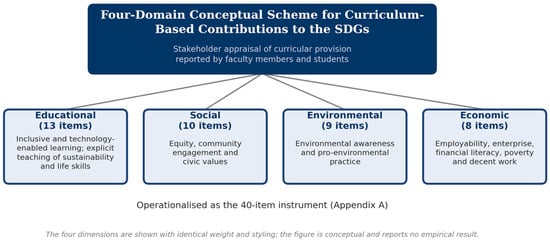
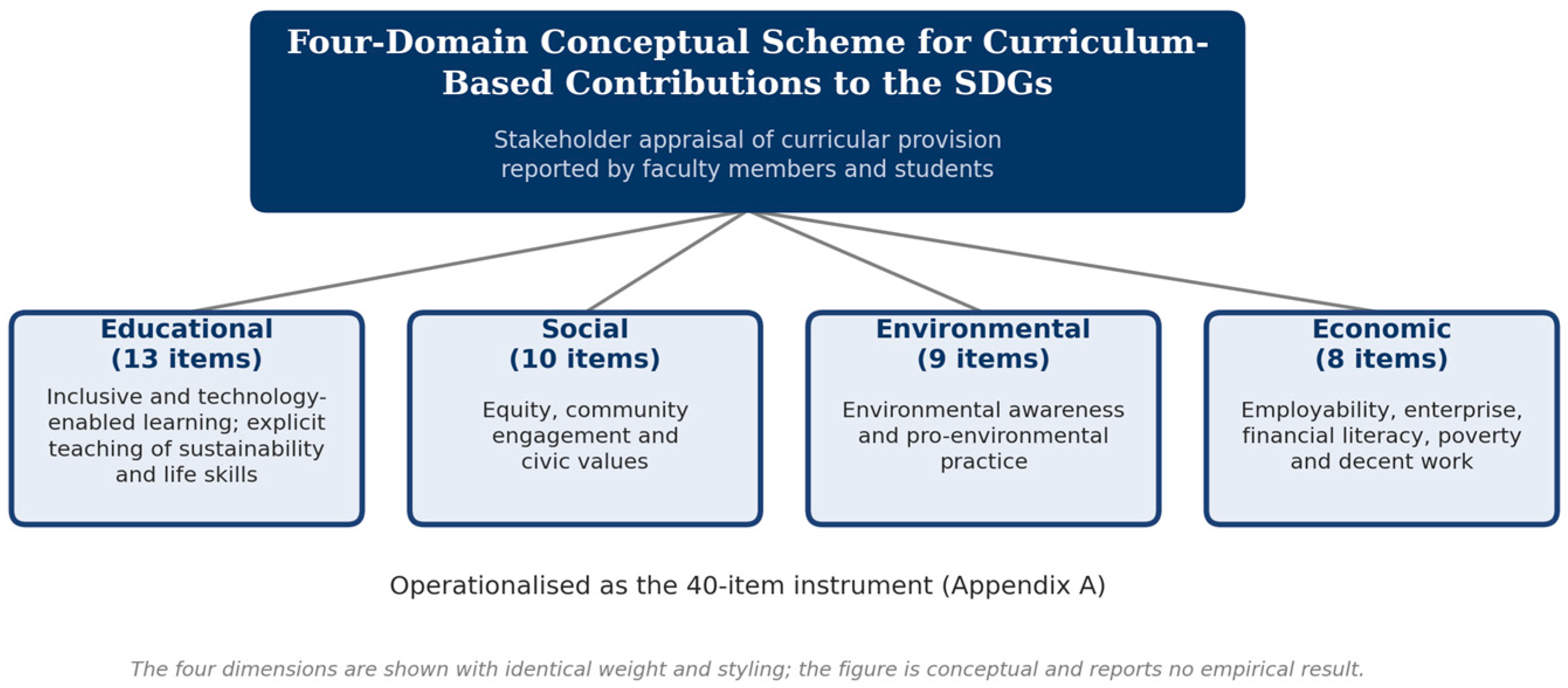
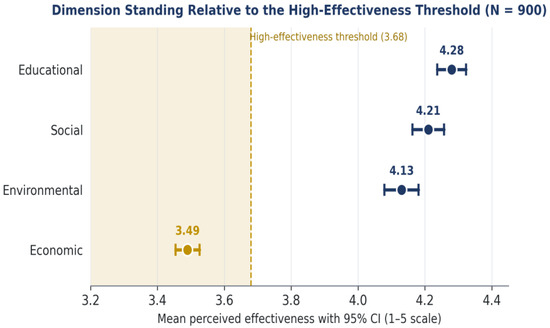
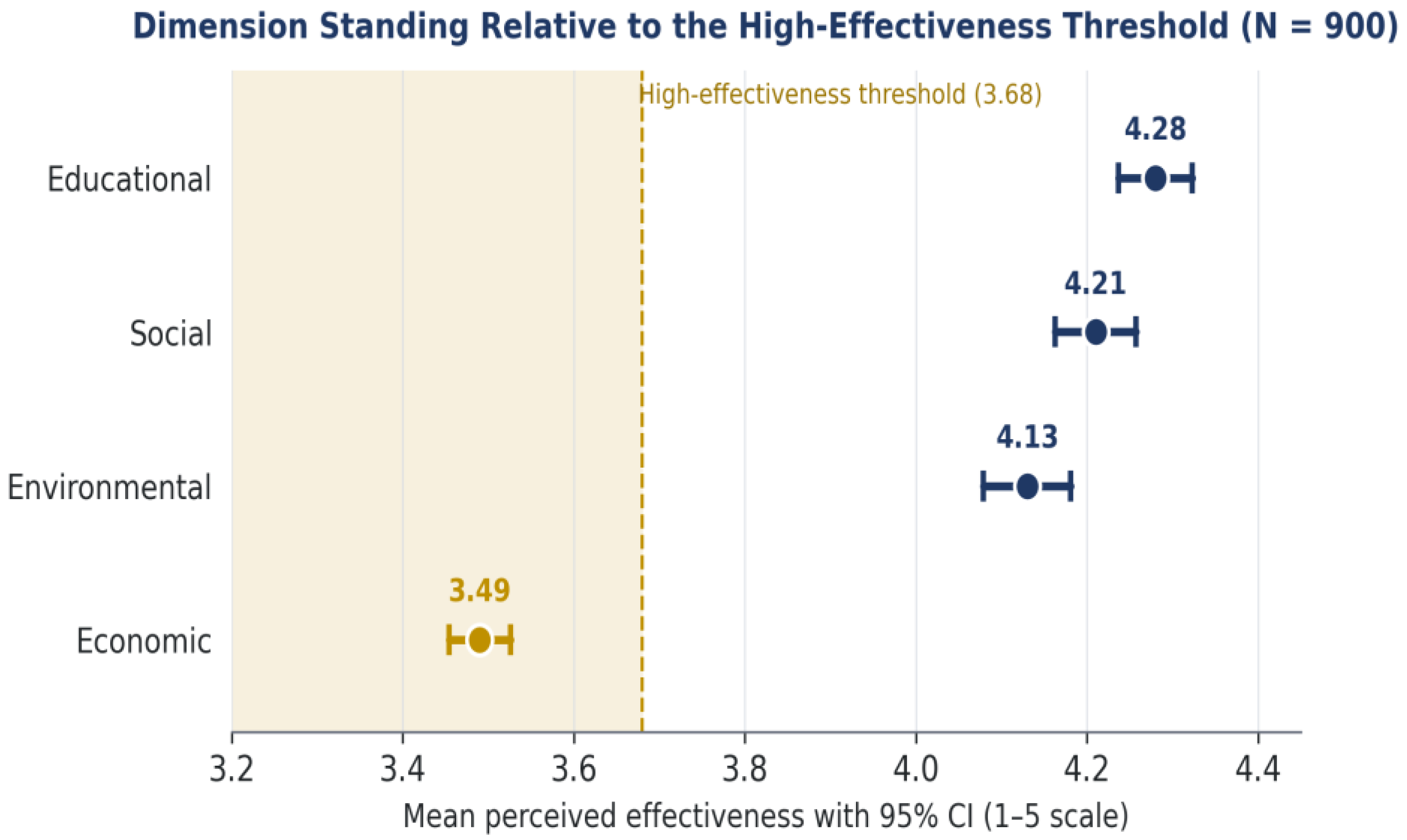
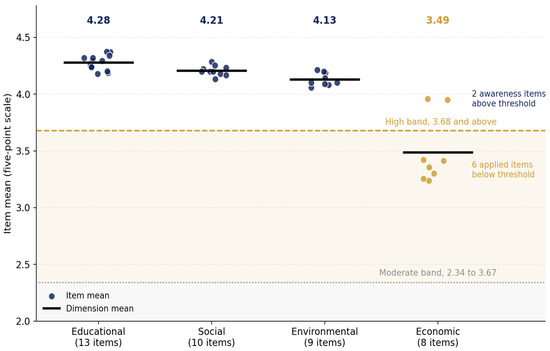
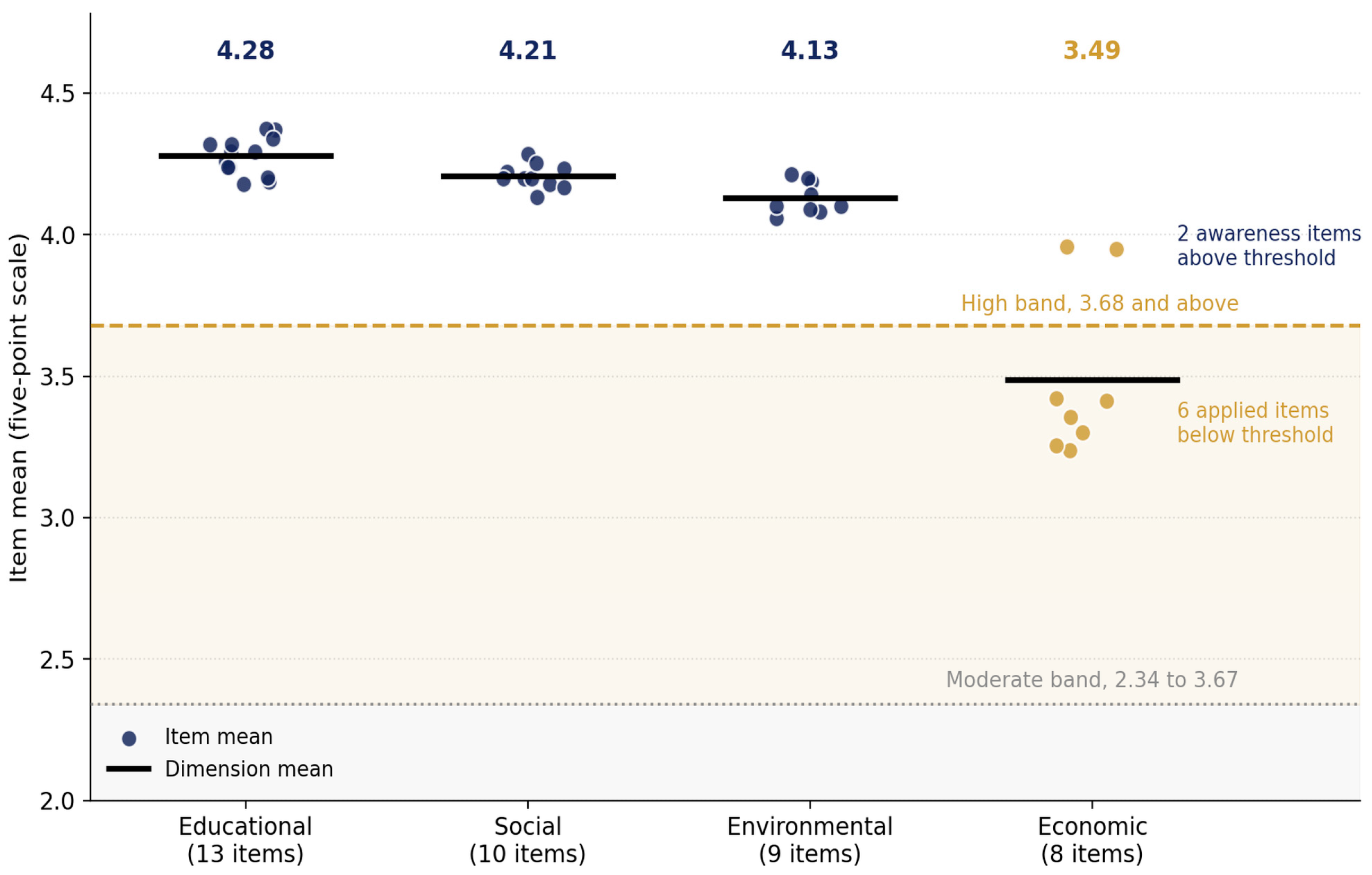
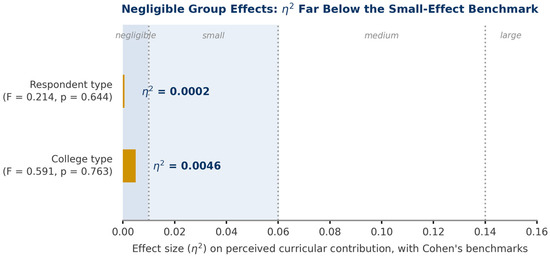
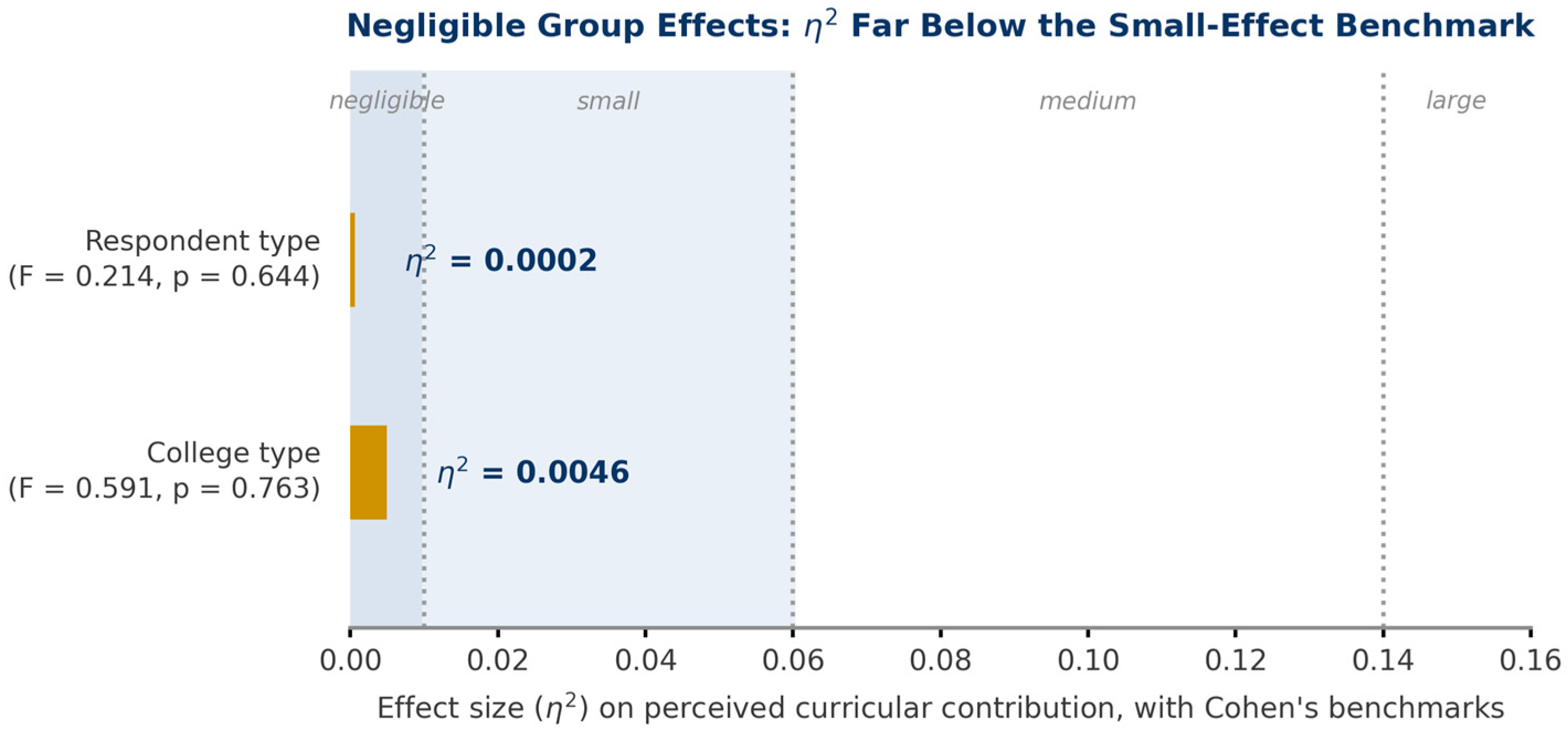

Disclaimer/Publisher’s Note: The statements, opinions and data contained in all publications are solely those of the individual author(s) and contributor(s) and not of MDPI and/or the editor(s). MDPI and/or the editor(s) disclaim responsibility for any injury to people or property resulting from any ideas, methods, instructions or products referred to in the content. |
© 2026 by the authors. Licensee MDPI, Basel, Switzerland. This article is an open access article distributed under the terms and conditions of the Creative Commons Attribution (CC BY) license.