


Abstract
This review examines how smart city technologies have influenced health equity in urban settings between 2019 and 2026, guided by a dual-lens framework that assesses both equity-related outcomes and the systemic factors enabling or constraining their realization. As cities increasingly turn to digital tools to strengthen healthcare delivery, it remains unclear whether these interventions narrow or widen existing health disparities. Drawing on interdisciplinary literature spanning public health, urban informatics, and digital governance, this synthesis finds that smart health initiatives have improved healthcare access for some underserved populations, but their overall effect on health equity remains modest, inconsistent, and highly dependent on local context. Persistent structural obstacles, including digital divides, socio-economic inequality, and fragmented governance, continue to limit equitable implementation, while institutional barriers emerge as the most widespread challenge. Conversely, people-centered design, participatory governance, inclusive digital infrastructure, and equity-sensitive policy frameworks stand out as critical enablers of more just outcomes. The review further identifies an underexplored link between environmental sustainability and smart city technology, showing that AI-driven tools addressing emissions and urban environmental quality can indirectly support more equitable health systems. Overall, the findings underscore that technological innovation alone is insufficient; realizing the equity potential of smart cities requires deliberate integration of social justice, environmental sustainability, and collaborative governance into digital health strategy and practice.
1. Introduction
Rapid urbanization has triggered the importance of addressing healthcare challenges and reducing persistent health disparities for city dwellers. With over 68% of the world’s population expected to live in urban areas by 2050 [1], cities’ design, governance, and technological infrastructure are increasingly recognized as critical determinants of health and well-being for citizens [2,3]. In this context, smart city technologies—ranging from telemedicine and environmental sensors to digital health platforms and AI-driven services—are often positioned as innovative solutions to improve health outcomes and enhance urban living conditions [4,5].
The concept of a smart city is multifaceted, typically encompassing the integration of information and communication technologies (ICTs) to enhance urban management, service delivery, sustainability, and citizen quality of life [5,6,7,8], clearly showing the multidimensional concept of smart cities. Smart cities leverage data and digital infrastructure to enable more responsive and efficient systems across various domains such as transportation, energy, education, and public health [9]. For instance, Internet of Things (IoT)-enabled multiagent frameworks have been applied to adaptive traffic management in urban environments, demonstrating how real-time data systems can optimize city-wide mobility, a domain with direct implications for environmental health and equitable access to services [10]. Key features of smart cities include the widespread use of sensors, real-time data analytics, IoT devices, artificial intelligence (AI), and cloud computing to monitor and manage city functions in real time [11]. From the public health perspective, these technologies might facilitate early disease detection, support remote healthcare delivery, and improve environmental health monitoring. This has led to the emergence of the concept of ‘smart health’, which refers to the delivery of health services through the digital infrastructure of smart cities [12].
In fact, smart health innovations are increasingly being integrated into urban systems. For instance, a systematic review identified IoT devices, Mobile Health (mHealth) applications, and artificial intelligence (AI) and data analysis as fundamental technologies for smart city healthcare services, highlighting that these technologies are enhancing healthcare delivery by driving real-time health monitoring, early disease detection, and increasing overall efficiency [13]. Similarly, the Smart City Pilot Policy in China significantly enhanced the efficiency and distribution of public health services by employing integrated data platforms and automated health governance frameworks [14]. The use of digital technologies in healthcare within smart cities, especially AI and machine learning, has also enabled personalized healthcare delivery and predictive diagnostics, thus expanding the role of urban infrastructure in supporting population health [15]. However, many of these applications are still in the early stages of development [16], and the implementation of smart city health technologies also raises concerns regarding data privacy, digital inequality, and governance; it also highlights ethical and operational risks. For instance, health equity concerns persist when digital health innovations are deployed in socially or economically marginalized communities [13,14]. However, the Urban Health Equity Assessment and Response Tool (Urban HEART) exemplified how ICT-supported urban health planning can guide more inclusive and just interventions, ensuring that smart innovations do not exacerbate existing disparities but rather help to mitigate them [17]. Additionally, the adoption of smart city services varied significantly across neighborhoods, with lower adoption rates in areas with lower digital proficiency and higher privacy concerns, indicating that such interventions may not effectively reach or benefit all segments of the urban population equally [18]. A systematic review revealed that among various smart city health interventions, few incorporated explicit equity considerations in their design or evaluation, highlighting a significant gap in addressing health disparities [12]. Therefore, it seems that despite these technological advancements, the impact of smart cities on health equity remains unevenly realized.
Many early smart city initiatives, characterized as “Smart City 1.0” [19], have prioritized technological innovation and economic efficiency, often driven by private sector agendas and top-down governance structures. These models have been criticized for marginalizing equity and social inclusion concerns, thereby risking the reinforcement of existing spatial and socio-economic disparities [9,12,19]. This adds a critical perspective on equity and social inclusion, highlighting how technology-oriented urban development may reproduce or reinforce existing spatial and socio-economic inequalities when unequal access, participation, and governance are not adequately addressed. In response to these limitations, an alternative “Smart City 2.0” paradigm has emerged [20,21], emphasizing citizen-centric planning and participatory governance. This approach integrates the social determinants of health, recognizing that smart technologies can contribute to health equity only when inclusively designed and equitably implemented [22,23]. By focusing on inclusive governance and public participation, Smart City 2.0 aims to shift the role of technology from a driver of innovation to a tool for improving social justice and population well-being. This concern is echoed in Southeast Asia, where smart city initiatives have been shown to reproduce existing inequalities and create new forms of digital exclusion, particularly for marginalized and vulnerable urban populations. The concept of “digital stratification” has been introduced to explain how smart cities create new social hierarchies based on digital access and engagement [3]. At a global scale, a systematic review identified six major structural barriers to justice in smart city development—institutional, legacy, economic, social, technical, and geographical—with institutional barriers being the most prevalent worldwide, underscoring that equity failures in smart cities are systemic rather than incidental [2].
Despite this conceptual evolution, empirical evidence on whether smart health interventions have effectively addressed health inequities in urban settings remains limited. Many implementations lack comprehensive equity evaluations or fail to prioritize the needs of underserved populations. This review builds on this evolving discourse by examining how smart city technologies have influenced health equity across diverse urban contexts from 2019 to 2026. It investigates whether and how digital health interventions have been deployed to address the health needs of marginalized urban populations. Furthermore, it explores the systemic enablers and barriers shaping the equitable implementation of smart health initiatives, considering infrastructure, governance, policy, and socio-cultural contexts. By synthesizing recent findings, this review aims to clarify the extent to which smart city technologies have led to tangible health equity outcomes. It also explores what/if structural changes are necessary to advance this goal. In doing so, the insights contribute to a growing body of scholarship that seeks to align the smart city agenda with global health equity goals.
Conceptual Framework
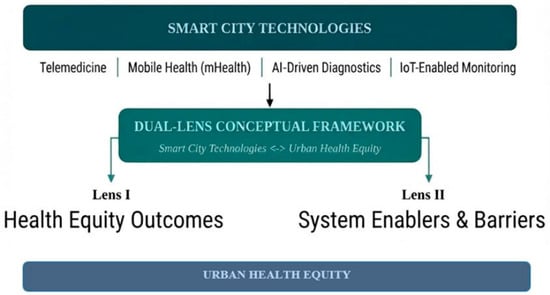
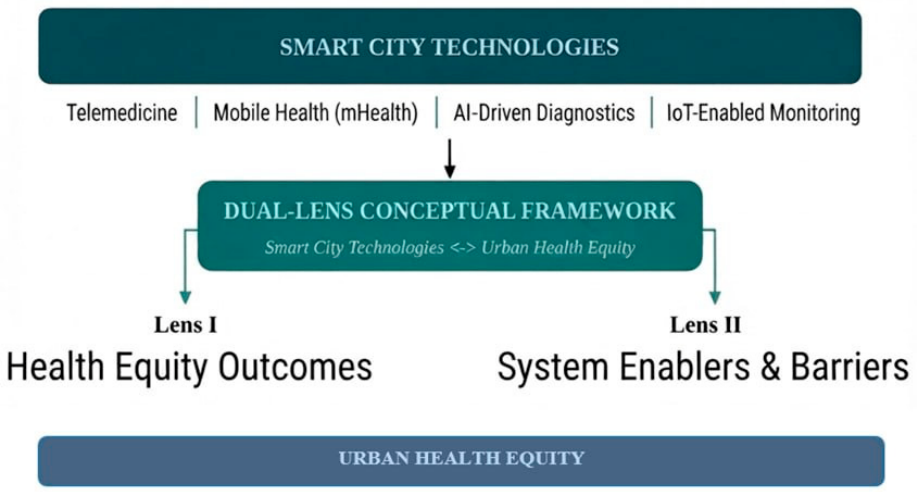
This review adopts a dual-lens conceptual framework to critically examine the relationship between smart city technologies and urban health equity, integrating two key analytical dimensions: (1) the degree to which smart city technologies contribute to health equity outcomes in urban settings, and (2) the systemic enablers and barriers that influence the equitable implementation of these technologies. The framework is situated at the intersection of public health equity, urban informatics, and digital governance, drawing from interdisciplinary scholarship on smart cities, social determinants of health, and equity-focused evaluation models (Figure 1).
Figure 1.
Conceptual framework of the study.
We applied Braveman and Gruskin’s (2003) definition of health equity, which emphasizes fairness and justice in health opportunities and outcomes, especially for disadvantaged populations [24]. Within this scope, smart health technologies—defined as digital tools integrated into the infrastructure of smart cities to deliver or enhance health services [11]—are evaluated in terms of their capacity to reduce disparities in health access, quality, and outcomes. This includes technologies such as telemedicine, mHealth, AI-driven diagnostics, and IoT-enabled monitoring systems [14,15,16], which constitute the health-related applications of smart city technologies.
The framework also focuses on enabling and constraining contextual factors, considering the Urban Health Equity Assessment and Response Tool (Urban HEART), which advocates for data-driven, participatory, and equity-sensitive urban health planning [25]. This lens allows the review to assess whether smart city interventions align with broader public health goals and consider the socio-economic and environmental determinants that shape health inequities.
2. Materials and Methods
2.1. Review Approach
This literature review explored how smart city technologies are implemented in urban health systems and assessed their implications for health equity. The review approach was chosen for its flexibility in synthesizing interdisciplinary literature and capturing diverse forms of evidence from both public health and urban technology fields. Given the interdisciplinary scope of the literature (spanning public health, urban planning, and digital technology), this review also acknowledges the heterogeneity in study designs and outcome measures.
2.2. Search Strategy and Data Sources
The literature search was conducted using two major academic databases: PubMed and Scopus. These platforms were selected for their broad and complementary coverage of the peer-reviewed literature. PubMed is widely recognized as a premier biomedical database, particularly suited to capturing digital health and clinical studies, while Scopus offers comprehensive indexing of interdisciplinary publications relevant to urban planning, policy, and technology studies [26,27].
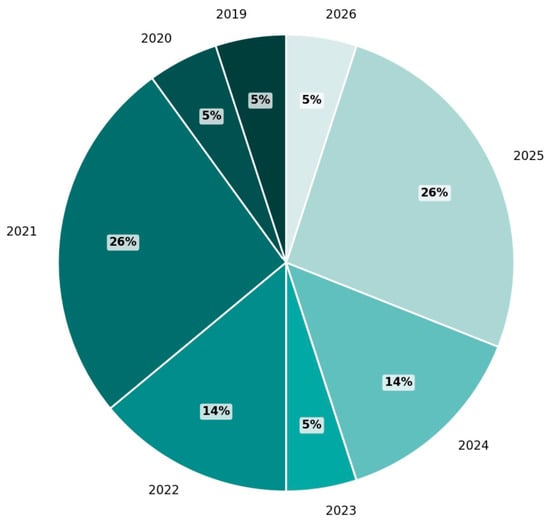
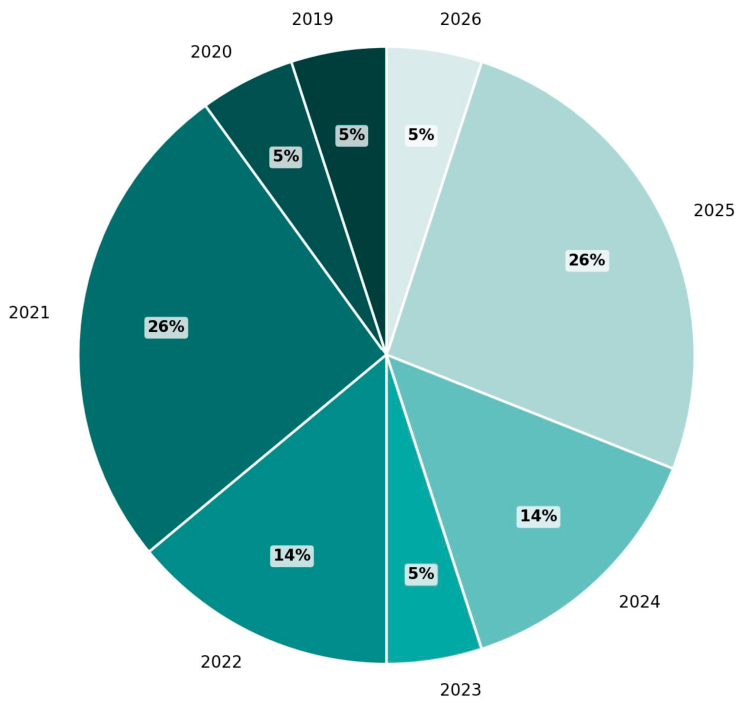
To capture recent advancements in digital health technologies and smart city innovations, a comprehensive literature search was conducted, covering publications from November 2019 to May 2026. This timeframe was selected as 2019 is recognized as a significant turning point for global technological integration, largely catalyzed by the recent pandemic. Figure 2 represents the distribution of the included studies by publication year.
Figure 2.
Distribution of the 22 included studies by publication year (November 2019–May 2026).
The following search strings were applied: 1—(“smart city” AND “health”) AND (“Telehealth” OR “Telemedicine” OR “AI” OR “IoT” OR “big data”) AND (“implementation” OR “policy”) AND (“equity” OR “social justice”), 2—(“digital health” OR “telemedicine” OR “smart health technologies”) AND (“urban settings” OR “city health systems”) AND (“access” OR “barriers” OR “enablers”) AND (“equity” OR “inclusion”). This structured keyword strategy is consistent with best practices for literature reviews that aim to explore interdisciplinary themes [28,29]. Accordingly, the use of compound search terms and Boolean operators ensured the retrieval of studies that intersect technology, health, policy, and equity within urban environments.
2.3. Screening Process
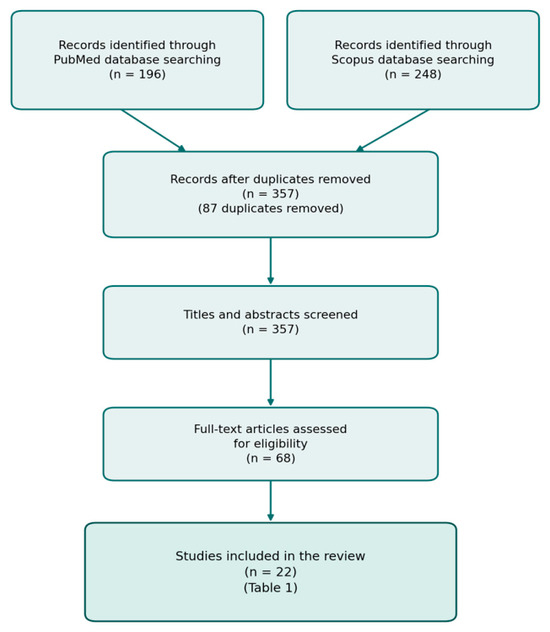
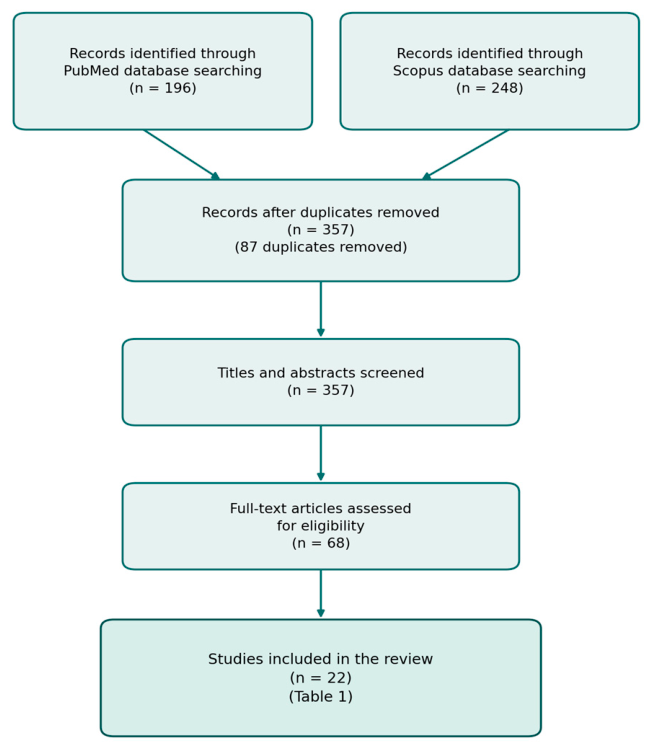
The article identification and screening were guided by PRISMA 2020 reporting conventions, adapted for a non-systematic review (Figure 3). All 357 selected articles were initially screened based on their title and abstract. At this stage, articles were considered eligible if they contained relevant keywords, resulting in 68 articles for full-text assessment. Two authors independently screened the contents of 68 records against predefined operational relevance, including substantive relevance to smart city technologies in relation to health, policy, or equity/access in an urban context. Any disagreements between the reviewers were discussed and resolved through consultation with a third author to reach a consensus decision. Following the full-text relevance assessment, 22 articles were ultimately included in the review.
Figure 3.
PRISMA-style flow diagram of the identification, screening, eligibility, and inclusion process.
The contents were reviewed based on a dual-lens conceptual framework, encompassing the extent of health equity outcomes in smart health interventions and the enabling factors and barriers influencing equitable implementation of smart health interventions in urban contexts. During the review, selected studies were examined for their technological focus, implementation context, policy and governance elements, attention to health equity, access, or social inclusion, and identification of barriers and enablers.
The PRISMA diagram reflects the structure of this study and screening process. As shown, 357 unique records were screened by title/abstract, of which 289 were excluded as not relevant to the smart city health/equity focus; 68 full-text articles were then assessed for eligibility, leaving the final 22 studies included in the qualitative contents review.
3. Results
3.1. Contribution to Healthy Smart Cities
Not all research directly quantified the impact or contribution of smart city technologies on urban health equity [30,31,32,33], nor did it necessarily quantify the extent of improvement in urban health equity outcomes [34] (Table 1). While the potential for promising impact exists, the current evidence suggests that equity considerations have often been insufficiently addressed in the ‘design’ and ‘implementation’ of many smart city initiatives [13,35]. In fact, while equity is being considered in some smart city health interventions, a lack of practical evidence of their efficiency on urban health equity is still emerging [9].
Table 1.
Contribution of smart city technologies to urban health equity (2019–2026).
Targeted Disease Management: Several articles directly focused on the contribution of health technologies by mentioning a specific health issue and diseases. By focusing on a smart system called ‘Remote Patient Monitoring (RPM)’ in regional Australia, researchers suggested the potential of digital health tools to address healthcare disparities in non-metropolitan settings [30]. Likewise, the application of digital health technologies for neglected tropical diseases was examined in various settings, including urban and rural ones. The authors noted the use of technologies like mHealth and eHealth for case detection, disease management, and treatment outcomes, suggesting a potential for technology to improve health services for neglected tropical diseases [34]. A telemedicine outreach model was implemented in underserved urban communities in West Baltimore, where a virtual hospital initiative proactively provided screening and health services via a mobile health clinic. The program facilitated increased access to healthcare services for a predominantly African American population with higher rates of chronic conditions like diabetes and hypertension, suggesting the efficiency of telemedicine in underserved urban settings, potentially contributing to health equity [36]. But another study evaluated the expansion of a Telehealth Program (TelePrEP) for HIV pre-exposure prophylaxis in small urban areas and demonstrated that while telehealth can expand access in urban contexts, it was insufficient to overcome racial disparities, indicating that technology alone may not fully address equity issues [37]. The potential of telemedicine was also discussed for buprenorphine to increase access to opioid use disorder treatment in both rural and urban settings [38], as well as for diabetes management, highlighting the potential of telemedicine to improve HbA1c levels, medication adherence, and timely care management support. The paper suggests the potential of remote healthcare for the management of chronic conditions [39]. The COVID-19 pandemic also accelerated the use of digital health technologies for monitoring and managing health conditions, although equitable access was not directly the main concern [39,40].
Healthcare Accessibility: Several studies discussed the issue from the perspective of healthcare accessibility. A study on telehealth in non-urban areas considered six dimensions of access and concluded that telehealth shows promise for improving healthcare access, but notes incomplete assessments of equity impacts [32]. An investigation on telemedicine in the UK found that it significantly improves access by reducing travel barriers and enhancing mental health services. While focused on rural areas, the paper implies that similar improvements and considerations for equity apply to urban contexts as well [40]. Likewise, IoT-enabled adaptive traffic management improved urban mobility, which directly led to equitable access to urban services and indirectly contributed to health equity [10]. However, another study noted the disparities in access to surgical care using mobile platforms, which were due to the limitation of a well-trained workforce and infrastructural gaps that hinder equity outcomes [45].
Environmental Sustainability and AI: AI played a crucial role in advancing urban environmental sustainability during the pandemic. By optimizing energy usage and reducing emissions, AI-driven solutions have not only fostered cleaner, healthier urban environments but also supported an indirect pathway to equity by improving the core environmental determinants of health in urban contexts [10,46]. Similarly, AI supported healthy smart city development by linking AI-driven sustainability with human well-being, providing a foundation for more equitable urban health governance [48]. Finally, a study of AI in metaverse environments for smart city health services contributes to healthy smart cities by proposing AI-enabled virtual health platforms that can improve healthcare access and potentially enhance equity [47]. However, concerns related to the digital divide and governance remain unresolved in these studies.
Urban Governance and Policy: The importance of integrating urban public health into urban planning was the main insight of some sources, in order to create healthy smart cities, for example, through implementing a data-driven approach [33], re-conceptualization of ‘digital divides’ in terms of socio-economic gradients [35], and policy changes to improve digital access and literacy, as well as pay parity for telehealth services [38]. Moreover, a study introduced a Civil City Framework for implementing nature-based smart innovations with a focus on the right to a healthy city. The framework proposes using various data collection methods, including health monitoring apps, to assess the impacts of interventions. This suggests a pathway for future improvements in urban health, potentially contributing to equity through community involvement and data-driven planning [42].
Therefore, the potential of smart cities (the application of digital technologies in urban planning) to transform healthcare was well discussed in the sources, specifically through enhanced access, improved health outcomes, reduced costs, and increased efficiency [13]. However, most studies focus on characterizing exposure to health determinants rather than the direct impact on population health [43,49]. Several sources critique the historical focus of smart city initiatives on technology and economic growth, often at the expense of social equity and public health. For instance, these initiatives may exacerbate existing divides, benefiting affluent populations while marginalizing vulnerable communities who are often disproportionately impacted [12,41]. Certain equity topics such as occupation, gender, religion, race, ethnicity, culture, language, and education were less featured in the literature [12,30,35,41]. Therefore, even though the equity considerations are being included in some interventions, many are in the early phases, and challenges related to the integration of social and environmental factors persist.
3.2. Enabling Factors and Barriers
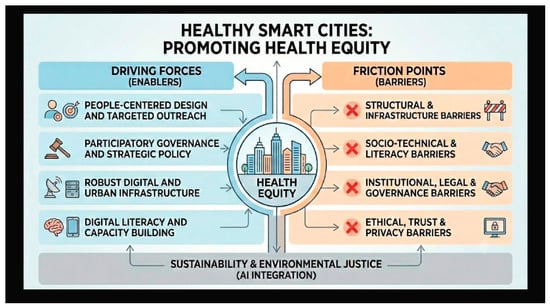
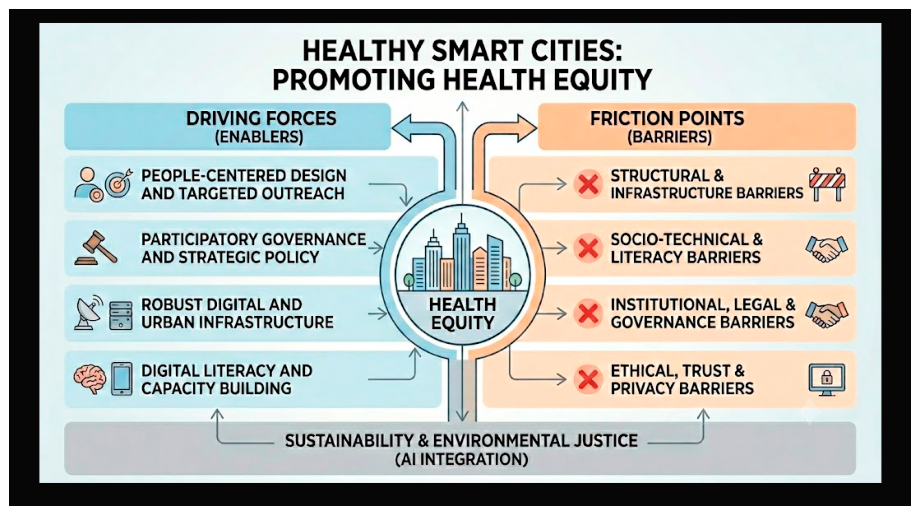
As illustrated in Figure 4, various enabling factors and barriers influence the equitable implementation of smart health technologies in urban settings. These enabling factors are designed to integrate equity into the system’s core and establish a framework for ensuring equitable outcomes.
Figure 4.
Framework for promoting health equity through smart city technologies.
3.2.1. Enabling Factors
People-Centered Design and Targeted Outreach: To achieve more equitable health outcomes, a “people-first” approach is essential, prioritizing citizen well-being and the mitigation of social challenges over purely technological objectives [12]. Implementing this requires a deep understanding of diverse needs and preferences, which can be facilitated through feedback mechanisms [33,42] and the assessment of patient preferences across diverse demographic groups [44]. Research suggests that models must emphasize acceptability and adaptability to local settings to be effective [37].
Key determinants of health equity, including infrastructure, demographics, and social characteristics, must be integrated into smart city planning [12,31,44], particularly because these factors influence the accessibility and distribution of technology-enabled urban services and may shape health outcomes across different population groups. Social factors directly influence care preferences; for example, while some older patients may prioritize in-person visits, non-English speakers might prefer the convenience of telehealth [44]. Furthermore, while telemedicine can bridge geographical gaps, systemic social factors such as income and education remain primary drivers of accessibility [31]. Place of residence, socio-economic status, and social capital are frequently identified as critical equity considerations [12].
Ultimately, aligning smart city initiatives with social and democratic objectives is vital to addressing health disparities [41]. This involves proactively targeting underserved populations, including those in regional areas or those facing specific socio-economic disadvantages, to ensure equitable resource distribution [30,32,36,39], emphasizing equitable access to digital and urban health resources and the importance of addressing spatial and socio-economic disparities in technology-enabled service provision. Implementing proactive mobile health outreach strategies is a particularly effective way to engage residents who face significant barriers to traditional healthcare access [36].
Participatory Governance and Strategic Policy: Engaging citizens and local stakeholders in the co-creation of smart health technologies ensures solutions are contextually relevant and address the needs of diverse communities [12,42]. Facilitating equitable implementation requires participatory processes, community involvement, and the engagement of public health partners through multi-governance models [13,37,42]. Integrating public health perspectives, such as consistent patient–provider interactions and multidisciplinary collaboration, is essential [33,39]. Furthermore, collaboration between public health professionals and urban planners is vital to designing initiatives that prioritize health equity and improve outcomes [35,43], while data-driven approaches that integrate health and urban datasets foster sustainable progress [33].
These initiatives require comprehensive policy and governance frameworks that explicitly address equity and ethical considerations [13,30]. Effective governance must include coordinated policy changes, equitable resource allocation, and strategies to guarantee healthcare access, especially in resource-limited settings [30,39]. For instance, increasing access to opioid treatment demonstrates how policy-driven interventions—such as enhancing digital literacy and establishing pay parity for telehealth—are essential for ensuring equitable implementation and improving outcomes [38].
Robust Digital and Urban Infrastructure: Robust, accessible infrastructure, including reliable broadband and connectivity, is fundamental to the equitable deployment of digital health solutions, particularly in regional areas [13,39,40]. This encompasses essential digital healthcare systems and the implementation of telemedicine [13,39,45]. Beyond healthcare-specific tools, interconnected smart city infrastructure, such as adaptive traffic management, highlights how broader IoT applications can improve environmental health and population well-being [10]. Furthermore, advanced data analytics and real-time monitoring through mobile applications are essential for facilitating timely, equitable care [35].
Digital Literacy and Capacity Building: Technological infrastructure will not be effective unless it supports the appropriate usage of such facilities and users possess the skills to navigate them. Implementing programs to improve digital literacy across all population segments—especially among vulnerable groups such as older adults—is essential to ensure equitable access and utilization of smart health technologies [30,39]. Furthermore, combining these literacy efforts with targeted resource distribution is critical to maximizing the effectiveness of such interventions [40].
3.2.2. Friction Points (Barriers)
The resources also identify several significant barriers hindering equitable health access in urban settings.
Structural and Infrastructure Barriers: Disparities in IT infrastructure, device reliability, and affordability create a fundamental barrier to equitable smart health access [12,13,30,40]. The risk of uneven resource allocation often exacerbates existing health inequities [30]. Economic hurdles, such as high implementation costs, inequitable pricing, and limited public funding, are core drivers of exclusion, particularly in African and Southeast Asian urban contexts where infrastructure is disproportionately concentrated in affluent areas [3]. The barriers stemming from historical inequalities and exclusionary policies mean that without explicit intervention, smart technologies risk compounding past injustices rather than resolving them [2].
Socio-Technical and Literacy Barriers: Even when physical infrastructure is present, significant socio-technical hurdles prevent equitable utilization. Digital literacy deficits, language barriers, and cultural factors significantly impede equitable telehealth access [30,33,40]. A persistent challenge is the difficulty in engaging underserved populations when an overemphasis on technology neglects the social context, specific patient complexities, and the increased workload on healthcare providers [12,37,39]. Furthermore, socio-economic gradients and racial disparities heavily influence a user’s ability to navigate digital tools [35,38]. These challenges are worsened by technical barriers, such as algorithmic bias and insufficient transparency in AI-driven systems, which deepen digital exclusion for populations already facing socio-economic disadvantages [2].
Institutional, Legal and Governance Barriers: The equitable deployment of smart health technologies is significantly impeded by legal complications and a lack of clear regulatory frameworks [30,40]. This is compounded by “pilot-project syndrome,” where many interventions remain in early testing phases without robust evaluative designs, making long-term scalability and integration into existing public health infrastructure highly challenging [12,39]. Furthermore, governance models often prioritize economic benefits and technological efficiency over democratic participation and social impact [12,45]. Top-down technocratic governance, dominant in many smart cities, effectively filters out local community voices and fails to understand local needs, resulting in technologies that are not relevant or accessible to all [3,12,41].
Ethical, Trust and Privacy Barrier Concerns: The privacy and security of personal health data generate profound mistrust, making vulnerable populations reluctant to engage with smart technologies [13]. In certain urban contexts, the expansion of surveillance infrastructure disproportionately impacts marginalized groups, such as informal workers and migrants, who lack adequate legal protections [3]. When digital monitoring systems are perceived as surveillance-driven social control that might criminalize informal economic activities, it completely undermines the trust required for public health engagement [3]. Additionally, data collection methods risk imposing a “response burden” or inadvertently excluding participants based on age, gender, or socio-economic background, underscoring the urgent need for accessible communication and diverse feedback mechanisms [42].
Ultimately, a critical yet often overlooked challenge to equitable smart city health technologies is institutional and environmental sustainability. Misalignments between technological advancement and sustainable urban governance result in systems that are not resilient to future urban stressors like climate change, economic shifts, or population growth. Consequently, environmental justice concerns are gaining traction, emphasizing the need for initiatives that are both accessible and ecologically sound [41]. While AI-driven solutions have shown potential to bridge this gap by enhancing environmental sustainability in urban systems, their integration into health-focused frameworks remains limited [46]. Recent evidence confirms that AI’s impacts on environmental sustainability and human well-being are deeply intertwined, reinforcing the argument that digital health strategies cannot be designed in isolation from their broader ecological and social consequences [48].
4. Discussion
This review examined the contribution of smart technologies to urban health equity and explored the systemic enablers and barriers shaping their equitable deployment between 2019 and 2026. The findings reveal that while the digital transformation of urban health systems has accelerated considerably over this period, its realized impact on health equity outcomes remains limited, uneven, and highly context-dependent. The evidence base reflects a growing recognition that health equity must be integrated into smart city planning at the design stage [12,30,35,41]; however, practical evidence of equitable outcomes remains sparse, and a significant gap persists between the promise of smart health technologies and their demonstrated capacity to reduce health disparities in urban populations. This gap is not incidental but structurally embedded: comparative evidence from Southeast Asia confirms that smart city technologies reproduce existing inequalities and generate new forms of digital exclusion, particularly for marginalized groups [3], while a global analysis of smart city development identified six interconnected categories of structural barriers—institutional, legacy, economic, social, technical, and geographical—with institutional barriers being the most prevalent worldwide [2]. These findings underscore that achieving health equity in smart cities is inseparable from broader systemic reform and cannot be achieved through technological solutions alone.
The review confirms that advanced digital health tools have improved healthcare access for underserved communities. Remote patient monitoring programs in regional Australia demonstrated potential for reaching populations facing geographical disadvantages [30], while mobile telemedicine clinics in underserved urban areas expanded access to chronic disease screening [36]. Telehealth initiatives also broadened access to opioid use disorder treatment [38] and improved diabetes management outcomes [39]. At the same time, the evidence consistently shows that technology alone is insufficient to overcome deeply rooted inequities: the TelePrEP program expanded HIV prevention access but failed to eliminate racial disparities [37], and neighborhood-level analyses revealed that adoption of smart city services was systematically lower in areas with reduced digital proficiency and heightened privacy concerns [18]. This pattern demonstrates that a technology-driven approach without concurrent attention to social readiness, cultural context, and structural accessibility may unintentionally deepen existing inequalities. Equity dimensions remain underrepresented in the literature [12,30,35,41], reflecting a systemic blind spot in how smart health technologies are conceptualized and evaluated.
Beyond direct health services, smart city technologies indirectly drive health equity by improving physical and digital infrastructures. For instance, IoT traffic management enhances urban mobility, environmental health, and equitable access [10], while AI optimizes energy and curbs emissions to improve core environmental health determinants [46]. Because AI’s benefits to sustainability and human well-being are mutually reinforcing, smart city health governance must integrate both ecological and social goals [48]. Consequently, health equity frameworks must broaden to encompass these foundational systems, including mobility, energy, and environmental monitoring. Finally, while AI-powered metaverse environments offer a conceptual frontier for extending healthcare access, their actual equity implications—particularly regarding the digital divide and governance accountability—demand rigorous empirical evaluation [47].
The governance dimension emerges as perhaps the most decisive determinant of equitable smart health outcomes. The review finds that many early smart city initiatives—aligned with the “Smart City 1.0” paradigm [19]—prioritized technological efficiency and economic productivity at the expense of social inclusion, reinforcing spatial and socio-economic disparities rather than addressing them. The shift towards a “Smart City 2.0” model [20,21], which centers citizen participation, participatory governance, and explicit equity commitments, offers a more promising direction. However, evidence from Southeast Asia exposes a disconnect between the rhetoric and reality of inclusive governance: while digital platforms exist, public participation is frequently “tokenistic” and yields minimal policy impact [3]. Consequently, technocratic models that systematically exclude marginalized voices have driven measurable digital stratification, wherein smart city technologies forge new social hierarchies based on unequal digital access [3]. At the global level, achieving justice in smart city development requires attention to four interlocking dimensions: distributional justice (equitable health outcomes), procedural justice (inclusive governance processes), recognitional justice (acknowledging the diverse needs and identities of marginalized groups), and restorative justice (addressing historical and structural disadvantage) [2]. The dual-lens framework guiding this review aligns strongly with distributional and procedural justice; however, recognitional and restorative justice dimensions remain underexplored in smart health research and represent a critical priority for future inquiry.
Environmental sustainability constitutes an increasingly critical yet underappreciated dimension of health equity in smart cities. Long-term health equity outcomes are inseparable from the ecological conditions of urban environments. Smart health technologies should, therefore, be embedded within broader urban strategies that promote climate resilience, low-carbon digital infrastructure, and nature-based planning solutions. Sustainable urban design interventions, including green infrastructure, thermal comfort mapping [41], and real-time pollution monitoring, can mitigate the environmental health risks that fall most heavily on vulnerable communities. The evidence that AI simultaneously advances environmental sustainability and human well-being reinforces the case for an integrated “whole-of-system” approach that connects public health, environmental planning, and digital governance [48]. This perspective reframes smart city health equity not as a purely technological or social challenge, but as an ecological imperative requiring the co-design of digital and green urban infrastructure. Without this integration, digital health systems risk being environmentally unsustainable and socially inequitable, which means generating technological progress for the privileged while compounding ecological burdens for the disadvantaged.
Taken together, the findings of this review reinforce the need for equity-sensitive evaluation metrics, meaningful participatory governance, and sustained intersectoral collaboration to ensure that the digital transformation of urban health systems serves all residents equitably, especially the most disadvantaged. Without deliberate integration of social, ecological, and institutional considerations into smart city health planning, cities risk becoming technologically sophisticated yet fundamentally unjust: efficiently connected for the privileged and inaccessible for those most in need.
4.1. Limitations
This review is subject to several limitations that should be considered when interpreting the findings. First, the inclusion criteria restricted the scope to English-language articles published between November 2019 and May 2026. This boundary may have excluded significant case studies, policy reports, and gray literature. The rapidly evolving nature of the field means that emerging frameworks, such as the global justice analysis and regional stratification evidence, may require supplementation with policy documents [2,3]. Second, the studies were manually selected based on relevance to the smart city–health equity nexus rather than a quality score. Third, no critical appraisal tool (e.g., AMSTAR-2, MMAT) was applied to individual studies because the review synthesizes heterogeneous evidence types for which a single appraisal instrument was not uniformly applicable; in addition, the heterogeneity of study designs, technologies, and equity concepts across the included literature made direct comparisons challenging and limited the generalizability of certain findings, clarifying that the findings should be read as an indicative narrative synthesis rather than a quality-weighted evidence hierarchy. Larger-scale reviews of such literature might consider bibliometric mapping tools such as VOSviewer or Dimensions once the corpus size warrants network-level analysis. Fourth, the review relied on primary studies that, in many cases, lacked rigorous equity-specific evaluation designs; as a result, the conclusions drawn reflect the limitations of the existing evidence base, which continues to evolve. Finally, the evidence for emerging technologies such as AI applications in metaverse environments and IoT-enabled adaptive urban systems is addressed at a conceptual or early-implementation level, limiting the availability of longitudinal and real-world evidence regarding their longer-term implications for urban health and equity.
4.2. Practical Implications
Based on the findings of this review, the following recommendations are proposed to advance health equity through smart city technologies:
Institutionalize equity in digital health governance: Urban policymakers and planners should adopt governance frameworks that explicitly embed equity principles at every stage of smart health technology design. Participatory governance models that genuinely engage local communities, health professionals, and civil society actors—rather than token consultation processes—are essential to producing technologies that reflect and respond to the full diversity of urban populations. Accordingly, participation must be structurally embedded and meaningfully empowered.
Adopt a people-centered and proactive design approach: Smart health technologies must be designed from the outset around the needs, preferences, and constraints of diverse urban populations, with special attention to underserved, elderly, linguistically diverse, and socio-economically disadvantaged groups [12,30,36,44]. Feedback mechanisms, patient preference assessments, and community co-design processes should be incorporated throughout development and implementation cycles [33,42].
Invest in inclusive digital infrastructure and literacy: Equitable access to smart health technologies requires sustained investment in both physical digital infrastructure and in human digital capacity. Digital literacy programs targeting older adults, low-income populations, and non-English speakers are essential to ensure that infrastructure investment translates into genuine utilization and health benefit [30,32,40]. Broader IoT infrastructure, such as adaptive traffic management systems [10], should also be recognized as part of the equity-relevant smart city ecosystem, given its indirect contributions to health and urban accessibility.
Develop and apply equity-sensitive evaluation metrics: Health equity indicators should be systematically embedded in smart city health program monitoring frameworks from the outset, enabling assessment of reach, differential impact across population subgroups, and unintended consequences. Current evidence reveals a persistent absence of rigorous equity evaluations in smart health interventions [12,32].
Strengthening legal, ethical, and privacy protections: Clear, enforceable regulatory frameworks for data privacy, informed consent, and algorithmic transparency are urgently needed in digital health. This regulation is critical because smart city surveillance disproportionately harms marginalized groups like informal workers and migrants [3], while biased AI health systems can exacerbate digital exclusion [2]. Ultimately, building trust among vulnerable populations requires going beyond regulatory clarity to establish visible institutional accountability and community-controlled data governance.
Integrating environmental sustainability into smart health planning: Future smart city strategies must align digital health investments with environmental sustainability to promote both ecological and social equity. AI tools proven to reduce emissions and improve urban environmental health [46,48] should be integrated alongside traditional health technologies. Additionally, sustainable urban design elements—including green infrastructure, thermal planning, and low-carbon digital systems—must be prioritized as essential, co-equal components of an equitable health ecosystem [15,41].
5. Conclusions
The findings confirm that while digital health innovations have expanded considerably in scope and application, their contributions to advancing health equity remain limited, uneven, and highly contingent on the social, institutional, and governance contexts in which they are deployed.
Three overarching insights emerge from this synthesis. First, smart health technologies can contribute to equitable health outcomes only when they are designed and implemented with explicit attention to social determinants of health, inclusive accessibility, and the diverse needs of marginalized urban populations. Second, systemic enablers including participatory governance, robust and inclusive digital infrastructure, people-centered design, and equity-oriented policy frameworks are indispensable for overcoming the persistent barriers that prevent equitable implementation. Third, equity failures in smart cities are structurally generated rather than incidental. Institutional barriers remain a major obstacle to the development of just and inclusive smart cities, while differences in digital access and engagement can reinforce existing social hierarchies. These inequalities are closely linked to governance structures that fail to ensure equitable access to digital technologies and opportunities for participation.
This review also highlights an underappreciated dimension of smart city health equity: the interdependence of social and ecological justice. AI-driven applications that are relevant to environmental sustainability can strengthen the environmental conditions that support human health and well-being. Such environmental-based infrastructures might make indirect but meaningful contributions to more equitable urban health by improving the efficiency, accessibility, and responsiveness of urban services. These findings call for a “whole-of-system” approach to smart city health governance that integrates digital transformation, public health planning, and environmental sustainability as mutually reinforcing rather than competing priorities.
Emerging technologies at the frontier of this space hold potential to further expand health service access, but their equity implications require careful and proactive governance from the earliest stages of development. Achieving health equity in the smart city era demands more than technological innovation. It requires deliberate, sustained institutional commitment to the principles of justice, participation, inclusion, and shared well-being. The dual-lens framework applied in this review offers a replicable structure for future research seeking to evaluate the equity performance of smart health interventions across diverse urban settings. Future inquiry should prioritize the recognitional and restorative justice dimensions that remain underexplored in this field, apply longitudinal and disaggregated evaluation designs, and engage directly with the communities most affected by smart city health decisions.
Author Contributions
Conceptualization, M.R., L.R.; methodology, M.R., L.R., E.H. and S.A.; software, M.R., E.H.; validation, M.R., L.R., S.A.; formal analysis, M.R., E.H.; investigation, L.R. and M.R., E.H.; resources, L.R., M.R., S.A.; data curation, L.R., M.R.; writing—original draft preparation, L.R.; writing—review and editing, L.R.; visualization, M.R., E.H.; supervision, L.R. All authors have read and agreed to the published version of the manuscript.
Funding
This paper was supported by the KU Research Professor Program of Konkuk University.
Institutional Review Board Statement
Not applicable.
Informed Consent Statement
Not applicable.
Data Availability Statement
No new data were created or analyzed in this study. Data sharing is not applicable to this article.
Conflicts of Interest
The authors declare no conflicts of interest.
References
- United Nations, Department of Economic and Social Affairs, Population Division. World Urbanization Prospects: The 2018 Revision (ST/ESA/SER.A/420); United Nations: New York, NY, USA, 2019; Available online: https://digitallibrary.un.org/record/3833745?ln=en&v=pdf (accessed on 26 July 2026).
- Haque, M.N.; Costales, E.; Beckers, D.; Sharifi, A.; Aad, S.; Mora, L. (In)justice in smart cities: Barriers and an integrative framework for solution pathways from a global perspective. Sustain. Dev. 2026, 34, 5420–5440. [Google Scholar] [CrossRef] [Scilit]
- Chen, L. Smart cities and social equity: A review of digital urban governance in Southeast Asia. Int. J. Soc. Sci. Appl. Technol. 2025, 1, 1–11. [Google Scholar] [CrossRef] [Scilit]
- Ntanda, A.; Carolissen, R. Technology’s dual role in smart cities and social equality: A systematic literature. J. Local. Gov. Res. Innov. 2025, 6, 15. [Google Scholar] [CrossRef] [Scilit]
- Quazi, F.; Mehta, R.; Gorrepati, N.; Kareem, S.A. Healthcare in Smart Cities-Creating a Sustainable Urban Environment. Int. J. Glob. Innov. Solut. (IJGIS) 2024. [Google Scholar] [CrossRef] [Scilit]
- Nam, T.; Pardo, T.A. Conceptualizing smart city with dimensions of technology, people, and institutions. In Proceedings of the 12th Annual International Digital Government Research Conference: Digital Government Innovation in Challenging Times, College Park, MD, USA, 12–15 June 2011; pp. 282–291. [Google Scholar]
- Alakoum, A.; Nica, E. Innovating urban environments: The impact of smart city technologies on employee performance, quality of life, and service. In The Emerald Handbook of Smart Cities in the Gulf Region: Innovation, Development, Transformation, and Prosperity for Vision 2040; Emerald Publishing Limited: Leeds, UK, 2024; pp. 53–68. [Google Scholar]
- Wolniak, R.; Stecuła, K. Artificial intelligence in smart cities—Applications, barriers, and future directions: A review. Smart Cities 2024, 7, 1346–1389. [Google Scholar] [CrossRef] [Scilit]
- Ruhlandt, R.W. The governance of smart cities: A systematic literature review. Cities 2018, 81, 1–23. [Google Scholar] [CrossRef] [Scilit]
- Mutambik, I. IoT-Enabled Adaptive Traffic Management: A Multiagent Framework for Urban Mobility Optimisation. Sensors 2025, 25, 4126. [Google Scholar] [CrossRef] [Scilit] [PubMed]
- Solanas, A.; Patsakis, C.; Conti, M.; Vlachos, I.S.; Ramos, V.; Falcone, F.; Postolache, O.; Pérez-Martínez, P.A.; Di Pietro, R.; Perrea, D.N.; et al. Smart health: A context-aware health paradigm within smart cities. IEEE Commun. Mag. 2014, 52, 74–81. [Google Scholar] [CrossRef] [Scilit]
- Buttazzoni, A.; Veenhof, M.; Minaker, L. Smart city and high-tech urban interventions targeting human health: An equity-focused systematic review. Int. J. Environ. Res. Public. Health 2020, 17, 2325. [Google Scholar] [CrossRef] [Scilit] [PubMed]
- Mohammadzadeh, Z.; Saeidnia, H.R.; Lotfata, A.; Hassanzadeh, M.; Ghiasi, N. Smart city healthcare delivery innovations: A systematic review of essential technologies and indicators for developing nations. BMC Health Serv. Res. 2023, 23, 1180. [Google Scholar] [CrossRef] [Scilit] [PubMed]
- Guo, L.; Chai, Y.; Yang, C.; Zhang, L.; Guo, H.; Yang, H. Has smart city transition elevated the provision of healthcare services? Evidence from China’s Smart City Pilot Policy. Digit. Health 2023, 9, 20552076231197335. [Google Scholar] [CrossRef] [Scilit] [PubMed]
- Sun, J.; Guan, X.; Yuan, S.; Guo, Y.; Tan, Y.; Gao, Y. Public health perspectives on green efficiency through smart cities, artificial intelligence for healthcare and low carbon building materials. Front. Public. Health 2024, 12, 1440049. [Google Scholar] [CrossRef] [Scilit] [PubMed]
- Rocha, A.; Mesquita, A.; Tanaka, H.; Martins, A. Smart cities and public health: A systematic review. J. Med. Syst. 2019, 43, 204. [Google Scholar]
- Prasad, A.; Kano, M.; Dagg, K.A.M.; Mori, H.; Senkoro, H.H.; Ardakani, M.A.; Armada, F. Prioritizing action on health inequities in cities: An evaluation of Urban Health Equity Assessment and Response Tool (Urban HEART) in 15 cities from Asia and Africa. Soc. Sci. Med. 2015, 145, 237–242. [Google Scholar] [CrossRef] [Scilit] [PubMed]
- Donio, S.; Toch, E. Neighborhood disparities in smart city service adoption. arXiv 2025, arXiv:2501.04363. [Google Scholar]
- Vishnivetskaya, A.; Alexandrova, E. “Smart city” concept. Implementation practice. IOP Conf. Ser. Mater. Sci. Eng. 2019, 497, 012019. [Google Scholar] [CrossRef] [Scilit]
- Etezadzadeh, C. Smart City–Future City?: Smart City 2.0 as a Livable City and Future Market; Springer: Cham, Switzerland, 2015. [Google Scholar]
- Trencher, G. Towards the smart city 2.0: Empirical evidence of using smartness as a tool for tackling social challenges. Technol. Forecast. Soc. Change 2019, 142, 117–128. [Google Scholar] [CrossRef] [Scilit]
- Giles-Corti, B.; Vernez-Moudon, A.; Reis, R.; Turrell, G.; Dannenberg, A.L.; Badland, H.; Foster, S.; Lowe, M.; Sallis, J.F.; Stevenson, M.; et al. City planning and population health: A global challenge. Lancet 2016, 388, 2912–2924. [Google Scholar] [CrossRef] [Scilit] [PubMed]
- Groom, L.L.; Schoenthaler, A.M.; Mann, D.M.; Brody, A.A. Construction of the digital health equity-focused implementation research conceptual model—Bridging the divide between equity-focused digital health and implementation research. PLoS Dig. Health 2024, 3, e0000509. [Google Scholar] [CrossRef] [Scilit] [PubMed]
- Braveman, P.; Gruskin, S. Defining equity in health. J. Epidemiol. Community Health 2003, 57, 254–258. [Google Scholar] [CrossRef] [Scilit] [PubMed]
- World Health Organization; WHO Centre for Health Development. Urban Heart: Urban Health Equity Assessment and Response Tool; World Health Organization; Kobe, Japan, 2010; ISBN 978-92-4-150014-2. [Google Scholar]
- Falagas, M.E.; Pitsouni, E.I.; Malietzis, G.A.; Pappas, G. Comparison of PubMed, Scopus, Web of Science, and Google Scholar: Strengths and weaknesses. FASEB J. 2008, 22, 338–342. [Google Scholar] [CrossRef] [Scilit] [PubMed]
- Gusenbauer, M.; Haddaway, N.R. Which academic search systems are suitable for systematic reviews or meta-analyses? Evaluating retrieval qualities of Google Scholar, PubMed, and 26 other resources. Res. Synth. Methods 2020, 11, 181–217. [Google Scholar] [CrossRef] [Scilit] [PubMed]
- Booth, A.; Sutton, A.; Papaioannou, D. Systematic Approaches to a Successful Literature Review, 2nd ed.; SAGE Publications: London, UK, 2016. [Google Scholar]
- Bramer, W.M.; Rethlefsen, M.L.; Kleijnen, J.; Franco, O.H. Optimal database combinations for literature searches in systematic reviews: A prospective exploratory study. Syst. Rev. 2018, 6, 245. [Google Scholar] [CrossRef] [Scilit] [PubMed]
- Tagne, J.F.; Burns, K.; O’Brien, T.; Chapman, W.; Cornell, P.; Huckvale, K.; Ameen, I.; Bishop, J.; Buccheri, A.; Reid, J.; et al. Challenges for remote patient monitoring programs in rural and regional areas: A qualitative study. BMC Health Serv. Res. 2025, 25, 374. [Google Scholar] [CrossRef] [Scilit] [PubMed]
- Al Haider, S.H.; Alshahablah, A.N.; Almajeba, M.H.; Alyami, N.M.; Alshehri, S.A.; Al Tarouti, E.M.; Alramadan, A.A.; Al Bagshi, B.A.; Alnahwi, A.N.; Alajmi, M.M. Critical analysis of healthcare accessibility and addressing barriers in urban and rural settings. J. Ecohumanism 2024, 3, 8258–8270. [Google Scholar]
- Wang, S.; Huben, A.V.; Sivaprakash, P.P.; Saurman, E.; Norris, S.; Wilson, A. Addressing health service equity through telehealth: A systematic review of reviews. Digit. Health 2025, 11, 20552076251326233. [Google Scholar] [CrossRef] [Scilit] [PubMed]
- Duc, T.V.; Ngan, L.T. Smart cities, healthy citizens: Integrating urban public health in urban planning. Rev. Contemp. Bus. Anal. 2022, 5, 28–44. [Google Scholar]
- Tilahun, B.; Gashu, K.D.; Mekonnen, Z.A.; Endehabtu, B.F.; Angaw, D.A. Mapping the role of digital health technologies in the case detection, management, and treatment outcomes of neglected tropical diseases: A scoping review. Trop. Med. Health 2021, 49, 17. [Google Scholar] [CrossRef] [Scilit] [PubMed]
- Mouton, M.; Ducey, A.; Green, J.; Hardcastle, L.; Hoffman, S.; Leslie, M.; Rock, M. Towards ‘smart cities’ as ‘healthy cities’: Health equity in a digital age. Can. J. Public. Health 2019, 110, 331–334. [Google Scholar] [CrossRef] [Scilit] [PubMed]
- Baker, D.R.; Cadet, K.; Mani, S.; Chatterjee, P. Proactively connecting residents in underserved and low socioeconomic status communities with “virtual hospital” telehealth access in response to the COVID-19 pandemic. J. Health Care Poor Underserved 2021, 32, 189–197. [Google Scholar] [CrossRef] [Scilit] [PubMed]
- Chasco, E.E.; Shafer, C.; Dillon, D.M.; Owens, S.; Ohl, M.E.; Hoth, A.B. Bringing Iowa TelePrEP to scale: A qualitative evaluation. Am. J. Prev. Med. 2021, 61, S108–S117. [Google Scholar] [CrossRef] [Scilit] [PubMed]
- Wang, L.; Weiss, J.; Ryan, E.B.; Waldman, J.; Rubin, S.; Griffin, J.L. Telemedicine increases access to buprenorphine initiation during the COVID-19 pandemic. J. Subst. Abus. Treat. 2021, 124, 108272. [Google Scholar] [CrossRef] [Scilit] [PubMed]
- AlQassab, O.; Kanthajan, T.; Pandey, M.; Francis, A.J.; Sreenivasan, C.; Parikh, A.; Nwosu, M. Evaluating the impact of telemedicine on diabetes management in rural communities: A systematic review. Cureus 2024, 16, e64928. [Google Scholar] [CrossRef] [Scilit] [PubMed]
- Gobburi, R.K.; Olawade, D.B.; Olatunji, G.D.; Kokori, E.; Aderinto, N.; David-Olawade, A.C. Telemedicine use in rural areas of the United Kingdom to improve access to healthcare facilities: A review of current evidence. Inform. Health 2025, 2, 41–48. [Google Scholar] [CrossRef] [Scilit]
- Obringer, R.; Nateghi, R. What makes a city ‘smart’ in the Anthropocene? A critical review of smart cities under climate change. Sustain. Cities Soc. 2021, 75, 103278. [Google Scholar] [CrossRef] [Scilit]
- Domaradzka, A.; Biesaga, M.; Domaradzka, E.; Kołodziejczyk, M. The civil city framework for the implementation of nature-based smart innovations: Right to a healthy city perspective. Sustainability 2022, 14, 9887. [Google Scholar] [CrossRef] [Scilit]
- Sapienza, M.; Nurchis, M.C.; Riccardi, M.T.; Bouland, C.; Jevtić, M.; Damiani, G. The adoption of digital technologies and artificial intelligence in urban health: A scoping review. Sustainability 2022, 14, 7480. [Google Scholar] [CrossRef] [Scilit]
- Julie, Z.Y.; Reynolds, R.V.; Olbricht, S.M.; McGee, J.S. Moving forward with teledermatology: Operational challenges of a hybrid in-person and virtual practice. Clin. Dermatol. 2021, 39, 707–709. [Google Scholar] [CrossRef] [Scilit] [PubMed]
- Mugisha, N.; Uwishema, O.; Noureddine, R.; Fatokun, B.S.; Byiringiro, C.; Fawaz, L.; Ghanem, L.; Mukamitari, V.; Wellington, J. Access to specialist plastic surgery in rural vs. urban areas of Africa. BMC Surg. 2024, 24, 418. [Google Scholar] [CrossRef] [Scilit] [PubMed]
- Gautam, S.; Tejasvee, S. Artificial Intelligence (AI): An Enhancement of Environmental Sustainability During the Pandemic in the Modern Era. In International Conference on AI Systems and Sustainable Technologies; Springer Nature: Singapore, 2025; pp. 327–337. [Google Scholar]
- Naeem, K.; Daud, A.; Alsahfi, T.; Badshah, A.; Cheema, S. Artificial Intelligence in the Metaverse: Transforming Health in Smart Cities. In 2025 International Conference on Emerging Technologies in Electronics, Computing, and Communication (ICETECC); IEEE: Piscataway, NJ, USA, 2025; pp. 1–6. [Google Scholar]
- Carmeno, N.L.; Domingos, T.; O’Neill, D.W. The impacts of artificial intelligence on environmental sustainability and human well-being. arXiv 2026, arXiv:2026.24091. [Google Scholar]
- Pala, D.; Caldarone, A.A.; Franzini, M.; Malovini, A.; Larizza, C.; Casella, V.; Bellazzi, R. Deep learning to unveil correlations between urban landscape and population health. Sensors 2020, 20, 2105. [Google Scholar] [CrossRef] [Scilit] [PubMed]

Disclaimer/Publisher’s Note: The statements, opinions and data contained in all publications are solely those of the individual author(s) and contributor(s) and not of MDPI and/or the editor(s). MDPI and/or the editor(s) disclaim responsibility for any injury to people or property resulting from any ideas, methods, instructions or products referred to in the content. |
© 2026 by the authors. Licensee MDPI, Basel, Switzerland. This article is an open access article distributed under the terms and conditions of the Creative Commons Attribution (CC BY) license.