


Abstract
The integration of artificial intelligence (AI) into pre-university education has emerged as a priority area for educational research and development, prompting renewed attention to teacher preparation, curriculum design, and digital literacy. Motivated by Sustainable Development Goal 4 (SDG 4) and the principles of Education for Sustainable Development (ESD), this study presents a systematic literature review (SLR) examining research trends in AI education within pre-university educational settings. Following PRISMA guidelines, the review analysed 42 studies published spanning the period from 2009 to May 2026, although most were published from 2019 onwards. The findings identify four major thematic areas: teacher education, curriculum development and pedagogical foundations, AI literacy and ethical competencies, and the educational implications of generative AI. The evidence indicates that effective AI integration depends on teacher preparedness, structured curricular frameworks, and critical and ethical approaches that promote responsible digital citizenship and inclusive educational practices. The review also highlights the need to strengthen institutional policies, regulatory frameworks, and professional development. Research gaps include the scarcity of longitudinal studies, limited classroom-based empirical evidence, and the lack of standardised instruments for assessing AI literacy. Overall, the findings may inform inclusive, interdisciplinary, and pedagogically grounded educational models that enable the critical and responsible integration of AI, aligned with the development of equitable, resilient, and sustainable educational systems.
1. Introduction
AI has become one of the most influential technologies shaping contemporary societies. Its growing presence across sectors such as communication, healthcare, economics, and employment is transforming social and professional practices while creating new educational and competency-related demands [1,2].
The rapid evolution of AI and its impact on labour markets has increased the need to develop competencies related to computational thinking, digital literacy, and the understanding of intelligent systems from an early age [3,4]. The integration of AI into education represents not only a technological challenge but also a pedagogical, ethical, and curricular one. Guided by Sustainable Development Goal 4 (SDG 4), which promotes inclusive, equitable, and quality education for all, educational systems are increasingly expected to integrate AI in ways that foster responsible innovation, equity, and high-quality learning opportunities. International reports and foresight studies have suggested that AI is likely to reshape teaching, learning, and educational organisation in the coming decades [2,5].
More recently, the rapid expansion of generative AI tools, including ChatGPT (https://chatgpt.com/) and other large-language-model-based systems, has intensified debates regarding the role of AI in educational processes and learning environments [6].
Within primary and secondary educational contexts, AI education presents specific challenges related to curriculum development, teacher preparation, pedagogical adaptation, and the ethical integration of emerging technologies. Although research on AI in education has expanded considerably in recent years, significant gaps remain regarding structured curricular frameworks, empirically validated pedagogical approaches, and teacher education programmes capable of responding to evolving technological contexts [7].
Recent scholarship highlights the need for educational models that integrate AI through interdisciplinary, inclusive, and critically informed perspectives [3,8]. Such approaches are increasingly recognised as essential for equipping learners and teachers with the knowledge, skills, and ethical competencies required to navigate AI-enabled societies. In this context, AI literacy is increasingly recognised as a key 21st-century competency closely associated with digital citizenship, technological ethics, and preparedness for future labour markets.
Despite the growing body of research on AI education, a comprehensive understanding of how AI can contribute to high-quality and equitable education remains limited. A systematic synthesis of current evidence can contribute to identify emerging trends, research gaps, and strategic priorities for its responsible integration into pre-university education.
Against this background, the present study aims to examine the main research trends in AI teaching and learning within pre-university educational settings through a systematic review of the recent scientific literature. Specifically, the study seeks to: identify the main pedagogical and curricular approaches to AI education; analyse the role of teacher education in the educational integration of AI technologies; examine the ethical and competency-related dimensions associated with AI literacy; and propose strategic directions for the institutional adoption of AI in educational contexts.
2. Materials and Methods
2.1. Research Design
This study adopted a systematic literature review (SLR) methodology to examine recent research on the integration of AI in pre-university education, with particular attention to teacher education, curriculum development, AI literacy, ethical competencies, and the pedagogical implications of generative artificial intelligence (GenAI).
The review was conducted and reported in accordance with the Preferred Reporting Items for Systematic Reviews and Meta-Analyses (PRISMA) 2020 Statement [9] ensuring a systematic, transparent, and reproducible process for identifying, selecting, and analysing relevant studies. In addition, a thematic synthesis approach was employed to identify emerging trends, dominant research perspectives, and gaps in the recent literature on AI in education.
The review focused specifically on pre-university educational settings and teacher education, two areas that have been particularly affected by the rapid expansion of generative AI tools and large language models (LLMs).
Throughout this review, the term pre-university education refers to compulsory school education (K–12), including primary and secondary education. Alternative terminology from the original studies is retained only when reflecting the terminology used by the respective authors.
The review was not prospectively registered, and no review protocol was prepared.
2.2. Research Questions
The review was guided by the following research questions:
- RQ1. What are the main trends in the integration of AI in pre-university education according to the recent scientific literature?
- RQ2. What competencies and challenges are identified in relation to teacher preparedness for the responsible integration of AI in educational contexts?
- RQ3. How are AI literacy, ethical competencies, and critical digital skills conceptualised in current educational research?
- RQ4. What curricular and pedagogical approaches are proposed for AI education in pre-university educational settings?
- RQ5. What opportunities and challenges emerge from the incorporation of GenAI into teaching and learning processes?
2.3. Search Strategy
The literature search was conducted across Scopus, Web of Science (WoS), and Google Scholar. These databases were selected because of their broad coverage of peer-reviewed research in education, educational technology, artificial intelligence, and teacher education.
The search process was updated until the final literature search, which was conducted on 22 May 2026. The search strategy combined keywords related to artificial intelligence, pre-university education, AI literacy, teacher education, curriculum development, and generative artificial intelligence using Boolean operators (“AND” and “OR”).
The primary search strings employed in each database are presented in Table 1.
Table 1.
Search strings employed in the review.
For Google Scholar, the most relevant results were screened based on their relevance and alignment with the research questions. It was used as a complementary search source, and records were screened according to their relevance to the review objectives and predefined eligibility criteria.
The review corpus primarily focused on studies published between 2019 and 2026, a period characterised by substantial growth in research on AI literacy, teacher education, curriculum development, and generative AI in educational contexts. Nevertheless, a limited number of earlier foundational studies were included when necessary to contextualise influential theoretical frameworks and educational models, such as TPACK, SAMR, and early AI education initiatives. These foundational studies were included to provide the conceptual and pedagogical background necessary for interpreting the recent AI-focused literature.
This timeframe was selected because it captures the rapid expansion of AI-related educational research following the emergence of AI literacy frameworks, the development of initiatives such as AI4K12, and the widespread adoption of generative AI technologies after 2022.
Only studies published in English were considered in order to ensure conceptual consistency and comparability across the reviewed literature. The search and study selection process followed the methodological recommendations of the PRISMA framework [9].
2.4. Inclusion and Exclusion Criteria
A set of predefined inclusion and exclusion criteria was established to promote consistency, relevance, and methodological rigour of the study selection process. These criteria were applied during the screening phase to identify studies that aligned with the scope and objectives of the review. The inclusion and exclusion criteria used in the study are summarised in Table 2.
Table 2.
Inclusion and exclusion criteria for study selection.
2.5. Study Selection and Screening Process
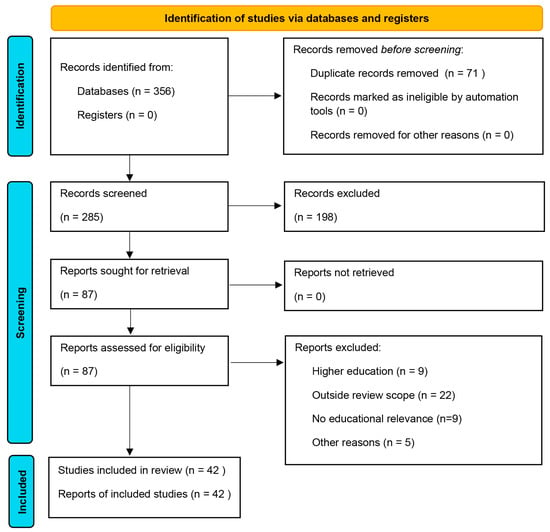
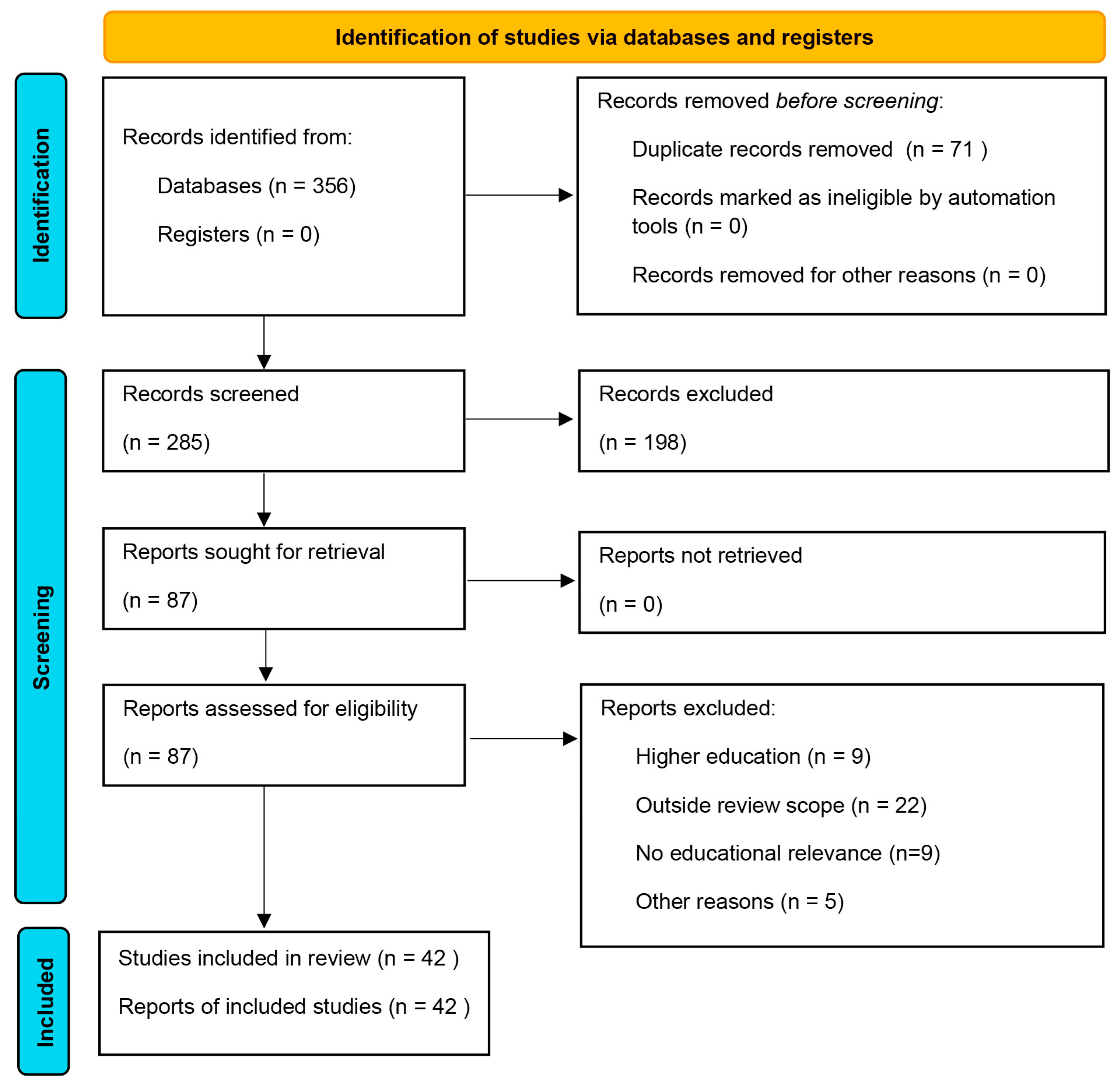
The study identification and selection process followed the PRISMA guidelines [9]. The initial search conducted across Scopus, Web of Science, and Google Scholar yielded 356 potentially relevant records. After the removal of 71 duplicate records, 285 studies were screened through a review of titles and abstracts.
Subsequently, 87 reports were sought for retrieval, all of which were successfully retrieved and assessed for eligibility according to the predefined inclusion and exclusion criteria. The full-text eligibility assessment was conducted independently by two reviewers using the predefined inclusion and exclusion criteria. Any discrepancies regarding study eligibility were resolved through discussion until consensus was reached. Studies spanning multiple educational sectors were included when they reported findings applicable to K–12 education. Of these, 45 reports were excluded because they did not meet the methodological and thematic requirements established for the review. Ultimately, 42 studies were included in the thematic and analytical synthesis.
The complete process of study identification, screening, eligibility assessment, and inclusion is illustrated in the PRISMA flow diagram presented in Figure 1.
Figure 1.
PRISMA 2020 flow diagram illustrating the study identification, screening, eligibility assessment, and inclusion process of studies for the systematic literature review of AI in pre-university education.
2.6. Data Extraction and Analysis
A data extraction table was developed to organise information from the 42 selected studies across several analytical dimensions, including authorship, year of publication, educational context, methodological approach, main research focus, and key findings.
Subsequently, the studies were coded using a thematic analysis approach, which enabled the identification of four major research areas related to the integration of AI in pre-university educational contexts:
- ▪
- Teacher education in response to the challenges of AI.
- ▪
- Curriculum development and pedagogical foundations of AI education.
- ▪
- AI literacy and ethical competencies.
- ▪
- GenAI pedagogical and ethical implications.
This analytical framework facilitated the identification of emerging trends, dominant approaches, and research gaps within the recent literature on AI in pre-university education.
To enhance the transparency of the thematic synthesis, each study was classified according to the extent to which its content contributed to the four thematic categories identified in this review. Consequently, eleven studies were assigned to more than one category when they made substantial contributions to different thematic areas, reflecting the multidimensional nature of the current evidence base. The thematic classification of all included studies is presented in Appendix A.
Data extraction and thematic classification were performed independently by two reviewers using a standardised data extraction framework. The extracted information included bibliographic details, educational stage, study design, main topic, thematic category, and key findings. Any disagreements regarding data extraction or thematic classification were resolved through discussion until consensus was reached.
Given the heterogeneous nature of the included studies, encompassing empirical, conceptual, theoretical, and review-based research, no formal quality or risk-of-bias appraisal was undertaken. Consequently, the thematic synthesis was based on the reported objectives, methodologies, and findings of the included studies rather than on methodological quality ratings.
Because the review included empirical, conceptual, and review studies, some overlap in the underlying evidence cannot be completely ruled out. However, the synthesis was conducted through qualitative thematic analysis rather than quantitative evidence aggregation.
A standardised data extraction framework was used to ensure consistency throughout the review process.
3. Results
3.1. Temporal Distribution of Publications
RQ1 is addressed in this subsection by examining the temporal evolution of research on AI in pre-university education and the main publication trends identified in the literature.
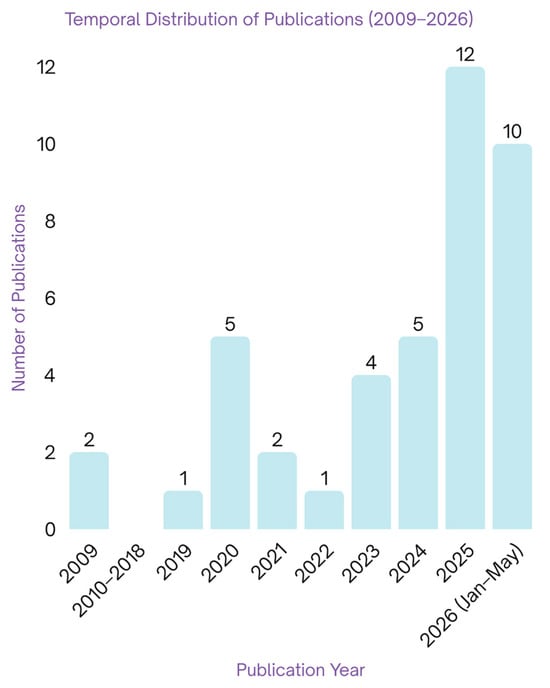
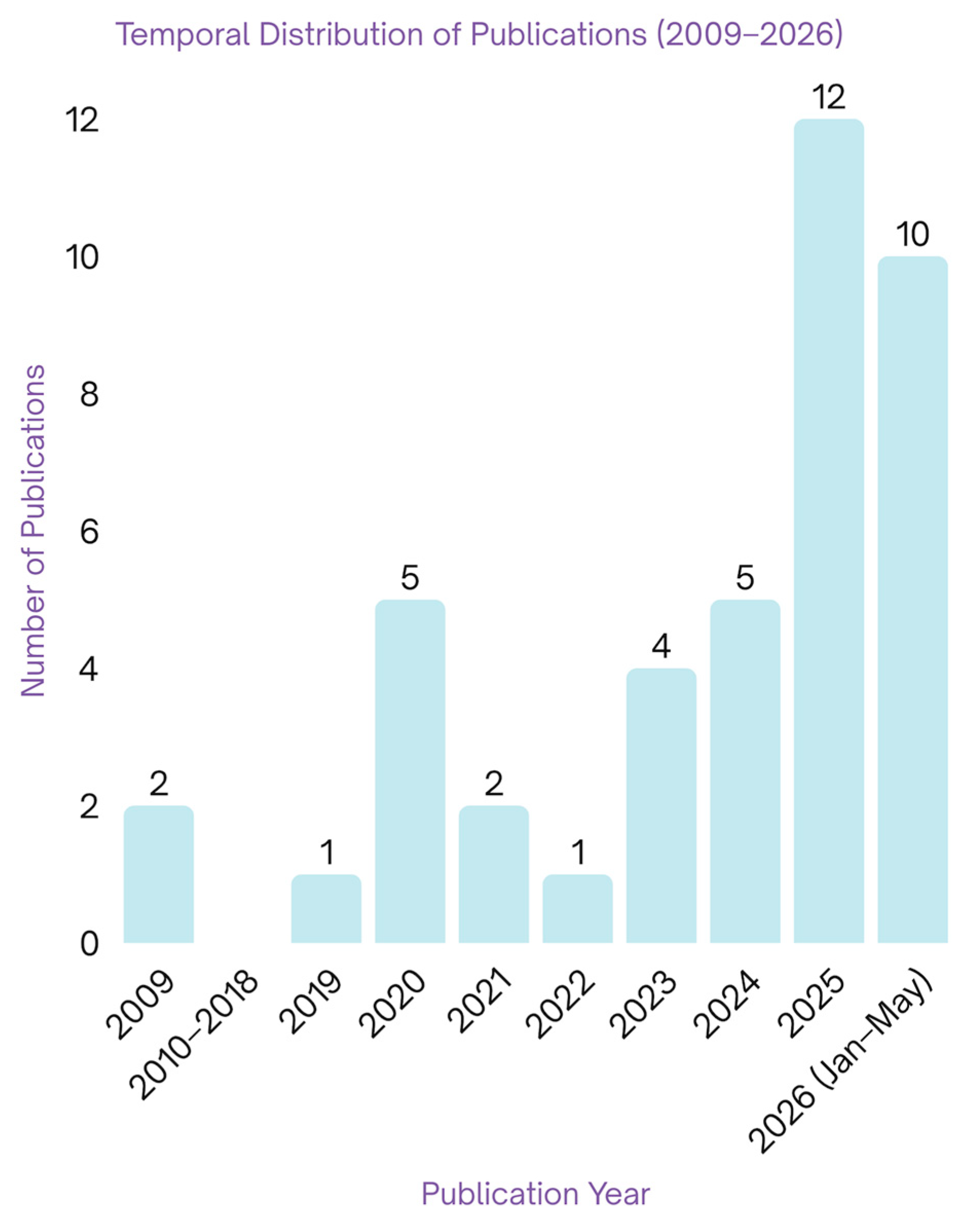
Figure 2 presents the temporal distribution of the studies included in the systematic review between 2009 and 2026. The results reveal a growing research interest in AI within K–12 education over time. Although a limited number of studies were published before 2020, publication activity increased overall during the study period, despite a temporary decline in 2021 and 2022, with a particularly marked rise after 2023. The presence of a small number of publications prior to 2019 reflects the inclusion of foundational studies that provided relevant theoretical and conceptual background for the review.
Figure 2.
Temporal distribution of publications included in the systematic review (2009–2026). Data for 2026 include only publications indexed up to 22 May 2026.
The highest concentration of studies was observed between 2024 and 2026, reflecting the rapid expansion of research on AI literacy, teacher education, curriculum development, and the educational implications of generative AI. This trend coincides with the increasing adoption of generative AI tools and the growing attention devoted to their pedagogical, ethical, and societal implications within educational contexts.
3.2. Methodological Characteristics of the Included Studies
The studies included in the review exhibited considerable methodological diversity, reflecting the multidisciplinary nature of research on AI in pre-university educational contexts. As shown in Table 3, the corpus comprised quantitative, qualitative, and mixed-methods studies, as well as systematic literature reviews, conceptual and theoretical contributions, and curriculum- or framework-orientated studies.
Table 3.
Methodological characteristics of the studies included in the systematic literature review.
Systematic literature reviews (n = 11) and conceptual or theoretical studies (n = 11) represented a substantial proportion of the corpus, indicating a growing interest in conceptualising AI education and synthesising emerging evidence. Empirical research was also well represented through quantitative (n = 15), qualitative (n = 3), and mixed-methods studies (n = 2), reflecting the increasing maturity of the field.
3.3. Thematic Synthesis of the Included Studies
The thematic analysis of the 42 studies included in the review identified four major research areas related to the integration of AI in pre-university education. These thematic categories reflect the main directions of current research and provide a structured overview of how AI is being conceptualised and implemented in educational contexts.
The identified themes encompass teacher education for AI integration, curriculum development and pedagogical foundations, AI literacy and ethical competencies, and the pedagogical and ethical implications of GenAI. Together, these areas capture the key opportunities, challenges, and priorities that characterise the evolving field of AI education.
Table 4 provides an analytical synthesis of the main thematic areas identified in the review, including the number of studies associated with each category, their predominant focus, and the most relevant findings reported in the literature. Given the multidimensional nature of several studies, some articles were classified into more than one thematic category.
Table 4.
Thematic synthesis of the main research areas identified in the systematic review.
3.4. Teacher Education for AI Integration
To address RQ2, this subsection examines the evidence related to teachers’ preparedness, competencies, and professional development for AI integration in pre-university education.
Teacher education emerged as one of the areas of greatest consensus within the literature on AI education. The reviewed studies consistently indicate that the effective integration of AI depends largely on teachers’ pedagogical and technological preparedness, highlighting teacher education as a prerequisite for the effective and responsible integration of AI in educational settings [10,11]. In this regard, participation in AI-focused professional development programmes has been positively associated with key dimensions of instructional quality, including cognitive activation, classroom management, and personalised learning in pre-university educational settings [12].
The rapid evolution of AI and its impact on labour markets have increased the need to develop competencies related to computational thinking, digital literacy, and the understanding of intelligent systems from an early age [3,4]. However, a significant gap remains between technological innovation and the capacity of educational systems to integrate these technologies into classroom practice [13].
The evidence identifies several challenges facing teachers, including insufficient AI-specific training, methodological uncertainty, limited access to instructional resources, curriculum overload, and inadequate preparation for addressing ethical and sociotechnical issues [7,14]. Complementing the findings of the present review, previous research has reported that AI-literacy-orientated professional development programmes can enhance digital competencies, technological self-efficacy, and teacher readiness to integrate intelligent systems into educational contexts [15].
Similarly, previous studies have reported that pre-service teachers with higher levels of AI literacy appear better prepared to foster pedagogical innovation, critical thinking, and personalised learning [16]. Beyond the evidence synthesised in this review, previous research has also associated readiness for technology adoption with factors such as teacher self-efficacy, perceived usefulness, social influence, digital competence, and flexibility in instructional planning, all of which contribute to a greater capacity to integrate emerging technologies into classroom practice [17,18].
At the same time, studies involving pre-service teachers report concerns related to institutional support, data privacy, and the risk of algorithmic bias in AI-mediated educational environments [19].
Recent research has also highlighted the growing relevance of frameworks such as Intelligent-TPACK for understanding teacher preparedness in AI-enhanced educational settings. Reyes-Rojas et al. [16] validated this model in teacher education, demonstrating the importance of integrating competencies related to AI literacy, algorithmic ethics, and pedagogical decision making supported by intelligent systems. Likewise, Hava and Babayiğit [17] identified significant relationships between AI-TPACK competencies and levels of teacher digital competence, emphasising the need to strengthen both technological and pedagogical capacities to support effective AI integration. These studies further underscore the importance of promoting transparency, equity, and responsible AI use in educational environments.
From a broader pedagogical perspective, established frameworks such as TPACK, DigCompEdu, and SAMR continue to provide valuable guidance for the pedagogical integration of emerging technologies in education [20,21,22,23,24]. The available evidence also highlights the need to incorporate competencies related to generative AI, machine learning, critical data interpretation, and algorithmic ethics into both pre-service and in-service teacher education programmes [8].
Overall, the reviewed studies emphasise the importance of interdisciplinary and collaborative approaches that enable teachers to adapt AI to diverse educational contexts and curricular disciplines, thereby fostering a more critical, flexible, and pedagogically grounded integration of these technologies [25].
3.5. Curriculum Development and Pedagogical Foundations
In relation to RQ4, this subsection synthesises the curricular approaches and pedagogical strategies proposed for AI education in K–12 contexts.
Recent evidence suggests that one of the main challenges of AI education is the lack of structured and progressive curricula for pre-university educational stages [26]. Although initiatives related to AI education have increased in recent years, many continue to be implemented through extracurricular activities or isolated projects, limiting their systematic integration into core school subjects [27].
In response to this challenge, several studies have proposed curricular frameworks designed to introduce AI from an early age through interdisciplinary and progressive approaches. Among the most influential initiatives is AI4K12 and its Five Big Ideas in AI framework, which organises AI education around five core dimensions: perception, representation and reasoning, machine learning, natural interaction, and societal impact [28]. These approaches promote a comprehensive understanding of AI that combines technical knowledge, critical thinking, and ethical reflection [29].
At the policy level, international initiatives have also reinforced the importance of AI education. In particular, the Beijing Consensus on Artificial Intelligence and Education [30] highlighted the strategic role of AI in transforming educational systems to support inclusive and sustainable education and emphasised the need to promote AI-related competencies, teacher preparation, and inclusive approaches to technology-enhanced learning.
Beyond curriculum frameworks, several studies have documented practical approaches to implementing AI education in school settings. For example, Bellas et al. [31] describe a long-term educational initiative based on intelligent robotics that integrates AI-related concepts into classroom activities, highlighting the potential of hands-on and technology-enhanced learning experiences to support students’ engagement with AI from an early age.
The literature also emphasises the importance of grounding AI education in pedagogical models capable of integrating technological, pedagogical, and ethical dimensions. In this regard, the TPACK framework remains a valuable reference for understanding the educational integration of emerging technologies [21]. More recent studies extend this perspective through models such as Intelligent-TPACK, which incorporate competencies related to AI literacy, algorithmic ethics, and pedagogical decision making supported by intelligent systems [32,33]. Complementary research highlights the importance of institutional and contextual factors in the development of AI-related teaching competencies [34].
From an inclusive perspective, Universal Design for Learning (UDL) has been identified as a particularly relevant framework for adapting AI education to diverse learners and promoting accessible and personalised learning experiences [35]. In addition, several curricular proposals recommend structuring AI education around three broad dimensions: technical concepts, ethical and social implications, and academic and career guidance [36].
Another recurring theme concerns the need to develop specific assessment instruments capable of measuring competencies related to AI, advanced digital literacy, critical thinking, and complex problem solving [8]. Recent studies also highlight the growing importance of prompt engineering and critical interaction with generative AI systems as emerging competencies within AI-mediated teaching and learning processes [32,37].
Taken together, the reviewed evidence supports the development of more comprehensive, interdisciplinary, and ethically orientated curricular models, in which AI literacy is conceptualised as a cross-curricular competency linked to both technological development and critical digital citizenship.
Table 5 summarises the main pedagogical frameworks identified in the reviewed literature.
Table 5.
Main pedagogical frameworks used in AI education.
3.6. AI Literacy and Ethical Competencies
RQ3 is explored through an analysis of how the reviewed studies conceptualise AI literacy and the ethical competencies required for the responsible use of AI.
The reviewed literature conceptualises AI literacy as a multidimensional competence that extends beyond technical knowledge of AI systems. It encompasses the ability to understand the capabilities and limitations of AI, critically evaluate AI-generated outputs, use AI tools responsibly and ethically, and make informed decisions in educational contexts. This broader understanding is reflected consistently across the studies included in the review.
AI literacy has emerged in the recent literature as one of the key competencies of the 21st century. The studies reviewed consistently emphasise that AI literacy should extend beyond purely technical perspectives and incorporate critical, social, and ethical dimensions related to the responsible use of intelligent systems [3].
In this regard, the literature highlights the need for students to develop the ability to understand how AI systems operate, critically interpret algorithmically generated outputs, identify biases, manage data responsibly, and use AI-based tools in ethical and safe ways [8,39]. These competencies are closely associated with digital citizenship, critical thinking, and decision making in complex digital environments [10].
Several studies propose multidimensional competency frameworks that integrate data literacy, machine learning, privacy, algorithmic transparency, and the societal impact of technology [40]. Recent systematic reviews have also highlighted the psychological foundations of AI literacy, emphasising the role of cognitive, motivational, and affective factors in shaping individuals’ understanding and engagement with AI technologies [41]. From this perspective, AI literacy extends beyond the acquisition of technical skills and includes the capacity to critically examine the sociotechnical implications of intelligent systems, particularly in relation to issues such as misinformation, automated decision making, and the reproduction of social biases through algorithms [42].
The ethical dimension has become increasingly prominent in recent research. Tagare et al. [43] argue that AI education requires competencies related to fairness, transparency, accountability, and the critical evaluation of automated systems, emphasising the need to explicitly incorporate these dimensions into both school curricula and teacher education programmes. Similarly, Threadgill et al. [44] found that the academic use of generative AI tools raises concerns regarding plagiarism, privacy, technological dependency, and algorithmic bias, reinforcing the need for pedagogical approaches that promote the critical, reflective, and responsible use of these technologies.
Recent studies further develop this perspective by conceptualising AI literacy as a competency that combines conceptual understanding, practical application, critical thinking, and ethical awareness. Pingmuang et al. [45] proposed an AI literacy framework for pre-service teachers comprising four core dimensions: AI recognition, AI understanding, AI pedagogy, and ethical AI use. This model highlights the importance of integrating ethical reasoning and pedagogical competencies into teacher education programmes.
Furthermore, emerging evidence suggests that AI literacy is closely associated with teachers’ motivational and emotional variables. Deshen et al. [46] identified significant relationships between AI literacy, technology acceptance, computational thinking, and AI-related anxiety, highlighting the importance of professional development initiatives that foster critical, ethical, and reflective engagement with AI technologies.
Overall, the reviewed literature reveals a shift from instrumental conceptions of digital literacy toward broader models of AI literacy focused on fostering critical digital citizenship, ethical responsibility, and informed participation in societies increasingly shaped by intelligent systems.
3.7. Generative AI: Pedagogical and Ethical Implications
Finally, RQ5 is addressed by examining the opportunities, challenges, and pedagogical implications associated with the use of generative AI in pre-university education.
The emergence of GenAI systems has significantly transformed educational debates surrounding the integration of AI into teaching and learning processes [6]. Tools such as ChatGPT, Gemini, and Copilot have expanded opportunities for personalised learning, intelligent tutoring, automated content generation, and support for instructional planning [1]. However, the effective integration of these technologies in educational settings also depends on factors related to teacher acceptance and readiness, particularly perceived usefulness, ease of use, and perceived behavioural control regarding generative AI tools [47].
Recent evidence suggests that these technologies can support more adaptive, collaborative, and student-centred learning processes. In particular, several studies highlight the potential of generative AI to facilitate collaborative knowledge construction, the creation of instructional materials, and the design of personalised learning experiences [37]. Likewise, emerging research suggests that the educational use of generative systems may support instructional planning and the development of more flexible and context-sensitive pedagogical approaches [32].
At the same time, the literature highlights significant pedagogical and ethical challenges associated with the use of these technologies. Frequently cited concerns include cognitive dependency, loss of authorship, misinformation, algorithmic bias, data privacy issues, and the uncritical acceptance of automatically generated content [44]. In this context, several authors emphasise the importance of ensuring that both students and teachers understand the probabilistic and potentially unreliable nature of AI-generated outputs [6].
Recent research also underscores the importance of preserving teacher agency in human–AI collaborative environments. Krushinskaia et al. [38] found that, although generative systems may support instructional design processes and increase engagement, they may also encourage excessive reliance on automated systems and the delegation of pedagogical decision making. Accordingly, several studies emphasise that the educational value of generative AI depends largely on teachers’ ability to exercise critical pedagogical judgement and effectively supervise the use of AI-generated content.
Another emerging theme identified in the literature concerns the development of new competencies related to effective interaction with generative systems. Prompt engineering is increasingly recognised as both a pedagogical and epistemological competency associated not only with crafting effective prompts but also with guiding learning processes, evaluating generated responses, and adapting content to different educational contexts [32,48].
In addition to the evidence synthesised in this review, international organisations such as UNESCO [2,49] advocate the development of regulatory frameworks and ethical guidelines that promote the responsible educational use of generative AI, emphasising principles of transparency, inclusion, privacy, and equity. Overall, the reviewed evidence suggests that the effective integration of generative AI in education requires balancing technological innovation, critical thinking, and ethical responsibility while fostering human–AI co-agency models centred on learning and the holistic development of students.
4. Discussion
4.1. Emerging Trends in the Educational Integration of AI
The findings of this systematic review indicate that AI is driving a progressive transformation of educational models within pre-university educational contexts. This transformation may contribute to the broader goal of developing more inclusive and sustainable education systems. Beyond its technological dimension, recent evidence suggests that AI is reshaping pedagogical practices, curricular approaches, educational competencies, and institutional dynamics.
One of the most significant trends identified is the consolidation of GenAI as an increasingly common tool in educational settings. Systems such as ChatGPT, Gemini, and Copilot are being progressively adopted by both students and teachers to support information retrieval, content generation, personalised tutoring, and instructional planning [6]. This expansion is fostering more adaptive, flexible, and student-centred learning models, while simultaneously raising important concerns regarding pedagogical oversight, content reliability, and technological dependency. Similarly, recent reviews indicate that AI is promoting personalised learning, educational task automation, and adaptive support mechanisms, although challenges related to teacher preparation, digital equity, and technological infrastructure remain significant for the effective long-term integration of AI in education [50].
The review also reveals a shift from educational approaches primarily focused on content transmission toward models that emphasise the development of critical, metacognitive, and sociotechnical competencies. In this context, AI literacy is increasingly emerging as a cross-cutting competency closely associated with critical thinking, digital citizenship, and ethical decision making. These competencies are also recognised as essential for preparing learners to participate responsibly in AI-enabled societies [3,8].
Furthermore, the analysed studies highlight a growing recognition of the need for pedagogical and curricular frameworks capable of coherently integrating technological, ethical, and educational dimensions. Initiatives such as AI4K12, the Five Big Ideas in AI framework, and Intelligent-TPACK illustrate a movement toward more interdisciplinary, inclusive, and sustainable models in which AI education is understood as a fundamental component of contemporary digital citizenship [28,33].
The findings suggest that the educational integration of AI should not be understood solely as a technological process but rather as a broader sociotechnical transformation that simultaneously reshapes curriculum, literacy, assessment, ethics, and teacher mediation, with potential implications for more resilient and future-oriented educational systems.
4.2. Pedagogical Tensions and Ethical Challenges of AI Integration
Alongside the opportunities identified, the reviewed evidence reveals multiple pedagogical and ethical tensions associated with the integration of AI in education. Among the most frequently reported concerns are algorithmic bias, data privacy, misinformation, loss of authorship, and excessive reliance on automated systems [1,2]. Addressing these challenges is essential to ensure that AI contributes positively to educational innovation without compromising equity, inclusion, or ethical responsibility.
One of the most significant challenges identified in recent studies is the risk of cognitive offloading, understood as the tendency to delegate complex intellectual processes to generative AI systems. Although AI-based tools may support academic productivity and facilitate specific tasks, several authors caution that these benefits do not automatically lead to deeper learning or the development of critical thinking skills without appropriate pedagogical guidance [6,44].
The review also highlights tensions related to digital equity. While some studies emphasise the democratising potential of AI through intelligent tutoring systems and personalised learning, others suggest that disparities in technological access, connectivity, and training may reinforce pre-existing educational inequalities [1]. Consequently, the integration of AI requires educational policies aimed at ensuring inclusion, accessibility, equitable participation, and long-term educational resilience.
In addition, several studies stressed that the educational use of AI cannot be separated from ethical considerations concerning transparency, accountability, and human oversight. In this regard, the literature consistently argues that educational systems should move toward governance models capable of regulating the use of generative technologies while promoting pedagogically sound, ethically grounded, and socially responsible practices.
4.3. Transformation of Teacher Roles and Curriculum Design for the AI Era
The findings of this review indicate that the expansion of AI is progressively redefining both teacher roles and traditional approaches to curriculum design. Rather than diminishing the importance of teachers, the literature suggests that AI increases the need for pedagogical mediation, critical judgement, and the ability to contextualise learning experiences [12,16].
In this context, teacher education emerges as one of the most strategic factors for the effective integration of AI. The reviewed studies consistently indicate that teachers need to develop competencies related to AI literacy, algorithmic ethics, critical evaluation of generated content, and the design of learning experiences supported by intelligent systems [8,32]. These findings reinforce the importance of continuous professional development to support teachers in responding to rapidly evolving educational and technological contexts.
These findings are also consistent with the recent empirical study by Caruana et al. [51], conducted with in-service teachers, which found that perceived self-efficacy and perceived usefulness of AI emerged as significant predictors of both learning intentions and actual AI-related learning behaviours. Contextual and institutional factors, including social influence and organisational expectations, were associated with teachers’ participation in formal AI professional development activities.
The review further reveals a curricular shift toward more interdisciplinary and competency-based models. AI education is no longer limited to technical content but increasingly incorporates dimensions related to critical thinking, digital citizenship, creativity, problem solving, and ethical reflection. In this regard, emerging competencies such as prompt engineering are beginning to gain recognition as new forms of pedagogical interaction with generative systems [48].
Moreover, the findings highlight the need to rethink educational assessment systems. Several studies suggest that traditional evaluation models focused primarily on final products are insufficient in AI-mediated learning environments, underscoring the importance of assessing complex cognitive processes, critical reasoning, and students’ capacity to engage reflectively with intelligent technologies.
The findings are also consistent with principles of adult learning theory [52], which emphasise that effective professional learning is relevant to learners’ professional needs, builds on prior experience, and promotes self-directed and reflective learning. From this perspective, effective AI professional development should extend beyond the acquisition of technical skills by fostering authentic classroom application, reflective practice, and the progressive development of teachers’ confidence in the pedagogical use of AI.
4.4. Research Gaps and Future Directions
Despite the rapid growth of research on AI in education, the review identifies several important gaps in the recent literature. One of the most significant is the limited availability of longitudinal studies capable of examining the sustained effects of AI on learning outcomes, cognitive autonomy, and students’ socio-emotional development.
The review also reveals a predominance of exploratory studies and conceptual frameworks relative to empirical investigations conducted in authentic classroom settings. This finding highlights the need for more applied research capable of providing robust evidence regarding the pedagogical implications of AI across different educational stages and curricular disciplines, strengthening the evidence base for educational policies and practice.
In addition, the literature indicates a limited representation of studies focusing specifically on primary education, as well as a strong geographical concentration of research within a relatively small number of national and technological contexts. Similarly, there remains a lack of standardised instruments for assessing competencies related to AI literacy, critical thinking, and the ethical use of generative technologies, limiting the systematic evaluation of AI-related educational initiatives.
Finally, the rapid evolution of GenAI highlights the need for future research aimed at understanding how these technologies are reshaping teaching, assessment, creativity, and knowledge construction in educational environments increasingly mediated by intelligent systems. Future studies should also explore the institutional conditions, teacher competencies, and governance frameworks required to support the effective and long-term adoption of AI in education.
An additional limitation concerns the geographical distribution of the available evidence. Most of the included studies were conducted in developed educational systems, particularly in Europe and North America, while research from developing regions remains comparatively limited. Consequently, the pedagogical approaches, institutional conditions, and implementation strategies identified in the literature may not be directly transferable to educational contexts with different socioeconomic, technological, or policy conditions. Future research should therefore seek to achieve a broader geographical representation and explore how AI education can be effectively implemented across diverse educational contexts and educational levels.
A further methodological limitation concerns the predominance of cross-sectional research designs. Although these studies provide valuable insights into teachers’ perceptions, attitudes, competencies, and readiness for AI integration, they do not allow causal relationships or developmental changes over time to be established. Accordingly, the current evidence base remains largely descriptive and exploratory, and findings should be interpreted with appropriate caution when considering causal inferences.
5. Educational Implications and Recommendations
The findings of this review indicate that the effective integration of AI requires coordinated action through institutional strategies and educational policies that support the critical, ethical, and pedagogically grounded integration of AI within educational systems. These recommendations synthesise the principal implications derived from the reviewed literature.
First, it is essential to strengthen both pre-service and in-service teacher education through programmes focused on AI literacy, algorithmic ethics, pedagogical design with intelligent tools, AI-mediated assessment, and competencies related to GenAI. In this regard, recent empirical evidence suggests that AI-related teacher education programmes should be designed not only around technical content but also around motivational and institutional factors, such as self-efficacy, perceived usefulness, and organisational support, which influence teachers’ actual engagement in AI learning activities.
Second, the reviewed evidence highlights the need to incorporate AI literacy as a cross-curricular competency within school curricula. Such education should include not only technical knowledge but also competencies related to critical thinking, privacy, algorithmic transparency, bias detection, ethical AI use, and responsible digital citizenship.
Educational systems should also move toward more flexible curricular and assessment models capable of valuing creativity, complex reasoning, problem solving, and critical reflection in learning environments mediated by intelligent technologies, better preparing learners for AI-enabled societies.
The review further underscores the importance of developing regulatory frameworks and institutional protocols that ensure the transparent, safe, inclusive, and accountable use of AI in education. These frameworks should address issues related to academic integrity, data protection, human oversight, and digital equity. In this regard, recent research highlights the need to strengthen institutional preparedness and develop governance strategies for the educational integration of generative AI, including clear policies, ethical guidance, and organisational support for teachers and educational institutions [53].
Finally, the findings emphasise the importance of promoting interdisciplinary research capable of advancing understanding of the long-term impact of AI on learning processes, socio-emotional well-being, and the development of critical competencies across diverse educational contexts. Such research may provide a stronger evidence base for future educational policies and for supporting responsible innovation in AI-enhanced education. Together, these recommendations highlight the need for a coordinated approach to AI integration across educational policy, curriculum development, teacher education, and institutional governance.
6. Limitations
This systematic review presents several methodological limitations that should be considered when interpreting the findings. First, the selection of studies was restricted to publications written in English, which may have resulted in the exclusion of relevant research conducted in other linguistic and educational contexts. Furthermore, although the review included different types of studies (including empirical, conceptual, and systematic review research), this methodological diversity made direct comparisons across studies more challenging. Consequently, caution is warranted when drawing general conclusions regarding the educational impact of AI in K–12 settings.
As this review included both review articles and primary empirical studies, some overlap in the underlying evidence may exist. Therefore, the findings should be interpreted as a qualitative thematic synthesis rather than as fully independent evidence sources.
An additional limitation concerns the use of Google Scholar as a complementary search source. Although Scopus and Web of Science served as the primary indexed databases, the selection of the most relevant Google Scholar results relied on the platform’s ranking algorithms, introducing a potential source of retrieval bias beyond the researchers’ direct control.
No formal methodological quality or risk-of-bias assessment of the included studies was conducted. Consequently, all studies contributed equally to the thematic synthesis regardless of their methodological design or level of evidence. The findings should therefore be interpreted considering the varying levels of evidence represented in the reviewed literature. Future systematic reviews could strengthen the robustness of the synthesis by incorporating formal appraisal tools appropriate to different study designs.
Moreover, the rapid evolution of GenAI and large-language-model-based technologies means that part of the available evidence may become outdated relatively quickly. Many of the studies included in the review represent emerging lines of research that are still under development and therefore provide preliminary findings with limited longitudinal evidence regarding their long-term pedagogical, cognitive, and socio-emotional effects. Furthermore, this systematic review was not prospectively registered.
Finally, the review focused primarily on research conducted in school settings and teacher education contexts. Consequently, some of the findings may not be fully transferable to other educational levels or non-formal learning environments.
Despite these limitations, the review provides an up-to-date and integrative overview of the main trends, challenges, and transformations associated with the integration of AI in pre-university education, offering a foundation for future research, educational policy, and evidence-informed practice.
7. Conclusions
This systematic literature review indicates that AI is progressively transforming pre-university educational contexts from technological, pedagogical, curricular, and ethical perspectives, creating new opportunities for educational innovation and long-term educational improvement. The reviewed studies indicate the growing consolidation of AI literacy as a cross-cutting competency closely associated with critical thinking, digital citizenship, and responsible participation in environments increasingly shaped by intelligent systems. At the same time, the expansion of generative AI is reshaping teaching practices, assessment processes, and curriculum design, creating both new educational opportunities and significant challenges related to ethics, cognitive autonomy, and institutional governance.
The evidence suggests that the central educational challenge is no longer simply the incorporation of intelligent technologies into classrooms, but rather the development of pedagogical models and institutional frameworks capable of ensuring the critical, ethical, and human-centred use of AI in teaching and learning processes. As AI continues to evolve, educational systems will need to balance technological innovation with human agency, equity, and ethical responsibility in order to foster meaningful and sustainable educational transformation. Preparing teachers and learners to engage critically with AI, while strengthening institutional capacity and evidence-informed educational policies, may help support the alignment of technological innovation with equitable, resilient, and sustainable education.
Supplementary Materials
The following supporting information can be downloaded at: https://www.mdpi.com/article/10.3390/su18178827/s1, Supplementary Material S1. PRISMA_ScreeningSelection_Reconstruction; Supplementary Material S2. PRISMA_2020_abstract_checklist; Supplementary Material S3. PRISMA_2020_checklist.
Author Contributions
Conceptualization, I.C., R.G.-C. and M.P.; methodology, I.C., R.G.-C. and M.P.; formal analysis, I.C.; investigation, I.C.; data curation, R.G.-C.; resources, M.P.; writing—original draft preparation, I.C., R.G.-C. and M.P.; writing—review and editing, I.C., R.G.-C. and M.P.; visualisation, I.C.; supervision, R.G.-C. and M.P.; project administration, M.P.; funding acquisition, M.P. All authors have read and agreed to the published version of the manuscript.
Funding
This research was funded by the Generalitat Valenciana (Department of Education, Research, Culture and Sport) through the project NL4DISMIS: Natural Language Technologies to Address Disinformation and Misinformation (CIPROM/2021/021).
Institutional Review Board Statement
Not applicable.
Informed Consent Statement
Not applicable.
Data Availability Statement
All data generated or analysed during this study are included in this published article, Appendix A, and the Supplementary Materials, including the independent screening and consensus spreadsheet.
Conflicts of Interest
The authors declare no conflicts of interest.
Appendix A
Table A1.
Master table of studies included in the systematic literature review.
References
- Holmes, W.; Porayska-Pomsta, K.; Holstein, K.; Sutherland, E.; Baker, T.; Shum, S.B.; Santos, O.C.; Rodrigo, M.T.; Cukurova, M.; Bittencourt, I.I.; et al. Ethics of AI in education: Towards a community-wide framework. Int. J. Artif. Intell. Educ. 2022, 32, 504–526. [Google Scholar] [CrossRef] [Scilit]
- UNESCO. Recommendation on the Ethics of Artificial Intelligence; UNESCO Publishing: Paris, France, 2021. [Google Scholar]
- Long, D.; Magerko, B. What is AI literacy? Competencies and Design Considerations. In Proceedings of the 2020 CHI Conference on Human Factors in Computing Systems; ACM: Honolulu, HI, USA, 2020; pp. 1–16. [Google Scholar] [CrossRef] [Scilit]
- Lee, I.; Ali, S.; Zhang, H.; DiPaola, D.; Breazeal, C. Developing middle school students’ AI literacy. In Proceedings of the 52nd ACM Technical Symposium on Computer Science Education; ACM: Honolulu, HI, USA, 2021; pp. 191–197. [Google Scholar] [CrossRef] [Scilit]
- Tuomi, I. The Impact of Artificial Intelligence on Learning, Teaching, and Education; Publications Office of the European Union: Luxembourg, 2018. [Google Scholar] [CrossRef] [PubMed]
- Lee, H.; Huang, Y.; Wu, T. ChatGPT in education: A systematic review of current landscape, limitations and future directions through general system theory lens. Eur. J. Educ. 2025, 60, e70262. [Google Scholar] [CrossRef] [Scilit]
- Chiu, T.K.; Xia, Q.; Zhou, X.; Chai, C.S.; Cheng, M. Systematic literature review on opportunities, challenges, and future research recommendations of artificial intelligence in education. Comput. Educ. Artif. Intell. 2023, 4, 100118. [Google Scholar] [CrossRef] [Scilit]
- Ng, D.T.K.; Leung, J.K.L.; Chu, S.K.W.; Qiao, M.S. Conceptualizing AI literacy: An exploratory review. Comput. Educ. Artif. Intell. 2021, 2, 100041. [Google Scholar] [CrossRef] [Scilit]
- Page, M.J.; McKenzie, J.E.; Bossuyt, P.M.; Boutron, I.; Hoffmann, T.C.; Mulrow, C.D.; Shamseer, L.; Tetzlaff, J.M.; Akl, E.A.; Brennan, S.E.; et al. The PRISMA 2020 statement: An updated guideline for reporting systematic reviews. BMJ 2021, 372, n71. [Google Scholar] [CrossRef] [Scilit] [PubMed]
- Aravantinos, S.; Lavidas, K.; Komis, V.; Karalis, T.; Papadakis, S. Artificial Intelligence in K-12 Education: A Systematic Review of Teachers’ Professional Development Needs for AI Integration. Computers 2026, 15, 49. [Google Scholar] [CrossRef] [Scilit]
- Chiu, T.K.F.; Chai, C.S. Sustainable curriculum planning for artificial intelligence education: A self-determination theory perspective. Sustainability 2020, 12, 5568. [Google Scholar] [CrossRef] [Scilit]
- Mah, D.-K.; Groß, N.; Egloffstein, M.; Prilop, C.N. Artificial intelligence in K-12 instruction: The role of teacher professional development. Smart Learn. Environ. 2026, 13, 16. [Google Scholar] [CrossRef] [Scilit]
- Kim, J. Types of teacher-AI collaboration in K-12 classroom instruction: Chinese teachers’ perspective. Educ. Inf. Technol. 2024, 29, 17433–17465. [Google Scholar] [CrossRef] [Scilit]
- Adams, C.; Pente, P.; Lemermeyer, G.; Turville, J.; Rockwell, G. Artificial intelligence and teachers’ new ethical obligations. Int. Rev. Inf. Ethics 2022, 31, 1–18. [Google Scholar] [CrossRef] [Scilit]
- Younis, B. Effectiveness of a professional development program based on the instructional design framework for AI literacy in developing AI literacy skills among pre-service teachers. J. Digit. Learn. Teach. Educ. 2024, 40, 142–158. [Google Scholar] [CrossRef] [Scilit]
- Reyes-Rojas, J.; Díaz, B.; Ruz-Reveco, C.; Castro, Á.; Reyes-González, D. Conceptualizing pre-service teachers’ readiness for AI integration into teaching practices: An Intelligent-TPACK approach. Comput. Educ. Open 2025, 10, 100320. [Google Scholar] [CrossRef] [Scilit]
- Hava, K.; Babayiğit, Ö. Exploring the relationship between teachers’ competencies in AI-TPACK and digital proficiency. Educ. Inf. Technol. 2025, 30, 3491–3508. [Google Scholar] [CrossRef] [Scilit]
- Krismiyati, K. Technology readiness segment analysis of teachers in using mobile-based teaching applications: An Indonesian context. J. Technol. Sci. Educ. 2025, 15, 588–601. [Google Scholar] [CrossRef] [Scilit]
- Kohnke, L.; Zou, D.; Ou, A.W.; Gu, M.M. Preparing future educators for AI-enhanced classrooms: Insights into AI literacy and integration. Comput. Educ. Artif. Intell. 2025, 8, 100398. [Google Scholar] [CrossRef] [Scilit]
- Falloon, G. From digital literacy to digital competence: The teacher digital competency framework. Educ. Technol. Res. Dev. 2020, 68, 2449–2472. [Google Scholar] [CrossRef] [Scilit]
- Koehler, M.J.; Mishra, P. What is technological pedagogical content knowledge (TPACK)? Contemp. Issues Technol. Teach. Educ. 2009, 9, 60–70. [Google Scholar] [CrossRef] [Scilit]
- Puentedura, R. Transformation, Technology, and Education: The SAMR Model; Hippasus: Williamstown, MA, USA, 2006. [Google Scholar]
- Redecker, C. European Framework for the Digital Competence of Educators: DigCompEdu; Publications Office of the European Union: Seville, Spain, 2017. [Google Scholar] [CrossRef]
- Schmidt, D.A.; Baran, E.; Thompson, A.D.; Mishra, P.; Koehler, M.J.; Shin, T.S. Technological Pedagogical Content Knowledge (TPACK): The development and validation of an assessment instrument for preservice teachers. J. Res. Technol. Educ. 2009, 42, 123–149. [Google Scholar] [CrossRef] [Scilit]
- Touretzky, D.S.; Gardner-McCune, C.; Martin, F.; Seehorn, D. Envisioning AI for K-12: What should every child know about AI? Proc. AAAI Conf. Artif. Intell. 2019, 33, 9795–9799. [Google Scholar] [CrossRef] [Scilit]
- Marques, L.S.; Gresse von Wangenheim, C.; Hauck, J.C. Teaching machine learning in school: A systematic mapping of the state of the art. Inform. Educ. 2020, 19, 283–321. [Google Scholar] [CrossRef] [Scilit]
- Yim, I.H.Y.; Su, J. Artificial intelligence literacy education in primary schools: A review. Int. J. Technol. Des. Educ. 2025, 35, 2175–2204. [Google Scholar] [CrossRef] [Scilit]
- Touretzky, D.; Gardner-McCune, C.; Seehorn, D. Machine learning and the five big ideas in AI. Int. J. Artif. Intell. Educ. 2023, 33, 233–266. [Google Scholar] [CrossRef] [Scilit]
- Martins, R.M.; von Wangenheim, C.G.; Rauber, M.F.; Hauck, J.C. Machine learning for all!—Introducing machine learning in middle and high school. Int. J. Artif. Intell. Educ. 2024, 34, 185–223. [Google Scholar] [CrossRef] [Scilit]
- UNESCO. Beijing Consensus on Artificial Intelligence and Education; UNESCO: Paris, France, 2019. [Google Scholar]
- Bellas, F.; Naya-Varela, M.; Mallo, A.; Paz-Lopez, A. Education in the AI era: A long-term classroom technology based on intelligent robotics. Humanit. Soc. Sci. Commun. 2024, 11, 1425. [Google Scholar] [CrossRef] [Scilit]
- Celik, I.; Kontkanen, S.; Laru, J.; Dalyanci, A.A. Co-constructing adaptive lesson plans with GenAI: Pre-service teachers’ Intelligent-TPACK and prompt engineering strategies. Comput. Educ. 2026, 241, 105485. [Google Scholar] [CrossRef] [Scilit]
- Dogan, S. Designing effective AI professional development: A framework grounded in intelligent-TPACK. Comput. Educ. Open 2026, 10, 100337. [Google Scholar] [CrossRef] [Scilit]
- Petko, D.; Mishra, P.; Koehler, M.J. TPACK in context: An updated model. Comput. Educ. Open 2025, 8, 100244. [Google Scholar] [CrossRef] [Scilit]
- Song, Y.; Weisberg, L.R.; Zhang, S.; Tian, X.; Boyer, K.E.; Israel, M. A framework for inclusive AI learning design for diverse learners. Comput. Educ. Artif. Intell. 2024, 6, 100212. [Google Scholar] [CrossRef] [Scilit]
- Zhang, H.; Lee, I.; Ali, S.; DiPaola, D.; Cheng, Y.; Breazeal, C. Integrating Ethics and Career Futures with Technical Learning to Promote AI Literacy for Middle School Students: An Exploratory Study. Int. J. Artif. Intell. Educ. 2023, 33, 290–324. [Google Scholar] [CrossRef] [Scilit] [PubMed]
- Lee, D.; Palmer, E. Prompt engineering in higher education: A systematic review to help inform curricula. Int. J. Educ. Technol. High. Educ. 2025, 22, 7. [Google Scholar] [CrossRef] [Scilit]
- Krushinskaia, K.; Elen, J.; Raes, A. Pre-service teachers’ agency during their interactions with generative AI while designing for learning—A process view on Intelligent-TPACK. Comput. Educ. Open 2026, 10, 100325. [Google Scholar] [CrossRef] [Scilit]
- Ali, S.; DiPaola, D.; Lee, I.; Sindato, V.; Kim, G.; Blumofe, R.; Breazeal, C. Children as creators, thinkers and citizens in an AI-driven future. Comput. Educ. Artif. Intell. 2021, 2, 100040. [Google Scholar] [CrossRef] [Scilit]
- Casal-Otero, L.; Catala, A.; Fernández-Morante, C.; Taboada, M.; Cebreiro, B.; Barro, S. AI literacy in K-12: A systematic literature review. Int. J. STEM Educ. 2023, 10, 29. [Google Scholar] [CrossRef] [Scilit]
- Feng, S.; Carolus, A. Artificial intelligence literacy at school: A systematic review with a focus on psychological foundations. Comput. Educ. Artif. Intell. 2026, 10, 100551. [Google Scholar] [CrossRef] [Scilit]
- Pangrazio, L.; Godhe, A.-L.; Ledesma, A.G.L. What is digital literacy? A comparative review of publications across three language contexts. E-Learn. Digit. Media 2020, 17, 442–459. [Google Scholar] [CrossRef] [Scilit]
- Tagare, D.; Karki, T.; Yu, W. K-12 teachers’ ethical competencies for AI literacy: Insights from a systematic literature review. Comput. Educ. 2025, 239, 105435. [Google Scholar] [CrossRef] [Scilit]
- Threadgill, B.; Paudel, S.; Bista, K.; Gaulee, U.; Prime, G.; Momoh, V.; Anderson, P.C.; Gole, R.; Sharma, S.; Mandal, U.; et al. Understanding AI Literacy Among College Students: Voices from a Historically Black College and University. J. Interdiscip. Stud. Educ. 2026, 15, 169–194. [Google Scholar] [CrossRef] [Scilit]
- Pingmuang, P.; Koraneekij, P.; Khlaisang, J. Development and Validation of an AI Literacy Scale for Pre-Service Teachers in Thailand. Electron. J. e-Learn. 2026, 24, 1–18. [Google Scholar] [CrossRef] [Scilit]
- Deshen, M.; Harari, R.; Aharony, N. Teachers’ artificial intelligence (AI) literacy: An exploratory study. Smart Learn. Environ. 2026, 13, 7. [Google Scholar] [CrossRef] [Scilit]
- Lu, H.; He, L.; Yu, H.; Pan, T.; Fu, K. A study on teachers’ willingness to use generative AI technology and its influencing factors: Based on an integrated model. Sustainability 2024, 16, 7216. [Google Scholar] [CrossRef] [Scilit]
- Akanzire, B.N.; Nyaaba, M.; Nabang, M. Generative AI in teacher education: Teacher educators’ perception and preparedness. J. Digit. Educ. Technol. 2025, 5, ep2508. [Google Scholar] [CrossRef] [Scilit]
- UNESCO. Guidance for Generative AI in Education and Research; UNESCO Publishing: Paris, France, 2023; Available online: https://unesdoc.unesco.org/ark:/48223/pf0000386693 (accessed on 22 May 2026).
- Adil, J.J.G. AI in education: A systematic literature review of emerging trends, benefits, and challenges. Semin. Med. Writ. Educ. 2025, 4, 795. [Google Scholar] [CrossRef] [Scilit]
- Caruana, I.; Gilar-Corbi, R.; Palomar, M. Bridging the AI Skills Gap for Sustainable Education: A Structural Model of In-Service Teachers’ Learning Intentions and Behaviors. Sustainability 2026, 18, 3133. [Google Scholar] [CrossRef] [Scilit]
- Knowles, M.S.; Holton, E.F., III; Robinson, P.A.; Caraccioli, C. The Adult Learner: The Definitive Classic in Adult Education and Human Resource Development, 10th ed.; Routledge: London, UK, 2024. [Google Scholar] [CrossRef] [Scilit]
- Ng, D.T.K.; Chan, E.K.C.; Lo, C.K. Opportunities, challenges and school strategies for integrating generative AI in education. Comput. Educ. Artif. Intell. 2025, 8, 100373. [Google Scholar] [CrossRef] [Scilit]

Disclaimer/Publisher’s Note: The statements, opinions and data contained in all publications are solely those of the individual author(s) and contributor(s) and not of MDPI and/or the editor(s). MDPI and/or the editor(s) disclaim responsibility for any injury to people or property resulting from any ideas, methods, instructions or products referred to in the content. |
© 2026 by the authors. Licensee MDPI, Basel, Switzerland. This article is an open access article distributed under the terms and conditions of the Creative Commons Attribution (CC BY) license.