


Abstract
Artificial intelligence (AI) is increasingly integrated into higher education; however, limited empirical evidence explains how technology-acceptance perceptions are linked to sustainable learning outcomes through Creative Learning, AI Literacy, and Ethical Awareness, particularly in military higher education. This study examines the relationships among AI Perceived Usefulness, Perceived Ease of Use, AI System Quality, Creative Learning, AI Literacy, Ethical Awareness, and Sustainable Learning Outcomes by integrating the Technology Acceptance Model, Constructivist Learning Theory, and the Sustainable Education Framework. A cross-sectional survey was conducted among 250 undergraduate cadets at the Lithuanian Military Academy. The proposed model was evaluated using covariance-based structural equation modelling, bootstrap mediation analysis, moderation analysis, and one-way analysis of variance. The results provide substantial support for the proposed relationships. AI Perceived Usefulness and Perceived Ease of Use were positively related to Creative Learning, while AI System Quality was positively related to AI Literacy. Creative Learning and AI Literacy, in turn, showed significant positive relationships with Sustainable Learning Outcomes. Creative Learning partially mediated the relationship between AI Perceived Usefulness and Sustainable Learning Outcomes, whereas AI Literacy mediated the relationship between AI System Quality and Sustainable Learning Outcomes. Ethical Awareness showed both a significant direct relationship with Sustainable Learning Outcomes and a moderating effect on the Creative Learning–Sustainable Learning Outcomes relationship. Significant differences were also observed across academic-year cohorts. Overall, the findings extend technology-acceptance research by showing how pedagogical, competency-related, and ethical dimensions are jointly related to Sustainable Learning Outcomes in military higher education.
1. Introduction
The rapid integration of artificial intelligence (AI) into educational systems has transformed the ways in which learning is designed, delivered, and evaluated [1,2,3,4,5,6,7,8,9]. In higher education, AI-based tools are increasingly used to enhance learning efficiency, personalize instruction, and support student performance. Recent studies show that AI can improve educational quality and support sustainable development by fostering skills needed in complex and changing settings [10]. At the same time, global challenges such as climate change, social inequality, and technological disruption require educational approaches that combine sustainability, creativity, and digital competence [11].
Within this context, sustainable education has gained increasing attention. Sustainable learning is not limited to short-term academic outcomes; it also emphasizes long-term competencies such as critical thinking, problem solving, ethical awareness, and the ability to apply knowledge in real-world contexts [12,13,14]. AI is expected to support these competencies, but its effectiveness depends on how it is integrated into teaching and learning. Recent research shows that AI can improve students’ skills for sustainable development, although its effect varies with learner engagement, digital skills, and the learning environment [10,14].
One of the key constructs in this field is artificial intelligence literacy. AI literacy refers to competencies that enable individuals to understand, evaluate, and use AI technologies effectively in different contexts [15,16]. Current studies stress that AI literacy is needed for students to engage with AI critically and responsibly, especially in sustainable development. However, the concept remains underdeveloped in empirical work, and there is no widely accepted model for its use in higher education curricula [15,17].
In parallel, ethical concerns related to AI use in education have become increasingly important. The growing adoption of AI raises issues of bias, accountability, transparency, privacy, and responsible use, all of which can affect learning processes and outcomes [18,19,20,21]. Recent reviews show that AI ethics education remains limited in practice and lacks consistent assessment methods [19,20,21]. Broader work also warns that uncritical AI use may weaken learner autonomy, critical thinking, and long-term cognitive development when ethical and teaching safeguards are absent [22,23]. These findings support treating ethical awareness as an integral part of AI-supported learning environments [24,25].
Another important dimension in AI-enhanced education is creative learning [26,27]. Creativity is increasingly viewed as a core part of sustainable education because it enables learners to generate new solutions to complex problems [11,28]. Research indicates that combining AI with creative teaching methods can support deeper engagement and new forms of knowledge construction [11,26,27]. Despite this, many empirical studies examine creativity, AI adoption, or sustainability outcomes separately rather than within one integrated model.
Although research on AI in higher education is expanding rapidly, an important empirical gap remains in how technology-related perceptions, pedagogical processes, AI-related competencies, and sustainability-oriented outcomes are examined within a single model [29,30,31,32]. Technology-acceptance studies have largely focused on perceived usefulness, perceived ease of use, adoption intentions, and use [33,34,35,36,37,38,39,40], while AI-literacy research has concentrated on learners’ ability to understand, evaluate, and use AI responsibly [15,16,17,41,42]. Research on AI and sustainability has mainly addressed broad educational benefits, sustainable-development skills, and institutional integration [10,11,12,13,14]. However, limited empirical work has tested a model in which AI Perceived Usefulness and Perceived Ease of Use are linked to Creative Learning, AI System Quality is linked to AI Literacy, and these pedagogical and competency-related constructs are subsequently associated with Sustainable Learning Outcomes, with Ethical Awareness acting as a moderator. This gap is particularly relevant in military higher education, where academic learning is combined with professional training, ethical responsibility, and technology-intensive decision contexts [7,8]. In addition, evidence on differences among academic-year cohorts in this setting remains limited.
To address these gaps, this study proposes an integrated conceptual model linking AI-related technology perceptions with Creative Learning, AI Literacy, Ethical Awareness, and Sustainable Learning Outcomes in military higher education. Specifically, AI Perceived Usefulness and Perceived Ease of Use are examined in relation to Creative Learning, AI System Quality is examined in relation to AI Literacy, and Creative Learning and AI Literacy are evaluated as pathways to Sustainable Learning Outcomes. Ethical Awareness is further examined as a moderator of the Creative Learning–Sustainable Learning Outcomes relationship. The study also compares cadets across four academic-year cohorts, providing evidence on between-cohort differences within this structured educational context.
The study makes three main contributions. First, it examines an integrated model of AI-supported sustainable learning within military higher education, a context that remains underrepresented in the empirical literature. Second, it extends existing technology-acceptance and AI-in-education models by positioning Creative Learning and AI Literacy as distinct pathways linking AI-related antecedents with Sustainable Learning Outcomes and by examining Ethical Awareness as a moderator of the Creative Learning–Sustainable Learning Outcomes relationship. Third, it incorporates academic year as an analytical dimension to examine systematic differences across four cadet cohorts. Together, these contributions extend prior research by integrating pedagogical, competency-related, ethical, and contextual dimensions within a single empirical framework.
The rest of this paper is structured as follows. Section 2 presents the theoretical background and develops the research hypotheses. Section 3 describes the research methodology, including data collection and measurement instruments. Section 4 reports the results of the statistical analysis. Section 5 discusses the findings and their implications. Finally, Section 6 concludes the paper and outlines limitations and directions for future research.
2. Theoretical Background and Research Hypotheses
2.1. Theoretical Foundation
The rapid integration of artificial intelligence (AI) into higher education has trans-formed teaching, learning, and knowledge creation. AI-powered educational technologies provide immediate feedback, adaptive learning paths, intelligent tutoring, content generation, and decision support, thereby reshaping traditional teaching practices [2,29,30]. However, the educational value of AI extends beyond technical change [31,32]. In sustainable education, AI should support critical thinking, creativity, ethical reasoning, life-long learning, and responsible decision making rather than only improve academic performance [11,31,32].
To explain these relationships, this study integrates three complementary theoretical perspectives: the Technology Acceptance Model (TAM) [33,34,35], Constructivist Learning Theory [43,44], and the Sustainable Education Framework [45,46,47].
The Technology Acceptance Model proposed by Davis [34] remains one of the most influential theories explaining individual acceptance of information technologies. Ac-cording to TAM, users’ perceptions of usefulness and ease of use shape their willingness to adopt and continue using technological systems. Many studies have confirmed that these constructs influence educational technology adoption, learning engagement, and academic performance [36,37]. In AI-supported education, students who perceive AI systems as useful and easy to operate are more likely to use them in learning and benefit from their educational potential [38,39,40].
Constructivist Learning Theory provides the pedagogical basis for understanding AI-supported learning. According to Piaget [48], Fosnot and Perry [49], and Vygotsky [50], learning is an active process in which learners construct knowledge through interaction, exploration, collaboration, and reflection. Rather than replacing learners, AI technologies can support constructivist learning by enabling inquiry, giving individual guidance, stimulating creativity, and encouraging higher-order thinking.
The third theoretical perspective is the Sustainable Education Framework. Sustainable education emphasizes competencies that enable learners to address complex social challenges through critical thinking, ethical responsibility, systems thinking, collaboration, and lifelong learning [45,46,47,51,52,53]. From this perspective, AI should not only improve immediate learning outcomes but also support long-term competence development for responsible professional practice [54,55,56].
The integration of these three theoretical perspectives provides a comprehensive explanation of AI-supported sustainable learning. TAM explains why learners adopt AI technologies and constructivist learning theory explains how AI supports meaningful learning processes, while sustainable education explains the long-term educational outcomes resulting from these learning experiences. Based on this integrated theoretical foundation, the conceptual model proposes that AI-supported learning influences sustainable learning outcomes both directly and indirectly through creative learning and AI literacy, whereas ethical awareness strengthens the effectiveness of creative learning in promoting sustainability-oriented competencies.
2.2. Artificial Intelligence Perceived Usefulness and Creative Learning
Perceived usefulness refers to the extent to which individuals believe that using a technological system improves their performance [34]. Within AI-supported education, perceived usefulness reflects students’ beliefs that AI technologies improve learning efficiency, facilitate knowledge acquisition, and support academic achievement. Recent re-search shows that students who perceive AI as educationally valuable engage more actively in learning, test alternative solutions, and take part more effectively in collaborative knowledge construction [38,39,40]. AI applications such as intelligent tutoring systems, generative AI assistants, and adaptive learning platforms can provide personalized guidance, present multiple perspectives, and support new solutions to complex problems [2,29].
From a constructivist perspective, meaningful learning occurs when learners actively interact with information and construct their own understanding. AI can facilitate this process by reducing routine cognitive tasks and allowing students to devote greater cognitive resources to analysis, creativity, and reflection. Consequently, students who perceive AI as useful are expected to demonstrate higher levels of creative learning.
Accordingly, the following hypothesis is proposed:
H1.
Artificial intelligence perceived usefulness positively influences creative learning.
2.3. Perceived Ease of Use and Creative Learning
Perceived ease of use refers to the degree to which individuals believe that technology can be used without substantial effort [34]. Technologies perceived as intuitive reduce cognitive load, increase user confidence, and encourage continued engagement. Educational research shows that user-friendly digital learning environments support student participation, motivation, and exploratory learning [37,38]. When AI applications require limited technical effort, learners can focus on higher-order thinking rather than system operation. This supports experimentation, idea generation, and creative problem solving.
Military education provides a relevant context for examining this relationship because cadets combine intensive academic requirements with professional training, self-regulation demands, and the use of digital and simulation-based technologies [7,8,57]. In such settings, AI systems that require less operational effort may reduce unnecessary cognitive burden and allow greater attention to be directed toward higher-order learning activities, including experimentation, idea generation, and creative problem solving [58,59]. Accordingly, the military context provides a theoretically meaningful setting for testing the relationship between Perceived Ease of Use and Creative Learning. Therefore,
H2.
Artificial intelligence perceived ease of use positively influences creative learning.
2.4. AI System Quality and Artificial Intelligence Literacy
System quality represents learners’ perceptions of the reliability, accuracy, accessibility, responsiveness, and overall technical performance of AI-supported educational systems [60].
High-quality AI systems provide consistent information, transparent outputs, and reliable recommendations that encourage learners to assess AI-generated content critically and develop AI literacy [61,62,63]. Conversely, unreliable systems may reduce trust, increase uncertainty, and discourage meaningful interaction. AI literacy extends beyond technical competence. It includes understanding AI capabilities, recognizing limits, critically assessing outputs, identifying bias, and applying AI responsibly [16,41]. Because learners acquire these competencies primarily through repeated interaction with AI technologies, system quality represents an important antecedent of AI literacy. Therefore,
H3.
Artificial intelligence system quality positively influences artificial intelligence literacy.
2.5. Creative Learning and Sustainable Learning Outcomes
Creative learning refers to learners’ ability to generate original ideas, solve problems innovatively, integrate multiple perspectives, and construct new knowledge [26,27,28,48,49,50]. Creativity has become one of the core competencies emphasized by Education for Sustainable Development because sustainable development requires innovative responses to complex environmental, social, and technological challenges [11,45,46,47,51,52,53].
AI-supported creative learning encourages experimentation, reflection, interdisciplinary thinking, and collaborative knowledge creation [26,27,38,48,49,50]. These learning experiences contribute not only to immediate academic achievement but also to long-term competencies associated with sustainable education [31,45,46,47,51,52,53,54,55,56]. Consequently,
H4.
Creative learning positively influences sustainable learning outcomes.
2.6. Artificial Intelligence Literacy and Sustainable Learning Outcomes
Artificial intelligence literacy enables learners to use AI technologies critically, responsibly, and effectively [15,16,41,61,62,63]. Students possessing higher AI literacy are more capable of evaluating AI-generated information, identifying limitations, recognizing ethical implications, and integrating AI into evidence-based decision-making [16,41,61,62,63]. Re-cent international policy frameworks identify AI literacy as a fundamental competence required for future professionals [17,41]. Within military education, AI literacy is particularly important because future officers increasingly operate in technology-rich environments where responsible human oversight remains essential [31,32,41,61,62,63]. Accordingly,
H5.
Artificial intelligence literacy positively influences sustainable learning outcomes.
2.7. Artificial Intelligence Perceived Usefulness and Sustainable Learning Outcomes
Although mediating mechanisms are expected to explain much of AI’s educational influence, perceived usefulness may also directly affect sustainable learning outcomes [34,36,37,38,39,40]. Students who recognize AI as a valuable educational resource are more likely to engage continuously in self-directed learning, knowledge acquisition, and professional development [31,38,39,40,54,55,56]. Therefore,
H6.
Artificial intelligence perceived usefulness positively influences sustainable learning outcomes.
2.8. The Mediating Role of Creative Learning
Contemporary educational theories suggest that technology itself does not directly improve educational outcomes. Rather, technology facilitates learning processes that subsequently influence educational achievement [43,44,48,49,50]. Within the proposed framework, perceived usefulness encourages learners to engage in creative learning activities [34,36,37,38,39,40], which subsequently contribute to sustainable learning outcomes [26,31,45,46,47,51,52,53,54,55,56]. Creative learning therefore represents the psychological mechanism through which AI adoption produces long-term educational benefits. Thus,
H7.
Creative learning mediates the relationship between artificial intelligence perceived usefulness and sustainable learning outcomes.
2.9. The Mediating Role of Artificial Intelligence Literacy
Similarly, AI system quality is expected to influence sustainable learning indirectly through AI literacy [41,60,61,62,63]. Reliable AI systems provide opportunities for learners to develop understanding of AI capabilities and limitations while encouraging responsible AI use [16,41,60,61,62,63]. Students possessing stronger AI literacy are more capable of transforming AI-supported learning experiences into sustainable competencies [15,16,17,31,51,52,53,54,55,56], suggesting an indirect relationship. Therefore,
H8.
Artificial intelligence literacy mediates the relationship between artificial intelligence system quality and sustainable learning outcomes.
2.10. The Moderating Role of Ethical Awareness
Ethical awareness refers to learners’ understanding of fairness, accountability, transparency, privacy, and responsible AI use [18,19,20,21,32]. Recent international frameworks consistently identify ethical competence as a central component of AI education because AI technologies increasingly influence professional decision-making [18,19,20,21,32]. Within military education, ethical responsibility is particularly significant due to the potential societal consequences of technology-assisted decisions. Learners possessing stronger ethical awareness are expected to use AI more critically, evaluate information more carefully, and apply creative solutions more responsibly [18,19,20,21,24,25,32].
Consequently, ethical awareness is expected to strengthen the positive influence of creative learning on sustainable learning outcomes [31,32,45,46,47,51,52,53,54,55,56]. Accordingly,
H9.
Ethical awareness of artificial intelligence positively moderates the relationship between creative learning and sustainable learning outcomes, such that the relationship becomes stronger at higher levels of ethical awareness.
2.11. Proposed Conceptual Model
Drawing upon the Technology Acceptance Model [33,34,35], Constructivist Learning Theory [43,44,48,49,50], and the Sustainable Education Framework [45,46,47,51,52,53,54,55,56], this study proposes an integrated conceptual model explaining how AI-supported learning contributes to sustainability-oriented educational outcomes in military higher education.
The model assumes that AI perceived usefulness and perceived ease of use facilitate creative learning [34,36,37,38,39,40], while AI system quality enhances AI literacy [41,60,61,62,63]. Creative learning and AI literacy subsequently promote sustainable learning outcomes [26,31,45,46,47,51,52,53,54,55,56]. Furthermore, ethical awareness strengthens the contribution of creative learning to sustainable learning outcomes [18,19,20,21,24,25,32]. Figure 1 presents the proposed conceptual framework and the hypothesized relationships among the study constructs.
Figure 1.
Conceptual framework and the hypothesized relationships among the study constructs. Dashed arrows indicate indirect mediation and moderation effects; solid arrows indicate direct effects
3. Research Methodology
3.1. Research Design
This study adopted a quantitative cross-sectional research design to investigate the relationships among artificial intelligence (AI)-supported learning, Creative Learning, AI Literacy, Ethical Awareness, and Sustainable Learning Outcomes within military higher education. A quantitative approach was selected to empirically test the direct, indirect, and moderating relationships specified in the conceptual model using Structural Equation Modelling (SEM). Because all variables were measured at a single time point, the estimated structural relationships are interpreted within the proposed theoretical framework. The framework integrates three theoretical perspectives. First, the Technology Acceptance Model explains how perceived usefulness and perceived ease of use are related to technology acceptance and use [34]. Second, Constructivist Learning Theory provides the theoretical basis for understanding how AI may support active knowledge construction, collaborative learning, and creativity [48,50]. Third, the Sustainable Education Framework focuses on long-term competencies, responsible decision making, ethical reasoning, and lifelong learning that support sustainable development [51,52,53]. The integrated framework assumes that students’ perceptions of AI technologies influence creative learning experiences and AI literacy, which subsequently contribute to sustainable learning outcomes. Furthermore, ethical awareness is expected to strengthen the positive relationship between creative learning and sustainable learning outcomes. The research model is illustrated in Figure 1.
3.2. Research Context and Participants
The empirical study was conducted at the General Jonas Žemaitis Military Academy of Lithuania. The Academy provides an appropriate research environment because military education combines academic education, professional military training, ethical leadership, technological competence, and decision-making under complex operational conditions. Unlike conventional higher education institutions, military academies place particular emphasis on discipline, responsibility, leadership, critical thinking, and ethical conduct. These characteristics make military education an appropriate setting for investigating the educational value of AI-supported learning and its contribution to sustainable competence development.
The study included 250 undergraduate officer cadets enrolled at the Lithuanian Military Academy, representing all four years of military education. The sample was balanced across academic years, comprising 26.0% first-year, 26.0% second-year, 24.0% third-year, and 24.0% fourth-year cadets, thereby enabling the examination of AI-supported learning across different stages of military education. The participants had a mean age of 21.28 years (SD = 1.37), and the majority were male (79.6%), reflecting the current demographic profile of the Academy. Cadets represented the three undergraduate study programmes offered by the Academy, with the largest proportion enrolled in the National Security and Defence programme (48.8%). Most respondents reported regular use of AI technologies for learning, with 78.0% using AI tools at least weekly, indicating substantial experience with AI-supported learning. A detailed description of the participants is presented in Table A1 (see Appendix A).
A stratified sampling approach was employed to ensure proportional representation from each academic year. Participation was voluntary and anonymous. Prior to data collection, respondents were informed about the purpose of the study, confidentiality procedures, voluntary participation, and their right to withdraw at any time without consequences.
3.3. Instrument Development
The research instrument consisted of a structured self-administered questionnaire. All constructs were measured using previously validated measurement scales adapted to the context of AI-supported learning in military higher education. Following recommendations by Hair et al. [64], only minor wording modifications were introduced to ensure contextual relevance while preserving the original conceptual meaning of each construct.
Responses were measured using a five-point Likert scale ranging from 1 (“strongly disagree”) to 5 (“strongly agree”). The five-point scale was selected because it provides adequate response variability while minimizing respondent fatigue and improving reliability in educational research. Prior to the main survey, the questionnaire was reviewed by a panel of experts consisting of specialists in educational technology, military education, artificial intelligence, and quantitative research methodology to establish content validity. A pilot study involving 30 cadets was subsequently conducted to evaluate item wording, clarity, completion time, and preliminary internal consistency. Preliminary reliability was satisfactory for AI Perceived Usefulness (α = 0.860), Perceived Ease of Use (α = 0.859), AI System Quality (α = 0.858), Creative Learning (α = 0.804), Ethical Awareness (α = 0.865), and Sustainable Learning Outcomes (α = 0.864). AI Literacy showed lower preliminary internal consistency (α = 0.621); however, its items retained positive corrected item–total correlations and were retained for evaluation in the main study. Based on the pilot review and participant feedback, the questionnaire items were considered sufficiently clear.
The final questionnaire consists of seven latent constructs measured by twenty-three reflective indicators.
Artificial Intelligence Perceived Usefulness (PU). Perceived usefulness refers to the degree to which individuals believe that using AI improves their learning performance [34]. The construct was measured using three items adapted from Davis [34] and Venkatesh et al. [36]: PU1 “AI tools improve my learning performance”; PU2 “AI helps me learn more efficiently”; PU3 “AI enhances my understanding of course content”.
Perceived Ease of Use (PEOU). Perceived ease of use describes the degree to which AI technologies are perceived as effortless to learn and operate [34]. Three items were adapted from Davis [34]: PEOU1 “AI tools are easy to use”; PEOU2 “Learning to use AI tools is simple”; PEOU3 “I find AI systems user-friendly”.
AI System Quality (AIQ). System quality represents students’ perceptions regarding the technical performance, reliability, and accuracy of AI-supported educational systems. The measurement items were adapted from the Information Systems Success Model developed by DeLone and McLean [60]: AIQ1 “AI systems provide accurate information”; AIQ2 “AI tools respond quickly”; AIQ3 “AI tools are reliable for learning”.
Creative Learning (CL). Creative learning reflects students’ ability to generate new ideas, solve problems creatively, and construct knowledge through AI-assisted learning activities. The construct was grounded in Constructivist Learning Theory [48,50] and recent research on creativity in AI-enhanced learning environments [11,26,27]. Four indicators were included: CL1 “AI helps me think creatively”; CL2 “AI supports the generation of new ideas”; CL3 “AI encourages creative problem-solving”; CL4 “AI allows me to explore multiple perspectives”.
Artificial Intelligence Literacy (AIL). AI literacy refers to learners’ ability to understand AI technologies, critically evaluate AI-generated outputs, recognize limitations, and use AI responsibly. The construct was adapted from Long and Magerko [16], Ng et al. [42], and UNESCO’s AI Competency Framework for Students [41]. Three items measured AI literacy: AIL1 “I understand how AI systems operate”; AIL2 “I can critically evaluate AI-generated information”; AIL3 “I understand the limitations of AI technologies”.
Ethical Awareness of AI (EA). Ethical awareness reflects learners’ understanding of ethical principles governing AI use, including transparency, fairness, accountability, bias, and responsible decision-making. The construct was adapted from UNESCO guidance [65] and the recent AI ethics literature [18,19,20,21,22,23,24,25]. Three indicators were included: EA1 “I am aware of ethical issues related to AI”; EA2 “I consider potential bias in AI-generated information”; EA3 “I use AI responsibly during my learning activities”.
Sustainable Learning Outcomes (SLO). Sustainable learning outcomes represent long-term educational benefits extending beyond academic achievement, including lifelong learning, critical thinking, responsible citizenship, and socially sustainable problem-solving. The construct was adapted from UNESCO guidance on Education for Sustainable Development [52] and related frameworks [45,46,47]. Four items measured sustainable learning outcomes: SLO1 “AI helps me develop lifelong learning skills”; SLO2 “AI supports sustainable thinking”; SLO3 “AI improves my ability to solve real-world problems”; SLO4 “AI contributes to socially responsible learning”.
3.4. Data Collection Procedure
Data were collected during the spring semester of the 2026 academic year using an online questionnaire distributed through the Academy’s official learning management system. Participation was voluntary, anonymous, and confidential. No personally identifiable information was collected. To reduce common method bias, respondents were in-formed that there were no correct or incorrect answers, questionnaire items were randomly ordered, and construct sections were visually separated. These procedural steps follow Podsakoff et al. [66].
3.5. Data Analysis
The final analytic dataset (N = 250) included only participants with complete information across all variables of interest. Descriptive statistics were calculated for each variable and reported as mean values (M) and standard deviations (SD). The proposed framework was evaluated through a two-stage procedure consisting of confirmatory factor analysis (CFA) followed by path analysis in IBM SPSS AMOS v31. This method combines latent-variable measurement validation with path analysis for direct, indirect, and moderating relationships among validated composite variables. It is recommended for studies using established multi-item scales and theory-based causal models [67,68].
In the first stage, Confirmatory Factor Analysis (CFA) was conducted to assess the psychometric properties of the measurement model. Internal consistency reliability was evaluated using Cronbach’s alpha and Composite Reliability (CR), with values greater than 0.70 indicating satisfactory reliability. Convergent validity was assessed using standardized factor loadings and the Average Variance Extracted (AVE), with factor loadings of approximately 0.70 or higher and AVE values greater than 0.50 indicating satisfactory convergence. Discriminant validity was evaluated using both the Fornell–Larcker criterion and the heterotrait–monotrait ratio of correlations (HTMT). Under the Fornell–Larcker criterion, the square root of the AVE for each construct was required to exceed the corresponding inter-construct correlations, while HTMT was used as an additional assessment of construct distinctiveness. The overall goodness-of-fit of the measurement model was assessed using several complementary fit indices, including χ2/df, CFI, TLI, IFI, GFI, RMSEA, and SRMR. Conventional reference values of χ2/df below 3.00, CFI, TLI, IFI, and GFI of approximately 0.90 or higher, and RMSEA and SRMR of approximately 0.08 or lower were used as general guidelines and interpreted jointly rather than as strict pass/fail criteria [64,68]. Standardized factor loadings and their statistical significance were examined for all indicators, and any indicator deletion or model re-specification was documented. Following the establishment of satisfactory measurement validity, composite scores were calculated for each construct by averaging the corresponding validated questionnaire items. These composite scores were subsequently used to estimate the structural and interaction effects in AMOS.
In the second stage, path analysis based on the validated composite variables was performed to test the proposed theoretical model. The initial structural Model 1 simultaneously estimated the direct relationships proposed in H1–H6 and the indirect relation-ships proposed in H7 and H8. Standardized regression coefficients (β), critical ratios (C.R.), p-values, standard errors, and coefficients of determination (R2) were examined to evaluate the strength and statistical significance of each hypothesized relationship. The mediating effects of Creative Learning and Artificial Intelligence Literacy (H7 and H8) were examined using the bias-corrected bootstrap procedure with 5000 bootstrap samples and 95% confidence intervals. Following the recommendations of Preacher and Hayes (2008) [69], mediation was considered statistically significant when the confidence interval for the indirect effect did not include zero. Both direct and indirect effects were reported to determine whether mediation was partial or full.
After estimating the initial path Model 1, an extended Model 2 was specified to evaluate the moderating effect proposed in H9. Prior to constructing the interaction term, the composite scores of Creative Learning and Ethical Awareness were mean-centered to minimize potential multicollinearity between the predictor variables and the interaction term. Subsequently, an interaction variable (Creative Learning × Ethical Awareness) was created and incorporated into the extended path model as an additional predictor of Sustainable Learning Outcomes. The moderation model included both the main effect of Ethical Awareness and the interaction term (Creative Learning × Ethical Awareness). Moderation was considered statistically significant when the standardized regression coefficient of the interaction term was significant (p < 0.05). To facilitate interpretation, the interaction effect was further examined through simple slope analyses at low (−1 SD), mean, and high (+1 SD) levels of Ethical Awareness.
Accordingly, the proposed conceptual framework was evaluated through two consecutive analytical models. Model 1 tested the direct and mediating relationships specified in H1–H8, whereas Model 2 extended the initial model by incorporating the Creative Learning × Ethical Awareness interaction to examine the moderating hypothesis (H9). This sequential analytical strategy allowed the baseline structural relationships to be evaluated first, followed by the moderation effect, while maintaining consistency with the preceding measurement-model assessment.
The proposed analytical procedures were applied sequentially to evaluate the measurement properties of the instrument, test the hypothesized structural relationships, examine the mediating and moderating effects, and explore differences across academic years. The results of these analyses are presented in the following section.
4. Results
4.1. Assessment of the Measurement Model
Prior to testing the proposed conceptual framework, the psychometric properties of the measurement instrument were evaluated to ensure the reliability and validity of the study constructs. Following the analytical procedure described in Section 3.5, the assessment of the measurement model included the evaluation of internal consistency reliability, convergent validity, discriminant validity, and overall model adequacy before estimating the proposed structural relationships.
The internal consistency reliability of the seven latent constructs was assessed using Cronbach’s alpha and Composite Reliability (CR). As presented in Table 1, all constructs exceeded the recommended threshold of 0.70, indicating satisfactory internal consistency.
Table 1.
Reliability and convergent validity assessment of the measurement model.
Cronbach’s alpha values ranged from 0.803 for Artificial Intelligence Perceived Usefulness to 0.861 for Creative Learning, demonstrating good reliability across all measurement scales. Similarly, Composite Reliability values ranged from 0.803 to 0.862, substantially exceeding the recommended minimum value of 0.70 and confirming satisfactory construct reliability. Convergent validity was evaluated using the Average Variance Extracted (AVE). The AVE values varied between 0.578 and 0.633, exceeding the recommended threshold of 0.50 for all constructs. These findings indicate that the latent variables explained more than 50% of the variance of their corresponding indicators, thereby providing satisfactory evidence of convergent validity. Furthermore, the Maximum Shared Variance (MSV) values were consistently lower than the corresponding AVE values, providing additional support for construct distinctiveness. The discriminant validity of the measurement model was subsequently assessed using the Fornell–Larcker criterion. As shown in Table 2, the square root of the AVE (presented on the diagonal) exceeded the correlations between each construct and all other latent variables. These findings indicate satisfactory discriminant validity and confirm that each construct measures a distinct theoretical concept within the proposed conceptual framework.
Table 2.
Fornell–Larcker discriminant validity matrix.
Overall, Table 1 and Table 2, together with the item-level CFA and HTMT results (Tables S1 and S2, Supplementary Materials), provide satisfactory evidence of measurement quality. All constructs met the recommended criteria for reliability and convergent validity, while discriminant validity was supported by both the Fornell–Larcker criterion and HTMT. All 23 indicators loaded significantly on their intended constructs and were retained without deletion or re-specification. Taken together, these results support the adequacy of the measurement model for subsequent structural analysis.
4.2. Structural Model Assessment (Model 1)
Following the confirmation of satisfactory measurement properties, the proposed structural model (Model 1) was estimated using covariance-based path analysis in AMOS to examine the direct and indirect relationships among the study constructs. Model 1 simultaneously evaluated the direct effects proposed in H1–H6 together with the mediating relationships specified in H7 and H8.
The overall structural Model 1 demonstrated an acceptable fit to the observed data, with χ2 = 13.389, df = 5, χ2/df = 2.678, CFI = 0.964, IFI = 0.966, GFI = 0.983, RMR = 0.027, RMSEA = 0.082, and TLI = 0.893. The CFI, IFI, GFI, RMR, and chi square divided by df values indicated satisfactory fit, whereas TLI was marginally below the conventional reference value of 0.90 and RMSEA slightly exceeded the commonly used value of 0.08. Considering the overall pattern of fit indices, Model 1 was judged to provide an adequate representation of the observed covariance structure and was retained for interpretation of the structural relationships.
4.2.1. Direct Effects
The results indicate that Artificial Intelligence Perceived Usefulness exerted a significant positive effect on Creative Learning (β = 0.337, C.R. = 6.021, p < 0.001), thereby supporting H1. Similarly, Perceived Ease of Use significantly enhanced Creative Learning (β = 0.303, C.R. = 5.418, p < 0.001), providing support for H2. AI System Quality also demonstrated a positive and statistically significant influence on AI Literacy (β = 0.375, C.R. = 6.654, p < 0.001), confirming H3. Figure A1 (see Appendix B) illustrates the standardized path coefficients of the proposed structural Model 1.
Regarding the relationships influencing Sustainable Learning Outcomes, Creative Learning exhibited the strongest direct effect (β = 0.350, C.R. = 6.128, p < 0.001), supporting H4. AI Literacy also significantly contributed to Sustainable Learning Outcomes (β = 0.279, C.R. = 5.241, p < 0.001), confirming H5. In addition, Artificial Intelligence Perceived Usefulness maintained a significant direct influence on Sustainable Learning Outcomes (β = 0.168, C.R. = 2.940, p = 0.003), thereby supporting H6. The detailed results are summarized in Table 3.
Table 3.
Results of the structural path analysis (Model 1).
The explanatory power of the model was satisfactory. The proposed antecedents explained 23.2% of the variance in Creative Learning (R2 = 0.232), 21.0% of the variance in AI Literacy (R2 = 0.210), and 30.5% of the variance in Sustainable Learning Outcomes (R2 = 0.305), indicating moderate predictive capability of the proposed framework.
4.2.2. Mediation Analysis
The mediating roles of Creative Learning (CL) and Artificial Intelligence Literacy (AIL) were examined using the bias-corrected bootstrap procedure with 5000 bootstrap resamples. Following the recommendations of Preacher and Hayes (2008) [69], mediation was considered statistically significant when the 95% bias-corrected confidence interval (BC 95% CI) of the indirect effect did not include zero. The results of the mediation analysis are summarized in Table 4.
Table 4.
Bootstrap mediation analysis of indirect effects.
As shown in Table 4, Creative Learning significantly mediated the relationship between Artificial Intelligence Perceived Usefulness and Sustainable Learning Outcomes. The standardized indirect effect was positive and statistically significant, while the corresponding bootstrap confidence interval excluded zero, confirming the presence of a significant indirect effect. Because the direct effect of Artificial Intelligence Perceived Usefulness on Sustainable Learning Outcomes remained statistically significant after the inclusion of the mediator, the findings indicate partial mediation, thereby supporting H7.
Similarly, Artificial Intelligence Literacy significantly mediated the relationship between AI System Quality and Sustainable Learning Outcomes. The indirect effect was statistically significant (β = 0.100, bias-corrected 95% CI [0.056, 0.162]), but the direct effect of AI System Quality on Sustainable Learning Outcomes was small and statistically insignificant (β = 0.044, p = 0.443). This pattern indicates indirect-only mediation, corresponding to full mediation in traditional terminology. Accordingly, H8 was supported.
The mediation analysis demonstrates that AI-supported learning contributes to sustainability-oriented learning outcomes not only through direct relationships but also by strengthening higher-order educational processes. Specifically, students’ perceptions of the usefulness of AI technologies enhance Sustainable Learning Outcomes by fostering Creative Learning, whereas high-quality AI systems promote Sustainable Learning Outcomes by improving Artificial Intelligence Literacy.
These findings provide empirical support for the theoretical assumption that creative learning experiences and AI-related competencies constitute the principal mechanisms through which AI technologies contribute to sustainable educational development within military higher education.
4.2.3. Moderation Analysis (Model 2)
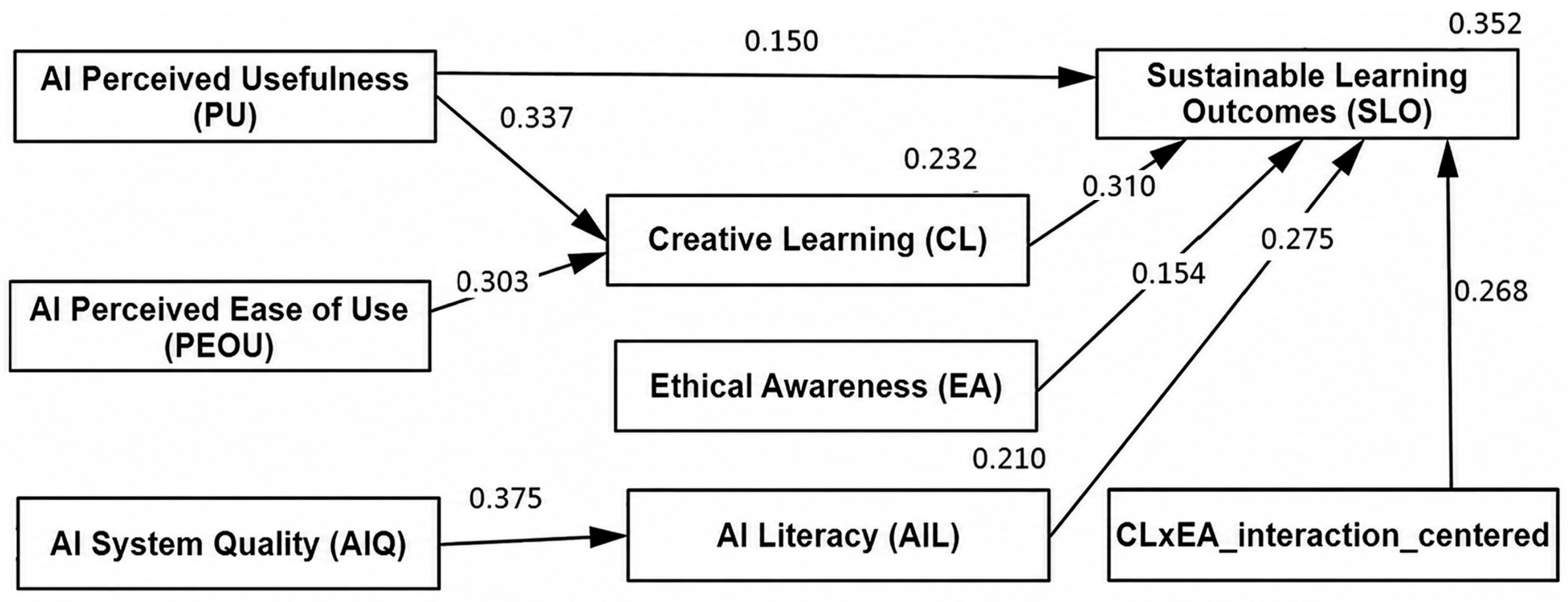
To examine the moderating role of Ethical Awareness (EA), the initial structural Model 1 was extended to Model 2 (see Figure A2, Appendix B) by incorporating the interaction term between Creative Learning and Ethical Awareness (CL × EA). The interaction term was estimated simultaneously with the direct structural paths, allowing the assessment of whether Ethical Awareness strengthens the relationship between Creative Learning and Sustainable Learning Outcomes.
Model 2 showed marginal overall fit (χ2 = 51.803, df = 16, χ2/df = 3.238, CFI = 0.946, IFI = 0.948, GFI = 0.959, RMR = 0.041, RMSEA = 0.095). Although CFI, IFI, GFI, and RMR were favorable, the RMSEA and χ2/df values indicate weaker global fit. Accordingly, the structural results from Model 2 are interpreted with appropriate caution. The Creative Learning × Ethical Awareness interaction was positive and statistically significant (β = 0.268, C.R. = 5.247, p < 0.001), supporting H9. The results are presented in Table 5.
Table 5.
Results of the moderation analysis (Model 2).
In addition to the interaction effect, Ethical Awareness exerted a statistically significant positive direct influence on Sustainable Learning Outcomes (β = 0.154, C.R. = 3.019, p = 0.003). This finding indicates that cadets demonstrating higher levels of ethical awareness tend to report higher sustainable learning outcomes irrespective of their level of creative learning. Furthermore, after introducing the moderator, the direct effects of Creative Learning (β = 0.310, p < 0.001), Artificial Intelligence Literacy (β = 0.275, p < 0.001), and Artificial Intelligence Perceived Usefulness (β = 0.150, p = 0.007) remained statistically significant, indicating that the moderation effect complements rather than replaces the previously established structural relationships.
To aid interpretation, simple slopes were examined at low (−1 SD), mean, and high (+1 SD) levels of Ethical Awareness. As shown in Figure 2, the positive association between Creative Learning and Sustainable Learning Outcomes was stronger at higher levels of Ethical Awareness.
Figure 2.
The graphical interpretation of the interaction effect of Ethical Awareness (EA).
Adding Ethical Awareness and the interaction term increased the explained variance in Sustainable Learning Outcomes from R2 = 0.305 in Model 1 to R2 = 0.352 in Model 2, a difference of 4.7 percentage points. This increase in explained variance, together with the significant interaction coefficient, provides additional support for the proposed moderation effect.
4.3. Differences Across Academic Years
To further examine whether AI-supported learning competencies differed across academic-year cohorts, one-way analysis of variance (ANOVA) was performed using academic year as the grouping variable. The results are presented in Table A2 (see Appendix A). Statistically significant differences were observed for AI Perceived Usefulness, AI Perceived Ease of Use, Creative Learning, AI Literacy, Ethical Awareness, and Sustainable Learning Outcomes, whereas AI System Quality did not differ significantly across cohorts. The largest effect sizes were observed for AI Literacy (η2 = 0.161) and Ethical Awareness (η2 = 0.157), followed by Sustainable Learning Outcomes (η2 = 0.122), indicating meaningful differences among academic-year groups. These findings describe between-cohort variation and should not be interpreted as evidence of within-student development over time.
Post hoc comparisons using Tukey’s HSD indicated that first-year cadets reported significantly lower scores than fourth-year cadets for all constructs with a significant overall ANOVA. Significant differences were also observed between first- and third-year cohorts for Perceived Usefulness, Creative Learning, AI Literacy, Ethical Awareness, and Sustainable Learning Outcomes. Second- and fourth-year cohorts differed significantly in Creative Learning, AI Literacy, Ethical Awareness, and Sustainable Learning Outcomes, whereas no significant differences were observed between third- and fourth-year cohorts. These results indicate a consistent pattern of higher scores among more senior academic-year cohorts, while reflecting between-cohort differences rather than within-student change over time.
Taken together, the empirical results provide substantial support for the proposed conceptual framework and demonstrate that the educational value of AI extends beyond technology acceptance by fostering Creative Learning, AI Literacy, and Sustainable Learning Outcomes. Moreover, Ethical Awareness strengthens the positive effect of Creative Learning on Sustainable Learning Outcomes, highlighting the importance of ethical competencies in AI-supported education. The following section discusses these findings in relation to the Technology Acceptance Model, Constructivist Learning Theory, the Sustainable Education Framework, and recent empirical research on artificial intelligence in higher education.
5. Discussion
This study examined the relationships between AI-supported learning and Sustainable Learning Outcomes by integrating the Technology Acceptance Model (TAM), Constructivist Learning Theory, and the Sustainable Education Framework within military higher education. The findings provide substantial empirical support for the proposed conceptual model, with all hypothesized relationships receiving statistical support. In particular, Creative Learning and AI Literacy emerged as significant pathways linking AI-related perceptions with Sustainable Learning Outcomes, while Ethical Awareness was associated with the strength of the Creative Learning–Sustainable Learning Outcomes relationship. These findings extend prior AI-in-education research by testing these pedagogical, competency-related, and ethical dimensions within a single model in the context of military higher education.
The significant positive effects of AI Perceived Usefulness and Perceived Ease of Use on Creative Learning (H1 and H2) support the central assumptions of the Technology Acceptance Model [34]. Students who perceive AI technologies as useful and easy to operate appear more willing to integrate them into learning activities involving exploration, idea generation, and problem solving. These findings agree with studies showing that perceived usefulness is a strong predictor of meaningful AI adoption in higher education, especially when AI is used within learner-centered teaching rather than only for automation or information retrieval [37,38,39,40]. Sustainability-focused studies also suggest that AI supports learning most effectively when it encourages reflection, creativity, and active knowledge construction [11,26,27].
The positive relationship identified between AI System Quality and AI Literacy (H3) provides additional evidence that technically reliable AI systems support the development of responsible AI competencies. Students interacting with accurate, transparent, and reliable AI systems are better able to understand AI capabilities, critically evaluate AI-generated outputs, and recognize technological limitations. These findings agree with UNESCO’s recent competency frameworks, which identify AI literacy as a prerequisite for responsible participation in AI-supported educational environments, and with recent reviews arguing that AI literacy should encompass functional, critical, and ethical dimensions rather than technical skills alone.
Creative Learning emerged as the strongest direct predictor of Sustainable Learning Outcomes, confirming H4 and supporting the constructivist view that meaningful learning develops through active knowledge construction, collaboration, and reflection rather than passive information receipt [48,49,50]. This finding extends studies showing that generative AI can support higher-order thinking and creative problem solving when it is used in meaningful learning activities [11,26,27]. From the perspective of Education for Sustainable Development, creativity helps learners address complex social and technological problems by combining several perspectives and generating new solutions [45,46,47]. Therefore, the findings indicate that AI contributes to sustainability mainly by strengthening creative learning rather than only by improving instructional efficiency.
The significant influence of AI Literacy on Sustainable Learning Outcomes (H5) further demonstrates that sustainable educational benefits depend on students’ ability to critically understand and appropriately use AI technologies. Recent international policy documents increasingly identify AI literacy as a core graduate competence because future professionals will be expected not only to operate AI systems but also to evaluate their outputs critically and make informed decisions in complex environments. The present findings therefore reinforce recent calls to integrate AI literacy across higher education curricula rather than treating it as an isolated technical subject.
The mediation analysis represents one of the principal theoretical contributions of this study. Creative Learning partially mediated the relationship between AI Perceived Usefulness and Sustainable Learning Outcomes, whereas AI Literacy mediated the relationship between AI System Quality and Sustainable Learning Outcomes. These findings indicate that the associations between AI-related perceptions and Sustainable Learning Outcomes operate, at least in part, through pedagogical and competency-related pathways involving Creative Learning and AI Literacy. The results therefore extend previous AI-in-education research by providing empirical evidence for the indirect pathways through which technology-related perceptions are linked to sustainability-oriented learning outcomes. Although the cross-sectional design does not establish temporal causality, the observed indirect effects are consistent with the proposed theoretical mechanisms and provide a basis for longitudinal and experimental examination.
Another important contribution concerns the moderating role of Ethical Awareness. The results demonstrate that Ethical Awareness strengthens the positive relationship between Creative Learning and Sustainable Learning Outcomes, indicating that AI-supported creativity becomes more educationally valuable when accompanied by responsible and ethically informed AI use. This finding aligns closely with UNESCO’s ethical principles for AI in education and recent policy analyses emphasizing that AI governance, transparency, fairness, and accountability should be embedded throughout educational practice rather than addressed only through institutional regulations. In military education, where professional decisions frequently involve ethical judgement under uncertainty, the integration of ethical awareness into AI-supported learning appears particularly important. Consequently, the findings suggest that ethics should become an integral component of AI-supported curricula instead of being treated as an independent topic.
The additional analysis across academic years revealed a clear pattern of between-cohort differences. Senior cadets generally reported higher levels of AI Perceived Usefulness, Creative Learning, AI Literacy, Ethical Awareness, and Sustainable Learning Outcomes than first-year cadets. This pattern is consistent with the developmental perspective of sustainable education, which views sustainability-related competencies as cumulative outcomes of continued learning experiences [45,46,47]. It is also aligned with previous research in military education emphasizing the progressive integration of technological competence, critical thinking, leadership, and evidence-based decision making [7,8]. Because the present study is cross-sectional, these differences should be interpreted as cohort-level patterns rather than direct evidence of within-student development. The findings nevertheless support the systematic integration of AI-supported learning across the curriculum rather than its restriction to isolated courses [61,62].
Implications from a theoretical perspective. This study contributes to the literature by testing an integrated model that combines TAM-based technology perceptions, constructivist learning processes, and sustainability-oriented educational outcomes within military higher education. Creative Learning and AI Literacy emerged as complementary pathways linking AI-related antecedents with Sustainable Learning Outcomes, while Ethical Awareness was associated with the strength of the Creative Learning–Sustainable Learning Outcomes relationship. These findings extend technology-acceptance research by incorporating pedagogical, competency-related, and ethical dimensions within a single analytical framework. Although the cross-sectional design limits causal and developmental interpretation, the results provide empirical support for the proposed theoretical relationships and offer a basis for further longitudinal and comparative research.
The findings also generate several practical implications. Higher education institutions should design AI-supported learning environments that simultaneously promote creativity, AI literacy, and ethical reasoning rather than focusing exclusively on technological implementation. Curriculum developers should integrate AI literacy across study programmes as a graduate attribute, while educators should incorporate authentic learning tasks requiring students to critically evaluate AI-generated information and justify their decisions. Within military education, AI-supported learning should complement leadership development, operational planning, and decision-making training, where technological competence must be balanced with professional responsibility and ethical judgement. These recommendations are consistent with broader international guidance emphasising that AI should augment rather than replace human learning and should strengthen learners’ capacity for responsible action in increasingly technology-rich environments.
Limitations. The cross-sectional design limits temporal and causal inference; in particular, academic-year differences represent between-cohort comparisons and cannot demonstrate competency development within individuals. The single-academy sample may also restrict the generalisability of the findings to other military systems and civilian higher education. In addition, all focal variables were self-reported within the same questionnaire, creating a potential risk of common-method variance. Although procedural remedies were applied to reduce this risk, they do not eliminate it statistically. The marginal overall fit of Model 2 should be considered when interpreting the moderation findings.
Future research. Longitudinal and multi-institutional designs to investigate how AI literacy, ethical awareness, and sustainable competencies evolve throughout higher education should be employed. Comparative studies involving civilian universities and military academies from different countries would strengthen the external validity of the proposed model. Future research could also extend the framework by incorporating constructs such as trust in AI, self-regulated learning, learning engagement, digital resilience, institutional AI readiness, and AI governance. Such studies would contribute to a more comprehensive understanding of how AI can support sustainable higher education while maintaining human-centred, ethical, and responsible educational practices.
6. Conclusions
The results provide substantial support for the proposed model. AI Perceived Usefulness and Perceived Ease of Use were positively related to Creative Learning, while AI System Quality was positively related to AI Literacy. Creative Learning and AI Literacy, in turn, showed significant positive relationships with Sustainable Learning Outcomes. Creative Learning partially mediated the relationship between AI Perceived Usefulness and Sustainable Learning Outcomes, whereas AI Literacy mediated the relationship between AI System Quality and Sustainable Learning Outcomes. Ethical Awareness showed both a significant direct relationship with Sustainable Learning Outcomes and a moderating effect on the Creative Learning–Sustainable Learning Outcomes relationship. In addition, significant differences were observed across academic-year cohorts, indicating systematic variation in AI-related competencies and Sustainable Learning Outcomes across stages of study. The study makes three principal contributions. First, it provides empirical support for an integrated framework linking technology-acceptance perceptions with Creative Learning, AI Literacy, Ethical Awareness, and Sustainable Learning Outcomes. Second, it identifies Creative Learning and AI Literacy as significant pathways connecting AI-related perceptions with Sustainable Learning Outcomes. Third, it demonstrates that the strength of the Creative Learning–Sustainable Learning Outcomes relationship varies according to Ethical Awareness. Collectively, these findings extend technology-acceptance research by incorporating pedagogical, competency-related, and ethical dimensions within a single model of AI-supported sustainable learning.
From a practical perspective, higher education institutions should integrate AI literacy, creative learning, and ethical reasoning into AI-supported curricula rather than focusing solely on technological implementation. Such an approach is particularly relevant for military academies, where future officers must combine technological competence with responsible and ethical decision-making. Although the study was limited to one military academy and employed a cross-sectional design, it provides a foundation for future longitudinal and comparative studies examining AI-supported sustainable learning across different educational contexts.
Supplementary Materials
The following supporting information can be downloaded at: https://www.mdpi.com/article/10.3390/su18178758/s1, Table S1: CFA standardized factor loadings. Table S2: HTMT discriminant-validity matrix.
Funding
This research was supported by the General Jonas Žemaitis Military Academy of Lithuania under the Research Supporting Studies programme, Orders No. V-292 and V-295, dated 2 April 2026.
Institutional Review Board Statement
The study was conducted in accordance with the Declaration of Helsinki and approved by General Jonas Zemaitis Military Academy (No AMTE-2025/05/30, 27 June 2025).
Informed Consent Statement
Informed consent was obtained from all subjects involved in the study.
Data Availability Statement
The data supporting the findings of this study are available from the corresponding author upon reasonable request.
Conflicts of Interest
The author declare no conflicts of interest. The funders had no role in the design of the study; in the collection, analyses, or interpretation of data; in the writing of the manuscript; or in the decision to publish the results.
Abbreviations
The following abbreviations are used in this manuscript:
| PU | This variable indicates the AI perceived usefulness index |
| PEOU | This variable indicates the AI perceived ease of use index |
| AIQ | This variable indicates the perceived AI system quality index |
| CL | This variable indicates the perceived creative learning index |
| AIL | This variable indicates the perceived AI literacy index |
| EA | This variable indicates the respondents’ ethical awareness index |
| SLO | This variable indicates the perceived sustainable learning outcomes index |
Appendix A
Table A1.
Demographic characteristics of the study participants (N = 250).
Table A2.
One-way ANOVA comparing study constructs across academic years (N = 250).
Appendix B
Figure A1.
The standardized path coefficients of the proposed structural Model 1.
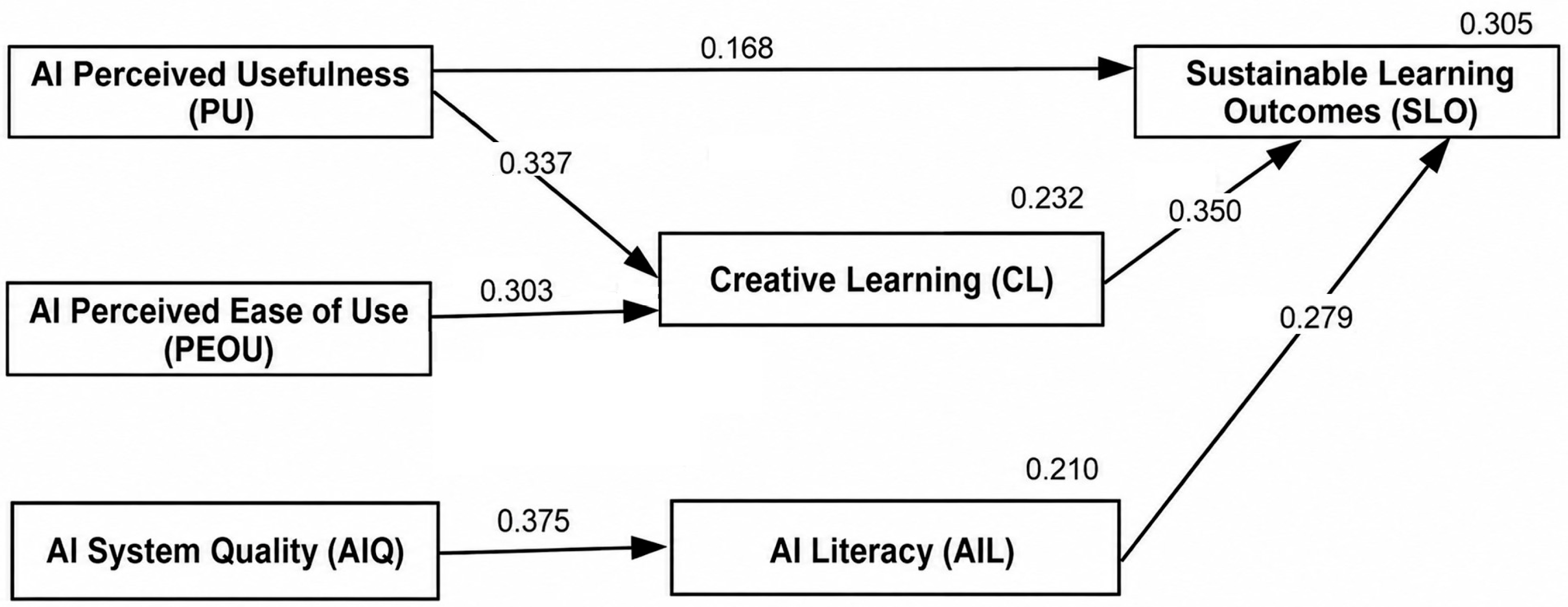
Figure A2.
The standardized path coefficients of the proposed structural Model 2.
References
- Kamalov, F.; Santandreu Calonge, D.; Gurrib, I. New Era of Artificial Intelligence in Education: Towards a Sustainable Multifaceted Revolution. Sustainability 2023, 15, 12451. [Google Scholar] [CrossRef] [Scilit]
- Strielkowski, W.; Grebennikova, V.; Lisovskiy, A.; Rakhimova, G.; Vasileva, T. AI-Driven Adaptive Learning for Sustainable Educational Transformation. Sustain. Dev. 2025, 33, 1921–1947. [Google Scholar] [CrossRef] [Scilit]
- Demartini, C.G.; Sciascia, L.; Bosso, A.; Manuri, F. Artificial Intelligence Bringing Improvements to Adaptive Learning in Education: A Case Study. Sustainability 2024, 16, 1347. [Google Scholar] [CrossRef] [Scilit]
- Ferk Savec, V.; Jedrinović, S. The Role of AI Implementation in Higher Education in Achieving the Sustainable Development Goals: A Case Study from Slovenia. Sustainability 2025, 17, 183. [Google Scholar] [CrossRef] [Scilit]
- Nedungadi, P.; Tang, K.-Y.; Raman, R. The Transformative Power of Generative Artificial Intelligence for Achieving the Sustainable Development Goal of Quality Education. Sustainability 2024, 16, 9779. [Google Scholar] [CrossRef] [Scilit]
- Lo, N.P.-K. The Confluence of Digital Literacy and Eco-Consciousness: Harmonizing Digital Skills with Sustainable Practices in Education. Platforms 2024, 2, 15–32. [Google Scholar] [CrossRef] [Scilit]
- Bekesiene, S.; Smaliukiene, R.; Vasilis Vasiliauskas, A. Sustainable Approaches in Professional Higher Education: The Role of Distance Learning, Integrity of Teaching Methodology, and Classroom Innovation. Sustainability 2025, 17, 9151. [Google Scholar] [CrossRef] [Scilit]
- Bekesiene, S.; Vasilis Vasiliauskas, A. Building Adaptive and Resilient Distance Military Education Systems through Data-Driven Decision-Making. Systems 2025, 13, 852. [Google Scholar] [CrossRef] [Scilit]
- Zou, Y.; Kuek, F.; Feng, W.; Cheng, X. Digital Learning in the 21st Century: Trends, Challenges, and Innovations in Technology Integration. Front. Educ. 2025, 10, 1562391. [Google Scholar] [CrossRef] [Scilit]
- Alkhawaja, L.; Idris, M.; Al-Sayyed, S.; Al Jaber, A.M. Exploring the Impact of Artificial Intelligence on Students’ Skills for Sustainable Development in Education. Front. Educ. 2025, 10, 1691148. [Google Scholar] [CrossRef] [Scilit]
- Henriksen, D.; Mishra, P.; Stern, R. Creative Learning for Sustainability in a World of AI: Action, Mindset, Values. Sustainability 2024, 16, 4451. [Google Scholar] [CrossRef] [Scilit]
- Novaes, A.L. Enhancing Sustainability Education in Higher Education through Simulation-Based Learning: Integrating Sustainable Development Goals. Int. J. Sustain. High. Educ. 2026, 27, 1124–1141. [Google Scholar] [CrossRef] [Scilit]
- Leal Filho, W.; Kim, E.; Borsatto, J.M.L.S.; Marcolin, C.B. Using Artificial Intelligence in Sustainability Teaching and Learning. Environ. Sci. Eur. 2025, 37, 124. [Google Scholar] [CrossRef] [Scilit]
- Jallali, B.; Hafdhi, S.; Aloufi, A.M.E.; Masoudi, B.K.; Alshmrani, A.M. Toward Sustainable Learning: A Multidimensional Framework of AI Integration, Engagement, and Digital Resilience in Saudi Higher Education. Sustainability 2026, 18, 944. [Google Scholar] [CrossRef] [Scilit]
- Alamäki, A.; Nyberg, C.; Kimberley, A.; Salonen, A.O. Artificial Intelligence Literacy in Sustainable Development: A Learning Experiment in Higher Education. Front. Educ. 2024, 9, 1343406. [Google Scholar] [CrossRef] [Scilit]
- Long, D.; Magerko, B. What Is AI Literacy? Competencies and Design Considerations. In Proceedings of the 2020 CHI Conference on Human Factors in Computing Systems, Honolulu, HI, USA, 25–30 April 2020; ACM: New York, NY, USA, 2020; pp. 1–16. [Google Scholar] [CrossRef] [Scilit]
- Polat, E. Artificial Intelligence Literacy, Lifelong Learning, and Fear of Innovation: Identification of Profiles and Relationships. Educ. Inf. Technol. 2025, 30, 20183–20214. [Google Scholar] [CrossRef] [Scilit]
- Mhlanga, D. Open AI in Education: The Responsible and Ethical Use of ChatGPT towards Lifelong Learning. In FinTech and Artificial Intelligence for Sustainable Development; Springer Nature: Cham, Switzerland, 2023; pp. 387–409. [Google Scholar]
- Biagini, G. Towards an AI-Literate Future: A Systematic Literature Review Exploring Education, Ethics, and Applications. Int. J. Artif. Intell. Educ. 2025, 35, 2616–2666. [Google Scholar] [CrossRef] [Scilit]
- Alé, J.; Ávalos, B.; Araya, R. Scientific Practices for Understanding, Applying and Creating with Artificial Intelligence in K-12 Education: A Scoping Review. Rev. Educ. 2025, 13, e70098. [Google Scholar] [CrossRef] [Scilit]
- Kashif, M.; Ammar, M.; Sellami, A.; Chiu, T.K.; Abbasi, S.A.; Ahmad, Z. Teachers’ Perspectives on AI Integration in K-12 Education: Challenges, Opportunities, and Preliminary Assessment Model—A Systematic Review. Comput. Sch. 2025, 1–27. [Google Scholar] [CrossRef] [Scilit]
- Favero, L.; Pérez-Ortiz, J.A.; Käser, T.; Oliver, N. AI in Education beyond Learning Outcomes: Cognition, Agency, Emotion, and Ethics. arXiv 2026, arXiv:2602.04598. [Google Scholar] [CrossRef] [Scilit]
- Žnidarič, U.; Štrumbelj, E.; Machidon, O. A Review of the Negative Effects of Digital Technology on Cognition. arXiv 2026, arXiv:2603.10025. [Google Scholar] [CrossRef] [Scilit]
- Lin, M.P.-C.; Liu, A.L.; Poitras, E.; Chang, M.; Chang, D.H. An Exploratory Study on the Efficacy and Inclusivity of AI Technologies in Diverse Learning Environments. Sustainability 2024, 16, 8992. [Google Scholar] [CrossRef] [Scilit]
- Alshahrani, K.; Qureshi, R.J. Review the Prospects and Obstacles of AI-Enhanced Learning Environments: The Role of ChatGPT in Education. Int. J. Mod. Educ. Comput. Sci. 2024, 16, 71–86. [Google Scholar] [CrossRef] [Scilit]
- Romero, M. From Consumption to Co-Creation: A Systematic Review of Six Levels of AI-Enhanced Creative Engagement in Education. Multimodal Technol. Interact. 2025, 9, 110. [Google Scholar] [CrossRef] [Scilit]
- Omran Zailuddin, M.F.N.; Nik Harun, N.A.; Abdul Rahim, H.A.; Kamaruzaman, A.F.; Berahim, M.H.; Harun, M.H.; Ibrahim, Y. Redefining Creative Education: A Case Study Analysis of AI in Design Courses. J. Res. Innov. Teach. Learn. 2024, 17, 282–296. [Google Scholar] [CrossRef] [Scilit]
- Mitsea, E.; Drigas, A.; Mantas, P. Soft Skills and Metacognition as Inclusion Amplifiers in the 21st Century. Int. J. Online Biomed. Eng. 2021, 17, 121–132. [Google Scholar] [CrossRef] [Scilit]
- Yekollu, R.K.; Bhimraj Ghuge, T.; Sunil Biradar, S.; Haldikar, S.V.; Farook Mohideen Abdul Kader, O. AI-Driven Personalized Learning Paths: Enhancing Education through Adaptive Systems. In Proceedings of the International Conference on Smart Data Intelligence, Trichy, India, February 2024; Springer Nature: Singapore, 2024; pp. 507–517. [Google Scholar]
- Luckin, R.; Holmes, W. Intelligence Unleashed: An Argument for AI in Education; Pearson: London, UK, 2016. [Google Scholar]
- Allam, H.M.; Gyamfi, B.; AlOmar, B. Sustainable Innovation: AI and Living Intelligence to Transform Higher Education. Educ. Sci. 2025, 15, 398. [Google Scholar] [CrossRef] [Scilit]
- Chinta, S.V.; Wang, Z.; Yin, Z.; Hoang, N.; Gonzalez, M.; Quy, T.L.; Zhang, W. FairAIED: Fairness, Bias, and Ethics in Educational AI Applications. arXiv 2024, arXiv:2407.18745. [Google Scholar] [CrossRef] [Scilit]
- Marikyan, D.; Papagiannidis, S. Technology Acceptance Model: A Review. In TheoryHub Book; Newcastle University: Newcastle upon Tyne, UK, 2024. [Google Scholar]
- Davis, F.D. Perceived Usefulness, Perceived Ease of Use, and User Acceptance of Information Technology. MIS Q. 1989, 13, 319–340. [Google Scholar] [CrossRef] [Scilit] [PubMed]
- Marangunić, N.; Granić, A. Technology Acceptance Model: A Literature Review from 1986 to 2013. Univers. Access Inf. Soc. 2015, 14, 81–95. [Google Scholar] [CrossRef] [Scilit]
- Venkatesh, V.; Morris, M.G.; Davis, G.B.; Davis, F.D. User Acceptance of Information Technology: Toward a Unified View. MIS Q. 2003, 27, 425–478. [Google Scholar] [CrossRef] [Scilit]
- Scherer, R.; Siddiq, F.; Tondeur, J. The Technology Acceptance Model: A Meta-Analytic Structural Equation Modeling Approach to Explaining Teachers’ Adoption of Digital Technology in Education. Comput. Educ. 2019, 128, 13–35. [Google Scholar] [CrossRef] [Scilit]
- Chan, C.K.Y.; Hu, W. Students’ Voices on Generative AI: Perceptions, Benefits, and Challenges in Higher Education. Int. J. Educ. Technol. High. Educ. 2023, 20, 43. [Google Scholar] [CrossRef] [Scilit]
- Al-Abdullatif, A.M.; Alsubaie, M.A. ChatGPT in Learning: Assessing Students’ Use Intentions through Perceived Value and AI Literacy. Behav. Sci. 2024, 14, 845. [Google Scholar] [CrossRef] [Scilit] [PubMed]
- Strzelecki, A. Students’ Acceptance of ChatGPT in Higher Education: An Extended Unified Theory of Acceptance and Use of Technology. Innov. High. Educ. 2024, 49, 223–245. [Google Scholar] [CrossRef] [Scilit]
- UNESCO. AI Competency Framework for Students; UNESCO: Paris, France, 2024. [Google Scholar] [CrossRef] [Scilit]
- Ng, D.T.K.; Leung, J.K.L.; Chu, S.K.W.; Qiao, M.S. Conceptualizing AI Literacy: An Exploratory Review. Comput. Educ. Artif. Intell. 2021, 2, 100041. [Google Scholar] [CrossRef] [Scilit]
- Zajda, J. Constructivist Learning Theory and Creating Effective Learning Environments. In Globalisation and Education Reforms: Creating Effective Learning Environments; Springer: Cham, Switzerland, 2021; pp. 35–50. [Google Scholar]
- Chuang, S. The Applications of Constructivist Learning Theory and Social Learning Theory on Adult Continuous Development. Perform. Improv. 2021, 60, 6–14. [Google Scholar] [CrossRef] [Scilit]
- Kioupi, V.; Voulvoulis, N. Education for Sustainable Development: A Systemic Framework for Connecting the SDGs to Educational Outcomes. Sustainability 2019, 11, 6104. [Google Scholar] [CrossRef] [Scilit]
- Sinakou, E.; Donche, V.; Boeve-de Pauw, J.; Van Petegem, P. Designing Powerful Learning Environments in Education for Sustainable Development: A Conceptual Framework. Sustainability 2019, 11, 5994. [Google Scholar] [CrossRef] [Scilit]
- Lozano, R.; Merrill, M.Y.; Sammalisto, K.; Ceulemans, K.; Lozano, F.J. Connecting Competences and Pedagogical Approaches for Sustainable Development in Higher Education: A Literature Review and Framework Proposal. Sustainability 2017, 9, 1889. [Google Scholar] [CrossRef] [Scilit]
- Piaget, J. The Psychology of the Child; Basic Books: New York, NY, USA, 1972. [Google Scholar]
- Fosnot, C.T.; Perry, R.S. Constructivism: A Psychological Theory of Learning. In Constructivism: Theory, Perspectives, and Practice; Teachers College Press: New York, NY, USA, 1996; pp. 8–33. [Google Scholar]
- Vygotsky, L.S. Mind in Society: The Development of Higher Psychological Processes; Harvard University Press: Cambridge, MA, USA, 1978. [Google Scholar]
- Corres, A.; Rieckmann, M.; Espasa, A.; Ruiz-Mallén, I. Educator Competences in Sustainability Education: A Systematic Review of Frameworks. Sustainability 2020, 12, 9858. [Google Scholar] [CrossRef] [Scilit]
- UNESCO. Rethinking Education: Towards a Global Common Good? UNESCO: Paris, France, 2015; Available online: https://unesdoc.unesco.org/ark:/48223/pf0000232555 (accessed on 29 July 2026).
- UNESCO. What You Need to Know About Education for Sustainable Development. Available online: https://www.unesco.org/en/education-sustainable-development/need-know (accessed on 29 July 2026).
- OECD. OECD Digital Education Outlook 2023: Towards an Effective Digital Education Ecosystem; OECD Publishing: Paris, France, 2023. [Google Scholar] [CrossRef] [Scilit]
- Chan, C.K.Y.; Colloton, T. Generative AI in Higher Education: The ChatGPT Effect; Routledge: London, UK, 2024. [Google Scholar]
- Mbah, M.F.; Nugraha, T.R.; Kushnir, I. Challenges and Opportunities for Using Generative AI for Sustainability Education: A Critical Review. Sustainability 2025, 17, 10623. [Google Scholar] [CrossRef] [Scilit]
- Luna, A.; Ocaña, M.; Rodríguez-Moreno, J.; Ortíz-Colón, A.M. Establishing the Foundation for Technology Adoption: Profiles of Military Students in the Digital Age. Front. Psychol. 2025, 16, 1593326. [Google Scholar] [CrossRef] [Scilit] [PubMed]
- Gkintoni, E.; Antonopoulou, H.; Sortwell, A.; Halkiopoulos, C. Challenging Cognitive Load Theory: The Role of Educational Neuroscience and Artificial Intelligence in Redefining Learning Efficacy. Brain Sci. 2025, 15, 203. [Google Scholar] [CrossRef] [Scilit] [PubMed]
- Jiang, D.; Chen, Z.; Liu, T.; Zhu, H.; Wang, S.; Chen, Q. Individual Creativity in Digital Transformation Enterprises: Knowledge and Ability, Which Is More Important? Front. Psychol. 2022, 12, 734941. [Google Scholar] [CrossRef] [Scilit] [PubMed]
- DeLone, W.H.; McLean, E.R. The DeLone and McLean Model of Information Systems Success: A Ten-Year Update. J. Manag. Inf. Syst. 2003, 19, 9–30. [Google Scholar] [CrossRef] [Scilit]
- Adamakis, M.; Rachiotis, T. Artificial Intelligence in Higher Education: A State-of-the-Art Overview of Pedagogical Integrity, AI Literacy, and Policy Integration. Encyclopedia 2025, 5, 180. [Google Scholar] [CrossRef] [Scilit]
- Ma, Y.; Su, Y.; Li, M.; Zhang, Y.; Chai, W.; Huang, A.; Zhao, X. Preparing Students for an AI-Driven World: Generative AI and Curriculum Reform in Higher Education. Front. Digit. Educ. 2025, 2, 30. [Google Scholar] [CrossRef] [Scilit]
- Alfaleh, M. Sustainable AI-Driven Assessment in Higher Education: A Systematic Review of Fairness, Transparency, Pedagogical Innovation, and Governance. Sustainability 2026, 18, 785. [Google Scholar] [CrossRef] [Scilit]
- Hair, J.F.; Black, W.C.; Babin, B.J.; Anderson, R.E. Multivariate Data Analysis, 8th ed.; Cengage: Andover, UK, 2022. [Google Scholar]
- ten Have, H.; Patrão Neves, M. UNESCO. In Dictionary of Global Bioethics; Springer: Cham, Switzerland, 2021. [Google Scholar] [CrossRef] [Scilit]
- Podsakoff, P.M.; MacKenzie, S.B.; Lee, J.-Y.; Podsakoff, N.P. Common Method Biases in Behavioral Research: A Critical Review of the Literature and Recommended Remedies. J. Appl. Psychol. 2003, 88, 879–903. [Google Scholar] [CrossRef] [Scilit] [PubMed]
- Anderson, J.C.; Gerbing, D.W. Structural Equation Modeling in Practice: A Review and Recommended Two-Step Approach. Psychol. Bull. 1988, 103, 411–423. [Google Scholar] [CrossRef]
- Kline, R.B. Principles and Practice of Structural Equation Modeling, 5th ed.; Guilford Press: New York, NY, USA, 2023. [Google Scholar]
- Preacher, K.J.; Hayes, A.F. Asymptotic and Resampling Strategies for Assessing and Comparing Indirect Effects in Multiple Mediator Models. Behav. Res. Methods 2008, 40, 879–891. [Google Scholar] [CrossRef] [Scilit] [PubMed]
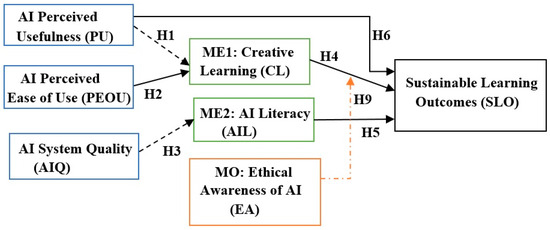
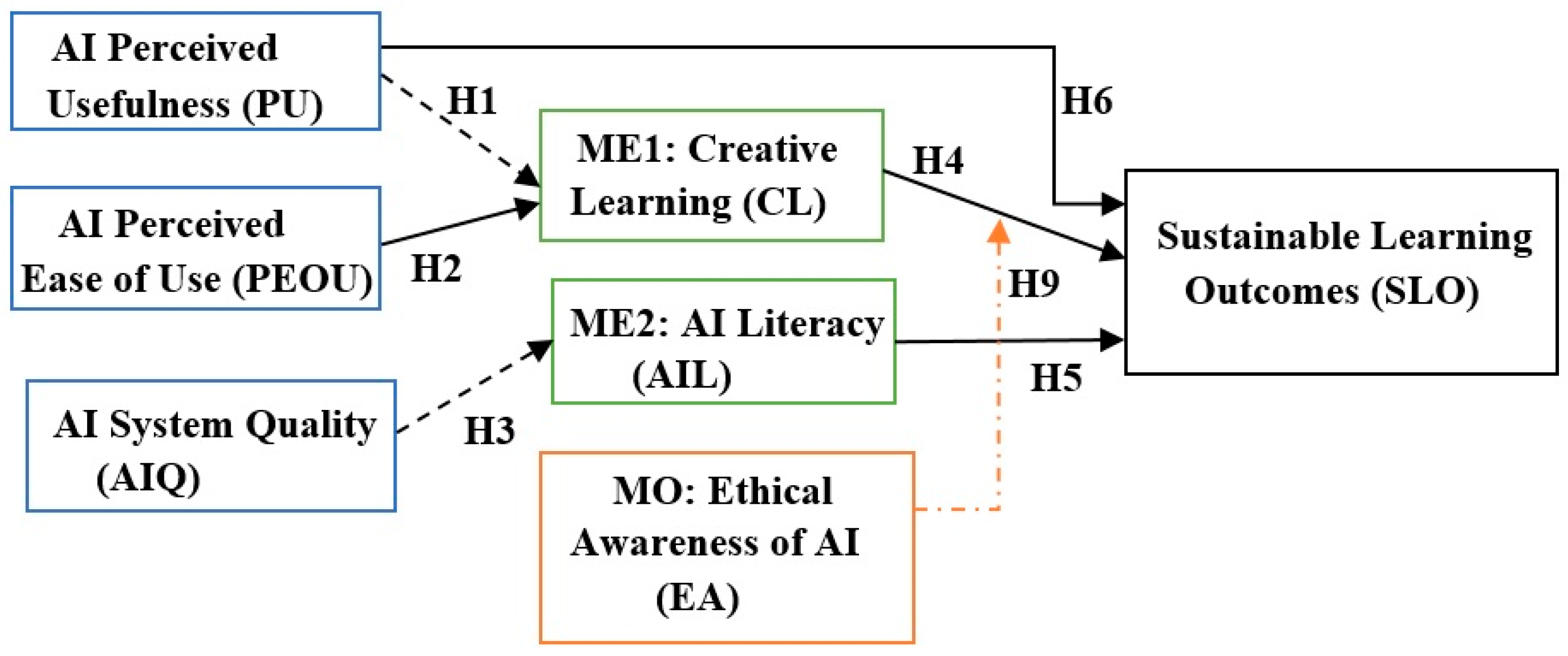
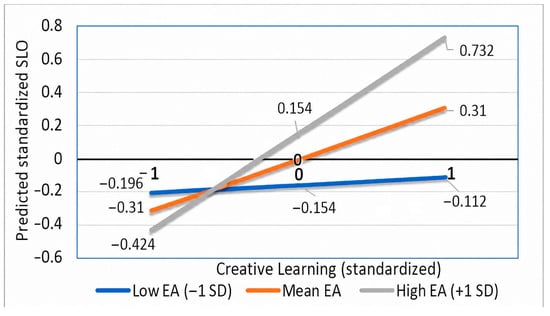

Disclaimer/Publisher’s Note: The statements, opinions and data contained in all publications are solely those of the individual author(s) and contributor(s) and not of MDPI and/or the editor(s). MDPI and/or the editor(s) disclaim responsibility for any injury to people or property resulting from any ideas, methods, instructions or products referred to in the content. |
© 2026 by the author. Licensee MDPI, Basel, Switzerland. This article is an open access article distributed under the terms and conditions of the Creative Commons Attribution (CC BY) license.