


Abstract
Universities play a pivotal role in advancing the United Nations Sustainable Development Goals (SDGs) through education, research, governance, operations, partnerships, and community engagement. However, limited evidence exists regarding the extent to which sustainability has been institutionally embedded within Jordanian higher education. This study presents an evidence-based comparative assessment of SDG institutionalization across ten Jordanian public universities using publicly available and verifiable institutional documents. Institutionalization was evaluated across eight dimensions: governance and strategy, education and curriculum, research and innovation, campus operations, partnerships, community engagement, inclusion and equity, and monitoring and reporting. A four-level institutionalization rubric ranging from “No eligible publicly verifiable institutional evidence” (0) to “Institutionalization with monitoring and reporting” (3) was applied to 80 university–dimension observations. The universities achieved a mean Institutional SDG Integration Index (ISDGI) of 66.3%, indicating that sustainability has progressed beyond isolated initiatives toward formal institutionalization across the sector. Monitoring and reporting demonstrated the highest level of institutionalization (80.0%), followed by campus operations (70.0%), while partnerships (60.0%) and community engagement (56.7%) remained comparatively less institutionalized. Overall, 71 of the 80 university–dimension observations (88.8%) reached at least the level of formal institutionalization. The findings indicate that sustainability has become embedded in many institutional structures within Jordanian public universities, although stronger institutionalization and systematic monitoring of external engagement, together with evidence-based evaluation, are needed to translate formal institutionalization into measurable societal impact. The proposed framework provides a transparent and replicable methodology for assessing SDG institutionalization in higher education institutions.
1. Introduction
The implementation of the United Nations 2030 Agenda for Sustainable Development marked the emergence of the Sustainable Development Goals (SDGs) as an interconnected set of goals for tackling complex social, economic, environmental, and institutional challenges on a global scale. Higher education institutions (HEIs) play a unique role in this agenda, as they provide professional training to future professionals, generate knowledge and innovations, maintain complex infrastructures, engage with communities, and develop partnerships that enable them to translate knowledge into practice.
Thus, the involvement of higher education in sustainable development goes far beyond offering sustainability courses. Universities can affect sustainable development through the processes of governance and strategy development, education, research and innovation, operations management, partnerships, community engagement, inclusion, and reporting and monitoring of results. Such an understanding has led to the shift from seeing university sustainability initiatives as separate environmental or social projects to the idea of whole-institution sustainability, which implies embedding the concept of sustainability in all interconnected processes of universities’ academic, operational, administrative, and societal work [1,2,3,4].
This shift introduces a key distinction between sustainability practices and institutionalizing sustainability. The university can engage in sustainability-related campaigns, courses, research, and outreach without the sustainability being institutionally structured. Institutionalization at a higher level takes place when the concept of sustainability gets incorporated into strategies, policies, responsibilities, curricula, research structures, practices, goals, and measures. Hence, evaluation of the sustainability of universities should include not only the presence of sustainability-related practices but also the level of their institutionalization and systematic measurement.
Indeed, the existing literature proves the relevance of the multidimensional approach. Sustainable development assessment of higher education usually involves governance, education, research, campus operations, outreach, collaboration, and institutional management [5,6,7]. Also, systematic review of the existing literature indicates that the successful engagement in sustainable development implies collaboration between various university departments rather than single interventions [1,8,9].
The above-discussed institutional approach is highly relevant for Jordan, where sustainable development has much to do with national priorities such as water shortages, energy security, adaptation to climate change, development of human capital, innovations, economic modernization, and social inclusion. The recent Voluntary National Review of Jordan of 2022 confirmed the country’s dedication to implement the 2030 Agenda and emphasized the need for accelerated efforts in achieving the SDGs in the face of economic, environmental, and social constraints [10]. Sustainable development principles are also embedded into the Jordanian Economic Modernization Vision that links economic development and quality of life to sustainable resources, innovation, human capabilities, and institutional modernization [11].
Thus, the universities in Jordan find themselves at the crossroads of national development priorities and international sustainability goals. Through their activities, universities are capable of making contributions to overcoming sustainability challenges and developing the competencies of students needed for the evolving economy and society. Still, demonstrating engagement in sustainability is one thing and demonstrating institutionalization of sustainability is another.
In Jordan, previous research on this topic has concentrated on specific facets of it. For instance, Alomari and Khataybeh [12] studied the knowledge that university students have of the SDGs, while Derbas et al. [13] looked into the extent to which e-learning contributes to sustainable development among university students. These pieces of research contribute significantly to knowledge on sustainable development and educational practices. Nevertheless, they do not provide any comparison of the level of institutionalization of sustainability at the institutions of Jordanian public universities.
Despite the growing interest in sustainability within higher education, an important research gap remains in the Jordanian context. Existing studies have primarily examined individual sustainability initiatives, stakeholder perceptions, or specific institutional practices, while little comparative evidence is available regarding the extent to which the Sustainable Development Goals (SDGs) have been systematically institutionalized across Jordanian public universities. In particular, there is limited evidence on how sustainability has evolved from isolated projects into formal institutional strategies, governance structures, policies, operational mechanisms, and monitoring systems. Furthermore, little is known about which institutional functions demonstrate stronger or weaker levels of SDG institutionalization.
To address this gap, the present study conducts a systematic institutional document analysis of ten Jordanian public universities using publicly available and verifiable institutional evidence. The study evaluates SDG institutionalization across eight dimensions—governance and strategy, education and curriculum, research and innovation, campus operations, partnerships, community engagement, inclusion and equity, and monitoring and reporting—and proposes a transparent, evidence-based framework that can be replicated in future institutional and cross-national assessments.
Accordingly, the objective of this study is to evaluate the level of SDG institutionalization across Jordanian public universities using a systematic evidence-based assessment framework. Beyond assessing institutional performance, the study provides a transparent and replicable methodology that can support benchmarking, institutional self-assessment, and future comparative research on sustainability in higher education.
Three main contributions can be made by the study. First, the research offers a comparative multi-dimensional evaluation of sustainability institutionalization at Jordanian public universities. Second, it distinguishes between the presence of sustainability activities and their institutionalization, thus giving a more sophisticated analysis than the mere counting of such initiatives. Third, the research takes an evidence-traceable approach where analytical categories are related to publicly available institutional sources. Thus, one can trace the way from evidence to the results of the calculations.
2. Literature Review and Conceptual Framework
2.1. Sustainability Institutionalization in Higher Education
The involvement of higher education institutions in sustainable development has shifted from adopting separate environmental and social interventions to integrating sustainability in the institution’s processes. Higher education institutions affect sustainable development through teaching, research, governance, campus management, external relations, and knowledge transfer. Therefore, sustainability in higher education is currently seen as a transformation in the organization as opposed to a set of independent activities.
Lozano et al. [4] found out that the adoption of sustainability by higher education institutions was multi-faceted and included institutional frameworks, campus management, education, research, outreach, cooperation, assessment, and reporting. In a similar vein, Findler et al. [2] conceptualized impacts of universities on sustainable development as having a cross-boundary effect on environmental, social, and economic systems through multiple channels. Recent holistic approaches to sustainability in higher education institutions focus on the need to coordinate academic, operational, administrative, and societal processes when adopting the SDGs [1,3].
This literature provides valuable support to an important distinction between the concept of sustainability engagement and sustainability institutionalization. Sustainability engagement can be achieved through projects, campaigns, events, classes, and research. The latter is more of a state that involves embedding sustainability within the policies, strategies, accountability structures, responsibilities, curricula, and operational procedures.
In the current study, sustainability institutionalization is viewed as a process:
Activity → Formal Institutionalization → Institutionalization with Monitoring
This progression forms the conceptual basis of the analytical framework.
2.2. Whole-Institution Sustainability Assessment
Due to the complex nature of sustainability at the university level, there have been many institutional assessment tools developed. Though different in names and measures, these tools seem to show that sustainability cannot be effectively measured through one institutional aspect.
As Berzosa et al. [7] noted while comparing sustainability assessment instruments in higher education institutions, there are notable differences in the scope and indicators used while the multidimensionality of institutional assessment is justified. In addition, Horan and O’Regan [5] suggested a list of indicators including such aspects as energy use, green house gas emissions, waste, water, transport, education, research and governance.
Support for this view is provided by systematic reviews. According to Serafini et al. [8], teaching, research, outreach, management, and institutional engagement are some of the key pathways through which universities can play their role in achieving the SDGs. Christou et al. [1] stress the importance of using systems thinking and sustainability.
While the current paper relies on this literature, it does not aim at replicating a university ranking process. The paper focuses on assessing the depth of institutionalization along eight interrelated dimensions.
Established sustainability assessment and reporting approaches provide important but different perspectives on university sustainability. STARS offers a structured framework for assessing sustainability performance across multiple areas of higher education; UI GreenMetric facilitates comparative assessment of university sustainability through standardized indicators, with substantial attention to campus and environmental performance; and GRI provides a broader organizational sustainability-reporting framework rather than a university-specific institutionalization model. These approaches are valuable for performance assessment, benchmarking, and sustainability reporting.
The framework developed in the present study addresses a different analytical question: not simply whether sustainability indicators, activities, or outcomes are present, but the extent to which sustainability is institutionally embedded. It therefore distinguishes among the absence of eligible public evidence (Level 0), activity/project-level evidence (Level 1), formal institutionalization through policies, strategies, structures, or permanent mechanisms (Level 2), and formal institutionalization accompanied by systematic monitoring/reporting (Level 3). The analytical advantage is consequently not merely finer numerical granularity; rather, it is the explicit differentiation between the presence of sustainability activity and the organizational depth through which that activity is embedded and monitored.
The proposed framework should therefore be regarded as complementary to, rather than a replacement for, established systems such as STARS, UI GreenMetric, and GRI. Existing instruments can provide detailed information concerning sustainability performance, reporting, or benchmarking, whereas the present framework provides an evidence-traceable maturity perspective on the institutionalization processes underlying sustainability commitments.
Importantly, the eight analytical dimensions used in this study were specified a priori from the higher-education sustainability literature and the conceptual domains represented across established sustainability assessment and reporting approaches; they were not derived inductively from the documentary evidence collected from the Jordanian universities. The institutional documents therefore constitute the evidence to which the predefined analytical framework was applied rather than the empirical basis from which the framework itself was constructed. This separation between framework specification and evidence coding reduces the risk of circularity between the documentary corpus and the analytical dimensions.
The framework does not claim superiority over STARS, UI GreenMetric, GRI, or other established sustainability assessment systems. Its incremental contribution lies instead in addressing a complementary question of institutional depth: whether publicly verifiable sustainability evidence represents an activity, a formally embedded institutional mechanism, or formal institutionalization accompanied by systematic monitoring or reporting. This maturity-oriented distinction can therefore complement performance- and reporting-oriented instruments by examining the organizational embedding underlying documented sustainability commitments.
2.3. Governance and Strategy
The institution of governance offers the institutional framework in which sustainability pledges can be converted into coordinated actions by organizations. Commitments to sustainability through strategies, policies, committees, offices, leadership commitments, and institutional plans can set responsibilities and priorities amidst fragmented organizational processes.
Research has pointed out that leadership commitment and institutional governance are necessary prerequisites for successful sustainability implementation [3,4,6]. In the absence of any governance structure, sustainability may continue to be in the hands of individual faculty members or departments. Hence, Governance and Strategy (GOV) is considered as a separate construct capturing the degree to which sustainability is institutionalized through formal institutional leadership and strategy.
2.4. Education and Curriculum
One of the most straightforward ways universities contribute to sustainable development is through education. Education for sustainable development aims at educating students about the competencies, knowledge, values, and skills that can help them address various environmental, societal, and economic challenges.
Recent research studies have explored not only sustainability course offerings but also curriculum integration and learning outcomes with regards to sustainable development. Leal Filho et al. [14] found great differences in the way sustainability is taught in different universities, while Kioupi and Voulvoulis [15] stressed the need to link higher education programs and competencies to SDG success. The significance of interdisciplinary learning has also been established since sustainability issues often span different disciplines [16]. The EDU dimension reflects evidence in terms of the inclusion of sustainability or the SDGs in any form of learning programs or courses within the academic system.
2.5. Research and Innovation
Yet another significant way through which universities can contribute to sustainable development involves research and innovation. The research activities in universities can create new knowledge and innovations to solve issues related to water shortages, renewable energy, climate change, sustainable cities, health, inequality, food security, and sustainable production.
Institutionalization in this particular area goes beyond simply having research papers on sustainability issues. This could be shown by having research institutions, research priorities, funded research projects, interdisciplinary arrangements, innovation facilities, and other institutional arrangements geared towards knowledge production on sustainability issues. Thus, the Research and Innovation (RES) dimension measures whether sustainability research is institutionalized within the university.
2.6. Campus Operations
Universities are also physical institutions that engage in activities that use up energy and water, produce wastes and greenhouse gases, require transportation and procurement systems, and engage in building and land management. The operations of the university, therefore, present an important aspect of institutional sustainability.
As Purcell et al. [17] point out, universities offer the chance to act as living laboratories where the operations of the institution can present a chance for testing sustainability efforts.
OPS stands for the Campus Operations dimension that looks into institutional practices concerning energy efficiency, renewable energy, water management, waste, emissions, sustainable transportation, buildings, procurement, biodiversity, and resource management. It is especially significant for resource-poor environments like Jordan, where energy efficiency, water management, and climate change resilience form important sustainability priorities for the country.
2.7. Partnerships and Community Engagement
Sustainable development necessitates interactions outside of the university. The university can work with the government, industry, civil society, international organizations, other universities, or even the local community for knowledge exchange, resource mobilization, and sustainability problem-solving.
Nevertheless, partnerships and community engagement are two distinct types of external institutionalization. Partnerships mean organized interactions with external entities, which may be governmental bodies, private firms, NGOs, international organizations, and even other universities. The collaborative work of stakeholders has already been considered as one of the key tools to promote sustainability in higher education [18,19].
Community engagement implies more organized contacts with society through outreach activities, service learning, training, raising awareness, capacity building, consulting, and development of local communities. Rodríguez-Zurita et al. [20] show how community engagement and service learning may be used to link higher education and sustainability problems. In other words, the framework analyzes separately two types of interactions – Partnerships (PAR) and Community Engagement (COM). This approach is aimed at identifying possible differences between institutional maturity of organizational collaboration and community facing engagement.
2.8. Inclusion and Equity
The 2030 Agenda stresses that sustainability involves social inclusion as well as leaving no one behind. Therefore, the idea of sustainability in the context of higher education cannot be understood only in terms of environmental sustainability. Institutions can foster social sustainability using a number of institutional processes related to equality, accessibility, disability provision, diversity, equal education opportunities, anti-discrimination, socio-economic provisions, and participation.
The inclusion of the Inclusion and Equity (INC) dimension in the framework helps assess the issue from the point of view of SDGs related to quality education, gender equality, reduced inequalities, and inclusive institutions, in addition to environmental and economic sustainability aspects.
2.9. Monitoring, Reporting, and Accountability
Commitments to sustainability, by themselves, do not reflect any implementation or advancement. Institutions need tools for assessing and communicating the sustainability performance of these institutions. Sustainability reporting has thus become an important part of university sustainability management. The importance of sustainability reporting within the context of universities was emphasized by Lozano [21], and later assessment frameworks by institutions focused on measurable indicators, goals, inventories, audits, and regular assessment methods.
The Monitoring and Reporting (MON) dimension includes examples of institutional evidence like sustainability reports, SDG reports, performance indicators, greenhouse-gas inventories, measurable goals, audits, and regular assessment methods. Monitoring is also what distinguishes the highest level of institutionalization within the current framework. A formal structure or policy can serve as an example of institutionalization, but the fact that there is some form of systematic assessment or reporting makes it a stronger indicator of institutionalization.
2.10. Jordanian Higher Education and the Research Gap
Sustainability institutionalization is especially pertinent in Jordan since universities function in a national environment fraught with sustainability issues such as water shortages, energy limitations, climate vulnerabilities, economic challenges, and the need for sustainable development. This is why frameworks for national development have been increasingly focused on sustainable resource management, development of human capital, innovations, and institutionalization.
Several studies conducted in Jordan which provide evidence for university involvement in sustainable development. For instance, Alomari and Khataybeh [12] studied SDG-related knowledge among university students, and Derbas et al. [13] researched perception regarding the contribution of e-learning to sustainable development. Nevertheless, these researches focus only on specific educational and perceptional aspects of sustainability. They do not determine the degree of sustainability institutionalization within organizational systems of several public universities of Jordan.
Three gaps are, therefore, identifiable from the extant literature.
First, there is insufficient comparative data on the institutionalization of sustainability in Jordanian public universities.
Second, there are insufficient data differentiating the presence of sustainability activities from their institutionalization.
Third, there is insufficient evidence on the uniformity of institutionalization within internal university operations and external university operations, like partnerships and community engagements.
This research aims to address the gaps above using a comparative, multidimensional approach based on institutional evidence. Based on the theoretical and empirical gaps identified above, the study addresses the following research questions:
- RQ1. What is the degree of sustainability institutionalization across Jordanian public universities?
- RQ2. How does sustainability institutionalization vary across governance, education, research, campus operations, partnerships, community engagement, inclusion and equity, and monitoring and reporting?
- RQ3. Which of the dimensions are most institutionally strong and weak in the context of the studied universities?
- RQ4. What institutional weaknesses can be detected in order to contribute to the SDGs?
3. Methodology
3.1. Conceptual Framework
Based on the preceding literature and the conceptual comparison with established multidimensional sustainability assessment approaches, eight analytical dimensions were specified before institutional evidence was classified: Governance and Strategy, Education and Curriculum, Research and Innovation, Campus Operations, Partnerships, Community Engagement, Inclusion and Equity, and Monitoring and Reporting Figure 1. The dimensions were therefore applied deductively to the documentary corpus rather than generated from the documents themselves. Together, they were selected to represent academic, administrative, operational, and societal domains through which sustainability can become institutionally embedded in higher education.
Figure 1.
Conceptual model of SDG institutionalization in Jordanian public universities.
The conceptual framework does not take the position that performing many activities automatically translates into more institutionalization. On the contrary, institutional maturity occurs whenever sustainability moves from individual activities to organizationally embedded processes and further to systemic tracking and accountability. These dimensions are evaluated according to increasing depth of institutionalization.
3.2. Research Design
This study adopted systematic institutional document analysis as a means to examine the degree to which sustainable development and SDGs have been institutionalized at Jordanian public universities. This study was designed to conduct a comparative and evidence-based assessment based only on publicly available institutional documents.
Institution was chosen as the unit of analysis, while the sustainability institutionalization process was assessed in terms of documentation of policies, strategies, organization structures, academic activities, research processes, operations, partnerships, community involvement, inclusion processes, and monitoring and reporting mechanisms.
This research methodology is based on the literature review conducted on whole-institution sustainability in higher education, according to which the assessment of sustainability in higher education institutions should cover all interrelated academic, administrative, operational, and societal processes [1,2,3,4,8].
3.3. Institutional Sample
The study considered all ten Jordanian public universities within the defined institutional scope. No university was excluded on the basis of the amount of publicly available sustainability documentation. This decision was adopted to avoid introducing selection bias by excluding institutions with comparatively limited publicly accessible evidence.
Evidence availability was therefore handled at the university–dimension level rather than at the institution-selection level. Where no eligible publicly verifiable institutional evidence satisfying the predefined evidence criteria was identified for a particular analytical dimension, the corresponding observation was assigned Level 0 (“No eligible public evidence located”). Importantly, a Level 0 classification indicates the absence of eligible public evidence identified during the defined data-collection period and should not be interpreted as proof that the underlying sustainability activity or mechanism does not exist.
Accordingly, the final analytical sample comprised ten Jordanian public universities evaluated across eight sustainability dimensions, producing 80 university–dimension observations. For reporting purposes, institutions were represented using coded identifiers to maintain the analytical focus on sector-level patterns rather than institutional reputation or league-table comparison.
3.4. Analytical Dimensions
Based on the literature review and the conceptual framework, sustainability institutionalization was evaluated across eight dimensions as shown in Table 1.
Table 1.
Dimension Evidences.
For the ten universities retained in the final analysis, this produced:
Each university–dimension combination constituted one analytical observation.
3.5. Data Sources and Original Evidence Archive
Evidences were gathered only from sources that were publicly available and institutional in nature. Sources such as university’s strategic plan, sustainability strategy and policy, annual report, sustainability/SDGs report, institutional webpage, research center documents, academic program/curriculum, environmental/climate policy, operations plan, inclusion policy, partnerships, community engagement, greenhouse gas inventory, and institutional monitoring report were included. Official institutional sources were preferred over secondary reporting.
The institutional evidence was collected between January and March 2026. Only documents that were publicly available during this period were considered for analysis. To ensure consistency across institutions, all evidence was collected before the analytical coding process commenced, thereby providing a common temporal basis for the comparative assessment.
The initial evidence gathering procedure resulted in an archive with 90 evidence documents obtained from 59 publicly available source locations. Notably, this archive was kept intact prior to the scoring, normalization, ranking, and calculation of integration index of the institution.
Each evidence record contained, where applicable:
institution → dimension → evidence description → evidence type → reporting period → source type → source location → verification status
Maintaining the original evidence separately from the analytical dataset established an auditable distinction between collected evidence and derived analytical results.
3.6. Search and Evidence-Collection Procedure
Evidence collection was conducted systematically for each institution and analytical dimension. Searches combined institutional identifiers with dimension-specific concepts such as sustainability, Sustainable Development Goals, SDG, sustainability strategy, curriculum, research, renewable energy, water, waste, community engagement, partnership, inclusion, disability, sustainability report, carbon inventory, and performance indicators.
Searches were conducted using both English and Arabic terminology because Jordanian public universities publish institutional information in both languages. Arabic equivalents of the dimension-specific concepts were used alongside the English search terms, including terms relating to sustainable development, sustainability, strategies and policies, research, renewable energy, water and waste management, partnerships, community service and engagement, inclusion and accessibility, reports, indicators, and institutional performance. Because Jordanian public universities publish institutional information in both Arabic and English, evidence verification included searches using terminology in both languages.
The evidentiary boundary of the study was limited to material that could be publicly accessed and independently verified. Consequently, non-digitized internal reports, internal audit documents, restricted institutional records, unpublished committee documentation, and informal practices that were not publicly accessible were not treated as evidence, because their inclusion would prevent consistent independent verification across institutions. Where an identified webpage or document was unavailable or had been relocated, additional searches of the corresponding official institutional domain were conducted to identify an accessible institutional source supporting the same evidence claim. If no eligible source could be located after these procedures, the observation remained classified as Level 0.
Institutional websites and targeted searches of official university domains were used to locate relevant material. Where multiple institutional pages referred to the same initiative or mechanism, duplicate evidence was consolidated where appropriate.
An evidence item was retained when it satisfied the following criteria:
- It could be clearly associated with the institution under examination;
- It contained substantive information relevant to at least one of the eight analytical dimensions;
- Its institutional or authoritative source could be identified and accessed;
- The evidence was sufficiently specific to support subsequent classification.
Evidence from unverifiable or unsupported secondary sources was not used to justify institutional scores. Accordingly, a Level 0 classification should be interpreted as “no eligible publicly accessible and verifiable evidence located after application of the defined search procedure,” rather than as evidence that the underlying institutional activity or mechanism does not exist. Level 0 therefore has a deliberately documentary meaning: it identifies a lack of publicly verifiable institutionalization within the evidence corpus available to the study. It cannot distinguish among actual organizational absence, an undocumented or unpublished practice, an internal document unavailable to the public, or evidence that was not retrievable through the defined search procedure.
3.7. Evidence Verification and Preparation of the Analytical Dataset
After data gathering, these pieces of evidence were analyzed for institutional relevance, dimensional relevance, duplication, and provenance. These authenticated pieces of evidence were then classified into university–dimension evidence packages based on the 80 observations made.
This process maintained a clear separation between three stages:
Original evidence collection → evidence verification and organization → analytical coding
The descriptions of evidence and the location of the sources were kept in order to track each classification back to the documentary evidence from which it was drawn. No gap in evidence was filled with any kind of estimates or assumptions, nor was any practice within institutions coded merely on the basis of inference.
3.8. Institutionalization Coding Rubric
Each of the 80 university–dimension observations was assessed using a four-level ordinal institutionalization rubric as shown in Table 2.
Table 2.
Institutionalization Maturity Scale.
The differentiation between scores 1 and 2 was a key component of the analysis framework. Having many sustainability initiatives did not necessarily lead to institutionalization. For a score of 2, it was essential to have sustainability embedded in an institution through a formalized process.
Likewise, for a score of 3, it was not enough to have a policy, strategy, program, or organizational structure in place; rather, there needed to be a process of systematic measurement, evaluation, target setting, auditing, inventories, or reporting. The rubric therefore represents increasing depth of institutionalization.
It should be noted that Level 0 was designed to classify the absence of publicly verifiable institutional evidence for a specific analytical dimension within universities that satisfied the study’s inclusion criteria. It was not intended to represent institutions for which the available documentary evidence was insufficient to support a comprehensive multidimensional institutional assessment across the entire evaluation framework. Consequently, Level 0 is a dimension-level classification rather than an institution-level eligibility criterion.
0 No eligible publicly verifiable institutional evidence for the evaluated dimension → 1 Activity → 2 Formal institutionalization → 3 Institutionalization + monitoring/reporting
The four values represent ordered institutionalization categories rather than empirically established interval measurements. Consequently, the scores are interpreted primarily as ordinal maturity classifications. Aggregated means and normalized percentages are used in this study as descriptive summaries to facilitate comparison across institutions and dimensions; they should not be interpreted as implying that the distance between adjacent maturity levels is necessarily equal in substantive terms.
3.9. Inter-Rater Reliability of the Institutional Classification
To assess the reliability of the institutional classification process, the 80 university–dimension observations were independently evaluated using the same four-level institutionalization rubric and predefined operational definitions. The independent assessment was conducted using the corresponding institutional evidence and classification criteria, allowing the consistency of the ordinal coding process to be evaluated independently.
Agreement was obtained for 74 of the 80 observations, corresponding to an exact agreement rate of 92.5%. Because the institutionalization scale represents ordered categories from 0 to 3, weighted Cohen’s kappa was used to account for the magnitude of disagreement between classifications. The analysis produced a linear weighted Cohen’s of 0.844 and a quadratic weighted Cohen’s of 0.875, indicating a high level of inter-rater reliability.
The six differing classifications were limited to adjacent Level 2 and Level 3 categories, indicating that disagreement concerned the boundary between formal institutionalization and formal institutionalization accompanied by systematic monitoring/reporting rather than disagreement about the overall presence or absence of institutionalization. Taken together, the exact agreement and weighted statistics provide evidence that the operational definitions and documentary coding procedure were applied consistently across institutions and dimensions.
3.10. Institutional SDG Integration Index
For each university i, the scores assigned across the eight dimensions were summed. Because each dimension could receive a maximum score of 3, the maximum institutional score was:
The Institutional SDG Integration Index (ISDGI) was calculated as:
where represents the institutionalization score assigned to university i for dimension d.
The resulting index ranges from 0 to 100. Because the underlying 0–3 classifications are ordinal maturity categories, the ISDGI is used as a descriptive summary index rather than as a continuous measurement scale. The normalized percentage facilitates transparent comparison of the accumulated institutionalization classifications across the eight dimensions but does not imply equal substantive intervals between Levels 0, 1, 2, and 3. Institution-level results are therefore interpreted together with the underlying dimension scores rather than as stand-alone precise measurements of sustainability performance.
Each of the eight dimensions contributes equally to the descriptive ISDGI. Equal weighting was adopted as a transparent and parsimonious aggregation rule rather than as an assertion that all dimensions have identical substantive importance. No empirically validated or stakeholder-derived weighting structure currently exists for assessing SDG institutionalization across Jordanian public universities, and assigning differential weights would therefore introduce additional normative assumptions not supported by the present evidence. For this reason, the dimension-level classifications remain the primary analytical results, while the equally weighted ISDGI is used only as a descriptive summary of the institutional profile. Future research may develop and validate alternative weighting structures through expert elicitation, stakeholder consultation, or empirical validation.
The eight dimensions are not assumed to constitute statistically independent constructs. Monitoring and Reporting (MON) captures institution-wide monitoring, accountability, and reporting as a sustainability function, whereas the monitoring criterion used to distinguish Level 3 from Level 2 within GOV, EDU, RES, OPS, PAR, COM, and INC refers to evidence of systematic measurement or reporting specific to that particular dimension. This conceptual relationship is intentional and should be considered when interpreting the aggregate ISDGI. For descriptive interpretation, four study-defined categories are used and shown in Table 3.
Table 3.
Institutional SDG Integration Categories.
These categories were developed solely to facilitate interpretation of the results within this study and should not be interpreted as externally validated sustainability standards or university ranking categories.
3.11. Sensitivity Analysis of the Ordinal Aggregation
Because the institutionalization rubric is ordinal, a sensitivity analysis was conducted to examine whether the comparative institutional pattern depended materially on the equal-step numerical coding of Levels 0–3. The original ISDGI uses the coding 0–1–2–3. Two alternative monotonic scoring schemes were therefore examined while preserving the ordering of the four maturity categories. The first scheme (0–1–2–4) assigned greater numerical weight to the transition to Level 3, thereby emphasizing the additional requirement for systematic monitoring and reporting. The second scheme (0–1–3–4) assigned greater weight to the transition from activity-level evidence to formal institutionalization.
Under the original 0–1–2–3 coding, institutional ISDGI values ranged from 45.8% to 75.0%. Under the 0–1–2–4 scheme, the normalized values ranged from 34.4% to 62.5%, whereas under the 0–1–3–4 scheme they ranged from 46.9% to 81.2%. Although the absolute normalized percentages changed, the comparative institutional pattern remained highly stable. Spearman rank correlations between the original ISDGI and each alternative specification were both .
These results indicate that the principal comparative findings are not dependent on treating the four ordinal categories as equally spaced numerical intervals. The normalized ISDGI should nevertheless continue to be interpreted as a descriptive summary of accumulated ordinal classifications rather than as an interval-scale measurement of sustainability performance. Accordingly, substantive interpretation in this study relies on the underlying dimension-level classifications, level distributions, and institutional profiles in conjunction with the aggregate index. Table 4 summarizes the results of the sensitivity analysis under the original and two alternative ordinal scoring schemes.
Table 4.
Sensitivity Analysis of Institutional ISDGI Values under Alternative Ordinal Scoring Schemes.
As shown in Table 4, the absolute normalized ISDGI values vary when alternative monotonic scoring schemes are applied to the four ordinal maturity levels. However, the relative institutional pattern remains highly stable across all three specifications. The two alternative coding schemes produce Spearman rank correlations of = 0.981 with the original 0–1–2–3 ISDGI, indicating that the comparative ordering of institutions is only minimally affected by relaxing the equal-step assumption. This sensitivity analysis therefore suggests that the main comparative conclusions are robust to reasonable alternative numerical representations of the ordinal maturity categories. At the same time, the variation in absolute percentages reinforces the need to interpret the ISDGI as a descriptive summary of accumulated ordinal classifications rather than as an interval-scale measure of sustainability performance.
3.12. Dimension-Level Analysis
To examine sector-level patterns, the mean institutionalization score for each dimension was calculated across the ten universities:
The mean was then normalized against the maximum possible dimension score of 3:
In addition to the mean and normalized descriptive percentage, the analysis reports the median, standard deviation, minimum, and maximum scores for each dimension to show the degree of variation across universities. Given the ordinal nature of the rubric and the small institutional population, these statistics are interpreted descriptively rather than inferentially.
3.13. Data Analysis
This study used descriptive and comparative methods of analysis. This method of analysis entailed use of institution dimension scores, total institution scores, normalized Institutional SDG Integration Indices, dimension level averages, normalized dimension percentages, and distribution of the observations by institutionalization levels 0 to 3.
Use of inferential statistical tests was not deemed appropriate as the institutions were not chosen through probability sampling methods and the aim of the study was descriptive and comparative.
The analysis therefore focused on identifying:
- Differences in institutionalization across universities;
- Differences across the eight sustainability dimensions;
- Areas of comparatively strong institutionalization;
- Dimensions where sustainability remained primarily activity-based or where formal monitoring was less evident.
3.14. Transparency, Reliability, Traceability, and Reproducibility
In addition to transparency, several procedures were implemented to enhance the reliability and consistency of the institutional classification process.
Firstly, every classification used in the analysis was directly tied to the institutional evidence available publicly behind it. Secondly, operational definitions were defined for the four levels of institutionalization and were used throughout the ten institutions under the study in eight different dimensions. Thirdly, an archive was kept separately from the scoring of the analytical data which preserved the evidence before its calculations. Fourthly, location sources and descriptions of the evidence were kept in order to check the classifications against the original institutional evidence. Fifthly, any unclear or missing evidence was not assumed.
4. Results
4.1. Overall Level of SDG Institutionalization
The analysis comprised 80 university–dimension observations across ten Jordanian public universities. The mean institution-level ISDGI was 66.3%, with institutional values ranging from 45.8% to 75.0%. The mean raw institutional score was 15.9 out of 24.
Using the study-defined descriptive categories, nine universities were classified within the Established range or at its upper boundary, while one university fell within the Developing range. No university exceeded the >75% threshold for the Advanced category. These categories are used only as descriptive aids and should not be interpreted as externally validated university performance classifications.
Importantly, the relatively narrow differences among several institutional totals mean that the ISDGI should not be interpreted as a precise league-table ranking. The institution-level index is therefore considered together with the underlying eight-dimensional score profile. Table 5 summarizes the ten universities Institutional SDG Integration Scores.
Table 5.
Institutional Sustainable Development Goal Integration Index (ISDGI) scores across the ten universities.
Table 5 presents the ISDGI scores of the ten universities across the eight institutional dimensions. The overall mean ISDGI score was 66.3% (15.9 out of 24), with institutional scores ranging from 45.8% to 75.0%. Nine universities were classified as Established, while U10 was classified as Developing. U3 and U9 achieved the highest scores (75.0%), whereas U10 recorded the lowest (45.8%). At the dimensional level, Monitoring and Reporting showed the strongest performance, while Community Engagement and Partnerships exhibited comparatively weaker scores. These findings indicate that although SDG integration is generally established across the examined universities, its institutionalization remains uneven, particularly in the extent to which external partnerships and community-oriented activities are embedded within formal, durable, and systematically monitored institutional mechanisms.
4.2. Institutionalization Across Sustainability Dimensions
Institutionalization varied across the eight dimensions. As shown in Table 6, Monitoring and Reporting showed the highest descriptive mean (2.40/3; 80.0%), followed by Campus Operations (2.10/3; 70.0%). Governance, Education, and Research each had a mean of 2.00/3 (66.7%). Inclusion and Equity averaged 1.90/3 (63.3%), Partnerships 1.80/3 (60.0%), and Community Engagement 1.70/3 (56.7%).
Table 6.
Descriptive statistics for the eight ISDGI dimensions across the ten universities.
The dispersion statistics show that the apparent equality of some dimension means reflects genuine uniformity in Governance, Education, and Research, where all ten institutions received Level 2 classifications, whereas greater variation was present in Monitoring, Operations, Partnerships, Community Engagement, and Inclusion.
4.3. Monitoring and Reporting
Monitoring and Reporting achieved the highest descriptive normalized score at 80.0%, corresponding to a mean institutionalization level of 2.40/3. Seven of the ten universities reached Level 3, two received lower classifications, and one observation (U10) received Level 0 because no eligible publicly accessible monitoring/reporting evidence satisfying the predefined criteria was identified through the defined search procedure during the collection period. This classification should not be interpreted as evidence that U10 undertakes no monitoring or reporting activities. Rather, it indicates that such activities could not be verified from the publicly accessible institutional documentary record examined in this study.
The evidence supporting higher classifications included sustainability and SDG reports, measurable indicators and targets, greenhouse-gas inventories, action plans, and recurring institutional reporting mechanisms.
A Level 3 classification indicates the presence of formal institutionalization accompanied by systematic measurement or reporting. It does not indicate that sustainability targets were necessarily achieved.
4.4. Campus Operations
Campus Operations achieved the second-highest descriptive normalized score at 70.0%, corresponding to a mean classification of 2.10/3. Two universities reached Level 3, seven were classified at Level 2, and one was classified at Level 1.
The evidence covered energy efficiency, renewable energy, water management, waste management, emissions, transportation, sustainable buildings, biodiversity, and resource use. The distinction between Level 2 and Level 3 in Campus Operations reflects differences in the documentary depth of institutionalization rather than simply the number of sustainability activities identified. Level 2 classifications generally reflected formally embedded operational mechanisms concerning energy, water, waste, emissions, transportation, buildings, or resource management but without sufficient evidence of systematic dimension-specific measurement or reporting. In contrast, U3 and U9 demonstrated an additional monitoring and assessment layer. U3’s documentary evidence included institutional energy-efficiency planning, carbon management, renewable-energy, climate-action, and sustainable-building documentation across multiple reporting periods. U9’s 2025–2027 Sustainability Action Plan integrated water, waste, energy and carbon, biodiversity, sustainable construction, procurement, and transportation with defined key performance indicators. These cases illustrate that Level 3 reflects the documented integration of operational sustainability mechanisms with systematic measurement, targets, indicators, or recurring reporting rather than merely a greater number of environmental initiatives.
4.5. Governance, Education, Research, and Inclusion
Governance and Strategy, Education and Curriculum, and Research and Innovation each achieved a mean classification of 2.00/3 (66.7%). All ten universities received Level 2 classifications in these three dimensions. This uniformity indicates that publicly verifiable evidence of formal institutionalization was consistently identified, but the available evidence did not meet the dimension-specific requirements for Level 3.
Inclusion and Equity displayed slightly greater variation, with a mean of 1.90/3 (63.3%). Nine universities received Level 2 and one received Level 1. Evidence in this dimension included policies and institutional mechanisms concerning equality, accessibility, disability support, diversity, and social inclusion.
The absence of dispersion in Governance, Education, and Research should therefore be interpreted explicitly as a feature of the observed classifications rather than as evidence that universities are identical in their substantive sustainability performance. The four-level rubric captures institutional maturity at a relatively broad level and may not discriminate among institutions once the threshold for formal institutionalization has been reached.
4.6. Partnerships
Partnerships achieved a mean classification of 1.80/3, corresponding to a descriptive normalized score of 60.0%. Eight universities were classified at Level 2 and two at Level 1.
Documentary evidence included collaborations with government agencies, industry, international organizations, NGOs, and other higher education institutions. However, the evidence did not consistently demonstrate the additional dimension-specific monitoring and reporting required for Level 3. The findings therefore indicate widespread collaboration but comparatively weaker evidence that sustainability partnerships are systematically embedded, monitored, and evaluated as institutional mechanisms.
4.7. Community Engagement
Community Engagement demonstrated the lowest mean institutionalization classification at 1.70/3 (56.7%). Seven universities received Level 2 and three received Level 1. Evidence nevertheless documented outreach programs, workshops, training, awareness initiatives, educational activities, and local-development projects. The comparatively lower score should therefore not be interpreted as absence of engagement. More generally, differences in the descriptive dimension-level means should not be interpreted as direct measures of comparative sustainability performance. The classifications capture the depth of publicly verifiable institutional embedding within each dimension, and the nature and visibility of documentary evidence differ across institutional functions. Operational mechanisms, for example, may generate relatively standardized records such as energy data, emissions inventories, resource-management plans, or environmental indicators, whereas partnerships and community engagement may involve relational, decentralized, or locally implemented activities that are less consistently represented through comparable public documentation. The dimension-level means therefore summarize documentary institutionalization within the applied framework rather than establish that one sustainability domain performs substantively better than another.
4.8. Distribution of Institutionalization Levels
The distribution of the 80 observations provides an additional perspective on the overall depth of sustainability institutionalization. Table 7 reveals the observation classifications and the corresponding Institutionalization level.
Table 7.
Distribution of observations across institutionalization levels.
Overall, 71 of 80 observations (88.8%) reached at least Level 2:
Nine observations (11.3%) reached Level 3. These results indicate that formal institutionalization is widespread, whereas dimension-specific monitoring and reporting remain considerably less common.
The high mean for the dedicated Monitoring and Reporting dimension does not contradict the limited number of Level 3 classifications overall. MON assesses whether institution-wide monitoring/reporting mechanisms exist, whereas a Level 3 classification within another dimension requires evidence that the specific dimension itself is both formally institutionalized and systematically monitored.
4.9. Findings by Research Question
RQ1: Sustainability demonstrated substantial formal institutionalization across the ten public universities. The mean descriptive ISDGI was 66.3%, and 88.8% of university–dimension observations reached at least Level 2.
RQ2: Institutionalization varied across the eight dimensions, ranging from 56.7% for Community Engagement to 80.0% for Monitoring and Reporting.
RQ3: Monitoring and Reporting and Campus Operations exhibited the highest mean documentary institutionalization classification, whereas Community Engagement and Partnerships displayed the lowest institutionalization classifications.
The overall dimensional pattern was:
MON (80.0%) → OPS (70.0%) → GOV/EDU/RES (66.7%) → INC (63.3%) → PAR (60.0%) → COM (56.7%).
RQ4: The results identify comparatively lower levels of publicly documented institutionalization in externally oriented functions, particularly Partnerships and Community Engagement. This pattern is interpreted cautiously as a descriptive institutional pattern rather than as evidence of weak external engagement or as a separately validated internal–external construct.
5. Discussion
5.1. From Sustainability Activities to Institutionalization
The observed differences are more informative when interpreted through the documentary characteristics underlying the classifications rather than through the normalized values alone. Across dimensions, Level 1 generally represented identifiable sustainability activities or projects without sufficient evidence that they had become part of permanent institutional structures. Level 2 reflected a transition toward organizational embedding through formal policies, designated units or centers, recurring programs, established procedures, or other durable institutional mechanisms. Level 3 required an additional layer of documentary evidence demonstrating systematic dimension-specific measurement, indicators, targets, inventories, evaluation, or recurring reporting. Consequently, the difference between Level 2 and Level 3 should be understood primarily as evidence of an institutional feedback mechanism—formalized action accompanied by systematic assessment—rather than simply a numerical one-point difference. Campus Operations illustrates this distinction particularly clearly. U3 and U9 were classified at Level 3 not merely because operational sustainability activities were documented, but because the available institutional evidence linked formal operational mechanisms with systematic measurement or reporting. The remaining Level 2 cases contained evidence of formally established operational sustainability mechanisms but lacked sufficient dimension-specific evidence to satisfy the additional monitoring/reporting criterion required for Level 3. This distinction demonstrates why the classifications should be interpreted through their documentary content rather than as conventional performance scores. The findings indicate that sustainability across the ten Jordanian public universities has progressed beyond isolated activities toward broader formal institutionalization. The mean descriptive ISDGI was 66.3%, while 71 of the 80 university–dimension observations (88.8%) reached at least Level 2.
At the same time, only 9 of 80 observations (11.3%) reached Level 3. This distinction suggests that formal sustainability structures are considerably more widespread than dimension-specific monitoring, evaluation, and reporting mechanisms. The central challenge identified by the study is therefore not simply whether sustainability mechanisms exist, but whether formal commitments are connected to measurable objectives, recurring assessment, accountability, and demonstrated outcomes.
The observed differences among institutional profiles should not be interpreted as evidence that particular institutional characteristics cause higher or lower sustainability institutionalization. Potential explanatory factors may include institutional size, historical establishment, disciplinary composition, research intensity, governance capacity, financial and human resources, and the existence of dedicated sustainability structures. However, these variables were not incorporated into the present documentary framework and were therefore not tested as determinants of ISDGI variation. The present analysis is consequently comparative and descriptive rather than causal. Future research could combine the institutionalization framework with organizational characteristics and resource indicators to examine systematically why some universities progress further from formal structures toward monitored and measurable sustainability institutionalization.
5.2. Monitoring, Reporting, and the Gap Between Administrative Capacity and Impact
Monitoring and Reporting exhibited the highest mean documentary institutionalization classification, at 80.0%, with seven of the ten universities reaching Level 3. This finding is important because monitoring and reporting provide mechanisms through which institutional sustainability commitments can be translated into measurable targets and accountability processes. Sustainability reports, indicators, targets, inventories, audits, and assessments can support institutions in tracking implementation and evaluating progress. The importance of reporting and performance measurement for sustainable institutional management has been emphasized in the literature [5,21].
Nevertheless, the comparatively high classification of Monitoring and Reporting requires critical interpretation. The presence of reporting tools does not necessarily demonstrate achievement of sustainability targets or substantive environmental and societal outcomes. The present study assesses whether monitoring and reporting mechanisms are institutionally embedded; it does not independently evaluate whether the reported targets have been achieved. Accordingly, documentary and reporting capacity should not be equated with sustainability performance or impact.
This distinction is particularly relevant because Monitoring and Reporting reached 80.0%, whereas only 11.3% of all university–dimension observations were classified at Level 3. This pattern suggests that institution-wide sustainability reporting may be more developed than systematic measurement within individual sustainability dimensions. In other words, an institution may produce sustainability reports while having less developed dimension-specific measurement of outcomes in areas such as education, research, partnerships, community engagement, and inclusion. A subsequent maturity pathway may therefore involve progression from institution-wide reporting to dimension-specific indicators, outcome measurement, and ultimately impact assessment: Institution-wide reporting→dimension-specific indicators→outcome measurement→impact assessment.
Campus Operations exhibited the second-highest mean documentary institutionalization classification, at 70.0%. This may partly reflect the comparatively measurable nature of operational sustainability. Energy consumption, renewable-energy generation, water use, waste management, emissions, transportation, and infrastructure can often be translated into identifiable interventions and indicators. This finding is particularly relevant in the Jordanian context, where water security, energy efficiency, renewable energy, and climate resilience represent important sustainability priorities. Campus operations may consequently provide opportunities for universities to function as living laboratories in which institutional management, research, and teaching interact to develop and evaluate solutions to sustainability challenges [17].
When the comparatively high documentary institutionalization of Monitoring and Reporting and Campus Operations is considered alongside the lower classifications observed for Partnerships and Community Engagement, a potentially important asymmetry emerges between internally administered and externally embedded forms of sustainability institutionalization. Internal functions such as monitoring, reporting, planning, and operational management can be incorporated into established administrative structures, assigned to designated units, and documented through indicators and reports. Partnerships and community engagement, by contrast, depend on sustained coordination across organizational boundaries, reciprocal relationships with external stakeholders, continuity of participation, and evidence of outcomes beyond the university itself. Such characteristics may make external institutionalization both more difficult to sustain and less consistently visible in formal institutional documentation.
This pattern raises the possibility of reporting-oriented or administratively driven institutionalization, whereby organizational capacity to formalize and document sustainability develops more rapidly than the capacity to demonstrate sustained external engagement and societal impact. This interpretation is consistent with the possibility of bureaucratization raised by the reviewer, but the present evidence does not establish that Jordanian public universities are becoming bureaucratized. The documentary design does not directly examine internal decision-making, organizational behavior, implementation effectiveness, or causal relationships between reporting mechanisms and sustainability outcomes. The findings therefore identify an analytical tension between documented administrative capacity and documented external institutionalization rather than demonstrating bureaucratization itself. Future research should examine whether sustainability indicators and reporting mechanisms translate into target attainment, resource allocation, organizational change, stakeholder participation, and measurable environmental and societal outcomes.
5.3. Formalization of Governance, Education, Research, and Inclusion
Governance, Education, and Research each achieved 66.7%, with all ten institutions classified at Level 2. Inclusion and Equity was slightly lower at 63.3%, reflecting nine Level-2 and one Level-1 classification.
The complete uniformity observed in Governance, Education, and Research deserves cautious interpretation. It may represent genuine sector-wide convergence around formal institutional mechanisms, but it also reflects the relatively broad discriminatory resolution of a four-level maturity rubric. Once sufficient evidence of formal institutionalization is identified, differences in depth below the threshold for systematic monitoring may not be captured by the present scale.
With regard to governance and strategy, it can be concluded that sustainability is institutionalized within formal strategic and policy documents, committees, centers, responsibilities of university leaders, or other organizational structures. Such a conclusion is especially important as the implementation of whole institution sustainability necessitates tools that allow for coordination of such activities that otherwise may not be coordinated. The role of institutional leadership and governance in sustainable development is recognized in the literature [3,4].
When it comes to education and curriculum, the results suggest that sustainability in higher education goes beyond learning. This finding complements the findings of previous Jordanian research on student perception and education [12,13].
But curricular integration in a formal way does not prove educational success. Documentary proof that the idea of sustainability is included into programs or subjects can’t prove whether students gain sustainability competencies. The next step should be finding the learning outcomes regarding sustainability and assessing whether students acquire the necessary knowledge and competencies.
The same thing is true for the research and innovation aspect. Research centers, projects, and other organizational aspects represent the signs of institutionalization but cannot prove social impact. Universities might improve this criterion by mapping their research in terms of certain SDGs and sustainability challenges of Jordan.
5.4. Partnerships and Community Engagement: From Activity to Formal Institutionalization
In particular, the biggest difference from the internally focused dimensions was evident for Partnerships (60.0%), especially Community Engagement (56.7%). Partnerships were described based on partnerships with government agencies, industry, international organizations, NGOs, and other universities. Nevertheless, not all partnerships exhibited evidence of the existence of the sustainability partnership model in an institution, including sustainability goals, roles, sustainability continuity, and monitoring. This distinction is significant since many partnerships do not mean sustainability institutionalization. The institution might have lots of projects and agreements, but sustainability partnerships will rely on initiatives on the individual level without any institutional arrangements. The stakeholder engagement literature also stresses the significance of collaboration and institutional arrangements for sustainability [18,19].
The comparatively lower level of institutionalization observed in Partnerships and Community Engagement may be attributed to the inherently collaborative nature of these dimensions. Unlike governance, curriculum, or campus operations, which are primarily managed within the university’s organizational structure, partnerships and community engagement depend on sustained interaction with external stakeholders, including government agencies, industry, civil society organizations, and local communities. Establishing and maintaining these relationships requires long-term coordination, formal agreements, dedicated resources, and shared accountability mechanisms. Consequently, universities may successfully implement numerous partnership and outreach activities without fully institutionalizing them through formal policies, governance structures, and continuous monitoring.
This interpretation is consistent with the broader international literature emphasizing that whole-institution sustainability requires coordination beyond internal university structures and sustained engagement with external stakeholders. Studies of sustainability integration and stakeholder engagement in higher education have similarly identified collaboration, institutional coordination, and community engagement as important but challenging components of whole-institution sustainability [1,8,9,18]. The Jordanian findings therefore contribute to a broader international discussion concerning how universities move from internally embedded sustainability structures toward sustained and measurable external engagement.
The comparatively lower classifications for Partnerships and Community Engagement should not be interpreted as indicating an absence of external engagement. The documentary evidence showed collaboration with governmental bodies, international organizations, NGOs, industry, other academic institutions, and local communities, together with outreach, training, awareness, and community-development activities. The principal distinction identified by the institutionalization framework concerns the organizational depth of these activities. In some cases, external engagement was embedded within formal strategies, dedicated centers or departments, institutional mandates, and recurring partnership structures; in others, the available evidence primarily documented individual agreements, projects, workshops, or outreach activities. Accordingly, the lower classifications indicate less consistent evidence of formal and systematically monitored institutional embedding rather than weak university–community or university–stakeholder interaction.
The low score does not mean that there is no interaction between the university and its community. On the contrary, it demonstrates the analytical difference between organizing community activities and institutionalizing community engagement. This is precisely what the institutionalization framework offers. If one were to adopt an approach based on counting the number of activities, a university that conducts many workshops and outreach programs would be considered highly institutionalized. This framework poses another question: Are these activities part of a sustainable institutional arrangement?
The previous literature on community engagement and service learning has also focused on the power of strategic interaction between universities and communities in linking higher education with societal sustainability issues [20].
In the case of Jordanian universities, an enhanced institutional model may be achieved through the following:
Community needs assessment → Strategic community engagement → Programs → Outcomes → Community Feedback → Institutional development.
This way of doing things will lead to a shift in community engagement from an array of personal initiatives to institutional sustainability activities.
5.5. Institutionalization in the Jordanian Higher-Education Context
The observed institutionalization patterns should also be interpreted within the specific governance and resource environment of Jordanian public higher education. Previous research has identified challenges related to centralized policies and academic practices, institutional autonomy and self-governance, financial dependence, and the capacity of universities to extend their societal and economic impact beyond conventional educational functions [22]. Research on the financing of Jordanian public universities has also identified challenges in securing sustainable revenue sources, including substantial dependence on tuition-generated income and irregular government support [23]. These governance and resource conditions provide an important institutional context for interpreting why formally administered sustainability functions may be more readily embedded within university structures than externally dependent activities requiring sustained cross-organizational coordination and resources.
External institutionalization presents a different organizational challenge. Partnerships and community engagement depend not only on internal university policies but also on sustained relationships with governmental bodies, municipalities, industry, civil-society organizations, donors, and local communities. Formalizing these relationships requires continuity, coordination across organizational boundaries, shared resources, reciprocal accountability, and mechanisms for evaluating outcomes. Resource constraints and competing institutional priorities may therefore affect the extent to which external engagement develops from individual initiatives or agreements into durable and systematically monitored institutional structures. These factors are presented as contextual mechanisms that may help interpret the observed pattern rather than as causal determinants established by the present study.
Documentary visibility is particularly important in interpreting Community Engagement. University–community relationships may include locally embedded, interpersonal, event-based, or other forms of engagement that are meaningful in practice but are not consistently formalized through policies, institutional webpages, reports, or performance indicators. Consequently, the comparatively lower documentary classification of Community Engagement should not automatically be interpreted as weak university–community relationships. Rather, it indicates that community engagement was less consistently visible as a formally institutionalized and systematically monitored organizational function within the public documentary record examined in this study.
This contextual interpretation reinforces an important boundary of the present framework: it measures publicly verifiable institutionalization rather than the totality of formal and informal sustainability practices occurring within and around universities. Future research combining documentary evidence with interviews, surveys, stakeholder perspectives, and institutional case studies would be particularly valuable for determining whether apparently lower external institutionalization reflects genuinely weaker organizational embedding, lower documentary visibility, more informal modes of engagement, or a combination of these factors.
5.6. A Potential Internal–External Institutionalization Pattern
The comparatively lower classifications observed for Partnerships and Community Engagement suggest a potential difference between internally administered sustainability functions and functions that depend substantially on actors outside the university. Importantly, this distinction concerns the degree of documented institutional embedding rather than the amount or quality of external interaction itself. Internal dimensions such as governance, curriculum, research structures, and campus operations can largely be formalized through mechanisms under direct institutional authority, including policies, committees, academic regulations, administrative procedures, and internal resource allocation. Partnerships and community engagement, by contrast, depend on sustained coordination with government agencies, industry, civil society organizations, local communities, international organizations, and other external stakeholders. Their institutionalization therefore requires not only internal commitment but also continuity of external relationships, formal agreements, shared objectives, dedicated resources, reciprocal accountability, and mechanisms for assessing external outcomes.
In the Jordanian public-university context, these requirements are particularly relevant because universities operate within broader public-sector governance, regulatory, funding, and national-development arrangements. Such structural conditions may influence the institutional capacity and incentives available for maintaining long-term external sustainability relationships. However, the present documentary analysis did not directly measure governance incentives, funding allocation, or external stakeholder relationships. These factors are therefore proposed as theoretically plausible contextual mechanisms rather than demonstrated causal explanations. Future research should examine whether governance arrangements, sustainability funding, institutional autonomy, and incentive structures systematically explain variation in externally oriented sustainability institutionalization.
5.7. Implications and Contribution of the Study
The findings suggest that the next stage of sustainability development in Jordanian public universities should focus less on creating additional isolated initiatives and more on strengthening the transition from formal institutionalization to systematic measurement and demonstrable impact. The comparatively limited proportion of Level 3 observations indicates that formal structures are more widespread than mechanisms that consistently measure, evaluate, and report their outcomes. Accordingly, institutional action should follow a staged pathway from governance and baseline establishment to measurement, integration, external engagement, and recurring assessment.
At the university leadership level, presidents, vice presidents, and university councils should ensure that sustainability objectives are formally incorporated into institutional strategic plans and accompanied by clearly assigned responsibilities, measurable targets, and appropriate resource allocation. Dedicated sustainability committees or units, where present, should coordinate implementation across academic and administrative functions rather than operate primarily as organizers of individual sustainability activities.
At the planning, quality assurance, and institutional data level, universities should establish a common set of measurable sustainability indicators and baseline values. These indicators should subsequently be incorporated into institutional performance management, quality assurance, annual planning, and periodic reporting. This would provide a clearer transition from Level 2 formal institutionalization toward Level 3, where institutional commitments are accompanied by systematic monitoring and evaluation.
At the academic and research level, deanships, colleges, departments, and research offices should translate institutional sustainability commitments into measurable academic mechanisms. Priority actions include mapping sustainability and SDG-related learning outcomes across curricula, identifying sustainability-related research outputs and projects, linking research priorities to national and societal challenges, and periodically assessing the contribution of teaching and research activities to institutional sustainability objectives.
Particular attention should be directed toward Partnerships and Community Engagement, which exhibited the comparatively lowest levels of publicly documented institutionalization in the present analysis. Offices responsible for external relations, research and innovation, community engagement, and institutional partnerships should move beyond documenting individual collaborations or outreach activities toward formal partnership frameworks that specify objectives, responsible parties, expected outcomes, timelines, and evaluation mechanisms. Community engagement should similarly incorporate systematic needs assessment, stakeholder participation, feedback mechanisms, and outcome evaluation so that engagement is assessed in terms of sustained institutional and societal contribution rather than the number of activities conducted.
At the higher-education policy level, relevant national authorities and quality assurance bodies could support this transition by developing common sustainability indicators, facilitating benchmarking among public universities, encouraging inter-university collaboration, and progressively integrating sustainability evidence into institutional quality assurance and accreditation processes. Such mechanisms could strengthen consistency while allowing universities to adapt implementation to their different institutional missions and capacities.
These recommendations can be operationalized through the staged implementation pathway presented in Table 8. The sequence is intended as a developmental framework rather than a rigid timetable because Jordanian public universities may differ in institutional capacity, organizational structure, available resources, and readiness for sustainability monitoring.
Table 8.
Proposed implementation roadmap for strengthening sustainability institutionalization.
6. Limitations and Future Research
There are some limitations that should be kept in mind while evaluating the results of this study. First, the study made use of public information from institutions only. Therefore, a low institutionalization score should not imply a lack of sustainability activities, strategies, or mechanisms within universities. There might be some mechanisms that are used by institutions but are not available to the public or even documented by the institutions. It is important to interpret the results as an analysis of institutional sustainability that can be verified publicly, and not as an audit of sustainability of all mechanisms.
Second, the analytical model evaluates the presence and degree of institutional mechanisms, but does not look into their effectiveness or influence. For instance, the presence of a strategy for sustainability, a research center, a monitoring mechanism, or a reporting mechanism indicates institutionalization, but does not prove that the goals of sustainability were achieved. At the same time, the presence of a curriculum, partnerships, and projects for the local community cannot guarantee their effectiveness in terms of education or contribution to society.
Third, documentary coding necessarily involves interpretive judgment, particularly at the boundaries between activity-level evidence, formal institutionalization, and institutionalization accompanied by monitoring. To evaluate coding consistency, all 80 university–dimension observations were independently assessed using the predefined rubric. Exact agreement reached 92.5%, with linear weighted Cohen’s = 0.844 and quadratic weighted = 0.875. Nevertheless, the remaining differences were concentrated at the Level 2–Level 3 boundary, indicating that some interpretive discretion remains when distinguishing formal institutionalization from systematically monitored institutionalization. Because institutionalization may also involve informal practices, internal decision processes, and organizational relationships that are not publicly documented, future studies should triangulate documentary evidence with interviews, surveys, administrative data, or direct institutional engagement.
Fourth, the presence and quality of publicly available information varied among institutions. University websites, their use of English language, sustainability reports, and even public communication can offer more accessible evidence than universities with similar sustainability institutionalization levels and fewer means to document this fact publicly.
Fifth, the study is a cross-sectional analysis, based on the evidence available during the period specified for data collection. The scores of institutionalization can change over time. They should therefore be taken to indicate the evidence available during the period of this study rather than the stable characteristics of the institutions.
Sixth, the study did not incorporate institutional characteristics such as university size, age, disciplinary composition, research intensity, or resource endowment as explanatory variables; future research should examine whether these factors account for variation in institutionalization profiles. Morover, the study focused only on ten Jordanian public universities. Generalization of the results cannot therefore be made to the private universities of Jordan or higher education institutions of other countries, which may have different governance mechanisms, institutional capacity, policies, and priorities. A further limitation concerns the interpretation of Level 0. Because the study is based on publicly accessible documentary evidence, failure to identify eligible evidence cannot distinguish between the actual absence of an institutional mechanism and the existence of an undocumented, unpublished, internally held, or otherwise non-retrievable practice. This limitation is particularly important for institutional activities that may be implemented through internal administrative processes or informal organizational relationships but receive limited public documentation. Consequently, Level 0 should be interpreted as an evidentiary classification concerning public verifiability rather than as a substantive judgment of institutional inactivity. This documentary asymmetry may also affect comparisons across dimensions because some institutional functions are inherently more visible in public reporting than others.
Finally, although the analytical dimensions were specified a priori from the higher-education sustainability literature and established assessment domains, the framework has not yet been externally validated against an independent criterion or stakeholder-derived weighting structure. The present study therefore demonstrates the framework’s applicability, evidence traceability, inter-rater reliability, and robustness to alternative ordinal scoring specifications, but it should not be interpreted as establishing criterion validity or superiority over existing sustainability assessment instruments. Future research should examine convergent and criterion validity through comparison with established assessment systems and expert- or stakeholder-based validation of the dimensional structure and weighting assumptions.
Future research should investigate how institutionalized sustainability practices translate into measurable educational, environmental, social, and economic outcomes. Longitudinal studies examining the effectiveness of institutional sustainability policies and partnerships would provide valuable evidence on the long-term impact of SDG institutionalization. Comparative studies involving universities from different countries and higher education systems would further validate and refine the proposed assessment framework.
7. Conclusions
This study examined sustainability institutionalization across ten Jordanian public universities using publicly available and verifiable institutional evidence. Across 80 university–dimension observations, the mean descriptive Institutional SDG Integration Index was 66.3%, and 71 observations (88.8%) reached at least the level of formal institutionalization.
Institutionalization was uneven across dimensions. Monitoring and Reporting showed the highest descriptive score (80.0%), followed by Campus Operations (70.0%). Governance, Education, and Research each recorded 66.7%, followed by Inclusion and Equity (63.3%), Partnerships (60.0%), and Community Engagement (56.7%). Only 9 of 80 observations (11.3%) reached Level 3, indicating that formal institutional structures are considerably more widespread than systematic dimension-specific monitoring and reporting.
The comparatively lower classifications for Partnerships and Community Engagement suggest that externally dependent sustainability functions may be more difficult to embed systematically than internally managed institutional functions. These lower classifications should not be interpreted as evidence of limited external interaction; rather, they indicate that the available public evidence less consistently demonstrated formal, durable, and systematically monitored institutional embedding of such engagement. This interpretation should remain cautious because the study did not formally operationalize or test an internal–external construct.
In terms of methodology, the research offers a clear and replicable model of delineation between sustainability initiatives, institutionalization, and monitored institutionalization based on publicly verifiable information. All in all, the results indicate that Jordanian public universities have made significant headway in institutionalizing sustainability, although future work needs to emphasize evaluation, accountability, and measurable social impact.
From an institutional perspective, university leaders should move beyond establishing sustainability policies and governance structures toward embedding sustainability into routine institutional decision-making. This includes integrating SDG objectives into strategic planning, budgeting, quality assurance processes, curriculum review, research agendas, and institutional performance evaluation. Universities should also establish measurable sustainability indicators and regularly monitor progress using evidence-based assessment frameworks.
For higher education policymakers, the findings highlight the need for national frameworks that support consistent sustainability reporting and institutional benchmarking across universities. Government agencies and higher education authorities can facilitate SDG institutionalization by developing common performance indicators, encouraging inter-university collaboration, providing incentives for sustainability initiatives, and incorporating sustainability performance into institutional quality assurance and accreditation processes.
Funding
This research received no external funding.
Institutional Review Board Statement
Not applicable.
Informed Consent Statement
Not applicable.
Data Availability Statement
The data used to support the findings of this study are available upon request. Interested researchers may contact the corresponding author to request access to the data, subject to appropriate ethical and legal considerations.
Conflicts of Interest
The author declares no conflicts of interest.
References
- Christou, O.; Manou, D.B.; Armenia, S.; Franco, E.; Blouchoutzi, A.; Papathanasiou, J. Fostering a Whole-Institution Approach to Sustainability through Systems Thinking: An Analysis of the State-of-the-Art in Sustainability Integration in Higher Education Institutions. Sustainability 2024, 16, 2508. [Google Scholar] [CrossRef] [Scilit]
- Findler, F.; Schönherr, N.; Lozano, R.; Stacherl, B. Assessing the Impacts of Higher Education Institutions on Sustainable Development—An Analysis of Tools and Indicators. Sustainability 2019, 11, 59. [Google Scholar] [CrossRef] [Scilit]
- Kohl, K.; Hopkins, C.; Barth, M.; Michelsen, G.; Dlouhá, J.; Razak, D.A.; Sanusi, Z.A.; Toman, I. A Whole-Institution Approach towards Sustainability: A Crucial Aspect of Higher Education’s Individual and Collective Engagement with the SDGs and Beyond. Int. J. Sustain. High. Educ. 2022, 23, 218–236. [Google Scholar] [CrossRef] [Scilit]
- Lozano, R.; Ceulemans, K.; Alonso-Almeida, M.; Huisingh, D.; Lozano, F.J.; Waas, T.; Lambrechts, W.; Lukman, R.; Hugé, J. A Review of Commitment and Implementation of Sustainable Development in Higher Education: Results from a Worldwide Survey. J. Clean. Prod. 2015, 108, 1–18. [Google Scholar] [CrossRef] [Scilit]
- Horan, W.; O’Regan, B. Developing a Practical Framework of Sustainability Indicators Relevant to All Higher Education Institutions to Enable Meaningful International Rankings. Sustainability 2021, 13, 629. [Google Scholar] [CrossRef] [Scilit]
- Alshuwaikhat, H.M.; Adenle, Y.A.; Saghir, B. Sustainability Assessment of Higher Education Institutions in Saudi Arabia. Sustainability 2016, 8, 750. [Google Scholar] [CrossRef] [Scilit]
- Berzosa, A.; Bernaldo, M.O.; Fernández-Sanchez, G. Sustainability Assessment Tools for Higher Education: An Empirical Comparative Analysis. J. Clean. Prod. 2017, 161, 812–820. [Google Scholar] [CrossRef] [Scilit]
- Serafini, P.G.; de Moura, J.M.; de Almeida, M.R.; de Rezende, J.F.D. Sustainable Development Goals in Higher Education Institutions: A Systematic Literature Review. J. Clean. Prod. 2022, 370, 133473. [Google Scholar] [CrossRef] [Scilit]
- Dutta, D.; Moganti, L.K.; Kundu, D. Integrating Sustainable Development Goals in Higher Education: A Review and Framework. Int. J. Educ. Dev. 2026, 122, 103535. [Google Scholar] [CrossRef] [Scilit]
- Government of Jordan. Jordan’s Second Voluntary National Review on the Implementation of the 2030 Agenda for Sustainable Development: Weaving Possibilities; Ministry of Planning and International Cooperation: Amman, Jordan, 2022. Available online: https://digitallibrary.un.org/record/3997271?v=pdf (accessed on 15 January 2026).
- Government of Jordan. Economic Modernisation Vision: Unleashing Potential to Build the Future; Government of Jordan: Amman, Jordan, 2022. Available online: https://www.mop.gov.jo/EN/Pages/Economic_Modernisation_Vision__Unleashing_potential_to_build_the_future (accessed on 15 January 2026).
- Alomari, F.; Khataybeh, A. Understanding of Sustainable Development Goals: The Case for Yarmouk University Science Students in Jordan. Pegem J. Educ. Instr. 2021, 11, 43–51. [Google Scholar]
- Derbas, A.; Ayyoub, H.Y.; Hyarat, T.; Hnaif, A.; Al-Quraan, R.; Al-Serhan, A.; Al-Tawil, M.; Al-Awamleh, A.; Quteshat, W.; Al Zyoud, I. The Role of E-Learning in Institutions of Higher Education in Achieving the Goals of Sustainable Development in Jordan. PLoS ONE 2025, 20, e0319192. [Google Scholar] [CrossRef] [Scilit]
- Leal Filho, W.; Shiel, C.; Paço, A.; Mifsud, M.; Ávila, L.V.; Brandli, L.L.; Molthan-Hill, P.; Pace, P.; Azeiteiro, U.M.; Vargas, V.R.; et al. Sustainable Development Goals and Sustainability Teaching at Universities: Falling behind or Getting Ahead of the Pack? J. Clean. Prod. 2019, 232, 285–294. [Google Scholar] [CrossRef] [Scilit]
- Kioupi, V.; Voulvoulis, N. Sustainable Development Goals (SDGs): Assessing the Contribution of Higher Education Programmes. Sustainability 2020, 12, 6701. [Google Scholar] [CrossRef] [Scilit]
- Mokski, E.; Leal Filho, W.; Sehnem, S.; de Andrade Guerra, J.B.S.O. Education for Sustainable Development in Higher Education Institutions: An Approach for Effective Interdisciplinarity. Int. J. Sustain. High. Educ. 2023, 24, 96–117. [Google Scholar] [CrossRef] [Scilit]
- Purcell, W.M.; Henriksen, H.; Spengler, J.D. Universities as the Engine of Transformational Sustainability toward Delivering the Sustainable Development Goals: “Living Labs” for Sustainability. Int. J. Sustain. High. Educ. 2019, 20, 1343–1357. [Google Scholar] [CrossRef] [Scilit]
- Leal Filho, W.; Sigahi, T.F.A.C.; Anholon, R.; Rebelatto, B.G.; Schmidt-Ross, I.; Hensel-Börner, S.; Franco, D.; Treacy, T.; Brandli, L.L. Promoting Sustainable Development via Stakeholder Engagement in Higher Education. Environ. Sci. Eur. 2025, 37, 64. [Google Scholar] [CrossRef] [Scilit]
- Cuyegkeng, M.A.C.; Favis, A.M.T. Sustainability Practices in Higher Education: Stakeholder Engagement in Promoting Campus Sustainability. J. Manag. Glob. Sustain. 2019, 7, 101–117. [Google Scholar] [CrossRef] [Scilit][Green Version]
- Rodríguez-Zurita, D.; Jaya-Montalvo, M.; Moreira-Arboleda, J.; Raya-Diez, E.; Carrión-Mero, P. Sustainable Development through Service Learning and Community Engagement in Higher Education: A Systematic Literature Review. Int. J. Sustain. High. Educ. 2024. advance online publication. [Google Scholar] [CrossRef] [Scilit]
- Lozano, R. The State of Sustainability Reporting in Universities. Int. J. Sustain. High. Educ. 2011, 12, 67–78. [Google Scholar] [CrossRef] [Scilit]
- Hassan, S.B.E.; Cordova, K.E.; Rabadi, G.; Abu Elhaija, W. The (Un)Sustainability of Higher Education Institutions in Jordan. Front. Sustain. 2021, 2, 653992. [Google Scholar] [CrossRef] [Scilit]
- Al-Hamadeen, R.; Alsharairi, M. Financing Higher Education Institutions: Experience of the Jordanian Public Universities. Res. J. Financ. Account. 2014, 5, 185–194. [Google Scholar]
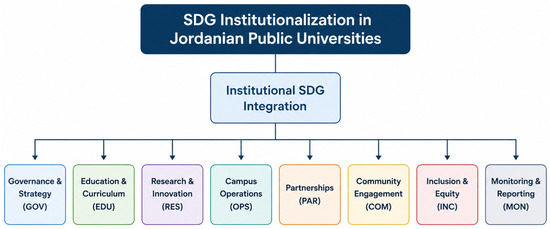
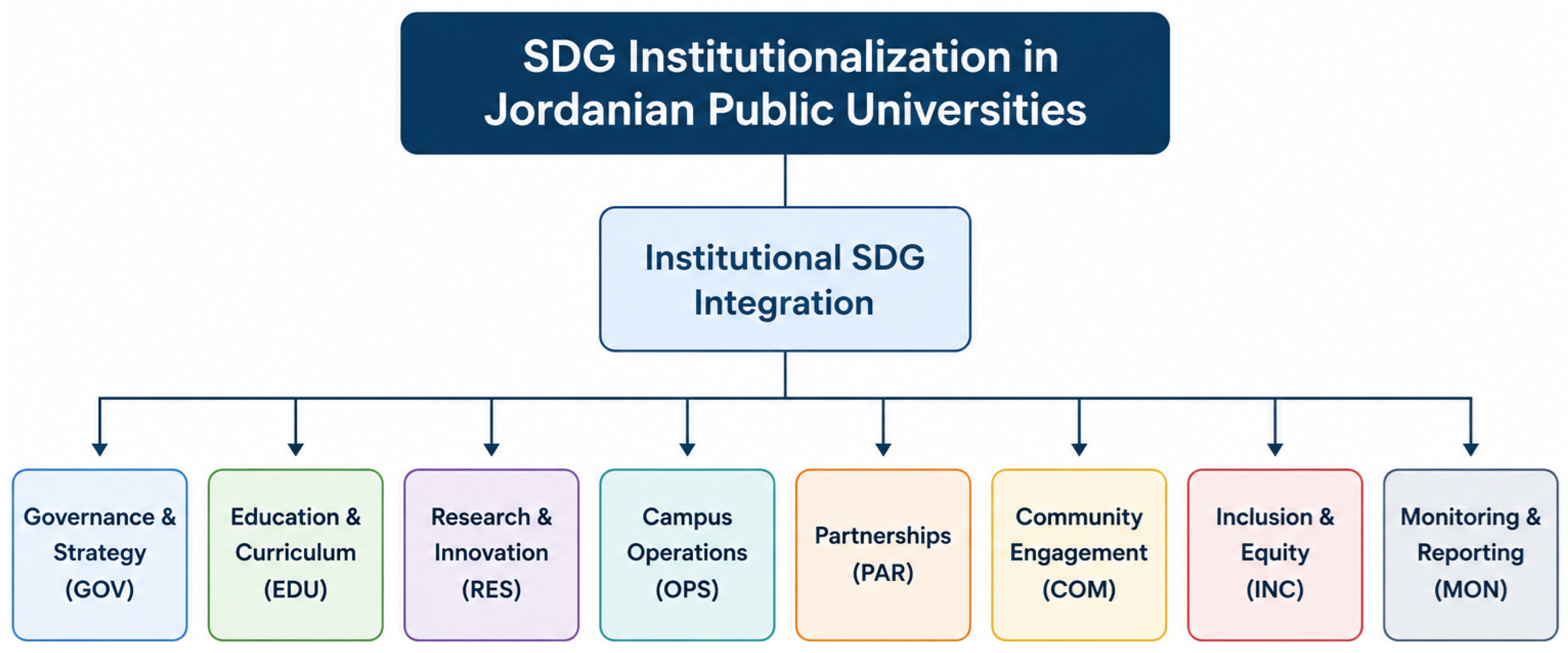

Disclaimer/Publisher’s Note: The statements, opinions and data contained in all publications are solely those of the individual author(s) and contributor(s) and not of MDPI and/or the editor(s). MDPI and/or the editor(s) disclaim responsibility for any injury to people or property resulting from any ideas, methods, instructions or products referred to in the content. |
© 2026 by the author. Licensee MDPI, Basel, Switzerland. This article is an open access article distributed under the terms and conditions of the Creative Commons Attribution (CC BY) license.