


Abstract
Agricultural drones have been increasingly adopted to improve production efficiency and address labor shortages in agriculture. However, their broader socioeconomic effects remain unclear, particularly regarding whether drone-assisted farming may increase unemployment pressure or attract excessive capital intervention that threatens farmers’ access to farmland and the sustainable development of agricultural production systems. To address these issues, this study evaluates the development scale and economic effects of agricultural drones in China. A comparative analytical framework is constructed to quantify production costs, return on investment (ROI), and labor demand under traditional and drone-assisted farming modes. Corn and citrus are selected as representative grain and fruit crops for empirical analysis. The results indicate the following: (1) Drone-assisted farming reduces production costs. (2) At the baseline prices, the ROI of drone-assisted corn and citrus production increases to 10.53% and 7.65%, respectively, but remains low, suggesting a limited risk of excessive capital intervention. (3) At the national scale, drone-assisted farming generates estimated cost savings for corn and citrus. (4) In terms of labor effects, agricultural drones mainly help alleviate agricultural labor shortages rather than generate large-scale unemployment, while also improving production efficiency and supporting sustainable agricultural development.
1. Introduction
Traditional agricultural practices exhibit suboptimal efficiency, often requiring substantial time and labor while struggling to maintain equilibrium between input and output. Consequently, enhancing efficiency in production and logistics while reducing operational costs has become critically important [1]. Recently, the rapid expansion of the low-altitude economy has accelerated the integration of emerging technologies—particularly drones and remote sensing—into the agricultural sector, bringing profound transformation to modern agriculture [2,3].
Agricultural drones are intelligent systems operated through remote control or autonomous programming and exhibit three defining characteristics. First, their superior maneuverability and operational flexibility enable them to reach designated areas rapidly and adapt to complex terrain. Second, their high operational efficiency allows rapid deployment in remote or difficult-to-access areas without being constrained by ground transportation. Third, their advanced automation and intelligence, supported by multisensor systems, enable real-time environmental monitoring and autonomous flight-path planning based on predefined objectives and environmental conditions. These characteristics give agricultural drones substantial potential for agricultural applications. Agricultural drones are currently used in many countries for a wide range of operations. Their applications have expanded from orchard pest management to precision pesticide application, irrigation, seeding, and agricultural product transportation across crop cultivation, forestry, livestock farming, and aquaculture. This technological integration improves operational efficiency while reducing labor costs and resource waste. Consequently, global agricultural drone adoption has increased substantially, with Figure 1 presenting regional patterns of agricultural drone use from 2018 to 2024.
Figure 1.
Drone usage in the agricultural sector by region worldwide, 2018–2024. Note: Data on the drone usage in the agricultural sector are preliminary statistics [4].
Figure 1 illustrates a fluctuating upward trajectory in global agricultural drone adoption, with notably accelerated growth during 2023–2024. Regarding regional differences in drone use, usage levels in North America and Europe are broadly similar; however, European utilization marginally surpassed North American deployment in 2023 and 2024. Concurrently, the Asia-Pacific region demonstrates progressive expansion of agricultural drone applications, reflecting incremental acceptance of this technology.
To stimulate new drivers for national economic development and enhance economic vitality, the low-altitude economy has been positioned as a strategic growth engine, charting the course for future development. Since 2024, 27 Chinese provinces (municipalities/autonomous regions) have referenced the low-altitude economy in their local government work reports. Driven by factors such as policy support, market demand, and capital investment, the low-altitude economy market will maintain rapid expansion. As a crucial component of this sector, civil drones have become a major category of aircraft, capable of collaborating with or replacing human labor in executing various commercial tasks such as inspections and crop protection. In 2023, the industry scale reached 117.43 billion yuan, marking a 32% year-on-year growth. With their “three-high” attributes—high value, high-frequency usage, and high-frequency renewal—drones are increasingly favored by capital, signaling broad development prospects.
Furthermore, in recent years, China’s Ministry of Agriculture and Rural Affairs has implemented measures such as high-standard farmland construction and land trusteeship. These efforts address land ownership and circulation issues, promoting agricultural specialization and large-scale operation, thereby expanding drone applications in agriculture. The construction area and investment in high-standard farmland in China from 2019 to 2024 are illustrated in Figure 2.
Figure 2.
Development of high-standard farmland in China, 2019–2024. Note: Data on the construction area and investment in high-standard farmland in China from 2019 to 2024 are preliminary statistics.
Figure 2 demonstrates the progressive expansion of China’s high-standard farmland construction, with cultivated area increasing annually. Coupled with land trusteeship policies, these initiatives will substantially unleash new agricultural productivity and amplify demand for intelligent machinery. Beyond rising adoption of intelligent machinery like agricultural plant protection drones, payload capacities will increase from 85 kg to over 100 kg to accommodate scaled operations. Driven by the dual policies of national high-standard farmland construction and land trusteeship, agricultural plant protection drones, which conform to the development trend of large-scale and specialized agricultural production, will provide strong support for the development of agricultural scale and specialization in China and promote the high-quality transformation and upgrading of agriculture.
Currently, drones are increasingly used in agricultural production for field mapping, targeted sowing and fertilization, crop monitoring, pest management, and agricultural product transportation. Compared with traditional manual operations, drones offer clear advantages in operational speed, efficiency, coverage, and precision. For example, drones can adjust flight routes, operating height, and application intensity according to field conditions, thereby improving the timeliness and accuracy of agricultural operations. These characteristics make drones an important technical tool for improving agricultural production efficiency and reducing unnecessary input and labor costs.
Nevertheless, the application of drones in agriculture is still developing, and their broader economic and socioeconomic implications have not been fully examined. Existing studies have mainly focused on the technical performance and operational advantages of drones, while relatively limited attention has been paid to their systematic effects on production costs, investment returns, labor demand, and farmers’ access to farmland. In addition, different crops have distinct production processes, cost structures, and operational requirements, which makes it difficult to directly evaluate the cost-saving effects and economic benefits of drone-assisted farming across crop categories. Therefore, a more systematic assessment is needed to clarify the actual role of drones in agricultural production.
Based on this background, this study addresses the following research questions:
- (1)
- To what extent can drone-assisted farming reduce agricultural production costs compared with traditional farming across different crop categories?
- (2)
- How does drone adoption affect the ROI of agricultural production, and does the improved profitability reach a level that may attract excessive commercial capital intervention?
- (3)
- Does the expansion of drone-assisted farming mainly help alleviate agricultural labor shortages, or could it create additional employment pressure and increase the risk of farmers being marginalized in agricultural production?
To answer these questions, this study systematically evaluates the development scale and economic effects of agricultural drones in China. First, the inventory and growth trend of agricultural drones are quantified to identify the current development scale of drone-assisted farming. Second, a comparative cost accounting framework is constructed to estimate agricultural production costs and ROI under traditional and drone-assisted farming modes. Third, the potential labor substitution capacity of agricultural drones is compared with the decline in China’s primary-industry employment to assess whether drone adoption mainly compensates for labor shortages or creates employment pressure. Through these analyses, this study provides a quantitative basis for understanding the role of drones in improving production efficiency, reducing agricultural costs, and supporting sustainable agricultural development.
The remainder of this paper is organized as follows. Section 2 reviews the relevant literature. Section 3 presents the problem description. Section 4 introduces the analytical framework and model construction. Section 5 reports the empirical results and discussion. Section 6 summarizes the main conclusions and future research directions.
2. Literature Review
Drone technology has become an important tool for advancing precision and sustainable agriculture by improving the efficiency, accuracy, and environmental performance of agricultural operations [5,6]. Compared with traditional labor-intensive operations, drone-assisted operations provide notable advantages in terms of cost reduction and operational efficiency. In particular, drones can substantially reduce implementation costs and complete specific agricultural tasks up to 68 times faster than traditional approaches. This advantage enables farmers to cover extensive farmland within a shorter operational window, which is particularly valuable for time-sensitive agricultural activities. Moreover, with their high operational speed, autonomous operating capability, and potential to reduce labor dependence, drones have been increasingly adopted in modern agricultural production and management.
2.1. Applications of Drones in Agriculture
In the agricultural sector, drones have demonstrated extensive applicability due to their integration with advanced technologies, computational capabilities, and onboard sensors. They provide strong support for crop management (e.g., mapping, monitoring, irrigation, and diagnostics), transportation, and early warning systems [7,8]. Furthermore, drones are employed in various specific agricultural activities, including monitoring crop growth, estimating yields, assessing water stress, detecting weeds and pests, as well as precisely and efficiently delivering pesticides and fertilizers [3]. These capabilities highlight the critical role of drone technology in advancing modern agriculture, offering substantial economic and social benefits, which have attracted significant research attention globally.
In the field of environmental monitoring and crop management, drone mapping technology offers unprecedented precision and spatial resolution. Tsouros et al. [9] provided a comprehensive overview of agricultural drone applications, particularly emphasizing their capacity to generate maps with spatial resolutions as high as 0.5 cm/pixel. Such high-resolution data enables detailed analysis of field variations, which is crucial for implementing differentiated crop management strategies. Adão et al. [10] investigated methods for analyzing individual grapevines across different temporal scales using drones equipped with multispectral sensors. By systematically integrating RGB and multispectral imagery, they evaluated the spatial and temporal dynamics of vineyards. Their findings indicate that this approach can accurately assess the health status and growth vigor of individual grapevines, demonstrating potential applications in differentiated vineyard management and optimized viticultural practices. Gamboa-Cruzado et al. [11] systematically reviewed the application of drones in smart agriculture and found that Unmanned Aerial Vehicle (UAV)-based remote sensing has become increasingly important for crop monitoring, yield estimation, pest and disease detection, and water management, thereby supporting more precise, data-driven, and sustainable agricultural decision-making.
In the field of pest and disease monitoring and control, drone technology has demonstrated significant advancements in plant health assessment and early disease detection. De Abreu and van Deventer [12] conducted a comprehensive evaluation of the application of artificial intelligence (AI) and the Internet of Things (IoT) in agriculture, with particular emphasis on the potential of integrating drones into IoT systems for early disease detection. Their findings indicate that applying AI techniques to drone image analysis significantly enhances disease detection accuracy compared to traditional modes, providing critical technological support for AI-powered solutions and precision in agricultural production while helping reduce operational costs. Bouguettaya et al. [13] investigated the application of deep learning techniques for analyzing drone-captured imagery to identify plant diseases. Their review examined recent developments in computer vision technologies based on deep learning algorithms when integrated with drone platforms for crop health assessment, revealing the substantial potential of combining neural networks with aerial image analysis to improve the accuracy and efficiency of disease detection. Yang et al. [14] reviewed the application of multimodal deep learning in sustainable plant care and emphasized that the integration of spectral, thermal, textural, environmental, and UAV-based data can substantially improve the accuracy and robustness of crop disease diagnosis, thereby enabling more timely and precise plant protection decisions.
2.2. Applications of Drones in Logistics
Drones are increasingly being adopted in the logistics sector due to their exceptional flexibility, cost-effectiveness, and environmental sustainability [15,16,17]. They demonstrate significant potential for delivering goods and services across various industries and public sectors, playing an important role in product transportation, last-mile delivery [18,19,20], and emergency logistics scenarios [21]. The technology has established a substantial research foundation supporting these applications.
Moshref-Javadi et al. [22] proposed a Truck–Drone Delivery System (TDDS) in 2020 to enhance last-mile delivery efficiency and reduce customer waiting times. Their multimodal distribution framework demonstrated that coordinated truck–drone operations could establish customer-centric TDDS networks, showing significant reductions in customer waiting time compared to truck-only systems. Furthermore, SAVANIU et al. [23] developed a drone transportation system specifically designed for small and medium-sized agricultural products. This system incorporated micro-winch assistance to achieve cost-minimized product delivery with reduced carbon emissions.
2.3. Impact of Drones on Production Costs
Supply chain and production costs primarily consist of expenses related to transportation, warehousing, and order processing. Research indicates that the implementation of drone technology represents an effective strategy for reducing these costs [24]. Ha et al. [25] demonstrated that enterprises could optimize supply chain management and logistics operations through drone deployment, noting that their battery-powered operation not only reduces carbon emission costs but also demonstrates superior operational efficiency compared to freight trucks. Regarding transportation costs, Wang et al. [26] established that drones possess both speed advantages and lower unit costs in delivery operations [27]. For instance, Shavarani et al. [28] estimated that aerial drone delivery systems could yield annual savings of up to $50 million. Dorling et al. [29] emphasized that drones incur lower maintenance costs than traditional transport vehicles (e.g., trucks) and their autonomous operation capability further reduces labor expenses. Chiang et al. [30] revealed that UAV-based last-mile delivery can reduce energy consumption, carbon emissions, and delivery costs, demonstrating both economic and environmental benefits [31]. Furthermore, drones enhance supply chain management and logistics efficiency by ensuring timely deliveries, thereby avoiding delay-related additional costs. Given that drone fleet management costs are significantly lower than those of ground transportation fleets, Yurek and Ozmutlu [32] highlighted that global retail giants such as Amazon and Alibaba are actively investing in last-mile drone delivery systems to enable direct warehouse-to-customer shipments and reduce overall distribution costs.
2.4. Contributions
The contributions in this paper are threefold:
First, although existing studies have examined the application of drones in agricultural production and logistics, relatively limited attention has been paid to quantifying the scale of drone adoption in agriculture, which is a fundamental basis for understanding its role in sustainable agricultural development. This paper addresses this gap by estimating the application scale of agricultural drones and providing a quantitative foundation for evaluating their role in modern agricultural production systems.
Second, existing studies have discussed the potential of drones to reduce production costs, but systematic analyses of how drone technology reshapes agricultural cost structures, production returns, and labor demand remain insufficient. To address this gap, this paper develops a comparative analytical framework under two scenarios, namely agricultural production with and without drones. The framework quantifies agricultural production costs, return rates, and labor supply–demand relationships, thereby enabling a more comprehensive assessment of the economic, labor-market, and sustainable agricultural development implications of drone adoption.
Third, existing studies remain largely conceptual or focus on isolated aspects of drone applications, while empirical evidence on their broader socioeconomic effects is still limited. This paper provides an empirical analysis using corn and citrus, representing China’s highest-yielding grain crop and fruit crop, respectively. The analysis evaluates whether drone adoption can reduce production costs, improve return rates, attract excessive capital intervention, and affect agricultural labor demand. By comparing the potential labor substitution effect of drones with the actual labor shortage in China’s primary industry, this paper further clarifies that agricultural drones mainly contribute to alleviating labor shortage pressures and improving production efficiency, thereby supporting sustainable agricultural development rather than simply replacing agricultural workers.
3. Problem Description
3.1. Research Framework
To comprehensively assess the impact of drones on agricultural development and project future adoption trajectories, this study implements a multi-dimensional analytical framework.
This study develops an analytical framework to assess the development scale and socioeconomic effects of drone-assisted farming in China. The central research concern is not only whether drones can improve agricultural production efficiency, but also whether their large-scale adoption mainly compensates for agricultural labor shortages or creates additional employment pressure. Therefore, this study evaluates drone-assisted farming from four connected dimensions: adoption scale, production cost, investment return, and labor substitution. The research framework is shown in Figure 3.
Figure 3.
The research framework.
As shown in Figure 3, first, the development scale of agricultural drones is quantified and projected. Based on historical inventory data of agricultural drones in China, a fitting model is used to estimate the current and future adoption scale of drone-assisted farming. This step provides the basis for evaluating whether drone technology has reached a scale large enough to influence agricultural production systems. The scale of agricultural drones is modeled in Section 4.1 and analyzed in Section 5.1.
Second, a comparative production cost model is constructed to quantify the cost differences between traditional farming and drone-assisted farming. The model decomposes agricultural production costs into direct and indirect cost components, including seed, fertilizer, pesticide, irrigation water, fuel and energy, maintenance, labor, depreciation, insurance, and management costs. By comparing these cost components under the two production modes, the study identifies the extent to which drone adoption reduces production costs across different crop categories. The production cost is modeled in Section 4.2 and analyzed in Section 5.2.
Third, the return on investment (ROI) of agricultural production is evaluated under traditional and drone-assisted farming modes. This analysis is used to assess whether drone adoption improves agricultural profitability and whether the improved return is sufficient to attract excessive commercial capital intervention. In this way, the study further examines whether drone-assisted farming may increase the risk of farmland displacement among farmers. The ROI is modeled in Section 4.3 and analyzed in Section 5.3.
Fourth, the labor substitution effect of agricultural drones is analyzed by comparing two quantities. On the demand side, this study estimates the amount of agricultural labor demand that can be potentially substituted by the current scale of agricultural drones. On the supply side, it examines the decline in China’s primary-industry employment, which reflects the continuing shortage of agricultural labor caused by rural aging and labor transfer to non-agricultural sectors. By comparing these two quantities, the study evaluates whether drone-assisted farming mainly alleviates agricultural labor shortages or may generate additional employment pressure. The impact of drones is modeled in Section 4.4 and analyzed in Section 5.4.
Overall, this framework links the technological development of agricultural drones with their economic and labor-related consequences. It provides a quantitative basis for understanding how drone-assisted farming affects production cost reduction, investment returns, labor demand, and the sustainable development of agriculture.
3.2. Agricultural Production Cost Structure
This study considers four main agricultural operations: sowing, pollination, spraying, and transportation. Agricultural production costs are decomposed into direct and indirect components. Table 1 summarizes the cost structure considered in this study.
Table 1.
Comparison of agricultural production cost structures.
An analysis of Table 1 reveals that, although the fundamental composition of agricultural production costs remains consistent before and after drone application, significant differences exist in specific cost item calculations. Both traditional agricultural production and drone-assisted operations incur production costs encompassing seed, fertilizer, pesticide, water, technical service, and maintenance expenses. However, the composition of energy costs differs substantially due to drone characteristics: traditional production primarily involves fuel and power expenses, whereas drone operations transition to electricity costs. Regarding labor costs, traditional methods primarily account for hired field workers directly involved in operations, while drone operations predominantly involve the cost of employing professional pilots.
4. Model Building
4.1. Agricultural Drone Inventory Forecasting Model
To accurately forecast future trends in China’s crop protection drone inventory, this study conducts predictive analysis using historical inventory data.
Polynomial fitting is adopted as a core methodology given its distinct advantages: the technique flexibly adapts to diverse data patterns—including both linear and complex nonlinear curves—and has demonstrated robust performance across interdisciplinary applications spanning economics, engineering, and beyond. The model is shown in Equation (1).
where y denotes the number of agricultural drones in the year t. We employ polynomial fitting to calibrate the model against empirical data in Section 5.1, thereby determining its structural framework and parametric specifications.
4.2. Agricultural Production Cost Model
This section develops corresponding cost function models centered on these two cost components.
4.2.1. Agricultural Production Costs
The per-unit agricultural production cost under production mode () consists of both direct and indirect costs, as shown in Equation (2):
where denotes the per-unit agricultural production cost under production mode m. Specifically, (m = 1) refers to the traditional agricultural production mode, while m = 2 refers to the drone-assisted agricultural production mode. represents the i-th cost component under mode m. The cost components with i from 1 to 7 are classified as direct costs, including seed, fertilizer, pesticide, irrigation water, fuel and energy, maintenance, and labor costs. The cost components with i from 8 to 10 are classified as indirect costs, including depreciation of fixed assets, insurance, and management costs.
4.2.2. Direct Costs
Seed cost is determined by the seed application rate and the unit seed price, as expressed in Equation (3):
where represents the fertilizer application rate per hectare under production mode m (kg/ha) and represents the unit seed price (yuan/kg).
Fertilizer cost is determined by the fertilizer application rate and the unit fertilizer price, as expressed in Equation (4):
where denotes the fertilizer quantity per hectare (kg/ha) and represents the unit fertilizer price (yuan/kg).
Pesticide cost is determined by the pesticide application rate and the unit pesticide price, as shown in Equation (5):
where is the pesticide application rate per hectare under production mode m (kg/ha) and represents the unit pesticide price (yuan/kg).
Irrigation water cost refers to the per-hectare expenditure on irrigation water during agricultural production. It is determined by the water consumption per hectare and the unit water price, as shown in Equation (6):
where denotes the irrigation water consumption per hectare (m3/ha) and represents the unit water price (yuan/m3).
Fuel/power cost refers to the per-hectare expenditure on fuel and electricity consumed by agricultural machinery or drones during operation. It is calculated based on the number of equipment units, operational time, energy consumption rate, energy prices, and operational coverage area, as shown in Equation (7):
where denotes the number of equipment units used in one operation (units), represents the operational time (hours), E denotes electricity consumption rate (kWh/h), denotes fuel consumption (L/h), denotes electricity price (yuan/kWh), denotes fuel price (yuan/L), and denotes the coverage area per operation (ha/cycle).
Maintenance cost refers to the per-hectare expenditure associated with the routine upkeep and repair of agricultural equipment or drones. It is calculated based on the annual maintenance cost per equipment unit and the annual operational area, as shown in Equation (8):
where denotes the number of drones or agricultural equipment, denotes the annual maintenance cost per unit (yuan/unit/year), and indicates the annual operational area (ha/year).
Labor cost refers to the per-hectare expenditure on workforce deployment in agricultural production, including both family labor and hired labor. Under the traditional agricultural production mode, labor cost is mainly determined by the daily wages and labor input of family and hired workers, as shown in Equation (9).
where denotes annual labor cost (yuan/unit/year) under the traditional agricultural production mode, denotes the daily wage of family labor (yuan/day), denotes the daily wage of hired labor (yuan/day), denotes family labor days per hectare (days/ha), and denotes hired labor days per hectare (days/ha).
Under the drone-assisted agricultural production mode, labor cost mainly consists of drone pilot fees and the cost of supplementary manual operations, as expressed in Equation (10):
where denotes annual labor cost under the drone-assisted agriculture mode (yuan/unit/year), denotes the daily wage per drone pilot (yuan/day), denotes the number of pilots employed, denotes the total operational duration (days), and denotes the cost of supplementary manual operations (yuan/ha).
4.2.3. Indirect Costs
Fixed asset depreciation refers to the per-hectare depreciation expense of traditional agricultural machinery or drone equipment. It is allocated according to the equipment procurement cost, residual value, number of equipment units, and service life, as shown in Equation (11):
where denotes depreciation of fixed assets; denotes drone procurement cost (yuan/unit); denotes net residual rate (%), represents the number of drones operating per hectare (units), and denotes service life (years).
Insurance cost refers to the per-hectare expenditure on agricultural insurance and equipment insurance. It is calculated by allocating annual agricultural insurance and drone insurance costs to the corresponding production area, as expressed in Equation (12):
where represents annual agricultural insurance cost (yuan/ha), denotes annual insurance premium per drone (yuan/unit), and denotes the number of drones per hectare.
Management cost refers to the per-hectare administrative and management expenses incurred during agricultural production. It is obtained by allocating annual management expenses to the annual operational area, as expressed in Equation (13):
where denotes annual agricultural management costs (yuan).
4.3. Agricultural ROI
In agricultural production, substantial inputs of labor, capital, and production materials are required across different operational stages. The ROI is therefore an important indicator for evaluating the profitability of these inputs. Assessing the impact of drone adoption on ROI can help quantify the economic value of drone technology in agricultural applications and provide decision-support information for both investors and agricultural producers. The ROI is calculated using Equation (14):
where denotes net annual profit, and denotes total investment outlay.
4.4. Impact Analysis of Drone Development on Agriculture and Farmers
4.4.1. Agricultural Labor Demand Substitution Model
Traditional agricultural production relies heavily on manual labor across multiple operational stages. The adoption of drones can improve operational efficiency, shorten task completion time, and reduce the demand for manual labor. To quantify the impact of drone adoption on agricultural labor demand, this study constructs a labor substitution model.
The annual manual labor demand for agricultural operations is calculated using Equation (15):
where denotes operational area per task cycle (ha), denotes annual task frequency, represents daily manual coverage rate (ha/worker-day), denotes workers employed per operation, and denotes annual task days per operational segment.
The aggregate annual labor demand across different agricultural operational segments is then obtained using Equation (16):
where denotes the aggregate annual labor demand (in worker-days) across distinct agricultural operational segments.
The per-hectare labor substitution effect () of drone adoption is calculated using Equation (17):
The annual proportion of substituted labor is subsequently derived in Equation (18):
where denotes the annual number of active agricultural drones deployed in agricultural production.
4.4.2. Total Agricultural Production Cost
The annual cost savings generated by drone adoption in agricultural production are calculated using Equation (19):
where denotes the agricultural production cost under traditional production mode (yuan), and denotes the agricultural production cost under drone-assisted production mode (yuan).
5. Case Study
Given the diversity of agricultural commodities, including grain crops, cash crops, vegetables, and fruits, coupled with variations in production costs across different categories, this analysis focuses on grain and fruit production. These categories were selected based on their cultivated area, yield, and the prevailing application of drone technology in agricultural sectors.
5.1. Analysis of Agricultural Plant Protection Drones Inventory
5.1.1. Data Collection
Agricultural drones have been increasingly used in agricultural production in China, supported by the development of agricultural mechanization and automation. With rising labor costs and the growing demand for efficient agricultural operations, drones have gradually become an important type of agricultural equipment. The data used in this section are obtained from the National Agricultural Mechanization Development Statistical Bulletin (Annual Report) published by the Ministry of Agriculture and Rural Affairs (MARA) [33]. The dataset covers the annual inventory of agricultural drones in China from 2018 to 2024. China’s inventory of plant protection drones exhibited consistent annual growth from 2018 to 2024, demonstrating a clear upward trajectory. The inventory increased from 23,300 units in 2018 to 200,000 units in 2023, reaching 251,000 units by 2024. Concurrently, the operational coverage expanded significantly, reaching 178 million ha-times.
5.1.2. Parameter Fitting
The dataset covers the annual inventory of agricultural drones in China from 2018 to 2024. Based on these historical data, the parameters of the model established in Section 4.1 were estimated. The fitting results are reported in Table 2.
Table 2.
Parameters.
Furthermore, the mean squared error (MSE) is 0.3097, root mean squared error (RMSE) is 0.5565, mean absolute error (MAE) is 0.4127, and the coefficient of determination (R2) reaches 0.9949. These metrics indicate that the polynomial fitting model demonstrates excellent fit to historical data, exhibiting a high degree of accuracy and reliability. These results indicate that the fitted model is able to accurately capture the historical trend of agricultural drone inventory in China, as shown in Figure 4.
Figure 4.
The regression analysis results for China’s agricultural drone inventory. Note: Data on the annual inventory of agricultural drones in China from 2018 to 2024 are preliminary statistics.
Based on the fitted model, the inventory of agricultural drones in China is projected for the next three years. The results show that the inventory is expected to reach 322,000 units in 2025, increase to 400,600 units in 2026, and further rise to 488,100 units in 2027. The corresponding projected growth rates are 24.39% in 2026 and 21.86% in 2027. The projected expansion is broadly consistent with China’s current policy orientation. The National Smart Agriculture Action Plan (2024–2028) [34] emphasizes the wider application of intelligent plant protection, unmanned inspection, and smart agricultural machinery, while the agricultural machinery purchase and application subsidy policies for 2024–2026 extend financial support for agricultural unmanned aerial vehicles. These policies may reduce adoption costs and promote the application of agricultural drones. Although these policy factors are not explicitly incorporated into the fitted model, they provide qualitative support for the projected upward trend. These results suggest that China’s agricultural drone inventory is likely to continue expanding in the near future, indicating sustained growth momentum in the agricultural drone market.
5.2. Analysis of Impact of Drones on Production Costs
5.2.1. Production Cost Analysis for Grain Crops
According to the National Bureau of Statistics, China’s total grain output reached 706.499 million metric tons in 2024, representing a year-on-year increase of 11.089 million metric tons, or 1.6% [35]. Among major grain crops, corn recorded the highest output, reaching 294.917 million metric tons. In addition, corn was cultivated on approximately 44 million hectares in 2023, accounting for about 37% of China’s total grain crop planting area. Given its large production scale and extensive planting area, corn is selected in this study as a representative grain crop to analyze the impact of drone adoption on agricultural production costs.
Considering differences in performance parameters and acquisition costs among agricultural drone models, this study selects the DJI T70 agricultural drone as a representative case for production cost analysis. The main parameter settings are as follows.
- (1)
- Acquisition cost and service life. The standard DJI T70 package costs approximately 41,000 yuan. Considering equipment quality, maintenance conditions, and usage frequency [3], this study assumes a conservative service life of 3 years and a residual value rate of 5% for simplified calculation.
- (2)
- Operational Capacity: Based on the experimentally estimated productivity of plant-protection UAVs reported by Qin et al. [36], a conservative daily operational capacity of 13.34 ha per drone is adopted. Assuming 10 operational days annually, the annual coverage reaches 133.4 ha.
- (3)
- Resource Conservation Benefits: Drone operations achieve significant resource savings through precision application, as documented in DJI Agriculture’s Agricultural Drone Industry White Paper (2023): cumulative operational coverage reached 500 million ha in 2023, enabling water conservation of 210 million tons (averaging 0.42 tons per hectare), while fertilizer and pesticide usage decreased by approximately 5% and 10% respectively compared to traditional modes.
- (4)
- Endurance: The T70 utilizes 30 Ah, 52 V batteries providing approximately 7 h of continuous operation per charge, with a 2.5-h recharge cycle.
- (5)
- Maintenance Costs: Component replacement costs range from hundreds to thousands of yuan, with a maximum service fee of 240 yuan per repair instance.
Based on the above parameter settings, the model parameters used for corn production cost analysis are summarized in Table 3.
Table 3.
Parameter model table for corn cost analysis.
Table 3 summarizes the parameters used to calculate per-hectare corn production costs under the two production modes for corn production under traditional modes versus drone-integrated systems in 2024. Additionally, = 378.26 kg/ha; = 321.59 kg/ha.
Changes in agricultural production costs of corn with and without drone application are shown in Table 4.
Table 4.
Changes in agricultural production costs of corn with and without drone application (unit: yuan/ha).
As shown in Table 4, the adoption of drones reduces the total production cost of corn from 15,079.16 yuan/ha under traditional farming to 14,403.58 yuan/ha under drone-assisted farming, corresponding to a cost saving of 675.58 yuan/ha. Seed, land, and management costs remain unchanged following drone adoption, while most other cost components decrease. Based on relevant sources and available market surveys, the annual land cost is set at 7500 yuan/ha. Because the leased land is not used exclusively for corn production throughout the year, half of this cost is allocated to corn production, resulting in a land cost of 3750 yuan/ha.
In particular, fertilizer and pesticide costs decline because drone-assisted operations improve application precision and reduce input consumption. Water cost also decreases slightly. Fuel and energy costs are substantially reduced, as traditional machinery mainly depends on fuel consumption, whereas drone operations mainly incur electricity-related costs. Labor cost shows the largest absolute reduction, decreasing from 6621.36 yuan/ha to 6026.64 yuan/ha, indicating that drones can replace part of the manual operations required in corn production. Among indirect cost items, fixed asset depreciation increases from 52.02 to 97.33 yuan/ha because the drone acquisition cost is allocated over its assumed annual operating area, while insurance cost rises slightly owing to the additional coverage required for drone operations.
5.2.2. Fruit Production Cost Analysis
China is one of the world’s major fruit producers and consumers, with a large production scale and a diversified fruit industry. From 2013 to 2022, China’s orchard area increased by 1.9662 million ha, representing an increase of approximately 17.8%, while the melon cultivation area decreased by 45,480 ha, or 2.09%. This indicates a gradual structural shift toward orchard-based fruit production. In terms of output, China’s total fruit production reached 327.4428 million tons in 2023, increasing by 99.9618 million tons compared with 2013, with an overall growth rate of approximately 43.94%. In 2022, orchard fruit production reached 228.1409 million tons, accounting for 72.9% of total national fruit output [37]. Among orchard fruits, citrus and apple accounted for relatively large shares, representing 19.18% and 15.2%, respectively. Considering the substantial production share of citrus and the increasing application of drones in orchard management, this study selects citrus cultivation as the representative case for fruit production cost analysis.
To evaluate the effect of drone adoption on citrus production costs, the DJI T50 agricultural drone is selected as the representative model. The standard DJI T50 package requires an initial investment of approximately 40,000 yuan. Considering the general service life of agricultural drones, this study assumes a conservative operational lifespan of 3 years and a residual value rate of 5%. In terms of operational capacity, each drone is assumed to cover 10.005 ha per day and operate for 10 days annually, resulting in an annual operational coverage of 100.5 ha per drone.
For resource-use parameters, drone-assisted operations are assumed to achieve approximately 90% water saving in irrigation or spraying operations [38], together with 5% fertilizer reduction and 10% pesticide reduction. The DJI T50 is equipped with a 30 Ah battery with a nominal voltage of 52.22 V, providing approximately 4 h of operational endurance per charge, with a charging cycle of about 2.3 h. Maintenance costs mainly include component replacement costs, which range from several hundred to several thousand yuan, and the maximum service fee is approximately 240 yuan per repair. The detailed technical and cost-related parameters used for citrus production cost analysis are summarized in Table 5.
Table 5.
Parameterized model for citrus cost analysis.
Additionally, = 634.03 kg/ha; = 535.23 kg/ha.
Table 6 compares the average per-hectare production costs of citrus under traditional and drone-assisted farming.
Table 6.
Changes in agricultural production costs of citrus before and after the application of drones (unit: yuan/ha).
As shown in Table 6, the adoption of drones substantially reduces the total production cost of citrus, from 66,631.72 yuan/ha under traditional farming to 61,583.26 yuan/ha under drone-assisted farming. The reductions are mainly observed in fertilizer, pesticide, irrigation water, fuel and energy, maintenance, labor, and fixed asset depreciation costs. Fertilizer, pesticide, and water costs decrease because drone-assisted operations improve application precision and reduce unnecessary input consumption. The increase in insurance cost is attributable to the insurance premium for the agricultural drone. Based on available market surveys and documented transfer cases of mature citrus orchards, the orchard contracting cost in this study is set at 30,000 yuan/ha.
Labor cost represents the largest source of cost reduction. Under traditional citrus production, orchard management, pesticide spraying, and related operations often require substantial manual labor due to terrain constraints and the spatial complexity of orchards. By contrast, drones can improve operational mobility and flexibility, enabling part of these labor-intensive tasks to be completed more efficiently. As a result, labor cost decreases from 20,026.10 yuan/ha to 18,034.98 yuan/ha. In terms of indirect costs, fixed asset depreciation also declines considerably, suggesting that drone-assisted farming can reduce the allocated equipment-related cost per hectare.
5.2.3. Cost Differences in Drone Use by Smallholders and Large-Scale Operators
The drone-assisted farming mode discussed above mainly applies to large-scale agricultural operators. However, agricultural drones are also increasingly attracting the attention of smallholders as a viable option for agricultural production. Therefore, corn production is used below as an example to compare the economic benefits of drone use between smallholders and large-scale operators.
To compare their economic benefits, this study assumes that smallholders use contracted drone services rather than purchasing drones. According to data from the Ministry of Agriculture and Rural Affairs, the average operating area of smallholders is approximately 0.52 ha/year. The drone service fee is set at 225 yuan/ha per operation, with two operations assumed annually. Based on the relevant parameters in Table 3, the corn production costs of smallholders are presented in Table 7.
Table 7.
Comparison of drone-assisted farming costs between smallholders and large-scale agricultural operators (unit: yuan/ha).
As shown in Table 7, the total drone-assisted farming cost decreases from 14,622.38 yuan/ha for smallholders to 14,403.58 yuan/ha for large-scale agricultural operators, corresponding to a cost difference of 218.8 yuan/ha. Large-scale agricultural operators incur an additional labor cost of 26.64 yuan/ha compared with smallholders, mainly because they pay drone pilot wages separately, whereas the pilot cost for smallholders is included in the contracted drone service fee. Similarly, smallholders incur lower insurance costs than large-scale agricultural operators because their insurance costs are included in the contracted drone service fee. The contracted drone service fee of 432.69 yuan/ha was calculated by dividing the total service cost by the total operational area of 1.04 hectares.
5.3. Analysis of the Impact of Drones on ROI
5.3.1. Analysis of ROI for Food Crops
This study uses corn as a representative grain crop to examine the impact of drone adoption on ROI. According to data from the National Bureau of Statistics, the average corn yield in China was kg/ha in 2024. Based on the previously estimated per-hectare production costs, the production cost per ton of corn can be further calculated under both traditional and drone-assisted farming modes. Under traditional farming, the production cost is 2287.49 yuan/ton. Since drone-assisted operations are assumed to increase corn yield by approximately 5% [39], the yield under drone-assisted farming reaches 6921.6 kg/ha, and the corresponding production cost decreases to 2080.96 yuan/ton. These results indicate that drone adoption can reduce the unit production cost of corn by improving operational efficiency and increasing yield per hectare.
In agricultural production systems, product price is one of the key determinants of ROI. It directly affects sectoral profitability and is subject to fluctuations caused by multiple factors, including climatic conditions, natural disasters, market supply and demand, agricultural input prices, land costs, and policy changes. Therefore, this study treats agricultural product price as an uncertain parameter in the sensitivity analysis. Specifically, product prices are allowed to vary within a ±15% range to examine how market price fluctuations influence the ROI of drone-assisted agricultural production. According to the China Agricultural Supply and Demand Estimates released by the Ministry of Agriculture and Rural Affairs, this study sets the corn price at 2.3 yuan/kg for illustrative purposes. Given the relative stability of food crop prices, this uncertain factor is adjusted by specific margins (i.e., ±5%, ±10%, and ±15%, respectively).
The changes in the ROI of corn under different price fluctuation ranges are shown in Figure 5 below.
Figure 5.
Sensitivity analysis of corn ROI to price changes under traditional and drone-assisted farming.
As shown in Figure 5, the ROI under both production modes increases as corn prices rise, while drone-assisted farming consistently achieves a higher ROI than traditional farming across all price scenarios. Under traditional farming, the ROI becomes negative when corn prices decline by 5%, 10%, or 15%. By comparison, drone-assisted farming remains profitable when prices decline by 5%, with an ROI of 5.00%, but records a negative ROI of −6.05% when the price falls by 15%. The ROI advantage of drone-assisted farming over traditional farming reaches a maximum of 11.47% when the corn price increases by 15%. These results indicate that drone adoption improves production profitability and enhances resilience to moderate declines in corn prices.
5.3.2. Analysis of ROI for Fruits
This paper takes citrus as an example to examine the impact of drone applications on the ROI of citrus production. According to data from the National Bureau of Statistics, the average citrus yield in China was 20.09 tons/ha. Based on the previously estimated per-hectare production costs, the production cost per ton of citrus can be further calculated under both traditional and drone-assisted farming modes. Under traditional farming, the production cost of citrus is 3316.66 yuan/ton. After the adoption of drones, the production cost decreases to 3065.37 yuan/ton. This substantial reduction indicates that drone-assisted operations can significantly lower the unit production cost of citrus by reducing input consumption, labor demand, energy use, and equipment-related costs. These results provide a quantitative basis for further evaluating the effect of drone adoption on the ROI of fruit production.
Based on publicly available government data, this study sets the reference price of citrus at 3.3 yuan/kg. Given the relatively large fluctuation range of citrus prices, this uncertain factor is adjusted by specific margins (i.e., ±5%, ±10%, and ±15%, respectively). The cost under each price adjustment is calculated to derive the corresponding ROI.
The changes in the ROI of citrus under different price fluctuation ranges are shown in Figure 6 below.
Figure 6.
Sensitivity analysis of citrus ROI to price changes under traditional and drone-assisted farming.
As shown in Table 6 and Figure 6, the ROI of citrus production increases with the market price under both production modes, while drone-assisted farming consistently achieves a higher ROI than traditional farming across all price scenarios. Under traditional farming, the ROI becomes negative when citrus prices decline by 5%, 10%, or 15%. Drone-assisted farming remains profitable when the price declines by 5%, with an ROI of 2.27%, but its ROI falls to −3.11% and −8.49% when the price decreases by 10% and 15%, respectively. At the baseline price, drone-assisted farming achieves an ROI of 7.65%, compared with −0.5% under traditional farming. The difference between the two modes reaches a maximum of 9.38% when the citrus price increases by 15%. These findings indicate that drone adoption improves profitability and strengthens resilience to moderate price declines. Nevertheless, the baseline ROI of drone-assisted farming remains below the 15% investment benchmark, suggesting that its attractiveness to large-scale commercial capital remains limited under normal market conditions.
5.3.3. ROI Differences in Drone Use by Smallholders and Large-Scale Operators
This section compares the differences in ROI between smallholders and large-scale agricultural operators under drone-assisted farming. Based on the previously estimated production costs per hectare, the production cost per ton of corn can be calculated for both smallholders and large-scale agricultural operators. The production cost is 2112.51 yuan/ton for smallholders, higher than the 2080.96 yuan/ton for large-scale agricultural operators. These results indicate that large-scale operation can reduce the unit production cost of corn. In this paper, the price of corn is set at 2.3 yuan/kg for illustrative purposes. Given the relative stability of food crop prices, this uncertain factor is adjusted by specific margins (i.e., ±5%, ±10%, and ±15%, respectively).
The changes in the ROI of corn under different price fluctuation ranges are shown in Figure 7 below.
Figure 7.
Sensitivity analysis of corn ROI to price changes for smallholders and large-scale agricultural operators.
As shown in Figure 7, the ROI under both modes increases with corn prices, while large-scale agricultural operators consistently achieve a higher ROI than smallholders. When the price declines by 10% or 15%, both modes become unprofitable. The ROI advantage of large-scale operators reaches a maximum of 1.89%, indicating that large-scale operation provides greater profitability and resilience to corn price fluctuations.
To further identify the economically appropriate mode of drone use, this study calculates the break-even point between contracted drone services for smallholders and drone ownership for large-scale agricultural operators. The analysis determines the operational scale at which the costs of the two modes are equal. The calculation formula is shown in Equation (20):
where denotes the annual fixed costs for smallholders (yuan/year), denotes the variable cost per hectare for smallholders (yuan/ha), denotes the annual fixed costs for large-scale operators (yuan/year), denotes the variable cost per hectare for large-scale operators (yuan/ha), and denotes the annual break-even operating area (ha).
For large-scale operators, annual fixed costs include annual drone depreciation, maintenance, and insurance costs. Variable cost per hectare includes seed, land, fertilizer, pesticide, water, fuel and energy, labor, agricultural insurance, and management costs. For smallholders, annual fixed costs are assumed to be zero, and all costs are treated as variable costs per hectare. According to Table 3 and Table 7, the values of , , , and are as follows: 0, 14,622.38 yuan/ha, 25,016.33 yuan/year, and 14,293.1 yuan/ha. The annual break-even operating area is calculated to be 75.97 ha. Therefore, under the scenario considered in this study, when the annual operating area exceeds 75.97 ha, the self-owned drone mode is more economically advantageous for large-scale operators; when it is below 75.97 ha, the drone service rental mode is more advantageous for smallholder farmers.
5.3.4. ROI-Based Assessment of Capital Intervention and Farmland Displacement Risks
Based on the results presented in Section 5.3.1 and Section 5.3.2, drone adoption substantially improves the profitability of both corn and citrus production. At the baseline prices, the ROI of corn production increases from 0.55% under traditional farming to 10.53% under drone-assisted farming, while that of citrus production increases from −0.5% to 7.65%. Although these values remain below the 15% commercial investment benchmark adopted in this study, the sensitivity analysis shows that ROI varies considerably with agricultural product prices. Drone-assisted farming also provides greater resilience to moderate price declines than traditional farming. Therefore, under normal market conditions, the profitability improvement generated by drone adoption may increase the economic attractiveness of agricultural production, but it does not, by itself, appear sufficient to generate strong incentives for excessive large-scale capital entry.
Moreover, under traditional farming, farmers’ own labor input is often not fully reflected in production cost accounting. Therefore, part of the ROI improvement generated by drone adoption may essentially represent compensation for farmers’ own labor rather than a substantial increase in industrial profit. From this perspective, the development of agricultural drones is unlikely to trigger large-scale capital intervention or lead to farmland displacement among farmers. Instead, drone adoption may help farmers improve production efficiency and income while maintaining their role as the primary operators of farmland.
Notably, the ROI estimates in this study primarily represent an individual-ownership scenario in which equipment-related costs are allocated over the assumed annual operating area. However, the economic effects of agricultural drones also depend on how farmers obtain access to the technology. Under individual ownership, farmers bear the acquisition, depreciation, maintenance, insurance, and operating costs of the drone. This mode provides greater control over operational timing but is economically suitable mainly for large-scale farms or operators that can maintain a high annual utilization rate. Cooperative ownership distributes equipment and operating costs among members and can increase equipment utilization by serving a larger cultivated area. However, coordination and scheduling constraints may reduce operational timeliness during peak agricultural periods. Contracted drone services require no initial equipment investment because farmers pay according to the service area or specific operation. This option therefore reduces financial risk and is more suitable for smallholders and farmers with occasional demand, although service prices and availability may affect its economic benefits.
5.4. Comprehensive Impact Analysis of Drone-Assisted Farming and Farmers
5.4.1. Effect on Labor Substitution
An important question in evaluating drone-assisted farming is whether the expansion of agricultural drones mainly helps alleviate labor shortages or creates additional unemployment risks for agricultural workers. In China, agricultural labor supply has continued to decline due to rural aging and the transfer of rural labor to non-agricultural sectors [40]. Against this background, the labor-saving effect of drones should not be interpreted simply as “replacing farmers.” Instead, it is necessary to compare the potential labor substitution capacity of drones with the actual decline in agricultural labor supply, as this comparison is directly related to the sustainable development of agricultural production. Therefore, this section first estimates the potential number of workers that can be substituted by the current scale of agricultural drones and then compares this estimate with the employment trend in China’s primary industry.
- (1)
- Labor substitution capacity of drone-assisted agricultural production
This study analyzes the labor substitution effect of agricultural drones in four major agricultural operations: sowing, pollination, spraying, and transportation. These operations are selected because they are labor-intensive and can be partially replaced or supported by drone-based operations [41]. Table 8 reports the operational parameters used to estimate the number of workers that can be substituted by one drone in different production links.
Table 8.
Number of laborers substituted by one drone in the four links.
As shown in Table 8, agricultural drones can substitute for manual labor to different degrees across the four operational links. The substitution effect is more pronounced in spraying and pollination because these operations are relatively frequent and labor-intensive. Sowing also shows a clear labor substitution effect, while the substitution effect in transportation is relatively smaller. Overall, the results indicate that drone-assisted farming can reduce labor demand in several key stages of agricultural production, especially in operations that require repeated field work within a short time window. Based on the substitution capacity of one drone and the national inventory of agricultural drones estimated in the previous section, the potential labor substitution scale can be further calculated. In 2023, the inventory of agricultural drones in China reached 200,000 units.
According to the estimates in Table 8, each drone can substitute approximately 20 to 400 worker-equivalent labor units across different agricultural operations. Therefore, under the 2023 deployment scale, agricultural drones could potentially substitute approximately 4.00 million to 80.00 million worker-equivalent labor units. In 2024, as the inventory increased to 251,000 units, the corresponding potential substitution scale increased to approximately 5.02 million to 100.40 million worker-equivalent labor units. It should be noted that this estimate represents potential labor demand that can be replaced by drone operations, rather than actual unemployment. Whether this substitution effect leads to labor displacement depends on the relationship between drone substitution capacity and the actual shortage of agricultural labor.
- (2)
- Agricultural labor supply trend
To evaluate whether drone-assisted farming mainly compensates for labor shortages or generates employment pressure, this study further examines the employment trend in China’s primary industry. Figure 8 presents employment in China’s primary industry from 2018 to 2024.
Figure 8.
Employment in China’s primary industry from 2018 to 2024. Note: Data on the employment in China’s primary industry from 2018 to 2024 are official statistics.
As shown in Figure 8, employment in China’s primary industry generally declined from 2018 to 2024, decreasing from 195.15 million in 2018 to 162.98 million in 2024. This downward trend reflects the continued reduction in agricultural labor supply. In particular, employment declined from 176.63 million in 2022 to 168.82 million in 2023, representing a decrease of 7.81 million. It further decreased to 162.98 million in 2024, corresponding to an additional decline of 5.84 million from 2023 to 2024.
- (3)
- Alleviating labor shortages or generating structural employment pressures?
By comparing the potential labor substitution scale of drones with the decline in agricultural employment, it can be seen that drone-assisted farming plays a dual role. On the one hand, the conservative lower-bound substitution capacity of drones was approximately 4.00 million agricultural laborers in 2023, which was lower than the annual decline of 7.81 million in China’s primary industry employment. Similarly, the lower-bound substitution capacity reached approximately 5.02 million agricultural laborers in 2024, which was also slightly lower than the annual employment decline of 5.84 million. This comparison suggests that, under the current deployment scale, agricultural drones mainly help compensate for agricultural labor shortages rather than generate large-scale unemployment.
On the other hand, the upper-bound estimates indicate that the potential labor substitution capacity of drones could be much larger if drone operations are widely applied across multiple agricultural stages. Therefore, while the current development of drone-assisted farming can help alleviate labor shortages and support the sustainable development of agriculture, its rapid expansion may still create structural employment pressure for certain groups of agricultural laborers. These effects are unlikely to be evenly distributed across workers of different ages and employment characteristics. For young and middle-aged rural workers, drone adoption may lead primarily to occupational transformation rather than complete withdrawal from employment. Although workers engaged in routine manual operations may face declining demand, their relatively stronger learning capacity, digital adaptability, and occupational mobility may enable them to shift toward drone operation, equipment maintenance, flight planning, data management, and agricultural service provision. Nevertheless, hired and seasonal workers who depend heavily on substitutable manual operations may experience short-term employment and income pressure if they lack access to technical training and alternative employment opportunities. For elderly left-behind workers, the effects are more complex. Drone-assisted operations can reduce the physical burden of agricultural work and compensate for age-related declines in working capacity, thereby enabling elderly farmers to continue agricultural production through purchased drone services. At the same time, limitations in digital skills, equipment operation, access to training, and occupational mobility may make it more difficult for them to participate directly in newly created technology-related positions. They may consequently become more dependent on external agricultural service providers as drone-assisted farming expands.
Overall, drone-assisted farming should be understood as a labor-saving technology that improves agricultural production efficiency under conditions of labor shortage, but its long-term employment effects require continuous attention as adoption further expands.
5.4.2. Effect on Total Agricultural Production Cost Reduction
In addition to labor substitution, another important effect of drone-assisted farming is the reduction of total agricultural production costs. Based on the agricultural drone inventory estimated in Section 5.1 and the per-hectare cost savings calculated in Section 5.2, this section further evaluates the annual cost-saving effect of drone adoption in corn and citrus production. This analysis helps reveal whether the economic benefits of drone-assisted farming are limited to individual production units or can generate cost reductions on a larger scale as the adoption scale expands.
Table 9 presents the operational performance of a single drone in corn and citrus production, together with the estimated cost savings per unit area after the adoption of drone-assisted farming.
Table 9.
Agricultural cost savings per unit for corn and citrus by a single drone.
Based on the cost savings per unit area and the operational capacity of agricultural drones, the annual cost-saving effect of a single drone can be estimated. The results show that drone-assisted farming can save approximately 90,112.37 yuan annually in corn production and 505,098.42 yuan annually in citrus production. These results indicate that the cost-saving effect of drone adoption differs across crop types, mainly due to differences in production cost structures, labor intensity, and the suitability of drone operations.
Furthermore, by combining the annual cost savings generated by a single drone with the inventory scale of agricultural drones in China from 2018 to 2024, this study estimates the total agricultural production cost savings for corn and citrus in different years. The results are shown in Table 10.
Table 10.
Agricultural production cost savings from drone-assisted farming for corn and citrus from 2018 to 2024.
As shown in Table 10, the total cost-saving effect of drone-assisted farming increased continuously with the expansion of agricultural drone inventory. For corn production, annual cost savings increased from 2,071,584,510.00 yuan in 2018 to 22,618,204,870.00 yuan in 2024. For citrus production, the corresponding cost savings increased from 11,768,793,186.00 yuan to 126,779,703,420.00 yuan over the same period. This upward trend suggests that the economic benefits of agricultural drones are not only reflected in reducing per-hectare production costs but also become more significant as the deployment scale expands.
Overall, drone-assisted farming can effectively reduce total agricultural production costs, particularly in crops with high labor input and strong operational suitability for drone applications. As agricultural drones become more widely adopted, their cost-saving potential is expected to be further realized. Therefore, from the perspective of production cost reduction, drone-assisted farming provides an important technological pathway for improving agricultural production efficiency and supporting the sustainable development of agriculture. It should be emphasized that the available official statistics provide only the total inventory and operational coverage of agricultural drones in China, without reporting their actual distribution across individual crops. Therefore, the corn and citrus results in Table 10 represent two independent hypothetical scenarios in which the relevant drone inventory is evaluated using the operational parameters of each crop.
6. Conclusions
This study investigates the role of drone technology in agricultural production by examining its effects on production costs, return rates, and agricultural labor demand. Based on the development trend and adoption scale of agricultural drones, a cost accounting framework is constructed to compare agricultural production under two scenarios: traditional production and drone-assisted production. Corn and citrus are selected as representative grain and fruit crops, respectively, to quantify the economic effects of drone adoption and further evaluate its potential implications for agricultural labor substitution, farmers’ income, and the sustainable development of agricultural production systems. The principal findings are as follows:
- (1)
- The operational inventory of agricultural drones increased substantially from 23,300 units in 2018 to 251,000 units in 2024. As agricultural production continues to transition toward high-quality and sustainable agricultural development, the demand for agricultural drones is expected to increase further. The market growth projections obtained from model fitting also indicate a sustained expansion trend, with expected growth rates of 24.39% in 2026 and 21.86% in 2027. These results suggest that the agricultural drone market will maintain strong development momentum, supporting the ongoing transformation toward more efficient and sustainable agricultural production systems.
- (2)
- The adoption of drones in corn and citrus cultivation can generate cost savings of 675.58 yuan and 5048.46 yuan per hectare, respectively, corresponding to cost reductions of 4.48% and 7.58%. In addition, at the baseline prices, the ROI increases from 0.55% to 10.53% for corn and from −0.5% to 7.65% for citrus. However, these baseline return levels remain below the 15% minimum threshold for commercial investment viability. This indicates that, although drones can improve the economic performance of agricultural production and contribute to sustainable agricultural development through cost-efficiency gains, their adoption is unlikely to attract excessive capital intervention or lead to the displacement of farmers from their farmland under normal market conditions.
- (3)
- At the current deployment scale, agricultural drones can substitute for labor equivalent to approximately 4.00–5.02 million agricultural workers, thereby partially alleviating labor shortages in agricultural production. Nevertheless, the accelerated adoption of drones may still create unemployment risks for certain segments of the agricultural workforce. In addition, drone adoption generates additional cost savings of approximately 90,112.37 yuan/year for large-scale corn farmers and 505,098.42 yuan/year for citrus farmers. With further technological advancement and expansion of operational scale, agricultural drones are expected to provide additional cost-saving potential and further support sustainable agricultural development in future agricultural production.
- (4)
- The annual operating area significantly influences the economic returns from drone adoption. Large-scale operators achieve lower unit production costs, higher ROI, and greater resilience to corn price fluctuations than smallholders. The break-even operating area is 75.97 ha/year; contracted drone services are more economical below this threshold, whereas drone ownership is more advantageous above it.
Future research can further extend the scope of this study by incorporating a wider range of agricultural products. In this study, corn and citrus were selected based on their cultivation areas, production volumes, and current patterns of drone adoption. Future studies may examine crops with different production processes, cost structures, and operational requirements to further verify the applicability of the proposed analytical framework. In addition, because the aggregate data do not distinguish workers by age or employment characteristics, the heterogeneous effects discussed above are mechanism-based rather than direct empirical estimates. Future research could use individual-level data to examine differences in employment, working time, occupational transitions, and income across rural labor groups. Finally, this study discusses the potential displacement of farmers from farmland mainly from an ROI perspective. Future research could incorporate institutional, financial, and contractual factors and use farm-level or regional data to examine their effects on capital entry, farmland transfer, and farmers’ land-use rights.
Author Contributions
Conceptualization, H.C. and Y.C.; methodology, H.C., Y.L. and Y.C.; software, Y.C. and J.W.; validation, H.C., Y.C. and D.C.; formal analysis, T.W.; investigation, T.W.; resources, J.W.; data curation, J.W. and T.W.; writing—original draft preparation, H.C., Y.C., J.W., T.W. and Y.L.; writing—review and editing, D.C.; visualization, J.W.; supervision, D.C.; project administration, D.C. and H.C.; funding acquisition, D.C. All authors have read and agreed to the published version of the manuscript.
Funding
The work was jointly supported by the General Project of the Xiaoshan District Philosophy and Social Science Program (Grant No. 2026-YZ-11), the Regular Project of the Hangzhou Philosophy and Social Science Planning Program (Grant No. M26YD145), the Natural Science Foundation of Ningbo (Grant No. 2024J127), the Zhejiang Provincial Soft Science Research Program Funding (Grant No. 2026C35047), and the China Postdoctoral Science Foundation (Grant No. 2025M784294).
Institutional Review Board Statement
Not applicable.
Informed Consent Statement
Not applicable.
Data Availability Statement
The data used to support the findings of this study are available from the corresponding author upon request.
Conflicts of Interest
The authors declare no conflicts of interest.
References
- Periakaruppan, R.; Romanovski, V.; Thirumalaisamy, S.K.; Palanimuthu, V.; Sampath, P.M.; Anilkumar, A.; Sivaraj, D.K.; Ahamed, N.N.; Murugesan, M.; Chandrasekar, D.; et al. Innovations in modern nanotechnology for the sustainable production of agriculture. ChemEngineering 2023, 7, 61. [Google Scholar] [CrossRef] [Scilit]
- Friha, O.; Ferrag, M.A.; Shu, L.; Maglaras, L.; Wang, X.C. Internet of things for the future of smart agriculture: A comprehensive survey of emerging technologies. IEEE/CAA J. Autom. Sin. 2021, 8, 718–752. [Google Scholar] [CrossRef] [Scilit]
- Inoue, Y. Satellite-and drone-based remote sensing of crops and soils for smart farming—A review. Soil Sci. Plant Nutr. 2020, 66, 798–810. [Google Scholar] [CrossRef] [Scilit]
- Usage of Drones in Agriculture. Available online: https://www.visiongain.com/report/agricultural-drones-robots-market-report-2017-2027 (accessed on 24 July 2025).
- Marinello, F.; Pezzuolo, A.; Chiumenti, A.; Sartori, L. Technical analysis of unmanned aerial vehicles (drones) for agricultural applications. Eng. Rural Dev. 2016, 15, 870–875. [Google Scholar]
- Belton, B.; Baldiga, L.; Justice, S.; Minten, B.; Narayanan, S.; Reardon, T. Can the global drone revolution make agriculture more sustainable? Science 2025, 389, 972–976. [Google Scholar] [CrossRef] [Scilit] [PubMed]
- Huang, H.S.; Yang, A.Q.; Tang, Y.; Zhuang, J.J.; Hou, C.J.; Tan, Z.P.; Dananjayan, S.; He, Y.; Guo, Q.W.; Luo, S.M. Deep color calibration for UAV imagery in crop monitoring using semantic style transfer with local to global attention. Int. J. Appl. Earth Obs. Geoinf. 2021, 104, 02590. [Google Scholar] [CrossRef] [Scilit]
- Negash, L.; Kim, H.Y.; Choi, H.L. Emerging UAV applications in agriculture. In Proceedings of the 2019 7th International Conference on Robot Intelligence Technology and Applications (RiTA), Daejeon, Republic of Korea, 1–3 November 2019; pp. 254–257. [Google Scholar]
- Tsouros, D.C.; Bibi, S.; Sarigiannidis, P.G. A review on UAV-based applications for precision agriculture. Information 2019, 10, 349. [Google Scholar] [CrossRef] [Scilit]
- Pádua, L.; Adão, T.; Sousa, A.; Peres, E.; Sousa, J.J. Individual grapevine analysis in a multi-temporal context using UAV-based multi-sensor imagery. Remote Sens. 2020, 12, 139. [Google Scholar] [CrossRef] [Scilit]
- Gamboa-Cruzado, J.; Estrada-Gutierrez, J.; Bustos-Romero, C.; Alzamora Rivero, C.; Nolasco Valenzuela, J.; Tavera Romero, C.A.; Gamarra-Moreno, J.; Amayo-Gamboa, F. A Review of Drones in Smart Agriculture: Issues, Models, Trends, and Challenges. Sustainability 2026, 18, 507. [Google Scholar] [CrossRef] [Scilit]
- De Abreu, C.L.; van Deventer, J.P. The Application of Artificial Intelligence (AI) and Internet of Things (IoT) in Agriculture: A Systematic Literature Review; Springer: Cham, Switzerland, 2022; p. 46. [Google Scholar]
- Bouguettaya, A.; Zarzour, H.; Kechida, A.; Taberkit, A.M. A survey on deep learning-based identification of plant and crop diseases from UAV-based aerial images. Clust. Comput. 2023, 26, 1297–1317. [Google Scholar] [CrossRef] [Scilit] [PubMed]
- Yang, Z.X.; Li, Y.S.; Wang, R.F.; Hu, P.F.; Su, W.H. Deep learning in multimodal fusion for sustainable plant care: A comprehensive review. Sustainability 2025, 17, 5255. [Google Scholar] [CrossRef] [Scilit]
- Niu, B.Z.; Zhang, J.H.; Xie, F.F. Drone logistics’ resilient development: Impacts of consumer choice, competition, and regulation. Transp. Res. Part A Policy Pract. 2024, 185, 104126. [Google Scholar] [CrossRef] [Scilit]
- Zhang, J.; Liu, Y.; Campbell, J.F. Economic and environmental impacts of integrated drone delivery systems. Transp. Res. Part E Logist. Transp. Rev. 2026, 209, 104759. [Google Scholar] [CrossRef] [Scilit]
- Goodchild, A.; Toy, J. Delivery by drone: An evaluation of unmanned aerial vehicle technology in reducing CO2 emissions in the delivery service industry. Transp. Res. Part D Transp. Environ. 2018, 61, 58–67. [Google Scholar] [CrossRef] [Scilit]
- Zieher, S.; Olcay, E.; Kefferpütz, K.; Salamat, B.; Olzem, S.; Elsbacher, G.; Meeß, H. Drones for automated parcel delivery: Use case identification and derivation of technical requirements. Transp. Res. Interdiscip. Perspect. 2024, 28, 101253. [Google Scholar] [CrossRef] [Scilit]
- Jazairy, A.; Persson, E.; Brho, M.; Haartman, R.V.; Hilletofth, P. Drones in last-mile delivery: A systematic literature review from a logistics management perspective. Int. J. Logist. Manag. 2025, 36, 1–62. [Google Scholar] [CrossRef] [Scilit]
- Murray, C.C.; Chu, A.G. The flying sidekick traveling salesman problem: Optimization of drone-assisted parcel delivery. Transp. Res. Part C Emerg. Technol. 2015, 54, 86–109. [Google Scholar] [CrossRef] [Scilit]
- Rejeb, A.; Rejeb, K.; Simske, S.; Treiblmaier, H. Humanitarian drones: A review and research agenda. Internet Things 2021, 16, 100434. [Google Scholar] [CrossRef] [Scilit]
- Moshref-Javadi, M.; Lee, S.; Winkenbach, M. Design and evaluation of a multi-trip delivery model with truck and drones. Transp. Res. Part E Logist. Transp. Rev. 2020, 136, 101887. [Google Scholar] [CrossRef] [Scilit]
- Savaniu, I.M.; Tonciu, O.; Serban, C.; Stefan, V. Drone Transport System for Small Objects in Agriculture. Manag. Editor. Board-INMA Buchar. 2022, 89–100. [Google Scholar]
- Liu, S.J.; Yu, Y.T.; Tian, Q.Y.; Sun, H.J. Routing optimization for an eVTOL-and-drone delivery system in continuous space with no-fly zones: A reinforcement learning approach. Transp. Res. Part E Logist. Transp. Rev. 2026, 209, 104741. [Google Scholar] [CrossRef] [Scilit]
- Ha, Q.M.; Deville, Y.; Pham, Q.D.; Hà, M.H. On the min-cost traveling salesman problem with drone. Transp. Res. Part C Emerg. Technol. 2018, 86, 597–621. [Google Scholar] [CrossRef] [Scilit]
- Wang, K.Z.; Yuan, B.; Zhao, M.T.; Lu, Y.W. Cooperative route planning for the drone and truck in delivery services: A bi-objective optimisation approach. J. Oper. Res. Soc. 2020, 71, 1657–1674. [Google Scholar] [CrossRef] [Scilit]
- Raghunatha, A.; Lindkvist, E.; Thollander, P.; Hansson, E.; Jonsson, G. Critical assessment of emissions, costs, and time for last-mile goods delivery by drones versus trucks. Sci. Rep. 2023, 13, 11814. [Google Scholar] [CrossRef] [Scilit] [PubMed]
- Shavarani, S.M.; Mosallaeipour, S.; Golabi, M.; İzbirak, G. A congested capacitated multi-level fuzzy facility location problem: An efficient drone delivery system. Comput. Oper. Res. 2019, 108, 57–68. [Google Scholar] [CrossRef] [Scilit]
- Dorling, K.; Heinrichs, J.; Messier, G.G.; Magierowski, S. Vehicle routing problems for drone delivery. IEEE Trans. Syst. Man Cybern. Syst. 2016, 47, 70–85. [Google Scholar] [CrossRef] [Scilit]
- Chiang, W.C.; Li, Y.Y.; Shang, J.; Urban, T.L. Impact of drone delivery on sustainability and cost: Realizing the UAV potential through vehicle routing optimization. Appl. Energy 2019, 242, 1164–1175. [Google Scholar] [CrossRef] [Scilit]
- Baldisseri, A.; Siragusa, C.; Seghezzi, A.; Mangiaracina, r.; Tumino, A. Truck-based drone delivery system: An economic and environmental assessment. Transp. Res. Part D 2022, 107, 103296. [Google Scholar] [CrossRef] [Scilit]
- Yurek, E.E.; Ozmutlu, H.C. A decomposition-based iterative optimization algorithm for traveling salesman problem with drone. Transp. Res. Part C Emerg. Technol. 2018, 91, 249–262. [Google Scholar] [CrossRef] [Scilit]
- The National Agricultural Mechanization Development Statistical Bulletin (Annual Report). Available online: https://njhs.moa.gov.cn/nyjxhqk (accessed on 24 July 2025).
- The National Smart Agriculture Action Plan (2024–2028). Available online: https://www.moa.gov.cn/govpublic/SCYJJXXS/202410/t20241025_6465041.htm (accessed on 24 July 2025).
- National Bureau of Statistics. National Grain Output Data for 2024. 2024. Available online: https://www.stats.gov.cn/sj/zxfb/202412/t20241213_1957744.html (accessed on 24 July 2025).
- Qin, W.C.; Chen, P.Y.; Wang, B.K. Productivity model and experiment of field crop spraying by plant protection unmanned aircraft. Front. Plant Sci. 2023, 14, 1168228. [Google Scholar] [CrossRef] [Scilit] [PubMed]
- National Bureau of Statistics. Yield Data of Garden Fruits and Melons and Fruits in China. 2022. Available online: https://www.stats.gov.cn/sj/ndsj/2023/indexch.htm (accessed on 24 July 2025).
- Wang, L.L.; Huang, X.R.; Li, W.J.; Yan, K.T.; Han, Y.F.; Zhang, Y.L.; Pawlowski, L.; Lan, Y.B. Progress in Agricultural Unmanned Aerial Vehicles (UAVs) Applied in China and Prospects for Poland. Agriculture 2022, 12, 397. [Google Scholar] [CrossRef] [Scilit]
- Hussain, M.; Wang, Z.; Huang, G.M.; Mo, Y.; Kaousar, R.; Duan, L.S.; Tan, W.M. Comparison of Droplet Deposition, 28-Homobrassinolide Dosage Efficacy and Working Efficiency of the Unmanned Aerial Vehicle and Knapsack Manual Sprayer in the Maize Field. Agronomy 2022, 12, 385. [Google Scholar] [CrossRef] [Scilit]
- Zheng, P.J.; Li, Y.; Qi, Y.Y. Exploring the drivers of agricultural wages growth in China: A comprehensive framework utilizing input-output and structural decomposition methods. PLoS ONE 2024, 19, e0299067. [Google Scholar] [CrossRef] [Scilit] [PubMed]
- Liu, W.H.; Ampatzidis, Y. Agricultural Applications of Spraying Drones. Electron. Data Inf. Source 2025, 2025, 1–8. [Google Scholar] [CrossRef] [Scilit]
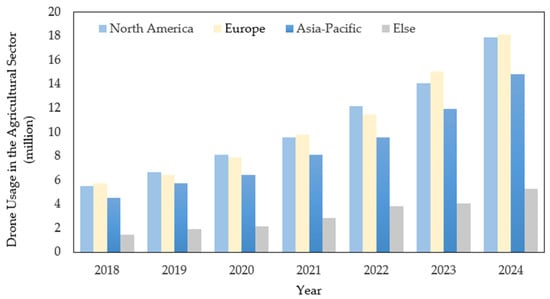
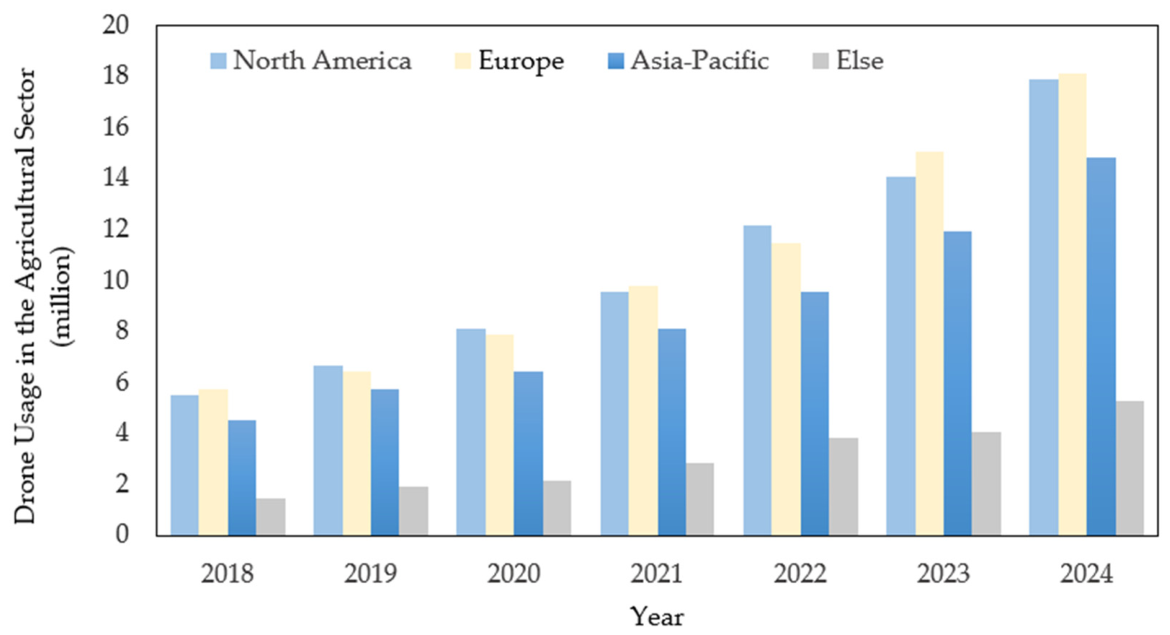
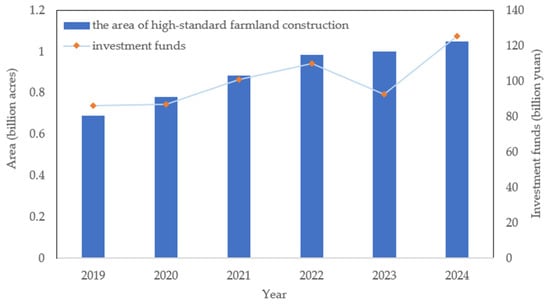
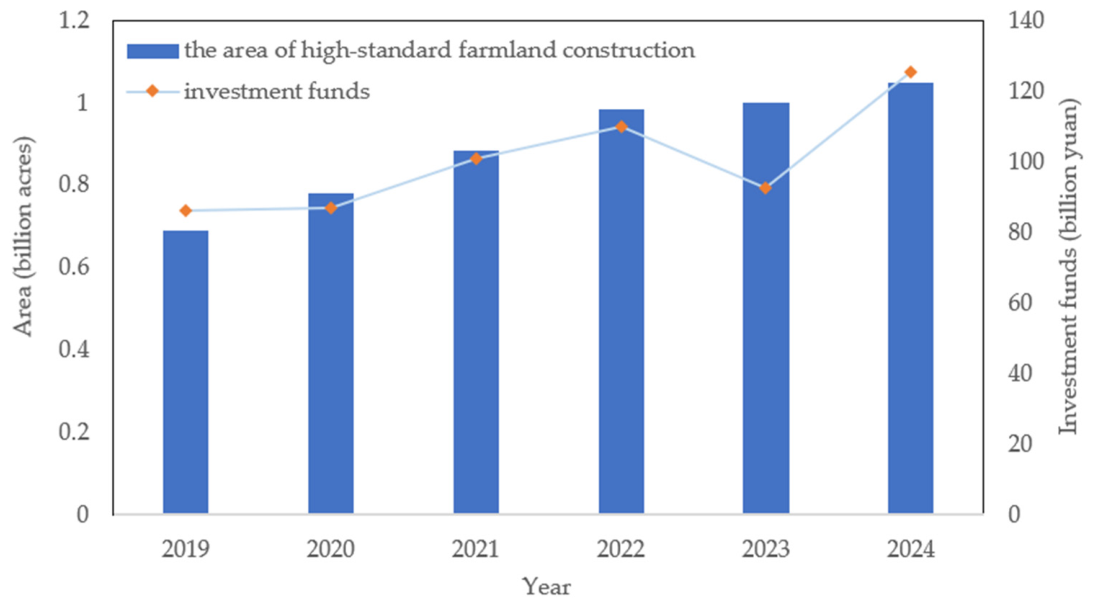
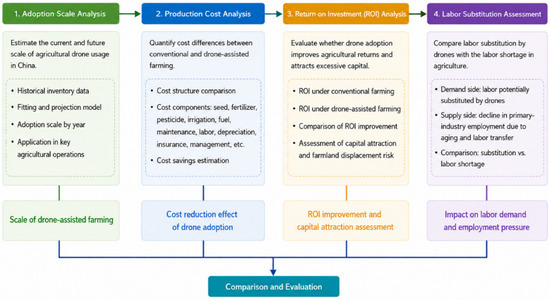
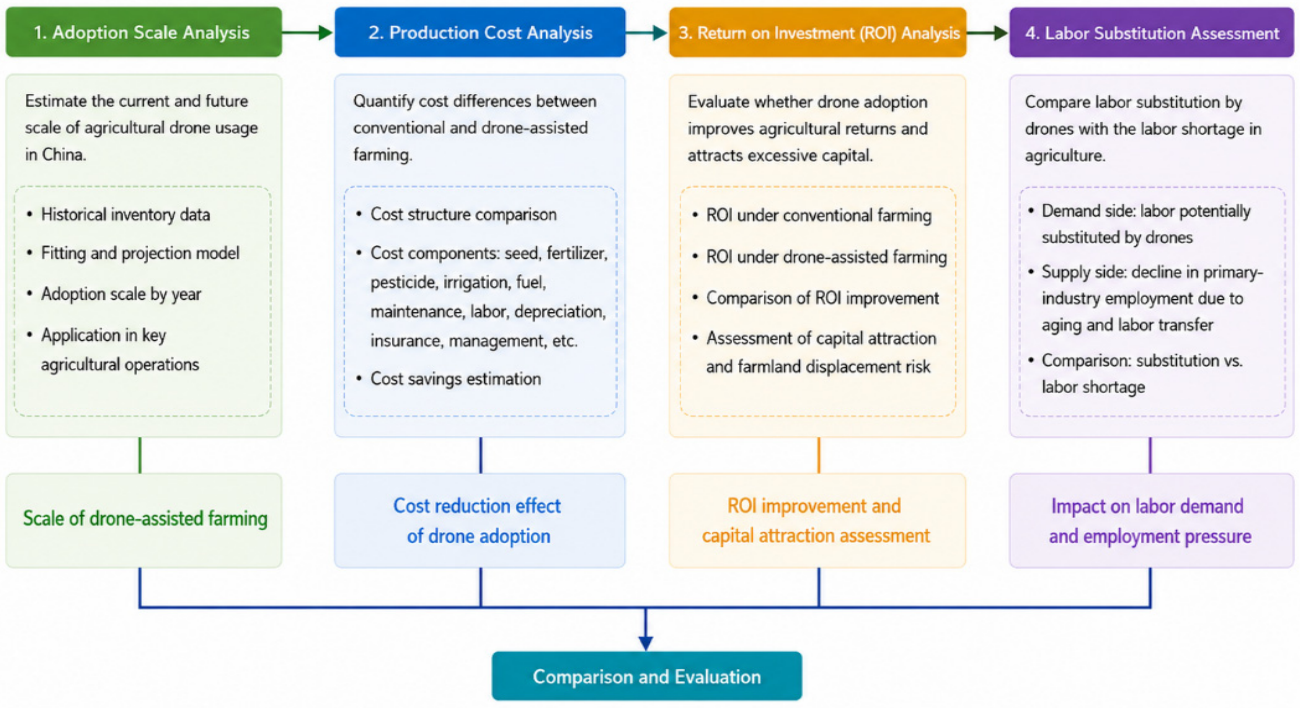
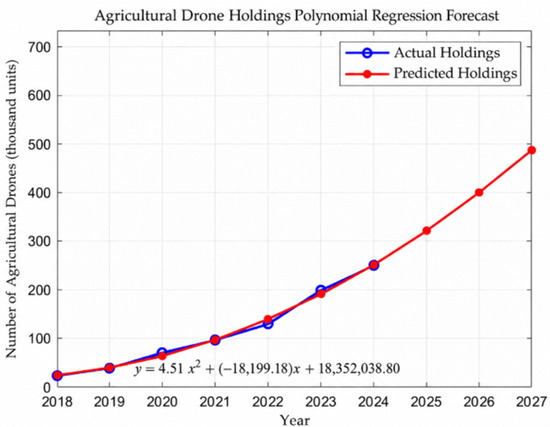
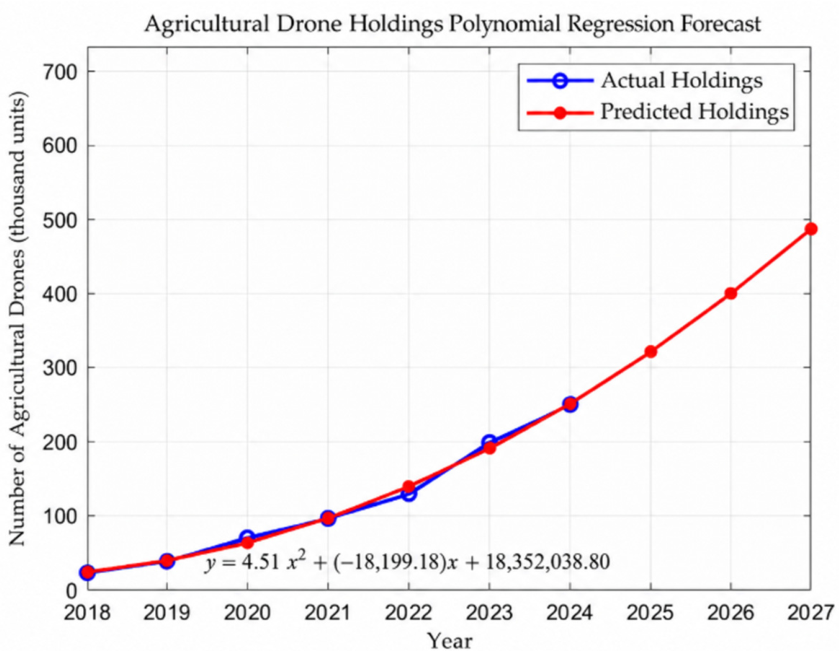
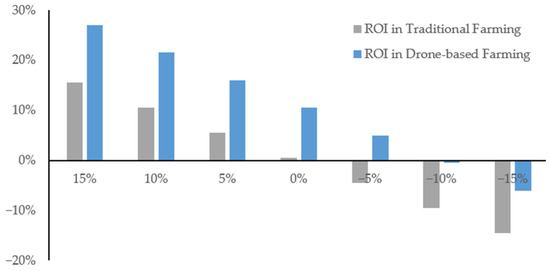
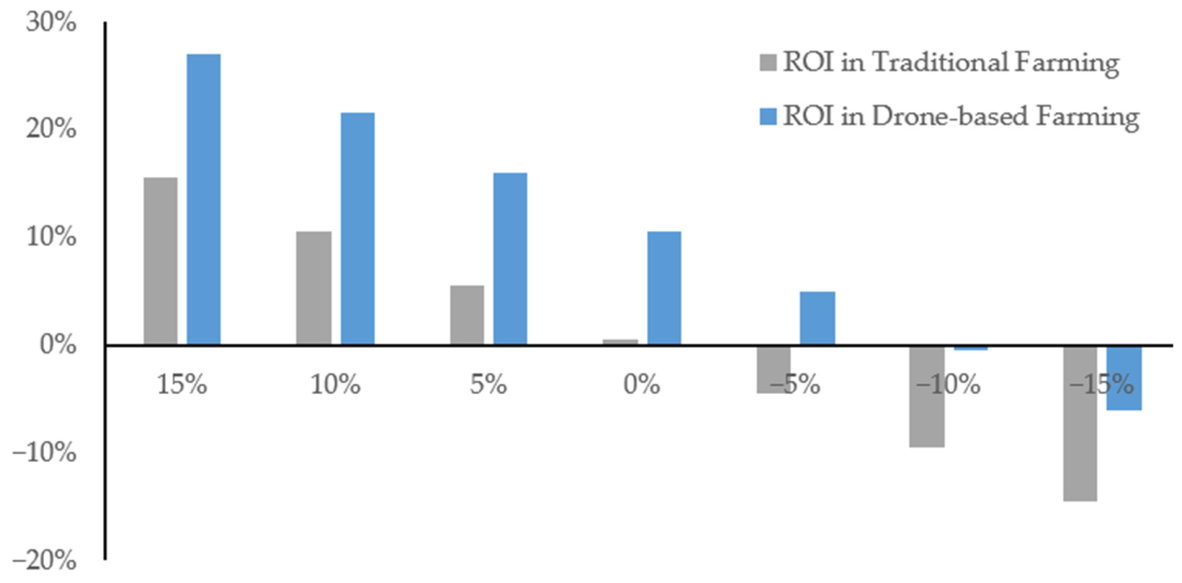
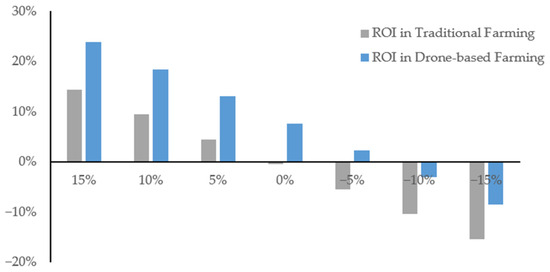
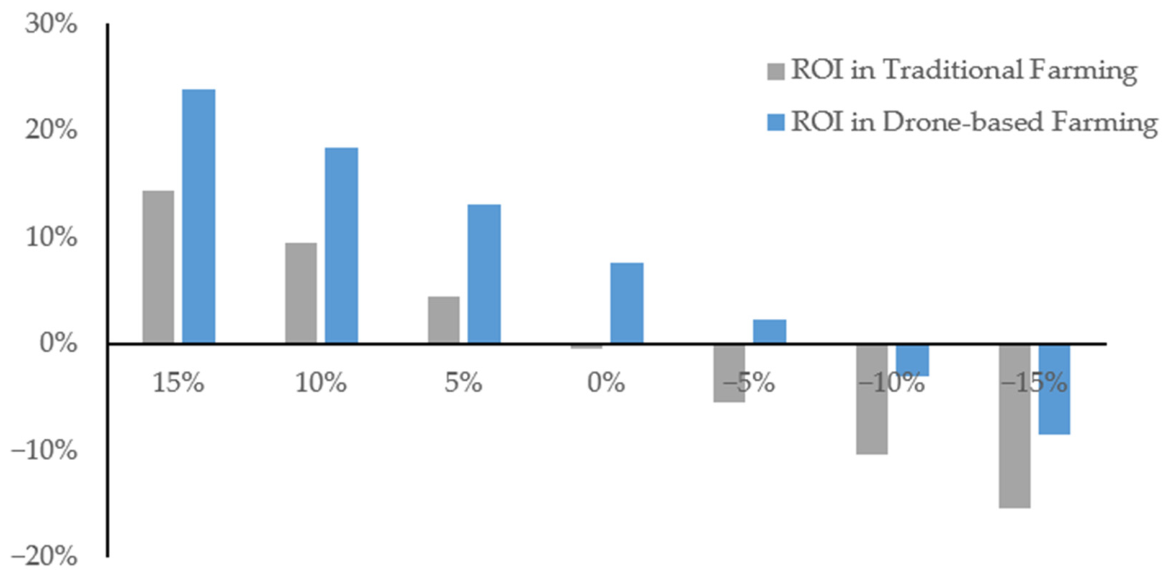
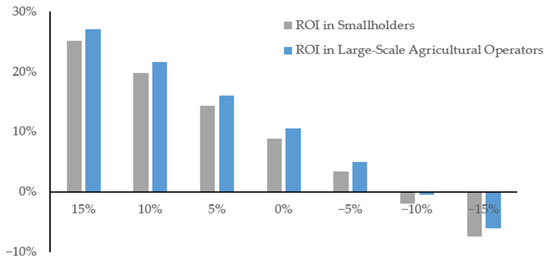
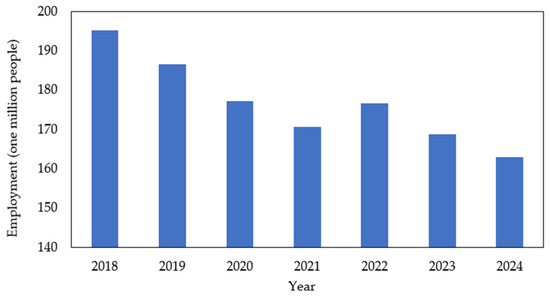

Disclaimer/Publisher’s Note: The statements, opinions and data contained in all publications are solely those of the individual author(s) and contributor(s) and not of MDPI and/or the editor(s). MDPI and/or the editor(s) disclaim responsibility for any injury to people or property resulting from any ideas, methods, instructions or products referred to in the content. |
© 2026 by the authors. Licensee MDPI, Basel, Switzerland. This article is an open access article distributed under the terms and conditions of the Creative Commons Attribution (CC BY) license.