


Abstract
The Artificial Intelligence Pilot Zone Policy is an important strategic initiative for building artificial intelligence (AI) innovation hubs. It provides new opportunities to enhance manufacturing firm resilience and promote the sustainable development of the manufacturing sector. The creation of the National New-Generation Artificial Intelligence Innovation and Development Pilot Zones (AI Pilot Zones) is viewed in this study as a quasi-natural experiment. Using data from Chinese A-share-listed manufacturing firms from 2015 to 2023, we employ a staggered DID model to evaluate the impact of the policy on manufacturing firm resilience. We find that the AI Pilot Zone policy increases manufacturing firm resilience by an average of 0.0282 units. The analysis of potential mechanisms shows that the policy significantly promotes digital talent agglomeration, stimulates urban innovation vitality, and improves firm-level supply chain efficiency. These findings are consistent with the theoretical expectations and provide supportive evidence that these factors may constitute potential mechanisms associated with the policy’s effect on manufacturing firm resilience. The heterogeneity analysis reveals a pronounced “weakness-compensating” effect. At the regional level, the resilience-enhancing effect is stronger for manufacturing firms located in areas with relatively weak digital infrastructure. At the industry level, the effect is more pronounced among firms in low-technology manufacturing industries. At the firm level, the effect is stronger for firms with lower levels of human capital, weaker innovation capacity, and lagging digital transformation. Overall, this study provides micro-level evidence on the resilience effects of the AI Pilot Zone policy and offers policy implications for integrating AI more effectively with the real economy.
1. Introduction
In recent years, firm resilience has become an important issue in economic-growth research and a key consideration for maintaining manufacturing stability within the global sustainable development agenda. China’s manufacturing industry has ranked first globally in scale for 15 consecutive years and has made significant progress in high-quality development, including scientific and technological innovation and green transformation [1]. It has therefore become a key driver of the sustained and healthy development of China’s economy and an important industrial foundation for achieving Sustainable Development Goal 8 (SDG 8: Decent Work and Economic Growth) and Sustainable Development Goal 9 (SDG 9: Industry, Innovation and Infrastructure). However, China’s manufacturing industry is currently facing increasingly severe pressures from both domestic and external sources. Domestically, the Chinese economy is undergoing a profound structural adjustment [2]. Traditional growth engines, such as real estate and heavy industry, are facing substantial structural-adjustment pressures. Internationally, geopolitical conflicts, rising trade protectionism, and related factors have increased the abruptness, complexity, and uncertainty of external shocks. Together, these domestic and external pressures place substantial demands on Chinese manufacturing firms’ ability to survive, adapt, and recover from crises—that is, their resilience [3,4]. In this sense, firm resilience reflects a firm’s capacity to sustain its operations under adverse conditions and constitutes an important capability foundation for achieving long-term sustainable development. If this micro-level resilience continues to erode, the effects may quickly spread to the macro level, generating risks to industrial chains and economic security, constraining the high-quality development of manufacturing and threatening long-term sustainable industrial growth and supply-chain security. Therefore, clarifying the factors that affect manufacturing firm resilience and identifying effective pathways to enhance such resilience are not only core issues in industrial economics but also strategic challenges in China’s transition from a “manufacturing giant” to a “manufacturing powerhouse” and in its efforts to promote the sustainable development of the real economy. Understanding how to strengthen manufacturing firm resilience therefore has important theoretical and practical implications.
Existing studies have examined the factors affecting manufacturing firm resilience mainly from two perspectives: internal factors and external factors. From an internal perspective, firms’ resource base and capabilities are key determinants of resilience. Adequate financial resources enable firms to make effective investments and adjustments during crises [5,6,7]. Technological innovation capabilities help firms develop new products and enter new markets, thereby strengthening their risk resistance [8,9,10]. Manufacturing firms with core technology patents are more likely to achieve resilience through technological upgrading when facing industry-level technological change. In addition, sound corporate governance contributes to resilience by improving internal control mechanisms and external supervision systems [11,12]. From the perspective of external factors, the industrial environment and policy support also play crucial roles. A well-developed industrial cluster ecosystem can provide firms with extensive resource networks and collaboration opportunities, promote knowledge spillovers and resource sharing, and enhance their ability to withstand shocks [13,14]. Government industrial policies, such as tax incentives and innovation subsidies, can reduce firm costs, encourage innovation, and thereby enhance firm resilience [15,16,17]. In addition, supply-chain stability and coordination also affect the resilience of manufacturing firms. A stable and coordinated supply chain can reduce the risk of supply disruptions, improve firms’ ability to match supply with demand, and enhance their efficiency in responding to market fluctuations [18,19].
Although these two strands of the literature provide an important foundation for understanding manufacturing firm resilience, they overlook a key variable that is reshaping the global industrial landscape: place-based innovation policies driven by artificial intelligence. This raises an important question: can state-led, city-based AI innovation policies strengthen manufacturing firm resilience and thereby support sustainable industrial development? In theory, AI policies can advance technical innovation, enhance digital infrastructure, and accelerate AI adoption in manufacturing and supply-chain operations [20,21,22]. These changes create favorable conditions for manufacturing firms to acquire, integrate, and reconfigure critical resources. Such improvements may enable firms to withstand market volatility, adjust to supply-chain disturbances and technological change, and restore normal operations more effectively, thereby strengthening resilience. Greater resilience, in turn, helps firms maintain operational continuity, mitigate industrial-chain risks, stabilize employment, and improve resource-allocation efficiency, thus providing a micro-level foundation for the long-term stability and sustainable industrialization of the manufacturing sector. Although prior work has linked AI-related policies to supply-chain resilience at the micro level [20], considerably less is known about whether such policies influence the broader operational resilience of manufacturing firms. This gap provides the point of departure for this study.
In 2019, China’s Ministry of Science and Technology issued the Guidelines for the Construction of National New-Generation Artificial Intelligence Innovation and Development Pilot Zones, thereby formally launching the establishment of National New-Generation Artificial Intelligence Innovation and Development Pilot Zones, hereafter referred to as AI Pilot Zones, with the initial and subsequent batches covering multiple cities. The AI Pilot Zone policy differs from comparable place-based policies, such as the Traditional High-tech Zones, the Innovative City Pilot Zones, and the National Digital Economy Innovation and Development Pilot Zone policy. Whereas these policies primarily rely on infrastructure investment, tax incentives, and industrial agglomeration and generally emphasize one-dimensional factor support or scale expansion, the AI Pilot Zone policy is a systematic place-based initiative integrating technology provision, application-scenario deployment, and institutional innovation. With AI technology as its core driver, the policy reshapes urban innovation ecosystems across three dimensions—foundational technological capacity, industrial application scenarios, and supporting institutions—by improving digital infrastructure, promoting the integration of AI with the real economy, and optimizing the institutional business environment. Its influence on firm operations is therefore more comprehensive, persistent, and pervasive, substantially altering the conditions for firm survival and development in pilot cities. Because AI Pilot Zones were introduced across cities in successive batches, their staggered implementation offers a quasi-natural setting in which the micro-level resilience consequences of the policy can be empirically identified. Accordingly, this study treats the AI Pilot Zone policy as a policy shock with quasi-natural experimental features and applies a staggered DID model to answer three questions. First, does the AI Pilot Zone policy significantly enhance manufacturing firm resilience? Second, if such an effect exists, which factors may constitute the potential mechanisms through which the policy affects manufacturing firm resilience? Third, does the impact of the AI Pilot Zone policy on manufacturing firm resilience vary according to regional digital infrastructure, industry technological intensity, and firms’ human capital, innovation capacity, and degree of digital transformation?
The contributions of this study are threefold. First, it examines the resilience-enhancing effect of the AI Pilot Zone policy on manufacturing firms, thereby enriching the literature on the determinants of manufacturing firm resilience and providing a new perspective based on the development of urban AI innovation hubs. Second, it investigates the potential mechanisms through which the AI Pilot Zone policy may affect manufacturing firm resilience. Specifically, it proposes and empirically examines three potential mechanisms—digital talent agglomeration, urban innovation vitality, and firm-level supply chain efficiency—from the perspectives of factor supply, environmental support, and operational optimization. The findings clarify the potential mechanisms associated with the policy effect, extend micro-level evidence on the resilience implications of AI policies, and inform efforts to build a more resilient and sustainable manufacturing system. Third, it examines heterogeneity across regional digital infrastructure, industry technological intensity, and firm-level human capital, innovation capacity, and digital transformation, thereby clarifying the boundary conditions and differentiated impacts of the AI Pilot Zone policy on manufacturing firm resilience.
2. Policy Background
In July 2017, to seize major strategic opportunities in AI development, build China’s first-mover advantage, and accelerate the construction of an innovation-oriented country and a global science and technology powerhouse, the State Council of China issued the New Generation Artificial Intelligence Development Plan, hereafter referred to as the Plan. In August 2019, to accelerate the implementation of the Plan, China’s Ministry of Science and Technology issued the Guidelines for the Construction of AI Pilot Zones, formally launching the city-based development of the AI Pilot Zones.
A central objective of the AI Pilot Zone policy is to embed AI more extensively within economic activity and broader social development. It aims to address major challenges in AI-related science, technology, and industrialization; deepen collaboration among industry, universities, research institutions, and application sectors; facilitate the agglomeration of technology, industry, finance, and talent; foster an ecosystem conducive to AI development; and comprehensively enhance AI innovation capacity. As of December 2024, the policy had been implemented in three batches covering 18 cities, including Beijing, as shown in Table 1. These pilot cities have drawn on their local characteristics and development advantages to guide industrial development and firm transformation through AI and other digital-intelligence technologies, with particular emphasis on the manufacturing sector.
Table 1.
Pilot List of the AI Pilot Zones.
For example, the Hefei AI Pilot Zone has relied on the local new-energy vehicle industry and leading domestic firms such as BYD and Chery to explore an “AI + industrial-chain and supply-chain coordination” model. This model has effectively strengthened the industry’s risk resistance, promoted sustained industrial growth, and offered the “Hefei experience” for enhancing regional industrial resilience. As an important manufacturing base in China, Chongqing has built its AI Pilot Zone on rich industrial resources and a strong manufacturing foundation. By promoting “AI + traditional manufacturing upgrading”, Chongqing has injected new vitality into traditional manufacturing and provided a “Chongqing model” for improving the resilience of regional traditional manufacturing industries.
Importantly, the AI Pilot Zone policy is not simply an extension of traditional industrial support policies; rather, it has a distinctive policy orientation. On the one hand, unlike the National Digital Economy Innovation and Development Pilot Zone policy, which primarily emphasizes the expansion of digital industries and the cultivation of new digital business models, the AI Pilot Zone policy focuses on the application of AI as a core technology and seeks to promote industrial upgrading through technological breakthroughs, thereby providing more targeted policy support. On the other hand, unlike conventional place-based policies, such as national high-tech industrial development zones and economic and technological development zones, which generally rely on industrial agglomeration and tax incentives, the AI Pilot Zone policy takes the city as an integrated implementation unit and covers the entire chain of technology research and development, application-scenario demonstration, talent cultivation and attraction, and institutional innovation. It therefore represents a systematic effort to reshape regional innovation ecosystems. Through its integrated “technology–scenario–institution” design, the policy may affect micro-level firms through multiple dimensions, including factor supply, environmental support, and operational efficiency. Accordingly, the AI Pilot Zone policy provides a distinctive policy setting for examining the enhancement of manufacturing firm resilience.
3. Theoretical Analysis and Research Hypotheses
The theoretical framework of this study combines dynamic capabilities theory and resource dependence theory as its main foundations, supplemented by innovation ecosystem theory, information asymmetry theory, and transaction cost theory, to link policy intervention with factor concentration, capability development, and ultimately firm resilience. As a place-based policy shock with quasi-natural experimental features, the AI Pilot Zone policy may directly enhance manufacturing enterprises’ dynamic capabilities, alleviate constraints on access to critical resources, and enhance firm resilience through three dimensions: technology provision, application-scenario deployment, and institutional support. It may also affect manufacturing firm resilience by promoting digital talent agglomeration, stimulating urban innovation vitality, and improving firm-level supply chain efficiency. These three potential mechanisms operate through factor supply, the external environment, and internal operations, respectively, thereby strengthening firms’ capacity to withstand risks and adapt dynamically.
3.1. The Direct Effect of the AI Pilot Zone Policy on Manufacturing Firm Resilience
According to dynamic capabilities theory, the resilience of manufacturing firms reflects their dynamic capabilities in uncertain environments. When facing external shocks such as market fluctuations, supply-chain disruptions, and technological change, firms can achieve risk resistance, rapid recovery, and sustainable growth by integrating, building, and reconfiguring internal and external resources. Resource dependence theory further suggests that the stable operation of manufacturing firms depends heavily on key production factors such as technology, data, and talent. Therefore, firms need to acquire scarce external resources to reduce environmental uncertainty and overcome the constraints of their own resource endowments [23,24,25].
As a major policy vehicle through which China promotes the deep integration of AI with the real economy, the AI Pilot Zone policy establishes a city-based institutional arrangement that integrates technology demonstration, policy experimentation, and ecosystem cultivation. Its targeted enabling characteristics, which distinguish it from general digital policies, provide manufacturing firms with a new policy setting and support system for strengthening dynamic capabilities, overcoming resource constraints, and enhancing resilience. First, from the perspective of technology provision, the AI Pilot Zone policy coordinates the development of big data centers, computing infrastructure, and open AI innovation platforms, thereby reducing the technological barriers and cost constraints faced by manufacturing firms during intelligent transformation. Firms can draw directly on shared technological research and development resources within the pilot zones to implement intelligent upgrades in production processes, quality control, energy management, and other operational activities. These resources reduce firms’ dependence on external high-end technologies and improve the stability and shock resistance of their production systems. Second, from the perspective of application-scenario deployment, the AI Pilot Zone policy emphasizes the large-scale demonstration and application of AI technologies in manufacturing and promotes the deep integration of intelligent algorithms with industrial production scenarios. It can help firms forecast market demand more accurately, dynamically adjust production plans, and achieve visualized management and control throughout the supply chain. These functions alleviate supply–demand mismatches and strengthen firms’ agile responsiveness and resource-reconfiguration capabilities when confronting changes in the external environment [20,26]. Third, from the perspective of institutional support, the AI Pilot Zone policy facilitates policy experimentation in areas such as the secure and orderly opening of data, intellectual property protection, and incentives for talent attraction and cultivation, thereby fostering an institutional environment compatible with AI development. By lowering transformation-related institutional burdens and compliance uncertainty, these arrangements can create a more supportive environment in which manufacturing firms develop and maintain resilience.
Based on the above analysis, this study proposes the following hypothesis:
Hypothesis 1.
The AI Pilot Zone policy positively affects manufacturing firm resilience.
3.2. Mechanisms Through Which the AI Pilot Zone Policy Affects Manufacturing Firm Resilience
Based on the preceding theoretical framework, this study further examines the mechanisms through which the AI Pilot Zone policy may affect manufacturing firm resilience from three dimensions: factor supply, environmental support, and operational optimization. Digital talent agglomeration serves as the principal transmission channel at the factor-supply level, urban innovation vitality represents external support at the environmental level, and firm-level supply chain efficiency constitutes an internal channel at the operational level. Together, these dimensions form an integrated “factor–environment–operation” mechanism framework that may strengthen manufacturing firm resilience at different levels.
3.2.1. The AI Pilot Zone Policy, Digital Talent Agglomeration, and Manufacturing Firm Resilience
Digital talent is a key factor in building the core competitiveness of manufacturing firms in the era of digital intelligence [27]. It also provides important support for the formation of dynamic capabilities and the enhancement of firm resilience. Resource dependence theory suggests that firms cannot rely entirely on internal supply to meet their demand for key talent; therefore, access to external talent markets directly affects their human-resource allocation capacity [28]. Through policy guidance and ecosystem development, the AI Pilot Zone policy systematically strengthens cities’ capacity to attract and agglomerate digital talent, thereby creating favorable conditions for manufacturing firms to acquire external digital human capital. Specifically, to advance the development of AI Pilot Zones, pilot cities establish dedicated talent funds, provide housing and household-registration support, offer research start-up funding, and adopt other incentives to attract experts, scholars, and technical professionals in AI-related fields. The policy also supports universities in establishing AI-related disciplines, encourages universities and firms to jointly develop practical training centers and laboratories, and promotes the construction of digital talent cultivation systems oriented toward industrial demand. In addition, the policy contributes to more advanced digital infrastructure, more diverse technology-application scenarios, and a more dynamic innovation and entrepreneurship ecosystem, providing broad platforms on which digital professionals can apply their expertise and creating sustained incentives for attracting high-level talent.
Digital talent agglomeration can strengthen manufacturing firm resilience in several ways. First, it generates knowledge spillovers and technology-diffusion effects [29], accelerating firms’ intelligent transformation in activities ranging from production management to supply chain coordination and improving resource-allocation efficiency and operational capabilities. Second, digital professionals bring data-driven approaches to decision-making [30], helping traditional manufacturing firms overcome organizational inertia characterized by an excessive reliance on experience and insufficient emphasis on innovation. This strengthens firms’ dynamic adaptability to market fluctuations and technological change. Third, digital talent agglomeration reduces firms’ costs of searching for and acquiring workers with scarce skills [31]. It enables firms to fill critical positions rapidly following external shocks, shorten the recovery cycle of production and operations, and strengthen resource reconfiguration and resilience rebuilding.
Based on the above analysis, this study proposes the following hypothesis:
Hypothesis 2.
The AI Pilot Zone policy promotes digital talent agglomeration, thereby enhancing manufacturing firm resilience.
3.2.2. The AI Pilot Zone Policy, Urban Innovation Vitality, and Manufacturing Firm Resilience
Innovation ecosystem theory emphasizes that firms do not conduct innovation activities in isolation; rather, they are deeply embedded in regional innovation environments. Collaborative interactions and knowledge flows among innovation actors are essential drivers of innovation vitality. By establishing integrated innovation platforms, removing barriers to innovation, and cultivating an open and inclusive ecosystem for innovation and entrepreneurship, the AI Pilot Zone policy can systematically stimulate urban innovation vitality and provide important external innovation support for manufacturing firm resilience. Promoting AI infrastructure and accelerating the development of integrated innovation platforms are major tasks of the AI Pilot Zone policy. These measures facilitate closer connections among upstream and downstream firms within industrial chains and promote resource sharing, joint research and development, and the commercialization of research outcomes. The policy accelerates the expansion of national computing-power and data infrastructure service platforms, as well as open-source and open-access AI science and technology innovation platforms, thereby lowering the threshold for firms to acquire frontier technologies and conduct research and development. At the same time, it helps establish an open, inclusive, and diversified ecosystem for innovation and entrepreneurship. By reducing barriers related to data, technology, and policy, the AI Pilot Zone policy creates an external environment conducive to technological innovation and provides favorable conditions for stimulating urban innovation vitality [32,33].
Enhanced urban innovation vitality can further strengthen manufacturing firm resilience. First, it deepens innovation collaboration among manufacturing firms, universities, research institutes, and upstream and downstream firms in industrial chains. These collaborative relationships facilitate the circulation and practical use of digital knowledge, foster new combinations of existing expertise, and expand firms’ technological capabilities, thereby helping them overcome innovation constraints [34]. Second, a dynamic urban innovation ecosystem helps firms establish internally and externally coordinated digital ecosystems and data-sharing platforms, generates inter-firm synergies, and reduces operational risks arising from external uncertainty [29]. More importantly, stronger innovation capabilities enable manufacturing firms to respond to external shocks, such as market fluctuations and technological paradigm shifts, by leveraging technological advantages and accelerating product iteration. Firms can consequently adjust their strategies rapidly, optimize production and operating models, and strengthen their risk resistance and dynamic adaptability, thereby systematically enhancing resilience.
Based on the above analysis, this study proposes the following hypothesis:
Hypothesis 3.
The AI Pilot Zone policy stimulates urban innovation vitality, thereby enhancing manufacturing firm resilience.
3.2.3. The AI Pilot Zone Policy, Firm-Level Supply Chain Efficiency, and Manufacturing Firm Resilience
Information asymmetry theory and transaction cost theory suggest that the principal constraints on supply chain efficiency arise from barriers to information flows and imbalances in resource allocation [35]. In traditional manufacturing supply chains, insufficient information sharing among upstream and downstream firms causes demand signals to become distorted and amplified as they move through the supply chain, producing the “bullwhip effect” and resulting in serious mismatches between supply and demand. At the same time, firms must incur substantial information-search and inventory-holding costs to maintain a stable supply, constraining the overall operating efficiency of the supply chain. To facilitate AI adoption in the real economy, AI Pilot Zones promote intelligent infrastructure such as the Industrial Internet, the Internet of Things, and big data centers while also encouraging platforms that support cross-firm supply-chain coordination. These platforms can break down information silos among manufacturing firms, upstream and downstream suppliers, distributors, and logistics service providers. They facilitate real-time data interoperability and intelligent analysis across all supply chain activities, including raw-material supply, production, logistics, distribution, and market demand. This alleviates information asymmetry across supply chain links and weakens the bullwhip effect induced by market fluctuations.
The AI Pilot Zone policy also encourages AI technologies to be tested and deployed in diverse supply-chain applications. Applications such as intelligent procurement matching, smart route planning, intelligent inventory management, and intelligent contract fulfillment can reduce transaction costs across different supply chain links and enhance supply chain coordination efficiency. Improved supply chain efficiency can enhance manufacturing firm resilience through two principal pathways: optimizing supply–demand matching and strengthening risk prevention and control. First, real-time information sharing and accurate demand forecasting enable firms to dynamically adjust production plans and inventory levels. This reduces inventory redundancy or shortages caused by inaccurate demand forecasts, improves the precision of supply–demand matching, and strengthens firms’ adaptive capacity under market fluctuations [36]. Second, digital supply chain systems help firms establish diversified supplier networks and intelligent matching mechanisms. When raw-material supplies fluctuate or logistics channels are disrupted, firms can rapidly identify and connect with alternative resources, reduce excessive dependence on individual suppliers, and strengthen supply chain flexibility and risk resistance [37]. The systematic improvement of supply chain efficiency therefore provides critical support for the AI Pilot Zone policy to enhance manufacturing firm resilience through improved supply–demand coordination and greater risk diversification.
Based on the above analysis, this study proposes the following hypothesis:
Hypothesis 4.
The AI Pilot Zone policy improves firm-level supply chain efficiency, thereby enhancing manufacturing firm resilience.
Based on the above theoretical analysis, the conceptual framework of this study is presented in Figure 1.
Figure 1.
Theoretical Framework Linking the AI Pilot Zone Policy to Manufacturing Firm Resilience. Note: Developed by the authors based on the theoretical framework.
4. Research Design
4.1. Sample Selection and Data Sources
The empirical sample consists of Chinese A-share-listed manufacturing firms observed over the 2015–2023 period. To ensure the accuracy and reliability of the empirical results, the sample is processed as follows. First, ST, *ST, and PT firms are eliminated because they are subject to abnormal financial and regulatory conditions, and their operational data may be substantially affected by special circumstances such as delisting risk and asset restructuring. Such data may not accurately reflect firms’ underlying resilience and may introduce outliers and estimation bias. Second, firm observations with substantial missing data are removed. Third, all continuous variables are winsorized at the 1st and 99th percentiles. Finally, variables with relatively large numerical values are logarithmically transformed.
After the above screening procedures, the final sample comprises 2196 manufacturing firms and 14,179 firm-year observations distributed across 229 cities in China. The treatment group includes 18 pilot cities, corresponding to 915 listed manufacturing firms and 3507 firm-year observations, whereas the control group comprises 1281 listed manufacturing firms and 10,672 firm-year observations. By policy approval batch, the first batch, approved in 2019, covers seven cities and 602 firms; the second batch, approved in 2020, covers six cities and 191 firms; and the third batch, approved in 2021, covers five cities and 122 firms.
Firm-level data on listed manufacturing enterprises are obtained from the Wind and China Stock Market and Accounting Research (CSMAR) databases, while city-level data are collected from the China Urban Statistical Yearbook. Relevant patent data are obtained from the patent database of the China National Intellectual Property Administration and are manually collected and compiled by the authors.
4.2. Variable Definitions
4.2.1. Dependent Variable
The dependent variable is manufacturing firm resilience (Res). Firm resilience refers to a firm’s core capacity to withstand risks, adapt dynamically, recover steadily, and achieve transformational growth when confronted with internal and external shocks, such as geopolitical conflicts, market fluctuations, supply chain disruptions, and technological change. For manufacturing firms, which are typically capital-intensive and embedded in long industrial chains, resilience is primarily reflected in the operational stability of both the supply and demand sides and in their capacity to adapt to shocks. This operational stability directly reflects manufacturing firms’ dynamic capabilities in production and operations.
Existing measures of firm resilience can generally be divided into multidimensional composite indicators and single-dimensional operational performance indicators. These two approaches have different emphases. Multidimensional composite indicators can capture the broad connotations of firm resilience across multiple capability dimensions, but their measurement results may be sensitive to the selection of indicators, the specification of dimensions, and the weighting methods employed. By contrast, single-dimensional operational indicators have the advantages of clear economic interpretation, transparent measurement logic, and strong comparability across firms, enabling them to more directly reflect changes in firms’ core operating activities under external shocks. Following Li et al. [38] and Liu et al. [39], this study draws on the core operational logic of supply–demand coordination in manufacturing and constructs a manufacturing firm resilience indicator (Res) based on the relative change in operating revenue per unit of production cost (Operating Revenue Per Production Cost, ORPPC). The indicator is calculated as follows. To reduce the dependence of the empirical findings on a single measure, this study also employs a multidimensional composite indicator as an alternative measure in the robustness analysis for cross-validation.
In Equation (1), firms and years are indexed by i and t, respectively, while Resi,t denotes the resilience measure for firm i observed in year t. ORPPCi,t denotes the operating revenue per unit of production cost of firm i in year t, calculated as the ratio of operating revenue to operating costs. The subscript k denotes the lag order and takes the values of 1, 2, and 3, corresponding to the preceding three years. The denominator averages firm i’s ORPPC over t − 1, t − 2, and t − 3, and this three-year mean is used as the benchmark for the firm’s historical operating condition. Taking 2023 as an example, this study uses the average ORPPC from 2020 to 2022 as the historical baseline and compares a firm’s current performance with this benchmark to quantify its resilience. The historical baseline for 2015 is calculated using firm-level financial data from 2012 to 2014. The corresponding operating revenue and operating cost data for 2012–2014 are obtained from the historical financial records of listed firms in the CSMAR and Wind databases; these data are available and are consistent with the definition and scope of the firms included in the main sample. The economic rationale for adopting a three-year reference period is that a three-year moving average can smooth idiosyncratic fluctuations in any single year and provide a relatively stable representation of a firm’s normal operating conditions. Relating the current observation to this historical reference makes it possible to assess how far operations depart from normal conditions and the extent to which they subsequently recover after a shock, which is consistent with the central notion of resilience as the capacity to withstand shocks and recover relative to a steady state.
This measurement has the advantage of covering the two central components of manufacturing operations—the demand side and the supply side—and is therefore consistent with the dual attributes of resilience: shock resistance and rapid recovery. On the demand side, it reflects a firm’s ability to maintain sales and preserve market share under adverse conditions, corresponding to the risk-resistance dimension of resilience. On the supply side, it reflects the firm’s ability to control production costs and maintain a stable production rhythm, corresponding to the dynamic adaptation and recovery dimensions of resilience. Specifically, Equation (1) measures resilience by comparing the current value of ORPPC with its moving average over the previous three years. When the ratio is relatively high, current revenue generated from each unit of production cost exceeds the firm’s historical norm, indicating a stronger ability to preserve operating performance despite adverse disturbances and, accordingly, greater resilience. Conversely, a ratio substantially below the historical baseline indicates that the firm has failed to adjust promptly following a shock and has experienced a marked deterioration in operational capacity.
4.2.2. Independent Variable
The independent variable is the AI Pilot Zone Policy, measured by the interaction term DID = Treat × Post. Treat is a group dummy variable, while Post is a time dummy variable indicating the policy shock. This study treats the AI Pilot Zone policy as a quasi-natural experiment. During the sample period, 18 cities were approved in three batches as AI Pilot Zones. Because the approval dates of the pilot zones varied across cities, this study follows Yuan et al. [40] in defining the treatment group. If the city in which a firm is located was approved as a pilot zone, the firm is assigned to the treatment group, and Treat equals 1; otherwise, the firm is assigned to the control group, and Treat equals 0. Post equals 1 in the year when the pilot zone was approved and in all subsequent years, and equals 0 for the years before approval. For firms in the control group, Post is set to 0 throughout the sample period. The core independent variable DID is then generated as the interaction between Treat and Post.
4.2.3. Control Variables
Following the variable-selection practices of Li et al. [38] and Liu et al. [39], the model accounts for characteristics at both the firm and city levels. Firm-level covariates include firm size (Size), the asset–liability ratio (Lev), return on assets (Roa), the quick ratio (Quick), the proportion of tangible assets (Tangible), firm growth (Growth), prior-period loss (Loss), board size (Board), the shareholding ratio of the top three shareholders (Top3), the book-to-market ratio (Bm) and firm age (Firmage), whereas city-level covariates include regional economic development (Lngdp), government intervention (Gov), openness to the outside world (Open), and the urbanization rate (Urban). The detailed definitions of these variables are presented in Table 2.
Table 2.
Definitions and Measurements of Variables.
4.3. Model Specification
Because AI pilot zones were not established simultaneously but were approved in three batches, this study employs a staggered DID model to examine the relationship between the AI Pilot Zone Policy and the resilience of manufacturing firms, following Beck et al. [41]. The model is specified as follows:
In Equation (2), Resit denotes the resilience level of firm i in year t, and DIDit indicates whether the city in which firm i is located has been approved as a National New Generation Artificial Intelligence Innovation and Development Pilot Zone by year t. Specifically, DIDit = 1 if firm i is located in a pilot city in year t or thereafter; otherwise, DIDit = 0. In addition, β0 denotes the constant term; β2 denotes the coefficient vector of the control variables. The vector Controlit contains the covariates included in the specification. Firm-specific and year-specific unobserved components are absorbed by μi and γt, respectively, and εit is the disturbance term. The parameter of primary interest, β1, measures the change in manufacturing firm resilience associated with AI Pilot Zone treatment. If β1 is significantly positive, it indicates that AI pilot zone establishment improves manufacturing firm resilience; otherwise, it suggests that the policy does not significantly promote, or may even inhibit, resilience improvement.
5. Empirical Findings and Analysis
5.1. Descriptive Statistics
Summary statistics for the principal variables are reported in Table 3. Manufacturing firm resilience (Res) has a mean of 0.990 and a standard deviation of 0.0982, with observed values ranging from 0.664 to 1.589, indicating appreciable cross-firm variation. The mean of DID is 0.247; thus, treated city-year observations account for 24.7% of the full firm-year sample. The descriptive statistics of the other core variables are generally consistent with expectations.
Table 3.
Descriptive Statistics of Main Variables.
5.2. Baseline Regression
Table 4 reports the baseline regression results for the effect of the AI Pilot Zone policy on manufacturing firm resilience. Column (1) includes only firm and year fixed effects, without incorporating any control variables. The estimated coefficient of the AI Pilot Zone policy is 0.0301 and is statistically significant at the 1% level. Column (2) further introduces firm-level control variables, after which the estimated coefficient of the policy variable, DID, increases to 0.0320 and remains statistically significant at the 1% level. Column (3) additionally controls for city-level characteristics based on the specification in column (2), and the coefficient of DID remains positive and statistically significant at the 1% level. Overall, the estimated coefficients of DID are consistently positive and statistically significant at the 1% level across all specifications, indicating that the AI Pilot Zone policy significantly enhances manufacturing firm resilience. The estimated effect is also economically meaningful. Taking column (3) of Table 4 as an example, the DID coefficient of 0.0282 indicates that the AI Pilot Zone policy increases manufacturing firm resilience by an average of 0.0282 units. Relative to the sample mean of manufacturing firm resilience, which is 0.990 units, this effect represents an increase of approximately 2.85%.
Table 4.
Baseline Regression Results.
5.3. Parallel Trends Test
The parallel trends assumption is a key prerequisite for applying the DID method. Specifically, prior to the implementation of the AI Pilot Zone policy, manufacturing firm resilience in the treatment and control groups should exhibit similar trends. To examine this assumption and present the dynamic policy effects more intuitively, this study employs an event-study specification. The period immediately preceding policy implementation (t − 1) is designated as the omitted reference period, and the event window extends from five periods before policy implementation to four periods after implementation. Accordingly, the model estimates the dynamic effect coefficients for four pre-policy periods (t − 5 to t − 2), the policy implementation period (t = 0), and four post-policy periods (t + 1 to t + 4). The point estimates and their 95% confidence intervals are plotted in Figure 2. The joint significance test of all pre-policy coefficients yields a p-value of 0.158. Therefore, the null hypothesis that the pre-policy coefficients are jointly equal to zero cannot be rejected at conventional significance levels. Moreover, as shown in Figure 2, the 95% confidence intervals of all estimated coefficients before policy implementation include zero, indicating that manufacturing firm resilience in the treatment and control groups did not exhibit statistically significant systematic differences in trends before the policy intervention. On the whole, these results provide support for the parallel trends assumption and the applicability of the staggered DID approach. Following policy implementation, all estimated dynamic treatment effects are positive, and their 95% confidence intervals lie entirely above zero. This finding indicates that, after their cities were approved as AI Pilot Zones, manufacturing firms experienced a statistically significant improvement in resilience. The positive effect persists throughout the observed post-policy period, suggesting that the resilience-enhancing effect of the policy is sustained over time.
Figure 2.
Parallel Trends Test Results. Note: The figure was generated by the authors using Stata 18 based on the empirical estimates. The data were obtained from the CSMAR and Wind databases and the China Urban Statistical Yearbook.
5.4. Heterogeneous Treatment Effect Test
When applying a staggered DID model based on two-way fixed effects (TWFE), heterogeneous treatment effects may lead to estimation bias. To mitigate this potential bias and enhance the robustness of the conclusions, this study employs the CSDID method developed by Callaway and Sant’Anna [42], which provides robust estimates for staggered DID models with heterogeneous treatment effects. The basic logic of the CSDID method is to divide the sample into different treatment groups, estimate the treatment effect for each group separately, and then aggregate these effects using specific weighting strategies to obtain the average treatment effect on the treated (ATT) over the sample period. The core principle of the aggregation process is to assign appropriate weights to different group-time treatment effects, thereby reducing the influence of potentially biased comparisons. Callaway and Sant’Anna identify four types of average treatment effects with different economic interpretations according to different weighting schemes. First, the Simple ATT assigns equal weights to each treatment group. Second, the Dynamic ATT weights treatment effects according to the relative time distance between each observation period and the initial treatment period. Third, the Calendar Time ATT aggregates treatment effects by calendar year. Fourth, the Group ATT aggregates treatment effects according to the cohort in which units first receive treatment. As shown in Table 5, the Simple ATT, post-treatment Dynamic ATT, Calendar-Time ATT, and Group ATT are positive and statistically significant at the 5% level, whereas the pre-treatment average effect is not statistically significant. This indicates that the AI Pilot Zone policy significantly improves manufacturing firm resilience. The results are consistent with the baseline regression findings, further confirming the robustness of the conclusions.
Table 5.
Heterogeneous Treatment Effect Test Results.
5.5. Placebo Test
In addition to the AI Pilot Zone policy, unobserved factors may also affect manufacturing firm resilience. To rule out this potential interference, this study follows Li et al. [43] and conducts a spatial placebo test. Specifically, the placebo treatment is randomly assigned in accordance with the actual timing and batch structure of the policy. Seven cities are randomly selected as pseudo-pilot cities in 2019, six cities in 2020, and five cities in 2021, yielding a total of 18 pseudo-pilot cities across three batches. Firms located in these randomly selected cities are assigned to the pseudo-treatment group, based on which a placebo DID variable is constructed. The above procedure is repeated 500 times. In each iteration, the actual DID variable in the baseline regression model is replaced with the randomly generated placebo DID variable, and the model is re-estimated. The placebo coefficients generated across the repeated simulations are displayed as a distribution in Figure 3. Most of the estimated placebo coefficients are concentrated around zero, fail to reach conventional levels of statistical significance, and exhibit an approximately normal distribution. By contrast, the baseline estimate of 0.0282 lies outside the main distribution of the placebo coefficients. Because the actual estimate lies well outside the main concentration of placebo estimates, random reassignment of pilot status and treatment timing is unlikely to account for the baseline result, which strengthens confidence in the main finding.
Figure 3.
Placebo Test Results. Note: The horizontal dashed line indicates p = 0.10, while the vertical dashed line indicates the baseline DID estimate of 0.0282. The figure was generated by the authors using Stata 18 based on the empirical estimates. The data were obtained from the CSMAR and Wind databases and the China Urban Statistical Yearbook.
5.6. Endogeneity Test
Reverse causality and unobserved confounders could bias the estimated relationship between the AI Pilot Zone policy and manufacturing firm resilience. An instrumental-variable approach is therefore introduced as an additional identification exercise. A valid instrumental variable must satisfy both the relevance and exogeneity conditions. Following Zou et al. [44], this study uses the number of fixed-line telephones per 100 people in each Chinese city in 1984 to construct the instrumental variable. Regarding relevance, the number of fixed-line telephones per 100 people in 1984 reflects the historical foundation of urban communications infrastructure during China’s planned-economy period. Communications infrastructure constitutes an important prerequisite for the follow-up development of digital infrastructure and therefore directly affects the development of the urban AI industry and the probability that a city will be approved as an AI Pilot Zone. Accordingly, this historical indicator satisfies the relevance requirement. Regarding exogeneity, the geographical distribution of fixed-line telephones in 1984 was largely determined by China’s national communications planning system during the planned-economy period. The location and allocation of these facilities primarily served the administrative-management and national-defense communications requirements prevailing at that time. The indicator is therefore historically predetermined and has no direct economic relationship with manufacturing firm resilience several decades later. Moreover, the interval of more than three decades substantially separates historical communications infrastructure from firms’ current operations. The fixed-line telephone facilities in use at that time have long since been replaced and upgraded, and their influence on the contemporary economy operates primarily through the long-term accumulation of digital infrastructure. Thus, the instrument satisfies the exogeneity requirement. Because the number of fixed-line telephones per 100 people in 1984 is a time-invariant city-level cross-sectional variable, it cannot be used directly in the panel-data regression. Therefore, following Liu et al. [45], this study interacts the number of fixed-line telephones per 100 people in each city in 1984 with the policy implementation-period dummy variable to construct an instrumental variable (IV) for the AI Pilot Zone policy. The model is then estimated using two-stage least squares (2SLS).
Table 6 reports the results of the endogeneity test. Instrument relevance is supported by the Kleibergen–Paap diagnostics. Specifically, the Kleibergen–Paap rk Wald F statistic equals 31.452, exceeding the reported critical value of 16.38, while the Kleibergen–Paap rk LM statistic also rejects underidentification. In addition, the first-stage coefficient on the instrument is 0.3499 (p < 0.01), providing additional evidence of a strong relationship between the instrument and policy treatment. The second-stage estimate shows that, after accounting for the potential non-random selection of treatment cities, the coefficient of DID remains positive and statistically significant at the 1% level. Therefore, the conclusion that the policy enhances manufacturing firm resilience remains valid.
Table 6.
Endogeneity Test Results.
5.7. Additional Robustness Tests
According to the Ministry of Science and Technology, cities that want to be designated as AI Pilot Zones must have a wealth of educational and scientific resources, well-established digital intelligence industries, and infrastructure that can support AI development. These eligibility conditions imply non-random pilot designation because cities with stronger digital and innovation foundations may have a higher probability of selection. Such systematic differences could produce selection bias if they also affect firm resilience. To reduce this potential bias and further verify the robustness of the empirical outcomes, this study conducts the following additional robustness tests.
5.7.1. PSM-DID
The selection of AI Pilot Zones may be influenced by regional economic development and other observable characteristics, thereby giving rise to sample-selection bias. To alleviate this concern, this study employs propensity score matching (PSM). Following Yu et al. [46], all firm- and city-level control variables are included as matching covariates, and a Logit model is employed to compute the propensity scores. Propensity scores are matched using an Epanechnikov kernel with bandwidth 0.06, with observations outside the common-support range excluded from the matched analysis. If the balance test shows that the standardized biases of most control variables drop markedly and remain below 10% after matching, while the between-group t-tests for the covariates are statistically insignificant, the treated and untreated units can be regarded as sufficiently comparable. After matching, this study re-estimates the staggered DID model using the weights generated from the matching procedure.
The balance-test results are reported in Table 7. Following PSM, standardized differences are below 10% for most covariates and most between-group tests are insignificant, indicating a marked improvement in comparability between treated and control observations. Column (1) of Table 8 shows that the estimated coefficient of the AI Pilot Zone policy remains significantly positive after matching. Therefore, the baseline conclusion remains robust after potential sample-selection bias is alleviated.
Table 7.
Covariate Balance Test Results.
Table 8.
Results of Additional Robustness Tests.
5.7.2. Replacing the Dependent Variable
To further assess the dependability of the empirical results, this study performs a robustness test by replacing the dependent variable with an alternate indicator. The measure of manufacturing firm resilience used in the baseline regression relies entirely on a single financial ratio. However, firm resilience inherently encompasses adaptive capacity, strategic reconfiguration, and dynamic recovery, all of which extend beyond short-term financial fluctuations. Therefore, a unidimensional indicator may conflate a firm’s underlying resilience with temporary fluctuations in profitability, potentially introducing bias into causal inference. Drawing on Gölgeci et al. [47], an entropy-weighted resilience index is constructed from five dimensions: operating capability, shock-resistance capability, recovery capability, supply–demand matching capability, and innovation capability. The measurement methods and relevant explanations for each dimension are summarized in Table 9.
Table 9.
Measurement of the Five Dimensions of Manufacturing Firm Resilience.
Column (2) of Table 8 reports the specification using the multidimensional resilience measure. Its DID estimate is 0.0123 and remains positive at the 1% significance level. This finding aligns with the earlier results and lends additional support to the stability of the primary conclusions.
5.7.3. Excluding Specific Samples
To avoid potential estimation bias arising from the advantages of China’s centrally administered municipalities in terms of geographical location, economic development, and preferential policy support, this study excludes observations from Beijing, Shanghai, Tianjin, and Chongqing. The staggered DID model is then re-estimated using the adjusted sample. As shown in column (3) of Table 8, the coefficient of the AI Pilot Zone policy variable, DID, remains significantly positive, thereby confirming the robustness of the main conclusion.
5.7.4. Lagging the Core Explanatory Variable by One Period
The AI Pilot Zone policy is a long-term process, and some pilot zones were approved during the second half of the year. Consequently, the effects of the policy may not be fully realized in the short term, and its influence on manufacturing firm resilience may exhibit a certain time lag. To address this concern, cities approved as AI Pilot Zones by September of a given year are treated as pilot cities in that year, whereas cities approved after September are classified as pilot cities beginning in the subsequent year. The policy variable is reconstructed accordingly, and the impact of the AI Pilot Zone policy on manufacturing firm resilience is re-estimated to alleviate potential bias arising from measurement errors in treatment timing. Column (4) of Table 8 shows that the coefficient of the adjusted policy variable (L_DID) is 0.0232 and is statistically significant at the 1% level. This result aligns closely with the baseline estimate and provides further support for the robustness of the core conclusion.
5.7.5. Controlling for Other Policy Shocks
Other place-based initiatives overlapped with the AI Pilot Zone policy during the observation period, notably the National Digital Economy Innovation and Development Pilot Zone policy and the Artificial Intelligence Innovation Application Pilot Zone policy, both of which may also influence manufacturing firm resilience. Two additional policy indicators are therefore added to the baseline specification to account for these overlapping pilot programs. Policy_1 indicates whether the city in which a firm is located is included in a National Digital Economy Innovation and Development Pilot Zone, whereas Policy_2 indicates whether it is included in an Artificial Intelligence Innovation Application Pilot Zone.
The corresponding estimates are shown in columns (5) and (6) of Table 8. Introducing either overlapping-policy indicator leaves the direction and statistical significance of DID essentially unchanged, supporting the stability of the baseline result.
6. Further Analysis
6.1. Mechanism Analysis
In mechanism analyses, the traditional three-step approach requires researchers to address the endogeneity of both the explanatory variable and the mechanism variables, which imposes highly stringent identification requirements. Compared with the conventional stepwise approach, which directly incorporates mechanism variables into the outcome equation and decomposes the total effect into direct and indirect effects, the two-step mechanism-testing approach adopted in this study does not directly estimate the causal effect of a mechanism variable on the outcome variable. It thereby avoids inferring a mediation effect from potentially biased coefficients when the endogeneity of the mechanism variable has not been credibly addressed.
Following the causal-inference framework for mechanism analysis proposed by Jiang [48], this study adopts a two-step approach. The central logic of this approach is that, when the causal relationship between a mechanism variable and the outcome variable has already been directly and clearly supported by theory or the prior literature, establishing that a policy shock significantly affects the mechanism variable can provide empirical evidence for the existence of the corresponding mechanism. The preceding theoretical analysis has systematically explained how digital talent agglomeration, urban innovation vitality, and firm-level supply chain efficiency may enhance firm resilience, while a substantial body of existing research has rigorously identified the effects of these variables on firm resilience. Accordingly, the empirical exercise evaluates whether policy treatment changes each of the three theoretically motivated mechanism variables. Equation (3) is specified for this purpose.
In Equation (3), Mit denotes the mechanism variable, while the definitions of the other variables are consistent with those in the baseline model.
6.1.1. Digital Talent Agglomeration
Digital talent constitutes an important form of human capital for manufacturing firms seeking to undertake AI-enabled transformation and sustain their long-term development. Because firms cannot rely entirely on internal training to meet the demand for talent arising from digital transformation, the level of talent agglomeration at the city level directly affects the cost and efficiency with which firms acquire highly skilled digital professionals. Through multiple measures involving policy-based talent attraction, industry-oriented talent cultivation, and ecosystem-based talent retention, the AI Pilot Zone policy can substantially promote digital talent agglomeration in pilot cities. The resulting knowledge-spillover, decision-optimization, and talent-supply effects can strengthen firms’ capacity to respond to external shocks across their production, decision-making, and organizational activities, thereby potentially enhancing manufacturing firm resilience.
Following Li et al. [49], this study measures digital talent agglomeration using the natural logarithm of the number of employees in the information transmission, computer services, and software industries in each city. The corresponding test results are reported in column (1) of Table 10. The coefficient of DID is 0.3800 and is statistically significant at the 1% level. This result indicates that the AI Pilot Zone policy significantly promotes digital talent agglomeration in pilot cities, providing supportive evidence at the factor-supply level that digital talent may be involved in the process through which the policy affects manufacturing firm resilience. This finding is consistent with the theoretical expectations of this study.
Table 10.
Mechanism Analysis Results.
6.1.2. Urban Innovation Vitality
As market competition intensifies and technological change accelerates, regional innovation ecosystems have become an important means through which firms can overcome internal resource constraints and achieve innovation upgrading. Because the innovation activities of manufacturing firms are deeply embedded in urban innovation systems, the overall vitality of a city’s innovation environment directly affects the ease with which firms acquire external knowledge and undertake collaborative research and development. By establishing integrated innovation platforms, removing institutional barriers to innovation, and improving the innovation and entrepreneurship ecosystem, the AI Pilot Zone policy can systematically stimulate urban innovation vitality. The resulting knowledge-spillover, collaborative-innovation, and environmental-support effects can strengthen firms’ shock-resistance capabilities through enhanced technological reserves, resource coordination, and service support, thereby potentially enhancing manufacturing firm resilience.
Following Chen et al. [50], this study measures urban innovation vitality by the number of patents granted per 100,000 residents in each city. Column (2) of Table 10 reports the mechanism-test results for urban innovation vitality. The estimated coefficient of DID is 1.8381 and is statistically significant at the 1% level. This result indicates that the AI Pilot Zone policy significantly enhances innovation vitality in pilot cities and creates a more favorable external innovation ecosystem for local manufacturing firms. It provides supportive evidence at the environmental level that urban innovation vitality may be involved in the process through which the AI Pilot Zone policy affects manufacturing firm resilience, consistent with the theoretical expectations of this study.
6.1.3. Firm-Level Supply Chain Efficiency
As a core operational capability, firm-level supply chain efficiency is crucial to manufacturing firms’ ability to withstand risks and enhance resilience. In traditional supply chains, information asymmetry can generate bullwhip effects and supply–demand mismatches, substantially increasing firms’ operating costs and exposure to disruption risks. By developing intelligent infrastructure and promoting the digital application of supply chain technologies, the AI Pilot Zone policy can improve firm-level supply chain efficiency. The resulting cash-flow-buffering, response-speed-optimization, and risk-diversification effects can strengthen firms’ capacity to withstand shocks through improved cost control, resource reconfiguration, and the substitution of supply channels, thereby contributing to manufacturing firm resilience.
To examine whether the AI Pilot Zone policy significantly affects firm-level supply chain efficiency as a potential mechanism related to manufacturing firm resilience, this study follows Kwak [51] and measures supply chain efficiency using inventory turnover days, calculated as ln(365/inventory turnover ratio). A lower value indicates that less time is required to complete one inventory turnover cycle and that inventories turn over more rapidly, thereby reflecting greater supply chain efficiency. The estimation results are reported in column (3) of Table 10. The coefficient of DID is −0.0494 and is statistically significant at the 5% level, indicating that the implementation of the AI Pilot Zone policy significantly reduces inventory turnover days and accelerates inventory turnover, thereby improving firm-level supply chain efficiency. Furthermore, greater inventory turnover efficiency may enhance firms’ ability to match supply with demand. These findings provide supportive evidence at the operational level that supply chain efficiency may constitute a potential mechanism involved in the process through which the AI Pilot Zone policy affects manufacturing firm resilience, consistent with the theoretical expectations of this study.
6.2. Heterogeneity Analysis
The baseline regression results confirm that the AI Pilot Zone policy has a positive average effect on manufacturing firm resilience. However, this effect may vary with regional development foundations, industry-specific technological characteristics, and firms’ internal resource endowments. To more precisely identify the boundaries and applicable contexts of the policy effect, this study conducts heterogeneity analyses along three dimensions: regional digital infrastructure, industry technological intensity, and firm-specific characteristics. To enhance the robustness of the heterogeneity results, Fisher’s combination test is employed to examine the differences in coefficients across groups, with p-values obtained from 1000 bootstrap replications.
6.2.1. Regional Heterogeneity
Digital infrastructure provides essential support for the diffusion of AI technologies, the circulation of data resources, and the implementation of intelligent application scenarios within a region. Given the unequal development of digital infrastructure across Chinese regions, manufacturing firms situated in areas with varying degrees of digital infrastructure may differ substantially in their capacity to access and absorb the benefits of the AI Pilot Zone policy. Accordingly, this study measures regional digital infrastructure by the urban broadband internet adoption rate, calculated as the count of internet access subscribers relative to the resident urban population. Building on the median of the annual average of this indicator prior to policy implementation, we categorize the sample into low- and high-level groups of regional digital infrastructure.
Table 11 reports DID estimates of 0.0220 (p < 0.01) for areas with weaker digital infrastructure and 0.0178 (p < 0.05) for areas with stronger digital infrastructure. The p-value from Fisher’s combination test for the difference between the two coefficients is 0.053, indicating that the resilience-enhancing effect of the policy is relatively stronger in regions with weaker digital infrastructure. One possible explanation is that firms in these regions generally face constraints such as high data-acquisition costs, insufficient information sharing, and underdeveloped conditions for intelligent applications. The development of AI Pilot Zones can reduce the barriers to firms’ digital-intelligence transformation by improving digital infrastructure, opening public technology platforms, and facilitating the circulation of data resources, thereby generating a more pronounced marginal improvement. By contrast, firms in regions with more advanced digital infrastructure already possess relatively strong technological absorption capabilities. Although the policy continues to produce positive effects in these regions, the scope for additional improvement is comparatively limited.
Table 11.
Results of Heterogeneity by Regional Digital Infrastructure Level.
6.2.2. Industry Heterogeneity
Manufacturing industries with different levels of technological intensity differ fundamentally in their production models, rates of technological iteration, and intensity of innovation investment. They also vary in the diversity of their AI application scenarios and their capacity to absorb and transform AI technologies. Consequently, the effect of the AI Pilot Zone policy on manufacturing firm resilience may exhibit industry-level heterogeneity. Following the Chinese government’s Classification of High-Technology Industries (Manufacturing) (2017), firms whose two-digit industry codes are C26, C27, C34, C35, C37–C40, or C43 are classified as belonging to high-technology manufacturing industries, whereas the remaining firms are classified as belonging to low-technology manufacturing industries. Separate regressions are then conducted for the two groups.
As reported in Table 12, DID equals 0.0288 for the low-technology subsample (p < 0.01) and 0.0243 for the high-technology subsample (p < 0.05). A Fisher combination test gives p = 0.035, supporting a statistically larger policy effect among low-technology manufacturing firms. A possible explanation is that firms in low-technology industries commonly face shortages of digital talent, limited research and development resources, relatively rigid production processes, and high costs of intelligent upgrading. Consequently, their capacity for autonomous adjustment and resource reconfiguration is relatively weak when they encounter market fluctuations or supply chain disruptions. By establishing public technology platforms, opening application scenarios, promoting industry–university–research collaboration, and providing common technology services, AI Pilot Zones can reduce the costs that these firms incur in acquiring and applying AI technologies and facilitate the intelligent transformation of traditional production processes. The policy therefore generates a larger marginal effect for low-technology firms. High-technology manufacturing firms generally enter the policy period with stronger R&D and digital capabilities; nevertheless, they may still gain from a better innovation environment, public computing resources, and additional digital talent. However, the marginal improvement generated by the policy is comparatively smaller for these firms.
Table 12.
Results of Heterogeneity by Industry Technology.
6.2.3. Heterogeneity by Firm Characteristics
Heterogeneity by Firm Human Capital Level
Differences in human capital may affect firms’ ability to benefit from AI-related policy support, leading to heterogeneous effects of the AI Pilot Zone policy on manufacturing firm resilience. Therefore, following Tang et al. [52], this study measures a firm’s human capital level by the proportion of employees with a master’s degree or above in its total workforce. Based on the median of firms’ annual average human capital levels before policy implementation, firms are divided into high- and low-human-capital groups. Once assigned, their group classifications remain unchanged throughout the sample period.
As shown in columns (1) and (2) of Table 13, the AI Pilot Zone policy has a significantly positive effect on the resilience of both low- and high-human-capital firms. However, the estimated coefficient is larger for low-human-capital firms. The Fisher combination test produces p = 0.051, providing evidence at the 10% level that the policy coefficients differ between the two human-capital groups. This may be because low-human-capital firms often face severe shortages of digital talent. The agglomeration of professionals such as big-data specialists, intelligent-algorithm engineers, and AI engineers induced by the AI Pilot Zone policy can help these firms rapidly address talent deficiencies associated with digital transformation and strengthen their risk-resistance capabilities. By contrast, high-human-capital firms already possess relatively sufficient stocks of highly qualified professionals and therefore have a lower marginal demand for the additional talent resources generated by the policy.
Table 13.
Results of Heterogeneity Tests by Firm Characteristics.
Heterogeneity by Firm Innovation Level
Differences in firm innovation levels may affect firms’ absorptive capacity and capability to benefit from urban innovation spillovers, potentially resulting in heterogeneous impacts of the AI Pilot Zone policy on manufacturing firm resilience. Following Artz et al. [53], firm innovation level is proxied by the natural logarithm of one plus the annual number of patents granted to each firm. Building on the median of firms’ average annual innovation levels prior to policy implementation, we split the dataset into low-innovation and high-innovation subgroups, whose classifications remain fixed throughout the study period.
Columns (3) and (4) of Table 13 show positive policy coefficients for both innovation groups, significant at 1% for low-innovation firms and at 5% for high-innovation firms. The Fisher test returns p < 0.001, confirming a significant difference in effect size across the two subsamples. This result may arise because low-innovation firms generally have weak R&D foundations and limited innovation resources. They therefore have a more urgent need to use the public innovation platforms, industry–university–research collaboration networks, and favorable urban innovation ecosystems developed within AI Pilot Zones to strengthen their innovation capabilities and establish technological support for resilience enhancement. By contrast, high-innovation firms have already developed mature R&D systems and stable innovation-output capabilities, resulting in a relatively weaker marginal enabling effect of the policy.
Heterogeneity by the Degree of Firm Digital Transformation
A firm’s pre-existing degree of digital transformation may shape how readily it absorbs and deploys AI, creating scope for the resilience effect of the policy to vary across firms. Following Wu et al. [54], this study measures the degree of firm digital transformation using the frequency of digital-intelligence-related terms in firms’ annual reports. Based on the median of firms’ annual average digital-transformation levels before policy implementation, the sample is divided into low- and high-digital-transformation groups, and the group classifications remain unchanged during the sample period.
As shown in columns (5) and (6) of Table 13, the resilience-enhancing effect of the AI Pilot Zone policy is positive and statistically significant at the 1% level for firms with a low degree of digital transformation, whereas its positive effect on firms with a high degree of digital transformation is statistically significant at the 10% level. For the digital-transformation subsamples, the Fisher combination test yields p = 0.057, indicating a between-group difference at the 10% significance level. This may be because firms with a low degree of digital transformation have substantial deficiencies in supply chain operations, including data collection, process control, and intelligent decision-making, and lack effective technological tools for responding to market or supply chain fluctuations. Facilities such as data centers and intelligent forecasting platforms established within AI Pilot Zones can compensate for these deficiencies, strengthen firms’ adaptive capacity in response to shocks, and thereby enhance resilience. Firms with more advanced digital transformation, however, generally already possess well-developed digital supply-chain systems and stronger capabilities for deploying AI and related digital technologies. Consequently, the additional effect of the AI Pilot Zone policy on these firms is relatively limited.
7. Discussion
7.1. Conversation with the Current Literature
The empirical results of this study show that the AI Pilot Zone policy significantly improves manufacturing firm resilience, which is in line with the wider scholarly consensus that the digital economy can strengthen the real economy. Existing studies have documented the positive effects of AI-related policies on green innovation, total factor productivity, and environmental, social, and governance performance, generally suggesting that digital technologies promote high-quality firm development by optimizing resource allocation [55,56,57]. However, whereas previous research has primarily emphasized “efficiency enhancement” or “growth promotion” [20,55,56], the findings of this study provide empirical evidence that the AI Pilot Zone policy may also perform a risk-buffering function, thereby extending the analytical scope of the existing literature. This finding moves beyond the conventional “digital technology–productivity” framework and indicates that data resources and AI technologies are not only engines of growth but may also serve as important anchors of firm resilience against external risks. It therefore introduces a new dimension for evaluating the effects of AI-related policies.
Regarding heterogeneity, previous studies have generally found that the enabling impacts of AI policies are more pronounced in developed eastern regions, high-technology industries, and large firms, implying a “the strong become stronger” pattern associated with the digital divide [20,58,59]. By contrast, this study obtains a differentiated finding: the AI Pilot Zone policy generates larger marginal improvements for regions with weaker digital infrastructure, low-technology manufacturing industries, and firms with relatively limited human capital and digital foundations, thereby exhibiting a distinct “weakness-compensating” effect. This conclusion does not contradict the existing literature; rather, it supplements previous findings by revealing the inclusive value of AI policies from the specific perspective of resilience enhancement. Compared with entities that already possess strong technological foundations, manufacturing firms and regions with weaker initial conditions may achieve more rapid improvements in their risk-resistance capabilities under policy support. This finding provides new empirical evidence for understanding the distributional effects of AI-related policies.
7.2. Comparison with International Research
Viewed internationally, the evidence illustrates a distinctive Chinese policy approach in which place-based AI initiatives are used to support manufacturing resilience. Digital transformation in developed economies in Europe and North America often follows a market-driven model, as exemplified by Germany’s “Industry 4.0” initiative and the development of digital ecosystems in the United States. These approaches emphasize firms’ voluntary adoption of technologies and competitive selection through market mechanisms. Related research therefore tends to focus on technological innovation and efficiency improvements among leading firms, while paying comparatively less attention to how traditional firms with weak foundations and late-developing regions can overcome the digital divide. In contrast, the state-guided model identified in this study suggests that nationally coordinated AI Pilot Zones, together with systematic investments in digital infrastructure and public technology-service platforms, can help address market failures associated with fragmented data resources and unequal access to digital technologies.
This finding also has important implications for developing countries. In countries where digital markets remain underdeveloped and firms generally possess limited capacities for autonomous transformation, relying entirely on the spontaneous market diffusion of technology may be insufficient to enhance industry-wide resilience within a relatively short period. By contrast, a government-led AI Pilot Zone model can promote a rapid improvement in the manufacturing sector’s overall capacity to withstand risks by concentrating investments in digital infrastructure, facilitating the agglomeration of critical factors, and providing inclusive technology services. This approach offers an alternative to the bottom-up innovation paradigm commonly observed in Western economies and provides practical experience from China for exploring pathways to industrial resilience in the digital era. It also contributes to the realization of the United Nations Sustainable Development Goals by supporting the development of more inclusive and broadly accessible industrial infrastructure.
8. Conclusions and Policy Recommendations
8.1. Conclusions
Based on a 2015–2023 panel of Chinese A-share-listed manufacturing firms, this study exploits the staggered introduction of AI Pilot Zones as a quasi-natural experiment and estimates policy effects on firm resilience, potential mechanisms, and heterogeneity across regions, industries, and firms. The main conclusions are as follows.
First, the AI Pilot Zone policy significantly improves manufacturing firm resilience. Baseline estimates associate pilot-zone treatment with a 0.0282-unit increase in manufacturing firm resilience, corresponding to approximately 2.85% of its sample mean. Comparable results obtained from the event-study, placebo exercises, endogeneity analysis, and alternative robustness specifications support the stability of this finding. These findings indicate that the AI Pilot Zone policy constitutes an effective policy instrument for strengthening manufacturing firms’ capacity to withstand risks and promoting the sustainable development of the real economy.
Second, the results of the mechanism analysis are consistent with the theoretical expectations. The empirical findings show that the AI Pilot Zone policy significantly promotes digital talent agglomeration, stimulates urban innovation vitality, and improves firm-level supply chain efficiency. These findings are consistent with the theoretical expectations and provide supportive evidence that these factors may be involved in the process through which the AI Pilot Zone policy affects manufacturing firm resilience. On the one hand, the development of AI Pilot Zones promotes digital talent agglomeration and improves urban innovation ecosystems, thereby providing factor-supply and environmental support that may contribute to manufacturing firm resilience. On the other hand, the policy improves firm-level supply chain efficiency through intelligent upgrading, which may strengthen firms’ shock-resistance and dynamic recovery capabilities at the operational level and thereby contribute to manufacturing firm resilience.
Third, the enabling effect of the AI Pilot Zone policy on manufacturing firm resilience exhibits a pronounced “weakness-compensating” effect. The heterogeneity analysis reveals substantial differences across the regional, industry, and firm dimensions. At the regional level, the resilience-enhancing effect is stronger for manufacturing firms located in areas with relatively weak digital infrastructure. At the industry level, the enabling effect is more pronounced among low-technology manufacturing firms. At the firm level, the policy has a stronger effect on manufacturing firms with lower levels of human capital, weaker innovation capacity, and lagging digital transformation. These findings suggest that the AI Pilot Zone policy can alleviate endowment constraints at multiple levels, help narrow resilience disparities across regions, industries, and firms, and generate relatively inclusive policy benefits.
8.2. Policy Recommendations
Based on the aforementioned research findings, the following policy recommendations are proposed.
First, the policy effects of AI Pilot Zones should be continuously leveraged to promote the deeper integration of AI with the production and operations of manufacturing firms. Building on the existing development of AI Pilot Zones, governments should place greater emphasis on the quality of policy implementation and its alignment with the actual needs of the manufacturing sector, and should consider improvements in firms’ capacity to respond to risks and sustain operations as an important dimension for evaluating the effectiveness of the AI Pilot Zone policy. In subsequent policy optimization, greater attention could be paid to the integration of AI technologies into practical manufacturing scenarios, including production, operations, and supply chain management. Manufacturing firms, in turn, should make effective use of the technological, human-capital, and innovation environments created by AI Pilot Zones and align AI applications with their own operational needs. In doing so, firms can gradually strengthen their capacity to identify, respond to, and adapt to market changes and external shocks, thereby translating policy support into stronger firm-level resilience.
Second, policy implementation should focus on digital talent, the innovation environment, and supply chain operations to improve the alignment between AI Pilot Zone policy resources and the actual needs of manufacturing firms. When advancing the development of AI Pilot Zones, governments could place greater emphasis on policy coordination in digital talent supply, regional innovation-resource allocation, and the digital application of supply chains, thereby enabling manufacturing firms to obtain the talent, knowledge, and technological resources required for AI applications more conveniently. At the same time, AI-related public services should be better aligned with the practical application needs and operating scenarios of the manufacturing sector. Manufacturing firms should, in turn, identify their own capability gaps, optimize their digital talent structures, strengthen collaboration with regional innovation actors, and enhance the application of AI technologies in supply chain operations such as inventory management and supply–demand coordination.
Third, the implementation of AI Pilot Zones should account for differences in regional digital infrastructure. Governments should tailor policy priorities to local digital foundations and manufacturing conditions. In regions with relatively weak digital infrastructure, policy efforts could focus more on improving manufacturing firms’ access to and effective use of existing digital infrastructure and public digital services, thereby creating the necessary conditions for firms to adopt AI technologies. In regions with more mature digital infrastructure, greater attention could instead be devoted to the deeper integration of AI technologies with existing digital systems. Manufacturing firms should likewise determine the pace and depth of technology adoption according to local digital conditions. Firms in regions with weaker digital foundations may prioritize improvements in basic digital management capabilities, whereas firms in regions with stronger digital foundations can further explore more advanced forms of intelligent application.
Fourth, policy support should be differentiated according to industry technological intensity and firm-specific resource endowments. In implementing the AI Pilot Zone policy, governments should pay greater attention to differences in manufacturing firms’ capacity to absorb policy resources and in their practical application needs, thereby enabling firms with relatively weak technological foundations to access and utilize the public technological, talent, and innovation resources provided by AI Pilot Zones more effectively and to realize the policy’s “weakness-compensating” effect. Manufacturing firms should also determine their priorities for intelligent transformation according to their human capital, innovation foundations, and degree of digitalization. Firms with relatively weak foundations should prioritize addressing critical capability constraints that affect their production and operations, whereas firms with stronger foundations can further deepen the integration of AI with their core business activities.
8.3. Limitations and Future Research
Although this study systematically examines the effect of the AI Pilot Zone policy on manufacturing firm resilience, it remains subject to four limitations arising from data availability and the scope of the research. These limitations also provide directions for future studies.
First, the sample is limited to Chinese A-share-listed manufacturing firms observed from 2015 to 2023. Although the sample is relatively large and covers the principal manufacturing subsectors, compared with non-listed companies and small and medium-sized manufacturing businesses, listed companies typically have more standardized governance structures and stronger resource-acquisition capabilities. The sample may therefore not fully represent the circumstances of the broader manufacturing sector, and the external validity of the findings requires further examination. Future research could expand the sample to include non-listed firms and small and medium-sized manufacturing enterprises and use observations covering a longer period to evaluate the long-term dynamic effects of the policy, thereby improving the generalizability of the conclusions.
Second, the measurement of the core variables can be further improved. Regarding the dependent variable, the baseline analysis measures manufacturing firm resilience from an operational-efficiency perspective using the relative variation in operating revenue per unit of production cost. The use of a single indicator to measure firm resilience is relatively common in the existing literature, with financial ratios and operational-efficiency indicators frequently employed for this purpose [60,61,62]. Such measures have the advantages of objectivity, continuity, and comparability. Nevertheless, a single indicator also has evident limitations. Firm resilience is inherently a multidimensional construct that encompasses not only operational stability and recovery capacity but also risk resistance, dynamic adaptability, strategic reconfiguration, organizational flexibility, and supply-network structure. Accordingly, the baseline measure used in this study cannot fully capture all theoretical dimensions of firm resilience. In the robustness analysis, this study therefore constructs a multidimensional resilience index encompassing five dimensions—operating capability, shock-resistance capability, recovery capability, supply–demand matching capability, and innovation capability. However, owing to the limited availability of publicly disclosed data for listed firms, this index still does not incorporate dimensions that are difficult to observe using public data, such as dynamic adaptability, strategic reconfiguration, organizational flexibility, and supply-network structure. Future research could collect richer micro-level data through questionnaire surveys and field investigations and construct a more comprehensive multidimensional evaluation system covering firms’ operational, financial, technological, organizational, and supply-chain network characteristics, thereby enabling more in-depth and precise empirical analyses. Regarding the mechanism variable, this study uses inventory turnover days as a proxy for firm-level supply chain efficiency. This measure primarily reflects the efficiency of firms’ inventory operations and cannot comprehensively capture other attributes, such as supply chain flexibility, supplier diversification, and emergency-response capacity. Future research could incorporate micro-level data on upstream and downstream supply chain relationships to achieve a more comprehensive and precise identification and examination of the potential mechanisms.
Third, causal identification in the mechanism analysis can be further strengthened. Following Jiang [48], this study examines whether the policy shock significantly affects digital talent agglomeration, urban innovation vitality, and firm-level supply chain efficiency, based on the theoretical and empirical relationships between these variables and firm resilience established in the existing literature. The results provide preliminary empirical evidence concerning the potential mechanisms of action. However, the current design does not establish a full causal mediation sequence, separate the net causal contribution of individual mechanisms, or determine the share of the aggregate treatment effect attributable to each mechanism. Moreover, the potential endogeneity of the mechanism variables has not been fully addressed. Future research could employ more rigorous methods, such as causal mediation analysis and structural equation modeling, to identify the independent causal effects of the different transmission mechanisms and quantify their relative contributions after appropriately addressing endogeneity.
Fourth, the current analysis does not capture potential spatial spillovers across regions. This study primarily focuses on the effects of the AI Pilot Zone policy on local firms and does not fully consider potential spatial spillovers and interactions across regions. On the one hand, digital talent, technological achievements, and innovation resources generated in pilot cities may diffuse to neighboring cities and positively affect the resilience of firms in surrounding regions. On the other hand, the policy advantages of AI Pilot Zones may attract high-quality resources away from neighboring regions, generating a resource-siphoning effect that could constrain the resilience of firms outside the pilot cities. This study does not distinguish or test these competing spatial effects. Future research could employ spatial DID models to systematically examine the spatial spillover and resource-siphoning effects of the AI Pilot Zone policy and thereby broaden the analytical scope of the relevant literature.
Author Contributions
Conceptualization, A.G., H.L. and B.Q.; methodology, A.G.; investigation, A.G. and H.L.; formal analysis, A.G.; data curation, H.L.; visualization, H.L.; writing—original draft preparation, H.L.; writing—review and editing, A.G., H.L. and B.Q.; validation, B.Q.; supervision, A.G. and B.Q.; project administration, B.Q.; funding acquisition, A.G. All authors have read and agreed to the published version of the manuscript.
Funding
This research was funded by the National Social Science Fund of China Project, “Research on the Path of Improving the Resilience of Characteristic Industries in Western Ethnic Regions through Digital and Intelligent Innovation” (Grant No. 24XMZ024); the Guangxi Higher Education Thousand Young and Middle-Aged Backbone Teacher Cultivation Program Humanities and Social Sciences Project, “Research on the Pathways for Achieving Dual Goals of Carbon Reduction and Economic Steady Growth in Resource-Based Areas of Yunnan, Guangxi, and Guizhou” (Grant No. 2023QGRW034); and the Guangxi University of Science and Technology Doctoral Fund Project, “Research on the Mechanism of Guangxi’s Industry Participating in the Domestic Great Circulation” (School Science and Technology Doctoral Project, Grant No. 21S11).
Institutional Review Board Statement
Not applicable.
Informed Consent Statement
Not applicable.
Data Availability Statement
The raw data supporting the conclusions of this article will be made available by the authors on request.
Acknowledgments
The authors thank the anonymous referees for their constructive suggestions.
Conflicts of Interest
The authors declare no conflicts of interest.
References
- Li, D.; Yao, Q. A pathway towards high-quality development of the manufacturing industry: Does scientific and technological talent matter? PLoS ONE 2024, 19, e0294873. [Google Scholar] [CrossRef] [Scilit] [PubMed]
- Xie, F.; Jiang, N.; Kuang, X. Towards an accurate understanding of ‘new quality productive forces’. Econ. Political Stud. 2025, 13, 1–15. [Google Scholar] [CrossRef] [Scilit]
- Luo, Y.; Chi, T. Resilience duality in global turbulence: Immunity and growth. J. Int. Bus. Stud. 2026, 1–9. [Google Scholar] [CrossRef] [Scilit]
- Xue, Y.; Zhang, C.; Mentel, G.; Mohammed, K.S.; Rosak-Szyrocka, J.; Zhao, X. Impact of ESG rating divergence on corporate resilience: Insights from China’s A-share market. Environ. Dev. Sustain. 2025, 1–26. [Google Scholar] [CrossRef] [Scilit]
- Grewal, R.; Tansuhaj, P. Building organizational capabilities for managing economic crisis: The role of market orientation and strategic flexibility. J. Mark. 2001, 65, 67–80. [Google Scholar] [CrossRef] [Scilit]
- Teece, D.J. The foundations of enterprise performance: Dynamic and ordinary capabilities in an (economic) theory of firms. Acad. Manag. Perspect. 2014, 28, 328–352. [Google Scholar] [CrossRef] [Scilit]
- Yuan, Y.; Dai, H.; Ma, J. The impact of corporate ESG performance on supply chain resilience: A mediation analysis based on new quality productive forces. Sustainability 2025, 17, 4418. [Google Scholar] [CrossRef] [Scilit]
- Teece, D.J. Explicating dynamic capabilities: The nature and microfoundations of (sustainable) enterprise performance. Strateg. Manag. J. 2007, 28, 1319–1350. [Google Scholar] [CrossRef] [Scilit]
- Lv, W.-D.; Tian, D.; Wei, Y.; Xi, R.-X. Innovation resilience: A new approach for managing uncertainties concerned with sustainable innovation. Sustainability 2018, 10, 3641. [Google Scholar] [CrossRef] [Scilit]
- Zhang, J.; Li, H.; Zhao, H. The impact of digital transformation on organizational resilience: The role of innovation capability and agile response. Systems 2025, 13, 75. [Google Scholar] [CrossRef] [Scilit]
- Manginte, S.Y. Fortifying transparency: Enhancing corporate governance through robust internal control mechanisms. Adv. Manag. Financ. Report. 2024, 2, 72–84. [Google Scholar] [CrossRef] [Scilit]
- Yamauchi, N.; Sato, H. How does top management team diversity influence organizational resilience? Evidence from Japanese companies during the global financial crisis. J. Gen. Manag. 2024, 03063070261434836. [Google Scholar] [CrossRef] [Scilit]
- Qian, H. Knowledge-based regional economic development: A synthetic review of knowledge spillovers, entrepreneurship, and entrepreneurial ecosystems. Econ. Dev. Q. 2018, 32, 163–176. [Google Scholar] [CrossRef] [Scilit]
- Zhou, S.; Xu, X.; Liu, F. Knowledge spillovers and integrated circuit innovation ecosystem resilience: Evidence from China. Systems 2024, 12, 441. [Google Scholar] [CrossRef] [Scilit]
- Feng, B.; Wang, Y.; Tang, H. The Impact of Green Finance Policies on the Enterprise Export Resilience—Empirical Evidence From China’s Manufacturing Industry. J. Corp. Account. Financ. 2026, 37, 133–143. [Google Scholar] [CrossRef] [Scilit]
- Omowole, B.M.; Olufemi-Philips, A.; Ofadile, O.; Eyo-Udo, N.L.; Ewim, S.E. Conceptualizing agile business practices for enhancing SME resilience to economic shocks. Int. J. Sch. Res. Rev. 2024, 5, 70–88. [Google Scholar] [CrossRef] [Scilit]
- Grossman, G.M.; Helpman, E.; Lhuillier, H. Supply chain resilience: Should policy promote international diversification or reshoring? J. Political Econ. 2023, 131, 3462–3496. [Google Scholar] [CrossRef] [Scilit]
- Yu, Y.; Xu, L.; Wen, X. The impact of digital transformation on supply chain resilience in manufacturing: The mediating role of supply chain integration. Sustainability 2025, 17, 3873. [Google Scholar] [CrossRef] [Scilit]
- Li, J.; Song, H.; Ma, Y. The mechanism and impact of digital transformation on supply chain resilience in the manufacturing industry. Sci. Rep. 2026, 16, 7635. [Google Scholar] [CrossRef] [Scilit] [PubMed]
- Cheng, G.; Zhang, H. The impact of china’s artificial intelligence pilot policies on enterprise supply chain resilience. Sci. Rep. 2026, 16, 5382. [Google Scholar] [CrossRef] [Scilit] [PubMed]
- Androutsopoulou, M.; Carayannis, E.G.; Askounis, D.; Zotas, N. Towards AI-enabled cyber-physical infrastructures—Challenges, opportunities, and implications for a data-driven egovernment theory, policy, and practice. J. Knowl. Econ. 2025, 17, 6170–6207. [Google Scholar] [CrossRef] [Scilit]
- Feijóo, C.; Kwon, Y.; Bauer, J.M.; Bohlin, E.; Howell, B.; Jain, R.; Potgieter, P.; Vu, K.; Whalley, J.; Xia, J. Harnessing artificial intelligence (AI) to increase wellbeing for all: The case for a new technology diplomacy. Telecommun. Policy 2020, 44, 101988. [Google Scholar] [CrossRef] [Scilit] [PubMed]
- Miller, D.; Friesen, P.H. Archetypes of strategy formulation. Manag. Sci. 1978, 24, 921–933. [Google Scholar] [CrossRef] [Scilit]
- Teece, D.J.; Pisano, G.; Shuen, A. Dynamic capabilities and strategic management. Strateg. Manag. J. 1997, 18, 509–533. [Google Scholar] [CrossRef] [Scilit]
- Liu, Y.; Guo, M.; Han, Z.; Gavurova, B.; Bresciani, S.; Wang, T. Effects of digital orientation on organizational resilience: A dynamic capabilities perspective. J. Manuf. Technol. Manag. 2024, 35, 268–290. [Google Scholar] [CrossRef] [Scilit]
- Belhadi, A.; Mani, V.; Kamble, S.S.; Khan, S.A.R.; Verma, S. Artificial intelligence-driven innovation for enhancing supply chain resilience and performance under the effect of supply chain dynamism: An empirical investigation. Ann. Oper. Res. 2024, 333, 627–652. [Google Scholar] [CrossRef] [Scilit] [PubMed]
- Lin, T.-C.; Sheng, M.L.; Jeng Wang, K. Dynamic capabilities for smart manufacturing transformation by manufacturing enterprises. Asian J. Technol. Innov. 2020, 28, 403–426. [Google Scholar] [CrossRef] [Scilit]
- Harsch, K.; Festing, M. Dynamic talent management capabilities and organizational agility—A qualitative exploration. Hum. Resour. Manag. 2020, 59, 43–61. [Google Scholar] [CrossRef] [Scilit]
- Colombelli, A.; Paolucci, E.; Raguseo, E.; Elia, G. The creation of digital innovative start-ups: The role of digital knowledge spillovers and digital skill endowment. Small Bus. Econ. 2024, 62, 917–937. [Google Scholar] [CrossRef] [Scilit]
- Papadonikolaki, E.; Liu, Y.; Maritshane, K.; Chan, P. Nurturing data-savvy talent in digital transformation of projects. J. Manag. Eng. 2025, 41, 04025014. [Google Scholar] [CrossRef] [Scilit]
- Huang, X.; Zhang, S.; Zhang, J.; Yang, K. Research on the impact of digital economy on Regional Green Technology Innovation: Moderating effect of digital talent Aggregation. Environ. Sci. Pollut. Res. 2023, 30, 74409–74425. [Google Scholar] [CrossRef] [Scilit] [PubMed]
- Jiang, Z.; Zhang, X.; Zhao, Y.; Li, C.; Wang, Z. The impact of urban digital transformation on resource sustainability: Evidence from a quasi-natural experiment in China. Resour. Policy 2023, 85, 103784. [Google Scholar] [CrossRef] [Scilit]
- Jia, H.; Wang, Z.; Wu, W.; Han, T. How Urban Digital and Intelligent Transformation Affects Corporate Green Innovation: A Quasi-Natural Experiment from China. Sustainability 2025, 17, 11092. [Google Scholar] [CrossRef] [Scilit]
- Yin, H.; Su, W. Industrial synergy agglomeration, urban innovation capacity, and advanced manufacturing development. Economies 2024, 12, 117. [Google Scholar] [CrossRef] [Scilit]
- Childerhouse, P.; Hermiz, R.; Mason-Jones, R.; Popp, A.; Towill, D.R. Information flow in automotive supply chains–identifying and learning to overcome barriers to change. Ind. Manag. Data Syst. 2003, 103, 491–502. [Google Scholar] [CrossRef] [Scilit]
- Nweje, U.; Taiwo, M. Leveraging Artificial Intelligence for predictive supply chain management, focus on how AI-driven tools are revolutionizing demand forecasting and inventory optimization. Int. J. Sci. Res. Arch. 2025, 14, 230–250. [Google Scholar] [CrossRef] [Scilit]
- Wu, H.; Li, G.; Zheng, H. How does digital intelligence technology enhance supply chain resilience? Sustainable framework and agenda. Ann. Oper. Res. 2025, 355, 901–923. [Google Scholar] [CrossRef] [Scilit]
- Li, Y.; Wang, X.; Gong, T.; Wang, H. Breaking out of the pandemic: How can firms match internal competence with external resources to shape operational resilience? J. Oper. Manag. 2023, 69, 384–403. [Google Scholar] [CrossRef] [Scilit]
- Liu, X.; Tse, Y.K.; Wang, S.; Sun, R. Unleashing the power of supply chain learning: An empirical investigation. Int. J. Oper. Prod. Manag. 2023, 43, 1250–1276. [Google Scholar] [CrossRef] [Scilit]
- Yuan, H.; Zhu, C.-L. Do national high-tech zones promote the transformation and upgrading of China’s industrial structure. China Ind. Econ. 2018, 8, 60. [Google Scholar] [CrossRef]
- Beck, T.; Levine, R.; Levkov, A. Big bad banks? The winners and losers from bank deregulation in the United States. J. Financ. 2010, 65, 1637–1667. [Google Scholar] [CrossRef] [Scilit]
- Callaway, B.; Sant’Anna, P.H. Difference-in-differences with multiple time periods. J. Econom. 2021, 225, 200–230. [Google Scholar] [CrossRef] [Scilit]
- Li, P.; Lu, Y.; Wang, J. Does flattening government improve economic performance? Evidence from China. J. Dev. Econ. 2016, 123, 18–37. [Google Scholar] [CrossRef] [Scilit]
- Zou, W.; Pan, M. Does the construction of network infrastructure reduce environmental pollution?—Evidence from a quasi-natural experiment in “Broadband China”. Environ. Sci. Pollut. Res. 2023, 30, 242–258. [Google Scholar] [CrossRef] [Scilit] [PubMed]
- Liu, Y.; Yang, Y.; Li, H.; Zhong, K. Digital economy development, industrial structure upgrading and green total factor productivity: Empirical evidence from China’s cities. Int. J. Environ. Res. Public Health 2022, 19, 2414. [Google Scholar] [CrossRef] [Scilit] [PubMed]
- Yuanyuan, Y.; Nuo, X.; Xuezhou, W. Research on the impact of entrepreneurial orientation on digital transformation of enterprises. Sci. Res. Manag. 2024, 45, 81–91. [Google Scholar] [CrossRef]
- Gölgeci, I.; Kuivalainen, O. Does social capital matter for supply chain resilience? The role of absorptive capacity and marketing-supply chain management alignment. Ind. Mark. Manag. 2020, 84, 63–74. [Google Scholar] [CrossRef] [Scilit]
- Jiang, T. Mediating effects and moderating effects in causal inference. China Ind. Econ. 2022, 5, 100–120. [Google Scholar] [CrossRef]
- Li, X.; Chen, Z.; Chen, Y. The impact of digital talent inflow on the co-agglomeration of the digital economy industry and manufacturing. Systems 2024, 12, 317. [Google Scholar] [CrossRef] [Scilit]
- Chen, Z.; Dong, B.; Pei, Q.; Zhang, Z. The impacts of urban vitality and urban density on innovation: Evidence from China’s Greater Bay Area. Habitat Int. 2022, 119, 102490. [Google Scholar] [CrossRef] [Scilit]
- Kwak, J.K. Analysis of inventory turnover as a performance measure in manufacturing industry. Processes 2019, 7, 760. [Google Scholar] [CrossRef] [Scilit]
- Tang, H.; Fang, S.; Jiang, D. Market performance in digital transformation: Can digital M&As enhance manufacturing firm’s market power. J. Quant. Technol. Econ. 2022, 39, 90–110. [Google Scholar] [CrossRef]
- Artz, K.W.; Norman, P.M.; Hatfield, D.E.; Cardinal, L.B. A longitudinal study of the impact of R&D, patents, and product innovation on firm performance. J. Prod. Innov. Manag. 2010, 27, 725–740. [Google Scholar] [CrossRef] [Scilit]
- Wu, F.; Hu, H.; Lin, H.; Ren, X. Enterprise digital transformation and capital market performance: Empirical evidence from stock liquidity. Manag. World 2021, 37, 130–144. [Google Scholar] [CrossRef]
- Wang, Q.; Sun, T.; Li, R. Does artificial intelligence promote green innovation? An assessment based on direct, indirect, spillover, and heterogeneity effects. Energy Environ. 2025, 36, 1005–1037. [Google Scholar] [CrossRef] [Scilit]
- Wang, K.-L.; Sun, T.-T.; Xu, R.-Y. The impact of artificial intelligence on total factor productivity: Empirical evidence from China’s manufacturing enterprises. Econ. Change Restruct. 2023, 56, 1113–1146. [Google Scholar] [CrossRef] [Scilit]
- Lim, T. Environmental, social, and governance (ESG) and artificial intelligence in finance: State-of-the-art and research takeaways. Artif. Intell. Rev. 2024, 57, 76. [Google Scholar] [CrossRef] [Scilit]
- Xin, Y.; Zeng, X.; Gao, J.; Xu, G. How Artificial Intelligence Pilot Zones Enhance Corporate Green Resilience? Evidence from China’s Listed Firms with Double Machine Learning. Sustainability 2026, 18, 5388. [Google Scholar] [CrossRef] [Scilit]
- Wang, Y.; Liu, J.; Wang, Y.; Liu, J. The Impact Mechanism and Effect Evaluation of the National Big Data Comprehensive Pilot Zone on the Resilience of Manufacturing Enterprises. Sustainability 2026, 18, 1505. [Google Scholar] [CrossRef] [Scilit]
- Shan, J.; Yang, S.; Yang, S.; Zhang, J. An empirical study of the bullwhip effect in China. Prod. Oper. Manag. 2014, 23, 537–551. [Google Scholar] [CrossRef] [Scilit]
- Jiang, S.; Yeung, A.C.; Han, Z.; Huo, B. The effect of customer and supplier concentrations on firm resilience during the COVID-19 pandemic: Resource dependence and power balancing. J. Oper. Manag. 2023, 69, 497–518. [Google Scholar] [CrossRef] [Scilit]
- Lu, X.; Chiang, C.-Y.; Wu, F.; Xu, X. Whose AI matters? Examining the bilateral effects of AI capability orientation on supply chain resilience. Int. J. Oper. Prod. Manag. 2025, 45, 1549–1577. [Google Scholar] [CrossRef] [Scilit]
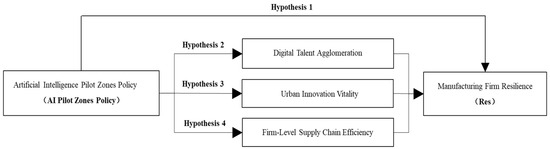
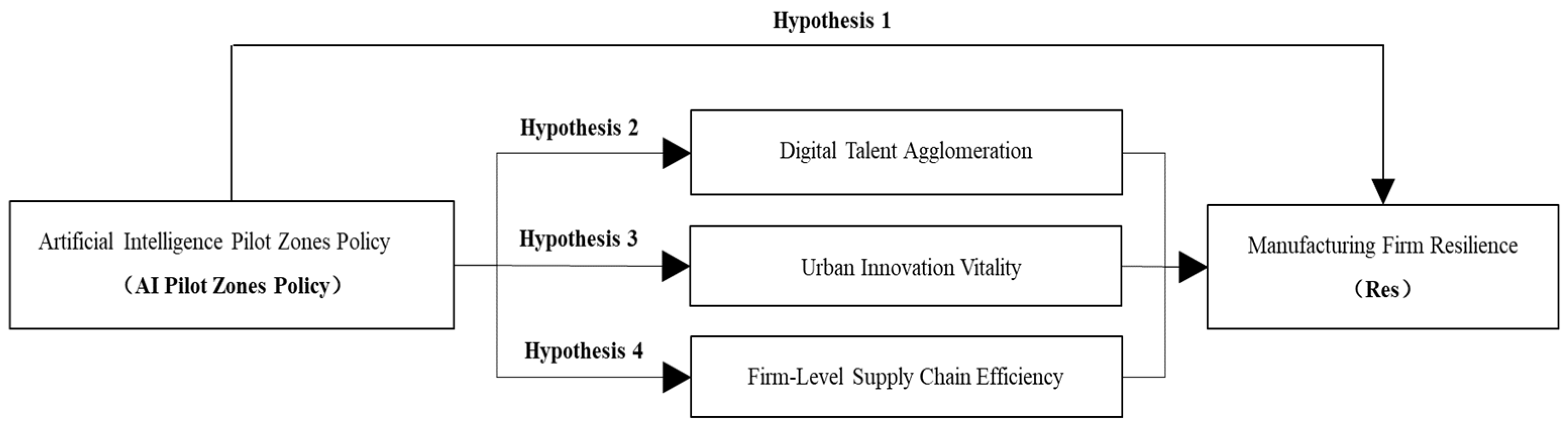
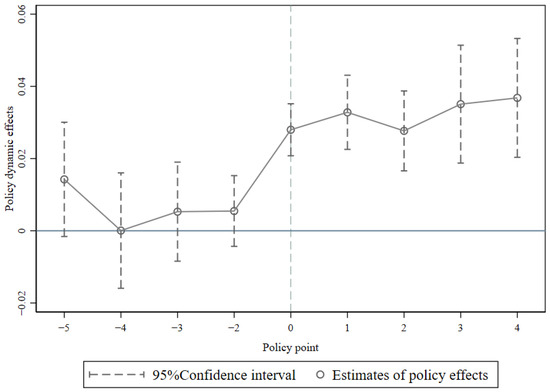
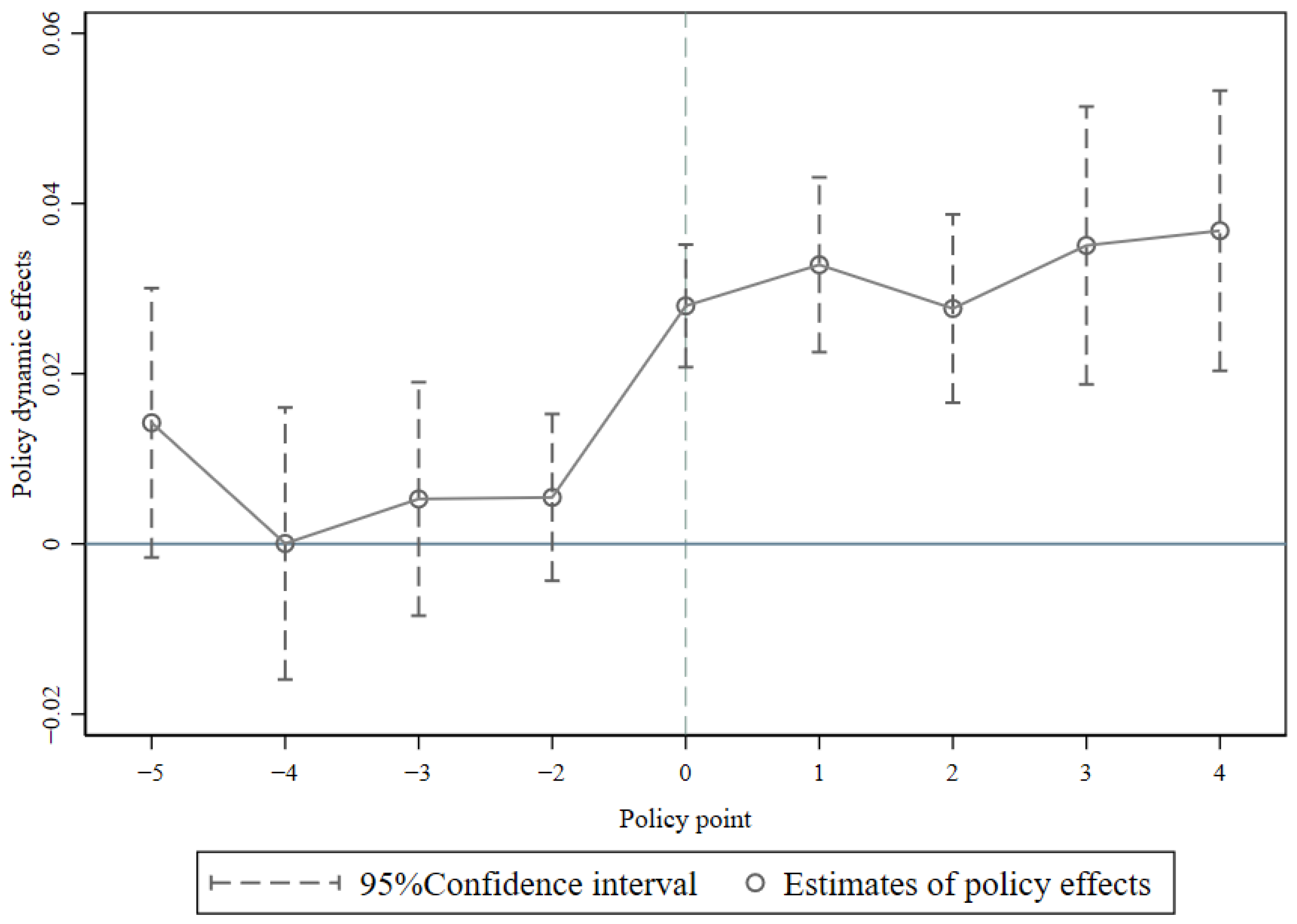
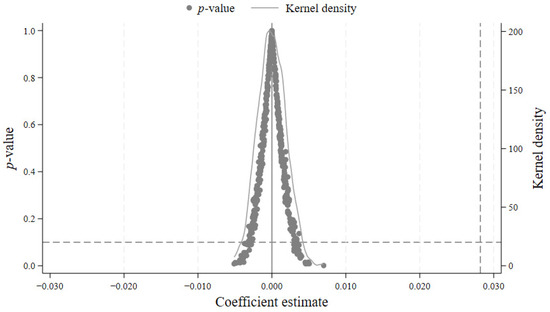
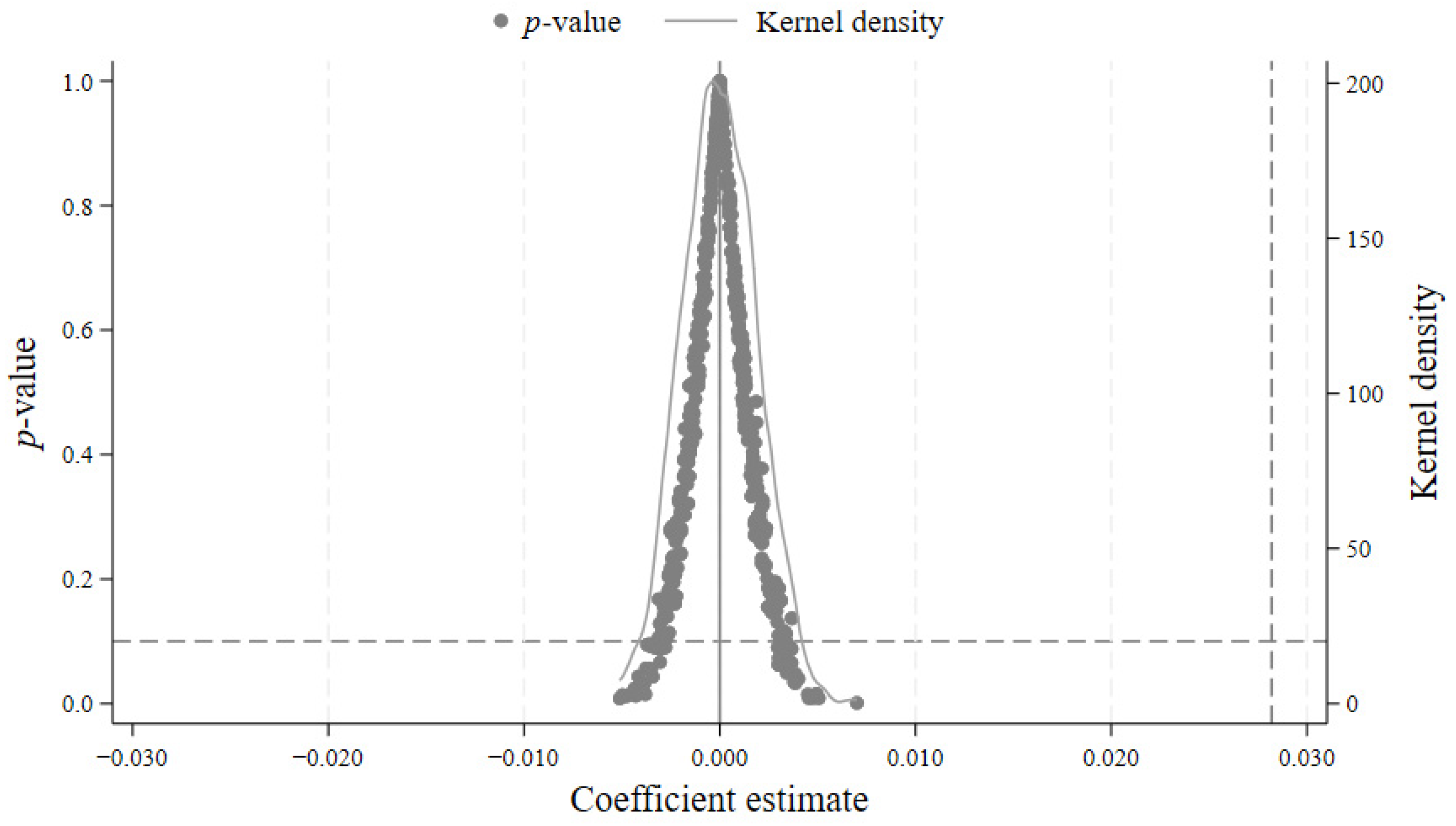

Disclaimer/Publisher’s Note: The statements, opinions and data contained in all publications are solely those of the individual author(s) and contributor(s) and not of MDPI and/or the editor(s). MDPI and/or the editor(s) disclaim responsibility for any injury to people or property resulting from any ideas, methods, instructions or products referred to in the content. |
© 2026 by the authors. Licensee MDPI, Basel, Switzerland. This article is an open access article distributed under the terms and conditions of the Creative Commons Attribution (CC BY) license.