


Abstract
Microplastics (MPs), defined as plastic particles smaller than 5 mm in diameter, are an emerging class of environmental contaminants of global concern. As the “Water Tower of Asia” and a critical global ecological barrier, the environmental condition of the Qinghai–Tibet Plateau has a direct influence on the ecological security of major river systems and the well-being of populations downstream. MPs have now been detected across multiple environmental compartments on the plateau, including soils, water bodies, and glaciers. Given the fragility and ecological uniqueness of the region, systematic investigation of plastic pollution here is essential for safeguarding its ecological security. Based on current research, existing data on MP pollution across the Qinghai–Tibet Plateau are reviewed and synthesized. Evidence suggests that the abundance of MP varies significantly across different environmental media in various regions and is influenced by multiple factors. Two major potential sources are identified: local anthropogenic activities and transboundary inputs via atmospheric transport and other pathways. The unique environmental conditions of the region, such as intense ultraviolet radiation, large day–night temperature variation, and frequent high-wind events, provide a distinctive setting for the migration, dispersion, transformation, and degradation of MPs across environmental matrices. Understanding the distribution, sources, and migration patterns of microplastics on the Qinghai–Tibet Plateau will help facilitate sustainable environmental management, ecosystem conservation, and pollution control in these fragile high-altitude regions.
1. Introduction
In 2004, the term “microplastics” was first introduced [1] to describe small plastic particles observed in marine sediments. Typically defined as plastic fragments with a diameter of less than 5 mm, MPs are categorized into primary MPs (directly manufactured) and secondary MPs (derived from the fragmentation and weathering of larger plastic debris). As the use of plastic products continues to expand across various sectors, plastics that resist effective degradation persistently generate substantial quantities of MPs through physical, chemical, and biological processes [2]. MPs are now widely documented in environmental compartments, including oceans [3], soil [4], and surface water [5]. Studies have shown that MPs can interfere with essential plant physiological processes, such as photosynthesis and respiration [6,7]. Moreover, MPs can enter the human body via dermal contact, inhalation, and ingestion, and have been detected in human lungs [8], liver [9], kidneys [10], and blood [11], where they may induce inflammatory responses and cellular damage [12], posing significant risks to biosafety. Consequently, research on MP pollution has emerged as a critical scientific priority, with investigations now being conducted globally. However, the majority of these studies have been concentrated on oceans and urban environments, while research addressing the occurrence characteristics, migration, transformation, and ecological assessment of MP pollution in high-altitude cold regions—which are characterized by fragile and sensitive ecosystems—remains relatively limited.
The Qinghai–Tibet Plateau, often referred to as the “Third Pole of the World,” the “Water Tower of Asia,” and the “Roof of the World,” exhibits unique ecological advantages marked by distinctiveness and diversity. However, it simultaneously faces substantial challenges, including ecosystem fragility, slow recovery rates, and extensive downstream environmental impacts [13]. Current research indicates that MPs have been detected in the Qinghai–Tibet Plateau region [14]. Despite the Qinghai–Tibet Plateau’s remote location, high elevation, and rugged terrain—which limit human disturbance—MP pollution has still been detected. Given the region’s ecological fragility, research on MP pollution in this area is becoming increasingly important.
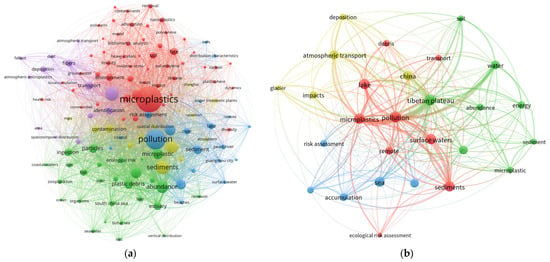
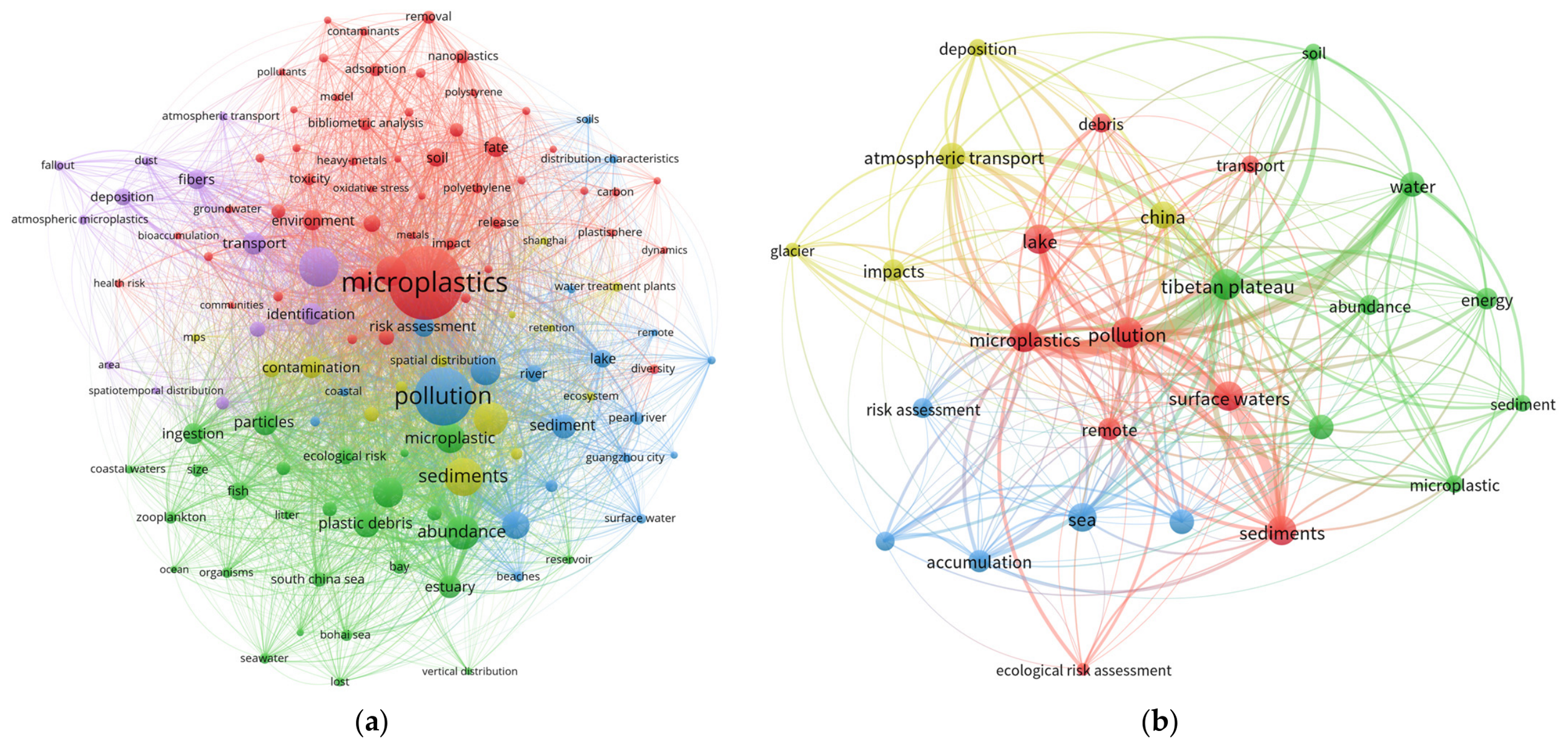
As shown in Figure 1a. Using the Web of Science Core Collection database, the search was conducted using the Topic (TS) field, with a focus on keywords. A keyword search and visualization analysis were conducted using the terms (TS = “microplastics” and “China”) on literature published over the past five years (2022–2026) (Searched on 15 June 2026). A total of 1378 relevant research papers were identified, indicating that MPs’ research has developed into a relatively broad and active field within China. In contrast, when searching the same database at the same time without applying any filters and using the search terms (TS = “microplastics” or “plastic fragments” and “Qinghai–Tibet Plateau” or “Third Pole” or “Water Tower of Asia”), only 61 research papers related to the Qinghai–Tibet Plateau were found. This indicates that research on MPs in this region remains severely inadequate, and the overall data foundation is relatively weak. However, as a critical global ecological security barrier and a key region for climate regulation, the Qinghai–Tibet Plateau possesses a unique geographical location and ecological functions; environmental changes there have significant implications for both regional and global ecosystems. Therefore, strengthening systematic research on MP pollution in this region is of great scientific significance and urgent practical importance. The keyword network analysis in Figure 1b indicates that current research on MPs in the Tibetan Plateau region primarily focuses on their environmental distribution characteristics, potential sources, and migration processes across different environmental media. Among these, water bodies, sediments, and soil are the primary focus of current research. Existing studies have shown that MPs can undergo cross-media transport and redistribution between the atmosphere, soil, and water bodies through various natural processes, including wind-driven dust transport [15], rainfall [16], snowfall [17], and surface runoff [18,19]. Therefore, systematic research into the distribution patterns and migration mechanisms of MPs in various environmental media plays a critical role in identifying sources of pollution, analyzing transport pathways, and elucidating their environmental fate. At the same time, such research helps deepen the multidisciplinary understanding of plastic pollution in the ecologically sensitive Qinghai–Tibet Plateau region and provides a scientific basis for future environmental management and risk assessment.
Figure 1.
Keyword co-occurrence network of the selected studies generated using bibliometric analysis: (a) A keyword network diagram generated using the search terms (“microplastics” and “China”); (b) A keyword network diagram generated using the keywords (“microplastics” or “plastic debris”) and (“Tibetan Plateau” or “Third Pole” or “Water Tower of Asia”); Different colors represent different cluster groups.
2. Characteristics of Microplastic Distribution in Different Environmental Media
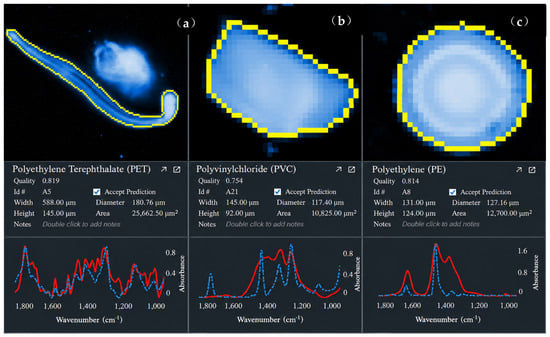
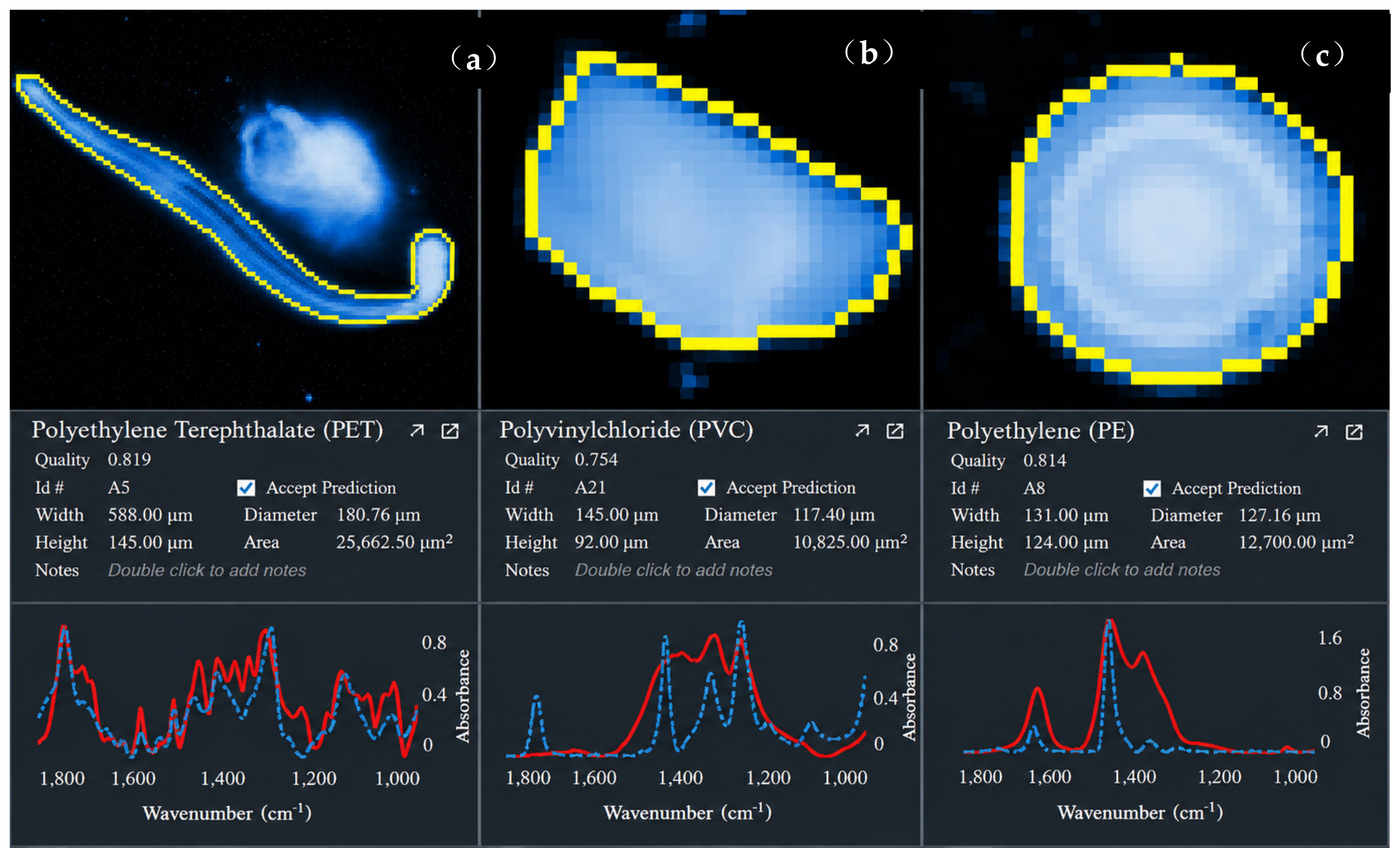
Occurrence characteristics refer to the spatial distribution pattern of a substance, as reflected by key indicators such as abundance, polymer type, color, morphology, and size (Figure 2). These parameters serve as primary descriptors for characterizing the presence of MPs in environmental systems [20]. The specific occurrence patterns of MPs are known to vary significantly across different environmental matrices [21], illustrating the relationship between MPs and their surrounding environment.
Figure 2.
Chart of Basic Characteristics of MPs Detected by Laser Direct Infrared Imaging (LDIR) (Shape, Size, Polymer Type). The blue spectrum represents the reference spectrum from the standard library, the red spectrum represents the experimentally measured spectrum of the sample. (a) Polyethylene terephthalate (PET); (b) Polyvinylchloride (PVC); (c) Polyethylene (PE).
A growing body of evidence suggests that MP pollution in remote, high-altitude environments is a global phenomenon. Among five high-altitude lakes in the Andes at elevations ranging from 3848 to 4245 m, the average MP abundance in the water was 10 ± 5 MP·m−3, while the average MP abundance in dry sediments reached 2838 ± 1489 MP·kg−1 [22] (The number of microplastic particles per unit dry weight of sediment). This indicates that even in high-altitude regions where human activity is relatively limited, lake systems are still widely affected by MP pollution. Cesarini et al. conducted a study of two high-altitude lakes (Paione Superiore and Paione Inferiore) in the Western Italian Alps and their outflows, and found that MP abundance gradually increased from the upstream lake (0.04 items·m−3) to the downstream lake (0.15 items·m−3) and the outflow (0.26 items·m−3) [23]. This finding indicates that hydrological connectivity and local human activities jointly influence the transport, accumulation, and spatial distribution of MPs in alpine lake systems. In addition to aquatic environments, snow and ice environments are also significant reservoirs of MPs in high-altitude regions around the world. Allen et al. were the first to demonstrate, using snow samples from the French Pyrenees, that long-range atmospheric transport can carry MPs into remote mountainous regions [24]. The large amounts of MPs detected in Arctic snow further illustrate that snow can efficiently capture and concentrate MPs transported from the atmosphere [25]. Parolini et al. also detected MPs in snow in the Alps but found no plastic particles larger than 5000 μm [26]. This indicates that MPs entering high-altitude regions consist primarily of these small-particle-size particles, further supporting the view that MPs are transported long distances through the atmosphere into remote mountainous areas.
Compared with other mountain ranges, the Qinghai–Tibet Plateau is home to the world’s largest high-altitude cryosphere and plays a vital role as the “Water Tower of Asia.” This makes it an ideal natural laboratory for studying the global transport, environmental fate, and inter-medium migration of MPs. As a result, this region has become a key global area for studying the distribution characteristics and cycling effects of MPs in various media.
2.1. Microplastics in Soil
The agricultural regions of the Qinghai–Tibet Plateau are predominantly distributed across the southeastern river valley plains, the Huangshui River valley in eastern Qinghai Province, and the Yarlung Zangbo River valley in southern Tibet. Although traditional farming practices remain widespread on the plateau, plastic mulching and greenhouse technologies have been increasingly adopted in certain areas due to the region’s harsh climatic conditions. Nevertheless, with the ongoing expansion of plastic-based agricultural practices, plastic pollution has emerged as a serious environmental concern. Such contamination has now been detected in soils under various land-use types, including orchards, grasslands, and woodlands [27].
Studies have shown that MPs are present in various soil types on the Qinghai–Tibet Plateau [28]. In soil samples collected from five regions of Qinghai Province—Huangyuan, Huangzhong, Datong, Hainan, and Haixi—which vary in elevation, the spatial distribution of MP abundance has been found to correlate with altitude [29]. However, no causal relationship between the two has been established. Although studies have shown that MP abundance generally decreases with increasing altitude. This phenomenon is not directly caused by altitude itself. It more likely reflects differences in the intensity of human activities associated with altitude [29]. On the Qinghai–Tibet Plateau, higher elevations correspond with lower population density, slower urbanization, and reduced human disturbance. Thus, the observed correlation between MP abundance and altitude essentially reflects variations in human activity levels across different elevations, which indirectly shape the altitudinal distribution of MPs. This relationship is supported by Kakade et al., who confirmed a strong positive correlation between soil MP abundance and local population density [30].
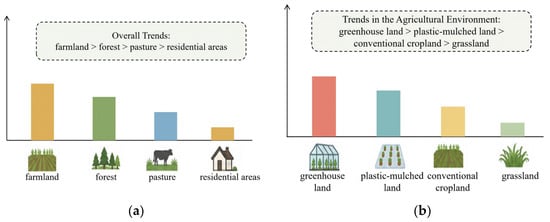
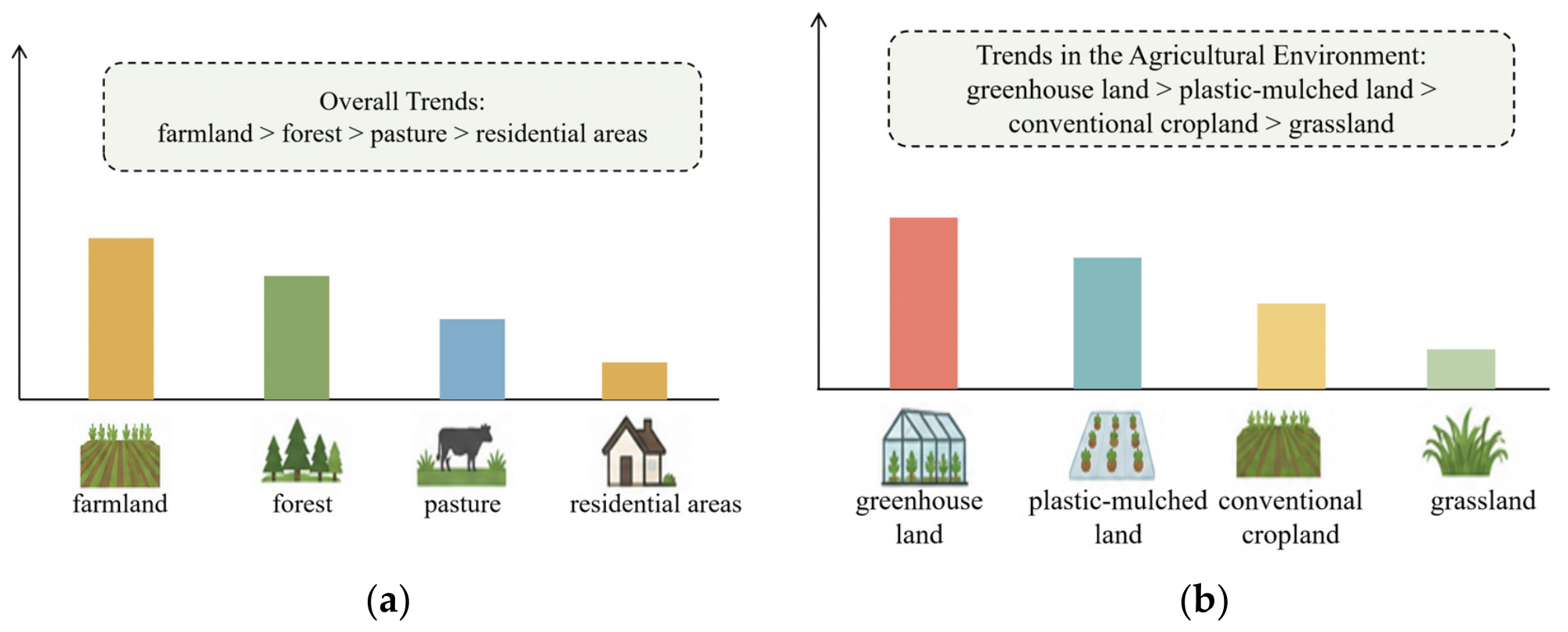
Among different land-use types, MP abundance has been observed to follow the descending order (Figure 3a): farmland > forest > pasture > residential areas [31], with plastic mulch likely representing a primary source of soil MPs. Furthermore, research by Zhou et al. indicates that agricultural practices (such as surface water irrigation) have been shown to exacerbate MP accumulation in farmland soils [31].
Figure 3.
Comparison chart of MP abundance across different land-use types: (a) Comparison chart of MP abundance in soil across different environments; (b) Comparison chart of MP abundance in agricultural soil. Note: The height of the bar chart represents relative rankings, not actual abundance.
Within agricultural settings, the study states that MP abundance varied as follows (Figure 3b): greenhouse land > plastic-mulched land > conventional cropland > grassland [32]. Another study similarly ranked MP abundance across soil land-use types as greenhouse > conventional cropland > bare land > grassland [33]. These findings further support the conclusion that plastic mulch serves as a key contributor to soil MP pollution. It is also demonstrated that land-use patterns, regional climate, and soil properties collectively shape the distribution characteristics of MP particles in soil, with land-use patterns playing a dominant role [27]. In an investigation of the relationship between land-use types and MP distribution along major highways on the Qinghai–Tibet Plateau [34], the data revealed fluctuating trends: MP abundance was significantly higher in bare land and grassland than in conventional farmland. This pattern highlights the diverse sources of MPs in agricultural soils, including tourism, transportation, and atmospheric deposition.
In the existing literature, the polymer composition of MPs in soils varies across studies but shows consistent general trends. PE, polyamide (PA), polystyrene (PS), and polypropylene (PP) are the most frequently detected polymer types in agricultural soils, indicating that MPs in these environments may originate from common sources. In contrast, studies conducted in human settlement areas have shown a different polymer profile: PET accounted for the highest proportion (42.42%), followed by cellulose acetate (CA) (24.24%) and rayon (18.18%), reflecting a distinct compositional signature compared to agricultural zones [30]. In addition, PVC has been reported to constitute up to 27.7% of MPs in certain soils. Pollution by PVC is associated with the degradation of greenhouse films, packaging materials, PVC pipes, and other consumer products such as raincoats, tablecloths, and curtains [35]. This polymer composition presents notable ecological risks, underscoring the environmental challenges faced in the region.
More than 70% of the MPs detected in soils across the Qinghai–Tibet Plateau are smaller than 1 mm in size. The environmental conditions and the duration of exposure within a given environment are likely key factors influencing the size distribution of MP particles. At elevations above 3000 m, the proportion of MPs smaller than 0.5 mm is higher compared to lower altitudes, suggesting that high-elevation conditions may accelerate plastic degradation processes [29]. Furthermore, across different service lifespans of plastic films, MPs in the 100–500 μm range constitute the largest fraction. As the service lifespan increases, the proportion of particles smaller than 100 μm rises, while that of particles larger than 100 μm declines [36]. Most studies indicate that fragmentary is the most common morphological form of MPs in the region. Transparent and black are the dominant colors of MPs in the Qinghai–Tibet Plateau environment [31,37,38], which is largely attributed to agricultural inputs. Colored plastic fragments are more frequently found in proximity to human activity, and the presence of a smaller proportion of colored MPs may be linked to textile fibers [39]. Additionally, the aging and degradation of multicolored prayer flags, which are commonly made of synthetic polymer materials and widely used in the Qinghai–Tibet Plateau region, represent another potential source of plastic pollution.
2.2. Microplastics in Water and Sediments
As the “water tower of Asia,” the Qinghai–Tibet Plateau serves as the headwater source for many major rivers, supplying abundant water resources that support extensive agricultural and industrial activities. In recent years, MP contamination in the plateau’s aquatic systems has attracted increasing attention. Studies indicate that MP pollution is widespread and relatively evenly distributed across rivers and lakes on the Qinghai–Tibet Plateau (Table 1). Compared with other regions, the abundance of MPs in both water and sediments (dry weight) of this area remains relatively low, with the predominant polymers identified as PP, PE, and PET. In aquatic environments, transparent and white MPs are most frequently observed, primarily in the form of fragments, fibers, and films, with the majority of particles measuring less than 500 μm. Despite their currently low abundance, the potential hazards posed by MPs in this ecologically sensitive region warrant serious consideration.
Table 1.
Occurrence characteristics of MPs in some water bodies and sediments on the Qinghai–Tibet Plateau.
MP abundance in water bodies and sediments exhibits significant spatiotemporal variations. These variations are primarily driven by human activities (tourism, transportation, etc.) and natural factors (elevation, salinity, etc.) [40,43].
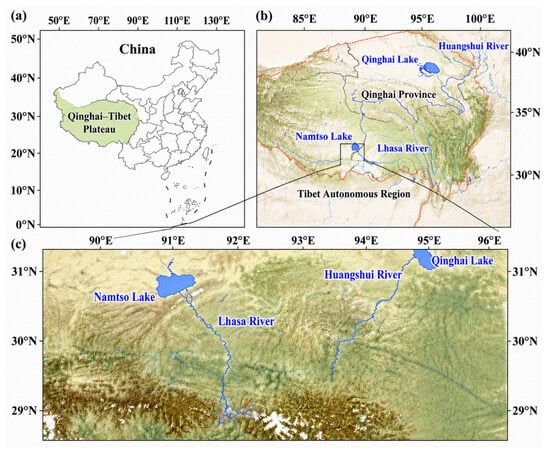
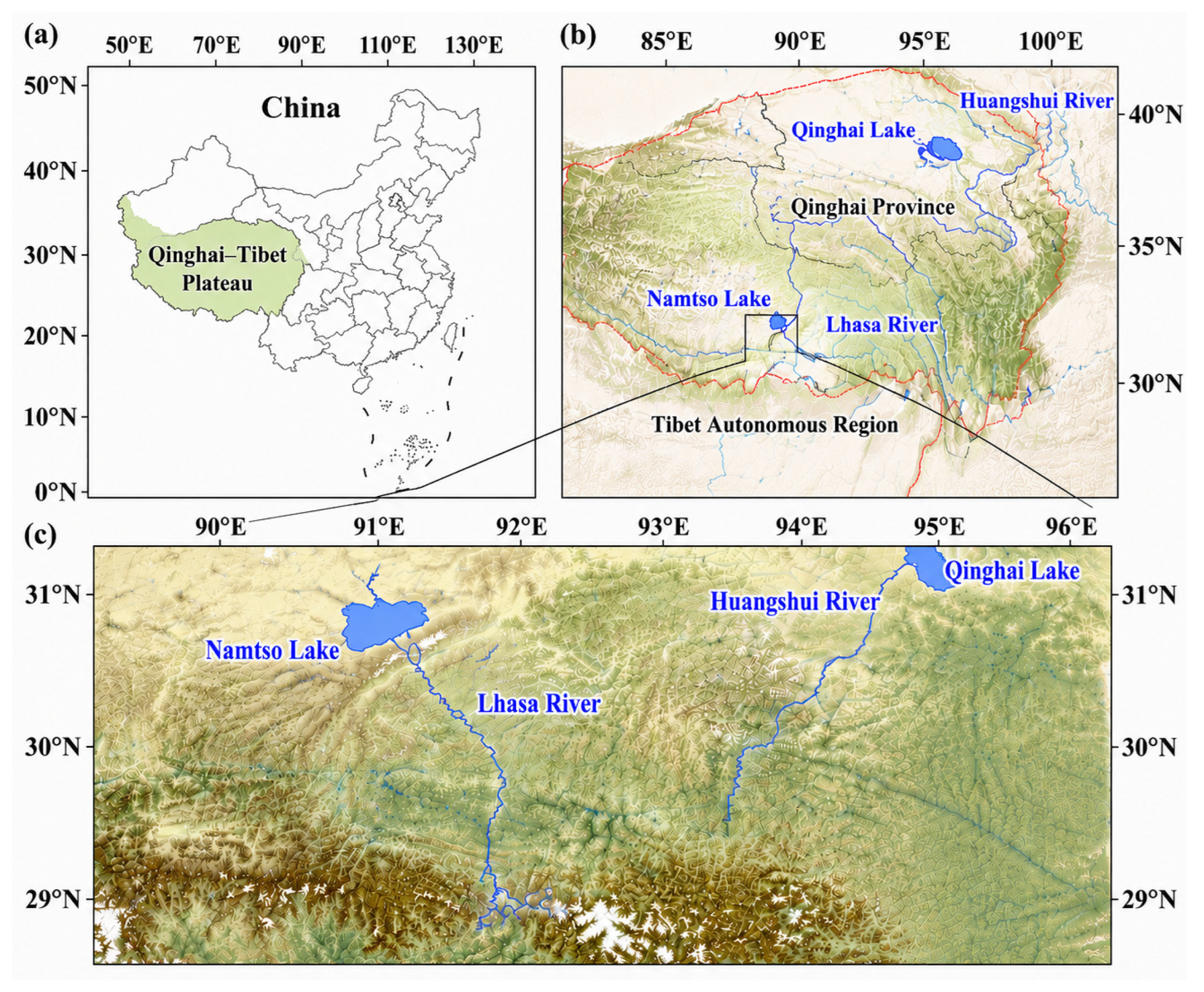
From a spatial perspective, previous studies have compared MP distribution patterns among popular tourist sites, ordinary tourist areas, and remote lakes on the Qinghai–Tibet Plateau [40] (Figure 4). Their findings indicate that MP abundance in lakes near popular tourist attractions is significantly higher than in other areas. Within river systems, MP abundance in the water of the Huangshui River was found to be markedly greater than in the Lhasa River, while the opposite trend was observed in the sediments of the two rivers [42]. Within the lake system, MP abundance is higher in Qinghai Lake than in Nanke Lake, and the sediment samples from the two lakes also show opposite trends. Researchers believe this difference is closely related to the intensity of human activity [44,45]. We speculate that factors such as river gradient and water salinity may also influence it. The Lhasa River has a gentle gradient and moderate flow velocity, which facilitates the deposition of suspended particles such as fine MPs, resulting in high concentrations of sediment. The Huangshui River has a steeper gradient and stronger current, which inhibits sedimentation and results in a higher retention of fine particles in the water [42]. The higher salinity of Qinghai Lake may enhance the flotation of MPs, keeping them suspended in the water, whereas in Namtso Lake, a greater proportion appears to. We speculate that this difference is not only closely related to the intensity of human activity but may also be influenced by factors such as changes in terrain slope and salinity [40]. However, this hypothesis needs to be verified in future studies.
Figure 4.
Location of study area on Qinghai–Tibet Plateau. (a) Map showing the geographical location of the Qinghai–Tibet Plateau. (b) Major rivers and lakes in the study area. (c) Detailed geographical in-formation map of the Lhasa River, Huangshui River, Qinghai Lake, and Namtso Lake in the study area. (The red dotted line in (b) delineates the Qinghai–Tibet Plateau region).
A study reported that MP abundance in the Yalong River basin increased from upstream to downstream [46]. In contrast, the Lhasa River showed an opposite pattern, with higher concentrations in the upper reaches than in the lower reaches—a trend influenced by the presence of two reservoirs along its course. Sediment MP levels within these reservoirs were substantially higher than in upstream and downstream river sediments, highlighting the role of reservoirs as significant sinks for MPs. Hydraulic engineering structures alter hydrodynamic conditions, reducing flow velocity and transport capacity, thereby enhancing the deposition and retention of MPs in sediments [47].
From a temporal perspective, MP concentrations in water samples collected from the Mount Everest region were significantly greater in the non-monsoon season (2280–104,283 items·m−3) compared with the monsoon season (504–38,221 items·m−3). This pattern is likely explained by the concurrent dilution from glacial meltwater and precipitation during the monsoon. Although glacial melt releases MPs into river systems, during the monsoon season, the overall concentration of MPs in rivers appears to be diluted by glacial meltwater rather than significantly increased by glacial discharge. Therefore, the diluting effect of glaciers is more pronounced in this process. However, seasonal temperature fluctuations (such as those in the upper Yangtze River region) can significantly increase the input of MPs during the spring snowmelt period, thereby triggering short-term concentration peaks [48]. The relationship between MP abundance in rivers and glacial meltwater, therefore, cannot be simply attributed to the release of MPs or the dilution of water bodies. This relationship is actually more complex and is influenced by a combination of factors, including changes in runoff, pollutant inputs, seasonal transport processes, as well as temperature gradients, precipitation, and the distance between rivers and pollution sources. This is also an important area of research for future studies on the factors influencing the transfer of MPs between different media.
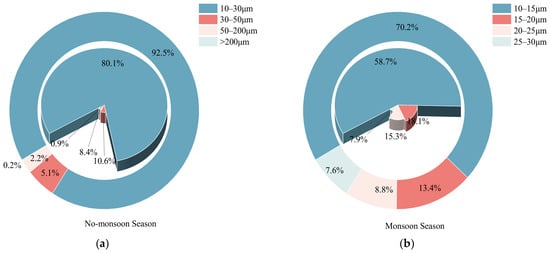
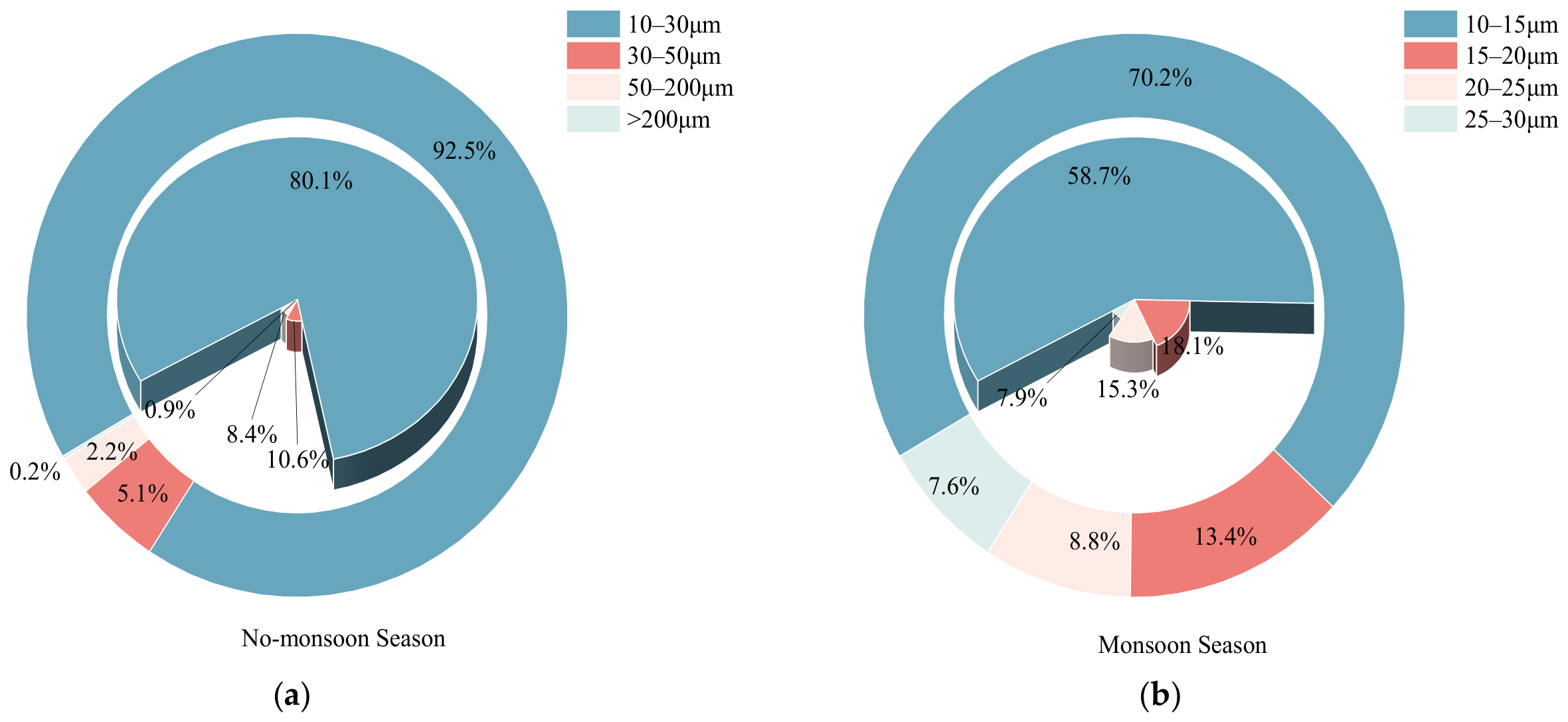
PP and PE were the dominant polymer types in aquatic and sedimentary MPs, with films and fragments representing the primary forms. Transparent particles constituted the most abundant category among colored MPs, with all characteristics demonstrating distinct spatiotemporal distribution patterns. In regions of intensive agriculture, transparent, black, and white fragmentary PP and PE MPs accounted for a significant share [43,49], whereas areas with active tourism exhibited greater diversity in particle morphology, color, and chemical composition [40]. Investigations into glacial meltwater effects on riverine MPs further identified shifts in polymer types between seasonal periods, linked to variations in climate, atmospheric deposition sources, and local human activities [48]. The monsoon season was also observed to markedly influence particle size distribution: during the non-monsoon season, particles <30 μm dominated in both water and sediment (Figure 5a). It is worth noting that a small number of larger MP particles (30–200 μm) were also detected. While during the monsoon season, all detected MP particles were <30 μm (Figure 5b). This finding may provide important clues for understanding how meteorological factors influence the distribution patterns of MPs.
Figure 5.
Particle size distribution of MPs in river water and sediments in the Mount Everest region during the non-monsoon and monsoon seasons [48]: (a) Non-monsoon season; (b) monsoon season (outer circle: water samples, inner circle: sediment samples).
2.3. Microplastics in Glaciers
Studies have shown that snow and ice exhibit stronger accumulation effects for MPs compared with rainfall events. Snowfall can enhance the atmospheric deposition and transfer of MPs to terrestrial and aquatic environments through scavenging processes [50]. In high-altitude regions, glaciers serve as important reservoirs for atmospheric deposition, where MPs accumulate and are stored. The distribution of MPs within glaciers displays distinct regional patterns, with variations also evident between different glacial systems.
Considerable spatial variation is observed in glacial MP abundance. Marked differences exist across glacial sites: MP abundance reached (871.34 ± 277.69) items·L−1 in the Kuoqiongangri glacier [51], compared with only (9.55 ± 0.9) items·L−1 in high-altitude snow pits of the southeastern Tibetan Plateau [52] and an average of 19.3 items·L−1 in snow from the Geladandong [53]. Seasonally, MP levels during the monsoon (14.57 ± 0.9 items·L−1) significantly exceeded those in the non-monsoon period (8.03 ± 0.72 items·L−1) [28], primarily driven by enhanced atmospheric transport and meltwater release during the monsoon. Together, these findings demonstrate pronounced spatiotemporal fluctuations in glacial MP accumulation.
MP polymer types exhibit substantial variability across different glaciers, offering important tracers for source identification. In the Qinghai–Tibet Plateau region, glacial MPs are primarily composed of low-density polymers, including PE, PA, PET, and rubber [51]. Low abundances of acrylonitrile–butadiene rubber (NBR) [53], CA [28], and rubber [51,54] have also been detected in glacials and adjacent tourist areas. Principal component analysis indicates that such MPs are associated with tourism and transportation sources, reinforcing evidence of human activity as a key contributor to glacial MP accumulation.
Morphologically, fragmented and fibrous forms comprised the largest share of MPs, reflecting substantial physical weathering in glacial settings. Chromatically, black, transparent, and white particles were the most frequent in snow and ice samples [31,37,38,52]. Minor amounts of colored MPs, possibly linked to textile fibers, were also detected [39]. Clear seasonal differences in coloration were noted: rainy-season MPs were primarily black, while those in the non-rainy season showed greater color diversity [52]. This shift is thought to correspond to seasonal changes in tourism (including hiking, camping, etc.) and other human activities. It is noteworthy that dark particles, owing to their light-absorbing nature, may enhance glacial melt rates [39]. Particle-size analysis indicates that MPs in Tibetan Plateau glaciers are predominantly small, with 10–50 μm particles exceeding 60% of the total and over 80% under 100 μm [51]. This pattern implies significant fragmentation occurs during long-distance atmospheric transport before glacial deposition [52]. This provides direct evidence of severe environmental weathering and degradation in these environments.
2.4. Microplastics in the Atmosphere
Atmospheric MP abundance on the Qinghai–Tibet Plateau remains relatively low overall. Using active sampling on 21–22 February 2023, Guo et al. reported an average concentration of (7.15 ± 2.46) MPs m−3 in the atmosphere of Lhasa [55], a value substantially higher than the 5 particles·m−3 recorded in the Thajwas glacier Valley of the Himalayas (combined active and passive sampling) [56]. This finding supports the association between higher anthropogenic activity and elevated atmospheric MP levels. In contrast, MP abundance in the air above the glacier of Geladandong was only 0.12 items·m−3 (passive sampling) [53], representing notably lower concentrations. This contrast may be attributed to the atmospheric purification capacity of glaciers: they can act as “natural reservoirs” for atmospheric pollutants, accumulating and removing airborne contaminants through physical deposition and chemical adsorption processes [54,57,58]. This discrepancy may also be attributed to differences in sampling methodologies, which could lead to an underestimation of atmospheric MP abundance in this area.
The polymer composition of atmospheric MPs is varied, with PET and PE being the most prevalent. More than 80% of particles are below 100 μm in size, aligning with the understanding that smaller particles remain airborne more readily. Fibrous MPs constitute the dominant morphological type in most regions, though a few studies report substantially greater proportions of fragmented forms. In urban areas such as Harbin [59], Kunming [60], and Yichang [61], fibrous MPs exceeded 50% of collected particles, possibly because fibers are more easily identified and categorized than fragments. In contrast, in Shijiazhuang [62], Hainan [63], and Wenzhou [64], fragment-shaped MPs accounted for over 75% of atmospheric MPs. These discrepancies may also reflect variations in sampling approaches and detection methods.
Overall, due to differences in the intensity and patterns of human activities, MP pollution levels in various environmental media across the Qinghai–Tibet Plateau vary considerably, but the overall concentration remains. It is important to note, however, that owing to the unique and ecologically fragile nature of this region, even low-level MP contamination may pose considerable ecological risks. Plasticizers and flame retardants associated with MPs can readily leach into the surrounding environment, elevating environmental toxicity and threatening the survival and reproduction of local wildlife. Furthermore, MPs of certain colors can accelerate glacial melting. The high surface area-to-volume ratio of MPs, especially those with irregular shapes, provides abundant adsorption sites for pollutants such as heavy metals, thereby exacerbating contamination.
3. Sources of Microplastics on the Qinghai–Tibet Plateau
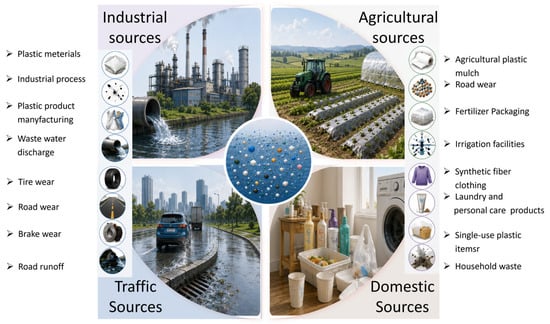
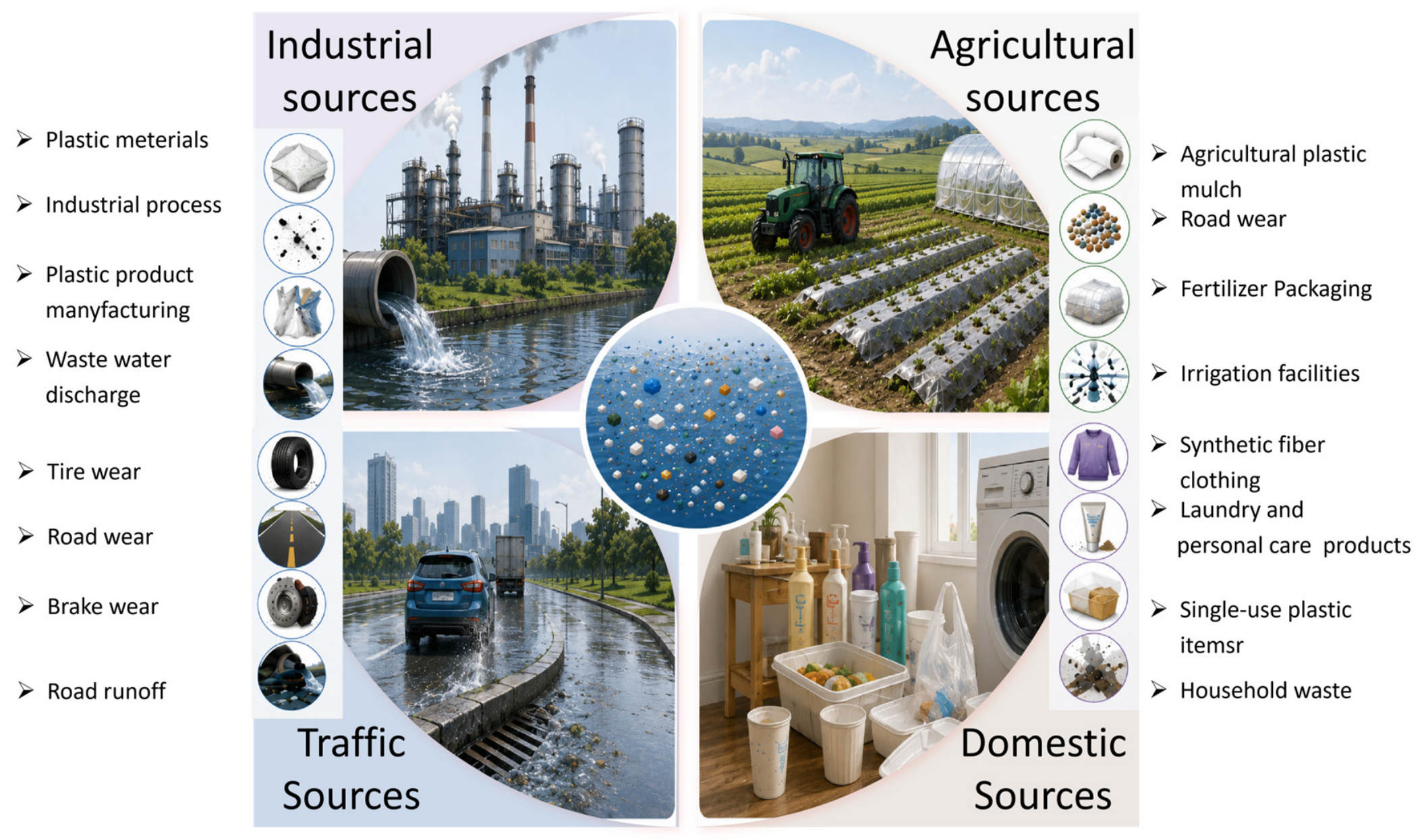
The distinctive geographical setting, climatic conditions, and anthropogenic activities on the Qinghai–Tibet Plateau result in plastic pollution arising from both local sources and transboundary transport (Figure 6). Local contributions may originate from the extensive use of agricultural plastic mulch, coupled with inadequate recycling management, as well as from tire wear associated with road traffic. In parallel, the region’s natural environment may facilitate the atmospheric and hydrological transport of MPs across boundaries.
Figure 6.
Sources of MPs on the Tibetan Plateau.
3.1. Local Source
In response to the limitations imposed by high-altitude cold climates on farming, greenhouse cultivation and plastic film mulching are predominantly used for crops such as cucumbers and tomatoes. In Qinghai Province, plastic mulch coverage attains 78% in key grain-producing areas for crops including potatoes and corn [65]. Since plastic mulch technology was introduced to China’s arid and semi-arid regions in the 1980s, its application has continually increased. However, management of used plastic film lags far behind: in 2019, the global plastic recycling rate was only 9%, with about 22% of plastics remaining in the environment [66]. Plastic film abandoned in fields ages more rapidly under harsh conditions such as ultraviolet radiation and freeze–thaw cycling, and can be further mechanically damaged during tillage, ultimately breaking down into MPs under 5 mm in size [65]. This presents a barrier to low-carbon agricultural development and constitutes a substantial latent source of MP contamination.
A study investigating the relationship between MPs and tire wear has identified tire abrasion and brake wear as significant sources of MPs in the natural environment [67]. While high traffic volume is recognized as a major contributor to environmental MP pollution [68], a study has noted that areas associated with frequent braking and high speeds exhibit greater levels of tire wear compared to regions characterized solely by high traffic density [69]. Due to the treacherous terrain and complex road conditions along routes such as the Sichuan–Tibet and Yunnan–Tibet highways, driving demands are substantially heightened. The numerous sharp curves and steep gradients accelerate tire and brake wear, leading to increased emission of MPs into environmental media such as air and soil. This poses a considerable threat to the local ecosystems.
The Qinghai–Tibet Plateau, with its breathtaking landscapes, profound religious culture, and vibrant ethnic traditions, attracts a large number of tourists, creating favorable conditions for the rapid expansion of the local tourism sector. Data show that in 2023, tourism contributed over 10% to the region’s Gross Domestic Product (GDP) [70], highlighting its substantial role in local economic development. However, with the continuous growth of tourism, the ecological environment is facing increasing pressure: plastic bottles, food packaging, and other disposable plastic items are often discarded indiscriminately by visitors and remain in the environment. Furthermore, prayer flags made of synthetic fibers, which carry important religious and cultural significance, are widely used but seldom properly disposed of after use. These practices are likely among the major sources of MP pollution on the Qinghai–Tibet Plateau.
In summary, the use of agricultural plastic films, combined with inadequate recycling management, the intensified abrasion of tires and brakes under unique transportation conditions, and pollution resulting from human activities such as tourism and religious practices, constitute the potential main sources of MP contamination in this region. As these locally derived plastics degrade and weather in the environment, they may release toxic substances that directly threaten local ecosystems, biodiversity, and human health.
3.2. Cross-Border Transmission
While the Tibetan Plateau has limited local anthropogenic emissions of pollutants, it is significantly affected by external inputs [71]. Studies on atmospheric transport dynamics indicate that wind patterns are a key driver of MP migration. Airborne MPs can be carried by wind over distances exceeding 1000 km [72]. Using isotopic tracing techniques [24,26] confirmed that MPs originating from urban areas can be transported through the atmosphere to ecologically sensitive polar and alpine regions. This atmospheric transport mechanism plays a significant role in regulating the global distribution of MPs. Extensive research suggests that MPs may travel even longer distances via atmospheric circulation. Therefore, transboundary transport also represents a potential source of MPs in this region.
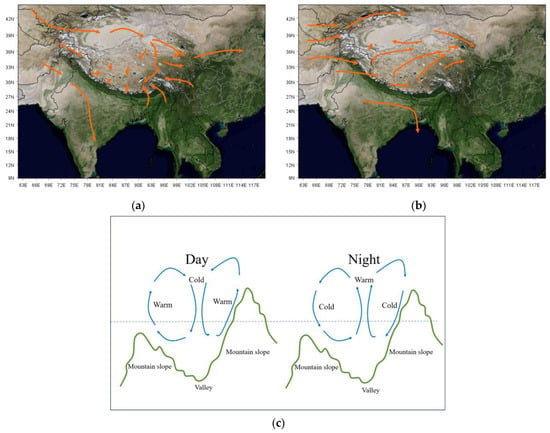
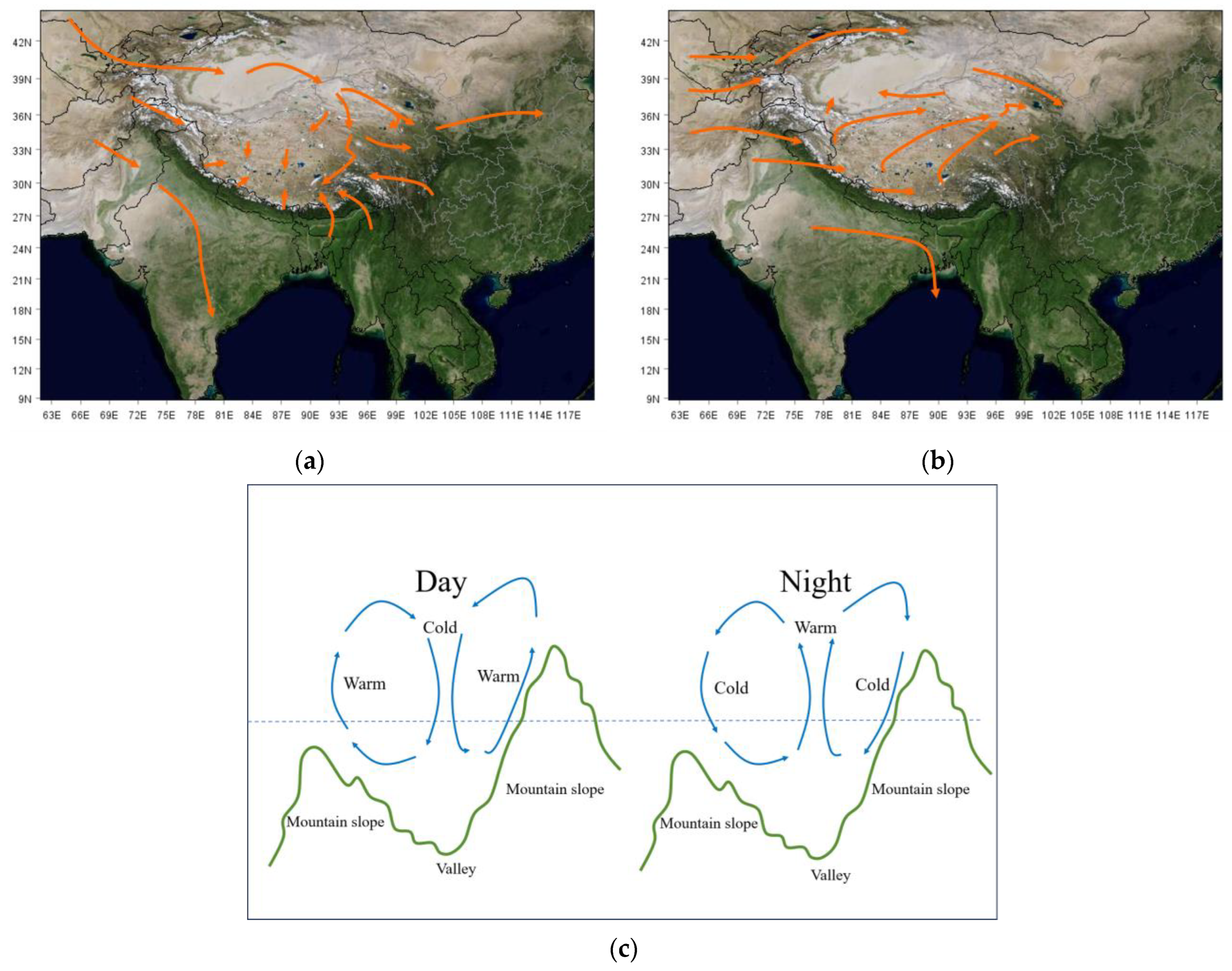
The sources of MPs on the Qinghai–Tibet Plateau are influenced by both large-scale atmospheric circulation and localized wind systems [73]. In the mid- to upper atmosphere, transport is primarily driven by large-scale systems such as the Indian monsoon and the westerlies, while near-surface transport may be shaped by small-scale mountain–valley wind circulations [74].
From a large-scale perspective, the Qinghai–Tibet Plateau lies at the convergence zone of the Indian monsoon and the westerlies, resulting in distinct spatiotemporal patterns in the transboundary transport of MPs. During summer, monsoonal flows carry boundary-layer pollutants northward along dry, warm air corridors (Figure 7a). Under thermal forcing over the plateau, these pollutants are lifted into the mid-troposphere. Under quasi-isentropic atmospheric conditions, pollutants can ascend gradually along sloping isentropic surfaces, traverse the Himalayan topographic barrier, and ultimately enter the atmosphere over the Tibetan Plateau [75]. In winter, westerly winds dominate the region (Figure 7b), further influencing the vertical distribution of MPs by enhancing vertical diffusion while inhibiting long-range horizontal transport [76,77,78].
Figure 7.
MP transport path on the Tibetan Plateau: (a) Atmospheric circulation map of the summer monsoon; (b) Atmospheric circulation map of westerly wind in winter; (c) Small-scale valley wind circulation map. (In (a,b), the orange lines represent the large-scale circulation. In (c), the green lines represent the valleys, and the blue lines represent the valley circulation.)
At smaller scales, mountain–valley circulations play an important role in diurnal pollutant transport. During the daytime, upslope winds carry pollutants from lowland areas toward the plateau. At night, cold-air subsidence restricts upward transport (Figure 7c) [79]. Together, large-scale high-altitude circulation and local wind systems establish an “active input–restricted output” mechanism, promoting the accumulation of pollutants in the near-surface layer of the plateau.
Additionally, north–south oriented valleys traversing the Himalayas have been identified as efficient corridors for pollutant transport, through which MPs may be conveyed onto the plateau. Relevant research indicates that MP abundance in the southern Tibetan Plateau is significantly higher than in the northern part [51,54]. Jiang et al. reported that the global atmospheric residence time of MPs varies by morphology, ranging from 9.74 to 22.85 days [80]. This timescale, combined with the unique meteorological conditions of the plateau, contributes to a distinct transport and accumulation pattern for MPs over the region.
Taken together, MPs transported from distant sources into the atmosphere over the Qinghai–Tibet Plateau have an indirect impact on the plateau environment. However, only a limited number of studies have used numerical modeling or similar approaches to characterize the patterns of such transboundary MP transport. Due to constraints imposed by the natural environment, monitoring technologies, and other practical limitations, the simulated transport patterns have yet to be fully validated. The spatial extent, efficiency, and pathways of cross-border MP transport into the Qinghai–Tibet Plateau therefore remain unconfirmed. This lack of clarity not only complicates global management of MP pollution but also poses significant challenges to establishing transnational collaborative monitoring and mitigation frameworks.
4. Migration Pathways
In recent years, considerable progress has been made in MPs’ research, yet important knowledge gaps persist regarding their complex dispersion mechanisms and transport pathways. MPs can adsorb a range of pollutants, acting as carriers for their accumulation and transport [50]. In the atmosphere, they share certain migration behaviors with other natural particulate matter. Primarily entrained by strong air currents, MPs enter the atmospheric environment and undergo horizontal advection. Concurrently, they are subject to vertical transport through processes such as wind erosion, gravitational settling, and wet deposition [81].
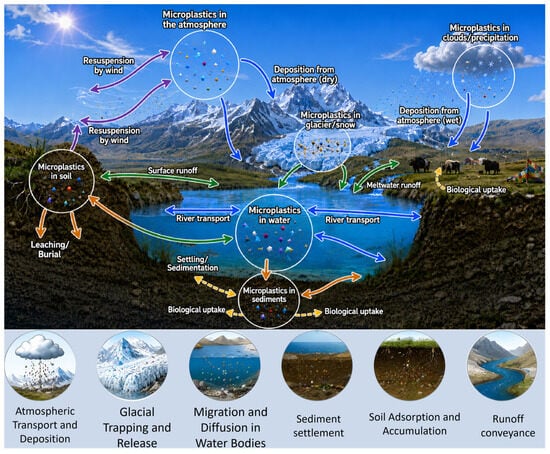
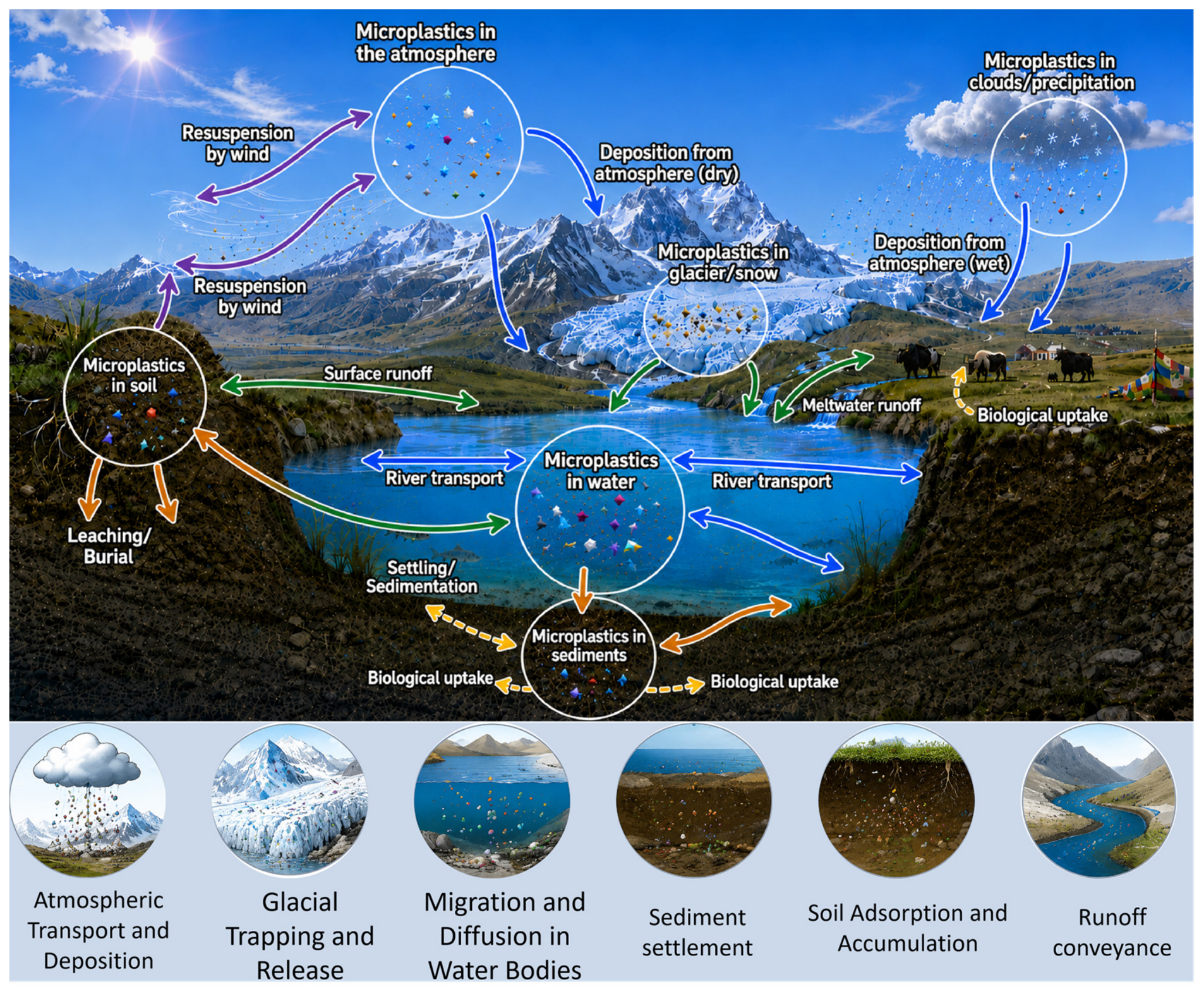
On the Qinghai–Tibet Plateau, MPs are transported and redistributed primarily through atmospheric dynamics, glacial melt systems, alpine river networks, and animal-mediated cycles (Figure 8).
Figure 8.
Migration pathways of MPs in soil, water, sediments, glaciers, and the atmosphere.
Under wind action, MPs undergo three modes of movement: creeping, saltation, and suspension [81]. Creeping and saltation facilitate the transport of MPs within soils, water bodies, and sediments, while suspension enables their entry into the atmosphere. Higher-density MPs tend to remain in soils and may migrate downward through leaching, potentially reaching groundwater systems. In contrast, lower-density particles are more readily lifted into the atmosphere via hydrological and wind-driven processes, allowing for long-range transport [82,83]. Once airborne, MPs can return to terrestrial environments—including soils, water bodies, sediments, and glaciers—through precipitation such as rain and snow. Studies indicate that snow deposition is significantly more efficient than rainfall at removing MPs from the atmosphere [50]. As a crucial source of river and lake water, glacial meltwater influences MP abundance in downstream systems. MP levels in rivers on the plateau vary seasonally, largely because atmospheric MPs accumulate in winter snow and ice and are later released into rivers during melt periods [53]. Additionally, meltwater inputs can dilute MP concentrations in rivers. During transport, MPs in rivers may settle into sediments under low-flow and low-disturbance conditions or be retained in soils through irrigation.
In brief MPs are capable of undergoing cyclical migration and transformation not only within environmental compartments such as soil, the atmosphere, glaciers, water bodies, and sediments but also through trophic transfer, circulating between the environment, organisms, and back to the environment. MPs can enter organisms via multiple pathways from different environmental media and may subsequently be returned to the environment through biological excretion, death, or decomposition. This cycle poses potential risks to species diversity in the Qinghai–Tibet Plateau region.
5. Ecological Impacts
The unique ecosystem structure, high species diversity, and distinctive geographical setting of the Qinghai–Tibet Plateau confer upon it a pronounced regional specificity and ecological complexity in facing the multifaceted challenges posed by MP pollution.
Firstly, MP pollution in the soil of this region has altered the structure of microbial and soil faunal communities. Studies based on field samples collected in the Qinghai–Tibet Plateau region indicate that the combined effects of MP additives and heavy metals further reduce bacterial diversity [84]. Another field study on the Qinghai–Tibet Plateau also found that soil nematode communities exhibited a concentration-dependent response to MPs [85]. Secondly, the unique wildlife of the region has become a sensitive group exposed to MP contamination. Researchers have detected MP particles primarily composed of acrylic copolymer (ACR) and polyurethane (PU) in the feces of Tibetan wild asses (Equus kiang) [86]. Significant amounts of MPs have also been detected in brine shrimp (Artemia), a keystone species in high-altitude saline lake ecosystems [87]. Therefore, based on the processes of bioaccumulation and biomagnification within the food chain of an ecosystem, this may pose a potential threat to endangered species endemic to the Qinghai–Tibet Plateau.
In addition, plants can absorb MPs through their roots and leaves [88]. The particle size thresholds for MPs vary among different plants and are influenced by a combination of factors, including plant species, stomatal size, and tissue structure. In general, the smaller the size of MP particles, the more likely they are to enter plants [89]. Once these plastic pellets enter plants, they interfere with their water and nutrient transport systems, thereby reducing their transport efficiency [90]. The extreme environment of the Qinghai–Tibet Plateau—often called the “Roof of the World”—is characterized by low temperatures, intense radiation, and nutrient-poor soils, forming a natural barrier to plant growth. The intrusion of MPs introduces an additional stressor for plants already struggling to establish themselves, further constraining their living space and threatening the fragile alpine vegetation.
It can thus be seen that, microplastic pollution in various environmental media across plateau regions may affect ecosystem structure, biodiversity, and the health of flora and fauna through multiple pathways, posing a continuous potential risk to fragile plateau ecosystems.
6. Conclusions and Outlook
6.1. Conclusions
This study examines MP pollution on the Qinghai–Tibet Plateau by summarizing the distribution characteristics, sources, and transport mechanisms of MPs across different environmental media. Findings indicate that:
- (1)
- Even in this remote region, far from industrialized urban centers and with limited direct human activity, MP pollution poses a significant threat.
- (2)
- Environmental factors such as intense solar radiation, extreme diurnal temperature fluctuations, and wind erosion can further accelerate the physicochemical changes in MPs. Leading to the formation of oxygen-containing functional groups, which enhance reactivity and the ability to adsorb pollutants, thereby strengthening its potential as a composite pollutant carrier.
- (3)
- As aging and degradation continue, the particle size of MPs gradually decreases, further promoting their migration and dispersion in the environment. Its circulation and redistribution within the region exacerbate the cumulative effects of pollution, thereby amplifying ecological risks.
6.2. Challenges in Microplastics Research
Significant challenges remain in the current research on MPs. On the one hand, due to differences in sampling methods, detection techniques, and data analysis systems, research on MP pollution has not yet established uniform standards, making it difficult to systematically integrate existing findings.
- (1)
- Different sampling methods can introduce systematic biases; for example, when the processing and analysis procedures are identical, total suspended particulate (TSP) sampling may yield higher pollution levels than fine particulate matter (PM2.5) or inhalable particulate matter (PM10) sampling.
- (2)
- There are differences in the detection capabilities of various analytical techniques; for example, micro-Raman spectroscopy (μ-Raman) typically detects higher microplastic concentrations than Fourier-transform infrared spectroscopy (FTIR) due to its lower detection limit.
- (3)
- At the same time, a systematic sampling network for the spatiotemporal distribution of MPs has not yet been established, and our understanding of the processes of dry and wet deposition of MPs remains incomplete. To some extent, these issues have hindered a deeper understanding of the characteristics of MP pollution and its environmental behavior.
On the other hand, limitations in the methods used to monitor the entire life cycle of plastics have directly led to significant uncertainty in research on the origin and migration patterns of MPs.
- (1)
- Due to technical limitations, research on MP pollution remains at a relatively early stage. For example, research on source resolution and migration mechanisms currently relies heavily on model simulations for inference. There is still a lack of direct evidence for identifying specific sources (such as agricultural sources, transportation sources, etc.).
- (2)
- There is a lack of reliable empirical evidence regarding the dominant factors influencing the migration of MPs.
Therefore, there is an urgent need to establish uniform sampling and testing standards to improve the comparability of research results. Enhance our understanding of the spatiotemporal distribution characteristics of MP pollution. Further advance research on source apportionment and systematically summarize its migration patterns. This work will help provide a scientific basis for the effective management of MP pollution in the future.
6.3. Implications
Although research on microplastic pollution has garnered widespread attention, microplastic research still faces numerous challenges because there is currently no standardization across studies regarding sampling methods, sample processing procedures, detection techniques, and data analysis standards. Therefore, promoting the standardization of analytical procedures, the optimization of detection methods, the standardization of units, and innovation in detection technologies in the field of microplastics research is of great significance for improving the accuracy and comparability of research results. Specific measures include:
- (1)
- Establishing standardized methodologies remains a key priority in microplastic research. Future efforts should focus on harmonizing sampling protocols, sample pretreatment, and analytical methods to improve the reliability and comparability of data across studies.
- (2)
- At the same time, in terms of result reporting, it is necessary to standardize concentration units and indicator systems to improve comparability and data integration capabilities across different regions and studies.
- (3)
- Establish a cross-border monitoring network and integrate technical methods such as meteorological modeling and isotope tracing to advance the precise analysis of MP pollution processes. Future research should prioritize these under-explored dimensions to fully elucidate the relationship between environmental factors and the distribution of MPs. Further establish a theoretical foundation for the prevention and control of MP pollution.
Based on the refinement of the aforementioned research framework and a deeper understanding of the characteristics, sources, and transport mechanisms of microplastic pollution, scientific and effective control strategies should be developed for different stages of the pollution cycle. To mitigate the pollution caused by microplastics in various environmental media, preventive measures should be taken in the following areas:
- (1)
- Implement comprehensive measures—including those targeting the production and use of plastics at their source, management during the usage process, and the full lifecycle management of plastic waste—to reduce the generation and environmental release of microplastics;
- (2)
- Conduct scientific and effective remediation of microplastic pollution in various environmental media to reduce its potential impact on ecosystems.
Author Contributions
The paper was conceptualized by Y.L. (Yingquan Li), L.R. and K.D. The data collection was completed by L.R., W.Y. and L.H. Statistical analyses were done by Y.L. (Yuda Lin) and G.L. The original draft was written by L.R. with help from Y.L. (Yingquan Li); further review was done by Y.L. (Yingquan Li), K.D. and H.L.; and the edits were done by Y.L. (Yingquan Li) and B.Z. Figures and tables were prepared by L.R. and W.Y. Funding acquisition was done by Y.L. (Yingquan Li) and L.H. All authors have read and agreed to the published version of the manuscript.
Funding
This research was funded by the National Natural Science Foundation of China, grant number 22366025, 22166022, 42401286, the Natural Science Foundation of Gansu Province, grant number 23JRRA899, the Natural Science Foundation of the Tibet Autonomous Region, grant number XZ202401ZR0034, and the Youth Science and Technology Foundation of Gansu Province, grant number 24JRRA272.
Institutional Review Board Statement
Not applicable.
Informed Consent Statement
Not applicable.
Data Availability Statement
Data are available upon request from the corresponding author.
Conflicts of Interest
The authors declare no conflicts of interest.
Abbreviations
The following abbreviations are used in this manuscript:
| MP | Microplastic |
| MPs | Microplastics |
| LDIR | Laser Direct Infrared Imaging |
| PET | Polyethylene Terephthalate |
| PVC | Polyvinylchloride |
| PE | Polyethylene |
| PA | Polyamide |
| PS | Polystyrene |
| PP | Polypropylene |
| CA | Cellulose Acetate |
| μ-Roman | Micro-Raman spectroscopy |
| FTIR | Fourier-transform infrared spectroscopy |
| NAB | Acrylonitrile–butadiene rubber |
| GDP | Gross Domestic Product |
| ACR | Acrylic Copolymer |
| PU | Polyurethane |
| TSP | Total Suspended Particulate |
| PM2.5 | Fine Particulate Matter |
| PM10 | Inhalable Particulate Matter |
References
- Thompson, R.C.; Olsen, Y.; Mitchell, R.P.; Davis, A.; Rowland, S.J.; John, A.W.G.; McGonigle, D.; Russell, A.E. Lost at sea: Where is all the plastic? Science 2004, 304, 838. [Google Scholar] [CrossRef] [Scilit] [PubMed]
- Shen, B.S.; Ma, Y.; Guo, Z.M.; Yang, J. Research Progress on Biological and Non-biological Processes of MicroplasticAging and Degradation in Soil Environments. Chin. J. Inorg. Anal. Chem. 2025, 15, 1070–1086. [Google Scholar] [CrossRef]
- Zhao, S.Y.; Kvale, K.F.; Zhu, L.X.; Zettler, E.R.; Egger, M.; Mincer, T.J.; Amaral-Zettler, L.A.; Lebreton, L.; Niemann, H.; Nakajima, R.; et al. The distribution of subsurface microplastics in the ocean. Nature 2025, 641, 51–61. [Google Scholar] [CrossRef] [Scilit] [PubMed]
- Ai, L.; Wei, M.M.; Ma, J.M.; Dai, Y.X.; Zhang, J.J.; Chen, F.; Qin, Y.B.; Yang, H. Occurrence patterns and ecological implications of microplastic contamination in citrus orchard soils on Karst Sloping Terrains, South China. J. Hazard. Mater. 2025, 496, 139391. [Google Scholar] [CrossRef] [Scilit] [PubMed]
- Xie, J.Y.; Li, B.; Jia, Q.P.; Li, X.; Zhao, Q.; Fan, P.D.; Wang, C.Q.; Zhang, L.Y. Neglected Microplastics and Their Risks in Rivers Throughout the Three Gorges Reservoir Area. Toxics 2025, 13, 13090781. [Google Scholar] [CrossRef] [Scilit] [PubMed]
- Jiang, L.S.; Liu, Z.R.; Jiang, M.Q.; Xia, S.Y.; Liu, J.Y.; Yang, Y.W.; Li, W.Y. Research Progress on the Toxic Effects and Mechanisms of Micro/nano-plastics on Crops. Asian J. Ecotoxicol. 2025, 20, 265–279. [Google Scholar] [CrossRef]
- Jadhav, B.; Medynska-Juraszek, A. Microplastic and Nanoplastic in Crops: Possible Adverse Effects to Crop Production and Contaminant Transfer in the Food Chain. Plants 2024, 13, 13172526. [Google Scholar] [CrossRef] [Scilit] [PubMed]
- Amato-Lourenço, L.F.; Carvalho-Oliveira, R.; Ribeiro, G., Jr.; Galvao, L.D.; Ando, R.A.; Mauad, T. Presence of airborne microplastics in human lung tissue. J. Hazard. Mater. 2021, 416, 126124. [Google Scholar] [CrossRef] [Scilit] [PubMed]
- Yin, J.L.; Ju, Y.; Qian, H.H.; Wang, J.; Miao, X.H.; Zhu, Y.; Zhou, L.T.; Ye, L. Nanoplastics and Microplastics May Be Damaging Our Livers. Toxics 2022, 10, 586. [Google Scholar] [CrossRef] [Scilit] [PubMed]
- de Oliveira, R.B.; Pelepenko, L.E.; Masaro, D.A.; Lustosa, G.; de Oliveira, M.C.; Roza, N.A.V.; Marciano, M.A.; dos Reis, L.M.; Kamel, S.; Louvet, L.; et al. Effects of microplastics on the kidneys: A narrative review. Kidney Int. 2024, 106, 400–407. [Google Scholar] [CrossRef] [Scilit] [PubMed]
- Zhu, L.; Ma, M.D.; Sun, X.Z.; Wu, Z.X.; Yu, Y.Y.; Kang, Y.L.; Liu, Z.; Xu, Q.J.; An, L.H. Microplastics Entry into the Blood by Infusion Therapy: Few but a Direct Pathway. Environ. Sci. Technol. Lett. 2023, 11, 67–72. [Google Scholar] [CrossRef] [Scilit]
- Yang, T.; Wang, J. Exposure sources and pathways of micro- and nanoplastics in the environment, with emphasis on potential effects in humans: A systematic review. Integr. Environ. Assess. Manage. 2023, 19, 1422–1432. [Google Scholar] [CrossRef] [Scilit] [PubMed]
- Zhai, S.X. On the Impact of the Qinghai-Tibet Plateau’s Ecological Specificity on Regional Development. Ascent 2005, 24, 77–80. [Google Scholar] [CrossRef]
- Zhang, Z.; Wu, X.; Zhang, J.; Huang, X. Distribution and migration characteristics of microplastics in farmland soils, surface water and sediments in Caohai Lake, southwestern plateau of China. J. Cleaner Prod. 2022, 366, 132912. [Google Scholar] [CrossRef] [Scilit]
- Bullard, J.E.; Ockelford, A.; O’Brien, P.; Neuman, C.M. Preferential transport of microplastics by wind. Atmos. Environ. 2021, 245, 118038. [Google Scholar] [CrossRef] [Scilit]
- Wu, J.Y.; Ye, Q.Y.; Sun, L.Y.; Liu, J.Y.; Huang, M.Y.; Wang, T.M.; Wu, P.X.; Zhu, N.W. Impact of persistent rain on microplastics distribution and plastisphere community: A field study in the Pearl River, China. Sci. Total Environ. 2023, 879, 163066. [Google Scholar] [CrossRef] [Scilit] [PubMed]
- Abbasi, S.; Alirezazadeh, M.; Razeghi, N.; Rezaei, M.; Pourmahmood, H.; Dehbandi, R.; Mehr, M.R.; Ashayeri, S.Y.; Oleszczuk, P.; Turner, A. Microplastics captured by snowfall: A study in Northern Iran. Sci. Total Environ. 2022, 822, 153451. [Google Scholar] [CrossRef] [Scilit] [PubMed]
- Liu, D.P.; Yang, Z.M.; Gong, Y.; Song, D.; Chen, Y.C. Occurrence and emission characteristics of microplastics in agricultural surface runoff under different natural rainfall and short-term fertilizer application. J. Hazard. Mater. 2024, 477, 135254. [Google Scholar] [CrossRef] [Scilit] [PubMed]
- Severe, E.; Surridge, B.J.; Fiener, P.; Coogan, M.P.; Platel, R.H.; James, M.R.; Quinton, J. The Transport of Microplastics from Soil in Response to Surface Runoff and Splash Erosion. Environ. Sci. Technol. 2025, 59, 14063–14074. [Google Scholar] [CrossRef] [Scilit] [PubMed]
- Du, M.Y.; Zhang, H.Y.; Xie, X.; Wang, T.; Ge, X. Research Progress on Sample Collection and Analytical Methodsof Microplastics in Atmosphere. Plast. Sci. Technol. 2024, 52, 132–137. [Google Scholar] [CrossRef]
- Lu, L.L.; Zhang, R.R.; Wang, K.; Tian, J.Y.; Wu, Q.X.; Xu, L. Occurrence, influencing factors and sources of atmospheric microplastics in peri-urban farmland ecosystems of Beijing, China. Sci. Total Environ. 2024, 912, 168834. [Google Scholar] [CrossRef] [Scilit] [PubMed]
- Ramos, M.A.; Capparelli, M.V.; Celi, J.; Moulatlet, G.M.; Pinos-Velez, V.; Cazar, M.E.; Cabrera, M. Microplastic Contamination in High-Altitude Andean Lakes: Sources, Distribution, and Environmental Implications. Water Air Soil Pollut. 2025, 237, 160. [Google Scholar] [CrossRef] [Scilit]
- Cesarini, G.; Rogora, M.; Galafassi, S. Evidence of microplastics in remote alpine lakes of the eLTER network. Environ. Res. Commun. 2026, 8, 011001. [Google Scholar] [CrossRef] [Scilit]
- Allen, S.; Allen, D.; Phoenix, V.R.; Le Roux, G.; Jiménez, P.D.; Simonneau, A.; Binet, S.; Galop, D. Atmospheric transport and deposition of microplastics in a remote mountain catchment. Nat. Geosci. 2019, 12, 339. [Google Scholar] [CrossRef] [Scilit]
- Bergmann, M.; Mützel, S.; Primpke, S.; Tekman, M.B.; Trachsel, J.; Gerdts, G. White and wonderful? Microplastics prevail in snow from the Alps to the Arctic. Sci. Adv. 2019, 5, eaax1157. [Google Scholar] [CrossRef] [Scilit] [PubMed]
- Parolini, M.; Antonioli, D.; Borgogno, F.; Gibellino, M.C.; Fresta, J.; Albonico, C.; De Felice, B.; Canuto, S.; Concedi, D.; Romani, A.; et al. Microplastic Contamination in Snow from Western Italian Alps. Int. J. Environ. Res. Public Health 2021, 18, 768. [Google Scholar] [CrossRef] [Scilit] [PubMed]
- Zhang, H.X.; Huang, Y.M.; An, S.S.; Li, H.H.; Deng, X.Q.; Wang, P.; Fan, M.Y. Land-use patterns determine the distribution of soil microplastics in typical agricultural areas on the eastern Qinghai-Tibetan Plateau. J. Hazard. Mater. 2022, 426, 127806. [Google Scholar] [CrossRef] [Scilit] [PubMed]
- Dai, L.Y.; Dou, R.Q.; Jiang, C.L.; Xu, Q.H.; Li, Y.C.; Tian, F.; Li, J.F.; Li, H.R.; Guo, Z.X.; Zou, X.Y.; et al. Driving factors of the distribution of microplastics in the surface soil of the typical uninhabited and habited areas in the Qinghai-Tibet Plateau, China. Environ. Pollut. 2024, 362, 125033. [Google Scholar] [CrossRef] [Scilit] [PubMed]
- Lang, M.F.; Wang, G.Y.; Yang, Y.Y.; Zhu, W.M.; Zhang, Y.M.; Ouyang, Z.Z.; Guo, X.T. The occurrence and effect of altitude on microplastics distribution in agricultural soils of Qinghai Province, northwest China. Sci. Total Environ. 2022, 810, 152174. [Google Scholar] [CrossRef] [Scilit] [PubMed]
- Kakade, A.; Zhang, Q.Y.; Wu, T.; Yang, X.; Mi, J.D.; Jing, X.P.; Long, R.J. An integrated evaluation of potentially toxic elements and microplastics in the highland soils of the northeastern Qinghai-Tibetan Plateau. J. Hazard. Mater. 2025, 489, 137453. [Google Scholar] [CrossRef] [Scilit] [PubMed]
- Zhou, Y.; Jing, J.; Yu, R.Y.; Zhao, Y.Z.; Gou, Y.X.; Zhang, Z.Y.; Tang, H.Z.; Zhang, H.Y.; Huang, Y.F. Microplastics in plateau agricultural areas: Spatial changes reveal their source and distribution characteristics. Environ. Pollut. 2023, 319, 121006. [Google Scholar] [CrossRef] [Scilit] [PubMed]
- Feng, S.S.; Lu, H.W.; Liu, Y.L. The occurrence of microplastics in farmland and grassland soils in the Qinghai-Tibet plateau: Different land use and mulching time in facility agriculture. Environ. Pollut. 2021, 279, 116939. [Google Scholar] [CrossRef] [Scilit] [PubMed]
- Feng, S.S.; Lu, H.W.; Tian, P.P.; Xue, Y.X.; Lu, J.Z.; Tang, M.; Feng, W. Analysis of microplastics in a remote region of the Tibetan Plateau: Implications for natural environmental response to human activities. Sci. Total Environ. 2020, 739, 140087. [Google Scholar] [CrossRef] [Scilit] [PubMed]
- Feng, S.S.; Lu, H.W.; Yao, T.C.; Tang, M.; Yin, C. Analysis of microplastics in soils on the high-altitude area of the Tibetan Plateau: Multiple environmental factors. Sci. Total Environ. 2023, 857, 159399. [Google Scholar] [CrossRef] [Scilit] [PubMed]
- Yang, L.; Kang, S.C.; Wang, Z.Q.; Luo, X.; Guo, J.M.; Gao, T.G.; Chen, P.F.; Yang, C.D.; Zhang, Y.L. Microplastic characteristic in the soil across the Tibetan Plateau. Sci. Total Environ. 2022, 828, 154518. [Google Scholar] [CrossRef] [Scilit] [PubMed]
- Feng, S.S.; Lu, H.W.; Xue, Y.X.; Li, Y.B.; Yan, P.D.; Lu, J.Z.; Li, H.C.; Sun, T. A multivariate analysis of microplastics in soils along the headwaters of Yangtze river on the Tibetan Plateau. J. Hazard. Mater. 2024, 471, 134347. [Google Scholar] [CrossRef] [Scilit] [PubMed]
- Zhang, F.D.; Guo, X.T.; Zhang, J.C.; Zhang, Z.M. Microplastics in Qinghai-Tibet Plateau and Yunnan-Guizhou Plateau lakes, China. Sci. Total Environ. 2024, 915, 169978. [Google Scholar] [CrossRef] [Scilit] [PubMed]
- Feng, S.S.; Lu, H.W.; Xue, Y.X.; Yan, P.D.; Sun, T. Fate, transport, and source of microplastics in the headwaters of the Yangtze River on the Tibetan Plateau. J. Hazard. Mater. 2023, 455, 131526. [Google Scholar] [CrossRef] [Scilit] [PubMed]
- Zhang, Y.L.; Gao, T.G.; Kang, S.C.; Shi, H.H.; Mai, L.; Allen, D.; Allen, S. Current status and future perspectives of microplastic pollution in typical cryospheric regions. Earth Sci. Rev. 2022, 226, 103924. [Google Scholar] [CrossRef] [Scilit]
- Han, X.; Pan, B.Z.; Li, D.B.; Liu, X.; Liu, X.Y.; Hou, Y.M.; Li, G. Heterogenization of microplastic communities in lakes of the Qinghai-Tibetan Plateau driven by tourism and transport activities. J. Hazard. Mater. 2024, 477, 135255. [Google Scholar] [CrossRef] [Scilit] [PubMed]
- Liu, Q.; Xiong, X.; Wang, K.H.; Wang, H.; Ling, Y.Q.; Li, Q.L.; Xu, F.Y.; Wu, C.X. Homogenization of microplastics in alpine rivers: Analysis of microplastic abundance and characteristics in rivers of Qilian Mountain, China. J. Environ. Manage. 2023, 340, 118011. [Google Scholar] [CrossRef] [Scilit] [PubMed]
- Li, Q.Q.; Han, Z.W.; Su, G.J.; Hou, M.F.; Liu, X.H.; Zhao, X.; Hua, Y.K.; Shi, B.; Meng, J.; Wang, M.J. New insights into the distribution, potential source and risk of microplastics in Qinghai-Tibet Plateau. Environ. Int. 2023, 175, 107956. [Google Scholar] [CrossRef] [Scilit] [PubMed]
- Feng, S.S.; Lu, H.W.; Yao, T.C.; Xue, Y.X.; Yin, C.; Tang, M. Spatial characteristics of microplastics in the high-altitude area on the Tibetan Plateau. J. Hazard. Mater. 2021, 417, 126034. [Google Scholar] [CrossRef] [Scilit] [PubMed]
- Baraza, T.; Hernandez, N.F.; Sebok, J.N.; Wu, C.L.; Hasenmueller, E.A.; Knouft, J.H. Integrating land cover, point source pollution, and watershed hydrologic processes data to understand the distribution of microplastics in riverbed sediments. Environ. Pollut. 2022, 311, 119852. [Google Scholar] [CrossRef] [Scilit] [PubMed]
- Chen, D.; Wang, P.; Liu, S.; Wang, R.; Wu, Y.; Zhu, A.X.; Deng, C. Global patterns of lake microplastic pollution: Insights from regional human development levels. Sci. Total Environ. 2024, 954, 176620. [Google Scholar] [CrossRef] [Scilit] [PubMed]
- Liu, Y.X.; Zhao, S.T.; Wang, D.Z.; Wang, S.C.; Ding, X.F.; Han, K.Y.; Wang, R.Y.; Kou, Y.Y.; Zhou, G.Q.; Shen, W.B. Environmental fate of microplastics in alpine and canyon-type river-cascade reservoir systems: Large-scale investigation of the Yalong River in the eastern Qinghai-Tibet Plateau. Sci. Total Environ. 2024, 916, 170300. [Google Scholar] [CrossRef] [Scilit] [PubMed]
- Wang, D.; Zhang, L.; Li, W.W.; Chang, M.; Liu, X.N.; Zhang, Z.W.; Tian, Z.Q. The influence of water conservancy project on microplastics distribution in river ecosystem: A case study of Lhasa River Basin in Qinghai-Tibet Plateau. J. Hazard. Mater. 2024, 480, 136472. [Google Scholar] [CrossRef] [Scilit] [PubMed]
- Chen, M.L.; Gao, T.G.; Zhang, Y.L.; Kang, S.C.; Wang, Z.Q. Riverine microplastics in the Mount Everest region affected by glacier meltwater. J. Hazard. Mater. 2025, 488, 137331. [Google Scholar] [CrossRef] [Scilit] [PubMed]
- Zhou, A.M.; Zhao, Y.H.; Liu, M.X.; Suyamud, B.; Yuan, W.K.; Yang, Y.Y. Occurrence and risk assessment of microplastics in the Lhasa River-a remote plateau river on the Qinghai-Tibet Plateau, China. Environ. Monit. Assess. 2023, 195, 433. [Google Scholar] [CrossRef] [Scilit] [PubMed]
- Pietrelli, L.; Menegoni, P.; Millesimi, I.; Sighicelli, M.; Baldi, M.; Schirone, B. Microplastics in the Mount Terminillo (Rieti, Italy) Snow’s. Water Air Soil Pollut. 2025, 236, 402. [Google Scholar] [CrossRef] [Scilit]
- Wang, Z.Q.; Kang, S.C.; Zhang, Y.L.; Luo, X.; Kang, Q.Q.; Chen, P.F.; Guo, J.M.; Hu, Z.F.; Yang, Z.Z.; Zheng, H.J.; et al. Microplastics in glaciers of Tibetan Plateau: Characteristics and potential sources. Sci. Total Environ. 2024, 954, 176370. [Google Scholar] [CrossRef] [Scilit] [PubMed]
- Wang, Z.Q.; Zhang, Y.L.; Kang, S.C.; Yang, L.; Luo, X.; Chen, P.F.; Guo, J.M.; Hu, Z.F.; Yang, C.D.; Yang, Z.Z.; et al. Long-range transport of atmospheric microplastics deposited onto glacier in southeast Tibetan Plateau. Environ. Pollut. 2022, 306, 119415. [Google Scholar] [CrossRef] [Scilit] [PubMed]
- Niu, X.R.; Wang, X.P.; Dong, H.K.; Ciren, N.; Zhang, H.F.; Chen, X.; Zhuoga, S.; Jia, X.H.; Xu, L.; Zhou, Y.Q. Microplastics in remote region of the world: Insights from the glacier of Geladandong, China. Appl. Geochem. 2024, 168, 106026. [Google Scholar] [CrossRef] [Scilit]
- Zhang, Y.L.; Gao, T.G.; Kang, S.C.; Allen, S.; Luo, X.; Allen, D. Microplastics in glaciers of the Tibetan Plateau: Evidence for the long-range transport of microplastics. Sci. Total Environ. 2021, 758, 143634. [Google Scholar] [CrossRef] [Scilit] [PubMed]
- Guo, Z.M.; Chen, J.Y.; Yu, H.Y.; Zhang, Q.Y.; Duo, B.; Cui, X.M. Characteristics, sources and potential ecological risk of atmospheric microplastics in Lhasa city. Environ. Geochem. Health 2024, 46, 347. [Google Scholar] [CrossRef] [Scilit] [PubMed]
- Dar, S.A.; Gani, K.M. Deciphering the source contribution of microplastics in the glaciers of the North-Western Himalayas. J. Hazard. Mater. 2025, 491, 137975. [Google Scholar] [CrossRef] [Scilit] [PubMed]
- Blanco-Alegre, C.; Calvo, A.I.; Castro, A.; Oduber, F.; Alonso-Blanco, E.; Alves, C.; Cerqueira, M.; López, R.; Lucarelli, F.; Nava, S.; et al. The role of snow in scavenging aerosol particles: A physical-chemical characterization. Sci. Total Environ. 2024, 906, 167608. [Google Scholar] [CrossRef] [Scilit] [PubMed]
- Peeken, I.; Primpke, S.; Beyer, B.; Gütermann, J.; Katlein, C.; Krumpen, T.; Bergmann, M.; Hehemann, L.; Gerdts, G. Arctic sea ice is an important temporal sink and means of transport for microplastic. Nat. Commun. 2018, 9, 1505. [Google Scholar] [CrossRef] [Scilit] [PubMed]
- Cai, L.Y.; Liu, S.; Ma, L.N.; Sun, M.; Men, Z.Y.; Yu, Q.X.; Li, T.T. Property characteristics of PM2.5 and source analysis based on PMF method in Harbin. Acta. Sci. Circum. 2023, 43, 257–264. [Google Scholar] [CrossRef]
- Xuan, L.Y.; Tao, S.Z.; Yuan, L.T.; Fang, G.Q. The settlement characteristics and respiratory exposure risk ofatmospheric microplastics in Kunming City. Environ. Chem. 2024, 43, 3114–3127. [Google Scholar] [CrossRef]
- Liu, L.M.; Wang, C.; Gong, W.W.; Lu, A.X.; Ren, D.; Tu, Q.; Jia, M.K. Distribution, Respiratory Exposure, and Traceability of Atmospheric Microplastics inYichang City. Environ. Sci. 2023, 44, 3152–3164. [Google Scholar] [CrossRef] [Scilit] [PubMed]
- Guo, Z.X.; Zhang, S.S.; Wen, J.H.; Xue, S.; Liu, Y.D. Pollution Characteristicsand Deposition Fluxes of Atmospheric Micro/Mesoplasticsin Densely Populated Areaof Shijiazhuang City. J. Hebei Norm. Univ. (Nat. Sci.) 2025, 50, 194–202. [Google Scholar] [CrossRef]
- Ding, Y.C.; Zou, X.Q.; Wang, C.L.; Feng, Z.Y.; Wang, Y.; Fan, Q.Y.; Chen, H.Y. The abundance and characteristics of atmospheric microplastic deposition in the northwestern South China Sea in the fall. Atmos. Environ. 2021, 253, 118389. [Google Scholar] [CrossRef] [Scilit]
- Liao, Z.L.; Ji, X.L.; Ma, Y.; Lv, B.Q.; Huang, W.; Zhu, X.; Fang, M.Z.; Wang, Q.; Wang, X.D.; Dahlgren, R.; et al. Airborne microplastics in indoor and outdoor environments of a coastal city in Eastern China. J. Hazard. Mater. 2021, 417, 126007. [Google Scholar] [CrossRef] [Scilit] [PubMed]
- Kumar, M.; Xiong, X.; He, M.; Tsang, D.C.W.; Gupta, J.; Khan, E.; Harrad, S.; Hou, D.; Ok, Y.S.; Bolan, N.S. Microplastics as pollutants in agricultural soils. Environ. Pollut. 2020, 265, 114980. [Google Scholar] [CrossRef] [Scilit] [PubMed]
- Zhang, L.F.; Liu, Y.H.; Ruan, R.S.; Zhao, L.T.; Wang, Y.P.; Zhang, Q.; Cao, L.P.; Cui, X.; Wu, X.D.; Zheng, H.L. Research Progress on Distribution Characteristics and Formation Mechanisms of Microplastics in the Environment. Environ. Sci. 2023, 44, 4728–4741. [Google Scholar] [CrossRef] [Scilit] [PubMed]
- Özen, H.A.; Mutuk, T. The influence of road vehicle tyre wear on microplastics in a high-traffic university for sustainable transportation. Environ. Pollut. 2025, 367, 125536. [Google Scholar] [CrossRef] [Scilit] [PubMed]
- Klein, M.; Fischer, E.K. Microplastic abundance in atmospheric deposition within the Metropolitan area of Hamburg, Germany. Sci. Total Environ. 2019, 685, 96–103. [Google Scholar] [CrossRef] [Scilit] [PubMed]
- Knight, L.J.; Parker-Jurd, F.N.F.; Al-Sid-Cheikh, M.; Thompson, R.C. Tyre wear particles: An abundant yet widely unreported microplastic? Environ. Sci. Pollut. Res. 2020, 27, 18345–18354. [Google Scholar] [CrossRef] [Scilit] [PubMed]
- Shi, S.S.; Xi, J.C. Research on the Measurement of Tourism Urbanization in the Qinghai-Tibet Plateau. Geogr. Res. 2024, 43, 377–393. [Google Scholar] [CrossRef]
- Yin, X.F.; Kang, S.C.; de Foy, B.; Rupakheti, D.; Rupakheti, M.; Cong, Z.Y.; Wan, X.; Zhang, G.S.; Zhang, Q.G. Impacts of Indian summer monsoon and stratospheric intrusion on air pollutants in the inland Tibetan Plateau. Geosci. Front. 2021, 12, 101255. [Google Scholar] [CrossRef] [Scilit]
- Brahney, J.; Hallerud, M.; Heim, E.; Hahnenberger, M.; Sukumaran, S. Plastic rain in protected areas of the United States. Science 2020, 368, 1257. [Google Scholar] [CrossRef] [Scilit] [PubMed]
- Cong, Z.; Kang, S.; Kawamura, K.; Liu, B.; Wan, X.; Wang, Z.; Gao, S.; Fu, P. Carbonaceous aerosols on the south edge of the Tibetan Plateau: Concentrations, seasonality and sources. Atmos. Chem. Phys. 2015, 15, 1573–1584. [Google Scholar] [CrossRef] [Scilit]
- Tian, X.; Yang, M.; Guo, Z.; Chang, C.; Li, J.; Guo, Z.; Wang, R.; Li, Q.; Zou, X. Plastic mulch film induced soil microplastic enrichment and its impact on wind-blown sand and dust. Sci. Total Environ. 2022, 813, 152490. [Google Scholar] [CrossRef] [Scilit] [PubMed]
- Lüthi, Z.L.; Skerlak, B.; Kim, S.W.; Lauer, A.; Mues, A.; Rupakheti, M.; Kang, S. Atmospheric brown clouds reach the Tibetan Plateau by crossing the Himalayas. Atmos. Chem. Phys. 2015, 15, 6007–6021. [Google Scholar] [CrossRef] [Scilit]
- Liu, C.; Fedorovich, E.; Huang, J. Revisiting entrainment relationships for shear-free and sheared convective boundary layers through large-eddy simulations. Q. J. R. Meteorolog. Soc. 2018, 144, 2182–2195. [Google Scholar] [CrossRef] [Scilit]
- Liu, C.; Huang, J.P.; Wang, Y.W.; Tao, X.Y.; Hu, C.; Deng, L.C.; Xu, J.P.; Xiao, H.W.; Luo, L.; Xiao, H.Y.; et al. Vertical distribution of PM2.5 and interactions with the atmospheric boundary layer during the development stage of a heavy haze pollution event. Sci. Total Environ. 2020, 704, 135329. [Google Scholar] [CrossRef] [Scilit] [PubMed]
- Andújar-Maqueda, J.; Ortiz-Amezcua, P.; Cariñanos, P.; Abril-Gago, J.; De Linares, C.; Moreira, G.D.; Bravo-Aranda, J.A.; Granados-Muñoz, M.J.; Alados-Arboledas, L.; Guerrero-Rascado, J.L. The Role of Atmospheric Boundary Layer Wind and Turbulence on Surface Pollen Levels. Agric. For. Meteorol. 2025, 371, 110584. [Google Scholar] [CrossRef] [Scilit]
- Zhang, M.X.; Zhao, C.; Cong, Z.Y.; Du, Q.Y.; Xu, M.Y.; Chen, Y.; Chen, M.; Li, R.; Fu, Y.F.; Zhong, L.; et al. Impact of topography on black carbon transport to the southern Tibetan Plateau during the pre-monsoon season and its climatic implication. Atmos. Chem. Phys. 2020, 20, 5923–5943. [Google Scholar] [CrossRef] [Scilit]
- Jiang, K.L.; Zhu, J.M.; Su, K.J.; Wang, X.L.; Li, G.L.; Deng, M.Y.; Zhang, C.W. Tracing the Transport and Residence Times of Atmospheric Microplastics Using Natural Radionuclides. Environ. Sci. Technol. 2024, 58, 15702–15710. [Google Scholar] [CrossRef] [Scilit] [PubMed]
- Xu, L.B.; Hu, M.; Jia, W.Q.; Zhang, M.J.; Tang, Q.; Tian, X.D.; Huang, Y. Research Progress on the Distribution, Migration, and Ecological Impact of Microplastics in the Atmospheric Environment. Chin. Sci. Bull. 2022, 67, 3565–3579. [Google Scholar] [CrossRef] [Scilit]
- Horton, A.A.; Walton, A.; Spurgeon, D.J.; Lahive, E.; Svendsen, C. Microplastics in freshwater and terrestrial environments: Evaluating the current understanding to identify the knowledge gaps and future research priorities. Sci. Total Environ. 2017, 586, 127–141. [Google Scholar] [CrossRef] [Scilit] [PubMed]
- Rachman, C.M. Microplastics research—From sink to source. Science 2018, 360, 28–29. [Google Scholar] [CrossRef] [Scilit] [PubMed]
- Wang, Y.L.; Zhang, F.S.; Yang, L.C.; Zhang, G.X.; Wang, H.X.; Zhu, S.L.; Zhang, H.Y.; Guo, T.Y. Synergy of plastics and heavy metals weakened soil bacterial diversity by regulating microbial functions in the Qinghai-Tibet Plateau. J. Hazard. Mater. 2025, 487, 137241. [Google Scholar] [CrossRef] [Scilit] [PubMed]
- Liu, X.; Cui, H.W.; Xia, W.Y.; Liu, Z.Y.; Jiang, X.X.; Liu, X.C.; Wang, Y.J.; Chen, S.Y.; Xiao, S. Impact of microplastic concentration on soil nematode communities on the Qinghai-Tibet Plateau: Evidence from a field-based microcosms experiment. J. Hazard. Mater. 2025, 490, 137856. [Google Scholar] [CrossRef] [Scilit] [PubMed]
- Liu, X.K.; Cheng, P.; Zhou, J.; Fan, Y.K.; Fu, Y.C.; Tan, L.C.; Lan, J.H.; Zhang, L.Y.; Gu, H.C.; Bi, Y.T. Microplastic Characteristics in Equus kiang (Tibetan Wild Ass) Feces and Soil on the Southern Tibetan Plateau, China. Environ. Sci. Technol. 2023, 57, 9732–9743. [Google Scholar] [CrossRef] [Scilit] [PubMed]
- Liang, T.; Ho, Y.W.; Wang, Q.; Wang, P.F.; Sun, S.C.; Fang, J.K.H.; Liu, X.S. Distribution and risk assessment of microplastics in water, sediment and brine shrimps in a remote salt lake on the Tibetan Plateau, China. J. Hazard. Mater. 2024, 476, 134959. [Google Scholar] [CrossRef] [Scilit] [PubMed]
- Sun, H.F.; Lei, C.L.; Xu, J.H.; Li, R.L. Foliar uptake and leaf-to-root translocation of nanoplastics with different coating charge in maize plants. J. Hazard. Mater. 2021, 416, 125854. [Google Scholar] [CrossRef] [Scilit] [PubMed]
- Ren, F.; Huang, J.; Yang, Y. Unveiling the impact of microplastics and nanoplastics on vascular plants: A cellular metabolomic and transcriptomic review. Ecotoxicol. Environ. Saf. 2024, 279, 116490. [Google Scholar] [CrossRef] [Scilit] [PubMed]
- Peijnenburg, W. Airborne microplastics enter plant leaves and end up in our food. Nature 2025, 641, 601–602. [Google Scholar] [CrossRef] [Scilit] [PubMed]

Disclaimer/Publisher’s Note: The statements, opinions and data contained in all publications are solely those of the individual author(s) and contributor(s) and not of MDPI and/or the editor(s). MDPI and/or the editor(s) disclaim responsibility for any injury to people or property resulting from any ideas, methods, instructions or products referred to in the content. |
© 2026 by the authors. Licensee MDPI, Basel, Switzerland. This article is an open access article distributed under the terms and conditions of the Creative Commons Attribution (CC BY) license.