


Abstract
Global water scarcity is mainly due to climate change, population growth, excessive use of water resources and inadequate water management. Alternative sources such as reusing greywater are promising in urban environments. In this context, phytoremediation, the direct use of plants to remove soil and water pollution, could be an encouraging alternative nature-based solution to traditional reuse methods. While constructed wetlands are the most common method for greywater phytoremediation, their limited feasibility in cities makes green roofs and walls a practical urban alternative. This review examines studies conducted over the last 20 years. The combination of greywater treatment through phytoremediation with urban greenery would help close the water cycle as well as make cities more sustainable. However, for this solution to be viable, several challenges must be addressed, including limited roof or wall surface area compared to traditional systems, the precise volume of water to be managed, and the selection of suitable substrates and plants essential for effective phytoremediation. This work reviews the main mechanisms and factors that drive the phytoremediation process in constructed wetlands, and based on this knowledge, delves into the challenges of applying this process to the urban context through green roofs and facades on buildings.
1. Introduction
Climate change has been a major concern throughout the years. Its effects are increasing. Its forecasts predict more droughts and inconsistency in precipitation, affecting water resource availability [1,2,3,4,5]. It threatens water security by altering precipitation and other climatic factors, potentially impacting water supplies in various places [6]. For instance, further strain will be anticipated on some basins’ water balance due to declining precipitation and rising temperatures [7,8]. Climate change and socio-economic growth impact agricultural water consumption, resulting in water shortages [9,10]. However, there is consensus on a general warming trend due to climate change. The magnitude and timing of warming and the consequences on localized systems requiring adaptation options remain unclear [11]. Ecomimetic design (ED) and nature-based solutions (NBS) are potential ways to mitigate climate change. ED and NBS recreate aspects of natural systems to merge ecosystem services into the human environment, building up the effective use of natural assets, human well-being, and integrated green growth. NBS can be a sustainable solution for decentralizing wastewater treatment and mitigating climate change [12].
Rapid resource exploitation results from the expanding economy and population as well as the proliferation of consumeristic urban lifestyles. In fact, the trend of population concentration known as “urbanization” is a major cause of numerous environmental problems. It influences energy and water consumption in families and industries [13]. Population density and industrial zones have led to increased demand for water sources. At the urban scale, this demand exceeded the supply [14]. Thus, there is a need for a sustainable approach to water resource management [15]. The issues of urban water management and water shortages underline the importance of the transition to water circularity and present an opportunity for incorporating NBS in cities [16,17]. Integrating NBS into circular water systems offers benefits such as providing an alternative water source, enhancing urban water security, minimizing freshwater demand, and assisting cities in managing stormwater, wastewater, and integrated sewer overflows [18]. In fact, one of the main challenges in creating sustainable cities is the replacement of vegetated areas with hard surfaces that store more heat and alter the urban microclimate, due to urban densification in recent decades [19].
Reusing greywater from buildings could be of vital importance. It helps reduce urban water shortages at household and commercial buildings and can enhance urban sustainability [20,21,22]. Moreover, decentralized source-separated wastewater treatment systems are a viable alternative to traditional centralized systems in certain zones [22,23]. In addition, incorporating food production within urban areas could help in achieving effective final wastewater treatment in cities [24].
Among the different greywater reuse strategies, those based on natural processes are more interesting in terms of sustainable construction and circular economy. Furthermore, constructed wetlands (CW) are a good choice for reusing greywater [25,26]. Greywater could be cleaned and reused through these lands, constituting the phytoremediation process. This phenomenon is discussed in detail in Section 3.
However, applying CW in urban environments is not feasible for many reasons, such as the vast amount of land required, hydrological and infrastructure limitations, and high land costs. Thus, implementing greenery in the building envelope (green roofs: GRs and green walls: GWs) is attracting attention for greywater recycling. Life Cycle Impact Assessment (LCIA) results show that the green roof water recycling system (GROW) outperformed other treatment technologies in most impact assessment areas [27]. Greywater is an effective alternative to fresh water for cleaning and watering activities, particularly in water-scarce countries. GRs offer multiple benefits, including wastewater treatment and greywater recycling. In addition, they act as a biofilter, refining water through physical, chemical, and microbial processes [28].
On the other hand, in light of previous studies, there is still a huge gap in research on adapting the phytoremediation process in building-integrated greenery (BIG) systems such as GRs and GWs. Most of the research on this topic is focused on CWs.
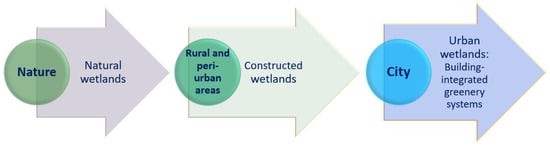
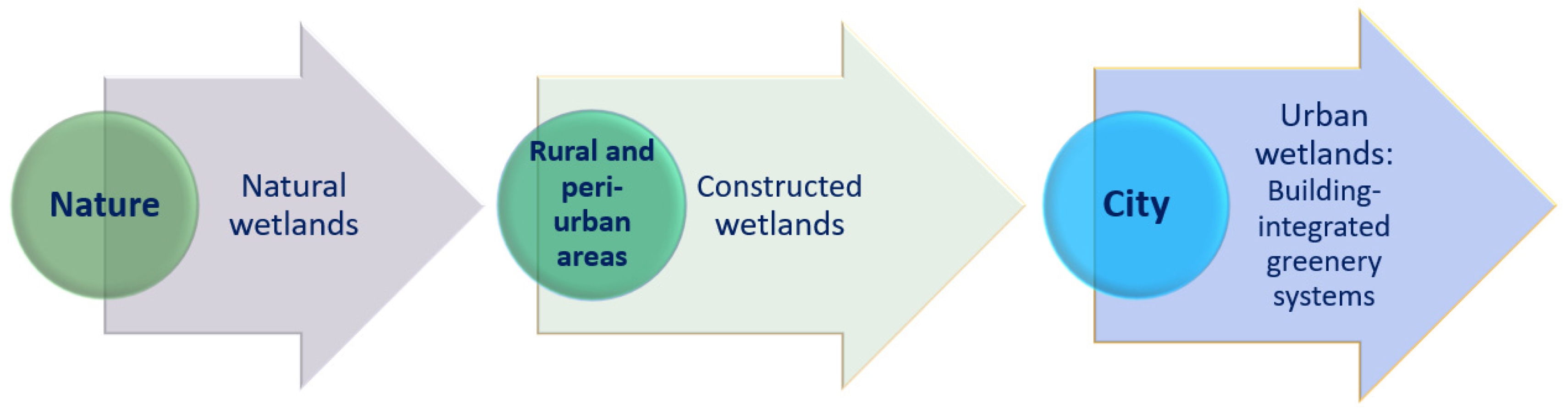
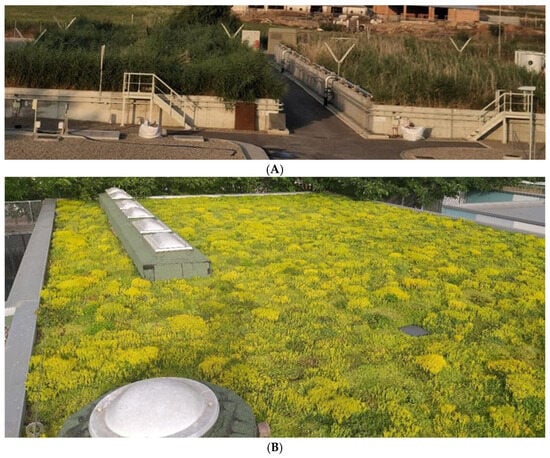
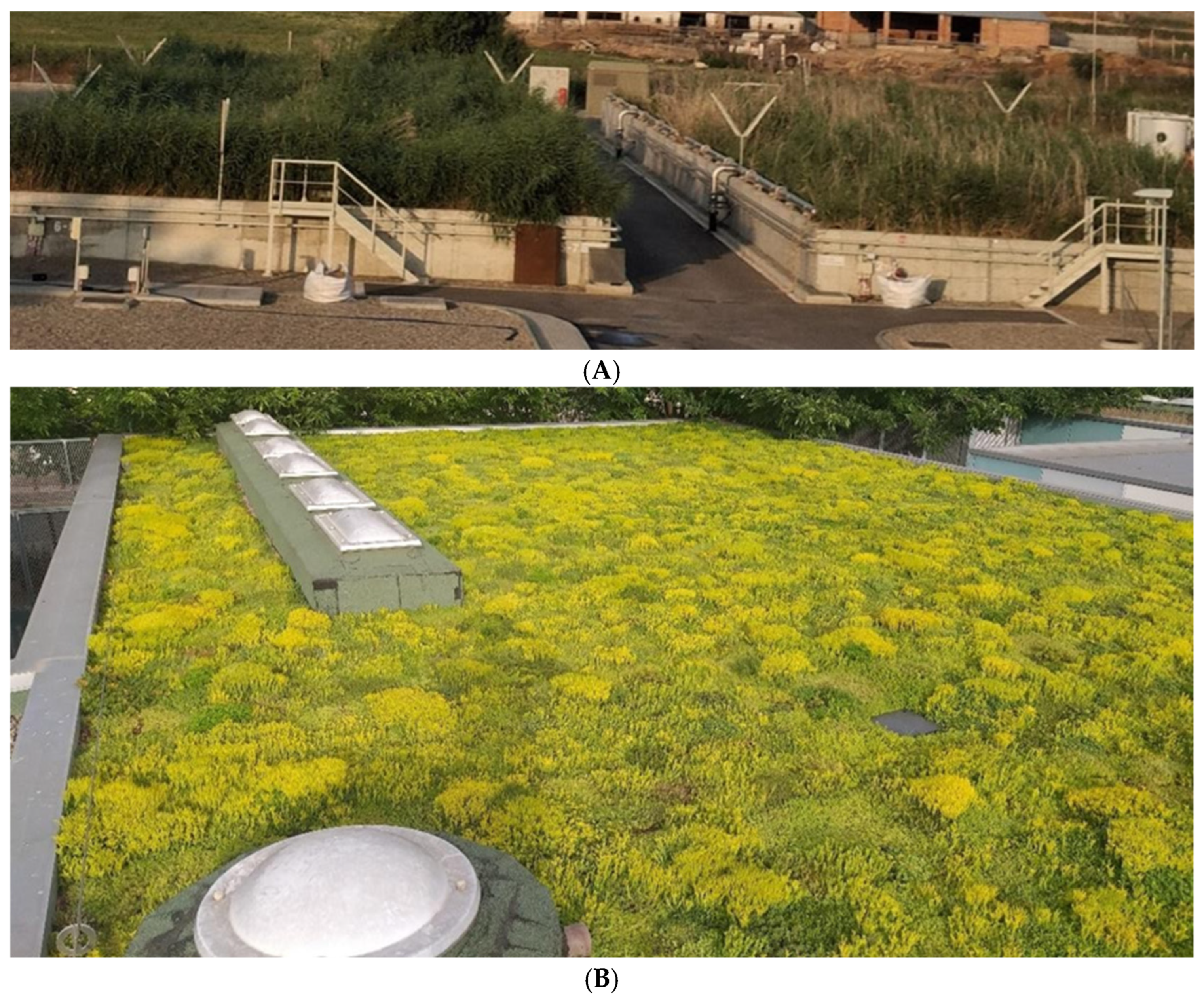
Moving from CWs to urban ones (Figure 1) is critical due to the different conditions in each one of them. For instance, the former is formed in large open areas, while the latter is limited to a building in an urban area (Figure 2). Therefore, the phytoremediation process in both areas is the same but with distinct constraints.
Figure 1.
Conceptual progression of phytoremediation systems from natural ecosystems to urban applications.
Figure 2.
Examples of Constructed Wetland (A) and Extensive Green Roof (B) in Lleida, Spain.
The main objective of this review is to determine the pending challenges that future research must face in order to make the use of BIG systems, mainly GRs and GWs, for graywater reuse in buildings viable. These obstacles could be listed as follows: delays in phytoremediation (nutrient and heavy metals availability, soil/substrate composition and depth, plant type, salinity), Hydraulic Loading Rate (HLR), Dissolved Oxygen content (DO), Microplastics (MP) removal, as well as growth and biomass issues. In this work, we have explored the challenges that must be faced to use GRs and GWs for the reuse of greywater in buildings, and thus subsequently establish future lines of research in this area. Thus, first of all, the mechanisms and factors that drive the phytoremediation process have been reviewed in depth. Then, the main characteristics of urban wetlands and their operation have been reviewed, in order to adapt them to the specific conditions of GRs and facades. Finally, the previous research carried out on phytoremediation on GRs and facades has been reviewed. New emerging concepts such as “wetwall” have also been reviewed.
2. Methodology
Criteria for Selecting Literature and Its Classification
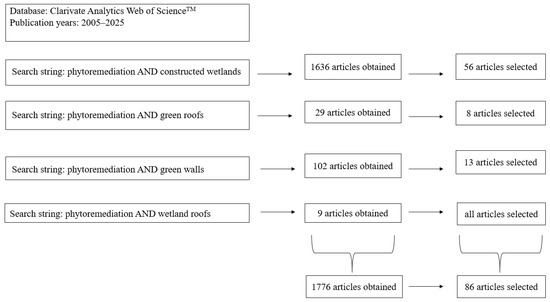
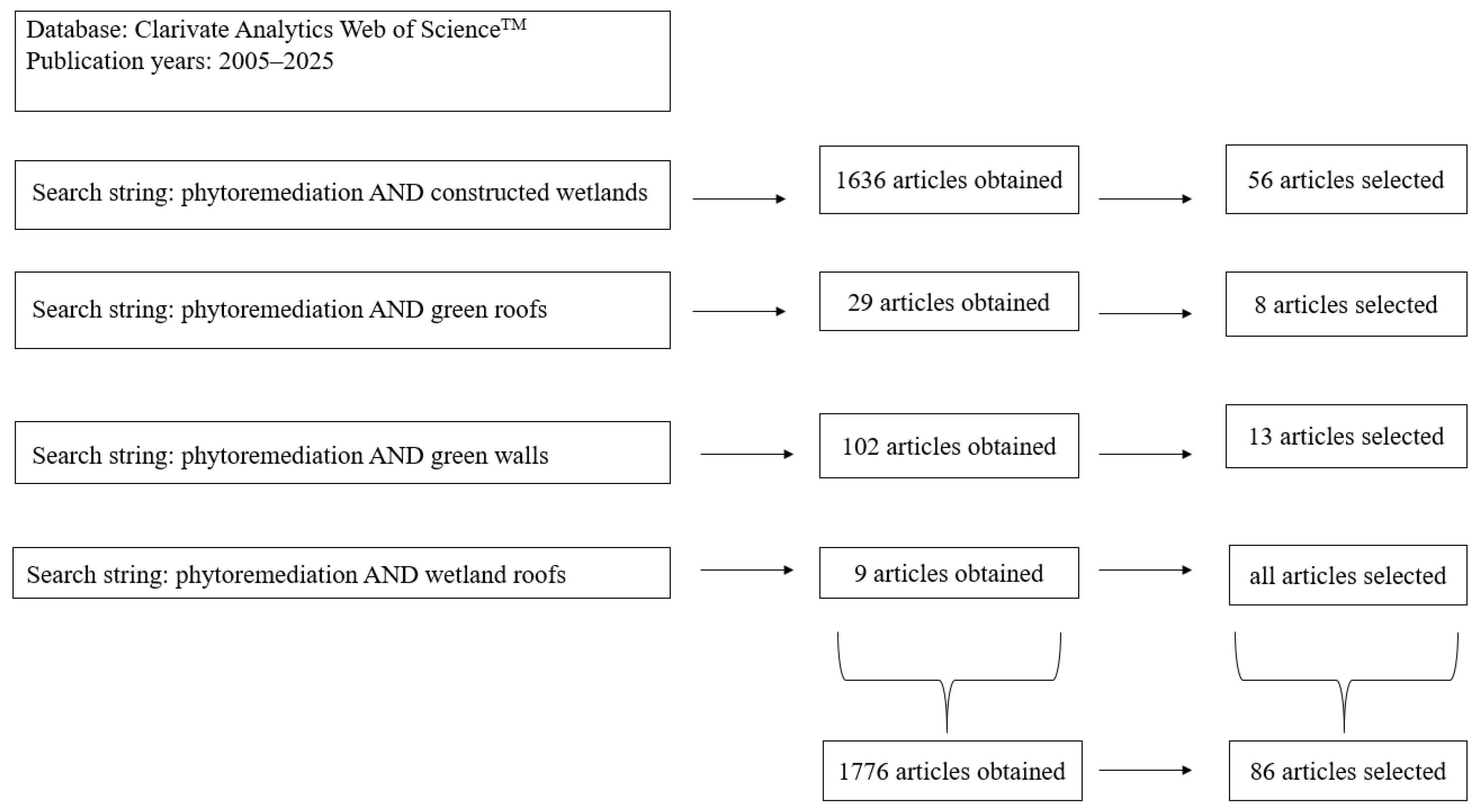
This review examined studies undertaken during the last 20 years. This timeframe was selected to catch the most recent and relevant advances in phytoremediation and urban NBS, reflecting current scientific understanding and technological developments in the field. The research tool Web of Science was used to find these articles. Figure 3 shows four specific searches: phytoremediation AND constructed wetlands, phytoremediation AND green roofs and phytoremediation AND green walls. A total of 1776 articles were obtained. Thus, these records were screened based on the title, abstract, and keywords in order to avoid repetitions. In addition, the number of existing citations was taken into consideration.
Figure 3.
Scheme of the literature selection.
The appropriate literature was sourced using the Mendeley reference manager. The following keywords were used to determine the literature: phytoremediation, constructed wetlands, green roofs, green walls, and greywater.
The literature linked to the phytoremediation strategies is divided depending on the types of NBS: CWs, GWS, and GRs.
3. Results and Discussion
3.1. Phytoremediation: The Process and the Mechanisms
The phytoremediation process is complex. In order to use it in BIG systems, it is necessary to know how it takes place and what the mechanisms are that make it possible.
The direct use of plants and associated microbes found in soil to minimize pollution and contamination of both soil and water is known as phytoremediation [29,30,31,32,33]. The application of sophisticated and specialized equipment is not necessary for phytoremediation. It is a practical, affordable, socially acceptable, efficient, non-invasive, and ecological substitute for physical remediation techniques that disrupt the ecosystem [34].
Phytoremediation can be applied to military, agricultural, industrial, mine, and wood treatment sites, as well as sewage and municipal wastewater, agricultural runoff, industrial wastewater, coal pile runoff, landfill leachate, mine drainage, groundwater plumes, and indoor and outdoor air [35].
The phytoremediation process is made up of seven distinct plant-based mechanisms, which take place in both the aerial part and the root part: phytostabilization, phytovolatilization, phytoextraction, phytodegradation, phytodesalination, rhizofiltration, and rhizodegradation.
Phytostabilization employs plants to stabilize contaminated soil rather than actively cleaning it [29]. The phytostabilization process does not require eliminating trace elements. There is less risk to the environment because they are instead kept in the soil by adsorption on the root surface, precipitation in the rhizosphere, or absorption and accumulation in the roots [34]. This mechanism prevents pollutants from migrating into groundwater or air. Plants suitable for phytostabilization at a specific site should be tolerant to high levels of contaminants, produce high root biomass capable of immobilizing contaminants via uptake, precipitation, or reduction, and retain pollutants in roots rather than shoots to avoid certain handling and disposition of shoots [36].
The process of phytovolatilization entails pollutants being absorbed by plants, transpiring, and then evaporating in a changed form [34]. Unlike other remediation approaches, volatilization removes contaminants but does not limit their movement to adjacent regions. Phytovolatilization must be avoided in areas with high population density or peculiar weather circumstances that cause fast deposition of volatile chemicals [36].
Phytoextraction, or phytoaccumulation, involves drawing contaminants from soil and water and storing them in their aboveground biomass [34,37]. The hyperaccumulator plants, with a translocation factor (TF) and a bioconcentration factor (BCF) larger than 1, are a distinct group of over 400 species spread across 45 families. These plant kinds can help to clean up polluted soil by adsorption, transport and translocation, hyperaccumulation or transformation, and mineralization [29]. It is important to note that this mechanism has been proven to effectively eliminate TEs from the soil with vegetation such as Zea mays, Nicotiana tabacum, Helianthus annuus, and Cannabis sativa. Additionally, Trifolium alexandrinum is a decent plant that can catch zinc, copper, lead, and mercury [34].
The type of metal species greatly influences plant phytoextraction in the growing medium. Since most of the metals present are insoluble molecules that plants cannot absorb, only a minority of these metals are accessible for plant use. Heavy metals and metalloids are classified into three groups based on soil bioavailability: widely available (As, Cd, Cu, Ni, Se, and Zn); moderately available (Co, Fe, and Mn); and slightly available (Cr, Pb, and U) [29]. Phytoextraction uses a variety of plant species—particularly fast-growing, deeply rooted ones like Invasive Plant Species—to remove harmful heavy metals from the environment [38]. Phytoextraction is the primary and most effective phytoremediation method for removing heavy metals and metalloids from contaminated soils, sediments, or water [39].
Phytodegradation occurs within plant tissue, breaking down pollutants through metabolic mechanisms [40]. This mechanism involves specific enzymes responsible for degrading or mineralizing organic pollutants [41]. This method successfully eliminates moderately hydrophobic organic contaminants from shallow depths, including toluene, benzene, xylene, and ethylbenzene, chlorinated solvents, and short-chain aliphatic hydrocarbons [42].
Phytodesalination is carried out by halophytic plants, which are well adapted to tolerate heavy metals. Bassia indica, an annual halophyte with unique salt tolerance characteristics, can potentially decrease salinity in wastewater [39].
Rhizofiltration enhances the polluted water quality by adsorbing, concentrating, and precipitating contaminants using hydroponically produced plant roots [29]. The rhizofiltration process depends on the chosen plant species’ roots’ capacity to absorb and adsorb contaminants from surface and ground waters, as well as from municipal, industrial, and agricultural wastewaters and acid mine water [34]. Aquatic organisms such as water hyacinth, pennywort, and duckweed may remove heavy metals from water. Nevertheless, plants with tiny, slow-growing roots have restricted potential for rhizofiltration due to their inefficiency in extracting metals [36].
Rhizodegradation involves microorganisms’ enzymatic breakdown of contaminants in soil [40]. In other words, bacteria degrade organic xenobiotics in the rhizosphere [39]. Dehalogenase, peroxidase, oxidoreductase, and dehydrogenase are the enzymes that use this technique [38].
Phytoremediation has been successfully applied to clean up soils contaminated by heavy metals, hydrocarbons, persistent organic compounds, volatile organic compounds, and other pollutants. Furthermore, this technology is used to remediate groundwater and surface water, including contaminated coastal areas where salinity-tolerant halophytic plants are used [34]. Its use in the removal of greywater from buildings is highly interesting from a sustainability perspective, as it is a natural process that addresses the problem of water shortages in the built environment.
Among these mechanisms, four occur in green roofs. For instance, phytoextraction of heavy metals (Pb, Cd and Zn) takes place where they are taken up into harvestable plant shoots [43]. Phytostabilization of heavy metals occurs where they are immobilized in the root area to prevent leaching [34]. Rhizodegradation of hydrocarbons and pesticides happens through microbial breakdown facilitated by root exudates [44]. Rhizofiltration of dissolved metals and nutrients occurs as well via adsorption from runoff water by root systems [34].
3.2. Factors Influencing the Phytoremediation Process
When reviewing previous work on the use of phytoremediation to recover greywater, a series of factors that influence the development of this natural process can be cataloged. Any attempt to manage the process in a directed manner in an artificial environment must consider the control of these factors and drivers. Factors and drivers influencing the phytoremediation process, as well as their impacts, are listed in Table 1. They include some delayers/accelerators, HLR, DO, MP capacity, plant growth and biomass issues, among others [45,46].
Table 1.
Factors of phytoremediation.
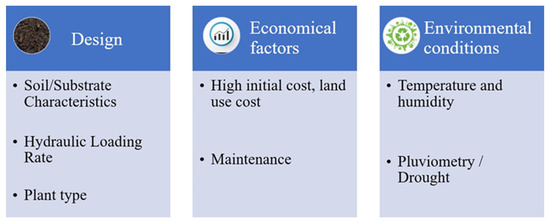
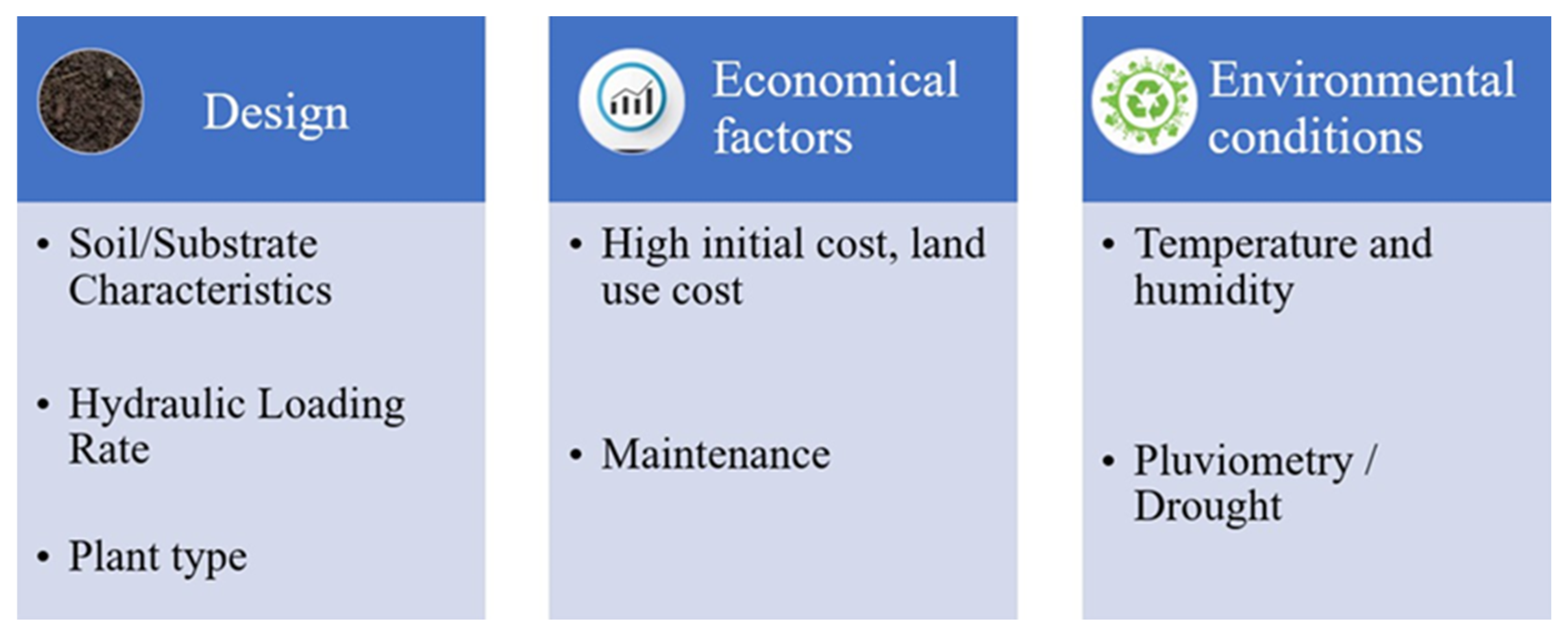
It is imperative to know this set of drivers and factors, as they must be appropriately controlled and managed if the phytoremediation process is to be used in artificial urban environments, and specifically in building-integrated greenery systems, such as GRs and GWs. Thus, in order to regulate the phytoremediation process in any NBS, some critical factors must be taken into account, as illustrated in Figure 4.
Figure 4.
Critical factors affecting phytoremediation.
Soil or substrate properties could be considered the most effective factors of phytoremediation. Composition and depth of soil or substrate, as well as salinity and pH, are among these factors. For instance, an unsuitable soil or substrate can slow plant growth and contaminant uptake. Economic factors such as the costs related to the initial investment and land use are also affecting this process. Moreover, environmental circumstances like temperature, drought, plants and humidity must be taken into account.
3.3. Benefits of Phytoremediation
The phytoremediation process is considered one of the bioremediation processes, consisting of using nature-based solutions to reduce water, air, and soil pollution [54]. It provides several benefits listed below:
- Environmental Benefits:
Pollutant removal from water and soils: It accumulates and removes contaminants effectively and applies to various contaminants [40]. It removes trace elements from ecosystems, mitigates environmental pollution, and treats heavy metals in contaminated water. All of these actions occur through biophysical and biochemical processes including translocation, absorption, transportation, acclimation, hyperaccumulation, and mineralization [55,56].
Biodiversity support: It makes it possible to provide animal habitat [57].
Climate regulation: It helps in sequestering carbon, leading to a mitigation of climate change [57].
- Economic Benefits:
Cost and Sustainability: It is a low-cost and ecologically acceptable process [40] that does not alter the biological and physical characteristics of soil/substrate and is feasible for long-term application [55]. It is effective for broad land areas with minimal monitoring required [54].
Aesthetic Benefit: It gives the treated land a better landscape by planting vegetation [48,58].
Despite the mention of these benefits, a few drawbacks could exist, such as the huge area of land needed as well as possible odors resulting from the phytoremediation process.
3.4. Greywater Phytoremediation Solutions
Natural greywater treatment systems offer a sustainable solution for wastewater management [59]. CW is a green wastewater treatment technique that simulates existing wetlands. It is a cost-effective, low-maintenance, and energy-efficient alternative to traditional wastewater treatment technologies [60,61]. The fundamental concept of treating wastewater in CWs relies on the root zone treatment system [62]. The literature is abundant, with studies indicating that plants play a beneficial role in eliminating pollutants in CWs [63].
The use of the phytoremediation process for reusing greywater in the urban context is still a pending challenge. Some previous initiatives have been addressed in different ways and to a greater or lesser extent, depending on the adopted construction solution. Three main typologies of solutions have emerged from the reviewed articles: CWs [64], GRs [65], and GWs [66]. Recently, the concept of “Wetwall” [12] has been developed as an evolution of the last two typologies, which could be framed within the concept of “Urban Wetlands” in contrast to CWs. According to the reviewed literature, in the urban context, the process of phytoremediation generally occurs in CWs [67]. Furthermore, 83% out of 86 papers reviewed were applied on CWs, whereas only 17% were related to BIG systems, specifically 9% on GR and 8% on GW. The fact that 17% of previous work focuses on the application of phytoremediation through building-integrated greenery systems highlights the growing interest in these NBS integrated into building skins. Reusing greywater in buildings is a very interesting strategy from the point of view of sustainable construction, although it is not without technical and acceptance challenges that must be faced. This article aims to review these challenges and propose future research paths.
3.4.1. Constructed Wetlands
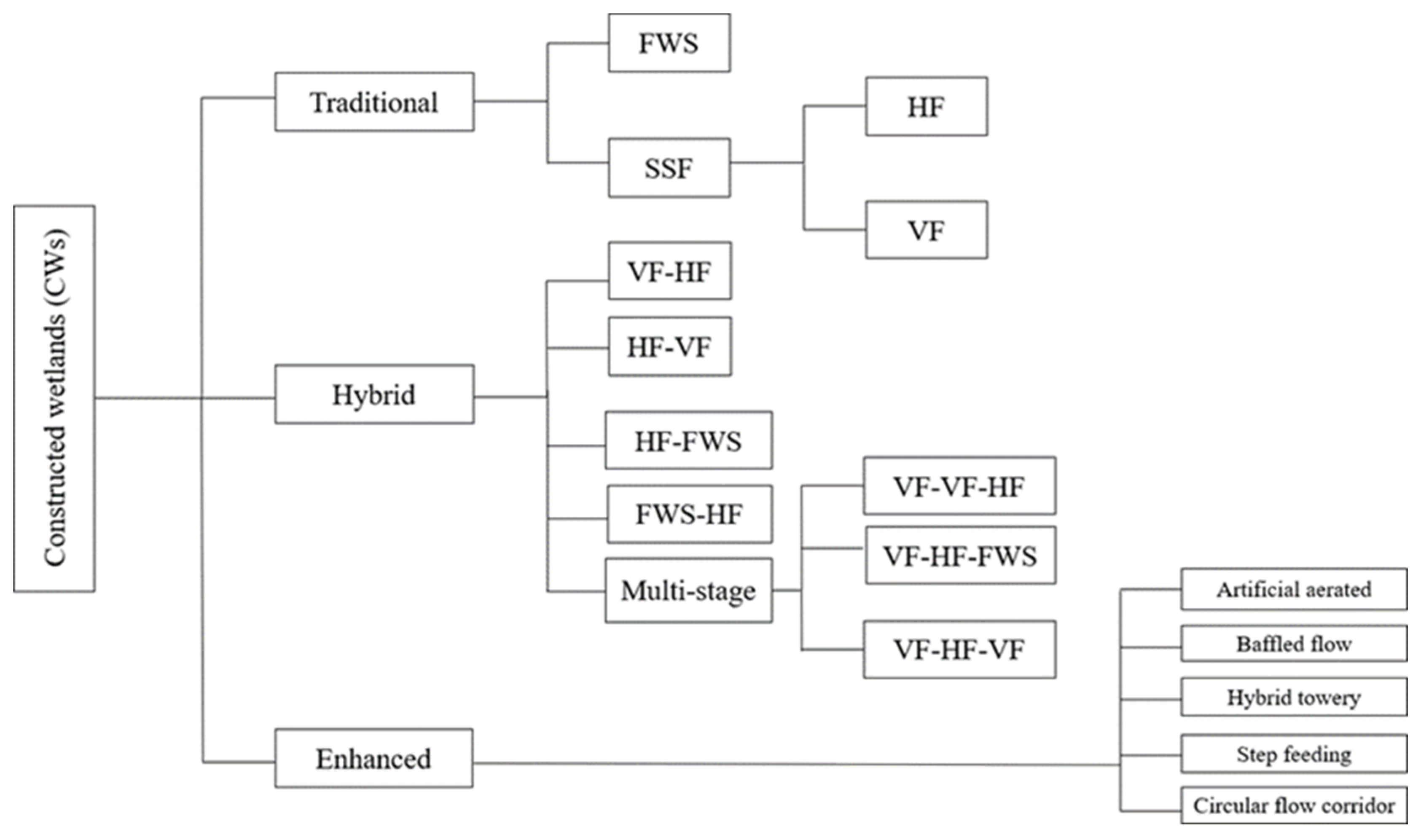
CWs are man-made systems designed to mimic the ecological functions of natural wetlands. They consist primarily of soils, water, microorganisms, and vegetation [68]. They use natural processes to clean contaminated water through four mechanisms: UV irradiation, sedimentation, nutrient uptake, and microbial action [69,70,71]. Concerning their classification, Figure 5 illustrates it through a scheme. It is seen that traditionally CWs for wastewater treatment are divided into two groups based on their hydrology: free water surface (FWS) CWs and subsurface flow (SSF) CWs [72]. In FWS systems, wastewater flows shallowly over saturated substrates, similar to natural wetlands. In SSF systems, wastewater flows horizontally or vertically through the substrate, promoting plant growth. SSF CWs are classified as vertical flow (VF) or horizontal flow (HF) CWs based on flow direction. On the other hand, Hybrid CWs use a combination of wetland systems, including VF-HF, HF-VF, HF-FWS, and FWS-HF, to treat wastewater. Furthermore, multi-step CWs that included over three stages were utilized. Recently, to enhance the elimination processes of CWs, improved ones like artificially aerated CWs, baffled flow CWs, hybrid tower CWs, step feeding CWs, and circular flow corridor CWs have been suggested [68].
Figure 5.
Classification of CWs. FWS: Free Water Surface, SSF: Subsurface Flow, HF: Horizontal Flow, VF: Vertical Flow. Source: [68].
CWs have few constraints, such as the large area required and the unpleasant odor associated with certain types of treated effluent. CWs demand a prolonged HRT for wastewater treatment, directly affecting the territory’s needs [73]. In addition, their effectiveness varies with the season and weather conditions [74]. Despite this, they are viewed as environmentally friendly and sustainable methods that demand reduced energy consumption, lower operational and maintenance expenses, and offer essential ecological advantages like wildlife habitat, groundwater replenishment, flood mitigation, and enhanced visual appeal [75].
Phytoremediation in CWs is based on the ability of certain plants to bioaccumulate, degrade, or convert soil, water, or air pollutants into harmless forms. Thus, choosing plants is one important factor in the phytoremediation process in CWs. Table 2 summarizes the main types of plants used in phytoremediation in CW and their ecological functions.
Table 2.
Types and effects of plants on phytoremediation in CW.
The most used plants in phytoremediation in CWs are Phragmites australis, Pistia stratiotes, Typha domingensis, and Typha latifolia. However, these plants are mainly aquatic and only correspond to CWs. For the GR case, Typha latifolia and Typha domingensis could potentially survive only if it is designed to mimic wetland conditions with significant water retention. Meanwhile, Phragmites australis and Pistia stratiotes are less suitable for GRs without specialized water-holding systems. Many studies have been performed in CWs to eliminate contaminants from greywater. Table 3 shows the results with the percentage of reduction and the types of plants used.
Table 3.
Papers related to EC and removal of nutrients and heavy metals.
Different plant species are used depending on the specific elements to remove. For instance, Canna species is used primarily for Phosphate removal, achieving 8.9, 41.7 and 68% [109,114,121], whereas Typha latifolia and Phragmites australis are used for removal of Zn (73 and 86%), Cu (60%), Cd (5 and 7%), and Pb (20 and 31%) [106,115]. In addition, Typha domingensis could be helpful in removing Ni with 86 and 95% [100,111].
Treating greywater, already applied in CWs, could be used in GRs and GWs. Nevertheless, this shift in NBS will be accompanied by modifications in terms of design and materials (waterproof membrane, protection, filter, and drainage layers exist in GWs and GRs), classification (different types of GWs and GRs compared to CWs), choice of plants (the ones in CWs could not survive in GWs and GRs), and performance (GWs and GRs will affect the building). Thus, these urban wetlands (GWs and GRs) could be the target for phytoremediation studies, taking into account all the previously mentioned challenges.
3.4.2. Urban Wetlands
Urban wetlands are the systems related to cities and buildings. They play a crucial role in green and blue infrastructure, providing several functions. They include GRs, GWs, and, more recently, wetwalls. However, installing and maintaining operational wetlands in urban areas presents numerous difficulties, including diminished hydrological functions, altered water patterns caused by barriers, pollution from wastewater, and habitat destruction due to changes in land use. On the other hand, these wetlands serve distinctive functions because of their placement in complicated city surroundings. Urban wetlands mitigate heat islands’ effects, regulate the temperature [106], and offer recreational, holiday, and tourism spaces that support peaceful urban growth [127]. They also have a cooling impact on the surrounding zones, especially during the warmer months, and attenuate severe winds [128]. They also might eliminate contaminants, lessen urban floods, and enhance the quality of the water [129]. Moreover, they provide nesting sites for wetland breeding species [130].
Due to the effects of climate change followed by water scarcity, more focus is being placed on using alternative sources. Reusing greywater is at the top of these ideas. Moreover, research has relied chiefly on CWs requiring huge areas. Nevertheless, this field of research, specifically the phytoremediation process, is shifting towards greenery such as GWs and GRs (urban wetlands). For instance, Helichrysum species were shown to have the capacity to act as efficient phytoremediators, while simultaneously supporting these urban wetlands [131].
Green Walls and Wetwalls
Vertical GWs are ideal for urban environments, as they address the challenge of limited horizontal space [132]. Phytoremediation, particularly by implementing active (ventilated) GWs, is increasingly acknowledged as a promising approach to managing air pollution [133]. Moreover, GWs can reduce elevated suspended particulate matter [134]. Table 4 presents the papers on phytoremediation applied in GWs.
Table 4.
Phytoremediation in green walls.
All the papers mentioned in Table 4 had the same goal, which is treating greywater. However, each one of them had its own construction system and studied parameters. For instance, removal of COD was 92% in modular VGS, 80% with pot-based VGS, more than 70% in a module of polypropylene with UV protection, and 70% in a PVC column.
Da Cunha et al. (2018) [12] proposed a hybrid flow for the Wetwall, which combines HF and VF, creating diverse redox conditions. The living wall hybrid flow aims to improve pollutant removal from urban wastewater, including greywater and hydroponics, by enhancing anoxic conditions in the HF and aerobic conditions in the VF. Greywater treatment involves biological oxidation to remove BOD5 in VF and phosphates in HF by precipitation and adsorption. The primary purpose of this paper was to demonstrate the potential of the Wetwall design idea as an innovative wastewater treatment solution on an urban scale. The importance of the Wetwall design concept in climate mitigation lies in its sustainable approach to harmonizing technological advancement with natural ecosystems. This is achieved primarily by emulating natural processes and promoting the reuse of resources such as water, nutrients, materials, and energy [12]. Furthermore, the Wetwall design idea introduces a breakthrough ecotechnology for secondary wastewater treatment at the urban scale, including a modular living wall hybrid flow. This proposal combines two proven nature-based solutions/biomimetic designs: CWs and modular living walls. The selection of plants in living walls is very critical. Many authors employed decorative or agricultural plants in their works [12]. Nevertheless, no criteria for selection were mentioned. The Wetwall design idea prioritizes plant selection based on adaptability, environmental benefits, and societal acceptance. The selection of substrates is also considered vital for effective wastewater treatment. The substrate should be lightweight to lower the structure’s overall weight and enable its implementation while supporting plant development. When selecting substrates for CWs, it is vital to consider assertive hydraulic behavior and adsorption capabilities to prevent clogging and improve pollution removal by adsorption.
Green Roofs
In recent years, the possibility of using GRs as biofilters to reuse greywater in the built environment has been considered. Using specific technical approaches, a GR involves putting plants on a building rooftop. It consists of multiple layers arranged sequentially from top to bottom: vegetation, substrate, filter sheet, drainage layer, root-resistant barrier, thermal insulation, waterproof membrane, and roof assembly. Moreover, three kinds exist: extensive (substrate depth less than 15 cm), semi-intensive (substrate depth between 15 and 31 cm), and intensive (substrate depth more than 31 cm) [139]. These roofs have some disadvantages, including runoff quality, roof leakage, cost, and maintenance [140]. Nevertheless, they provide a range of potential economic and environmental advantages such as reducing peak runoff flow during heavy storm events, buffering rainwater, mitigating the urban heat island effect, lowering the building’s energy demands, providing sound insulation and noise reduction, enhancing air quality, increasing the building’s aesthetic appeal, protecting the roof membrane, and supporting ecological preservation in urban areas [29,141,142].
The possibility of the phytoremediation process taking place in a GR is not without challenges. Some previous research has addressed this topic. Table 5 presents the papers on phytoremediation applied to GRs.
Table 5.
Phytoremediation in green roofs.
In view of the studies reviewed, it can be seen that one of the main debates has been whether GRs were a source or sink of pollution, rather than the study of the phytoremediation process implementation for the cleaning of greywater. In fact, only two papers focused on phytoremediation and greywater treatment. The first one showed the priority of GRs on MBR, MCR and reed beds in terms of impact assessment categories, while the second one involved the use of aromatic and medicinal plant species for phytoremediation. Furthermore, runoff quality from GRs and phytoremediation are linked and should be considered together in future research.
4. Conclusions
Climate change and its effects on the human environment are increasing. For instance, water scarcity is a vital problem that many countries suffer from, even in Europe. Thus, researchers recently focused on alternative sources such as reusing greywater. Most of their work was performed in CWs, artificial ecosystems in which plants and sometimes substrates generate the phytoremediation process through which pollutants can be removed. The phytoremediation process is substantial and beneficial. It consists of seven different mechanisms: rhizofiltration and rhizodegradation in the rhizosphere, phytostabilization, phytovolatilization, phytoextraction, phytodegradation, and phytodesalination in the aboveground. These mechanisms could be significant in treating water and even the substrate. Moreover, several critical parameters must be considered when dealing with phytoremediation, like soil/substrate characteristics, plant type, hydraulic loading rate, greywater composition, economic factors, and environmental conditions. A combination of greywater treatment through phytoremediation with urban greenery would help close the water cycle as well as make cities more sustainable. This review highlights the importance of the phytoremediation process with its strategies on CWs generally and, more recently, on GWs, wetwalls, and GRs.
Phytoremediation in building-integrated greenery systems is gaining interest, with 30% of prior research focusing on its application. In fact, phytoextraction, phytostabilization, rhizodegradation and rhizofiltration already occur in GRs. Thus, a shift in research towards urban wetlands could be explored. These types of roofs and walls provide the same benefits as the CWs but also provide multiple other ecosystem services to the built environment, such as energy and acoustic insulation, building materials protection, Urban Heat Island reduction, run-off control, support to biodiversity, among others. Therefore, phytoremediation in urban wetlands could be an option to enhance the previously mentioned benefits. However, this change in the field from CWs to urban ones is accompanied by several challenges, such as the area available on the roof/wall compared to the enormous area used in CWs, the exact volume of water needed in light of the water scarcity situation, and the choice of substrate and plants which are essential for the phytoremediation.
The reviewed articles mention, but do not address, the possible challenges related to the social and cultural acceptance of these natural greywater purification systems in urban environments in which citizens have lost contact with the dynamics of natural processes, which are often “dirtier” and tend to give off certain odors to which they are no longer accustomed.
Hence, future research on phytoremediation in GWs, wetwalls, and GRs is needed. As mentioned in the results of this review, a vast potential exists in shifting phytoremediation from CWs to urban ones despite some challenges that must be overcome. Consequently, these new studies could be a way to improve the overall performance of these innovative roofs or walls and contribute to the circular economy.
Author Contributions
Conceptualization, all authors; methodology, G.P.; formal analysis, all authors; investigation, all authors; writing—original draft preparation, G.F.; writing—review and editing, G.P., M.E.B. and G.F.; visualization, all authors; supervision, G.P. and M.E.B.; project administration, M.E.B.; funding acquisition, G.P. and M.E.B. All authors have read and agreed to the published version of the manuscript.
Funding
This research was funded by the Sustainable Wastewater Treatment for Hospitals/SWaTH project (618540-EPP-1-2020-LB-EPPKA2-GBHE-JP) co-funded by the Erasmus Programme of the European Commission. The Project is carried out under the centralized activity “Capacity-building in the Field of Higher Education”/AC–A02–2019–CBHE. The work is partially funded by the Spanish Government—Ministry of Science, Innovation and Universities, through the Spanish State Research Agency (project TED2021-129882B-100 and project PID2022-137971OB-I00), and the European Union through the LIFE program under grant agreement 101114024-LIFE22-ENV-ES-BIG4LIFE.
Institutional Review Board Statement
Not applicable.
Informed Consent Statement
Not applicable.
Data Availability Statement
No new data were created or analyzed in this study. Data sharing is not applicable to this article.
Acknowledgments
This work has been carried out in the framework of the cooperation of the Innovative Technologies for Sustainability (IT4S) research group of the University of Lleida (Spain) with the Department of Chemical Engineering at the University of Balamand (Lebanon). The authors at the IT4S research group would like to thank the Catalan Government for the quality accreditation given to their research group (2021 SGR 00512).
Conflicts of Interest
The authors declare no conflicts of interest.
Abbreviations
The following abbreviations are used in this manuscript:
| BIG | Building-Integrated Greenery |
| BOD | Biochemical Oxygen Demand |
| COD | Chemical Oxygen Demand |
| CW | Constructed Wetland |
| DO | Dissolved Oxygen |
| EC | Electrical Conductivity |
| ED | Ecomimetic Design |
| FWS | Free Water Surface |
| GR | Green Roof |
| GROW | Green Roof Recycling System |
| HF | Horizontal Flow |
| HLR | Hydraulic Loading Rate |
| HRT | Hydraulic Retention Time |
| LCIA | Life Cycle Impact Assessment |
| MBR | Membrane bioreactor |
| MCR | Membrane Chemical Reactor |
| MP | Microplastics |
| NBS | Nature-Based Solutions |
| PVC | Polyvinyl Chloride |
| SSF | Subsurface Flow |
| TKN | Total Kjeldahl Nitrogen |
| TN | Total Nitrogen |
| TOC | Total Organic Carbon |
| TP | Total Phosphorous |
| TSS | Total Suspended Solids |
| UV | Ultra Violet |
| VGS | Vertical Green System |
| VF | Vertical Flow |
| WCCW | Wall Cascade Constructed Wetland |
| Symbols | |
| Al | Aluminum |
| As | Arsenic |
| Cd | Cadmium |
| Co | Cobalt |
| Cr | Chromium |
| Cu | Copper |
| Fe | Iron |
| Hg | Mercury |
| Mg | Magnesium |
| Mn | Manganese |
| N | Nitrogen |
| Na | Sodium |
| Ni | Nickel |
| NO3− | Nitrate |
| Pb | Lead |
| PO43− | Phosphate |
| Se | Selenium |
| U | Uranium |
| Zn | Zinc |
References
- Iglesias, A.; Garrote, L.; Flores, F.; Moneo, M. Challenges to manage the risk of water scarcity and climate change in the Mediterranean. Water Resour. Manag. 2007, 21, 775–788. [Google Scholar] [CrossRef] [Scilit]
- Liu, J.; Folberth, C.; Yang, H.; Röckström, J.; Abbaspour, K.; Zehnder, A.J.B. A Global and Spatially Explicit Assessment of Climate Change Impacts on Crop Production and Consumptive Water Use. PLoS ONE 2013, 8, 57750. [Google Scholar] [CrossRef] [Scilit] [PubMed]
- Omer, A.; Elagib, N.A.; Zhuguo, M.; Saleem, F.; Mohammed, A. Water scarcity in the Yellow River Basin under future climate change and human activities. Sci. Total Environ. 2020, 749, 141446. [Google Scholar] [CrossRef] [Scilit] [PubMed]
- Huang, Z.; Yuan, X.; Liu, X. The key drivers for the changes in global water scarcity: Water withdrawal versus water availability. J. Hydrol. 2021, 601, 126658. [Google Scholar] [CrossRef] [Scilit]
- Mukheibir, P. Water access, water scarcity, and climate change. Environ. Manag. 2010, 45, 1027–1039. [Google Scholar] [CrossRef] [Scilit] [PubMed]
- Schewe, J.; Heinke, J.; Gerten, D.; Haddeland, I.; Arnell, N.W.; Clark, D.B.; Dankers, R.; Eisner, S.; Fekete, B.M.; Colón-González, F.J.; et al. Multimodel assessment of water scarcity under climate change. Proc. Natl. Acad. Sci. USA 2014, 111, 3245–3250. [Google Scholar] [CrossRef] [Scilit] [PubMed]
- Gampe, D.; Nikulin, G.; Ludwig, R. Using an ensemble of regional climate models to assess climate change impacts on water scarcity in European river basins. Sci. Total Environ. 2016, 573, 1503–1518. [Google Scholar] [CrossRef] [Scilit] [PubMed]
- Iglesias, A.; Mougou, R.; Moneo, M.; Quiroga, S. Towards adaptation of agriculture to climate change in the Mediterranean. Reg. Environ. Change 2011, 11, 159–166. [Google Scholar] [CrossRef] [Scilit]
- Li, M.; Cao, X.; Liu, D.; Fu, Q.; Li, T.; Shang, R. Sustainable management of agricultural water and land resources under changing climate and socio-economic conditions: A multi-dimensional optimization approach. Agric. Water Manag. 2022, 259, 107235. [Google Scholar] [CrossRef] [Scilit]
- Hejazi, M.I.; Edmonds, J.; Clarke, L.; Kyle, P.; Davies, E.; Chaturvedi, V.; Wise, M.; Patel, P.; Eom, J.; Calvin, K. Integrated assessment of global water scarcity over the 21st century under multiple climate change mitigation policies. Hydrol. Earth Syst. Sci. 2014, 18, 2859–2883. [Google Scholar] [CrossRef] [Scilit]
- Korteling, B.; Dessai, S.; Kapelan, Z. Using Information-Gap Decision Theory for Water Resources Planning Under Severe Uncertainty. Water Resour. Manag. 2013, 27, 1149–1172. [Google Scholar] [CrossRef] [Scilit]
- da Cunha, J.A.C.; Arias, C.A.; Carvalho, P.; Rysulova, M.; Canals, J.M.; Pérez, G.; Bosch, M.G.; Morató, J.F. “WETWALL”—An innovative design concept for the treatment of wastewater at an urban scale. Desalin. Water Treat. 2018, 109, 205–220. [Google Scholar] [CrossRef] [Scilit]
- Niva, V.; Cai, J.; Taka, M.; Kummu, M.; Varis, O. China’s sustainable water-energy-food nexus by 2030: Impacts of urbanization on sectoral water demand. J. Clean. Prod. 2020, 251, 119755. [Google Scholar] [CrossRef] [Scilit]
- Chen, X.; Li, F.; Li, X.; Hu, Y.; Hu, P. Evaluating and mapping water supply and demand for sustainable urban ecosystem management in Shenzhen, China. J. Clean. Prod. 2020, 251, 119754. [Google Scholar] [CrossRef] [Scilit]
- Mancosu, N.; Snyder, R.L.; Kyriakakis, G.; Spano, D. Water scarcity and future challenges for food production. Water 2015, 7, 975–992. [Google Scholar] [CrossRef] [Scilit]
- Quispe, J.I.B.; Campos, L.C.; Mašek, O.; Bogush, A. Use of biochar-based column filtration systems for greywater treatment: A systematic literature review. J. Water Process Eng. 2022, 48, 102908. [Google Scholar] [CrossRef] [Scilit]
- Tripathy, B.K.; Mousset, E. Coupling of electrochemical systems with nature-based solution for wastewater treatment: A comprehensive review to evaluate the synergy, efficacy and applicability. J. Water Process Eng. 2026, 81, 109122. [Google Scholar] [CrossRef] [Scilit]
- Tsatsou, A.; Frantzeskaki, N.; Malamis, S. Nature-based solutions for circular urban water systems: A scoping literature review and a proposal for urban design and planning. J. Clean. Prod. 2023, 394, 136325. [Google Scholar] [CrossRef] [Scilit]
- Bakhshoodeh, R.; Ocampo, C.; Oldham, C. Exploring the evapotranspirative cooling effect of a green façade. Sustain. Cities Soc. 2022, 81, 103822. [Google Scholar] [CrossRef] [Scilit]
- Leong, J.Y.C.; Balan, P.; Chong, M.N.; Poh, P.E. Life-cycle assessment and life-cycle cost analysis of decentralised rainwater harvesting, greywater recycling and hybrid rainwater-greywater systems. J. Clean. Prod. 2019, 229, 1211–1224. [Google Scholar] [CrossRef] [Scilit]
- Namaki, P.; Shahir, H.; Ahani, M.; Alvanchi, A. A novel digital twin framework for improving urban sustainability–feasibility assessment of supplementary water supply systems in buildings. Sustain. Cities Soc. 2025, 131, 106724. [Google Scholar] [CrossRef] [Scilit]
- Wanjiru, E.; Xia, X. Optimal energy-water management in urban residential buildings through grey water recycling. Sustain. Cities Soc. 2017, 32, 654–668. [Google Scholar] [CrossRef] [Scilit]
- Kobayashi, Y.; Ashbolt, N.J.; Davies, E.G.R.; Liu, Y. Life cycle assessment of decentralized greywater treatment systems with reuse at different scales in cold regions. Environ. Int. 2020, 134, 105215. [Google Scholar] [CrossRef] [Scilit] [PubMed]
- D’ostuni, M.; Stanghellini, C.; Boedijn, A.; Zaffi, L.; Pennisi, G.; Orsini, F. Evaluating the impacts of nutrients recovery from urine wastewater in Building-Integrated Agriculture. A test case study in Amsterdam. Sustain. Cities Soc. 2023, 91, 104449. [Google Scholar] [CrossRef] [Scilit]
- Pradhan, S.; Al-Ghamdi, S.G.; Mackey, H.R. Greywater recycling in buildings using living walls and green roofs: A review of the applicability and challenges. Sci. Total Environ. 2019, 652, 330–344. [Google Scholar] [CrossRef] [Scilit] [PubMed]
- Abi Hanna, R.; Borne, K.; Gerente, C.; Andres, Y. Recycled cellular concrete to improve phosphorous removal by floating treatment wetlands: A pilot experiment for meat-processing factory’s wastewater. J. Water Process Eng. 2023, 53, 103766. [Google Scholar] [CrossRef] [Scilit]
- Memon, F.A.; Zheng, Z.; Butler, D.; Shirley-Smith, C.; Lui, S.; Makropoulos, C.; Avery, L. Life cycle impact assessment of greywater recycling technologies for new developments. Environ. Monit. Assess. 2007, 129, 27–35. [Google Scholar] [CrossRef] [Scilit] [PubMed]
- Mahmoudi, A.; Mousavi, S.A.; Darvishi, P. Greywater as a sustainable source for development of green roofs: Characteristics, treatment technologies, reuse, case studies and future developments. J. Environ. Manag. 2021, 295, 112991. [Google Scholar] [CrossRef] [Scilit] [PubMed]
- Vijayaraghavan, K.; Reddy, D.H.K.; Yun, Y.S. Improving the quality of runoff from green roofs through synergistic biosorption and phytoremediation techniques: A review. Sustain. Cities Soc. 2019, 46, 101381. [Google Scholar] [CrossRef] [Scilit]
- Shah, V.; Daverey, A. Phytoremediation: A multidisciplinary approach to clean up heavy metal contaminated soil. Environ. Technol. Innov. 2020, 18, 100774. [Google Scholar] [CrossRef] [Scilit]
- Jeevanantham, S.; Saravanan, A.; Hemavathy, R.V.; Kumar, P.S.; Yaashikaa, P.R.; Yuvaraj, D. Removal of toxic pollutants from water environment by phytoremediation: A survey on application and future prospects. Environ. Technol. Innov. 2019, 13, 264–276. [Google Scholar] [CrossRef] [Scilit]
- Podhajska, E.; Drzeniecka-Osiadacz, A.; Halarewicz, A.; Grech, D.; Podhajski, B.; Zienowicz, M.; Bąbelewski, P.; Liszewski, M. Phytoremediation as an urban paradigm in promoting the health-potential of small green areas. Sustain. Cities Soc. 2023, 96, 104684. [Google Scholar] [CrossRef] [Scilit]
- James, A.; Rene, E.R.; Bilyaminu, A.M.; Chellam, P.V. Advances in amelioration of air pollution using plants and associated microbes: An outlook on phytoremediation and other plant-based technologies. Chemosphere 2024, 358, 142182. [Google Scholar] [CrossRef] [Scilit] [PubMed]
- Mocek-Płóciniak, A.; Mencel, J.; Zakrzewski, W.; Roszkowski, S. Phytoremediation as an Effective Remedy for Removing Trace Elements from Ecosystems. Plants 2023, 12, 1653. [Google Scholar] [CrossRef] [Scilit] [PubMed]
- Pilon-Smits, E.A.H.; Freeman, J.L. Environmental cleanup using plants: Biotechnological advances and ecological considerations. Front. Ecol. Environ. 2006, 4, 203–210. [Google Scholar] [CrossRef] [Scilit]
- Padmavathiamma, P.K.; Li, L.Y. Phytoremediation technology: Hyper-accumulation metals in plants. Water Air Soil Pollut. 2007, 184, 105–126. [Google Scholar] [CrossRef] [Scilit]
- Patra, D.K.; Pradhan, C.; Patra, H.K. Toxic metal decontamination by phytoremediation approach: Concept, challenges, opportunities and future perspectives. Environ. Technol. Innov. 2020, 18, 100672. [Google Scholar] [CrossRef] [Scilit]
- Khan, I.U.; Qi, S.S.; Gul, F.; Manan, S.; Rono, J.K.; Naz, M.; Shi, X.N.; Zhang, H.; Dai, Z.C.; Du, D.L. A Green Approach Used for Heavy Metals ‘Phytoremediation’ Via Invasive Plant Species to Mitigate Environmental Pollution: A Review. Plants 2023, 12, 725. [Google Scholar] [CrossRef] [Scilit] [PubMed]
- Ali, H.; Khan, E.; Sajad, M.A. Phytoremediation of heavy metals-Concepts and applications. Chemosphere 2013, 91, 869–881. [Google Scholar] [CrossRef] [Scilit] [PubMed]
- Parveen, S.; Bhat, I.U.H.; Khanam, Z.; Rak, A.E.; Yusoff, H.M.; Akhter, M.S. Phytoremediation: In situ alternative for pollutant removal from contaminated natural media: A brief review. Biointerface Res. Appl. Chem. 2022, 12, 4945–4960. [Google Scholar] [CrossRef] [Scilit]
- Tak, H.I.; Ahmad, F.; Babalola, O.O. Advances in the application of plant growth-promoting rhizobacteria in phytoremediation of heavy metals. Rev. Environ. Contam. Toxicol. 2013, 223, 33–52. [Google Scholar] [CrossRef] [Scilit] [PubMed]
- Timalsina, H.; Gyawali, T.; Ghimire, S.; Paudel, S.R. Potential application of enhanced phytoremediation for heavy metals treatment in Nepal. Chemosphere 2022, 306, 135581. [Google Scholar] [CrossRef] [Scilit] [PubMed]
- Islam, M.M.; Saxena, N.; Sharma, D. Phytoremediation as a green and sustainable prospective method for heavy metal contamination: A review. RSC Sustain. 2024, 2, 1269–1288. [Google Scholar] [CrossRef] [Scilit]
- Li, Y.; Babcock, R.W. Green roofs against pollution and climate change. A review. Agron. Sustain. Dev. 2014, 34, 695–705. [Google Scholar] [CrossRef] [Scilit]
- Sharma, R.; Malaviya, P. Constructed wetlands for textile wastewater remediation: A review on concept, pollutant removal mechanisms, and integrated technologies for efficiency enhancement. Chemosphere 2022, 290, 133358. [Google Scholar] [CrossRef] [Scilit] [PubMed]
- Hota, A.; Patro, S.G.K.; Obaid, A.J.; Khatak, S.; Kumar, R. Constructed wetland challenges for the treatment of industrial wastewater in smart cities: A sensitive solution. Sustain. Energy Technol. Assess. 2023, 55, 102967. [Google Scholar] [CrossRef] [Scilit]
- Delgado-González, C.R.; Madariaga-Navarrete, A.; Fernández-Cortés, J.M.; Islas-Pelcastre, M.; Oza, G.; Iqbal, H.M.N.; Sharma, A. Advances and applications of water phytoremediation: A potential biotechnological approach for the treatment of heavy metals from contaminated water. Int. J. Environ. Res. Public Health 2021, 18, 5215. [Google Scholar] [CrossRef] [Scilit] [PubMed]
- Cristaldi, A.; Conti, G.O.; Jho, E.H.; Zuccarello, P.; Grasso, A.; Copat, C.; Ferrante, M. Phytoremediation of contaminated soils by heavy metals and PAHs. A brief review. Environ. Technol. Innov. 2017, 8, 309–326. [Google Scholar] [CrossRef] [Scilit]
- Lakho, F.H.; Le, H.Q.; Van Kerkhove, F.; Igodt, W.; Depuydt, V.; Desloover, J.; Rousseau, D.P.L.; Van Hulle, S.W.H. Water treatment and reuse at temporary events using a mobile constructed wetland and drinking water production system. Sci. Total Environ. 2020, 737, 139630. [Google Scholar] [CrossRef] [Scilit] [PubMed]
- Yu, G.; Wang, G.; Chi, T.; Du, C.; Wang, J.; Li, P.; Zhang, Y.; Wang, S.; Yang, K.; Long, Y.; et al. Enhanced removal of heavy metals and metalloids by constructed wetlands: A review of approaches and mechanisms. Sci. Total Environ. 2022, 821, 153516. [Google Scholar] [CrossRef] [Scilit] [PubMed]
- Wei, S.; Luo, H.; Zou, J.; Chen, J.; Pan, X.; Rousseau, D.P.L.; Li, J. Characteristics and removal of microplastics in rural domestic wastewater treatment facilities of China. Sci. Total Environ. 2020, 739, 139935. [Google Scholar] [CrossRef] [Scilit] [PubMed]
- Shen, X.; Dai, M.; Yang, J.; Sun, L.; Tan, X.; Peng, C.; Ali, I.; Naz, I. A critical review on the phytoremediation of heavy metals from environment: Performance and challenges. Chemosphere 2022, 291, 132979. [Google Scholar] [CrossRef] [Scilit] [PubMed]
- Yang, Z.; Yang, F.; Liu, J.L.; Wu, H.T.; Yang, H.; Shi, Y.; Liu, J.; Zhang, Y.F.; Luo, Y.R.; Chen, K.M. Heavy metal transporters: Functional mechanisms, regulation, and application in phytoremediation. Sci. Total Environ. 2022, 809, 151099. [Google Scholar] [CrossRef] [Scilit] [PubMed]
- Song, Y.; Kirkwood, N.; Maksimović, Č.; Zheng, X.; O’Connor, D.; Jin, Y.; Hou, D. Nature based solutions for contaminated land remediation and brownfield redevelopment in cities: A review. Sci. Total Environ. 2019, 663, 568–579. [Google Scholar] [CrossRef] [Scilit] [PubMed]
- Mishra, B.; Chandra, M. Evaluation of phytoremediation potential of aromatic plants: A systematic review. J. Appl. Res. Med. Aromat. Plants 2022, 31, 100405. [Google Scholar] [CrossRef] [Scilit]
- Aghili, S.; Golzary, A. Greening the earth, healing the soil: A comprehensive life cycle assessment of phytoremediation for heavy metal contamination. Environ. Technol. Innov. 2023, 32, 103241. [Google Scholar] [CrossRef] [Scilit]
- Gomes, H.I. Phytoremediation for bioenergy: Challenges and opportunities. Environ. Technol. Rev. 2012, 1, 59–66. [Google Scholar] [CrossRef] [Scilit]
- Yaashikaa, P.R.; Kumar, P.S.; Jeevanantham, S.; Saravanan, R. A review on bioremediation approach for heavy metal detoxification and accumulation in plants. Environ. Pollut. 2022, 301, 119035. [Google Scholar] [CrossRef] [Scilit] [PubMed]
- Prasad, R.; Sharma, D.; Yadav, K.D.; Ibrahim, H. Preliminary study on greywater treatment using water hyacinth. Appl. Water Sci. 2021, 11, 88. [Google Scholar] [CrossRef] [Scilit]
- Nema, A.; Yadav, K.D.; Christian, R.A. Sustainability and performance analysis of constructed wetland for treatment of greywater in batch process. Int. J. Phytoremediat. 2020, 22, 644–652. [Google Scholar] [CrossRef] [Scilit] [PubMed]
- Abed, S.N.; Almuktar, S.A.; Scholz, M. Phytoremediation performance of floating treatment wetlands with pelletized mine water sludge for synthetic greywater treatment. J. Environ. Health Sci. Eng. 2019, 17, 581–608. [Google Scholar] [CrossRef] [Scilit] [PubMed]
- Saumya, S.; Akansha, S.; Rinaldo, J.; Jayasri, M.A.; Suthindhiran, K. Construction and evaluation of prototype subsurface flow wetland planted with Heliconia angusta for the treatment of synthetic greywater. J. Clean. Prod. 2015, 91, 235–240. [Google Scholar] [CrossRef] [Scilit]
- Arunbabu, V.; Sruthy, S.; Antony, I.; Ramasamy, E.V. Sustainable greywater management with Axonopus compressus (broadleaf carpet grass) planted in sub surface flow constructed wetlands. J. Water Process Eng. 2015, 7, 153–160. [Google Scholar] [CrossRef] [Scilit]
- Bragato, C.; Brix, H.; Malagoli, M. Accumulation of nutrients and heavy metals in Phragmites australis (Cav.) Trin. ex Steudel and Bolboschoenus maritimus (L.) Palla in a constructed wetland of the Venice lagoon watershed. Environ. Pollut. 2006, 144, 967–975. [Google Scholar] [CrossRef] [Scilit] [PubMed]
- Semeraro, T.; Aretano, R.; Pomes, A. Green Roof Technology as a Sustainable Strategy to Improve Water Urban Availability. IOP Conf. Ser. Mater. Sci. Eng. 2019, 471, 092065. [Google Scholar] [CrossRef] [Scilit]
- Prodanovic, V.; Hatt, B.; McCarthy, D.; Zhang, K.; Deletic, A. Green walls for greywater reuse: Understanding the role of media on pollutant removal. Ecol. Eng. 2017, 102, 625–635. [Google Scholar] [CrossRef] [Scilit]
- Saeed, M.U.; Hussain, N.; Sumrin, A.; Shahbaz, A.; Noor, S.; Bilal, M.; Aleya, L.; Iqbal, H.M.N. Microbial bioremediation strategies with wastewater treatment potentialities—A review. Sci. Total Environ. 2022, 818, 151754. [Google Scholar] [CrossRef] [Scilit] [PubMed]
- Wu, H.; Zhang, J.; Ngo, H.H.; Guo, W.; Hu, Z.; Liang, S.; Fan, J.; Liu, H. A review on the sustainability of constructed wetlands for Wastewater treatment: Design and operation. Bioresour. Technol. 2015, 175, 594–601. [Google Scholar] [CrossRef] [Scilit] [PubMed]
- Russell, I. Urban Wetland Design Guide Designing Wetlands to Improve Water Quality. In Urban Wetland Design Guide; Enfield Council: London, UK, 2021. [Google Scholar]
- Flores, L.; García, J.; Pena, R.; Garfí, M. Constructed wetlands for winery wastewater treatment: A comparative Life Cycle Assessment. Sci. Total Environ. 2019, 659, 1567–1576. [Google Scholar] [CrossRef] [Scilit] [PubMed]
- Addo-Bankas, O.; Zhao, Y.; Wei, T.; Stefanakis, A. From past to present: Tracing the evolution of treatment wetlands and prospects ahead. J. Water Process Eng. 2024, 60, 105151. [Google Scholar] [CrossRef] [Scilit]
- Nguyen, V.T.; Bui, X.T.; Lin, C.; Nguyen, H.H.; Vo, T.D.H.; Tran, L.L.; Nguyen, T.B.; Bui, M.H.; Nguyen, D.T.; Nguyen, D.-D.; et al. Influence of plant types, bed media and feeding patterns on wastewater treatment performance of wetland roofs. J. Water Process Eng. 2021, 40, 101972. [Google Scholar] [CrossRef] [Scilit]
- Shukla, A.; Parde, D.; Gupta, V.; Vijay, R.; Kumar, R. A review on effective design processes of constructed wetlands. Int. J. Environ. Sci. Technol. 2022, 19, 12749–12774. [Google Scholar] [CrossRef] [Scilit]
- Garfí, M.; Pedescoll, A.; Bécares, E.; Hijosa-Valsero, M.; Sidrach-Cardona, R.; García, J. Effect of climatic conditions, season and wastewater quality on contaminant removal efficiency of two experimental constructed wetlands in different regions of Spain. Sci. Total Environ. 2012, 437, 61–67. [Google Scholar] [CrossRef] [Scilit] [PubMed]
- Kumar, S.; Dutta, V. Constructed wetland microcosms as sustainable technology for domestic wastewater treatment: An overview. Environ. Sci. Pollut. Res. 2019, 26, 11662–11673. [Google Scholar] [CrossRef] [Scilit] [PubMed]
- Bragato, C.; Schiavon, M.; Polese, R.; Ertani, A.; Pittarello, M.; Malagoli, M. Seasonal variations of Cu, Zn, Ni and Cr concentration in Phragmites australis (Cav.) Trin ex steudel in a constructed wetland of North Italy. Desalination 2009, 246, 35–44. [Google Scholar] [CrossRef] [Scilit]
- Barbera, A.C.; Cirelli, G.L.; Cavallaro, V.; Di Silvestro, I.; Pacifici, P.; Castiglione, V.; Toscano, A.; Milani, M. Growth and biomass production of different plant species in two different constructed wetland systems in Sicily. Desalination 2009, 246, 129–136. [Google Scholar] [CrossRef] [Scilit]
- Maine, M.A.; Suñe, N.; Hadad, H.; Sánchez, G.; Bonetto, C. Influence of vegetation on the removal of heavy metals and nutrients in a constructed wetland. J. Environ. Manag. 2009, 90, 355–363. [Google Scholar] [CrossRef] [Scilit] [PubMed]
- Wu, H.; Zhang, J.; Li, P.; Zhang, J.; Xie, H.; Zhang, B. Nutrient removal in constructed microcosm wetlands for treating polluted river water in northern China. Ecol. Eng. 2011, 37, 560–568. [Google Scholar] [CrossRef] [Scilit]
- Yadav, A.K.; Abbassi, R.; Kumar, N.; Satya, S.; Sreekrishnan, T.R.; Mishra, B.K. The removal of heavy metals in wetland microcosms: Effects of bed depth, plant species, and metal mobility. Chem. Eng. J. 2012, 211–212, 501–507. [Google Scholar] [CrossRef] [Scilit]
- Leto, C.; Tuttolomondo, T.; La Bella, S.; Leone, R.; Licata, M. Effects of plant species in a horizontal subsurface flow constructed wetland—Phytoremediation of treated urban wastewater with Cyperus alternifolius L. and Typha latifolia L. in the West of Sicily (Italy). Ecol. Eng. 2013, 61, 282–291. [Google Scholar] [CrossRef] [Scilit]
- Anning, A.K.; Korsah, P.E.; Addo-Fordjour, P. Phytoremediation of Wastewater with Limnocharis flava, Thalia geniculata and Typha latifolia in Constructed Wetlands. Int. J. Phytoremediat. 2013, 15, 452–464. [Google Scholar] [CrossRef] [Scilit] [PubMed]
- Gomes, M.V.T.; de Souza, R.R.; Teles, V.S.; Mendes, É.A. Phytoremediation of water contaminated with mercury using Typha domingensis in constructed wetland. Chemosphere 2014, 103, 228–233. [Google Scholar] [CrossRef] [Scilit] [PubMed]
- Valipour, A.; Raman, V.K.; Ahn, Y.H. Effectiveness of domestic wastewater treatment using a Bio-hedge water hyacinth wetland system. Water 2015, 7, 329–347. [Google Scholar] [CrossRef] [Scilit]
- Sehar, S.; Sumera; Naeem, S.; Perveen, I.; Ali, N.; Ahmed, S. A comparative study of macrophytes influence on wastewater treatment through subsurface flow hybrid constructed wetland. Ecol. Eng. 2015, 81, 62–69. [Google Scholar] [CrossRef] [Scilit]
- Li, Y.; Zhang, J.; Zhu, G.; Liu, Y.; Wu, B.; Ng, W.J.; Appan, A.; Tan, S.K. Phytoextraction, phytotransformation and rhizodegradation of ibuprofen associated with Typha angustifolia in a horizontal subsurface flow constructed wetland. Water Res. 2016, 102, 294–304. [Google Scholar] [CrossRef] [Scilit] [PubMed]
- Leung, J.Y.S.; Cai, Q.; Tam, N.F.Y. Comparing subsurface flow constructed wetlands with mangrove plants and freshwater wetland plants for removing nutrients and toxic pollutants. Ecol. Eng. 2016, 95, 129–137. [Google Scholar] [CrossRef] [Scilit]
- Rezania, S.; Taib, S.M.; Md Din, M.F.; Dahalan, F.A.; Kamyab, H. Comprehensive review on phytotechnology: Heavy metals removal by diverse aquatic plants species from wastewater. J. Hazard. Mater. 2016, 318, 587–599. [Google Scholar] [CrossRef] [Scilit] [PubMed]
- Elfanssi, S.; Ouazzani, N.; Latrach, L.; Hejjaj, A.; Mandi, L. Phytoremediation of domestic wastewater using a hybrid constructed wetland in mountainous rural area. Int. J. Phytoremediat. 2018, 20, 75–87. [Google Scholar] [CrossRef] [Scilit] [PubMed]
- Hadad, H.R.; Mufarrege, M.d.L.M.; Di Luca, G.A.; Maine, M.A. Long-term study of Cr, Ni, Zn, and P distribution in Typha domingensis growing in a constructed wetland. Environ. Sci. Pollut. Res. 2018, 25, 18130–18137. [Google Scholar] [CrossRef] [Scilit] [PubMed]
- Ting, W.H.T.; Tan, I.A.W.; Salleh, S.F.; Wahab, N.A. Application of water hyacinth (Eichhornia crassipes) for phytoremediation of ammoniacal nitrogen: A review. J. Water Process Eng. 2018, 22, 239–249. [Google Scholar] [CrossRef] [Scilit]
- Francini, A.; Mariotti, L.; Di Gregorio, S.; Sebastiani, L.; Andreucci, A. Removal of micro-pollutants from urban wastewater by constructed wetlands with Phragmites australis and Salix matsudana. Environ. Sci. Pollut. Res. 2018, 25, 36474–36484. [Google Scholar] [CrossRef] [Scilit] [PubMed]
- Ceschin, S.; Sgambato, V.; Ellwood, N.T.W.; Zuccarello, V. Phytoremediation performance of Lemna communities in a constructed wetland system for wastewater treatment. Environ. Exp. Bot. 2019, 162, 67–71. [Google Scholar] [CrossRef] [Scilit]
- Alsghayer, R.; Salmiaton, A.; Mohammad, T.; Idris, A.; Ishak, C.F. Removal efficiencies of constructed wetland planted with phragmites and vetiver in treating synthetic wastewater contaminated with high concentration of PAHs. Sustainability 2020, 12, 3357. [Google Scholar] [CrossRef] [Scilit]
- Ali, S.; Abbas, Z.; Rizwan, M.; Zaheer, I.E.; Yavas, I.; Ünay, A.; Abdel-Daim, M.M.; Bin-Jumah, M.; Hasanuzzaman, M.; Kalderis, D. Application of floating aquatic plants in phytoremediation of heavy metals polluted water: A review. Sustainability 2020, 12, 1927. [Google Scholar] [CrossRef] [Scilit]
- Kodituwakku, K.A.R.K.; Yatawara, M. Phytoremediation of Industrial Sewage Sludge with Eichhornia crassipes, Salvinia molesta and Pistia stratiotes in Batch Fed Free Water Flow Constructed Wetlands. Bull. Environ. Contam. Toxicol. 2020, 104, 627–633. [Google Scholar] [CrossRef] [Scilit] [PubMed]
- Wang, J.; Wang, W.; Xiong, J.; Li, L.; Zhao, B.; Sohail, I.; He, Z. A constructed wetland system with aquatic macrophytes for cleaning contaminated runoff/storm water from urban area in Florida. J. Environ. Manag. 2021, 280, 111794. [Google Scholar] [CrossRef] [Scilit] [PubMed]
- Stefanatou, A.; Schiza, S.; Petousi, I.; Rizzo, A.; Masi, F.; Stasinakis, A.S.; Fyllas, N.; Fountoulakis, M.S. Use of climbing and ornamental plants in vertical flow constructed wetlands treating greywater. J. Water Process Eng. 2023, 53, 103832. [Google Scholar] [CrossRef] [Scilit]
- Ali, R.; Gao, M.; Liu, J.; Guo, J.; Li, Y. Research Progress of Using Ornamental Plants to Cope Approach Environmental Pollutants, a Breakthrough of Bioremediation Technology. Land Degrad. Dev. 2025, 37, 1563–1586. [Google Scholar] [CrossRef] [Scilit]
- Maine, M.A.; Suñe, N.; Hadad, H.; Sánchez, G.; Bonetto, C. Nutrient and metal removal in a constructed wetland for wastewater treatment from a metallurgic industry. Ecol. Eng. 2006, 26, 341–347. [Google Scholar] [CrossRef] [Scilit]
- Edwards, K.R.; Čižková, H.; Zemanová, K.; Šantrůčková, H. Plant growth and microbial processes in a constructed wetland planted with Phalaris arundinacea. Ecol. Eng. 2006, 27, 153–165. [Google Scholar] [CrossRef] [Scilit]
- Bose, S.; Vedamati, J.; Rai, V.; Ramanathan, A.L. Metal uptake and transport by Tyaha angustata L. grown on metal contaminated waste amended soil: An implication of phytoremediation. Geoderma 2008, 145, 136–142. [Google Scholar] [CrossRef] [Scilit]
- Cheng, X.Y.; Liang, M.Q.; Chen, W.Y.; Liu, X.C.; Chen, Z.H. Growth and contaminant removal effect of several plants in constructed wetlands. J. Integr. Plant Biol. 2009, 51, 325–335. [Google Scholar] [CrossRef] [Scilit] [PubMed]
- Shelef, O.; Gross, A.; Rachmilevitch, S. The use of Bassia indica for salt phytoremediation in constructed wetlands. Water Res. 2012, 46, 3967–3976. [Google Scholar] [CrossRef] [Scilit] [PubMed]
- Shelef, O.; Gross, A.; Rachmilevitch, S. Role of plants in a constructed Wetland: Current and new perspectives. Water 2013, 5, 405–419. [Google Scholar] [CrossRef] [Scilit]
- Gill, L.W.; Ring, P.; Higgins, N.M.P.; Johnston, P.M. Accumulation of heavy metals in a constructed wetland treating road runoff. Ecol. Eng. 2014, 70, 133–139. [Google Scholar] [CrossRef] [Scilit]
- You, S.H.; Zhang, X.H.; Liu, J.; Zhu, Y.N.; Gu, C. Feasibility of constructed wetland planted with Leersia hexandra Swartz for removing Cr, Cu and Ni from electroplating wastewater. Environ. Technol. 2014, 35, 187–194. [Google Scholar] [CrossRef] [Scilit] [PubMed]
- Madera-Parra, C.A.; Peña-Salamanca, E.J.; Peña, M.R.; Rousseau, D.P.L.; Lens, P.N.L. Phytoremediation of Landfill leachate with Colocasia esculenta, Gynerum sagittatum and Heliconia psittacorum in Constructed Wetlands. Int. J. Phytoremediat. 2015, 17, 16–24. [Google Scholar] [CrossRef] [Scilit] [PubMed]
- Ojoawo, S.O.; Udayakumar, G.; Naik, P. Phytoremediation of Phosphorus and Nitrogen with Canna x generalis Reeds in Domestic Wastewater through NMAMIT Constructed Wetland, Aquat. Procedia 2015, 4, 349–356. [Google Scholar] [CrossRef] [Scilit]
- Akinbile, C.O.; Ogunrinde, T.A.; Man, H.C.B.; Aziz, H.A. Phytoremediation of domestic wastewaters in free water surface constructed wetlands using Azolla pinnata. Int. J. Phytoremediat. 2016, 18, 54–61. [Google Scholar] [CrossRef] [Scilit] [PubMed]
- Mojiri, A.; Ziyang, L.; Tajuddin, R.M.; Farraji, H.; Alifar, N. Co-treatment of landfill leachate and municipal wastewater using the ZELIAC/zeolite constructed wetland system. J. Environ. Manag. 2016, 166, 124–130. [Google Scholar] [CrossRef] [Scilit] [PubMed]
- Christofilopoulos, S.; Syranidou, E.; Gkavrou, G.; Manousaki, E.; Kalogerakis, N. The role of halophyte Juncus acutus L. in the remediation of mixed contamination in a hydroponic greenhouse experiment. J. Chem. Technol. Biotechnol. 2016, 91, 1665–1674. [Google Scholar] [CrossRef] [Scilit]
- Sinha, V.; Manikandan, N.A.; Pakshirajan, K.; Chaturvedi, R. Continuous removal of Cr(VI) from wastewater by phytoextraction using Tradescantia pallida plant based vertical subsurface flow constructed wetland system. Int. Biodeterior. Biodegrad. 2017, 119, 96–103. [Google Scholar] [CrossRef] [Scilit]
- Haritash, A.K.; Dutta, S.; Sharma, A. Phosphate uptake and translocation in a tropical Canna-based constructed wetland. Ecol. Process. 2017, 6, 12. [Google Scholar] [CrossRef] [Scilit]
- Gill, L.W.; Ring, P.; Casey, B.; Higgins, N.M.P.; Johnston, P.M. Long term heavy metal removal by a constructed wetland treating rainfall runoff from a motorway. Sci. Total Environ. 2017, 601–602, 32–44. [Google Scholar] [CrossRef] [Scilit] [PubMed]
- Saggaï, M.M.; Ainouche, A.; Nelson, M.; Cattin, F.; El Amrani, A. Long-term investigation of constructed wetland wastewater treatment and reuse: Selection of adapted plant species for metaremediation. J. Environ. Manag. 2017, 201, 120–128. [Google Scholar] [CrossRef] [Scilit] [PubMed]
- Farzi, A.; Borghei, S.M.; Vossoughi, M. The use of halophytic plants for salt phytoremediation in constructed wetlands. Int. J. Phytoremediat. 2017, 19, 643–650. [Google Scholar] [CrossRef] [Scilit] [PubMed]
- Riggio, V.A.; Ruffino, B.; Campo, G.; Comino, E.; Comoglio, C.; Zanetti, M. Constructed wetlands for the reuse of industrial wastewater: A case-study. J. Clean. Prod. 2018, 171, 723–732. [Google Scholar] [CrossRef] [Scilit]
- Marín-Muñiz, J.L.; García-González, M.C.; Ruelas-Monjardín, L.C.; Moreno-Casasola, P. Influence of Different Porous Media and Ornamental Vegetation on Wastewater Pollutant Removal in Vertical Subsurface Flow Wetland Microcosms. Environ. Eng. Sci. 2018, 35, 88–94. [Google Scholar] [CrossRef] [Scilit]
- Chandanshive, V.V.; Kadam, S.K.; Khandare, R.V.; Kurade, M.B.; Jeon, B.H.; Jadhav, J.P.; Govindwar, S.P. In situ phytoremediation of dyes from textile wastewater using garden ornamental plants, effect on soil quality and plant growth. Chemosphere 2018, 210, 968–976. [Google Scholar] [CrossRef] [Scilit] [PubMed]
- Zamora, S.; Marín-Muñíz, J.L.; Nakase-Rodríguez, C.; Fernández-Lambert, G.; Sandoval, L. Wastewater treatment by constructed wetland eco-technology: Influence of mineral and plastic materials as filter media and tropical ornamental plants. Water 2019, 11, 2344. [Google Scholar] [CrossRef] [Scilit]
- Batool, A.; Saleh, T.A. Removal of toxic metals from wastewater in constructed wetlands as a green technology; catalyst role of substrates and chelators. Ecotoxicol. Environ. Saf. 2020, 189, 109924. [Google Scholar] [CrossRef] [Scilit] [PubMed]
- Bianchi, E.; Biancalani, A.; Berardi, C.; Antal, A.; Fibbi, D.; Coppi, A.; Lastrucci, L.; Bussotti, N.; Colzi, I.; Renai, L.; et al. Improving the efficiency of wastewater treatment plants: Bio-removal of heavy-metals and pharmaceuticals by Azolla filiculoides and Lemna minuta. Sci. Total Environ. 2020, 746, 141219. [Google Scholar] [CrossRef] [Scilit] [PubMed]
- Said, N.S.M.; Abdullah, S.R.S.; Ismail, N.I.; Hasan, H.A.; Othman, A.R. Phytoremediation of real coffee industry effluent through a continuous two-stage constructed wetland system. Environ. Technol. Innov. 2020, 17, 100502. [Google Scholar] [CrossRef] [Scilit]
- Li, J.; Zheng, B.; Chen, X.; Li, Z.; Xia, Q.; Wang, H.; Yang, Y.; Zhou, Y.; Yang, H. The use of constructed wetland for mitigating Nitrogen and phosphorus from agricultural runoff: A review. Water 2021, 13, 476. [Google Scholar] [CrossRef] [Scilit]
- Polińska, W.; Kotowska, U.; Kiejza, D.; Karpińska, J. Insights into the use of phytoremediation processes for the removal of organic micropollutants from water and wastewater; A review. Water 2021, 13, 2065. [Google Scholar] [CrossRef] [Scilit]
- Deng, Y.; Shao, Z.; Dang, C.; Huang, X.; Wu, W.; Zhuang, Q.; Ding, Q. Assessing urban wetlands dynamics in Wuhan and Nanchang, China. Sci. Total Environ. 2023, 901, 165777. [Google Scholar] [CrossRef] [Scilit] [PubMed]
- Stefanakis, A.I. The Role of Constructed Wetlands as Green Infrastructure for Sustainable Urban Water Management. Sustainability 2019, 11, 6981. [Google Scholar] [CrossRef] [Scilit]
- Larson, M.A.; Heintzman, R.L.; Titus, J.E.; Zhu, W. Urban Wetland Characterization in South-Central New York State. Wetlands 2016, 36, 821–829. [Google Scholar] [CrossRef] [Scilit]
- McKinney, R.A.; Raposa, K.B.; Cournoyer, R.M. Wetlands as habitat in urbanizing landscapes: Patterns of bird abundance and occupancy. Landsc. Urban Plan. 2011, 100, 144–152. [Google Scholar] [CrossRef] [Scilit]
- Aćimović, M.; Zheljazkov, V.D. Alternative application of Helichrysum species: Plants suitable for phytoremediation and urban horticulture systems. Ind. Crop. Prod. 2026, 239, 122515. [Google Scholar] [CrossRef] [Scilit]
- Costamagna, E.; Fiore, S.; Boano, F. Influence of the number of levels and system age on greywater treatment in a green wall. Ecol. Eng. 2022, 183, 106755. [Google Scholar] [CrossRef] [Scilit]
- Paull, N.J.; Irga, P.J.; Torpy, F.R. Active green wall plant health tolerance to diesel smoke exposure. Environ. Pollut. 2018, 240, 448–456. [Google Scholar] [CrossRef] [Scilit] [PubMed]
- Pettit, T.; Irga, P.J.; Abdo, P.; Torpy, F.R. Do the plants in functional green walls contribute to their ability to filter particulate matter? Build. Environ. 2017, 125, 299–307. [Google Scholar] [CrossRef] [Scilit]
- Dal Ferro, N.; De Mattia, C.; Gandini, M.A.; Maucieri, C.; Stevanato, P.; Squartini, A.; Borin, M. Green walls to treat kitchen greywater in urban areas: Performance from a pilot-scale experiment. Sci. Total Environ. 2021, 757, 144189. [Google Scholar] [CrossRef] [Scilit] [PubMed]
- Aicher, A.; Boermel, M.; Londong, J.; Beier, S. Vertical green system for gray water treatment: Analysis of the VertiKKA-module in a field test. Front. Environ. Sci. 2022, 10, 976005. [Google Scholar] [CrossRef] [Scilit]
- Galvão, A.; Martins, D.; Rodrigues, A.; Manso, M.; Ferreira, J.; Silva, C.M. Green walls with recycled filling media to treat greywater. Sci. Total Environ. 2022, 842, 156748. [Google Scholar] [CrossRef] [Scilit] [PubMed]
- Pucher, B.; Zluwa, I.; Spörl, P.; Pitha, U.; Langergraber, G. Evaluation of the multifunctionality of a vertical greening system using different irrigation strategies on cooling, plant development and greywater use. Sci. Total Environ. 2022, 849, 157842. [Google Scholar] [CrossRef] [Scilit] [PubMed]
- Farah, G.; Pérez, G.; Ballesta, A.; El Bachawati, M. Green roof substrates influencing the provision of ecosystem services: A review. J. Environ. Chem. Eng. 2024, 12, 114795. [Google Scholar] [CrossRef] [Scilit]
- Vijayaraghavan, K. Green roofs: A critical review on the role of components, benefits, limitations and trends. Renew. Sustain. Energy Rev. 2016, 57, 740–752. [Google Scholar] [CrossRef] [Scilit]
- Priya, U.K.; Senthil, R. Enhancing sustainable urban planning to mitigate urban heat island effects through residential greening. Sustain. Cities Soc. 2025, 129, 106512. [Google Scholar] [CrossRef] [Scilit]
- Motamedpooya, S.; Ashour, M.; Mahdiyar, A.; Jamei, E. Diagnosing the cause-effect relationship among deterrents to intensive green roof adoption: A hybrid EFDM-FDEMATEL approach. Sustain. Cities Soc. 2023, 99, 104972. [Google Scholar] [CrossRef] [Scilit]
- Vijayaraghavan, K.; Raja, F.D. Pilot-scale evaluation of green roofs with Sargassum biomass as an additive to improve runoff quality. Ecol. Eng. 2015, 75, 70–78. [Google Scholar] [CrossRef] [Scilit]
- Hong, S.H.; Ham, S.Y.; Kim, J.S.; Kim, I.S.; Lee, E.Y. Application of sodium polyacrylate and plant growth-promoting bacterium, Micrococcaceae HW-2, on the growth of plants cultivated in the rooftop. Int. Biodeterior. Biodegrad. 2016, 113, 297–303. [Google Scholar] [CrossRef] [Scilit]
- Vijayaraghavan, K.; Arockiaraj, J.; Kamala-Kannan, S. Portulaca grandiflora as green roof vegetation: Plant growth and phytoremediation experiments. Int. J. Phytoremediat. 2017, 19, 537–544. [Google Scholar] [CrossRef] [Scilit]
- Biswal, B.K.; Bolan, N.; Zhu, Y.G.; Balasubramanian, R. Nature-based Systems (NbS) for mitigation of stormwater and air pollution in urban areas: A review. Resour. Conserv. Recycl. 2022, 186, 106578. [Google Scholar] [CrossRef] [Scilit]
- Park, S.Y.; Oh, D.K.; Lee, S.Y.; Yeum, K.J.; Yoon, Y.H.; Ju, J.H. Combined Effects of Substrate Depth and Vegetation of Green Roofs on Runoff and Phytoremediation under Heavy Rain. Water 2022, 14, 2792. [Google Scholar] [CrossRef] [Scilit]

Disclaimer/Publisher’s Note: The statements, opinions and data contained in all publications are solely those of the individual author(s) and contributor(s) and not of MDPI and/or the editor(s). MDPI and/or the editor(s) disclaim responsibility for any injury to people or property resulting from any ideas, methods, instructions or products referred to in the content. |
© 2026 by the authors. Licensee MDPI, Basel, Switzerland. This article is an open access article distributed under the terms and conditions of the Creative Commons Attribution (CC BY) license.