


Abstract
Soil compaction alters soil structure and hydrology by increasing bulk density and penetration resistance, disrupting aggregates, reducing porosity and infiltration capacity, and enhancing shear strength. These changes can impede seedling establishment, particularly by restricting root development. The objective of this study was to evaluate the effects of a controlled soil penetration resistance (SPR) gradient on velvet maple (Acer velutinum Boiss.) seedling growth, morphology, and architecture under nursery conditions in northern Iran’s Hyrcanian forests. We hypothesized that increasing compaction would reduce seedling size and total biomass while altering the pattern of biomass partitioning between above- and belowground organs. Seven compaction levels were induced using a 4.736 kg hammer dropped from 45.7 cm, applying 0 (control), 1, 2, 4, 6, 8, or 10 blows per layer across 35 pots (5 replicates per level). After the 227-day growing period, seedlings were carefully excavated; root systems were gently washed, and all morphological indicators (main root length, lateral root length, and stem length) were measured manually using a ruler. Soil compaction resulted in a marked increase in soil penetration resistance (SPR), rising from 0.32 ± 0.03 MPa in the control treatment to 2.09 ± 0.08 MPa at the highest compaction level (p ≤ 0.01). Elevated SPR elicited significant polynomial responses in seedling morphological traits, including stem and root dimensions, as well as in biomass accumulation (total, shoot, and root). Notably, the main root biomass exhibited a significant decline with increasing compaction intensity, whereas lateral root length increased correspondingly, despite a reduction in lateral root biomass. These findings indicate that, in loam to clay-loam soils under optimal moisture conditions, total seedling biomass increased with moderate compaction, peaking near 1.5 MPa, whereas significant root growth reduction occurred above approximately 1.2 MPa. Above this level, compensatory lateral root elongation and a shift in biomass partitioning toward shoots were observed, but severe compaction (>1.5 MPa) ultimately suppressed whole-plant productivity. The study identifies a novel root architectural trade-off characterized by a 198% increase in specific root length and a tripling of the lateral-to-main root length ratio under severe compaction, providing species-specific thresholds and early-warning indicators for nursery soil management. These findings provide valuable insights into adaptive seedling responses to soil compaction and contribute to the development of sustainable forest nursery practices. Improving seedling quality under compacted soil conditions can enhance plantation success, soil conservation, and the long-term sustainability of forest restoration programs.
1. Introduction
The Hyrcanian broadleaved forests along the southern Caspian coast in northern Iran, a UNESCO World Heritage site, are relicts of ancient tertiary ecosystems with exceptional biodiversity, high endemism, and vital services such as substantial carbon sequestration, watershed protection, and local livelihood support [1]. Their ecological integrity relies on the regeneration of native trees, among which the light-demanding pioneer Acer velutinum Boiss. (velvet maple) is a keystone species valued for its rapid growth, quality timber, and stress tolerance, and is widely used in afforestation across the degraded Hyrcanian landscape [1]. Successful restoration critically depends on nursery stock quality; nurseries must produce seedlings with robust root systems, adequate stem diameter, optimal root-to-shoot ratios, and physiological resilience (e.g., carbohydrate reserves, drought hardening) [2,3]. Nursery-induced root deformities, for instance, can reduce field survival of Quercus suber by up to 40%, highlighting the long-term consequences of compromised seedling quality [2,3]. Within Hyrcanian forest nurseries, however, a pervasive yet insufficiently investigated stressor threatens the consistent production of high-quality A. velutinum seedlings: soil compaction [4,5,6,7,8,9,10,11,12,13,14,15]. Soil compaction is a widespread consequence of mechanized timber harvesting and livestock grazing in Hyrcanian forests, where forest soils with naturally high pore space are especially vulnerable to vehicle pressure [4,5,6,7,8,11,12]. The sustainability of such operations has been systematically reviewed [9]. Even a few skidder passes can raise penetration resistance by 68–220% and markedly reduce porosity [16,17,18,19] with compaction severity exacerbated by fine texture, steep slopes, and low initial moisture [15,20]. The moisture interaction is critical, as compaction restricts infiltration and worsens drought stress, as shown by amplified root biomass losses in Araucaria angustifolia under combined compaction and drought [21]. Subsurface compaction can persist for decades, growth of species like white spruce and western hemlock for 5–21 years post-harvest [22,23], with similar long-term effects on calcareous soils [24]; elevated dipterocarp mortality after 20 years [25] and stand volume reductions of 15–30% in mid-rotation plantations [26] underscore the longevity of damage. Compaction also degrades soil chemistry: Hyrcanian skidding operations significantly reduce nitrogen, phosphorus, and organic carbon [17,27] and a recent meta-analysis confirms that logging-associated compaction consistently impairs forest soil properties [14].
The principal mechanism by which soil compaction impairs forest regeneration is through the pronounced limitation it imposes on root morphological and architectural development. Elevated soil strength directly inhibits root penetration and elongation. In species such as A. velutinum and Fagus orientalis, lateral root length has been observed to decline by 44–60%, main root depth by 24–56%, and total root biomass by 30–36% in Picea abies [4,7,28,29]. These belowground effects often exceed the reductions observed in aboveground traits, creating a critical bottleneck in water and nutrient uptake. The resulting constraints on root system development led to reduced photosynthetic efficiency and carbon assimilation, which are ultimately expressed as declines in seedling height growth, stem diameter increment, and overall biomass accumulation [5,11,15,30]. For example, Dinis et al. [2] showed that cork oak (Quercus suber) seedlings exhibited significantly reduced taproot length and biomass when roots encountered compacted layers at 30–60 cm depth. Similarly, Kormanek et al. [29] demonstrated a 29% reduction in root dry weight of silver fir (Abies alba) under high soil pressure (250 kPa).
Species-specific tolerance to soil compaction varies widely, shaped by soil texture, moisture, and climate. Sensitive species suffer marked root and photosynthetic reductions (e.g., Quercus robur) [20,28], while Cordyline australis fails at resistances as low as 0.6 MPa [31] and other Australian trees show distinct thresholds [32]; Pinus contorta growth is strongly suppressed when compaction impairs nitrogen uptake [31,33]. Pioneer species like Alnus glutinosa and A. subcordata, despite growth reductions in fine-textured soils [34], establish well on degraded skid trails through higher light and nitrogen fixation [35,36], aiding restoration [37] especially with organic amendments [27,38]; subsoiling efficacy remains context-dependent, demanding integrated management [39]. A. velutinum also colonizes compacted skid trails, indicating field tolerance [36]. High moisture temporarily reduces soil strength, enabling penetration by silver maple but not by moisture-sensitive dogwood [40]; responses diverge within genera, as in Mediterranean pines [41] and between Pinus palustris and P. taeda [42]. Climate further modulates outcomes: Quercus ilex survival plummets under combined compaction and drought, partly mitigated by shade [43], while hybrid larch maintains root growth under nitrogen loading but undergoes ectomycorrhizal shifts [44]. No experimental data currently describe the quantitative growth responses of Acer velutinum seedlings to a controlled soil compaction gradient, despite the species’ ecological and economic importance. However, a greenhouse study on the related Acer cappadocicum revealed bell-shaped biomass and morphological responses, with total dry biomass peaking between 0.6 and 1.2 MPa and specific root length declining up to 1.2 MPa before rising under severe compaction. These findings suggest that Acer species display non-linear, threshold-dependent responses to soil strength, where moderate compaction may stimulate some growth parameters while severe levels become detrimental.
Two earlier studies examined A. velutinum responses to compacted soils in the Hyrcanian region but differed substantially from the present investigation. Picchio et al. [4] studied naturally established seedlings on skid trails where spatial variability in soil conditions precluded a controlled compaction gradient and a dose–response analysis. Jamshidi et al. [36] reported seedling establishment success on compacted skid tracks but did not assess biomass allocation or root architectural traits. Neither study characterized the quantitative, non-linear relationship between a defined penetration resistance gradient and comprehensive morphological, growth, and architectural responses under constant conditions. The present experiment addresses this gap by applying a precise compaction gradient to homogeneous soil in a nursery with standardized irrigation, while also measuring a wider suite of allocation and root-efficiency traits (SRL, Total root length/Total root dry weight; SSL, Stem length/Stem dry weight; RMR, Total root dry weight/Total dry weight; SMR, Stem dry weight/Total dry weight; LMR, Leaf dry weight/Total dry weight) that have not been quantified simultaneously for velvet maple. This design enables identification of critical soil penetration resistance (SPR) thresholds and compensatory architectural adjustments that earlier field studies could not resolve.
The present study was therefore designed to investigate, for the first time, the effects of a gradient of soil compaction on velvet maple seedlings under controlled nursery conditions. The specific objectives were to quantify changes in three fundamental groups of traits: (1) morphology (size parameters including stem length, main root length, and lateral root length), (2) growth (biomass accumulation in roots, stems, leaves, and whole plants), and (3) architecture (allocation ratios such as root-to-shoot ratio, specific root length, and root mass ratio). We hypothesized that increasing soil compaction would reduce seedling size and total biomass while altering the pattern of biomass partitioning between above- and belowground organs. Determining these species-specific responses is essential for establishing science-based nursery soil management protocols and for selecting appropriate planting sites, thereby supporting the sustainable restoration of the invaluable Hyrcanian forest ecosystems. Understanding the adaptive responses of tree seedlings to soil compaction is essential for developing sustainable nursery practices and improving the resilience of forest restoration programs. The findings of this study provide practical information for optimizing soil management and producing high-quality planting stock under changing environmental conditions.
2. Materials and Methods
2.1. Site Description
The experiment was conducted at the forest nursery of the Kheyrud Educational-Research Forest Station (University of Tehran), located in Najjar Deh village, Nowshahr County, Mazandaran Province, northern Iran (Figure 1). The nursery occupies approximately 3 ha on a coastal plain at an elevation of 35 m a.s.l. The terrain has a gentle general slope of about 2% toward the Caspian Sea. The site is bounded by the Caspian Sea to the north, the Hyrcanian broadleaved forest to the south, and is situated along the Kheyrud River. Climate analysis was performed using long-term data (1977–2016) from the Nowshahr synoptic station. According to the De Martonne, Emberger, and Köppen classification systems, the region is ultra-humid with cold semi-humid characteristics (Köppen Csa). The mean annual temperature is 18.86 °C, with a mean maximum of 19.92 °C and a mean minimum of 13.22 °C. Mean annual precipitation is 1314.3 mm, with a pronounced seasonal pattern: the wettest month is October (307.3 mm) and the driest is May (32 mm). Monthly relative humidity averages between 75% and 85%, and prevailing winds are predominantly from the north-west.
Figure 1.
The study area is in the University of Tehran’s Kheyrud Educational and Research Forest Station in northern Iran’s Hyrcanian forests.
Natural soil from the 0–30 cm depth was collected from skid trails within the Namkhaneh sector of Kheyrud Educational Research Forest. Prior to the experiment, a representative composite sample of the collected soil was air dried, sieved (<2 mm), and analyzed for fundamental physical and chemical properties to enable precise interpretation of compaction effects. Particle size distribution was determined by the hydrometer method, yielding a loam-to-clay loam texture (sand: 38%, silt: 34%, clay: 28%). Soil organic carbon values were 1.82% and 0.17%, respectively, corresponding to a C/N ratio of 10.7. Available phosphorus was 12.4 mg kg−1, and exchangeable potassium (ammonium acetate extraction) was 210 mg kg−1. Soil pH (1:2.5 soil:water suspension) was 7.3. Soil moisture content at field capacity (−33 kPa) and permanent wilting point (−1500 kPa) were determined using a pressure plate apparatus, giving values of 28.4% and 13.1% (gravimetric), respectively; plant available water capacity was therefore 15.3%. Total porosity, calculated from particle density (2.65 g cm−3) and the measured bulk density of the uncompacted control soil (1.03 g cm−3), was 61.1%. These baseline characteristics confirm that the experimental soil was homogeneous, moderately fertile, and free of chemical constraints, ensuring that observed seedling responses were attributable to the imposed mechanical impedance rather than to nutrient deficiencies or salinity. Seedlings were established in PVC pots (height: 50 cm; diameter: 15 cm) containing loam to clay-loam soil under a constant moisture regime (Figure 2). This methodology eliminated confounding effects of variable soil texture or moisture content on soil compaction measurements. Daily irrigation was uniformly administered via sprinkler systems, while the selected pot dimensions prevented root growth restriction due to spatial limitations.
Figure 2.
Experimental setup of the nursery trial showing the arrangement of PVC tubes subjected to seven soil compaction treatments. These photographs (a–d) illustrate the experimental configuration and treatment layout only and should not be interpreted as representative of the final morphological responses of the seedlings, which were evaluated quantitatively at harvest.
2.2. Experimental Setup, and Seed Procurement and Processing
Morphologically superior Acer velutinum seeds were sourced from the Amol Seed Center and transferred to the Seed Laboratory at Karaj Faculty of Natural Resources for preliminary testing. Due to high post-harvest moisture content, seeds were stored in labeled polyethylene bags at 4 °C. To determine the initial seed moisture content (a standard quality-control parameter in seed testing), two replicate samples of approximately 1 g each were taken from the seed lot and oven-dried at 80 °C for 18 h. Moisture content was calculated as [(fresh weight − dry weight)/fresh weight] × 100, using three randomly selected intact maple seeds per replicate. These oven-dried samples were used exclusively for moisture determination and were discarded afterward; they were not used for germination, and the drying procedure was not a pre-treatment to break dormancy or sanitize the seeds. The actual dormancy-breaking treatment consisted of cold, moist stratification.
Samaras (double-winged fruits typically containing two seeds) were separated to facilitate germination. Non-viable seeds were removed via buoyancy-based separation in water.
To overcome seed dormancy, Acer velutinum seeds underwent stratification at 3 °C for 2 months. Following collection and laboratory transfer, seeds were surface-sanitized through 4 min immersion in 1% sodium hypochlorite solution. Sterilized seeds were immediately triple-rinsed with distilled water and embedded in sterile, moist non-alkaline sand (50% saturation moisture; sterilized at 150 °C for 2 h) within ventilated plastic bags. Sand and seed moisture levels were monitored weekly throughout stratification, during two months (January and February).
In late winter, soil for pot preparation was spread in greenhouses for air-drying. Foreign materials (rock fragments, insect debris) were removed, and soil was sieved through a 2 mm mesh. Seeds were sown in the PVC pots (50 cm height × 15 cm diameter) containing loam to clay-loam soil under constant moisture regimes without fertilizer supplementation. Planting depth was maintained at 2–3 cm. The experiment was conducted at the Kheyrud Educational-Research Forest Nursery (University of Tehran) for 227 days (April to November) with daily irrigation (Figure 2). Seedlings were ultimately measured for height and diameter.
2.3. Compaction Treatment
Prior to seed sowing, soil in PVC pots (15 cm diameter × 50 cm height) was compacted across seven treatment levels using a modified Proctor-type hammer (Controls Group, Milan, Italy) with a mass of 4.736 kg dropped vertically from a height of 45.7 cm, establishing a continuous compaction gradient through incremental increases in bulk density; the control treatment (T0) applied zero compaction via manual filling with uncompacted soil, while experimental treatments T1 through T6 received 1, 2, 4, 6, 8, and 10 hammer blows respectively. The relationship between the number of blows, mean bulk density, and mean soil penetration resistance is provided in Table 1. Because each pot was filled in multiple layers of equal thickness and each layer received the identical number of hammer blows, the resulting soil column was vertically homogeneous; therefore, the compaction treatments are defined throughout this paper by their measured mean bulk density and soil penetration resistance (Table 1), not by the number of blows.
Table 1.
Definitions, equations, and units of the derived biomass allocation, architectural, and growth variables used in this study.
To avoid potential confounding effects of variable soil moisture, seedlings were maintained under a constant, non-limiting water regime. Irrigation was applied daily using an overhead sprinkler system that delivered water uniformly to all pots. The irrigation duration was 15 min per day, which preliminary observations confirmed was sufficient to bring the soil to field capacity without causing drainage or waterlogging. The water used was untreated freshwater from the nursery’s main supply (originating from a nearby mountain spring; pH ≈ 7.2, electrical conductivity < 0.5 dS m−1). Throughout the 227-day growing period, the sprinkler position was periodically shifted within the study area to ensure spatially homogeneous water distribution, and ambient temperature and humidity were monitored to maintain as similar a microclimate as possible across all treatment groups. By keeping soil moisture near optimal levels, we ensured that the observed growth and allocation responses were attributable to the mechanical impedance treatments rather than to differences in water availability.
Soil penetration resistance (SPR) was measured using a Gilson Soil Pocket Penetrometer (Gilson Company, Inc., Lewis Center, OH, USA). This handheld, stainless-steel instrument is designed for rapid field estimation of unconfined compressive strength. It employs a 0.25 in (6.4 mm) diameter piston pressed into the soil to a depth of 0.25 in; the spring-loaded resistance is displayed on an engraved scale in kg cm−2, and a sliding indicator ring retains the maximum reading. For each pot, the penetrometer was inserted at six distinct points, and measurements were taken at 10 cm depth intervals. The scale readings (kg cm−2) were recorded, averaged per depth, and converted to soil penetration resistance in kPa using the manufacturer’s standard calibration conversion (1 kg cm−2 = 98.1 kPa). The resulting values were then expressed in MPa.
2.4. Data Collection and Laboratory Analysis
At the end of the growth period, plants were carefully extracted from pots, and the root systems were gently washed free of soil in a water-filled container. For seedling morphology, roots were blotted dry with absorbent paper, and stem length, main root length, and lateral root length were measured manually. The main root length was determined by gently straightening the primary root along a ruler (precision 0.1 cm) and recording the distance from the root collar to the apex. Lateral root length was measured similarly for each lateral root originating from the main axis, and the total lateral root length per seedling was calculated as the sum of all individual lateral root lengths. Stem length was measured from the root collar to the apical bud using the same ruler.
To determine seedling growth in terms of dry biomass, plant organs were separately oven-dried at 70 °C for 48 h and weighed on a digital balance (accuracy 0.001 g, ADE, model M321600, Hamburg, Germany). Using the recorded data, an estimate of the initial dry matter content (dry biomass to fresh weight ratio) was obtained. Furthermore, for each treatment, 5 seedlings were extracted from the soil; after washing away soil from the roots, the main root length and the lateral root length were measured. Each seedling was then dissected into root, stem, and leaf components using pruning shears and weighed on a digital balance (accuracy 0.01 g). The dry biomass of roots (main root dry biomass, lateral root dry biomass, total root dry biomass), the dry mass of shoots (stem dry biomass, leaf dry biomass, total shoot dry biomass), and the total seedling dry biomass (total dry biomass of roots and of shoots) were determined.
To describe seedling architecture, the following parameters were calculated: specific stem length (SSL) (cm g−1), specific root length (SRL) (cm g−1), root mass ratio (RMR), stem mass ratio (SMR), leaf mass ratio (LMR), root-to-shoot ratio (R/S), lateral/main root dry biomass, and lateral/main root length.
The relative growth rate (RGR) based on biomass was calculated using the classical formula [45] (Equation (1)):
where M2 and M1 are the final and initial plant dry weights (biomass), respectively, and T2 − T1 is the growth period duration. The definitions, equations, and units of all derived biomass allocation, architectural, and growth variables used in this study are summarized in Table 1. These follow standard conventions and were calculated for each individual seedling before averaging. The final dry matter per plant was obtained at harvest after the growth period. The initial dry biomass per plant was calculated by multiplying the initial fresh weight by the dry matter percentage. The initial fresh weight per plant was determined by weighing each seedling at planting time. Dry matter content (dry biomass/fresh weight) was determined from plants (15 seedlings) at the beginning of the experiment.
RGR = (M2 − M1)/(T2 − T1),
2.5. Statistical Analyses
A total of 35 pots were utilized in this study, investigating seven levels of soil compaction with five replicates per level. The statistical design employed in this phase of the research was a completely randomized design, with the soil compaction factor comprising seven levels: 1 strike, 2 strikes, 4 strikes, 6 strikes, 8 strikes, 10 strikes, and no strikes (control treatment). Growth indices, including stem length, main root length, lateral root length, and the initial and dry biomass of leaves, stems, and roots, were subsequently calculated.
For data analysis, the normality of the data was first verified using the Kolmogorov–Smirnov test, ensuring compliance with the normality assumption. To examine the effect of soil compaction on seedling growth variables, one-way analysis of variance (ANOVA) was applied, while the homogeneity of variances was assessed using Levene’s test. If the assumption of variance homogeneity was met and the effect of any factor in the one-way ANOVA was found to be statistically significant, Duncan’s multiple range test was employed for post hoc grouping. To capture the continuous nature of the compaction gradient, polynomial regression models (linear and quadratic) were fitted to the relationship between mean soil penetration resistance (SPR) and each response variable across all replicates. Quadratic models were selected when they significantly improved the fit over linear models, as assessed by extra-sum-of-squares F-tests. For all regressions, residual normality was checked using the Shapiro–Wilk test. Statistical analysis of the data was performed using SPSS software (version 17.0), and graphs were generated using Microsoft Excel.
3. Results
Table 2 shows the mean and standard deviation of two indicators: mean penetration resistance and mean bulk density of soil across the studied treatments. Table 2 demonstrates a clear positive relationship between increasing treatment levels and soil compaction severity. As treatments progress from level 1 (Control) to level 7, both mean penetration resistance and mean bulk density exhibit significant and systematic increases. Penetration resistance rises sharply from 0.32 MPa in the control to 2.09 MPa in Level 7 (a 6.5-fold increase), while bulk density increases from 1.03 g cm−3 to 1.48 g cm−3 (a 44% increase). The most substantial jumps occur between Levels 4–7, where penetration resistance accelerates beyond 1.21 MPa and bulk density exceeds 1.23 g cm−3, values typically associated with restricted root growth and reduced hydraulic conductivity in soils. Standard deviations (all ≤ ±0.12) remain relatively low across treatments, indicating consistent measurement precision, though bulk density variability slightly increases at higher compaction levels (e.g., ±0.12 at Level 6). This progression confirms that mechanical compaction treatments effectively intensified soil densification and resistance, with level 7 representing the most severely compacted state.
Table 2.
Mean (±standard deviation) of soil compaction indices in the studied treatments.
3.1. Seedlings Morphology (Size)
Statistical analysis revealed significant effects of soil compaction on all morphological parameters (stem length: p = 0.02; lateral root length: p < 0.01; main root length: p < 0.01) (Figure 3). The stem length response varied depending on the level of compaction. It peaked at the fourth level (22.18 ± 2.61 cm, 51.3% increase), which was significantly greater than the control (p < 0.05), before declining at higher compaction intensities. It indicates that growth is optimal at a moderate intensity of compaction.
Figure 3.
Mean (±SD) morphological traits of Acer velutinum seedlings at different intensities of soil compaction. (a) Stem length, (b) lateral root length, (c) main root length. Different letters after means within each treatment indicate significant differences by Duncan’s test. Results of the ANOVAs (F test and p-value) are given. Note: * p < 0.05; ** p < 0.01.
In contrast, the main root length was severely suppressed by compaction, declining dose-dependence from 40.1 ± 6.69 cm in the control group to 21.48 ± 5.63 cm at the highest compaction level (47% reduction, p < 0.01). Conversely, lateral roots showed compensatory proliferation, with length increasing progressively from the control (80.84 ± 21.78 cm) to the seventh compaction level (125.38 ± 20.65 cm; 55% increase, p < 0.01). This inverse pattern highlights a strategic resource reallocation: plants sacrificed primary root development under compaction stress while investing in lateral root expansion for soil exploration, with stem growth maximized at intermediate disturbance levels. Comparative analysis between the control treatment (no compaction) and the high-intensity compaction treatment revealed significant morphological changes: a 20% increase in mean shoot length (from 14.66 cm to 17.54 cm); a 55.1% increase in mean lateral root length (from 80.84 cm to 125.38 cm); conversely, a 46.4% decrease in mean taproot length (from 40.10 cm to 21.48 cm).
Stem length exhibited an increasing trend with soil penetration resistance, reaching its maximum at compaction levels 4 and 5, followed by a decline at higher compaction intensities. Duncan’s multiple range test indicated that stem length at level 4 (22.18 cm) was significantly greater than that of the control and level 2 (p < 0.05), but did not differ significantly from levels 3, 5, and 6. No significant differences were observed among the control and levels 2, 3, 6, and 7. Similarly, lateral root length showed a positive quadratic response to increasing penetration resistance. The lowest values were recorded under control and low-compaction conditions (levels 1–4), with progressive increases observed at higher compaction levels. Duncan’s test revealed no significant differences among the control and levels 2–5. However, levels 6 and 7 exhibited significantly greater lateral root length compared with the control and levels 2–4 (p < 0.05), whereas level 5 did not differ significantly from the lower compaction treatments. In contrast, the main root length demonstrated a negative quadratic relationship with soil penetration resistance. The highest values were observed in the control treatment, followed by a gradual decline as compaction increased. Duncan’s test showed that the main root length in the control was significantly greater than in levels 3–7 (p < 0.05), whereas no significant differences were found among levels 4–7. Level 2 was intermediate and did not differ significantly from either the control or level 3.
3.2. Seedling Growth (Biomass)
Soil compaction induced significant allometric reorganization in seedlings (p < 0.05), manifested as a pronounced root–shoot trade–off. Soil compaction induced significant allometric reorganization in seedlings (p < 0.05), manifested as a pronounced root–shoot trade-off. Compared with the control, root biomass components were significantly reduced at the highest compaction level (Level 7): main root dry biomass declined by 61.6%, lateral root dry biomass by 45.1%, and total root dry biomass by 58.4% (F = 7.18, p < 0.01; see Figure 4a–c for absolute values and significance groupings). These relative reductions highlight the progressive suppression of belowground biomass under increasing mechanical impedance. In contrast, shoot components displayed compensatory enhancement. Stem biomass peaked at level 5 (6.08 ± 1.29 g), representing a 199.5% increase relative to the control. Leaf biomass reached a plateau from level 4 onward (0.74–0.77 g), with a maximum increase of 92.5%. Total shoot biomass was also maximized at level 5 (6.83 ± 1.33 g; +181.1% compared with the control). Between the control treatment (level 1: no compaction) and the high-intensity compaction treatment (level 7), stem dry biomass increased by 151.7% and leaf dry biomass by 92.5%, resulting in a 142.0% increase in total aboveground biomass. Overall, seedling dry biomass increased by 36.7%, primarily driven by gains in aboveground components. Notably, whole-plant biomass followed a unimodal pattern, reaching its maximum at level 5 (8.30 ± 1.44 g; +62.1% relative to the control) before declining by 15.7% at level 7. Thus, the threshold for peak total biomass (≈1.5 MPa) was higher than the threshold at which root traits became significantly impaired (≈1.2 MPa), reflecting a temporary decoupling of root and shoot responses under moderate compaction (Figure 4).
Figure 4.
Mean (±SD) biomass accumulation of Acer velutinum seedlings across seven soil compaction levels. (a) Main root dry biomass, (b) lateral root dry biomass, (c) total root dry biomass, (d) stem dry biomass, (e) leaf dry biomass, (f) total shoot dry biomass, (g) total dry biomass. Different letters after means within each treatment indicate significant differences by Duncan’s test. Results of the ANOVAs (F test and p-value) are given. Note: * p < 0.05; ** p < 0.01.
Duncan’s multiple range test identified critical thresholds in the response trajectory. Significant root impairment began at level 3, shoot optimization emerged at level 4, and systemic decline commenced at level 6. These findings suggest that beyond approximately 1.5 MPa soil penetration resistance, constraints on root architecture outweigh compensatory shoot gains, ultimately limiting whole-plant productivity despite the maintenance of aboveground biomass.
A comparative analysis between the control treatment (Level 1, no compaction) and the high-intensity compaction treatment (Level 7) revealed substantial changes in biomass allocation. Mean total dry biomass increased by 37%, rising from 5.12 g to 7.00 g. Mean shoot dry biomass showed a marked increase of 142% (from 2.43 g to 5.88 g). In contrast, mean root dry biomass decreased by 58%, declining from 2.69 g to 1.12 g. Similarly, mean main root dry biomass decreased by 62% (from 2.19 g to 0.84 g), and mean lateral root dry biomass declined by 45% (from 0.51 g to 0.28 g). Conversely, mean stem dry biomass increased by 152% (from 2.03 g to 5.11 g), while mean leaf dry biomass rose by 93% (from 0.40 g to 0.77 g). The quadratic relationships between soil penetration resistance and the measured biomass parameters exhibited distinct patterns. For example, total dry biomass increased progressively up to compaction level 5, followed by a slight decline at higher compaction intensities (Figure 5).
Figure 5.
Relationship between soil penetration resistance (SPR) and variables of Acer velutinum seedlings: total dry biomass (a), relative growth rate (based on stem height) (b), relative growth rate (based on total biomass) (c), root mass ratio (d), root/shoot ratio (R/S) (e), specific root length (SRL) (f). For each graph, the regression equation between responses and SPR and the coefficient of determination (R2) are given. The level of significance of the model is indicated by: ** p < 0.01.
3.3. Seedling Architecture (Allocation Ratios)
Increasing soil compaction induced significant architectural reorganization in Acer velutinum seedlings (p < 0.01 for most allocation traits; Figure 6). This reorganization was characterized by a pronounced shift in biomass partitioning from below- to aboveground organs. The root mass ratio (RMR) decreased by approximately 70% under severe compaction relative to the control, while the stem mass ratio (SMR) increased by about 85%, and the root-to-shoot ratio (R/S) declined sharply, falling below 0.3 at compaction levels ≥ 1.21 MPa (Level 4). These trends are clearly visible in the bar graphs of Figure 6c,d,f.
Figure 6.
Mean (±SD) architectural (allocation) ratios of Acer velutinum seedlings across seven soil compaction levels. (a) Specific stem length (SSL), (b) specific root length (SRL), (c) root mass ratio (RMR), (d) stem mass ratio (SMR), (e) leaf mass ratio (LMR), (f) root-to-shoot ratio (R/S), (g) lateral/main root dry biomass ratio, (h) lateral/main root length ratio. Different letters within each treatment indicate significant differences by Duncan’s test. Results of the ANOVAs (F test and p-value) are given. Note: ** p < 0.01.
Compensatory adjustments in root morphological efficiency were evident. Specific root length (SRL) rose by more than 198% along the compaction gradient, reflecting the production of thinner, more exploratory roots, while specific stem length (SSL) decreased by over 53%, indicating stem thickening rather than elongation (Figure 6a,b). The lateral root system exhibited marked plasticity: although the lateral-to-main root dry biomass ratio remained statistically unchanged (Figure 6g), the lateral-to-main root length ratio more than tripled (from ≈2.1 to 6.3; Figure 6h), enhancing soil contact without additional carbon investment. The leaf mass ratio (LMR) stayed relatively stable across treatments (p = 0.49; Figure 6e), suggesting conservation of photosynthetic capacity despite substantial whole-plant architectural reorganization. A critical threshold was observed near Level 4 (1.21 MPa), where R/S dropped to approximately 0.27, and SRL entered a phase of rapid increase (Figure 6b,f). The precise mean values, standard deviations, and Duncan grouping letters for all allocation parameters are provided in Figure 6.
Comparative analysis between the control treatment (Level 1) and high intensity compaction (Level 7) revealed a 198% increase in mean SRL (from 45.31 to 134.92 cm g−1), an 85% elevation in SMR (from 0.39 to 0.72), a non-significant increase in LMR (from 0.08 to 0.12, p > 0.05), and a twofold increase (200%) in lateral to main root length ratio (from 2.11 to 6.33). These responses collectively illustrate a tripartite survival strategy: (1) root system morphological efficiency (SRL increased), (2) shoot structural reinforcement (SSL decreased, denoting increased stem diameter), and (3) lateral root spatial optimization, all occurring within conserved leaf investment parameters (LMR variation not significant). Compaction forces the root system to become a spatial strategist rather than a biomass accumulator, evidenced by the substantial increase in lateral to main root length ratio without an allocation shift (LMR variation not significant) (Figure 5 and Figure 6).
Root mass ratio (RMR) exhibited a strong quadratic relationship with penetration resistance (F = 66.58, R2 = 0.8065, p < 0.01). RMR declined sharply from approximately 0.67 under low resistance to a minimum of about 0.14 at around 1.7 MPa, followed by a slight recovery at the highest compaction levels. This pattern suggests an initial reallocation of biomass away from roots under moderate stress, with partial compensation under more severe impedance (Figure 5d). Similarly, the root-to-shoot mass ratio (R/S) showed a highly significant quadratic response (F = 37.74, R2 = 0.7027, p < 0.01). R/S decreased from approximately 1.21 in uncompacted soil to a minimum of about 0.16 at ~1.6 MPa, before increasing modestly with further compaction. This U-shaped response highlights a dynamic allocation strategy, in which carbon investment in roots is initially reduced but subsequently partially restored under extreme soil strength (Figure 5e). A particularly notable finding was the significant quadratic response of specific root length (SRL) to increasing soil penetration resistance (F = 19.65, R2 = 0.5528, p < 0.01). SRL increased progressively along the compaction gradient, indicating enhanced root elongation per unit biomass under mechanical impedance (Figure 5f). This architectural adjustment likely enables the root system to maintain soil exploration efficiency despite reduced biomass allocation to roots.
Increased soil penetration resistance elicited distinct quadratic responses in the relative growth rates (RGR) of Acer velutinum. When calculated on a total biomass basis (Figure 5c), RGR displayed a bell-shaped change with increasing soil compaction. Specifically, biomass-based RGR decreased from 0.02 g·day−1 in the control treatment to 0.01 g·day−1 at compaction level 3, before returning to 0.02 g·day−1 under high-intensity compaction. In contrast, stem height–based RGR exhibited a decreasing quadratic pattern (Figure 5b), characterized by a marked reduction under low-to-moderate compaction, followed by stabilization at higher compaction levels. This parameter declined from 0.89 mm·day−1 in the control to lower values under moderate compaction, eventually increasing to 0.96 mm·day−1 under severe compaction. Both RGR estimates were calculated over a standardized 227-day growing period (April to November). The divergent response patterns between biomass-based and height-based RGR suggest differential resource allocation strategies in response to mechanical impedance stress (Figure 5b,c).
4. Discussion
The consistent patterns observed in this study support the development of a conceptual framework that synthesizes the experimental findings by integrating two core components: (a) biomass accumulation (growth) and (b) seedling architectural development. Analysis revealed biphasic responses in growth-related parameters, including dry biomass, with velvet maple seedlings initially increasing until moderate soil compaction. In contrast, architectural variables, such as root biomass allocation ratios, exhibited threshold-dependent responses, remaining relatively stable under low-to-moderate compaction before increasing markedly under severe compaction, highlighting the differential sensitivity of structural versus growth traits to mechanical stress.
Plants cope with resource limitations and abiotic stress by reducing growth rates and strategically reallocating resources to optimize overall growth efficiency. When resource regulation ensures that multiple factors co-limit growth equally, metabolic costs are minimized [46]. This induces adaptive allocation shifts: light limitation promotes investment in leaves, whereas water or nutrient scarcity drives enhanced root development [47,48]. Such adjustments maintain functional equilibrium between root and shoot systems, balancing belowground and aboveground resource acquisition. Growth dynamics therefore serve as primary indicators of environmental adaptation, with suboptimal conditions inherently suppressing growth rates. It has been widely hypothesized in the literature that such responses are mediated hormonally, as adverse soil conditions may disrupt the homeostasis of abscisic acid (ABA), cytokinins, and gibberellins, thereby modulating growth [49].
Soil structure influences plant development through multiple pathways, notably by constraining leaf expansion and altering root architecture. In non-compacted soils, roots typically exhibit smooth, cylindrical morphologies, whereas compaction promotes the formation of shortened, thickened, and tortuous roots, which severely limit soil exploration and reduce resource acquisition efficiency [50]. Other studies have reported that compaction can decrease the leaf mass ratio and may elevate xylem-sap ABA concentrations, which in turn could induce stomatal closure. These physiological responses were not assessed in our experiment and remain to be confirmed for A. velutinum [46]. These responses are analogous to root-bound container systems, where physical barriers similarly restrict root growth.
Consistent with previous research [15,27], this study confirms that soil mechanical resistance constitutes a primary constraint on root growth in velvet maple (Acer velutinum) seedlings. Although we did not measure ethylene in this study, overproduction of ethylene under compaction has been suggested by other authors to contribute to root shortening, radial thickening, and altered branching patterns [13], the persistence of these morphological modifications following ethylene inhibition indicates that physical impedance exerts a dominant influence over hormonal regulation in shaping root architecture [49]. Biomechanically, root elongation requires that root-generated pressure at the apex exceeds the resistance imposed by the surrounding soil. Species-dependent growth pressures range from 0.24 to 1.45 MPa axially to 0.51–0.90 MPa radially [49], values quantified in this study using standardized penetrometer measurements of conical steel probe insertion forces to determine soil resistance thresholds.
As a disturbance-adapted pioneer, but needing well-developed forest soils, velvet maple establishes seedlings in canopy gaps through scattered recruitment. This study supports earlier findings that moderate soil compaction (≤0.5 MPa penetration resistance) can enhance biomass, in our case sustained by the aboveground component (shoot and leaf) [51], although excessive compaction ultimately suppresses growth. Specifically, velvet maple exhibited a non-linear growth response: relative growth rate (RGR) increased slightly under low-to-moderate compaction, peaking near 1.5 MPa, before declining at higher soil resistance. This transient enhancement likely reflects improved root-soil contact, which augments resource acquisition and provides an adaptive advantage facilitated by velvet maple’s rapid growth and extensive root system, allowing tolerance of compaction up to ~1.2 MPa. Mechanistically, compaction-induced shifts in specific root length (SRL) cascade to influence transpiration and photosynthetic rates [52], demonstrating that physical impedance fundamentally restructures both root morphology and physiological processes. While moderate compaction may temporarily promote biomass accumulation, the results of this study confirm that sustained or excessive soil compaction ultimately impairs morphological development and suppresses growth variables.
This study demonstrates that elevated soil penetration resistance exerts contrasting effects on morphological and growth parameters in velvet maple seedlings under controlled conditions. Contrary to our initial hypothesis, increased soil density did not uniformly reduce all measured traits. Aboveground morphology, particularly stem length, showed a significant increase under moderate to high compaction levels, while total dry biomass and shoot biomass components (stem and leaf dry biomass) also increased progressively with compaction intensity. In contrast, belowground traits, including main root length, main root dry biomass, lateral root dry biomass, and total root dry biomass, declined significantly, indicating a clear divergence in aboveground versus belowground responses.
Seedlings exhibited substantial root system reorganization under compaction stress, characterized by reduced primary root length and biomass, alongside a notable increase in lateral root length and specific root length. It is important to distinguish between lateral root elongation (which increased) and lateral root biomass accumulation (which declined), as these divergent responses reflect a strategy of producing thinner, more exploratory lateral roots rather than investing in additional root mass. These adjustments reflect a morphological strategy that prioritizes soil exploration through finer, elongated lateral roots despite reduced overall root biomass allocation. Thus, rather than uniform impairment, compaction induces a reallocation of growth and biomass toward aboveground structures and more efficient root foraging [53,54]. These findings partially align with established compaction literature, which commonly reports root shortening and biomass suppression under high soil density [30,55]. However, the observed enhancement in stem growth and lateral root elongation under moderate SPR has not been previously documented for A. velutinum in a controlled setting. Picchio et al. [4] reported reductions in both above- and belowground biomass for velvet maple on skid trails, but their highest penetration resistance values (~1.8 MPa) were associated with disturbed soil structure and potential nutrient limitation that our pot experiment avoided. This may explain why we observed a unimodal aboveground response with a peak at ~1.5 MPa, whereas their field-grown seedlings showed only declines. Jamshidi et al. [36] found that A. velutinum could establish on compacted skid tracks (penetration resistance up to ~2.0 MPa) with survival rates comparable to other pioneer species, but they did not report growth or biomass allocation. Our results extend their observation by demonstrating that establishment is possible at such high SPR, but at the cost of severe root system impairment and a shift in biomass partitioning that may compromise long-term field performance.
This study highlights the context-dependent nature of seedling responses to soil compaction, where morphology and growth exhibit predictable adaptations along density gradients, yet adverse effects vary across different edaphic conditions. While our results confirm significant compaction impacts, prior research indicates that moderate penetration resistance (~0.5 MPa) can enhance biomass in 53% of woody species (9 of 17) in coarser-textured soils, a divergence attributable to soil texture and hydrologic properties [50]. Soil moisture, for example, lubricates particles at the root-soil interface, mitigating mechanical stress [29,30] and explaining reduced growth impairment under high moisture regimes [56]. Similarly, coarse-textured substrates such as sand-peat mixtures improve root-soil contact and facilitate resource acquisition under moderate compaction [21,57,58]. In contrast, fine-textured soils, including the clay and clay-loam soils used in this study, experience substantial pore space reduction under compaction, inducing hypoxia and exacerbating root stress [5,13]. Therefore, compaction outcomes are fundamentally regulated by soil texture: sandy soils may benefit from moderate compaction via enhanced hydraulic connectivity, whereas clay-dominated systems suffer compromised aeration and physiological impairment even at low compaction levels. This framework reconciles apparent contradictions in the literature by demonstrating that the effects of compaction are strongly modulated by soil-specific physical and hydrological characteristics.
The substantial reallocation of biomass from roots to shoots observed here under increasing SPR is partially consistent with the field results of Picchio et al. [4], who reported reduced root biomass in A. velutinum seedlings on skid trails compared to undisturbed forest soil. However, in that study, the severity of compaction was not systematically controlled, and the authors noted a high variability in soil strength across sampling points, which prevented the determination of a threshold for optimum growth or root impairment. By applying a continuous compaction gradient, our experiment reveals that total biomass peaks near 1.5 MPa despite significant root suppression above 1.2 MPa, a biphasic pattern that could not be detected from binary (compacted vs. control) field comparisons.
Experimental data strongly support the central hypothesis of this study: increased soil density drives differential biomass allocation between above- and belowground organs, thereby reconfiguring seedling architecture. These shifts align with functional equilibrium theory [48], wherein biomass partitioning regulates carbon, water, and nutrient acquisition, fundamentally governing growth [59]. Resource limitation feedback maintains balanced growth by prioritizing the acquisition of the most limiting resource [60]. Under soil compaction-induced belowground constraints, preferential root allocation establishes leaf-stem-root equilibrium, enabling whole-plant optimization through physiological adjustments [61]. Counterintuitively, this mirrors drought responses, in which reduced stem biomass and enhanced root investment improve resource acquisition efficiency [62], empirically validating the functional equilibrium paradigm.
While plants rapidly restore biomass allocation patterns following acute stressors like defoliation or root damage to regulate resource acquisition [48,62], contemporary evidence reveals constrained allocational plasticity under chronic stress, where partitioning responses remain moderate or incomplete [61]. Notably, plants exhibit a greater capacity for morphological modification than for allocational adjustment, relying on biomass distribution primarily for environmental acclimation rather than fundamental reorganization [61]. This explains the system-wide architectural sensitivity observed in velvet maple seedlings under soil compaction, where significant alterations manifested across key functional domains. These are mass allocation ratios (SMR, LMR, RMR, RSR), structural efficiency indices (SSL, SRL), and root partitioning metrics (lateral-to-main root biomass ratio), collectively demonstrating alignment with biophysical principles governing plant adaptation to edaphic constraints.
Contrasting with velvet maple responses, increased soil density failed to alter biomass allocation in Quercus pyrenaica [55] or roots of evergreen Q. canariensis and Q. pyrenaica [50]. However, Alameda & Villar [51] found that compaction modified root allocation patterns in 23% of the tree species they examined at comparable intensities. Furthermore, whereas drought consistently elevates root-to-shoot ratios [63], compaction elicits divergent species-specific responses: Pinus contorta exhibits ratio increases under dry compaction [56], whereas decreases occur in Q. coccifera and Q. faginea [51]. Moreover, Alameda & Villar [51] observed that 83% of examined taxa, including evergreen Quercus spp. (Q. canariensis, Q. pyrenaica) maintained stable allocation, a pattern consistent with velvet maple responses in this study and independently validated across diverse ecosystems [50,64,65,66].
Consequently, universal generalizations regarding root-to-shoot ratio responses to soil compaction are scientifically untenable due to profound species specificity and environmental mediation, particularly through soil texture, moisture regimes [56], and light availability [55]. While the functional equilibrium framework predicts increased specific root length (SRL) to optimize soil exploration under resource limitation, a well-documented drought adaptation enhancing root-soil contact [67], compaction elicits divergent responses: Fraxinus angustifolia exhibited significant SRL reduction at 1.4 g cm−3 bulk density [52], while Quercus pyrenaica showed similar suppression > 1 MPa penetration resistance [55]. These threshold-dependent inversions (a 0.3–2.0 MPa gradient in optimal moisture conditions) demonstrate species identity as the primary regulator of root morphological adaptation, wherein compaction inhibits opportunistic root proliferation prior to moisture stress onset. In our study, we found that specific root length (SRL) dynamics, rather than root-to-shoot ratios, are critical biomarkers of species-specific tolerance limits, reflecting physiological disruption levels within defined edaphic contexts where conventional functional equilibrium principles become inapplicable.
Compacted soil layers with high mechanical resistance impose severe constraints on root systems [68,69], typically restricting or halting growth entirely under intense compaction. Empirical thresholds indicate root elongation decreases by 50% at penetration resistances of 0.7–1.5 MPa and ceases completely beyond 4 MPa. Sardabi’s [70] greenhouse study of Pinus radiata, Eucalyptus viminalis, and Acacia mearnsii revealed consistent avoidance strategies: roots deflected horizontally upon encountering compacted layers, growing along soil-container interfaces, or exploiting low-cohesion interlayers between compacted zones. This reflects preferential growth toward higher-porosity substrates and path-of-least-resistance navigation. It is worth noting that E. viminalis exhibited adaptive radial thickening to enhance penetration capability, a species-specific exception to the predominant morphological shift toward shortened, thickened roots with increased lateral proliferation under compaction.
This study revealed a distinct architectural response of seedlings to high-intensity soil compaction. Although the root mass ratio (RMR) declined significantly, indicating reduced biomass allocation to roots, both specific root length (SRL) and the lateral-to-main root length ratio increased markedly. The divergence between root biomass allocation (RMR declined) and root elongation (SRL increased) is a key novel finding that was not captured in previous A. velutinum studies. Picchio et al. [4] measured total root length and specific root length only for Fagus orientalis, not for velvet maple, and reported no significant change in SRL for beech under compaction. Our data therefore provide the first evidence that velvet maple responds to high SPR by drastically increasing SRL (+198%) and lateral-to-main root length ratio, a strategy that allows continued soil exploration despite a 58% reduction in total root biomass. This architectural plasticity may explain the field persistence of the species on compacted skid trails observed by Jamshidi et al. [36] and suggests that root morphological efficiency, rather than biomass investment, underpins its moderate tolerance to mechanical stress. Specifically, RMR decreased from 0.53 in the control to 0.16 at the highest compaction level, corresponding to a 70% reduction in root biomass proportion. In contrast, SRL increased by 198%, while the lateral-to-main root length ratio tripled. These contrasting trends indicate that under severe compaction, the root system does not merely diminish in size but undergoes morphological reorganization, producing thinner and longer roots and favoring lateral extension over primary root thickening or additional biomass accumulation. The physiological mechanisms underlying this preferential elongation of primary roots under mechanical impedance remain unclear and may reflect species-specific sensitivity or adaptive plasticity. Importantly, the distinction between root biomass ratio and root length-based metrics provides deeper insight into adaptive strategy. While biomass partitioning to roots declined progressively with compaction, root length efficiency per unit biomass (SRL) and lateral branching intensity increased substantially. This pattern suggests that carbon savings resulting from reduced root biomass were redirected toward elongation of existing root axes rather than the production of additional lateral biomass, generating a more exploratory yet less dense root system. Such a strategy may enhance soil exploration under high mechanical resistance while minimizing respiratory and construction costs. Meanwhile, Sardabi [71] reported contrasting results in olive seedlings, where compaction increased both root length and biomass despite suboptimal irrigation, underscoring the context-dependent nature of plant responses to soil strength. Collectively, these findings demonstrate that root architectural plasticity under compaction is not uniformly expressed across species or environmental conditions [72,73] and highlight the importance of integrating both biomass- and length-based parameters when interpreting adaptive responses to mechanical stress.
Root growth is governed primarily by two processes at the root apex: the production of new cell files through meristematic activity and the elongation of existing cells within the elongation zone [73]. Under soil compaction, increased mechanical resistance constrains cellular expansion, resulting in reduced root elongation and slower growth rates. In response to such impedance, roots commonly undergo radial thickening [74]. This thickening arises from the lateral expansion of cortical cells and the accumulation of solutes within cells, which enhances turgor pressure. As a consequence, thickened roots are capable of exerting greater mechanical force against the surrounding soil matrix. Evidence from studies on velvet maple (Acer velutinum) seedlings in northern Iranian forests indicates that compaction-induced reductions in root elongation can impair water and nutrient uptake, thereby limiting overall plant development. Moreover, roots can perceive mechanical impedance and transmit signals to aboveground tissues, leading to the suppression of leaf growth and the initiation of anticipatory physiological adjustments [75,76]. Such root-to-shoot signaling reflects an integrated whole-plant response to soil physical stress.
It is important to emphasize that all inferences about hormonal regulation, stomatal behavior, and photosynthetic limitation are based on the literature and remain hypothetical for velvet maple. The present study provides only morphological and biomass data; dedicated physiological experiments are required to verify these proposed mechanisms.
Based on the observed responses, two operational thresholds can be proposed. A root-protection threshold of ~1.2 MPa (Level 4) should be observed to avoid significant loss of root biomass and main root length. However, total seedling biomass can still increase up to ~1.5 MPa due to compensatory shoot growth. Beyond 1.5 MPa, even aboveground gains are outweighed by root dysfunction, and whole-plant productivity declines. Therefore, field operations should aim to keep SPR below 1.2 MPa to safeguard root development, while recognizing that total biomass may be maximized slightly above this value but at the cost of a weakened root system. Critically, specific root length (SRL > 100 cm g−1) and root-to-shoot ratios (<0.3) serve as early-warning bioindicators to trigger operational adjustments, necessitating biannual penetrometer surveys in high-risk areas.
Fundamental gaps persist in understanding (1) the temporal sustainability of compensatory shoot growth (5–10-year carbon allocation trajectories), (2) species-specific vulnerability thresholds for commercial hardwoods (e.g., beech), requiring empirical quantification of root plasticity traits, and (3) the physiological paradox enabling growth peaks at 1.2–1.5 MPa despite 58% root biomass loss, demanding isotopic tracing of nutrient uptake versus hormonal signaling (ABA/ethylene). Urgent investigation is needed into (4) climate-compaction synergies, particularly drought-induced mortality acceleration beyond additive effects, through coupled soil moisture × warming experiments, and (5) restoration techniques such as targeted subsoiling or Glomus mycorrhizal inoculations to overcome > 2.0 MPa resistance barriers. Compaction susceptibility indices and next-generation machinery with <25 kPa ground pressure require collaborative innovation across silviculture, plant physiology, and precision engineering to transform compaction mitigation from a reactive practice to predictive ecosystem stewardship.
Several limitations of this study should be considered when extrapolating the results to forest restoration contexts. First, the experiment was conducted in PVC pots under a controlled nursery environment with daily irrigation that maintained soil moisture near optimal levels. In the field, soil moisture fluctuates widely, and compaction effects are often exacerbated under dry conditions [21,40]; thus, the growth reductions observed here may underestimate field responses during drought periods. Second, although the pot dimensions (50 cm height, 15 cm diameter) were chosen to minimize root restriction, the confined rooting volume precluded the deep root exploration and spatial avoidance of compacted zones that can occur in natural soils. Third, the experiment used sieved, homogenized soil without the addition of fertilizers or the presence of a natural microbial community, including mycorrhizal fungi, which are known to mediate plant responses to soil compaction [44]. Fourth, our measurements were taken after a single growing season (227 days); longer-term studies are needed to assess whether the compensatory shoot growth observed under moderate compaction is sustained over successive years and how it affects seedling survival and drought resilience after outplanting. Finally, the critical penetration resistance thresholds identified here (≈1.2 MPa for significant root impairment and ≈1.5 MPa for peak total biomass) were derived under constant, optimal moisture conditions in a loam-to-clay-loam soil. These values may shift under different soil textures and moisture regimes and should therefore be considered preliminary species-specific benchmarks rather than universally applicable operational limits. Future research should validate these findings in field-based experiments that incorporate realistic soil heterogeneity, variable moisture, and biotic interactions.
From a sustainability perspective, the observed morphological plasticity of Acer velutinum seedlings under moderate soil compaction provides valuable guidance for sustainable nursery management and forest restoration. Identifying compaction thresholds that stimulate adaptive responses without causing severe growth reduction may improve seedling quality while reducing unnecessary soil disturbance and supporting long-term ecosystem sustainability.
To facilitate interpretation of the findings, a conceptual framework summarizing the adaptive responses of Acer velutinum seedlings to increasing soil compaction is presented in Figure 7. The figure illustrates that moderate soil compaction induces root architectural plasticity characterized by reduced taproot elongation and enhanced lateral root development, leading to improved soil exploration and maintenance of shoot growth. However, excessive soil compaction exceeds the adaptive capacity of seedlings, resulting in reduced biomass accumulation and impaired morphological development. This conceptual model summarizes the mechanistic interpretation of the present study and highlights its implications for sustainable nursery management and forest restoration.
Figure 7.
Conceptual model summarizing the adaptive morphological responses of Acer velutinum seedlings to increasing soil compaction. 1. Controlled compaction gradient and soil penetration resistance. 2. Adaptative response under compaction. 3. Growth response across compaction gradient in Acer velutinum. Moderate soil compaction induces root architectural plasticity by suppressing taproot elongation while promoting lateral root proliferation, thereby enhancing resource acquisition and supporting shoot growth. Under excessive compaction, these adaptive mechanisms become insufficient, resulting in reduced seedling performance.
5. Conclusions
This study provides the first quantitative, controlled assessment of the non-linear growth responses of velvet maple (Acer velutinum Boiss.) seedlings to a defined soil compaction gradient. Under nursery conditions with loam to clay-loam soil and optimal moisture, soil penetration resistance (SPR) elicited threshold-dependent effects: moderate compaction up to approximately 1.5 MPa enhanced total seedling biomass through increased shoot growth, whereas significant root impairment (biomass and main root length) occurred already above approximately 1.2 MPa. Beyond 1.5 MPa, whole-plant productivity declined as root dysfunction outweighed shoot gains. Key architectural innovations were identified: specific root length (SRL) increased by 198%, and the lateral-to-main root length ratio tripled under severe compaction, revealing a morphological strategy of producing thinner, longer lateral roots for soil exploration rather than investing in root biomass. These root architectural traits, together with the declining root-to-shoot ratio, serve as sensitive early-warning indicators of mechanical stress. The findings establish species-specific SPR thresholds for nursery management and lay the groundwork for future field studies integrating variable moisture, mycorrhizal interactions, and long-term outplanting performance to translate these benchmarks into practical Hyrcanian forest restoration guidelines. Overall, this study contributes to sustainable forest management by improving our understanding of seedling adaptation to soil compaction. The results may assist nursery managers and forest practitioners in selecting appropriate soil management strategies that enhance seedling performance, support successful afforestation, and promote sustainable use of forest soil resources.
Author Contributions
Conceptualization, S.R. and M.J.; methodology, S.R., M.J., R.V., R.P. and A.L.M.; validation, S.R., M.J., R.V., R.P. and A.L.M.; formal analysis, S.R. and M.J.; investigation, S.R. and M.J.; resources, M.J., R.P. and A.L.M.; data curation, S.R. and M.J.; writing—original draft preparation, S.R. and M.J.; writing—review and editing, R.V., R.P. and A.L.M.; visualization, R.V., R.P. and A.L.M.; supervision, M.J.; project administration, M.J.; funding acquisition, M.J., R.P. and A.L.M. All authors have read and agreed to the published version of the manuscript.
Funding
This research received no external funding.
Institutional Review Board Statement
Not applicable.
Informed Consent Statement
Not applicable.
Data Availability Statement
The datasets generated and analyzed during the current study are available from Meghdad Jourgholami upon reasonable request. The data are not publicly available because they are part of an ongoing collaborative research project and are subject to institutional data management policies until completion of the associated research activities.
Acknowledgments
The research was carried out within the framework of the Ministry of University and Research (MUR) initiative “Departments of Excellence” (Law 232/2016) DAFNE Project 2023-27 “Digital, Intelligent, Green and Sustainable” (acronym: D.I.Ver.So).
Conflicts of Interest
The authors declare no conflicts of interest.
Abbreviations
The following abbreviations are used in this manuscript:
| ABA | Abscisic acid |
| ANOVA | Analysis of variance |
| LMR | Leaf mass ratio |
| PVC | Polyvinyl chloride |
| RGR | Relative growth rate |
| RMR | Root mass ratio |
| R/S | Root-to-shoot ratio |
| SMR | Stem mass ratio |
| SPR | Soil penetration resistance |
| SRL | Specific root length |
| SSL | Specific stem length |
| USDA | United States Department of Agriculture |
References
- Sagheb Talebi, K.; Sajedi, T.; Pourhashemi, M. Forests of Iran; Plant and Vegetation; Springer: Dordrecht, The Netherlands, 2014; Volume 10, ISBN 978-94-007-7370-7. [Google Scholar]
- Dinis, C.; Surový, P.; Ribeiro, N.; Oliveira, M.R.G. The Effect of Soil Compaction at Different Depths on Cork Oak Seedling Growth. New For. 2015, 46, 235–246. [Google Scholar] [CrossRef] [Scilit]
- Benamirouche, S.; Chouial, M.; Guechi, W. Radicle Length and Container Size Effects on Root Deformities in the Mediterranean Oak Quercus suber L. Bois For. Trop. 2020, 343, 17–26. [Google Scholar] [CrossRef] [Scilit]
- Picchio, R.; Tavankar, F.; Nikooy, M.; Pignatti, G.; Venanzi, R.; Lo Monaco, A. Morphology, Growth and Architecture Response of Beech (Fagus orientalis Lipsky) and Maple Tree (Acer velutinum Boiss.) Seedlings to Soil Compaction Stress Caused by Mechanized Logging Operations. Forests 2019, 10, 771. [Google Scholar] [CrossRef] [Scilit]
- Kozlowski, T.T. Soil Compaction and Growth of Woody Plants. Scand. J. For. Res. 1999, 14, 596–619. [Google Scholar] [CrossRef]
- Bulmer, C.E.; Simpson, D.G. Soil Compaction and Water Content as Factors Affecting the Growth of Lodgepole Pine Seedlings on Sandy Clay Loam Soil. Can. J. Soil Sci. 2005, 85, 667–679. [Google Scholar] [CrossRef] [Scilit]
- Labelle, E.R.; Kammermeier, M. Above- and Belowground Growth Response of Picea Abies Seedlings Exposed to Varying Levels of Soil Relative Bulk Density. Eur. J. For. Res. 2019, 138, 705–722. [Google Scholar] [CrossRef] [Scilit]
- Picchio, R.; Mederski, P.S.; Tavankar, F. How and How Much, Do Harvesting Activities Affect Forest Soil, Regeneration and Stands? Curr. For. Rep. 2020, 6, 115–128. [Google Scholar] [CrossRef] [Scilit]
- Grünberg, J.; Ghaffariyan, M.R.; Jourgholami, M.; Labelle, E.R.; Kaakkurivaara, N.; Robert, R.C.G.; Kühmaier, M. Criteria for Assessing the Sustainability of Logging Operations—A Systematic Review. Curr. For. Rep. 2023, 9, 350–369. [Google Scholar] [CrossRef] [Scilit]
- Davoudi, Y.; Tabari, M.; Sadati, S.E.; Bader, M.K.-F. Seedling-stage drought responses of two endemic pear and oak species inform climate-adaptive management in Hyrcanian forests. Front. Plant Sci. 2026, 16, 1715389. [Google Scholar] [CrossRef] [Scilit] [PubMed]
- Mariotti, B.; Hoshika, Y.; Cambi, M.; Marra, E.; Feng, Z.; Paoletti, E.; Marchi, E. Vehicle-Induced Compaction of Forest Soil Affects Plant Morphological and Physiological Attributes: A Meta-Analysis. For. Ecol. Manag. 2020, 462, 118004. [Google Scholar] [CrossRef] [Scilit]
- Grünberg, J.; Holzleitner, F.; Behringer, M.; Gollob, C.; Kanzian, C.; Katzensteiner, K.; Kühmaier, M. Impacts of a fully mechanized timber harvesting system on soil physical properties after a pronounced dry period. Soil Tillage Res. 2025, 251, 106551. [Google Scholar] [CrossRef] [Scilit]
- Jourgholami, M.; Khoramizadeh, A.; Zenner, E. Effects of Soil Compaction on Seedling Morphology, Growth, and Architecture of Chestnut-Leaved Oak (Quercus castaneifolia). iForest 2017, 10, 145–153. [Google Scholar] [CrossRef] [Scilit]
- Nazari, M.; Eteghadipour, M.; Zarebanadkouki, M.; Ghorbani, M.; Dippold, M.A.; Bilyera, N.; Zamanian, K. Impacts of Logging-Associated Compaction on Forest Soils: A Meta-Analysis. Front. For. Glob. Change 2021, 4, 780074. [Google Scholar] [CrossRef] [Scilit]
- Jourgholami, M. Effects of Soil Compaction on Growth Variables in Cappadocian Maple (Acer cappadocicum) Seedlings. J. For. Res. 2018, 29, 601–610. [Google Scholar] [CrossRef] [Scilit]
- Solgi, A.; Naghdi, R.; Marchi, E.; Laschi, A.; Keivan Behjou, F.; Hemmati, V.; Masumian, A. Impact Assessment of Skidding Extraction: Effects on Physical and Chemical Properties of Forest Soils and on Maple Seedling Growing along the Skid Trail. Forests 2019, 10, 134. [Google Scholar] [CrossRef] [Scilit]
- Naghdi, R.; Solgi, A.; Labelle, E.R.; Zenner, E.K. Influence of Ground-Based Skidding on Physical and Chemical Properties of Forest Soils and Their Effects on Maple Seedling Growth. Eur. J. For. Res. 2016, 135, 949–962. [Google Scholar] [CrossRef] [Scilit]
- Sohrabi, H.; Jourgholami, M.; Tavankar, F.; Venanzi, R.; Picchio, R. Post-Harvest Evaluation of Soil Physical Properties and Natural Regeneration Growth in Steep-Slope Terrains. Forests 2019, 10, 1034. [Google Scholar] [CrossRef] [Scilit]
- Bigelow, S.W.; Jansen, N.A.; Jack, S.B.; Staudhammer, C.L. Influence of Selection Method on Skidder-Trail Soil Compaction in Longleaf Pine Forest. For. Sci. 2018, 64, 641–652. [Google Scholar] [CrossRef] [Scilit]
- Cambi, M.; Hoshika, Y.; Mariotti, B.; Paoletti, E.; Picchio, R.; Venanzi, R.; Marchi, E. Compaction by a Forest Machine Affects Soil Quality and Quercus robur L. Seedling Performance in an Experimental Field. For. Ecol. Manag. 2017, 384, 406–414. [Google Scholar] [CrossRef] [Scilit]
- Mósena, M.; Dillenburg, L.R. Early Growth of Brazilian Pine (Araucaria angustifolia [Bertol.] Kuntze) in Response to Soil Compaction and Drought. Plant Soil 2004, 258, 293–306. [Google Scholar] [CrossRef] [Scilit]
- Chung, W.; Reuter, R.J.; Morrissette, B.A.; Leshchinsky, B.A.; Bladon, K.D.; Hatten, J.A.; Gonzalez-Benecke, C.A. Impacts of tethered logging equipment on soil compaction, moisture and seedling growth. For. Sci. 2026, 72, 279–304. [Google Scholar] [CrossRef] [Scilit] [PubMed]
- Maynard, D.G.; Senyk, J.P. Soil Disturbance and Five-Year Tree Growth in a Montane Alternative Silvicultural Systems (MASS) Trial. For. Chron. 2004, 80, 573–582. [Google Scholar] [CrossRef] [Scilit]
- Norris, C.E.; Maynard, D.G.; Hogg, K.E.; Benton, R.; Titus, B.D.; Curran, M.P. Ten-Year Results of Seedling Growth on Calcareous Soils in the Interior of British Columbia, Canada. For. Ecol. Manag. 2015, 346, 65–80. [Google Scholar] [CrossRef] [Scilit]
- Hattori, D.; Kenzo, T.; Irino, K.O.; Kendawang, J.J.; Ninomiya, I.; Sakurai, K. Effects of Soil Compaction on the Growth and Mortality of Planted Dipterocarp Seedlings in a Logged-over Tropical Rainforest in Sarawak, Malaysia. For. Ecol. Manag. 2013, 310, 770–776. [Google Scholar] [CrossRef] [Scilit]
- Norris, C.E.; Hogg, K.E.; Maynard, D.G.; Curran, M.P. Stumping Trials in British Columbia—Organic Matter Removal and Compaction Effects on Tree Growth from Seedlings to Midrotation Stands. Can. J. For. Res. 2014, 44, 1402–1418. [Google Scholar] [CrossRef] [Scilit]
- Jourgholami, M.; Fathi, K.; Labelle, E.R. Effects of Litter and Straw Mulch Amendments on Compacted Soil Properties and Caucasian Alder (Alnus subcordata) Growth. New For. 2020, 51, 349–365. [Google Scholar] [CrossRef] [Scilit]
- Cambi, M.; Mariotti, B.; Fabiano, F.; Maltoni, A.; Tani, A.; Foderi, C.; Laschi, A.; Marchi, E. Early Response of Quercus Robur Seedlings to Soil Compaction Following Germination. Land Degrad. Dev. 2018, 29, 916–925. [Google Scholar] [CrossRef] [Scilit]
- Kormanek, M.; Banach, J.; Leńczuk, D. Influence of Soil Compaction on the Growth of Silver Fir (Abies alba Mill.) under a Forest Canopy. Ecol. Quest. 2016, 22, 47. [Google Scholar] [CrossRef] [Scilit]
- Conlin, T.S.S.; Van den Driessche, R. Short-Term Effects of Soil Compaction on Growth of Pinus Contorta Seedlings. Can. J. For. Res. 1996, 26, 727–739. [Google Scholar] [CrossRef] [Scilit]
- Bassett, I.E.; Simcock, R.C.; Mitchell, N.D. Consequences of Soil Compaction for Seedling Establishment: Implications for Natural Regeneration and Restoration. Austral Ecol. 2005, 30, 827–833. [Google Scholar] [CrossRef] [Scilit]
- Smith, K.; May, P.; Moore, G. The Influence of Compaction and Soil Strength on the Establishment of Four Australian Landscape Trees. Arboric. Urban For. 2001, 27, 1–7. [Google Scholar] [CrossRef] [Scilit]
- Siegel-Issem, C.M.; Burger, J.A.; Powers, R.F.; Ponder, F.; Patterson, S.C. Seedling Root Growth as a Function of Soil Density and Water Content. Soil Sci. Soc. Am. J. 2005, 69, 215–226. [Google Scholar] [CrossRef] [Scilit]
- Firouzan, A.H.; Nejad, S.M. Study the Effects of Soil Compaction on Growth Characteristics of Alnus glutinosa. Adv. Environ. Biol. 2015, 9, 167–172. [Google Scholar]
- Meyer, C.; Lüscher, P.; Schulin, R. Enhancing the Regeneration of Compacted Forest Soils by Planting Black Alder in Skid Lane Tracks. Eur. J. For. Res. 2014, 133, 453–465. [Google Scholar] [CrossRef] [Scilit]
- Jamshidi, R.; Jaeger, D.; Dragovich, D. Establishment of Pioneer Seedling Species on Compacted Skid Tracks in a Temperate Hyrcanian Forest, Northern Iran. Environ. Earth Sci. 2018, 77, 60. [Google Scholar] [CrossRef] [Scilit]
- Kiumarsi, F.; Jourgholami, M.; Jafari, M.; Lo Monaco, A.; Venanzi, R.; Picchio, R. Restoring Soil Properties in the Hyrcanian Forests from Machine Induced Compaction: Reforestation of N2-fixing Black Alder (Alnus glutinosa (L.) Gaertn.). Land Degrad. Dev. 2024, 35, 2084–2096. [Google Scholar] [CrossRef] [Scilit]
- Wolf, E.C.; Rejmánková, E.; Cooper, D.J. Wood Chip Soil Amendments in Restored Wetlands Affect Plant Growth by Reducing Compaction and Increasing Dissolved Phenolics. Restor. Ecol. 2019, 27, 1128–1136. [Google Scholar] [CrossRef] [Scilit]
- França, F.M.; Benkwitt, C.E.; Peralta, G.; Robinson, J.P.W.; Graham, N.A.J.; Tylianakis, J.M.; Berenguer, E.; Lees, A.C.; Ferreira, J.; Louzada, J.; et al. Climatic and Local Stressor Interactions Threaten Tropical Forests and Coral Reefs. Philos. Trans. R. Soc. B Biol. Sci. 2020, 375, 20190116. [Google Scholar] [CrossRef] [Scilit] [PubMed]
- Day, S.D.; Seiler, J.R.; Persaud, N. A Comparison of Root Growth Dynamics of Silver Maple and Flowering Dogwood in Compacted Soil at Differing Soil Water Contents. Tree Physiol. 2000, 20, 257–263. [Google Scholar] [CrossRef] [Scilit] [PubMed]
- Lucas-Borja, M.E.; Plaza-Álvarez, P.A.; González-Romero, J.; Miralles, I.; Sagra, J.; Molina-Peña, E.; Moya, D.; de las Heras, J.; Fernández, C. Post-Wildfire Straw Mulching and Salvage Logging Affects Initial Pine Seedling Density and Growth in Two Mediterranean Contrasting Climatic Areas in Spain. For. Ecol. Manag. 2020, 474, 118363. [Google Scholar] [CrossRef] [Scilit]
- Scott, D.A.; Burger, J.A. Longleaf and Loblolly Pine Seedlings Respond Differently to Soil Compaction, Water Content, and Fertilization. Plant Soil 2014, 375, 255–265. [Google Scholar] [CrossRef] [Scilit]
- Mancilla-Leytón, J.M.; Leiva, M.J.; Martín Vicente, Á. Soil Compaction and Water Availability Affect Growth and Survival of Quercus Ilex Subsp. Ballota Seedlings under Different Light Environments. New For. 2016, 47, 621–633. [Google Scholar] [CrossRef] [Scilit]
- Sugai, T.; Yokoyama, S.; Tamai, Y.; Mori, H.; Marchi, E.; Watanabe, T.; Satoh, F.; Koike, T. Evaluating Soil–Root Interaction of Hybrid Larch Seedlings Planted under Soil Compaction and Nitrogen Loading. Forests 2020, 11, 947. [Google Scholar] [CrossRef] [Scilit]
- Hunt, R. Basic Growth Analysis: Plant Growth Analysis for Beginners; Unwin Hyman: London, UK, 1990. [Google Scholar]
- Romero-Ruiz, A.; Torres, L.C.; Lamandé, M.; Kuhwald, M.; Keller, T. Modelling long-term effects of soil compaction on crop yield, soil organic carbon stocks and nitrogen losses from soil. Eur. J. Soil Sci. 2026, 77, e70314. [Google Scholar] [CrossRef] [Scilit]
- Toca, A.; Moler, E.; Nelson, A.; Jacobs, D.F. Environmental Conditions in the Nursery Regulate Root System Development and Architecture of Forest Tree Seedlings: A Systematic Review. New For. 2022, 53, 1113–1143. [Google Scholar] [CrossRef] [Scilit]
- Brouwer, R. Some Aspects of the Equilibrium between Overground and Underground Plant Parts. Jaarb. Inst. Biol. Scheikd. Onderz. Landbouwgewassen 1963, 1963, 31–39. [Google Scholar]
- Lambers, H.; Chapin, F.S.; Pons, T.L. Plant Physiological Ecology; Springer: Berlin/Heidelberg, Germany, 1998. [Google Scholar]
- Klein-Raufhake, T.; Hölzel, N.; Schaper, J.J.; Hortmann, A.; Elmer, M.; Fornfeist, M.; Linnemann, B.; Meyer, M.; Rentemeister, K.; Santora, L.; et al. Severity of topsoil compaction controls the impact of skid trails on soil ecological processes. J. Appl. Ecol. 2024, 61, 1817–1828. [Google Scholar] [CrossRef] [Scilit]
- Alameda, D.; Villar, R. Moderate Soil Compaction: Implications on Growth and Architecture in Seedlings of 17 Woody Plant Species. Soil Tillage Res. 2009, 103, 325–331. [Google Scholar] [CrossRef] [Scilit]
- Alameda, D.; Villar, R. Linking Root Traits to Plant Physiology and Growth in Fraxinus angustifolia Vahl. Seedlings under Soil Compaction Conditions. Environ. Exp. Bot. 2012, 79, 49–57. [Google Scholar] [CrossRef] [Scilit]
- Godefroid, S.; Koedam, N. Interspecific Variation in Soil Compaction Sensitivity among Forest Floor Species. Biol. Conserv. 2004, 119, 207–217. [Google Scholar] [CrossRef] [Scilit]
- Gebauer, R.; Martinková, M. Effects of Pressure on the Root Systems of Norway Spruce Plants (Picea abies [L.] Karst.). J. For. Sci. 2005, 51, 268–275. [Google Scholar] [CrossRef] [Scilit]
- Bejarano, M.D.; Villar, R.; Murillo, A.M.; Quero, J.L. Effects of Soil Compaction and Light on Growth of Quercus pyrenaica Willd. (Fagaceae) Seedlings. Soil Tillage Res. 2010, 110, 108–114. [Google Scholar] [CrossRef] [Scilit]
- Blouin, V.M.; Schmidt, M.G.; Bulmer, C.E.; Krzic, M. Effects of Compaction and Water Content on Lodgepole Pine Seedling Growth. For. Ecol. Manag. 2008, 255, 2444–2452. [Google Scholar] [CrossRef] [Scilit]
- Latterini, F.; Dyderski, M.K.; Venanzi, R.; Papa, I.; Đuka, A.; Proto, A.R.; Tavankar, F.; Picchio, R. Effects of Ground-Based Forest Operations on Aboveground and Belowground Growth of Seedlings: A Meta–Analysis. Croat. J. For. Eng. 2025, 46, 409–426. [Google Scholar] [CrossRef] [Scilit]
- Gomez, A.; Powers, R.F.; Singer, M.J.; Horwath, W.R. Soil Compaction Effects on Growth of Young Ponderosa Pine Following Litter Removal in California’s Sierra Nevada. Soil Sci. Soc. Am. J. 2002, 66, 1334–1343. [Google Scholar] [CrossRef] [Scilit]
- Parray, J.A. (Ed.) Soil and Land Use Change; Sustainable Landscape Planning and Natural Resources Management; Springer: Cham, Switzerland, 2025; 146p. [Google Scholar] [CrossRef] [Scilit]
- Shipley, B.; Meziane, D. The Balanced-growth Hypothesis and the Allometry of Leaf and Root Biomass Allocation. Funct. Ecol. 2002, 16, 326–331. [Google Scholar] [CrossRef] [Scilit]
- Poorter, H.; Niklas, K.J.; Reich, P.B.; Oleksyn, J.; Poot, P.; Mommer, L. Biomass Allocation to Leaves, Stems and Roots: Meta-analyses of Interspecific Variation and Environmental Control. New Phytol. 2012, 193, 30–50. [Google Scholar] [CrossRef] [Scilit] [PubMed]
- Poorter, H.; Nagel, O. The Role of Biomass Allocation in the Growth Response of Plants to Different Levels of Light, CO 2, Nutrients and Water: A Quantitative Review. Aust. J. Plant Physiol. 2000, 27, 595–607. [Google Scholar] [CrossRef] [Scilit]
- Brunner, I.; Herzog, C.; Dawes, M.A.; Arend, M.; Sperisen, C. How tree roots respond to drought. Front. Plant Sci. 2015, 6, 547. [Google Scholar] [CrossRef] [Scilit] [PubMed]
- DeArmond, D.; Freitas, S.; Lima, A.J.N.; Higuchi, N. Short-term recovery of fine root carbon stock is inhibited by skid trails in a humid tropical forest. iForest 2025, 18, 344–349. [Google Scholar] [CrossRef] [Scilit]
- Karaca, A. (Ed.) Biology of Earthworms; Soil Biology; Springer: Berlin/Heidelberg, Germany, 2011; Volume 24. [Google Scholar] [CrossRef] [Scilit]
- DeArmond, D.; Lima, A.J.N.; Higuchi, N. Elevated concentrations of soil organic carbon observed in Amazonian skid trails decades after logging. Eur. J. For. Res. 2026, 145, 84. [Google Scholar] [CrossRef] [Scilit]
- Metcalfe, D.B.; Meir, P.; Aragão, L.E.O.C.; da Costa, A.C.L.; Braga, A.P.; Gonçalves, P.H.L.; de Athaydes Silva Junior, J.; de Almeida, S.S.; Dawson, L.A.; Malhi, Y.; et al. The Effects of Water Availability on Root Growth and Morphology in an Amazon Rainforest. Plant Soil 2008, 311, 189–199. [Google Scholar] [CrossRef] [Scilit]
- Kolb, E.; Legué, V.; Bogeat-Triboulot, M.-B. Physical root–soil interactions. Phys. Biol. 2017, 14, 065004. [Google Scholar] [CrossRef] [Scilit] [PubMed]
- Correa, J.; Postma, J.A.; Watt, M.; Wojciechowski, T. Soil compaction and the architectural plasticity of root systems. J. Exp. Bot. 2019, 70, 6019–6034. [Google Scholar] [CrossRef] [Scilit] [PubMed]
- Sardabi, H. An Investigation of the Relationship between Penetration Resistance, Soil Physical Properties and the Growth of Selected Tree Species. Ph.D. Thesis, The Australian National University, Canberra, Australia, 1997. [Google Scholar]
- Sardabi, H. Effects of Soil Compaction and Water Stress on Growth and Root Development of Olea europaea L. at Glass-House. Iran. J. For. Poplar Res. 2004, 12, 413–426. [Google Scholar]
- Karlova, R.; Boer, D.; Hayes, S.; Testerink, C. Root plasticity under abiotic stress. Plant Physiol. 2021, 187, 1057–1070. [Google Scholar] [CrossRef] [Scilit] [PubMed]
- Jones, D.H.; Tawale, A.B.; Schneider, H.M. An introduction to the fundamentals of root systems research in cultivated plants. Ann. Bot. 2026, 137, mcag155. [Google Scholar] [CrossRef] [Scilit] [PubMed]
- Atwell, B.J. Response of roots to mechanical impedance. Environ. Exp. Bot. 1993, 33, 27–40. [Google Scholar] [CrossRef] [Scilit]
- Peralta Ogorek, L.L.; Gao, Y.; Farrar, E.; Pandey, B.K. Soil compaction sensing mechanisms and root responses. Trends Plant Sci. 2025, 30, 565–575. [Google Scholar] [CrossRef] [Scilit] [PubMed]
- Bengough, A.G.; Bransby, M.F.; Hans, J.; McKenna, S.J.; Roberts, T.J.; Valentine, T.A. Root responses to soil physical conditions; growth dynamics from field to cell. J. Exp. Bot. 2006, 57, 437–447. [Google Scholar] [CrossRef] [Scilit] [PubMed]
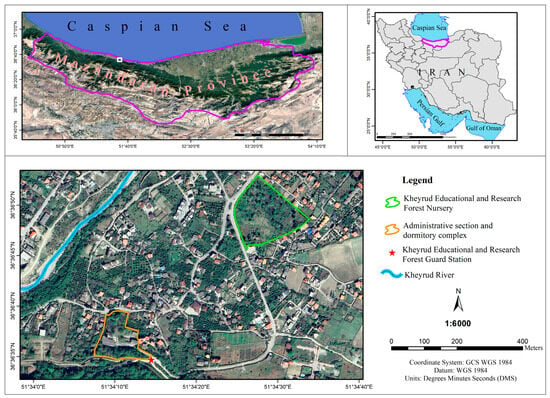
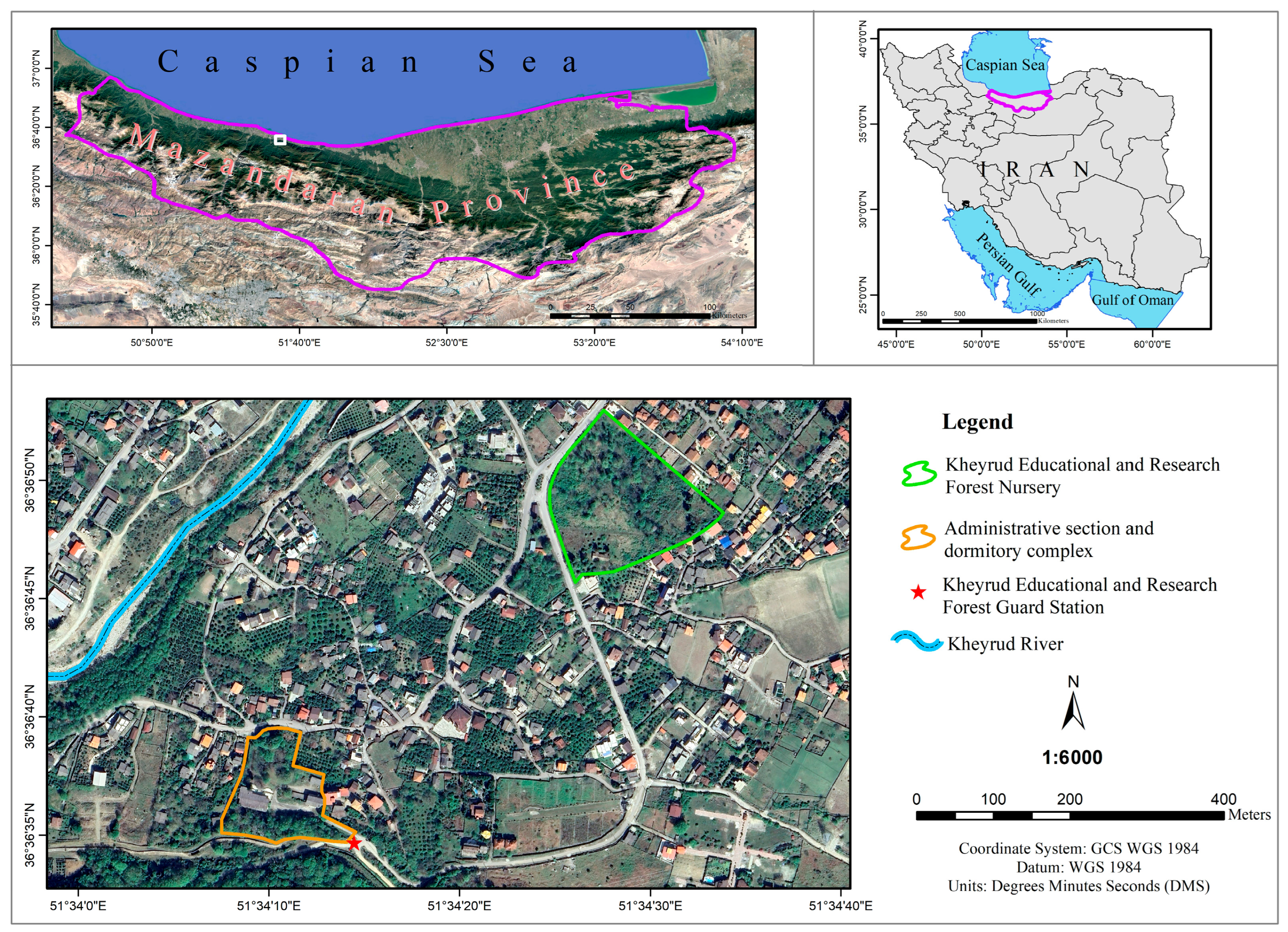
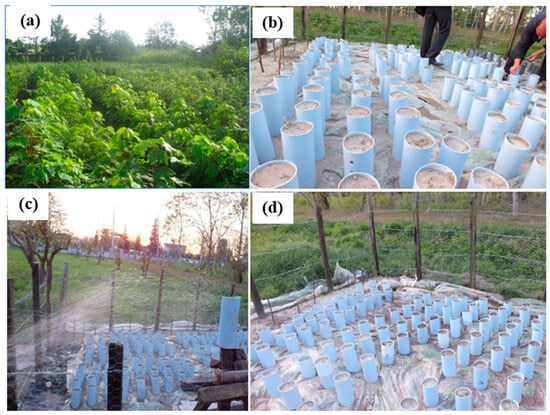
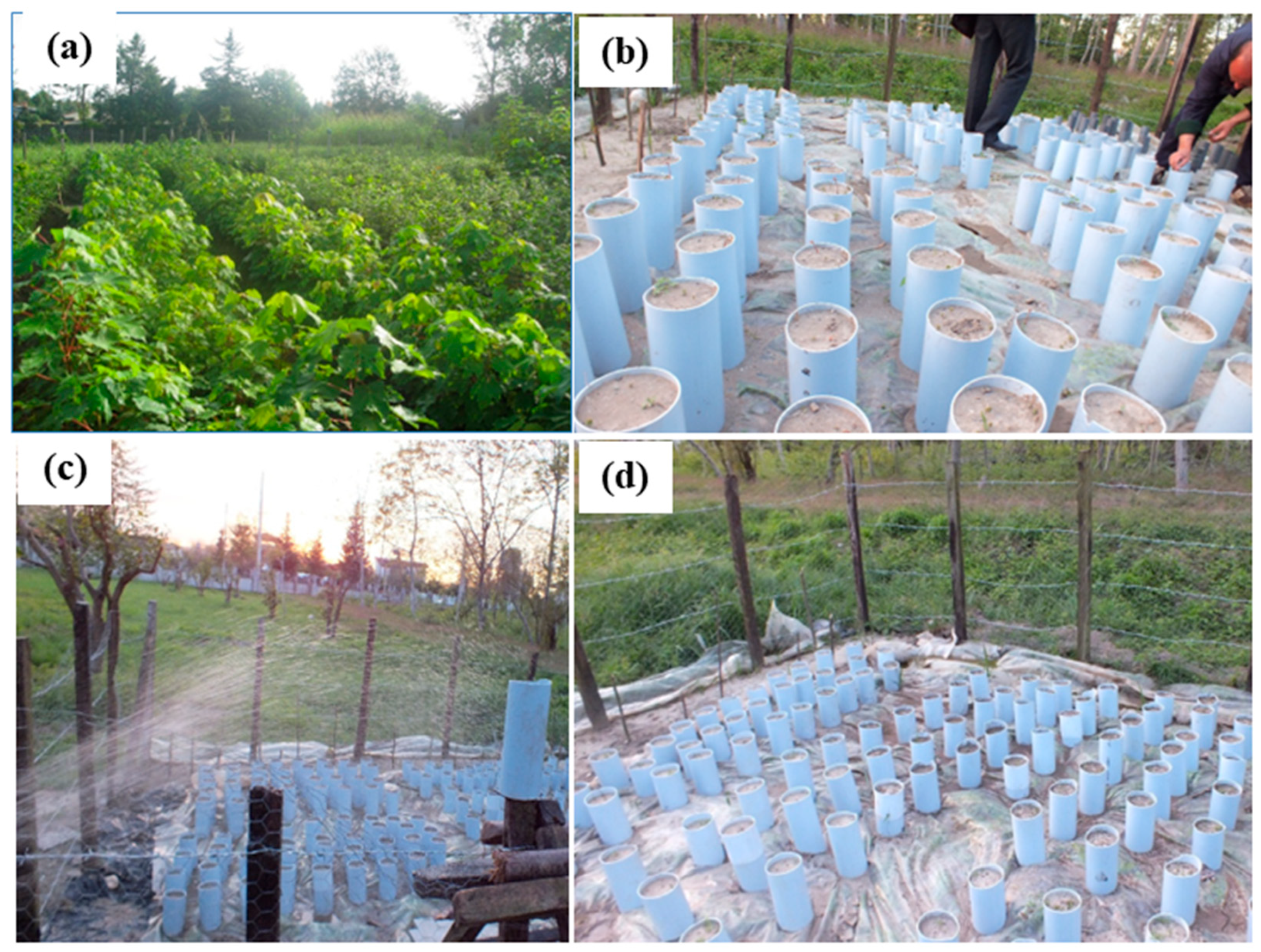
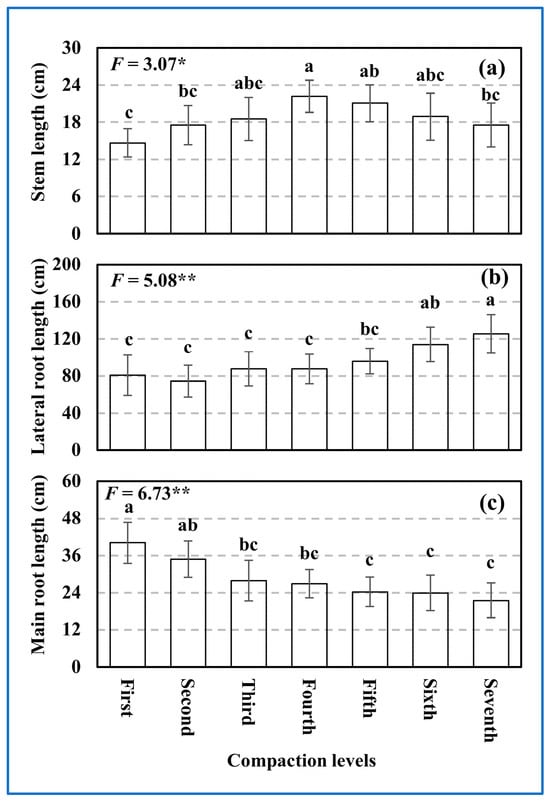
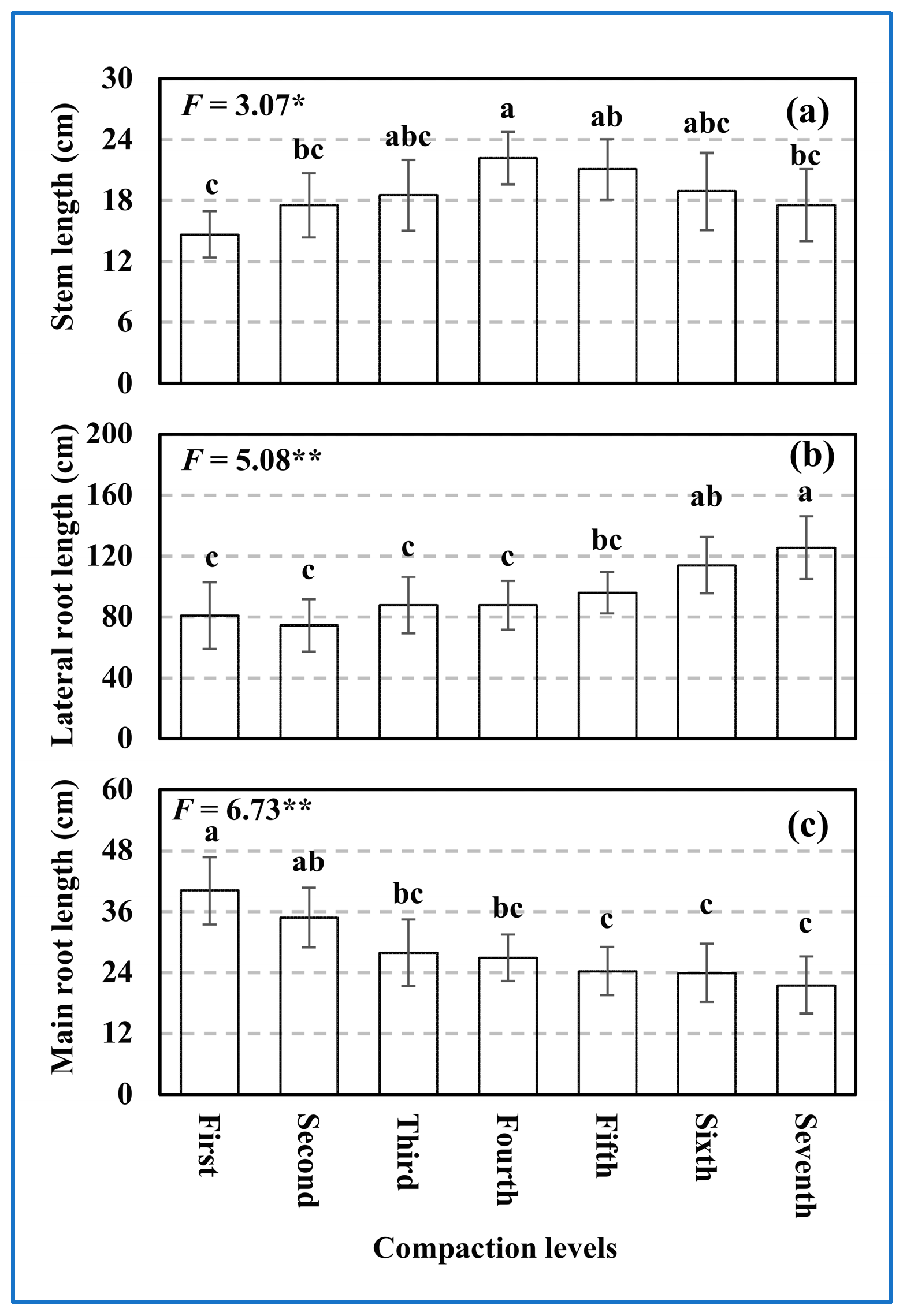
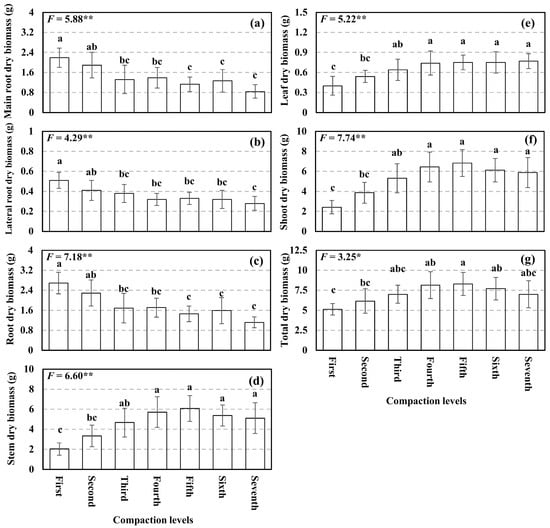
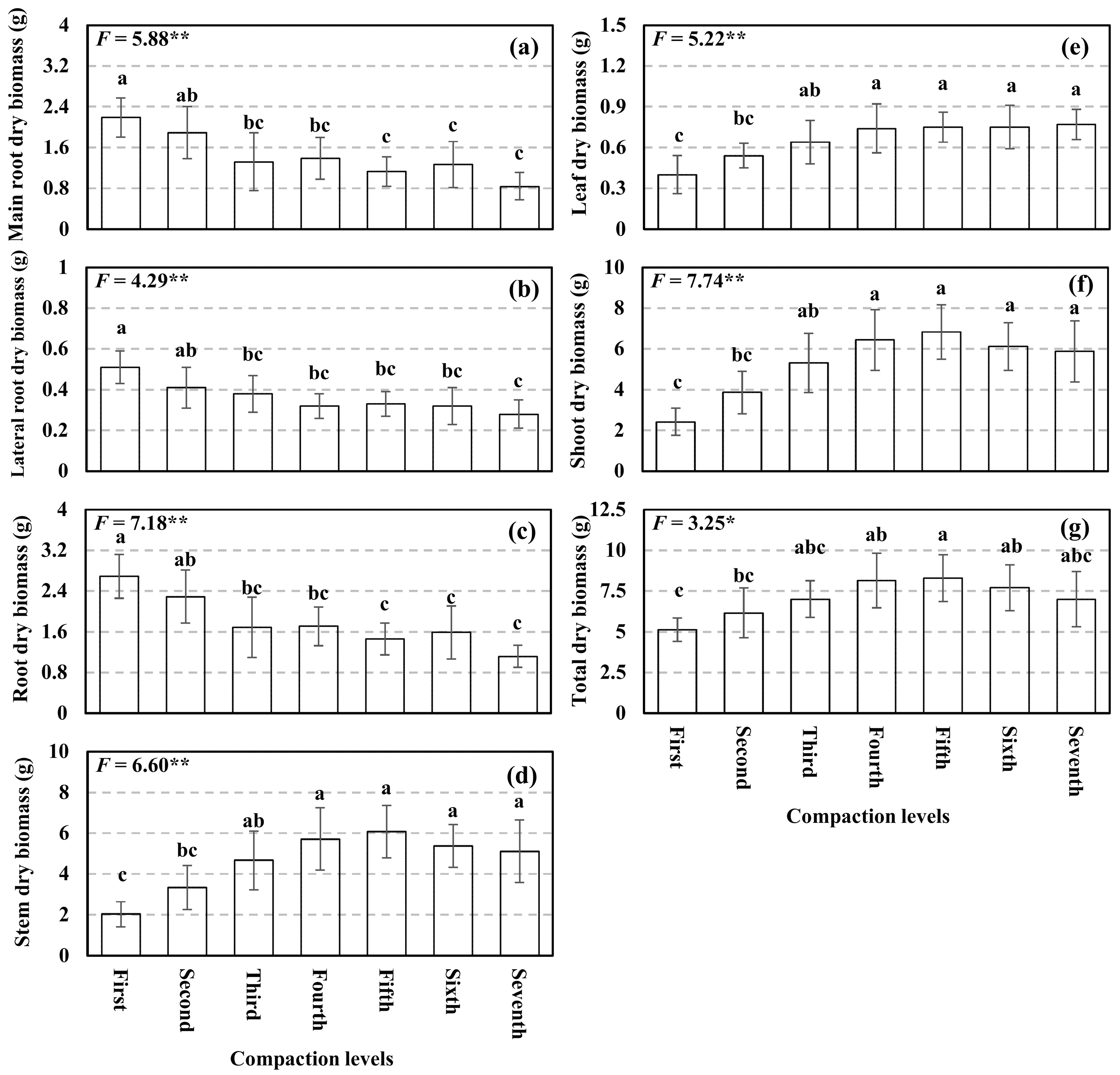
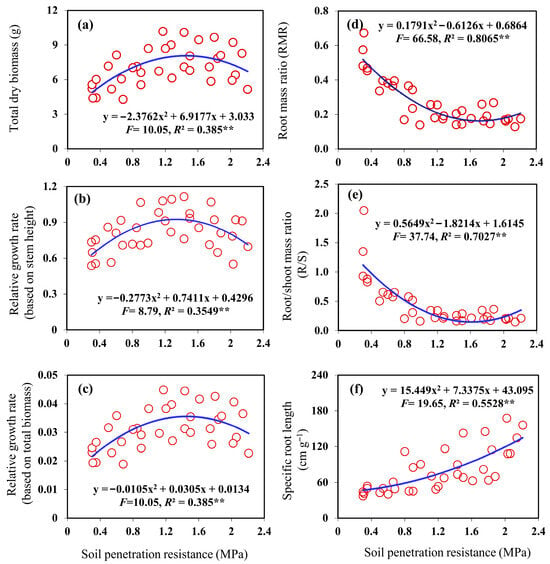
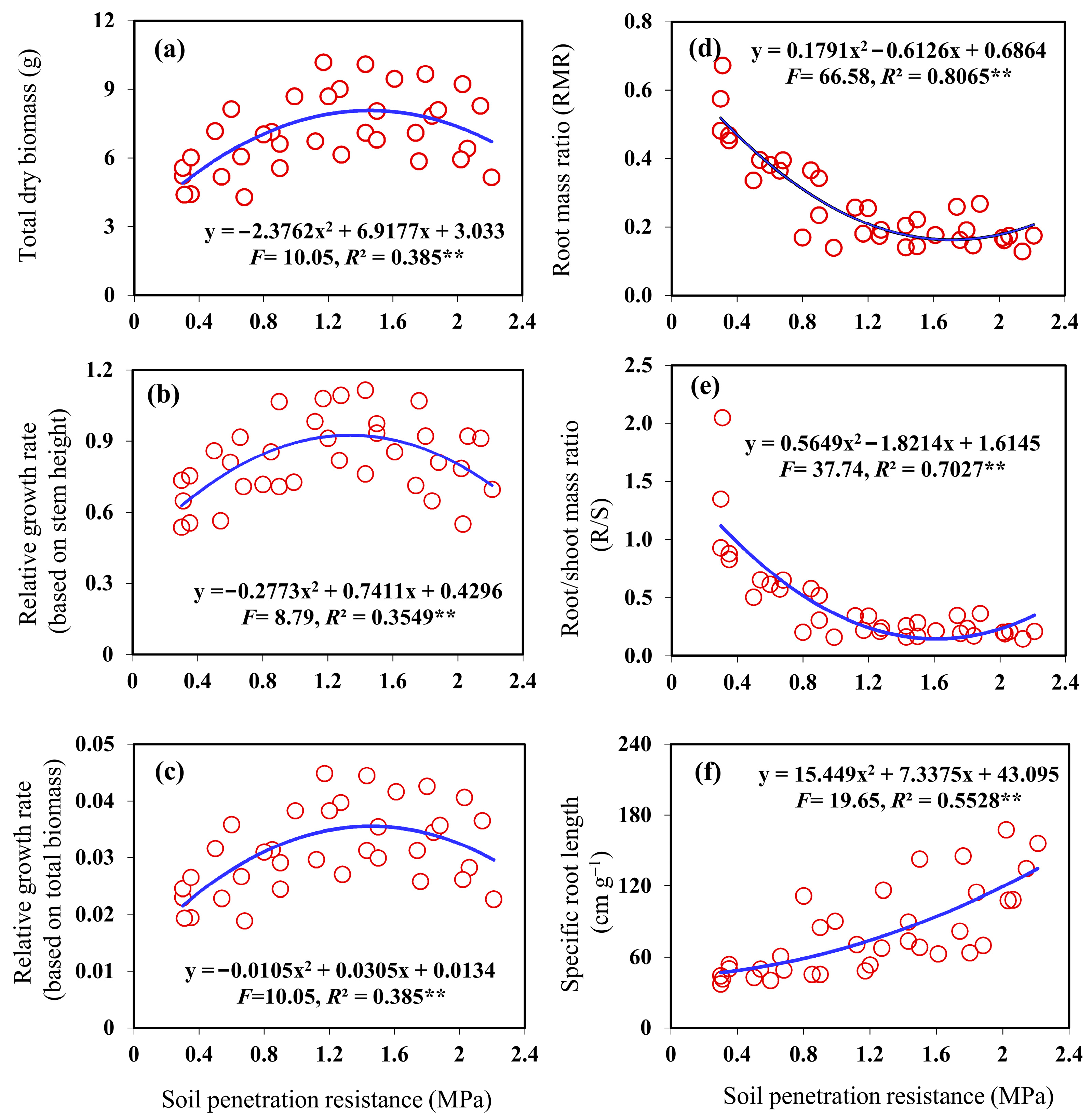
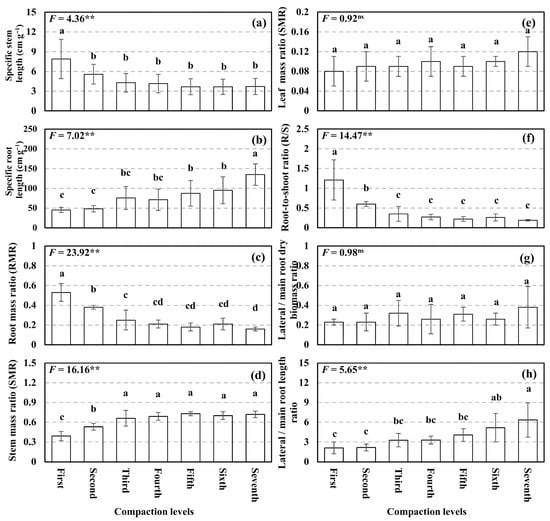
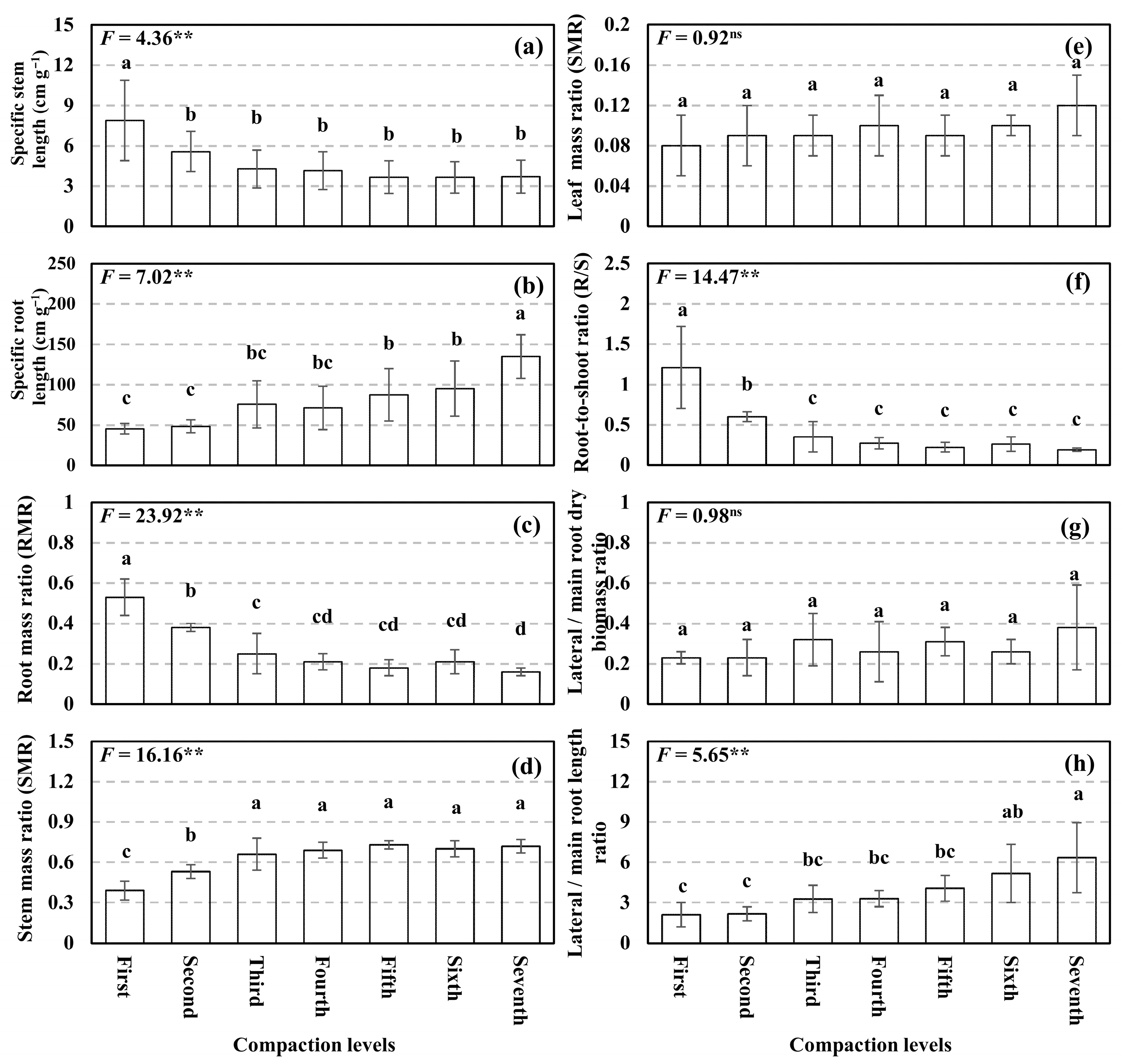
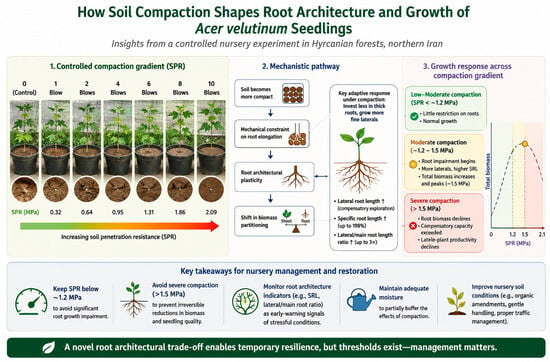
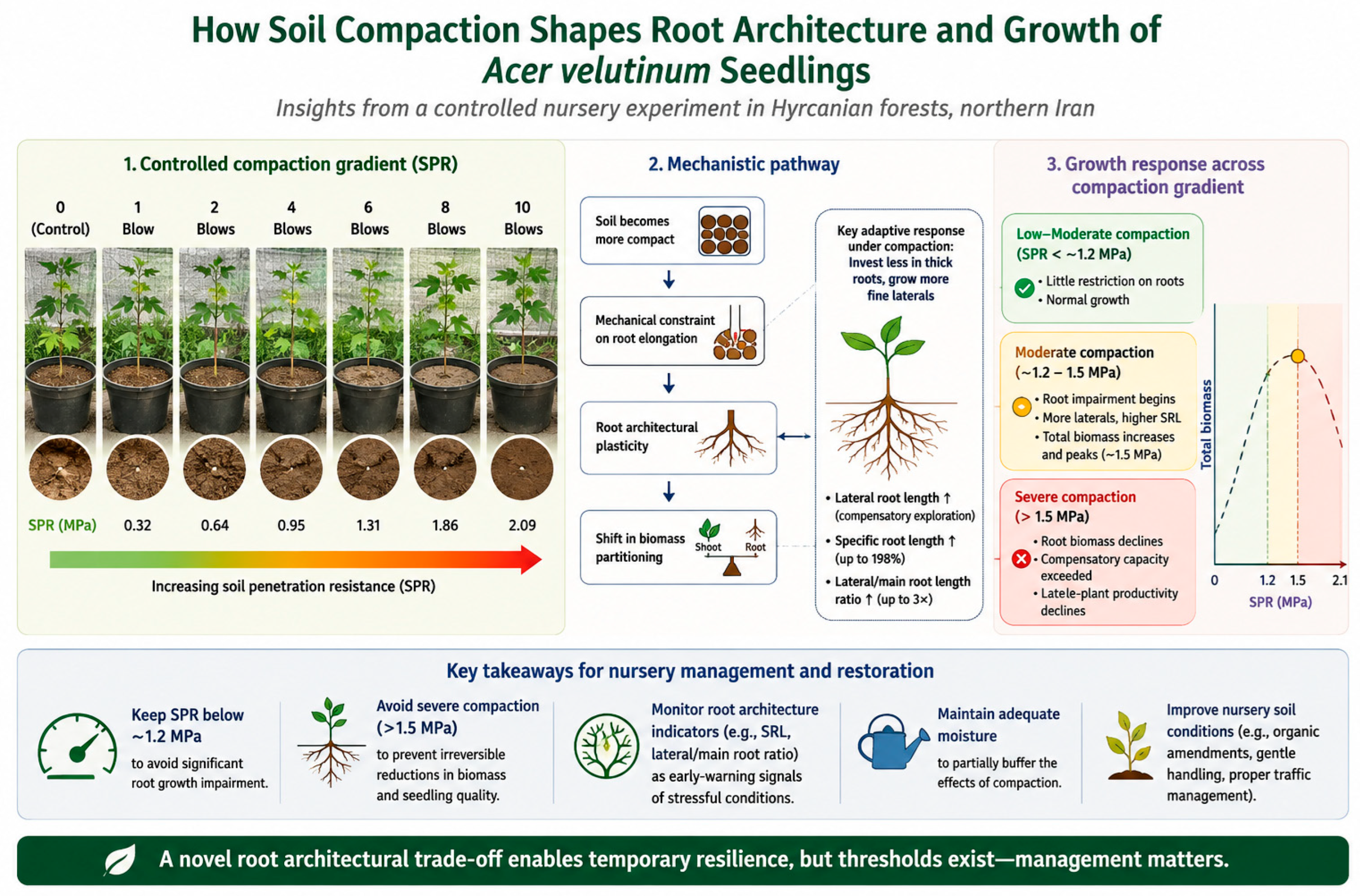

Disclaimer/Publisher’s Note: The statements, opinions and data contained in all publications are solely those of the individual author(s) and contributor(s) and not of MDPI and/or the editor(s). MDPI and/or the editor(s) disclaim responsibility for any injury to people or property resulting from any ideas, methods, instructions or products referred to in the content. |
© 2026 by the authors. Licensee MDPI, Basel, Switzerland. This article is an open access article distributed under the terms and conditions of the Creative Commons Attribution (CC BY) license.