


Abstract
Background: Contemporary older adults, especially the baby boomer generation, expect to actively shape their communities rather than passively receive services. Supporting ageing in place is a key issue for social sustainability, as communities need to remain inclusive, accessible, and liveable for ageing populations. While participatory approaches are increasingly promoted, implementation remains top–down and expert-driven. Older adults often express their experiences of the built environment through everyday language rich in emotion, memory, and sensory details, yet these forms of knowledge are typically dismissed as informal or subjective. As a result, their lived spatial experiences remain institutionally invisible in age-friendly planning and design. Methods: This exploratory case study analysed textual comments submitted by older adults in a coastal suburb in Queensland through a participatory Citizen Science initiative. An integrative framework combining GIS mapping, content analysis (CA), sentiment analysis (SA), and critical discourse analysis (CDA) was used to examine how older adults describe, evaluate, and negotiate their built environments. Results: GIS mapping showed that older adults chose to document familiar, accessible public spaces, such as parks, civic precincts, and transport corridors, reflecting routine-based patterns of use. Content analysis revealed a focus on modest but essential built environment features, including shaded seating, footpaths, signage, and pedestrian crossings, which supported comfort, safety, and social engagement. Sentiment analysis found that 67% of comments were positive and 18% neutral, indicating broad satisfaction but also strategic emotional framing. CDA identified three exploratory interpretive patterns, Affective Evaluation, Narrative Anchoring, and Modal Negotiation, through which older adults expressed emotion, belonging, and concern within this limited corpus. Conclusions: Ageing in place depends not only on physical infrastructure but also on discursive inclusion, that is, whether older adults’ everyday ways of speaking are heard and recognised in participatory planning. This study shows that older adults actively shape spatial meaning through emotion, memory, and caution, and that their language carries both experiential insight and civic intention. Recognising these discursive signals may help inform more responsive, age-inclusive, and socially sustainable participatory planning.
1. Introduction
As life expectancies continue to rise globally, older adults are not only living longer but are also healthier, more educated, and more socially engaged than previous generations [1]. This new cohort of older adults, particularly the baby boomer generation, brings fundamentally different expectations for later life compared to their predecessors [2]. Recent work on ageing concepts also shows that ageing research has increasingly moved beyond deficit-based views of older adults, although the shift toward more positive and multidimensional ageing narratives remains incomplete [3]. Rather than accepting passive roles as service recipients, they expect to be seen, heard, and actively involved in shaping the environments where they live. They increasingly seek meaningful participation in their communities’ ongoing development and governance, bringing valuable knowledge, experience, and perspectives to these processes [4,5].
These heightened expectations for active community engagement intersect with the practical reality that most older adults wish to remain in their familiar environments. In Australia, around 78–81% of adults aged 55 and over express a preference to age in place, citing continuity, familiarity, and autonomy as essential for quality of life [6]. This aspiration depends heavily on supportive built environments, where key dimensions such as walkability, access to green spaces, safe crossings, adequate seating, and proximity to amenities can either enable or constrain older adults’ daily routines, social connections, and sense of security [7,8,9]. These built environment supports operate across both neighbourhood and street scales, shaping older adults’ everyday mobility, comfort, and social participation [10,11,12].
In response to these dual needs for participation and supportive infrastructure, many age-friendly frameworks have emerged to guide the creation of inclusive, accessible built environments. Notable examples include the WHO Global Network, AARP’s Livable Communities, Age-Friendly Ireland, Canada’s Age-Friendly Communities, European active and healthy ageing initiatives, and Japan’s age-friendly smart-city initiatives [13,14,15,16,17,18]. However, despite their good intentions, these frameworks may rely on evaluative tools that privilege expert judgement and predefined indicators, falling short of the participatory expectations of today’s older adults. Although such indicators are useful for comparison and policy evaluation, they may overlook how older adults explain why particular places feel safe, meaningful, stressful, supportive, or difficult to use in everyday life [19,20]. As a result, the planning and design of the built environment can remain top–down, checklist-driven, and expert-led, treating older adults as passive recipients of place rather than as active co-producers of their environments [4,21].
Beyond this participatory gap lies a subtler form of exclusion: the failure to attend to how older adults articulate their lived experiences of the built environment through language. In this study, discursive power is used in a focused sense. It refers to the capacity of older adults’ everyday language to make local environmental experiences visible, to express concerns in socially acceptable ways, and to claim recognition in participatory planning [22]. It does not refer to a broad institutional analysis of planning power, but to how power is negotiated through small-scale, place-based forms of expression [23]. While existing tools focus on measurable physical features or standardised indicators, they may overlook how older people describe, critique, and emotionally respond to their environments. Even less attention has been paid to how these everyday comments can be systematically analysed within an integrated framework across their spatial, emotional, and discursive dimensions. This form of discursive knowledge, embedded in everyday reflections and observations, is often dismissed as anecdotal or difficult to translate into formal planning categories and may therefore be excluded from planning processes.
Overall, existing research has made important contributions to understanding ageing in place, age-friendly environments, and participatory planning [4,10,11,21,24,25,26]. However, fewer studies examine older adults’ place-based comments as spatial, emotional, and discursive data. This research addresses this gap by using a participatory Citizen Science (CS) approach to position older adults as contributors to place-based knowledge [25,26] and by analysing how language itself is a form of place-making. When older adults describe a broken footpath, express fear about a dark alleyway, praise a shaded seating area, or reminisce about a playground used with grandchildren, they are engaging in more than the communication of opinion. They are “speaking space” into being, actively shaping the social meaning of the built environment through words [19,20,23,27]. These expressions are not ancillary to formal planning data; they are discursive contributions to the support or erosion of ageing in place.
Based on these gaps, this exploratory study was guided by three research questions:
RQ1: Which built environment features and places did older adults choose to document in their local community?
RQ2: What emotional orientations were expressed in older adults’ written comments about these places?
RQ3: How did older adults use language to express belonging, concern, and agency in relation to ageing in place?
To address these questions, a GIS survey was conducted as part of a citizen science project in a regional city, Queensland, where older adults were invited to photograph features that supported or challenged their ability to age in place, each accompanied by a short written comment, some descriptive, others emotional or critical. The analysis of those written comments follows a four-stage process. First, GIS place mapping was used to visualise where they chose to take pictures. Second, content analysis (CA) was conducted to identify the built environment elements and ageing in place priorities, systematically organising the data and showing the frequency of these categories to provide a descriptive basis for later analyses. Third, sentiment analysis (SA) was performed to offer a general indicator of the emotional tone of these comments. Finally, critical discourse analysis (CDA) was applied to examine in detail how older adults’ language expressed agency and critique, offering insights into how they negotiate and construct the meaning of ageing in place through their own words.
By centring the perspectives of older adults, this research invites a broader rethinking of place-based knowledge in age-friendly urban design. Their commentary reveals how older adults negotiate space, articulate belonging, and resist marginalisation through language. This aligns with their expectations to be active participants rather than passive beneficiaries in shaping their communities. Ageing in place, therefore, involves more than physical infrastructure; it is fundamentally a matter of voice, of who has the legitimacy to define, describe, and make claims upon the environments they inhabit. In this sense, age-friendly planning is also part of sustainable development, because it concerns how communities can remain inclusive, accessible, and liveable as populations age.
2. Methods
This research is part of a broader Citizen Science (CS) project that examines how built environment (BE) factors interact as a system to affect ageing in place. The CS approach is defined as the active involvement of non-professional participants in generating and interpreting research data [25,28,29], and it is particularly valuable for studying everyday place-based experiences. In this research, a co-created CS model was used, in which older adults contributed to identifying relevant BE categories, generating place-based data through photographs and written comments, and reviewing the collected material in a follow-up workshop [30]. Their role, therefore, extended beyond data provision, as they helped shape the categories and contextual understanding of this study. However, the formal coding and interpretation reported in this paper were conducted by the research team. This study is therefore best understood as a co-created citizen science project with researcher-led analysis. This approach can help reveal emotional and contextual details often missed in expert-led assessments and makes the findings more relevant for real-world ageing-in-place design [26]. Given the small and place-specific sample, this study is positioned as an exploratory methodological study rather than a representative assessment of older adults’ BE needs. Its main purpose was to test how an integrated framework combining GIS mapping, content analysis, sentiment analysis, and critical discourse analysis could capture older adults’ place-based comments as structured data.
The broader co-created CS project included two participatory workshops that were conducted in a regional town in Queensland. In the first CS workshop, older adults, referred to here as citizen scientists, identified BE elements that supported or hindered their ability to age in place. They were then provided with instructions on how to use ArcGIS Survey123 to photograph these BE elements and submit brief comments describing what the feature was and why it mattered to them. Over the following two weeks, each participant independently submitted entries, which included images, short written comments, and automatically recorded geographic locations. The second workshop brought citizen scientists back together to review the collected data and discuss how different BE elements were interconnected and influenced their ageing in place.
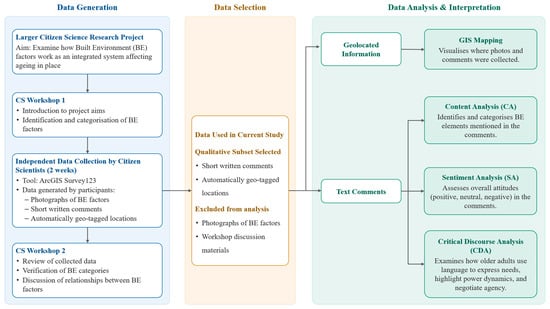
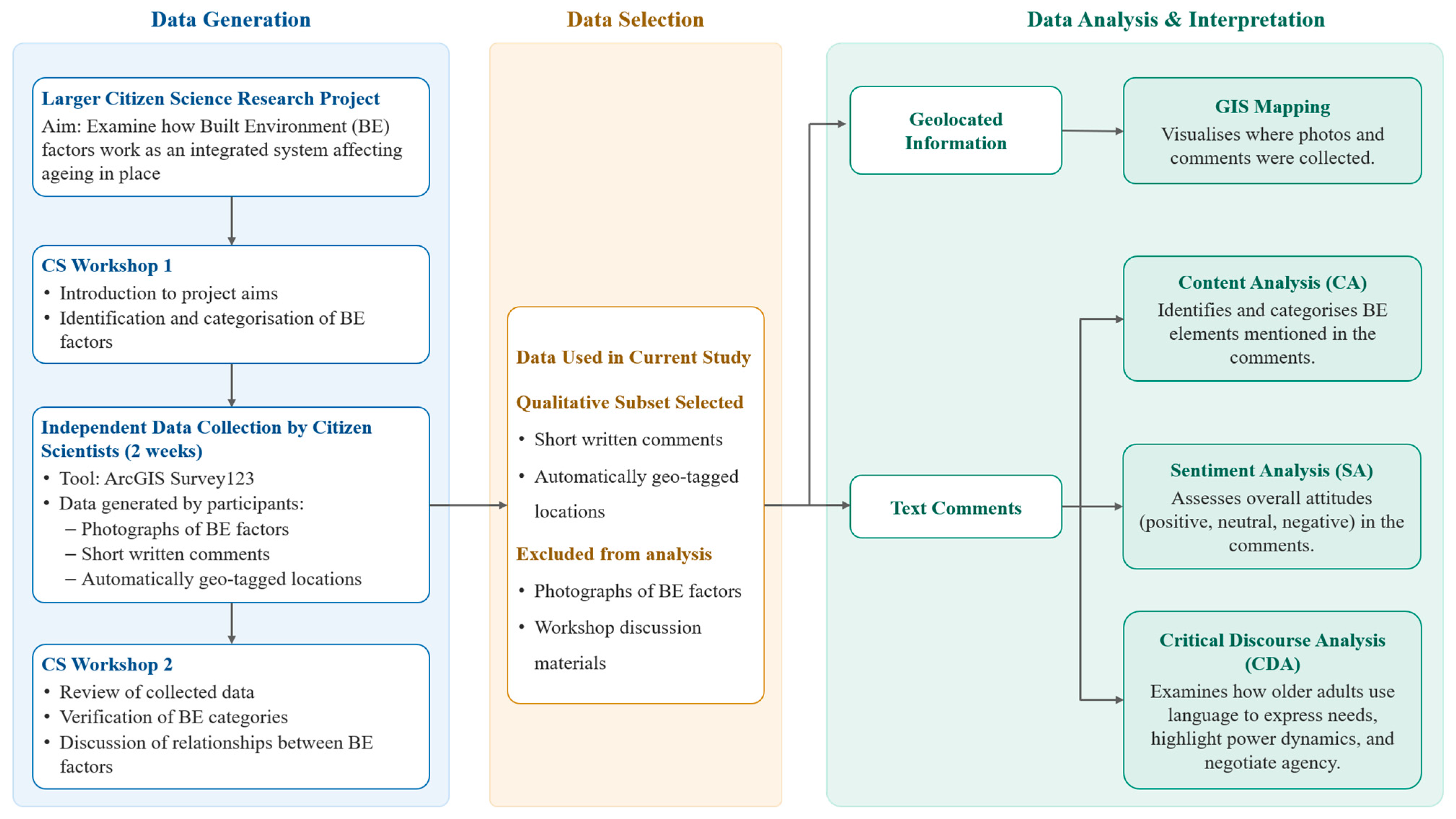
The current research used the textual comments with geo-tag location collected by ArcGIS Survey123 as dataset and adopted an integrative analytical framework, combining Place Mapping, content analysis (CA), sentiment analysis (SA), and critical discourse analysis (CDA) to capture physical, social, and discursive dimensions of ageing in place, and explore how built environment features, lived experience, and narrative agency intersect. Figure 1 illustrates the overall analytical framework of this research.
Figure 1.
The Integrative Analytical Research Framework.
2.1. Data Collection
2.1.1. Research Context and Participants
This research was conducted in a regional town, a coastal suburb in Queensland, Australia, with a high proportion of older residents (21% aged 65 and over) [31]. The suburb includes a range of public facilities relevant to ageing in place, such as libraries, medical centres, parks, and public transport access points [32]. The regional town had previously been included in local age-friendly planning activities, making it a suitable location for exploring older adults’ experiences of their built environment [33]. Its coastal setting, ageing population, and mix of public facilities, recreational spaces, transport access points, and daily walking routes made it a useful case for examining how older adults experience ageing in place in a regional Australian context. The site was not selected as a representative case of all Australian urban areas, but as a place-specific setting for testing the proposed analytical framework.
Citizen scientists were recruited through community centres, libraries, and senior networks using printed flyers, newsletter announcements, and local word-of-mouth. In total, 13 older adults (aged over 65 years; 8 males, 5 females) participated in the complete research. All citizen scientists lived independently in the regional town area or nearby, rather than in a single residential facility or recruitment site, and were cognitively capable of providing informed consent.
2.1.2. Data Collection Using ArcGIS Survey123
In the first CS workshop, citizen scientists were introduced to this study’s objectives and provided with instructions on how to use ArcGIS Survey123 (https://www.esri.com/en-us/arcgis/products/arcgis-survey123/overview, accessed on 7 May 2026), a web-based digital platform developed by Esri that enables users to submit photographs and written comments with automatically recorded geographic locations. They were asked to identify built environment (BE) elements that supported or hindered their ability to age in place, take photographs of these elements, and provide brief written comments, then independently upload their entries to the platform.
Specifically, ArcGIS Survey123 set up four questions to elicit both place-based and experiential insights, including: (1) your citizen scientist number; (2) picture(s) highlighting an aspect of the community that helps or hinders your activities; (3) what is in the picture? and (4) tell us more about the picture and why it is important to you. The data collection period lasted two weeks following the first CS workshop. Citizen scientists completed the survey independently, with full control over what to document, when to do so, and how much detail to provide. In total, 58 photo–comment entries were submitted by 6 citizen scientists. Although 13 older adults participated in the full citizen science project, only 6 submitted usable ArcGIS Survey123 photo–comment entries during the independent data collection period. The remaining participants were involved in the broader workshop process but did not contribute usable textual entries to the dataset analysed in this paper. Therefore, the dataset analysed in this paper consists only of the 58 entries submitted by these 6 participants. Each entry was automatically geo-tagged, providing both place-based and narrative data for subsequent analysis. This research analysed only the textual comments and their associated geo-locations; the photographs will be examined in a future study.
2.2. Data Analysis
The data analysis combined four methods to examine the 58 textual comments provided by 6 citizen scientists. The main steps included mapping the locations where photos and comments were collected, systematically coding and categorising the content of these comments, and exploring both their emotional tone and the underlying discursive strategies.
Methodologically, this study is positioned as an exploratory mixed-method case study with a qualitative and discourse-oriented emphasis. The four methods were not intended to provide independent proof of the same findings, but to examine different dimensions of the same citizen-generated comments. GIS mapping was used to show where comments were located. Content analysis identified which built environment categories were mentioned. Sentiment analysis provided a descriptive overview of emotional tone. Critical discourse analysis examined how concerns, meanings, and forms of agency were expressed through language. Together, these methods provided complementary layers of analysis rather than separate claims of generalisable evidence.
2.2.1. Place Mapping
Using the geo-location data embedded in each submission via ArcGIS Survey123, mapping was conducted to identify the locations where participants chose to take photos and provide comments. This analysis provided a clear overview of the types of places that participants engaged with in their local environment. ArcGIS Survey123 geo-located and visualised these locations, creating maps that show areas of higher activity, such as the foreshore, transport stops, and public parks, and places with minimal engagement, like residential side streets or low-activity zones. This mapping served as a descriptive tool to illustrate which places older adults focused on in their daily lives, without making further interpretations at this stage.
2.2.2. Content Analysis (CA)
Content analysis (CA) was applied to the textual comments to serve two purposes.
The first aimed to summarise key places mentioned across the comments. For each place, its main features, perceived significance, and frequency of reference were documented. This descriptive analysis helped highlight which locations and features older adults considered most relevant in their everyday interactions with the built environment.
In the first citizen science workshop, citizen scientists discussed various BE elements and grouped them into 10 categories. The second CA of the comments was conducted manually in NVivo 10, using these 10 categories as an initial coding framework while also allowing for new BE categories to emerge. Multiple coders independently reviewed the comments, assigned thematic categories, and cross-checked their assignments to ensure consistency. Coding consistency was checked through an iterative consensus process. Each coder first coded the comments independently using the ten built environment categories identified in the first workshop. The coding results were then compared across coders. Any disagreement was discussed case by case until a shared interpretation was reached. Because the dataset was small and the coding framework was co-developed with citizen scientists, the purpose of this process was to improve interpretive consistency rather than to produce a statistical intercoder reliability score. Notably, no new BE categories emerged from the comments, and the coding process confirmed the same 10 categories originally identified by the citizen scientists, serving as a form of cross-validation.
2.2.3. Sentiment Analysis (SA)
Sentiment analysis (SA) was conducted to provide a systematic overview of emotional orientations toward the built environment. The open-source Python package VADER 3.3.2 [34] was used to calculate compound sentiment scores for each comment, using the default lexicon and rule-based thresholds. Each comment was assigned a compound score ranging from −1 (most negative) to +1 (most positive). Following established practice, comments with a score above 0.05 were categorised as positive, those below −0.05 as negative, and those in between as neutral.
For sentiment analysis, the VADER classification was used as the first coding output. Two researchers then reviewed each automated label against the full comment to check whether the assigned sentiment matched the comment context. Where the automated score did not reflect the meaning of the comment, the final label was decided through discussion. This human validation step was used to reduce the risk of misclassification in short, context-dependent comments. VADER was used only as a descriptive screening tool, not as a stand-alone measure of participants’ emotions. Because the comments were short, place-based, and context-dependent, automated scores were interpreted cautiously and were always checked against the full comment by researchers.
This combined approach, automated sentiment extraction using VADER followed by human validation by independent coders, improved the transparency and contextual accuracy of the final sentiment assignments. The results of the sentiment analysis were then visualised in a bar chart generated using Python’s matplotlib library (version 3.10.13).
2.2.4. Critical Discourse Analysis (CDA)
Critical discourse analysis (CDA) was employed to examine how older adults used language to express their views and lived experiences of the built environment. Drawing on CDA’s concern with the relationship between discourse, power, and social context [23,35], the analysis focused not only on what was said, but also on how it was said, paying particular attention to tone, emotional framing, and implicit assumptions embedded in the comments.
The analysis was conducted through iterative close reading, inductive coding, and memo-writing, supported by NVivo 10. While grounded in CDA principles, the coding scheme was developed inductively from the dataset. These categories were derived through repeated close reading, memo-writing, and comparison across comments. They were retained only when the pattern appeared in multiple comments and could be linked to established discourse concepts, including affect, narrative identity, politeness, mitigation, and stance-taking. Three exploratory interpretive patterns were identified within this limited corpus.
Affective Evaluation: This refers to how participants expressed emotional responses to places they liked or disliked. Some places were described as joyful, peaceful, or linked to good memories, while others were associated with stress, frustration, or discomfort. These feelings showed what really mattered to them and often helped them express concerns in a gentle, non-confrontational way. While this is not a standard term in CDA, it draws on research that highlights how emotion shapes what people say and how they relate to places [36,37].
Narrative Anchoring: This refers to how participants linked places to personal memories, daily routines, or family relationships. Many comments mentioned long-term use, past experiences, or emotionally significant moments that happened in these places. By anchoring their views in personal history, participants gave weight to their opinions and framed themselves as long-standing, invested members of the community. Although the label is developed specifically for this study, the idea builds on discourse research that views narrative as a key resource for expressing identity, memory, and place attachment [38,39].
Modal Negotiation: This refers to how participants employed cautious or hypothetical language to raise concerns without sounding overly critical. Many comments included modal verbs like would, could, or should, as well as hedging phrases that softened the tone of a suggestion or complaint. This allowed speakers to express dissatisfaction or needs in a respectful, non-confrontational way. The strategy reflects broader discourse patterns associated with politeness, mitigation, and stance-taking in everyday talk [40,41,42]. This kind of phrasing was especially common when participants discussed accessibility or safety issues, suggesting a desire to be heard without causing offence.
These three terms are not standardised categories in CDA literature. In this study, they are used as exploratory interpretive patterns identified within this limited corpus. They are grounded in established discourse concepts, including affect, narrative identity, politeness, mitigation, and stance-taking. Therefore, they should be understood as context-specific analytical tools rather than transferable discourse typologies.
3. Findings
3.1. Places Documented and Described by Older Adults
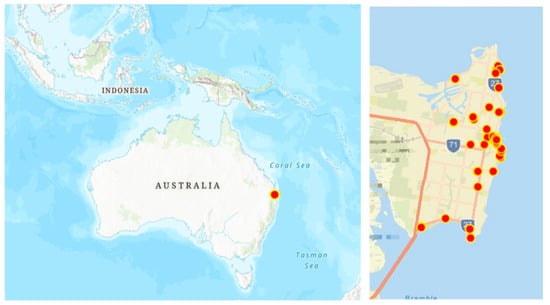
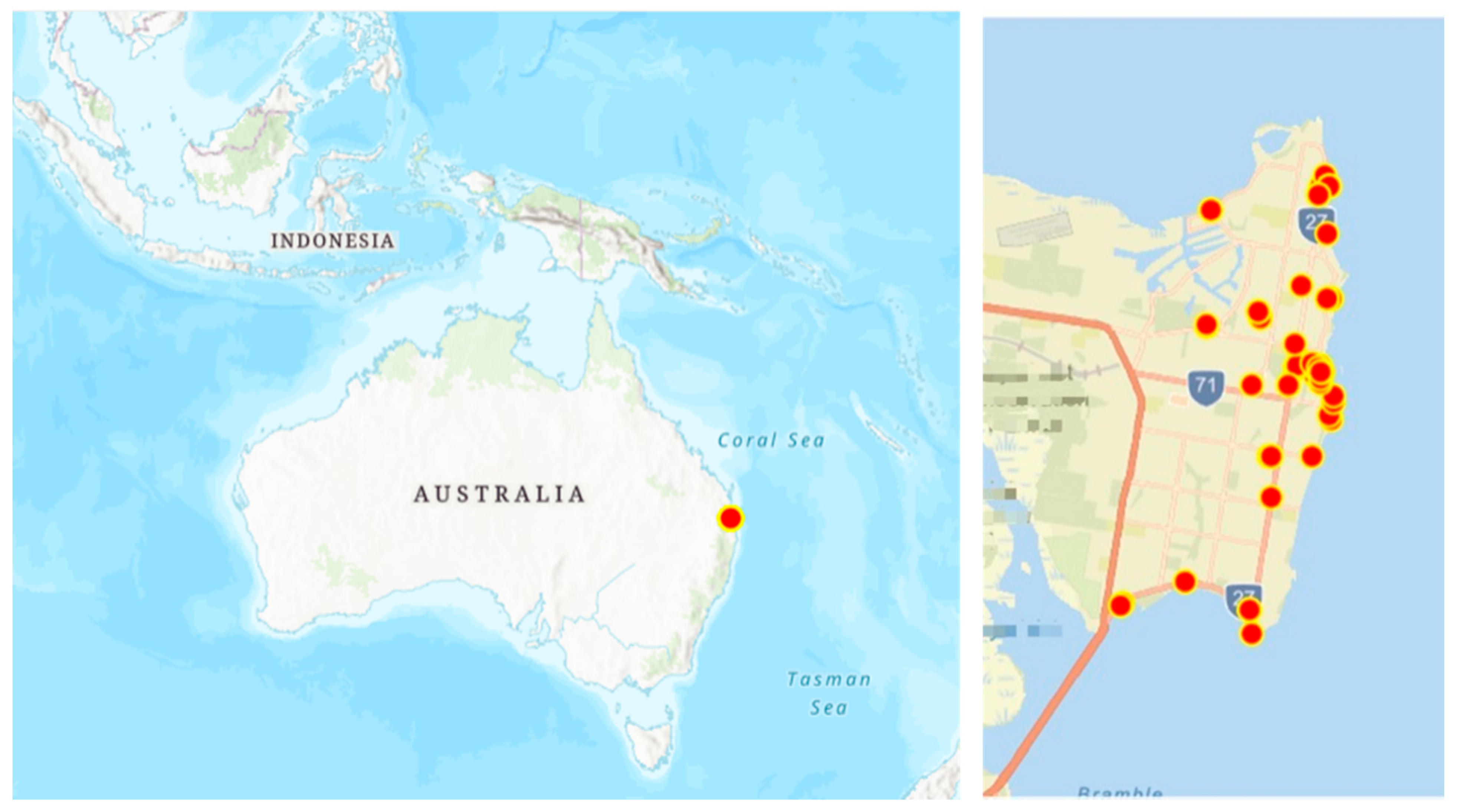
All photo–comment submissions in this research were collected within a regional town in Queensland. The suburb includes a range of public facilities that are supportive of ageing in place, such as libraries, medical centres, parks, and public transport access points [32]. The regional town had previously been included in local age-friendly planning activities, making it a suitable location for exploring older adults’ experiences of their built environment [33]. While the entire regional town was available for observation, the mapped distribution of submissions revealed a distinct concentration of attention in specific sub-areas rather than a uniform environmental spread (see Figure 2). Figure 2 is used descriptively to show the spatial context of submissions and to identify areas of concentrated participant attention. It was not intended to support statistical spatial inference or to claim representativeness across the whole suburb.
Figure 2.
Geographical Distribution of Submissions in a regional town in Queensland. Dots represent the geo-tagged locations of photo–comment submissions. The numbers reported in Table 1 indicate the number of mentions for each key place type.
The majority of contributions were clustered along the eastern foreshore of the peninsula, with a clear density around areas where natural amenities, recreational infrastructure, and civic facilities intersect. Frequent documentation occurred at several key locations (see Table 1), including Scarborough Beach Park (n = 12), especially within the enclosed children’s playgrounds and surrounding shaded rest areas, trees, and seating. The regional town Parade and its civic precinct (n = 10), encompassing the regional town Library, Art Gallery, community halls, and U3A facilities, also featured prominently. Participants frequently documented the Dolphins Fitness and Aquatic Centre (n = 8), noted for its accessibility and comprehensive senior-friendly exercise infrastructure, as well as coastal walkways and shared paths (n = 7), particularly those offering tree cover, seating, or clear separation between walking and cycling zones.
Table 1.
Summary of Key Places, Descriptions, and Mentions.
These places emerged as daily activity anchors, supporting walking, recreation, socialising, intergenerational interaction, and access to community services. The spatial clustering suggests that while the regional town is broadly age-friendly in infrastructure, older adults’ experiences of ageing in place are strongly shaped by specific nodes of comfort, accessibility, and continuity of use.
Less frequently documented but still notable were entries referencing neighbourhood footpaths (n = 3), home-to-bus-stop access routes (n = 3), and minor crossings (n = 2)—features that, though small in scale, had clear implications for mobility and perceived safety. These were often linked to uneven surfaces, limited visibility, or unclear demarcations.
By contrast, areas west of the major coastal route, including deeper residential streets and industrial zones, were rarely mentioned. This indicates that participants focused their attention on spaces that are both highly frequented and socially active. This pattern underscores the spatial selectivity of lived ageing experiences: even within a bounded suburb, only certain places are consistently used, remembered, and narrated.
3.2. Categorisations of Built Environment Elements
During the first citizen science workshop, citizen scientists identified and grouped built environment factors into ten categories: (1) commercial facilities and spaces, (2) community and government support facilities, (3) cultural facilities, (4) social facilities and spaces, (5) outdoor and environmental spaces, (6) sports and exercise facilities and places, (7) transportation infrastructure, (8) health and medical facilities and amenities, (9) care facilities, and (10) housing. In this classification, health and medical facilities and amenities refer to places or services used for clinical, preventive, or routine health needs, such as medical centres, pharmacies, and health-related appointments. Care facilities refer to places that provide longer-term support or assisted living services, such as residential aged care, respite care, or other care-based settings.
Subsequently, content analysis of the 58 textual comments was conducted to explore whether these ten categories were represented and described by older adults. The analysis confirmed that all ten categories were represented in the comments, with no additional categories emerging, indicating a cross-validation between the initial workshop categorisations and systematic coding of the lived experiences expressed by citizen scientists.
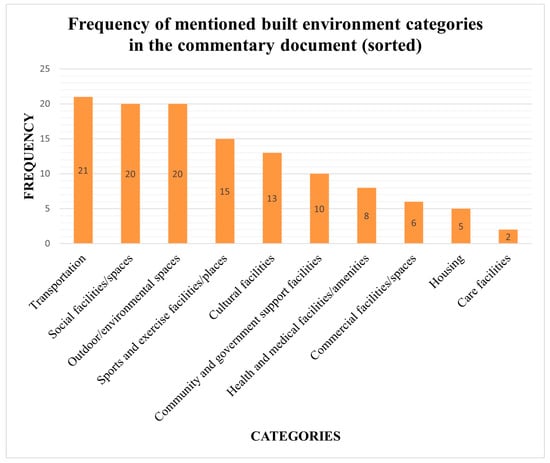
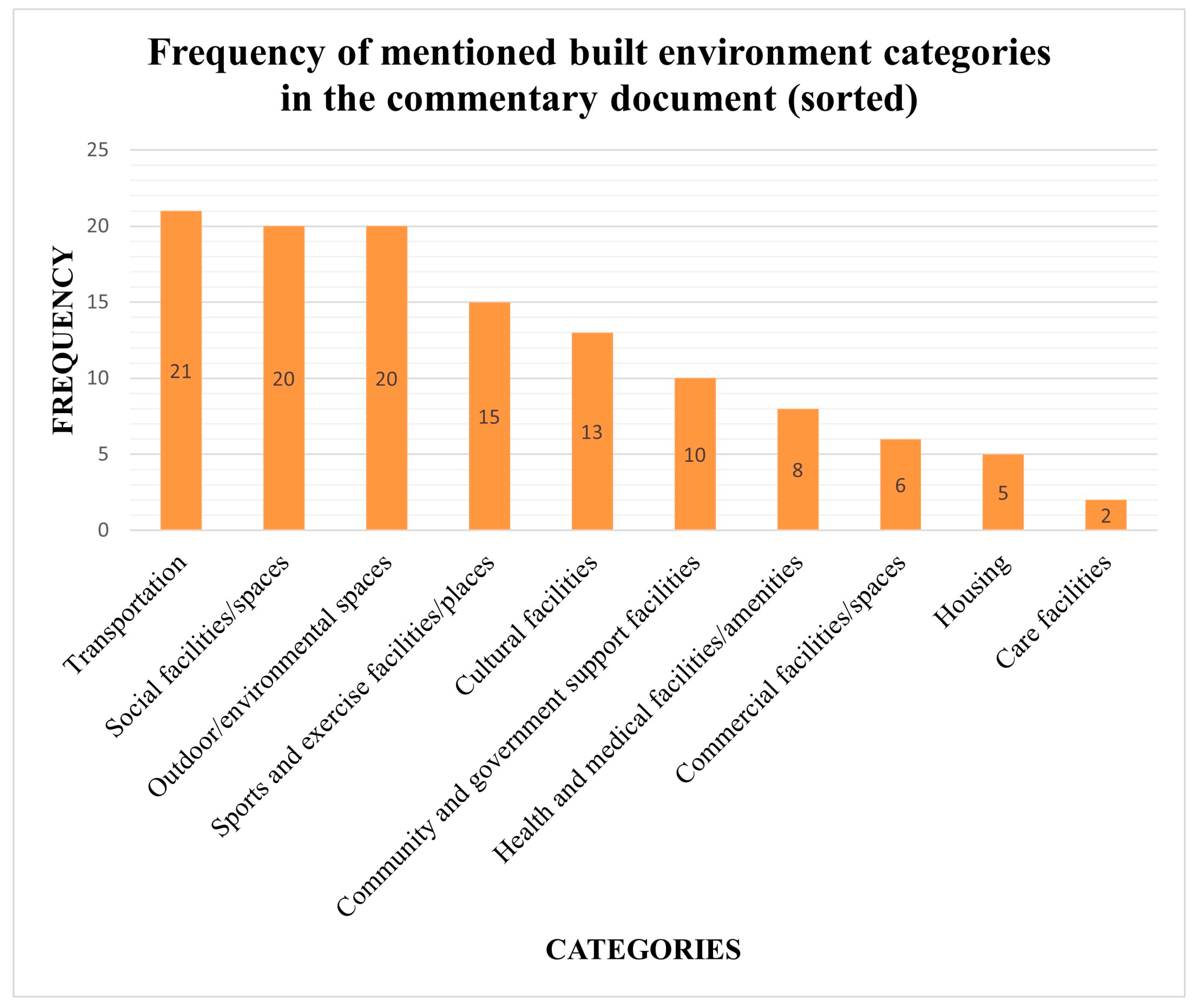
Figure 3 shows the frequency distribution of the ten built environment categories identified by the citizen scientists across the 58 textual comments. Figure 3 reports descriptive mention frequency rather than statistically weighted prevalence. Because the dataset consisted of short citizen-generated comments, the frequency counts were used to show which built environment categories appeared in the submitted comments, not to estimate population-level importance. The distribution was also reviewed at the respondent level to check whether the main patterns were driven only by one participant. While some variation between respondents was present, the most frequently mentioned categories, including transportation infrastructure, outdoor and environmental spaces, and social facilities and spaces, appeared across more than one participant’s comments. Word-count weighting was not applied because longer comments do not necessarily indicate greater environmental importance, and short comments may still contain highly relevant place-based concerns.
Figure 3.
Frequency of mentioned built environment categories.
Transportation infrastructure, outdoor and environmental spaces, and social facilities and spaces were the most frequently referenced, with 21, 20, and 20 mentions, respectively. These places often serve as active sites for walking, social interaction, exercise, and accessing essential services, activities that structure daily life and are thus repeatedly encountered and discussed. Sports and exercise facilities and places (15 mentions), cultural facilities (13), and community and government support facilities (10) also appeared commonly in the comments, reflecting their importance in supporting active and engaged ageing.
In addition, health and medical facilities and amenities (8 mentions), commercial facilities and spaces (6), housing (5), and care facilities (2) were mentioned less frequently. This does not imply that they are less important; rather, it suggests that these features are typically engaged with less often in daily routines, even though they remain crucial for long-term security, comfort, and transitions in later life. Housing and care facilities, for instance, may become especially significant during periods of change or crisis, explaining their lower mention in everyday activity-based narratives.
This pattern, where some categorisations are frequently encountered while others hold structural importance, highlights the layered nature of older adults’ experiences of place. It suggests that their environmental narratives are shaped not only by what is seen and used daily, but also by what is anticipated, needed, or valued at different stages of ageing. Notably, this integrated classification process, which combines participant insights with systematic coding, provides a rich and nuanced understanding of how older adults engage with their environments.
3.3. Sentiment Analysis in Participant Commentary
Before examining the linguistic patterns and underlying power dynamics of the citizen scientists’ comments, it is useful to establish a general overview of the sentiment orientations expressed in the data. This provides a baseline understanding of how older adults emotionally positioned themselves in relation to their environments and reveals how affective language contributed to the discursive construction of place.
All textual comments were reviewed and coded into three broad sentiment categories:
Positive: expressions of appreciation, satisfaction, comfort, pride, or gratitude;
Neutral: factual or descriptive statements with no clear emotional or evaluative tone;
Negative: expressions of dissatisfaction, frustration, concern, fear, or exclusion.
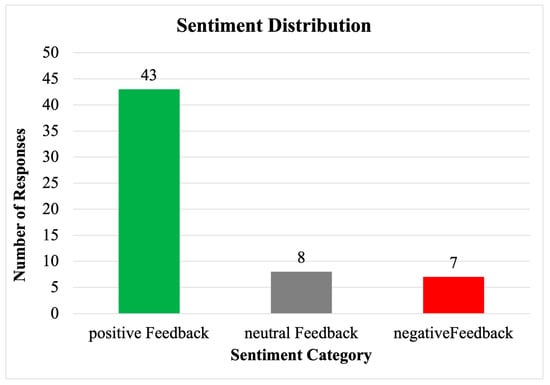
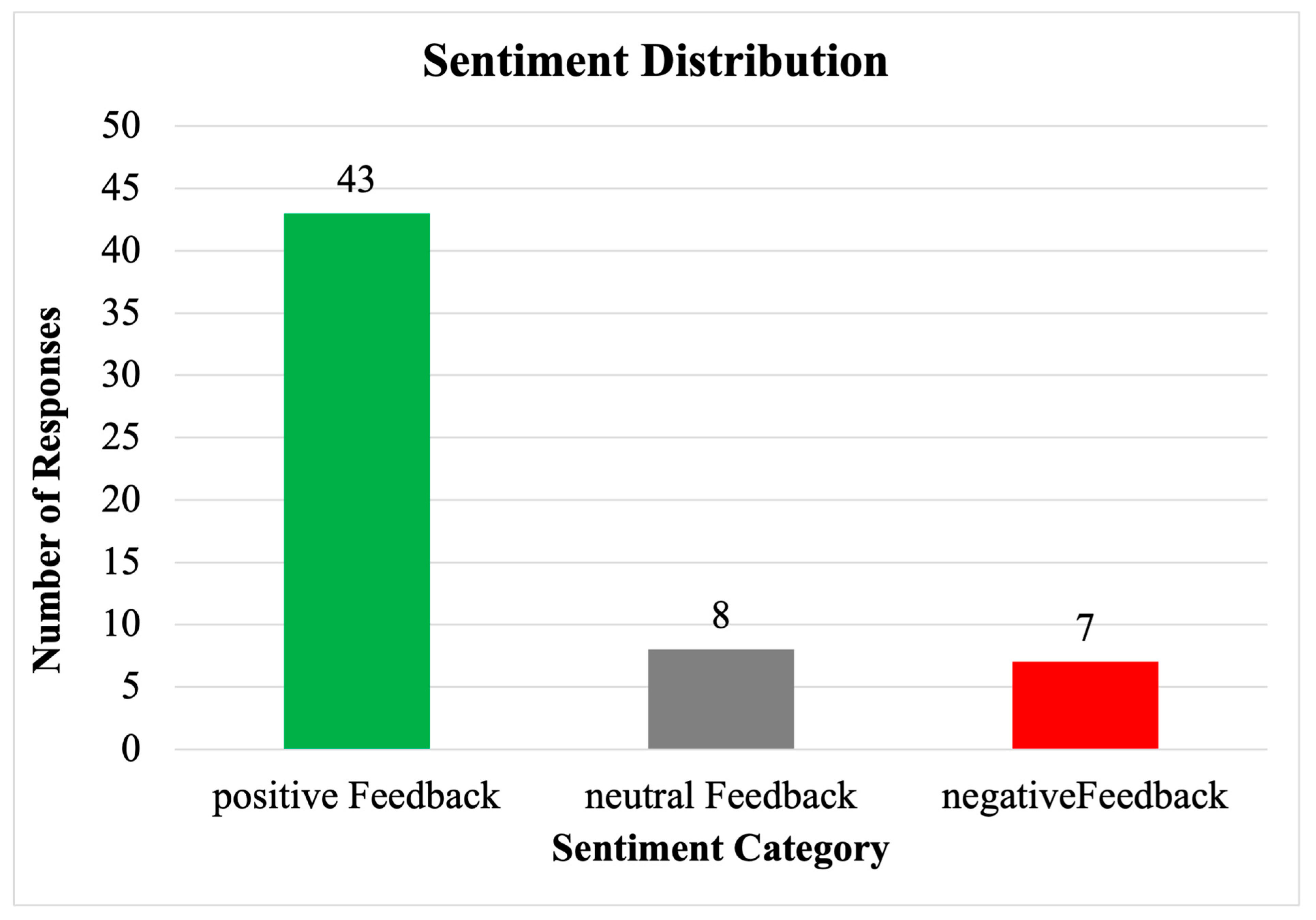
Figure 4 shows that out of the total comments analysed, the majority (67%) were categorised as positive. These included references to well-maintained infrastructure, social engagement opportunities, supportive health services, and emotionally meaningful places such as playgrounds, libraries, and public artworks. This trend suggests that older adults often identified and affirmed features in the built environment that supported continuity, autonomy, and social participation.
Figure 4.
Sentiment orientation of citizen scientist comments.
A smaller portion (18%) was neutral in tone. These comments tended to focus on environmental descriptions, location-specific references, or usage information without emotional expression. While not effectively charged, these neutral statements still contributed valuable place-based knowledge.
The remaining 15% of comments were negative, expressing critiques or concerns about the built environment. These included descriptions of unsafe crossings, inaccessible pathways, inadequate signage, and design issues that complicated ageing in place. Although less frequent, these negative comments were often detailed and urgent in tone, indicating high personal relevance or emotional weight.
This distribution provides important context for the analysis that follows. The prevalence of positive sentiment should not be interpreted as an absence of concern, but rather as a discursive choice. Older adults may prefer affirming or polite modes of expression when participating in semi-public engagement formats. In this way, even positively framed language can mask structural dissatisfaction or unspoken critique, a point that becomes more evident in subsequent qualitative and critical discourse analysis.
3.4. Discursive Strategies in Ageing-in-Place Narratives
Table 2 outlines three exploratory interpretive patterns observed in how older adults used language to express their experiences of the built environment: affective evaluation (using emotional words to show appreciation or discomfort), narrative anchoring (connecting places to personal or family stories), and modal negotiation (using cautious or hypothetical language to voice concerns indirectly). In this study, these patterns are used to describe how participants made sense of places, expressed needs, and adapted their communication to be heard within perceived institutional or social constraints.
Table 2.
Exploratory Discursive Patterns in Older Adults’ Commentary: Linguistic Features and Communicative Functions.
The terms used for these patterns were developed specifically for this study, based on repeated patterns observed in a small and place-specific dataset. They are not presented as standard CDA typologies or as broadly transferable discourse categories. Instead, they are grounded in established discourse literature on emotion, narrative identity, and politeness (see Section 2.2.4), and are used here as context-specific analytical tools. The following analysis elaborates on how these exploratory patterns appeared in participants’ language, what functions they served within this dataset, and how they may reveal the social dimensions of engaging with the built environment.
Affective evaluation refers to how participants used emotional language to express what they valued in the built environment. These were not just passing compliments—they often carried subtle expectations about what should be maintained, protected, or expanded. For example, one participant described the library as “an extremely satisfying and educational experience… Socialising within the community is so important to senior citizens.” Another praised the U3A and gallery as a “great organisation for social connection and brain stimulating activities.” While both are framed as positive, they function as more than praise—they mark these physical places and institutional settings as essential to wellbeing in later life.
In some cases, participants used positive language to soften or displace critique. One example reads: “Love the variety of cafes and shops along the Parade… However, this same popularity often impedes access to people in wheelchairs or needing assistance walking.” Here, praise masks a very real accessibility concern related to footpath congestion and design. These emotional framings allowed participants to voice what mattered most—dignity, access, and belonging—without sounding confrontational. In doing so, affect became a socially acceptable way to comment on the quality and inclusiveness of built environments. Others linked emotionally meaningful activities like Pickleball to personal well-being, framing them as sources of joy, healing, and community support.
3.4.1. Narrative Anchoring: Linking Place to Personal and Family Histories
Narrative anchoring occurred when participants linked places to their own life stories, routines, or relationships. These were not abstract places—they were lived and remembered. For instance, one older adult wrote: “My late husband used to fish here. We spent many hours enjoying the fresh air and catching fish.” Another described a walking path where “we’ve met many very nice people on our walks over the 20 years we’ve been here.” These are not just nostalgic reflections—they assert emotional ownership, positioning the speaker as someone who has helped shape and sustain the place over time.
This strategy was especially common when describing community parks, playgrounds, and walking paths, particularly those used with grandchildren. One participant described an enclosed play area as “an awesome area for physical and imaginative play with grandkids.” In these cases, ageing was not portrayed as decline, but as continued engagement with family, routines, and community places. By sharing personal stories—of long walks, family memories, or grandparenting—participants showed that they had a deep, lived relationship with the environment. This connection gave weight to their voices: not because they had official titles or planning expertise, but because they had history, presence, and emotional investment in specific places.
3.4.2. Modal Negotiation: Raising Concerns About the Built Environment Indirectly
Modal negotiation captured how many participants voiced critique through soft, cautious, or hypothetical language. Rather than demanding change outright, they often hinted at concerns in polite or indirect ways. One comment stated: “Should we need mobility devices later, we’d have trouble getting from our home to the bus stops as the footpaths are very uneven.” Another warned: “You have to be extra careful. We’ve had to jump over taut leashes more than once—dogs bolt, and people don’t always control them.”
These phrases made the concerns sound less urgent and often shifted the burden away from poor design toward the speaker’s own responsibility. Instead of blaming the system, participants framed risks as something they would manage themselves. Yet, underneath these careful phrasings lay critiques of footpath conditions, street design, and public space safety. This reflects a quiet awareness that speaking too directly or sounding demanding might lead to their concerns being dismissed. To avoid this, they used careful, softened language to express problems in ways that seemed reasonable and constructive. These choices were not passive; they were deliberate. This form of mitigated or indirect speech, particularly among older adults, aligns with research on generational discourse norms and politeness strategies in public communication [42,43]. By adjusting how they spoke, participants found a way to voice a critique without breaking social expectations about being polite, measured, and cooperative, especially when talking about urban infrastructure that shapes daily mobility. Some phrased their hopes conditionally, using expressions like “Ideally, we’d like to stay in our home,” to express aspirations while maintaining a respectful tone.
4. Discussion
This research employed an integrative framework combining GIS mapping, content analysis (CA), sentiment analysis (SA), and critical discourse analysis (CDA) to explore how older adults engage with, describe, and make sense of their local Built Environment (BE). GIS mapping revealed geographical concentrations of attention; CA identified which categories of BE features were most frequently referenced; and SA provided an overview of emotional orientation across the textual comments. Critically, CDA revealed how older adults strategically adjusted their language to sound respectful, relatable, and socially acceptable. Together, these methods captured the physical, emotional, and discursive dimensions of ageing in place, demonstrating that older adults’ environmental commentary extends far beyond simple description to active placemaking through language.
4.1. GIS Mapping and Content Analysis: What Older Adults Notice Most
Existing ageing-in-place research has shown that older adults’ ability to remain in familiar communities is shaped by built environment features at more than one spatial scale. At the neighbourhood scale, access to public transport, parks, health services, shops, community facilities, and cultural spaces can support daily mobility, independence, and social participation [10,11,12]. At the street scale, smaller features such as continuous footpaths, shaded seating, safe crossings, lighting, signage, toilets, and smooth walking surfaces can influence whether older adults feel able to walk, rest, navigate, and use public space safely [24,44,45]. These features may appear modest, but they shape everyday routines and the practical possibility of ageing in place. This body of research shows that ageing in place depends not only on housing or formal care services, but also on ordinary public spaces and everyday environmental details. The present findings build on this literature by showing how these features appeared in older adults’ own place-based documentation.
GIS mapping revealed that participants’ attention concentrated around civic precincts, parklands, community centres, and coastal walkways, locations that formed part of their established daily routines. These were not random mentions but reflected places that people visited regularly, stayed in, or returned to as environmental anchors in their everyday lives. The importance of these locations stemmed not from their size or visual design, but from their consistent, trusted use over time, supporting familiar patterns of living.
Content analysis confirmed that older adults repeatedly referenced highly specific BE elements tied to daily activities: shaded seating, continuous footpaths, pedestrian crossings, clear signage, bus stop access, and surface conditions. These elements function as environmental scaffolding, enabling older adults to move comfortably through public space, find safe places to rest, and maintain connections to familiar spots and social encounters in their daily routines.
These findings underscore that familiar, small-scale BE elements are central to older adults’ daily comfort, independence, and sense of connection [11,45]. This challenges age-friendly planning to move beyond large-scale interventions toward ensuring that these fundamental elements are consistently available, well-maintained, and responsive to everyday needs [24].
4.2. Sentiment Analysis: Emotions as the Environmental Evaluation
Research on ageing and place has also shown that older adults’ experiences of the built environment are not only physical, but also emotional. Emotional responses to streets, parks, walking routes, and public facilities can reveal whether places feel safe, welcoming, tiring, stressful, or meaningful [19]. This matters because emotion is part of how people evaluate place, rather than something separate from environmental experience [37]. Long-term use of familiar places can also create place attachment, which means an emotional bond between people and places, such as feeling connected to a walking path, park, or community facility through memory and repeated use [20]. For older adults, a positive comment about a park, library, walkway, or exercise facility may therefore indicate more than simple satisfaction. It may also point to routine continuity, trust in the environment, and a sense that the place remains usable and socially supportive.
Against this background, sentiment analysis revealed that 67% of comments were framed in positive terms, with 18% neutral and only 15% expressing concerns. Common descriptors such as “good,” “peaceful,” and “friendly” suggested that most older adults regarded the regional town’s BE as generally comfortable and supportive. When concerns appeared, they were typically expressed in softened or indirect ways, with strong negative language remaining rare.
This predominantly positive emotional tone suggests that the regional town’s BE may meet several baseline conditions for ageing in place, at least as reflected in participants’ comments: physical accessibility, routine continuity, and emotional reassurance [10]. Rather than highlighting unmet needs, participants focused on what worked, suggesting a sense of trust and comfort in navigating familiar surroundings. However, this pattern also raises questions about whether the participatory format truly captured critical concerns or whether older adults felt constrained to express only socially acceptable feedback.
These findings reinforce that age-friendly environments should be understood not only through formal design features, but also through how reliably they support everyday routines and environmental comfort [11,44]. The regional town functions as an example of how everyday environmental adequacy, when noticed and appreciated by older users, becomes both an outcome and an indicator of successful ageing in place.
4.3. Critical Discourse Analysis: How Older Adults Strategically Express Themselves
This research examined not only what older adults said about their local environments, but also how they chose to say it, and why that choice matters. Language is never neutral. It reflects lived experience, emotion, social expectations, and power relations. For older adults, public expression is shaped by decades of navigating institutions, managing politeness, and balancing personal needs with social norms [46].
Even within inclusive settings like Citizen Science, older participants often adjusted their speech to sound constructive, respectful, and relatable. This strategic communication makes their views more likely to be accepted, but also risks being misread or overlooked [41,46]. To make their feedback heard without provoking conflict or dismissal, participants appeared to use three exploratory discursive patterns identified in this dataset.
The first, Affective Evaluation, involved using emotional descriptors like “relaxing,” “supportive,” or “satisfying” to characterise environments. Positive framing conveyed comfort while subtly indicating what made places feel safe and inclusive. However, this emotional language sometimes masks deeper concerns about overcrowding or poor accessibility. In this context, emotional expression became a vehicle for indirect critique, particularly when direct complaint felt risky or unwelcome [36,37].
The second pattern, Narrative Anchoring, involved linking environmental feedback to personal or family histories. Comments like “walking the same path for 20 years” or “fishing here with my late husband” conveyed not just memory, but long-term, embodied experience. As Tuan and Manzo noted, repeated everyday use of places builds emotional and place-based attachment, creating meaning over time [20,27]. These stories signalled deep familiarity and positioned participants as credible sources in planning or policy conversations. Planners, in turn, can prioritise interventions that maintain or restore not only access, but also continuity and meaning.
The third pattern, Modal Negotiation, allowed critique to be framed hypothetically or cautiously, for example, “should we need mobility devices later…” or “you have to be careful here.” These mitigated expressions reflected politeness strategies that helped maintain credibility while avoiding confrontation [40,42]. At the same time, they revealed a shared awareness that being too direct may risk being dismissed or overlooked in formal consultation settings. Prior studies have similarly noted how older adults use softened language to avoid being perceived as complaining [24,37]. However, this can also mean that serious concerns are underestimated or lost in translation.
Together, these exploratory patterns suggest that older adults are not simply describing their environment but carefully negotiating how their voices are heard. Their expressions combine emotional nuance, personal history, and social tact, all of which constitute a form of environmental feedback that is often overlooked in formal planning systems. Designing participatory processes that can register and respect these forms of expression may help make ageing-in-place policies more responsive and inclusive.
4.4. From Discursive Input to Design Output: Why Language Matters
Participatory planning and Citizen Science research have shown that local residents can contribute valuable knowledge when they are invited to document places, identify problems, and explain everyday experiences in their own terms [25,26]. In age-friendly planning, this participatory shift is important because older adults are often positioned as service users, rather than as active knowledge holders with place-based expertise [24]. However, participation does not automatically ensure that older adults’ knowledge is fully recognised. Planning systems often privilege comments that are technical, direct, and easy to translate into design actions, while emotional, narrative, or cautious forms of expression may be treated as less relevant or less actionable [22]. This creates a risk that older adults’ everyday language is collected, but not fully interpreted. Previous work on everyday language also suggests that language can reveal how older adults frame experience, manage interaction, and present themselves in social contexts [46]. Therefore, examining how older adults phrase their comments is important for understanding not only what environmental issues they identify, but also how they negotiate voice, politeness, concern, and legitimacy in participatory settings [40,41,42].
These exploratory discursive patterns suggest that, in this limited corpus, older adults were not simply describing their environment but also negotiating how their voices were heard. Their expressions combine emotional nuance, personal history, and social tact, forms of environmental feedback often overlooked in formal planning systems that privilege technical, measurable inputs over experiential knowledge.
Many planning systems operate through institutional legibility filters, meaning that they are more likely to recognise input that sounds objective, concise, and directly actionable, while filtering out language that is emotional, narrative, or informal [22]. A comment like “the footpath is uneven” fits neatly into project plans, but “I used to walk this path every morning” may be dismissed as sentimental despite pointing to the same infrastructural need and its deeper significance for daily autonomy. As a result, valuable feedback is often excluded, not due to its irrelevance, but because it does not conform to institutional expectations of how legitimate input should sound [25,46].
However, emotional tone, personal narrative, and cautious phrasing contain embedded environmental knowledge that technical descriptions alone cannot capture. For instance, a comment framed as “it’s such a peaceful spot to rest” (affective evaluation) reveals not just the need for seating but the importance of atmosphere and sensory comfort that a technical request for “more benches” would miss. Similarly, “my husband and I used to walk here every evening” (narrative anchoring) conveys not only path accessibility issues but the significance of continuity and memory in place attachment. A cautiously worded observation like “you’d want to be careful on that path at night” (modal negotiation) identifies safety concerns while avoiding direct criticism, potentially masking serious lighting or visibility problems that need attention [46,47].
Language, in this sense, can be understood as a useful diagnostic resource, revealing not only what may be physically lacking but also how people interpret, inhabit, and emotionally respond to space. These insights help planners and policymakers better understand how ageing populations relate to the built environment, especially in terms of trust, routine, and subtle vulnerability that may not be visible in standard audits or checklists.
To move from discursive input to design output, participatory processes may need to treat language not merely as sentiment, but as structured, experiential data. The exploratory discursive patterns observed in this limited corpus, affective evaluation, narrative anchoring, and modal negotiation, can be read as more than anecdotal expression. In this study, they may also indicate forms of civic reasoning, although their wider transferability should be tested in larger and more diverse datasets. Recognising them as legitimate can contribute to a more inclusive planning logic.
Ultimately, planning systems must not only collect more voices but also listen differently. Future research should examine how institutions can incorporate discursive signals into spatial decision-making, whether through new consultation methods, improved practitioner training, or analytic tools that detect narrative and emotional patterns. By paying attention not only to what older adults say, but also to how they say it, future participatory planning studies may better recognise the subtle ways older adults express needs, concerns, and place-based knowledge.
5. Conclusions
This research demonstrates how older adults construct, express, and negotiate their experiences of ageing in place through participatory Citizen Science, revealing that environmental commentary extends far beyond description to active placemaking through language. Using an integrative framework combining spatial, categorical, emotional, and discursive analysis, this study showed that older adults’ attention clustered around familiar, functional places; their comments focused on small-scale, routine-enabling built environment features; and their emotional tone remained largely positive while masking more complex concerns. As an exploratory case study, the findings should be interpreted as evidence of how the integrated analytical framework can work in one place-specific context, rather than as generalisable evidence about all older adults or all age-friendly environments.
The identification of three exploratory interpretive patterns, Affective Evaluation, Narrative Anchoring, and Modal Negotiation, shows how older adults in this limited corpus communicated environmental experience while navigating social expectations about appropriate civic voice. These patterns suggest that participation involves not just what is said but how it is said. Storytelling, emotional framing, and indirect phrasing may represent meaningful forms of civic engagement rather than stylistic detours, but this interpretation should be further tested in larger studies.
This study highlights a critical paradox: participatory approaches designed to include can inadvertently exclude when planning systems privilege technical, emotionally neutral inputs over experiential knowledge. This points to the need for participatory processes that attend not only to content but to the structure and strategy of older adults’ communication.
- Methodological Contributions
This research offers an exploratory methodological contribution by showing how critical discourse analysis (CDA) can be combined with GIS mapping, content analysis, and sentiment analysis in a small-scale citizen science study. Rather than claiming to introduce CDA to urban research, this study demonstrates how CDA can help interpret older adults’ short place-based comments alongside spatial, categorical, and emotional data.
- Limitations and Future Directions
Given the small, place-specific sample, this study should be understood as an exploratory methodological study rather than a representative assessment of older adults’ needs for the built environment. The sample of 13 participants limits representativeness by demographics and culture, though the richness of the multimodal data offers transferable insights. Future research could explore how linguistic strategies vary across cultural, linguistic, or socioeconomic groups, and how platform design shapes what kinds of expression are made possible or preferred.
- Implications for Practice
The findings suggest that age-friendly planning may benefit from paying closer attention not only to spatial improvements, but also to how older adults communicate their environmental experiences. By recognising language as a diagnostic tool for environmental experience, planners may develop more responsive, respectful, and linguistically inclusive participatory processes. Such processes can support more socially sustainable ageing-in-place environments by aligning built environment decisions with the everyday needs and voices of older residents.
Ultimately, ageing in place is not just about infrastructure but about inclusion, who gets to speak, how they are heard, and what counts as valid input. This research offers a small-scale methodological basis for future participatory design studies that seek to better recognise how older adults negotiate their environmental voice while advocating for their place in the communities they call home.
Author Contributions
Conceptualization, N.X.; Methodology, N.X.; Software, N.X.; Validation, N.X. and B.X.; Formal analysis, N.X.; Investigation, N.X.; Resources, N.X.; Data curation, N.X.; Writing—original draft, N.X.; Writing—review & editing, N.X., B.X., Q.C., K.V. and L.B.; Visualization, N.X.; Supervision, B.X. and Laurie Buys; Project administration, B.X.; Funding acquisition, B.X. All authors have read and agreed to the published version of the manuscript.
Funding
This research was funded by the Australian Research Council, grant number DP230101313, and the Arc Future Fellowships, grant number FT250100360.
Institutional Review Board Statement
This study was conducted in accordance with the Declaration of Helsinki, and the protocol was approved by the Ethics Committee of Queensland University of Technology University Human Research Ethics Committee (UHREC) (8237) on 18 March 2024.
Informed Consent Statement
Informed consent was obtained from all subjects involved in this study.
Data Availability Statement
The datasets presented in this article are not readily available because they contain participant-generated comments, photographs, and geo-location data that are subject to privacy and ethical restrictions. Requests to access de-identified datasets should be directed to the corresponding authors.
Acknowledgments
We would like to thank all participants who generously shared their time, experiences, and views for this study. We also thank those who provided practical support during the research process. Generative AI tools (ChatGPT, GPT-5 (OpenAI, San Francisco, CA, USA)) were used only for language polishing and clarity improvement. No generative AI tool was used to generate research data, conduct data analysis, or replace the authors’ interpretation. All content was reviewed and approved by the authors, who take full responsibility for the final manuscript.
Conflicts of Interest
The authors declare no conflicts of interest.
References
- Majón-Valpuesta, D.; Levasseur, M. Exploring Keys to Understanding the Challenges of Social Participation in Old Age from a Generational Baby Boomer Perspective: A Scoping Review. J. Popul. Res. 2025, 42, 8. [Google Scholar] [CrossRef] [Scilit]
- Majón-Valpuesta, D.; Braverman, L.; Viscogliosi, C.; Castonguay, J.; Poulin, V.; Aubin, G.; Raymond, É.; Levasseur, M. Facilitators and Barriers for the Social Participation of Baby Boomers in Quebec, Canada. J. Popul. Ageing 2025, 18, 715–737. [Google Scholar] [CrossRef] [Scilit]
- Xiao, N.; Xia, B.; Buys, L.; Susilawati, C.; Larbi, M.; Chen, Q. Comparative Analysis of 16 Aging Concepts and Their Influence on Aging Narratives: Bibliometric and Content Analysis. JMIR Aging 2025, 8, e72011. [Google Scholar] [CrossRef] [Scilit] [PubMed]
- Buffel, T.; Phillipson, C.; Scharf, T. Ageing in Urban Environments: Developing ‘Age-Friendly’ Cities. Crit. Soc. Policy 2012, 32, 597–617. [Google Scholar] [CrossRef] [Scilit]
- Wiles, J.L.; Jayasinha, R. Care for Place: The Contributions Older People Make to Their Communities. J. Aging Stud. 2013, 27, 93–101. [Google Scholar] [CrossRef] [Scilit] [PubMed]
- AHURI. What’s Needed to Make ‘Ageing in Place’ Work for Older Australians; AHURI: Melbourne, Australia, 2019. [Google Scholar]
- Rao, A.; Nandineni, R.D.; Shetty, R.S.; Mallaiah, K.; Kamath, G.B. Enhancing Walkability for Older Adults: The Role of Government Policies and Urban Design. Infrastructures 2025, 10, 77. [Google Scholar] [CrossRef] [Scilit]
- Ward Thompson, C. Activity, Exercise and the Planning and Design of Outdoor Spaces. J. Environ. Psychol. 2013, 34, 79–96. [Google Scholar] [CrossRef] [Scilit]
- Younes, S.R.; Marques, B.; McIntosh, J. Public Spaces for Older People: A Review of the Relationship between Public Space to Quality of Life. Sustainability 2024, 16, 4583. [Google Scholar] [CrossRef] [Scilit]
- Xia, B.; Chen, Q.; Buys, L.; Susilawati, C.; Drogemuller, R. Impact of the Built Environment on Ageing in Place: A Systematic Overview of Reviews. Buildings 2024, 14, 2355. [Google Scholar] [CrossRef] [Scilit]
- Sivam, A.; Karuppannan, S.; Soltani, A. Ageing in Place and Built Environment Amenities at Neighbourhood Scale: The Case of South Australia. In Sustainable Neighbourhoods for Ageing in Place; Asiamah, N., Khan, H.T.A., Villalobos Dintrans, P., Koohsari, M.J., Mogaji, E., Vieira, E.R., Lowry, R., Mensah, H.K., Eds.; Springer Nature: Cham, Switzerland, 2023; pp. 113–139. ISBN 978-3-031-41593-7. [Google Scholar]
- Song, Y.; Wang, Y.; Zhou, M.; Suo, Z.; Wang, X.; Li, C.; Feng, X.; Cheng, J.; Yu, H. Association between the Perceived Built Environment and Health Behaviors in Older Adults: A Cross-Sectional Study from Beijing, China. BMC Geriatr. 2024, 24, 692. [Google Scholar] [CrossRef] [Scilit] [PubMed]
- AARP. AARP Network of Age-Friendly States and Communities; AARP: Washington, DC, USA, 2012. [Google Scholar]
- Age-Friendly Ireland. Available online: https://agefriendlyireland.ie/ (accessed on 14 May 2026).
- European Commission. Active and Healthy Living in the Digital World; European Commission: Brussels, Belgium, 2012. [Google Scholar]
- Fujisawa Sustainable Smart Town. Zones and Facilities: Town Map. Available online: https://fujisawasst.com/EN/town/ (accessed on 14 May 2026).
- Public Health Agency of Canada. Age-Friendly Communities. Available online: https://www.canada.ca/en/public-health/services/health-promotion/aging-seniors/friendly-communities.html (accessed on 14 May 2026).
- WHO. The WHO Age-Friendly Cities Framework; WHO: Geneva, Switzerland, 2007. [Google Scholar]
- Herrmann-Lunecke, M.G.; Figueroa-Martínez, C.; Espinoza, B.O. Older Persons’ Emotional Responses to the Built Environment: An Analysis of Walking Experiences in Central Neighbourhoods of Santiago de Chile. Transp. Res. Interdiscip. Perspect. 2024, 28, 101279. [Google Scholar] [CrossRef] [Scilit]
- Manzo, L.C. Beyond House and Haven: Toward a Revisioning of Emotional Relationships with Places. J. Environ. Psychol. 2003, 23, 47–61. [Google Scholar] [CrossRef] [Scilit]
- Greenfield, E.A.; Oberlink, M.; Scharlach, A.E.; Neal, M.B.; Stafford, P.B. Age-Friendly Community Initiatives: Conceptual Issues and Key Questions. Gerontol. 2015, 55, 191–198. [Google Scholar] [CrossRef] [Scilit] [PubMed]
- Fraser, N. Rethinking the Public Sphere: A Contribution to the Critique of Actually Existing Democracy. In Public Space Reader; Routledge: New York, NY, USA, 2021; pp. 34–41. [Google Scholar]
- Wodak, R.; Meyer, M. Methods of Critical Discourse Studies; Sage: Thousand Oaks, CA, USA, 2015. [Google Scholar]
- Buffel, T.; Phillipson, C. A Manifesto for the Age-Friendly Movement: Developing a New Urban Agenda. J. Aging Soc. Policy 2018, 30, 173–192. [Google Scholar] [CrossRef] [Scilit] [PubMed]
- Irwin, A. Citizen Science: A Study of People, Expertise and Sustainable Development; Routledge: London, UK, 2002; ISBN 978-0-203-20239-5. [Google Scholar]
- Vohland, K.; Land-Zandstra, A.; Ceccaroni, L.; Lemmens, R.; Perelló, J.; Ponti, M.; Samson, R.; Wagenknecht, K. (Eds.) The Science of Citizen Science; Springer International Publishing: Cham, Switzerland, 2021; ISBN 978-3-030-58277-7. [Google Scholar]
- Tuan, Y.-F. Space and Place: The Perspective of Experience; University of Minnesota Press: Minneapolis, MN, USA, 1977. [Google Scholar]
- Bonney, R.; Cooper, C.B.; Dickinson, J.; Kelling, S.; Phillips, T.; Rosenberg, K.V.; Shirk, J. Citizen Science: A Developing Tool for Expanding Science Knowledge and Scientific Literacy. BioScience 2009, 59, 977–984. [Google Scholar] [CrossRef] [Scilit]
- Xiao, N.; Xia, B.; Buys, L.; Chen, Q.; Volz, K. A Citespace-Assisted Overview of Citizen Science Research in the Built Environment Field. Eng. Constr. Archit. Manag. 2025, 32, 336–361. [Google Scholar] [CrossRef] [Scilit]
- Ramirez-Andreotta, M.D.; Brusseau, M.L.; Artiola, J.; Maier, R.M.; Gandolfi, A.J. Building a Co-Created Citizen Science Program with Gardeners Neighboring a Superfund Site: The Gardenroots Case Study. Int. Public Health J. 2015, 7, 13. [Google Scholar] [PubMed]
- Australian Bureau of Statistics. Redcliffe (Qld) QuickStats; Australian Bureau of Statistics: Belconnen, Australia, 2021. [Google Scholar]
- City of Moreton Bay. Our Moreton Bay. Available online: https://www.moretonbay.qld.gov.au/Council/Our-Moreton-Bay (accessed on 8 June 2026).
- Queensland Government. Queensland’s Age-Friendly Future; Queensland Government: Brisbane, Australia, 2024.
- Hutto, C.; Gilbert, E. VADER: A Parsimonious Rule-Based Model for Sentiment Analysis of Social Media Text. Proc. Int. AAAI Conf. Web Soc. Media 2014, 8, 216–225. [Google Scholar] [CrossRef] [Scilit]
- Fairclough, N. Media Discourse; Edward Arnold: London, UK, 1995. [Google Scholar]
- Wetherell, M. Affect and Emotion: A New Social Science Understanding; Sage: Thousand Oaks, CA, USA, 2012. [Google Scholar]
- Ahmed, S. The Cultural Politics of Emotion; Routledge: London, UK, 2013. [Google Scholar]
- De Fina, A. Identity in Narrative; John Benjamins B.V.: Amsterdam, The Netherlands, 2003. [Google Scholar]
- Wodak, R. The Discourse-Historical Approach. Methods Crit. Discourse Anal. 2001, 1, 63–94. [Google Scholar] [CrossRef] [Scilit]
- Hyland, K. Metadiscourse: Exploring Interaction in Writing; Continuum: London, UK, 2005. [Google Scholar]
- Brown, P.; Levinson, S.C. Politeness: Some Universals in Language Usage; Cambridge University Press: Cambridge, UK, 1987; Volume 4. [Google Scholar]
- Holmes, J. Modifying Illocutionary Force. J. Pragmat. 1984, 8, 345–365. [Google Scholar] [CrossRef] [Scilit]
- Herman, R.E.; Williams, K.N. Elderspeak’s Influence on Resistiveness to Care: Focus on Behavioral Events. Am. J. Alzheimers Dis. Dement.® 2009, 24, 417–423. [Google Scholar] [CrossRef] [Scilit] [PubMed]
- Abd Elaziz, N.M.; Shawky, K.A. Egyptian Framework for an Age-Friendly Built Environment. J. Eng. Appl. Sci. 2024, 71, 47. [Google Scholar] [CrossRef] [Scilit]
- Chen, Y.; Zhang, J. A Study on the Influence of an Outdoor Built Environment on the Activity Behavior of the Elderly in Small Cities in Cold Regions—A Case Study of Bei’an City. Sustainability 2025, 17, 2260. [Google Scholar] [CrossRef] [Scilit]
- Polsinelli, A.J.; Moseley, S.A.; Grilli, M.D.; Glisky, E.L.; Mehl, M.R. Natural, Everyday Language Use Provides a Window Into the Integrity of Older Adults’ Executive Functioning. J. Gerontol. Ser. B 2020, 75, e215–e220. [Google Scholar] [CrossRef] [Scilit] [PubMed]
- Day, K. The Ethic of Care and Women’s Experiences of Public Space. J. Environ. Psychol. 2000, 20, 103–124. [Google Scholar]

Disclaimer/Publisher’s Note: The statements, opinions and data contained in all publications are solely those of the individual author(s) and contributor(s) and not of MDPI and/or the editor(s). MDPI and/or the editor(s) disclaim responsibility for any injury to people or property resulting from any ideas, methods, instructions or products referred to in the content. |
© 2026 by the authors. Licensee MDPI, Basel, Switzerland. This article is an open access article distributed under the terms and conditions of the Creative Commons Attribution (CC BY) license.