


Abstract
Agri-food systems are increasingly exposed to environmental, economic, and social challenges, including climate change, biodiversity loss, resource depletion, and growing territorial inequalities. In this context, agroecology is increasingly recognised as a transformative paradigm integrating ecological, economic, social, cultural, and political dimensions within broader processes of food-system transition. Within the PRIMA AgrEcoMed project, 24 Italian agroecological initiatives led by women and young farmers were analysed to explore their contribution to agroecological transition processes in Mediterranean rural areas. The study adopts a qualitative multiple-case study approach and evaluates the selected initiatives through the framework of the 13 Principles of Agroecology proposed by the High-Level Panel of Experts on Food Security and Nutrition, organised into three operational axes: improving resource efficiency, strengthening resilience, and ensuring social responsibility and fairness. The results show that the analysed initiatives combine ecological farming practices with processes of multifunctionality, territorial networking, knowledge co-creation, short supply chains, and community engagement. The findings suggest that several initiatives move beyond input-reduction strategies associated with “weak agroecology” and display characteristics consistent with stronger agroecological pathways based on territorial embeddedness, collective learning, and the reorganisation of relationships between production, consumption, and local communities. The paper highlights the relevance of agroecology not only as an environmentally sustainable farming approach, but also as a broader socio-ecological and territorial transition process, as well as the importance of policy frameworks to support territorial agroecological systems.
1. Introduction
Agri-food systems in Europe and globally are facing profound, interrelated environmental, economic, and social challenges. Climate change, biodiversity loss, soil degradation, water scarcity, and the depletion of ecosystem services are intertwined with growing socio-economic inequalities, rural marginalisation, and increasing threats to food and nutrition security [1,2].
In this context, sustainable food systems are expected to ensure food and nutrition security while addressing sustainability in its multiple and interconnected dimensions—environmental, economic, social, cultural, and governance—as highlighted in the FAO framework for the Sustainability Assessment of Food and Agriculture Systems [3,4].
In response to these systemic pressures, a wide range of food-transition initiatives has emerged over the last few decades, often rooted in small-scale agriculture, alternative food networks, and place-based strategies [5,6,7,8,9,10,11,12].
The scientific debate increasingly frames food-system transformation as a systemic and multi-level process requiring changes in production, distribution, governance, and knowledge systems, rather than making incremental adjustments within existing models. Within transitions-to-sustainability scholarship, these initiatives are often interpreted as “innovation niches” capable of challenging dominant socio-technical regimes and generating territorially embedded pathways towards sustainability [7,10].
In this perspective, agroecological initiatives can be understood not only as alternative farming experiences, but also as territorially embedded experiments capable of generating social innovation, collective learning, and institutional change.
Within this broader debate, agroecology has gradually evolved from an agronomic discipline focused on ecological interactions within agricultural systems into an integrated transformative paradigm capable of encompassing ecological, economic, social, cultural and political dimensions [12,13,14,15,16,17,18,19,20].
It is widely recognised as comprising three interconnected dimensions—as a science, a set of practices, and a social movement—which together promote more sustainable and equitable food systems [21,22,23,24].
As a science, it promotes interdisciplinarity and the integration of ecological principles such as diversity, recycling, synergies and resilience into agricultural design. As a practice, it encompasses diversified cropping systems, the integration of crops and livestock, the reduction in synthetic inputs, the conservation of local varieties and breeds, and the strengthening of short supply chains. As a movement, it emphasises participatory democracy, equitable access to resources, local roots and the redistribution of power within food systems [25].
In Mediterranean Europe, agroecology assumes additional relevance due to the ecological fragility and socio-economic vulnerability of many rural areas exposed to climate change, water scarcity, land degradation, and depopulation. In this context, agroecology is not only interpreted as a technical or productive approach, but also as a form of territorial resilience and cultural resistance rooted in local knowledge, food traditions, and the preservation of Mediterranean agroecosystems [21].
The multidimensionality identified in the literature is also increasingly accepted at the policy level: agroecology is acknowledged to achieve the Sustainable Development Goals (SDGs) through the transformation of food systems in a sustainability direction using a holistic approach to food and agricultural systems [3,26,27,28].
At the EU level, the European Green Deal and the Farm to Fork Strategy, which inform the EU Common Agricultural Policy, aim to foster the transition towards more sustainable, resilient and inclusive food systems [29,30], particularly in vulnerable rural and Mediterranean contexts increasingly exposed to climatic and socio-economic pressures.
The growing institutional recognition of agroecology has given rise to differing interpretations. Some approaches view it primarily as a set of environmentally sustainable techniques that can be integrated into existing market-oriented food systems. Other perspectives, however, interpret it as a paradigm shift requiring a profound reconfiguration of governance structures, knowledge systems, supply chains and local economies [21,31,32,33].
This debate has led to a distinction between ‘weak agroecology’, which is characterised by incremental ecological improvements within dominant systems, and ‘strong agroecology’, associated with structural transformations, the territorial re-embedding of food systems, and greater social justice [34]. Distinguishing between these trajectories is essential to evaluating the true transformative potential of agroecological initiatives. From this perspective, the transition from “weak” to “strong” agroecology depends not only on the adoption of environmentally sustainable practices, but also on the capacity to create socio-ecological infrastructures based on networks, collective learning, territorial governance, and embedded market relations.
International organisations are increasingly recognising agroecology as a strategic path for the sustainable transformation of food systems. The 13 Principles of Agroecology developed by the High-Level Panel of Experts on Food Security and Nutrition [35] and the 10 FAO Elements of Agroecology [36] constitute operational frameworks to guide policy design, implementation and evaluation. These frameworks integrate ecological principles with socio-economic and governance dimensions, strengthening the systemic understanding of agroecology. At the European level, the Green Deal and the Farm to Fork strategy highlight the need for a transition to sustainable, resilient and inclusive food systems, while the debate on the Common Agricultural Policy increasingly incorporates agroecological principles as a reference for reform.
The agroecological transition, however, cannot be reduced to simple technological replacement or farm-level adjustments. It involves territorial reconfiguration, collective learning processes, network building, and innovation in governance. In this context, women and young farmers are receiving growing attention as strategic actors. Gender equality and women’s empowerment are increasingly recognised as essential components of sustainable food systems, given women’s contributions to food production, knowledge preservation, and community resilience [15,37,38,39,40].
Recent literature on feminist agroecology also highlights how women-led initiatives often foster multifunctionality, social innovation, participatory governance, and more inclusive forms of territorial development [38]. Their involvement supports multifunctional and adaptive farming systems capable of addressing socio-ecological challenges while strengthening territorial cohesion. Young farmers play a key role in building food systems oriented towards fairness and sustainability, also contributing to the co-creation of knowledge and innovation and spreading benefits to the areas where they operate [20,41].
Despite the expansion of the theoretical debate and the growing institutional recognition of agroecology, territorial and farm-level empirical analyses remain essential to assess how agroecological principles are translated into practice and whether they generate systemic effects [42]. This calls for analytical frameworks capable of capturing not only environmental performance, but also socio-economic, relational and governance dimensions. This debate has led to the distinction between “weak agroecology”, based on incremental ecological improvements within dominant food systems, and “strong agroecology”, associated with broader structural transformations, territorial re-embedding, and greater social justice [34], providing a useful lens to assess the transformative potential of agroecological initiatives.
Drawing on empirical material collected within the PRIMA AgrEcoMed project, this paper analyses 24 Italian agroecological initiatives selected among women- and youth-led experiences to examine how agroecological principles are translated into practice and how these initiatives contribute to the transformation of local agri-food systems in Mediterranean rural areas. The focus on women- and youth-led initiatives reflects the AgrEcoMed project framework and is also supported by the literature, which identifies these actors as particularly relevant to agroecological innovation, multifunctionality, and generational renewal in rural areas [20,38,43].
At the same time, the literature highlights the structural barriers that continue to constrain women’s participation and generational renewal in agriculture [44,45].
To achieve this aim, the article addresses the following research questions:
- −
- (RQ1) How are agroecological principles translated into practice within women- and youth-led agroecological initiatives in Mediterranean rural contexts?
- −
- (RQ2) To what extent do these initiatives contribute to the transformation of local agri-food systems across productive, social, economic, and territorial dimensions?
- −
- (RQ3) To what extent do these initiatives reflect trajectories of weak or strong agroecology when interpreted through the HLPE framework?
To answer these questions, the paper adopts a qualitative multiple-case study approach and examines the selected initiatives through the 13 Principles of Agroecology proposed by the HLPE-FSN, organised into three operational axes, to assess the extent to which they reflect trajectories of weak or strong agroecology. The originality of the paper lies in combining the HLPE agroecological framework with a territorial analysis of Mediterranean women- and youth-led farmers’ agroecological initiatives, interpreted through the lens of “weak” and “strong” agroecology to explore their transformative potential within local agri-food systems.
2. Materials and Methods
The AgrEcoMed project explored agroecology as a social and political process of territorial regeneration based on co-design, collective learning, and local networks, with a particular focus on agroecological farms led by women and young farmers representing best practices. In this perspective, the project approached agroecological initiatives as territorially embedded transition experiences capable of generating ecological, social, and institutional innovation through participatory processes and local cooperation. The focus used to select and analyse agroecological practices reflects the holistic view and interdisciplinary nature of agroecology in the literature and includes environmental sustainability, the provision of services, both ecosystemic and to population, actions for social inclusion, protection of local traditions and biodiversity, engagement with the local community and local networks and emerging innovations and their transfer. Building on agroecology as a pathway towards more sustainable agri-food systems and—as a dynamic concept of growing relevance in science, policy, and agricultural practice—the project acknowledges multiple dimensions encompassing the productive sphere, the local level, the relational dimension, and the agri-food system as a whole, and therefore requires a systemic approach that integrates them [13,32].
This systemic perspective is consistent with recent agroecological transition literature emphasising the role of collective learning, participatory governance, and territorial networks in enabling food-system transformation [28,46].
The study is based on an exploratory qualitative analysis of 24 selected cases. Data were collected through a public call for agroecological good practices, field visits, and subsequent qualitative systematisation.
The selection of agroecological practices implemented by enterprises led by women and young people was carried out in six phases (Figure 1): (i) theoretical framework definition; (ii) definition of selection criteria and publication of a public call for submissions; (iii) evaluation and selection of applications by a dedicated committee; (iv) field visits to the selected cases; (v) data collection and systematisation; and (vi) analysis of results.
Figure 1.
The route taken and the methodological approach. Source: Authors’ elaboration.
The unit of analysis for the purposes of selection and analysis was “best practices”, referring to both individual agroecological enterprises and collaborative initiatives, such as networks and consortia.
The literature review aimed at defining the theoretical framework (i) and identified the key dimensions of the agroecological transition—namely sustainable agricultural production systems, networked approaches, and multifunctionality—given their growing importance in the scientific and policy debate.
The selection criteria for candidate applications (ii) were developed by drawing on the agroecological literature—reflecting the interdisciplinary, multidimensional and socio-economic nature of the agroecological approach [21,22,24]—and were aligned with the 2024 methodological document “Methodological document for the selection and analysis of good practices for the ecological transition of women and young people in the Mediterranean area”, which served as a reference framework for the identification and analysis of best practices. The status of being women or youth-led farmers was included among the award criteria for the selection of best practices. The criteria aimed to highlight environmental sustainability, biodiversity protection, the creation of services (ecosystemic and to the population), actions for social inclusion, ties to the territory and local traditions, the relationship between good agroecological practices and rural development, and the role of knowledge, innovation, values, and visions. Attention was also paid to the capacity of the initiatives to activate territorial networks and collaborative relationships, considered essential dimensions of agroecological transition processes.
The selection criteria are organised into two levels. The first level includes three dimensions: (i) characteristics of the farm; (ii) characteristics of the agroecological practice; (iii) effects of the agroecological practice (Table 1).
Table 1.
AgrEcoMed selection criteria for agroecological best practices.
The second level includes additional criteria to investigate specific aspects (Table 2).
Table 2.
AgrEcoMed’s additional selection criteria.
The process of collecting practices in Italy was further supported by a call for submissions of agroecological best practices, published on the AgrEcoMed website and the Italian National CAP Network portal, and disseminated through various channels, such as professional organisations and regional focal points. The committee responsible for evaluating and selecting the applications consisted of five experts: three researchers from the CREA Research Centre for Policy and Bioeconomy with expertise in agricultural entrepreneurship and local development, one professor from the University of Basilicata, and one professor from the University of Bari, both with expertise in agronomy and soil science. Following the publication of the call for applications, 31 applications were received. The committee evaluated (iii) the agroecological practices implemented by enterprises led by women and young people according to the selection criteria (Table 1 and Table 2). The call led to the selection, in 2025 and early 2026, of 24 cases, including 20 individual cases and 4 collaborative cases.
The selected sample does not aim to be statistically representative of the broader population of Italian farms. Rather, it constitutes an exploratory qualitative multiple-case study designed to investigate in depth how agroecological principles are translated into practice across different territorial and organisational contexts. In line with [47], the multiple-case study approach was adopted not to enable statistical generalisation, but to generate analytical insights and support theory building from empirically grounded cases.
The selected agroecological best practices were analysed in-depth, focusing on the local context, the farm’s history, primary production activities (including the practices adopted and the characteristics of the agroecological practice), secondary activities (e.g., service provisions and actions for social inclusion, challenges and opportunities), networking capacity, and the farm’s relationship with the local area.
All the 24 selected best practices were examined in the field (iv) through individual interviews lasting an average of three hours, including farm visits. During the interviews, the aspects identified through the application were explored in detail, with a view to gathering further information and supplementing that already collected. Field-visit information was recorded using voice memos and subsequently analysed according to four analytical dimensions, aligned with the selection criteria: territorial contexts and business profiles, agroecological practices, services and inclusion, and networks and marketing channels.
To address RQ3, the 24 selected initiatives were analysed through the 13 HLPE Principles of Agroecology and their three operational axes: improving resource efficiency, strengthening resilience, and ensuring fairness and social responsibility [46]. Rather than assigning each initiative to a single HLPE axis, the analysis focused on the empirical elements emerging from the qualitative data—namely farming practices, multifunctional activities, social inclusion, territorial relations, and marketing channels—and examined their predominant contribution to the three operational axes, while acknowledging that some features may simultaneously relate to more than one axis.
To support the comparative reading of the cases and to capture the dynamic role of practices in agroecological transition, each initiative was assessed qualitatively in relation to the three HLPE axes.
The distinction between weak and strong agroecology was used as an interpretative continuum rather than as a binary classification. Initiatives mainly characterised by ecological farming practices, resource-efficiency strategies, and farm-level adjustments were interpreted as reflecting features commonly associated with weak agroecology. By contrast, diversification, multifunctionality, territorial networks, knowledge co-creation, and community engagement were considered indicators of stronger agroecological orientations.
Building on the information collected for each farm—covering territorial profiles, farming practices, multifunctional activities, and network relations—each initiative was associated with one or more of the 13 HLPE agroecological principles through qualitative content analysis of interview materials and field visits. The presence or absence of each principle was assessed through dichotomous coding (presence/absence) for each of the 24 agroecological best practices (Appendix A), and the identified principles were subsequently grouped into the three HLPE operational axes.
This assessment served as an interpretative tool to examine how different configurations of practices reflected more incremental or more transformative agroecological trajectories along a continuum from weak to strong agroecology. In this study, the distinction between weak and strong agroecology is therefore used as an analytical lens rather than as a rigid dichotomous classification. Initiatives are considered closer to weak agroecology when they are mainly associated with input reduction, resource efficiency, and ecological adjustment within existing food-system structures, whereas strong agroecology refers to broader processes of multifunctionality, territorial embeddedness, knowledge co-creation, collective action, and the reconfiguration of relationships between production, consumption, and local communities.
The 10 FAO Elements and the 13 HLPE Principles provide an analytical framework to operationalise agroecology (including at the farm level) and to support the planning, management and evaluation of agroecological transitions by considering social and political dimensions alongside ecological ones, thereby capturing overall “agroecologicalness”. This framework conceptualises agroecology as a paradigm shift rather than a set of incremental improvements to existing food systems, and it enables global comparability while allowing for context-specific interpretation of each principle [46,48].
Recent literature on Agroecological Living Labs further highlights the relevance of participatory and place-based approaches as entry points for agroecological transition, particularly through co-design, stakeholder interaction, experimentation, and collective learning processes [28,43]. Although the AgrEcoMed project does not formally define the analysed initiatives as Living Labs, several methodological elements adopted within the project—including participatory analysis, field-based knowledge exchange, territorial networking, and co-creation processes—are consistent with the Living Lab approach to agroecological transition.
In particular, the 10 Elements of Agroecology by the FAO act as an analytical framework to guide the transformation of food and agricultural systems towards sustainability. They link environmental, social, and economic dimensions and create resilient systems, encompassing diversity, knowledge co-creation, synergies, efficiency, recycling, resilience, human/social values, culture/food traditions, responsible governance, and circular and solidarity economy. In 2019, the HLPE on Food Security and Nutrition, emanating from the Committee on Food Security, drew up a list of 13 principles characterising agroecology, aligned with the 10 elements of the FAO and guiding the agroecological transition approaches from the plot to the food system as illustrated by the Gliessman scale [49,50,51].
They express the multidimensionality of this approach by contemplating specific aspects related to social, environmental, and economic issues (biodiversity, soil health, governance of soil and land, reduction in external inputs, economic diversification, participation, synergy, social values and diets, and co-creation of knowledge). The 10 elements and the 13 principles are complementary: the elements define agroecology in a global and inclusive way, while the principles list the practices and the concepts that must be applied for agroecological transition to take place and are slightly more differentiated [48].
Agroecological initiatives led by women and young farmers act as entry points for transformation, mobilising agroecology as a multidimensional paradigm. Through the interaction of farm-level practices, territorial dynamics, and knowledge and governance processes, these initiatives generate effects across the three HLPE axes (resource efficiency, resilience, and fairness). These dynamics contribute to the transformation of local agri-food systems and position initiatives along a continuum from weak to strong agroecology (Figure 2).
Figure 2.
Conceptual model of agroecology-driven transformation of local agri-food systems. Source: Authors’ elaboration.
3. Results
The expert panel identified 24 examples of good agroecological practice, including four cooperatives.
Among the selected cases, 18 were led by women and 16 by young farmers (women and men). The average utilised agricultural area (UAA) of the farms was 39.5 hectares, with farm sizes ranging from 3 to 160 hectares, whereas that of the cooperatives was 1.098 hectares. In terms of production orientation, arable cropping predominated, characterising 18 of the 24 cases. The selected farms are located mainly in central and southern Italy. The low participation of cases from northern Italy may partly reflect the wording of the call, which explicitly referred to the Mediterranean area and may therefore have influenced participation patterns. A systematic comparison of the cases is provided in Figure 3 and Figure 4, which summarise the main characteristics of farms and farmers.
Figure 3.
Size and production orientation of 24 farms. Source: Authors’ elaboration.
Figure 4.
Farmers by territorial context and gender. Source: Authors’ elaboration.
Based on the qualitative analysis of the 24 selected initiatives, the results highlight recurring patterns across territorial profiles, farming practices, multifunctional activities, and network relations. These patterns provide empirical evidence of how agroecological principles are enacted in practice and how they connect farm-level strategies with broader territorial dynamics.
The agroecological farms analysed show both the adoption of ecological and agronomic strategies aimed at improving resource efficiency and resilience and broader relational, socio-economic, and governance dynamics. This systemic characteristic is not particularly evident with reference to most sustainable farms, e.g., farms that practise conservation agriculture. Agroecological transition in fact does not take place solely at an individual level but rather requires a territorial perspective that captures the systemic and transformative dimension of agroecology. The studied farms apply the agroecological models they have adopted for the benefit of their local areas and communities.
The empirical outcomes reveal the adoption of agroecological principles to varying degrees. The analysed initiatives are engaged in the production of high-quality food that embodies values and knowledge, promote low-energy, low-input agricultural systems based on traditional techniques and practices, and reshape producer–consumer relationships towards greater social and environmental equity, while also addressing the aspect of participatory democracy in the governance of agri-food systems. Taken together, the analysed initiatives suggest that agroecological transition is not limited to technical adjustments, but involves broader processes of territorial reconfiguration, collective learning, and socio-ecological innovation.
The following sections examine these patterns across the four analytical dimensions.
3.1. Territorial Contexts, Company Histories, and Business Profile
From a territorial point of view, the cases analysed, both individual and collective, are mainly located in: (a) mountainous and hilly inland areas of central and southern Italy, characterised by high natural value ecosystems, rich biodiversity, and socio-economic vulnerabilities; (b) fertile coastal areas specialised in fruit and vegetable production, with a mild climate and access to irrigation resources; (c) inland cereal-growing areas characterised by arid climates and strong links between agriculture, landscape, and local identity.
Across these contexts, agriculture performs multiple productive, environmental, and social functions, contributing to land management, rural development, and landscape preservation. In high natural value contexts, agroecological practices are adopted both as an ethical choice and as a strategy to enhance biodiversity, soil conservation, and farm resilience. Although these practices may be less productive in the short term, they are essential for maintaining agrobiodiversity, cultural values, and landscape quality, while supporting the vitality of inland and local areas.
Most businesses are family farms that have undergone increasing professionalisation through generational renewal. Second- and third-generation entrepreneurs have frequently reoriented previously conventional farms towards organic and agroecological models, combining the revitalisation of family traditions with innovation and multifunctionality [52].
Generational transition is associated with strategic repositioning toward sustainability, quality production, and market differentiation. Entrepreneurial renewal is often associated with higher levels of formal education, university-based training, and greater openness to technological innovation and digitalisation [41]. These farms often result from deliberate life choices or the revitalisation of family farms and play a decisive role in promoting organic conversion, multifunctionality, and social innovation.
In several cases, women-led initiatives also show a stronger orientation towards educational activities, community engagement, diversification, and relational forms of territorial development, confirming recent interpretations of feminist agroecology as a driver of social inclusion and participatory innovation [38].
3.2. Agricultural Activities and Agroecological Practices
The territorial setting strongly influences the strategic orientation of farms, particularly regarding sustainability and resource management. All the farms analysed adopt organic production methods, and the cooperatives are composed exclusively of certified organic producers. Organic farming provides an operational basis for an agroecological approach that integrates socio-economic aspects within a broader sustainability framework, with positive impacts on biodiversity, soils, ecosystems, and local communities [21].
Production activities are diversified and include cereals and arable crops, legumes, orchards and nut trees, olive groves, vineyards, forage crops, medicinal and wild herbs, vegetables, chestnut groves, agroforestry systems, livestock farming, pasture-based systems, and beekeeping.
A recurring feature across the cases is the structural role of crop diversification as an alternative to monoculture. Farms implement diversified rotations, including legumes and multiannual sequences, intercropping systems, grass cover management, and integration between crop and livestock activities. Crop choices are consistently adapted to local pedoclimatic conditions, with a preference for varieties suited to organic cultivation and capable of reducing water requirements and dependence on external inputs [49]. In several cases, farms cultivate and promote local varieties of cereals, fruit trees, and olive trees. Some entrepreneurs actively preserve native genetic resources and local breeds. The use of evolutionary populations in cereal systems emerges in specific cases as an adaptive strategy to climate variability.
Soil fertility management relies on green manuring, composting, organic amendments, and the integration of livestock manure into cropping systems. Reduced or minimal tillage practices are widely adopted to preserve soil structure and organic matter. These practices aim to enhance soil fertility and improve water retention capacity, which is particularly relevant in Mediterranean areas characterised by seasonal water scarcity.
Biodiversity conservation is supported through the maintenance of hedgerows, agroforestry systems, ecological corridors, pollinator-friendly habitats, and controlled grassing for biological pest regulation. Pest management primarily relies on functional biodiversity and beneficial insects rather than synthetic inputs.
A further recurring feature is the combination of traditional agricultural knowledge with innovation-oriented solutions. In some cases, digital tools and precision agriculture techniques are used to optimise irrigation and soil management. These systems produce wheat, olive oil, meat, dairy products, cured meats, vegetables, medicinal herbs, fruit, chestnuts, artisanal pasta, legumes, honey, and bread, generally marketed through short supply chains and direct sales [53]. The coexistence of traditional ecological knowledge and selective technological innovation suggests that agroecological transition does not imply a return to pre-modern agriculture, but rather the development of context-specific hybrid systems combining ecological principles, local knowledge, and adaptive innovation.
3.3. Services, Community, Inclusion
The analysis shows that these farms rarely confine themselves to primary production alone. In addition to traditional agricultural activities, they often develop a range of related functions such as on-farm processing, short supply chains, educational activities, rural hospitality, social initiatives, and participation in local networks. These activities contribute to economic resilience and reflect the multifunctional character of the analysed farming systems [51,54].
In several cases, these activities are embedded within broader cooperative or territorial networks, which support collective action, knowledge exchange, and the consolidation of local agroecological initiatives.
Diversification does not simply represent an expansion of activities, but a strategic response to agricultural price volatility, rising input costs, climate change and the marginalisation of rural areas. In some contexts, these multifunctional pathways are supported or facilitated by rural development policies and agri-environmental schemes that encourage diversification and social innovation in agriculture.
By integrating multiple value-generating activities, farms enhance resource efficiency, reduce dependence on external inputs, and strengthen economic autonomy through a more intensive use of internal resources. Diversification emerges as a key strategy for reinforcing both farm autonomy and economic sustainability [35,55].
Beyond its economic effects, it also strengthens the social embeddedness of farms within local communities and contributes to the creation of relational infrastructures that support agroecological transition processes. These initiatives reinforce the social role of agriculture, support inclusion processes, and strengthen farm–community relations, thereby consolidating the socio-cultural dimension of agroecology [34]. They also contribute to the diversification of rural employment opportunities and to the inclusion of vulnerable social groups, fostering new forms of work organisation within multifunctional farm systems.
3.4. Networks and Marketing Channels
The analysed experiences show that farms operate as interconnected nodes, generating economic, social, cultural, and environmental benefits for their territories. Deeply embedded in local contexts, these farms contribute to the revitalisation of rural areas through cooperative relationships, knowledge exchange, and shared initiatives. Networking capacity emerges as a distinctive feature, as innovation arises from interactions among farmers, researchers, and local communities within systems that foster knowledge co-creation [12].
Some farms participate in agroecological districts, the Murge and Bradano Agroecological District, located between the Apulian Murgia and the northern part of Basilicata, and the Valle dei Templi Agroecological District in Agrigento province, Sicily. These initiatives represent spaces for collective experimentation and active resistance, offering concrete alternatives to the dominant industrial agricultural model.
The analysis of the case studies highlights that agroecological networks represent a key enabling factor of agroecological transition, as they extend processes beyond the individual farm level and foster collective action among multiple actors. These networks function as socio-ecological infrastructures that enable the circulation of resources and knowledge, promote collective learning and context-specific adaptation and strengthen the resilience of local food systems through diversification, adaptation, and local autonomy [36]. They also support the conservation of agrobiodiversity and traditional knowledge, reinforce short supply chains, and improve access to markets.
Several analysed initiatives also operate as local reference points capable of disseminating agroecological knowledge through peer-to-peer learning dynamics, thus functioning as “agroecological lighthouses” within their territories [56].
Collaborations with research institutions further reinforce these dynamics by supporting reciprocal learning, experimentation, and the co-creation of agroecological knowledge. First, agroecological networks facilitate knowledge co-creation and innovation by linking farmers with researchers and institutional actors, thereby supporting participatory experimentation and the adoption of more resilient agroecological practices. At the same time, farms adopt marketing strategies consistent with these principles, supporting embedded distribution strategies within territorial governance frameworks. Even when engaging with broader markets, they maintain strong territorial embeddedness. The adoption of direct sales channels enhances value retention and traceability, while fostering closer relationships with consumers through farmers’ markets, buying groups, and local food networks. These direct interactions contribute to building trust and relational capital, thereby strengthening economic resilience [57]. Overall, the findings confirm that agroecological sustainability depends not only on farm-level practices, but also on the quality of relationships among actors within territorially embedded networks.
Finally, agroecological networks enhance the social and territorial dimension of sustainability by fostering inclusion, community engagement and rural resilience, particularly in marginal areas.
Table 3 summarises the contribution of the 24 analysed initiatives to the HLPE Principles of agroecological transition, providing a cross-cutting, concise and comparative analysis.
Table 3.
Contribution of the 24 Italian agroecological best practices to the HLPE Principles.
Across the initiatives, the most significant contributions relate to the first HLPE axis, particularly in relation to organic farming methods, crop diversification and rotation, soil fertility management, biodiversity conservation, and the adaptation of crops to local pedoclimatic conditions. These practices indicate a widespread orientation towards reducing external inputs and enhancing ecological processes within farming systems. At the same time, many initiatives contribute to the second HLPE axis, reflecting the presence of multifunctional strategies and the integration of productive, social, and educational activities. These functions broaden the role of farms within their local contexts and show how agroecological practices are often embedded in multifunctional and community-oriented strategies [34,54,58].
A further relevant contribution concerns the third Axis, as many initiatives activate networks among farms and other local actors, including research institutions, consumers, and communities. These relations range from informal collaborations to more formalised collective arrangements and support knowledge sharing and the circulation of value within local contexts, reinforcing the relational dimension of the analysed agroecological pathways [12,59,60]. Direct marketing channels and territorial promotion strategies also emerge as relevant elements in strengthening the connection between production, consumption, and place [57,59].
Taken together, the results show that the selected initiatives contribute to all three HLPE Axes. As summarised in Table 3, these initiatives combine environmentally sound practices with broader social, territorial, and relational dimensions. This overall pattern provides the basis for discussing the extent to which the analysed initiatives reflect not only input-reducing practices, but also broader dynamics of agroecological transition. A systemic approach is adopted by many initiatives and constitutes a defining feature of strong agroecology.
Figure 5 gives an overview of the 24 Italian agroecological best practices for principles and axes in aggregate form.
Figure 5.
Number of farms by HLPE agroecological principles and axes. Source: Authors’ elaboration.
4. Discussion
The contribution of this article is empirical and analytical: it provides original evidence from 24 Italian cases and uses the HLPE framework to interpret how agroecological initiatives contribute to local agri-food system transformation.
This study shows that the analysed initiatives combine farm-level ecological practices with broader territorial, relational, and multifunctional dynamics. This empirical pattern suggests that agroecological transition, in these cases, extends beyond input reduction and includes features associated with stronger agroecological pathways.
The empirical material shows that the 24 initiatives appear to combine features typically associated with weak agroecology—such as input reduction, organic farming, crop diversification, and the enhancement of ecological processes—with elements that point towards stronger agroecological pathways, including multifunctionality, local networks, territorial embeddedness, and community-oriented strategies. In line with the literature, these findings suggest that agroecology cannot be understood only as a set of environmentally sound farming techniques, but rather as a broader transformative process that mobilises natural and social resources, knowledge exchange, and relationships within and beyond the farm [13,35,61]. In this sense, the AgrEcoMed cases confirm that agroecology operates as an innovative approach to resource management, biodiversity enhancement, resilience building, and the transformation of local agri-food systems [12]. The analysed initiatives can therefore be interpreted as territorially embedded “innovation niches” within broader socio-technical transition processes, capable of challenging dominant agri-food regimes through locally rooted socio-ecological experimentation and alternative governance arrangements [10].
Evidence from the analysed cases indicates that the first relevant aspect concerns the ecological and agronomic basis of the analysed initiatives. The widespread adoption of organic farming methods, crop diversification and rotation, soil fertility management, biodiversity conservation, and the adaptation of crops to local pedoclimatic conditions points to a strong orientation towards resource efficiency and resilience. These practices contribute to reducing dependence on external inputs, enhancing ecological processes within farming systems, and improving the adaptive capacity of farms in the face of environmental and climatic pressures. In this sense, the cases examined display a solid agroecological basis, as essential conditions for sustainable food production and systems [46], advocating for transitions toward sustainability, largely attributable to a “weak” agroecological orientation, centred on input reduction, diversification, and the strengthening of ecosystem functions [21,35,62]. However, the findings also suggest that the distinction between “weak” and “strong” agroecology cannot be reduced solely to the adoption of ecological farming techniques. Rather, it increasingly depends on the capacity of agroecological initiatives to generate socio-ecological infrastructures based on territorial networks, local value chains, knowledge exchange, collective learning, and participatory governance mechanisms.
Across the 24 cases, a further relevant dimension concerns networks, territorial embeddedness, and the reconfiguration of relationships beyond the individual farm scale. The analysed initiatives show the presence of networks among farms and other local actors, including research institutions, consumers, and communities. These relations range from informal collaborations to more formalised collective arrangements, suggesting a recurrent tendency to activate exchanges and cooperation at the territorial level. Such networks support knowledge sharing, collective learning, and the circulation of value within local contexts, thereby reinforcing the relational dimension of the analysed agroecological pathways [12,59]. Collaboration between farms and research institutions is particularly relevant, as it appears to support reciprocal learning and the co-creation of knowledge, thereby helping both sides to improve, adapt, and consolidate agroecological practices over time. These processes are consistent with recent interpretations of Agroecological Living Labs as territorial spaces for experimentation, co-design, and participatory innovation capable of facilitating systemic transition processes [28,46]. At the same time, direct marketing channels and territorial promotion strategies emerge as relevant elements in strengthening the connection between production, consumption, and place. Through farmers’ markets, buying groups, local brands, and other embedded distribution channels, these initiatives retain value locally, foster trust-based relationships with consumers, and strengthen the territorial anchoring of agroecological transition [57,59]. The analysed experiences therefore suggest that agroecological transition should be interpreted not as a linear process of technological substitution, but rather as a multidimensional territorial transformation involving ecological, economic, cultural, and governance dimensions simultaneously.
Taken together, these elements suggest that several of the analysed initiatives move beyond a merely input-reducing approach and display features consistent with stronger agroecological pathways. This applies particularly to the multifunctional role of farms, the activation of territorial networks, the collaboration with research institutions, and the reconfiguration of producer–consumer relations through embedded marketing channels. In these cases, agroecology is expressed not only through ecological farming practices, but also through broader processes of social organisation, knowledge co-creation, territorial coordination, and local value retention. This confirms that the transition observed in the analysed initiatives tends, in several cases, to extend beyond farm-level ecological adjustment towards a more relational, territorial, and transformative understanding of agroecology [59,61].
Although the analysis focuses on initiatives led by women and young people, since the aim of the study was detecting and analysing gender dimension and generational renewal in agroecological practices in Mediterranean agri-food systems, the limited size and non-representative nature of the sample call for caution in drawing broader conclusions on gender- or age-specific patterns. Rather than supporting generalisations, the cases suggest that women and young farmers may play an important role in fostering multifunctionality, innovation, and territorial activation within agroecological pathways.
The selected sample is the result of a public call and does not aim to be statistically representative of the broader population of Italian farms, as our aim is to conduct an exploratory qualitative multiple-case study designed to investigate in depth how agroecological principles are translated into practice across different territorial and organisational contexts.
Despite the small sample size, deriving from voluntary responses from farms, findings can be transferred to other similar contexts, especially of the Mediterranean area, sharing territorial characteristics (e.g., mountainous and hilly inland areas with high natural value and socio-economic vulnerabilities) and similarities concerning climate and water constraints.
While the results highlight several positive outcomes, a more critical perspective is needed to fully understand the improvement and replicability of these practices. Given the characteristics of the analysed farms, which are predominantly family farms, critical reflections and limitations emerge from the study. Market-related constraints may limit the broader diffusion of these initiatives, particularly where access to stable value chains or markets is uncertain. These models often face conditions such as high costs (transition costs, certification, diversification) and uncertain profit margins. Agroecological practices frequently require higher labour inputs and specialised knowledge, which may represent a barrier for farmers with limited size and resources. Policy and institutional barriers can represent further constraints, particularly in contexts where existing regulatory frameworks do not adequately support diversified or alternative production models.
Future research should therefore further investigate how these constraints interact with local socio-economic conditions and policy environments. Future research could also investigate whether and to what extent agroecological best practices may operate as “agroecological lighthouses”, with particular attention to the role of agroecological farms in disseminating knowledge, practices, and relational models to other farms, communities, and local institutions [56]. In this perspective, further studies should explore the mechanisms through which agroecological principles are diffused at the territorial level, including farmer-to-farmer learning, collaboration with research institutions, participation in local networks, and embedded market relations. Attention should also be paid to the policy and governance conditions that may support the scaling-out and scaling-up of these experiences. Further comparative research could also investigate how Mediterranean agroecological initiatives respond to climate vulnerability, water scarcity, and rural marginalisation through context-specific forms of socio-ecological resilience.
5. Conclusions
This paper uses empirical evidence from 24 agroecological initiatives led by women and young farmers within the AgrEcoMed project to analyse how agroecology operates in practice and what this reveals about local agri-food system transformation. The findings show that, although with varying intensities across cases, these analysed initiatives contribute to all three HLPE Axes—resource efficiency, resilience, and fairness and social responsibility—by combining ecological farming practices with broader social, territorial, and relational dimensions.
The results highlight a solid agroecological basis rooted in organic farming, crop diversification, biodiversity conservation, soil fertility management, and the adaptation of production systems to local pedoclimatic conditions. At the same time, many of the analysed initiatives extend beyond the productive sphere through multifunctionality, social and educational activities, direct marketing channels, territorial networks, and collaboration with research institutions. These findings suggest that agroecological transition cannot be reduced to farm-level ecological adjustment, but increasingly involves broader processes of territorial reconfiguration, knowledge co-creation, socio-ecological networking, and the reorganisation of relationships between production, consumption, and local communities.
This study also confirms the usefulness of the HLPE framework for interpreting agroecological practices not only in ecological terms, but also in relation to their social, territorial, and governance dimensions.
In this sense, the analysed initiatives provide relevant insights for the design of policies and support measures capable of strengthening territorial networks, multifunctionality, and collective learning processes as key conditions for the consolidation of agroecological transition.
From a policy perspective, the results highlight the need to recognise the public value generated by agroecological farms, particularly in inland and high natural value areas, through their contribution to ecosystem conservation, cultural heritage, and territorial cohesion. Current policies may support agroecological transition, but they are not sufficient, on their own, to sustain resilient and adaptive territorial agroecological systems. Making agroecology a more structural policy orientation requires targeted investments, multilevel governance arrangements, and stronger coordination among national governments, regions, research institutions, and local actors. In this perspective, payments for ecosystem and social services, support for territorial food networks, participatory governance mechanisms, and investments in collective learning infrastructures may represent strategic policy tools for consolidating agroecological transition in Mediterranean rural areas. More broadly, the findings point to the need for post-2027 CAP strategies to support integrated territorial agroecological systems that are able to generate environmental, social, cultural, and relational public goods. Two policy implications can be drawn from these findings. First, agroecology should be supported not only through agri-environmental measures at the farm level, but also through territorial instruments that recognise ecosystem and social services, multifunctionality, and the conservation of local agrobiodiversity, especially in inland and high natural value areas. Second, collective learning infrastructures, advisory services, and local agroecological networks that bring together farmers, research institutions, consumers, and public authorities should be strengthened, thereby enabling the agroecological transition to extend beyond individual farms.
The analysed initiatives also suggest that agroecological farms may act not as adopters of sustainable practices, but also as territorial actors capable of supporting wider processes of dissemination and transition. In several cases, they may be interpreted as “agroecological lighthouses” capable of activating territorial learning dynamics and facilitating the diffusion of agroecological principles beyond the farm scale.
In this direction, the AgrEcoMed project contributed to strengthening agroecological transition processes by connecting the analysis of good practices with the construction of territorial networks involving women and young farmers. Through knowledge exchange, participatory activities, and collective reflection, the project promoted agroecology not only as a production model, but also as a broader cultural, social, and territorial paradigm. The creation of the Agroecological Network and the Manifesto for Mediterranean Agroecology represent an attempt to consolidate participatory governance mechanisms and foster the dissemination of agroecological principles across Mediterranean rural areas. The Good Practices Report and Manual developed within the project further contribute to knowledge transfer and may support future agroecological initiatives, policies, and territorial learning processes aimed at promoting more resilient, inclusive, and sustainable food systems. In this perspective, agroecology emerges not only as an alternative production model, but as a broader territorial and societal project for the transition towards more sustainable and democratic food systems.
Author Contributions
Conceptualization, M.A., M.A.D. and B.Z.; methodology, M.A., M.A.D. and B.Z.; formal analysis, M.A. and B.Z.; Investigation, M.A., D.D.L., M.A.D., D.R., G.S. and B.Z.; writing—original draft preparation, M.A., D.D.L., D.R. and B.Z.; writing—review and editing, M.A., L.B., M.A.D., D.R. and B.Z.; supervision, L.B. and M.A.D.; project administration, M.A.D.; funding acquisition, M.A.D. All authors have read and agreed to the published version of the manuscript.
Funding
This research was funded by the Italian Ministry of University—Call 2021, Section 2—Thematic area 2-Farming systems, under the PRIMA programme (PRIMA21_00018) supported by the European Union.
Institutional Review Board Statement
No ethical review or approval was required for this study. Given its non-clinical nature, data were collected through a public call for participants and field visits to selected farms involving adult participants and were anonymised during transcription and analysis. No personally identifiable or sensitive personal data were collected, and results are reported exclusively in anonymous form. The study was conducted in compliance with the applicable EU legal framework, in particular Regulation (EU) 2016/679 (General Data Protection Regulation—GDPR). The Italian Data Protection Code (Legislative Decree No. 196/2003, as amended by Legislative Decree No. 101/2018) was also fully observed.
Informed Consent Statement
Informed consent was obtained from all subjects involved in the study. Participation of the farmers was voluntary and written informed consent was collected prior to data collection.
Data Availability Statement
The data presented in this study are available upon request from the corresponding author.
Acknowledgments
During the preparation of this manuscript, the authors used ChatGPT (GPT-5.5) and Microsoft Enterprise Copilot (M365 Copilot) for the purposes of language editing and improving clarity and readability. The authors have reviewed and edited the output and take full responsibility for the content of this publication.
Conflicts of Interest
The authors declare no conflicts of interest. The funders had no role in the design of the study; in the collection, analyses, or interpretation of data; in the writing of the manuscript; or in the decision to publish the results.
Appendix A. Characteristics of Farms and Contribution of Each Italian Agroecological Best Practice to HLPE Axes and Principles
| Farms | UAA (ha) | Geographical Context | Production Orientation | Agroecological Practices | ||
| Agricultural Practices | Secondary Farm Activities | Networking and Marketing Channels | ||||
| Farm 1 | 30 | A | Arable crops Legumes Horticulture Fruit and olive growing | Evolutionary plant populations Crop rotation Cover crops Minimum tillage Water management | Supply chain Rural tourism Environmental education | Local farms Research centres Rural Seeds Network Solidarity Purchasing Groups Direct sales |
| HLPE Axes | Axis 1 Improve resource efficiency | Axis 2 Strengthen resilience | Axis 3 Secure social equity/responsibility | |||
| HLPE Principles | 2 | 3,7 | 9,11,12,13 | |||
| Farm 2 | 8 | A | Fruit growing Horticulture | Mechanical weeding Green manure Mycorrhizal inoculation Rainwater harvesting and supplemental irrigation Agroforestry | Agritourism Environmental education Renewable energies Social inclusion initiatives | Slow food Valley of the Temples District Sicilian Agroecology Coordination Direct sales European organic wholesalers |
| HLPE Axes | Axis 1 Improve resource efficiency | Axis 2 Strengthen resilience | Axis 3 Secure social equity/responsibility | |||
| HLPE Principles | 1,2 | 3,5,6,7 | 9,10,11,12,13 | |||
| Farm 3 | 77 | C | Arboriculture Arable crops Forage crops livestock Small fruits | Intercropping Crop rotation Integrated crop and livestock farming | Territorial promotion activities | Slow Food Regional association of medicinal plant and saffron producers Local supply chains Universities Association of Lucanian organic producers (sale) |
| HLPE Axes | Axis 1 Improve resource Axis efficiency | Axis 2 Strengthen resilience | Axis 3 Secure social equity/responsibility | |||
| HLPE Principles | 2 | 3,4,5 | 9,10,11,12,13 | |||
| Farm 4 | 23 | A | Arable crops Traditional and endangered vegetables Medicinal and honey-producing plants | Crop rotations Grass cover Fallow periods Minimum tillage | Supply chain Scientific Dissemination Workshop | Local farms Cooperative member Buying groups Wholesalers E-commerce |
| HLPE Axes | Axis 1 Improve resource efficiency | Axis 2 Strengthen resilience | Axis 3 Secure social equity/responsibility | |||
| HLPE Principles | 2 | 3,5,7 | 10,11,12,13 | |||
| Farm 5 | 13 | B | Fruit growing Horticulture | Precision irrigation Biological pest control with beneficial insects | Research institutes Regional research body Cooperative members Direct sales E-commerce | |
| HLPE Axes | Axis 1 Improve resource efficiency | Axis 2 Strengthen resilience | Axis 3 Secure social equity/responsibility | |||
| HLPE Principles | 1,2 | 3,5,6 | 9,10,11,12,13 | |||
| Farm 6 | 120 | C | Arable crops Olive growing Legumes | Use of heirloom varieties Crop rotations Minimal tillage Natural fertilisation | Supply chain Educational and social farm Custodian farmer | Local farms Research centres Direct sales E-commerce |
| HLPE Axes | Axis 1 Improve resource efficiency | Axis 2 Strengthen resilience | Axis 3 Secure social equity/responsibility | |||
| HLPE Principles | 2 | 3,5 | 9,10,13 | |||
| Farm 7 | 90 | A | Cereal arable crops Forage crops Livestock | Extensive livestock farming Farm-produced forage feeding Sustainable pasture management | Supply chain Farmers’ markets | Local institutions Cooperative Local farms Direct sales |
| HLPE Axes | Axis 1 Improve resource efficiency | Axis 2 Strengthen resilience | Axis 3 Secure social equity/responsibility | |||
| HLPE Principles | 1,2 | 3,5 | 9,10,11,12,13 | |||
| Farm 8 | 15 | A | Arable crops Fruit and olive growing Horticulture Wild medicinal herbs | Crop diversification Organic fertilisation Organic mulching Reuse of pruning residues | On-farm processing Restaurant Cultural initiatives Cookery courses Custodian chef | Local female entrepreneurs Slow food |
| HLPE Axes | Axis 1 Improve resource efficiency | Axis 2 Strengthen resilience | Axis 3 Secure social equity/responsibility | |||
| HLPE Principles | 1,2 | 3,4,5,7 | 9,10,11,12,13 | |||
| Farm 9 | 7 | Arable and nut crops Olive growing Wild medicinal herbs Horticulture | Crop diversification Crop intercropping Grass cover Minimal tillage Self-produced organic fertiliser Minimal irrigation Propagation from old plants | Environmental education Social inclusion | Partnerships with public bodies and third-sector organisations AIAB organic association (sale) Buying groups Home deliveries | |
| HLPE Axes | Axis 1 Improve resource efficiency | Axis 2 Strengthen resilience | Axis 3 Secure social equity/responsibility | |||
| HLPE Principles | 2 | 3,5,6 | 9,10,11,12 | |||
| Farm 10 | 160 | C | Arable crops | Crop rotations On-farm reseeding Crop–livestock integration Fallow grazing Shallow tillage Organic fertilisation with manure and plant residues | Local farms | |
| HLPE Axes | Axis 1 Improve resource efficiency | Axis 2 Strengthen resilience | Axis 3 Secure social equity/responsibility | |||
| HLPE Principles | 1 | 3,5 | 12,13 | |||
| Farm 11 | 11 | A | Livestock Olive and fruit growing Horticulture | Crop–livestock integration Crop rotations and intercropping Extensive grazing with mobile fencing Composting and use of compost | Social activities Environmental education Guided tours Workshops Summer camps | Local authorities Schools Libraries Cultural centres Direct sales |
| HLPE Axes | Axis 1 Improve resource efficiency | Axis 2 Strengthen resilience | Axis 3 Secure social equity/responsibility | |||
| HLPE Principles | 2 | 3,5,6,7 | 9,10,11,13 | |||
| Farm 12 | 7 | B | Olive and fruit growing Horticulture | Composting Use of biofertilizers Keyline design Crop rotations Rotational grazing Mobile chicken coops Reduced tillage | Supply chain Educational and social initiatives Tasting workshops Cultural activities | Local farmers Cooperatives Schools Associations Local buying groups Direct sales |
| HLPE Axes | Axis 1 Improve resource efficiency | Axis 2 Strengthen resilience | Axis 3 Secure social equity/responsibility | |||
| HLPE Principles | 1,2 | 3,4,5,6,7 | 8,9,10,11,12,13 | |||
| Farm 13 | 12 | A | Arable land Legumes Vine Olive and almond growing | Grain–legume rotation Vermicompost Rainwater harvesting and supplemental irrigation Controlled cover cropping Crop–livestock integration with mobile coops | Agroecological District of Murge and Bradano Consortium Farmers’ Supply Chains and Ethical Networks Direct sales | |
| HLPE Axes | Axis 1 Improve resource efficiency | Axis 2 Strengthen resilience | Axis 3 Secure social equity/responsibility | |||
| HLPE Principles | 3,5 | 9,10,12,13 | ||||
| Farm 14 | 14 | B | Arable land Vine, olive and fruit growing Horticulture | Crop rotations Use of natural fertilisers Crop diversification | Supply chain Hospitality Educational and social initiatives Farm-based learning programmes Renewable energy | Schools Universities Public and private institutions Local organisations Network of Parks and Protected Areas Large-scale-retail |
| HLPE Axes | Axis 1 Improve resource efficiency | Axis 2 Strengthen resilience | Axis 3 Secure social equity/responsibility | |||
| HLPE Principles | 2 | 3,5 | 9,10,11,12,13 | |||
| Farm 15 | 89 | B | Arable crop Olive growing | Mechanical weeding Green manure Organic fertilisation with mycorrhizae No-till seeding Agroforestry Conservation tillage | Supply chain Agritourism Social farm Renewable energy | Valley of the Temples District Agricultural professional organisation Social organisation Direct sales Confagricoltura Women’s Marketplace |
| HLPE Axes | Axis 1 Improve resource efficiency | Axis 2 Strengthen resilience | Axis 3 Secure social equity/responsibility | |||
| HLPE Principles | 2 | 3,5,6,7 | 8,9,10,11,12,13 | |||
| Farm 16 | 3 | B | Olive, fruit and nuts growing Horticulture Cereals and other arable crops Wild herbs | Crop diversification Permanent soil cover Reduced and shallow tillage Attractant and repellent plants Low water-demanding crops Organic manure fertilisation | Supply chain Environmental workshop Educational farm | Consortium Cooperative Simeto Valley Bio-district Direct sales Farmers’ market |
| HLPE Axes | Axis 1 Improve resource efficiency | Axis 2 Strengthen resilience | Axis 3 Secure social equity/responsibility | |||
| HLPE Principles | 2 | 3,5,6,7 | 8,9,10,11,12,13 | |||
| Farm 17 | 10 | B | Arable land | Cultivation of evolutionary wheat populations Use of heterogeneous organic material (MEB) | Agroecological District of Murge and Bradano National agricultural movements Universities Research centres Local outlets | |
| HLPE Axes | Axis 1 Improve resource efficiency | Axis 2 Strengthen resilience | Axis 3 Secure social equity/responsibility | |||
| HLPE Principles | 2 | 3,5 | 9,10,12,13 | |||
| Farm 18 | 7 | A | Chestnut cultivation | Agroforestry Sustainable management of chestnut orchards | Social farm Educational activities | Research centres Local farms Local institutions Young women farmers Direct sales |
| HLPE Axes | Axis 1 Improve resource efficiency | Axis 2 Strengthen resilience | Axis 3 Secure social equity/responsibility | |||
| HLPE Principles | 3,5,6,7 | 9,10,11,12,13 | ||||
| Farm 19 | 55 | A | Arable crops Livestock Horticulture | Voisin rotational grazing Rainwater harvesting Keyline design Cultivation without synthetic pesticides | Supply chain Agricamping Workshops Cultural activities Renewable energy | Research centres Local farms Local institutions Slow grain network Ancient Grains Cooperative of the Rieti area Direct sales Retail outlets |
| HLPE Axes | Axis 1 Improve resource efficiency | Axis 2 Strengthen resilience | Axis 3 Secure social equity/responsibility | |||
| HLPE Principles | 2 | 3,5,7 | 10,11,12,13 | |||
| Farm 20 | 30 | C | Arable crops | Crop diversification Crop rotations Natural fertilisation Low-impact cultivation without synthetic pesticides Use of local traditional varieties | Supply chain Educational and social farm | Research centres Local farms Local institutions Solidarity purchasing groups Wholesale sales |
| HLPE Axes | Axis 1 Improve resource efficiency | Axis 2 Strengthen resilience | Axis 3 Secure social equity/responsibility | |||
| HLPE Principles | 3,5 | 12,13 | ||||
| Cooperatives | ||||||
| Farm 21 | 1.320 | A | Livestock Olive and fruit growing Horticulture | Transhumance Seasonal grazing Herd mobility | Supply chain Agritourism Educational farm Renewable energy E-commerce | Research centres Local farms Local institutions Solidarity purchasing groups |
| HLPE Axes | Axis 1 Improve resource efficiency | Axis 2 Strengthen resilience | Axis 3 Secure social equity/responsibility | |||
| HLPE Principles | 1,2 | 4,5,7 | 8,9,10,11,12,13 | |||
| Farm 22 | 20 | B | Cultivation of barley and durum wheat | Local varieties Evolutionary populations Organic fertilisation Crop rotations Conservation tillage | Supply chain | Local farms Research centres Agroecological District of Murge and Bradano Direct sales Wine shops and specialist retailers |
| HLPE Axes | Axis 1 Improve resource efficiency | Axis 2 Strengthen resilience | Axis 3 Secure social equity/responsibility | |||
| HLPE Principles | 1,2 | 3,5,6,7 | 9,12,13 | |||
| Farm 23 | 250.000 | B | Arable crops | Ancient grains and local varieties Crop rotations Reduction in chemical inputs | Supply chain Information activities on food and supply chains | Agroecological District of Murge and Bradano Local institutions Local farms Cooperative Local points of sale |
| HLPE Axes | Axis 1 Improve resource efficiency | Axis 2 Strengthen resilience | Axis 3 Secure social equity/responsibility | |||
| HLPE Principles | 2 | 3,5 | 9,12,13 | |||
| Farm 24 | 2.500 | C | Native seed Flowers and fruit growing Horticulture Legume | Use of local seed populations Use of locally adapted varieties | On-farm processing Training activities Technical support to farmers Research and field experimentation Workshops | Local institutions Cooperative Local farms Direct sales Local markets |
| HLPE Axes | Axis 1 Improve resource efficiency | Axis 2 Strengthen resilience | Axis 3 Secure social equity/responsibility | |||
| HLPE Principles | 1,2 | 3,5,6 | 8,9,10,11,12,13 | |||
| A—mountainous and hilly inland areas of central and southern Italy, characterised by high natural value ecosystems, rich biodiversity, and socio-economic vulnerabilities. B—fertile coastal areas specialised in fruit and vegetable production, with a mild climate and access to irrigation resources. C—inland cereal-growing areas characterised by arid climates and strong links between agriculture, landscape, and local identity. | ||||||
References
- Patel, R.; Moore, J.W. A History of the World in Seven Cheap Things: Guide to Capitalism, Nature, and the Future of the Planet; University of California Press: Oakland, CA, USA, 2017. [Google Scholar]
- Tataridas, A.; Freitas, H. The Path Forward: Integrating Agroecology into Global Policy Frameworks. Agroecol. Sustain. Food Syst. 2024, 48, 924–933. [Google Scholar] [CrossRef] [Scilit]
- El Bilali, H.; Strassner, C.; Ben Hassen, T. Sustainable Agri-Food Systems: Environment, Economy, Society, and Policy. Sustainability 2021, 13, 6260. [Google Scholar] [CrossRef] [Scilit]
- Mockshell, J.; Omulo, G.; Hidalgo, F.; Quintero, M.; Ritter, T.; Orjuela, G.; Place, F. Key Narratives around Agroecological Transitions. A Systematic Literature Review of the Current Debate. Agroecol. Sustain. Food Syst. 2026, 50, 424–449. [Google Scholar] [CrossRef] [Scilit]
- Guzmán, E.S. Agroecología y agricultura ecológica: Hacia una “re” construcción de la soberanía alimentaria. Agroecología 2006, 1, 7–18. [Google Scholar]
- Hopkins, R. The Transition Handbook: From Oil Dependency to Local Resilience; Reprint; Green Books: Cambridge, UK, 2014. [Google Scholar]
- De Schutter, O. The Political Economy of Food Systems Reform. Eur. Rev. Agric. Econ. 2017, 44, 705–731. [Google Scholar] [CrossRef] [Scilit]
- Servigne, P.; De Schutter, O. Nourrir l’Europe en Temps de Crise: Vers des Systèmes Alimentaires Résilients; Babel; Actes Sud: Arles, France, 2017. [Google Scholar]
- Calame, M.; Darrot, C. Comprendre l’agroécologie: Origines, Principes et Politiques; Éditions Charles Léopold Mayer: Paris, France, 2016. [Google Scholar]
- Geels, F.W. Socio-Technical Transitions to Sustainability: A Review of Criticisms and Elaborations of the Multi-Level Perspective. Curr. Opin. Environ. Sustain. 2019, 39, 187–201. [Google Scholar] [CrossRef] [Scilit]
- Borsellino, V.; Ascani, M.; Martino, G.; Schimmenti, E. Practices of Food Democracy: A Systematic Review. Local Dev. Soc. 2024, 5, 268–297. [Google Scholar] [CrossRef] [Scilit]
- Briamonte, L.; Ricciardi, D.; Ascani, M.; D’Oronzio, M.A. From Practice to Territory: Experiences of Participatory Agroecology in the AgrEcoMed Project. World 2026, 7, 19. [Google Scholar] [CrossRef] [Scilit]
- Wezel, A.; Bellon, S.; Doré, T.; Francis, C.; Vallod, D.; David, C. Agroecology as a Science, a Movement and a Practice. A Review. Agron. Sustain. Dev. 2009, 29, 503–515. [Google Scholar] [CrossRef] [Scilit]
- Altieri, M.A.; Farrell, J.G.; Hecht, S.B.; Liebman, M.; Magdoff, F.; Murphy, B.; Norgaard, R.B.; Sikor, T.O. Agroecology: The Science of Sustainable Agriculture, 2nd ed.; CRC Press: Boca Raton, FL, USA, 2018. [Google Scholar]
- Bocchi, S. Agroecologia per Nuovi Paradigmi Distrettuali Integrati. Sci. Territ. 2018, 6, 77–84. [Google Scholar] [CrossRef] [Scilit]
- Knickel, K.; Redman, M.; Darnhofer, I.; Ashkenazy, A.; Calvão Chebach, T.; Šūmane, S.; Tisenkopfs, T.; Zemeckis, R.; Atkociuniene, V.; Rivera, M.; et al. Between Aspirations and Reality: Making Farming, Food Systems and Rural Areas More Resilient, Sustainable and Equitable. J. Rural Stud. 2018, 59, 197–210. [Google Scholar] [CrossRef] [Scilit]
- Wezel, A.; Herren, B.G.; Kerr, R.B.; Barrios, E.; Gonçalves, A.L.R.; Sinclair, F. Agroecological Principles and Elements and Their Implications for Transitioning to Sustainable Food Systems. A Review. Agron. Sustain. Dev. 2020, 40, 40. [Google Scholar] [CrossRef] [Scilit]
- Iuliano, B.; Cartmill, A.D.; Davis, S.C.; Kerr, A.C.; Perfecto, I. Human Dimensions: Agroecology for Just and Sustainable Food Systems. Bull. Ecol. Soc. Am. 2021, 102, e01871. [Google Scholar] [CrossRef] [Scilit]
- Borsari, B. From Agroecology to Food Systems Sustainability: An Evolutionary Path Shifting Toward Sustainable Agriculture and Development. In Handbook of Sustainability Science in the Future; Leal Filho, W., Azul, A.M., Doni, F., Salvia, A.L., Eds.; Springer International Publishing: Cham, Switzerland, 2022; pp. 1–18. [Google Scholar]
- Sivini, S.; Vitale, A. Multifunctional and Agroecological Agriculture as Pathways of Generational Renewal in Italian Rural Areas. Sustainability 2023, 15, 5990. [Google Scholar] [CrossRef] [Scilit]
- Migliorini, P.; Gkisakis, V.; Gonzalvez, V.; Raigón, M.D.; Bàrberi, P. Agroecology in Mediterranean Europe: Genesis, State and Perspectives. Sustainability 2018, 10, 2724. [Google Scholar] [CrossRef] [Scilit]
- Gargano, G.; Licciardo, F.; Verrascina, M.; Zanetti, B. The Agroecological Approach as a Model for Multifunctional Agriculture and Farming towards the European Green Deal 2030—Some Evidence from the Italian Experience. Sustainability 2021, 13, 2215. [Google Scholar] [CrossRef] [Scilit]
- Bezner Kerr, R.; Liebert, J.; Kansanga, M.; Kpienbaareh, D. Human and Social Values in Agroecology. Elem. Sci. Anthr. 2022, 10, 00090. [Google Scholar] [CrossRef] [Scilit]
- Mouratiadou, I.; Wezel, A.; Kamilia, K.; Marchetti, A.; Paracchini, M.L.; Bàrberi, P. The Socio-Economic Performance of Agroecology. A Review. Agron. Sustain. Dev. 2024, 44, 19. [Google Scholar] [CrossRef] [Scilit]
- Pelchor Chicaiza, J.S.; De La Fuente De Val, G. Agroecología y Desarrollo Rural: Un Enfoque Integral Para La Sostenibilidad Agrícola. Perspect. Rural. 2025, 23, 46. [Google Scholar] [CrossRef] [Scilit]
- Barrios, E.; Gemmill-Herren, B.; Bicksler, A.; Siliprandi, E.; Brathwaite, R.; Moller, S.; Batello, C.; Tittonell, P. The 10 Elements of Agroecology: Enabling Transitions towards Sustainable Agriculture and Food Systems through Visual Narratives. Ecosyst. People 2020, 16, 230–247. [Google Scholar] [CrossRef] [Scilit]
- Bicksler, A.J.; Mottet, A.; Lucantoni, D.; Sy, M.R.; Barrios, E. The 10 Elements of Agroecology Interconnected: Making Them Operational in FAO’s Work on Agroecology. Elem. Sci. Anthr. 2023, 11, 00041. [Google Scholar] [CrossRef] [Scilit]
- Stone, T.F.; Alami, S.; Bach, J.L.; Bindelle, J.; Busse, M.; Ciaccia, C.; Rivera-Ferre, M.G.; López-García, D.; Kozar, R.; Plaas, E.; et al. Agroecology Living Labs to Transform Food Systems: A Critical Review at the Science-Policy-Society Nexus in Europe. Agroecol. Sustain. Food Syst. 2026, 50, 1271–1312. [Google Scholar] [CrossRef] [Scilit]
- Peeters, A.; Ambühl, E.; Barberi, P.; Migliorini, P.; Ostermann, O.; Goris, M.; Donham, J.; Wezel, A.; Batello, C. Integrating Agroecology into European Agricultural Policies; Position Paper and Recommendations to the European Commission on Eco-Schemes; Agroecology Europe: Brussels, Belgium, 2021; 8p, Available online: https://www.agroecology-europe.org/wp-content/uploads/2021/07/AEEU_Positionpaper_Ecoschemes_FINAL_english.pdf (accessed on 25 June 2026).
- Brunori, G. The Transition of Food Systems towards Sustainability: The Role of Digitalization. Econ. Agro-Aliment. 2025, 2024, 53–69. [Google Scholar] [CrossRef] [Scilit]
- Anderson, C.R.; Bruil, J.; Chappell, M.J.; Kiss, C.; Pimbert, M.P. From Transition to Domains of Transformation: Getting to Sustainable and Just Food Systems through Agroecology. Sustainability 2019, 11, 5272. [Google Scholar] [CrossRef] [Scilit]
- Vanni, F.; Viganò, L.; Povellato, A.; Longhitano, D.; Nino, P.; Marandola, D. Agroecologia e PAC Un’Analisi Degli Strumenti Della Programmazione Post 2022; Rete Rurale Nazionale Ministero delle Politiche Agricole Alimentari e Forestali: Roma, Italy, 2020.
- Rietveld, A.M.; Guettou-Djurfeldt, N.; Shijagurumayum, M.; Gupta, S.; Tristán, M.; Chimonyo, V.G.P.; Nehring, R.; Murugani, V.G.; Idoudi, Z.; Singh, S. Youth in Relation to Agroecology: Practices, Promises, and Perceptions in Five Countries. Agroecol. Sustain. Food Syst. 2026, 50, 1348–1381. [Google Scholar] [CrossRef] [Scilit]
- Van Der Ploeg, J.D.; Barjolle, D.; Bruil, J.; Brunori, G.; Costa Madureira, L.M.; Dessein, J.; Drąg, Z.; Fink-Kessler, A.; Gasselin, P.; Gonzalez De Molina, M.; et al. The Economic Potential of Agroecology: Empirical Evidence from Europe. J. Rural Stud. 2019, 71, 46–61. [Google Scholar] [CrossRef] [Scilit]
- HLPE (High Level Panel of Experts). Agroecological and Other Innovative Approaches for Sustainable Agriculture and Food Systems That Enhance Food Security and Nutrition. In A Report by the High-Level Panel of Experts on Food Security and Nutrition of the Committee on World Food Security; HLPE: Rome, Italy, 2019. [Google Scholar]
- FAO. The 10 Elements of Agroecology. Guiding the Transition to Sustainable Food and Agricultural Systems. Available online: https://openknowledge.fao.org/handle/20.500.14283/i9037en (accessed on 25 June 2026).
- Caporali, F.; Campiglia, E.; Mancinelli, R. Agroecologia: Teoria e Pratica Degli Agroecosistemi; Città Studi: Novara, Italy, 2010. [Google Scholar]
- Zaremba, H.; Elias, M.; Rietveld, A.; Bergamini, N. Toward a Feminist Agroecology. Sustainability 2021, 13, 11244. [Google Scholar] [CrossRef] [Scilit]
- FAO. The State of Food and Agriculture 2023; FAO: Rome, Italy, 2023. [Google Scholar]
- FAO. The Status of Women in Agrifood Systems; FAO: Rome, Italy, 2023. [Google Scholar]
- Zanetti, B. Giovani, Donne e Agroecologia: Nuove Agricolture per Rigenerare i Territori Eccellenze Rurali Racconta Dieci Storie Di Imprese Agroecologiche Guidate Da Giovani e Donne. PianetaPSR. 2026. Available online: https://www.pianetapsr.it/flex/cm/pages/ServeBLOB.php/L/IT/IDPagina/3350 (accessed on 25 June 2026).
- Bergez, J.-E.; Therond, O. TATA-BOX at a Glance. In Agroecological Transitions: From Theory to Practice in Local Participatory Design; Bergez, J.-E., Audouin, E., Therond, O., Eds.; Springer International Publishing: Cham, Switzerland, 2019; pp. 13–17. [Google Scholar]
- Milone, P.; Ventura, F. New Generation Farmers: Rediscovering the Peasantry. J. Rural Stud. 2019, 65, 43–52. [Google Scholar] [CrossRef] [Scilit]
- Licciardo, F.; Henke, R.; Piras, F.; Zanetti, B. The Setting-Up Measure to Support Generational Renewal in Agriculture: The Italian Experience. World 2024, 5, 1130–1147. [Google Scholar] [CrossRef] [Scilit]
- Amato, M.; Coppola, A.; Furno, M.; Verneau, F. Gender Disparities in Agricultural Entrepreneurship: Evidence from Italy Using FADN Data. Agric. Econ. 2025, 13, 46. [Google Scholar] [CrossRef] [Scilit]
- Rastorgueva, N.; Bassignana, C.F.; Angarita, E.; Fasso, A.; Hassink, J.; Goris, M.; Schmutz, U.; Conroy, J.; Dinç, S.; Wezel, A.; et al. Agroecological Living Labs as Entry Points for Transition towards Sustainable Food Systems: A Novel Framework for the Evaluation of Living Labs at Different Scales. Agroecol. Sustain. Food Syst. 2026, 50, 130–163. [Google Scholar] [CrossRef] [Scilit]
- Yin, R.K. Case Study Research and Applications: Design and Methods, 6th ed.; SAGE Publications, Inc.: Thousand Oaks, CA, USA, 2018. [Google Scholar]
- Moeller, N.I.; Geck, M.; Anderson, C.; Barahona, C.; Broudic, C.; Cluset, R.; Henriques, G.; Leippert, F.; Mills, D.; Minhaj, A.; et al. Measuring Agroecology: Introducing a Methodological Framework and a Community of Practice Approach. Elem. Sci. Anthr. 2023, 11, 00042. [Google Scholar] [CrossRef] [Scilit]
- European Commission. Available online: https://commission.europa.eu/strategy-and-policy/strategy-documents/commission-work-programme/commission-work-programme-2025_en (accessed on 25 June 2026).
- Gliessman, S.R.; Engles, E.; Krieger, R. Agroecology: Ecological Processes in Sustainable Agriculture; Ann Arbor Press: Chelsea, MI, USA, 1998. [Google Scholar]
- Gliessman, S. Transforming Food Systems with Agroecology. Agroecol. Sustain. Food Syst. 2016, 40, 187–189. [Google Scholar] [CrossRef] [Scilit]
- Villán, A.; Villamayor-Tomás, S.; Corbera, E. Family Farm Succession and Agroecology? A Life-History Approach to Young Farmers’ Sustainability Strategies. J. Rural Stud. 2025, 120, 103815. [Google Scholar] [CrossRef] [Scilit]
- Therond, O.; Debril, T.; Duru, M.; Magrini, M.-B.; Plumecocq, G.; Sarthou, J.-P. Socio-Economic Characterisation of Agriculture Models. In Agroecological Transitions: From Theory to Practice in Local Participatory Design; Bergez, J.-E., Audouin, E., Therond, O., Eds.; Springer International Publishing: Cham, Switzerland, 2019; pp. 21–43. [Google Scholar]
- Renting, H.; Rossing, W.A.H.; Groot, J.C.J.; Van Der Ploeg, J.D.; Laurent, C.; Perraud, D.; Stobbelaar, D.J.; Van Ittersum, M.K. Exploring Multifunctional Agriculture. A Review of Conceptual Approaches and Prospects for an Integrative Transitional Framework. J. Environ. Manag. 2009, 90, S112–S123. [Google Scholar] [CrossRef] [Scilit] [PubMed]
- Duru, M.; Therond, O.; Fares, M. Designing Agroecological Transitions; A Review. Agron. Sustain. Dev. 2015, 35, 1237–1257. [Google Scholar] [CrossRef] [Scilit]
- Nicholls, C.I.; Altieri, M.A. Pathways for the Amplification of Agroecology. Agroecol. Sustain. Food Syst. 2018, 42, 1170–1193. [Google Scholar] [CrossRef] [Scilit]
- Renting, H.; Marsden, T.K.; Banks, J. Understanding Alternative Food Networks: Exploring the Role of Short Food Supply Chains in Rural Development. Environ. Plan A 2003, 35, 393–411. [Google Scholar] [CrossRef] [Scilit]
- Peano, C.; Sottile, F. Le Sfide Sociali e l’agroecologia: I Dati; Slow Food: Bra, Italy, 2017. [Google Scholar]
- Magrini, M.-B.; Martin, G.; Magne, M.-A.; Duru, M.; Couix, N.; Hazard, L.; Plumecocq, G. Agroecological Transition from Farms to Territorialised Agri-Food Systems: Issues and Drivers. In Agroecological Transitions: From Theory to Practice in Local Participatory Design; Bergez, J.-E., Audouin, E., Therond, O., Eds.; Springer International Publishing: Cham, Switzerland, 2019; pp. 69–98. [Google Scholar]
- Bellia, C.; Chinnici, G.; Pappalardo, G.; Selvaggi, R. Knowledge and Information for a Sustainable and Innovative Agri-Food System: Insights from Research and Policy. Econ. Agro-Aliment. 2025, 27, 159–161. [Google Scholar] [CrossRef] [Scilit]
- Van Der Ploeg, J.D. The Political Economy of Agroecology. J. Peasant. Stud. 2021, 48, 274–297. [Google Scholar] [CrossRef] [Scilit]
- Wezel, A.; Casagrande, M.; Celette, F.; Vian, J.-F.; Ferrer, A.; Peigné, J. Agroecological Practices for Sustainable Agriculture. A Review. Agron. Sustain. Dev. 2014, 34, 1–20. [Google Scholar] [CrossRef] [Scilit]
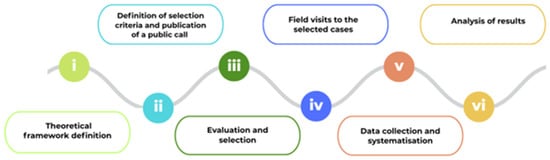
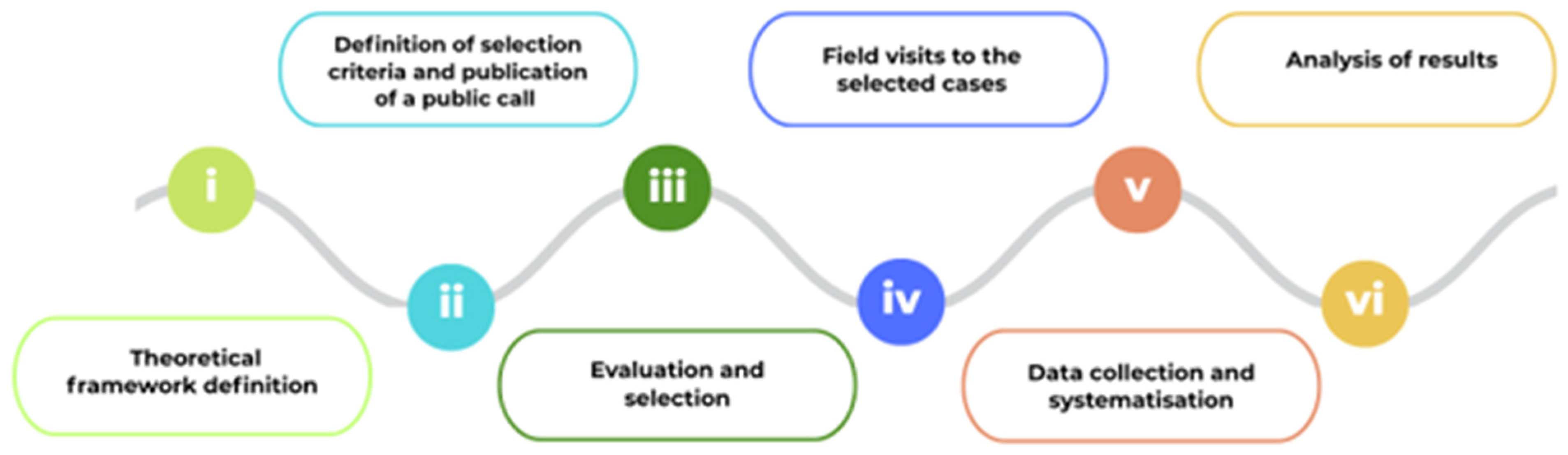
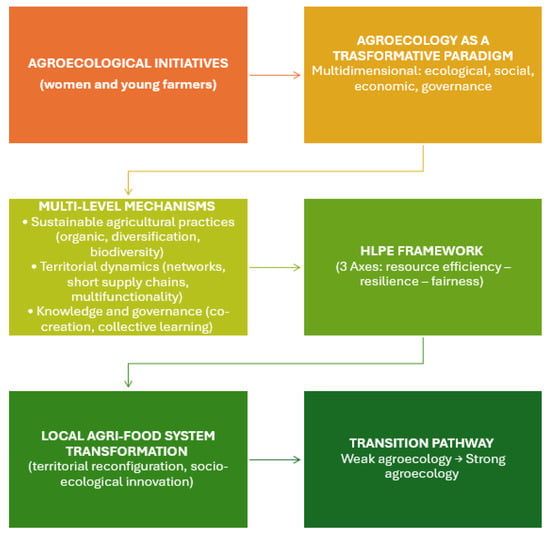
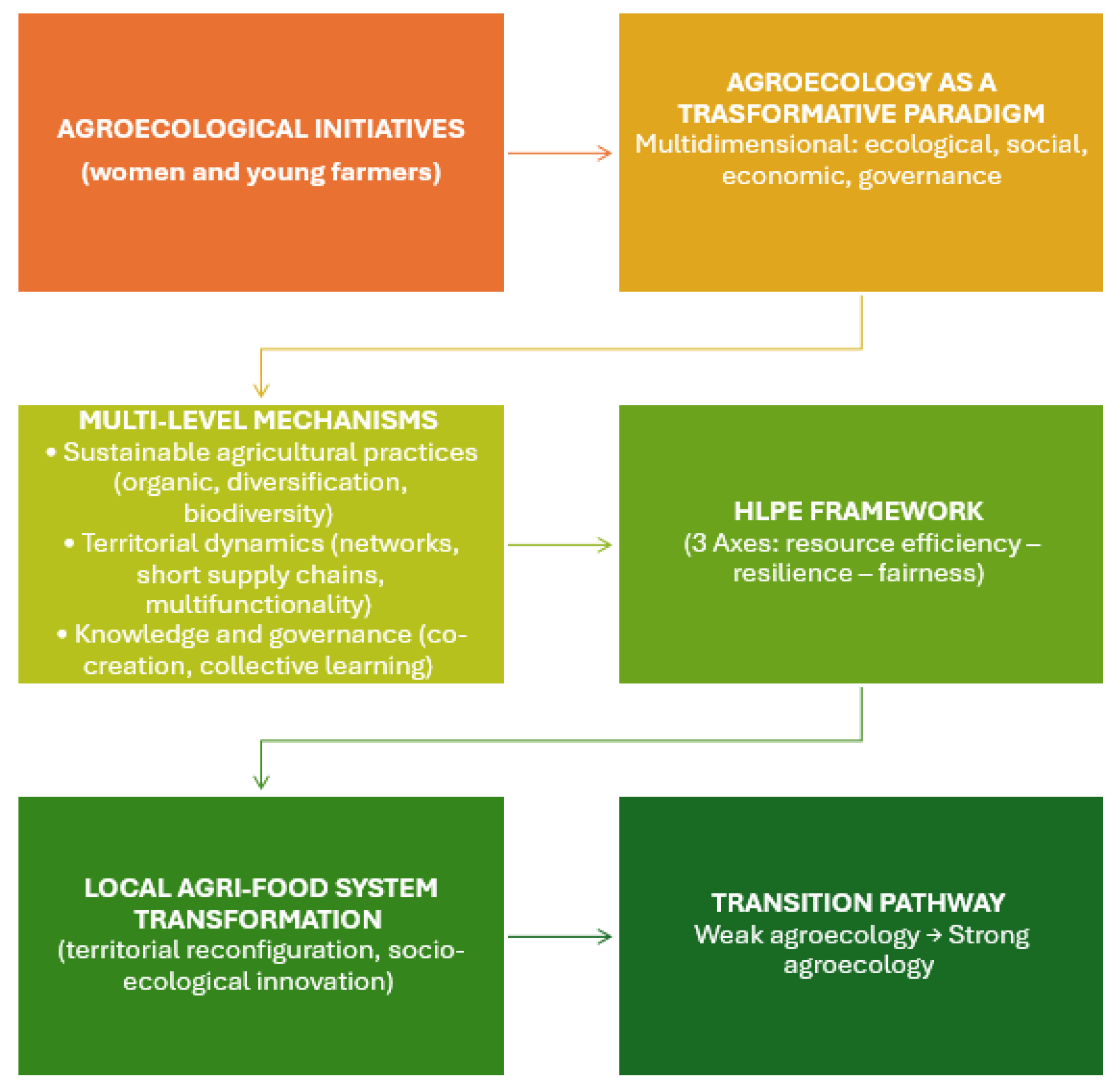
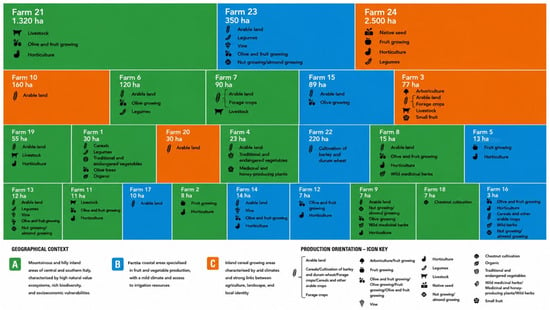
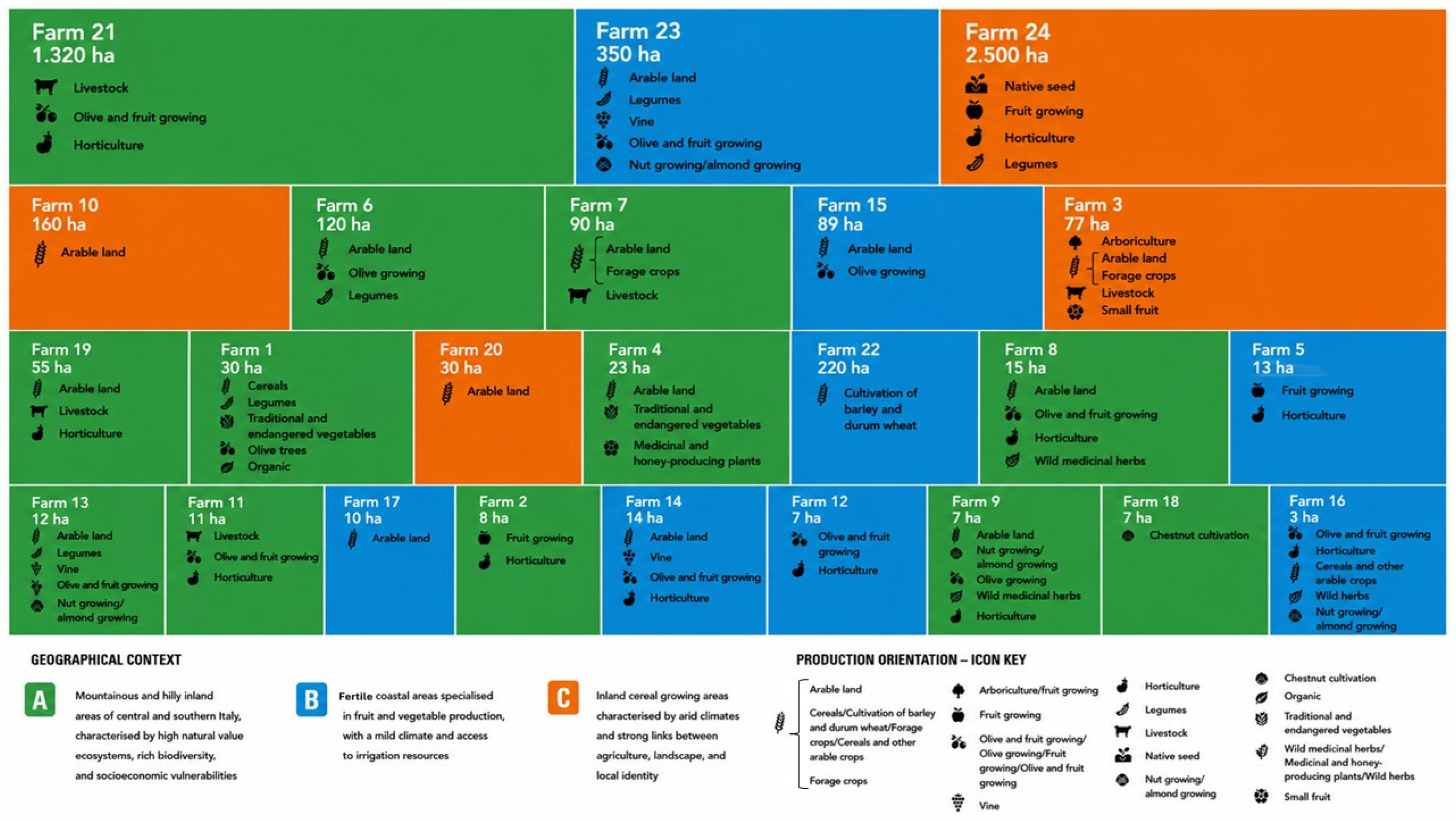
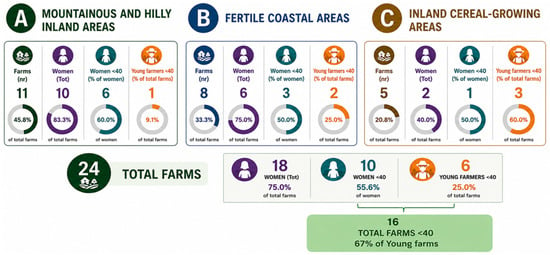
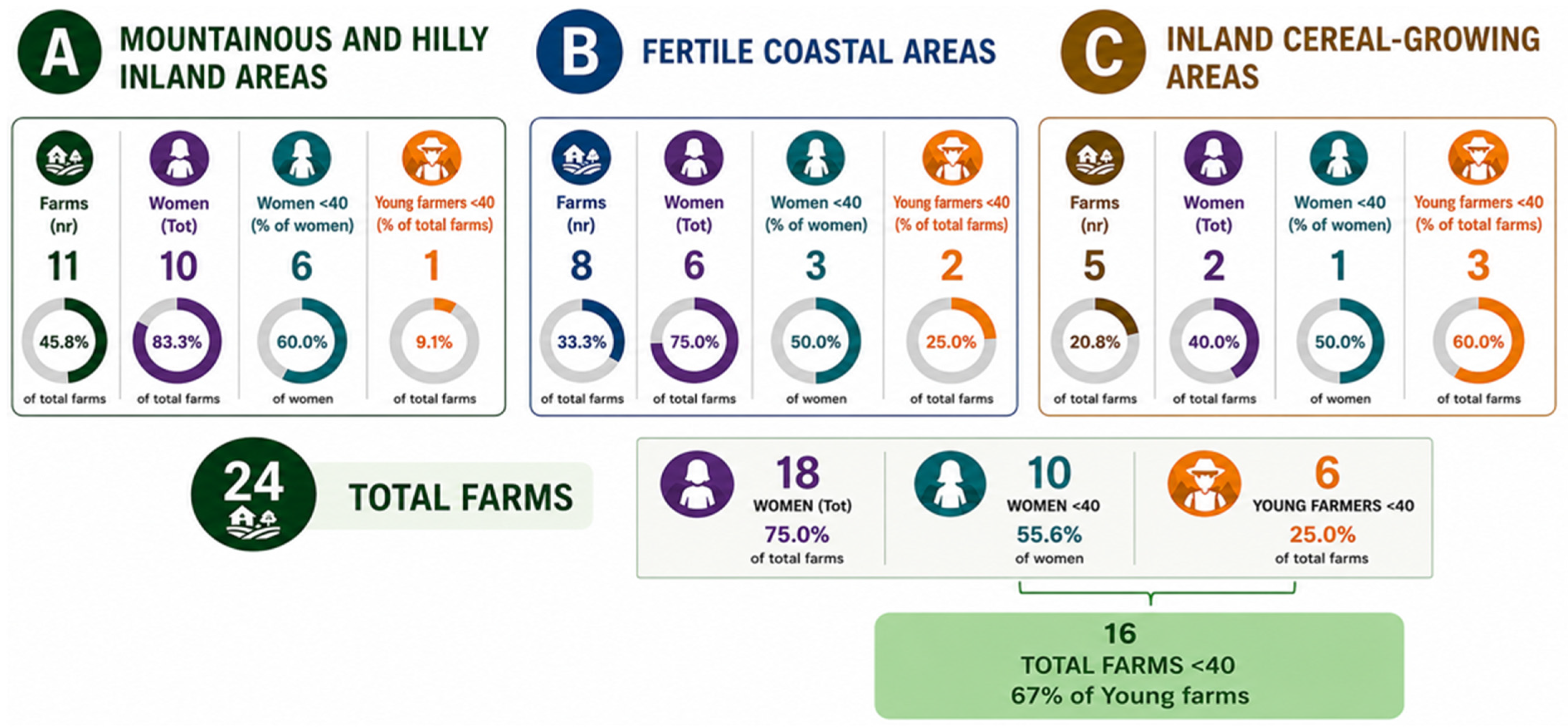
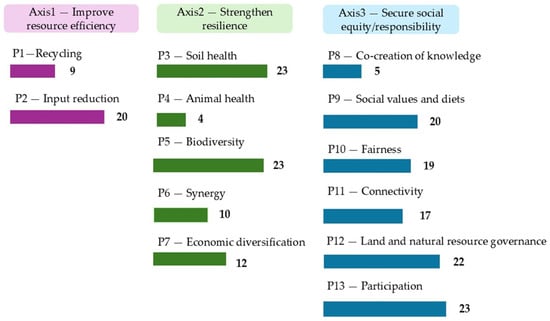

Disclaimer/Publisher’s Note: The statements, opinions and data contained in all publications are solely those of the individual author(s) and contributor(s) and not of MDPI and/or the editor(s). MDPI and/or the editor(s) disclaim responsibility for any injury to people or property resulting from any ideas, methods, instructions or products referred to in the content. |
© 2026 by the authors. Licensee MDPI, Basel, Switzerland. This article is an open access article distributed under the terms and conditions of the Creative Commons Attribution (CC BY) license.