


Abstract
There is a lack of information about the shark fisheries in Tamaulipas, a coastal state of the Gulf of Mexico, and the species that sustain them. This challenges the development of management and conservation strategies for this group. This study evaluates the ecological vulnerability of elasmobranch species under fishing pressure using a Productivity and Susceptibility Analysis (PSA). PSA was conducted using the literature biological data of the organisms caught in La Pesca, Tamaulipas, Mexico, and semi-structured surveys applied to artisanal fishers. Results indicate that eleven shark species and four ray species sustain this fishery, with biological productivity values ranging from 1.15 to 2.23 and susceptibility values from 1.91 to 2.09. The minimum ecological risk value was observed in Rhizoprionodon terranovae (v = 1.26), and the highest in Gymnura lessae (v = 2.14). Secondary, non-local biological productivity data limit the quality score but not the overall study validity, highlighting the need for primary regional data on Tamaulipas elasmobranchs. Our results rank elasmobranch species by ecological risk in La Pesca, Tamaulipas, helping policymakers prioritize species for research and conservation and determine whether current management matches local artisanal fishery realities or requires regional adjustments. Further regional studies are required to improve biological productivity data for elasmobranchs supporting artisanal fisheries in Tamaulipas.
1. Introduction
The management of elasmobranch fisheries presents significant challenges due to the biological characteristics of sharks and rays, which make them more susceptible to overfishing compared to teleost fishes. In this matter, traditional fishery analysis models are not always applicable [1].
In Mexico, small-scale fisheries account for nearly 80% of the fishing effort directed at elasmobranchs [2]. However, despite this fishery being a significant source of economic activity and food supply for the country, there is a notable lack of information in several regions. Substantial information deficits remain, particularly regarding species composition, catch rates, fishing effort and fishing techniques, as well as the socio-cultural dimensions of these fisheries. Such voids hinder the development of effective management plans and conservation strategies [3,4].
To date, no study has conducted a Productivity and Susceptibility Analysis (PSA) specifically for Tamaulipas using locally sourced biological data or region-specific catch information. This regional assessment deficit constitutes the scientific problem that the present study aims to address.
Commercial shark fisheries are conducted over the continental shelf of the Gulf of Mexico and the Caribbean Sea using longlines and gillnets [5]. Distances from the coast depend on the fishing depth and contour of the continental shelf recorded in each littoral state. In the Campeche Sound, the continental shelf is wide, with fishing grounds located up to 200 km offshore; in Tamaulipas and Veracruz, the continental shelf is narrower, with a maximum distance from the coast of 80 km [6].
In 2017 in Tamaulipas, the elasmobranch fishery generated 3480 tons of shark live weight, 7.9% of Tamaulipas’s total production [7] and 31.8% of elasmobranch production in the Gulf of Mexico and Caribbean Sea [8]. According to the Statistical Yearbook of Aquaculture and Fisheries [9], the total shark catch for direct human consumption in Tamaulipas was 1793 tons in 2019, which represented 6.2% of the total national catch of that year, as well as 48% of the catch in the Gulf of Mexico and the Caribbean Sea. During the same year, 414 tons of rays and similar species were caught, representing 5% of the total national annual catch and 15.4% of the catch of the Gulf of Mexico and the Caribbean Sea coast.
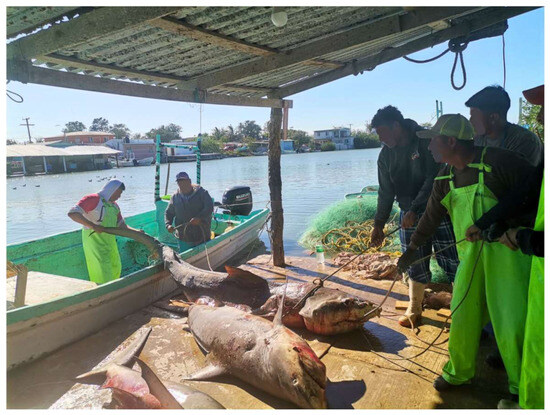
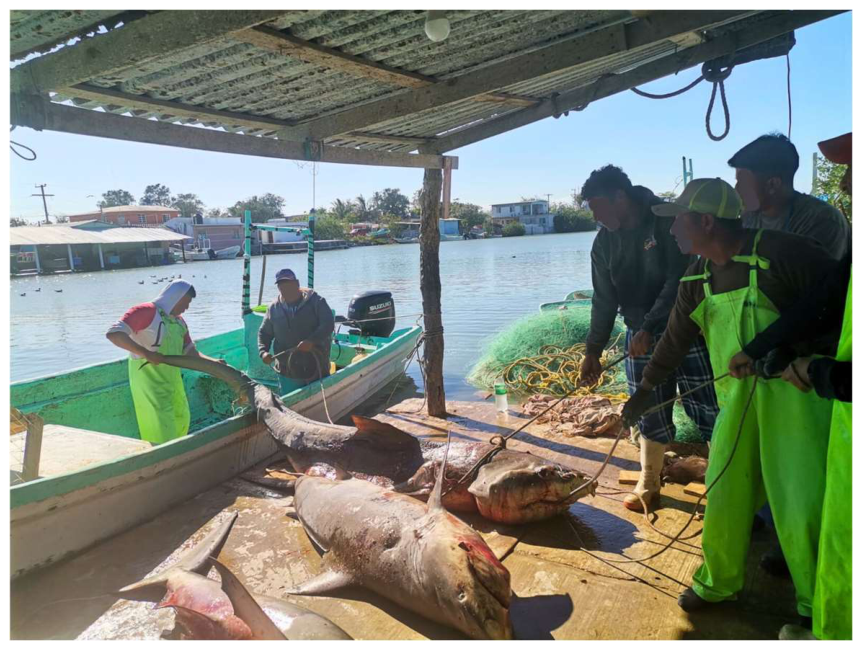
Despite the economic, social, and cultural relevance of shark and ray fisheries in Tamaulipas, significant information deficits persist regarding harvested species, catch rates, and fishing practices employed by local fishers. These knowledge gaps are compounded by the lack of documented data on the social, economic, cultural, and biological particularities of these fisheries in the region. Consequently, public policies designed to ensure sustainable resource use risk becoming ineffective or inefficient, thereby limiting the possibility of implementing robust fisheries management (Figure 1) [10]. Notably, official instruments such as the National Fishery Charter and the Shark and Ray Fishery Management Plan do not fully recognize several elasmobranch species caught in Tamaulipas, creating regulatory voids that risk unmonitored fishing pressure on unlisted species and the potential application of management measures that may not align with regional biological and operational realities.
Figure 1.
Small-scale fishers with a bull shark (Carcharhinus leucas) in a fishery warehouse at La Pesca, Tamaulipas.
Productivity and Susceptibility Analysis (PSA) is the second level of Ecological Risk Assessment for the Effects of Fishing (ERAEF) and categorizes the ecological risk (ER) and vulnerability (v) of the reported commercial elasmobranch species, which were evaluated under two factors: biological productivity (BP) and susceptibility to capture (SC) [11,12,13,14].
Productivity and Susceptibility Analysis (PSA) has become a standard tool for estimating the relative vulnerability of species to fishing gear, assessing species’ recovery capacity (productivity) against their exposure and mortality resulting from interactions with a given gear (susceptibility). However, the traditional PSA framework conceives both the fishing gear and the fishery itself from a fundamentally bio-ecological and, at best, economic-fisheries perspective. Socio-cultural dimensions—when mentioned—appear as external contextual factors, not as structural components of the vulnerability analysis.
Several authors have highlighted the need to incorporate social, cultural and governance aspects into fisheries risk assessments [12,13]. Nevertheless, in the operational practice of PSA, these dimensions remain marginalized: they are mentioned in discussions or limitations but are not integrated into the attributes that compose susceptibility or into the final vulnerability estimate. This disconnect is problematic because it implicitly assumes that the relationship between fishing gear and a species is independent of the socio-cultural context in which that gear is operated.
Fishing techniques are not purely technical entities. They are practices embedded in knowledge systems, local norms, worldviews and social structures that determine—often more decisively than the abstract efficiency of the gear—how, when and with what intensity fishing power is deployed upon species. For example, the same gillnet operated by a community with reproductive closure norms and a worldview of reciprocity with the sea will generate a very different ecological susceptibility than that same net in an industrial fleet without cultural restrictions. In other words, ecological vulnerability is not only a function of species biology and gear physics; it is mediated by the cultural logic that governs its use.
This understanding aligns with a broader conceptual premise drawn from ecological Marxism [15,16]: technique is never a neutral artifact. It is a socio-cultural factor assimilated into daily life, with ecological, economic, political, religious, and cultural implications. Technique affects production methods in terms of their intensity and development, and its most fundamental implications are energetic and thermodynamic in nature, influencing land use, water management, biodiversity, and the management of genetic resources in general. The paradox inherent in the use of technology is to avoid reaching entropy while seeking to improve itself—that is, to avoid spending more energy than is obtained. This is precisely what happens when fisheries are depleted [15,16]. Therefore, the challenge is for technology to be accompanied by a humanistic vision, conscious rationality, and knowledge about the vulnerability of the environment being used, a context in which humanity reflects on itself as part of nature.
Moving towards more realistic vulnerability assessments thus requires not only recognizing but also integrating socio-cultural dimensions into the core of the analysis. This implies at least two moves: (a) considering the dynamic evolution of fishing gear’s capture power as a factor that increases susceptibility, and (b) incorporating fishers’ worldviews and cultural practices as variables that modulate the speed and magnitude of technological adoption. Without these integrations, the PSA risks perpetuating a form of technical rationality that ignores the thermodynamic and cultural limits of socio-ecological systems, ultimately normalizing a path towards entropy rather than sustainability.
This study explicitly links fishing techniques and cultural practices with ecological vulnerability. We propose and discuss additional susceptibility attributes for future PSA applications.
The approach to risk analysis through its susceptibility component is conducted from a biocentric perspective, giving little or no weight to the human–nature relationship expressed in the capture technique, which becomes a trigger for change in the construction of the relationship itself [17,18]. Technique becomes a socio-cultural factor that is assimilated as an inherent part of daily life, with repercussions for the environment and its components, as well as for the society that depends on them and with which society coexists. It is, therefore, a risk factor. The technique has ecological, economic, political, religious, and cultural implications because it affects the methods of production in terms of their intensity and development. Its most important implications are in energetic and thermodynamic terms, which affect the use of land, water management, biodiversity, and the management of genetic resources in general. The paradox in the use of technology is that, while seeking to improve it, one must avoid reaching entropy and spending more energy than is obtained, as happens when fisheries are depleted [15,16]. Therefore, the challenge is for technology to be accompanied by a humanistic vision, conscious rationality, and knowledge about the vulnerability of the environment used, where humanity reflects on itself as part of nature.
The PSA has been implemented in a variety of similar contexts within Mexican waters. One of these uses is to have an initial assessment of how vulnerable commercially important elasmobranch species are to artisanal fishing; results from these analyses shed light on sharks’ sensitivity to overfishing [19,20,21,22,23]. In other instances, it can also be used along with a rapid management-risk assessment (M-risk) highlighting areas of improvement for current management measures, with the sole aim to mitigate the impact the artisanal fleet has on shark populations [24].
An important example of such studies is the implementation of the Fishing Management Plan for Sharks and Rays of the Gulf of Mexico and Caribbean Sea [25]. A PSA was conducted in which 35 elasmobranch species were assessed, of which 85.7% presented a low risk, 14.3% presented a medium risk, and no species presented a high risk or vulnerability (V > 2.0). The species Rhizoprionodon terraenovae, Sphyna tiburo, Hypanus americanus and Carcharhinus acronotus were those with relatively high biological productivity (BP > 1.8), while those with the lowest BP were Hexanchus vitulus, Carcharhinus altimus, Isurus oxyrinchus, Carcharhinus obscurus and Negaprion brevirostris (BP = 1.3). The species most susceptible to capture (SC ≥ 2.0) were S. tiburo, H. americanus, R. terraenovae, and S. lewini, whereas those with the lowest SC were Scyliorhinus retifer, Centrophorus uyato, and Hexanchus vitulus [25]. However, to date, no PSA has been conducted specifically for Tamaulipas using locally generated biological data or species catch information restricted to this region. This regional knowledge gap constitutes the motivation and purpose of our study. We hypothesize that elasmobranch species captured in the small-scale fishery of La Pesca will exhibit ecological vulnerability levels that differ from those reported in the national-scale PSA, due to region-specific biological and fishery characteristics.
We aimed to identify the ecological risk (vulnerability) degree of elasmobranch species in the small-scale fishery in the locality of La Pesca, Tamaulipas, in order to simplify decision-making and focus on academic, economic, social, and conservation efforts for species that are at higher ecological risk due to the effects of fishing or those that present a lower quality of biological information for this region. Based on the literature, we also propose modifications to the susceptibility attributes that can be applied in future studies.
2. Materials and Methods
2.1. Study Area
La Pesca port (23° 46.22′ N, 97° 44.16′ W) is located on the coast of the Gulf of Mexico in the central part of the state of Tamaulipas, 50 km east of the municipality of Soto la Marina. Its population is approximately 1742 inhabitants [26]. Approximately 70% of the locals are involved in fishing-related activities, and 120 small vessels are registered to perform fishing activities in this locality [27]. The region is characterized by fine-grained sandy beaches covering approximately 42,770 km2, formed by mineral sediment accumulation.
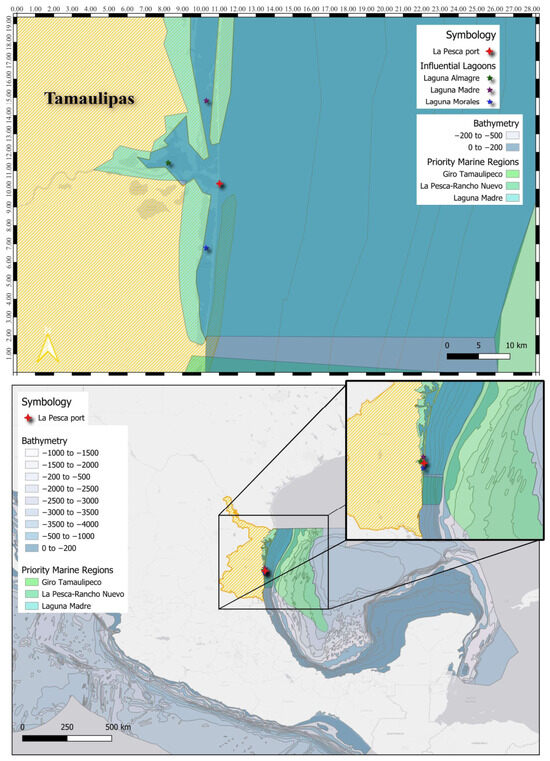
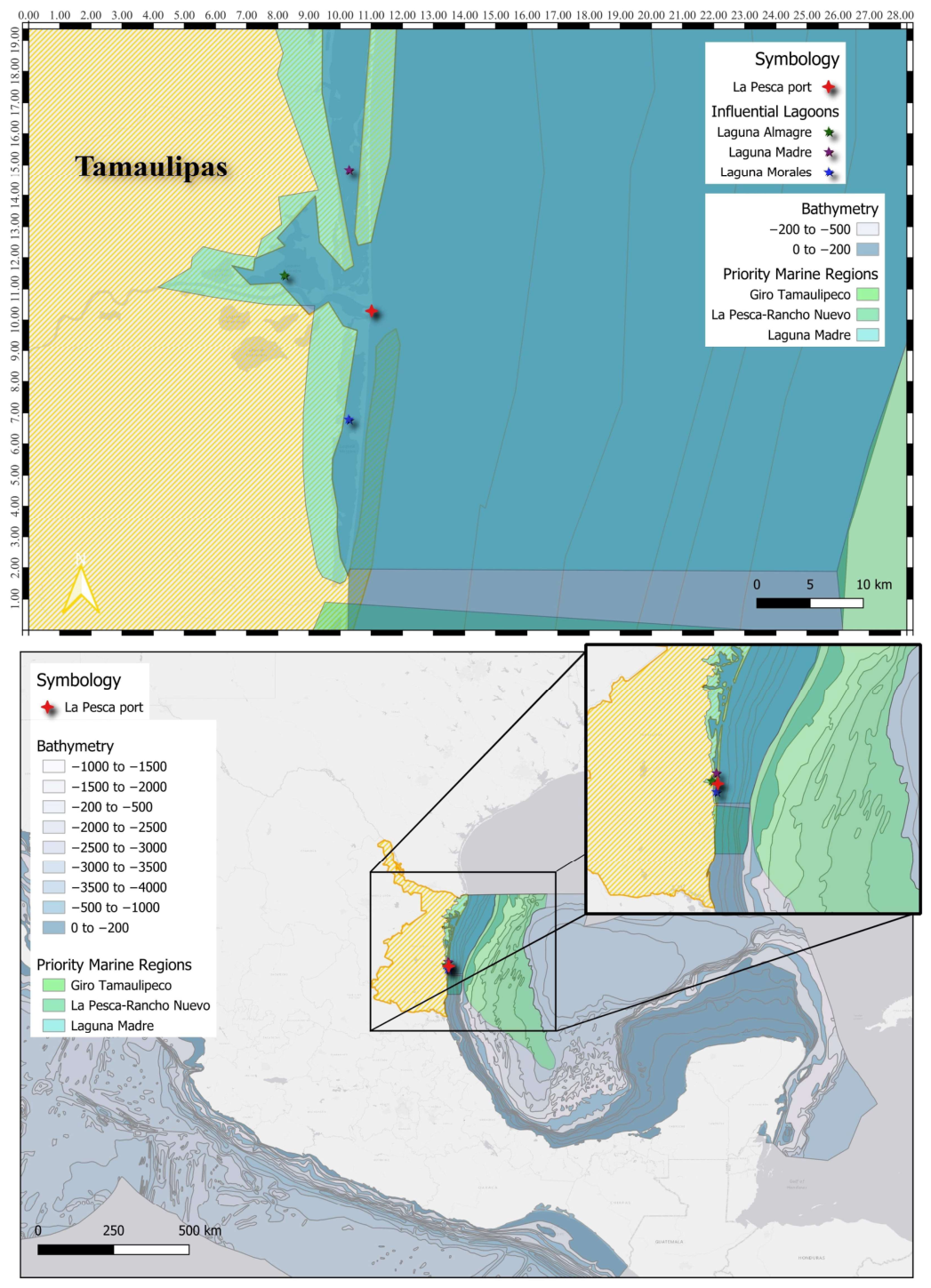
Three Priority Marine Regions (PMRs) are located in front of La Pesca: region 54, called Giro Tamaulipeco (classified as a lack of information of biodiversity area); region 44, called Laguna Madre; and region 45, called La Pesca-Rancho Nuevo (both classified as high biodiversity areas presenting some threats to it) [28] (Figure 2). Fishing activities are allowed in all three PMRs.
Figure 2.
Description of the study area with important lagoons in the region and PMRs.
The locality of La Pesca is influenced by stationary currents running parallel to the coast; these currents flow northward from May to August and in the opposite direction from late September to March, with average speeds of 70 cm/s (1.4 knots) during both periods. The tidal pattern is predominantly diurnal, with the maximum high tide varying from the municipalities of Matamoros to Ciudad Madero by only about 30 cm, and maximum ranges of 1.37 to 1.64 m, respectively. The general flow of the waters adjacent to the coast is from south to north, following the Gulf Stream. Throughout the annual cycle, the characteristic currents of the coastal lagoons in Tamaulipas are marginal toward the edges, with some secondary currents caused by the local configuration of the coast or by the tidal effect, a characteristic facilitated by the mixed tide [26].
Tamaulipas coastal zone is formed by fine-grained sandy beaches covering 42,770.83 km2, which are formed by the accumulation of mineral sediment. Several species of finfish, crabs, oysters, and shrimp are caught in the three most influential lagoons in this region: Laguna Madre, Laguna Morales, and Laguna Almagre [26].
2.2. Methodology
We applied a Productivity and Susceptibility Analysis (PSA) to evaluate the ecological risk of elasmobranch species harvested in La Pesca’s small-scale fishery. The PSA integrates two components: biological productivity (BP), derived from life-history traits such as growth rate, maximum age, maximum size, and reproductive parameters; and susceptibility to capture (SC), based on species interactions with fishing operations, including gear type, soak time, hook characteristics, and capture areas.
Species with low BP and high SC are considered to be at high risk of being affected by fishing activities, whereas species with high BP and low SC are considered to have low ecological risk. Both types of attributes were weighted based on the quality of available information according to [14] and modified by [23]. Each vulnerability index was calculated following the methods of [12,13].
BP attributes were obtained from published literature (Appendix A, Table A1). It is common for populations of species with low commercial value to exhibit missing data for one or more attributes, whereas high data quality typically reflects long-term fishing data series and extensive biological studies on target species. A data quality (DQ) index, modified from [13], was applied to provide an estimate of uncertainty for individual vulnerability scores, with five levels ranging from “best data” (high confidence in the score) to “no data” (low confidence). The quality of information was weighted according to geographic relevance (Table 1), ranging from data specific to Tamaulipas (highest quality) to data from other regions where the species or related taxa occur (lowest quality).
Table 1.
Quality information values applied to biological productivity attributes (modified from [13]).
To illustrate the scoring and weighting process, consider the attribute “length at maturity (L50%)”. According to Appendix A, Table A1, a species with L50% < 100 cm receives a high BP score (3), 100–150 cm receives a medium score (2), and >150 cm receives a low score (1). Independently, the quality of that information is rated using the criteria in Table 1: data generated specifically in Tamaulipas receive a quality value of 1 (highest); data from other Gulf of Mexico or Caribbean Sea regions receive a value of 2; data from the Atlantic Ocean receive a value of 3; data from the Mexican Pacific receive a value of 4; and data from any other region receive a value of 5. For example, if a species has a medium productivity score for L50% (2) based on information from the Atlantic Ocean, its data quality value for that attribute would be rated as 3, while the productivity score remains 2. This same logic was applied to all productivity and susceptibility attributes for each species.
SC attributes (Appendix A, Table A2) were derived from semi-structured surveys conducted with 15 artisanal fishers from La Pesca. Experience of more than two years in the small-scale shark fishery was used as the inclusion criterion. Once this criterion was fulfilled, participants were randomly selected. The surveys collected detailed information on fishing maneuvers, gear specifications, soak time, hook types (including Mustad hooks), capture areas, and observations of juveniles and pregnant females. All survey data were considered high-quality input.
The sample size was determined based on the principle of theoretical saturation and the informative power of interviews in qualitative studies [29,30,31]. Since the participants belonged to a homogeneous population (fishers with similar characteristics and backgrounds), responses began to repeat with high frequency from the very first interviews, with variability gradually decreasing and no new relevant themes or patterns emerging. In this regard, 15 interviews proved sufficient to capture the diversity and consistency of the required information. The sampling frame comprised all active artisanal fishers registered in the local fishing cooperative of La Pesca, Tamaulipas, who met the inclusion criterion of more than two years of experience in the small-scale shark fishery. From this frame, 15 respondents were randomly selected using a simple random sampling method (lottery draw). Each eligible fisher was assigned a unique number, and 15 numbers were drawn without replacement using a random number generator. This procedure ensured that every eligible fisher had an equal probability of being selected.
To aggregate individual attribute scores into a single BP value per species, we employed a weighted average approach. Let represent the score of the -th attribute (1 = low, 2 = medium, 3 = high), and let denote the weight assigned to that attribute (ranging from 0 to 4). In this study, all attributes were weighted equally ( for every attribute) to avoid investigator bias. The final BP value for a given species was calculated as:
For data quality (DQ), let represent the quality score of the -th attribute (1 = highest quality, 5 = lowest quality, according to Table 1), and let = 2 be the weight assigned to each attribute, identical for all attributes. The weighted data quality score for each attribute was calculated as × . The final data quality value per species was then computed as the mean of the weighted quality scores across all attributes:
In addition to the attribute-specific quality scores described above, we also computed an overall General quality value for each species. This value represents the average of the BP quality and SC quality scores:
Thus, General quality integrates both biological and susceptibility data reliability into a single metric, reported in Table 2 for each species.
Table 2.
Quality values of general data, biological productivity (BP) and susceptibility to capture (SC) of 15 species of elasmobranchs harvested in small-scale fishery in La Pesca, Tamaulipas.
For missing productivity attributes (including genetic data Fst, haplotypic diversity h, and nucleotide diversity π), we used mean imputation from ecologically similar species (same genus or family), following the flexible PSA framework for data-limited fisheries [32]. No attribute was omitted, and all SC attributes were complete from fisher surveys.
Productivity and susceptibility values were plotted, and the ecological vulnerability index was calculated as the Euclidean distance from the focus of the graph as follows:
- v = Ecological vulnerability index
- P = Biological productivity attribute values
- S = Susceptibility to capture attribute values
Elasmobranch species were classified as having high ecological risk (v ≥ 2), moderate ecological risk (1.8 ≤ v ˂ 2.0), or low ecological risk (v ˂ 1.8) according to studies previously developed in other areas of the Gulf of México [33,34].
3. Results
Among respondents, 26.7% reported fishing in all three Priority Marine Regions (PMRs), encountering up to nine species, and 20% operated in two PMRs, while the majority (53.3%) restricted their activity to a single PMR, typically reporting seven species.
Fishing gear had soak times of 10–48 h at depths of 100–200 m. Gillnets had mesh sizes of 5–10 points and 10–15 gauzes, while drift and bottom longlines extended 2–5 miles with 200–800 hooks (shark and tuna Mustad hooks), ranging in sizes of three, four, and nine.
Participants identified 11 shark species and 4 ray species in the artisanal catch (Table 3). Incidental captures included thresher sharks (Alopiidae) and lantern sharks (Centrophoridae). Conservation status ranged from Least Concern (LC) to Critically Endangered (CR).
Table 3.
Elasmobranch species harvested in small-scale fishery in Tamaulipas according to respondents and their IUCN red list status. LC = Least Concern, NT = Near Threatened, VU = Vulnerable, EN = Endangered, CR = Critically Endangered.
Juveniles of several species (Galeocerdo cuvier, Carcharhinus leucas, Sphyrna lewini, Isurus oxyrinchus, Carcharhinus limbatus, and Rhizoprionodon terraenovae) were observed seasonally in reef and rocky habitats, particularly between March and May, and occasionally from August to November. The identification of areas and seasons where juvenile organisms congregate is important not only for its inclusion as a susceptibility attribute but also for identifying potential nursery areas in the region in the future.
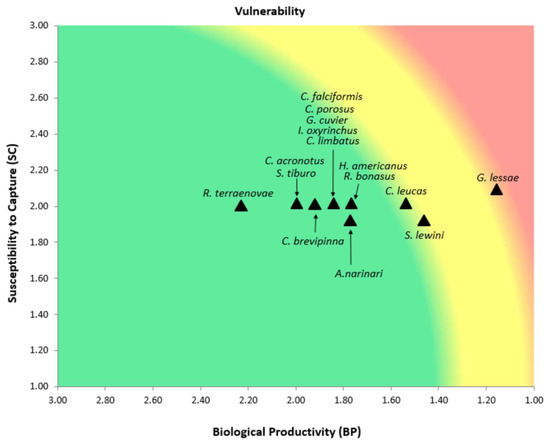
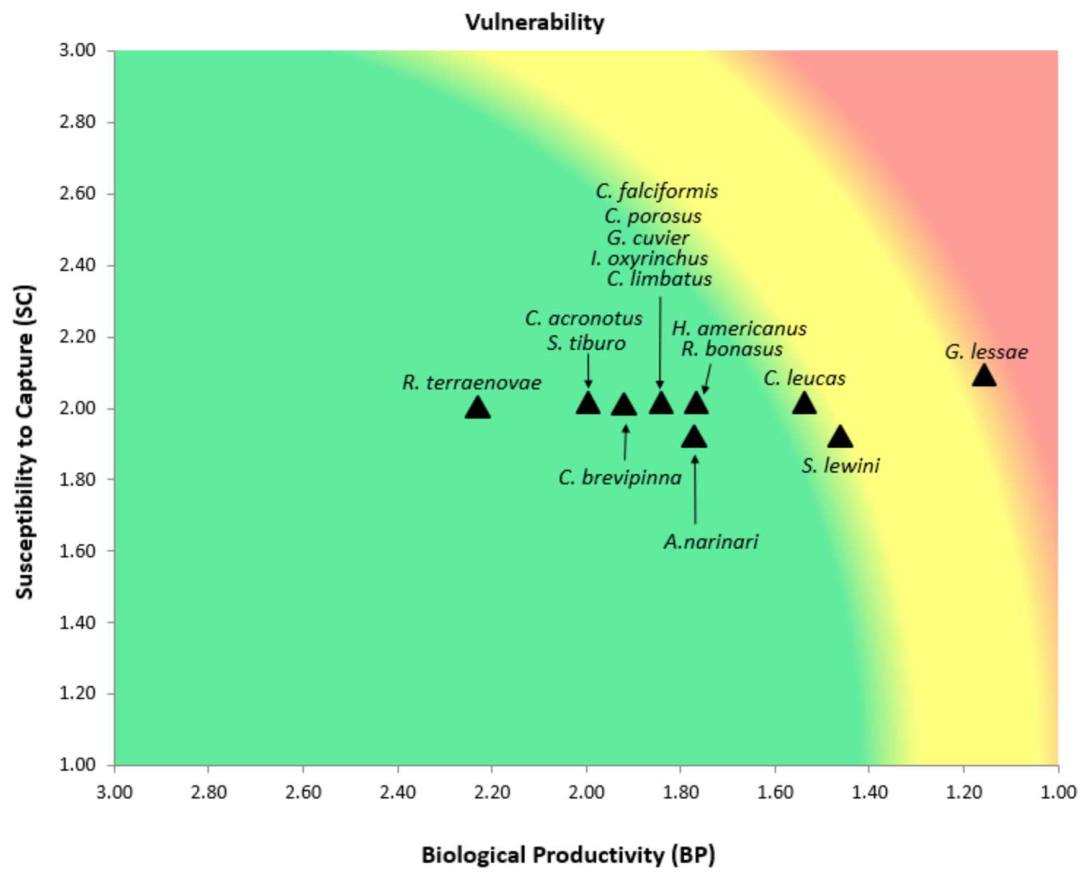
Biological productivity (BP) and susceptibility to capture (SC) were scored as high (3), moderate (2), and low (1) for each attribute. Thirteen BP attributes were evaluated, while SC was represented by 10 attributes. Two BP attributes for G. lessae were obtained from related species due to the scarcity of data on this taxon. PSA results showed moderate to high BP across 15 elasmobranch species (1.15–2.23), as well as high SC values (1.91–2.09). Based on vulnerability indices, ecological risk levels were low in most species (v = 1.26–1.79), except for G. lessae (v = 2.14) (Table 4, Figure 3). BP quality values ranged between 2.00 and 5.69, while SC quality values were uniformly 1.00, reflecting that primary data collected from fishers met the maximum quality criteria (Table 2).
Table 4.
Biological productivity (BP), susceptibility to capture (SC), vulnerability index and ecological risk level of 15 species of elasmobranchs harvested in small-scale fishery in La Pesca, Tamaulipas.
Figure 3.
Ecological risk by the effect of fishing pressure of 15 elasmobranch species (▲) harvested in small-scale fishery in La Pesca, Tamaulipas.
Drawing on data collected through semi-structured interviews, informal conversations with local fishers, and existing literature, Table 5 introduces novel susceptibility attributes. These attributes capture the socio-economic dimensions that shape elasmobranch exploitation patterns in the artisanal fishery of the study area.
Table 5.
Proposed susceptibility to capture attributes based on [35,36] and fishers’ information from interviews and informal conversations.
The three novel susceptibility attributes introduced in Table 5 are designed to capture socio-economic drivers that may influence fishing pressure on elasmobranchs, complementing the conventional biological and operational attributes of PSA. Their interpretation follows the logic that higher susceptibility (score 3) corresponds to conditions that increase the likelihood of elasmobranch capture, while lower susceptibility (score 1) reflects conditions that reduce fishing pressure.
For “Fishing gear ownership”, a high proportion of fishers owning their own gear (>75%) is associated with low susceptibility (score 1), because ownership promotes compliance with regulated gear standards (NOM-029-PESC-2006 [37]) and reduces the incentive to use illegal, non-selective gear. Conversely, when ownership is low (<25%), fishers may resort to illegal gear to secure their livelihood, which increases capture efficiency and elevates susceptibility (score 3).
For “Monthly income differential between available gear”, high susceptibility (score 3) is assigned when a gear yields less than twice the income of alternatives, as fishers may need to compensate through increased fishing effort or less selective methods. Low susceptibility (score 1) occurs when a gear provides more than double the income of alternatives, reducing the need for additional fishing pressure.
For “Availability of alternative livelihoods”, low susceptibility (score 1) corresponds to situations where less than 25% of fishers rely on a single income source, as diversified livelihoods provide flexibility to reduce fishing effort when needed. High susceptibility (score 3) occurs when more than 75% of fishers depend on fishing as their sole income, creating strong economic pressure to maximize catch.
These attributes are proposed as a conceptual framework for future PSA applications, rather than being integrated into the vulnerability metric of the present study.
4. Discussion
La Pesca’s small-scale fishery is a multispecific coastal fishery that exploits seasonal movements of elasmobranchs, a pattern also documented in other Gulf of Mexico regions [32,38,39].
The low quality of BP data highlights the need to increase our knowledge about the biological characteristics of the species, specifically in this region. Notably, susceptibility to capture (SC) values showed little interspecific variation (1.91–2.09), while BP values ranged more widely (1.15–2.23). Thus, vulnerability differences are driven almost entirely by BP rather than by variation in SC. This reflects the fishery’s operational uniformity (same gear, areas, seasonality across species), whereas BP captures intrinsic biological variation. Although most species showed medium to high biological productivity (BP), population-specific differences are likely, as many elasmobranchs in this fishery exhibit coastal habits. This underscores the need for region-specific biological studies. Moreover, Tamaulipas exhibits unique biogeographic, oceanographic, hydrodynamic, salinity, and current characteristics that differ from other regions of the Gulf of Mexico [33,34,40,41]; this could be reflected in differences in elasmobranchs’ biological productivity compared to other areas of the Gulf of Mexico, as has previously been reported for species such as C. limbatus and R. terraenovae [42,43]. Assessing age and growth, reproductive seasons, genetics, and maximum and minimum sizes, to mention some important population parameters, could allow us to determine if any population differences would impact fisheries management. Actual policies for the management of this fishery resource are based on the population parameters previously mentioned; therefore, there is a risk that the management measures proposed for certain areas of the Gulf of Mexico and Caribbean Sea may not be optimal for one or more regions in Tamaulipas. It is worth noting that the technical report on which the regionalization of the shark and ray fishing ban in the Gulf of Mexico was based did not take into account fishing data or statistics on elasmobranch catches in Tamaulipas [41].
A major limitation was the lack of biological data for species such as Gymnura lessae. Despite being the fourth most abundant ray in Gulf of Mexico catches, no age or growth studies exist. As a result, vulnerability estimates relied on data from related species (G. altavela, G. marmorata), likely inflating their risk index [25]. Therefore, it is highly probable that the vulnerability index reflects this lack of information more than the actual vulnerability of this species. A taxonomic revision [44] reclassified Gulf of Mexico specimens as a new species: G. lessae, whereas earlier Mexican records referred to G. micrura, explaining references to its abundance. Biological data specific to G. lessae remain scarce, so the high vulnerability score likely reflects data gaps and taxonomic changes more than true ecological risk. As shown in Appendix A, Table A3, 11 of the 13 BP attributes for G. lessae were based on Gulf of Mexico data; the remaining 2 attributes relied on information from congeners (G. altavela, G. marmorata) or other regions, directly explaining its elevated BP quality score (4.62) within our quality-weighting framework.
Given the potential bias introduced into vulnerability estimates, results associated with species exhibiting higher data quality scores should be interpreted with caution, as higher scores indicate lower precision in the underlying information used for the assessment. In this context, the Productivity and Susceptibility Analysis (PSA) serves a dual function: it operates as a diagnostic tool to identify critical information gaps when data quality is limited and as a decision-support framework for fisheries management when sufficient and reliable data are available for both the species and the study area. Accordingly, future research efforts on elasmobranch fisheries in Tamaulipas should prioritize species characterized by lower data quality, as well as those identified as having higher ecological vulnerability, in order to improve the robustness of subsequent assessments and management strategies.
With some exceptions, such as C. leucas, S. lewini and A. narinari, the vulnerability indices obtained in this study are similar to those found by [42,45,46] in the Gulf of Mexico. This enables decision-making by focusing on research and conservation efforts on species with less biological information in the region and/or those at higher ecological risk, especially by considering that, unlike oceanic species of elasmobranchs, coastal species are more susceptible to population differences in specific regions. This becomes relevant as the study area is located in three PMR’s.
Given the IUCN conservation status of several species, species-specific catch quotas should be documented. Notably, Isurus oxyrinchus and Galeocerdo cuvier were observed in catches but are not listed in the National Fishery Charter for Tamaulipas, raising concerns about unregulated harvest, and of these, only G. cuvier is included in the Shark and Ray Fishery Management Plan for the Gulf of Mexico and Caribbean Sea [25]. Although the presence of both shark species was verified by this study group during visits to fishing warehouses, more studies are needed to assess their abundance and temporality in the small-scale fisheries of La Pesca. Because the continental shelf is narrow in this region of the Gulf of Mexico [26,27], it is feasible that elasmobranch species with oceanic habits could be susceptible to capture by artisanal fisheries.
There is a need to monitor the breeding seasons, births, and possible nursery areas of the species harvested in La Pesca. The river mouths and estuaries in the study area are habitats consistent with those reported by [25,45,46,47,48,49,50,51], whose ecological functions are essential for the development of neonate and juvenile organisms throughout the year.
Susceptibility attributes such as “Value of the fishery” and “Selectivity of fishing gear” are complex variables that encompass the cultural and socio-economic dimensions governing gear choice and the amount of catch required to achieve desired income levels. Similar abstractions have been reported in previous studies [35,36], which identify factors such as profitability and household economics, lack of access to alternative income sources, peer pressure, appreciation of nature, and attachment to the fisher’s lifestyle as key drivers influencing fishing operations and gear selection. Based on observations made during survey application and information shared by fishers during informal conversations, our proposed susceptibility attributes serve as a starting point for future research aiming to complement the biological-fisheries perspective of Productivity and Susceptibility Analysis.
Effective management schemes must consider not only biological risk but also the evolution of fishing techniques, which directly influence capture capacity and ecological impact. Integrating ecological, social, and technological dimensions will strengthen sustainability.
5. Conclusions
This study demonstrates that small-scale fisheries in La Pesca, Tamaulipas, target a diverse group of elasmobranchs with varying ecological risks. The Productivity and Susceptibility Analysis (PSA) revealed that most species present low vulnerability, while Gymnura lessae showed high vulnerability, largely due to limited biological data. These findings underscore the urgent need for species-specific biological studies, particularly on age, growth, and reproduction, to strengthen ecological risk assessments. For management, the results highlight the importance of documenting species-level catch quotas, especially for IUCN-listed species, incorporating juvenile and nursery habitat monitoring into conservation strategies, and addressing the impact of fishing techniques as part of ecological risk management. By closing these knowledge gaps and integrating ecological, social, and technological dimensions, fisheries in Tamaulipas can move toward sustainable practices that balance economic activity with biodiversity conservation.
From our findings, we derive four specific management recommendations for La Pesca: (1) prioritize biological studies on the species with the lowest data quality (such as G. lessae) to resolve whether its high vulnerability reflects data gaps or true risk; (2) monitor potential nursery areas in Laguna Madre and river mouths during March–May; (3) update the National Fishery Charter to include I. oxyrinchus and G. cuvier; (4) evaluate regional adjustments to seasonal closures and size limits given Tamaulipas’ unique conditions.
Finally, this study contributes to opening a necessary discussion on the integration of socio-economic variables into risk-based frameworks, an essential step toward achieving sustainable shark management that ensures population preservation, ecosystem health, and a dignified livelihood for fishing communities.
Author Contributions
M.T.C.-Z.: Conceptualization; Project Administration; Investigation; Data Curation; Formal Analysis; Funding Acquisition; Project Administration; Resources; Supervision; Visualization; Writing—Original Draft Preparation. E.L.-G.: Investigation; Data Curation; Project Administration; Resources; Supervision; Writing—Original Draft Preparation. Y.V.S.-A.: Investigation; Resources; Writing—Original Draft Preparation. A.L.-E.: Investigation; Writing—Original Draft Preparation. All authors have read and agreed to the published version of the manuscript.
Funding
Funding was received from the Programa de Apoyo a la Ciencia y Tecnología by UANL through the project 603-CN-2022.
Institutional Review Board Statement
This study is waived for ethical review as CEIBA-FCB-18/2026 by the Comité de Ética y Bienestar Animal of the Facultad de Ciencias Biológicas, UANL.
Informed Consent Statement
Informed consent was obtained from all subjects involved in the study.
Data Availability Statement
The original contributions presented in this study are included in the article. Further inquiries can be directed to the corresponding author.
Acknowledgments
The authors thank the fishers from La Pesca, Tamaulipas, especially those from “El Canal”; friends and colleagues from Pronatura Noreste A.C., Universidad Tecnológica del Mar de Tamaulipas Bicentenario and EcoAve; and colleagues and students from Ichthyology Lab at FCB, UANL.
Conflicts of Interest
The authors declare no conflicts of interest. The funders had no role in the design of the study; in the collection, analyses, or interpretation of data; in the writing of the manuscript; or in the decision to publish the results.
Appendix A
Table A1.
Biological productivity attributes and ranges.
Table A2.
Susceptibility to capture attributes and ranges.
Table A3.
Biological productivity (BP) attribute score, with data quality of 15 species of elasmobranch captured in the small-scale fishery of La Pesca, Tamaulipas. Scores of different species are separated by gray shadow, weighted attribute scores are shown in bold font.
Table A4.
Susceptibility to capture (SC) attribute score, with data quality of 15 species of elasmobranch captured in the small-scale fishery of La Pesca, Tamaulipas. Scores of different species are separated by gray shadow, weighted attribute scores are shown in bold font.
References
- Bonfil, R. Overview of World Elasmobranch Fisheries; Food & Agriculture Organization: Rome, Italy, 1994. [Google Scholar]
- Cartamil, D.; Santana-Morales, O.; Escobedo-Olvera, M.; Kacev, D.; Castillo-Geniz, L.; Graham, J.B.; Rubin, R.D.; Sosa-Nishizaki, O. The artisanal elasmobranch fishery of the Pacific coast of Baja California, Mexico. Fish. Res. 2011, 108, 393–403. [Google Scholar] [CrossRef] [Scilit]
- Funes Izaguirre, J.L.P. Implementación de la Convención CITES en el Comercio de Especies Marinas: El Caso del Comercio Internacional de los Tiburones en México. Master’s Thesis, Universidad Internacional de Andalucía, Seville, Spain, 2022. [Google Scholar]
- Tovar-Ávila, J.; Castillo-Géniz, J.L. Tiburones Mexicanos de Importancia Pesquera en la CITES Parte II; Instituto Nacional de Pesca y Acuacultura: Mexico City, Mexico, 2021; 102p. [Google Scholar]
- Oviedo-Pérez, J.L.; Zea-De La Cruz, H.; González-Ocaranza, L.; Lara-Mendoza, R.E.; MartínezCruz, L.E.; Balán-Ché, L.I.; Bada-Sánchez, E.; De Anda-Fuentes, D.E.; Espinoza-Méndez, J.C.; Toro-Rodríguez, A.; et al. Plan de Manejo Pesquero de Tiburones y Rayas del Golfo de México y Mar Caribe; Documento Interno; Instituto Nacional de Pesca y Acuacultura: Mexico City, Mexico, 2018; p. 104. [Google Scholar]
- Oviedo-Pérez, J.L.; Zea-De la Cruz, H.; Lara-Mendoza, R.E.; Martínez-Cruz, L.E.; Espinosa-Méndez, J.C. Pesquería artesanal del Golfo de México y Mar Caribe. In Tiburones Mexicanos de Importancia Pesquera en la CITES Parte II; Tovar-Ávila, J., Castillo Géniz, J.L., Eds.; Instituto Nacional de la Pesca y Acuacultura: Mexico City, Mexico, 2021; pp. 59–66. [Google Scholar]
- Instituto Nacional de la Pesca. Carta Nacional Pesquera, Versión 2017. Available online: https://www.gob.mx/cms/uploads/attachment/file/334832/DOF_-_CNP_2017.pdf (accessed on 15 November 2024).
- Instituto Nacional de la Pesca. Carta Nacional Pesquera, Versión 2022. Available online: https://www.imipas.gob.mx/portal/documentos/publicaciones/carta-nacional-pesquera/Carta-Nacional-Pesquera-2022.pdf (accessed on 15 November 2024).
- Comisión Nacional de Acuacultura y Pesca. Anuario Estadístico de Acuacultura y Pesca; Comisión Nacional de Acuacultura y Pesca: Mexico City, Mexico, 2019. [Google Scholar]
- Salomón-Aguilar, C.A. Enfoque multiespecífico en el manejo de tiburones del Golfo de México: Identificación de especies con fragilidad biológica alta. Mesoamericana 2012, 16, 69–85. [Google Scholar]
- Gallagher, A.J.; Kyne, P.M.; Hammerschlag, N. Ecological risk assessment and its application to elasmobranch conservation and management. J. Fish Biol. 2012, 80, 1727–1748. [Google Scholar] [CrossRef] [Scilit] [PubMed]
- Hobday, A.J.; Smith, A.D.M.; Stobutzki, I.C.; Bulman, C.; Daley, R.; Dambacher, J.M.; Deng, R.A.A.; Dowdney, J.; Fuller, M.; Furlani, D.; et al. Ecological risk assessment for the effects of fishing. Fish. Res. 2011, 108, 372–384. [Google Scholar] [CrossRef] [Scilit]
- Patrick, W.; Spencer, P.; Ormseth, O.; Cope, J.; Field, J.; Kobayashi, D.R.; Gedamke, T.; Cortés, E.; Bigelow, K.; Overholtz, W.J.; et al. Use of Productivity and Susceptibility Indices to Determine the Vulnerability of a Stock: With Example Applications to Six US Fisheries; NOAA Technical Memorandum 90; U.S. Department of Commerce: Washington, DC, USA, 2009. [Google Scholar]
- Patrick, W.S.; Spencer, P.; Link, J.; Cope, J.; Field, J.; Kobayashi, D.; Lawson, P.; Gedamke, T.; Cortés, E.; Ormseth, O.; et al. Using productivity and susceptibility indices to assess the vulnerability of United States fish stocks to overfishing. Fish. Bull. 2010, 108, 305–322. [Google Scholar]
- Vindel, J. El Marxismo Ecológico Ante la Crisis Ecosocial. Viento Sur 2019, 27, 52–60. Available online: https://cdn.vientosur.info/VScompletos/vs_0165.pdf (accessed on 15 November 2024).
- Tagliavini, D.; Sabbatella, I.M. Marxismo Ecológico: Elementos Fundamentales Para la Crítica de la Economía-Política-Ecológica. 2011. Available online: https://biblat.unam.mx/hevila/HerramientaBuenosAires/2011/no47/16.pdf (accessed on 15 November 2024).
- Santos, M. Las técnicas, el tiempo y el espacio geográfico. In La Naturaleza del Espacio. Técnica y Tiempo. Razón y Emoción; Barcelona, A., Ed.; Editorial Ariel: Barcelona, Spain, 2000; pp. 23–51. [Google Scholar]
- Latapí-Escalante, A.; Vadillo-López, C. Historia Ambiental de la Región del Golfo de México. Desde 2500 A.C. al Siglo XXI; Carro, R.J., Ed.; Editorial Académica Española: London, UK, 2023; p. 159. [Google Scholar]
- Furlong-Estrada, E.; Galván-Magaña, F.; Tovar-Ávila, J. Use of the productivity and susceptibility analysis and a rapid management risk assessment to evaluate the vulnerability of sharks caught off the west coast of Baja California Sur, Mexico. Fish. Res. 2017, 194, 197–208. [Google Scholar] [CrossRef] [Scilit]
- Madrigal-García, J. Vulnerabilidad de Los Principales Elasmobranquios Capturados Por la Pesca Artesanal en la Costa Central de Veracruz. Master’s Thesis, Universidad Veracruzana, Veracruz, Mexico, 2025. [Google Scholar]
- Furlong-Estrada, E. Evaluación de la Pesquería Artesanal de Tiburón en Nayarit, México, Mediante Análisis de Riesgo Ecológico, de Resiliencia en las Especies Más Abundantes y Pesquero-Social. Ph.D. Thesis, Universidad de Guadalajara, Guadalajara, Mexico, 2013. [Google Scholar]
- Furlong-Estrada, E.; Tovar-Ávila, J.; Eduardo-Ríos, J. Ecological risk assessment of artisanal capture methods on sharks fished at the entrance of the Gulf of California. Hidrobiológica 2014, 24, 83–97. [Google Scholar]
- Carreón-Zapiain, M.T.; Tavares, R.; Favela-Lara, S.; Oñate-González, E.C. Ecological Risk Assessment with integrated genetic data for three commercially important shark species in the Mexican Pacific. Reg. Stud. Mar. Sci. 2020, 39, 101431. [Google Scholar] [CrossRef] [Scilit]
- Tavares, R.; Carreon-Zapiain, M.T.; Perez-Jimenez, J.C. Vulnerability of elasmobranchs caught by artisanal fishery in the Southeastern Caribbean. Reg. Stud. Mar. Sci. 2024, 79, 103851. [Google Scholar] [CrossRef] [Scilit]
- Secretaría de Agricultura y Desarrollo Sustentable. Plan de Manejo Pesquero de Tiburones y Rayas del Golfo de México y Mar Caribe. 2022. Available online: https://dof.gob.mx/nota_detalle.php?codigo=5654592&fecha=09/06/2022#gsc.tab=0 (accessed on 15 November 2024).
- Secretaría de Marina. Derrotero Golfo de México y Mar Caribe. Dirección General Adjunta de Oceanografía, Hidrografía y Meteorología. 2022. Available online: https://digaohm.semar.gob.mx/derrotero/derrotero.html (accessed on 15 November 2024).
- CONAPESCA. Registro Nacional de Pesca y Acuacultura. Comisión Nacional de Acuacultura y Pesca. 2025. Available online: https://www.gob.mx/conapesca/documentos/registro-nacional-de-pesca-y-acuacultura-rnpa (accessed on 15 March 2026).
- Comisión Nacional para el Conocimiento y Uso de la Biodiversidad. Regiones Marinas Prioritarias de México. 2022. Available online: https://www.biodiversidad.gob.mx/pais/regiones-marinas-prioritarias-de-mexico (accessed on 15 November 2024).
- Guest, G.; Bunce, A.; Johnson, L. How many interviews are enough? An experiment with data saturation and variability. Field Methods 2006, 18, 59–82. [Google Scholar] [CrossRef] [Scilit]
- Malterud, K.; Siersma, V.D.; Guassora, A.D. Sample size in qualitative interview studies: Guided by information power. Qual. Health Res. 2016, 26, 1753–1760. [Google Scholar] [CrossRef] [Scilit] [PubMed]
- Francis, J.J.; Johnston, M.; Robertson, C.; Glidewell, L.; Entwistle, V.; Eccles, M.P.; Grimshaw, J.M. What is an adequate sample size? Operationalising data saturation for theory-based interview studies. Psychol. Health 2010, 25, 1229–1245. [Google Scholar] [CrossRef] [Scilit] [PubMed]
- Pérez-Jiménez, J.C.; Mendez-Loeza, I. The small-scale shark fisheries in the southern Gulf of Mexico: Understanding their heterogeneity to improve their management. Fish. Res. 2015, 172, 96–104. [Google Scholar] [CrossRef] [Scilit]
- Zavala-Hidalgo, J.; Morey, S.L.; O’Brien, J.J. Seasonal circulation on the western shelf of the Gulf of Mexico using a high-resolution numerical model. J. Geophys. Res. Ocean. 2003, 108, 3389. [Google Scholar] [CrossRef] [Scilit]
- Gough, M.K.; Beron-Vera, F.J.; Olascoaga, M.J.; Sheinbaum, J.; Jouanno, J.; Duran, R. Persistent Lagrangian Transport Patterns in the Northwestern Gulf of Mexico. J. Phys. Oceanogr. 2019, 49, 353–367. [Google Scholar] [CrossRef] [Scilit]
- Booth, H.; Squires, D.; Milner-Gulland, E.J. The neglected complexities of shark fisheries, and priorities for holistic risk-based management. Ocean. Coast. Manag. 2019, 182, 104994. [Google Scholar] [CrossRef] [Scilit]
- Herrón, P.; Kluger, L.C.; Castellanos-Galindo, G.A.; Wolff, M.; Glaser, M. Understanding gear choices and identifying leverage points for sustainable tropical small-scale marine fisheries. Ocean. Coast. Manag. 2019, 188, 105074. [Google Scholar] [CrossRef] [Scilit]
- NOM-029-PESC-2006; Pesca Responsable de Tiburones y Rayas. Especificaciones Para su Aprovechamiento. Secretaría de Agricultura, Ganadería, Desarrollo Rural, Pesca y Alimentación: Mexico City, Mexico, 2007.
- Salas, S.; Chuenpagdee, R.; Charles, A.; Seijo, J.C. Coastal fisheries of Latin America and the Caribbean region: Issues and trends. In Coastal Fisheries of Latin America and the Caribbean; Salas, S., Chuenpagdee, R., Charles, A., Seijo, J.C., Eds.; FAO Fisheries and Aquaculture Technical Paper (No. 544); FAO: Rome, Italy, 2011; pp. 1–12. [Google Scholar]
- Chuenpagdee, R.; Salas, S.; Charles, A.; Seijo, J.C. Assessing and managing coastal fisheries of Latin America and the Caribbean: Underlying patterns and trends. In Coastal Fisheries of Latin America and the Caribbean; Salas, S., Chuenpagdee, R., Charles, A., Seijo, J.C., Eds.; FAO Fisheries and Aquaculture Technical Paper (No. 544); FAO: Rome, Italy, 2011; pp. 385–401. [Google Scholar]
- Caso, M.; Pisanty, I.; Ezcurra, E. (Eds.) Diagnóstico Ambiental del Golfo de México; Secretaría de Medio Ambiente y Recursos Naturales: Mexico City, Mexico; Instituto Nacional de Ecología: Ciudad de México, Mexico; Instituto de Ecología, Asociación Civil: Xalapa, Mexico; Harte Research Institute for Gulf of Mexico Studies: Corpus Christi, TX, USA, 2004. [Google Scholar]
- INAPESCA. Opinión Técnica Sobre la Propuesta de Actualización de la Temporada de Veda Para la Captura de Tiburones en el Golfo de México y Mar Caribe; Instituto Nacional de Pesca: Mexico City, Mexico, 2014; p. 25. [Google Scholar]
- Hoffmayer, E.R.; Driggers, W.B., III; Jones, L.M.; Hendon, J.M.; Sulikowski, J.A. Variability in the Reproductive Biology of the Atlantic Sharpnose Shark in the Gulf of Mexico. Mar. Coast. Fish. 2013, 5, 139–151. [Google Scholar] [CrossRef] [Scilit]
- Wheeler, A.R.; Wells, R.D.; Mohan, J.A.; Richards, T.; Jargowsky, M.B.; Falterman, B.; Carlson, J.K.; Drymon, J.M. Regional differences in reproduction of Blacktip Shark in the northern Gulf of Mexico. Mar. Coast. Fish. 2025, 17, vtaf006. [Google Scholar] [CrossRef] [Scilit]
- Yokota, L.; de Carvalho, M.R. Taxonomic and morphological revision of butterfly rays of the Gymnura micrura (Bloch & Schneider 1801) species complex, with the description of two new species (Myliobatiformes: Gymnuridae). Zootaxa 2017, 4332, 1–74. [Google Scholar] [CrossRef] [Scilit] [PubMed]
- Zea-de la Cruz, H.; Tovar-Ávila, J.; Meiners-Mandujano, C.; Jiménez-Badillo, L.; Oviedo-Pérez, J.L. Determining potential management strategies for the elasmobranchs bycatch of the Mexican shrimp trawl fishery of the Gulf of Mexico through a vulnerability analysis. Reg. Stud. Mar. Sci. 2021, 42, 101626. [Google Scholar] [CrossRef] [Scilit]
- Bravo-Zavala, F.G.; Pérez-Jiménez, J.C.; Tovar-Ávila, J.; Arce-Ibarra, A.M. Vulnerability of 14 elasmobranchs to various fisheries in the southern Gulf of Mexico. Mar. Freshw. Res. 2022, 73, 1064–1082. [Google Scholar] [CrossRef] [Scilit]
- Martínez-Candelas, I.A.; Pérez-Jiménez, J.C.; Espinoza-Tenorio, A.; McClenachan, L.; Méndez-Loeza, I. Use of historical data to assess changes in the vulnerability of sharks. Fish. Res. 2020, 226, 105526. [Google Scholar] [CrossRef] [Scilit]
- Clarke, T.A. The ecology of the scalloped hammerhead shark, Sphyrna lewini, in Hawaii. Pac. Sci. 1971, 25, 133–144. [Google Scholar]
- Gruber, S.H.; Nelson, D.R.; Morrissey, J.F. Patterns of activity and space utilization of lemon sharks, Negaprion brevirostris, in a shallow Bahamian lagoon. Bull. Mar. Sci. 1988, 43, 61–76. [Google Scholar]
- Holland, K.N.; Wetherbee, B.M.; Peterson, J.D.; Lowe, C.G. Movements and distribution of hammerhead shark pups on their natal grounds. Copeia 1993, 1993, 495–502. [Google Scholar] [CrossRef] [Scilit]
- Heupel, M.R.; Simpfendorfer, C.A. Using acoustic monitoring to evaluate MPAs for shark nursery areas: The importance of long-term data. Mar. Technol. Soc. J. 2005, 39, 10–18. [Google Scholar] [CrossRef] [Scilit]
- Nei, M. Molecular Evolutionary Genetics; Columbia University Press: New York, NY, USA, 1987. [Google Scholar]
- Nei, M.; Li, W.H. Mathematical Model for Studying Genetic Variation in Terms of Restriction Endonucleases. Proc. Natl. Acad. Sci. USA 1979, 76, 5269–5273. [Google Scholar] [CrossRef] [Scilit] [PubMed]

Disclaimer/Publisher’s Note: The statements, opinions and data contained in all publications are solely those of the individual author(s) and contributor(s) and not of MDPI and/or the editor(s). MDPI and/or the editor(s) disclaim responsibility for any injury to people or property resulting from any ideas, methods, instructions or products referred to in the content. |
© 2026 by the authors. Licensee MDPI, Basel, Switzerland. This article is an open access article distributed under the terms and conditions of the Creative Commons Attribution (CC BY) license.