


Abstract
Productive diversification is a central condition for sustainable regional development, particularly in resource-dependent territories where dominant sectoral structures may limit adaptive capacity, territorial resilience, and long-term structural transformation. Although tourism is frequently promoted as a potential pathway for regional diversification, its contribution should not be assumed to be direct, homogeneous, or automatic. This study examines the association between tourism performance, regional budgetary-institutional capacity, dominant economic structure, and productive diversification across Chilean regions during the period 2015–2025. Using an exploratory regional panel data approach, productive diversification is measured through a normalized sectoral entropy index, while tourism performance and regional budgetary-institutional capacity are approximated through proxy-based indicators constructed from publicly available official data. The empirical strategy applies a two-way fixed-effects model with region and year effects and heteroskedasticity-consistent HC3 robust standard errors. The results show that dominant economic structure is negatively and statistically significantly associated with productive diversification, indicating that a higher concentration of regional output in a dominant activity constrains diversification processes. By contrast, tourism performance, regional budgetary-institutional capacity, and their interaction do not show statistically robust associations once regional and temporal heterogeneity are controlled for. These findings challenge the view of tourism as an autonomous driver of structural transformation and suggest that tourism promotion alone may be insufficient to alter deeply rooted patterns of productive concentration. The study contributes to the literature on sustainable regional development by shifting the discussion from tourism-led growth toward the structural and institutional conditions under which tourism may—or may not—support productive diversification in resource-dependent economies.
1. Introduction
In resource-dependent regions, productive diversification is a central condition for sustainable regional development, territorial resilience, and long-term adaptive capacity. Highly concentrated productive structures may increase territorial vulnerability, reinforce path-dependent trajectories, and limit the transition toward more resilient development patterns [1,2]. In this context, tourism is frequently promoted as a potential pathway for regional development because of its intersectoral nature and its capacity to generate demand across multiple economic activities [3]. However, the contribution of tourism to productive diversification should not be assumed to be direct, homogeneous, or automatically transformative, since the tourism–development nexus varies across territories, periods, and institutional conditions [4].
This issue is particularly relevant in territories shaped by dominant economic structures. Resource-dependent regions often face structural rigidities associated with limited value-added generation and weak productive linkages [5,6]. These constraints may be reinforced by path-dependent trajectories, limited productive capabilities, and fewer opportunities for productive upgrading [7,8]. Although tourism may stimulate complementary services, local demand, employment, and business development, its capacity to broaden the productive base depends on whether tourism becomes embedded in the regional productive system and generates linkages beyond the tourism sector itself [9,10,11]. Tourism should therefore be examined as a contingent territorial opportunity rather than as an autonomous mechanism of productive transformation.
1.1. Research Problem and Literature Gap
A central limitation of the existing literature is its tendency to examine tourism mainly as a driver of economic growth without sufficiently distinguishing between growth, sectoral expansion, and productive diversification. Although substantial evidence links tourism to economic growth, there is less consensus regarding its capacity to promote structural transformation and broaden the productive base of regional economies [12,13,14,15,16]. This distinction is important in resource-dependent regions, where new activities may expand without necessarily altering the underlying pattern of productive concentration [17,18,19,20].
The research problem addressed in this study is therefore the uncertain relationship between tourism performance and productive diversification in regions shaped by dominant economic structures. In territories characterized by strong dependence on dominant sectors, uneven productive density, and heterogeneous institutional and budgetary capacities, tourism may remain weakly embedded in the local economy and generate limited spillovers [9,10,21]. Consequently, whether tourism contributes to productive diversification in resource-dependent regions remains an open empirical question rather than an assumed outcome.
Regional institutional capacity also constitutes a relevant analytical dimension for understanding heterogeneity in tourism outcomes. Governance-related capacities may influence actor coordination, policy design, public–private collaboration, and the articulation of tourism with other sectors [22,23,24]. However, given the empirical strategy adopted in this study, regional capacity is operationalized through a budgetary-institutional proxy. It should not be understood as an exhaustive measure of political governance, institutional quality, public-sector effectiveness, interinstitutional coordination, or tourism-specific governance.
1.2. Research Question, Objective and Hypotheses
Building on these elements, this study addresses the following research question: Under what structural and budgetary-institutional conditions is regional tourism performance associated with productive diversification in resource-dependent economies? Rather than assuming that tourism operates as an autonomous engine of diversification, the study examines whether regional tourism performance is associated with productive diversification once dominant economic structure and regional budgetary-institutional capacity are considered within an exploratory regional panel framework.
The general objective of the study is to analyze the association between regional tourism performance, dominant economic structure, regional budgetary-institutional capacity, and productive diversification in Chilean regions during the period 2015–2025. More specifically, the study assesses whether tourism performance is statistically associated with productive diversification, whether dominant economic structure constrains diversification, and whether regional budgetary-institutional capacity conditions the relationship between tourism performance and productive diversification.
Consistent with the analytical framework, the study is guided by three exploratory hypotheses. First, regions with a higher concentration of output in a dominant economic activity are expected to exhibit lower levels of productive diversification. Second, regional tourism performance may be positively associated with productive diversification, although this association is expected to be contingent rather than automatic. Third, regional budgetary-institutional capacity may strengthen the association between tourism performance and productive diversification by facilitating coordination, resource allocation, and productive articulation. Given the exploratory and proxy-based nature of the empirical strategy, these hypotheses are interpreted as analytical expectations rather than causal claims.
1.3. Empirical Context, Contribution and Article Structure
Chile provides a suitable empirical setting for exploring these dynamics. Its dependence on copper exports has historically shaped patterns of productive specialization, while pronounced regional heterogeneity in economic structures and budgetary-institutional capacities generates substantial territorial variation [25,26,27,28]. This configuration enables a comparative regional analysis of how productive diversification is associated with dominant economic structure, tourism performance, and regional budgetary-institutional capacity. Within this broader regional system, the Atacama Region is considered only as an illustrative territorial reference, not as an independent case study.
Methodologically, the study adopts an exploratory regional panel data approach based on publicly available proxy variables for Chilean regions during 2015–2025. Productive diversification is measured through a normalized sectoral entropy index, while tourism performance and regional budgetary-institutional capacity are approximated through observable indicators constructed from official data sources [26,27,29]. Given the proxy-based nature of these measures, the results are interpreted as exploratory associations rather than strict causal effects [30].
The article makes three main contributions. First, it shifts the debate from whether tourism promotes economic growth to whether tourism is associated with structural diversification under resource-dependent conditions. Second, it proposes an integrated empirical framework that relates productive diversification to dominant economic structure, regional tourism performance, and regional budgetary-institutional capacity. Third, it provides exploratory evidence from Chilean regions on the conditions under which tourism may—or may not—be associated with productive diversification in territories shaped by dominant economic structures.
The remainder of the article is organized as follows. Section 2 presents the literature review, analytical framework, data construction, and methodological approach. Section 3 reports the empirical results. Section 4 discusses the findings in relation to sustainable regional development, productive diversification, and regional budgetary-institutional capacity. Section 5 concludes by outlining the main theoretical, empirical, policy, and future research implications of the study.
2. Materials and Methods
This section presents the literature review, analytical framework, data construction, and econometric strategy used to examine the association between dominant economic structure, regional tourism performance, regional budgetary-institutional capacity, and productive diversification across Chilean regions. The section first systematizes the relevant theoretical and empirical literature on tourism, productive diversification, resource dependence, and regional institutional capacity. It then describes the construction and operationalization of the variables, presents the econometric specification, and discusses the estimation strategy, robustness checks, diagnostics, and main methodological limitations. The analysis follows an exploratory regional panel data approach for the period 2015–2025 and relies on proxy-based measures constructed from publicly available official data.
2.1. Literature Review and Analytical Framework
The relationship between tourism and regional development has been widely examined in the literature, particularly through the tourism-led growth hypothesis. This body of research has provided relevant evidence on the association between tourism expansion and economic growth in different national and regional contexts [12,13,14,31,32]. However, economic growth, sectoral expansion, and productive diversification are not equivalent processes. While tourism may increase demand, employment, service-sector activity, and territorial visibility, its capacity to transform the productive structure of a region depends on whether tourism becomes embedded in local productive systems, generates linkages with other sectors, and contributes to broader territorial capabilities [9,10,11]. For this reason, tourism should not be assumed to operate automatically as a driver of structural transformation.
This distinction is particularly important in resource-dependent regions. In these territories, dominant economic structures may restrict the emergence of new activities, reinforce path-dependent trajectories, and reduce the scope for productive diversification [2,28,33]. From a structuralist perspective, dependence on primary or extractive activities is associated with limited value-added generation, weak productive linkages, and peripheral forms of insertion into broader markets [1,5]. More recent contributions distinguish between regional development trajectories, productive capabilities, and opportunities for industrial upgrading. The regional development literature emphasizes that territorial capabilities, innovation systems, and spatially uneven growth dynamics shape the capacity of regions to generate new development paths [34,35]. In parallel, the economic complexity literature suggests that limited productive capabilities may constrain the transition toward more diversified and sophisticated economic structures [7,36]. From a complementary perspective, the literature on premature deindustrialization indicates that fewer opportunities for industrial upgrading may further restrict structural transformation, particularly in developing and resource-dependent economies [8]. Although resource-based specialization may create opportunities for diversification through backward linkages and knowledge-intensive activities, empirical evidence continues to show that resource abundance and dominant-sector concentration may generate persistent constraints on long-term development trajectories [6,37,38,39,40,41]. In addition, regional diversification is shaped not only by the internal composition of productive structures but also by spillovers across industries and territories. These intersectoral and interregional spillovers may influence the emergence of new related activities, the evolution of regional capabilities, and the formation of alternative development paths [42].
Within this framework, tourism may represent a potential opportunity for diversification, but its contribution is theoretically and empirically ambiguous. On the one hand, tourism can stimulate demand across accommodation, food services, transport, commerce, culture, recreation, and other complementary activities. This intersectoral nature may create opportunities for local suppliers, employment generation, business development, and territorial value retention [3,43]. On the other hand, tourism may also reproduce enclave-like dynamics, generate displacement effects, or remain weakly connected to the local productive structure when productive linkages and institutional coordination are limited [10,18,19]. Evidence from tourism-specialized territories suggests that tourism expansion may support diversification under certain conditions but may also reinforce new forms of dependence when it is not articulated with broader productive systems [11,16,17,20,44,45]. Therefore, tourism is better understood as a contingent territorial opportunity rather than as an autonomous mechanism of productive transformation.
Regional institutional capacity and territorial governance are also relevant for understanding why the relationship between tourism and diversification may vary across territories. Governance-related capacities may influence actor coordination, strategic planning, investment orientation, public–private collaboration, and the formation of productive linkages [22,23,24,46]. More broadly, the regional development literature emphasizes that institutional quality and government capacity shape the territorial returns of investment, the effectiveness of development policies, and the ability of regions to transform economic activity into broader development outcomes [21,47,48,49]. However, institutional capacity is a multidimensional concept that cannot be fully captured through a single observable indicator. For this reason, the empirical variable used in this study should not be interpreted as a direct measure of political governance, institutional quality, public-sector effectiveness, interinstitutional coordination, or tourism-specific governance. It is instead treated as a budgetary-institutional proxy for relative regional capacity.
Based on this literature, the analytical framework of the study relates regional productive diversification to three main dimensions. The first is dominant economic structure, which captures the degree to which regional output is concentrated in a leading economic activity. A higher concentration in a dominant sector is expected to be negatively associated with productive diversification since it may reduce sectoral variety and limit the emergence of alternative development trajectories [2,7,33]. The second dimension is regional tourism performance, understood as a proxy for observable formal accommodation-based tourism activity. Tourism may be positively associated with diversification if it generates complementary demand, productive linkages, and local value retention, although this association is expected to be contingent rather than automatic [10,11,50]. The third dimension is regional budgetary-institutional capacity, which may support territorial development processes through resource allocation, planning capacity, and actor coordination, but whose empirical operationalization in this study is limited to a budgetary-institutional proxy [22,47].
Accordingly, the empirical specification incorporates an exploratory interaction between regional tourism performance and regional budgetary-institutional capacity. This interaction allows the study to assess whether the association between tourism performance and productive diversification varies across different levels of regional budgetary-institutional capacity. Nevertheless, the interaction term should not be interpreted as evidence of a confirmed moderating mechanism in advance. Its substantive relevance depends on the sign, magnitude, and statistical significance of the estimated coefficient.
Figure 1 summarizes this analytical framework by linking dominant economic structure, regional tourism performance, regional budgetary-institutional capacity, and regional productive diversification.
Figure 1.
Empirical framework linking dominant economic structure, regional tourism performance, regional budgetary-institutional capacity, and regional productive diversification. Note: EE = dominant economic structure; TUR = regional tourism performance; GOV = regional budgetary-institutional capacity; DPR = regional productive diversification. Solid arrows indicate variables included as direct regressors in the empirical specification. Dashed arrows indicate that TUR and GOV are used to construct the exploratory interaction term TUR × GOV. The figure does not imply causal effects, mediation, or statistically confirmed moderation. TUR is interpreted as a proxy for formal accommodation-based tourism performance. GOV is interpreted as a budgetary-institutional proxy based on regional investment budget per capita, not as a direct measure of governance quality, institutional effectiveness, public-sector performance, interinstitutional coordination, or tourism-specific governance. Source: Authors’ own elaboration.
2.2. Data Construction and Variable Operationalization
The empirical analysis is based on a balanced region–year panel for Chilean regions during the period 2015–2025. The variables were constructed from publicly available official sources, including regional GDP by economic activity from the Central Bank of Chile, tourism accommodation indicators from the Monthly Survey of Tourist Accommodation Establishments (EMAT) published by the National Statistics Institute of Chile, and regional investment budget data from the Public Sector Budget Laws and the Budget Office of the Ministry of Finance [26,27,29]. The unit of analysis is the region–year.
The dependent variable is regional productive diversification (DPR), operationalized through a normalized sectoral entropy index calculated from the distribution of regional GDP by economic activity. Regional GDP data by economic activity were systematized at the region–year level, making it possible to identify the relative share of each economic sector within total regional output [6]. This approach captures the degree of dispersion or concentration of the regional productive structure [51,52,53].
Higher values of DPR indicate a more diversified productive structure, reflected in a more balanced distribution of regional GDP across economic sectors. Conversely, lower values indicate greater sectoral concentration and stronger dependence on one or a few economic activities. This measure is grounded in the literature on entropy, concentration, and sectoral variety applied to regional economic diversification [51,52,53]. It is also consistent with previous studies applied to the Chilean regional context that use structural indicators such as Theil, entropy, and HHI to characterize patterns of concentration, specialization, and productive diversification [25].
Formally, the regional productive diversification index is defined as:
where represents the share of sector in the regional GDP of region in year , and denotes the total number of economic sectors considered. Normalization by makes the index comparable across regions and years. Values closer to one indicate greater sectoral diversification, whereas values closer to zero indicate greater productive concentration.
Dominant Economic Structure (EE) is operationalized as the share of the main economic sector in total regional GDP. In regions with strong extractive specialization, this variable mainly captures dependence on the mining sector. However, in regions where mining is not the dominant sector, EE represents the sector with the highest relative weight within the regional productive structure. Higher values of EE indicate greater concentration of regional output in a dominant activity, whereas lower values reflect a more evenly distributed productive structure.
Formally, EE is defined as:
where denotes the GDP of sector in region and year , denotes total regional GDP, and denotes the set of economic sectors considered. Although both DPR and EE are derived from the sectoral distribution of regional GDP, they capture different structural dimensions. DPR measures the overall dispersion of regional output across sectors, whereas EE captures the relative weight of the single dominant sector within each regional economy [53,54].
Regional tourism performance (TUR) is operationalized through a composite index constructed from observable tourism accommodation indicators that are comparable across regions and years. The data come from the Monthly Survey of Tourist Accommodation Establishments (EMAT), published by the National Statistics Institute of Chile [29]. EMAT reports monthly information by region, tourist destination, month, and year on overnight stays, passenger arrivals, average length of stay, occupancy rates, revenue per available room (RevPAR), average daily rate (ADR), estimated accommodation units, and estimated available bed places. These monthly records were annualized at the region–year level for the period 2015–2025.
Since Chile does not have a direct, systematic, and fully comparable measure of regional tourism GDP for the entire period analyzed, TUR is not interpreted as an estimate of regional tourism value added or as a comprehensive measure of regional tourism economy. Rather, it is understood as a multidimensional proxy for observable formal accommodation-based tourism performance. This proxy captures comparable region–year variation in tourism demand, accommodation use, lodging prices, and installed accommodation capacity, consistent with the use of observable secondary indicators in tourism demand modelling and forecasting research [55]. Because accommodation-based statistics may not fully capture unobserved tourism, informal accommodation, day visitors, or other forms of visitor mobility, TUR should be interpreted as a proxy for observed formal tourism activity rather than as a complete measure of regional tourism dynamics [50].
This measurement decision requires caution. TUR does not fully capture day visitors, informal accommodation, non-accommodation tourism activities, business travel without overnight stays, technical visits, or other forms of tourism-related expenditure that may be relevant in resource-dependent or mining regions. Therefore, the variable should be interpreted as an approximation of formal accommodation-based tourism performance, not as a direct measure of the total economic contribution of tourism at the regional level [50].
Each tourism component was standardized using a z-score transformation and subsequently aggregated with equal weights, following standard methodologies for constructing composite indicators in multidimensional contexts [51,52]. Formally, the tourism performance index is defined as:
where represents the standardized value of tourism component for region in year , and denotes the total number of tourism indicators included in the index.
Regional budgetary-institutional capacity (GOV) is operationalized through a budgetary-institutional proxy based on regional investment budget per capita. Since public expenditure specifically allocated to tourism cannot be consistently identified as a separate and comparable budget item across Chilean regions, GOV is not interpreted as a measure of sectoral tourism governance. Nor does it directly measure political governance, institutional quality, public-sector effectiveness, interinstitutional coordination, planning capacity, or tourism-specific governance. Instead, it captures the relative budgetary capacity of each region to finance territorial development initiatives [26,27].
This operational decision responds to the absence of a homogeneous, annual, and comparable subnational series measuring institutional quality or political governance for all Chilean regions during the period 2015–2025. Accordingly, GOV should be interpreted strictly as a budgetary-institutional proxy. This clarification is especially important because the reviewer correctly noted that regional investment budget per capita is a narrow proxy for institutional capacity and does not capture the full complexity of governance processes.
Operationally, GOV was constructed from the annual regional investment budget allocated to Chilean Regional Governments. Budgetary information was obtained from the Public Sector Budget Laws for 2015–2025 and from the budgetary records made available by the Budget Office of the Ministry of Finance of Chile [27]. For each region and year, the regional investment budget per capita was calculated as the ratio between the annual regional investment budget and the annual regional population. Regional population data were obtained from the Central Bank of Chile’s Statistical Database [26]. The resulting value was transformed using the natural logarithm and then standardized through a within-year z-score transformation in order to compare each region’s relative position with respect to the national annual average.
Formally, the regional budgetary-institutional capacity proxy is defined as:
where denotes the annual regional investment budget assigned to region in year , expressed in thousands of Chilean pesos; denotes the annual regional population; and represents the within-year z-score standardization. Positive values of GOV indicate that a region has a regional investment budget per capita above the national average for that year, while negative values indicate relative budgetary capacity below the national average.
To explore whether the association between tourism performance and productive diversification varies across levels of regional budgetary-institutional capacity, the model incorporates an interaction term between regional tourism performance (TUR) and regional budgetary-institutional capacity (GOV). This term is constructed as the product of both variables:
This interaction allows the model to assess whether the association between tourism performance and productive diversification changes according to each region’s relative level of regional budgetary-institutional capacity. However, the interaction is included as an exploratory component of the empirical specification. Its substantive interpretation depends on the estimated sign, magnitude, and statistical significance of the coefficient, and it should not be understood as evidence of a moderating mechanism unless supported by the empirical results.
Table 1 summarizes the conceptual definition, empirical operationalization, interpretation, and expected theoretical sign of each variable used in the analysis.
Table 1.
Conceptual definition and empirical operationalization of the variables used in the analysis.
2.3. Econometric Specification
The empirical association between regional productive diversification, dominant economic structure, regional tourism performance, and regional budgetary-institutional capacity is estimated using a regional panel data model with both region and year fixed effects. This specification is consistent with the exploratory purpose of the study, as it allows the analysis to assess within-region associations over time while controlling for persistent regional characteristics and common temporal shocks [56]. Accordingly, the model is not intended to identify causal effects, but rather to examine conditional empirical associations within an exploratory regional panel framework [40]. The baseline specification is presented in Equation (1):
where denotes productive diversification in region and year , measured through a normalized sectoral entropy index. refers to the dominant regional economic structure, operationalized as the share of the economic sector with the highest relative weight in total regional GDP.
corresponds to the standardized index of regional tourism performance, based on formal accommodation-related tourism indicators.
represents the standardized budgetary-institutional proxy for regional capacity, measured as the within-year z-score of the natural logarithm of annual regional investment budget per capita.
The term captures time-invariant unobserved regional characteristics, such as geographical conditions, historical trajectories, structural resource endowments, territorial location, or persistent institutional features.
The term controls for common shocks affecting all regions in a given year, including macroeconomic changes, national cycles, broad institutional shifts, or extraordinary events such as the COVID-19 pandemic. The inclusion of both region and year fixed effects makes it possible to control for time-invariant unobserved heterogeneity and common shocks, thereby reducing potential omitted-variable bias [56]. Given the limited size of the regional panel, statistical inference is based on robust standard errors, as detailed in Section 2.4.
The parameter assesses whether greater dependence on a dominant economic sector is associated with lower levels of regional productive diversification. This coefficient is expected to be negative, insofar as a more concentrated productive structure may limit sectoral variety, reduce productive relatedness, and restrict the emergence of alternative development trajectories [2,7,33,53].
The parameter captures the direct association between regional tourism performance and productive diversification. From a theoretical perspective, a positive sign may be expected, as greater tourism activity could stimulate complementary services, local suppliers, employment, and new economic activities. However, this association is not assumed to be automatic, since the capacity of tourism to contribute to diversification depends on whether tourism flows become embedded in the regional productive system and generate broader linkages beyond the tourism sector itself [9,10,11].
The parameter measures the association between the budgetary-institutional proxy and productive diversification. A positive sign may be expected insofar as greater relative budgetary capacity may facilitate territorial investment, planning instruments, and productive articulation [47,57]. However, broader government quality and its system-wide benefits for regional policy effectiveness are more directly associated with the quality of regional government and institutional performance [58]. Given the proxy-based nature of GOV, this coefficient should therefore be interpreted as an association with regional budgetary-institutional capacity rather than as evidence of the effect of governance quality, institutional effectiveness, or public-sector performance.
The parameter captures the exploratory interaction between tourism performance and regional budgetary-institutional capacity. A positive and statistically significant value of this coefficient would indicate that the association between tourism and productive diversification strengthens as GOV increases. Conversely, a non-significant coefficient would indicate that the model does not provide robust empirical evidence of a statistically confirmed conditional association. Therefore, the interaction term is included to evaluate an analytical expectation, not to assume in advance that such a conditional mechanism is empirically confirmed.
Because the model includes an interaction term, the model-implied marginal association between tourism performance and regional productive diversification may vary according to the level of regional budgetary-institutional capacity. Based on Equation (1), the marginal association of tourism performance with productive diversification is expressed in Equation (2):
Equation (2) indicates that the model-implied marginal association between tourism performance and regional productive diversification depends on the value of . Conceptually, this expression allows the study to examine whether the tourism–diversification association varies across different levels of regional budgetary-institutional capacity. However, the empirical validity of this conditional mechanism depends on the sign, magnitude, and statistical significance of the estimated interaction term. Therefore, Equation (2) should be interpreted as an analytical expression derived from the model specification, not as evidence of a statistically confirmed moderating effect unless is statistically significant.
2.4. Estimation Strategy, Robustness Checks, Diagnostics, and Limitations
Following the econometric specification presented in Section 2.3, the model is estimated as a two-way fixed-effects panel specification, incorporating both region and year fixed effects. Region fixed effects control for time-invariant regional characteristics, while year fixed effects account for common shocks affecting all regions in a given year, including macroeconomic fluctuations, national policy cycles, broad institutional changes, and the disruptive effects of the COVID-19 pandemic. This specification focuses on within-region variation over time and supports the interpretation of the results as conditional empirical associations rather than causal effects [30,56].
The statistical analysis was conducted using R [59]. The dataset was organized as a balanced region–year panel, and the empirical specification incorporated both region and year fixed effects. Statistical inference in the baseline specification is based on heteroskedasticity-consistent HC3 robust standard errors. HC3 was selected because the empirical analysis relies on a relatively small regional panel and because this estimator provides a leverage-adjusted correction for heteroskedasticity-sensitive observations, consistent with the logic of heteroskedasticity-consistent covariance estimation [60,61].
However, given the panel structure of the data, potential within-region dependence over time cannot be ignored. Since the observations correspond to regions followed across several years, the error terms may deviate from the classical assumptions of homoskedasticity and independence. Therefore, in addition to the HC3 baseline inference, standard errors clustered at the regional level were estimated as a robustness check. This alternative variance–covariance estimator allows for potential correlation of the error terms within each region over time [62]. The clustered specification does not modify the estimated coefficients, but provides an alternative assessment of statistical inference. Given the limited number of regional clusters, the clustered estimates are interpreted cautiously and are treated as complementary robustness evidence rather than as a replacement for the HC3-based baseline inference. The comparison between HC3-based and region-clustered inference is used to evaluate whether the main substantive conclusions are sensitive to the choice of variance–covariance estimator.
Although the inclusion of region and year fixed effects reduces potential biases associated with time-invariant omitted variables and common shocks across regions, the results should not be interpreted as causal effects. A causal interpretation would require additional identification assumptions that cannot be fully verified in this empirical context [30]. This caution is especially important because the empirical strategy relies on proxy-based measurements for both regional tourism performance and regional budgetary-institutional capacity. Accordingly, the results should be interpreted as associative evidence within the proposed analytical framework rather than as a definitive causal demonstration.
Several econometric diagnostics were considered to assess the reliability of the estimated model. Multicollinearity was assessed using Variance Inflation Factors (VIFs). This diagnostic is particularly relevant because the model includes an interaction term between tourism performance and regional budgetary-institutional capacity. Verifying the absence of severe collinearity problems helps support the stability of the estimated coefficients, including the coefficient associated with the interaction term.
Given the proxy-based nature of the empirical strategy, additional robustness checks could further disaggregate the composite tourism performance index into individual components, such as visitor arrivals, overnight stays, average length of stay, occupancy rates, accommodation capacity indicators, and lodging-performance measures such as RevPAR and ADR. This would make it possible to assess whether the relationship between tourism performance, regional budgetary-institutional capacity, and productive diversification depends on the specific dimension of tourism activity used in the empirical specification.
Similarly, future robustness checks could explore alternative observable components of regional budgetary-institutional capacity, where data availability allows. This would help assess whether the results remain consistent when regional institutional capacity is approximated through more specific budgetary, planning-related, or coordination-related indicators rather than through a budgetary proxy based on regional investment capacity [47,63].
The analysis has several limitations. First, the absence of a direct and fully comparable measure of regional tourism GDP limits the possibility of estimating the total economic contribution of tourism at the subnational level. Second, tourism is a cross-cutting activity whose effects are distributed across several branches of the service economy, making it difficult to isolate it as an autonomous sector within regional accounts. Third, the composite tourism index may conceal heterogeneity among its internal components and does not fully capture unobserved tourism, informal accommodation, day visitors, or other forms of visitor mobility [50]. Fourth, the GOV proxy captures regional investment capacity but does not fully represent the broader political, institutional, planning, coordination, or tourism-specific dimensions of territorial governance [22,23,24,46]. Fifth, the size and temporal scope of the regional panel may restrict the model’s ability to capture long-term structural dynamics. Finally, endogeneity cannot be completely ruled out, particularly due to potential reverse causality or omitted time-varying factors [30].
These limitations do not invalidate the analysis, but they define the appropriate scope of interpretation. The empirical strategy should therefore be understood as an exploratory regional panel approach aimed at assessing whether the proposed associations between dominant economic structure, tourism performance, regional budgetary-institutional capacity, and productive diversification are consistent with observable regional patterns. This interpretation is consistent with the use of public, comparable, and region–year data from official sources, including regional economic and population data from the Central Bank of Chile, tourism indicators from EMAT–INE, and public budgetary information associated with regional investment capacity [26,27,29,54].
3. Results
This section presents the empirical results of the fixed-effects panel model estimated to examine the association between dominant economic structure, regional tourism performance, regional budgetary-institutional capacity, and productive diversification across Chilean regions. Consistent with the methodological strategy described above, the estimates are interpreted as exploratory associations based on proxy variables constructed from observable regional data. The model includes both region and year fixed effects and reports heteroskedasticity-consistent HC3 robust standard errors as the baseline inferential strategy [60,61]. In addition, a robustness check using region-clustered standard errors is presented to assess whether the main conclusions are sensitive to potential within-region dependence over time [62].
The analysis does not aim to establish definitive causal effects. Rather, it assesses whether the estimated patterns are consistent with the analytical framework proposed in this study, particularly regarding the association between tourism performance and productive diversification, and the possible moderating role of regional budgetary-institutional capacity. Given the proxy-based nature of TUR and GOV, as well as the exploratory character of the interaction term, the results are interpreted cautiously [30].
From the perspective of sustainable regional development, this empirical assessment evaluates tourism not as an automatic driver of structural transformation, but as a potential territorial opportunity embedded in broader structural and institutional conditions. This distinction is particularly important in resource-dependent regions, where productive concentration may limit the extent to which tourism-related activities are translated into broader diversification processes.
3.1. Fixed-Effects Model Results
Table 2 reports the results of the two-way fixed-effects panel estimation. The model includes dominant economic structure (EE), regional tourism performance (TUR), regional budgetary-institutional capacity (GOV), and the exploratory interaction term between tourism performance and regional budgetary-institutional capacity (TUR × GOV). Region fixed effects control for time-invariant territorial heterogeneity, while year fixed effects account for common shocks affecting all regions in each year [56].
Table 2.
Fixed-effects panel estimation with robust standard errors.
Before interpreting the estimates, two measurement issues should be emphasized. First, in this study, TUR is not operationalized as regional tourism GDP or as a comprehensive measure of the tourism economy. It approximates observable tourism performance through formal accommodation-related indicators, including arrivals, overnight stays, average length of stay, occupancy rates, RevPAR, ADR, estimated accommodation units, and estimated available bed places. Therefore, it does not fully capture day visitors, informal accommodation, non-accommodation tourism activities, business travel without overnight stays, or other forms of tourism-related expenditure that may be relevant in mining and resource-dependent regions [50]. Second, in this study, GOV is not operationalized as a direct or comprehensive measure of governance quality, public-sector effectiveness, institutional coordination, planning capacity, or tourism-specific governance. It is used strictly as a budgetary-institutional proxy based on observable regional public investment capacity. Accordingly, the estimated coefficients should be interpreted as conditional associations within the specified model, not as causal effects [30].
The results show that dominant economic structure is the only explanatory variable that remains statistically significant in the two-way fixed-effects specification with HC3 robust standard errors. The coefficient of EE is negative and highly significant (β = −0.737, p < 0.001), indicating that, within the estimated model, a higher concentration of regional output in a dominant economic activity is associated with lower levels of productive diversification. This is the clearest and most statistically robust association identified in the baseline model.
This result should be interpreted in light of the construction of the variables. DPR and EE are both derived from the sectoral composition of regional GDP, although they capture different dimensions of that structure. DPR measures overall sectoral dispersion through a normalized entropy index, whereas EE captures the relative weight of the dominant sector. Therefore, the high R2 should not be interpreted as evidence of causal explanatory power, but as reflecting, at least in part, the close structural relationship between sectoral concentration and productive diversification within a two-way fixed-effects specification.
In contrast, TUR, GOV, and TUR × GOV do not show statistically significant associations with productive diversification. TUR presents a negative but non-significant coefficient (β = −0.003, p = 0.247), indicating that the model does not provide statistically robust evidence that the accommodation-based tourism performance proxy is independently associated with higher productive diversification. GOV presents a positive but non-significant coefficient (β = 0.008, p = 0.569), suggesting that the specific budgetary-institutional proxy used in this study does not provide sufficient statistical evidence of an autonomous association with productive diversification. Finally, the interaction term is close to zero and statistically non-significant (β = 0.000307, p = 0.833), meaning that the proposed conditional mechanism remains analytically plausible but is not empirically confirmed by the preferred specification.
These non-significant results should not be interpreted as evidence that tourism or institutional capacity are irrelevant for regional development. Rather, they indicate that the estimated model does not provide sufficient statistical support for direct or moderating associations involving TUR, GOV, or TUR × GOV once dominant economic structure, region fixed effects, and year fixed effects are controlled for. Overall, the results point to a robust negative association between dominant economic structure and productive diversification, while providing no statistically robust evidence of a direct tourism-based or budgetary-institutional capacity-conditioned diversification mechanism.
As an additional robustness check, Table 3 reports the same two-way fixed-effects specification using standard errors clustered at the regional level. This alternative inference strategy accounts for potential within-region dependence over time [62]. Because the underlying model specification is identical to that reported in Table 2, the estimated coefficients remain unchanged; only the standard errors and p-values are recalculated using a region-clustered variance–covariance matrix.
Table 3.
Robustness check using region-clustered standard errors.
The region-clustered results provide a robustness assessment of the baseline HC3 inference. The estimated coefficients are unchanged because the underlying fixed-effects specification is identical; only the variance–covariance estimator used for inference is modified. Under clustered standard errors, dominant economic structure remains negatively and statistically significantly associated with regional productive diversification, whereas TUR, GOV, and TUR × GOV remain statistically non-significant. Therefore, the main substantive interpretation is not driven by the use of HC3 robust standard errors. Nevertheless, because the number of regional clusters is limited, the clustered estimates are interpreted cautiously and are reported as complementary robustness evidence rather than as the primary inferential strategy.
3.2. Structural and Institutional Conditions for Productive Diversification
The key implication of the model is that regional productive diversification appears to be more strongly constrained by dominant economic structure than explained by tourism performance or regional budgetary-institutional capacity in isolation. The negative and statistically significant coefficient associated with EE indicates that, within regions and over time, increases in the relative weight of the dominant sector are associated with lower levels of productive diversification. Among the variables included in the model, EE is the only coefficient that remains statistically significant after controlling for region and year fixed effects and using robust inference strategies.
This association is consistent with the central argument of this study: when the regional productive structure is strongly concentrated in a dominant activity, the capacity to generate new economic combinations, productive linkages, and alternative development trajectories tends to be restricted. In mining regions, this result can be interpreted as exploratory evidence consistent with the literature documenting an inverse relationship between natural resource dependence and productive diversification [2,7,33,39]. However, because EE is operationalized as the share of the dominant sector in regional GDP, the result also captures broader patterns of structural concentration in regions where mining is not the main economic activity.
From a sustainable regional development perspective, this finding is particularly relevant. A highly concentrated economic structure may limit a territory’s capacity to absorb, articulate, and expand the potential effects of complementary sectors such as tourism. In this sense, the result reinforces the idea that tourism is unlikely to operate as an autonomous mechanism of diversification when it is embedded in regional economies characterized by low sectoral variety, weak productive linkages, or strong dependence on a dominant activity [6,9,10,53].
The non-significant coefficients associated with TUR, GOV, and TUR × GOV support a cautious interpretation of the tourism-diversification mechanism proposed in the analytical framework. The results do not provide statistically robust evidence that observable tourism intensity is directly associated with higher productive diversification, nor that regional budgetary-institutional capacity independently explains diversification or significantly strengthens the tourism-diversification relationship. This does not imply that tourism or governance-related capacities are irrelevant for regional development. Rather, it suggests that their contribution may depend on broader structural, institutional, and territorial conditions that are not fully captured by the proxy variables used in this study.
This interpretation is important because it prevents an automatic reading of tourism as a direct route to structural transformation. Although tourism may stimulate complementary services, employment creation, local demand, and productive linkages, the estimated model does not confirm that these channels translate into higher productive diversification in a statistically robust way [9,10,11,12]. Similarly, the non-significant coefficient of GOV suggests that budgetary capacity alone may not adequately capture the institutional, political, planning, and coordination capacities required to support diversification processes [22,23,46,47].
Consequently, the strongest interpretation of this section is that regional productive diversification appears to depend less on observable tourism intensity or budgetary-institutional capacity in isolation and more on the structural conditions of the territory. Tourism remains conceptually relevant within the analytical framework, but the empirical results suggest that its diversification potential does not materialize automatically and is not statistically confirmed by the estimated interaction term. In highly specialized territories, policies aimed at strengthening tourism should therefore be articulated with broader strategies of productive diversification, local supplier development, institutional capacity building, and territorial coordination, with particular attention to the structural constraints imposed by dominant economic activities [6,7,53,64].
3.3. Interpretation of the Marginal Association of Tourism
Because the estimated model includes an interaction term between regional tourism performance and regional budgetary-institutional capacity, the association between tourism and productive diversification should not be interpreted solely through the direct coefficient of TUR. As indicated in Equation (2), this association also depends on the coefficient of the interaction term TUR × GOV and on the relative level of GOV.
Accordingly, the coefficient of TUR must be interpreted jointly with the interaction term. In analytical terms, this means that the model-implied marginal association between tourism performance and productive diversification may vary across regions and years depending on regional budgetary-institutional capacity. However, the empirical relevance of this interpretation depends not only on the sign and magnitude of the interaction coefficient, but also on its statistical significance. In the present specification, neither the direct coefficient of tourism performance nor the tourism–budgetary-institutional capacity interaction is statistically significant.
Since GOV is constructed as a z-score-standardized proxy, its values are interpreted relative to the sample mean. Negative values of GOV indicate regional budgetary-institutional capacity below the sample average, values close to zero represent average capacity, and positive values indicate capacity above the sample average.
The model-implied marginal association between tourism performance and productive diversification is given by:
The hat notation indicates estimated quantities obtained from the fixed-effects model. Thus, and refer to the estimated coefficients of TUR and TUR × GOV, respectively. By substituting these estimated coefficients into the marginal association expression, the model-implied association can be written as follows:
This expression indicates that the model-implied marginal association between tourism performance and productive diversification is slightly negative when GOV is close to the sample mean and becomes only marginally less negative as regional budgetary-institutional capacity increases. The coefficient associated with the interaction term is positive but very small, indicating that changes in GOV generate only minimal variation in the marginal association of tourism performance with productive diversification. Therefore, although the interaction coefficient is not exactly zero, its substantive magnitude is limited.
This interpretation must be treated with caution. The direct coefficient of TUR is not statistically significant (p = 0.247), and the interaction term TUR × GOV is also not statistically significant (p = 0.833). Consequently, the model-implied marginal association should not be interpreted as robust statistical evidence of a differentiated tourism association across levels of regional budgetary-institutional capacity. Rather, it should be understood as an analytical derivation from the estimated interaction specification.
To assess the uncertainty surrounding this model-implied marginal association, confidence intervals were calculated using the robust HC3 variance–covariance matrix of the estimated coefficients. Specifically, the standard error of the marginal association was computed as:
where denotes a selected standardized level of GOV, and , , and are obtained from the robust HC3 variance–covariance matrix. denotes the model-implied marginal association of TUR with DPR at that selected level of GOV.
This procedure allows the analysis to evaluate whether the marginal association differs statistically from zero across alternative levels of regional budgetary-institutional capacity.
Table 4 reports the calculated marginal associations at selected standardized levels of GOV.
Table 4.
Calculated marginal association between tourism performance and productive diversification across standardized levels of regional budgetary-institutional capacity.
Figure 2 provides a graphical representation of the model-implied marginal association between tourism performance and productive diversification across standardized levels of regional budgetary-institutional capacity. The solid line represents the calculated marginal association, while the gray band represents the 95% confidence interval derived from the robust HC3 variance–covariance matrix. Contrary to the initial theoretical expectation, the estimated interaction does not indicate that regional budgetary-institutional capacity amplifies the association between tourism performance and productive diversification in a statistically robust way. Instead, the interaction coefficient is positive but very small, implying a nearly flat and only slightly increasing marginal association as GOV increases. Since the confidence interval crosses zero across the standardized range of GOV, the figure should be interpreted only as an analytical representation of the estimated model, not as evidence of a statistically significant moderating effect.
Figure 2.
Model-implied marginal association between tourism performance and productive diversification across standardized levels of regional budgetary-institutional capacity. Note: The figure plots the model-implied marginal association between TUR and DPR across standardized levels of GOV. Since GOV is a standardized budgetary-institutional proxy, GOV = 0 represents the sample mean, whereas GOV = −1 and GOV = 1 represent one standard deviation below and above the mean, respectively. The gray band represents the 95% confidence interval calculated from the HC3 robust variance–covariance matrix. Because neither the direct coefficient of TUR nor the interaction term TUR × GOV is statistically significant, the figure should be interpreted as an analytical representation of the estimated specification, not as evidence of a statistically significant moderating effect, causal threshold, or empirically confirmed nonlinear pattern. Source: Authors’ own elaboration based on the estimated fixed-effects panel model.
The relationship described above must therefore be interpreted cautiously. Although the literature highlights heterogeneity and non-linearities in the relationship between tourism and economic development, showing that tourism associations may vary according to economic and temporal contexts, the model estimated in this study does not provide sufficient statistical evidence to confirm a moderating role of regional budgetary-institutional capacity in the relationship between tourism and productive diversification [4,12,65]. In this sense, the central result is not that regional budgetary-institutional capacity amplifies the association between tourism and diversification, but rather that the contribution of tourism to diversification does not emerge as a statistically robust direct or conditional association in this exploratory specification.
From the perspective of sustainable regional development, this interpretation is relevant because it avoids assuming that tourism expansion automatically leads to productive diversification. Instead, the results suggest that tourism should be understood as a potential territorial opportunity whose contribution may depend on broader structural and institutional conditions, although this dependency is not statistically verified through the estimated interaction term in the present model. In the final specification, the evidence points more strongly toward the constraining role of dominant economic structure than toward a statistically confirmed tourism-based or budgetary-institutional capacity-conditioned diversification mechanism.
3.4. Synthesis and Identification Considerations
Taken together, the empirical results partially support the analytical framework proposed in this study. The strongest and most consistent finding is the negative association between dominant economic structure and regional productive diversification. This result remains substantively unchanged when region-clustered standard errors are used as a robustness check, suggesting that the main interpretation is not driven by the choice of variance–covariance estimator.
By contrast, the model does not provide sufficient statistical evidence to affirm that regional tourism performance, regional budgetary-institutional capacity, or their interaction are robustly associated with higher levels of productive diversification in the final specification. This does not imply that tourism or institutional conditions are irrelevant for regional development. Rather, it indicates that, as operationalized in this study, observable accommodation-based tourism performance and regional investment budget per capita do not show statistically robust direct or conditional associations with productive diversification once dominant economic structure, region fixed effects, and year fixed effects are considered.
This interpretation reinforces the central argument of the article: tourism should not be understood as an autonomous mechanism of structural transformation in resource-dependent regions. Its potential contribution to sustainable regional development appears to depend on broader productive, institutional, and territorial conditions, including local supplier linkages, complementary infrastructure, planning capacity, territorial coordination, and productive development strategies [6,9,10,64]. However, the specific tourism–budgetary-institutional capacity interaction tested in the empirical model is not statistically confirmed.
These findings must be interpreted in light of the identification strategy adopted in the study. The two-way fixed-effects specification controls for time-invariant regional heterogeneity and common year effects, allowing the analysis to examine within-region associations over time. Nevertheless, the estimates should not be interpreted as strict causal effects, since potential endogeneity related to reverse causality or omitted time-varying factors cannot be fully ruled out [30,56].
The proxy-based nature of TUR and GOV also defines the scope of interpretation. In this study, TUR is operationalized as a proxy for formal accommodation-based regional tourism performance, rather than as a measure of regional tourism GDP or total tourism activity. Similarly, GOV is operationalized as a budgetary-institutional proxy based on regional investment budget per capita, rather than as a comprehensive measure of governance quality, institutional effectiveness, planning capacity, interinstitutional coordination, or tourism-specific governance.
Overall, the evidence points more strongly toward the constraining role of dominant economic structure than toward a statistically confirmed tourism-based or budgetary-institutional capacity-conditioned diversification mechanism. Accordingly, tourism may constitute a territorial opportunity for resource-dependent regions, but the results do not support the assumption that such an opportunity automatically translates into productive diversification or that it is significantly amplified by the budgetary-institutional proxy used in this study.
4. Discussion
The exploratory results of this study provide a more nuanced understanding of productive diversification in resource-dependent regions. Rather than supporting the view that tourism operates as an autonomous driver of regional transformation, the findings show that productive diversification is most strongly associated with dominant economic structure. The negative and statistically significant coefficient of EE suggests that productive concentration remains a major constraint on diversification. This interpretation remains substantively unchanged when standard errors are clustered at the regional level as a robustness check, indicating that the main conclusion is not driven by the baseline HC3 inference strategy. By contrast, regional tourism performance, regional budgetary-institutional capacity, and their interaction do not show statistically robust associations with productive diversification once region and year fixed effects and alternative inference strategies are considered.
This interpretation contributes to the literature by shifting the focus from whether tourism promotes economic growth to whether tourism is associated with structural diversification under resource-dependent conditions. Tourism expansion, sectoral growth, and productive diversification are not equivalent processes. While tourism may generate economic activity, employment, and service-sector dynamism, its contribution to structural transformation depends on the extent to which it becomes embedded in local productive systems, generates linkages, and contributes to broader territorial capabilities [9,10,34]. This reading is consistent with evidence documenting the heterogeneous relationship between tourism and economic performance across countries and levels of development [57], as well as with studies highlighting the role of institutional quality in translating tourism activity into broader development outcomes [4,12,14,15,65].
The strongest empirical finding concerns the role of dominant economic structure. In mining and resource-dependent territories, the negative association between EE and productive diversification is consistent with the literature emphasizing the persistence of concentrated productive structures and the constraints they impose on long-term structural transformation [2,33,39,66]. More broadly, this result aligns with evidence on premature deindustrialization, which suggests that Latin American economies have faced reduced opportunities for industrial upgrading and structural diversification at lower levels of income. From this perspective, the existing productive base may condition the absorptive capacity of new activities, reducing the likelihood that complementary sectors, such as tourism, generate effective diversification processes unless they become articulated with the regional economy.
This does not imply that specialized or resource-dependent territories lack diversification opportunities. Resource-based sectors may generate productive linkages, particularly through backward linkages, when productive capabilities, institutional coordination, and favorable territorial conditions are present [6,40]. The central issue is therefore not only the presence of a dominant activity, but also the capacity of the territory to transform specialization—and potentially complementary sectors such as tourism—into platforms for productive articulation. In the framework of this study, such opportunities appear restricted when structural concentration is persistent or when intersectoral linkages do not reach sufficient territorial density.
The non-significant coefficient associated with regional tourism performance introduces an important distinction with respect to the Tourism-Led Growth Hypothesis, which has traditionally emphasized tourism as a driver of economic growth. The findings do not reject the relevance of tourism for regional development, but they suggest that higher observable tourism intensity does not necessarily translate into higher productive diversification. This interpretation is consistent with evidence emphasizing heterogeneous and context-dependent relationships between tourism and economic outcomes [4,12,15,65,67]. Consequently, tourism should not be understood as an automatic functional substitute for dominant or traditional sectors, but as a cross-cutting activity whose structural contribution depends on its integration with the regional productive system.
The role of regional budgetary-institutional capacity also requires careful interpretation. GOV is not a direct measure of political governance, institutional quality, public-sector effectiveness, or tourism-specific governance, but a budgetary-institutional proxy for regional capacity. Its positive but non-significant coefficient suggests that the proxy used in this study does not provide sufficient statistical evidence of an autonomous association with productive diversification. This result should not be interpreted as evidence that institutional and coordination capacities are irrelevant. Rather, it highlights the difficulty of capturing complex institutional processes through observable budgetary indicators. This interpretation remains consistent with the literature identifying institutions and government quality as relevant determinants of regional development, investment returns, and territorial policy effectiveness [21,47,58,63], as well as with tourism studies showing that institutional conditions may shape how tourism activity is translated into broader economic outcomes [68,69].
Similarly, the interaction term between tourism performance and regional budgetary-institutional capacity does not provide statistically robust evidence of a moderating effect. Contrary to the initial conceptual expectation, the model does not confirm that regional budgetary-institutional capacity strengthens the association between tourism performance and productive diversification. This does not invalidate the conceptual relevance of the mechanism, but it prevents the study from claiming that GOV operates as a statistically confirmed moderator in the estimated specification. The relationship among tourism, institutional capacity, and diversification should therefore be understood as a plausible analytical hypothesis, not as an empirically confirmed mechanism. This reading is consistent with studies documenting context-dependent relationships between tourism and economic performance [4,65], as well as with the literature emphasizing the role of institutional quality and government capacity in shaping territorial development outcomes and the returns of public investment [47,58].
Taken together, these findings support a cautious interpretation of tourism within sustainable regional development strategies. Tourism does not emerge as an autonomous driver of structural transformation, and the model does not confirm that its contribution is statistically conditioned by regional budgetary-institutional capacity. The evidence points instead to a more defensible interpretation: dominant economic structure acts as the most robust constraint on diversification, while tourism performance and GOV, as measured in this study, do not exhibit statistically robust direct or moderating associations. This interpretation is compatible with approaches that conceive regional development as a process conditioned by territorial capabilities, productive structures, and institutions, rather than by the isolated expansion of a single economic sector. It also relates to perspectives that highlight the role of economic complexity and institutional capabilities in overcoming resource-dependent trajectories [6,7,64,70].
From a public policy perspective, the results suggest that tourism promotion is an insufficient condition for advancing productive diversification and regional sustainability. Public policies should not focus exclusively on increasing tourist flows, destination promotion, or sector-specific infrastructure. Instead, they should aim to reduce the structural constraints derived from productive concentration, strengthen local supplier networks, integrate tourism with other economic sectors, and improve the planning conditions required to articulate long-term territorial strategies [6,40,47,64]. This orientation is especially relevant in regions where the dominant economic structure limits the emergence of new activities and reduces the absorptive capacity of complementary sectors.
The Atacama Region can be understood as a contextual illustration of this broader regional pattern, but not as an independent case study or as a separate empirical test. Its high level of extractive specialization and its natural, cultural, and heritage-based tourism assets help visualize the central tension analyzed in this article: in resource-dependent territories, tourism may represent an opportunity for diversification, but this opportunity does not materialize automatically. It requires articulation with broader strategies of institutional capacity building, local supplier development, productive coordination, and territorial planning [23,24,25,46].
Overall, the discussion reinforces the central argument of the article: productive diversification in resource-dependent regions cannot be explained by tourism performance alone. The potential contribution of tourism to sustainable regional development depends on the structural and institutional conditions under which tourism activity is embedded. In the estimated model, and under both HC3 and region-clustered inference, the most robust empirical evidence points to the constraining role of dominant economic structure, while the direct and conditional associations involving tourism and regional budgetary-institutional capacity remain statistically unconfirmed. Therefore, the relevant analytical and policy question is not whether tourism can grow, but under what territorial conditions tourism can contribute to productive articulation, local value retention, and more resilient regional development trajectories [6,40,64].
5. Conclusions
This study examined productive diversification in regional economies shaped by dominant economic structures, incorporating regional tourism performance and regional budgetary-institutional capacity within an analytical framework oriented toward sustainable regional development. Rather than treating tourism as an autonomous driver of regional transformation, the study assessed whether tourism performance is associated with productive diversification once structural concentration and regional budgetary-institutional capacity are considered. The analysis was based on an exploratory regional panel of Chilean regions over the period 2015–2025, using proxy-based variables and a two-way fixed-effects specification with HC3 robust standard errors as the baseline inferential strategy, complemented by region-clustered standard errors as a robustness check.
The main empirical finding is that dominant economic structure constitutes the most robust constraint on regional productive diversification. The coefficient associated with EE is negative and statistically significant, indicating that a higher concentration of regional output in a dominant activity is associated with lower levels of diversification. In mining regions, this result is consistent with the literature on resource-dependent economies, which emphasizes the persistence of concentrated productive structures and the limitations they impose on long-term processes of structural transformation [2,33,39,66]. More broadly, the finding suggests that productive concentration may reduce sectoral variety, weaken alternative development trajectories, and limit the capacity of regional economies to move toward more resilient and diversified structures.
By contrast, regional tourism performance does not show a statistically significant association with productive diversification in the final fixed-effects specification. Therefore, the results do not support the claim that higher observable tourism intensity translates directly into higher levels of regional productive diversification. This finding reinforces the need to distinguish between tourism expansion, sectoral growth, and structural transformation. Tourism may generate economic dynamism, employment, and service-sector activity, but it does not necessarily produce productive diversification if it is not articulated with local suppliers, productive capabilities, complementary infrastructure, and long-term territorial strategies [9,10,11].
Regional budgetary-institutional capacity, measured through GOV as a budgetary-institutional proxy, also does not show a statistically significant direct association with productive diversification. This result should not be interpreted as evidence that broader institutional and coordination capacities are irrelevant for regional development. Rather, it indicates that the specific proxy used in this study does not provide sufficient statistical evidence of an autonomous association with productive diversification once region fixed effects, year fixed effects, dominant economic structure, tourism performance, and the interaction term are incorporated. The findings therefore call for caution when using budgetary capacity as a proxy for broader institutional, political, planning, and coordination processes [47,58,63].
The interaction term between tourism performance and regional budgetary-institutional capacity is also not statistically significant. Consequently, the study does not provide sufficient evidence to affirm that regional budgetary-institutional capacity robustly moderates the relationship between tourism and productive diversification. This interpretation remains consistent with studies highlighting the role of institutional conditions in translating tourism activity into broader development outcomes, but it requires caution regarding the magnitude and specific form of this mechanism in the estimated specification [47,48,58,71]. In this study, the tourism–budgetary-institutional capacity interaction should therefore be understood as an analytical hypothesis that remains conceptually relevant, but not as a statistically confirmed empirical mechanism.
The main theoretical contribution of this study is to show that the relationship between tourism and productive diversification should not be understood as direct, automatic, or homogeneous. Rather, it should be interpreted in relation to structural constraints, institutional capacities, and possibilities for territorial articulation. In this sense, the article moves beyond traditional approaches centered on tourism-led growth, proposing a more cautious interpretation in which tourism represents a potential opportunity, but not a guarantee of productive transformation [12,14,15,31,65]. This contribution is especially relevant for resource-dependent regions, where the expansion of new activities may occur without necessarily altering the underlying pattern of productive concentration.
These findings allow for a clearer distinction between tourism expansion, economic growth, and structural change. An increase in tourism activity may generate sectoral dynamism, but it does not necessarily translate into productive diversification or more resilient regional trajectories. This interpretation is consistent with recent evidence highlighting the heterogeneity and non-linearity of tourism effects on economic performance [4,31,65,72]. Consequently, productive diversification should be understood not only as an economic outcome, but also as a condition associated with greater adaptive capacity, lower structural vulnerability, and stronger integration of the regional productive system.
From a policy perspective, the findings suggest that tourism promotion is an insufficient condition for advancing productive diversification and regional sustainability. Regional development strategies should not focus exclusively on increasing tourist flows, promoting destinations, or expanding sector-specific infrastructure. Instead, they should aim to address the structural constraints created by dominant economic specialization, strengthen regional institutional capacities, promote public–private coordination, support local productive linkages, and integrate tourism with other economic sectors. This orientation is consistent with the literature on tourism governance and sustainable development [22,23,24,46,73].
The Atacama Region provides a contextual illustration of this argument [25]. Its high level of extractive specialization represents a relevant structural constraint on diversification, while its potential natural, cultural, and heritage-based tourism assets may offer potential opportunities to broaden the regional productive base. However, Atacama should not be interpreted as an independent empirical test, but rather as a territorial reference that illustrates the broader problem analyzed in the article. In resource-dependent regions, tourism may constitute an opportunity for diversification, but only if it is connected to strategies of institutional capacity building, productive articulation, and local capability development.
In this context, the central contribution of the study is to show that productive diversification in resource-dependent regions is more clearly constrained by dominant economic structure than explained by tourism performance or by the tourism–budgetary-institutional capacity interaction. This conclusion remains substantively consistent when region-clustered standard errors are used as a robustness check. Tourism is not a universal or automatic mechanism of diversification. Its potential contribution to sustainable regional development should be understood in relation to broader structural and institutional conditions. For resource-dependent economies, the relevant policy question is not only whether tourism can grow, but under what territorial conditions it can become a platform for productive articulation, local value retention, and regional resilience [6,40,64].
Limitations and Future Research
The findings should be interpreted in light of several limitations. First, the empirical strategy relies on proxy variables to approximate regional tourism performance and regional budgetary-institutional capacity. TUR does not measure regional tourism value added, but rather approximates observable tourism intensity and performance through accommodation-related indicators. Therefore, it does not fully capture day visitors, informal accommodation, non-accommodation tourism activities, business travel without overnight stays, or other forms of tourism-related expenditure [50].
Second, GOV does not capture the full complexity of territorial governance, institutional quality, public-sector effectiveness, coordination mechanisms, planning capacity, or tourism-specific governance. It should be understood strictly as a budgetary-institutional proxy based on observable regional public investment capacity. As a result, the findings do not allow conclusions to be drawn about the full institutional or governance mechanisms through which tourism may contribute to productive diversification [22,23,24,46].
Third, the results should be understood as exploratory associations, not as definitive causal evidence. Potential bidirectional relationships between tourism, regional budgetary-institutional capacity, and productive diversification cannot be fully ruled out, nor can the presence of omitted time-varying factors. Although the model uses HC3 robust standard errors and includes region-clustered standard errors as a robustness check, the limited number of regional clusters requires cautious interpretation of the inferential results [30,62]. Future research could explore additional inference strategies, spatial dependence corrections, and robustness checks suitable for regional panel data, particularly in studies with longer time series or a larger number of territorial units.
Future research should further examine the specific mechanisms through which institutional capacity, productive linkages, territorial coordination, and local value retention influence the conditions under which tourism may contribute to more diversified and sustainable regional development trajectories. Additional studies could incorporate alternative tourism indicators, more direct measures of institutional quality and territorial governance, spatial spillovers, and identification strategies that allow for a more precise assessment of causal relationships [21,50,56]. These extensions would help clarify when tourism can move beyond sectoral expansion and become part of a broader strategy of productive diversification in resource-dependent territories.
Author Contributions
Conceptualization, H.F.C. and M.D.C.; methodology, H.F.C. and M.D.C.; software, H.F.C. and M.D.C.; validation, H.F.C. and M.D.C.; formal analysis, H.F.C. and M.D.C.; investigation, H.F.C. and M.D.C.; resources, H.F.C. and M.D.C.; data curation, H.F.C. and M.D.C.; writing—original draft preparation, H.F.C. and M.D.C.; writing—review and editing, H.F.C. and M.D.C.; visualization, H.F.C. and M.D.C.; supervision, H.F.C. and M.D.C.; project administration, H.F.C. and M.D.C. All authors have read and agreed to the published version of the manuscript.
Funding
This research received no external funding.
Institutional Review Board Statement
Not applicable.
Informed Consent Statement
Not applicable.
Data Availability Statement
The data used in this study are publicly available from official Chilean sources, including the Central Bank of Chile, the National Statistics Institute of Chile, and the Budget Directorate of Chile. Regional GDP data by economic activity were obtained from the Central Bank of Chile; tourism indicators were obtained from the Monthly Survey of Tourist Accommodation Establishments published by the National Statistics Institute; and public budget and regional investment data were obtained from the Budget Directorate of the Ministry of Finance. The processed dataset and calculation scripts are available from the corresponding author upon reasonable request. Available online: https://www.ine.gob.cl/estadisticas-por-tema/ (accessed on 30 May 2026); https://si3.bcentral.cl/siete/ (accessed on 30 May 2026); https://www.dipres.gob.cl/598/w3-propertyvalue-2129.html (accessed on 30 May 2026).
Acknowledgments
During the preparation of this manuscript, the authors used ChatGPT (OpenAI, GPT-5, 2025) solely to support English-language editing and translation from Spanish to English. The authors reviewed, edited, and validated all outputs and take full responsibility for the content of the manuscript.
Conflicts of Interest
The authors declare no conflicts of interest.
References
- Prebisch, R. The Economic Development of Latin America and Its Principal Problems; UN: New York, NY, USA, 1950. [Google Scholar]
- Van der Ploeg, F. Natural Resources: Curse or Blessing? J. Econ. Lit. 2011, 49, 366–420. [Google Scholar] [CrossRef] [Scilit]
- Brida, J.G.; London, S.; Rojas, M. El turismo como fuente de crecimiento económico: Impacto de las preferencias intertemporales de los agentes. Investig. Econ. 2014, 73, 59–77. [Google Scholar] [CrossRef] [Scilit]
- Dogan, E.; Zhang, X. A nonparametric panel data model for examining the contribution of tourism to economic growth. Econ. Model. 2023, 128, 106487. [Google Scholar] [CrossRef] [Scilit]
- Hirschman, A.O. The Strategy of Economic Development; Yale University Press: New Haven, CT, USA, 1958. [Google Scholar]
- Savona, M.; Bontadini, F. Revisiting the Natural Resource Curse: Backward Linkages for Export Diversification and Structural Economic Transformation. Dev. Change 2023, 54, 378–421. [Google Scholar] [CrossRef] [Scilit]
- Hidalgo, C.A.; Hausmann, R. The building blocks of economic complexity. Proc. Natl. Acad. Sci. USA 2009, 106, 10570–10575. [Google Scholar] [CrossRef] [Scilit] [PubMed]
- Rodrik, D. Premature deindustrialization. J. Econ. Growth 2016, 21, 1–33. [Google Scholar] [CrossRef] [Scilit]
- Delgado, M.; Porter, M.E.; Stern, S. Clusters, convergence, and economic performance. Res. Policy 2014, 43, 1785–1799. [Google Scholar] [CrossRef] [Scilit]
- Erkuş-Öztürk, H.; Terhorst, P. Economic diversification of a single-asset tourism city: Evidence from Antalya. Curr. Issues Tour. 2018, 21, 422–439. [Google Scholar] [CrossRef] [Scilit]
- Salauatova, D.; Tleuberdinova, A.; Pratt, S. Can Tourism Be a Way to Diversify Regional Economies: The Case of the Ulytau Region of Kazakhstan. Tour. Hosp. Manag. 2024, 30, 347–359. [Google Scholar] [CrossRef] [Scilit]
- Brida, J.G.; Cortes-Jimenez, I.; Pulina, M. Has the tourism-led growth hypothesis been validated? A literature review. Curr. Issues Tour. 2016, 19, 394–430. [Google Scholar] [CrossRef] [Scilit]
- Lee, C.C.; Chang, C.P. Tourism development and economic growth: A closer look at panels. Tour. Manag. 2008, 29, 180–192. [Google Scholar] [CrossRef] [Scilit]
- Nunkoo, R.; Seetanah, B.; Jaffur, Z.R.K.; Moraghen, P.G.W.; Sannassee, R.V. Tourism and Economic Growth: A Meta-regression Analysis. J. Travel Res. 2020, 59, 404–423. [Google Scholar] [CrossRef] [Scilit]
- Pulido-Fernández, J.I.; Cárdenas-García, P.J. Analyzing the Bidirectional Relationship between Tourism Growth and Economic Development. J. Travel Res. 2021, 60, 583–602. [Google Scholar] [CrossRef] [Scilit]
- Sahni, H.; Nsiah, C.; Fayissa, B. Tourism specialization, growth stage, and economic growth. Tour. Econ. 2023, 29, 1533–1550. [Google Scholar] [CrossRef] [Scilit]
- Biagi, B.; Duran, H.E.; Pulina, M. Is tourism specialisation a trap for economic growth? The case of the Italian regions. Curr. Issues Tour. 2026, 29, 226–253. [Google Scholar] [CrossRef] [Scilit]
- Capó, J.; Font, A.R.; Nadal, J.R. Dutch Disease in Tourism Economies: Evidence from the Balearics and the Canary Islands. J. Sustain. Tour. 2007, 15, 615–627. [Google Scholar] [CrossRef] [Scilit]
- Inchausti-Sintes, F. Avoiding the Dutch Disease in tourism-led economies: Reconciling tourism development and sectoral diversification. Port. Econ. J. 2024, 23, 213–239. [Google Scholar] [CrossRef] [Scilit]
- De Siano, R.; Canale, R.R. Controversial effects of tourism on economic growth: A spatial analysis on Italian provincial data. Land Use Policy 2022, 117, 106081. [Google Scholar] [CrossRef] [Scilit]
- Rodríguez-Pose, A. Do Institutions Matter for Regional Development? Reg. Stud. 2013, 47, 1034–1047. [Google Scholar] [CrossRef] [Scilit]
- Bramwell, B.; Lane, B. Critical research on the governance of tourism and sustainability. J. Sustain. Tour. 2011, 19, 411–421. [Google Scholar] [CrossRef] [Scilit]
- Hall, C.M. A typology of governance and its implications for tourism policy analysis. J. Sustain. Tour. 2011, 19, 437–457. [Google Scholar] [CrossRef] [Scilit]
- Roxas, F.M.Y.; Rivera, J.P.R.; Gutierrez, E.L.M. Mapping stakeholders’ roles in governing sustainable tourism destinations. J. Hosp. Tour. Manag. 2020, 45, 387–398. [Google Scholar] [CrossRef] [Scilit]
- Fuentes, H.; Díaz, M.; Moyano, G. Structural Concentration, Economic Specialization, and Knowledge-Based Pathways for Sustainable Development in Atacama (Northern Chile). Sustainability 2025, 17, 9992. [Google Scholar] [CrossRef] [Scilit]
- Central Bank of Chile. Regional Accounts: Regional GDP by Economic Activity. Available online: https://si3.bcentral.cl/siete/ (accessed on 26 March 2026).
- Dirección de Presupuestos. Budget. DIPRES Institutional Website. Available online: https://www.dipres.gob.cl/598/w3-propertyvalue-2129.html (accessed on 26 March 2026).
- Sachs, J.; Warner, A. Natural Resource Abundance and Economic Growth (NBER Working Paper No. 5398); National Bureau of Economic Research: Cambridge, MA, USA, 1995. [Google Scholar] [CrossRef] [Scilit]
- National Statistics Institute of Chile. Monthly Survey of Tourist Accommodation (EMAT). Available online: https://www.ine.gob.cl/estadisticas-por-tema/servicios/actividad-mensual-del-turismo (accessed on 13 March 2026).
- Keele, L.; Stevenson, R.T.; Elwert, F. The causal interpretation of estimated associations in regression models. Political Sci. Res. Methods 2020, 8, 1–13. [Google Scholar] [CrossRef] [Scilit]
- Alcalá-Ordóñez, A.; Brida, J.G.; Cárdenas-García, P.J. Has the tourism-led growth hypothesis been confirmed? Evidence from an updated literature review. Curr. Issues Tour. 2024, 27, 3571–3607. [Google Scholar] [CrossRef] [Scilit]
- Nugroho, A.; Verikios, G. Tourism-versus non-tourism-led growth: Which is superior? Ann. Tour. Res. 2025, 114, 104000. [Google Scholar] [CrossRef] [Scilit]
- Auty, R. Sustaining Development in Mineral Economies; Routledge: Oxford, UK, 1993. [Google Scholar] [CrossRef] [Scilit]
- Capello, R. Location, Regional Growth and Local Development Theories. Aestimum 2011, 58, 1–25. [Google Scholar] [CrossRef] [Scilit]
- Crescenzi, R.; Rodríguez-Pose, A. Innovation and Regional Growth in the European Union, Primera; Springer: Berlin/Heidelberg, Germany, 2011. [Google Scholar] [CrossRef] [Scilit]
- Hausmann, R.; Hwang, J.; Rodrik, D. What you export matters. J. Econ. Growth 2007, 12, 1–25. [Google Scholar] [CrossRef] [Scilit]
- Arezki, R.; van der Ploeg, F.; Toscani, F. The shifting natural wealth of nations: The role of market orientation. J. Dev. Econ. 2019, 138, 228–245. [Google Scholar] [CrossRef] [Scilit]
- Jolo, A.M.; Ari, I.; Koç, M. Driving Factors of Economic Diversification in Resource-Rich Countries via Panel Data Evidence. Sustainability 2022, 14, 2797. [Google Scholar] [CrossRef] [Scilit]
- Lashitew, A.A.; Ross, M.L.; Werker, E. What Drives Successful Economic Diversification in Resource-Rich Countries? World Bank Res. Obs. 2021, 36, 164–196. [Google Scholar] [CrossRef] [Scilit]
- Morris, M.; Kaplinsky, R.; Kaplan, D. ‘One thing leads to another’—Commodities, linkages and industrial development. Resour. Policy 2012, 37, 408–416. [Google Scholar] [CrossRef] [Scilit]
- Ahmad, M.; Ahmed, Z.; Luo, C. Natural resources, economic globalization, and sustainable development: Can economic complexity and environmental regulations cure the resource curse? Nat. Resour. Forum 2024, 48, 1417–1435. [Google Scholar] [CrossRef] [Scilit]
- Gao, J.; Jun, B.; Pentland, A.S.; Zhou, T.; Hidalgo, C.A. Spillovers across industries and regions in China’s regional economic diversification. Reg. Stud. 2021, 55, 1311–1326. [Google Scholar] [CrossRef] [Scilit]
- Croes, R. The Role of Tourism in Poverty Reduction: An Empirical Assessment. Tour. Econ. 2014, 20, 207–226. [Google Scholar] [CrossRef] [Scilit]
- Kumar, N.N.; Patel, A. A test of the tourism Dutch disease hypothesis in developing countries. J. Air Transp. Manag. 2024, 116, 102577. [Google Scholar] [CrossRef] [Scilit]
- Ma, M.; Zhao, W.; Wan, G.; Deng, T.; Yang, Y. Specialization versus diversity: The role of city size in tourist cities. Tour. Econ. 2023, 29, 2081–2102. [Google Scholar] [CrossRef] [Scilit]
- Hall, C.M. Policy learning and policy failure in sustainable tourism governance: From first- and second-order to third-order change? J. Sustain. Tour. 2011, 19, 649–671. [Google Scholar] [CrossRef] [Scilit]
- Rodríguez-Pose, A.; Garcilazo, E. Quality of Government and the Returns of Investment: Examining the Impact of Cohesion Expenditure in European Regions. Reg. Stud. 2015, 49, 1274–1290. [Google Scholar] [CrossRef] [Scilit]
- Adedoyin, F.F.; Erum, N.; Bekun, F.V. How does institutional quality moderates the impact of tourism on economic growth? Startling evidence from high earners and tourism-dependent economies. Tour. Econ. 2022, 28, 1311–1332. [Google Scholar] [CrossRef] [Scilit]
- Tang, C.F. The impacts of governance and institutions on inbound tourism demand: Evidence from a dynamic panel data study. Asia Pac. J. Tour. Res. 2018, 23, 1000–1007. [Google Scholar] [CrossRef] [Scilit]
- De Cantis, S.; Parroco, A.M.; Ferrante, M.; Vaccina, F. Unobserved tourism. Ann. Tour. Res. 2015, 50, 1–18. [Google Scholar] [CrossRef] [Scilit]
- Mazziotta, M.; Pareto, A. Methods for constructing composite indices: One for all or all for one? RIEDS-Riv. Ital. Econ. Demogr. E Stat. Ital. J. Econ. Demogr. Stat. Stud. 2013, 67, 67–80. [Google Scholar]
- Nardo, M.; Saisana, M.; Saltelli, A.; Tarantola, S.; Hoffman, A.; Giovannini, E. Handbook on Constructing Composite Indicators: Methodology and User Guide; OECD Publishing: Paris, France, 2008; Available online: https://op.europa.eu/en/publication-detail/-/publication/9253d939-b47b-4428-b792-619e6b6c8645 (accessed on 22 April 2026).
- Frenken, K.; Van Oort, F.; Verburg, T. Related Variety, Unrelated Variety and Regional Economic Growth. Reg. Stud. 2007, 41, 685–697. [Google Scholar] [CrossRef] [Scilit]
- Central Bank of Chile. Statistical Database: Total Regional Population, Annual Frequency, 2015–2025. Available online: https://si3.bcentral.cl/siete/ (accessed on 26 March 2026).
- Song, H.; Li, G. Tourism demand modelling and forecasting—A review of recent research. Tour. Manag. 2008, 29, 203–220. [Google Scholar] [CrossRef] [Scilit]
- Wooldridge, J.M. Econometric Analysis of Cross Section and Panel Data, 2nd ed.; MIT Press: Cambridge, MA, USA, 2010. [Google Scholar]
- Crescenzi, R.; Di Cataldo, M.; Rodríguez-Pose, A. Government quality and the economic returns of transport infrastructure investment in european regions. J. Reg. Sci. 2016, 56, 555–582. [Google Scholar] [CrossRef] [Scilit]
- Barbero, J.; Christensen, M.; Conte, A.; Lecca, P.; Rodríguez-Pose, A.; Salotti, S. Improving Government Quality in the Regions of the EU and its System-Wide Benefits for Cohesion Policy. JCMS J. Common Mark. Stud. 2023, 61, 38–57. [Google Scholar] [CrossRef] [Scilit]
- R Core Team. R: A Language and Environment for Statistical Computing, version 4.6.0; R Foundation for Statistical Computing: Vienna, Austria, 2025. Available online: https://www.R-project.org/ (accessed on 26 March 2026).
- MacKinnon, J.G.; White, H. Some heteroskedasticity-consistent covariance matrix estimators with improved finite sample properties. J. Econom. 1985, 29, 305–325. [Google Scholar] [CrossRef] [Scilit]
- White, H. A Heteroskedasticity-Consistent Covariance Matrix Estimator and a Direct Test for Heteroskedasticity. Econometrica 1980, 48, 817. [Google Scholar] [CrossRef] [Scilit]
- Cameron, A.C.; Miller, D.L. A Practitioner’s Guide to Cluster-Robust Inference. J. Hum. Resour. 2015, 50, 317–372. [Google Scholar] [CrossRef] [Scilit]
- Charron, N.; Dijkstra, L.; Lapuente, V. Regional Governance Matters: Quality of Government within European Union Member States. Reg. Stud. 2014, 48, 68–90. [Google Scholar] [CrossRef] [Scilit]
- McCann, P.; Ortega-Argilés, R. Smart Specialization, Regional Growth and Applications to European Union Cohesion Policy. Reg. Stud. 2015, 49, 1291–1302. [Google Scholar] [CrossRef] [Scilit]
- Antonakakis, N.; Dragouni, M.; Eeckels, B.; Filis, G. The Tourism and Economic Growth Enigma: Examining an Ambiguous Relationship through Multiple Prisms. J. Travel Res. 2019, 58, 3–24. [Google Scholar] [CrossRef] [Scilit]
- Frankel, J.A. The Natural Resource Curse: A Survey; HKS Working Paper No. RWP10-005; SSRN: Rochester, NY, USA, 2010. [Google Scholar] [CrossRef] [Scilit]
- Enilov, M.; Wang, Y. Tourism and economic growth: Multi-country evidence from mixed-frequency Granger causality tests. Tour. Econ. 2022, 28, 1216–1239. [Google Scholar] [CrossRef] [Scilit]
- Belgodere, A.; Giannoni, S.; Noblet, S. Are good institutions required to import economic growth? The case of tourism. Tour. Econ. 2022, 28, 1943–1955. [Google Scholar] [CrossRef] [Scilit]
- Sun, Z.; Liu, L.; Pan, R.; Wang, Y.; Zhang, B. Tourism and economic growth: The role of institutional quality. Int. Rev. Econ. Financ. 2025, 98, 103913. [Google Scholar] [CrossRef] [Scilit]
- Boschma, R.A. Proximity and innovation: A critical assessment. Reg. Stud. 2005, 39, 61–74. [Google Scholar] [CrossRef] [Scilit]
- Detotto, C.; Giannoni, S.; Goavec, C. Does good governance attract tourists? Tour. Manag. 2021, 82, 104155. [Google Scholar] [CrossRef] [Scilit]
- Panagiotidis, T.; Mussoni, M.; Voucharas, G. How important is tourism for growth? Int. J. Financ. Econ. 2024, 29, 4704–4720. [Google Scholar] [CrossRef] [Scilit]
- Mihalic, T. Sustainable-responsible tourism discourse—Towards ‘responsustable’ tourism. J. Clean. Prod. 2016, 111, 461–470. [Google Scholar] [CrossRef] [Scilit]
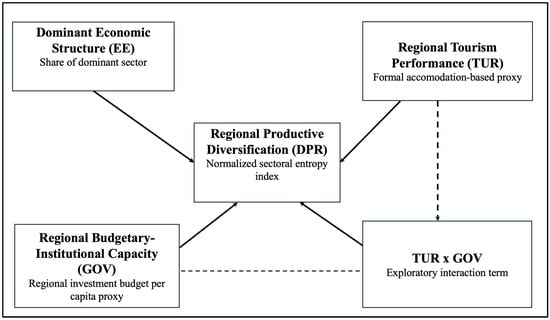
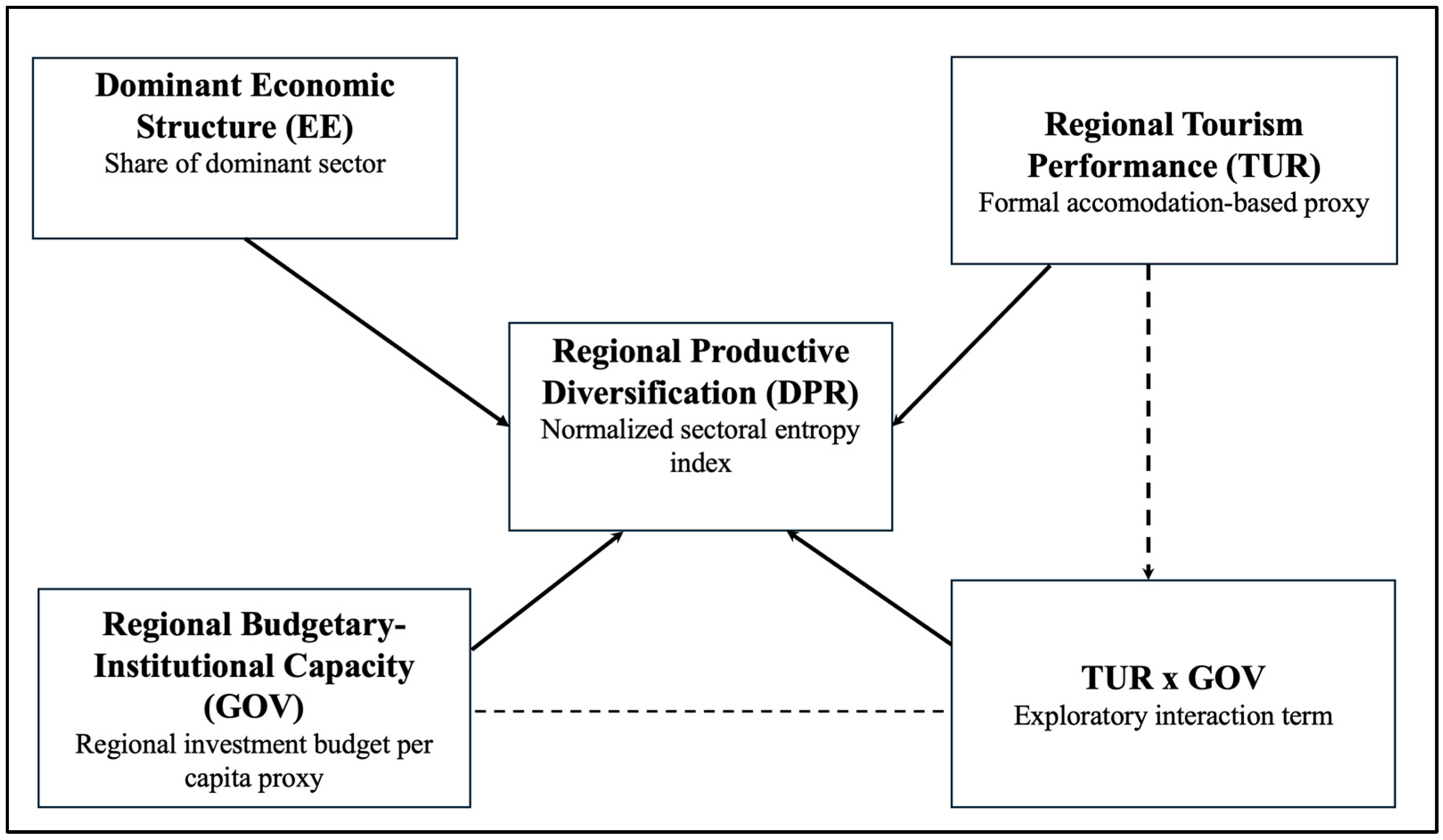
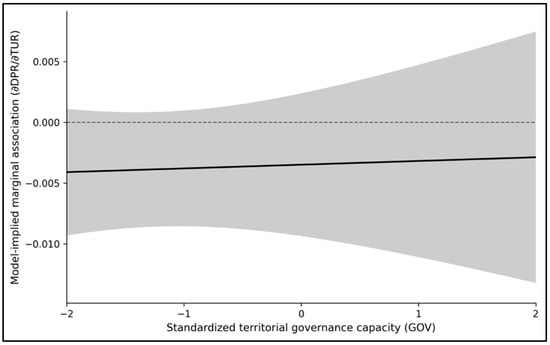
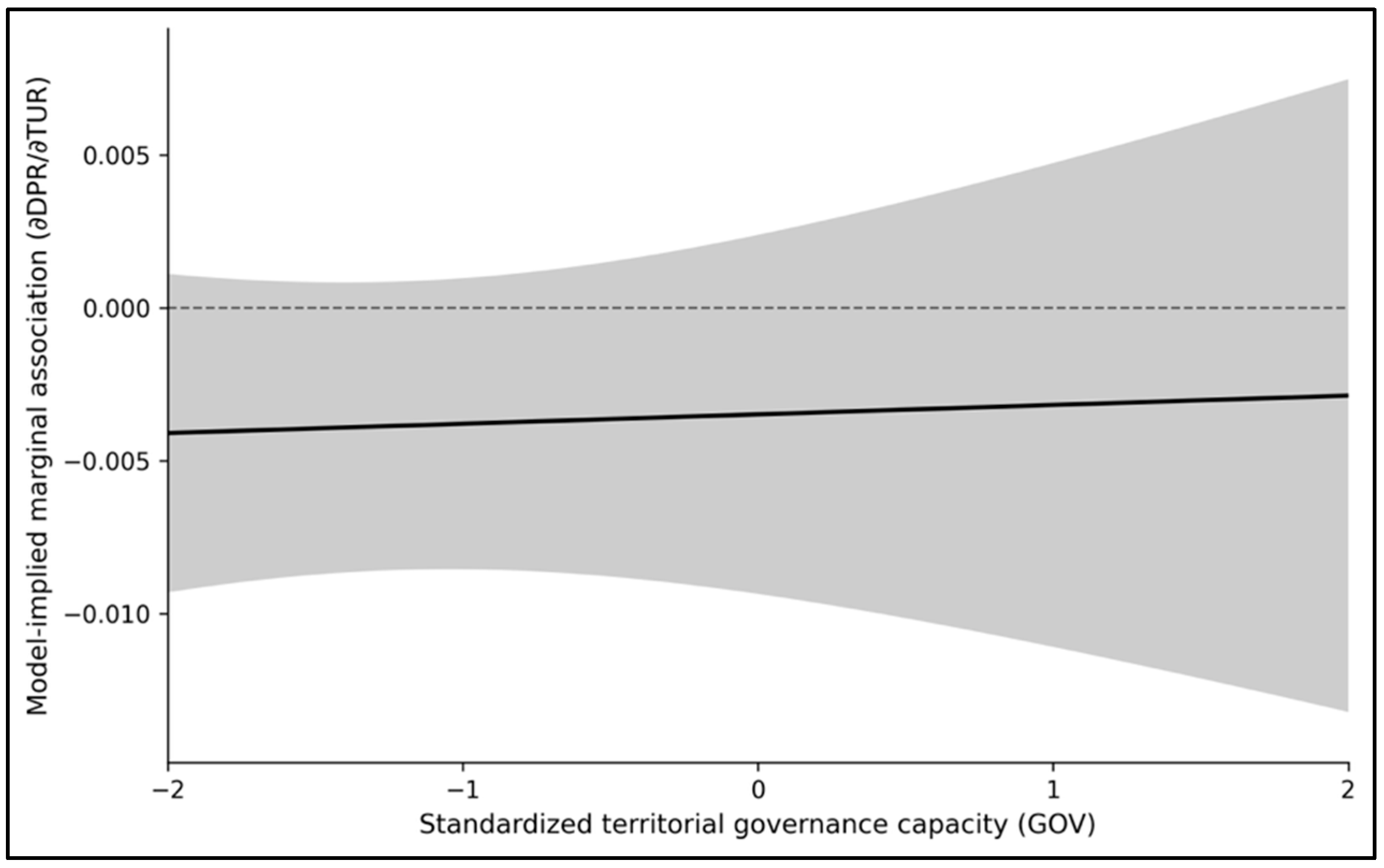

Disclaimer/Publisher’s Note: The statements, opinions and data contained in all publications are solely those of the individual author(s) and contributor(s) and not of MDPI and/or the editor(s). MDPI and/or the editor(s) disclaim responsibility for any injury to people or property resulting from any ideas, methods, instructions or products referred to in the content. |
© 2026 by the authors. Licensee MDPI, Basel, Switzerland. This article is an open access article distributed under the terms and conditions of the Creative Commons Attribution (CC BY) license.