


Abstract
The sustainable management of chemical fumigants in intensive horticulture represents one of the most complex challenges in European agricultural policy, requiring the integration of agronomic knowledge, regulatory frameworks, economic viability, and stakeholder perspectives. This study proposes and tests a multi-phase consultation methodology designed to bridge the gap between individual expert knowledge and collective, evidence-based consensus, moving from qualitative field-based elicitation to structured multidisciplinary engagement and incorporating both scientific data and practical experience. A total of 72 experts were involved across two phases. In phase 1, in-depth face-to-face interviews (n = 18) captured field-level knowledge on integrated pest management strategies, risk perception, and decision-making criteria, including the economic sustainability of production systems, a dimension prioritized in the European Commission’s Vision for Agriculture and Food. Phase 2 consisted of a one-day multistakeholder event (n = 54)—bringing together researchers, regulators, industry representatives, and farmers—to confront qualitative findings with experimental data on operator safety, groundwater protection, and consumer residues. This deliberate transition from individual perception to informed, shared consensus represents the methodological core of the approach and its most distinctive contribution. The phase 1 results showed that the majority of experts considered chemical fumigants currently indispensable, while recognizing complementary strategies—particularly solarization and natural substances—as valuable supporting tools. The phase 2 experimental data confirmed operator exposure below regulatory thresholds, no groundwater contamination under professional application conditions, and the absence of detectable residues in treated crops. The results demonstrate that this structured consultation can generate actionable knowledge for integrated nematode and soil-borne disease management, with a methodology replicable across other complex regulatory and agronomic contexts within the European framework.
1. Introduction
Agriculture plays a foundational role in achieving the Sustainable Development Goals (SDGs) [1], yet its contribution to greenhouse gas emissions, biodiversity loss, and environmental pollution highlights the urgent need to transition towards more sustainable food systems [2]. Ensuring food security while reducing the environmental footprint of agricultural practices remains one of the most pressing societal challenges of our time.
The use and management of plant protection products (PPPs) may generate negative environmental impacts and societal conflicts, requiring a careful balance between the demand for reduced chemical use and the role of PPPs in ensuring food security and safety. Recent European assessments and public consultations underline the need for a proportionate approach that promotes IPM strategies and innovative disease control techniques, while reducing the risks associated with PPP use for human health and the environment [3].
The recent literature increasingly supports the notion that transitioning towards sustainable PPP use and management should not be perceived as a straightforward linear process that progresses from scientific discovery to knowledge and subsequently to application. Instead, it should be perceived as the outcome of complex “systemic interactions” among various subjects. This process necessitates a multifaceted approach that combines traditional knowledge, the experiences of different local stakeholders, scientific expertise, and context-specific data to provide useful and understandable information for the target farmers [4].
This study focuses on fumigants, a specific PPP category applied against soil-borne pests, diseases, and plant-parasitic nematodes (PPNs), which represent one of the main threats to food security at the global level [5,6]. Despite their agronomic relevance, PPNs have received comparatively limited research attention, partly due to the difficulties in their study and monitoring, and because their symptoms closely resemble those of other biotic and abiotic stresses. Root-knot nematodes (RKNs) and potato cyst nematodes (PCNs) are increasingly problematic in major food crops across Europe, partly as a consequence of climate change and market globalization, with several species listed on the EPPO Alert List [7].
Italy is characterized by a high-market-value agro-industrial system that relies on high value, quality and technological production, with increasing attention to sustainability. This agricultural approach, however, still requires significant use of production factors, including PPPs, which must be properly managed. This is particularly true for soil-borne disease and parasitic nematode control, which, despite several proposed alternatives, still rely on chemicals such as soil fumigants that, currently, in Italy, are authorized only for emergency phytosanitary situations (Article 53 of Regulation 1107/2009) as Emergency Use Derogations (EUDs).
The challenge is to achieve sustainable production in an integrated nematode and soilborne disease management framework, as requested by the Commission’s Vision for Agriculture and Food [8], encouraging farmers to consider and support all effective solutions and techniques to achieve the European objectives regarding PPP risk reduction and exposure.
However, sustainable use and management of fumigants is inherently complex, involving specific crop requirements, significant risks and investments, temporal and spatial considerations, chemical toxicity, dedicated application methods and technologies, defense innovations, and a substantial level of requisite knowledge. In addition to this list, uncertainty about the effectiveness of alternative treatments to chemicals should also be considered, as indicated in several studies [9,10]. This uncertainty arises mainly from the lack of an eradicating effect, particularly in the context of high-value crops and the production of propagative materials such as seeds, roots, corms, and bulbs. Nevertheless, these so-called alternatives often represent valid tools that should be incorporated into, or are already part of, “integrated and sustainable soil-borne disease and nematode control”. Current European legislation, which mandates sustainable agriculture, does not impose the choice of a specific strategy to be employed, leaving farmers with the responsibility to decide within a wide range of possibilities. However, farmers are not the only actors involved in this decision-making process. With the implementation of Directive 128, concerning sustainable pesticide use (Directive 2009/128/EC), the role of the consultant has been formalized to offer support [11], and the authorization for emergency uses is linked to a wide range of policies and responsibilities, and these challenges require consideration from the risk management point of view, within a broader spatial, socio-economic and cultural context and taking into account differences in the perceived risks and interests of farmers and authorities.
In this framework, stakeholder consultation could represent a basis for integrated decision making to ensure efficient implementation of integrated pest management, a cornerstone of the Sustainable Pesticide Use Directive. The basic concept is that collaboration between stakeholders helps develop common views and achieve solutions for a context-specific sustainable agriculture. Indeed, stakeholder participation constitutes a fundamental pillar in European integrated decision-making processes, accepted and used in several European projects; it is indicated, and sometimes compulsory, in some European Directives (e.g., the Water Framework in art. 14 [12]). Stakeholders’ involvement and social learning processes play a key role in the public participation process [13] and represent a valuable opportunity to improve the system and information source.
Despite the growing recognition of stakeholder participation as a cornerstone of sustainable pesticide governance [14], the literature still lacks structured, replicable frameworks that systematically move from individual expert knowledge elicitation to collective, evidence-based consensus in complex regulatory and agronomic contexts. Most existing approaches either rely on large-scale public consultations—which tend to capture broad societal opinions rather than field-level expertise [15]—or on single-phase expert panels, without a deliberate mechanism for validating qualitative findings against experimental data in a multidisciplinary setting [16,17]. This study addresses this gap by proposing and testing a two-phase multi-stakeholder consultation methodology, applied to the sustainable management of soil fumigants and plant-parasitic nematodes in Italian intensive horticulture as a case study. The specific objectives are (i) to elicit field-level expert knowledge on integrated nematode and soil-borne disease management strategies, risk perception, and decision-making criteria; (ii) to validate and enrich these qualitative findings through a multidisciplinary stakeholder event incorporating updated experimental data on operator safety, groundwater protection, and consumer residues; and (iii) to demonstrate the replicability of this consultation framework for other complex regulatory and agronomic contexts within the European policy framework.
2. Materials and Methods
2.1. The Multi-Phase Stakeholder Consultation Approach
For the definition of stakeholder participation in this study, reference is made to Jolibert and Wesselink (2012) [18]: “an active involvement where actors bring inputs [..] at one or several stages of the research project, e.g., research proposal/design, coordination, execution, dissemination and/or follow-up”. There are numerous methods for stakeholder consultation, and the literature on techniques for various forms of judgment is extensive. Rowe and Frewer (2005) [19] listed over 100 engagement mechanisms, and this list is far from exhaustive. Although no definitive rule exists, as the process should be tailored to the specific context, this study primarily references the EFSA (European Food Safety Authority)’s Guidance on Expert Knowledge Elicitation (EKA) in Food and Feed Safety Risk Assessment [20], as well as previous research and experience within the framework of PPPs’ risk evaluation [21] and their sustainable use.
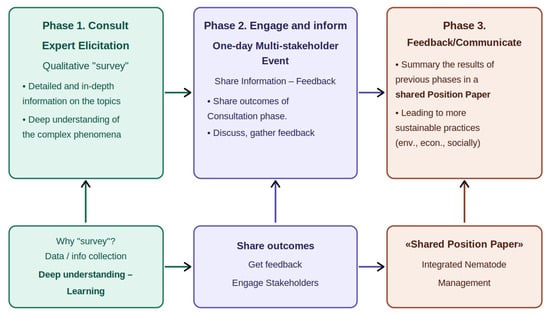
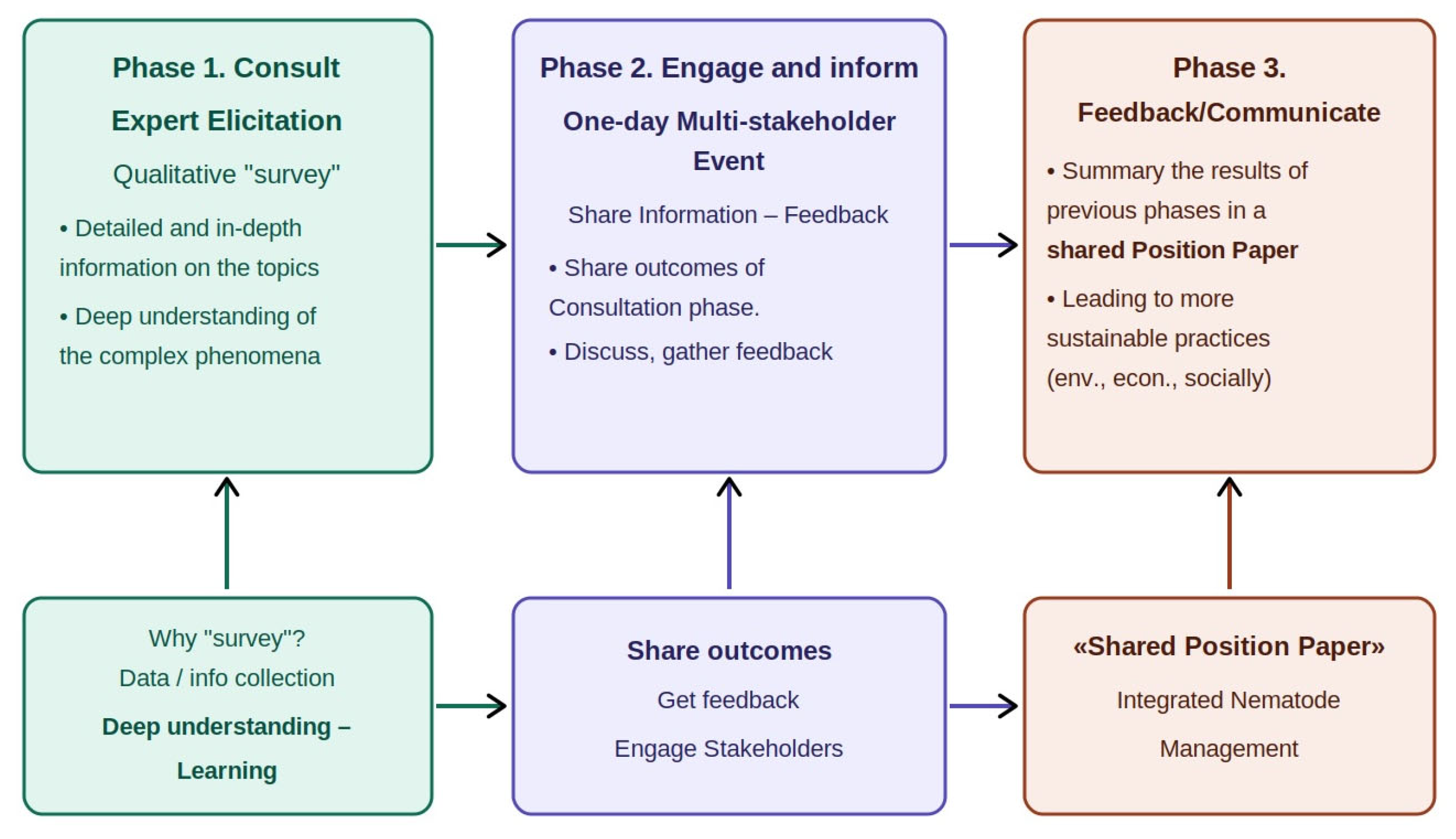
The primary aim of the consultation process was to gather information and to achieve a comprehensive understanding of the complex phenomena of the use and management of fumigants. Ultimately, this process sought to provide a position paper that incorporated different perspectives into the decision-making process, thereby leading to more sustainable practices within integrated pest management frameworks, as requested by the EU Commission. Indeed, the community involved in PPP risk analysis is notably diverse, including all interested and affected parties, such as regulatory risk assessors, risk managers and risk communicators, and applicants for product authorization, the wider scientific community, farmers, consultants and the general public. Addressing the needs and interests of these varied parties presents a significant challenge. To address this, a multi-phase approach was developed, combining several levels of information: (1) consultation, to gather data with qualitative interviews; (2) engagement, for sharing data, expert perspectives and knowledge; and (3) feedback. This approach employs a combination of tools and methodologies across different phases, as described in Figure 1.
Figure 1.
Steps of the multi-phase stakeholder consultation approach of this study.
A total of 72 experts were involved throughout the process and in the first two phases.
2.2. Phase 1: Consult (Expert Elicitation)
This study adhered to the generally accepted principles for stakeholder consultations, as outlined by the EU and recommended by EFSA EKA guidelines, which include transparency, proportionality, inclusiveness, accountability and coherence. This consultation method differs from other statistically relevant data-gathering tools, since it includes a specific category for individuals and employs a “questionnaire-based” qualitative tool and anonymous in-depth interviews conducted by a competent interviewer. This method, as illustrated in the paragraph below, was utilized to increase understanding of the knowledge, attitudes, perceptions, interests and experiences of the actors involved in the process.
The primary purpose was, indeed, to collect input from the interested community, specifically farmers or consultants/advisors involved in the use of fumigants.
Following an initial pilot test, the focus of the survey was shifted to target technicians and advisors/consultants working on farms that performed soil fumigant treatments. It is noteworthy that, in some cases, the roles of advisor and farmer may have coincided.
The aim was to acquire qualitative data and information regarding the management of issues associated with the restricted use of fumigant products against the main soil pests and diseases and, in particular, nematodes.
2.2.1. Face-to-Face In-Depth Interviews
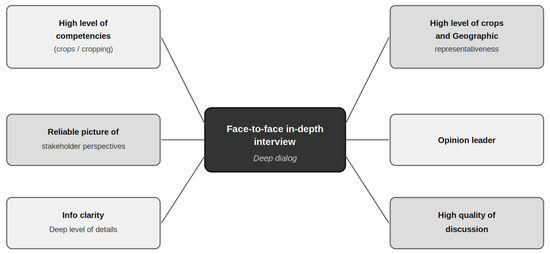
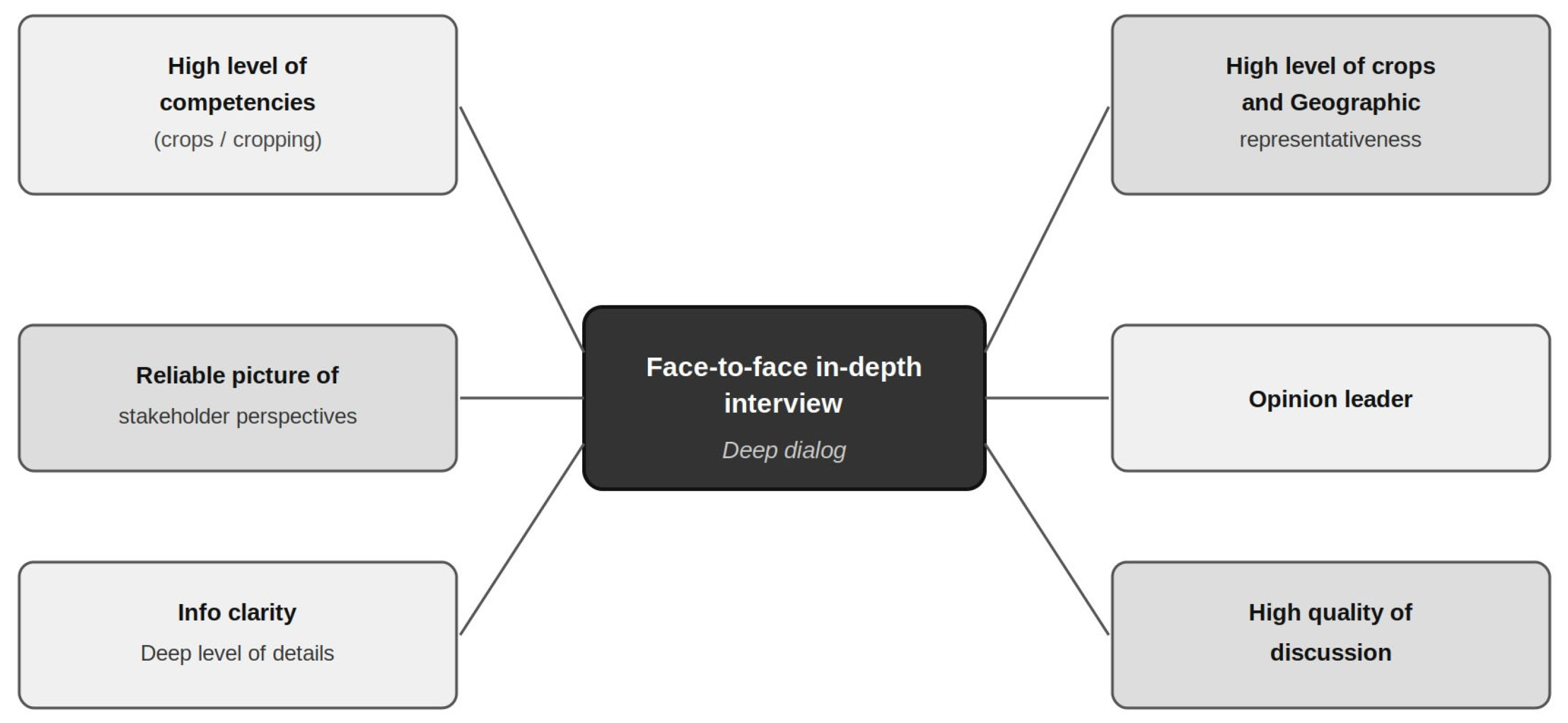
A face-to-face in-depth qualitative interview allows for the collection of more detailed information on the topics investigated and allows for a better understanding of complex phenomena, also through the analysis of the motivations, emotions, opinions and experiences of participants [22]. It is a deep dialogue with the expert and stakeholders based on a comprehensive discussion with the interlocutor. It makes the information clear and provides a clear understanding. It offers a good picture of the stakeholder perspective.
This research technique (Figure 2) was used to gather detailed information from a limited number of participants. This was possible thanks to the high level of skills and knowledge of the interviewee, to his/her great crops and cropping knowledge, and the consistent geographical representativeness, clarity and deep level of detail of the discussion.
Figure 2.
Face-to-face in-depth interview elements.
Conducted face to face and on a one-on-one basis, it encourages participants to share more openly than they might in group settings, enabling the collection of data on subjective experiences and the exploration of participants’ perspectives and feelings about a particular topic or situation.
In-depth interviews are characterized by their open-ended nature, allowing both the interviewer and interviewee to delve deeply into topics and adjust the conversation direction as needed [23], without taking into account the time necessary for the conversation, which is generally very long.
In this study, face-to-face in-depth interviews were conducted by a competent interviewer, following a predefined structured questionnaire developed by researcher experts involved in fumigant risk evaluation. The questions and topics covered were designed to encourage a detailed narrative.
This approach was employed to ensure standardization of the interview and obtain responses on themes common to all interviewees. Interviewees were contacted and informed in advance of the purpose of this research.
The interviews, which ensured participant anonymity, were conducted in the form of a conversation to foster a relationship and empathy, particularly given the generally sensitive nature of the topic, which involved the use of pesticides, specifically chemical fumigants.
The qualitative analysis of the collected information can also serve as a foundation for a quantitative investigation and to start discussion groups to validate one’s analysis with different profiles of actors involved in the production and decision-making chain.
2.2.2. Identification of the Experts
The following criteria were identified for the selection of subjects to interview: (I) area of influence with respect to the crops of interest in this research, (II) indications of farmers, (III) indications of researchers, (IV) high level of competencies with proven experience in the sector analyzed, and (V) depth of knowledge about crops, geographical representativeness and a comprehensive economic understanding of its implications within the domain.
We adapted the theoretical framework of information theory and the “pyramid of knowledge,” or DIKW (an acronym for data, information, knowledge, and wisdom) [24], a hierarchical model that delineates the relationships among data, information, knowledge, and wisdom, primarily applied in the economic domain, though its applicability extends beyond this field. The base of the pyramid consists of data, attributes or meanings that can be identified or measured in some form. These elements are objective and gain meaning after being processed with a purpose, a final objective and a predefined process. Consequently, in a hierarchical scale, the second level is that of information, wherein meaning is ascribed to the data based on an interpretative context for an understanding, in our specific case, of the dynamics of the territory and the interactions between environmental and productive variables. These first two levels are objective. Meanwhile, knowledge develops when information is integrated with past experiences and best practices. The transition from the state of information to that of knowledge almost always occurs, within the various DIKW pyramids, thanks to the addition of one or more ‘ingredients’ or conditions (such as applicability, accumulated learning, understanding, experience, interpretation, reflection, relevance, synthesis, cognitive structuring, truthfulness, etc.) that increase the quality and usefulness of information, making it, in fact, true knowledge.
Finally, the last level, that of wisdom, entails the application of knowledge to make strategic decisions. In the context of this last term, the literature aligns it more closely with ethical considerations than with epistemology or information sciences. Wisdom is subject to different definitions or interpretations. In this study, the term is conceptualized as the “ability to act critically or practically in any situation”, a human trait, which is, thus, not comparable to the outcomes of data and information processing conducted by an expert or artificial system. This characteristic is generally found in a particularly excellent, expert and often mature minority.
The analysis yields a structured and systematic set of relationships that can serve as a robust foundation for developing informed strategies.
In our investigation, the expert’s area of influence is, therefore, conceptualized as a combination of factors:
- -
- Geographical, that is, where the consultant operates and the crops/agricultural ecosystems and agricultural surfaces on which they rely. This factor represents the first level, the data, the indispensable premise for processing information and giving it meaning.
- -
- Regulatory and technological, that is, their expertise in relation to regional and national regulations and with respect to the technologies and innovations and the economic implications applicable in the contexts in which they operate.
- -
- Cultural, that is, the strategies they implement to obtain a positive impact on agricultural productivity but also on environmental sustainability and the relationships of trust or the relationships they establish between the farmers they support.
- -
- Geo-economical, that is, a capability that only deep experts in a specific domain can possess, enabling them to analyze the interaction between the operational geographic area and the local, regional, and cross-border economy. This capacity allows them to optimize activities within a geographic space using available resources, while considering how certain technical decisions influence economic components.
In total, 18 experts from six regions were interviewed: 3 from Sicily, 5 from Basilicata, 3 from Veneto, 2 from Emilia Romagna, 2 from Liguria and 3 from Lazio. To ensure the comfort of the interviewees, anonymity was strictly guaranteed, and it was ensured that the publication of the data obtained from the interviews would be conducted in aggregate form without any specific reference to individual participants. With respect to the selection criteria, these individuals are esteemed, recognized for their expertise, and are highly trusted within their respective communities and area of influence. Notably, 86% of the participants are affiliated with specific national associations related to producers and/or supply chains, such as the CIA (Confederazione Italiana Agricoltori), Coldiretti, Civi-Italia—Centro interprofessionale per le attività vivaistiche) and APOFRUIT Italia soc. coop. Agricola.
Although the number of interviewed experts was limited (n = 18), their selection was based on the criterion of area of influence rather than statistical representativeness. Each expert acted as an advisor to multiple farms and, in several cases, to entire supply chains or cooperative networks. Collectively, the 18 experts advised farms covering an estimated area that accounts for more than 50% of the fumigated surfaces authorized under the 2024 Emergency Use Derogations, as derived from the derogation data and expert judgment. This confirmed that, despite the small absolute size of fumigated areas in Italy (less than 0.5% of the national utilized agricultural area (UAA)), the experts selected exerted a disproportionately strong influence on the decision-making processes governing the majority of fumigation practices in the country. This approach aligns with the EFSA EKA guidelines, which prioritize depth of expertise and representativeness of knowledge over sample size in expert elicitation exercises.
2.2.3. Geographical Data
In the field of soil-borne disease and nematode control, Italian high-value crops are grown under intensive growing systems (i.e., propagative material that must be compulsorily healthy and without any potential harmful infections), with a high level of investment. However, at least in Italy, soil disinfestation treatments potentially affect less than 0.5% of total national farming areas [25], being relevant only in intensive cropping systems (such as for carrots or tobacco) as well as protected or highly specialized crops (such as basil, tomato and other solanaceae, cucurbits, strawberry, leafy vegetables and some ornamentals) and propagation material (such as seed crops, including seed sugar beet, strawberry nurseries, and perennial nurseries).
In greater detail, soil fumigants facilitate the economical and effective management of soil-borne diseases, nematodes and weeds when applied as a pre-planting soil treatment, thereby protecting horticultural, field and nursery crops. However, 1,3-dichloropropene (1,3-D) and chloropicrin were not listed as approved for use due to the ban on authorizations for PPPs containing those active ingredients in the EU since 2008. Considering the importance of those active substances for soil disinfection treatments aimed at controlling nematodes in horticultural production and taking into account numerous requests from farmer associations and regional phytosanitary services, the Italian Ministry of Health has issued exceptional authorization measures for emergency phytosanitary situations (Article 53 of Regulation 1107/2009) repeatedly, until 2024, for a limited period of time [26].
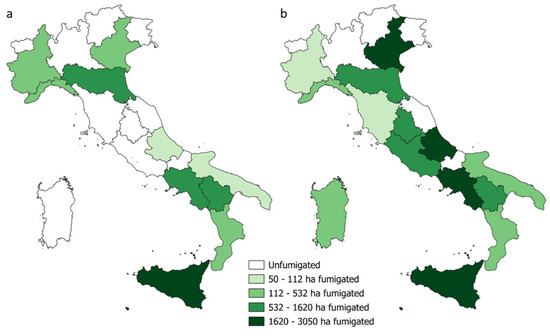
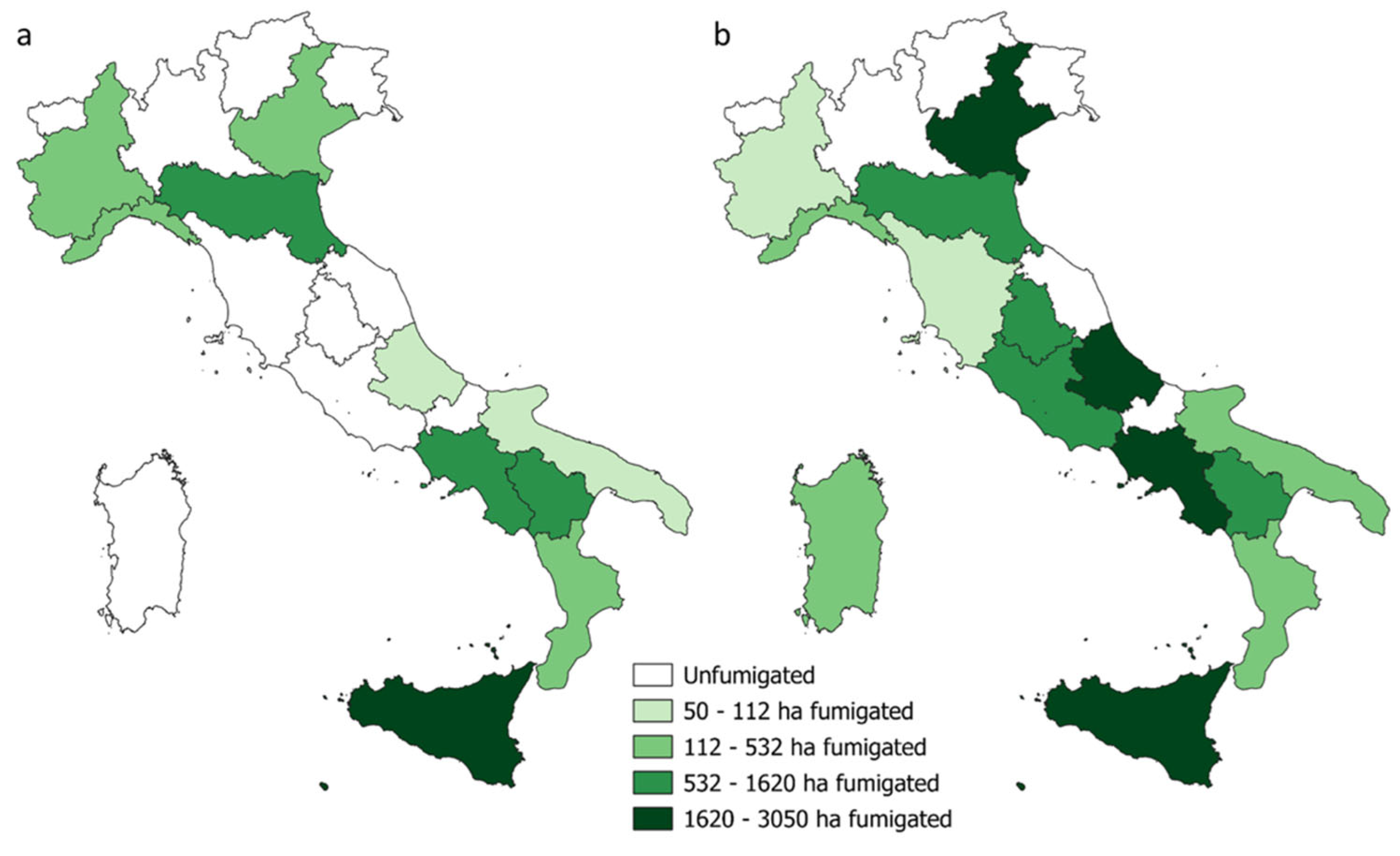
In the recent Emergency Use Derogations (EUDs), only approximately 17,000 ha has been authorized to be treated with 1,3-D in 2024, which represents 0.13% of the national Utilized Agricultural Area (UAA) and less than one-quarter of intensive cropping systems, protected or highly specialized crops, and propagation material. Similarly, chloropicrin accounts for 0.07% of the UAA (Source: ISTAT and Derogation for Authorization’s 2024 agricultural campaign). Although these figures may appear minimal, the percentage of surface area affected by fumigation is significant for high-income crops, making the fumigated areas highly significant despite their limited overall size. The 2024 agricultural campaign indicates, for each active substance and crop combination, the area (in hectare) involved across various Italian regions, and Figure 3 illustrates the national regions where fumigation was authorized in 2024, as well as the fumigated area (in hectare) for the majority of crops using 1,3-D (carrot, strawberry, greenhouse tomato, basil and tobacco) and chloropicrin (strawberry, basil and greenhouse tomato).
Figure 3.
Regions in which fumigation with (a) chloropicrin and (b) 1,3-D has been authorized and the sum area (ha fumigated) for the following crops: (a) strawberry, basil and greenhouse tomato; (b) carrot, strawberry, greenhouse tomato, basil and tobacco.
For example, when compared with the national crop surfaces reported by ISTAT (2024) [25], the area authorized for emergency use of 1,3-D (2024) for greenhouse tomatoes (despite the authorization covering both greenhouse and open-field applications, experts in agricultural practices assert that these areas are predominantly utilized for greenhouse purposes) accounts for 41% of the national greenhouse tomato area, underscoring the substantial economic importance of the fumigated areas.
Similarly, the area authorized for emergency use fumigation with 1,3-D for carrot is 51% of the Italian open-field cultivated area of carrot (see Table 1 and Table 2), and the area authorized for emergency use fumigation with 1,3-D for tobacco is 23% of the national cultivated area of tobacco. For basil, the area authorized for emergency use fumigation with 1,3-D is 80% of the cultivated area of basil in the Liguria region (expert judgment), while basil is cultivated in other regions of Italy, such as Veneto, E.R., and Piedmont. The high-quality variety examined in this study, designated as “DOP” in Italy, is specifically cultivated in Liguria.
Table 1.
1,3-D Authorised and Total Sensitive Areas/regions of Greenhouse Tomatoes susceptible of risk of damage of nematodes compared to those relating to national area (in ha). Sensitive Areas’ refer to regions’ area where the cultivation is particularly vulnerable to pest damage and thus require targeted management. * Data obtained from the year 2024 derogation campaign. ** Data of 2024 obtained from ISTAT (last visit 18 March 2025) [25]. *** Referred as “Open field” according to ISTAT, due to the absence of greenhouse quantities.
Table 2.
1,3-D Authorised and Total Sensitive Areas/regions of Carrots susceptible of risk of damage of nematodes compared to those relating to national area (in ha). Sensitive Areas’ refer to regions’ area where the cultivation is particularly vulnerable to pest damage and thus require targeted management * Data obtained from the year 2024 derogation campaign. ** Data of 2024 obtained from ISTAT (last visit 18 March 2025) [25].
For seed sugar beet (expert judgment), the area authorized for emergency use fumigation is probably within 90 and 100% of the total cultivated area.
Similarly, according to ISTAT data (2024) [25], the area authorized for emergency fumigation with chloropicrin for greenhouse tomatoes accounts for 51% of the national surface area of greenhouse tomato and covers 68% of the total potential sensitive area within the regions where the authorization applies (see Table 3).
Table 3.
Chloropicrin Authorised and Total Sensitive Areas/regions of Greenhouse Tomatoes susceptible to risk of damage from nematodes compared to those relating to the national area (in ha). Sensitive Areas’ refer to regions’ area where the cultivation is particularly vulnerable to pest damage and thus require targeted management * Data obtained from the year 2024 derogation campaign. ** Data of 2024 obtained from ISTAT (last visit 18 March 2025). *** Referred as “Open field” according to ISTAT, due to the absence of greenhouse quantities.
The lack of an effective technical solution against only PPNs may have a direct impact on productivity in relation to the intensity of the infestation, potentially resulting in significant economic losses.
For instance, as shown in Table 4, greenhouse tomatoes may experience an average yield reduction of approximately −30%, with variations ranging from −15% in the case of small nematode infestations to −50% for large infestations, according to the opinions of the experts. In the case of tomato, if damage caused by fungal pathogens is also considered, the overall yield loss could significantly increase due to the impact of these pathogens on both the quantity and quality of production.
Table 4.
Example of potential economic impact and value of production of different nematode attack intensities for greenhouse tomatoes.
The maximum potential loss could be estimated at 42,728 €/ha in the event of a large nematode infestation. A similar analysis is presented in Table 5 for carrots as an example.
Table 5.
Example of economic potential economic impact and value of production of different nematode attack intensities for carrots.
2.2.4. The Interview and Questions Path
Once the experts were identified, the next phase involved conducting the interviews, conversations carried out following a series of predefined questions used as a guide. When designing the questionnaire, we tried not to address the issue only from the perspective of chemical fumigants, but also to insert these technical means of production within a broader panorama of possibilities, thus preferring an indirect approach. These precautions were taken to avoid influencing the interviewees. The responses collected through the structured interviews were systematically analyzed using frequency analysis, tabulating the distribution of answers to each question across the expert panel. This approach provides a descriptive summary of the expert group’s views, attitudes, and practices, consistent with the qualitative and purposive nature of the expert elicitation methodology adopted. The percentages reported in Section 3 represent descriptive frequency counts within the consulted panel and should not be interpreted as inferential statistics. In accordance with the EFSA Expert Knowledge Elicitation guidelines [20], confidence intervals, significance tests, and formal consensus metrics—such as those used in Delphi studies or structured voting procedures—are not applicable to this methodological framework, in which qualitative convergence of expert views constitutes the appropriate form of consensus.
The interview questionnaire was structured into three thematic sections. The first section gathered general data on the respondent’s professional profile, crops, and fumigated areas and was designed to validate the hypothesis that chemical fumigants remain necessary for certain high-income crops under current conditions. The second section explored expert perceptions of operator, resident, and environmental exposure associated with fumigant treatments and the mitigation strategies currently adopted. The third section investigated the degree of integration of chemical fumigants with complementary defense strategies, and experts’ willingness to adopt alternative or combined approaches. The complete questionnaire is provided in Supplementary Material File S1.
2.3. Phase 2: Engage and Inform (One-Day Multistakeholder Event)
This section presents the second phase of the approach, consisting of four key points for a sharing session: presenting the results of the consultation phase, evaluating the sharing of data from ongoing trials, exchanging case studies and experiences, and discussing impressions of the results.
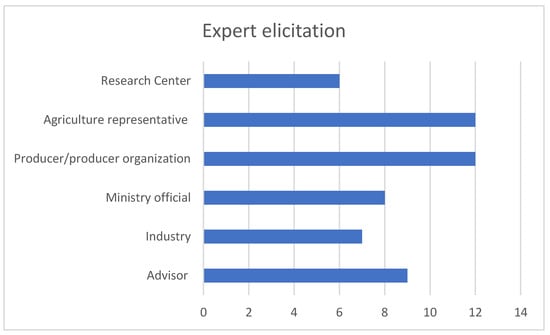
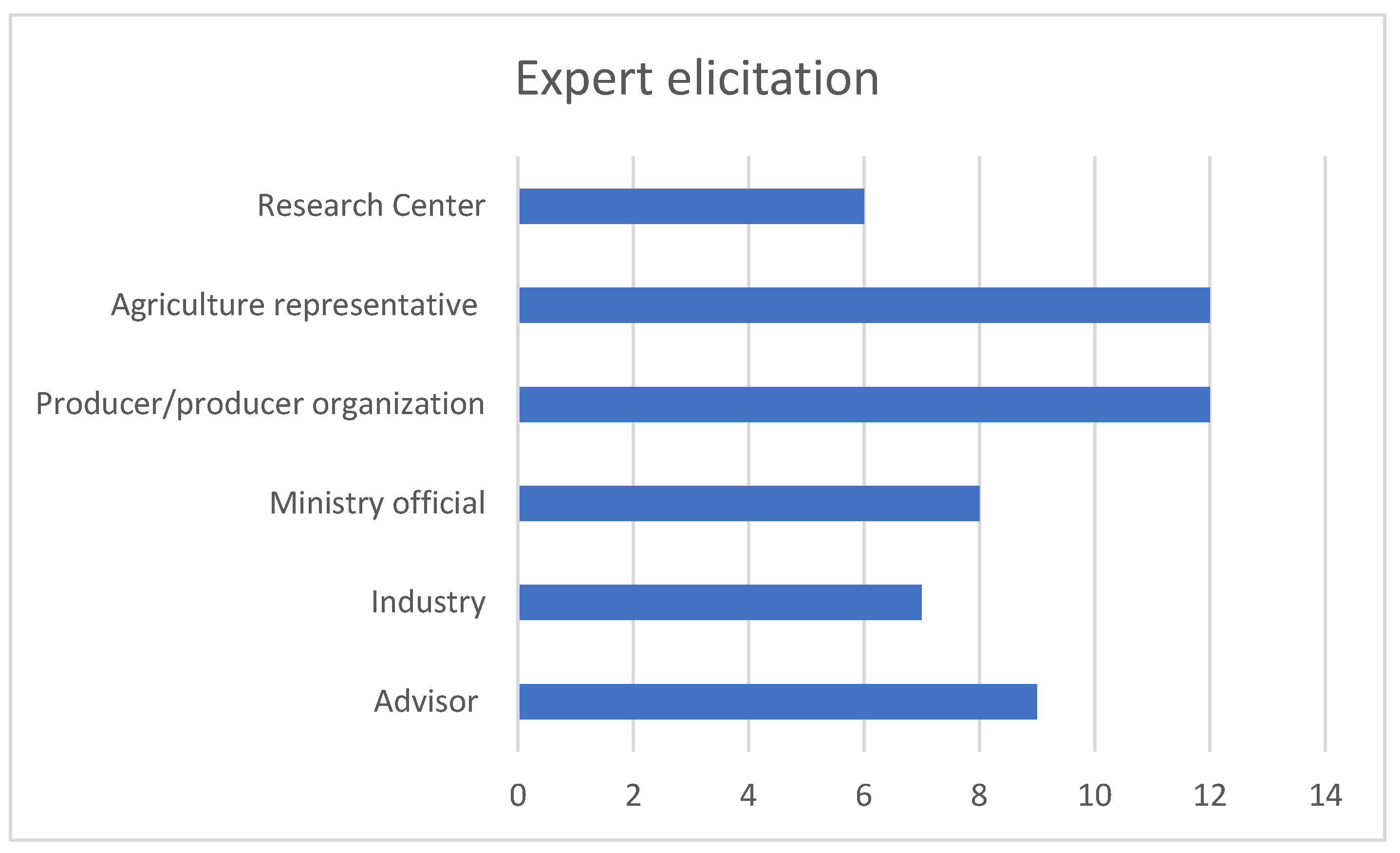
A total of 54 multidisciplinary experts and government institution representatives participated, including prominent figures from the Ministries of Health and Agriculture, industry executives, academic researchers, farmers, regional phytosanitary services, and professional agronomists, as illustrated in Figure 4.
Figure 4.
Composition of the expert panel participating in the second phase of the project, representing diverse stakeholders from regulatory institutions, industry, academic research, agricultural producers, regional phytosanitary services, and professionals.
Participants were selected through a combination of institutional invitation and purposive selection by stakeholder category, ensuring balanced multidisciplinary representation across regulatory bodies, academic researchers, industry representatives, farmer associations, regional phytosanitary services, and professional agronomists. The event followed a structured format: scientific presentations by research centers, industry representatives, and regulatory bodies were followed by open plenary discussion moderated by an expert facilitator, whose role was to promote inclusive dialogue and guide the group towards the identification of shared positions on the key thematic areas emerging from phase 1. No formal voting procedures, structured questionnaires, or quantitative consensus metrics were administered, as the phase 2 design intentionally adopted a deliberative engagement model—consistent with the EFSA EKA guidelines—in which qualitative convergence of expert views constituted the appropriate form of consensus. The discussions were recorded, and the key emerging themes were systematically identified and synthesized by the research team, forming the analytical basis for the results reported in Section 3.2.
The event was moderated by an expert facilitator who promoted open dialogue among stakeholders to integrate science, policy, and operational agricultural management.
The dialogue underscored the importance of continuous updating of scientific dossiers incorporating new scientific knowledge and risk mitigation strategies derived from recent research to guarantee safe fumigant use.
This event, therefore, functioned as an essential platform where institutional, scientific, industrial, and agricultural actors could align on shared strategies based on scientific evidence and real-world needs. It highlighted the ongoing evolution of fumigant use policies and practices in Italy, balancing innovation, regulation, and sustainability to safeguard the future of high-investment horticulture amid complex pest management challenges and stringent safety requirements. Integral to the discussions were specific mitigation measures to ensure fumigant safety and minimize environmental impact. These included key mitigation strategies and technical solutions, such as physical soil covering with plastic films (TIF) that reduce chemical volatilization and protect both operators and ecosystems, and they are listed in Table 6.
Table 6.
Key mitigation strategies and technical solutions.
The integration of the two phases followed a deliberate sequential logic. The qualitative findings emerging from phase 1—including expert perceptions, decision-making criteria, and risk assessments—were systematically used to structure the agenda of the phase 2 multistakeholder event, identifying the key thematic areas requiring validation against experimental data and broader stakeholder input. During phase 2, the qualitative evidence from phase 1 was confronted with updated scientific data on operator safety, groundwater protection, and consumer residues and discussed among actors with different institutional roles and perspectives. This integration of field-based expert knowledge with experimental evidence constituted the core mechanism of the two-phase approach, enabling the transition from individual perception to informed, shared consensus.
The detailed outcomes of phase 2, including specific mitigation recommendations, trial data, and policy implications, are intended to feed into a forthcoming position paper currently in preparation. The combined outputs of both phases—qualitative findings, stakeholder positions, and experimental data—will be translated into concrete stewardship, awareness, and regulatory recommendations for the sustainable management of soil fumigants and plant-parasitic nematodes within the European policy framework. The present study reports the phase 2 process and key emerging themes, without detailing the full set of recommendations, which are beyond the scope of this article.
3. Results
3.1. Phase 1: Consult
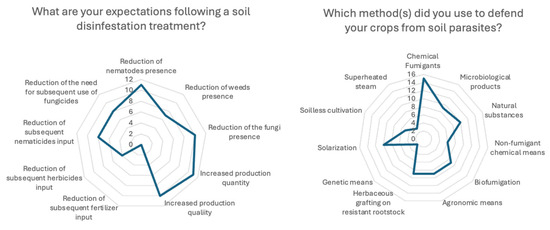
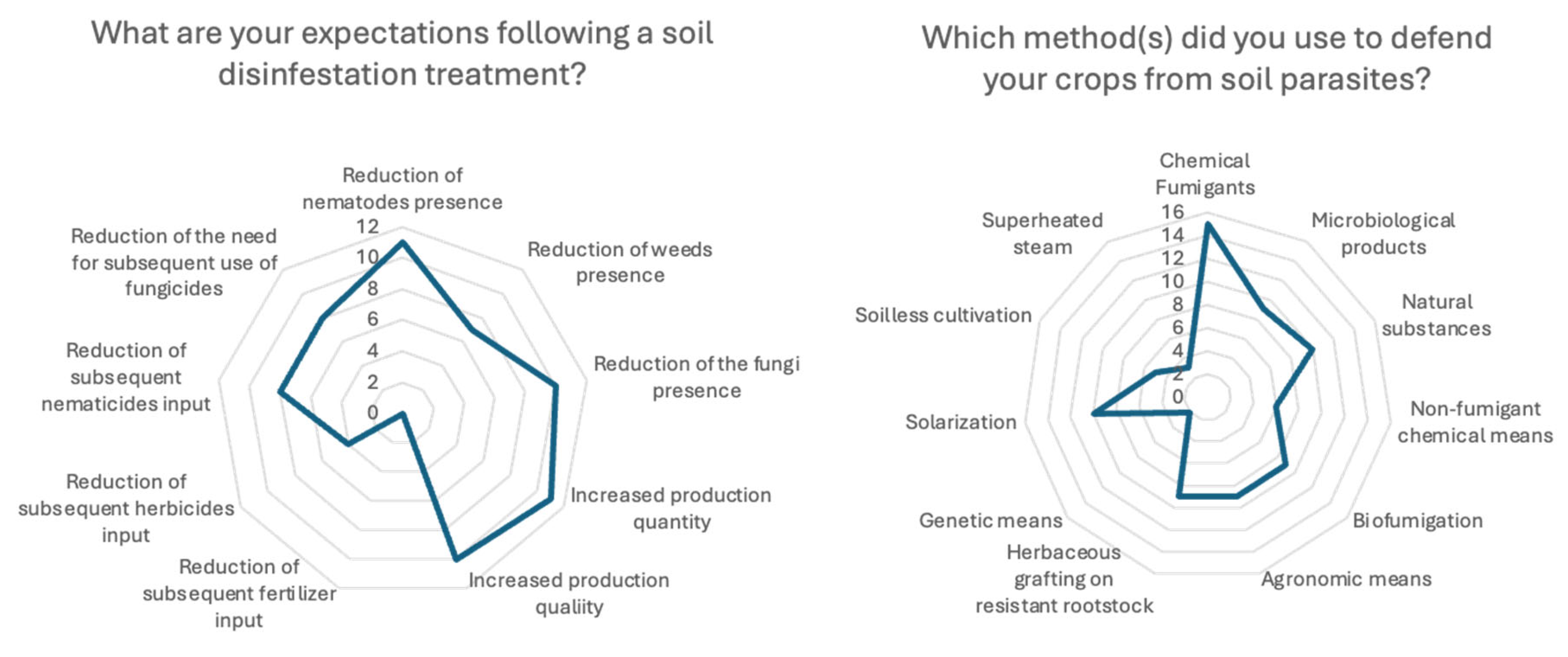
The main purpose and expectation of a soil disinfection treatment appear to be, first, the reduction in nematode infestation, confirming the impact of these pathogens on production, followed by the reduction in fungal infestation, which is associated with the quantitative but also qualitative improvement of production by the majority of respondents (Figure 5a).
Figure 5.
Experts’ expectations (a) following soil disinfection and (b) methods mainly used.
Chemical fumigants are an important component of the defense of crops against soil parasites (Figure 5b). They were used or suggested by all interviewees. Only 57% of the respondents believed that the training received during the acquisition of the “Plant Protection License for Use” was sufficient to guarantee the correct application of fumigants and considered themself well or highly informed about nematode-integrated strategies.
The active substances mainly used were 1,3-D, chloropicrin, metam sodium, metam potassium, and dazomet.
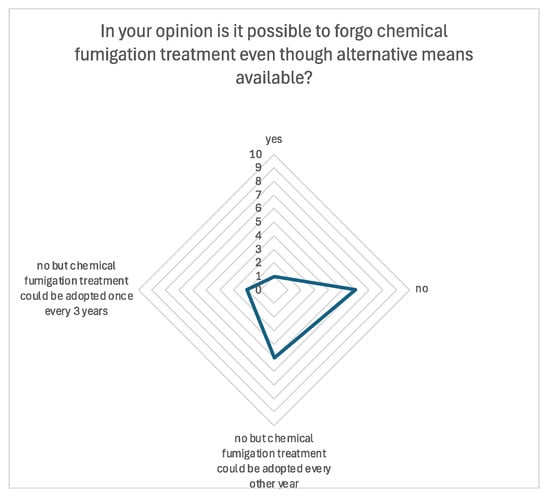
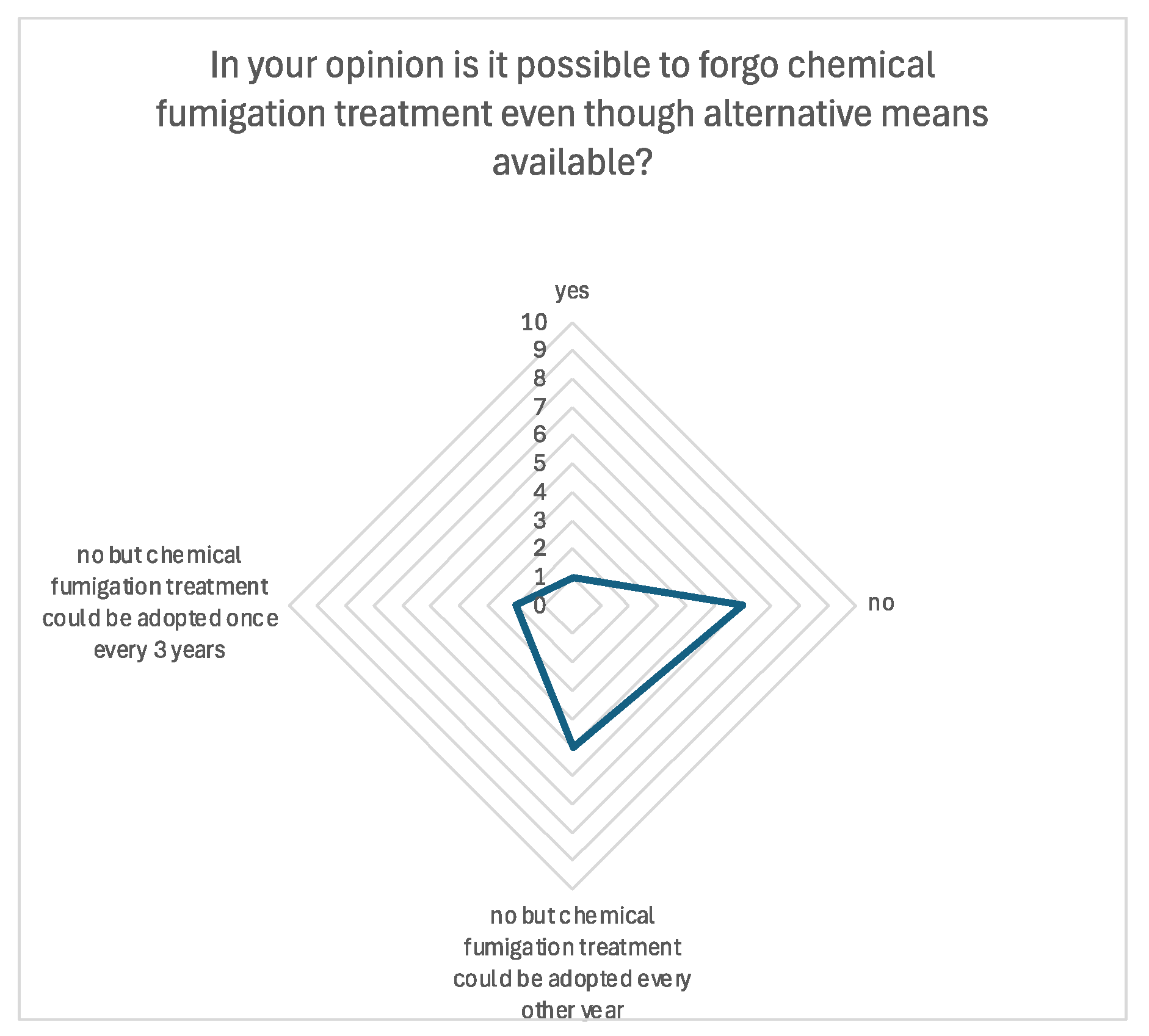
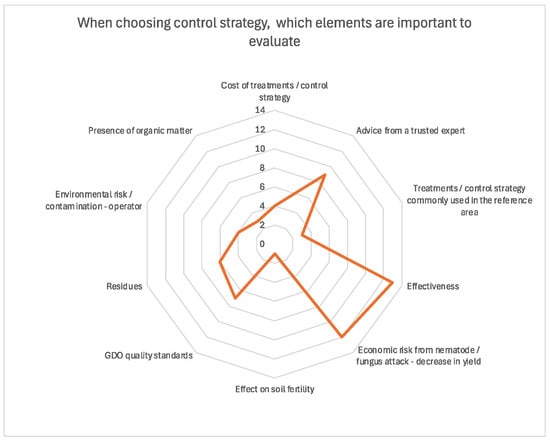
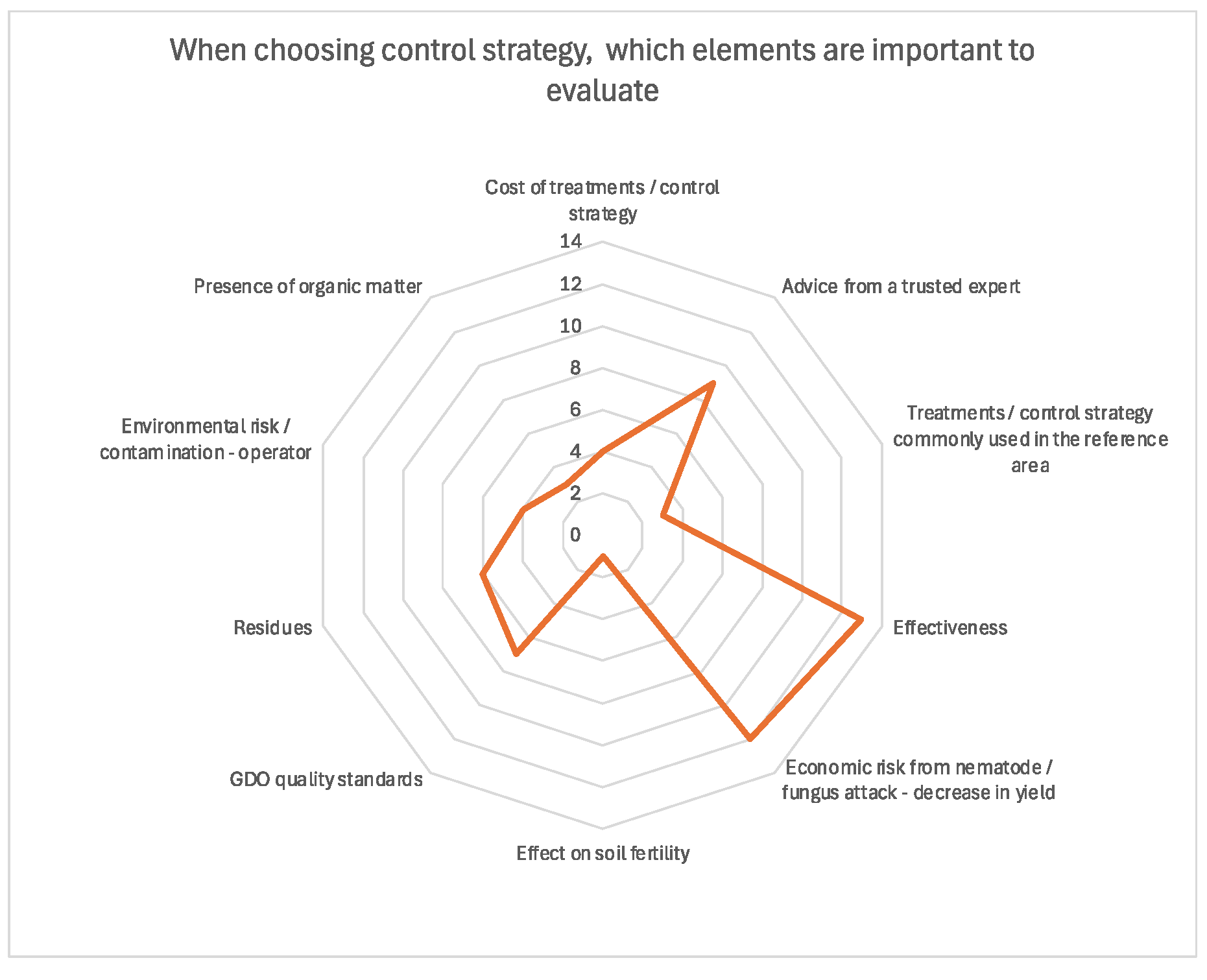
With the exception of a small number, most of the respondents (93%) agreed that, at present, it is not possible to give up the chemical fumigant treatment (Figure 6) even if alternative means are available, without the use of which they all estimated a decrease in production ranging from a minimum of 10–20% for strawberries in Basilicata—with even higher estimates of >30% for strawberries in nurseries and beetroot in Emilia Romagna, 50% for basil in Liguria, and >40% for tomatoes, aubergines, and peppers in Sicily and Lazio—to a maximum of 100% for carrots in Lazio, and the majority suggested chemical treatment every other year, if not every 3 years. These data were also confirmed by the answers related to the criteria for choosing a soil pest control strategy, from which it appeared that the effectiveness and the economic risk derived from the attack of parasites with consequent loss of yield were the most important parameters to evaluate (Figure 7) instead of the treatment costs.
Figure 6.
Expert answers on chemical fumigant dependency.
Figure 7.
Elements that should be taken into consideration in control strategy selection.
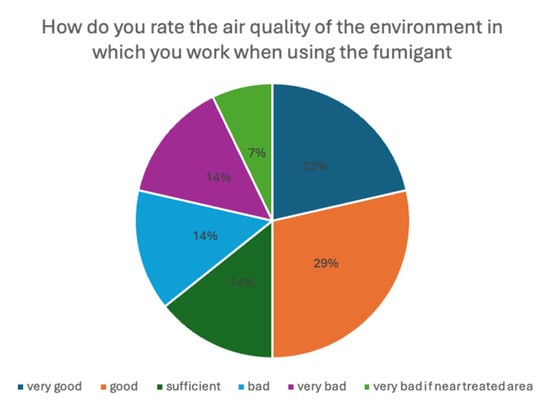
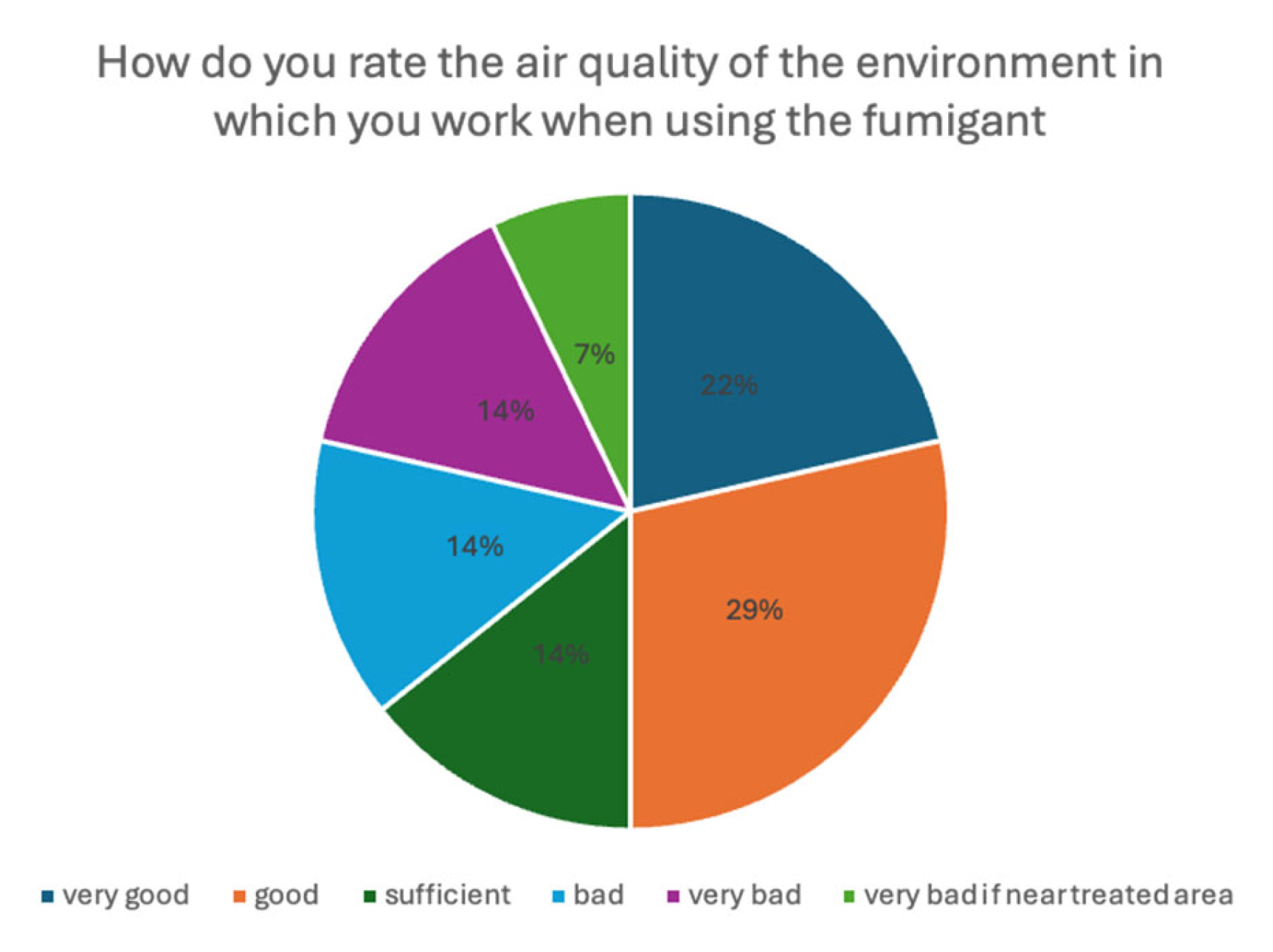
Regarding the evaluation of the perception of fumigants as possible air contaminants that residents and especially operators can be exposed to, some indirect questions were included, posing a question about the quality of the air in the workplace and the relationship between air quality and risks for operators and the environment. If we add up the very good, good, and sufficient answers, in general, the quality of the air in the workplace was considered not negative, even if there was a rather high percentage (35%) of negative perceptions (Figure 8).
Figure 8.
Evaluation of the air quality of the work environment.
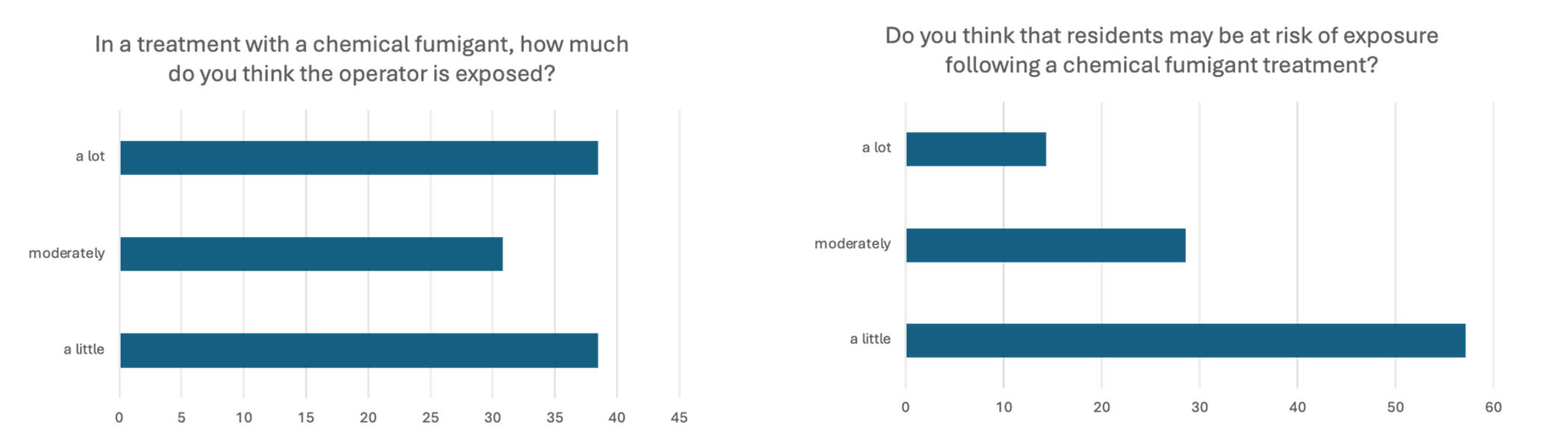
This trend was also confirmed by the answers to the subsequent questions, which showed a greater tendency to worry about the risk for operators than for residents, an aspect linked both to the correct use of personal protective equipment and to the distances of the fields/greenhouses treated from the residential areas (Figure 9). A total of 86% of the respondents considered the application of fumigants safer if done by a company specialized in fumigation, rather than by the farmers.
Figure 9.
Perception of risk of exposure level of operators and environment during or following treatment with chemical fumigant.
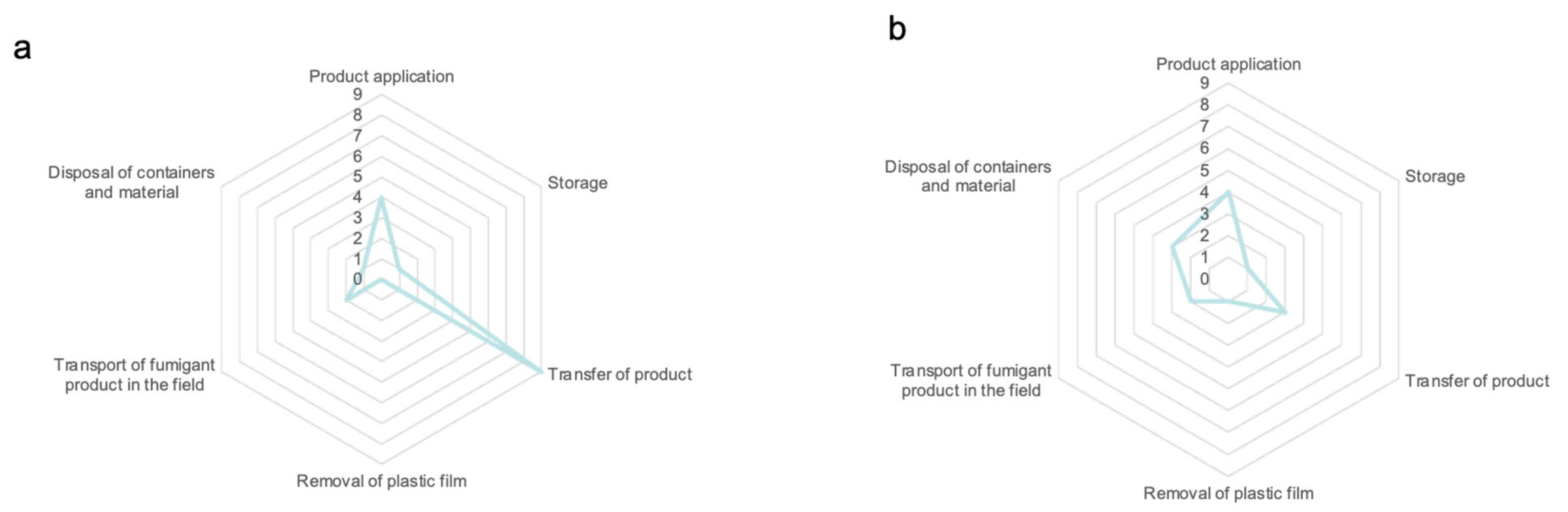
In particular, regarding operator exposure, the riskiest phase of chemical fumigant management was indicated to be the transfer of the product (Figure 10a), while for the environment, in addition to the transfer of the product, the phase of execution of the treatment and disposal of the containers of the product and potentially contaminated material were considered risky (Figure 10b).
Figure 10.
The riskiest phase of product management for (a) the operator and (b) the environment.
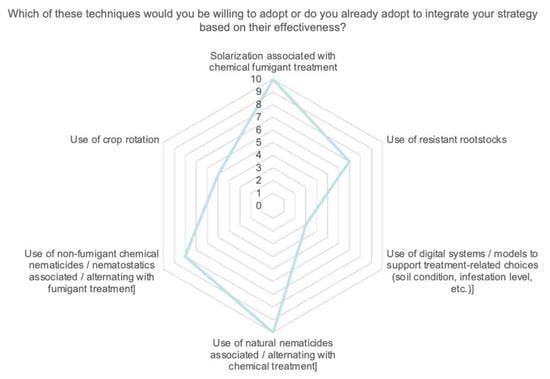
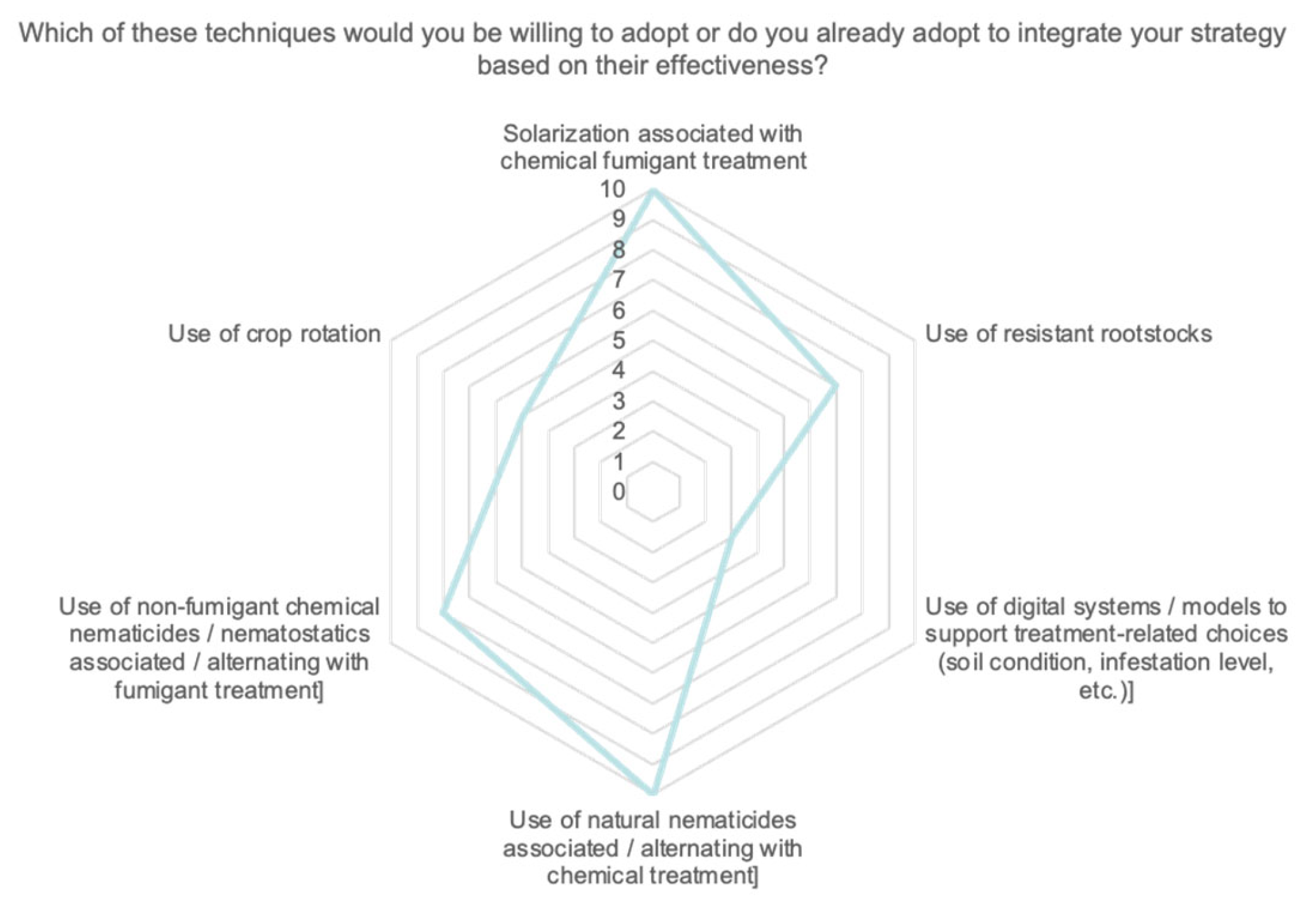
Regarding the different strategies currently available and applicable from a nematode-integrated management perspective, the experts’ answers highlighted several behaviors to limit chemical input and the integration of chemical products with other defense strategies, such as, in particular, solarization and the use of substances of natural origin (Figure 11) associated or alternated with the chemical treatment.
Figure 11.
Intention to adopt integrated strategies in function of their effectiveness.
However, within the expert group, it was well known that none of these have an eradicating action and are currently already used to support and maintain fumigated soil against re-infestations, or to limit the effects of post-fumigation re-infestations on the current crop.
The in-depth interviews conducted in phase 1 yielded a coherent and convergent picture. Experts consistently agreed on the indispensability of chemical fumigants under conditions of high pest pressure, acknowledged the value of complementary methods while precisely identifying their limitations, and demonstrated widespread awareness of both mitigation requirements and the current regulatory constraints. These qualitative findings, gathered directly from practitioners in the field, constituted the informational foundation for the subsequent phase of the consultation process.
The need to validate these indications on a broader, multidisciplinary panel—and to integrate them with updated experimental data—motivated the design of phase 2. The in-person event held at the Italian Ministry of Health represented the transition from individual consultation to collective knowledge sharing, an opportunity to compare the evidence emerging from the interviews with the most recent technical data on operator safety, groundwater protection, and crop residues and to build informed consensus among actors with different roles and perspectives.
3.2. Phase 2 Feedback
Sharing Ongoing Trial Data
The second phase functioned as a platform for sharing and validating scientific evidence among stakeholders. Data presented at the event by research centers, industry representatives, and regulatory bodies were discussed in relation to the findings of phase 1. All experimental data presented in this section—covering operator safety, groundwater protection, and consumer residues—were generated as part of regulatory dossiers submitted, or currently being prepared for submission, to the EFSA under Regulation (EC) No. 1107/2009 for the authorization of 1,3-D and chloropicrin. All trials and monitoring campaigns were conducted under GEP and GLP protocols in realistic field scenarios, using standardized analytical methods with defined detection and quantification limits, ensuring methodological rigor, reproducibility, and comparability across studies. Due to the confidential nature of ongoing regulatory submissions, detailed quantitative data cannot be reported in full in this article; however, key findings were shared with phase 2 participants in the institutional setting of the Italian Ministry of Health, where their disclosure was deemed appropriate and necessary to support informed, evidence-based stakeholder dialogue. A comprehensive synthesis of these findings, together with specific recommendations for regulatory and stewardship actions, will be presented in the forthcoming position paper. It is important to note that the primary contribution of this section is not the experimental results per se, but the methodological value of presenting robust scientific evidence—produced under well-defined and reproducible conditions—as the basis for informed multistakeholder dialogue. The data reported here are valid within the specific agronomic, environmental, and operational scenarios under which they were generated, and should not be assumed to apply automatically to different contexts. It is precisely this scenario-specificity that makes multistakeholder engagement necessary. By bringing together actors with different roles, perspectives, and responsibilities, the phase 2 event enabled the evidence to be contextualized, discussed, and evaluated in relation to the diverse conditions under which fumigant management decisions are made in practice.
- Operator Safety
Scientific data show that TIF (totally impermeable film) “barrier” tarp significantly reduces vapor emissions during application and for four subsequent days, mitigating potential exposure of operators and residents via inhalation. Monitoring data results indicate measurements below the AOEL limits set by the EFSA (e.g., for 1,3-D, an acceptable operator exposure concentration of 0.45 mg/m3 for both isomers; EFSA, 2018 [27]). However, the importance of barrier tarp management in the post-fumigation phase is emphasized, including adopting proper ventilation of the treated area for at least 48 h after tarp cutting before safe re-entry. The high efficacy of soil covering during fumigation has been demonstrated, with TIFs showing excellent performance over VIFs, while also considering innovative aspects applied to tarps that have led to more robust, thinner, and recyclable TIF covers compared with previous commercial TIFs available on the market for decades.
- Environmental Safety
The results from various groundwater monitoring programs were presented. For chloropicrin, monitoring campaigns from 2018 and 2023–2025 in the most representative national scenarios were conducted, with professional applications always using barrier films for a minimum of 14 to 21 days; over 150 samples were collected. For 1,3-D, a double monitoring campaign (2023–2025) was conducted in the most representative national scenarios, including both professional and non-professional applications, with and without barrier films (14 or 21 days), and with soil compaction as per the labels; over 120 groundwater samples were collected. In both cases, no analytical detections were found under conditions of professional application with barrier films.
These results confirm that, when applied professionally and in combination with barrier films, both 1,3-D and chloropicrin do not pose a detectable risk of groundwater contamination under the tested conditions. Dose reduction, infiltration protection using TIFs, solarization, and minimal emissions are, therefore, confirmed as essential elements for both operator and environmental protection and should be considered as standard requirements in any integrated fumigant stewardship program.
Proper soil preparation and moisture management, calibrated injection equipment, adherence to recommended doses and exposure times, observance of buffer zones and re-entry intervals, and consistent use of appropriate personal protective equipment are all essential elements to realize the intrinsic benefits of TIFs and other mitigation measures. When combined with refined modeling tools and robust monitoring data, they enable a more accurate and realistic risk assessment for fumigants and lay the foundation for risk management decisions that balance agronomic needs, operator safety, and environmental protection.
- Consumer Safety
A new analytical method for determining residues of volatile substances was presented, designed to avoid losses during critical process phases (e.g., freezing and thawing). For this, the laboratory was moved directly to the field—where most activities take place—with controlled and refrigerated transport at about 5 °C. This protocol ensures the stability of volatile substance concentrations in solution, even after several hours of travel. Numerous residue studies were conducted on crops grown in soils treated with 1,3-D and chloropicrin—including tomato, pepper, zucchini, melon, cucumber, strawberry, and leafy vegetables—with no residues detected (including impurities and metabolites) at LOQ = 0.010 mg/kg and LOD = 0.003 mg/kg, demonstrating the absence of residues in the analyzed matrices.
These scientific contributions, combined with the regulatory and agronomic perspectives shared during the event, constitute the evidence base for the integrated recommendations that will be developed in the forthcoming position paper. Taken together, they demonstrate that the current best practices—particularly the adoption of TIF films, dose reduction, and adherence to re-entry intervals—provide a robust and scientifically supported framework for the safe and sustainable use of fumigants in Italian intensive horticulture.
4. Discussion
The findings of our expert elicitation highlight the following: (i) the competence of advisors of fumigant users; (ii) several behaviors to limit chemical input through the integration of chemical products with other strategies, such as solarization and the use of substances of natural origin, which are, however, still linked to uncertainties about efficacy and, in some cases, practicability; (iii) an increased sensitivity towards the environment and operator safety; and (iv) widespread awareness of the fundamental role of mitigation measures, linked, for operators and residents, to the adoption of adequate personal protective equipment and respect of buffer zones, and for the environment, to the correct application of chemical products, the appropriate choice of plastic film type (including recyclable options), and its adequate positioning on the ground.
Although some chemical fumigants are considered the most effective method for controlling root-knot nematodes (Meloidogyne spp.) and cyst nematodes (Heterodera spp. and Globodera spp.) in intensive horticultural crops by farmers in Southern Europe and Italy, their use is prohibited and only authorized for phytosanitary emergencies. This often excludes their application as pre-plant soil disinfection methods for propagative material production (seeds, roots, corms, bulbs, etc.), increasing the economic risk for an important sector in the national agricultural panorama, which complains of the lack of adequate tools to guarantee product safety. Moreover, the use of propagative material amplifies the potential damage effects by several orders of magnitude in terms of surface area affected.
Our results confirm that, despite the availability of chemical and non-chemical alternatives, most Italian intensive horticultural crops still rely on fumigants under conditions of high nematode pressure. This finding is consistent with the conclusions of Talavera et al. (2022, 2024) [9,28] and with the broader international literature, which documents that soil fumigation remains the primary nematode management tool in the production of high-value crops, notwithstanding increasing regulatory and societal pressure [29]. As noted by Desaeger et al. (2021) [29], questions about the efficacy and long-term adoptability of alternative nematicides under real field conditions remain unresolved, particularly for the most susceptible crops and highest infestation scenarios.
Complementary methods—including solarization, biofumigation, anaerobic soil disinfestation, rotation, and biological nematostatics—play a valuable role in integrated management by reducing pest pressure and extending the interval between fumigation treatments to every 2–3 years. A comprehensive review of nematode control strategies available in the southern Member States of the EU (C Zone) confirms that, while these methods are well documented and increasingly promoted within IPM frameworks, their efficacy is highly context-dependent and influenced by soil type, infestation level, and crop sensitivity [30]. In particular, recent experimental evidence confirms that under high-nematode-density conditions—typically above 500 J2 per 250 cm3 of soil—alternative methods alone are insufficient to reduce populations below the economic damage threshold and maintain profitable horticultural production [31]. As consistently reported in the literature and confirmed by our expert panel, none of these approaches has an eradicating effect, and they currently function as supporting tools rather than substitutes for chemical fumigation in high-pressure scenarios. This structural limitation explains the continued reliance on Emergency Use Derogations and underlines the need for a regulatory framework that recognizes the agronomic reality faced by producers of high-value crops. As shown in the results (Figure 7), effectiveness and economic risk from yield loss emerge as the primary criteria driving strategy selection among expert advisors, with treatment cost identified as a secondary factor. This prioritization reflects a broader pattern documented across European Member States [9,28], where the economic viability of high-value cropping systems takes precedence over other considerations in pest management decision making and underlines the importance of factoring economic sustainability into regulatory frameworks, as explicitly recognized in the European Commission’s Vision for Agriculture and Food [8].
A further issue was raised during the expert consultation, albeit not among the highly competent advisors interviewed in this study, all of whom operate exclusively with legally authorized tools. According to several stakeholders, the proliferation of unregistered PPPs claiming phytosanitary efficacy represents a significant and growing concern. In the perception of the expert panel, this phenomenon is partly a consequence of increasingly stringent regulation of legal pesticides: when a registered product is withdrawn from the market due to regulatory changes, the resulting void is frequently exploited by illicit suppliers. Among these unregistered formulated products, experts noted the presence of natural compounds—including plant and microbial extracts—whose environmental effects and impacts on non-target organisms are not fully understood. These stakeholder perceptions are consistent with recent national investigations by competent authorities [32], which have documented the circulation of counterfeit and unregistered agrochemicals in Italy. From a policy perspective, these findings suggest that ensuring continued access to chemical products that have undergone rigorous risk assessment procedures is not only an agronomic necessity but also a key instrument for limiting the spread of illegal and potentially hazardous substances.
Since our goal is to design effective integrated management strategies against nematodes and soil pests, these results suggest that involving other stakeholders, with plural values and interests besides advisors, can be useful to improve the decisions concerning socio/cultural aspects (such as differences in the perceived risks and interests of farmers and authorities) and uncertainties related to the lack of scientific or technical data on available alternative products to chemical fumigants.
For example, sharing these results could stimulate targeted product stewardship activities and an awareness campaign on the use of fumigants in general. These activities, based on new scientific research results, could focus on the effectiveness of mitigation measures, on the adoption of systems that are safe for the operator and the environment, and on the reduction in dosage. The framework could be completed with additional information and scientific evidence regarding the risk assessment of the environment, the operator, non-target organisms, the safety of product application methods and, finally, the appropriate disposal of the container and materials, e.g., plastic films.
From a policy perspective, the multi-phase consultation framework tested in this study offers a practical model for raising public risk managers’ awareness of complex agronomic and regulatory challenges that are evident not only at the national level but also across multiple European Member States. The structured transition from individual expert knowledge to collective, evidence-based consensus demonstrated here represents a replicable approach for informing regulatory decision making in line with Europe’s vision for 2040, which aims for an attractive, competitive, sustainable and fair agri-food system for current and future generations [8]. Importantly, the empirical findings of this study—including the indispensability of fumigants under high pest pressure, the value but limitations of complementary methods, and the safety achievable through current best practices—provide a scientifically grounded foundation for such policy dialogue, clearly distinguishable from the stakeholder opinions and perceptions that complement them. Several limitations of this study should be acknowledged. Regarding phase 1, the sample of 18 experts, although selected according to rigorous criteria and representative in terms of area of influence, does not allow for statistical generalization. The qualitative and purposive nature of the sample is inherent to the expert elicitation approach and consistent with EFSA EKA guidelines, which prioritize depth of expertise over sample size. Furthermore, although face-to-face in-depth interviews are particularly effective for exploring complex phenomena, the sensitivity of the topic—involving the use of chemical fumigants under emergency authorization—may have introduced a degree of social desirability bias in some responses. Geographical coverage, while representative of the main fumigated regions in Italy, does not encompass all national production contexts. Regarding phase 2, the experimental data presented at the event were contributed by industry representatives and research centers and shared within an institutional setting; this may have introduced a degree of selection bias in the evidence presented. Finally, this study is specifically grounded in the Italian regulatory and agronomic context, which may not be directly comparable to other European situations. While this limits the direct transferability of the findings, the methodological framework and the policy implications remain relevant to the broader European debate on sustainable fumigant management.
5. Conclusions
A key methodological contribution of this study lies in the deliberate two-phase design. The qualitative findings from phase 1—coherent and convergent across experts from different regions and supply chains—did not simply describe the current state of fumigant management but actively informed the structure of phase 2. The transition from individual expert consultation to collective, multidisciplinary knowledge sharing represented a critical step in the validation process. By confronting field-based evidence with updated experimental data on operator safety, groundwater protection, and crop residues, and by engaging actors with different institutional roles and perspectives, the process moved from individual perception to informed, shared consensus. This progression from consultation to engagement is itself a replicable model for evidence-based stakeholder processes in complex regulatory and agronomic contexts. From the farmers’ perspective, the availability of agreed, authorized, and diversified management options—adapted to the production system and site-specific conditions—remains essential to ensure effective and safe pest control. The results of phase 2, which engaged 54 multidisciplinary stakeholders, including representatives of the Ministries of Health and Agriculture, research centers, industry, and farmer associations, are being integrated into a forthcoming position paper. This document will translate the combined findings of both phases into concrete stewardship, awareness, and regulatory recommendations, contributing to the design of effective integrated management strategies against nematodes and soil-borne pests in line with the European Commission’s objectives for pesticide risk reduction.
Supplementary Materials
The following supporting information can be downloaded at https://www.mdpi.com/article/10.3390/su18136683/s1, File S1: Questionnaire.
Author Contributions
Conceptualization, M.C.; methodology, M.C. and A.M.; resources, E.C.; writing—original draft preparation, M.C.; writing—review and editing, M.C., D.V. and A.M.; supervision, project administration and funding acquisition, E.C. All authors have read and agreed to the published version of this manuscript.
Funding
This paper was produced in the frame of a PhD on the agro-food system (AGRISYSTEM) (XXXVIII Cycle of the Università Cattolica del Sacro Cuore (Italy) PNRR Grants Innovative PhDs that meet the innovation needs of companies.
Institutional Review Board Statement
The article complies with the appropriate local/regional/national law on consent and privacy in compliance with EU Regulation 679/2016 (the GDPR) and Italian Legislative Decree 196/2003. No ethical approval is required.
Informed Consent Statement
Informed consent was obtained from all subjects involved in this study. Authors explained the acquisition of implied consent on submission of the questionnaire during the interview. Interviewees were contacted and informed in advance of the purpose of this research. Anonymity was strictly guaranteed, and it was ensured that the publication of the data from the interviews would be conducted in aggregate form without any specific reference to individual participants. This article complies with the appropriate local/regional/national law on consent and privacy in compliance with EU Regulation 679/2016 (the GDPR) and Italian Legislative Decree 196/2003.
Data Availability Statement
For data supporting the reported results, please contact the corresponding author.
Acknowledgments
A special thanks goes to Nicola Aiezzo and Massimiliano Mochetti for their support and all the experts who kindly agreed to participate in the interviews and at the event that generously shared their time, experiences, and expertise with us.
Conflicts of Interest
The authors declare no conflicts of interest. The funders had no role in the design of this study; in the collection, analyses, or interpretation of the data; in the writing of this manuscript; or in the decision to publish the results.
Abbreviations
The following abbreviations are used in this manuscript:
| PPPs | Plant Protection Products |
| ERA | Environmental Risk Assessment |
| UAA | Utilized Agricultural Area |
| SDGs | Sustainable Development Goals |
| PPNs | Plant-Parasitic Nematodes |
| RKNs | Root-Knot Nematodes |
| PCNs | Potato Cyst Nematodes |
| IPM | Integrated Pest Management |
| TIF | Totally Impermeable Film |
| EUDs | Emergency Use Derogations |
| EKA | Expert Knowledge Elicitation |
| DIKW | Data, Information, Knowledge, and Wisdom |
References
- United Nations. Sustainable Development Goals—United Nations. 2015. Available online: https://sdgs.un.org/goals (accessed on 24 May 2026).
- Fanzo, J. Ethical issues for human nutrition in the context of global food security and sustainable development. Glob. Food Secur. 2015, 7, 15–23. [Google Scholar] [CrossRef] [Scilit]
- European Commission. Study Supporting the Evaluation of Directive 2009/128/EC on the Sustainable Use of Pesticides and Impact Assessment of Its Possible Revision; Publications Office of the European Union: Luxembourg, 2021. [Google Scholar]
- Calliera, M.; Capri, E.; Marsala, R.Z.; Russo, E.; Bisagni, M.; Colla, R.; Marchis, A.; Suciu, N. Multi-actor approach and engagement strategy to promote the adoption of best management practices and a sustainable use of pesticides for groundwater quality improvement in hilly vineyards. Sci. Total Environ. 2021, 752, 142251. [Google Scholar] [CrossRef] [Scilit] [PubMed]
- Kantor, C.; Eisenback, J.D.; Kantor, M. Biosecurity risks to human food supply associated with plant-parasitic nematodes. Front. Plant Sci. 2024, 15, 1404335. [Google Scholar] [CrossRef] [Scilit] [PubMed]
- Afzal, A.; Mukhtar, T. Revolutionizing nematode management to achieve global food security goals—An overview. Heliyon 2024, 10, e25325. [Google Scholar] [CrossRef] [Scilit] [PubMed]
- European Plant Protection Organization (EPPO). EPPO Global Database—Meloidogyne Graminicola (MELGGC). 2018. Available online: https://gd.eppo.int/taxon/MELGGC (accessed on 23 September 2025).
- European Commission. COM(2025) 75 Final—A Vision for Agriculture and Food Shaping Together an Attractive Farming and Agri-Food Sector for Future Generations, Brussels, 19.2.2025. 2025. Available online: https://eur-lex.europa.eu/legal-content/EN/TXT/?uri=celex:52025DC0075 (accessed on 23 September 2025).
- Talavera-Rubia, M.; Vela-Delgado, M.D.; Verdejo-Lucas, S. A Cost-Benefit Analysis of Soil Disinfestation Methods against Root-Knot Nematodes in Mediterranean Intensive Horticulture. Plants 2022, 11, 2774. [Google Scholar] [CrossRef] [Scilit] [PubMed]
- Rubia, M.F.T.; Enamorado, L.M.; Delgado, M.D.V.; Lucas, S.V. Nivel de eficacia de los fitosanitarios frente a los nematodos. PHYTOMA España 2019, 134, 98–102. [Google Scholar]
- European Community. Directive 2009/128/EC of the European Parliament and of the Council of 21 October 2009 establishing a framework for Community action to achieve the sustainable use of pesticides (Text with EEA relevance). Off. J. Eur. Union 2009, 52, 1–73. [Google Scholar]
- European Community. Directive 2000/60/EC of the European Parliament and of the Council of 23 October 2000 establishing a framework for Community action in the field of water policy. Off. J. L 2000, 327, 1–73. Available online: https://eur-lex.europa.eu/eli/dir/2000/60/oj/eng (accessed on 24 May 2026).
- Pahl-Wostl, C.; Tàbara, D.; Bouwen, R.; Craps, M.; Dewulf, A.; Mostert, E.; Ridder, D.; Taillieu, T. The importance of social learning and culture for sustainable water management. Ecol. Econ. 2008, 64, 484–495. [Google Scholar] [CrossRef] [Scilit]
- European Commission. A Shared Prospect for Farming and Food in Europe—Report of the Strategic Dialogue on the Future of EU Agriculture. Brussels. 2024. Available online: https://agriculture.ec.europa.eu/document/download/171329ff-0f50-4fa5-946f-aea11032172e_en (accessed on 24 May 2026).
- Frelih-Larsen, A.; Chivers, C.-A.; Herb, I.; Mills, J.; Reed, M. The role of public consultations in decision-making on future agricultural pesticide use: Insights from European Union’s Farm to Fork Strategy public consultation. J. Environ. Policy Plan. 2023, 25, 476–492. [Google Scholar] [CrossRef] [Scilit]
- Dresemann, J.A. Towards evidence-based, stakeholder-driven plant protection policy: Insights from a modified Delphi study in Germany. Environ. Manag. Econ. Policy 2026, 1, 100004. [Google Scholar] [CrossRef] [Scilit]
- Zhou, W.; Arcot, Y.; Medina, R.F.; Bernal, J.; Cisneros-Zevallos, L.; Akbulut, M.E.S. Integrated Pest Management: An Update on the Sustainability Approach to Crop Protection. ACS Omega 2024, 9, 41130–41147. [Google Scholar] [CrossRef] [Scilit] [PubMed]
- Jolibert, C.; Wesselink, A. Research impacts and impact on research in biodiversity conservation: The influence of stakeholder engagement. Environ. Sci. Policy 2012, 22, 100–111. [Google Scholar] [CrossRef] [Scilit]
- Rowe, G.; Frewer, L.J. A Typology of Public Engagement Mechanisms. Sci. Technol. Hum. Values 2005, 30, 251–290. [Google Scholar] [CrossRef] [Scilit]
- European Food Safety Authority (EFSA). Guidance on Expert Knowledge Elicitation in Food and Feed Safety Risk Assessment. EFSA J. 2014, 12, 3734. [Google Scholar] [CrossRef] [Scilit]
- Calliera, M.; Marchis, A.; Sacchettini, G.; Capri, E. Stakeholder consultations and opportunities for integrating socio-behavioural factors into the pesticide risk analysis process. Environ. Sci. Pollut. Res. 2015, 23, 2937–2947. [Google Scholar] [CrossRef] [Scilit] [PubMed]
- Rutledge, P.B.; Hogg, J.L.C. In-Depth Interviews. In The International Encyclopedia of Media Psychology; John Wiley & Sons, Ltd.: Hoboken, NJ, USA, 2020; pp. 1–7. [Google Scholar] [CrossRef] [Scilit]
- Fontana, A.; Frey, J.H. The interview: From structured questions to negotiated text. In Handbook of Qualitative Research, 2nd ed.; Denzin, N.K., Lincoln, Y.S., Eds.; Sage: Thousand Oaks, CA, USA, 2000; pp. 645–672. [Google Scholar]
- Ridi, R. La piramide dell’informazione: Una introduzione. AIB Studi 2020, 59, 1–2. [Google Scholar]
- Istituto Nazionale di Statistica (ISTAT). Rapporto Annuale 2024 La Situazione del Paese. 2024. Available online: https://www.istat.it/produzione-editoriale/rapporto-annuale-2024-la-situazione-del-paese-2/ (accessed on 24 May 2026).
- Ministero della Salute. Decreto del Ministero della Salute—Autorizzazioni per Situazioni Emergenza Fitosanitaria Secondo Regolamento CE 53 1107/2009—Campagna Agricola 2024; Ministero della Salute: Rome, Italy, 2024.
- European Food Safety Authority (EFSA); Arena, M.; Auteri, D.; Barmaz, S.; Brancato, A.; Brocca, D.; Bura, L.; Carrasco Cabrera, L.; Chiusolo, A.; Civitella, C.; et al. Conclusion on the peer review of the pesticide risk assessment of the active substance (EZ)-1,3-dichloropropene. EFSA J. 2018, 16, 5464. [Google Scholar] [CrossRef] [Scilit] [PubMed]
- Talavera, M.; Vela, M.D.; Arriaza, M. Experts’ opinion on the sustainable use of nematicides in Mediterranean intensive horticulture. Span. J. Agric. Res. 2024, 22, e1001. [Google Scholar] [CrossRef] [Scilit]
- Desaeger, J.; Wram, C.; Zasada, I. New reduced-risk agricultural nematicides: Rationale and review. Pest Manag. Sci. 2021, 77, 2197–2204. [Google Scholar] [CrossRef] [Scilit] [PubMed]
- Sasanelli, N.; Konrat, A.; Migunova, V.; Toderas, I.; Iurcu-Straistaru, E.; Rusu, S.; Bivol, A.; Andoni, C.; Veronico, P. Review on Control Methods against Plant Parasitic Nematodes Applied in Southern Member States (C Zone) of the European Union. Agriculture 2021, 11, 602. [Google Scholar] [CrossRef] [Scilit]
- Lillo, P.; Sánchez-Moreno, S.; Vela, M.D.; de Cara-García, M.; Talavera, M. Suppression of the root-knot nematode disease through background fertilization with organic amendments. Front. Plant Sci. 2025, 16, 1659742. [Google Scholar] [CrossRef] [Scilit] [PubMed]
- Ministero Della Difesa. Investigation on Counterfeit Fertilizers, Plant Protection Products, and Agrochemicals. Competent Authorities, Italy. Comando dei Carabinieri. 27/11/2024 Operazione Sinergy. 2024. Available online: https://www.carabinieri.it/in-vostro-aiuto/informazioni/comunicati-stampa/operazione-synergy-.-fertilizzanti-fitosanitari-e-agrofarmaci-falsi-e-contraffatti (accessed on 5 October 2025).

Disclaimer/Publisher’s Note: The statements, opinions and data contained in all publications are solely those of the individual author(s) and contributor(s) and not of MDPI and/or the editor(s). MDPI and/or the editor(s) disclaim responsibility for any injury to people or property resulting from any ideas, methods, instructions or products referred to in the content. |
© 2026 by the authors. Licensee MDPI, Basel, Switzerland. This article is an open access article distributed under the terms and conditions of the Creative Commons Attribution (CC BY) license.