


Abstract
The expansion of the European Union Emissions Trading System to road transport and buildings (ETS2) raises significant concerns regarding the distributive social impacts of carbon pricing on vulnerable households, particularly in regions characterized by high car dependency, limited public transport accessibility, and pronounced territorial inequalities. This paper aims to develop an integrated conceptual framework for analyzing transport poverty in the context of ETS2 and the just climate transition. The study adopts a conceptual–analytical approach based on a structured literature review of peer-reviewed publications and EU policy documents, combined with a qualitative policy analysis focused on Bulgaria as a critical case. The paper identifies six interacting analytical dimensions of transport poverty—economic vulnerability, spatial vulnerability, mobility dependency, infrastructure vulnerability, climate-policy exposure, and social vulnerability—and maps the causal pathways through which carbon pricing mechanisms may intensify mobility deprivation, particularly among low-income, rural, and forced-car-ownership households. The analysis demonstrates that ETS2 may exacerbate existing socio-spatial inequalities unless accompanied by well-designed compensatory, accessibility-oriented, and territorially sensitive policy measures. The Bulgarian case illustrates the specific structural risk factors prevalent in Central and Eastern European countries. The paper contributes to the emerging academic literature on transport poverty by positioning it as a critical dimension of the just climate transition and by providing a conceptual foundation for future empirical research within the ACTETS2 project framework.
1. Introduction
The transition towards climate neutrality has become one of the central strategic priorities of the European Union. Through the European Green Deal, the Fit for 55 package, and the progressive extension of carbon pricing mechanisms, the EU seeks to accelerate the decarbonization of key economic sectors, including transport [1]. Within this policy context, the introduction of the new Emissions Trading System for road transport and buildings—ETS2—represents a major regulatory step towards internalizing the climate costs of fossil fuel consumption [2]. However, while carbon pricing is widely regarded as an economically efficient instrument for reducing greenhouse gas emissions, its social and distributional effects require careful consideration.
Transport is not only a source of emissions; it is also a fundamental condition for participation in economic and social life [3]. Access to employment, education, healthcare, public services, and social networks depends strongly on the availability, affordability, and reliability of transport systems [4]. For this reason, climate policies that increase the cost of mobility may create or deepen existing vulnerabilities, especially among low-income households, rural residents, elderly people, persons with disabilities, and communities with limited access to public transport. In such contexts, decarbonization policies may unintentionally reinforce transport poverty unless they are accompanied by adequate compensatory, accessibility-oriented, and territorially sensitive measures.
Transport poverty can be understood as a condition in which individuals or households are unable to secure adequate transport services necessary for essential daily activities. It is closely related to transport disadvantage, accessibility poverty, forced car ownership, and transport-related social exclusion [5]. The materials reviewed for this study emphasize that transport poverty is not merely a matter of high transport expenditure, but a multidimensional phenomenon combining economic, spatial, infrastructural, and social vulnerabilities [6].
The problem becomes particularly important in the context of ETS2. By placing a carbon price on fuels used in road transport, ETS2 may increase the direct cost of mobility for households dependent on private cars, especially where public transport alternatives are weak or absent [7]. This is particularly relevant for peripheral and rural regions, where car dependency is often not a matter of preference but a necessity. The concept of forced car ownership is therefore central to the analysis, as it describes the situation in which households are compelled to own and maintain a car due to the lack of viable alternatives [8,9].
ETS2 covers fuel distributors for road transport and buildings and is scheduled to enter into force in 2027, with an option to defer implementation to 2028 in the event of exceptionally high energy prices; the carbon price signal is transmitted to retail fuel prices, making the system directly felt at the household level.
At the same time, ETS2 must be understood within the broader framework of the just climate transition. The success of climate policy depends not only on its environmental effectiveness, but also on its perceived fairness and social legitimacy [10]. If vulnerable households bear a disproportionate share of the costs of decarbonization, public support for climate policy may decline [2]. This makes transport poverty a critical issue for both social cohesion and climate governance [11].
Against this background, the present paper develops a conceptual framework to analyze transport poverty in the context of ETS2 and a just climate transition. It aims to systematize the main theoretical approaches, identify the key determinants and indicators of transport poverty, and outline policy implications for Bulgaria and the European Union.
The main research question of the paper is:
How can transport poverty be conceptualized in the context of ETS2 and the just climate transition, and what are the main determinants, risks, and policy responses associated with this emerging socio-economic challenge?
This main question is further developed through the following sub-questions:
- -
- What are the main theoretical perspectives used to define and analyze transport poverty?
- -
- How may ETS2 influence the affordability and accessibility of transport for vulnerable households?
- -
- What economic, spatial, infrastructural, and socio-demographic determinants shape transport poverty?
- -
- What policy instruments can mitigate the risk of transport poverty while supporting climate neutrality objectives?
Despite the growing body of research on transport poverty and the expanding literature on the distributive effects of carbon pricing, existing studies have not yet systematically addressed the intersection of these two fields within the specific regulatory context of ETS2. Studies on the distributional impacts of carbon pricing have predominantly focused on energy poverty and household income effects in Western European contexts, where public transport systems are more developed [2,12]. Conversely, transport poverty research has advanced considerably in conceptual and measurement terms [3,6] but has not been systematically integrated with the policy architecture of ETS2 and its implications for forced-car-ownership households in peripheral regions. The particular vulnerability of Central and Eastern European countries—characterized by lower household incomes, aging transport infrastructure, and pronounced rural–urban disparities—has received limited attention in this context. This paper addresses these gaps by proposing an integrated conceptual framework that connects carbon pricing mechanisms, transport system conditions, household vulnerabilities, and the just transition policy agenda, using the Bulgarian context as a critical case for the CEE region.
The paper adopts a conceptual–analytical research design combining two complementary methodological approaches. First, a structured literature review was conducted using the Scopus and Web of Science databases, supplemented by Google Scholar for grey literature and official EU policy documents. The search employed combinations of the following terms: transport poverty, mobility poverty, accessibility poverty, forced car ownership, ETS2, carbon pricing distributional effects, just transition, Social Climate Fund, energy poverty, and social exclusion. The search prioritized publications from 2010 to 2025, with earlier foundational works retained where they represent the primary theoretical reference in their respective subfields. Inclusion criteria focused on conceptual relevance to transport poverty, methodological rigor, and policy significance for the EU context. The resulting literature is synthesized thematically rather than through a formal systematic review protocol, in keeping with the paper’s conceptual orientation. Second, a qualitative policy analysis was conducted drawing on EU legislative documents, Commission impact assessments, and secondary statistical data to examine the policy implications of ETS2 for Bulgaria. The two approaches are integrated in the proposed framework, which aims to serve as an analytical foundation for future empirical research within the ACTETS2 project. Its contribution lies in positioning transport poverty as a key dimension of the just climate transition and in proposing an integrated framework that links carbon pricing, accessibility deficits, household vulnerability, and social exclusion.
2. Literature Positioning
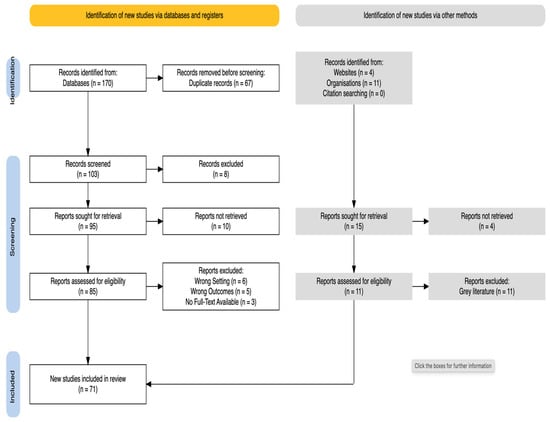
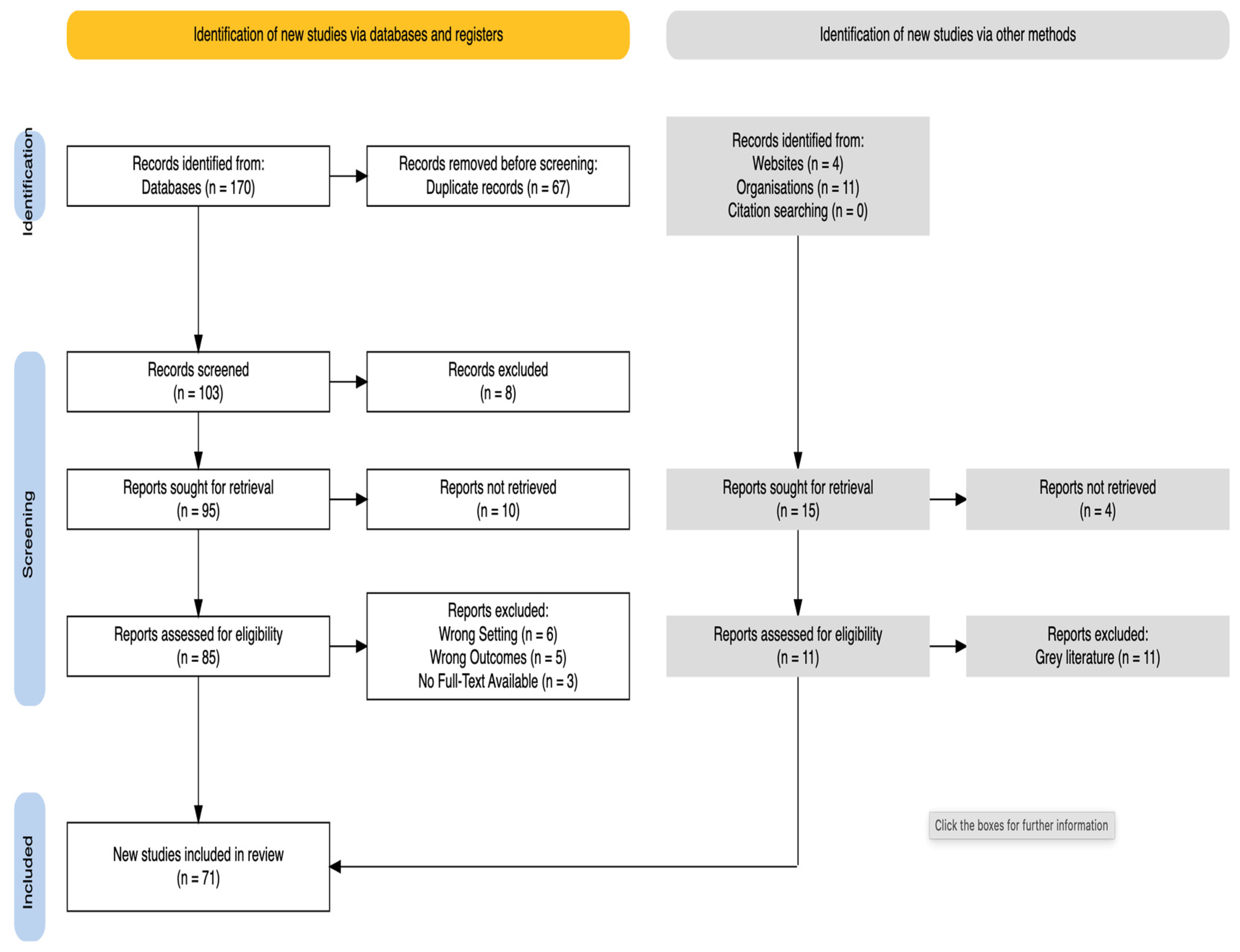
The literature selection process was rigorously structured and reported in accordance with the Preferred Reporting Items for Systematic Reviews and Meta-Analyses (PRISMA 2020) guidelines to ensure transparency and reproducibility. The screening architecture and the corresponding study attrition rates across the different evaluation phases are systematically mapped in Figure 1.
Figure 1.
PRISMA 2020 flow diagram illustrating the systematic literature search, screening, and study selection process for transport poverty and ETS2 evaluation.
During the initial Identification phase, a comprehensive electronic search across the Web of Science and Scopus databases yielded a total of 170 records (82 and 88 items, respectively). Following the removal of duplicate records (n = 67), 103 unique publications were advanced to the title and abstract screening stage. At this juncture, 8 records were excluded due to a lack of conceptual alignment with the core research questions, leaving 95 reports sought for full-text retrieval. The subsequent Screening and Eligibility phase involved a dual-track assessment of the remaining literature. In the primary database track, out of the 95 reports sought, 10 could not be retrieved in full text (n = 10). The remaining 85 publications underwent a meticulous full-text eligibility appraisal. This process led to the exclusion of 14 peer-reviewed papers based on explicit structural criteria: 6 reports were discarded due to an inappropriate geographical or institutional context (Wrong Setting, n = 6), 5 failed to examine the socio-spatial or distributive dimensions of carbon pricing (Wrong Outcomes, n = 5), and 3 lacked verifiable or accessible full-text data (n = 3).
Concurrently, a secondary identification track, using other methods, evaluated 15 potential records from organizational reports (n = 11) and websites (n = 4). Although 11 of these documents were successfully retrieved and assessed (n = 11), all were systematically excluded during full-text review as non-peer-reviewed institutional grey literature (n = 11), thereby contributing zero records to the final synthesis pool. Ultimately, the rigorous screening process culminated in a robust and methodologically consistent corpus of 71 high-quality, peer-reviewed academic articles (n = 71) that were officially included in the systematic review for qualitative and thematic synthesis.
The academic debate on transport poverty has evolved from earlier discussions on transport disadvantage and social exclusion towards more complex interpretations of mobility-related inequality. Early contributions focused on the relationship between inadequate transport provision and limited access to employment, education, healthcare, and social participation. In this tradition, transport is analyzed not only as a technical infrastructure system, but also as a mechanism through which social inequalities are reproduced or mitigated (see Table 1).
Table 1.
Systematization of sources by main thematic sections.
A first important strand of literature examines transport disadvantage and transport-related social exclusion. This approach stresses that limited mobility can restrict access to essential opportunities and thereby reinforce poverty, unemployment, and social isolation [14]. Transport disadvantage is particularly significant when poor accessibility overlaps with low income, unemployment, disability, advanced age, or residence in peripheral areas [3].
A second strand focuses on accessibility poverty. Unlike approaches that measure mobility mainly through travel behavior or transport expenditure, accessibility-based approaches examine whether people can reach essential services, jobs, and social opportunities within reasonable time, cost, and effort constraints [7]. This perspective is particularly relevant for public policy because it shifts the analytical focus from the movement itself to the opportunities that transport systems make available [13].
A third strand concerns affordability and transport expenditure burden. In this perspective, transport poverty is associated with situations in which households must allocate an excessive share of their income to mobility [43]. This is especially relevant in the context of rising fuel prices, inflationary pressures, and carbon pricing mechanisms. However, affordability indicators alone are insufficient, because some households may report low transport expenditure not because transport is affordable, but because they are unable to travel at all [46].
A fourth strand examines forced car ownership. This concept is highly relevant for the ETS2 debate. It captures the paradox in which low-income households may own cars despite financial hardship because they lack adequate public transport alternatives [8]. In such cases, car ownership does not indicate mobility privilege, but structural dependency [47].
A fifth and more recent strand links transport poverty with climate justice and the just transition. This literature examines how climate policies, including carbon pricing, may have unequal effects across income groups, territories, and household types [10]. The reviewed materials show that the extension of emissions trading to road transport and buildings raises concerns about regressive distributional impacts, especially when vulnerable households spend a higher share of their income on carbon-intensive basic needs [2,30].
The vulnerability of households to transport poverty under ETS2 is shaped by a complex interaction of economic, spatial, infrastructural, and socio-demographic factors. Existing studies emphasize that transport poverty cannot be explained by income constraints alone, since accessibility deficits, territorial inequalities, and structural dependence on private vehicles also play a critical role in determining mobility vulnerability [3,6,7]. In the context of carbon pricing and rising mobility costs, these determinants become increasingly important for understanding the unequal social impacts of the climate transition. Table 2 systematizes the main determinants of transport poverty identified in the contemporary academic literature.
Table 2.
Keyword Mapping.
The five strands reviewed above offer complementary but partial perspectives on mobility-related deprivation. Expenditure-based approaches risk understating transport poverty where financial constraints lead to suppressed travel demand rather than observable spending—a phenomenon that standard household budget surveys cannot readily capture. Accessibility-based frameworks, while analytically powerful, face operationalization challenges in the absence of harmonized EU-level spatial data. Studies on the distributional effects of carbon pricing have advanced considerably but have predominantly examined Western European contexts with comparatively stronger public transport systems, thereby limiting their direct applicability to Central and Eastern European conditions. Furthermore, existing research has not yet produced an integrated framework that simultaneously connects forced car ownership, accessibility deficits, household vulnerability, and the specific policy architecture of ETS2 in the context of the just transition. This paper is positioned at the intersection of these strands. Rather than treating transport poverty as a transport-planning problem alone or as a poverty-measurement issue in isolation, it conceptualizes transport poverty as a multidimensional socio-economic risk arising from the interaction among household vulnerability, accessibility constraints, structural car dependency, and climate-policy exposure. The following section develops the theoretical foundations of this integrated framework.
3. Theoretical Framework: Accessibility, Social Justice, and Just Transition
The integrated framework proposed in this paper draws on three interconnected theoretical perspectives—accessibility theory, social justice theory, and just transition theory—each of which contributes distinct analytical insights to understanding transport poverty under ETS2. These perspectives are not treated as alternative explanations but as complementary lenses that operate at different levels of analysis: the transport system, the household, and the policy regime. Together, they provide the theoretical basis for the six analytical dimensions set out in Table 3. Specifically, accessibility theory underpins the spatial and infrastructure vulnerability dimensions; social justice theory connects to economic vulnerability, mobility dependency, and social vulnerability; and just transition theory links to the climate-policy exposure dimension. This mapping is made explicit below.
Table 3.
Analytical Dimensions of Transport Poverty in the Context of ETS2 and the Just Climate Transition.
First, the accessibility perspective provides the core analytical foundation. From this viewpoint, the central issue is not simply whether individuals can move, but whether they can reach essential destinations under acceptable conditions of cost, time, reliability, and physical effort [7]. Transport poverty emerges when the transport system fails to provide adequate access to employment, education, healthcare, and social life [3]. This approach is especially useful because it allows transport poverty to be analyzed as a relational phenomenon: it depends simultaneously on household resources, spatial location, transport infrastructure, and the distribution of services.
Second, the social justice perspective highlights the unequal distribution of transport opportunities and burdens. Transport systems may reproduce inequality when disadvantaged groups face higher costs, longer travel times, lower service quality, or reduced access to mobility alternatives [15]. The concept of forced car ownership is particularly important here because it demonstrates that private car use may result from structural necessity rather than individual preference [13]. This is crucial for understanding the social risks of ETS2 in regions where public transport is weak and households are locked into carbon-intensive mobility patterns.
Third, the just transition perspective connects transport poverty with climate policy. The transition to a low-carbon economy must be environmentally effective, but also socially fair and politically legitimate [10]. ETS2 may support decarbonization by increasing the cost of fossil-fuel-based mobility, but it may also intensify vulnerability if compensatory mechanisms are poorly designed [2]. Therefore, transport poverty should be understood as a potential social risk of the climate transition. The key policy challenge is to ensure that carbon pricing does not simply increase the cost of mobility for vulnerable households, but is accompanied by investments in accessible, affordable, and sustainable transport alternatives [6].
The transmission mechanism through which ETS2 may intensify transport poverty can be articulated as a causal chain operating across several interconnected stages. At the first stage, the introduction of a carbon price on fuels used in road transport increases the costs faced by fuel distributors, who pass this cost increment through to retail fuel prices at the pump. At the second stage, higher fuel prices translate into increased household transport expenditure, particularly for households that depend on private vehicles for essential daily mobility. At the third stage, households facing binding budget constraints respond either by reducing their travel—thereby foregoing access to employment, healthcare, education, and social participation—or by maintaining necessary travel at the cost of reduced expenditure on other essential goods. Both responses constitute forms of transport deprivation: the first through suppressed mobility, the second through economic stress. At the fourth stage, restricted access to opportunities and heightened financial pressure may generate or deepen social exclusion, labor market marginalization, and overall welfare loss. This risk is structurally concentrated among households characterized by forced car ownership, low income, residence in peripheral or rural areas, and limited access to public transport alternatives. Critically, the severity of this causal chain is not uniform: it depends on the interaction between the carbon price level, household income, the availability of modal alternatives, and the design of compensatory mechanisms. Where the Social Climate Fund or equivalent instruments provide targeted support, the chain may be interrupted at stages two or three. Where such mechanisms are absent or poorly targeted, the full transmission from carbon pricing to social exclusion becomes operative.
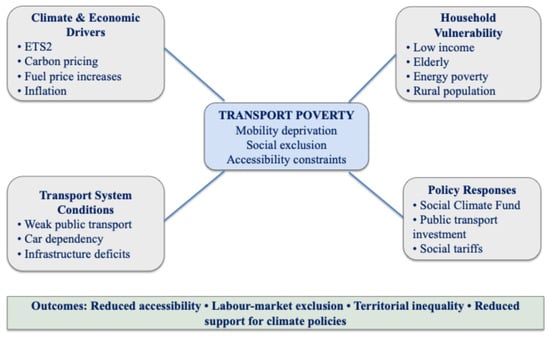
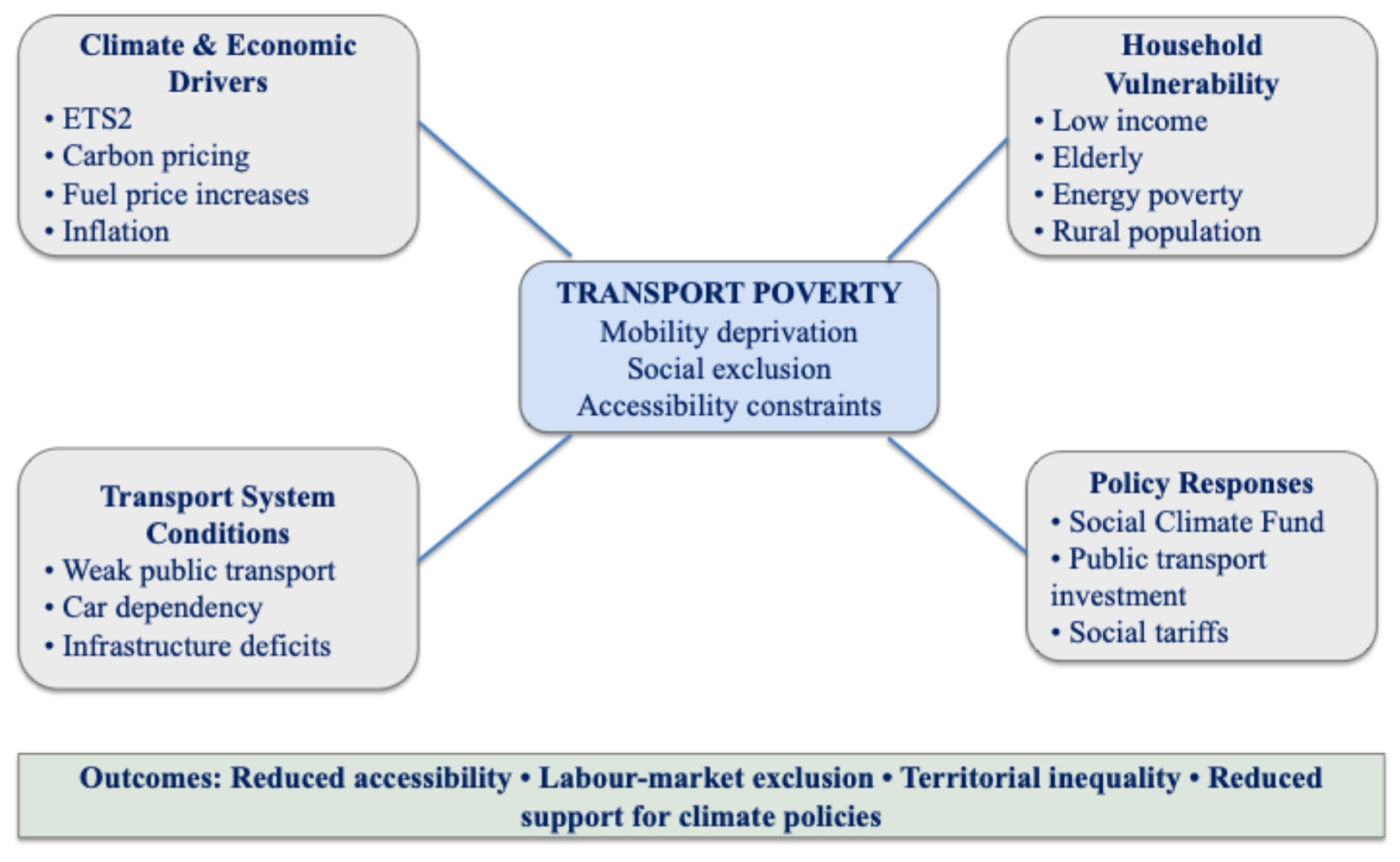
Figure 2 presents the integrated conceptual framework of transport poverty in the context of ETS2 and the just climate transition. The framework is organized around a central concept—transport poverty, understood as the convergence of mobility deprivation, social exclusion, and accessibility constraints—and four interacting blocks of determinants and responses. The upper-left block captures the climate and economic drivers: ETS2, carbon pricing, fuel price increases, and inflationary pressures, which together raise the cost of mobility and increase the risk of transport poverty. The upper-right block represents household vulnerability, defined by the characteristics that make certain groups disproportionately exposed to these cost pressures: low income, elderly age, energy poverty, and rural residence. The lower-left block reflects transport system conditions—weak public transport provision, car dependency, and infrastructure deficits—which determine the degree to which households can absorb rising mobility costs through modal alternatives. Where these conditions are poor, vulnerability is structurally locked in. The lower-right block identifies the policy responses available to mitigate transport poverty: the Social Climate Fund, public transport investment, and social tariffs. These instruments may interrupt the causal chain between carbon pricing and social exclusion at different points, depending on their design, targeting, and capacity for implementation. The bottom panel summarizes the socio-economic outcomes produced when drivers and vulnerabilities are not adequately offset by policy responses: reduced accessibility, labor-market exclusion, territorial inequality, and declining public support for climate policies. The directional arrows connecting all four blocks to the central concept indicate that transport poverty is not determined by any single factor but emerges from the interaction among climate policy pressures, household characteristics, and transport system conditions—and can be mitigated through well-designed, territorially sensitive policy instruments.
Figure 2.
Integrated Conceptual Framework of Transport Poverty in the Context of ETS2 and the Just Climate Transition. Source: Author’s conceptualization based on Lucas (2012) [3], Mattioli (2017) [8], Martens and Bastiaanssen (2019) [7], Cludius et al. (2024) [6], Vandyck et al. (2023) [2], and the ACTETS2 research framework.
On this basis, the paper proposes that transport poverty in the context of ETS2 should be analyzed by examining the interaction among six dimensions (see Table 3).
This theoretical framing allows transport poverty to be understood not as a narrow problem of individual mobility, but as a structural risk located at the intersection of transport systems, social inequality, and climate governance.
4. Transport Poverty and ETS2
The inclusion of road transport within the scope of the European Union Emissions Trading System through the introduction of ETS2 represents a major transformation in the governance of transport decarbonization. Unlike previous climate instruments primarily targeting industrial emitters and energy producers, ETS2 directly affects households through increased fuel prices and higher mobility costs. As a result, the social dimension of transport decarbonization becomes increasingly important, particularly in regions characterized by high car dependency, limited public transport alternatives, and pronounced territorial inequalities.
The economic rationale behind ETS2 is based on the internalization of environmental externalities through carbon pricing. By increasing the cost of carbon-intensive fuels, the mechanism seeks to incentivize behavioral change, technological innovation, and modal shifts towards lower-emission transport solutions [26]. However, while carbon pricing is widely regarded as an economically efficient climate instrument, its distributive consequences remain highly uneven [12].
The literature increasingly demonstrates that the effects of carbon pricing are not socially neutral. Low-income households generally spend a larger proportion of their income on essential goods and services, including energy and transport, making them particularly vulnerable to increases in fuel prices [10]. In the transport sector, this vulnerability is intensified by structural conditions such as poor public transport provision, spatial mismatch between housing and employment, and limited access to alternative mobility options [68].
The vulnerability of households to transport poverty under ETS2 is shaped by a combination of economic, spatial, infrastructural, and socio-demographic determinants (see Table 4). These determinants interact dynamically and influence both the affordability and accessibility dimensions of mobility deprivation.
Table 4.
Main Determinants of Transport Poverty.
A particularly important issue in this context is the phenomenon of forced car ownership. In many suburban, rural, and peripheral regions, households depend on private vehicles not because of lifestyle preferences but because essential daily activities cannot be performed otherwise [8]. Under such conditions, ETS2 may disproportionately affect households already exposed to economic and spatial vulnerability. Rather than encouraging immediate behavioral change, higher fuel costs may reduce disposable income, deepen social exclusion, and increase transport deprivation.
The relationship between transport poverty and ETS2 is therefore multidimensional. The implementation of carbon pricing mechanisms may influence transport poverty through several interconnected channels:
- -
- direct increases in household transport expenditure;
- -
- reduced affordability of daily mobility;
- -
- higher costs of commuting and access to services;
- -
- increased vulnerability in regions with weak public transport systems;
- -
- reinforcement of territorial and social inequalities;
- -
- declining public support for climate policies perceived as socially unfair.
At the same time, the impact of ETS2 depends significantly on the availability of compensatory mechanisms and sustainable mobility alternatives. Existing research highlights that carbon pricing may become socially progressive when revenues are effectively recycled through targeted support measures, social transfers, or investments in accessible public transport systems [11]. In this regard, the Social Climate Fund introduced at the EU level represents an important attempt to address the social consequences of ETS2 [30]. Nevertheless, the effectiveness of such instruments will depend on national implementation capacity, territorial targeting, and policy coordination.
Transport poverty should therefore not be interpreted as an unintended side effect of climate policy, but as a structural risk within the decarbonization process itself. The challenge for European and national policymakers is to ensure that climate neutrality objectives are pursued without creating new forms of mobility deprivation and social exclusion.
The issue is particularly relevant for countries in Central and Eastern Europe, where lower household incomes, aging transport infrastructure, and uneven territorial development increase vulnerability to rising mobility costs. In such contexts, the transition towards low-carbon mobility requires not only environmental regulation, but also strong social and territorial policy instruments capable of supporting vulnerable populations during the transition process.
The multidimensional nature of transport poverty requires the use of integrated measurement approaches combining affordability, accessibility, and vulnerability indicators. Table 5 systematizes the main indicators used in contemporary transport poverty research.
Table 5.
Indicators for Measuring Transport Poverty.
In summary, the analysis of transport poverty in the context of ETS2 reveals a multidimensional risk structure in which economic, spatial, infrastructural, and socio-demographic vulnerabilities interact with carbon pricing mechanisms to produce differentiated mobility-deprivation outcomes. The distributional consequences of ETS2 are not uniform: they are concentrated among households characterized by forced car ownership, low income, residence in peripheral areas, and limited access to sustainable transport alternatives—precisely the groups least able to absorb rising fuel costs through modal substitution or behavioral change. At the same time, the severity of these risks depends on the design and effectiveness of accompanying policy instruments, particularly the Social Climate Fund and investments in accessible public transport. Measuring and monitoring these risks requires integrated indicator frameworks that combine the affordability, accessibility, and vulnerability dimensions. The following section operationalizes this analytical framework by examining the specific structural conditions in Bulgaria that determine the country’s exposure to transport poverty under ETS2.
5. Policy-Oriented Analysis for Bulgaria
The structural characteristics that make Bulgaria particularly vulnerable to transport poverty under ETS2 can be documented with reference to several key indicators. First, regarding income and poverty exposure: Bulgaria recorded the highest share of population at risk of poverty or social exclusion in the EU in 2024, at 30.3%, compared to an EU average of 21.0%—meaning that nearly one in three Bulgarian residents lives in a household with at least one of the three poverty or social exclusion risk factors. Bulgaria also recorded one of the highest at-risk-of-poverty rates in the EU in 2024, at 21.2%, well above the EU average of 16.3%. Second, regarding household transport expenditure: according to Eurostat national accounts data, Bulgarian households allocated approximately 13.7% of their total consumption expenditure to transport—above the EU average of approximately 12.6%—reflecting both the structural necessity of private car use and the relative weight of fuel costs in household budgets. At the same time, Bulgaria recorded the lowest overall price levels for household consumption in the EU in 2024, at 60% of the EU average, which means that while transport expenditure shares are high in relative terms, the absolute purchasing power available to cover rising fuel costs is among the lowest in the Union. Third, regarding the overlap between energy and transport poverty: approximately 30% of the Bulgarian population reported being unable to adequately heat their homes in 2024, placing Bulgaria among the four EU member states with the highest energy poverty incidence—a condition that frequently co-occurs with transport poverty, particularly in rural and peripheral areas. Fourth, regarding demographic and territorial vulnerability: Bulgaria’s rural population stood at approximately 1.5 million in 2023, concentrated in regions characterized by declining public transport provision, aging infrastructure, and significant spatial distance from employment and services. Several north-western Bulgarian regions were identified among the EU’s fastest-depopulating predominantly rural regions, with demographic shrinkage further undermining the commercial viability of public transport lines and deepening structural car dependency. The motorization rate in Bulgaria reached 414 passenger cars per 1000 inhabitants in 2021—below the EU average of 560 per 1000 in 2022, but with the important distinction that in Bulgaria, car ownership in rural areas reflects structural necessity rather than mobility choice, given the near-absence of alternative transport modes in many municipalities. Taken together, these indicators confirm that Bulgaria represents a critical case for examining transport poverty risks under ETS2: it combines the highest poverty exposure in the EU with above-average transport expenditure shares, severe energy poverty incidence, accelerating rural depopulation, and structurally embedded car dependency—all of which intensify the regressive distributional risk of carbon pricing in the transport sector (see Table 6).
Table 6.
Key structural indicators of transport poverty vulnerability in Bulgaria (selected Eurostat data, 2021–2024)—Comparison with EU-27 average.
The potential social effects of ETS2 are especially significant in the Bulgarian context. Bulgaria combines several structural characteristics that may intensify the risk of transport poverty during the climate transition: relatively low household incomes, strong regional disparities, aging transport infrastructure, limited accessibility in peripheral areas, and high dependence on private vehicles outside major urban centers.
The country’s territorial structure creates substantial accessibility challenges. Large parts of the population living in rural and semi-rural areas rely heavily on private cars due to insufficient public transport services, declining regional connectivity, and demographic shrinkage. In many municipalities, reduced population density and economic decline have led to the deterioration or discontinuation of regular public transport lines, thereby increasing dependence on individual motorized transport.
Under these conditions, the implementation of ETS2 may create significant affordability pressures [1]. Rising fuel prices could disproportionately affect low-income households that are already exposed to broader energy and inflationary vulnerabilities. The interaction between transport poverty and energy poverty is therefore likely to become increasingly important in Bulgaria, particularly among elderly populations, unemployed persons, and households in economically lagging regions.
An additional challenge concerns the uneven territorial distribution of transport alternatives. While larger urban centers such as Sofia possess relatively diversified mobility systems, including public transport and emerging sustainable mobility solutions, many smaller towns and rural areas remain characterized by weak accessibility and limited modal choice. This creates a risk of differentiated territorial exposure to ETS2, where peripheral regions bear a disproportionately high social burden from decarbonization policies [6].
The Bulgarian context also illustrates the importance of the concept of forced car ownership. In numerous regions, car ownership is not associated with higher welfare or mobility privilege but represents a necessary condition for participation in economic and social life. Consequently, carbon pricing mechanisms may affect vulnerable households not by discouraging excessive mobility, but by increasing the cost of already constrained and essential mobility practices.
The mitigation of transport poverty under ETS2 requires integrated and territorially sensitive policy instruments combining social compensation, accessibility improvements, and sustainable mobility investments. The main policy approaches identified in the literature and adapted to the Bulgarian context are summarized in Table 7.
Table 7.
Policy Instruments for Mitigating Transport Poverty under ETS2.
Against this background, a socially balanced climate transition in Bulgaria requires an integrated policy approach combining environmental, transport, and social policy instruments. Several policy directions appear particularly relevant. First, the development of accessibility-oriented transport policies should become a central component of national climate transition strategies. This includes investments in regional public transport systems, improved multimodal connectivity, and support for demand-responsive mobility services in sparsely populated areas.
Second, compensatory social measures will be essential for mitigating the regressive effects of ETS2. Such measures may include targeted transport subsidies, social tariffs for vulnerable groups, and mechanisms for recycling carbon pricing revenues towards low-income households [69].
Third, policies supporting sustainable mobility should account for the specific territorial and socio-economic characteristics of Bulgaria. Measures such as social leasing schemes for low-emission vehicles, support for shared mobility, and investments in rail and regional bus connectivity could reduce structural car dependency over the long term.
Fourth, the integration of transport poverty indicators into national and regional planning frameworks is necessary for improving policy targeting. The use of accessibility metrics, geospatial analysis, and vulnerability mapping could support more effective allocation of resources under both climate and cohesion policies.
Ultimately, the Bulgarian case demonstrates that the success of ETS2 will depend not only on environmental efficiency, but also on the capacity of public institutions to ensure socially just and territorially balanced implementation. Without such an approach, climate policies risk reinforcing existing inequalities and weakening public acceptance of the green transition.
6. Discussion
The growing policy relevance of transport poverty reflects broader transformations in the relationship between mobility, social inequality, and climate governance. Traditionally, transport policy has focused primarily on infrastructure development, traffic efficiency, and environmental performance. The expansion of carbon pricing mechanisms under ETS2, however, increasingly reveals the social dimension of transport systems and the structurally unequal distribution of mobility opportunities and burdens—a dimension that conventional transport policy frameworks were not designed to address.
The analysis developed in this paper suggests that transport poverty in the ETS2 context cannot be adequately captured by any single theoretical perspective alone. Each of the three perspectives adopted—accessibility theory, social justice theory, and just transition theory—offers important but partial insights, and their limitations deserve explicit acknowledgment.
Accessibility-based approaches provide a powerful framework for identifying who cannot reach essential destinations under acceptable conditions. However, they face significant operationalization challenges: harmonized, spatially granular accessibility data at the EU level remain limited, and standard accessibility metrics may fail to capture the full range of mobility-related deprivation, particularly suppressed travel demand—the situation in which households reduce travel to below acceptable levels not because their needs are met, but because they cannot afford to travel at all [5,21]. This form of hidden transport poverty is particularly relevant in the ETS2 context, where rising fuel costs may lead car-dependent households to restrict essential journeys rather than shift to non-existent alternatives.
Expenditure-based approaches share a related limitation: households that have already curtailed their travel due to financial constraints may appear non-poor by expenditure metrics, even as their effective mobility is severely restricted. This paradox—low expenditure as a signal of deprivation rather than sufficiency—underscores the need for composite measurement approaches combining expenditure data with accessibility analysis, unmet mobility surveys, and geospatial vulnerability mapping [46].
The social justice perspective highlights the structural dimension of transport inequality, particularly through the concept of forced car ownership. Yet this concept, too, carries analytical complexity. Car ownership data, including motorization rates, may conceal rather than reveal vulnerability: as the Bulgarian case illustrates, a below-average motorization rate does not indicate lower car dependency, but rather constrained purchasing power combined with structural necessity. This distinction matters for policy design—carbon pricing instruments calibrated on the assumption that car ownership correlates with higher welfare will misidentify vulnerable populations and generate regressive outcomes.
The just transition perspective connects transport poverty with climate governance but also exposes a fundamental tension that this paper cannot fully resolve: the trade-off between environmental effectiveness and social equity in carbon pricing [69]. ETS2 is designed to internalize the social cost of carbon; yet the same mechanism that provides an efficient price signal for long-run behavioral change may impose severe short-run costs on households that lack the financial resources or modal alternatives to respond. Revenue recycling through the Social Climate Fund addresses this tension in principle, but its effectiveness depends on implementation quality, targeting accuracy, and national administrative capacity—factors that vary substantially across member states and are particularly uncertain in countries such as Bulgaria, where institutional capacity for complex income-support design is limited.
A further dimension deserving critical attention is the interaction between transport poverty and energy poverty—the condition of “double vulnerability” identified in the literature [39,58]. The Bulgarian data presented in Section 5 illustrate that households most exposed to rising fuel costs under ETS2 are frequently the same households already facing heating unaffordability, low income, and residence in peripheral areas with weak public services. This overlap suggests that ETS2 risks compounding existing deprivations rather than simply adding a new cost burden. Policy responses that treat transport poverty and energy poverty as separate domains—addressed through different funds, ministries, and targeting mechanisms—may therefore systematically underserve doubly vulnerable households.
Finally, the paper’s focus on Bulgaria as a critical case raises the question of generalizability. The structural risk factors documented—high poverty exposure, above-average transport expenditure shares, severe energy poverty incidence, rural depopulation, and forced car dependency—are not unique to Bulgaria but are characteristic of a broader group of Central and Eastern European member states. This suggests that the integrated framework proposed here has analytical relevance beyond the Bulgarian case, and that future comparative research examining transport poverty risk under ETS2 across CEE countries would be a valuable extension of this work.
7. Conclusions
This paper develops an integrated conceptual framework for analyzing transport poverty in the context of ETS2 and a just climate transition. The framework connects four interacting domains—climate and economic drivers, transport system conditions, household vulnerability, and policy responses—and identifies six analytical dimensions through which transport poverty risk is structured: economic vulnerability, spatial vulnerability, mobility dependency, infrastructure vulnerability, climate-policy exposure, and social vulnerability. The causal chain linking ETS2 to transport poverty operates through a sequence of interconnected stages: carbon pricing raises fuel costs for distributors, who pass this increment to retail prices; higher fuel prices increase household transport expenditure; budget-constrained households reduce essential travel or absorb fuel costs at the expense of other basic needs; restricted mobility generates social exclusion, labor-market marginalization, and welfare loss. The severity and social distribution of this chain depend critically on the availability of modal alternatives, the design of compensatory mechanisms, and the territorial targeting of social policy instruments.
Several specific conclusions follow from the analysis. First, transport poverty cannot be adequately measured through expenditure indicators alone. Suppressed travel demand—where households forgo essential journeys rather than report high transport costs—constitutes a form of hidden transport poverty that standard household budget surveys systematically undercount. Future measurement frameworks must combine expenditure data with accessibility analysis, unmet mobility surveys, and geospatial vulnerability mapping to capture the full scope of mobility deprivation.
Second, the motorization rate, widely used as a proxy for car dependency, may misrepresent vulnerability in low-income contexts. The Bulgarian case demonstrates that a below-average motorization rate (414 passenger cars per 1000 inhabitants in 2021, against an EU average of 560) coexists with structural forced car ownership in rural and peripheral areas where public transport alternatives are absent or severely degraded. Carbon pricing instruments calibrated on the assumption that car ownership correlates with higher welfare will systematically misidentify the most vulnerable households.
Third, the interaction between transport poverty and energy poverty constitutes a critical axis of double vulnerability in Central and Eastern European countries. In Bulgaria, approximately 30% of the population was unable to adequately heat their homes in 2024, while simultaneously facing above-average transport expenditure shares (13.7% of household consumption, against an EU average of 12.6%) and the highest AROPE rate in the EU (30.3%). ETS2 risks compounding these overlapping deprivations rather than adding a single, isolated cost burden. Policy frameworks that treat transport poverty and energy poverty as separate domains will systematically underserve doubly vulnerable households.
Fourth, the Social Climate Fund represents a necessary but insufficient instrument for addressing transport poverty under ETS2. Its effectiveness depends on targeting accuracy, national implementation capacity, and genuine integration with transport accessibility investments—conditions that cannot be assumed and require active monitoring and evaluation at both the EU and member-state level.
Fifth, the Bulgarian case illustrates a structural pattern that extends to the broader Central and Eastern European context: the combination of low household purchasing power, aging transport infrastructure, pronounced rural–urban disparities, and high car dependency in peripheral areas creates conditions of compounded vulnerability that call for differentiated, territorially sensitive policy design rather than uniform EU-level instruments.
The paper’s conceptual contribution lies in positioning transport poverty not as an incidental side effect of climate policy, but as a structural risk embedded in the design of ETS2 itself—a risk that is predictable, measurable, and amenable to policy intervention if addressed proactively. The integrated framework proposed here provides an analytical foundation for the empirical phase of the ACTETS2 project, which will develop composite transport poverty indices, conduct spatial vulnerability mapping for Bulgaria, and assess the distributive implications of alternative Social Climate Fund implementation scenarios. Future research should also extend the comparative dimension of this analysis to other CEE member states, examine gender-differentiated exposure to transport poverty under ETS2, and investigate the long-run behavioral responses of households with forced car ownership to sustained fuel price increases.
Ultimately, the European Union’s capacity to achieve a genuinely just climate transition depends on ensuring that the costs of decarbonization are not concentrated on those least able to bear them. Transport poverty is not a marginal concern within this agenda—it is one of its central tests.
Funding
This publication resulted from research supported by a funded scientific project ACTETS2 under contract № KP-06-N95/2 of 9 December 2025 with the Bulgarian National Science Fund of the Ministry of Education and Science.
Institutional Review Board Statement
Not applicable.
Informed Consent Statement
Not applicable.
Data Availability Statement
The data presented in this study are openly available in EUROSTAT, Web of Science and Scopus databases as included in the reference list.
Conflicts of Interest
The author declares no conflicts of interest. The funders had no role in the design of the study; in the collection, analyses, or interpretation of data; in the writing of the manuscript; or in the decision to publish the results.
Abbreviations
The following abbreviations are used in this manuscript:
| ETS 2 | European Union Emissions Trading System to road transport and buildings |
| ACTETS2 | Analysis and Assessment of the Impact of Climate Hazards and the Expanded Emissions Trading Scheme for Buildings and Transport (ETS2) on Vulnerable, Energy-Poor, and Transport-Poor Population Groups in Bulgaria Project |
References
- European Commission. Fit for 55 Package; European Commission: Brussels, Belgium, 2021. [Google Scholar]
- Vandyck, T.; Valle, N.D.; Temursho, U.; Weitzel, M. EU climate action through an energy poverty lens. Sci. Rep. 2023, 13, 6040. [Google Scholar] [CrossRef] [Scilit] [PubMed]
- Lucas, K. Transport and social exclusion: Where are we now? Transp. Policy 2012, 20, 105–113. [Google Scholar] [CrossRef] [Scilit]
- Preston, J.; Rajé, F. Accessibility, mobility and transport-related social exclusion. J. Transp. Geogr. 2006, 15, 151–160. [Google Scholar] [CrossRef] [Scilit]
- Lucas, K.; Mattioli, G.; Verlinghieri, E.; Guzman, A. Transport poverty and its adverse social consequences. Proc. Inst. Civ. Eng. Transp. 2016, 169, 353–365. [Google Scholar] [CrossRef] [Scilit]
- Cludius, J.; Noka, V.; Unger, N.; Delfosse, L.; Dolinga, T.; Schumacher, K.; Suta, C.-M.; Lechtenfeld, R.; Vornicu, A.; Sinea, A.; et al. Transport Poverty: Definitions, Indicators, Determinants, and Mitigation Strategies; Publications Office of the European Union: Luxembourg, 2024; Available online: https://employment-social-affairs.ec.europa.eu/document/download/4c180544-b1a1-455b-93df-d2b70f536596_en?filename=KE-01-24-003-EN-N.pdf (accessed on 20 March 2026).
- Martens, K.; Bastiaanssen, J. An Index to Measure Accessibility Poverty Risk. In Measuring Transport Equity; Elsevier: Amsterdam, The Netherlands, 2019; pp. 39–55. [Google Scholar] [CrossRef] [Scilit]
- Mattioli, G. ‘Forced Car Ownership’ in the UK and Germany: Socio-Spatial Patterns and Potential Economic Stress Impacts. Soc. Incl. 2017, 5, 147–160. [Google Scholar] [CrossRef] [Scilit]
- Currie, G.; Delbosc, A. Exploring Trends in Forced Car Ownership in Melbourne. In Proceedings of the Australasian Transport Research Forum, Brisbane Australia, 2–4 October 2013; Monash University: Clayton, Australia, 2013; pp. 1–9. Available online: https://australasiantransportresearchforum.org.au/wp-content/uploads/2022/03/2013_currie_delbosc.pdf (accessed on 25 March 2025).
- Shang, B. The Poverty and Distributional Impacts of Carbon Pricing: Channels and Policy Implications. Rev. Environ. Econ. Policy 2023, 17, 64–85. [Google Scholar] [CrossRef] [Scilit]
- Woerner, A.; Imai, T.; Pace, D.D.; Schmidt, K.M. How to increase public support for carbon pricing with revenue recycling. Nat. Sustain. 2024, 7, 1633–1641. [Google Scholar] [CrossRef] [Scilit]
- Ohlendorf, N.; Jakob, M.; Minx, J.C.; Schröder, C.; Steckel, J.C. Distributional Impacts of Carbon Pricing: A Meta-Analysis. Environ. Resour. Econ. 2020, 78, 1–42. [Google Scholar] [CrossRef] [Scilit]
- Farrington, J.; Farrington, C. Rural accessibility, social inclusion and social justice: Towards conceptualisation. J. Transp. Geogr. 2005, 13, 1–12. [Google Scholar] [CrossRef] [Scilit]
- Currie, G.; Richardson, T.; Smyth, P.; Vella-Brodrick, D.; Hine, J.; Lucas, K.; Stanley, J.; Morris, J.; Kinnear, R.; Stanley, J. Investigating links between transport disadvantage, social exclusion and well-being in Melbourne—Preliminary results. Transp. Policy 2009, 16, 97–105. [Google Scholar] [CrossRef] [Scilit]
- Sheller, M. Racialized Mobility Transitions in Philadelphia: Connecting Urban Sustainability and Transport Justice. City Soc. 2015, 27, 70–91. [Google Scholar] [CrossRef] [Scilit]
- Kuttler, T.; Moraglio, M. Mobility poverty. In Elgar Encyclopedia of Transport and Society; Edward Elgar Publishing: Cheltenham, UK, 2025. [Google Scholar] [CrossRef] [Scilit]
- Stokes, G.; Lucas, K. Travel Behavior of Low Income Households and Analysis of 2002–2008; National Travel Survey, Working Paper No. 1053; Transport Studies Unit: Oxford, UK, 2011; Available online: http://www.tsu.ox.ac.uk/pubs/1053-stokes-lucas.pdf (accessed on 27 March 2026).
- Allen, J.; Farber, S. Sizing up transport poverty: A national scale accounting of low-income households suffering from inaccessibility in Canada, and what to do about it. Transp. Policy 2019, 74, 214–223. [Google Scholar] [CrossRef] [Scilit]
- Pritchard, R.; Alexandridis, T.; Amponsah, M.; Khatra, N.B.; Brockington, D.; Chiconela, T.; Castillo, J.O.; Garba, I.; Gómez-Giménez, M.; Haile, M.; et al. Developing Capacity for Impactful Use of Earth Observation Data: Lessons from the AfriCultuReS Project. Environ. Dev. 2022, 42, 100695. [Google Scholar] [CrossRef] [Scilit]
- Almeida, P.; González Márquez, L.R.; Fonsah, E. The forms of climate action. Sociol. Compass 2024, 18, e13177. [Google Scholar] [CrossRef] [Scilit]
- Kelly, J.A.; Kelleher, L.; Guo, Y.; Deegan, C.; Patil, A. Transport poverty risk—A composite spatial index to support policy design and investment targeting as part of a just climate transition. Environ. Sustain. Indic. 2023, 18, 100254. [Google Scholar] [CrossRef] [Scilit]
- Giordano, A.; Aycart, J.; Ibánez, J.N. Comparing Access to Services by Public and Private Transport in Ireland to Measure Transport Poverty. In Transport Transitions: Advancing Sustainable and Inclusive Mobility; Lecture Notes in Mobility; Springer: Cham, Switzerland, 2025; pp. 654–661. [Google Scholar] [CrossRef] [Scilit]
- Menyhert, B.; Cseres-Gergely, Z.; Kvedaras, V.; Mina, B.; Pericoli, F.; Zec, S. Measuring and Monitoring Absolute Poverty (ABSPO)-Final Report; Publications Office of the European Union: Luxembourg, 2021; Available online: https://publications.jrc.ec.europa.eu/repository/bitstream/JRC127444/JRC127444_01.pdf (accessed on 30 March 2026).
- Pot, F.J.; Van Wee, B.; Tillema, T. Perceived accessibility: What it is and why it differs from calculated accessibility measures based on spatial data. J. Transp. Geogr. 2021, 94, 103090. [Google Scholar] [CrossRef] [Scilit]
- Pollitt, M.G.; Dolphin, G.G. Should the EU ETS be extended to road transport and heating fuels? Econ. Energy Environ. Policy 2021, 10, 45–64. Available online: https://www.jbs.cam.ac.uk/wp-content/uploads/2023/12/eprg-wp2119.pdf (accessed on 31 March 2026).
- Edenhofer, O.; Kalkuhl, M.; Roolfs, C. Carbon Pricing and Revenue Recycling: An Overview of Vertical and Horizontal Equity Effects for Germany; CESifo Forum/The EEAG Report on the European Economy; IFO Institute: Munich, Germany, 2021; Volume 22, pp. 10–14. Available online: https://ideas.repec.org/a/ces/ifofor/v22y2021i05p10-14.html (accessed on 2 April 2026).
- Merkle, M.; Dolphin, G. Distributional Impacts of Heterogenous Carbon Prices in the EU. IMF Work. Pap. 2024, 2024, 59. [Google Scholar] [CrossRef] [Scilit]
- Shei, C.; Liu, J.C.E.; Hsieh, I.L. Distributional effects of carbon pricing: An analysis of income-based versus expenditure-based approaches. J. Clean. Prod. 2024, 465, 141446. [Google Scholar] [CrossRef] [Scilit]
- Känzig, D.R. The Unequal Economic Consequences of Carbon Pricing; Working Paper No. 31221; National Bureau of Economic Research: Cambridge, MA, USA, 2023; Available online: https://www.nber.org/papers/w31221 (accessed on 3 April 2026).
- Tamasiga, P.; Onyeaka, H.; Bakwena, M.; E.lHoussin, O. Pricing the future: Unveiling the effects of carbon pricing on socio-economic outcomes and energy poverty. Int. J. Sustain. Energy 2024, 43, 2362334. [Google Scholar] [CrossRef] [Scilit]
- Fernandez-Urbano, R.; Bulut, H.; Samuel, R. The Impact of Eco-Anxiety and Extreme Weather Proximity on Young People’s Happiness and Life Satisfaction: A Natural Experiment. J. Happiness Stud. 2025, 26, 117. [Google Scholar] [CrossRef] [Scilit]
- Vogt-Schilb, A.; Hallegatte, S. Climate policies and nationally determined contributions: Reconciling the needed ambition with the political economy. WIREs Energy Environ. 2017, 6, e256. [Google Scholar] [CrossRef] [Scilit]
- Fried, S.; Novan, K.; Peterman, W.B. Climate policy transition risk and the macroeconomy. Eur. Econ. Rev. 2022, 147, 104174. [Google Scholar] [CrossRef] [Scilit]
- Klenert, D.; Funke, F.; Mattauch, L. Five Lessons from COVID-19 for Advancing Climate Change Mitigation. Environ. Resour. Econ. 2020, 76, 751. [Google Scholar] [CrossRef] [Scilit] [PubMed]
- Van Dülmen, C.; Šimon, M.; Klärner, A. Transport poverty meets car dependency: A GPS tracking study of socially disadvantaged groups in European rural peripheries. J. Transp. Geogr. 2022, 101, 103351. [Google Scholar] [CrossRef] [Scilit]
- Vitale Brovarone, E. Accessibility and mobility in peripheral areas: A national place-based policy. Eur. Plan. Stud. 2021, 30, 1444–1463. [Google Scholar] [CrossRef] [Scilit]
- DeJohn, A.; Liu, B.; Ma, X.; Widener, M.J.; Liu, Z. Mobility, ICT, and health: A built environment investigation of older Chinese migrants’ social isolation and loneliness. BMC Public Health 2025, 25, 513. [Google Scholar] [CrossRef] [Scilit] [PubMed]
- Mattioli, G. Where Sustainable Transport and Social Exclusion Meet: Households Without Cars and Car Dependence in Great Britain. J. Environ. Policy Plan. 2014, 16, 379–400. [Google Scholar] [CrossRef] [Scilit]
- Simcock, N.; Jenkins, K.E.; Lacey-Barnacle, M.; Martiskainen, M.; Mattioli, G.; Hopkins, D. Identifying double energy vulnerability: A systematic and narrative review of groups at-risk of energy and transport poverty in the global north. Energy Res. Soc. Sci. 2021, 82, 102351. [Google Scholar] [CrossRef] [Scilit]
- Mascaro, M.; Hermine, J.-P. France’s €100/Month EV “Social Leasing” Plan Was Oversubscribed, Then Closed. How to Keep the Momentum Going. 2024. Available online: https://energypost.eu/frances-e100-month-ev-social-leasing-plan-wasoversubscribed-then-closed-how-to-keep-the-momentum-going/ (accessed on 6 April 2026).
- Department of Transport. National Sustainable Mobility Policy; Government of Ireland: Dublin, Ireland, 2022. Available online: https://www.gov.ie/en/department-of-transport/publications/national-sustainable-mobility-policy/ (accessed on 6 April 2026).
- Rozynek, C.; Schwerdtfeger, S.; Lanzendorf, M. The influence of limited financial resources on daily travel practices. A case study of low-income households with children in the Hanover Region (Germany). J. Transp. Geogr. 2022, 100, 103329. [Google Scholar] [CrossRef] [Scilit]
- Litman, T. Developing Indicators for Sustainable and Livable Transport Planning; Victoria Transport Policy Institute: Victoria, BC, Canada, 2021; Available online: https://coilink.org/20.500.12592/bw6wz5 (accessed on 7 April 2026).
- SMARTA NET. Good Practices and Case Studies. 2021. Available online: https://www.smarta-net.eu/resources/smarta-resources/ (accessed on 7 April 2026).
- MedUrbanTools. AMBici: Metropolitan Bike-Sharing Service. 2024. Available online: https://medurbantools.com/portfolio_page/ambici-metropolitan-bike-sharing-service/ (accessed on 8 April 2026).
- Alonso-Epelde, E.; García-Muros, X.; González-Eguino, M. Transport poverty indicators: A new framework based on the household budget survey. Energy Policy 2023, 181, 113692. [Google Scholar] [CrossRef] [Scilit]
- Curl, A. The importance of understanding perceptions of accessibility when addressing transport equity: A case study in Greater Nottingham, UK. J. Transp. Land Use 2018, 11, 1147–1162. [Google Scholar] [CrossRef] [Scilit]
- Bastianseen, J.; Breedijk, M. Toegang Voor Iedereen? Een Analyse van de (On)Bereikbaarheid van Voorzieningen en Banen in Nederland; Planbureau Voor de Leefomgeving: The Hague, The Netherlands, 2022. [Google Scholar]
- Vecchio, G.; Martens, K. Accessibility and the capabilities approach: A review of the literature and proposal for conceptual advancements. Transp. Rev. 2021, 42, 852–874. [Google Scholar] [CrossRef] [Scilit]
- Litman, T. Transportation Affordability: Evaluation and Improvement Strategies. 2013. Available online: https://trid.trb.org/view/1245894 (accessed on 8 April 2026).
- Venter, C. Transport expenditure and affordability: The cost of being mobile. Dev. South. Afr. 2011, 28, 121–140. [Google Scholar] [CrossRef] [Scilit]
- Gómez-Lobo, A. Affordability of Public Transport: A Methodological Clarification. J. Transp. Econ. Policy 2011, 45, 437–456. [Google Scholar] [CrossRef] [Scilit]
- Budolfson, M.; Dennig, F.; Errickson, F.; Feindt, S.; Ferranna, M.; Fleurbaey, M.; Klenert, D.; Kornek, U.; Kuruc, K.; Méjean, A.; et al. Climate action with revenue recycling has benefits for poverty, inequality and well-being. Nat. Clim. Change 2021, 11, 1111–1116. [Google Scholar] [CrossRef] [Scilit] [PubMed]
- Bulut, H.; Samuel, R. Public support for carbon taxes varies across countries and policy design must consider the national context. Commun. Earth Environ. 2025, 6, 601. [Google Scholar] [CrossRef] [Scilit]
- Bachtler, J.; Polverari, L.; Domorenok, E.; Graziano, P. Administrative capacity and EU Cohesion Policy: Implementation performance and effectiveness. Reg. Stud. 2024, 58, 685–689. [Google Scholar] [CrossRef] [Scilit]
- Drupp, M.A.; Hänsel, M.C.; Fenichel, E.P.; Freeman, M.; Gollier, C.; Groom, B.; Heal, G.M.; Howard, P.H.; Millner, A.; Moore, F.C.; et al. Accounting for the increasing benefits from scarce ecosystems. Science 2024, 383, 1062–1064. [Google Scholar] [CrossRef] [Scilit] [PubMed]
- Fijalkowska, M.; Gawza, B.; Kowalewski, M.; Lokietek, R.; Wawrzyniak, J.; Bortnowska, J.; Kusy, A.; Molasy, K. Incomes and Living Conditions of the Population in Poland—Report from the EU-SILC Survey of 2019; Glowny Urzad Statystyczny: Warsaw, Poland, 2024. Available online: https://stat.gov.pl/en/topics/livingconditions/living-conditions/incomes-and-living-conditions-of-the-population-inpoland-report-from-the-eu-silc-survey-of-2019,1,12.html (accessed on 14 April 2026).
- Lowans, C.; Furszyfer Del Rio, D.; Sovacool, B.K.; Rooney, D.; Foley, A.M. What is the state of the art in energy and transport poverty metrics? A critical and comprehensive review. Energy Econ. 2021, 101, 105360. [Google Scholar] [CrossRef] [Scilit]
- Eisfeld, K.; Seebauer, S. The energy austerity pitfall: Linking hidden energy poverty with self-restriction in household use in Austria. Energy Res. Soc. Sci. 2022, 84, 102427. [Google Scholar] [CrossRef] [Scilit]
- Többen, J.; Pichler, P.-P.; Jaccard, I.S.; Kratena, K.; Moran, D.; Zheng, H.; Weisz, H. Unequal carbon tax impacts on 38 million German households: Assessing spatial and socio-economic hotspots. Environ. Res. Clim. 2023, 2, 045006. Available online: https://iopscience.iop.org/article/10.1088/2752-5295/aceea0 (accessed on 16 April 2026). [CrossRef] [Scilit]
- Simpa, P.; Solomon, N.O.; Adenekan, O.A.; Obasi, S.C. Sustainability and environmental impact in the LNG value chain: Current trends and future opportunities. World J. Adv. Res. Rev. 2024, 22, 581–601. [Google Scholar] [CrossRef] [Scilit]
- Mengesha, I.; Roy, D. Carbon pricing drives critical transition to green growth. Nat. Commun. 2025, 16, 1321. [Google Scholar] [CrossRef] [Scilit] [PubMed]
- Siregar, S.; Fatah, L.; Imansyah, M.H.; Sunardi. The Impact of Carbon Tax on Agricultural Output, Employment, and Rural Income in Indonesia: Insights from an Energy Input-Output Model. OnLine J. Biol. Sci. 2025, 25, 510–518. [Google Scholar] [CrossRef] [Scilit]
- Murauskaite-Bull, I.; Feenstra, M.; Creusen, A.; Koukoufikis, G.; Della Valle, N.; Shortall, R.; Stojilovska, A. Gender and Energy: The Effects of the Energy Transition on Women; Publications Office of the European Union: Luxembourg, 2023. [Google Scholar] [CrossRef] [PubMed]
- González-Moreno, P.; Schmitt, E.; Moreno-Ortiz, J.; Pinto-Correia, T.; Guiomar, N.; Delgado-Serrano, M.D.M. Assessing the vulnerability of mountain value chains to environmental and social drivers in Europe: A land-use and stakeholder-based approach. Ambio 2025, 54, 1386–1403. [Google Scholar] [CrossRef] [Scilit] [PubMed]
- Titheridge, H.; Achuthan, K.; Mackett, R.; Solomon, J. Assessing the extent of transport social exclusion among the elderly. J. Transp. Land Use 2009, 2, 31–48. [Google Scholar] [CrossRef] [Scilit]
- Col-Lectiu Punt 6. Cycling Mobility and Gender: An Intersectional Feminist Analysis; Instituto de las Mujeres Ministerio de Igualdad: Madrid, Spain, 2023. Available online: https://www.punt6.org/wp-content/uploads/2025/07/Movilidad-ciclista.-INSTI-Mujeres.pdf (accessed on 17 April 2026).
- Feindt, S.; Kornek, U.; Labeaga, J.M.; Sterner, T.; Ward, H. Understanding regressivity: Challenges and opportunities of European carbon pricing. Energy Econ. 2021, 103, 105550. [Google Scholar] [CrossRef] [Scilit]
- Eisenkopf, A.; Knorr, A. Emissions Trading as a Guiding Instrument for an Effective and Efficient EU Climate Policy in Transport. Wirtschaftsdienst 2021, 101, 795–803. [Google Scholar] [CrossRef] [Scilit]

Disclaimer/Publisher’s Note: The statements, opinions and data contained in all publications are solely those of the individual author(s) and contributor(s) and not of MDPI and/or the editor(s). MDPI and/or the editor(s) disclaim responsibility for any injury to people or property resulting from any ideas, methods, instructions or products referred to in the content. |
© 2026 by the author. Licensee MDPI, Basel, Switzerland. This article is an open access article distributed under the terms and conditions of the Creative Commons Attribution (CC BY) license.