


Abstract
Deep-mining operations are increasingly challenged by severe thermal hazards, which have become a critical bottleneck for achieving safe, efficient, and sustainable mineral extraction. While research on deep-mine cooling and heat hazard mitigation has proliferated, the field lacks a systematic, critical review that explicitly examines these advances through the lens of sustainability science. To address this gap, this study conducted a comprehensive bibliometric analysis of 432 publications (1994–2024) retrieved from the Web of Science Core Collection. The methodology employs Bibliometrix, Vosviewer, and CiteSpace to map the intellectual landscape, research hotspots, and evolving frontiers of the field. The results reveal a clear three-stage development trajectory and identify China, the USA, South Africa, and Canada as leading contributors, with national research emphases on ventilation, energy conservation, and refrigeration, respectively. Crucially, keyword clustering and burst detection uncover a notable paradigm shift: the focus has moved from isolated cooling techniques toward integrated, multi-objective strategies—including geothermal energy co-exploitation, phase-change material applications, and system-level energy optimization—signaling a growing alignment with resource efficiency and low-carbon mining principles. However, a critical finding is that the literature remains predominantly techno-centric, overwhelmingly evaluating performance through operational energy savings while largely neglecting life-cycle environmental impacts, holistic sustainability assessment metrics, and the influence of policy drivers. This review thus not only provides a structured overview of the domain, but, more importantly, exposes these critical knowledge gaps. We argue that future research must pivot toward a multi-dimensional sustainability framework that integrates technical, economic, and environmental dimensions, thereby guiding the next generation of research toward truly sustainable deep-mining practices.
1. Introduction
Global mineral resource extraction has progressively shifted toward greater depths in response to rising demand and the depletion of near-surface deposits [1,2,3]. This transition introduces a suite of operational challenges, among which high-temperature thermal environments stand out as particularly intractable [4,5]. The efficiency of operators in high-temperature environments is low, which seriously affects the physical and mental health of mine operators and their production efficiency [6,7]. At the same time, high temperatures may also lead to serious disasters, such as gas outburst and the spontaneous combustion of ore [8,9,10]. Effectively mitigating deep-level heat hazards is therefore not only a technical imperative for ensuring worker safety and operational efficiency, but also a critical sustainability challenge that directly supports the realization of the United Nations Sustainable Development Goals, particularly “decent work and economic growth” (SDG 8) and “responsible consumption and production” [11].
In recent years, a substantial volume of scholarly literature concerning deep-mine cooling and thermal hazard management has been published in academic journals, establishing this field as a significant branch within the realm of deep mining [12,13,14]. Nevertheless, the majority of existing reviews in this area predominantly engage in a descriptive enumeration of individual technologies, lacking a critical synthesis [15]. Notably, few studies have conducted a systematic examination from the perspective of sustainability science to assess whether and how current research on deep-mine cooling and heat hazard management is addressing the long-term sustainability challenges inherent in deep mining—such as energy intensity, life-cycle environmental impacts, and policy coherence.
At present, relevant scholars have made certain contributions to mechanical cooling [16,17,18], phase-change cooling [19,20,21], thermal insulation cooling [22,23], system optimization [24], and deep-mine high-temperature thermodynamic theory [25,26,27]. However, these studies are often limited to single cooling and heat hazard prevention and control technologies, and the research results lack systematicness and consistency. Moreover, the cooperation network relationships and research focuses among countries, the collaborative links among researchers, and analyses of co-citation clustering and keyword clustering remain unclear. As a result, key knowledge gaps persist, and the broader contributions of this field to sustainable development are insufficiently articulated.
Therefore, to bridge these gaps, this study employs a combination of Bibliometrix, Vosviewer, and CiteSpace to carry out a critical bibliometric analysis of 432 relevant publications sourced from the Web of Science Core Collection. Beyond simply mapping out the knowledge network from the perspectives of countries, authors, journals, and keywords, this paper strives to offer a well-structured overview of the developmental context. It also critically evaluates the progress made in areas such as energy-efficient cooling systems, geothermal energy recovery, and operational optimization [28,29]. The purpose of this paper is twofold: (1) to assist scholars in swiftly grasping the foundational knowledge, research hotspots and cutting-edge developments in this field; and, (2) more significantly, to pinpoint underexplored areas and suggest future research directions that can steer the transition towards genuinely sustainable deep-mining practices. Unlike previous bibliometric studies in this field, which have mainly cataloged research outputs by country, institution, or journal, the present review sets itself apart in two key ways. Firstly, it utilizes sustainability science—rather than focusing solely on mining engineering—as its analytical framework, systematically examining whether and how the existing literature aligns with the environmental, economic, and social facets of sustainable development. Secondly, by incorporating evidence from life-cycle assessment, techno-economic analysis, and national policy frameworks that lie outside the traditional bibliometric scope, this review serves as a bridge between bibliometric insights and practical sustainability guidance for mining engineers, energy managers, and policymakers alike.
2. Data and Methods
2.1. Data Source
The bibliographic data analyzed in this study were retrieved from the Web of Science (WoS) Core Collection, which was selected for its rigorous indexing standards, comprehensive citation metadata, and broad interdisciplinary coverage—attributes essential for reliable bibliometric analysis. The search strategy employed the following topic query: (“deep mining”) AND (“heat harm” OR “heat hazard” OR “cool”). Boolean operators were used to combine synonymous terms, and the search spanned the period from 1 January 1994 to 30 September 2024 (the date of retrieval).
To ensure relevance and analytical robustness, the following exclusion criteria were applied: (i) document types other than articles, review articles, and conference papers (e.g., editorials, corrections, and book chapters); (ii) documents whose primary focus fell outside the scope of deep-mine cooling and thermal hazard management, as determined by screening titles and abstracts; and (iii) records lacking sufficient bibliometric metadata (e.g., missing author or abstract fields). After applying these criteria and removing duplicate entries, 432 publications were retained for analysis.
It should be acknowledged that this study is based solely on the WoS Core Collection, and only topic searches were employed. This may inadvertently exclude relevant studies published in non-English languages, non-journal formats, or important gray literature—particularly regional application cases in geothermal energy utilization and policy analyses that are often disseminated via local databases or institutional reports. While the results derived from this dataset provide a representative and systematic overview from the WoS perspective, they are not exhaustive. To mitigate this limitation and better anchor the review in the sustainability discourse, we have manually supplemented several key references from the broader sustainability and policy literature in the discussion and analysis.
2.2. Research Methods
A large number of documents constitute the basis of scientific research, and a large number of documents also improve the diversity of knowledge that scholars need.
Three complementary tools were selected for their respective strengths: Bibliometrix (R package) for data preprocessing and conceptual structure mapping, Vosviewer (1.6.20) for network visualization of co-authorship and journal co-citation, and CiteSpace (6.3.1) for keyword burst detection and timeline analysis. This multi-tool strategy ensures robust triangulation of the bibliometric findings.
The combination of these three bibliometric analysis software applications is helpful to carry out the visualization research in the field of deep-mine cooling and thermal hazards. This paper uses the above three kinds of literature analysis tools to dig into the author, journal, country, keywords, and other related information from the literature in this field and constructs a visual co-occurrence network of scientific knowledge mapping analysis based on citation, co-citation, or co-author relationship.
For reproducibility, the key software parameters were as follows. In CiteSpace, the time slicing was set to two years per slice (1994–2024). The selection criteria are based on g-index, with a K value of 25. The pruning method was Pathfinder with pruning sliced networks; and burst detection used a minimum duration of three years, with a correlation strength threshold of 0.5. In Vosviewer, co-authorship and co-citation analyses employed fractional counting, with minimum thresholds of three publications per author for the authorship network and 10 citations per source for the journal co-citation network. In Bibliometrix, except for the factor analysis term set to 50, all other terms are set to default.
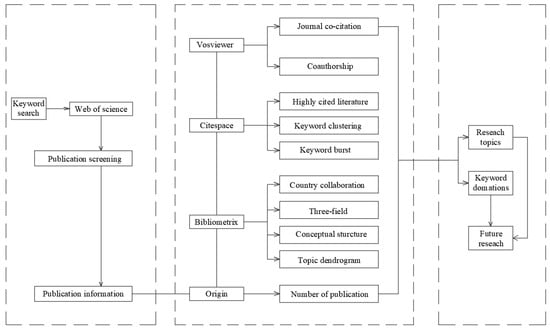
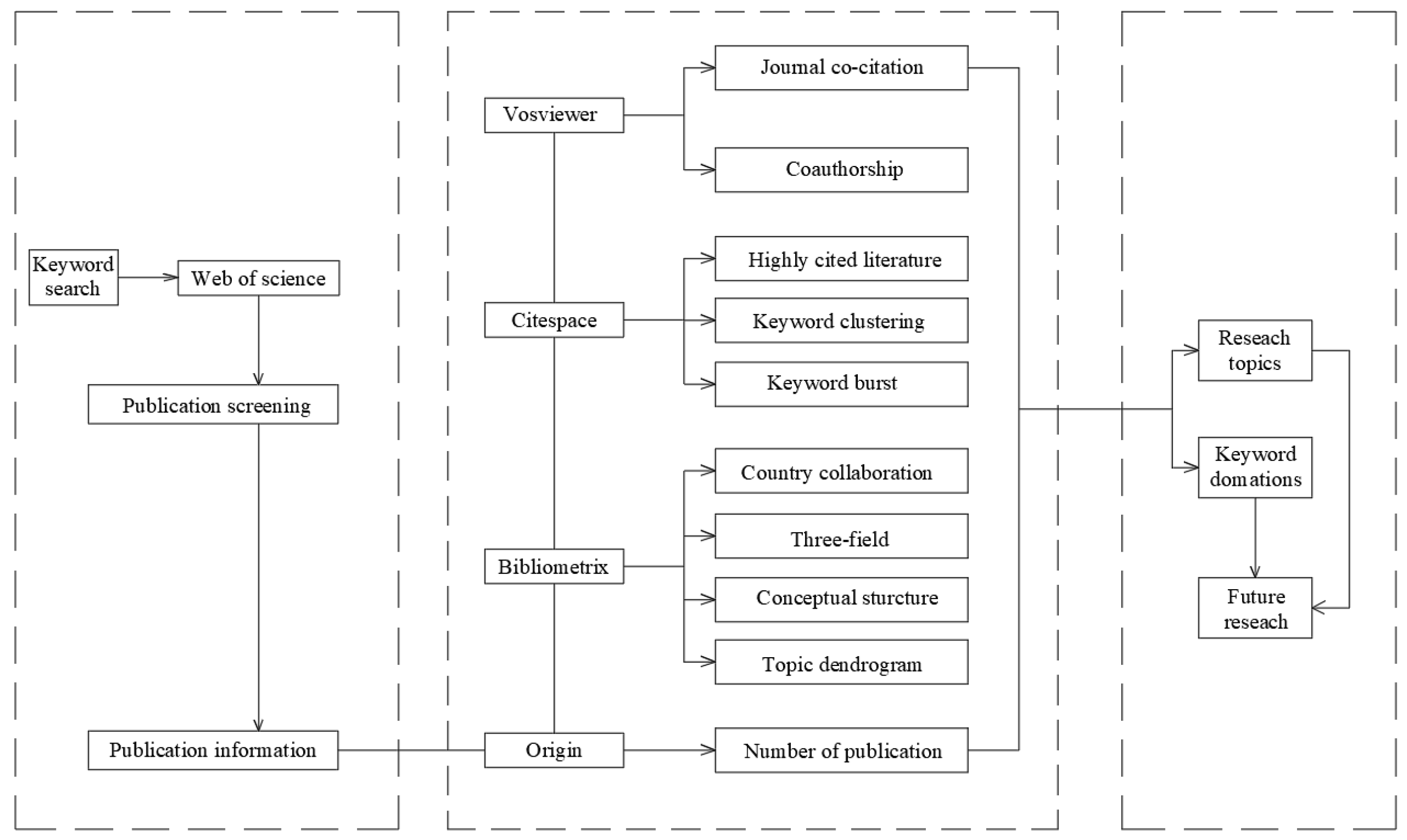
To clearly illustrate the implementation pathway of our research method, Figure 1 presents the complete technical process of this study, from WoS literature retrieval and data preprocessing to bibliometric analysis and visualization presentation.
Figure 1.
Workflow of the information retrieval and document processing system.
3. Bibliometric Analysis of Deep-Mine Cooling and Heat Hazard Research
3.1. Number of Publications Information
Analyzing the general situation of documents issued by countries (regions) is helpful to understand the contribution of each country (region) in the field of deep-mine cooling and thermal hazards [30]. Statistics show that a total of 56 countries have published relevant literature.
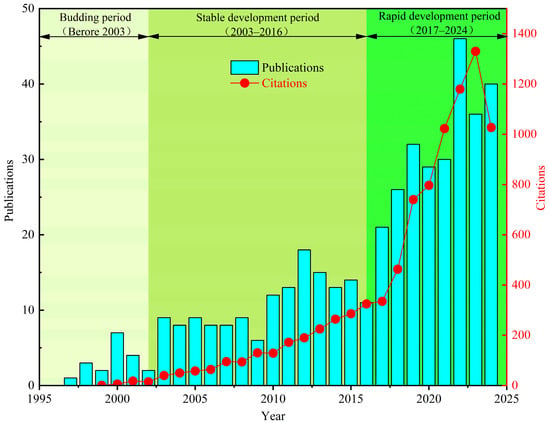
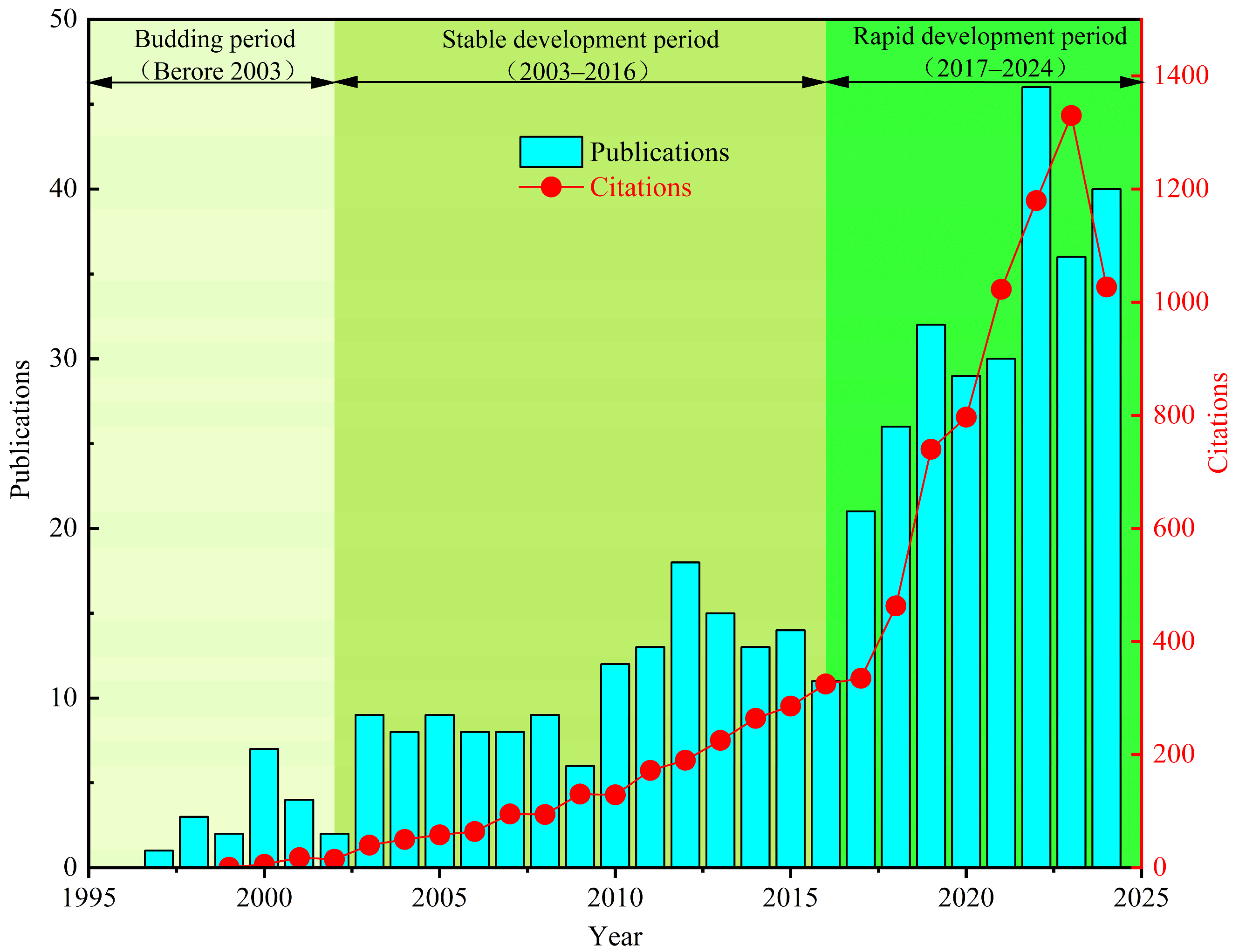
Based on the WoS data, through the quantitative analysis of the annual published quantity change trend and literature citation, the change trend chart of the annual published quantity and literature citation from 1995 to 2024 was obtained, as shown in Figure 2.
Figure 2.
Number of publications over the years.
From the perspective of publication trends, the study of cooling and thermal hazards in deep mines has gone through three stages: a budding period, stable development period, and rapid development period.
- (1)
- Budding period (before 2003): Scholarly output remained below five papers per year, reflecting limited research interest. Mines during this period were comparatively shallow, with moderate virgin rock temperatures that conventional ventilation systems could readily manage. Consequently, dedicated investigations into cooling technologies were scarce, as existing methods proved sufficient for the thermal conditions encountered.
- (2)
- Stable development period (2003–2016): Annual publication counts stabilized at approximately ten papers, signaling growing recognition of the problem. As excavation depths extended—in some cases reaching 1000 m—corresponding increases in virgin rock temperature created more severe thermal environments that began to undermine operational efficiency. This period thus saw heat hazard mitigation emerge as a distinct research concern. Nevertheless, progress was constrained by three interrelated factors: an incomplete understanding of thermodynamic mechanisms in deep-mine settings, the immaturity of artificial cooling equipment, and limited awareness of safety implications among industry stakeholders.
- (3)
- Rapid development period (2017–2024): Publications surged from 21 in 2017 to 41 in 2024, marking the field’s most prolific era. Deeper excavations intensified the thermal challenge through two compounding mechanisms: auto-compression of ventilation air heated the working environment further, and the deployment of large-scale mechanized equipment increased heat rejection at the face. Under these conditions, conventional ventilation alone became inadequate, driving a decisive shift toward artificial cooling solutions. This demand stimulated extensive theoretical and experimental investigations, which in turn built the scientific and technical foundation for subsequent engineering applications.
3.2. Country/Region Distribution
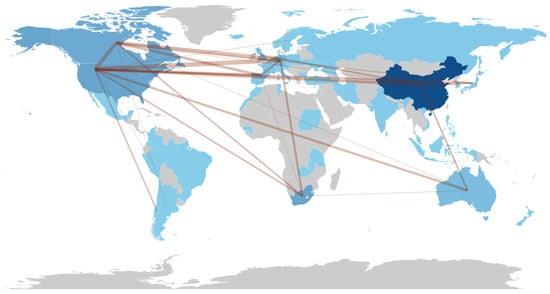
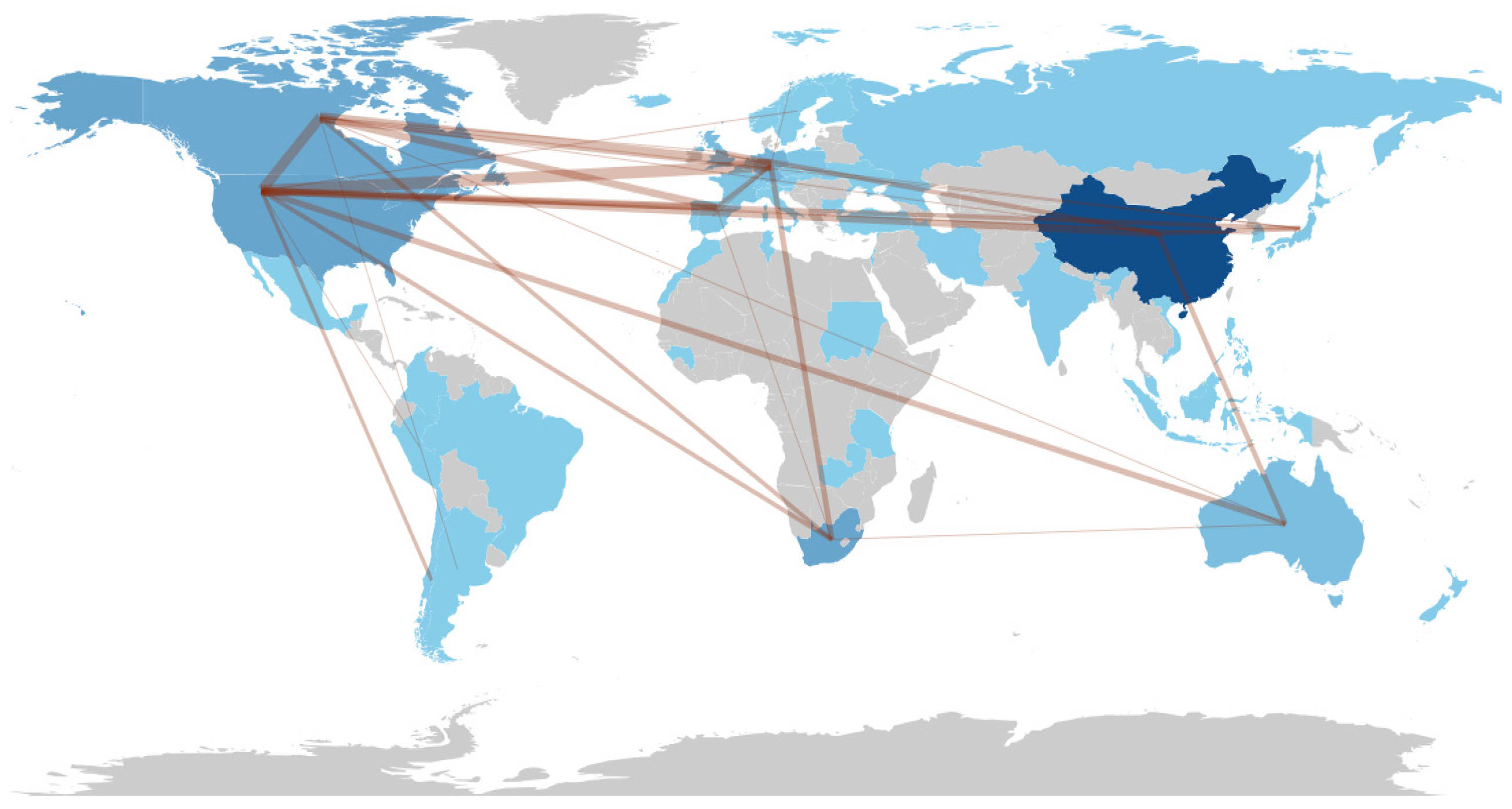
Through statistical analysis of the number of papers and national information [31], a cooperation relationship map involving 27 countries is constructed, as shown in Figure 3. The darker the color, the more papers there were—China is in a leading position in the field of deep-mine cooling and heat damage and has carried out cooperation with at least 11 countries such as the United States and Australia. At the same time, a strong North American cluster has been built along the US–Canada axis. The thicker the contact line between countries, the stronger the key to cooperation between countries. The link between China, the United States, Canada and Germany is particularly prominent. This network structure shows that deep-mine cooling research is interrelated globally but clustered regionally, forming a pattern of international cooperation.
Figure 3.
National cooperation co-occurrence map.
Table 1 displays the top ten countries with the highest amount of published literature. These countries are primarily located across Asia, Africa, Europe, Oceania, and North America. The data in the table includes the number of publications, the percentage of total publications, and centrality (which indicates the importance and influence of a node within the network). Notably, China accounts for nearly half of the total publications. It is interesting to observe that, although Austria ranks 15th in terms of total paper publications (with five published papers), it is the only country outside the top 10 that has an intermediary centrality of 0.1 (nodes with a centrality of at least 0.1 are considered key nodes). This indicates that, despite the relatively small number of papers published by Austrian scholars, the country maintains strong collaborative ties with other nations.
Table 1.
Top ten countries with the largest amount of published literature, 1994–2024.
These quantitative trends have significant implications for sustainability. China’s dominance, accounting for nearly half of the total publications (40.18%), is closely tied to the country’s strategic policy of “advancing into the deep earth,” which has channeled substantial research funding toward addressing the sustainability challenges posed by deep-mining thermal hazards. This highlights the crucial role of national policy in guiding research agendas toward sustainable resource extraction. Additionally, the close cooperative relationships between China and countries such as the United States, Australia, Canada, and Germany reflect a shared global commitment to tackling common sustainability issues—specifically, reducing energy consumption and enhancing cooling efficiency in deep-mining operations. The distinct research focuses of these collaborating nations (ventilation in the USA, energy conservation in South Africa and Canada, and refrigeration in Germany) represent complementary technological approaches that collectively contribute to the environmental sustainability of deep mining. However, the concentration of publications in a few countries also underscores the need for broader international involvement to ensure that region-specific sustainable cooling solutions are developed and shared worldwide.
3.3. Three-Field Analysis
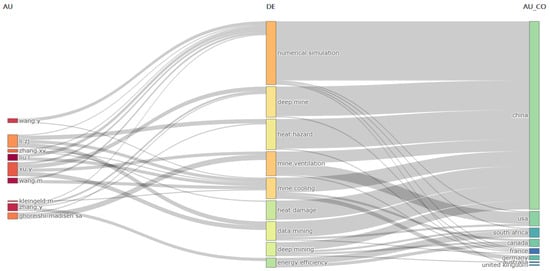
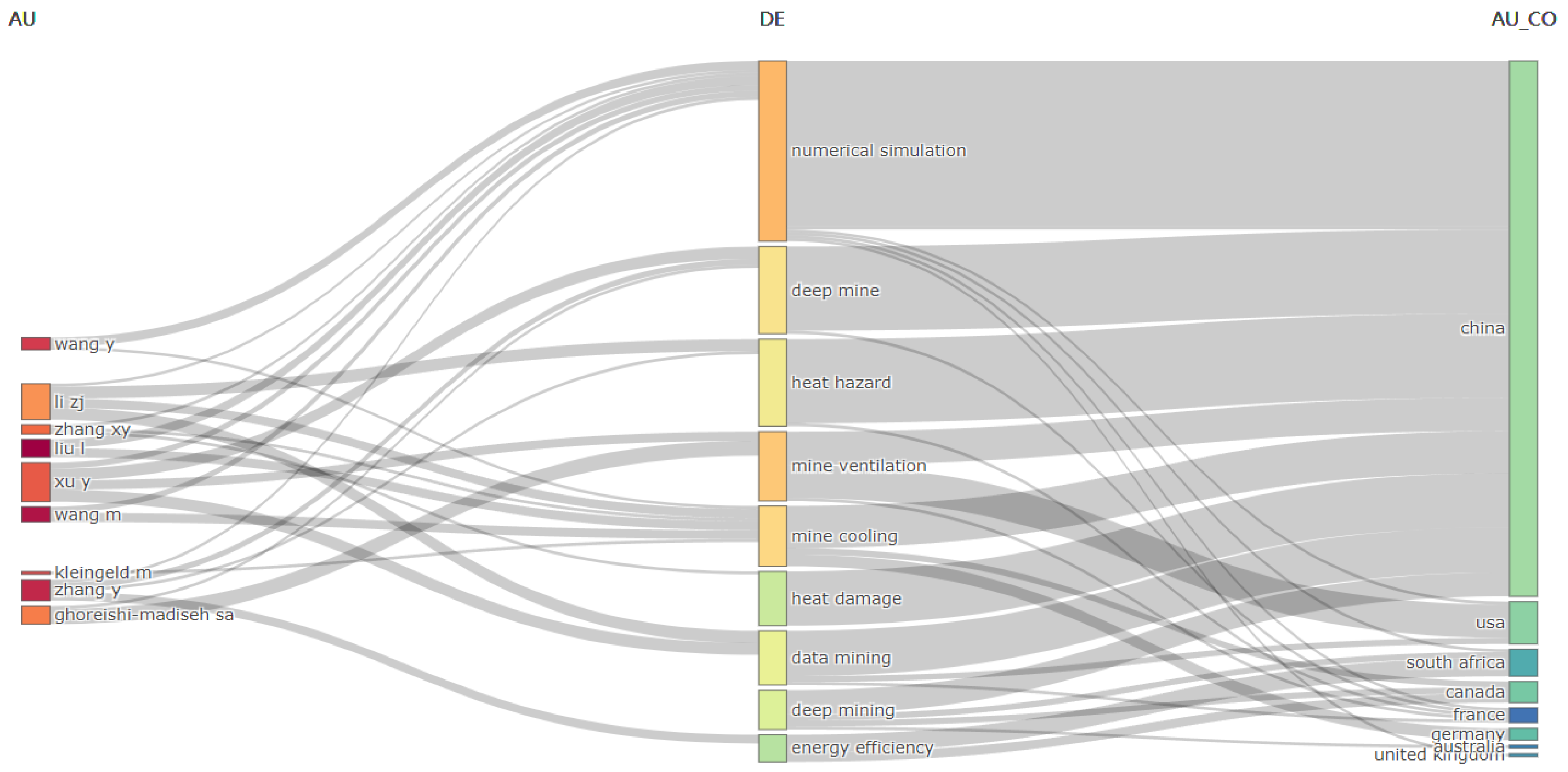
By utilizing the Bibliometric R software package, we can select the meaning types of three fields and generate their corresponding visual representations [32,33]. Figure 4 presents a Sankey diagram characterized by content symmetry and information flow.
Figure 4.
Three-field plot.
In this diagram, the left section represents authors, the middle section highlights high-frequency keywords, and the right section denotes active countries. Authors with numerous publications have concentrated on keywords such as “numerical simulation,” “deep mine,” and “heat hazard,” shedding light on the hot topics that relevant scholars are closely following. China stands as a significant player in the realm of mineral and energy resources. In recent years, as mines delve deeper, the low operational efficiency stemming from high temperatures in deep environments has attracted scholarly attention. Consequently, substantial contributions have been made across various facets of research on thermal hazards in deep wells at high temperatures. Among other countries making notable contributions in this field, the United States primarily focuses on ventilation and cooling in deep mines, while South Africa and Canada concentrate on energy conservation in deep-mining operations, and Germany’s main research area is refrigeration and cooling in deep mines.
When viewed through the lens of sustainability, the Sankey diagram reveals more than just a mapping of research interests—it highlights the distinct yet complementary roles that leading nations play in promoting the environmental sustainability of deep mining. The United States’ emphasis on ventilation is in line with enhancing air quality and reducing energy-intensive mechanical cooling; South Africa’s and Canada’s focus on energy conservation directly tackles the carbon footprint of deep-level mining activities; and Germany’s prowess in refrigeration technology contributes to the development of high-efficiency, low-carbon cooling systems. Collectively, these national research clusters form an implicit, distributed effort towards more sustainable deep-mining practices. However, what is notably lacking in this landscape is a dedicated, cross-cutting focus on holistic sustainability assessment that integrates these individual technical contributions into a unified environmental and social framework.
4. Cooperation Network Analysis
4.1. Journal Co-Citation Analysis
Journals, as the primary medium for publishing papers, serve as a platform for exchanging scientific and technological knowledge as well as theoretical ideas [34]. Through journal classification analysis, we can identify and categorize journals based on different topics and pinpoint the core journals pertaining to each theme. The citation frequency of a journal signifies its impact within its field. A higher citation frequency indicates greater similarity in research topics, reflecting the increased influence of the papers published in that field. By examining a journal’s co-citation network, we can gain insights into the current status of journals across various themes and the core journals in the field of deep cooling and thermal hazards. This analysis also serves as a guide for other scholars when consulting the relevant literature and submitting their own papers.
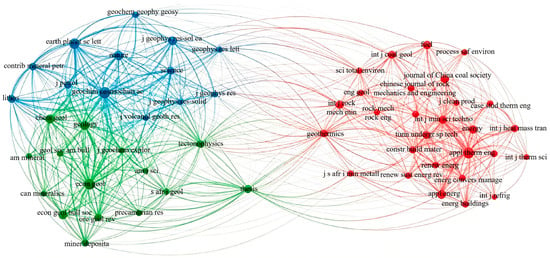
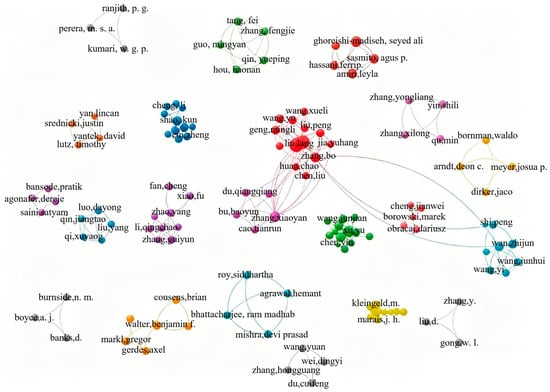
Using Vosviewer to conduct journal co-citation analysis on the collected data, we obtained the journal classification shown in Figure 5. The color of the spheres indicates different journal topics, while the size of the spheres represents the number of citations.
Figure 5.
Journal co-citation map.
The research theme of the first category of journals is thermal energy utilization (red). Applied Thermal Engineering, Energy, and International Journal of Mining Science and Technology are authoritative journals in this field. They constitute the core of research topics and possess a significant level of influence.
The research theme of the second category of journals is mineral geology (green). Authoritative journals in this field include Economic Geology, Chemical Geology, and Structural Physics. These journals are central to research topics and exert a considerable degree of influence.
The research theme of the third category of journals is geophysics (blue). The authoritative journals in this field are Geochim Cosmochim Acta, Earth and Planetary Science Letters, and Journal of Geophysical Research. These journals are pivotal for research topics and carry a certain level of influence.
Table 2 shows the top ten journals with the highest number of citations, while Table 3 shows the top ten journals with the highest centrality ranking. Among them, eight journals have been cited more than 60 times, reflecting the emergence of a number of representative core journals in the field of deep-mine cooling and thermal hazard research. Among the top ten journals with the highest citation counts, only two journals, Applied Thermal Engineering and Chemical Geology, have a centrality higher than 0.1 and a significant number of citations (120 and 62). Hence, these two journals can be deemed the most pivotal publications in the field of deep-mine cooling and thermal hazards.
Table 2.
Top 10 journals with the most co-citations, 1994–2024.
Table 3.
Top 10 journals in terms of centrality ranking, 1994–2024.
It is worth noting that other journals with a centrality of over 0.1 and a total citation count of over 30 times include Construction and Building Materials (centrality of 0.25, total citation count of 30) and Tectonophysics (centrality of 0.13, total citation count of 49). Therefore, these two journals also have some influence in the field.
4.2. Co-Authorship Analysis
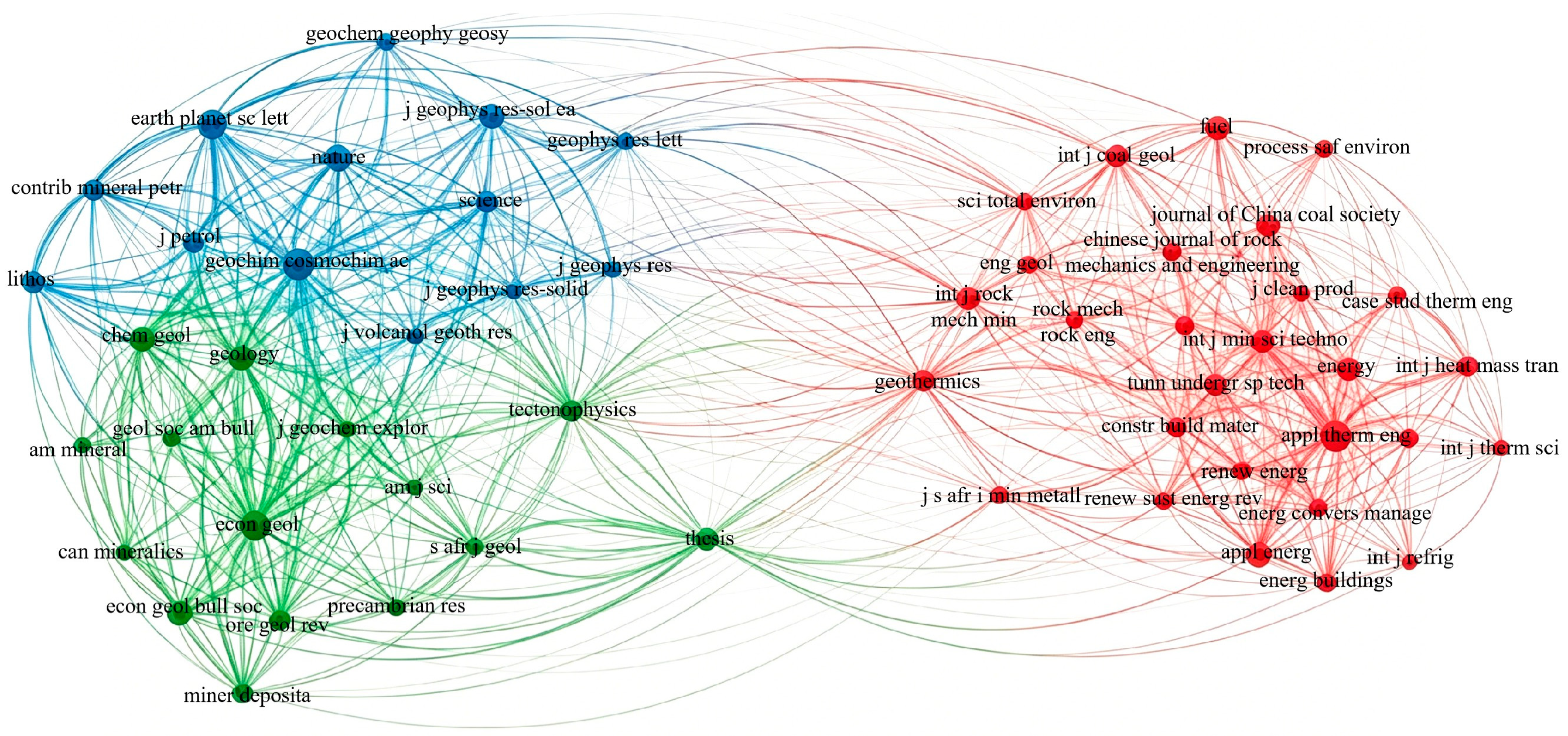
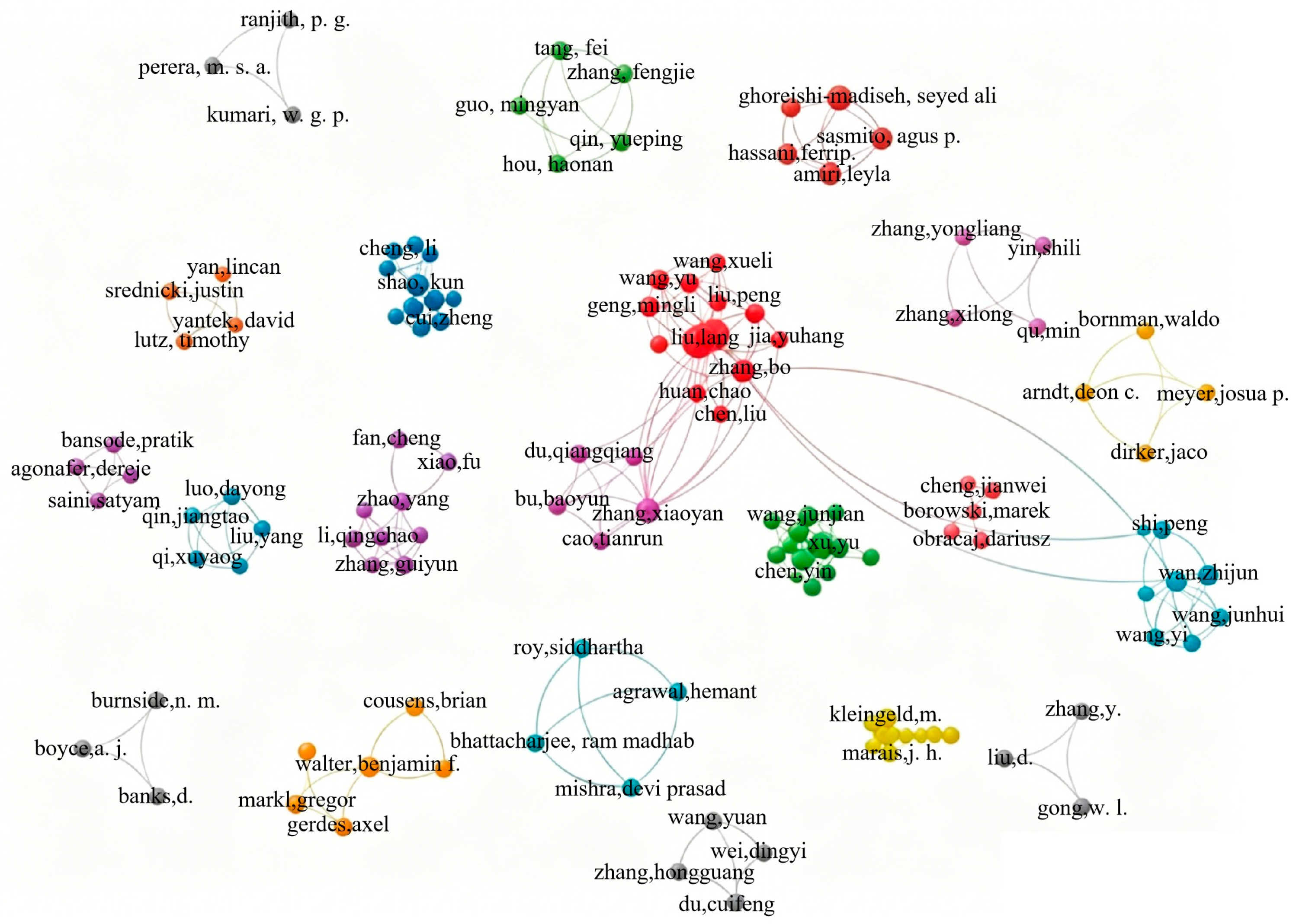
The co-authorship network using Vosviewer is shown in Figure 6. There are 51 authors who have published more than three papers on the topic. The larger the area of the sphere in the figure, the higher the number of articles published by the author.
Figure 6.
Authors’ cooperation network in mine heat hazards, 1994–2024.
From the figure, it can be seen that there are several small collaborative clusters among scholars. Red star clusters are represented by Liu Lang and Wang Mei; green star clusters are represented by Xu Yu and Lizijun; blue star clusters are represented by Shao Kun and Cui Zheng; and coffee-colored star clusters are represented by Kleingeld, M and Mare, P.
The main research direction for the red cluster is deep-mine phase-change backfill cooling technology. The main research direction for green clusters is deep-mine heat hazard prevention and control technology. The main research directions for the cyan cluster and the coffee-colored cluster are efficient cooling systems, but from the collaborative network diagram, it can be seen that there is no relevant collaborative research between these two clusters.
The authors with six or more publications are listed in Table 4. It can be seen from the table that scholars from China, Canada, and South Africa have published a large number of articles in the field of deep-mine cooling and thermal hazards. Their research topics mainly include the following five directions: efficient cooling system for deep mines, deep-mine phase-change backfill cooling technology, deep-mine thermal energy storage technology, deep-mine heat hazard prevention and control technology, and deep-mine ventilation and cooling technology.
Table 4.
Top 10 authors with the highest publication volume, 1994–2024.
4.3. Highly Cited Literature Analysis
Highly cited literature in a research field often has strong innovation and good universality, representing the most concerned research topic and its key contribution in a certain field [35]. It can solve important scientific problems and even open up new research fields and can be regarded as the knowledge foundation of the corresponding disciplinary field.
CiteSpace software (6.3.1) was used to conduct co-occurrence analysis of citations, non-review papers with a centrality of more than 0.1 were selected, and seven highly cited key references were obtained, as shown in Table 5. From the table, it can be seen that the highly cited key papers mainly appeared after 2014.
Table 5.
The top seven papers with the highest centrality, 1994–2024.
Pretorius [36] proposed the Data Information Knowledge Wisdom (DIKW) model to help managers improve the performance of deep-mine cooling systems and promote operational improvements. This method is considered a suitable approach for optimizing deep-mine management using existing infrastructure.
Wang M [37] proposed a new cooling method, which involves adding phase-change materials (PCMs) to cement slurry backfill (CPB) for deep-mine cooling. This study is of great significance for improving the understanding of the heat transfer mechanism of the new PCM backfill material, which will contribute to the design of deep-mine cooling for CPB with cooling load and storage (CLS) function.
Bornman [38] used this modeling method to predict the thermal performance of the mechanical ventilation direct contact bulk air cooling (BAC) tower and combined it with the optimization platform to optimize the power consumption of BAC. In periods of high energy demand, using the optimization model can save 13% of the energy. This modeling and optimization method can reduce the operating energy cost of the thermal system.
Guo PY [39] proposed a geothermal recovery system (GRSM) for mines, which is used for parallel mine cooling and surface heating. Compared with traditional cooling systems, the most obvious feature of this system is the elimination of cooling towers, which improves performance by 30%. In addition, the parallel operation of refrigeration and heating systems can effectively recover waste heat, increasing energy efficiency by 20%.
Xu Y [40] show that considering buoyancy-driven flow is a non-negligible factor in the prediction of airflow, especially in a large temperature difference tunnel. The buoyancy effect will be lower in a long-time or long-distance ventilation tunnel. The origin temperature of surrounding rock has the greatest influence on the heat exchange of tunnels, and the initial temperature of airflow is next. The quickest and most direct method to control the heat hazard is regulating the temperature of surrounding rock, while increasing the ventilation volume or reducing the wind temperature is an effective way to promote the cooling of surrounding rock.
Liu L [41] put forward an academic idea of functional backfill (FB), which can not only realize the function of traditional backfill, but can also achieve the expanded functions, i.e., cold-loading, heat-saving, energy-storage, seepage-proofing, etc. The application and exploration of functional backfill materials and technologies will further improve the backfill technologies in mines, which have an important and far-reaching impact on the deep-mine geothermal co-exploitation, underground goaf reuse, and strategic energy reserves, etc.
While these highly cited papers represent the intellectual foundation of deep-mine cooling research, a critical examination from a sustainability perspective reveals notable limitations. For instance, although Pretorius et al. [36] proposed a data-driven DIKW model to enhance cooling system performance, the study did not evaluate the environmental benefits—such as the carbon emission reductions—that could result from the operational improvements. Similarly, Wang et al. [37] demonstrated the technical promise of PCM-integrated backfill for deep-mine cooling, yet the life-cycle environmental impacts of the PCMs themselves—including their production, transportation, and end-of-life disposal—remain unexplored, constituting a significant knowledge blind spot. Bornman et al. [38] focused on energy savings, but did not translated these savings into broader sustainability metrics such as greenhouse gas abatement or resource depletion. The geothermal recycling system proposed by Guo et al. [39] and the functional backfill concept advanced by Liu et al. [40] both implicitly support sustainability goals, yet the absence of quantitative environmental or social assessments limits their utility for guiding policy or investment decisions. This pattern suggests that, even among the most influential works in this field, the linkage between technical performance and verifiable sustainability outcomes remains underdeveloped—a gap that future research must urgently address.
5. Keyword Co-Occurrence Analysis
5.1. Hotspot Analysis Research
Keywords are highly summarized academic literature research topics. When a keyword frequently appears in the literature in a research field, it represents a hot topic and focus in the scientific community. Keyword clustering is the use of econometric methods to classify and condense keywords and finally present them in the form of several or more nouns. This clustering method is more intuitive and easy to understand, which helps to quickly understand important research content and its proportion in the research field.
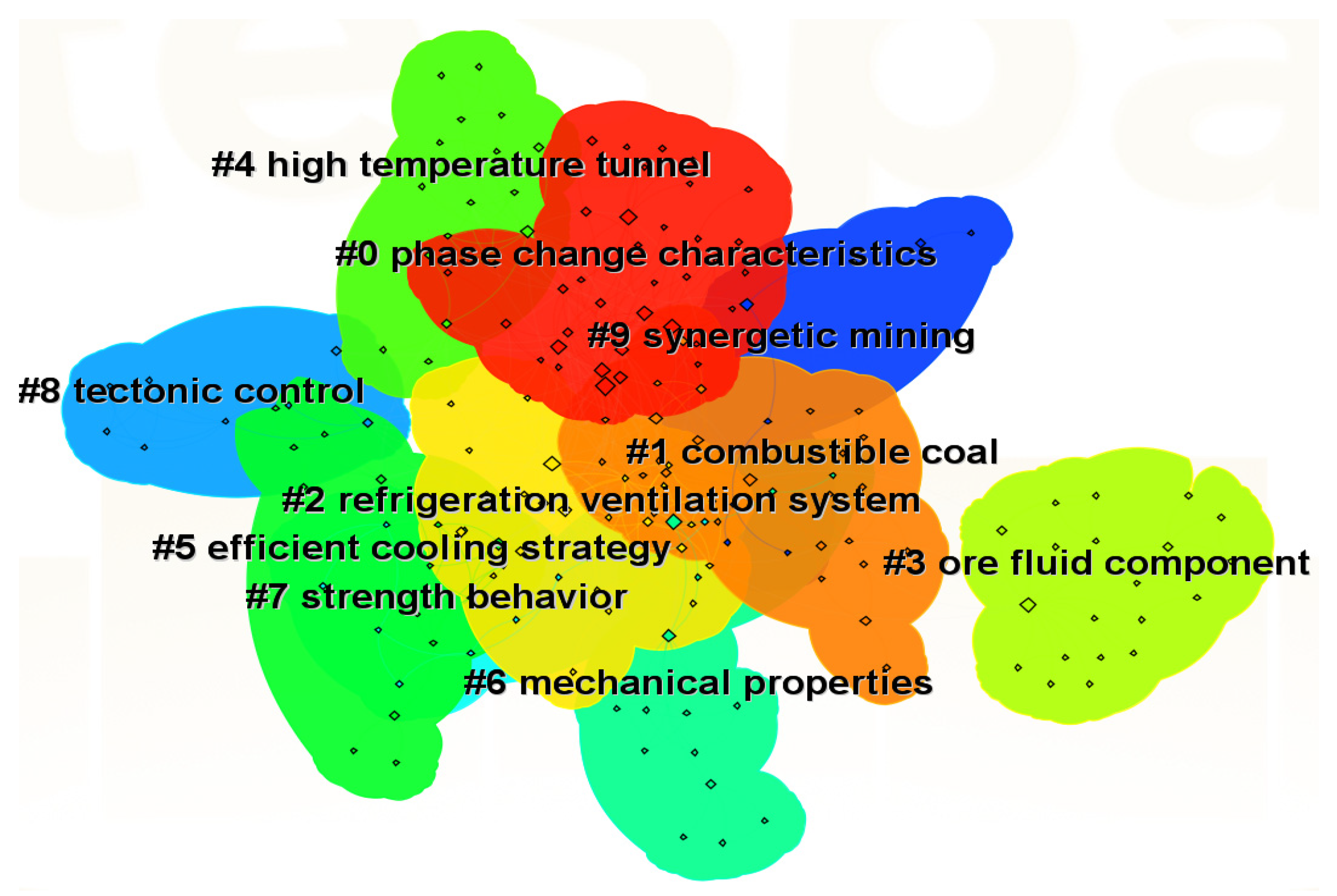
This paper uses CiteSpace software to conduct co-occurrence cluster analysis on the keywords of the literature related to deep-mine cooling and thermal hazard and to explore the research hotspots in this field. Among a total of 297 keywords, the LLR method was used to cluster the co-occurrence words, and the clustering map is shown in Figure 7. Among them, Q = 0.7323 and S = 0.9061, both greater than 0.7, indicating that keyword clustering is efficient and reliable.
Figure 7.
Keyword co-occurrence clustering.
According to the clustering diagram, there are 10 major keyword clusters in the field of deep-mine cooling and thermal hazards, namely, #0 phase change characteristics, #1 combustible coal, #2 refrigeration ventilation system, #3 ore fluid component, #4 high temperature tunnel, #5 efficient cooling strategy, #6 mechanical properties, #7 strength behavior, #8 tectonic control, and #9 synergetic mining. These 10 keywords are key research topics on deep-mine cooling and thermal hazards.
To further elucidate the evolutionary process and research content of this field from a sustainability perspective, the ten keyword clusters were reclassified into three interconnected research themes via a two-step analytical procedure. First, thematic affinity across clusters was examined based on their inherent keywords and the core research content of representative publications. Clusters with overlapping technological and scientific focuses, such as Cluster #0 (phase-change characteristics), Cluster #2 (refrigeration and ventilation system), and Cluster #9 (synergetic mining)—all closely related to cooling technology and resource utilization—were screened for thematic integration. Second, the preliminary grouped themes were cross-validated against the keyword factor analysis results presented in Section 5.2, which identified three independent conceptual dimensions in the existing literature. The consistency between the qualitative thematic regrouping and the statistically derived factorial structure realizes methodological triangulation, thereby enhancing the credibility of the three-theme research framework. Notably, this regrouping serves as an interpretive synthesis to highlight the sustainability-oriented attributes of the research field, and alternative classification schemes may remain valid for diverse analytical objectives.
Topic 1: Technological Evolution of Deep-Mine Cooling and Thermal Energy Utilization—Toward a Low-Carbon Circular Economy. This theme traces a clear paradigm shift in the field’s approach to thermal management. Early research primarily focused on mechanical refrigeration and ventilation cooling [6,7,8], which, while effective, are inherently energy-intensive and contribute to the mine’s overall carbon footprint. The subsequent development and integration of phase-change materials (PCMs) into backfill systems marked a significant advancement, enabling passive cooling and thermal energy storage directly within the mined-out voids. This transition from “heat disposal” to “heat storage” embodies the principles of a circular economy. The most recent frontier is the co-exploitation of geothermal energy [40,42,43,44,45], where deep mines are re-imagined not just as mineral sources, but as potential “thermal power plants,” extracting both ore and renewable energy. This evolutionary trajectory—from energy-intensive cooling to functional backfill systems that simultaneously provide ground support, thermal regulation, and energy storage—aligns closely with the strategic vision for deep-mining sustainability articulated by scholars from major mining nations. For example, Xie et al. [26], in a highly cited Chinese review, explicitly identified the functional expansion of backfill systems as a critical pathway toward green and intelligent deep mining, emphasizing that future operations must integrate resource extraction, energy recovery, and environmental protection within a unified paradigm. Although originally published in Chinese, this high-level strategic framework offers a valuable complement to the fragmented technical studies identified in this WoS-based review, reinforcing the argument that the field’s implicit alignment with sustainability principles now needs to be made explicit and actionable.
Topic 2: Energy Efficiency and Life-Cycle Management of Cooling Systems. A significant portion of the literature concentrates on the operational strategy of deep-mine cooling, a theme with profound economic and environmental implications. As mines deepen, cooling can account for a substantial fraction of total operational energy costs. Research within this theme tackles this by developing sophisticated control strategies [38,40,46] and performance optimization tools to minimize power consumption without compromising the thermal environment. These efforts, often framed around “energy efficiency,” are a direct technical pathway to reducing operational greenhouse gas emissions. However, the scope of this research is overwhelmingly limited to the operational phase. Critical life-cycle considerations—such as the embodied energy and carbon footprint associated with manufacturing cooling infrastructure, the global warming potential of refrigerants used, and the long-term economic payback of capital-intensive upgrades—are conspicuously absent. A shift toward a full life-cycle cost and environmental assessment is necessary to verify the true sustainability of these operational gains.
Topic 3: Thermal Risk Management in Deep Mines—Ensuring Worker Safety and Operational Resilience. Interwoven with the technological and economic themes is a fundamental concern for human and operational safety. Research on deep-mine thermodynamics, heat transfer, and the mechanical behavior of rock under high temperatures [47,48] forms the scientific bedrock for heat hazard control. The practical objective of this theme is twofold: first, to safeguard the physical and mental health of mine workers, a core tenet of the “decent work” mandate (SDG 8); and second, to ensure the reliability and longevity of mining equipment, thereby preventing resource-intensive operational failures and waste. The development of predictive models for underground climate [47] and the assessment of thermal stress on surrounding rock stability [49] are thus not merely technical exercises; they are essential inputs for designing socially and operationally sustainable deep-mining systems that prioritize safety and resilience over short-term production gains.
5.2. Keyword Factor Analysis
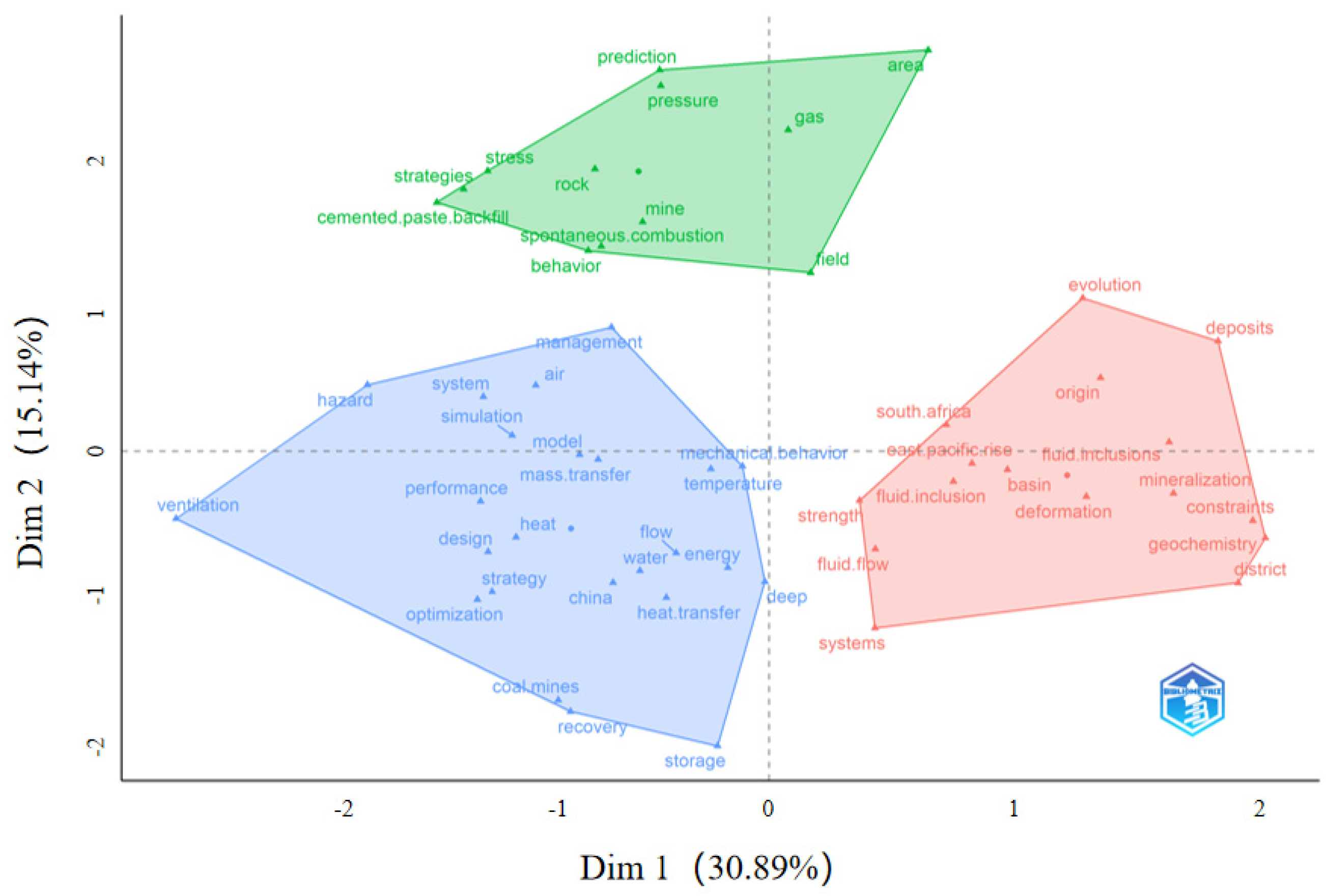
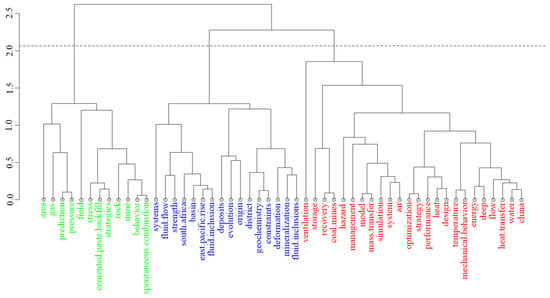
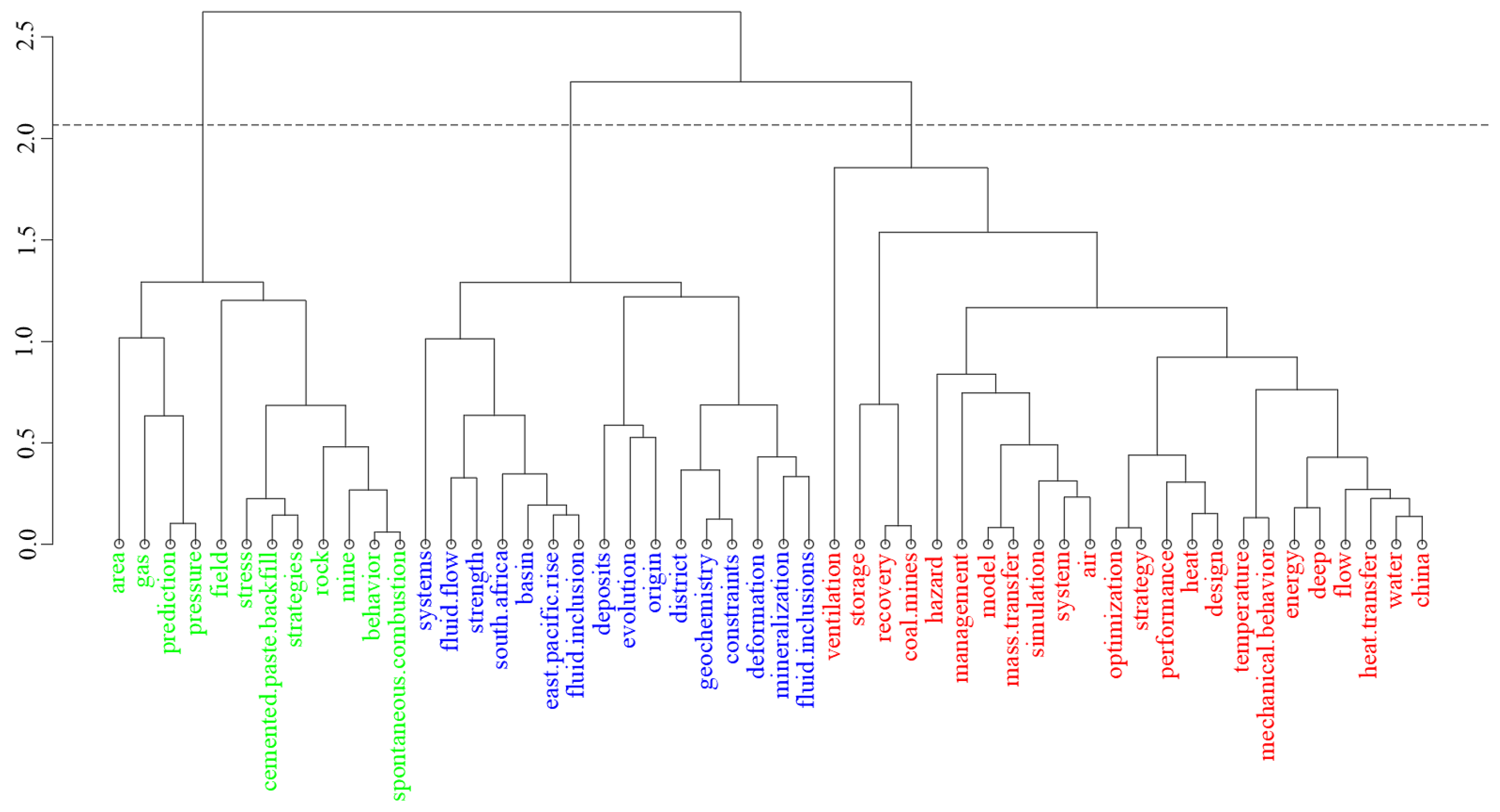
The factorial analysis function of conceptual structure in the online running interface of the bibliometric R software package was used, and the parameter “number of terms” was set to 50. After running, we obtained the conceptual structure map (Figure 8) and topic tree diagram (Figure 9).
Figure 8.
Conceptual structure map.
Figure 9.
Topic tree diagram.
In the conceptual structure diagram, the horizontal and vertical coordinates represent Dim1 and Dim2. The coordinate values can reflect the contribution of keywords to the factor. From the conceptual structure of the keywords in the figure, it can be seen that, after many factorial analyses, the subject keywords in the field of deep-mine cooling and thermal hazards form three clusters. In Figure 9, the grouping of subject keywords in the research field is shown in detail.
By observing the grouping of keywords in blue, red, and green, we found that the blue keywords focus on deep-mine ventilation, cooling, and geothermal utilization. Red keywords focus on the origin and evolution mechanism of underground hydrothermal minerals, while the green keywords emphasize the study of deep-mine thermodynamics. To some extent, it is very similar to the theme of clustering itineraries through Citespace keywords.
6. Development Context and Research Trends
6.1. Development Context
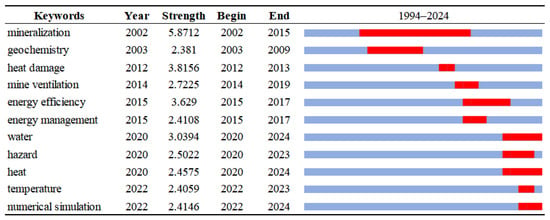
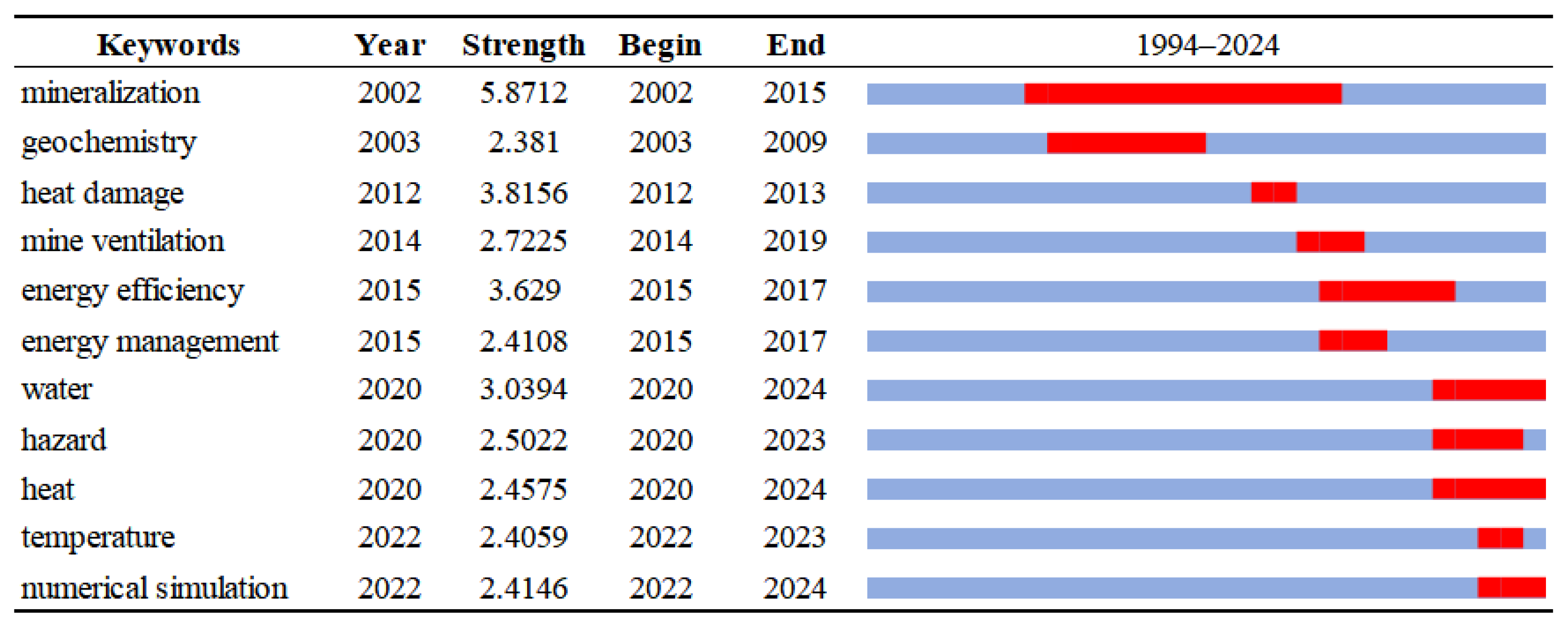
Keyword emergence refers to a term or concept that suddenly appears during a certain period of time and has significant influence. By analyzing the emergence of keywords, we can understand the development trend of the research field. CiteSpace can be used to detect keyword bursts. Setting the minimum continuous outbreak year to 2 and the correlation intensity r [0, 1] to 0.6, a total of 11 burst keywords were obtained. By sorting strong burst keywords year by year, 11 burst keywords and their corresponding weights were obtained, as shown in Figure 10.
Figure 10.
Keyword burst map.
“Strength” represents the burst intensity of keyword citations, that is, the degree to which the citation frequency of a keyword significantly increases over a certain period of time. “Begin” and “End” respectively represent the start and end times of keyword explosion. By comprehensively considering these three parameters, we can better understand the history and dynamics of the keyword’s injection in the academic community. The red line indicates the period of keyword explosion.
The first stage was from 2002 to 2013. In order to study the causes of mineral formation, deep high-temperature hydrothermal mineralization attracted the attention of researchers, resulting in the burst keywords “mineralization”, “geochemistry”, and “heat damage” one after another. The explosive intensities are 5.87, 2.38, and 3.82, respectively. Among them, the keyword “mineralization” has been active for 14 years and has the highest explosive intensity during this stage.
The second stage is from 2014 to 2019. During this period, the high energy consumption of deep underground mining led to a sharp increase in mining costs. Optimizing the existing ventilation system of the mine, evaluating and managing the geothermal energy of the mine, reducing operating costs, and improving energy utilization efficiency are the technical challenges that the mine needs to solve. Therefore, research on mine ventilation, energy efficiency, and energy management [50,51] has attracted scholars’ attention, resulting in a high outbreak rate for these three keywords.
The third stage is from 2020 to 2024. With the continuous increase in mining depth, the problem of high temperatures in deep mines has become increasingly severe. Therefore, during this period, the design of deep-mine cooling systems and the utilization of geothermal energy have received widespread attention from scholars. Keywords such as “water”, “hazard”, “heat”, “temperature”, etc., have a high outbreak rate. Meanwhile, in recent years, with the development of computer technology, numerical simulation technology has become an increasingly important tool for scholars to study. Therefore, the application of numerical simulation technology has gradually become a current hot topic of concern and will continue in the future.
6.2. Research Trends
6.2.1. Time Evolution of Research Topics
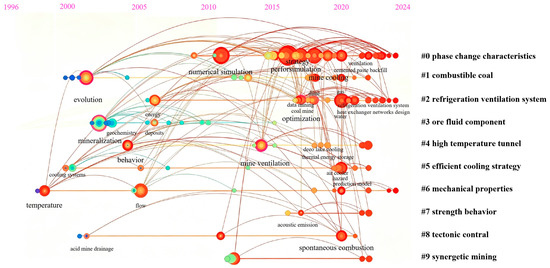
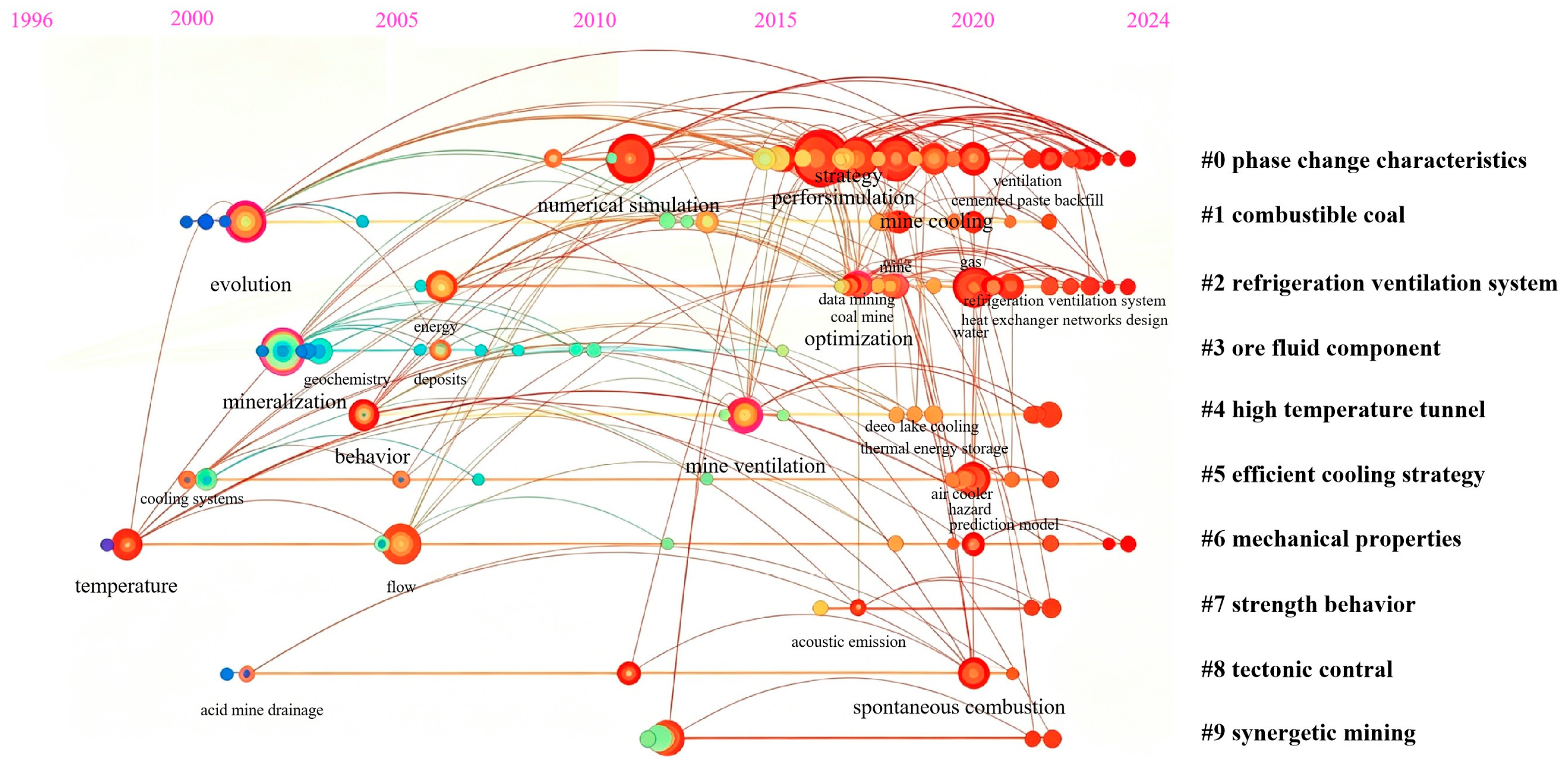
The CiteSpace timeline chart offers a visual depiction of the timing and evolutionary paths of various research topics. By examining this timeline chart, one can discern the cutting-edge dynamics within the field, observe the shifting patterns of research focus, and track the trends in hot topic changes, thereby laying the foundation for predicting the field’s future development direction. For analysis, we selected the keyword timeline graph (Figure 11), which illustrates the evolution of keywords across different clusters. The circular nodes in the graph represent the emergence time and the cluster of each keyword, with node size indicating the frequency of keyword occurrence. The timeline clearly outlines the developmental trajectory, technological advancements, and interconnections among various research topics in the realm of deep-well cooling and heat damage. Our findings reveal that, over time, certain clusters (such as Clusters 1, 3, and 8) have not introduced any new representative keywords, suggesting a waning interest in related research. Conversely, other clusters (such as Clusters 0, 2, 6, and 9) continue to generate fresh keywords, indicating that the corresponding research directions remain vibrant and actively evolving.
Figure 11.
Knowledge map of keywords timeline.
6.2.2. Identification of Frontiers in Active and Declining Research
Based on the evolutionary characteristics depicted in the timeline graph, research clusters can be categorized into two types, declining and active, each with distinct implications for the field’s future development. Declining clusters, including #1 (combustible coal), #3 (ore fluid components), and #8 (structural control), were once core research directions in the field but have since seen a decline in attention. This shift is primarily attributed to the resolution of core scientific problems or a gradual divergence from the central issues of deep-well cooling and thermal management. Active clusters, encompassing #0 (phase-change characteristics), #2 (refrigeration and ventilation systems), #6 (mechanical performance), and #9 (collaborative mining), consistently produce new keywords and maintain high academic interest. The distinction between declining and active clusters suggests that the research focus in this field is transitioning from an early emphasis on geological and geochemical processes to an integrated, technology-driven research system.
6.2.3. Implications for Future Research Focus
By integrating the results of burst detection (Section 6.1) with timeline analysis, we can systematically outline the developmental trajectory of the field. Overall, the field follows a three-stage evolutionary logic: from 2002 to 2013, it centered on mineralization-related research; from 2014 to 2019, there was a shift towards energy efficiency optimization research; and from 2020 to 2024, we are entering a stage of comprehensive cooling and geothermal utilization research, with the research path gradually aligning with the concept of sustainable development. Based on the keywords from active clusters, the core research hotspots in this field will likely focus on phase change cooling technology, refrigeration and ventilation systems, rock mechanics behavior under high temperatures, and collaborative mining technology in the future.
Synthesizing multi-source empirical evidence—including the three-stage evolutionary trajectory identified via keyword burst analysis (Section 6.1), the active research clusters detected through timeline analysis (Section 6.2.2), and the sustainability-oriented thematic regrouping of keyword clusters (Section 5.1)—consistently indicates a gradual yet ongoing disciplinary reorientation. Given the lack of systematic quantitative metrics to validate disciplinary transition, the notion of a full “paradigm shift” warrants cautious interpretation. Nevertheless, all analytical results confirm a clear evolutionary trend: the research focus is shifting from isolated, technology-centric investigations toward holistic, sustainability-embedded research practices. Future studies can adopt temporal co-occurrence analysis to conduct rigorous quantitative validation and further verify the interpretive findings of this study.
6.3. Research Gaps and Future Directions
Despite the notable progress and paradigm shifts identified in the preceding analysis, the reviewed literature reveals several critical gaps that must be addressed if deep-mine cooling and heat hazard management is to genuinely contribute to sustainable development. Based on the systematic synthesis above, we identify four interconnected research voids and propose corresponding pathways forward.
First, a full life-cycle perspective is conspicuously absent. Current evaluations of cooling technologies—whether that be mechanical refrigeration, phase-change material (PCM) backfill, or geothermal systems—overwhelmingly focus on operational energy efficiency. However, the environmental impacts associated with raw material extraction, equipment manufacturing, transportation, installation, and end-of-life disposal are nearly entirely overlooked. For example, a life-cycle assessment conducted by Saner et al. [52] uncovered that even shallow geothermal systems, often lauded for their operational efficiency, impose significant environmental burdens during the manufacturing and disposal phases of borehole heat exchangers—a finding that has been largely neglected in the literature on deep-mine cooling. This narrow focus may inadvertently promote technologies that seem “green” during operation but harbor substantial hidden environmental costs. Therefore, future research should incorporate life-cycle assessment (LCA) methodologies as a standard analytical tool when assessing the sustainability of emerging cooling technologies, facilitating a holistic comparison of their environmental footprints from inception to disposal. A concrete research agenda could include: (i) developing standardized LCA inventories for commonly utilized cooling technologies—such as HEMS systems, PCM-integrated backfill, and borehole heat exchangers—covering raw material extraction, manufacturing, transportation, operational energy use, and end-of-life disposal; (ii) conducting comparative LCA studies across multiple mine sites with varying geological conditions to establish environmental performance benchmarks; and (iii) integrating LCA results with mine-level energy models to pinpoint life-cycle environmental hotspots and prioritize mitigation efforts in technology deployment decisions.
Secondly, economic feasibility assessments are notably lacking in the majority of studies. While advanced technologies like PCM-integrated backfill and geothermal co-exploitation systems exhibit considerable technical promise, their high initial capital costs and extended payback periods are rarely subjected to thorough analysis. This lack of evidence impedes technology adoption and investment decisions, particularly in developing economies where deep mining is on the rise. We advocate for detailed techno-economic evaluations that model capital expenditure, operational savings, and payback timelines under diverse geological and market conditions, thereby generating the financial evidence base necessary to bridge the gap between laboratory innovation and industrial deployment. Specific research steps encompass: (i) constructing levelized cost of cooling (LCOC) models that consider site-specific factors such as virgin rock temperature, mining depth, geothermal gradient, and local electricity tariffs; (ii) performing sensitivity analyses to identify the threshold conditions under which advanced technologies (e.g., geothermal co-exploitation, PCM backfill) become economically competitive with conventional mechanical refrigeration; and (iii) developing decision-support tools that enable mine operators to evaluate technology portfolios based on combined financial and environmental criteria, facilitating informed investment under uncertainty.
Third, the operationalization of “sustainability” in the reviewed literature remains excessively narrow. With few exceptions, sustainability is implicitly equated with energy efficiency. Although isolated studies have begun to link cooling system optimization with carbon emission reduction—for example, Ulrich et al. [53] demonstrated that demand-side management of deep-mine cooling can yield both energy savings and measurable carbon footprint reductions—such carbon-conscious perspectives remain rare in the deep-mine cooling literature. Beyond this, other critical dimensions—including water consumption in cooling processes, thermal pollution of local microclimates, ecological impacts on groundwater systems, and social dimensions such as worker well-being beyond heat stress—are largely overlooked. This incomplete framing undermines the field’s capacity to inform holistic decision-making. We therefore argue for the urgent development of a multi-dimensional sustainability assessment framework tailored to deep-mine cooling, one that integrates environmental (energy, water, emissions, and ecological impact), economic (cost, payback, and productivity), and social (worker health, safety, and community acceptance) indicators into a unified evaluation matrix. The construction of such a framework would require: (i) a Delphi or expert consultation process involving mining engineers, environmental scientists, and policymakers to identify and weight the most context-relevant sustainability indicators for deep-mine cooling; (ii) pilot application of the framework to a small number of representative mine sites across different climatic and geological settings to test its feasibility, sensitivity, and discriminatory power; and (iii) integration of the framework into existing mine planning and environmental impact assessment (EIA) workflows to ensure practical adoption rather than remaining a purely academic exercise.
Finally, policy and regulatory drivers are virtually absent from the research discourse. The current literature treats deep-mine cooling primarily as a technical and operational challenge, with minimal consideration of how policy instruments—such as carbon trading mechanisms, energy efficiency mandates, green mining subsidies, or governmental strategic initiatives—can accelerate or redirect technological trajectories. This disconnect is particularly striking given the demonstrated influence of national policies on research priorities, as exemplified by China’s “Energy Development Strategic Action Plan” (State Council, 2014) and similar regulatory frameworks elsewhere. Future research should explicitly incorporate policy scenario analysis, evaluating how different regulatory and economic incentive structures would influence the selection, diffusion, and long-term sustainability outcomes of deep-mine cooling technologies. Concrete research pathways include: (i) modeling the impact of carbon pricing mechanisms (e.g., China’s national emissions trading scheme) on the relative economic viability of geothermal co-exploitation versus conventional mechanical cooling under different carbon price trajectories; (ii) conducting comparative policy analyses across major deep-mining jurisdictions—such as China, South Africa, Canada, and Australia—to identify regulatory best practices and transferable policy instruments that accelerate the adoption of low-carbon cooling technologies; and (iii) developing integrated policy–technology roadmaps that align deep-mine cooling technology pathways with national decarbonization targets and SDG commitments, providing actionable guidance for both industry stakeholders and regulatory bodies.
Collectively, addressing these four gaps would shift the field from its current techno-centric orientation toward a genuinely transdisciplinary, sustainability-driven paradigm—one that is better equipped to guide deep mining toward a safe, efficient, and truly sustainable future.
7. Discussion
This study systematically reviewed 432 publications on deep-mine cooling and heat hazard management retrieved from the Web of Science Core Collection, employing Bibliometrix, Vosviewer, and CiteSpace to map the intellectual structure, evolutionary trajectory, and emerging frontiers of the field. Beyond the bibliometric landscape, the critical synthesis conducted from a sustainability science perspective yields several cross-cutting insights that merit further discussion.
7.1. Synthesis of Key Findings
The bibliometric evidence reveals a field undergoing a fundamental paradigm shift. The three-stage development trajectory—from a budding period of conventional ventilation to a rapid expansion phase characterized by artificial cooling and geothermal co-exploitation—mirrors the mining industry’s progressive, albeit implicit, alignment with sustainability principles. The dominance of China, accounting for over 40% of total publications, is not merely a statistical artifact; it reflects the tangible impact of national strategic directives such as the “advancing into the deep earth” initiative and the “Energy Development Strategic Action Plan” (State Council, 2014), which demonstrates how policy frameworks can effectively steer research agendas toward addressing the sustainability bottlenecks of deep resource extraction.
Equally instructive is the highly complementary nature of the national research profiles identified through the three-field analysis and cooperation network mapping. The United States’ emphasis on ventilation, South Africa’s and Canada’s focus on energy conservation, and Germany’s strength in refrigeration technologies collectively form a distributed, multi-pronged approach to improving the environmental performance of deep mining. However, the fragmented nature of these efforts—operating largely in parallel research clusters with limited cross-thematic integration—suggests that the field is generating isolated technical solutions rather than a coherent sustainability transformation strategy.
The keyword clustering and topic regrouping further substantiate this interpretation. The evolution from energy-intensive mechanical cooling to phase-change material backfill and geothermal energy co-exploitation can be read as a narrative of progressive decarbonization and circular economy thinking. Yet, the fact that these topics coexist within the literature rather than being explicitly connected under a unified sustainability framework indicates that the field’s alignment with sustainable development remains largely implicit and techno-centric. As highlighted in the analysis of highly cited references, even the most influential works in the field have yet to establish a robust link between technical performance metrics and verifiable sustainability outcomes.
The alignment of deep-mine cooling research with carbon neutrality objectives deserves particular attention. As the global mining industry faces increasing pressure to decarbonize, the technologies reviewed here assume strategic significance beyond operational cost reduction. Geothermal co-exploitation, in particular, represents a dual-purpose solution: it mitigates underground thermal hazards while generating renewable thermal energy that can offset fossil-fuel-based heating and cooling demands on the surface. When coupled with emerging carbon accounting frameworks and emissions trading mechanisms, such technologies could transform deep mines from net energy consumers into integrated energy-and-mineral hubs. However, realizing this potential will require the field to embrace the full suite of sustainability assessment tools—including LCA, carbon footprinting, and circularity metrics—as standard evaluative criteria rather than optional addenda.
Compared with prior bibliometric reviews in related domains—which have predominantly focused on mapping institutional productivity or identifying research hotspots in isolation—the present study offers a more integrated and critical perspective. For instance, while earlier reviews have cataloged cooling technologies or ventilation strategies as separate technical categories, this review explicitly links them to sustainability outcomes, revealing the field’s implicit trajectory toward low-carbon and circular economy principles. This shift from descriptive mapping to critical, sustainability-oriented synthesis represents the primary added value of the present work.
7.2. Critical Gaps and Future Outlook
Despite the encouraging trends outlined above, a systematic critical examination exposes several interconnected research voids that threaten to undermine the field’s contributions to genuinely sustainable deep mining. These gaps—spanning the absence of life-cycle assessment (LCA) methodologies, the scarcity of rigorous techno-economic evaluations, the overly narrow operationalization of sustainability as energy efficiency, and the striking disconnection from policy and regulatory drivers—are analyzed in depth in Section 6.3, where we also propose corresponding pathways forward.
What emerges from this gap analysis is a unifying observation: the field currently operates within a techno-centric paradigm that evaluates success almost exclusively through the lens of operational energy savings. Moving forward, a fundamental reorientation is required—one that embeds deep-mine cooling and heat hazard management within a multi-dimensional sustainability framework encompassing environmental, economic, and social dimensions. The incorporation of LCA methodologies, the construction of comprehensive sustainability assessment matrices, and the explicit integration of policy scenario analysis are not incremental improvements; they are prerequisites for ensuring that the next generation of cooling technologies delivers verifiable, rather than assumed, sustainability benefits.
7.3. Limitations and Concluding Remarks
Several limitations of this study should be acknowledged. As detailed in Section 2.1, the reliance on the WoS Core Collection and topic-based retrieval means that certain relevant publications—particularly non-English language studies, regional case reports, and gray policy literature—may have been inadvertently excluded. A comprehensive scoping review incorporating regional databases such as CNKI, institutional repositories, and policy archives would constitute a valuable future endeavor.
Furthermore, bibliometric methods, while powerful in revealing macro-level patterns and intellectual structures, are inherently limited in capturing the nuanced, qualitative dimensions of individual studies. The clusters and trends identified through co-citation and keyword analysis should therefore be interpreted as indicative landscapes rather than definitive taxonomies. Future research would benefit from combining bibliometric mapping with in-depth qualitative content analysis of seminal papers to yield richer, more contextualized insights.
Notwithstanding these limitations, this review provides the first systematic, sustainability-oriented synthesis of the deep-mine cooling and heat hazard literature. By simultaneously mapping the intellectual contours of the field and exposing its critical voids, we hope to catalyze a paradigm shift—from isolated technical optimization toward a transdisciplinary, sustainability-driven research agenda that is better equipped to guide deep mining into a safe, efficient, and truly sustainable future.
From a practical standpoint, the findings of this review carry several implications for industrial stakeholders. For mine operators, the identified paradigm shift toward geothermal co-exploitation and PCM-based cooling suggests that long-term technology roadmaps should prioritize solutions that simultaneously address thermal management and energy recovery, thereby reducing both operational costs and environmental footprints. For equipment manufacturers, the identified gaps in life-cycle assessment and techno-economic evaluation point to the need for transparent environmental product declarations and standardized performance benchmarks. For regulatory bodies, the disconnect between policy instruments and research agendas highlights an opportunity to align funding priorities and technology certification standards with national decarbonization targets.
8. Conclusions
- (1)
- Based on 432 papers from the Web of Science database, this study conducts a bibliometric analysis using tools such as Bibliometrix, Vosviewer, and CiteSpace. From dimensions including literature publication trends, the contributions of countries, journals, and authors, it visualizes the national cooperation network, journal collaboration network, and research content distribution in the field of deep-mine cooling and thermal hazards, identifying three major research topic clusters in this field.
- (2)
- The bibliometric analysis framework constructed in this study for the field of deep-mine cooling and thermal hazards provides feasible ideas and methods for judging research trends in this field. It can help researchers systematically sort out the basic theoretical system and development context within the field and accurately capture research progress and cutting-edge directions.
- (3)
- Bibliometric analysis can objectively and efficiently reveal the research trends and development characteristics in the field of deep-mine cooling and thermal hazards through quantitative methods, but this method has limitations: research data is restricted by the coverage of the literature included in the database, the lack of internationally unified analysis standards leads to subjectivity in results, and the literature data has a certain lag effect, making it difficult to reflect the latest research trends.
- (4)
- More importantly, this review reveals a critical finding that transcends the bibliometric landscape itself: the pursuit of genuine sustainability in deep mining demands a fundamental paradigm shift. The field must move beyond its current, narrowly defined goal of single-technology performance enhancement toward a multi-dimensional optimization framework that simultaneously integrates technical efficiency, economic viability, and environmental stewardship. Two specific voids are particularly urgent: (i) the systematic application of life-cycle assessment (LCA) methodologies to verify the true environmental credentials of so-called “green” cooling technologies, and (ii) the construction of a comprehensive sustainability assessment framework tailored to deep-mine cooling that incorporates energy, water, emissions, cost, and social well-being indicators. Without this paradigm shift, incremental technical advances risk optimizing a system that remains fundamentally misaligned with long-term sustainability principles. This review, by mapping both the intellectual contours and the critical voids of the field, aims to serve as a catalyst for this transition.
Funding
This research was funded by [National Natural Science Foundation of China] grant number [52574258, U24B2039], [Natural Science Foundation of Shandong Province] grant number [ZR2024ME097], [Shandong Provincial Key Research and Development Program (Major Science and Technology Innovation Project)] grant number [2025SFGC0504-3].
Data Availability Statement
The data presented in this study are available on request from the corresponding author.
Acknowledgments
The authors thank the editor and anonymous reviewers for useful advice.
Conflicts of Interest
Author Li Cheng and Zhihai An were employed by Deep Mining Laboratory of Shandong Gold Group Co., author Xin Qu wa employed by Xinchen Gold Mine of Shandong Gold Mining (Laizhou) Co., Ltd. The remaining authors declare that the research was conducted in the absence of any commercial or financial relationships that could be construed as a potential conflict of interest.
References
- Cai, M.F.; Tan, W.H.; Wu, X.H.; Zhang, L.P. Current situation and development strategy of deep intelligentmining in metal mines. Chin. J. Nonferr. Met. 2021, 31, 3409–3421. [Google Scholar] [CrossRef] [Scilit]
- Zhang, J.X.; Wang, J.Y.; Zhou, N.; Kong, Y.L.; Zhu, C.L.; Liu, H.F. Collaborative mining system of geothermal energy and coal resources in deep mines. Chin. J. Eng. 2022, 44, 1682–1693. [Google Scholar] [CrossRef]
- Xu, Y.J.; Chen, L.; Zhang, J.; Ji, H.W. Research progress of heat damage prevention and control technology in deep mine. Sustainability 2025, 17, 6200. [Google Scholar] [CrossRef] [Scilit]
- Li, X.L.; Chen, S.J.; Liu, S.M.; Li, Z.H. AE waveform characteristics of rock mass under uniaxial loading based on Hilbert-Huang transform. J. Cent. South Univ. 2021, 28, 1843–1856. [Google Scholar] [CrossRef] [Scilit]
- Kong, B.; Li, Z.H.; Yang, Y.L.; Liu, Z.; Yan, D.C. A review on the mechanism, risk evaluation, and prevention of coal spontaneous combustion in China. Environ. Sci. Pollut. Res. 2017, 24, 23453–23470. [Google Scholar] [CrossRef] [Scilit] [PubMed]
- Anderson, R.; De Souza, E. Heat stress management in underground mines. Int. J. Min. Sci. Technol. 2017, 27, 651–655. [Google Scholar] [CrossRef] [Scilit]
- Bouchama, A.; Knochel, J.P. Medical progress-heat stroke. N. Engl. J. Med. 2002, 346, 1978–1988. [Google Scholar] [CrossRef] [Scilit] [PubMed]
- Li, X.L.; Chen, S.J.; Li, Z.H.; Wang, E.Y. Rockburst mechanism in coal rock with structural surface and the microseismic (MS) and electromagnetic radiation (EMR) response. Eng. Fail. Anal. 2021, 124, 105396. [Google Scholar] [CrossRef] [Scilit]
- Pan, R.K.; Li, C.; Fu, D.; Chen, L.; Xiao, Z.J. Micromechanism of spontaneous combustion and oxidation of an unloaded coal under repeated disturbance. Int. J. Energy Res. 2019, 43, 1303–1311. [Google Scholar] [CrossRef] [Scilit]
- Xia, T.Q.; Zhou, F.B.; Wang, X.X.; Zhang, Y.F.; Li, Y.M.; Kang, J.H.; Liu, J.S. Controlling factors of symbiotic disaster between coal gas and spontaneous combustion in longwall mining gobs. Fuel 2016, 182, 886–896. [Google Scholar] [CrossRef] [Scilit]
- Lisitza, A.; Wolbring, G. Sustainability within the Academic EcoHealth Literature: Existing Engagement and Future Prospects. Sustainability 2016, 8, 202. [Google Scholar] [CrossRef] [Scilit]
- Liu, Y.L.; Li, J.L.; Wang, Y.P.; Li, G.Q.; Hu, Z.X.; Chen, H.; Zhou, K.P. Comparison of artificial refrigeration cooling schemes for high temperature tunneling roadway in deep mines-The case of Yunnan Dahongshan copper mine. Case Stud. Therm. Eng. 2024, 61, 104997. [Google Scholar] [CrossRef] [Scilit]
- Nie, X.X.; Wei, X.B.; Li, X.C.; Lu, C.W. Heat treatment and ventilation optimization in a deep mine. Adv. Civ. Eng. 2018, 2018, 1529490. [Google Scholar] [CrossRef] [Scilit]
- Kim, M.; Ahn, H.; Jung, D.Y.; Kang, Y.T. Heat pump assisted direct air capture system for carbon enrichment in plant factory. Energy 2026, 352, 140941. [Google Scholar] [CrossRef] [Scilit]
- Wang, C.L.; Cheng, L.; Hao, Y.J.; Jiang, M.W.; Chen, K.X.; Shao, K. Efficiency improvement and application of the groundwater heat pump cooling system in linglong gold mine. Geofluids 2022, 2022, 9. [Google Scholar] [CrossRef] [Scilit]
- Feng, X.B.; Lei, J.; Li, D.Y.; Tian, S.P.; Zhu, X.; Wang, H.; He, C.; Li, K.Z. Progress and key challenges in catalytic combustion of lean methane. J. Energy Chem. 2022, 75, 173–215. [Google Scholar] [CrossRef] [Scilit]
- Liu, S.M.; Wang, S.L.; Li, X.L.; Sun, H.T.; Wan, N.; Zhang, D.M.; Wang, D.K. Micro-CT characterization and fractal study on the fracture structure of coal under the liquid nitrogen coldsoaking. J. Cent. South Univ. 2026, 33, 1815–1837. [Google Scholar] [CrossRef] [Scilit]
- Zhu, S.; Cheng, J.W.; Wang, Z.; Borowski, W. Physical simulation experiment of factors affecting temperature field of heat adjustment circle in rock surrounding mine roadway. Energy Sources Part A Recovery Util. Environ. Eff. 2023, 45, 11278–11295. [Google Scholar] [CrossRef] [Scilit]
- Zhai, X.W.; Xu, Y.; Yu, Z.J.; Wang, K.; Gradziel, S.; Lopata, S.; Sobota, T.; Zima, W. Proposed liquid CO2 cycle refrigeration system for heat hazard control. In Proceedings of the 11th International Conference on Computational Heat, Mass and Momentum Transfer (ICCHM2T), Cracow, Poland, 21–24 May 2018; EDP Sciences: Les Ulis, France, 2018; Volume 240, p. 05038. [Google Scholar] [CrossRef] [Scilit]
- Wang, M.; Liu, P.; Shang, S.Y.; Chen, Q.; Zhang, B.; Liu, L. Numerical and experimental studies on the cooling performance of backfill containing phase change materials. Build. Environ. 2022, 218, 109155. [Google Scholar] [CrossRef] [Scilit]
- Li, Z.J.; Wang, J.J.; Xu, Y.; Li, G.; Yuan, T.H.; Zhang, M.S. Heat hazard control in excavation engineering: Numerical simulation of heat transfer characteristics of high temperature tunnel with movable thermal insulation layer. Therm. Sci. Eng. Prog. 2023, 34, 14. [Google Scholar] [CrossRef] [Scilit]
- Qin, Y.P.; Hou, H.A.; Guo, M.Y.; Liu, Q.; Tang, F. Simulated and experimental study on effect of thermal insulation layer on temperature field and heat dissipation of roadway surrounding rock. Case Stud. Therm. Eng. 2024, 53, 16. [Google Scholar] [CrossRef] [Scilit]
- Li, X.; Fu, H.L. Development of an efficient cooling strategy in the heading face of underground mines. Energies 2020, 13, 1116. [Google Scholar] [CrossRef] [Scilit]
- Kumari, W.G.P.; Beaumont, D.M.; Ranjith, P.G.; Perera, M.S.A.; Isaka, B.L.A.; Khandelwal, M. An experimental study on tensile characteristics of granite rocks exposed to different high-temperature treatments. Geomech. Geophys. Geo-Energy Geo-Resour. 2019, 5, 47–64. [Google Scholar] [CrossRef] [Scilit]
- Kumari, W.G.P.; Ranjith, P.G.; Perera, M.B.A.; Chen, B.K.; Abdulagatov, I.M. Temperature-dependent mechanical behaviour of Australian Strathbogie granite with different cooling treatments. Eng. Geol. 2017, 229, 31–44. [Google Scholar] [CrossRef] [Scilit]
- Zhang, Z.; Wang, S.H.; Yin, H.; Yang, T.J.; Wang, P.Y. Fracture seepage and the temperature field distribution of rocks surrounding high-temperature tunnels: A numerical analysis. Geomech. Geophys. Geo-Energy Geo-Resour. 2022, 8, 112. [Google Scholar] [CrossRef] [Scilit]
- Xue, Z.L.; Gan, D.Q.; Zhang, Y.Z.; Liu, Z.Y. Rheological behavior of ultrafine-tailings cemented paste backfill in high-temperature mining conditions. Constr. Build. Mater. 2020, 253, 119212. [Google Scholar] [CrossRef] [Scilit]
- Ramos, E.P.; Breede, K.; Falcone, G. Geothermal heat recovery from abandoned mines: A systematic review of projects implemented worldwide and a methodology for screening new projects. Environ. Earth Sci. 2015, 73, 6783–6795. [Google Scholar] [CrossRef] [Scilit]
- Wang, W.; Pan, Y.S.; Zhao, H.R.; Xiao, Y.H.; Li, X.L.; Bao, X.Y.; Liu, Y.; Wang, J.M. Electric charge induction monitoring of deformation and failure behavior of igneous rock: Laboratory test and field application. J. Rock Mech. Geotech. Eng. 2026, 18, 861–886. [Google Scholar] [CrossRef] [Scilit]
- Li, X.L.; Yan, S.; Liu, S.M.; Zhou, S.T.; Chen, C.; Liu, X.S.; Wang, R. Science competition-driven teaching optimization for mining engineering. Sci. Rep. 2026, 16, 1759. [Google Scholar] [CrossRef] [Scilit] [PubMed]
- Li, X.L.; Song, S.F.; Liu, S.M.; Yin, D.W.; Wang, R.; Gong, B. Application of virtual reality technology in enhancing the teaching effectiveness of coal mine disaster prevention. Sustainability 2025, 17, 79. [Google Scholar] [CrossRef] [Scilit]
- Sudová, M.; Sisol, M.; Kanuchova, M.; Marcin, M.; Kurty, J. Environmentally friendly leaching of antimony from mining residues using deep eutectic solvents: Optimization and sustainable extraction strategies. Processes 2024, 12, 555. [Google Scholar] [CrossRef] [Scilit]
- Zhou, X.; Bai, S.W.; Zhao, X.Y.; Yang, J.X. From full life cycle assessment to simplified life cycle assessment: A generic methodology applied to sludge treatment. Sci. Total Environ. 2023, 904, 167149. [Google Scholar] [CrossRef] [Scilit] [PubMed]
- Li, X.L.; Song, S.F.; Liu, S.M.; Li, Z.H.; Wang, E.Y.; Wang, C. Experimental study on acoustic emission and multifractal characteristics of fractured sandstone during loading-induced failure. Results Eng. 2026, 30, 110515. [Google Scholar] [CrossRef] [Scilit]
- Zhan, R.; Zhang, B.; Liu, L.; Sun, W.J.; Huan, C.; Ji, H.W.; Zhang, J. Strength and damage constitutive model of backfill body after high temperature treatment. Eng. Fract. Mech. 2025, 314, 110686. [Google Scholar] [CrossRef] [Scilit]
- Pretorius, J.G.; Mathews, M.J.; Maré, P.; Kleingeld, M.; van Rensburg, J. Implementing a DIKW model on a deep mine cooling system. Int. J. Min. Sci. Technol. 2019, 29, 319–326. [Google Scholar] [CrossRef] [Scilit]
- Wang, M.; Liu, L.; Zhang, X.Y.; Chen, L.; Wang, S.Q.; Jia, Y.H. Experimental and numerical investigations of heat transfer and phase change characteristics of cemented paste backfill with PCM. Appl. Therm. Eng. 2019, 150, 121–131. [Google Scholar] [CrossRef] [Scilit]
- Bornman, W.; Dirker, J.; Arndt, D.C.; Meyer, J.P. Operational energy minimisation for forced draft, direct-contact bulk air cooling tower through a combination of forward and first-principle modelling, coupled with an optimisation platform. Energy 2016, 114, 995–1006. [Google Scholar] [CrossRef] [Scilit]
- Guo, P.Y.; He, M.C.; Zheng, L.G.; Zhang, N. A geothermal recycling system for cooling and heating in deep mines. Appl. Therm. Eng. 2017, 116, 833–839. [Google Scholar] [CrossRef] [Scilit]
- Xu, Y.; Li, Z.J.; Wang, J.J.; Chen, Y.; Li, R.R.; Wang, Q.L.; Jia, M.T. Ventilation and heat exchange characteristics in high geotemperature tunnels considering buoyancy-driven flow and groundwater flow. Int. J. Therm. Sci. 2022, 173, 107400. [Google Scholar] [CrossRef] [Scilit]
- Liu, L.; Xin, J.; Zhang, B.; Zhang, X.Y.; Wang, M.; Qiu, H.F.; Chen, L. Basic theories and applied exploration of functional backfill in mines. J. China Coal Soc. 2018, 43, 1811–1820. [Google Scholar] [CrossRef]
- Liu, W.; Zhang, F.J.; Gao, T.G.; Chu, X.Y.; Qin, Y.P. Efficient prevention of coal spontaneous combustion using cooling nitrogen injection in a longwall gob: An application case. Energy 2023, 281, 13. [Google Scholar] [CrossRef] [Scilit]
- Guo, F.; Yang, X.D. Long-term performance simulation and sensitivity analysis of a large-scale seasonal borehole thermal energy storage system for industrial waste heat and solar energy. Energy Build. 2021, 236, 110768. [Google Scholar] [CrossRef] [Scilit]
- Amiri, L.; Ghoreishi-Madiseh, S.A.; Sasmito, A.P.; Hassani, F.P. Evaluation of heat transfer performance between rock and air in seasonal thermal energy storage unit. Energy Procedia 2017, 142, 576–581. [Google Scholar] [CrossRef] [Scilit]
- Xie, H.P.; Gao, F.; Ju, Y.; Zhang, R.; Gao, M.Z.; Deng, J.H. Novel Idea and disruptive technologies for the exploration and research of deep earth. Adv. Eng. Sci. 2017, 49, 1–8. [Google Scholar] [CrossRef]
- Sithole, S.M.; Gous, A.G.S.; Schutte, C.S.L. A dynamic simulation model for optimal deep-level mine cooling management and operational decision-making for eskom’s load curtailment. S. Afr. J. Ind. Eng. 2023, 34, 68–83. [Google Scholar] [CrossRef] [Scilit]
- Xu, Y.; Li, Z.J.; Li, G.; Jalilinasrabady, S.; Zhai, X.W.; Chen, Y.; Wang, B. A thermal environment prediction method for a mine ventilation roadway based on a numerical method: A case study. Case Stud. Therm. Eng. 2023, 42, 102733. [Google Scholar] [CrossRef] [Scilit]
- Xin, S.; Wang, W.H.; Zhang, C.; Li, C.; Li, H.; Yang, W.Y. Effects of rock-airflow conjugated heat transfer in development headings: A numerical study. Int. J. Therm. Sci. 2022, 172, 107301. [Google Scholar] [CrossRef] [Scilit]
- Zhang, Y.F.; Zhang, F.; Yang, K.; Cai, Z.Y. Effects of real-time high temperature and loading rate on deformation and strength behavior of granite. Geofluids 2022, 2022, 9426378. [Google Scholar] [CrossRef] [Scilit]
- Ghoreishi-Madiseh, S.A.; Sasmito, A.P.; Hassani, F.P.; Amiri, L. Performance evaluation of large scale rock-pit seasonal thermal energy storage for application in underground mine ventilation. Appl. Energy 2017, 185, 1940–1947. [Google Scholar] [CrossRef] [Scilit]
- Miao, X.X.; Zhang, K.; Wang, J.G.; Gao, Y.A.; Wang, L.M.; Guo, Q.H.; Chen, Q.L. Coupled thermodynamic and thermomechanical modelling for compressed air energy storage in underground mine tunnels. Int. J. Rock Mech. Min. Sci. 2024, 176, 105717. [Google Scholar] [CrossRef] [Scilit]
- Saner, D.; Juraske, R.; Kübert, M.; Blum, P.; Hellweg, S.; Bayer, P. Is it only CO2 that matters? A life cycle perspective on shallow geothermal systems. Renew. Sustain. Energy Rev. 2010, 14, 1798–1813. [Google Scholar] [CrossRef] [Scilit]
- Ulrich, S.; Trench, A.; Hagemann, S. Gold mining greenhouse gas emissions abatement measures the impact of a carbon price. J. Clean. Prod. 2022, 340, 130851. [Google Scholar] [CrossRef] [Scilit]

Disclaimer/Publisher’s Note: The statements, opinions and data contained in all publications are solely those of the individual author(s) and contributor(s) and not of MDPI and/or the editor(s). MDPI and/or the editor(s) disclaim responsibility for any injury to people or property resulting from any ideas, methods, instructions or products referred to in the content. |
© 2026 by the authors. Licensee MDPI, Basel, Switzerland. This article is an open access article distributed under the terms and conditions of the Creative Commons Attribution (CC BY) license.