


Abstract
This paper presents a comparative analysis of selected economic indicators within the Italian railway passenger transport sector during the 2010–2024 period. Characterized by high-speed rail (HSR) saturation and advanced market liberalization, the Italian railway system serves as a reference model for investigating structural shifts within mature transport networks. The study aims to quantify the dynamics of transport performance through a synthesis of multiple analytical dimensions: passenger volume, transport performance (passenger-kilometers), modal split, average transport distances, and indicators of general and dynamic population mobility. The methodological framework is based on the application of chain and base indices, enabling the precise identification of cyclical fluctuations, exogenous disruptions (primarily the impact of the COVID-19 pandemic), and the subsequent degree of systemic resilience. The analysis suggests a significant shift in demand composition after 2014, characterized by an expansion of short- and medium-distance segments alongside a transformation in travel behavior. The research findings determine the correlation between infrastructure investment and the actual positioning of rail transport within a multimodal system. This work provides an analytical foundation for strategic planning in transport policy and sustainable mobility within the context of European transport integration. Moreover, these insights are practically applicable for transport operators and planners in forecasting demand, optimizing network capacity, and enhancing infrastructure resilience against future exogenous shocks.
1. Introduction
Railway passenger transport constitutes a structurally significant component of contemporary transport systems, particularly in countries characterized by high urban density, strong regional integration, and advanced infrastructure networks [1,2]. Within the European context, Italy represents a mature and strategically important railway system, distinguished by an extensive conventional network, a highly developed high-speed rail (HSR) system, and a mixed operational market structure combining public and private operators [3,4]. In recent decades, European railway systems have undergone substantial transformation associated with market liberalization, high-speed rail expansion, sustainability policies, and changing mobility behavior. These developments have increased the importance of railway transport within broader discussions on transport efficiency, regional accessibility, and environmentally sustainable mobility systems.
Italy represents a particularly important case for railway mobility analysis due to the coexistence of high-speed rail development, market competition between railway operators, and strong regional transport disparities. The Italian railway sector therefore provides an appropriate environment for evaluating long-term mobility dynamics under conditions of liberalization and structural transport-system transformation.
Over the past two decades, Italy has undertaken substantial investment in railway modernization. The development of high-speed corridors connecting major economic poles such as Milan, Rome, Naples, and Turin has significantly enhanced travel time competitiveness relative to road and air transport [5]. The expansion of service frequency, rolling stock modernization, digital traffic control systems, and competitive market liberalization has collectively reshaped the operational and economic environment of passenger rail transport [3,6].
Despite these developments, railway transport operates within a multimodal national system in which road transport remains dominant in overall passenger transport performance [7]. Consequently, evaluating railway development requires not only measuring growth in absolute demand but also examining its structural position within the broader transport system [2,8].
The period 2010–2024 provides a particularly relevant analytical framework for assessing railway passenger transport dynamics in Italy. This timeframe captures three distinct phases of system evolution:
- A phase of relative structural stability and gradual development (2010–2014);
- A structural demand shift associated with market expansion and service integration from 2015 onward [3];
- A severe exogenous disruption caused by the COVID-19 pandemic in 2020, followed by recovery and adjustment between 2021 and 2024 [9].
Notably, the mid-decade period reflects significant changes in demand composition. The sharp increase in transported passengers observed after 2014, accompanied by a reduction in average journey length, suggests a structural expansion of short- and medium-distance travel segments. This transformation may be associated with increased service frequency, competitive pricing in the high-speed segment, and strengthened regional rail integration [5,6]. Therefore, the analyzed period does not represent uniform stability but rather dynamic structural adjustment within an otherwise mature system.
From an economic perspective, railway performance cannot be adequately assessed using a single variable such as passenger volume [8]. A comprehensive evaluation requires the analysis of interrelated economic indicators that reflect system intensity, demand structure, societal integration, and modal competitiveness [10]. In this study, selected economic indicators of railway passenger transport in Italy are analyzed for the period 2010–2024, including modal split, average transport distance, and population mobility. Together, these indicators provide a multidimensional representation of railway system performance, capturing both aggregate output and per capita utilization intensity.
The primary objective of this paper is to quantitatively evaluate the development of these indicators by applying chain and base index analysis [11,12], identifying structural shifts and external disruptions, and interpreting long-term dynamics within the Italian railway system. Understanding these dynamics is essential for transport economics, infrastructure planning, and sustainability-oriented policy development [2,7].
2. Theoretical Background and Methodological Framework
Economic indicators in railway passenger transport serve as essential analytical tools for evaluating system performance, demand structure, and the positioning of rail within the national mobility framework. Unlike purely technical parameters, these indicators capture the dynamic interaction between transport supply and societal needs. Since passenger volume alone is insufficient for an in-depth analysis—as it fails to reflect travel intensity, spatial structure, or the integration of rail into daily life—the evaluation relies on four fundamental dimensions: transport volume, transport performance, per capita demand intensity, and modal share. Combined with time-series index analysis, these dimensions allow for a clear distinction between natural growth, structural shifts in mobility, and the impact of external systemic shocks.
2.1. Conceptual Framework of Railway Mobility Indicators
Economic indicators in railway passenger transport are used to evaluate system performance, demand structure, and modal positioning within the national transport system [8,13]. Since passenger volume alone does not adequately capture travel intensity or spatial mobility structure, transport-economic evaluation requires the combined analysis of several interrelated indicators [2,14].
The evaluation framework applied in this study is based on four analytical dimensions:
- Transport volume;
- Transport performance;
- Per capita demand intensity;
- Modal share within the national transport system.
Together, these indicators allow the identification of long-term structural changes in mobility behavior and railway utilization patterns [15,16].
The objective of the methodology is not econometric prediction but structural interpretation of long-term transport system development through multidimensional indicator analysis.
2.2. Transport Performance and Passenger-Kilometers
Transport performance in passenger railway systems is expressed in passenger-kilometers (pkm), calculated as follows:
Passenger-kilometers = Number of passengers × Average transport distance
This indicator combines travel frequency and spatial extent of mobility and is therefore considered one of the principal measures of railway system output [5,13]. Variations in passenger-kilometers may result from changes in passenger volume, average travel distance, or shifts in demand composition.
2.3. Modal Split
Modal split expresses the share of railway transport within total passenger transport performance:
Modal Share (%) = (Rail Passenger-km/Total Passenger-km of all modes) × 100
This indicator reflects the structural and competitive position of rail transport within the national mobility system and is frequently associated with sustainability and modal-shift policies [5,13].
2.4. Average Transport Distance
Average transport distance represents the mean journey length per passenger:
Average Distance = Passenger-km/Number of passengers
The indicator provides insight into the structural composition of mobility demand. Long-term changes may indicate shifts between regional, commuter, and long-distance travel patterns [5,8].
2.5. Population Mobility and Dynamic Mobility
Population mobility measures the frequency of railway use within society and is calculated as follows:
Population Mobility = Number of passengers/Population
Dynamic population mobility measures total railway travel distance per inhabitant:
Dynamic Mobility (km per inhabitant) = Passenger-km/Population
While population mobility reflects trip frequency, dynamic mobility incorporates both frequency and travel distance. Together, these indicators capture the societal integration and utilization intensity of railway transport [7,9,10,13,17].
2.6. Index Analysis in Time-Series Evaluation
To evaluate temporal development, index methods are applied. These allow comparison of relative changes rather than absolute values [18]. Two principal index methods are used:
The Chain Index Method measures year-on-year relative change and captures short-term fluctuations and volatility. Values greater than 1 indicate growth; values below 1 indicate decline [19] according to Equation (6):
Chain Index t = Indicator t/Indicator (t − 1)
The Based Index Method evaluates long-term structural development relative to a fixed benchmark, where 2010 is selected as the reference year [19] according to Equation (7):
Base Index t = Indicator t/Indicator base year
Index analysis enables differentiation between:
- Structural growth;
- Cyclical variation;
- External systemic shocks;
- Post-shock recovery dynamics [20,21,22].
2.7. Data Limitations and Comparability
The analysis is based primarily on aggregated annual statistical datasets obtained from Eurostat and ISTAT. Although both institutions apply harmonized statistical methodologies, several limitations must be acknowledged [23].
First, the study relies on macro-level annual indicators, which do not capture regional heterogeneity, socio-demographic differentiation, or route-specific demand structures within the Italian railway system. Consequently, the analysis focuses on long-term structural development rather than micro-level behavioral variability.
Second, the comparability of transport indicators during the pandemic period (2020–2021) is affected by exceptional mobility restrictions, temporary service reductions, and abrupt changes in travel behavior. These years therefore represent exogenous systemic disruptions rather than standard market conditions. As a result, year-on-year comparisons involving the pandemic period should be interpreted with caution [24].
Third, while Eurostat and ISTAT datasets are generally methodologically consistent, minor differences may arise due to revisions in reporting procedures, updates in statistical classifications, or retrospective adjustments of national transport statistics. To minimize inconsistency, the study uses harmonized annual datasets and focuses primarily on long-term structural trends rather than isolated annual deviations [25].
Finally, the applied index analysis provides a descriptive and structural interpretation of temporal development but does not establish causal relationships between infrastructure investment, liberalization policies, and mobility outcomes. The results should therefore be interpreted as analytical evidence of systemic development patterns rather than direct econometric causality.
Although the analysis identifies substantial changes in transport indicators after 2015, the study does not apply formal structural break tests or econometric causality models. Consequently, the identified changes should be interpreted as analytically observable shifts in mobility dynamics inferred from long-term indicator behavior rather than statistically verified structural breaks in the econometric sense.
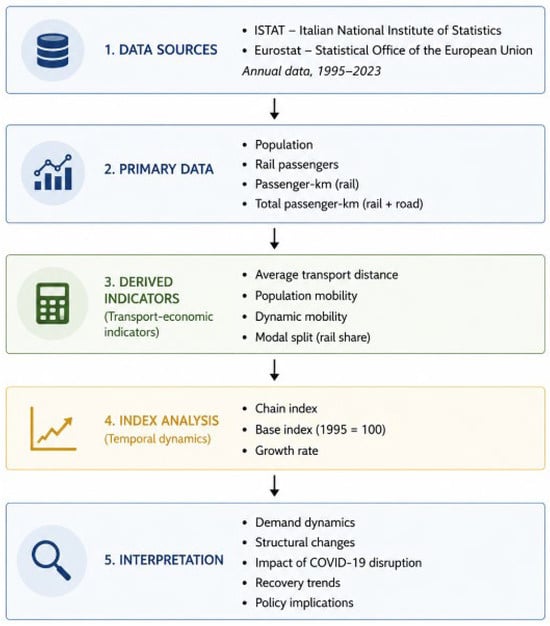
The overall methodological framework applied in the study is summarized in Figure 1.
Figure 1.
Methodological framework of the study.
Figure 1 summarizes the analytical procedure applied in the study, including data collection, derivation of transport-economic indicators, index analysis, and interpretation of long-term railway mobility dynamics.
Although time-series analytical approaches were considered during the methodological design of the study, the relatively limited number of annual observations and the presence of substantial exogenous disruption during the pandemic period reduced the suitability of more advanced econometric time-series modeling. Consequently, the study applies index-based structural analysis focused on long-term mobility dynamics and comparative development patterns rather than predictive time-series forecasting [26].
The literature review indicates that while fundamental railway indicators are established in transport economics, there is a lack of comprehensive, multi-dimensional frameworks that utilize long-term, index-based analysis to differentiate between structural growth and external systemic shocks. This study addresses this gap by creating a unified framework that links population-level dynamic mobility indicators with structural interpretation, focusing on Italian railway performance over an extended period.
3. Dynamics and Structural Changes in Economic Indicators of Passenger Rail Transport in Italy (2010–2024)
For the purposes of analytical transparency and reproducibility, all primary and derived indicators for the period 2010–2024 are presented in tabular form. Table 1 contains the primary dataset, which constitutes the fundamental statistical basis from which all subsequent indices are calculated. The following analysis focuses on identifying key developmental trends, structural shifts, and systemic turning points within the Italian rail passenger transport sector. Detailed comments and evaluations of individual indicators—ranging from transport volume to dynamic population mobility—are elaborated within this study, with particular emphasis placed on the transformative year of 2015 and the subsequent resilience of the sector in the face of global exogenous shocks.
Table 1.
Basic railway transport data in Italy (2010–2024) [27].
3.1. Primary and Derived Indicators in Tabular Form
Table 1 contains the primary dataset, which constitutes the fundamental statistical basis from which all subsequent indices are calculated. It contains basic data about the railway transport in Italy during the years 2010 to 2024.
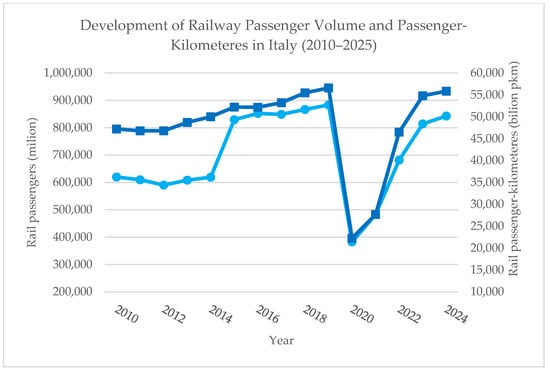
Figure 2 shows the development of railway passenger volume and passenger-kilometers in Italy. A significant decrease in both the volume of passengers and passenger-kilometers during 2020, the worst year of the pandemic, can be observed.
Figure 2.
Development of railway passenger volume and passenger-kilometers in Italy (2010–2024): squares—rail passengers; circles—rail passenger-kilometers.
Derived economic indicators, representing the relationship between transport performance and population dynamics, are summarized in Table 2. The indicators selected for comparison were the average transport distance and population mobility defined by trips and km per inhabitant.
Table 2.
Derived economic indicators (2010–2024).
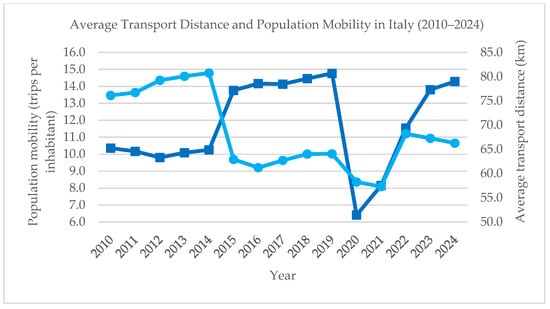
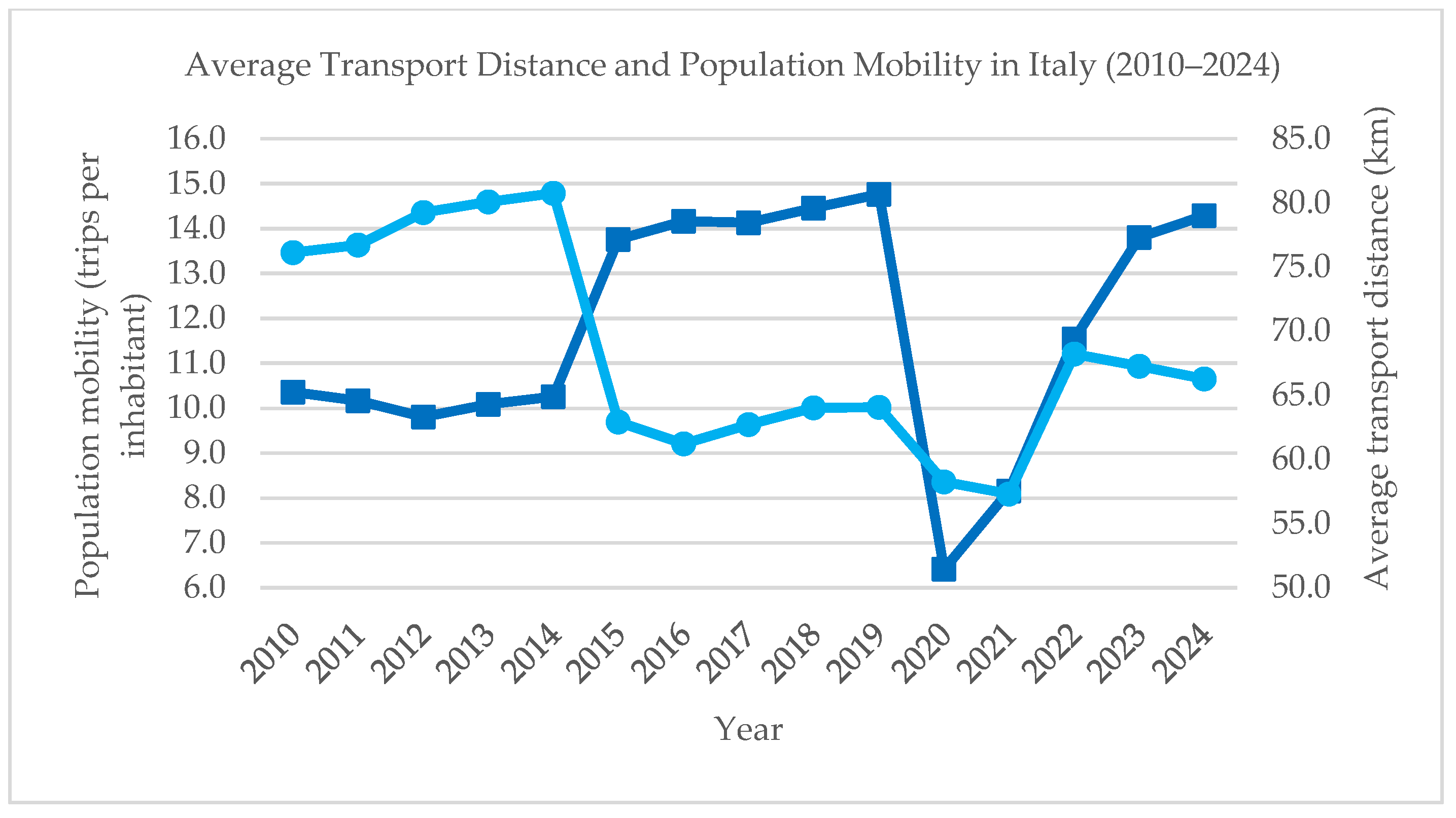
Figure 3 shows the development of average transport distance and population mobility in Italy.
Figure 3.
Development of average transport distance and population mobility in Italy (2010–2024): squares—population mobility; circles—average transport distance.
The analytical core of this study—the index-based evaluation of key indicators—is detailed in Table 3, Table 4 and Table 5. These tables provide the chain index, annual growth rate and base index for each parameter.
Table 3.
Index analysis of average transport distance (Italy, 2010–2024).
Table 4.
Index analysis of population mobility (Italy, 2010–2024).
Table 5.
Index analysis of dynamic population mobility (Italy, 2010–2024).
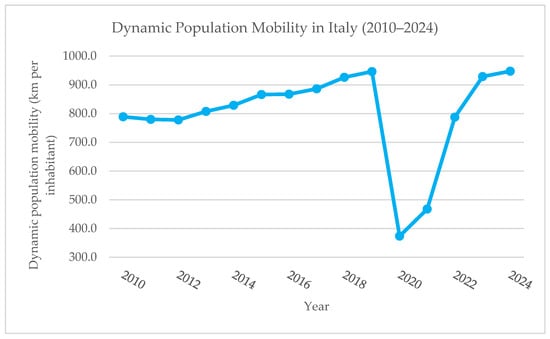
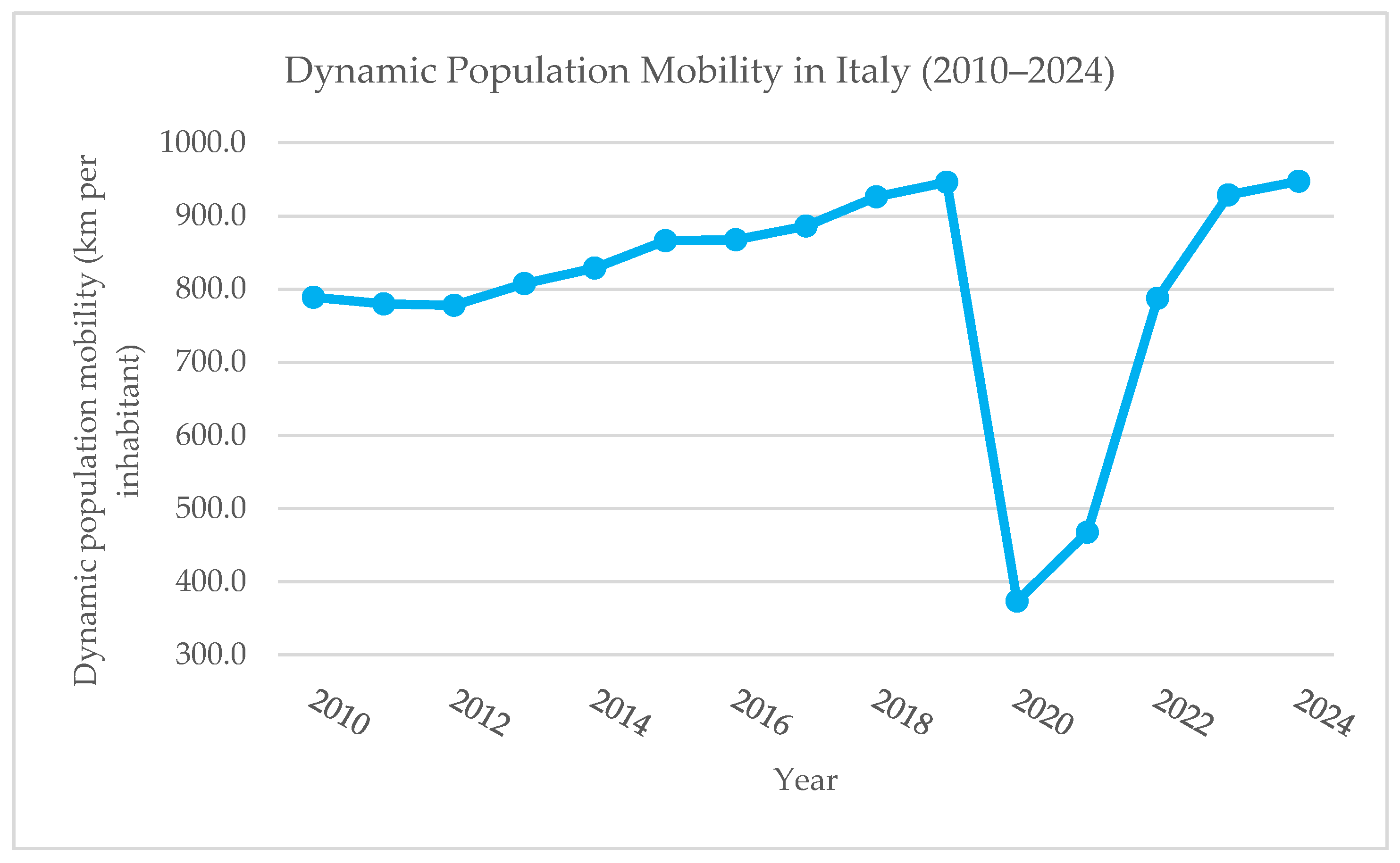
Figure 4 shows dynamic population mobility in Italy.
Figure 4.
Dynamic population mobility in Italy (2010–2024).
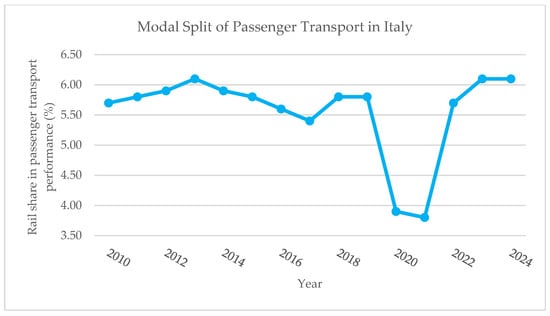
Figure 5 shows the modal split of railway population mobility in Italy.
Figure 5.
Modal split of railway passenger transport in Italy (2010–2024).
The tabular structure enables clear year-by-year comparison and provides the numerical foundation for index calculations and graphical representation.
From the tabular dataset, several structural characteristics become immediately observable:
- Moderate stability in passenger volume and performance between 2010 and 2014;
- A structural break in 2015, characterized by a sharp increase in passenger numbers and population mobility, accompanied by a decline in average transport distance;
- Severe contraction in 2020 across all demand-related variables;
- Progressive recovery and re-stabilization between 2021 and 2024.
3.2. Evaluations of Primary and Derived Indicators
This study builds upon the previous findings and examines the developmental dynamics of the Italian railway sector in greater detail through index analysis [27]. Comments and evaluations of the primary and derived indicators in this section facilitate a deeper understanding of year-on-year changes and long-term structural trends that shaped the stability and transformation of the sector during the analyzed period.
3.2.1. Development of Passenger Volume and Transport Performance
At the beginning of the analyzed period (2010), railway passenger transport in Italy operated at a relatively high level of demand. Approximately 620 million passengers were transported, generating around 47.2 billion passenger-kilometers. During the period 2010–2014, passenger numbers fluctuated moderately within a narrow range between approximately 590 and 620 million passengers. Passenger-kilometers exhibited relative stability, with gradual increases reflecting incremental improvements in service provision and demand stability. However, a significant structural shift occurred in 2015.
Passenger volume increased sharply from approximately 619 million (2014) to 829 million (2015), representing a rise of over 30%. At the same time, passenger-kilometers increased only moderately. This divergence between passenger growth and transport performance implies a change in demand composition rather than uniform system expansion.
The simultaneous decline in average transport distance—from around 81 km in 2014 to approximately 63 km in 2015—confirms that the surge in passenger volume was primarily driven by short- and medium-distance travel segments. This observed shift may be associated with several interacting factors:
- Expansion of regional rail services;
- Increased service frequency and competitive pricing;
- Market liberalization effects and intensified high-speed rail competition;
- Greater behavioral integration of rail into everyday mobility.
The data suggests that 2015 marks a transition from volume stability to structural demand expansion, particularly in commuter and regional segments. The simultaneous increase in passenger frequency and reduction in average journey length suggests that the observed growth cannot be interpreted solely as a redistribution of existing long-distance demand. Instead, the Italian railway system appears to have generated additional mobility demand through improved accessibility, increased timetable frequency, and stronger integration between regional and high-speed services. From a transport economics perspective, this pattern corresponds to induced demand effects typically observed in mature liberalized railway markets [28,29]. The results therefore indicate a functional transformation in mobility behavior rather than simple quantitative traffic growth.
From 2015 to 2019, passenger volume continued to grow gradually, reaching approximately 883 million in 2019. Transport performance also increased steadily, indicating that the expanded demand structure remained stable during the pre-pandemic period.
The year 2020 represents a clear systemic disruption. Passenger volume declined dramatically to approximately 382 million, and passenger-kilometers fell to roughly 22.3 billion. This contraction reflects the exogenous shock of the COVID-19 pandemic and mobility restrictions rather than endogenous structural weakness. In the subsequent years (2021–2024), passenger demand progressively recovered, approaching and eventually surpassing pre-pandemic levels. By 2024, passenger volume reached approximately 843 million, and passenger-kilometers returned to nearly 56 billion, indicating system resilience.
3.2.2. Modal Split (Division of Transport Work)
Modal share reflects the structural position of railway transport within the national mobility system. In 2010, rail accounted for approximately 5.7% of total passenger transport performance. Throughout the analyzed period, modal share fluctuated within a relatively narrow band between roughly 5% and 6%.
Despite growth in passenger volume and transport performance, railway transport did not experience a structural breakthrough in modal dominance. Even after the demand expansion observed in 2015, modal share increased only marginally.
This indicates that growth in railway performance occurred alongside growth in overall mobility demand across all modes. Overall, modal split analysis indicates relative structural stability rather than transformative modal shift.
The temporary decline in modal share in 2020 (to approximately 3.9%) reflects the differential impact of pandemic restrictions on rail compared to other modes. The recovery to approximately 6.1% by 2023–2024 suggests restoration of structural balance.
Overall, modal split analysis indicates relative structural stability rather than transformative modal shift. This finding is analytically important because it demonstrates that substantial increases in rail utilization do not automatically translate into large-scale intermodal redistribution. In the Italian case, railway growth primarily intensified internal system utilization while road transport retained structural dominance at the national level. This suggests that modal shift policies require coordinated cross-sector interventions rather than isolated railway infrastructure investment alone [30].
3.2.3. Average Transport Distance Evaluation
Average transport distance provides insight into demand composition. Between 2010 and 2014, average journey length increased gradually from approximately 76 km to over 80 km. This trend suggests strengthening of medium- and long-distance travel, potentially linked to high-speed rail expansion and improved intercity connectivity.
In 2015, however, the average distance declined sharply to approximately 63 km. This reduction coincides with the surge in passenger volume and confirms that new demand was concentrated in shorter-distance segments. From 2015 onward, the average distance stabilized within a lower structural range of approximately 62–67 km. This indicates that the system entered a new equilibrium characterized by:
- Higher passenger frequency;
- Stronger regional travel intensity
- Greater commuter integration.
The decline observed in 2020 reflects reduced long-distance travel during pandemic restrictions. Subsequent partial recovery indicates gradual normalization, though the structural shift toward shorter average journeys remains evident.
The persistence of lower average journey lengths after 2015 indicates that the observed changes were not temporary fluctuations but part of a longer-term shift in travel composition. The persistence of lower average journey lengths after 2015 indicates that the observed transformation was not temporary. Instead, the railway system entered a new operational equilibrium characterized by higher-frequency regional mobility and increased commuter integration. Such structural behavior is typical for advanced railway systems in which future growth increasingly depends on accessibility and service density rather than expansion of long-distance demand alone.
3.2.4. Population Mobility
Population mobility measures the number of rail trips per inhabitant. Between 2010 and 2014, this indicator remained relatively stable at around 10 trips per inhabitant annually. This stability indicates consistent integration of railway services into societal mobility patterns. In 2015, population mobility increased sharply to nearly 14 trips per inhabitant, reflecting the substantial rise in passenger volume relative to population size. The elevated post-2015 level indicates stronger long-term integration of rail transport into everyday mobility patterns.
The sharp contraction in 2020 (approximately 6 trips per inhabitant) represents an exceptional systemic disturbance. Recovery in 2021–2024 demonstrates resilience and restoration of societal rail usage. By 2024, population mobility approaches or exceeds pre-pandemic levels, suggesting re-stabilization of behavioral integration.
3.2.5. Dynamic Population Mobility
Dynamic population mobility combines frequency and distance by measuring total rail travel distance per inhabitant. Between 2010 and 2014, this indicator fluctuated within approximately 780–830 km per inhabitant, indicating stable utilization intensity.
From 2015 onward, despite the decline in average transport distance, dynamic mobility continued to increase due to the substantial rise in trip frequency. By 2019, it reached approximately 946 km per inhabitant.
The simultaneous increase in trip frequency and reduction in average distance suggests intensification of regional and medium-distance railway utilization.
The pandemic shock in 2020 caused a dramatic contraction (approximately 373 km per inhabitant), followed by progressive recovery. By 2024, dynamic mobility again exceeds 940 km per inhabitant, suggesting restoration of pre-pandemic utilization intensity.
3.2.6. Chain Index Analysis: Short-Term Dynamic and Structural Sensitivity
The chain index evaluates year-on-year relative change and therefore captures short-term system dynamics. Unlike absolute values, which describe magnitude, the chain index reveals acceleration, deceleration, and structural breaks.
Pre-Transformation Phase (2010–2014)
During the period 2010–2014, chain indices for average transport distance, population mobility, and dynamic mobility remained close to 1.00. Annual growth rates were moderate and fluctuated within a limited band. This pattern indicates relative structural stability. The railway system operated within a mature equilibrium characterized by:
- Stable travel behavior;
- Moderate performance growth;
- Balanced interaction between passenger volume and travel distance.
- No significant volatility or structural shock is observable in this phase.
Structural Expansion Phase (2015–2019)
The year 2015 marks a clear discontinuity in chain index values, particularly for population mobility. Population mobility exhibits a chain index of approximately 1.34 in 2015, corresponding to growth above 30%. This magnitude is atypical for mature transport systems and therefore indicates structural change rather than cyclical fluctuation. At the same time:
- Average transport distance shows a strong negative growth rate (chain index below 0.80);
- Dynamic mobility continues to increase moderately.
This divergence between indicators is analytically important. A sharp rise in trip frequency combined with a decline in average journey length implies compositional restructuring of demand. The system did not simply grow; it rebalanced toward shorter and more frequent trips. This pattern may be associated with the combined effects of railway liberalization, increased service frequency, and stronger integration between regional and high-speed rail services observed in Italy after the mid-2010s.
From 2016 to 2019, chain indices stabilized again near 1.00, indicating that the new demand structure established in 2015 became the system’s new equilibrium. Thus, 2015 may be interpreted as a major turning point in mobility dynamics characterized by substantial changes in passenger frequency and travel composition rather than as a temporary statistical fluctuation.
The observed divergence between strong passenger growth and declining average travel distance indicates that the railway system generated additional mobility demand rather than merely redistributing existing long-distance passengers. From a transport economics perspective, this pattern is characteristic of induced demand stimulated by increased service accessibility, higher timetable density, service integration, and competitive pricing strategies in liberalized railway markets. The findings therefore suggest a structural reorganization of mobility behavior in which rail transport expanded its functional role within everyday travel patterns, particularly in short- and medium-distance segments. Consequently, the Italian case illustrates how mature railway systems can intensify utilization and societal integration even without substantial changes in overall modal share [31,32].
Systemic Shock Phase (2020)
The chain indices for 2020 show extreme contraction across all demand-related indicators. Dynamic mobility exhibits a chain index below 0.40, representing a contraction exceeding 60%. Population mobility declines similarly. Such synchronized collapse across independent indicators confirms that the shock was systemic and exogenous rather than structural weakness in railway operations.
Importantly, average transport distance also decreases, suggesting disproportionate suppression of long-distance travel during mobility restrictions. From an economic perspective, 2020 represents demand compression rather than structural degradation.
Recovery and Adjustment Phase (2021–2024)
Post-2020 chain indices return above 1.00, reflecting recovery dynamics. However, the magnitude of the rebound varies across indicators. Dynamic mobility shows exceptionally high positive growth in 2022 (chain index significantly above 1.5). This reflects base-effect recovery rather than organic structural expansion. By 2023–2024, chain indices again approach 1.00, indicating gradual normalization and stabilization.
The asymmetry of recovery—a strong initial rebound followed by moderation—suggests adaptive reconfiguration of travel patterns rather than simple restoration of pre-shock conditions.
3.2.7. Base Index Analysis: Long-Term Structural Development (Base Year 2010)
While the chain index captures short-term dynamics, the base index reveals long-term structural change relative to the reference year 2010.
Long-Term Demand Intensity
Dynamic mobility base index values exceed 1.10 during several pre-pandemic years, indicating that per capita railway utilization strengthened structurally compared to 2010. By 2019, dynamic mobility is approximately 20% above the 2010 level. This confirms that the expansion observed after 2015 was not temporary but structurally embedded. Similarly, population mobility-based indices exceeded 1.30 in the late 2010s, demonstrating sustained behavioral integration of rail transport.
Structural Reconfiguration of Average Distance
The base index for average transport distance behaves differently.
After 2015, the base index remains below 1.00, confirming that the system permanently shifted toward shorter average journeys compared to 2010. This does not imply system decline. Rather, it indicates structural redistribution of travel composition.
A lower average distance combined with higher dynamic mobility implies intensified network usage concentrated in shorter segments. This structural pattern is consistent with the transition from predominantly intercity-oriented rail demand toward a more spatially integrated mobility system combining high-frequency regional services and high-speed corridors. Such development is typical for mature railway systems where future growth increasingly depends on network accessibility and service integration rather than infrastructure expansion alone.
Pandemic Disruption in Base Perspective
In 2020, base indices for all indicators declined sharply below 1.00. However, subsequent years show progressive convergence toward or above base-year levels. By 2024:
- Dynamic mobility approaches or exceeds the 2010 reference level;
- Population mobility significantly surpasses the base year;
- Average distance remains structurally below 2010 levels.
This confirms that the long-term observable structural change initiated in 2015 persists despite temporary disruption.
3.2.8. Growth Rate Interpretation and Phase Differentiation
Growth rate analysis allows identification of distinct development regimes within the time series.
Phase 1: Structural Stability (2010–2014)—Variations reflect incremental adjustments rather than transformation.
Phase 2: Structural Expansion (2015–2019)—This phase is characterized by:
- Expansion in trip frequency;
- Intensification of regional and commuter demand;
- Reinforcement of the railway’s societal role.
Phase 3: Systemic Contraction (2020)—extremely negative growth rates across all indicators represent external demand suppression. The simultaneous decline confirms the systemic nature of the shock.
Phase 4: Recovery and Re-Stabilization (2021–2024)—high positive growth immediately after 2020 reflects a base-effect rebound. Subsequent moderation indicates stabilization rather than overshooting.
The absence of prolonged negative growth confirms structural resilience.
Integrated Interpretation of Index Results
The index analysis demonstrates that the Italian railway passenger system between 2010 and 2024 is characterized by:
- Long-term structural intensification of per capita utilization;
- A major compositional shift in 2015 toward shorter but more frequent travel;
- High sensitivity to systemic mobility restrictions;
- Strong post-shock recovery capacity.
Importantly, modal share stability combined with rising dynamic mobility suggests that railway growth primarily reinforced its internal utilization rather than transforming inter-modal competition. The evidence indicates structural maturity rather than volatility. Fluctuations observed during the analyzed period are predominantly cyclical or externally induced.
From a transport economics perspective, the Italian railway passenger system demonstrates resilience, adaptive capacity, and sustained societal integration despite operating within a transport environment structurally dominated by road transport.
Overall, the differentiated phase structure identified through index analysis suggests that the Italian railway passenger market behaves as a mature adaptive system rather than a volatile growth-dependent sector. Demand fluctuations were primarily associated with exogenous shocks and structural mobility adjustments, while the long-term trajectory remained comparatively stable. This distinction is important because it indicates that railway performance in Italy is increasingly determined by behavioral and organizational factors rather than by simple infrastructure expansion.
4. Discussion
This study evaluated the development of selected economic indicators of railway passenger transport in Italy over the period 2010–2024. The analysis integrated passenger volume, passenger-kilometers, modal split, average transport distance, population mobility, dynamic mobility, and index-based time-series evaluation.
The results demonstrate that the Italian railway passenger system is characterized by structural maturity, internal adaptability, and long-term societal integration. Three major structural insights emerge from the analysis.
4.1. Structural Stability with Internal Reconfiguration
Between 2010 and 2014, the system operated within a relatively stable equilibrium. Passenger volume, transport performance, and per capita mobility indicators exhibited moderate fluctuations without structural volatility.
However, 2015 represents a clear structural turning point. The substantial increase in passenger numbers, combined with a simultaneous decline in average transport distance, indicates a compositional shift in demand. The railway system transitioned toward:
- Higher trip frequency;
- Stronger regional and commuter integration;
- Shorter average journey lengths;
- Increased per capita usage intensity.
Importantly, this transformation was not temporary. Subsequent years confirm that the post-2015 demand structure became the new equilibrium.
The mobility changes observed after 2015 are broadly consistent with earlier studies on Italian railway liberalization and high-speed rail development. Previous research emphasized that increased competition, improved timetable frequency, and enhanced network accessibility strengthened the attractiveness of rail transport in major Italian corridors [3,4,5,6]. The present analysis extends these findings by indicating that the observed effects were reflected not only in aggregate passenger growth but also in long-term changes in travel behavior, mobility intensity, and average journey structure.
Comparable post-liberalization mobility patterns were also identified in Spain and France, where high-speed rail expansion and increased operational competition contributed to higher railway utilization intensity, particularly in medium-distance travel corridors [5,6,31]. In this regard, the Italian case appears consistent with broader European trends observed in mature railway systems undergoing market-oriented restructuring. In contrast, some Central and Eastern European railway systems have experienced slower growth in railway mobility intensity due to weaker service integration and lower infrastructure modernization levels, suggesting that institutional and operational factors may play a substantial role in long-term railway competitiveness.
This finding suggests that Italian railway development during the analyzed period was not merely quantitative growth but structural demand expansion.
The identified post-2015 mobility pattern is broadly consistent with previous studies on Italian railway liberalization and high-speed rail development. Earlier research emphasized that improvements in service frequency, accessibility, and market competition increased the attractiveness of rail transport, particularly in densely populated corridors [3,4,5,6,32]. The present analysis extends these findings by showing that the observed changes were reflected not only in transport performance but also in long-term per capita mobility intensity and travel behavior structure.
Similar mobility patterns have been observed in other mature European railway systems characterized by high-speed rail expansion and market liberalization. Previous studies from France, Spain, and the United Kingdom reported that improvements in service frequency and network accessibility often stimulate additional short- and medium-distance rail demand rather than exclusively replacing long-distance travel [5,6,13]. The Italian case therefore appears consistent with broader European trends in which railway modernization increases mobility intensity through behavioral adaptation and greater integration into everyday travel patterns.
4.2. Modal Position: Reinforcement Rather than Transformation
Despite growth in passenger volume and dynamic mobility, modal share remained within a narrow range of approximately 5–6%.
This indicates that railway transport strengthened its internal utilization without fundamentally altering its relative position within the national transport system, where road transport remains dominant.
From a transport policy perspective, this implies that infrastructure investment and service expansion successfully intensified rail usage but did not generate a large-scale modal shift.
Therefore, the Italian railway system can be described as: Structurally integrated but not structurally dominant.
This finding corresponds with previous transport-economic studies arguing that infrastructure modernization alone does not automatically produce large-scale modal redistribution in road-dominated mobility systems [6,13]. The Italian case therefore supports the argument that railway competitiveness depends not only on infrastructure quality but also on broader intermodal policy coordination, urban accessibility, and integration with regional transport systems.
At the same time, the relatively stable modal share observed in Italy corresponds with findings from several European transport studies indicating that railway modernization alone does not necessarily produce transformative modal redistribution in highly motorized economies [6,13]. Similar patterns were identified in Germany and France, where railway systems increased passenger intensity and operational competitiveness while road transport retained structural dominance at the national scale.
The relatively stable modal share observed in Italy also corresponds with findings from several European transport studies showing that even substantial railway investment does not automatically generate large-scale modal redistribution in highly motorized societies [6,13]. Similar patterns have been identified in Germany and France, where railway systems achieved increased utilization intensity while road transport retained structural dominance at the national level. This suggests that modal shift depends not only on railway competitiveness but also on wider regulatory, urban, and behavioral factors.
4.3. Systemic Shock and Resilience
The year 2020 constitutes a clear exogenous structural break caused by the COVID-19 pandemic. Index analysis reveals synchronized contraction across all demand-related indicators.
However, the recovery trajectory observed between 2021 and 2024 demonstrates resilience. Passenger numbers, dynamic mobility, and modal share progressively returned to or exceeded pre-pandemic levels.
Crucially, the pandemic shock did not reverse the observable structural change initiated in 2015. The post-recovery system retains:
- High per capita mobility;
- Lower average journey length;
- Sustained demand intensity.
This confirms that the contraction was cyclical and externally induced rather than indicative of long-term structural decline.
The recovery trajectory observed after 2020 is also consistent with broader European evidence suggesting that railway transport demonstrates relatively strong post-crisis recovery potential once mobility restrictions are removed [9,10]. However, the Italian case additionally indicates that previously established mobility patterns remained structurally resilient despite temporary demand suppression. This suggests that long-term behavioral integration of rail transport may represent an important stabilizing factor in mature passenger railway systems.
The resilience observed in the Italian railway system after the pandemic is consistent with broader European evidence indicating relatively rapid recovery of rail demand following the removal of mobility restrictions [9,10]. However, the Italian case additionally suggests that previously established patterns of intensive rail utilization remained structurally stable despite temporary disruption. This may indicate that mature railway systems with strong societal integration possess comparatively high adaptive capacity during external mobility shocks.
The recovery dynamics identified in the Italian railway sector are also broadly consistent with post-pandemic railway recovery patterns observed across Europe [9,10]. However, the Italian case suggests that previously established mobility behavior remained relatively stable despite temporary demand suppression. This may indicate that mature railway systems with strong behavioral integration possess comparatively high adaptive resilience under conditions of external systemic disruption.
From a policy perspective, the observed recovery dynamics highlight the importance of maintaining operational continuity and service adaptability during periods of external mobility disruption.
4.4. Integrated Economic Evaluation
The Italian case also appears broadly consistent with developments observed in several other European railway systems undergoing liberalization and high-speed rail expansion. Studies from France and Spain reported that increased competition, service frequency, and network accessibility contributed not only to higher passenger volumes but also to changes in travel behavior and mobility intensity within medium-distance corridors [5,6,31]. In contrast, railway systems in parts of Central and Eastern Europe have often demonstrated slower growth in passenger mobility due to lower levels of infrastructure modernization, weaker service integration, and lower operational competitiveness. These differences suggest that institutional organization, accessibility, and operational quality may represent equally important determinants of long-term railway development as infrastructure investment itself. From a transport economics perspective, the Italian railway passenger system during 2010–2024 exhibits:
- Structural maturity;
- Demand elasticity in response to service improvements;
- Sensitivity to macro-level mobility restrictions;
- Strong adaptive recovery capacity.
The increase in dynamic population mobility over the long term suggests that railway transport has strengthened its functional relevance within Italian mobility patterns, even in the absence of dramatic modal share expansion.
The 2015 structural shift highlights the importance of:
- Competitive service provision;
- Increased frequency;
- Market liberalization;
- Regional service integration.
These factors appear to have stimulated additional demand rather than merely redistributing existing mobility.
The findings also contribute to the broader discussion on railway market liberalization and mobility behavior in mature European transport systems. The Italian case suggests that improvements in service frequency, accessibility, and operational competitiveness may stimulate additional rail demand even in transport systems where modal share remains relatively stable. This implies that railway development should not be evaluated exclusively through modal split indicators but also through changes in mobility intensity, travel behavior, and societal integration.
Unlike many previous studies focused primarily on infrastructure performance or high-speed rail competitiveness, the present study evaluates railway development through the combined perspective of passenger frequency, transport intensity, average travel distance, and long-term index dynamics. This multidimensional approach makes it possible to identify broader structural and behavioral mobility patterns that are less visible in studies relying exclusively on aggregate transport performance indicators.
From a broader transport-economics perspective, the study contributes to the discussion on how mature railway systems evolve under conditions of liberalization, infrastructure modernization, and changing mobility behavior. The results suggest that railway development should not be evaluated exclusively through aggregate transport performance or modal share indicators. Equally important are behavioral and intensity-based indicators that capture societal integration, travel frequency, and spatial mobility structure. In this regard, the Italian railway system demonstrates that significant changes in mobility utilization may occur even without radical shifts in the overall modal hierarchy.
4.5. Policy Implications
The empirical findings suggest that future railway policy in Italy should focus not only on infrastructure expansion but also on the operational and organizational dimensions of mobility integration. The post-2015 increase in passenger mobility was associated primarily with shorter and medium-distance travel segments, indicating that regional accessibility, timetable coordination, and service frequency may play a central role in long-term railway utilization growth. Policy makers should therefore prioritize investments aimed at increasing regional service frequency, improving timetable synchronization between regional and high-speed services, and strengthening multimodal accessibility in metropolitan and commuter corridors [31,32].
At the same time, the relatively stable modal share observed throughout the analyzed period indicates that railway investment alone may be insufficient to produce large-scale intermodal redistribution in highly motorized transport systems. Consequently, effective modal-shift strategies may require broader coordination with urban mobility policy, multimodal integration, and transport-demand management measures. Given the relatively stable modal share observed during the analyzed period, transport policy should combine railway investment with complementary demand-management measures such as integrated ticketing systems, urban park-and-ride infrastructure, congestion pricing, and coordinated regional mobility planning [31,32].
The post-pandemic recovery of railway demand further suggests that mature railway systems characterized by strong societal integration possess comparatively high adaptive capacity under conditions of temporary external disruption. Maintaining operational flexibility and network continuity may therefore represent an important component of long-term transport-system resilience [24,33].
Future research could extend the present analysis through econometric structural break testing or causal modeling to statistically verify the observed changes in railway mobility dynamics. The observed post-pandemic recovery also indicates the importance of maintaining minimum operational continuity during periods of mobility disruption in order to preserve long-term passenger confidence and behavioral integration of railway transport.
The findings also imply that future railway policy in mature European systems may require greater emphasis on service integration, timetable coordination, and regional accessibility rather than exclusively focusing on large-scale infrastructure expansion. The Italian case suggests that operational and organizational improvements may generate substantial increases in rail utilization intensity even in already highly developed transport markets. This finding supports the argument that long-term railway competitiveness depends not only on infrastructure capacity but also on the quality, accessibility, and functional integration of transport services within broader mobility systems [24].
At the same time, the findings reveal an important structural paradox. Despite substantial growth in passenger frequency and dynamic mobility, the railway sector did not significantly alter its overall modal position within the national transport system. This suggests that improvements in railway performance alone may be insufficient to achieve large-scale modal transformation without broader systemic changes in pricing policies, urban mobility integration, and road transport regulation [31,32].
Several limitations should be acknowledged. The analysis is based on aggregated annual indicators and therefore does not capture regional heterogeneity, socio-economic differentiation, or route-specific demand behavior. In addition, the study does not apply formal econometric causality modeling or structural-break testing. Future research could therefore extend the present approach through panel-data analysis, regional demand modeling, or econometric evaluation of liberalization and infrastructure effects on railway mobility dynamics.
An analysis of Italian railway passenger transport from 2010 to 2024 reveals a post-2015 structural shift toward higher trip frequency, shorter average journeys, and increased usage intensity, indicating a mature, adaptable system [3,4,5,6,31]. While high-speed rail development, liberalization, and regional integration strengthened rail’s role, the modal share remained stable, demonstrating that infrastructure improvement does not automatically yield a massive shift away from road transport [6,13,14]. Despite a severe exogenous shock in 2020 due to the COVID-19 pandemic, the system exhibited resilience, with recovery trends confirming that the post-2015 structural transformation was sustained rather than reversed [9,10].
5. Conclusions
The Italian railway passenger system between 2010 and 2024 can be characterized as:
- Mature and structurally stable;
- Internally adaptive;
- Resilient to external systemic shocks;
- Moderately competitive within a road-dominated transport structure.
The empirical evidence indicates that fluctuations observed during the analyzed period are predominantly cyclical or externally driven, while the underlying structural relevance of railway transport remains intact.
The analysis identified several distinct phases in the development of the Italian railway passenger system, including post-2015 demand expansion, pandemic-related contraction, and subsequent recovery. Despite these shifts, the system demonstrated relatively strong long-term adaptive continuity and recovery capacity.
Although the study provides a long-term structural interpretation of railway mobility dynamics in Italy, the analysis is based on aggregated annual indicators and does not apply formal econometric causality modeling. Future research could therefore extend the present approach through regional-level analysis or econometric investigation of railway liberalization and mobility behavior in European transport systems.
The findings also support broader European evidence suggesting that mature railway systems can increase mobility intensity and societal integration even without radical changes in the overall modal hierarchy.
The Italian case demonstrates that long-term railway development in mature transport systems depends not only on infrastructure expansion but also on the behavioral integration, accessibility, and operational attractiveness of railway mobility within everyday transport patterns.
In conclusion, the longitudinal analysis of the Italian railway passenger system highlights that its evolutionary trajectory cannot be characterized as a linear or passive stable trend. Instead, the system’s development is defined by a profound capacity to absorb severe exogenous shocks and execute structural recovery. The unprecedented pandemic shock of 2020 triggered an immediate, sharp contraction in both passenger volumes and passenger-kilometers, yet it did not disintegrate the underlying demand model established after 2015. The subsequent rapid recovery phase confirms that mature, socio-economically integrated railway systems possess high systemic resilience. Ultimately, these findings indicate that long-term railway competitiveness relies on structural adaptability, where post-crisis recovery serves as a mechanism to reinforce, rather than reverse, pre-existing mobility patterns.
Author Contributions
Conceptualization, E.B. and R.R.R.; methodology, F.B.; software, R.R.R.; validation, F.B., E.B. and R.R.R.; formal analysis, E.B.; investigation, R.R.R.; resources, E.B. and R.R.R.; data curation, R.R.R.; writing—original draft preparation, F.B. and E.B.; writing—review and editing, E.B., F.B. and R.R.R.; visualization, E.B.; supervision, F.B.; project administration, F.B.; funding acquisition, F.B. All authors have read and agreed to the published version of the manuscript.
Funding
This article was created in the context of the project KEGA 027ŽU-4/2024 supported by the Ministry of Education, Research, Development and Youth of the Slovak Republic.
Institutional Review Board Statement
Not applicable.
Informed Consent Statement
Not applicable.
Data Availability Statement
All available data are presented in the article.
Acknowledgments
The paper is supported by the VEGA Agency by the Project 1/0485/24 “Increasing the efficiency and sustainability of rail and water transport in the context of environmental impacts” that is solved at the Faculty of Operation and Economics of Transport and Communications, University of Zilina.
Conflicts of Interest
The authors declare no conflicts of interest.
Abbreviations
The following abbreviations are used in this manuscript:
| HSR | High-Speed Rail |
| ISTAT | Italian National Institute of Statistics |
| OECD | Organisation for Economic Co-operation and Development |
| pkm | Passenger-kilometers |
| km | kilometers |
| % | percentage |
References
- Macioszek, E.; Świerk, P.; Granà, A.; Sobota, A. Application of a Logit Model to Identify Sociodemographic Factors Influencing the Choice of Public Transport for Daily Trips—A Case Study Based on the Example of the Górnośląska-Zagłębiowska Metropolis (Poland). Transp. Probl. 2024, 19, 15. [Google Scholar] [CrossRef] [Scilit]
- Cascetta, E.; Coppola, P. New-generation high-speed rail and its impacts on regional development: The case of Italy. Engineering 2016, 2, 480–488. [Google Scholar]
- Desmaris, C. The reform of passenger rail services in Italy: A focus on the competition for the market. Res. Transp. Econ. 2016, 59, 233–245. [Google Scholar]
- Croccolo, F.; Violi, A. The liberalization of the Italian high-speed rail market and its impact on the railway system. Case Stud. Transp. Policy 2021, 9, 1654–1662. [Google Scholar]
- Beria, P.; Bertolin, A. The Italian high speed railway system: A post-occupancy evaluation. Transp. Res. Procedia 2019, 38, 724–744. [Google Scholar]
- Cascetta, E.; Carteni, A.; Henke, I.; Pagliara, F. Economic growth, transport accessibility and regional equity: A case study of the Italian high-speed rail system. Transp. Res. Part A Policy Pract. 2020, 139, 412–426. [Google Scholar] [CrossRef] [Scilit] [PubMed]
- ISTAT (Italian National Institute of Statistics). Passenger Mobility in Italy (2010–2023); ISTAT: Rome, Italy, 2024.
- Rothengatter, W. Economic Indicators of Railway Performance. In Handbook of Transport Economics; Button, K., Hensher, D.A., Eds.; Elsevier: Amsterdam, The Netherlands, 2010; pp. 341–360. [Google Scholar]
- Bergantino, A.S.; Capozza, C.; Capurso, M. The impact of COVID-19 on transport demand: Evidence from the Italian case. Transp. Policy 2021, 111, 118–127. [Google Scholar]
- Eurostat. Railway Passenger Transport Statistics—Quarterly and Annual Data; European Commission: Luxembourg, 2024.
- OECD. Main Economic Indicators: Sources and Methods; Organization for Economic Cooperation and Development: Paris, France, 2018.
- Shumway, R.H.; Stoffer, D.S. Time Series Analysis and Its Applications, 4th ed.; Springer: New York, NY, USA, 2017. [Google Scholar]
- Quinet, E.; Vickerman, R. Principles of Transport Economics; Edward Elgar Publishing: Cheltenham, UK, 2004. [Google Scholar]
- UIC. Railway Statistics Synopsis; International Union of Railways: Paris, France, 2023. [Google Scholar]
- Bulkova, Z.; Gasparik, J. Comparison of the Process of Public Tender and Direct Award in Rail Passenger Transport in Slovakia. Transp. Res. Procedia 2024, 77, 143–150. [Google Scholar] [CrossRef] [Scilit]
- Bulková, Z.; Gašparík, J.; Poliak, M.; Pečený, L. Technological Aspects of Tendering in Rail Passenger Transport in Slovakia. Period. Polytech. Transp. Eng. 2023, 51, 200–208. [Google Scholar] [CrossRef] [Scilit]
- Gasparik, J.; Mesko, P.; Zahumenska, Z. Methodology for tendering the performances in long distance rail passenger transport. Period. Polytech. Transp. Eng. 2019, 47, 19–24. [Google Scholar] [CrossRef] [Scilit]
- Levy, P.S.; Lemeshow, S. Sampling of Populations: Methods and Applications; John Wiley & Sons: Hoboken, NJ, USA, 2008. [Google Scholar]
- UNSD. Manual on Consumer Price Indices: Theory and Practice; United Nations: New York, NY, USA, 2020. [Google Scholar]
- Boriah, S. Similarity measures for time series data. In Proceedings of the SIAM International Conference on Data Mining, Atlanta, GA, USA, 24–26 April 2008; pp. 559–570. [Google Scholar]
- Gašparík, J.; Záhumenská, Z.; Pečený, L. Competitive tendering in the rail passenger transport focusing to the long distance lines. In Proceedings of the 21st International Scientific Conference Transport Means, Juodkrantė, Lithuania, 20–22 September 2017; pp. 351–355. [Google Scholar]
- Bulková, Z.; Gašparík, J.; Zitrický, V.; Abramović, B. Tendering of rail transport services in Slovakia. In Proceedings of the Business Logistics in Modern Management, 23rd International Scientific Conference on Business Logistics in Modern Management, Osijek, Croatia, 5–6 October 2023; pp. 391–410. [Google Scholar]
- Chitti, M.; Beria, P. A planning history of high-speed rail in Italy. J. Public Trans. 2025, 27, 100126. [Google Scholar] [CrossRef] [Scilit]
- European Commission. Communication from the Commission: High-Speed Rail Plan for Europe; CELEX 52025DC0439; Euro-Lex: Brussels, Belgium, 2025; Available online: https://eur-lex.europa.eu/legal-content/EN/TXT/HTML/?uri=CELEX%3A52025DC0439&utm (accessed on 21 May 2026).
- Cascetta, E.; Henke, I.; Pagliara, F. Economic growth, transport accessibility and regional equity impacts of high-speed railways in Italy: Ten years ex post evaluation and future perspectives. Trans. Res. Part A Policy Pract. 2020, 139, 412–428. [Google Scholar] [CrossRef] [Scilit] [PubMed]
- VTM Global. High-Speed Progress: How Liberalization Is Shaping Rail in Europe; VTM Global: Lisbon, Portugal, 2025; Available online: https://vtm-global.com/2025/05/20/high-speed-progress-how-liberalization-is-shaping-rail-in-europe/ (accessed on 20 May 2026).
- ISTAT—Italian National Institute of Statistics. Population Data and Demographic Statistics. Available online: https://www.istat.it (accessed on 20 March 2026).
- Russo, F. Railway Demand Evaluation: HSR Induced Component. In Data Analytics for Transport Systems; Springer: Cham, Switzerland, 2024; pp. 173–187. [Google Scholar] [CrossRef] [Scilit]
- Avogadro, N.; Redondi, R. Diverted and induced demand: Evidence from the London–Paris passenger market. Res. Transp. Econ. 2023, 100, 101304. [Google Scholar] [CrossRef] [Scilit]
- Ferrovie dello Stato Italiane. Concorrenza e Alta Velocitá: Studio e Ricerche; FS Italiane: Rome, Italy, 2026; Available online: https://www.fsitaliane.it/content/dam/fsitaliane/Documents/centro-studi/studi-e-ricerche/2026/febbraio/20260202_concorrenza_alta_velocita_most.pdf (accessed on 20 May 2026).
- Railway Pro: Italy’s Strategic Plan 2025–2029 Targets Historic Investments; Railway Pro: Bucharest, Romania, 2025; Available online: https://www.railwaypro.com/wp/italys-strategic-plan-2025-2029-targets-historic-investments/ (accessed on 21 May 2026).
- Pagliara, F.; Aria, M.; Cestellucicio, A.; Tartaglia, M.; D’Aniello, L. Planning the future of rail in the post-COVID era. Transp. Plan. Technol. 2024, 47, 1–26. [Google Scholar] [CrossRef] [Scilit]
- International Union of Railways (UIC). Mobility Post-COVID: An Opportunity for Railways; UIC: Paris, France, 2021; Available online: https://uic.org/IMG/pdf/mobility-post-covid-an-opportunity-for-railways.pdf (accessed on 20 May 2026).

Disclaimer/Publisher’s Note: The statements, opinions and data contained in all publications are solely those of the individual author(s) and contributor(s) and not of MDPI and/or the editor(s). MDPI and/or the editor(s) disclaim responsibility for any injury to people or property resulting from any ideas, methods, instructions or products referred to in the content. |
© 2026 by the authors. Licensee MDPI, Basel, Switzerland. This article is an open access article distributed under the terms and conditions of the Creative Commons Attribution (CC BY) license.