


Abstract
As digital transformation continues to reshape organizational operations, cultivating sustainable enterprise resource planning (ERP) competencies has become increasingly important for aligning higher education with industry needs. However, ERP learning is often characterized by high levels of complexity and may present substantial cognitive challenges for novice learners. Grounded in the People–Process–Technology (PPT) framework, this study conceptualizes Core ERP Competencies through three dimensions: System Operation Skills (technology dimension), Business Process Understanding (process dimension), and Perceived Overall ERP Capability (integration dimension). Drawing upon Cognitive Load Theory and pedagogical scaffolding principles, this study conceptualizes System Experience Configuration (SEC) as an instructional configuration framework that operationalizes different allocations of structured instructor guidance and autonomous system practice during flipped-classroom learning activities. A field-based quasi-experimental design was implemented in an undergraduate ERP course, involving unit-specific between-class comparisons across different SEC exposure sequences. Three levels of SEC were examined: Moderate, High, and Very High. To maintain an exploratory and theory-informed approach, non-directional hypotheses were developed to investigate whether different SEC conditions were associated with differences in ERP learning outcomes. Objective learning outcomes were assessed through unit-specific performance measures of System Operation Skills and Business Process Understanding, while Perceived Overall ERP Capability was evaluated through student self-reports after experiencing all three SEC conditions. The findings indicate that learning outcomes did not consistently improve as the proportion of autonomous practice increased. Across several unit-specific comparisons, the High SEC condition was associated with stronger performance than the Very High SEC condition, suggesting that extensive reductions in structured instructional support were not consistently associated with superior outcomes for novice ERP learners. At the same time, the results varied across competency dimensions and instructional units, indicating that the relationship between instructional guidance and learning outcomes may not be adequately explained by the assumption that increasing autonomous practice consistently improves performance. Given the design of the study, these findings should be interpreted as evidence of associations between instructional configurations and learning outcomes rather than as definitive causal effects. The findings are particularly relevant to hybrid information systems courses that combine hands-on practice with conceptual understanding, such as ERP and database education. Rather than assuming that increased practice time invariably leads to superior learning outcomes, educators may need to consider how different balances between guidance and autonomous practice support different dimensions of ERP learning. This study contributes empirical evidence regarding instructional configuration decisions in flipped ERP learning environments and provides practical implications for designing balanced learning experiences in complex digital learning contexts.
1. Introduction
Driven by the continuous advancement of digitalization and e-commerce, organizations increasingly require cross-functional information integration and process coordination. Enterprise Resource Planning (ERP) systems have long been recognized as the core platform for integrating internal business operations, spanning critical business functions such as finance, procurement, production, sales, inventory management, and distribution [1]. As organizational operations become highly dependent on real-time information flows, ERP systems have evolved beyond operational support tools and now play a central role in process integration and managerial decision-making. Prior research suggests that the value derived from ERP systems depends not only on technological capabilities but also on whether users possess sufficient ERP-related competencies [2,3].
Grounded in the People–Process–Technology (PPT) framework, this study conceptualizes “Core ERP Competencies” as comprising three dimensions: System Operation Skills (technology dimension), Business Process Understanding (process dimension), and Perceived Overall ERP Capability (integration dimension) [1,4,5]. Together, these dimensions reflect learners’ ability to perform system operations, understand process interdependencies, and develop an integrated perspective of ERP-supported organizational activities. Developing such competencies has become increasingly important in both higher education and digital transformation initiatives.
In higher education, flipped classrooms and experiential learning approaches have been widely adopted in ERP courses. The core rationale of these approaches is to relocate foundational knowledge acquisition to the pre-class phase while utilizing classroom time for hands-on system activities and process-oriented learning experiences [6,7,8]. However, ERP learning presents unique instructional challenges because learners must simultaneously acquire procedural system skills and conceptual business process knowledge within a limited timeframe. Existing studies suggest that the effectiveness of experiential learning depends not only on the amount of practice provided but also on how learning activities are structured and supported [9,10]. Without appropriate instructional guidance, intensive practice activities may place substantial demands on novice learners and potentially hinder knowledge integration [11]. Consequently, instructional design decisions concerning the balance between guidance and autonomous practice have become an important issue in ERP education [6,11].
Traditional discussions of experiential learning often emphasize the value of increased opportunities for practice in supporting learning outcomes. However, research in educational psychology and information systems education suggests that the relationship between instructional guidance and learning outcomes may be more nuanced [10,11]. Learners engaged in complex system environments frequently encounter difficulties in connecting procedural operations with broader business process concepts [2]. Cognitive Load Theory (CLT) further suggests that novice learners possess limited working-memory resources when interacting with complex information systems [12,13]. Under such circumstances, instructional guidance may help learners engage with complex learning tasks and may support learning in technology-intensive environments. At the same time, excessive guidance may become less beneficial as learner expertise develops [14]. These theoretical perspectives highlight the importance of examining how different configurations of instructional support and autonomous practice may be associated with ERP learning outcomes.
Although previous research has generally reported positive outcomes associated with flipped learning environments [7,15], relatively limited evidence exists regarding how different instructional configurations within flipped ERP courses are associated with the development of ERP-related competencies. To address this issue, this study focuses on System Experience Configuration (SEC), conceptualized as an instructional configuration framework that operationalizes different allocations of structured instructor guidance and autonomous student system practice during classroom activities. Rather than representing a new learning theory, SEC operationalizes pedagogical scaffolding principles through different allocations of instructional support and experiential practice within a flipped classroom environment. In this study, SEC is treated as an instructional configuration framework rather than a distinct learning theory, and its purpose is to operationalize varying allocations of instructional guidance and autonomous practice within ERP learning activities.
Under an identical pre-class video-learning framework, this study implemented three SEC conditions—Moderate, High, and Very High—representing different proportions of instructor guidance and autonomous practice. Using a field-based quasi-experimental design involving unit-specific between-class comparisons across different SEC exposure sequences, this study explores whether different SEC conditions are associated with variations in students’ System Operation Skills, Business Process Understanding, and Perceived Overall ERP Capability. Given the exploratory nature of the study and the practical constraints of authentic educational settings, the objective is not to establish definitive causal effects or identify an optimal instructional configuration, but rather to provide empirical evidence regarding how different instructional configurations may relate to ERP learning outcomes.
Accordingly, this study addresses the following research objectives:
- To examine whether different System Experience Configurations (SEC) are associated with differences in System Operation Skills (technology dimension of Core ERP Competencies);
- To examine whether different System Experience Configurations (SEC) are associated with differences in Business Process Understanding (process dimension of Core ERP Competencies);
- To explore whether learners report different levels of Perceived Overall ERP Capability (integration dimension of Core ERP Competencies) after experiencing different SEC conditions.
Overall, this study seeks to contribute empirical evidence regarding instructional configuration decisions in flipped ERP learning environments and to provide practical implications for designing learning experiences that balance instructional guidance and autonomous practice in complex information systems education.
2. Literature Review
This chapter reviews the theoretical foundations and prior research relevant to the present study. First, drawing upon the People–Process–Technology (PPT) framework and ERP education literature, the chapter defines the concept of Core ERP Competencies and explains its three dimensions: ERP System Operation Skills, Business Process Understanding, and Perceived Overall ERP Capability. Second, the chapter reviews research on experiential ERP learning, Cognitive Load Theory (CLT), scaffolding, guided instruction, and guidance-fading perspectives that have informed instructional design in technology-intensive learning environments.
Building upon these theoretical foundations, the chapter introduces System Experience Configuration (SEC) as an instructional configuration framework that operationalizes different allocations of structured instructor guidance and autonomous ERP system practice within flipped classroom activities. Rather than proposing a new learning theory, SEC is positioned as a contextualized instructional design framework informed by existing perspectives on cognitive load, scaffolding, and guided instruction.
Finally, the chapter identifies gaps in the existing literature and explains the research positioning of the present study. In particular, the study extends prior ERP and flipped-classroom research by examining how different instructional configurations may be associated with multiple dimensions of ERP learning outcomes. Together, the literature reviewed in this chapter provides the conceptual foundation for the research framework, hypotheses, and methodology presented in the subsequent chapters.
2.1. Core ERP Competencies
ERP systems serve as a core infrastructure for integrating organizational workflows and supporting digital transformation. Through shared databases and standardized procedures, ERP systems coordinate key business functions such as finance, procurement, production, sales, inventory management, and logistics [1]. As organizations become increasingly dependent on integrated information flows, the value of ERP systems depends not only on technological capabilities but also on whether users possess sufficient ERP-related competencies [2,3].
Grounded in the People–Process–Technology (PPT) framework, this study conceptualizes Core ERP Competencies as comprising three interrelated dimensions: System Operation Skills (technology dimension), Business Process Understanding (process dimension), and Perceived Overall ERP Capability (integration dimension) [1,4,5]. Together, these dimensions reflect learners’ ability to perform ERP-related tasks, understand cross-functional business processes, and develop an integrated perspective of ERP-supported organizational activities.
This conceptualization is consistent with prior research emphasizing that the value of enterprise systems emerges through the interaction of technological capabilities, business processes, and human actors [1,4]. Within ERP environments, technical proficiency alone is insufficient to realize organizational benefits. Users must also understand how individual transactions connect to broader organizational workflows and how information is shared across functional boundaries.
Accordingly, this study treats Core ERP Competencies as a multidimensional construct that encompasses both operational and conceptual aspects of ERP learning. These competencies provide the foundation for examining how different instructional configurations may be associated with ERP learning outcomes in flipped classroom environments.
2.2. ERP Competency Development and Cognitive Levels
Developing ERP competency involves more than acquiring isolated technical skills. Prior research has emphasized that successful ERP usage depends on users’ ability to integrate technical operations, process knowledge, and organizational understanding [2,3]. Accordingly, ERP competency development can be viewed as a multidimensional learning process that extends beyond procedural system use.
To better understand the cognitive characteristics of ERP learning, this study draws upon the revised Bloom’s Taxonomy of Educational Objectives [16]. Bloom’s framework provides a useful perspective for examining how different ERP competency dimensions may involve distinct levels of cognitive processing.
The technology dimension, represented by System Operation Skills, primarily involves the application of procedural knowledge. Learners are required to execute transactions, navigate ERP interfaces, and perform task-specific operations within the system. These activities are generally associated with the “Apply” level of Bloom’s taxonomy because students must use previously learned procedures in practical contexts.
The process dimension, represented by Business Process Understanding, involves a broader comprehension of cross-functional workflows and organizational processes. Rather than focusing solely on individual transactions, learners must understand how different ERP modules interact and how information flows across organizational functions. This dimension is therefore closely related to the “Understand” level of Bloom’s taxonomy.
The integration dimension, represented by Perceived Overall ERP Capability, reflects learners’ subjective evaluation of their ability to connect technical operations, business processes, and organizational contexts. This dimension requires learners to integrate knowledge acquired from multiple learning experiences and may involve higher levels of cognitive processing, including analysis and synthesis of ERP-related concepts.
Taken together, these competency dimensions suggest that ERP learning encompasses multiple cognitive levels and learning objectives. Consequently, instructional approaches that support one competency dimension may not necessarily produce equivalent outcomes in another. This perspective provides a foundation for examining how different instructional configurations may be associated with different aspects of ERP competency development.
2.3. Cognitive Load Theory and Guidance in ERP Learning
ERP learning presents unique instructional challenges because students must simultaneously acquire technical system operation skills and an understanding of integrated business processes [2]. During hands-on ERP activities, learners are often required to navigate multiple system functions, complete procedural tasks, and interpret cross-functional process relationships. As a result, ERP learning environments are frequently characterized by substantial cognitive demands.
Research in information systems education has emphasized the importance of experiential learning and hands-on practice for developing ERP-related competencies [2,17,18]. Through direct interaction with enterprise systems, learners can apply knowledge in authentic contexts and develop practical operational skills. Experiential learning perspectives further suggest that knowledge develops through the transformation and reflection of learning experiences [17,18,19].
Flipped classroom approaches have become increasingly popular in information systems education because they allow classroom time to be allocated to active learning, problem solving, and system-based practice activities [6,7]. Prior studies have generally reported positive outcomes associated with flipped learning environments [7,15,20]. However, research also suggests that the effectiveness of flipped classrooms depends not only on the amount of practice provided but also on how instructional activities are structured and supported [9,10,11].
From the perspective of Cognitive Load Theory (CLT), learning is constrained by the limited capacity of working memory, and instructional design should consider how cognitive resources are allocated during learning tasks [12,13,21]. Within complex learning environments, excessive task demands may create challenges for novice learners who have not yet developed well-organized knowledge structures [12,22]. Consequently, instructional guidance and pedagogical scaffolding are often regarded as important mechanisms for supporting learning, particularly when learners engage with unfamiliar or cognitively demanding tasks [11,23,24,25].
Rather than viewing experiential practice and instructional guidance as competing approaches, contemporary instructional perspectives increasingly emphasize how these elements can be combined to support effective learning [10,11]. This perspective is particularly relevant to ERP education, where learners must simultaneously develop operational skills, process understanding, and integrated competency. Consequently, understanding how different configurations of guidance and autonomous practice relate to ERP learning outcomes represents an important area for further investigation. Based on these theoretical perspectives, the present study proposes System Experience Configuration (SEC) as an instructional configuration framework for ERP learning.
2.4. Conceptual Positioning of SEC
Building upon the preceding discussion of Cognitive Load Theory, scaffolding, guided instruction, and related instructional design perspectives, this study introduces System Experience Configuration (SEC) as a contextualized instructional configuration framework for ERP learning environments. SEC refers to the allocation of structured instructional guidance and autonomous ERP system practice during classroom activities. Rather than representing a new learning theory, SEC is intended to operationalize different instructional configurations that vary the balance between guidance and experiential practice within flipped ERP classrooms.
In the present study, SEC is operationalized to represent different proportions of instructor guidance and autonomous ERP practice and is used to examine whether such instructional configurations are associated with ERP learning outcomes. As such, SEC focuses on the configuration of learning experiences implemented within classroom instruction rather than on proposing a new explanatory theory of learning. The concept draws upon established perspectives concerning instructional support, scaffolding, guidance fading, and cognitive load management, while emphasizing how these elements are organized within technology-intensive ERP learning environments.
Because SEC draws upon several established instructional perspectives, including scaffolding, guided instruction, productive failure, and Cognitive Load Theory, it is important to clarify its conceptual position relative to these related constructs. To address this issue and clarify the conceptual boundaries of SEC, Table 1 compares SEC with several instructional constructs frequently discussed in the instructional design literature.
Table 1.
Conceptual comparison between SEC and related instructional constructs.
As shown in Table 1, SEC is not proposed as a new learning theory. Rather, it is conceptualized as an instructional configuration framework that operationalizes varying allocations of instructional guidance and autonomous practice within ERP learning environments. The framework draws upon established perspectives summarized in Table 1 while focusing specifically on how different configurations of learning activities are implemented in flipped ERP classrooms.
Accordingly, SEC should be understood as a contextualized instructional design framework rather than a replacement for existing pedagogical theories. The purpose of SEC is to provide a practical means of examining how different balances of instructional guidance and autonomous ERP practice may be associated with ERP learning outcomes under authentic classroom conditions.
The contribution of SEC, therefore, lies not in introducing a new explanatory theory of learning but in providing an operational framework through which different allocations of instructional guidance and autonomous practice can be systematically implemented, compared, and examined within ERP learning environments. In this sense, SEC serves as a research and instructional design framework that helps translate established theoretical perspectives into observable classroom configurations.
Although Productive Failure is included in Table 1 as a related instructional construct, it was not directly implemented in the present study. It is included primarily to clarify the conceptual boundaries of SEC and to distinguish SEC from other instructional approaches that also vary the timing or amount of instructional guidance.
2.5. Integrating Cognitive Load Theory and System Experience Configuration
Cognitive Load Theory (CLT) proposes that learning is constrained by the limited capacity of working memory and that instructional design should consider how learning activities are structured to support schema construction [12,22,26]. Within technology-intensive learning environments, learners are often required to process multiple sources of information simultaneously, including procedural tasks, conceptual knowledge, and system interactions. Generative learning perspectives further suggest that meaningful learning involves actively selecting, organizing, and integrating information into coherent mental representations [30,31].
ERP learning represents a particularly complex educational context because students must acquire both technical system operation skills and an understanding of cross-functional business processes. Prior studies have suggested that instructional guidance may help novice learners navigate complex learning environments by reducing unnecessary processing demands and supporting knowledge organization [11,14,26]. At the same time, research on scaffolding, guidance fading, productive failure, and the Expertise Reversal Effect has emphasized that the effectiveness of instructional support may vary according to learning tasks, learner characteristics, and stages of expertise development [14,23,25,27,28,29,32]. Such characteristics make ERP learning a suitable context for examining how different allocations of instructional guidance and autonomous practice may be associated with learning outcomes.
Rather than representing a new learning theory, SEC is conceptualized in the present study as an instructional configuration framework that operationalizes different allocations of structured instructor guidance and autonomous system practice during classroom activities. As summarized in Table 1, SEC draws upon established perspectives from scaffolding, guided instruction, and Cognitive Load Theory [11,23,25,26] while focusing specifically on how instructional support and experiential practice are configured within flipped ERP learning environments.
In the present study, three SEC conditions—Moderate, High, and Very High—were implemented through different proportions of instructor guidance and autonomous ERP system practice. These conditions represent alternative instructional configurations rather than distinct pedagogical theories. The purpose of the study is not to validate Cognitive Load Theory, identify an optimal instructional configuration, or establish specific cognitive mechanisms. Instead, the study seeks to examine whether different SEC conditions are associated with differences in ERP learning outcomes across the dimensions of ERP System Operation Skills, Business Process Understanding, and Perceived Overall ERP Capability.
Accordingly, Cognitive Load Theory provides one theoretical perspective through which observed differences among SEC conditions may be interpreted, whereas SEC functions as the focal instructional design construct examined in the present study.
2.6. Research Gaps and Research Positioning
Prior research has established the importance of ERP systems in organizational process integration and has consistently emphasized the role of user competency in realizing the value of enterprise systems [1,2]. At the same time, substantial attention has been devoted to flipped classrooms, experiential learning, and technology-enhanced instruction within information systems education [2,6,7].
Despite these contributions, several research gaps remain. First, much of the existing literature has focused on broad comparisons between instructional approaches, such as flipped versus traditional classrooms or experiential versus lecture-based learning [7,8,15]. Comparatively less attention has been devoted to examining how different configurations of instructional guidance and autonomous practice operate within the same instructional framework. As a result, limited empirical evidence is available regarding how alternative instructional configurations may be associated with ERP learning outcomes.
Second, prior research has often treated ERP learning outcomes as a relatively unified construct. However, ERP competency development involves multiple dimensions, including technical system operation skills, business process understanding, and integrated perceptions of ERP capability. These dimensions may involve different forms of learning and cognitive processing and may therefore respond differently to instructional configurations that vary the balance between guidance and autonomous practice [2,16].
Third, although Cognitive Load Theory, scaffolding, guided instruction, productive failure, and guidance-fading research have generated important insights regarding instructional support [11,14,25,26,28,29,32], relatively few studies have examined how these perspectives may inform the design of flipped ERP learning environments. In particular, limited empirical evidence is available regarding how different allocations of instructional guidance and autonomous system practice are associated with ERP competency development in authentic classroom settings.
To address these gaps, this study conceptualizes System Experience Configuration (SEC) as an instructional configuration framework that represents different allocations of structured instructor guidance and autonomous ERP system practice during classroom activities. Rather than proposing a new learning theory, SEC serves as a contextualized instructional design construct that draws upon existing perspectives from Cognitive Load Theory, scaffolding, and guided instruction.
Using a field-based quasi-experimental design involving unit-specific between-class comparisons implemented across different SEC exposure sequences, this study examines whether different SEC conditions are associated with variations in three dimensions of Core ERP Competencies: ERP System Operation Skills, Business Process Understanding, and Perceived Overall ERP Capability.
In doing so, the study contributes empirical evidence regarding instructional configuration decisions in flipped ERP learning environments and demonstrates how SEC may be used as an operational framework for examining instructional support and autonomous practice within technology-intensive learning contexts.
3. Research Design and Methodology
3.1. Research Framework
The research framework of this study is presented in Figure 1. The study examines whether different System Experience Configurations (SECs) are associated with variations in students’ Core ERP Competencies within a flipped classroom context.
Figure 1.
Research framework.
Drawing upon Cognitive Load Theory, scaffolding, guided instruction, and the guidance-fading literature [11,25,26,33] SEC is conceptualized as an instructional configuration framework that varies the balance between structured instructor guidance and autonomous ERP system practice during classroom activities. Rather than proposing a new learning theory, SEC serves as an operational instructional design construct that enables different allocations of guidance and practice to be implemented and compared within ERP learning environments.
Within the research framework, the independent variable is the System Experience Configuration (SEC) implemented in a flipped classroom context. SEC is operationalized according to the relative proportion of structured instructor guidance and autonomous system practice during class. Three instructional configurations were designed for this study:
- Moderate System Experience Configuration (Moderate SEC): Approximately equal proportions of instructor guidance and autonomous practice are provided. This configuration represents the highest level of structured instructional support among the three SEC conditions.
- High System Experience Configuration (High SEC): Autonomous practice occupies a larger proportion of classroom activities, while instructor guidance is provided primarily at key instructional points and when necessary.
- Very High System Experience Configuration (Very High SEC): Classroom activities consist predominantly of autonomous system practice, with only limited structured instructor guidance.
These three configurations represent different instructional arrangements rather than different learning theories. The purpose of the SEC manipulation is to examine whether varying allocations of guidance and practice are associated with differences in ERP learning outcomes.
The dependent variables of this study are conceptualized as three dimensions of Core ERP Competencies, reflecting the technology, process, and integration perspectives emphasized in ERP and information systems literature [1,4,5].
- Technology Dimension—ERP System Operation Skills: This dimension reflects students’ ability to perform ERP transactions and complete operational tasks accurately within the ERP system environment. It focuses on procedural execution and system operation proficiency.
- Process Dimension—Business Process Understanding: This dimension reflects students’ understanding of business workflows, process sequences, and cross-functional relationships represented within ERP systems [1,2].
- Integration Dimension—Perceived Overall ERP Capability: This dimension reflects students’ self-reported perceptions regarding their ability to integrate technological operations, business processes, and organizational perspectives within ERP contexts.
The first two dimensions—ERP System Operation Skills and Business Process Understanding—are assessed using unit-specific objective performance measures. Perceived Overall ERP Capability is assessed using a self-report questionnaire administered after students have experienced all three SEC conditions.
As illustrated in Figure 1, Hypotheses H1, H2, and H3 examine whether different SEC conditions are associated with differences in these three dimensions of ERP learning outcomes. Consistent with the exploratory nature of the study and the field-based quasi-experimental design, the framework does not assume that learning outcomes necessarily increase or decrease as autonomous practice increases. Instead, the study investigates whether different instructional configurations are associated with different patterns of ERP competency development among novice learners in a flipped classroom environment.
3.2. Research Hypotheses
Grounded in the literature on flipped classrooms, experiential learning, guided instruction, and Cognitive Load Theory [7,11,17,26], this study examines whether different System Experience Configurations (SECs) are associated with variations in students’ Core ERP Competencies. In the present study, SEC represents different allocations of structured instructor guidance and autonomous ERP system practice within flipped classroom activities.
Because existing research does not provide a sufficient basis for predicting a specific directional relationship among the three SEC conditions examined in this study, non-directional hypotheses are formulated. This approach is also consistent with the field-based quasi-experimental design and the unit-specific nature of the ERP learning assessments. Accordingly, the hypotheses focus on whether significant differences exist across SEC conditions rather than assuming that learning outcomes will increase or decrease linearly as the proportion of autonomous practice changes.
3.2.1. System Experience Configuration and ERP System Operation Skills
ERP System Operation Skills refer to students’ ability to execute ERP transactions, navigate system interfaces, and complete procedural tasks accurately within an authentic ERP environment. Prior research suggests that procedural skill development is closely related to hands-on practice, feedback, and repeated task engagement [17,34,35].
At the same time, skill acquisition in complex digital environments may depend not only on the amount of practice provided but also on how practice activities are structured and supported. From the perspectives of Cognitive Load Theory and guided instruction, novice learners may benefit from instructional support when engaging with complex tasks and unfamiliar system environments [7,11,26]. In ERP learning contexts, different SEC conditions provide different combinations of instructor guidance and autonomous practice. These differences may therefore be associated with variations in students’ ERP System Operation Skills.
Based on these considerations, the following hypothesis is proposed:
H1.
In a flipped instruction context, students exposed to different System Experience Configurations (Moderate, High, and Very High) will exhibit significant differences in their ERP System Operation Skills.
To align with the field-based quasi-experimental design and the unit-specific nature of the assessments, Hypothesis 1 is further examined across three instructional units:
H1A.
In Unit A (Procurement Process), a significant difference in ERP System Operation Skills will be observed between students under the High and Moderate System Experience Configurations.
H1B.
In Unit B (Materials Management), a significant difference in ERP System Operation Skills will be observed between students under the High and Very High System Experience Configurations.
H1C.
In Unit C (Sales and Distribution), a significant difference in ERP System Operation Skills will be observed between students under the Very High and Moderate System Experience Configurations.
3.2.2. System Experience Configuration and Business Process Understanding
Business Process Understanding refers to learners’ comprehension of business activity sequences, cross-module data flows, and the roles that individual ERP transactions play within broader organizational workflows. Unlike isolated procedural execution, this construct emphasizes conceptual and structural understanding of process integration [1].
Although ERP systems can make business process relationships visible through system operations, prior research suggests that process understanding does not automatically emerge from repeated task execution alone. Instead, it may depend on conceptual integration, instructional guidance, and opportunities for reflection [2,36]. Because SEC conditions differ in the extent to which they combine structured instructor guidance with autonomous system practice, they may be associated with different levels of Business Process Understanding.
Based on these considerations, the following hypothesis is proposed:
H2.
In a flipped instruction context, students exposed to different System Experience Configurations (Moderate, High, and Very High) will exhibit significant differences in their Business Process Understanding.
This hypothesis is further examined across three instructional units:
H2A.
In Unit A (Procurement Process), a significant difference in Business Process Understanding will be observed between students under the High and Moderate System Experience Configurations.
H2B.
In Unit B (Materials Management), a significant difference in Business Process Understanding will be observed between students under the High and Very High System Experience Configurations.
H2C.
In Unit C (Sales and Distribution), a significant difference in Business Process Understanding will be observed between students under the Very High and Moderate System Experience Configurations.
3.2.3. System Experience Configuration and Perceived Overall ERP Capability
Perceived Overall ERP Capability refers to learners’ self-reported evaluation of their ability to connect ERP system operations, business processes, and organizational contexts. This construct reflects an integrative perception of ERP learning rather than performance on a single unit-specific task [2,37].
In this study, all students experienced the three SEC conditions across the instructional period. After completing the instructional units, students reported their perceived overall ERP capability under the different SEC conditions. Because different instructional configurations may shape students’ perceptions of how effectively they integrate system operations with process-related understanding, it is reasonable to examine whether perceived overall ERP capability differs across SEC conditions.
Based on these considerations, the following hypothesis is proposed:
H3.
After experiencing different System Experience Configurations (Moderate, High, and Very High), students will exhibit significant differences in their Perceived Overall ERP Capability.
3.3. Research Design and Procedure
This study employed a field-based quasi-experimental design to examine whether different System Experience Configurations (SECs) were associated with variations in ERP learning outcomes within a flipped classroom environment. The study focused on comparing instructional configurations that operationalized different allocations of structured instructor guidance and autonomous ERP system practice.
The instructional design of the ERP modules was implemented within a flipped classroom framework. Students completed identical pre-class video learning activities before attending classroom sessions. Classroom activities were then organized according to the SEC condition assigned to each class and instructional unit, with different allocations of structured instructor guidance and autonomous ERP system practice. Figure 2 summarizes the overall research procedure.
Figure 2.
Research procedure and SEC exposure sequence.
The study involved two intact classes. Both classes followed the same sequence of ERP instructional units: Procurement Process (Unit A), Materials Management (Unit B), and Sales and Distribution (Unit C). The two classes experienced different SEC conditions across the instructional units, allowing unit-specific between-class comparisons of learning outcomes under different instructional configurations. For the objective unit-specific assessments, learning outcomes were compared between the two classes within each unit. For Perceived Overall ERP Capability, all students completed self-report evaluations after experiencing all three SEC conditions, and the resulting scores were analyzed using a repeated-measures design.
3.3.1. Instructional Design and Implementation of SEC
In this study, System Experience Configuration (SEC) refers to the allocation of classroom time between structured instructor guidance and autonomous student practice during ERP learning activities. Structured instructor guidance included business process explanation, system logic clarification, task demonstration, and instructor-led learning support. Autonomous practice referred to student-led ERP system operation based on assigned case tasks, during which the instructor remained available to provide assistance when needed.
To improve implementation consistency, all students were required to complete the same pre-class video preparation before classroom sessions. The in-class instructional activities were then implemented according to three SEC conditions: Moderate SEC, High SEC, and Very High SEC. For replicability, the operational specifications are described below using a standard 100 min class session as the reference unit.
- Moderate System Experience Configuration (Moderate SEC; approximately 50% guidance and 50% practice).
This configuration allocated approximately half of the classroom time to structured instructor guidance and half to autonomous student practice. In a 100 min session, the instructor guidance phase lasted approximately 50 min and included an explanation of the target business process, clarification of ERP transaction logic, and demonstration of key system operations. The remaining 50 min were allocated to student practice using the assigned ERP case data. During the practice phase, the instructor circulated in the classroom and provided clarification, feedback, or procedural assistance when students encountered difficulties.
- High System Experience Configuration (High SEC; approximately 25% guidance and 75% practice).
This configuration allocated a larger proportion of classroom time to autonomous system practice while retaining structured instructor guidance at key instructional points. In a 100 min session, approximately 25 min were used for focused instructor guidance, including clarification of core concepts, key process logic, or difficult system functions. The remaining 75 min were allocated to student-led ERP practice. During this phase, students completed assigned tasks independently, while the instructor provided feedback, clarification, or hints when necessary.
- Very High System Experience Configuration (Very High SEC; approximately 10% guidance and 90% practice).
This configuration allocated most classroom time to autonomous student practice, with structured instructor guidance kept to a minimum. In a 100 min session, approximately 10 min were used to introduce the session objectives and task requirements. The remaining 90 min were allocated to student-led ERP practice. Although structured guidance was intentionally minimized under this condition, the instructor remained available throughout the practice sessions to answer questions, clarify procedures, provide task-related guidance, and assist students when difficulties arose. Thus, the Very High SEC condition should be understood as a substantial reduction in structured instructor-led instruction rather than a complete absence of instructional support.
3.3.2. Participants and Quasi-Experimental Procedure
The participants were 83 third-year undergraduate students from two intact classes in the Department of Information Management at a comprehensive university in Taiwan. All students were enrolled in the required course “Enterprise Resource Planning Systems.” Class A included 40 students, and Class B included 43 students. The use of intact classes reflected the administrative realities of the educational setting and was therefore consistent with a field-based quasi-experimental design. Both classes were taught by the same instructor to reduce potential variability associated with teaching style, instructional experience, and grading practices.
The participating students had completed similar prerequisite courses, including Database Management, Introduction to Computer Science, Accounting, and Management. To establish a baseline comparison before the SEC interventions, both classes completed a four-week SAP ERP Introduction Baseline Unit prior to the experimental units. A pretest was administered following the baseline unit. As reported in Section 4, no statistically significant difference was observed between the two classes on the baseline pretest.
During the experimental phase, both classes followed the same instructional unit sequence: Unit A (Procurement Process, 5 weeks), Unit B (Materials Management, 4 weeks), and Unit C (Sales and Distribution, 5 weeks). However, the two classes experienced different SEC conditions across the instructional units, as shown below:
- Unit A (Procurement Process): Class A received the Moderate SEC condition, whereas Class B received the High SEC condition.
- Unit B (Materials Management): Class A received the High SEC condition, whereas Class B received the Very High SEC condition.
- Unit C (Sales and Distribution): Class A received the Very High SEC condition, whereas Class B received the Moderate SEC condition.
At the end of each instructional unit, students completed unit-specific assessments of ERP System Operation Skills and Business Process Understanding. Each assessment measured only the content associated with its corresponding instructional unit and did not include content from the other units. Consequently, Hypotheses H1 and H2 were examined through unit-specific between-class comparisons conducted separately for each instructional unit.
After all instructional units had been completed, students evaluated their Perceived Overall ERP Capability under the three SEC conditions. Because each student had experienced all three SEC conditions during the semester, Hypothesis 3 was analyzed using a repeated-measures procedure to examine whether perceived ERP capability differed across SEC conditions.
3.3.3. Design Constraints, Implementation Fidelity, and Statistical Analysis
The present study was conducted in an authentic classroom setting and therefore involved several field-based design constraints. Because the course was implemented within two intact classes and followed a fixed semester schedule, it was not feasible to expose both classes to all SEC conditions using identical instructional content. Both classes followed the same ERP unit sequence to meet curricular requirements, while different SEC exposure sequences were implemented across the two classes and instructional units.
The three ERP units—Procurement Process, Materials Management, and Sales and Distribution—were selected because they represent core SAP ERP learning domains commonly included in introductory ERP courses. Based on instructional design considerations and prior teaching experience, these units were intended to be broadly comparable in instructional scope and expected workload. Nevertheless, the study did not include independent expert ratings, formal task-complexity indices, or objective completion-time comparisons to establish unit equivalence. Therefore, possible unit-specific influences cannot be completely ruled out.
The rotated SEC exposure sequence was intended to partially reduce, rather than eliminate, potential temporal influences associated with semester progression, increasing familiarity with the ERP environment, and learning fatigue. Because each SEC condition was implemented within a specific unit comparison, the observed differences should be interpreted as associations between instructional configurations and learning outcomes under field-study constraints rather than as fully isolated causal effects.
To support implementation fidelity, the instructor prepared the core instructional materials, task protocols, and demonstration content before each unit. During classroom implementation, classroom time was managed according to the predefined SEC proportions assigned to each condition. The same instructor delivered all instructional units and maintained the intended balance between structured guidance and autonomous practice throughout the study.
The study was conducted in an authentic SAP ERP system environment. Students used individual ERP accounts and completed tasks in a live ERP training system rather than a simplified simulation. This arrangement enhanced the ecological validity of the study by allowing the instructional activities and assessments to reflect realistic ERP learning conditions.
The data were analyzed quantitatively using SPSS 29. Descriptive statistics were used to summarize students’ learning outcomes under different SEC conditions. Prior to conducting inferential analyses, statistical assumptions were examined, including normality, homogeneity of variance for independent-samples t-tests, and sphericity for repeated-measures ANOVA.
For Hypotheses H1 and H2, independent-samples t-tests were conducted within each instructional unit to compare Class A and Class B after they had experienced different SEC conditions. Because three unit-specific comparisons were conducted for each hypothesis, Bonferroni correction was applied to control the familywise Type I error rate, resulting in an adjusted significance threshold of α = 0.0167 for these analyses.
For Hypothesis 3, a one-way repeated-measures ANOVA was conducted to examine whether students’ Perceived Overall ERP Capability differed across the three SEC conditions. Mauchly’s test of sphericity was conducted before interpreting the within-subjects effects. When significant differences were detected, Bonferroni-adjusted post hoc pairwise comparisons were performed.
In addition to p-values, effect size indicators were reported to provide information regarding the magnitude of the observed differences. Cohen’s d was reported for the independent-samples t-tests and post hoc pairwise comparisons, whereas partial eta-squared (η2p) was reported for the repeated-measures ANOVA.
Ethical considerations were addressed before data collection. Students were informed of the research purpose, data usage, and the voluntary nature of participation. Written informed consent was obtained from all participants. The data were anonymized and analyzed only in aggregate form, and participation in the study did not affect students’ final course grades.
3.4. Definition and Measurement of Variables
The dependent variables of this study focus on ERP-related learning outcomes developed by students within the flipped classroom environment. To capture different aspects of ERP learning, learning outcomes are operationalized into three complementary dimensions: ERP System Operation Skills, Business Process Understanding, and Perceived Overall ERP Capability. Together, these dimensions provide a multidimensional perspective on students’ ERP learning outcomes.
3.4.1. ERP System Operation Skills (Technology Dimension)
ERP System Operation Skills refer to a student’s ability to accurately execute transactional operations and complete process-related tasks within an authentic ERP system based on given business scenarios. This construct emphasizes procedural accuracy and system proficiency, reflecting hands-on operational performance in ERP environments.
- Measurement Method:
- ○
- This variable was objectively measured through a performance-based hands-on system examination. Students were required to independently complete designated cross-module transactional tasks within a live SAP ERP environment under time constraints. The grading criteria focused on the correctness of operational procedures, completion of required business processes, and the accuracy of system-generated outputs, including financial and material documents. These assessments were designed to reflect students’ actual operational performance within an authentic ERP system environment.
3.4.2. Business Process Understanding (Process Dimension)
Business Process Understanding refers to a learner’s understanding of business activity sequences, cross-module data flows, and the roles that individual system transactions play within broader organizational workflows. This construct focuses on whether students can move beyond isolated transactional operations and comprehend the process logic that underlies ERP systems.
- Measurement Method:
- ○
- This variable was objectively measured through classroom-administered conceptual written examinations. The assessment items were partially adapted from official SAP ERP Consultant certification materials and focused on process sequencing, cross-module integration, business workflow relationships, and critical control points within ERP environments. These assessments were designed to evaluate students’ conceptual understanding of ERP-related business processes.
3.4.3. Perceived Overall ERP Capability (Integration Dimension)
Perceived Overall ERP Capability refers to learners’ self-reported perceptions regarding their ability to understand and integrate the relationships among people, business processes, and ERP systems. Compared with the objective measures associated with individual instructional units (Procurement, Materials Management, and Sales and Distribution), this construct reflects students’ overall perceptions of ERP-related capability across the broader learning experience.
- Justification for Measurement Design:
- ○
- First, because students had already completed three hands-on system examinations and three conceptual written examinations across the instructional units, administering an additional comprehensive objective assessment at the end of the semester could have increased assessment burden and potentially affected response quality. Second, Perceived Overall ERP Capability is intended to capture learners’ subjective evaluations of their ability to integrate technology, business processes, and organizational roles. Accordingly, self-reported measures were considered appropriate for capturing this subjective and integrative dimension of ERP learning.
- Measurement Method:
- ○
- This variable was administered after the completion of all instructional units using a three-item questionnaire measured on a five-point Likert scale. The questionnaire focused on students’ perceived understanding of the relationships among technology, business processes, and organizational roles, encompassing the following three aspects:
- Perceived Mastery of System–Process Relations: Students’ self-assessment of their understanding of the relationships between ERP system operations and business workflows.
- Perceived Mastery of System–People Relations: Students’ self-assessment of their understanding of the relationships between ERP systems and personnel responsibilities within organizations.
- Perceived Mastery of Process–People Relations: Students’ self-assessment of their understanding of the relationships between organizational collaboration and end-to-end business processes supported by ERP systems.
In summary, these three dependent variables—ERP System Operation Skills, Business Process Understanding, and Perceived Overall ERP Capability—provide complementary perspectives on ERP learning outcomes. Together, they capture procedural performance, conceptual process understanding, and students’ self-reported perceptions of ERP capability. This framework allows the present study to examine whether different SEC conditions are associated with different patterns of ERP learning outcomes across multiple dimensions.
4. Results
4.1. Pretest Results: Baseline Comparison Between Classes
To provide a baseline comparison prior to the implementation of the SEC interventions, a pretest was administered following the completion of the four-week SAP ERP Introduction Baseline Unit. The purpose of the pretest was to examine whether the two participating classes differed substantially in their initial ERP capability before experiencing different SEC conditions. After excluding students who did not complete the entire course, the final sample consisted of 40 students in Class A and 43 students in Class B, yielding a total of 83 participants.
The pretest results indicated that no statistically significant difference was observed between Class A (Mean = 65.25, SD = 9.868) and Class B (Mean = 64.65, SD = 12.169), t(81) = 0.245, p = 0.807, with a negligible effect size (Cohen’s d = 0.05) (see Table 2). The difference in mean scores between the two classes was minimal, suggesting no evidence of a substantial baseline difference in ERP capability prior to the implementation of the SEC interventions.
Table 2.
Independent-sample t-test of Pretest.
Although a non-significant pretest result cannot establish complete equivalence between groups, the absence of a statistically significant difference, together with the negligible effect size, reduces concerns regarding major baseline disparities and provides a reasonable basis for conducting the subsequent between-class comparisons.
4.2. ERP System Operation Skills (H1) and Business Process Understanding (H2)—Independent-Samples t Tests
4.2.1. Unit A (Procurement Process): Comparison Between the Moderate and High SEC Conditions
In Unit A (Procurement Process), learning outcomes were compared between Class A (Moderate SEC) and Class B (High SEC).
For ERP System Operation Skills, Class B under the High SEC condition (Mean = 80.70, SD = 16.711) recorded a higher mean score than Class A under the Moderate SEC condition (Mean = 73.55, SD = 12.547), t(81) = −2.191, p = 0.031, 95% CI = [−13.639, −0.656], with a medium effect size (Cohen’s d = 0.48). Although the difference reached statistical significance at the conventional 0.05 level, it did not remain significant after Bonferroni correction (α = 0.0167). The comparison suggested a potential difference between the two SEC conditions; however, the result should be interpreted cautiously because it did not meet the adjusted significance criterion (see Table 3).
Table 3.
Independent sample t-test of Unit A (Procurement Process).
For Business Process Understanding, no statistically significant difference was observed between Class A (Mean = 71.63, SD = 10.507) and Class B (Mean = 71.91, SD = 15.096), t(81) = −0.098, p = 0.922, 95% CI = [−6.003, 5.439], with a negligible effect size (Cohen’s d = 0.02) (see Table 3). Therefore, no evidence of a difference in Business Process Understanding was observed between the Moderate and High SEC conditions in Unit A, and Hypothesis 2A was not supported.
4.2.2. Unit B (Materials Management): Comparison Between the High and Very High SEC Conditions
In Unit B (Materials Management), Class A was assigned to the High SEC condition, whereas Class B was assigned to the Very High SEC condition. Because the assumption of homogeneity of variance was violated, Welch-adjusted degrees of freedom were used in the analyses.
For ERP System Operation Skills, a statistically significant difference was observed between Class A (Mean = 82.13, SD = 8.077) and Class B (Mean = 70.35, SD = 14.243), t(67.388) = 4.674, p < 0.001, 95% CI = [6.748, 16.805], with a large effect size (Cohen’s d = 1.02) (see Table 4). The results provide evidence of a difference in ERP System Operation Skills between the High and Very High SEC conditions in Unit B. Therefore, Hypothesis 1B was supported.
Table 4.
Independent-sample t-test of Unit B (Materials Management).
For Business Process Understanding, a statistically significant difference was also observed between Class A (Mean = 67.85, SD = 7.291) and Class B (Mean = 60.42, SD = 13.525), t(65.461) = 3.145, p = 0.002, 95% CI = [2.713, 12.150], with a medium effect size (Cohen’s d = 0.68) (see Table 4). The results also provide evidence of a difference in Business Process Understanding between the High and Very High SEC conditions in Unit B. Therefore, Hypothesis 2B was supported.
4.2.3. Unit C (Sales and Distribution): Comparison Between the Very High and Moderate SEC Conditions
In Unit C (Sales and Distribution), learning outcomes were compared between Class A (Very High SEC) and Class B (Moderate SEC).
For ERP System Operation Skills, Class B under the Moderate SEC condition (Mean = 76.51, SD = 17.132) recorded a higher mean score than Class A under the Very High SEC condition (Mean = 69.75, SD = 11.433), t(81) = −2.099, p = 0.039, 95% CI = [−13.172, −0.351], with a medium effect size (Cohen’s d = 0.46) (see Table 5). Although the difference reached statistical significance at the conventional 0.05 level, it did not remain significant after Bonferroni correction (α = 0.0167). The comparison suggested a potential difference between the two SEC conditions; however, the result should be interpreted cautiously because it did not meet the adjusted significance criterion.
Table 5.
Independent-sample t-test of Unit C (Sales and Distribution).
For Business Process Understanding, a statistically significant difference was observed between Class B (Mean = 81.56, SD = 13.218) and Class A (Mean = 70.53, SD = 13.855), t(81) = −3.713, p < 0.001, 95% CI = [−16.946, −5.120], with a large effect size (Cohen’s d = 0.82) (see Table 5). The results provide evidence of a difference in Business Process Understanding between the Moderate and Very High SEC conditions in Unit C. Therefore, Hypothesis 2C was supported.
4.3. Perceived Overall ERP Capability (H3): Repeated-Measures ANOVA
To examine whether students’ perceived overall ERP capability differed across the three System Experience Configurations (SECs), a one-way repeated-measures ANOVA was conducted.
As shown in Table 6, the High SEC condition was associated with the highest mean perceived overall ERP capability score (Mean = 4.0884, SD = 0.74551), followed by the Moderate SEC condition (Mean = 3.4859, SD = 0.79344), whereas the Very High SEC condition was associated with the lowest score (Mean = 3.0643, SD = 0.81726). The internal consistency reliability of the scale remained satisfactory across all three SEC conditions, with Cronbach’s α values ranging from 0.859 to 0.878.
Table 6.
Descriptive statistics of perceived Overall ERP capability.
Figure 3 visually summarizes the mean perceived overall ERP capability scores across the three SEC conditions. As illustrated in the figure, students reported the highest perceived ERP capability in the High SEC condition, followed by the Moderate SEC condition and the Very High SEC condition.
Figure 3.
Mean perceived overall ERP capability across SEC conditions. Note: Error bars represent 95% confidence intervals based on the descriptive statistics reported in Table 6.
Prior to interpreting the main effects, Mauchly’s test of sphericity was performed to assess the assumption of sphericity. The test yielded a non-significant result (p = 0.986), indicating that the sphericity assumption was satisfied and that the standard within-subjects procedure could be applied.
The repeated-measures ANOVA revealed a statistically significant main effect of SEC condition on perceived overall ERP capability, F(2,164) = 34.518, p < 0.001, η2p = 0.30 (see Table 7). The observed effect size suggests that approximately 30% of the variance in perceived overall ERP capability was associated with differences among the three SEC conditions.
Table 7.
Tests of within-subjects effects.
To further examine pairwise differences among the three SEC conditions, Bonferroni-adjusted post hoc comparisons were conducted (see Table 8).
Table 8.
Post hoc pairwise comparisons of Overall ERP Capability.
First, the High SEC condition was associated with significantly higher perceived ERP capability scores than the Moderate SEC condition (MD = 0.602, p < 0.001, 95% CI = [0.302, 0.903]), with a medium-to-large effect size (Cohen’s d = 0.54).
Second, the High SEC condition was also associated with significantly higher perceived ERP capability scores than the Very High SEC condition (MD = 1.024, p < 0.001, 95% CI = [0.736, 1.312]), with a large effect size (Cohen’s d = 0.95).
Third, the Moderate SEC condition was associated with significantly higher perceived ERP capability scores than the Very High SEC condition (MD = 0.422, p = 0.005, 95% CI = [0.103, 0.741]), with a small-to-moderate effect size (Cohen’s d = 0.35).
Given that Hypothesis 3 was formulated to examine whether perceived overall ERP capability differed across SEC conditions, and statistically significant differences were observed across all pairwise comparisons, Hypothesis 3 was supported.
Overall, the results indicate that students reported different levels of perceived ERP capability across the three SEC conditions. The High SEC condition was associated with the most favorable evaluations, followed by the Moderate SEC condition and the Very High SEC condition. These findings suggest that students’ perceptions of their ERP capability varied according to the instructional configurations they experienced.
5. Discussion
Table 9 provides a descriptive summary of the observed outcomes across the SEC comparisons. Overall, the findings suggest that learning outcomes did not consistently improve as the proportion of autonomous practice increased. Across multiple comparisons, statistically significant differences were observed between the High SEC and Very High SEC conditions, particularly for Business Process Understanding and Perceived Overall ERP Capability. In Unit B, the High SEC condition was also associated with higher ERP System Operation Skills scores than the Very High SEC condition. However, these patterns were not uniformly observed across all outcome measures, and some comparisons revealed either modest differences or no statistically significant differences after adjustment for multiple comparisons.
Table 9.
Summary of observed outcomes across SEC comparisons.
Given the field-based quasi-experimental design, the use of two intact classes, and the unit-specific nature of the assessments, these findings should be interpreted as evidence of associations between instructional configurations and learning outcomes rather than definitive causal effects. Furthermore, because the present study did not employ curvilinear modeling, the observed patterns should not be interpreted as formal evidence of an inverted U-shaped or threshold relationship. Instead, the results suggest that the relationship between instructional guidance and autonomous practice may be more complex than the simple assumption that increasing practice time will invariably produce superior learning outcomes.
The following sections discuss these findings separately across the three dimensions of Core ERP Competencies—ERP System Operation Skills, Business Process Understanding, and Perceived Overall ERP Capability—and consider their implications in light of Cognitive Load Theory, pedagogical scaffolding, and ERP instructional design.
5.1. Discussion on the Effects of SEC on ERP System Operation Skills
The findings related to Hypothesis 1 suggest that differences in ERP System Operation Skills were observed across several SEC comparisons. In Unit A, higher scores were observed under the High SEC condition than under the Moderate SEC condition, although this difference did not remain statistically significant after Bonferroni correction. In Unit B, the High SEC condition was associated with higher ERP System Operation Skills scores than the Very High SEC condition. In Unit C, the Moderate SEC condition was associated with higher scores than the Very High SEC condition. Taken together, these findings suggest that increasing the proportion of autonomous practice did not consistently correspond to higher levels of ERP System Operation Skills.
The magnitude of the observed differences varied across units. In Unit A, the comparison between the Moderate and High SEC conditions yielded a moderate effect size (Cohen’s d = 0.48), although the statistical significance did not remain after Bonferroni correction. In Unit B and Unit C, the observed differences were associated with large (Cohen’s d = 1.02) and moderate (Cohen’s d = 0.46) effect sizes, respectively. These effect sizes suggest that the observed differences in ERP System Operation Skills may be meaningful in practical terms, although their interpretation should remain consistent with the exploratory nature of the present study.
One possible interpretation of these findings can be considered from the perspective of Cognitive Load Theory (CLT). ERP learning requires students to simultaneously manage software navigation, transaction execution, and process-related decision making. Prior research suggests that novice learners often benefit from instructional support when engaging with complex learning tasks because structured guidance may facilitate schema acquisition and support learning in cognitively demanding environments [11,13,26]. The comparatively stronger outcomes observed in several comparisons involving the High SEC condition may therefore be consistent with the view that guided support and independent practice can complement one another during skill acquisition [25].
At the same time, the comparatively lower scores observed under the Very High SEC condition in several comparisons suggest that increasing autonomous practice alone may not necessarily be associated with superior operational performance. Prior studies have noted that the effectiveness of instructional guidance may vary according to learner expertise and task complexity, particularly when learners are still developing domain-specific knowledge structures [26,33]. One possible explanation is that extensive reductions in structured guidance may create additional challenges for novice learners who are still developing familiarity with ERP procedures and system logic. However, because this study did not directly measure cognitive load, working memory processes, or learning behaviors during task execution, such interpretations should be regarded as theoretically informed explanations rather than empirically verified mechanisms.
These findings contribute to the ongoing discussion concerning instructional support in technology-intensive learning environments. Rather than indicating that a particular SEC condition is universally preferable across all ERP learning outcomes, the present results suggest that the balance between instructional guidance and autonomous practice may influence ERP skill development in different ways. Future studies incorporating direct measures of cognitive load, learning processes, and instructional interactions may help clarify the mechanisms underlying these observed associations.
5.2. Discussion on the Effects of SEC on Business Process Understanding
The findings related to Hypothesis 2 revealed different patterns across the three unit-specific comparisons. No statistically significant difference was observed between the Moderate SEC and High SEC conditions in Unit A. However, in Units B and C, the High SEC and Moderate SEC conditions were associated with higher Business Process Understanding scores than the Very High SEC condition. Taken together, these findings suggest that increasing autonomous practice did not consistently correspond to stronger performance in Business Process Understanding.
The magnitude of the observed differences varied across instructional units. No meaningful difference was observed between the Moderate SEC and High SEC conditions in Unit A. In Unit B, the difference between the High SEC and Very High SEC conditions was associated with a medium effect size (Cohen’s d = 0.68). In Unit C, the difference between the Moderate SEC and Very High SEC conditions was associated with a large effect size (Cohen’s d = 0.82). These effect sizes suggest that the association between SEC conditions and Business Process Understanding varied across instructional units and may differ in practical importance depending on the instructional context.
One possible interpretation of these findings can be considered from the perspective of Cognitive Load Theory and instructional scaffolding research [11,25,26]. Unlike ERP System Operation Skills, Business Process Understanding requires learners to connect multiple transactions, data flows, and organizational functions into a coherent conceptual framework. Prior ERP research has emphasized that effective ERP learning involves not only performing individual transactions but also understanding how information flows across business processes and organizational functions [1]. Accordingly, maintaining a certain level of instructional guidance may help learners connect operational activities with broader process-related concepts.
The comparatively lower scores observed under the Very High SEC condition in Units B and C may indicate that extensive reductions in structured instructional support do not necessarily facilitate conceptual learning for novice ERP learners. One possible explanation is that learners may encounter difficulties integrating individual operational experiences into a broader understanding of organizational processes when instructional support is substantially reduced. Prior research has suggested that conceptual understanding often benefits from instructional explanations that help learners organize and integrate knowledge structures [11,26]. However, because cognitive load, learning strategies, and classroom interactions were not directly measured in this study, these interpretations should be regarded as theoretically informed explanations rather than empirically verified mechanisms.
Overall, the findings suggest that Business Process Understanding may require a balance between experiential practice and instructional support. Rather than indicating that a specific SEC condition is universally preferable, the results highlight the possibility that different dimensions of ERP learning may respond differently to variations in instructional configuration. Future research incorporating direct measures of cognitive load and process-oriented learning behaviors may provide a clearer understanding of the mechanisms underlying these observed associations.
5.3. Discussion on the Effects of SEC on Perceived Overall ERP Capability
The findings related to Hypothesis 3 indicated significant differences in students’ Perceived Overall ERP Capability across the three SEC conditions. Post hoc comparisons revealed that the High SEC condition was associated with higher perceived ERP capability scores than both the Moderate SEC and Very High SEC conditions. In addition, the Moderate SEC condition was associated with higher perceived ERP capability scores than the Very High SEC condition. These results suggest that students’ perceptions of their overall ERP capability varied according to the instructional configurations they experienced.
The magnitude of these differences was reflected in both the repeated-measures ANOVA and the post hoc comparisons. The overall effect of SEC condition was substantial (η2p = 0.30), indicating that approximately 30% of the variance in Perceived Overall ERP Capability was associated with differences among the three SEC conditions. Furthermore, the post hoc comparisons yielded meaningful effect sizes, with Cohen’s d values of 0.54, 0.95, and 0.35 across the pairwise comparisons. These values suggest that students’ perceived ERP capability differed across SEC conditions to a practically relevant extent, although the interpretation remains limited to subjective self-reported outcomes.
One possible interpretation of these findings can be considered from the perspectives of Cognitive Load Theory and instructional scaffolding [11,13,25,26]. Perceived Overall ERP Capability reflects learners’ subjective evaluation of their ability to connect technological operations, business processes, and organizational contexts. Compared with isolated operational tasks, such perceptions may require learners to integrate experiences accumulated across multiple learning activities and instructional units. This interpretation is broadly consistent with generative learning perspectives, which emphasize learners’ active organization and integration of information and experiences into coherent mental representations [30,31].
Accordingly, both opportunities for hands-on practice and access to instructional support may be associated with the development of these perceptions.
The comparatively higher ratings observed under the High SEC condition may suggest that students perceived value in an instructional environment that combined substantial opportunities for independent practice with continued access to instructor guidance. Prior research has suggested that instructional support can facilitate learning in complex environments while allowing learners to gradually assume greater responsibility for task execution [11,25,26]. The present findings are broadly consistent with these perspectives.
At the same time, the comparatively lower ratings observed under the Very High SEC condition suggest that increasing autonomous practice alone may not necessarily correspond to stronger perceptions of ERP capability. One possible explanation is that some learners may benefit from additional instructional support when attempting to integrate technical operations with broader process-oriented understanding. However, because cognitive load, metacognitive processes, and learning behaviors were not directly measured in this study, these interpretations should be regarded as theoretically informed explanations rather than empirically verified mechanisms.
Overall, the findings suggest that Perceived Overall ERP Capability may be influenced by how instructional guidance and autonomous practice are combined within ERP learning environments. Rather than indicating that a particular SEC condition is universally preferable across all ERP learning outcomes, the results highlight the importance of considering how different instructional configurations are experienced by novice learners in technology-intensive educational settings.
5.4. Integrative Interpretation of SEC Across ERP Competency Dimensions
When the findings across H1, H2, and H3 are considered collectively, several common patterns emerge. First, learning outcomes did not consistently improve as the proportion of autonomous practice increased across SEC conditions. Second, several comparisons involving the High SEC condition were associated with relatively favorable outcomes, particularly for Business Process Understanding and Perceived Overall ERP Capability. Third, the observed patterns were not entirely uniform across ERP competency dimensions, suggesting that different learning outcomes may respond differently to variations in instructional configurations.
One possible interpretation of these findings can be considered from the perspectives of Cognitive Load Theory, pedagogical scaffolding, and guidance-fading research [11,25,26,33]. Prior studies have suggested that novice learners may benefit from instructional environments that combine opportunities for independent practice with continued access to instructional support. In complex ERP learning environments, students are required to simultaneously manage software procedures, business process concepts, and task-related decision-making. Accordingly, both experiential practice and instructional guidance may play important roles in supporting learning.
The observed associations are broadly consistent with these perspectives. Across several comparisons, SEC conditions that retained a certain level of structured guidance were associated with stronger outcomes than conditions characterized by more extensive reductions in instructional support. However, because cognitive load, learning strategies, and classroom interaction processes were not directly measured, the present study cannot determine the precise mechanisms responsible for these observed differences.
Therefore, rather than identifying a specific cognitive threshold or universally optimal SEC level, the findings suggest that the relationship between instructional guidance and autonomous practice may be more complex than a simple assumption that increasing practice opportunities will invariably improve learning outcomes. Future research incorporating direct cognitive load measures, instructional process data, and alternative experimental designs may provide a clearer understanding of the mechanisms underlying these observed associations.
6. Conclusions
This study examined the associations between different System Experience Configurations (SECs) and three dimensions of Core ERP Competencies within a flipped classroom environment: ERP System Operation Skills, Business Process Understanding, and Perceived Overall ERP Capability. Using a field-based quasi-experimental design involving two intact classes and unit-specific comparisons, the study explored whether different instructional configurations were associated with variations in ERP learning outcomes.
The findings suggest that learning outcomes did not consistently improve as the proportion of autonomous practice increased. Across several unit-specific comparisons, SEC conditions that retained a certain level of instructional guidance were associated with comparatively stronger outcomes than the Very High SEC condition, particularly for Business Process Understanding and Perceived Overall ERP Capability. However, these patterns were not observed uniformly across all outcome measures, and some comparisons yielded modest differences or did not remain statistically significant after correction for multiple comparisons.
When considered collectively, the findings suggest that the relationship between instructional guidance and autonomous practice may be more complex than a simple assumption that increasing practice opportunities will invariably improve learning outcomes. Nevertheless, because the present study did not employ curvilinear modeling, the observed patterns should not be interpreted as evidence of an inverted U-shaped relationship, a threshold effect, or an optimal SEC level. Instead, the results indicate that different instructional configurations may be associated with different learning outcomes across ERP competency dimensions.
From a theoretical perspective, the findings are broadly consistent with perspectives derived from Cognitive Load Theory, instructional scaffolding, and guidance-fading research [11,25,26,33]. Prior literature has suggested that novice learners may benefit from instructional environments that combine opportunities for independent practice with continued access to instructional support [11,25,26]. The present findings are broadly consistent with these perspectives. However, because cognitive load, learning strategies, metacognitive processes, and classroom interactions were not directly measured, the study cannot determine the specific mechanisms responsible for the observed differences.
From a practical perspective, the findings suggest that ERP instructors may benefit from considering how instructional guidance and autonomous practice are balanced within technology-intensive learning environments. Rather than advocating a universally optimal instructional configuration, the present study highlights the importance of aligning instructional support with learners’ needs and the characteristics of the learning tasks being performed.
Several limitations should be acknowledged. First, the study employed a quasi-experimental design involving two intact classes, which limits the ability to draw strong causal inferences. Second, although the instructional units were designed to be relatively independent, the SEC conditions were implemented across different ERP units, making it difficult to completely separate SEC effects from potential unit-specific influences. Furthermore, the study did not include independent expert ratings, formal task-complexity indices, or objective completion-time comparisons to validate equivalence across ERP instructional units. Third, cognitive load, instructional fidelity, learning behaviors, and classroom interaction processes were not directly measured. Finally, the findings were obtained within a specific ERP learning context and should therefore be generalized cautiously to other educational settings.
Future research may strengthen the evidence base by incorporating direct measures of cognitive load, manipulation checks, instructional fidelity measures, prior-knowledge covariates, and alternative experimental designs with more balanced exposure sequences. Such approaches may help clarify the mechanisms through which different instructional configurations influence ERP learning outcomes and provide a more nuanced understanding of instructional support in technology-intensive learning environments.
Funding
This research was funded by the Ministry of Education, grant number PBM1110114.
Institutional Review Board Statement
Ethical review and approval were waived for this study by the Institutional Review Board as per Article 4 of the “Human Subjects Research Act” in Taiwan. Research involving the evaluation of standard instructional techniques, curricula, or classroom management methods within established educational settings is typically exempt from full IRB review. All data were collected as part of normal classroom activities and were fully anonymized before analysis. No identifiable personal information was stored or reported.
Informed Consent Statement
Informed consent was obtained from all subjects involved in the study.
Data Availability Statement
The data presented in this study are available on request from the corresponding author.
Conflicts of Interest
The author declares no conflicts of interest.
References
- Davenport, T.H. Putting the enterprise into the enterprise system. Harv. Bus. Rev. 1998, 76, 121–131. [Google Scholar] [PubMed]
- Seethamraju, R. Business process management: A missing link in business education. Bus. Process Manag. J. 2012, 18, 532–547. [Google Scholar] [CrossRef] [Scilit]
- Rai, A.; Pavlou, P.A.; Im, G.; Du, S. Interfirm II Capability Profiles and Communications for Cocreating Relational Value: Evidence from the Logistics Industry1. MIS Q. 2012, 36, 233–262. [Google Scholar] [CrossRef] [Scilit]
- Davenport, T.H. Process Innovation: Reengineering Work Through Information Technology; Harvard Business Press: Brighton, MA, USA, 1993. [Google Scholar]
- Leavitt, H.J. Applied organizational change in industry: Structural, technological and humanistic approaches. In Handbook of Organizations (RLE: Organizations); Routledge: Oxford, UK, 2013; pp. 1144–1170. [Google Scholar]
- O’Flaherty, J.; Phillips, C. The use of flipped classrooms in higher education: A scoping review. Internet High. Educ. 2015, 25, 85–95. [Google Scholar] [CrossRef] [Scilit]
- Van Alten, D.C.; Phielix, C.; Janssen, J.; Kester, L. Effects of flipping the classroom on learning outcomes and satisfaction: A meta-analysis. Educ. Res. Rev. 2019, 28, 100281. [Google Scholar] [CrossRef] [Scilit]
- Zainuddin, Z.; Haruna, H.; Li, X.; Zhang, Y.; Chu, S.K.W. A systematic review of flipped classroom empirical evidence from different fields: What are the gaps and future trends? Horiz. 2019, 27, 72–86. [Google Scholar] [CrossRef] [Scilit]
- Abeysekera, L.; Dawson, P. Motivation and cognitive load in the flipped classroom: Definition, rationale and a call for research. High. Educ. Res. Dev. 2015, 34, 1–14. [Google Scholar] [CrossRef] [Scilit]
- Mayer, R.E. Should there be a three-strikes rule against pure discovery learning? Am. Psychol. 2004, 59, 14. [Google Scholar] [CrossRef] [Scilit]
- Kirschner, P.; Sweller, J.; Clark, R. Why Minimal Guidance During Instruction Does Not Work: An Analysis of the Failure of Constructivist, Discovery, Problem-Based, Experiential, and Inquiry-Based Teaching. Educ. Psychol. 2006, 41, 75–86. [Google Scholar] [CrossRef] [Scilit]
- Sweller, J. Cognitive load during problem solving: Effects on learning. Cogn. Sci. 1988, 12, 257–285. [Google Scholar] [CrossRef]
- Sweller, J. Cognitive load theory and individual differences. Learn. Individ. Differ. 2024, 110, 102423. [Google Scholar] [CrossRef] [Scilit]
- Kalyuga, S. The expertise reversal effect. In Managing Cognitive Load in Adaptive Multimedia Learning; IGI Global Scientific Publishing: Hershey, PA, USA, 2009; pp. 58–80. [Google Scholar]
- Strelan, P.; Osborn, A.; Palmer, E. The flipped classroom: A meta-analysis of effects on student performance across disciplines and education levels. Educ. Res. Rev. 2020, 30, 100314. [Google Scholar] [CrossRef] [Scilit]
- Anderson, L.W.; Krathwohl, D.R. A Taxonomy for Learning, Teaching, and Assessing: A Revision of Bloom’s Taxonomy of Educational Objectives: Complete Edition; Addison Wesley Longman, Inc.: Boston, MA, USA, 2001. [Google Scholar]
- Kolb, D.A. Experiential Learning: Experience as the Source of Learning and Development; FT Press: Upper Saddle River, NJ, USA, 2014. [Google Scholar]
- Kolb, A.Y.; Kolb, D.A. Learning styles and learning spaces: Enhancing experiential learning in higher education. Acad. Manag. Learn. Educ. 2005, 4, 193–212. [Google Scholar] [CrossRef] [Scilit]
- Dewey, J. Experience and education. In The Educational Forum; Taylor & Francis: Abingdon, UK, 1986; pp. 241–252. [Google Scholar]
- Chen, C.-C. Effects of flipped classroom on learning outcomes and satisfaction: An experiential learning perspective. Sustainability 2021, 13, 9298. [Google Scholar] [CrossRef] [Scilit]
- Sweller, J. An Integrated Human Cognitive Architecture. Educ. Psychol. Rev. 2025, 37, 108. [Google Scholar] [CrossRef] [Scilit]
- Paas, F.; Van Merrienboer, J.J. Cognitive-load theory: Methods to manage working memory load in the learning of complex tasks. Curr. Dir. Psychol. Sci. 2020, 29, 394–398. [Google Scholar] [CrossRef] [Scilit]
- Wood, D.; Bruner, J.S.; Ross, G. The role of tutoring in problem solving. J. Child Psychol. Psychiatry 1976, 17, 89–100. [Google Scholar] [CrossRef] [Scilit]
- Vygotsky, L.S. Mind in Society: The Development of Higher Psychological Processes; Harvard University Press: Cambridge, MA, USA, 1978; Volume 86. [Google Scholar]
- Van de Pol, J.; Volman, M.; Beishuizen, J. Scaffolding in teacher–student interaction: A decade of research. Educ. Psychol. Rev. 2010, 22, 271–296. [Google Scholar] [CrossRef] [Scilit]
- Sweller, J.; Merriënboer, J.V.V.; Paas, F. Cognitive Architecture and Instructional Design: 20 Years Later. Educ. Psychol. Rev. 2019, 31, 261–292. [Google Scholar] [CrossRef] [Scilit]
- Kalyuga, S. Expertise reversal effect and its implications for learner-tailored instruction. Educ. Psychol. Rev. 2007, 19, 509–539. [Google Scholar] [CrossRef] [Scilit]
- Van Gog, T.; Kester, L.; Paas, F. Effects of worked examples, example-problem, and problem-example pairs on novices’ learning. Contemp. Educ. Psychol. 2011, 36, 212–218. [Google Scholar] [CrossRef] [Scilit]
- Kapur, M. Productive failure. Cogn. Instr. 2008, 26, 379–424. [Google Scholar] [CrossRef] [Scilit]
- Fiorella, L.; Mayer, R.E. Learning as a Generative Activity; Cambridge University Press: Cambridge, UK, 2015. [Google Scholar]
- Fiorella, L. Making sense of generative learning. Educ. Psychol. Rev. 2023, 35, 50. [Google Scholar] [CrossRef] [Scilit]
- Renkl, A.; Atkinson, R.K.; Maier, U.H.; Staley, R. From example study to problem solving: Smooth transitions help learning. J. Exp. Educ. 2002, 70, 293–315. [Google Scholar] [CrossRef] [Scilit]
- Kalyuga, S.; Ayres, P.; Chandler, P.; Sweller, J. The Expertise Reversal Effect. Educ. Psychol. 2003, 38, 23–31. [Google Scholar] [CrossRef] [Scilit]
- Anderson, J.R. Acquisition of cognitive skill. Psychol. Rev. 1982, 89, 369. [Google Scholar] [CrossRef]
- Ericsson, K.A.; Krampe, R.T.; Tesch-Römer, C. The role of deliberate practice in the acquisition of expert performance. Psychol. Rev. 1993, 100, 363. [Google Scholar] [CrossRef]
- Hawking, P.; McCarthy, B.; Stein, A. Second wave ERP education. J. Inf. Syst. Educ. 2004, 15, 327–332. [Google Scholar]
- Bradford, M.; Vijayaraman, B.; Chandra, A. The status of ERP integration in business school curricula: Results of a survey of business schools. Commun. Assoc. Inf. Syst. 2003, 12, 26. [Google Scholar] [CrossRef] [Scilit]
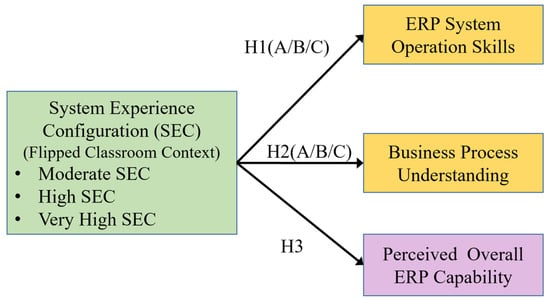
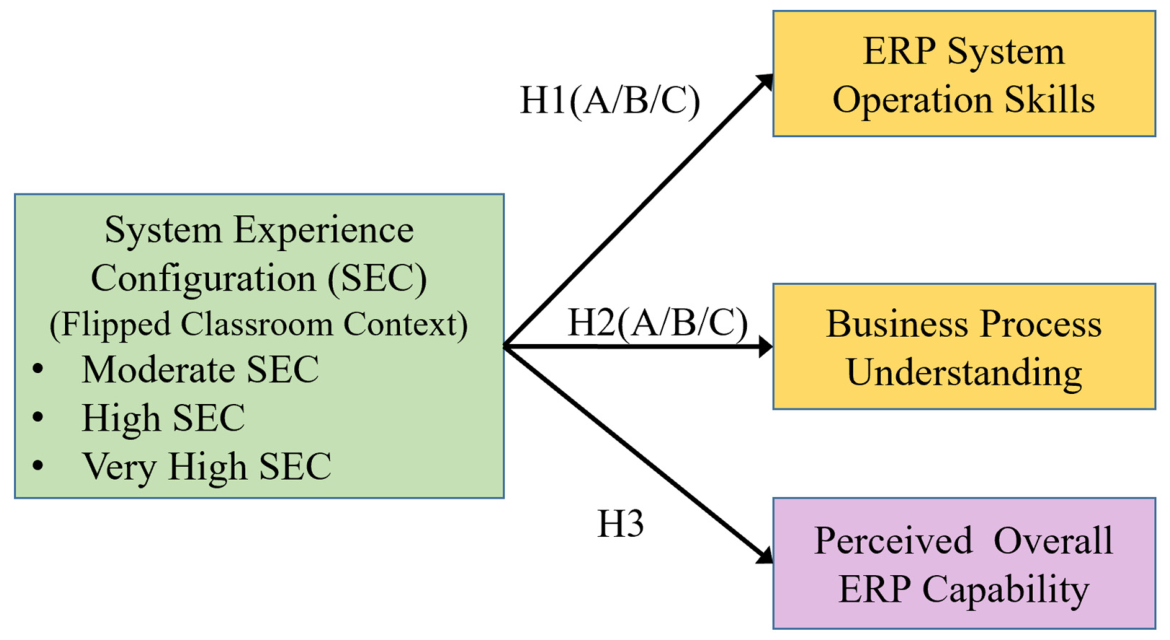
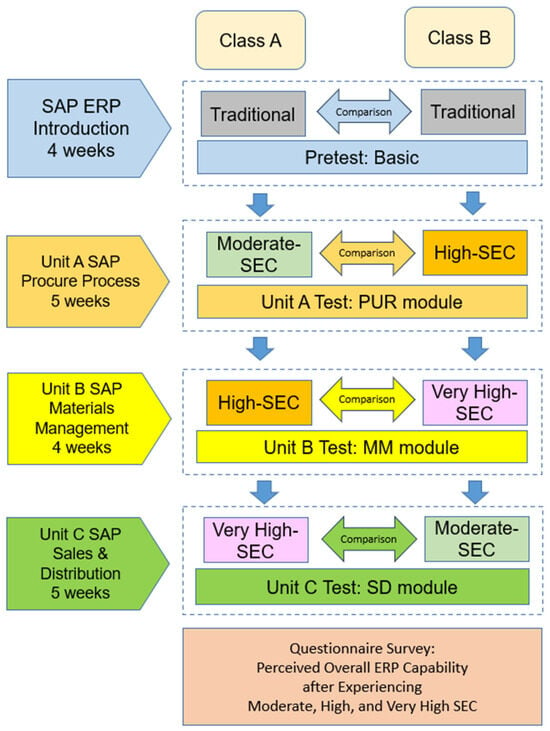
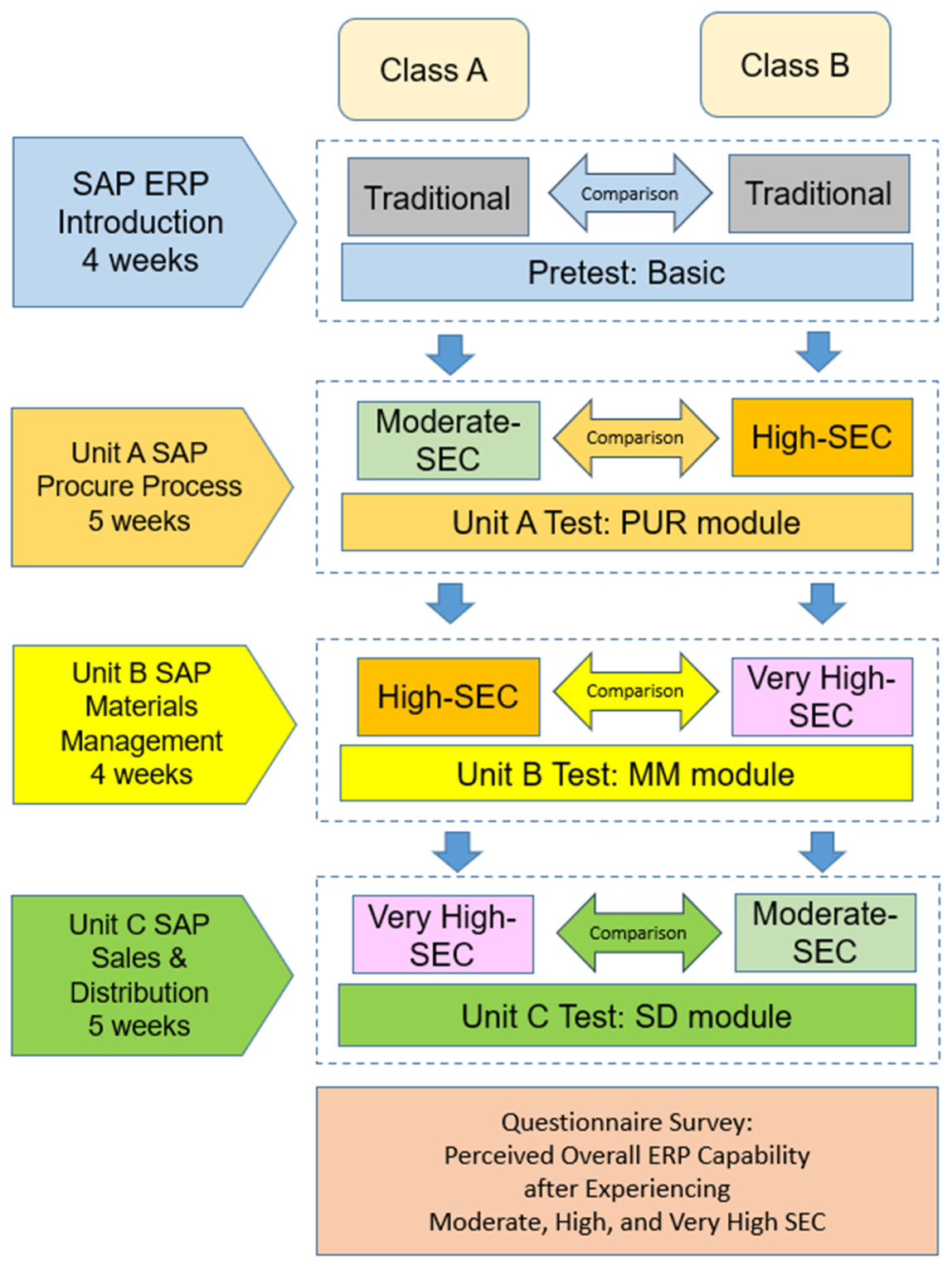
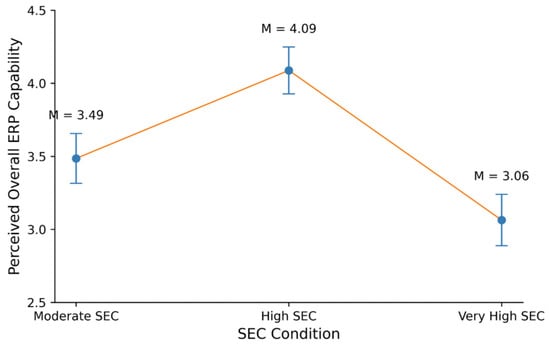
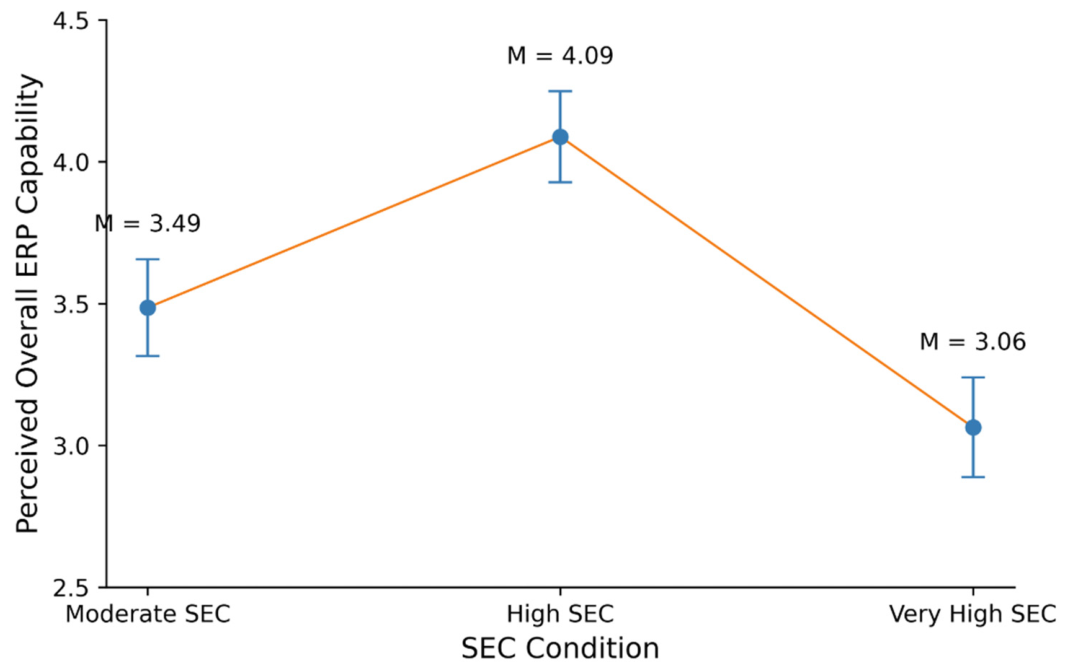

Disclaimer/Publisher’s Note: The statements, opinions and data contained in all publications are solely those of the individual author(s) and contributor(s) and not of MDPI and/or the editor(s). MDPI and/or the editor(s) disclaim responsibility for any injury to people or property resulting from any ideas, methods, instructions or products referred to in the content. |
© 2026 by the author. Licensee MDPI, Basel, Switzerland. This article is an open access article distributed under the terms and conditions of the Creative Commons Attribution (CC BY) license.