


Abstract
This paper examines changes in the macroeconomic indicators of the member countries of the Comprehensive and Progressive Agreement for Trans-Pacific Partnership (CPTPP) following their accession to the agreement. This study aims to identify shifts in the structural comparability of national economies and to assess the processes of macroeconomic convergence in the context of sustainable development. To achieve this objective, reference pools of CPTPP member countries are constructed, and their digital profiles are developed based on key macroeconomic indicators and grouped into three blocks: (1) indicators of economic growth and the state of the real sector, including GDP (constant 2015 US$), GDP growth, annual %, gross capital formation, % of GDP, unemployment, total % of total labor force, and national estimate; (2) indicators of foreign economic activity and trade openness, including exports of goods and services, % of GDP, imports of goods and services, % of GDP, external balance on goods and services (% of GDP), foreign direct investment, net inflows, % of GDP, and trade, and % of GDP; (3) indicators of financial and macroeconomic stability including inflation, consumer prices, annual %, central government debt, % of GDP, and gross savings, and % of GDP. Based on the digital profiles, similarities/differences in the economies were examined by applying linear discriminant analysis (LDA). The empirical framework covers two periods: (1) 2013–2017 (pre-accession) years and (2) 2019–2023 (post-accession) years. The results indicate that the economies of member countries in 2013–2017 exhibited a high degree of heterogeneity. In contrast, the 2019–2023 period demonstrates a tendency toward partial convergence of macroeconomic parameters, as evidenced by a reduction in distances between country profiles in the discriminant space. While interpreting the results, it is acknowledged that the 2019–2023 period coincided with the effects of the global crisis caused by the COVID-19 pandemic, which significantly impacted international trade dynamics. For most countries, this period was characterized by a decline in several macroeconomic indicators and investment activity, an increase in debt burdens, and enhanced heterogeneity in economic dynamics, which was taken into account when interpreting macroeconomic convergence processes within the CPTPP. The scientific novelty of the study lies in its application of an approach based on the analysis of the structural similarity of the macroeconomic profiles of CPTPP countries, which complements traditional assessments of the effects of economic and trade integration. The practical significance of the findings is associated with their potential use in evaluating the prospects for CPTPP expansion and in modeling alternative scenarios of participation and sustainable development within international trade agreements under conditions of global economic transformation.
1. Introduction
The modern international trade system is evolving in the face of simultaneously intensifying regionalization processes, the transformation of global value chains, and the growing importance of sustainable development. Against the backdrop of declining effectiveness of multilateral regulation within the World Trade Organization, countries are increasingly forming bilateral and mega-regional trade agreements covering a wide range of issues—from tariff liberalization and investment cooperation to the regulation of digital commerce, state-owned enterprises, and individual aspects of sustainable development. As a result, the global trading system is acquiring an increasingly complex and multi-layered structure. In the academic literature, this trend is often described through the concept of the “spaghetti bowl effect” [1], according to which numerous overlapping trade agreements form a complex network of interconnected trade regimes and institutions. Under these conditions, countries simultaneously participate in several integration associations, creating overlapping spaces of economic interaction and competing models of international trade regulation. This global economic architecture enhances the importance of mega-regional agreements, which can set new standards for international economic cooperation and create new centers of economic attraction.
At the same time, another important trend is gaining momentum in the global economy, related to the transition to a sustainable development model. Following the adoption of the 2030 Agenda for Sustainable Development by the United Nations [2], states and international organizations are increasingly integrating sustainable development goals (SDGs) into national and international economic policies. In today’s environment, international trade is viewed not only as a tool for stimulating economic growth but also as a mechanism for ensuring sustainable, inclusive, and long-term development. In this regard, indicators reflecting trade openness, investment activity, macroeconomic stability, and countries’ engagement in international economic interaction are particularly important. Integration associations have also not remained unaffected by these processes. Modern mega-regional agreements increasingly include provisions related to sustainable development, environmental standards, investment regulation, and the resilience of global supply chains. One of the most significant examples of such agreements is the Comprehensive and Progressive Agreement for Trans-Pacific Partnership (CPTPP) [3], which unites countries in the Asia–Pacific region with a high level of involvement in international trade and global production networks. A distinctive feature of the CPTPP is that it goes beyond traditional trade liberalization and includes specific provisions devoted to issues of sustainable development and environmental policy. In particular, the agreement emphasizes the need to maintain “high levels of environmental protection” and effective compliance with environmental legislation by participating countries [4]. In addition, the agreement contains obligations related to the protection of biodiversity, the fight against illegal fishing, the regulation of environmentally sensitive industries, and support for the sustainable management of natural resources [5]. Thus, the CPTPP is of interest not only as an instrument of trade liberalization, but also as an institutional platform for the formation of new rules of economic interaction, combining trade integration, investment cooperation, and individual elements of sustainable development. Unlike many traditional trade agreements, the CPTPP is characterized by a higher level of requirements for the institutional environment, trade regulation, investment mechanisms, and certain environmental standards. As a result, participation in the agreement presupposes not only the economic involvement of countries in international trade but also a certain degree of their structural and institutional compatibility.
In the current context, many countries are expressing interest in expanding cooperation with the CPTPP and are being considered as potential candidates for accession. However, the possibility of integrating into mega-regional agreements is determined not only by political factors but also by the degree to which countries comply with the existing economic, institutional, and regulatory parameters of the agreement. The structural proximity of countries seeking to participate in the agreement to the macroeconomic profile of CPTPP member countries should also be taken into account.
Despite the growing attention paid to environmental aspects and sustainable development within modern trade agreements, this study focuses primarily on the analysis of economic factors and the macroeconomic comparability of countries. This approach is motivated by the fact that macroeconomic, trade, investment, and financial parameters form the fundamental basis for countries’ integration compatibility and allow one to assess the degree of their structural closeness to the members of the agreement. In a broader theoretical context, the presented study is related to the concept of economic convergence applied in studies on international integration and regional development. The most common approaches are β- and σ-convergence, used to analyze the convergence of countries and regions in terms of their level of economic development and economic growth dynamics. However, these approaches primarily focus on the analysis of individual indicators, like GDP per capita, and do not allow for a comprehensive assessment of the multidimensional structural similarity of countries based on a combination of macroeconomic, trade, and investment characteristics. In this regard, there is a need to develop approaches that analyze not only the dynamics of individual indicators, but also the degree of structural closeness of countries in a multidimensional space of economic parameters.
This study proposes an approach based on the analysis of digital macroeconomic profiles of countries as a formalized representation of a country’s macroeconomic, trade, and investment indicators, allowing for their comparison based on quantitative similarity metrics. This approach lets to assess the degree of structural closeness of countries to the macroeconomic profile of the CPTPP member countries and to identify potentially comparable economies. This article is a pilot study and represents the first stage of a larger study aimed at subsequently incorporating environmental and social indicators related to the achievement of the SDGs, as well as including a larger number of countries in the analysis. The following research question is addressed: How does the spatial configuration and degree of structural macroeconomic proximity of CPTPP member countries change before and after joining the trade agreement? The purpose of this study is to analyze the structural similarity of CPTPP member countries and reference countries that are not part of the agreement based on their digital macroeconomic profiles. To achieve this goal, four tasks are undertaken: (1) forming a sampling of countries and reference groups for counterfactual analysis; (2) forming digital macroeconomic profiles of the countries participating in the agreement and the corresponding reference groups; (3) analyzing the structural similarity of the economies of the countries using linear discriminant analysis (LDA); and (4) identifying countries demonstrating the greatest and least convergence of macroeconomic characteristics over time, based on the derived LDA estimates and their visualization.
2. Literature Review
2.1. Global Transformations in International Trade and the Role of the CPTPP
In recent decades, global trade has undergone significant structural transformations driven by the increasing complexity of global value chains, the growing role of transnational corporations, and the expansion of megaregional trade agreements that extend beyond traditional free trade areas. Against the backdrop of declining efficiency of the multilateral regulatory system within the World Trade Organization (WTO), countries are increasingly shifting toward the formation of integration arrangements with an expanded institutional scope, encompassing investment, digital trade, data protection, services regulation, and sustainable development. In the academic literature, these processes are interpreted as a reaction to the crisis of multilateral governance in global trade and a gradual shift toward regional mechanisms of economic coordination.
Contemporary studies emphasize that megaregional agreements establish a new level of economic cooperation among countries and constitute a key element of the institutional architecture of global trade [6,7]. Compared to traditional free trade areas, megaregional trade agreements represent a deeper form of economic integration, as they cover a broad range of issues, including investment, intellectual property, public procurement, and digital trade [8]. A number of scholars argue that the emergence of such agreements is closely linked to the transformation of the global economy and intensifying competition among major economic powers. For instance, study [9] considers megaregional agreements as an instrument of institutional adaptation of the global trading system to new geoeconomic realities, including the growing rivalry between the United States and China. A similar perspective is presented in [10], where it is noted that the contemporary international trading system is evolving toward a polycentric structure of the global economy, in which regional integration blocs play an increasingly prominent role.
Particular attention in the literature is given to the role of the Asia–Pacific region in shaping the new architecture of international trade as one of major centers for forming a new architecture of international trade. Empirical evidence suggests that this region has become one of the primary centers for the formation of megaregional agreements, including the CPTPP and the Regional Comprehensive Economic Partnership (RCEP), which are redefining patterns of economic interaction among participating countries [11,12,13]. At the same time, a significant portion of the research is predominantly descriptive in nature and focuses on the institutional role of agreements or their geopolitical significance, while structural changes in the macroeconomic characteristics of participating countries and the dynamics of their economic convergence/divergence are analyzed much less frequently.
One of the most significant examples of contemporary integration initiatives is the CPTPP, which brings together a group of economies characterized by a high degree of openness and active participation in international trade. The CPTPP entered into force in 2018 and represents a megaregional free trade agreement among 12 Asia–Pacific countries as Vietnam, Malaysia, Singapore, Brunei, Japan, Australia, New Zealand, Canada, Mexico, Peru, and Chile. The agreement is distinguished by a comprehensive and detailed institutional framework covering a wide range of areas, including investment regulation, competition policy, state-owned enterprises, the digital economy, environmental standards, social commitments, and alignment with the United Nations Sustainable Development Goals (SDGs). Given that the implementation of the SDGs is voluntary and countries pursue them in accordance with their national priorities, the CPTPP can nevertheless be regarded as a mechanism that promotes sustainable development, as it incorporates provisions addressing all three pillars of sustainability: economic, social, and environmental. In particular, the agreement includes dedicated chapters on labor (Chapter 19) and environmental protection (Chapter 20). The inclusion of sustainability-related provisions shifts the focus of international economic discourse beyond the traditional objectives of trade and investment liberalization and reflects a broader evolution of international economic law. This allows the CPTPP to be interpreted not only as an instrument of trade liberalization but also as a mechanism for shaping a benchmark macroeconomic and institutional profile of member states within the sustainable development framework.
Thus, the CPTPP represents a new generation of economic integration agreements aimed not only at establishing free trade areas but also at promoting sustainable development as a guiding principle for business and investment. The emergence of such agreements indicates that sustainable development is becoming a new paradigm of regional economic integration. At the same time, the literature does not sufficiently address the question of whether participation in the agreement contributes to strengthening the structural similarity of countries’ economies and forcing sustainable trajectories of macroeconomic convergence.
2.2. Research Directions Toward CPTPP: Political Economy, Institutional, and Sectoral Effects
Considerable attention in the academic literature is devoted to the political and institutional determinants of the CPTPP. Researchers increasingly interpret this agreement not only as an economic instrument but also as an element of international politics and strategic interaction among states. One of research directions focuses on the analysis of national strategies of both member states and potential candidate countries. For instance, study [14] examines the evolution of Canada’s position toward the Trans-Pacific Partnership, demonstrating that its initially cautious stance gradually transformed into active support for the expansion of the agreement. In a subsequent study, the same author [15] analyzes the potential implications of the United Kingdom’s accession to the CPTPP and its impact on Canada’s trade policy.
The political dimensions of the agreement’s expansion are also examined in the context of national foreign economic policies. In particular, study [16] investigates the reasons behind the delay in South Korea’s application for CPTPP membership, concluding that domestic political factors and features of foreign economic priorities at the presidential level play a decisive role. Similar issues are addressed in [17], which explores the prospects for South Korea’s accession in the context of intensifying economic competition and the growing importance of economic security.
A distinct strand of research focuses on China’s position and the prospects for its participation in the agreement. For example, [18] compares alternative scenarios of engagement between China, the United States, and the CPTPP, while [19] evaluates the potential benefits and risks for China associated with accession, and [20] examines the economic and institutional barriers to its participation. These issues are further explored in [21] in the context of China’s official policy stance. Particular attention is also paid to the role of CPTPP within broader regional strategies. Study [22] analyzes Canada’s participation in the “Free and Open Indo-Pacific” initiative, highlighting that trade agreements, including the CPTPP, serve as important instruments for its implementation. Overall, the existing body of literature suggests that the formation and development of the CPTPP are driven not only by economic factors but also by the political interests of states seeking to strengthen their positions in the regional and global economy within the framework of sustainable development. National strategies, regional initiatives, and broader geopolitical considerations thus play a decisive role in shaping the trajectory of the agreement. However, most studies focus on the analysis of individual country strategies and geopolitical effects, while comparative studies of structural changes in the economies of participating countries remain on the periphery of scientific discussion.
A substantial body of research is devoted to the legal and institutional features of the CPTPP. In particular, scholars examine the provisions governing state-owned enterprises, dispute settlement mechanisms, investment regulation, and other aspects of economic interaction. For example, study [23] explores the potential of state-owned enterprises as instruments of industrial and technological development under Article 17.4 of the CPTPP, concluding that the agreement’s rules significantly constrain governments’ ability to use such entities as tools of industrial policy. A prominent area of academic inquiry concerns dispute settlement mechanisms. Study [24] provides an analysis of the CPTPP dispute resolution system, suggesting that it may serve as a potential alternative to the WTO dispute settlement framework, which is currently experiencing an institutional crisis. Another strand of research focuses on specific provisions of the agreement. For instance, study [25] examines trade safeguard measures in the CPTPP and the USMCA, identifying both similarities and differences between these agreements.
Additional aspects of the agreement’s functioning—including the regulation of state-owned enterprises, technical barriers to trade, and broader issues of contemporary trade governance—are addressed in studies [26,27,28,29], as well as in [30], which highlights the impact of technical barriers on China’s exports of environmentally friendly goods to CPTPP countries. Particular attention is also paid to rules of origin in the context of accession processes. Study [31] analyzes the complexities associated with the application of rules and procedures of origin in the case of Thailand’s prospective accession, underscoring the importance of regulatory and technical considerations in the expansion of the agreement. Thus, the CPTPP’s legal architecture represents a complex system of norms and rules governing various aspects of international economic interaction. However, much research in this area focuses primarily on analyzing the regulatory framework, while its potential impact on changing the macroeconomic structure of countries and the trajectory of economic convergence has received limited attention.
The literature also extensively examines the economic implications of participation in the CPTPP. Many studies employ econometric and computational models to assess the agreement’s potential effects. One of the most widely used approaches involves computable general equilibrium (CGE) modeling. For example, study [32] applies a CGE model to evaluate the impact of the CPTPP on Pakistan’s economy, demonstrating that participation may lead to significant changes in trade and production structures. Similar analyses have been conducted for other countries. Study [33] investigates the effects of trade agreements in the Asia–Pacific region and shows that their implementation can substantially reshape regional trade flows. Research on the expansion of the CPTPP further suggests that the accession of new members could significantly enhance its aggregate economic effects [34]. In turn, study [35] assesses the implications for non-member countries—such as Brazil, India, Russia, and South Africa—highlighting potential losses in foregone benefits. More broadly, the literature tends to focus on evaluating the effects of participation in integration agreements, including export dynamics, investment flows, and structural changes in national economies [36,37,38,39]. However, this body of research is primarily oriented toward outcome-based assessments rather than comparative analyses of structural characteristics and the dynamics of macroeconomic convergence across countries. Moreover, most studies rely on static models for assessing losses and benefits, which limits the ability to study long-term changes in the configuration of economic systems in CPTPP member countries.
A separate strand of research addresses the sectoral impacts of the agreement and its influence on national economies. For instance, study [40] examines the effects of tariff liberalization on Vietnam’s exports of machinery and electronic products to CPTPP countries, concluding that tariff reductions contribute to export growth in these sectors. Study [41] analyzes the impact of the agreement on trade in textiles and apparel, similarly identifying positive effects associated with reduced trade barriers. Several studies focus specifically on Vietnam’s economic development within the framework of international economic integration. For example, study [42] explores the role of foreign investment and human capital development in foreign-invested enterprises. More recent research [43] examines the impact of the CPTPP on Vietnam’s economy during the COVID-19 pandemic, highlighting its resilience and capacity to adapt to external shocks. A particularly important direction of contemporary research focuses on the impact of the CPTPP on global value chains. Study [44] demonstrates that megaregional agreements contribute to the deeper integration of countries into international production networks. In recent years, there has also been growing scholarly interest in the effects of the agreement on the digital economy and digital trade. These issues are examined in studies [45,46,47], as well as in broader research addressing the technological and institutional dimensions of the digital transformation of trade. It is further emphasized that megaregional agreements, including the CPTPP and the Regional Comprehensive Economic Partnership (RCEP), exert a significant influence on the structure of global production chains, particularly in the manufacturing sector [48]. At the same time, recent studies extend the analytical scope to related areas such as sustainable development, energy efficiency, and sectoral competitiveness. These topics are explored in studies [49,50], as well as in a range of works examining the transformation of global production networks and technological development. However, sustainable development analysis within the CPTPP framework is most often limited to specific environmental or trade aspects and is rarely integrated into studies of macroeconomic dynamics and economic convergence processes. Thus, the current research agenda on the CPTPP covers a wide range of areas—from the agreement’s institutional mechanisms to its impact on trade flows, investment activity, individual economic sectors, and digital commerce. However, the majority of studies examine the agreement’s effects fragmentarily, focusing either on institutional and legal aspects or on trade implications. Whether countries’ participation in the CPTPP leads to more similar macroeconomic development trajectories remains understudied.
Overall, the contemporary research agenda on the CPTPP encompasses a wide spectrum of issues—from institutional mechanisms and trade regulation to their effects on trade flows, investment activity, sectoral development, and digital trade. However, a substantial portion of the literature remains focused on institutional and trade-related aspects of the agreement, with comparatively limited attention paid to the comparative analysis of macroeconomic development trajectories of member countries within the framework of sustainable development.
2.3. Macroeconomic Convergence in Research of Integration Processes: Theoretical Approaches and Gaps
In modern economic literature, the concept of convergence is one of the main tools for analyzing the consequences of regional integration, trade liberalization, and structural economic transformation. The theoretical basis for convergence studies is formed primarily within the framework of neoclassical growth theory, according to which less developed economies have the potential for accelerated growth due to the “catch-up” effect. In empirical studies, this position is formalized through models of β-convergence, which assume a negative relationship between initial income levels and subsequent growth rates, and σ-convergence, which reflects a decrease in the dispersion of macroeconomic indicators between countries over time. Despite the methodological sophistication of these approaches, a critical analysis of the literature reveals that their application in regional integration studies remains limited by a number of persistent characteristics. First, the overwhelming majority of studies continue to focus on individual aggregate indicators, primarily GDP per capita, labor productivity, and economic growth rates, which reduces convergence to a one-dimensional process. Second, even within the framework of β-convergence, analysis typically boils down to assessing the rate of “catch-up growth,” while the structural characteristics of economies and their mutual configuration remain outside the scope of empirical analysis. Third, γ-convergence, despite its conceptual potential, is applied fragmentarily and is most often limited to analyzing rank changes without a comprehensive consideration of multidimensional economic space.
These limitations are clearly evident in contemporary empirical research. For example, in [51], the authors demonstrated that countries’ involvement in global and regional value chains has an ambiguous impact on economic convergence processes: alongside growth effects, an increase in structural heterogeneity is observed. However, the analysis is limited primarily to the dynamics of GDP and productivity, which does not allow one identifying changes in the overall macroeconomic configuration of countries. Study [52] develops the concept of “convergence clubs,” according to which countries form stable groups with various development trajectories. Despite the important contribution to understanding the heterogeneity of convergence, convergence is interpreted here primarily through the dynamics of individual indicators, while the systemic structure of the relative positions of economies remains insufficiently formalized. An additional dimension of the problem is presented in the study [53], where the emphasis shifts toward spatial asymmetry and regional balance. This work actually approaches the logic of γ-convergence, since it considers changes in the relative positions of territories; however, the analysis remains predominantly regional and does not cover the macroeconomic structure of countries as complex systems. In [54], it is additionally shown that the presence of β-convergence does not guarantee the formation of a homogeneous economic structure: even with the convergence of GDP levels, a significant asymmetry of macroeconomic trajectories remains, especially in the context of crisis shocks and institutional changes. A critical synthesis of these approaches allows us to conclude that there is a persistent methodological gap in the literature. On the one hand, β-convergence provides a tool for analyzing the rate of convergence, σ-convergence, for assessing changes in intercountry variation, and γ-convergence, for partially reflecting spatial shifts. On the other hand, none of the approaches fully allow us to describe the transformation of the multidimensional macroeconomic structure of countries and the change in their mutual proximity as integral economic systems in the context of integration. Thus, a research gap exists in the absence of approaches that simultaneously consider several factors: (1) the multidimensional nature of macroeconomic indicators, (2) changes in the structural proximity of countries, and (3) the dynamics of this structure over time in the context of integration processes. This study addresses this gap by applying LDA, which allows us to progress from the analysis of individual indicators to an assessment of the spatial configurations of economies and their transformations under the conditions of countries’ participation in the CPTPP.
2.4. Sustainable Development in the Context of Mega-Regional Trade Agreements
Expanding the analysis of macroeconomic convergence in the context of regional trade agreements necessitates considering more comprehensive development characteristics that reflect the long-term sustainability of economic transformations. In today’s context, mega-regional trade agreements are increasingly viewed not only as instruments of trade liberalization but also as mechanisms for developing common environmental, social, and institutional standards, thereby expanding the traditional international trade agenda.
Contemporary literature demonstrates that the impact of trade integration on sustainable development is ambiguous. On the one hand, trade liberalization promotes increased economic interconnectedness, the development of value chains, and enhanced technology transfer between countries. On the other hand, such processes may be accompanied by increased structural asymmetries, differences in environmental standards, and heterogeneity in the institutional capacities of participating countries. As a result, sustainable development within the framework of mega-regional trade agreements is viewed as a multidimensional category, including economic, social, and environmental dimensions. In this context, the authors of [55] demonstrate that mega-regional trade agreements form a relatively independent architecture of sustainable development. They emphasize that the degree of inclusion and practical implementation of sustainable development provisions varies significantly between participating countries, limiting the harmonization of approaches within integration blocs. Similar conclusions are presented in [56], which demonstrates that modern trade agreements are increasingly serving as a tool for harmonizing environmental and climate standards. The emphasis is placed on the fact that such norms go beyond traditional trade regulation and acquire the character of coordinating sustainable development policies. This issue is further developed in studies of the relationship between trade policy and climate regulation. Thus, in [57], a gradual transition from separate trade regulation to their institutional integration is noted. In [58], it is emphasized that the effectiveness of climate commitments in trade agreements depends on the institutional compatibility of countries and the differences in their national sustainable development strategies. A special place in the literature is occupied by the approach considering sustainable development as a multidimensional process requiring a comprehensive assessment of the macro level. In [59], the sustainability of development is analyzed through a system of indicators covering economic, social and environmental dimensions. It is emphasized that the use of individual macroeconomic indicators does not allow for an adequate assessment of the differences in the trajectories of sustainable development of countries, which justifies the need to apply multidimensional approaches.
Thus, an analysis of the current literature reveals that research on sustainable development in the context of mega-regional trade agreements has primarily focused on either the normative institutionalization of environmental and social standards or the assessment of the individual effects of trade liberalization. Meanwhile, the relationship between sustainable development and changes in the structural macroeconomic configuration of countries and their relative positions within the context of integration remains underexplored. As a result, a gap persists between research on macroeconomic convergence and sustainable development, which are developing in parallel but not sufficiently interconnected, forming one of the research gaps in this paper.
Furthermore, the literature review indicates that comparative analyses of both the macroeconomic dynamics of CPTPP member countries and the similarity of their economic development trajectories remain insufficiently explored. Existing studies rarely employ a comprehensive quantitative approach based on the comparison of macroeconomic indicators across member countries and comparable non-member economies. In particular, there is a notable lack of research aimed at identifying similarities in macroeconomic development trajectories associated with participation in megaregional integration frameworks, as well as at constructing reference pools for systematic comparison. In this context, there is a growing need for studies that go beyond the analysis of direct integration effects and instead focus on identifying more complex structural changes in countries’ economic development trajectories. Importantly, the degree of similarity in macroeconomic parameters may serve as a critical indicator of a country’s readiness for integration and the potential effectiveness of its participation.
This study proposes an approach based on the analysis of digital macroeconomic profiles of countries. Thus, this study contributes to the ongoing academic debate on megaregional trade agreements by proposing an analytical framework that goes beyond the assessment of direct integration effects and instead focuses on the structural similarity of macroeconomic development and the convergence of digital country profiles. The findings enhance the understanding of the mechanisms underlying economic convergence and can be applied to evaluate countries’ potential for participation in integration arrangements, as well as to model alternative development scenarios in the context of global economic transformation.
3. Materials and Methods
This study conducts the analysis across two time periods:
- -
- 2013–2017, representing the pre-accession period;
- -
- 2019–2023, representing the post-accession period following the entry into the CPTPP for the countries under consideration.
The selection of these time intervals is motivated by the need to ensure a consistent comparison of macroeconomic characteristics before and after participation in the agreement. The year 2018 is excluded from the analysis as it corresponds to the signing of the CPTPP and the initial stage of its implementation for several countries. Including this year in either period could introduce bias due to overlapping transitional effects. Therefore, its exclusion allows for a clearer separation of the two comparative periods and enhances the methodological robustness of the analysis of macroeconomic convergence based on digital country profiles.
As is known, the CPTPP includes 12 countries: Australia, Brunei, Canada, Chile, Japan, Malaysia, Mexico, New Zealand, Peru, Singapore, Vietnam, and the United Kingdom. However, the agreement’s entry into force dates vary significantly among the participating countries. Initially, the agreement entered into force on 30 December 2018 for six countries, namely, Australia, Mexico, New Zealand, Canada, Japan, and Singapore, and on 14 January 2019 for Vietnam. For Peru, the agreement entered into force on 19 September 2021, Malaysia on 29 November 2022, Chile on 21 February 2023, and Brunei on 12 July 2023. The United Kingdom was the last to join the CPTPP, in 2024. Therefore, in the first stage of the study, we selected CPTPP member countries that ratified the agreement at the initial stage of its operation—in the period of 2018–2019. This approach allows us to consider countries within a single time horizon and minimize potential distortions associated with differences in the timing of accession, which is fundamental to ensure the accuracy of the subsequent counterfactual analysis and the comparability of the macroeconomic effects under study. Thus, seven countries were included in the analytical sample: Japan, Canada, Australia, Singapore, Vietnam, Mexico, and New Zealand.
An additional advantage of the group is that it encompasses various models of economic development and types of integration into international trade—from developed industrial and post-industrial economies to rapidly growing developing countries actively involved in global production chains. This approach ensures a diverse empirical base and facilitates a more comprehensive identification of the potential effects of CPTPP participation in various institutional and macroeconomic conditions. Japan, for example, is the agreement’s largest economy and one of its institutional architects, actively using regional trade agreements as a tool for shaping the economic space of the Asia–Pacific region. Canada and Australia represent developed export-oriented economies with pronounced resource and agricultural specialization, for which participation in the CPTPP serves as a mechanism for diversifying foreign economic relations. Singapore is characterized by a high degree of openness and institutional maturity, while Vietnam represents a dynamically developing economy in Southeast Asia, actively integrating into global production chains and using participation in trade agreements as a mechanism for institutional modernization and stimulating export growth. Mexico is a large industrial and export economy actively integrating into international production chains, such as the North American Economic Area, which allows its participation in the CPTPP to be viewed as a mechanism for diversifying its foreign economic integration. In contrast, New Zealand is characterized by a relatively small economy with a high dependence on foreign trade and a pronounced agricultural export specialization. Therefore, participation in the CPTPP is an important tool for expanding access to new markets and strengthening the country’s position in the Asia–Pacific region.
At the same time, this study should be viewed as a pilot stage in a broader empirical analysis of the macroeconomic effects of countries’ participation in the CPTPP. Limiting the sample to countries that ratified the agreement early in its implementation is necessary to ensure comparability across timeframes. In the future, as comparable statistical series for later-accessing countries accumulate, the research base may be expanded. This approach will allow for further analysis over a longer time horizon and will account for the increasing heterogeneity of economic models and integration trajectories among the participating countries.
At the second stage of the study, reference pools of comparable non-member countries were constructed for each of the seven CPTPP member states. These reference pools include countries that are not part of the agreement but exhibit similar structural, institutional, and macroeconomic characteristics. The construction of reference pools is motivated by the need to establish a robust basis for comparative and counterfactual analysis. Since the actual effects of participation in an integration agreement cannot be directly observed in the absence of the agreement, the reference pool serves as an analytical approximation of an alternative development trajectory.
Initially, sampling of reference countries included those that had declared their interest in joining the CPTPP (e.g., Costa Rica, China, Indonesia, and others), as well as Ukraine, which submitted an application on 7 July 2023. Subsequently, the sectoral structure of the economy, the degree of openness to foreign trade, the role of foreign direct investment, as well as the characteristics of the institutional environment and the level of economic development, were considered as comparability parameters for other countries. Taking these characteristics into account made it possible to identify countries with a similar structure of economic activity and a comparable level of foreign economic involvement. This approach improves the validity of the formation of a comparative group of countries (reference group or reference countries) and ensures the methodological transparency of the analysis, as it minimizes the impact of structural differences between economies on the results of subsequent statistical comparison. Thus, at this stage of the study, a sampling of 42 countries was formed, which were included in the subsequent construction of reference groups for each CPTPP-participating country. GDP was chosen as the basic comparison criterion. For all 49 countries, including the CPTPP member countries, the average GDP (constant 2015 US$) was calculated for the period before joining the agreement (2013–2017 years) (Table 1). The countries were then ranked by the obtained average GDP (constant 2015 US$) in descending order, which made it possible to create comparable reference groups in accordance with the economic size of each CPTPP member country (Table 2).
Table 1.
GDP (constant 2015 US$) of countries under study over 2013–2017 years.
Table 2.
Grouping countries into reference pools in dependence on average GDP value, constant (2015 US$) in 2013–2017 period.
At the third stage of the study, a set of macroeconomic indicators was selected and constructed to enable a comprehensive analysis of the macroeconomic characteristics of both CPTPP member countries and comparable non-member economies.
To ensure analytical consistency, all indicators were grouped into three interrelated blocks:
- (1)
- Indicators of economic growth and real sector performance;
- (2)
- Indicators of external economic activity and trade openness;
- (3)
- Indicators of financial and macroeconomic stability.
This structure allows for the simultaneous consideration of internal macroeconomic dynamics, transformations in external trade flows, and the resilience of national economies to external integration processes. For this study, the selected set of indicators was also divided into direct and indirect indicators related to the achievement of the SDGs. Direct indicators are those that directly reflect key areas of sustainable development (economic growth, employment, investment activity, development of international trade, and economic cooperation). Indirect indicators characterize the macroeconomic, financial, and foreign economic stability of national economies and create the conditions necessary for ensuring long-term sustainable development.
The first block includes indicators characterizing economic growth and the real sector in the context of sustainable development and the achievement of the SDGs, in particular SDG 8 and SDG 9. This set of variables provides a comprehensive view of domestic economic development by combining aggregate production and capital accumulation metrics with labor market indicators. These variables enable a comparative analysis of economic dynamics across CPTPP and non-CPTPP countries and facilitate the assessment of the similarity of their macroeconomic characteristics in the context of sustainable development. Within the framework of this block, the following indicators were analyzed as given in Table 3.
Table 3.
Justification of macroeconomic indicators characterizing economic growth and the real sector.
The second block combines the indicators of foreign economic activity, trade openness, and international investment interactions of countries in the context of sustainable development and the achievement of SDGs related to the development of international trade, investment cooperation, and global economic interaction. These variables capture the scale and intensity of countries’ participation in international trade and investment flows, as well as global value chains. Given that the CPTPP represents a multilateral trade agreement, this group of indicators is particularly relevant for assessing the degree of external economic integration and enabling comparative analysis of trade and investment dynamics regardless of formal participation in the agreement, as well as assessing the features of their integration into the system of international economic relations in the context of sustainable economic development. The following indicators are included (Table 4).
Table 4.
Justification of macroeconomic indicators characterizing foreign economic activity, trade openness, and international investment interaction of countries under study.
The third block includes indicators of financial and macroeconomic sustainability in the context of sustainable development and the achievement of SDGs related to ensuring sustainable economic growth, the stability of the financial system of countries and the efficiency of macroeconomic regulation. These variables allow for the assessment of how participation in the CPTPP may influence macroeconomic stability, fiscal sustainability, and overall socio-economic performance. In the context of deepening economic integration, such indicators are particularly important, as increased trade openness, foreign trade and investment activity may either exacerbate macroeconomic imbalances or contribute to strengthening the financial sustainability of economic development. The following indicators are included (Table 5).
Table 5.
Justification of macroeconomic indicators characterizing the financial and macroeconomic stability of countries.
The primary data source for the analysis is the World Bank’s World Development Indicators database, which ensures cross-country and temporal comparability of macroeconomic data. However, for the indicator “central government debt,” additional data were obtained from the “Statistics of Countries” database [60], as the World Bank dataset does not provide complete time series for all countries.
The resulting set of macroeconomic indicators constitutes the analytical foundation for the subsequent stages of the study.
Stage 4: To assess the degree of similarity in macroeconomic development across countries, a multivariate statistical approach based on linear discriminant analysis (LDA) was employed. This method transforms the multidimensional space of economic indicators into a discriminant space of dimensionality (N − 1), where N denotes the number of classes (in this case, countries), by maximizing the ratio of between-class variance to within-class variance [61]. The resulting axes correspond to discriminant components (LDA features), along which class separation is achieved. This transformation enables the visualization of similarity and dissimilarity structures among countries.
In this study, the observations are defined as annual digital macroeconomic profiles of countries, i.e., vectors of selected macroeconomic indicators for each country over time. The analysis is conducted separately for two periods: 2013–2017 and 2019–2023, allowing for a comparative assessment of the structure of macroeconomic characteristics before and after accession to the agreement.
For each CPTPP member country, the discriminant analysis is performed separately with respect to its corresponding reference pool. Within each analytical sample, each country is treated as an individual class, while its annual observations constitute the dataset used to determine its position in the discriminant space.
Prior to the analysis, all indicators are normalized for each variable relative to the median value computed across the countries included in the respective sample for a given time period. The normalization procedure is defined as follows:
where
- —the normalized value of indicator for country in year ;
- —the original value of indicator for country in year ;
- —the median value of indicator , calculated across all countries in the corresponding sample for period .
The use of the median as the normalization baseline is justified by its robustness to outliers and extreme values, which is particularly important when comparing economies that differ significantly in scale and structure. This procedure ensures the comparability of indicators and reduces the influence of scale-related disparities across countries on the results of the discriminant analysis.
The distance between the centroids of each class is interpreted as a measure of structural similarity or dissimilarity among economies: the smaller the distance between countries, the more similar their macroeconomic characteristics. As an additional aggregated indicator, the average distance of class centroids from the center of the distribution is employed. This measure is defined as the mean Euclidean distance between the centroids of country-specific classes and the overall centroid of observations within the corresponding period. A decrease in this indicator is interpreted as evidence of reduced overall differentiation among countries and a potential strengthening of macroeconomic convergence, whereas an increase indicates a higher degree of structural heterogeneity within the group of economies under consideration.
4. Results
The analysis of the spatial distribution of countries in the discriminant space enables one assessing the degree of macroeconomic comparability between the economies of Australia, Japan, Singapore, Vietnam, Canada, Mexico and New Zealand and the countries included in the respective reference pools. The results are presented below for each CPTPP member country and its corresponding reference pool.
Japan: Figure 1 presents the LDA results related to two time periods: before Japan’s accession to the CPTPP (2013–2017) and after Japan’s accession to the CPTPP (2019–2023).
Figure 1.
Placement of Japan and reference group countries in the 6-D discriminant space (LDA): 2013–2017, before Japan’s accession to the Progressive Agreement for Trans-Pacific Partnership (CPTPP); 2019–2023, after Japan’s accession to the CPTPP. The projection of the first two LDA components is shown.
According to Figure 1, in the pre-CPTPP period (2013–2017), Japan occupies a relatively isolated position in the discriminant space, indicating a specific configuration of the analyzed macroeconomic characteristics compared to the reference countries. India exhibits the smallest distance from Japan’s position during the period under review, while France and the United States are moderately distant. Germany, on the other hand, exhibits the most pronounced deviation, primarily in LDA2, which may indicate significant differences in the structure of economic dynamics and foreign trade specialization. Italy occupies an intermediate position between the main group of countries and the Japanese economy. Overall, the spatial distribution of countries in the pre-CPTPP period reflects the heterogeneity of the reference group and the limited degree of macroeconomic proximity between individual economies.
Following Japan’s accession to the CPTPP (2019–2023), the spatial configuration of countries is transformed. Despite Japan maintaining a relatively independent position in the discriminant field, the distribution of reference countries becomes less fragmented, and individual economies show greater convergence with Japan. China demonstrates the closest position to Japan, while France, India, and Italy form a relatively compact group of countries with similar characteristics. Germany becomes less isolated compared to the previous analyzed period, but a certain distance still remains. The United States, in contrast, shifts to a more peripheral part of the discriminant space, reflecting the stability of the specificity of the American macroeconomic model. Further confirmation of the change in the comparability structure is the decrease in the average distance of classes from the distribution center from 32.94 units in 2013–2017 to 27.83 units in 2019–2023, which indicates an increase in the overall spatial compactness of the analyzed countries in the multidimensional space of macroeconomic indicators. In accordance with the research question posed, the results of the analysis of the second reference group suggest that, following Japan’s accession to the CPTPP, changes have been observed in the degree of structural macroeconomic comparability of countries and the configuration of their relative positions in the discriminant space. A decrease in the spatial distance between Japan and some reference countries, as well as the formation of a more compact distribution structure, may indicate the presence of certain signs of macroeconomic convergence. The spatial proximity of China, as well as the relative comparability of France and India, allow these countries to be considered as potential relevant comparative economies when analyzing the structural similarity of macroeconomic parameters and constructing counterfactual trajectories. At the same time, the persistence of distance between Japan and individual reference countries indicates persistent differences in economic development models, foreign trade structure, and the nature of participation in international economic relations.
Thus, the results of the LDA of the second reference group of countries indicate that, over the period 2019–2023, Japan maintains its macroeconomic development identity while demonstrating a partial strengthening of structural comparability with a number of reference countries. The changes in the spatial configuration of countries identified during the analysis may reflect both the influence of individual integration processes within the CPTPP and the impact of broader global economic trends.
Canada: Figure 2 presents the results of the LDA performed for two time periods: before Canada’s accession to the CPTPP (2013–2017) and after Canada’s accession to the CPTPP (2019–2023).
Figure 2.
Placement of Canada and reference group countries in the 6-D discriminant space (LDA): 2013–2017, before Canada joined the CPTPP; 2019–2023, after Canada joined the CPTPP. The projection of the first two LDA components is shown.
According to Figure 2, in the period before Canada’s accession to the CPTPP (2013–2017), the country’s economy occupies an intermediate position in the discriminant space relative to the reference group countries. Spain and Brazil are the closest to Canada in terms of the aggregate of analyzed macroeconomic indicators, and the clusters are located in close proximity according to LDA1 and LDA2. This may indicate some structural comparability of the macroeconomic parameters of these countries. At the same time, Indonesia and Turkey form a distinct group at the top of the feature space, demonstrating marked differences in LDA2, while the Netherlands occupies a more distant position, with significant distances in both LDA1 and LDA2. South Korea also ranks significantly distant from Canada, particularly in LDA2, reflecting differences in the configuration of the analyzed macroeconomic characteristics. Overall, the spatial distribution of countries indicates moderate heterogeneity in the reference group and differences in the macroeconomic development structure of individual economies.
In the period following the agreement’s entry into force (2019–2023), a change in the spatial configuration of the countries studied has been observed. Canada maintains relative proximity to Spain and Brazil, but the distribution of some countries has become more compact. Turkey shifts closer to the center of the discriminant space, while South Korea and, especially, Indonesia maintain a more pronounced distance from Canada. The Netherlands, as in the 2013–2017 period, remains the most distant economy according to LDA1, indicating persistent differences in the structure of macroeconomic parameters. Despite the persistence of individual distant positions, the overall arrangement of the countries indicates a slight increase in the degree of spatial comparability of some countries in the reference group.
The change in the level of structural proximity of countries is indicated by the dynamics of the average distance of cluster centers of gravity from the coordinate center in LDA space. In the 2013–2017 period, this indicator was 21.05 units, while in the 2019–2023 period, it was 21.05 units. It decreased to 20.28 units, or 3.7%, reflecting a slight increase in the compactness of the spatial configuration of countries and a limited increase in macroeconomic proximity between individual countries in this reference group.
In accordance with the research question posed, the results of the analysis of the fifth reference group of countries show that no significant transformation in the structure of spatial macroeconomic proximity has been observed since Canada’s accession to the CPTPP. Despite a slight reduction in the average distance between cluster centers, Canada maintains a relatively stable position in the discriminant space, and the configuration of countries as a whole shows only limited signs of convergence. The spatial proximity of Spain and Brazil allows these economies to be considered the most comparable to Canada in terms of the totality of analyzed macroeconomic characteristics in the study period. Indonesia, South Korea, and the Netherlands maintain a significant distance, which may indicate the presence of persistent differences in the structure of macroeconomic development, foreign trade specialization, and the nature of macroeconomic dynamics.
Thus, the results of the analysis of the fifth reference group allow us to conclude that Canada’s integration into the CPTPP was accompanied by moderate changes in the degree of structural macroeconomic comparability with reference group countries, without the emergence of a pronounced trend toward deep macroeconomic convergence.
Australia: Figure 3 presents the results of the LDA performed for two time periods: a) before joining the CPTPP (2013–2017) and b) after joining the CPTPP (2019–2023).
Figure 3.
Placement of Australia and reference group countries in the 6-D discriminant space (LDA): 2013–2017, before Australia joined the CPTPP; 2019–2023, after Australia joined the CPTPP. The projection of the first two LDA components is shown.
According to Figure 3, in the period prior to Australia’s accession to the CPTPP (2013–2017), the country’s economy occupies an isolated position in the discriminant space relative to the reference group countries, primarily LDA1, reflecting its specific configuration of the macroeconomic parameters under consideration. Australia’s aggregate economic indicators differ significantly from those of most comparable economies, indicating a limited degree of macroeconomic convergence within this group of countries during this period. Among the reference countries, Argentina and Norway are closest to Australia, while Sweden and Switzerland are moderately distant, and Belgium and Thailand are characterized by a more pronounced distance in the discriminant space. This spatial configuration demonstrates the heterogeneity of the group and the presence of differences in the structure of macroeconomic characteristics between countries.
In the period following Australia’s accession to the CPTPP (2019–2023), Figure 3 shows a partial transformation of the spatial configuration of the reference group countries. Despite Australia’s relatively isolated position in LDA1, the distribution of countries is becoming more compact, and the distance between individual countries and Australia is decreasing. Norway remains closest to Australia in this period, with Sweden also approaching it, while Argentina and Switzerland occupy an intermediate position in the feature space. Belgium and Thailand retained a more pronounced distance, reflecting the persistence of differences in the structure of macroeconomic characteristics. The change in the degree of comparability of aggregate indicators of countries in the LDA space is indicated by the dynamics of the average distance of the centers of gravity of clusters corresponding to countries from the center of coordinates. In the period 2013–2017, this indicator was 35.33 units, while in the subsequent period (2019–2023), it decreased to 27.43 units, or by 22.4%. This indicates an increase in the spatial compactness of countries and a partial convergence of their macroeconomic characteristics. In line with the research question posed, the results of the first reference group analysis indicate that, following Australia’s accession to the CPTPP, changes have been observed in the degree of macroeconomic comparability of countries and the structure of their spatial similarity in the multidimensional space of macroeconomic indicators. The reduction in distances between Australia and individual reference countries, as well as the formation of a more compact configuration of countries in the discriminant field, may indicate a partial strengthening of the signs of macroeconomic convergence. The spatial proximity of Norway and Sweden to Australia allows these countries to be considered as potentially relevant comparative economies when analyzing the structural comparability of macroeconomic characteristics and the formation of counterfactual trajectories. At the same time, the persistence of a more pronounced distance between individual countries indicates the presence of persistent differences in economic development models, the structure of foreign trade, and the nature of foreign economic specialization. Thus, the results of the LDA of the first reference group indicate that Australia maintains a relatively specific macroeconomic development trajectory, while simultaneously demonstrating a partial increase in the degree of structural comparability with a number of reference countries in the period following accession to the agreement. The identified dynamics of the spatial configuration of countries suggest the presence of global economic trends influencing the structure of international trade, investment flows, and the synchronization of Australia’s macroeconomic dynamics compared to other countries that have not joined the CPTPP.
Mexico: Figure 4 presents the results of the LDA performed for two time periods: before Mexico’s accession to the CPTPP (2013–2017) and after Mexico’s accession to the CPTPP (2019–2023).
Figure 4.
Placement of Mexico and reference group countries in the 6-D discriminant space (LDA): 2013–2017, before Mexico joined the CPTPP; 2019–2023, after Mexico joined the CPTPP. The projection of the first two LDA components is shown.
According to Figure 4, in the period prior to Mexico’s accession to the CPTPP (2013–2017), the country’s economy was characterized by a pronounced isolation in the discriminant space relative to the countries in the reference group. According to LDA1 and LDA2, Mexico is significantly distant from most of the compared economies, indicating significant differences in the structure of macroeconomic indicators. Hong Kong was closest to Mexico, but even between them, a significant distance remained. Austria, Denmark, and Israel formed a relatively compact group in the central part of the space, while the Philippines and South Africa demonstrated significant remoteness along various dimensions of the discriminant field. This configuration reflects a high level of group heterogeneity and significant differences in the macroeconomic trajectories of the countries. This conclusion is supported by the high average class distance from the center (40.07 units), which suggests a low degree of spatial compactness for the set of countries studied. Following Mexico’s accession to the CPTPP (2019–2023), Figure 4 shows that the spatial structure of the group undergoes significant changes. The distribution of countries becomes more concentrated, and most economies shift to the right of the discriminant space, forming a significantly more compact configuration. Austria, Denmark, Hong Kong, Israel, and the Philippines are located in close proximity to one another, indicating an increasing degree of macroeconomic comparability among them. Mexico maintains a certain distance from this group, primarily in terms of LDA1, but its position has become less isolated compared to the previous period. South Africa remains the most distant economy in the group, maintaining a significant deviation from the other countries in terms of LDA2.
The change in spatial structure is accompanied by a significant decrease in the average distance of cluster centers of gravity. For example, in the period 2013–2017, this indicator was 40.07 units, whereas in the period 2019–2023, it was 10.5 units. It decreased to 27.60 units, or by 31.1%. This indicates a noticeable increase in the spatial compactness of countries and a decrease in the degree of differences in their macroeconomic characteristics.
In accordance with the research question posed, the results of the analysis of the sixth reference group allow us to conclude that, after Mexico’s accession to the CPTPP, there were changes in the degree of structural proximity and the configuration of their relative positions in the multidimensional space of macroeconomic indicators. The formation of a more compact distribution of countries and a reduction in the aggregate distance between economies may indicate a partial strengthening of macroeconomic convergence processes. Austria, Denmark, Israel, Hong Kong, and the Philippines demonstrate the closest spatial interaction in the period 2019–2023, which allows us to consider these economies as relatively close in the structure of the studied macroeconomic parameters. Mexico and South Africa, however, maintain isolated positions, indicating the presence of persistent differences in the characteristics of economic development, the structure of foreign trade, and the nature of integration into the global economy. Thus, the analysis results show that Mexico’s accession to the CPTPP was accompanied by a certain increase in the degree of spatial comparability of the economies under study; however, full macroeconomic convergence within the group did not materialize during the period under review.
Singapore: Figure 5 presents the results of the LDA performed for two time periods: before Singapore’s accession to the CPTPP (2013–2017) and after Singapore’s accession to the CPTPP (2019–2023).
Figure 5.
Placement of Singapore and reference group countries in the 6-D discriminant space (LDA): 2013–2017, before Singapore joined the CPTPP; 2019–2023, after Singapore joined the CPTPP. The projection of the first two LDA components is shown.
As Figure 5 shows, in the period prior to Singapore’s accession to the CPTPP (2013–2017), the economy occupies a distinctly isolated position in the discriminant space relative to the countries in the reference group, particularly along the LDA1 axis. Singapore is significantly distant from most of the analyzed economies, reflecting the specifics of this country’s macroeconomic structure, its high degree of foreign economic openness, and the characteristics of its trade and financial development model. Pakistan exhibits the most distant position relative to Singapore and is located at the opposite end of the space along the LDA1 axis. Bangladesh and Ireland are also significantly distant, while Finland occupies an intermediate position. Portugal and Uruguay are located closest to Singapore, and their cluster centers are comparatively closer in the discriminant space. However, the spatial configuration of the countries remains quite heterogeneous, indicating a limited degree of macroeconomic comparability within this group of countries in the period prior to accession to the agreement. Figure 5, which reflects the analysis results after Singapore’s accession to the CPTPP (2019–2023), reveals a shift in the spatial distribution of countries. Although Singapore retained a relatively isolated position, most countries exhibit a more compact arrangement within the LDA space, with differences between individual countries narrowing. Portugal and Finland demonstrate the closest positions to Singapore, while Ireland and Bangladesh remain intermediate. Pakistan remains the most distant economy from Singapore, indicating the persistence of significant structural differences in macroeconomic characteristics and foreign trade specialization. Uruguay shifts closer to the center of the space, forming a closer configuration with several other reference countries.
The change in the degree of macroeconomic comparability is indicated by the dynamics of the average distance of cluster centers from the coordinate center in the discriminant space. Between 2013 and 2017, this indicator is 18.72 units, while in the period 2019–2023, it decreases to 12.99 units, or by 30.5%. The decrease in average distance indicates an increase in the spatial compactness of countries and a partial strengthening of signs of macroeconomic convergence within the group under consideration.
In accordance with the research question posed, the results of the analysis of the third reference group allow us to conclude that, following Singapore’s accession to the CPTPP, a certain transformation in the structure of countries’ spatial similarity in the multidimensional macroeconomic space has been observed. The decrease in average distances between countries and the formation of a more compact configuration indicate stronger signs of structural comparability of macroeconomic parameters. Portugal and Finland are the most relevant comparative economies for Singapore in the period 2019–2023, demonstrating the greatest spatial proximity. Pakistan maintains a significant distance and reflects persistent differences in its economic development model, level of foreign trade integration, and the nature of macroeconomic dynamics. Thus, the results of the LDA for the third reference group of countries indicate that Singapore, while maintaining the specificity of its own economic trajectory, simultaneously demonstrates an increasing degree of structural comparability with a number of reference countries in the period 2019–2023, which may reflect the influence of international economic integration processes and the strengthening of global macroeconomic synchronization.
Vietnam: Figure 6 presents the results of the LDA conducted for two time periods: before Vietnam’s accession to the CPTPP (2013–2017) and after Vietnam’s accession to the CPTPP (2019–2023).
Figure 6.
Placement of Vietnam and reference group countries in the 6-D discriminant space (LDA): 2013–2017, before Vietnam’s accession to the CPTPP; 2019–2023, after Vietnam’s accession to the CPTPP. The projection of the first two LDA components is shown.
According to Figure 6, during the pre-CPTPP period (2013–2017), Vietnam’s economy occupied an intermediate position in the discriminant space relative to the reference group countries. According to LDA1, Vietnam is located near the central region of the distribution, indicating the absence of pronounced macroeconomic isolation compared to other reference countries. However, the spatial configuration of the group was characterized by a high degree of heterogeneity. Luxembourg and Qatar exhibit the most distant positions and differ significantly in the set of macroeconomic indicators considered. Ukraine and Slovakia were also located at a significant distance from both each other and from the rest of the countries, reflecting differences in the structure of foreign economic and macroeconomic characteristics. Ecuador and Costa Rica occupied the closest positions to Vietnam, and their coordinates in LDA space were relatively close to Vietnam’s trajectory. Overall, the distribution of countries was significantly fragmented, as evidenced by the high average class distance from the center (14.62 units), indicating a limited degree of macroeconomic comparability within this group of countries.
In the period following Vietnam’s accession to the CPTPP (2019–2023), shown in Figure 6, a change in the spatial structure of the reference group is observed. The distribution of countries becomes more compact, and the differences between individual economies also decrease. Vietnam moves closer to the center of the discriminant space and demonstrates closer spatial convergence with Qatar and Ecuador, while Costa Rica and Ukraine form a separate but relatively close cluster. The distance between most countries according to LDA1 decreases significantly, reflecting an increasing degree of similarity between their macroeconomic parameters. Luxembourg, however, maintains a relatively isolated position and continues to differ significantly from the other countries in the group. For Slovakia, the degree of spatial isolation decreases compared to the previous period, but also remains at a certain distance from other countries. The dynamics of the average distance between cluster centers of gravity further confirm the increasing spatial compactness of the study group. While this indicator stood at 14.62 units in the 2013–2017 period, it decreased to 10.76 units, or 26.4%, in the 2019–2023 period. This decrease in this indicator indicates a partial convergence of the macroeconomic characteristics of the reference group countries and a decrease in the degree of their structural differentiation in the multidimensional space of attributes.
In accordance with the research question posed, the results of the analysis of the fourth reference group show that, following the country’s accession to the CPTPP, the spatial configuration of countries has transformed, and the degree of their structural macroeconomic proximity has changed. The reduction in distances between most reference countries, as well as the formation of a more compact distribution in the discriminant space, indicate stronger signs of macroeconomic convergence. The spatial convergence of Vietnam with Qatar, Ecuador, and, to some extent, Costa Rica allows these countries to be considered relatively close economies in terms of the totality of the macroeconomic characteristics studied. At the same time, the continued relative isolation of Luxembourg and, to a lesser extent, Slovakia reflects persistent differences in economic development models, foreign trade structure, and level of engagement in global economic processes.
Thus, the analysis results show that, over the period 2019–2023, Vietnam demonstrates a trend toward increasing structural comparability with a number of reference countries, while certain persistent differences between the countries in the group persist. The identified spatial configuration dynamics suggest the presence of processes of partial synchronization of macroeconomic dynamics and increased economic interconnectedness under the CPTPP framework.
New Zealand: Figure 7 presents the results of the LDA performed for two time periods: before New Zealand’s accession to the CPTPP (2013–2017) and after New Zealand’s accession to the CPTPP (2019–2023).
Figure 7.
Distribution of New Zealand and reference group countries in the 6-D discriminant space (LDA): 2013–2017, before New Zealand joined the CPTPP; 2019–2023, after New Zealand joined the CPTPP. The projection of the first two LDA components is shown.
According to Figure 7, in the period before New Zealand’s accession to the CPTPP (2013–2017), the country’s economy occupies an intermediate position in the discriminant space relative to the countries in the reference group. Azerbaijan and Bahrain are closest to New Zealand and are located in an adjacent region of the feature space, indicating a certain structural comparability of macroeconomic characteristics. Cambodia and Bahrain, in contrast, are shifted to the left of the space according to LDA1, demonstrating differences in the structure of the macroeconomic parameters under study. Estonia, Iceland, and Slovenia form a separate cluster, primarily removed according to LDA2.
Since New Zealand’s accession to the CPTPP (2019–2023), Figure 7 shows a certain transformation in the spatial configuration of countries. Although New Zealand remains relatively close to Azerbaijan and Bahrain, the distribution of countries has become more compact, and the distances between individual clusters have decreased. Cambodia and Iceland form an overlapping cluster at the bottom of the feature space, while Estonia shifts closer to the center of the distribution. Slovenia, however, maintains a relatively isolated position in LDA1, reflecting persistent differences in the structure of macroeconomic characteristics. The change in the degree of comparability of countries in LDA space is indicated by the dynamics of the average distance of cluster centers of gravity from the coordinate system. In the period 2013–2017, this indicator was 8.85 units, while in the period 2019–2023, its value decreases to 7.97 units, or by 9.9%. This indicates an increase in the spatial compactness of countries and a partial strengthening of macroeconomic convergence within the group under consideration.
In line with the research question posed, the results of the seventh reference group analysis indicate that, following New Zealand’s accession to the CPTPP, moderate changes were observed in the degree of macroeconomic comparability of countries and the structure of their spatial similarity in the multidimensional space of macroeconomic indicators. The reduction in distances between individual countries and the formation of a more compact cluster configuration may indicate a partial strengthening of macroeconomic convergence processes. The spatial proximity of Azerbaijan and Bahrain to New Zealand allows these economies to be considered as potentially relevant comparative models when analyzing the structural comparability of macroeconomic characteristics and the formation of counterfactual trajectories.
Thus, the results of the analysis indicate that New Zealand maintains a relatively stable macroeconomic development trajectory, while simultaneously demonstrating a moderate increase in the degree of structural comparability with the countries in the reference group over the period 2019–2023. At the same time, the persistence of relative distance between individual countries, primarily Slovenia, indicates the presence of persistent differences in economic development models and the structure of foreign economic specialization.
CPTPP Member Countries: Figure 8 presents the LDA results for two time intervals: before the countries joined the CPTPP (2013–2017) and after countries joined the CPTPP (2019–2023).
Figure 8.
Placement of CPTPP member countries in the 6-D discriminant space (LDA) in 2013–2017 (prior joining the agreement) and 2019–2023 (after joining the agreement). The projection of the first two LDA components is shown.
According to Figure 8, in the pre-CPTPP period (2013–2017), the economies of the participating countries—Australia, Japan, Singapore, Vietnam, Canada, Mexico, and New Zealand—exhibit a high degree of spatial heterogeneity in the discriminant space. Japan occupies the most isolated position, significantly distant from the other countries, primarily in LDA1, reflecting the specificity of its macroeconomic structure and economic development parameters. Singapore is also characterized by significant distance and is located at the bottom of the LDA2 space. Australia, Canada, Mexico, New Zealand, and Vietnam form a relatively more compact group, but differences in certain macroeconomic characteristics also persist among them. Australia, Canada, and Mexico exhibit the closest relative positions, indicating a relatively higher degree of structural comparability of their macroeconomic parameters during the period under review.
In the pre-CPTPP period (2019–2023), presented in Figure 8, a noticeable change in the spatial configuration of countries is observed. Despite Japan and Singapore’s continued relative isolation, the core group of countries is becoming more compact, and the distances between cluster centers are decreasing. Australia, Canada, and Mexico form an even tighter spatial configuration, while Vietnam is shifting closer to the center of the discriminant space. New Zealand maintains a certain distance according to LDA2, but it too is showing partial convergence with the overall group of countries. The spatial structure is becoming less fragmented, indicating an increasing degree of macroeconomic comparability among CPTPP countries over the period 2019–2023.
The dynamics of the average distance of cluster centers from the center of coordinates confirms this trend. In the period 2013–2017, the indicator value was 33.90 units, while in the period 2019–2023, it decreased to 22.12 units, or by 34.7%. This significant reduction in this indicator indicates an increase in the spatial compactness of countries and stronger signs of macroeconomic convergence within the considered set of economies. In the context of the research question, the results of the analysis of the general group of countries suggest that, between 2019 and 2023, increasing structural comparability of the macroeconomic characteristics of CPTPP countries can be observed. The emergence of a more compact spatial configuration, decreasing distances between countries, and a reduction in the overall fragmentation of the discriminant space may indicate strengthening macroeconomic synchronization processes associated with deepening trade and economic integration. However, Japan and Singapore maintain relatively specific development trajectories, reflecting the specific features of their economic models, level of technological development, and structure of foreign trade specialization. Australia, Mexico, and Canada demonstrate the highest degree of mutual comparability, allowing these economies to be considered the most similar in the structure of macroeconomic parameters within the study group. Thus, the results of the analysis indicate a trend toward partial macroeconomic convergence among CPTPP countries in the context of deepening integration processes and the transformation of the international economic environment.
At the same time, the results of this study must be interpreted taking into account the limitations of causal identification. This analysis documents a change in the spatial configuration of countries, a reduction in average distances in a number of reference groups, and increased signs of macroeconomic comparability in the period up to 2013–2017. However, this approach alone does not fully isolate the effect of the CPTPP from the underlying factors of global macroeconomic dynamics. Consequently, the identified shifts cannot be viewed as direct evidence of the agreement’s purely causal impact. Between 2019 and 2023, the trajectories of the countries under consideration were simultaneously influenced by processes unrelated to participation in the CPTPP:
- -
- Transformation of international trade.
- -
- Restructuring of global value chains.
- -
- Consequences of the post-pandemic shock.
- -
- Differences in the rates of recovery of national economies.
- -
- Changes in commodity and energy markets.
- -
- Fluctuations in investment and foreign exchange and financial conditions, etc. Therefore, the observed convergence of individual countries in the discriminant space should be viewed as the result of the overlap of integration factors and the broader macroeconomic context. This study does not aim to assess the isolated causal effect of the CPTPP, but rather to identify changes in the structure of countries’ macroeconomic similarities after the agreement came into force, taking into account that some of the observed dynamics are due to external global trends.
5. Discussion
The acquired results allow us to formulate several conclusions regarding the degree of macroeconomic comparability between CPTPP member countries and their respective reference pools. First, the analysis demonstrates that even with the preliminary selection of countries based on structural and institutional criteria, the degree of their proximity to the target economies remains heterogeneous. This confirms that the comparability of reference pools is not an a priori characteristic and requires additional empirical validation based on a set of observable macroeconomic indicators, structured in the form of countries’ digital profiles.
Within the framework of this study, LDA is applied not only as a visualization tool but also as an instrument for the preliminary verification of the comparability of country groups formed on the basis of digital profile matching. The interpretation of the results indicates that participation in the CPTPP has not been accompanied by a uniform transformation of the macroeconomic positions of all member countries. Instead, each economy exhibits an individual configuration within the discriminant space relative to its reference pool. This suggests that the observed dynamics reflect the heterogeneous nature of macroeconomic convergence processes, driven not only by institutional integration but also by the initial characteristics of national economies, including production structure, degree of trade openness, specialization patterns, level of integration into global value chains, and features of the domestic institutional environment, as well as the ability of economies to recover from global shocks (COVID-19). Thus, a common institutional framework coexists with differentiated economic outcomes across countries.
The results obtained are generally consistent with contemporary research examining the heterogeneity of integration effects within mega-regional trade agreements. For example, in [62], the author notes that even in the context of deepening trade agreements, economic effects are distributed unevenly between countries and depend on differences in the structure of national economies and their level of integration readiness. A similar conclusion is also evident in the present study, where the position of countries in the discriminant space demonstrates unequal degrees of macroeconomic convergence and different dynamics of digital profile convergence.
The dynamics of the average distance between classes in the discriminant space constitute a separate object of analysis. In most cases, a decline in this indicator is observed in the period 2019–2023 (following the entry into force of the agreement), which may indicate a partial convergence of macroeconomic characteristics, interpreted as the convergence of countries’ digital profiles.
At the same time, this result should not be interpreted as a direct effect of CPTPP participation. The analyzed time interval encompasses a period of significant external shocks, including the consequences of the COVID-19 pandemic, the transformation of global supply chains, increased inflationary pressures, shifts in international capital flows, and heightened geoeconomic uncertainty. Therefore, the observed convergence may reflect both the integration effects of the agreement itself and the influence of broader global processes simultaneously shaping the trajectories of macroeconomic development across countries. This interpretation is consistent with the findings of studies on the resilience of international trade and the transformation of global production chains. For example, Ref. [63] emphasizes that modern trade agreements are increasingly combined with the objectives of supply chain resilience and adaptation to external shocks, including the consequences of the pandemic and geoeconomic fragmentation. Similar trends are presented in the present study, where the period 2019–2023 is characterized by uneven macroeconomic dynamics and varying economic recovery capacities.
From a methodological perspective, the results confirm that the spatial proximity of countries in the discriminant space can be considered an additional criterion for assessing the validity of reference pool formation. The consistent positioning of certain economies in close proximity to the target country across different time periods enhances the robustness of their use as comparative units in counterfactual analysis. Conversely, the persistent and substantial distance of some countries from the target economy, as reflected in the structure of their digital profiles, indicates limitations in their suitability as relevant comparators. Thus, LDA enables a more refined assessment not only of the degree of macroeconomic comparability but also of the nature and direction of convergence processes, as well as the overall validity of the research design.
The authors’ findings complement existing studies of macroeconomic convergence, which are primarily based on β- and γ-convergence models. Unlike traditional approaches, this study applies a spatial representation of country profiles within the framework of LDA, allowing for the multidimensional structure of macroeconomic differences between economies to be taken into account. The need for a transition to more comprehensive and multidimensional approaches in the analysis of integration processes is also noted by the authors [64], who note that modern trade agreements are increasingly extending beyond traditional tariff liberalization and affecting a wide range of structural and institutional development parameters.
It should be noted that the obtained results are consistent with the findings of the authors [65], who demonstrate that modern agreements create a complex relationship between trade liberalization, sustainable development, and changes in the structure of international economic relations. This fact confirms the need to analyze integration effects not only through consideration of individual trade indicators, but also through a broader set of macroeconomic characteristics.
At the same time, the identified macroeconomic proximity does not imply full equivalence of economic systems. Even when countries exhibit similarity in key macroeconomic indicators reflected in their digital profiles, they may differ substantially in terms of domestic demand structure, regulatory regimes, sectoral specialization, the role of transnational capital, tax systems, and patterns of participation in the international division of labor. Therefore, spatial proximity in the discriminant space should be interpreted as an important but not exhaustive indicator of comparability. Its interpretation requires complementing the analysis with institutional and political economy perspectives, particularly in studies aimed at evaluating the potential effects of the expansion of integration frameworks. This conclusion is partially consistent with the findings of the authors of [66], who emphasize that the effectiveness of agreements is determined not only by formal trade liberalization mechanisms, but also by differences in countries’ institutional models and their ability to integrate the SDGs into national economic policies. The analysis shows that even within the framework of the CPTPP’s overall institutional architecture, the degree of macroeconomic proximity between countries remains variable.
The results also have practical implications in the context of assessing the prospects for further enlargement of the CPTPP. The spatial configuration of countries in the discriminant space demonstrates that the potential compatibility of economies with existing members of the agreement is not uniform and should be evaluated in a differentiated manner. This implies that the issue of accession should not be treated as a binary decision but rather as a spectrum of varying degrees of macroeconomic and structural proximity, including similarities in digital profiles and convergence potential. Such an approach is particularly relevant for economies expressing interest in the agreement while exhibiting distinct growth models and patterns of external economic specialization. In this regard, the findings provide a basis for a more precise ex ante assessment of the compatibility of prospective members with the existing structure of the agreement. Discussions regarding the further expansion and institutional deepening of the CPTPP add further relevance to this issue. According to [67], the countries of the agreement and the EU are considering the possibility of creating a more extensive digital trade space, which further reinforces the importance of assessing the structural compatibility of economies and their macroeconomic proximity.
Further development of the study could involve the use of methods aimed at a more rigorous quantitative assessment of integration effects. These include synthetic control methods, panel regression models, and event analysis methods, which allow for more accurate tracking of changes in the dynamics of selected indicators over specific comparative periods. Further expansion of the set of indicators, including environmental and social SDG indicators, will also increase the analytical depth of the study and clarify the mechanisms underlying the observed convergence or divergence of the analyzed economies. Thus, the conducted analysis confirms that the macroeconomic comparability of countries within the CPTPP is characterized by a complex, multidimensional, and dynamic structure, necessitating careful sampling when forming reference groups and confirming the analytical value of LDA as a tool for preliminary testing of the structural similarity of economies in studies of international economic integration.
The contribution of this study lies in the development of an approach to assessing macroeconomic convergence based on the use of digital country profiles and their spatial representation in discriminant analysis. This allows for the integration of multidimensional characteristics of national economies into a single analytical framework and improves the validity of cross-country comparisons.
6. Conclusions
The present study proposes an approach to analyzing macroeconomic convergence among countries participating in the CPTPP, based on the comparison of their digital macroeconomic profiles. In contrast to studies that primarily focus on the direct trade or institutional effects of the agreement, this research emphasizes the identification of structural similarities between economies and their dynamics before and after accession to the CPTPP. This perspective allows integration to be interpreted not only as a set of regulatory commitments and trade effects, but also as a process of potential convergence in the macroeconomic configurations of member countries.
The analysis demonstrates that the digital profiles of CPTPP member countries reflect varying degrees of macroeconomic convergence. Despite persistent differences in economic scale, growth models, and the structure of external economic specialization, a tendency toward a reduction in distances within the discriminant space is observed for some countries in the post-accession period of 2019–2023. This suggests the presence of partial convergence in digital profiles, although the intensity and direction of such changes differ across national economies. Therefore, convergence within the CPTPP cannot be considered uniform; rather, it manifests as a differentiated process dependent on the initial structure of economy of each country and its position within global trade and investment networks.
The scientific significance of this study lies in its conceptualizing the country’s digital profile as an analytical tool that enables a shift from the isolated analysis of individual macroeconomic indicators to an integrated assessment of structural similarity across economies. This approach expands the analytical scope of research on megaregional trade agreements by capturing not only changes in individual parameters but also transformations in the overall configuration of macroeconomic development. In this sense, the convergence of digital profiles is interpreted as an additional dimension of integration processes, complementing traditional assessments of trade, investment, and institutional effects.
The practical significance of this study lies in the potential application of digital profiles for the formation and validation of reference pools, as well as for the ex ante assessment of country compatibility in the context of further possible CPTPP expansion. The proposed approach can be applied to model alternative scenarios of sustainable economic development, in which structural similarity between countries is considered a necessary condition for robust comparative and counterfactual analysis. Thus, the findings may also be extended to a broader range of integration frameworks where the assessment of macroeconomic comparability among member countries is of importance.
However, the results should be interpreted with due consideration of the study’s limitations. First, the observed changes in countries’ digital profiles cannot be attributed solely to the direct impact of the CPTPP, as external factors such as global shocks and changes in the global economic environment influenced the dynamics of macroeconomic indicators during the 2019–2023 period. Furthermore, the findings also depend on the composition of the selected indicators, as they form a country’s multidimensional/digital profile. Second, the time frame of two relatively short periods (5 years each) increases the sensitivity of the results to short-term shocks and cyclical fluctuations. Third, LDA allows for the identification of the structure of the differences and similarities between economies, but it is not intended to directly establish the causal effects of participation in the trade agreement. Therefore, this method should be viewed as a tool for preliminary diagnostics and structural classification, rather than as an exhaustive means of assessing the final macroeconomic impact of the CPTPP, including a quantitative assessment of convergence. This defines the prospects for further research related to expanding the sampling of countries, changing the set of macroeconomic indicators, and applying additional quantitative methods for a more rigorous assessment of cause-and-effect relationships. In particular, further research could involve the application of panel regression models (for example, to identify priority impact indicators) [68,69], the synthetic control method, the difference-in-differences method, and event analysis methods for a more accurate identification of the effects of countries’ participation in various trade agreements. Of additional research interest is the expansion of the indicator system by including indicators reflecting the achievement of the SDGs. In this context, according to the authors, a promising direction is the analysis of how countries’ participation in agreements is associated with changes in the environmental, social, and institutional components of the SDGs, as well as how the corresponding indicators change over time, which will allow for a comprehensive assessment of the relationship between integration processes, macroeconomic convergence and the sustainable development of countries.
Overall, this study demonstrates that the analysis of digital profile convergence provides deeper insights into the nature of macroeconomic convergence within megaregional trade agreements. The proposed approach establishes a foundation for further research into how integration processes affect not only individual indicators but also the broader structure of macroeconomic development and the sustainability of national economies.
Author Contributions
Conceptualization, O.S., T.G., O.M., A.V., A.F. (Anna Firsova) and A.F. (Alexander Fomenko); methodology, O.S., T.G., O.M. and A.F. (Anna Firsova); formal analysis, O.S., O.M. and A.F. (Alexander Fomenko); investigation, O.S., T.G.; O.M.; A.V. and A.F. (Anna Firsova); resources, A.V. and A.F. (Alexander Fomenko); data curation, O.S., T.G., O.M., A.F. (Anna Firsova) and A.F. (Alexander Fomenko); writing—original draft preparation, O.S., T.G., O.M., A.V., A.F. (Anna Firsova) and A.F. (Alexander Fomenko); writing—review and editing, O.S., T.G., O.M., A.V., A.F. (Anna Firsova) and A.F. (Alexander Fomenko); visualization, O.S., T.G., O.M.; supervision, O.S. and A.F. (Anna Firsova); project administration, O.S., A.V. and A.F. (Alexander Fomenko); funding acquisition, A.V. and A.F. (Alexander Fomenko) All authors have read and agreed to the published version of the manuscript.
Funding
This research received no external funding.
Institutional Review Board Statement
Not applicable.
Informed Consent Statement
Not applicable.
Data Availability Statement
Publicly available datasets were analyzed in this study.
Conflicts of Interest
The authors declare no conflicts of interest.
References
- Bhagwati, J. Termites in the Trading System: How Preferential Agreements Undermine Free Trade; Oxford University Press: Oxford, UK, 2008. [Google Scholar] [CrossRef] [Scilit]
- United Union. Transforming Our World: The 2030 Agenda for Sustainable Development. Available online: https://sdgs.un.org/2030agenda (accessed on 29 May 2026).
- World Intellectual Property Organization (WIPO). Comprehensive and Progressive Agreement for Trans-Pacific Partnership (CPTPP). Available online: https://www.wipo.int/wipolex/ru/treaties/details/20162 (accessed on 29 May 2026).
- Ministry of Foreign Affairs and Trade of New Zealand. Comprehensive and Progressive Agreement for Trans-Pacific Partnership (CPTPP). Available online: https://mfat.govt.nz (accessed on 29 May 2026).
- CPTPP PORTAL. The CPTPP Portal is a Public Repository of Information on the Comprehensive and Progressive Agreement for Trans-Pacific Partnership. Available online: https://apfccptppportal.ca (accessed on 29 May 2026).
- Tomilov, M.V. Integration potential of megaregional trade agreements in the Asia-Pacific region. World Econ. Manag. 2020, 20, 84–103. [Google Scholar] [CrossRef] [Scilit]
- Rutkovskaya, V.S. Prospects for the development of the Comprehensive and Progressive Agreement for Trans-Pacific Partnership. Fundam. Res. 2023, 8, 36–42. [Google Scholar] [CrossRef] [Scilit]
- Tomilov, M.V. Comprehensive analysis of megaregional trade agreements in Asia and the Pacific. Regionalistica 2023, 10, 46–66. [Google Scholar] [CrossRef] [Scilit]
- Pomfret, R. Searching for a new institutional structure for the global trade system: What role for Asia in the age of US–China competition? Asia Glob. Econ. 2023, 3, 100068. [Google Scholar] [CrossRef] [Scilit]
- Perskaya, V.V.; Morkovkin, D.E.; Chupin, A.L.; Mamedov, T.N.; Zvereva, A.D. Transition to polycentrism and the transformation of regional trade agreements. Vestn. RUDN. Int. Relat. 2024, 24, 126–141. [Google Scholar] [CrossRef] [Scilit]
- Arès, M.; Boulanger, É. Amidst a global trade war: China, Japan and the United States and the Comprehensive and Progressive Agreement for a Trans-Pacific Partnership. Open J. Political Sci. 2020, 10, 61–81. [Google Scholar] [CrossRef]
- Estrades, C.; Maliszewska, M.; Osorio, R.; Pereira, M. Estimating the economic impacts of the Regional Comprehensive Economic Partnership. Asia Glob. Econ. 2023, 3, 100060. [Google Scholar] [CrossRef] [Scilit]
- He, T.; Magcamit, M. The CPTPP, cross-strait tensions, and Taiwan’s recognition for survival strategy under the Democratic Progressive Party. Int. Relat. Asia-Pac. 2023, 24, 217–252. [Google Scholar] [CrossRef] [Scilit]
- Stephens, H. Canada’s approach to the TPP, the CPTPP and CPTPP expansion: From disinterested observer to ardent supporter. Sch. Public Policy Publ. 2023, 15, 38. [Google Scholar] [CrossRef] [Scilit]
- Stephens, H. The U.K. applies to join the CPTPP: What are the implications for Canada? Sch. Public Policy Publ. 2021, 14, 12. [Google Scholar] [CrossRef] [Scilit]
- Lee, S.Z. Presidential agenda setting and foreign economic policy: Explaining South Korea’s delayed application to the CPTPP. Asian Aff. 2024, 55, 263–288. [Google Scholar] [CrossRef] [Scilit]
- Cho, J.; Ahn, C.Y. An evaluation of Korea’s accession to CPTPP in the era of economic security. Korean Acad. Int. Commer. 2024, 39, 63–84. [Google Scholar] [CrossRef] [Scilit]
- Li, C.; Lin, X.; Whalley, J. Comparing alternative China and U.S. arrangements with CPTPP. World Econ. 2024, 47, 2706–2740. [Google Scholar] [CrossRef] [Scilit]
- Jung, J. The Effects of China’s Participation in the Comprehensive and Progressive Agreement for Trans-Pacific Partnership (CPTPP): A Quantitative Assessment. Sustainability 2023, 15, 344. [Google Scholar] [CrossRef] [Scilit]
- Kelkar, R.; Kalirajan, K. Gains and hurdles for China to join the Comprehensive and Progressive Agreement for Trans-Pacific Partnership. J. Chin. Econ. Foreign Trade Stud. 2025, 18, 226–242. [Google Scholar] [CrossRef] [Scilit]
- Wan, J.; Lyubina, D.E. Trans-Pacific Partnership and the position of the People’s Republic of China. Adm. Consult. 2020, 9, 42–53. [Google Scholar]
- Reeves, J. Canada and the Free and Open Indo-Pacific: A strategic assessment. Asia Policy 2020, 15, 51–64. [Google Scholar] [CrossRef] [Scilit]
- Iglesias, M.J.P. Is it possible to use state-owned enterprises to promote industrial and technological development under Article 17.4 of the CPTPP? Leg. Issues Econ. Integr. 2021, 48, 309–334. [Google Scholar] [CrossRef] [Scilit]
- Labin, D.K.; Muratova, R.R. The CPTPP dispute settlement mechanism: A way out of the WTO crisis or a new model? China WTO Rev. 2022, 8, 127–150. [Google Scholar] [CrossRef] [Scilit]
- Park, K.J. Analysis of the trade remedy chapter in the CPTPP and the USMCA. Korean J. Int. Econ. Law 2024, 22, 83–97. [Google Scholar] [CrossRef] [Scilit]
- Zhou, W. Rethinking the (CP)TPP as a model for regulation of Chinese state-owned enterprises. J. Int. Econ. Law 2021, 24, 572–590. [Google Scholar] [CrossRef] [Scilit]
- Hao, M.; Ma, R. Drug patent link system in CPTPP and China’s response. Theor. Nat. Sci. 2022, 1, 6–9. [Google Scholar] [CrossRef] [Scilit]
- Trinh, H.Y.; Nguyen, T.H. Procedural transparency in the settlement of treaty-based investment disputes in EVIPA and CPTPP. Vietnam. J. Leg. Sci. 2020, 2, 58–75. [Google Scholar] [CrossRef] [Scilit]
- Kukulis, T. The new standards on environmental protection and international investment promotion introduced by the AfCFTA Investment Protocol and their embodiment in the USMCA, CPTPP, Pacific Alliance and MERCOSUR Protocol on Investment. Rev. Trib. Int. 2025, 13. [Google Scholar] [CrossRef] [Scilit]
- Jia, Y. Impact of technical barriers to trade on China’s environmental goods exports to CPTPP. Highlights Bus. Econ. Manag. 2025, 65, 841–850. [Google Scholar] [CrossRef] [Scilit]
- Srisupornphan, T.; Riesfandiari, I. Rules of Origin and Origin Procedures Challenges When Thailand Joins CPTPP. Cust. Res. Appl. J. 2020, 2, 48–70. [Google Scholar] [CrossRef] [Scilit]
- Khan, M.A.; Zada, N.; Mukhopadhyay, K. Economic implications of CPTPP on Pakistan: A CGE approach. Econ. Struct. 2018, 7, 2. [Google Scholar] [CrossRef] [Scilit]
- Ferrantino, M.J.; Maliszewska, M.; Taran, S. Actual and potential trade agreements in Asia-Pacific: Estimated effects. In World Bank Policy Research Working Paper No. 8640; World Bank Group: Washington, DC, USA, 2019. [Google Scholar] [CrossRef] [Scilit]
- Kawasaki, K. Economic impact of expansion of CPTPP. In Policy Analysis Focus No. 25-11; GRIPS: Tokyo, Japan, 2025; Available online: https://www.grips.ac.jp/uploads/about/2026/01/PAF_25-11e_rv.pdf (accessed on 10 April 2026).
- Thorstensen, V.; Vieira, V. The costs of being out of mega-agreements: Impacts of CPTPP and RCEP. Bol. de Econ. E Política Int. 2022, 32, 95–133. [Google Scholar] [CrossRef] [Scilit]
- Baier, S.L.; Yotov, Y.V.; Zylkin, T. On the widely differing effects of free trade agreements: Lessons from twenty years of trade integration. J. Int. Econ. 2019, 116, 206–226. [Google Scholar] [CrossRef] [Scilit]
- Spilker, G.; Bernauer, T.; Kim, I.S.; Milner, H.; Osgood, I.; Tingley, D. Trade at the margin: Estimating the economic implications of preferential trade agreements. Rev. Int. Organ. 2018, 13, 189–242. [Google Scholar] [CrossRef] [Scilit]
- Qiu, B.; Tian, G.; Wang, D. Empirical Analysis of Sustainable Trade Effects of FTAs Based on Augmented Gravity Model: A Case Study of China. Sustainability 2023, 15, 269. [Google Scholar] [CrossRef] [Scilit]
- Larch, M.; Yotov, Y.V. Deep trade agreements and FDI in Partial and General Equilibrium: A Structural Estimation Framework. World Bank Econ. Rev. 2025, 39, 281–307. [Google Scholar] [CrossRef] [Scilit]
- Thao, N.D.; Yen, L.T.H.; Quynh, T.T.; Minh, D.N.; Linh, L.T. Tariffs and Vietnam’s exports of Mach and Elec products to CPTPP partners. Econ. Bus. Adm. 2024, 14, 123–136. [Google Scholar] [CrossRef] [Scilit]
- Dolzhenko, I.B. Impact of the Comprehensive And Progressive Agreement on the Trans-Pacific Partnership (CPTPP) on the textile and apparel trade. J. Econ. Bus. 2021, 4, 140–144. [Google Scholar] [CrossRef]
- Nguyen, M.N.; Nguyen, H.T.; Do, H.L. Solutions for sustainable development of high quality human resources in FDI enterprises in Viet Nam. Corp. Gov. Innov. Econ. Dev. North Bull. Res. Cent. Corp. Law Manag. Ventur. Investig. Syktyvkar State Univ. 2021, 1, 327–333. [Google Scholar] [CrossRef] [Scilit]
- Tran, V.; Jo, V.; Pham, Q. CPTPP and Vietnam: Impact, COVID-19 Pandemic and Causes of Resilience. Thammasat Rev. Econ. Soc. Policy 2024, 9, 26–53. Available online: https://so04.tci-thaijo.org/index.php/TRESP/article/view/269885 (accessed on 29 May 2026).
- Chang, P.; Nguyen, T. Global value chains and CPTPP. World Econ. 2022, 45, 3780–3832. [Google Scholar] [CrossRef] [Scilit]
- Mishra, N.; Valencia, A.M.P. Digital services and digital trade in the Asia pacific: An alternative model for digital integration? Asia Pac. Law Rev. 2023, 31, 489–513. [Google Scholar] [CrossRef] [Scilit]
- Xiao, H.; Jiang, Y.; Li, Z.; Fan, Z.; Bi, H. How the digital trade rules in the comprehensive and progressive agreement for trans-pacific partnership affect the restructuring of global value chains? Appl. Econ. 2025, 1–20. [Google Scholar] [CrossRef] [Scilit]
- Xiao, H.; Li, Z.; Jiang, Y.; Fan, Z.; Meng, B. Do Digital Trade Rules Within the RTAs Promote Trade and Welfare Growth? World Econ. 2026, 49, 867–896. [Google Scholar] [CrossRef] [Scilit]
- Chen, G.; Zhou, J.; Liu, C.; Liu, F.; Zhang, C.; Su, Y. The Impact of the Comprehensive and Progressive Agreement for Trans-Pacific Partnership and Regional Comprehensive Economic Partnership on the Global Value Chain of Manufacturing. Sustainability 2025, 17, 8074. [Google Scholar] [CrossRef] [Scilit]
- Guo, Q.; You, W. Assessing the competitiveness of solar photovoltaic products in comprehensive and progressive agreement for trans-pacific partnership countries. PLoS ONE 2023, 18, e0284783. [Google Scholar] [CrossRef] [Scilit] [PubMed]
- Kong, Q.; Yamada, M.; Yang, C.; Nie, H. Competition or complementarity? Assessing the interaction effects of RCEP and CPTPP on agricultural and non-agricultural trade flows. Int. Econ. Econ. Policy 2024, 22, 7. [Google Scholar] [CrossRef] [Scilit]
- Kügler, A.; Reinstaller, A.; Friesenbichler, K.S. Can value chain integration explain the diverging economic performance within the EU? J. Ind. Bus. Econ. 2023, 50, 25–47. [Google Scholar] [CrossRef] [Scilit]
- Cutrini, E.; Mendez, C. Convergence clubs and spatial structural change in the European Union. Struct. Change Econ. Dyn. 2023, 67, 167–181. [Google Scholar] [CrossRef] [Scilit]
- Jakubowski, A.; Wójcik, P. Towards cohesion at the interface between the European Union states? Cross-border asymmetry and convergence. Reg. Stud. 2024, 58, 194–207. [Google Scholar] [CrossRef] [Scilit]
- Haynes, P.; Alemna, D. Convergence Trends in Euro Economies: Financial Crisis Recovery and the COVID-19 Pandemic. Economies 2023, 11, 284. [Google Scholar] [CrossRef] [Scilit]
- Malingrey, L.; Duval, Y. Identifying a Sustainable Path for RCEP: Global Overview and Comparative Analysis of Sustainable Development Provisions in Three Mega Regional Trade Agreements. J. Asian Econ. Integr. 2023, 5, 109–128. [Google Scholar] [CrossRef] [Scilit]
- Messenger, G. Free Trade Agreements as Sites of Economic Diplomacy: Agreeing Common Standards for Sustainable Development. World Trade Rev. 2025, 24, 194–213. [Google Scholar] [CrossRef] [Scilit]
- Laurens, N.; Brandi, C.; Morin, J.F. Climate and trade policies: From silos to integration. Clim. Policy 2022, 22, 248–253. [Google Scholar] [CrossRef] [Scilit]
- Bertram, C.; Van Coppenolle, H. Strengthening the Paris Agreement through trade? The potential and limitations of EU preferential trade agreements for climate governance. Int. Environ. Agreem. Politics Law Econ. 2024, 24, 589–610. [Google Scholar] [CrossRef] [Scilit]
- Shmelev, S.E. Comparative Multidimensional Assessment of Progress Towards Sustainability at the Macro Scale: The Cases of 12 OECD Countries, China, and Brazil. Sustainability 2025, 17, 7772. [Google Scholar] [CrossRef] [Scilit]
- Public Debt of Countries. Available online: https://statbase.ru/datasets/finance/government-gross-debt-gdp-share/?syear=2020&frmreq=0&sproc=sum&filter=&sort= (accessed on 25 May 2026).
- Henrion, R.; Henrion, G. Multivariate Datenanalyse; Springer-Verlag: Berlin, Germany, 1995. [Google Scholar]
- Sivathas, K. Depth, trade, and welfare analysis of the CPTPP and RCEP: Does deepening RCEP to CPTPP standards make a difference? China Econ. Rev. 2026, 97, 102677. [Google Scholar] [CrossRef] [Scilit]
- Balaban, C.; Boulonnois, E.; Cai, M.; Fiorini, M.; Miroudot, S.; Oliván García, J. Towards more environmentally sustainable supply chains: The role of trade agreements and sustainability initiatives. In OECD Trade Policy Papers; OECD Publishing: Paris, France, 2025; Volume 293. [Google Scholar] [CrossRef] [Scilit]
- Harrison, J.; Paulini, S. Reinventing trade, environment and development interlinkages: Lessons from the EU–Mercosur Association Agreement. J. Int. Econ. Law 2024, 27, 723–740. [Google Scholar] [CrossRef]
- Banswal, B.; Sharma, S.; Arora, R. Exploring green provisions in international trade agreements for economic sustainability through promoting trade flows. Discov. Sustain. 2025, 6, 871. [Google Scholar] [CrossRef] [Scilit]
- Arias, C.; Varela-Aldás, J. Sustainable Development as a Transformative Axis of the European Union’s Trade Policy. Sustainability 2025, 17, 7151. [Google Scholar] [CrossRef] [Scilit]
- Reuters. EU and CPTPP Agree to Progress with “Historic” Digital Trade Deal, Canada’s International Trade Minister Says. Available online: https://www.reuters.com/world/americas/eu-cptpp-agree-progress-with-historic-digital-trade-deal-canadas-international-2026-03-27/?utm_source (accessed on 29 May 2026).
- Sysoeva, O.V.; Vasina, A.V.; Goryacheva, T.V.; Myzrova, O.A. Factors of Development of Small Innovative Enterprises in the Sphere of Academic Entrepreneurship: Regional Aspect. Univ. Manag. Pract. Anal. 2026, 30, 45–62. [Google Scholar] [CrossRef] [Scilit]
- Sysoeva, O.V.; Sysoev, V.V. Innovative Development of Regions: An Integrated Analysis of Infrastructure, Investment, and Human Capital. Adm. Sci. 2026, 16, 164. [Google Scholar] [CrossRef] [Scilit]
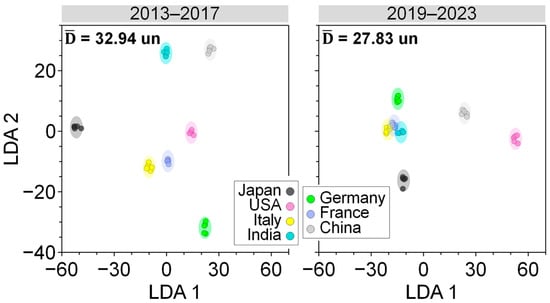
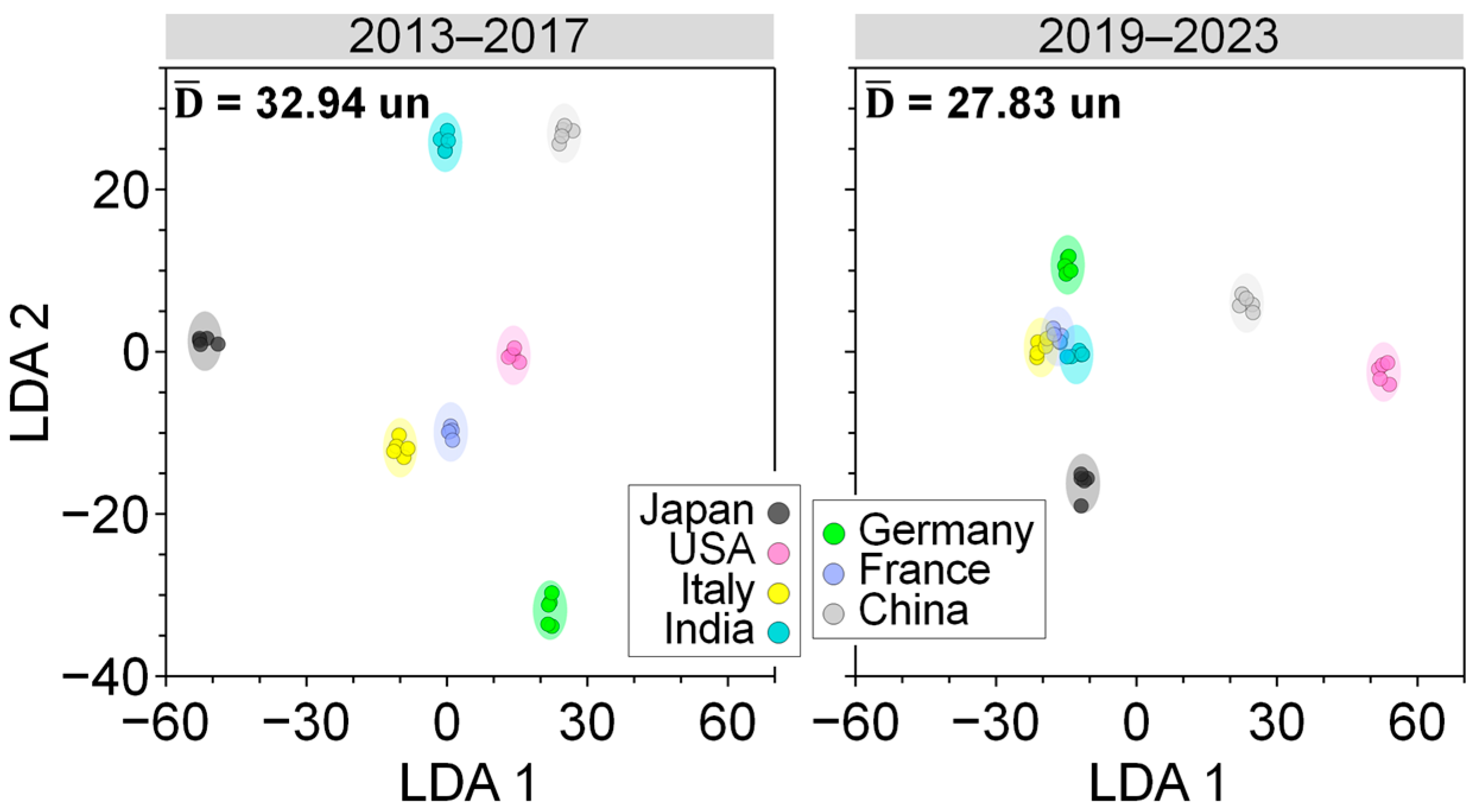
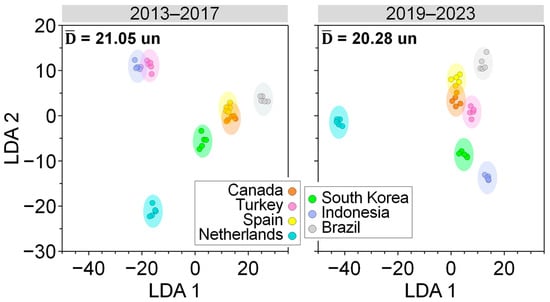
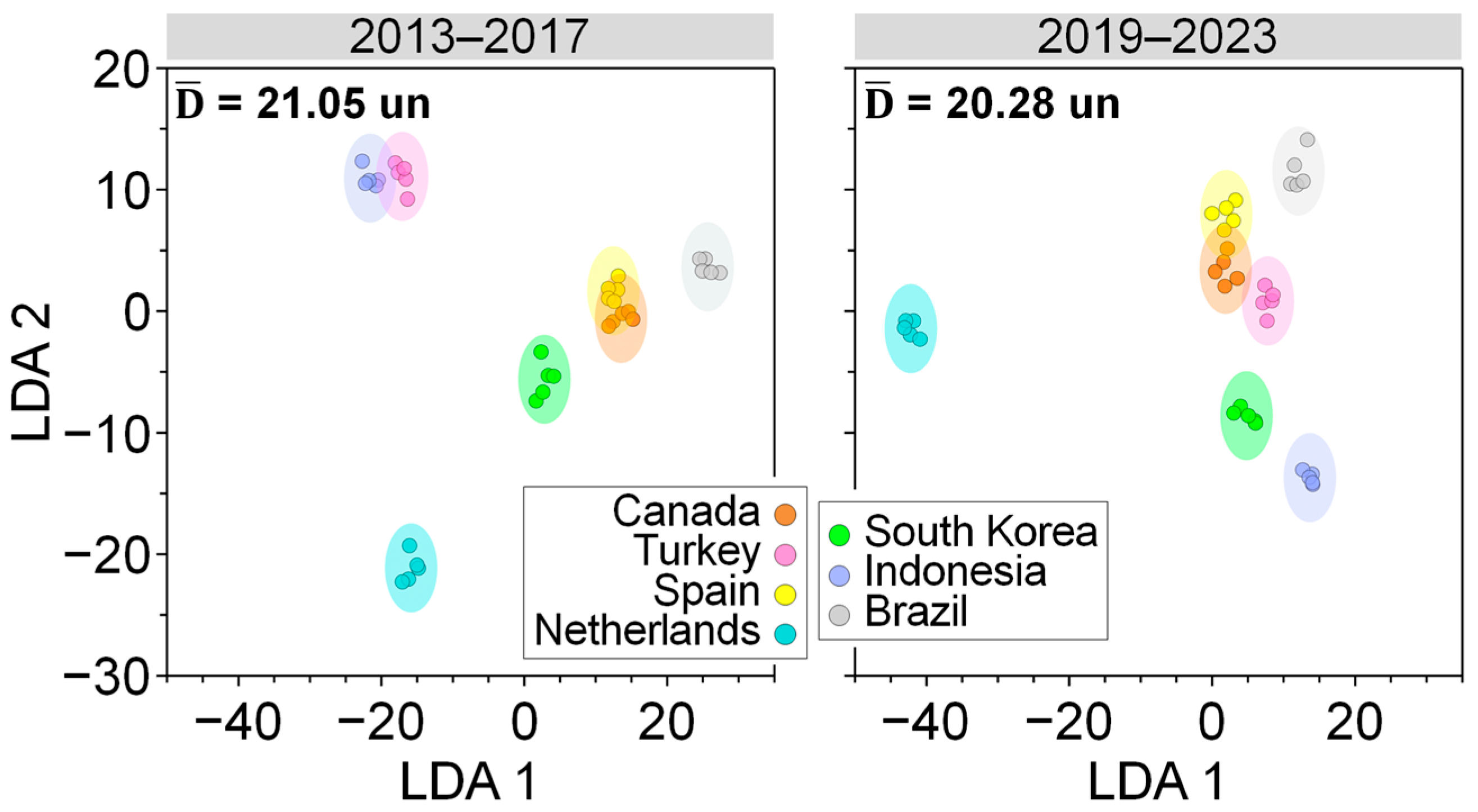
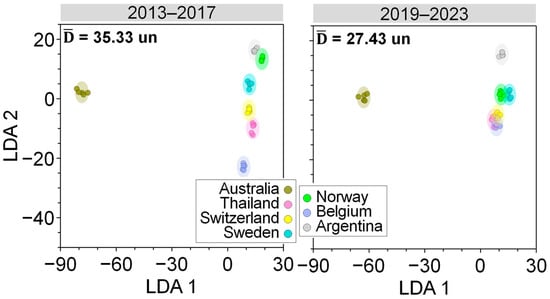
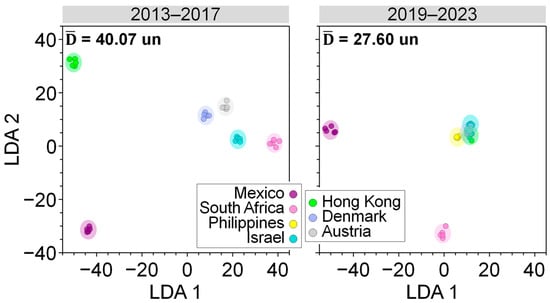
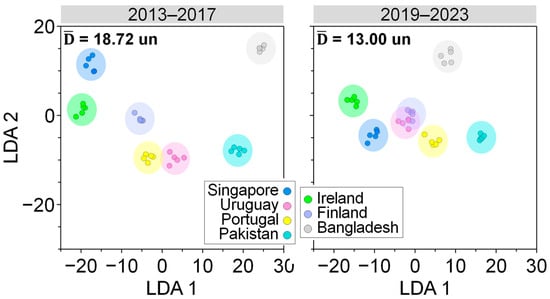
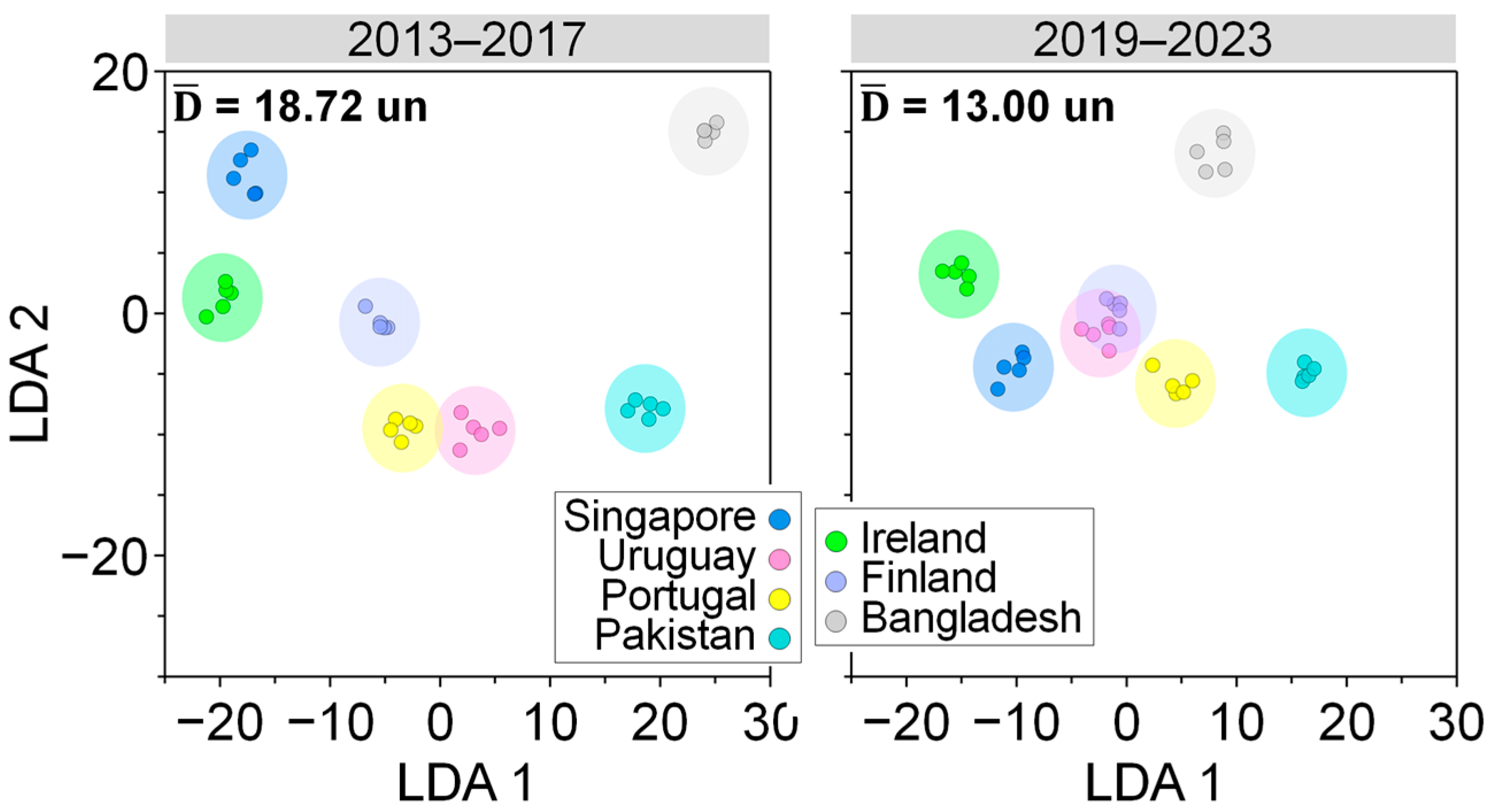
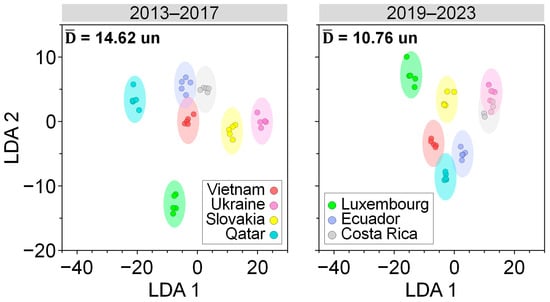
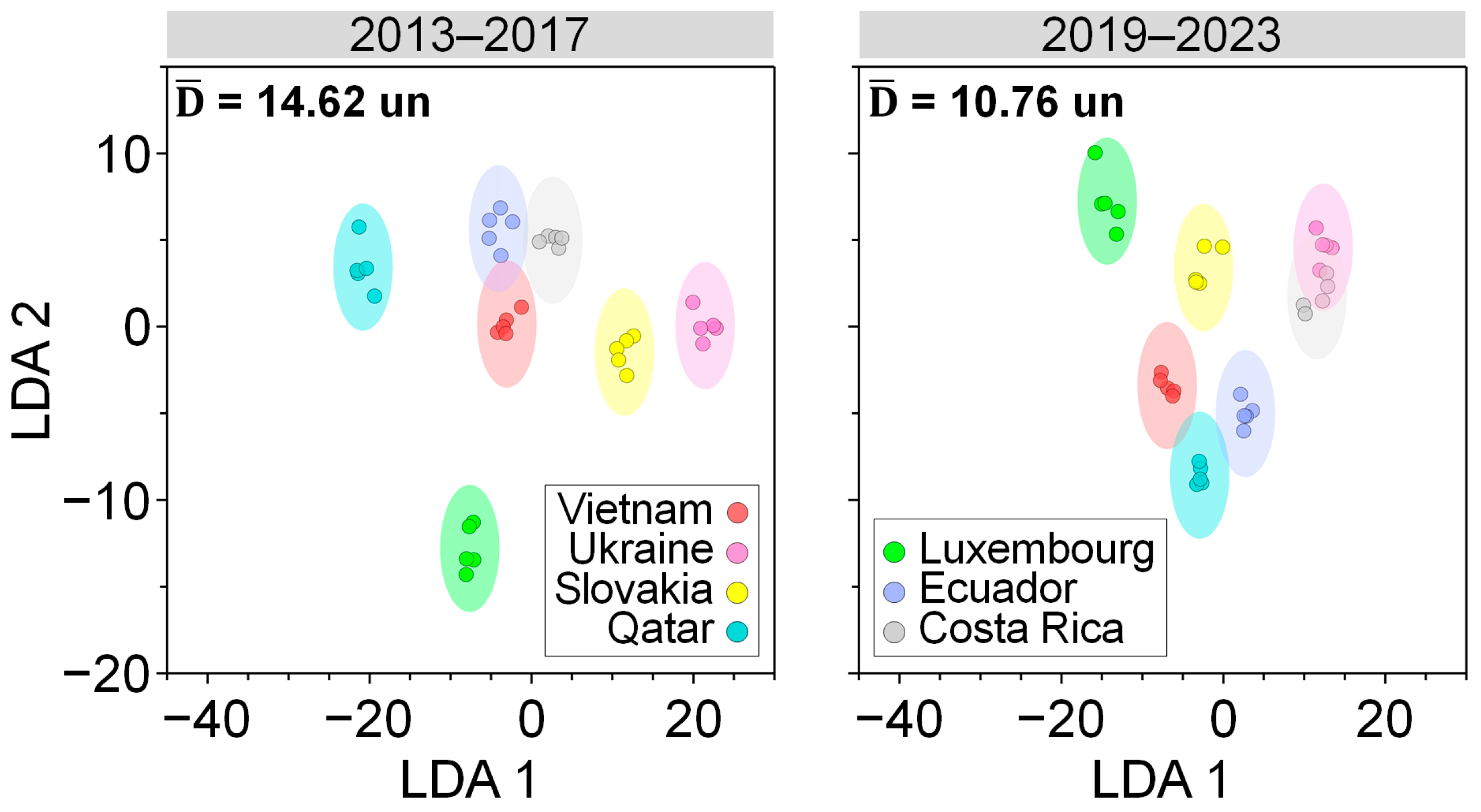
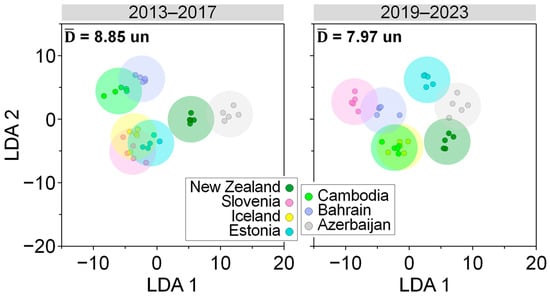
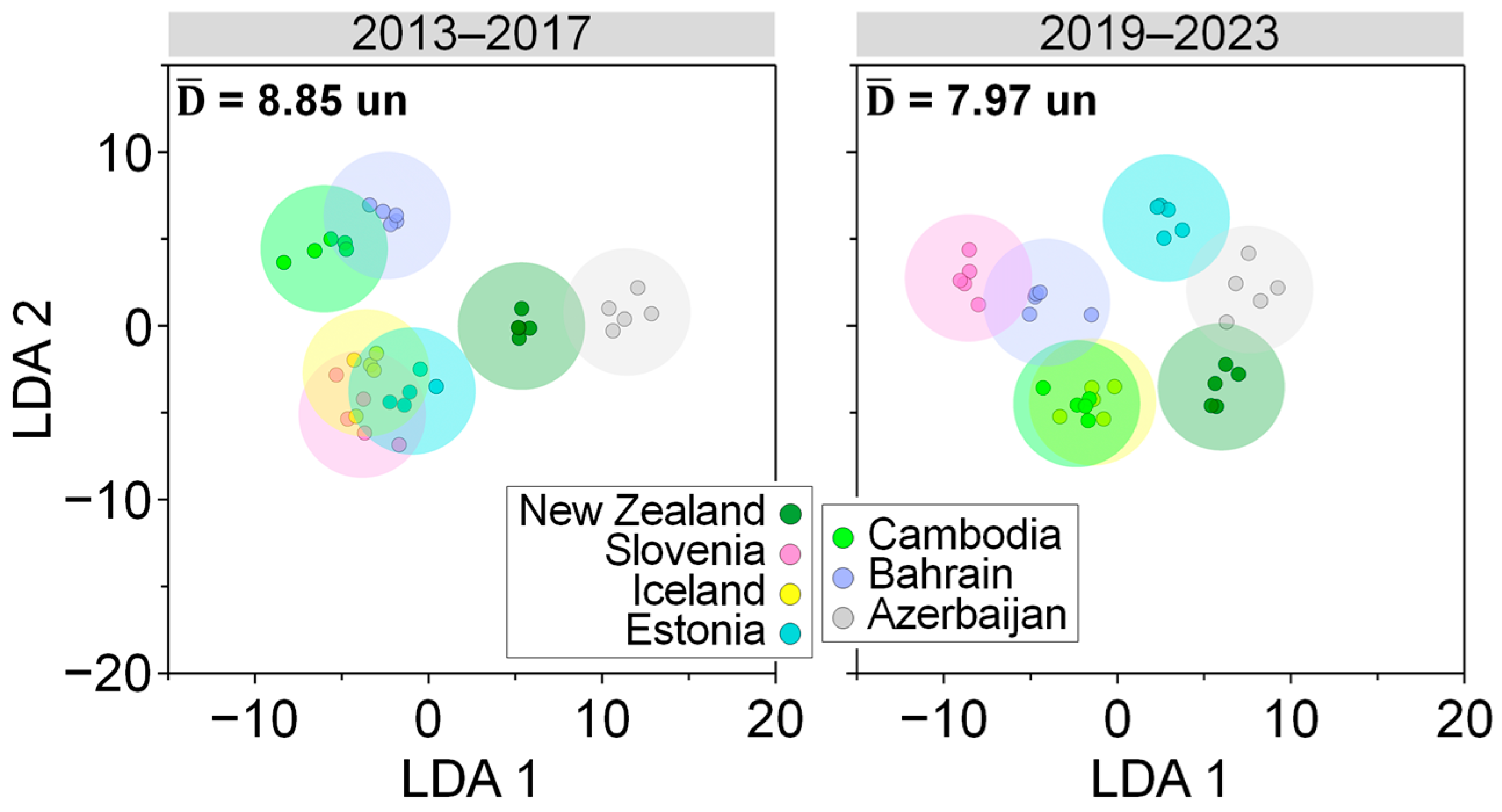
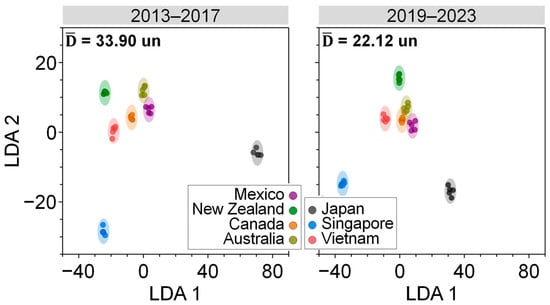
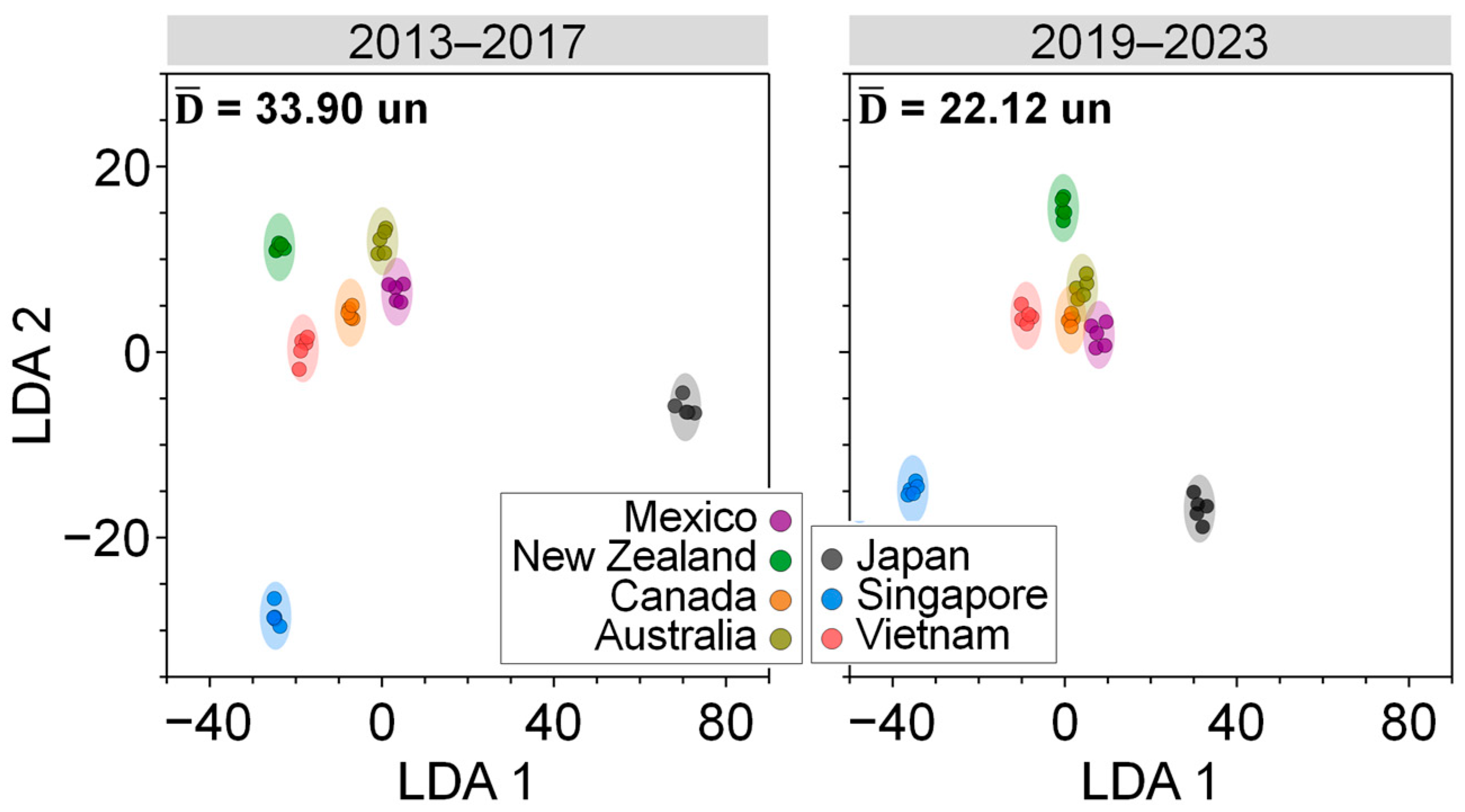

Disclaimer/Publisher’s Note: The statements, opinions and data contained in all publications are solely those of the individual author(s) and contributor(s) and not of MDPI and/or the editor(s). MDPI and/or the editor(s) disclaim responsibility for any injury to people or property resulting from any ideas, methods, instructions or products referred to in the content. |
© 2026 by the authors. Licensee MDPI, Basel, Switzerland. This article is an open access article distributed under the terms and conditions of the Creative Commons Attribution (CC BY) license.