


Abstract
This work investigates Ferro-Rock concrete as a carbon-negative alternative to ordinary Portland cement (OPC), which accounts for 5–9% of global CO2 emissions, and evaluates its viability as a sustainable construction material. Ferro-Rock is an iron-based binder comprising recycled iron powder, fly ash, metakaolin, limestone powder, and oxalic acid. This is enhanced by a carbonation reaction in which iron particles react with CO2 and water to form iron (II) carbonate (FeCO3), the main binding phase, thereby locking in atmospheric CO2. The experimental program was divided into two groups. Group 1 studied 100% Ferro-Rock binders with different types of aggregate, specimen sizes, and CO2 curing periods (0–6 days) with a new locally manufactured stainless steel curing chamber that provided a controlled CO2 environment of 99.9% and 1.2–1.5 bar gauge pressure. Group 2 investigated Ferro-Rock as a partial cement replacement at 0%, 5%, 10%, 15% and 20% levels of substitution with 5% increments. The 7 and 28 days of compressive, flexural and indirect tensile strengths were determined. The results showed the Ferro-Rock with 100% iron ductile waste aggregates (Mix F4) achieved a 28-day compressive strength of 5.5 MPa, 37.5% higher than the standard Ferro-Rock reference mix. The optimum replacement range of Group 2 was 5–10% with an increase in compressive strength by 5–10%, flexural strength by 11%, and indirect tensile strength by 16% over the OPC control. When replacement exceeded 25%, the bonding was weakened, and all strength measures decreased significantly, reaching a 46% reduction in compressive strength at 50% substitution. Scanning electron microscopy–energy-dispersive X-ray spectroscopy (SEM–EDS) microstructural analysis verified the gradual formation of the iron carbonate crystalline phase and provided mechanistic insights into the observed strength trends. Fully cured Ferro-Rock specimens sequestered as much as 11% CO2 by weight, with a verifiably carbon-negative profile that no OPC-based system can match.
1. Introduction
The global construction business is at a crossroads. Ordinary Portland cement (OPC) is the foundation of modern infrastructure and is also the primary material responsible for anthropogenic carbon dioxide (CO2) emissions from the built environment. OPC accounts for 5 to 9% of global CO2 emissions, mainly from high-temperature calcination of limestone (around 1400 °C), combustion of fuel in rotary kilns, and transport of raw materials, which emit 0.66 to 0.82 kg of CO2 per kilogram of clinker produced [1,2,3,4,5]. The world is moving rapidly towards net-zero construction targets in line with the United Nations Sustainable Development Goals, especially SDG9 (Industry, Innovation and Infrastructure) and SDG13 (Climate Action), and there is an urgent and scientifically compelling need to develop and validate binder materials that not only reduce carbon emissions but also actively sequester atmospheric CO2 as part of their intrinsic hardening mechanism. Ordinary partial replacement procedures with supplementary cementitious materials (SCMs), such as fly ash, ground granulated blast-furnace slag (GGBS), and metakaolin, can reduce the clinker content and embodied CO2 to a limited extent. But they are still fundamentally additives to a cement-based system that has a positive carbon impact. Thus, a qualitatively new approach is necessary to reverse the link between construction activity and atmospheric carbon [6,7].
Ferro-Rock has proven to be one of the most scientifically interesting candidates for a totally carbon-negative building binder [8]. Ferro-Rock is an iron-based geopolymer made primarily from recycled industrial waste streams, including iron dust or cast-iron machining swarf, fly ash, metakaolin, limestone powder, and oxalic acid. The hydration of calcium silicates in OPC forms calcium silicate hydrate (C–S–H), which strengthens the OPC. Ferro-Rock strengthens through a carbonation-driven reaction where iron particles react with CO2 and water to form iron (II) carbonate (siderite, FeCO3), which is the main binding phase. The net reaction, Fe + CO2 + H2O → FeCO3 + H2 [8,9,10], means that each unit of binder formed permanently fixes atmospheric CO2. During a full-service life, fully cured Ferro-Rock specimens were able to sequester 8 to 11% of their own mass in CO2 [8,10,11], giving the material a demonstrably negative carbon footprint, a property that no OPC-based system, even heavily supplemented with SCMs, can replicate [12].
Earlier studies on the engineering properties of Ferro-Rock provided a strong basis for its application as a structural or semi-structural material. Das et al. [10,11] provided a fundamental evaluation of iron–carbonate matrix composites and demonstrated that the crystalline network of FeCO3 facilitates fracture bridging and crack arrest, resulting in a failure mode that is significantly more ductile than that of standard Ordinary Portland Cement (OPC) concrete. The body of evidence was summarized by Muhit et al. [8], who reported that fully carbonated Ferro-Rock can achieve compressive strengths of 34.5–68.9 MPa, comparable to or superior to those of standard structural concrete, and exhibits better resistance to sulfate attack and chloride ion penetration [6]. Importantly, the risk of galvanic corrosion with steel reinforcement when using Ferro-Rock is considerably minimized since FeCO3 is electrically non-conductive and the iron is in an oxidized rather than metallic state [10]. The durability benefit was confirmed by Mitikie et al. [13], who found that Ferro-Rock formulations containing oxalic acid produced concrete roughly 38.7% stronger than typical OPC controls and exhibited good sulfate resistance, as noted in [14,15]. Vijayan et al. [16] also conducted environmental sustainability assessments and verified the material’s life-cycle benefits.
Another parallel and practically relevant line of inquiry has been to consider the use of Ferro-Rock not as a full replacement for OPC, but as a partial cement replacement in conventional concrete. This retains workability and structural-grade strength, while adding the carbon-sequestering Ferro-Rock reaction to the cementitious matrix. Madala and Sujatha [9] studied partial replacements of 10%, 20%, and 30% by weight and found that the maximum improvements were observed at the 20% replacement level, showing a 53% increase in compressive strength and a 52% increase in split tensile strength compared to the control mixes, with significantly lower chloride ion permeability. Later studies on similar replacement ranges were conducted by Jeffy Pravitha et al. [17] and Vijayan et al. [18]. They found that the optimum zone of synergistic performance is highly sensitive to maintaining sufficient Ca(OH)2 for ongoing C–S–H formation, whereas beyond a certain replacement level, the pozzolanic and iron-rich elements of Ferro-Rock disrupt the matrix continuity and leave silica only partially reacted. In addition, Niveditha et al. [2,14] showed via response surface methodology (RSM) that the oxalic acid-to-iron powder ratio is an important variable affecting the extent and uniformity of carbonation. In conclusion, these studies provide compelling evidence supporting the notion of Ferro-Rock as a cement replacement in a strongly non-linear fashion with a maximum at a particular substitution level and then declining, but the exact location of such a maximum and the microstructural mechanisms that govern the transition vary significantly between studies due to differences in the quality of the iron source, fineness of particles, curing method and mix design.
One of the key process variables that differentiates Ferro-Rock from other cementitious systems is the nature of its curing environment. Without adequate exposure to CO2, the carbonation reaction will stall, FeCO3 formation will be incomplete, and the specimen will be mechanically deficient regardless of its mix design. Das et al. [10,11] demonstrated that Ferro-Rock may attain roughly 40% of its maximum compressive strength within four hours of CO2 exposure, but reaction rates slow down over time as the carbonation front advances and reactive surface iron sites are exhausted. Previous studies have used plastic bag enclosure methods [8,19] or ambient-air curing, which provide limited control over CO2 concentration, chamber pressure, and relative humidity, which regulate carbonation kinetics in iron carbonate systems [20,21]. Without a consistent, controlled curing technique, comparisons between studies have been unreliable, and the scientific community has been unable to create curing conditions that maximize carbon uptake, limit residual porosity, and give the most uniform FeCO3 microstructure. The effect of iron supply and particle properties is also underexplored. Most investigations have employed commercially supplied steel dust or fly-ash-associated iron. The economic rationale for Ferro-Rock, however, hinges heavily on the availability of low-cost locally sourced iron waste such as machining swarf from lathes, brake components, and vehicle engine plants. However, the heterogeneity induced by such iron sources and the processing requirements to achieve the sub-45-micron particle fineness needed for successful carbonation have not been extensively studied.
However, many important unanswered questions remain in the current state of knowledge. No prior study has designed and tested a custom-manufactured sealed CO2 curing chamber with independently controllable gas concentration (99.9%), gauge pressure (1.2–1.5 bar), temperature, and specimen moisture state for Ferro-Rock production, nor has any study systematically compared the carbonation efficiency and mechanical performance of such a chamber to conventional open or bag-based curing. Secondly, although the overall performance window of 10–30% partial OPC replacement with Ferro-Rock has been reported, the dose–response relationship in a fine-grained range of 0–50% replacement in 5% increments, capturing both the ascending and descending limbs of the strength curve, has not been comprehensively characterized under identical controlled CO2 curing conditions. Thirdly, the performance implications of replacing reactive iron ductile waste with natural coarse and fine aggregates in a 100% Ferro-Rock system have not been thoroughly investigated using both mechanical testing and microstructural data. Fourth, the interplay between specimen geometry, CO2 diffusion depth, and the resulting spatial homogeneity of FeCO3 synthesis has not been explicitly studied, although it is a practical concern for any scale-up of Ferro-Rock production.
The present work aims to solve these gaps through an integrated experimental program that has four distinguishing features: First, a novel locally fabricated 316 stainless steel CO2 curing chamber with precision pressure and temperature monitoring was developed and used exclusively throughout the program, providing a controlled and reproducible carbonation environment that is a significant improvement over previous bag or ambient curing methods. Second, the cast iron waste from machining operations in Egypt was locally sourced and processed into two particle-size ranges (below 45 and 90 microns), and the resulting particles were validated by XRF. It was used as the primary reactive iron component, demonstrating a cost-effective, regionally applicable approach for supplying Ferro-Rock raw materials. Third, the experimental design comprised two complementary groups: Group 1 focused on 100% Ferro-Rock binders with different aggregate types (natural mineral, iron ductile waste, or no aggregate), specimen sizes, and curing periods to isolate the influence of geometry and CO2 exposure on carbonation efficiency. Group 2 was designed to vary the Ferro-Rock-to-OPC substitution ratio from 0 to 50% with 5% steps, under the same controlled curing conditions. Fourth, the mechanical testing in all three modes (compressive, flexural, and indirect tensile strength) was supplemented with SEM-EDS microstructural analysis to provide mechanistic explanations for the observed performance patterns. This study introduces a novel, optimized approach to Ferro-Rock concrete production and a comprehensive mechanistic characterization of Ferro-Rock as a stand-alone binder and as a partial cement replacement, thereby filling an important, unaddressed gap in the sustainable construction materials literature.
2. Experimental Work
2.1. Experimental Outline
In the current study, the experimental program was divided into two groups. Group 1 was designed to isolate the effects of three independent variables on 100% Ferro-Rock binders: aggregate type (natural mineral vs. iron ductile waste vs. no aggregate), specimen geometry (100 mm vs. 50 mm), and CO2 curing duration (0–6 days), with the objective of characterizing carbonation efficiency and its dependence on reactive surface area and CO2 diffusion depth. The formulations for the initial group, calibrated for a volume of 1 m3, are detailed in Table 1.

Table 1.
Proportion of mixed ingredients of the first group for 1 m3.
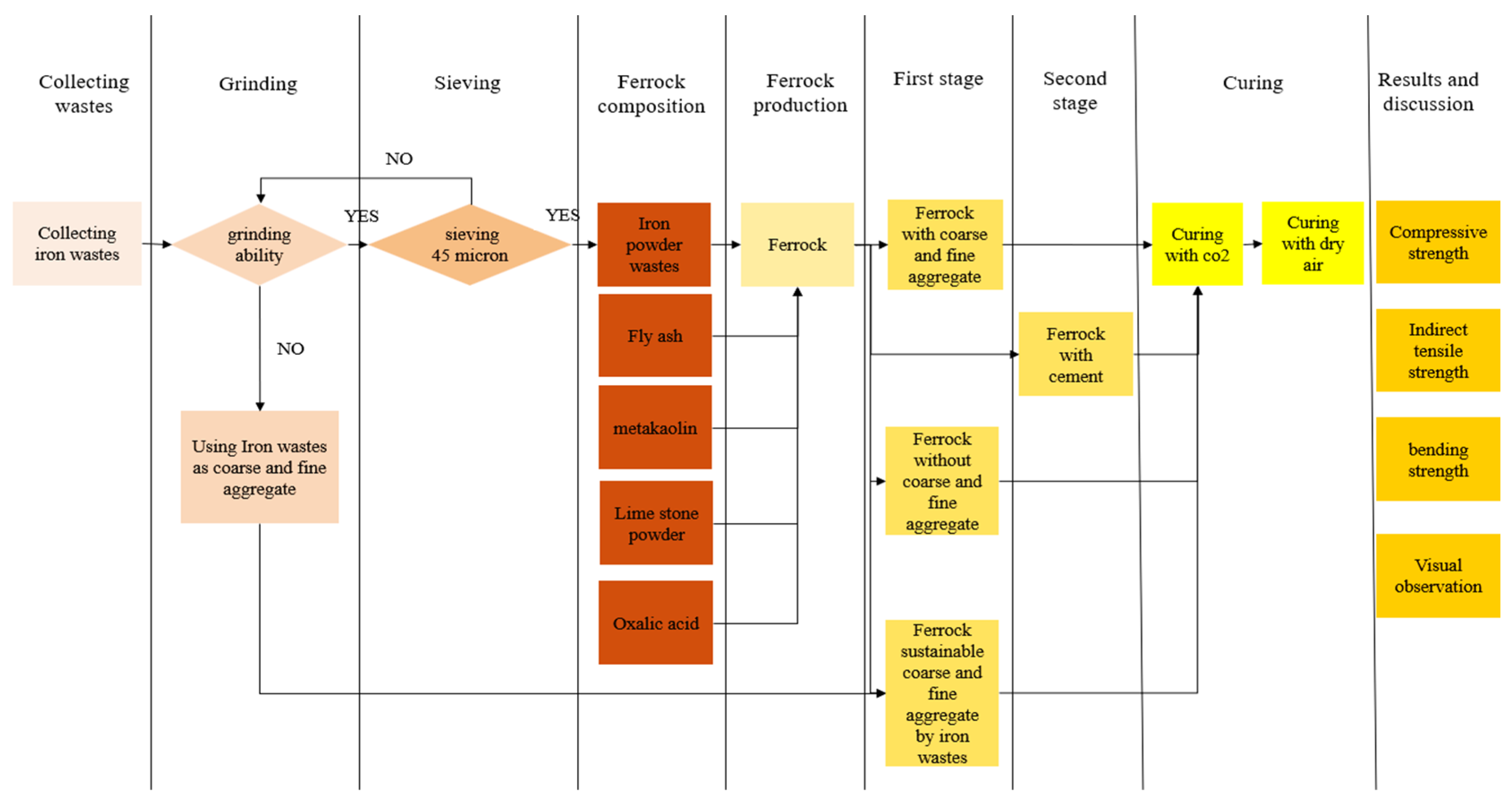
Group 2 systematically varied the Ferro-Rock-to-OPC substitution ratio from 0% to 50% in 5% increments under identical controlled curing conditions to establish a comprehensive dose–response relationship for mechanical performance. The mixed ingredients are given in Table 2. All mixes underwent the same two-regime curing process. First, the specimens were exposed to a high-carbon-dioxide environment for 4 days, followed by 3 days of air-drying. Figure 1 illustrates the experimental procedure used in this study.
Table 2.
Proportion of mixed ingredients of the second group for 1 m3.
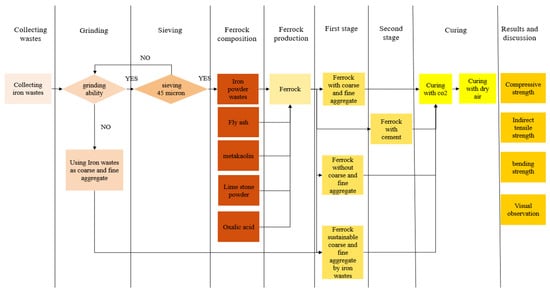
Figure 1.
A flowchart for the methodology in this work.
2.2. Materials
2.2.1. First Group
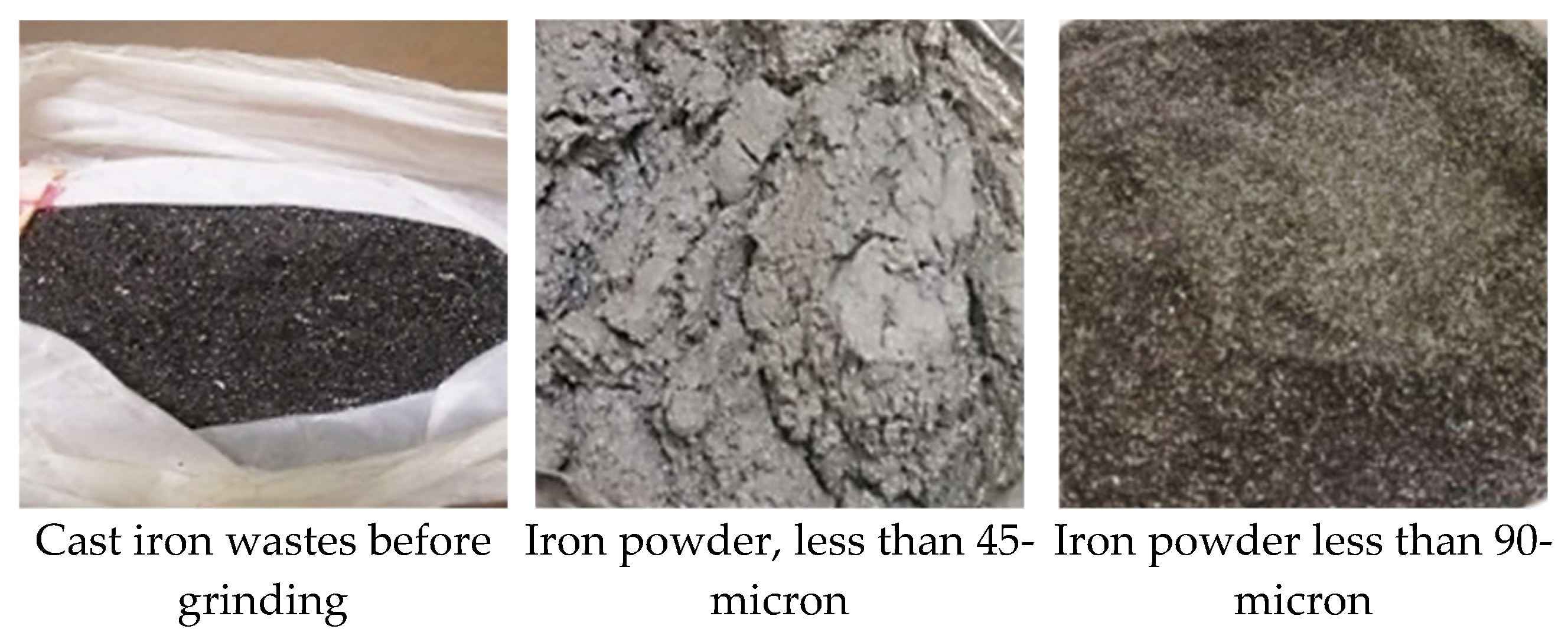
In the first stage of this study, Ferro-Rock ingredients were used entirely without any addition of ordinary Portland cement. Specifically, cast iron machining waste was locally sourced from lathe and turning workshops in the Zagazig region, Egypt. The material was mechanically ground using a ball mill and dry-sieved to achieve two target particle-size fractions: d ≤ 45 μm and d ≤ 90 μm, as shown in Figure 2. The chemical composition of the processed powder was determined by X-ray fluorescence (XRF) analysis conducted at the Central Metallurgical Research and Development Institute (CMRDI), Helwan, Cairo; results confirmed a predominant iron content of 89.61 wt.% (Table 3).
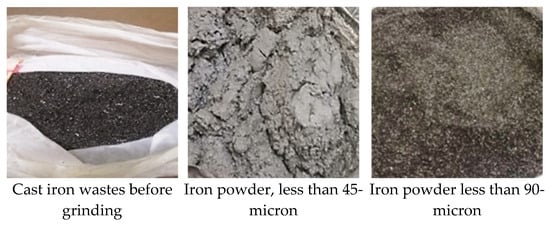
Figure 2.
Iron powder after grinding.
Table 3.
XRF analysis of the cast iron powder sample.
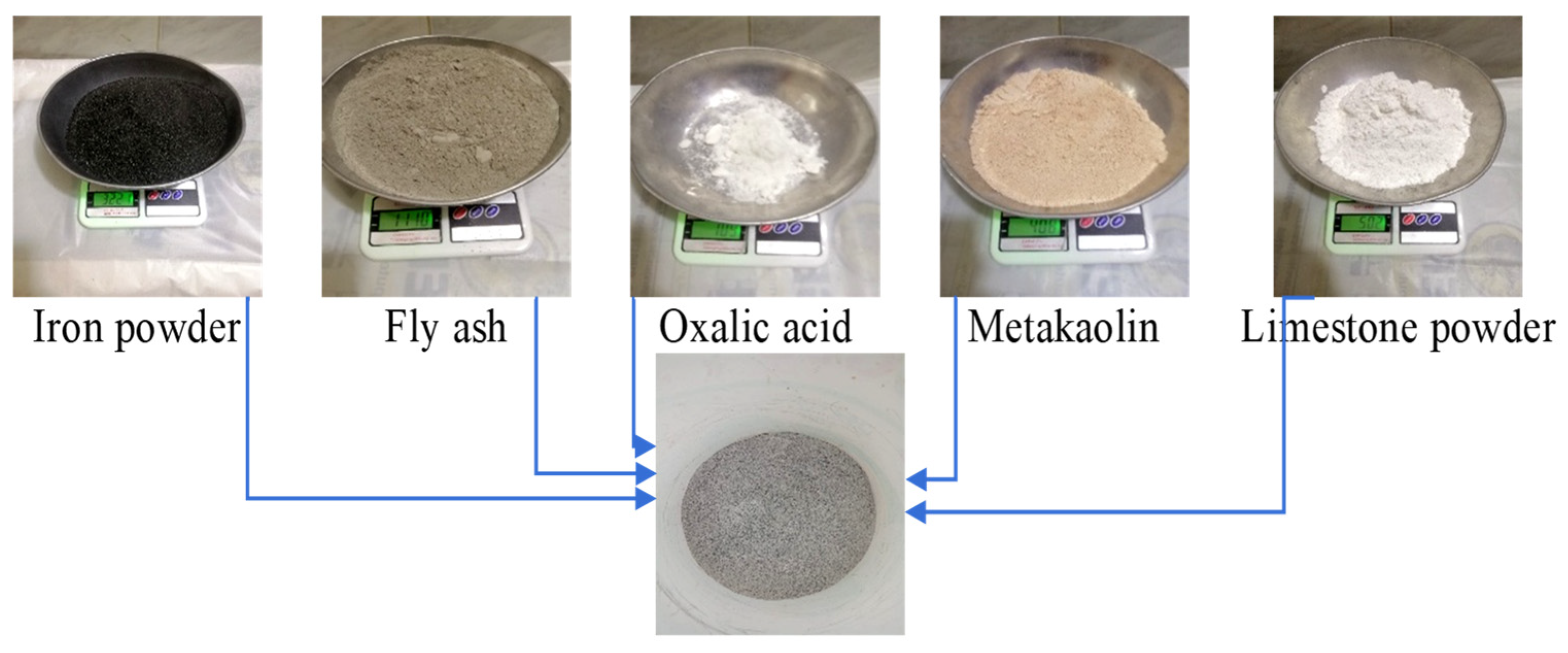
Incorporating metakaolin, limestone powder, and fly ash enhances reaction speed, product quality, and durability. These materials improve workability, reduce cracking, and boost mechanical properties, leading to superior construction performance and sustainability across various applications [22,23]. The addition of oxalic acid during curing improves Ferro-Rock’s reactivity and strength development. Fly ash conforms to ASTM C618 Class F, metakaolin is produced through kaolin clay calcination at 700–800 °C, and limestone has a d50 ≤ 10 μm. Oxalic acid (H2C2O4, ≥99% purity) is added in a fixed mass ratio to iron powder as shown in Figure 3.
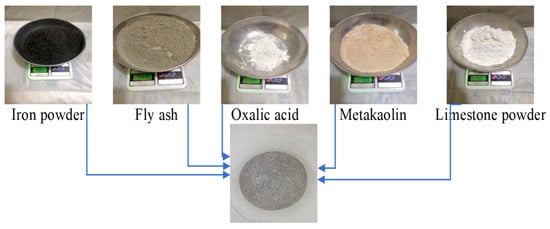
Figure 3.
The compositions of the Ferro Rock mix.
The Ferro-Rock mixture used in this study is consistent with the formulation established by Madala and Sujatha [9]. The composition of the mixture consists of 60% iron powder (with particle size < 45 μm, sourced locally), 20% fly ash (Class F), 10% metakaolin, 8% limestone powder, and 2% oxalic acid. An XRF elemental analysis of the iron powder confirms that iron is the dominant element at 89.61 wt.%, with minor components including silicon, aluminum, and oxygen, as well as trace quantities of chromium, copper, and nickel. Additionally, the physical characterization data indicate that the particle size is consistent at less than 45 μm.
2.2.2. Second Group
The integration of Ferro-Rock with traditional cement produced according to Egyptian standards [24] and complies with European specifications [25]. The second category of concrete mixtures incorporates Ferro-Rock, an alternative material, as a partial replacement for cement. The percentage of cement replaced by Ferro-Rock ranges from 0% (a control mix containing only cement) to 50%, in 5% increments. Cement not only improves concrete’s mechanical properties but also enables the construction sector to adopt more sustainable practices without sacrificing performance. The properties of the employed cement are outlined in Table 4.
Table 4.
Cement standard specifications limits (physical characteristics).
This research utilized natural siliceous sand with a fineness modulus of 2.65. The sand’s testing met the requirements set by the Egyptian Standards ES 1109:2021 [26]. Table 5 presents the physical properties of the sand used.
Table 5.
The physical properties of the used siliceous sand.
In this study, dolomite with nominal sizes of 10 mm and 5 mm was used in accordance with the Egyptian Standards ES 1109:2021 [26], which were followed throughout the testing of the coarse aggregate. The grading of the used dolomite is presented in Table 6.
Table 6.
The physical and mechanical properties of the used dolomite.
2.3. Casting and Mix Preparation
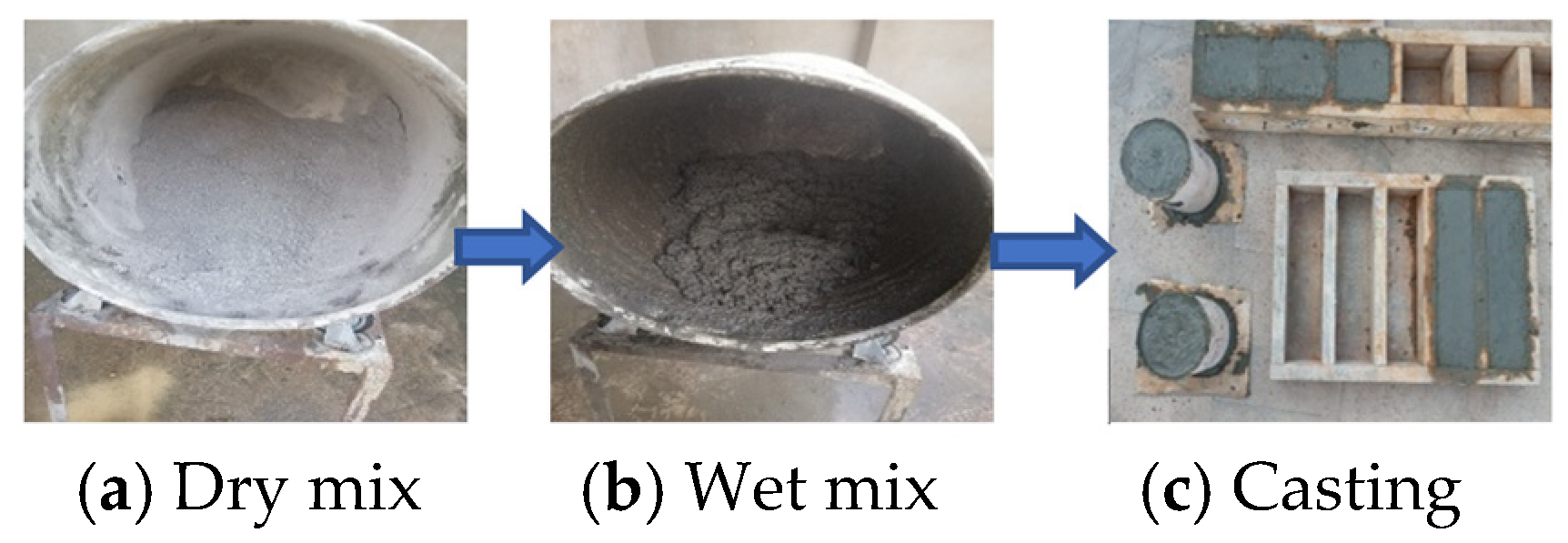
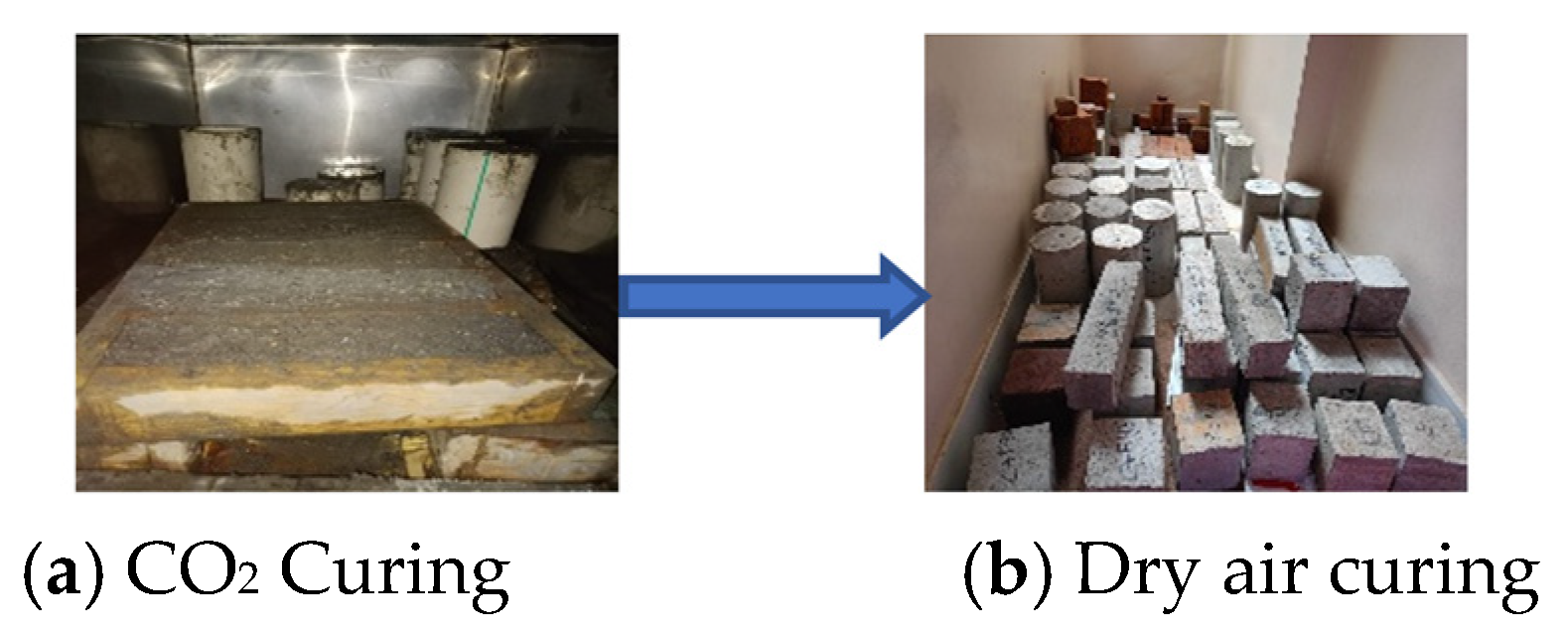
In this section, we explain the material preparation, mold setup, mixing, and casting processes, as illustrated in Figure 4 and Figure 5. Cubic specimens with dimensions of 100 mm were cast for the compression test, and cylindrical specimens with a diameter of 150 mm and a height of 300 mm were cast for the indirect tensile test. Additionally, beam-shaped specimens with dimensions of 70 × 70 × 280 mm were cast for the flexural test.
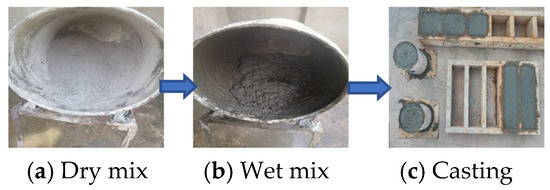
Figure 4.
Process of concrete mixing.
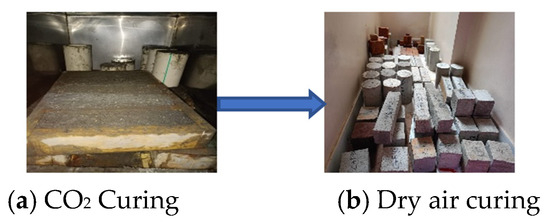
Figure 5.
Curing process.
The first group uses 100% Ferro-Rock to explore some of the features affecting its performance, like the coarse aggregate, shape, and type of specimen, as well as how it is affected by CO2 and the duration of curing. The second group replaces a portion of the cement weight with Ferro-Rock from 0 to 50% to investigate Ferro-Rock’s characteristics with a replacement of cement. This approach not only aims to optimize the mechanical properties of Ferro-Rock but also to establish a clearer understanding of its performance dynamics when integrated with traditional cement.
2.4. Curing Chamber Setup and Parameters
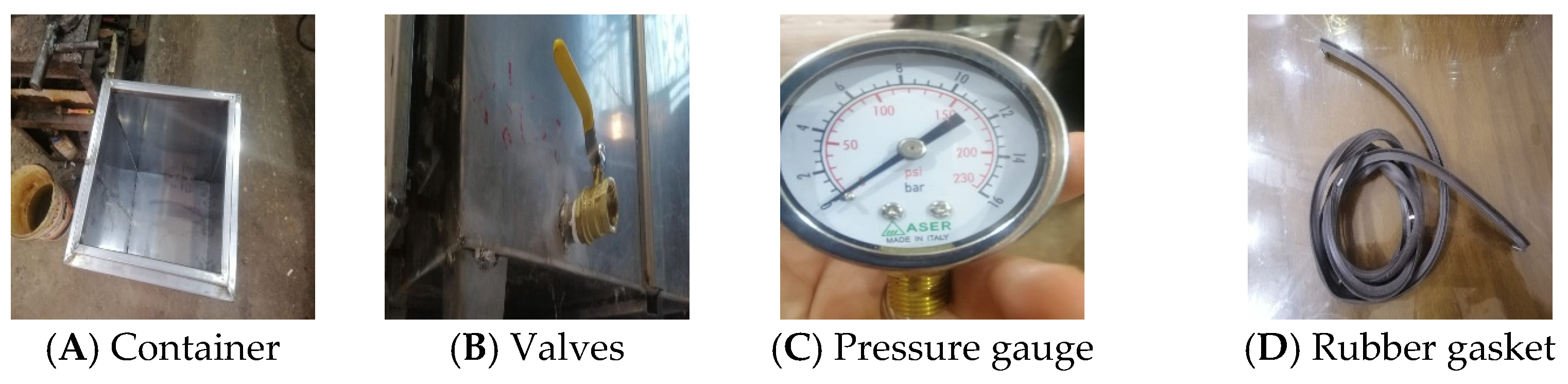
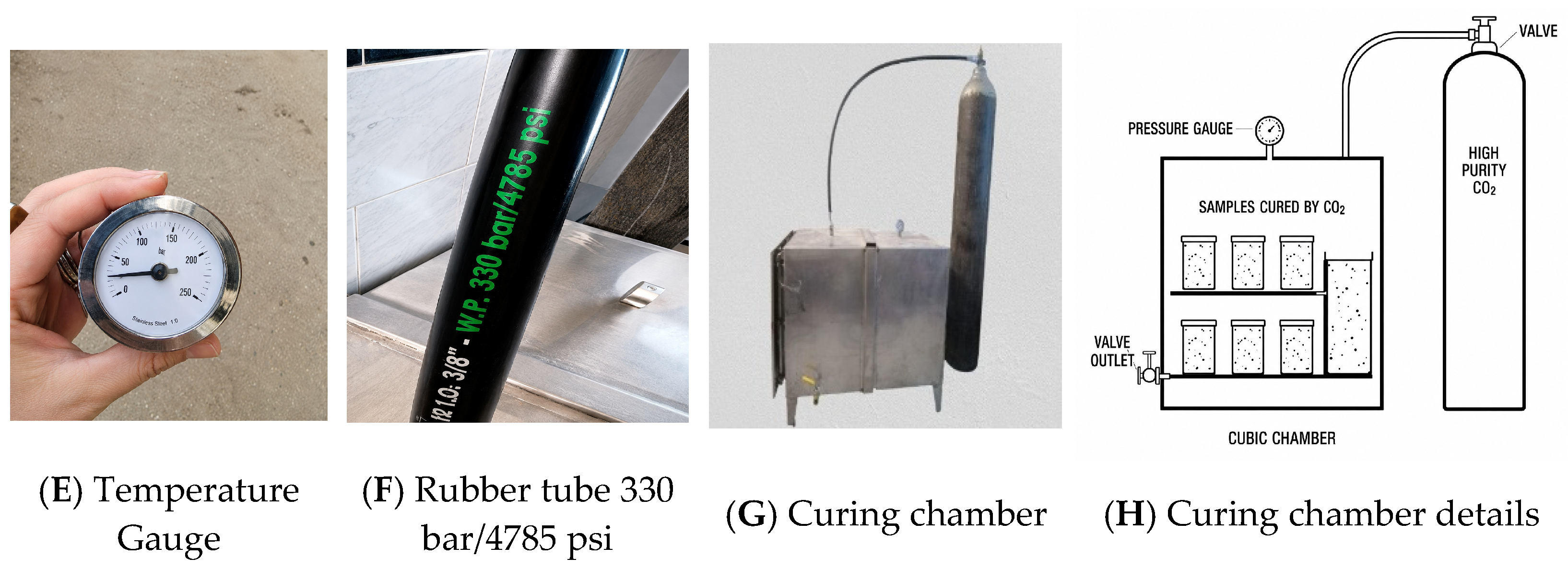
A novel locally manufactured chamber was developed to promote Ferro-Rock curing, thereby optimizing carbon absorption, mechanical properties, and resistance to environmental factors. The chamber container is made of 316 stainless steel, is 1.5 mm thick, and does not react chemically with CO2, Ferro-Rock, or other corrosive gases. Figure 6A–H shows the details of the chamber components. The two valves shown in Figure 6B control the flow and amount of CO2, while the pressure gauge in Figure 6C ensures safety by maintaining the gas pressure at a suitable level.
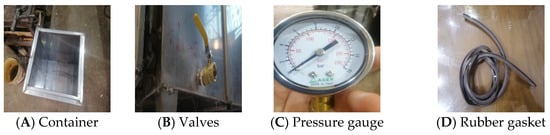
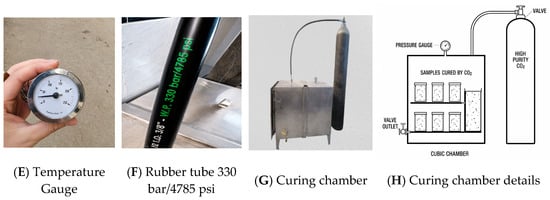
Figure 6.
Curing chamber setup.
The chamber door, made of 2 mm thick 316 stainless steel, is designed to withstand constant use. It is supported by a rubber gasket, as shown in Figure 6D, and sealed with silicone to prevent gas leakage. The door is secured with twelve evenly distributed fixing bolts and nuts. The temperature is measured with a gauge, as shown in Figure 6E, which indicates a decrease as carbon dioxide gas is pumped into the chamber. The gas is delivered via a high-grade carbon dioxide gas cylinder (Figure 6G) that connects to a rubber tube capable of withstanding 330 bars of pressure, as shown in Figure 6F.
The full set of CO2 curing parameters includes a CO2 concentration of approximately 99.9% purity using an industrial-grade cylinder. The chamber pressure is maintained at around 1.2–1.5 bar (gauge), with the temperature kept at ambient levels of about 20–25 °C, although the temperature gauge records a drop of 2–3 °C upon initial gas injection. Relative humidity is managed by ensuring that specimens are surface-wet prior to CO2 exposure, as surface moisture is critical for initiating the carbonation reaction. The primary curing regime lasts for 4 days of CO2 exposure, followed by 3 days of dry air.
2.5. The Mechanism of the Curing Regime Process for Ferro-Rock Details
Ferro-Rock curing is an innovative method to enhance the strength and durability of Ferro-Rock through several essential steps. Unlike standard concrete, which requires water to solidify, Ferro-Rock achieves a net-negative carbon footprint by capturing and sequestering carbon during curing. To initiate the carbonation reaction that transforms iron oxide and CO2 into iron carbonate, the primary binding agent, Ferro-Rock samples must be moved into a CO2 environment within five minutes of being demolded. Research shows that a three-day curing period in CO2, followed by two days in air, is effective for building strength. However, the maximum compressive strength is achieved by extending CO2 exposure to 4 days and air curing to 3 days, as this facilitates deeper CO2 penetration and enhances iron carbonate formation. The carbonation process significantly boosts initial strength and also contributes to long-term durability; Ferro-Rock can reach approximately 40% of its concrete strength within just 4 h of CO2 exposure. Supporting the notion that this curing approach is environmentally friendly, Ferro-Rock is known for its ability to absorb CO2 over its lifespan, with fully cured samples containing about 8% to 11% of the CO2 they trap by weight.
The CO2 curing period was limited to 6 days to simulate practical construction constraints and the saturation behavior of the carbonation process. Studies have shown that Ferro-Rock reaches approximately 40% of its ultimate compressive strength within 4 h of CO2 exposure. The reaction rate declines over time as the carbonation front advances into the specimen and reactive iron sites become depleted [2,10,11]. Since extending CO2 exposure beyond 4 days (as in F2) did not yield additional compressive strength gain relative to the 4-day reference mix F1, carbonation efficiency appears to depend on CO2 diffusion depth and reactive surface area rather than curing duration [19]. The carbonation efficiency is a function of CO2 diffusion depth and reactive surface area rather than of curing time. Therefore, an improved protocol comprising 4 days of CO2 exposure followed by 3 days of dry air was chosen in accordance with the rules for iron–carbonate binder systems and the sustainable construction time-efficiency requirements.
Das et al. [10] reported that iron carbonate-based binder specimens can achieve approximately 40% of their ultimate compressive strength within 4 h of CO2 exposure under controlled conditions, attributable to the rapid nucleation of FeCO3 at accessible iron surfaces. The reaction rate subsequently declines as the carbonation front advances and reactive iron sites are progressively depleted [10,11]. Regarding long-term carbon uptake, Das and Neithalath [11] demonstrated through pore microstructure characterization that fully carbonated iron carbonate binder specimens incorporate CO2 equivalent to approximately 8–11% of their total weight, consistent with the stoichiometry of the net carbonation reaction (Fe + CO2 + H2O → FeCO3 + H2) [8,10,11]. These values are consistent with the broader Ferro-Rock literature [8,18].
2.6. Mechanical Testing
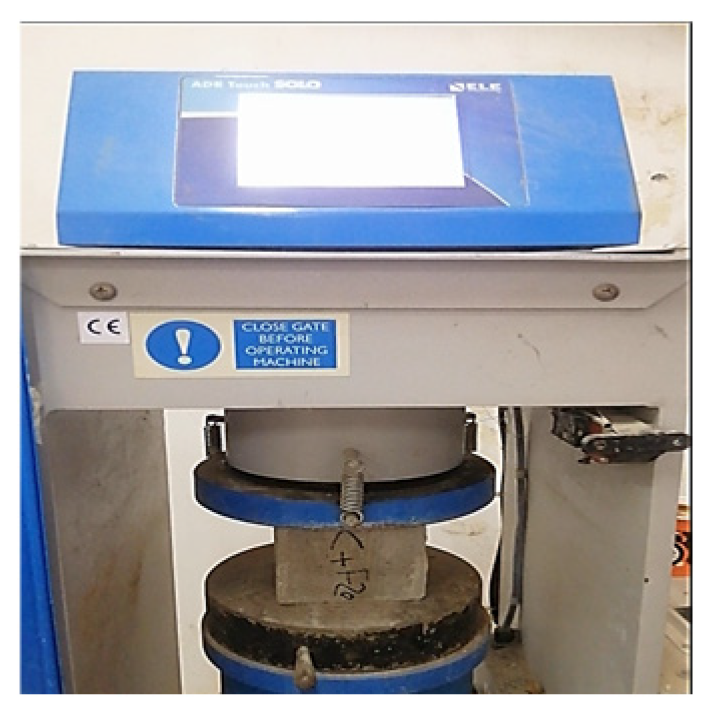
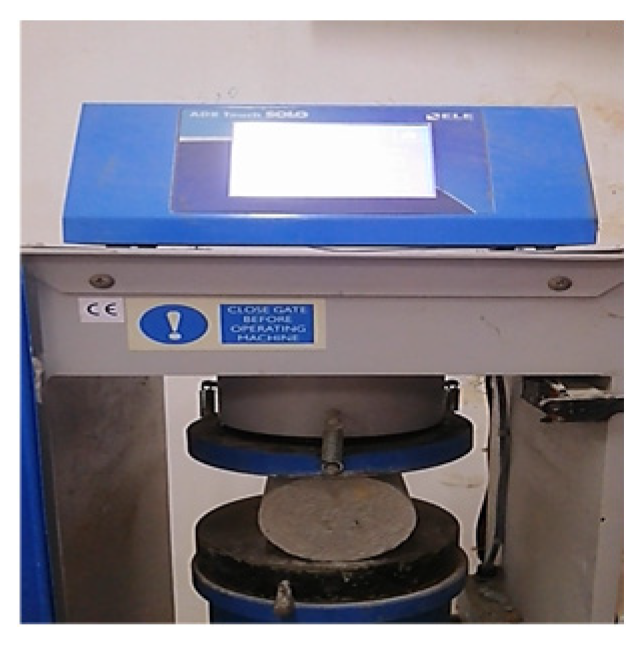
The compressive tests were conducted using a hydraulic machine with a capacity of 2000 kN and an accuracy of 5 kN, as shown in Figure 7. A total of nine specimen cubes measuring 100 mm × 100 mm × 100 mm, made from cement, Ferro-Rock, and F1 mixtures, were tested. Additionally, according to EC203-2020 [27] and BS EN 12390-3:2019, Testing Hardened Concrete–Part 3 [28] guidelines, 50 mm × 50 mm samples were used for the remaining tests to enhance carbon dioxide gas absorption and to prevent issues encountered with the F1 mixture, as illustrated in Figure 7. Regarding specimen size standardization, a size correction factor of 0.85 is applied when comparing with standard 100 mm cube results, consistent with established Egyptian and European testing codes.
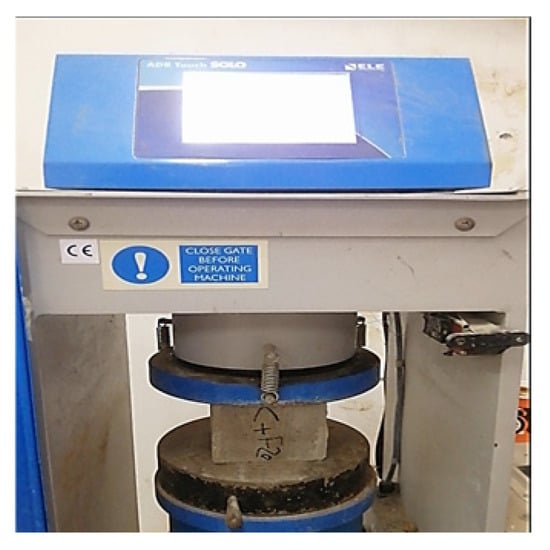
Figure 7.
The compressive strength test.
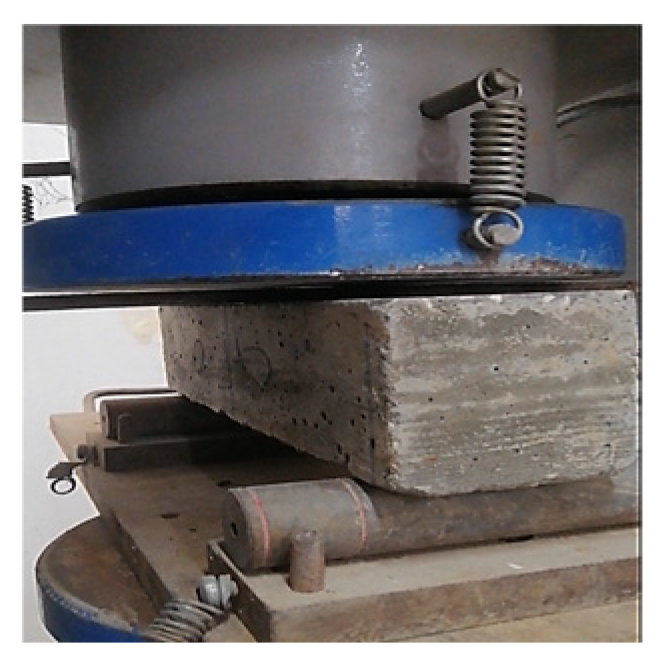
Bending strength tests were conducted on beams measuring (70 × 70 × 280) mm using a three-point loading method, in accordance with the specified standards [29]. A hydraulic testing machine with a capacity of 300 kN was utilized, applying a loading rate of 5 N/cm2/S until the beams failed, as illustrated in Figure 8.
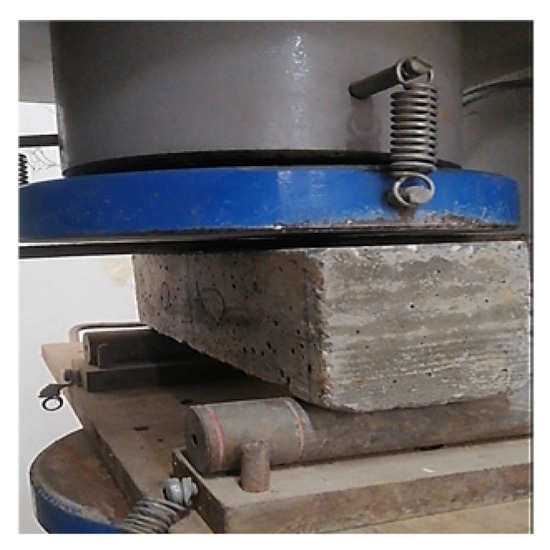
Figure 8.
Bending strength test.
Three cylinders, each with a diameter of 150 mm and a height of 300 mm, were tested for the cement and Ferro-Rock mixtures, while the remaining samples used cylinders with a diameter of 50 mm and a height of 100 mm. Figure 9 illustrates these specifications [30].
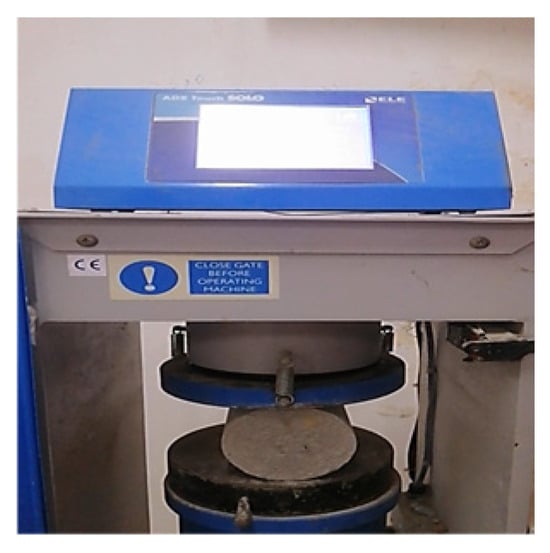
Figure 9.
Indirect tensile strength test.
2.7. Microstructure Testing
A High-Definition Backscattered Electron microscope with an accelerating voltage (EHT) of 22.00 kV was used to examine the microstructure of the samples and to provide visible confirmation of the microstructural features associated with changes in mechanical properties. These analyses were performed at the National Center for Radiation Research and Technology, part of the Egyptian Atomic Energy Authority. After the strength test, the samples intended for microstructural examination were separated from the crushed samples and then gold-sputtered for 7 min.
3. Results and Discussion
3.1. Observations on the Carbonation and Hardening of Ferro-Rock Mixtures
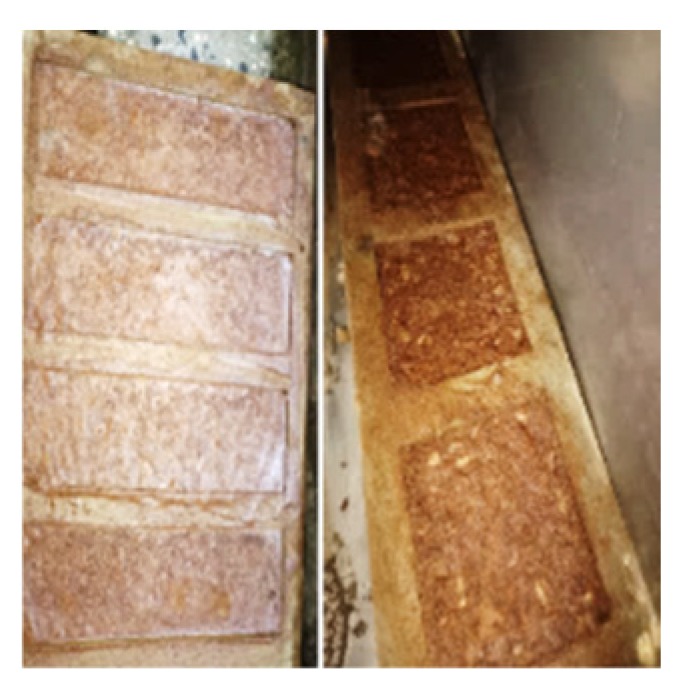
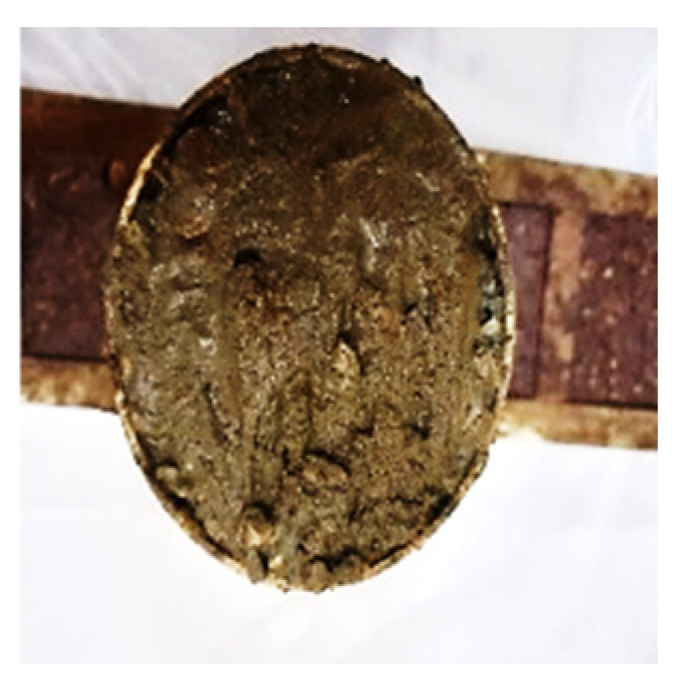
After 24 h, the chamber with mixtures F1 and F2 was opened. Figure 10 shows that Ferro-Rock had begun to solidify and had turned orange-brown. The sample had a texture like a thick paste or cake, with cohesion mostly in the outer layer, especially on the side exposed to carbon dioxide gas, as shown in Figure 11. The observed brown discoloration is due to the formation of a corrosion layer from the reaction of iron with water in the presence of carbon dioxide, producing iron carbonate (FeCO3). Similarly, the hardening of the external layer arises from the same process; however, additional time is required for carbon dioxide to fully diffuse into the bulk material. The next day, it was noted that the cylinders failed to attain the necessary hardness stage, as illustrated in Figure 12. The absence of hardening in the cylindrical tensile samples is primarily due to the plastic mold, which served as an impermeable barrier, preventing carbon dioxide from diffusing into the specimens. Moreover, the large specimen size limited CO2 penetration into the samples’ interiors.
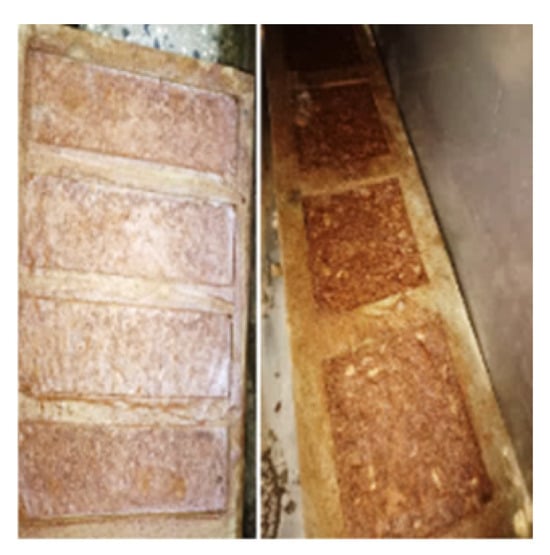
Figure 10.
After 24 h in the curing chamber.
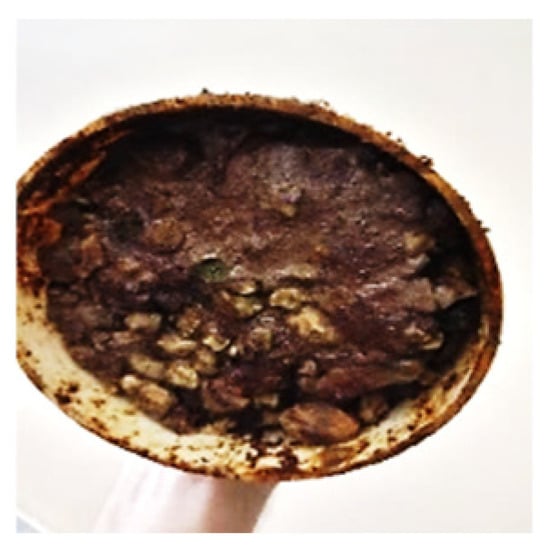
Figure 11.
The side exposed to gas.
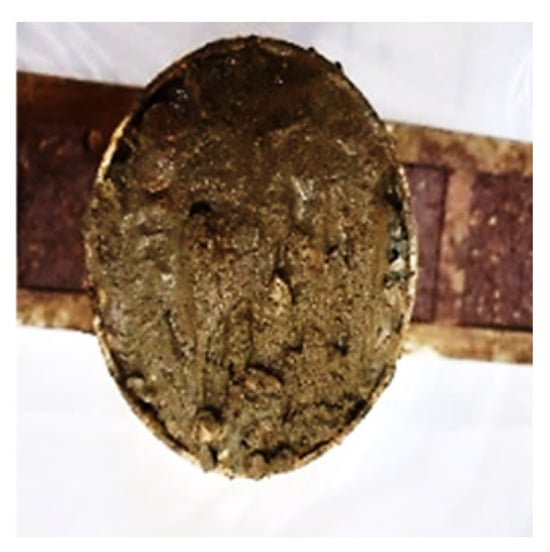
Figure 12.
The other side of the cylinder.
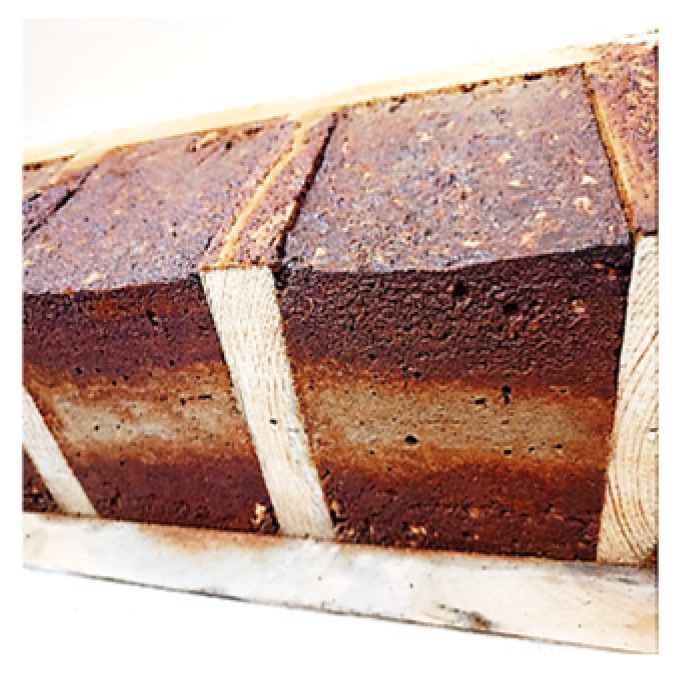
Figure 13 shows how the samples were affected by carbon dioxide after the mold sides were removed. It also shows how much gas the samples absorbed, with about 50 mm at the top and bottom of the F1 sample. Based on this observation, the sample dimensions were reduced to 50 mm × 50 mm to ensure uniform carbon dioxide diffusion throughout the specimen.
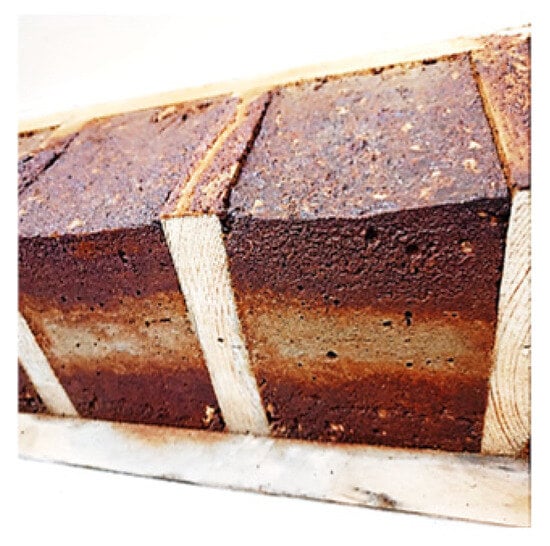
Figure 13.
After 4 days in the curing chamber.
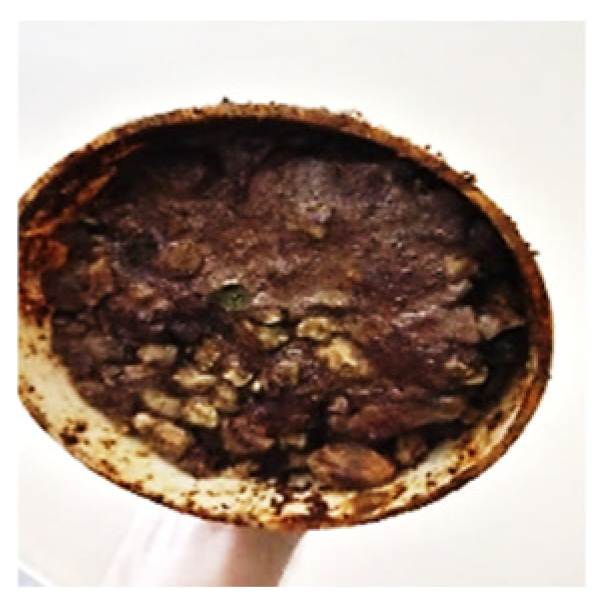
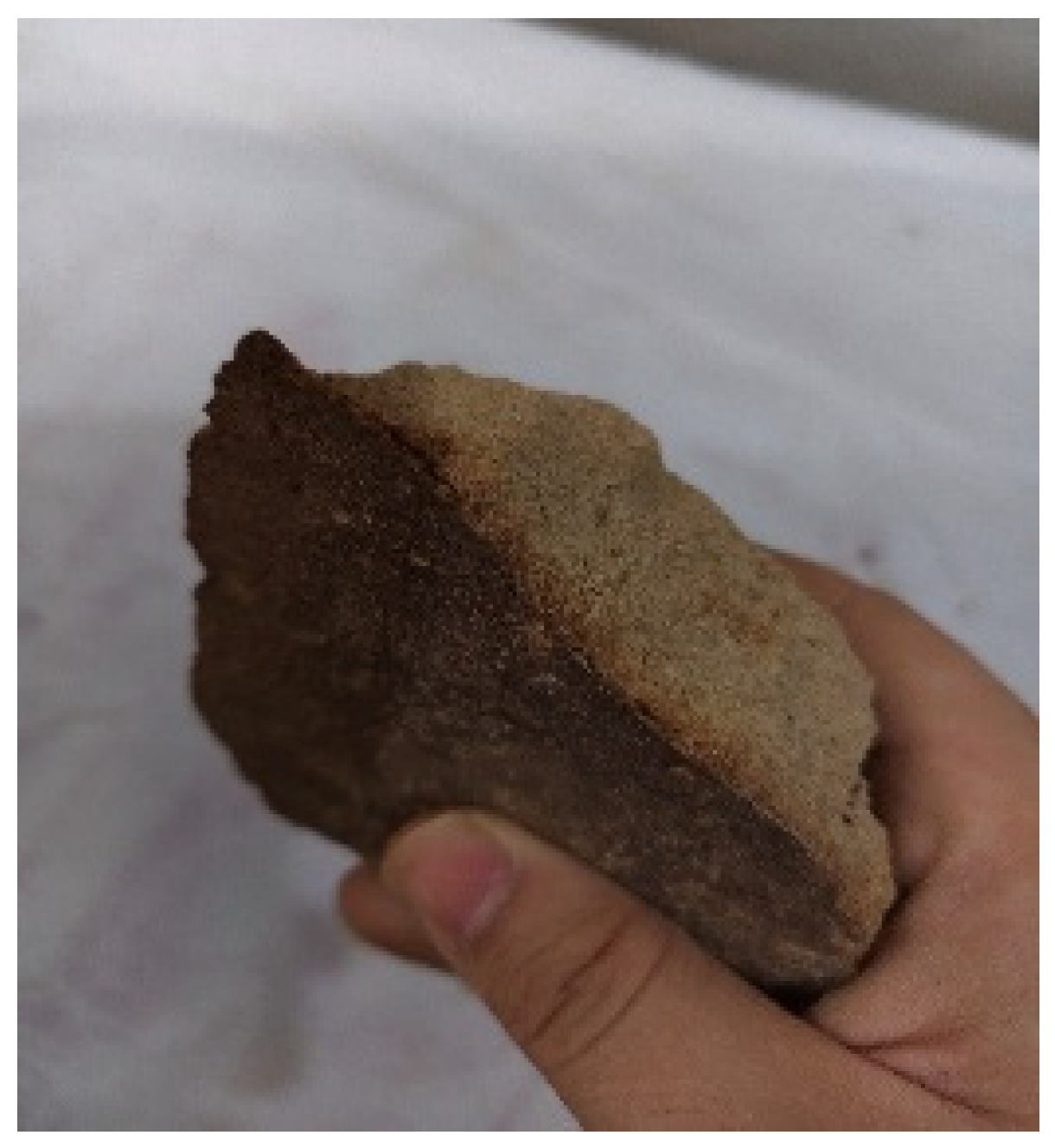
In mixture F4, the reaction was more efficient than in the other samples because it used iron waste rather than coarse and fine aggregates. The samples exhibited a dark brown color, and gas penetration was more pronounced than in previous samples because iron waste was used instead of coarse and fine aggregates, thereby increasing the reactive surface area and promoting carbon dioxide–iron interactions. However, the specimen’s core showed gray coloration, indicating that the reaction was not fully completed in that area. Notably, the affected area in this sample was about 1 to 1.5 cm smaller than in the previous samples, as shown in Figure 14. This reduction can be attributed to the higher density and lower permeability of the mixture containing iron waste, which limited gas diffusion toward the interior despite the reduced sample size and rapid hardening of the sample from the outside.
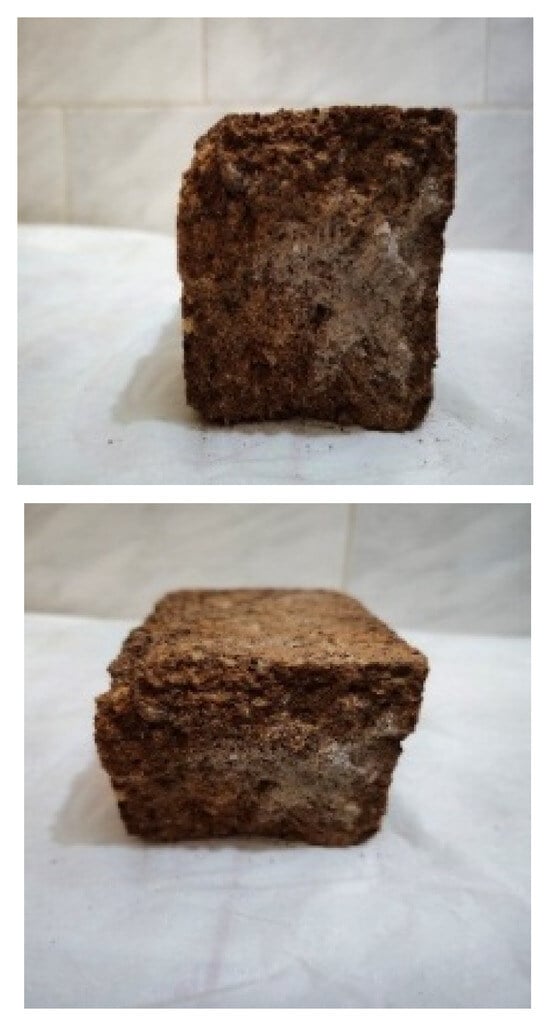
Figure 14.
Core of the mixture F3.
In mixture F5, the sample appeared to disintegrate within the mold as it hardened, leaving a plate on the outer surface. The sample also demonstrated dispersion in the reaction process, attributable to the fact that the bonding in Ferro-Rock is fundamentally different from that of cement in the binding materials, as illustrated in Figure 15.
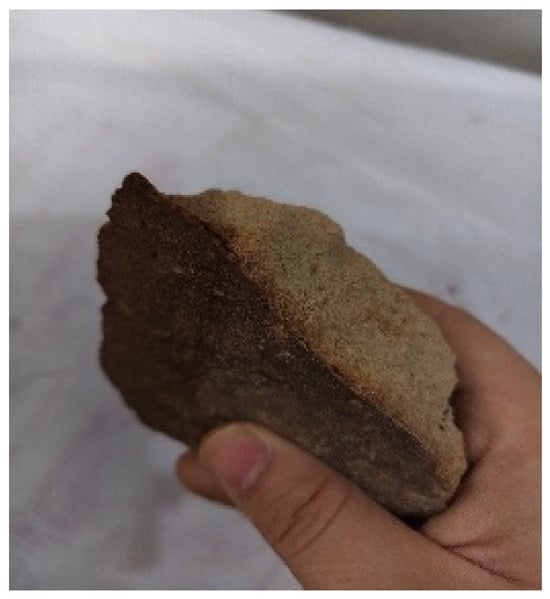
Figure 15.
Disintegrating inside the specimen and hardening.
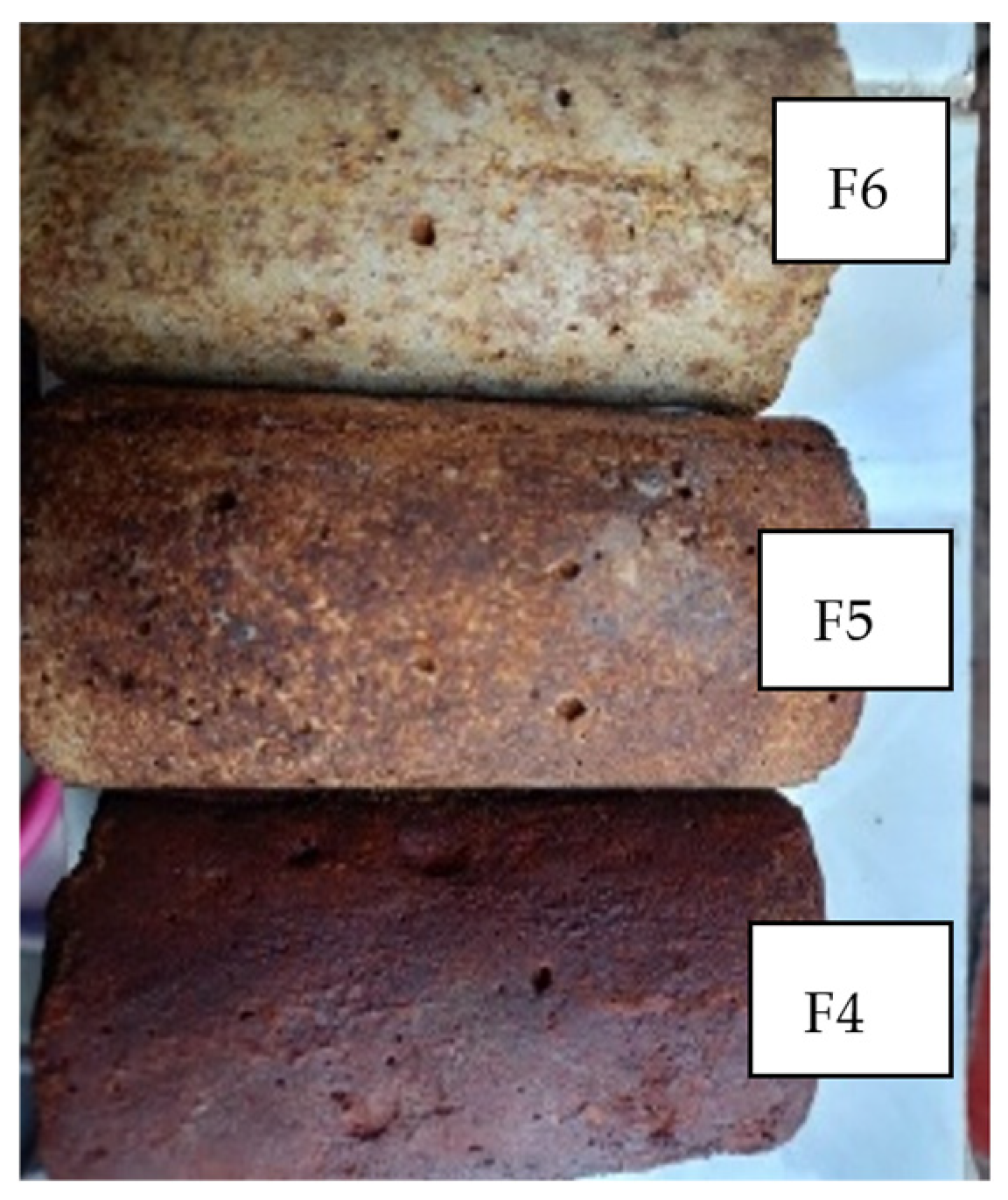
Figure 16 shows the differences in the curing times of samples F4, F5, and F6. The F4 sample turned brown because the iron in it reacted with carbon dioxide to form iron carbonate (FeCO3), which formed a well-defined carbonation layer. Sample F5 was brown to orange, indicating that only some of the iron in it changed, and that the Fe CO3 did not spread evenly throughout the sample. In contrast, sample F6 appeared predominantly gray with minor brown discoloration, reflecting limited phase transformation and insufficient FeCO3 formation due to restricted carbon dioxide diffusion and a relatively porous microstructure. Consequently, the carbonation reaction in F6 was less effective than in samples F4 and F5.
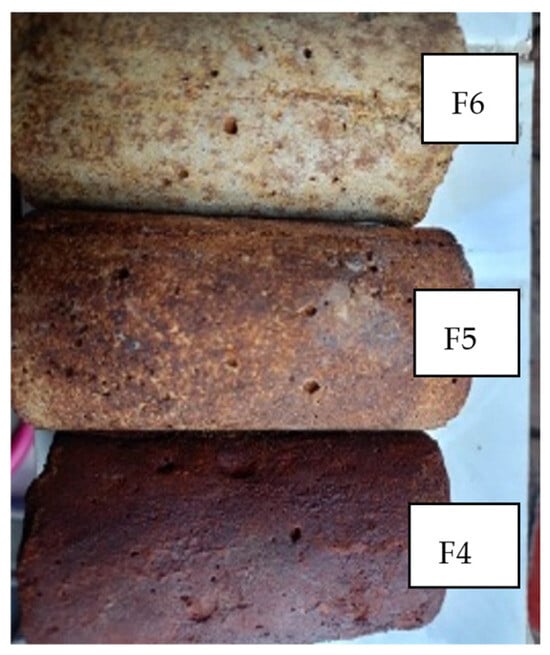
Figure 16.
The difference between the duration of curing and the color of the specimen (F4: 4 days, F5: 2 days, and F6: 0 days of curing).
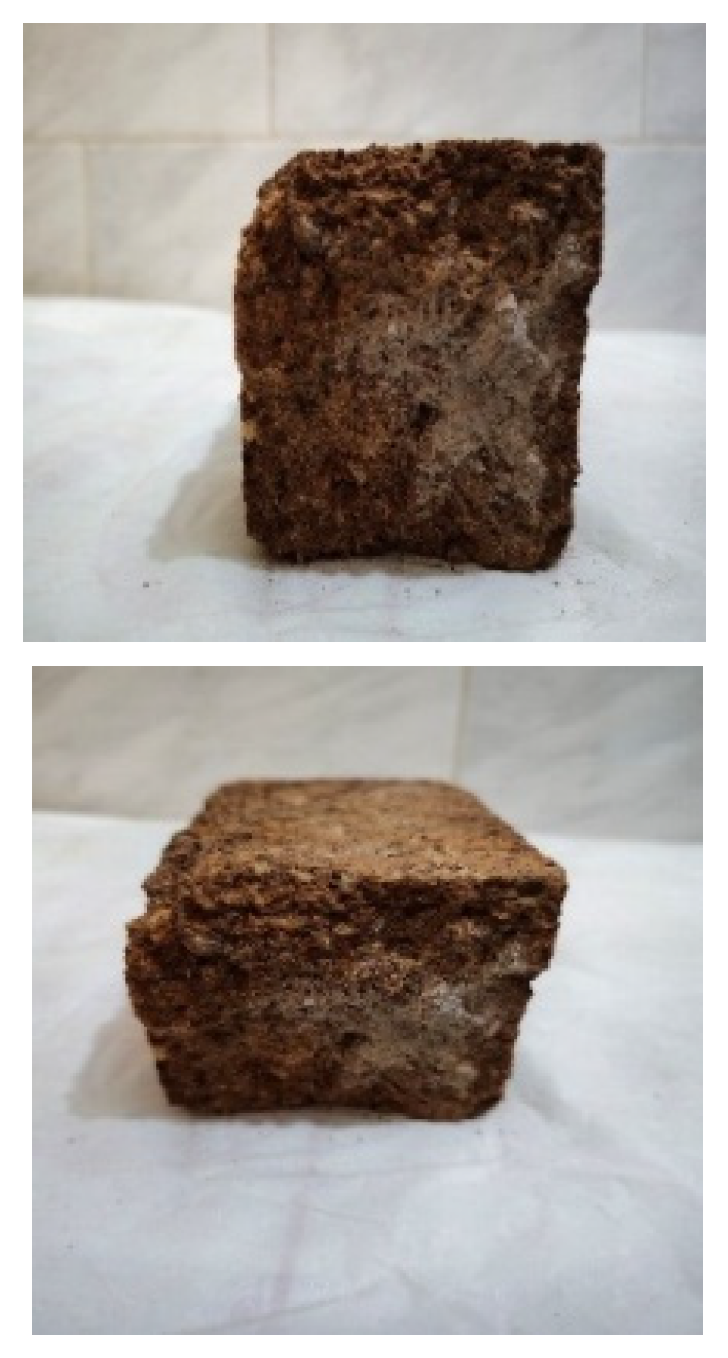
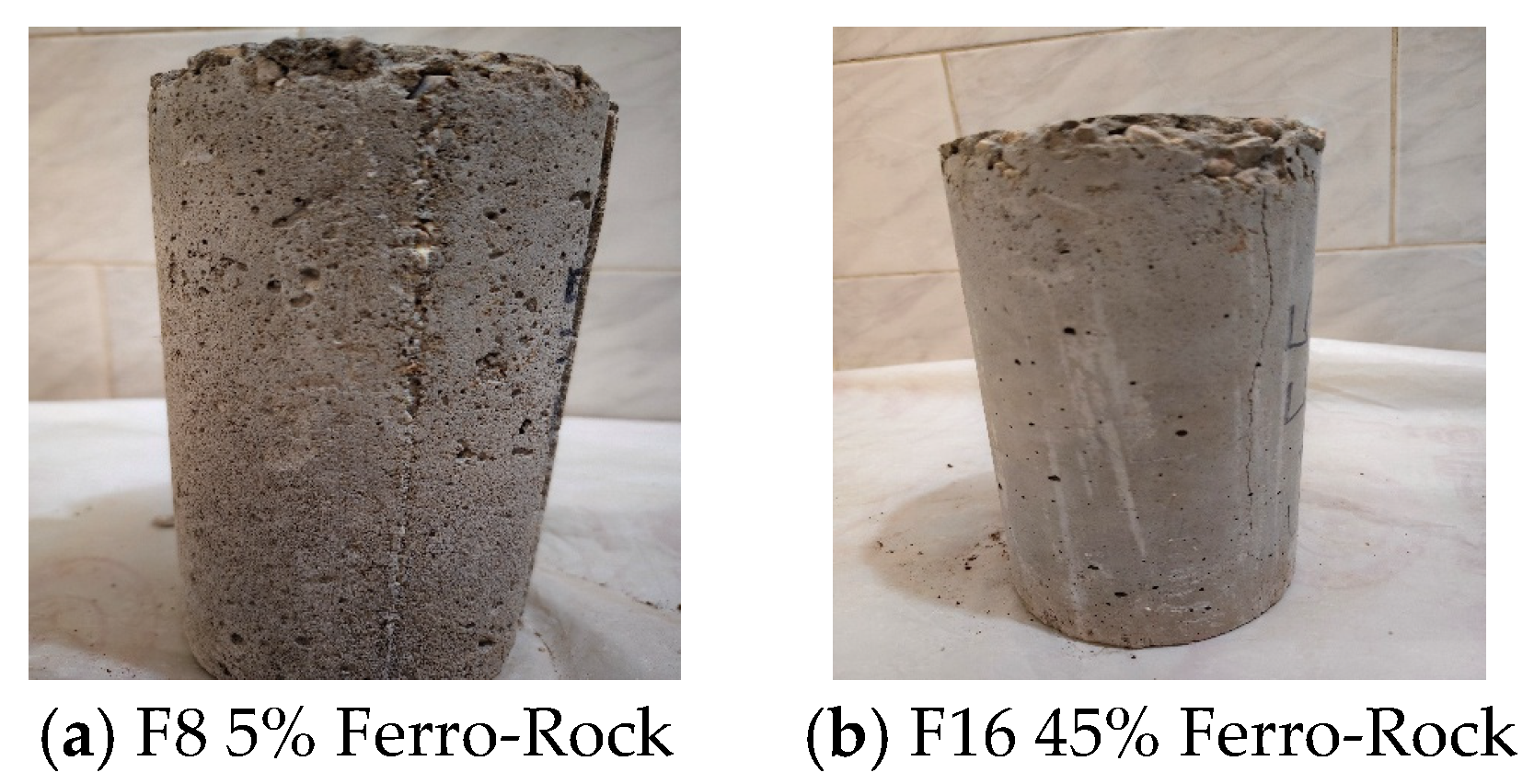
Figure 17 compares mixtures with a 5% replacement of cement weight by Ferro-Rock F8 with those using a 45% replacement by F16. It highlights that the sample with a higher Ferro-Rock replacement rate was affected by voids caused by the coarseness of the iron powder particles. The characteristic dark brown hue of Ferro-Rock was absent, indicating adverse effects from interactions during Ferro-Rock formation that negatively affected outcomes in both compression and tension tests.
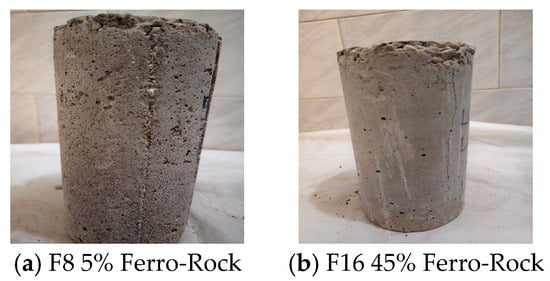
Figure 17.
Shows the difference between the mixtures F8 and F16.
3.2. Compressive Strength
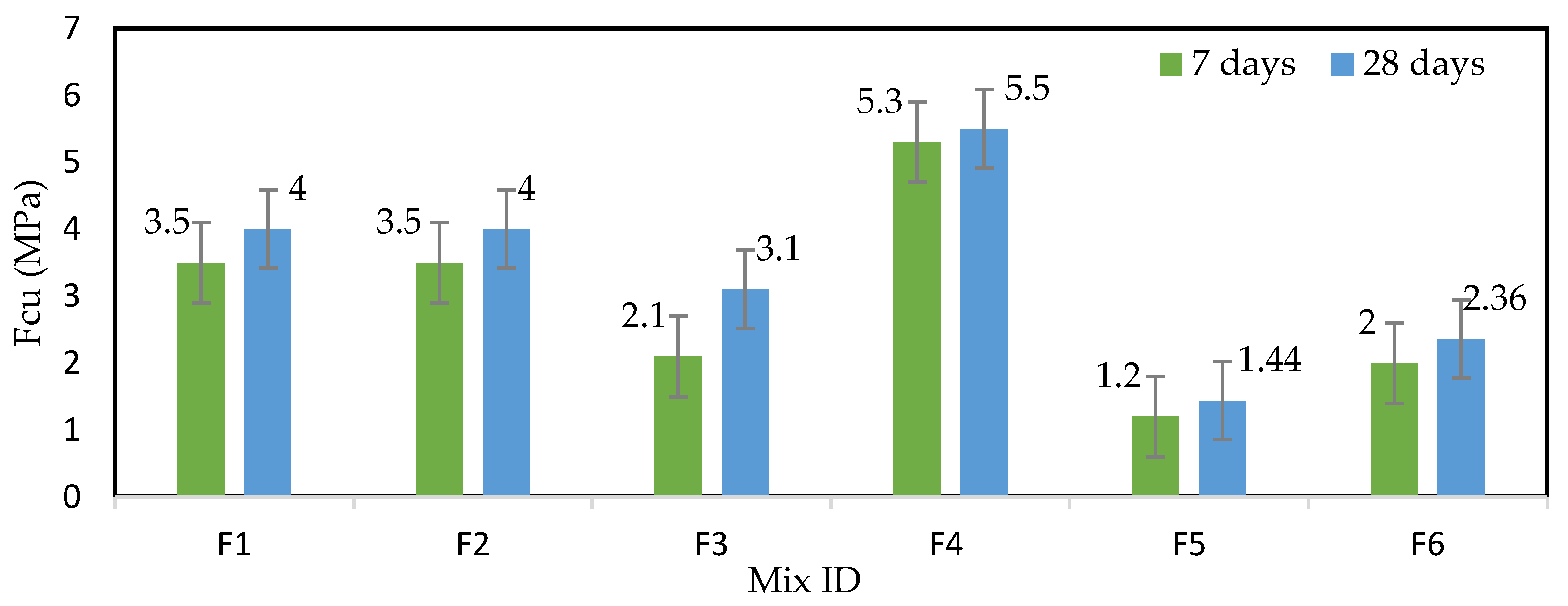
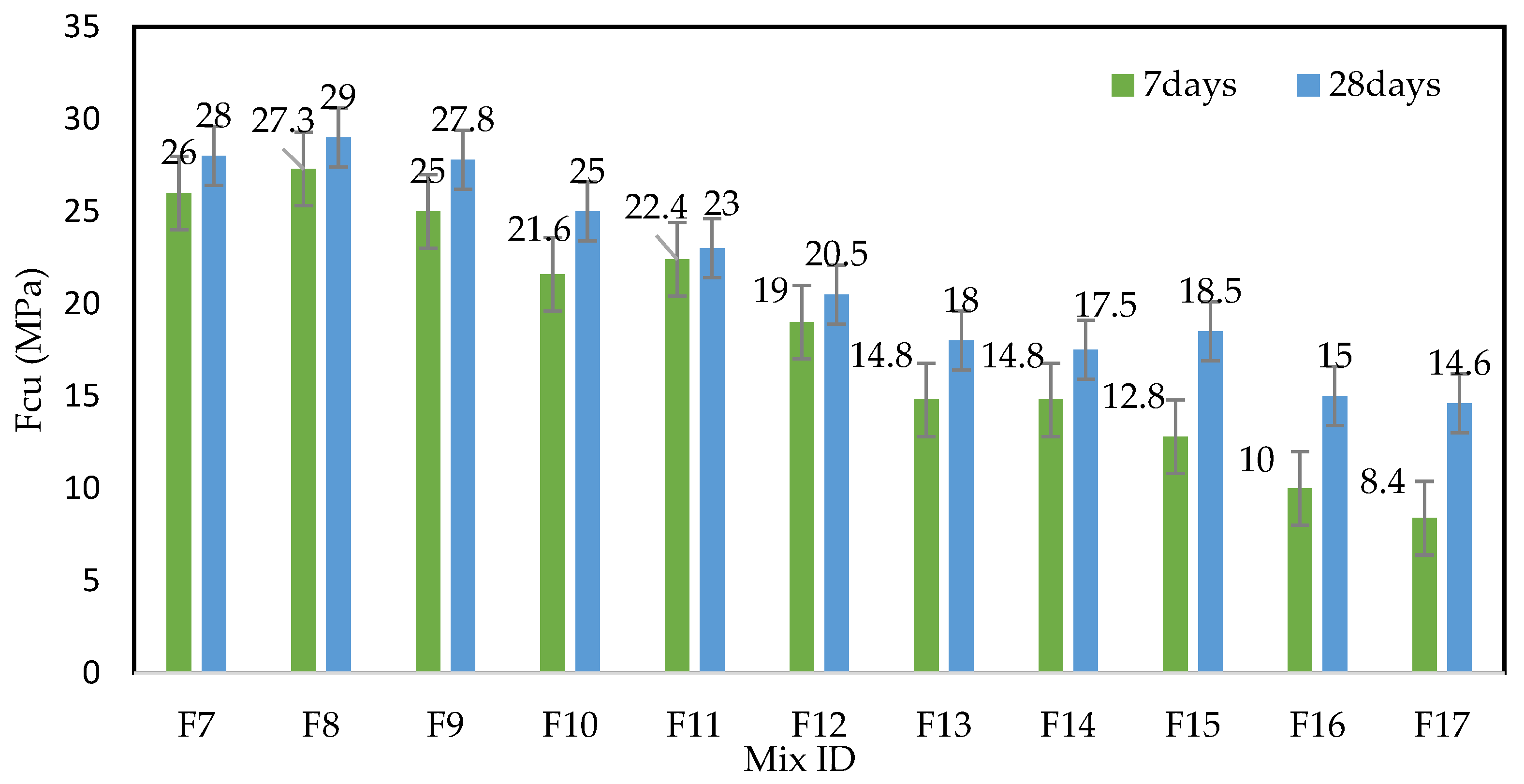
The compressive strength (Fcu) results for the specimens at ages 7 and 28 days are presented in Table 7 and Figure 18 for the first group, and in Table 8 and Figure 19 for the second group. The standard deviation (SD) and coefficient of variation (CV) for compressive strength results are also presented in Table 7 and Table 8. The benchmark (control) for Group 1 is mix F1 (100% Ferro-Rock with natural aggregates, 4-day CO2 curing), while the benchmark for Group 2 is mix F7 (100% OPC with no Ferro-Rock). All percentage increases and decreases are now computed relative to these explicitly defined controls.
Table 7.
Compressive strength results at 7 and 28 days, and the corresponding SD and CV values for the mixes of the first group.
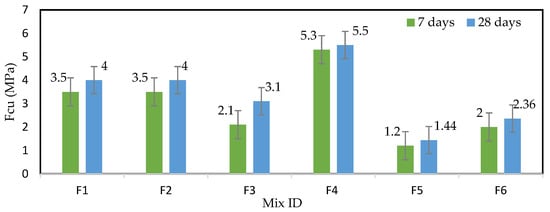
Figure 18.
Compressive Strength Fcu (MPa) for the first group of mixtures.
Table 8.
Compressive strength results at 7 and 28 days, and the corresponding SD and CV values for the mixes of the second group.
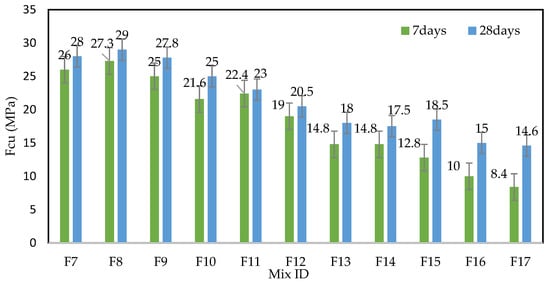
Figure 19.
Compressive Strength Fcu (MPa) for the second group of mixtures.
This section provides a detailed discussion of the effects of Ferro-Rock content, including factors that influence it, such as CO2 curing, mold size, and mold type.
The compressive strengths observed in the first group indicated that F1 and F2 exhibited similar results, despite F2 having a longer curing time than F1. Additional curing in F2 did not improve FeCO3 formation or the microstructure, indicating that strength is better controlled by the extent of carbonation than by curing time. In F3, the strength decreased by 22.5% due to the use of a coarser aggregate with a smaller size than in F1, which decreased packing density and weakened the bond with the matrix. Additionally, the large mold size restricted CO2 penetration, limiting FeCO3 formation in the core and causing incomplete carbonation of the specimen. In F4, the strength increased by 51% after 7 days and by 37.5% after 28 days. The strength gain in F4 is attributed to the reactive iron-waste aggregates, which enhanced FeCO3 formation, and the smaller mold size, which allowed more uniform CO2 penetration and improved microstructural densification. This explanation is consistent with SEM analysis, which reveals a dense, well-developed microstructure with abundant FeCO3 crystals throughout the specimen. Conversely, in F5, the strength decreased by 65% after 7 days and by 58% after 28 days because the specimens were not exposed to CO2, which prevented FeCO3 formation and left the microstructure largely porous and weak. In F6, strength was reduced by 43% after 7 days and by 32.5% after 28 days; the curing time was insufficient for CO2 to fully penetrate the specimen, resulting in partial FeCO3 formation and a less dense microstructure, thereby limiting the development of compressive strength. That hindered the completion of chemical reactions [31].
These findings emphasize the need for ongoing research to optimize Ferro-Rock’s formulation, particularly the proportions of its components, to improve its mechanical properties and sustainability in construction applications. Numerous factors influence the study of a new material like Ferro-Rock, necessitating extensive future research. Our interpretation is based on previous studies and experiments we have conducted. It is generally accepted that Ferro-Rock includes pozzolanic materials. According to established standards, increasing the percentage of pozzolanic materials can adversely affect the products. Therefore, further investigation will be conducted to determine the ideal percentage of Ferro-Rock as a cement addition, which will help us identify the optimal ratio for its use.
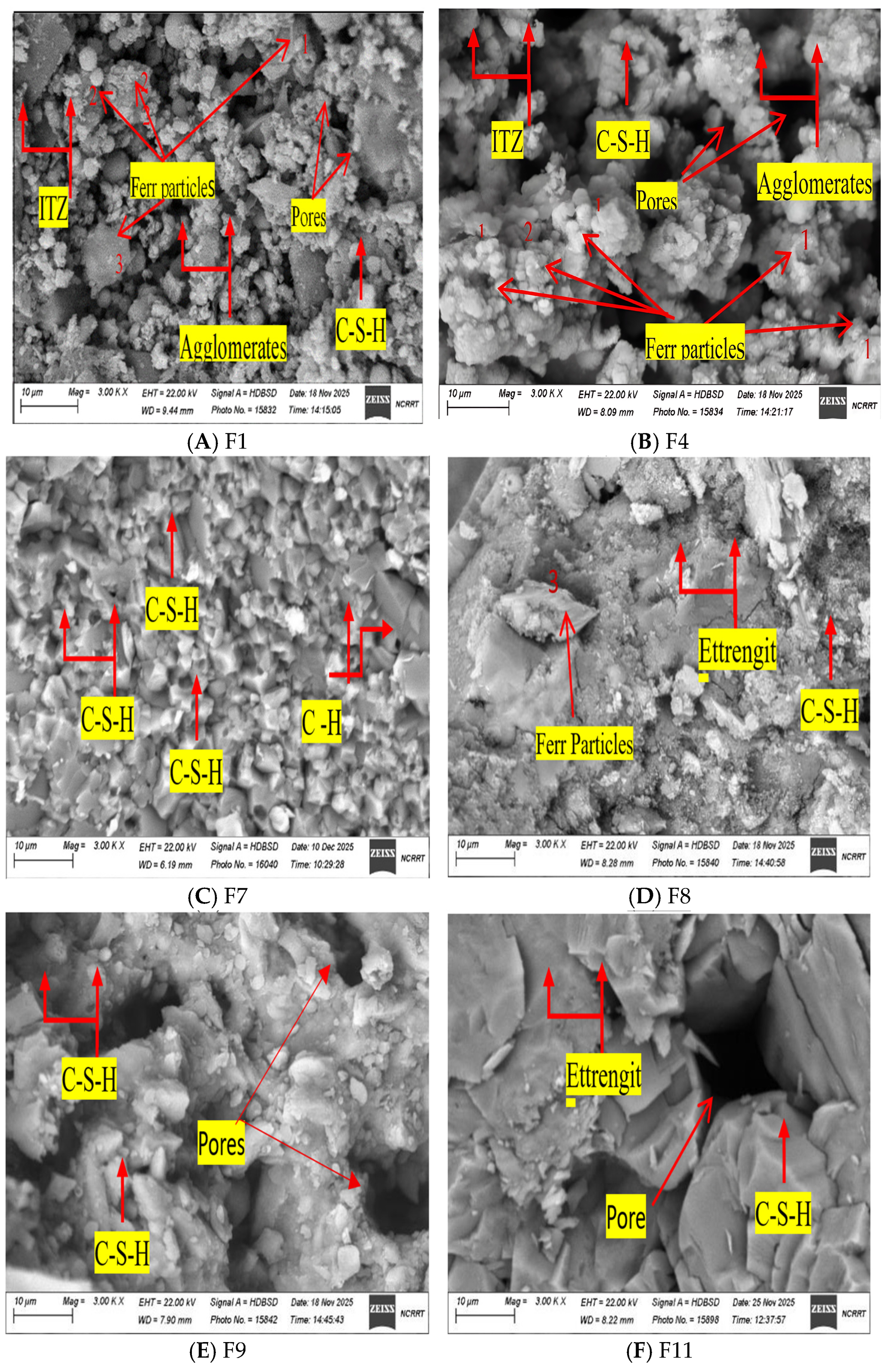
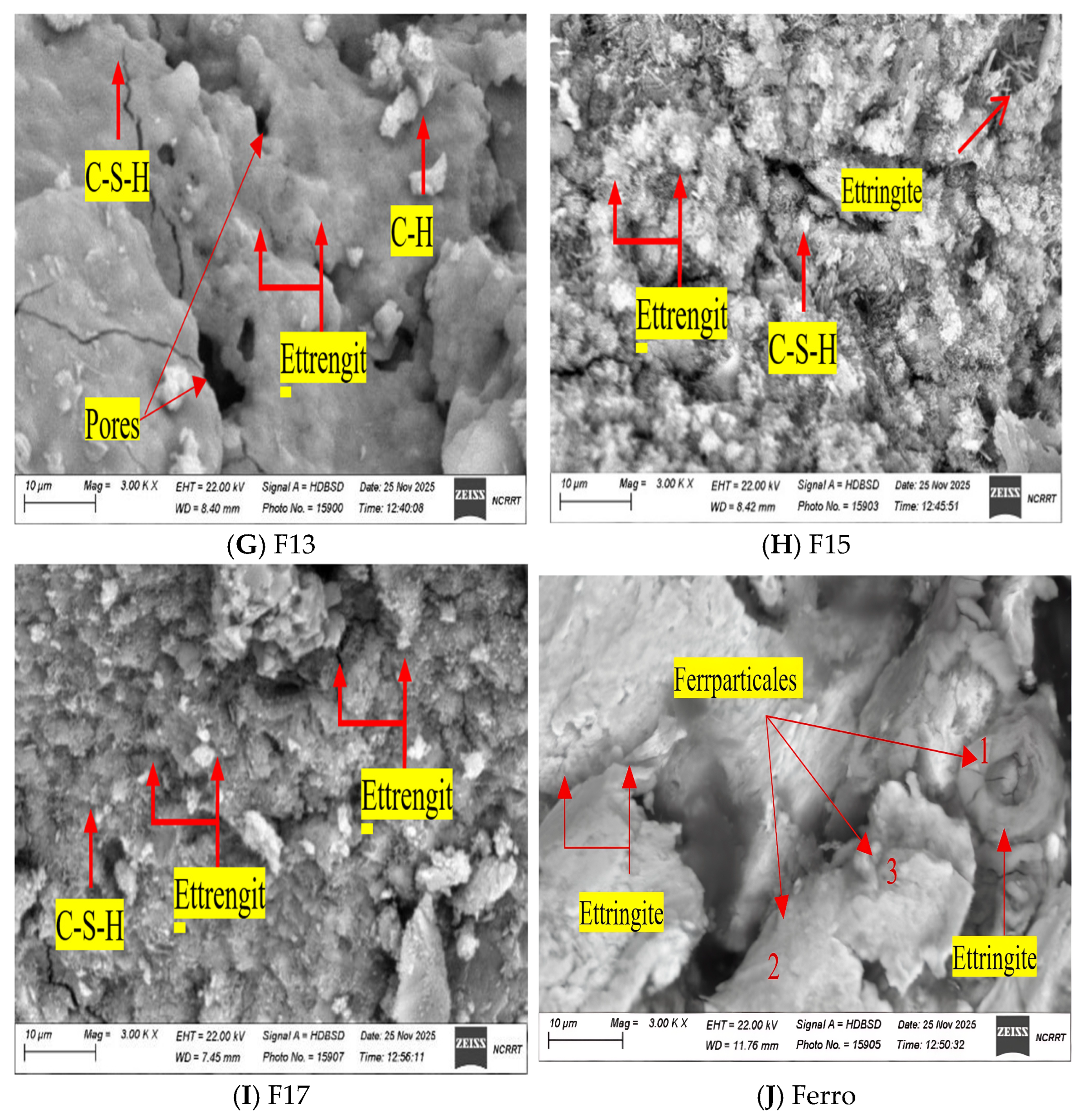
The results in Table 8 and Figure 19 indicate that compressive strength increases by 5% to 15% when using Ferro-Rock. For specimen F8, the compressive strength increased by 5% after 7 days and by 3.5% after 28 days. And F9 shows a slight increase, attributed to the optimal incorporation of reactive iron particles, which enhanced micro-filling and promoted a denser cementitious matrix. SEM observations revealed a compact, well-bonded microstructure with reduced pore space and a refined interfacial transition zone (ITZ). In addition, EDS analysis confirmed the presence of well-developed crystalline phases associated with iron-rich and hydration products. The combined micro-filling effect, improved ITZ, and limited but effective pozzolanic activity at the 5% replacement level resulted in improved load transfer and mechanical performance compared to the control specimen (F7) [31]. Compressive strength was observed, particularly with 25% replacement in specimen F12, which showed a significant decline of 26.9% after 7 days and 27.7% after 28 days. This loss of strength is primarily attributed to the excessive replacement of cement with Ferro-Rock, which reduced the availability of cementitious hydration products necessary for strength development. In addition, the high content of pozzolanic and iron-rich phases disrupted the continuity of the cement matrix and weakened the interfacial bonding [32]. As a result, carbonation became non-uniform, limiting effective CO2 absorption and FeCO3 formation within the Ferro-Rock phases, further contributing to deterioration in mechanical performance [19]. The SD values demonstrate that specimen-to-specimen variability remained low and consistent across all mix groups. Compressive strength CV values of ~5% are consistent with well-controlled laboratory concrete production as reported in comparable Ferro-Rock studies [17,19].
3.3. Flexural Strength
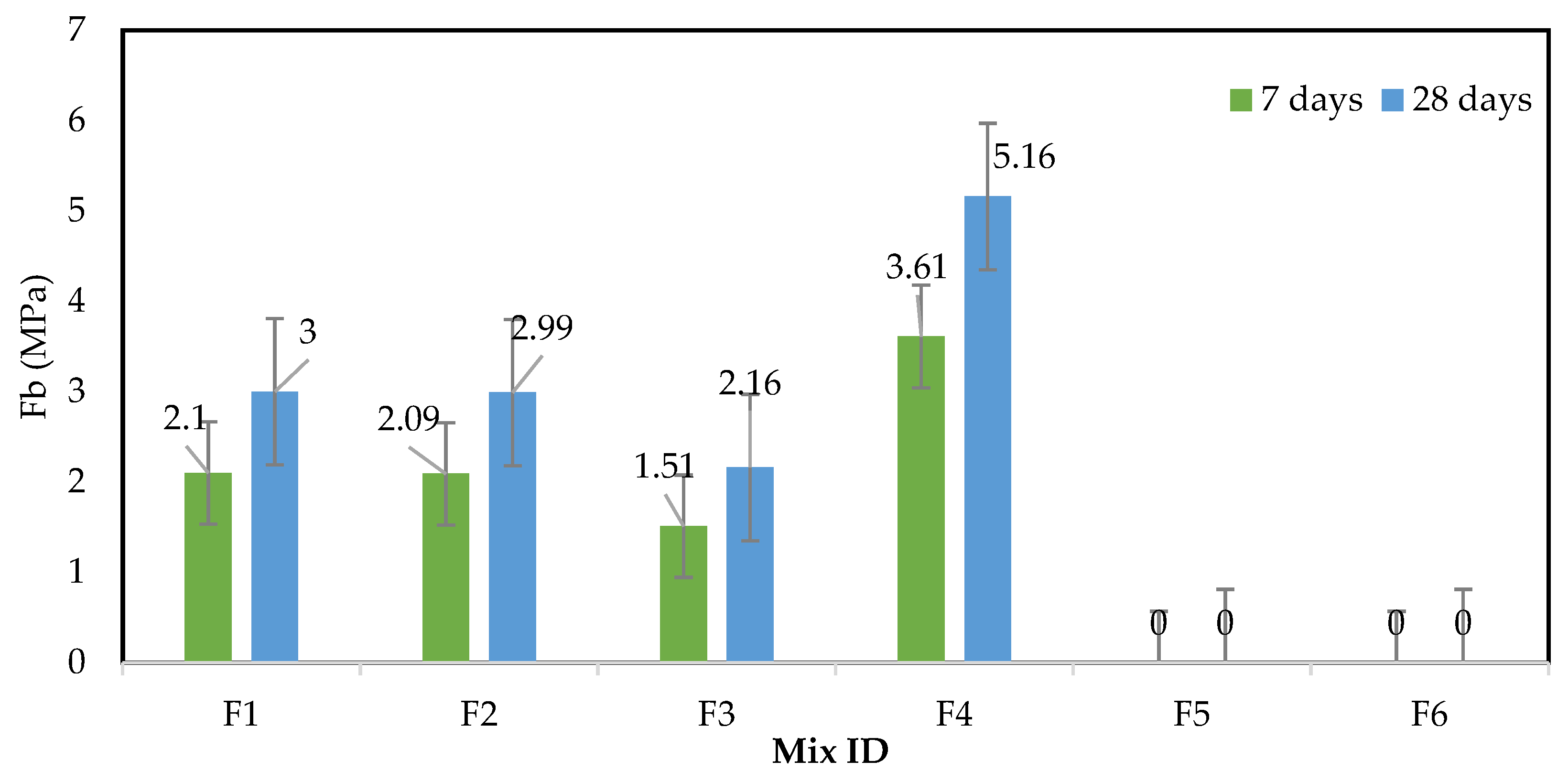
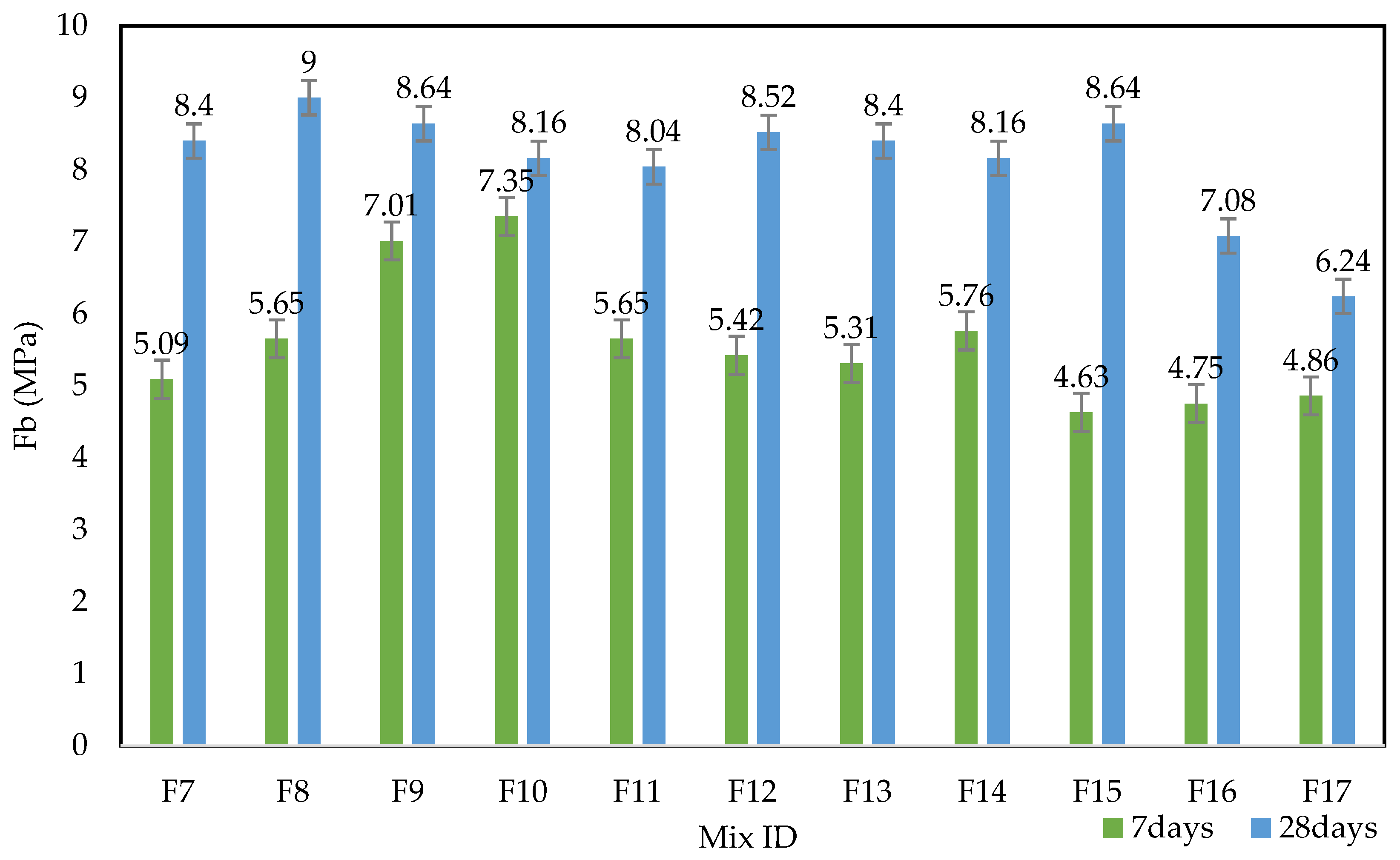
Table 9 and Figure 20 present the flexural strength, Fb, for the first group, listing the results for 7 and 28 days, while Table 10 and Figure 21 present the Fb for the second group. The standard deviation (SD) and coefficient of variation (CV) for the flexural strength results are also presented in Table 9 and Table 10.
Table 9.
Results of flexural strength for the first group of mixes.
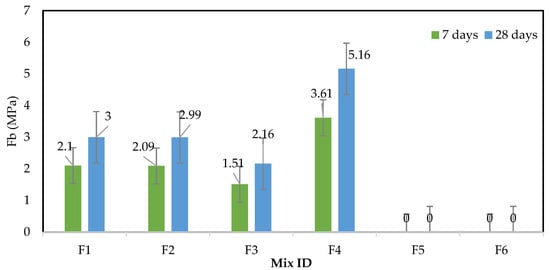
Figure 20.
Flexural strength for the first group of mixes.
Table 10.
Results of flexural strength Fb (MPa) for the second group mixtures.
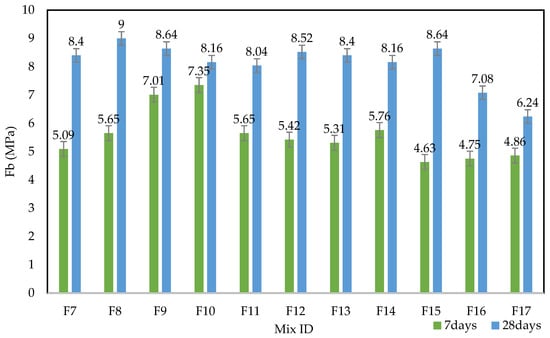
Figure 21.
Results of bending strength Fb (MPa) for the second stage.
Mechanical testing of samples F5 and F6 could not be completed due to premature failure resulting from insufficient structural integrity. This behavior is attributed to the shortened curing duration, which likely limited the proper formation of the FeCO3 phase and hindered microstructural development, thereby compromising the mechanical performance of the specimens. The flexural strength in F3 decreased by 28% at both 7 and 28 days. However, F4 recorded the highest flexural strength, attributed to the high iron waste content, which led to greater sample elongation. This indicates that the interaction between iron and carbon dioxide gas was more effective than the contributions of aggregates, whether coarse or fine, or their absence, and this matches. In addition to the previously discussed microstructural effects, it is important to highlight that specimen geometry played a significant role in the measured mechanical response. As illustrated in Figure 13, the adopted specimen configuration enhanced CO2 penetration and reaction uniformity, thereby improving bonding characteristics and crack resistance. This effect is particularly relevant for tensile and flexural behavior, where surface and interfacial properties are more influential.
Although the compressive strength is relatively low, the material exhibits limited tensile and flexural resistance. This behavior aligns with the results presented in the study [33,34].
According to the results presented in Table 10 and Figure 21, the bending strength of the samples increased significantly. For sample F8 (with 5% replacement), the bending strength increased by 11% after 7 days and by 7.14% after 28 days. In the case of sample F9, there was a remarkable 37% increase after 7 days, followed by a further 2.8% increase after 28 days. This increase in strength can be attributed to Ferro-Rock’s positive role when mixed with cement. The reactions involving Ferro-Rock help fill voids, while its angular shape and rough texture enhance the bond between the cement and aggregates, ultimately increasing strength. Then, in F10, F11, F12, and F13, the bending strength decreased with increasing Ferro-Rock percentage. Mixtures F14 and F15 exhibited a slight increase in tensile performance compared to mixtures F10–F13. This improvement occurred despite the reduction in cement content and the increase in Ferro-Rock and associated pozzolanic materials, which typically have a negative effect at higher proportions. The observed behavior can be attributed to the added iron powder acting as a discrete reinforcing phase independent of the Ferro-Rock matrix, thereby enhancing ductility. Additionally, the residual cementitious matrix maintained sufficient cohesion, while the presence of iron powder contributed to improved stress transfer and bonding, resulting in a modest increase in tensile resistance. In F16, decreased by 6.6% after 7 days and 15.7% after 28 days; in F17, which had the minimum value, cement had a negative role on the Ferro-Rock, as the cement reaction negatively affected the Ferro-Rock reaction. Therefore, the Ferro-Rock components were unable to complete the reaction except on the surface of the samples, and consequently, each of them had a negative effect on the other; increasing the percentage of Ferro-Rock components had a negative impact on the cement due to it containing pozzolanic materials, which, when it increased, led to a decrease in resistance and the reaction of cement. The combined use of fly ash and metakaolin may reduce strength due to insufficient Ca(OH)2 for C–S–H formation, leaving silica partially unreacted [35], which caused the materials to harden, meaning that the water began reacting with the cement, preventing the completion of the Ferro-Rock reaction, especially as we approach the core of the specimens.
3.4. Indirect Tensile Strength Results
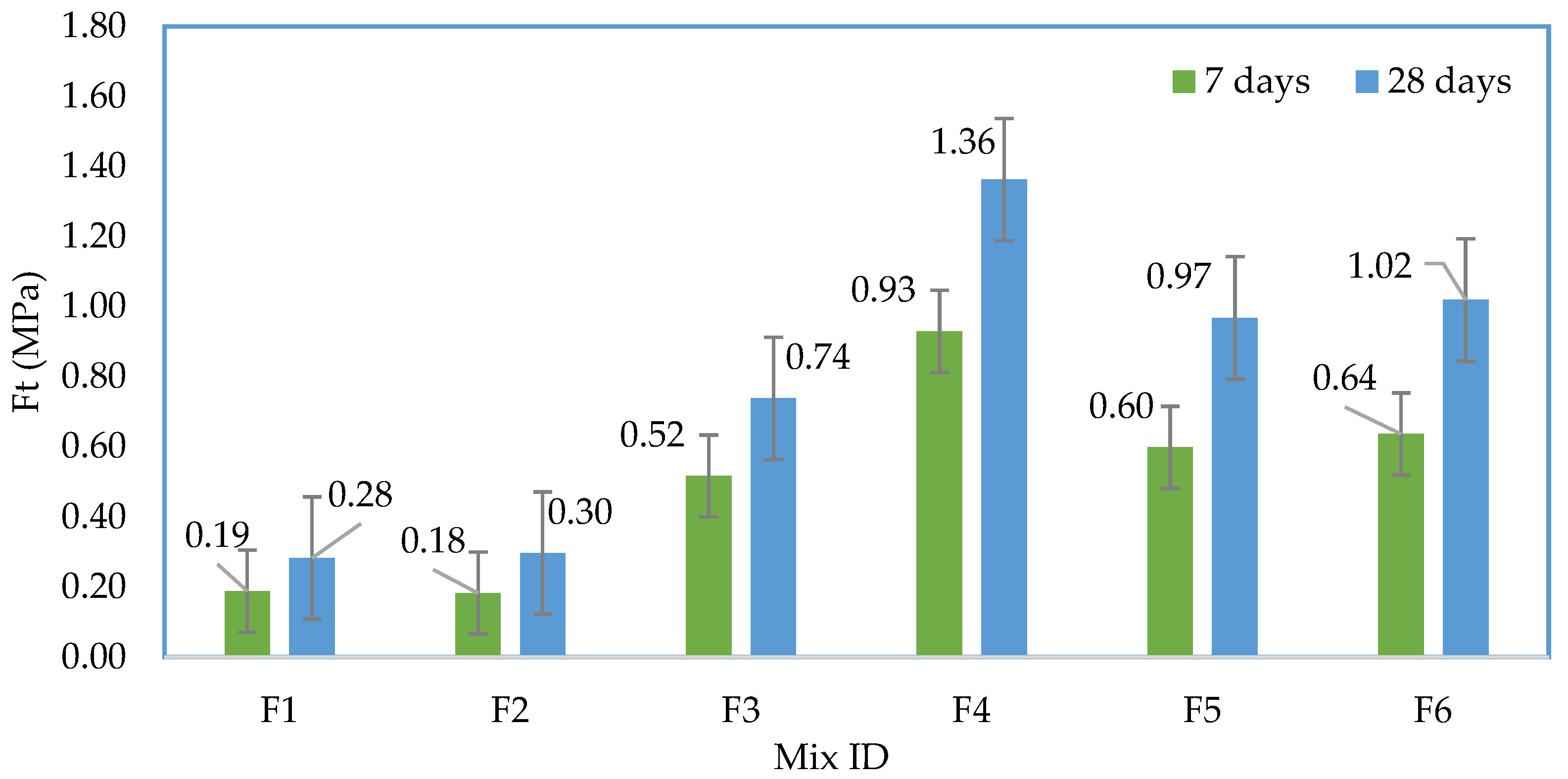
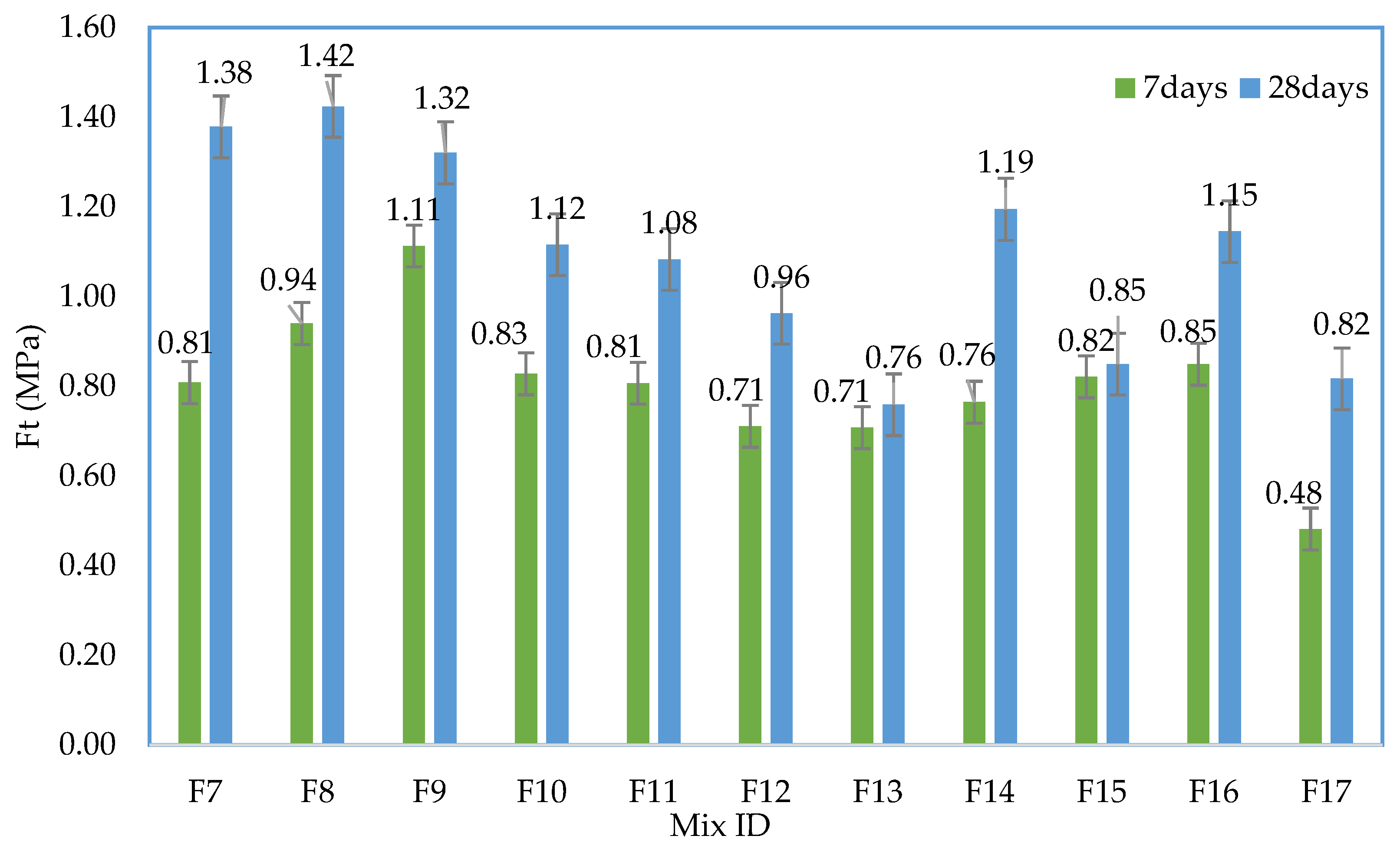
The results of the indirect tensile strength, Ft, at 7 and 28 days are listed in Table 11 and Figure 22 for the first-group mixtures and in Table 12 and Figure 23 for the second-group mixtures.
Table 11.
Results of indirect tensile strength Ft (MPa) for the first group.
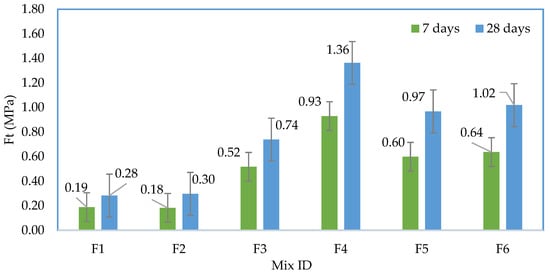
Figure 22.
Results of indirect tensile strength Ft (MPa) for the first stage.
Table 12.
Results of indirect tensile strength Ft (MPa) for the second group.
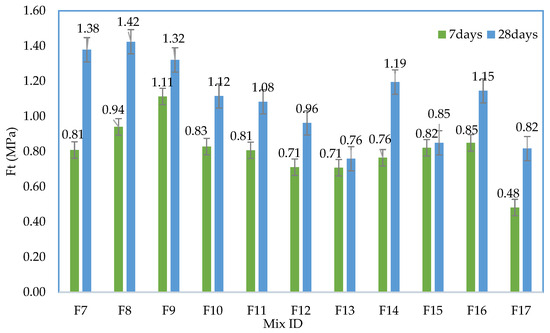
Figure 23.
Results of indirect tensile strength Ft (MPa) for second-stage mixtures.
Figure 22 shows that sample F4 has a higher value than F1 by 389.7% after 7 days and by 385.71% after 28 days. It appears that the sample was positively affected by iron waste as an alternative to coarse and fine aggregate, significantly increasing ductility compared to the other samples and reducing mold size, thereby improving the efficiency of the curing operation. The results are consistent with the bending test, which showed that mixture F4 increased resistance. The effect of using smaller samples is also evident, allowing a better Ferro-Rock-forming reaction than with a large sample.
The results presented in Table 12 and Figure 23 indicate that the trends are very similar to those observed in bending strength. Specifically, specimen F8 showed increases of 2.9% after 28 days and 16% after 7 days. However, the samples then declined, followed by an increase in F14. Subsequently, the samples decreased again, reaching their lowest value in F17.
The primary reason for these fluctuations is the behavior of Ferro-Rock, which contains pozzolanic material. An increase in the percentage of this material negatively affects the cement. Furthermore, the slight increase in F14 can be attributed to the addition of iron powder, which improved the specimen’s ductility. However, if the percentage of Ferro-Rock is increased excessively, it may adversely affect the specimen’s performance.
CO2 curing and void filling under carbon dioxide (CO2) curing conditions, the iron particles in Ferro-Rock react with CO2 to form iron (II) carbonate (FeCO3), also known as ferrous carbonate [19]. This reaction accelerates the disintegration of iron particles and helps to fill voids and pores within the concrete, thereby improving its quality without causing strength loss [19].
When the Ferro-Rock content in concrete exceeds the optimal range (typically 10–20%), the material can experience a decline in strength [32,35]. This reduction is attributed to the formation of a weak bond between the Ferro-Rock material and the binder, resulting in a less durable material. Additionally, high doses of Ferro-Rock can create voids and weak spots in the concrete matrix, further increasing water and acid migration and adversely affecting its performance. The slightly higher CV observed for flexural (6%) and tensile (7%) tests is expected, given the greater sensitivity of these test modes to micro-cracking, surface condition, and specimen alignment—a well-documented phenomenon in concrete testing [9,10].
3.5. Analysis of Mechanical Performance Results
The experimental groups consisted of the use of Ferro-Rock to replace 100% of the cement, whereby F4 (the blend of iron ductile waste) had the highest compressive strength (5.50 MPa) after 28 days, regardless of the mixture F4 containing iron ductile waste as the aggregate, providing an improvement over the reference of 37.5% (F1 = 4.00 MPa). The iron waste aggregates provided a greater reactive surface area, which increased CO2–iron reactions and led to greater iron carbonate formation throughout the sample. Previous studies on reactive iron particles indicate that they produce micro-filling and more compact cement composites [31]. In contrast, the absence of aggregates in F5 and F6, which also had reduced or no exposure to CO2 curing, had the lowest compressive strengths (1.44 MPa and 2.36 MPa) at 28 days, providing further evidence for the necessity of sufficient CO2 penetration within the carbonation hardening mechanism as it relates to the formation of FeCO3 and a porous/microstructure; also see [12,13]. Similarly, the results for flexural strength reflect similar trends. The flexural strength of F4 (5.16 MPa) is an increase of 72% over F1 (3 MPa), while F5 and F6 were unable to demonstrate any measurable bending strength because of the lack of sufficient integrity and/or because of incomplete carbonation [19].
In the second experimental group, in which Ferro-Rock was partially replaced by cement at increments of 5% to 50%, the results indicate an optimal replacement range of 5% to 10%. Mixture F8 (5% replacement) achieved compressive strengths of 27.30 MPa at 7 days and 29.00 MPa at 28 days, surpassing the control F7 by approximately 5–7%, while flexural strength in F8 and F9 improved by 7–11% at 28 days, and indirect tensile strength in F8 rose by 16% at 7 days relative to the control. The observed enhancements are attributed to the micro-filling action of reactive iron particles, which compact the cementitious matrix and improve the interfacial transition zone (ITZ) [31]. This aligns with prior research indicating that Ferro-Rock, when combined with oxalic acid, can produce concrete with compressive strengths up to 38.7% greater than those of standard mixtures [15]. In contrast, a gradual and significant decrease in all three strength measures was observed when the replacement level exceeded 25%. Specifically, at a 50% replacement level (F17), the compressive strength decreased to 14.60 MPa at 28 days, representing a 46% reduction relative to the control sample. This decline is attributable to the displacement of C–S–H phases, the disruption of matrix continuity, and the formation of voids [32,35]. The combined use of fly ash and metakaolin at high proportions limits the availability of Ca(OH)2, which is essential for C–S–H formation, thereby leaving silica partially unreacted [35]. Furthermore, incomplete carbonation in the specimen’s core at elevated replacement levels limited effective CO2 absorption and FeCO3 formation, further exacerbating the decline in mechanical performance [19,36]. Taken together, these results demonstrate that Ferro-Rock is most effective as a partial cement replacement at low substitution levels, where its carbonation products work synergistically with residual cementitious hydration products.
To understand the mechanical function of Ferro-Rock in changing the concrete performance, the ratios of indirect tensile strength to compression strength (Ft/Fcu) and flexural strength to compression strength (Fb/Fcu) for all combinations at 28 days were investigated. In the control mix F7 (100% OPC), Ft/Fcu = 0.051 and Fb/Fcu = 0.311, which shows the classical brittle behavior of ordinary cement concrete [32]. At the optimal replacement level of 5% (F8), both ratios were slightly increased to Ft/Fcu = 0.049 and Fb/Fcu = 0.310, which is in agreement with the micro-filling action of reactive iron particles that refine the interfacial transition zone (ITZ) and improve the load-transfer efficiency without significantly changing the brittleness index [31]. In the first group, mix F4 (100% Ferro-Rock with iron-waste aggregates) exhibited a notably higher ratio of Ft/Fcu = 0.247 and Fb/Fcu = 0.938, with a much more ductile failure mode that is driven by the three-dimensional iron–carbonate (FeCO3) crystalline network that replaces the C–S–H binding phase in a conventional concrete [34,37]. Such behavior is consistent with results reported for iron–carbonate matrix composites, where the formation of FeCO3 promotes fracture bridging and crack arrest [10]. Conversely, the increase of Ferro-Rock replacement above 25% (F12–F17) led to a gradual decrease in Ft/Fcu and Fb/Fcu, reaching Ft/Fcu = 0.056 and Fb/Fcu = 0.427 in F17, which reflects the disruption of matrix continuity, the escalation of capillary pores, and the degraded quality of ITZ, as documented in the SEM/EDS analysis [35,36]. These ratio trends validate the critical mechanistic effect of Ferro-Rock: the shift from a brittle matrix dominated by C–S–H to a ductile network of iron carbonate is best achieved at low-to-moderate cement replacement levels, where excess microstructural imbalance impairs strength and toughness.
The compressive strengths obtained for 100% Ferro-Rock blends (1.44–5.50 MPa) are lower than the minimum values for regular structural concrete. However, the mixes are not to be used for load-bearing structural parts. Rather, they are designed for non-structural and specialized uses where the capacity to sequester carbon, the possibility for self-healing, and chemical resistance are more critical than the need for compressive strength. These applications include thermal insulation panels, sound-absorbing partition blocks, attractive façade elements, and stability fills for mine reclamation or contaminated land remediation [10,11]. In particular, mix F4, which uses 100% iron ductile waste aggregate and reaches 5.50 MPa at 28 days, is suitable for mortar grade or low-strength masonry units [17]. Group 2 mixes (5–25% Ferro-Rock substitution), on the other hand, regularly reached compressive strengths of 18–29 MPa, firmly placing them within the range of structural-grade concrete appropriate for beams, slabs, and columns in traditional construction [32,35]. The difference between the two groups is therefore one of application domain rather than material deficit, with Group 1 providing a clearly carbon-negative binder for non-structural applications and Group 2 providing structural-grade performance with improved sustainability credentials.
Although the current experimental program focuses on short-term mechanical performance at 7 and 28 days, emphasis should be placed on the durability of Ferro-Rock concrete under long-term field exposure conditions. The crystalline network of iron carbonate (FeCO3), which governs the binding mechanism of Ferro-Rock, provides greater resistance to sulfate attack and chloride ion penetration than standard Portland cement matrices [13,17]. The electrically non-conductive behavior of FeCO3 also decreases the risk of galvanic corrosion when Ferro-Rock is used with steel reinforcement [10]. Ferro-Rock can sequester up to 11% CO2 by weight over its service life, extending its carbon-negative profile beyond the curing step [8,11].
3.6. Microstructure Results Analysis
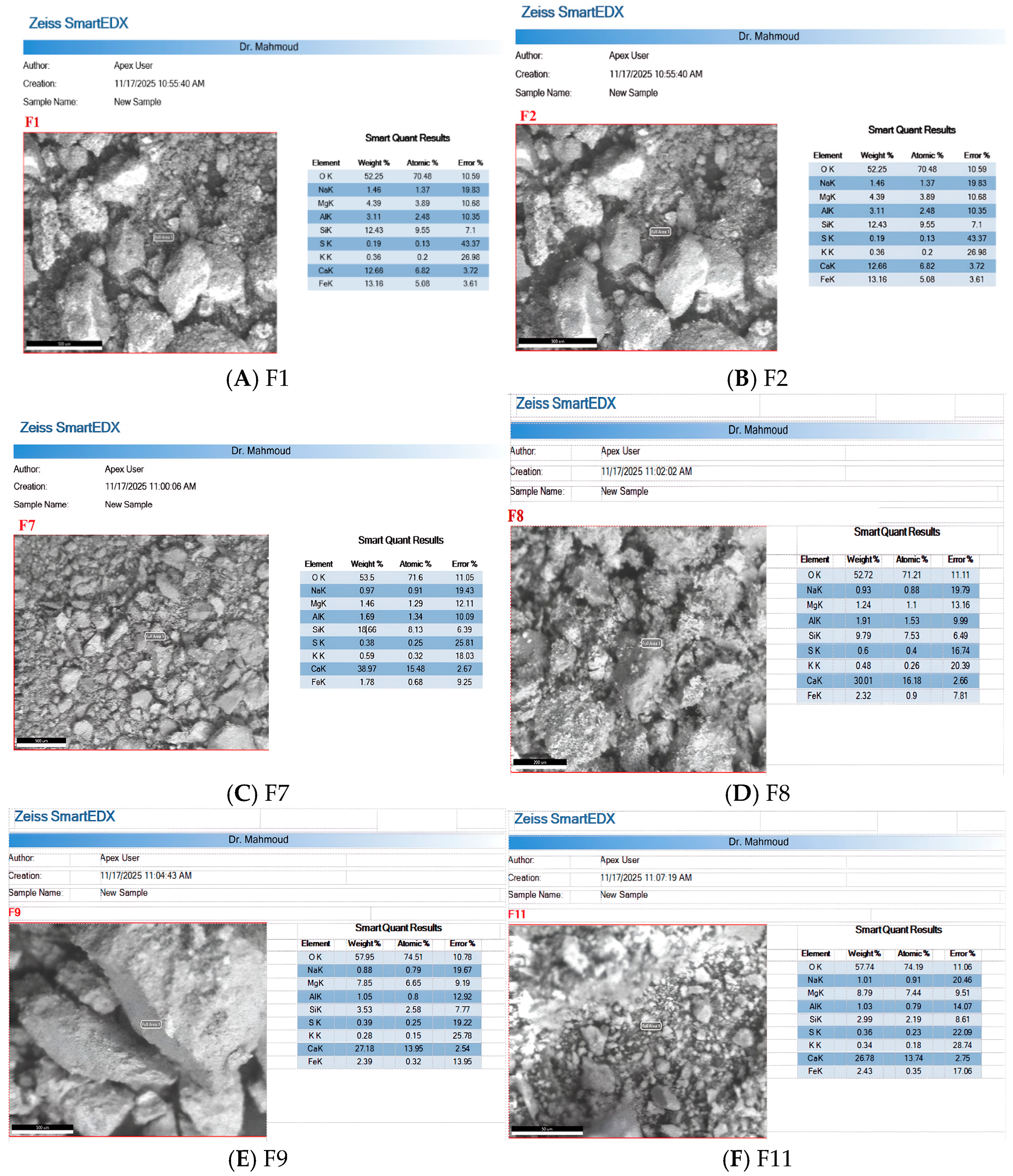
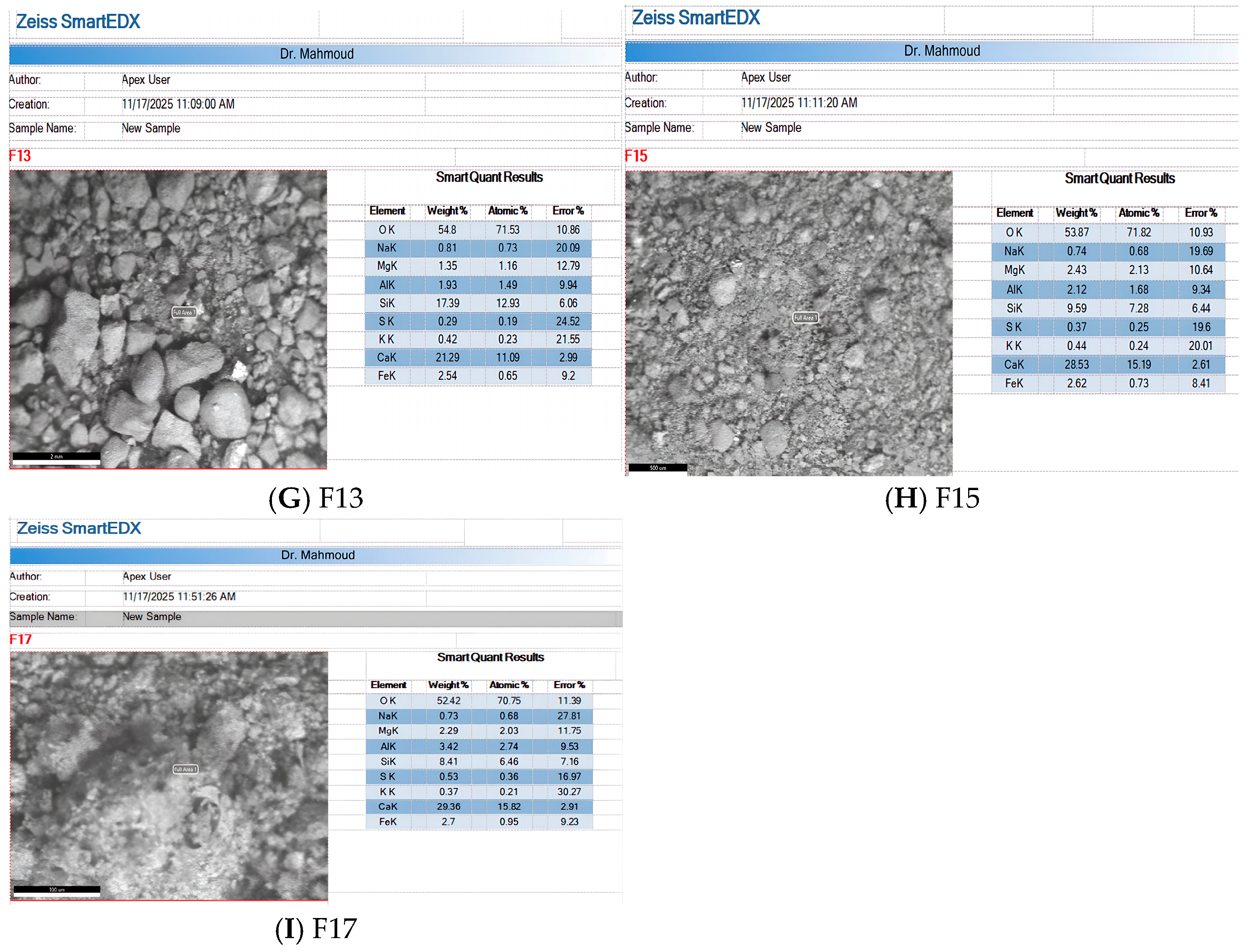
Scanning electron microscopy (SEM) coupled with energy-dispersive X-ray spectroscopy (EDS) provided critical insights into the microstructural evolution of Ferro-Rock-modified concrete and its direct correlation with mechanical performance. The control sample (F7), prepared without Ferro-Rock, exhibited a dense, compact matrix dominated by abundant calcium–silicate–hydrate (C–S–H) crystals, the primary strength-giving phase in conventional concrete, as confirmed by EDS showing the lowest iron content (1.76 wt.%) and highest calcium content (28.6 wt.%) (Figure 24C and Figure 25C).
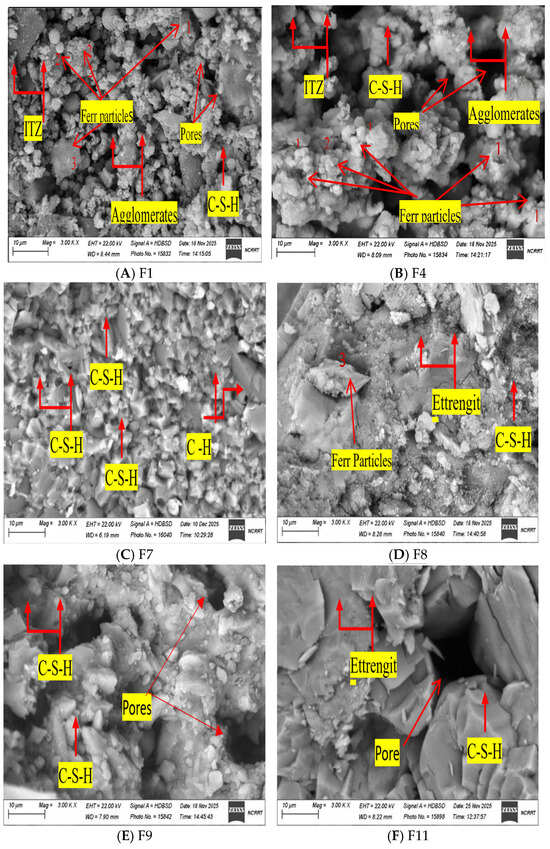
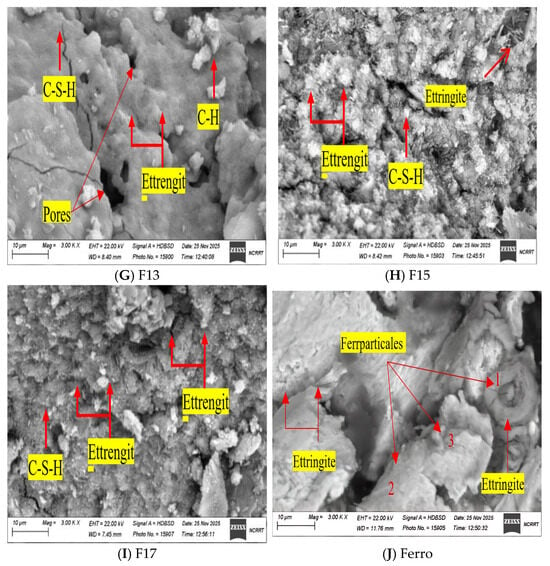
Figure 24.
Scanning electron microscope (SEM) for F1 (control), F4, F7, F8, F9, F11, F13, F15, F17 mixes and Ferro material.
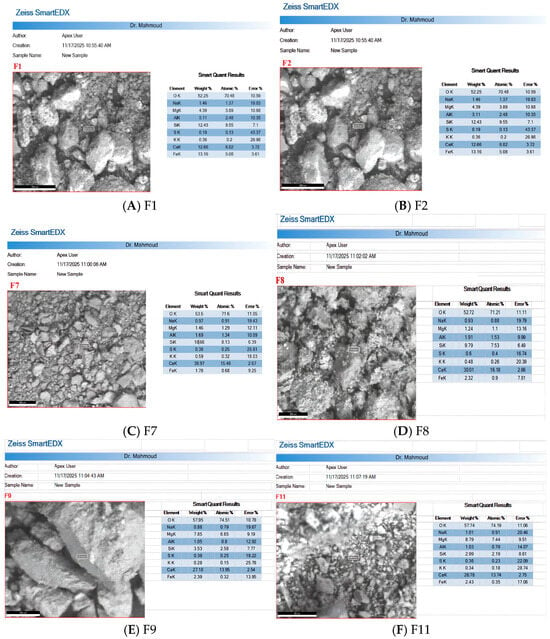
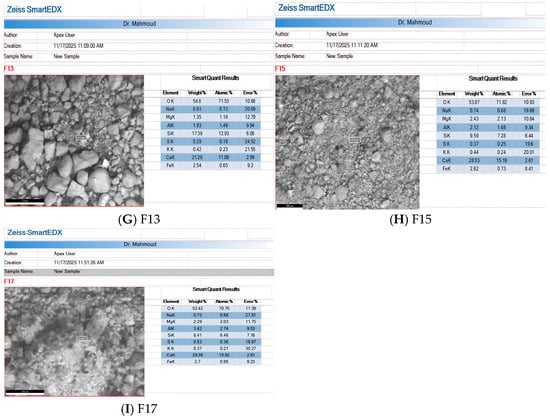
Figure 25.
EDS spectra of F1 (control), F2, F7, F8, F9, F11, F13, F15, and F17 mixes.
As Ferro-Rock was incrementally introduced (5–25% cement replacement), a hybrid microstructure developed where iron carbonate crystalline phases progressively integrated with residual C–S–H. Sample F8 (5% Ferro-Rock) maintained a dense matrix with only a slight increase in iron content (2.32 atomic ratio), preserving excellent particle bonding (Figure 24D and Figure 25D). Within the 10–25% replacement range, SEM revealed relatively compact matrices where interlocking iron carbonate crystals formed an intricate 3D network integrated with fly ash and metakaolin particles. EDS mapping confirmed progressive iron enrichment (atomic ratios increasing from 2.39 to 2.43) alongside sustained calcium presence, enabling synergistic phase interaction that enhanced matrix density and interfacial cohesion, directly explaining the observed strength improvements of up to 25%.
Beyond the critical 25% threshold, microstructural deterioration became evident. Samples with 30–50% Ferro-Rock replacement exhibited increasingly pronounced capillary pores and a more heterogeneous void distribution as iron content increased further (atomic ratios 2.58–2.70). This porosity escalation resulted from microstructural imbalance: insufficient C–S–H to bridge growing iron carbonate clusters, the formation of non-uniform agglomerates that create weak zones, and degraded interfacial transition zone (ITZ) quality due to incompatible phase distribution—all culminating in reduced mechanical strength despite continued carbonation activity.
At 100% cement replacement (sample F1), SEM analysis revealed a complete absence of C–S–H crystals with exclusive dominance of Ferro-Rock-derived crystalline phases (Figure 24A,I). EDS confirmed a dramatic compositional shift: iron content surged to 13.6 wt.% while calcium plummeted to 12.66 wt.% relative to the control (Figure 25A,C). When Ferro-Rock was additionally used to replace aggregates, the iron concentration reached 33.8 wt.% (Figure 25B), forming a transitional iron carbonate layer at the aggregate–matrix interface that enhanced 28-day strength development through superior interfacial bonding, validating the carbonation-driven strength gain mechanism specific to ductile iron aggregates.
Critically, this iron carbonate network serves as a carbon-negative binding phase: each gram of FeCO3 formed sequesters approximately 0.33 g of atmospheric CO2 during curing. The microstructural evidence thus establishes a nonlinear performance relationship: optimal mechanical properties emerge at ≤25% cement replacement, where iron carbonates and residual C–S–H coexist synergistically, while excessive substitution disrupts phase compatibility despite continued CO2 uptake. Ferro-Rock’s microstructure fundamentally redefines the binding mechanism in cementitious systems, replacing conventional C–S–H with a densifying iron–carbonate crystalline network whose evolution directly governs both sustainability metrics (progressive CO2 sequestration) and mechanical performance (strength gains up to 25% with replacement, followed by a decline at higher dosages).
3.7. Interpret the Mechanical Performance and Microstructure with the Test Parameters
The results from testing and microstructural testing indicate that Ferro-Rock’s mechanical performance is strongly influenced by the cement replacement percentage, curing conditions, and specimen shape. The compressive strength of Ferro-Rock with 5–10% cement replacement (F8 and F9) has been shown to increase by 5–15% compared with pure cement. However, at a 25% replacement level (F12–F17), compressive strength decreases noticeably. As shown by SEM images, the Reactive Iron Particle assembly forms a compact matrix with fewer voids [38]. Therefore, the above results indicate that lethargy exists at optimal levels of reactive iron particles, as they improve micro-filling and create denser cement structures. Exceeding the optimal level results in insufficient C-S-H formation, thereby reducing the strength of the interfacial transition zone (ITZ) [36]. When using smaller molds combined with an iron waste aggregate, strength increased by 37.5% compared with the control (F4). This demonstrates the necessity for CO2 penetration and reactive surface area for the formation of iron carbonate (FeCO3) [39]. Flexural and tensile strengths exhibit the same tendency as compressive strength; improvements occur at low replacement levels due to reactive iron particles reinforcing bonds, whereas loss occurs at higher replacement levels due to void formation during carbonation, not completing [32,35,36].
Microstructural analysis using SEM, along with EDS, provides important information on phase development and binding mechanisms that contribute to mechanical behavior. In the control mix (F7), there was a dense, C-S-H-phase-dominated matrix with low Fe and high Ca. As Ferro-Rock replacement increased to 5–25%, a hybrid microstructure formed in which FeCO3 crystals were interlocked with residual C-S-H, thereby increasing both matrix density and interfacial bond integrity. EDS analysis supported this by revealing increasing Fe levels and stable Ca levels, indicating that both contributed to synergistic phase interactions. In the case of 100% replacement (F1 and F4), SEM revealed that crystalline phases were exclusively derived from Ferro-Rock, and EDS results further confirmed that the concentration of Fe within the aggregates increased to 33.8 wt.%, which suggests that Ferro-Rock made use of carbonation as a means of producing strength gain [12,39]. Additionally, the FeCO3 network enhances strength and absorbs atmospheric CO2, capturing approximately 0.33 g of CO2 per gram of FeCO3 [11,12], reinforcing the case for Ferro-Rock as a carbon-negative binder [11,13].
4. Conclusions
The results in the present study reveal the following conclusions:
- The research investigates Ferro-Rock concrete as an eco-friendly alternative to traditional Portland cement, highlighting its improved strength and CO2 uptake.
- The optimal partial replacement of ordinary Portland cement (OPC) with Ferro-Rock is between 5% and 10% by weight. At this level, the compressive strength increases by 5% to 15%, the flexural strength improves by up to 11%, and the indirect tensile strength rises by 16% compared to the OPC control.
- When the cement replacement level exceeded 25%, bonding weakened, and mechanical properties diminished significantly. At 50% replacement, compressive strength dropped by approximately 46% relative to the control, due to insufficient C-S-H formation and void formation in the matrix.
- A curing regime of only 2 days in CO2 (mixture F6) resulted in a 32.5–43% reduction in compressive strength compared to the 4-day CO2-cured reference, as incomplete FeCO3 formation left a porous, weak microstructure.
- Large specimens (e.g., 150 mm diameter cylinders) failed to harden properly because the plastic mold acted as an impermeable barrier, preventing CO2 diffusion. Reducing specimen dimensions to 50 mm × 50 mm ensured uniform CO2 penetration and complete carbonation.
- Using 100% iron ductile waste as aggregate (mixture F4) improved compressive strength by 37.5% (reaching 5.50 MPa at 28 days) compared to standard Ferro-Rock with natural aggregates (F1), due to increased reactive surface area and FeCO3 formation.
- The highest flexural strength (5.16 MPa at 28 days, a 72% increase over reference F1) was achieved with 100% Ferro-Rock plus iron waste aggregate (F4) and a 4-day CO2 + 3-day air curing regime. Specimens with insufficient CO2 exposure (F5, F6) showed zero measurable flexural strength.
- Smaller specimens (50 mm cubes) and optimized mold designs enhanced CO2 penetration and reaction uniformity, leading to improved bonding, crack resistance, and overall strength development compared to larger geometries (100 mm cubes).
- The results of this research not only support Ferro-Rock as an appropriate material in achieving net-zero construction objectives but also align with the goals of global sustainability for countries around the world, including the United Nations’ sustainable development agenda for SDG 9 (Industry, Innovation and Infrastructure) and SDG 13 (Climate Action). The development of future standardization of Ferro-Rock’s mix design may accelerate the construction industry’s adoption of Ferro-Rock as a carbon-negative building material.
Future Work and Limitations: This study provides information on the mechanical performance of Ferro-Rock concrete; however, several shortcomings warrant attention in future research. The testing program was limited to short-term mechanical properties at 7 and 28 days. Essential tests for long-term durability are resistance to sulfate attack, chloride ion penetration, freeze–thaw cycles, and carbonation over long durations (e.g., 6, 12, or 24 months). Tests of water absorption, sorptivity, permeability, fracture toughness, and fracture energy should also be carried out. A detailed economic feasibility study and life-cycle cost analysis are also needed. Large-scale field testing and standardized production processes are needed for wider adoption. We also note that although the current study does not include direct in situ CO2 uptake measurements (e.g., thermogravimetric analysis), this limitation is explicitly acknowledged, and TGA-based CO2 quantification is recommended as a priority for subsequent research.
Author Contributions
Conceptualization, S.S.E.A., A.A.E. and M.A.R.E.; Methodology, A.M.E., A.A.E., R.A.E.-S. and M.A.R.E.; Validation, S.S.E.A., A.A.E. and M.A.R.E.; Formal analysis, S.S.E.A., A.A.E. and M.A.R.E.; Writing original draft preparation, A.M.E., M.A.R.E., R.A.E.-S. and A.A.E.; Writing review and editing, S.S.E.A., A.A.E., M.A.R.E., R.A.E.-S., A.M.E. and A.A.; Supervision, S.S.E.A., A.A.E., M.A.R.E., R.A.E.-S. and A.A. All authors have read and agreed to the published version of the manuscript.
Funding
This research received no external funding.
Institutional Review Board Statement
Not applicable.
Informed Consent Statement
Not applicable.
Data Availability Statement
All data are reported in this manuscript.
Acknowledgments
This work is part of the experimental research for the second author’s master’s. thesis.
Conflicts of Interest
The authors declare no conflicts of interest.
Abbreviations
| Fcu | Compression strength |
| Fb | Flexural strength |
| Ft | Indirect tensile strength, |
| OPC | Ordinary Portland Cement |
| FeCO3 | Iron (II) carbonate; ferrous carbonate |
| C–S–H | Calcium silicate hydrate |
| ITZ | Interfacial transition zone |
| SEM | Scanning electron microscopy |
| EDS | Energy-dispersive X-ray spectroscopy |
| XRF | X-ray fluorescence |
| SDG | Sustainable Development Goal |
| CV | Coefficient of variation |
| SD | Standard deviation |
| GWP | Global warming potential |
| W/C | Water–Cement Ratio |
References
- Turner, L.K.; Collins, F.G. Carbon dioxide equivalent (CO2-e) emissions: A comparison between geopolymer and OPC cement concrete. Constr. Build. Mater. 2013, 43, 125–130. [Google Scholar] [CrossRef]
- Niveditha, M.; Manjunath, Y.; Prasanna, S.H. Ferro-rock: A carbon negative sustainable concrete. Int. J. Sustain. Constr. Eng. Technol. 2021, 11, 90–98. [Google Scholar]
- Al-Fakih, A.; Mohammed, B.S.; Liew, M.S.; Nikbakht, E. Incorporation of waste materials in the manufacture of masonry bricks: An update review. J. Build. Eng. 2019, 21, 37–54. [Google Scholar] [CrossRef]
- Worrell, E.; Price, L.; Martin, N.; Hendriks, C.; Meida, L.O. Carbon dioxide emissions from the global cement industry. Annu. Rev. Energy Environ. 2001, 26, 303–329. [Google Scholar] [CrossRef]
- Carpenter, A. CO2 Abatement in the Iron and Steel Industry; IEA Clean Coal Center: London, UK, 2012; Volume 25, p. 193. Available online: https://usea.org/sites/default/files/012012_CO2%20abatement%20in%20the%20iron%20and%20steel%20industry_ccc193.pdf (accessed on 26 May 2026).
- Hussain, Z.; Ansari, W.S.; Akbar, M.; Hussain, A.; Alzara, M.; Yosri, A.M.; Khan, A.H.; Lin, Z. Effect of bentonite on the sulfate durability of seawater coral-aggregate concrete. J. Sustain. Cem. Based Mater. 2025, 15, 1609–1626. [Google Scholar] [CrossRef]
- Cezar, B.F.; Magalhães, M.d.S.; Pimenta, A.R. Application of Iron Mine Waste Rock as an Innovative Cement Replacement Material in Mortar. In The 1st International Conference on Net-Zero Built Environment. NTZR 2024; Kioumarsi, M., Shafei, B., Eds.; Lecture Notes in Civil Engineering; Springer: Cham, Switzerland, 2025; Volume 237. [Google Scholar] [CrossRef]
- Lanuza Garcia, A.; Achaiah, A.T.; Bello, J.; Donovan, T. Ferrock: A Life Cycle Comparison to Ordinary Portland Cement; ISE 576—Industrial Ecology; University of Southern California: Los Angeles, CA, USA, 2017. [Google Scholar]
- Madala, V.; Sujatha, T. Experimental Investigation on Performance of Ferro-Rock Concrete. IOP Conf. Ser. Earth Environ. Sci. 2023, 1280, 012008. [Google Scholar] [CrossRef]
- Das, S.; Hendrix, A.; Stone, D.; Neithalath, N. Flexural fracture response of a novel iron carbonate matrix–Glass fiber composite and its comparison to Portland cement-based composites. Constr. Build. Mater. 2015, 93, 360–370. [Google Scholar] [CrossRef]
- Das, S.; Stone, D.; Convey, D.; Neithalath, N. Pore-and micro-structural characterization of a novel structural binder based on iron carbonation. Mater. Charact. 2014, 98, 168–179. [Google Scholar] [CrossRef]
- Black, L. Low clinker cement as a sustainable construction material. In Sustainability of Construction Materials; Elsevier: Amsterdam, The Netherlands, 2016; pp. 415–457. [Google Scholar] [CrossRef]
- Mitikie, B.B.; Gari, B.D.; Elsaigh, W.A. Ferro-Rock cement and oxalic acid for enhanced concrete strength and durability against sulphate attack. Eng. Res. Express 2024, 6, 025122. [Google Scholar] [CrossRef]
- Niveditha, M.; Palanisamy, T. Formulation of a carbon sink binder through multi-objective optimization using response surface methodology. Results Eng. 2025, 27, 106715. [Google Scholar] [CrossRef]
- McLellan, B.C.; Williams, R.P.; Lay, J.; van Riessen, A.; Corder, G.D. Costs and carbon emissions for geopolymer pastes in comparison to ordinary portland cement. J. Clean. Prod. 2011, 19, 1080–1090. [Google Scholar] [CrossRef]
- Vijayan, D.; Dineshkumar; Arvindan, S.; Janarthanan, T.S. Evaluation of Ferro-Rock: A greener substitute to cement. Mater. Today Proc. 2020, 22, 781–787. [Google Scholar] [CrossRef]
- Pravitha, J.J.; Merina, R.N.; Subash, N. Mechanical properties and microstructural characterization of Ferro-Rock as CO2–negative material in self-compacting concrete. Constr. Build. Mater. 2023, 396, 132289. [Google Scholar] [CrossRef]
- Vijayan, D.S.; Swamy, K.R.; Jayaseelan, R.; Devarajan, P. Performance evaluation and environmental sustainability assessment of Ferro-Rock-infused concrete. Sci. Rep. 2026, 16, 2948. [Google Scholar] [CrossRef]
- Garcia, A.L.; Achaiah, A.T.; Bello, J.; Donovan, T. Ferrock: A Life Cycle Comparison to Ordinary Portland Cement; Industrial Ecology: Denver, CO, USA, 2017; Available online: https://www.academia.edu/100394824/A_Life_Cycle_Comparison_to_Ordinary_Portland_Cement.pdf (accessed on 26 May 2026).
- Gobinath, S.; Ramesh, R.L.; Desai, P.S. Performance of composite building materials using granite slurry, earth blocks, and Ferro-Rock. AIP Conf. Proc. 2022, 2615, 020008. [Google Scholar] [CrossRef]
- Schneider, M.; Romer, M.; Tschudin, M.; Bolio, H. Sustainable cement production—Present and future. Cem. Concr. Res. 2011, 41, 642–650. [Google Scholar] [CrossRef]
- ASTM C618-23; Standard Specification for Coal Fly Ash and Raw or Calcined Natural Pozzolan for Use in Concrete. ASTM International: West Conshohocken, PA, USA, 2023. [CrossRef]
- ASTM C568/C568M-23; Standard Specification for Limestone Dimension Stone. ASTM International: West Conshohocken, PA, USA, 2023. Available online: https://webstore.ansi.org/standards/astm/astmc568c568m15 (accessed on 26 May 2026).
- ES 4756–1:2022; Cement—Part 1: Composition, Specifications and Conformity Criteria for Common Cements. Egyptian Organization for Standardization and Quality: Cairo, Egypt, 2022. Available online: https://www.eos.org.eg/en/standard/12097 (accessed on 26 May 2026).
- Müller, C. Use of cement in concrete according to European standard EN 206-1. HBRC J. 2012, 8, 1–7. [Google Scholar] [CrossRef]
- ES 1109; Aggregates for Concrete. Egyptian Organization for Standards and Quality: Cairo, Egypt, 2021. Available online: https://www.eos.org.eg/en/standard/288 (accessed on 26 May 2026).
- ECP 203-2020; Egyptian Code of Practice for Design and Construction of Reinforced Concrete Structures. Housing and Building National Research Center (HBRC): Cairo, Egypt, 2020.
- BS EN 12390-3:2019; Testing Hardened Concrete—Part 3: Compressive Strength of Test Specimens. British Standards Institution: London, UK, 2019.
- BS EN 12390-5:2019; Testing Hardened Concrete—Part 5: Flexural Strength of Test Specimens. British Standards Institution: London, UK, 2019.
- BS EN 12390-6:2023; Testing Hardened Concrete—Part 6: Tensile Splitting Strength of Test Specimens. British Standards Institution: London, UK, 2023.
- Kalaivani, K.; Gunasekaran, K.; Annadurai, R. Innovative sustainable coconut husk mortar for ferrocement infrastructure solution. Innov. Infrastruct. Solut. 2021, 7, 131. [Google Scholar] [CrossRef]
- Patel, V.M.; Solanki, H.J. Development of carbon-negative concrete by using Ferro-Rock. Int. J. Sci. Res. Sci. Eng. Technol. (IJSRSET) 2018, 4, 21–25. [Google Scholar]
- Shinde, N.; Gobinath, R.; Chidambaram, S.; Shewale, M. An experimental investigation on concrete blocks using Ferro-Rock as a green binding material. Mater. Today Proc. 2023, 7, 131. [Google Scholar] [CrossRef]
- Das, S.; Souliman, B.; Stone, D.; Neithalath, N. Synthesis and properties of a novel structural binder utilizing the chemistry of iron carbonation. ACS Appl. Mater. Interfaces 2014, 6, 8295–8304. [Google Scholar] [CrossRef] [PubMed]
- Seena, S.; George, J. Experimental investigation on strength and durability characteristics of Ferro-Rock cement concrete. J. Adv. Cem. Concr. Technol. 2023, 6, 43–54. [Google Scholar] [CrossRef]
- Niveditha, M.; Palanisamy, T. Oxalic acid optimization for iron-based solid waste conversion into a carbon-sequestering composite building material. Sustain. Chem. Pharm. 2025, 43, 101875. [Google Scholar] [CrossRef]
- Felekoğlu, B.; Türkel, S.; Baradan, B. Effect of water/cement ratio on the fresh and hardened properties of self-compacting concrete. Build. Environ. 2007, 42, 1795–1802. [Google Scholar] [CrossRef]
- Miah, J.; Ali, K.; Paul, S.C.; Babafemi, A.J.; Kong, S.Y.; Šavija, B. Effect of recycled iron powder as fine aggregate on the mechanical, durability, and high-temperature behavior of mortars. Materials 2020, 13, 1168. [Google Scholar] [CrossRef]
- Hadi, A.M.; Hasan, K.F.; Ahmed, I.M.; Meteab, M.A.; Hasan, Q.F. Green concrete: Ferro-rock applicability and cost-benefit effective analysis. ASEAN J. Sci. Eng. Mater. 2023, 2, 119–134. [Google Scholar]
Disclaimer/Publisher’s Note: The statements, opinions and data contained in all publications are solely those of the individual author(s) and contributor(s) and not of MDPI and/or the editor(s). MDPI and/or the editor(s) disclaim responsibility for any injury to people or property resulting from any ideas, methods, instructions or products referred to in the content. |
© 2026 by the authors. Licensee MDPI, Basel, Switzerland. This article is an open access article distributed under the terms and conditions of the Creative Commons Attribution (CC BY) license.