


Abstract
Achieving sustainability in the energy sector has become a critical global challenge under the increasing pressures of climate change. Amid increasingly severe global climate change, the Chinese government has attached great importance to carbon emission control and is actively advancing the construction of its carbon market. As a core element of carbon markets, the carbon price exerts a pivotal influence on the transition and low-carbon development of the coal-fired power industry. This paper undertakes an in-depth analysis of the low-carbon transition of China’s coal-fired power industry under the influence of the carbon price, aiming to provide a theoretical basis for policymakers in formulating relevant policies. It begins by reviewing the concept and characteristics of carbon markets, as well as the development status of both international and Chinese carbon markets. This is followed by an analysis of the current state of China’s coal-fired power industry, its transition needs, and the impacts of the carbon price on the industry. Subsequently, a self-developed comprehensive resource planning model is employed to simulate the effects of carbon price changes on the installed capacity development, structural adjustment, and carbon emissions from the power sector of China’s coal power enterprises. Finally, policy recommendations to facilitate the transition of the coal-fired power industry are proposed. The research findings indicate that changes in the carbon price have a significant impact on the coal-fired power industry, driving enterprises to reduce carbon emissions and improve energy efficiency. Furthermore, carbon market policies play a crucial role in promoting the low-carbon transition of the coal-fired power industry. Through policy adjustments and optimization, synergistic development between carbon market policies and the industry’s transition can be achieved. The findings provide important insights for enhancing environmental sustainability, economic efficiency, and system resilience in China’s power sector under carbon neutrality goals.
1. Introduction
Against the backdrop of increasingly severe global climate change, the Chinese government has set the targets of achieving carbon peaking by 2030 and carbon neutrality by 2060. These targets impose substantial structural transformation pressures on the national economy, particularly on traditional high-emission industries. As a core component of China’s energy system, the coal-fired power sector remains a pivotal pillar for electricity supply while accounting for a large share of national carbon emissions. Therefore, advancing the low-carbon transition of the coal-fired power industry has become a key priority in China’s energy transition agenda.
In recent years, a growing body of literature has examined the role of carbon markets in shaping the transition of the power sector. Existing studies can be broadly categorized into four strands.
First, a number of studies focus on the interaction between carbon markets and the electricity sector. For example, studies [1,2] analyze the carbon cost pass-through mechanism and the dynamic transmission of carbon prices in the electricity market, highlighting how carbon pricing signals are transmitted to power generation decisions. Similarly, study [3] investigates the participation strategies of thermal power units under the joint operation of carbon markets and electricity markets, while study [4] examines how carbon allowance allocation rules affect the revenue of coal-fired power enterprises. These studies emphasize the institutional and market mechanisms through which carbon pricing influences the behavior of power producers.
Second, existing research has explored the economic impacts of carbon pricing on coal-fired power generation. Studies [5,6] analyze the economic performance and financial efficiency of thermal power enterprises under carbon trading, while study [7] compares carbon tax and carbon market mechanisms in promoting carbon neutrality. These works generally show that rising carbon prices significantly increase the operating costs of coal-fired power plants and weaken their economic competitiveness. However, most of these studies focus on short-term economic effects, with limited attention to long-term system-wide cost implications under different carbon price trajectories.
Third, a substantial body of literature examines the transition pathways and phase-out of coal-fired power. Studies [8,9] highlight the critical role of carbon pricing in accelerating the retirement of coal power plants, while study [10] analyzes the risk of stranded assets under stringent climate targets. Other studies [11,12] explore broader power system transition pathways under carbon neutrality goals. While these studies provide important insights into structural changes in the power sector, they often do not explicitly link carbon price scenarios with technology cost evolution in a unified analytical framework.
Fourth, with the increasing emphasis on deep decarbonization, recent studies have paid growing attention to carbon capture, utilization and storage (CCUS) technologies. Study [13] investigates the deployment pathways of CCUS in China’s coal-fired power sector, while studies [14,15] analyze the economic feasibility of CCUS and bioenergy with carbon capture (BECCS) retrofits. These studies suggest that CCUS plays a crucial role in achieving near-zero or even negative emissions in the power sector. However, the interaction between carbon pricing and the timing of CCUS deployment remains insufficiently explored, particularly under different policy scenarios.
Despite these contributions, several important gaps remain. First, existing studies tend to focus either on market mechanisms or on transition pathways, lacking an integrated framework that captures the combined effects of carbon pricing, technology cost dynamics, and long-term structural evolution of the power system. Second, the role of carbon pricing in shaping system-wide cost optimization is often not explicitly analyzed, especially in long-term scenarios. Third, although CCUS is widely recognized as a key mitigation technology, its deployment under different carbon price trajectories and its contribution to achieving near-zero or negative emissions require further investigation.
To address these gaps, this study develops an integrated resource planning model to analyze the impact of different carbon price scenarios on China’s coal-fired power transition. The main contributions of this study are threefold: (1) Model development: A comprehensive resource planning model is constructed that explicitly incorporates carbon price signals into the long-term planning of the coal-fired power sector; (2) Industry transition analysis: The model is used to simulate how different carbon price trajectories influence installed capacity expansion and structural adjustment within China’s coal-fired power industry; (3) Policy implications: The findings provide policy insights into how carbon pricing mechanisms can support the low-carbon transition of the coal-fired power sector while maintaining the stability of electricity supply.
2. Overview of Carbon Markets
2.1. Concept and Characteristics of Carbon Markets
As an important instrument for addressing climate change and promoting green, low-carbon development, the concept and evolution of carbon markets exhibit distinct characteristics. A carbon market refers to a market established to facilitate the trading of carbon emission allowances. It internalizes the cost of carbon emissions into corporate operating expenses through the buying and selling of these allowances, thereby incentivizing enterprises to reduce their carbon emissions. The core mechanism of a carbon market is the carbon emission allowance trading system, whereby the government sets an overall cap on total carbon emissions and then allocates emission allowances to enterprises. Companies can purchase additional allowances to meet their individual emission limits. The development of carbon markets can be traced back to the European Union Emissions Trading System (EU ETS) in the 1990s, which was subsequently promoted and adopted globally. In China, the development of carbon markets began with the Beijing pilot carbon trading program in 2011, gradually expanding to regions such as Shanghai and Shenzhen. As of 2023, China has established a nationwide, unified carbon market, making it one of the largest carbon markets globally.
Carbon markets possess several fundamental characteristics: First, they are a market-based instrument that guides resource allocation through price signals to incentivize emission reductions [16,17]. Second, carbon markets exhibit uncertainty, as the supply of emission allowances depends on government policy settings, while demand depends on the actual emissions of enterprises. This uncertainty contributes to fluctuations in the carbon price [18]. Third, the primary participants in carbon markets are enterprises, which buy and sell emission allowances to achieve their own emission targets. Fourth, carbon markets are interconnected with other markets, such as energy markets and financial markets, forming a complex market ecosystem [19].
More importantly, carbon prices are influenced not only by supply and demand fundamentals but also by financial speculative activities. Research by Isah et al. [20] found that in the EU Emissions Trading System (EU ETS), speculative activities have a significant impact on carbon price volatility: a higher degree of speculation leads to increased long-term volatility of carbon prices, and speculative factors can serve as effective predictive indicators for carbon prices. This means the carbon price formation mechanism is becoming increasingly complex, reflecting both the abatement costs of the real economy sector and the expectations and sentiment factors of the financial market. On the one hand, the existence of speculative components may exacerbate short-term carbon price fluctuations and increase the cost uncertainty for emission-controlled enterprises; on the other hand, their positive impact on carbon price returns also makes the carbon market an attractive.
Against this backdrop, the establishment and operation of carbon markets hold significant importance for driving the transition of the coal-fired power industry. Changes in the carbon price directly affect the production costs and profitability of coal-fired power enterprises, thereby incentivizing them to adopt emission reduction measures and promoting a green, low-carbon transformation within the industry [21,22,23]. The theory of carbon emission shadow price provides a micro-foundation for understanding the formation mechanism of the carbon price. Ye Bin [24], from a resource optimization perspective, systematically deduced the relationship between the carbon emission shadow price and the marginal abatement cost in the power sector using frontier production functions and mathematical programming methods, providing an important theoretical framework for subsequent research. Simultaneously, carbon markets face numerous challenges, such as the allowance allocation mechanism and the stabilization mechanism for carbon prices, all of which require further exploration in subsequent research.
2.2. Development Trend of the International Carbon Market
2.2.1. Global Expansion and Price Trends
Carbon pricing has become a mainstream emission reduction policy tool globally, with international carbon markets exhibiting diverse and pluralistic trends in development and trading mechanisms. International practices provide rich experience for China in exploring a carbon neutrality pathway suited to its national conditions [25,26]. According to the World Bank’s 2025 report, the number of operational carbon pricing mechanisms worldwide has reached 80, covering approximately 28% of global greenhouse gas emissions and nearly two-thirds of global economic output. Over the past decade, the average carbon price has nearly doubled, emission coverage has risen from 12% to 28%, and carbon pricing revenues have tripled. Among these, the EU ETS is the longest-running and most mature market. Since its launch in 2005, it has covered over 11,000 installations across more than 30 countries and over 4 billion tonnes of carbon dioxide emissions. Regarding trading mechanisms, the EU ETS allocates carbon allowances through a combination of auctioning and free allocation, with auctioning being the predominant method [27]. The price volatility of carbon markets is another noteworthy issue; studies show that dynamic linkages exist between fossil energy markets and carbon markets, with mutual influence between the two [28]. Therefore, fluctuations in the carbon price are influenced by both fossil energy prices and are closely related to macroeconomic factors and policy changes [29,30,31,32]. In addition to the EU ETS, carbon markets in regions like California, USA, and China are also developing rapidly. Taking China as an example, since piloting carbon trading in 2011, the scale of its carbon market has continuously expanded, and the carbon price has also been fluctuating. China’s carbon market primarily employs a free allocation mechanism but is gradually introducing auctioning [33]. In terms of the characteristics of various national carbon markets, the EU’s carbon market relies primarily on government policies and regulations for its operation, whereas China’s carbon market has adopted more market-oriented instruments, such as the introduction of a carbon emission allowance trading mechanism [34]. Carbon markets in different countries also vary in aspects such as allowance allocation methods, trading rules for emission rights, and the rules for allowance collateralization and transfer. As global concern over climate change continues to intensify, the scale and influence of carbon markets are expected to expand further. Concurrently, the trading mechanisms of carbon markets will become more diversified to meet the needs of different countries and regions [35], which also brings challenges related to the lack of unified rules in forming a global market.
International carbon markets are entering a new development phase characterized by rising prices, expanded coverage, and enhanced international coordination. In May 2025, the United Nations adopted the new standard for the Paris Agreement Carbon Crediting Mechanism (PACM), laying the cornerstone for establishing high-integrity international carbon credit trading. In November 2025, 11 key parties, including the EU, China, and Brazil, jointly established the Coalition for an Open and Compliant Carbon Market, marking a substantive step towards global carbon pricing systems moving from fragmentation towards coordination. According to a World Bank report, the global average carbon price has reached 136 CNY per tonne of CO2, nearly doubling that of 2015. However, there remains a significant gap from the carbon price level required to achieve the 2 °C temperature control target, leaving substantial room for further increases.
2.2.2. Impacts of Geopolitics and Trade Fragmentation on the Carbon Market
The restructuring of the global trade landscape has exerted a profound influence on the formation and development of the carbon market. The trends of supply chain restructuring and regionalization have led to the disunity of carbon market rules and raised the compliance costs for multinational enterprises. Geopolitical tensions have also exacerbated the “blocization” trend of the carbon market, and China-US and China-EU trade frictions have generated a transmission effect on the carbon market. Against this complex backdrop, the EU Carbon Border Adjustment Mechanism (CBAM) has emerged as a key institutional arrangement linking climate policies and trade policies.
CBAM has officially levied tariffs since 1 January 2026, providing detailed rules for accounting for the carbon emissions of imported products, which is precisely the most representative complex product against this backdrop. The EU CBAM officially imposes carbon emission fees on imported high-carbon products such as steel, aluminum, cement, fertilizers, electricity and hydrogen. The charging scope covers the direct emissions of all products, as well as the indirect emissions from electricity used in cement and fertilizer production, and may be expanded to more carbon-intensive products in the future. This mechanism ensures that imported products pay the same carbon price as EU domestic products, aiming to prevent carbon leakage and ensure fair competition between producers inside and outside the EU. According to European market data, the average EU ETS carbon price stood at 65–85 euros per tonne of CO2 in 2024.
2.2.3. Discussion on the CBAM
The actual impacts of CBAM exhibit significant imbalance. According to the research by Dechezleprêtre et al. [36], basic metals are the most affected products in the trade flows covered by CBAM, and they are mainly imported from China, Turkey and the Russian Federation. This means that CBAM has objectively created a non-tariff barrier effect on specific countries. Although the EU claims that CBAM is aimed at preventing carbon leakage and ensuring fair competition, its differential impacts on countries at different development levels have sparked disputes over “green barriers”.
The exposure index jointly developed by the World Bank and Purdue University reveals a stark disparity in the risks faced by different countries. Mozambique’s aluminum industry exports a staggering 97% of its output to the EU, and its production methods are far more carbon-intensive than the EU average; the excess carbon payments equate to 6.5% of its export value, severely eroding its competitiveness. Egypt bears the heaviest overall burden: as Kamel El Wazir, Egypt’s Minister of Trade and Industry, has warned, CBAM could impose carbon costs ranging from 7 billion to 29 billion euros on Egyptian export products (especially steel, cement, fertilizers and aluminum), even though Egypt accounts for a mere 0.6% of global emissions. The exposure of Belarus’s cement industry reaches as high as 27%, and that of India’s steel industry stands at approximately 13%. According to estimates by the United Nations Conference on Trade and Development (UNCTAD), if CBAM is extended to all industrial sectors, Africa could suffer annual export losses of up to 27 billion US dollars.
Meanwhile, some countries with clean production practices may instead gain a competitive edge. The carbon intensity of aluminum production in Ghana, cement production in Brazil, fertilizer production in Jordan and steel production in Morocco is lower than the EU average, and CBAM is likely to enable these countries to capture a larger share of the EU market. Endowed with abundant hydropower resources, Mozambique’s aluminum production features a carbon intensity far below the global average. If it can establish a domestic carbon pricing mechanism, it will not only retain tax revenues but also boost its competitiveness in the EU market.
From a macroeconomic perspective, the overall impact of on most countries is generally limited. Existing studies suggest that the aggregate economic effects remain manageable, largely because only a subset of carbon-intensive sectors is directly affected [37]. However, the impacts are highly uneven across countries and sectors, with economies that are more reliant on carbon-intensive exports facing relatively greater adjustment pressures. This indicates that while CBAM is unlikely to undermine overall macroeconomic stability, it may exacerbate existing structural disparities and create disproportionate challenges for more vulnerable economies.
The EU’s pioneering measures have triggered a domino effect of carbon border adjustment mechanisms. A 2025 World Bank study indicates that major economies such as the UK, Canada, Japan and Australia are considering or designing similar carbon border adjustment schemes. This proliferation trend signals that carbon pricing will no longer be a domestic affair of a single country but an important component of the international trade system. For China, this means its coal-fired power industry will face multi-layered carbon cost pressures in the international market through downstream products. The proliferation of carbon border adjustment mechanisms will create a carbon club effect, elevating the weight of carbon performance in international trade. In the future international trade order, carbon performance will be on par with price and quality as a core dimension of competitiveness. Developing countries need to monitor emissions, optimize carbon pricing and secure international support to mitigate the competitive pressures and economic shock risks brought by CBAM, and enhance their competitiveness in the EU market and global trade.
2.3. Development Status of China’s Carbon Market
As a core policy tool for achieving the “dual carbon” goals, the price signal of the carbon market plays a crucial guiding role in the coal power transition. A deep understanding of its formation logic, evolution history, and endogenous and exogenous driving factors is fundamental for assessing the impact of the carbon price on the transition of the coal-fired power industry.
2.3.1. Development History from Pilots to National Unification
Since the launch of China’s carbon market pilot programs in 2011, the construction of the carbon market has followed a clear top-level design roadmap, advancing in stages [38]. This has led to significant development of the carbon market in China. In October 2011, China initiated pilot carbon emission allowance trading programs in seven provinces and cities: Beijing, Tianjin, Shanghai, Chongqing, Guangdong, Hubei, and Shenzhen. Since 2013, these seven pilot carbon markets have successively commenced online trading. Various pilot markets conducted useful explorations in price formation mechanisms [39,40,41], gradually covering nearly 3000 key emitting entities across more than 20 industries, including power, steel, and cement. These pilots accumulated valuable experience for the national market construction and demonstrated a significant role in promoting emission reductions in the power industry [42].
Building on the foundation of these pilot programs, the national carbon market officially commenced operation on 16 July 2021. Initially covering only the power generation industry, its emissions accounted for approximately 40–45% of the national total. Furthermore, to incentivize voluntary participation in carbon reduction activities across society, China established the Chinese Certified Emission Reduction (CCER) trading market in 2012. By 30 September 2021, the cumulative trading volume of CCERs had exceeded 334 million tonnes of carbon dioxide equivalent, with a transaction value exceeding CNY 2.951 billion. In January 2024, the “Interim Regulations on the Administration of Carbon Emission Trading” came into effect, providing legal safeguards for the market. In the same year, the national CCER market was relaunched, forming a complete carbon pricing system alongside the mandatory market. By 2025, the national market successfully incorporated industries such as steel, cement, and aluminum smelting. The proportion of covered carbon dioxide emissions increased to over 60% of the national total, establishing it as one of the largest carbon markets globally.
2.3.2. Mechanism Design Based on National Conditions
The achievements of China’s carbon market can be attributed to its institutional design with Chinese characteristics, the core of which lies in balancing economic growth with carbon reduction goals. Regarding the allowance allocation mechanism, the market adopts an intensity-based approach for determining the total allowance, primarily relying on benchmarking for free allocation. This means the allowances an enterprise receives are dynamically linked to its actual output, providing a buffer during periods of rapid economic growth, helping to stabilize the carbon price, and reflecting a progressive reform approach based on relative intensity control. This undoubtedly offers adaptation and transition space for high-energy-consuming industries. Regarding the trading mechanism, the current market is predominantly spot-based and exhibits a significant compliance-driven characteristic, with trading activity highly concentrated around the compliance settlement periods. Specifically, trading volumes in November-December 2021 and November-December 2022 accounted for 83% of the total. In 2024, the national carbon market completed the allowance settlement for the 2023 compliance period, achieving a compliance rate of 99.98%, setting a new record. However, this leads to relatively insufficient market liquidity during non-compliance periods, indicating a need for further deepening and diversification of the market structure. This entire institutional design fundamentally shapes the operational logic and fluctuation characteristics of the carbon price, thereby directly affecting the cost structure and transition decisions of regulated entities like the coal-fired power industry.
2.3.3. Price Evolution of China’s Carbon Market
Since its launch, the national carbon market has operated smoothly and orderly, with its price discovery function continuously strengthening. Market performance and price trends are influenced by both internal mechanism improvements and external international rules. The price evolution process shows distinct stage characteristics [43]. Initially, prices fluctuated slightly within the range of 40–60 CNY/tCO2, as the market was in a phase of rule adaptation and exploration. Among the eight regional carbon markets, the Beijing carbon price was the highest, reaching 149 CNY/tCO2. The Guangdong carbon price remained stable around 80 CNY/tCO2, while prices in the Fujian and Tianjin markets hovered near 30 CNY/tCO2, with prices in the remaining four markets ranging between 40 and 60 CNY/tCO2, showing differentiated characteristics across regions [44]. As the market mechanisms improved and industry coverage expanded, the national carbon price in 2024 fluctuated between 69 and 106 CNY/tCO2, with an annual average price reaching 91.8 CNY/tCO2. It surpassed 100 CNY/tCO2 for the first time on April 24 of that year, reflecting expectations of policy tightening. By 2025, the carbon price experienced a phase of adjustment, coinciding with a general decline in global carbon prices. The cumulative trading volume of allowances in China’s carbon market reached 865 million tonnes, with a cumulative turnover of CNY 57.663 billion, and the carbon price remained around 69 CNY/tCO2. This represents a process of supply-demand rebalancing in the market before the large-scale industry expansion.
The carbon market trading price is influenced by multiple factors, and multi-scale comprehensive analysis helps deepen the understanding of its influencing mechanisms [45,46]. Inspired by this, this paper analyzes from both internal and external aspects. Internally, the inclusion of industries such as steel, cement, and aluminum smelting in 2025 not only significantly increased the scale of covered emissions but also enhanced price discovery by introducing heterogeneous abatement costs. Furthermore, the future reform roadmap transitioning from intensity control to absolute cap control and gradually introducing paid allocation constitutes the fundamental institutional basis supporting the long-term upward expectation of the carbon price. It is noteworthy that leverage effects exist in carbon price volatility, which requires attention to asymmetric risks [47]. Externally, the EU’s Carbon Border Adjustment Mechanism (CBAM) was fully implemented in 2026. It imposes tariffs on the difference between the EU carbon price and the carbon price of the exporting country. However, the current EU carbon price is far higher than the domestic level in China, which essentially creates external pressure to enhance the effectiveness of China’s carbon price. In other words, a reasonable increase in the domestic carbon price is necessary to hedge against the potential cost risks of high-carbon product exports and maintain industrial international competitiveness. This indicates that the formation of the carbon price is gradually shifting from being shaped by the initial policy framework to being jointly driven by more complex internal mechanism reforms and external international rules.
2.3.4. Future Trend Outlook for the Carbon Price
Driven by both internal mechanism reform and external regulatory pressure, the medium- to long-term development of China’s carbon market is expected to show a trend of gradual upward movement amidst policy guidance and fluctuations. The “Guidelines on Advancing Green and Low-Carbon Transition and Strengthening the Development of the National Carbon Market,” issued by the General Office of the CPC Central Committee and the General Office of the State Council in August 2025, has clearly outlined the goal to achieve basic coverage of major emitting industries in the industrial sector by 2027 and to establish a mature market by 2030 that integrates an absolute cap on total allowances with a paid allocation mechanism and aligns with international standards. This trend holds profound implications for the transition of the coal-fired power industry. On one hand, carbon cost constraints will increasingly harden. The decrease in the proportion of free allowances and the rise in carbon prices will directly translate into sustained pressure on power generation costs, significantly squeezing the profit margins of traditional coal-fired power. On the other hand, the certainty of the coal power transition path is enhanced. Clear expectations of rising carbon prices provide a key and stable economic decision-making basis for coal-fired power enterprises to conduct unit energy-saving retrofits, plan early retirements, or invest in clean energy alternatives. Finally, external competitive pressures are gradually becoming explicit. As electricity is a potential CBAM-covered sector, its future international cost competitiveness will inevitably be closely linked to the level of the domestic carbon price. In the future, the carbon price is no longer merely an environmental policy tool but a core economic variable that permeates and reshapes the strategic decisions and investment directions of the coal-fired power industry. Currently, various models and intelligent algorithms are being used for carbon price prediction [48,49,50,51,52]. These relatively mature and diverse methods can provide some reference for policy formulation. Therefore, based on the above analysis of the development of domestic and international carbon markets and the evolution of carbon prices, this paper roughly sets three carbon price scenarios in the empirical analysis section, serving only as a reference for medium- to long-term coal power transition pathways. The research focus is primarily on simulating the impacts of carbon price changes on the installed capacity development, structural adjustment, and carbon emissions of China’s coal-fired power enterprises.
3. Current Status and Transition Needs of the Coal-Fired Power Industry
3.1. Current Status of China’s Coal-Fired Power Industry
3.1.1. Changes in Installed Capacity Structure and Power Generation Output
The share of newly added coal-fired power capacity in China has been on a continuous decline, with new energy emerging as the main contributor to new capacity additions. The specific trend of these changes is presented in Figure 1. According to data released by the National Energy Administration, by the end of 2025, the nation’s cumulative installed power generation capacity reached 3890 GW, a year-on-year increase of 16.1%. The total installed capacity of new energy accounted for more than 60% of the total installed capacity, with its newly added capacity making up 83% of the country’s total newly added power capacity. Among them, the installed capacity of solar power stood at 1200 GW, a year-on-year rise of 35.4%; the installed capacity of wind power reached 640 GW, a year-on-year growth of 22.9%, surpassing thermal power for the first time in history. Since 2005, the annual newly added coal-fired power capacity in China has been declining after hitting a peak in 2006, with its proportion in the country’s total newly added power capacity falling steadily. In contrast, the annual newly added new energy capacity has grown from the GW scale in 2005 to the multi-hundred GW scale at present, and its proportion in the total newly added power capacity has surged from 1.5% in 2005 to over 80% today.
Figure 1.
National power generation capacity mix.
China’s coal-fired power generation has maintained steady growth. Though its share in total power generation has declined, coal-fired power remains the primary source of electricity supply in China at present, with the specific changing trends presented in Figure 2. According to data from the National Bureau of Statistics, the total electricity generation in 2025 reached 9715.88 TWh. Among this, hydropower generated 1314.36 TWh, representing a cumulative growth of 2.8% and accounting for 13.5% of the total power generation; thermal power reached 6294.55 TWh, with a cumulative growth of −1.0% and making up 64.8% of the total; nuclear power generated 481.18 TWh, a cumulative growth of 7.7% and accounting for 5.0% of the total; wind power produced 1053.08 TWh, driven by the rapid growth of offshore wind power generation, with a cumulative growth of 9.7% and a 10.8% share of the total; solar power generated 572.57 TWh, a cumulative growth of 24.4% and accounting for 5.9% of the total power generation.
Figure 2.
National coal power capacity structure.
With the rapid expansion of renewable energy, especially new energy power generation, the proportion of coal-fired power installed capacity in the total installed capacity has dropped from 66.9% in 2010 to 39.55% in 2025, and the share of coal-fired power generation has decreased from 76.9% in 2010 to 64.8% in 2025. Nevertheless, coal-fired power remains the major and foundational power source for China’s electricity supply, serving as the “ballast stone” for the stable supply of electric energy and a pillar of economic and social development at present.
3.1.2. Technological Structure and Efficiency Improvement
The proportion of large-capacity, high-parameter, energy-saving, and environmentally friendly thermal power units has been increasing annually. According to data from the China Electricity Council, by the end of 2022, the capacity of thermal power units with a single-unit capacity of 300 MW or higher operated by China’s major power generation enterprises accounted for 80.8% of the total thermal power capacity, representing an increase of nearly 31 percentage points compared to 2005. Specifically, in 2022, units in the 300 MW, 600 MW, and 1000 MW classes accounted for 33.9%, 33.9%, and 13.2% of the total, respectively. Compared to 2005, the shares for these capacity classes changed by −3.5, +21.5, and +13.2 percentage points, respectively. In terms of coal-fired capacity distribution, subcritical 300 MW-class units constitute the largest share. The capacity shares for different technology types are as follows: ultra-supercritical 1000 MW (14.0%), ultra-supercritical 600 MW (11.9%), supercritical 600 MW (19.6%), supercritical 300 MW (8.4%), subcritical 600 MW (8.7%), subcritical 300 MW (27.5%), and other types (e.g., ultra-high pressure, back-pressure) (9.9%).
In terms of technological level, data released by the National Energy Administration shows that the average coal consumption for the power supply of China’s coal-fired power enterprises has dropped to 305.4 g per kilowatt-hour, a year-on-year decrease of 0.6%. In terms of technical equipment, major breakthroughs have been achieved in the double-reheat power generation technology. In April 2025, the project of High-Efficiency and Flexible Double-Reheat Power Generation Complete Technology, Equipment and Industrialization, led by China Energy Investment Corporation, passed the achievement appraisal by the Chinese Society for Electrical Engineering, with the overall technology reaching the international leading level. This project has overcome the technical challenges of high-parameter, large-capacity, high-efficiency and flexible power generation for double-reheat units; developed a full spectrum of complete technologies and equipment for the 660–1000 MW class; and built the world’s first 1 GW ultra-supercritical double-reheat unit as well as the world’s first high-efficiency and flexible 660 MW double-reheat unit. According to statistics from the China Electric Power Research Institute, this achievement has been promoted and applied to 88% of the in-service and under-construction double-reheat units in China. In the field of higher-parameter technologies, the world’s first national power demonstration project of the 630 °C ultra-supercritical double-reheat unit in Yuncheng of China Datang Corporation completed its single unit commissioning in March 2026. This project has raised the steam temperature of coal-fired power units to the 630 °C level for the first time, driving the power generation thermal efficiency to exceed 50%. After commissioning, it can save approximately 208,000 tonnes of standard coal and reduce carbon dioxide emissions by about 540,000 tonnes annually.
Positive results have been achieved in the clean and high-efficiency development of coal-fired power. Yue Guangxi, an academician of the Chinese Academy of Engineering, pointed out that the full-spectrum double-reheat power generation technology will become the mainstream unit for newly built coal-fired power plants in China for a quite long period to come, which is compatible with the current construction demand of China’s new power system. Compared with single reheat units, the double-reheat technology can save more than 4 million tonnes of standard coal annually. Combined with deep peak regulation for renewable energy accommodation, it can realize an annual carbon dioxide emission reduction of 24 million tonnes and an annual reduction of 3500 tonnes of major flue gas pollutants. This indicates that while maintaining the stability of power supply, the coal-fired power industry is continuously promoting energy conservation and emission reduction through technological progress.
3.2. Transition Needs of the Coal-Fired Power Industry
Carbon emission constraints are being increasingly tightened, and transition pressures continue to mount. According to the 2025 Statistical Communique on National Economic and Social Development released by the National Bureau of Statistics, China’s carbon dioxide emissions per 10,000 yuan of GDP dropped by 5.0% in 2025 compared with the previous year. However, in terms of total emissions, the coal-fired power industry still faces severe emission reduction pressures. Sun Zhengyun, Vice Chairman and Secretary-General of the China Energy Research Society, pointed out that energy-related activities account for 80% of China’s total carbon dioxide emissions, among which power generation emissions make up 40% and rank first. Under the constraints of the “dual carbon” goals, the coal-fired power industry must accelerate its low-carbon transition.
The issue of overcapacity remains a concern. Although the growth rate of newly added coal-fired power installed capacity has slowed in recent years, squeezed by both the slowing growth of electricity demand and the rapid development of new energy, the utilization hours of coal-fired power in some regions have continued to decline, increasing the operational pressure on enterprises. According to data from the National Energy Administration, in 2025, the cumulative average utilization hours of power generation equipment in power plants with a capacity of 6000 kW and above nationwide stood at 3119 h, a decrease of 312 h year-on-year. The decline in utilization hours to a certain extent reflects a surplus of power supply capacity relative to demand in some regions, and the downward trend in the utilization rate of coal-fired power equipment is evident. Under the vision of carbon neutrality, environmental constraints are becoming increasingly stringent, and coal-fired power enterprises are urgently required to optimize their capacity structure, phase out outdated capacity, and actively address the challenges of transition [53,54].
In April 2025, the National Development and Reform Commission (NDRC) and the National Energy Administration (NEA) jointly issued the Implementation Plan for the Special Action on the Upgrading of a New Generation of Coal-Fired Power (2025–2027), which systematically arranges and launches the special action for the upgrading of a new generation of coal-fired power. The plan establishes and improves a technical indicator system for coal-fired power from four aspects: clean carbon reduction, safety and reliability, high-efficiency regulation, and intelligent operation. It explicitly stipulates that after adopting carbon reduction measures, the carbon emission level per kilowatt-hour of the pilot and demonstration units of the new generation of coal-fired power should be reduced by 10% to 20% compared with that of the same type of units in 2024. This provides a clear policy direction for the technological upgrading and low-carbon transition of the coal-fired power industry.
The 15th Five-Year Plan clearly states that the development of renewable energy should be expanded in scale and improved in quality to achieve reliable substitution. According to statistics from the National Energy Administration, the installed capacity of new energy in China has historically surpassed that of coal-fired power, which marks a shift in the role of coal-fired power in the power system from a main power source to a basic guarantee and system-regulating power source. Shu Anjie, President of the Energy Research Institute of China Huaneng Group Co., Ltd., emphasized that coal-fired power still plays a vital role in ensuring the safe supply of electricity but at the same time faces technical, operational and talent challenges. Promoting the low-carbon transition of coal-fired power requires attention to changes in layout, mechanism, technology and governance. Therefore, China’s coal-fired power industry needs to intensify technological innovation and improve energy efficiency and environmental protection levels. Carbon Capture, Utilization and Storage (CCUS) is regarded as a potential solution for deep emission reduction of in-service coal-fired power units [55]. While CCUS technology currently faces challenges such as high costs and immature commercialization models, its economic viability is expected to improve gradually with the rise in carbon market prices [56]. Particularly under the high-carbon-price scenario, retrofitting in-service high-efficiency coal-fired power units with CCUS may become a feasible path to balance emission reduction goals and energy security. It can not only ensure the stable operation of the power system but also provide a transition buffer for the coal-fired power industry [57].
The marginal emission reduction effect of efficiency improvement is being offset by the continuous growth of total power generation. Despite the steady improvement in technical efficiency and the annual decline in coal consumption for power supply in the coal-fired power industry, China’s total carbon dioxide emissions from coal-fired power have remained at a high level over the past 15 years, reaching 8.89 billion tonnes in 2024, accounting for 72.5% of the national total emissions. This figure has fluctuated slightly but remained generally stable compared with 76.3% in 2010. There are two main reasons for this phenomenon: First, a temporal mismatch between efficiency improvement and total output growth. According to data from the National Energy Administration and the National Bureau of Statistics, China’s total social electricity consumption increased from 7.51 trillion kWh to 9.85 trillion kWh between 2000 and 2024, a 1.3-fold rise, while coal-fired power generation surged from 1.1 trillion kWh to 6.3 trillion kWh, a 5.7-fold increase. Although the coal consumption rate of coal-fired power generation has declined, the growth in total power generation has offset the emission reduction effects brought by efficiency improvement. Second, the technological retrofitting of existing units is a gradual process. While the proportion of high-efficiency and clean units such as ultra-supercritical ones has been on a continuous rise, subcritical units still accounted for 36.2% of the total coal-fired power installed capacity by 2022. The energy efficiency and carbon emission intensity of these units are significantly higher than those of newly built high-parameter units. Their continued operation has caused the decline rate of the industry’s average emission intensity to lag behind the efficiency improvement rate of newly built units, and the phase-out of outdated capacity requires a gradual process.
Therefore, the improvement of technical efficiency does not necessarily lead to an immediate drop in total emissions; instead, it needs to be advanced in coordination with measures such as the control of total power generation, the phase-out of outdated capacity, and the replacement by renewable energy. This is precisely where the carbon pricing mechanism plays a pivotal role: it guides coal-fired power enterprises to accelerate the phase-out of outdated capacity and optimize the power generation structure through price signals, ultimately achieving the peaking and decline of total emissions.
4. Integrated Electricity Resource Planning Model
The self-developed China Integrated Resource Planning (IRP) Model is designed to meet future electricity demand driven by China’s economic development while minimizing total societal input and maximizing benefits over the planning horizon. The societal input considered encompasses not only economic costs but also environmental and social costs. The model synthesizes constraints across both the supply and demand sides of the power system and conducts a global optimization. This yields year-by-year projections for future power generation capacity, electricity output, emissions of various pollutants, and associated investment and operational costs. In essence, it represents an optimal resource allocation and utilization plan for China’s power sector, achieved through a comprehensive balancing of various costs. The specific objective function and constraints are as follows:
- (1)
- Objective Function
The objective is to minimize the total cost f over the planning period (considering the time value of money). This total cost includes power generation cost , EPP cost , and emission cost :
(1) The power generation cost includes the fixed costs of units commissioned in each year within the planning period and the operational costs of all units:
where denotes the sum of fixed investment in commissioned units (considering construction subsidies) across years; denotes the sum of operating costs of all units (considering operation subsidies) across years.
(2) The emission cost comprises the pollutant emission costs from all types of power plants in each year of the planning period:
where denote the total emission costs of CO2, SO2, and NOx in each respective year.
- (2)
- Constraints
The model encompasses various aspects of both the electricity supply and demand sides, incorporating over ten categories of constraints. The primary constraints are outlined below:
(1) Installed Capacity Constraint. The installed capacity of each power source type must not exceed a specified limit in any given year:
where is the installed capacity of type m units at the end of year y − 1; is the newly added installed capacity of type m units in year y; and denotes the maximum allowable installed capacity for type m units by the end of year y.
(2) Power Constraint. The sum of the installed capacity of conventional power sources (considering reserve capacity) and the equivalent capacity of Energy Efficient Power Plants must be no less than the maximum load demand:
where is the forecasted maximum load demand in year y; is the effective output of type m units at the end of year y; and is the equivalent capacity of type-e EPP at the end of year y.
(3) Energy Constraint. The sum of the electricity generated by conventional power sources and the equivalent electricity of EEPP must equal the total electricity demand:
where is the forecasted electricity demand in year y; is the electricity generated by type m units at the end of year y; is the equivalent electricity of type e EEPP at the end of year y.
(4) Peak Regulation Constraint. The sum of the adjustable capacity of conventional power sources and EEPP must be no less than the sum of the effective output of intermittent power sources (primarily wind and solar power) and the system’s maximum peak-to-valley difference:
where is the maximum peak-to-valley difference in year y; is the effective output of intermittent power source w at the end of year y; and are the adjustable capacity of conventional power sources and the equivalent adjustable capacity of EEPP, respectively, at the end of year y.
(5) Pollutant Emission Constraints. The annual emissions of CO2, SO2, and NOx from fossil fuel-based power generation must not exceed specified limits:
where is the electricity generated by type m units at the end of year y; , and are the emission intensities of CO2, SO2, and NOx, respectively, for type m units in year y; , and are the emission limits for CO2, SO2, and NOx in year y, respectively.
5. Empirical Analysis of the Impact of Carbon Prices on China’s Coal Power Transition
This study investigates the impact of carbon prices on China’s coal-fired power transition by setting different scenarios, utilizing a self-developed China Integrated Resource Planning Model software based on MATLAB R2018b, and running it on a ThinkPad P15 computing platform (CPU: Intel Core i7-10750H @ 2.6 GHz, RAM: 16 GB). The scenario design primarily includes a low-carbon-price scenario and a high-carbon-price scenario. It should be noted that the carbon price scenarios set in this study are not precise forecasts of future carbon prices, but exploratory simulations based on policy logic and scenario analysis methods. Medium and long-term carbon price forecasting is inherently highly uncertain, and there are extensive debates on this issue in domestic and international research. Sun et al. [58] pointed out that as China’s carbon market is still in the early stage of development and the market structure presents the characteristics of regional differentiation, short-term carbon price forecasts are usually limited to within 2 years. However, for strategic issues involving an investment cycle of more than 30 years such as the transition of coal-fired power, relying solely on short-term forecasts will make it impossible to assess the structural impacts of carbon price policies.
To ensure the carbon price scenario settings are methodologically sound, this study draws on relevant research findings on international carbon price formation mechanisms. The emissions-weighted carbon price method proposed by Merkle and Dolphin [59] shows that carbon prices exhibit a significant long-term upward trend, reflecting the policy orientation of countries gradually tightening the supply of carbon allowances to achieve climate goals. Drawing on this methodological approach, the following factors are comprehensively considered in setting the long-term carbon price trajectory:
First, drawing on the historical experience of mature carbon markets such as the European Union Emissions Trading System (EU ETS), carbon prices tend to increase in a stepwise manner as market mechanisms improve and allowance allocation becomes more stringent, reflecting the gradual rise in marginal abatement costs [60,61]. Empirical evidence indicates that carbon prices in the EU ETS have evolved from low-level fluctuations to a sustained upward trend, particularly after 2020 with the implementation of the European Green Deal and the strengthening of the market stability reserve mechanism. In addition, studies by the International Monetary Fund suggest that the carbon price required to achieve the temperature targets of the Paris Agreement is significantly higher than current levels, providing support for the assumption of a long-term upward trend. At present, the average carbon price in the EU ETS is around 70 EUR/tCO2, and it is projected to rise to approximately 142 EUR/tCO2 by 2030 and further to 185 EUR/tCO2 by 2035.
First, drawing on the historical development experience of mature carbon markets such as the EU, carbon prices show a stepwise upward trend as market mechanisms continue to improve and the allocation of carbon emission allowances is gradually optimized, reflecting the objective law of gradually rising marginal abatement costs [60,61]. Since 1995, carbon prices in mature carbon markets such as the EU have evolved from low-level fluctuations to a rapid upward trend. Especially after 2020, the implementation of the European Green Deal and the improvement of the market stability reserve mechanism have driven carbon prices consistently higher. According to research by the International Monetary Fund, the carbon price required to achieve the temperature goals of the Paris Agreement is far above current market levels, providing theoretical support for the long-term upward trend of carbon prices. At present, the weekly average trading price in the EU carbon market stands at around 70 euros per tonne of CO2. It is projected to rise to 142 euros per tonne of CO2 by 2030 and further increase to 185 euros per tonne of CO2 by 2035.
Second, in line with China’s “dual carbon” targets, carbon pricing is expected to play an increasingly important role in driving deep emission reductions after the carbon peaking stage around 2030. Under stricter climate policy constraints, a rising carbon price is necessary to incentivize technological innovation, accelerate the retirement of inefficient coal-fired units, and promote the large-scale deployment of low-carbon technologies.
Based on the above considerations, this study constructs two representative carbon price scenarios(Table 1). The low-carbon-price scenario represents a relatively moderate policy pathway, featuring a steady development of the carbon market and limited growth in carbon prices, reflecting weak policy coordination or low regional emission reduction pressure. The high-carbon-price scenario, by contrast, corresponds to a policy pathway with stringent emission reduction constraints. In this scenario, the carbon price rises sharply from 50 Chinese yuan (CNY) per tonne of CO2 to 2000 CNY per tonne of CO2 by 2060. This setting embodies a strict decarbonization development pathway and is aligned with China’s long-term carbon neutrality goals. This upward trajectory is supported by projected changes in power generation costs: the unit investment cost of coal-fired power generation is expected to stabilize at approximately 3600 CNY per kilowatt (kW) with a slight upward trend, while the costs of renewable energy technologies are projected to decline significantly—wind power unit investment costs are expected to fall to 3500 CNY/kW by 2035 and further to 3000 CNY/kW by 2060, and photovoltaic power unit investment costs are projected to drop to 2500 CNY/kW by 2035 and 1800 CNY/kW by 2060.
Table 1.
Carbon price assumptions for the low-carbon-price and high-carbon-price scenarios.
As the cost competitiveness of renewable energy technologies continues to improve, a higher carbon price is required to internalize environmental costs and drive a gradual decoupling of the energy system from coal-fired power generation. Specifically, the rise in carbon prices in the high-carbon-price scenario reflects three mechanisms: (1) As low-cost emission reduction potentials are gradually exhausted, the system’s marginal abatement cost will continue to rise. (2) Experience from mature international carbon markets indicates that carbon prices have considerable room to increase under continuously tightening policies. For instance, the EU Emissions Trading System (EU ETS) has entered a phase of rapid price growth in recent years and is projected by multiple studies to continue rising. (3) The introduction of policy instruments such as the Carbon Border Adjustment Mechanism (CBAM) will further strengthen the trend toward carbon cost internalization.
Therefore, the high-carbon-price scenario in this study (reaching 2000 CNY/tCO2 by 2060) should be interpreted as an upper-bound scenario driven by policy constraints. It is designed to analyze the system’s response under strict emission reduction constraints, rather than a deterministic forecast of future carbon prices. The carbon price pathway established in this paper comprehensively reflects the combined impacts of multiple factors, including technological progress, tightening climate policies, and linkages within the international carbon market.
In addition, the role of Carbon Capture, Utilization and Storage (CCUS) technology has been incorporated into the model. The adoption of CCUS technology can reduce carbon emissions from coal-fired and gas-fired power units by approximately 90% and achieve negative emissions when combined with biomass power generation, making it an important technological pathway for the power system to reach near-zero and even negative emissions. The timing of CCUS technology adoption varies across different scenarios. Considering the technological development level and economic viability in a comprehensive manner, it is assumed that CCUS technology will be gradually promoted around 2035 under the low-carbon-price scenario; while under the high-carbon-price scenario, due to stronger carbon cost constraints, CCUS technology is expected to enter the stage of large-scale application ahead of schedule around 2030.
5.1. Impact of Carbon Prices on Coal Power Development
Higher carbon prices will accelerate the phase-out of coal-fired power in China. On one hand, as the carbon price rises, the production costs for coal-fired power enterprises increase, thereby compressing their profit margins [62,63]. Simultaneously, the carbon allowance allocation mechanism directly affects the operational costs and supply chain decisions of these enterprises [64]. To reduce costs, coal-fired power enterprises are compelled to optimize and adjust their production capacity, gradually reducing high-carbon-emission coal power capacity and increasing low-emission new energy capacity. The rise in the carbon price also makes coal-fired power enterprises more inclined to invest in low-carbon technologies to improve energy efficiency and reduce carbon emission intensity. On the other hand, to ensure supply stability in certain regions and optimize the coal power layout, it remains necessary to retain a certain scale of coal-fired power units nationwide as a backstop supply capacity.
Regarding installed capacity, as shown in Figure 3, under the low-carbon-price scenario, China’s coal-fired power installed capacity is projected to increase from the current 1160 GW to around 1350 GW in 2025, peak at approximately 1410 GW in 2030, and subsequently enter a declining phase, decreasing to about 320 GW by 2060. Under the high-carbon-price scenario, the higher carbon prices during 2023–2030 slows the growth of China’s coal-fired power units. The scale is projected to be around 1340 GW in 2025 and about 1410 GW in 2030. Furthermore, the high carbon price accelerates the retirement of coal-fired power units, leading to a further decrease in China’s coal-fired power installed capacity to 200 GW by 2060, which is approximately 100 GW less than under the low-carbon-price scenario. From the perspective of overall power source structure optimization, as shown in Figure 4, higher carbon prices significantly drive the increase in the share of renewable energy installed capacity. Under the low-carbon-price scenario, the national share of renewable energy installed capacity is expected to reach 89.9% by 2060, with wind and solar power becoming the dominant forces. Under the high-carbon-price scenario, this proportion further increases to 93.6%, approximately 3.7 percentage points higher than in the low-carbon-price scenario. This indicates that rising carbon prices not only accelerate the phase-out of coal-fired power but also systematically reshape China’s power installation structure, driving a continuous increase in the share of clean energy.
Figure 3.
Forecast of China’s future coal power installed capacity.
Figure 4.
Forecast of China’s future coal power generation.
5.2. Impact of Carbon Prices on Power Source Structure Adjustment
Higher carbon prices accelerate the optimization of China’s power installation structure. As the carbon price rises, coal-fired power enterprises begin to seek alternative energy sources, gradually reducing their dependence on coal and increasing their consumption of clean energy, such as natural gas, wind, and solar power. Fluctuations in the carbon price also prompt coal-fired power enterprises to strengthen internal management of energy consumption, improve energy efficiency, and reduce energy consumption. As shown in Figure 5, under the low-carbon-price scenario, China’s total national power generation installed capacity is expected to increase to 3420 GW, 4340 GW, 5380 GW, and 7410 GW by 2025, 2030, 2035, and 2060, respectively. By 2060, the share of renewable energy in total installed capacity will reach 89.9%, with wind and solar power being the absolute mainstay. Under the high-carbon-price scenario, higher carbon prices further promote the development of renewable energy. The total national installed capacity is projected to reach 3470 GW, 4730 GW, 5770 GW, and 8750 GW by 2025, 2030, 2035, and 2060, respectively. By 2060, the share of renewable energy installed capacity is expected to reach 93.6%, approximately 3.7 percentage points higher than in the low-carbon-price scenario. Higher carbon prices help China’s share of renewable energy power generation exceed 90.0%. Under the low-carbon-price scenario, the share of renewable energy in power supply is projected to increase to 38.7%, 45.3%, 57.3%, and 79.5% by 2025, 2030, 2035, and 2060, respectively. Under the high-carbon-price scenario, wind and solar power will experience accelerated development, with the renewable energy share in power supply expected to increase to 39.3%, 50.4%, 65.3%, and 90.7% by 2025, 2030, 2035, and 2060, respectively.
Figure 5.
Forecast of China’s future power generation installation structure.
Higher carbon prices significantly suppress the growth of coal-fired power generation. As shown in Figure 6, based on power generation structure forecast data, under the low-carbon-price scenario, the share of coal-fired power generation gradually declines from about 64.5% in 2023 to a relatively low level by 2060. Simultaneously, the share of renewable energy in power generation is projected to increase to 38.7%, 45.3%, 57.3%, and 79.5% by 2025, 2030, 2035, and 2060, respectively. Under the high-carbon-price scenario, the decline in coal-fired power generation accelerates noticeably. By 2025, coal-fired power generation under the high-carbon-price scenario already begins to fall below the low-carbon-price scenario level. The gap further widens by 2030, and by 2060, the share of coal-fired power generation is expected to drop to an extremely low level. Meanwhile, wind and solar power will achieve accelerated development, with the renewable energy share in power generation increasing to 39.3%, 50.4%, 65.3%, and 90.7%, respectively. This change indicates that rising carbon prices, by increasing the generation cost of coal-fired power, significantly weaken its market competitiveness, directly promoting the rapid growth of clean energy generation, with wind and solar power making particularly notable contributions. This simultaneously squeezes the generation space for coal-fired power, forcing its role in the power system to accelerate its shift from a dominant power source to a flexible, regulating source.
Figure 6.
Forecast of China’s future power generation.
5.3. Impact of Carbon Prices on Carbon Emissions from the Power Sector
Higher carbon prices also contribute to the reduction of carbon dioxide emissions in China’s power sector. Carbon emissions from the power sector are expected to enter a plateau phase around 2025, thereby supporting the achievement of the national carbon peaking goal before 2030. As shown in Figure 7, under both scenarios, carbon emissions from the power sector will reach 4.3 billion tonnes between 2025 and 2030. Around 2050, power sector emissions are expected to approach net zero and enter a negative emission stage thereafter. This outcome relies on the deployment of CCUS technology in the model. A comparison of the two scenarios indicates that the level of carbon price not only affects the pace of coal-fired power phase-out but also significantly influences the deployment timing of deep emission reduction technologies such as CCUS, thereby determining the time path and scale for the power system to achieve carbon neutrality and even negative emissions. The high-carbon-price scenario brings forward the onset of negative emissions by approximately five years and doubles the scale of negative emissions.
Figure 7.
Forecast of China’s future carbon emissions from the power sector.
6. Conclusions and Policy Recommendations
6.1. Research Conclusions
This study utilizes the self-developed China Integrated Electricity Resource Planning Model, employing a unified framework of minimizing total societal cost. By simulating both low-carbon-price and high-carbon-price scenarios, it empirically analyzes the systematic impact of the carbon price on China’s coal power transition pathway. The main conclusions are as follows:
(1) The carbon price has a significant impact on China’s coal-fired power industry. Model simulation results show that increases in the carbon price raise the production costs for coal power enterprises, compressing their profit margins and thereby restraining the industry’s profitability. In this context, to maintain economic viability, coal power enterprises are compelled to pursue technological innovations aimed at reducing carbon emissions to cope with cost pressures. Simultaneously, changes in the carbon price also influence the industry’s production capacity and energy consumption structure. Specifically, rising carbon prices drive coal power enterprises to reduce their carbon emissions, subsequently promoting the optimization of the energy consumption structure.
(2) Carbon market policies play a positive role in promoting the transition of the coal-fired power industry. The research finds that carbon market policies have a clear incentive effect on the industry’s transition. On one hand, through price signals, carbon market policies compel coal power enterprises to intensify their technological innovation efforts, encouraging investments in the research, development, and application of low-carbon and zero-carbon technologies such as Carbon Capture, Utilization, and Storage (CCUS) and high-efficiency ultra-supercritical technologies in search of methods to lower carbon emissions. On the other hand, carbon market policies also impose constraints on the production scale and energy consumption structure of coal power enterprises. Under the dual effects of incentives and constraints, the coal-fired power industry can achieve a transition towards low-carbon and green development.
(3) Overall, the carbon price and related policies play a crucial role in the transition of the coal-fired power industry. Of course, beyond the effectiveness of the carbon market mechanism itself, the concerted efforts of the government, enterprises, and all sectors of society are required: the government should provide clearer long-term strategic guidance, enterprises must assume the responsibility for technological transition, and a consensus on transition needs to be reached across society. Only through multi-party collaborative efforts can the coal-fired power industry successfully achieve a green transition while ensuring national energy security, thereby making a positive contribution to the optimization of China’s energy structure and the response to climate change. It is worth noting that the power sector’s goal of achieving negative emissions after 2046 relies on the timely deployment of CCUS technologies—in particular, the retrofitting of coal-fired and gas-fired power units with CCUS to cut emissions by 90%, as well as the large-scale application of bioenergy with carbon capture and storage (BECCS). The carbon price level directly affects the economic viability and deployment timing of CCUS technologies. The high-carbon-price scenario can accelerate the market entry of CCUS by approximately five years, thereby speeding up the power system’s transition toward carbon neutrality.
(4) From a sustainability perspective, this study provides a comprehensive understanding of how carbon pricing mechanisms reshape the structural evolution of the power sector under climate constraints. By integrating economic cost optimization with environmental emission control, the results highlight the critical role of carbon markets in facilitating a sustainable energy transition. Specifically, the findings demonstrate how carbon price signals can promote low-carbon technology adoption, accelerate renewable energy penetration, and enhance the overall resilience of the power system. These insights contribute to achieving a balanced development pathway that simultaneously addresses environmental sustainability, economic efficiency, and energy security.
6.2. Policy Recommendations
Having thoroughly examined the impact of the carbon price on China’s coal-fired power industry, and to effectively leverage the crucial role of the carbon price in guiding the coal power transition and promoting the energy revolution, this study proposes the following policy recommendations for the transition of the coal-fired power industry:
(1) The government should further improve the carbon market mechanism to enhance the rationality and effectiveness of the carbon price. The effectiveness of a carbon market relies on a price signal that reflects the true cost of emission reductions and maintains stable expectations. To this end, the government needs to improve market design from two complementary aspects. On one hand, based on the national medium- and long-term emission reduction goals, it should formulate and publish a clear roadmap for the total carbon emission allowance cap and its annual reduction. Under this cap, the method of initial allowance allocation should be optimized, gradually increasing the proportion of paid allocation methods such as auctions. This will enhance market liquidity and realize the polluter-pays principle. On the other hand, to prevent severe market volatility, mechanisms such as a market stability reserve should be established and refined. These mechanisms would release reserve allowances to alleviate cost pressures on enterprises when prices are abnormally high and buy back allowances to uphold policy credibility when prices are persistently low. The establishment of a market stability reserve mechanism and a carbon price risk measurement system can help prevent sharp price fluctuations [65,66]. Simultaneously, supervision over carbon market trading should be strengthened to combat market manipulation and ensure the fairness and reasonableness of the carbon price.
(2) The government should increase support for the coal-fired power industry and encourage technological innovation and industrial upgrading among coal power enterprises, specifying a clear low-carbon development pathway for coal power [67]. The transition of the coal-fired power industry must balance the dual objectives of emission reduction and supply security. Policy support should have a targeted focus, specifically aiding two types of activities. First, substantial support should be directed towards existing coal-fired power units, increasing R&D investment, and encouraging enterprises to introduce and develop advanced energy-saving and emission-reduction technologies. Second, direct subsidies should be provided for worker retraining, re-employment, and social security in key regions and enterprises severely impacted by the transition to ensure a just transition. Policies such as tax incentives and extra deductions for R&D expenses should be preferentially directed towards enterprises implementing substantial technological innovation and low-carbon retrofits, thereby reducing transition costs.
(3) The government should strengthen the formulation and enforcement of environmental regulations, improve the environmental economic policy system for coal-fired power [68], and raise the environmental standards for the coal-fired power industry. The government can impose tangible environmental pressure on coal power enterprises by establishing stricter and more unified emission standards, mandating the phase-out of outdated capacity, and increasing penalties for enterprises that violate emission regulations. This pressure will compel the industry to undertake necessary transformation.
(4) The government should also promote the integrated development of the coal-fired power industry with other energy sectors to facilitate the optimization and upgrading of the energy structure. The coal power transition is a systemic project requiring the breaking down of industry barriers and fostering integrated innovation. The government can guide traditional coal power enterprises to leverage their existing resources—such as land, grid connection points, and specialized personnel—and collaborate with new energy companies to jointly develop new energy projects. Through planning guidance and project demonstrations, support should be given for the coordinated planning and integrated operation of coal power bases alongside large-scale wind and photovoltaic bases. This involves exploring various multi-energy complementary models that integrate wind, solar, thermal power, and energy storage (“wind-solar-thermal-storage integration”), enabling a smooth transition for the coal-fired power industry towards the new energy sector.
(5) The government should enhance international cooperation, actively participate in the development of the global carbon market, and promote the growth of international carbon markets. As the world’s largest energy producer and consumer, China bears a significant responsibility in global climate governance. By engaging in international carbon markets, China can learn from mature experiences, introduce advanced international carbon market practices and technologies, elevate the international influence of its own carbon market, strengthen its voice within the global green trade system, and thereby provide a broader market space for the transition of its coal-fired power industry.
(6) The government should strengthen support for the R&D and demonstration of Carbon Capture, Utilization and Storage (CCUS) technologies to build up technological reserves for the deep decarbonization of coal-fired power. Model results show that the timely deployment of CCUS technologies is key to achieving negative emissions in the power system, while the carbon price level directly affects their economic viability. Against the backdrop of a gradual rise in carbon prices, it is recommended to carry out pilot demonstrations of CCUS retrofitting for in-service high-efficiency coal-fired power units in a timely manner, explore the multi-energy complementary development model of “coal-fired power + CCUS + new energy”, and provide a technological pathway for the transformation of coal-fired power under high-carbon-price scenarios.
Through a series of policy recommendations—including improving the carbon market mechanism, increasing support, strengthening the formulation and enforcement of environmental regulations, promoting integrated development, and enhancing international cooperation—the transition of China’s coal-fired power industry can be effectively advanced, contributing to China’s green, low-carbon, and sustainable development.
7. Research Limitations
Although this study provides valuable insights into the impact of carbon pricing on China’s coal-fired power transition, several limitations should be acknowledged.
First, while the carbon price trajectory in this study is grounded in methodological approaches and supported by empirical evidence from international carbon markets, long-term carbon price projections over a 30–35-year horizon remain subject to considerable uncertainty. The high-carbon-price scenario, in which the carbon price increases from 50 CNY/tCO2 to 2000 CNY/tCO2, represents a stringent decarbonization pathway broadly consistent with achieving the temperature goals of the Paris Agreement. However, the exact trajectory is highly sensitive to multiple factors, including policy design, technological progress, and the evolution of international carbon markets, which may affect the robustness of the results. Second, the long-term projection horizon adopted in the model may introduce additional uncertainty, particularly given that China’s carbon market is still in an early stage of development with continuously evolving institutional arrangements. The applicability of long-term assumptions therefore requires further validation. In addition, the model adopts relatively simplified assumptions and does not incorporate a systematic comparison with international coal power transition scenarios, which could provide a broader perspective on policy effectiveness.
Future research should refine these assumptions, incorporate more advanced carbon price modeling approaches (such as Monte Carlo simulation or scenario tree analysis), and conduct comparative analyses of global coal power transition pathways to enhance the robustness and generalizability of the findings.
Author Contributions
Conceptualization, W.X.; Methodology, W.X. and R.D.; Validation, J.Z.; Formal analysis, R.W.; Investigation, R.D.; Resources, W.X. and R.D.; Data curation, W.X. and R.D.; Writing—original draft, W.X.; Writing—review and editing, R.W. and J.Z.; Visualization, R.W.; Supervision, J.Z. All authors have read and agreed to the published version of the manuscript.
Funding
This research received no external funding.
Institutional Review Board Statement
Not applicable.
Informed Consent Statement
Not applicable.
Data Availability Statement
Data were obtained from China Electricity Council, National Energy Administration, and National Bureau of Statistics of China and are available from the authors with the permission of data providers.
Conflicts of Interest
The authors declare no conflicts of interest.
References
- Wei, Y.; Zhu, R.; Tan, L. Carbon cost pass-through rate and dynamic characteristics of power generation enterprises in China’s national carbon market. China Popul. Resour. Environ. 2024, 34, 50–59. [Google Scholar]
- Ren, Y.; Sun, F.; Yang, X.; Zhang, J. Analysis of Dynamic Transmission Efficiency of Carbon Price from the Perspective of Electricity-Carbon Market Linkage. Stat. Decis. 2024, 40, 183–188. [Google Scholar] [CrossRef]
- Wu, R.; Yang, C.; Yu, T.; Zhao, H. Research on the Participation Trading Strategy of Thermal PowerUnits under the Linkage of Carbon Trading, Energy Use Rights, and Electricity Market. J. Eng. Stud. 2025, 17, 126–139. [Google Scholar] [CrossRef] [Scilit]
- Liu, Y.; Luo, X.; Zhang, W.; Yuan, J. Impact of carbon allowance allocation rules on the revenue of coal power sector. Clim. Change Res. 2023, 19, 334–346. [Google Scholar]
- Zhao, C.; Yang, X.; Yuan, J. Research on the impact of carbon market risk on the economics of coal power. Coal Econ. Res. 2020, 40, 23–31. [Google Scholar] [CrossRef]
- Qi, H.; Liu, C.; Long, F. Research on the Impact of Carbon Trading on the Financial Efficiency of Ther-mal Power Enterprises. Friends Account. 2022, 13, 82–90. [Google Scholar]
- Li, Y.; Wang, X.; Qin, Q. Comparative Analysis of Carbon Tax and Carbon Market Strategies for Fa-cilitating Carbon Neutrality in China’s Coal-Fired Electricity Sector. Sustainability 2025, 17, 1961. [Google Scholar] [CrossRef] [Scilit]
- Mo, J.; Zhang, W.; Tu, Q.; Yuan, J.; Duan, H.; Fan, Y.; Pan, J.; Zhang, J.; Meng, Z. The Role of Na-tional Carbon Pricing in Phasing out China’s Coal Power. iScience 2021, 24, 102655. [Google Scholar] [CrossRef] [Scilit]
- Cui, R.Y.; Hultman, N.; Cui, D.; McJeon, H.; Yu, S.; Edwards, M.R.; Sen, A.; Song, K.; Bowman, C.; Clarke, L.; et al. A Plant-by-Plant Strategy for High-Ambition Coal Power Phaseout in China. Nat. Commun. 2021, 12, 1468. [Google Scholar] [CrossRef] [Scilit]
- Zhang, W.; Yuan, J. China’s coal power sector stranded assets under the 2 °C global carbon constraint. Clim. Change Res. 2021, 17, 36–44. [Google Scholar]
- Cen, Y.; Tian, C.; Cao, Y.; Liu, Q.; Zheng, X. Research on peaking carbon emissions of power sector in China and the emissions mitigation analysis. Clim. Change Res. 2020, 16, 632–640. [Google Scholar]
- Chen, H. Transition of Power System and Electricity Market under Carbon Neutrality Goals. China Power Enterp. Manag. 2020, 28, 19–23. [Google Scholar]
- Zhang, J.; Zhao, Y.; Wang, Y.; Yuan, J. Research on the deployment path of coal-fired power CCUS in China from a regional perspective. Coal Econ. Res. 2025, 45, 84–94. [Google Scholar] [CrossRef]
- Yuan, J.-H.; Wang, Y.; Zhang, W.-R.; Zhang, J. Economic Analysis of Carbon Capture and Bioenergy with Carbon Capture Retrofitting of Chinese Coal-Fired Power Plants. Adv. Clim. Change Res. 2022, 18, 764. [Google Scholar] [CrossRef]
- Yuan, J.; Wang, Y.; Zhang, W.; Zhang, J. Mapping the Economy of Coal Power Plants Retrofitted with Post-Combustion and Biomass Co-Firing Carbon Capture in China. Environ. Sci. Pollut. Res. 2023, 30, 47438–47454. [Google Scholar] [CrossRef] [Scilit]
- Huan, Z.; Chen, R. Empirical Analysis of the Price Discovery Function of the Carbon Emission Trading Market. Shanghai Financ. 2011, 7, 78–81. [Google Scholar]
- Lin, B.; Jia, Z. Impacts of carbon price level in carbon emission trading market. Appl. Energy 2019, 239, 157–170. [Google Scholar] [CrossRef] [Scilit]
- Ji, C.; Hu, Y.; Tang, B. Research on Carbon Market Price Mechanism and Influencing Factors: A Literature Review. Nat. Hazards 2018, 92, 761–782. [Google Scholar] [CrossRef] [Scilit]
- Jin, L.; Liu, R. Low-Carbon Economy and the Transformation of China’s Economic Development Model. Inq. Into Econ. Issues 2009, 1, 84–87. [Google Scholar]
- Isah, K.O.; Adelakun, J.O.; Udeaja, E.A. Experimenting with the Forecasting Power of Speculation in the Predictability of Carbon Prices. Emerg. Mark. Financ. Trade 2024, 60, 2691–2702. [Google Scholar] [CrossRef] [Scilit]
- Li, F.; Zhuang, G.; Fu, J.; Song, Y. Low-Carbon Economic Transition: Policies, Trends and Implications. Inq. Into Econ. Issues 2010, 2, 94–97. [Google Scholar]
- Qin, Y. Analysis on the Mechanism of the EU Carbon Market in Promoting Power Sector Emission Reduction. J. Glob. Energy Interconnect. 2021, 4, 37–45. [Google Scholar] [CrossRef]
- Chen, S.; Wei, Z.; Gu, W.; Guo, Q. Energy System Transition and Reform Under Carbon Neutrality Goals: Multi-Energy Flow Collaborative Technology. Electr. Power Autom. Equip. 2021, 41, 3–12. [Google Scholar] [CrossRef]
- Ye, B. Research on Carbon Emission Reduction Cost of China’s Power Industry Based on Optimal Resource Allocation—A Case Study of Shenzhen. Ph.D. Thesis, Harbin Institute of Technology, Harbin, China, 2013. [Google Scholar]
- Zhang, Y.; Huang, Y. International Experiences and China’s Path of Carbon Neutrality Practices. Southwest Financ. 2022, 9, 94–106. [Google Scholar]
- Zheng, S. Recent Development of Global Carbon Market. Adv. Clim. Change Res. 2006, 6, 281–285. [Google Scholar]
- Wang, K.; Zou, L.; Wei, Y. The Distribution Characteristics of EU ETS Futures Prices. Math. Pract. Theory 2010, 40, 59–65. [Google Scholar]
- Zhang, Y.; Wei, Y. Interpreting the Complex Impact of Fossil Fuel Markets on the EU ETS Futures Markets: An Empirical Evidence. Manag. Rev. 2010, 22, 34–41. [Google Scholar] [CrossRef]
- Feng, Z.; Zou, L.; Wei, Y. Carbon Price Volatility: Evidence from EU ETS. Appl. Energy 2011, 88, 590–598. [Google Scholar] [CrossRef] [Scilit]
- Zhu, B. Research on Price Drivers of International Carbon Market: Taking the EU ETS as an Example. J. Beijing Inst. Technol. (Soc. Sci. Ed.) 2014, 16, 22–29. [Google Scholar] [CrossRef]
- Zhu, B.; Ye, S.; Han, D.; Wang, P.; He, K.; Wei, Y.-M.; Xie, R. A Multiscale Analysis for Carbon Price Drivers. Energy Econ. 2019, 78, 202–216. [Google Scholar] [CrossRef] [Scilit]
- Wei, Q.; Liu, Y. Research on China’s Carbon Market Price under the Clean Development Mechanism. Ecol. Econ. 2015, 31, 65–69. [Google Scholar]
- Wang, K.; Li, S. Review and Prospect of China’s Carbon Market. J. Beijing Inst. Technol. (Soc. Sci. Ed.) 2022, 24, 33–42. [Google Scholar] [CrossRef]
- Hao, Y.; Tian, C.; Wu, C. Modelling of Carbon Price in Two Real Carbon Trading Markets. J. Clean. Prod. 2020, 244, 118556. [Google Scholar] [CrossRef] [Scilit]
- Chen, W.; Song, W.M. Price Formation Mechanism of Major International Carbon Trading Markets and Its Reference. Price Theory Pract. 2014, 1, 115–117. [Google Scholar] [CrossRef]
- Dechezleprêtre, A.; Haramboure, A.; Kögel, C.; Lalanne, G.; Yamano, N. Carbon Border Adjustments: The potential effects of the EU CBAM along the supply chain. In OECD Science, Technology and Industry Working Papers; No. 2025/02; OECD Publishing: Paris, France, 2025. [Google Scholar] [CrossRef] [Scilit]
- Böhringer, C.; Carbone, J.; Rutherford, T. The EU Carbon Border Adjustment Mechanism and its trade impacts. Energy Policy 2023, 171, 113245. [Google Scholar] [CrossRef] [Scilit]
- Zou, J.; Chai, Q.; Chen, J.; Fu, S.; Ge, X.; Hu, M.; Li, A.; Lin, D.; Lin, Y.; Liu, D.; et al. The roadmap of China’s national carbon emission trading scheme. Clim. Change Res. 2019, 15, 217–221. [Google Scholar] [CrossRef]
- Chen, C.; Qiu, D.; Liu, G.; Zhang, Y.; Tian, T.; Yu, F.; Song, D.; Sun, F.; Fan, Y.R.; Hu, Y.; et al. Research on Industry Benchmark Value of Beijing Pilot Carbon Market: A Case Study of Heating Industry. China Environ. Sci. 2023, 43, 456–464. [Google Scholar] [CrossRef]
- Yao, Y.; Lv, J.; Zhang, C. Price Formation Mechanism and Price Forecasting of Hubei Carbon Market. Stat. Decis. 2017, 19, 166–169. [Google Scholar] [CrossRef]
- Yang, J.; Dong, H.; Shackman, J.D.; Yuan, J. Construction of a Carbon Price Benchmark in China—Analysis of Eight Pilot Markets. Environ. Sci. Pollut. Res. 2022, 29, 41309–41328. [Google Scholar] [CrossRef] [Scilit]
- Zhu, L.; Liang, Z.; Xie, J.; Gao, J.; Wang, H.; Gao, S.; Zeng, B. Analysis on the Impact of National Unified Carbon Market on Emission Reduction in Power Industry. J. Environ. Econ. 2019, 4, 28–43. [Google Scholar] [CrossRef]
- Lyu, J.; Cao, M.; Wu, K.; Li, H.; Mohi-ud-din, G. Price Volatility in the Carbon Market in China. J. Clean. Prod. 2020, 255, 120171. [Google Scholar] [CrossRef] [Scilit]
- Zhang, C.; Yang, X. Forecasting of China’s regional carbon market price based on multi-frequency combined model. Syst. Eng.-Theory Pract. 2016, 36, 3017–3025. [Google Scholar]
- Hong, J.; Chen, J. Analysis on Factors Influencing Price of China’s Carbon Trading Market. Price Theory Pract. 2009, 12, 65–66. [Google Scholar] [CrossRef]
- Zhu, B.; Wang, P.; Wei, Y. Multi-Scale Analysis of Influencing Factors of Carbon Market Price Based on EMD. Econ. Perspect. 2012, 6, 92–97. [Google Scholar]
- Liu, J.; Huang, Y.; Chang, C.-P. Leverage Analysis of Carbon Market Price Fluctuation in China. J. Clean. Prod. 2020, 245, 118557. [Google Scholar] [CrossRef] [Scilit]
- Gao, Y.; Li, J. International Carbon Finance Market Price Prediction BasedonEMD-PSO-SVM Error Correction Model. China Popul. Resour. Environ. 2014, 24, 163–170. [Google Scholar]
- Fan, L.; Dong, H.; Jian, L. Research on Decomposition and Ensemble Forecasting of Carbon Market Price Based on Rolling Time Window. Chin. J. Manag. Sci. 2023, 31, 277–286. [Google Scholar] [CrossRef]
- Cui, H.; Dou, X. Carbon Price Forecasts in Chinese Carbon Trading Market Based on EMD-GA-BP and EMD-PSO-LSSVM. Oper. Res. Manag. Sci. 2018, 27, 133–143. [Google Scholar]
- Qi, S.; Zhao, X.; Tan, X. Research on Price Formation Mechanism of China’s Carbon Market Based on EEMD Model. Wuhan Univ. J. (Philos. Soc. Sci.) 2015, 68, 56–65. [Google Scholar] [CrossRef]
- Lin, B.; Zhang, C. Forecasting Carbon Price in the European Carbon Market: The Role of Structural Changes. Process Saf. Environ. Prot. 2022, 166, 341–354. [Google Scholar] [CrossRef] [Scilit]
- Chen, F.; Yu, H.; Bian, Z.; Yin, D. How to handlecrisis of coalChinatheindustrymundertheVIS1OnOIcarbon neutrality. J. China Coal Soc. 2021, 46, 1808–1820. [Google Scholar] [CrossRef]
- Sun, X.; Zhang, L.; Zhang, B. Research on the coal industry development and transition in China under the background of carbon neutrality. China Min. Mag. 2021, 30, 1–6. [Google Scholar]
- Li, Y.; Zhang, D.; Wang, C.; Li, H. Decarbonizing the Coal-Fired Power Sector in China via Carbon Capture, Geological Utilization, and Storage Technology. Environ. Sci. Technol. 2021, 55, 13164–13173. [Google Scholar] [CrossRef] [Scilit] [PubMed]
- Dindi, A.; Coddington, K.; Garofalo, J.; Wu, W.; Zhai, H. Policy-Driven Potential for Deploying Carbon Capture and Sequestration in a Fossil-Rich Power Sector. Environ. Sci. Technol. 2022, 56, 9872–9881. [Google Scholar] [CrossRef] [Scilit]
- Fan, J.-L.; Li, Z.; Ding, Z.; Li, K.; Zhang, X. Investment Decisions on Carbon Capture Utilization and Storage Retrofit of Chinese Coal-Fired Power Plants Based on Real Option and Source-Sink Matching Models. Energy Econ. 2023, 126, 106972. [Google Scholar] [CrossRef] [Scilit]
- Sun, W.; Gao, Y.; Yang, X.; Zhang, Y.; Hu, H. Carbon Price Forecasting and Market Characteristics Analysis in China: An Integrated Approach Using Overall and Market-Specific Models. Sustainability 2025, 17, 5407. [Google Scholar] [CrossRef] [Scilit]
- Dolphin, G.; Merkle, M. Emissions-weighted carbon price: Sources and methods. Sci. Data 2024, 11, 1017. [Google Scholar] [CrossRef] [Scilit]
- Merkle, M.; Dolphin, G. Distributional impacts of heterogenous carbon prices in the EU. Energy Econ. 2025, 154, 109102. [Google Scholar] [CrossRef] [Scilit]
- Our World in Data. Emissions-Weighted Carbon Price, 1995 to 2024. Available online: https://ourworldindata.org/carbon-pricing (accessed on 30 March 2026).
- Sun, Y.; Guo, Z.; Zhang, J.; Qin, Y. Research on cost analysis and competitiveness of power generation units under the influence of carbon market and power market coupling mechanism. Clim. Change Res. 2021, 17, 476–483. [Google Scholar]
- Liu, K.; Sun, J.; Zhou, R.; He, G.; Guo, B. A Unified Carbon Emission Benchmark for Fossil-Fueled Units and Its Effect on Carbon Emission Reduction in Carbon Market. Electr. Power Constr. 2018, 39, 113–118. [Google Scholar]
- Zheng, J. Research on Multimodal Transport Path Optimization of Coal-Fired Power Supply Chain Considering Carbon Allowance Allocation. Master’s Thesis, China University of Mining and Technology, Xuzhou, China, 2021. [Google Scholar] [CrossRef]
- Mo, J.; Zhu, L.; Fan, Y. Carbon Price Stabilization Mechanism and Its Implication for China. Progress. Inquisitiones De Mutat. Clim. 2013, 9, 368–375. [Google Scholar] [CrossRef]
- Guo, F.; Pan, X. Carbon Market: Price Fluctuation and Risk Measurement—Empirical Analysis Based on EU ETS Futures Contract Prices. Financ. Trade Econ. 2011, 7, 110–118. [Google Scholar] [CrossRef]
- Wang, Y.; Yao, M.; Zhang, Y.; Huang, J. Study on low-carbon development path of coal-fired power generation. Therm. Power Gener. 2022, 51, 11–20. [Google Scholar] [CrossRef]
- Zhang, J. Study on New Era Environmental Economic Policiesof Coal-Fired Power Air Pollutants Control and LowCarbon Emission Reduction. Ph.D. Thesis, North China Electric Power University, Beijing, China, 2020. [Google Scholar] [CrossRef]
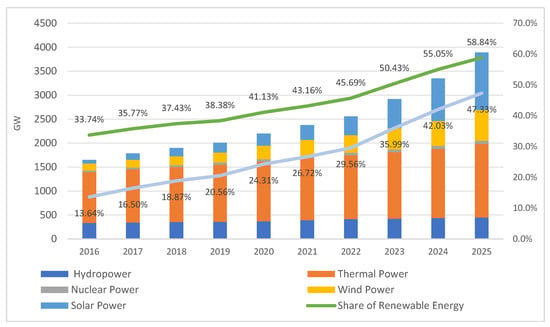
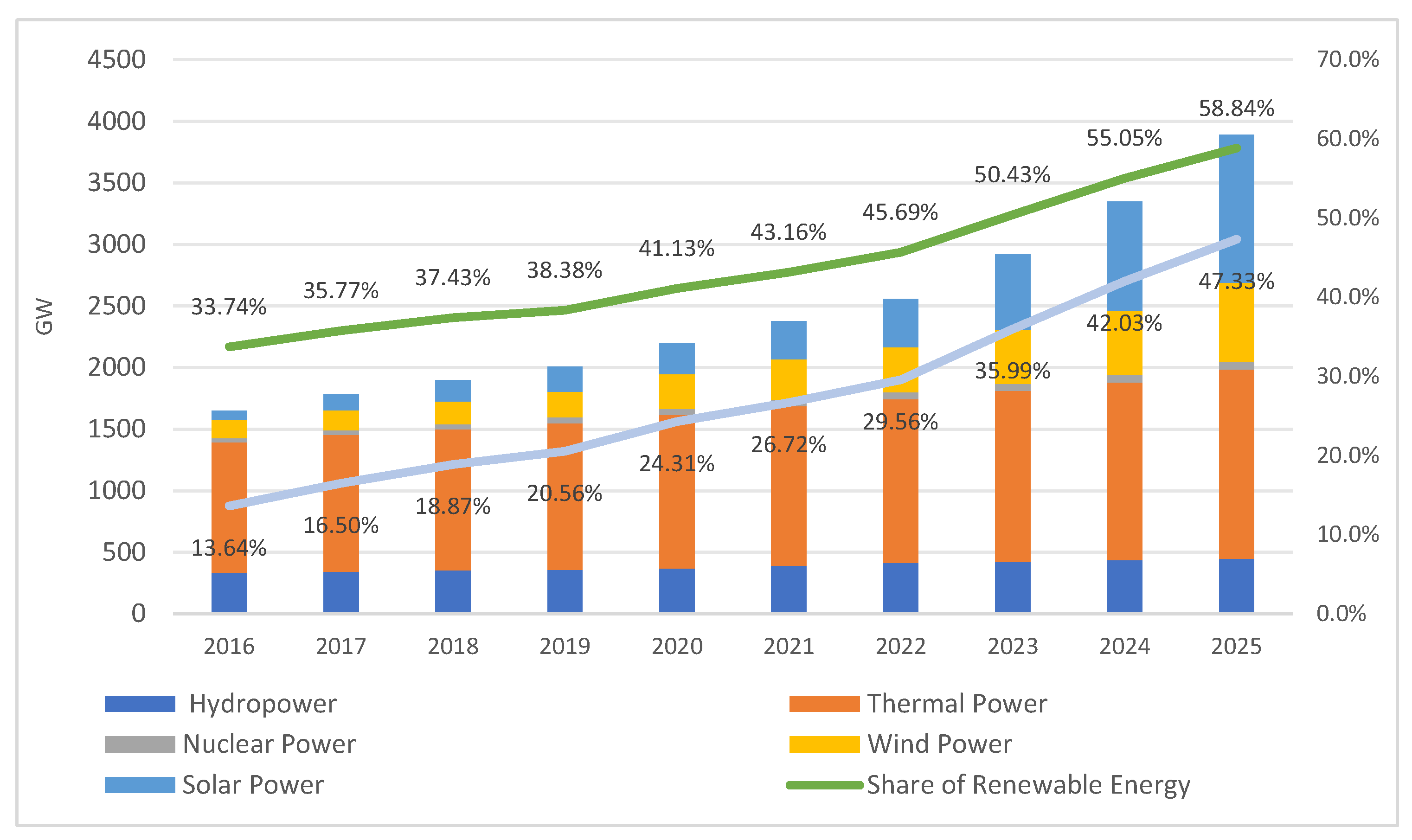
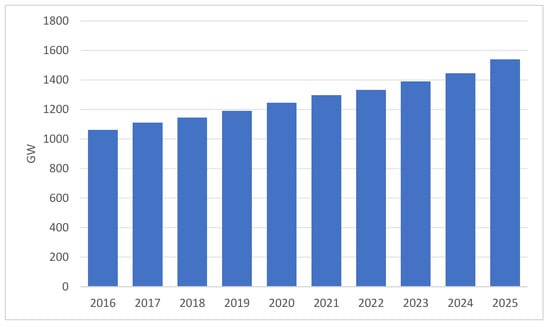
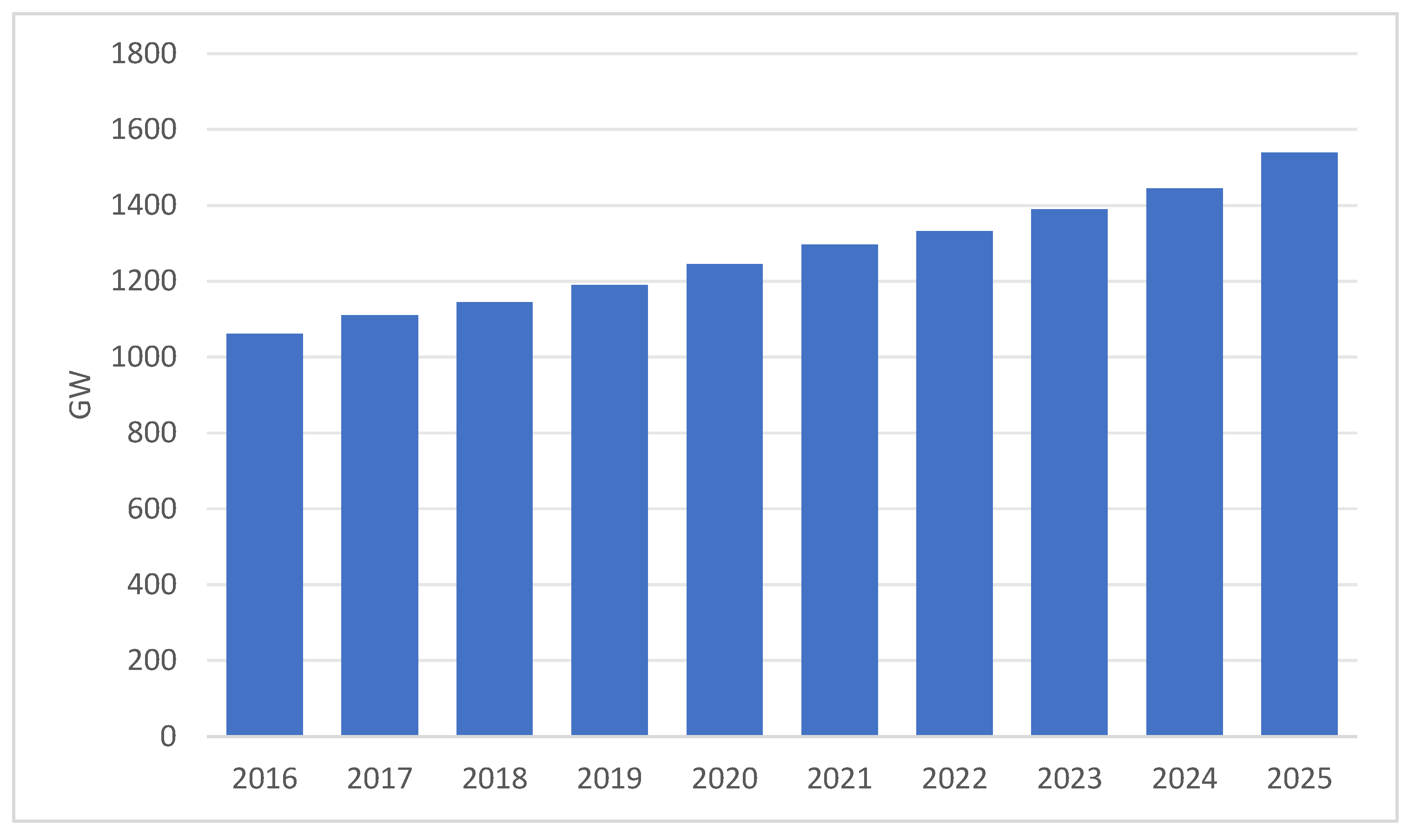
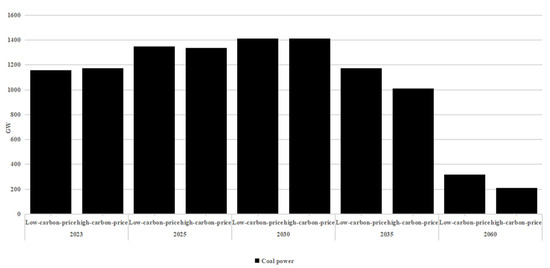
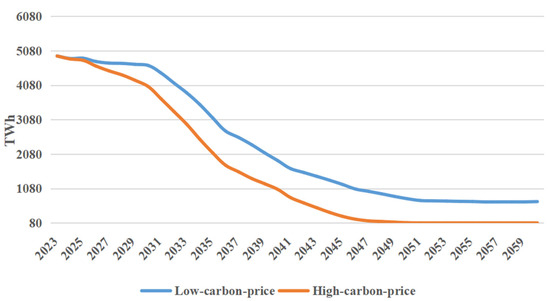
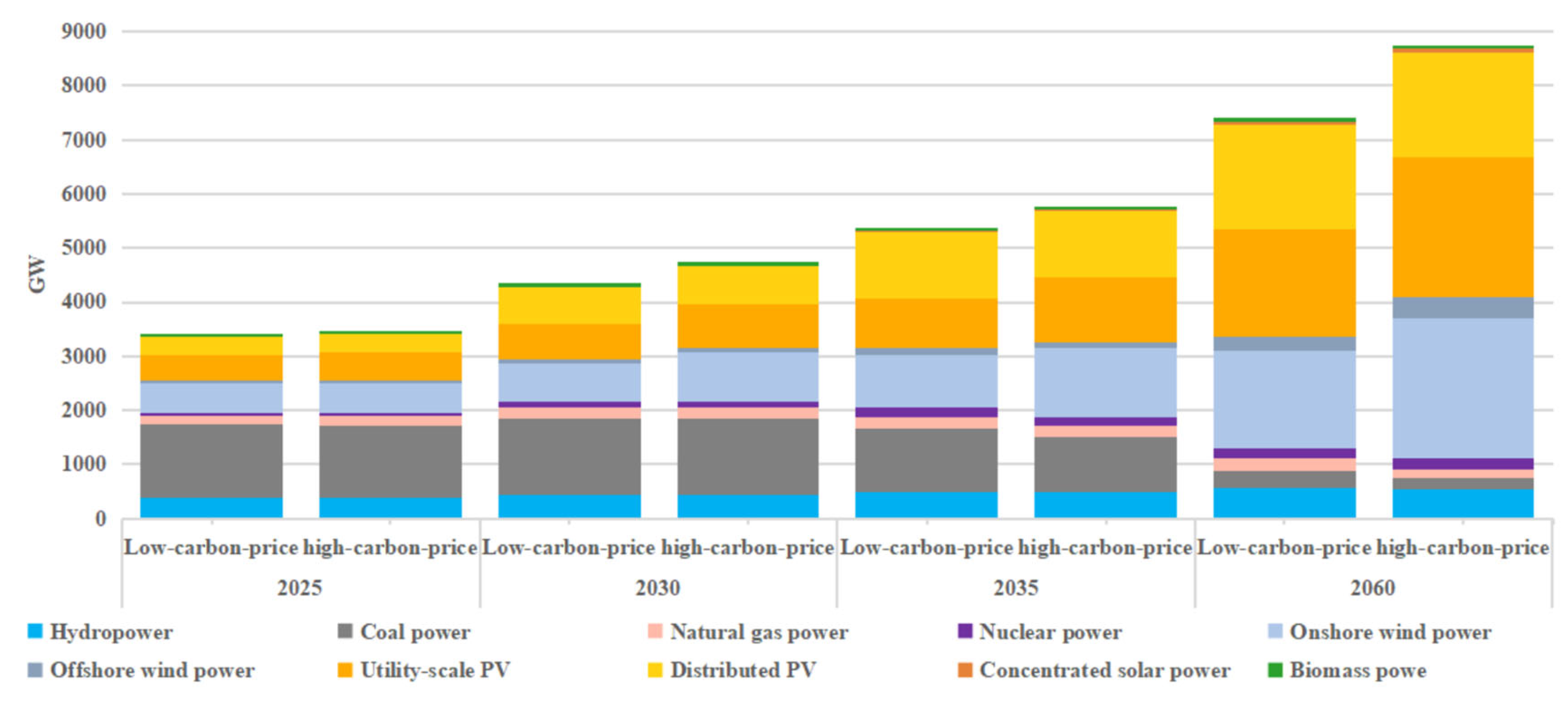
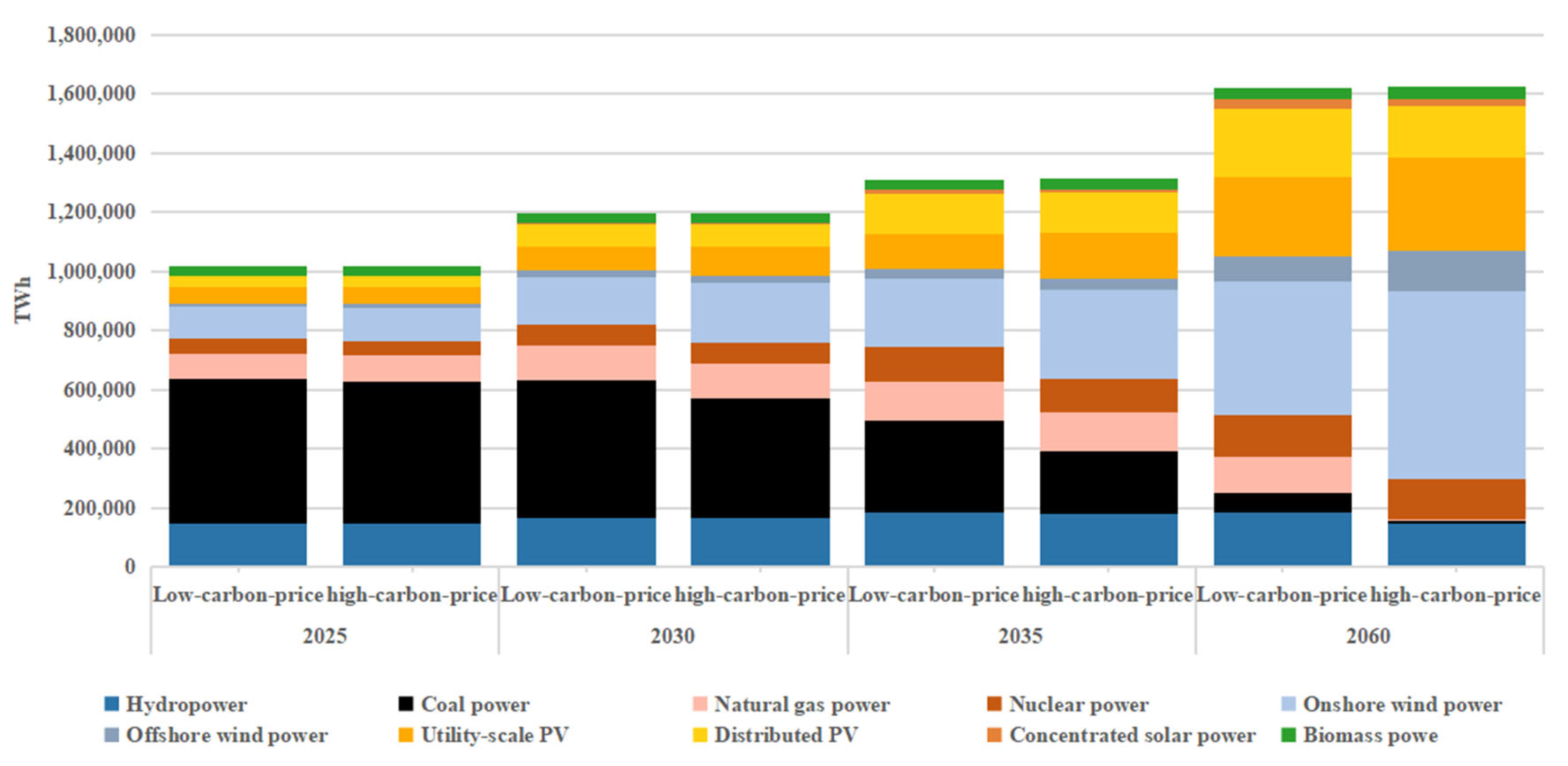
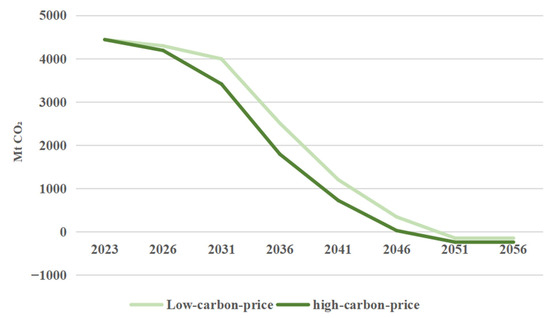
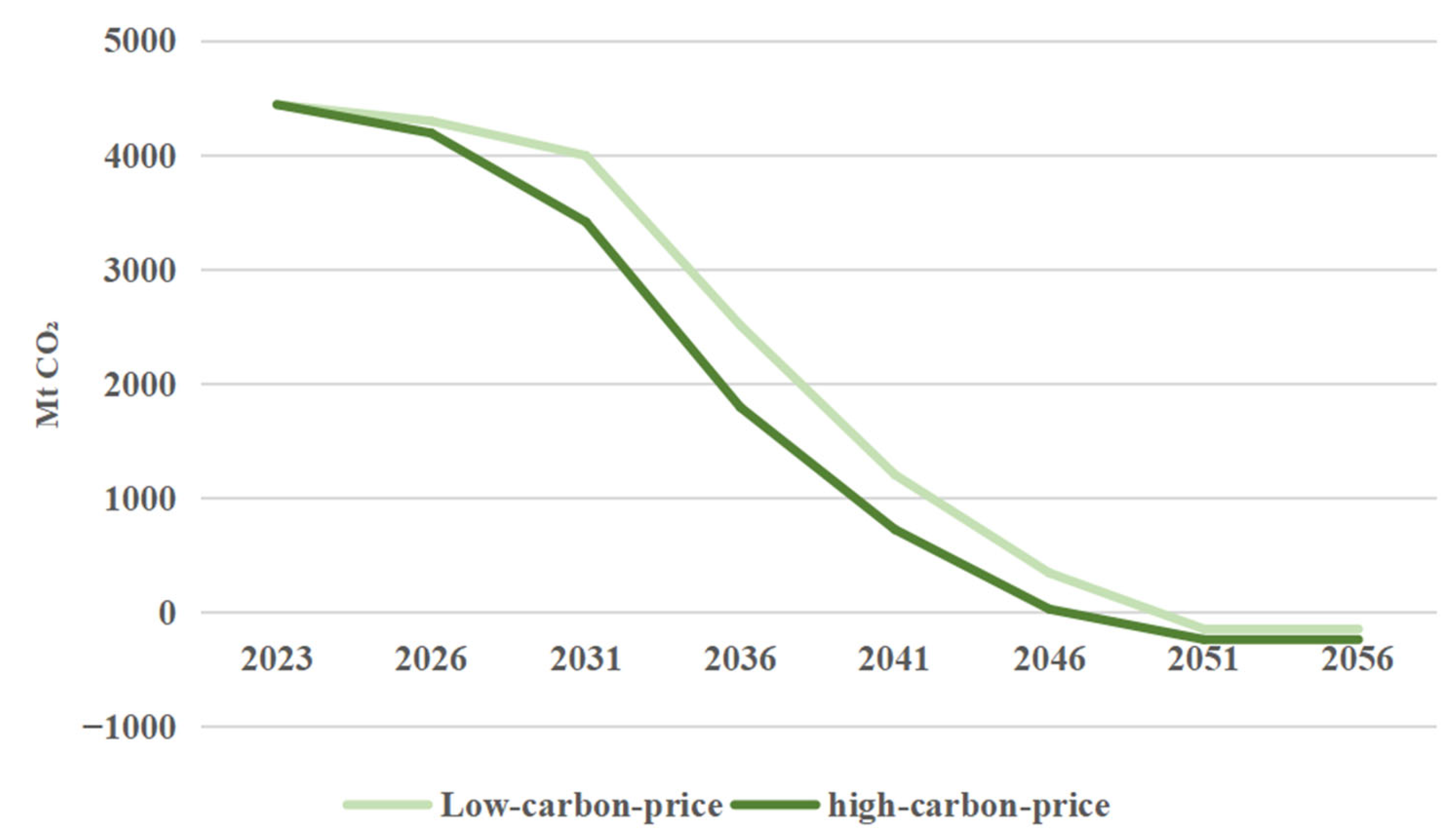

Disclaimer/Publisher’s Note: The statements, opinions and data contained in all publications are solely those of the individual author(s) and contributor(s) and not of MDPI and/or the editor(s). MDPI and/or the editor(s) disclaim responsibility for any injury to people or property resulting from any ideas, methods, instructions or products referred to in the content. |
© 2026 by the authors. Licensee MDPI, Basel, Switzerland. This article is an open access article distributed under the terms and conditions of the Creative Commons Attribution (CC BY) license.