


Abstract
With the substantial expansion of technology in education during the COVID-19 pandemic, with certain practices even demonstrating a positive impact on environmental sustainability, five years later, it has become pertinent to examine the current perceptions of teachers and students regarding its utilization. This work explores how students and teachers from different countries and academic cultures perceive and incorporate sustainable habits into their daily lives. The focus is on transportation choices, food consumption, and the use of resources. The results of an adapted questionnaire, which was distributed to 855 students and 124 teachers, reveal meaningful differences: students tend to adopt more sustainable transport habits. In contrast, teachers demonstrate a greater commitment to reducing food waste and conserving resources. Cross-country comparisons also highlight differences. When focusing on the major samples (Portugal and Mexico), Portuguese participants scored higher in terms of food and resource sustainability, whereas Mexican participants relied more on public transport. These insights shed light on how sustainability is shaped not only by individual awareness but also by context and educational culture. Furthermore, the findings emphasize the ongoing role of higher education institutions in inspiring meaningful change and fostering a mindset of sustainability in future generations.
1. Introduction
Education is one of humanity’s greatest achievements in terms of its accessibility to all and its role in building a better future [1]. The next generation’s growth depends on the way that they are informed and educated [2]. Higher education (HE) plays an important role in building this better future. Since its inception, HE has been a system built by the elites for the elites [3]. In the second half of the 20th century, HE experienced massification as a result of political and social transformations aimed at democratizing education and expanding it to new audiences [3]. This expansion has implications such as the displacement of students from rural areas to urban centers. This creates sustainability challenges not only for the management of the higher education institutions (HEIs) themselves but also, more broadly, for the wider community.
Higher education institutions have a significant social responsibility within the communities that they are a part of. They are responsible for guiding their internal stakeholders (students, faculty, and staff) in fostering a culture that promotes sustainability. However, their sphere of influence extends beyond the internal context, as their contributions affect the economic, social, and environmental dimensions of the communities and regions to which they belong [4].
In this regard, higher education institutions have increasingly been recognized as key agents in promoting regional sustainability, notably through the development of policy statements, the integration of sustainability into curricula, and the encouragement of green initiatives, among other actions. Thus, HEIs have a duty to educate students with the skills needed to become agents of change in their communities and around the world [4,5].
This paper intends to explore how sustainability issues are perceived among teachers and students. Several perspectives about sustainability are compared, including the perceptions of teachers and students from different communities, different levels of education, different countries (namely, different continents), and different areas of expertise and with different ages. This work is part of a broader research project that began during the COVID-19 pandemic. Basically, we intend to understand how students and teachers from different cultural backgrounds perceive and incorporate sustainable habits into their daily lives. Because of the convenience of sample collection and the authors’ nationalities, with the two largest respondent groups being from Portugal and Mexico, and given their distinct backgrounds, this paper also examines and compares the results from these two countries in greater detail.
This paper is organized into five sections: Section 1 provides an introduction to and contextualizes the research problem. Section 2 presents a literature review, highlighting contributions that explore how education and sustainability have been addressed within the academic community, including the growing awareness of sustainability. Section 3 outlines the research design adopted in this study. Section 4 reports the results, and Section 5 discusses the results, which then lead to the conclusions and final remarks presented in Section 6.
2. Literature Review
2.1. Education and Sustainability
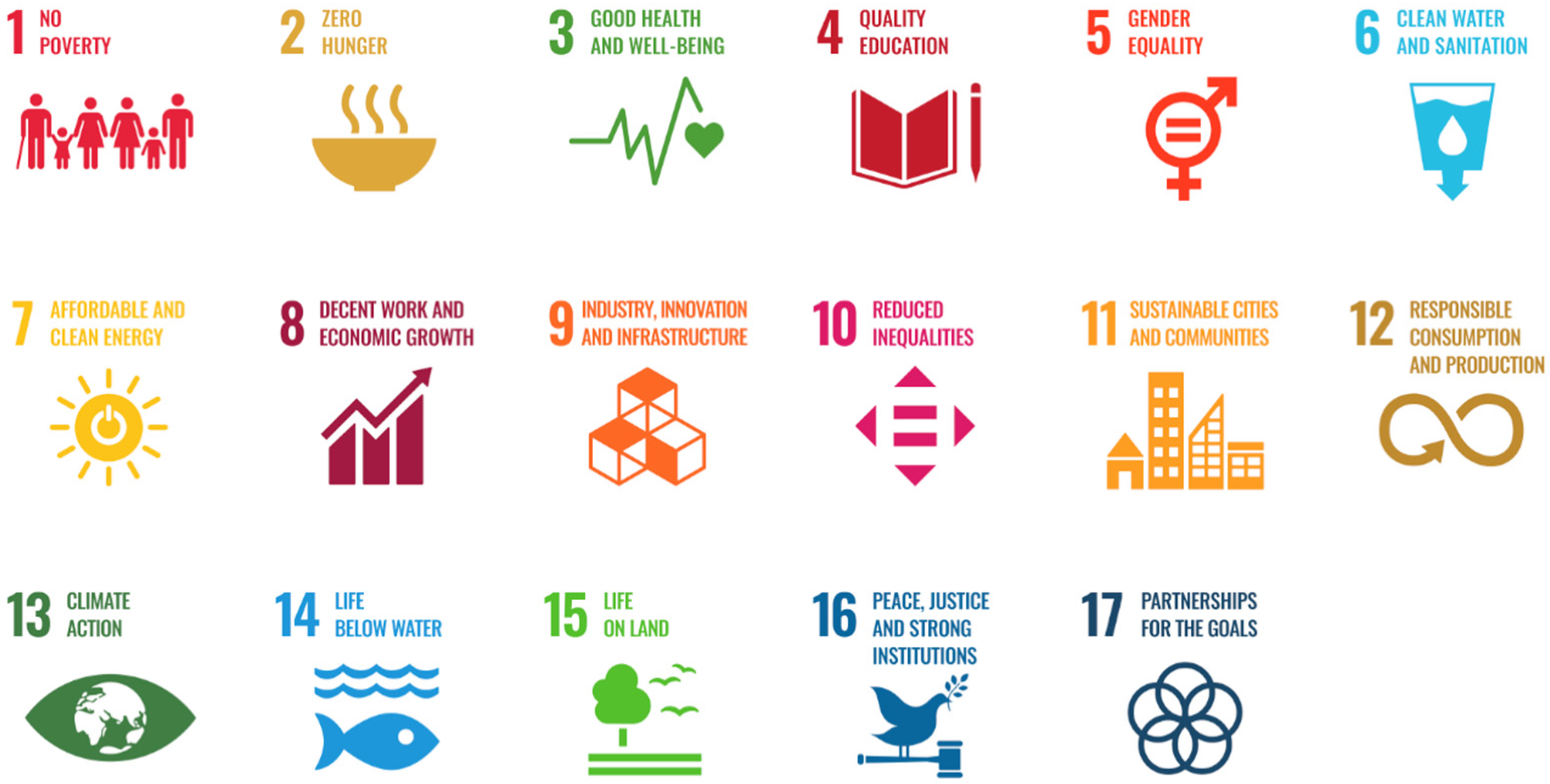
The United Nations’ 17 Sustainable Development Goals (SDGs) [6] are well known (Figure 1) and reported on by the media. Since 2016, annual reports have shown the steps that are being undertaken and the long way that we still have to go to accomplish each objective. According to this organization, sustainable development is that which meets the needs of the present without compromising the ability of future generations to meet their own needs. This can only be achieved with concerted efforts, harmonizing economic growth, social inclusion, and environmental protection (United Nations) [6]. The plan of action to achieve these objectives is far from simple to implement. However, raising these concerns from a young age through the educational community can be a decisive way to improve social awareness of the problem and to educate students, families and communities about simple actions that they can take to make positive contributions.
Figure 1.
The United Nations’ 17 SDGs [6].
Education may be the key in transforming the world for the better in line with the SDG 2030 Agenda [7], not only in terms of improving Quality Education (4, in Figure 1) but also in helping younger generations understand the importance of these concerns. The problem of sustainability may be approached from several angles, all of which are necessary to preserve this planet for future generations [8,9,10]. Regardless of their course’s content, educators can place a pedagogical emphasis on the importance of (some of) these issues. We may address it from an energy and resources or environment point of view and talk about the impact of usage on Earth’s resources [11]. We may address it from a social and cultural point of view and discuss how social behaviors deeply affect some important issues, such as the way we dress, eat, drink, and socialize, as well as the way that we acknowledge, address, and act upon those issues [12,13]. It would also be very interesting to look at it from an economic and political point of view and study how the global population is affected by economic lobbies with repercussions on daily habits, sometimes even without being conscious of them [14].
Education, when seen from a broader perspective, is where teachers and students socialize professionally. The social behaviors of a community tend to influence the way one thinks and acts upon important issues. Since higher education is typically full of bright minds and some of them are still in formation, vivid discussions about several aspects of our planets’ sustainability can arise in formal or informal situations [15].
Several student communities are known to be passionate about specific issues related to sustainability. In recent years, all over the world, several student associations worried about sustainability issues have emerged [16]. Their goal, which is mainly to address urgent concerns within their communities, helps increase awareness of problems and the actions that can be taken not only at the group level but also at the individual level, enabling everyone to contribute positively.
Conversely, courses related to energy, resources, or the environment can easily encourage discussions that certainly go beyond the walls of the classroom and stimulate parallel concerns, awareness, and actions [11]. Also, in terms of research, numerous academic studies involving academic staff preoccupied with sustainability issues have also emerged in recent decades.
The awareness of a problem is always the first step toward the solution. Firstly, education plays an important role in reaching out to as many people as possible [17]. An educated population is more likely to consider issues and use technology to find solutions [9,13]. Educators may address the problem as part of the subject of a course; through contextualized activities, etc.; or by incorporating more sustainable procedures [17].
In 2020, the SOS International Organization [16] conducted a global survey on 100 organizations related to higher education students to collect their insight based on their experiences of sustainability and education. They obtained 7000 responses, mainly from Europe (68.2%), which revealed that most students wanted to learn more about sustainable development in their curricula or through parallel actions within the community. Only half of them believed that they had been provided with opportunities to engage in actions that supported sustainability. These students reported that their studies helped them to learn how they can (i) positively impact the world around them (79%) and (ii) make positive changes to their own lifestyles (53%).
Thinking about it as a scientific problem, some steps must be taken to validate any outcome. First comes the awareness of the problem; then the questioning, testing, and analyzing; and, finally, the result. The increase in awareness contributed to phase one, and information reached the population on a larger scale during the pandemic [9]. This also led to a considerable proportion of the population undergoing step two, that is, questioning. Critical reflection and questioning are crucial aspects of the scientific method [13]. To different degrees, one may argue that, due to diverse needs, people might undergo some level of change in their lives: regarding eating, dressing, and socializing, people tend to eat healthier (more based on home food and use of leftovers), buy fewer new clothes, or reduce their use of transportation or other resources. Regarding the didactic teaching solutions used to continue to address the development of students’ competences and knowledge, they undoubtedly had different levels of receptivity and success. Some strategies are viewed as positive both by teachers and students, as the recent literature shows [1,8,9]. The test phase was enforced by the constraints put in place during the pandemic. Continuing the scientific method, one may now analyze the results and understand whether any of the modifications are worth pursuing in terms of both students’ satisfaction and positive sustainable procedures.
This article aims to assess how students and teachers perceive sustainability issues four years after the pandemic. More specifically, it seeks to identify how these educational actors in Portugal and Mexico perceive and incorporate sustainable habits into their daily lives, particularly those related to transportation choices, food consumption, and resource use aimed at reducing their ecological footprint [18]. Evaluating their perception is crucial, as it influences individual behavior [19]. Perception is defined as a complex mental process that enables individuals to interpret and evaluate social phenomena [19,20]. An individual’s behavior depends on the interpretation that they make of the phenomena. So, it is important to understand the perception that students and teachers have of sustainability issues to better understand their behavior and to promote behavioral change.
2.2. Students’ and Teachers’ Sustainability Behaviors
Currently, we are faced with a devastated planet dealing with environmental problems, which represents one of humanity’s greatest challenges [21,22]. The recent changes brought about by the COVID-19 pandemic have led pro-environmental organizations and even some governments to promote greater public awareness. Thus, assessing the population’s perception of environmental issues and the adoption of more sustainable behaviors has become a relevant area of study [21]. Research has shown that a substantial gap persists between economic studies, policy regulations, and individuals’ everyday behavior [22]. Perception—as a cognitive process—is a determinant of behavior. Nonetheless, there is not always a direct correspondence between perception and action. Despite all the efforts made to promote knowledge in this area, a significant lack of environmental awareness persists within both society and the educational system [19,22]. Addressing this challenge requires the implementation of robust educational policies and concrete actions aimed at fostering greater environmental awareness and culture. Integrating the principles and values of sustainable development into educational processes is crucial to promote the behavioral transformations necessary for building a society that truly embraces education for sustainability [23]. In this regard, it is important to understand the perception of educational agents regarding sustainability, as well as their engagement in behaviors that promote it.
One of the main concerns has been the social and environmental implications of car travel [24,25]. Accordingly, recent research has explored how both students and university staff commute from home to university. Results indicate that students predominantly use public transportation and active travel modes such as bicycles, largely due to their younger age, limited financial means, and lower likelihood of holding a driver’s license [24]. In contrast, university staff tend to be more car-dependent, influenced by factors such as higher and more stable incomes and longer commuting distances from campus [24,25].
Another area of concern regarding sustainable behaviors that positively contribute to an individual’s ecological footprint is waste management. Research has typically sought to assess individuals’ behavior toward the recycling of specific types of waste, such as plastic or electronic waste. Research carried out in South Africa on plastic waste management among university students and staff revealed that both students and staff were aware of the problems associated with plastic pollution, although staff members demonstrated a deeper understanding of its long-term consequences. They were generally more proactive in reducing plastic use and supporting sustainability initiatives within the institution. In contrast, students tended to prioritize convenience, often relying on single-use plastics with limited awareness of their environmental impact [26]. Another area of concern in waste management is electronic waste. Although we did not find studies comparing the behavior of students and teachers regarding electronic waste recycling, some authors state that e-waste recycling intentions among higher learning institution students are generally moderate to low. This poses a significant concern, especially considering that e-waste production is projected to rise as a result of economic growth and the increasing accessibility of technology [27].
On the other hand, in recent years there has been a growing interest in studying the sustainability of food diets [28]. Some studies suggest that, in a highly educated population—such as university staff—it is to be expected that similarly high standards of sustainability would be reflected in their eating habits [28,29]. In a systematic literature review conducted by Altintas-Mutlu and Uçar in 2025, it was concluded that consumers’ knowledge, attitudes, and behaviors are shaped by various sociodemographic factors, particularly gender, educational level, and income [28]. Although we did not find studies comparing the behavior of students with that of teachers, the research seems to conclude that educational level plays a key role in the adoption of sustainable eating behaviors [28,29]. Another important point highlighted by Kenny et al., 2023 [29] is that the place of residence has been linked to sustainable eating habits and openness to alternative consumption. The authors even mention Portugal as an example of a country where urban residents tend to be more aware of the environmental impact of meat production, more familiar with meat alternatives, and more willing to reduce meat consumption than those in rural areas.
3. Materials and Methods
The present study constitutes a partial follow-up to a study that was presented at a conference in 2021 [TEEM’21] [30]. A descriptive research methodology, involving an internet-based survey, was used to collect relevant quantitative data [22]. Following the research methodology implemented in this previous study, a questionnaire was validated and implemented in several educational communities. The validation process involved two focus group discussions, in which researchers/teachers and students contributed to the focus and clarity of the questions. This questionnaire, which had previously been validated, was only used in part in this study. It was adapted to incorporate teachers’ perspectives (the same questions were used, but they were adapted to reflect teachers’ perceptions), and some questions were slightly modified to clarify participants’ perceptions of sustainability issues. The questionnaire was developed in three languages (English, Portuguese, and Spanish) to make it accessible to a wider audience. The Google Forms platform was used to distribute it to academic communities via institutional email and researchers’ (national and international) contacts. The questionnaire was distributed between March 2024 and September 2024, as broadly as possible, so that the sample was representative of the population, respecting heterogeneity in terms of schools’ areas of expertise. Despite these efforts, even though the authors reached 12 different countries, for most of them, there was not a representative number of respondents allowing for separate analyses. So, the authors acknowledged that these data were useful overall, and then a convenience sample was adopted since the majority of participants came from the higher educational institutions where the authors worked, allowing for a comparison between the perspectives of two different countries and contexts: Portugal and Mexico.
Building on previous research into how education can contribute to a more sustainable development (SD) of the planet, this study aims to identify students’ and teachers’ perceptions about their sustainability behavior, as well as students’ and teachers’ perspectives in different countries. This study tackles significant differences between groups (age, background area of expertise, and educational level). Awareness of the importance of addressing SD may depend on the communities and social education. The idea is to obtain a better understanding of whether there are significant differences in the perspectives and concerns of students and teachers due to the identified variables. Additionally, this work compares two largely different environments (from which the numbers of respondents were significant), Portugal (Europe) and Mexico (Latin America), to understand context dependence. So, the main research questions in this paper are as follows: (1) “Are students’ and teachers’ perspectives and concerns toward sustainable habits aligned?” and (2) “Are they dependent on the country that the students and teachers are from?”
3.1. Questionnaire Description
Two anonymous questionnaires, addressed to students (https://forms.gle/VkTmP8MfM7ZsewRz6) or teachers (https://forms.gle/1i6PrzsgWuqtzx288), were delivered online to assess their perspectives on some issues related to education and sustainability habits. Each questionnaire had 14 questions. Firstly, ethical issues were addressed, explaining the purpose of the questionnaire (research based on a statistical approach, with complete anonymization of the data collected). So, the first question addressed the respondent’s acknowledgement of their voluntary participation in this study by completing the anonymous questionnaire. The second question ensured that participants were involved in education at any level during the current academic year. This restriction meant gathering the views of students and teachers who were actively engaged in education at the time. Questions 3–8 were about the characteristics of the sample. These included the area of education; the level of education; the teaching regime; and some demographic questions about age, country and city of residence, and education. Questions 9 and 10 were about how people travelled to work (how long it takes and what mode of transport they usually travel by). Questions 11 and 12 were related to classes and resources. They asked whether people would continue to use any resources that they had adopted during the pandemic. Question 13 was related to sustainability habits, referring to different issues and their change after the pandemic period. Finally, question 14 was an open question designed to address any other contribution that was not addressed in the previous questions. In this work in particular, the authors do not address the results of this last question due to the limited number of responses obtained.
3.2. Sample Characterization
Table 1 presents the characteristics of the sample of students and teachers. In total, 855 students and 124 teachers participated in the study. Most of the educational community sample comes from higher education, with both students and teachers belonging to the fields of science and engineering.
Table 1.
Study sample characteristics (students and teachers).
3.3. Sustainability Dimension and Category Definitions
This study examines the perceptions of students and teachers regarding sustainability habits related to their day-to-day activities in academia (Table 2). This dimension, named “sustainability”, is related specifically to sustainability parameters, such as the transport used to commute to and from school; food consumption habit issues, especially those related to the meals consumed during the stay on campus; and resource waste. Participants were asked to rate each issue on a scale from 1 (“Not at all”) to 5 (“Yes, definitely”) or 6 (“I was already doing it before the Pandemic”), or from 1 (not at all) to 5 (always) or 6 (“I was already doing it before the Pandemic”). The last one allowed us to better perceive long-term choices and determine whether the pandemic promoted any change. There was also the possibility of choosing “not applicable”.
Table 2.
Categories of the sustainability dimension.
3.4. Methodology in the Analysis Process
A quantitative data analysis was performed using SPSS version 30—Statistical Package for the Social Sciences [31], using an exploratory approach, incorporating both descriptive and inferential statistical techniques.
The most appropriate way to assess whether differences exist and whether they are statistically significant is through the application of a difference test, that is, a statistical procedure designed to examine the differences between the means of the study variables in relation to a specific factor. After testing the normality of the variables under study, it was found that they did not follow a normal distribution, and a Mann–Whitney U test was applied for two independent samples (significance level 5%). This nonparametric or distribution-free test compares the means of two samples drawn from the same population and is used to determine whether the two-sample means are equal. The null hypothesis was defined as follows: H0 = there are no statistically significant differences between the means of the two groups. If the obtained p-value is <0.05, the result indicates the existence of a statistically significant difference between the means of the groups, leading to the rejection of the null hypothesis [31]. To interpret the medians obtained for each dimension, box-and-whisker plots were used.
A chi-square test was conducted to examine the effect of the groups defined by the variables “Participant Role” (teacher vs. student) and “Country” (Portugal vs. Mexico) on the ecological footprint. Since the dependent variable was categorical with three levels, contingency tables were created to organize and visualize the frequency distribution. Additionally, a frequency chart was included to aid interpretation of the results by identifying which groups showed differences and which categories contributed to the rejection of the null hypothesis in the chi-square test.
4. Results
For convenience, the results of the teachers and students are always shown separately. In Section 4.1, a global analysis is conducted on the total sample of valid answers of the respondents to the questionnaire in 2024 (some of the respondents were excluded because they were not studying at the time, which was the criterion adopted), and the differences between students and teachers are explored. As the main data come from two countries (corresponding to different social contexts), the remaining analysis compares data from Mexico and Portugal. Section 4.2 looks at the differences between students from the two countries, and Section 4.3 does the same for teachers.
4.1. Comparison Between Students’ and Teachers’ Perceptions
Considering the answers of 855 students and 124 teachers, some statistically significant differences were found between students and teachers. In each category, there were several questions related to the identified issues (Table 3).
Table 3.
Summary of significant differences in “sustainability” between students and teachers.
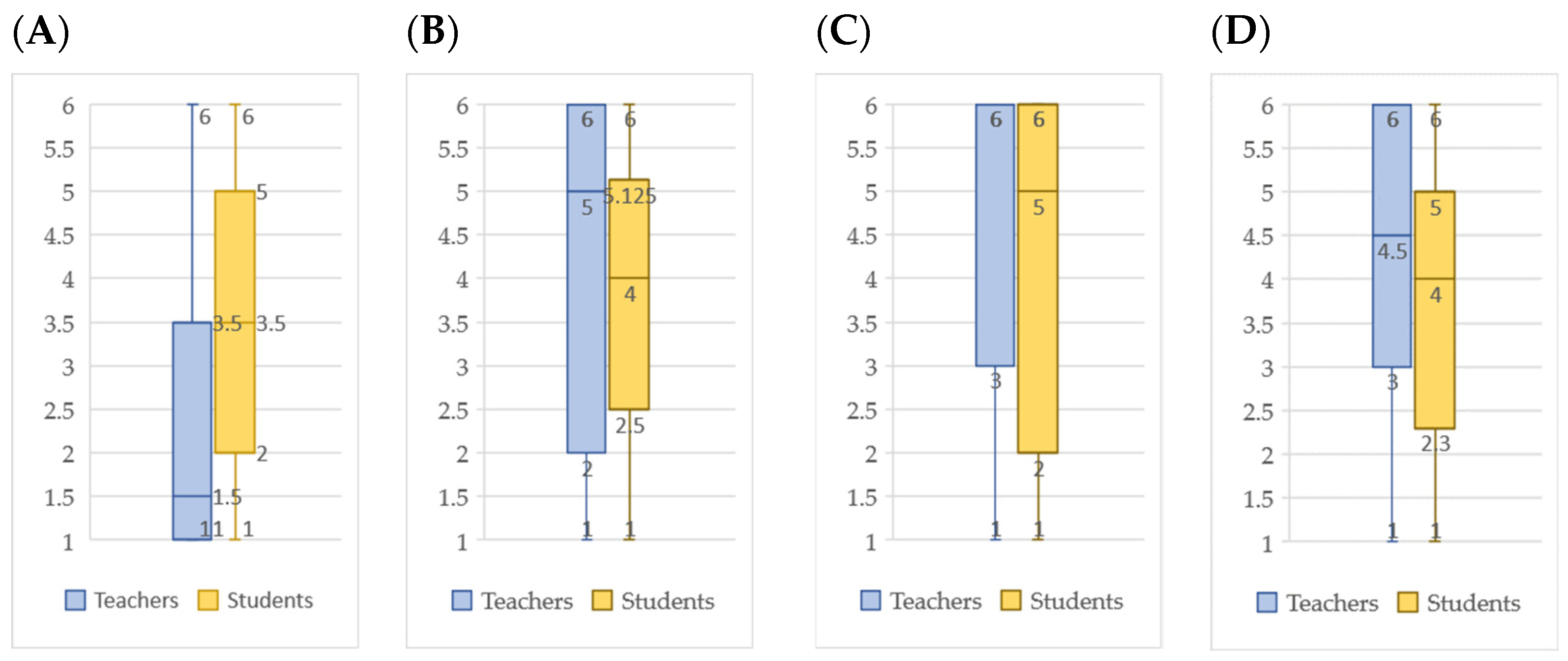
Regarding the sustainability dimension, the results of the Mann–Whitney test (Table 3) indicate the existence of statistically significant differences, specifically in the category related to transport and resources (p < 0.001 for both). No statistically significant differences were found for the variables of food and overall sustainability.
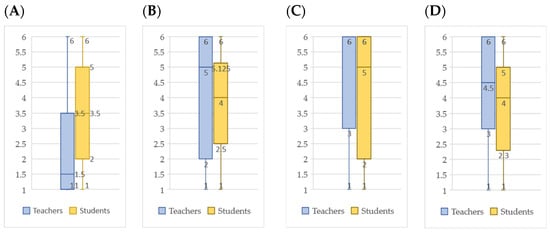
Figure 2 provides a useful reference point for interpreting these results. In the resources category, the median value is higher for teachers, whereas in the transport category, it is higher for students. These findings suggest that the analyzed groups have different perceptions regarding sustainability in these areas. However, no statistically significant differences were found in the category related to food consumption or in the overall dimension of sustainability, indicating that perceptions between the groups are similar in these domains.
Figure 2.
Box plots comparing sustainability perceptions by group (teachers vs. students). Note: Panel (A): Sustainability in terms of transport. Panel (B): Sustainability in terms of food. Panel (C): Sustainability in terms of resources. Panel (D): Total sustainability.
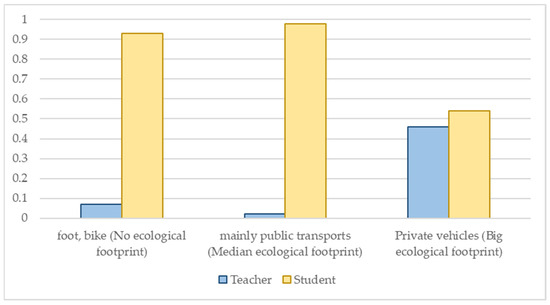
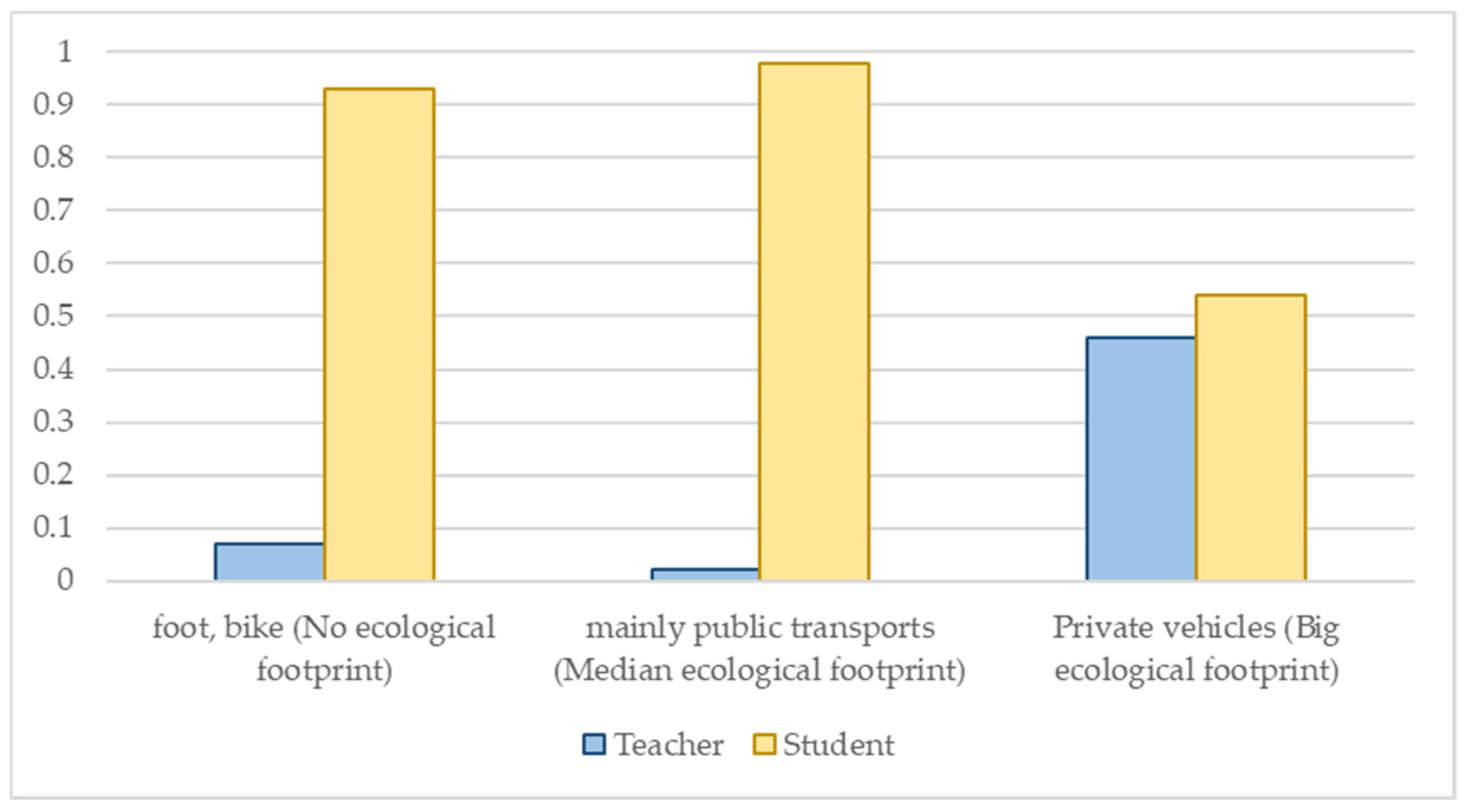
Regarding the variable “ecological footprint”, it was found that the ecological footprint generated by commuting is significantly affected by whether the participant is a teacher or student (X2 = 283.44, p = 0.000). Figure 3 shows that the transport category score is higher for teachers due to their greater use of private transport. Regarding the time spent commuting, we found that teachers took less time, which is understandable due to the transport used by each group. This can be justified by the fact that teachers tend to use personal transport more often, particularly their own cars, compared to students. So, we can infer that the ecological footprint in terms of transport is higher for teachers than for students.
Figure 3.
Relative frequency chart of the variable “footprint” stratified by group (teachers vs. students).
4.2. Comparison Between Students’ Perceptions in Portugal and Mexico
Given that Portugal and Mexico were the most represented countries in the sample, the cross-country comparison was limited to these two national contexts. The Mann–Whitney U test was conducted to compare the distribution of the median of the three categories of sustainability and overall sustainability between Mexico and Portugal. The hypothesis test summary indicates that the null hypothesis (H0) assumes no difference between the two countries. The median tests for independent samples revealed statistically significant differences in the categories between Portugal and Mexico (Table 4). These findings suggest that the two countries have different approaches to sustainability. Portugal scores higher in food and resource sustainability, while Mexico shows greater variability in its transportation-related sustainability practices.
Table 4.
Summary of significant differences in “sustainability” dimension between Portugal and Mexico.
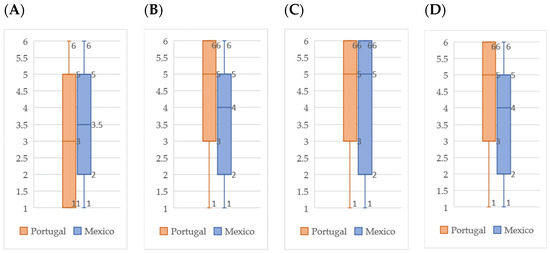
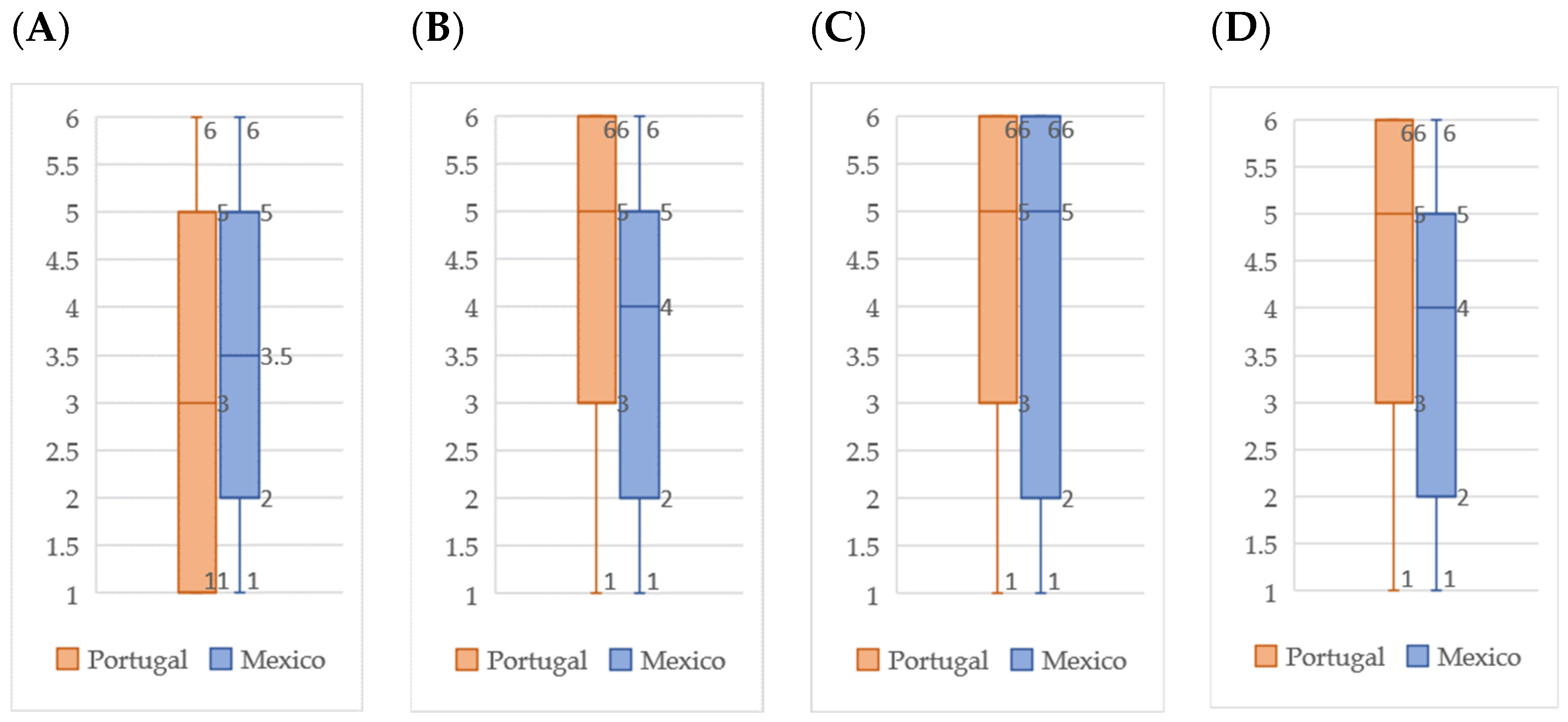
Figure 4 compares the sustainability dimensions between Portugal and Mexico, covering transportation, food, resources, and overall sustainability. Portugal leads in food and resource sustainability, showing a stronger commitment to reuse, waste reduction, and sustainable food consumption habits. Mexico stands out in public transportation use, but it also has a greater reliance on food delivery services, which may impact its overall environmental footprint. The statistical results support the differences observed in the box plot, confirming that sustainability habits vary significantly between the two countries. Overall, Portuguese students appear to adopt more sustainable practices in resource management and consumption, while Mexican students show progress in sustainable mobility. These findings can help design targeted sustainability strategies based on each country’s strengths and areas for improvement.
Figure 4.
Box plot of the medians of sustainability and its dimensions: students’ perceptions. Note: Panel (A): Sustainability in terms of transport. Panel (B): Sustainability in terms of food. Panel (C): Sustainability in terms of resources. Panel (D): Total sustainability.
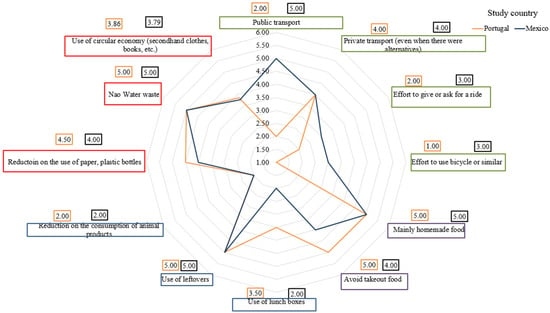
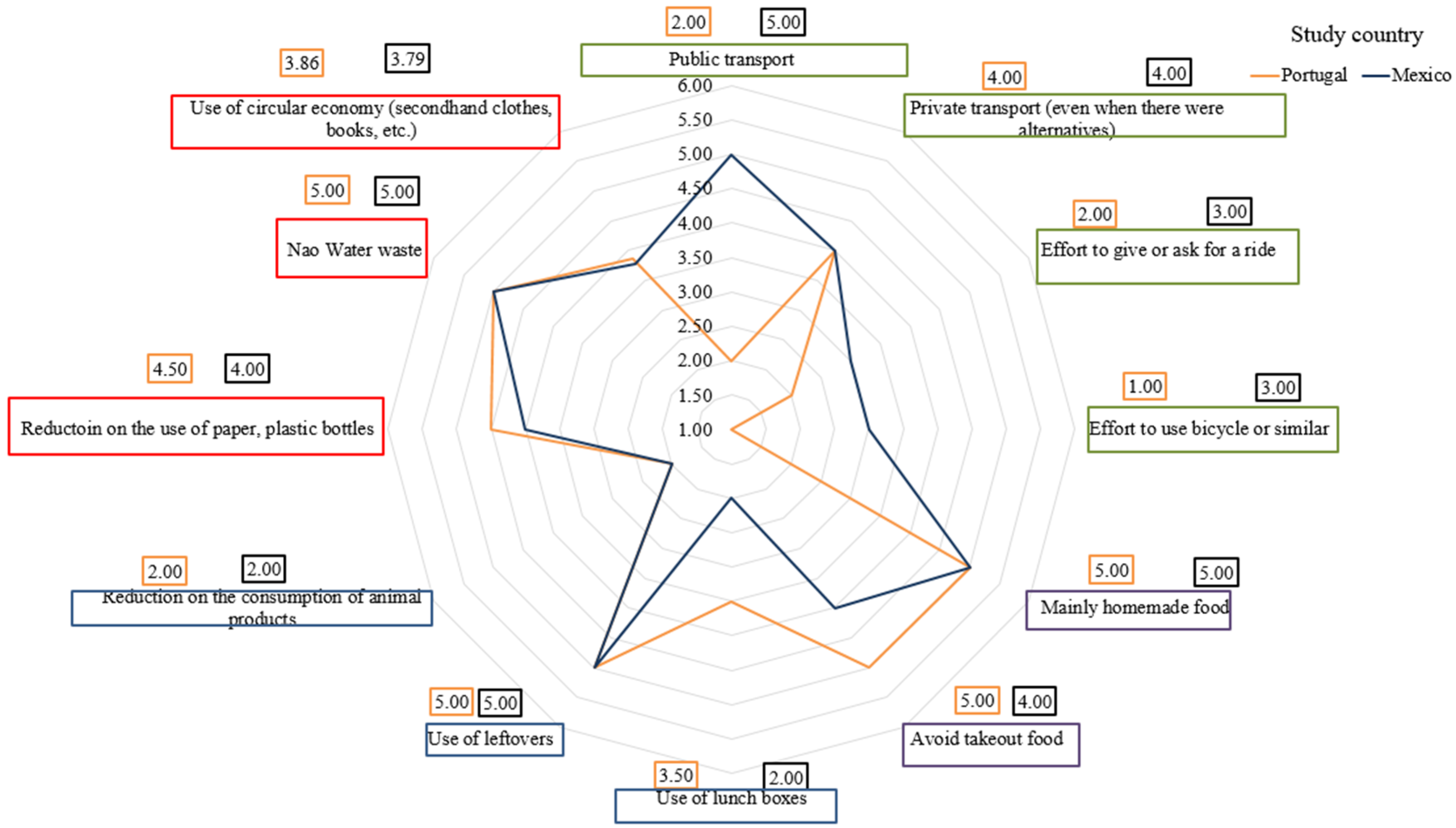
The radar chart (Figure 5) further highlights the differences in each item, showing that Mexican students rely more on public transportation, whereas Portuguese students exhibit a stronger tendency toward sustainable food consumption and resource management. Portugal leads in home-cooked meal consumption, lower dependence on food delivery, and the use of reusable food containers/food (“lunch boxes”). Additionally, Portugal demonstrates greater efforts in reusing resources and reducing waste, particularly in conserving water and limiting plastic and paper use, while Mexico scores slightly lower in these areas.
Figure 5.
Median obtained for each item of the sustainability scale stratified by country. Note: Transportation, green; food, purple; resources, red.
These findings suggest that Portuguese students show higher sustainable perception related to food and resource management, prioritizing waste reduction, reuse, and sustainable consumption habits. On the other hand, Mexican students show progress in sustainable perception related to mobility, favoring public transportation over private vehicles. However, Mexico’s greater reliance on food delivery services could impact its overall sustainability. The statistical results confirm that sustainability practices vary significantly between the two countries, and these insights can help develop targeted sustainability strategies that align with each country’s weaknesses and areas for improvement.
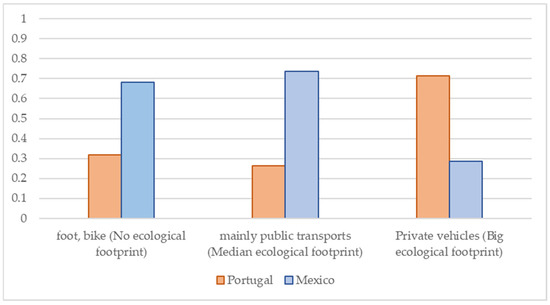
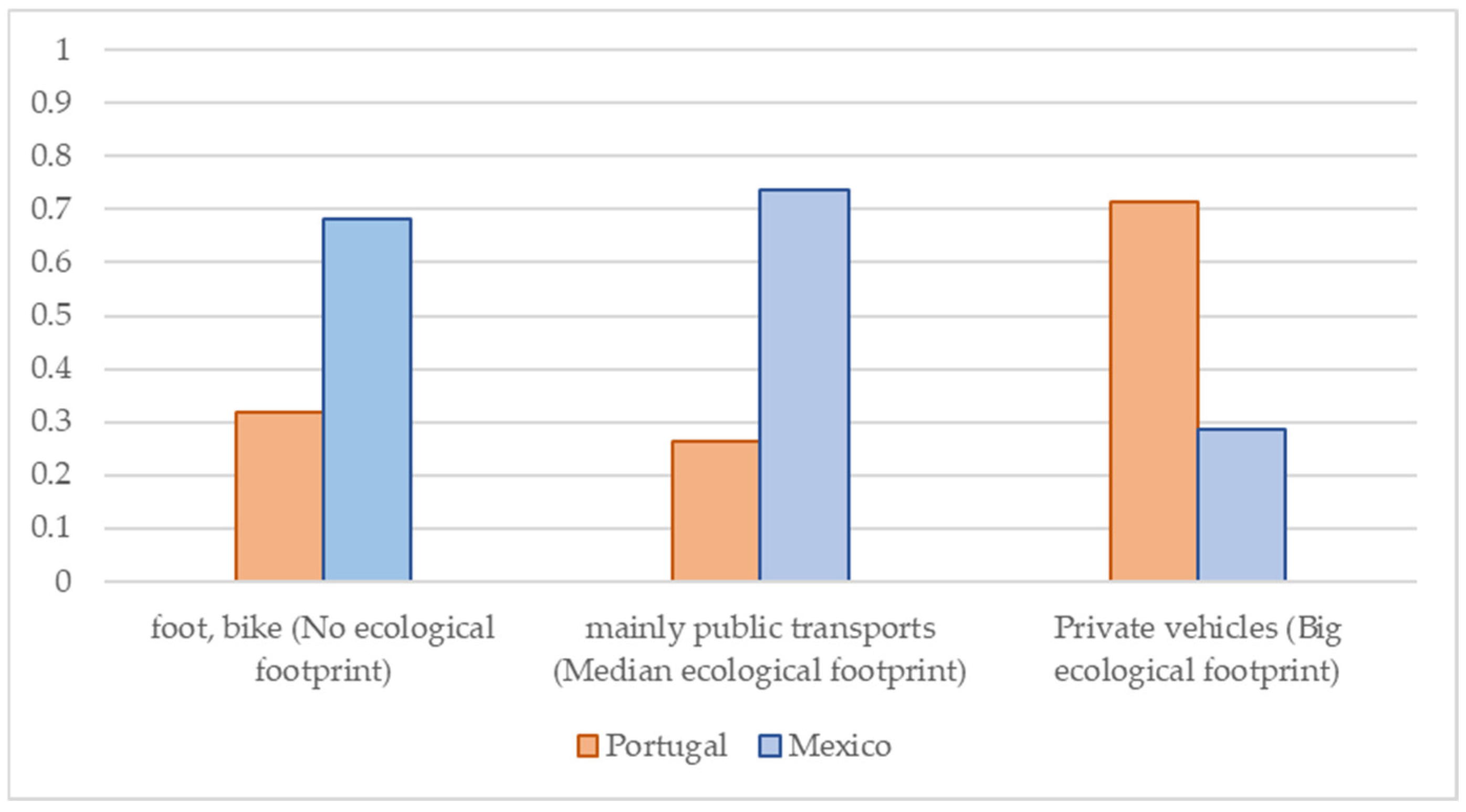
Statistically significant evidence suggests that the country variable affects the ecological footprint (X2 = 138.911, p = 0.000). Figure 6 shows that the Portuguese group leaves a higher ecological footprint by using private vehicles more frequently, in contrast to Mexico, where people mainly travel on foot or by public transport.
Figure 6.
Relative frequency chart of the variable “footprint” stratified by country (Portugal vs. Mexico).
4.3. Comparison of Teachers’ Perceptions in Portugal and Mexico: A Descriptive Analysis
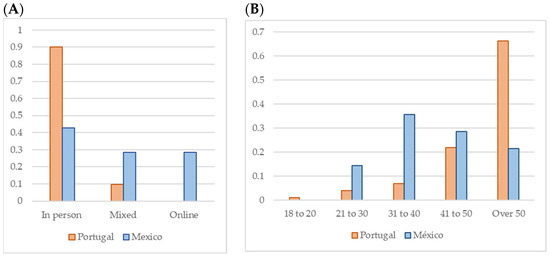
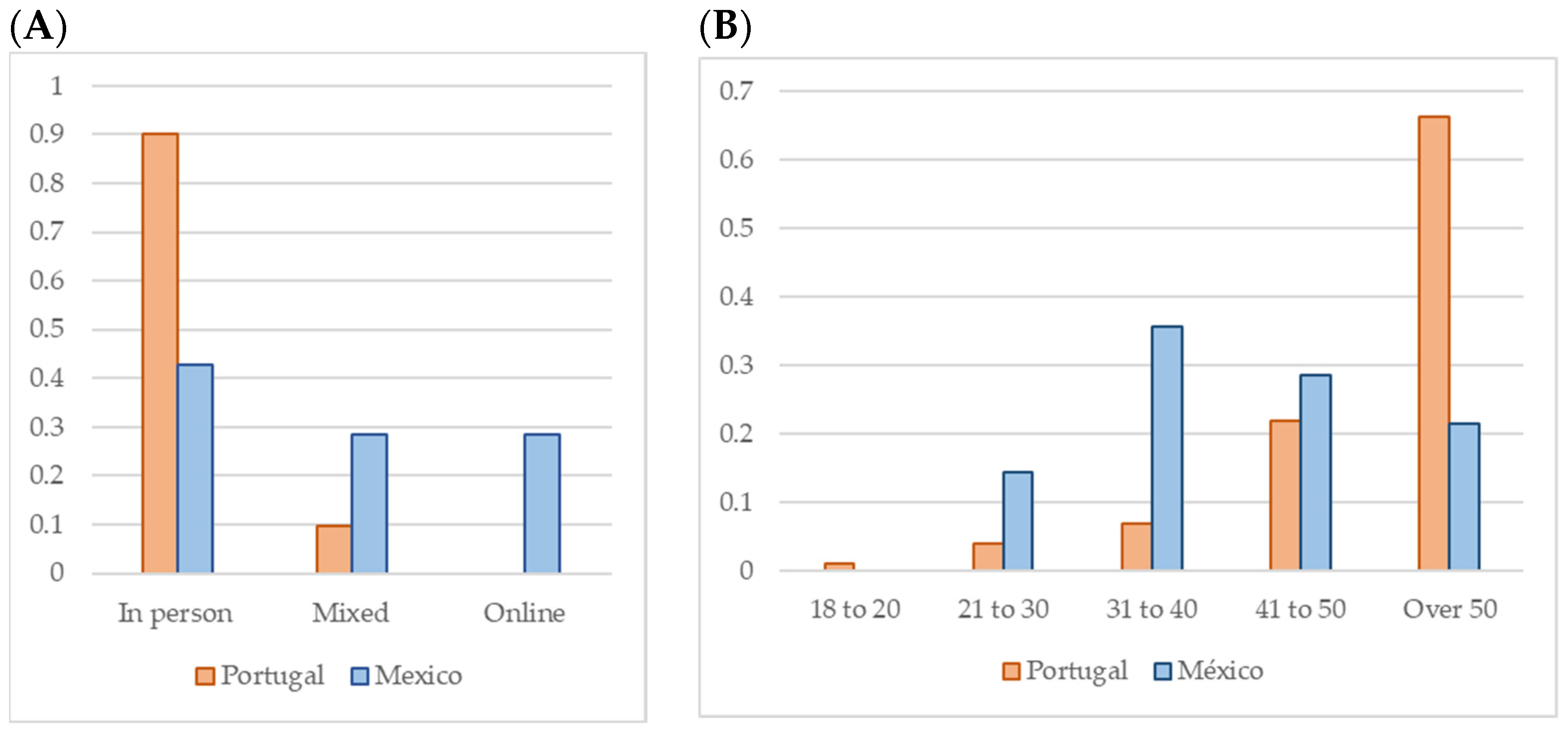
This analysis is based on data from 102 Portuguese teachers and 14 Mexican teachers. Due to the difference in the sample size between the two countries, this analysis is purely descriptive and does not allow for statistical inference. Nonetheless, it offers a useful exploratory overview. All Mexican teachers were from the exact science and engineering field, while the Portuguese teachers were more diverse: 58.8% were from this education area, but 21.6% were from administration, communication, and social sciences, and 18.6% were from health studies. These percentages are slightly different to the ones presented in the Table 1 because, in this analysis, only Portuguese and Mexican teachers are considered. Regarding the level of teaching, both groups were mainly from higher education institutions. One important difference between the samples is that the Mexican teachers used different class regimes and had a different age distribution, as shown in Figure 7. So, the samples from both countries can be characterized as follows: The Portuguese group was larger and included older teachers who almost exclusively taught face to face in several areas of expertise. In contrast, the Mexican sample included fewer teachers who were considerably younger, were all from the sciences and engineering field, and used several types of teaching regimes.
Figure 7.
Frequency distribution chart of the sample by country. Panel (A): Class regime of the Portuguese and Mexican samples. Panel (B): Age distribution of the Portuguese and Mexican samples.
One of our goals was to determine whether the Portuguese and Mexican teachers had different perspectives considering the following:
- (i)
- The type of transport and time spent commuting from home to school—There was a statistically significant difference in the transport methods used (by ecological footprint): Portuguese teachers achieved a higher value, that is, a stronger ecological footprint, thus demonstrating less sustainable behavior. There was a statistically significant difference in the average time spent commuting: Mexican teachers took more time.
- (ii)
- Practical sustainability habits—A statistically significant difference was found in sustainability in terms of transport, with the Mexican participants achieving a higher value, thus demonstrating more sustainable behavior.
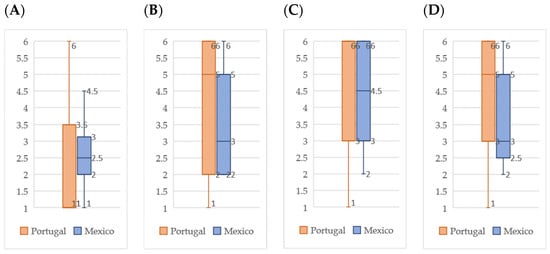
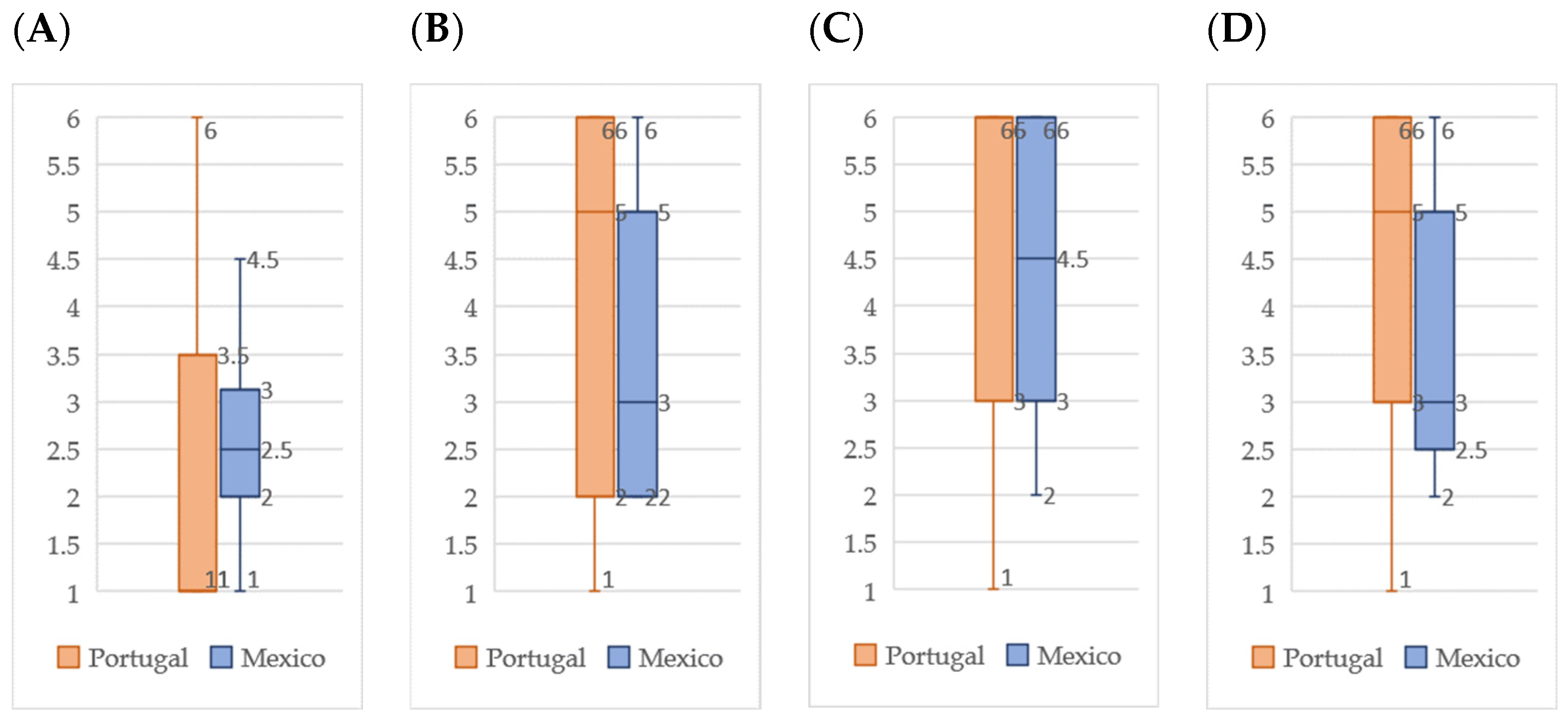
Regarding the analysis of the “sustainability” dimension, teachers’ perception differences can be observed in Figure 8, according to their level of teaching. In higher education, the differences are not significant, but Mexican teachers from secondary schools show a lower level of sustainable perception than Portuguese teachers.
Figure 8.
Box plot of the medians for sustainability and its dimensions: teachers’ perceptions. Note: Panel (A): Sustainability in terms of transport. Panel (B): Sustainability in terms of food. Panel (C): Sustainability in terms of resources. Panel (D): Total sustainability.
The overall perception of teachers (Figure 8) from the two countries shows a significant difference, with Portuguese teachers showing a higher level of perception of sustainability issues.
5. Discussion
The results of this study provide empirical support for the argument that education plays a pivotal role in shaping sustainable habits [4,10]. As proposed in the literature, higher education institutions function not only as spaces for knowledge transmission but also as environments for critical reflection and behavioral modeling [13,17]. For this reason, it is essential to understand students’ and teachers’ perceptions on this subject in order to foster sustainable behaviors and practices, as advocated in [4,10].
The results of this study highlight significant differences, as well as similarities, in the perceptions and habits related to sustainability among students and teachers, and between participants from Portugal and Mexico. Among students, there is a greater predisposition to use public transport or alternative modes of mobility, which supports the trend described in the literature that younger generations are increasingly aware of the environmental impacts of their daily choices. This adoption of more sustainable practices may be associated not only with heightened environmental awareness but also with economic constraints that limit access to private transport—as suggested by some authors [9,10,24]. According to research conducted by Logan, university staff not only tend to have greater economic power but also live farther from their workplace, which may also explain a higher reliance on cars for commuting [24].
Conversely, teachers tend to adopt more sustainable practices concerning food consumption and resource use, such as reducing plastic, paper, and water waste, among others. These findings corroborate the studies by Ghita and colleagues [18], which indicate that age and professional experience contribute to more consolidated sustainable behaviors. When it comes to adopting more sustainable eating behaviors, educational level appears to be a determining factor [28,29]. This may help explain the differences found in our study. On the other hand, research has shown that, despite students’ awareness of the need to use resources sparingly and manage waste effectively, their behavior tends to favor convenience in daily practices, with less consideration of long-term consequences [26,27]. This generational difference between students and faculty members highlights that, while sustainability is a transversal issue, it is experienced differently depending on one’s life stage and personal and professional context.
Another noteworthy finding was the identification of statistically significant differences between Portuguese and Mexican participants. In our view, this reflects, as noted by Scarpellini and colleagues [14], that sustainable practices are not solely dependent on individual perception but also on structural and cultural factors. For instance, the more frequent use of public transportation in Mexico may result from favorable urban infrastructure, while the more sustainable habits observed in Portugal regarding food and resource reuse may be linked to deeply rooted cultural practices and a higher cost of dining out. Kenny and colleagues reinforce this premise, stating that place of residence is strongly associated with sustainable eating habits and openness to alternative consumption practices [29].
6. Conclusions
This study, conducted with higher education students and teachers, aimed to address two main objectives. The first was to compare teachers and students to determine whether there were differences in the adoption of sustainable behaviors. The second focused on contextual differences, specifically examining whether sustainability-related behaviors depended on the country of origin.
The results reveal differences between professors and students: students appear to adopt more sustainable transportation habits when commuting to university, whereas professors tend to demonstrate more sustainable behaviors regarding resource management and food choices. So, in direct response to question 1 of our study, it can be stated that there are notable differences between students’ and teachers’ perceptions concerning sustainability.
Regarding the second objective, differences were also found based on the country of origin, suggesting that question 2—“Are they dependent on the country the students and teachers are from?”—can be affirmatively answered, indicating that such perceptions are indeed influenced by the academic environment.
Although we know that perception is a determinant of knowledge [19], we are also aware that this connection is not direct, which underscores the need for more consistent and context-specific educational interventions, as also suggested by Blewitt and Cullingford [17], thereby reinforcing the role of higher education institutions. Research has shown that knowledge plays an important role in behavioral change; therefore, universities should strengthen their educational role by developing programs and engaging with their stakeholders to promote more sustainable behaviors.
Despite the relevance of this study’s findings, it is important to recognize certain limitations that may affect the generalizability of the results. First, the use of a convenience sample, though carefully disseminated across diverse educational communities, resulted in a concentration of participants from institutions where the researchers are affiliated. This naturally introduces a degree of sampling bias. Additionally, a notable imbalance emerged between the number of Portuguese and Mexican participants, especially among teachers, which limits the robustness and depth of cross-country statistical comparisons. Additionally, differences in infrastructural issues such as transport availability and not controlling for policy frameworks between countries may have influenced the results. These constraints should be considered when interpreting the results and drawing broader conclusions.
It is important for future studies to explore the relation between institutional policies and campus initiatives (e.g., green certifications and the curricular inclusion of sustainability) and how they affect perceptions and behaviors. On the other hand, the expansion of intercultural studies comparing a wider range of countries with diverse cultural, economic, and infrastructural contexts could also represent a relevant line of research.
Author Contributions
Conceptualization, C.V., N.L. and A.R.C.; methodology, C.V., N.L. and A.R.C.; software, C.O.-R.; validation, C.V., N.L. and A.R.C.; formal analysis, C.O.-R.; investigation, C.V., N.L., A.R.C., G.R.A. and A.V.F.; resources, G.R.A. and A.V.F.; writing—original draft preparation, C.V., N.L., A.R.C., G.R.A. and A.V.F.; writing—review and editing, C.V., N.L., A.R.C. and C.O.-R.; supervision, A.R.C. All authors have read and agreed to the published version of the manuscript.
Funding
This research received partial financial support provided by the Foundation for Science and Technology through grants UIDB/04730/2020 and UIDP/04730/2020.
Institutional Review Board Statement
Ethical review and approval were waived for this study by the Instituto Superior de Engenharia do Porto (ISEP) due to the Privacy Policy guidelines defined in Privacy Policy of P.PORTO (https://www.ipp.pt/dpo-protecao-dados/politica-privacidade-pporto) (accessed on 20 October 2025). The data for this study were gathered through a questionnaire designed to respect the privacy of all participants. Responses were fully anonymized, and no information that could directly or indirectly identify individuals was collected. Consequently, it was not possible to link any data back to specific participants. Throughout the research process, we took great care to uphold ethical standards and to ensure that the participants’ privacy, confidentiality, and autonomy were fully respected.
Informed Consent Statement
Informed consent was obtained from all subjects involved in the study.
Data Availability Statement
The original contributions presented in this study are included in the article. Further inquiries can be directed to the corresponding author.
Acknowledgments
The authors would like to acknowledge all the persons involved in spreading and answering the questionnaire.
Conflicts of Interest
The authors declare no conflicts of interest.
References
- Aguayo, C.; Eames, C.; Cochrane, T. A framework for mixed reality free-choice, self-determined learning. Res. Learn. Technol. 2020, 28, 2347. [Google Scholar] [CrossRef] [Scilit]
- Publishing, E.; Collection, B.A.; Do, C.; An, P.; Haladay, J.; Hicks, S.; Account, U.E. Narratives of Educating for Sustainability in Unsustainable Environments; Michigan State University Press: East Lansing, MI, USA, 2021. [Google Scholar]
- Costa, A.R.; Araújo, A.M.; Almeida, L.S. Expectativas Académicas em Estudantes de Engenharia do Primeiro Ano: Uma Análise de Clusters. Rev. E-Psi 2016, 6, 91–108. [Google Scholar]
- Leal Filho, W.; Ruiz Vargas, V.; Lange Salvia, A.; Londero Brandli, L.; Pallant, E.; Klavins, M.; Vaccari, M. The Role of Higher Education Institutions in Sustainability Initiatives at the Local Level. J. Clean. Prod. 2019, 233, 1004–1015. [Google Scholar] [CrossRef] [Scilit]
- Sippel, M. Key Insights from Climate Communication—And How They Can Inspire Sustainability in Higher Education. Int. J. Sustain. High. Educ. 2023, 24, 1594–1609. [Google Scholar] [CrossRef] [Scilit]
- United Nations. Sustainable Development Goals; United Nations: New York, NY, USA; Available online: https://sdgs.un.org/goals (accessed on 20 October 2025).
- Sustainable Development Solutions Network (MED). Sustainable Development Report 2019: Mediterranean; SDSN: Siena, Italy, 2019; Available online: https://www.sdsn-mediterranean.unisi.it/wp-content/uploads/sites/30/2019/10/Report_SDG_MED-min.pdf (accessed on 20 October 2025).
- Kumar, S.; Kim, D. Sustainability Practice and Education on University Campuses and Beyond; Bentham Science Publishers: Sharjah, United Arab Emirates, 2017. [Google Scholar] [CrossRef] [Scilit]
- Monge, C. La Pandemia Obliga a Renovar el Contrato Social. Tiempo Paz 2020, 139, 72–82. [Google Scholar]
- Wamsler, C. Education for Sustainability: Fostering a More Conscious Society and Transformation towards Sustainability. Int. J. Sustain. High. Educ. 2020, 21, 112–130. [Google Scholar] [CrossRef] [Scilit]
- Bansard, J.; Schröder, M. The Sustainable Use of Natural Resources: The Governance Challenge (Still Only One Earth Policy Brief #16); International Institute for Sustainable Development: Winnipeg, MB, Canada, 2021; Available online: https://bit.ly/still-only-one-earth (accessed on 20 October 2025).
- Bentham, D.; Wilson, A.; McKenzie, M.; Bradford, L. Sustainability education in First Nations schools: A multi-site study and implications for education policy. Can. J. Educ. Adm. Policy 2019, 191, 22–42. [Google Scholar]
- Brunnquell, C.; Brunstein, J. Sustainability in Management Education: Contributions from Critical Reflection and Transformative Learning. Metrop. Univ. 2018, 29, 96–113. [Google Scholar] [CrossRef] [Scilit]
- Scarpellini, S.; Gimeno, Á.; Portillo-Tarragona, P. Financial Resources for the Investments in Renewable Self-Consumption in a Circular Economy Framework. Sustainability 2021, 13, 6838. [Google Scholar] [CrossRef] [Scilit]
- Barth, M.; Michelsen, G.; Sanusi, Z.A. A Review on Higher Education for Sustainable Development: Looking Back and Moving Forward. J. Soc. Sci. 2011, 7, 100–103. [Google Scholar] [CrossRef]
- Students Organizing for Sustainability International. SOS-International. Available online: https://sos.earth/ (accessed on 20 October 2025).
- Blewitt, J.; Cullingford, C. (Eds.) The Sustainability Curriculum: Facing the Challenge in Higher Education; Earthscan: London, UK, 2013. [Google Scholar] [CrossRef] [Scilit]
- Ghita, S.I.; Saseanu, A.S.; Gogonea, R.M.; Huidumac-Petrescu, C.E. Perspectives of Ecological Footprint in European Context Under the Impact of Information Society and Sustainable Development. Sustainability 2018, 10, 3224. [Google Scholar] [CrossRef] [Scilit]
- Viegas, C.; Lima, N.; Costa, A.R. Engineering Students’ Perception on Self-efficacy in Pre and Post Pandemic Phase. Sustainability 2023, 15, 9538. [Google Scholar] [CrossRef] [Scilit]
- Curelaru, M.; Curelaru, V.; Cristea, M. Students’ Perceptions of Online Learning during the COVID-19 Pandemic: A Qualitative Approach. Sustainability 2022, 14, 8138. [Google Scholar] [CrossRef] [Scilit]
- Amador-Castro, L.E.; Parra-Galaviz, R.E.; Lizárraga-Mata, E.G. Análisis en la Percepción de los Estudiantes Hacia la Sostenibilidad Ambiental en el Instituto Tecnológico de Los Mochis. Ra Ximhai 2024, 20, 127–151. [Google Scholar] [CrossRef] [Scilit]
- Zhou, C.; Zhang, W.; Richardson-Barlow, C. Navigating Ecological Civilization: Polycentric Environmental Governance and Policy Regulatory Framework in China. Energy Res. Soc. Sci. 2025, 128, 104347. [Google Scholar] [CrossRef] [Scilit]
- Ñañez-Silva, M.V.; Lucas-Valdez, G.R.; Larico-Quispe Peñafiel-García, Y. Education for Sustainability: A Data-Driven Methodological Proposal for the Strengthening of Environmental Attitudes in University Students and Their Involvement in Policies and Decision-Making. Data Metadata 2024, 3, 448. [Google Scholar] [CrossRef] [Scilit]
- Logan, K.G.; Nelson, J.D.; Osbeck, C.; Chapman, J.D.; Hastings, A. The application of travel demand management initiatives within a university setting. Case Stud. Transp. Policy 2020, 8, 1426–1439. [Google Scholar] [CrossRef] [Scilit]
- Papafoti, L.; Johal, P.; Nikitas, A. New mobility trials and travel behaviour change for the context of a UK University campus: Insights from the “Choose Your Way Warwick” mobility hub ecosystem. Transp. Res. Part. F Traffic Psychol. Behav. 2025, 112, 274–289. [Google Scholar] [CrossRef] [Scilit]
- Dalu, M.T.B.; Ngobeni, B.S.; Dalu, T. Assessing Pro-Environmental Behaviour towards Plastics among Staff and Students at a South African University. Sustainability 2023, 15, 16904. [Google Scholar] [CrossRef] [Scilit]
- Yaacob, N.S.; Nik Azman, N.A.N.; Mohd Salleh, S.; Alrazi, B. Assessing the Relationship of Knowledge and Attitudes on E-Waste Recycling Practices among Students of Higher Learning Institutions. J. Nusant. Stud. 2025, 10, 353–372. [Google Scholar] [CrossRef] [Scilit]
- Altıntaş-Mutlu, G.; Uçar, A. Assessment of Sustainable and Healthy Eating Behaviors, EAT-Lancet Diet Score, Diet Quality and Obesity Indicators among University Staff: A Cross-Sectional Study. J. Health Popul. Nutr. 2025, 44, 397. [Google Scholar] [CrossRef] [Scilit]
- Kenny, T.A.; Woodside, J.V.; Perry, I.J.; Harrington, J.M. Sustainable Diets and Their Nutritional, Environmental and Economic Impact: The Consumer’s Point of View. Nutr. Rev. 2023, 81, 979–993. [Google Scholar] [CrossRef] [Scilit]
- Viegas, C.; Lima, N.; Felgueiras, C.; Marques, A.; Alves, G.R.; Costa, A.R.; Fidalgo, A. How May Teaching Contribute to Sustainability in a Small Scale but with Wide Use? In Proceedings of the Ninth International Conference on Technological Ecosystems for Enhancing Multiculturality (TEEM’21), Barcelona, Spain, 26–29 October 2021; ACM: New York, NY, USA, 2021; pp. 794–799. [Google Scholar]
- Pestana, M.H.; Gageiro, J.N. Análise de Dados para Ciências Sociais: A Complementaridade do SPSS, 6th ed.; Robalo, M., Ed.; Edições Sílabo: Lisboa, Portugal, 2014. [Google Scholar]

Disclaimer/Publisher’s Note: The statements, opinions and data contained in all publications are solely those of the individual author(s) and contributor(s) and not of MDPI and/or the editor(s). MDPI and/or the editor(s) disclaim responsibility for any injury to people or property resulting from any ideas, methods, instructions or products referred to in the content. |
© 2025 by the authors. Licensee MDPI, Basel, Switzerland. This article is an open access article distributed under the terms and conditions of the Creative Commons Attribution (CC BY) license (https://creativecommons.org/licenses/by/4.0/).