Article

Small Farmer’s Perceptions of Climate Change and Adoption of Climate-Smart Practices: Evidence from Missouri, USA


1
Agricultural and Resource Economics, College of Agriculture, Environment & Nutrition Sciences, Tuskegee University, 202 Campbell Hall, Tuskegee, AL 36088, USA
2
Cooperative Research and Extension, College of Agriculture, Environment and Human Science, Lincoln University of Missouri, 311 Foster Hall, Jefferson City, MO 65101, USA
*
Author to whom correspondence should be addressed.
Sustainability 2024, 16(21), 9525; https://doi.org/10.3390/su16219525
Submission received: 23 August 2024 / Revised: 24 October 2024 / Accepted: 25 October 2024 / Published: 1 November 2024

Abstract

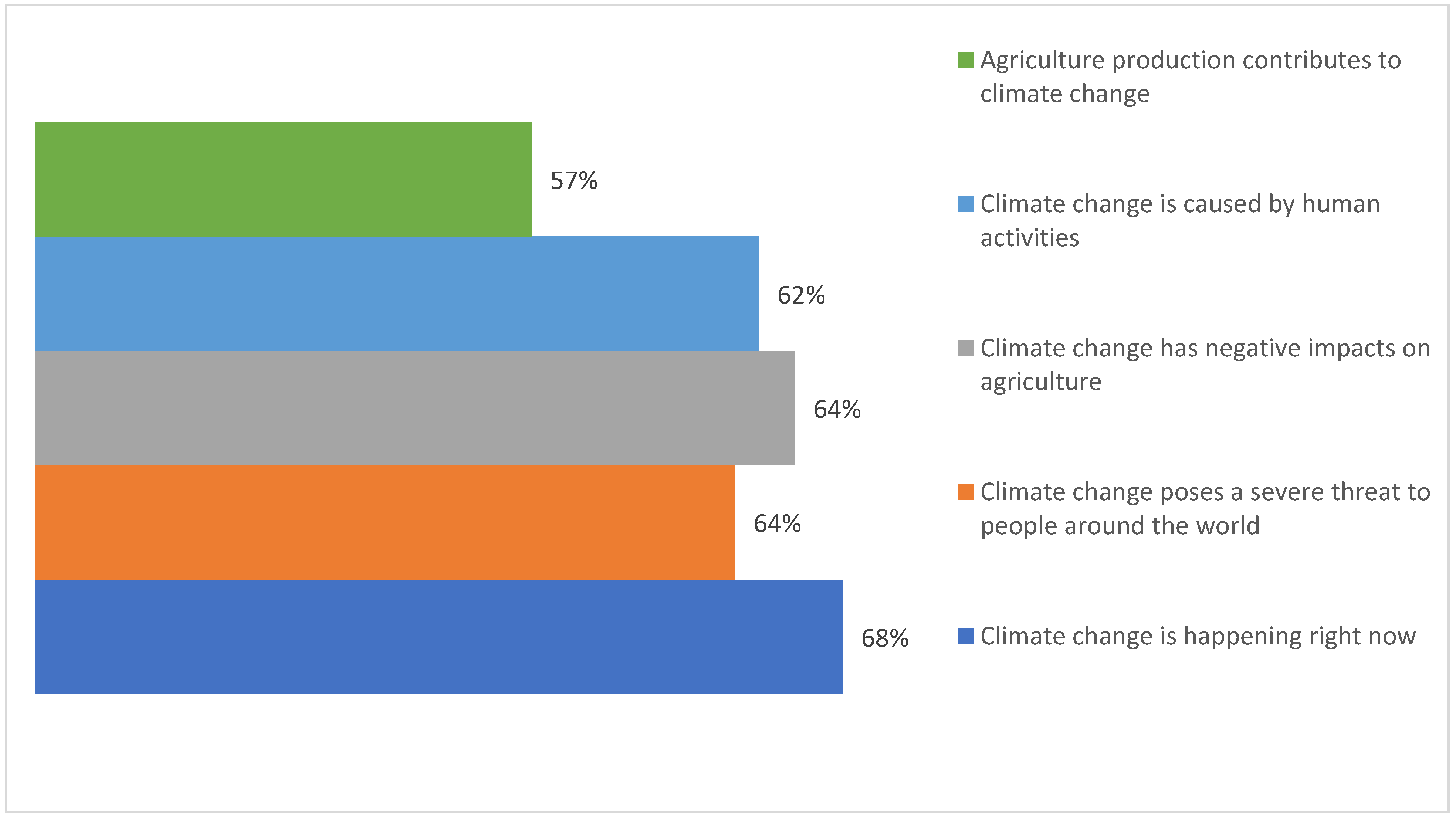
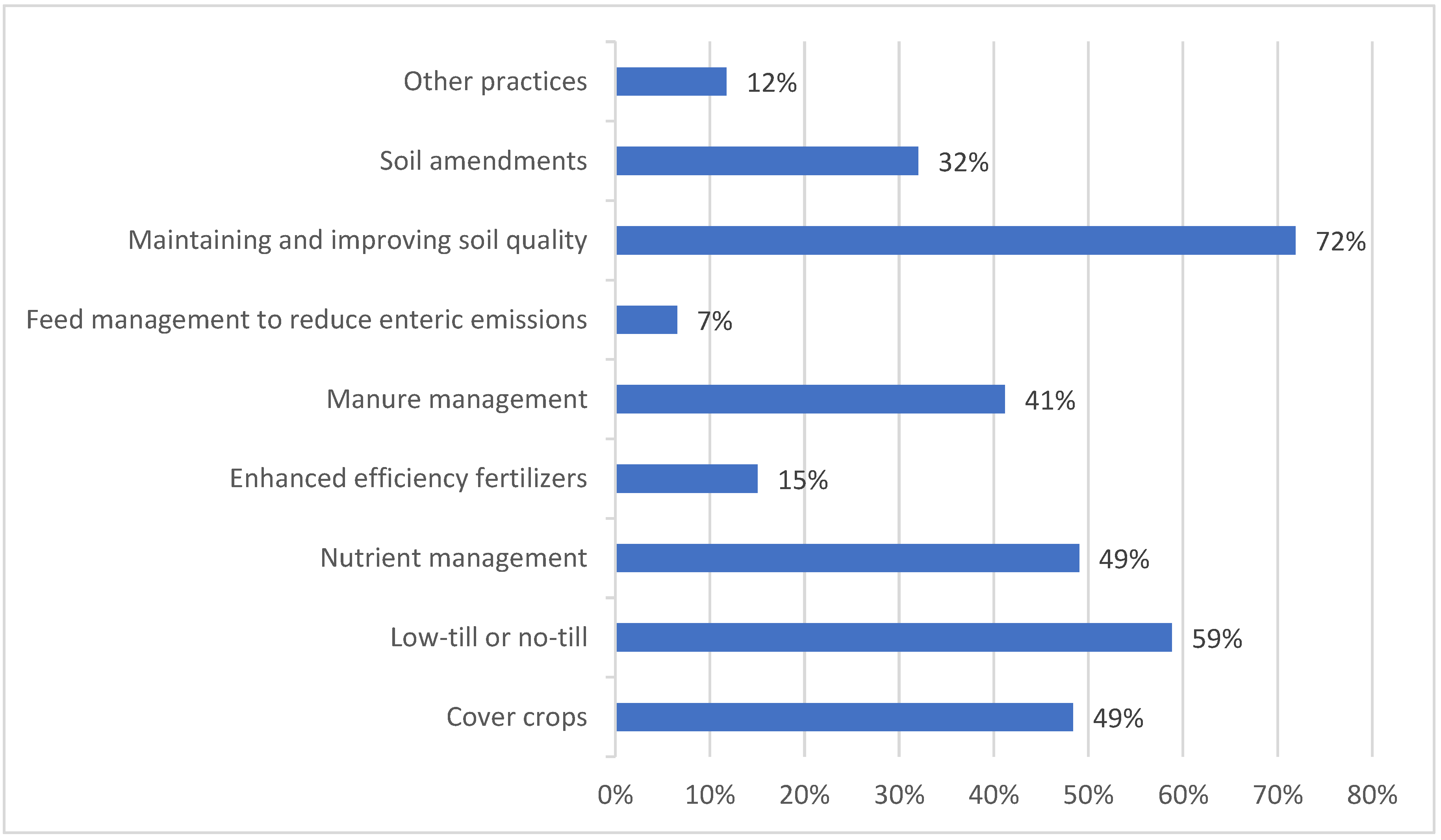
Using survey data of Missouri small producers in 2022, this paper explores their perceptions of climate change and factors affecting their adoption of climate-smart practices. A synthesized climate change perception (CCP) index is developed to assess the effects of cognition and social demographics of producers on climate-smart practices (CSPs) adoption. The results show that 86.0% of participants have relatively high perceptions of climate change, and 82.0% have adopted at least one climate-smart practice; the higher the climate change perception index, the more likely the producers will adopt climate-smart practices. The findings encourage education on knowledge related to climate change, the relationship between climate change and agriculture, and how CSPs can reduce climate change. Specifically, we find specialty crop producers are more likely to adopt CSPs than other producers; and a one-unit increase in the CCP index can increase the CSP adoption rate by 4.61% for livestock producers and 2.61% for organic producers, suggesting relevant education programs can be tailored to the needs of livestock and organic farmers to improve their adoption rates of CPSs. Further, more resources are needed to support the farmers who reside in severely climate change – impacted areas for their sustainable production and climate sustainability.
Keywords: climate change; climate change perceptions; climate-smart practice; small farmers; agricultural sustainability climate change; climate change perceptions; climate-smart practice; small farmers; agricultural sustainability