


Abstract
In response to the pressing need for effective implementation of the Circular Economy (CE), this research introduces a comprehensive theoretical framework for CE roadmapping. This study addresses the prevalent issue of fragmented and inconsistent CE strategies that often hinder the successful translation of long-term goals into achievable KPIs. Through a carefully designed methodology, this framework incorporates strategic management, systems thinking, sustainability science, and other disciplines, providing a structured approach to navigating the complexities of long-term planning for CE. The foundation for this framework is laid through an extensive review of the literature, which identifies theoretical gaps and guides its development. Practical insights are gained through an examination of various CE roadmaps, including sectoral, municipal, national, and regional strategies, thereby enhancing this framework’s applicability and robustness. This research highlights substantial variations in current CE roadmapping methods, emphasizing the need for a standardized approach. While acknowledging limitations due to the diverse contexts of the case studies, this study offers significant implications for policymakers, business leaders, and sustainability practitioners by presenting a versatile tool for strategic CE planning. Its interdisciplinary construction mirrors the multifaceted nature of CE, rendering it exceptionally adaptable across various disciplines and levels, reflecting the diverse reality of CE applications.
1. Introduction
1.1. Context and Background
The Circular Economy (CE) has emerged as a focal point in efforts to achieve sustainability in various domains on a global, national, regional, and business scale. This has led to a re-evaluation of resource management, stakeholder engagement, and policymaking, emphasizing an interconnected and cyclical approach [1]. The concept of CE can be traced back to sustainability-oriented ideas such as cradle-to-cradle [2], industrial ecology, and the performance economy. These ideas emphasize not only waste reduction but also closing the loops of production, optimizing resources, retaining value, and promoting sustainable consumption [3,4,5,6]. Therefore, implementing CE principles at various levels of governance offers a robust economic model to address systemic inefficiencies, market failures, and negative externalities while simultaneously fostering environmental sustainability and economic prosperity [7,8].
Embedding CE principles presents a challenge because of the complexity and diversity of the levels, value chains, and ecosystems involved. It requires comprehensive and strategic alignment with governance frameworks at the national, regional, and municipal levels [9,10,11,12,13]. Understanding the workings of CE and developing responsive strategies is, therefore, a complex task, especially considering the socio–economic, cultural, and political differences across different geographical areas and sectors [14,15].
In response to the challenges of implementing CE, there have been global efforts to structure, streamline, and systematize the adoption and implementation processes through the development of roadmaps, action plans, and policy instruments [16,17,18,19,20,21,22,23]. Since 2013, diverse types of CE roadmaps have emerged globally, indicating a shift towards more structured and collaborative long-range planning for CE adoption [24]. These CE roadmapping initiatives are crucial for guiding the transition to a circular paradigm. They identify priority areas, engage stakeholders, promote collaboration, and establish clear goals, timelines, and Key Performance Indicators (KPIs) to ensure a cohesive approach to implementing CE principles across sectors and levels of governance despite their diverse origins and structures [25].
1.2. Roadmapping
Roadmapping, initially developed for technology planning [26,27], has evolved, becoming a versatile tool for broader strategic planning applications. This evolutionary adaptation has been instrumental in integrating sustainability principles into long-term planning, enabling organizations and policymakers to collaboratively envision and strategically outline the essential steps toward realizing a sustainable future [28]. Moehrle et al. [29] and Phaal [30] assert that roadmapping has transcended its origins to become a nuanced instrument for driving multi-sectoral change. As a long-range strategic planning tool, it has become indispensable, particularly when delineating the course toward a CE. Its utility lies in its prescriptive nature, which not only charts a path from the current state to a desired future but does so through a meticulously layered process [30,31,32]. The adoption of roadmapping in CE planning is indicative of its robustness, providing clarity amidst the complexity inherent to sustainable transitions. Roadmapping facilitates the delineation of multifaceted strategy trajectories, broadens the scope of strategic management to embrace sustainability principles, and fosters an integrated performance encompassing economic viability, environmental stewardship, and social well-being [33].
This comprehensive approach, combining roadmap methodologies with circular imperatives, supports a coordinated and strategic transition towards embedding and operationalizing CE principles across various sectors and governance levels.
The necessity for a robust and adaptable CE roadmapping framework is underscored by the multidimensional and interdisciplinary nature of CE transitions, which span technological, social, economic, regulatory, and environmental aspects. Traditional roadmapping methods, primarily focused on technological development, fall short of addressing the comprehensive needs of CE transitions [5,34]. The complexity and diversity of these transitions, affecting various industries, regions, and stakeholders, demand a flexible framework that can be tailored to specific contexts, promoting adaptable learning and methodological refinement [35,36].
The proliferation of stakeholders in the CE landscape—from governments to non-profits, industries, and consumers—requires a framework that facilitates systematic engagement and coordination [37]. Despite the acknowledged importance of CE principles for sustainable development, their application remains inconsistent, highlighting the absence of a unified methodological framework for CE strategy development and implementation. This gap, coupled with the urgent need to tackle environmental degradation and resource scarcity, amplifies the importance of a comprehensive CE roadmapping framework that not only aligns with sustainability goals but also ensures coherent strategy across sectors [10,38].
A CE roadmapping framework should foster a collaborative ecosystem where stakeholders, despite varying interests, work together to share insights, strategies, and resources, aiming for openness and shared goals. This inclusive approach enables systematic roadmap development, aligned with diverse stakeholder interests, capabilities, and roles, facilitating a unified transition towards a CE [39,40].
Given these challenges, there is a clear and pressing need for a standardized CE roadmapping framework, methodically outlining the steps and processes based on existing principles and standards to guide the development towards a sustainable CE.
1.3. A CE Roadmapping Framework: An Imperative
The CE roadmapping framework should go beyond traditional roadmapping approaches, allowing for flexible parameter settings whilst integrating different knowledge bases and potentially merging previously seen as incompatible theories. The framework should establish a comprehensive foundation, develop actionable strategies, outline key milestones, and create robust mechanisms to implement and monitor the transition process [31]. To achieve the conceptual integrity that the CE roadmapping framework aims for, it is crucial to assess its practical application in real-world scenarios critically. To this end, an extensive review was conducted on more than 200 documents related to CE roadmaps from 120 countries across all regions.
1.4. Aim and Objectives
To develop an adaptable CE roadmapping framework, this study aims to meaningfully refine and optimize CE roadmapping processes by synthesizing best practices, knowledge bases, theories, standards, and methodologies. The framework aims to be congruent with the multi-dimensional facets of CE transitions, enabling effective navigation of the complexities and variabilities inherent in operationalizing CE principles across various sectors and governance levels.
The objectives of this study include:
- A.
- To access and identify patterns in existing roadmapping and the long-range planning (LRP) literature across diverse disciplines. This involves a comprehensive review of the current state of roadmapping practices and their applications in various contexts.
- B.
- To investigate the different processes and foundations that these roadmaps and other LRP strategies are based on, with the view to understanding the underlying principles and methodologies that inform the development and execution of effective roadmapping.
- C.
- To synthesize these processes and foundations into an adaptable framework, providing a cohesive approach for creating CE roadmaps that are sufficiently robust to meet the diverse and evolving needs of CE initiatives across various sectors and governance levels.
1.5. Organisation of This Paper
This paper is structured to facilitate a coherent and progressive unfolding of the conceptual, methodological, theoretical, and empirical facets of this research. Initially, a literature review surveys the concept of CE roadmaps, thematically exploring their evolution, approaches, and challenges. This paper then articulates the development of the CE roadmapping framework, comprising all phases from initial scope to strategic execution and ongoing oversight. The subsequent section delineates the foundational pillars of the CE roadmapping framework, which are rooted in established theory and practice, unearthing theoretical, knowledge-based, and standardized cornerstones, as well as strategic planning mechanisms. This paper concludes with a concise synthesis of this research’s main discoveries and implications, providing a forward-looking perspective.
2. Literature Review
2.1. CE Roadmapping Concepts and Evolution
The evolution of CE roadmapping reflects a profound transformation in the approach to sustainable development, transitioning from narrow waste-centric strategies to encompassing comprehensive systemic changes across various governance levels.
CE roadmaps were primarily concerned with waste management and recycling in the early stages. This focus was largely driven by the need to address immediate environmental concerns associated with waste accumulation and disposal. Germany’s adoption of the “Closed Substance Cycle and Waste Management Act” in 1996 served as a pioneering legislative move [38], illustrating an early understanding of CE principles at the national policy level. This act was instrumental in framing a systemic approach to resource management, setting a precedent for other countries to follow. It highlighted the importance of not just managing waste but also closing material loops and optimizing resource use, setting the stage for more expansive CE strategies.
The integration of sustainable development into CE roadmaps necessitates a comprehensive approach that addresses historical, social, and economic dimensions. Sustainable development frameworks within CE must encompass not only immediate environmental and economic benefits but also broader socio–economic implications. This facilitates a nuanced understanding of the systemic processes required to achieve sustainability goals, enriching the theoretical underpinnings of CE roadmaps and enabling a robust interdisciplinary analysis of the dynamic processes driving sustainable development [41,42].
CE roadmapping began to embrace broader economic and environmental sustainability goals as it evolved. This broadening of scope is captured in the comprehensive analysis provided by Abu-Bakar et al. [24], which serves as a pivotal link between the evolving objectives of CE roadmapping and the detailed methodologies applied across various levels. The typological framework of CE roadmaps, as outlined by Abu-Bakar et al. [24], demonstrates the varied approaches and strategies applied across different scales, from national to sector-specific. This analysis reveals distinct regional patterns in CE planning, with a predominant focus on national-level strategies and significant involvement of local authorities in Europe and Asia. Municipal and regional roadmaps demonstrate contextual variations, emphasizing local sustainability and regional strengths.
Addressing the complexities and interdependencies inherent in sustainable development ensures that CE strategies are environmentally and economically sound while being socially equitable. This balanced framework promotes long-term sustainability across multiple dimensions. Such integration enables the development of resilient and adaptable CE strategies, fostering systemic change and facilitating the transition towards a sustainable economy [41].
National roadmaps such as Sitra’s [16] Finnish, French Government’s [43] French, Acatech’s [18] German and EMF’s [44] Chilean and MIE’s [17] Netherlands roadmaps became more ambitious and comprehensive, exemplifying this shift. These national roadmaps were significant in that they entailed not only the development of policies and the setting of national targets but also the establishment of legislative frameworks and regulations. The role of research and development funding became increasingly recognized for supporting innovation in CE, while stakeholder engagement involving government, NGOs, industry, and academia was seen as crucial for the roadmap’s success [45]. These elements underscored the growing maturity and complexity of CE roadmaps, reflecting a shift from operational tactics to strategic planning.
On the municipal front, local authorities and civil society began driving CE initiatives, focusing on urban sustainability challenges. London’s CE Route Map [19] serves as a notable example, where the city’s approach extended beyond waste management to encompass urban metabolism analysis and industrial symbiosis. Amsterdam’s circular strategy, focusing on sustainable urban development, including circular construction and waste management, exemplified the role of cities in driving CE [46]. Glasgow’s roadmap integrated circular principles into urban regeneration and development, showcasing the adaptability of CE roadmapping to diverse urban contexts [22]. These roadmaps incorporated sustainable urban planning and design elements, integrated waste management systems, circular procurement practices, and sustainable transportation systems. This local-level approach was critical in addressing specific urban challenges and leveraging local strengths. Municipal roadmaps also established platforms for local stakeholder engagement, emphasizing community involvement and capacity building, supported by local regulations and public procurement policies [47,48,49,50]. This shift indicated a growing recognition of the importance of local contexts and the role of cities as key actors in implementing CE principles.
At the regional level, roadmaps began to address sustainability challenges tailored to specific regional contexts, often capitalizing on unique regional strengths and opportunities. The “Closing the Loop—An EU Action Plan for the CE” [51] exemplifies a regional roadmap, outlining measures for sustainable product policy and waste management across the region, demonstrating the growing recognition of CE adoption in policymaking at the supranational level. These roadmaps, situated between national and municipal strategies, tended to be sector-oriented and utilized regional innovation hubs and skills development as key implementation tools. They engaged regional governments, industry, and NGOs and were often supported by regional regulations and financial instruments [48,49].
Sectoral roadmaps, tailored to address the sustainability challenges of specific industries, emerged as strategic frameworks for industries such as construction, plastics, and agriculture [21,23,52,53,54,55]. These roadmaps concentrated on fostering innovative approaches for circularity within specific industries. Sectoral regulations and subsidies became vital policy instruments for enabling these transitions [56]. In the European policy context, the construction sector was identified as critical due to its significant generation of construction and demolition waste (C&DW) [23,57,58,59]. This strategic focus on a critical industry sector demonstrates the adaptability and specificity of CE roadmapping in addressing particular industry challenges.
2.2. Integrating Multidisciplinary Insights for CE Long-Range Planning
Although the literature specifically addressing CE roadmapping is sparse, this review draws insights from various disciplines, including strategic management, systems thinking, sustainability science, and stakeholder theory. These disciplines collectively contribute to forming a comprehensive framework for long-range CE planning by incorporating goal setting, collaboration, stakeholder engagement, vision articulation, success metrics, and governance structures. These components are crucial for aligning organizational objectives with sustainable practices, effectively managing the complexities of CE transitions, and ensuring a thorough consideration of environmental, social, and economic sustainability dimensions.
The importance of clearly articulating the purpose and setting specific goals for long-term planning in CE roadmapping is emphasized by Phaal et al. [31]. Building on this, Murray et al. [60] highlight the need for specific and measurable goals to optimize ecosystem functioning and human well-being within the CE framework, while Lewandowski [61] underscores the importance of clearly defining the scope and objectives of CE initiatives, ensuring they address the complexities of industrial ecology and cleaner production. Clearly defined goals provide a structured foundation essential for long-range planning, ensuring focused and coherent progress towards pre-defined KPIs.
Transitioning from goal setting, strategic scoping, and cross-functional collaboration are pivotal for the adaptability and relevance of roadmaps across different contexts, as outlined by Phaal et al. [26]. Brown et al. [62] and Danvers et al. [63] stress the necessity of collaborative strategic planning for circular-oriented innovation and systemic approaches for transitioning from linear to circular economic models. Kettunen et al. [64] and Ahmed et al. [65] advocate for efficient collaboration between academia and industry to bridge knowledge gaps and foster innovation. Collaboration and strategic scoping are critical for long-range planning as they enable the integration of diverse perspectives and expertise, enhancing the roadmap’s applicability and effectiveness.
Stakeholder analysis and engagement play a critical role in driving CE strategies. Marcon Nora et al. [66] and Baah et al. [67] discuss the influence of stakeholder collaboration on value creation and the adoption of diverse sustainability practices. Vishwakarma et al. [68] demonstrate the critical influence of stakeholder engagement on optimizing healthcare’s economic and environmental outcomes, catalyzing the transition towards a CE through the implementation of sustainable supply chain methodologies. Engaging stakeholders ensures that the roadmap is inclusive and considers the interests and contributions of all relevant parties, which is crucial for the successful implementation of long-term CE initiatives.
Building on the importance of stakeholder engagement, vision articulation is essential for aligning societal efforts and policy directions toward sustainability. Hermann et al. [69] and Calisto Friant et al. [35] illustrate the necessity for shared and inclusive visions among stakeholders. Additionally, Diaz et al. [70], Lukkarinen et al. [71], Prendeville et al. [50], and Lopes et al. [72] highlight the role of strategic vision in guiding urban transitions, product development, and co-creation of CE initiatives. A well-articulated vision provides a clear direction and inspires collective action, which is fundamental for the sustained effort required in long-range planning.
Measuring success in CE transitions relies on sophisticated metrics and KPIs. Rincón-Moreno et al. [73] and Moraga et al. [74] propose frameworks for comprehensive assessment and classification of CE strategies. Saidani et al. [75] and Voukkali et al. [76] emphasize the importance of integrating digital technologies to enhance measurement precision and operational efficiency. Additionally,, Kanellou et al. [77] and Hristov and Chirico [78] discuss the application of KPIs in specific sectors and broader corporate strategies. Accurate metrics and KPIs are essential for tracking progress, identifying areas for improvement, and ensuring accountability in long-range planning.
Digital technologies such as the Internet of Things (IoT), Big Data Analytics, and Artificial Intelligence play pivotal roles in supporting CE by facilitating end-of-life strategies, including reuse, remanufacture, and recycling. These technologies provide critical insights into the condition, location, and availability of products throughout different use cycles and production systems, thus optimizing resource use and extending product lifecycles [79].
In strategic planning, especially within public management, systems thinking is vital for grasping the complex dynamics and interdependencies that underpin long-term organizational success. This approach, crucial for encompassing various factors affecting organizational objectives, becomes particularly instrumental in the CE [80]. It emphasizes a whole-system perspective, underlining the interconnected stages of the value chain—from resource extraction through to product lifecycle end—and the pivotal relationships among stakeholders across the entire system. Adopting this lens ensures CE practices are informed by the resilience, diversity, and resource efficiency seen in natural ecosystems, thereby nurturing innovative and adaptable business models within planetary boundaries [81,82].
Highlighting the importance of systems thinking, Iacovidou et al. [81] point to its key role in identifying leverage points for significant, systemic shifts in CE. This broad view aids in developing circular business models that drastically cut waste and boost sustainability. A focus on managing stocks alongside flow regulation introduces a paradigm favoring a sufficiency-based model, crucial for crafting comprehensive strategies that respect the ecological, social, and economic aspects of sustainability. Such a paradigm shift is indispensable for a future where economic activities harmonize with ecosystem health [81].
Integrating sustainability science into CE roadmaps enhances strategic environmental planning, leveraging tools such as LCA and material flow Assessment (MFA) for sustainable, inclusive initiatives adapted to technological and societal advancements [83]. This holistic methodology, focusing on product environmental performance and material flow efficiency, underlines the potential of CE in fostering economic, environmental, and social value creation, evidenced in industries ranging from waste management to urban infrastructure [84]. Moreover, the emphasis on transdisciplinary collaboration and public-private partnerships underscores the critical role of diverse stakeholder engagement in realizing CE goals, highlighting the sector-wide applicability and strategic importance of CE principles across varying contexts [85].
The dynamic global material flow analysis further illustrates the necessity for adaptable strategies in evolving sectors such as electric vehicle battery recycling, reinforcing the significance of triple-bottom-line approaches and robust environmental governance for sustainable remanufacturing and impact assessment [86].
Governance plays a crucial role in CE roadmapping, especially at the National and Municipal levels, shaping policy frameworks and fostering essential collaborations for CE [87]. National policies set strategic directions, mobilizing stakeholders, while municipal policies cater to local challenges [88,89,90]. This governance extends to global scales, aligning with objectives such as the UN’s Sustainable Development Goals [91], and requires understanding stakeholders’ perceptions for effective communication and strategy tailoring [92,93].
Governance establishes critical decision-making structures and values across all roadmap stages, ensuring adaptability and responsiveness [60,94]. It involves balancing governmental regulations and corporate governance for CE transition [95,96]. Addressing the complexities of this transition requires effective governance to manage tensions and legal coherence while also facilitating leadership, future visioning, and stakeholder engagement in diverse contexts [50].
To summarise, Table 1 restructures these multidisciplinary insights into the key constituents of CE roadmapping, providing a clear overview of their roles and dependencies within the roadmapping phases.
Table 1.
Summary of the Thematic Constituents of CE Roadmapping.
3. Materials and Methods
This research adopts a comprehensive methodology anchored in a robust theoretical framework, emphasizing an interdisciplinary approach to developing a CE roadmapping framework. The methodology is structured as follows:
3.1. Literature Review and Conceptual Analysis
An extensive literature review forms the foundation of this study. It investigates key areas of sustainability science, strategic management, systems thinking, and CE practices, drawing on seminal works with the view to identifying prevailing trends, theoretical gaps, and practical challenges in CE roadmapping.
3.2. Extensive Review of CE Roadmaps
An exhaustive review was conducted on more than 200 documents related to CE roadmaps from 120 countries across all regions. This review aimed to identify structures and patterns in their methodologies and approaches, offering benchmarking insights for the framework. This process also helped ascertain commonalities between some of the best practice roadmaps and the developed framework, thereby reinforcing the framework’s practical applicability and relevance in diverse global contexts.
3.3. Theoretical Framework Process
Central to this study is the development of a theoretical framework based on foundational pillars, advocated by the academic guidance on creating theoretical frameworks, which emphasize the importance of reviewing existing theories to establish a structured guide for argument development in scholarly work [97]. The process, as illustrated in Figure 1, begins with the identification of core themes, progressing through an extensive literature review and identifying gaps. Relevant theories, standards, tools, and knowledge domains are then selected, integrated, and justified.
Figure 1.
Theoretical Framework Development Process.
4. Framework Development
The proposed framework for CE roadmapping, as depicted in Figure 1 and Table 2, exclusively draws upon the literature-led foundational pillars (FPs) discussed in the subsequent section. It synthesizes various elements from multiple disciplines into a versatile tool designed to offer a systematic and adaptable approach to developing long-term strategies. This framework applies to diverse value chains and governance tiers, thus facilitating the transition towards a CE. It is specifically tailored to provide guidance to organizations, municipalities, and even nations in integrating circular principles into their operations and strategic planning. The framework is divided into four key phases:
Table 2.
Strategic Framework Phases, layers, and processes.
- Phase 1: Scoping and Goal Setting (P1)—This phase establishes the direction of the roadmapping process by helping to define the roadmap’s boundaries and setting clear parameters. For instance, a national-level roadmap might involve setting a vision for a country’s transition to a CE, defining key sectors for implementation, and establishing short-term actions and long-term sustainability goals.
- Phase 2: Baseline Assessment and Processes (P2)—In this phase, a comprehensive analysis of the current state is conducted, such as a chemical company performing an LCA to identify environmental impact hotspots throughout its product lifecycle.
- Phase 3: Strategy Development (P3)—Strategies are developed based on the previous assessments, such as an automotive manufacturer planning a transition to a closed-loop system for rare earth elements, aiming to minimize waste and reliance on virgin materials.
- Phase 4: Implementation and Monitoring (P4)—This final phase involves putting the strategies into action and monitoring their effectiveness. For instance, a city may implement a comprehensive organic waste program and track progress KPIs.
Table 2 presents the detailed phases, layers, and processes of the proposed framework, providing a comprehensive overview of their roles and interdependencies within the CE roadmapping structure.
Figure 2 illustrates the sequential process of the framework, summarizing the phases, layers, and processes involved in CE roadmapping.
Figure 2.
The proposed strategic Phases of CE roadmapping.
5. The Foundational Pillars
The development of the CE roadmapping framework in this study hinges on integrating key foundational pillars (FPs) essential for facilitating effective long-range strategic planning. This integration stems from an in-depth thematic exploration conducted in the literature review, where strategic planning tools, cross-disciplinary theories, knowledge domains, and standards converge to form the bedrock of the proposed framework. The FPs are crucial for underpinning the framework’s structure and function, as well as providing a robust and interdisciplinary approach that is crucial for the creation of an adaptable roadmapping tool. The FPs, deeply entwined within the framework, collectively inform the strategic stages and processes of Roadmapping reinforced by academic rigor and practical standards. This synthesis ensures adaptability and practical applicability, effectively steering organizations towards strategic foresight in long-range CE strategizing and planning. Figure 3 illustrates the four FPs.
Figure 3.
The proposed CE Roadmapping Framework’s Foundational Pillars [98,99].
The significance of these foundational pillars extends beyond their individual contributions; their integration within the framework exemplifies a holistic approach to CE roadmapping, collectively providing a structured andcomprehensive perspective on CE transitions. This interdisciplinary amalgamation enhances the coherence and effectiveness of CE strategies, ensuring their relevance and applicability across diverse contexts and scales.
5.1. Strategic Planning Tools
Strategic management tools (SPTS) are crucial in shaping the roadmap for sustainability and CE initiatives. Bryson et al. [100] present a detailed approach to strategic planning, aligning organizational goals with sustainable practices. Research by Bingöl et al. [101] and Afonina [102] underscores the impact of these tools on organizational performance and competitiveness. These studies collectively illustrate the indispensable role of SPTs in effectively navigating the complex landscape of sustainable development. Under this pillar, Technology Roadmapping (TRM) and Benchmarking have been selected, leveraging their cross-disciplinary elements and strengths integral for the articulation and achievement of CE roadmapping strategic objectives.
5.1.1. TRM
TRM is a strategic tool that aligns tech capabilities with long-term business strategies. Highlighted by Phaal et al. [30,103], TRM encompasses scoping, setting goals, implementing, monitoring, and developing strategies. It ensures that every phase of strategy development, from the outset to execution and review, is informed by TRM components, as shown in Table 3. This table lays out how TRM integrates into the CE roadmapping phases, providing a clear framework for applying technology strategies effectively.
Table 3.
Integration of TRM Components into the CE Roadmapping Process.
5.1.2. Benchmarking
Benchmarking emerges as a fundamental strategy for enhancing an organization’s performance by leveraging industry-leading practices for innovation and sustainable development. Shetty [104] highlights the crucial role of benchmarking across diverse functional areas in bolstering strategic and operational growth. Drew [105] further explores its transformation from traditional learning and imitation methods to a structured management approach, propelled by global competition and the advent of new technologies. Such advancements in benchmarking practices underscore the strategy’s importance in promoting an adaptive and innovative organizational culture amidst rapid technological and market transitions. The components integral to this process relevant to roadmapping are delineated in Table 4.
Table 4.
Benchmarking Components in CE Roadmapping Process.
5.2. Theories
Theories, distilled from the extensive thematic exploration in the literature, crystallize predominantly into two core theoretical domains: Strategic Management, which encompasses sub-theories such as Stakeholder Theory and the concept of a Collaboration Ecosystem, and Systems Thinking. Strategic management, with its sub-theories, provides a fundamental structure for planning elements such as vision and mission definition, goal setting, and stakeholder analysis, which are crucial for balancing diverse interests and nurturing collaborative partnerships in CE roadmapping. Systems Thinking complements this by offering a holistic lens through which the interconnectedness and dynamic interplay of various elements within the CE landscape are comprehensively understood and addressed. These theories collectively underlie and shape the strategic direction and efficacy of the CE roadmapping process.
5.2.1. Strategic Management
Strategic management as a theory provides an overarching framework that is critical for the success of roadmapping in any organization. The theoretical elements vital to roadmapping are delineated across various phases—P1 through P4—each contributing to the roadmap’s comprehensive structure. The Vision and Mission Definition in phase P1 is instrumental in crafting an aspirational future, serving as a compass within the ‘Visioning’ layer and providing a clear and inspiring direction for CE transitions. Simultaneously, it contributes to setting achievable timelines and establishing robust governance structures that oversee this pivotal shift [106,107]. Table 5 details the components of strategic management integral to the roadmapping process, highlighting their roles across different phases and layers in enhancing strategic coherence and enabling sustained organizational advancement.
Table 5.
Components of Strategic Management in CE Roadmapping Process.
5.2.2. Stakeholder Theory
While a sub-theory under strategic management, Stakeholder Theory is employed in its own right due to its profound influence on roadmapping. It comprehensively delineates stakeholder influence on an organization’s strategic direction and execution, encompassing elements such as identification, engagement, analysis, mapping, and expectation management. Crucially, it integrates the concept of a collaboration ecosystem, where stakeholder value creation and continuous collaboration are pivotal [108], demonstrating the extensive interplay of stakeholder dynamics within roadmapping. Table 6 encapsulates these core components of Stakeholder Theory as applied in the roadmapping process, offering a structured overview of how each element contributes to strategic planning and implementation.
Table 6.
Components of Stakeholder Theory in CE Roadmapping Process.
5.2.3. Systems Thinking
Systems Thinking emerges as a vital component within the theoretical domain of the foundational pillars, supporting the proposed roadmapping framework. It fosters a holistic approach to the development and implementation of strategies within organizations [109]. Highlighted in Table 7 are the core components of Systems Thinking as they apply throughout the roadmapping process, illustrating their indispensable role in facilitating strategic planning and execution within an organizational context.
Table 7.
Components of Systems Thinking in the CE Roadmapping Process.
5.3. Knowledge Domains: Sustainability Science
The framework integrates several elements of sustainability science as the primary knowledge domain, as summarised in Table 8 offering a holistic approach and essential methodologies for understanding the complex human-environment interactions in CE strategy assessment, planning, and implementation. Its significance lies in providing a foundation for developing strategies that balance economic viability with environmental responsibility and social equity [110,111,112].
Table 8.
Components of Sustainability Science in the CE Roadmapping Process.
5.4. Standards
Standards constitute the fourth foundational pillar in the framework, providing a systematic approach to embedding CE principles and practices within organizations. They serve as benchmarks for consistency, quality, and performance, facilitating comparability and compatibility across various aspects of CE. The framework specifically integrates two sets of standards: the ISO 59000 series, which is focused on CE directives, and ISO 37000, which governs organizational management.
5.4.1. ISO 59000
The ISO 59000 series [98] represents a set of standards that delineate foundational principles and guidelines for CE management systems, designed to assist in establishing a systematic framework for LRP that embeds circularity at the core of business operations. Elements of this standard are drawn from to provide support at different phases of CE roadmapping. Illustrated in Table 9 below are these critical elements, showcasing their application throughout the CE roadmapping process and highlighting their roles.
Table 9.
Components of the ISO 59000 in the CE Roadmapping Process.
5.4.2. ISO 37000
As illustrated in Table 10, ISO 37000 [99] offers governance guidelines crucial for CE roadmapping, ensuring that governance structures are strategically aligned with organizational objectives. This alignment enhances sustainable decision-making and stakeholder engagement, which is vital for executing CE initiatives effectively.
Table 10.
Components of the ISO 37000 in the CE Roadmapping Process.
6. Discussion
This study introduces a comprehensive framework for CE roadmapping, designed to facilitate the targeted transitioning to a CE across various governance levels and sectors. Originating from a synthesis of multidisciplinary academic and practical models, the framework aims to bridge theoretical and practical aspects of strategic CE adoption and implementation.
The proposed framework offers a structured method for cities, nations, and sectors to map out their long-term CE strategy, ensuring continuity and coherence throughout the process. The initial phase, Scoping, and Goal Setting, establishes the foundation for long-term CE planning by defining clear visions and objectives. For example, a national roadmap might involve setting a vision, defining key sectors for implementation, and establishing both short-term actions and long-term goals. This phase ensures a shared understanding among stakeholders, which is critical for coherent and coordinated efforts. Establishing clear goals and scopes early on provides a strong directional thrust for the subsequent phases, ensuring alignment and focus.
Following this, the Baseline Assessment and Processes phase involves a comprehensive analysis of the current state, such as a city conducting an LCA across its dominant value chain(s) to identify environmental impact hotspots [20]. This phase is essential for gathering data, focusing on current resource utilization and waste generation, and understanding material flows within the city or sector. The diagnostic tools used here are crucial for identifying critical opportunities for circular practices. This phase builds on the foundation laid in the initial phase, using the established goals and scopes to direct the assessment efforts.
In the Strategy Development phase, the initial visions and goals are refined based on the assessments from the previous phase. This phase involves engaging stakeholders and fostering partnerships to develop strategies for previously chosen priority areas. For instance, a national strategy [113] might plan the transition to a closed-loop system for critical raw materials, minimizing waste and reducing reliance on imports. Pilots and case studies are conducted to test the feasibility of these strategies [43,114]. The engagement of diverse stakeholders ensures the strategies are comprehensive and inclusive, building on these data and insights gathered earlier.
Finally, the Implementation and Monitoring phase translates the developed strategies into actionable plans and ensures their effective execution. For example, a sector-specific roadmap in the construction industry might implement comprehensive recycling programs for construction and demolition waste, tracking progress through key performance indicators (KPIs). This approach includes preventing waste at every stage of a project’s lifecycle, from the production of materials and products through design, specification, procurement, and assembly to deconstruction. At the end of a building’s life, materials and components should be recovered and reused at the highest possible level of the waste hierarchy before recycling, ensuring minimal environmental impact [23]. The monitoring and evaluation processes embedded in this phase ensure that the implemented strategies remain effective and adaptable over time. This phase completes the cycle, feeding back into the initial scoping and goal setting to refine and adjust strategies as needed.
The framework’s phased approach ensures each step is purposeful and interconnected, creating a cohesive and comprehensive CE strategy. This structure is crucial for long-range planning, providing a clear path from initial vision to implementation and continuous improvement.
Real-world examples demonstrate the framework’s practicality and relevance. A city might utilize this framework to transition its waste management system to a circular model, starting with a clear vision, assessing current waste flows and impacts, developing targeted recycling and reduction strategies, and implementing these strategies with continuous monitoring. Similarly, a national government could apply the framework to develop a comprehensive strategy, aligning sectoral policies and actions with national sustainability goals.
The potential outputs of this framework include detailed CE roadmaps tailored to specific contexts, with actionable plans and clearly defined KPIs. Outcomes could be substantial, encompassing improved resource efficiency, reduced environmental impact, enhanced stakeholder engagement, and significant progress toward sustainability goals. Achieving specific priority goals may collectively reduce the national material footprint, increase material productivity, and yield significant emergent properties such as resilient supply chains [115], green job creation [116], and enhanced economic competitiveness through innovative circular practices. Additionally, the framework promotes societal equity [117], ensuring the fair distribution of CE benefits that contribute to a more sustainable and inclusive future.
6.1. Theoretical Contribution
This study represents a significant theoretical advancement in the literature on CE, addressing the notable lack of a standardized methodological framework for CE roadmapping. Existing CE roadmaps, while incorporating elements such as priority areas, stakeholders, strategic action plans, long-term goals, and timelines, often suffer from fragmentation and inconsistency. These components lack a cohesive and systematic strategy that methodically interconnects them with KPIs. The presented framework aims to rectify this by systematically integrating elements from established disciplines and theories known for their instrumental roles in forward-looking strategies. These disciplines include strategic management, systems thinking, and sustainability science, among others, serving as the foundation for the roadmap’s phased approach [31,109].
The phased structure systematically guides the roadmapping process. Phase 1 begins with the development of a strategic vision, establishing a timeline based on this vision, and setting up governance structures that are intrinsically linked to the objectives of the roadmap. This phase concludes by defining the scope and main goals of the strategy, determining the level of implementation, and identifying relevant data sources, thus providing substantive content to the roadmap. Subsequent layers and processes within this phase involve determining the scope of specific sectors and resources, identifying critical areas for CE efforts, outlining actionable plans, and developing implementation strategies. Importantly, this stage emphasizes the identification of metrics for short-term progress and the definition of KPIs that are aligned with the main goals and vision. Additionally, it involves a comprehensive assessment of environmental, social, and economic impacts, as well as an evaluation of policy influences on the transition to CE.
Moving into Phase 2, the framework employs a diagnostic approach, utilizing SWOT Analysis to evaluate factors that influence the transition to CE and Gap Analysis to compare the current state with the desired circular state. This phase is crucial for gathering data, focusing on current resource utilization and waste generation, and understanding the flow of materials within the organization, facilitated by Material Flow Analysis and Life Cycle Assessment. The Stakeholder layer in this phase involves developing a collaborative ecosystem with multiple stakeholders and mapping key stakeholders, while the Assessment layer evaluates the alignment of current business models with circular principles and assesses the implications of policies and regulations on the transition to CE.
Phase 3 centers on refinement and engagement, where initial visions and goals are revised based on baseline assessments from Phase 2. This phase is critical for engaging stakeholders, garnering support for the transition to CE, and fostering partnerships to facilitate the transition. Pilots and case studies are conducted to test the feasibility of CE strategies, with evaluations identifying lessons learned and best practices.
Finally, Phase 4 is where the strategies outlined in the roadmap are translated into detailed design specifications, communicated to stakeholders, and implemented. The execution of these strategies is meticulously monitored and evaluated against the established KPIs, ensuring the ongoing effectiveness and adaptability of the roadmap. This holistic approach ensures that each step of the roadmapping process is purposeful and interconnected, building on previous processes and informing subsequent ones, thereby achieving a cohesive and comprehensive CE strategy that aligns with the defined KPIs.
6.2. Significance of the Study
This study bears significance as it endeavors to bridge the existing knowledge gaps and inconsistencies in the current roadmapping approaches, thereby contributing to the scholarly discourse and practical methodologies pertinent to CE transitions [118]. It aspires to enhance the clarity, coherence, and strategic alignment in CE initiatives’ LRP and implementation processes, potentially fortifying the global efforts toward sustainable development and resource optimization [6].
The absence of such a framework has been a critical gap in the field, leading to inconsistencies and inefficiencies in implementing CE principles across various contexts. As Korhonen et al. [5] noted, the multifaceted nature of CE transitions, encompassing technological, social, economic, and environmental aspects, demands a nuanced and flexible roadmapping approach. This is further echoed by Sani et al. [34], who highlight the interdisciplinary challenges in CE transitions. The study’s endeavor to develop a standardized yet adaptable CE roadmapping framework is thus a timely and crucial contribution, promising to enhance the global coherence and effectiveness of CE initiatives. The study provides a unified and practical framework for stakeholders by integrating diverse perspectives and methodologies, as Calisto Friant et al. [35] suggested, facilitating more effective and coordinated implementation of CE strategies. Another critical dimension of the framework is its potential to promote societal equity and justice. The framework incorporates practical measures to ensure that the contributions to and benefits of a CE are distributed fairly among all social groups, including informal sectors and households. It mandates public consultations and continuous stakeholder engagement, ensuring that diverse community voices, including those often overlooked, are considered. It aims to facilitate an inclusive and just transition to a CE by encompassing all voices within the ecosystem of collaborators and stakeholders.
Furthermore, the significance of this study extends to its potential impact on policymaking, industry practices, and global sustainability efforts. Developing a coherent CE roadmapping framework aligns with the calls by Wielopolski and Bulthuis [37] for efficient stakeholder engagement and collaboration in CE initiatives. This framework will serve as a crucial tool for policymakers and industry leaders, guiding them through the complexities of CE implementation and ensuring alignment with broader sustainability goals. The study also responds to the challenges identified by Schandl et al. [21] and Montag [25] regarding the lack of consistency in current CE roadmapping efforts. The proposed CE roadmapping framework will mitigate strategic uncertainties and bridge the disconnect between roadmap goals and implementation strategies by offering a structured and standardized approach. This effort is significant for advancing CE practices and is also essential in contributing to the global pursuit of sustainable development goals, addressing systemic environmental challenges, and promoting economic and social well-being, as outlined in the works of Flynn et al. [13], Hartley et al. [9], and Trevisan et al. [12]. The study, therefore, stands as a critical step towards realizing a more sustainable, efficient, and circular global economy.
7. Research Limitations
While the proposed framework offers a robust and adaptable approach for facilitating CE transitions across various sectors and governance levels, there are inherent limitations to this study. One major limitation is the dependency on existing case studies and the literature, which may not encompass the full diversity of global CE practices. This reliance could lead to potential biases and a lack of representation for innovative, emerging approaches that have not yet been extensively documented. Additionally, the framework’s applicability in different cultural and regulatory contexts remains to be empirically validated. Further empirical research and longitudinal studies are necessary to test the framework’s effectiveness and adaptability in real-world settings, particularly in regions with differing socio–economic dynamics. Moreover, the dynamic nature of technological advancements and policy changes could affect the framework’s relevance over time, necessitating continuous updates and refinements. Lastly, while stakeholder engagement is a core component of the framework, the varying degrees of stakeholder influence and the challenges in achieving genuine participatory processes could impact the successful implementation of CE strategies.
8. Conclusions
This study introduces a comprehensive framework for CE roadmapping, effectively addressing the complex challenges of sustainable economic transitions through strategic integration of management principles, systems thinking, and sustainability science. This cohesive approach provides a robust tool for policymakers, business leaders, and sustainability practitioners, guiding them through a structured, phased methodology to achieve long-term CE goals.
The framework begins with establishing a clear vision and goals, identifying resource inefficiencies through baseline assessments, and engaging key stakeholders to co-create actionable strategies. Implementation and continuous monitoring follow, with real-time data providing feedback for necessary adjustments. This structured pathway ensures that each phase builds upon the previous one, maintaining strategic alignment and fostering comprehensive CE strategies.
Practical applications of this framework are extensive and impactful, particularly when targeting key value chains within various sectors. Priorities should focus on specific stages of value chains where circular actions can be most effectively applied, favoring the Rs at the top of the hierarchy, such as Refuse, Reduce, and Reuse, and least favoring recycling. For example, in the construction sector, the focus could include refusing unnecessary materials, reducing material use through efficient design, and reusing materials through deconstruction practices. Clear Key Performance Indicators (KPIs) such as a 50% reduction in construction waste, a 30% increase in the use of reusable materials, and significant decreases in new material usage within five years would facilitate systematic tracking of progress.
Engagement with a diverse array of stakeholders, including construction firms, material suppliers, and urban planners, is vital for fostering collaborative initiatives. These collaborations harness varied expertise and perspectives, driving innovative solutions and enhancing the roadmap’s applicability. Collaborative efforts in the construction sector might focus on developing advanced design techniques that minimize material use, promoting modular building designs that facilitate material reuse, and establishing marketplaces for second-hand construction materials.
In the food sector, priorities might include refusing single-use packaging, reducing food waste through improved inventory management and consumer education, and reusing surplus food through redistribution networks. KPIs could include a 40% reduction in single-use packaging, a 50% reduction in food waste at the retail and consumer levels, and a substantial increase in the redistribution of surplus food. Collaborating with food producers, retailers, consumers, and waste management companies can foster innovations such as biodegradable packaging, smarter inventory systems, and robust food donation networks.
Digital tools and data analytics enhance the effectiveness of CE initiatives by enabling real-time progress monitoring and data-driven adjustments. Pilot projects, such as implementing circular construction practices in specific districts or developing smart food waste management systems, provide valuable insights and best practices that can be scaled up across sectors. This integrative approach ensures that circular principles are deeply embedded in operations, promoting sustainability, economic resilience, and social equity.
Future research should focus on applying and refining this framework across different industries, cultures, and governance models. Emphasis on integrating emerging technologies and novel business practices in CE roadmapping is crucial. For instance, the automotive industry could utilize IoT to track the lifecycle of rare earth elements in electric vehicle batteries, creating closed-loop systems that reduce dependency on virgin materials and minimize environmental impact. Sector-specific roadmaps, particularly in the construction and food sectors, could further tailor strategies to address unique challenges and opportunities, such as reducing material use and waste generation.
Longitudinal studies are essential to evaluate the long-term impacts of these roadmaps on environmental, social, and economic factors. Encouraging collaborative, cross-sectoral, and international partnerships will be crucial for sharing best practices, thereby advancing the global shift towards a more sustainable CE. Such partnerships allow stakeholders to share insights and innovations, promoting a cohesive and effective transition to circular practices globally.
This study marks a significant advancement in the CE roadmapping literature, presenting a robust and adaptable framework that integrates diverse disciplinary insights. Continued refinement of this framework, incorporating emerging technologies and fostering international collaborations, will ensure the successful global transition to a CE, ultimately achieving substantial environmental, economic, and social benefits.
Author Contributions
All authors have approved the final manuscript. H.A.-B. I conducted this research and compiled the manuscript with input from F.C. All authors discussed the results and contributed to the final manuscript. All authors have read and agreed to the published version of the manuscript.
Funding
This work was supported by the UK Research and Innovation (UKRI CE Hub Grant Ref: EP/V029746/1). The authors are grateful for their support.
Data Availability Statement
All datasets used in this research are in the public domain and available.
Conflicts of Interest
The authors declare no conflict of interest.
References
- Blomsma, F.; Tennant, M.; Ozaki, R. Making Sense of Circular Economy: Understanding the Progression from Idea to Action. Bus. Strategy Environ. 2023, 32, 1059–1084. [Google Scholar] [CrossRef] [Scilit]
- Braungart, M.; McDonough, W. Cradle to Cradle. Remaking the Way We Make Things; North Point Press: Berkeley, CA, USA, 2009. [Google Scholar]
- Stahel, W.R. The Circular Economy. Nature 2016, 531, 435–438. [Google Scholar] [CrossRef] [Scilit] [PubMed]
- Stahel, W. The Performance Economy; Palgrave Macmillan: London, UK, 2010; ISBN 9780230274907. [Google Scholar]
- Korhonen, J.; Honkasalo, A.; Seppälä, J. Circular Economy: The Concept and Its Limitations. Ecol. Econ. 2018, 143, 37–46. [Google Scholar] [CrossRef] [Scilit]
- Korhonen, J.; Nuur, C.; Feldmann, A.; Birkie, S.E. Circular Economy as an Essentially Contested Concept. J. Clean. Prod. 2018, 175, 544–552. [Google Scholar] [CrossRef] [Scilit]
- Fitch-Roy, O.; Benson, D.; Monciardini, D. All around the World: Assessing Optimality in Comparative Circular Economy Policy Packages. J. Clean. Prod. 2021, 286, 125493. [Google Scholar] [CrossRef] [Scilit]
- Austin, A.; Rahman, I.U. A Triple Helix of Market Failures: Financing the 3Rs of the Circular Economy in European SMEs. J. Clean. Prod. 2022, 361, 132284. [Google Scholar] [CrossRef] [Scilit]
- Hartley, K.; van Santen, R.; Kirchherr, J. Policies for Transitioning towards a Circular Economy: Expectations from the European Union (EU). Resour. Conserv. Recycl. 2020, 155, 104634. [Google Scholar] [CrossRef] [Scilit]
- Kirchherr, J.; Reike, D.; Hekkert, M. Conceptualizing the Circular Economy: An Analysis of 114 Definitions. Resour. Conserv. Recycl. 2017, 127, 221–232. [Google Scholar] [CrossRef] [Scilit]
- Potting, J.; Hekkert, M.; Worrell, E.; Hanemaaijer, A. Circular Economy: Measuring Innovation in the Product Chain Policy Report; Planbureau voor de Leefomgeving: The Hague, The Netherlands, 2017. [Google Scholar]
- Trevisan, A.H.; Zacharias, I.S.; Castro, C.G.; Mascarenhas, J. Circular Economy Actions in Business Ecosystems Driven by Digital Technologies. Procedia CIRP 2021, 100, 325–330. [Google Scholar] [CrossRef] [Scilit]
- Flynn, A.; Hacking, N.; Xie, L. Governance of the Circular Economy: A Comparative Examination of the Use of Standards by China and the United Kingdom. Environ. Innov. Soc. Transit. 2019, 33, 282–300. [Google Scholar] [CrossRef] [Scilit]
- Deutz, P.; Baxter, H.; Gibbs, D.; Mayes, W.M.; Gomes, H.I. Resource Recovery and Remediation of Highly Alkaline Residues: A Political-Industrial Ecology Approach to Building a Circular Economy. Geoforum 2017, 85, 336–344. [Google Scholar] [CrossRef] [Scilit]
- Becque, R.; Roy, N.; Hamza-Goodacre, D. The Political Economy of the Circular Economy; Climate Works Foundation: San Francisco, CA, USA, 2016; pp. 1–28. [Google Scholar]
- Sitra. Leading the Cycle—Finnish Road Map to a Circular Economy 2016–2025; Sitra: Helsinki, Finland, 2016. [Google Scholar]
- MIE. A Circular Economy in The Netherlands by 2050; MIE: Amsterdam, The Netherlands, 2016. [Google Scholar]
- Acatech. Circular Economy Roadmap; Acatech: Munich, Germany, 2021. [Google Scholar]
- LWARB. London’s Circular Economy Route Map; LWARB: London, UK, 2017. [Google Scholar]
- OECD. The Circular Economy in Glasgow, United Kingdom; OECD Urban Studies; OECD: Glasgow, UK, 2021; ISBN 9789264982451. [Google Scholar]
- Schandl, H.; King, S.; Walton, A.; Kaksonen, A.; Tapsuwan, S.; Baynes, T. AUSTRALIA—Circular Economy Roadmap for Plastics, Glass, Paper and Tyres; CSIRO: Canberra, Australia, 2021; ISBN 9781486314959. [Google Scholar]
- Glasgow City Council. Circular Economy Route Map; Sustainable Glasgow: Glasgow, KY, USA, 2020. [Google Scholar]
- CLC. The Routemap for Zero Avoidable Waste in Construction; CLC: Cheltenham, UK, 2021. [Google Scholar]
- Abu-Bakar, H.; Charnley, F.; Hopkinson, P.; Morasae, E.K. Towards a Typological Framework for Circular Economy Roadmaps: A Comprehensive Analysis of Global Adoption Strategies. J. Clean. Prod. 2023, 434, 140066. [Google Scholar] [CrossRef] [Scilit]
- Montag, L. Roadmap to a Circular Economy by 2030: A Comparative Review of Circular Business Model Visions in Germany and Japan. Sustainability 2023, 15, 5374. [Google Scholar] [CrossRef] [Scilit]
- Phaal, R.; Farrukh, C.J.P.; Probert, D.R. Strategic Roadmapping: A Workshop-Based Approach for Identifying and Exploring Strategic Issues and Opportunities. EMJ Eng. Manag. J. 2007, 19, 3–12. [Google Scholar] [CrossRef] [Scilit]
- Wells, R.; Phaal, R.; Farrukh, C.; Probert, D. Technology Roadmapping for a Service Organization. Res. Technol. Manag. 2004, 47, 46–51. [Google Scholar] [CrossRef] [Scilit]
- Ranta, V.; Aarikka-Stenroos, L.; Ritala, P.; Mäkinen, S.J. Exploring Institutional Drivers and Barriers of the Circular Economy: A Cross-Regional Comparison of China, the US, and Europe. Resour. Conserv. Recycl. 2018, 135, 70–82. [Google Scholar] [CrossRef] [Scilit]
- Moehrle, M.G.; Isenmann, R.; Phaal, R. Technology Roadmapping for Strategy and Innovation: Charting the Route to Success; Springer: Berlin/Heidelberg, Germany, 2013; ISBN 9783642339233. [Google Scholar]
- Phaal, R. Roadmapping for Strategy and Innovation. Cent. Technol. Manag. 2015, 47, 1–7. [Google Scholar]
- Phaal, R.; Farrukh, C.; Probert, D. Customizing Roadmapping. Res. Technol. Manag. 2004, 47, 26–37. [Google Scholar] [CrossRef] [Scilit]
- Camarinha-Matos, L.M. A Roadmapping Methodology. In Collaborative Networked Organizations A Research Agenda for Emerging Business Models; Springer: Berlin/Heidelberg, Germany, 2004. [Google Scholar]
- Cobra, R.; Sanvezzo, P.; Branciforti, M.; Mascarenhas, J. Circular Technology Roadmapping (TRM): Fostering Sustainable Material Development. Sustainability 2021, 13, 7036. [Google Scholar] [CrossRef] [Scilit]
- Sani, D.; Picone, S.; Bianchini, A.; Fava, F.; Guarnieri, P.; Rossi, J. An Overview of the Transition to a Circular Economy in Emilia-Romagna Region, Italy Considering Technological, Legal–Regulatory and Financial Points of View: A Case Study. Sustainability 2021, 13, 596. [Google Scholar] [CrossRef] [Scilit]
- Calisto Friant, M.; Vermeulen, W.J.V.; Salomone, R. A Typology of Circular Economy Discourses: Navigating the Diverse Visions of a Contested Paradigm. Resour. Conserv. Recycl. 2020, 161, 104917. [Google Scholar] [CrossRef] [Scilit]
- Phaal, R.; Muller, G. An Architectural Framework for Roadmapping: Towards Visual Strategy. Technol. Forecast. Soc. Change 2009, 76, 39–49. [Google Scholar] [CrossRef] [Scilit]
- Wielopolski, M.; Bulthuis, W. The Better Building Initiative—A Collaborative Ecosystem Involving All Stakeholders as Catalyst to Accelerate the Adoption of Circular Economy Innovations in the Construction Sector. Circ. Econ. Sustain. 2023, 3, 719–733. [Google Scholar] [CrossRef] [Scilit]
- Geissdoerfer, M.; Savaget, P.; Bocken, N.M.P.; Hultink, E.J. The Circular Economy—A New Sustainability Paradigm? J. Clean. Prod. 2017, 143, 757–768. [Google Scholar] [CrossRef] [Scilit]
- Freeman, R.E. Strategic Management; Cambridge University Press: Cambridge, UK, 2010; ISBN 9780521151740. [Google Scholar]
- Arsova, S.; Genovese, A.; Ketikidis, P.H.; Alberich, J.P.; Solomon, A. Implementing Regional Circular Economy Policies: A Proposed Living Constellation of Stakeholders. Sustainability 2021, 13, 1916. [Google Scholar] [CrossRef] [Scilit]
- Meramveliotakis, G.; Manioudis, M. History, Knowledge, and Sustainable Economic Development: The Contribution of John Stuart Mill’s Grand Stage Theory. Sustainability 2021, 13, 1468. [Google Scholar] [CrossRef] [Scilit]
- Manioudis, M.; Meramveliotakis, G. Broad Strokes towards a Grand Theory in the Analysis of Sustainable Development: A Return to the Classical Political Economy. New Political Econ. 2022, 27, 866–878. [Google Scholar] [CrossRef] [Scilit]
- French_Government. Roadmap for the Circular Economy; French_Government: Paris, France, 2018. [Google Scholar]
- EMF. Circular Economy Roadmap: Collaboration for a Shared Action Plan | 2; EMF: Santiago, Chile, 2022. [Google Scholar]
- Witjes, S.; Lozano, R. Towards a More Circular Economy: Proposing a Framework Linking Sustainable Public Procurement and Sustainable Business Models. Resour. Conserv. Recycl. 2016, 112, 37–44. [Google Scholar] [CrossRef] [Scilit]
- Campbell-Johnston, K.; Cate, J.T.; Elfering-Petrovic, M.; Gupta, J. City Level Circular Transitions: Barriers and Limits in Amsterdam, Utrecht and the Hague. J. Clean. Prod. 2019, 235, 1232–1239. [Google Scholar] [CrossRef] [Scilit]
- CSCP. Circular Economy Guidebook for Cities; CSCP: Wuppertal, Germany, 2019. [Google Scholar]
- EMF. Circular Economy in Cities: Project Guide; EMF: Santiago, Chile, 2019. [Google Scholar]
- ESPON; INTERACT; Interreg Europe; URBACT. Pathways to a Circular Economy in Cities and Regions; ESPON: Luxembourg, 2016. [Google Scholar]
- Prendeville, S.; Cherim, E.; Bocken, N. Circular Cities: Mapping Six Cities in Transition. Environ. Innov. Soc. Transit. 2018, 26, 171–194. [Google Scholar] [CrossRef] [Scilit]
- EU. Circular Economy Action Plan; EU: Maastricht, The Netherlands, 2020. [Google Scholar]
- Wrap. European Plastics Pact Roadmap; WRAP: Banbury, UK, 2022. [Google Scholar]
- Manríquez-Altamirano, A.; Sierra-Pérez, J.; Muñoz, P.; Gabarrell, X. Analysis of Urban Agriculture Solid Waste in the Frame of Circular Economy: Case Study of Tomato Crop in Integrated Rooftop Greenhouse. Sci. Total Environ. 2020, 734, 139375. [Google Scholar] [CrossRef] [Scilit] [PubMed]
- IAFE. The Common Agricultural Policy of the European Union—The Present and the Future EU Member States Point of View; IAFE: Springfield, MO, USA, 2018; ISBN 9788376587431. [Google Scholar]
- EIP-AGRI. Workshop “Opportunities for Agriculture and Forestry in the Circular Economy”; Workshop Report; EIP-AGRI: Bruxelles, Belgium, 2015; p. 24. [Google Scholar]
- Rizos, V.; Behrens, A.; Kafyeke, T.; Hirschnitz-Garbera, M.; Ioannou, A. The Circular Economy: Barriers and Opportunities for SMEs; CEPS: Brussels, Belgium, 2015. [Google Scholar]
- Ghaffar, S.H.; Burman, M.; Braimah, N. Pathways to Circular Construction: An Integrated Management of Construction and Demolition Waste for Resource Recovery. J. Clean. Prod. 2020, 244, 118710. [Google Scholar] [CrossRef] [Scilit]
- EC. Construction and Demolition Waste. Available online: https://environment.ec.europa.eu/topics/waste-and-recycling/construction-and-demolition-waste_en (accessed on 10 June 2023).
- Norouzi, M.; Chàfer, M.; Cabeza, L.F.; Jiménez, L.; Boer, D. Circular Economy in the Building and Construction Sector: A Scientific Evolution Analysis. J. Build. Eng. 2021, 44, 102704. [Google Scholar] [CrossRef] [Scilit]
- Murray, A.; Skene, K.; Haynes, K. The Circular Economy: An Interdisciplinary Exploration of the Concept and Application in a Global Context. J. Bus. Ethics 2017, 140, 369–380. [Google Scholar] [CrossRef] [Scilit]
- Lewandowski, M. Designing the Business Models for Circular Economy-towards the Conceptual Framework. Sustainability 2016, 8, 43. [Google Scholar] [CrossRef] [Scilit]
- Brown, P.; Bocken, N.; Balkenende, R. How Do Companies Collaborate for Circular Oriented Innovation? Sustainability 2020, 12, 1648. [Google Scholar] [CrossRef] [Scilit]
- Danvers, S.; Robertson, J.; Zutshi, A. Conceptualizing How Collaboration Advances Circularity. Sustainability 2023, 15, 5553. [Google Scholar] [CrossRef] [Scilit]
- Kettunen, P.; Järvinen, J.; Mikkonen, T.; Männistö, T. Energizing Collaborative Industry-Academia Learning: A Present Case and Future Visions. Eur. J. Futures Res. 2022, 10, 8. [Google Scholar] [CrossRef] [Scilit]
- Ahmed, F.; Fattani, M.T.; Ali, S.R.; Enam, R.N. Strengthening the Bridge between Academic and the Industry Through the Academia-Industry Collaboration Plan Design Model. Front. Psychol. 2022, 13, 875940. [Google Scholar] [CrossRef] [Scilit] [PubMed]
- Marcon Nora, G.A.; Alberton, A.; Ayala, D.H.F. Stakeholder Theory and Actor-network Theory: The Stakeholder Engagement in Energy Transitions. Bus. Strategy Environ. 2023, 32, 673–685. [Google Scholar] [CrossRef] [Scilit]
- Baah, C.; Opoku-Agyeman, D.; Acquah, I.S.K.; Agyabeng-Mensah, Y.; Afum, E.; Faibil, D.; Abdoulaye, F.A.M. Examining the Correlations between Stakeholder Pressures, Green Production Practices, Firm Reputation, Environmental and Financial Performance: Evidence from Manufacturing SMEs. Sustain. Prod. Consum. 2021, 27, 100–114. [Google Scholar] [CrossRef] [Scilit]
- Vishwakarma, A.; Dangayach, G.S.; Meena, M.L.; Gupta, S.; Joshi, D.; Jagtap, S. Can Circular Healthcare Economy Be Achieved through Implementation of Sustainable Healthcare Supply Chain Practices? Empirical Evidence from Indian Healthcare Sector. J. Glob. Oper. Strateg. Sourc. 2022, 17, 230–246. [Google Scholar] [CrossRef] [Scilit]
- Hermann, R.R.; Pansera, M.; Nogueira, L.A.; Monteiro, M. Socio-Technical Imaginaries of a Circular Economy in Governmental Discourse and among Science, Technology, and Innovation Actors: A Norwegian Case Study. Technol. Forecast. Soc. Change 2022, 183, 121903. [Google Scholar] [CrossRef] [Scilit]
- Diaz, A.; Reyes, T.; Baumgartner, R.J. Implementing Circular Economy Strategies during Product Development. Resour. Conserv. Recycl. 2022, 184, 106344. [Google Scholar] [CrossRef] [Scilit]
- Lukkarinen, J.P.; Nieminen, H.; Lazarevic, D. Transitions in Planning: Transformative Policy Visions of the Circular Economy and Blue Bioeconomy Meet Planning Practice. Eur. Plan. Stud. 2023, 31, 55–75. [Google Scholar] [CrossRef] [Scilit]
- Lopes, R.; Santos, R.; Videira, N.; Antunes, P. Co-Creating a Vision and Roadmap for Circular Economy in the Food and Beverages Packaging Sector. Circ. Econ. Sustain. 2021, 1, 873–893. [Google Scholar] [CrossRef] [Scilit]
- Rincón-Moreno, J.; Ormazábal, M.; Álvarez, M.J.; Jaca, C. Advancing Circular Economy Performance Indicators and Their Application in Spanish Companies. J. Clean. Prod. 2021, 279, 123605. [Google Scholar] [CrossRef] [Scilit]
- Moraga, G.; Huysveld, S.; Mathieux, F.; Blengini, G.A.; Alaerts, L.; Van Acker, K.; de Meester, S.; Dewulf, J. Circular Economy Indicators: What Do They Measure? Resour. Conserv. Recycl. 2019, 146, 452–461. [Google Scholar] [CrossRef] [Scilit] [PubMed]
- Saidani, M.; Yannou, B.; Leroy, Y.; Cluzel, F. How to Assess Product Performance in the Circular Economy? Proposed Requirements for the Design of a Circularity Measurement Framework. Recycling 2017, 2, 6. [Google Scholar] [CrossRef] [Scilit]
- Voukkali, I.; Papamichael, I.; Loizia, P.; Lekkas, D.F.; Rodríguez-Espinosa, T.; Navarro-Pedreño, J.; Zorpas, A.A. Waste Metrics in the Framework of Circular Economy. Waste Manag. Res. J. A Sustain. Circ. Econ. 2023, 41, 1741–1753. [Google Scholar] [CrossRef] [Scilit]
- Kanellou, E.; Alexakis, K.; Kapsalis, P.; Kokkinakos, P.; Askounis, D. The DigiPrime KPIs’ Framework for a Circular Economy Transition in the Automotive Industry. Procedia Manuf. 2021, 54, 302–307. [Google Scholar] [CrossRef] [Scilit]
- Hristov, I.; Chirico, A. The Role of Sustainability Key Performance Indicators (KPIs) in Implementing Sustainable Strategies. Sustainability 2019, 11, 5742. [Google Scholar] [CrossRef] [Scilit]
- Uçar, E.; Le Dain, M.A.; Joly, I. Digital Technologies in Circular Economy Transition: Evidence from Case Studies. Procedia CIRP 2020, 90, 133–136. [Google Scholar] [CrossRef] [Scilit]
- Robinson, S. A Systems Thinking Perspective for the Circular Economy. In Circular Economy and Sustainability: Volume 1: Management and Policy; Elsevier: Amsterdam, The Netherlands, 2022; pp. 35–52. [Google Scholar] [CrossRef] [Scilit]
- Iacovidou, E.; Hahladakis, J.N.; Purnell, P. A Systems Thinking Approach to Understanding the Challenges of Achieving the Circular Economy. Environ. Sci. Pollut. Res. 2021, 28, 24785–24806. [Google Scholar] [CrossRef] [Scilit]
- De Angelis, R.; Ianulardo, G. Circular Economy Principles as a Basis for a Sustainability Management Theory: A Systems Thinking and Moral Imagination Approach. Bus. Strategy Environ. 2024, 33, 4861–4870. [Google Scholar] [CrossRef] [Scilit]
- Khan, I.S.; Ahmad, M.O.; Majava, J. Industry 4.0 and Sustainable Development: A Systematic Mapping of Triple Bottom Line, Circular Economy and Sustainable Business Models Perspectives. J. Clean. Prod. 2021, 297, 126655. [Google Scholar] [CrossRef] [Scilit]
- Minić, A.; Filipović, S. Underpinning Sustainability Paradigms: Circular Economy and Enhanced Triple Bottom Line. In Proceedings of the 10th International Scientific Conference—FINIZ 2023, Belgrade, Serbia, 7 December 2023; Singidunum University: Belgrade, Serbia, 2023; pp. 66–73. [Google Scholar]
- Hultberg, E.; Pal, R. Exploring Scalability from a Triple Bottom Line Perspective: Challenges and Strategic Resources for Fashion Resale. Circ. Econ. Sustain. 2023, 3, 2201–2231. [Google Scholar] [CrossRef] [Scilit]
- Dunn, J.; Slattery, M.; Kendall, A.; Ambrose, H.; Shen, S. Circularity of Lithium-Ion Battery Materials in Electric Vehicles. Environ. Sci. Technol. 2021, 55, 5189–5198. [Google Scholar] [CrossRef] [Scilit]
- Cramer, J. Effective Governance of Circular Economies: An International Comparison. J. Clean. Prod. 2022, 343, 130874. [Google Scholar] [CrossRef] [Scilit]
- Vedvik, M. Transitioning to a Circular Economy: Exploring the Role of Local Governments A Multiple Case Study of Ålesund and Sofia Municipalities. Master′s Thesis, NTNU, Trondheim, Norway, 2022. [Google Scholar]
- Vines, V.; Pasquali, M.; Ganguli, S.; Meyer, D.E. Understanding the Trade-Offs of National Municipal Solid Waste Estimation Methods for Circular Economy Policy. J. Clean. Prod. 2023, 412, 137349. [Google Scholar] [CrossRef] [Scilit]
- Soukopová, J.; Hřebíček, J.; Valentinov, V.; Horsák, Z. A Road Map to the Circular Economy for Municipalities. Case Study of the Czech Republic; Masaryk University, Faculty of Economics and Administration: Brno, Czech Republic, 2016. [Google Scholar]
- Pinyol Alberich, J.; Pansera, M.; Hartley, S. Understanding the EU’s Circular Economy Policies through Futures of Circularity. J. Clean. Prod. 2023, 385, 135723. [Google Scholar] [CrossRef] [Scilit]
- Ho, O.T.K.; Gajanayake, A.; Iyer-Raniga, U. Transitioning to a State-Wide Circular Economy: Major Stakeholder Interviews. Resour. Conserv. Recycl. Adv. 2023, 19, 200163. [Google Scholar] [CrossRef] [Scilit]
- Munaro, M.R.; Tavares, S.F. A Review on Barriers, Drivers, and Stakeholders towards the Circular Economy: The Construction Sector Perspective. Clean. Responsible Consum. 2023, 8, 100107. [Google Scholar] [CrossRef] [Scilit]
- Elia, V.; Gnoni, M.G.; Tornese, F. Measuring Circular Economy Strategies through Index Methods: A Critical Analysis. J. Clean. Prod. 2017, 142, 2741–2751. [Google Scholar] [CrossRef] [Scilit]
- Flynn, A.; Hacking, N. Setting Standards for a Circular Economy: A Challenge Too Far for Neoliberal Environmental Governance? J. Clean. Prod. 2019, 212, 1256–1267. [Google Scholar] [CrossRef] [Scilit]
- Fischer, A.; Pascucci, S. Institutional Incentives in Circular Economy Transition: The Case of Material Use in the Dutch Textile Industry. J. Clean. Prod. 2017, 155, 17–32. [Google Scholar] [CrossRef] [Scilit]
- Lederman, N.G.; Lederman, J.S. What Is A Theoretical Framework? A Practical Answer. J. Sci. Teach. Educ. 2015, 26, 593–597. [Google Scholar] [CrossRef] [Scilit]
- ISO/DIS 59004(En); Circular Economy—Terminology, Principles and Guidance for Implementation. ISO: Geneva, Switzerland, 2023. Available online: https://www.iso.org/obp/ui/#iso:std:iso:59004:dis:ed-1:v1:en (accessed on 9 June 2023).
- ISO 37000; Governance of Organizations-Guidance Gouvernance Des Organismes-Recommandations. ISO: Geneva, Switzerland, 2021.
- Bryson, J.M.; Edwards, L.H.; Van Slyke, D.M. Getting Strategic about Strategic Planning Research. Public Manag. Rev. 2018, 20, 317–339. [Google Scholar] [CrossRef] [Scilit]
- Bingöl, D.; Filizöz, B.; Koparan, E.; Okan, T.; Çapkulaç, O. The Effect of the Strategic Management Tools on Smes’ Firm Performance. In European Proceedings of Social and Behavioural Sciences; Future Academy: Cairo, Egypt, 2017; pp. 352–362. [Google Scholar] [CrossRef] [Scilit]
- Afonina, A. Strategic Management Tools and Techniques and Organizational Performance: Findings from the Czech Republic. J. Compet. 2015, 7, 19–36. [Google Scholar] [CrossRef] [Scilit]
- Phaal, R.; Farrukh, C.J.P.; Probert, D.R. Visualising Strategy: A Classification of Graphical Roadmap Forms. Int. J. Technol. Manag. 2009, 47, 286. [Google Scholar] [CrossRef] [Scilit]
- Shetty, Y.K. Aiming High: Competitive Benchmarking for Superior Performance. Long Range Plan. 1993, 26, 39–44. [Google Scholar] [CrossRef] [Scilit]
- Drew, S.A.W. From Knowledge to Action: The Impact of Benchmarking on Organizational Performance. Long Range Plan. 1997, 30, 427–441. [Google Scholar] [CrossRef] [Scilit]
- Kaplan, R.S.; Norton, D.P. Execution Premium: Linking Strategy to Operations for Competitive Advantage; Harvard Business Press: Cambridge, MA, USA, 2008. [Google Scholar]
- Hitt, M.A.; Ireland, R.D.; Hoskisson, R.E. Strategic Management: Competitiveness and Globalization, 10th ed.; Cengage Southwestern Publishing Co.: Mason, OH, USA, 2013. [Google Scholar]
- Austin, J.E.; Seitanidi, M.M. Collaborative Value Creation. Nonprofit Volunt. Sect. Q. 2012, 41, 929–968. [Google Scholar] [CrossRef] [Scilit]
- Meadows, D.H.; Write, D. Thinking in Systems; Earth Scan: London, UK, 2017. [Google Scholar]
- Lang, D.J.; Wiek, A.; Bergmann, M.; Stauffacher, M.; Martens, P.; Moll, P.; Swilling, M.; Thomas, C.J. Transdisciplinary Research in Sustainability Science: Practice, Principles, and Challenges. Sustain. Sci. 2012, 7, 25–43. [Google Scholar] [CrossRef] [Scilit]
- Clark, W.C.; Harley, A.G. Sustainability Science: Towards a Synthesis. In Sustainability Science Program Working Papers; Harvard Kennedy School: Cambridge, MA, USA, 2019. [Google Scholar]
- Swart, R.J.; Raskin, P.; Robinson, J. The Problem of the Future: Sustainability Science and Scenario Analysis. Glob. Environ. Change 2004, 14, 137–146. [Google Scholar] [CrossRef] [Scilit]
- GOV. UK. Net Zero Strategy: Build Back Greener; GOV.UK: London, UK, 2021. [Google Scholar]
- Sitra. Leading the Cycle; Sitra: Helsinki, Finland, 2016. [Google Scholar]
- Scottish Government. A Circular Economy Strategy for Scotland; Scottish Government: Scotland, UK, 2016; pp. 1–43. [Google Scholar]
- OECD. The Circular Economy in Granada, Spain; OECD Urban Studies; OECD: Granada, Spain, 2021; ISBN 9789264639355. [Google Scholar]
- Enel. Transitioning to a Circular Economy Requires Collaboration; Enel: Andover, MA, USA, 2021; pp. 1–25. [Google Scholar]
- Achterberg, E.; Hinfelaar, J.; Bocken, N. Master Circular Business with the Value Hill; European Union: Maastricht, The Netherlands, 2016. [Google Scholar]
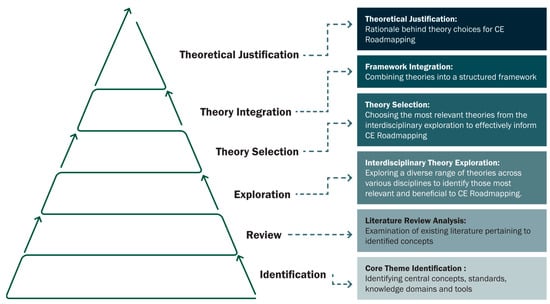
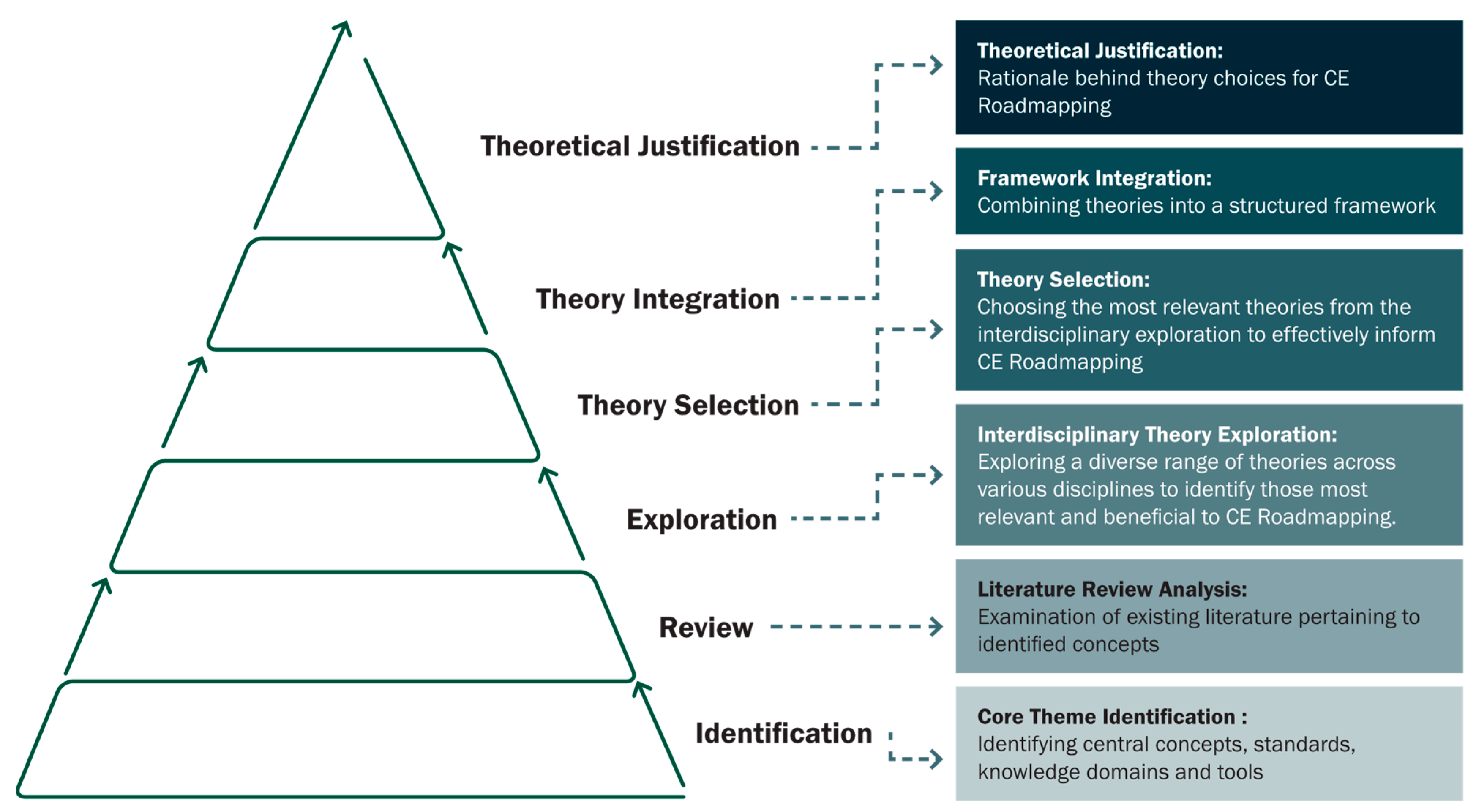
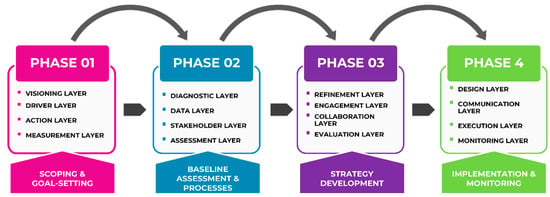
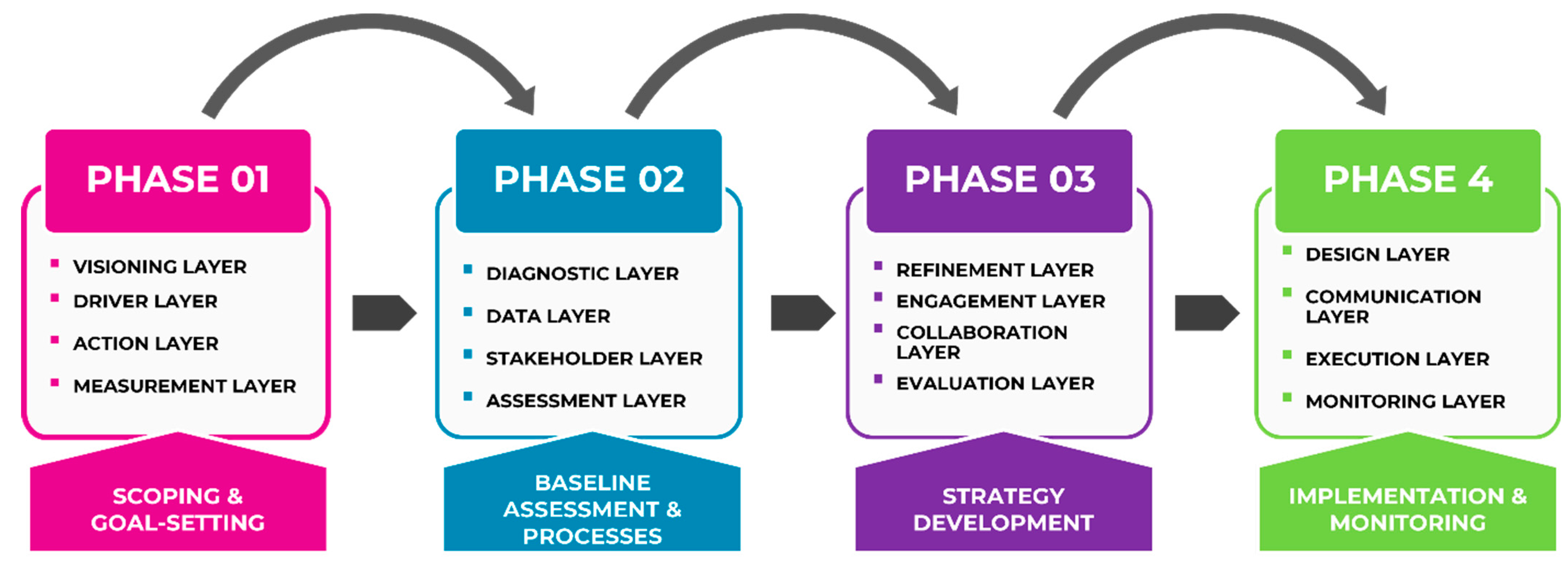
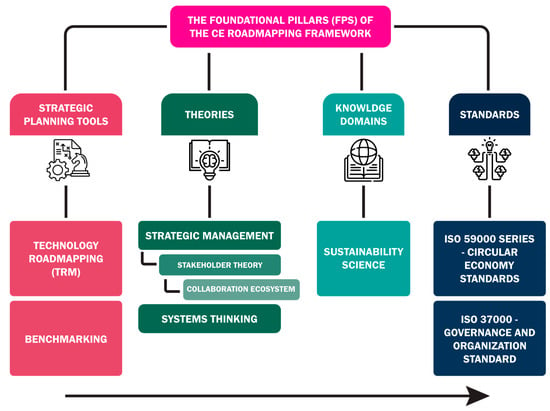
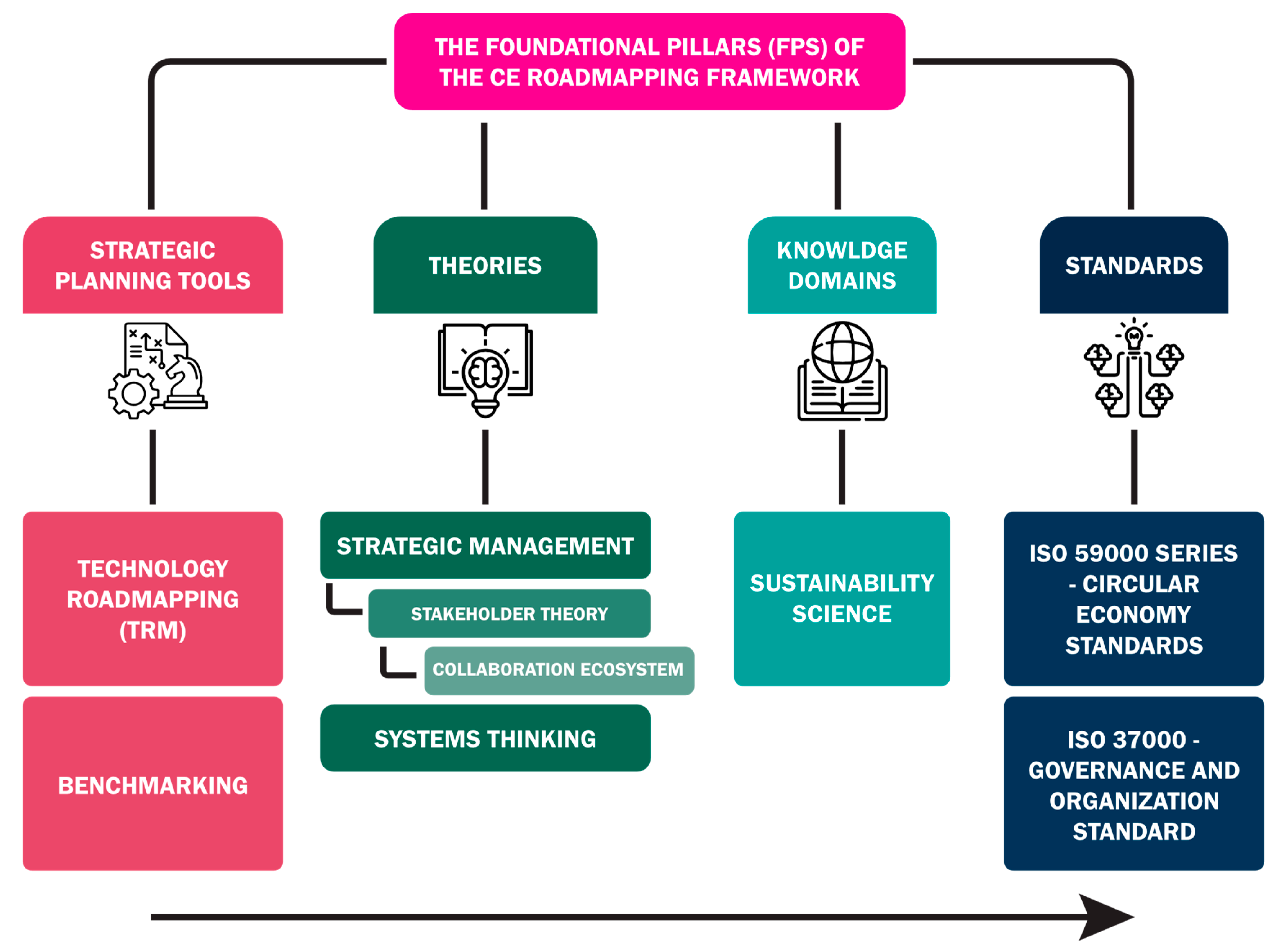

Disclaimer/Publisher’s Note: The statements, opinions and data contained in all publications are solely those of the individual author(s) and contributor(s) and not of MDPI and/or the editor(s). MDPI and/or the editor(s) disclaim responsibility for any injury to people or property resulting from any ideas, methods, instructions or products referred to in the content. |
© 2024 by the authors. Licensee MDPI, Basel, Switzerland. This article is an open access article distributed under the terms and conditions of the Creative Commons Attribution (CC BY) license (https://creativecommons.org/licenses/by/4.0/).