Abstract
Urban wastewater management in rapidly growing cities presents a significant challenge. Traditional centralized systems are unable to keep pace with increasing urbanization and wastewater generation. This manuscript presents a case study conducted in Yangon, aimed at investigating the feasibility and potential benefits of approaching the decentralized wastewater treatment system (DEWATS) as an alternative solution. DEWATS and centralized wastewater treatment system (CWTS) cases were observed for performance, operational efficiency, and environmental benefits. Field studies, interviews with municipal personnel, and discussions with residents were also conducted. Residents using DEWATS in Yangon value its environmental advantages and are willing to invest in sustainability. Those who use centralized systems are concerned about high costs and unreliability. Results from sustainability assessments showed that DEWATS obtained higher total scores than CWTS. Based on Weighted Sum Methods in three sustainability scenarios, DEWATS ranked first and has been shown to be a sustainable solution for Yangon across environmental, social, economic, and technical aspects. This study provides an alternative strategy for urban planners and decision-makers to use DEWATS as an option for urban wastewater management. The evidence could support accelerating provision of wastewater treatment plants and encourage willingness to pay.
1. Introduction
As global urbanization accelerates, the issues around controlling wastewater in developing cities have become more complicated. Among these cities is Yangon, Myanmar’s largest metropolis, where rising population growth and expanding urban areas put pressure on the country’s current wastewater infrastructure. The demand for innovative and long-term solutions to urban wastewater management is more urgent than ever [1]. In recent years, Yangon’s population has increased significantly to 5.9 million [2,3]. The city’s outdated wastewater system is under pressure from the population growth, necessitating urgent upgrading and expansion. An inadequate sewage collecting infrastructure leads to untreated wastewater being discharged into the city’s waterways. The Yangon City Development Committee (YCDC), as the administrative body of Yangon municipality, has primary responsibility for wastewater management services, sanitation, and water supply. The Pollution Control & Cleansing Department and the Engineering Department, which oversee water and sanitation, are important departments responsible for managing waste collection and treatment, water supply, sewage systems, sanitation, wastewater treatment plants for domestic and industrial wastewater, and related services [4]. As of 2023, the wastewater management system in Yangon faces several challenges. Onsite systems for residential properties are common, while decentralized wastewater treatment systems (DEWATS) are commonly used in commercial areas [5,6].
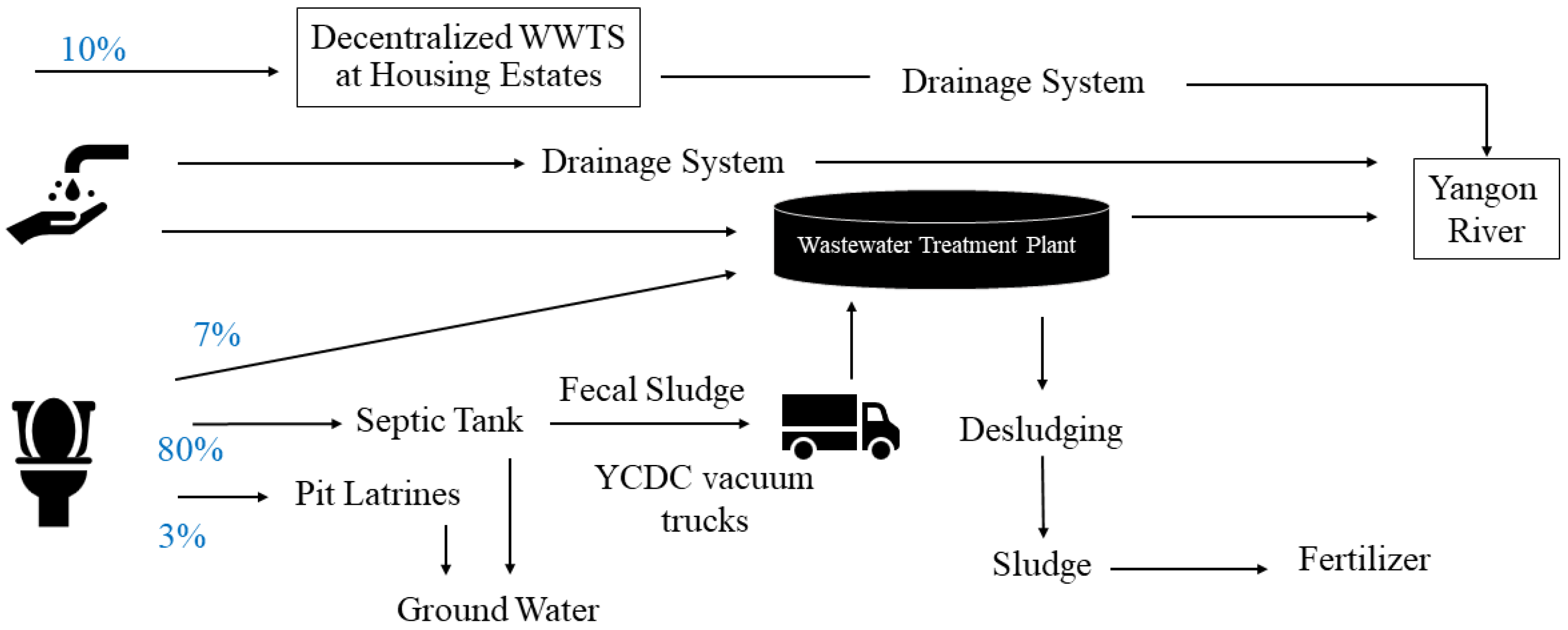
In Yangon, one centralized wastewater treatment system (CWTS) is operated by YCDC. It was modernized in 2003. It handles 7% of the city’s wastewater [7] and serves seven townships: Dagon, Latha, Lanmadaw, Pabedan, Pazundaung, Botahtaung, and Kyauktada. It is government-subsidized with minimal water usage fees and rigorous environmental monitoring. DEWATS are mainly used in housing areas such as The Hlaing Tharyar Industrial Zone where a German-supported plant was built in 2014. Currently, 10% of households in cities use DEWATS: community wastewater treatment systems like membrane bioreactors used in Yangon to treat a single community or housing estate. Unimproved pit latrines are used by 3% of residents [8], as shown in Figure 1. Most households (80%) use onsite septic tanks, which are a type of DEWATS. However, their efficiency is not satisfactory, producing effluent which does not meet quality standards. In this study, therefore, DEWATS was chosen due to its ability to provide good effluent quality. The “Greater Yangon Project”, a collaboration between YCDC and JICA, aims to construct sewage facilities to serve 49% of the city’s population. However, it faces challenges due to limited finances and rapid urbanization. Expanding sewer and treatment plants requires significant investment, while finding suitable land in Yangon is difficult. Despite the obstacles, the city is committed to expanding wastewater facilities to meet an 80% service coverage rate and reduce leakage by 2040. This involves building 14 centralized treatment plants in the city’s five areas, with a daily peak wastewater volume of 3 million m3/day.
Figure 1.
Yangon Sanitation Flow Chart.
In Lao PDR, Cambodia, and Myanmar, less than 35% of the wastewater produced in urban areas is treated before discharge. Malaysia and Thailand have higher rates of wastewater treatment in urban areas. Economic development is key to wastewater infrastructure. Developing countries with GDP per capita under $5000 import expensive methods from wealthier nations, raising sustainability problems [9,10]. Long-term planning, legal assistance, stakeholder involvement, technology selection, financial stability, and appropriate management models improve wastewater management [11]. Unfortunately, local government wastewater project budgets are generally limited [12,13]. Research from Thailand found that local characteristics, efficiency, sustainability, and simplicity are crucial to centralized system implementation [14,15]. Asian countries prefer decentralized systems over centralized ones for cost-effectiveness and sustainability [16]. A study comparing centralized and decentralized methods in Bangkok found DEWATS to be technically and economically efficient by creating cost-effective, sustainable urban development and increased water reuse [17,18].
However, implementation of these decentralized systems faces additional challenges including low public and policy maker awareness, which leads to limited funding and potential support [19]. Some housing estates like The YCDC Officer Housing Estate have successfully implemented a membrane bioreactor (MBR)-based DEWATS. The system offers a cost-effective and practical wastewater treatment solution for the community. Nowadays, the cost of membranes is affordable. The operators chose MBR due to its lower operational and maintenance (O&M) costs and higher treatment efficiency. It is stable, making an economical choice with long-term reliability [20]. It does not require an extensive land area and can be easily integrated into existing treatment plants, saving space and reducing infrastructure.
The implementation of sustainable sanitation practices is essential in mitigating the spread of diseases, minimizing environmental degradation, and encouraging economic growth [21]. Choosing an appropriate sanitation system for specific circumstances requires a comprehensive evaluation of the system’s capabilities and corresponding local conditions. One of the key factors in choosing an appropriate system is community participation [15,22]. DEWATS systems can offer an immediate solution in a community, or specific areas where the government has not established proper systems for managing waste and sanitation services, as DEWATS is designed to treat wastewater at a smaller scale [23]. This can accelerate the number of wastewater treatment plants within a short period of time in areas that needed these installations.
The technological methods employed in wastewater treatment projects are chosen based on numerous aspects. The most important is the project’s environmental, technical, and economic feasibility [19,24]. Septic tanks are the most commonly used sanitation facilities in Yangon, followed by improved pit latrines, double vault latrines, composting toilets, and pour-flush sanitation [25,26]. The main weakness of septic tanks and onsite systems is that they are relatively inefficient and their effluent quality does not meet the required standard.
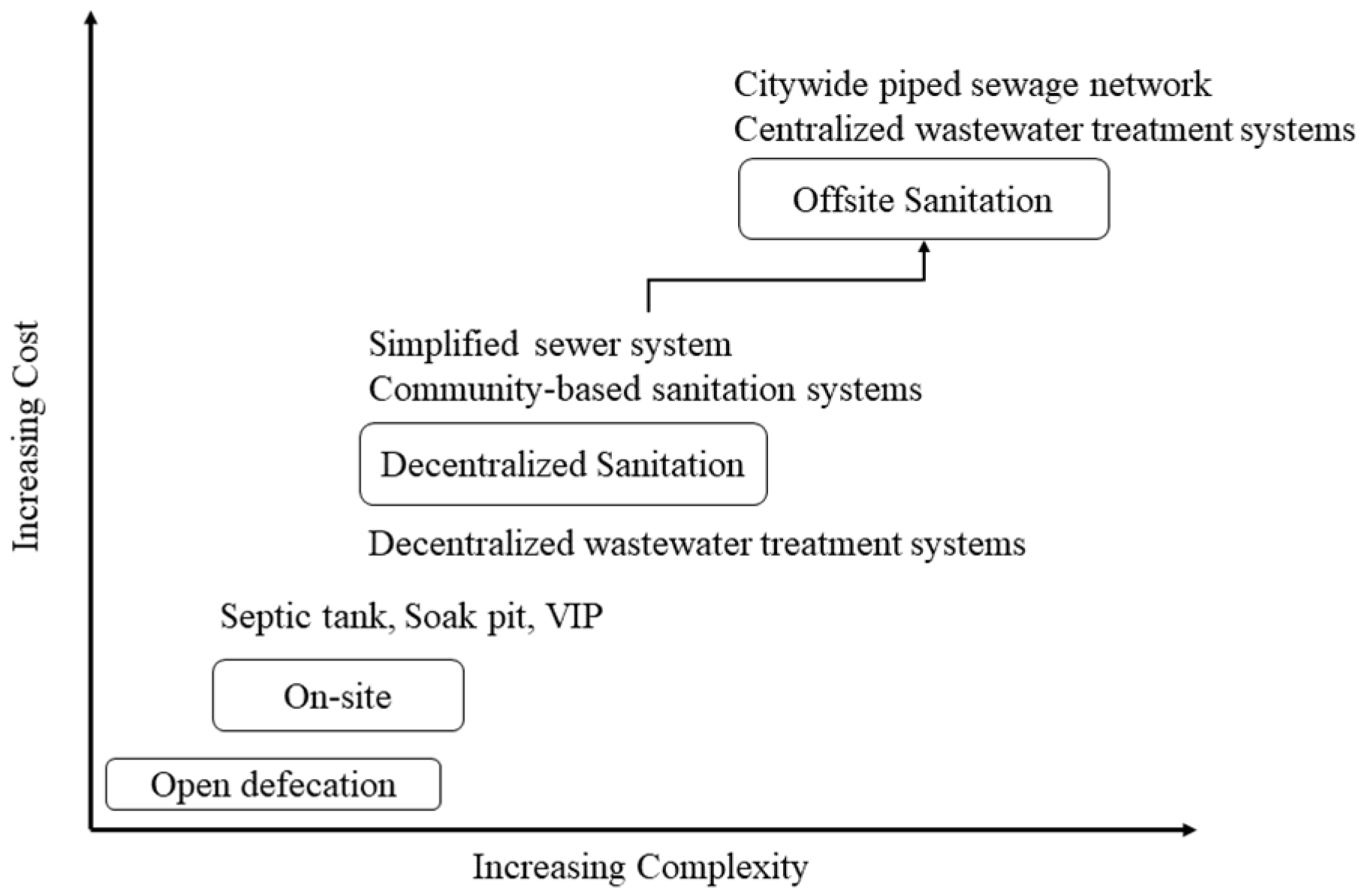
Due to the high initial cost and infrastructure development requirements of centralized systems, previous research proposed integrated DEWATS solutions between onsite and offsite systems, as shown in Figure 2. In addition, the regional government has needed considerable loans for system development and O&M [27]. A centralized system’s sewer network may cost five times as much as the sewage treatment plant [28,29]. However, modern DEWATS may solve these issues [30]. The implementation costs are lower, deployment is faster, and they require minimal government financing for establishment and O&M. In this study, wastewater treatment technologies are considered sustainable if they reduce environmental impact, provide social acceptance and equity, have economic feasibility, and are technically efficient and reliable.
Figure 2.
Proposed integrated DEWATS between onsite and offsite systems [31,32].
The experience of Yangon with CWTS reveals a number of barriers concerning efficiency and implementation. The main objective of this study is to investigate DEWATS in urban wastewater management in Yangon, Myanmar as a case study. The specific objectives were: (1) A detailed investigation of current systems in the study area; (2) To conduct a sustainability assessment of four aspects, i.e., environmental, economic, social, and technical; (3) To carry out an evaluation of the proficiency and capabilities of operators involved in the management of these systems; (4) To conduct a survey into perceptions of those who are engaged in this process. By examining these objectives, the study aims to provide a comprehensive solution in proposing that DEWATS could be the most appropriate solution for urban wastewater treatment in developing countries, while CWTS requires significant financial investment.
2. Methodology
2.1. Research Framework
This research employed a mixed-methods approach to investigate DEWATS in Yangon, Myanmar. The study began by assessing existing DEWATS and CWTS in terms of efficiency and effluent quality. The comprehensive evaluation covers environmental, economic, social, and technical aspects that consider sustainability and community well-being [33]. Operator skills are evaluated, and residents’ perspectives are gathered through surveys and interviews. A weighted sum method is used to assess sustainability and performance, helping decision-makers optimize system design and improve urban wastewater management.
2.2. Study Area
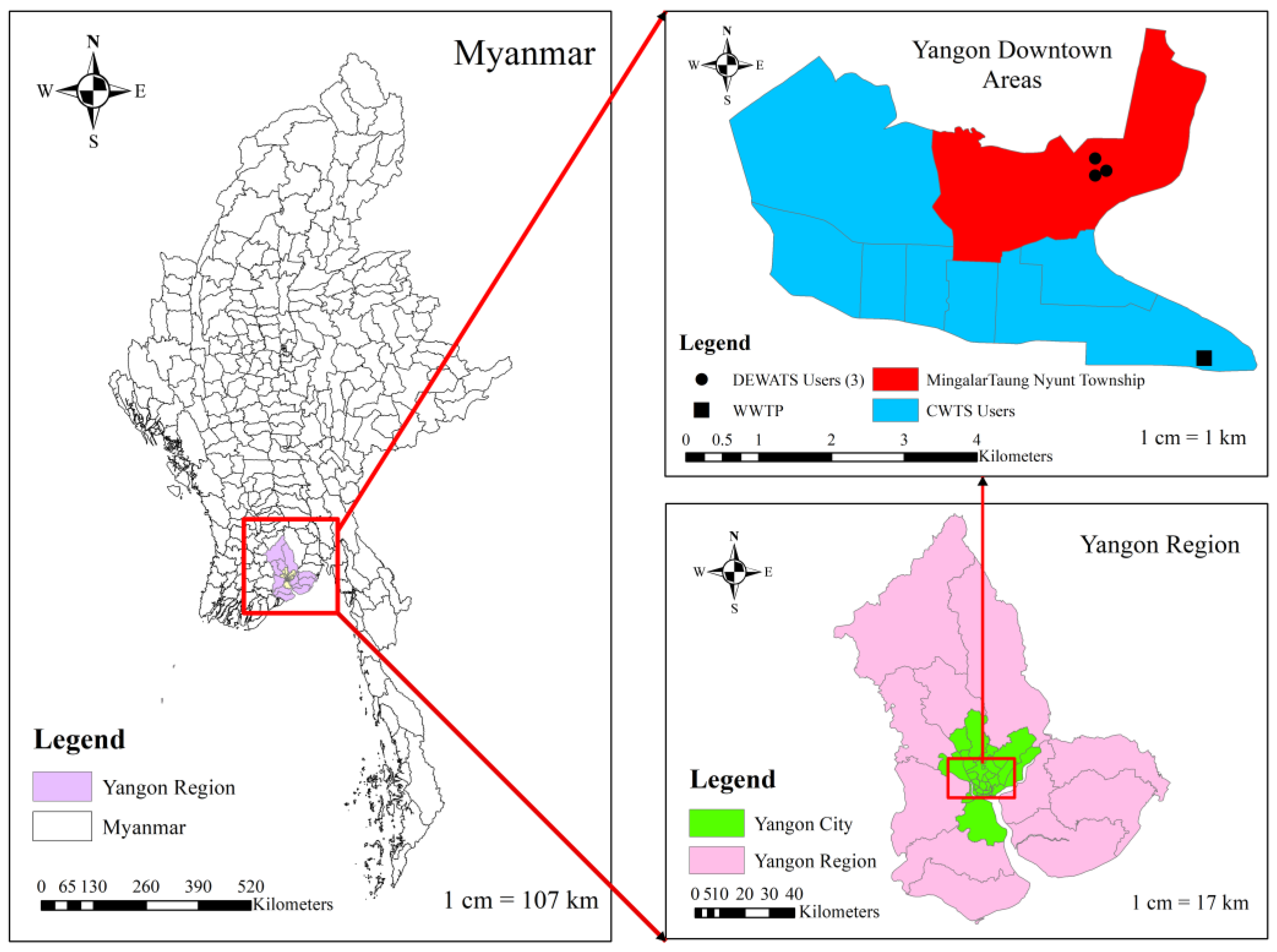
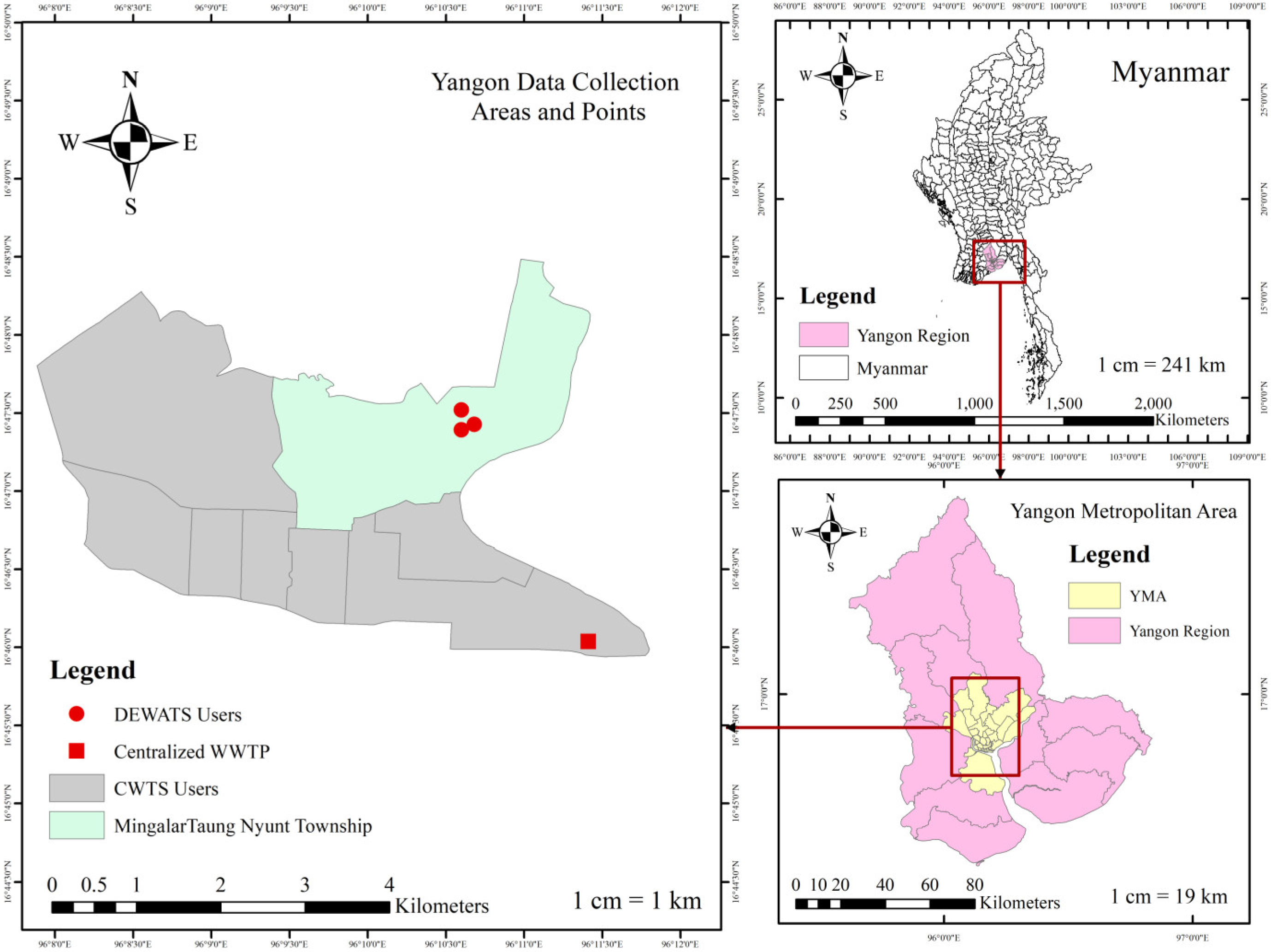
Yangon, the former capital of Myanmar, is positioned in the southern part of the country, along the eastern bank of the Yangon River [34]. Covering an area of approximately 10,170 km2, Yangon serves as the industrial and commercial hub. It has a population of 6.73 million as of 2023, making it one of Myanmar’s most densely populated cities [35]. The city encompasses four districts and 44 townships, with 33 under the jurisdiction of YCDC [36]. The urban area has 1.1 million household units, with a noteworthy 84.84% of households having access to improved sanitation facilities, as reported by YCDC. Among them, only 3% of households use pit latrines, while 80% have septic tanks [37]. The Yangon centralized wastewater treatment system in Botahtaung, located at 16.767278, 96.190167, was selected as the CWTS case study. The system covers seven townships. It is recognized as the main domestic treatment system in the country and is currently in good operating condition. DEWATS from the YCDC Officer Housing Estate in Mingalar Taung Nyunt Township, situated at 16.789861, 96.176667, was also included in the case study. The locations are shown in Figure 3.
Figure 3.
Yangon metropolitan and region areas.
2.3. Discussions with Residents
There were two different focus groups with twenty-five participants in each. Two separate sessions were designed to investigate residents’ opinions on the advantages and disadvantages related to environmental, social, economic, and technical aspects associated with their opinions, concerns, and preferences regarding DEWATS and CWTS. Participants were encouraged to express their views, concerns, and experiences. Purposive sampling was used in the participant selection process to ensure a representative sample of the population affected by, and knowledgeable about, wastewater treatment systems in the Yangon area. The DEWATS Housing Estates have twelve apartment blocks. At least two or three participants from each housing block were chosen for the discussions. Similarly, for the centralized system, three to four participants were chosen from each of the seven townships served, as shown in Figure 3. The locations of data collection are shown in Table 1.
Table 1.
Location of data collection in Yangon.
There were some limitations due to the lack of residents’ knowledge regarding technological advancements and associated costs. The discussions may not therefore have fully investigated technological aspects, including emerging innovations and potential advancements in wastewater treatment technology.
2.4. Sustainability Assessment
Assessment tools, such as economic, environmental, energy, and life cycle analyses were employed to gauge the sustainability of wastewater treatment systems, including onsite systems, DEWATS, sewage wastewater treatment plants, centralized systems, wetlands, and anaerobic processing. Assessment indicators depend on community culture, civilization development, location, population, and everyday activities [38]. Some studies have examined only one treatment technique using multiple indicators, which should balance economic, environmental, and social factors. This study utilized four key aspects—environmental, economic, social, and technical—to comprehensively assess sustainability and system performance and identify the most appropriate technology. The case study was conducted in Yangon, a city representative of many developing urban areas, which provides valuable insights into circumstances found in similar cities.
To provide a better assessment, the indicators were chosen based on several literature reviews, including the work of [14,22,39]. The five highest-level specialist municipal officers who are responsible for treatment systems were chosen from each system. The total number of officers included in the survey was ten. Their opinions and experience about each aspect (environmental, social, economic, and technical) were obtained via a survey questionnaire. While the social aspects of wastewater treatment systems have usually focused on residents’ perspectives, this study was unique in that it also included the perspectives of municipal officers due to their specialized knowledge and responsibility for system operations, providing an in-depth assessment that considered specific issues relevant to their expertise and experience.
The respondents were asked questions with different aspects on a scale of 1 to 5. In the questionnaires, scale 1 indicated a high level of unsustainability, 2 defined unsustainability, 3 represented moderate sustainability, 4 indicated sustainability, and 5 reflected a high level of sustainability. The officers were asked to assess the rate of greenhouse gas (GHG) emissions associated with DEWATS and CWTS. Similarly, they were asked to rate the willingness of residents to pay for DEWATS compared to CWTS. For economic aspects, the interviewees were asked to rate the effectiveness of DEWATS and CWTS in serving the needs of the local population. In addition to technical aspects, they were asked to evaluate the reliability of DEWATS and CWTS in meeting wastewater treatment requirements. This methodology ensured that the participants were directly accountable for the operation and administration of these systems. The respondents’ individual expertise and extensive experience qualified them as suitable candidates to offer useful perspectives on the assessment.
2.5. Weighted Sum Method (WSM)
The multi-criteria decision analysis (MCDA) technique is commonly used for decision-making [40]. It helps facilitate fair discussions on management options, consider stakeholder viewpoints, and assess the effects of different choices, including prediction uncertainty and stakeholder assessments [41]. WSM employs statistical calculations to weigh environmental, technical, social, and economic factors, making it a simple and practical method for addressing issues like risk identification and assessment [42]. A complete assessment, using weighted criteria and qualities, helps decision-makers prioritize sustainability goals and performance indicators for Yangon wastewater management. Environmentally sustainable and operationally efficient solutions are promoted.
Weighted Sum Method equation was used. This is defined on MCDA: m is alternatives and n are decision criteria, represents the WSM score for alternative, wj is the relative importance of criterion Cj, and aij is the performance value of alternative Ai concerning criterion Cj [15,39]. The total importance of alternative Ai, and the WSM equation, can be stated as follows:
For i = 1,2, 3, …, m.
In this study, three scenarios were applied using Equation (1), with a particular focus on economic considerations in a developing country like Myanmar. These economic factors, such as implementation costs, O&M expenses, labor wages, land costs, monthly fees, and revenue expenditures, were given significant weights, in line with the findings of previous studies [15,43], and introduce the scenarios that follow:
- (1)
- Assign equal weights (25%) to each of the four aspects;
- (2)
- In this approach, apply a weight of 0.5 (50%) to the social aspects, while assigning equal weights of 0.1667 (16.667%) to each of the remaining aspects. This scenario should reflect the real-world situations;
- (3)
- Give a weight of 100% to the social aspects and allocate a weight of zero to others.
In hypothetical scenario 1, each aspect is equally weighted (0.25 each) to four aspects. Equation (1) was applied to hypothetical situation 2, with a weight of 0.5 assigned to the social components and equal weights of 0.1667 given to the remaining aspects. Lastly, social aspects were given a weight of 100%, while zero was applied to the WSM equation, based on Equation (1), A1WSM-Score is the total importance of DEWATS, A2WSM-Score is the total importance of CWTS, W1 is the weight of environmental aspects (), W2 is the weight of social aspects (), W3 is the weight of economic criteria (), and W4 is the weight of technical criteria (). The WSM equation computes the overall sustainability scores by multiplying these performance values with their respective weights and totaling the figures. In this study, performance values () of four aspects, i.e., environmental, social, economic, and technical, were applied within the equation. Each of the applied equations can be seen in Equations (2)–(4).
3. Results and Discussions
3.1. Investigating Existing Wastewater Treatment Systems in Yangon
To comply with Myanmar’s National Building Code 2020, almost all households install at least septic tanks. However, 3% of residents still use unimproved pit latrines [44]. The vacuum trucks operated by YCDC have been used for the transportation of sludge from residential septic tanks to the CWTS for proper disposal. Master plans call for 49% of the population to have wastewater treated by 2040 [7,45].
The CWTS in Yangon, located in Botahtaung Township, currently provides services for seven townships around the city—Pabedan, Kyuaktada, Botahtaung, Pazundaung, Lanmadaw, Dagon, and Latha—which are mostly in the downtown region. The Yangon River receives the treated water. With 4.33 km2, the facility can treat wastewater from 0.35 million individuals, or 7% of the city’s population. With activated sludge treatment, the facility can handle 14,775 m3 of sewage, 946 m3 black water, and 13,892 m3 grey water daily. The auto bar screen, grit chamber, sedimentation tank, aeration tank, chlorination tank, sludge thickeners, and sludge digesters all function as part of the system. Before the treated water is discharged into the Yangon River, the effluent quality is regularly monitored in an onsite laboratory to ensure compliance with The Myanmar National Environment Quality Guidelines (NEQEG) [46]. The sludge is then dried naturally and used as fertilizer. The municipality operates the O&M process, which includes sewage pipe cleaning, de-sludging, and driving air compressors. However, monthly service fees are not yet collected from residents [47].
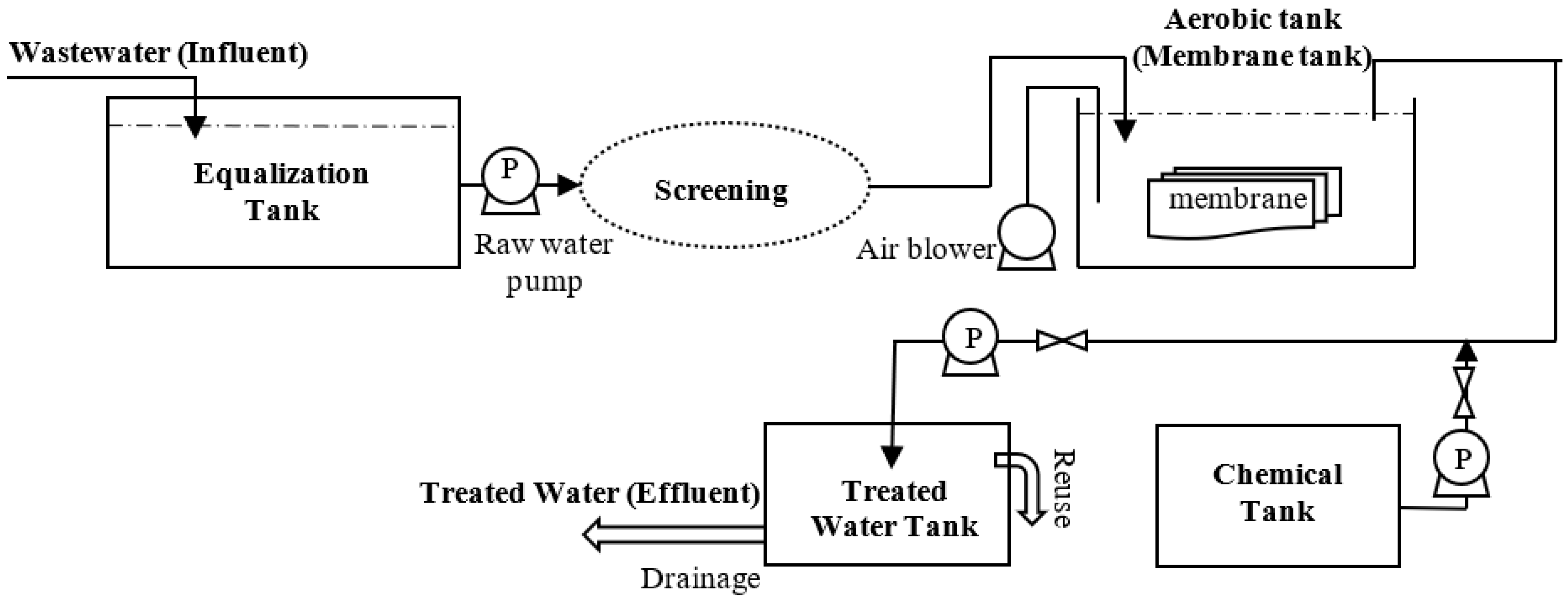
DEWATS are used by approximately 10% of households. Most of the users are municipal and peri-urban housing estates, condominiums, apartments, as well as hospitals and commercial areas [48]. The DEWATS from the YCDC Officer Housing Estate in Mingalar Taung Nyunt Township is one of the most well-known O&Ms in Yangon. It was also chosen for the case study. Each system serves around 500 residents and can treat up to 38 m3 per day using MBR. The effluent is typically discharged into the municipal drainage system, as seen in Figure 4. The treated water is regularly monitored by MWEP Co., Ltd. The sludge is dried by natural sunlight and then disposed of in landfills, while the treated water is occasionally used for gardening purposes [49]. The municipality manages these DEWATS directly and residents do not have to pay fees for the services.
Figure 4.
Schematic diagram of existing MBR used for housing estates in Yangon.
3.2. Opinions of Residents
Despite concerns regarding initial and operating costs, DEWATS were widely regarded for their environmental benefits and cost-effectiveness. Residents highlighted their concerns for long-term sustainability and resource conservation. CWTS users, on the other hand, pointed out challenges such as high monthly fees, maintenance costs, and system unreliability, all of which added to financial and social risks. Based on these opinions, residents generally favored DEWATS because of the environmental and social benefits. The summarized residents’ discussion is presented in Table 2.
Table 2.
Summary of residents’ discussions in Yangon.
3.3. Wastewater Effluent Quality Results
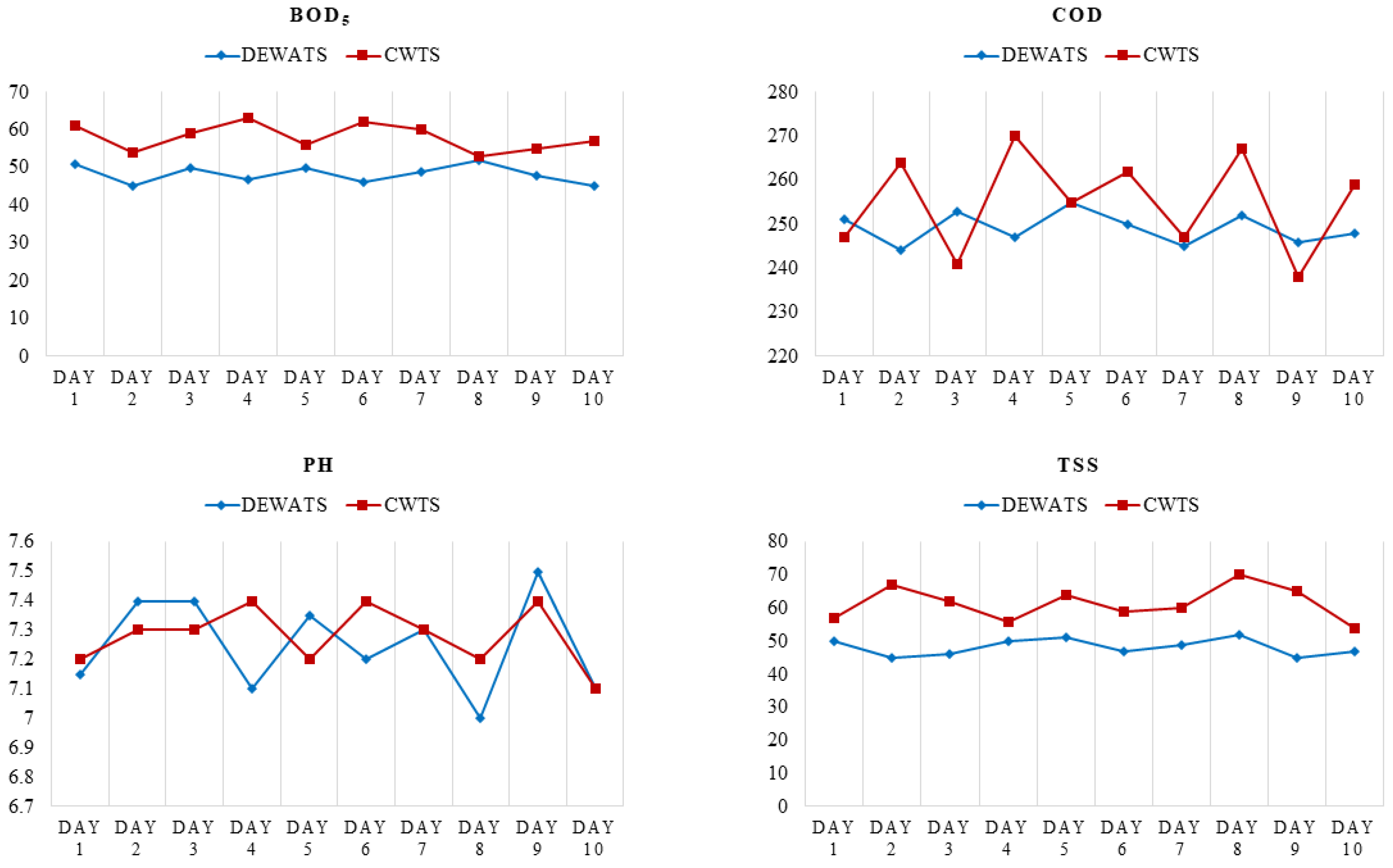
The analysis of effluent quality from each system considers four key parameters: BOD5, COD, pH, and TSS. The monitoring of effluent quality on a daily basis in Yangon is conducted using the NEQEG. Based on the guidelines, the acceptable range for BOD is 50 mg/L, COD should not exceed 250 mg/L, pH level should fall within the range of 6 to 9, and TSS should not exceed 50 mg/L. Table 3 highlights the effluent quality over a period of 10 days for the two systems, using data obtained from the YCDC.
Table 3.
Results of Effluent quality of DEWATS and CWTS.
The figures for wastewater effluent quality were obtained from a municipal treatment facility in Yangon over a 10 day period. Sampling was conducted daily from 3rd to 12th August 2023, resulting in two samples per day—one from each system. A total of 20 samples were collected from DEWATS and CWTS. DEWATS samples were obtained from a selected housing estate, YCDC Officer Housing Estates, while the CWTS samples were gathered from the Yangon centralized wastewater treatment plant or CWTS in Botahtaung township. The locations of the samples are shown in Figure 5. These locations were chosen to represent different environmental conditions and variations in wastewater treatment strategies within Yangon. The municipal source served as a central point of observation, providing insights into the effectiveness of the collective treatment processes applied by the facility.
Figure 5.
Yangon Data Collection Areas.
The DEWATS performed well over the 10-day period, with mean values for key parameters within acceptable ranges. The 10-day mean BOD5 value of 48.3 mg/L was slightly below the 50 mg/L threshold, indicating effective organic pollutant removal. The mean COD of 249.1 mg/L was also within acceptable limits, indicating good chemical oxygen demand control. Successful pH management was shown by the system’s mean pH of 7.25, comfortably within the 6 to 9 range. The mean TSS content of 48.2 mg/L was just below the 50 mg/L guideline, indicating successful removal of suspended solids. The low standard deviations for BOD5, COD, and TSS indicate consistent performance and reliability. The CWTS in Yangon worked inconsistently, with key parameter mean values hovering close to allowed ranges but sometimes exceeding them. The mean BOD5 value of 58 mg/L exceeds the 50 mg/L threshold, suggesting problems with organic pollutant removal. The mean COD of 255 mg/L was slightly above the level, indicating focus for COD control improvement. The system managed pH well, maintaining a mean pH of 7.28 within the allowed range of 6 to 9. However, the mean TSS concentration of 61.4 mg/L was above the 50 mg/L guideline, indicating difficulties with removal of suspended solids. BOD5, COD, and TSS have substantial standard deviations, indicating performance variability that should be improved. The effluent quality of the 10-day period, comparing DEWATS and CWTS, is presented in Figure 6. In Yangon, the O&M cost of DEWATS stands at 0.39 USD per m3, whereas the centralized system costs just USD 0.003 per m3 according to municipality personnel. This comparison supports the conclusion that DEWATS tends to produce better effluent quality than centralized systems, despite its higher cost per m3.
Figure 6.
Effluent quality of 10-day period in Yangon.
3.4. Sustainability Assessment
A sustainability assessment was carried out on both selected DEWATS and CWTS systems to evaluate the characteristics of environmental, social, economic, and technical aspects. Ten highly experienced municipal officers, responsible for wastewater treatment systems, provided their opinions through a standardized survey using a five-point scale to assess different treatment aspects. In the case of CWTS, the officers were questioned in the treatment plant location shown in Figure 5, while the DEWATS officers who were selected for the survey lived and worked on the housing estate. In this study, mode values on every indicator of each aspect were used both for DEWATS and CWTS because mode values are straightforward and easy to interpret. These values represent the most common in a dataset, allowing for a clear understanding of the most common viewpoint among respondents.
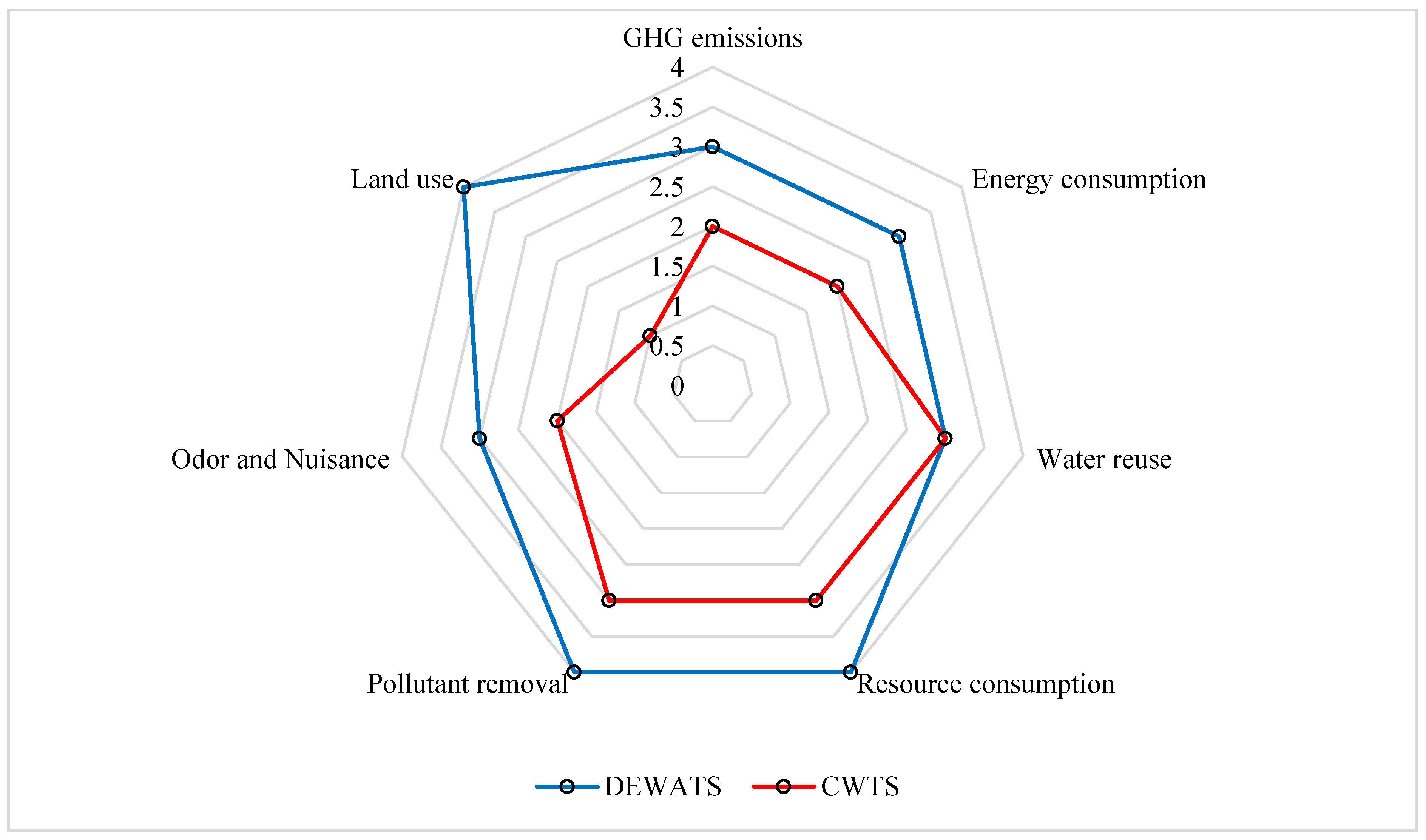
The results of the assessment of the environmental aspects are shown in Figure 7. Operators (municipal) recognize that Yangon’s DEWATS performed better in water reuse, resource conservation, greenhouse gas emissions, and energy utilization. DEWATS’ strong water reuse capability, which achieved a score of 3, is especially important for Yangon, where treated water is widely used for gardening. In densely populated Yangon, land availability can make CWTS difficult to install. Compact and decentralized systems are the best land-use solutions with a score of 4, compared to 1 for centralized systems. The efficient pollutant removal, and odor and nuisance reduction of DEWATS installations, improve the quality-of-life of people in Yangon, with a total score of 24; the score of CWTS is 16.
Figure 7.
Assessment of environmental aspects of sustainability.
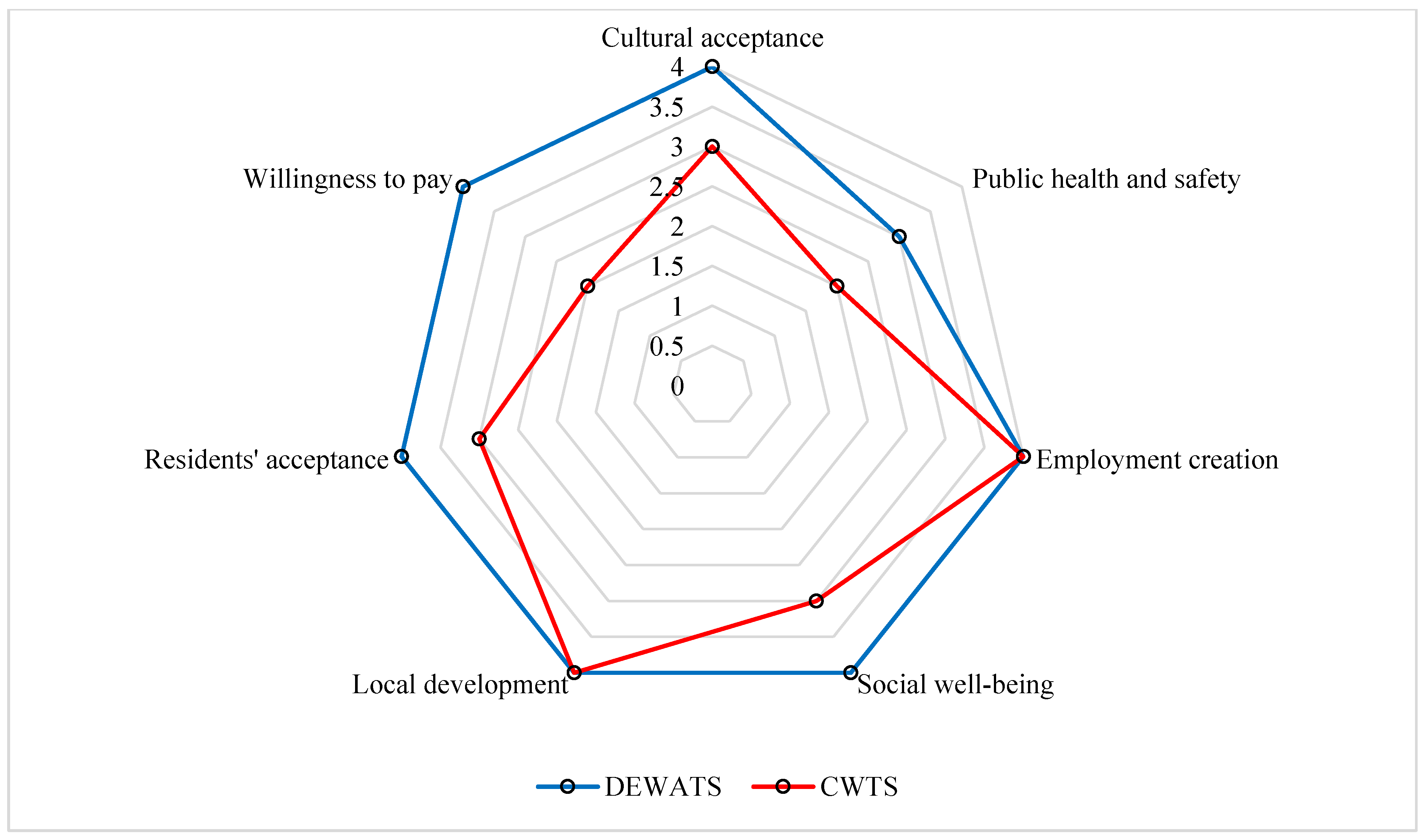
DEWATS operators and users provided significant insights into several social dimensions. Cultural acceptability, employment creation, local development, and resident acceptance fared better, as shown in Figure 8. The DEWATS assessment received higher cultural acceptance scores, indicating that it better matches local customs and traditions, improving community acceptance and cooperation. The evaluation also demonstrates that DEWATS and centralized systems create jobs, which are vital to society. Both systems need O&M workers, which produces local jobs. Job creation aids local development by providing equivalent benefits and social growth while being more culturally accepted and adaptive. Residents who can afford DEWATS, like them. Since DEWATS costs less per month than the centralized system, most residents are willing to pay. Decision-makers noted that DEWATS is socially sustainable and inexpensive, providing wastewater treatment services to the majority of the population. DEWATS fits local values and contributes more to social well-being and development than CWTS, making it a better choice for Yangon.
Figure 8.
Assessment of social aspects of sustainability.
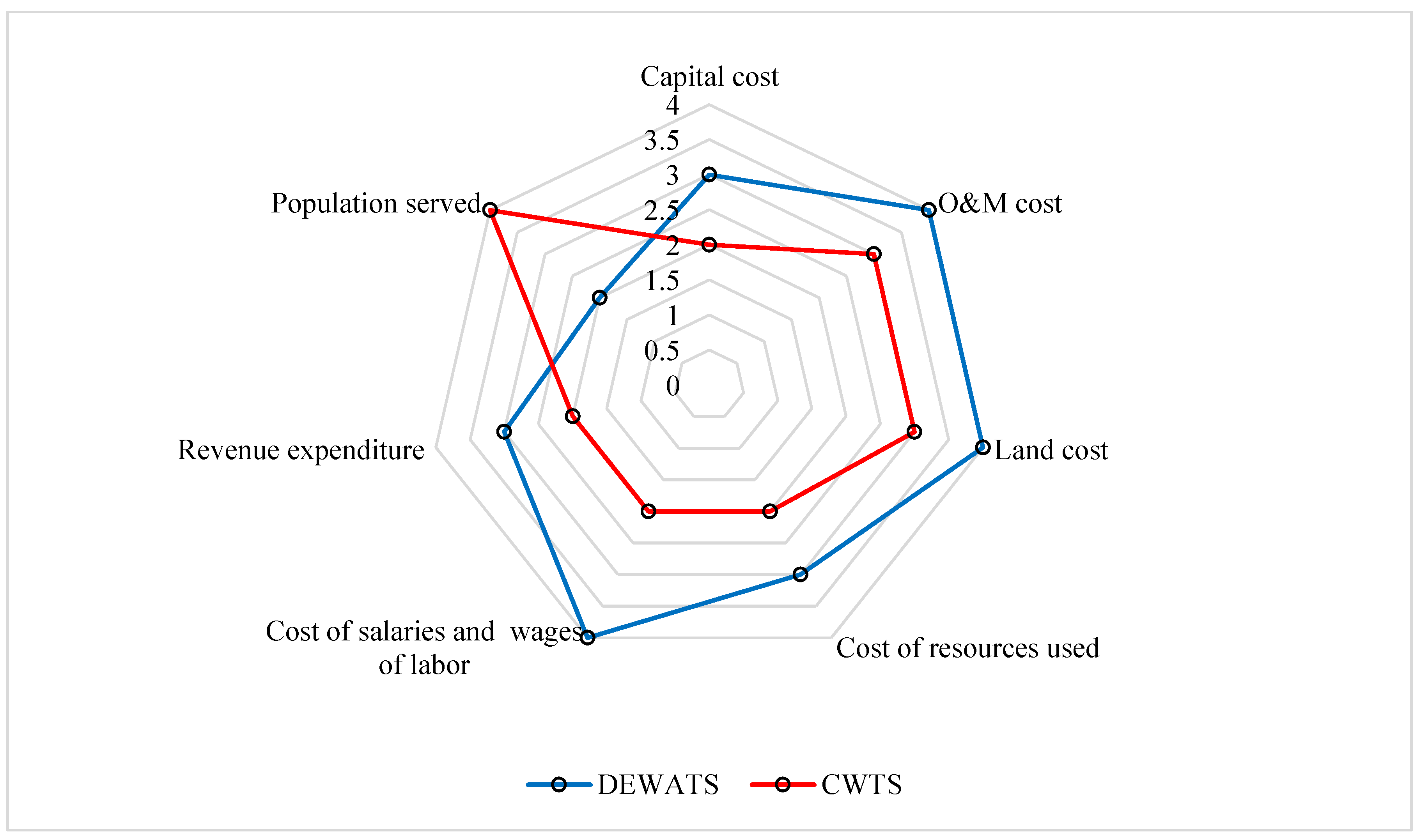
In Yangon, where neither system charges a monthly fee for wastewater treatment, DEWATS and CWTS fail to meet revenue expenditure. Tariff arrangements will take a long time if larger systems and municipal investments require foreign funds, burdening the country with future financial concerns. Centralized systems can efficiently meet the city’s needs by serving a larger population. Although DEWATS have greater O&M expenditures (4) than centralized systems (3), Figure 9 shows that DEWATS are more cost-effective over time. DEWATS also offers lower land costs than centralized systems, which is significant in densely populated areas. DEWATS is more financially sustainable for the city due to its lower O&M expenditures and manpower demand. DEWATS is better than CWTS for Yangon’s long-term cost-effectiveness and economic compatibility, especially given the city’s revenue spending issues and demand for affordable wastewater treatment options.
Figure 9.
Assessment of economic aspects of sustainability.
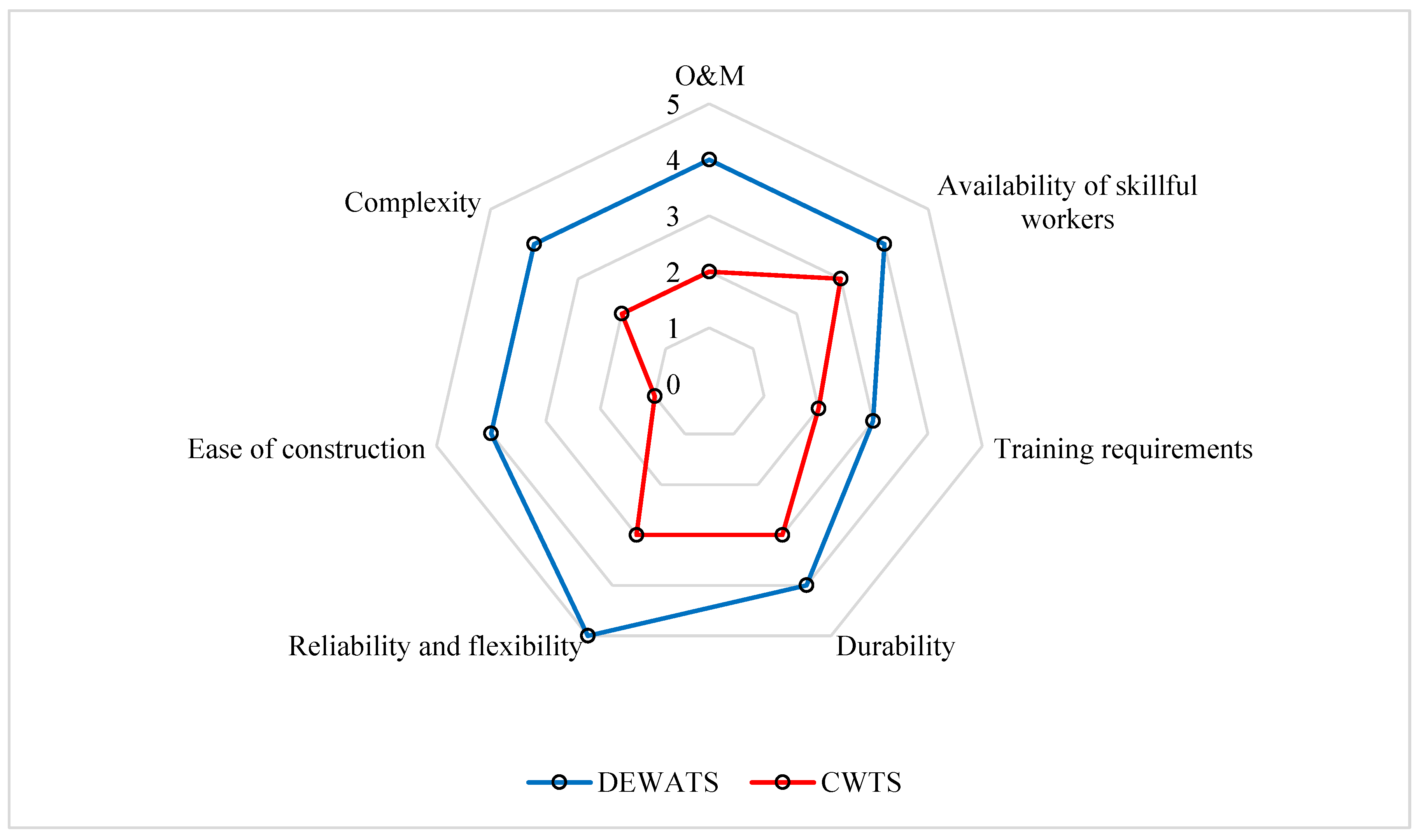
Figure 10 shows that CWTS’s O&M is complex and more expensive as it is complicated and requires more skilled workers. The need for continual CWTS training emphasizes its technical difficulties. DEWATS is more robust, reliable, and adaptive to local needs, with a simpler production process. With a score of 4, respondents said it has an advantage in skilled manpower, which is necessary for efficient wastewater treatment. DEWATS in Yangon has O&M and technology advantages. DEWATS’ technological viability and sustainability make it a better alternative given its needs and resource constraints, especially given the complexity and technical skill required for CWTS.
Figure 10.
Assessment of technical aspects of sustainability.
After combining all aspects in Table 4, DEWATS had a score of 102 and CWTS had a score of 71. Social components had the greatest impact, scoring 48, emphasizing community engagement and well-being. This shows how important social factors are to the long-term sustainability of decentralized systems. It means that community engagement, public approval, and local well-being are needed to implement and maintain WWTPs in urban areas like Yangon. Economic considerations, however, contributed least and DEWATS outscored CWTS economically. These findings provide insights into sustainable wastewater treatment procedures not only for Yangon, but also for other urban areas around the world.
Table 4.
Total Sustainability Scores.
3.5. Scenarios Analysis
Table 5 reveals that DEWATS is more sustainable than CWTS when weighted equally. In the second scenario, a 50% weight was assigned to social characteristics, and DEWATS scored 26.34 and CWTS 18.84. The third scenario yielded the same outcomes, despite applying 100% to social issues: DEWATS was more sustainable economically. DEWATS provides a viable environmental, social, economic, and technical solution for Yangon. It reduces environmental impacts, fits the regional context, promotes community acceptance, and provides technical and cost-effective wastewater treatment. DEWATS outperforms CWTS in several ways, making it Yangon’s preferred, comprehensive method of treating wastewater. The findings of this study closely matched prior research undertaken in other developing countries, including Zimbabwe, India, Thailand, and Iraq [19,20,21,50,51]. Research across these countries consistently found that DEWATS had superior benefits concerning adaptability and cost-effectiveness, along with the capacity to address local water scarcity and pollution. Studies in India and Iraq highlight its local adaptability, resource efficiency and reduced environmental impact through water reuse. Thailand’s research highlights DEWATS’s economic efficiency, operational benefits, and superiority as a short-term solution and for sustainable urban development. These findings reflect this study’s findings on DEWATS for sustainable wastewater management in developing countries.
Table 5.
Weights combination on different scenarios and ranking.
4. Conclusions
Yangon’s wastewater management faces critical challenges due to its rapid urbanization and outdated infrastructure. Despite attempts to improve conditions through the Greater Yangon Project, financial burdens and limited land availability may hamper development. Understanding the performance of DEWATS and CWTS is essential for influencing long-term infrastructure planning. The environmental, social, economic, and technical aspects of these systems were all carefully considered in this study. One of the significant findings in this study was that, compared to the master plan of CWTS, which is costly and takes a long time to implement, DEWATS is a viable alternative for the city. The research utilized a mixed-methods approach to evaluate DEWATS and CWTS in Yangon via surveys, interviews, and weighted sum methods involving residents and municipal officers. According to discussions, residents favored DEWATS more due to the environmental benefits and cost-effectiveness, despite concerns about CWTS, which were high O&M costs and unreliability. Effluent quality analysis over 10 days revealed that DEWATS consistently met acceptable standards, showing effective pollutant removal and stable performance. CWTS, however, often exceed permissible limits to ensure consistent compliance with guidelines. By applying Weighted Sum Methods, DEWATS also outperformed CWTS with a score of 102 across three sustainability scenarios. Due to its exceptional results in minimizing emissions, resource conservation, and efficient treatment, DEWATS is a preferable option over centralized systems. For CWTS, the high costs, ease of construction, reliability, and flexibility, are burdens on both decision-makers and residents. This study supports the findings of previous studies conducted in other developing countries indicating that DEWATS is preferable. The depth analysis is limited by residents’ opinions on technology advancements and technology costs. Further research is therefore recommended to fully comprehend wastewater management solutions. These findings can be applied not only to Yangon but also to other developing cities that experience similar problems.
Author Contributions
Conceptualization, K.H.S., N.S. and C.V.; methodology, K.H.S.; software, K.H.S.; validation, K.H.S., N.S. and C.V.; formal analysis, K.H.S.; investigation, K.H.S.; resources, K.H.S., N.S. and C.V.; data curation, K.H.S.; writing—original draft preparation, K.H.S.; writing—review and editing, K.H.S., N.S. and C.V.; visualization, K.H.S.; supervision, K.H.S., N.S. and C.V.; project administration, K.H.S., N.S. and C.V.; funding acquisition, N.S. All authors have read and agreed to the published version of the manuscript.
Funding
This research paper was supported by “Capacity Building Initiative for Myanmar (CBIM 2): 78/8258” jointly sponsored by Mahidol University and the Norwegian Government.
Institutional Review Board Statement
This study was conducted in accordance with the Mahidol University Central Institutional Review Board with MU-CRIB 2021/141.2403, Certificate of Approval (COA) No. 2021/102.0505. All ethical statements are available upon request from the corresponding author.
Informed Consent Statement
Informed consent was obtained from all subjects involved in the study.
Data Availability Statement
The authors confirm that the supporting data and the findings of this study are available within the article.
Acknowledgments
The authors would like to express their gratitude to the Yangon City Development Committee for granting permission for the field visits and providing valuable information regarding the wastewater management systems. Those who participated in group discussions and interviews are also appreciated. The Myanmar Water Engineering & Products Co., Ltd. (MWEP) is acknowledged for its support in facilitating the data collection process.
Conflicts of Interest
The authors declare no conflict of interest.
References
- Corominas, L.; Neumann, M.B. Ecosystem-based management of a Mediterranean urban wastewater system: A sensitivity analysis of the operational degrees of freedom. J. Environ. Manag. 2014, 143, 80–87. [Google Scholar] [CrossRef] [PubMed]
- Aung, H.; Myint, T.Y.; Khaing, N.N. Assessment of surface water quality along Pazundaung Creek, Yangon City. IOP Conf. Ser. Earth Environ. Sci. 2020, 496, 012013. [Google Scholar] [CrossRef]
- Premakumara, D.G.J. Waste Management in Myanmar: Current Status, Key Challenges and Recommendations for National and City Waste Management Strategies; Institute for Global Environmental Strategies: Kanagawa, Japan, 2017. [Google Scholar]
- Yangon City Development Committee (YCDC). Existing Yangon City Development Committee Wastewater Treatment Plan and Future Plan; Yangon City Development Committee: Yangon, Myanmar, 2018. [Google Scholar]
- Ho, G. Technology for sustainability: The role of onsite, small and community scale technology. Water Sci. Technol. 2005, 51, 15–20. [Google Scholar] [CrossRef] [PubMed]
- Varma, V.G.; Jha, S.; Raju, L.H.K.; Kishore, R.L.; Ranjith, V. A review on decentralized wastewater treatment systems in India. Chemosphere 2022, 300, 134462. [Google Scholar]
- Japan International Cooperation Agency (JICA). The Project for Capacity Development on Urban Environmental Management in Yangon City in the Republic of the Union of Myanmar Final Report; Japan International Cooperation Agency: Tokyo, Japan, 2014; Available online: https://openjicareport.jica.go.jp/pdf/1000039704.pdf (accessed on 18 August 2023).
- Lwin, C.M.; Maung, K.N.; Murakami, M.; Hashimoto, S. The Implications of Scenarios for Phosphorus flow from Agriculture and Domestic Wastewater in Myanmar. In Proceedings of the Asian Conference on Sustainability, Energy and Environment (ACSEE2017), Kobe, Japan, 8–11 June 2017; pp. 8–10. [Google Scholar]
- Tokich, S.H. Wastewater Management Strategy: Centralized v. Decentralized Technologies for Small Communities; Center for Clean Technology and Environmental Policy: Enschede, The Netherlands, 2006; Volume 27. [Google Scholar]
- United Nations Economic and Social Commission for Asia and the Pacific (UNESCAP). Policy Guidance Manual on Wastewater Management; United Nations Economic and Social Commission for Asia and the Pacific: Bangkok, Thailand, 2017. [Google Scholar]
- United State Environmental Protection Agency (USEPA). Handbook for Managing Onsite and Clustered (Decentralized) Wastewater Treatment Systems; EPA/832-B-05-001; Office of Water, United States Environmental Protection Agency USEPA: Washington, DC, USA, 2005. [Google Scholar]
- Kamal, A.S.M.; Goyer, K.; Koottatep, T.; Amin, T.M.N. Domestic wastewater management in South and Southeast Asia: The potential benefits of a Decentralised approach. Urban Water J. 2008, 5, 345–354. [Google Scholar] [CrossRef]
- Li, Z.; Du, X.; Zhong, W. Regional Marketization and Corporate Wastewater Treatment Activities: From the Perspective of Government Intervention. Sustainability 2023, 15, 13879. [Google Scholar] [CrossRef]
- Parkinson, J.; Tayler, K. Decentralised wastewater management in peri-urban areas in low-income countries. Environ. Urban. 2003, 15, 75–90. [Google Scholar] [CrossRef]
- Sujaritpong, S.; Nitivattananon, V. Factors influencing wastewater management performance: Case study of housing estates in suburban Bangkok, Thailand. J. Environ. Manag. 2009, 90, 455–465. [Google Scholar] [CrossRef]
- Wongburi, P.; Park, J.K. Decision making tools for selecting sustainable wastewater treatment technologies in Thailand. IOP Conf. Ser. Earth Environ. Sci. 2018, 150, 012013. [Google Scholar] [CrossRef]
- Koottatep, T.; Chapagain, S.K.; Polprasert, C.; Panuvatvanich, A.; Ahn, K.H. Sanitation situations in selected Southeast Asian countries and application of innovative technologies. Environ. Dev. Sustain. 2018, 20, 495–506. [Google Scholar] [CrossRef]
- Padilla, A.; Morgan, J.; Güereca, L. Sustainability assessment of wastewater systems: An environmental and economic approach. J. Environ. Protection. 2019, 10, 241–259. [Google Scholar] [CrossRef]
- Suriyachan, C.; Nitivattananon, V.; Amin, A.N. Potential of decentralized wastewater management for urban development: Case of Bangkok. Habitat Int. 2012, 36, 85–92. [Google Scholar] [CrossRef]
- Omran, I.I.; Al-Saati, N.H.; Al-Saati, H.H.; Hashim, K.S.; Al-Saati, Z.N. Sustainability assessment of wastewater treatment techniques in urban areas of Iraq using multi-criteria decision analysis (MCDA). Water Pract. Technol. 2021, 16, 648–660. [Google Scholar] [CrossRef]
- Santos, E.; Carvalho, M.; Martins, S. Sustainable Water Management: Understanding the Socioeconomic and Cultural Dimensions. Sustainability 2023, 15, 13074. [Google Scholar] [CrossRef]
- Obermann, I.; Sattler, K. Comparison of centralized, semi-centralized and decentralized sanitation systems. In Proceedings of the First International Symposium on Urban Development; WIT Press: Billerica, MA, USA, 2013; pp. 159–167. [Google Scholar]
- Massoud, M.A.; Tarhini, A.; Nasr, J.A. Decentralized approaches to wastewater treatment and management: Applicability in developing countries. J. Environ. Manag. 2009, 90, 652–659. [Google Scholar] [CrossRef] [PubMed]
- Rajakaruna, R.M.A.S.D.; Sewwandi, B.G.N.; Najim, M.M.M.; Baig, M.B.; Alotaibi, B.A.; Traore, A. Sustainable Approaches for Wastewater Treatment: An Analysis of Sludge-Based Materials for Heavy Metal Removal from Wastewater by Adsorption. Sustainability 2023, 15, 14937. [Google Scholar] [CrossRef]
- Ghodeif, K. Baseline Assessment Study for Wastewater Treatment Plant for Al Gozayyera Village, West Kantara City, Ismailia Governorate, Egypt. In Network of Demonstration Activities for Sustainable Integrated Wastewater Treatment and Reuse in the Mediterranean; Deutsche Gesellschaft für Internationale Zusammenarbeit (GIZ) GmbH: Bonn, Germany, 2013. [Google Scholar]
- AECOM and SANDEC. A Rapid Assessment of Septage Management in Asia: Policies and Practices in India, Indonesia, Malaysia, the Philippines, Sri Lanka, Thailand, and Vietnam; Regional Development Mission for Asia (RDMA); United States Agency for International Development (USAID): Bangkok, Thailand, 2010. [Google Scholar]
- World Health Organization (WHO). Sanitation. 2022. Available online: https://www.who.int/news-room/fact-sheets/detail/sanitation (accessed on 1 September 2023).
- BORDA. Decentralized Wastewater Treatment Systems (DEWATS) and Sanitation in Developing Countries: A Practical Guide; Water, Engineering and Development Centre (WEDC), Loughborough University: Loughborough, UK, 2009. [Google Scholar]
- Institute for Global Environmental Strategies (IGES). Quick Study on Waste Management in Myanmar: Current Practices and Potential for Sustainable Waste Management; Institute for Global Environmental Strategies: Hayama, Japan, 2019. [Google Scholar]
- Wilderer, P.A.; Schreff, D. Decentralised and Centralized Wastewater Management: A Challenge for Technology Developers. Water Sci. Technol. 2000, 41, 1–8. [Google Scholar] [CrossRef]
- Pham, N.B.; Kuyama, T. Decentralized Domestic Wastewater Management in Asia–Challenges and Opportunities. Policy Brief–Series 1, Water Environment Partnership in Asia (WEPA). Institute for Global Environmental Strategies (IGES). 2013. Available online: http://www.wepa-db.net/pdf/1403policy_brief/WEPA_PB1_2013.pdf (accessed on 18 August 2023).
- Eales, K.; Blackett, I.; Siregar, R.; Febriani, E. Review of Community-Managed Decentralized Wastewater Treatment Systems in Indonesia. In Water and Sanitation Program Technical Paper, WSP; World Bank: Washington, DC, USA, 2013; Available online: http://hdl.handle.net/10986/1775 (accessed on 10 October 2023).
- World Bank. Environmental Management Plan: Wastewater Treatment Component; The World Bank: Washington, DC, USA, 2012; ISBN 0-8213-4740-3. Available online: https://agris.fao.org/agris-search/search.do?recordID=US2012410433 (accessed on 19 April 2023).
- Thin, K.M. Water Supply and Wastewater Management in Mandalay City; United Nations Industrial Development Organization: Mandalay, Myanmar, 2018. [Google Scholar]
- Department of Population (DOP). The 2014 Myanmar Population and Housing Census Yangon Region Report. 2015. Available online: http://www.dop.gov.mm/en/ (accessed on 25 July 2022).
- The General Administration Department (GAD). Township Profiles of Yangon Region; Ministry of Home Affairs: Naypyitaw, Myanmar, 2019. [Google Scholar]
- Min, T. Current Activities on Domestic Wastewater Treatment in Yangon City, Myanmar. 2018. Available online: https://www.jeces.or.jp/relays/download/257/1391/404/2205/?file=/files/libs/2206/202304181110415669.pdf&file_name=Speaker%20-%206 (accessed on 16 June 2023).
- Starkl, M.; Brunner, N.; Das, S.; Singh, A. Sustainability assessment for wastewater treatment systems in developing countries. Water 2022, 14, 241. [Google Scholar] [CrossRef]
- Capodaglio, A.G.; Cecconet, D.; Molognoni, D. Small communities Decentralized Wastewater Treatment: Assessment of Technological Sustainability. In Proceedings of the 13th IWA Specialized Conference on Small Water and Wastewater Systems & 5th IWA Specialized Conference on Resources-Oriented Sanitation, Athens, Greece, 14–17 September 2016. [Google Scholar]
- Bakir, H.A. Sustainable Wastewater Management for Small Communities in the Middle East and North Africa. J. Environ. Manag. 2001, 61, 319–328. [Google Scholar] [CrossRef]
- Hadipour, A.; Rajaee, T.; Hadipour, V.; Seidirad, S. Multi-criteria decision-making model for wastewater reuse application: A case study from Iran. Desalination Water Treat. 2016, 57, 13857–13864. [Google Scholar] [CrossRef]
- Kolios, A.; Mytilinou, V.; Lozano-Minguez, E.; Salonitis, K. A Comparative Study of Multiple-Criteria Decision-Making Methods under Stochastic Inputs. Energies 2016, 9, 566. [Google Scholar] [CrossRef]
- Yao, L.; Xu, Z.; Lv, C.; Hashim, M. Incomplete interval type-2 fuzzy preference relations based on a multi-criteria group decision-making model for the evaluation of wastewater treatment technologies. Measurement 2020, 151, 107137. [Google Scholar] [CrossRef]
- Fan, P.; Chen, J.; Fung, C.; Naing, Z.; Ouyang, Z.; Nyunt, K. Urbanization, economic development, and environmental changes in transitional economies in the global south: A case of Yangon. Ecol. Process. 2022, 11, 65. [Google Scholar] [CrossRef] [PubMed]
- Naing, W.; Harada, H.; Fujii, S.; Hmwe, C. Informal emptying business in Mandalay: Its reasons and financial impacts. J. Environ. Manag. 2020, 65, 122–130. [Google Scholar] [CrossRef]
- Environmental Conservation Department (ECD). National Environmental Quality (Emission) Guidelines; ECD: Naypyitaw, Myanmar, 2015. [Google Scholar]
- Than, M. Waste Management in Myanmar: Current Situation, Key Issues, and Challenges; Naypyitaw City Development Committee: Naypyitaw, Myanmar, 2010. [Google Scholar]
- Myanmar Water Engineering and Products (MWEP). Water Supply and Wastewater Management in Myanmar; Myanmar Water Engineering and Products: Yangon, Myanmar, 2019. [Google Scholar]
- Zin, M.; Soe, S. Reduction of wastewater pollutants of Mandalay City slaughterhouse. In Proceedings of the Second International Conference on Science and Engineering, Yangon, Myanmar, 2–3 December 2010. [Google Scholar]
- Capodaglio, A.G. Integrated, decentralized wastewater management for resource recovery in rural and peri-urban areas. Resources 2017, 6, 22. [Google Scholar] [CrossRef]
- Chirisa, I.; Bandauko, E.; Matamanda, A.; Mandisvika, G. Decentralized domestic wastewater systems in developing countries: The case study of Harare (Zimbabwe). Appl. Water Sci. 2017, 7, 1069–1078. [Google Scholar] [CrossRef]
Disclaimer/Publisher’s Note: The statements, opinions and data contained in all publications are solely those of the individual author(s) and contributor(s) and not of MDPI and/or the editor(s). MDPI and/or the editor(s) disclaim responsibility for any injury to people or property resulting from any ideas, methods, instructions or products referred to in the content. |
© 2023 by the authors. Licensee MDPI, Basel, Switzerland. This article is an open access article distributed under the terms and conditions of the Creative Commons Attribution (CC BY) license (https://creativecommons.org/licenses/by/4.0/).