


Abstract
As an environmentally friendly pavement material, porous concrete in seasonal frozen region is often subjected to repeated loads and freeze-thaw cycles. Therefore, the fatigue property of porous concrete under freeze-thaw is extremely important. However, few researches have been reported on the topic. Based on this background, this paper investigates the flexural fatigue property of ground tire rubber/silica fume composite modified porous concrete (GTR/SF-PC) with experimental and mathematical statistical methods. The flexural fatigue life of GTR/SF-PC under different freeze-thaw cycles (0, 15, 30) was tested with three-point flexural fatigue experiment at four stress levels (0.70, 0.75, 0.80, 0.85). Kaplan Meier survival analysis and Weibull model were adopted to analyze and characterize the flexural fatigue life. The fatigue life equations of GTR/SF-PC under different freeze-thaw cycles were established. The results indicate that, duo to the addition of ground tire rubber and silica fume, the static flexural strength of GTR/SF-PC is not significantly affected by freeze-thaw cycles. The flexural fatigue property of GTR/SF-PC is gradually deteriorated under the action of freeze-thaw cycles. Compared with 0 freeze-thaw cycles, the average flexural fatigue life of GTR/SF-PC decreases about 15% and the fatigue failure rate increases about 50% after 30 freeze-thaw cycles, respectively. The fatigue equations with different reliabilities of GTR/SF-PC show that the reliability is inversely proportional to fatigue life, therefore, the appropriate fatigue equation considering freeze-thaw effect is necessary for fatigue design of porous concrete.
1. Introduction
Porous concrete material, as an important part of sponge city, is paid more and more attention by researchers and engineers, and gradually becomes a research hotspot [1,2,3]. Duo to the porous structure, porous concrete has many advantages in solving urban problems such as urban hot islands, transportation-related noise, urban waterlogging and drop of groundwater [4,5,6,7]. However, porous concrete has many connected pores, which results in its mechanical properties and durability not as good as ordinary concrete [8]. Additionally, as a kind of pavement material, porous concrete will be subjected to repeated action of vehicle load, and its flexural fatigue performance is very important. Meanwhile, in the seasonal frozen region, the porous concrete will experience the effect of freeze-thaw cycles, the frost-resistance is also an important aspect for its durability [9]. It is more noteworthy that the combined action of freeze-thaw cycles and repeated vehicle load will significantly affect the durability of porous concrete and reduce its service life.
The global rapid industrialization has led to increasingly prominent environmental problems. With the awakening of people’s awareness of environmental protection and the development of material technology, environmentally friendly concrete has been developed, and many waste materials have been used as the additives to prepare environmentally friendly concrete, such as waste fibers [10,11,12,13,14], waste glass [15,16,17], waste marble powder [18,19], PET plastic waste and geopolymer [20,21], recycled aggregate and coal ash [22,23], etc. The application of these waste materials, on the one hand, improves the performance of concrete, on the other hand, realizes the utilization of waste, and solves the environmental problems caused by them. Silica fume and waste crumb rubber, as by-products of industry and automobile industry waste, are increasing at an alarming rate in the world every year, which brings serious adverse impact on the environment. Studies showed that the application of them in concrete can effectively solve this problem [24,25]. The researches on application of waste crumb rubber in porous concrete indicated that the addition of crumb rubber improved its deformation ability and frost-resistance, but the strength of porous concrete was reduced [26,27,28]. The composite modification of silica fume and crumb rubber on porous concrete combined the advantages of the two materials, thus improving the deformation ability and frost-resistance of porous concrete without reducing its mechanical strength and modulus [29,30,31]. At present, most of the researches on porous concrete mainly focus on its mechanical strength and permeability performance [32,33,34], and the researches on its frost resistance and flexural fatigue performances are also gradually carried out. However, the research on fatigue properties of porous concrete under freeze-thaw action has not been reported.
For the aspect of frost-resistance of porous concrete, in terms of the basic composition of porous concrete, porosity is the most important factor affecting the freeze-thaw durability of porous concrete, followed by the aggregate particle size and water to binder ratio [35]. As with ordinary concrete, the addition of air entraining agent can effectively improve the freeze-thaw durability of porous concrete. Several studies had proved that moderate air entraining agent was beneficial to the freeze-thaw durability [36,37,38], but the air entraining agent less than 0.125% of cementitious mass was inoperative [39]. The application of additives and modifiers is another effective method to improve freeze-thaw durability of porous concrete. The positive effect of ethylene-vinyl acetate latex and polypropylene fibers on the freeze-thaw durability of porous concrete had been verified [38]. Other additives such as light weight sand [37], waste crumb rubber [39], silica fume [40] were also found to be effective. Of course, some modifiers were disadvantage to the freeze-thaw durability of porous concrete, such as fly ash [41]. Additionally, research indicated that the water saturation and soil clogging decreased the freeze-thaw durability of porous concrete [42]. Therefore, it is important to ensure that porous concrete remains free of debris and well drained during service in seasonal frozen region.
For the aspect of fatigue of porous concrete, the aggregate size is an important factor affecting its flexural fatigue life. Researches indicated that the fatigue life of porous concrete increased with the decreasing aggregate size [43,44,45]. The porosity is another factor determining the fatigue life of the porous concrete, but the results from different studies are inconsistent. Some researchers concluded that the porosity had no statistically significant effect on flexural fatigue [46], others indicated that localized porosity at the fatigue fractured face had significant effect on the fatigue failure. Most importantly, the largest pore size at fractured face also had noticeable effect on the fatigue lives [47]. Additionally, the effect of aggregate type such as recycled aggregate [48], angular aggregate, round aggregate [24] and burnt brick aggregate [45] on the fatigue life of porous concrete were also reported. The results showed that recycled aggregate and burnt brick aggregate had adverse effect on the fatigue life of porous concrete compared with the natural aggregate. As with ordinary concrete, the load frequency had little effect on the fatigue life of porous concrete [45,49]. In order to improve the fatigue property of porous concrete, the additives or modifiers are positive and effective approaches, such as polymer, fly ash, silica fume and so on [43,50]. In terms of the analysis methods for fatigue life, duo to the inhomogeneity of concrete materials and the discreteness of fatigue test itself, the results of fatigue life of concrete are often very different. Considering this issue, the probabilistic reliability theory is an effective method to solve the uncertainty and discreteness problems. At present, the probability statistical models for concrete fatigue mainly include normal distribution model, lognormal distribution model and Weibull distribution model. Many studies show that Weibull distribution model is an effective method to deal with concrete fatigue problems [51,52,53]. It can obtain more accurate failure analysis and failure prediction with small samples and is commonly used in reliability engineering and life analysis.
The porous concrete in the seasonal frozen region is usually subjected to the combined action of freeze-thaw and repeated vehicle load. However, there is little research on this aspect. Based on this background, combined with the previous research achievements of our group, this paper carried out the study on the flexural fatigue property of porous concrete modified with recycled ground tire rubber and silica fume under different freeze-thaw cycles. The flexural fatigue life of GTR/SF-PC under different freeze-thaw cycles was tested at different stress levels. The influence of the freeze-thaw cycles on the flexural fatigue life was analyzed with Kaplan Meier survival analysis method and Weibull model was adopted to characterize the flexural fatigue life distribution. Moreover, the moment estimation method and maximum likelihood method were used to calculate the parameters of fatigue life distribution model and the goodness-of-fit of the model was conducted. Based on the validated fatigue life distribution model and the fatigue reliability, the fatigue life equations of GTR/SF-PC under different freeze-thaw cycles were established. The fatigue characteristic of porous concrete after freeze-thaw cycle has been revealed.
2. Materials and Methods
2.1. Raw Materials and Mix Proportion
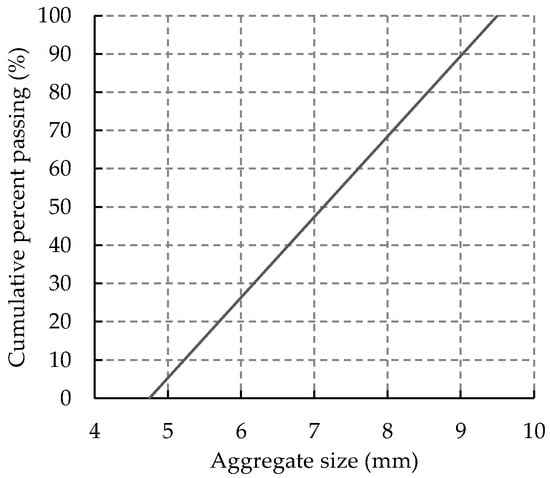
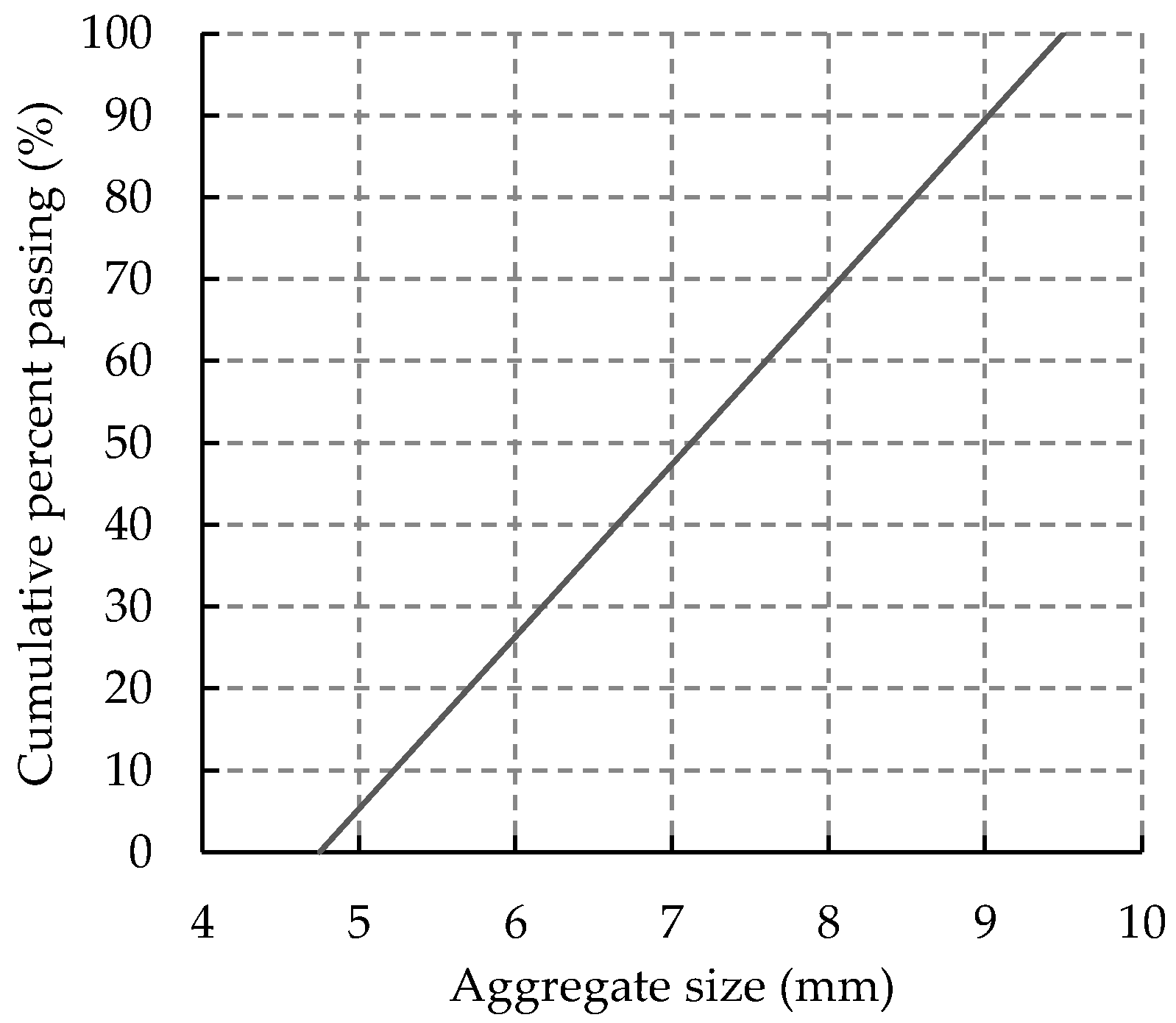
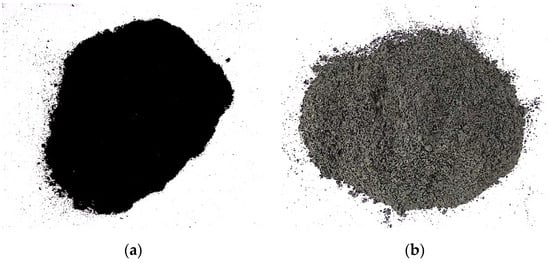
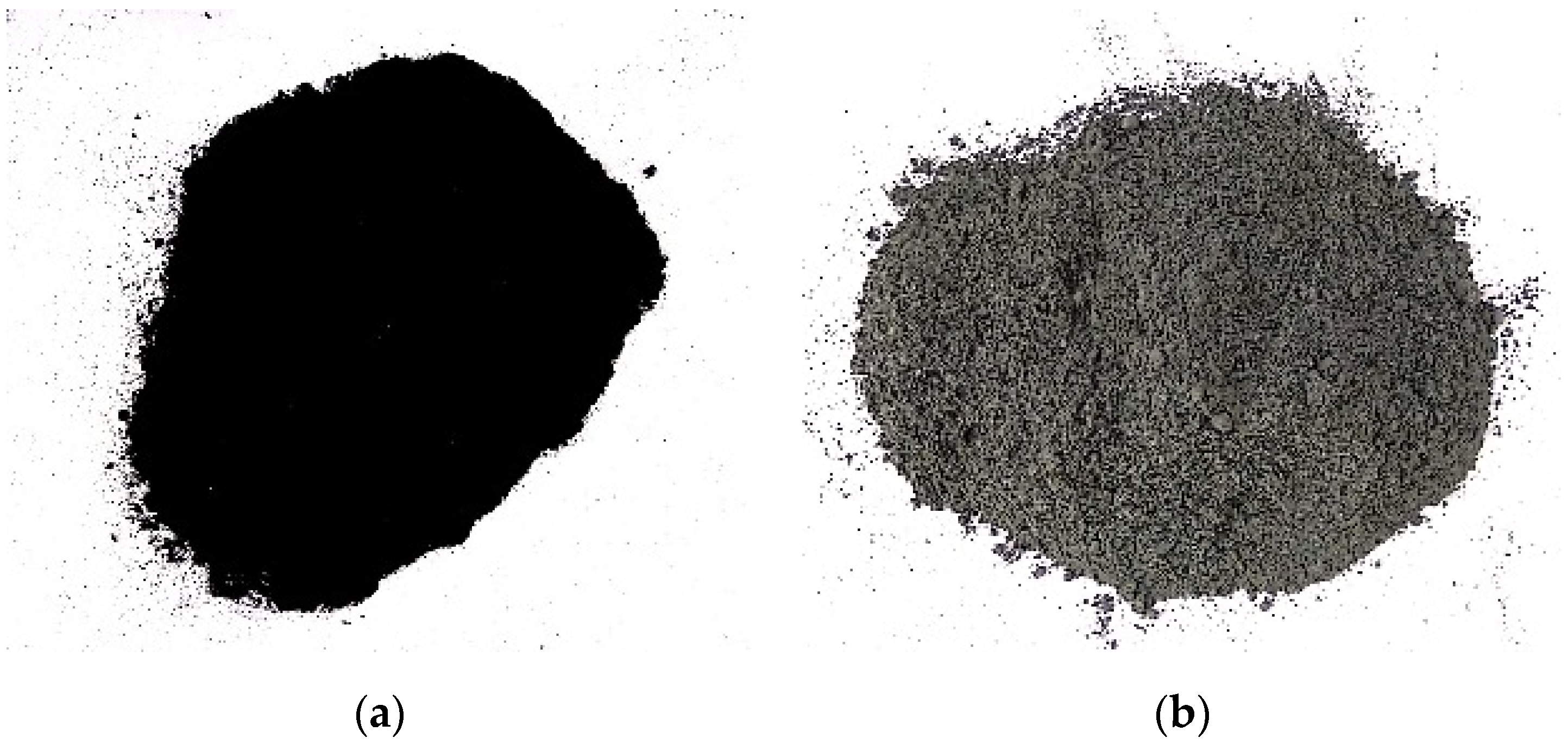
The basic materials used in the experiment for porous concrete are Portland cement (P.O 42.5), natural granite coarse aggregate (4.75–9.5 mm) and polycarboxylic acid superplasticizer, their relevant indicators can refer to references [39,40]. The chemical composition of cement is listed in Table 1 and the sieve analysis result of coarse aggregate is shown in Figure 1. The additives for modification are recycled ground tire rubber (GTR) and silica fume (SF), which are shown in Figure 2. The GTR is obtained from a local factory that processes scrap tires and its particle size is 40 mesh. The SF is provided by Changchun Siao Technology Co., Ltd. (Jilin, China) and its particle size is 0.1–0.3 μm. The density of SF is 2178 kg/m3 and the chemical components of it can be found in the reference [40]. Based on the research findings obtained by our group in previous works [29], in order to balance the strength and deformability of porous concrete, the SF is used to partially replace the cement at 12% with equivalent volume method and the GTR is added at 6% of cementitious materials by the weight. Considering the effect of aggregate size, porosity, and water-binder ratio on the permeability, mechanical strength, and workability of porous concrete [35], the designed porosity and water-binder ratio are 15% and 0.30, respectively. The mix proportion of GTR/SF-PC is listed in Table 2.
Table 1.
Chemical composition of Portland cement.
Figure 1.
The sieve analysis result of coarse aggregate.
Figure 2.
GTR and SF used in the paper: (a) GTR; (b) SF.
Table 2.
Mix ratio of GTR/SF-PC (kg/m3).
2.2. Specimens Preparation
The preparation method and curing condition of the specimens are described in detail in reference [54]. In order to avoid the adverse effect of curing time on fatigue life, the curing time of all specimens are set as 150 d. The 75 specimens with dimension of 100 mm × 100 mm × 400 mm were produced and divided evenly into three groups. The specimens were subjected to 0, 15 and 30 freeze-thaw cycles before fatigue experiment, respectively. After freeze-thaw cycles experiment, 5 specimens in each group were used for static flexural strength test and other 20 specimens were used for flexural fatigue test. The number of specimens for each experiment is shown in Table 3.
Table 3.
The number of specimens for experiments.
2.3. Experiment Methods
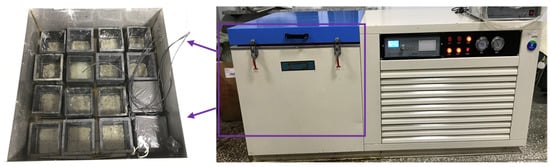
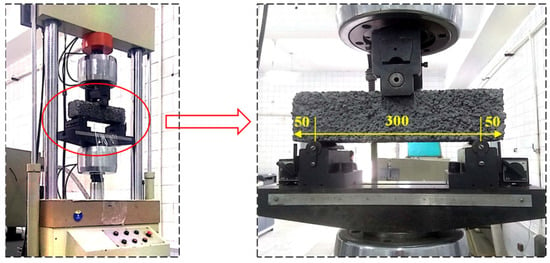
The freeze-thaw experiment was conducted with rapid freeze-thaw machine for concrete and the experiment condition was set according to the national standard GB/T 50082-2009 [55]. The fast-freezing method was adopted and the upper and lower limits of the temperature were −18 °C and 5 °C, respectively. 2.5–4 h were needed to complete one freeze–thaw cycle. The test setup is shown in Figure 3. The static three-point flexural strength was tested with a closed-loop, servo-controlled hydraulic testing system. An MTS closed testing machine (shown in Figure 4) was used to conduct flexural fatigue experiment with three-point bending load mode. The parameters of fatigue experiment are shown in Table 4.
Figure 3.
The test setup for freeze–thaw.
Figure 4.
MTS closed testing machine for fatigue experiment (mm).
Table 4.
The parameters of fatigue experiment.
3. Experiments Results and Discussion
3.1. Experiments Results
3.1.1. Static Flexural Strength
The static flexural strength of GTR/SF-PC under different freeze-thaw cycles is shown in Table 5. The average result of five specimens indicates that the static flexural strength of GTR/SF-PC is slightly reduced by increasing freeze-thaw cycles, but the significance test of the results reveals that the influence of freeze-thaw cycles on static flexural strength of GTR/SF-PC is not so significant under 30 freeze-thaw cycles, indicating that the composite modification of GTR and SF improves the freeze-thaw performance of porous concrete. The improvement of GTR and SF on flexural strength and freeze-thaw can also be found in other researches [29,30,31]. The reason may be that the number of freeze-thaw cycles is relatively small, or the improvement of flexural strength by GTR and SF exceeds the adverse effect of freeze-thaw on flexural strength.
Table 5.
Static flexural strength of GTR/SF-PC under freeze-thaw cycles.
3.1.2. Flexural Fatigue Life
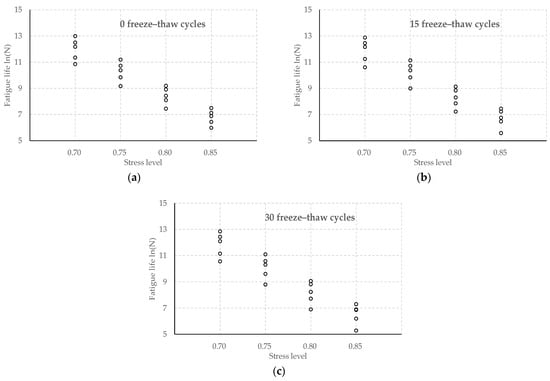
The flexural fatigue life of GTR/SF-PC under different freeze-thaw cycles is shown in Table 6 and Figure 5. Obviously, the fatigue life of each group shows some discreteness, but overall, the fatigue life of GTR/SF-PC decreases greatly with the increase of stress level. The intuitive fatigue life data showed that, at the same stress level, the fatigue life of GTR/SF-PC decreases gradually with the increasing freeze-thaw cycles. The average flexural fatigue life after 30 freeze-thaw cycles of all stress levels is about 85% of that after 0 freeze-thaw cycles, and the higher the stress level, the lower the proportion. This is because, duo to the large number internal connectivity pores, under the action of freeze-thaw cycles, the porous concrete will expand and damage, which will cause the appearance of cracks and reduction of bond strength [35]. Therefore, the life of the repeated fatigue load is greatly reduced.
Table 6.
Flexural fatigue life of GTR/SF-PC under freeze-thaw cycles (times).
Figure 5.
S The flexural fatigue life of GTR/SF-PC under different freeze-thaw cycles: (a) 0 freeze–thaw cycles; (b) 15 freeze–thaw cycles; (c) 30 freeze–thaw cycles.
3.2. Survival Analysis of GTR/SF-PC under Freeze-Thaw Cycles
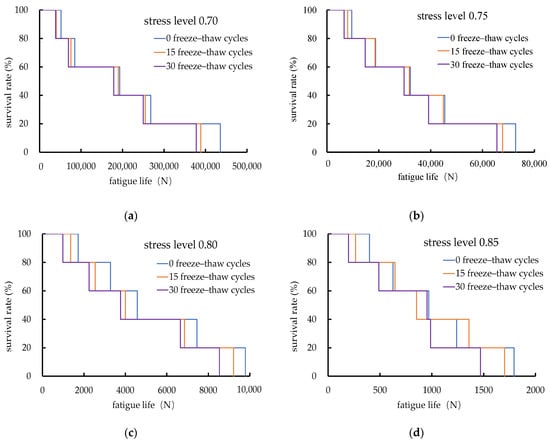
Survival analysis is a kind of statistical analysis method that combines the outcome of an event with the time experienced when the outcome occurs. It is usually used to study the relationship between survival time and outcome and numerous influencing factors, also known as event time analysis. It is mainly used to describe the survival process, compare the difference of survival rate among different samples and analyze the factors affecting survival time. Kaplan Meier survival analysis (K-M) method is an important and commonly used survival analysis method [54,56,57]. it arranges the survival time from small to large, and calculates the survival probability and survival rate. K-M method completely uses the actual data to construct the survival curve, which can intuitively compare the survival process in different states. K-M method, also known as the product of the limit method, uses actual data to structure survival curve and describe the process of survival. It can compare the differences of survival times of the factors at different levels and directly compare different state of survival process according to the high and low of two or more survival curve. The survival curve of GTR/SF-PC under freeze-thaw cycles are shown in Figure 6. At the same stress level, it could be clearly seen that, when the survival rate is the same, the more the freeze-thaw cycles, the lower the fatigue life of the GTR/SF-PC, when the fatigue life is the same, the higher the freeze-thaw cycles, the lower the survival rate of the GTR/SF-PC, indicating that the freeze-thaw decreases the fatigue performance of porous concrete.
Figure 6.
Survival curve of GTR/SF-PC under freeze-thaw cycles: (a) Stress level 0.70; (b) Stress level 0.75; (c) Stress level 0.80; (d) Stress level 0.85.
3.3. Fitting of Fatigue Life Distribution
In this paper, two-parameter Weibull distribution was adopted to establish flexural fatigue life model of porous concrete. The cumulative distribution function of the two-parameter Weibull distribution is:
the probability density function is:
the reliability function is:
the failure rate function is:
where is the shape parameter, which is the most important parameter in Weibull distribution and directly determines the shape of the probability density function curve. is the scale parameter, which plays the role of enlarging or shrinking the curve, but does not affect the shape of the distribution. The moment estimation method and maximum likelihood method are used to obtain the shape parameter and scale parameter of Weibull distribution. The specific solution methods can refer to reference [54] and the calculation results are given in Table 7 and Table 8.
Table 7.
The and values of Weibull distribution of fatigue life for GTR/SF-PC under freeze-thaw cycles (method of moments).
Table 8.
The α and values of Weibull distribution of fatigue life for GTR/SF-PC under freeze-thaw cycles (method of maximum likelihood).
In order to reduce the errors caused by different estimation methods, the average of shape parameters and scale parameters obtained by the two estimation methods are used, as shown in Table 9. The Weibull cumulative distribution functions of GTR/SF-PC under freeze-thaw cycles are listed in Table 10. It can be concluded that, at a certain stress level, with the increasing freeze-thaw cycles, the shape parameters α and the scale parameters are gradually decreased.
Table 9.
The α and values of Weibull distribution of fatigue life for GTR/SF-PC under freeze-thaw cycles (average of two methods).
Table 10.
The Weibull cumulative distribution functions of GTR/SF-PC under freeze-thaw cycles.
3.4. Goodness-of-Fit Test of Fatigue Life Distribution
The shape parameter α and the scale parameter u of flexural fatigue life Weibull distribution are obtained based on above methods. However, whether the established fatigue life distribution model can be used to describe the actual fatigue life, it is still necessary to check the good-of-fit of the established model. The Kolmogorov-Smirnov test is a kind of probabilistic distribution goodness-of-fit test based on empirical cumulative distribution function. The distribution of the Kolmogorov-Smirnov test statistic itself doesn’t depend on the underlying cumulative distribution function being tested. As a nonparametric method, Kolmogorov-Smirnov test is accurate, robust, and applicable to a wide range [54]. Therefore, the Kolmogorov-Smirnov test was used in the paper. The test equation is shown in Equation (5):
where D is the test result of Weibull distribution, , i is the serial number of fatigue life data, k is the total number of the data, is calculated value by Weibull distribution function of different fatigue life.
The Kolmogorov-Smirnov test results of Weibull distribution for GTR/SF-PC under freeze-thaw cycles are shown in Table 11. The maximums of Kolmogorov-Smirnov test results under different stress levels of Weibull distribution for GTR/SF-PC under freeze-thaw cycles are marked out in Table 11 with *. According to the K-S test table, . All D values at different stress levels are less than , indicating that at the significance level of 0.05, the Weibull distribution obtained can be used to describe the fatigue life of GTR/SF-PC.
Table 11.
Kolmogorov-Smirnov test results of Weibull distribution for GTR/SF-PC under freeze-thaw cycles.
3.5. Effect of Freeze-Thaw Cycles on the Failure Rate of Fatigue Life
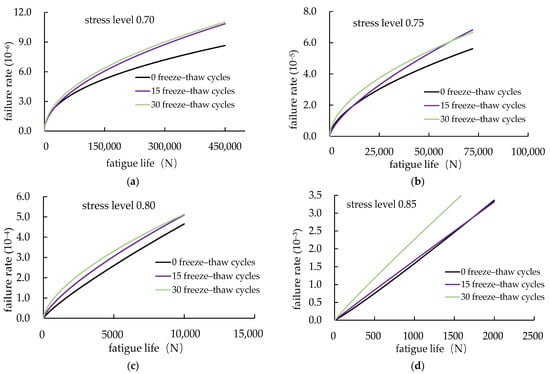
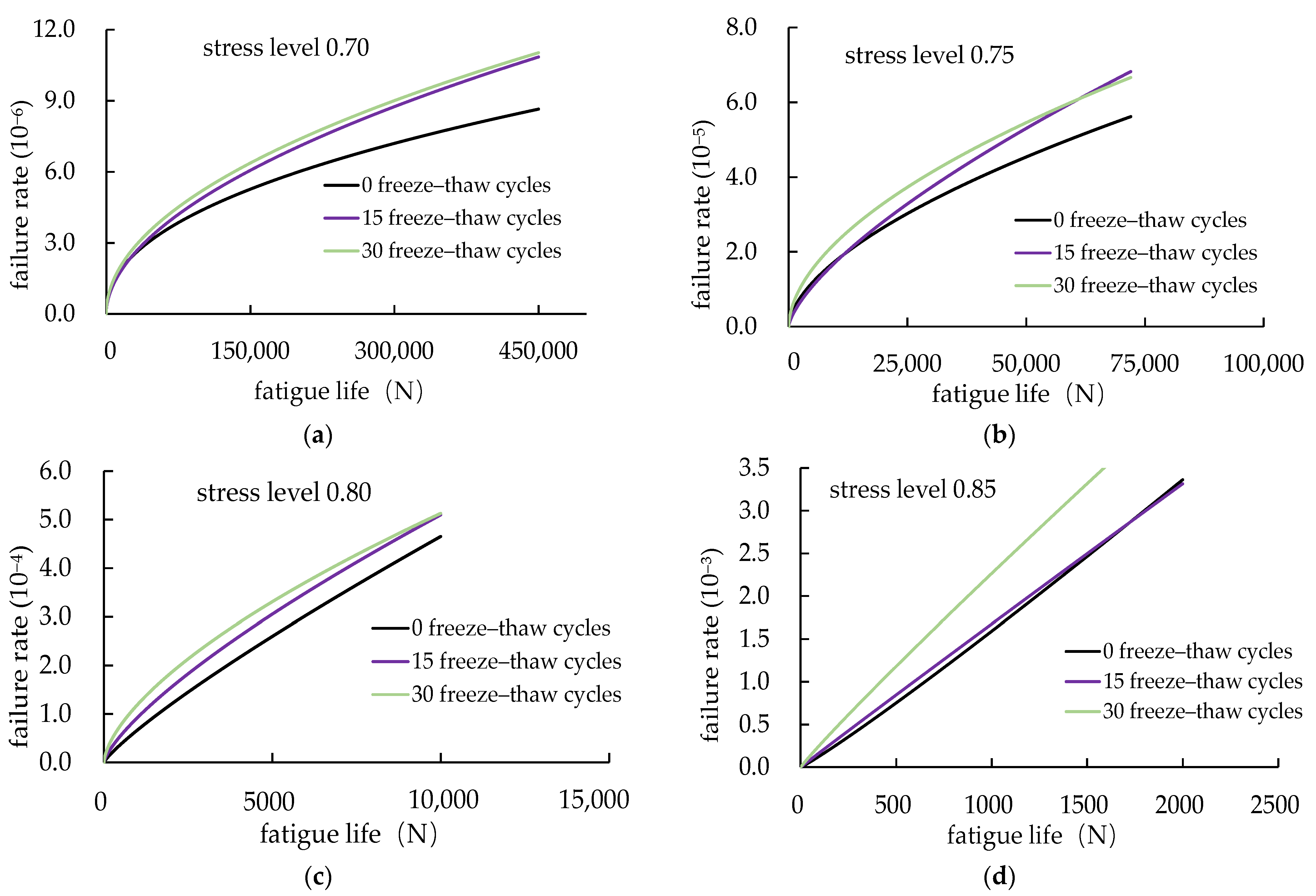
The failure rate of GTR/SF-PC under different freeze-thaw cycles are shown in Figure 7. It could be found that, the failure rate of GTR/SF-PC increases with the increasing fatigue life, this is because the properties and load capacity of GTR/SF-PC gradually deteriorate under the repeated load, which is consistent with the failure law of the materials applied in actual pavement engineering. When the fatigue life is the same, the failure rate is significantly increased with the increase of freeze-thaw cycles, which indicates that the action of freeze-thaw cycles increases the risk of fatigue failure and is disadvantageous to the GTR/SF-PC. The failure rate of GTR/SF-PC under 30 freeze-thaw cycles is about 1.5 times as much as that without freeze-thaw cycles. Considering the significant effect of freeze-thaw cycles on the risk of fatigue failure of porous concrete, the coupling effects of freeze-thaw and fatigue must be considered in durability design of porous concrete. Additionally, the fatigue failure rate varies greatly with respect to different stress levels, so the stress level control is very important to improve the fatigue life of porous concrete.
Figure 7.
Failure rates of GTR/SF-PC under different freeze-thaw cycles: (a) Stress level 0.70; (b) Stress level 0.75; (c) Stress level 0.80; (d) Stress level 0.85.
3.6. Fatigue Life Equations under Freeze-Thaw Cycles
The good-of-fit test indicates that the established Weibull distribution and the obtained parameters can be used to describe the actual fatigue life. Then, the fatigue life equations under different reliability can be established based on the Weibull distribution. The fatigue equation is as follow:
where b and c are undetermined coefficients. By substituting the shape parameter and scale parameter at each stress level into Equation (3) and making the reliability function R(N) = 0.95, 0.90,…, 0.50, the fatigue life corresponding to different reliability probabilities at each stress level is shown in Table 12. Based on the fatigue life under different reliability probabilities in Table 12, the fatigue equations under different reliability probabilities can be obtained through regression analysis. The corresponding regression coefficients b and c are shown in Table 13. The fatigue equations with reliability of 50% and 95% are shown in Table 14.
Table 12.
The fatigue life under different reliabilities of GTR/SF-PC under freeze-thaw cycles.
Table 13.
The regression coefficients of fatigue equations with different reliabilities.
Table 14.
Fatigue equations with reliabilities of 50% and 95% of GTR/SF-PC.
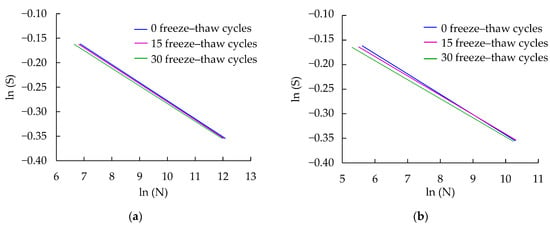
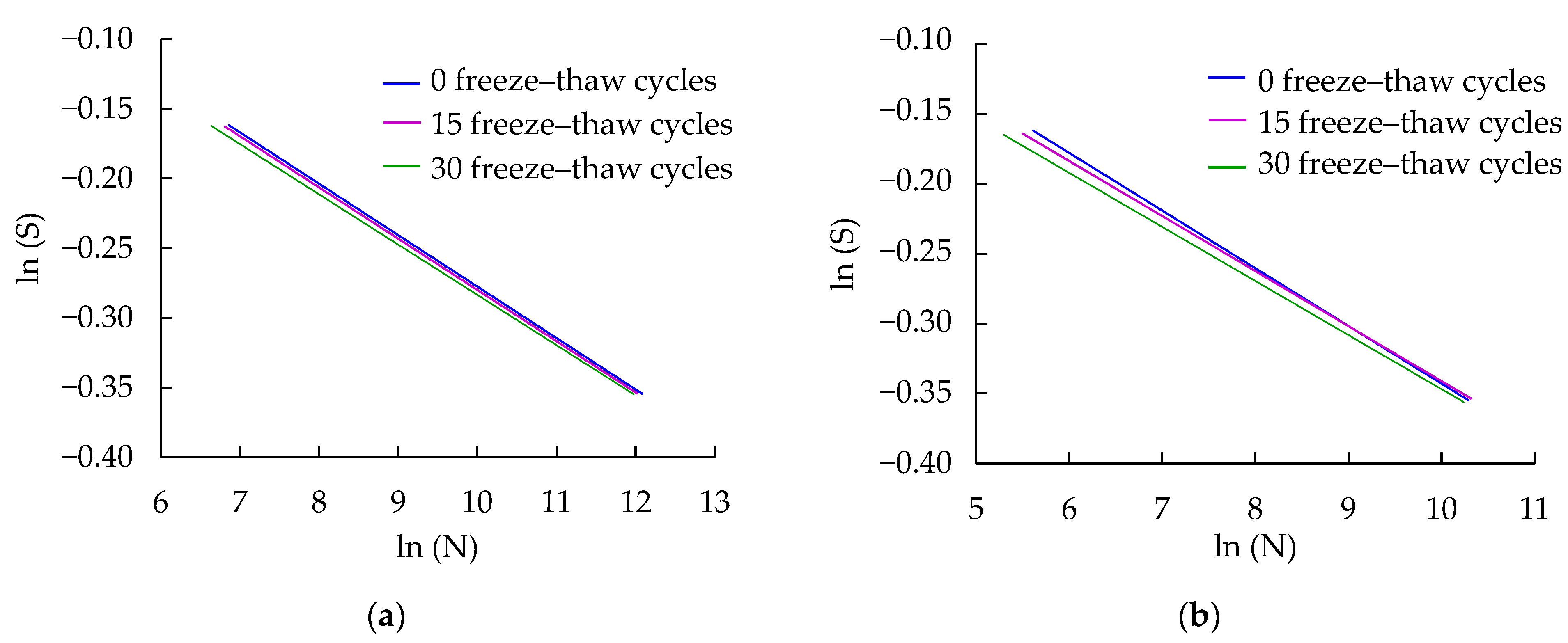
Figure 8 is the fatigue equation curves of GTR/SF-PC after different freeze-thaw cycles with 50% and 95% reliabilities. It could be clearly seen that, at the same stress level, the higher the number of freeze-thaw cycles, the smaller the fatigue life of GTR/SF-PC, indicating that freeze-thaw damage reduced the fatigue performance of GTR/SF-PC. At the same time, it can be found that there is an inverse relationship between reliability and fatigue life under a certain stress level. Therefore, in order to give full play to the function of materials, it is very important to choose the appropriate reliability in fatigue design.
Figure 8.
Fatigue equation curves of GTR/SF-PC after different freeze-thaw cycles with 50% and 95% reliabilities: (a) 50% reliability; (b) 95% reliability.
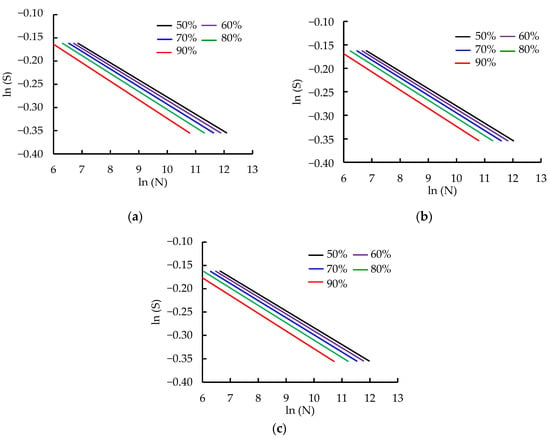
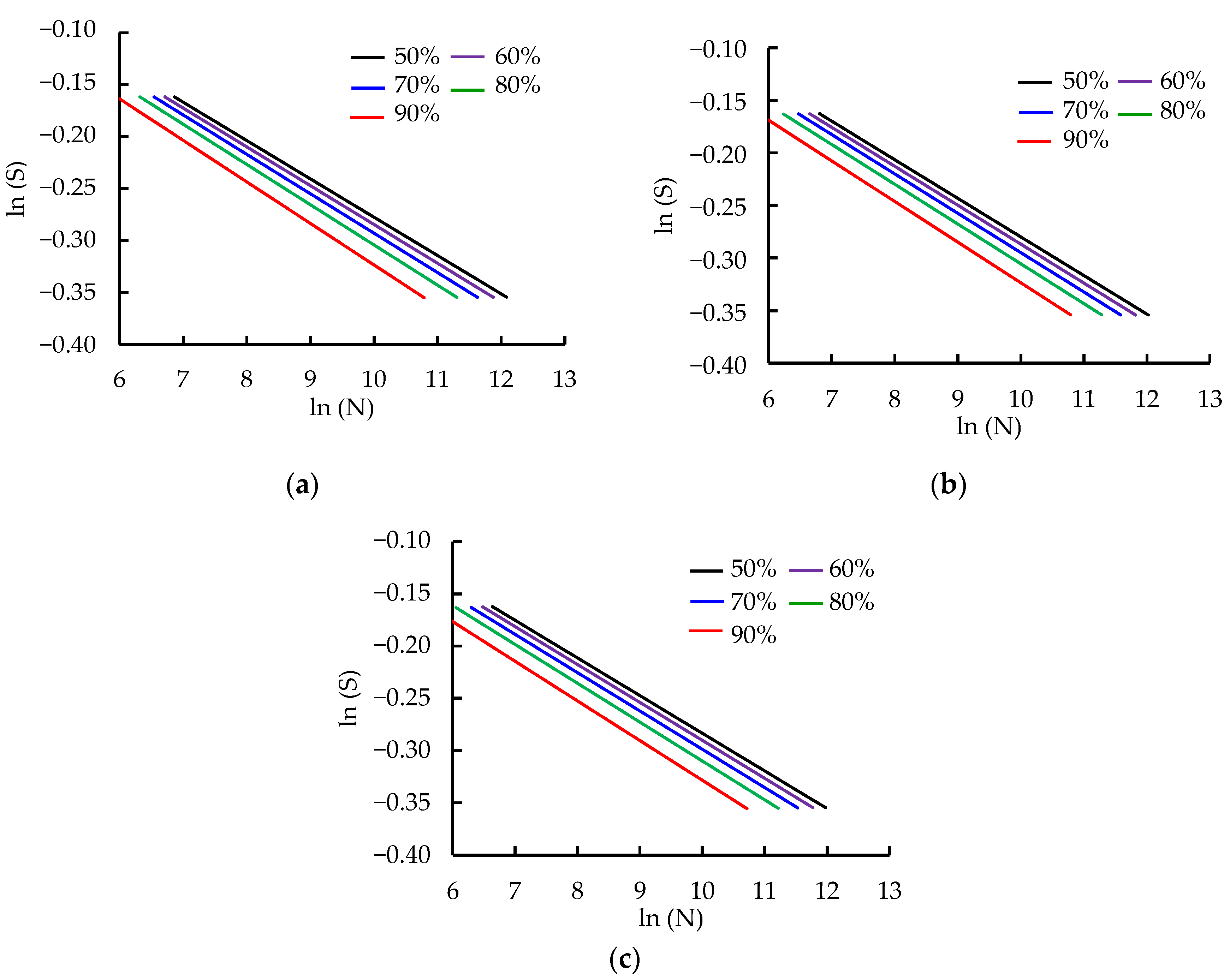
The fatigue equation curves of GTR/SF-PC under different reliabilities are shown in Figure 9. It could be concluded that, when the stress level is the same, the fatigue life of GTR/SF-PC is decreased with the increasing reliability, indicating that the fatigue life of porous concrete is closely related to its reliability. Additionally, with the same reliability, the fatigue life at the same stress level gradually decreases with the increase of freeze-thaw cycles. Therefore, when designing porous concrete in seasonal frozen region, it is necessary to consider the influence of freeze-thaw and fatigue reliability comprehensively, and select a reasonable fatigue equation.
Figure 9.
The fatigue equation curves of GTR/SF-PC under different reliabilities: (a) 0 freeze-thaw cycles; (b) 15 freeze-thaw cycles; (c) 30 freeze-thaw cycles.
4. Conclusions
This paper investigated the flexural fatigue property of ground tire rubber/silica fume composite modified porous concrete (GTR/SF-PC) under the action of freeze-thaw cycles based on experimental and mathematical statistical methods. According to the experiment results, following conclusions can be drawn:
- Kaplan Meier survival analysis can intuitively represent the change of fatigue life. At a certain stress level, the fatigue life and survival rate of GTR/SF-PC are reduced by freeze-thaw cycles.
- Compared with the GTR/SF-PC without freeze-thaw cycles, the fatigue life under different stress levels is reduced by 15% on average after 30 freeze-thaw cycles.
- The Weibull distribution model can be used to characterize the fatigue life of porous concrete. The shape parameters α and the scale parameters u of flexural fatigue life Weibull model of the GTR/SF-PC are reduced by the increasing freeze-thaw cycles.
- The fatigue failure rate of GTR/SF-PC under different freeze-thaw cycles increases with the increasing freeze-thaw cycles, after 30 freeze-thaw cycles, the fatigue failure rate of GTR/SF-PC is about 1.5 times of that without freeze-thaw cycles.
- The fatigue equations of GTR/SF-PC indicate that the fatigue life decreases with the increasing freeze-thaw cycles. The reliability is inversely proportional to fatigue life, and the choice of appropriate reliability is important for fatigue design.
Author Contributions
G.L. contributed to conceptualization, formal analysis, and investigation. M.S. was responsible for the methodology and writing, reviewing, and editing of the manuscript. J.Z. wrote and prepared the original draft. Z.Z. was responsible for the formal analysis. All authors have read and agreed to the published version of the manuscript.
Funding
This research was funded by the Pilot Project of China’s Strength in Transportation for the Central Research Institute (grant number QG2021-1-4-7).
Institutional Review Board Statement
Not applicable.
Informed Consent Statement
Not applicable.
Data Availability Statement
Not applicable.
Conflicts of Interest
The authors declare no conflict of interest.
References
- Sun, K.N.; Hu, L.T.; Liu, X.M. The influences of sponge city construction on spring discharge in Jinan city of China. Hydrol. Res. 2020, 51, 959–975. [Google Scholar] [CrossRef] [Scilit]
- Chen, D.; Wang, S.; Shen, M.L.; Qian, Q.T.; Birhane, T.G. Aggregate micro tribological properties of sponge city permeable pavement base layer under vehicle loading. Constr. Build. Mater. 2020, 261, 120424. [Google Scholar] [CrossRef] [Scilit]
- Ma, Y.C.; Jiang, Y.; Swallow, S. China’s sponge city development for urban water resilience and sustainability: A policy discussion. Sci. Total Environ. 2020, 729, 139078. [Google Scholar] [CrossRef] [Scilit] [PubMed]
- Morabito, M.; Crisci, A.; Guerri, G.; Messeri, A.; Congedo, L.; Munafò, M. Surface urban heat islands in Italian metropolitan cities: Tree cover and impervious surface influences. Sci. Total Environ. 2021, 751, 142334. [Google Scholar] [CrossRef] [Scilit]
- Dupuis, D.J.; Trapin, L. Structural change to the persistence of the urban heat island. Environ. Res. Lett. 2020, 15, 104076. [Google Scholar] [CrossRef] [Scilit]
- Wang, J.L.; Niu, Z.D.; Chen, Q. Study on influencing factors of noise reduction performance of pervious concrete. Mater. Sci. Forum 2020, 971, 106–113. [Google Scholar] [CrossRef] [Scilit]
- Singh, A.; Sampath, P.V.; Biligiri, K.P. A review of sustainable porous concrete systems: Emphasis on clogging, material characterization, and environmental aspects. Constr. Build. Mater. 2020, 261, 120491. [Google Scholar] [CrossRef] [Scilit]
- Elizondo-Martínez, E.J.; Andrés-Valeri, V.C.; Jato-Espino, D.; Rodriguez-Hernandez, J. Review of porous concrete as multifunctional and sustainable pavement. J. Build. Eng. 2019, 27, 100967. [Google Scholar] [CrossRef] [Scilit]
- Xie, N.; Akin, M.; Shi, X.M. Permeable concrete pavements: A review of environmental benefits and durability. J. Clean. Prod. 2018, 210, 1605–1621. [Google Scholar] [CrossRef] [Scilit]
- Çelik, A.İ.; Özkılıç, Y.O.; Zeybek, Ö.; Özdöner, N.; Tayeh, B.A. Performance assessment of fiber-reinforced concrete produced with waste lathe fibers. Sustainability 2022, 14, 11817. [Google Scholar] [CrossRef] [Scilit]
- Zeybek, Ö.; Özkılıç, Y.O.; Çelik, A.İ.; Deifalla, A.F.; Ahmad, M.; Sabri, M.M.S. Performance evaluation of fiber-reinforced concrete produced with steel fibers extracted from waste tire. Front. Mater. 2022, 9, 1057128. [Google Scholar] [CrossRef] [Scilit]
- Beskopylny, A.N.; Shcherban’, E.M.; Stel’makh, S.A.; Meskhi, B.; Shilov, A.A.; Varavka, V.; Evtushenko, A.; Özkılıç, Y.O.; Aksoylu, C.; Karalar, M. Composition component influence on concrete properties with the additive of rubber tree seed shells. Appl. Sci. 2022, 12, 11744. [Google Scholar] [CrossRef] [Scilit]
- Shcherban’, E.M.; Stel’makh, S.A.; Beskopylny, A.N.; Mailyan, L.R.; Meskhi, B.; Shilov, A.A.; Chernil’nik, A.; Özkılıç, Y.O.; Aksoylu, C. Normal-weight concrete with improved stress–strain characteristics reinforced with dispersed coconut fibers. Appl. Sci. 2022, 12, 11734. [Google Scholar] [CrossRef] [Scilit]
- Çelik, A.İ.; Özkılıç, Y.O. Geopolymer concrete with high strength, workability and setting time using recycled steel wires and basalt powder. Steel Compos. Struct. 2023, 46, 689–707. [Google Scholar]
- Zeybek, Ö.; Özkılıç, Y.O.; Karalar, M.; Çelik, A.İ.; Qaidi, S.; Ahmad, J.; Burduhos-Nergis, D.D.; Burduhos-Nergis, D.P. Influence of replacing cement with waste glass on mechanical properties of concrete. Materials 2022, 15, 7513. [Google Scholar] [CrossRef] [Scilit]
- Qaidi, S.; Najm, H.M.; Abed, S.M.; Özkılıç, Y.O.; Al Dughaishi, H.; Alosta, M.; Sabri, M.M.S.; Alkhatib, F.; Milad, A. Concrete containing waste glass as an environmentally friendly aggregate: A review on fresh and mechanical characteristics. Materials 2022, 15, 6222. [Google Scholar] [CrossRef] [Scilit]
- Çelik, A.İ.; Özkılıç, Y.O.; Zeybek, Ö.; Karalar, M.; Qaidi, S.; Ahmad, J.; Burduhos-Nergis, D.D.; Bejinariu, C. Mechanical behavior of crushed waste glass as replacement of aggregates. Materials 2022, 15, 8093. [Google Scholar] [CrossRef] [Scilit] [PubMed]
- Basaran, B.; Kalkan, I.; Aksoylu, C.; Özkılıç, Y.O.; Sabri, M.M.S. Effects of waste powder, fine and coarse marble aggregates on concrete compressive strength. Sustainability 2022, 14, 14388. [Google Scholar] [CrossRef] [Scilit]
- Karalar, M.; Özkılıç, Y.O.; Aksoylu, C.; Sabri, M.M.S.; Beskopylny, A.N. Flexural behavior of reinforced concrete beams using waste marble powder towards application of sustainable concrete. Front. Mater. 2022, 9, 1068791. [Google Scholar] [CrossRef] [Scilit]
- Qaidi, S.; Al-Kamaki, Y.; Hakeem, I.; Dulaimi, A.F.; Özkılıç, Y.; Sabri, M.; Sergeev, V. Investigation of the physical-mechanical properties and durability of high-strength concrete with recycled PET as a partial replacement for fine aggregates. Front. Mater. 2023, 10, 1101146. [Google Scholar] [CrossRef] [Scilit]
- Acar, M.C.; Çelik, A.İ.; Kayabas, R.; Sener, A.; Özdoner, N.; Özkılıç, Y.O. Production of perlite-based-aerated geopolymer using hydrogen peroxide as eco-friendly material for energy-efficient buildings. J. Mater. Res. Technol. 2023, 24, 81–99. [Google Scholar] [CrossRef] [Scilit]
- Fayed, S.; Madenci, E.; Özkılıç, Y.O.; Mansour, W. Improving bond performance of ribbed steel bars embedded in recycled aggregate concrete using steel mesh fabric confinement. Constr. Build. Mater. 2023, 369, 130452. [Google Scholar] [CrossRef] [Scilit]
- Karalar, M.; Bilir, T.; Çavuşlu, M.; Özkılıç, Y.O.; Sabri, M.M.S. Use of recycled coal bottom ash in reinforced concrete beams as replacement for aggregate. Front. Mater. 2022, 9, 1064604. [Google Scholar] [CrossRef] [Scilit]
- Bu, C.M.; Zhu, D.X.; Liu, L.; Lu, X.Y.; Sun, Y.; Yu, L.W.; OuYang, Y.H.; Cao, X.M.; Wang, F.X. Research progress on rubber concrete properties: A review. J. Rubber Res. 2022, 25, 105–125. [Google Scholar] [CrossRef] [Scilit]
- Imam, A.; Kumar, V.; Srivastava, V. Review study towards effect of Silica Fume on the fresh and hardened properties of concrete. Adv. Concr. Constr. 2018, 6, 145–157. [Google Scholar]
- Shariati, M.; Heyrati, A.; Zandi, Y.; Laka, H.; Toghroli, A.; Kianmehr, P.; Safa, M.; Salih, M.N.A.; Poi-Ngian, S. Application of waste tire rubber aggregate in porous concrete. Smart Struct. Syst. 2019, 24, 553–566. [Google Scholar]
- Gesoglu, M.; Guneyisi, E.; Khoshnaw, G.; Ipek, S. Investigating properties of pervious concretes containing waste tire rubbers. Constr. Build. Mater. 2014, 63, 206–213. [Google Scholar] [CrossRef] [Scilit]
- Gesoglu, M.; Guneyisi, E.; Khoshnaw, G.; Ipek, S. Abrasion and freezing–thawing resistance of pervious concretes containing waste rubbers. Constr. Build. Mater. 2014, 73, 19–24. [Google Scholar]
- Luo, G.B.; Zhao, P.; Zhang, Y.P.; Xie, Z.Z. Performance evaluation of waste crumb rubber/silica fume composite modified pervious concrete in seasonal frozen regions. Adv. Mater. Sci. Eng. 2021, 2021, 1411185. [Google Scholar] [CrossRef] [Scilit]
- Li, D.Y.; Toghroli, A.; Shariati, M.; Sajedi, F.; Bui, D.T.; Kianmehr, P.; Mohamad, E.T.; Khorami, M. Application of polymer, silica-fume and crushed rubber in the production of Pervious concrete. Smart Struct. Syst. 2019, 23, 207–214. [Google Scholar]
- Mondal, S.; Biligiri, K.P. Crumb rubber and silica fume inclusions in pervious concrete pavement systems: Evaluation of hydrological, functional, and structural properties. J. Test. Eval. 2018, 46, 892–905. [Google Scholar] [CrossRef] [Scilit]
- Grubesa, I.N.; Barisic, I.; Ducman, V.; Korat, L. Draining capability of single-sized porous concrete. Constr. Build. Mater. 2018, 169, 252–260. [Google Scholar] [CrossRef] [Scilit]
- Chandrappa, A.K.; Biligiri, K.P. Porous concrete as a sustainable pavement material–research findings and future prospects: A state-of-the-art review. Constr. Build. Mater. 2016, 111, 262–274. [Google Scholar] [CrossRef] [Scilit]
- Šešlija, M.; Radović, N.; Jovanov, D.; Kukaras, D.; Starcev-Curcin, A.; Jokanović, I. Possibilities of porous concrete application in road construction. Teh. Vjesn. 2018, 25, 1202–1212. [Google Scholar]
- Liu, H.B.; Luo, G.B.; Wei, H.B.; Yu, H. Strength, permeability, and freeze-thaw durability of porous concrete with different aggregate sizes, porosities, and water-binder ratios. Appl. Sci. 2018, 8, 1217. [Google Scholar] [CrossRef] [Scilit]
- Lund, M.S.M.; Hansen, K.K.; Brincker, R.; Jensen, A.H.; Amador, S.D.R. Evaluation of freeze-thaw durability of porous concrete by use of operational modal analysis. Cem. Concr. Res. 2018, 106, 57–64. [Google Scholar] [CrossRef] [Scilit]
- Lund, M.S.M.; Kevern, J.T.; Schaefer, V.R.; Hansen, K.K. Mix design for improved strength and freeze-thaw durability of porous concrete fill in pearl-chain bridges. Mater. Struct. 2017, 50, 42. [Google Scholar] [CrossRef] [Scilit]
- Wu, H.; Liu, Z.; Sun, B.B.; Yin, J. Experimental investigation on freeze–thaw durability of Portland cement porous concrete (PCPC). Constr. Build. Mater. 2016, 117, 63–71. [Google Scholar] [CrossRef] [Scilit]
- Liu, H.B.; Luo, G.B.; Gong, Y.F.; Wei, H.B. Mechanical properties, permeability, and freeze–thaw resistance of porous concrete modified by waste crumb rubbers. Appl. Sci. 2016, 8, 1843. [Google Scholar] [CrossRef] [Scilit]
- Liu, H.B.; Luo, G.B.; Wang, L.H.; Wang, W.W.; Li, W.J.; Gong, Y.F. Laboratory evaluation of eco-friendly porous concrete pavement material containing silica fume. Appl. Sci. 2019, 9, 73. [Google Scholar] [CrossRef] [Scilit]
- Liu, H.B.; Luo, G.B.; Wang, L.H.; Gong, Y.F. Strength time–varying and freeze–thaw durability of sustainable porous concrete pavement material containing waste fly ash. Sustainability 2019, 11, 176. [Google Scholar] [CrossRef] [Scilit]
- Guthrie, W.; DeMille, C.; Eggett, D. Effects of soil clogging and water saturation on freeze-thaw durability of porous concrete. Transp. Res. Rec. J. Transp. Res. Board 2010, 2164, 89–97. [Google Scholar] [CrossRef] [Scilit]
- Zhou, J.L.; Zheng, M.L.; Wang, Q.; Yang, J.G.; Lin, T.F. Flexural fatigue behavior of polymer-modified porous concrete with single sized aggregates. Constr. Build. Mater. 2016, 124, 897–905. [Google Scholar] [CrossRef] [Scilit]
- Singh, R.R.; Sidhu, A.J.S. Fracture and fatigue study of porous concrete with 15–20% void ratio. Sadhana 2020, 45, 151. [Google Scholar] [CrossRef] [Scilit]
- Debnath, B.; Sarkar, P.P. Prediction and model development for fatigue performance of porous concrete made with over burnt brick aggregate. Mater. Struct. 2020, 53, 86. [Google Scholar] [CrossRef] [Scilit]
- Alshareedah, O.; Nassiri, S.; Dolan, J.D. Porous concrete under flexural fatigue loading: Performance evaluation and model development. Constr. Build. Mater. 2019, 207, 17–27. [Google Scholar] [CrossRef] [Scilit]
- Chandrappa, A.K.; Biligiri, K.P. Effect of pore structure on fatigue of porous concrete. Road Mater. Pavement 2019, 20, 1525–1547. [Google Scholar] [CrossRef] [Scilit]
- Chen, X.D.; Shi, D.D.; Shen, N.; Li, S.T.; Liu, S.S. Experimental study and analytical modeling on fatigue properties of porous concrete made with natural and recycled aggregates. Int. J. Concr. Struct. Mater. 2019, 13, 10. [Google Scholar] [CrossRef] [Scilit]
- Chandrappa, A.K.; Biligiri, K.P. Flexural-fatigue characteristics of porous concrete: Statistical distributions and model development. Constr. Build. Mater. 2017, 153, 1–15. [Google Scholar] [CrossRef] [Scilit]
- Chen, Y.; Wang, K.J.; Wang, X.H.; Zhou, W.F. Strength, fracture and fatigue of porous concrete. Constr. Build. Mater. 2013, 42, 97–104. [Google Scholar] [CrossRef] [Scilit]
- Li, L.L.; Guan, J.F.; Yuan, P.; Yin, Y.A.; Li, Y.L. A Weibull distribution-based method for the analysis of concrete fracture. Eng. Fract. Mech. 2021, 256, 107964. [Google Scholar] [CrossRef] [Scilit]
- Huang, B.T.; Li, Q.H.; Xu, S.L. Fatigue deformation model of plain and fiber-reinforced concrete based on Weibull function. J. Struct. Eng. 2019, 145, 04018234. [Google Scholar] [CrossRef] [Scilit]
- Hong, F.; Qiao, H.X.; Wang, P.H. Predicting the life of BNC-coated reinforced concrete using the Weibull distribution. Energ. Mater. Res. 2020, 9, 424–434. [Google Scholar] [CrossRef] [Scilit]
- Liu, H.B.; Luo, G.B.; Zhou, P.L.; Wei, H.B.; Li, W.J.; Yu, D. Flexural-fatigue properties of sustainable porous concrete pavement material containing ground tire rubber and silica fume. Sustainability 2019, 11, 4467. [Google Scholar] [CrossRef] [Scilit]
- Ministry of Housing and Urban-Rural Construction of the People’s Republic of China. Technical Specification for Pervious Cement Concrete Pavement; Ministry of Housing and Urban-Ural Construction of the People’s Republic of China: Beijing, China, 2009. (In Chinese) [Google Scholar]
- Stel, V.S.; Dekker, F.W.; Tripepi, G.; Zoccali, C.; Jager, K.J. Survival analysis I: The Kaplan-Meier method. Nephron Clin. Pract. 2011, 119, C83–C88. [Google Scholar] [CrossRef] [Scilit] [PubMed]
- Xu, S.; Shetterly, S.; Powers, D.; Raebel, M.A.; Tsai, T.T.; Ho, P.M.; Magid, D. Extension of Kaplan-Meier Methods in Observational Studies with Time-Varying Treatment. Value Health 2012, 15, 167–174. [Google Scholar] [CrossRef] [Scilit]

Disclaimer/Publisher’s Note: The statements, opinions and data contained in all publications are solely those of the individual author(s) and contributor(s) and not of MDPI and/or the editor(s). MDPI and/or the editor(s) disclaim responsibility for any injury to people or property resulting from any ideas, methods, instructions or products referred to in the content. |
© 2023 by the authors. Licensee MDPI, Basel, Switzerland. This article is an open access article distributed under the terms and conditions of the Creative Commons Attribution (CC BY) license (https://creativecommons.org/licenses/by/4.0/).