Article

Beyond the Backyard: GIS Analysis of Public Green Space Accessibility in Australian Metropolitan Areas


1
School of Built Environment, University of New South Wales, Sydney, NSW 2052, Australia
2
School of Architecture & Built Environment, University of Adelaide, North Terrace Campus, Adelaide, SA 5005, Australia
3
School of Biological, Earth and Environmental Sciences, University of New South Wales, Sydney, NSW 2052, Australia
*
Author to whom correspondence should be addressed.
Sustainability 2022, 14(8), 4694; https://doi.org/10.3390/su14084694
Submission received: 21 February 2022 / Revised: 9 April 2022 / Accepted: 10 April 2022 / Published: 14 April 2022

Abstract

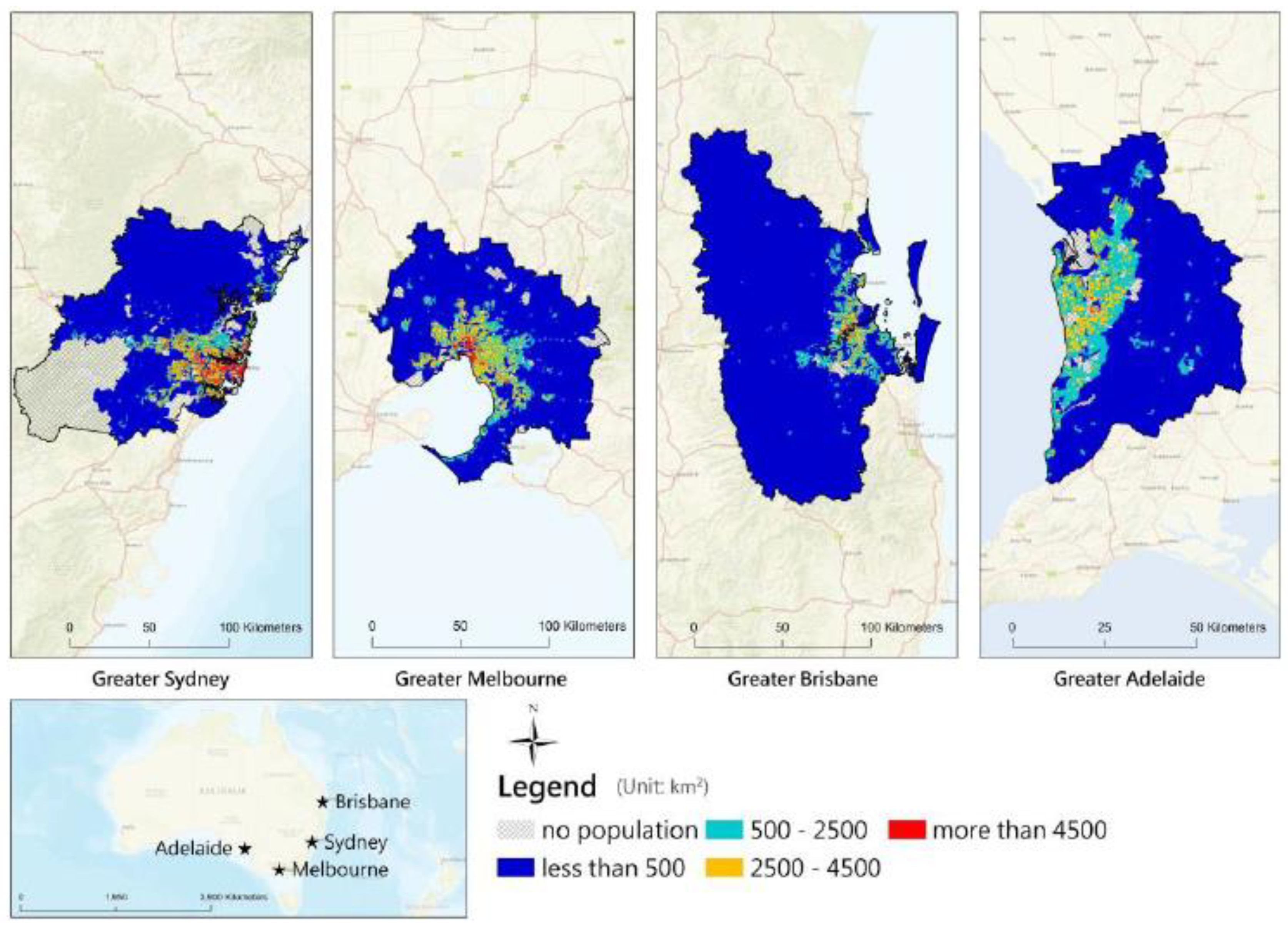
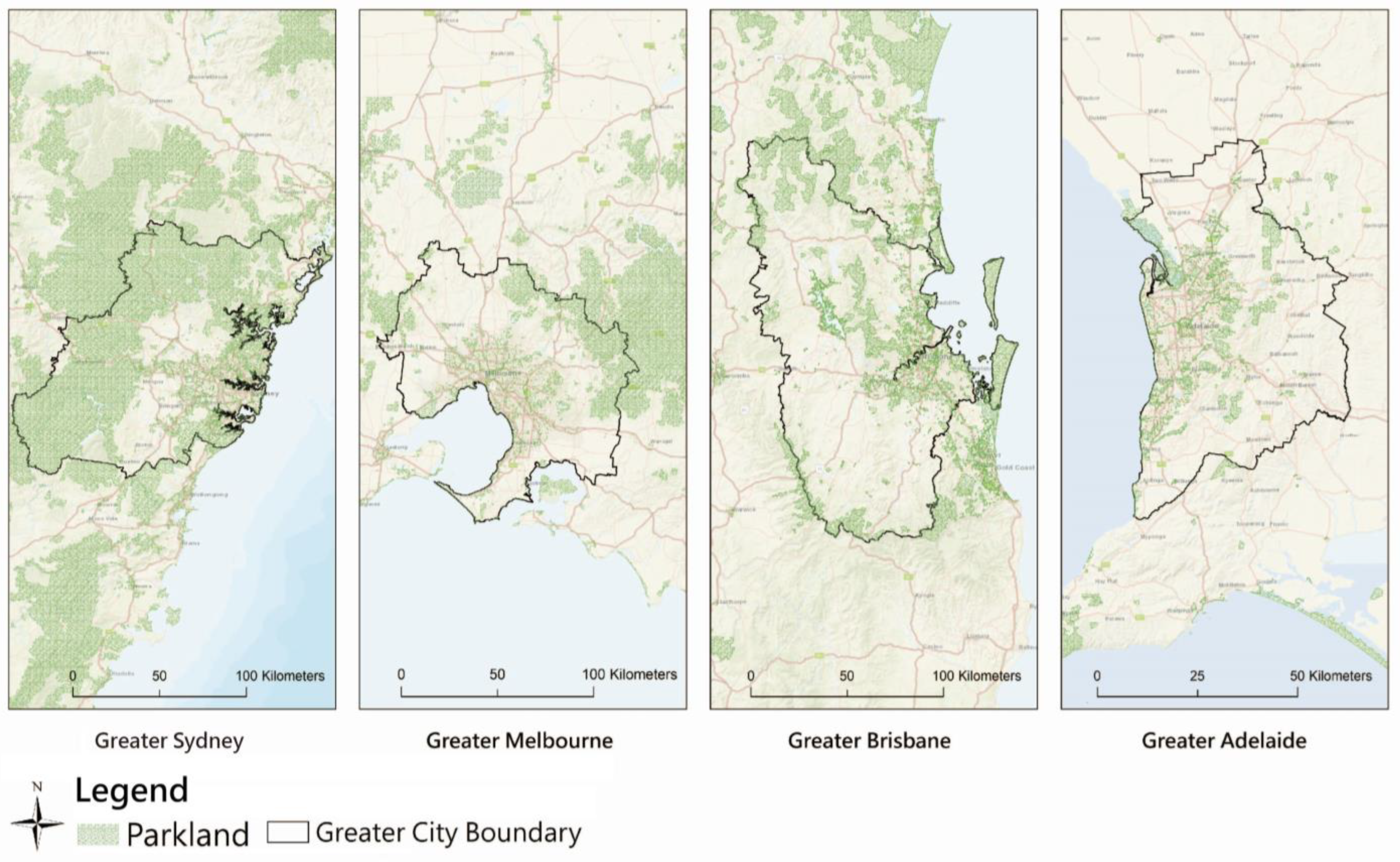
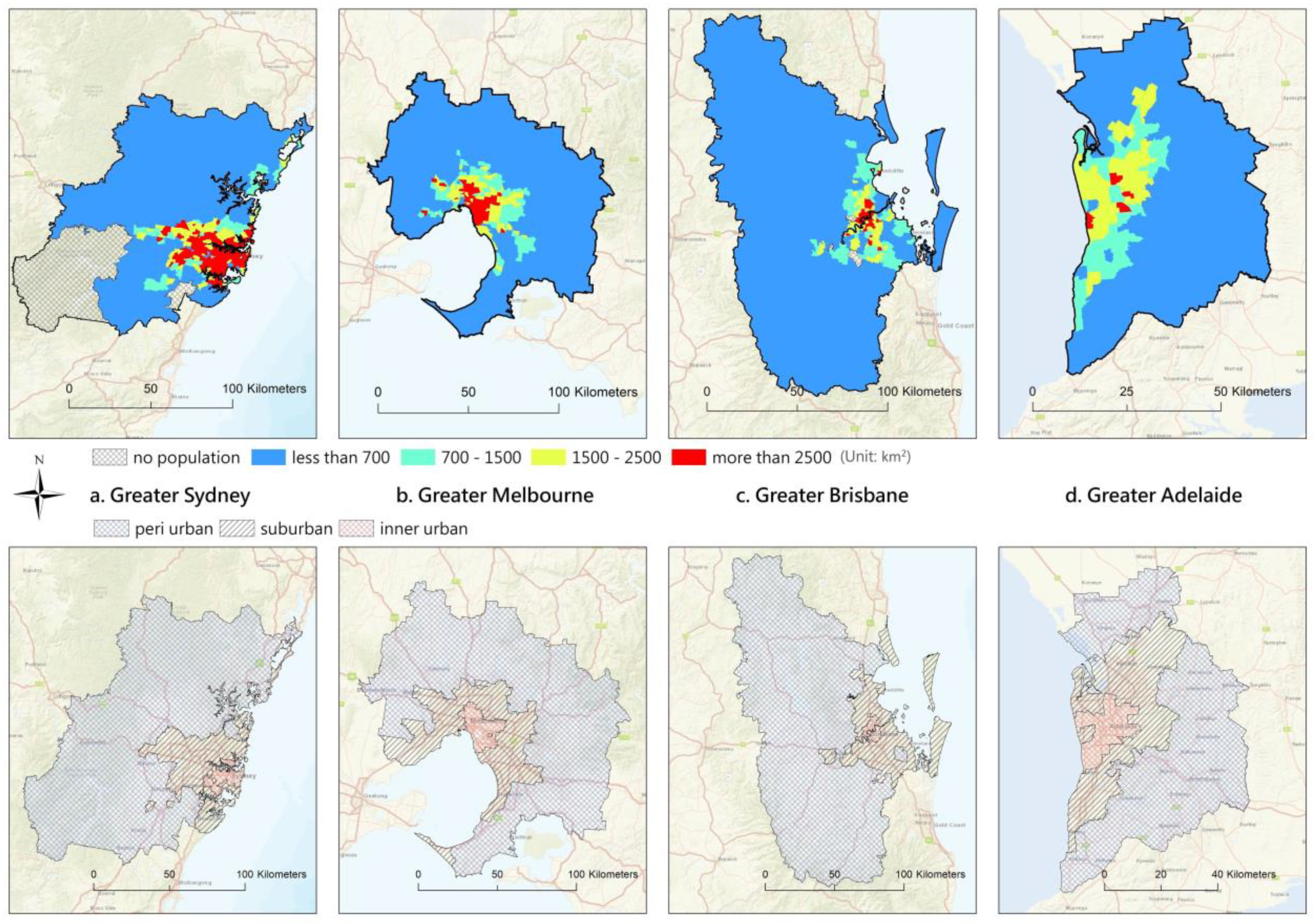
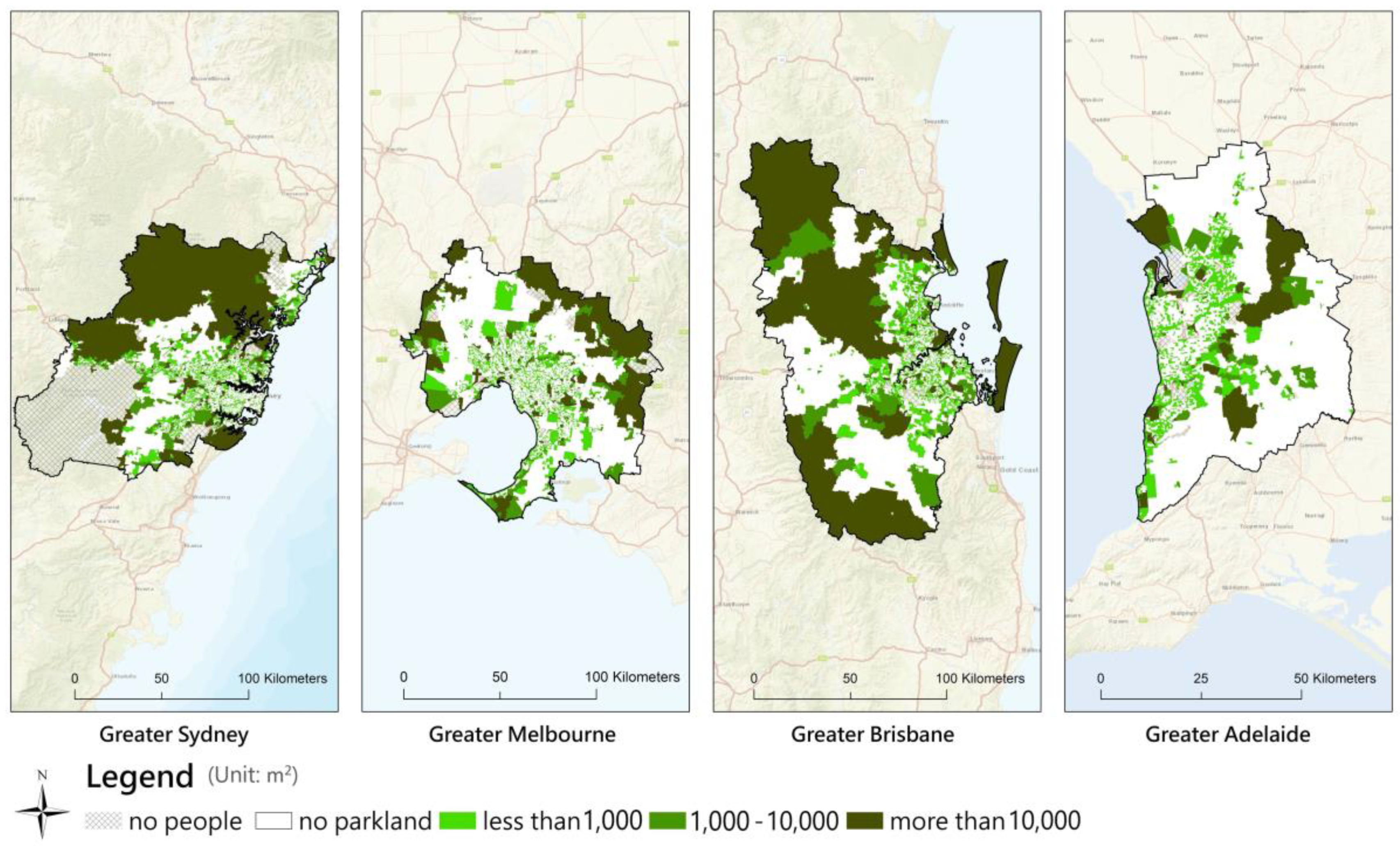
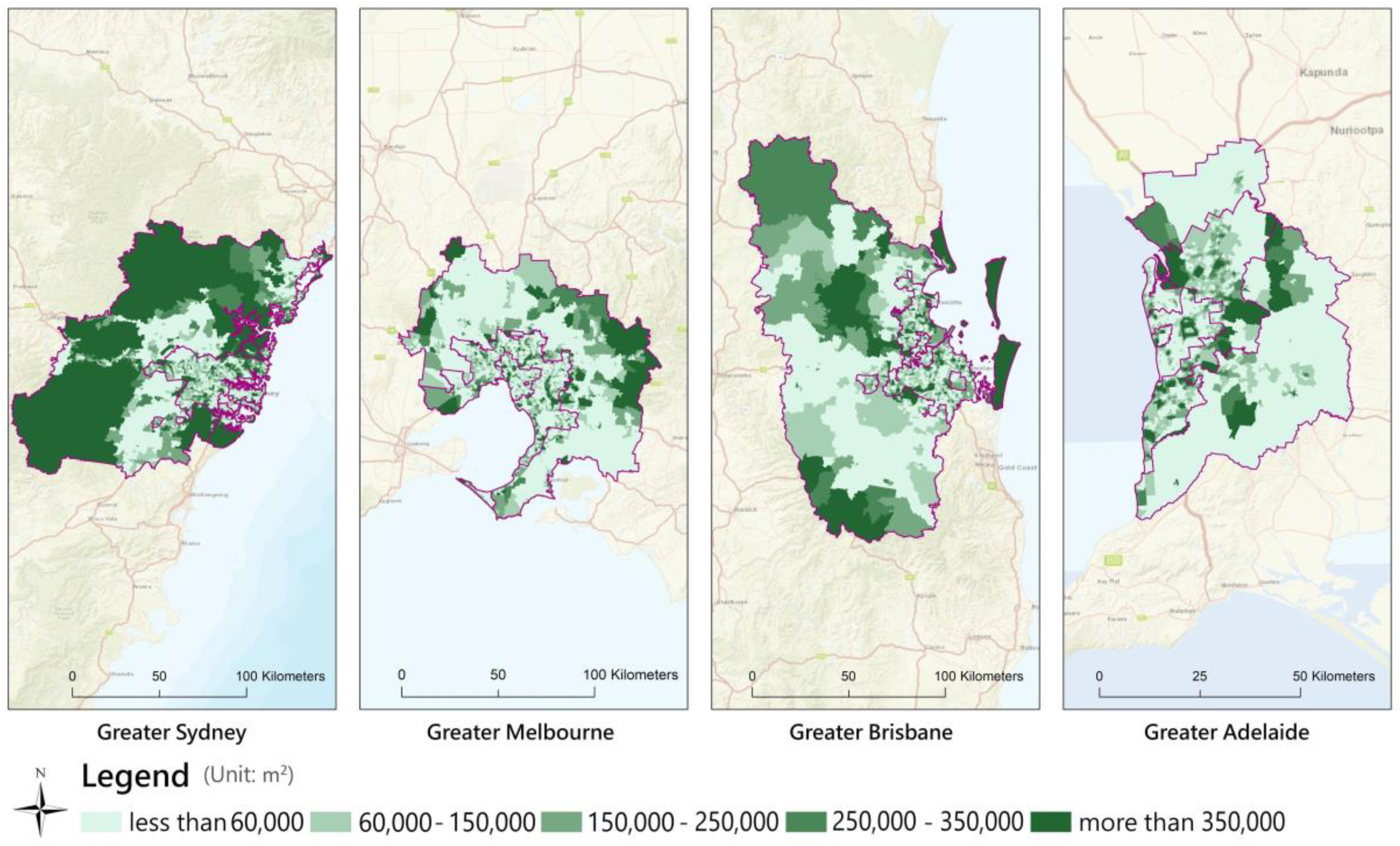
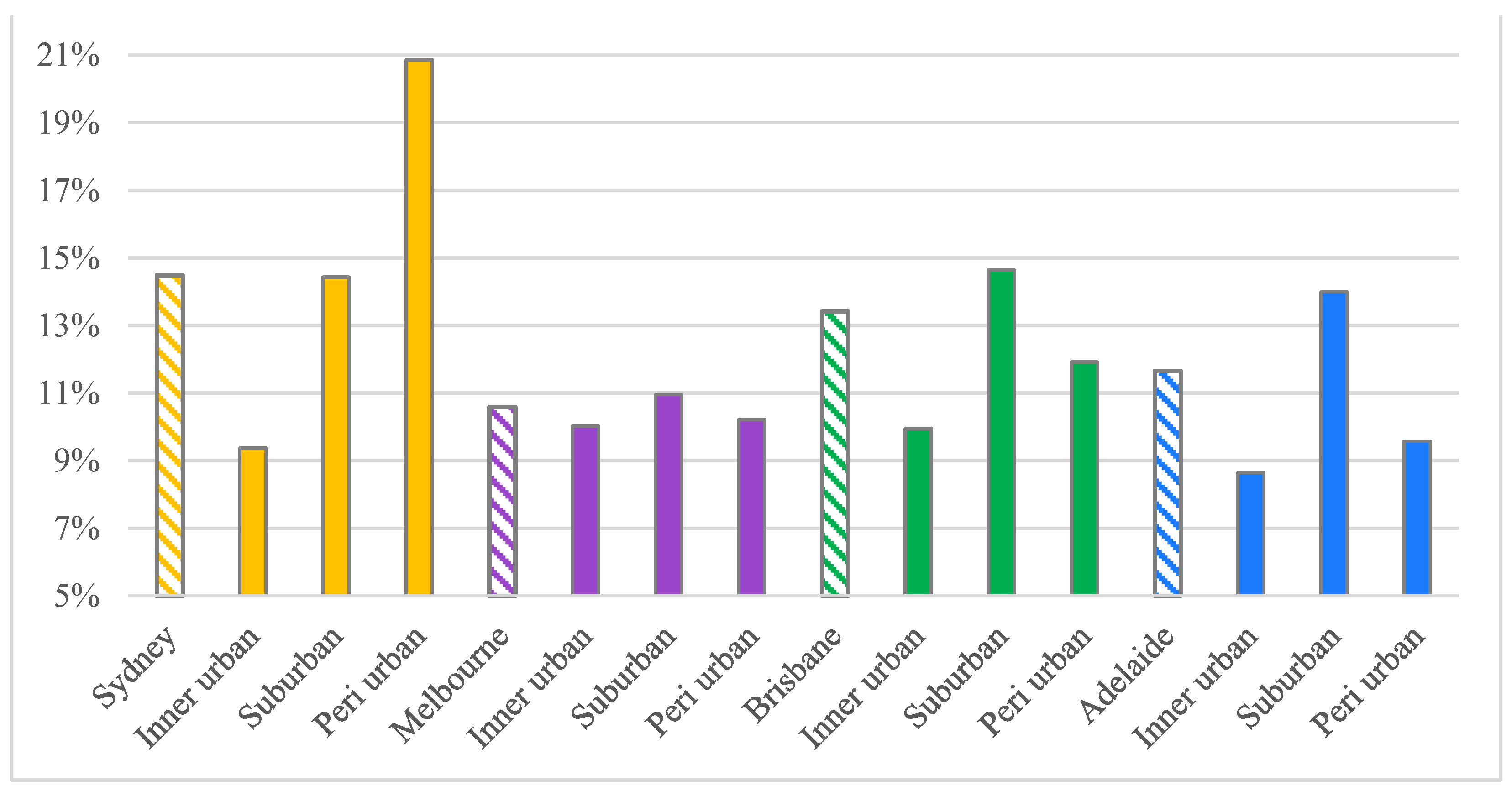
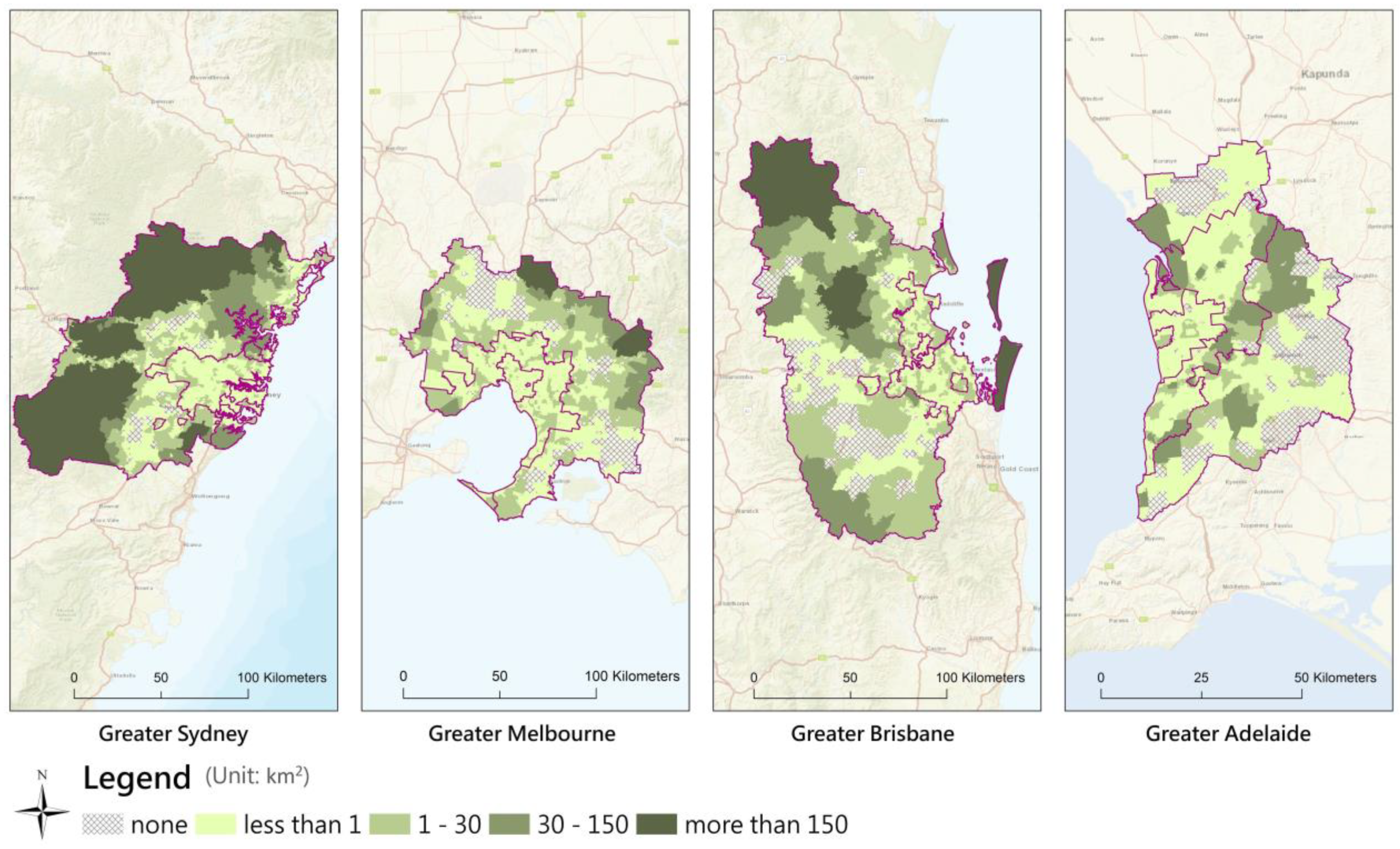
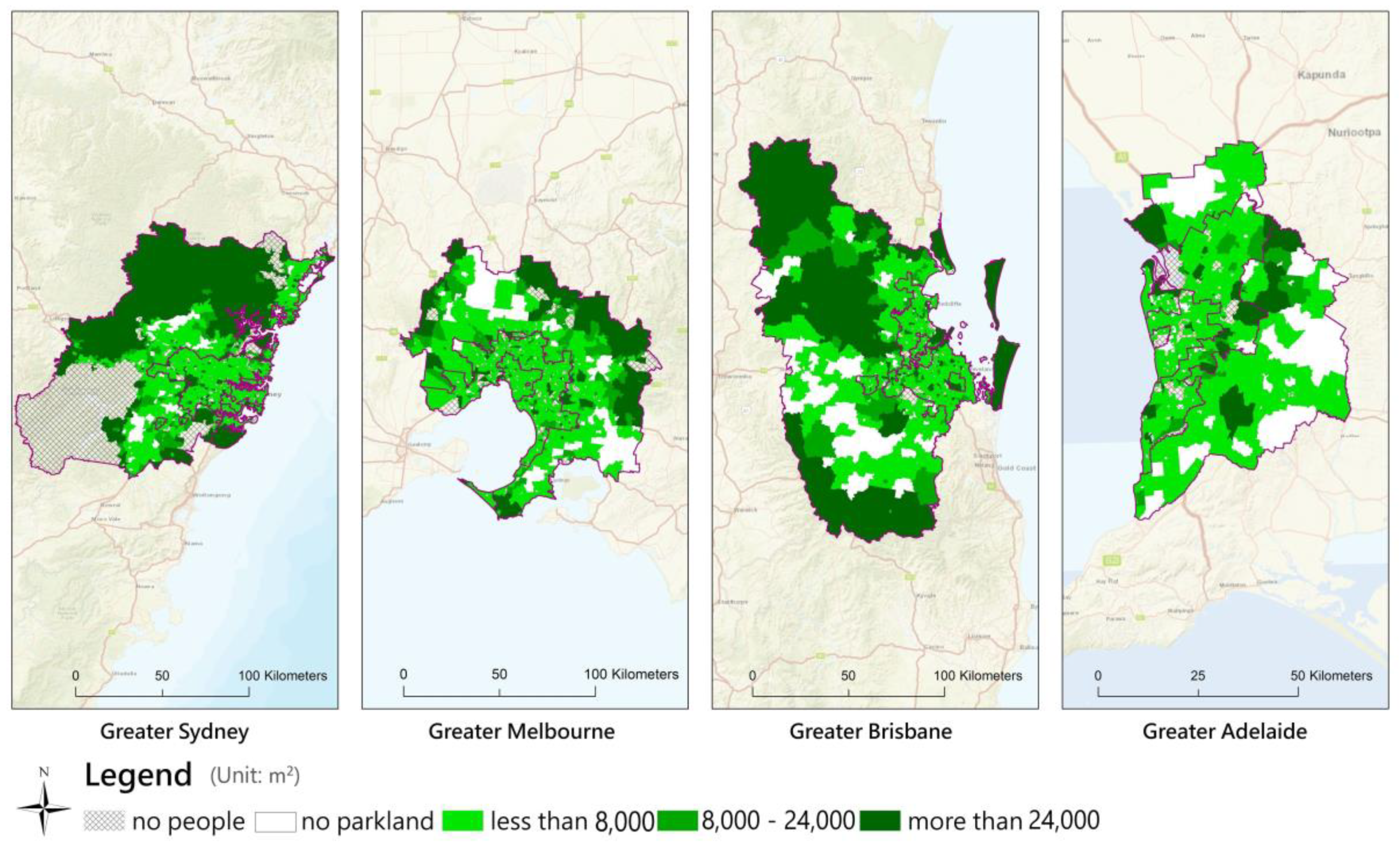
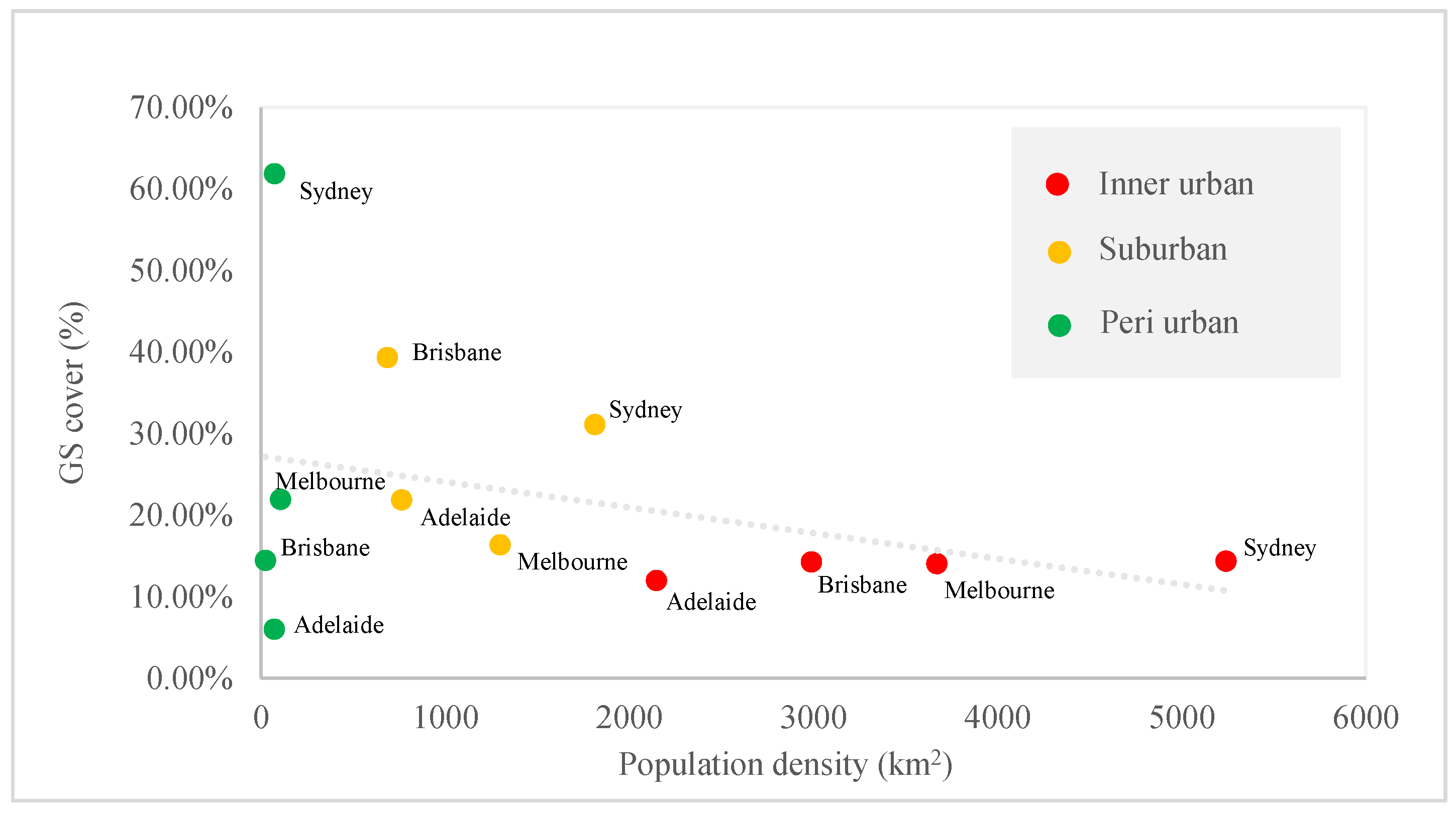
During times of stress and social pressure, urban green space provides social, cultural, and economic resources that help individuals and communities cope. Green space accessibility is, therefore, an important indicator related to people’s health and welfare. However, green space accessibility is not even throughout urban areas, with some areas better served with green space than others. Green space patterning is, therefore, a major environmental justice challenge. This research uses GIS approaches to analyze and understand urban green space access of urban communities in the Australian metropolitan areas of Adelaide, Melbourne, Sydney, and Brisbane. We calculate indicators to describe green space access in relation to different green space patterns within different metropolitan zones, including the inner urban, suburban, and peri urban. We use the best available open data from the Australian census of 2017 to calculate green space accessibility. Our results describe the relationship between population density and green space distribution and patterning in the four metropolitan areas. We find that even cities which are generally thought of as liveable have considerable environmental justice challenges and inequity and must improve green space access to address environmental inequity. We also find that a range type of measures can be used to better understand green space accessibility. Accessibility varies greatly both within metropolitan areas and also from city to city. Through improving our understanding of the green space accessibility characteristics of Australian metropolitan areas, the result of this study supports the future planning of more just and equal green cities.
Keywords: environmental justice; green open space; accessibility; green infrastructure; environmental planning environmental justice; green open space; accessibility; green infrastructure; environmental planning