


Abstract
Climate change and continued urban development in flood-prone areas exacerbate flood risks. Flood Risk Management authorities often turn to structural protection measures to minimise losses. However, these measures often lead to infrastructural lock-ins with potential unintended consequences as increased safety can induce increased development, ultimately leading to higher losses in the event of failures of the structural safe-guards in place. This process has been referred to as the Safe Development Paradox: a cross-cutting science-policy-practice challenge that requires a systematic understanding in the context of climate change and the United Nations Sustainable Development Goals. Yet, there are no comprehensive review studies, to date, that summarize the state of knowledge of the Safe Development Paradox. This paper provides the first evidence base through a critical review of the state-of-the-art and quantitative analysis of the peer-reviewed English-language literature since 2000, highlighting key knowledge gaps and issues hindering progress in addressing the Safe Development Paradox. It was identified that current research is compounded by a lack of consistent terminology, limited geographic distribution of case studies, and skewed emphasis on fluvial flooding. The review ends with potential directions across the science, policy, and practice domains for increasing knowledge and tackling the Safe Development Paradox.
1. Introduction
Natural hazards, such as floods, cause severe disruption to daily life, often leading to significant socio-economic losses and environmental impacts worldwide [1,2]. Climate change and continued development in hazard-prone areas will exacerbate these risks [3,4]. Therefore, mitigation of these hazards is essential to protect communities and infrastructure from current and future risks. Numerous strategies are employed in practice for hazard mitigation: ranging from flood control channels for flash floods [5] to levees for fluvial flooding [6] and seawalls for coastal flooding [7]. Structural measures are often selected and are historically the preferred countermeasures in many parts of the world to combat flooding. However, these measures often lead to infrastructural lock-ins (path dependency) and may produce unintended consequences as increased safety can induce increased development, ultimately leading to higher losses in the event of failures of the structural safeguards in place [8]. This process has been diversely referred to as the Safe Development Paradox [9], Levee Effect [10], and Safety Dilemma [11]. Throughout this paper the Safe Development Paradox shall refer to all three keyphrases for the process described. Even outside of flood risk, structural measures are often used to mitigate natural hazards with similar challenges in tackling the Safe Development Paradox: strengthening infrastructure in earthquake zones [12]; larger dams for avalanches [13]; stronger housing design in tornado zones [14]; and the fire paradox, whereby preventing forest fires against a steady increase in fire risk and subsequent wildfire damage [15], to name a few.
Existing hazard mitigation infrastructure can be effective at reducing risk and minimising losses when operating within its design capacity. However, communities are increasingly vulnerable to hazard events larger than the planned capacity of the structure due to climate change, extreme events and a lack of knowledge on the limitations of defences and an increasing amount of high-value assets being placed behind the defence as time passes without a flood event [16,17]. Furthermore, urban layout may have changed since construction, placing infrastructure and populations at risk that did not exist when the initial design was drawn [5]. These mitigation structures can create a false sense of safety that leaves these exposed populations unaware and underprepared to cope with potential disasters [16]. Furthermore, as the climate changes, low-probability, high-consequence events may happen more frequently, placing an inexperienced population at greater risk [18,19].
A solution to combat changing natural hazards is to upgrade existing mitigation structures, however, this merely produces a new design capacity, albeit higher than previously [20]. There is a common belief in flood risk management programmes that the exposure of urban areas depends solely on socio-economic development and natural urban growth. However, numerous scholars, starting with White in 1945 [21], have shown that increasing levels of flood protection can result in unintended consequences: increases in flood exposure, and, in turn, vulnerability [9,22,23,24,25,26]. If the growth of coastal urban areas were driven by population increases alone the spatial distribution of new settlements would be the same [27]. The cycle continues as greater populations and high-value assets are placed either within or nearby at-risk areas, producing a need for even greater structural strengthening and/or heightening (or expansion) of existing structures. These structures also interact with natural processes (e.g., morphological evolution of river deltas) altering the physical characteristics of hazards and hence their likelihood [28]. This can ultimately lead to the lock-in effect of a cycle of continued and increasingly expensive investments in maintenance and upgrades of defence. Whilst the defences may be built to a high standard, such as the Dutch coastal policy of constructing flood defences with a 10,000-year return period [29], inevitably disasters do happen. A term from economics, ‘tail risk’ is the chance of a loss occurring due to an extremely rare event. However, over a long enough period, nothing is unlikely, and it was this that led to the financial crisis in 2008 [30], and in the event of an unexpected defence failure, loss of human life and economic damage, as demonstrated by Hurricane Katrina and its impacts in New Orleans [9].
Of the many natural hazards, flooding presents some of the most frequent and with severe consequences: it impacts more people than any other natural disaster [31]. Approximately, three-quarters of natural disasters over recent decades were water related, of which flooding accounts for a third. More than half of the victims of natural disasters were a result of a storm surge, a river flood, or a flash flood. Between 1985 and 2003 approximately 300,000 people lost their lives as a result of flooding. On average, the global death toll varies between 5000 and 15,000 casualties annually [32]. Even those areas protected by flood protection measures are still exposed and potentially vulnerable: floods in New Orleans (2005), Thailand (2011), France (2011), and Germany (2021) were characterised by a large number of breaches in flood defences. Overloading the protection system can lead to multiple failures, exacerbating the extent of the flooding and the damage [33]. Overtopping of flood defences in New Orleans resulted in hundreds of deaths and billions of US dollars worth of damage [9]. The Thailand floods caused the national and global economy to be disrupted for several months and caused a significant drop in economic growth [33]. The 2011 French coastal floods resulted in the deaths of 50 people [34]. In both the New Orleans and France floods elderly people were the most vulnerable [33,34]. Such disasters emerge when natural hazards meet vulnerable communities and exposed infrastructure, with mitigation efforts often needed to keep destructive waters away from people, vice-versa or a combination of both. Whilst present in other hazards, viewing the Safe Development Paradox through the scope of flooding provides an ideal foundation to examine the ever-present and unsustainable conflict between development, risk management, and spatial planning practices. The Safe Development Paradox presents a cross-cutting science, policy, and practice challenge that requires a systematic understanding in the context of climate change and the United Nations Sustainable Development Goals (SDGs). This paper provides an evidence base on the Safe Development Paradox in the context of flood risk management. The paper also provides insights into the key knowledge gaps in the Safe Development Paradox and potential ways forward for addressing them.
2. Methods
To assess the collective evidence on the Safe Development Paradox, a critical review of the published literature was conducted within the scope of flood risk management. The review examined the state-of-the-art through a quantitative analysis of the peer-reviewed scientific literature by applying the advanced search function of Web of Science and Scopus (following a similar approach outlined in Sudmeier-Rieux et al., 2021 [35]). Google Scholar was used to corroborate the results returned by both databases. For transparency, searches were conducted in the United Kingdom. To ensure reliability, only peer-reviewed articles were considered, and grey literature was disregarded. The Safe Development Paradox and alternative terms (i.e., Levee Effect and Safety Dilemma) were used in query strings to ensure that all relevant papers were brought up by the search. Inclusion for further analysis was based on a pre-examination of the title, keywords, and abstract of the papers returned by the search based on a pre-defined filter and inclusion/exclusion criteria (see Appendix A). Furthermore, due to the extremely sporadic nature of the usage of these terms in the twentieth century, and to ensure continued applicability and scientific relevancy, only articles from 2000 until the end of 2021 were reviewed. Reviewing only complete years ensures that there is fair representation across time. However, the background context has been informed by selected articles published before this period, highlighting the emergence and evolution of the Safe Development Paradox and other key interrelated concepts, but these do not feature in the analysis. The overall review approach, rationale, and specific criteria behind the article selection are provided in more detail in the Appendix A.
3. Results and Discussion
A total of forty-two articles, regarding the Safe Development Paradox in the context of flood risk management, were analysed for this review. Articles were assessed within five themes: year of publication, terminology, types of hydrological hazard, geographic distribution, and their recommendations for addressing the Safe Development Paradox.
3.1. Temporal Distribution
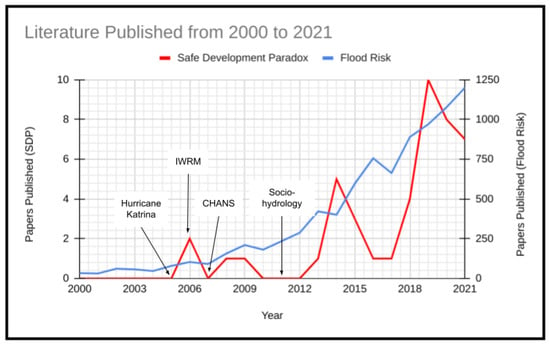
The amount of literature increased throughout the research period, with the greatest sustained increase beginning from 2013 onwards, except the 2016–2017 lull (Figure 1). Meanwhile, other closely related concepts emerged: Integrated Water Resource Management (IWRM) developed in 2006, from a UN and Global Water Partnership taskforce [36]; Coupled Human and Natural Systems (CHANS) emerging in academia in 2007 [37]; and then Socio-hydrology in 2011 [38]. Publications peaked and troughed as these closely related concepts emerged. However, following the emergence of Socio-hydrology, paper publications followed a steady increase, with many following publications being completed in that context [26]. The increase in publications is also coupled with a general increase in flood risk literature (Figure 1), rising steadily since the turn of the century.
Figure 1.
Distribution of Safe Development Paradox/ Levee Effect/ Safety Dilemma articles and general flood risk articles over the review period (2000 to 2021), with Hurricane Katrina and the emergence of new related concepts are annotated.
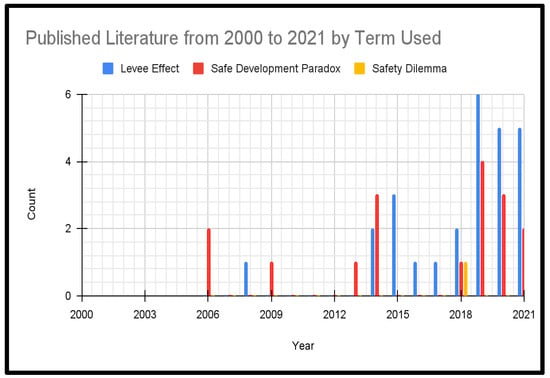
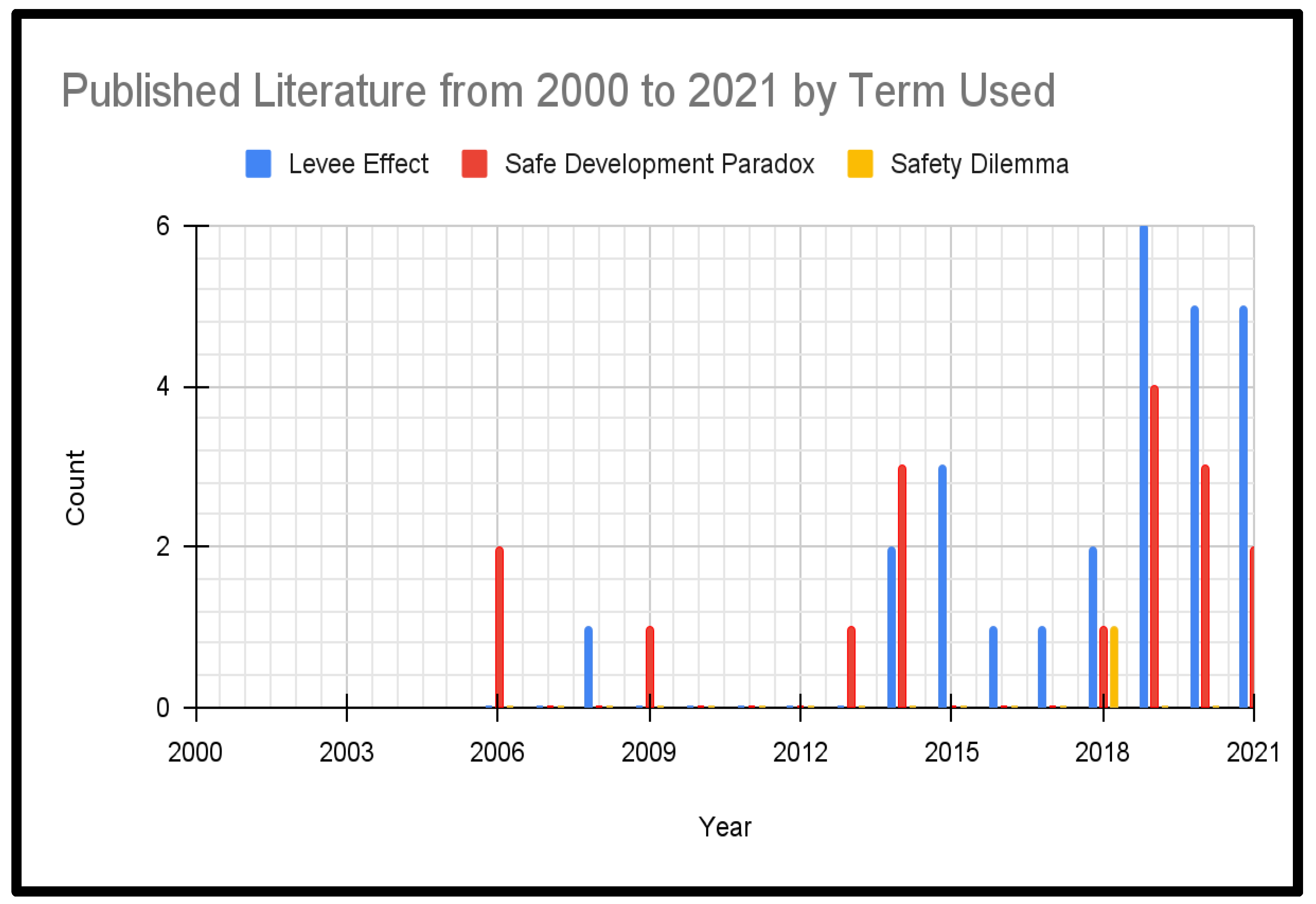
In the literature, three terms are used to refer to the same process of unintended consequences of hard flood defences: Safe Development Paradox [9], Levee Effect [10], and Safety Dilemma [11]. When reviewing the graphs, it should be noted that some articles use the terms interchangeably within the same article [11]. Originally, the Safe Development Paradox was used and continued to be used steadily throughout the 2010s (Figure 2). However, the term was superseded by the Levee Effect, a term often used by authors approaching the lock-in cyclical process from a socio-hydrological perspective [39]. Authors who use the term Safe Development Paradox often discuss a real-world case study and recommend better planning control to solve the lock-in effects [40]. Whereas authors that use the Levee Effect focus on recommending further developing the scientific knowledge and engaging more in modelling and theory [41]. These connections are discussed in greater detail in later sections.
Figure 2.
Distribution of published literature regarding the lock-in cyclical process, referred to in this article as the Safe Development Paradox over the review period (2000 to 2021). Articles have been divided by the terminology used.
At present, the Levee Effect is the most used term for this process (Figure 2), and partly reflects the growth of socio-hydrology, as well as flood risk literature in general. However, the Levee Effect has the chance of being misused, when discussing how a levee may affect the studied topic, such as a paper authored by Saito and Fukuoka in 2011 discussing the effects of natural levees [42]. Likewise, the Safety Dilemma was broad, and at present, there is only one paper in which the Safety Dilemma was used in the context of the Safe Development Paradox for this paper [i.e., 11]. In contrast, once grey literature has been discarded, the Safe Development Paradox was used in the correct context in each paper that mentioned it.
3.2. Hydrological Hazard
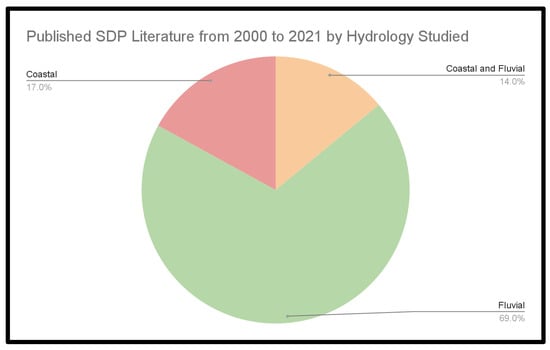
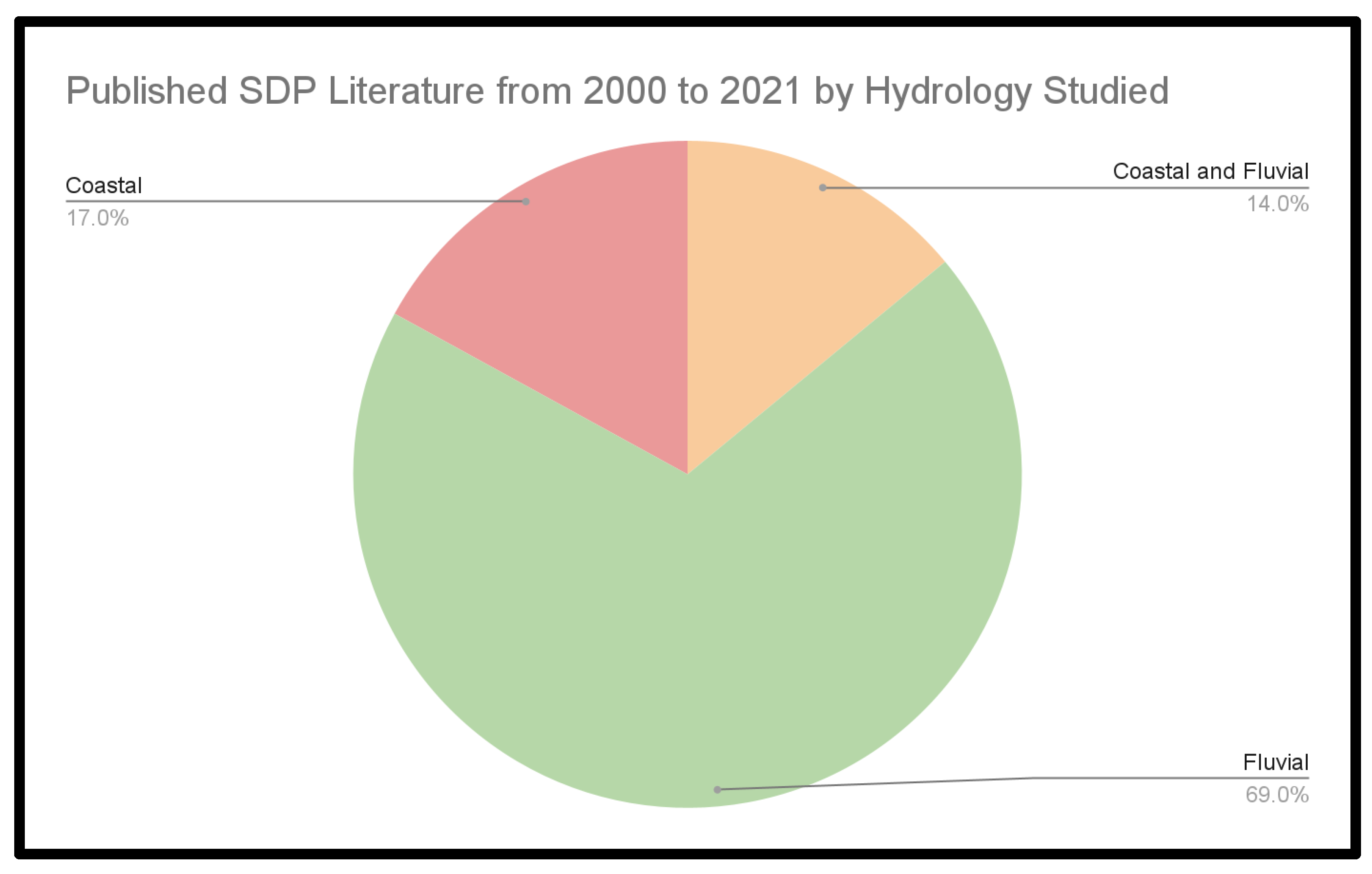
The majority of the literature focuses on fluvial flooding and the unintended lock-in consequences thereof: fluvial flooding consists of 69% of analysed literature, coastal flooding is 17%, and papers studying both accounts for 14% (Figure 3). Of the thirteen papers that discuss coastal flooding, seven specifically focus on coastal flooding; the other six discuss both, fluvial and coastal flooding. These papers were often review papers or compared between case studies [43]. Consequently, disregarding papers that discuss both, as mentioned previously, for every paper that investigates the Safe Development Paradox in a coastal setting, there are four in a fluvial setting. The majority of purely coastal flooding papers used the term Safe Development Paradox; only one used the term Levee Effect. Moreover, all articles that specifically focus on coastal flooding study case studies in Western countries: nine studying an American case study, and one studying a European case study. Ultimately, research attempting to understand the interplay between coastal flooding and the Safe Development Paradox is lacking.
Figure 3.
Published literature, divided by the hydrological hazard studied (coastal or fluvial) over the review period (2000 to 2021).
Between 1970 and 2010, populations in North America have observed a 13.3% population increase in coastal flood risk areas, compared to a 0.5% population decrease in fluvial flood risk areas [44]. Similar changes occurred across continents of the Global North during the same period: in Europe, a 6% increase in populations at risk of coastal flooding compared to a 0.3% decrease in those at risk of fluvial flooding; and in Australasia, a 2.5% increase in populations at risk of coastal flooding, compared to a 0.7% decrease in those at risk of fluvial flooding [44]. New populations moving to the coast lead to increased communities, assets, and infrastructure placed on the coastline than would have been there previously. In coastal areas locked into the cycle of the Safe Development Paradox, additional populations can further drive this process.
3.3. Geographic Distribution
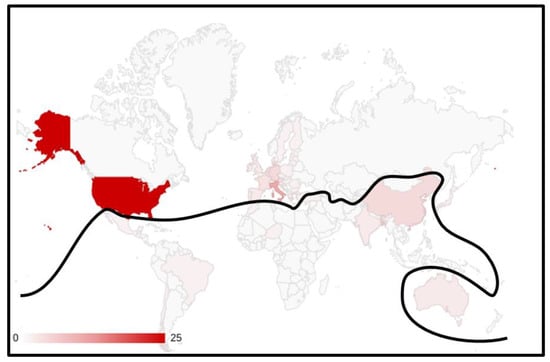
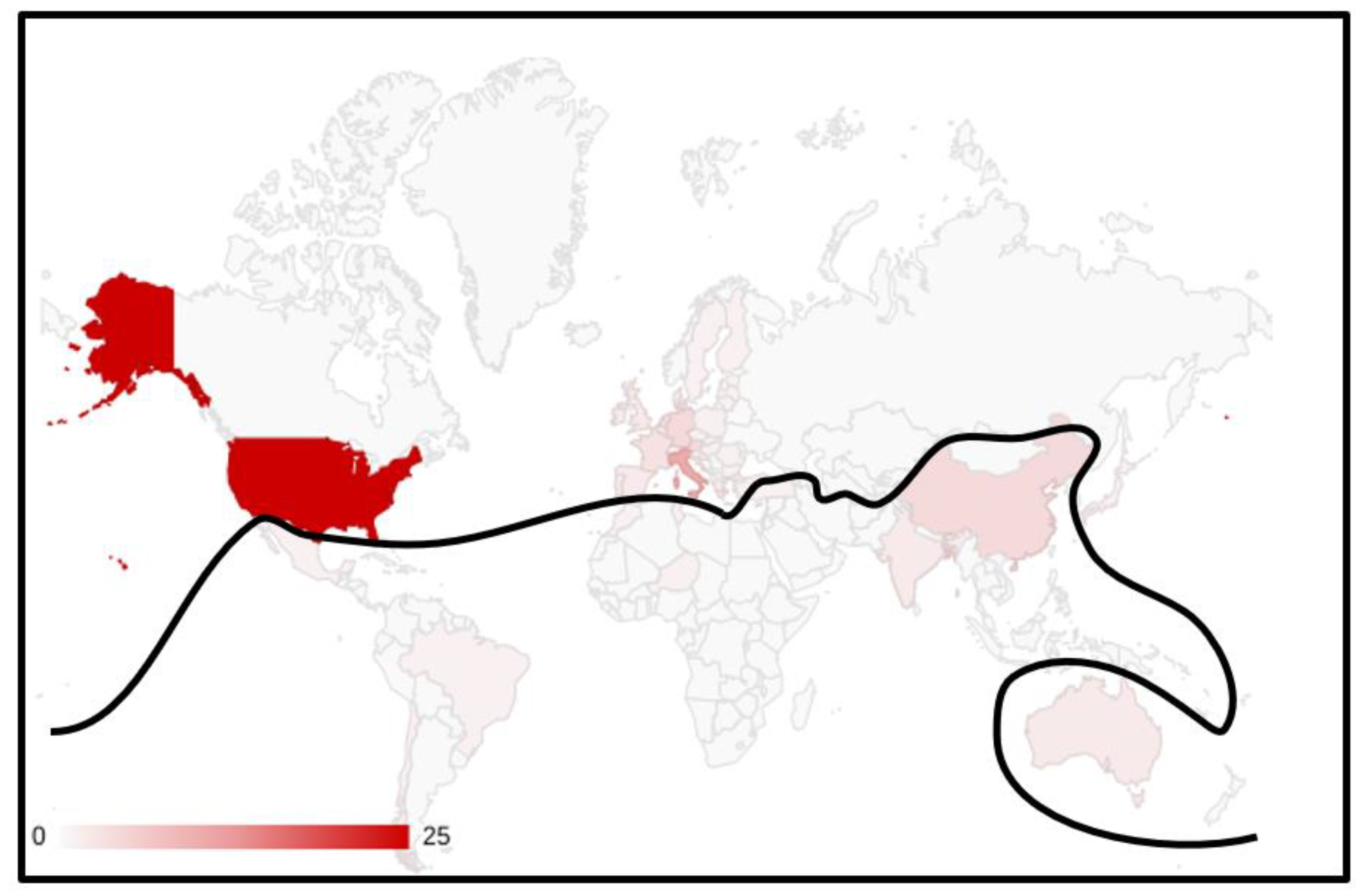
The majority of published articles focus on cases in the USA (25), followed by Italy (10), Bangladesh (6), Austria (4), China (4), and Germany (4). Then France and the Netherlands (3 each) and Denmark, Ireland, Australia, Croatia, Greece, India, Portugal, Spain, and the UK (2 each). All other countries highlighted in the map below have one paper each (Figure 4). Use of the term Safe Development Paradox was more predominant in papers from the USA, with 65% of papers using the term researching cases in the country. In contrast, use of the term Levee Effect was more predominant in European case studies. Europe and the USA were the predominant locations studied in the literature. These locations of the Global North are often more economically developed than others in the Global South [45], and represent a greater proportion of the literature (Figure 4). This may be due to the Safe Development Paradox not being a present issue in many places in the Global South where major structural flood defences are limited, with an opportunity for lessons from the Global North for avoiding the development of similar infrastructural lock-in conditions [46]. Furthermore, a focus on English-language articles may have contributed to this skew.
Figure 4.
Geographic distribution of locations studied in literature by country (2000 to 2021). The map features the Brandt line, delineating the Global North and Global South (Lees, 2020). Colour scale represents the paper count.
Developed economies may have already fallen into the infrastructural lock-in effects of the Safe Development Paradox, and may already be trapped in a cycle of an ever-increasing need for defences [10]. Lock-in conditions can lead to high levels of flood protections and highly urbanised floodplains [11]. In contrast, as emerging countries develop, the effects of the Safe Development Paradox have begun to take hold. In Bangladesh, for example, it has been identified in areas where flood protection has been structurally developed, population density has increased greatly over the past decades as well as the number of assets exposed to flooding [47]. Flood mortality rates associated with the 2017 flooding in Bangladesh were lower in the areas with a lower protection level [47]. As countries continue to develop, more research regarding the Global South will provide a better understanding of emerging flood risk management approaches and the challenge/opportunities for safe and sustainable development in hazard-prone areas.
3.4. Literature Recommendations
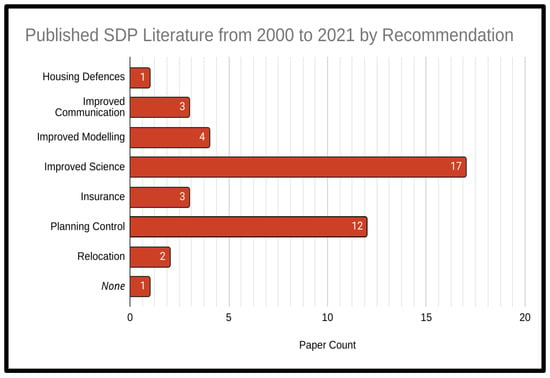
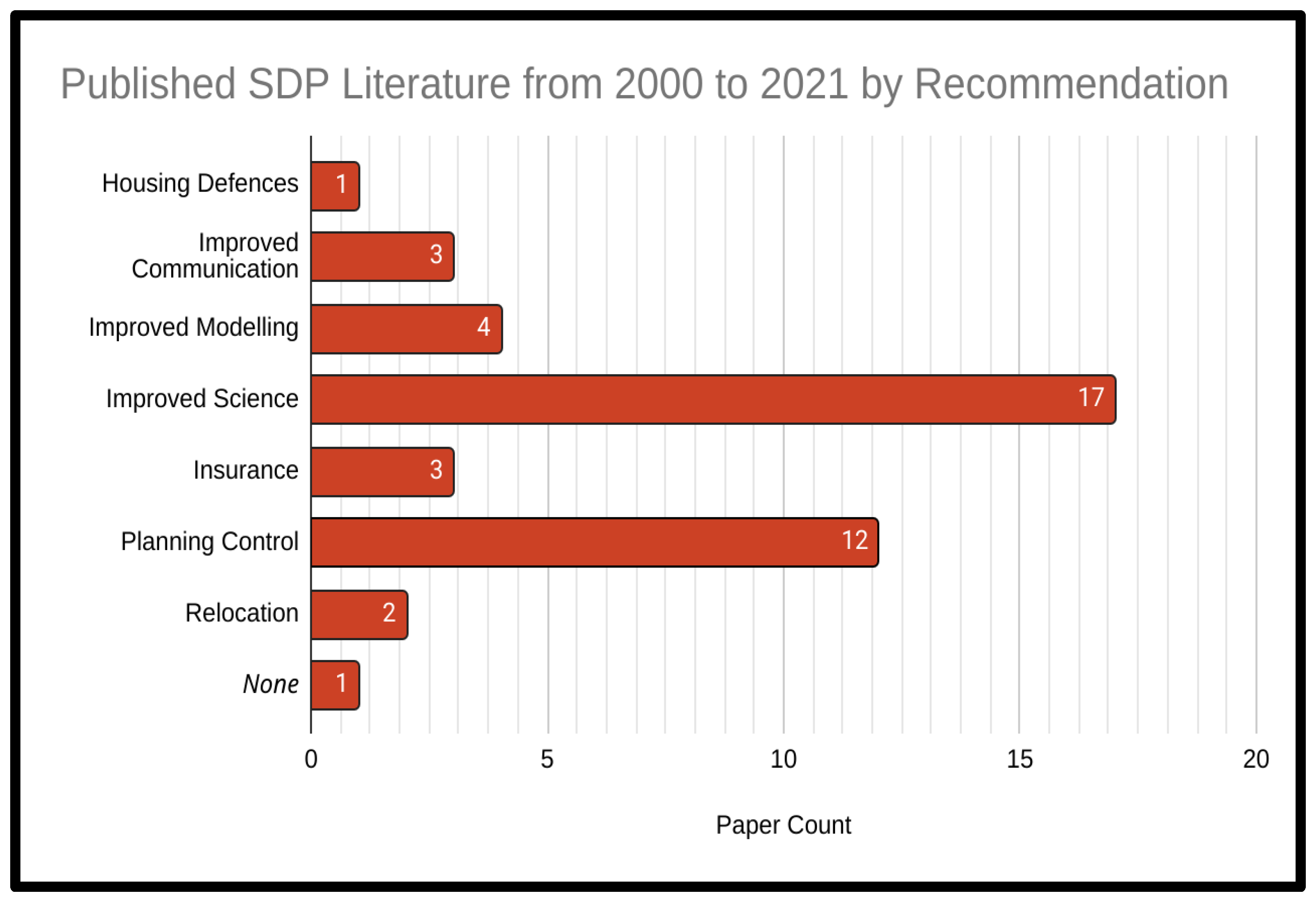
The majority of analysed literature recommends Improved Science when discussing how to break the lock-in cycle of the Safe Development Paradox (Figure 5). Proponents for improving knowledge and bettering the science surrounding the process come from a range of backgrounds: the Levee Effect [48] and the Safe Development Paradox [49] terms are used in papers recommending it, both in fluvial and coastal settings, and from a variety of locations around the world. With the majority of papers being produced focussing on the Global North, increasing Safe Development Paradox knowledge may be produced from studying a greater number of case studies, especially those from developing nations in the understudied Global South.
Figure 5.
Published analysed literature divided by the key recommendation provided by the authors in the papers published throughout the review period (2000 to 2021).
In total, twelve articles suggested stronger Planning Control as a way to alleviate the Safe Development Paradox, with two-thirds of these articles focussed on case studies in the USA. Better Planning Control would require the use of governing bodies to coordinate urban development to ensure that the placement of populations and infrastructure did not increase following the upgrade of a flood defence [50,51]. Other papers suggested Improved Communication of flood risk would break the Safe Development Paradox [52], some suggested Improved Modelling to understand risk and the impacts of new development better [53], others proposed using flood Insurance policies to provide an incentive for building more sustainably [54]). In some papers, Relocation, as part of a mixed package, was the best suggested way to ultimately combat the Safe Development Paradox and the effects of climate change [55]. One paper suggested that better House Defences were the most appropriate measure in order to reduce the cost of flood defences and at-risk houses should have flood doors and windows [56]. However, not all papers offered a recommendation.
4. Conclusions and Outlook
Upgrading flood defences continuously can result in a greater number of populations and high-value assets being placed in areas prone to flooding than located there previously. Without control, this results in a cyclical, ever-increasing amount of exposed infrastructure and vulnerable and complacent populations placed in at-risk areas and unprepared for large-scale flood events that could overwhelm existing defence systems. This process and its unintended consequences and feedbacks is referred to as the Safe Development Paradox, a concept that first emerged in the area of coupled human-flood systems dating back to 1945 [21]. Whilst research into the Safe Development Paradox has increased since the first paper in the selected research period was published in 2006, only forty-two papers were published over the review period.
The increase in Safe Development Paradox literature follows a general upwards trend in flood risk publications, and is partly as a result of growing knowledge of climate change and its effects upon sea levels and rainfall patterns and associated risks of flooding. Since the emergence of socio-hydrology in the early-to-mid 2010s, most of the literature has been created within this sphere, and this is a trend that is most likely going to continue as socio-hydrology establishes itself. However, approaching the phenomenon from different angles has created ambiguity and division within the community regarding the terminology. To date, the Levee Effect supersedes the Safe Development Paradox as the most often used term, with the Safe Development Paradox often used most by authors studying American case studies. Whereas the Levee Effect is used more often in European case studies and by authors approaching the topic from a more human, sociological side. Various studies also tend to use these terms interchangeably. This often results in divergence or duplication of research, highlighting the need for using consistent terminology when researching these processes. Semantically, the Levee Effect appears to present the phenomena as one-directional and linear as opposed to its true cyclicality. Furthermore, the term may restrict the study to areas defended by levees, and may hinder knowledge transfer within natural hazard sciences; the process of the Safe Development Paradox has been identified in alternative lock-in cycles of unintended consequences of structural protection. Therefore, the Levee Effect may be understood to be a subset of the wider Safe Development Paradox. Consistent future use of the term Safe Development Paradox when discussing the unintended consequences of building/upgrading structural flood protection would help avoid confusion or misinterpretation and advance the scientific understanding of the issue. Furthermore, this will also avoid the use of non-standard terminology, which may not be picked up by future reviews studies. Whilst non-English terminologies were not considered by this review, it is recommended that future researchers consider these, and other emerging terms, as the field develops, to consolidate the state of knowledge of the issue.
Moreover, the ratio between fluvial and coastal flood hazard papers does not reflect population changes; in contrast populations in the Global North are generally growing quicker in areas at risk of coastal flooding, than in areas at risk of fluvial flooding. Lessons can be transferred from fluvial studies to future studies in coastal settings. In addition, further studies are needed to better understand the growing challenges in coastal zones and promote the sustainability of coastal communities in the face of rising sea-levels and increased storminess and enhanced sense of complacency (hence vulnerability) due to the presence of structural flood protection measures. These issues are not limited to disparities between the amount of literature by hydrological hazard as case studies in the Global South are also limited. Most papers reviewed/studied locations in the USA, followed by locations in Europe. Then, as developing nations grow and begin to encounter the initial effects of the Safe Development Paradox, lessons can be learnt from past events and existing situations in developed countries. This will help to inform appropriate policies that enable communities in the Global South to grow sustainably and minimise flood risk through better land use management practices. Indeed, the most frequent recommendation of the published research was to further develop the science and expand knowledge of the Safe Development Paradox.
Investigating coastal flood Safe Development Paradox situations in the Global South can also help expand knowledge and diversify the case studies to strengthen the science. Furthermore, the success of strategies used to break the Safe Development Paradox in existing communities can demonstrate how to further sustainable flood risk management elsewhere. Better planning control emerged as the second most noted recommendation and following an expected growth in Safe Development Paradox knowledge, will provide the best method of managing the Safe Development Paradox and preventing its emergence in developing communities and nations. Therefore, it is the recommendation of this paper for further research into the Safe Development Paradox to include more case studies of areas that are at-risk of coastal flooding. Future work should also aim to diversify current knowledge; the Global South requires particular attention to better understand the effect of varied underlying contexts in socio-economic dynamics and spatial planning and flood risk management practices.
In essence, further research into the Safe Development Paradox can bring benefits at the science-policy-practice nexus. The twenty-first century will bring novel challenges and increasing confrontation between human infrastructure and an increasingly uncertain and strengthening pattern of natural hazards. The Safe Development Paradox will be one of these challenges, and future flood risk management strategies must seek to incorporate these emerging feedbacks. The challenge remains to untangle social and economic development from development spurred by the construction of hard-engineered structural flood defences, and to quantify it to then engage with communities and stakeholders to enhance awareness of the residual risk from these defences, and incorporate it into cost-benefit analyses and prioritization of alternative flood risk management strategies. Meanwhile, inconsistent terminology; unbalanced distribution of case studies both geographically, and between coastal and fluvial flooding; and a general lack of existing research against the backdrop of flood risk literature occur. This is without considering the behemoth of flood hazard, exposure, vulnerability, resilience etc. literature already present, and demonstrates that these coupled human-water feedbacks have thus far been neglected in the flood risk community. Yet the issue of the Safe Development Paradox remains, and whilst it continues communities and critical infrastructure remain at risk. This highlights the need for advancing knowledge and understanding of the Safe Development Paradox across all aspects of flood hazard mapping and risk assessment and management under a changing and highly uncertain climatic, environmental, and socio-economic conditions. This requires better methods for quantifying the increased flood exposure and vulnerability as well as lock-in effects of structural flood protection measures put in place for managing ever-growing risks of flooding.
Addressing this challenge will need to begin within the scientific sphere and begin with consistent terminology and increasing the breadth of case studies and Safe Development Paradox data. Knowledge transfer from adjacent scientific branches (i.e., socio-ecology), between fluvial and coastal case studies, and on a broader scale between nations and economies, can enable sustained growth of the field and better understanding of the issue. For such cross-cutting scientific and policy issues, future research may choose to include grey literature, such as government reports and technical investigations to bolster Safe Development Paradox knowledge. In the policy sphere, governments and flood risk management agencies should look towards managing the Safe Development Paradox using existing frameworks, such as reformed spatial planning practices to enable sustainable growth, or integrating emerging alternative risk management methods, such as nature-based and blue-green infrastructure solutions instead of heavy and sole reliance of large-scale hard flood defences. This highlights the urgent need for further research to investigate these solutions and work with flood risk management agencies to identify the best outcomes and methods of tackling the Safe Development Paradox, whether that be generally, or site-specific. Furthermore, as a cross-cutting issue, such research will require multi-disciplinary approaches, incorporating, for example, social scientists to aid with spatial planning solutions, or civil engineers to aid with nature-based solutions. Ultimately however, the end goal will be to break the Safe Development Paradox and untangle continued urban growth from unsustainable reliance on flood protection. Putting research and policy into practice would also require civil and political will. Raising awareness of the limitations of hard defences and involving those at risk in management decisions as a stakeholder is an essential component of flood risk management. In the face of climate change, it is also vital to increase household adaptation and flood resilience to create more sustainable communities, as well as to engage communities and the wider public and governments in the conversation of future flood risk and its management. This paper provides a foundation for future researchers to build on, providing a state-of-the-art to springboard new case studies and perspectives. Presently, research is being carried out in an effort to quantify the hitherto neglected elements produced by the unintended consequences of the Safe Development Paradox with selected case studies in the United Kingdom and Canada and will be published in due course.
Author Contributions
Conceptualisation, M.J.B. and A.S.K.; methodology, M.J.B., A.S.K. and C.S.K.; investigation, M.J.B.; data curation, M.J.B.; writing—original draft preparation, M.J.B.; writing—review and editing, M.J.B., A.S.K. and C.S.K.; visualisation, M.J.B.; supervision, A.S.K. and C.S.K.; funding acquisition, A.S.K. All authors have read and agreed to the published version of the manuscript.
Funding
This research was funded by the EPSRC grant number EP/T518116/1.
Data Availability Statement
Not applicable.
Conflicts of Interest
The authors declare no conflict of interest.
Appendix A
Information within this section provides further detail on the overall method and specific protocol used to conduct the review. Research papers were first obtained from the Web of Science and Scopus databases. This was then expanded through further search in Google Scholar.
These papers were then filtered using the query strings outlined in the table below (Table A1). To ensure relevancy, only peer-reviewed articles between the years 2000 and 2021 were directly involved in the analysis. Literature prior to 2000 informed the background context. Only literature pertaining to flooding were chosen to be included in order to provide a scope and context for the paper. As the contents of the papers could not be directly searched, indicators were relied on. In Scopus, the search function TITLE-ABS-KEY provided a good proxy for searching within the documents; it searched for mentions of the keyphrase in the title, the abstract, and the author keywords. For consistency, the same method was also applied to the Web of Science database, translating as TI=(“_”) OR AB=(“_”) OR AK=(“_”), whereby underscores represent the keyphrase being searched and OR is a Boolean operator. Other search parameters, such as ALL=(“_”), were not used as prior iterations had shown that this yielded a high number of returns that were not directly relevant.. Therefore, after several trials the Title, Abstract, Author Keywords parameters provided the most accurate results. These papers were then manually checked to ensure they discussed the Safe Development Paradox.
Table A1.
Query Strings Used in the Identification of Literature.
In total, the three query strings returned 58 papers from Scopus and 37 papers from Web of Science. Duplicates between the searches were removed. Using Google Scholar, 16 relevant papers were identified that were not returned by either Scopus or Web of Science database queries. To ensure relevancy, literature was included only if there was a primary focus on the Safe Development Paradox, Levee Effect, or Safety Dilemma demonstrated by the phrase occurrence in the title, abstract or as a keyword. The papers were then filtered using the method described in the flowchart below (Figure A1). The inclusion criteria for the filters are described in the table below (Table A2). Of the papers, grey literature was excluded due to the difficulty of estimating the quality of the studies, and many were discarded for not discussing the human-water coupled process referred to as the Safe Development Paradox within this paper. The remaining 43 then proceeded through the filter. Only one paper was discarded at the flooding hazard? stage, as it was referring to the Safe Development Paradox processes in earthquake zones.
The remaining 42 papers were then sorted into categories within five themes: the year published, the terminology used, the local hydrology (fluvial or coastal) presenting the hazard, the geographic location of the case studies used in the article, and the final recommendations of the paper. The inclusion criteria for each category is presented in the table below (Table A3). Relevant information gathered from the articles was recorded and provides the data for the Results and Discussion section of this paper.
In order to provide a context for the growth of Safe Development Paradox literature against flood risk literature in general, the number of papers published per year was determined (Figure 2). The query strings used for the searching of these papers are displayed below (Table A4). Literature used within the analysis is recorded at the end of the document (Table A5).
Figure A1.
High-Level Flowchart of Data Collection from Literature Review.
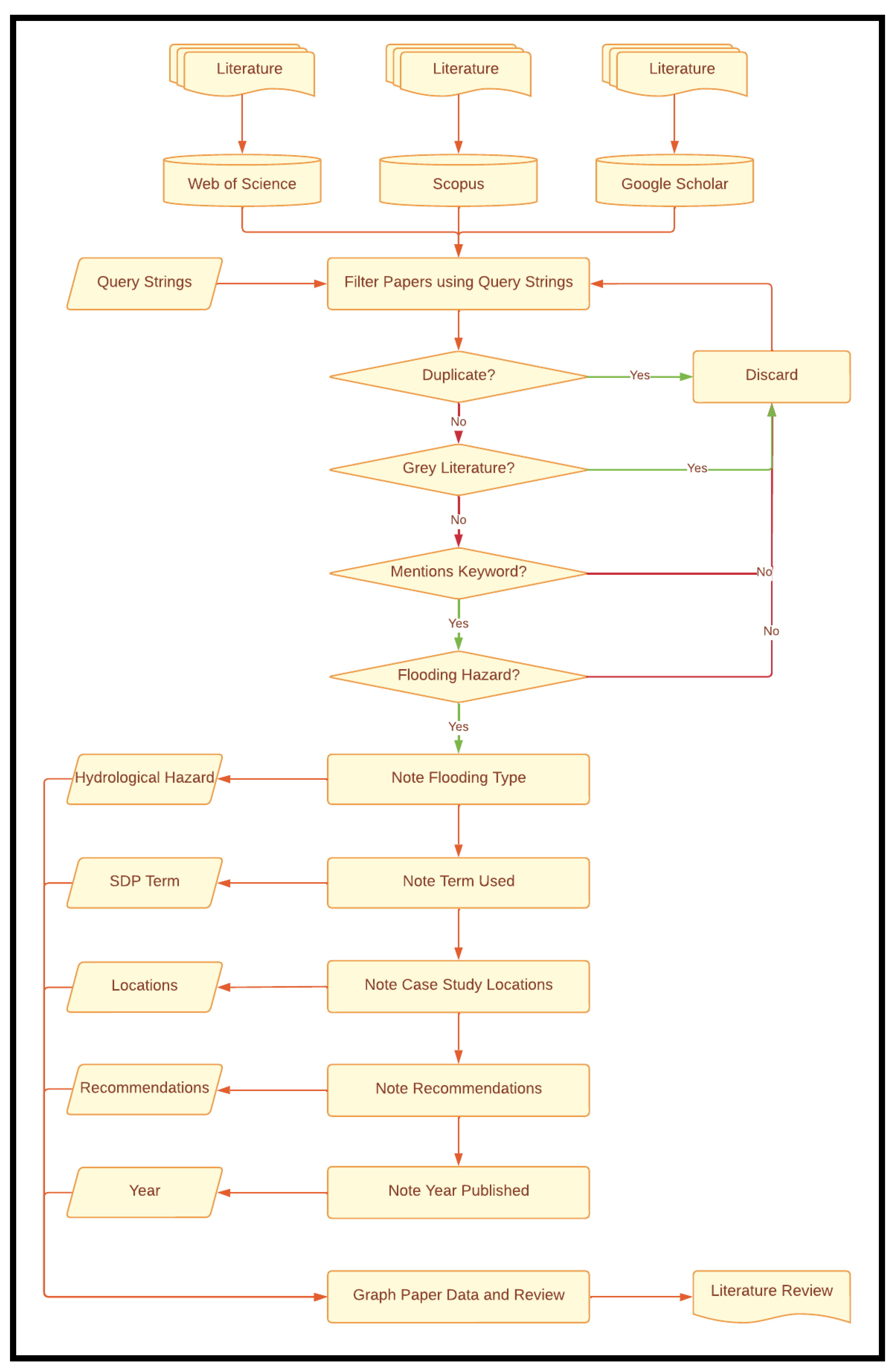
Table A2.
Criteria for Initial Paper Filters.
Table A3.
Inclusion Criteria for Sorting Categories.
Table A4.
Query Strings Used in the Identification of Flood Risk Literature.
Table A5.
Peer-Reviewed Literature Used Within the Analysis.
References
- Sharples, J.J.; Cary, G.J.; Fox-Hughes, P.; Mooney, S.; Evans, J.P.; Fletcher, M.-S.; Fromm, M.; Grierson, P.F.; McRae, R.; Baker, P. Natural hazards in Australia: Extreme bushfire. Clim. Chang. 2016, 139, 85–99. [Google Scholar] [CrossRef] [Scilit]
- Natho, S.; Thieken, A.H. Implementation and adaptation of a macro-scale method to assess and monitor direct economic losses caused by natural hazards. Int. J. Disaster Risk Reduct. 2018, 28, 191–205. [Google Scholar] [CrossRef] [Scilit]
- Gbadegesin, A.S.; Olorunfemi, F.B.; Raheem, U.A. Urban Vulnerability to Climate Change and Natural Hazards in Nigeria. In Coping with Global Environmental Change, Disasters and Security; Springer: Berlin/Heidelberg, Germany, 2011; pp. 669–687. [Google Scholar] [CrossRef] [Scilit]
- Leichenko, R. Climate change and urban resilience. Curr. Opin. Environ. Sustain. 2011, 3, 164–168. [Google Scholar] [CrossRef] [Scilit]
- Sanders, B.F.; Grant, S.B. Re-envisioning stormwater infrastructure for ultrahazardous flooding. WIREs Water 2020, 7, e1414. [Google Scholar] [CrossRef] [Scilit]
- Vora, A.; Sharma, P.J.; Loliyana, V.D.; Patel, P.L.; Timbadiya, P.V. Assessment and Prioritization of Flood Protection Levees along the Lower Tapi River, India. Nat. Hazards Rev. 2018, 19. [Google Scholar] [CrossRef] [Scilit]
- Betzold, C.; Mohamed, I. Seawalls as a response to coastal erosion and flooding: A case study from Grande Comore, Comoros (West Indian Ocean). Reg. Environ. Chang. 2016, 17, 1077–1087. [Google Scholar] [CrossRef] [Scilit]
- Kates, R.W.; Colten, C.E.; Laska, S.; Leatherman, S.P. Reconstruction of New Orleans after Hurricane Katrina: A research perspective. Proc. Natl. Acad. Sci. USA 2006, 103, 14653–14660. [Google Scholar] [CrossRef] [Scilit]
- Burby, R.J. Hurricane Katrina and the Paradoxes of Government Disaster Policy: Bringing About Wise Governmental Decisions for Hazardous Areas. Ann. Am. Acad. Polit. Soc. Sci. 2006, 604, 171–191. [Google Scholar] [CrossRef] [Scilit]
- Di Baldassarre, G.; Viglione, A.; Carr, G.; Kuil, L.; Yan, K.; Brandimarte, L.; Blöschl, G. Debates-Perspectives on socio-hydrology: Capturing feedbacks between physical and social processes. Water Resour. Res. 2015, 51, 4770–4781. [Google Scholar] [CrossRef] [Scilit]
- Di Baldassarre, G.; Kreibich, H.; Vorogushyn, S.; Aerts, J.; Arnbjerg-Nielsen, K.; Barendrecht, M.; Bates, P.; Borga, M.; Botzen, W.; Bubeck, P.; et al. Hess Opinions: An interdisciplinary research agenda to explore the unintended consequences of structural flood protection. Hydrol. Earth Syst. Sci. 2018, 22, 5629–5637. [Google Scholar] [CrossRef] [Scilit]
- Erdik, M.; Durukal, E. Earthquake risk and its mitigation in Istanbul. Nat. Hazards 2007, 44, 181–197. [Google Scholar] [CrossRef] [Scilit]
- Höller, P. Avalanche hazards and mitigation in Austria: A review. Nat. Hazards 2007, 43, 81–101. [Google Scholar] [CrossRef] [Scilit]
- Ripberger, J.T.; Jenkins-Smith, H.C.; Silva, C.L.; Czajkowski, J.; Kunreuther, H.; Simmons, K.M. Tornado Damage Mitigation: Homeowner Support for Enhanced Building Codes in Oklahoma. Risk Anal. 2018, 38, 2300–2317. [Google Scholar] [CrossRef] [Scilit]
- Arévalo, J.R.; Naranjo-Cigala, A. Wildfire Impact and the “Fire Paradox” in a Natural and Endemic Pine Forest Stand and Shrubland. Fire 2018, 1, 44. [Google Scholar] [CrossRef] [Scilit]
- Burningham, K.; Fielding, J.; Thrush, D. ‘It’ll never happen to me’: Understanding public awareness of local flood risk. Disasters 2007, 32, 216–238. [Google Scholar] [CrossRef] [Scilit] [PubMed]
- Collenteur, R.; de Moel, H.; Jongman, B.; Di Baldassarre, G. The failed-levee effect: Do societies learn from flood disasters? Nat. Hazards 2014, 76, 373–388. [Google Scholar] [CrossRef] [Scilit]
- Van Aalst, M.K. The impacts of climate change on the risk of natural disasters. Disasters 2006, 30, 5–18. [Google Scholar] [CrossRef] [Scilit]
- Merz, B.; Elmer, F.; Thieken, A. Significance of “high probability/low damage” versus “low probability/high damage” flood events. Nat. Hazards Earth Syst. Sci. 2009, 9, 1033–1046. [Google Scholar] [CrossRef] [Scilit]
- Hallegatte, S.; Green, C.; Nicholls, R.J.; Corfee-Morlot, J. Future flood losses in major coastal cities. Nat. Clim. Change 2013, 3, 802–806. [Google Scholar] [CrossRef] [Scilit]
- White, G. Human Adjustment to Floods. Ph.D. Thesis, University of Chicago, Chicago, IL, USA, 1945. [Google Scholar]
- Tobin, G.A. The Levee Love Affair: A Stormy Relationship? JAWRA J. Am. Water Resour. Assoc. 1995, 31, 359–367. [Google Scholar] [CrossRef] [Scilit]
- Burton, C.; Cutter, S.L. Levee Failures and Social Vulnerability in the Sacramento-San Joaquin Delta Area, California. Nat. Hazards Rev. 2008, 9, 136–149. [Google Scholar] [CrossRef] [Scilit]
- Montz, B.E.; Tobin, G.A. Livin’ Large with Levees: Lessons Learned and Lost. Nat. Hazards Rev. 2008, 9, 150–157. [Google Scholar] [CrossRef] [Scilit]
- Ludy, J.; Kondolf, G.M. Flood risk perception in lands “protected” by 100-year levees. Nat. Hazards 2012, 61, 829–842. [Google Scholar] [CrossRef] [Scilit]
- Di Baldassarre, G.; Viglione, A.; Carr, G.; Kuil, L.; Salinas, J.L.; Blöschl, G. Socio-hydrology: Conceptualising human-flood interactions. Hydrol. Earth Syst. Sci. 2013, 17, 3295–3303. [Google Scholar] [CrossRef] [Scilit]
- Di Baldassarre, G.; Kooy, M.; Kemerink, J.S.; Brandimarte, L. Towards understanding the dynamic behaviour of floodplains as human-water systems. Hydrol. Earth Syst. Sci. 2013, 17, 3235–3244. [Google Scholar] [CrossRef] [Scilit]
- Welch, A.C.; Nicholls, R.J.; Lázár, A.N. Evolving deltas: Coevolution with engineered interventions. Elem. Sci. Anthr. 2017, 5, 49. [Google Scholar] [CrossRef] [Scilit]
- De Winter, R.C.; Sterl, A.; de Vries, J.W.; Weber, S.L.; Ruessink, G. The effect of climate change on extreme waves in front of the Dutch coast. Ocean Dyn. 2012, 62, 1139–1152. [Google Scholar] [CrossRef] [Scilit]
- Acharya, V.V. Manufacturing Tail Risk: A Perspective on the Financial Crisis of 2007–2009. Found. Trends Financ. 2009, 4, 247–325. [Google Scholar] [CrossRef] [Scilit]
- Banks, J.C.; Camp, J.V.; Abkowitz, M.D. Adaptation planning for floods: A review of available tools. Nat. Hazards 2013, 70, 1327–1337. [Google Scholar] [CrossRef] [Scilit]
- Douben, K.-J. Characteristics of river floods and flooding: A global overview, 1985–2003. Irrig. Drain. 2006, 55, S9–S21. [Google Scholar] [CrossRef] [Scilit]
- Jonkman, S.N.; Schweckendiek, T. Briefing: Lessons learned from failures of flood defences. Proc. Inst. Civ. Eng. Forensic Eng. 2015, 168, 85–88. [Google Scholar] [CrossRef] [Scilit]
- Lumbroso, D.M.; Vinet, F. A comparison of the causes, effects and aftermaths of the coastal flooding of England in 1953 and France in 2010. Nat. Hazards Earth Syst. Sci. 2011, 11, 2321–2333. [Google Scholar] [CrossRef] [Scilit]
- Sudmeier-Rieux, K.; Arce-Mojica, T.; Boehmer, H.J.; Doswald, N.; Emerton, L.; Friess, D.A.; Galvin, S.; Hagenlocher, M.; James, H.; Laban, P.; et al. Scientific evidence for ecosystem-based disaster risk reduction. Nat. Sustain. 2021, 4, 803–810. [Google Scholar] [CrossRef] [Scilit]
- Petit, O. Paradise lost? The difficulties in defining and monitoring Integrated Water Resources Management indicators. Curr. Opin. Environ. Sustain. 2016, 21, 58–64. [Google Scholar] [CrossRef] [Scilit]
- Liu, J.; Dietz, T.; Carpenter, S.R.; Folke, C.; Alberti, M.; Redman, C.L.; Schneider, S.H.; Ostrom, E.; Pell, A.N.; Lubchenco, J.; et al. Coupled Human and Natural Systems. Ambio 2007, 36, 639–649. [Google Scholar] [CrossRef] [Scilit] [PubMed]
- Sivapalan, M.; Savenije, H.H.G.; Blöschl, G. Socio-hydrology: A new science of people and water. Hydrol. Process. 2011, 26, 1270–1276. [Google Scholar] [CrossRef] [Scilit]
- Sivapalan, M.; Blöschl, G. Time scale interactions and the coevolution of humans and water. Water Resour. Res. 2015, 51, 6988–7022. [Google Scholar] [CrossRef] [Scilit]
- Stevens, M.R.; Song, Y.; Berke, P.R. New Urbanist developments in flood-prone areas: Safe development, or safe development paradox? Nat. Hazards 2009, 53, 605–629. [Google Scholar] [CrossRef] [Scilit]
- D’Angelo, C.; Fiori, A.; Volpi, E. Structural, dynamic and anthropic conditions that trigger the emergence of the levee effect: Insight from a simplified risk-based framework. Hydrol. Sci. J. 2020, 65, 914–927. [Google Scholar] [CrossRef] [Scilit]
- Saito, S.; Fukuoka, S. Roles of Natural Levees on the Ara River Alluvial Fan. J. Jpn. Soc. Civ. Eng. Ser. B1 Hydraulic Eng. 2011, 67, I_673–I_678. [Google Scholar] [CrossRef] [Scilit]
- Tyler, J.; Sadiq, A.-A.; Noonan, D.S. A review of the community flood risk management literature in the USA: Lessons for improving community resilience to floods. Nat. Hazards 2019, 96, 1223–1248. [Google Scholar] [CrossRef] [Scilit]
- Jongman, B.; Ward, P.J.; Aerts, J.C.J.H. Global exposure to river and coastal flooding: Long term trends and changes. Glob. Environ. Change 2012, 22, 823–835. [Google Scholar] [CrossRef] [Scilit]
- Lees, N. The Brandt Line after forty years: The more North–South relations change, the more they stay the same? Rev. Int. Stud. 2020, 47, 85–106. [Google Scholar] [CrossRef] [Scilit]
- Scussolini, P.; Aerts, J.C.J.H.; Jongman, B.; Bouwer, L.M.; Winsemius, H.C.; de Moel, H.; Ward, P.J. FLOPROS: An evolving global database of flood protection standards. Nat. Hazards Earth Syst. Sci. 2016, 16, 1049–1061. [Google Scholar] [CrossRef] [Scilit]
- Ferdous, R.; Di Baldassarre, G.; Brandimarte, L.; Wesselink, A. The interplay between structural flood protection, population density, and flood mortality along the Jamuna River, Bangladesh. Reg. Environ. Chang. 2020, 20, 1–9. [Google Scholar] [CrossRef] [Scilit]
- Michaelis, T.; Brandimarte, L.; Mazzoleni, M. Capturing flood-risk dynamics with a coupled agent-based and hydraulic modelling framework. Hydrol. Sci. J. 2020, 65, 1458–1473. [Google Scholar] [CrossRef] [Scilit]
- Armstrong, S.B.; Lazarus, E.D. Reconstructing patterns of coastal risk in space and time along the US Atlantic coast, 1970–2016. Nat. Hazards Earth Syst. Sci. 2019, 19, 2497–2511. [Google Scholar] [CrossRef] [Scilit]
- Hutton, N.S.; Tobin, G.A.; Montz, B.E. The levee effect revisited: Processes and policies enabling development in Yuba County, California. J. Flood Risk Manag. 2018, 12, e12469. [Google Scholar] [CrossRef] [Scilit]
- Richert, C.; Erdlenbruch, K.; Grelot, F. The impact of flood management policies on individual adaptation actions: Insights from a French case study. Ecol. Econ. 2019, 165, 106387. [Google Scholar] [CrossRef] [Scilit]
- Fox-Rogers, L.; Devitt, C.; O’Neill, E.; Brereton, F.; Clinch, J.P. Is there really “nothing you can do”? Pathways to enhanced flood-risk preparedness. J. Hydrol. 2016, 543, 330–343. [Google Scholar] [CrossRef] [Scilit]
- Barendrecht, M.H.; Viglione, A.; Blöschl, G. A dynamic framework for flood risk. Water Secur. 2017, 1, 3–11. [Google Scholar] [CrossRef] [Scilit]
- Haer, T.; Husby, T.G.; Botzen, W.W.; Aerts, J.C. The safe development paradox: An agent-based model for flood risk under climate change in the European Union. Glob. Environ. Chang. 2019, 60, 102009. [Google Scholar] [CrossRef] [Scilit]
- Ferdous, R.; Wesselink, A.; Brandimarte, L.; Di Baldassarre, G.; Rahman, M. The levee effect along the Jamuna River in Bangladesh. Water Int. 2019, 44, 496–519. [Google Scholar] [CrossRef] [Scilit]
- Ventimiglia, U.; Candela, A.; Aronica, G.T. A Cost Efficiency Analysis of Flood Proofing Measures for Hydraulic Risk Mitigation in an Urbanized Riverine Area. Water 2020, 12, 2395. [Google Scholar] [CrossRef] [Scilit]
Publisher’s Note: MDPI stays neutral with regard to jurisdictional claims in published maps and institutional affiliations. |
© 2022 by the authors. Licensee MDPI, Basel, Switzerland. This article is an open access article distributed under the terms and conditions of the Creative Commons Attribution (CC BY) license (https://creativecommons.org/licenses/by/4.0/).