


Abstract
Birdwatching tourism is a model of ecotourism that is beneficial to the sustainable development of developing regions and is growing rapidly in China. In order to explore the development path of birdwatching tourism, this study constructs and tests a model of revisit intention from the birdwatching tourists’ perspective and aims to understand the factors influencing tourists’ revisit intention for birdwatching destinations. The researchers collected 328 valid questionnaires from birdwatching tourists in Mingxi County, Fujian Province, China, and used structural equation modelling to validate the relationships among the study constructs. Cognitive image had the largest influence on revisit intent (0.219), followed by tourist satisfaction (0.172), and perceived image (0.155). Tourist motivation indirectly affects revisit intention through the full mediating effect of the cognitive image. This study provides some insights and references for policymakers and tourism project managers to design or adjust the construction plan of birdwatching-tourism sites.
1. Introduction
Ecotourism is a sustainable development approach since it supports economic development while promoting sustainable management and conservation of nature reserves and natural tourist attractions [1,2,3]. Birdwatching-related ecotourism is becoming one of the fastest growing activities worldwide, mainly in developing countries. According to Sekercioglu, birdwatching tourism is “the observation, appreciation and documentation of the characteristics and behaviour of wild birds in their activity and habitat, without interfering with their normal life” [4]. It can be conducted without requiring specialized equipment or a high degree of physical ability, which is in line with the growing public interest in environmentalism, ecotourism, nature tourism, low-impact recreation, and resource management. Birdwatching tourism combines the integrated development of bird conservation, tourism management, and sociology, and is a feasible way to resolve the conflict between ecological conservation and socio-economic development [5,6,7].
The increasing number of birdwatchers with increased income and mobility has had a considerable impact on tourism in some destinations. Birdwatching tourism has become an ecologically sound and sustainable wildlife-tourism category and contributes to economic development and environmental stewardship in rural areas. Birdwatching tourists habitually visit the same birdwatching tourism destination multiple times [8,9], which differs from conventional tourism. The higher revisiting frequency shows the potential for the further development of this form of tourism whilst raising public concern about the pressure that tourists place on the ecological environment. An exploration of the formation mechanism behind the willingness of birdwatching tourists to revisit will assist in improving the management of the ecological environment and make birdwatching tourism orderly.
The study of revisit intention began in 1989 when Gyte studied the destination repeat business patterns of British tourists in Mallorca, Spain. Since then, revisit intention has been considered as one of the main factors in measuring tourist loyalty [10]. Satisfaction, destination image, and memorable travel experiences are common influencing factors on tourists’ revisit intention [11]. Despite its popularity, birdwatching as a form of tourism is less studied in the literature [12] and few studies have explored the mechanisms of this influence [13]. Therefore, this paper raises the following questions: 1. Why do people repeatedly recommend the same birding destination to their friends during and after birding trips, or visit the same birding destination multiple times? 2. What influences birdwatchers in developing such behaviours and intentions? Answers to these questions are studied by determining the underlying process linking tourist motivation, destination image, and satisfaction with their revisit intention in birdwatching tourism.
Mingxi County, located in Fujian Province in south-eastern China, was selected as the study area using a scenario-based questionnaire to conduct an investigation based on revisit and recommendation intentions as sources of tourists’ revisit intention. This raises tourists’ awareness of bird conservation, promotes tourists’ conservation tour behaviour, enhances the professionalism of birdwatching tourism, and results in substantial bird conservation, which improves biodiversity conservation. In addition, tourists’ revisit rate is an important indicator of tourist loyalty, and the revisit rate of tourist destinations may be improved by increasing tourists’ revisit intention. A high revisit intention rate helps maintain a high number of visitors for tourist destinations and achieves stable economic benefits.
2. Theoretical Background and Research Hypotheses
2.1. Tourist Motivation
Motivation is considered the psychological needs and desires of individuals that guide, motivate, and combine the behavioural activities of individuals. Motivation is an important internal driving factor in tourism and the psychological state of individual tourists influences the generation and development of tourism behaviour [14]. Tourism motivation is formed when tourists’ tourism needs are stimulated, which drives tourists to take action to satisfy demand [15]. An individual’s desire to travel may be due to one or more factors, such as the need to escape from reality, relaxation, challenge, adventure, experiencing activities, cultural practice perception, nostalgia, novelty, education, emotional connection, or attraction to the destination based on their expectations of some qualitative features, including observing the beautiful flora and fauna in the natural environment [16,17].
Many empirical studies support the idea that tourism motivation is an important determinant of tourists’ destination image, satisfaction, and future tourism behaviour. Tourism motivation is the beginning of tourism activity and influences one’s cognition, perception, and attitudes toward the destination [18,19,20,21,22]. The tourist motivation of tourists in rural tourism destinations is an important factor affecting tourists’ revisit intentions [23]. Travel and tourism motivation has a direct impact on perceived image by constructing a destination-image-formation model [24,25]. The association between tourist motivation, destination image, satisfaction, and recommendation intention showed that motivation significantly increases overall satisfaction with the destination experience and enhances tourists’ intention to recommend the destination, resulting in a positive reputation for the location [26]. Analysis of the influence of tourists’ motivations and expectations and behavioural intention formation suggests that tourist motivation significantly impacts revisit intention and recommendation intention [27]. In birdwatching tourism, birdwatching tourists, such as tourists enjoying other nature activities, are very concerned about biodiversity and habitat quality. Similar to previous studies, we found that professional birdwatchers have a clear preference for natural areas that provide appropriate birdwatching opportunities, particularly with respect to observing rare and unusual bird species [28,29]. The probability of observing a rare or new bird species, as well as the number of species, significantly influenced the choice of birdwatching-tourism destination [30].
Based on the above studies, the following hypotheses were formulated:
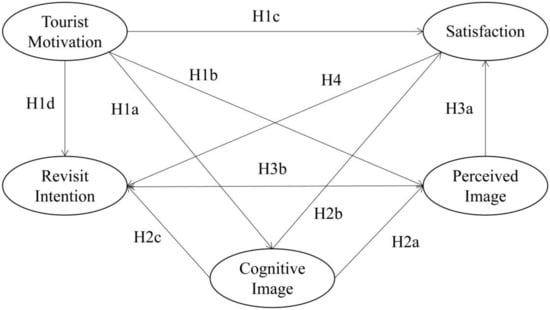
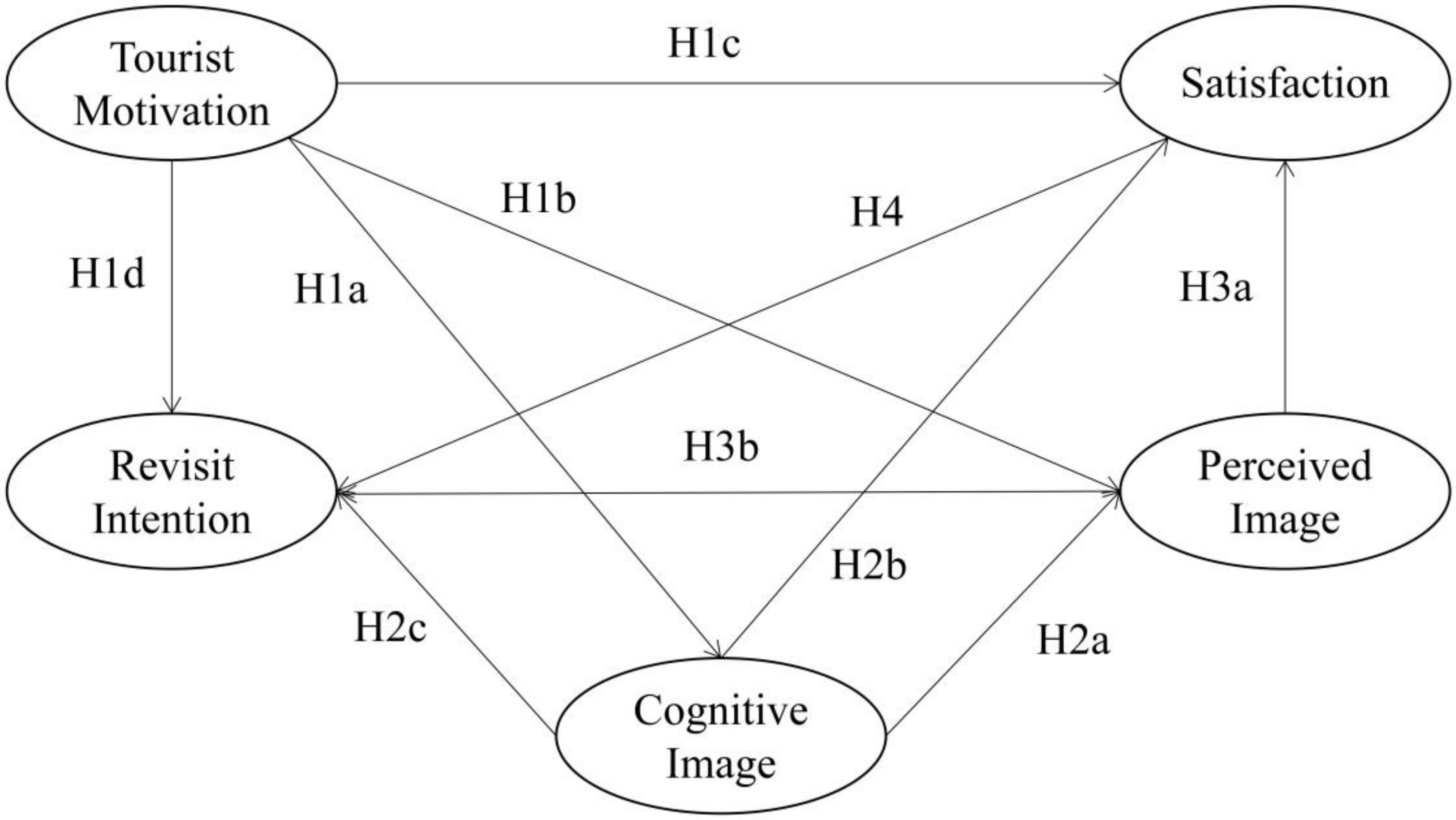
H1a:
Tourist motivation has a significant positive effect on cognitive image.
H1b:
Tourist motivation has a significant positive effect on perceived image.
H1c:
Tourist motivation has a significant positive effect on tourist satisfaction.
H1d:
Tourist motivation has a significant positive effect on revisit intention.
2.2. Tourism Destination Image
Destination image is an important factor affecting tourists’ experiences. The concept of tourism destination image was first proposed in the 1970s and has received wide attention from domestic and foreign scholars [31]. The image of a tourist destination is generally defined as a comprehensive consideration of individual tourists’ impressions, ideas, and beliefs [32], or their knowledge, understanding, and psychological perception [33,34]. Many scholars believe that the destination image is the result of rational and perceptual interpretations of tourists, and is a multidimensional structure formed by cognitive and perceived images [35,36,37]. Cognitive images represent individuals’ perceptions, opinions, and knowledge of a tourism destination, which relies on objective attributes of the destination within the tourist’s knowledge [38], including natural and historical background, rich heritage, lodging facility, and the climate [39]. That is, the more a tourist knows about the characteristics of the location, the more reliable his/her cognitive assessment will be [40]. In contrast, perceived images reflect individuals’ attitudes, feelings, and mental impressions [41,42], and rely on a tourist’s feelings or emotions and the value that individuals place on destinations based on their subjective motivations [43,44]. The cognitive image is one of the important influencing factors of perceived image [45,46,47]. There is a positive relationship between perceived image, cognitive image, and visitor satisfaction [48,49] with satisfaction influenced by consumers’ cognitive judgments and emotional responses to the experience [50,51]. It is argued that the image of tourist destinations directly affects satisfaction [52], with cognitive and perceived images of tourist destinations playing a significantly positive role in tourist satisfaction [53]. The image of the destination plays an important role in the destination-selection stage [54] and influences tourist evaluation behaviour during the trip and future behavioural intentions [55]. Cognitive and perceived images have a significant effect on tourists’ revisit intentions [36]. Cognitive, perceived, and overall destination images are all predictors of tourists’ intention to recommend the destination [56].
This paper constructs a “cognitive-perceived” model to describe the image of tourist destinations. The following hypotheses were formulated:
H2a:
Cognitive image has a significant positive effect on perceived image.
H2b:
Cognitive image has a significant positive effect on tourist satisfaction.
H2c:
Cognitive image has a significant positive effect on revisit intention.
H3a:
Perceived image has a significant positive effect on tourist satisfaction.
H3b:
Perceived image has a significant positive effect on revisit intention.
2.3. Satisfaction
Satisfaction is a combination of cognitive judgment and emotional state [11,57]. Unlike tourism motivation, satisfaction measures the thinking state and thoughts of tourists after their tourism experience, and is defined as the consumer evaluation after using a product or service [51,58], or the overall level of pleasure felt as a result of being able to meet tourists’ expectations and needs [48]. In recent years, studies of tourism destination image and satisfaction suggest that satisfaction is influenced by visitors’ cognitive judgments and their affective responses to the experience [59,60]. The mental process of assessing the experience is performed by the cognitive system while emotions are related to how tourists feel about the service [61].
Tourist satisfaction is positively correlated with tourist behaviour choices and future tourist behaviour including the willingness of tourists to recommend and improve their intention to return to local tourism [62,63]. The quality of the destination’s infrastructure, accessibility, beautiful scenery, weather conditions or climate, and a strong cultural heritage are considered the most important attributes for overall tourist satisfaction [64,65]. Therefore, the following hypothesis is proposed:
H4:
Tourist satisfaction has a significant positive effect on revisit intention.
2.4. Tourists’ Revisit Intention
According to the theory of planned behaviour, behavioural intention refers to an individual’s subjective judgment on the probability of starting a certain behaviour, which reflects the individual’s willingness or willingness to devote effort to a certain behaviour [66]. The role of behavioural intentions in the occurrence of behaviour is primarily predictive, and if behavioural intentions are appropriately measured, the results of the study are close to most actual behaviour [67]. The intention to revisit a destination is one of the most important expressions of loyalty for tourists and may trigger actual revisit behaviour.
Tourist revisit intention is defined as the likelihood that a tourist would like to revisit a destination or engage in an activity again [11,68], or a tourist’s willingness to recommend the destination to others [69]. Encouraging tourists to revisit is considered an effective way to ensure the sustainable development of the destination. Most scholars in the tourism field agree that behavioural intentions can be used to predict actual behaviour. Therefore, tourism researchers often use behavioural intention as an important indicator to explore tourists’ choice of destinations or activities through combined specific behavioural contexts with multidimensional concepts to measure behavioural intention [47,70] including revisit intention and recommendation intention [71]. The willingness to revisit may be divided into resistance to change, positive word of mouth, repeated purchase intention, and willingness to recommend to others [72,73]. Tourists’ future behaviour or post-visit behaviour is reflected in the form of revisits, recommendations, and positive word-of-mouth [74].
Tourist motivation is a key factor influencing tourists’ revisit intention and is a driving force for tourist revisit behaviour [75,76]. Both cognitive and perceived images are antecedent variables for the generation of tourists’ revisit intention and a good destination image drives the intention to recommend and revisit [77,78,79,80]. Tourists with higher satisfaction levels are more likely to bring good word-of-mouth to the destination, and satisfaction is an important predictor of revisits and recommendations by tourists [81,82,83].
Based on the existing literature discussed, the key themes, hypotheses, and their linkages are represented schematically in Figure 1.
Figure 1.
Hypothesized relationships among the constructs.
3. Materials and Methods
3.1. Study Area
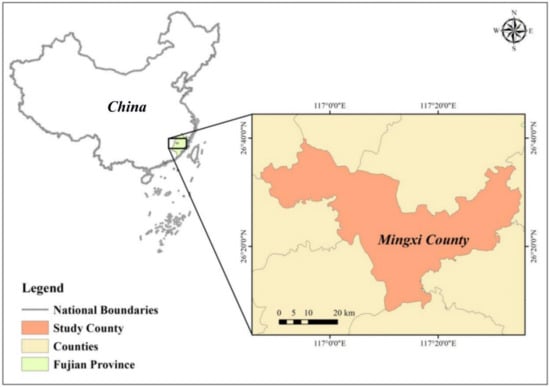
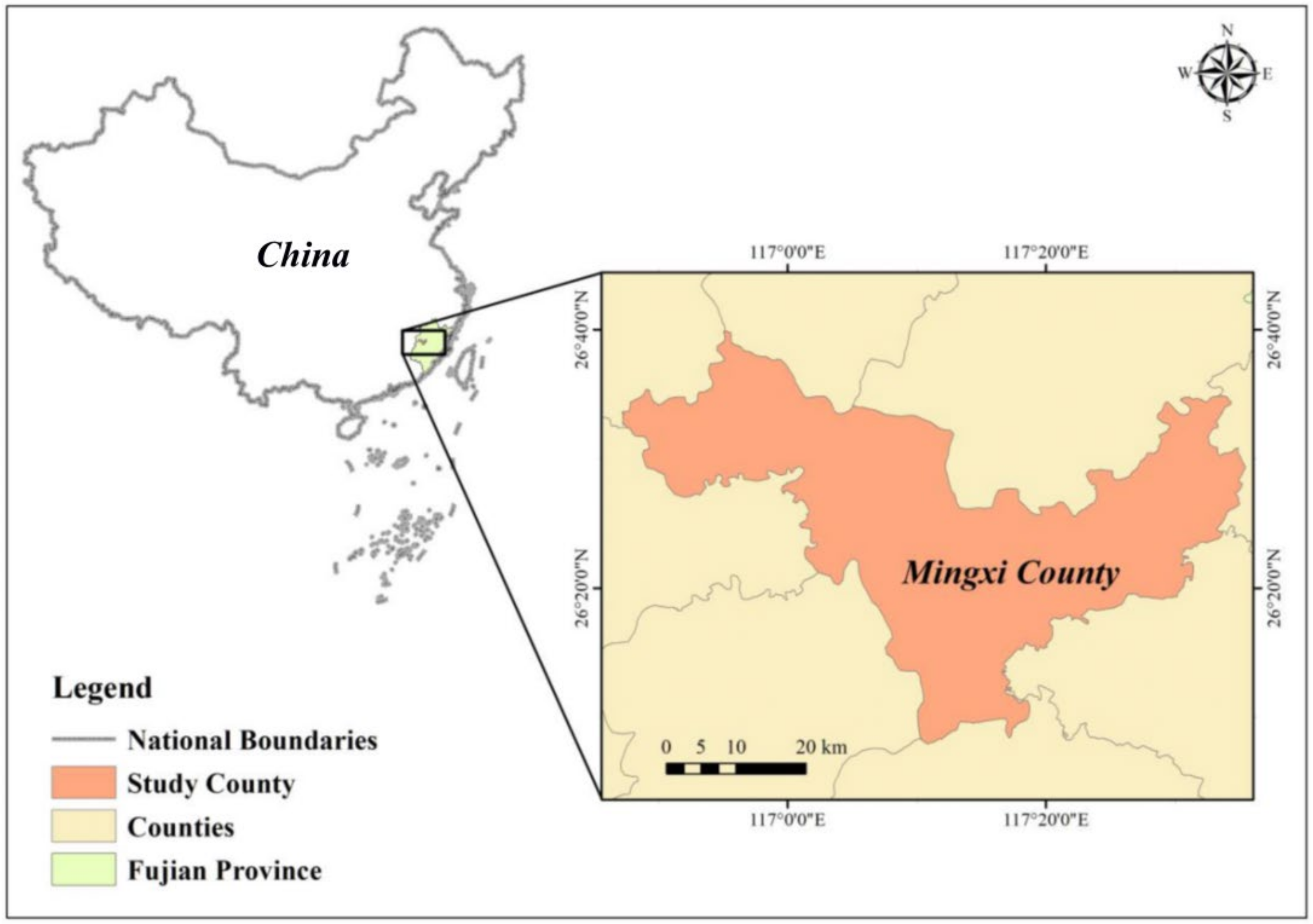
Mingxi County is in north-western Fujian Province, at 26°08′–26°39′ N latitude and 116°47′–117°35′ E longitude (Figure 2); the total area is 1708.6 km2. Mingxi has a subtropical maritime monsoon climate with an average annual temperature of 18 ℃, an average annual rainfall of 1800 mm, an average annual frost-free period of 261 days, a mild climate, abundant rainfall, less severe cold in winter and no extreme heat in summer. Data Source: official website of Mingxi County People’s Government (http://www.fjmx.gov.cn/zjmx/zrdl/, accessed on 8 October 2022). It is a critical area for the international migratory route from East Asia to Australia, and an essential passage for migratory birds across Fujian and Jiangxi provinces in China. It is also an important stopover for migratory birds and breeding ground for summer migratory birds in eastern China [84]. There are 316 confirmed wild bird species in Mingxi County. Of these, in the International Union for Conservation of Nature (IUCN)’ s Red List of Threatened Species, the yellow-bellied tragopan (Tragopan caboti) is “vulnerable” (VU-rated); Elliot’s pheasant (Syrmaticus ellioti) is “near threatened” (NT-rated); the Chinese merganser (Mergus squamatus) and oriental white stork (Ciconia boyciana Swinhoe) are both “endangered” (EN-rated); the silver pheasant (Lophura nycthemera), mandarin duck (Aix galericulata), crested goshawk (Accipiter trivirgatus), black-crested baza (Aviceda leuphotes) and pied falconet (Microhierax melanoleucos) are also included in the IUCN Red List of Threatened Species. Both yellow-bellied tragopan (Tragopan caboti) and Elliot’s pheasant (Syrmaticus ellioti) are included in the CITES appendices and are also endemic to China. Continuous progress in ecological protection has attracted a variety of migratory birds to Mingxi County and has drawn a constant influx of bird lovers.
Figure 2.
Map of study area.
3.2. Questionnaire Composition and Data Collection
The questionnaire consists of two parts: the first part is the demographic and other basic information of the respondents, including gender, age, education level, employment, and personal monthly income. The second part is the respondents’ tourist motivation, cognitive image, perceived image, satisfaction, and revisit intention test scale; the latent variables were measured using several observed variables with minor modifications according to the study context and the actual situation of the study area (Table 1). To measure tourist motivation, three observation variables were selected based on prior theoretical studies [85,86] and previous results [87,88]. These scales are suitable for the Chinese context and have more reliable measurement effects. The design of the cognitive image measurement items was carried out in conjunction with the unique natural and cultural landscape of Mingxi County, with three observation items selected based on previous research by other scholars [89,90]. The perceived image of tourist sites was assessed using four items (‘Pleasant’, ‘Exciting’, Relaxing’, and ‘Arousing’) [35] while drawing on Russel and Prutt’s model of affective evaluation, which includes four emotions: relaxed, distressed, excited, and hazy [91,92]. It is theoretically sufficient to use only two basic emotions as item scales for affective assessment [93]. This paper has designed three measures, taking into account the actual situation of birdwatching-tourism destinations: “mind-blowing,” “unforgettable,” and “enjoyable”. The revisit intention includes three observed variables: birdwatching tourists’ revisit intention, recommendation intention, and visit priority [58,94]. To ensure the scientific validity and applicability of the test scale, four experts and ten doctoral students in related research fields were invited to discuss each measurement variable several times, and some wording was adjusted in time to make it easy for respondents to read and understand. The second part of the test scales was measured using a five-point Likert scale (1, 2, 3, 4, and 5) ranging from “strongly disagree” to “strongly agree” since the 7-point Likert scale may cause ambiguity for the respondents [95]. The final formal questionnaire consisted of five latent variables and 15 observed variables (Table 1).
Table 1.
Measurement items of latent variables.
Survey data were collected in March and April 2021, which is an important time for local migratory birds to stop and breed and the peak season for birdwatching tourism. The research team conducted a preliminary survey in October 2020 prior to formal research. The areas and routes for data collection were determined through communication with local ecological conservation authorities and tourism authorities, and a pilot survey of the initial questionnaire was conducted in the study area to ensure that the survey questionnaire was understood by the participants. Before starting the questionnaire, we screened the respondents by first asking the participants about the purpose of their trip to ensure that the participants were all birdwatching tourists; secondly, the participants were asked about the departure place and length of stay of this trip to ensure that the participating birdwatching tourists were not local residents; and finally, the survey objectives and questions were explained to the participants to minimize any possible misunderstandings when administering the questionnaire. The participants received a thank-you gift souvenir after completing the survey. Preliminary findings showed that more than 95% of birdwatching tourists completed the entire content with the help of surveyors. The research team adjusted and optimised the survey program based on the survey results and officially launched the main survey in 2021. The survey questionnaire distribution area was concentrated in the core scenic spots of birdwatching tourism in Mingxi County and questionnaires were distributed by random interception. The data-collection team consisted of 10 graduate social science students from Beijing Forestry University with extensive experience in tourism surveys. All of the 350 distributed questionnaires were returned with 328 returning valid responses (94% effectiveness).
Descriptive statistical analysis of the valid questionnaires revealed the general composition of the respondents (Table 2): male tourists predominated (62.8%) with tourists mostly aged between 30 to 39 years old (27.13%) and 40 to 49 years old (28.66%). The education level of most respondents was undergraduate (39.63%) with most engaged in science, education, culture, and health (23.17%), while some were civil servants and soldiers (19.82%), and most visitors earned 2001–4000 yuan per month (37.20%).
Table 2.
Demographic characteristics of the tourist sample (n = 328).
4. Results
4.1. Model Fit Tests
The study involves several latent variables and tests of hypothesised relationships. Both the independent and dependent variables are latent variables that may be subject to measurement errors. Therefore, traditional statistical analysis methods such as regression analysis cannot be used, since they do not allow measurement errors in independent variables. Instead, structural equation modelling was selected using SPSS (Statistical Product Service Solutions) 22.0 and AMOS (Analysis of Moment Structure) 24.0 since it is suitable for analysing hypothesised relationships involving latent variables.
A two-stage strategy proposed by Anderson and Gerbing was used in this study to validate the hypothesised model [96]. In the first stage, the measurement model was validated by confirmatory factor analysis (CFA), which mainly examined the goodness of fit, the convergent and discriminant validity of each latent variable, and determined the relationship between each observed and latent variable. In the second stage, the fit and path coefficients of the model hypothesis were measured by constructing a structural equation model with five latent variables: tourist motivation, cognitive image, perceived image, satisfaction, and intention to revisit.
4.2. Reliability Test and Convergent Validity
Cronbach’s α (alpha) and the composite reliability (CR) of each latent variable widely used in related studies were used to judge the criteria for test reliability (Table 3). Cronbach’s α values ranged from 0.741 to 0.917 and the CR of each latent variable was between 0.747 to 0.920. Therefore, the research questionnaire met reliability requirements since the values exceed 0.7 [97].
Table 3.
Internal and convergent reliability.
Convergent validity mainly examines the size of the contribution of each test statement, which is judged by the standardised factor loadings, T-values, and significance levels of each test indicator, and the average extracted variance of each latent variable. The standardised factor loadings of each measurement ranged from 0.612 to 0.936, the T-values were between 8.477 to 22.138, and the average extracted variance (AVE) ranged from 0.498 to 0.793, all of which were significant (p < 0.001) (Table 3). The AVE value exceeds the minimum required value of 0.50 [98] for all latent constructs except for tourist motivation, which has a CR of 0.747. Since AVE is a more conservative measure than CR, Fornell and Larcker argue that if a construct has an AVE value below 0.5, but it is a strongly reliable construct (CR value above 0.6), its convergent validity is still adequate [99]. Therefore, the low AVE of tourist motivation might be acceptable in this study because it does not produce major reliability and discriminant validity problems. Thus, the results of the data analysis indicate good convergent validity for each latent variable.
4.3. Discriminant Validity
The discriminant validity measurement verifies whether there is a significant difference between two latent variables of different dimensions. It is generally accepted that the observed variables have better discriminant validity when the value of the square root of the average extracted variance of each latent variable is greater than the value of the correlation coefficient [100]. The correlation coefficients between each latent variable are smaller than the average extracted variance of each latent variable, indicating sufficient discriminant validity between the latent variables (Table 4).
Table 4.
Discriminant validity measurements.
4.4. Structural Modelling and Hypothesis Testing
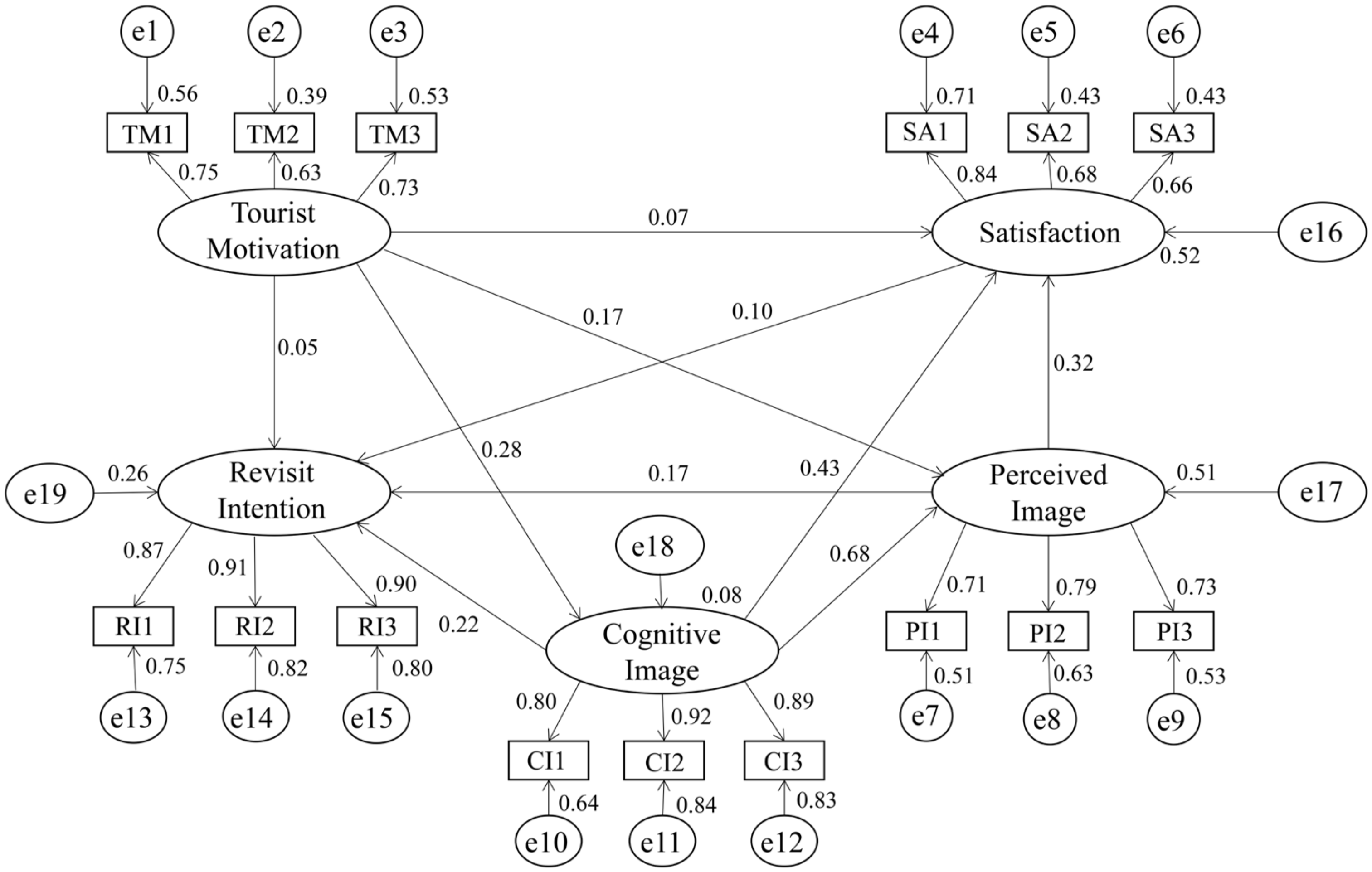
The constructed structural equation model was fitted using the maximum likelihood method and the initial model was modified based on modification indices to confirm the reliability and validity of the scale and ensure theoretical feasibility. The final fitting results show standardised parameters of all path coefficients (Figure 2). Evaluation indexes of the model’s goodness of fit showed a χ2/df value of 1.923, while root mean square error of approximation (RMSEA) was 0.053 (Table 5). The absolute fitness index, value-added fitness index, and simplified fitness index of the model all meet the evaluation criteria, indicating that the overall validity of the final model is good.
Table 5.
Model fitness test (N = 328).
Seven hypotheses were supported while three did not pass the test (Table 6 and Figure 2). Tourist motivation had a positive and significant effect on cognitive image (standardised direct effect β = 0.28, p < 0.01), which supports hypothesis H1a. Cognitive image had a statistically significant positive effect on perceived image (H2a), satisfaction (H2b), and revisit intention (H2c). Perceived image had a positive effect on satisfaction and revisit intention (H3a and H3b). Satisfaction had a positive effect on revisit intention, with increased satisfaction correlating with the increased likelihood of tourists returning and recommending the destination (H4). Hypotheses H1b, H1c, and H1d were rejected since there is no significant relationship between tourist motivation and perceived image, satisfaction, and revisit intention.
Table 6.
Hypotheses testing using the modified model.
4.5. Mediating Effect Analysis
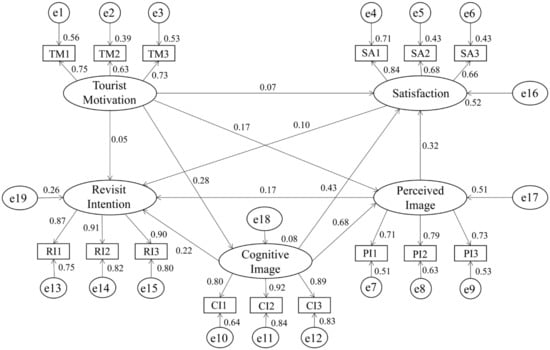
Although there are no significant direct effect between tourist motivation and revisit intention, they may have indirect effect (Figure 3). There is one potential mediating effect in the research model: tourism motivation influences the revisit intention through cognitive image. Therefore, we further analysed the possible mediating effects.
Figure 3.
Path diagram of the structural equation model.
Bootstrapping was used to explore whether there is a mediating effect in these influencing relationships using 1000 replicates [101]. The asymptotic critical ratio (Z) and the confidence interval (CI) of the lower and upper bounds (95% bias corrected, or 95% percentile) were calculated to test the significance of indirect effects (Table 7). In general, the mediation effect is significant when neither the bias-corrected 95% CI nor the percentile 95% CI contains a value of 0 [102]. Tourist motivation had an indirect positive effect on revisit intention. In the direct effect, the 95% CI value of both contains 0, indicating that the direct effect is insignificant and tourist motivation indirectly affects revisit intention through the full mediating role of cognitive image.
Table 7.
Direct, indirect, and total effects.
5. Conclusions and Discussion
Cognitive image, perceived image, and tourist satisfaction have significant positive effects on tourists’ revisit intention (hypotheses H2c, H3b, and H4). Cognitive image had the largest effect (0.219), followed by satisfaction (0.172), and perceived image (0.155). This is consistent with the findings of Qu et al. and Zheng et al. [103,104] indicating that the cognitive image of the destination is the primary factor influencing revisit intention. However, the results differ from the findings of Baloglu et al. and Guo et al., which stated that perceived image has a greater effect on revisit intention and recommendations [56,105]. Meanwhile, tourist motivation also played a positive role (0.05) on revisit intention, but this hypothesis does not pass the significance test and has a small degree of influence.
This study argues that birdwatching tourists have higher expectations of the natural environment element of the tourist destination image than other aspects, such as good accommodation and dining facilities, complete road signs and signage, and ease of arrival. Birdwatching-tourism destinations need to have a wide species variety, excellent natural conditions, and rich biodiversity. The main drivers of birdwatching-tourism destination choice are innate in the natural landscapes and ecosystems. This is consistent with the findings of Stemmer et al. on birdwatching tourists in Varanger, Norway; exceptional birdwatching quality and spectacular scenery were the strongest determinants of birdwatching destination choice [106]. The number of relatively well-developed birdwatching destinations in China are small, and different destinations have local bird species. Birdwatchers’ recognition of the species and number of birds in a destination becomes the primary antecedent of their intention to revisit and recommend and increases the priority of their visit. Birdwatchers are highly likely to visit a birdwatching destination multiple times in order to photograph different species of birds or different forms of birds, and to recommend the location to others with similar interests. Similarly, building a positive perceived image of a destination enhances its attractiveness to tourists prompting them to revisit the destination.
The cognitive image of the destination significantly positively influences the perceived image, which is consistent with existing research findings [107,108,109]. Cognitive and perceived images showed positive and significant effects on tourist satisfaction and the degree of influence of the cognitive image (0.432, p < 0.01) was higher than that of the perceived image (0.32, p < 0.01). This suggests that birdwatching tourists pay more attention to the richness of bird species and biodiversity at the destination than to obtaining inner pleasure. Satisfaction directly affects revisit intention and plays a positive role (0.172, p < 0.1). This implies that the increased satisfaction of birdwatching tourists increases revisit interest, prioritisation of the same destination, and promotion of the destination to others. This finding supports many previous studies [110,111,112,113], and helps explain the view that satisfaction refers to visitors evaluating their experience [57]. In the development of birdwatching-tourism destinations, managers should focus on promoting physical attributes such as endemic and rare birds and the ecological environment, and take into account the psychological perception of the spiritual and emotional needs of the target market of the tourist destination, so as to increase tourist satisfaction and encourage tourists to revisit and recommend.
Tourism motivation plays a direct positive role on cognitive image and an indirect positive role on revisit intention. In this causal relationship, cognitive image plays a completely mediating role. This differs from previous studies indicating that tourism motivation directly affects revisit intention in rural tourism [23] and cultural and creative tourism destinations [114], and that destination attributes are the main reasons for tourists visiting the region [62]. This study argues that birdwatching tourism is ecotourism, wherein the superior natural environment and the richness of bird species at the destination are the primary conditions attracting birdwatchers. The primary motivation for tourists travelling to the destination is to view birds and enjoy the natural scenery and tourism motivation may only influence the likelihood of tourists visiting the birdwatching destination for the first time. Birdwatchers who are in the middle of a tour or at the end of a tour have knowledge of the physical attributes of the destination including information about the bird species, number, habitat location, and natural environment of the local area, which influences revisit intent, recommendations, and preferences. Thus, cognitive image can have a positive effect as a mediating variable of tourist motivation and revisit intention.
In general, our research shows that birdwatching tourism is a form of tourism that relies on the natural environment, which is the characteristic that sets it apart from ordinary forms of tourism, and also suggests that promoting sustainable development through the development of birdwatching tourism requires attention to the conservation of the natural environment in its management and development. This presents an interesting opportunity and a challenge for public policy makers to consider, balancing the potential positive and negative impacts of birdwatching tourism. On the one hand, managers of birdwatching destinations need to focus on protecting the special local natural environment and taking advantage of the superior natural conditions to attract more birds, and minimizing potential disturbance to the birds, especially during the breeding season and other vulnerable periods. On the other hand, managers should focus on creating products that evoke positive cognitive evaluations from birdwatching tourists, while not neglecting the improvement of soft environmental conditions, such as the supply of public services, to enhance the birdwatching tourism experience. This is because it will lead to a better cognitive image, increased satisfaction levels, and positive revisit intentions. Managers also need to focus on the involvement and interests of the local community; only when local communities are aware of the importance of birds and the economic benefits that birdwatching tourism can bring will they be able to invest in bird conservation and birdwatching-tourism management. Additionally, increasing the promotion of the destination is an effective way to raise awareness and identify potential birdwatchers. Raising the level of awareness of birdwatching tourists about birdwatching destinations is important, as the cognitive image is an important driver of birdwatching tourists’ choice to revisit a destination. Attractive birdwatching-tourism features can be disseminated through appropriate communication channels; new media can be preferred as well as traditional media. It is important to promote the birdwatching-tourism project vigorously through various channels, e.g., local birdwatching-tourism organisations could organise regular tourism events/exhibitions as a way to increase tourists’ recognition and understanding of the birdwatching destination, which will help attract birdwatching tourists to visit repeatedly and enhance the good reputation of the destination.
6. Limitations and Recommendations for Future Research
Revisit intention is an antecedent variable that can motivate authentic travel behaviour. The structural equation model developed in this study explored how tourists’ tourist motivation, perceived and cognitive images of destinations, and tourists’ satisfaction affect birdwatching-tourism tourists’ intention to revisit and recommend. The model had good fitness and the research hypotheses are supported that reflect the causal relationship of each indicator in a scientific and reasonable way. This study answers questions missing in existing studies, which pay insufficient attention to birdwatching tourism and tourists’ willingness to revisit.
The theoretical model used to investigate the relationships among tourist motivation, cognitive image, perceived image, satisfaction, and revisit intention is helpful in understanding the causal relationship among these constructs. However, more research is needed to validate and extend these concepts. First, our use of cross-sectional data may give rise to data-selection problems, which is a common problem in empirical studies based on individual survey data. Therefore, panel data or causality experiments can be applied to validate the findings of this study. Second, this study only analysed the revisit intention of tourists in a single birding-tourism destination and this should be expanded to other geographic regions. Finally, future studies could conduct qualitative research to investigate other untested variables.
Author Contributions
Conceptualization, J.R. and Y.W.; methodology, J.R. and K.S.; investigation, J.R., Y.Z.; writing—original draft preparation, J.R. and K.S.; writing—review and editing, J.R. and Y.H.; supervision, Y.H. and Y.W. All authors have read and agreed to the published version of the manuscript.
Funding
This research was funded by the major project of National Social Science Foundation of China (Grant ID: 21ZDA090).
Institutional Review Board Statement
Ethical review and approval were waived for this study. In our study, participants were invited to join in the survey voluntarily and anonymously without offending their privacy and generating ethical issues. Therefore, we did not seek approval for this case or any human studies where non-routine procedures are not used, as in this study. Before all interviews, the content of the study was explained to the interviewees and their agreement was obtained.
Informed Consent Statement
Informed consent was obtained from all subjects involved in the study.
Data Availability Statement
The study data can be obtained by contacting the corresponding author.
Conflicts of Interest
The authors declare no conflict of interest.
References
- Domínguez-Gómez, J.; González-Gómez, T. Analyzing stakeholders’ perceptions of golf-course-based tourism: A proposal for developing sustainable tourism projects. Tour. Manag. 2017, 63, 135–143. [Google Scholar] [CrossRef] [Scilit]
- Johannesen, A.B.; Skonhoft, A. Tourism, poaching and wildlife conservation: What can integrated conservation and development projects accomplish? Resour. Energy Econ. 2005, 27, 208–226. [Google Scholar] [CrossRef] [Scilit]
- Naidoo, R.; Adamowicz, W.L. Biodiversity and nature-based tourism at forest reserves in Uganda. Environ. Dev. Econ. 2005, 10, 159–187. [Google Scholar] [CrossRef] [Scilit]
- Sekercioglu, C.H. Impacts of birdwatching on human and avian communities. Environ. Conserv. 2002, 29, 282–289. [Google Scholar] [CrossRef] [Scilit]
- Maldonado, J.H.; Moreno-Sánchez, R.d.P.; Espinoza, S.; Bruner, A.; Garzón, N.; Myers, J. Peace Is Much More than Doves: The Economic Benefits of Bird-Based Tourism as a Result of the Peace Treaty in Colombia. World Dev. 2018, 106, 78–86. [Google Scholar] [CrossRef] [Scilit]
- Collins-Kreiner, N.; Malkinson, D.; Labinger, Z.; Shtainvarz, R. Are Birders Good for Birds? Bird Conservation through Tourism Management in the Hula Valley, Israel. Tour. Manag. 2013, 38, 31–42. [Google Scholar] [CrossRef] [Scilit]
- Bennett, N.J.; Roth, R.; Klain, S.C.; Chan, K.; Christie, P.; Clark, D.A.; Cullman, G.; Curran, D.; Durbin, T.J.; Epstein, G.; et al. Conservation Social Science: Understanding and Integrating Human Dimensions to Improve Conservation. Biol. Conserv. 2017, 205, 93–108. [Google Scholar] [CrossRef] [Scilit]
- Shiyu, C.; Liguo, W.; Jiefeng, J.; Huiqin, H. Factors Affecting the Willingness of Bird—Watchers to Revisit Poyang Lake Wetland. Chin. J. Wildl. 2020, 41, 115–124. [Google Scholar] [CrossRef]
- Wenming, L.; Chengqiang, Y.; Wenyue, T.; Xiangming, L.; Dongxu, Y.; Yuling, Z. Place Attachment and Pro-Environmental Behaviors of Bird-Watching Tourists:Taking Natural Empathy and Perception of Environmental Education as Mediating Variables. Econ. Geogr. 2019, 39, 215–224. [Google Scholar] [CrossRef]
- Gyte, D.M.; Phelps, A. Patterns of Destination Repeat Business: British Tourists in Mallorca, Spain. J. Travel Res. 1989, 28, 24–28. [Google Scholar] [CrossRef] [Scilit]
- Baker, D.A.; Crompton, J.L. Quality, satisfaction and behavioral intentions. Ann. Tour. Res. 2000, 27, 785–804. [Google Scholar] [CrossRef] [Scilit]
- Connell, J. Birdwatching, Twitching and Tourism: Towards an Australian perspective. Aust. Geogr. 2009, 40, 203–217. [Google Scholar] [CrossRef] [Scilit]
- Marschall, S. Tourism and remembrance: The journey into the self and its past. J. Tour. Cult. Chang. 2014, 12, 335–348. [Google Scholar] [CrossRef] [Scilit]
- Lee, S.; Chua, B.-L.; Han, H. Role of service encounter and physical environment performances, novelty, satisfaction, and affective commitment in generating cruise passenger loyalty. Asia Pac. J. Tour. Res. 2017, 22, 131–146. [Google Scholar] [CrossRef] [Scilit]
- Han, H.; Hyun, S.S. Role of motivations for luxury cruise traveling, satisfaction, and involvement in building traveler loyalty. Int. J. Hosp. Manag. 2018, 70, 75–84. [Google Scholar] [CrossRef] [Scilit]
- Van der Merwe, P.; Saayman, M. Travel motivations of tourists visiting Kruger National Park. Koedoe Afr. Prot. Area Conserv. Sci. 2008, 50, 154–159. [Google Scholar] [CrossRef] [Scilit]
- Yuill, S.M.J. Dark Tourism: Understanding Visitor Motivation at Sites of Death and Disaster; Texas A&M University: College Station, TX, USA, 2004. [Google Scholar]
- Andriotis, K.; Agiomirgianakis, G. Cruise visitors’ experience in a Mediterranean port of call. Int. J. Tour. Res. 2010, 12, 390–404. [Google Scholar] [CrossRef] [Scilit]
- Kao, M.C.; Patterson, I.; Scott, N.; Li, C.K. Motivations and satisfactions of Taiwanese tourists who visit Australia: An exploratory study. J. Travel Tour. Mark. 2008, 24, 17–33. [Google Scholar] [CrossRef] [Scilit]
- Lam, T.; Hsu, C.H.C. Predicting behavioral intention of choosing a travel destination. Tour. Manag. 2006, 27, 589–599. [Google Scholar] [CrossRef] [Scilit]
- Wang, C.; Qu, H. Empirical Study on Relationships of Travel Motivation, Destination Image and Tourist Expectation. Tour. Trib. 2013, 28, 26–37. [Google Scholar]
- Yooshik, Y.; Muzaffer, U. An examination of the effects of motivation and satisfaction on destination loyalty: A structural model. Tour. Manag. 2003, 26, 45–56. [Google Scholar] [CrossRef] [Scilit]
- Zhao, X.X.; Luo, P.C. Influence of Tourist Motivation on Revisiting Willingness in Rural Tourism Destinations:The Mediating Role of Willingness to Communicat. J. Fujian Norm. Univ. 2019, 35, 108–116. (In Chinese) [Google Scholar]
- Esper, F.S.; Rateike, J.Á. Tourism Destination Image and Motivations: The Spanish Perspective of Mexico. J. Travel Tour. Mark. 2010, 27, 349–360. [Google Scholar] [CrossRef] [Scilit]
- Tasci, A.D.; Gartner, W.C.; Cavusgil, S.T. Measurement of destination brand bias using a quasi-experimental design. Tour. Manag. 2007, 28, 1529–1540. [Google Scholar] [CrossRef] [Scilit]
- Prebensen, N.; Skallerud, K.; Chen, J.S. Tourist Motivation with Sun and Sand Destinations: Satisfaction and the Wom-Effect. J. Travel Tour. Mark. 2010, 27, 858–873. [Google Scholar] [CrossRef] [Scilit]
- Fan, D.X.F.; Hsu, C.H.C. Potential Mainland Chinese Cruise Travelers’ Expectations, Motivations, and Intentions. J. Travel Tour. Mark. 2014, 31, 522–535. [Google Scholar] [CrossRef] [Scilit]
- Callaghan, C.T.; Slater, M.; Major, R.E.; Morrison, M.; Martin, J.M.; Kingsford, R.T. Travelling Birds Generate Eco-Travellers: The Economic Potential of Vagrant Birdwatching. Hum. Dimens. Wildl. 2018, 23, 71–82. [Google Scholar] [CrossRef] [Scilit]
- Steven, R.; Smart, J.C.R.; Morrison, C.; Castley, J.G. Using a Choice Experiment and Birder Preferences to Guide Bird-Conservation Funding. Conserv. Biol. 2017, 31, 818–827. [Google Scholar] [CrossRef] [Scilit]
- De Salvo, M.; Cucuzza, G.; Signorello, G. Using Discrete Choice Experiments to Explore How Bioecological Attributes of Sites Drive Birders’ Preferences and Willingness to Travel. Environ. Econ. Policy Stud. 2022, 24, 119–146. [Google Scholar] [CrossRef] [Scilit]
- Hunt, J.D. Image—A Factor in Tourism; Colorado State University: Fort Collins, CO, USA, 1971. [Google Scholar]
- Crompton, J.L. An Assessment of the Image of Mexico as a Vacation Destination and the Influence of Geographical Location Upon That Image. J. Travel Res. 1979, 17, 18–23. [Google Scholar] [CrossRef] [Scilit]
- Echtner, C.M.; Ritchie, J.R.B. The meaning and measurement of destination image. J. Tour. Stud. 2003, 14, 37–48. [Google Scholar]
- Pike, S. Destination image analysis—A review of 142 papers from 1973 to 2000. Tour. Manag. 2002, 23, 541–549. [Google Scholar] [CrossRef] [Scilit]
- Baloglu, S.; McCleary, K.W. A model of destination image formation. Ann. Tour. Res. 1999, 26, 868–897. [Google Scholar] [CrossRef] [Scilit]
- Nisco, A.D.; Mainolfi, G.; Marino, V.; Napolitano, M.R. Tourism satisfaction effect on general country image, destination image, and post-visit intentions. J. Vacat. Mark. 2015, 21, 1048–1056. [Google Scholar] [CrossRef] [Scilit]
- Vogt, C.A.; Andereck, K.L. Destination Perceptions Across a Vacation. J. Travel Res. 2002, 41, 348–354. [Google Scholar] [CrossRef] [Scilit]
- San Martín, H.; Rodríguez del Bosque, I.A. Exploring the Cognitive–Affective Nature of Destination Image and the Role of Psychological Factors in Its Formation. Tour. Manag. 2008, 29, 263–277. [Google Scholar] [CrossRef] [Scilit]
- Stylidis, D.; Belhassen, Y.; Shani, A. Destination Image, on-Site Experience and Behavioural Intentions: Path Analytic Validation of a Marketing Model on Domestic Tourists. Curr. Issues Tour. 2017, 20, 1653–1670. [Google Scholar] [CrossRef] [Scilit]
- Sahin, S.; Baloglu, S. Brand Personality and Destination Image of Istanbul. Anatolia 2011, 22, 69–88. [Google Scholar] [CrossRef] [Scilit]
- Baloglu, S.; Brinberg, D. Affective Images of Tourism Destinations. J. Travel Res. 1997, 35, 11–15. [Google Scholar] [CrossRef] [Scilit]
- Ryan, C. Structuring Destination Image: A Qualitative Approach. J. Travel Res. 2005, 44, 143–150. [Google Scholar] [CrossRef] [Scilit]
- Da Silva, M.A.; Costa, R.A.; Moreira, A.C. The Influence of Travel Agents and Tour Operators’ Perspectives on a Tourism Destination. The Case of Portuguese Intermediaries on Brazil’s Image. J. Hosp. Tour. Manag. 2018, 34, 93–104. [Google Scholar] [CrossRef] [Scilit]
- Chew, E.Y.T.; Jahari, S.A. Destination Image as a Mediator between Perceived Risks and Revisit Intention: A Case of Post-Disaster Japan. Tour. Manag. 2014, 40, 382–393. [Google Scholar] [CrossRef] [Scilit]
- Beerli, A.; Martín, J.D. Tourists’ characteristics and the perceived image of tourist destinations: A quantitative analysis—A case study of Lanzarote, Spain. Tour. Manag. 2004, 25, 623–636. [Google Scholar] [CrossRef] [Scilit]
- Lin, C.-H. Examining the Role of Cognitive and Affective Image in Predicting Choice Across Natural, Developed, and Theme-Park Destinations. J. Travel Res. 2007, 46, 183–194. [Google Scholar] [CrossRef] [Scilit]
- Wang, C.Y.; Hsu, M.K. The Relationships of Destination Image, Satisfaction, and Behavioral Intentions: An Integrated Model. J. Travel Tour. Mark. 2010, 27, 829–843. [Google Scholar] [CrossRef] [Scilit]
- Chen, C.-F.; Tsai, D. How destination image and evaluative factors affect behavioral intentions? Tour. Manag. 2007, 28, 1115–1122. [Google Scholar] [CrossRef] [Scilit]
- Kozak, M.; Rimmington, M. Tourist Satisfaction with Mallorca, Spain, as an Off-Season Holiday Destination. J. Travel Res. 2000, 38, 260–269. [Google Scholar] [CrossRef] [Scilit]
- Bigné, J.; Andreu, L.; Gnoth, J. The theme park experience: An analysis of pleasure, arousal and satisfaction. Tour. Manag. 2005, 26, 833–844. [Google Scholar] [CrossRef] [Scilit]
- Oliver, R.L. Cognitive, Affective, and Attribute Bases of the Satisfaction Response. J. Consum. Res. 1993, 20, 418–430. [Google Scholar] [CrossRef] [Scilit]
- Ramseook-Munhurrun, P.; Seebaluck, V.N.; Naidoo, P. Examining the Structural Relationships of Destination Image, Perceived Value, Tourist Satisfaction and Loyalty: Case of Mauritius. Procedia—Soc. Behav. Sci. 2015, 175, 252–259. [Google Scholar] [CrossRef] [Scilit]
- Chiu, W.; Zeng, S.; Cheng, P.S.-T. The influence of destination image and tourist satisfaction on tourist loyalty: A case study of Chinese tourists in Korea. Int. J. Cult. Tour. Hosp. Res. 2016, 10, 223–234. [Google Scholar] [CrossRef] [Scilit]
- Alhemoud, A.M. Image of Tourism Attractions in Kuwait. J. Travel Res. 1996, 34, 76. [Google Scholar] [CrossRef] [Scilit]
- Yoel, M. From motivation to actual travel. Ann. Tour. Res. 1992, 19, 399–419. [Google Scholar] [CrossRef] [Scilit]
- Baloglu, S.; Henthorne, T.L.; Sahin, S. Destination Image and Brand Personality of Jamaica: A Model of Tourist Behavior. J. Travel. Mark. 2014, 31, 1057–1070. [Google Scholar] [CrossRef] [Scilit]
- Albayrak, T.; Caber, M. Examining the relationship between tourist motivation and satisfaction by two competing methods. Tour. Manag. 2018, 69, 201–213. [Google Scholar] [CrossRef] [Scilit]
- Ranjanthran, M.; Mohammed, B. Domestic Tourism: Perception of domestic tourist on tourism products in Penang Island. Integr. Publ. Assoc. 2010, 1, 795–816. [Google Scholar]
- Chaowu, X.; Qian, H.; Zhibin, L.; Yanying, C. Destination risk perception, image and satisfaction: The moderating effects of public opinion climate of risk. J. Hosp. Tour. Manag. 2020, 44, 122–130. [Google Scholar] [CrossRef] [Scilit]
- Chi, G.Q.; Qu, H. Examining the structural relationships of destination image, tourist satisfaction and destination loyalty: An integrated approach. Tour. Manag. 2008, 29, 624–636. [Google Scholar] [CrossRef] [Scilit]
- Su, L.J.; Huang, F.C. Study on the Relationship between Tourists’ Satisfaction and Loyalty—A Comparative Analysis of Sightseeing Tourists and Rural Tourists. Tour. Trib. 2011, 26, 39–45. (In Chinese) [Google Scholar]
- Bayih, B.E.; Singh, A. Modeling domestic tourism: Motivations, satisfaction and tourist behavioral intentions. Heliyon 2020, 6, e04839. [Google Scholar] [CrossRef] [Scilit]
- Marques, C.; Rui, V.; Antova, S. Image, satisfaction, destination and product post-visit behaviours: How do they relate in emerging destinations? Tour. Manag. 2021, 85, 104293. [Google Scholar] [CrossRef] [Scilit]
- Som, A.P.M.; Marzuki, A.; Yousefi, M.; AbuKhalifeh, A.N. Factors Influencing Visitors’ Revisit Behavioral Intentions: A Case Study of Sabah, Malaysia. Jpn. J. Appl. Phys. 2012, 34, L1625–L1628. [Google Scholar] [CrossRef] [Scilit]
- Vinh, N.Q. Destination Culture and Its Influence on Tourist Motivation and Tourist Satisfaction of Homestay Visit. Karatekin Univ. J. Fac. Econ. 2013, 3, 199–222. [Google Scholar]
- Ajzen, I. The theory of planned behavior. Organ. Behav. Hum. Decis. Process. 1991, 50, 179–211. [Google Scholar] [CrossRef] [Scilit]
- Fishbein, M.A.; Ajzen, I. Belief, attitude, intention and behaviour: An introduction to theory and research. Philos. Rhetor. 1975, 10, 177–189. [Google Scholar]
- Chung-Hsien, L. Determinants of Revisit Intention to a Hot Springs Destination: Evidence from Taiwan. Asia Pac. J. Tour. Res. 2013, 18, 183–204. [Google Scholar] [CrossRef] [Scilit]
- Bigné, J.E.; Sánchez, M.I.; Sánchez, J. Tourism image, evaluation variables and after purhase behaviour: Inter-relationship. Tour. Manag. 2001, 22, 607–616. [Google Scholar] [CrossRef] [Scilit]
- Weiching, W.; Chunghsien, L.; Liyuan, H. Evaluating a theoretical model for revisit intention of hot springs tourists: A perspective of protection motivation theory. Tour. Trib./Lvyou Xuekan 2021, 36, 133–142. [Google Scholar] [CrossRef]
- Denver, S.; Youcheng, W.; Ju, C.P.; Deborah, B. Examining the motivation, perceived performance, and behavioral intentions of convention attendees: Evidence from a regional conference. Tour. Manag. 2006, 28, 399–408. [Google Scholar] [CrossRef] [Scilit]
- Morais, D.B. Can Tourism Providers Buy their Customers’ Loyalty? Examining the Influence of Customer-Provider Investments on Loyalty. J. Travel Res. 2004, 42, 235–243. [Google Scholar] [CrossRef] [Scilit]
- Webster, C. Service consumption criticality in failure recovery. J. Bus. Res. 1998, 41, 153–159. [Google Scholar] [CrossRef] [Scilit]
- Hsieh, W.C. Study of Tourists on Attraction, Service Quality, Perceived Value and Behavioral Intention in the Penghu Ocean Firework Festival. J. Int. Manag. Stud. 2012, 7, 79–92. [Google Scholar]
- SooCheong, J.; Cai, L.A. Travel motivations and destination choice: A study of British outbound market. J. Travel Tour. Mark. 2002, 13, 111–133. [Google Scholar] [CrossRef] [Scilit]
- Xianhong, B.; Hui, W.; Linxi, S. Rural Residents′ Tourism Motivation and Influence on Choice of Tourism Destination Classification: A Case of the Changjiang River Delta Region. Sci. Geogr. Sin. 2016, 36, 99–106. [Google Scholar] [CrossRef]
- Court, B. Customer Portfolio Development: Modeling Destination Adopters, Inactives, and Rejecters. J. Travel Res. 1997, 36, 35–43. [Google Scholar] [CrossRef] [Scilit]
- Prayag, G.; Hosany, S.; Muskat, B.; Chiappa, G.D. Understanding the Relationships between Tourists’ Emotional Experiences, Perceived Overall Image, Satisfaction, and Intention to Recommend. J. Travel Res. 2017, 56, 41–54. [Google Scholar] [CrossRef] [Scilit]
- Derong, T.; Jinxiu, Y.; Yimei, L. Research on Rural Tourism Intention and Its Influencing Factors--Survey Data of 497 Urban Tourists in Chongqing. Issues Agric. Econ. 2008, 12, 47–52. [Google Scholar] [CrossRef]
- Yin, Y.; Zhou, Y.H. An Empirical Research on Tourists’ Revisit Intention at Different Rural Tourist Destinations: Based on the Survey of Southern Jiangsu. Tour. Sci. 2013, 27, 83–92. (In Chinese) [Google Scholar] [CrossRef]
- Chadee, D.; Mattsson, J. Measuring Customer Satisfaction in Tourist Service Encounters. J. Travel Tour. Mark. 1996, 4, 397. [Google Scholar] [CrossRef] [Scilit]
- Loi, L.T.I.; So, A.S.I.; Lo, I.S.; Fong, L.H.N. Does the quality of tourist shuttles influence revisit intention through destination image and satisfaction? The case of Macao. J. Hosp. Tour. Manag. 2017, 32, 115–123. [Google Scholar] [CrossRef] [Scilit]
- Whang, H.; Yong, S.; Ko, E. Pop culture, destination images, and visit intentions: Theory and research on travel motivations of Chinese and Russian tourists. J. Bus. Res. 2016, 69, 631–641. [Google Scholar] [CrossRef] [Scilit]
- Xiao, S.P.; Lu, F.K.; Huang, Q. Developing Birdwatching Industry, Help Rural Vitalization. Fujian For. 2020, 6, 20–21. (In Chinese) [Google Scholar]
- Dann, G.M. Tourist motivation an appraisal. Ann. Tour. Res. 1981, 8, 187–219. [Google Scholar] [CrossRef] [Scilit]
- Crompton, J.L. Motivations for pleasure vacation. Ann. Tour. Res. 1979, 6, 408–424. [Google Scholar] [CrossRef] [Scilit]
- Li, J.B.; Zhong, Y.; Wang, H. Empirical Research on Visitors’ Satisfaction with Ecotourism Attraction—Case Study on Zhangjiajie National Forest Park. J. Beijing Technol. 2008, 5, 93–98. (In Chinese) [Google Scholar]
- Chen, N.; Qiao, G. A Comparative Study on the Tourism Motivation of Ecological Tourists: A Case of the Geopark at the Mount Yuntai Scenic Spot. Prog. Geogr. 2010, 29, 1005–1010. (In Chinese) [Google Scholar]
- Stylidis, D.; Shani, A.; Belhassen, Y. Testing an integrated destination image model across residents and tourists. Tour. Manag. 2017, 58, 184–195. [Google Scholar] [CrossRef] [Scilit]
- Stylos, N.; Vassiliadis, C.A.; Bellou, V.; Andronikidis, A. Destination images, holistic images and personal normative beliefs: Predictors of intention to revisit a destination. Tour. Manag. 2016, 53, 40–60. [Google Scholar] [CrossRef] [Scilit]
- Xu, L.Q.; Yang, G.M. Environmental Psychology: Environment, Perception, and Behavior; Tongji University Press: Shanghai, China, 2002. (In Chinese) [Google Scholar]
- Shao-jing, L.; Jie, Z.; Hong-lei, Z.; Jin-he, Z.; Li, K. A study on the relationship between tourism destination image, tourist satisfaction and behavioral intentions, A case study of Guilin Seven star park. Hum. Geogr. 2011, 26, 121–126. [Google Scholar] [CrossRef]
- Bechtel, R.B.; Churchman, A. Handbook of Environmental Psychology; Wiley: New York, NY, USA, 2002. [Google Scholar]
- Morais, D.B.; Lin, C.-H. Why Do First-Time and Repeat Visitors Patronize a Destination? J. Travel Tour. Mark. 2010, 27, 193–210. [Google Scholar] [CrossRef] [Scilit]
- Kai, C.; Chaoran, R.; Rong, G.; Pingdan, Z. Exploring purchase intentions of new energy vehicles: From the perspective of frugality and the concept of “mianzi”. J. Clean. Prod. 2019, 230, 700–708. [Google Scholar] [CrossRef] [Scilit]
- Anderson, J.C.; Gerbing, D.W. Structural Equation Modeling in Practice: A Review and Recommended Two-Step Approach. Psychol. Bull. 1988, 103, 411. [Google Scholar] [CrossRef]
- Nunnally, J.C. Psychometric theory, 2nd ed.; McGraw-Hill: New York, NY, USA, 1978. [Google Scholar]
- Bagozzi, R.P.; Yi, Y. On the evaluation of structural equation models. J. Acad. Mark. Sci. 1988, 16, 74–94. [Google Scholar] [CrossRef]
- Fornell, C.; Larcker, D.F. Evaluating Structural Equation Models with Unobservable Variables and Measurement Error. J. Mark. Res. 1981, 18, 39–50. [Google Scholar] [CrossRef] [Scilit]
- Paulraj, A.; Lado, A.A.; Chen, I.J. Inter-Organizational Communication as a Relational Competency: Antecedents and Performance Outcomes in Collaborative Buyer–Supplier Relationships. J. Oper. Manag. 2008, 26, 45–64. [Google Scholar] [CrossRef] [Scilit]
- Mackinnon, D.P.; Lockwood, C.M.; Williams, J. Confidence Limits for the Indirect Effect: Distribution of the Product and Resampling Methods. Multivar. Behav. Res. 2004, 39, 99–128. [Google Scholar] [CrossRef] [Scilit]
- Preacher, K.J.; Hayes, A.F. Asymptotic and resampling strategies for assessing and comparing indirect effects in multiple mediator models. Behav. Res. Methods 2008, 40, 879–891. [Google Scholar] [CrossRef] [Scilit]
- Qu, H.; Kim, L.H.; Im, H.H. A model of destination branding: Integrating the concepts of the branding and destination image. Tour. Manag. 2011, 32, 465–476. [Google Scholar] [CrossRef] [Scilit]
- Peng, Z. The Effects of Functional-Psychological Continuum in the Cognitive Image of a Destination on Tourists’Behavior after the Trip: A Case for European and American Tourists in Xi’an. Resour. Sci. 2012, 34, 948–955. (In Chinese) [Google Scholar]
- Guo, A.X.; Huang, F.C.; Yang, J.; Sun, X.F.; Wang, C.Y. On the Impacts of the Perceived Attractiveness of Destination Images and Revisit Intentions:A Case Study of Xiamen. Tour. Sci. 2015, 29, 50–67. (In Chinese) [Google Scholar]
- Stemmer, K.; Aas, Ø.; Veisten, K.; Lindberg, K. Assessing Recreation Specialization to Guide Nature-Based Tourism Development: A Hybrid Choice Model of Birder Destination Preferences. J. Outdoor Recreat. Tour. 2022, 39, 100516. [Google Scholar] [CrossRef] [Scilit]
- Hsu, C.H.C.; Cai, L.A.; Li, M. Expectation, Motivation, and Attitude: A Tourist Behavioral Model. J. Travel Res. 2010, 49, 282–296. [Google Scholar] [CrossRef] [Scilit]
- Li, X.; Lai, C.; Harrill, R.; Kline, S.; Wang, L. When east meets west: An exploratory study on Chinese outbound tourists’ travel expectations. Tour. Manag. 2011, 32, 741–749. [Google Scholar] [CrossRef] [Scilit]
- Pike, S.; Ryan, C. Destination Positioning Analysis through a Comparison of Cognitive, Affective, and Conative Perceptions. J. Travel Res. 2004, 42, 5–16. [Google Scholar] [CrossRef] [Scilit]
- Battour, M.M.; Battor, M.M.; Ismail, M. The mediating role of tourist satisfaction: A study of Muslim tourists in Malaysia. Travel Tour. Mark 2012, 29, 279–297. [Google Scholar] [CrossRef] [Scilit]
- Hui, T.K.; Wan, D.; Ho, A. Tourists’ satisfaction, recommendation and revisiting Singapore. Tour. Manag. 2007, 28, 965–975. [Google Scholar] [CrossRef] [Scilit]
- Khuong, M.N.; Thi, H.; Ha, T. The influences of push and pull factors on the international leisure tourists return intention to ho chi minh city, vietnam -a mediation analysis of destination satisfaction. Trade Econ. 2017, 5, 490. [Google Scholar] [CrossRef] [Scilit]
- Prayag, G.; Ryan, C. Antecedents of Tourists’ Loyalty to Mauritius: The Role and Influence of Destination Image, Place Attachment, Personal Involvement, and Satisfaction. J. Travel Res. Int. Assoc. Travel Res. 2012, 51, 342–356. [Google Scholar] [CrossRef] [Scilit]
- Sun, J.J.; Li, Y.Q. The Effect of the Tourists’ Motivation on the Revisiting Intention of Cultural and Creative Tourism Destination—Mediating effects of cultural contact. J. Xi’an Univ. Arch. Tech. 2018, 37, 55–62. (In Chinese) [Google Scholar] [CrossRef]

Publisher’s Note: MDPI stays neutral with regard to jurisdictional claims in published maps and institutional affiliations. |
© 2022 by the authors. Licensee MDPI, Basel, Switzerland. This article is an open access article distributed under the terms and conditions of the Creative Commons Attribution (CC BY) license (https://creativecommons.org/licenses/by/4.0/).