Article

Construction of Ecological Security Pattern for Plateau Lake Based on MSPA–MCR Model: A Case Study of Dianchi Lake Area

1
College of Landscape Architecture and Horticulture Science, Southwest Forestry University, Kunming 650224, China
2
Southwest Landscape Engineering Technology Research Center of National Forestry and Grassland Administration, Kunming 650224, China
*
Author to whom correspondence should be addressed.
Sustainability 2022, 14(21), 14532; https://doi.org/10.3390/su142114532
Submission received: 16 September 2022 / Revised: 15 October 2022 / Accepted: 2 November 2022 / Published: 4 November 2022
(This article belongs to the Special Issue 3D GIS Analysis in Monitoring Environment for Sustainable Development)

Abstract

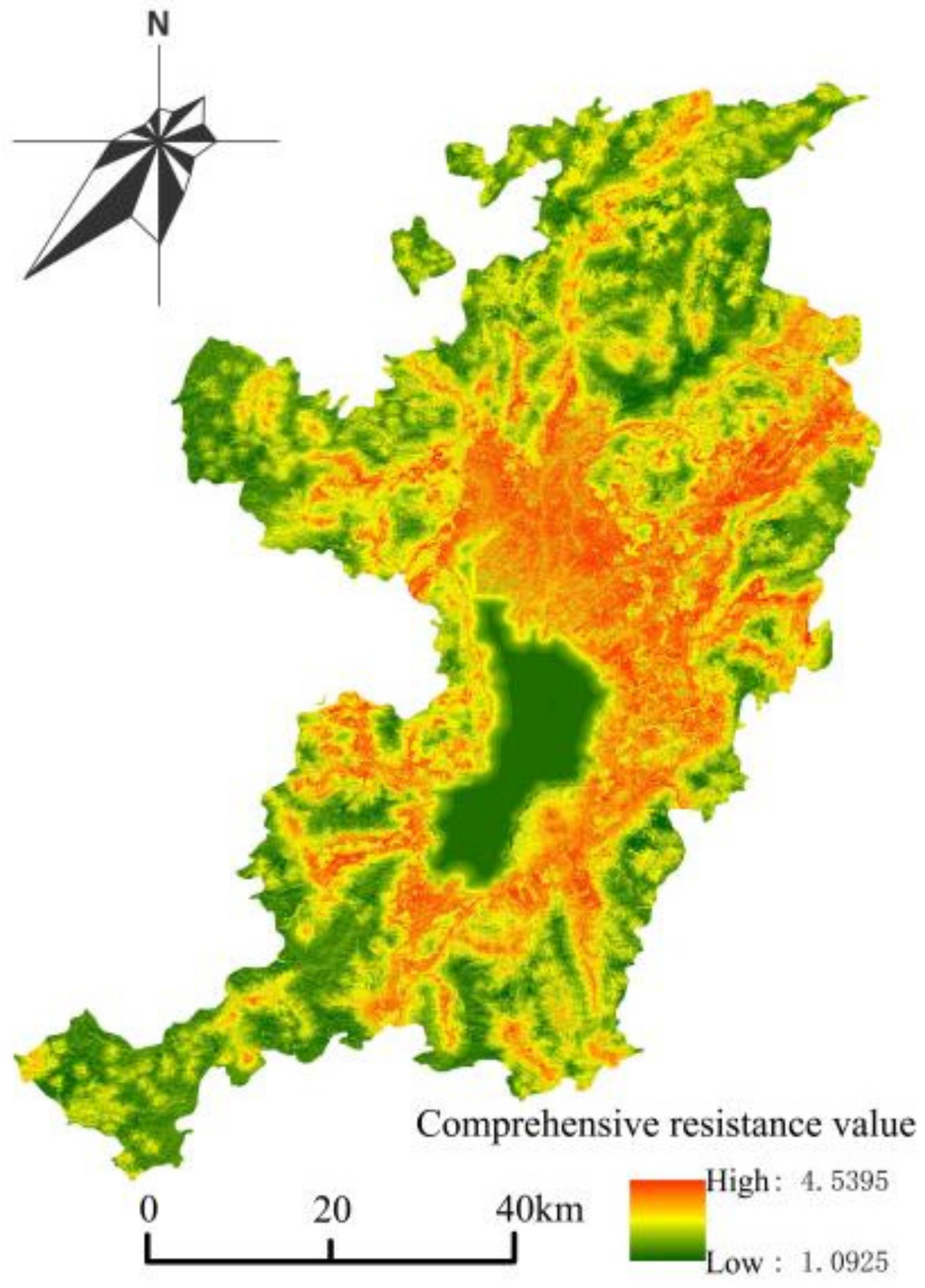
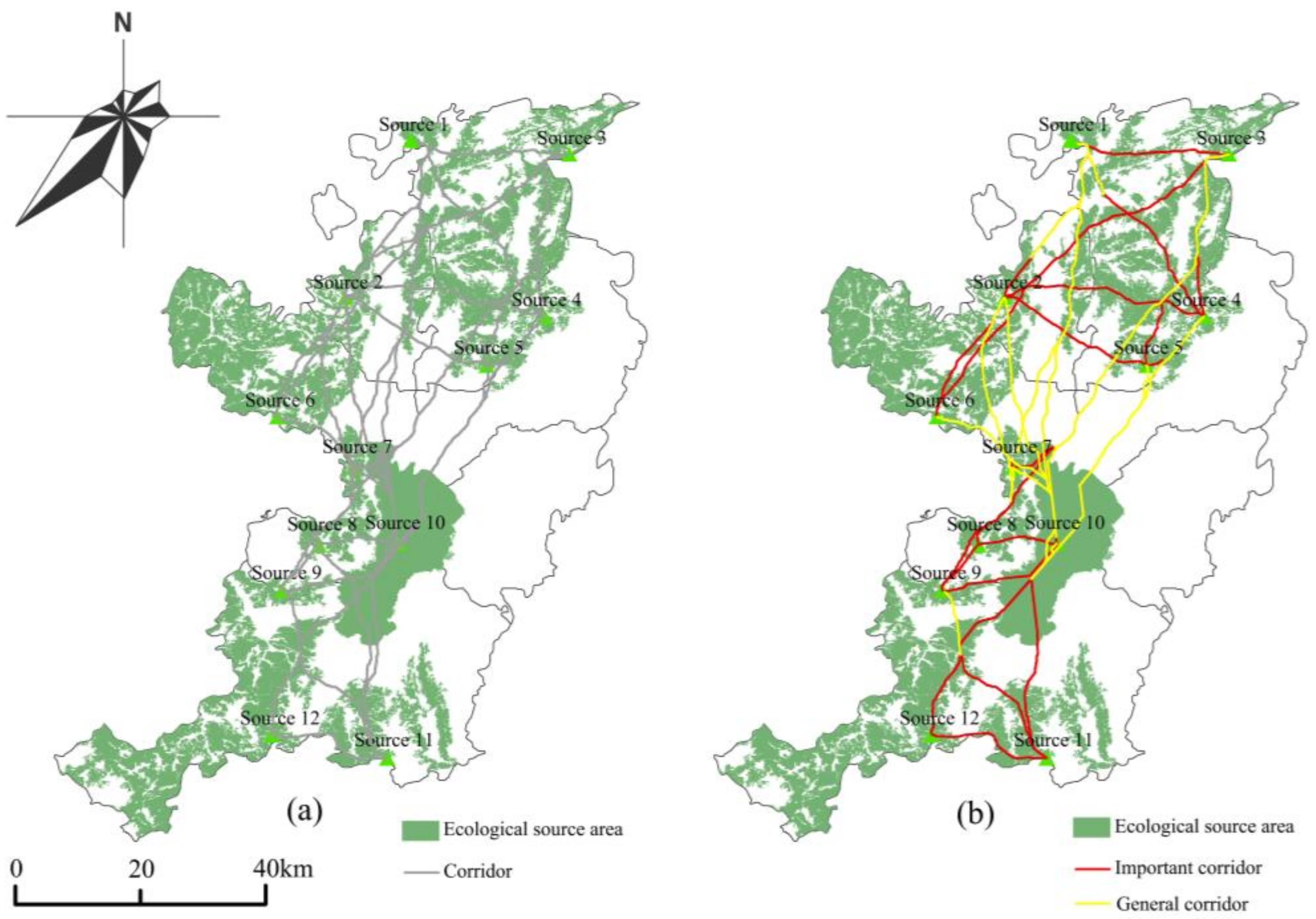
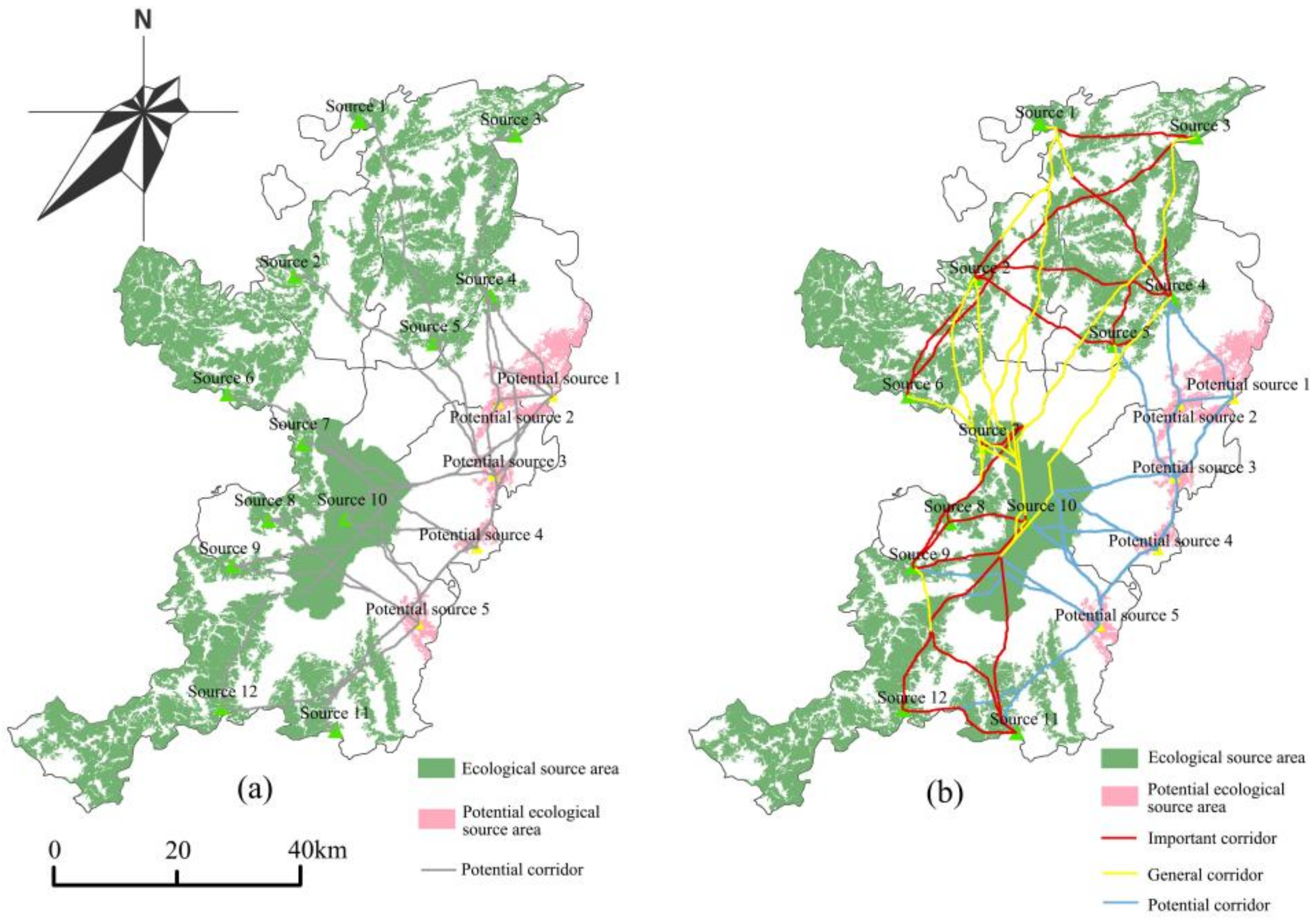
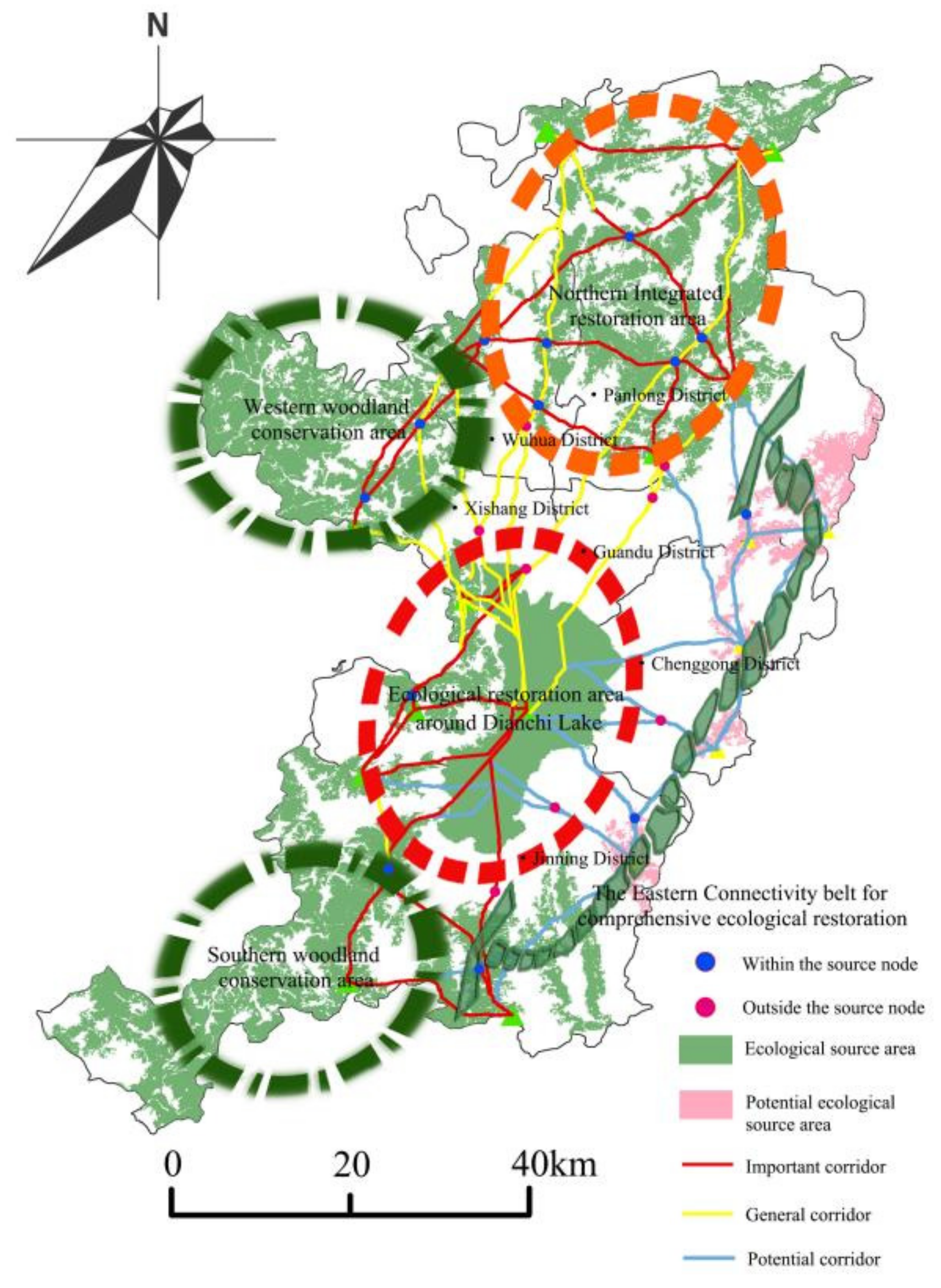
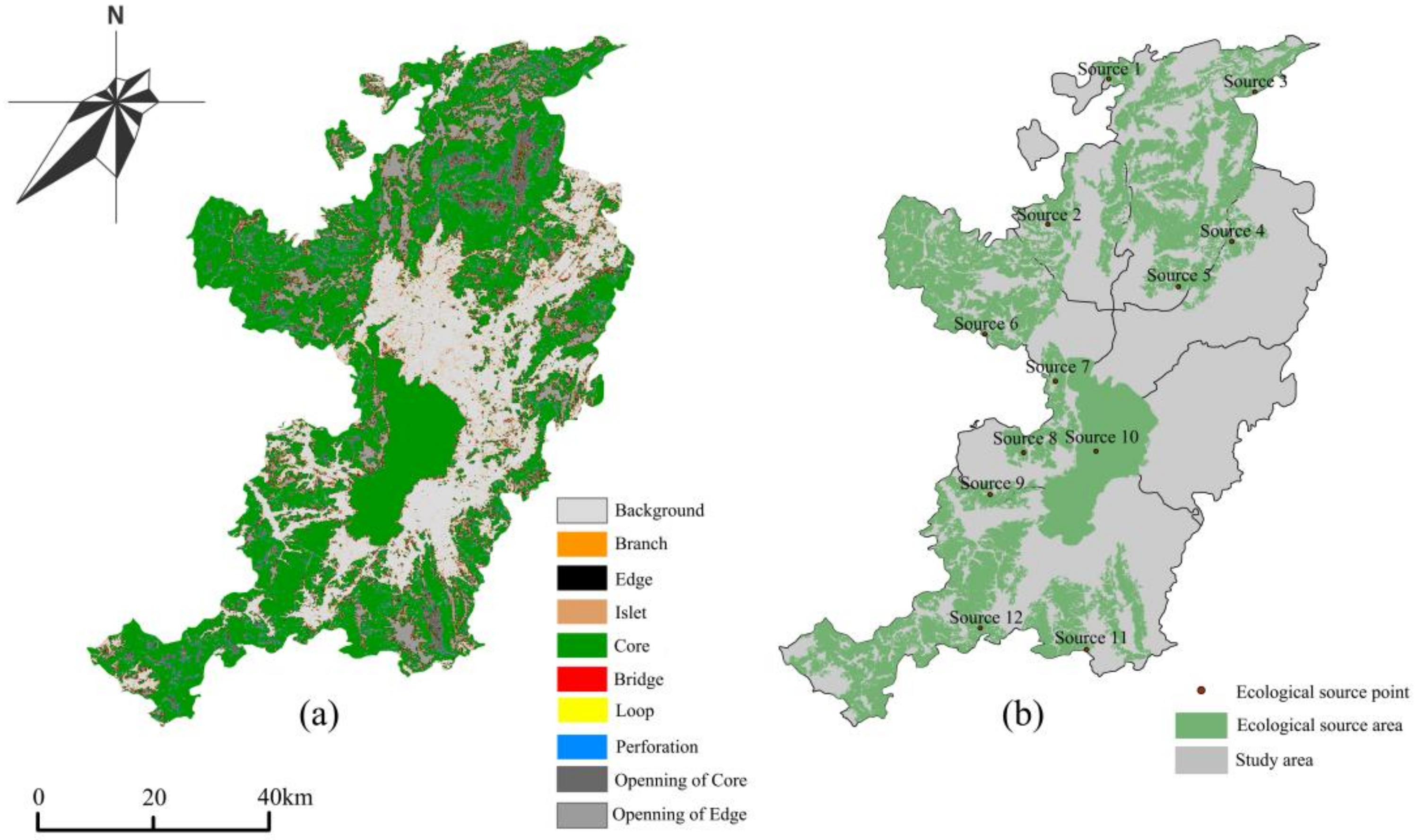
The construction of ecological security patterns is an effective means to improve ecological environment quality, protect regional biodiversity, and alleviate the landscape fragmentation caused by urbanization in plateau lake cities. Taking the Dianchi Lake area as an example, we used the morphological spatial pattern analysis method (MSPA) and the minimum cumulative resistance model (MCR) to construct a comprehensive resistance surface, ecological corridor network, and ecological security pattern for the study area. Firstly, we selected 12 ecological sources with more than 1000 hm2, PC, IIC index more than 1, and high habitat quality and connectivity from the study area, including the Dianchi lake body and the mountain forests in the south, north, and west. The overall habitat quality in the eastern region was poor. Secondly, the regional comprehensive resistance value was 1.0925–4.5395. The comprehensive resistance surface showed that the influence of human activities in the region was strong, and the connectivity between important sources was poor. Thirdly, we identified 26 important corridors with interaction force values higher than 50, mostly mountain corridors, between sources that were close to one another and over 40 general corridors with interaction force values lower than 50 in urban built-up areas, most of which were river corridors. Fourthly, by identifying five potential sources and 43 potential corridors in the eastern region, we improved the ecological network function and overall connectivity. The α index (loop pass degree), β index (line point rate), and γ index (connectivity degree) were 2.895, 5.5, and 2.2 before optimization and 3.206, 6.412, and 2.422 after optimization, respectively. Lastly, the “ridge lines” and “valley lines” were used to screen the ecological nodes in our ecological network model and construct a “one core, three regions, and one belt” ecological security pattern by combining the geographical characteristics of the research region and the local policy planning guidance. We also provided ecological control, restoration, and construction suggestions based on the corridor plans of other administrative regions and the different types of source area.
Keywords: ecological source area; comprehensive weight; resistance surface; ecological corridor; connectivity of network ecological source area; comprehensive weight; resistance surface; ecological corridor; connectivity of network