


Abstract
Overflowing garbage bins and unnecessary truck visits to collect waste have always been core issues of sustainability and maintaining a green environment. In the recent past, a transition has been observed in waste management towards a better environment and the achievement of sustainability goals. Companies are not only focused on producing less but also transforming waste into energy and reusable products. This transition process needs to evolve through sustainable solutions and innovative marketing initiatives that increase awareness and education among end users. This study used a systematic literature review protocol to identify and review the available research on sustainable waste-management solutions, innovative marketing initiatives, and a proposed conceptual model. It analyzed the latest literature from 1976 to 2022 to assess waste-management trends using the Web of Sciences and Scopus databases. To evaluate the practical perspective, this study analyzed ten waste-management companies offering services in the USA, the UK, Korea, Finland, Ireland, Turkey, Brazil, Slovakia, Portugal, Denmark, and Canada to assess their technological and marketing development for the creation of a better future. It was found that Ecube, Enevo, smart bins, Compology, Bigbelly, Sensoneo, Citibrain, ACO recycling, Evrek, Rico, and BrighterBins focus more on technology and less on user awareness and marketing. There is minimal focus on education and empowerment of end users. Our study’s findings guide academics, practitioners, and policymakers to apply ambidextrousness in energy innovation, particularly in the waste-management sector. By implementing sustainable and innovative solutions, companies can not only reduce waste products, but they can also recover, recycle, and better dispose of the waste. However, to do so, companies also need to educate end users.
1. Introduction
According to the World Bank, global waste is expected to grow 70% by 2050. The increased movement of people from villages and small towns to cities creates more waste. The 2.01 billion tons of waste currently produced worldwide is expected to increase to 3.4 billion in the coming 30 years. Although high-income countries do not constitute a majority of the world’s population, they contribute more per capita to waste generation. The developed world makes up 15% of its population; it generates 34% of the world’s waste. Asia contributes 23% of the world’s plastic waste, resulting in natural catastrophes if not managed well [1]. Waste 2.0 initiatives encourage waste management, proposing that, firstly, creation should be avoided, and otherwise created waste should be recovered, reduced, and recycled. Waste 2.0 discourages the disposal of waste. Waste management is often overlooked in developing countries. Laura Tuck, Vice President for Sustainable Development, said, “Mismanagement of waste harms human health and local environments while adding to the climate challenge”. Waste 2.0 is expected to contribute more as the government of Japan funds it through the World Bank’s Tokyo Development Learning Centre (TDLC) [2].
Leading multinationals and conglomerates earn a good brand image through waste-management strategies. For instance, a few big companies are ranked as top environment-protecting companies. Accenture is ranked 1st in the environment corporate citizenship report but 15th in the overall ranking from an environmental perspective. The company has delivered remarkable achievements in protecting the environment and fostering a sustainable carbon emissions footprint by reducing CO2 emissions per employee. The company prioritizes reuse and recycling [3].
The corporate citizen report also ranked Intel as the top contributor in the environmental domain. Since 2008, the company has recycled 75% of its waste from operations. It recycles 90% of non-hazardous trash. Estree Lauder is another company that cares about the environment. Due to the company’s strong focus on waste minimization and identifying new methods of recovery/diversion, it has reached a recycling rate of more than 88.5%.
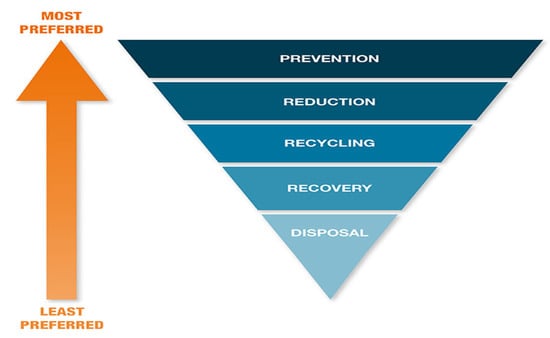
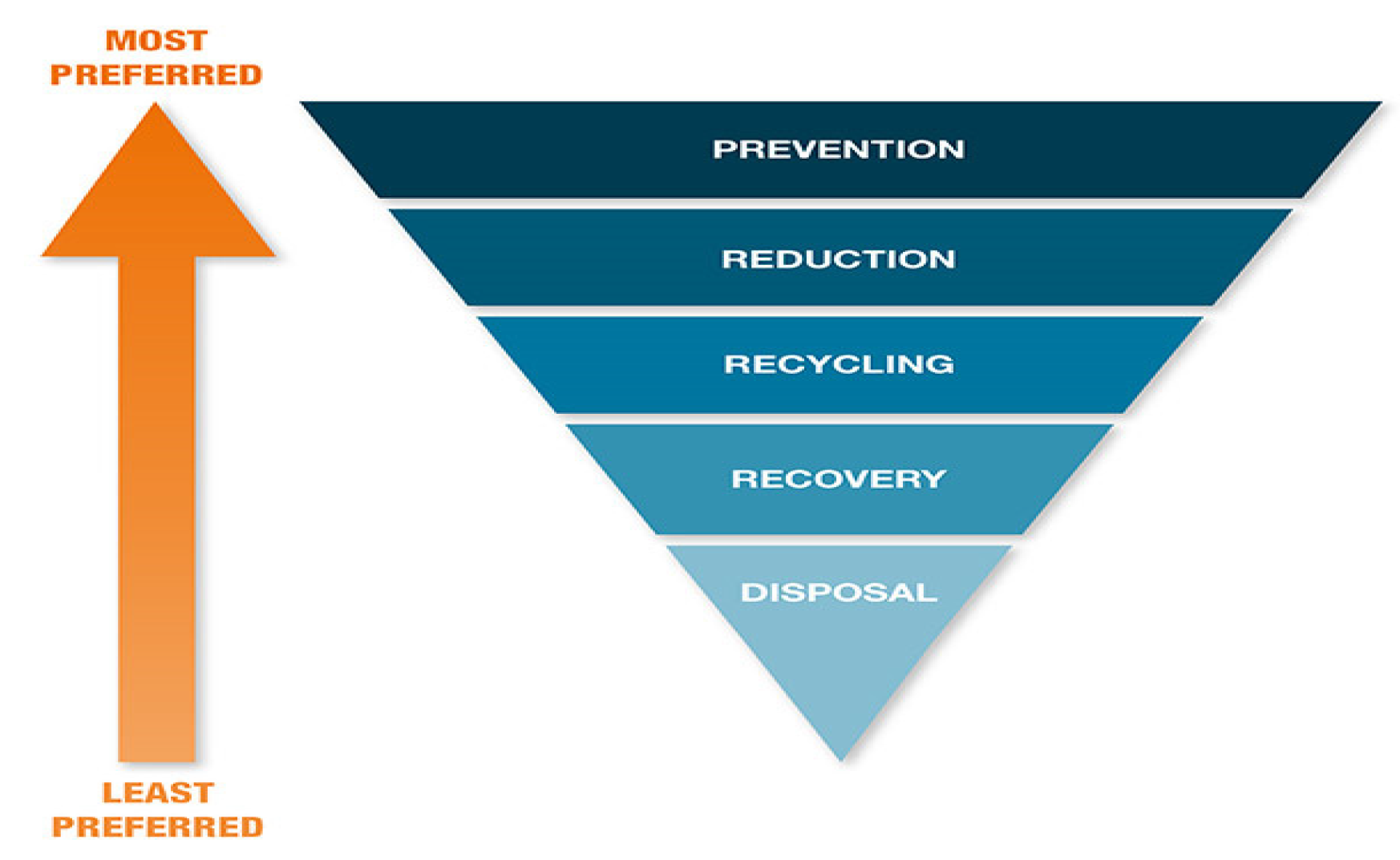
Eaton is another company concerned about the environment; it has reduced its total landfill waste from 33,400 tons to 25,100 metric tons. More than 120 of its facilities send zero waste to landfills, and the company is seeking to increase this in the near term by another 20 sites. These more prominent companies have used waste-management companies’ services for better optimal usage of resources [4]. Figure 1 shows the intentions of the companies. The top priority of the companies is to prevent waste creation. Disposal is the lowest priority. Researchers have conducted a literature review and an analysis of companies in the context of sustainable energy waste management for Australia, Bangladesh, Brazil [5,6,7], China [8,9], Egypt [10], and from a global perspective [11,12,13,14,15,16,17,18,19,20,21]; environmental practices of companies are shown in Figure 1.
Figure 1.
Companies’ top priority concerning the protection of the environment is waste management. Source: Created by the authors based on a literature review of companies’ practices.
Changes in environmental situations impact economic circumstances. Food loss and supply chain problems are core issues in developing countries. A study in Egypt found that the lifecycle assessment approach could help the 343 tomato supply chain companies avoid food loss [22]. An extensive review of studies on waste management in both developing countries such as India, Malaysia, and Saudi Arabia [23,24,25,26] and developed countries, e.g., Switzerland [27], was conducted involving, e.g., the lifecycle assessment approach using an innovative supply chain [28] and dumping of rock-hard waste [29]. The research provided a framework for sustainable management [30], recommending that those concerned follow the municipal solid waste standards [31] and employ a validated technology acceptance model [32]. Waste management is not only a challenge for households but is also an issue for companies in both the private and public sectors. However, researchers have not demonstrated how these operations and behaviors can be spread in society [33,34,35]. Urban air pollution is becoming a concern among researchers. Thus, a modern waste-management solution is required [36,37,38]. Global waste is forecasted to increase by 70% by 2050. The authors claimed that putting the circular economy (CE) in the context of the UN’s Sustainable Development Goals (SDG) Agenda 2030 is critical for controlling the growing waste generated by the building industry [39]. The research results support a central point of the study, which is the importance of managing both the technical and marketing side of waste-management decisions to achieve better results. Similarly, the supply chain in the leather sector is creating several risk factors because of gaps in behavior and technological initiatives [40]. Researchers have also provided holistic frameworks addressing the multiple levels of photovoltaic waste management [41], yet the missing behavioral aspects undermine the performance of the frameworks. Another study investigated ways to better manage municipal waste in Brazil. However, not studying the behavioral aspects creates limitations in the study [42]. Academics can provide better ideas and frameworks to help practitioners in waste management. Alongside actual waste, the focus on e-waste management is also increasing [43]. Thus, all these situations require researchers to study technical and marketing aspects simultaneously, as well as behavioral elements in parallel with the operational side. Past studies have been limited by strategic guidelines [44].
Waste management needs both practitioners and academics to focus on various domains, particularly in health [45], construction management [46], and urban population handling, as these are the core areas of concern for humanity. Sustainable waste management handles the environment better and helps minimize environmental degradation and contribute to society. The researchers have emphasized technological developments and integration. Therefore, more integrated systems are required to handle environmental risks better [47]. Thus, the current study reviewed the literature on ten companies that provide waste-management solutions. The research on waste management also highlighted the importance of technical and marketing domains [48].
The first objective of this research was to identify and review the available research on sustainable waste management companies with innovative smart marketing solutions using a systematic literature review (SLR) protocol. The second was to evaluate how companies employed sustainable waste-management practices to achieve innovative smart solutions and propose a conceptual model. We analyzed the literature from 1976 to 2022 on waste management trends through SLR from central databases, including the Web of Sciences and Scopus, to meet these objectives. We analyzed ten waste-management companies offering services in the USA, UK, Korea, Finland, Ireland, Turkey, Brazil, Slovakia, Portugal, Denmark, and Canada to evaluate the practical perspective. Lastly, the research findings provide guiding solutions for academicians, practitioners, and policymakers to apply sustainable smart solutions in the waste-management sector.
2. Systematic Literature Review Method
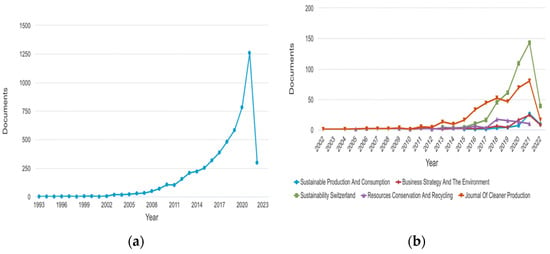
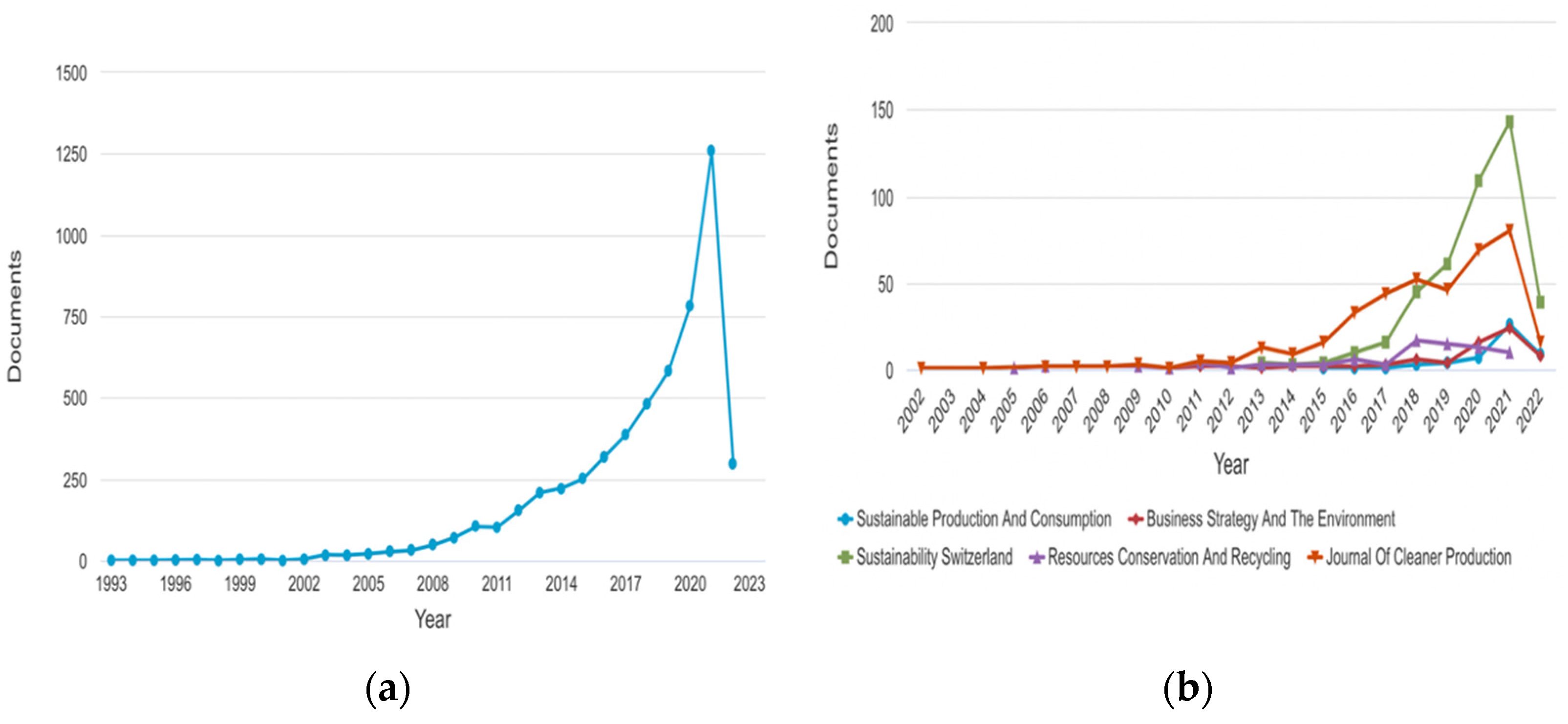
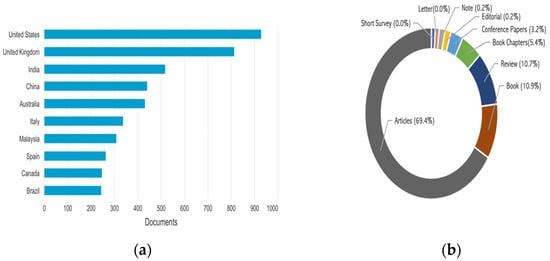
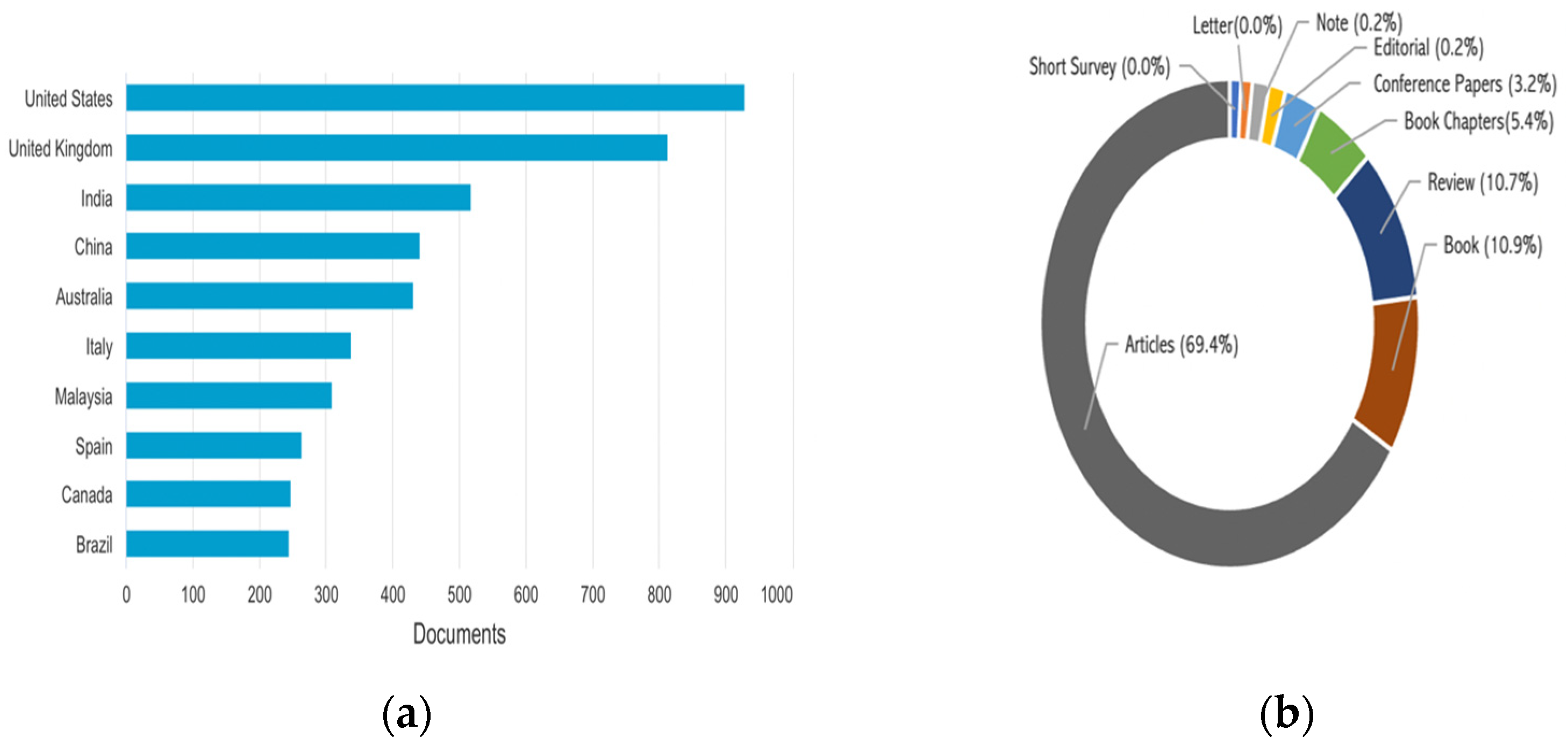
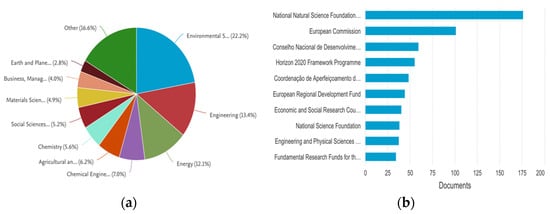
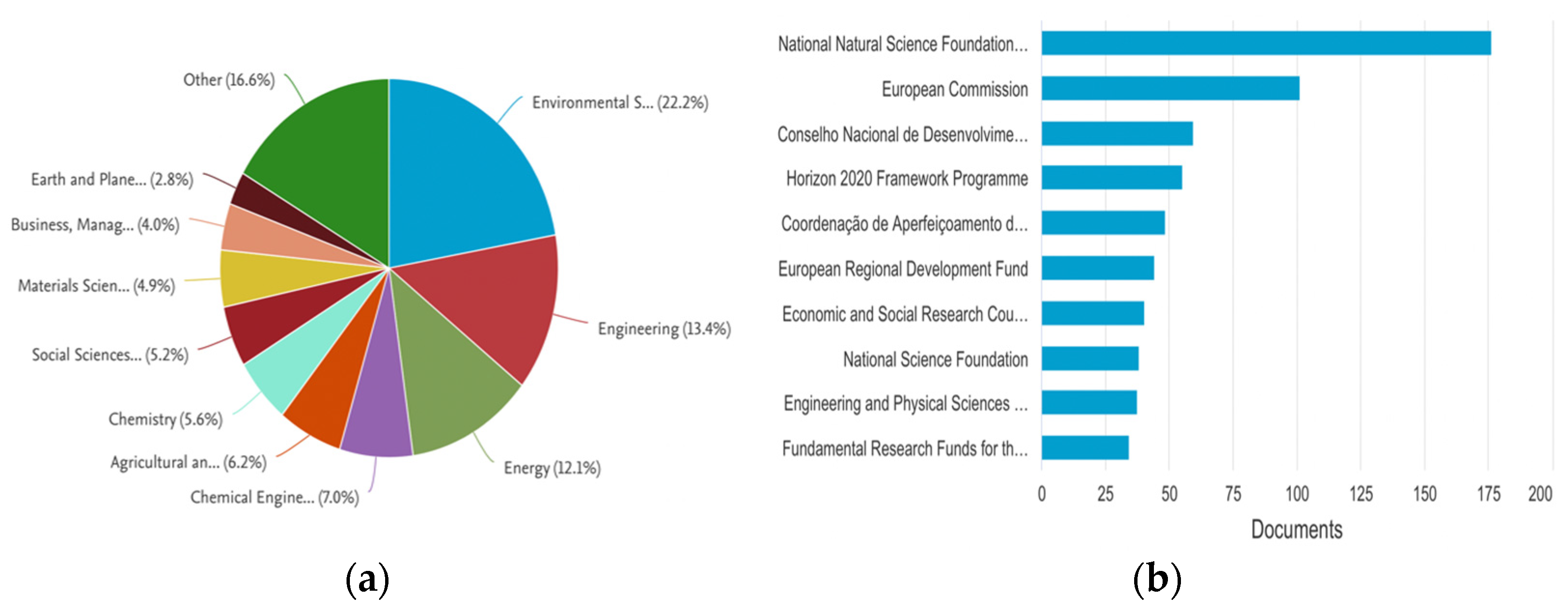
The systematic literature review method is widely used in sustainability research. This study used a systematic literature review protocol to identify and review the available research about sustainable waste management using Scopus and Web of Sciences databases. First, the general search was conducted using the label ‘waste management’, yielding a total of 5407 studies on the Web of Sciences. Different word combinations were used to narrow down the research area, e.g., sustainable waste and management, marketing and initiatives and sustainability, in the context of specific countries. By doing so, the number of articles was reduced to 965 for further screening. However, based on relevant themes, 102 papers are reviewed on transition in sustainable waste management and smart innovative marketing initiatives. Table A1 is highlights a summary of findings in the Appendix A. To present the visual output, Figure 2a,b, Figure 3a,b and Figure 4a,b illustrates an infographic summary of the literature on sustainable waste-management practices and smart, innovative solutions.
Figure 2.
(a) Studies on waste management; (b) studies published in relevant journals.
Figure 3.
(a) Countries-wise studies by source; (b) studies in journals by document type.
Figure 4.
(a) Studies published subject-wise; (b) studies published by main sponsors. Source: Scopus and Web of Sciences (2022).
Technology is advancing rapidly. Companies are providing new models because of inventions every year. For the literature review analysis, we reviewed recent research papers to explore the role of end-user marketing in green innovation and ambidexterity lessons from ten waste-management companies worldwide. Several researchers contributed to the sustainable waste-management and behavioral perspective domain. The current research summarized the relevant literature review studies conducted on sustainable waste management from 1976 to 2022. It has been observed that, globally, researchers are studying sustainable energy, waste management, and the behavioral perspective. However, the behavioral perspective focuses mainly on developing countries. The researchers have focused the least on behavioral and technological developments. The researchers suggest that behavioral-level investigation by practitioners and academicians can create a win-win situation for stakeholders. Table 1 highlights a summary of country-wise sustainable waste management and energy solutions based on behavioral perspectives. For a detailed overview of all relevant waste-management smart solutions studies, refer to Table A1 in Appendix A.
Table 1.
Summary of the literature review: prominent studies.
3. Waste Management Industrial Side
Besides academic research, several companies are working on providing products and services in the waste-management domain. In the current study, we targeted twenty companies. These companies were analyzed in detail regarding their focus on sustainability and the environment. After a careful analysis, only ten companies were retained for the final analysis. The companies listed in Table 2 integrate sustainable waste management based on a review of academic literature. However, these companies cannot add remarkable contributions due to less focus on the marketing and behavioral side. The focus on energy has shifted from big industries to user behavior. For better waste management, companies also need users’ support. More awareness and knowledge can help these companies to increase user willingness for better waste-management and sustainability decisions.
Table 2.
Prominent waste-management companies’ innovation and marketing approaches.
4. Results and Discussion
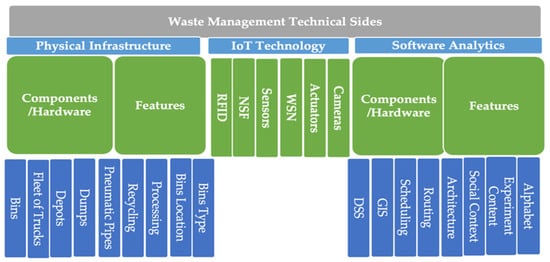
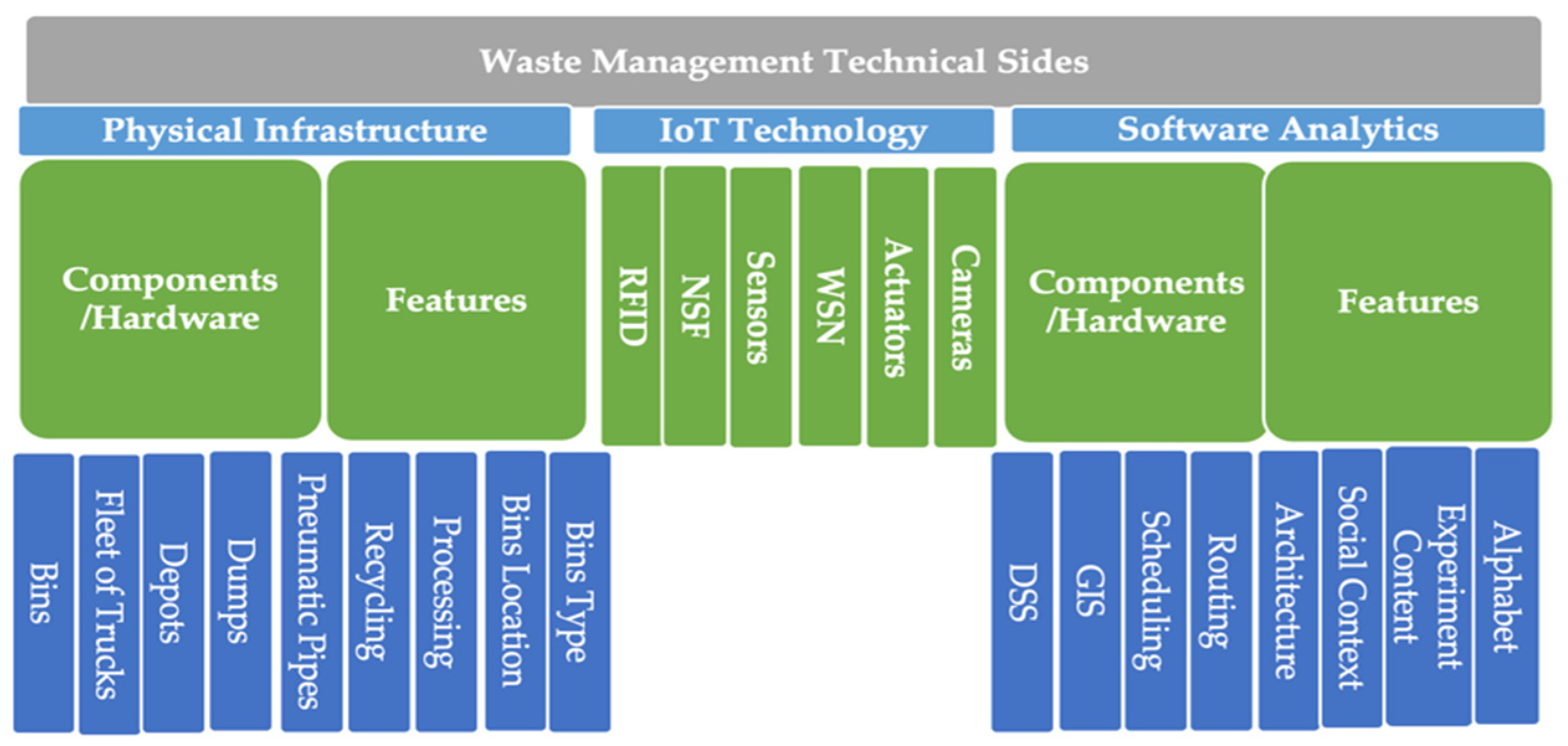
Several waste-management companies are operating worldwide. On the technical side, most companies have a good understanding of software and hardware. Figure 5 shows waste management’s technical side. Companies are focusing on physical infrastructure, IOT technology, and software analysis. In the physical infrastructure domain, companies have contributed to hardware competence and their features. For instance, bins, cameras, sensors, and depots have been upgraded in the last few years.
Figure 5.
Waste management’s technical side. Source: Authors, based on the literature review and company review.
DSS, GIS, and routing are improving. Similarly, companies have contributed to RFID, NSE, WSN, and cameras in IOT technology. The analysis of the companies is also becoming more robust, with the ability to generate reports and correct notifications. However, companies should also focus on the marketing side.
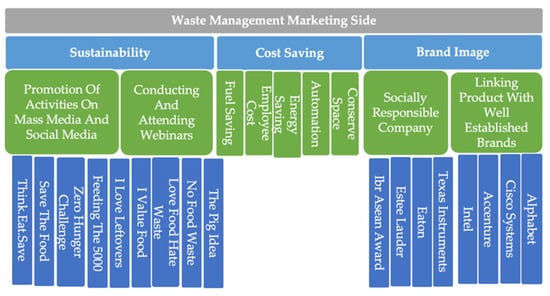
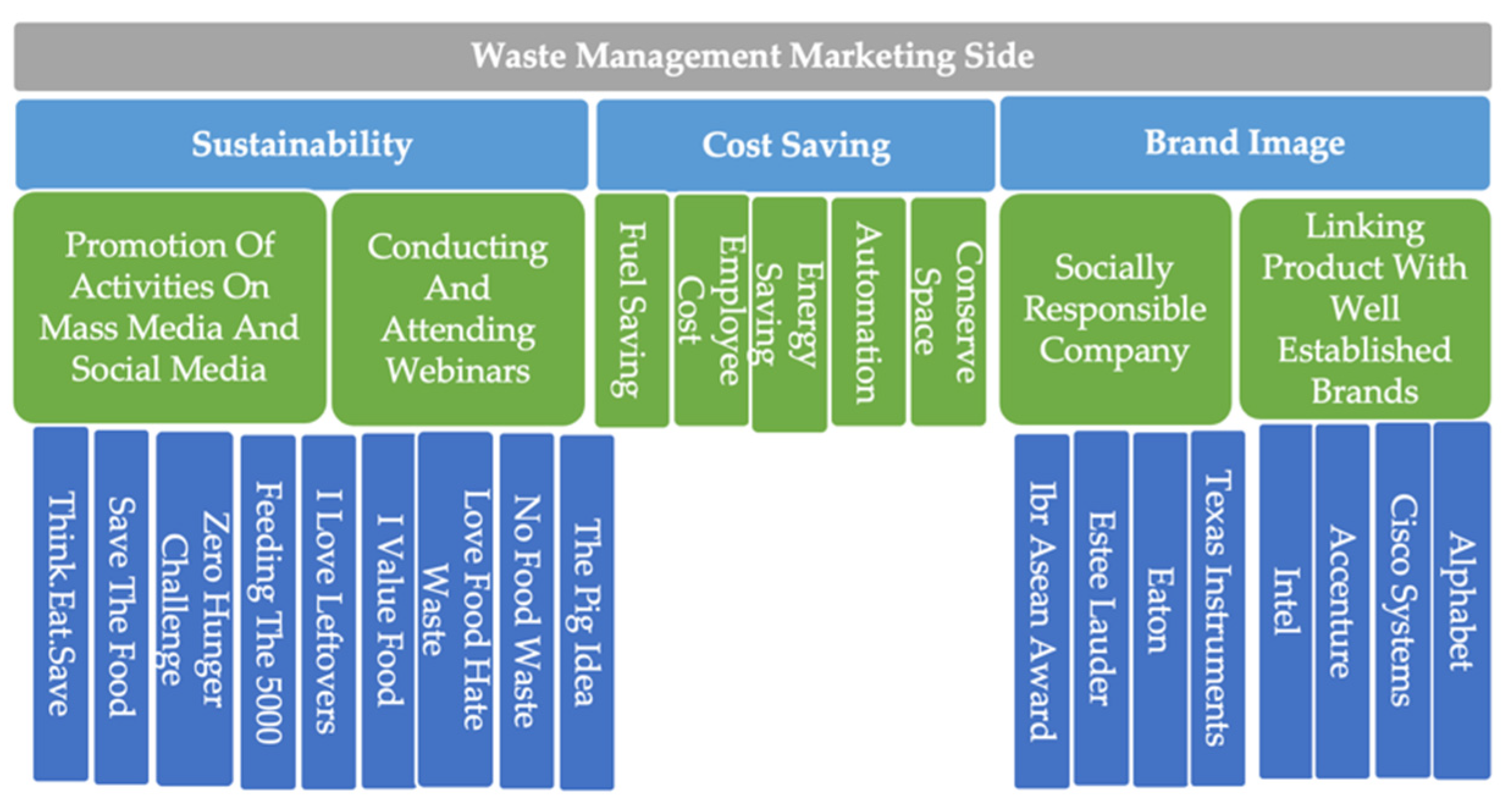
On the other hand, if we assess the marketing side, relatively new companies are taking fewer initiatives. Collaboration with world-leading companies could be a very effective method to achieve goodwill. Sustainability and environmental protection are the top areas of concern for researchers worldwide. Thus, promotion through mass media and social media is recommended for new companies. Similarly, companies must participate in technology-related events in order to reach their potential partners. There are several events and awards which companies must know about and participate in, for instance, Think, Eat, Save; Save The Food; Zero Hunger Challenge; Feeding The 5000; I Love Leftovers, and I Value Food; Love Food Hate Waste; No Food Waste; and The Pig Idea. Besides sustainability issues, companies are also looking for cost-saving initiatives such as compology (see Figure 6).
Figure 6.
Waste-management companies and marketing initiatives. Source: Authors, based on the literature review and company review.
5. Findings and Discussion
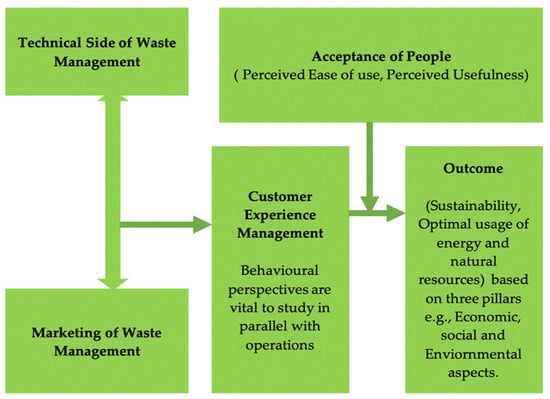
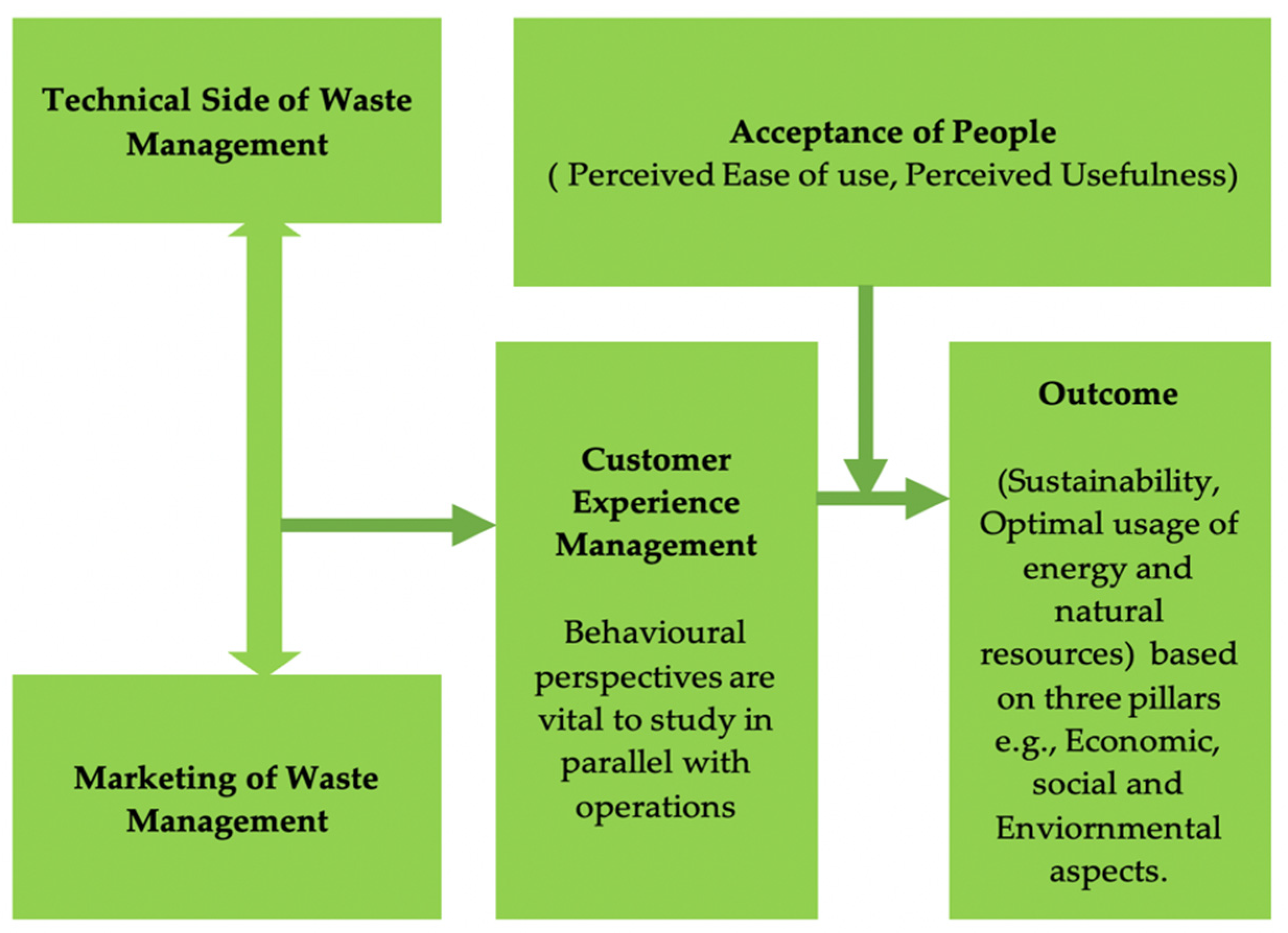
Based on the extensive literature review on both the industrial and academic sides of waste management, researchers have observed a significant improvement in waste reduction, recovery, and recycling processes. However, focusing more on innovation and showing fewer tendencies towards marketing can lead to less visibility and awareness of the people. Through an analysis of LinkedIn followers and the inability of companies to educate the masses on social media channels such as YouTube and Facebook, companies are missing sizeable public support and appreciation. Thus, based on the literature review, specific and relevant articles from Scopus and Web of Science, and analysis of industry companies’ initiatives, the researchers have proposed a framework (e.g., Figure 7). Companies in the 21st century cannot ignore the importance of the marketing side. Companies with public support and popularity among the masses can achieve a competitive advantage at a regulatory level. However, these companies must balance user awareness and waste management’s technical side. User awareness includes developing green marketing and green environment behavior among employees. The companies’ marketing and innovative technology initiatives create acceptance among the masses. Similarly, the acceptance of the people domain is also based on ease of use and perceived usefulness initiatives.
Figure 7.
A framework of management marketing and Technology for Sustainability Outcomes. Source: Author self-based on literature review and companies review.
However, these steps are not sufficient. Besides marketing and technical efforts, companies must always manage the customer experience. Even after making their intentions to use waste-management technology and accept the waste-management 2.0 system clear, the customers always assess and rate the customer-experience initiatives of the companies. There is a continuous need for improvement of the customer experience. The customer experience covers the behavioral perspective of the customers. There is an additional need to highlight selected companies’ efforts to help them in achieving sustainability goals. Achieving sustainable outcomes based on three pillars, e.g., economic, social, and environmental, is possible only through managing the marketing and technical side of the waste-management operations, developing a user experience, and caring about customer experience. All this ultimately leads us towards a more sustainable environment. This framework implementation can yield sustainable outcomes in the context of waste management based on academic and practitioners’ viewpoints.
Based on the systematic literature review and in-depth analysis of ten waste-management companies offering services in the USA, UK, Korea, Finland, Ireland, Turkey, Brazil, Slovakia, Portugal, Denmark, and Canada concerning their technological and marketing development for the creation of a better and sustainable outcome. Overflowing garbage bins and waste collection has always been core sustainability issue for companies and are subject to corrective measures. However, apart from integrating waste-management practices, a transition has been observed toward mitigating environmental degradation in achieving sustainability goals in the past ten years. Companies are not only focused on producing less but also transforming waste into reusable resources and products. This process, on the one hand, needs enhanced cameras, sensors, root-optimization methods, and other technical developments. Still, on the other hand, it also needs marketing initiatives to increase awareness and education of the end-users. This research study recommends that academia and industry focus on sustainability and green energy projects, emphasizing innovation, technological developments, and policymaking. However, the education and empowerment of end users receives the least attention. This study also guides academicians, practitioners, and policymakers to apply ambidextrousness in energy innovation, particularly in waste management. By employing pro-environmental initiatives, companies not only reduce waste products but convert, recycle, and better dispose of the waste using the principle and practices of a circular economy. However, to do so, companies must educate the end-users. It is observed that waste-management companies, e.g., Ecube, Enevo, Smart bin, Compology, Bigbelly, Sensoneo, Citibrain, ACO recycling, Evrek, Rico, and Brighter bins are focusing more on technology and less on user awareness and marketing.
6. Conclusions
This study conducted an in-depth analysis of ten waste-management companies. Moreover, based on systematic literature reviews, this study’s findings revealed that companies mainly focus on the industrial side. The consumer side receives the least attention. Therefore, to achieve success in waste-management solutions, companies should provide better services and focus on the end-users’ awareness. Moreover, companies should also address the issues related to waste management’s technical and marketing sides. Due to stakeholders’ pressure and companies’ commitment towards environmental objectives, they are expected to deliver in the field. User experience management refers to people’s attitudes. If the users have seen flaws in the commitment and marketing, it can badly impact them. Better user management will be moderated by the acceptance of the people. If users accept the companies’ initiatives making the sustainable, optimal usage of resources will be easy for the companies. The current study outcome is mainly based on a review of systematic literature and companies’ analysis through available data and information. Future research studies should use qualitative, e.g., interviews with the experts in the field, and quantitative analysis to empirically validate the current study’s proposed conceptual framework. This study also provides insight to academicians, practitioners, and policymakers in the field of innovative and sustainable waste management to focus on user awareness and marketing initiatives to achieve sustainable solutions.
Author Contributions
Conceptualization, M.F.; methodology, N.U.K.; software, J.C.; formal analysis, N.U.K.; investigation, N.U.K.; resources, J.C.; data curation, R.A.S.; writing—original draft preparation, M.F.; writing—review and editing, R.A.S., H.A.B. and N.K.; project administration, N.U.K.; funding acquisition, J.C. All authors have read and agreed to the published version of the manuscript.
Funding
Quality Engineering Project of Anhui Xinhua University, Funding Number: 2020jgkcx10, 2020jy014.
Institutional Review Board Statement
Not applicable.
Informed Consent Statement
Not applicable.
Data Availability Statement
Not applicable.
Conflicts of Interest
The authors declare no conflict of interest.
Appendix A
Table A1.
Literature on the connection between marketing and innovation.
References
- The World Bank Global Waste to Grow by 70 Percent by 2050 Unless Urgent Action Is Taken: World Bank Report. Available online: https://www.worldbank.org/en/news/press-release/2018/09/20/global-waste-to-grow-by-70-percent-by-2050-unless-urgent-action-is-taken-world-bank-report (accessed on 1 March 2022).
- Abila, B.O.; Abila, N. Knowledge management approach for sustainable waste management: Evolving a conceptual framework. Int. J. Environ. Waste Manag. 2022, 1, 10033995. [Google Scholar] [CrossRef] [Scilit]
- Mahmoudi, S.; Huda, N.; Behnia, M. Multi-levels of photovoltaic waste management: A holistic framework. J. Clean. Prod. 2021, 294, 126252. [Google Scholar] [CrossRef] [Scilit]
- Khan, S.; Anjum, R.; Raza, S.T.; Bazai, N.A.; Ihtisham, M. Technologies for municipal solid waste management: Current status, challenges, and future perspectives. Chemosphere 2021, 288, 132403. [Google Scholar] [CrossRef] [Scilit] [PubMed]
- Rena; Yadav, S.; Patel, S.; Killedar, D.J.; Kumar, S.; Kumar, R. Eco-innovations and sustainability in solid waste management: An Indian upfront in technological, organizational, start-ups and financial framework. J. Environ. Manag. 2021, 302, 113953. [Google Scholar] [CrossRef] [Scilit] [PubMed]
- Shah, R.; Guha, S. Waste Management and Private Sector Participation- Operational and Behavioural Perspectives. Int. J. Environ. Waste Manag. 2023, 1, 10038521. [Google Scholar] [CrossRef] [Scilit]
- Fissi, S.; Romolini, A.; Gori, E.; Contri, M. The path toward a sustainable green university: The case of the University of Florence. J. Clean. Prod. 2020, 279, 123655. [Google Scholar] [CrossRef] [Scilit]
- van Keulen, M.; Kirchherr, J. The implementation of the Circular Economy: Barriers and enablers in the coffee value chain. J. Clean. Prod. 2020, 281, 125033. [Google Scholar] [CrossRef] [Scilit]
- Sheoran, M.; Kumar, D. Modelling the enablers of sustainable consumer behaviour towards electronic products. J. Model. Manag. 2020, 15, 1543–1565. [Google Scholar] [CrossRef] [Scilit]
- Uchiyama, C.; Stevenson, L.A.; Tandoko, E. Climate change research in Asia: A knowledge synthesis of Asia-Pacific Network for Global Change Research (2013–2018). Environ. Res. 2020, 188, 109635. [Google Scholar] [CrossRef] [Scilit]
- Frempong, J.; Chai, J.; Ampaw, E.M.; Amofah, D.O.; Ansong, K.W. The relationship among customer operant resources, online value co-creation and electronic word of mouth in solid waste management marketing. J. Clean. Prod. 2020, 248, 119228. [Google Scholar] [CrossRef] [Scilit]
- Bassi, S.A.; Boldrin, A.; Faraca, G.; Astrup, T.F. Extended producer responsibility: How to unlock the environmental and economic potential of plastic packaging waste? Resour. Conserv. Recycl. 2020, 162, 105030. [Google Scholar] [CrossRef] [Scilit]
- Ogunmakinde, O.E.; Egbelakin, T.; Sher, W. Contributions of the circular economy to the UN sustainable development goals through sustainable construction. Resour. Conserv. Recycl. 2021, 178, 106023. [Google Scholar] [CrossRef] [Scilit]
- Ria, T.Z.; Majumder, S.C.; Dey, R.; Rahman, H. Efficiency and Performance of Solid Waste Management in Cumilla City Corporation (CuCC), Bangladesh. Int. J. Environ. Waste Manag. 2023, 1, 10042527. [Google Scholar] [CrossRef] [Scilit]
- Bari, Q.H.; Hassan, K.M.; Haque, R. Scenario of solid waste reuse in Khulna city of Bangladesh. Waste Manag. 2012, 32, 2526–2534. [Google Scholar] [CrossRef] [Scilit] [PubMed]
- Korf, E.P.; Prietto, P.D.; Olivo, V.E. Current status of municipal solid waste in medium-sized Brazilian cities through integrated management. Int. J. Environ. Waste Manag. 2023, 1, 10038699. [Google Scholar] [CrossRef] [Scilit]
- Hall, D. Biomass energy in industrialised countries—A view of the future. For. Ecol. Manag. 1997, 91, 17–45. [Google Scholar] [CrossRef] [Scilit]
- Coltro, L.; Mourad, A.; Oliveira, P.; Baddini, J.; Kletecke, R. Environmental Profile of Brazilian Green Coffee (6 pp). Int. J. Life Cycle Assess. 2006, 11, 16–21. [Google Scholar] [CrossRef] [Scilit]
- Yee, W.-H.; Tang, S.-Y.; Lo, C.W.-H. Regulatory Compliance when the Rule of Law Is Weak: Evidence from China’s Environmental Reform. J. Public Adm. Res. Theory 2016, 26, 95–112. [Google Scholar] [CrossRef] [Scilit]
- Ali, A.; Xia, C.; Ouattara, N.; Mahmood, I.; Faisal, M. Economic and environmental consequences’ of postharvest loss across food supply Chain in the developing countries. J. Clean. Prod. 2021, 323, 129146. [Google Scholar] [CrossRef] [Scilit]
- Chen, H.; Hao, Y.; Li, J.; Song, X. The impact of environmental regulation, shadow economy, and corruption on environmental quality: Theory and empirical evidence from China. J. Clean. Prod. 2018, 195, 200–214. [Google Scholar] [CrossRef] [Scilit]
- Cembruch-Nowakowski, M. Green Hotels–Exception or Norm? Prace komisji geografii przemyslu polskiego towarzystwa geograficznego-studies of the industrial geography commission of the polish geographical society. Stud. Ind. Geogr. Comm. Pol. Geogr. Soc. 2019, 33, 159–175. [Google Scholar] [CrossRef] [Scilit]
- Rizzi, F.; Gusmerotti, N.; Frey, M. How to meet reuse and preparation for reuse targets? Shape advertising strategies but be aware of “social washing”. Waste Manag. 2019, 101, 291–300. [Google Scholar] [CrossRef] [Scilit] [PubMed]
- Moreno, O.A.V.; Swarr, T.E.; Asselin, A.-C.; Canals, L.M.I.; Colley, T.; Valdivia, S. Implementation of life cycle management practices in a cluster of companies in Bogota, Colombia. Int. J. Life Cycle Assess. 2015, 20, 723–730. [Google Scholar] [CrossRef] [Scilit]
- Marques, P.A.; Carvalho, A.M.; Santos, J.O. Improving Operational and Sustainability Performance in a Retail Fresh Food Market Using Lean: A Portuguese Case Study. Sustainability 2021, 14, 403. [Google Scholar] [CrossRef] [Scilit]
- Oyinlola, M.; Schröder, P.; Whitehead, T.; Kolade, O.; Wakunuma, K.; Sharifi, S.; Rawn, B.; Odumuyiwa, V.; Lendelvo, S.; Brighty, G.; et al. Digital innovations for transitioning to circular plastic value chains in Africa. Afr. J. Manag. 2021, 8, 83–108. [Google Scholar] [CrossRef] [Scilit]
- GBB Gershman, Brickner & Bratton, Inc-Solid Waste Management Consultant. Available online: https://gbbinc.com/ (accessed on 9 March 2022).
- Ganesh, K.S.; Sridhar, A.; Vishali, S. Utilization of fruit and vegetable waste to produce value-added products: Conventional utilization and emerging opportunities—A review. Chemosphere 2021, 287, 132221. [Google Scholar] [CrossRef] [Scilit] [PubMed]
- Davids, R.; Rouget, M.; Burger, M.; Mahood, K.; Ditlhale, N.; Slotow, R. An impact assessment tool to identify, quantify and select optimal social-economic, ecological and health outcomes of civic environmental management interventions, in Durban South Africa. J. Environ. Manag. 2021, 302, 113966. [Google Scholar] [CrossRef] [Scilit]
- Sensoneo Smart Waste Management Company | SENSONEO. Available online: https://sensoneo.com/ (accessed on 2 March 2022).
- Biswas, A.K.; Farzanegan, M.R.; Thum, M. Pollution, shadow economy and corruption: Theory and evidence. Ecol. Econ. 2012, 75, 114–125. [Google Scholar] [CrossRef] [Scilit]
- Sanyal, S.; Singh, V.K.; Xhafa, F.; Sanyal, B.; Mukhopadhyay, S. A Game Theoretic Framework for Surplus Food Distribution in Smart Cities and Beyond. Appl. Sci. 2021, 11, 5058. [Google Scholar] [CrossRef] [Scilit]
- Beh, L.-S.; Ghobadian, A.; He, Q.; Gallear, D.; O ’regan, N. Supply Chain Management: An International Journal Second-Life Retailing: A Reverse Supply Chain Perspective Second-Life Retailing: A Reverse Supply Chain Perspective. Supply Chain. Management. 2016, 21, 259–272. [Google Scholar] [CrossRef] [Scilit]
- Zailani, S.; Govindan, K.; Iranmanesh, M.; Shaharudin, M.R.; Chong, Y.S. Green innovation adoption in automotive supply chain: The Malaysian case. J. Clean. Prod. 2015, 108, 1115–1122. [Google Scholar] [CrossRef] [Scilit]
- Alsaluli, A. A modern waste management strategy for reducing urban air pollution in Taif, Saudi Arabia. Int. J. Environ. Waste Manag. 2023, 1, 10034498. [Google Scholar] [CrossRef] [Scilit]
- Manfredi, L.; Stokoe, M.; Kelly, R.; Lee, S. Teaching Sustainable Responsibility through Informal Undergraduate Design Education. Sustainability 2021, 13, 8378. [Google Scholar] [CrossRef] [Scilit]
- Shayganmehr, M.; Kumar, A.; Garza-Reyes, J.A.; Moktadir, M.A. Industry 4.0 enablers for a cleaner production and circular economy within the context of business ethics: A study in a developing country. J. Clean. Prod. 2021, 281, 125280. [Google Scholar] [CrossRef] [Scilit]
- Fourberg, N.; Korff, A. Fiber vs. vectoring: Limiting technology choices in broadband expansion. Telecommun. Policy 2020, 44, 102002. [Google Scholar] [CrossRef] [Scilit]
- Bakr, H.A.; Abdulghaffar, N.A. Role of Attitude, Subjective Norm, Perceived Behavioral Control, and Environmental Knowledge on Behavioral Intentions of Householders Toward participating in Solid Waste Management. Int. J. Environ. Waste Manag. 2023, 1, 10042289. [Google Scholar] [CrossRef] [Scilit]
- Barman, H.; Deb, D. Compliance of E-Waste (Management) Rules in the Government of Assam Offices at Dibrugarh, India. Int. J. Environ. Waste Manag. 2023, 1, 10039071. [Google Scholar] [CrossRef] [Scilit]
- Raj, A.; Samuel, C. A Study of Barriers in Healthcare Waste Management Sector. Int. J. Environ. Waste Manag. 2023, 1, 10038700. [Google Scholar] [CrossRef] [Scilit]
- Chavali, K.; Raj, P.M.; Ahmed, R. Does Financial Behavior Influence Financial Well-Being? J. Asian Financ. Econ. Bus. 2021, 8, 0273. [Google Scholar] [CrossRef]
- Kayamo, S.E. Willingness to pay for solid waste management improvement in Hawassa city, Ethiopia. J. Environ. Manag. 2021, 302, 113973. [Google Scholar] [CrossRef] [Scilit]
- Bui, T.-D.; Tseng, J.-W.; Tseng, M.-L.; Lim, M.K. Opportunities and challenges for solid waste reuse and recycling in emerging economies: A hybrid analysis. Resour. Conserv. Recycl. 2022, 177, 105968. [Google Scholar] [CrossRef] [Scilit]
- Moktadir, A.; Dwivedi, A.; Khan, N.S.; Paul, S.K.; Khan, S.A.; Ahmed, S.; Sultana, R. Analysis of risk factors in sustainable supply chain management in an emerging economy of leather industry. J. Clean. Prod. 2021, 283, 124641. [Google Scholar] [CrossRef] [Scilit]
- Venugopal, K.; Ambatipudi, A. Human Resource Factor in Waste Management Practices in Construction Industry for Sustainability. Int. J. Environ. Waste Manag. 2023, 1, 10038700. [Google Scholar] [CrossRef] [Scilit]
- Khoo, S.C.; Ma, N.L.; Peng, W.X.; Ng, K.K.; Goh, M.S.; Chen, H.L.; Tan, S.H.; Lee, C.H.; Luang-In, V.; Sonne, C. Valorisation of biomass and diaper waste into a sustainable production of the medical mushroom Lingzhi Ganoderma lucidum. Chemosphere 2021, 286, 131477. [Google Scholar] [CrossRef] [Scilit]
- Wang, D.; Tang, Y.-T.; Sun, Y.; He, J. Assessing the transition of municipal solid waste management by combining material flow analysis and life cycle assessment. Resour. Conserv. Recycl. 2021, 177, 105966. [Google Scholar] [CrossRef] [Scilit]
- Brighterbins Smart Waste Collection | Recycling | Belgium | BrighterBins. Available online: https://www.brighterbins.com/ (accessed on 2 March 2022).
- Compology Compology Home-Compology. Available online: https://compology.com/ (accessed on 2 March 2022).
- Enevo Better Waste Management-Enevo-Enevo. Available online: https://enevo.com/ (accessed on 2 March 2022).
- Smartbin Smartbin.Io. Available online: https://www.smartbin.io/ (accessed on 2 March 2022).
- Bigbelly Bigbelly-The World Leader in Smart Waste & Recycling. Available online: https://bigbelly.com/ (accessed on 2 March 2022).
- NORDSENSE Greener and Smarter Waste Collection-Nordsense. Available online: https://nordsense.com/ (accessed on 2 March 2022).
- Acorecycling Aco Recycling-Smart Reverse Vending Machine. Available online: https://www.acorecycling.com/ (accessed on 2 March 2022).
- Ecube Labs Smart Waste Management Solutions | Waste Analytics | Ecube Labs. Available online: https://www.ecubelabs.com/ (accessed on 2 March 2022).
- Dima, A.; Bugheanu, A.-M.; Dinulescu, R.; Potcovaru, A.-M.; Stefanescu, C.A.; Marin, I. Exploring the Research Regarding Frugal Innovation and Business Sustainability through Bibliometric Analysis. Sustainability 2022, 14, 1326. [Google Scholar] [CrossRef] [Scilit]
- Popescu, D.V.; Dima, A.; Radu, E.; Dobrota, E.M.; Dumitrache, V.M. Bibliometric Analysis of the Green Deal Policies in the Food Chain. Amfiteatru Econ. 2022, 24, 410–428. [Google Scholar] [CrossRef] [Scilit]
- Tassie, K.; Endalew, B. Willingness to pay for improved solid waste management services and associated factors among urban households: One and one half bounded contingent valuation study in Bahir Dar city, Ethiopia. Cogent Environ. Sci. 2020, 6, 1807275. [Google Scholar] [CrossRef] [Scilit]
- Gupta, J.; Kumari, M.; Mishra, A.; Swati; Akram, M.; Thakur, I.S. Agro-forestry waste management- A review. Chemosphere 2021, 287, 132321. [Google Scholar] [CrossRef] [Scilit]
- Ranjbari, M.; Esfandabadi, Z.S.; Shevchenko, T.; Chassagnon-Haned, N.; Peng, W.; Tabatabaei, M.; Aghbashlo, M. Mapping healthcare waste management research: Past evolution, current challenges, and future perspectives towards a circular economy transition. J. Hazard. Mater. 2021, 422, 126724. [Google Scholar] [CrossRef] [Scilit]
- Singh, E.; Kumar, A.; Mishra, R.; Kumar, S. Solid waste management during COVID-19 pandemic: Recovery techniques and responses. Chemosphere 2021, 288, 132451. [Google Scholar] [CrossRef] [Scilit] [PubMed]
- Ahmad, N.; Aghdam, R.F.; Butt, I.; Naveed, A. Citation-based systematic literature review of energy-growth nexus: An overview of the field and content analysis of the top 50 influential papers. Energy Econ. 2020, 86, 104642. [Google Scholar] [CrossRef] [Scilit]
- Tol, R.S.J. Changes at Energy Economics. Energy Econ. 2021, 99, 1131–1134. [Google Scholar] [CrossRef] [Scilit]
- Steffen, B. Estimating the cost of capital for renewable energy projects. Energy Econ. 2020, 88, 104783. [Google Scholar] [CrossRef] [Scilit]
- Menegaki, A.N.; Ahmad, N.; Aghdam, R.F.; Naz, A. The convergence in various dimensions of energy-economy-environment linkages: A comprehensive citation-based systematic literature review. Energy Econ. 2021, 104, 105653. [Google Scholar] [CrossRef] [Scilit]
- Gupta, S. Enhancing Brand Equity Through Sustainability: Waste Recycling. Thunderbird Int. Bus. Rev. 2015, 58, 213–223. [Google Scholar] [CrossRef] [Scilit]
- Portella, M.O.; Ribeiro, J.C.J. Landfills: Generalandfinal destination ofwaste. Rev. Direito Ambient. E Soc. 2014, 4, 115–134. [Google Scholar]
- Zhang, A.; Venkatesh, V.G.; Wang, J.X.; Mani, V.; Wan, M.; Qu, T. Drivers of industry 4.0-enabled smart waste management in supply chain operations: A circular economy perspective in China. Prod. Plan. Control 2021, 62, 1–17. [Google Scholar] [CrossRef] [Scilit]
- Sreenath, S.; Sudhakar, K.; Yusop, A. Sustainability at airports: Technologies and best practices from ASEAN countries. J. Environ. Manag. 2021, 299, 113639. [Google Scholar] [CrossRef] [Scilit]
- Bortolotti, A. Assemblages of Private Waste Management and Recycling the Case of the Anderlecht Marketplace in Brussels. Soc. Bus. Rev. 2019, 14, 174–185. [Google Scholar] [CrossRef] [Scilit]
- Thieme, T. Youth, waste and work in Mathare: Whose business and whose politics? Environ. Urban. 2010, 22, 333–352. [Google Scholar] [CrossRef] [Scilit]
- Li, S.; Ngniatedema, T.; Chen, F. Understanding the Impact of Green Initiatives and Green Performance on Financial Performance in the US. Bus. Strat. Environ. 2017, 26, 776–790. [Google Scholar] [CrossRef] [Scilit]
- Chandran, C.; Bhattacharya, P. Hotel’s best practices as strategic drivers for environmental sustainability and green marketing. J. Glob. Sch. Mark. Sci. 2019, 29, 218–233. [Google Scholar] [CrossRef] [Scilit]
- Dodds, R.; Novotny, M.; Harper, S. Shaping our perception of reality: Sustainability communication by Canadian festivals. Int. J. Event Festiv. Manag. 2020, 11, 1758–2954. [Google Scholar] [CrossRef] [Scilit]
- da Silva, T.L.; Vicente, E.F.R.; Pfitscher, E.D.; da Rosa, F.S. Environmental disclosure-information on solid waste disclosed by potentially polluting companies listed on the bm & fbovespa. Rev. Ambiente Contab. 2013, 5, 229–249. [Google Scholar]
- Van Dyk, D.J.; Pretorius, L. A Systems Thinking Approach to The Sustainability Of Quality Improvement Programmes. S. Afr. J. Ind. Eng. 2014, 25, 71–84. [Google Scholar] [CrossRef] [Scilit]
- Flynn, A.; Hacking, N. Setting standards for a circular economy: A challenge too far for neoliberal environmental governance? J. Clean. Prod. 2018, 212, 1256–1267. [Google Scholar] [CrossRef] [Scilit]
- Karaman, A.S.; Kilic, M.; Uyar, A. Green logistics performance and sustainability reporting practices of the logistics sector: The moderating effect of corporate governance. J. Clean. Prod. 2020, 258, 120718. [Google Scholar] [CrossRef] [Scilit]
- Mor, R.S.; Singh, S.; Bhardwaj, A. Learning on Lean Production: A Review of Opinion and Research within Environmental Constraints. Oper. Supply Chain Manag. Int. J. 2015, 9, 61–72. [Google Scholar] [CrossRef] [Scilit]
- Bhupendra, K.V.; Sangle, S. Pollution prevention strategy: A study of Indian firms. J. Clean. Prod. 2016, 133, 795–802. [Google Scholar] [CrossRef] [Scilit]
- Naidoo, M.; Gasparatos, A. Corporate environmental sustainability in the retail sector: Drivers, strategies and performance measurement. J. Clean. Prod. 2018, 203, 125–142. [Google Scholar] [CrossRef] [Scilit]
- Ferreira, S.; Pereira, O.; Simoes, C. Environmental Sustainability in the Hotel Industry: A Perspective from Eco Hotel Managers in Portugal. Int. J. Mark. Commun. New Media 2021, 2021, 150–170. [Google Scholar]
- Sant’Anna, P.R.; Bouzon, M.; Tortorella, G.L.; Campos, L.M.S. Implementation of Lean and Green practices: A supplier-oriented assessment method. Prod. Eng. 2017, 11, 531–543. [Google Scholar] [CrossRef] [Scilit]
- Raut, R.; Narkhede, B.E.; Gardas, B.B.; Luong, H.T. An ISM approach for the barrier analysis in implementing sustainable practices. Benchmark. Int. J. 2018, 25, 1245–1271. [Google Scholar] [CrossRef] [Scilit]
- Miller, L.; Soulliere, K.; Sawyerbeaulieu, S.S.; Tseng, S.; Tam, E. Challenges and Alternatives to Plastics Recycling in the Automotive Sector. Materials 2014, 7, 5883–5902. [Google Scholar] [CrossRef] [Scilit]
- Nelson, K.M.; Partelow, S.; Stäbler, M.; Graci, S.; Fujitani, M. Tourist willingness to pay for local green hotel certification. PLoS ONE 2021, 16, e0245953. [Google Scholar] [CrossRef] [Scilit]
- Arce-Corrales, M.E.; Gomez-Alvarez, A.; Alvarez-Chavez, C.R. Chemical substances sources characterization in support of the health sector’s sustainability and quality in Sonora, Mexico. J. Clean. Prod. 2014, 64, 457–463. [Google Scholar] [CrossRef] [Scilit]
- Awan, M.A.; Ali, Y. Sustainable Modeling in Reverse Logistics Strategies Using Fuzzy MCDM Case of China Pakistan Economic Corridor. Manag. Environ. Qual. Int. J. 2019, 30, 1132–1151. [Google Scholar] [CrossRef] [Scilit]
- Wong, J.K.W.; Chan, J.K.S.; Wadu, M.J. Facilitating effective green procurement in construction projects: An empirical study of the enablers. J. Clean. Prod. 2016, 135, 859–871. [Google Scholar] [CrossRef] [Scilit]
- Kara, S.; Ibbotson, S.; Kayis, B. Sustainable product development in practice: An international survey. J. Manuf. Technol. Manag. 2014, 25, 848–872. [Google Scholar] [CrossRef] [Scilit]
- Brennan, L.; Owende, P. Biofuels from microalgae—A review of technologies for production, processing, and extractions of biofuels and co-products. Renew. Sustain. Energy Rev. 2010, 14, 557–577. [Google Scholar] [CrossRef] [Scilit]
- Gomez, A.C.; Valenciano, J.D.; Munoz, J.F. Endogenous quarrying resources and territorial development. A case study of the Marble area (Almeria, Spain). Rev. Estud. Reg. 2018, 111, 51–75. [Google Scholar]
- Khan, N.U.; Wei, H.; Yue, G.; Nazir, N.; Zainol, N.R. Exploring Themes of Sustainable Practices in Manufacturing Industry: Using Thematic Networks Approach. Sustainability 2021, 13, 10288. [Google Scholar] [CrossRef] [Scilit]

Publisher’s Note: MDPI stays neutral with regard to jurisdictional claims in published maps and institutional affiliations. |
© 2022 by the authors. Licensee MDPI, Basel, Switzerland. This article is an open access article distributed under the terms and conditions of the Creative Commons Attribution (CC BY) license (https://creativecommons.org/licenses/by/4.0/).