Article

Exploring the Role of BIM in Construction Safety in Developing Countries: Toward Automated Hazard Analysis

by
Ramsha Akram
1,
Muhammad Jamaluddin Thaheem
2,*,
Shamraiza Khan
1,
Abdur Rehman Nasir
1 and
Ahsen Maqsoom
3
1
Department of Construction Engineering & Management, School of Civil and Environmental Engineering, National University of Sciences and Technology (NUST), Islamabad 44000, Pakistan
2
School of Architecture and Built Environment, Deakin University, Geelong, VIC 3220, Australia
3
Department of Civil Engineering, COMSATS University Islamabad, Wah Campus, G.T Road, Wah Cantt 47040, Pakistan
*
Author to whom correspondence should be addressed.
Sustainability 2022, 14(19), 12905; https://doi.org/10.3390/su141912905
Submission received: 12 July 2022 / Revised: 6 October 2022 / Accepted: 7 October 2022 / Published: 10 October 2022
(This article belongs to the Section Sustainable Engineering and Science)

Abstract

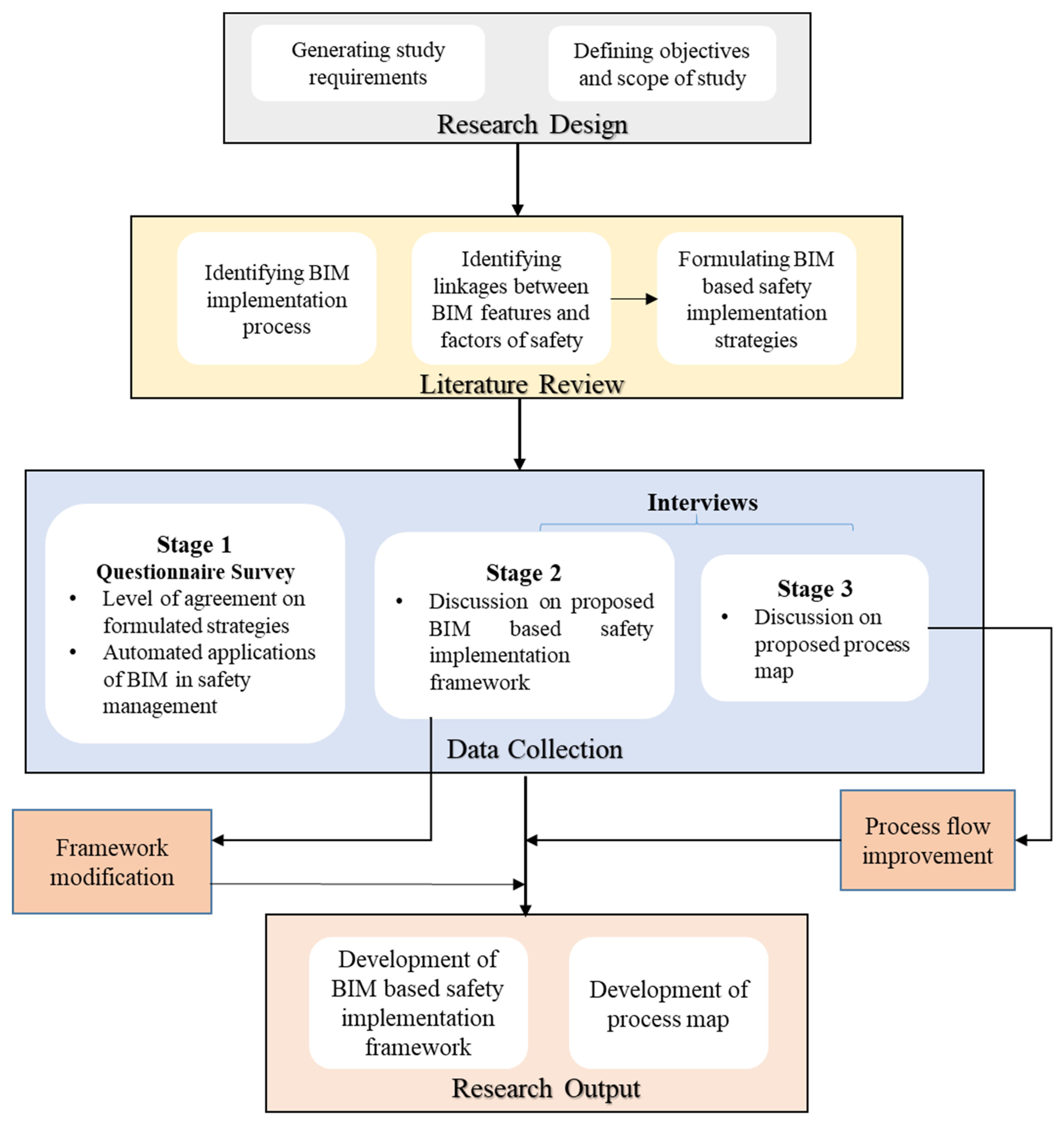
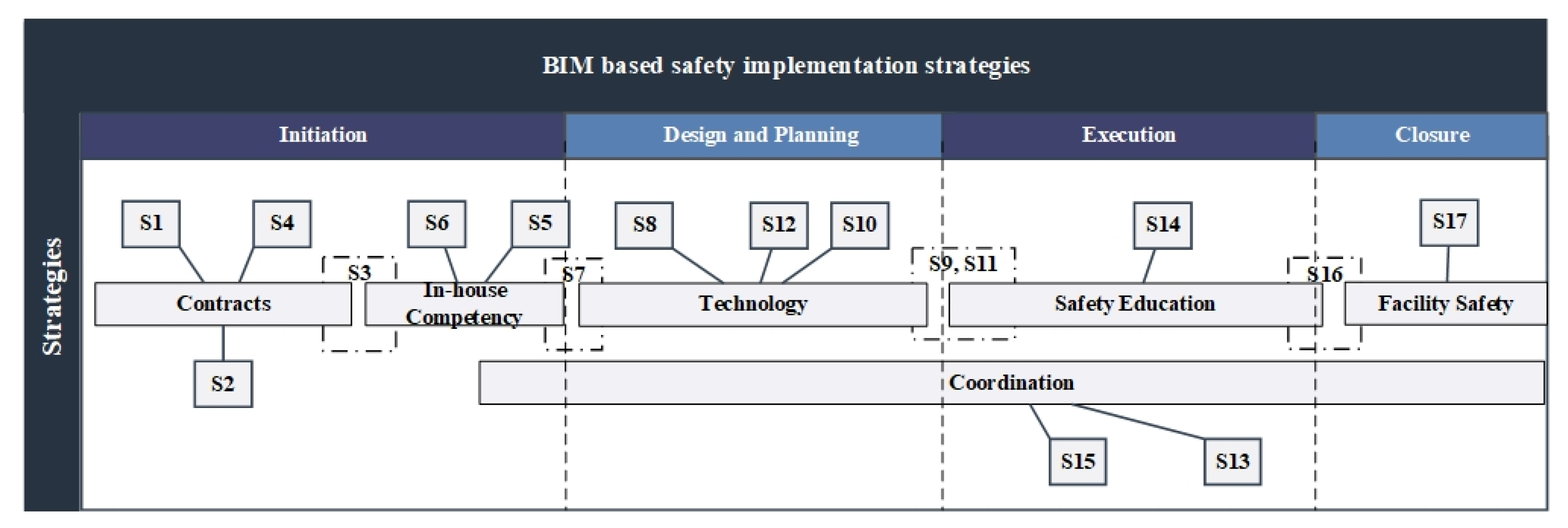
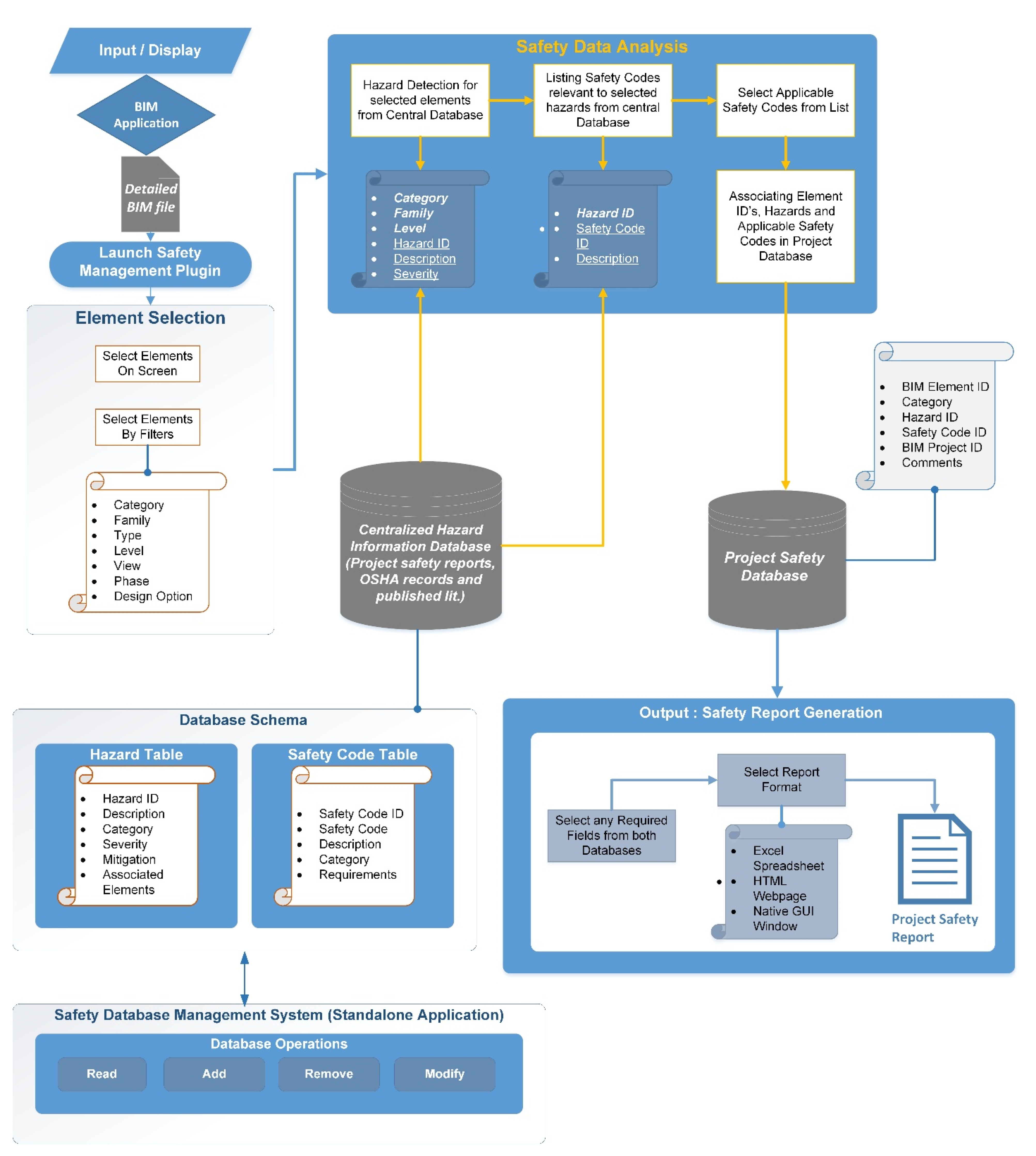
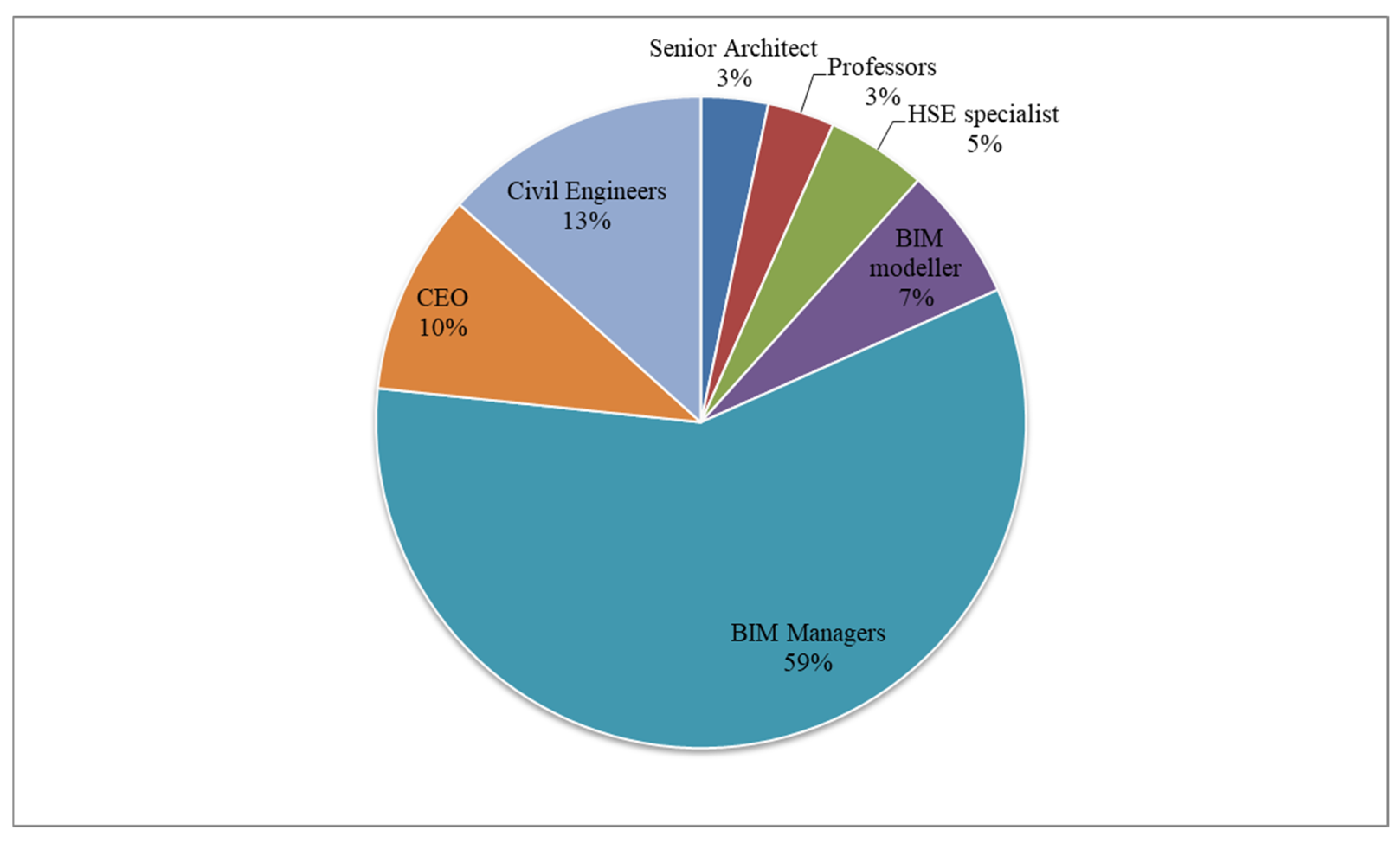
Safety is a well-researched yet underperforming management aspect of the construction industry. Building information modeling (BIM) can help, and some frameworks have addressed safety management in limited phases of the project lifecycle. This study positions BIM centrally in the safety management process and develops a safety management framework that covers the entire lifecycle of a construction project in the context of developing countries. A systematic literature review is conducted to identify the safety factors and BIM features that are synthesized to devise BIM-based safety improvement strategies. The strategies are presented to construction management professionals from developed and developing countries through an online questionnaire survey, and their level of agreement is identified. Afterward, construction safety experts are engaged to integrate these strategies into appropriate lifecycle phases. Additionally, these experts are also engaged to develop an automated hazard recognition process to leverage BIM potential in safety management. The integration of strategies into project lifecycle phases resulted in a comprehensive safety implementation framework leveraging the BIM platform. This framework takes a lead from the experience of developed countries and considers the limitations of developing countries in terms of resources and technology. Furthermore, a BIM-based process map for hazard identification is developed. The process map takes the BIM model as input and provides a detailed safety report. The process map can be automated to enhance effective safety management. This study expands the body of knowledge through a BIM-driven lifecycle safety management framework for developing countries where BIM adoption is still in its early stages. It is a fresh take on safety automation to make the construction industry safer and more reliable. However, it is limited due to inadequate safety reporting and documentation in developing countries. Future research can improve upon this limitation by positioning in a safety-compliant culture.
Keywords: construction safety; safety management; BIM; automation; process map construction safety; safety management; BIM; automation; process map