


Next Article in Journal
Optimization of Conventional and Green Vehicles Composition under Carbon Emission Cap
Next Article in Special Issue
The Role of Shared E-Scooter Systems in Urban Sustainability and Resilience during the Covid-19 Mobility Restrictions
Previous Article in Journal
δ2H and δ18O in Precipitation and Water Vapor Disentangle Seasonal Wind Directions on the Loess Plateau
Previous Article in Special Issue
Moped Scooter Sharing: Citizens’ Perceptions, Users’ Behavior, and Implications for Urban Mobility
Article

Business Model Blueprints for the Shared Mobility Hub Network
Department of Transport and Regional Economics (TPR), University of Antwerp, 2000 Antwerp, Belgium
*
Author to whom correspondence should be addressed.
Academic Editors: José Manuel Valsello and Juan Gomez
Sustainability 2021, 13(12), 6939; https://doi.org/10.3390/su13126939
Received: 20 May 2021 / Revised: 15 June 2021 / Accepted: 15 June 2021 / Published: 20 June 2021
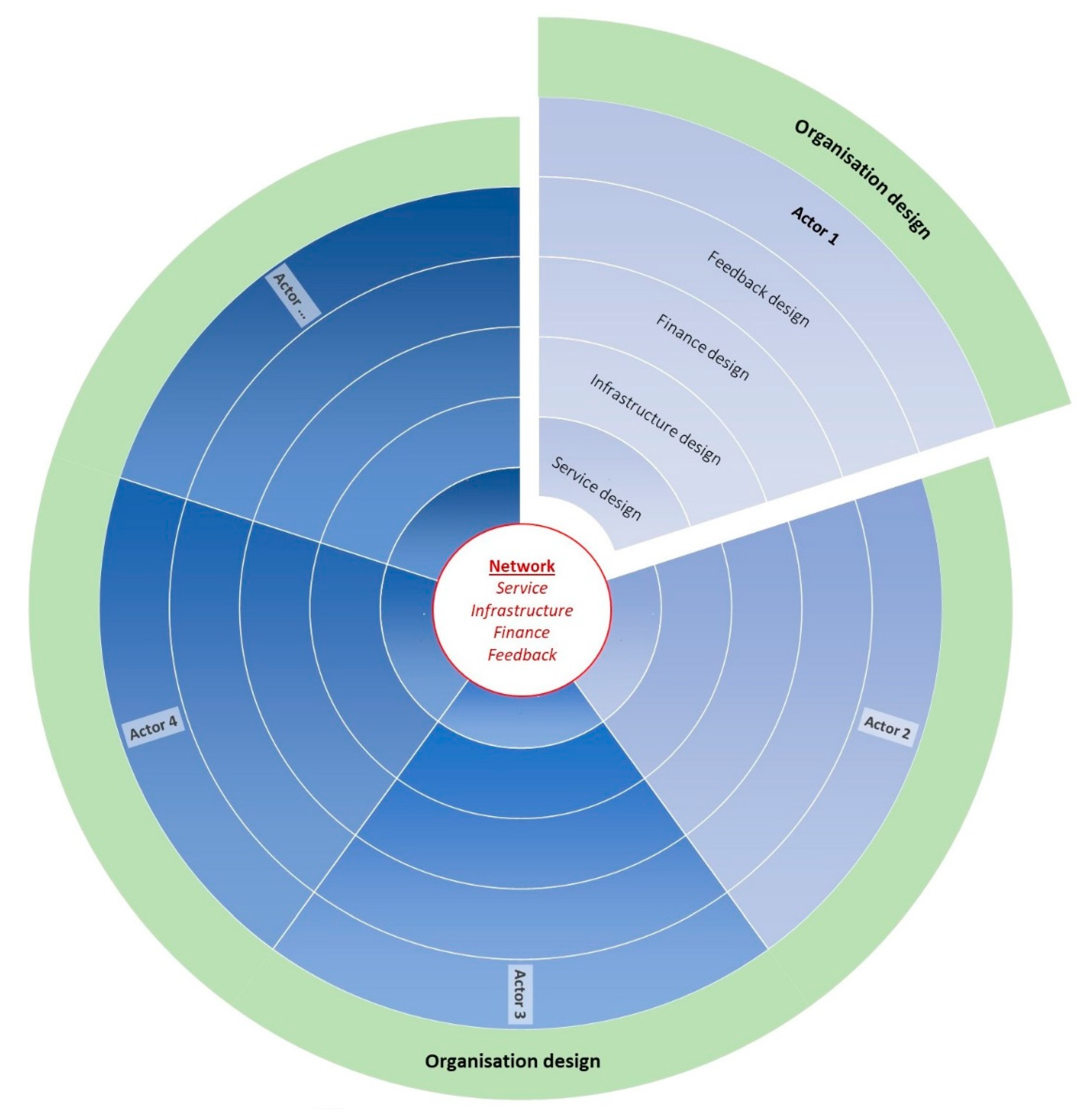
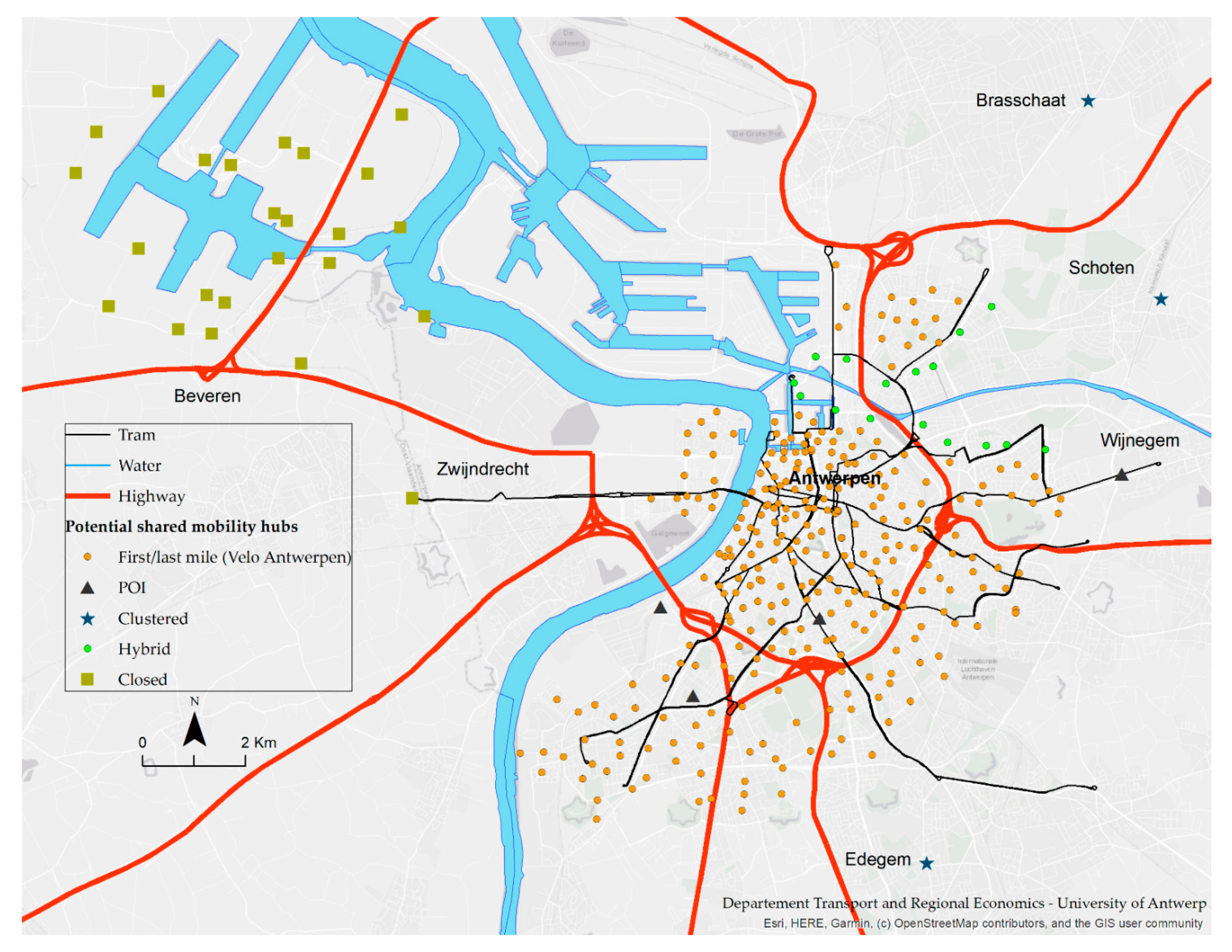
Shared (electric) mobility is still facing challenges in terms of reaching its potential as a sustainable mobility solution. Low physical and digital integration with public transport, a lack of charging infrastructure, the regulatory barriers, and the public nuisance are hindering the uptake and organization of shared mobility services. This study examines the case of the shared mobility hub, a location where shared mobility is concentrated, as a solution to overcome these challenges. To find ideas informing how a network of shared mobility hubs can contribute to sustainable urban mobility and to overcome the aforementioned challenges, a business model innovation approach was adopted. Focus groups, consisting of public and private stakeholders, collaboratively designed five business model (BM) blueprints, reaching a consensus about the value creation, delivery, and capture mechanisms of the network. The blueprints, defined as first-/last-mile, clustered, point-of-interest (POI), hybrid, and closed mobility hub networks, provide alternative solutions to integrate sustainable transportation modes into a coherent network, enabling multi- and intermodal travel behaviour, and supporting interoperability, sustainable land use, and ensured access to shared (electric) travel modes. However, which kind of network the local key stakeholders need to commit to depends on the local policy goals and regulatory context. View Full-Text
Keywords: shared mobility; docked shared mobility; dockless shared mobility; shared mobility hub; transit-oriented development; business model innovation; network-centric business model; collaborative network; sustainable urban mobility shared mobility; docked shared mobility; dockless shared mobility; shared mobility hub; transit-oriented development; business model innovation; network-centric business model; collaborative network; sustainable urban mobility
Show Figures

Figure 1

MDPI and ACS Style

Coenegrachts, E.; Beckers, J.; Vanelslander, T.; Verhetsel, A. Business Model Blueprints for the Shared Mobility Hub Network. Sustainability 2021, 13, 6939. https://doi.org/10.3390/su13126939

AMA Style

Coenegrachts E, Beckers J, Vanelslander T, Verhetsel A. Business Model Blueprints for the Shared Mobility Hub Network. Sustainability. 2021; 13(12):6939. https://doi.org/10.3390/su13126939
Chicago/Turabian Style

Coenegrachts, Elnert, Joris Beckers, Thierry Vanelslander, and Ann Verhetsel. 2021. "Business Model Blueprints for the Shared Mobility Hub Network" Sustainability 13, no. 12: 6939. https://doi.org/10.3390/su13126939
Find Other Styles
Note that from the first issue of 2016, MDPI journals use article numbers instead of page numbers. See further details here.

Article Access Map by Country/Region

1
Back to TopTop
