Review

The Initial Training of Science Teachers in African Countries: A Systematic Literature Review

1
Research Centre on Didactics and Technology in the Education of Trainers (CIDTFF), Department of Education and Psychology, University of Aveiro, 3810-193 Aveiro, Portugal
2
Centre for Functional Ecology (CFE), Department of Life Sciences, University of Coimbra, 3000-456 Coimbra, Portugal
3
Department of Education, College of Business, Arts and Social Sciences, Brunel University London, Uxbridge UB8 3PH, UK
*
Author to whom correspondence should be addressed.
Sustainability 2021, 13(10), 5459; https://doi.org/10.3390/su13105459
Submission received: 1 April 2021 / Revised: 30 April 2021 / Accepted: 7 May 2021 / Published: 13 May 2021
(This article belongs to the Special Issue Feature Papers in Sustainable Education and Approaches)

Abstract

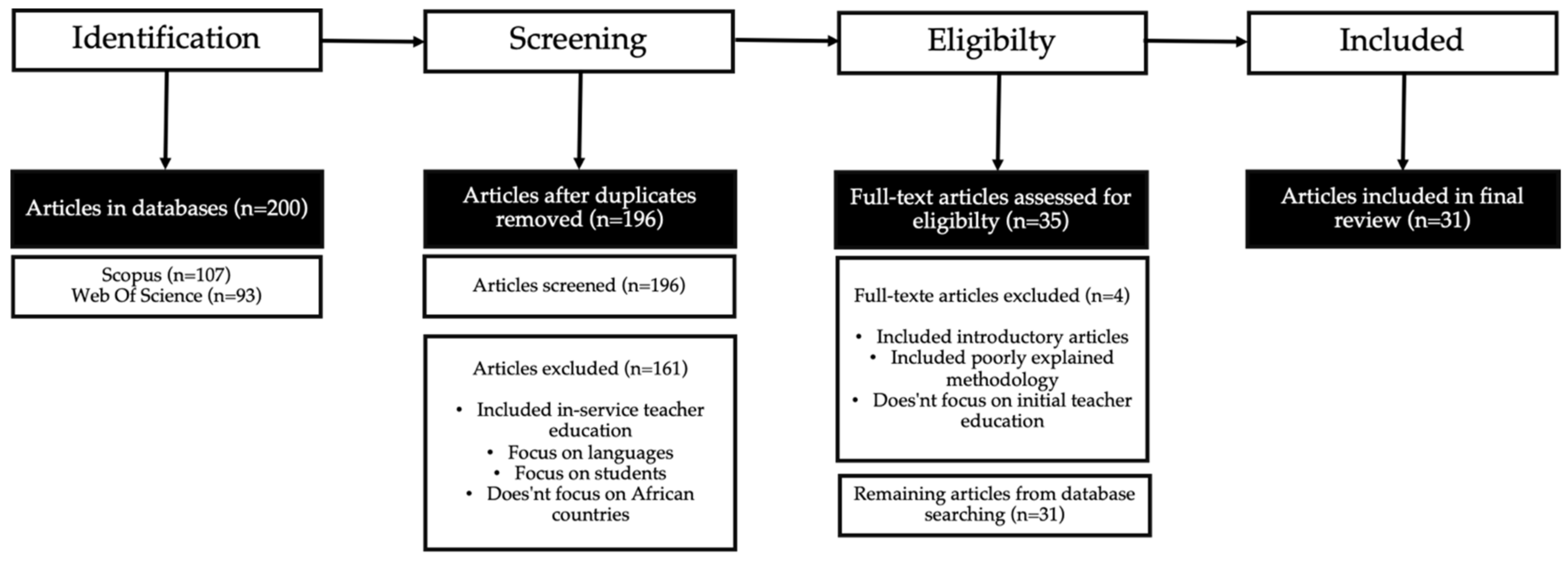
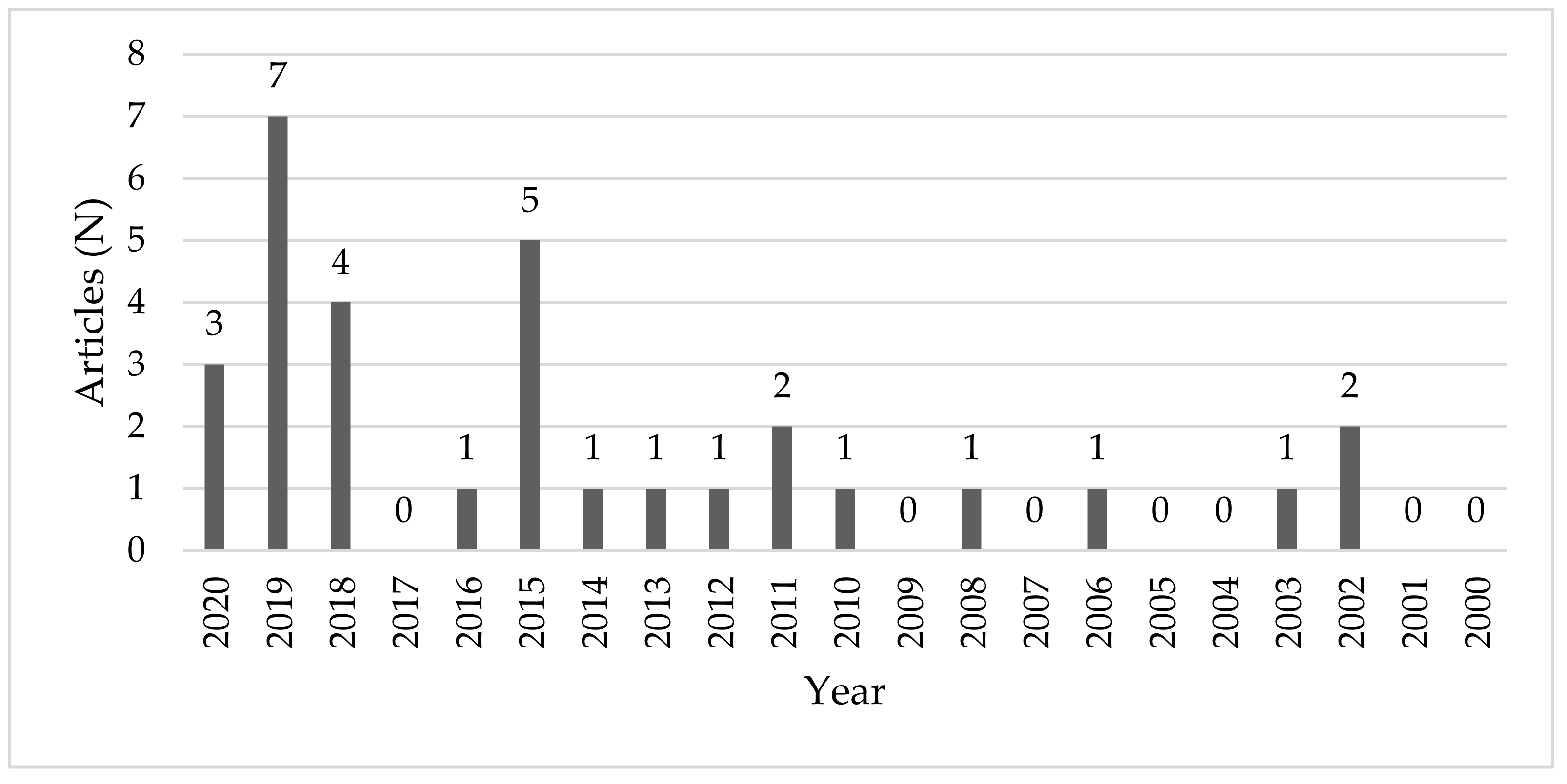
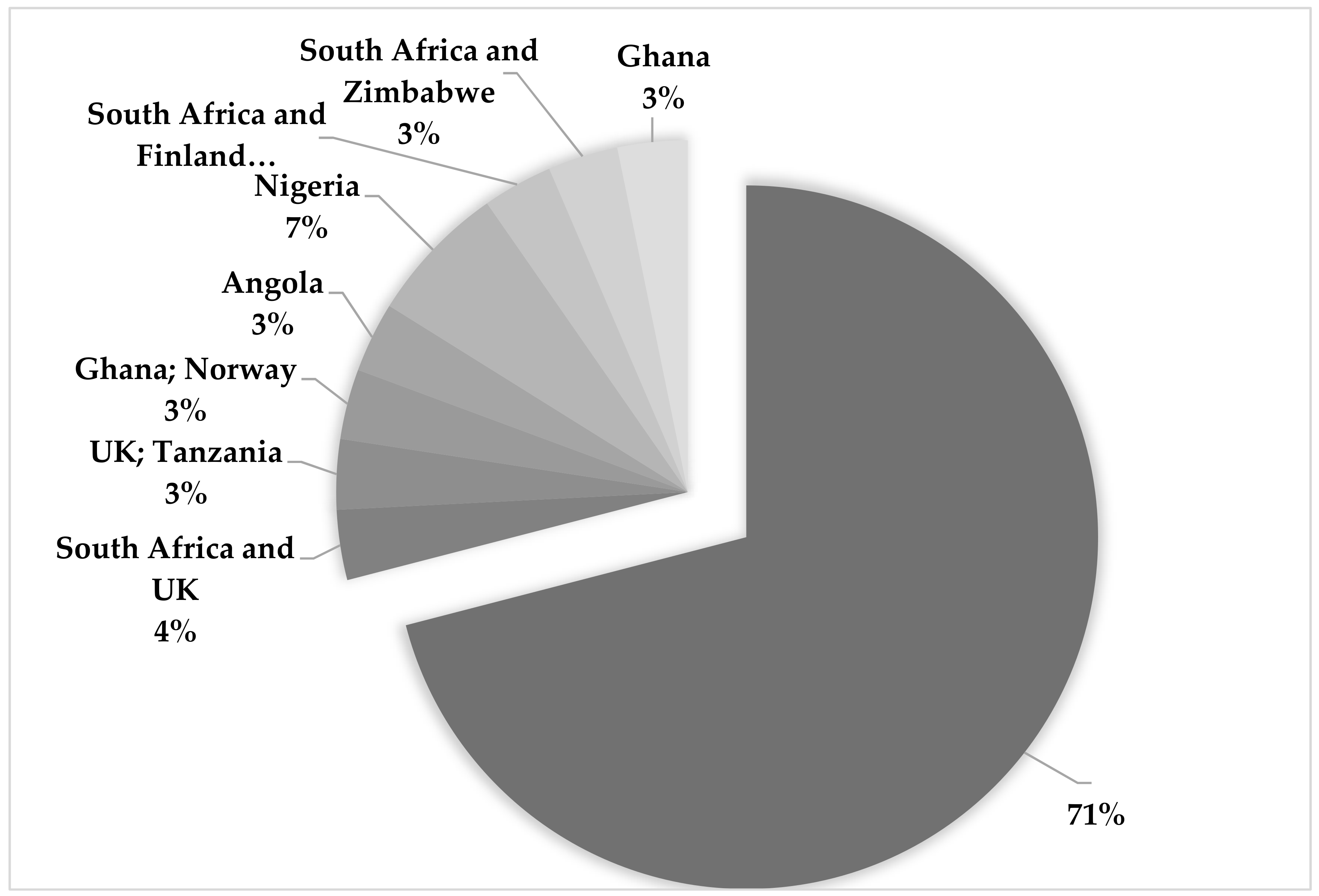
This study presents a systematic literature review (SLR) on the initial training of science teachers in Africa based on selected research articles, in the period 2000–2020, that emphasize the importance of surveying knowledge that goes beyond those that historically have a longer path in the building of scientific knowledge, such as that of European or North American countries. The analysis included a total of 31 articles from the Web of Science (WoS) and Scopus databases. The findings indicate a lack of knowledge, or at least visibility, considering the initial training of African teachers, particularly in developing countries. South Africa leads the number of publications. Within the five African countries implied in the SLR the following outputs were identified: (i) a division between teacher education research that is ‘place-based’ and one that uses (only) ‘universal theories’ (such as Vygotsky and Bandura); (ii) a tension between the application of student-centered learning and teaching models and more traditional classroom practices. Finally, the majority of articles highlight the importance of investing in further research around teacher education. Based on these outputs the importance of international cooperation in teacher education research articulating theory and practice to ensure a global and local perspective towards sustainable development is reinforced.
Keywords: Africa; curricula development; science teacher education; sustainable development; systematic literature review Africa; curricula development; science teacher education; sustainable development; systematic literature review