Article

Human Impact Promotes Sustainable Corn Production in Hungary

1
Centre for Agricultural Research Institute of Hungary, H-2462 Martonvásár, Hungary
2
Department of Meteorology, Eötvös Loránd University, H-1117 Budapest, Hungary
3
Research Institute of Agricultural Economics, H-1093 Budapest, Hungary
4
Department of Geophysics and Space Science, Eötvös Loránd University, H-1117 Budapest, Hungary
*
Author to whom correspondence should be addressed.
Sustainability 2020, 12(17), 6784; https://doi.org/10.3390/su12176784
Submission received: 30 June 2020 / Revised: 12 August 2020 / Accepted: 13 August 2020 / Published: 21 August 2020

Abstract

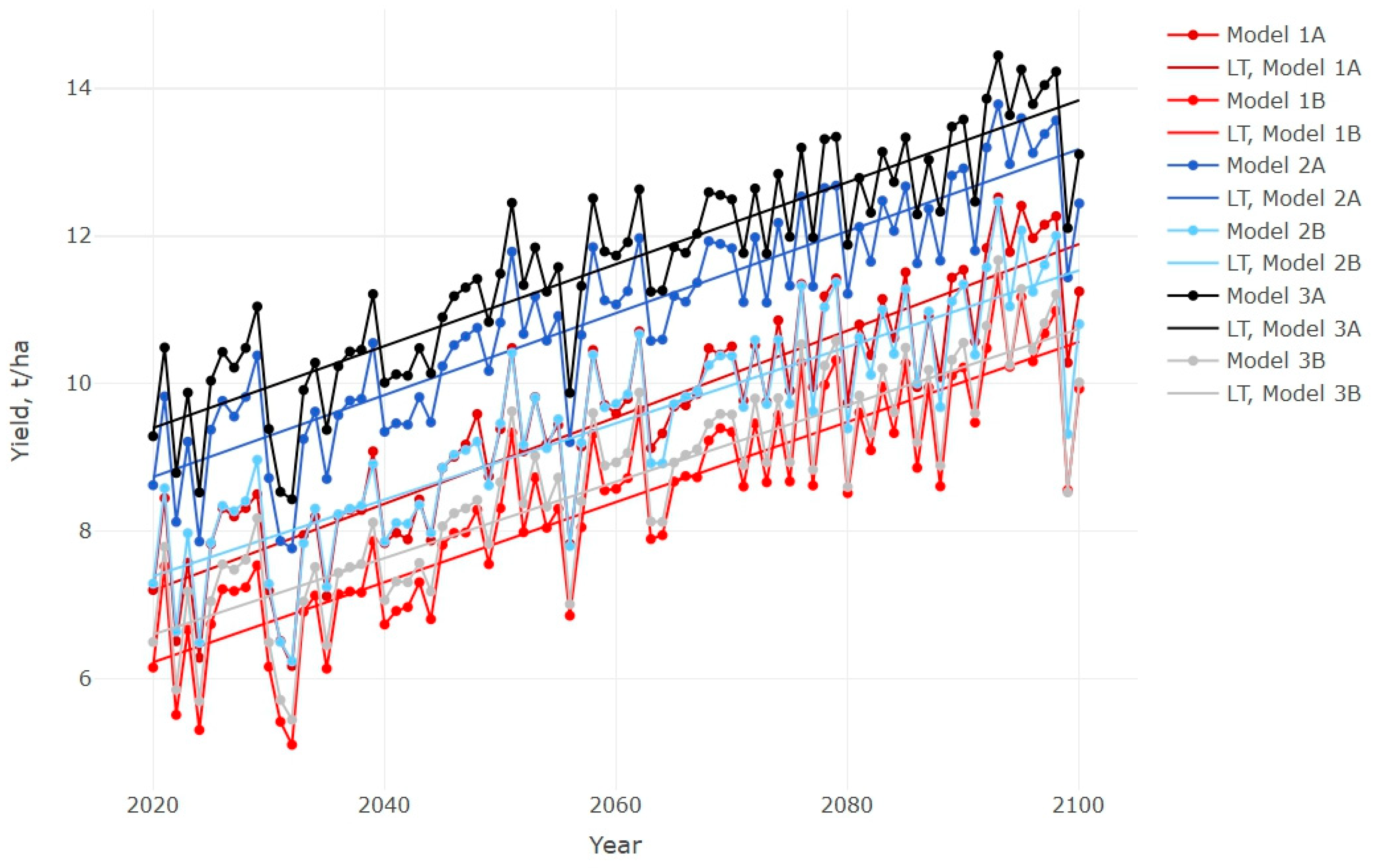
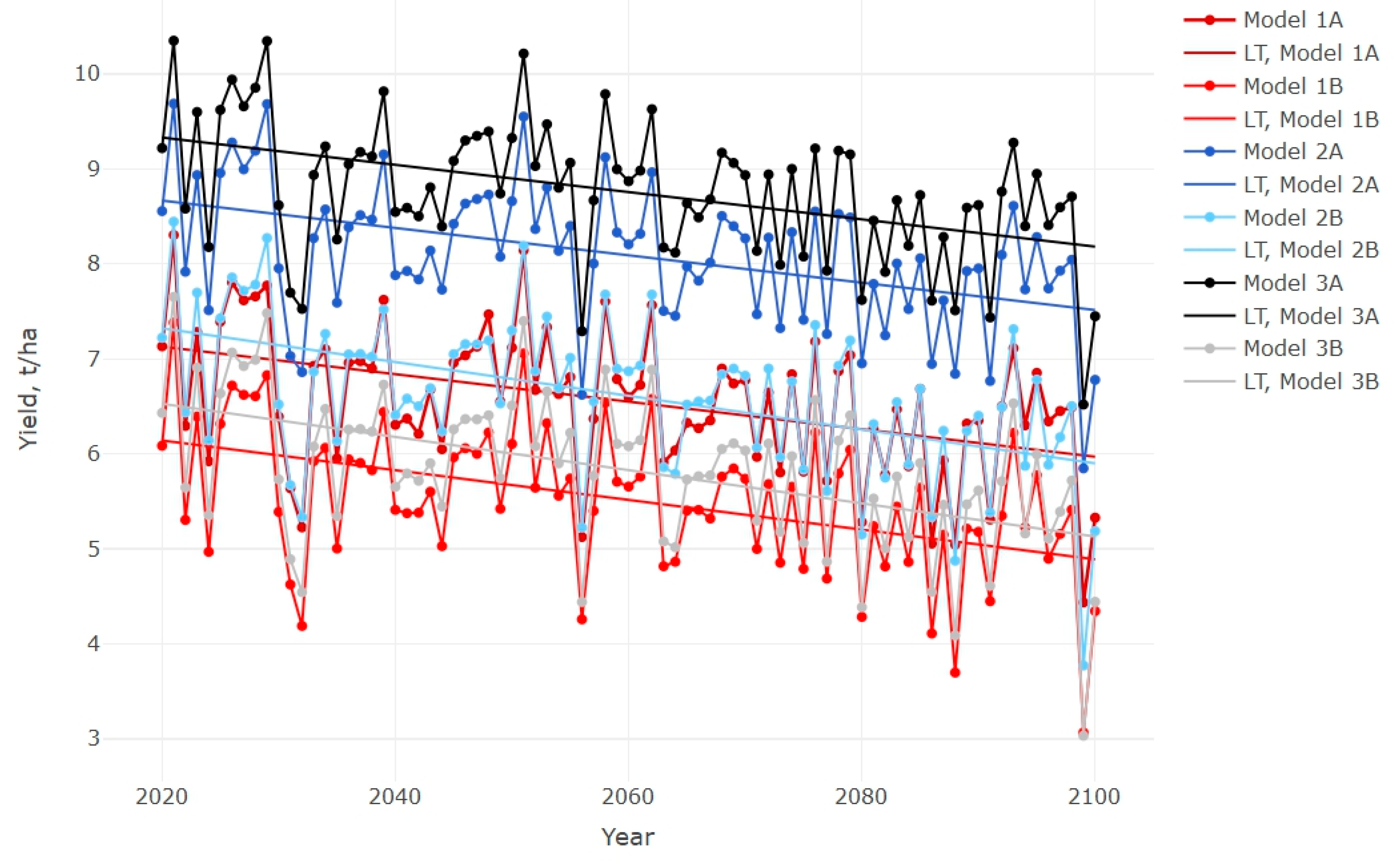
We aim to predict Hungarian corn yields for the period of 2020–2100. The purpose of the study was to mutually consider the environmental impact of climate change and the potential human impact indicators towards sustaining corn yield development in the future. Panel data regression methods were elaborated on historic observations (1970–2018) to impose statistical inferences with simulated weather events (2020–2100) and to consider developing human impact for sustainable intensification. The within-between random effect model was performed with three generic specifications to address time constant indicators as well. Our analysis on a gridded Hungarian database confirms that rising temperature and decreasing precipitation will negatively affect corn yields unless human impact dissolves the climate-induced challenges. We addressed the effect of elevated carbon dioxide (CO2) as an important factor of diverse human impact. By superposing the human impact on the projected future yields, we confirm that the negative prospects of climate change can be defeated.
Keywords: climatic variability; food security; sustainable intensification; trending adaptive capacity; panel data econometrics; technology development climatic variability; food security; sustainable intensification; trending adaptive capacity; panel data econometrics; technology development