


Abstract
Background/Objectives: Chronic medical conditions may contribute to psychological burden among individuals with cancer. This study examined associations between chronic medical conditions and posttraumatic stress, depressive symptoms, anxiety, and perceived stress among Puerto Rican adults with a self-reported cancer diagnosis. Methods: This quantitative secondary analysis used baseline data from a longitudinal study (N = 402) conducted in Puerto Rico following Hurricane Maria. The analytic sample included 108 adults with a self-reported cancer diagnosis. Psychological outcomes were assessed using the PCL-5, PHQ-8, GAD-7, and PSS. Mann–Whitney U and chi-square tests were conducted, followed by multivariable logistic and linear regression models adjusting for co-occurring conditions, age, and gender. Results: Asthma was associated with higher posttraumatic stress, depressive symptoms, and perceived stress scores; arthritis with higher depressive symptoms, anxiety, and perceived stress; and thyroid disorders with higher anxiety symptoms. Unadjusted analyses showed associations between asthma and clinically significant posttraumatic stress symptoms (OR = 3.13) and thyroid disorders and anxiety symptoms (OR = 2.90). After adjustment, thyroid disorders remained associated with clinically significant anxiety (aOR = 2.70, p = 0.041), whereas asthma was no longer significantly associated with posttraumatic stress (aOR = 2.45, p = 0.116). Self-reported depression was associated with all psychological outcomes in adjusted models. Conclusions: Specific chronic medical conditions were associated with psychological burden among adults with cancer, supporting psychological screening and coordinated care.
Keywords:
chronic illness; cancer; psychological domains; perceived stress; PCL-5; GAD-7; PHQ-8; Puerto Rico 1. Introduction
A cancer diagnosis can impose significant psychological challenges, including symptoms of anxiety, depression, posttraumatic stress, and perceived stress [1]. Although cancer diagnosis and treatment are primarily medical experiences, individuals with cancer may be particularly vulnerable to psychological distress, and receiving a cancer diagnosis may itself represent a significant psychological stressor [2]. Previous studies have shown that approximately 30% to 35% of individuals with cancer meet criteria for psychiatric disorders, while a systematic review involving 182,521 patients reported a 27% prevalence of depression among individuals with cancer. In addition, clinically significant symptoms of posttraumatic stress, including avoidance and hyperarousal, have been documented in this population [3,4,5].
The presence of additional chronic medical conditions may further contribute to psychological burden among individuals with a cancer diagnosis [6]. Multimorbidity is common among individuals with cancer, and previous research involving 6392 recently diagnosed patients with breast cancer and multiple chronic illnesses found that 27.7% experienced anxiety and 21.9% experienced depression [7]. These findings suggest that understanding psychological health among individuals with cancer requires consideration not only of the cancer diagnosis but also of co-occurring chronic medical conditions.
Previous research has also identified relationships between specific chronic medical conditions and psychological symptoms. Weisberg et al. (2002) found that PTSD was associated with a greater number of nonpsychiatric medical conditions among trauma-exposed individuals in a primary care setting [8]. Subsequent studies have reported associations between PTSD symptoms and specific chronic illnesses, including asthma and rheumatoid arthritis, even after accounting for familial and genetic factors in twin-study designs [9,10]. However, these relationships have been studied primarily outside of oncology populations. Consequently, less is known about whether specific chronic medical conditions are associated with different domains of psychological distress among adults with a cancer diagnosis.
This question is particularly relevant in Puerto Rico, where chronic medical conditions are common among adults. Previous research among adults in Puerto Rico reported a prevalence of 45.8% for hypertension, 30.6% for arthritis, and 23.1% for diabetes [11]. High levels of psychological distress have also been identified among Puerto Rican adults with chronic illnesses. For instance, Han et al. linked psychosocial risk factors-including socioeconomic instability, inadequate access to care, and cumulative trauma-specifically to asthma among adults in Puerto Rico [12]. The data used in the present study were collected following Hurricane Maria, a period during which medically vulnerable populations in Puerto Rico experienced healthcare and treatment disruptions [13]. Previous research examining healthcare access following Hurricanes Irma and Maria found that 59% of individuals with cancer experienced treatment interruptions, with regional disparities particularly affecting those living outside the San Juan metropolitan area [14].
Despite evidence linking chronic medical conditions with psychological distress, less is known about condition-specific associations across multiple psychological domains among adults with a cancer diagnosis in Puerto Rico. The present secondary analysis therefore focused on the relationship between specific chronic medical comorbidities and posttraumatic stress, depressive symptoms, anxiety symptoms, and perceived stress. Although the parent study included measures assessing hurricane-related experiences and impact, disaster-related exposure was not evaluated as an exposure or outcome in the present analysis. The research question guiding this study was: Among Puerto Rican adults with a cancer diagnosis, are specific self-reported chronic medical conditions associated with differences in posttraumatic stress, depressive symptoms, anxiety symptoms, and perceived stress? Accordingly, the present study examined condition-specific associations across these four psychological outcomes.
2. Materials and Methods
2.1. Study Design
The present study is a quantitative, cross-sectional secondary analysis of baseline data from the longitudinal investigation, “Post Hurricane Cancer Care: Patients Needs after Hurricane Maria” [13]. The parent study was designed to evaluate the biopsychosocial impact of Hurricane Maria among adults with and without a cancer diagnosis in Puerto Rico. The design and preliminary findings of the parent study have been previously described [13]. Although the parent study included measures assessing hurricane-related experiences and impact, disaster-related exposure was not evaluated in the present secondary analysis.
2.2. Study Population and Setting
Recruitment for the initial pilot phase of the broader research project began in January 2018, approximately four months after Hurricane Maria, primarily through community support groups and healthcare settings in Puerto Rico. The project subsequently received additional funding through an R21 grant, with the corresponding study protocol receiving Institutional Review Board (IRB) approval on 15 August 2018. Participants completed self-report questionnaires administered in person by trained research personnel. The present secondary analysis was restricted to adults who self-reported a cancer diagnosis and utilized data collected during follow-up assessments conducted between September 2018 and December 2019.
2.3. Sampling and Analytic Sample
The analytic sample was derived from participants with a self-reported cancer diagnosis who had complete data for the chronic medical condition variables and the four psychological measures selected for the present analysis: the Posttraumatic Stress Disorder Checklist for DSM-5 (PCL-5) [15], Patient Health Questionnaire-8 (PHQ-8) [16], Generalized Anxiety Disorder-7 (GAD-7) [17], and Perceived Stress Scale (PSS) [18]. After applying these criteria, 108 participants were included in the final analytic sample. Participants with incomplete data required for the present analysis were excluded. Chronic medical conditions were self-reported through the clinical questionnaire. Participants could report more than one chronic medical condition; therefore, condition categories were not mutually exclusive. Conditions with insufficient frequencies for meaningful condition-specific statistical comparisons, including lupus, dementia, epilepsy, and psoriasis, were excluded from the condition-specific analyses.
2.4. Study Instruments
Sociodemographic and clinical data were collected through a self-report questionnaire developed by the research team of the parent study [13]. The questionnaire included age, marital status, education level, employment status, overall health status, and cancer-related information, including cancer type, co-occurring chronic medical conditions, and primary treatment modality.
The parent study included a broader battery of psychological and hurricane-related measures. For the present secondary analysis, four validated psychological instruments were included: PCL-5 [15,19], PHQ-8 [16], GAD-7 [17], and PSS [18]. These measures correspond to the four psychological domains specified in the present research question: posttraumatic stress symptoms, depressive symptoms, anxiety symptoms, and perceived stress, respectively. Although the parent study also included instruments assessing hurricane-related experiences and impact, these measures were not included in the present analysis because disaster-related impact was not evaluated as an exposure or outcome in the present research question.
2.4.1. PCL-5
The PCL-5 is a 20-item self-report measure used to assess PTSD symptoms corresponding to DSM-5 criteria [19]. Items are rated on a 5-point Likert scale from 0 (“Not at all”) to 4 (“Extremely”), yielding a total score ranging from 0 to 80. Higher scores indicate greater PTSD symptom severity. A cutoff score of ≥31 was used to identify clinically significant PTSD symptoms. Previous research has demonstrated strong internal consistency (α = 0.94) and convergent validity with other measures of PTSD symptoms [15].
2.4.2. PHQ-8
The Patient Health Questionnaire-8 (PHQ-8) is an eight-item self-report measure of depressive symptom severity derived from the Patient Health Questionnaire-9 (PHQ-9) [16,20]. The PHQ-8 omits the ninth item of the PHQ-9 assessing thoughts of death or self-harm. Each item is rated on a 4-point scale ranging from 0 (“not at all”) to 3 (“nearly every day”), resulting in a total score ranging from 0 to 24. Higher scores indicate greater depressive symptom severity, with scores of 5–9 representing mild, 10–14 moderate, 15–19 moderately severe, and ≥20 severe depressive symptoms [16,20]. A cutoff score of ≥10 was used in the present study to identify clinically significant depressive symptoms [16].
2.4.3. GAD-7
The GAD-7 is a 7-item self-report measure designed to assess anxiety symptoms over the previous two weeks [17]. Items are rated from 0 (“Not at all”) to 3 (“Nearly every day”), producing a total score ranging from 0 to 21. Higher scores indicate greater anxiety symptom severity. A cutoff score of 10 was used to indicate clinically significant anxiety symptoms. The GAD-7 has demonstrated strong internal consistency (α = 0.92) and criterion validity [17].
2.4.4. PSS
The PSS is a 14-item self-report instrument that assesses the degree to which situations in an individual’s life are perceived as stressful [18]. Items are rated on a 5-point Likert scale ranging from 0 (“Never”) to 4 (“Very often”), yielding a total score ranging from 0 to 56. Higher scores indicate greater perceived stress. Unlike the PCL-5, PHQ-8, and GAD-7, the PSS does not have an established clinical cutoff and was therefore analyzed only as a continuous measure. The PSS has demonstrated adequate internal consistency (α = 0.75) and construct validity [18].
Self-reported depression recorded in the clinical questionnaire was treated as a self-reported comorbid condition and was distinguished from current depressive symptom severity assessed with the PHQ-8 over the previous two weeks. Given the conceptual overlap between these variables, findings involving self-reported depression were interpreted cautiously.
2.5. Statistical Analysis
Data analyses were conducted using IBM SPSS Statistics, version 29 (IBM Corp., Armonk, NY, USA). Descriptive statistics were used to summarize demographic, clinical, and psychosocial characteristics. Because the psychological outcome variables were non-normally distributed, Mann–Whitney U tests were used to compare PCL-5, PHQ-8, GAD-7, and PSS scores between participants who reported each specific chronic medical condition and those who did not report that condition. Mean ranks were used to characterize differences between groups.
For categorical analyses, PCL-5, PHQ-8, and GAD-7 scores were dichotomized according to the prespecified cutoffs for clinically significant symptoms described above. Bivariate relationships between the presence or absence of each specific chronic medical condition and clinically significant symptom status were first examined using unadjusted odds ratios (ORs) with 95% confidence intervals (CIs).
To determine whether these associations were independent of co-occurring conditions and demographic characteristics, multivariable binary logistic regression models were estimated separately for each dichotomized outcome. The chronic conditions associated with one or more psychological outcomes in bivariate analyses (asthma, arthritis, and thyroid disorders) were entered simultaneously. Self-reported depression, age (in years), and gender (female vs. male) were entered as covariates. Self-reported depression was treated as a covariate rather than as a condition of interest because of its conceptual overlap with the psychological outcomes. The number of predictors was limited to six, yielding approximately 5.7 to 7.0 events per predictor given the number of participants meeting each clinical cutoff [21]. Adjusted odds ratios (aORs) with 95% CIs are reported. Model fit was evaluated using the omnibus likelihood-ratio test, Nagelkerke R2, and the Hosmer–Lemeshow goodness-of-fit test. Multicollinearity was assessed using variance inflation factors (VIFs).
Multivariable linear regression models with the same predictors were estimated for PCL-5, PHQ-8, GAD-7, and PSS total scores. Because scores were non-normally distributed, heteroscedasticity-consistent (HC3) robust standard errors were used [22]. Unstandardized coefficients (B) with robust 95% CIs are reported. In a sensitivity analysis, the logistic regression models were re-estimated excluding self-reported depression to examine whether associations for the physical conditions depended on its inclusion.
No adjustment for multiple comparisons was applied; therefore, findings should be interpreted cautiously given the potential for Type I error across multiple condition-specific tests. Statistical significance was established at p < 0.05.
3. Results
The study consisted of 108 participants who self-reported a cancer diagnosis and met the eligibility criteria for the present secondary analysis. Most participants were between 50 and 64 years of age (55%) and identified as women (80%). Regarding educational attainment, 59% had completed education beyond high school, 32% had completed high school, and 9% had less than a high school education. Regarding marital status, 44% were married, 18% were single and never married, and 15% were divorced. Regarding employment status, 30% were retired and 23% reported being disabled (Table 1). Chronic medical conditions were self-reported by participants and were analyzed individually. Participants could report more than one chronic medical condition; therefore, the condition categories were not mutually exclusive. For each condition-specific analysis, participants who reported the condition were compared with participants who did not report that specific condition. Participants in the comparison group could have reported other co-occurring chronic medical conditions. The present analysis did not evaluate the cumulative number or specific combinations of co-occurring chronic conditions.
Table 1.
Sociodemographic characteristics.
The most frequently reported comorbid conditions included asthma, depression, hypertension, diabetes, cardiovascular disease, thyroid disorders, arthritis, and anemia (Table 2). Condition-specific analyses were conducted to examine associations between each self-reported comorbidity and clinically significant PTSD symptoms, using a PCL-5 cutoff score of ≥31. Participants who reported asthma had significantly greater unadjusted odds of clinically significant PTSD symptoms compared with those who did not report asthma (OR = 3.13, p = 0.02). Similarly, participants with self-reported depression as a comorbid condition had significantly greater unadjusted odds of clinically significant PTSD symptoms compared with those who did not report depression (OR = 4.17, p = 0.001). No statistically significant associations with clinically significant PTSD symptoms were observed for arthritis (OR = 1.23, p = 0.61), anemia (OR = 0.80, p = 0.72), diabetes (OR = 0.99, p = 0.99), cardiovascular disease (OR = 2.02, p = 0.13), thyroid disorders (OR = 1.27, p = 0.57), or hypertension (OR = 1.09, p = 0.84).
Table 2.
Associations between Self-Reported Chronic Medical Conditions and Clinically Significant PTSD Symptoms.
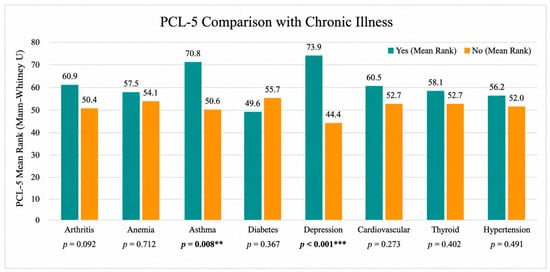
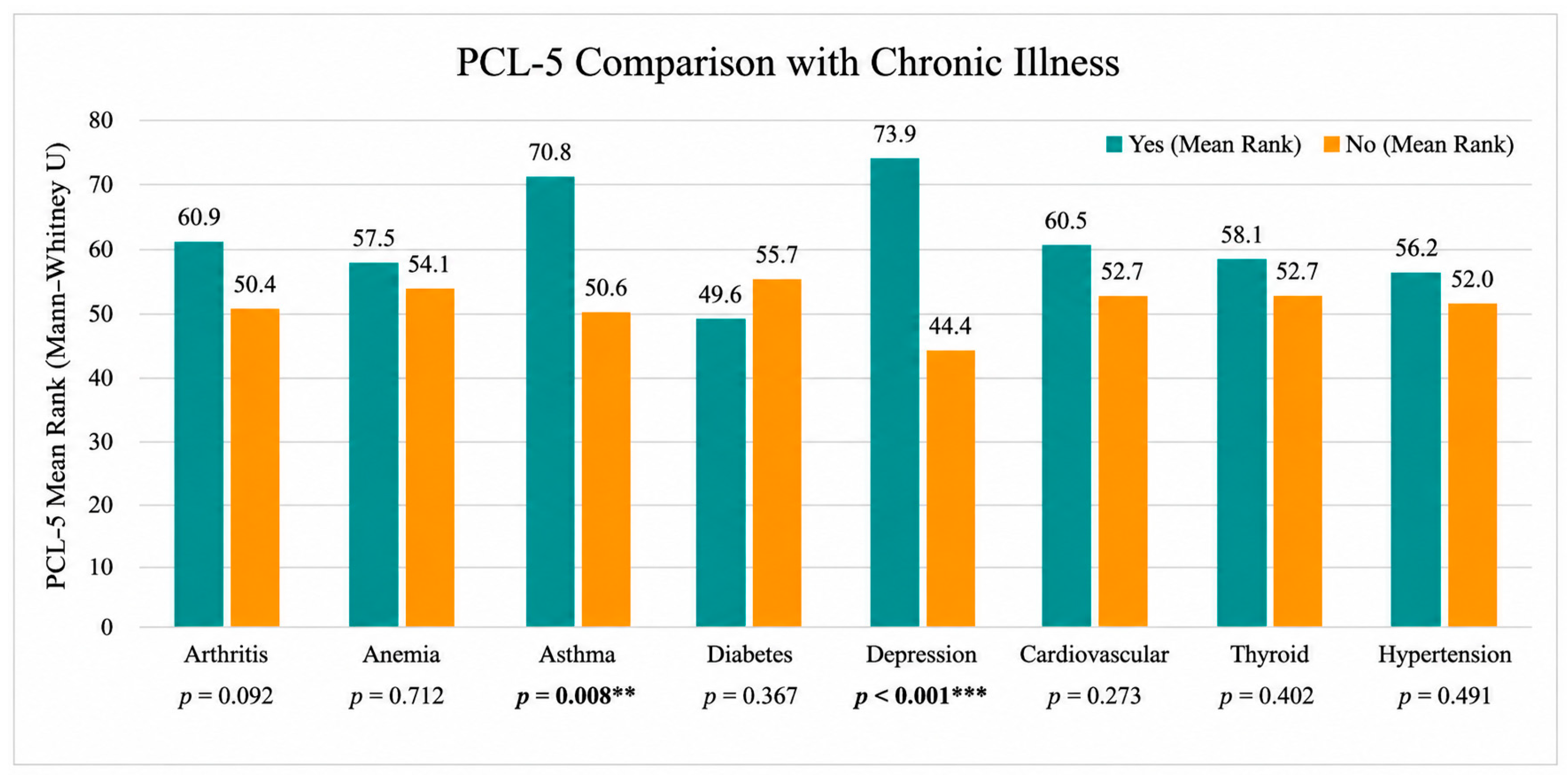
Mann–Whitney U tests were subsequently used to evaluate differences in posttraumatic stress symptom scores according to the presence or absence of each specific self-reported comorbid condition. As shown in Figure 1, participants who reported asthma had a higher PCL-5 mean rank (70.8) than participants who did not report asthma (50.6), and this difference was statistically significant (p = 0.008). Participants with self-reported depression as a comorbid condition also had a significantly higher PCL-5 mean rank (73.9) than those who did not report depression (44.4; p < 0.001). No statistically significant differences in posttraumatic stress symptoms were observed according to the presence or absence of anemia (p = 0.712), arthritis (p = 0.092), diabetes (p = 0.367), cardiovascular disease (p = 0.273), thyroid disorders (p = 0.402), or hypertension (p = 0.491).
Figure 1.
Posttraumatic Stress Disorder Checklist for DSM-5 (PCL-5) scores according to self-reported chronic medical conditions. ** p < 0.01; *** p < 0.001.
We next examined the associations between each self-reported comorbid condition and clinically significant depressive symptoms. As shown in Table 3, participants with self-reported depression as a comorbid condition had significantly greater unadjusted odds of clinically significant depressive symptoms compared with those who did not report depression (OR = 6.62, p < 0.001). No statistically significant associations with clinically significant depressive symptoms were observed for arthritis (OR = 2.14, p = 0.06), anemia (OR = 0.98, p = 0.97), asthma (OR = 1.99, p = 0.16), diabetes (OR = 0.52, p = 0.17), cardiovascular disease (OR = 1.06, p = 0.90), thyroid disorders (OR = 1.41, p = 0.40), or hypertension (OR = 1.20, p = 0.65).
Table 3.
Associations between Self-Reported Chronic Medical Conditions and Clinically Significant Depressive Symptoms.
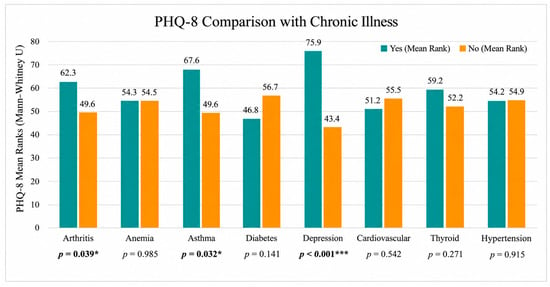
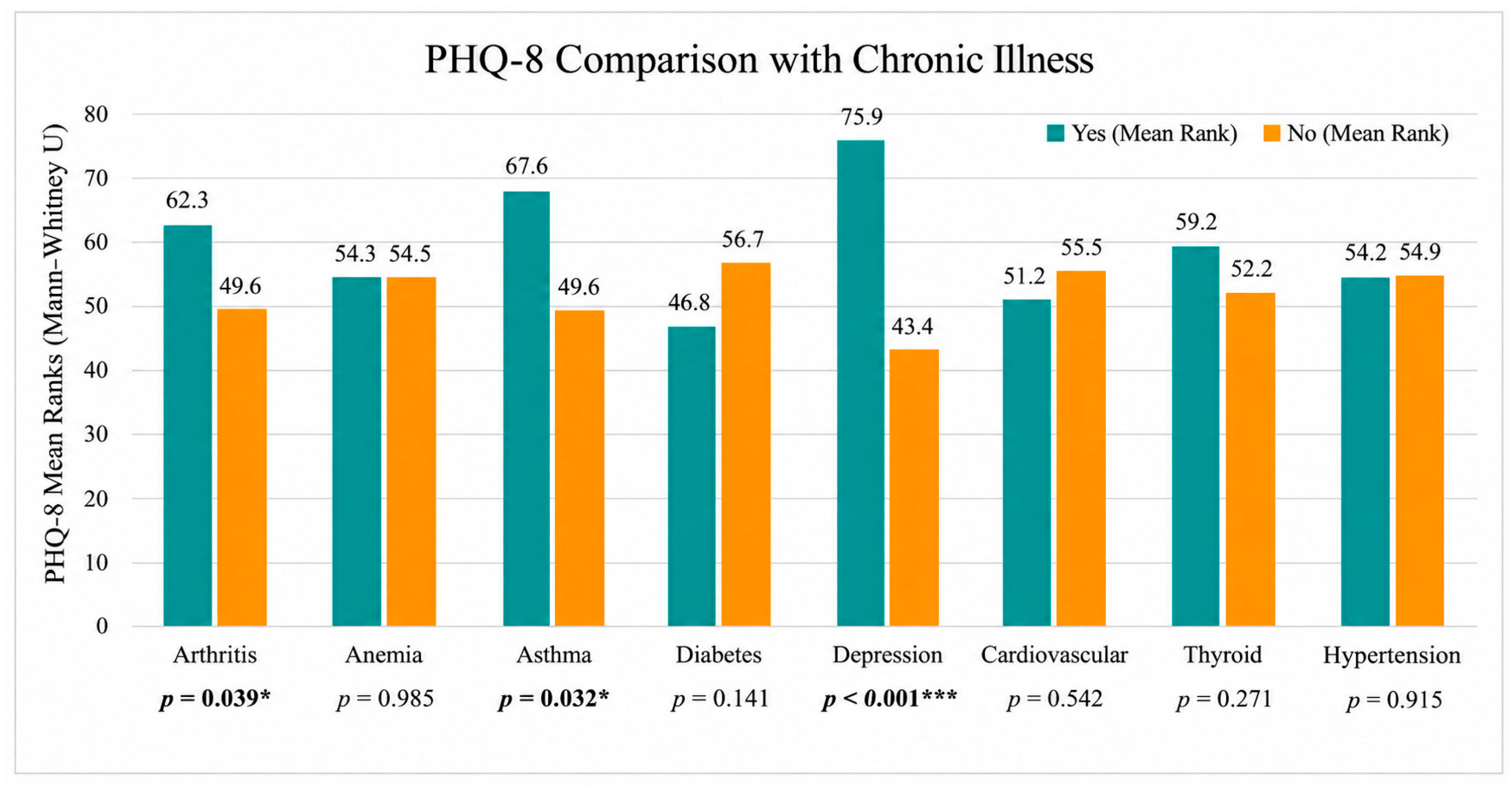
Mann–Whitney U tests were subsequently used to evaluate differences in depressive symptom scores according to the presence or absence of each specific self-reported comorbid condition (Figure 2). Participants who reported arthritis had a higher PHQ-8 mean rank (62.3) than those who did not report arthritis (49.6), and this difference was statistically significant (p = 0.04). Similarly, participants who reported asthma had a higher mean rank (67.6) than those who did not report asthma (51.3; p = 0.03). Participants with self-reported depression as a comorbid condition also had a significantly higher PHQ-8 mean rank (75.9) than those who did not report depression (43.4; p < 0.001). No statistically significant differences in depressive symptoms were observed according to the presence or absence of anemia (p = 0.985), diabetes (p = 0.141), cardiovascular disease (p = 0.542), thyroid disorders (p = 0.271), or hypertension (p = 0.915).
Figure 2.
Patient Health Questionnaire-8 (PHQ-8) mean ranks according to self-reported chronic medical conditions. p < 0.05 (*); p < 0.001 (***).
We next examined the associations between each self-reported comorbid condition and clinically significant anxiety symptoms. Participants with self-reported depression as a comorbid condition had significantly greater unadjusted odds of clinically significant anxiety symptoms compared with those who did not report depression (OR = 4.79, p < 0.001). As shown in Table 4, participants who reported thyroid disorders also had significantly greater unadjusted odds of clinically significant anxiety symptoms compared with those who did not report thyroid disorders (OR = 2.90, p = 0.01). No statistically significant associations with clinically significant anxiety symptoms were observed for arthritis (OR = 1.96, p = 0.11), anemia (OR = 0.96, p = 0.95), asthma (OR = 2.39, p = 0.08), diabetes (OR = 0.50, p = 0.17), cardiovascular disease (OR = 1.03, p = 0.95), or hypertension (OR = 0.97, p = 0.95).
Table 4.
Associations between Self-Reported Chronic Medical Conditions and Clinically Significant Anxiety Symptoms.
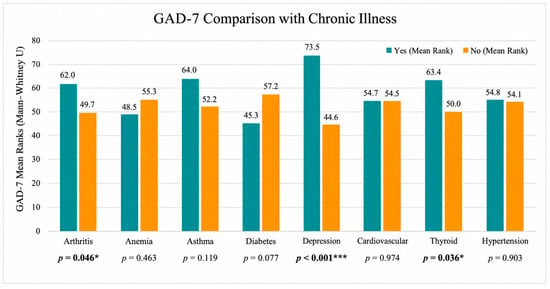
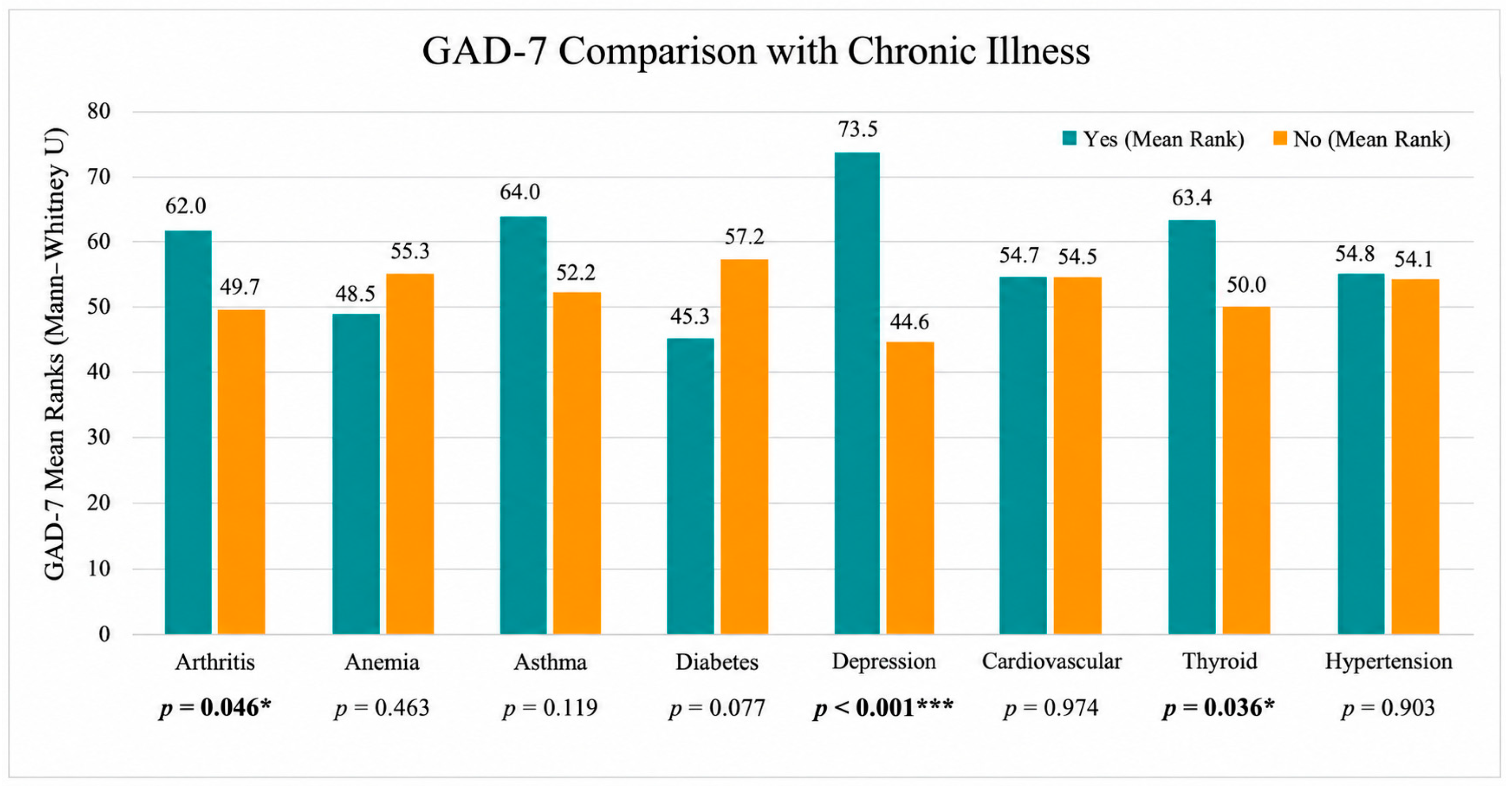
Following the association analyses, Mann–Whitney U tests were conducted to evaluate differences in anxiety symptom scores according to the presence or absence of each specific self-reported comorbid condition. As shown in Figure 3, participants who reported arthritis (p = 0.046), thyroid disorders (p = 0.036), or self-reported depression as a comorbid condition (p < 0.001) had significantly higher anxiety symptom scores than participants who did not report the respective conditions. No statistically significant differences in anxiety symptoms were observed according to the presence or absence of anemia (p = 0.463), asthma (p = 0.119), diabetes (p = 0.077), cardiovascular disease (p = 0.974), or hypertension (p = 0.903).
Figure 3.
Generalized Anxiety Disorder-7 (GAD-7) mean ranks according to self-reported chronic medical conditions. p < 0.05 (*); p < 0.001 (**).
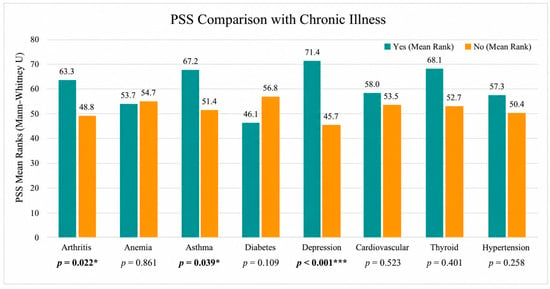
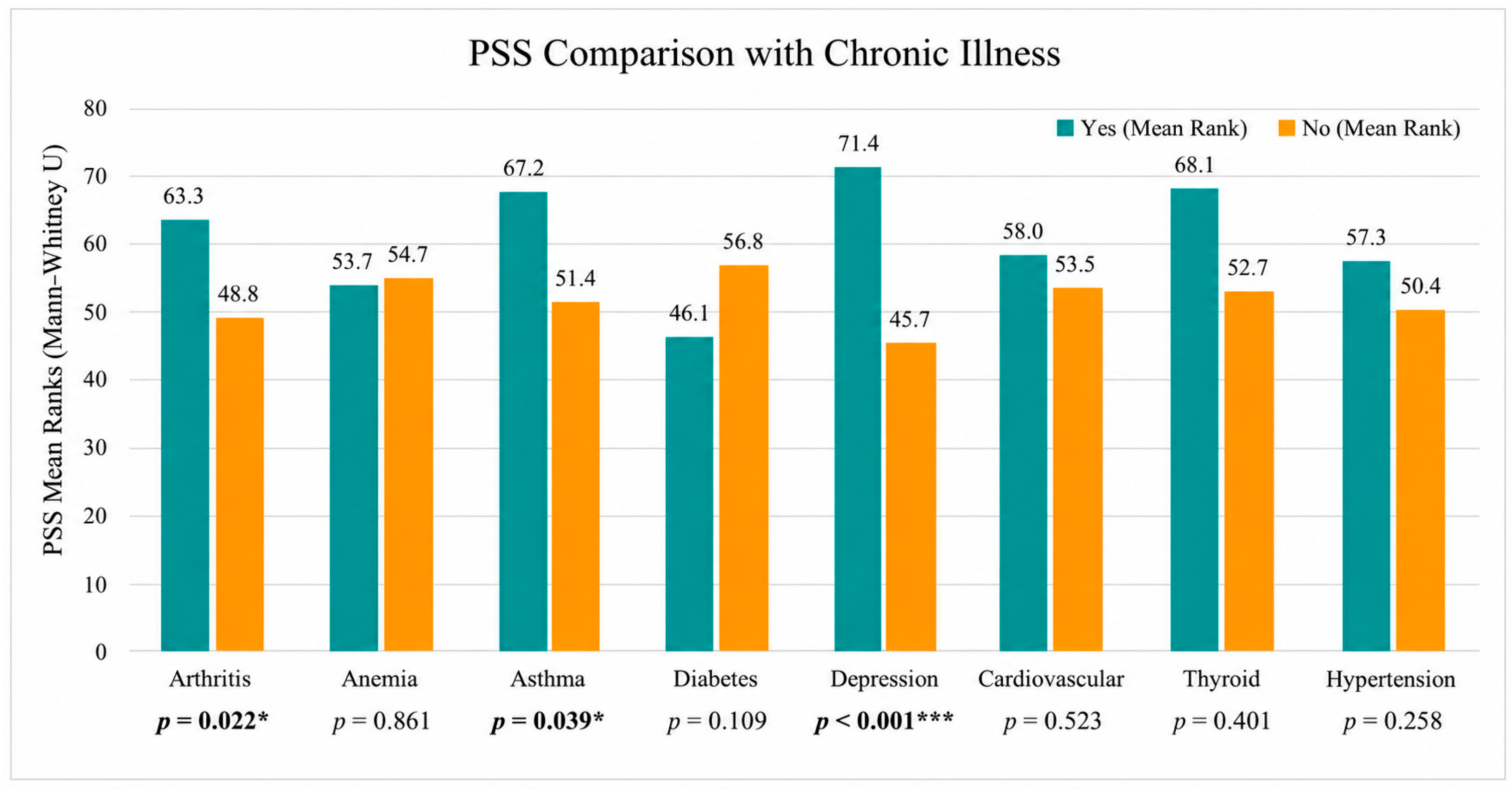
Finally, Mann–Whitney U tests were conducted to evaluate differences in perceived stress scores according to the presence or absence of each specific self-reported comorbid condition. Because the PSS does not have an established clinical cutoff for determining clinically significant perceived stress, chi-square analyses were not conducted for this outcome. As shown in Figure 4, participants who reported arthritis had a higher PSS mean rank (63.3) than those who did not report arthritis (48.9), and this difference was statistically significant (p = 0.020). Similarly, participants who reported asthma had a higher mean rank (67.2) than those who did not report asthma (51.4; p = 0.039). Participants with self-reported depression as a comorbid condition also had a significantly higher PSS mean rank (71.4) than those who did not report depression (45.7; p < 0.001). No statistically significant differences in perceived stress scores were observed according to the presence or absence of anemia (p = 0.861), diabetes (p = 0.109), cardiovascular disease (p = 0.523), thyroid disorders (p = 0.401), or hypertension (p = 0.258).
Figure 4.
Perceived Stress Scale (PSS) mean ranks according to self-reported chronic medical conditions. p < 0.05 (*); p < 0.001 (***).
Finally, we conducted Multivariable Analyses. VIFs ranged from 1.03 to 1.29, indicating no problematic multicollinearity among predictors. Results of the multivariable logistic regression models are presented in Table 5.
Table 5.
Multivariable Logistic Regression Models for Clinically Significant Psychological Symptoms (N = 108).
The model for clinically significant PTSD symptoms was statistically significant (χ2(6) = 17.01, p = 0.009; Nagelkerke R2 = 0.20), and the Hosmer–Lemeshow test indicated acceptable fit (χ2(8) = 14.95, p = 0.060). After adjustment, asthma was no longer significantly associated with clinically significant PTSD symptoms (aOR = 2.45, 95% CI 0.80–7.47, p = 0.116). Self-reported depression remained significantly associated with this outcome (aOR = 4.21, 95% CI 1.60–11.06, p = 0.004). Arthritis, thyroid disorders, age, and gender were not significantly associated with clinically significant PTSD symptoms.
The model for clinically significant depressive symptoms was statistically significant (χ2(6) = 30.09, p < 0.001; Nagelkerke R2 = 0.33; Hosmer–Lemeshow χ2(8) = 2.80, p = 0.946). Self-reported depression (aOR = 7.97, 95% CI 2.80–22.65, p < 0.001) and female gender (aOR = 4.36, 95% CI 1.09–17.46, p = 0.037) were associated with greater odds of clinically significant depressive symptoms. Older age was associated with lower odds (aOR = 0.96 per year, 95% CI 0.919–0.997, p = 0.037). None of the chronic medical conditions were significantly associated with this outcome.
The model for clinically significant anxiety symptoms was statistically significant (χ2 (6) = 21.59, p = 0.001; Nagelkerke R2 = 0.25; Hosmer–Lemeshow χ2(8) = 6.12, p = 0.633). Thyroid disorders remained significantly associated with greater odds of clinically significant anxiety symptoms after adjustment (aOR = 2.70, 95% CI 1.04–6.99, p = 0.041), as did self-reported depression (aOR = 5.04, 95% CI 1.83–13.90, p = 0.002).
Results of the multivariable linear regression models are presented in Table 6. Self-reported depression was associated with higher PCL-5 (B = 17.16, 95% CI 9.33–24.99), PHQ-8 (B = 5.93, 95% CI 3.59–8.28), GAD-7 (B = 5.46, 95% CI 3.05–7.86), and PSS scores (B = 5.58, 95% CI 2.52–8.63; all p < 0.001). Female gender was associated with higher PHQ-8 scores (B = 2.83, 95% CI 0.20–5.46, p = 0.035). Asthma, arthritis, and thyroid disorders were not significantly associated with any continuous outcome after adjustment (all p ≥ 0.121).
Table 6.
Multivariable Linear Regression Models for Psychological Symptom Scores with HC3 Robust Standard Errors (N = 108).
In sensitivity analyses excluding self-reported depression, asthma was significantly associated with clinically significant PTSD symptoms (aOR = 3.17, 95% CI 1.12–8.99, p = 0.030). The association between thyroid disorders and clinically significant anxiety symptoms was of similar magnitude but did not reach statistical significance (aOR = 2.39, 95% CI 0.98–5.82, p = 0.056). No chronic medical condition was significantly associated with clinically significant depressive symptoms in these models.
4. Discussion
The present study examined associations between self-reported chronic medical comorbidities and posttraumatic stress, depressive symptoms, anxiety symptoms, and perceived stress among Puerto Rican adults who self-reported a cancer diagnosis. The adjusted analyses identified thyroid disorders as the only physical chronic condition significantly associated with clinically significant anxiety symptoms, while asthma and arthritis were not independently associated with the psychological outcomes examined. Although several associations involving asthma and arthritis were observed in unadjusted analyses, these findings were not retained after adjustment for co-occurring conditions and demographic characteristics. Self-reported depression remained consistently associated with multiple psychological outcomes, although these findings warrant cautious interpretation given its conceptual overlap with current psychological symptom measures. Overall, these findings underscore the importance of accounting for co-occurring conditions and demographic characteristics when examining psychological burden among adults with a cancer diagnosis.
The associations observed for asthma in the unadjusted analyses are consistent with previous evidence linking asthma with psychological distress. Women with asthma had significantly greater PTSD and depression severity than women without asthma [23]. Similarly, a study of 1891 youth in Puerto Rico found associations between asthma and anxiety and depressive disorders [23]. In addition, a study of 643 cancer survivors in Puerto Rico found that greater comorbidity burden was associated with poorer health-related quality of life, with asthma occurring more frequently among survivors with poor health-related quality of life [24]. Previous research has also reported an association between trauma exposure, PTSD, and airflow limitation [25]. Together, these findings support a relationship between respiratory health and psychological well-being, although the mechanisms underlying these associations were not evaluated in the present study. However, the associations between asthma and psychological outcomes were not statistically significant in the primary adjusted models. Notably, asthma was significantly associated with clinically significant posttraumatic stress symptoms in a sensitivity analysis excluding self-reported depression, suggesting that this association may be sensitive to model specification. Furthermore, because the present study did not include a non-cancer comparison group, it cannot establish whether the magnitude or nature of these associations differs according to cancer status.
Thyroid disorders were the only physical chronic condition that remained significantly associated with clinically significant anxiety symptoms in the adjusted logistic regression models, consistent with previous clinical literature demonstrating relationships between thyroid conditions and psychological outcomes. Giynas Ayhan et al. (2014) reported an increased predisposition to depression and anxiety disorders among patients with euthyroid Hashimoto’s thyroiditis and euthyroid goiter [24]. Dehesh et al. (2025) similarly reported a high prevalence of anxiety and depression among patients with hypothyroidism and identified elevated TSH and other metabolic factors as significantly associated with anxiety [25]. In the present study, self-reported thyroid disorders were significantly associated with clinically significant anxiety symptoms after adjustment, although this association was not statistically significant in the adjusted linear regression model examining continuous anxiety symptom scores. This difference should be interpreted cautiously because the clinical questionnaire categorized thyroid conditions broadly and did not distinguish hypothyroidism, hyperthyroidism, autoimmune thyroid disease, or other thyroid disorders. More clinically specific characterization of thyroid disease may help determine whether thyroid conditions are more strongly associated with psychological symptoms among adults who self-reported a cancer diagnosis.
Participants who self-reported arthritis had significantly higher depressive symptom, anxiety symptom, and perceived stress scores than those who did not report arthritis in the unadjusted analyses. However, these associations were not retained after adjustment for selected co-occurring conditions and demographic characteristics. Previous studies have similarly demonstrated a substantial psychological burden among individuals with arthritis. Research examining rheumatoid arthritis has reported a high prevalence of depression, although estimates vary according to the instrument and diagnostic criteria used [26]. Anxiety has also been reported more frequently among adults with arthritis compared with those without arthritis [27]. In rheumatoid arthritis populations, pain, functional limitation, and systemic inflammation have been proposed as factors that may contribute to psychological distress [28]. However, these potential mechanisms were not evaluated in the present study, and arthritis was self-reported without differentiation among rheumatoid arthritis, osteoarthritis, or other forms of the disease. Therefore, the present findings support an association between self-reported arthritis and higher psychological symptom scores in unadjusted comparisons, but do not establish an independent association after adjustment or the mechanisms underlying these relationships.
Self-reported depression as a comorbid condition was significantly associated with each of the psychological outcomes examined, including current depressive symptoms measured using the PHQ-8. These associations remained statistically significant in the adjusted multivariable linear regression models, as well as in the logistic regression models examining clinically significant posttraumatic stress, depressive symptoms, and anxiety symptoms. This finding requires cautious interpretation. Depression was captured in the clinical questionnaire as a self-reported comorbid condition, whereas the PHQ-8 assessed current depressive symptom severity. Although these measures do not represent identical constructs, there is substantial conceptual overlap between a self-reported history of depression and current depressive symptomatology. Therefore, the observed association between self-reported depression and PHQ-8 scores should not be interpreted as evidence that depression independently predicts depressive symptoms. Future studies examining physical comorbidity and psychological outcomes may benefit from treating pre-existing psychiatric diagnoses separately from physical chronic medical conditions.
An important consideration in interpreting the present findings is the presence of potentially overlapping chronic conditions. Participants could self-report more than one comorbid condition, and the condition categories analyzed in this study were therefore not mutually exclusive. For each condition-specific comparison, participants who did not report the condition of interest could nevertheless have reported one or more other chronic conditions. Although the multivariable models adjusted for selected co-occurring conditions, including asthma, arthritis, thyroid disorders, and self-reported depression, the potential influence of other unmeasured or unaccounted-for comorbidities cannot be excluded. The present analysis did not evaluate the cumulative number or specific combinations of co-occurring chronic conditions; therefore, the potential contribution of multimorbidity to psychological symptom burden remains uncertain. Future studies should examine whether the cumulative number and specific combinations of physical comorbidities are associated with greater psychological symptom burden.
Cancer status also requires careful consideration when interpreting these findings. All participants included in the present secondary analysis self-reported a cancer diagnosis; therefore, cancer status was not evaluated as a predictor because it did not vary within the analytic sample. The findings consequently describe associations between chronic medical comorbidities and psychological outcomes within a population of adults who self-reported a cancer diagnosis. They cannot determine whether these associations are specific to individuals with cancer or whether similar relationships would be observed among individuals without a cancer diagnosis. Future studies incorporating appropriate non-cancer comparison groups could help determine whether these associations differ according to cancer status.
Although the parent study was conducted following Hurricane Maria and collected measures of hurricane-related experiences and impact, these variables were not included in the present secondary analysis. Therefore, the psychological outcomes identified in this study cannot be attributed specifically to Hurricane Maria or disaster-related stress. The post-hurricane setting should instead be understood as the context in which the parent study and baseline data collection occurred. Future analyses incorporating the hurricane-impact measures collected in the parent investigation could examine whether disaster-related experiences are associated with psychological outcomes or modify the relationships between chronic medical comorbidities and psychological outcomes.
From a clinical perspective, these findings highlight the importance of attending to psychological symptoms when caring for adults managing cancer alongside other chronic medical conditions. Oncology and primary care providers may consider incorporating brief psychological screening into routine care, particularly among patients managing multiple or complex health conditions. Current oncology guidelines recommend systematic assessment and management of anxiety and depressive symptoms among adults with cancer, including further clinical evaluation and appropriate referral when clinically indicated [26,27]. Positive screening results should therefore prompt further clinical assessment and, when appropriate, referral to behavioral or mental health services. Coordination among oncology, primary care, and behavioral health professionals may facilitate recognition and management of psychological symptoms alongside physical health conditions. At the community and public-health level, cancer support and chronic disease management programs may also benefit from incorporating mental health education, screening, and referral pathways to facilitate access to psychological support.
Several limitations should be considered. First, this was a secondary analysis of baseline data, and the cross-sectional nature of the present analysis prevents conclusions regarding temporal or causal relationships between chronic medical conditions and psychological outcomes. Second, chronic conditions were self-reported, and some categories, particularly thyroid disorders and cardiovascular disease, lacked diagnostic specificity or physiological confirmation. Third, although the multivariable models adjusted for selected co-occurring conditions and demographic characteristics, the analyses did not account for the cumulative burden or specific combinations of multimorbidity. Consequently, the potential influence of other co-occurring conditions cannot be ruled out. Fourth, self-reported depression was included as a covariate in the multivariable models despite its conceptual overlap with the psychological outcomes examined, particularly PHQ-8 depressive symptoms. In addition, no adjustment for multiple comparisons was applied, increasing the possibility of Type I error across multiple condition-specific analyses. Fifth, because the analytic sample was restricted to adults who self-reported a cancer diagnosis, the study cannot determine whether the observed associations are unique to or differ according to cancer status. In addition, cancer-related characteristics such as cancer type, stage, treatment status, and treatment intensity were not examined in the present analysis and may contribute to differences in psychological symptom burden. Furthermore, the analytic sample represented a subset of participants from the parent study who self-reported a cancer diagnosis and met the eligibility criteria for the present secondary analysis. This sampling approach, together with the specific sociocultural and healthcare context of Puerto Rico, may limit the generalizability of the findings to other cancer populations or settings. Finally, although the data were collected in the context of the post-Hurricane Maria parent study, hurricane-related exposure and impact were not analyzed in the present secondary analysis. Future research should address these limitations through prospective analyses, more detailed characterization of cancer-related and other medical variables, explicit assessment of multimorbidity, and appropriate comparison groups.
5. Conclusions
Among adults in Puerto Rico who self-reported a cancer diagnosis, thyroid disorders remained significantly associated with clinically significant anxiety symptoms after adjustment, whereas associations involving asthma and arthritis were not retained in the primary adjusted models. These findings identify potential areas for greater clinical attention but should not be interpreted as demonstrating causal or cancer-specific effects. Psychological screening and coordinated care may be particularly valuable for individuals managing cancer alongside additional chronic medical conditions. Future research should examine associations between multimorbidity burden and psychological outcomes and determine whether these associations differ between adults with and without a cancer diagnosis.
Author Contributions
Conceptualization, P.V.-O., G.L.-E., Z.R.-C., G.N.A.-P. and E.C.-F.; methodology, P.V.-O., G.L.-E., M.R.-V., C.P.-V., G.N.A.-P. and E.C.-F.; software, M.R.-V., G.N.A.-P. and E.C.-F.; validation, M.R.-V., G.N.A.-P. and E.C.-F.; formal analysis, M.R.-V., G.N.A.-P. and E.C.-F.; investigation, P.V.-O., G.L.-E., P.M.A.-R., L.P.R., G.F.-M., M.R.-R., Z.R.-C., C.C.-C., C.P.-V., N.T.-N., G.N.A.-P. and E.C.-F.; resources, Z.R.-C., C.C.-C., N.T.-N., G.N.A.-P. and E.C.-F.; data curation, M.R.-V., P.M.A.-R., L.P.R., G.F.-M., M.R.-R., C.C.-C., G.N.A.-P. and E.C.-F.; writing-original draft preparation, P.V.-O., G.L.-E., P.M.A.-R., L.P.R., G.F.-M., M.R.-R., G.N.A.-P. and E.C.-F.; writing-review and editing, P.V.-O., G.L.-E., P.M.A.-R., L.P.R., G.F.-M., M.R.-R., Z.R.-C., C.C.-C., C.P.-V., N.T.-N., G.N.A.-P. and E.C.-F.; visualization, M.R.-V., P.M.A.-R., L.P.R., G.F.-M., G.N.A.-P. and E.C.-F.; supervision, Z.R.-C., C.P.-V., N.T.-N., G.N.A.-P. and E.C.-F.; project administration, M.R.-R., Z.R.-C., C.C.-C., C.P.-V., N.T.-N., G.N.A.-P. and E.C.-F.; funding acquisition, G.L.-E., Z.R.-C., M.R.-V., P.M.A.-R., C.C.-C., G.N.A.-P. and E.C.-F. All authors have read and agreed to the published version of the manuscript.
Funding
This study was funded by the National Institute on Minority Health and Health Disparities (NIMHD) of the National Institutes of Health (NIH) through an administrative supplement (3U54MD007579-37S2). G.L.-E., Z.R.-C., G.N.A.-P., and E.C.-F. also received support from the National Cancer Institute (NCI; 5U01CA290612). Additionally, G.L.-E., M.R.-V., P.M.A.-R., Z.R.-C., C.C.-C., G.N.A.-P., and E.C.-F. received support from the NCI (2U54CA163071 and 2U54CA163068) and the NIMHD (U54MD007579). G.N.A.-P. received support from the NCI (2U54CA163071, 2U54CA163068, and R01CA276224) and the NIMHD (U54MD007579). E.C.-F. also received support from the NCI (2U54CA163071 and 2U54CA163068) and the NIMHD (U54MD007579).
Institutional Review Board Statement
The study was conducted in accordance with the Declaration of Helsinki and approved by the Institutional Review Board of Ponce Health Sciences University (protocol code 180611; approval date: 15 August 2018).
Informed Consent Statement
Informed consent was obtained from all subjects involved in the study.
Data Availability Statement
The data supporting the findings of this study are available from the corresponding author upon reasonable request, subject to applicable ethical and institutional restrictions.
Acknowledgments
The authors gratefully acknowledge the Psycho-Oncology Research Lab team, led by E.C.-F., for their valuable support in participant recruitment and project coordination. Their contributions were essential to the successful completion of this study.
Conflicts of Interest
The authors declare no conflicts of interest.
Abbreviations
The following abbreviations are used in this manuscript:
| PTSD | Posttraumatic Stress Disorder |
| PCL-5 | Posttraumatic Stress Disorder Checklist for DSM-5 |
| PHQ-8 | Patient Health Questionnaire-8 |
| PHQ-9 | Patient Health Questionnaire-9 |
| GAD-7 | Generalized Anxiety Disorder |
| PSS | Perceived Stress Scale |
| DSM-5 | Diagnostic and Statistical Manual of Mental Disorders, Fifth Edition |
| TSH | Thyroid-Stimulating Hormone |
| HPA | Hypothalamic–Pituitary–Adrenal |
| HAMD | Hamilton Depression Rating Scale |
References
- Fereidouni, Z.; Dehghan Abnavi, S.; Ghanbari, Z.; Gashmard, R.; Zarepour, F.; Khalili Samani, N.; Rajesh Sharma, A.; Ghasemi, A. The Impact of Cancer on Mental Health and the Importance of Supportive Services: Mental Health and Supportive Services for Patients with Cancer. Galen Med. J. 2024, 13, e3327. [Google Scholar] [CrossRef] [Scilit] [PubMed]
- Gieseler, F.; Gaertner, L.; Thaden, E.; Theobald, W. Cancer Diagnosis: A Trauma for Patients and Doctors Alike. Oncologist 2018, 23, 752–754. [Google Scholar] [CrossRef] [Scilit] [PubMed]
- Fernando, A.; Tokell, M.; Ishak, Y.; Love, J.; Klammer, M.; Koh, M. Mental Health Needs in Cancer—A Call for Change. Future Healthc. J. 2023, 10, 112–116. [Google Scholar] [CrossRef] [Scilit] [PubMed]
- Mejareh, Z.N.; Abdollahi, B.; Hoseinipalangi, Z.; Jeze, M.S.; Hosseinifard, H.; Rafiei, S.; Aghajani, F.; Dehnad, A.; Ardakani, M.F.; Ahmadi, S.; et al. Global, Regional, and National Prevalence of Depression among Cancer Patients: A Systematic Review and Meta-Analysis. Indian J. Psychiatry 2021, 63, 527–535. [Google Scholar] [CrossRef] [Scilit] [PubMed]
- Cordova, M.J.; Riba, M.B.; Spiegel, D. Post-Traumatic Stress Disorder and Cancer. Lancet Psychiatry 2017, 4, 330–338. [Google Scholar] [CrossRef] [Scilit] [PubMed]
- Merluzzi, T.V.; Philip, E.J.; Gomer, B.; Heitzmann Ruhf, C.A.; Kim, D. Comorbidity, Functional Impairment, and Emotional Distress: A Coping Mediation Model for Persons with Cancer. Ann. Behav. Med. 2021, 55, 994–1004. [Google Scholar] [CrossRef] [Scilit] [PubMed]
- Dai, D.; Coetzer, H.; Zion, S.R.; Malecki, M.J. Multimorbidity and Its Associations with Anxiety and Depression Among Newly Diagnosed Patients with Breast Cancer: A Retrospective Observational Cohort Study in a US Commercially Insured and Medicare Advantage Population. Cancer Control 2022, 29, 10732748221140691. [Google Scholar] [CrossRef] [Scilit] [PubMed]
- Weisberg, R.B.; Bruce, S.E.; Machan, J.T.; Kessler, R.C.; Culpepper, L.; Keller, M.B. Nonpsychiatric Illness Among Primary Care Patients with Trauma Histories and Posttraumatic Stress Disorder. Psychiatr. Serv. 2002, 53, 848–854. [Google Scholar] [CrossRef] [Scilit] [PubMed]
- Goodwin, R.D.; Fischer, M.E.; Goldberg, J. A Twin Study of Post–Traumatic Stress Disorder Symptoms and Asthma. Am. J. Respir. Crit. Care Med. 2007, 176, 983–987. [Google Scholar] [CrossRef] [Scilit] [PubMed]
- Boscarino, J.A.; Forsberg, C.W.; Goldberg, J. A Twin Study of the Association Between PTSD Symptoms and Rheumatoid Arthritis. Psychosom. Med. 2010, 72, 481–486. [Google Scholar] [CrossRef] [Scilit] [PubMed]
- Gago, C.; O’Neill, H.J.; Tamez, M.; López-Cepero, A.; Rodríguez-Orengo, J.F.; Mattei, J. Self-Rated Health and Medically Diagnosed Chronic Disease Association among Adults in Puerto Rico. Ethn. Dis. 2023, 33, 140–149. [Google Scholar] [CrossRef] [Scilit] [PubMed]
- Han, Y.-Y.; Forno, E.; Canino, G.; Celedón, J.C. Psychosocial Risk Factors and Asthma among Adults in Puerto Rico. J. Asthma 2019, 56, 653–661. [Google Scholar] [CrossRef] [Scilit] [PubMed]
- Rodriguez-Rabassa, M.; Hernandez, R.; Rodriguez, Z.; Colon-Echevarria, C.B.; Maldonado, L.; Tollinchi, N.; Torres-Marrero, E.; Mulero, A.; Albors, D.; Perez-Morales, J.; et al. Impact of a Natural Disaster on Access to Care and Biopsychosocial Outcomes among Hispanic/Latino Cancer Survivors. Sci. Rep. 2020, 10, 10376. [Google Scholar] [CrossRef] [Scilit] [PubMed]
- Muñoz-Torres, F.; Soto-Salgado, M.; Ortiz-Ortiz, K.J.; López-León, X.S.; Sánchez-Cabrera, Y.; Colón-López, V. Cancer Treatment Disruption by Residence Region in the Aftermath of Hurricanes Irma and María in Puerto Rico. Int. J. Environ. Res. Public Health 2024, 21, 1334. [Google Scholar] [CrossRef] [Scilit] [PubMed]
- Bovin, M.J.; Marx, B.P.; Weathers, F.W.; Gallagher, M.W.; Rodriguez, P.; Schnurr, P.P.; Keane, T.M. Psychometric Properties of the PTSD Checklist for Diagnostic and Statistical Manual of Mental Disorders–Fifth Edition (PCL-5) in Veterans. Psychol. Assess. 2016, 28, 1379–1391. [Google Scholar] [CrossRef] [Scilit] [PubMed]
- Kroenke, K.; Strine, T.W.; Spitzer, R.L.; Williams, J.B.W.; Berry, J.T.; Mokdad, A.H. The PHQ-8 as a Measure of Current Depression in the General Population. J. Affect. Disord. 2009, 114, 163–173. [Google Scholar] [CrossRef] [Scilit] [PubMed]
- Spitzer, R.L.; Kroenke, K.; Williams, J.B.W.; Löwe, B. A Brief Measure for Assessing Generalized Anxiety Disorder: The GAD-7. Arch. Intern. Med. 2006, 166, 1092. [Google Scholar] [CrossRef] [Scilit] [PubMed]
- Cohen, S.; Kamarck, T.; Mermelstein, R. A Global Measure of Perceived Stress. J. Health Soc. Behav. 1983, 24, 385. [Google Scholar] [CrossRef] [Scilit]
- Blevins, C.A.; Weathers, F.W.; Davis, M.T.; Witte, T.K.; Domino, J.L. The Posttraumatic Stress Disorder Checklist for DSM-5 (PCL-5): Development and Initial Psychometric Evaluation. J. Trauma. Stress 2015, 28, 489–498. [Google Scholar] [CrossRef] [Scilit] [PubMed]
- Kroenke, K.; Spitzer, R.L.; Williams, J.B.W. The PHQ-9: Validity of a Brief Depression Severity Measure. J. Gen. Intern. Med. 2001, 16, 606–613. [Google Scholar] [CrossRef] [Scilit] [PubMed]
- Vittinghoff, E.; McCulloch, C.E. Relaxing the Rule of Ten Events per Variable in Logistic and Cox Regression. Am. J. Epidemiol. 2007, 165, 710–718. [Google Scholar] [CrossRef] [Scilit] [PubMed]
- Long, J.S.; Ervin, L.H. Using Heteroscedasticity Consistent Standard Errors in the Linear Regression Model. Am. Stat. 2000, 54, 217–224. [Google Scholar] [CrossRef] [Scilit]
- Spitzer, C.; Koch, B.; Grabe, H.J.; Ewert, R.; Barnow, S.; Felix, S.B.; Ittermann, T.; Obst, A.; Völzke, H.; Gläser, S.; et al. Association of Airflow Limitation with Trauma Exposure and Post-Traumatic Stress Disorder. Eur. Respir. J. 2011, 37, 1068–1075. [Google Scholar] [CrossRef] [Scilit] [PubMed]
- Giynas Ayhan, M.; Uguz, F.; Askin, R.; Gonen, M.S. The Prevalence of Depression and Anxiety Disorders in Patients with Euthyroid Hashimoto’s Thyroiditis: A Comparative Study. Gen. Hosp. Psychiatry 2014, 36, 95–98. [Google Scholar] [CrossRef] [Scilit] [PubMed]
- Dehesh, T.; Mosleh-Shirazi, M.A.; Dehesh, P. Prevalence and Associated Factors of Anxiety and Depression among Patients with Hypothyroidism in Southern Iran. BMC Psychiatry 2025, 25, 54. [Google Scholar] [CrossRef] [Scilit] [PubMed]
- Taylor-Gjevre, R.; Gjevre, J.A.; Skomro, R.; Nair, B.V. Assessment of Sleep Health in Patients with Rheumatic Disease. Int. J. Clin. Rheumatol. 2011, 6, 207–218. [Google Scholar]
- Andersen, B.L.; Lacchetti, C.; Ashing, K.; Berek, J.S.; Berman, B.S.; Bolte, S.; Dizon, D.S.; Given, B.; Nekhlyudov, L.; Pirl, W.; et al. Management of Anxiety and Depression in Adult Survivors of Cancer: ASCO Guideline Update. J. Clin. Oncol. 2023, 41, 3426–3453. [Google Scholar] [CrossRef] [Scilit] [PubMed]
- Carlson, L.E.; Ismaila, N.; Addington, E.L.; Asher, G.N.; Atreya, C.; Balneaves, L.G.; Bradt, J.; Fuller-Shavel, N.; Goodman, J.; Hoffman, C.J.; et al. Integrative Oncology Care of Symptoms of Anxiety and Depression in Adults with Cancer: Society for Integrative Oncology–ASCO Guideline. J. Clin. Oncol. 2023, 41, 4562–4591. [Google Scholar] [CrossRef] [Scilit] [PubMed]

Disclaimer/Publisher’s Note: The statements, opinions and data contained in all publications are solely those of the individual author(s) and contributor(s) and not of MDPI and/or the editor(s). MDPI and/or the editor(s) disclaim responsibility for any injury to people or property resulting from any ideas, methods, instructions or products referred to in the content. |
© 2026 by the authors. Licensee MDPI, Basel, Switzerland. This article is an open access article distributed under the terms and conditions of the Creative Commons Attribution (CC BY) license.