


Abstract
There is limited understanding of how lead (Pb) in spices affects blood lead levels (BLLs) in children. To address this gap, we employed complementary approaches. First, we purchased 20 ground cinnamon products and tested them for Pb using the Z-max excitation Monochromatic X-ray Fluorescence (M-XRF) analyzer. Second, we estimated BLLs for children aged 3–5 years using the Integrated Exposure Uptake Biokinetic (IEUBK) based on daily intake of cinnamon (ranging 0.24–3.8 g), Pb concentration (ranging 0.04–3.52 μg/g), and 30–50% absorption. These combinations represented lower-to-worse daily exposure continuum. Finally, we estimated the number of child-size servings of sweet and savory recipes with cinnamon that would exceed the Food and Drug Administration (FDA)’s interim reference level (2.2 μg/day) for children’s dietary Pb intake. Of the 20 products tested, 19 contained Pb at or above the method limit of detection, 0.04 μg/g; one product had Pb > 1 μg/g and two had Pb > 0.6 μg/g. In IEUBK modeling, greater daily cinnamon consumption, higher Pb concentration, and higher proportional absorption contributed to higher estimated BLLs. At higher Pb concentrations, fewer servings were estimated to exceed FDA’s interim reference level. In both analyses, presence of Pb from other sources yielded less favorable estimates (higher BLLs, fewer servings to exceed FDA’s interim reference level). While purchasing cinnamon from variety of stores, families with daily cinnamon use can protect children by selecting recipes with lower cinnamon amounts and being aware of other sources of Pb in children’s environments. Limit setting for Pb in spices should consider children’s multi-source exposures.
1. Introduction
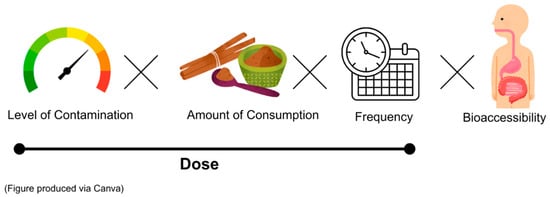
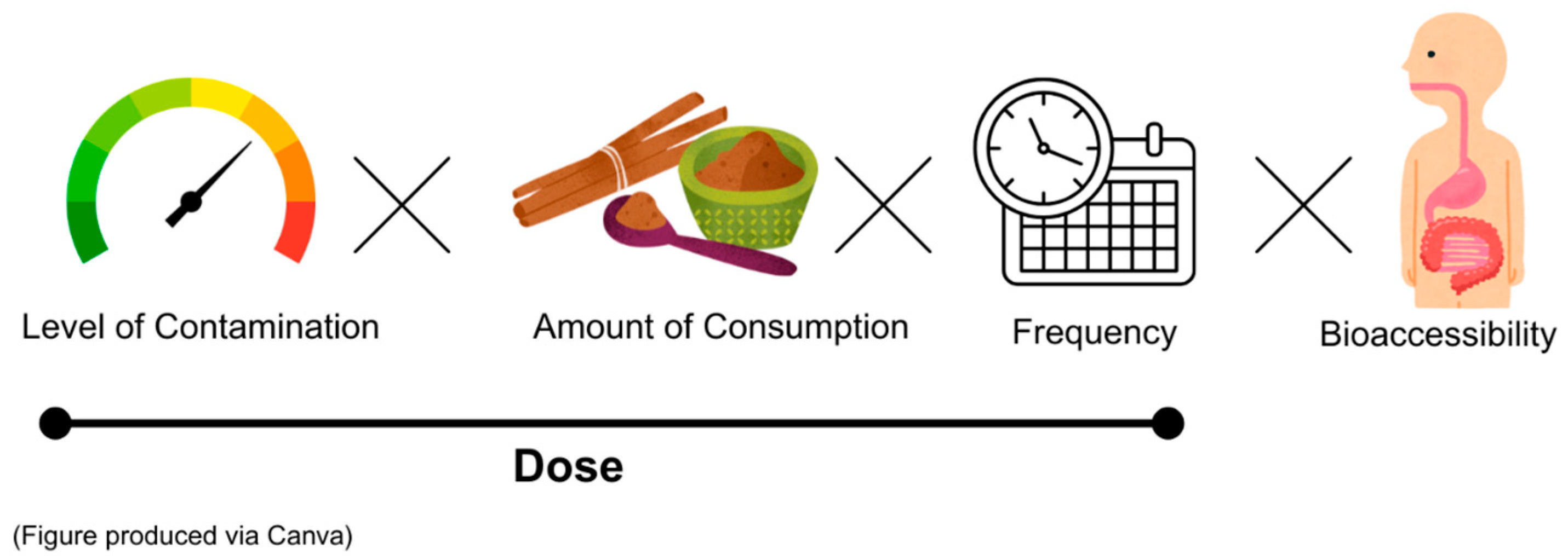
Lead (Pb) is a toxic metal with no physiological function in the human body. Childhood Pb exposure contributes to cognitive deficits [1,2] and other adverse health effects [3,4]. The ingestion of Pb in food, water, dust, and/or soil is a common exposure pathway [5]. Dietary exposure to Pb occurs when contaminated food products, beverages, or supplements are consumed [6]. The dose of Pb exposure from foods and beverages is the product of Pb contamination level, the amount of food consumed, and the frequency of consumption (Figure 1). Additionally, a fraction of Pb is typically bioaccessible—released from the food matrix in the gastrointestinal tract (GIT) [7]. Another fraction of Pb is absorbed and reaches the circulation. Young children can absorb up to 40–50% of ingested lead in their GIT, compared to 3–10% in adults [8].
Figure 1.
Factors influencing the dose of dietary lead exposure and absorption in the gastrointestinal tract.
Lead has been detected in many food products [9]. Recently, concerns have been raised about Pb contamination of spices, which are purchased for home use as well as incorporated into many commercial food products, including those marketed for young children. The impact of dietary Pb exposure on children’s blood lead levels (BLLs) is not fully understood, particularly with respect to spice consumption.
Contamination of spices with Pb and other metals is both a food safety and a public health concern. Several studies have investigated Pb contamination of spices, many prompted by cases of childhood Pb poisoning. A recent review of international studies shows a wide range of Pb values (0–48,000 μg/g) in different herbs and spices [10]. In one U.S. study, imported Indian spices were purchased at select grocery stores in Boston. Of the 38 spices, 24% contained Pb with a mean concentration of 2.6 μg/g and a mean bioaccessibility of 49% [11]. In another study, 32 samples of imported spices purchased in the metropolitan Boston area contained 0.03–99.50 μg/g of Pb, and had mean bioaccessibility of 70% [12]. Over 10 years, the New York City Department of Health and Mental Hygiene tested more than 3000 samples of consumer products, including spices [13]. Of the 19 cinnamon samples tested, 53% had a Pb level > 2.0 μg/g and the mean concentration was 3.8 μg/g [13]. Another study found high amounts of Pb in thyme, parsley, oregano, and coriander acquired in the U.S. and Colombia [14]. However, the one brand of cinnamon tested had relatively low Pb compared to other spices [14]. In Lancaster, Pennsylvania, U.S., 116 spices, either purchased by the authors or donated by study families, had median Pb concentration of 0.177 μg/g [15].
Pb contamination of cinnamon, a commonly used spice, sparked particular concern in the U.S. after four cases of asymptomatic elevated BLLs (≥5 μg/dL) in children were reported to health authorities in North Carolina in 2023 [16]. Home investigations identified apple cinnamon fruit puree pouches as the likely source of Pb and Pb concentration in the fruit pouches had a range of 1.9–3.0 μg/g [16]. A study of Pb in cinnamon sticks and ground cinnamon in Ecuador, where the pouches were produced, found that cinnamon sticks contained 0.36 ± 0.28 μg/g and ground cinnamon contained 0.80 ± 0.75 μg/g of Pb [17], suggesting contamination during processing. In March of 2024, the U.S. Food and Drug Administration (FDA) began releasing alerts on Pb contamination of ground cinnamon, initially covering 18 brands [18]. More products were added in 2025 [19].
Product alerts and studies of spices related to cases of childhood Pb poisoning serve to highlight potential sources of Pb exposure, but more information on Pb in spices is critically needed. Furthermore, lack of evidence on the potential impact of spice consumption on children’s BLLs limits regulation or recommendations for caregivers. A prior study used the U.S. Environmental Protection Agency (EPA)’s Integrated Exposure Uptake Biokinetic Model for Lead in Children (IEUBK) to predict BLLs for children aged 0–4 years based on Pb exposure from spices. Results showed that consuming 5 μg of Pb per day from spices, which is more than twice the current FDA guideline for dietary Pb intake among children [20], resulted in a predicted geometric BLL of 4.1 μg/dL [11]. Other studies using similar methodologies, particularly in relation to updated dietary exposure guidelines, are needed to inform consumer behavior and regulation.
The objectives of the present study were four-fold: (1) to expand available information on Pb levels in cinnamon products, focusing on items purchased at a range of stores; (2) to explore the use of XRF technologies to screen cinnamon products for Pb content; (3) to estimate the potential impact of different scenarios of Pb contamination and cinnamon consumption on BLLs of children aged 3–5 years; and (4) to describe consumption patterns for specific cinnamon-based recipes that would exceed the current FDA guidelines on dietary Pb exposure among children.
2. Materials and Methods
2.1. Overview
Three complementary approaches with public health translation potential were used to understand how Pb in cinnamon could impact children’s BLLs. First, we tested Pb levels in 20 ground cinnamon products (organic and conventional) purchased at a variety of stores in Western New York.
Second, we used IEUBK models to predict BLLs for children aged 3–5 years, based on varying scenarios of cinnamon consumption. In Model A we assumed that the cinnamon was the only exogenous source of Pb exposure, while other media (air, drinking water, soil, dust) made no contribution. In Model B, we assumed that cinnamon was one of several exogenous sources of Pb exposure, including air, water, soil, and dust. In Models C and D, in addition to environmental sources, we considered dietary exposure from other foods. In all models, we utilized Pb values from published reports and products tested in this study.
Third, we used varying levels of Pb in cinnamon to estimate the number of servings for savory and sweet dishes that, if consumed, would exceed the FDA’s interim reference level (IRL) of 2.2 μg per day for Pb in children [20].
To note, Pb levels in spices are often reported as parts per million (ppm), mg/kg or μg/g, which are equivalent. Throughout the study, we use the units of μg/g.
2.2. Pb Testing in Cinnamon Products
A range of brand-name and store-brand ground cinnamon products were purchased online or in person at grocery or discount stores in Western New York. The items were selected to represent a mix of conventional and organic products from different countries of origin distributed under large, national food company or store brands. Five items were obtained on 17 October 2024, and additional 15 items between 30 May and 1 July 2026. All products were portioned into small, clear Ziploc bags, decanted from the container directly into sample bags. Samples were shipped to the Clinical and Trace Elements Laboratory, Division of Environmental Health Sciences, Wadsworth Center, New York State Department of Health, for analysis by energy-dispersive Monochromatic X-ray Fluorescence (M-XRF) spectrometry.
Samples were analyzed in triplicate, as received. Initial XRF analyses of the first batch of samples were conducted using a 1st-generation M-XRF instrument, the HD Mobile® (X-ray Optical Systems (XOS), East Greenbush, NY, USA). A portion of each sample was transferred to a 32 mm XRF cup (Premier Lab Supply, Port St. Lucie, FL, USA), sealed at the bottom with a 4 μm low-sulfur polypropylene X-ray thin film. Each XRF cup was approximately 1/2-full, equivalent to ~1 cm in depth, ensuring infinite path thickness. The XOS HD Mobile XRF analyzer was optimized for measuring Pb, cadmium (Cd), mercury (Hg) and arsenic (As) in environmental and food matrices and validated against international certified reference materials (CRMs) [21]. The limit of detection (LOD) for Pb was calculated as 1 µg/g [21]. A CRM from the International Atomic Energy Agency (IAEA, Vienna, Austria), IAEA-413 Major, Minor, and Trace Elements in Algae, was analyzed with the samples as a quality control (QC) check at the beginning and end of each analytical batch. As an additional QC check, solid granular boric acid (Mallinckrodt, Staines, UK) was analyzed as a “blank” sample at the beginning and end of each run. This QC protocol was established based on previous studies [21]. The CRM IAEA-413 has a reference value of 242 µg/g assigned for Pb, with an uncertainty range of 235–249 µg/g. The mean ± SD XRF Pb measurement found for CRM IAEA-413 using the HD Mobile instrument was 247 ± 1.4 µg/g, which indicated satisfactory performance [21].
During this study, a 2nd-generation M-XRF analyzer, the Z-max, (Z-Spec, East Greenbush, NY, USA) was installed in the NY State Department of Health’s Wadsworth Laboratory, and was used to analyze the second batch of samples and re-analyze the first batch. For the Z-max M-XRF instrument, 100 mg of each sample was weighed into a customized sample cup and sealed on each side with a polypropylene X-ray thin film with a thickness of 12 µm (Prolene® film, Chemplex Industries, Inc., NY, USA) and analyzed for 600 s. The LOD for Pb using the Z-max instrument was previously calculated as 0.04 µg/g, which is a significant improvement over the HD Mobile [22]. For the Z-max M-XRF, CRM IAEA-413 Major, Minor, and Trace Elements in Algae was analyzed as a routine QC. A CRM from the European Commission (European Commission, Joint Research Center, Geel, Belgium), ERM®—BD151 Trace Elements in Skimmed Milk Powder, was also analyzed as a QC check at the beginning and end of each analytical run. The Pb value found for CRM IAEA-413 using the Z-max M-XRF was 222.7 ± 0.3 µg/g (92.0% recovery), while for CRM ERM®—BD151 it was 0.23 ± 0.02 µg/g (BD151 reference value for Pb = 0.207 ± 0.014 µg/g, i.e., 111% recovery), indicating acceptable (better than ±20%) performance. Solid granular boric acid (Mallinckrodt, Staines, UK) was analyzed as a “blank” sample at the beginning and end of each run.
Observed values were compared to the current (1 μg/g) [23] and pending (0.6 μg/g, effective from 1 January 2028) [24] action levels for Pb in spices in New York state.
2.3. Biokinetic Modeling to Predict Children’s BLLs Based on Daily Cinnamon Consumption with Different Levels of Pb
The IEUBK model. We utilized the EPA IEUBK Version 2.0, which estimates BLLs for children (0–7 years old) who are exposed to Pb through contaminated media, such as soil, dust, water, diet, and air [25]. Model inputs for Pb contamination in these media can be varied according to known context-specific values; alternatively, default values can be utilized. Modeling can be carried out in beginner or advanced mode. We utilized the beginner mode for this study. Although BLLs can be estimated for children aged 0–7 years, we focused on children aged 3–5 years because at this age children have completely transitioned to family foods/meals and are more likely than younger children to consume considerable amounts of foods that may contain cinnamon. At the same time, they remain developmentally vulnerable to toxic metal exposure. The IEUBK model estimates separate BLL values for ages 3, 4 and 5 years; we averaged these values to arrive at an overall estimate for children aged 3–5 years.
Two model assumptions critical for the interpretation of the results are that: (1) Pb exposure or intake from water, diet, soil, dust, and air occurs daily, and (2) exposure is tied to a single residential setting (e.g., family home) [25].
Pb levels in cinnamon. Pb levels for the analysis came in part from Consumer Reports, showing Pb values assessed via Inductively Coupled Plasma Mass Spectrometry (ICP-MS) and ranging between 0.02 labeled as “Best to use” and 3.52 μg/g in products labeled as “Don’t use” [26]. The brand name and mean Pb level in ppm, equivalent to μg/g, in each product were compiled in Supplementary Table S1. Additional values were those obtained from M-XRF testing in the present study. Values approximating the 5th, 25th, 50th, 75th, 95th and 99th percentile of the distribution were 0.04, 0.24, 0.49, 0.8, 2.03, and 3.52 μg/g, respectively, and used in all further calculations.
Amount of cinnamon consumption. There is no easily accessible information on how much cinnamon is consumed by young children. Therefore, we modeled the intake of a wide range of amounts as follows: 0.24, 0.48, 0.95, 1.43, 1.9, 2.38, 2.85, 3.33, 3.8 g. In many U.S. households and recipe books, spices are measured in teaspoons (tsp), which we converted to grams taking 1 tsp of cinnamon to weigh 1.9 g. We determined this by preparing and weighing three samples each of four different brands of cinnamon. The samples were prepared by scooping and leveling a typical rounded kitchen measure equivalent to one teaspoon. The individual samples weighed 1.7–2.1 g, for a grand total of 1.9. By this measure, the cinnamon consumption amounts used in this study are equivalent to ⅛ tsp, ¼ tsp, ½ tsp, ¾ tsp, 1 tsp, 1¼, tsp, 1½ tsp, 1¾ tsp, and 2 tsp. It is important to note, however, that according to USDA’s FoodData Central, 1 tsp of cinnamon weighs 2.6 g [27].
Cinnamon-based Pb exposure. Combining information on Pb levels in cinnamon and amount of cinnamon consumption, we calculated a range of potential Pb exposures from cinnamon. Each of the six selected Pb levels in cinnamon (0.04, 0.24, 0.49, 0.8, 2.03, and 3.52 μg/g) was multiplied by each amount of consumption (0.24, 0.48, 0.95, 1.43, 1.9, 2.38, 2.85, 3.33, 3.8 g) to arrive at a matrix of exposure values (µg/day) for input into the IEUBK models (Supplementary Table S2).
Estimation of BLL via IEUBK models. To predict the BLLs that could result from daily consumption of Pb-contaminated cinnamon, we entered each cinnamon-based exposure value (Supplementary Table S2) into the IEUBK model. For the absorption fraction, we initially utilized the default setting, at 50%. While this is rarely changed for the IEUBK, we decided to test two additional values to reflect the assumptions of other biokinetic models that absorption decreases with age [28]. While other models vary absorption fraction between 40–45% and down to 12–15%, given the restricted and relatively young age range in our study, we additionally tested 40% and 30%. The resulting BLLs for 3–5 years were recorded and the BLLs for those age groups were averaged.
Initially, estimated BLLs resulting only from cinnamon exposure were determined (Model A), running the IEUBK models with all other media inputs set to zero. Next, a set of models (Model B) was run using the default inputs (Supplementary Table S3) for exposure values and absorption fractions for water, soil/dust, and air [25]. In the final set of models, Pb exposure from other dietary sources was added, utilizing the lower bound (1.2 µg/day, Model C) and upper bound (3.2 µg/day, Model D) of the mean estimated exposure in U.S. children aged 1–6 years based on the Total Diet Study from 2014 to 2016 [29]. The lower- and upper-bound values are used for illustrative purposes only; we recognize that individual children may experience lower or higher dietary Pb exposures.
From each model, an estimated mean geometric BLL was obtained and graphed in Microsoft Excel.
2.4. Servings of Foods with Cinnamon That Would Exceed the FDA’s Daily Reference Value for Children
We searched culinary websites and apps (New York Times Cooking, Cinnamon Society, and Allrecipes) for recipes using the term “cinnamon”. We selected several recipes for sweet and savory dishes (Supplementary Table S4); they included ground cinnamon or cinnamon powder among the ingredients and were deemed likely to appeal to young children. These recipes called for varying levels of cinnamon (from 0.25 tsp to 2 tablespoons, tbsp). Each recipe reported a suggested number of servings, with estimated kilocalories per serving (note that serving sizes—weight or volume—were not provided). All servings in the recipes were assumed to be appropriate for adults. To calculate the number of resulting child-size servings, we used a conversion suggested by the U.S. Department of Agriculture, where 1 child-size serving is equivalent to ⅔ of an adult serving [30]. Resulting calories were scaled accordingly. To compare among recipes, the amount of cinnamon (grams) per 100 kilocalories was calculated based on available recipe information. Actual serving sizes for young children are expected to differ among households.
We again used the six values of Pb in cinnamon (0.04, 0.24, 0.49, 0.8, 2.03, 3.52 μg/g) and, for each recipe, calculated the amount of Pb per child-size serving, assuming that 1 tsp of cinnamon weighs 1.9 g and 1 tbsp weighs 5.7 g (Supplementary Figure S1). Subsequently, we divided the FDA’s interim reference level of 2.2 μg/day [20] by the amount of Pb in each serving. The resulting serving numbers were graphed using Microsoft Excel.
Finally, to reflect the fact that children may consume multiple foods containing cinnamon during a day, we devised five example menus, where 1–4 meals included 0.5–2 child-size servings of foods with cinnamon. For each day, we estimated dietary Pb intake depending on Pb level in cinnamon (values ranging 0.04–3.52 μg/g as above). First, we assumed that cinnamon was the only dietary source of Pb. In a second scenario, we assumed that children had additional Pb exposure from other foods equivalent to 1.2 μg/day, the lower bound of estimated mean dietary Pb intake among U.S. children aged 1–6 years based on the Total Diet Study from 2014 to 2016 [29]. In a third scenario, additional Pb exposure from other foods was 3.2 μg/day, representing the upper bound of estimated mean dietary Pb intake in U.S. children [29]. These levels of Pb intake are used for illustrative purposes only; actual intakes among individual children will vary greatly.
3. Results
3.1. Lead in Cinnamon Products
Using the HD Mobile M-XRF, Pb was not detected (i.e., <1 µg/g) in any of the first batch of ground cinnamon products analyzed (Table 1). These samples were later re-analyzed using the Z-max M-XRF (LOD < 0.04 µg/g) and Pb was detected in all five samples ranging from 0.24 to 0.60 µg/g (products 1–5).
Table 1.
Pb concentrations in cinnamon products purchased at several stores in Western New York and tested with Z-max, a second-generation XRF analyzer.
The second batch of samples (products 6–20) was analyzed using the Z-max M-XRF and Pb was detected in all 15 samples. Pb values ranged from 0.02 to 2.18 µg/g (Table 1).
Overall, one sample had Pb > 1 µg/g and two had Pb > 0.6 µg/g, the current and pending regulatory levels in New York state, respectively.
3.2. Estimated BLLs from Daily Consumption of Cinnamon with Varying Pb Concentrations
Figure 2 and Supplementary Tables S5–S8 show estimated BLLs for children aged 3–5 years based on IEUBK models representing different exposure scenarios assuming 50% proportional absorption of Pb from cinnamon (default for the IEUBK). Supplementary Figure S2 additionally shows the same scenarios but at proportional absorption of Pb at 30% or 40%.
Figure 2.
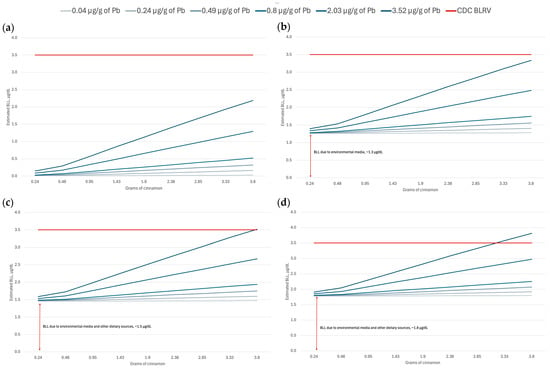
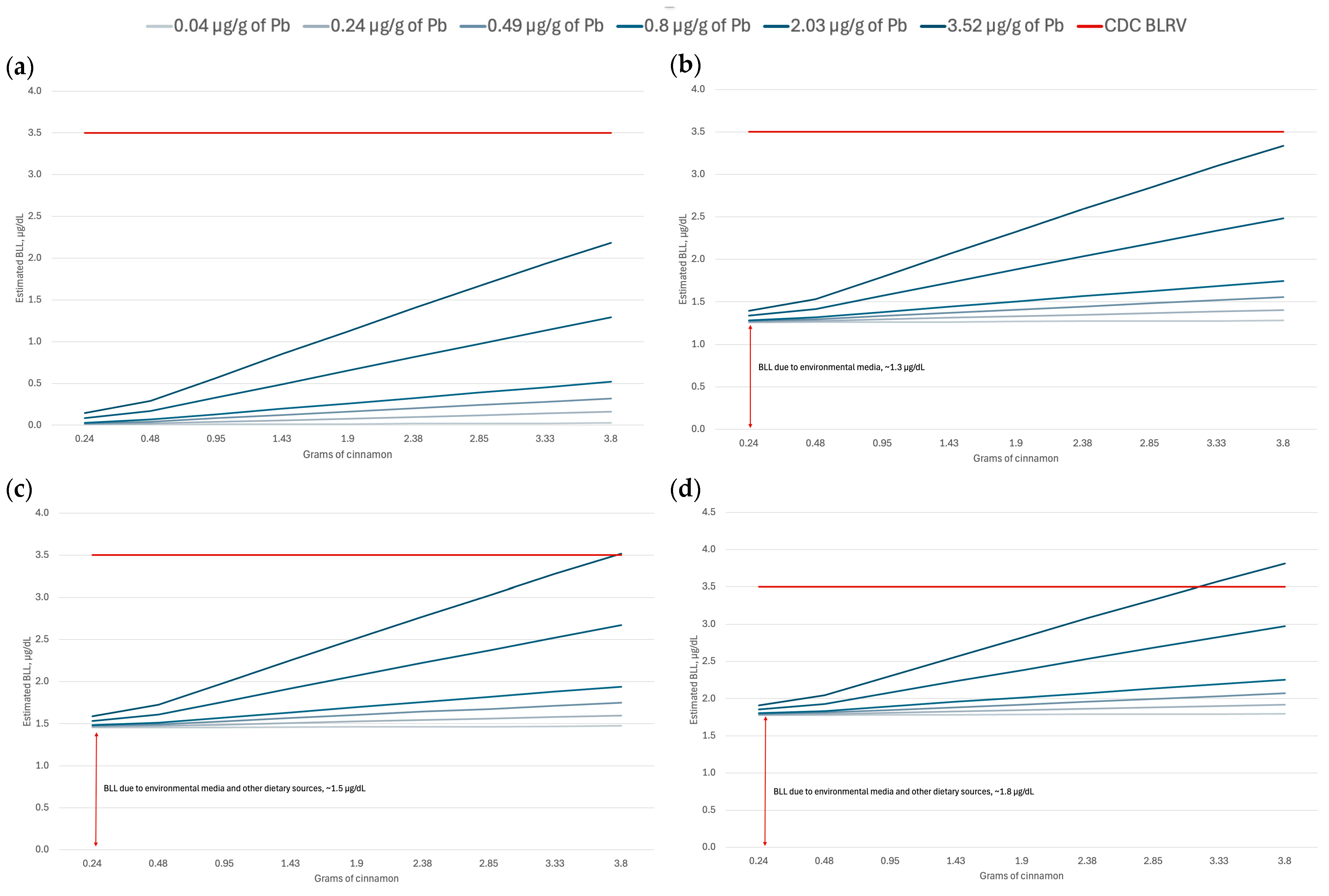
Estimated BLLs for children aged 3–5 years based on IEUBK models of varying amounts of cinnamon intake containing a range of Pb concentrations, and assuming 50% proportional absorption of Pb from cinnamon: (a) Pb exposure from cinnamon only; (b) Pb exposure from cinnamon and environmental media (air, soil, and water, with values corresponding to default model settings); (c) Pb exposure from cinnamon, environmental media (with values corresponding to default model settings) and additional dietary sources set at 1.2 µg/day; and (d) Pb exposure from cinnamon, environmental media (with values corresponding to default model settings) and additional dietary sources set at 3.2 µg/day.
Taken together, the IEUBK models show that greater daily cinnamon consumption, higher Pb contamination, and higher proportional absorption all contribute to higher estimated BLLs in children aged 3–5 years. Alone, the daily consumption of cinnamon with Pb values tested in this study did not result in estimated BLLs exceeding 3.5 µg/dL. Pb values below 1 µg/g resulted in estimated BLLs that for the most part did not rise above 0.5 µg/dL, even with consumption of 3.8 g of cinnamon (Figure 2a). When the intake of Pb from cinnamon occurred together with exposure to other Pb sources (Figure 2b), and when additionally accounting for exposure from other foods (Figure 2c,d), estimated BLLs were ~1.3–1.8 µg/dL higher than from cinnamon alone. For cinnamon with Pb above 2 µg/g, daily intake of cinnamon, together with other exposure sources, resulted in estimated BLLs that came close to or exceeded 3.5 µg/dL at intake amounts of ~3 g or higher.
3.3. Recipes with Cinnamon Exceeding FDA’s Reference Value for Children’s Dietary Pb Intake
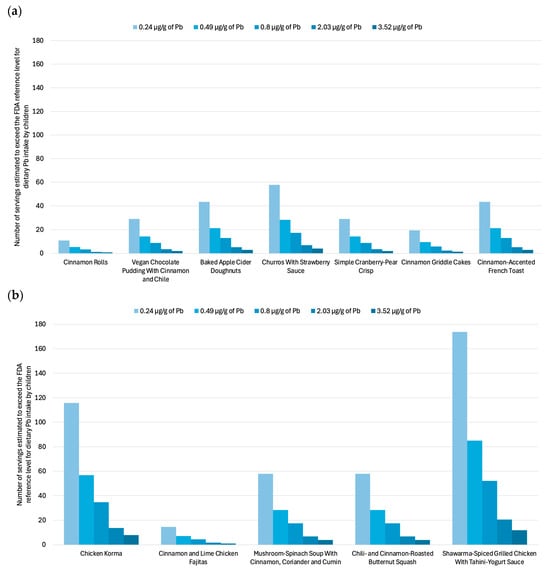
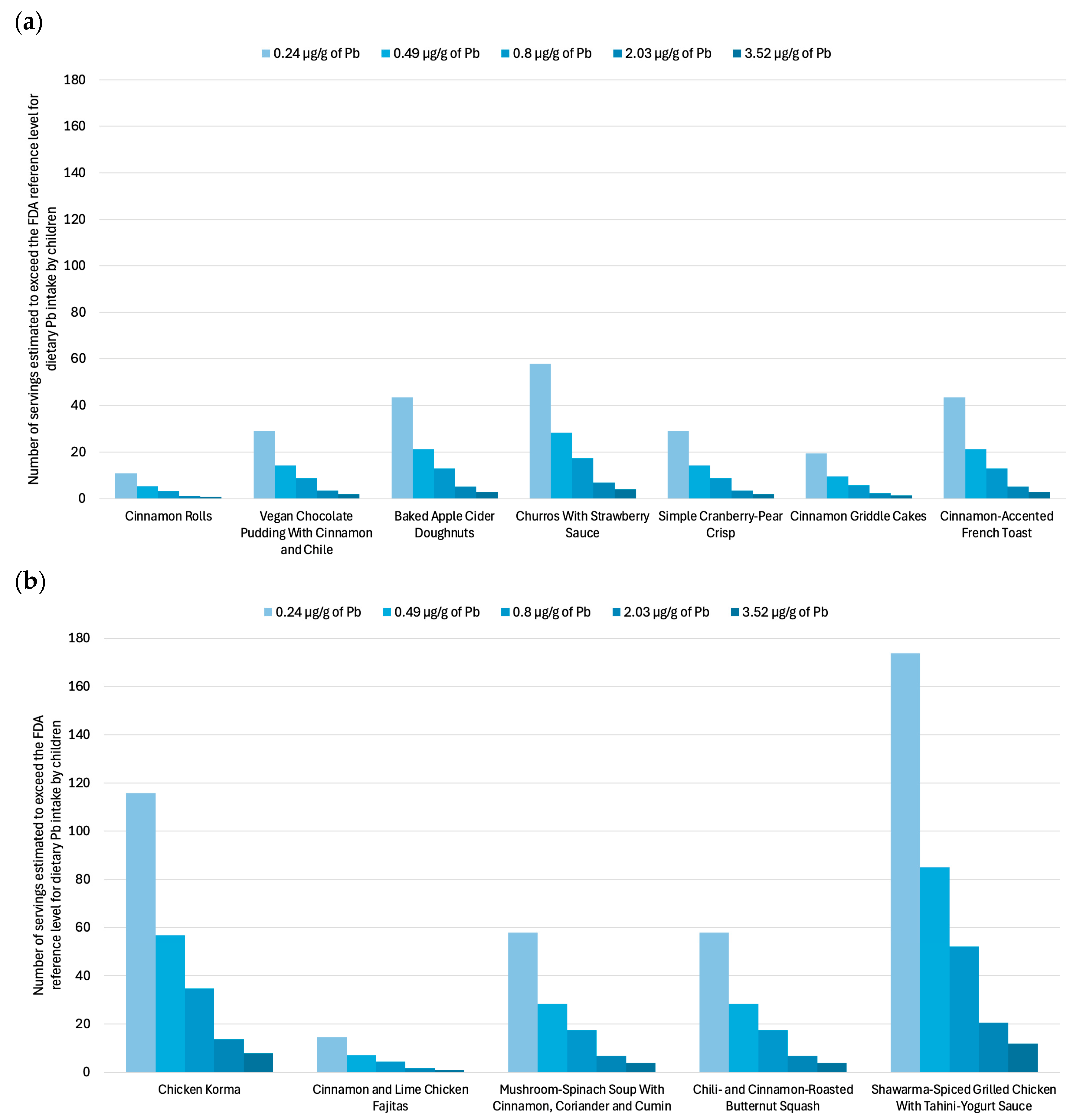
Taking a complementary approach to the calculations above, we examined potential Pb exposure resulting from different recipes when cinnamon with a range of Pb concentrations is used. The recipes used in this study yielded 6–36 child-size servings (Supplementary Table S4). We calculated the number of child-size servings that would result in exceedance of FDA’s interim reference level for dietary Pb for children (2.2 µg/day). As shown in Figure 3 and Supplementary Table S9, with Pb concentration below 1 µg/g, multiple servings of any study dish could be consumed before exceeding 2.2 µg/day. However, due to higher amount of cinnamon used in sweet compared to savory recipes, the reference level would be exceeded after consuming fewer servings of sweet than savory dishes. Furthermore, with higher Pb concentration in cinnamon (3.52 vs. 0.04 µg/g), fewer servings would result in reference level exceedance. At the highest Pb level in cinnamon examined in this study (>3.52 µg/g), even partial servings of sweet dishes could result in dietary Pb intake exceeding the reference value if the recipe calls for a large amount of cinnamon. It is important to note that the servings reported here represent estimations based on adult servings; moreover, servings could not be standardized due to the way the recipe information was provided. Serving sizes varied among the recipes tested in the study and could differ if prepared using different ingredients or measures, as well as when served to children by individual families.
Figure 3.
Number of child-size servings of popular recipes with cinnamon estimated to exceed the Food and Drug Administration’s interim reference level for dietary lead (2.2 µg/day), depending on level of Pb in cinnamon: (a) sweet recipes and (b) savory recipes. Estimated servings for dishes using cinnamon with 0.04 µg/g of Pb are shown in Supplementary Table S9.
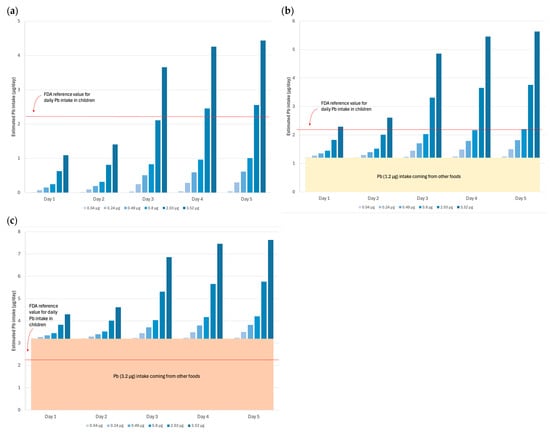
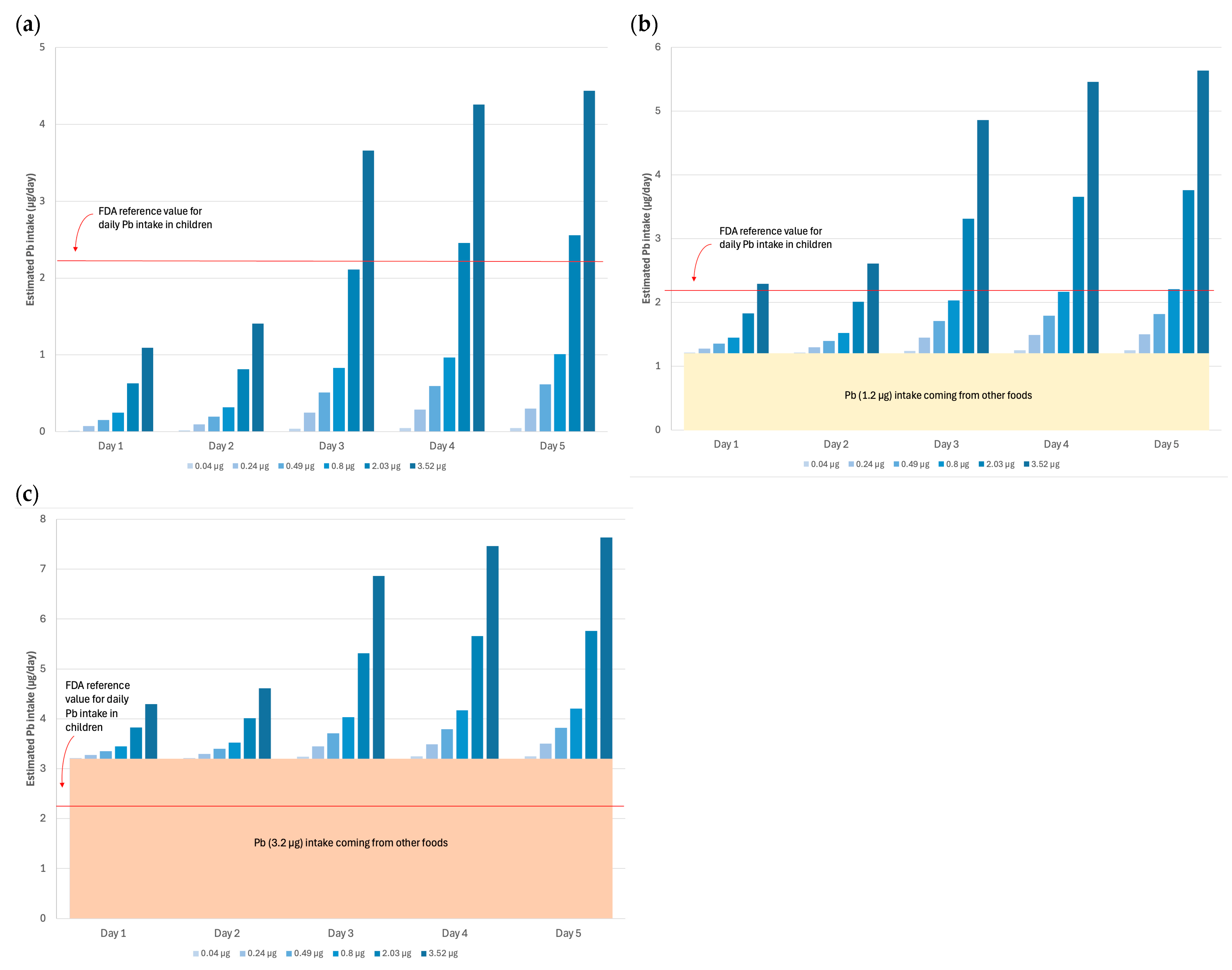
To understand how consuming multiple servings or foods containing cinnamon in one day could impact dietary Pb exposure, Supplementary Table S10 displays an example of five daily menus. For the combination of foods and number of servings assumed in the example menus, estimated cinnamon intake has a range of 0.31–1.26 g. Figure 4 shows the estimated dietary Pb intake resulting from the five menus, according to different Pb concentrations found in cinnamon. Overall, when no other sources of Pb exposure are present in children’s environment, they could eat multiple servings or multiple cinnamon-containing dishes without exceeding the FDA’s reference level for daily Pb intake if cinnamon with lower Pb concentrations is used or if less cinnamon is consumed (Figure 4a). If other foods contribute 1.2 µg/day Pb to dietary intake, consumption of multiple servings of dishes with cinnamon could only be possible when cinnamon contains Pb concentrations below 1 µg/g (Figure 4b). If other foods contribute 3.2 µg/day Pb, no additional cinnamon-containing foods could be consumed (Figure 4c).
Figure 4.
Estimated dietary Pb intake (µg/day) from recipes containing cinnamon with different concentrations of Pb: (a) Estimates reflect the absence of Pb in other foods. (b) Estimates reflect the intake of Pb from other foods at 1.2 µg/day (shown in yellow). (c) Estimates reflect the intake of Pb from other foods at 3.2 µg/day (shown in orange). In all panels, the estimated cinnamon intake was 0.31 g on Day 1; 0.40 g on Day 2; 1.28 g on Day 3; 1.21 g on Day 4; and 1.26 g on Day 5.
4. Discussion
This study used State-of-the-Art second-generation Monochromatic X-ray Fluorescence spectrometry to screen 20 cinnamon products purchased in Western New York and used biokinetic models to investigate the extent to which the consumption of cinnamon with varying levels of Pb could contribute to BLLs in children aged 3–5 years. While Pb was detected in 19 of 20 cinnamon products tested, only one sample had Pb > 1 µg/g and two had Pb > 0.6 µg/g, the current and pending regulatory levels in New York state, respectively. In the modeling study we tested the daily consumption of cinnamon ranging from 0.24 to 3.8 g of cinnamon and Pb in cinnamon ranging from 0.04 to 3.52 µg/g, with the higher values representing a “worst case” scenario. Larger amounts of cinnamon consumed and higher Pb concentrations in cinnamon resulted in higher estimated BLLs in children, particularly when paired with Pb exposure from other sources. Fewer estimated servings of sweet or savory dishes containing cinnamon could be consumed at higher compared to lower Pb levels in cinnamon before exceeding the FDA’s interim reference level of 2.2 μg per day for children’s dietary Pb intake.
4.1. Pb Observed in Cinnamon Products
All but one cinnamon product screened in our study had Pb concentrations < 1 μg/g, but only two had values > 0.6 μg/g. The current international reference values for Pb in spices vary considerably. The European Commission set the limit of Pb in bark spices at 2 μg/g [31], while the Codex Alimentarius Commission has proposed 2.5 μg/g as the maximum level of Pb for spices, including dried bark [32]. In the U.S., no federal guidelines exist but New York state allows for recall of spices exceeding 1 μg/g of Pb, a level reasonably expected to result in serious health consequences [23]. Recently, New York State Department of Agriculture and Markets announced a plan to further lower the action levels for lead in certain spices from 1 to 0.6 μg/g effective from 1 January 2028 [24]. The American Spice Trade Association (ASTA) issued industry guidance with a level of 2 μg/g [33] and criticized New York’s action level for not considering spice consumption patterns [34]. The Pb levels in our study were in the range of values reported for spices purchased or donated in Lancaster, Pennsylvania, with a median (IQR) Pb concentration of 0.177 (0.07, 0.339) μg/g [15]. On the other hand, ground cinnamon purchased in Ecuador contained 0.80 ± 0.75 μg/g of Pb [17]. Cinnamon product testing prompted by cases of childhood lead poisoning yielded 53% of samples with Pb > 2.0 μg/g and a mean concentration of 3.8 μg/g [13].
Cinnamon is a spice obtained from the bark of the cinnamon tree [35]. As the tree grows, nutrients and trace metals from the soil and irrigation water are distributed to and accumulate in different parts of the tree. Variation in soil conditions contribute to Pb accumulation in plants [36], including the bark of cinnamon trees. ASTA draws clear distinctions between background levels of Pb in spices, which are due to Pb naturally found in soil and the adulteration of spices [33], the intentional and illegal addition to Pb-containing compounds to alter spice weight or color for economic gain. Given the influence of natural soil conditions on Pb accumulation in plants, it may be difficult to eliminate Pb from cinnamon. However, it is also important to acknowledge the anthropogenic sources of Pb in air, soil, and water [36], which can be monitored and reduced.
During this study, we compared the very latest M-XRF technology, the Z-max instrument, with a previous-generation M-XRF instrument, the HD Mobile. The Z-max detection limit for Pb in spices is 0.04 µg/g compared to 1 µg/g for the HD Mobile, demonstrating better performance. The Z-max design also leverages a doubly curved crystal optic, but it has an improved excitation source and detector that are optimized for lead, as well as for arsenic and mercury. The U.S. FDA is currently coordinating a multi-laboratory validation study for Pb in spices using the Z-max, which looks promising as a rapid screening tool for detecting Pb in spices and other food matrices (P.J. Parsons, personal communication). As regulations for Pb in spices evolve, more sensitive screening methods can support high-volume testing and identification of products exceeding those regulatory levels.
4.2. BLLs Estimated from Consumption of Cinnamon with Varying Pb Concentrations
Based on the frequency of food consumption, Pb exposure can be episodic, in that it occurs during a single meal or day, or it can be chronic, in that it occurs often or even daily. We used IEUBK models to estimate BLLs based on chronic—daily—consumption of cinnamon. We also tested four scenarios: one in which contaminated cinnamon was the only source of Pb exposure and three in which other sources and amounts of Pb were also present. However, the first scenario is unlikely, given that Pb is present in soil [37], dust, air, water, and other foods [38] in the U.S. Furthermore, in about 5% of U.S. children aged 1–5 in the 2015–2018 cycles of the NHANES BLLs exceeded 2 µg/dL [39], suggesting a sufficiently high exposure from one or more sources.
While the daily consumption of cinnamon with Pb tested in this study did not alone result in estimated BLLs exceeding 3.5 µg/dL, higher values of Pb in cinnamon contributed more to children’s BLLs. However, as cinnamon is unlikely to be the only source of Pb for young children, models combining Pb from cinnamon with Pb from other sources represent a more realistic exposure scenario and support the use of stricter reference values for cinnamon and other spices. Our models considered cinnamon intake up to 3.8 g. By our measure, this is two teaspoons, though it is important to note that the USDA uses one-teaspoon weight of 2.6 g. The actual amount of spice measured with household utensils for use in recipes may differ substantially. Our analysis of five sample menus suggests that cinnamon intake above 1 g is plausible when multiple foods or multiple servings of one food containing cinnamon are consumed in a single day. Furthermore, sprinkling cinnamon on oatmeal, apple sauce and other foods and beverages will add to the total daily intake. Together with recipe and sample menu analyses, our IEUBK model estimates suggest that chronic consumption of spices containing Pb at levels 1–2 μg/g or higher could contribute to changes in children’s BLLs, particularly when other sources of Pb exposure are present in children’s environment. We are unaware of any studies that have related actual consumption of contaminated cinnamon with measured BLLs in children, so it is difficult to know how closely IEUBK model estimates resemble real-life BLLs of cinnamon-consuming children.
The investigation of Pb poisoning cases in North Carolina gives some clues on the impact of contaminated cinnamon on children’s BLLs [16]. In one household, two children, aged 1 and 3 years who had BLLs ≥ 10 μg/dL over a 12-month period, consumed cinnamon-flavored apple puree pouches containing 1.9 μg/g of Pb. In another home, a 2-year-old child had a BLL ≥ 14 μg/dL and pouches from the home contained 2.3 μg/g of Pb. In a third home, a child aged 1 year had a BLL ≥ 7 μg/dL and apple puree pouches from the home contained 2.5–3.0 μg/g of Pb [16]. No other Pb sources were identified in the homes. Given these reported contaminant values, a single 90 g pouch of puree could have delivered 171–270 μg of Pb. The number of pouches consumed by these children or the frequency of consumption was unclear; these two factors will determine the impact of contaminated cinnamon on children’s BLLs. It is also important to point to the FDA determination letter that the pouches contained cinnamon adulterated with Pb [40].
Cinnamon is a popular spice in the U.S., included in many foods made at home or manufactured specifically for consumption by children. We assumed daily consumption frequency in this study but actual consumption among children is not known. Quantifying the frequency or amount of cinnamon intake is challenging because unless the food was made at home, caregivers may be unaware that an item contains cinnamon; food labels do not provide spice amounts in each serving. Among Norwegian adults who reported cinnamon use via herb and spice records, the reported median frequency of use was two times per month, with median amount of 2 g per eating occasion [41]. In a study of adults from a northwestern state of the U.S., 18% of participants completing a food record reported using cinnamon in the previous 28 days, whereas 31% of participants reported cinnamon use in prior 24 h [42]. Among adults from seven European countries, cinnamon use varied but was most frequently reported as no more than three times per month (57.8–71.5% of respondents) [43]. In the same study, daily use was low (0.8–6.6%). On the other hand, 85% of urban households from Hyderabad, India, reported cinnamon use 1–3 times per week, mainly in rice and curry dishes, with individual consumption ranging 0.02–3.4 g [44].
Few studies have utilized IUEBK models to estimate the effect of Pb in foods or spices on children’s BLLs. Lin and colleagues modeled BLLs in children aged 0–4 years based on the ingestion of 5–20 μg/day of Pb from contaminated spices and religious powders. At 50% proportional absorption of Pb, BLLs ranged ~4.5–8 μg/dL [11]. Our models included daily Pb ingestion ranging from 0.01 μg (resulting from 0.24 g at lowest Pb contamination level) to 13.38 μg (3.8 g at the highest Pb level). Assuming 50% absorption, the highest estimated BLL that we predicted was 2.2 μg/dL when cinnamon was the only source of exposure and 3.8 μg/dL when Pb from other sources was additionally considered. The estimate for Pb from cinnamon alone is consistent with the FDA conversion factor of 0.16 μg/dL for each μg/day intake of dietary Pb [20]. In a study titled Chickens Living in Urban Coops (CLUC), BLLs were modeled based on different scenarios of Pb contamination and egg consumption from household production [45]. The CLUC study used the alternate Pb intake method for calculating daily Pb intake that assumed egg consumption twice or four times per week, over 9 months. The maximum Pb concentration in eggs the study considered was 0.324 μg/g and the highest predicted BLL was 4.1 μg/dL [45]. Given that children may not consume cinnamon daily, future studies should consider time-weighted average intake of Pb as used in the CLUC study.
4.3. Estimated Servings of Cinnamon-Containing Recipes That Could Exceed the IRL for Dietary Pb
According to our estimations, it would take fewer servings of sweet confections, which are typically made with higher amounts of cinnamon, to exceed the FDA’s interim reference level for dietary Pb compared to savory recipes. With high Pb level in cinnamon (e.g., 3.52 µg/g or higher), it could take less than one serving of some sweet recipes to exceed that guideline, particularly when children are exposed to other sources of Pb in their daily lives. Because sweets are highly palatable, children could plausibly consume multiple servings of confections during the day, despite considerable energy (kcal) content. Some of the recipes examined in this study called for 1–2 tbsp of cinnamon (5.7–11.4 g by our measure), which is high, especially when the recipe yields few servings. Generally, the lower the amount of cinnamon in the recipe or the higher the number of resulting servings, the less of an impact Pb contamination in cinnamon will have on exceeding FDA guidelines. Our M-XRF screening results suggest that ground cinnamon products purchased at a variety of U.S. grocery or discount stores can be used in home recipes, but it is also worth recalling that young children should limit their added sugar and saturated fat intake to less than 10% of their total daily calories [46].
4.4. Strengths and Limitations
A major strength of our overall approach is that it was multi-faceted and translational. First, we used validated methods with a low level of detection (<0.04 µg/g) to rapidly screen cinnamon products, expanding our understanding on the range of Pb levels in the food supply. Second, we used a validated biokinetic model, as well as the consideration of multiple factors affecting exposure dose (a range of Pb levels in cinnamon products; amount of consumption ranging 0.24–3.8 g; three possible absorption fractions). Furthermore, we tested four exposure scenarios reflecting that cinnamon is unlikely to be the only source of Pb exposure among children. Thus, our approach realistically represents children’s exposure through multiple media. Another strength is that we identified multiple sweet and savory recipes to estimate the number of child-size servings that could exceed the FDA daily reference value, using the same Pb values in cinnamon as for biokinetic modeling. The amount of cinnamon (0.05–0.84 g) in each child-sized serving overlapped with the lower range of cinnamon intakes we used in the biokinetic models.
With respect to limitations, there may be variability in Pb distribution across any given product, with different portions or product lots yielding different results. Multiple batches must therefore be analyzed to address the variation among them. This issue is not inherent to our study specifically but highlights the challenge of testing food products for trace metals such as Pb due to their non-uniform distribution in the food matrix. An additional limitation is that we tested 20 ground cinnamon products. This number is not sufficient to reflect market-wide contamination status, but our samples represent products from various large regional or national manufacturers, thus expanding focus beyond products imported from other countries. It is also important to note that our study did not aim to conduct a comprehensive assessment of cinnamon on the U.S. market but to put together evidence from three different approaches to understand how Pb present in cinnamon could impact young children.
For IEUBK models, we did not have access to measured BLLs from children with known cinnamon intake amounts/frequency to compare our estimated values. However, we are unaware of any data that would permit such an analysis due to lack of tools to assess spice intake in children, and as mentioned previously, because caregivers may be unaware of the presence of cinnamon in foods purchased or prepared by others. Developing and validating a questionnaire on spice consumption in children would benefit future research on this topic. A second limitation is that our IEUBK model assumed daily intake of cinnamon whereas actual consumption may be less frequent. Third, while we considered Pb exposure from environmental sources, the values utilized in the model reflect a single exposure scenario, based on default model settings. Future studies should account for a range of Pb levels in water, soil, and air. Another limitation is that the child-size servings were assumed to be 2/3 of an adult serving and were furthermore not standardized across recipes. Based on available information, we calculated the grams of cinnamon called for by each recipe as well as kilocalories provided by one child-size serving of each recipe, which varied widely (73–473 kcal). While these calculations allowed for comparison among recipes, they also suggest that the amount of each sweet or savory food consumed by individual children could range widely and depend on the serving size deemed appropriate by caregivers, as well as child age, body size, appetite, physical activity level and other factors. For this reason, the serving sizes calculated in this study should not be taken as a guide for feeding children. Rather, our results should be interpreted as a general principle for the relationship between the amount of cinnamon, Pb in cinnamon, and potential Pb exposure via foods.
5. Conclusions
The findings of this modeling study suggest that when considering the more realistic scenarios of Pb exposure from multiple sources, higher amounts of cinnamon consumed daily and higher Pb concentrations in cinnamon could result in higher BLLs in young children, and in worst case scenarios could drive BLLs above 3.5 μg/dL. While purchasing cinnamon from a variety of stores, families with daily use of cinnamon can protect children by selecting recipes with lower amounts of cinnamon, paying attention to FDA alerts, and being aware of other sources of Pb in their children’s environment. Finally, our study suggests that regulatory agencies should consider children’s multi-source exposures when setting Pb limits for spices.
Supplementary Materials
The following supporting information can be downloaded at https://www.mdpi.com/article/10.3390/jox16070216/s1, Online Supplemental Material. Table S1 Lead Concentrations in Select Cinnamon Products based on a Consumer Reports Study. Table S2 Estimated daily Pb exposure (µg/day) from cinnamon consumption used as inputs in IEUBK Models. Table S3 IEUBK Model Inputs. For the first analysis, diet and diet absorption fraction percent were changed, and all other media were left as their default values. Table S4 Sweet and savory recipes using cinnamon and corresponding amount (g) of cinnamon per child-size serving. Figure S1 Calculation process to estimate amount of lead (μg) present in a serving of food, given the amount of cinnamon (tsp or tbs) used in a recipe. Table S5 Estimated blood lead levels (BLLs, μg/dL) based on different Pb concentrations in cinnamon, amounts of cinnamon consumption and proportional absorption. Table S6 Estimated blood lead levels (BLLs, μg/dL) based on different Pb concentrations in cinnamon, amounts of cinnamon consumption and proportional absorption, while accounting for additional Pb exposure from environmental sources (water, soil, dust). Table S7 Estimated blood lead levels (BLLs, μg/dL) based on different Pb concentrations in cinnamon, amounts of cinnamon consumption and proportional absorption, while accounting for additional Pb exposure from environmental sources (water, soil, dust) and dietary exposure of 1.2 μg/day. Table S8 Estimated blood lead levels (BLLs, μg/dL) based on different Pb concentrations in cinnamon, amounts of cinnamon consumption and proportional absorption, while accounting for additional Pb exposure from environmental sources (water, soil, dust) and dietary exposure of 3.2 μg/day. Figure S2. Children’s BLLs estimated from IEUBK models based on daily consumption of varying amounts of cinnamon containing a range of Pb concentrations, assuming proportional absorption of Pb from cinnamon to be 30 or 40%. Table S9. Number of child-size servings that could exceed the FDA dietary reference value of 2.2 μg of Pb per day, depending on Pb concentration in cinnamon. Table S10 An example of 5 daily menus with consumption of 0.5 to 2 child-size servings of food containing cinnamon across different meals, together with estimated cinnamon intake (grams).
Author Contributions
Conceptualization—K.K.; formal analysis—M.C., E.J.P. and S.-M.A.E.D.; methodology—M.C., G.D., P.A.M., S.-M.A.E.D., E.J.P., P.J.P. and K.K.; project administration—P.J.P., C.D.P., H.M.O.-B. and K.K.; resources—P.J.P.; validation—E.J.P. and P.J.P.; visualization—M.C.; writing—original draft—M.C., E.J.P., H.M.O.-B. and K.K.; writing—review and editing—M.C., G.D., P.A.M., S.-M.A.E.D., E.J.P., C.D.P., H.M.O.-B. and K.K. All authors have read and agreed to the published version of the manuscript.
Funding
This research received no external funding.
Institutional Review Board Statement
Not applicable.
Informed Consent Statement
Not applicable.
Data Availability Statement
The original contributions presented in this study are included in the article/Supplementary Material. Further inquiries can be directed to the corresponding author(s).
Conflicts of Interest
The authors declare no conflicts of interest.
Abbreviations
The following abbreviations are used in this manuscript:
| TLA | Three-letter acronym |
| Pb | Lead |
| GIT | Gastrointestinal tract |
| EPA | Environmental Protection Agency |
| FDA | Food and Drug Administration |
| IEUBK | Integrated Exposure Uptake Biokinetic Model for Lead in Children |
| IRL | Interim reference level |
| BLL | Blood Lead Level |
| XRF | X-ray Fluorescence |
| M-XRF | Monochromatic X-ray Fluorescence |
| XOS | X-ray Optical System |
| CRM | Certified reference material |
| LOD | Limit of detection |
| IAEA | International Atomic Energy Agency |
| QC | Quality control |
| ICP-MS | Inductively Coupled Plasma Mass Spectrometry |
| BLRV | Blood lead reference value |
| ASTA | American Spice Trade Association |
| kcal | Kilocalorie |
| ppm | Part per million |
| tsp | Teaspoon |
| CLUC | Chickens Living in Urban Coops |
References
- Frndak, S.; Barg, G.; Canfield, R.L.; Queirolo, E.I.; Mañay, N.; Kordas, K. Latent subgroups of cognitive performance in lead- and manganese-exposed Uruguayan children: Examining behavioral signatures. Neurotoxicology 2019, 73, 188–198. [Google Scholar] [CrossRef] [Scilit] [PubMed]
- Lanphear, B.P.; Hornung, R.; Khoury, J.; Yolton, K.; Baghurst, P.; Bellinger, D.C.; Canfield, R.L.; Dietrich, K.N.; Bornschein, R.; Greene, T.; et al. Low-level environmental lead exposure and children’s intellectual function: An international pooled analysis. Environ. Health Perspect. 2005, 113, 894–899. [Google Scholar] [CrossRef] [Scilit] [PubMed]
- Lee, G.; Zhang, Y.; Yang, Q.; Angley, M.; Lu, L.; Kahe, K. The association between lead exposure and dental caries a systematic review. Caries Res. 2024, 58, 141–152. [Google Scholar] [CrossRef] [Scilit] [PubMed]
- Halabicky, O.M.; Giang, C.W.; Miller, A.L.; Peterson, K.E. Lead exposure, glucocorticoids, and physiological stress across the life course: A systematic review. Environ. Pollut. 2024, 345, 123329. [Google Scholar] [CrossRef] [Scilit] [PubMed]
- Pizzol, M.; Thomsen, M.; Andersen, M.S. Long-term human exposure to lead from different media and intake pathways. Sci. Tot. Environ. 2010, 408, 5478–5488. [Google Scholar] [CrossRef] [Scilit] [PubMed]
- Kordas, K.; Cantoral, A.; Desai, G.; Halabicky, O.; Signes-Pastor, A.J.; Tellez-Rojo, M.M.; Peterson, K.E.; Karagas, M.R. Dietary exposure to toxic elements and the health of young children: Methodological considerations and data needs. J. Nutr. 2022, 152, 2572–2581. [Google Scholar] [CrossRef] [Scilit] [PubMed]
- Dobrowski Rodrigues, D.; Camargo Marques, M.; Hacke, A.; Loubet Filho, P.S.; Betim Cazarin, C.B.; Barrios Mariutti, L.R. Trust your gut: Bioavailability and bioaccessibility of dietary compounds. Curr. Res. Food Sci. 2022, 5, 228–233. [Google Scholar] [CrossRef] [Scilit] [PubMed]
- Agency for Toxic Substances Disease Registry (ATSDR). Toxicological Profile for Lead; U.S. Department of Health and Human Services, Public Health Service: Atlanta, GA, USA, 2020.
- Collado-López, S.; Betanzos-Robeldo, L.; Téllez-Rojo, M.M.; Lamadrid-Figueroa, H.; Reyes, M.; Ríos, C.; Cantoral, A. Heavy metals in unprocessed or minimally processed foods consumed by humans worldwide. Int. J. Environ. Res. Public Health 2022, 19, 8651. [Google Scholar] [CrossRef] [Scilit] [PubMed]
- Olsen, S.; Alakaam, A. Closing the gap: Strengthening standards for lead in spices and dietary supplements to protect maternal and infant health. Green Health 2026, 2, 22. [Google Scholar] [CrossRef] [Scilit]
- Lin, C.G.; Schaider, L.A.; Brabander, D.J.; Woolf, A.D. Pediatric lead exposure from imported indian spices and cultural powders. Pediatrics 2010, 125, e828–e835. [Google Scholar] [CrossRef] [Scilit] [PubMed]
- Cowell, W.; Ireland, T.; Vorhees, D.; Heiger-Bernays, W. Ground Turmeric as a Source of Lead Exposure in the United States. Public Health Rep. 2017, 132, 289–293. [Google Scholar] [CrossRef] [Scilit] [PubMed]
- Hore, P.; Alex-Oni, K.; Sedlar, S.; Nagin, D. A spoonful of lead: A 10-year look at spices as a potential source of lead exposure. J. Public Health Manag. Pract. 2019, 25, S63–S70. [Google Scholar] [CrossRef] [Scilit] [PubMed]
- Johnson-Restrepo, B.; Blain, E.; Judd, C.; Tysoe, A.; Parsons, P. New developments in monochromatic energy dispersive X-ray fluorescence instrumentation for monitoring toxic elements in food matrices: Advantages and limitations. Radiat. Phys. Chem. 2025, 234, 112749. [Google Scholar] [CrossRef] [Scilit]
- Huff, A.; Lam, H.; Ghimirey, A.; Goldring, J.; Pimentel, M.; Okatch, H. Heavy metals in spices from Lancaster, PA: Arsenic, cadmium, and lead exposure risks and the need for regulation. Environ. Monit. Assess. 2025, 197, 608. [Google Scholar] [CrossRef] [Scilit] [PubMed]
- Napier, M.D.; Huneycutt, A.; Moore, C.; Goforth, C.; Komlos, M.; Bryant, V.; Shone, S.M.; Michael, L.D.; Norman, E.H. Childhood Lead Exposure Linked to Apple Cinnamon Fruit Puree Pouches—North Carolina, June 2023–January 2024. MMWR. Morb. Mortal. Wkly. Rep. 2024, 73, 622–627. [Google Scholar] [CrossRef] [Scilit] [PubMed]
- Yánez-Jácome, G.S.; Romero-Estévez, D.; Rosero-Jácome, A.P.; Cipriani-Avila, I.; Navarrete, H.; Vélez-Terreros, P.Y. Lead content in cinnamon and its health risk assessment for Ecuadorian consumers. Food Chem. Toxicol. 2024, 193, 115010. [Google Scholar] [CrossRef] [Scilit] [PubMed]
- FDA. FDA Alert Concerning Certain Cinnamon Products Due to Presence of Elevated Levels of Lead. In Alerts, Advisories & Safety Information; U.S. Food and Drug Administration: Silver Spring, MD, USA, 2024. Available online: https://www.fda.gov/food/alerts-advisories-safety-information/fda-alert-concerning-certain-cinnamon-products-due-presence-elevated-levels-lead (accessed on 18 March 2024).
- FDA. More Ground Cinnamon Products Added to FDA Public Health Alert Due to Presence of Elevated Levels of Lead. In Alerts, Advisories & Safety Information; U.S. Food and Drug Administration: Silver Spring, MD, USA, 2025. Available online: https://www.fda.gov/food/alerts-advisories-safety-information/more-ground-cinnamon-products-added-fda-public-health-alert-due-presence-elevated-levels-lead (accessed on 10 October 2024).
- Flannery, B.M.; Middleton, K.B. Updated interim reference levels for deitary lead to support FDA’s Closer to Zero action plan. Regul. Toxicol. Pharmacol. 2022, 133, 105202. [Google Scholar] [CrossRef] [Scilit] [PubMed]
- Guimarães, D.; Praamsma, M.L.; Parsons, P.J. Evaluation of a new optic-enabled portable X-ray fluorescence spectrometry instrument for measuring toxic metals/metalloids in consumer goods and cultural products. Spectrochim. Acta Part B At. Spectrosc. 2016, 122, 192–202. [Google Scholar] [CrossRef] [Scilit] [PubMed]
- Baidas, H.; Begzad, M.; Muneem, S.; Urban, S. Monochromatic ‘high-definition’ XRF is a highly robust tool for high-throughput lead screening of foods. Food Chem. 2026, 528, 151037. [Google Scholar] [CrossRef] [Scilit] [PubMed]
- Ishida, M.L.; Greene, V.; King, T.; Sheridan, R.; Luker, J.; Oglesby, D.V.; Trodden, J.; Greenberg, J. Regulatory policies for heavy metals in spices—A New York approach. J. Regul. Sci. 2022, 10, 1–12. [Google Scholar] [CrossRef] [Scilit]
- NYS. Ahead of World Food Safety Day, New York State Announces New Action Levels for Heavy Metals in Spices; New York State Department of Agriculture and Markets: Albany, NY, USA, 2026. Available online: https://agriculture.ny.gov/news/ahead-world-food-safety-day-new-york-state-announces-new-action-levels-heavy-metals-spices (accessed on 16 September 2026).
- Workgroup Lead Committee (TRW). User’s Guide for the Integrated Exposure Uptake Biokinetic Model for Lead in Children (IEUBK); version 2.0; U.S. Environmental Protection Agency (USEPA): Washington, DC, USA, 2021. Available online: https://semspub.epa.gov/work/HQ/400700.pdf (accessed on 15 October 2025).
- Gill, L.L. The 12 Cinnamon Powers You Should Never Use; Consumer Reports: Yonkers, NY, USA, 2024; Available online: https://www.consumerreports.org/health/food-contaminants/high-lead-levels-in-cinnamon-powders-and-spice-mixtures-a4542246475/ (accessed on 12 September 2024).
- USDA. Spices, Cinnamon, Ground (SR Legacy 171320). Available online: https://fdc.nal.usda.gov/food-details/171320/measures (accessed on 13 October 2026).
- Price, S.A.; Maddaloni, M.A.; Finley, B.L.; Thornton, S.A.; Unice, K.M. Extending regulatory biokinetic lead models toward food safety: Evaluation of consumer baby food contribution to infant blood lead levels and variability. Foods 2023, 12, 2732. [Google Scholar] [CrossRef] [Scilit] [PubMed]
- Spungen, J. Children’s exposure to lead and cadmium; FDA total diet study 2014–2016. Food Addit. Contam. Part A 2019, 36, 893–903. [Google Scholar] [CrossRef] [Scilit] [PubMed]
- Cleveland, L.E.; Cook, A.J.; Wilson, J.W.; Friday, J.E.; Ho, J.W.; Chahil, P.S. Pyramid Servings Data: Results from USDA’s 1994 Continuing Survey of Food Intakes by Individuals Table Set 3; Food Surveys Research Group: Beltsville, MD, USA, 1997. Available online: https://www.ars.usda.gov/ARSUserFiles/80400530/pdf/pynet_94.pdf (accessed on 16 October 2026).
- EU. Commission Regulation (EU) 2023/915 of 25 April 2023 on Maximum Levels for Certain Contaminants in Foods and Repealing Regulation (EC) No 1881/2006European Comission, Directorate-General for Health and Food Safety: Brussels, Belgium, 2023.
- CCCF. Maximum Levels for Lead in Certain Food Categories; Codex Alimentarius Commission: Rome, Italy, 2025. [Google Scholar]
- American Spice Trade Association (ASTA). ASTA Guidance Levels for Heavy Metals in Spices; ASTA: Alexandria, VA, USA, 2025; Available online: https://astaspice.org/resources/asta-guidance-levels-for-heavy-metals-in-spices (accessed on 3 May 2025).
- Kelly, S.; Shumow, L.; Scrafford, C.; Beru, N. The American Spice Trade Association’s response to New York State’s new regulatory policies for heavy metals in spices. J. Regul. Sci. 2022, 10, 1–21. [Google Scholar] [CrossRef] [Scilit]
- Suriyagoda, L.; Mohotti, A.J.; Vidanarachchi, J.K.; Kodithuwakku, S.P.; Chathurika, M.; Banadaranayake, P.C.G.; Hetherington, A.M.; Beneragama, C.K. “Ceylon cinnamon”: Much more than just spice. Plants People Planet 2021, 3, 319–336. [Google Scholar] [CrossRef] [Scilit]
- Rashid, A.; Shutte, B.J.; Ulery, A.; Deyholos, M.K.; Sanogo, S.; Lehnhoff, E.A.; Beck, L. Heavy metal contamination in agricultural soil: Environmental pollutants affecting crop health. Agronomy 2023, 13, 1521. [Google Scholar] [CrossRef] [Scilit]
- Filippelli, G.M.; Dietrich, M.; Shukle, J.; Wood, L.; Margenot, A.; Egendorf, S.P.; Mielke, H.W. One in four US households likely exceed new soil lead guidance levels. GeoHealth 2024, 8, e2024GH001045. [Google Scholar] [CrossRef] [Scilit] [PubMed]
- Frank, J.J.; Poulakos, A.G.; Tornero-Velez, R.; Xue, J. Systematic review and meta-analyses of lead (Pb) concentrations in environmental media (soil, dust, water, food, and air) reported in the United States from 1996 to 2016. Sci. Total Environ. 2019, 694, 133489. [Google Scholar] [CrossRef] [Scilit] [PubMed]
- CDC. Blood Lead (2011–2018). Available online: https://www.cdc.gov/exposurereport/data_tables.html (accessed on 2 December 2025).
- FDA. Investigation of Elevated Lead & Chromium Levels: Cinnamon Applesauce Pouches. 2023. Available online: https://www.fda.gov/food/outbreaks-foodborne-illness/investigation-elevated-lead-chromium-levels-cinnamon-applesauce-pouches-november-2023 (accessed on 12 December 2025).
- Carlsen, M.H.; Blomhoff, R.; Andersen, L.F. Intakes of culinary herbs and spices from a food frequency questionnaire evaluated against 28-days estimated records. Nutr. J. 2011, 10, 50. [Google Scholar] [CrossRef] [Scilit] [PubMed]
- Blanton, C. Relative validity of an online herb and spice consumption questionnaire. Int. J. Environ. Res. Public Health 2020, 17, 2757. [Google Scholar] [CrossRef] [Scilit] [PubMed]
- Szűcs, V.; Szabó, E.; Lakner, Z.; Székács, A. National seasoning practices and factors affecting the herb and spice consumption habits in Europe. Food Control 2018, 83, 147–156. [Google Scholar] [CrossRef] [Scilit]
- Siruguri, V.; Bhat, R. Assessing intake of spices by pattern of spice use, frequency of consumption and portion size of spices consumed from routinely prepared dishes in southern India. Nutr. J. 2015, 14, 7. [Google Scholar] [CrossRef] [Scilit] [PubMed]
- Leibler, J.H.; Basra, K.; Ireland, T.; McDonagh, A.; Ressijac, C.; Heiger-Bernays, W.; Vorhees, D.; Rosenbaum, M. Lead exposure to children from consumption of backyard chicken eggs. Environ. Res. 2018, 167, 445–452. [Google Scholar] [CrossRef] [Scilit] [PubMed]
- USDA/DHHS. Dietary Guidelines for Americans, 2020–2025. 2020. Available online: http://www.DietaryGuidelines.gov (accessed on 6 August 2026).

Disclaimer/Publisher’s Note: The statements, opinions and data contained in all publications are solely those of the individual author(s) and contributor(s) and not of MDPI and/or the editor(s). MDPI and/or the editor(s) disclaim responsibility for any injury to people or property resulting from any ideas, methods, instructions or products referred to in the content. |
© 2026 by the authors. Licensee MDPI, Basel, Switzerland. This article is an open access article distributed under the terms and conditions of the Creative Commons Attribution (CC BY) license.