


Abstract
Background/Objectives: Evidence-based practice (EBP) is a core competency in undergraduate nursing education, yet how it is taught remains poorly mapped. This scoping review aimed to synthesise the evidence on curricular integration, pedagogy, learning resources, assessment, and outcomes of EBP teaching in undergraduate nursing programmes. Methods: This review followed JBI methodology and PRISMA-ScR reporting guidelines; the protocol was registered on the Open Science Framework (No. d3jsq). Eligible sources addressed undergraduate nursing students in higher education, regardless of study design, language, or publication date. PubMed, MEDLINE, CINAHL, Scopus, and Web of Science were searched on 1 March 2026, complemented by grey literature and reference-list screening; extraction was conducted independently by two reviewers and complemented by the AI tool Elicit. Methodological quality was appraised using JBI checklists without influencing study selection, and findings were synthesised narratively into five thematic axes. Results: Fifty-five sources (47 primary sources and 8 evidence syntheses), mostly published from 2015 onwards and originating chiefly from North America and Europe, met the inclusion criteria. EBP was most often delivered as a standalone course or embedded within research-methods or clinical-placement courses, with the reported teaching most often delivered late in the curriculum and rarely underpinned by a theoretical framework. Active strategies were widely reported but generally supplemented, rather than replaced, didactic teaching, with learning resources centred on bibliographic databases, followed by librarian support and digital tools. Assessment and outcomes relied predominantly on validated self-report instruments, with performance-based measures used considerably less often. Of the 34 appraised studies, most were rated low–moderate to moderate in quality, and heavy reliance on self-report measures together with a North American/European concentration of sources limits the certainty and generalisability of these findings. Conclusions: The mapped evidence suggests that EBP teaching has diversified without a matching theoretical grounding or assessment capable of verifying its translation into practice, pointing to the potential value of progressive curricular sequencing, explicit alignment between pedagogical choices and competencies, and assessment capturing demonstrated rather than self-reported reasoning. This review received no external funding.
1. Introduction
Evidence-Based Practice (EBP) is widely regarded as a defining feature of contemporary, quality-oriented clinical decision-making in nursing, generally understood as the integration of the best available scientific evidence, clinical expertise, and patient values and preferences [1,2], in contrast to practice grounded predominantly in tradition, authority, or personal belief [3]. Although its principles can be traced to the earliest systematic uses of data and observation in nursing [4], the concept was only formally consolidated in the second half of the twentieth century, and it remains a substantial, actively debated field internationally, albeit with markedly uneven implementation [5].
The formal emergence of Evidence-Based Medicine (EBM) in the 1990s [6,7], later clarified as an indissociable integration of evidence, clinical expertise, and patient values [1,8], was subsequently appropriated by nursing as a professional framework aligned with the discipline’s ethical and relational values [2,4,9,10]. Several implementation models have since been proposed to operationalise EBP in clinical and educational settings, most notably the Iowa, Johns Hopkins, Advancing Research and Clinical Practice through Close Collaboration, and JBI models [11,12,13,14], alongside Melnyk and Fineout-Overholt’s seven-step continuum, which underpins a widely used set of essential EBP competencies for nurses [2,15].
Nursing students consistently report favourable beliefs and attitudes towards EBP [16,17,18], yet these often coexist with perceived difficulty applying it in practice and only moderate confidence in using evidence autonomously [19,20]. This dissociation extends to competence: students typically perform better on attitudinal dimensions than on the methodological knowledge and applied skills at the core of the EBP process, with persistent difficulties in formulating clinical questions, appraising evidence, and integrating findings into decisions, even near the end of training [17,21,22,23]. The gap is most evident at the level of implementation, where EBP-related behaviours remain low or inconsistent, and a stated intention to use EBP does not reliably translate into practice [16,24,25,26,27].
This gap is closely linked to how EBP is taught. In undergraduate curricula, EBP content tends to be concentrated in specific, often research-related courses, taught with limited articulation to clinical practice [28,29,30], contributing to the persistence of the theory–practice gap [31,32]. It is also frequently approached as a body of theoretical knowledge or critical appraisal skills rather than as a structured, progressively practised reasoning process, favouring superficial and poorly transferable learning [32,33,34]. Implementation models used as cognitive scaffolds, combined with active pedagogies such as problem-based learning, simulation, and hybrid or virtual environments, have been associated with greater engagement and more consistent development of applied competencies [28,31,35,36,37,38].
Despite the growing use of active pedagogical methodologies, the literature converges on persistent gaps. Immediate cognitive and attitudinal gains are consistently reported, but evidence that they translate into durable, measurable competence remains limited [23,39,40], compounded by a scarcity of robust experimental designs, limited standardisation of assessment instruments, and insufficient analysis of moderating variables such as academic year or intervention duration [23,39,40,41]. Evidence is also predominantly short-term, rarely following students into clinical placement or professional practice, and the mechanisms converting favourable beliefs into sustained EBP behaviour remain poorly understood [26,28,32,42,43,44]. Further gaps concern the curricular integration and empirical validation of pedagogical models [25,45,46], the role of cognitive and socio-emotional variables in EBP learning [37,47], and the specific challenges of information literacy and language proficiency across regional and institutional contexts [48,49].
Taken together, this evidence indicates that, while EBP is widely endorsed as a professional and educational priority, how it is taught, operationalised, and evaluated in undergraduate nursing education remains highly heterogeneous and insufficiently mapped, with existing reviews generally focusing on specific strategies, postgraduate contexts, or single-country settings. This scoping review addresses that gap by systematically mapping the available evidence on EBP education in undergraduate nursing programmes internationally [50], following the Population, Concept, and Context (PCC) framework recommended by the JBI [51,52]. It was conducted to support the development of an educational intervention in EBP intended for the curricular reconfiguration of an Evidence-Based Nursing (EBN) course embedded within an undergraduate nursing programme, and thus to be delivered within a real curricular context as part of the compulsory training of nursing students. Specifically, it aims to map how EBP teaching is organised and positioned within the curriculum, the pedagogical strategies and instructional resources employed, the assessment approaches used, and the indicators and outcomes reported to capture its impact on students.
2. Materials and Methods
2.1. Review Question
This scoping review was guided by a broad primary review question, complemented by five secondary review questions, formulated in accordance with the PCC framework recommended by the JBI methodology for scoping reviews. The primary review question was: How is EBP taught in undergraduate nursing education? The following secondary review questions were addressed:
- How is EBP integrated into undergraduate nursing curricula, including its curricular organisation, timetabling, and positioning throughout the training pathway?
- What pedagogical strategies and methodologies are used to teach EBP in undergraduate nursing education?
- What resources and instructional materials are used to support the teaching and learning of EBP at undergraduate level?
- What assessment strategies and instruments are used to evaluate learning and the development of EBP competencies among nursing students?
- What indicators and outcomes are used to evaluate the impact of EBP teaching in undergraduate nursing education, including students’ knowledge, attitudes, beliefs, competencies, and perceptions?
2.2. Study Design
This scoping review was conducted in accordance with the JBI methodology for scoping reviews [51,52,53]. Reporting followed the Preferred Reporting Items for Systematic Reviews and Meta-Analyses Extension for Scoping Reviews (PRISMA-ScR) [54,55] (Supplementary Materials Tables S1 and S2). The review protocol was prospectively registered on the Open Science Framework (OSF) platform (registration No. d3jsq) [56].
In the interest of transparency, rigour, and auditability, and following JBI guidelines on this matter [51], three deviations from the initially registered protocol are reported. First, the planned documentary analysis of curricular programmes from the 100 top-ranked higher education institutions in nursing (Shanghai ranking) was discontinued: few institutions offered an identifiable, standalone EBP or EBN course, and where one existed, the publicly available curricular documentation was either inaccessible or too limited to support a meaningful structured analysis. Second, one of the four reviewers initially proposed withdrew at the beginning of title and abstract screening, citing lack of time due to professional demands not foreseen at protocol stage. The team opted not to replace this reviewer, as the review procedures had been defined by the three remaining reviewers, and the introduction of a new reviewer at that stage could have compromised the consistency of the procedures already established. This deviation did not affect the dual-review design: every stage requiring independent assessment was conducted by two reviewers, with the remaining reviewer acting as arbiter whenever consensus could not be reached, as described in Section 2.5, Section 2.6 and Section 2.7. Third, human data extraction was complemented by Elicit®, an AI-powered literature review tool not anticipated at protocol stage but adopted once its usefulness became apparent given the volume of documents with a definitive inclusion decision. In addition to supporting the efficiency of the extraction process, Elicit® had the potential to enrich the extracted dataset by highlighting relevant information to support reviewer interpretation. Its role is detailed in Section 2.7.
2.3. Inclusion and Exclusion Criteria
Eligibility criteria were defined according to the PCC framework, ensuring coherence between the review’s objectives, the eligibility criteria, and the data extraction and synthesis plan.
- •
- Population. This review considered studies addressing undergraduate nursing students, irrespective of academic year, stage of training, or institutional context. Studies were included even when the reported population also comprised students from other disciplines, provided findings specific to undergraduate nursing students were identifiable. Studies focusing exclusively on registered nurses in practice, or on postgraduate, specialisation, master’s, or doctoral nursing students, were excluded.
- •
- Concept. The concept of interest was the teaching of EBP in undergraduate nursing education, encompassing its curricular integration, pedagogical strategies, learning resources, assessment strategies and instruments, and reported indicators and outcomes. Studies describing curricular units, modules, structured educational interventions, specific pedagogical activities, or curriculum-wide approaches were included, irrespective of duration or intensity, provided a demonstrable link to EBP teaching was established.
- •
- Context. This review considered studies conducted in higher education settings responsible for initial nursing education, including universities and polytechnic institutes, irrespective of institutional model, education system, or country. Studies conducted exclusively in non-academic, in-service, or informal education settings were excluded.
- •
- Types of sources. Primary and secondary sources of evidence were eligible, including quantitative, qualitative, and mixed-methods studies, experimental and quasi-experimental studies, and observational, descriptive, and exploratory studies. No restrictions were applied regarding study design, provided the source explicitly addressed EBP teaching in undergraduate nursing education, nor regarding language or year of publication.
2.4. Search Strategy
The search strategy, carried out in three stages, as established by the JBI framework for scoping literature reviews [51,52,53], sought to locate primary studies, literature reviews, and other relevant sources of evidence pertinent to the topic under study.
An initial, limited search was conducted in the PubMed database to identify potentially eligible studies and to analyse the terms used in the titles, abstracts, and indexing of relevant records. The words and terms identified through this process informed the construction of the full search strategy, which combined controlled vocabulary, where applicable, with free-text terms, adjusted to the syntax and indexing conventions of each database. A comprehensive search was subsequently conducted across the following databases: PubMed, MEDLINE (via EBSCOhost), CINAHL (via EBSCOhost), Scopus, and Web of Science, on 1 March 2026. The search strategy used in PubMed is presented in Table 1; this strategy was adapted to the specificities of each of the remaining databases, without altering its underlying logic or scope, and the corresponding adapted strategies are presented in the Supplementary Materials (Table S3).
Table 1.
Search strategy used in PubMed (1 March 2026).
To minimise publication bias and identify additional relevant evidence, the search also included grey literature, conducted in two ways. First, exploratory, non-systematic searches were conducted on the websites of nursing professional and regulatory bodies, namely the Royal College of Nursing, the Ordem dos Enfermeiros, the American Nurses Association, the Australian Nursing and Midwifery Federation, the Australian Primary Health Care Nurses Association, and the Canadian Nurses Association, to identify reports or guidance documents on undergraduate EBP education not indexed in the databases searched. These searches did not identify any document with the characteristics required for this review; as no records were retrieved for screening, they are not represented in the PRISMA-ScR flow diagram. The exploratory consultation of higher education institutions’ websites to access curricular programmes is reported as a protocol deviation (Section 2.2). Second, searches were run on 1 March 2026 in the Portuguese Open Access Scientific Repository (RCAAP), LILACS, and ProQuest Dissertations and Theses, using the simplified search expression “evidence-based practice” AND “nursing students” rather than the full syntax used in the bibliographic databases. These searches identified 19 records (RCAAP, n = 3; LILACS, n = 7; ProQuest, n = 9), none of which met the eligibility criteria at full-text assessment (Figure 1).
Figure 1.
PRISMA-ScR flowchart for identifying, screening, and selecting the articles included in the scoping review [54,55].
The reference lists of all studies included in the review were subsequently examined, independently by two reviewers, to identify additional relevant sources not retrieved through the database search; discrepancies were resolved through discussion.
2.5. Study Selection
The study selection process was conducted systematically and transparently, in accordance with JBI guidance for scoping reviews [51,52,53] and comprised two sequential phases. Before the formal commencement of screening, a pilot selection exercise was conducted on a subset of the retrieved records, to calibrate the application of the inclusion criteria and ensure consistency between reviewers; this pilot exercise yielded an inter-reviewer agreement rate above 90%.
All records identified through the search strategy were imported into Rayyan® (was originally developed at the Qatar Computing Research Institute (QCRI), Doha, Qatar), where an initial check for duplicate records was performed. Following de-duplication, records were screened by title and abstract against the eligibility criteria, independently and blindly, by two reviewers. Studies deemed potentially eligible at this stage were subjected to full-text assessment, also conducted independently and blindly by two reviewers, applying the same eligibility criteria. Disagreements between reviewers, at either stage, were resolved through discussion; where consensus could not be reached, a third reviewer was consulted to reach a final decision. Whenever the information reported in an article was considered insufficient, or its reliability was in doubt, the corresponding author was contacted; where no response was received and the missing information was deemed essential to determine eligibility or to ensure the reliability of subsequent data extraction, the study was excluded.
As already stated, no language restrictions were applied. All retrieved records had a title and abstract available in English, against which they were screened. At the full-text stage, sources published in languages other than English or Portuguese, both read fluently by the review team, were translated using ChatGPT (OpenAI; GPT-6) to determine their eligibility; for sources meeting the eligibility criteria, the AI-generated translation was validated and, where necessary, corrected by a certified translator before data extraction. This procedure was applied to two sources at the full-text stage. One, published in Spanish, was excluded because it contained no extractable data on EBP teaching; the other, published in French, was included [57], and its translation was validated by a certified translator before data extraction. The exclusion decision was made independently by two reviewers. As it rested on the absence of any description of EBP teaching across the full text, rather than on the interpretation of specific passages, it did not depend on the precision of the translation; validation by a certified translator was therefore reserved, as defined a priori by the review team, for the included source, from which data were extracted.
The overall process of identification, screening, eligibility assessment, and inclusion was reported through a PRISMA-ScR flow diagram [54,55] (Figure 1), allowing full visualisation of each stage of the selection process, including records identified through reference-list screening and grey literature searching, none of which met the eligibility criteria.
2.6. Methodological Quality Appraisal
Although the assessment of methodological quality is not a mandatory requirement in scoping reviews [51,52], this review conducted a methodological quality appraisal of the included sources of evidence to critically characterise the identified evidence and contextualise the interpretation of the findings; results of this appraisal were not used as a criterion for excluding studies, nor to weight or otherwise adjust the findings of the synthesis.
Study designs were classified according to their actual design rather than the label used by their authors: non-randomised intervention studies with a comparison group were classified as quasi-experimental, and single-group studies with pre- and post-intervention measurement as uncontrolled before–after studies. Methodological quality was appraised for every design to which a JBI critical appraisal checklist applies, namely randomised controlled trials, quasi-experimental studies, analytical cross-sectional studies, cohort studies, qualitative studies, and systematic reviews [58,59,60,61,62,63]. As the JBI checklist for quasi-experimental studies includes an item on the presence of a control group, it was applied both to quasi-experimental and to uncontrolled before–after studies. For mixed-methods studies, as no dedicated JBI critical appraisal checklist is available, the quantitative and qualitative components were appraised separately using the checklist appropriate to the design of each component. Four source types were not appraised, each for a specific reason: scoping reviews, because no JBI critical appraisal checklist exists for this review type, consistent with its mapping rather than evaluative purpose; the thematic literature review, because the JBI checklist for systematic reviews presupposes a systematic search and synthesis methodology that this review did not claim to follow; curricular or programme development reports, including one Delphi study, because they describe the design and implementation of educational programmes rather than testing them through an empirical design to which a JBI checklist could be applied; and the action research study, a cyclical, participatory design for which no dedicated JBI checklist exists.
Methodological quality appraisal, whenever applicable, was conducted independently by two reviewers, with disagreements resolved through discussion between them; where consensus could not be reached, a third reviewer was consulted to reach a final decision. Overall quality judgements were not derived from a numerical score but reached through reasoned appraisal, giving greater weight to the signalling questions most relevant to the internal validity of each design, notably the presence and comparability of a comparison group, control of confounding, completeness of follow-up, validity and reliability of outcome measurement, and appropriateness of the statistical analysis; studies with identical response profiles received the same judgement. The overall judgement for each appraised study and its principal limitations are reported in Appendix A (Table A1), and the critical domains considered for each checklist, together with the criteria defining each level of overall quality, are set out in Appendix A (Table A2).
2.7. Data Extraction
Data extraction was conducted independently by two reviewers for each included document, using a purpose-built tool developed by the review team in Microsoft Excel® 365. The extraction tool comprised a structured set of data fields designed to systematically capture the information necessary to address the review questions, both primary and secondary. The tool was piloted on a subset of the included studies to test its adequacy, clarity, and feasibility and to calibrate reviewers’ interpretation of the extraction fields and was treated as a dynamic instrument open to refinement, consistent with the iterative nature of scoping reviews. Owing to the breadth of the review and the methodological heterogeneity of the included literature, separate data extraction grids were developed for different source types and study designs to ensure the systematic capture of design-specific information.
Human extraction was complemented by Elicit® (Elicit, Inc.; web-based platform, continuously updated, with no publicly specified version number), an AI-powered literature review tool, restricted exclusively to its data extraction function. Six extraction templates were configured in Elicit® according to source type, each comprising fields defined by explicit extraction instructions and covering bibliographic and descriptive information, curricular integration, programme structure and content, teaching strategies and resources, assessment methods and instruments, reported outcomes, facilitators and barriers, and authors’ recommendations; uncontrolled before–after studies were extracted using the template for experimental and quasi-experimental studies. Elicit® was applied to all 55 included sources, independently of the two human reviewers, who also extracted data from all sources. All Elicit®-generated extractions were manually verified against the reviewers’ own extraction before integration into the final data extraction instruments, and no Elicit®-generated content was incorporated without human verification. Discrepancies between reviewers, or between reviewers and Elicit®, were resolved through discussion between reviewers with reference to the full text of the source. The complete extraction templates are available from the corresponding author upon reasonable request.
2.8. Data Synthesis and Reporting
Findings are presented descriptively, combining narrative synthesis with mapping and synthesis tables, in line with JBI recommendations [51,53]. Extracted textual elements underwent deductive-inductive categorisation: the five secondary review questions defined, a priori, the five thematic axes structuring the synthesis, while the categories and subcategories within each axis were derived inductively from the extracted content itself. Findings on curricular integration, pedagogical strategies, learning resources, assessment approaches, and outcome indicators were thus coded and organised hierarchically into categories and, where relevant, subcategories, using terminology established in the education sciences, nursing education and EBP literature to designate pedagogical methods and practices. This process was iterative, with the initial, data-driven categorisation subsequently refined through technical verification and, where necessary, deductive reclassification of terms and constructs against established disciplinary definitions. Because educational interventions frequently combined several components, categories were not mutually exclusive: a source describing a multi-component intervention was coded under each category corresponding to a component reported by its authors, and frequencies therefore refer to the number of sources reporting each category. The unit of analysis was the individual source, and primary sources and evidence syntheses were distinguished throughout. Evidence syntheses were mapped at review level only, for the curricular approaches, strategies, resources, instruments and outcomes they reported, and the individual studies they included were not extracted separately. Because some primary sources included in this review were also included in one or more of the included syntheses, frequencies in the text and in the tables included in Section 3.2, Section 3.3, Section 3.4, Section 3.5 and Section 3.6 are reported separately are reported separately for primary sources (N = 47) and evidence syntheses (N = 8), so that no primary source is counted twice within the same frequency. Where a characteristic was reported by only a subset of sources, such as curricular timing or assessment approach, frequencies are reported against the number of sources providing that information, which is stated in each case. Data were extracted independently by two reviewers, and the categories were defined jointly by the three authors on the basis of the reviewers’ extractions and the verified Elicit®-assisted extraction. Each category and subcategory retains a direct link, via study identifier, to its supporting source, ensuring traceability to the original extraction records.
3. Results
Findings from the 55 included sources were synthesised into five thematic axes, derived through deductive-inductive coding aligned with the review questions. Full extraction data, with supporting source identifiers, are reported in Supplementary Tables S4–S11.
3.1. Characteristics of Included Sources
Table 2 summarises the design, geographic origin, and publication period of the 55 included sources. Curricular/programme development studies were the most common design (n = 16, 29.1%), followed by quasi-experimental studies with a comparison group and uncontrolled before–after studies (n = 9 each, 16.4%). Literature reviews accounted for 14.5% of the evidence base (n = 8), comprising systematic reviews, scoping reviews, a thematic literature review, a systematic review with meta-analysis, and an overview of systematic reviews, while the remaining evidence consisted of mixed-methods, qualitative, observational, action research, and randomised controlled studies. Most sources originated from North America (35%) and Europe (31%), with smaller contributions from the Asia-Pacific region (27%) and the Middle East (7%). The evidence base is recent, with 85% of sources published from 2015 onwards, indicating growing international interest in this topic over the past decade rather than a long-established research tradition.
Table 2.
General characteristics of the included sources (N = 55).
3.2. Curricular Integration, Underpinning Theoretical Frameworks, and Timing of EBP Education
EBP teaching was organised through several broad, non-exclusive approaches, detailed in Table 3, with frequencies referring to the 47 primary sources, as no synthesis contributed data on curricular integration or timing: delivered as a dedicated standalone course or structured programme (n = 12) [17,41,43,46,64,66,68,71,83,92,93,106]; embedded within an existing course (n = 20), most often a research methods, nursing science, or other course (n = 10) [21,70,78,82,85,88,89,90,94,105], a clinical placement, practicum, or simulation (n = 9) [69,70,73,76,77,78,80,81,103], or a leadership/management course (n = 4) [69,84,86,87]; or distributed longitudinally across two or more sequential years (n = 11) [33,72,75,79,86,87,91,93,102,107,108]. This programme-level count describes how EBP was organised within the curriculum and is distinct from the curricular stage of the reported teaching activity, which spanned two or more academic years in eight sources (Table 3): four programmes that distributed EBP across years reported an activity delivered within a single year, or did not report its timing [72,87,93,102], and one standalone course was attended by students from two academic years [71]. A minority of programmes (n = 3) were extracurricular or voluntary [67,74,104]. Where a theoretical framework underpinned curricular design, EBP process models were most common (e.g., the Iowa Model [65,86] and Melnyk & Fineout-Overholt’s Seven Steps [41,79,93]), reported more frequently than educational learning theories such as Kolb’s Experiential Learning Theory [76] or Rogers’ Diffusion of Innovations [96,109], and more frequently than instructional design frameworks such as ADDIE [67]. However, 32 of the 47 primary sources did not report any named framework at all, suggesting that theoretical grounding is not yet standard practice in this literature. Curricular timing refers to the academic year in which the reported teaching activity was delivered, not to the year in which EBP was first introduced in the programme. Among the 32 primary sources reporting it, the reported activity was most often delivered in the final/senior year (n = 12) and only once in the first year (n = 1), pointing to a tendency to concentrate EBP teaching near graduation rather than to build it progressively from the outset.
Table 3.
Characteristics of curricular integration, theoretical foundations, and timing of EBP education.
3.3. Pedagogical Strategies and Teaching Methods
The full range of strategies identified across sources is presented in Table 4. Lectures were reported in 17 of the 47 primary sources and in 3 of the 8 syntheses; in 13 of these 17 primary sources, they were combined with, rather than replaced by, more active approaches. Student-centred active learning strategies formed the largest and most heterogeneous category (20 primary sources; 7 syntheses), encompassing Problem-Based Learning [21,67,80,85,96,99,100,101], Team-Based Learning [21,39,67,87,93,99,106], the flipped classroom [39,41,67,93,101], and self-directed learning [41,65,74,75,83,85,96,97,99,104,106]. Simulation-based learning (6 primary sources; 4 syntheses) [39,46,72,77,79,80,94,97,99,101] and game-based learning or gamification (10 primary sources; 1 synthesis) [41,64,65,70,82,89,92,93,97,104,105] were also well represented, indicating an emphasis on experiential and practice-embedded formats. Journal clubs [57,79,91,95,98,99,101] and direct integration with clinical placements [39,65,67,69,72,74,79,81,100,102,103] further reinforce this pattern, together indicating a broad use of active pedagogies alongside, rather than in place of, didactic instruction.
Table 4.
Pedagogical approaches and teaching methods used in EBP education.
3.4. Learning Resources and Instructional Materials
Bibliographic databases were the most consistently reported resource (11 primary sources; 1 synthesis) [41,67,71,72,76,78,83,85,89,92,94,97], underscoring literature searching as a foundational skill supported across teaching approaches. Specialist human support, chiefly librarians or information literacy specialists [67,84,86,87,89,94,95,96,97,98,99,100,101,102,103], was reported by as many primary sources as digital tools (8 each), and by 7 of the 8 syntheses, with digital tools including systematic review software [83], critical appraisal checklists [41,71], or e-learning platforms [21,76,78,82,85]. The complete set of resources, grouped by category, is available in Table 5. Taken as a whole, person-mediated support and digital tools were reported with similar frequency across primary sources, whereas the syntheses more often highlighted the role of librarians.
Table 5.
Learning resources and instructional materials supporting EBP education.
3.5. Assessment Strategies and Instruments
No synthesis contributed data on assessment instruments or outcome domains, so that Table 6 and Table 7 reflect primary sources only. As Table 6 shows in full, validated self-report instruments predominated as the primary means of assessment (18 of the 38 primary sources reporting an assessment approach), particularly the Student Evidence-Based Practice Questionnaire (S-EBPQ) [65,73,104,108] and Evidence-Based Practice Competence Questionnaire (EBP-COQ) [21,41,66,71,72,76,77], reflecting a general reliance on perceived rather than demonstrated competence. Objective knowledge testing [41,71,80,107] and performance-based assessment, such as the Fresno Test [17] and structured rubrics [21,70,78,86,88,89], were considerably less frequent (11 primary sources). Student satisfaction was assessed mostly through ad hoc, non-standardised surveys (n = 14) rather than validated instruments, and three primary sources reported no formal assessment of learning at all [46,83,85], indicating limited methodological consistency in how teaching effectiveness is evaluated across this literature.
Table 6.
Assessment approaches and measurement instruments used in EBP education.
3.6. Outcome Domains and Indicators of Impact
Among learning outcome domains, knowledge and attitudes were the most frequently measured (16 primary sources each), largely through the same self-report instruments identified in Section 3.5., while skills and competence were assessed through both self-report and performance-based measures; the complete breakdown by domain is set out in Table 7. Implementation or use of EBP in clinical practice was measured in a comparatively small subset of primary sources (n = 7), in all cases through self-reported implementation scales or self-reported frequency of use rather than observation of clinical behaviour [43,67,69,73,74,79,108], and perceptions or satisfaction constituted the single most broadly reported outcome overall (20 primary sources). Critical thinking [66,88] and clinical performance [80,103] were rarely isolated as explicit outcomes. This distribution suggests, in sum, that outcome measurement in this literature is weighted towards internal readiness constructs (knowledge, attitudes, and perceived competence) rather than towards observable changes in clinical behaviour or practice.
Table 7.
Outcome domains and indicators used to evaluate the impact of EBP education.
3.7. Critical Appraisal of the Included Studies
Although the assessment of methodological quality is not a mandatory requirement in scoping reviews [51,52], it was undertaken here to characterise the rigour of the underlying evidence base and to contextualise the interpretation offered in the Discussion (Section 4.7), rather than to inform study inclusion. Methodological quality was assessed for the 34 studies with a design to which a JBI checklist applies (Appendix A, Table A1; full item-level results in Supplementary Table S12); the 21 sources not appraised comprised curricular/programme development reports, scoping reviews, the thematic literature review and the action research study, for the reasons set out in Section 2.6. Quasi-experimental studies with a comparison group were rated low–moderate to high, whereas all nine uncontrolled before–after studies were rated low or low–moderate, chiefly reflecting the absence of a control group; the two randomised controlled trials were rated moderate and low, limited chiefly by unclear or absent allocation concealment; cross-sectional and cohort studies were rated low–moderate to moderate, mainly due to unaddressed confounding; and systematic reviews showed more variable quality (low to high). Mixed-methods studies scored predominantly low–moderate to moderate across both components, and the three qualitative studies were rated moderate to high, chiefly limited by the absence of an explicit cultural or theoretical positioning of the researchers.
Of the 30 appraised studies with a single design, four were rated low, nine low–moderate, seven moderate, five moderate-high and five high; the four mixed-methods studies received component-level judgements ranging from low to moderate (Appendix A, Table A1). These judgements apply only to the appraised subset and cannot be extended to the 21 sources whose design precluded appraisal with a JBI instrument. Consistent with the descriptive, non-exclusionary role of methodological quality appraisal in scoping reviews, they were used to contextualise, rather than to weight, the findings; the patterns most relevant to the Discussion, notably the predominance of self-report assessment and the infrequent reporting of an explicit theoretical framework, were also observed among appraised studies rated moderate-high or high (Section 4.7).
4. Discussion
4.1. Summary of Main Findings
This review mapped how EBP is taught in undergraduate nursing education across five axes: curricular positioning, pedagogical strategies, learning resources, assessment systems and reported outcomes. Considered individually, each axis describes a diverse and active field. Considered together, they point to a recurring pattern: curricular and pedagogical diversification has proceeded without a comparable development of explicit theoretical grounding, of the constructivist and engagement-oriented rationale that would justify many of the active strategies already in use, or of methods capable of detecting whether teaching translates into demonstrated competence. Models of curricular integration multiply without converging on a shared conceptual basis; active pedagogical strategies accumulate alongside, rather than in place of, didactic teaching, in ways that are not always explicitly aligned with the learning outcomes they are meant to serve; and assessment instruments capture predominantly how students perceive their own knowledge and attitudes, rather than what they are able to do with evidence in a clinical context. This asymmetry, together with the loose alignment between what EBP curricula intend to develop and what they actually verify, is the pattern that most warrants discussion, and it is examined axis by axis below before its implications for curriculum design and for future research are considered. The discussion that follows is offered as an interpretive reading of the mapped evidence, consistent with the purpose of scoping reviews in identifying patterns and knowledge gaps [50]; it is intended to generate hypotheses for curriculum design and future research, not to establish the effectiveness of particular approaches, which the design of this review does not permit.
4.2. Positioning Within the Existing Review Landscape
This scoping review can be positioned against six related reviews on the teaching of evidence-based practice. Four of these [39,98,99,101] met this review’s own eligibility criteria and are analysed among the included sources; the remaining two [23,49] are drawn upon elsewhere in this Discussion as contextual literature rather than as included sources. Two of the included reviews [98,101] mapped teaching methods and outcome measures for evidence-based practice education across health professions generally rather than nursing specifically, one of which [101] did so by synthesising existing systematic reviews rather than primary studies, a tertiary rather than secondary level of evidence. The scoping review closest in design and population to the present one [99] narratively grouped 20 nursing-specific studies published up to 2019 by delivery mode (face-to-face, online, mixed) and appraised all included designs against a single randomised-trial checklist. The present review extends this evidence base by five additional years of literature, more than doubles the number of included sources, and replaces a delivery-mode grouping with five curriculum-relevant axes, spanning theoretical framework, pedagogical strategy, learning resource, assessment instrument and outcome domain; where a validated JBI checklist existed for the design in question, quality was appraised descriptively rather than as an exclusion criterion, using the checklist matched to that study-design typology instead of a single tool applied to every design regardless of fit. Two further reviews [23,39], in turn, quantified intervention effect sizes and self-report competency scores respectively, addressing whether and how much EBP teaching works rather than how it is structured, and one review [49] examined pedagogical strategies within a single, English-proficiency-defined subgroup of students. None of these reviews, individually or together, sets curricular integration, pedagogical strategy, learning resources, assessment and outcomes side by side within a single synthesis; it is precisely this juxtaposition from which the asymmetry summarised in Section 4.1. emerges, and which most directly motivates the curriculum recommendations developed in Section 4.6.
4.3. Fragmented and Undertheorised Curricular Integration
The variety of curricular arrangements identified, ranging from dedicated standalone courses [43,64,71] to strategies distributed across research-methods units [21,82], clinical placements [69,103] or leadership modules [84,87], and, in a smaller subset, across two or more years of the programme [86,93,107], fits a pattern in which this area of teaching has generally been incorporated into existing course structures rather than designed as a discrete curricular strand with its own internal logic. What the sources have in relatively short supply is an explicit theoretical or process model guiding these decisions. Established EBP frameworks, such as the seven-step continuum proposed by Melnyk and Fineout-Overholt [2], are referenced in only a minority of sources [41,79,93], and other recognised models—the Iowa Model [65,86], the JBI Model [83], the Sicily Statement [98], and the FAME Framework [46]—appear with similar infrequency, despite the availability of numerous consolidated models in the wider healthcare field [111]. General educational theories capable of justifying how these models should be sequenced across the programme are cited even less often: the logic of a spiral curriculum, in which a concept is introduced early in simplified form and revisited with increasing complexity as learners mature [112], would offer a principled rationale for the longitudinal distribution already adopted by a minority of sources [86,93,107], yet none of the reviewed curricular-development reports invokes it explicitly. Where an explicit model, whether disciplinary or pedagogical, is absent, EBP may be more readily taught as a body of content related to research methods or critical appraisal than as a structured, iterative process that students construct progressively through repeated engagement with authentic clinical problems, a constructivist premise that underlies much of contemporary health-professions curriculum design [33,113]. This interpretation would be consistent with the concentration of EBP teaching in the final year of the programme in a substantial share of sources [17,41,66,103], and its delivery in the first year in only one [64], although the reviewed sources do not allow this association to be tested directly; the predominance of North American and European sources should also be borne in mind when reading this pattern (Section 4.7). Read in this light, the heterogeneity documented in this axis may reflect not only a spectrum of deliberate pedagogical choices but also the absence of a shared conceptual anchor, disciplinary and pedagogical alike, for curricular design.
4.4. Active Pedagogy Alongside Traditional Teaching
The pedagogical strategies identified in this review span problem- and team-based learning, simulation, flipped-classroom designs, gamification and journal clubs, frequently combined within the same course alongside conventional lecturing, with several primary sources reporting four or more distinct active strategies delivered together with didactic instruction within a single course or programme [67,74,93]. Their relevance to EBP specifically, rather than to nursing education in general, follows from a constructivist premise: EBP is not a fixed body of content to be transmitted but a form of clinical reasoning that students are held to construct through active engagement with authentic problems, discussion with peers, and the deliberate confrontation of evidence with uncertainty [113,114]. Strategies that require students to formulate a clinical question, search and appraise evidence collaboratively, or defend a decision in a journal club, align with this premise in a way that passive exposure to content about EBP does not. Academic engagement, understood as students’ cognitive and behavioural investment in a task rather than their mere attendance at it, has been identified as a mediating condition through which such active strategies produce learning gains, with co-designed, problem-anchored EBP modules associated with markedly higher self-reported engagement than didactic delivery of the same content [28,37,38,46,106].
This does not, however, mean that didactic instruction is without theoretical justification. Foundational exposition of core EBP concepts, provided it is deliberately sequenced ahead of an active application phase, such as a lecture followed by structured, evidence-based discussion or a flipped-classroom format in which content is delivered before class and applied through in-class problem-solving, follows scaffolding logic and matches evidence that such sequencing preserves performance on lower-order recall tasks while improving performance on higher-order application and analysis tasks relative to lecture alone [115]. Read together with the additive pattern identified above, the pedagogical picture emerging from this review is therefore not straightforwardly one of active pedagogy failing to displace an obsolete didactic core; where lecture-based instruction is combined with a distinct application phase, as in the flipped-classroom [41,93,101] and case-based [94,103] sources reviewed, the combination is defensible on cognitive-load and scaffolding grounds. The pattern becomes harder to justify, however, where multiple active strategies are simply appended to unchanged lecture content without a corresponding redistribution of curricular time or an explicit account of which learning outcome each addition is meant to serve. This is compatible with findings from the broader student-centred learning literature in nursing, where cognitive overload and resistance from students and faculty are commonly reported when active methods are introduced without a corresponding reduction in existing content, and where sustained adoption of specific active strategies has been associated with educators’ concrete pedagogical familiarity with them rather than with general convictions about student-centred teaching [116,117]. Simulation-based approaches to EBP, including virtual formats used to practise appraisal and application steps [80,97,101], may represent a partial exception, in that they add supervised practice without necessarily displacing timetabled content, though this remains a smaller subset of the pedagogical strategies identified overall.
4.5. Assessment Practices and Outcome Measurement
Assessment strategies and outcome domains extracted from the included sources show a comparable pattern. Validated self-report instruments—the EBP Questionnaire and its variants [65,73,104,108], the EBP Competence Questionnaire [21,41,66,71,72,76,77], and comparable belief and implementation scales [43,79]—together with unvalidated satisfaction surveys, account for the substantial majority of assessment approaches identified. Performance-based instruments, such as an adapted Fresno Test combined with expert-rated appraisal of a written protocol [17] or structured rubrics applied to a specific task [70,78], and objective knowledge testing [80,107], appear considerably less often. The outcome domains reported follow a similar distribution: perceptions and satisfaction are reported more frequently than any other single domain, while critical thinking [66,88] and clinical performance or decision-making [80,103] are reported only occasionally, generally as secondary or exploratory outcomes.
This distribution can be read through the lens of constructive alignment, the principle that intended learning outcomes, teaching and learning activities, and assessment tasks should form a coherent, mutually reinforcing system [118]. Where the stated aim of EBP teaching is a process-oriented competency, formulating a clinical question, appraising evidence and integrating it into a decision, an assessment system relying predominantly on self-reported knowledge and attitudes would, from this perspective, be only partially aligned with the outcome the curriculum seeks to develop. This is an interpretive reading of the assessment practices reported in the included sources rather than a finding demonstrated by them: the sources describe which instruments were used, not whether the corresponding curricula were misaligned. The reading is nonetheless consistent with the knowledge–attitude–behaviour dissociation described in the EBP implementation literature, in which favourable attitudes towards evidence use are more readily achieved and reported than the applied competence required to act on it [119]. Where the same construct has been assessed through both self-report and objective methods within a single sample, the two have been shown to diverge, with self-reported gains exceeding demonstrated ones [27], a pattern echoed by systematic reviews across the profession [23]. This does not imply that self-report measures are without value: attitudinal change is itself a recognised, if partial, indicator of the professional socialisation that EBP teaching aims to support [120], and it is one that students appear more willing to sustain when the tasks they are assessed on visibly connect to problems they recognise as clinically relevant rather than to abstract exercises in critical appraisal [38,94,103]. It does suggest, however, that in most of the sources reviewed, the available evidence on the effects of a given pedagogical strategy concerns students’ self-reported knowledge, attitudes and perceived competence, rather than their demonstrated performance or the implementation of EBP in clinical practice, and that the small subset of sources combining both types of measure [21,41,71] remains the exception against which the field’s assessment practices can be compared.
4.6. Implications for Nursing Education and Curriculum Design
Three implications for curriculum design may be drawn from the patterns described above, each to be tested in future research. First, the concentration of EBP teaching in the final year of the programme, together with the relative scarcity of explicit process models guiding curricular sequencing, suggests that a longitudinal, spiral structure—introducing core EBP steps early in simplified form and revisiting them with increasing complexity across subsequent years [112], as in the smaller subset of sources already organised this way [86,93,107]—aligns more closely with how EBP competence is understood to develop, through progressive construction rather than one-off transmission, than a single, terminal-year unit. Anchoring such a structure explicitly to a recognised framework—whether an EBP process model, an instructional design model, or a practice standard—rather than to a locally devised sequence, may also help address the conceptual fragmentation described in Section 4.3; the handful of sources that already made this anchoring explicit, drawing respectively on an EBP process model [46], an instructional design model for team-based learning [106], and simulation practice standards [77], illustrate that this is a feasible, rather than purely theoretical, design option.
Second, the findings suggest that curriculum design may benefit from treating the relationship between didactic and active pedagogy as a question of alignment rather than addition. Foundational lecturing retains a defensible role where it precedes, and is explicitly linked to, an active application phase; the difficulty identified in this review lies not with didactic teaching as such but with its accumulation alongside active strategies whose contribution to a specific learning outcome is not made explicit. Applying constructive alignment as a design check, verifying that each teaching activity and each assessment task can be mapped to a stated EBP competency, would allow curriculum designers to distinguish additions that serve a genuine pedagogical purpose from those that merely enrich the course without altering what is learned or how it is verified [118].
Third, and most directly related to the predominance of self-report assessment described in Section 4.5, curricula could usefully pair an existing self-report or attitudinal measure with at least one performance-based indicator, following the precedent set by the minority of sources that already do so [21,41,71]. Assessment tasks are also more likely to be perceived by students as worth the effort they demand, and to sustain the academic engagement discussed in Section 4.4., when they are built around problems that visibly resemble those students expect to face in clinical practice rather than around decontextualised critical-appraisal exercises, a distinction already visible in the capstone and service-learning formats identified among the reviewed sources [28,82,86,107]. This need not replicate the resource demands of a fully developed instrument such as the Fresno Test; a single structured, clinically anchored task scored against a shared rubric, embedded within an existing assessment moment, would already extend evaluation beyond self-reported disposition while remaining recognisable to students as relevant to their professional future. Given that sustained use of specific active strategies has been linked to educators’ concrete pedagogical preparation rather than to general conviction about student-centred learning [117], such curricular changes are also likely to depend on corresponding investment in faculty development specific to EBP teaching, rather than on generic training in active-learning methods.
4.7. Strengths and Limitations
This review’s principal contribution lies in the possibility of reading its five extraction axes against one another, an approach supported by its JBI-aligned, PCC framework and by the breadth of sources included, spanning 20 countries and multiple study designs. A review restricted to comparative-effectiveness studies would have captured the pedagogical diversity described in Section 4.4 but would have been less able to relate it to the curricular and assessment patterns that give that diversity its significance. Because methodological quality was appraised descriptively, in keeping with scoping-review guidance, rather than used as an exclusion criterion, the patterns reported here reflect the field as published rather than a filtered subset of its most rigorous studies. Among the appraised studies, the predominance of self-report assessment and the infrequent reporting of an explicit theoretical framework were observed not only in studies rated low or low–moderate but also in several rated moderate-high or high; these quality judgements, however, apply only to the 34 appraised studies and cannot be extended to the 21 sources whose design precluded formal appraisal.
Several limitations should nonetheless be acknowledged. First, sources from North America and Europe together account for roughly two-thirds of those included, while sources from Africa and Latin America are largely absent; the patterns described here may therefore not reflect EBP education in under-represented regions, where contextual factors such as the language of instruction and access to a predominantly English-language evidence base may shape how EBP is taught [49]. Second, because the primary literature synthesised here relies heavily on self-report, the conclusions drawn about competence and implementation are necessarily shaped by the same measurement limitation identified as a substantive finding in Section 4.5. Third, curricular/programme development reports, the single largest study-design category identified (29.1%), are predominantly descriptive accounts of an implementation rather than comparative evaluations of it; this review can therefore map the range of pedagogical and curricular choices in use, but cannot determine which of them are superior, a question that would require the comparative-effectiveness designs recommended in Section 4.8. Fourth, the search of professional and regulatory bodies’ websites was exploratory and non-systematic, which limits its reproducibility, although it did not contribute any source to the review. Fifth, some primary sources were also included in one or more of the included syntheses; although frequencies were reported separately for primary sources and syntheses to avoid double counting, the contribution of the syntheses should be read as corroborating, rather than adding to, the primary evidence, and not as independent lines of evidence. Finally, despite the methodological rigour afforded by predefined procedures, independent screening and extraction, and consensus-based decision-making, this review remains inherently interpretative, and its synthesis may have been shaped, to some extent, by the reviewers’ own conceptual and interpretative frameworks.
4.8. Recommendations for Future Research
Four priorities for future research follow directly from the patterns identified in this review. First, comparative-effectiveness studies evaluating two or more pedagogical strategies against a shared, performance-based outcome, and explicitly reporting the intended alignment between learning outcomes, teaching activity and assessment task, would allow the relative merits of specific active methods to be established with more confidence than is currently possible from studies that compare a single strategy against a self-report baseline collected within the same course; early systematic reviews attempting this kind of synthesis illustrate both the value and the current scarcity of primary studies able to support it [39]. Second, longitudinal designs following the same cohort of students from EBP instruction through clinical placement, of which only isolated examples exist in the wider literature [42], would help establish whether gains documented in the classroom or simulation laboratory are associated with EBP use once students enter clinical practice, where organisational and hierarchical factors are known to influence implementation independently of how EBP was taught. Third, given how infrequently performance-based assessment appears across the sources reviewed, methodological work directed at developing brief, feasible instruments suited to routine undergraduate use, ideally anchored to authentic clinical tasks rather than abstract appraisal exercises, and building on the precedent set by the small number of sources that already combined self-report with an observed or performance-based measure [21,41,71], would allow future studies to compare pedagogical strategies on a common, demonstrated-competence metric, complementing rather than replacing the self-report measures that currently predominate in this literature. Fourth, systematic documentary analyses of undergraduate nursing curricula, examining programme structures and course descriptions across institutions and countries, would complement the published evidence mapped here by showing how EBP is positioned and sequenced in programmes whose teaching has not been reported in the literature; the documentary analysis originally planned for this review could not be completed because the publicly available curricular documentation was insufficient (Section 2.2), suggesting that such work may require direct collaboration with institutions.
5. Conclusions
This scoping review mapped how EBP is taught across undergraduate nursing programmes, and the picture that emerges from the mapped evidence suggests curricular and pedagogical innovation that has outpaced conceptual and evaluative maturity. EBP is most often positioned in the later years of the programme, and rarely with an explicit process model guiding its curricular positioning; active strategies tend to be added to existing teaching rather than substituted for it, without a stated rationale linking each addition to a specific competency; and assessment remains predominantly self-reported, with performance-based assessment of evidence-based reasoning reported in a minority of sources. None of this reflects a failure of individual educators, each solution identified responds sensibly to real curricular constraints, but it suggests that EBP has not yet been consistently treated as an object of curriculum design in its own right: a competency to be positioned deliberately across the programme, taught through methods explicitly aligned with what it requires, and assessed against what it means to use evidence, not merely to endorse it.
For undergraduate nursing curricula, these findings suggest three priorities, whose effects remain to be tested in future research: sequencing EBP progressively from early years onward rather than concentrating it in a single terminal unit; anchoring pedagogical choices, whether didactic or active, to an explicit EBP process model and to the specific competency each is meant to develop; and pairing self-reported measures with at least one assessment task that requires students to demonstrate, rather than describe, evidence-based reasoning. Until assessment reflects this shift, from whether students can express favourable attitudes towards EBP to whether they can be shown to apply it, curricula risk answering a narrower question than the one they are designed to ask: not how well nursing students learn to practise on the basis of evidence, but how readily they learn to speak its language.
Supplementary Materials
The following supporting information can be downloaded at https://www.mdpi.com/article/10.3390/nursrep16110398/s1, Table S1: Preferred Reporting Items for Systematic Reviews and Meta-Analyses for Scoping Reviews (PRISMA-ScR) Checklist; Table S2: Abstract reporting checklist required by the Preferred Reporting Items for Systematic Reviews and Meta-Analyses for Scoping Reviews (PRISMA-ScR) Checklist; Table S3: Search strategy conducted in the PubMed, MEDLINE (via EBSCO), CINAHL (via EBSCO), Scopus and Web of Science databases on 1 March 2026; Table S4: General characteristics of the sources included in the scoping review; Table S5: Data extracted from cross-sectional and cohort studies; Table S6: Data extracted from studies on the development of educational interventions; Table S7: Data extracted from literature review studies; Table S8: Data extracted from mixed-methods and action research studies; Table S9: Data extracted from qualitative studies; Table S10: Data extracted from experimental and quasi-experimental studies; Table S11: Data extracted from uncontrolled before–after studies; Table S12: Results of the critical appraisal of methodological quality of the included studies, using JBI critical appraisal checklists.
Author Contributions
Conceptualization, L.F. and C.F.; methodology, L.F. and C.F.; validation, L.F., F.C. and C.F.; formal analysis, L.F. and F.C.; investigation, L.F., F.C. and C.F.; resources, L.F. and F.C.; data curation, L.F. and F.C.; writing—original draft preparation, L.F. and F.C.; writing—review and editing, L.F., F.C. and C.F.; visualization, L.F.; supervision, C.F. All authors have read and agreed to the published version of the manuscript.
Funding
This research received no external funding.
Institutional Review Board Statement
Not applicable.
Informed Consent Statement
Not applicable.
Data Availability Statement
The synthesis tables derived from the data extraction process (Supplementary Tables S4–S11) and the full results of the critical appraisal (Supplementary Table S12) are available within the article’s Supplementary Materials. The raw data extraction grids are available from the corresponding author upon reasonable request.
Conflicts of Interest
The authors declare no conflicts of interest.
Public Involvement Statement
No public involvement in any aspect of this research.
Guidelines and Standards Statement
This manuscript was drafted against the Preferred Reporting Items for Systematic Reviews and Meta-Analyses Extension for Scoping Reviews (PRISMA-ScR) [54,55] for scoping review research.
Use of Artificial Intelligence
Elicit® (Elicit, Inc.; web-based platform, continuously updated, with no publicly specified version number) was used, as an AI-powered tool, exclusively for its data extraction functionality, to complement the extraction independently performed by two human reviewers for each document included in this scoping review. Its use was confined to this single function, chosen because it remains fully auditable and allows the human reviewer to intervene, pause, or redirect the process at any point. All data extracted through Elicit® were manually reviewed by the review team and integrated into the final data extraction instruments alongside, and cross-checked against, the independent human extractions; no content generated by Elicit® was incorporated without human verification. Grammarly (Grammarly, Inc.; version 1.203.0.0, macOS) was used to support language editing and grammar and sentence-structure review of the English text of the manuscript. ChatGPT (OpenAI; GPT-6) was used to translate the full text of sources published in languages other than English or Portuguese for eligibility assessment; for included sources, the translation was validated and, where necessary, corrected by a certified translator before data extraction. None of these tools was used to generate, draft, or translate the text of this manuscript, nor its analysis, interpretation, or conclusions. Neither tool was used to generate, draft, or translate the substantive content, analysis, interpretation, or conclusions of this manuscript.
Abbreviations
The following abbreviations are used in this manuscript:
| EBP | Evidence-Based Practice |
| EBM | Evidence-Based Medicine |
| EBN | Evidence-Based Nursing |
| PRISMA-ScR | Preferred Reporting Items for Systematic Reviews and Meta-Analyses Extension for Scoping Reviews |
| OSF | Open Science Framework |
| RCAAP | Portuguese Open Access Scientific Repository |
| S-EBPQ | Student Evidence-Based Practice Questionnaire |
| EBP-COQ | Evidence-Based Practice Competence Questionnaire |
| EBPB | Evidence-Based Practice Beliefs Scale |
| EBPI | Evidence-Based Practice Implementation Scale |
| KAB | Knowledge, Attitudes and Behaviour |
| K-REC | Knowledge of Research Evidence Competencies scale |
| SE-EBP | Self-Efficacy in Evidence-Based Practice scale |
| NGSE | New General Self-Efficacy Scale |
| EKAN | Evidence-Based Practice Knowledge Assessment in Nursing |
| CEQ | Course Experience Questionnaire |
| SSS | Student Satisfaction Survey |
Appendix A
Critical Appraisal of Methodological Quality of Included Studies
Table A1.
Overall methodological quality of the appraised studies and principal limitations underlying each judgement, according to the JBI critical appraisal checklists [58,59,60,61,62,63] and the criteria in Table A2. Item-level responses, overall quality judgements and rationales are reported in full in Supplementary Table S12. For mixed-methods studies, judgements refer to the qualitative and quantitative components, respectively.
Table A2.
Critical domains by JBI checklist and criteria defining each level of overall methodological quality.
References
- Sackett, D.L.; Rosenberg, W.M.C.; Gray, J.A.M.; Haynes, R.B.; Richardson, W.S. Evidence based medicine: What it is and what it isn’t. BMJ 1996, 312, 71–72. [Google Scholar] [CrossRef] [Scilit] [PubMed]
- Melnyk, B.M.; Fineout-Overholt, E. Evidence-Based Practice in Nursing & Healthcare: A Guide to Best Practice, 5th ed.; Wolters Kluwer: Philadelphia, PA, USA, 2022. [Google Scholar]
- American Nurses Association. What Is Evidence-Based Practice in Nursing? Available online: https://www.nursingworld.org/content-hub/resources/workplace/evidence-based-practice-in-nursing/ (accessed on 10 February 2026).
- Mackey, A.; Bassendowski, S. The History of Evidence-Based Practice in Nursing Education and Practice. J. Prof. Nurs. 2017, 33, 51–55. [Google Scholar] [CrossRef] [Scilit] [PubMed]
- Cleary-Holdforth, J.; O’Mathúna, D.; Fineout-Overholt, E. Evidence-Based Practice Beliefs, Implementation, and Organizational Culture and Readiness for EBP Among Nurses, Midwives, Educators, and Students in the Republic of Ireland. Worldviews Evid. Based Nurs. 2021, 18, 379–388. [Google Scholar] [CrossRef] [Scilit] [PubMed]
- Evidence-Based Medicine Working Group. Evidence-Based Medicine: A New Approach to Teaching the Practice of Medicine. JAMA 1992, 268, 2420–2425. [Google Scholar] [CrossRef] [Scilit] [PubMed]
- Sackett, D.L.; Rosenberg, W.M.C. The need for evidence-based medicine. J. R. Soc. Med. 1995, 88, 620–624. [Google Scholar] [CrossRef] [Scilit] [PubMed]
- Straus, S.E.; Glasziou, P.; Richardson, W.S.; Haynes, R.B. Evidence-Based Medicine: How to Practice and Teach EBM, 5th ed.; Elsevier Health Sciences: Edinburgh, UK, 2018. [Google Scholar]
- Laibhen-Parkes, N. Evidence-Based Practice Competence: A Concept Analysis. Int. J. Nurs. Knowl. 2014, 25, 173–182. [Google Scholar] [CrossRef] [Scilit] [PubMed]
- Furtado, L.; Ferrito, C. Reframing evidence-based practice competence in nursing: Insights from a concept analysis using Walker and Avant’s method. Int. J. Nurs. Educ. Scholarsh. 2026, 23, 20250060. [Google Scholar] [CrossRef] [Scilit] [PubMed]
- Newhouse, R.P.; Dearholt, S.; Poe, S.; Pugh, L.C.; White, K.M. Organizational change strategies for evidence-based practice. J. Nurs. Adm. 2007, 37, 552–557. [Google Scholar] [CrossRef] [Scilit] [PubMed]
- Iowa Model Collaborative; Buckwalter, K.C.; Cullen, L.; Hanrahan, K.; Kleiber, C.; McCarthy, A.M.; Rakel, B.; Steelman, V.; Tripp-Reimer, T.; Tucker, S. Iowa Model of Evidence-Based Practice: Revisions and Validation. Worldviews Evid. Based Nurs. 2017, 14, 175–182. [Google Scholar] [CrossRef] [Scilit] [PubMed]
- Jordan, Z.; Lockwood, C.; Munn, Z.; Aromataris, E. The updated Joanna Briggs Institute Model of Evidence-Based Healthcare. Int. J. Evid. Based Healthc. 2019, 17, 58–71. [Google Scholar] [CrossRef] [Scilit] [PubMed]
- Melnyk, B.M. Achieving a high-reliability organization through implementation of the ARCC model for systemwide sustainability of evidence-based practice. Nurs. Adm. Q. 2012, 36, 127–135. [Google Scholar] [CrossRef] [Scilit] [PubMed]
- Melnyk, B.M.; Gallagher-Ford, L.; Long, L.E.; Fineout-Overholt, E. The Establishment of Evidence-Based Practice Competencies for Practicing Registered Nurses and Advanced Practice Nurses in Real-World Clinical Settings: Proficiencies to Improve Healthcare Quality, Reliability, Patient Outcomes, and Costs. Worldviews Evid. Based Nurs. 2014, 11, 5–15. [Google Scholar] [CrossRef] [Scilit] [PubMed]
- Abo Elmagd, M.; Alharbi, M. Nursing Students’ Beliefs and Willingness to Implement Evidence-Based Nursing Practice at Umm Al-Qura University: A Descriptive Cross-Sectional Study. Cureus 2024, 16, e58521. [Google Scholar] [CrossRef] [Scilit] [PubMed]
- Cardoso, D.; Couto, F.; Cardoso, A.F.; Bobrowicz-Campos, E.; Santos, L.; Rodrigues, R.; Coutinho, V.R.D.; Pinto, D.; Ramis, M.A.; Rodrigues, M.A.; et al. The Effectiveness of an Evidence-Based Practice (EBP) Educational Program on Undergraduate Nursing Students’ EBP Knowledge and Skills: A Cluster Randomized Control Trial. Int. J. Environ. Res. Public Health 2021, 18, 293. [Google Scholar] [CrossRef] [Scilit] [PubMed]
- Abu Ejheisheh, M.; Ayed, A.; Aqtam, I.; Batran, A.; Farajallah, M. Assessing knowledge, attitudes, and skills toward evidence-based practice among Palestinian nursing students. BMC Nurs. 2025, 24, 282. [Google Scholar] [CrossRef] [Scilit] [PubMed]
- Liang, B.J.; Chua, J.Y.X.; Shorey, S. Perceptions of Nurses and Nursing Students Regarding Evidence-Based Nursing: A Qualitative Systematic Review. J. Adv. Nurs. 2026, 82, 2846–2862. [Google Scholar] [CrossRef] [Scilit] [PubMed]
- Lam, C.K.; Schubert, C. Evidence-Based Practice Competence in Nursing Students: An Exploratory Study with Important Implications for Educators. Worldviews Evid. Based Nurs. 2019, 16, 161–168. [Google Scholar] [CrossRef] [Scilit] [PubMed]
- Du, S.; Jin, S.; Zhang, H.; Chen, L.; Zhang, Y. Incorporating evidence-based practice education in nursing research curriculum of undergraduate nursing students: A quasi-experimental study. Nurse Educ. Pract. 2023, 70, 103671. [Google Scholar] [CrossRef] [Scilit] [PubMed]
- Hu, W.; Hong, Y.; Wang, H.; Chuang, Y.; Ye, Y.; Zheng, Q.; Huang, L. Assessing evidence-based practice competencies of undergraduate nursing students using a developed multi-criteria decision-analysis model. Nurse Educ. Pract. 2024, 76, 103919. [Google Scholar] [CrossRef] [Scilit] [PubMed]
- Li, H.; Xu, R.; Gao, D.; Fu, H.; Yang, Q.; Chen, X.; Hou, C.; Gao, J. Evidence-based practice attitudes, knowledge and skills of nursing students and nurses, a systematic review and meta-analysis. Nurse Educ. Pract. 2024, 78, 104024. [Google Scholar] [CrossRef] [Scilit] [PubMed]
- Alruwaili, A.; Abuadas, F.; Alruwaili, M.; Alsadaan, N.; Baghdadi, N. Examining knowledge, attitudes, and implementation of evidence-based practice among nursing students: A multicenter cross-sectional study. BMC Nurs. 2025, 24, 309. [Google Scholar] [CrossRef] [Scilit] [PubMed]
- Premadasa, S.; Weerasooriya, K.; Withana, V.; Jayasekara, R.; Amarasekara, T. Evidence-based practice competencies and associated determinants among undergraduate nursing students in Sri Lanka: A cross-sectional study. BMC Med. Educ. 2025, 25, 1669. [Google Scholar] [CrossRef] [Scilit] [PubMed]
- Falahati-Marvast, F.; Sabzi, A.; Lotfalizadeh, M.; Farokhzadian, J. Effectiveness of virtual training on nursing students’ intentions to engage in evidence-based practice: A case study in Iran. BMC Health Serv. Res. 2025, 25, 650. [Google Scholar] [CrossRef] [Scilit] [PubMed]
- Ruzafa-Martínez, M.; Leal-Costa, C.; García-González, J.; Sánchez-Torrano, M.; Ramos-Morcillo, A.J. Evaluation of evidence-based practice learning among undergraduate nursing students: Relationship between self-reported and objective assessment. Nurse Educ. Today 2021, 105, 105040. [Google Scholar] [CrossRef] [Scilit] [PubMed]
- Craig, S.; McConnell, H.; Stark, P.; Devlin, N.; McKeaveney, C.; Mitchell, G. A Convergent Mixed-Methods Evaluation of a Co-Designed Evidence-Based Practice Module Underpinned by Universal Design for Learning Pedagogy. Nurs. Rep. 2025, 15, 236. [Google Scholar] [CrossRef] [Scilit] [PubMed]
- Lopez, V.; Cleary, M. Integrating Evidence-Based Practice in the Nursing Curriculum. Issues Ment. Health Nurs. 2019, 40, 365–368. [Google Scholar] [CrossRef] [Scilit] [PubMed]
- Skela-Savič, B.; Gotlib, J.; Panczyk, M.; Patelarou, A.E.; Bole, U.; Ramos-Morcillo, A.J.; Finotto, S.; Mecugni, D.; Jarosova, D.; Patelarou, E.; et al. Teaching evidence-based practice (EBP) in nursing curricula in six European countries—A descriptive study. Nurse Educ. Today 2020, 94, 104561. [Google Scholar] [CrossRef] [Scilit] [PubMed]
- Malik, G.; McKenna, L.; Griffiths, D. Using pedagogical approaches to influence evidence-based practice integration—Processes and recommendations: Findings from a grounded theory study. J. Adv. Nurs. 2017, 73, 883–893. [Google Scholar] [CrossRef] [Scilit] [PubMed]
- Longo, D.; Gili, A.; Ramacciati, N.; Morcellini, R.; Ramacciati, N. How Teaching and Internship Influence the Evidence-Based Practice Approach of Nursing Students: A Longitudinal Study. Florence Nightingale J. Nurs. 2023, 31, 194–202. [Google Scholar] [CrossRef] [Scilit] [PubMed]
- Sukkarieh-Haraty, O.; Hoffart, N. Integrating Evidence-Based Practice into a Lebanese Nursing Baccalaureate Program: Challenges and Successes. Int. J. Nurs. Educ. Scholarsh. 2017, 14, 20170026. [Google Scholar] [CrossRef] [Scilit] [PubMed]
- Stallwood, L.G.; Groh, C.J. Service-learning in the nursing curriculum: Are we at the level of evidence-based practice? Nurs. Educ. Perspect. 2011, 32, 297–301. [Google Scholar] [CrossRef] [Scilit] [PubMed]
- Shamsaee, M.; Mangolian Shahrbabaki, P.; Ahmadian, L.; Farokhzadian, J.; Fatehi, F. Assessing the effect of virtual education on information literacy competency for evidence-based practice among the undergraduate nursing students. BMC Med. Inform. Decis. Mak. 2021, 21, 48. [Google Scholar] [CrossRef] [Scilit] [PubMed]
- Cant, R.; Cooper, S.; Ryan, C. Using virtual simulation to teach evidence-based practice in nursing curricula: A rapid review. Worldviews Evid. Based Nurs. 2022, 19, 415–422. [Google Scholar] [CrossRef] [Scilit] [PubMed]
- Luo, W.; Yang, G.; Yuan, H.; Lu, Y.; Dong, X.; Hou, M.; Xue, H.; Zhang, X. Study on the effectiveness of implementing case-based learning within the CDIO framework in an “evidence-based nursing” curriculum: A longitudinal study. Front. Med. 2025, 12, 1702678. [Google Scholar] [CrossRef] [Scilit] [PubMed]
- Zhao, Y.; Zhu, H. Exploring the application effect of evidence-based nursing and scenario-based teaching method in orthopedic nursing student precepting. Minerva Surg. 2024, 79, 382–384. [Google Scholar] [CrossRef] [Scilit] [PubMed]
- Jeong, D.; Park, C.; Sugimoto, K.; Jeon, M.; Kim, D.; Eun, Y. Effectiveness of an Evidence-Based Practice Education Program for Undergraduate Nursing Students: A Systematic Review and Meta-Analysis. Int. J. Environ. Res. Public Health 2024, 21, 637. [Google Scholar] [CrossRef] [Scilit] [PubMed]
- Komuhangi, G.; Neuhann, F.; Louis, V.R.; Ocan, M.; Kinengyere, A.A.; Wacker, J. Efficacy of Problem Based Learning approach for teaching Evidence Based Practice in midwifery and nursing education: A systematic review. BMC Nurs. 2025, 24, 1412. [Google Scholar] [CrossRef] [Scilit] [PubMed]
- Ruzafa-Martínez, M.; Molina-Rodríguez, A.; Pérez-Muñoz, V.; Leal-Costa, C.; Ramos-Morcillo, A.J. Effectiveness of the flipped classroom methodology on the learning of evidence-based practice of nursing students: Quasi-experimental design. Nurse Educ. Today 2023, 128, 105878. [Google Scholar] [CrossRef] [Scilit] [PubMed]
- Karlsholm, G.; Strand, L.B.; André, B.; Grønning, K. Learning evidence-based practice by writing the bachelor’s thesis—A prospective cohort study in undergraduate nursing education. Nurse Educ. Today 2024, 139, 106239. [Google Scholar] [CrossRef] [Scilit] [PubMed]
- Abo Elmagd, M.H.; Alharbi, M.; Alhazmi, W. The Influence of an Evidence-Based Practice Course on Saudi Nursing Students’ Beliefs About and Implementation of Evidence-Based Practice: A Cross-Sectional Comparative Study. Cureus 2024, 16, e72243. [Google Scholar] [CrossRef] [Scilit] [PubMed]
- Ye, Z.; Qin, H.; Tang, W. Undergraduate nursing students’ experiences with evidence-based practice during clinical internship: A qualitative study. BMC Nurs. 2026, 25, 162. [Google Scholar] [CrossRef] [Scilit] [PubMed]
- Dolezel, J.; Zelenikova, R.; Finotto, S.; Mecugni, D.; Patelarou, A.; Panczyk, M.; Ruzafa-Martínez, M.; Ramos-Morcillo, A.J.; Skela-Savič, B.; Gotlib, J.; et al. Core Evidence-Based Practice Competencies and Learning Outcomes for European Nurses: Consensus Statements. Worldviews Evid. Based Nurs. 2021, 18, 226–233. [Google Scholar] [CrossRef] [Scilit] [PubMed]
- Xia, Y.; Huang, H.; Halili, X.; Wang, G.; Chen, Q. Development of an evidence-based nursing practice course framework for undergraduate nursing students from a perspective of academic-practice partnerships: A Delphi study. Nurse Educ. Pract. 2024, 80, 104117. [Google Scholar] [CrossRef] [Scilit] [PubMed]
- Abdi, A.; Mohammadi, M.; Mohammadi, A.; Ashrafi, H.; Zahabi, H. Predicting the adoption of evidence-based practice (EBP) based on critical thinking levels among nursing students. BMC Nurs. 2026, 25, 181. [Google Scholar] [CrossRef] [Scilit] [PubMed]
- Chau, J.; Chien, W.; Liu, X.; Hu, Y.; Jin, Y. Needs assessment and expectations regarding evidence-based practice knowledge acquisition and training activities: A cross-sectional study of healthcare personnel in China. Int. J. Nurs. Sci. 2022, 9, 100–106. [Google Scholar] [CrossRef] [Scilit] [PubMed]
- Peršolja, M. Teaching evidence-based practice to non-native English-speaking undergraduate nursing students: An integrative literature review. Nurse Educ. Pract. 2025, 87, 104496. [Google Scholar] [CrossRef] [Scilit] [PubMed]
- Munn, Z.; Peters, M.D.J.; Stern, C.; Tufanaru, C.; McArthur, A.; Aromataris, E. Systematic review or scoping review? Guidance for authors when choosing between a systematic or scoping review approach. BMC Med. Res. Methodol. 2018, 18, 143. [Google Scholar] [CrossRef] [PubMed]
- Pollock, D.; Peters, M.D.J.; Tricco, A.C.; Munn, Z.; Jia, R.M.; Alexander, L.; Pieper, D.; Evans, C.; Godfrey, C.M.; Brandão de Moraes, E.; et al. Scoping reviews (2026). In JBI Manual for Evidence Synthesis; Aromataris, E., Lockwood, C., Porritt, K., Pilla, B., Jordan, Z., Eds.; JBI: Adelaide, Australia, 2024. [Google Scholar] [CrossRef] [Scilit]
- Aromataris, E.; Lockwood, C.; Porritt, K.; Pilla, B.; Jordan, Z. (Eds.) JBI Manual for Evidence Synthesis; JBI: Adelaide, SA, Australia, 2024. [Google Scholar] [CrossRef] [Scilit]
- Peters, M.D.J.; Marnie, C.; Colquhoun, H.; Garritty, C.M.; Hempel, S.; Horsley, T.; Langlois, E.V.; Lillie, E.; O’Brien, K.K.; Tunçalp, Ö.; et al. Scoping reviews: Reinforcing and advancing the methodology and application. Syst. Rev. 2021, 10, 263. [Google Scholar] [CrossRef] [Scilit] [PubMed]
- Tricco, A.C.; Lillie, E.; Zarin, W.; O’Brien, K.K.; Colquhoun, H.; Levac, D.; Moher, D.; Peters, M.D.J.; Horsley, T.; Weeks, L.; et al. PRISMA Extension for Scoping Reviews (PRISMA-ScR): Checklist and Explanation. Ann. Intern. Med. 2018, 169, 467–473. [Google Scholar] [CrossRef] [Scilit] [PubMed]
- Page, M.J.; McKenzie, J.E.; Bossuyt, P.M.; Boutron, I.; Hoffmann, T.C.; Mulrow, C.D.; Shamseer, L.; Tetzlaff, J.M.; Akl, E.A.; Brennan, S.E.; et al. The PRISMA 2020 statement: An updated guideline for reporting systematic reviews. BMJ 2021, 372, n71. [Google Scholar] [CrossRef] [Scilit] [PubMed]
- Furtado, L.C.R.; Ferrito, C.; Coelho, F.A.D.; de Sousa Loureiro, S.A. Educating Nursing Students in Evidence-Based Practice: A Scoping Review Protocol of Undergraduate Nursing Education; OSF Registries: New York, NY, USA, 2026. [Google Scholar] [CrossRef]
- Chouinard, M.-C.; Lavoie, M.; Poitras, M.-È.; Sasseville, M.; de Jordy, L.C.; Girard, A. Utilisation d’un club de lecture comme méthode pédagogique pour favoriser l’appropriation des données probantes par des étudiantes au baccalauréat en sciences infirmières. Rech. Soins Infirm. 2015, 120, 35–46. [Google Scholar] [CrossRef] [Scilit]
- Barker, T.H.; Hasanoff, S.; Aromataris, E.; Stone, J.C.; Leonardi-Bee, J.; Sears, K.; Habibi, N.; Klugar, M.; Tufanaru, C.; Moola, S.; et al. The revised JBI critical appraisal tool for the assessment of risk of bias for cohort studies. JBI Evid. Synth. 2025, 23, 441–453. [Google Scholar] [CrossRef] [Scilit] [PubMed]
- Barker, T.H.; Hasanoff, S.; Aromataris, E.; Stone, J.C.; Leonardi-Bee, J.; Sears, K.; Klugar, M.; Tufanaru, C.; Moola, S.; Liu, X.-L.; et al. The revised JBI critical appraisal tool for the assessment of risk of bias for analytical cross-sectional studies. JBI Evid. Synth. 2026, 24, 401–408. [Google Scholar] [CrossRef] [Scilit] [PubMed]
- Joanna Briggs Institute. Critical Appraisal Checklist for Qualitative Research; Joanna Briggs Institute: Adelaide, Australia, 2017; Available online: https://jbi.global/sites/default/files/2019-05/JBI_Critical_Appraisal-Checklist_for_Qualitative_Research2017_0.pdf (accessed on 29 July 2026).
- Aromataris, E.; Fernandez, R.; Godfrey, C.M.; Holly, C.; Khalil, H.; Tungpunkom, P. Summarizing systematic reviews: Methodological development, conduct and reporting of an umbrella review approach. Int. J. Evid. Based Healthc. 2015, 13, 132–140. [Google Scholar] [CrossRef] [Scilit] [PubMed]
- Barker, T.H.; Habibi, N.; Aromataris, E.; Stone, J.C.; Leonardi-Bee, J.; Sears, K.; Hasanoff, S.; Klugar, M.; Tufanaru, C.; Moola, S.; et al. The revised JBI critical appraisal tool for the assessment of risk of bias for quasi-experimental studies. JBI Evid. Synth. 2024, 22, 378–388. [Google Scholar] [CrossRef] [Scilit] [PubMed]
- Barker, T.H.; Stone, J.C.; Sears, K.; Klugar, M.; Tufanaru, C.; Leonardi-Bee, J.; Aromataris, E.; Munn, Z. The revised JBI critical appraisal tool for the assessment of risk of bias for randomized controlled trials. JBI Evid. Synth. 2023, 21, 494–506. [Google Scholar] [CrossRef] [Scilit] [PubMed]
- Tay, R.S.C.; Wegner, D.R.; Lim, L.S.; Ting, J.; Ong, S.T. Enhancing teaching and learning of evidence-based practice via game-based learning. Asia Pac. Sch. 2024, 9, 41–49. [Google Scholar] [CrossRef] [Scilit]
- Park, M.; Jeong, M.; Lee, M.; Cullen, L. Web-based experiential learning strategies to enhance the evidence-based-practice competence of undergraduate nursing students. Nurse Educ. Today 2020, 91, 104466. [Google Scholar] [CrossRef] [Scilit] [PubMed]
- Kim, J.S.; Gu, M.O.; Chang, H. Effects of an evidence-based practice education program using multifaceted interventions: A quasi-experimental study with undergraduate nursing students. BMC Med. Educ. 2019, 19, 71. [Google Scholar] [CrossRef] [Scilit] [PubMed]
- Oh, E.G.; Yang, Y.L. Evidence-based nursing education for undergraduate students: A preliminary experimental study. Nurse Educ. Pract. 2019, 38, 45–51. [Google Scholar] [CrossRef] [Scilit] [PubMed]
- Burton, T.A.; Gauci, S.A.; Heslop, L.M.; Andrew, S.J. Comparison of the traditional and block mode of delivery on undergraduate nursing students’ perceived levels of preparedness to use evidence-based practice: A two-group experimental study. Int. J. Nurs. Educ. Scholarsh. 2024, 21, 20230082. [Google Scholar] [CrossRef] [Scilit] [PubMed]
- Kim, S.C.; Brown, C.E.; Fields, W.; Stichler, J.F. Evidence-based practice-focused interactive teaching strategy: A controlled study. J. Adv. Nurs. 2009, 65, 1218–1227. [Google Scholar] [CrossRef] [Scilit] [PubMed]
- Al-Hammouri, M.M. Promoting evidence-based practice in nursing education: The good behavior game as a pedagogical tool for student engagement. Teach. Learn. Nurs. 2024, 19, e545–e549. [Google Scholar] [CrossRef] [Scilit]
- Ruzafa-Martínez, M.; López-Iborra, L.; Armero Barranco, D.; Ramos-Morcillo, A.J. Effectiveness of an evidence-based practice (EBP) course on the EBP competence of undergraduate nursing students: A quasi-experimental study. Nurse Educ. Today 2016, 38, 82–87. [Google Scholar] [CrossRef] [Scilit] [PubMed]
- Mena-Tudela, D.; González-Chordá, V.M.; Cervera-Gasch, A.; Maciá-Soler, M.L.; Orts-Cortés, M.I. Effectiveness of an Evidence-Based Practice educational intervention with second-year nursing students. Rev. Lat. Am. Enferm. 2018, 26, e3026. [Google Scholar] [CrossRef] [Scilit] [PubMed]
- Rholdon, R.; Templet, T.; Lemoine, J.; Hanna, J.; Craven, C. An embedded EBP project: Effect on student nurses’ practice, attitude, and knowledge. Teach. Learn. Nurs. 2021, 16, 110–115. [Google Scholar] [CrossRef] [Scilit]
- Zhang, Q.; Zeng, T.; Chen, Y.; Li, X. Assisting undergraduate nursing students to learn evidence-based practice through self-directed learning and workshop strategies during clinical practicum. Nurse Educ. Today 2012, 32, 570–575. [Google Scholar] [CrossRef] [Scilit] [PubMed]
- Hilsmann, N.; Dodson, C. The impact of a micro-learning video on the critical appraisal self-efficacy of evidence-based research. Teach. Learn. Nurs. 2025, 20, e1207–e1215. [Google Scholar] [CrossRef] [Scilit]
- Pendoni, R.; Motta, P.C.; Bozzetti, M.; Marcomini, I. Effectiveness of EBPEPU (evidence-based practice educational program in undergraduate nursing education): A before-after study. Teach. Learn. Nurs. 2024, 19, 225–228. [Google Scholar] [CrossRef] [Scilit]
- Leal-Costa, C.; Carrasco-Guirao, J.J.; Adánez-Martínez, M.G.; Ramos-Morcillo, A.J.; Ruzafa-Martínez, M.; Suárez-Cortés, M.; Jiménez-Ruiz, I.; Molina-Rodríguez, A.; Díaz-Agea, J.L. Does Clinical Simulation Learning Enhance Evidence-Based Practice? A Quasi-Experimental Study Involving Nursing Students. Clin. Simul. Nurs. 2024, 87, 101494. [Google Scholar] [CrossRef] [Scilit]
- Waszak, D.L.; Stec, M.A.; Martini, K.; Mihal, C.C. An Innovative Approach to Teaching Evidence-Based Practice: Use of PICO Pal. Nurse Educ. 2022, 47, 332–335. [Google Scholar] [CrossRef] [Scilit] [PubMed]
- Pereira, F.; Lehmann-Wellig, B.; Verloo, H. Enhancing beliefs and implementation of evidence-based practice among undergraduate nurses using a multi-component educational programme: A pre–post study. BMC Med. Educ. 2025, 25, 531. [Google Scholar] [CrossRef] [Scilit] [PubMed]
- Foronda, C.L.; Hudson, K.W.; Budhathoki, C. Use of Virtual Simulation to Impact Nursing Students’ Cognitive and Affective Knowledge of Evidence-Based Practice. Worldviews Evid. Based Nurs. 2017, 14, 168–170. [Google Scholar] [CrossRef] [Scilit] [PubMed]
- Schoenfelder, D.P. Simply the best: Teaching gerontological nursing students to teach evidence-based practice. Creating tip sheets can help achieve the goal of implementing EBP in clinical facilities. J. Gerontol. Nurs. 2007, 33, 6–11. [Google Scholar] [CrossRef] [Scilit] [PubMed]
- Balakas, K.; Sparks, L. Teaching research and evidence-based practice using a service-learning approach. J. Nurs. Educ. 2010, 49, 691–695. [Google Scholar] [CrossRef] [Scilit] [PubMed]
- Cardoso, D.; Rodrigues, M.A.; Apóstolo, J. Evidence-based practice educational program: A Portuguese experience with undergraduate nursing students. Int. J. Evid. Based Healthc. 2019, 17, S72–S74. [Google Scholar] [CrossRef] [Scilit] [PubMed]
- Killeen, M.B.; Barnfather, J.S. A successful teaching strategy for applying evidence-based practice. Nurse Educ. 2005, 30, 127–132. [Google Scholar] [CrossRef] [Scilit] [PubMed]
- Chan, B.; Wei, R.; Fetherston, C.M. Innovative digital tools in EBP and information literacy education for undergraduate nursing students. J. Inf. Lit. 2020, 14, 128–140. [Google Scholar] [CrossRef] [Scilit]
- Ruppel, K.J.; Bone, B.A. Teaching evidence-based practice: Knowledge to implementation in a BSN program, part 2. Worldviews Evid. Based Nurs. 2022, 19, 251–253. [Google Scholar] [CrossRef] [Scilit] [PubMed]
- Ruppel, K.J.; Bone, B.A. Teaching evidence-based practice: Knowledge to implementation in a BSN program, part 1. Worldviews Evid. Based Nurs. 2022, 19, 245–250. [Google Scholar] [CrossRef] [Scilit] [PubMed]
- Heye, M.L.; Stevens, K.R. Using new resources to teach evidence-based practice. J. Nurs. Educ. 2009, 48, 334–339. [Google Scholar] [CrossRef] [Scilit] [PubMed]
- Keiffer, M.R. Engaging Nursing Students: Integrating Evidence-Based Inquiry, Informatics, and Clinical Practice. Nurs. Educ. Perspect. 2018, 39, 247–249. [Google Scholar] [CrossRef] [Scilit] [PubMed]
- Boyd, M.R.; Baliko, B.; Polyakova-Norwood, V. Using Debates to Teach Evidence-Based Practice in Large Online Courses. J. Nurs. Educ. 2015, 54, 578–582. [Google Scholar] [CrossRef] [Scilit] [PubMed]
- Bloom, K.C.; Olinzock, B.J.; Radjenovic, D.; Trice, L.B. Leveling EBP content for undergraduate nursing students. J. Prof. Nurs. 2013, 29, 217–224. [Google Scholar] [CrossRef] [Scilit] [PubMed]
- Davidson, S.J.; Candy, L. Teaching EBP Using Game-Based Learning: Improving the Student Experience. Worldviews Evid. Based Nurs. 2016, 13, 285–293. [Google Scholar] [CrossRef] [Scilit] [PubMed]
- Abbate, S.; Della Ratta, C. Transforming Undergraduate Evidence-Based Practice Education: Active Learning with Clinical Partner Engagement. Nurse Educ. 2025, 50, E412–E416. [Google Scholar] [CrossRef] [Scilit] [PubMed]
- Rush, K.L. Connecting practice to evidence using laptop computers in the classroom. Comput. Inform. Nurs. 2008, 26, 190–196. [Google Scholar] [CrossRef] [Scilit] [PubMed]
- Aglen, B. Pedagogical strategies to teach bachelor students evidence-based practice: A systematic review. Nurse Educ. Today 2016, 36, 255–263. [Google Scholar] [CrossRef] [Scilit] [PubMed]
- Ramis, M.A.; Chang, A.; Conway, A.; Lim, D.; Munday, J.; Nissen, L. Theory-based strategies for teaching evidence-based practice to undergraduate health students: A systematic review. BMC Med. Educ. 2019, 19, 267. [Google Scholar] [CrossRef] [Scilit] [PubMed]
- Shorey, S.; Chua, J.Y.X. Nursing students’ insights of learning evidence-based practice skills using interactive online technology: Scoping review. Nurs. Health Sci. 2022, 24, 83–92. [Google Scholar] [CrossRef] [Scilit] [PubMed]
- Larsen, C.M.; Terkelsen, A.S.; Carlsen, A.-M.F.; Kristensen, H.K. Methods for teaching evidence-based practice: A scoping review. BMC Med. Educ. 2019, 19, 259. [Google Scholar] [CrossRef] [Scilit] [PubMed]
- Patelarou, A.E.; Mechili, E.A.; Ruzafa-Martínez, M.; Dolezel, J.; Gotlib, J.; Skela-Savič, B.; Ramos-Morcillo, A.J.; Finotto, S.; Jarosova, D.; Smodiš, M.; et al. Educational Interventions for Teaching Evidence-Based Practice to Undergraduate Nursing Students: A Scoping Review. Int. J. Environ. Res. Public Health 2020, 17, 6351. [Google Scholar] [CrossRef] [Scilit] [PubMed]
- Horntvedt, M.-E.T.; Nordsteien, A.; Fermann, T.; Severinsson, E. Strategies for teaching evidence-based practice in nursing education: A thematic literature review. BMC Med. Educ. 2018, 18, 172. [Google Scholar] [CrossRef] [Scilit] [PubMed]
- Nielsen, L.D.; Løwe, M.M.; Mansilla, F.; Jørgensen, R.B.; Ramachandran, A.; Noe, B.B.; Egebæk, H.K. Interventions, methods and outcome measures used in teaching evidence-based practice to healthcare students: An overview of systematic reviews. BMC Med. Educ. 2024, 24, 306. [Google Scholar] [CrossRef] [Scilit] [PubMed]
- Hung, H.-Y.; Wang, Y.-W.; Feng, J.-Y.; Wang, C.-J.; Lin, E.C.-L.; Chang, Y.-J. Evidence-Based Practice Curriculum Development for Undergraduate Nursing Students: The Preliminary Results of an Action Research Study in Taiwan. J. Nurs. Res. 2019, 27, e30. [Google Scholar] [CrossRef] [Scilit] [PubMed]
- Estalella, I.; Román, Ó.; Reichenberger, T.N.; Maquibar, A. Impact of a teaching strategy to promote evidence-based practice on nursing students’ knowledge and confidence in simulated clinical intervention choices. BMC Nurs. 2023, 22, 361. [Google Scholar] [CrossRef] [Scilit] [PubMed]
- Shimada, S.; Tomotaki, A.; Doorenbos, A.Z.; Fukahori, H. Acceptability and Preliminary Effects of Online Evidence-based Practice Education Program for Undergraduate Nursing Students: A Pre- and Post-intervention Study. Keio J. Med. 2026, 75, 9–19. [Google Scholar] [CrossRef] [Scilit] [PubMed]
- Disler, R.T.; White, H.; Franklin, N.; Armari, E.; Jackson, D. Reframing evidence-based practice curricula to facilitate engagement in nursing students. Nurse Educ. Pract. 2019, 41, 102650. [Google Scholar] [CrossRef] [Scilit] [PubMed]
- Morris, J. The use of team-based learning in a second year undergraduate pre-registration nursing course on evidence-informed decision making. Nurse Educ. Pract. 2016, 21, 23–28. [Google Scholar] [CrossRef] [Scilit] [PubMed]
- Serfass, R.L.; Hagedorn Wonder, A. You’re Teaching Evidence-Based Practice to BSN Students…But Are They Learning? Nurs. Educ. Perspect. 2018, 39, 172–174. [Google Scholar] [CrossRef] [Scilit] [PubMed]
- Scurlock-Evans, L.; Upton, P.; Rouse, J.; Upton, D. To embed or not to embed? A longitudinal study exploring the impact of curriculum design on the evidence-based practice profiles of UK pre-registration nursing students. Nurse Educ. Today 2017, 58, 12–18. [Google Scholar] [CrossRef] [Scilit] [PubMed]
- Pashaeypoor, S.; Ashktorab, T.; Rassouli, M.; Alavi Majd, H. Experiences of nursing students of Evidence-Based Practice Education according to Rogers’ Diffusion of Innovation Model: A Directed Content Analysis. J. Adv. Med. Educ. Prof. 2017, 5, 203–209. [Google Scholar] [PubMed]
- García-Expósito, J.; Tort-Nasarre, G.; Torné-Ruiz, A.; Roca, J.; Esqué, S.; Sanromà-Ortíz, M. Constructing Applied Knowledge in Nursing Students: A Learning Experience Centered on Evidence-Based Practice. Nurs. Rep. 2025, 15, 41. [Google Scholar] [CrossRef] [Scilit] [PubMed]
- Dusin, J.; Melanson, A.; Mische-Lawson, L. Evidence-based practice models and frameworks in the healthcare setting: A scoping review. BMJ Open 2023, 13, e071188. [Google Scholar] [CrossRef] [Scilit] [PubMed]
- Bruner, J. The Process of Education; Harvard University Press: Cambridge, MA, USA, 1960. [Google Scholar]
- Chand, S.P. Constructivism in Education: Exploring the Contributions of Piaget, Vygotsky, and Bruner. Int. J. Sci. Res. 2023, 12, 274–278. [Google Scholar] [CrossRef] [Scilit]
- Berg, E.; Lepp, M. The meaning and application of student-centered learning in nursing education: An integrative review of the literature. Nurse Educ. Pract. 2023, 69, 103622. [Google Scholar] [CrossRef] [Scilit] [PubMed]
- Martin-Alguacil, N.; Avedillo, L.; Mota-Blanco, R.; Gallego-Agundez, M. Student-Centered Learning: Some Issues and Recommendations for Its Implementation in a Traditional Curriculum Setting in Health Sciences. Educ. Sci. 2024, 14, 1179. [Google Scholar] [CrossRef] [Scilit]
- Saeidi, S.; Pouralizadeh, M.; Taheri-Ezbarami, Z.; Sharif-Nia, H.; Kazemnejad Leili, E. Student-Centered Pedagogical Strategies in Nursing Education: A Systematic Review and Meta-Synthesis of Experiences, Perceived Impacts, Facilitators, and Barriers. SAGE Open Nurs. 2026, 12, 23779608261466384. [Google Scholar] [CrossRef] [Scilit] [PubMed]
- Slocumb, R.H.; Heo, S.; Troyan, P. Factors associated with utilization of student-centered pedagogy by nurse educators. J. Prof. Nurs. 2023, 48, 47–53. [Google Scholar] [CrossRef] [Scilit] [PubMed]
- Biggs, J.B.; Tang, C. Teaching for Quality Learning at University: What the Student Does, 3rd ed.; Open University Press: Maidenhead, UK, 2007. [Google Scholar]
- Rousseau, D.M.; Gunia, B.C. Evidence-Based Practice: The Psychology of EBP Implementation. Annu. Rev. Psychol. 2016, 67, 667–692. [Google Scholar] [CrossRef] [Scilit] [PubMed]
- Mani, Z.A. Student-centered learning as a pathway to patient-centered care: A conceptual framework. Nurse Educ. Pract. 2026, 91, 104670. [Google Scholar] [CrossRef] [Scilit] [PubMed]
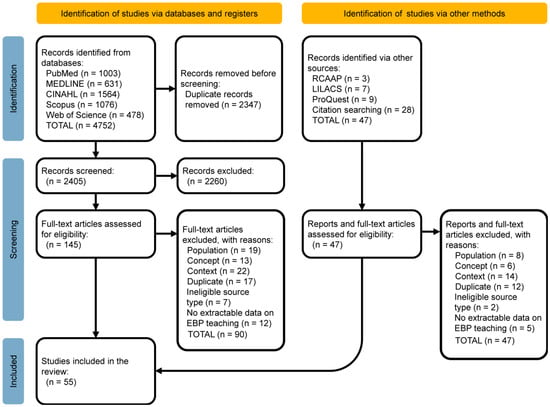
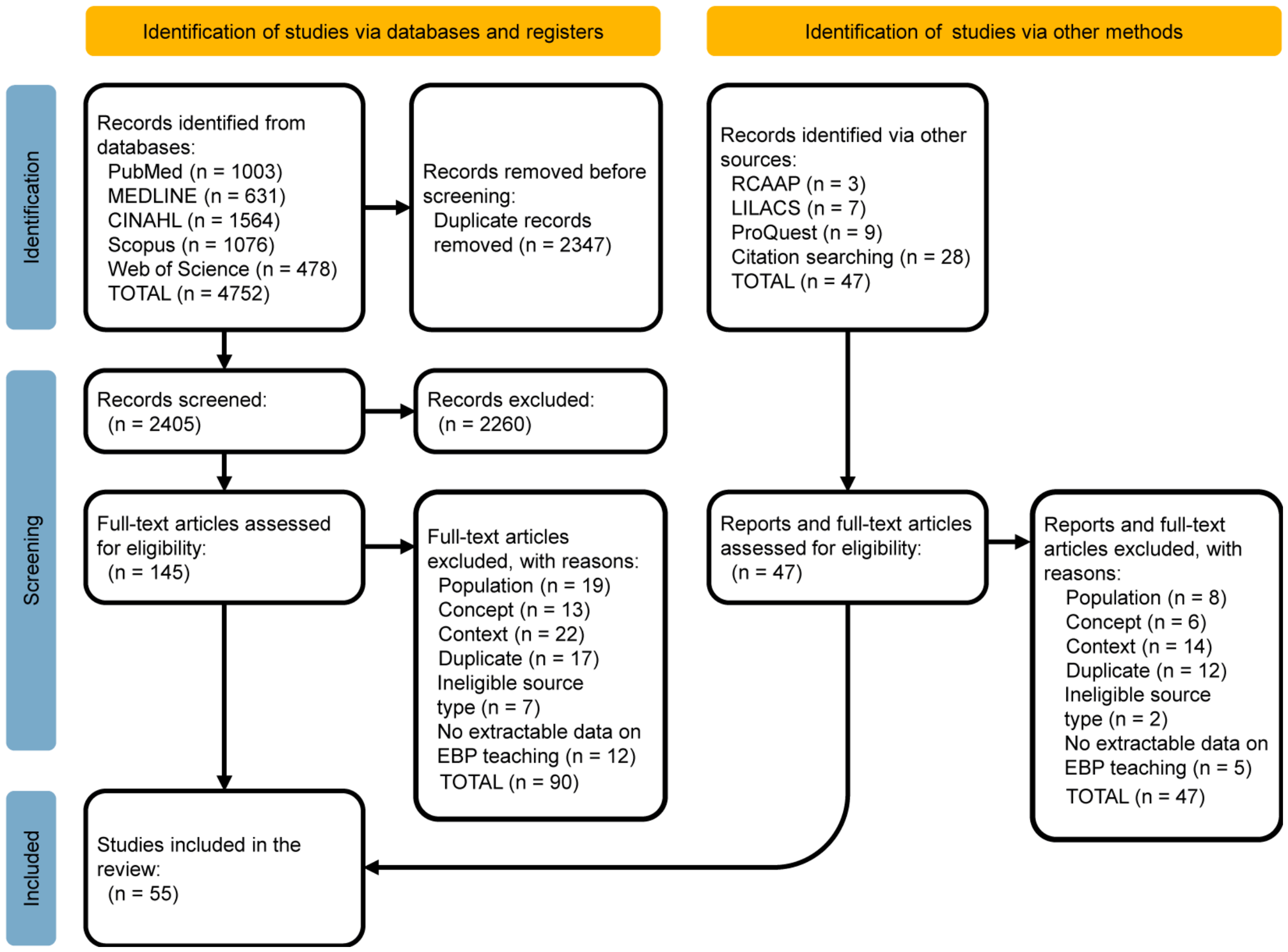

Disclaimer/Publisher’s Note: The statements, opinions and data contained in all publications are solely those of the individual author(s) and contributor(s) and not of MDPI and/or the editor(s). MDPI and/or the editor(s) disclaim responsibility for any injury to people or property resulting from any ideas, methods, instructions or products referred to in the content. |
© 2026 by the authors. Licensee MDPI, Basel, Switzerland. This article is an open access article distributed under the terms and conditions of the Creative Commons Attribution (CC BY) license.