


Abstract
Ensuring sustainable wheat production is crucial for food security, particularly in regions facing plant diseases and environmental challenges. In the Middle East, wheat powdery mildew, caused by Blumeria graminis f. sp. tritici, significantly threatens yields and quality, making it essential to comprehend local pathotype virulence and resistance genes for effective disease management. Therefore, 252 infected leaves were sampled from cultivated bread wheat genotypes in Egypt Delta region during 2024–2025 growing seasons. Forty-one powdery mildew monogenic lines (Pm) and twelve new bread wheat genotypes were evaluated at seedling and adult stages. Pathotype analysis identified six pathotypes in 2024 (IOEE most common, 22.91%) and four in 2025 (POKE dominant, 34.25%). Virulence diversity declined significantly: Shannon diversity decreased from 5.90 to 3.73, and Simpson diversity decreased from 5.81 to 3.58, indicating reduced pathotype complexity. No virulence was detected against Pm11, Pm13, Pm24, Pm25, Pm29, Pm32, Pm34, Pm35, Pm36, Pm37, Pm43, NCA9, and MIAB10 genes. PERMANOVA analysis showed no significant compositional difference between seasons (R2 = 0.112, p = 0.481), with low genetic differentiation (mean character difference = 0.1894; Roger’s distance = 0.1914). Sakha96 wheat genotype displayed complete resistance at both growth stages, while Misr4, Misr5, Sakha95, Sids15, and Gemmeiza13 showed adult-stage resistance only in both seasons. Molecular analysis revealed that Pm24, Pm35 and Pm37 were absent in all genotypes. Pedigree analysis demonstrated Pm35 and Pm37 share common ancestral origins across Egyptian wheat germplasm. So, these resistant genotypes and broadly effective resistance genes provide valuable resources for breeding durable powdery mildew resistance in Egyptian wheat.
1. Introduction
Powdery mildew, Blumeria graminis f. sp. tritici (Bgt), is one of the devastating diseases affecting wheat (Triticum aestivum L.), which results in a significant reduction in wheat quality and grain yield in case of severe infection [1,2,3,4]. Blumeria graminis ranks sixth of the ten most urgent fungal pathogens affecting wheat worldwide due to the emergence of new virulent isolates, environmental changes, and the susceptibility of wheat cultivars [5,6]. Wheat yield losses ranged from 10 to 62% [7,8,9], with severe infection resulting in yield losses up to 100% [10]. In the absence of resistant varieties, different chemical fungicides were applied for powdery mildew management [11]. Application of fungicides is often unsustainable because of the emergence of isolates with acquired resistance and environmental and economic concerns [12]. Additionally, Bgt has a diverse population composition, fast mutation rates, and virulent pathotypes [13,14]. Therefore, investigating population dynamics and genetic evolution, tracking the pathogen’s spread across different regions, and assessing the pathogenic isolates’ diversity are crucial for enabling scientists to monitor the efficiency of resistance genes [15,16]. These efforts provide early warnings of resistance loss in wheat varieties [13,17]. Therefore, host plant resistance remains a key component of integrated powdery mildew management [18,19], which includes both race-specific and non-race-specific resistance [20,21]. Race-specific resistance has been widely used in breeding programs; however, the narrow genetic base of wheat cultivars often limits its durability. Moreover, race-specific resistance is ephemeral and easily defeated by emerging virulent races [22,23]. Conversely, adult resistance is long-lasting, robust, more durable, and highly efficient for multiple pathogens [24,25]. To date, about 110 to 140 Pm genes/alleles have been characterized in common wheat and its relatives, including 69 formally designated genes [19,26,27], many of which confer race-specific resistance. Consequently, it is crucial to assess disease resistance across diverse wheat germplasm and understand its genetic basis to support the effective deployment of resistance genes in wheat production [28]. Historically, the identification of Pm genes relied on the phenotypic screening of monogenic lines against specific Bgt isolates. This approach often struggles to distinguish between individual resistance sources in complex backgrounds. To overcome these limitations, the integration of molecular markers (e.g., SSRs, STSs, and SNPs) has become indispensable in modern breeding programs. Molecular markers allow for the precise characterization of a cultivar’s genetic profile, enabling researchers to identify specific Pm genes and confirm gene pyramiding. The main wheat pathogens in Egypt are stripe rust and powdery mildew, which significantly reduce yield [29]. Powdery mildew is now considered a major threat, as the majority of widely cultivated Egyptian wheat varieties are susceptible [11,30]. Furthermore, limited investigations have addressed the genetic basis of powdery mildew resistance, particularly for the new wheat varieties as well as the current population structure of Bgt across major wheat- growing regions [31]. Therefore, this study aims to identify the pathotypes of Bgt isolates, test the virulence and diversity of the Egyptian powdery mildew populations, and study the effectiveness of Pm genes and the new released breeding genotypes in both stages and molecular and pedigree analysis of some Pm genes in the new released bread wheat genotypes.
2. Materials and Methods
2.1. Collecting Samples of Infected Leaves
The naturally infected leaves with conidia of Bgt were collected from the susceptible wheat genotypes (Misr1, Misr2, Gemmeiza 12, Giza 171, Sakha95, Misr3), grown in fields of the middle governorates of Delta Egypt in the 2024–2025 seasons (Table 1). These governorates include Gharbia, Kafr El Sheikh, Dakahlia, and Menoufia. Two hundred and fifty-two isolates, 144 in 2024 and 108 in 2025, were collected.
Table 1.
Distribution and number of infected wheat leaf samples collected across different governorates and locations in the 2024 and 2025 growing seasons.
2.2. Plant Material and Inoculation
A total of 53 genotypes, including 41 Pm differential lines provided from North Carolina State University (Table 2) and 12 new released spring wheat genotypes, sourced from the International Wheat Program, Field Crops Research Institute, were selected for virulence analysis (Table 3). The pedigree of the powdery mildew cultivars/lines, sources and chromosomal location is listed according to [32,33]. All the genotypes were cultivated in plastic pots (10 × 10 cm). A fresh colony of each fungal isolate was inoculated into the susceptible wheat variety Chancellor seedlings for multiplication using the pot-brushing technique. Then, single pustules were separated by transferring conidia to a non-infected seedling using a sterile dissecting needle. All the isolates were kept in a separate transparent unit at 20–22 °C. All Pm gene lines and local wheat genotypes were inoculated separately with each pure isolate using the pot-brushing technique [34].
Table 2.
List of the 41 Pm monogenic lines evaluated for powdery mildew resistance, including the cultivar/line, gene and gene location.
Table 3.
List of twelve new bread wheat genotypes and their pedigrees evaluated in the present study, including their specific parental crosses, pedigree information and year of release.
2.3. Disease Assessment and Virulence %
Disease severity of powdery mildew was assessed 10 days post-inoculation using the 0–9 scale [71], when control plants exhibited maximum severity. The virulence of each isolate was evaluated according to [72].
2.4. Pathotype Identification
Pathotypes were identified from 144 and 108 Bgt isolates, conducted in a controlled glass house environment (12 h light at 20 °C), with units covered in cheesecloth to prevent contamination at the Gemmeiza Agricultural Station. Sixteen Pm differential lines were used (Table 4), and pathotypes were designated according to the system described by [73]. Heatmap and principal component analysis (PCA) were performed to show the relationship between Pm pathotypes and/or their virulence formula on 41 Pm genes across the two seasons. The virulence/avirulence formula was converted to a binary data matrix (0 = resistant and 1 = susceptible). All statistical analysis and visualizations were performed using R software (version 4.5.1), using the R packages FactoMineR, factoextra and ggplot2. For assessing the powdery mildew pathotypes diversity, the following indices were calculated: Shannon index (q = 1), Simpson (q = 2), Richness (q = 0), and divergence was measured by mean character difference (MCD) and Roger’s distance [74] based on virulence reactions of the differential lines. Differences in virulence composition between seasons were evaluated using permutational multivariate analysis of variance (PERMANOVA), while homogeneity of multivariate dispersion was tested using beta-dispersion analysis. Statistical analyses were conducted by the iNEXT package in R Studio (v4.5.1).
Table 4.
Designation codes and characteristics of the 16 wheat differentials used for the identification and pathotype characterization of Blumeria graminis f. sp. tritici pathotypes.
2.5. Field Experiment
Seeds of twelve new bread wheat genotypes and forty-one Pm monogenic lines were sown in rows 1.5 m long and spaced 50 cm apart at the Gemmeiza Agricultural Research Station during the 2024–2025 seasons using a randomized complete block design with three replicates. The experiment was bordered by two highly susceptible cultivars, Coker 68-15 and Chancellor. The final disease severity was assessed under natural infection conditions as the susceptible check varieties exhibited maximum powdery mildew severity using the 0–9 scale [71]. Then, data for both seasons were statistically analyzed using IBM SPSS Statistics (version 20), and mean comparisons were performed using the least significant difference (LSD) test and Duncan’s multiple range test at p ≤ 0.05; means followed by the same letter are not significantly different.
2.6. Molecular Analysis
DNA Extraction and PCR Amplification Conditions
This work was conducted in the Plant Pathology and Biotechnology Lab, Faculty of Agriculture, Kafr Elsheikh University in 2025. Total DNA of 3 highly resistant monogenic lines (Pm genes) and the 12 new bread wheat genotypes was extracted from 250 mg of 15-day seedlings. The fresh leaf tissues were ground in liquid nitrogen with a mortar and pestle, and subsequently, DNA extraction was accomplished using the Invisorb® Spin Plant Mini Kit (STRATEC Molecular, Berlin, Germany) to purify the DNA, according to the manufacturer’s instructions. The extraction method and amplification conditions were carried out as reported by [75]. The SSR markers Xgwm337, Xcfd7, and Xgwm332 linked to Pm24, Pm35, and Pm37 were used [59,61,76]. Each PCR mixture (25 µL) includes 1 µL of 25 ng nucleic acid, 1 µL of each primer (10 pmol), 12.5 µL of GoTag® Colorless Master Mix (Promega Corporation, Madison, WI, USA), and 9.5 µL of nuclease-free water (Promega). A total of 15 µL of all PCR products was analyzed by electrophoresis through a 2% agarose gel, stained with ethidium bromide, and DNA bands were visualized using a UV transilluminator. SSR profiles were scored as binary data, based on the presence (1) or absence (0). Genetic similarity among wheat genotypes was estimated using the Jaccard similarity coefficient. Pairwise similarity coefficients were calculated based on shared and non-shared alleles. All analysis was performed using the R environment. The Jaccard distance matrix was computed using the vegan and ape packages, and hierarchical clustering was conducted using the base hclust function.
2.7. Pedigree Analysis
To know the possible pedigree relationship between Pm24, Pm35 and Pm37 and 12 Egyptian wheat genotypes, the detailed pedigree was downloaded from https://www.cimmyt.org/about/data/?utm_source=chatgpt.com (accessed on 11 May 2025) and https://npgsweb.ars-grin.gov/gringlobal/accessiondetail/ (accessed on 11 May 2025) (Supplementary Table S1). Data of the pedigree and ancestry networks were constructed and visualized using the R statistical environment (version 4.3.0). Data manipulation and relationship mapping were conducted using the packages tidyverse, igraph, ggraph, and ggrepel.
3. Results
3.1. Disease Assessment
A total of 252 Bgt isolates were investigated for their virulence frequencies % on 41 known Pm genes during the 2024–2025 seasons (Table 5). In the 2024 season, virulence frequencies % ranged from 0 to 95.13%. Most isolates were virulent to the tested Pm genes, whereas resistance was observed to Pm11, Pm 13, Pm24, Pm25, Pm29, Pm32, Pm34, Pm35, Pm36, Pm37, Pm43, NCA9, and MIAB10. Five Pm genes, Pm16, Pm12, Pm20, Pm2, and Pm3d, respectively, showed virulence frequencies from 7.63 to 47.91% (less than 50%). However, 24 Pm genes (58.53%) showed virulence frequencies % of more than 50%. In the 2025 season, the tested Pm genes exhibited the same trend in their virulence frequencies % against 108 isolates of Bgt, with different values. Pm17 exhibited the highest virulence frequency in both seasons, with frequencies of 95.13% and 95.37%, respectively.
Table 5.
Virulence frequency % of 144 and 108 isolates of Bgt evaluated under conditioned glass house in the 2024–2025 growing seasons.
3.2. Pathotype Identification of Bgt
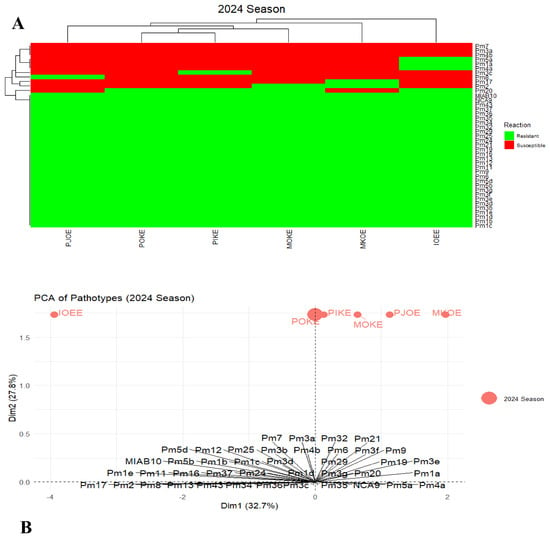
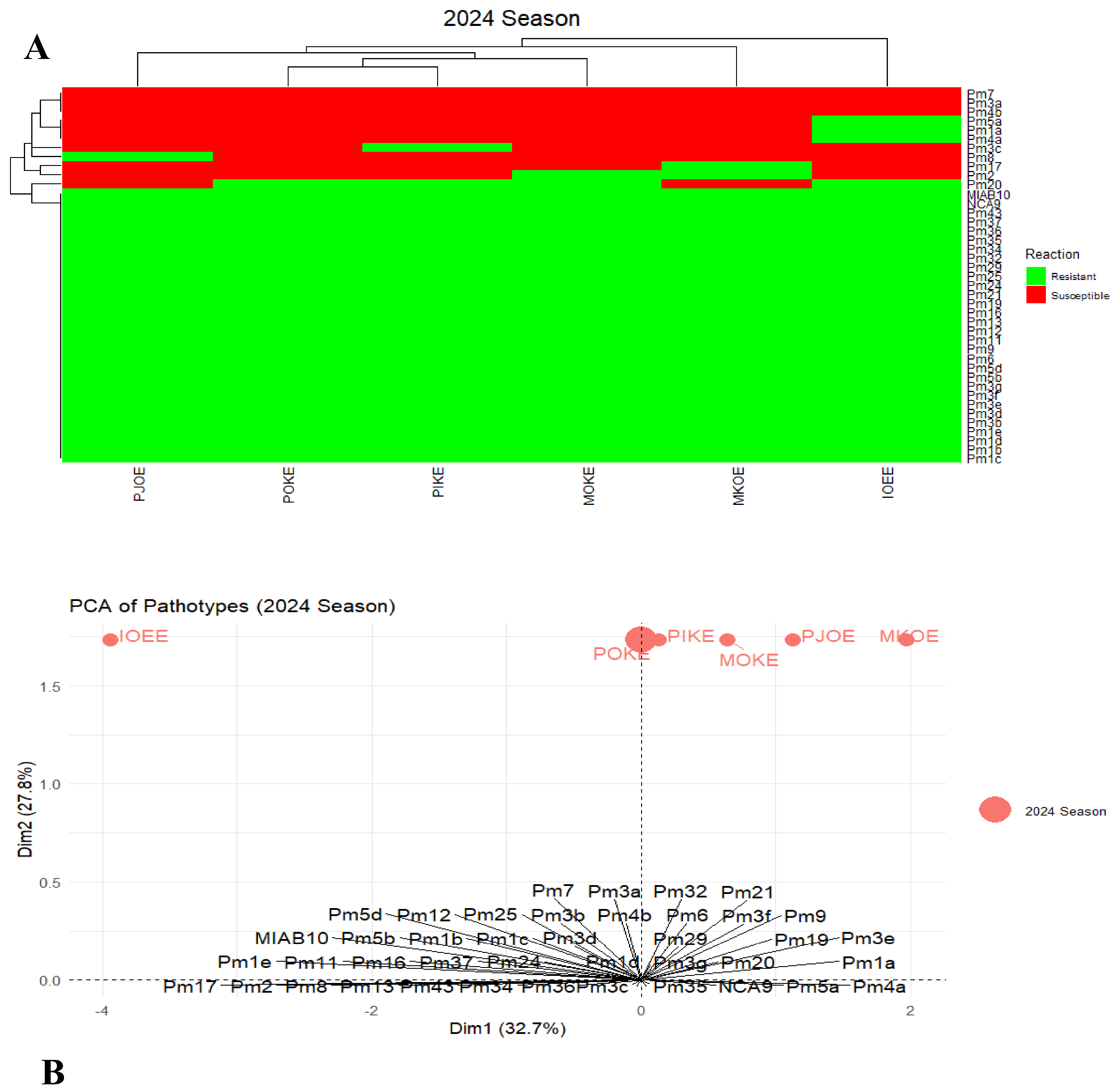
Six pathotypes were identified among 144 isolates of Bgt collected from different wheat genotypes in the 2024 season. These pathotypes were POKE, PJOE, MKOE, PIKE, MOKE, and IOEE (Table 6). Among the identified pathotypes, IOEE showed the highest occurrence (22.91%), while PJOE exhibited the lowest (10.41%). All of them ended with KE, OE, and EE letters and were characterized by virulence to the Pm genes 1a, 2, 3a, 4a, 3c, 8, 17, 5a, and Pm7. Heatmap and PCA were performed based on the response of Pm genes to six identified pathotypes (Figure 1A). The PCA scatterplot explained a total variance of 40.5%, with PC1 (Dim1) accounting for 32.7% and PC2 (Dim2) explaining 27.8% of the total (Figure 1B).
Table 6.
Occurrence and virulence formulae of the Bgt phenotypes identified among 144 isolates collected in 2024 season.
Figure 1.
Multivariate analysis of six Bgt pathotypes evaluated across 41 Pm monogenic lines during the 2024 growing season. (A) Heatmap illustrating the infection response patterns and interaction profiles, where color intensity reflects disease reaction levels. (B) Principal component analysis (PCA) scatter plot showing the grouping and variance distribution among the tested pathotypes.
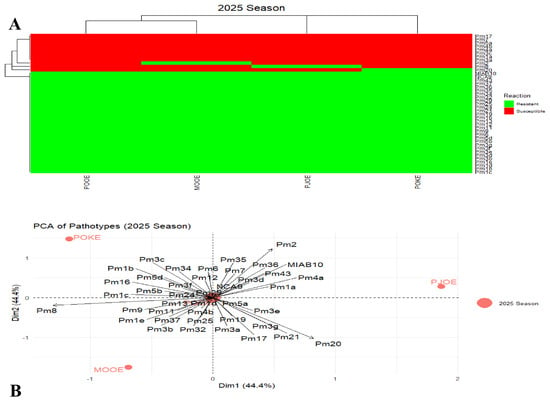
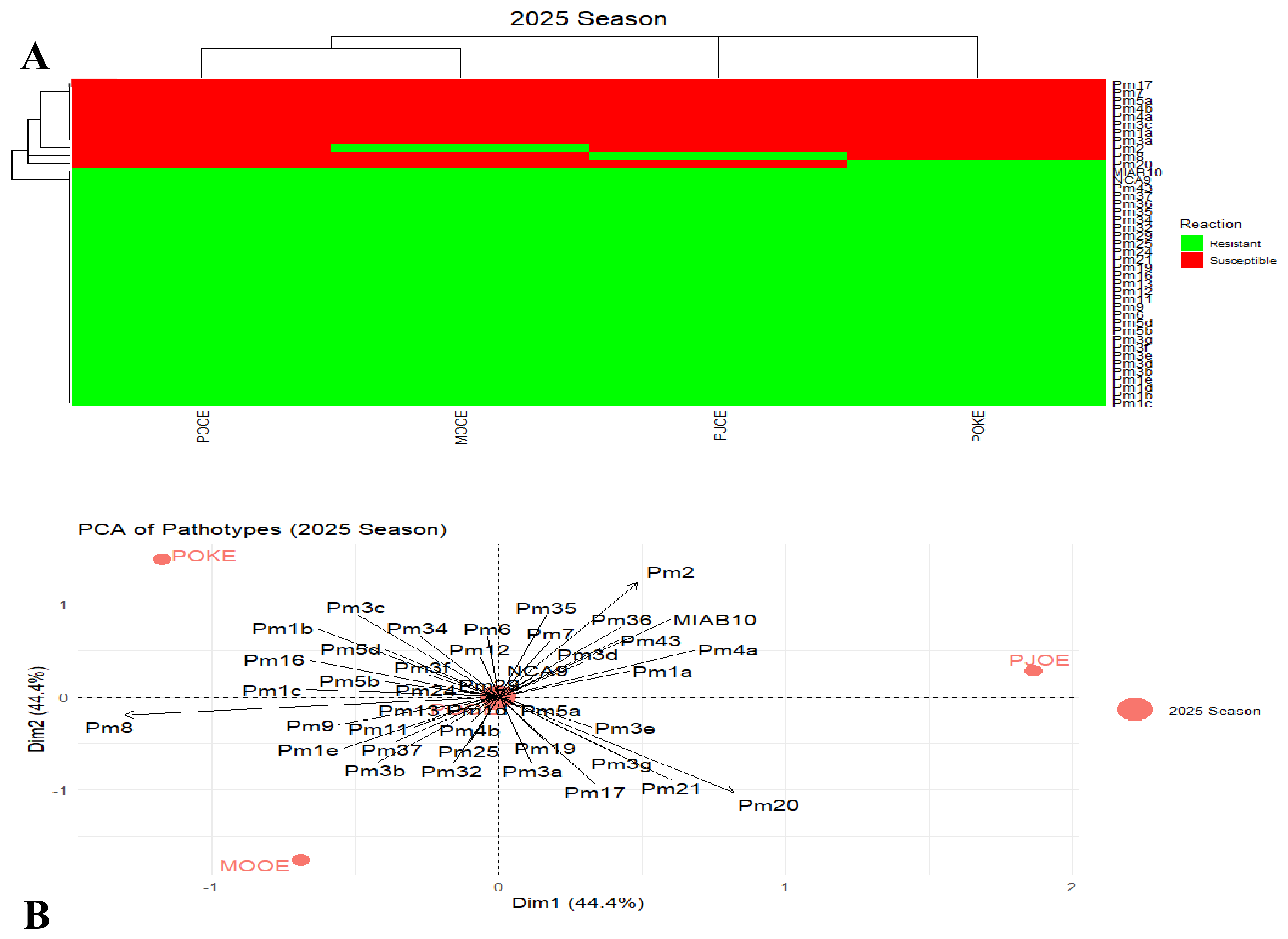
Four Bgt pathotypes, POOE, MOOE, PJOE, and POKE, were identified from 108 isolates collected in the 2025 season. (Table 7). The POKE pathotype was the most prevalent, accounting for 34.25%, whereas POOE was the least frequent (9.25%). The pathotypes POKE and MOOE showed the highest occurrence (%), 34.25% and 28.70%, respectively. Virulence % of the pathotypes MOOE, PJOE, and POKE were 62.50% for each, while the fourth pathotype (POOE) showed 68.75% (Figure 2A). Also, all of them ended by OE or KE letters, with virulence against the Pm genes 1a, 2, 3a, 4a, 3c, 8, 17, 5a, 20 and Pm7. Heatmap and PCA were performed based on the response of Pm genes to four identified pathotypes. The PCA scatterplot explained 48.8% of the variance, with PC1 (Dim1) accounting for 44.4% and PC2 (Dim2) explaining 44.4% (Figure 2B).
Table 7.
Occurrence and virulence formulae of the Bgt phenotypes identified among 108 isolates collected in the 2025 season.
Figure 2.
Multivariate analysis of four Bgt pathotypes evaluated across 41 Pm monogenic lines during the 2025 growing season. (A) Heatmap illustrating the infection response patterns and interaction profiles, where color intensity reflects disease reaction levels. (B) Principal component analysis (PCA) scatter plot showing the grouping and variance distribution among the tested pathotypes.
3.3. Virulence Diversity Shifts in Both Seasons
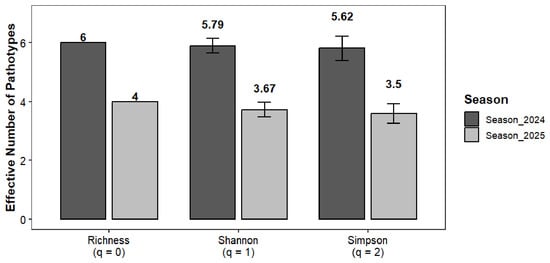
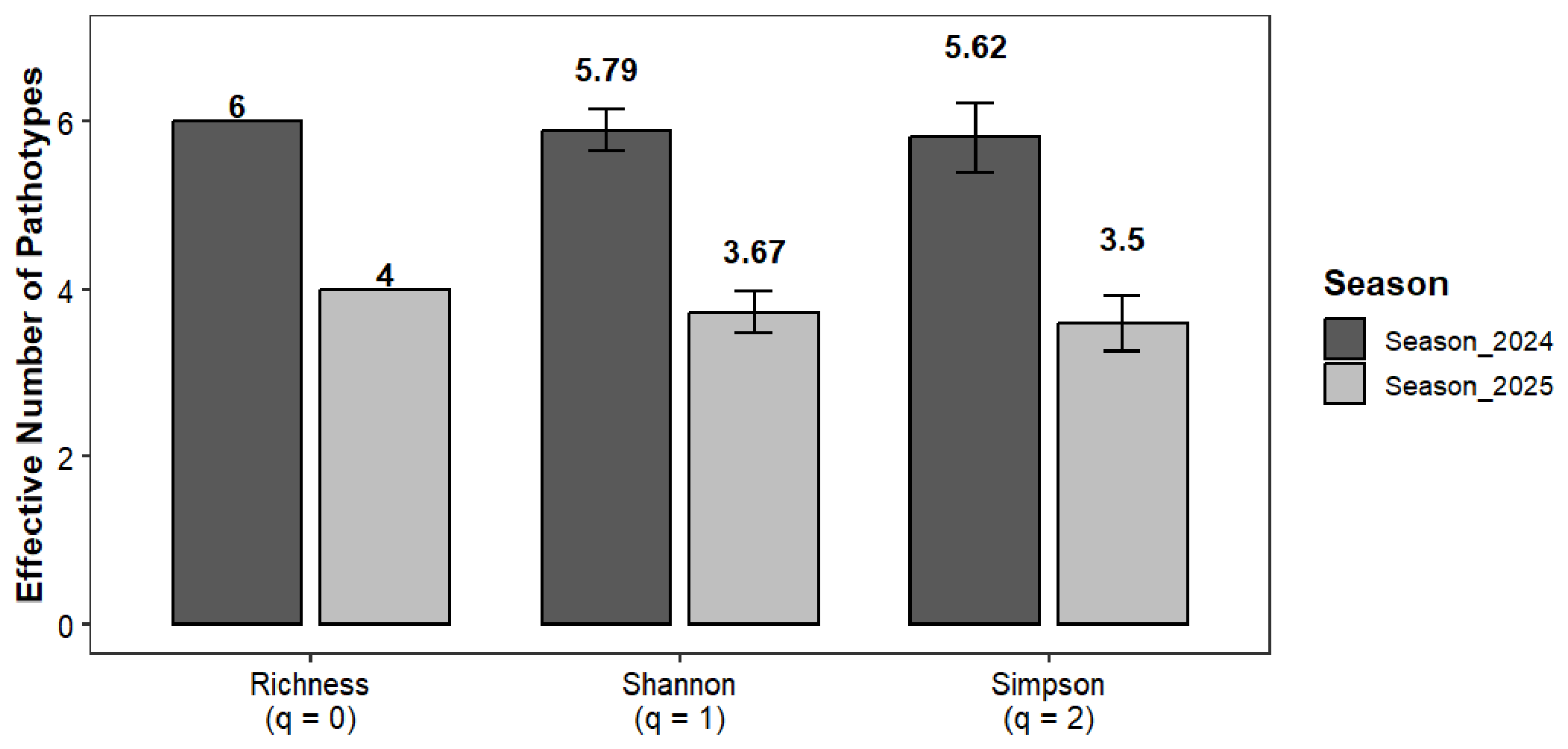
To investigate the diversity in wheat powdery mildew pathotypes in both seasons, Hill-number analysis was conducted. Hill-number analysis revealed a reduction in pathotype richness and diversity from 2024 to 2025, with richness decreasing from six to four pathotypes and Shannon and Simpson diversities declining from 5.90 to 3.73 and from 5.81 to 3.58, respectively (Table 8 and Figure 3). The test for homogeneity of multivariate dispersions was not significant (F = 0.836, p = 0.387), confirming comparable within-season variability (Table 9). PERMANOVA showed that season accounted for only 11.18% of the total variation in virulence profiles and did not significantly affect population structure (F = 1.007, p = 0.481). Likewise, the low mean character difference (MCD = 0.1894) and Roger’s distance (R = 0.1914) indicated a high degree of similarity between the 2024 and 2025 pathogen populations (Table 10).
Table 8.
Genetic diversity indices of Blumeria graminis f. sp. tritici pathotypes populations sampled during the 2024 and 2025 growing seasons. Metrics include the number of distinct phenotypes, Shannon–Wiener diversity index, Shannon, and Richness measures.
Figure 3.
Diversity of wheat powdery mildew pathotypes during the 2024 and 2025 growing seasons based on Hill numbers.
Table 9.
Beta dispersion and PERMANOVA comparisons of two Bgt pathotypes populations across the 2024 and 2025 growing seasons.
Table 10.
Genetic distance metrics for mean character difference (MCD) and Rogers distance (R) between the Bgt pathotypes in 2024 and 2025 seasons on differential lines (n = 41).
3.4. Response of the Pm to Bgt at Adult Stage
A significant difference was observed between resistant and susceptible monogenic lines in both seasons. Among the 41 evaluated Pm monogenic lines, 32 showed complete resistance at adult growth stage across both seasons, and nine were susceptible (Table 11). The resistant Pm genes were Pm 1d, 2, 3a, 3b, 3d, 3c, 3g, 4a, 4b, 5a, 5b, 6, 8, 12, 16, 17, 19, 20, 21 11, 13, 24, 25, 29, 32, 34, 35, 36, 37, 43, NCA9 and MIAB10 throughout both seasons. Meanwhile, the susceptible Pms were Pm 1a, 1b, 1c, 1e, 3e, 3f, 5d, 7 and 9 in both seasons.
Table 11.
Mean powdery mildew disease severity of 41 Pm monogenic lines at the adult stage across the 2024 and 2025 growing seasons.
3.5. Response of the New Wheat Genotypes to Bgt Pathogen
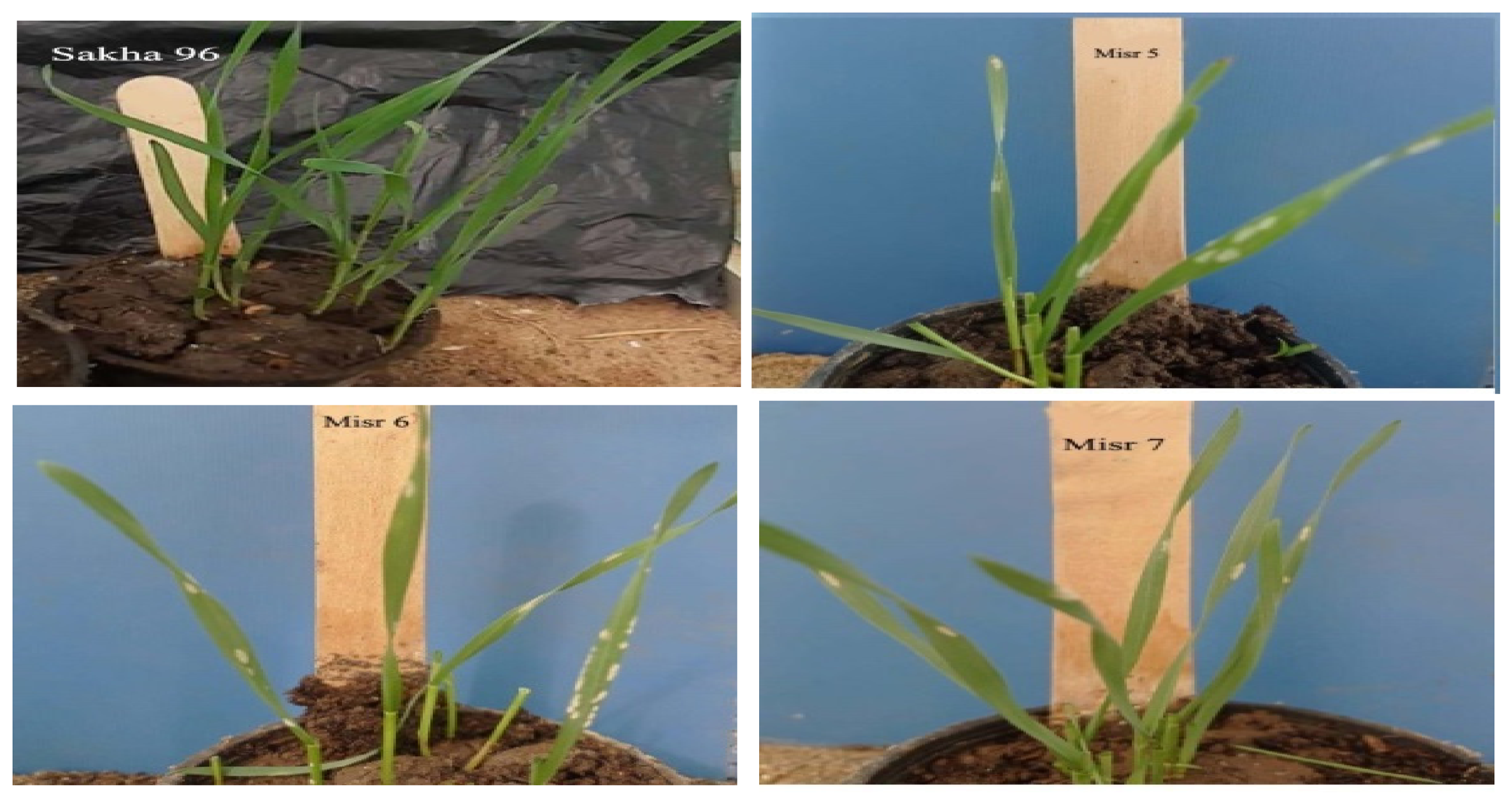
Twelve new wheat genotypes were evaluated against powdery mildew disease at both stages in both seasons. Significant differences were observed among the evaluated wheat genotypes at the seedling stage, with Sakha96 being the only genotype resistant to all tested Bgt isolates (Table 12). In contrast, the other eleven genotypes showed high susceptibility, with scores ranging from 6 to 9 on the scale (Figure 4). However, at the adult stage, Misr4, Misr5, Sakha95, Sakha96, Sids15, and Gemmeiza13 genotypes showed an immune reaction. While Misr3, Misr6, Misr7, and Sakha97 genotypes showed susceptible reaction (7 scale), Misr1 and Misr2 were highly susceptible (9 scale).
Table 12.
Assessment of mean powdery mildew disease severity percentages evaluated on 12 new bread wheat genotypes at both the seedling and adult plant stages across the 2024 and 2025 growing seasons.
Figure 4.
Response of Sakha96 and Misr5, Misr6, and Misr7 wheat genotypes to powdery mildew pathogen under conditioned glass house conditions at seedling stage.
3.6. Molecular Detection of Resistance Pm Genes
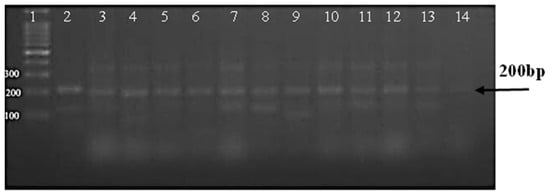
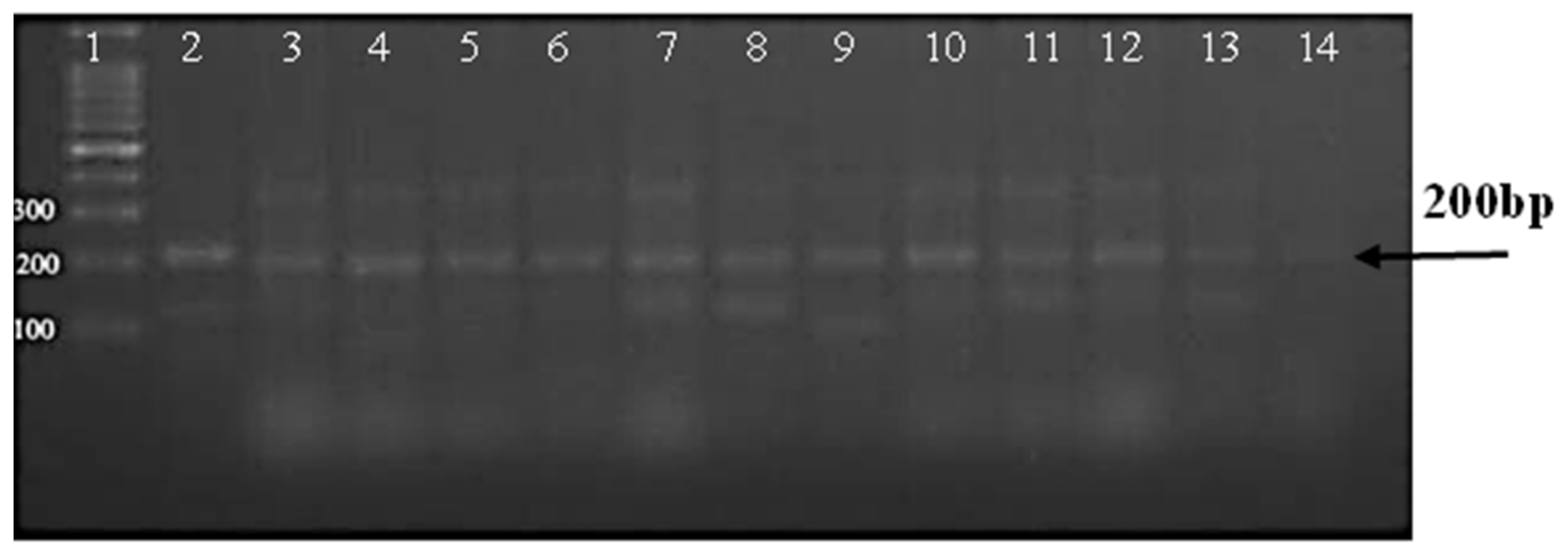
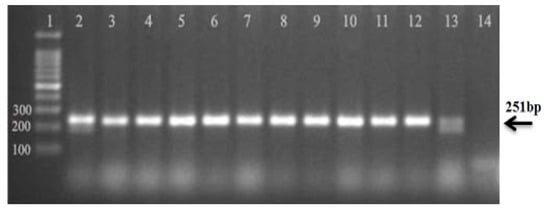
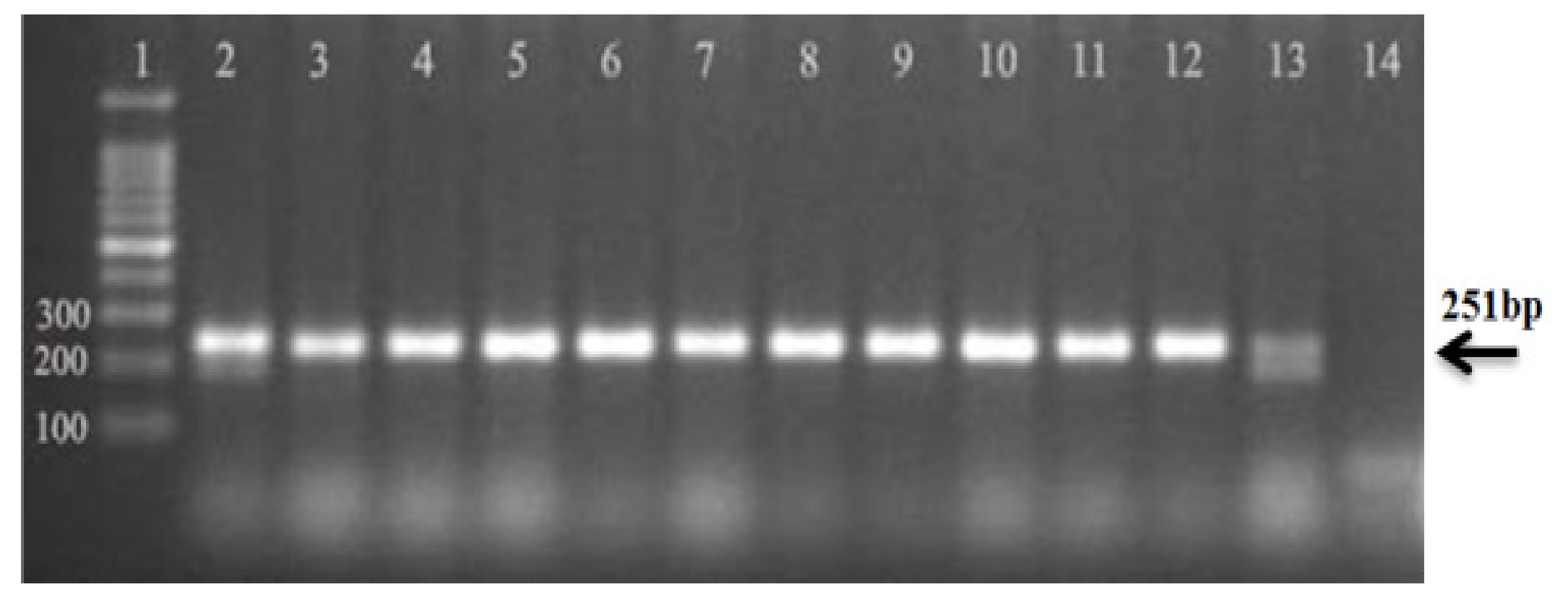
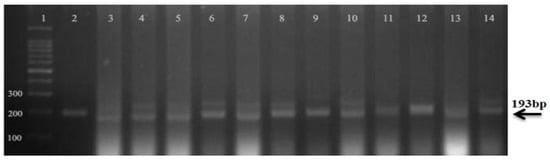
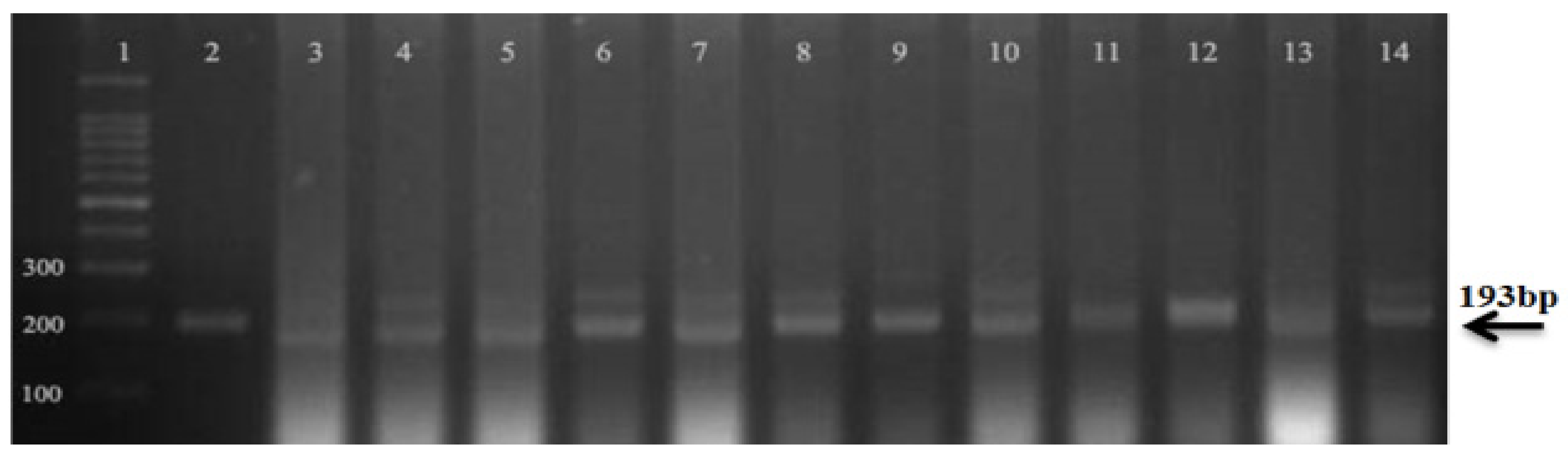
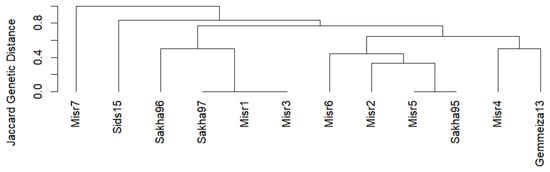
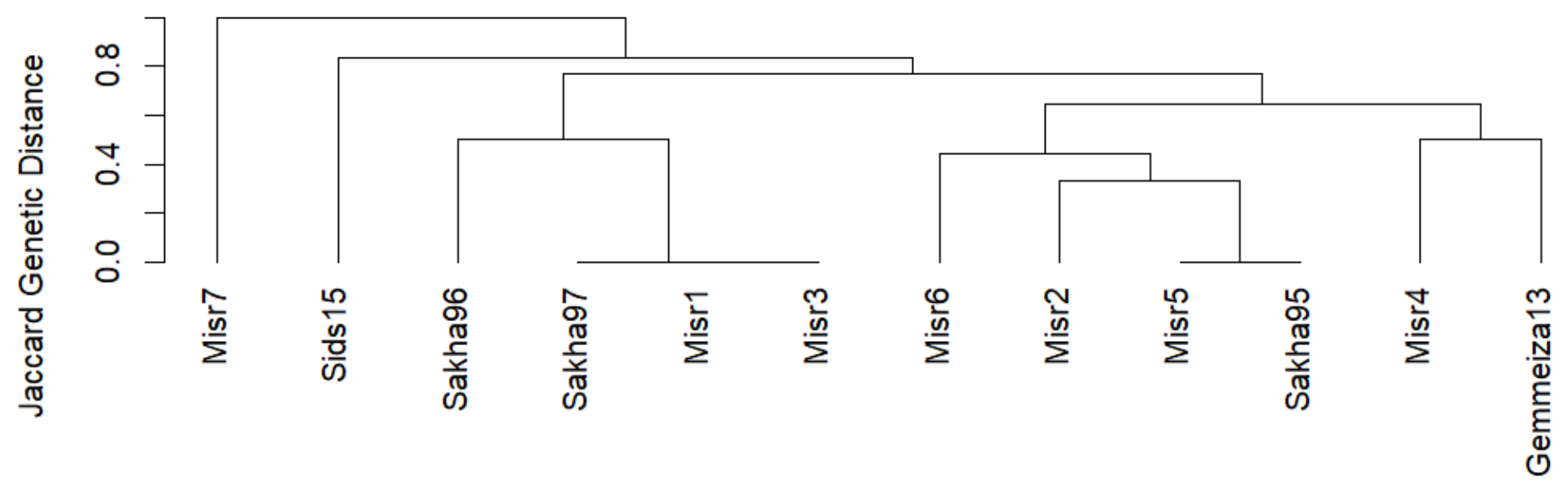
This study used three closely linked primers, Xgwm337, Xcfd7, and Xgwm332, to detect Pm24, Pm35, and Pm37 in twelve new wheat genotypes. Specific bands of 200, 251, and 193 bp correspond in size to the diagnostic controls for Pm24, Pm35, and Pm37, respectively. However, the analysis of the PCR profiles showed that the diagnostic marker bands associated with Pm24, Pm35, and Pm37 were not detected in any of the tested wheat genotypes (Figure 5, Figure 6 and Figure 7). Additional polymorphic bands were amplified by Xgwm337 (350 and 150 bp), xcfd7 (200 bp) and xgwm332 (230 bp). The additional bands were used to construct the relationships among the wheat genotypes (Table 13 and Figure 8). These results indicate the presence of marker alleles corresponding in size to those associated with the respective resistance loci. Based on UPGMA cluster analysis, the genotypes were grouped into two main clusters. The first cluster comprised the highly resistant Sakha96 and the adult-stage-resistant Sids15, together with several highly susceptible cultivars (Sakha97, Misr1, Misr3, and Misr7). The second cluster also comprised adult-stage-resistant varieties together with susceptible cultivars (Misr6 and Misr2).
Figure 5.
Pm24 linked primer (200 bp) and 12 wheat genotypes. 1: 100 bp DNA ladder RTU (Gene Direx), 2: Pm24, 3: Misr1, 4: Misr2, 5: Misr3, 6: Misr4, 7: Misr5, 8: Misr6, 9: Misr7, 10: Sakha95, 11: Sakha 96, 12: Sakha97, 13: Sids15, 14: Gemmeiza13.
Figure 6.
Pm35 linked primer (251 bp) and 12 wheat genotypes. 1: 100 bp DNA ladder RTU (Gene Direx), 2: Pm35, 3: Misr1, 4: Misr2, 5: Misr3, 6: Misr4, 7: Misr5, 8: Misr6, 9: Misr7, 10: Sakha95, 11: Sakha96, 12: Sakha97, 13: Sids15, 14: Gemmeiza13.
Figure 7.
Pm37 linked primer (193 bp) and 12 wheat genotypes. 1: 100 bp DNA ladder RTU (Gene Direx), 2: Pm37, 3: Misr1, 4: Misr2, 5: Misr3, 6: Misr4, 7: Misr5, 8: Misr6, 9: Misr7, 10: Sakha95, 11: Sakha96, 12: Sakha97, 13: Sids15, 14: Gemmeiza13.
Table 13.
Pairwise genetic similarity matrix among the twelve bread wheat genotypes based on molecular marker data. Values represent the calculated similarity coefficients between pairs of cultivars, with diagonal values indicating self-comparison (1.000).
Figure 8.
UPGMA cluster analysis, showing the genetic relationships and hierarchical clustering among the twelve bread wheat genotypes based on simple sequence repeat (SSR) marker data.
3.7. Pedigree Analysis of Pm Genes
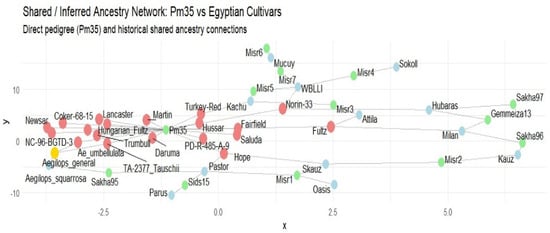
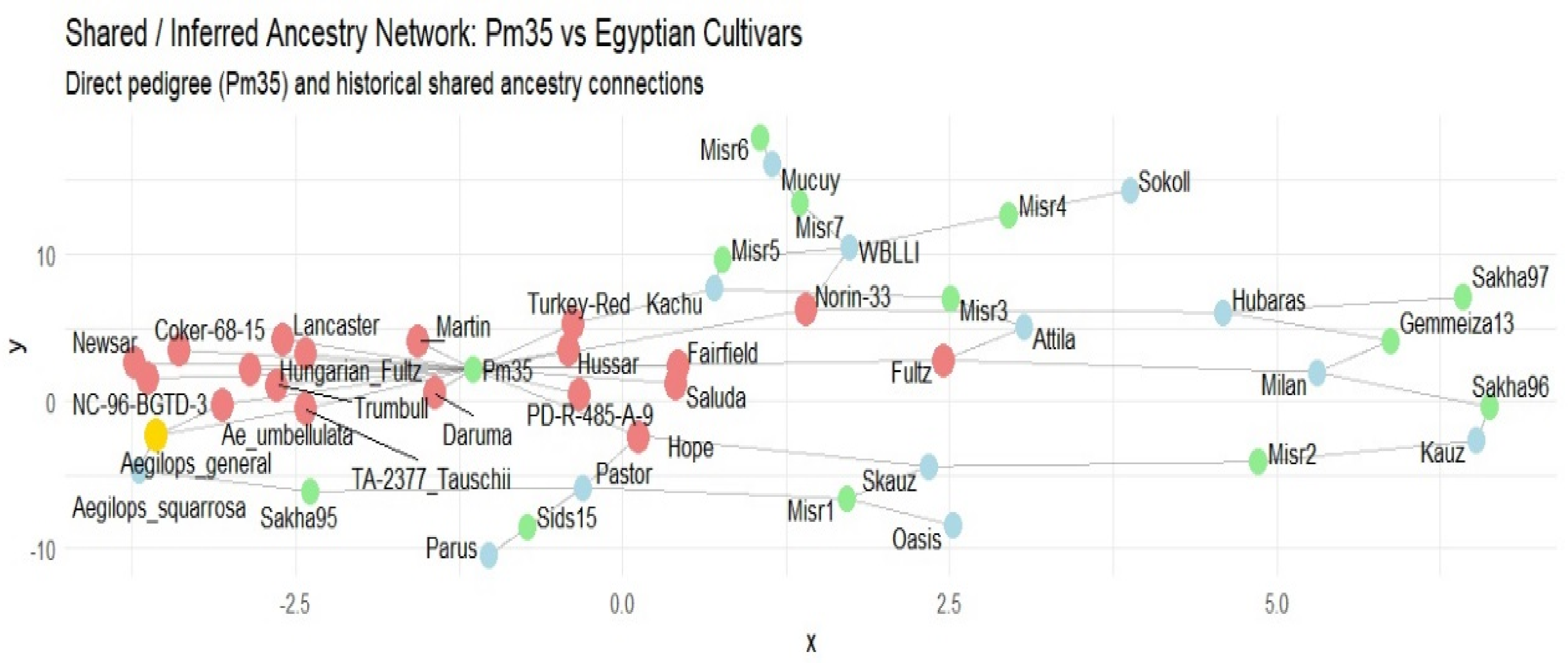
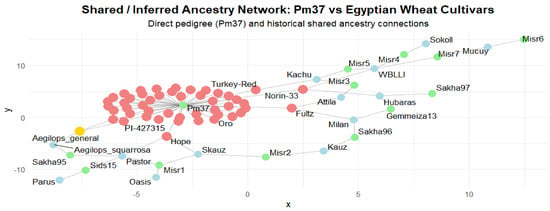
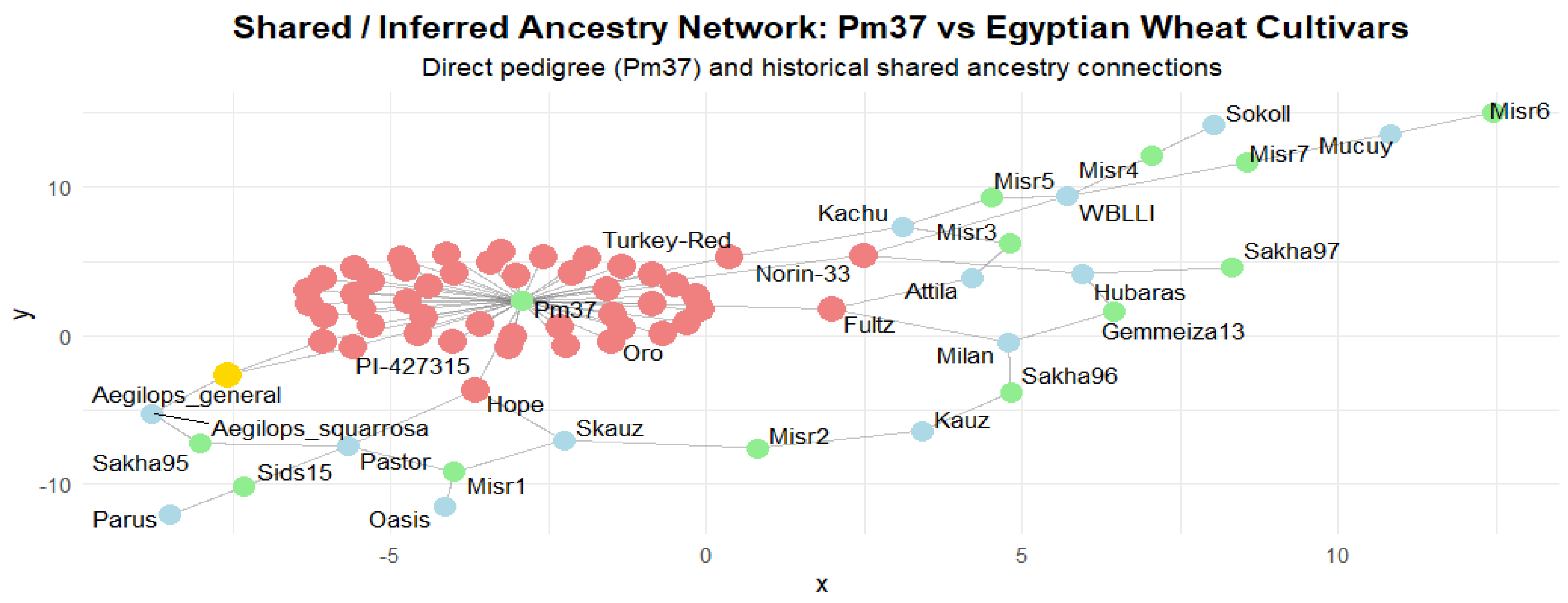
To assess the ancestral relation between Pm24, Pm35 and Pm37 and the 12 Egyptian wheat genotypes, R packages were used. Data showed common ancestors between Pm35 and Pm37 and the wheat genotypes (Figure 9 and Figure 10), while Pm24 does not have a cleared pedigree.
Figure 9.
Shared/inferred ancestry network between Pm35 and Egyptian wheat cultivars. Green, blue, red, and yellow nodes represent Egyptian cultivars, Egyptian ancestors, Pm35 ancestors, and shared backbone ancestors, respectively. Lines indicate direct pedigree relationships or historically inferred shared ancestry connections.
Figure 10.
Shared/inferred ancestry network between Pm37 and Egyptian wheat cultivars. Green, blue, red, and yellow nodes represent Egyptian cultivars, Egyptian ancestors, Pm37 ancestors, and shared backbone ancestors, respectively. Lines indicate direct pedigree relationships or historically inferred shared ancestry connections.
4. Discussion
Among the 41 evaluated Pm monogenic lines, Pm11, 13, 24, 25, 29, 32, 34, 35, 36, 37, Pm43, NCA9, and MIAB10 (31.70%) demonstrated complete resistance at both seedling and adult plant stages across both seasons. Of these, Pm13, 24, 35, 36, and 37 were previously reported as completely resistant under Egyptian conditions [31,76], while the complete resistance of Pm11, 25, 29, 32, 34, Pm43, NCA9, and MIAB10 against Egyptian Bgt populations is documented here. Their consistent performance across developmental stages and seasons implies stable, potentially durable resistance, a prerequisite for breeding cultivars with long-term disease management efficacy. In contrast, 21 lines, Pm1d, 2, 3a, 3b, 3c, 3d, 3g, 4a, 4b, 5a, 5b, 5d, 6, 8, 12, 16, 17, 19, 20, and 21, were susceptible at the seedling stage yet resistant at the adult plant stage, indicative of adult plant resistance (APR). Previous Egyptian studies covered only a subset of these lines, with an APR, while Pm8 and Pm9 were fully susceptible at both stages. Notably, the APR responses now observed for several lines previously classified as completely resistant [31,76] provide direct evidence of ongoing pathogen evolution under Egyptian conditions. Some Pms, such as Pm21, Pm37, and Pm4b, which have consistently conferred complete or near-complete resistance across Bgt populations in China and the United States [77,78], exhibited variable responses in Egypt. Collectively, these findings highlight that resistance gene effectiveness cannot be predicted across regions without local validation, reinforcing the necessity of continuous, region-specific virulence monitoring to anticipate pathotype shifts and guide evidence-based resistance gene deployment strategies.
The nomenclature system was adapted from cereal rust classification and provided a standardized framework for identifying and comparing pathogen races over time and across regions [72,79]. Such a standardized system is crucial because the number of pathotypes increases rapidly with more resistance genes, complicating communication and data interpretation. Moreover, it provided an effective, logical, and concise method capable of illustrating relationships among pathotypes [80]. The obtained data revealed that six (POKE, PJOE, MKOE, PIKE, MOKE, and IOEE) and four (POOE, MOOE, PJOE, and POKE) pathotypes were identified in the 2024 and 2025 seasons. Results also showed a significant increase in virulence of pathotypes to Pm genes 1a, 2, 3a, 4a, 3c, 8, 17, 5a, and Pm7. Moreover, all pathotypes shared the KE, OE, and EE suffixes, suggesting shared characteristics with previous pathotypes documented in Egypt [11]. The observed decline in pathotype richness from six to four between seasons was accompanied by a significant reduction in diversity indices: Shannon diversity decreased from 5.90 to 3.73, and Simpson diversity decreased from 5.81 to 3.59. This reduction in pathotype complexity, coupled with the emergence of a single dominant pathotype (POKE) in 2025, may reflect competitive exclusion under directional selection, wherein highly virulent genotypes conferring fitness advantages on prevalent host cultivars displace less competitive pathotypes within the population. Similar results were found by [81], who monitored Bgt populations in spring wheat-growing regions of Northeast China from 2004 to 2010 and found that the dominant race varied across three time periods and virulence to Pm2, Pm4b, Pm2+6, Pm4+8, Pm12, Pm16, Pm18, Pm21, Pm22, and Pm23 remained relatively low, ranging from 0 to 26.5%. Regional variation in pathotype diversity was further evidenced by [82], who identified 32 and 30 pathotypes in Lithuanian and Ukrainian Bgt populations, respectively, with NGDE and NGKE as their corresponding dominant types, highlighting the extent of geographic structuring within European Bgt metapopulations. Despite the inter-seasonal decline in pathotype number observed in the present study, PERMANOVA analysis revealed no statistically significant difference in overall virulence composition between the 2024 and 2025 populations (R2 = 0.112, p = 0.481), with low genetic differentiation values (mean character difference = 0.1894; Roger’s distance = 0.1914), indicating limited seasonal differentiation in virulence composition. Collectively, these findings suggest that, although pathotype diversity declined in 2025, the overall virulence composition remained largely stable between seasons.
Heatmap and PCA were used to analyze the virulence patterns of powdery mildew pathotypes and their interactions with 41 Pm genes during the 2024 and 2025 seasons. PCA analysis revealed differences in the structure of powdery mildew pathotypes between 2024 and 2025, with higher variance in 2025 (88.8%) compared to 2024 (70.5%). In 2024, most pathotypes were closely clustered, suggesting similar virulence patterns, with only a few distinct types. In contrast, 2025 showed clear separation of specific pathotypes (e.g., PJOE, POKE, MOOE), indicating increased diversity and possible pathogen adaptation. The tighter clustering of Pm genes in 2024 suggests limited discrimination among pathotypes, whereas their wider distribution in 2025 indicates greater effectiveness in differentiating virulence profiles. Overall, these results suggest a dynamic pathogen population, highlighting the importance of continuous monitoring and the use of diverse resistance genes to ensure durable wheat resistance. Annual surveys for prevalence and virulence for the Bgt population must be the target of wheat pathologists to draw a strategy for maintaining durable resistance to the disease in wheat cultivars.
In the current study, the Sakha96 wheat variety exhibited high resistance (reaction 0) during both the seedling and adult stages across both seasons. This suggests the presence of race-nonspecific or broad-spectrum resistance in Sakha96 makes it an excellent choice for further wheat breeding programs. However, the wheat genotypes Misr4, Misr5, Sakha95, Sids15 and Gemmeiza13 showed susceptibility at the seedling stage and complete resistance at the adult stage, meaning they have adult plant resistance (quantitative resistance). Such APR resistance is crucial in mature plants but may not be expressed effectively during the seedling stage [83,84], so it is more durable than seedling resistance for durable disease control under field conditions [85]. The remaining six genotypes showed susceptibility at both developmental stages, indicating a lack of currently effective resistance genes or the presence of resistance alleles whose expression is suppressed under the virulence spectrum of prevailing Bgt pathotypes. These results are consistent with those of [86], who evaluated 370 Indian varieties under polyhouse conditions using a mixture of natural Bgt pathotypes and found that only 23 varieties were fully immune, while the majority exhibited partial or no resistance, highlighting the challenge of identifying varieties with broad and stable resistance across diverse pathotype backgrounds.
To fight powdery mildew disease, it is essential to utilize and determine resistance genes and unravel the genetic basis for this resistance [87]. Molecular markers serve in breeding programs for marker-assisted selection and gene pyramiding, as they are not influenced by environmental variability [16]. SSR (simple sequence repeat) markers, with their high polymorphism and gene specificity, offer a practical and reliable approach for assisting in the identification and selection of resistant genotypes [88]. SSR markers are used to confirm the presence of target genes and provide insight into the genetic background in selected varieties [89]. Three SSR markers linked to different Pm genes were deployed to identify the selected resistant genes in the new release cultivars. The markers were Xgwm337, Xcfd7, and Xgwm332, linked to Pm24, Pm35, and Pm37, respectively. Pm24, Pm35, and Pm37 were selected because they are conferring stable resistance under Egyptian field conditions [74,76] and derived from cultivars rather than breeding lines, thereby reducing the agronomic penalties associated with linkage drag. Actually, in breeding programs, it is generally preferred to introgress Pm genes from cultivars or advanced breeding lines because they possess superior agronomic traits with linkage drag reduction [90,91]. SSR analysis detected marker alleles associated with Pm24, Pm35 and Pm37 in all examined genotypes. Emara [74] reported that, although Mis1 and Misr2 showed susceptibility at both stages to powdery mildew, they contain the Pm24, Pm35, and Pm37 resistance genes. These findings could be explained by the negative expression of resistance in cultivars, which may be affected by their genetic backgrounds and/or environmental conditions. Consequently, the reliability and effectiveness of these markers across diverse genetic backgrounds require validation before their broad application [92]. Moreover, the SSR markers used in this study were developed and validated in specific genetic backgrounds distinct from those of modern Egyptian cultivars, raising the possibility of imperfect co-segregation between the marker allele and the functional resistance allele due to historical recombination. Therefore, pedigree analysis of Pm24, Pm35, and Pm37 across the 12 Egyptian wheat genotypes was performed to investigate their genetic backgrounds. The widespread detection of Pm35 and Pm37 among the evaluated Egyptian wheat genotypes suggests a possible shared genetic background; however, the available pedigree information and marker data are insufficient to establish a common ancestral origin for these two resistance genes. Although Pm24 originated from the Chinese landrace bread wheat cultivar Chiyacao, whose pedigree remains unclear [93,94], it was detected in all 12 Egyptian bread wheat genotypes. This widespread occurrence may reflect a shared genetic background resulting from the extensive use of related germplasm in international wheat-breeding programs, including CIMMYT-derived breeding materials that have contributed to the development of several Egyptian wheat genotypes. In contrast, Pm35 and Pm37 showed more distant relationships, with Pm35 tracing to CIMMYT lineages involving Hope and Fultz and Pm37 associated with the broader Hope–Norin–Fultz–Turkey Red lineage to modern bread wheat. SSR marker data were used to assess the genetic relationships among the twelve Egyptian wheat genotypes. UPGMA cluster analysis grouped the genotypes into two main clusters that did not correspond to their phenotypic resistance profiles. The first cluster comprised the highly resistant Sakha96 and the adult-stage-resistant Sids15, together with several highly susceptible cultivars (Sakha97, Misr1, Misr3, and Misr7). The second cluster likewise comprised adult-stage-resistant varieties together with susceptible cultivars (Misr6 and Misr2). This clustering pattern indicates substantial genetic similarity among some of the tested genotypes, irrespective of their phenotypic resistance profiles. This situation underscores the urgent need to broaden the genetic diversity of resistance sources deployed in Egyptian wheat breeding programs. This can be achieved by prospecting for novel Pm genes from synthetic wheats, wild relatives, and geographically distant germplasm collections that remain unexploited in current local programs, as well as by integrating pathological and molecular data. Several limitations should be considered when interpreting the present findings. First, the molecular analysis included a relatively limited number of Egyptian wheat cultivars, which may not fully represent the genetic diversity of the broader Egyptian wheat germplasm. Second, pathogen sampling was concentrated within the surveyed regions, and therefore, the identified B. graminis f. sp. tritici pathotypes may not represent the complete virulence spectrum occurring throughout Egypt. Third, the pathotype analysis covered only two growing seasons, and temporal fluctuations in pathogen populations may occur across years in response to environmental conditions, host deployment, and selection pressure. Consequently, longer-term and geographically broader surveillance involving larger numbers of cultivars and isolates will be required to determine the stability and wider distribution of the observed resistance and virulence patterns. Finally, although the molecular markers provided evidence for the presence of Pm35 and Pm37-associated loci, marker detection alone does not definitively establish the functional identity or effective pyramiding of these resistance genes.
5. Conclusions
The current study revealed that 13 Pm genes have all-stages resistance and 20 have adult resistance to Bgt. Out of 12 new bread wheat genotypes, only Sakha96 showed a complete resistance at both stages, while Misr4, Misr5, Sakha95, Sakha96, Sids15, and Gemmeiza13 genotypes showed adult plant resistance. Molecular detection of the three Pm genes revealed that Pm24, Pm35 and Pm37 are absent in all tested wheat genotypes. Also, pedigree analysis showed an ancestral relationship between the Egyptian wheat genotypes and Pm35 and 37. The widespread susceptibility among local genotypes highlights an urgent need to incorporate durable resistance sources into Egyptian wheat improvement programs. Consequently, gene pyramiding of Pm24, Pm35, and Pm37 via marker-assisted backcrossing (MABC) is strongly recommended to develop broad-spectrum, durable resistance against evolving Bgt populations.
Supplementary Materials
The following supporting information can be downloaded at https://www.mdpi.com/article/10.3390/ijpb17100098/s1, Table S1: Detailed pedigree for Pm24, Pm35 and Pm37; Table S2: Pedigree for some Egyptian wheat genotypes Misr1, Misr 2 and Sakha and Gemmeiza13. Detailed pedigree for some Egyptian wheat genotypes Misr1, Misr 2 and Sakha and Gemmeiza13 downloaded from CIMMYT database (https://www.cimmyt.org/about/data/?utm_source=chatgpt.com, accessed on 11 May 2025).
Author Contributions
Conceptualization, M.M.E.-S., M.E.M., D.A.H. and A.E.-D.O.; methodology, M.M.E.-S., M.E.M. and D.A.H.; software, M.M.E.-S., M.E.M. and D.A.H.; validation, M.M.E.-S., M.E.M., D.A.H. and A.E.-D.O.; formal analysis, M.M.E.-S., M.E.M. and D.A.H.; investigation, M.M.E.-S., M.E.M., D.A.H. and A.E.-D.O.; resources, M.M.E.-S., M.E.M. and D.A.H.; data curation, M.M.E.-S., M.E.M., D.A.H. and A.E.-D.O.; writing—original draft preparation, M.M.E.-S., M.E.M. and D.A.H.; writing—review and editing, A.E.-D.O.; visualization, M.M.E.-S., M.E.M., D.A.H. and A.E.-D.O.; supervision, M.M.E.-S.; project administration, M.M.E.-S.; funding acquisition, A.E.-D.O. All authors have read and agreed to the published version of the manuscript.
Funding
This research received no external funding.
Data Availability Statement
The data that support the findings of this study are contained within the article.
Acknowledgments
The authors would like to express their sincere thanks and appreciation to the Plant Pathology Research Institute, Wheat Diseases Research Department and Field Crops Research Institute, Wheat Research Department and Soils, Water, and Environment Research Institute (SWERI), Agriculture Research Center (ARC), Giza, Egypt for their invaluable support and collaboration throughout this study.
Conflicts of Interest
The authors declare no conflicts of interest.
References
- Cheng, P.; Guo, M.; Hao, X.; Guo, X.; Yao, Q.; Guo, Q.; Li, Q.; Wang, B. Evaluation of powdery mildew resistance and molecular detection of resistance genes in an international wheat collection. Crop Prot. 2022, 160, 106033. [Google Scholar] [CrossRef] [Scilit]
- Kang, Y.; Zhou, M.; Merry, A.; Barry, K. Mechanisms of powdery mildew resistance of wheat—A review of molecular breeding. Plant Pathol. 2020, 69, 601–617. [Google Scholar] [CrossRef] [Scilit]
- Mehmood, A.; Amin, A.; Majeed, K.; Sufyan, M.; Fayyaz, M.; Zakria, M. An overview of economic important fungal diseases of wheat: Causal organism, etiology, life cycle and management. Planta Anim. 2025, 4, 165–178. [Google Scholar]
- Dean, R.; Van Kan, J.A.L.; Pretorius, Z.A.; Hammond-kosack, K.E.; Di Pietro, A.; Spanu, P.D.; Rudd, J.J.; Dickman, M.; Kahmann, R.; Ellis, J.; et al. The top 10 fungal pathogens in molecular plant pathology. Mol. Plant Pathol. 2012, 13, 414–430. [Google Scholar] [CrossRef] [Scilit] [PubMed]
- Song, L.; Wang, L.; Yang, Z.; He, L.; Feng, Z.; Duan, J.; Feng, W.; Guo, T. Comparison of algorithms for monitoring wheat powdery mildew using multi-angular remote sensing data. Crop J. 2022, 10, 1312–1322. [Google Scholar] [CrossRef] [Scilit]
- Pietrusińska, A.; Tratwal, A. Characteristics of powdery mildew and its importance for wheat grown in Poland. Plant Prot. Sci. 2020, 56, 141–153. [Google Scholar] [CrossRef] [Scilit]
- El-Shamy, M.M.; Sallam, M.E.A.; Awad, H.M.F. Powdery mildew infection on some Egyptian bread wheat cultivars in relation to environmental conditions. J. Agric. Sci. 2012, 3, 363–372. [Google Scholar] [CrossRef] [Scilit]
- Xu, H.; Yi, Y.; Ma, P.; Qie, Y.; Fu, X.; Xu, Y.; Zhang, X.; An, D. Molecular tagging of a new broad-spectrum powdery mildew resistance allele Pm2c in Chinese wheat landrace. Theor. Appl. Genet. 2015, 128, 2077–2084. [Google Scholar] [CrossRef] [Scilit] [PubMed]
- Hussain, B.; Raza, Q.; Ramzan, H.; Awan, F.M.; Budak, H.; Ali, Z.; Atif, R.M. Genome-wide characterization highlights key roles for bread wheat mlo genes in powdery mildew and abiotic stresses. Rice 2025, 18, 88. [Google Scholar] [CrossRef] [Scilit] [PubMed]
- Singh, R.P.; Singh, P.K.; Rutkoski, J.; Hodson, D.P.; He, X.; Jørgensen, L.N.; Hovmøller, M.S.; Huerta-Espino, J. Disease impact on wheat yield potential and prospects of genetic control. Annu. Rev. Phytopathol. 2016, 54, 303–322. [Google Scholar] [CrossRef] [Scilit] [PubMed]
- El-Shamy, M.M.; Mohamed, M.E. Virulence analysis of wheat powdery mildew races during 2019–2020 seasons in Egypt. Cereal Res. Commun. 2022, 50, 67–73. [Google Scholar] [CrossRef] [Scilit]
- Minadakis, N.; Jigisha, J.; Cornetti, L.; Kunz, L.; Müller, M.C.; Torriani, S.F. Genomic surveillance and molecular evolution of fungicide resistance in European populations of wheat powdery mildew. Mol. Plant Pathol. 2025, 26, e70071. [Google Scholar] [CrossRef] [Scilit] [PubMed]
- Zeng, F.S.; Yang, L.J.; Gong, S.J.; Shi, W.Q.; Zhang, X.J.; Wang, H.; Xiang, L.B.; Xue, M.F.; Yu, D.Z. Virulence and diversity of Blumeria graminis f. sp. tritici populations in China. J. Integr. Agric. 2014, 13, 2424–2437. [Google Scholar] [CrossRef] [Scilit]
- Mehta, A.; Kaur, H.; Basandrai, D.; Basandrai, A.K.; Ahanger, S.A.; Sharma, B.K.; Sharma, R.; Sharma, S.; Basu, U. Deciphering a pathogen’s evolution: A two-decade longitudinal study reveals virulence shifts and identifies durable Pm genes against Himalayan Blumeria graminis f. sp. tritici populations. Stress Biol. 2026, 6, 37. [Google Scholar] [CrossRef] [Scilit] [PubMed]
- Jin, Y.; Han, G.; Zhang, W.; Bu, B.; Zhao, Y.; Wang, J.; Liua, R.; Yangd, H.; Xue, H.; Maa, P. Evaluation and genetic dissection of the powdery mildew resistance in 558 wheat accessions. New Crops 2024, 1, 100018. [Google Scholar] [CrossRef] [Scilit]
- Jigisha, J.; Ly, J.; Minadakis, N.; Freund, F.; Kunz, L.; Piechota, U.; Akin, B.; Balmas, V.; Ben-David, R.; Bencze, S.; et al. Population genomics and molecular epidemiology of wheat powdery mildew in Europe. PLoS Biol. 2025, 23, e3003097. [Google Scholar] [CrossRef] [Scilit] [PubMed]
- Imani, Y.; Ouassou, A.; Griffey, C.A. Virulence of Blumeria graminis f. sp. tritici populations in Morocco. Plant Dis. 2002, 86, 383–388. [Google Scholar] [CrossRef] [Scilit] [PubMed]
- Bapela, T.; Shimelis, H.; Terefe, T.; Bourras, S.; Sánchez-Martín, J.; Douchkov, D.; Desiderio, F.; Tsilo, T.J. Breeding wheat for powdery mildew resistance: Genetic resources and methodologies—A Review. Agronomy 2023, 13, 1173. [Google Scholar] [CrossRef] [Scilit]
- Zhang, J.; Airy, H.; Han, G.; Xu, H.; Liu, R.; Yu, N.; Han, R.; Li, Y.; Li, J.; Dai, Y.; et al. Fine mapping of Pm71, a novel powdery mildew resistance gene from emmer wheat. Crop J. 2025, 13, 62–68. [Google Scholar] [CrossRef] [Scilit]
- Wang, B.; Meng, T.; Xiao, B.; Yu, T.; Yue, T.; Jin, Y.; Ma, P. Fighting wheat powdery mildew: From genes to fields. Theor. Appl. Genet. 2023, 136, 196. [Google Scholar] [CrossRef] [Scilit] [PubMed]
- Qiu, D.; Dong, L.; Jiao, C.; Hu, J.; Liu, Y.; Zhu, K. Wheat powdery mildew resistance gene Pm52/Pm6 from Triticum timopheevii encodes an NLR protein with an integrated PRK domain. Plant Commun. 2025, 6, 101231. [Google Scholar] [CrossRef] [Scilit] [PubMed]
- Papaïx, J.; Rimbaud, L.; Burdon, J.J.; Zhan, J.; Thrall, P.H. Differential impact of landscape-scale strategies for crop cultivar deployment on disease dynamics, resistance durability and long-term evolutionary control. Evol. Appl. 2018, 11, 705–717. [Google Scholar] [CrossRef] [Scilit] [PubMed]
- Liu, X.; Zhang, X.; Meng, X.; Liu, P.; Lei, M.; Jin, H.; Wang, Y.; Jin, Y.; Cui, G.; Mu, Z.; et al. Identification of genetic loci for powdery mildew resistance in common wheat. Front. Plant Sci. 2024, 15, 1443239. [Google Scholar] [CrossRef] [Scilit] [PubMed]
- Rana, V.; Batheja, A.; Sharma, R.; Rana, A.P. Powdery mildew of wheat: Research progress, opportunities, and challenges. In New Horizons in Wheat and Barley Research; Springer: Berlin/Heidelberg, Germany, 2022; pp. 133–178. [Google Scholar] [CrossRef] [Scilit]
- Youssef, A.; Tadesse, W.; Osman, N.H.; Hamwieh, A.; Tawkaz, S.; Fouad, N.; Radwan, K.H.; El-soda, M. Durable resistance to stripe rust in wheat: Integration of breeding tools and genomic technologies. Cereal Res. Commun. 2026, 54, 39–59. [Google Scholar] [CrossRef] [Scilit]
- McIntosh, R.A.; Dubcovsky, J.; Rogers, W.J.; Xia, X.C. Catalogue of gene symbols for wheat—2020 supplement. Wheat Gene Cat. 2020, 66, 109–128. [Google Scholar]
- He, H.; Liu, R.; Ma, P.; Du, H.; Zhang, H.; Wu, Q.; Yang, L.; Gong, S.; Liu, T.; Huo, N.; et al. Characterization of Pm68, a new powdery mildew resistance gene on chromosome 2BS of Greek durum wheat TRI 1796. Theor. Appl. Genet. 2021, 134, 53–62. [Google Scholar] [CrossRef] [Scilit] [PubMed]
- Jin, Y.; Xiao, L.; Zheng, J.; Su, F.; Yu, Z.; Mu, Y.; Zhang, W.; Li, L.; Han, H.; Ma, P. Genetic analysis and molecular identification of the powdery mildew resistance in 116 elite wheat cultivars/lines. Plant Dis. 2023, 107, 3801–3809. [Google Scholar] [CrossRef] [Scilit] [PubMed]
- Abdelbacki, A.M.; Omara, R.I.; Najeeb, M.A.; Soliman, N.E. Identification of leaf resistant genes Lr9, Lr25, Lr28, Lr29 and Lr67 in ten Egyptian wheat cultivars using molecular markers. Biotechnol. Res. Int. 2014, 2, 1–8. [Google Scholar]
- Atia, M.A.M.; El-Khateeb, A.; Abd El-Maksoud, R.M.; Abou-Zeid, M.A.; Salah, A.; Abdel-Hamid, A.M.E. Mining of leaf rust resistance genes content in Egyptian bread wheat collection. Plants 2021, 10, 1378. [Google Scholar] [CrossRef] [Scilit] [PubMed]
- El-Shamy, M.M.; Emara, H.M.; Mohamed, M.E. Virulence analysis of wheat powdery mildew and effective genes in Middle Delta, Egypt. Plant Dis. 2016, 100, 1927–1930. [Google Scholar] [CrossRef] [Scilit] [PubMed]
- Alam, M.A.; Xue, F.; Wang, C.; Ji, W. Powdery mildew resistance genes in wheat: Identification and genetic analysis. J. Mol. Biol. Res. 2022, 1, 20. [Google Scholar] [CrossRef] [Scilit][Green Version]
- Cowger, C.; Miranda, L.; Griffey, C.; Hall, M.; Murphy, J.P.; Maxwell, J. Wheat powdery mildew. In Disease Resistance in Wheat; Sharma, I., Ed.; CAB International: Wallingford, UK, 2012; pp. 84–119. [Google Scholar] [CrossRef] [Scilit]
- Stubbs, R.W.; Prescott, J.M.; Saari, E.E.; Dubin, H.J. Cereal Disease Methodology Manual; CIMMYT: Texcoco, Mexico, 1986; 46p. [Google Scholar]
- Sears, E.R.; Briggle, L.W. Mapping the Gene Pm1 for Resistance to Erysiphe graminis f. sp. tritici on Chromosome 7A of Wheat. Crop Sci. 1969, 9, 96–97. [Google Scholar] [CrossRef] [Scilit]
- Hsam, S.L.K.; Huang, X.Q.; Ernst, F.; Hartl, L.; Zeller, F.J. Chromosomal location of genes for resistance to powdery mildew in common wheat (Triticum aestivum L. em. Thell.) 5. Alleles at the Pm1 locus. Theor. Appl. Genet. 1998, 96, 1129–1134. [Google Scholar] [CrossRef] [Scilit]
- Singrün, C.; Hsam, S.L.K.; Hartl, L.; Zeller, F.J.; Möller, V. Powdery mildew resistance gene Pm22 in cultivar Virest is a member of the complex Pm1 locus in common wheat. Theor. Appl. Genet. 2003, 106, 1420–1424. [Google Scholar] [CrossRef] [Scilit] [PubMed]
- McIntosh, R.A.; Baker, E.P. Cytogenetical studies in wheat. IV. Chromosome location and linkage studies involving the Pm2 locus for powdery mildew resistance. Euphytica 1970, 19, 71–77. [Google Scholar] [CrossRef] [Scilit]
- Lutz, J.; Hsam, S.L.K.; Limpert, E.; Zeller, F.J. Chromosomal location of powdery mildew resistance genes in Triticum aestivum L. (common wheat). 2. Genes Pm2 and Pm19 from Aegilops squarrosa L. Heredity 1995, 74, 152–156. [Google Scholar] [CrossRef] [Scilit]
- Briggle, L.W.; Sears, E.R. Linkage of resistance to Erysiphe graminis f. sp. tritici (Pm3) and hairy glume (Hg) on chromosome 1A of wheat. Crop Sci. 1966, 6, 559–562. [Google Scholar] [CrossRef] [Scilit]
- Zeller, F.J.; Lutz, J.; Stephan, U. Chromosome location of genes for resistance to powdery mildew in common wheat (Triticum aestivum L.). 1. Mlk and other alleles at the Pm3 locus. Euphytica 1993, 68, 223–229. [Google Scholar] [CrossRef] [Scilit]
- Yahiaoui, N.; Brunner, S.; Keller, B. Rapid generation of new powdery mildew resistance genes after wheat domestication. Plant J. 2006, 47, 85–98. [Google Scholar] [CrossRef] [Scilit] [PubMed]
- The, T.T.; McIntosh, R.A.; Bennett, F.G.A. Cytogenetical studies in wheat. IX. Monosomic analyses, telocentric mapping and linkage relationships of genes Sr21, Pm4 and Mle. Aust. J. Biol. Sci. 1979, 32, 115–126. [Google Scholar] [CrossRef] [Scilit]
- Law, C.N.; Wolfe, M.S. Location for genetic factors for mildew resistance and ear emergence time on chromosome 7B of wheat. Can. J. Genet. Cytol. 1966, 8, 462–470. [Google Scholar] [CrossRef] [Scilit]
- Hsam, S.L.K.; Huang, X.Q.; Zeller, F.J. Chromosomal location of genes for resistance to powdery mildew in common wheat (Triticum aestivum L. em. Thell.). 6. Alleles at the Pm5 locus. Theor. Appl. Genet. 2001, 102, 127–133. [Google Scholar] [CrossRef] [Scilit]
- Jørgensen, J.H.; Jensen, C.J. Gene Pm6 for resistance to powdery mildew in wheat. Euphytica 1973, 21, 423–428. [Google Scholar] [CrossRef] [Scilit]
- Friebe, B.; Heun, M.; Tuleen, N.; Zeller, F.J.; Gill, B.S. Cytogenetically monitored transfer of powdery mildew resistance from rye into wheat. Crop Sci. 1994, 34, 621–625. [Google Scholar] [CrossRef] [Scilit]
- Hsam, S.L.K.; Zeller, F.J. Evidence of allelism between genes Pm8 and Pm17 and chromosomal location of powdery mildew and leaf rust resistance genes in the common wheat cultivar ‘Amigo’. Plant Breed. 1997, 116, 119–122. [Google Scholar] [CrossRef] [Scilit]
- Tosa, Y.; Tsujimoto, H.; Ogura, H. A gene involved in the resistance of wheat to wheatgrass powdery mildew fungus. Genome 1987, 29, 850–852. [Google Scholar] [CrossRef] [Scilit]
- Ceoloni, C.; Del Signore, G.; Ercoli, O.; Donini, P. Locating the alien chromatin segment in common wheat-Aegilops longissima mildew resistance transfers. Hereditas 1992, 116, 239–245. [Google Scholar] [CrossRef] [Scilit]
- Reader, S.M.; Miller, T.E. The introduction into breed wheat of a major gene for resistance to powdery mildew from wild emmer wheat. Euphytica 1991, 53, 57–60. [Google Scholar] [CrossRef] [Scilit]
- Heun, M.; Friebe, B. Introgression of powdery mildew resistance from rye into wheat. Phytopathology 1990, 80, 242–245. [Google Scholar] [CrossRef] [Scilit]
- Chen, P.D.; Qi, L.L.; Zhou, B.; Zhang, S.Z.; Liu, D.J. Development and molecular cytogenetic analysis of wheat-Haynaldia villosa 6VS/6AL translocation lines specifying resistance to powdery mildew. Theor. Appl. Genet. 1995, 91, 1125–1128. [Google Scholar] [CrossRef] [Scilit] [PubMed]
- Huang, X.Q.; Hsam, S.L.K.; Zeller, F.J. Identification of powdery mildew resistance genes in common wheat (Triticum aestivum L.) IX. Cultivars, landraces and breeding lines grown in China. Plant Breed. 1997, 116, 233–238. [Google Scholar] [CrossRef] [Scilit]
- Shi, A.N.; Leath, S.; Murphy, J.P. A major gene for powdery mildew resistance transferred to common wheat from wild einkorn wheat. Phytopathology 1998, 88, 144–147. [Google Scholar] [CrossRef] [Scilit] [PubMed]
- Zeller, F.J.; Kong, L.; Hartl, L.; Mohler, V.; Hsam, S.L.K. Chromosomal location of genes for resistance to powdery mildew in common wheat (Triticum aestivum L. em Thell.) 7. Gene Pm29 in line Pova. Euphytica 2002, 123, 187–194. [Google Scholar] [CrossRef] [Scilit]
- Hsam, S.L.K.; Lapochkina, I.F.; Zeller, F.J. Chromosomal location of genes for resistance to powdery mildew in common wheat (Triticum aestivum L. em Thell.). 8. Gene Pm32 in a wheat-Aegilops speltoides translocation line. Euphytica 2003, 133, 367–370. [Google Scholar] [CrossRef] [Scilit]
- Miranda, L.M.; Murphy, J.P.; Marshall, D.; Leath, S. Pm34: A new powdery mildew resistance gene transferred from Aegilops tauschii Coss. to common wheat (Triticum aestivum L.). Theor. Appl. Genet. 2006, 113, 1497–1504. [Google Scholar] [CrossRef] [Scilit] [PubMed]
- Miranda, L.M.; Murphy, J.P.; Marshall, D.; Cowger, C.; Leath, S. Chromosomal location of Pm35, a novel Aegilops tauschii derived powdery mildew resistance gene introgressed into common wheat (Triticum aestivum L.). Theor. Appl. Genet. 2007, 114, 1451–1456. [Google Scholar] [CrossRef] [Scilit] [PubMed]
- Blanco, A.; Gadaleta, A.; Cenci, A.; Carluccio, V.A.; Abdelbacki, A.M.M.; Simeone, R. Molecular mapping of the novel powdery mildew resistance gene Pm36 introgressed from Triticum turgidum var. dicoccoides in durum wheat. Theor. Appl. Genet. 2008, 116, 417–425. [Google Scholar] [CrossRef] [Scilit] [PubMed]
- Perugini, L.D.; Murphy, J.P.; Marshall, D.; Brown-Guedira, G. Pm37, a new broadly effective powdery mildew resistance gene from Triticum timopheevii. Theor. Appl. Genet. 2008, 116, 417–425. [Google Scholar] [CrossRef] [Scilit] [PubMed]
- He, R.; Chang, Z.; Yang, Z.; Yuan, Z.; Zhan, H.; Zhang, X.; Liu, J. Inheritance and mapping of powdery mildew resistance gene Pm43 introgressed from Thinopyrum intermedium into wheat. Theor. Appl. Genet. 2009, 118, 1173–1180. [Google Scholar] [CrossRef] [Scilit] [PubMed]
- Navarro, R.A.; Murphy, J.P.; Leath, S.; Shi, A. Registration of NC97BGTAB9 and NC97BGTAB10 wheat germplasm lines resistant to powdery mildew. Crop Sci. 2000, 40, 1508. [Google Scholar]
- Maxwell, J.J.; Lyerly, J.H.; Srnic, G.; Parks, R.; Cowger, C.; Marshall, D.; Brown-Guedira, G.; Murphy, J.P. MlAB10: A Triticum turgidum subsp. dicoccoides derived powdery mildew resistance gene identified in common wheat. Crop Sci. 2010, 50, 2261–2267. [Google Scholar] [CrossRef] [Scilit]
- Hamada, A.A.; Abd El-Majeed, S.E.; El-Saied, E.A.M.; Tawfeles, M.B.; El-Borhamy, H.S.A.; El-Awady, W.A.M.; Abo El-Ela, S.H.; Kombor, R.M.A.; Sewelam, A.A.; Ameen, I.A.; et al. Misr 1 and Misr 2: Two new, high yielding and rust Resistant bread wheat cultivars. Menoufia J. Plant Prod. 2017, 2, 177–192. [Google Scholar] [CrossRef] [Scilit]
- Abdel-Majeed, S.E.; Hamada, A.A.; El-Saied, E.A.M.; Toweefles, M.B.; El-Borhamy, H.S.; El-Awady, W.A.M.; Kumber, R.M.A.; Swelam, A.A.; Amin, I.; Sleem, S.A.M.; et al. Misr 3: A new Egyptian bread wheat cultivar. In Proceedings of the Seventh Field Crops Conference, Giza, Egypt, 18–19 December 2018. [Google Scholar]
- Kumber, R.M.A.; Amin, I.A.; Abdel-Dayem, S.M.A.; Hammad, S.M.; Abdel-Rahman, M.A.; Hassan, M.A.; El-Maghraby, M.A.M.A.; Ghoneam, M.Y.; El-Gharabawy, H.M.; Hagras, A.A.; et al. Misr 4: New Egyptian high yielding bread wheat cultivar. Egypt. J. Agric. Res. 2022, 100, 316–329. [Google Scholar] [CrossRef] [Scilit]
- El-Borhamy, H.S.; Hamad, S.M.; Abdel-Rahman, M.A.; Hagras, A.; Aglan, M.; El-Hamid, E.A.A.; Farhat, W.Z.E.; Ibraheem, K.H.E.L.; Darweesh, M.A.; Mokhtar, M.M.; et al. SAKHA 95: A new high yielding and rust resistance bread wheat cultivar. Egypt. J. Plant Breed. 2017, 21, 67–84. [Google Scholar] [CrossRef] [Scilit]
- Amin, I.A.; Abdel-Dayem, S.M.A.; Abdel-Rahman, M.A.; Hassan, M.A.; El-Maghraby, M.A.M.A.; Ghoneam, M.Y.; El-Gharabawy, H.M.; Hagras, A.A.; Aglan, M.; Abd, E.A.M.; et al. Sakha 96: A new early maturing Egyptian bread wheat (Triticum aestivum L.) cultivar. Egypt. J. Agric. Res. 2024, 102, 277–290. [Google Scholar]
- Abdel-Dayem, S.; Amin, I.; El-Maghraby, M.; Abdel-Rahman, M.; Hassan, M.; Ghoneam, M.; El-Kreem, T.A.; Hagras, A.A.; Aglan, M. Sakha 97: A new Egyptian high yielding and rust resistant bread wheat (Triticum aestivum L.) cultivar. Egypt. J. Agric. Res. 2025, 103, 688–696. [Google Scholar] [CrossRef] [Scilit]
- Leath, S.; Heun, M. Identification of powdery mildew resistance genes in cultivars of soft red winter wheat. Plant Dis. 1990, 74, 747–752. [Google Scholar] [CrossRef] [Scilit]
- Samborski, D.J.; Dyck, P.L. Inheritance of virulence in Puccinia recondita on wheat backcross lines. Can. J. Bot. 1976, 54, 1666–1671. [Google Scholar] [CrossRef] [Scilit]
- Long, D.L.; Kolmer, J.A. A North American system of nomenclature for Puccinia recondita f. sp. tritici. Phytopathology 1989, 79, 525–529. [Google Scholar] [CrossRef] [Scilit]
- Emara, H.M.; Omar, A.F.; El-Shamy, M.M.; Mohamed, M.E. Identification of Pm24, Pm35 and Pm37 in thirteen Egyptian bread wheat cultivars using SSR markers. Ciênc. Agrotecnologia 2016, 40, 279–287. [Google Scholar] [CrossRef] [Scilit]
- Huang, X.Q.; Hsam, S.L.K.; Zeller, F.J.; Wenzel, G.; Mohler, V. Molecular mapping of the wheat powdery mildew resistance gene Pm24 and marker validation for molecular breeding. Theor. Appl. Genet. 2000, 101, 407–414. [Google Scholar] [CrossRef] [Scilit]
- Mohamed, M.E.; Elkot, A.F. Molecular identification of some powdery mildew resistance genes in ten Egyptian durum wheat cultivars. J. Plant Prot. Pathol. 2020, 11, 205–209. [Google Scholar] [CrossRef] [Scilit]
- Cowger, C.; Mehra, L.; Arellano, C.; Meyers, E.; Murphy, J.P. Virulence differences in Blumeria graminis f. sp. tritici from the central and eastern United States. Phytopathology 2018, 108, 402–411. [Google Scholar] [CrossRef] [Scilit] [PubMed]
- Wu, X.X.; Xu, X.F.; Ma, D.X.; Chen, R.Z.; Li, T.Y.; Cao, Y.Y. Virulence structure and genetic diversity analyses of Blumeria graminis f. sp. tritici isolates in China. BMC Evol. Biol. 2019, 19, 183. [Google Scholar] [CrossRef] [Scilit] [PubMed]
- Limpert, E.; Müller, K. Designation of pathotypes of plant pathogens. J. Phytopathol. 1994, 140, 346–358. [Google Scholar] [CrossRef] [Scilit]
- Herrmann, L.; Schachtel, G.A. A new tool for entry and analysis of virulence data for plant pathogens. Plant Pathol. 1999, 48, 154–158. [Google Scholar] [CrossRef] [Scilit]
- Zhu, G.Q.; Cao, Y.Y.; Chi, W.J.; Zhang, X.L.; Liu, Y.W.; Song, J.J. Survey of virulence types of Blumeria graminis f. sp. tritici in northeastern China. In Proceedings of the International Cereal Rusts and Powdery Mildews Conference, Beijing, China, 28 August–1 September 2012; p. 41. [Google Scholar]
- Traskovetskaya, V.; Gorash, A.; Liatukas, Z.; Saulyak, N.; Ternovyi, K.; Babayants, O.; Ruzgas, V.; Leistrumaitė, A. Virulence and diversity of Blumeria graminis f. sp. tritici populations in Lithuania and southern Ukraine. Zemdirb.-Agric. 2019, 106, 107–116. [Google Scholar] [CrossRef] [Scilit]
- Singh, R.P.; Huerta-Espino, J.; Rajaram, S. Achieving near-immunity to leaf and stripe rust in wheat by combining slow rusting resistance genes. Acta Phytopathol. 2000, 35, 133–139. [Google Scholar]
- Bai, B.; Li, Z.; Wang, H.; Du, X.; Wu, L.; Du, J.; Lan, C. Genetic analysis of adult plant resistance to stripe rust in common wheat cultivar Pascal. Front. Plant Sci. 2022, 13, 918437. [Google Scholar] [CrossRef] [Scilit] [PubMed]
- Dinglasan, E.; Periyannan, S.; Hickey, L.T. Harnessing adult-plant resistance genes to deploy durable disease resistance in crops. Essays Biochem. 2022, 66, 571–580. [Google Scholar] [CrossRef] [Scilit] [PubMed]
- Gupta, V.; Selvakumar, R.; Kumar, S.; Mishra, C.N.; Tiwari, V.; Sharma, I. Evaluation and identification of resistance to powdery mildew in Indian wheat varieties under artificially created epiphytotic. J. Appl. Nat. Sci. 2016, 8, 565–571. [Google Scholar] [CrossRef] [Scilit]
- Li, J.; Yu, N.; Sun, N.; Geng, L.; Qie, Y.; Zhai, D.; Wang, Y.; Li, L.; Liu, X.; Sun, X.; et al. Identification and characterization of the powdery mildew resistance in cultivated emmer wheat accession Lxd-682 via bulked segregant RNA sequencing. BMC Plant Biol. 2025, 25, 583. [Google Scholar] [CrossRef] [Scilit] [PubMed]
- Wang, J.; Xu, H.; Qie, Y.; Han, R.; Sun, X.; Zhao, Y.; Xiao, B.; Qian, Z.; Huang, X.; Liu, R.; et al. Evaluation and identification of powdery mildew-resistant genes in wheat relatives. Front. Genet. 2024, 15, 1342239. [Google Scholar] [CrossRef] [Scilit] [PubMed]
- Yadav, J.; Jasrotia, P.; Jaglan, M.S.; Sareen, S.; Kashyap, L.P.; Kumar, S.; Yadav, S.S.; Singh, G.; Singh, G.P. Unravelling genetic diversity and marker-trait associations of corn leaf aphid resistance in wheat. PLoS ONE 2024, 19, e0289527. [Google Scholar] [CrossRef] [Scilit] [PubMed]
- Summers, R.W.; Brown, J.K.M. Constraints on breeding for disease resistance in commercially competitive wheat cultivars. Plant Pathol. 2013, 62, 115–121. [Google Scholar] [CrossRef] [Scilit]
- Su, F.; Han, G.; Yu, Z.; Liu, C.; Li, H.; Wang, X.; Chang, L.; Xiao, L.; Mu, Y.; Bian, Q.; et al. Identification of a Pm4 allele conferring powdery mildew resistance in wheat breeding line GR18-1. Plant Dis. 2023, 107, 2104–2111. [Google Scholar] [CrossRef] [Scilit] [PubMed]
- Zhang, W.; Yu, Z.; Wang, D.; Xiao, L.; Su, F.; Mu, Y.; Zheng, J.; Li, L.; Yin, Y.; Yu, T.; et al. Characterization and identification of powdery mildew resistance gene in wheat breeding line ShiCG15–009. BMC Plant Biol. 2023, 23, 113. [Google Scholar] [CrossRef] [Scilit] [PubMed]
- Kowalczyk, K.; Hsam, S.L.K.; Zeller, F.J. Identification of powdery mildew resistance genes in common wheat (Triticum aestivum L.). XI. Cultivars grown in Poland. J. Appl. Genet. 1998, 39, 225–236. [Google Scholar]
- Huang, X.Q.; Röder, M.S. High-density genetic and physical bin mapping of wheat chromosome 1D reveals that the powdery mildew resistance gene Pm24 is located in a highly recombinogenic region. Genetica 2011, 139, 1179–1187. [Google Scholar] [CrossRef] [Scilit] [PubMed]

Disclaimer/Publisher’s Note: The statements, opinions and data contained in all publications are solely those of the individual author(s) and contributor(s) and not of MDPI and/or the editor(s). MDPI and/or the editor(s) disclaim responsibility for any injury to people or property resulting from any ideas, methods, instructions or products referred to in the content. |
© 2026 by the authors. Licensee MDPI, Basel, Switzerland. This article is an open access article distributed under the terms and conditions of the Creative Commons Attribution (CC BY) license.