


Abstract
Arbuscular mycorrhizal fungi positively modulate the production of plant bioactive compounds under greenhouse conditions and in experimental fields; however, their role in naturally occurring trees is poorly understood. This research aimed to verify the relationship between mycorrhizal activity and the concentration of foliar biomolecules in a natural population of Anadenanthera colubrina. Leaves and rhizosphere soil were collected from ten individuals of two fragments during the dry and rainy seasons. Foliar metabolite concentrations were quantified, while the soil was used to evaluate mycorrhizal colonization and glomalin-related soil proteins (GRSPs). Mycorrhizal colonization showed a positive correlation (p ≤ 0.05) with metabolite production only during the dry season. GRSPs has higher deposition during the dry season, but has a positive correlation (p ≤ 0.05) with metabolite production only in the rainy season. Both seasons influenced metabolite concentration, with the highest accumulation occurring during the rainy season. Therefore, mycorrhizal colonization and GRSPs deposition are related to the production of foliar metabolites of A. colubrina in a natural environment, but this relationship is strongly modulated by local rainfall.
1. Introduction
It is known that arbuscular mycorrhizal fungi (AMF) can enhance the production of bioactive compounds from plants grown in greenhouse [1,2] and field conditions [3,4]. The mycorrhizal benefits have been unraveled in various herbs and tree species [5,6,7,8]; nevertheless, it remains unclear whether mycorrhizal activity is associated with metabolite accumulation in naturally occurring forest plants.
Anadenanthera colubrina (Vell.) Brenan is a suitable species for investigating this relationship. This deciduous species possesses therapeutic potential [9,10,11,12] due to the accumulation of bioactive compounds such as flavonoids in the phytomass [13,14,15,16]. In this context, some factors are known to influence the production of these bioactive metabolites in A. colubrina, including AMF [17]. However, the mycorrhizal benefits were observed on seedlings grown under controlled conditions [17,18,19,20,21], with no reports on the relationship between these microorganisms and the production of bioactive compounds under natural conditions.
Furthermore, other factors that may modulate the production of plant bioactive compounds are seasonality and rainfall [22,23,24]. Such effects on metabolite production in A. colubrina have been reported [25,26]; however, these studies focused primarily on phenolic compounds and did not consider the activity of rhizosphere microorganisms, such as AMF, especially in relation to the biosynthesis of bioactive compounds in leaves, despite this organ being a renewable resource [27] that can be used by the industry of phytoformulations, instead of stems [13,16].
Therefore, the hypothesis that mycorrhizal activity is related to the production of foliar bioactive metabolites in a natural population of A. colubrina was tested. This study aimed to evaluate whether there is a correlation between mycorrhizal activity and the production of foliar bioactive compounds in a natural A. colubrina population.
2. Materials and Methods
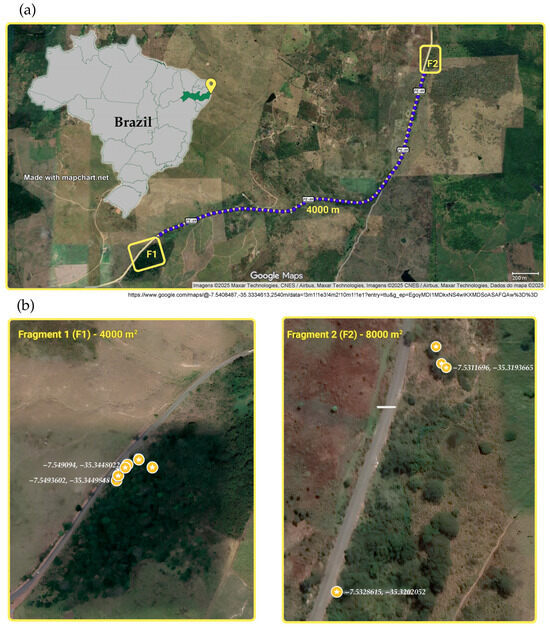
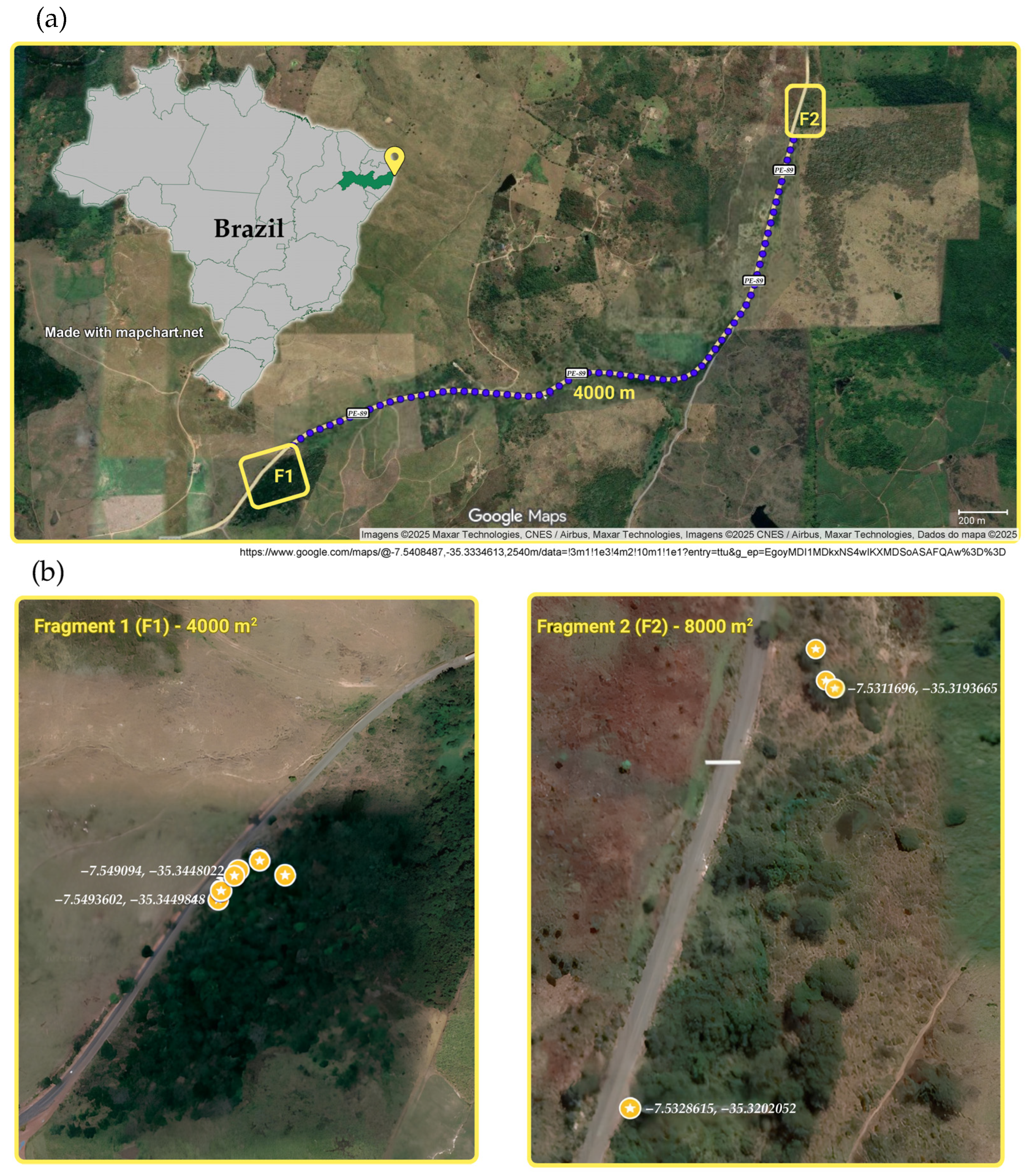
The plant material and rhizosphere soil were collected from a natural A. colubrina population in two fragments of a Seasonal Atlantic Forest near the road in the municipality of Timbaúba, Pernambuco, Brazil (7°31′52.1″ S; 35°19′09.9″ W). Climatic conditions are described in Table 1. Samples were collected from two fragments to ensure greater representativeness of the population. The plots had a total area of approximately 4000 m2 (fragment 1) and 8000 m2 (fragment 2), with a total distance of 4000 m between the fragments (Figure 1). Biochemical, phytochemical, and mycorrhizal parameter analyses were performed at the Laboratory for Analysis, Research, and Studies in Mycorrhizae, University of Pernambuco (LAPEM/UPE), Brazil (8°2′47.143″ S; 34°53′15.086″ W).
Table 1.
Weather conditions of the sampling points (Timbaúba, Pernambuco, Brazil) from a natural Anadenanthera colubrina (Vell.) Brenan population.
Figure 1.
Brazilian map highlighting the state of Pernambuco with the sampling area (a), and details of the two fragments (b), and sampling points (stars) on the road in the municipality of Timbaúba (PE-89, Pernambuco, Brazil) (7°31′52.1″ S; 35°19′09.9″ W). Image created using mapchart.net, Canva.com, and maps.google.com.
The experimental design was completely randomized, with two treatments: (1) leaves and rhizosphere soil collected during the dry season, and (2) leaves and rhizosphere soil collected during the rainy season, in ten replicates. Each replicate consisted of three subsamples of leaves or soil.
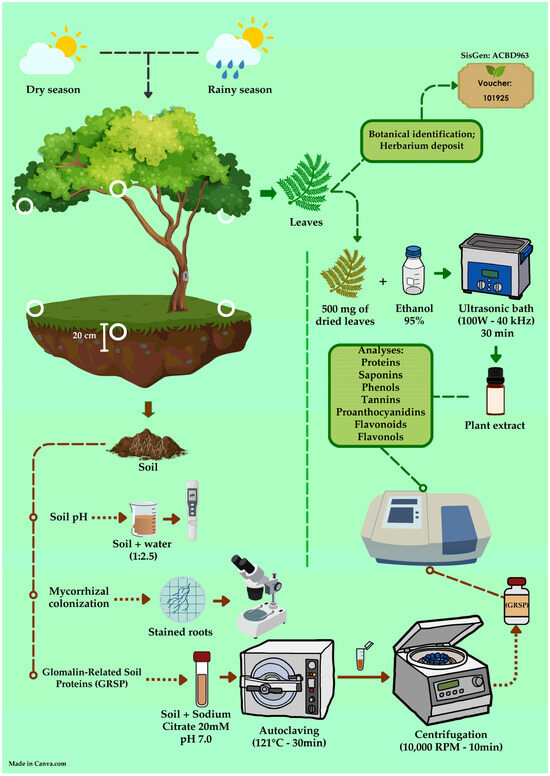
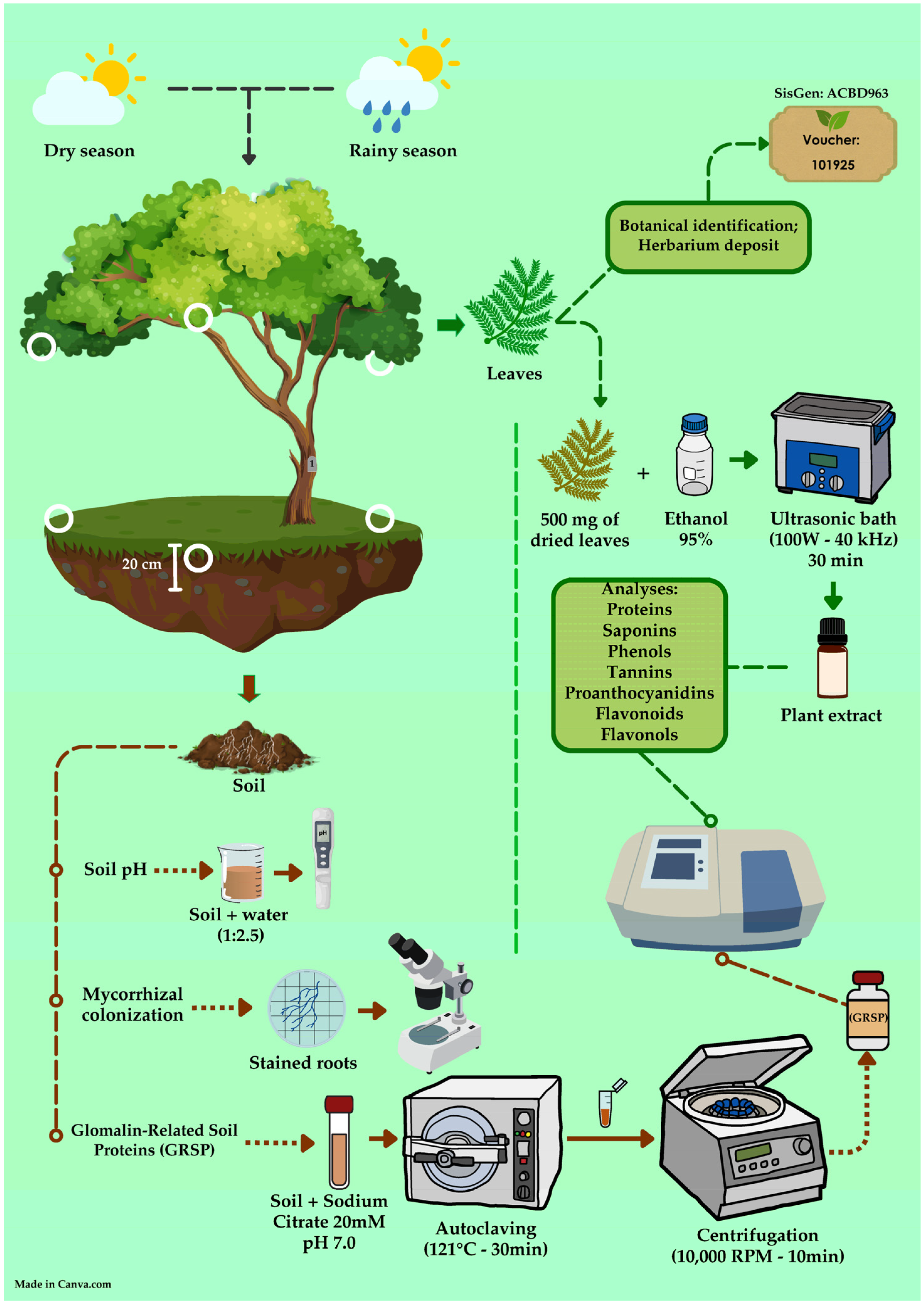
For each of the ten A. colubrina individuals, three leaf samples were collected from the lower branches and at the edges of the canopy, at equidistant points, forming a composite sample for each individual. A composite sample of rhizosphere soil was also collected at three equidistant points in the canopy projection, at up to 20 cm depth (Figure 2). Sampling was conducted in October 2024 (dry season, during leaf fall) and March 2025 (rainy season, with young to mature leaves). The individuals were spaced at least 12 m apart and had their trunks marked with metal tags for identification. Plant material was also collected for the preparation of herbarium specimens and species confirmation, which were deposited in the Geraldo Mariz Herbarium—HUFP (Voucher: 101925), at the Federal University of Pernambuco (UFPE), Brazil (8°03′02.4″ S 34°56′52.0″ W). All sample collection procedures (vegetation and rhizosphere) were registered in SisGen (Sistema Nacional de Gestão do Patrimônio Genético e do Conhecimento Tradicional Associado) (ACBD963).
Figure 2.
Summary of the sampling methodology, foliar biomolecule evaluations, and mycorrhizal activity. SisGen: Sistema Nacional de Gestão do Patrimônio Genético e do Conhecimento Tradicional Associado; GRSP: glomalin-related soil proteins. Image created in Canva.com.
From the soil samples collected each season, two composite samples were prepared and characterized by the Agronomic Institute of Pernambuco (IPA) (Table 2). The soil was air-dried at room temperature, and the roots were retrieved for rhizosphere analysis. The leaves were superficially cleaned, thermally stabilized (72 h, 45 °C), chopped, and aliquoted (500 mg). The aliquots were transferred to amber flasks containing 20 mL of ethanol (95%) (Química Moderna®, São Paulo, Brazil), and ultrasonic-assisted extraction was carried out (100 W, 40 kHz, 30 min) (SolidSteel®, São Paulo, Brazil) [33] (adapted). The extract was filtered through qualitative filter paper (Celab®, Recife, Pernambuco, Brazil) and stored (−18 °C) until analysis. The concentrations of total proteins (TPtC), total phenols (TPC), total tannins (TTC), total proanthocyanidins (TPcC), total flavonols (TFoC), total flavonoids (TFC), and total saponins (TSC) were evaluated in this extract (Figure 2).
Table 2.
Characterization of soil collected from the rhizosphere of Anadenanthera colubrina (Vell.) Brenan during the dry and rainy seasons in fragments of the seasonal Atlantic Forest in Timbaúba, Pernambuco, Brazil (7°31′52.1″ S; 35°19′09.9″ W).
To quantify TPtC, the Bradford method in [34] (adapted) was used, with bovine serum albumin (BSA) (Neon®, São Paulo, Brazil) as the standard curve (y = 0.0007x − 0.0063, R2 = 0.9997). TPC was quantified by the Folin–Ciocalteu reduction method (Merck®, Darmstadt, Germany) [35] (adapted), using gallic acid (Dinâmica®, São Paulo, Brazil) to generate the standard curve (y = 0.0071x + 0.0352, R2 = 0.9949). Additionally, TTC was estimated by the casein complexation method (Vetec®, Rio de Janeiro, Brazil) [25] (adapted), considering the formula: [Total tannins] = [Total phenols] − [Remaining phenols].
The TPcC was measured using the interaction method with acid vanillin (2%, Química Moderna®, São Paulo, Brazil) [36] (adapted), using catechin (Sigma-Aldrich®, São Paulo, Brazil) as the standard curve (y = 0.0412x + 0.0026, R2 = 0.9999). For the determination of total TFC, the complexation method with Aluminum chloride (Dinâmica®, São Paulo, Brazil) [37] (modified) and rutin (Sigma-Aldrich®, São Paulo, Brazil) was adopted as the standard (y = 0.0024x − 0.085, R2 = 0.9971). The TFoC was determined using the method described by Woisky and Salatino [38] and Bencherif et al. [39] (adapted), with quercetin used to generate the standard curve (y = 0.0063x − 0.0231; R2 = 0.9982). TSC was quantified by the cobalt chloride complexation method (Nuclear®, São Paulo, Brazil) [40], using saponin (Alamar Tecno Científica Ltda., São Paulo, Brazil) for the standard curve (y = 0.0009x + 0.0045, R2= 0.9926).
For rhizosphere evaluations, soil pH, mycorrhizal colonization, and glomalin-related soil proteins (GRSPs) production were determined (Figure 2). Soil pH in H2O was evaluated according to Silva [41] and Tiquia [42] (modified). For mycorrhizal colonization, the roots were washed, clarified, acidified, and stained with Trypan Blue (Vetec Ltda., Rio de Janeiro, Brazil) (0.05% in lactoglycerol) [43], and the gridline intersection method was used to estimate the percentage of colonization [44] (adapted). For the easily extractable fraction of GRSPs, the extraction method described by Wright and Upadhyaya [45] was used, and proteins were quantified using the Bradford [34] method.
The data were analyzed using the t-test (p ≤ 0.05) in Assistat software (7.7). A Spearman correlation matrix, a decision tree, and clustering algorithm analyses (K-means) were computed for the evaluated parameters using Google Collaborative Platform.
3. Results
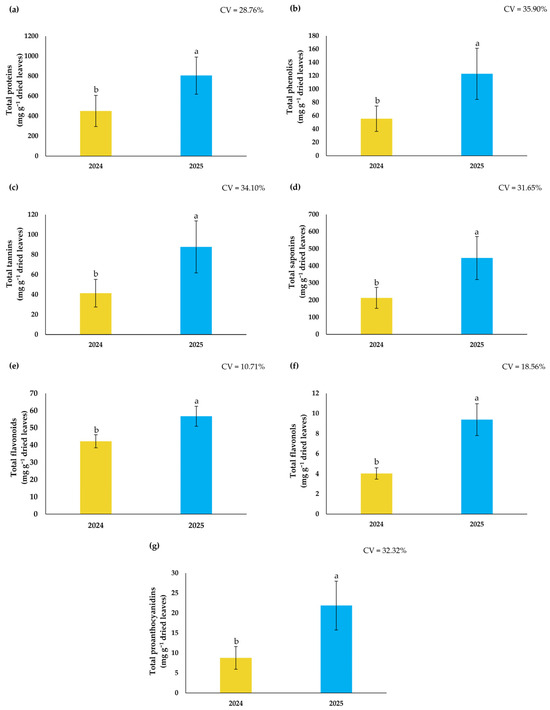
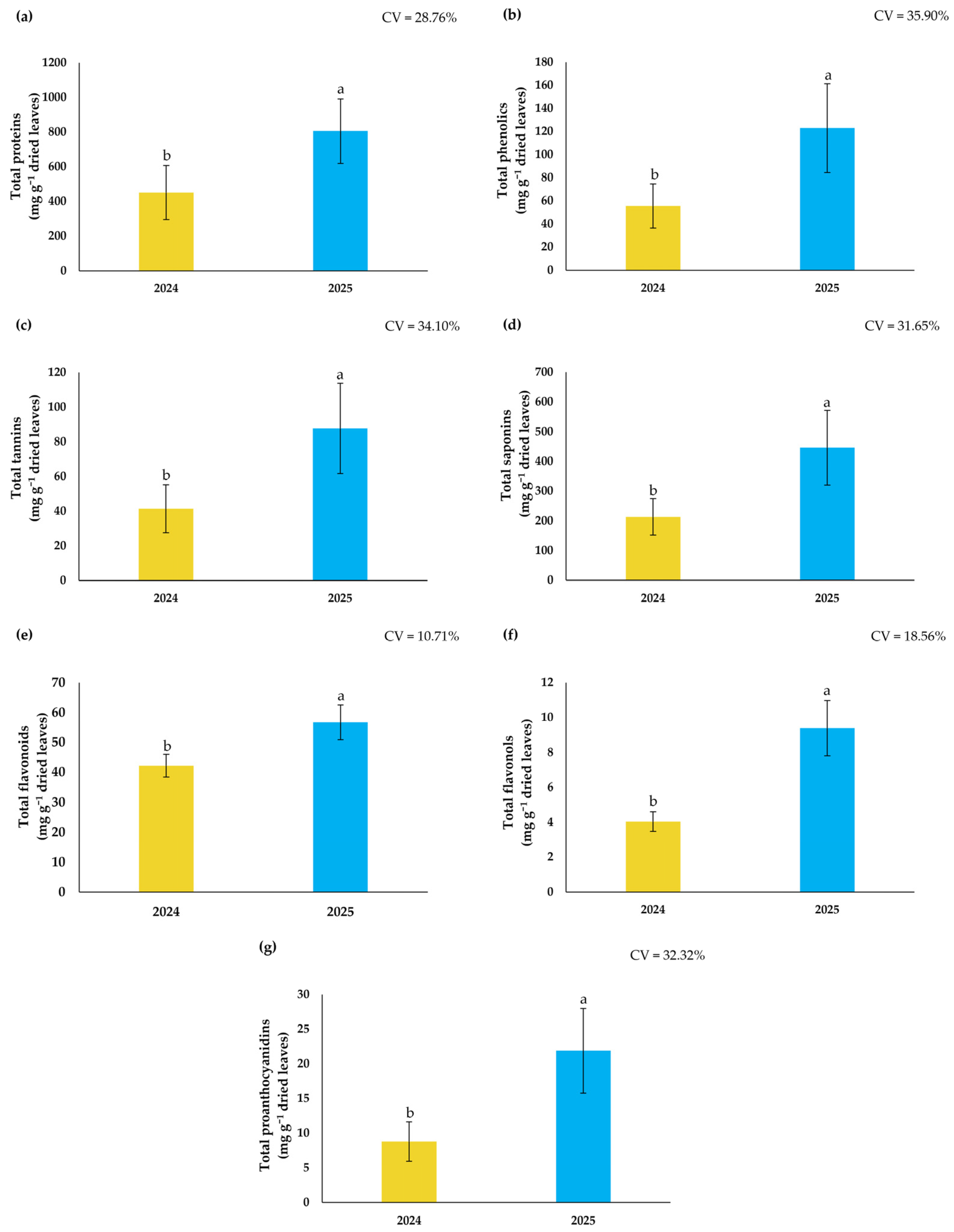
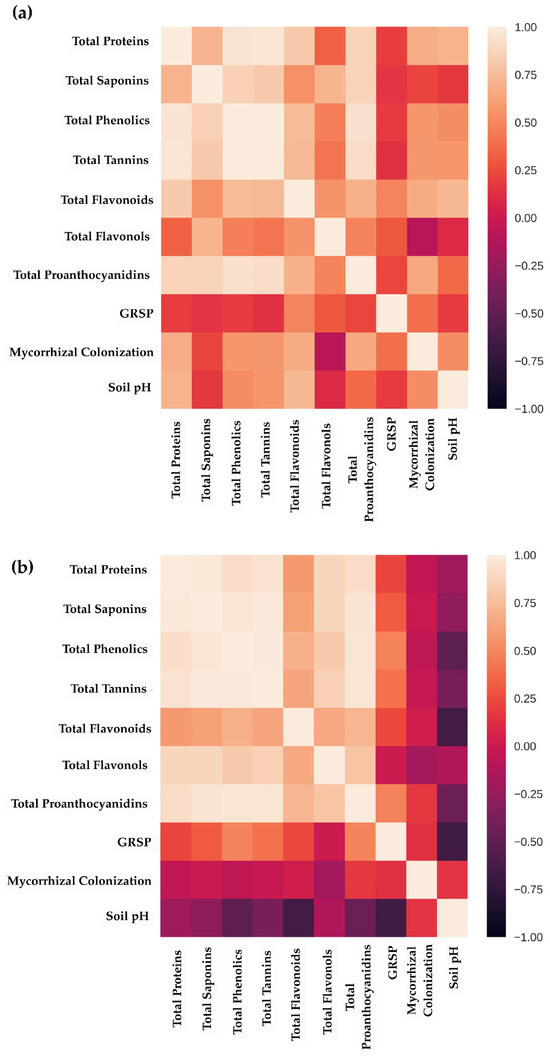
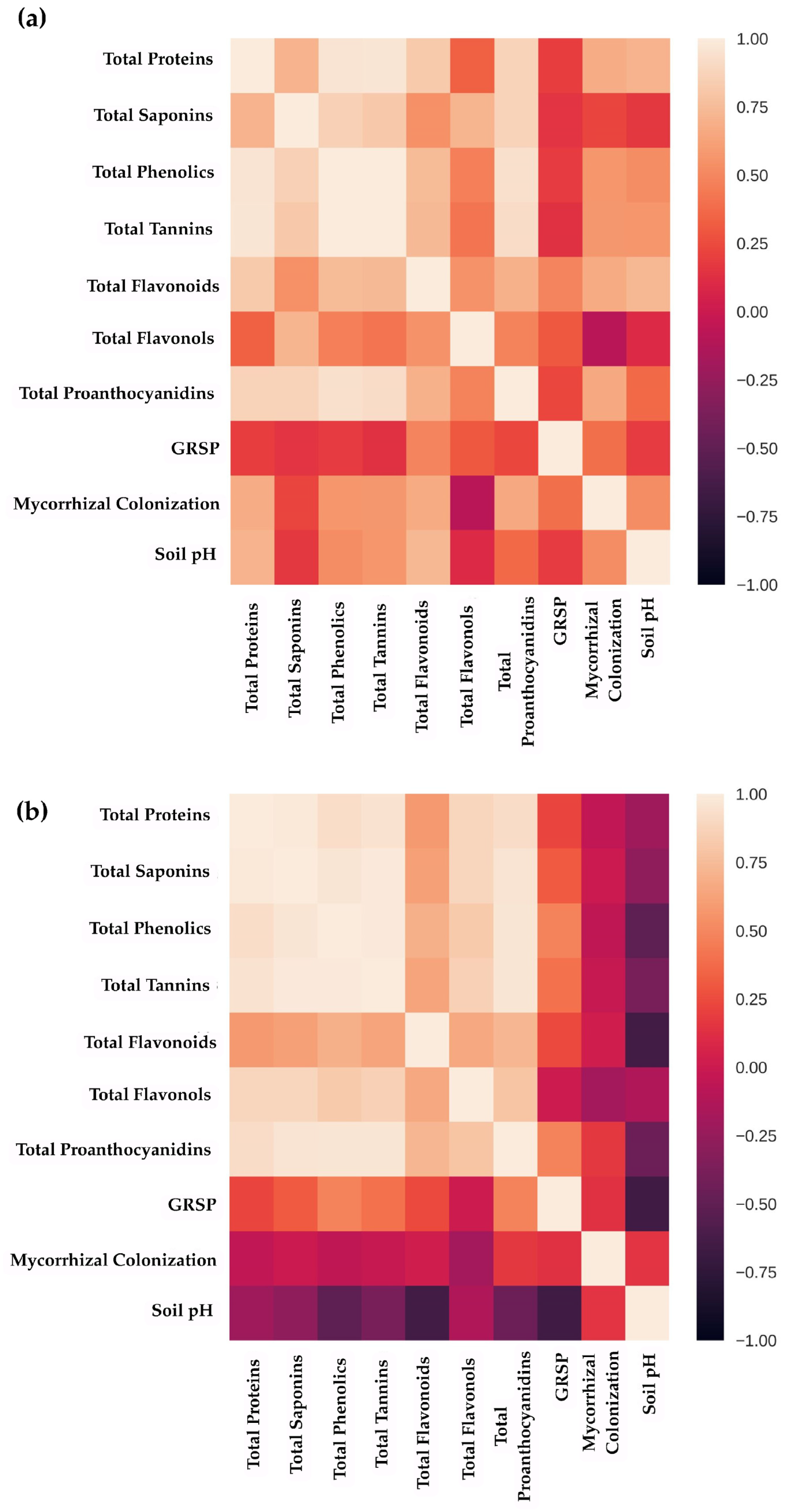
The season of sampling influenced the TPtC, TPC, TTC, TFC, and TPcC in A. colubrina leaves (Figure 3), showing a high correlation (r ≥ 0.6; p ≤ 0.05) with mycorrhizal colonization and GRSPs deposition, in dry and rainy seasons, respectively (Figure 4). Additionally, there was greater production of bioactive compounds in the leaves of A. colubrina individuals during the rainy season (Figure 3).
Figure 3.
Concentration (mg g−1 dried leaves) of total proteins (TPtC) (a), total phenols (TPC) (b), total tannins (TTC) (c), total saponins (TSC) (d), total flavonoids (TFC) (e), total flavonols (TFoC) (f), and total proanthocyanidins (TPcC) (g) in leaves of Anadenanthera colubrina (Vell.) Brenan, from a natural environment, during the dry season (collected in 2024, 9.2 mm of rainfall) and rainy season (collected in 2025, 178.5 mm of rainfall) (n = 10, for each season). CV (%): coefficient of variation. Means followed by the same letters do not differ significantly according to the t-test (p ≤ 0.05). Error bars represent the standard deviation of means.
Figure 4.
Spearman correlation matrix (p ≤ 0.05) between the variables of total proteins (TPtC), total saponins (TSC), total phenolic compounds (TPC), total tannins (TTC), total flavonoids (TFC), total flavonols (TFoC), total proanthocyanidins (TPcC), glomalin-related soil proteins (GRSP), mycorrhizal colonization, and soil pH of Anadenanthera colubrina (Vell.) Brenan, from a natural population, during the dry season (a) and rainy season (b) (n = 10, for each season).
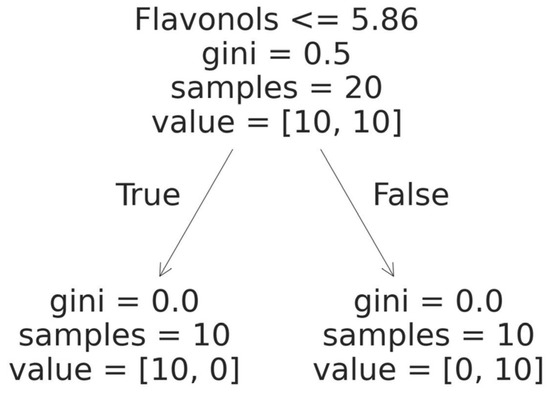
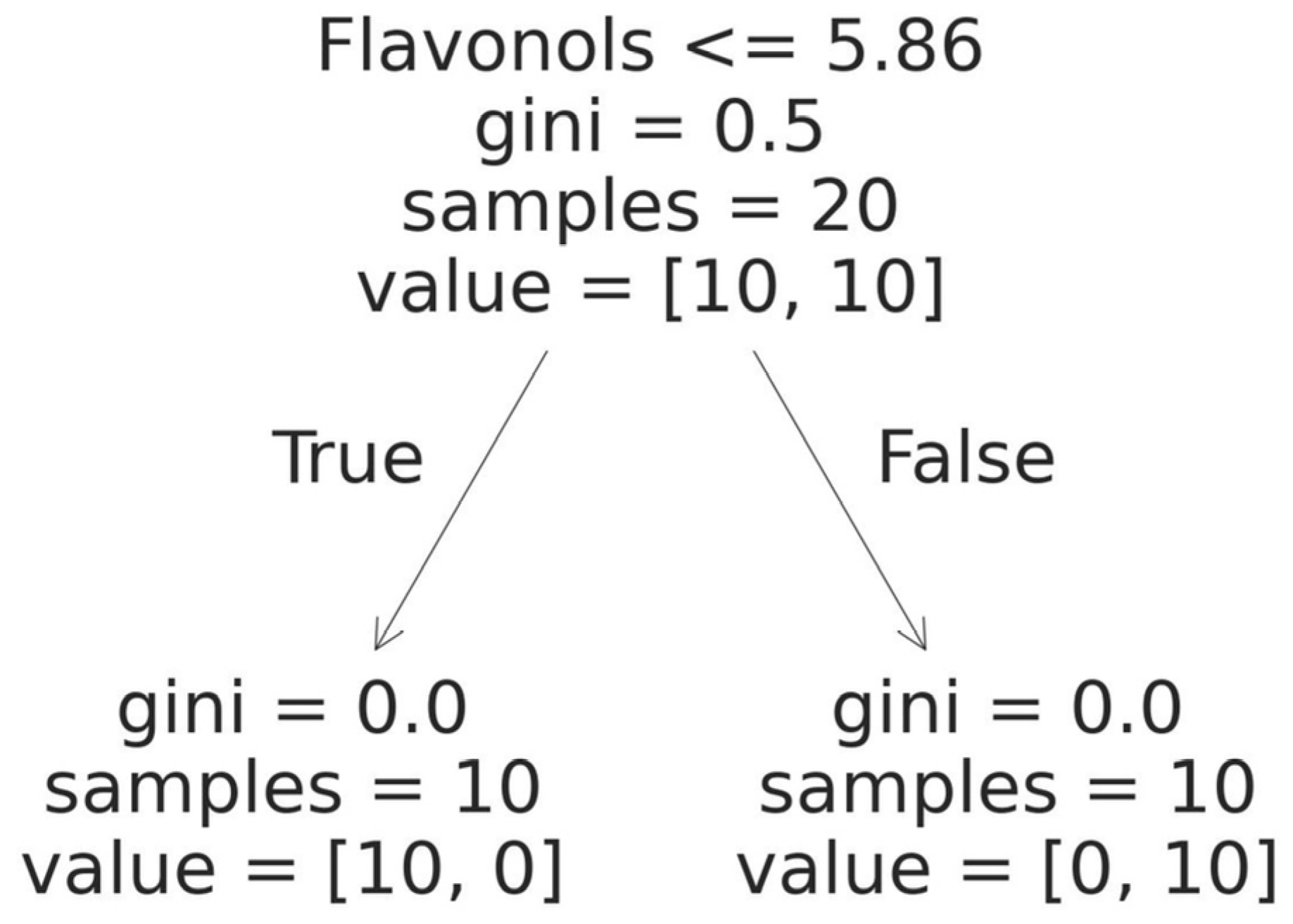
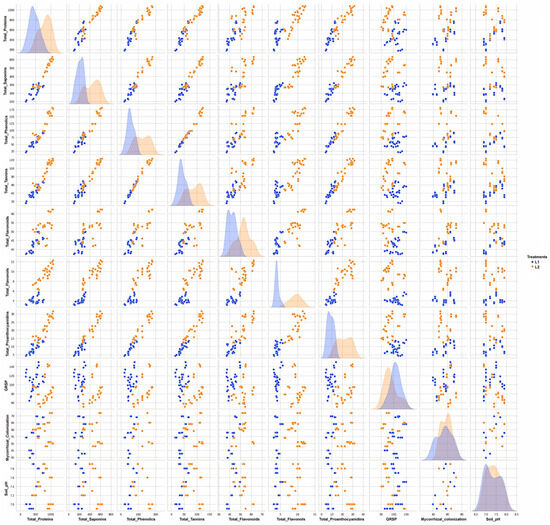
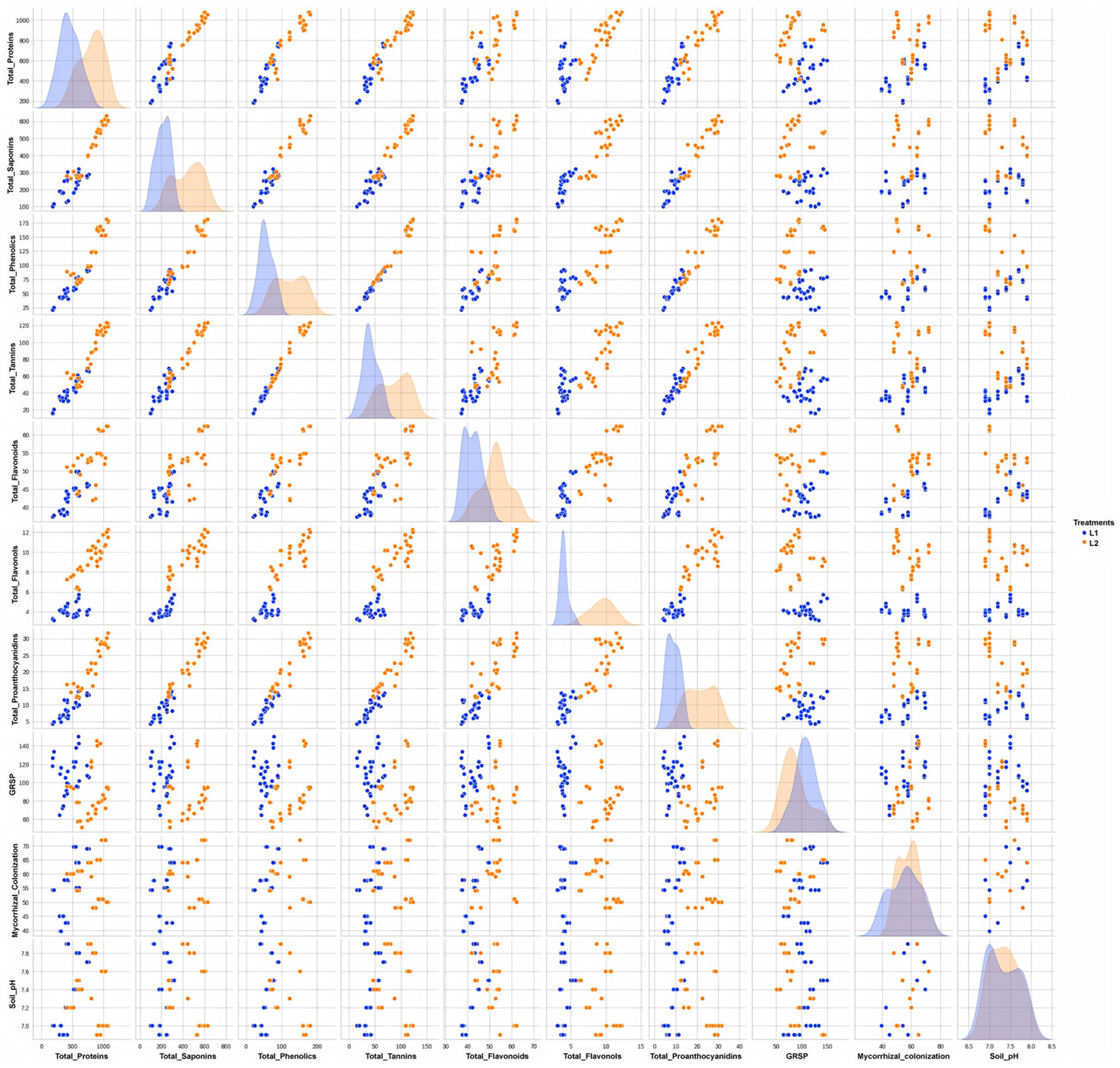
In this regard, the TPtC increased by 75% in individuals collected during the rainy season, compared to those in the dry season (Figure 4). The TPC, TTC, TSC, TFoC, and TPcC in the leaves of individuals collected during the rainy season were, in general, about 100% higher when compared to the concentrations obtained from individuals sampled during the dry season (Figure 3). In this respect, it is worth noting that the TFoC was a decisive parameter to differentiate the seasons (Figure 5), which is confirmed by the clustering algorithm analyses (Figure 6). TFC also showed increased biosynthesis during the rainy season, albeit to a lesser extent (approximately 25% higher than in the dry season) (Figure 3).
Figure 5.
Decision tree considering the concentration of total flavonols (TFoC) in Anadenanthera colubrina (Vell.) Brenan, from a natural environment, during the dry season (collected in 2024, 9.2 mm of rainfall) and rainy season (collected in 2025, 178.5 mm of rainfall) (n = 10, for each season). True entropy values close to zero indicate maximum probability of the decision tree.
Figure 6.
Data distribution by cluster considering the reduction in the total proteins (TPtC), total saponins (TSC), total phenols (TPC), total tannins (TTC), total flavonoids (TFC), total flavonols (TFoC), total proanthocyanidins (TPcC), glomalin-related soil proteins (GRSP), mycorrhizal colonization, and soil pH of Anadenanthera colubrina (Vell.) Brenan, from a natural environment, during the dry season (L1—collected in 2024, 9.2 mm of rainfall) and rainy season (L2—collected in 2025, 178.5 mm of rainfall) (n = 10, for each season), (K-means = 2).
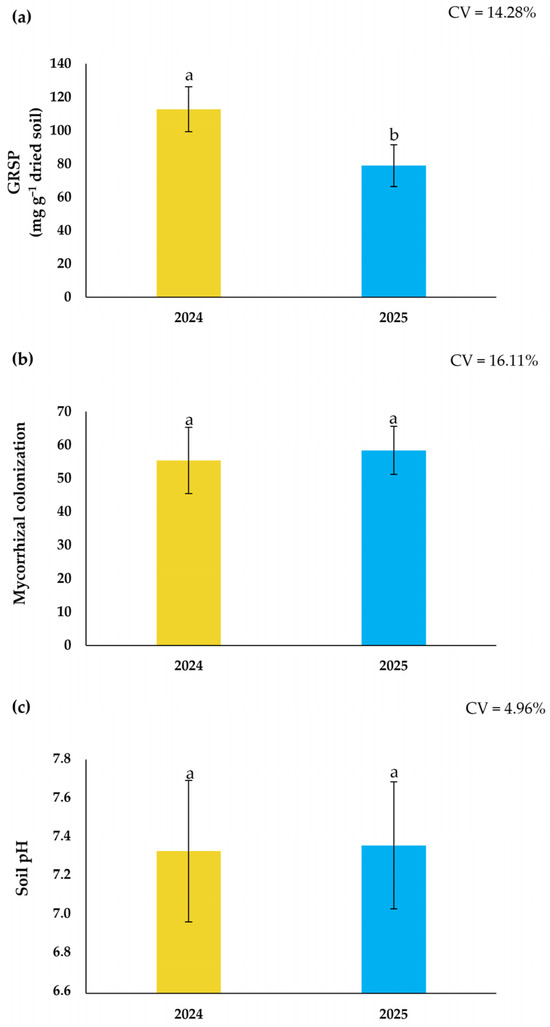
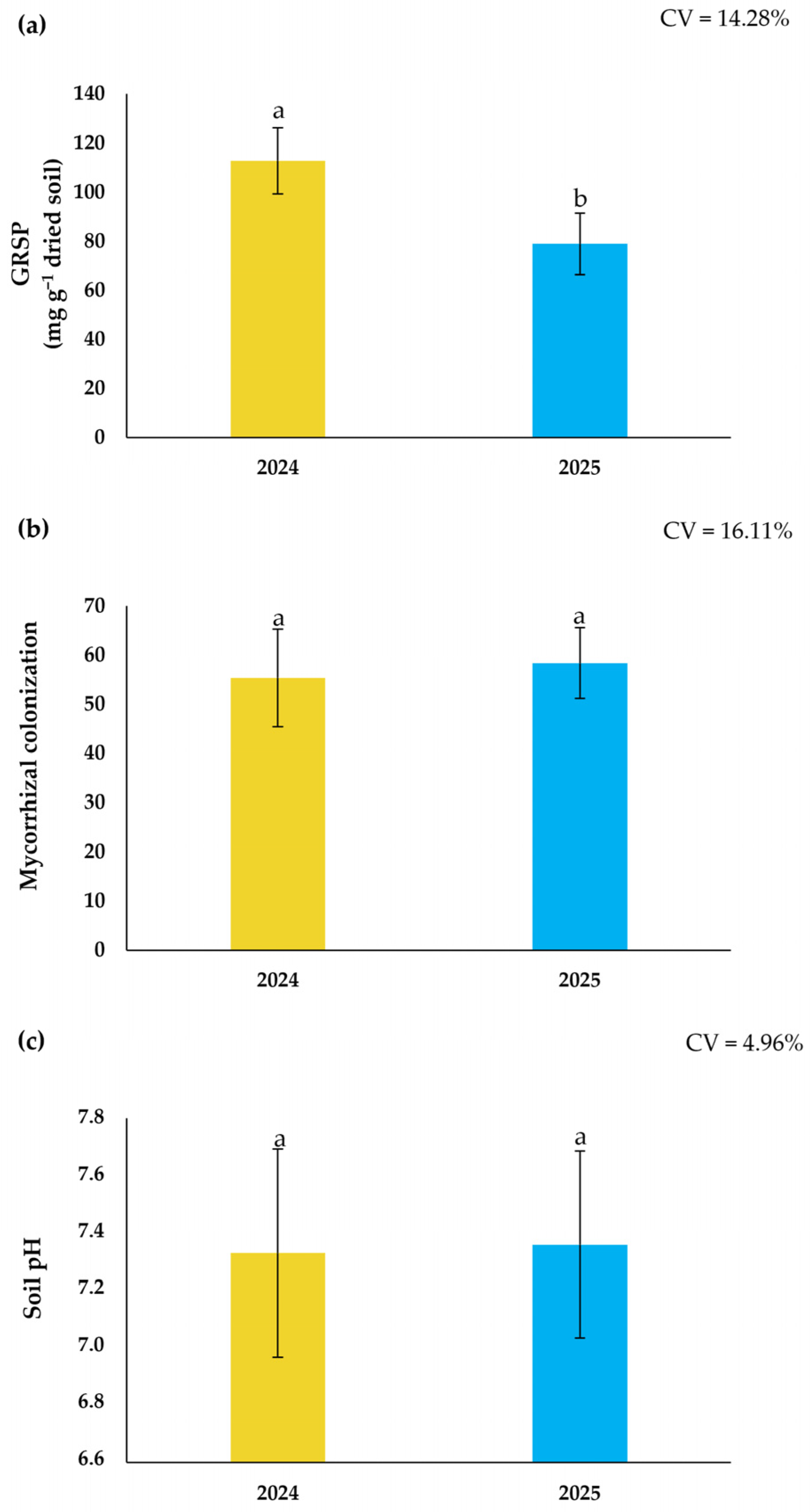
The mycorrhizal colonization and soil pH did not vary according to the season (Figure 7). Although these parameters did not vary significantly between sampling in the dry and rainy seasons, they were positively correlated with the TPtC, TPC, TTC, and TFC during the dry season (Figure 4a). Soil pH during the dry season was also correlated with mycorrhizal colonization (Figure 4a). Contrary to expectations, the concentration of GRSPs in A. colubrina rhizosphere was higher in the dry season, with approximately 30% reduction during the rainy season (Figure 7a). Despite this increase, the GRSPs deposition was correlated with the TPcC and TPC of A. colubrina leaves harvested during the rainy season (Figure 4b).
Figure 7.
Concentration (mg g−1 of dried soil) of glomalin-related soil proteins (GRSP) (a), mycorrhizal colonization (%) (b), and soil pH (c) of Anadenanthera colubrina (Vell.) Brenan rhizosphere, from a natural environment, during the dry season (collected in 2024, 9.2 mm of rainfall) and rainy season (collected in 2025, 178.5 mm of rainfall) (n = 10, for each season). CV (%): coefficient of variation. Means followed by the same letters do not differ significantly according to the t-test (p ≤ 0.05). Bars represent the standard deviation of means.
4. Discussion
The protein values obtained in this study (451–805 mg g−1 leaves) were higher than those reported by Pedone-Bonfim et al. [18] (200–310 mg g−1 plant) for foliar proteins in mycorrhizal A. colubrina seedlings grown in a greenhouse. Similarly, the production of secondary metabolites obtained in the present study was also higher than that reported for seedling leaves of the same species grown under greenhouse conditions [17,18,19,20,21]. In addition, the values of total phenolics (55–122 mg g−1 leaves) and total tannins (41–87 mg g−1 leaves) were higher than those found in the bark (168 µg mL−1 for phenols and 56 mg g−1 for tannins) of individuals from other natural populations [25,46]. This pattern may be related to leaf renewal during the rainy season, since fluctuations in metabolite concentration in bark may have minor variations throughout the year [24,25,26,27]. The increased biosynthesis of specialized metabolites during the rainy season contrasts with that observed by Araújo et al. [24], who reported the greatest diversity and concentration of bioactive compounds in A. colubrina leaves during the dry season in a dry forest area in Brazil, the Caatinga. This discrepancy may be attributed to site-specific differences, as metabolite production varies across phytogeographic domains [47].
The correlation found between the soil pH and mycorrhizal colonization during the dry season is consistent with the known ability of AMF to modulate soil parameters [20,48]. In this context, it is interesting to evaluate other parameters that may also be influencing the rhizosphere [49], such as the total GRSPs fraction and glomerospore production. It is also important to investigate the effects of deciduousness on mycorrhizal activity, a characteristic present in A. colubrina [27]. It is worth noting that A. colubrina has a high demand for nutrients [50], which is favored by mycorrhizal colonization [51]. This may explain the correlations of this parameter with the concentration of most bioactive compounds evaluated in leaves collected during the dry season (Figure 4a). In contrast, in the rainy season, this pattern was not observed (Figure 4b); the reduction in the AMF efficiency in environments with greater water availability [52] may explain the absence of correlation (Figure 4b). Moreover, the proportion of mycorrhizal structures in rainy seasons is something that needs to be elucidated in future research, considering that there may be greater stimulation for the formation of storage structures (vesicles) compared to those used for nutrient exchange (arbuscules) [53].
The reduction in the GRSPs concentration in A. colubrina rhizosphere is likely linked to higher accumulated precipitation (Table 1), considering that water accumulation in the soil can leach aggregates formed by GRSPs deposition [54]. On the other hand, the GRSPs correlation (r ≥ 0.6; p ≤ 0.05) with the production of some metabolites during the rainy season may be linked to their effect on soil structure [55,56]. In this case, we observed, for the first time, that rhizosphere GRSPs deposition is positively related to some products of tree foliar metabolism in natural conditions; this is relevant because it confirms the positive role of A. colubrina–AMF symbiosis, widely reported under controlled conditions [17,18,19,20,21].
From a practical standpoint, these results obtained in our study can be used by industries that include A. colubrina phytomass in the production of phytopreparations. In this matter, they can opt to use the leaves of the species, replacing the stem, since leaf tissues have a high concentration of bioactive compounds, such as phenolics and total tannins, being higher than those found in the bark [25,46]. This practice is more sustainable, given that leaves are a renewable resource, abundant throughout most of the year [27], and their use can reduce the excessive bark extraction, a practice that causes damage to plant populations [57,58]. However, it is recommended to collect leaves during the rainy season to obtain raw material with a higher accumulation of compounds that are important to the pharmaceutical industry [59,60].
5. Conclusions
Therefore, the study hypothesis was confirmed, since mycorrhizal colonization and GRSPs deposition were correlated with the production of foliar bioactive molecules in A. colubrina in a natural environment, highlighting the AMF role in foliar metabolite accumulation under natural conditions.
Author Contributions
Conceptualization, F.S.B.d.S.; methodology, J.G.L.d.C., C.J.A.B.F., A.C.d.M. and F.S.B.d.S.; software, C.J.A.B.F.; validation, C.J.A.B.F.; formal analysis, J.G.L.d.C. and C.J.A.B.F.; investigation, J.G.L.d.C.; resources, F.S.B.d.S.; data curation, J.G.L.d.C.; writing—original draft preparation, J.G.L.d.C., C.J.A.B.F., Q.-S.W., A.C.d.M. and F.S.B.d.S.; writing—review and editing, J.G.L.d.C., C.J.A.B.F., Q.-S.W., A.C.d.M. and F.S.B.d.S.; supervision, F.S.B.d.S.; project administration, F.S.B.d.S. All authors have read and agreed to the published version of the manuscript.
Funding
This research was funded by Coordenação de Aperfeiçoamento de Pessoal de Nível Superior (CAPES, Brazil) (Finance Code 001), the Conselho Nacional de Desenvolvimento Científico e Tecnológico (CNPq, Brazil) (process number: 306119/2024-2), and Fundação de Amparo à Ciência e Tecnologia do Estado de Pernambuco (FACEPE, Brazil) (IBPG-0039-2.02/25).
Institutional Review Board Statement
Not applicable.
Informed Consent Statement
Not applicable.
Data Availability Statement
Data will be made available upon request.
Acknowledgments
The authors thank the Coordenação de Aperfeiçoamento de Pessoal de Nível Superior (CAPES, Brazil), the Conselho Nacional de Desenvolvimento Científico e Tecnológico (CNPq, Brazil) for the productivity fellowships given to Fábio Sérgio Barbosa da Silva (306119/2024-2) and to Carmelo José Albanez Bastos Filho, and the Fundação de Amparo à Ciência e Tecnologia do Estado de Pernambuco (FACEPE, Brazil) for a masters’ scholarship granted to João Gabriel Lira de Carvalho (IBPG-0039-2.02/25). The authors also thank Thiago Jófili Varejão Gomes, Carlos André Ribeiro da Costa, and Eduarda Lins Falcão for helping to collect the plant material.
Conflicts of Interest
The authors declare no conflicts of interest.
Abbreviations
The following abbreviations are used in this manuscript:
| AMF | Arbuscular mycorrhizal fungi |
| APAC | Agência Pernambucana de Águas e Clima |
| CAPES | Coordenação de Aperfeiçoamento de Pessoal de Nível Superior |
| CNPq | Conselho Nacional de Desenvolvimento Científico e Tecnológico |
| FACEPE | Fundação de Amparo à Ciência e Tecnologia do Estado de Pernambuco |
| HUFP | Geraldo Mariz Herbarium |
| LabFlora | Laboratório de Florística e Sistemática Vegetal |
| LAPEM | Laboratory for Analysis, Research, and Studies in Mycorrhizae |
| TFC | Total flavonoids |
| TFoC | Total flavonols |
| TPC | Total phenols |
| TPtC | Total proteins |
| TPcC | Total proanthocyanidins |
| TTC | Total tannins |
| CEC | Cation Exchange Capacity |
| CV | Coefficient of variation |
| GRSPs | Glomalin-related soil proteins |
| SisGen | Sistema Nacional de Gestão do Patrimônio Genético e do Conhecimento Tradicional Associado |
| UFPE | Federal University of Pernambuco |
| UPE | University of Pernambuco |
References
- Bencherif, K.; Tifour, M.; Dalpè, Y.; Lounès-Hadj Sahraoui, A. Native arbuscular mycorrhizal inoculation enhances secondary metabolite contents in Tamarix gallica grown in saline soil. Symbiosis 2024, 94, 71–80. [Google Scholar] [CrossRef] [Scilit]
- Barreto, C.B.; Kapoor, R.; Wu, Q.-S.; Hijri, M.; Alberton, O.; Bastos-Filho, C.J.A.; Silva, M.D.C.; Silva, F.S.B. Bioactive plant secondary metabolite production enhanced by AMF choice in mixed inoculum. Rhizosphere 2025, 36, 101198. [Google Scholar] [CrossRef] [Scilit]
- Duan, W.; Li, X.; Li, Q.; Jing, R.; Zhang, S.; Zhang, B.; Hamel, C.; Sheng, M. Arbuscular mycorrhizal fungal community association determines the production of flavonoids and chlorogenic acid in Acer truncatum Bunge. Ind. Crops Prod. 2024, 208, 117858. [Google Scholar] [CrossRef] [Scilit]
- Sousa-Junior, J.C.A.; de Sousa Oliveira, M.; Araújo Dias, C.H.; Amariz, A.; Silva Campos, M.A. Effect of inoculation with arbuscular mycorrhizal fungi on larvicidal activity and phenolic compounds in Mimosa tenuiflora cultivated under field conditions. Beni-Suef Univ. J. Basic Appl. Sci. 2025, 14, 41. [Google Scholar] [CrossRef] [Scilit]
- Ma, Y.; Gao, G.; Wang, S.; Ren, H.; Liu, Z.; Chen, Y.; Guo, Q.; Gu, J. Divergent arbuscular mycorrhizal growth responses in woody and herbaceous plants across inoculum richness. Environ. Exp. Bot. 2024, 224, 105811. [Google Scholar] [CrossRef] [Scilit]
- Li, X.; Wu, Y.; Huang, C.; Rahman, M.A.; Argaman, E.; Xiao, Y. Inoculation with arbuscular mycorrhizal fungi in the field promotes plant colonization rate and yield. Eur. J. Agron. 2025, 164, 127503. [Google Scholar] [CrossRef] [Scilit]
- Zhang, W.; He, C.; Lin, Y.; Qin, S.; Wang, D.; Li, C.; Li, M.; Sun, X.; He, X. Dynamics of arbuscular mycorrhizal fungi in the rhizosphere of medicinal plants and their promotion on the performance of Astragalus mongholicus. Agronomy 2024, 14, 2695. [Google Scholar] [CrossRef] [Scilit]
- Zhang, Z.Z.; Feng, H.D.; Zhang, Z.Z.; Wen, Y.; Hashem, A.; Wu, Q.S. Arbuscular mycorrhizal fungi enhance drought resilience and bioactive compound accumulation in Polygonum cuspidatum. Plant Physiol. Biochem. 2026, 231, 110973. [Google Scholar] [CrossRef] [Scilit] [PubMed]
- Maia, C.M.A.; Pasetto, S.; Silva, J.P.R.E.; Tavares, J.F.; Costa, E.M.M.B.; Murata, R.M. Anandenanthera colubrina (Vell.) Brenan as an inhibitor of HIV-1 BaL infection. Nat. Prod. Res. 2021, 36, 1621–1625. [Google Scholar] [CrossRef] [Scilit] [PubMed]
- Sousa, P.C.M.; Sousa, I.N.A.; Leite, L.L.L.; Oliveira, A.L.O.; Souza, K.A.S.; Soares, J.S.; Viana, M.R.; Amaral, M.P.M. Mimosa tenuiflora (Willd.) Poir e Anadenanthera colubrina como alternativas no tratamento da adicção às drogas. Res. Soc. Dev. 2021, 10, e48710414251. [Google Scholar] [CrossRef] [Scilit]
- Ramos, K.A.; Soares, I.G.M.; Oliveira, L.M.A.; Braga, M.A.; Soares, P.P.C.; Guarneire, G.J.; Scherrer, E.C.; Silva, F.S.; Lima, N.M.; La Porta, F.A.; et al. Immunomodulatory effects of Anadenanthera colubrina bark extract in experimental autoimmune encephalomyelitis. Curr. Issues Mol. Biol. 2024, 46, 8726–8740. [Google Scholar] [CrossRef] [Scilit] [PubMed]
- Pimentel, V.D.; Acha, B.T.; Gomes, G.F.; Macedo de Sousa Cardoso, J.L.; Sena da Costa, C.L.; Carvalho Batista, N.J.; Rufino Arcanjo, D.D.; Alves, W.d.S.; de Assis Oliveira, F. Anti-inflammatory effect of Anadenanthera colubrina var. cebil (Griseb.) Altschul in experimental elastase-induced pulmonary emphysema in rats. J. Ethnopharmacol. 2024, 332, 118216. [Google Scholar] [CrossRef] [Scilit] [PubMed]
- Soldati, G.T.; Albuquerque, U.P. Impact assessment of the harvest of a medicinal plant (Anadenanthera colubrina (Vell.) Brenan) by a rural semi-arid community (Pernambuco), northeastern Brazil. Int. J. Biodivers. Sci. Ecosyst. Serv. Manag. 2011, 6, 106–118. [Google Scholar] [CrossRef] [Scilit]
- Mota, G.S.; Sartori, C.J.; Miranda, I.; Quilhó, T.; Mori, F.A.; Pereira, H. Bark anatomy, chemical composition and ethanol-water extract composition of Anadenanthera peregrina and Anadenanthera colubrina. PLoS ONE 2017, 12, e0189263. [Google Scholar] [CrossRef] [Scilit] [PubMed]
- Medeiros, J.G.F.; Araujo Neto, A.C.; Silva, E.C.; Rodrigues, R.d.M.; Demartelaere, A.C.F.; Silva, J.V.B. Phytochemical profile and antifungal action of Anadenanthera colubrina extract on the quality of maize seeds. Arq. Inst. Biol. 2021, 88, e0762019. [Google Scholar] [CrossRef] [Scilit]
- Delices, M.; Muller, J.A.I.; Arunachalam, K.; Martins, D.T.D.O. Anadenanthera colubrina (Vell) Brenan: Ethnobotanical, phytochemical, pharmacological and toxicological aspects. J. Ethnopharmacol. 2023, 300, 115745. [Google Scholar] [CrossRef] [Scilit] [PubMed]
- Carvalho, J.G.L.; Falcão, E.L.; Bastos Filho, C.J.A.; Wu, Q.-S.; Silva, F.S.B. Separate application of vermicompost and mycorrhization enhances antioxidant production and SPF in Anadenanthera colubrina (Vell.) Brenan Seedlings. Microbiol. Res. 2024, 15, 2713–2725. [Google Scholar] [CrossRef] [Scilit]
- Pedone-Bonfim, M.V.; Lins, M.A.; Coelho, I.R.; Santana, A.S.; Silva, F.S.; Maia, L.C. Mycorrhizal technology and phosphorus in the production of primary and secondary metabolites in cebil (Anadenanthera colubrina (Vell.) Brenan) seedlings. J. Sci. Food Agric. 2013, 93, 1479–1484. [Google Scholar] [CrossRef] [Scilit] [PubMed]
- Falcão, E.L.; Bastos Filho, C.J.A.; da Silva, F.S.B. Arbuscular mycorrhizal fungi enhance the Sun Protection Factor (SPF) biosynthesis in Anadenanthera colubrina (Vell.) Brenan leaves. Rhizosphere 2022, 24, 100595. [Google Scholar] [CrossRef] [Scilit]
- Falcão, E.L.; Muniz, B.C.; Bastos Filho, C.J.A.; Kapoor, R.; Silva, F.S.B. Soil microbial respiration and pH modulated by arbuscular mycorrhizal fungi influence the biosynthesis of health-promoting compounds in Anadenanthera colubrina (Vell.) Brenan. Rhizosphere 2023, 26, 100685. [Google Scholar] [CrossRef] [Scilit]
- Falcão, E.L.; Barreto, C.B.; Hijri, M.; Albanez Filho, C.J.B.; da Silva, F.S.B. No synergy between P and AMF inoculation to improve Sun Protection Factor production in Anadenanthera colubrina (Vell.) Brenan leaves. Rhizosphere 2024, 30, 100916. [Google Scholar] [CrossRef] [Scilit]
- Mwamatope, B.; Tembo, D.; Kampira, E.; Maliwichi-Nyirenda, C.; Ndolo, V. Seasonal variation of phytochemicals in four selected medicinal plants. Pharmacogn. Res. 2021, 13, 218–226. [Google Scholar] [CrossRef] [Scilit]
- Formato, M.; Scharenberg, F.; Pacifico, S.; Zidorn, C. Seasonal variations in phenolic natural products in Fagus sylvatica (European beech) leaves. Phytochemistry 2022, 203, 113385. [Google Scholar] [CrossRef] [Scilit] [PubMed]
- Araújo, D.; da Silva, L.; Harand, W.; Fernandes, J.; Soares, T.; Langassner, S.; Giordani, R.; Ximenes, R.; da Silva, A.; da Silva, M.; et al. Effects of rainfall on the antimicrobial activity and secondary metabolites contents of leaves and fruits of Anadenanthera colubrina from Caatinga Area. Pharmacogn. J. 2017, 9, 435–440. [Google Scholar] [CrossRef] [Scilit]
- Monteiro, J.M.; Albuquerque, U.P.; Lins Neto, E.M.F.; Araújo, E.L.; Albuquerque, M.M.; Amorim, E.L.C. The effects of seasonal climate changes in the caatinga on tannin levels in Myracrodruon urundeuva (Engl.) Fr. All. and Anadenanthera colubrina (Vell.) Brenan. Rev. Bras. Farmacogn. 2006, 16, 338–344. [Google Scholar] [CrossRef] [Scilit]
- Sousa Araújo, T.A.; Castro, V.T.N.A.; Silva Solon, L.G.; Silva, G.A.; das Graças Almeida, M.; Costa, J.G.M.; Amorim, E.L.C.; Albuquerque, U.P. Does rainfall affect the antioxidant capacity and production of phenolic compounds of an important medicinal species? Ind. Crops Prod. 2015, 76, 550–556. [Google Scholar] [CrossRef] [Scilit]
- Japiassú, A.; Lopes, K.P.; Dantas, J.G.; Nóbrega, J.S. Fenologia de quatro espécies arbóreas da Caatinga no Semiárido paraibano. Rev. Verde Agroecol. Desenvolv. Sustent. 2016, 11, 34–43. [Google Scholar] [CrossRef] [Scilit]
- APAC. Atlas Climatológico do Estado de Pernambuco: Normais Climatológicas 1991–2020; Ferrreira, M.A.F., Ed.; Agência Pernambucana de Águas e Clima, Gerência de Meteorologia e Mudanças Climáticas: Recife, Brazil, 2023. [Google Scholar]
- APAC. Boletim Pluviométrico de Acumulados Mensais—Outubro 2024. Available online: https://www.apac.pe.gov.br/uploads/OUTUBRO-2024-.pdf (accessed on 20 April 2025).
- APAC. Boletim Pluviométrico de Acumulados Mensais—Março 2025. Available online: https://www.apac.pe.gov.br/uploads/MAR--O-2025.pdf (accessed on 20 April 2025).
- Koppen Brasil. Classificação Climática de Köppen Para os Municípios Brasileiros. Available online: https://Koppenbrasil.github.io (accessed on 11 November 2025).
- WeatherSpark. Available online: https://pt.weatherspark.com/s/31355/3/Condições-meteorológicas-médias-no-inverno-em-Timbaúba-Pernambuco-Brasil#Figures-Temperature (accessed on 26 February 2025).
- Goltz, C.; Ávila, S.; Barbieri, J.B.; Igarashi-Mafra, L.; Mafra, M.R. Ultrasound-assisted extraction of phenolic compounds from Macela (Achyrolcine satureioides) extracts. Ind. Crops Prod. 2018, 115, 227–234, Correction in Ind. Crops Prod. 2020, 154, 112718. https://doi.org/10.1016/j.indcrop.2020.112718. [Google Scholar] [CrossRef] [Scilit]
- Bradford, M.M. A rapid and sensitive method for the quantitation of microgram quantities of protein utilizing the principle of protein-dye binding. Anal. Biochem. 1976, 72, 248–254. [Google Scholar] [CrossRef] [PubMed]
- Orujei, Y.; Shabani, L.; Sharifi-Tehrani, M. Induction of glycyrrhizin and total phenolic compound production in licorice by using arbuscular mycorrhizal fungi. Russ. J. Plant Physiol. 2013, 60, 855–860. [Google Scholar] [CrossRef] [Scilit]
- Queiroz, C.R.A.D.A.; Morais, S.A.L.D.; Nascimento, E.A. Caracterização dos taninos da aroeira-preta (Myracrodruon urundeuva). Rev. Árvore 2002, 26, 485–492. [Google Scholar] [CrossRef] [Scilit]
- Araújo, T.A.D.S.; Alencar, N.L.; de Amorim, E.L.C.; de Albuquerque, U.P. A new approach to study medicinal plants with tannins and flavonoids contents from the local knowledge. J. Ethnopharmacol. 2008, 120, 72–80. [Google Scholar] [CrossRef] [Scilit] [PubMed]
- Woisky, R.G.; Salatino, A. Analysis of propolis: Some parameters and procedures for chemical quality control. J. Apic. Res. 1998, 37, 99–105. [Google Scholar] [CrossRef] [Scilit]
- Bencherif, K.; Djaballah, Z.; Brahimi, F.; Boutekrabt, A.; Dalpè, Y.; Lounès-Hadj Sahraoui, A. Arbuscular mycorrhizal fungi affect total phenolic content and antimicrobial activity of Tamarix gallica in natural semi-arid Algerian areas. S. Afr. J. Bot. 2019, 125, 39–45. [Google Scholar] [CrossRef] [Scilit]
- Vigo, C.L.S.; Narita, E.; Marques, L.C. Validação da metodologia de quantificação espectrofotométrica das saponinas de Pfaffia glomerata (Spreng.) Pedersen—Amaranthaceae. Rev. Bras. Farmacogn. 2003, 13, 46–49. [Google Scholar] [CrossRef] [Scilit]
- Silva, F.C. pH em água. In Manual de Análises Químicas de Solos, Plantas e Fertilizantes, 2nd ed.; Silva, F.C., Ed.; EMBRAPA: Brasília, Brazil, 2009; pp. 112–113. [Google Scholar]
- Tiquia, S.M. Microbiological parameters as indicators of compost maturity. J. Appl. Microbiol. 2005, 99, 816–828. [Google Scholar] [CrossRef] [Scilit] [PubMed]
- Phillips, J.M.; Hayman, D.S. Improved procedures for clearing roots and staining parasitic and vesicular-arbuscular mycorrhizal fungi for rapid assessment of infection. Trans. Br. Mycol. Soc. 1970, 55, 158–160. [Google Scholar] [CrossRef] [Scilit]
- Giovannetti, M.; Mosse, B. An evaluation of techniques for measuring vesicular arbuscular mycorrhizal infection in roots. New Phytol. 1980, 84, 489–500. [Google Scholar] [CrossRef] [Scilit]
- Wright, S.F.; Upadhyaya, A. A survey of soils for aggregate stability and glomalin, a glycoprotein produced by hyphae of arbuscular mycorrhizal fungi. Plant Soil 1998, 198, 97–107. [Google Scholar] [CrossRef] [Scilit]
- Neres, W.D.S.; Aragão, J.M.D.A.; Nascimento, A.C.S.; Santos, J.F.; Matos, S.S.; Souza, D.A.D.; Neto, J.M.F.; Duarte, M.C.; Moitinho, V.S.; Correa, C.B.; et al. The enhanced healing effect of Anadenanthera colubrina ethanolic extract on excisional skin wounds in mice. Preprint 2024. [Google Scholar] [CrossRef] [Scilit] [PubMed]
- Santana, A.N.; Mendes, J.O.T.; Pereira, M.D.G.; Alvarenga, Y.A.; Boffo, E.F.; Ramos, F.S.; El-Bachá, R.S.; Araújo, F.M.; Torquato, S.J.C.; Santos, M.H.L.C.; et al. Influence of seasonality and habitat on chemical composition, cytotoxicity and antimicrobial properties of the Libidibia ferrea. Heliyon 2024, 10, e30632. [Google Scholar] [CrossRef] [Scilit] [PubMed]
- Leifheit, E.F.; Verbruggen, E.; Rillig, M.C. Arbuscular mycorrhizal fungi reduce decomposition of woody plant litter while increasing soil aggregation. Soil Biol. Biochem. 2015, 81, 323–328. [Google Scholar] [CrossRef] [Scilit]
- Aslam, M.A.; Seerat, A.; Younas, M.; Li, L.; Li, Y.; Wu, P. Lessons from mycorrhizal Synergies: Broad-Leaved trees boost Chinese Fir resilience. Rhizosphere 2025, 36, 101205. [Google Scholar] [CrossRef] [Scilit]
- Guaraná, E.; Silva, J.; Freire, F.; Luiz, R.; Silva, T. Changes in soil chemical attributes and nutrition of Anadenanthera colubrina and Eucalyptus clone under natural fertilizers and biochar. Floresta 2021, 51, 840–847. [Google Scholar] [CrossRef] [Scilit]
- Akter, S.; Kamruzzaman, M.; Sarder, M.P.; Amin, M.S.; Joardar, J.C.; Islam, M.S.; Nasrin, S.; Islam, M.U.; Islam, F.; Rabbi, S.; et al. Mycorrhizal fungi increase plant nutrient uptake, aggregate stability, and microbial biomass in the clay soil. Symbiosis 2024, 93, 163–176. [Google Scholar] [CrossRef] [Scilit]
- Maiti, D.; Singh, C.V.; Variar, M.; Mandal, N.P.; Anantha, M.S. Impact of rainfall pattern on native arbuscular-mycorrhizal activity influencing phosphorus utilization by direct seeded rainfed upland rice (Oryza sativa L.). Proc. Natl. Acad. Sci. India Sect. B Biol. Sci. 2013, 83, 159–162. [Google Scholar] [CrossRef] [Scilit]
- Martínez-García, L.B.; Dios Miranda, J.; Pugnaire, F.I. Impacts of changing rainfall patterns on mycorrhizal status of a shrub from arid environments. Eur. J. Soil Biol. 2012, 50, 64–67. [Google Scholar] [CrossRef] [Scilit]
- Singh, A.K.; Rai, A.; Pandey, V.; Singh, N. Contribution of glomalin to dissolve organic carbon under different land uses and seasonality in dry tropics. J. Environ. Manag. 2017, 192, 142–149. [Google Scholar] [CrossRef] [Scilit] [PubMed]
- Son, Y.; Martínez, C.E.; Kao-Kniffin, J. Three important roles and chemical properties of glomalin-related soil protein. Front. Soil Sci. 2024, 4, 1418072. [Google Scholar] [CrossRef] [Scilit]
- Zheng, F.L.; Li, Q.S.; Zou, Y.N.; Wu, Q.S. A causal evidence regarding improved soil traits in citrus by addition of purified glomalin-related soil protein. Sci. Hortic. 2024, 328, 112934. [Google Scholar] [CrossRef] [Scilit]
- Botha, J.; Witkowski, E.T.F.; Shackleton, C.M. The impact of commercial harvesting on Warburgia salutaris (‘pepper-bark tree’) in Mpumalanga, South Africa. Biodivers. Conserv. 2004, 13, 1675–1698. [Google Scholar] [CrossRef] [Scilit]
- Silva, J.B.; Silva, L.B.; Albuquerque, U.P.; Castro, C.C. Bark and latex harvesting short-term impact on native tree species reproduction. Environ. Monit. Assess. 2018, 190, 744. [Google Scholar] [CrossRef] [Scilit] [PubMed]
- Faccio, G. Plant complexity and cosmetic innovation. iScience 2020, 23, 101358. [Google Scholar] [CrossRef] [Scilit] [PubMed]
- Bandyopadhyay, A.; Selvan, S.A.; Patial, P.K.; Pal, T. Plant-based ingredients in cosmetic science: Current applications, limitations, and prospects. Int. J. Cosmet. Sci. 2026, 48, 258–284. [Google Scholar] [CrossRef] [Scilit] [PubMed]

Disclaimer/Publisher’s Note: The statements, opinions and data contained in all publications are solely those of the individual author(s) and contributor(s) and not of MDPI and/or the editor(s). MDPI and/or the editor(s) disclaim responsibility for any injury to people or property resulting from any ideas, methods, instructions or products referred to in the content. |
© 2026 by the authors. Licensee MDPI, Basel, Switzerland. This article is an open access article distributed under the terms and conditions of the Creative Commons Attribution (CC BY) license.